



Most beginner arm workout videos fail for a boring reason: they ask you to move weight before you’ve learned how to hold your body still. That sounds minor until you try a curl, your shoulder takes over, and your biceps barely notice what happened.
If you’re new to lifting, the best arm workout videos are the ones that slow the pace down, show the setup from a clear angle, and keep the exercise choices plain. No circus moves. No weird bouncing. Just curls, triceps work, a few smart bodyweight patterns, and enough coaching that you can tell whether your form is clean or sloppy.
That matters because arms are sneaky. A set can feel hard and still be done badly. You can finish sweating, then realize your elbows drifted, your wrists bent back, and your neck did half the work. A solid beginner video should leave you with a burn in the right place — biceps, triceps, forearms — not with sore shoulders and a headache.
So if you’ve been hunting for arm workout videos for people new to lifting, start with the ones that teach control first and intensity second. The right videos make the whole thing feel less confusing, and that’s a big deal when you’re still learning the feel of a dumbbell in your hand.
1. Slow Dumbbell Curl Videos With a Five-Pound Pair
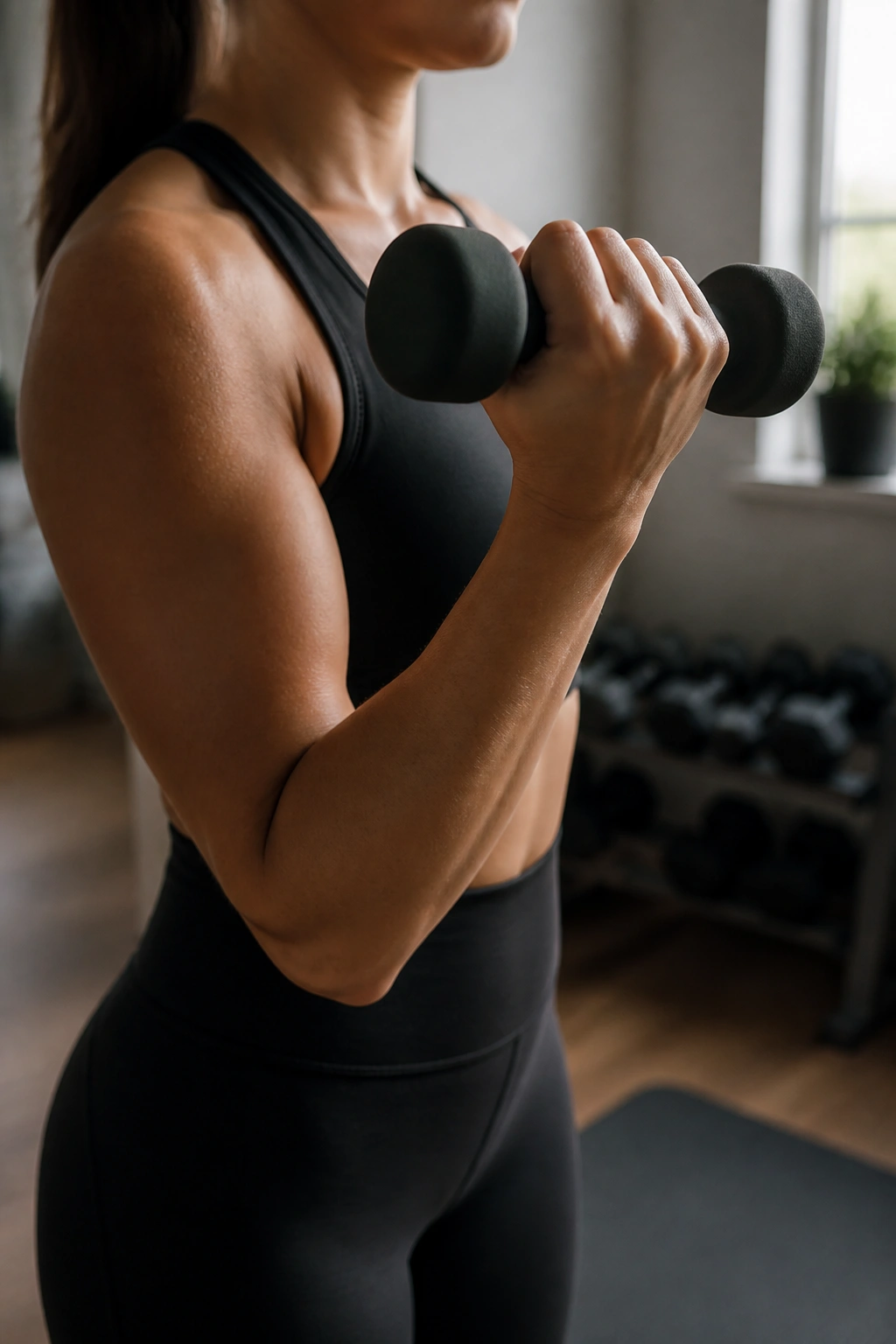
Skip the frantic curl videos. The ones worth saving are the slow, plain ones where the instructor actually shows you how to keep your elbows pinned close to your ribs and lower the weight without letting gravity win.
Why Slow Curls Teach Better Form
A beginner curl video should look almost boring at first glance. That is a compliment. When you use a light pair of dumbbells — 5 to 10 pounds is enough for many new lifters — you can focus on the part people usually rush past: the lowering phase.
That lowering phase matters because the biceps do a lot of their work while resisting the drop. If the video tells you to curl up in one second and lower for three, pay attention. That slower descent builds control fast.
- Start with elbows tucked near the sides of your torso.
- Keep your wrists straight, not bent back.
- Lift until the dumbbell is near shoulder height, not above it.
- Lower under control for 2 to 4 seconds.
- Stop if your torso starts swinging.
My blunt tip: if you have to lean back to finish the last two reps, the weight is too heavy.
2. Seated Triceps Extension Videos That Keep Your Elbows Happy
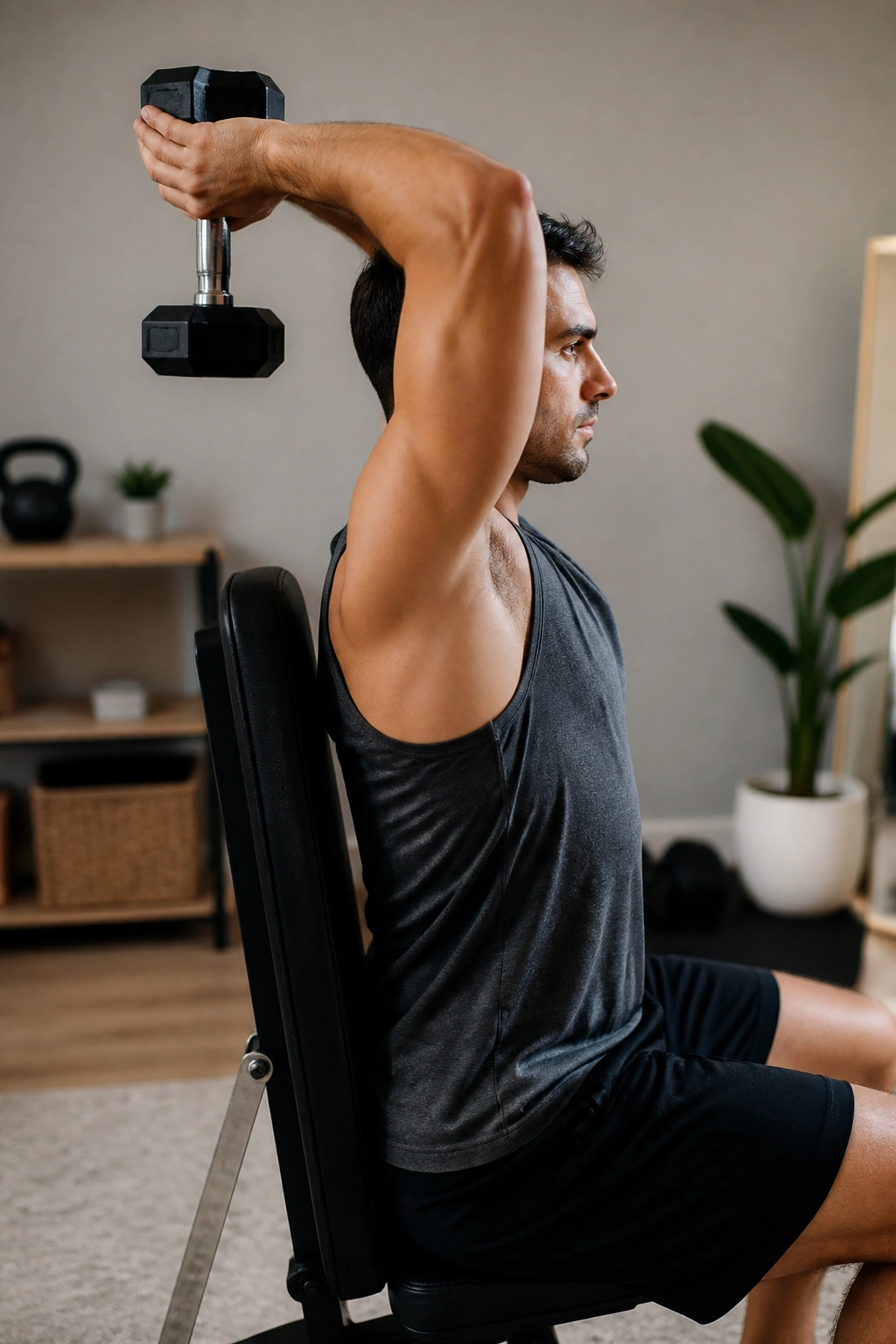
Why do triceps videos feel awkward for so many beginners? Because overhead arm work asks for shoulder control before most people have it. A seated triceps extension video solves a lot of that.
Sitting down gives you a steadier base, which makes it easier to keep your ribs from flaring and your lower back from arching. The movement itself is simple: one dumbbell, both hands on the handle, elbows pointing forward or slightly inward, then lower behind the head and press back up. Done cleanly, you should feel the back of the upper arm doing the work, not your shoulders hitching upward.
A solid video will show the setup from the side. That angle matters. If the instructor arches hard through the lower back, skip that version and find one with a more upright torso. You want the motion to look smooth and contained, not like you’re trying to win a limbo contest with a dumbbell.
One more thing. The lockout at the top should feel firm, not slammed. Soft elbows, steady ribs, no bouncing.
3. No-Equipment Arm Workout Videos for a Bedroom Floor
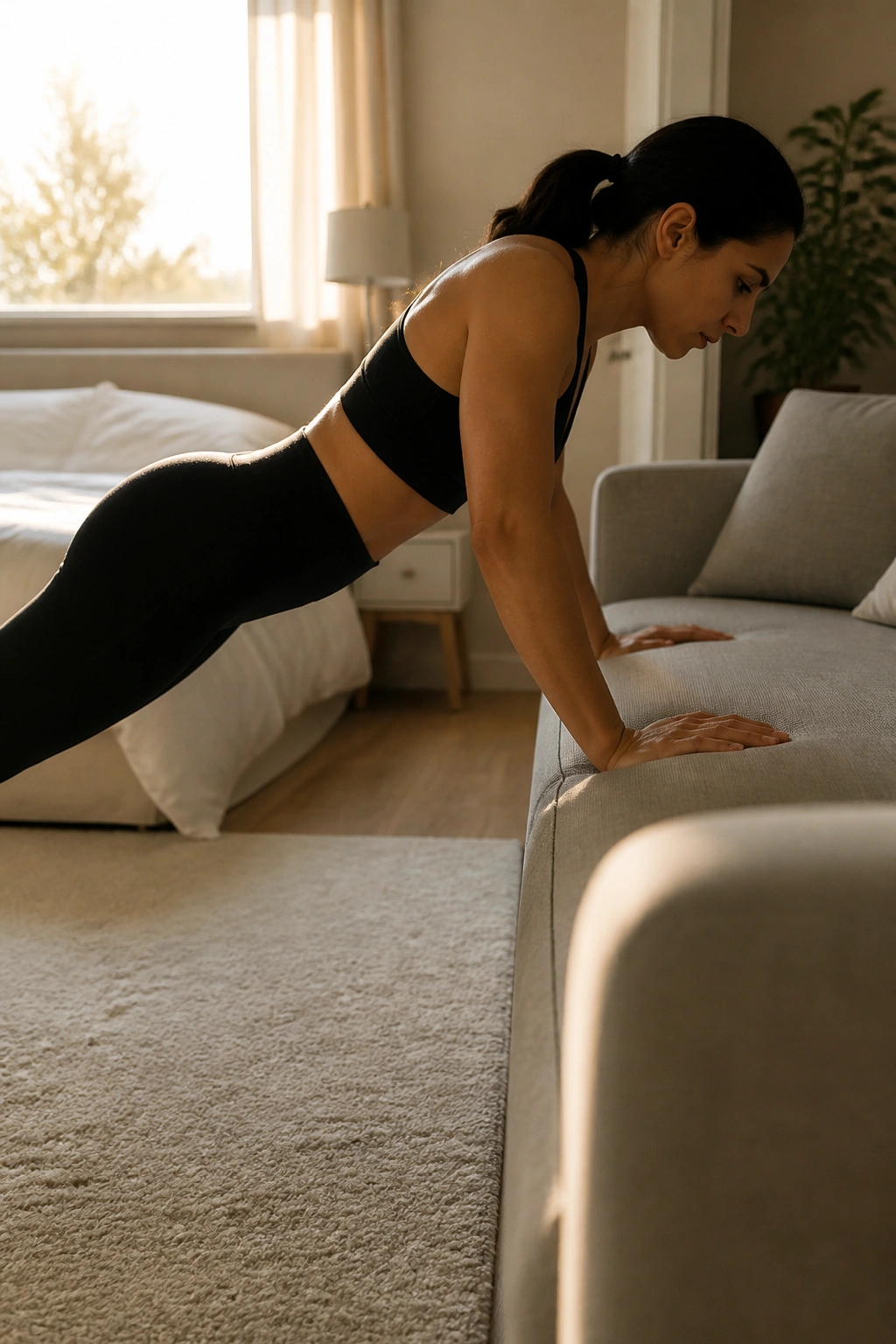
No dumbbells? Fine. You can still learn a lot from bodyweight arm workout videos, and for a person new to lifting, that’s often a smart first step.
The best no-equipment videos don’t pretend that push-ups are only about the chest. They show how your triceps, shoulders, and even your forearms help keep the body stable. That makes the whole upper body feel more connected. It also helps you learn where your hands should go, because bad hand placement turns a simple movement into a shoulder complaint fast.
What the Video Should Show in the First Minute
Look for these clues before you press play all the way through:
- Hands set under or just outside the shoulders.
- Elbows moving at about a 30 to 45 degree angle from the body.
- A clear incline option, like a wall, counter, or couch.
- A work period of 20 to 30 seconds, not a long grind.
- A rest period long enough for your breathing to settle.
Bodyweight work is not “easier” in the way people assume. It is just more honest. If your form breaks on a wall push-up, that tells you something useful. And if you can hold a clean incline push-up for 8 to 12 reps, you’re building the base that makes later lifting feel less strange.
4. Resistance-Band Arm Videos That Start at the Doorway
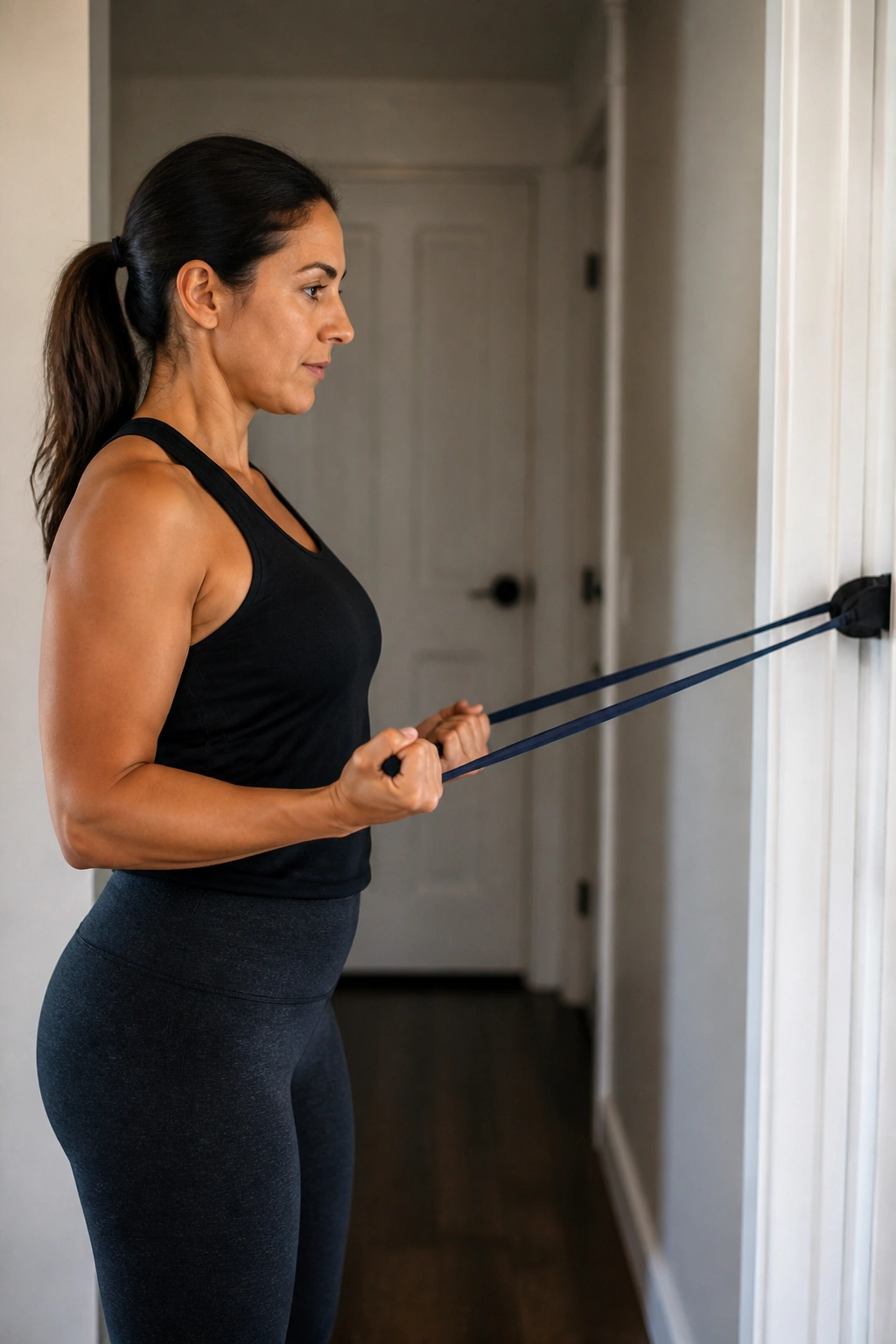
Bands are not a beginner downgrade. They’re often the cleanest way to learn arm work without overloading your joints or worrying about a heavy dumbbell dropping out of position.
A good resistance-band video usually starts with setup. That’s not boring. It’s the part that keeps the whole session from turning into a mess. You want to see where the band is anchored, how far away the lifter stands, and what the grip looks like before the first rep. If the video skips that, it’s missing the most useful part.
Bands keep tension on the muscle through the whole range, which feels different from free weights. The top of a curl still matters. The bottom still matters. There is no easy resting spot halfway through, and beginners often feel that right away.
Setup Matters More Than the Burn
If you can’t tell whether the band is light, medium, or heavy, the video hasn’t done its job. You should see enough detail to know when the movement is supposed to look hard and when it should still look controlled.
- Anchor the band at a stable point only.
- Stand far enough away to create tension, not strain.
- Keep the wrists stacked over the forearms.
- Use 10 to 15 reps for most beginner sets.
- Stop before the band yanks your shoulder forward.
A small warning: if the band snaps your wrist backward or pulls you off balance, it’s too much tension. Trim the load and repeat the movement cleanly.
5. One-Dumbbell Arm Workout Videos for the Uneven Side
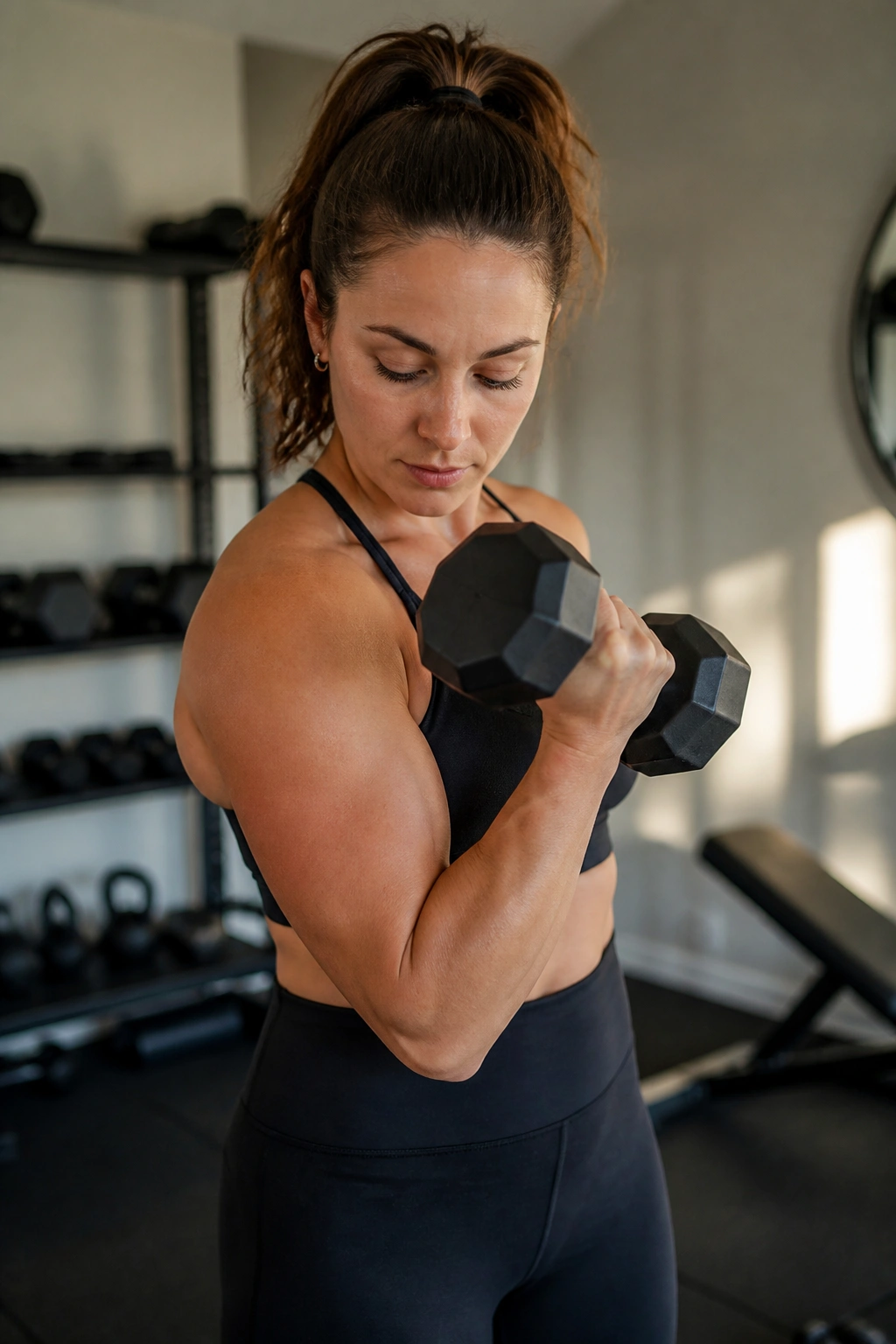
Say you own one 8-pound dumbbell and a coffee table. That’s enough.
One-dumbbell arm workout videos are underrated because they make beginners pay attention to one side at a time. That matters more than people think. Most of us have a stronger arm and a lazier arm, and when both sides move together, the strong side often steals the work. A single-dumbbell format fixes that problem fast.
These videos usually use alternating curls, one-arm triceps extensions, or one-side presses. I like them because they force you to feel the exact path of the weight. There’s nowhere to hide. If your elbow drifts, you notice. If your shoulder sneaks in, you notice that too.
The other nice thing is pacing. When you train one arm at a time, the resting arm gets a brief break, which often lets you keep the form cleaner across the whole set. That is handy for people new to lifting, who tend to lose precision once fatigue starts creeping in.
6. Hammer Curl and Reverse Curl Videos for Grip and Forearms

Regular curls are not the only curl. If a beginner video includes hammer curls or reverse curls, that’s a good sign the creator understands more than the mirror muscle.
Hammer curls use a neutral grip, palms facing in, and they hit the brachialis and forearm muscles a little more than a standard curl. Reverse curls flip the palm position and ask even more of the forearms. You may not feel a huge pump at first. That is normal. The payoff shows up in grip, wrist control, and the thicker look of the upper arm near the elbow.
These videos are also useful if straight-up curls bother your wrists. Sometimes the neutral position feels cleaner and less twitchy. That does not mean the other curl variations are bad. It means your body is telling you which line of movement feels safer.
A good beginner video will keep the elbows close and the motion small enough to stay tidy. No swinging. No whip action. Just slow reps and a solid top position.
7. Incline Push-Up Videos That Build Triceps Without a Bench

Can a push-up video count as an arm workout? Absolutely.
Incline push-ups are one of the easiest ways to train the triceps, shoulders, and chest without forcing a new lifter onto the floor too soon. A counter, sturdy table, couch arm, or bench gives you a more forgiving angle. The higher the surface, the easier the rep. That simple scale makes the movement approachable and less intimidating.
The best videos show a clear progression. Wall push-ups first, then counter push-ups, then a lower surface. That matters because people new to lifting often jump straight to the floor and end up flaring the elbows or sagging the hips. Neither feels good, and neither teaches much.
How to Scale the Angle
- Start at the wall if you cannot lower with control.
- Move to a kitchen counter when 8 to 10 wall reps feel easy.
- Try a couch or bench once the counter feels smooth.
- Keep your body in one straight line from head to heels.
You want the chest to lower as a unit, not the head first. If the video shows that clearly, save it.
8. Forearm and Wrist Strength Videos That Most Beginners Skip
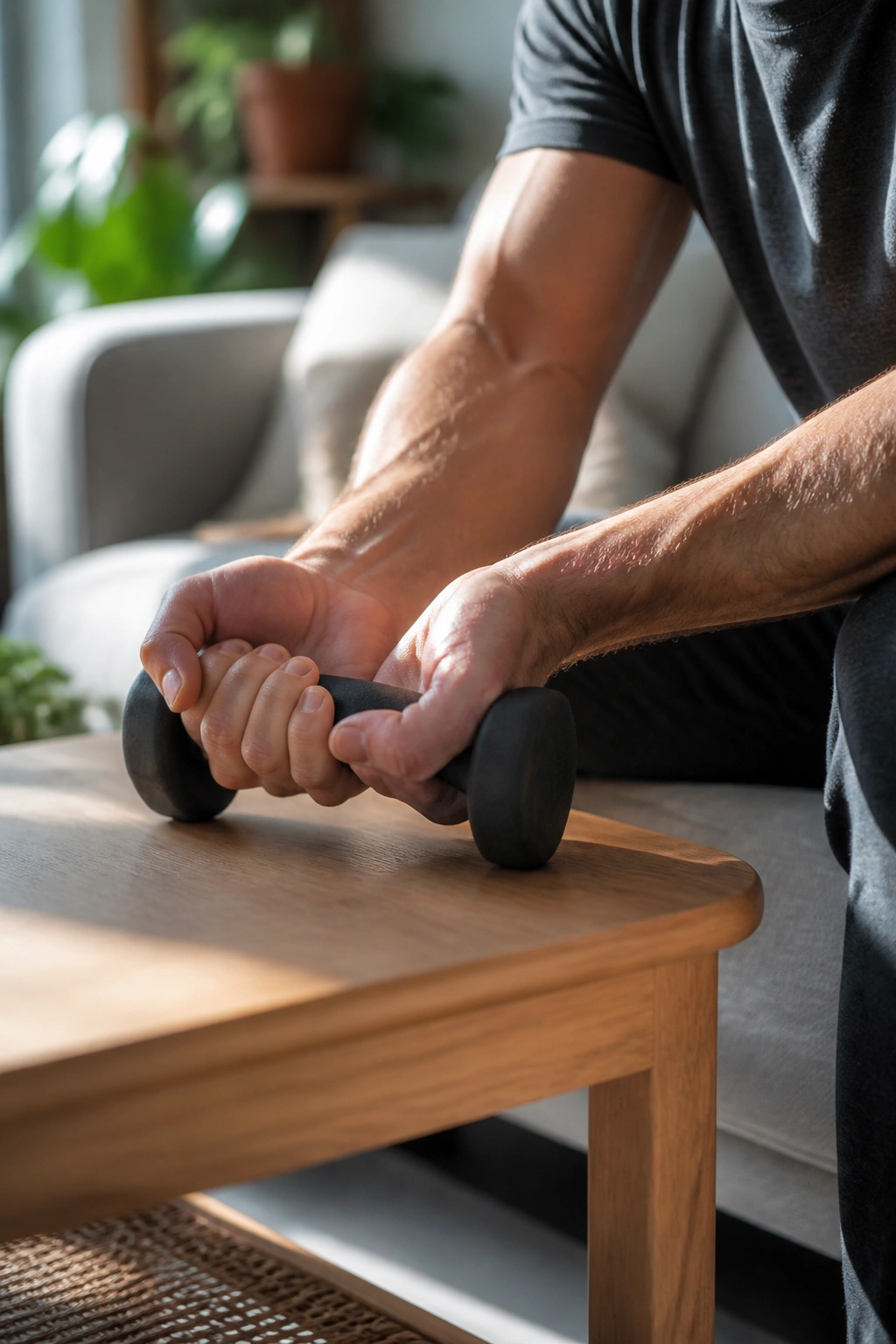
Your grip will give up before your biceps do.
That is why forearm and wrist strength videos deserve a spot in a beginner arm routine. They do not look glamorous, and they rarely get the clicks, but they make everything else feel sturdier. A few minutes of wrist curls, reverse wrist curls, and grip work can help with carrying groceries, holding dumbbells, and keeping your hands from feeling like noodles halfway through a set.
I especially like videos that show pronation and supination — turning the forearm palm-up and palm-down under control. It’s a small movement, but it teaches the forearm to handle rotation instead of fighting it. That matters if you plan to row, curl, or press with any consistency.
A beginner-friendly forearm video should feel modest. Light weight. Short sets. Clean reps. You should feel work in the lower forearm and around the wrist, not sharp tugging in the joint. Sharp pain is not training.
9. Tempo Arm Workout Videos With Slow Lowering Phases
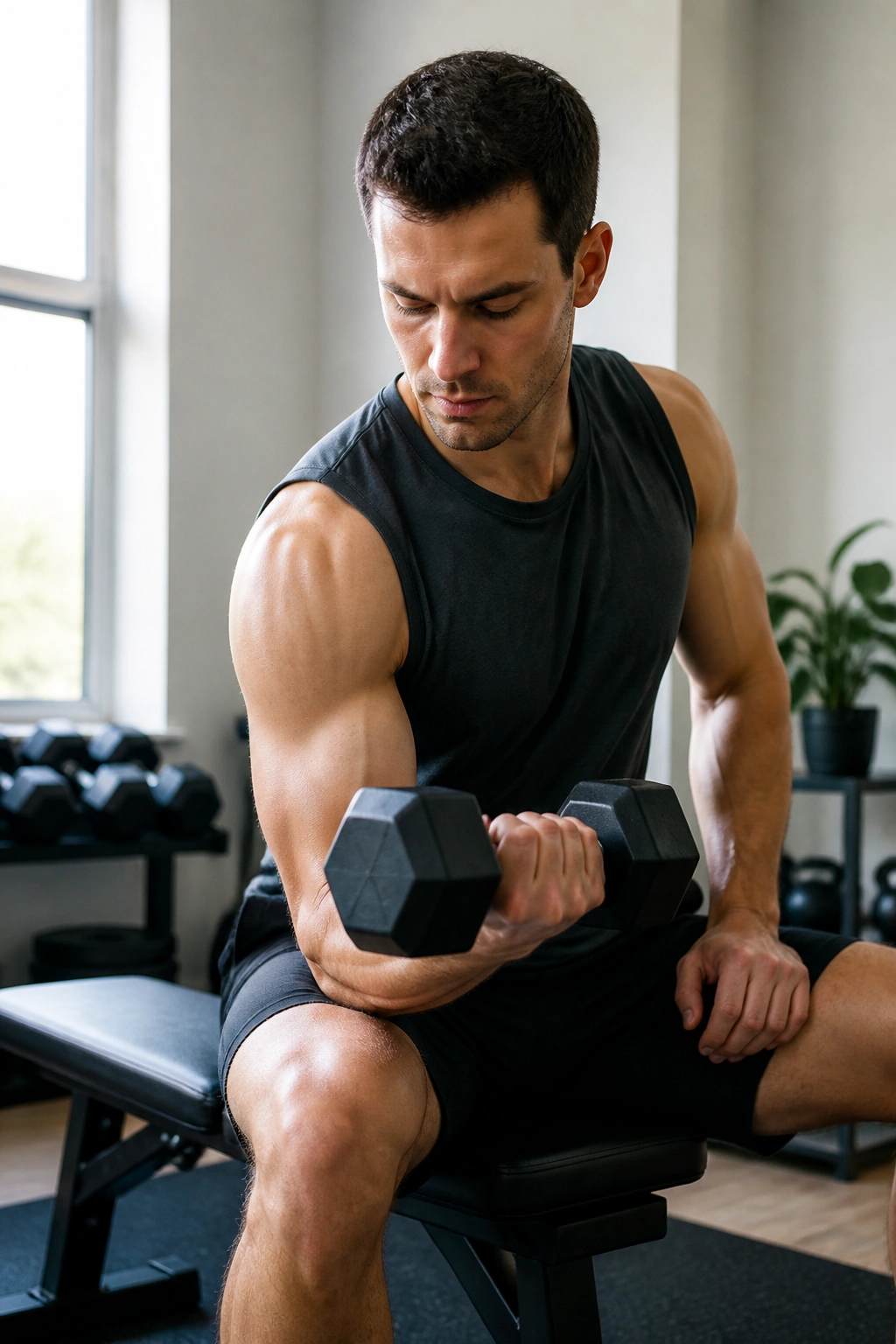
A three-second lowering phase feels boring right until it doesn’t.
Tempo training is one of the cleanest tricks for beginners because it makes light weights feel worth your time. A video might cue a 3-1-1 pattern: three seconds down, one second pause, one second up. Or it might use a 4-second lowering phase on curls and triceps kickbacks. Either way, the point is the same — you’re forcing the muscle to do the work instead of bouncing through the motion.
That kind of video is useful when you do not want to chase bigger dumbbells yet. A 10-pound curl done with control can teach more than a rushed 20-pound curl that turns into a shoulder swing. I’d take the controlled version almost every time for someone new to lifting.
Tempo also helps you learn honesty. If you can’t keep the count without cheating, the weight is too heavy. Simple. And a little humbling.
The best videos count out loud, show the bottom position, and keep the camera close enough that you can actually see the pauses.
10. Short-Rule Arm Circuit Videos With Built-In Rest Breaks
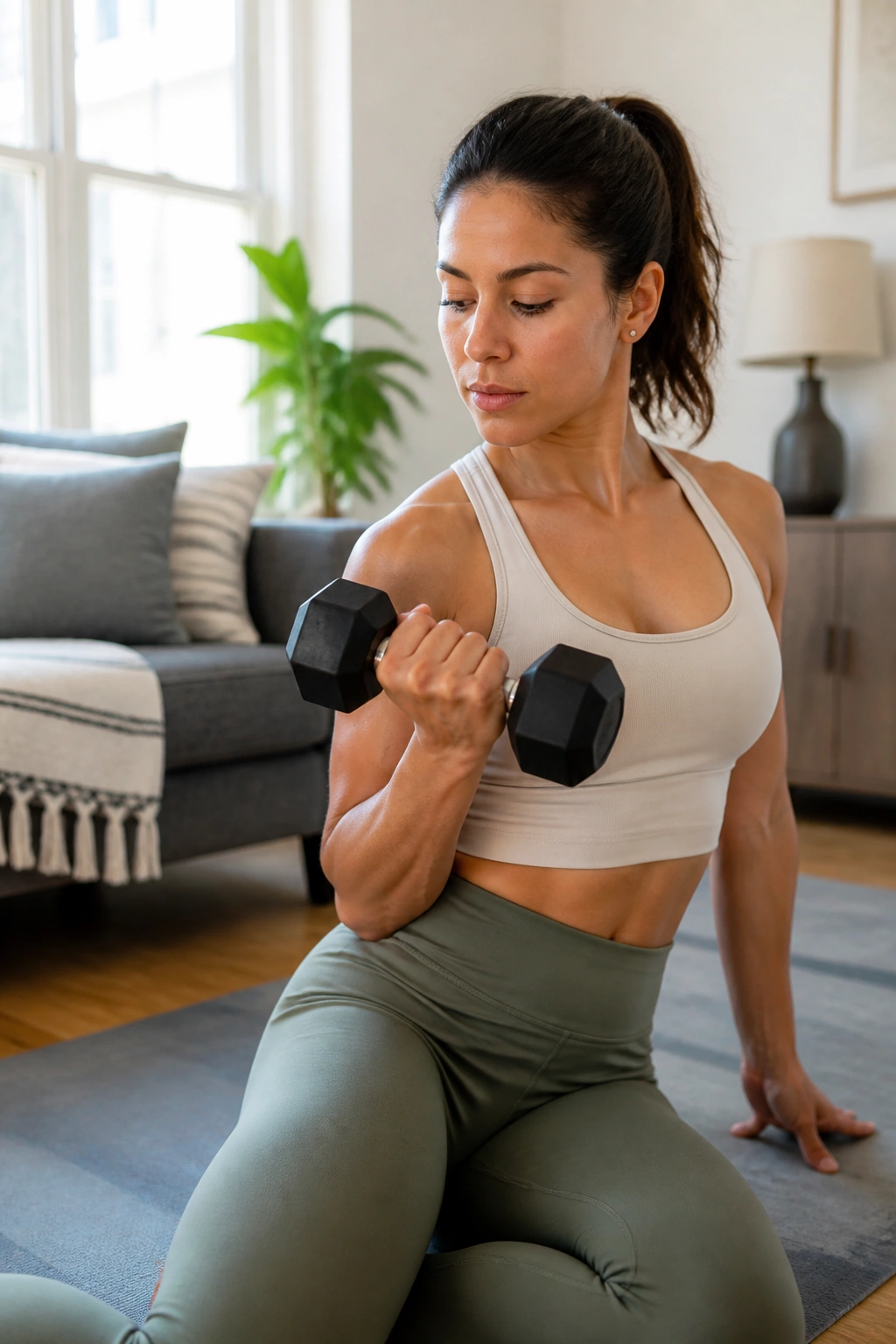
Busy day? Then the structure matters more than the playlist.
Short arm circuits work well for beginners when they’re honest about rest. A good video might cycle through three moves — say curls, triceps extensions, and incline push-ups — for 20 to 30 seconds each, then give you 30 to 45 seconds to breathe. The rest is not optional. Without it, your form tends to collapse and the whole session turns into flailing.
These videos are useful because they teach pacing. You learn how to move from one exercise to the next without standing around forever, but you also learn not to rush like the floor is on fire. That balance is harder than it sounds.
How to Pace the Circuit
- Use a weight you can control for the entire interval.
- Keep the first round easy enough to copy the form.
- Rest long enough that your shoulders stop creeping upward.
- Stop the set if the last three reps look ugly.
I like this format for people who get bored fast. It keeps the session moving without turning it into chaos.
11. Warm-Up Videos That Prep Shoulders, Wrists, and Elbows
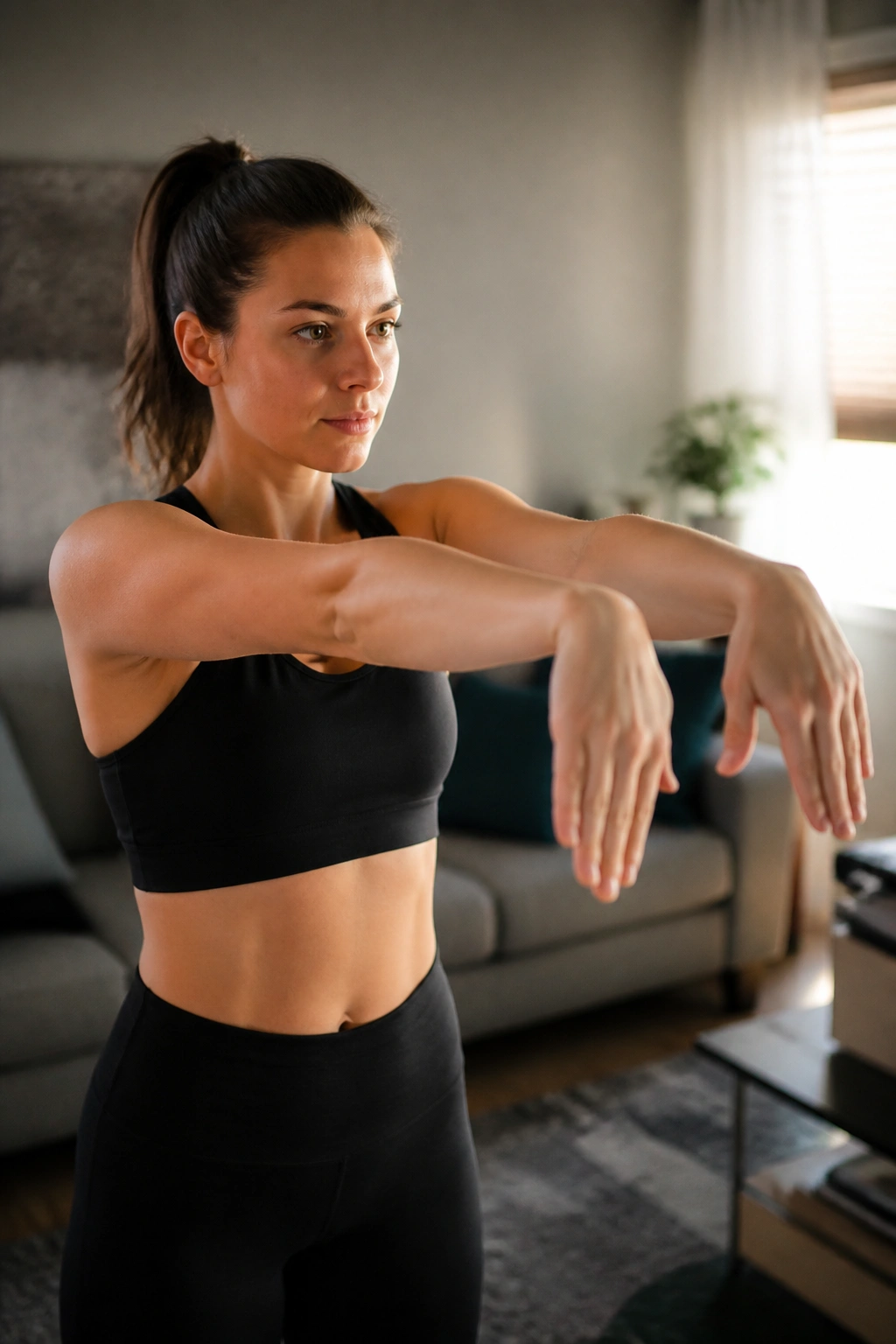
Do you need a warm-up for ten minutes of curls? Yes. Especially if you’re new.
The best warm-up videos for beginners are short, plain, and a little repetitive. Shoulder circles, band pull-aparts, wrist rotations, arm swings, and one or two super-light curl or press reps are enough to get the joints ready. You are not trying to get tired. You are trying to stop your first working set from feeling like a surprise.
A good instructor will show the difference between moving your arms and shrugging your shoulders. That distinction matters. If your traps take over during the warm-up, they’ll probably take over again once the real set starts.
One detail I like: the warm-up should include the hand position for the main move. If the workout uses a neutral grip, warm-up with that. If it uses a supinated curl, warm up with that. It saves time and makes the first real rep feel less awkward. Small thing. Big payoff.
12. Beginner Upper-Body Videos That Still Put the Arms to Work
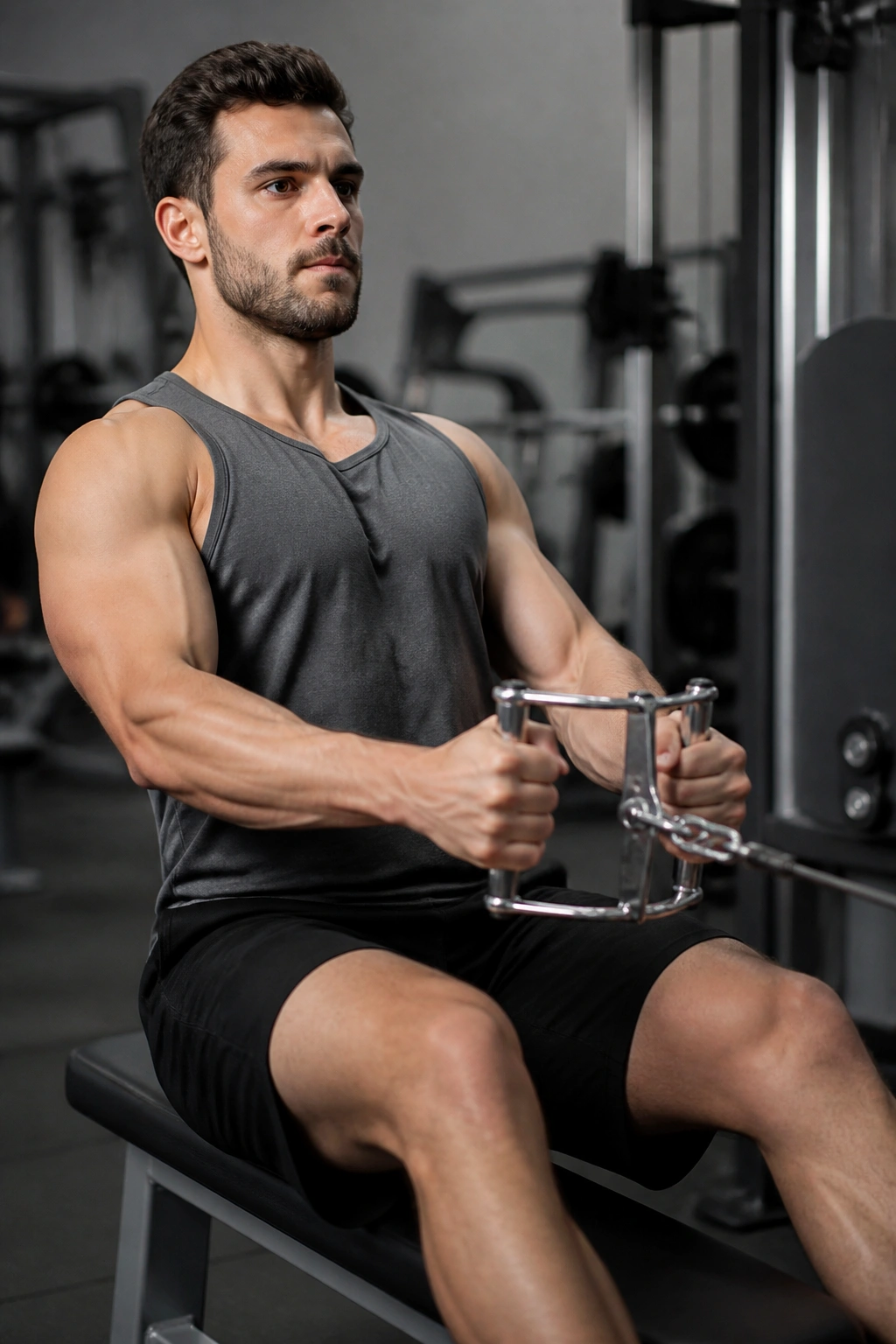
A seated row video can build better-looking arms faster than endless curls.
That sounds backward until you’ve done a few workouts. Pulling movements train the biceps as helpers, but they also teach your back to support the lift, which keeps the whole upper body honest. For beginners, that matters because arm strength does not live in isolation. A stronger back gives your arms a cleaner place to work from.
These videos are worth watching if you want a more complete upper-body session without jumping straight into complicated barbell work. Think seated rows, lat pulldowns, chest presses, and machine-assisted pulls. The arms are involved the whole time, even if they are not the star of the show.
What I’d look for is simple cueing. The instructor should explain where the elbows go, how the shoulders stay down, and what the handle should feel like in the hand. If the video spends more time talking about posture than chasing fatigue, that’s a good sign.
13. Superset Arm Workout Videos for People Who Hate Long Sessions
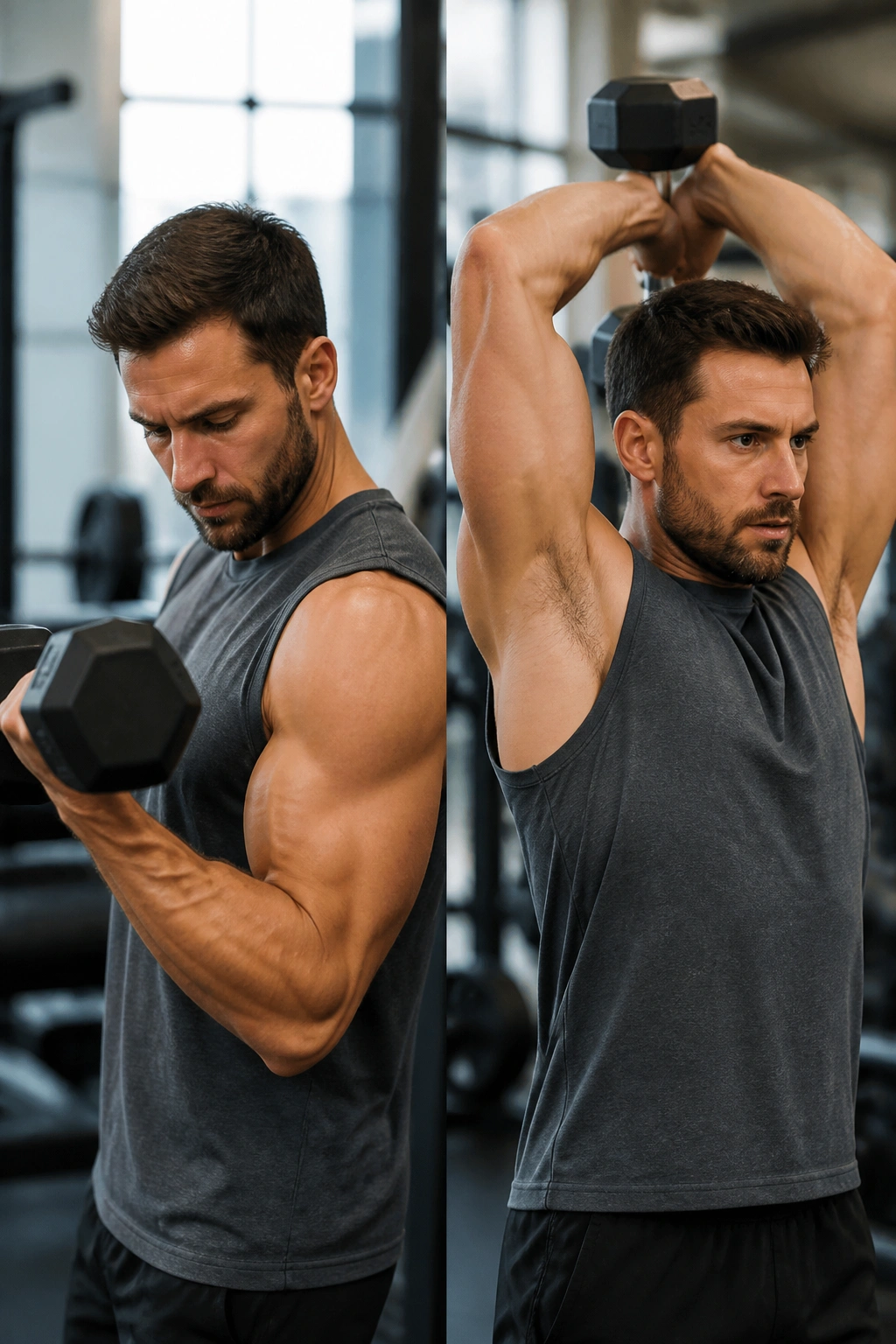
Curls paired with triceps work are efficient, and they sting in a useful way.
Supersets are simple: do one arm exercise, move right into another, then rest. A beginner version might pair dumbbell curls with overhead triceps extensions, or hammer curls with rope pressdowns at the gym. The rest period usually sits around 45 to 75 seconds after the pair.
I like superset videos because they keep the workout compact. You’re not standing around checking your phone every minute. You’re doing a bit of work, catching your breath, then doing another bit of work. For new lifters, that rhythm can make arm day feel less scattered.
The Right Kind of Pairing
- Put a biceps move next to a triceps move.
- Keep the weights light enough to stay crisp.
- Use 8 to 12 reps for each exercise.
- Rest after both moves, not between them.
A sloppy superset is worse than a simple straight set. If the video makes the pace look frantic, it’s not beginner-friendly. Keep it neat.
14. Ten-Minute Arm Finisher Videos for Busy Days
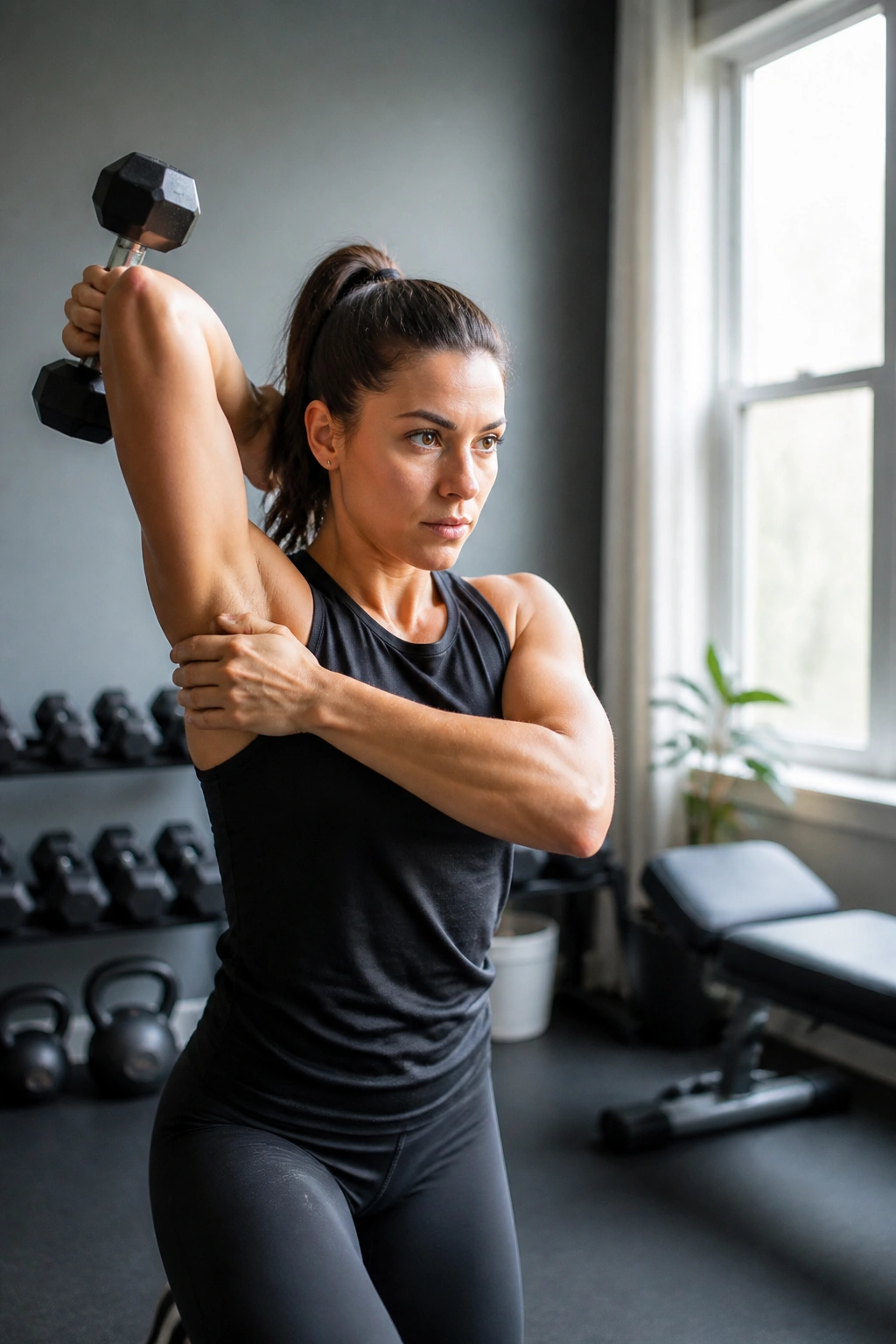
A ten-minute arm finisher is not a full strength plan.
That needs saying because these videos get misunderstood. They’re useful. I use that word carefully. A short finisher can add a little extra arm work after a walk, a lower-body day, or a full upper-body session. It can also keep you consistent on days when motivation is low and your schedule is uglier than you want to admit.
What it should not do is replace every other kind of training. If you rely only on short finishers, your progress will stall. You may feel a burn, but your technique and load progression will stay shallow.
The best version usually has three moves, 2 rounds, and a clear timer. Something like curls, kickbacks, and close-grip push-ups. Fast enough to fit into a gap in your day, but not so rushed that you can’t tell whether you’re cheating by rep four.
15. Mirror-Form Coaching Videos That Show Every Angle
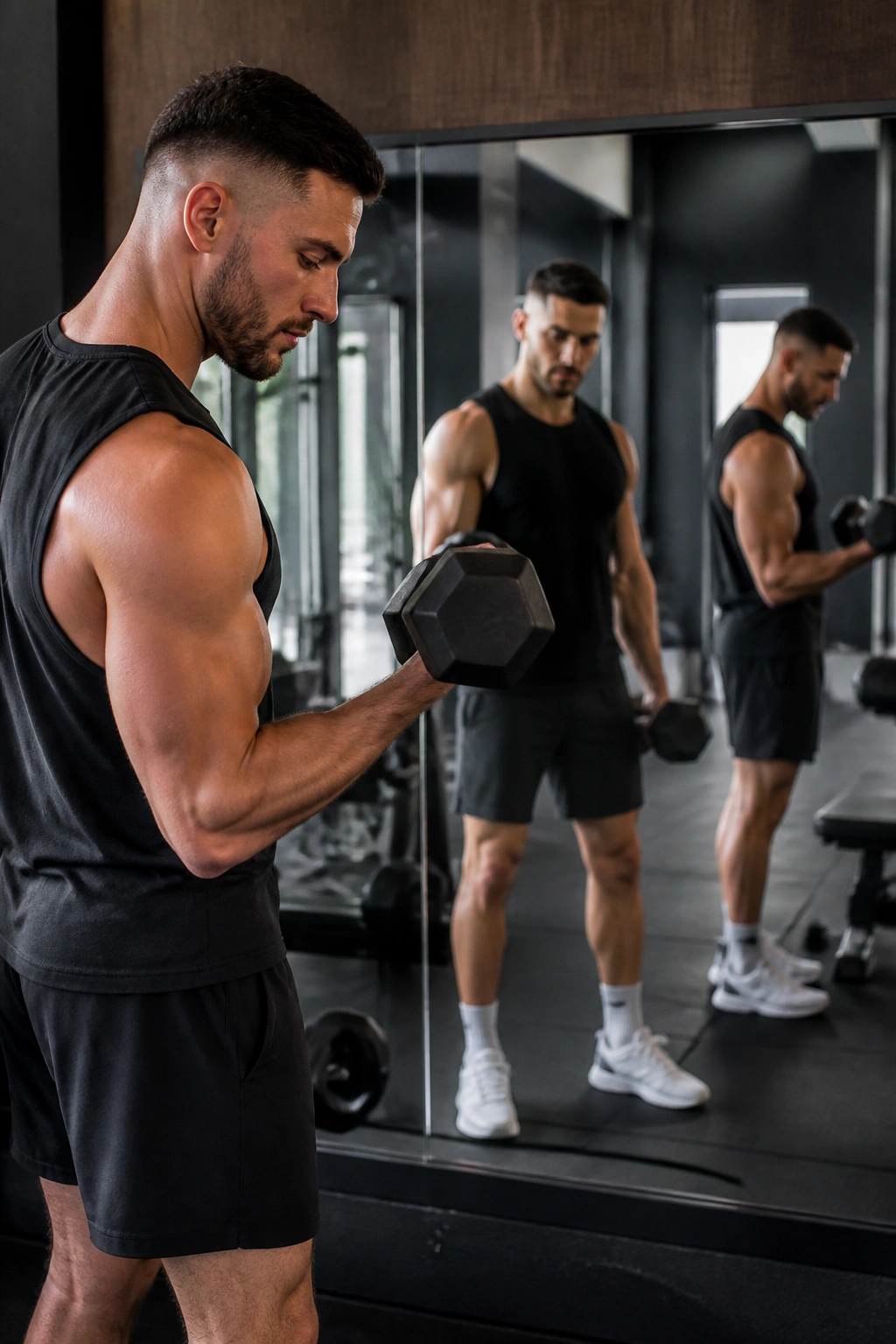
The camera angle matters more than the thumbnail.
A mirror-form coaching video is one of the smartest choices for a beginner because it shows what your body should look like from the front and the side. That means you can check for shoulder shrugging, elbow drift, rib flare, and wrist bend before those little mistakes turn into habits.
These videos often slow the movement down and point out the visual markers that matter. Are your elbows still near your sides? Are your wrists stacked? Does the dumbbell travel in a straight enough line, or does it loop around your body like a confused pendulum? Those details are the whole game in beginner lifting.
Why the Side View Helps
- It shows torso swing right away.
- It makes shoulder shrugging easier to spot.
- It reveals whether the elbow is drifting behind the body.
- It helps you match your own setup to the demo.
I like mirror-form videos because they feel honest. No music trick can fake bad mechanics.
16. Gym Machine Arm Workout Videos That Make Load Changes Easy
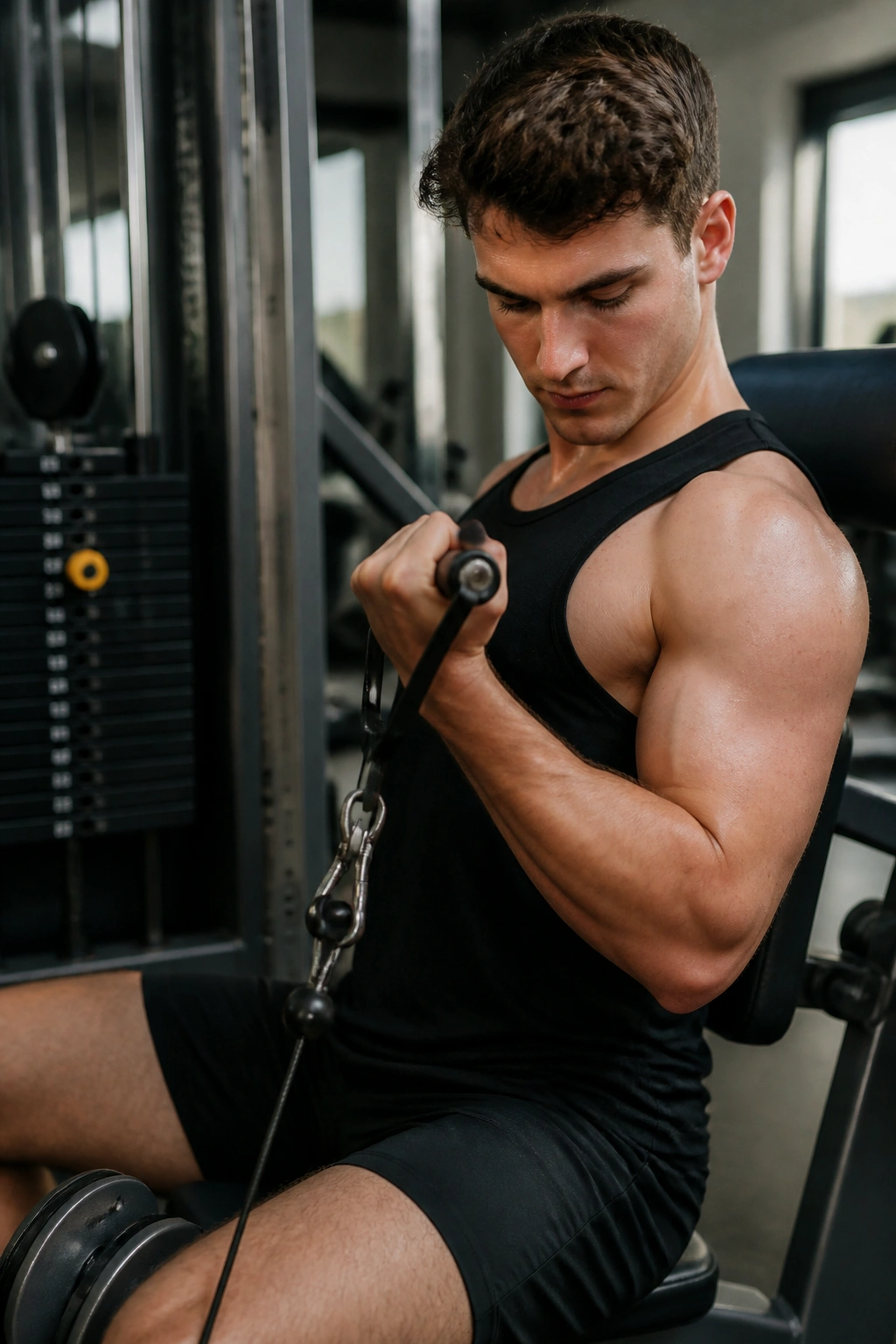
If you train in a gym, cables can make beginner arm work feel cleaner than free weights.
That’s not a knock on dumbbells. It’s just a practical note. Cable curls, rope pressdowns, and machine preacher curls give you a fixed path and simple load jumps. For a new lifter, that can make the movement feel less wobbly and more repeatable. You’re not balancing the weight in the same way, so it’s easier to notice the actual muscle work.
A good machine-based video should show how to set the seat or pulley height. That part matters a lot. If the handle starts too high or too low, the rep feels awkward from the first second. You want the setup to be calm and repeatable so you can focus on the actual exercise.
One thing I’d watch for: the weight stack should move smoothly, not slam. If the video uses a load that looks heavy enough to yank the shoulders forward, that’s too much for a beginner session.
17. Low-Impact Arm Workout Videos for Sensitive Elbows
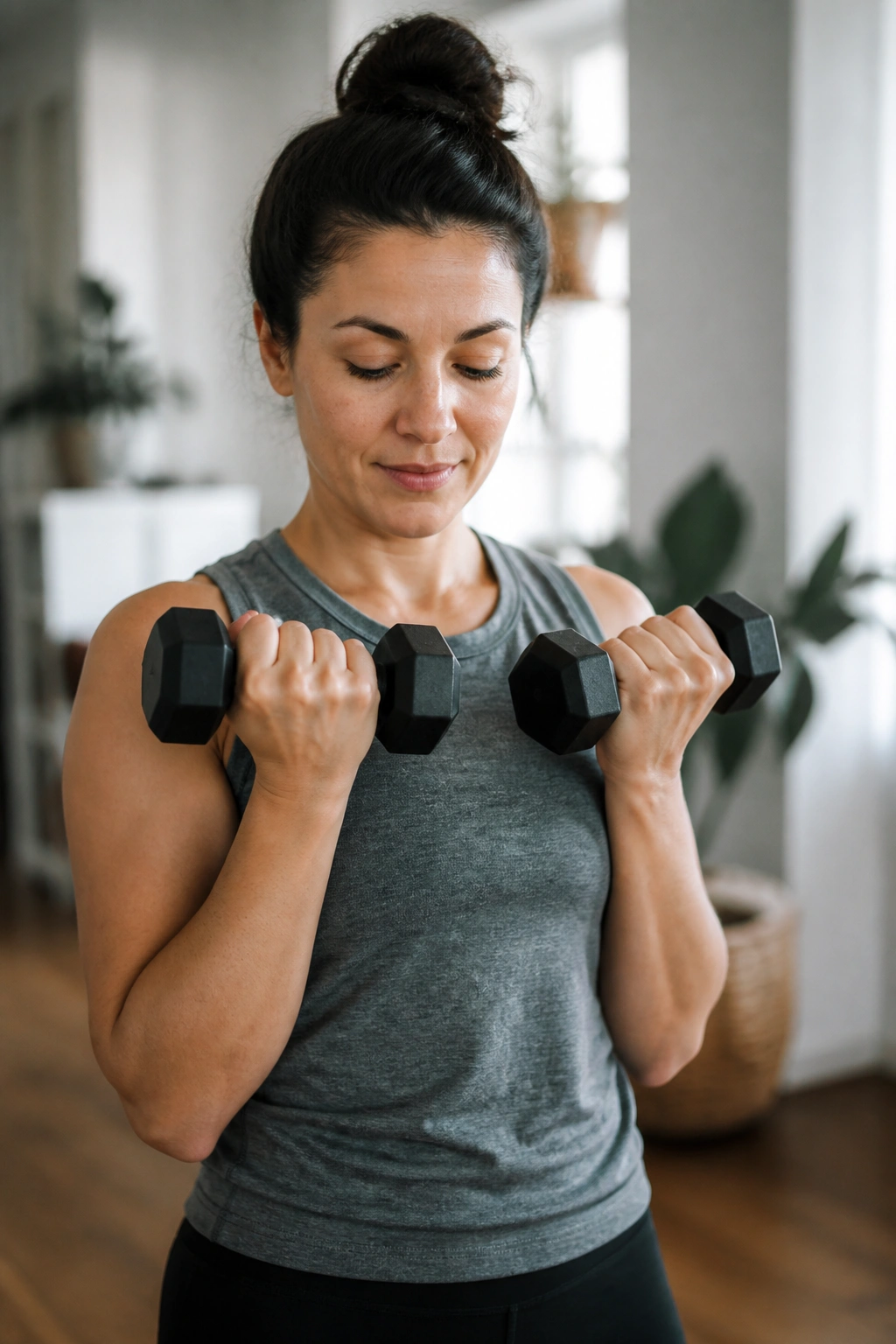
What if your elbows complain during curls?
Then pick a lower-impact video and respect that signal. A smart beginner routine should make room for neutral grips, lighter resistance, shorter ranges of motion, and slower progress. You do not need to force your way through a movement that leaves your joints irritated the next day.
These videos often use bands, cables, or light dumbbells with neutral-hand positions because those setups tend to feel friendlier on the elbow and wrist. They also skip the frantic pace that makes people swing through the top half of a rep. That matters more than flashy exercise choice.
Sharp pain, pinching, or a hot sting in the joint is a stop sign. Muscle burn is one thing. Joint pain is another. Don’t mix them up.
A useful low-impact video will say that out loud and show easier options without treating them like a failure. That honesty is worth more than a thousand reps.
18. Four-Week Beginner Arm Video Plans That Build Consistency
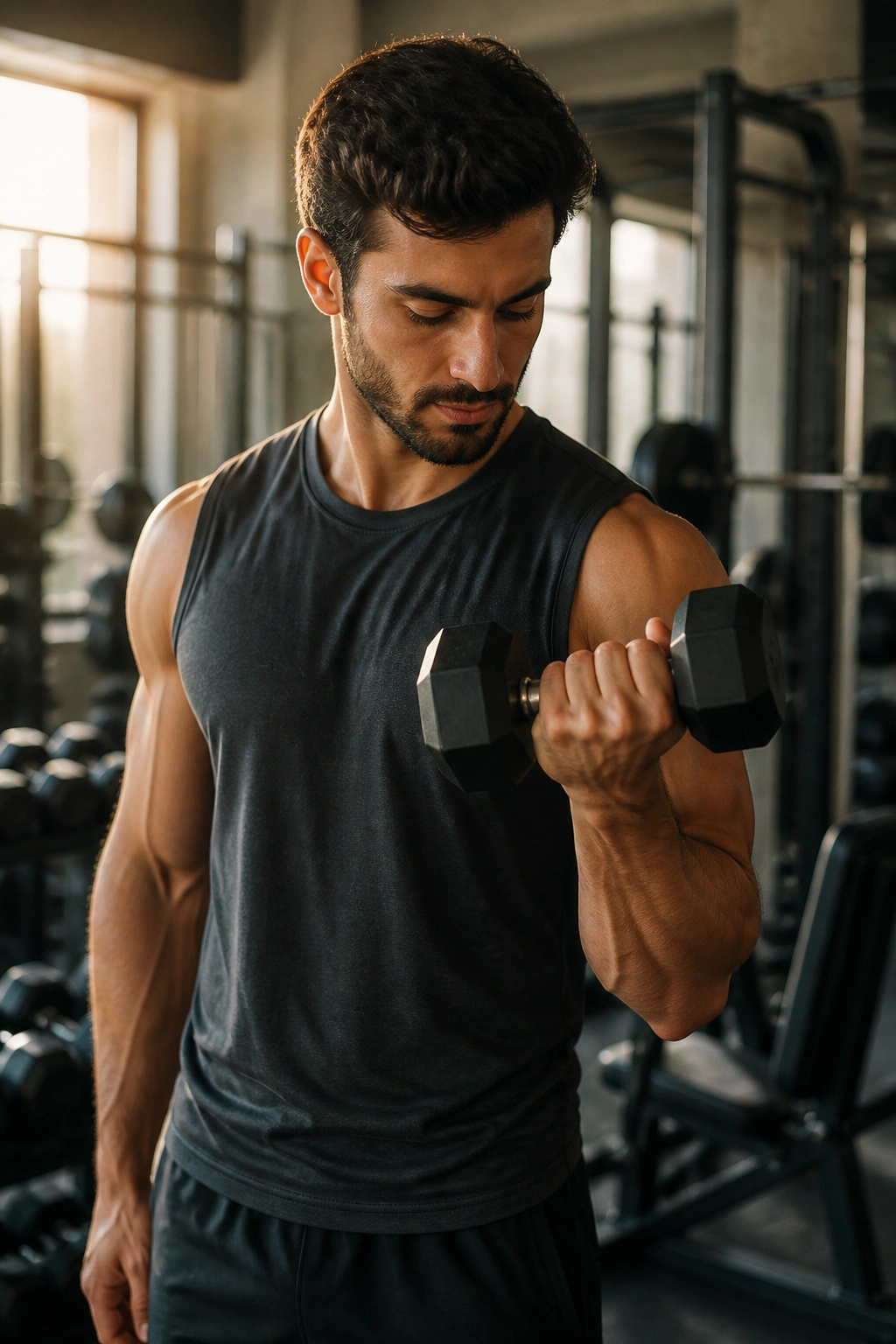
A single arm day video is fine, but a short progression beats random workouts every time.
That’s why I like beginner video plans that repeat the same movements for a few weeks while nudging the difficulty up in small steps. You learn the exercises, then you improve them. No guesswork. No chasing novelty just because a thumbnail looks shiny.
A simple four-week plan might look like this:
- Week 1: Learn the setup with light weight and 2 sets per move.
- Week 2: Keep the same weight and make the reps cleaner.
- Week 3: Add a small amount of weight or one extra set.
- Week 4: Repeat the week-3 load and focus on control.
That steady rhythm is gold for people new to lifting. It gives your elbows, wrists, and shoulders time to adapt, which is one of the main reasons beginners quit too early — things feel weird before they feel strong. A planned video series takes that chaos out of the process and makes it easier to show up again.
Final Thoughts

The arm workout videos worth your time are the ones that make the work easy to understand, not the ones that make everything look dramatic. Slow curls, clean triceps work, bodyweight basics, bands, and machine sessions can all be useful if the video actually teaches form instead of chasing sweat.
If you’re new to lifting, I’d save three kinds first: a slow dumbbell tutorial, a no-equipment option, and one video that shows a simple progression plan. That gives you a decent base without turning your watch list into clutter.
And honestly, that last part matters. Pick a few videos you trust, repeat them, and let the reps add up. The arms catch on faster than people expect when the instructions stay clear.
