



Thirty-minute workouts at home work because they stop asking your day to cooperate. You can roll out a mat between meetings, after dinner, or before the kitchen becomes a disaster zone. No commute. No waiting for a machine. No excuse built around traffic.
What people miss is that thirty minutes is enough only when the structure is tight. A meandering home session turns into four minutes of setup, ten minutes of wandering around, and a vague promise to “do more tomorrow.” The good routines are plain on paper and a little uncomfortable in real life, which is exactly why they work.
I like workouts that respect different moods. Some days want jumps and sweat. Some days want dumbbells. Some days need low-impact movement because your knees, neighbors, or brain are not in the mood for noise. A timer app, a mat, and a pair of dumbbells can cover most of the ground if you pick the right format.
So the trick isn’t finding one perfect routine. It’s building a small shelf of options and choosing the one that fits the day. Start with the one that feels most doable, not the one that sounds the most heroic.
1. Bodyweight Cardio Circuit
A bodyweight cardio circuit is the closest thing to a universal home workout. It needs almost nothing, it scales well, and it can be made quiet or loud depending on your floor, your downstairs neighbor, and your patience.
Here’s the shape I like: 5 minutes of warm-up, 20 minutes of work, 5 minutes to cool down. That 20-minute middle can run as 40 seconds on, 20 seconds off for six moves, repeated twice. You do not need fancy choreography. You need a timer, some floor space, and the willingness to keep moving when your breathing gets sloppy.
A simple version looks like this:
- March in place with big arm swings
- Squat to knee drive
- Mountain climbers or slow step-ins
- Skaters or side steps
- Plank shoulder taps
- Fast feet or high knees
Soft landings matter. If your feet sound like someone dropping books, shorten the jump and bend your knees more. That one change saves your joints and your floor.
The best part is how easy this is to adjust. Need lower impact? Swap jumps for steps. Need more burn? Cut the rest to 15 seconds and keep your transitions sharp.
2. Dumbbell Strength Ladder
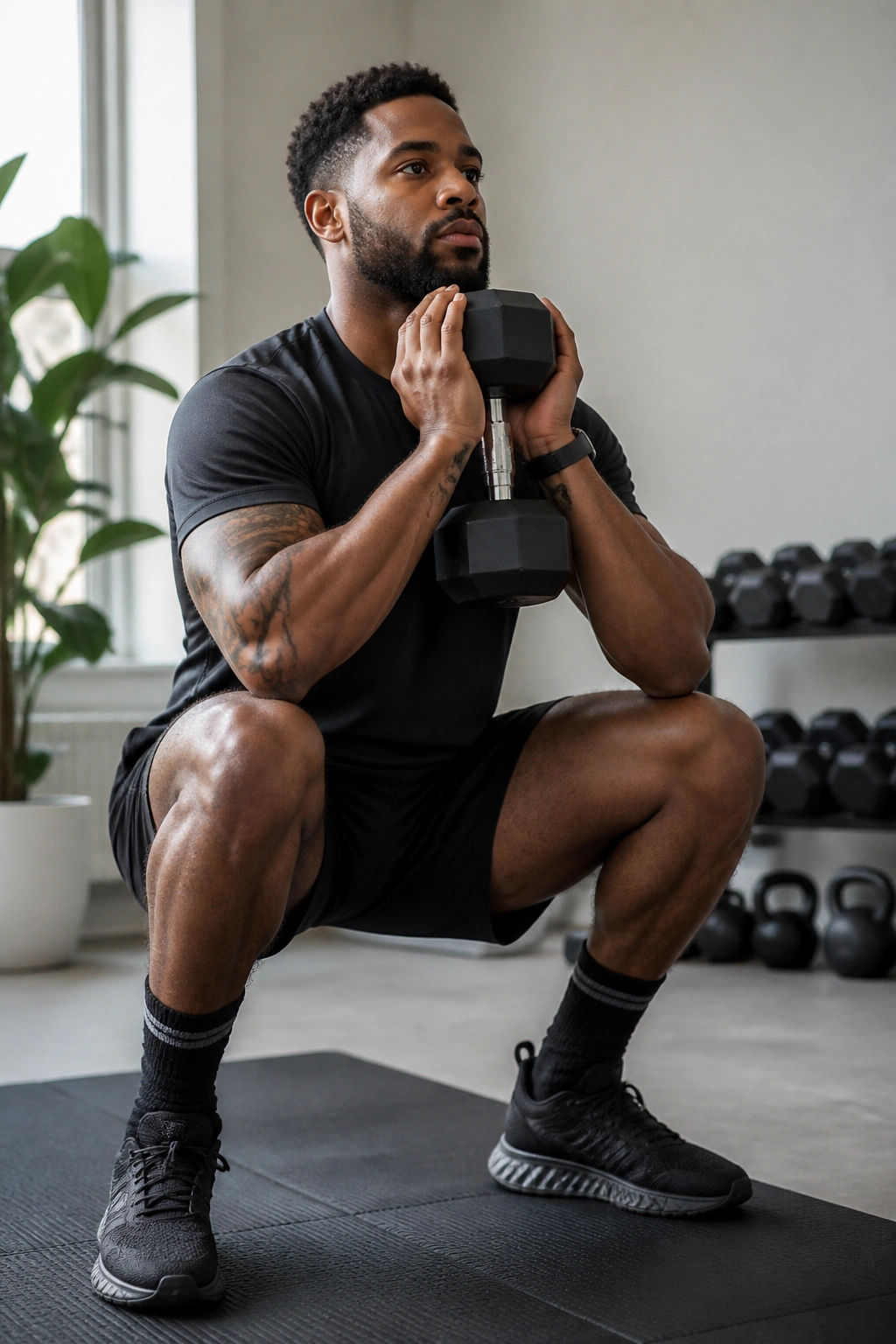
How heavy should the dumbbells be? Heavy enough that the last two reps feel honest, not sloppy. That’s the sweet spot for a home strength session, and it’s easier to find than people think.
I like a ladder here because it keeps the workout moving without turning it into cardio theater. Start with 10 reps of each move, then drop to 8, then 6, then 4. Rest 30 to 45 seconds between exercises and about 60 to 90 seconds between rounds if you need it. The whole thing fits neatly into 30 minutes with a short warm-up and a short cool-down.
The ladder format
Use four moves that cover the whole body:
- Dumbbell goblet squat
- One-arm row
- Floor press
- Romanian deadlift
Do the same order each round. Your brain gets to relax, and your form usually gets cleaner by the second round because you know what’s coming.
What to watch for
The squat should feel deep but controlled. The row should stay close to your ribs, not drift up toward your shoulder. The floor press should stop when your elbows kiss the floor, and the hinge should feel like your hips are moving back, not your back folding over.
Pick a weight you can keep for the whole ladder. If you have to cheat the last round to finish, the dumbbells are too heavy. If you could chat through the set, they’re too light.
3. Low-Impact Apartment Sweat Session
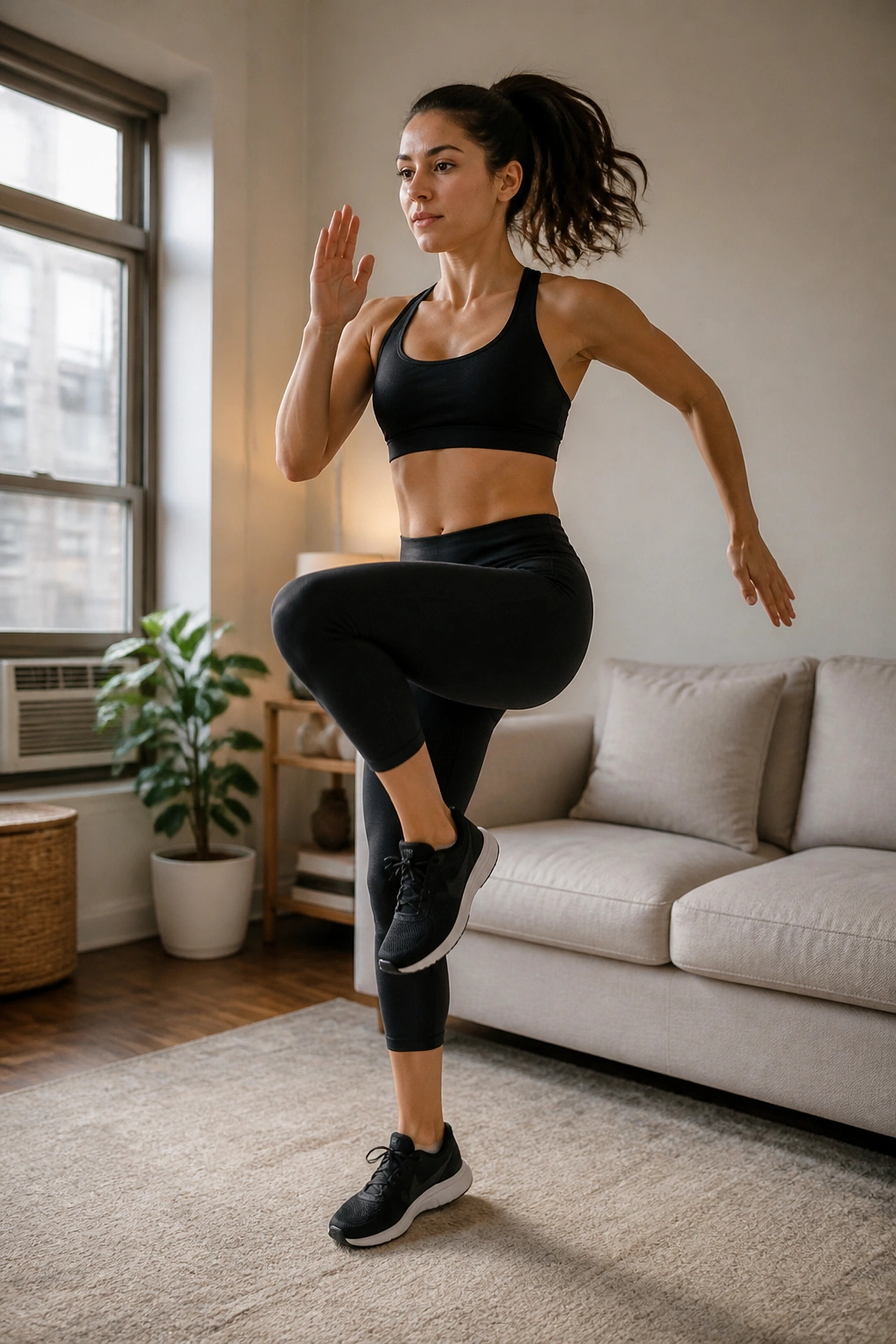
Apartment walls are thin. Floors are loud. Knees sometimes complain. That doesn’t mean the workout has to be boring.
This one stays on the floor or close to it, but it still builds heat fast. Think quiet feet, steady breathing, and enough pace to make your shirt stick a little. I use this on days when jumping feels like a bad idea or when I want to move without rattling the room.
The structure is simple: 5 minutes to warm up, then three rounds of 6 minutes with a minute between rounds. Each 6-minute round uses 3 moves for 40 seconds each, repeated twice.
Try this mix:
- Step jacks instead of jumping jacks
- Chair squats
- Reverse lunge to knee lift
- Standing cross-body crunch
- Plank walkout
- Shadow boxing with small steps
No one needs to know you’re working hard. That’s part of the appeal.
A lot of people assume low-impact means low effort. Not even close. If you keep the pace honest and your rest short, your legs and lungs still show up to the party. And your joints get a quieter day, which sometimes matters more than chasing sweat noise.
4. Tabata Timer Sprints
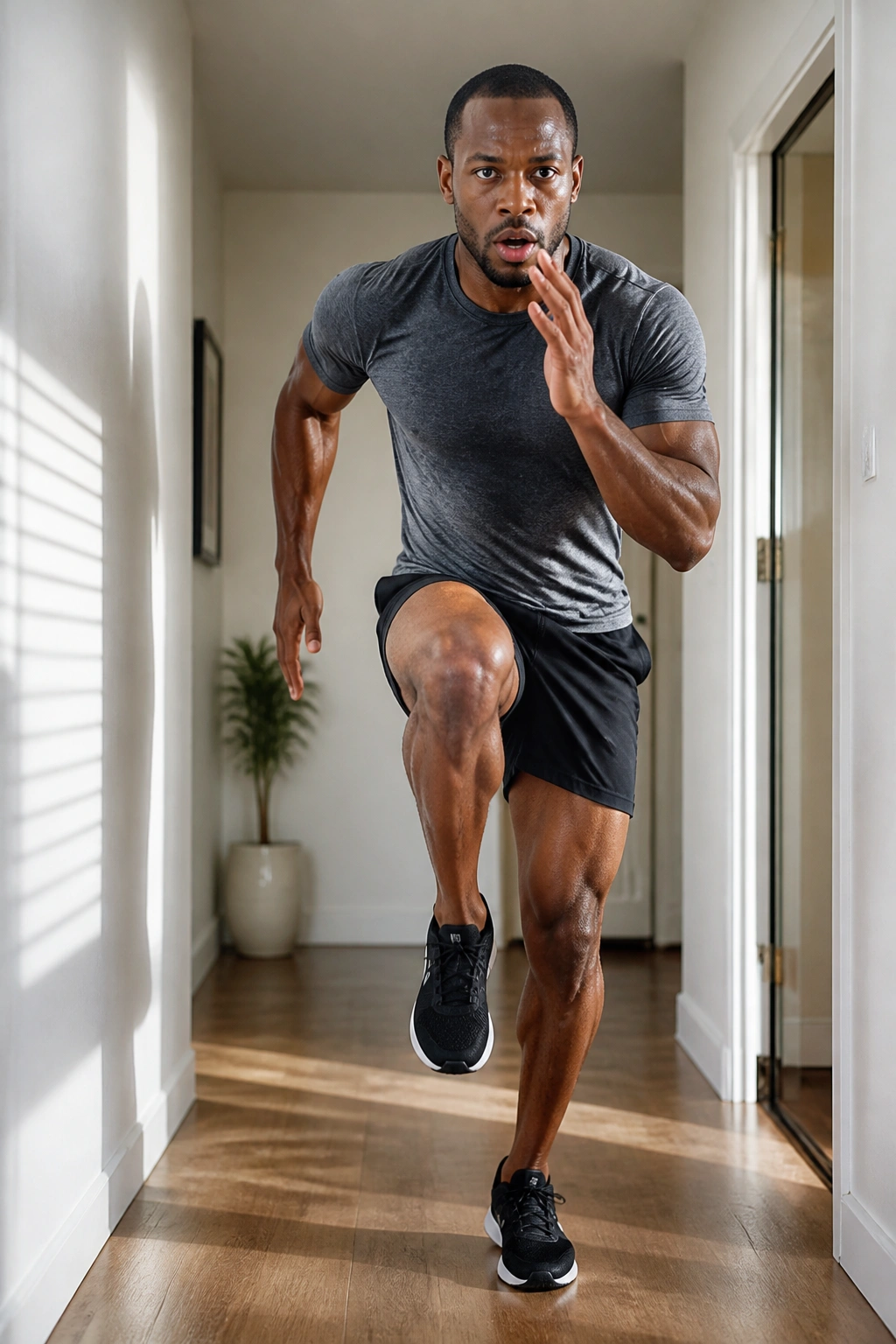
Tabata is tiny on the clock and rude in the room. Twenty seconds of hard work, ten seconds of rest, eight rounds straight. It sounds manageable right up until round five, when your lungs start writing complaints.
The trick is not to sprint like a maniac on the first round. Start at about 80 to 85 percent effort, then hold that pace. If you go full blast early, the last rounds get ugly in the wrong way, and your form drops off fast.
How the 30 minutes breaks down
- 5 minutes: warm-up with marching, arm circles, hip hinges, and air squats
- 4 minutes: Tabata block 1
- 90 seconds: easy walking or marching
- 4 minutes: Tabata block 2
- 90 seconds: recovery
- 4 minutes: Tabata block 3
- 5 minutes: low-intensity finish and cool-down
Good Tabata moves at home
- Squat thrusts
- Mountain climbers
- Jump rope, real or imaginary
- Burpees with or without the jump
- Skater hops
- Push-up to plank jack
You can also keep it no-jump if needed. Step back instead of hopping. Work hard anyway.
Use a timer with loud beeps. Tabata lives and dies by timing. If you count in your head, the session turns fuzzy, and fuzzy workouts drift.
5. Core and Posture Reset
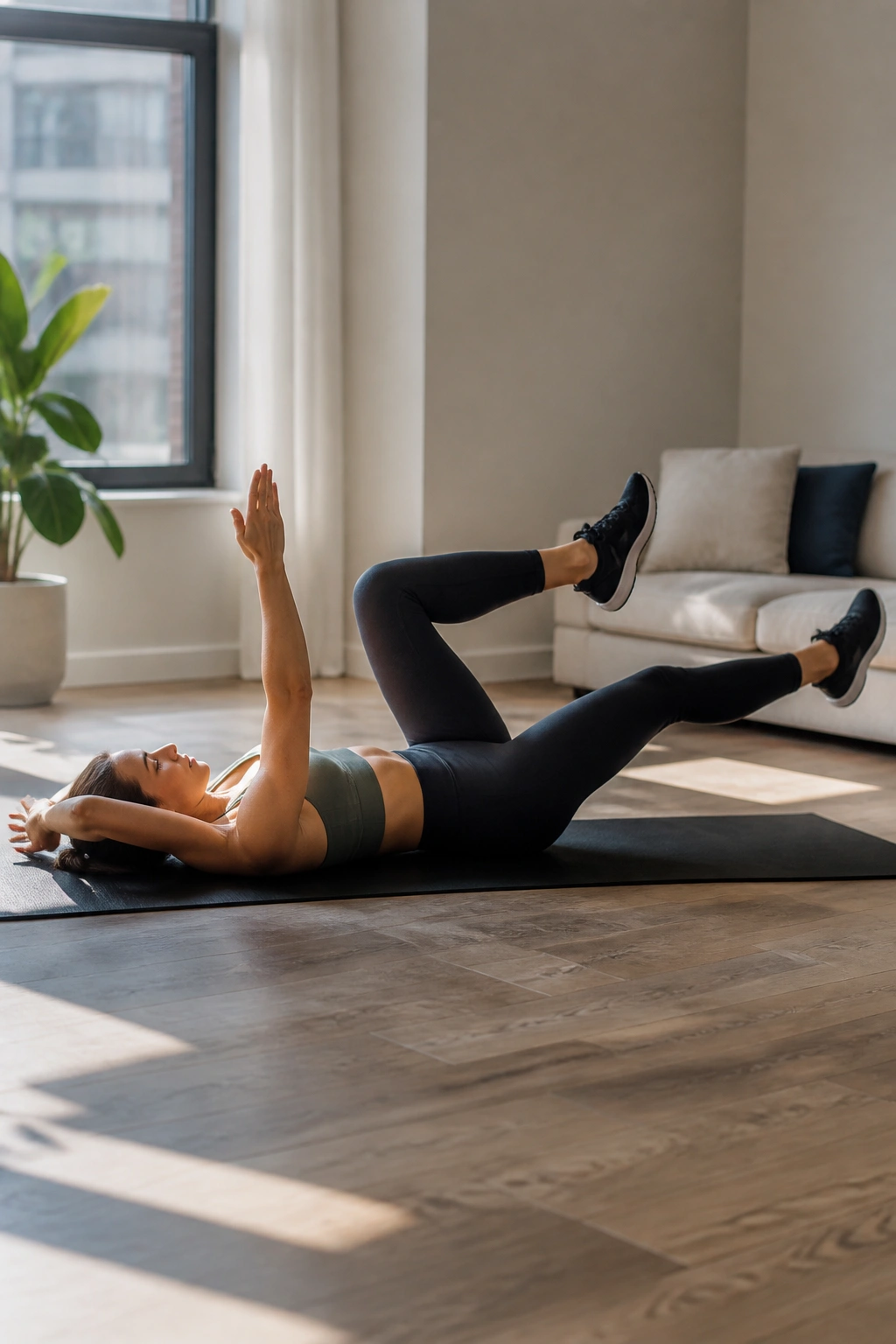
Your low back feels glued to the chair by noon. Your shoulders creep toward your ears. Your ribs flare when you stand up. That’s the kind of day this workout fixes better than another mindless sweat session.
This is not a “burn your abs” routine. It’s a control session, and control is underrated. You’ll use slower tempos, shorter ranges, and a lot of attention on breathing. The pace looks gentle from the outside. In practice, it can be sneaky-hard.
Start with 5 minutes of breathing and mobility. Then move through dead bugs, bird dogs, side planks, glute bridges, and wall slides for 20 minutes total. Finish with 5 minutes of stretching through the chest, hips, and upper back.
Slow wins here.
The form cue I care about most: keep your lower back from arching when your arms or legs move away from you. That’s the whole game. If your core is doing its job, your body stays quiet while the limbs move. If not, the lower back starts to cheat.
This one is gold after long desk hours. It leaves you feeling straighter, not wrecked.
6. Glute-Focused Lower-Body Session
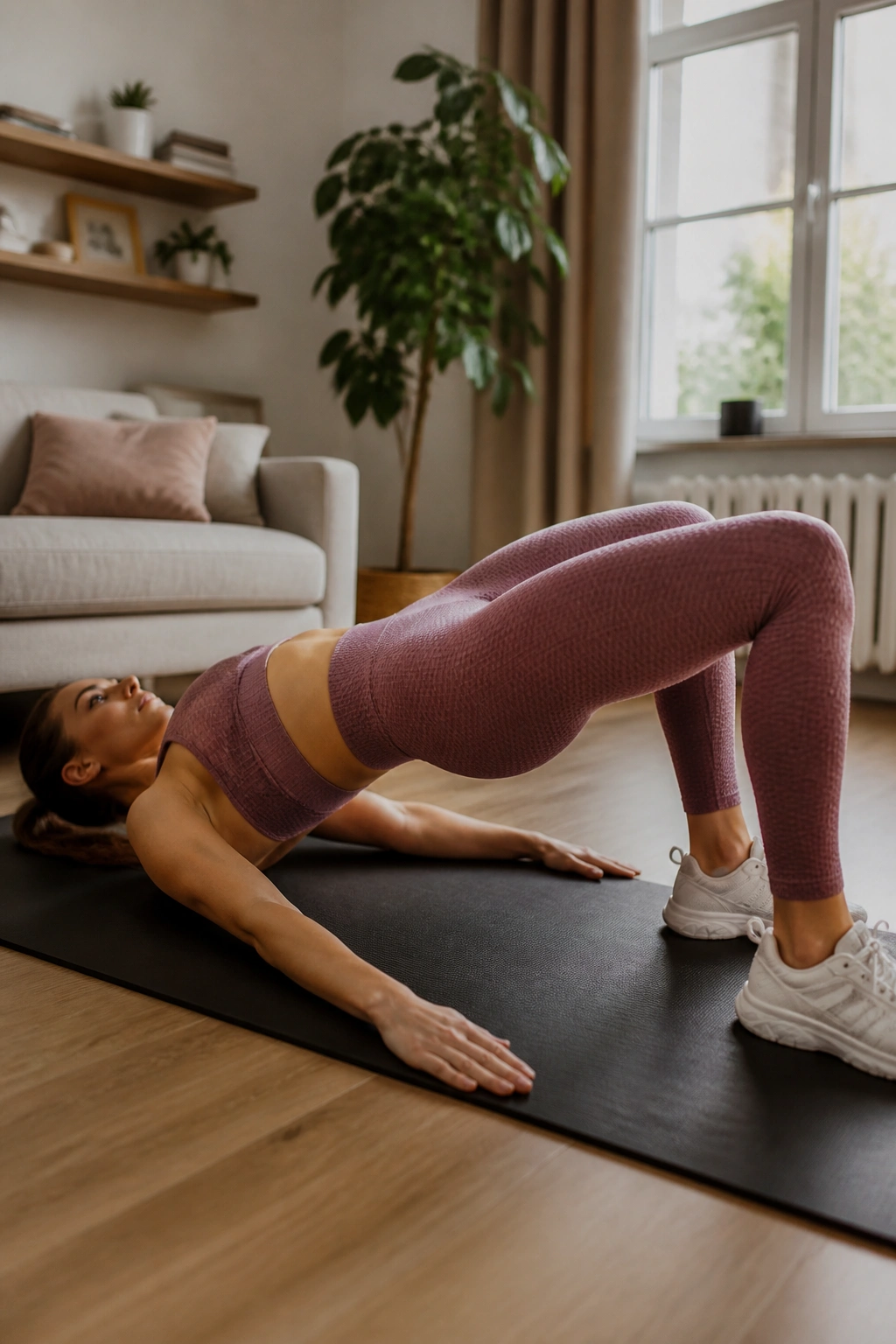
Endless squats are not a glute plan. They’re just endless squats if you never ask the hips to do anything else.
A better lower-body workout mixes a squat pattern, a hinge, single-leg work, and one move that lets you squeeze the glutes hard at the top. If you have dumbbells, great. If not, a loaded backpack works in a pinch. A couch, chair, or step gives you enough height for hip thrusts or split squats without fancy gear.
A clean 30-minute setup
- 5 minutes: leg swings, hip circles, bodyweight squats, glute bridges
- 20 minutes: 3 rounds of 5 moves
- 5 minutes: slow walking and quad/hip flexor stretches
Use moves like these:
- Goblet squat
- Reverse lunge
- Romanian deadlift
- Hip thrust or glute bridge
- Lateral lunge or curtsy-free side step
Keep rests short, around 30 to 45 seconds. The legs should feel busy by round two.
If your knees get grumpy, shorten the split squat depth and lean a little more into the hinge work. If your lower back takes over on deadlifts, the dumbbells are probably drifting too far from your legs. Bring them closer. That tiny correction changes the whole feeling of the set.
7. Push-Pull Upper-Body Session
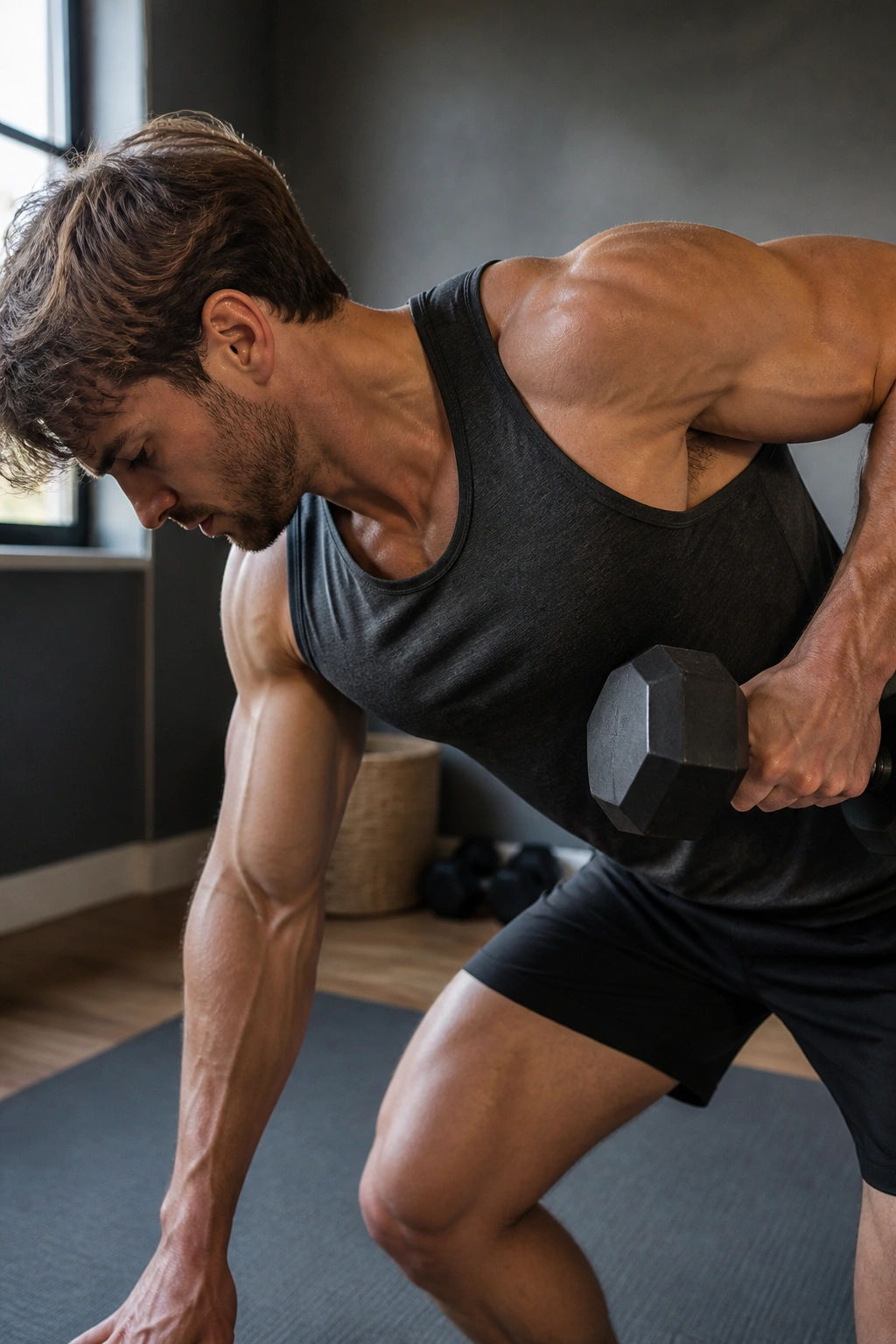
Push-ups are fine. Rows are better balance. A lot of home upper-body work overfeeds the chest and front shoulders while leaving the back to fend for itself. That’s a shortcut, and shortcuts usually come with sore shoulders later.
This session keeps things honest. Pair push movements with pull movements so the body doesn’t get lopsided. If you’ve got one pair of dumbbells, you’re set. If you only have one dumbbell, do the moves one side at a time. If you have a resistance band, even better.
A strong 30-minute version can look like this:
- Dumbbell floor press
- One-arm row
- Standing overhead press
- Bent-over reverse fly or band pull-apart
- Close-grip push-up or triceps extension
- Biceps curl, because arms are allowed to have a turn
Use 8 to 12 reps per move and repeat the circuit 3 times. Rest 45 seconds when needed, but don’t turn every gap into a social break.
The row matters more than people think. It keeps your shoulders from rounding forward and makes the pressing work feel cleaner. Your posture will thank you, and so will your neck.
If one side is weaker, start there. That way both sides get the same quality work before fatigue blurs the difference.
8. Yoga Flow for Tight Hips and Hamstrings
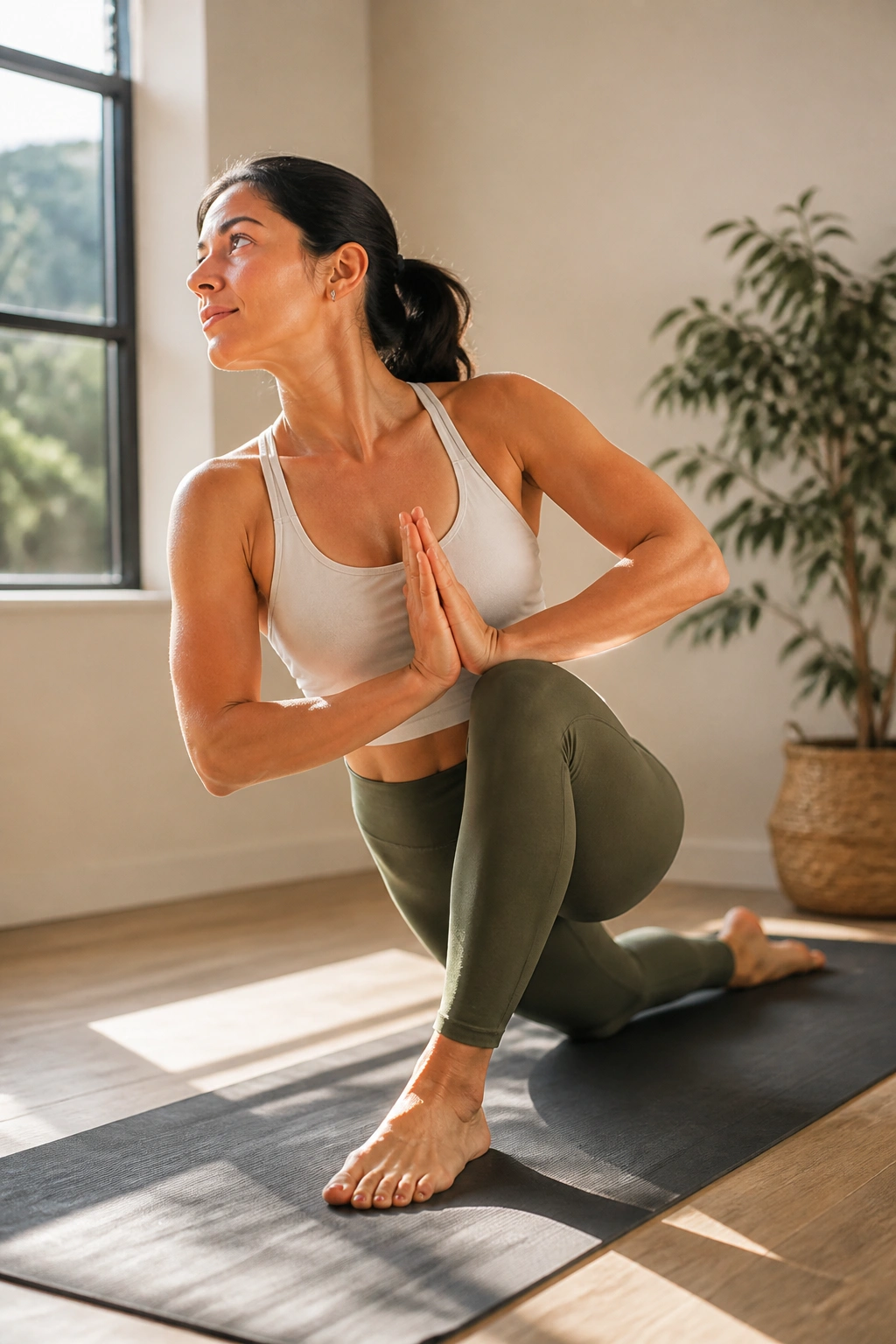
Some days you don’t want a sweat puddle. You want your hips to stop arguing with you.
This yoga-style session is slower, but it is not lazy. Hold each shape for 3 to 5 breaths, move with control, and keep the transitions smooth. The goal is to open the body without hanging out in sloppy ranges or bouncing into stretches.
The opening five minutes
Start with cat-cow, child’s pose, and a slow standing forward fold. Then add a few rounds of low lunge and half split. That alone wakes up the hips and hamstrings without forcing anything.
The middle flow
Move through:
- Down dog to plank
- Low lunge with a twist
- Warrior II
- Pyramid pose
- Figure-four balance
- Seated forward fold
Breathe through the nose if you can. It keeps the pace calmer than mouth breathing, and the whole session feels more controlled.
How to finish
Spend the last 5 to 7 minutes on seated twists, a long hamstring stretch, and a gentle chest opener on the floor. Finish lying down for a minute or two. No hurry.
This is one of those workouts that pays off the next time you stand up from the couch and don’t feel welded to it. Small win. Still a win.
9. Resistance Band Conditioning
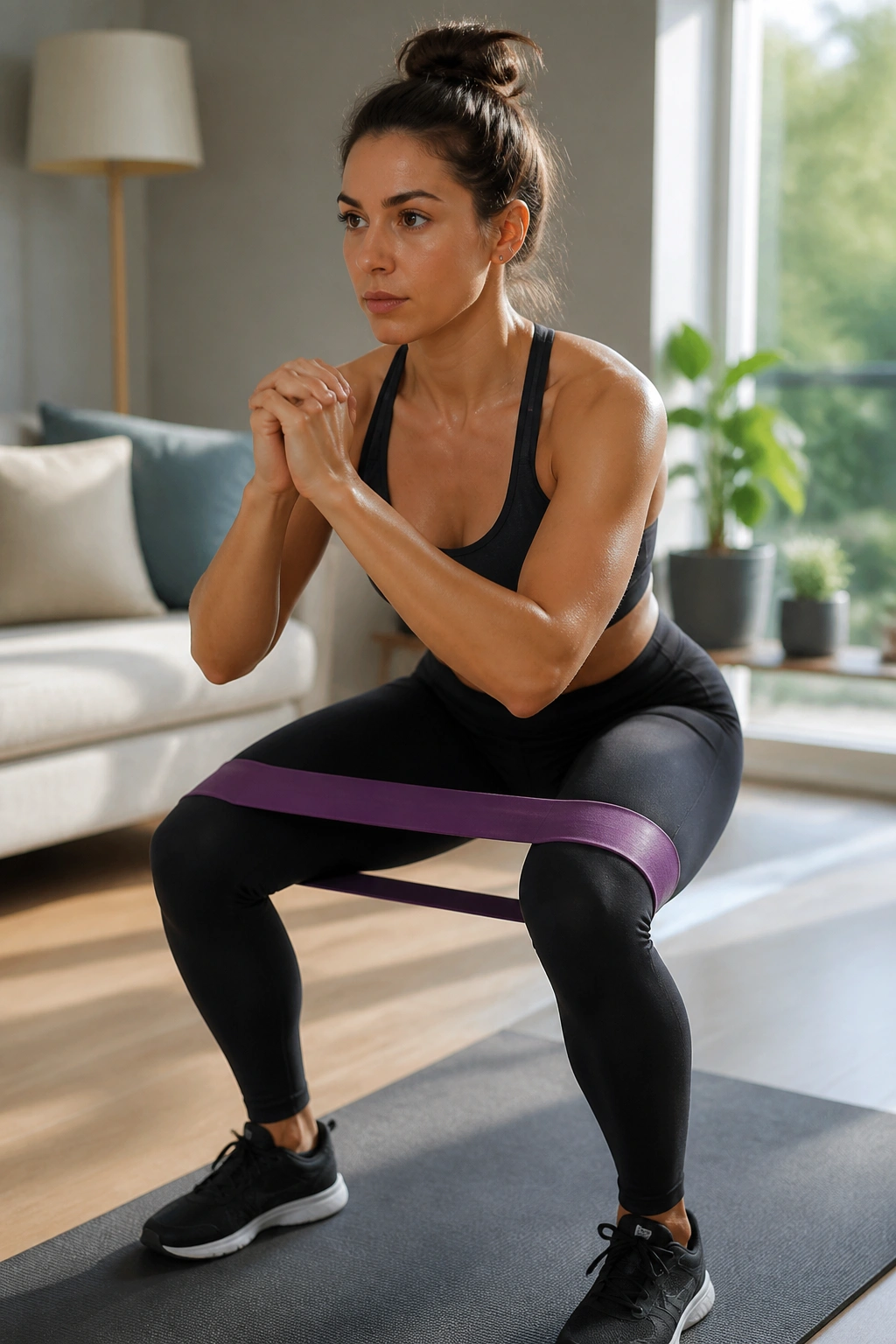
A light band can turn a calm session into work. That’s the whole charm of band training: it looks harmless until the last five reps make your shoulders or hips shake.
Use a mini band for glutes and a long loop band for upper-body pulling, pressing, and rowing. If you can, own both. They solve different problems. A mini band is great for hips and legs. A long band is better for rows, presses, and pull-aparts.
The 30-minute layout
- 5 minutes: warm-up with banded side steps, arm circles, and bodyweight hinges
- 20 minutes: 4 moves, 3 rounds
- 5 minutes: stretch and easy breathing
A solid circuit:
- Banded squat
- Lateral band walk
- Band row
- Band overhead press
- Banded dead bug or Pallof press
What makes bands useful
- They’re quiet.
- They fit in a drawer.
- They load the top of a movement, which dumbbells do not always do.
- They make small muscles show up fast.
The key is tension. If the band feels loose for the whole set, step farther out or grab a tighter one. Last five reps should feel like work, not decoration.
One caution: keep the band under control when it snaps back. It’s not a toy, and a slapped wrist can ruin the mood in a hurry.
10. Kettlebell Complex
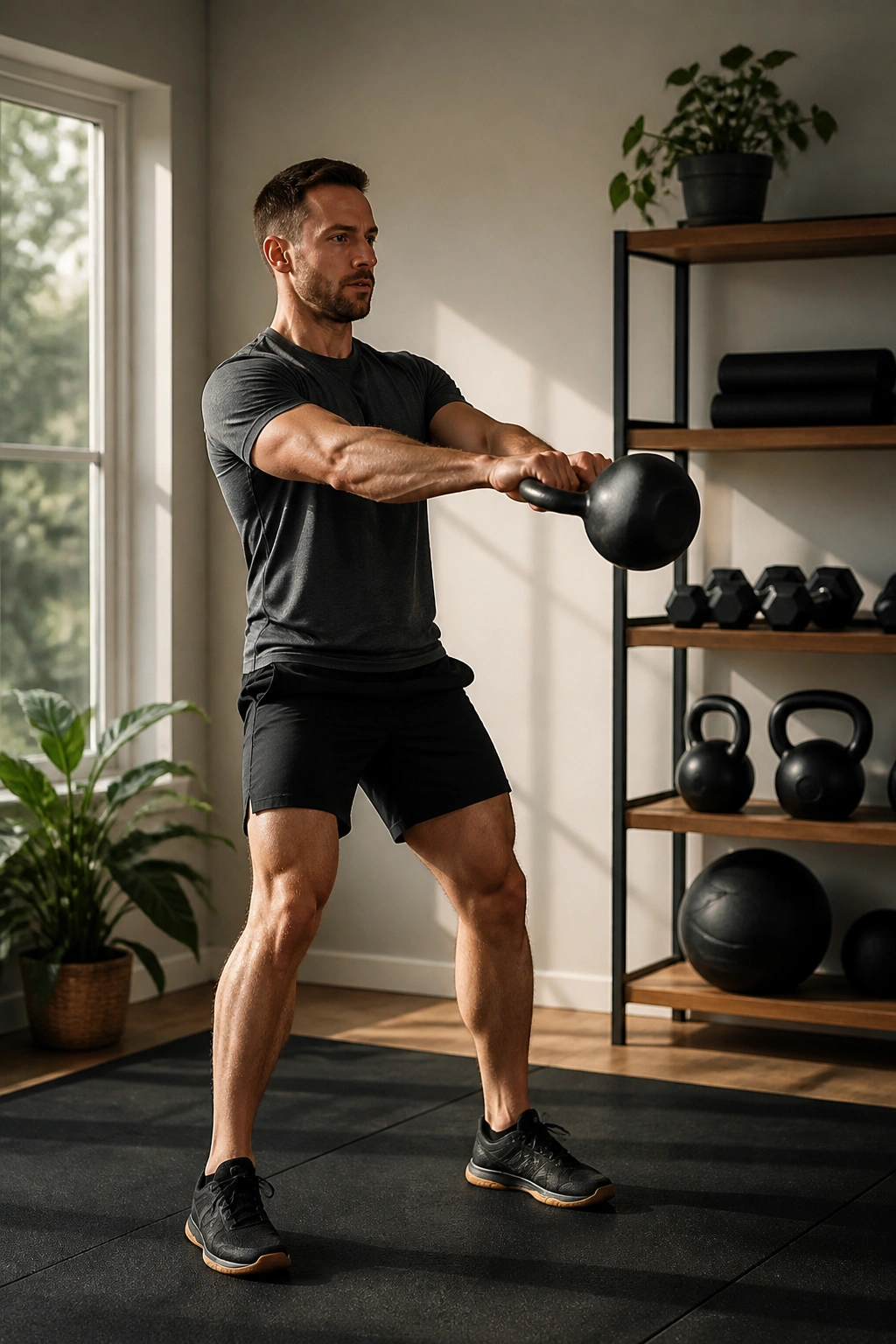
One kettlebell can do a lot in 30 minutes. It’s compact, a little unforgiving, and oddly satisfying once the rhythm clicks.
A complex means you string several moves together without setting the bell down. That saves time and keeps your heart rate up without turning the session into sloppy cardio. The bell should stay close to the body, and your reps should look crisp even when you’re breathing hard.
A simple 30-minute kettlebell flow
- 5 minutes: warm-up with hinges, halos, bodyweight squats, and deadlifts
- 20 minutes: 4 to 5 rounds of the same sequence
- 5 minutes: walking and hip flexor stretches
Try this sequence:
- 6 deadlifts
- 6 cleans per side
- 6 front squats
- 5 presses per side
- 10 swings
Rest 60 to 90 seconds between rounds.
If cleans feel awkward, skip them and go straight to deadlifts or goblet squats. If swings bother your back, the bell is probably too heavy or your hinge is too rounded. Tighten the hinge before you speed up.
The kettlebell rewards clean movement. Messy reps get tiring fast. Clean reps get tiring too, but in a better way.
11. Shadow Boxing Rounds

Can a workout feel almost playful and still leave your shoulders and lungs on fire? Yes. Shadow boxing does that trick better than most home sessions.
Set up six 3-minute rounds with 1 minute of rest. You don’t need gloves or a bag. Just enough space to step, pivot, and turn your hips. Keep your chin tucked, your hands up, and your feet light. Loose shoulders help more than tight fists.
Round ideas
- Round 1: jab and move
- Round 2: jab-cross
- Round 3: jab-cross-hook
- Round 4: add slips and rolls
- Round 5: body shots and footwork
- Round 6: mix everything and push the pace
The first minute often feels too easy. That’s fine. Use it to find your rhythm. By round three, your arms start to feel heavier, and that’s where the conditioning starts showing up.
You can make the session harder by adding small squat pulses between combinations or by stepping forward and back on every combo. Keep the movement clean. Wild flailing burns energy, but it doesn’t train much.
Your shoulders will notice. Your calves too, if you stay on your feet and keep moving instead of planting like a tree.
12. Stair and Step Workout
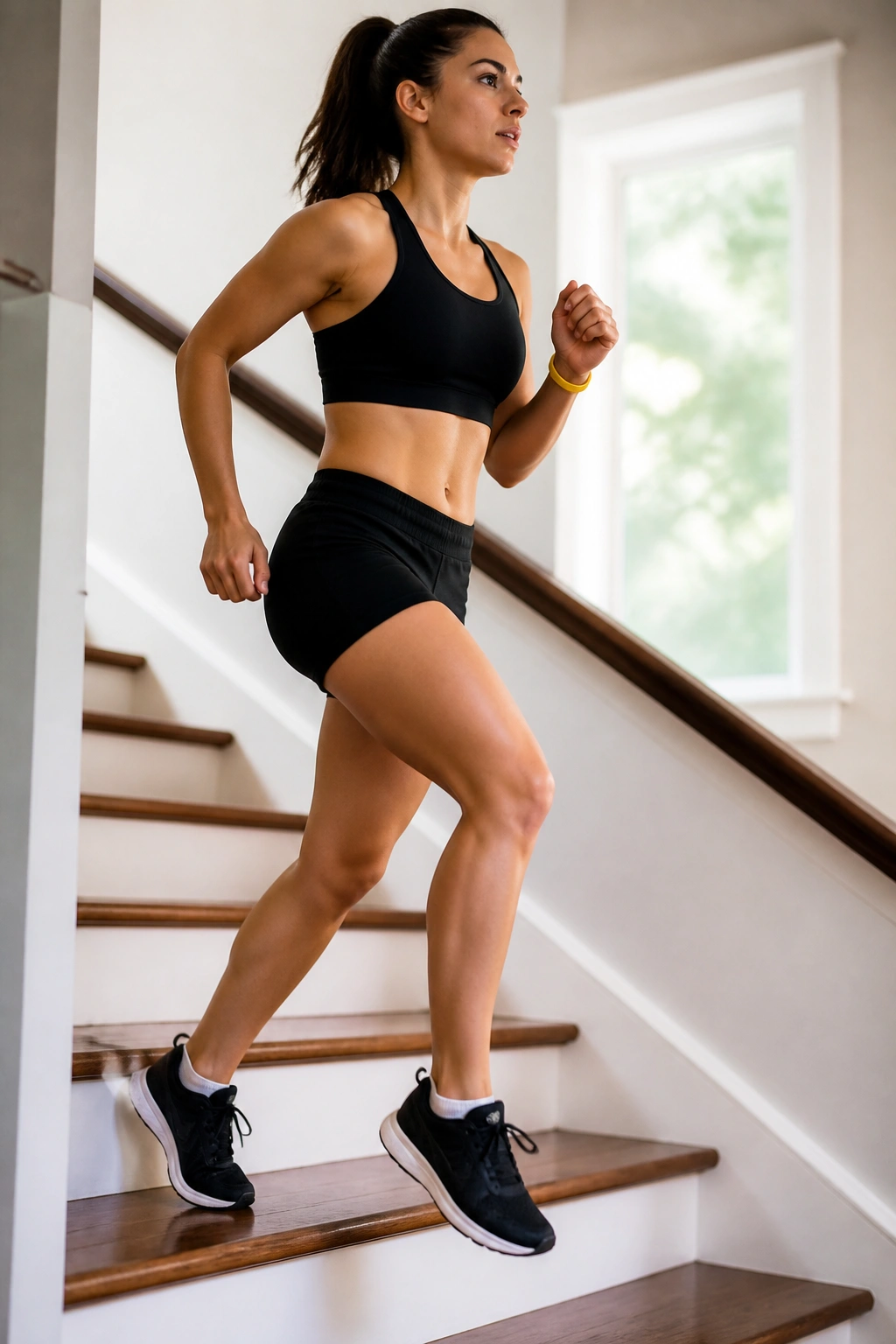
You do not need a huge staircase or a fancy step machine. A sturdy set of stairs, a step platform, or even a solid curb-free step in the house can work.
This session is part leg day, part cardio, and part coordination drill. Use the handrail lightly if you need it. That’s not cheating. That’s being smart. The key is steady, repeated climbs with enough variety that your legs never settle into one easy groove.
A good 30-minute version looks like this:
- 5 minutes: march, ankle circles, bodyweight squats
- 15 minutes: stair intervals
- 5 minutes: upper-body or core add-on
- 5 minutes: cool-down walk
Try these moves:
- Step-ups, alternating lead legs
- Fast stair climbs
- Lateral step-ups
- Knee drives at the top step
- Incline push-ups with hands on the step
- Calf raises off the edge of a step
The legs get loaded from a different angle each time, which keeps the session from going stale. If you live in a place where stairs are shared, keep the pace controlled and the footwork tidy.
A stair workout is simple, but it’s not mild. By the end, your breathing tends to get a little noisy, and the thighs usually have an opinion.
13. Dance Cardio Intervals
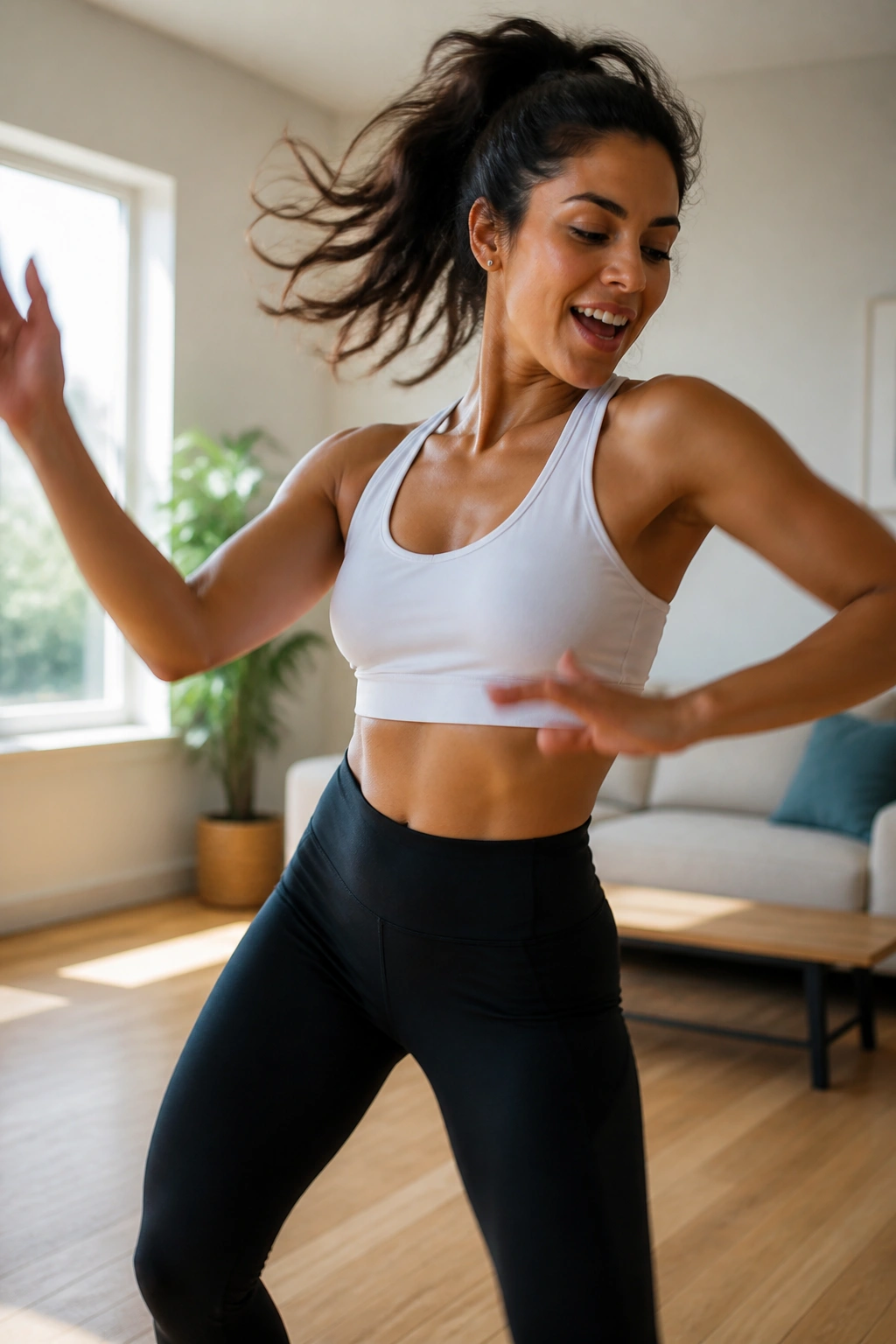
Put on a song with a real beat and the room changes. That’s why dance cardio works so well at home: it feels less like a chore and more like moving through the music.
I prefer short interval blocks here rather than trying to freestyle for half an hour and hoping for the best. That usually turns into random pacing and a lot of standing around. Instead, set a timer and switch the style every few minutes.
A smart 30-minute dance setup
- 5 minutes: easy groove and warm-up
- 20 minutes: alternating fast and moderate blocks
- 5 minutes: slower cool-down and stretching
Use steps like these:
- March with arm reaches
- Grapevines
- Side steps with low squats
- Step-touch with punches
- Mambo steps
- Knee lifts
- Freestyle bursts
Pick music you actually like hearing more than once. That matters more than people admit. A song you enjoy makes the whole session easier to start, and starting is half the battle.
This isn’t about looking polished. It’s about staying on beat, keeping your body moving, and letting your brain loosen up for a while. A dance session can be sweaty, awkward, and fun at the same time. That combination is underrated.
14. Mobility and Recovery Flow
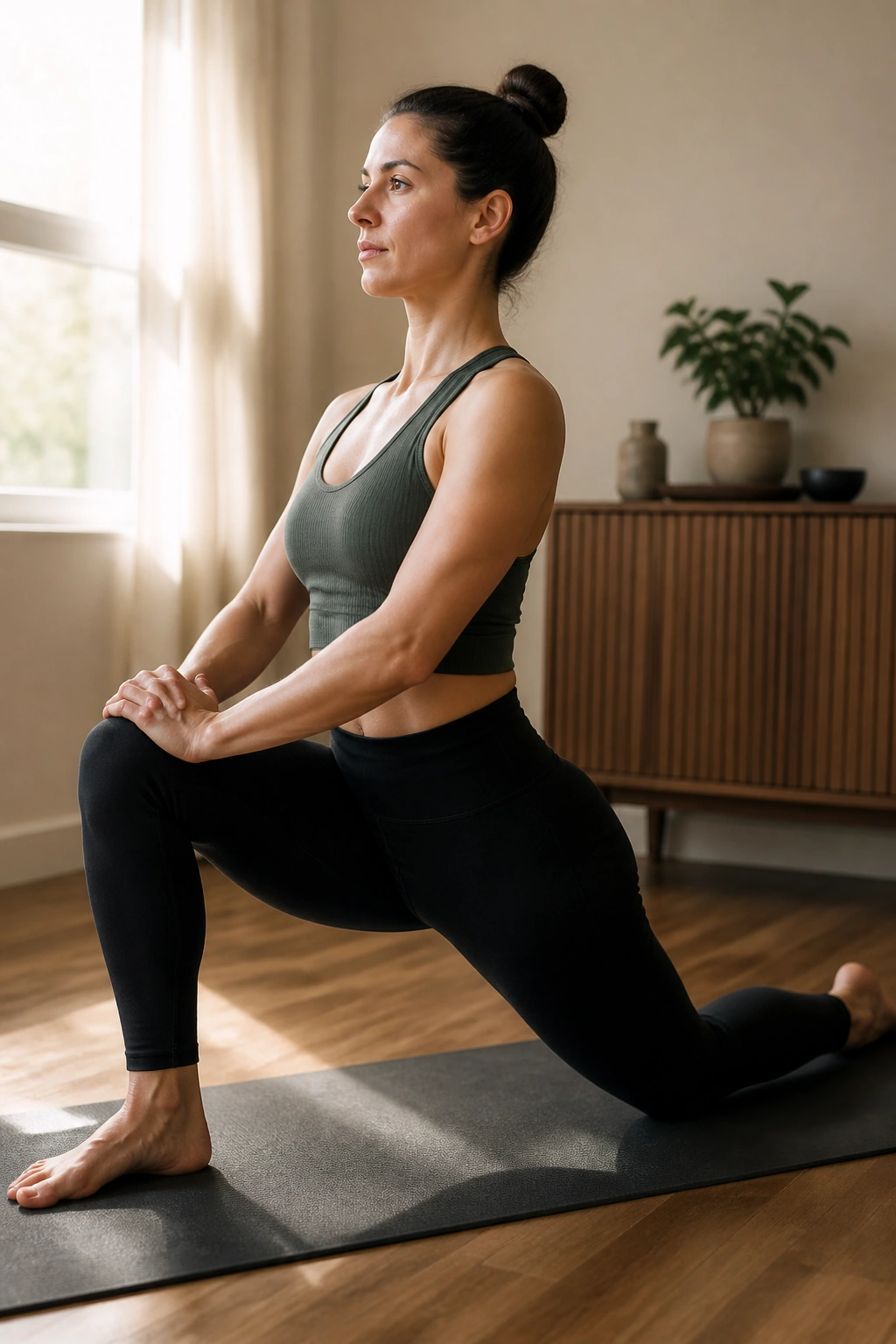
Recovery can be a workout if you do it with purpose. Done badly, it turns into a half-hearted stretch on the carpet. Done well, it leaves you moving better for the next session.
This is the session I reach for after harder days, long walks, or any stretch of time spent sitting too much. Keep your holds around 30 to 45 seconds and move slowly between positions. The point is to quiet things down, not force range you do not own yet.
Neck and shoulders
Start with gentle neck turns, shoulder rolls, and wall slides. If your upper back gets tight, add thoracic rotations on hands and knees. Small movement helps more than yanking hard on a stiff joint.
Hips and ankles
Move into kneeling hip flexor stretches, ankle rocks, deep squat holds, and figure-four stretches. The ankle work matters more than most people think. Tight ankles change squats, lunges, and even how you walk.
Breathing and finish
Lie on your back for the last few minutes and breathe slowly. Hands on ribs. Exhale long. Let the body settle. No rush.
This is a good workout for the days when you still want to show up but don’t want to grind. That counts. It counts a lot, honestly.
15. Mixed Full-Body Circuit for Low-Energy Days
When the day is messy, which workout actually gets done? Usually the one that feels simple enough to start without a speech.
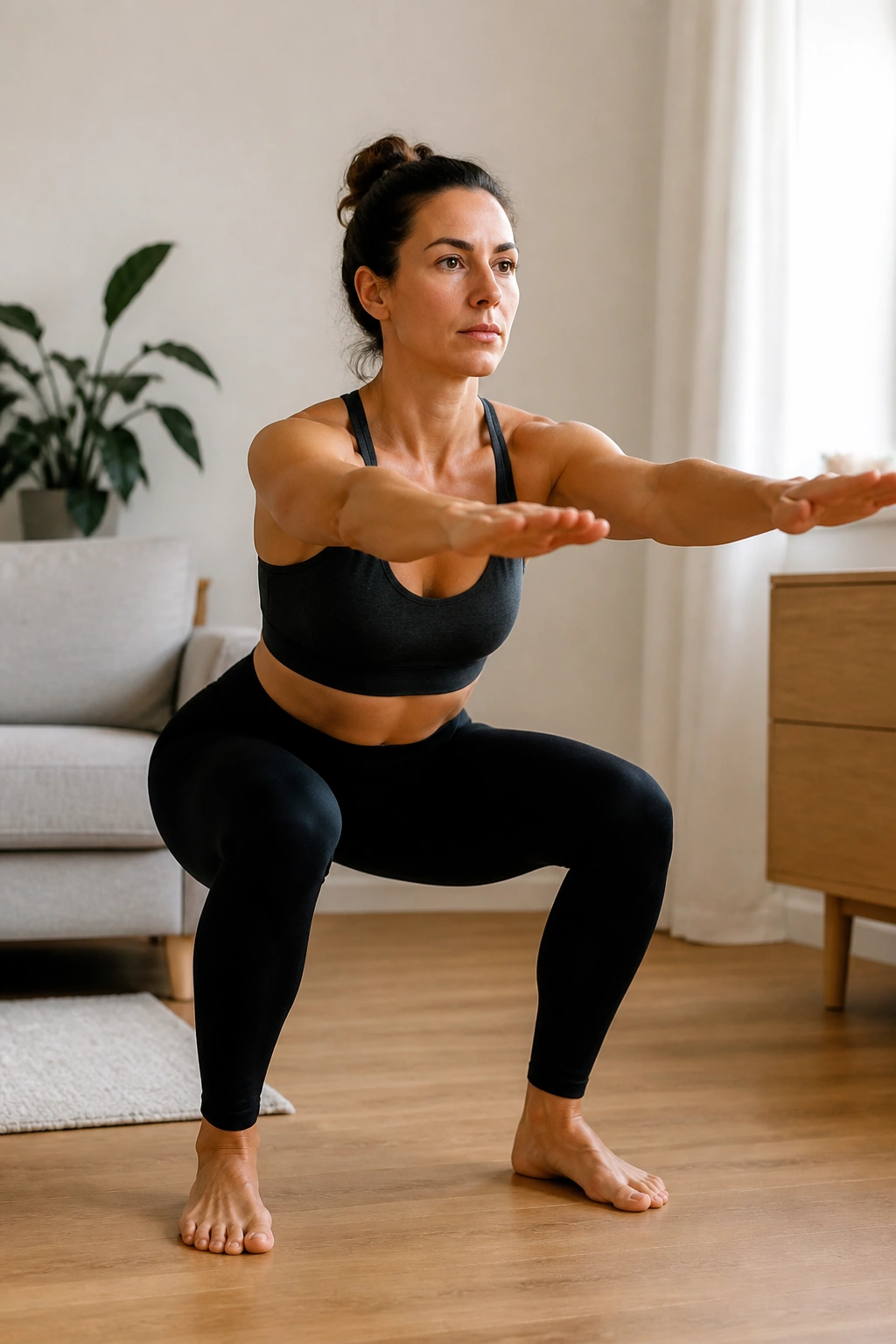
This mixed circuit is my fallback session. It covers the main movement patterns — squat, hinge, push, pull, core — without asking for drama. You can use dumbbells, a backpack, or bodyweight only. The pace stays moderate, which makes it easier to repeat without feeling destroyed.
The 30-minute shape
- 5 minutes: warm-up with marching, hinges, arm swings, and squats
- 20 minutes: 5 moves, 2 or 3 rounds
- 5 minutes: cool-down walk and easy stretching
A good list:
- Squat
- Push-up or incline push-up
- Dumbbell or backpack row
- Hip hinge or Romanian deadlift
- Plank or dead bug
Do each for 40 seconds, rest 20 seconds, and move on. If you feel good, repeat for a third round. If you don’t, two rounds is enough. That flexibility is the point.
This workout earns its place because it removes decision fatigue. No special setup. No complicated timer math. No need to be in the mood for one specific style of training. It’s the one to save for the days when you need movement to be straightforward.
Final Thoughts
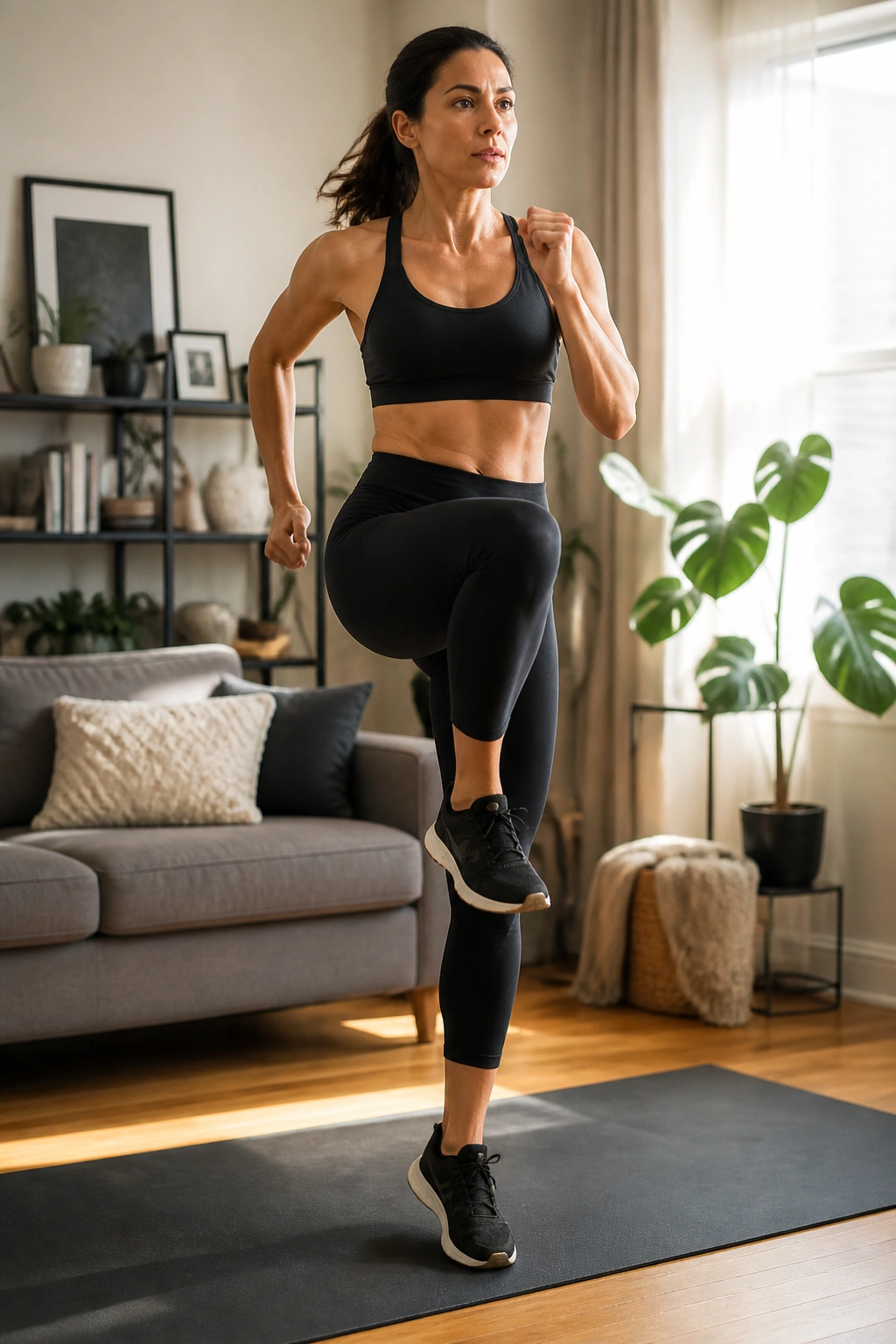
The smartest home workouts are the ones that fit real life without begging for extra time or equipment. A solid thirty minutes can build sweat, strength, mobility, or just enough momentum to change the rest of the day.
Pick two or three of these and keep them handy. Repeat them until the setup feels boring, then switch. That rhythm tends to work better than chasing novelty every single session.
Some days call for jumps. Some days call for dumbbells. Some days call for a mat, a timer, and a little mercy. Build for all three, and your home routine gets a lot easier to keep doing.
