



Olympic lifting workouts for beginners work best when they feel almost too easy at first. Heavy singles can wait. The real job is teaching the snatch, clean, and jerk to land in the right places every time—feet, hips, elbows, and overhead lockout all have to line up, or the bar gets ugly fast.
Most people try to muscle their way through the lifts. That usually turns into crashing catches, bent arms on the pull, and a front rack that feels like a wrist fight. Better to spend a few weeks on positions, short complexes, and light bar speed. I would rather see a beginner nail five crisp reps with an empty bar than grind two noisy ones at a load they cannot own.
The sessions below lean that way. Some build the overhead position, some clean up the first pull, some teach jerk footwork, and a couple live on the strength side so your squats stop being the weak link. If you train three days a week, rotate them instead of trying to cram all fifteen sessions into one block. The first one starts with the snatch shapes that make everything else easier.
1. Empty-Bar Positions That Teach the Snatch Fast
The most useful beginner snatch session looks boring on paper. That is a compliment.
Why This Session Works
The snatch punishes sloppy positions more than almost any lift in the room. If the bar drifts away from your shirt, or your elbows bend early, you feel it right away. This session keeps the load light enough that you can pay attention to the path instead of chasing the number on the plate.
Run 5 rounds of:
- 3 snatch-grip deadlifts with a 2-second pause at the knee
- 3 muscle snatches
- 3 overhead squats with a 2-second pause in the bottom
Use a PVC pipe or an empty barbell if the bar is all you have. Rest about 60 to 90 seconds between rounds. The work should feel controlled, smooth, and a little repetitive. Good. Repetition is the point.
Do not add load until the bar stays close on every rep. If the bar swings out, the session got too heavy too soon.
2. Power Clean and Front Squat Ladder
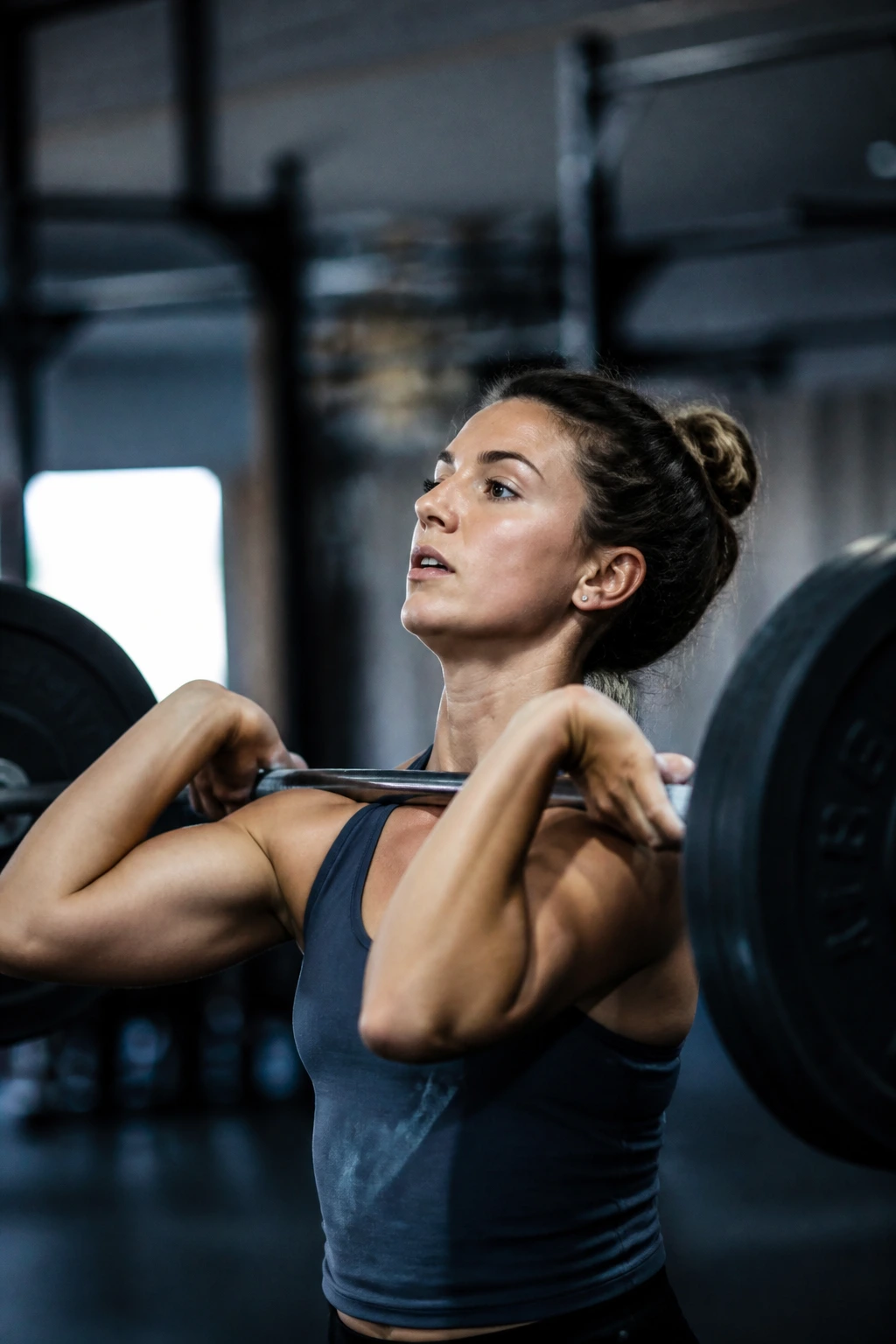
Why do beginner cleans fall apart after the catch? Because the rack position and the stand-up part get ignored.
This workout fixes that by pairing the clean with the thing most people are too impatient to train: the front squat. Start with 6 sets of 1 power clean + 2 front squats. Keep the load around 40 to 60 percent of what you could front squat for a single rep, or lighter if the rack still feels stiff. The clean should land high, the elbows should snap through fast, and the front squat should look the same on the first rep and the second.
A clean that gets caught and then folded into a wobbly stand-up is not ready to get heavier. A lot of beginners want the pull to be the hard part. It isn’t. Holding the rack, breathing behind the elbows, and standing without your chest collapsing often matter more.
If your wrists complain, fine. Keep the bar in the fingertips, raise the elbows, and let the upper back do the work. That is where the lift starts to feel real.
3. Hang Power Snatch and Overhead Squat Hold
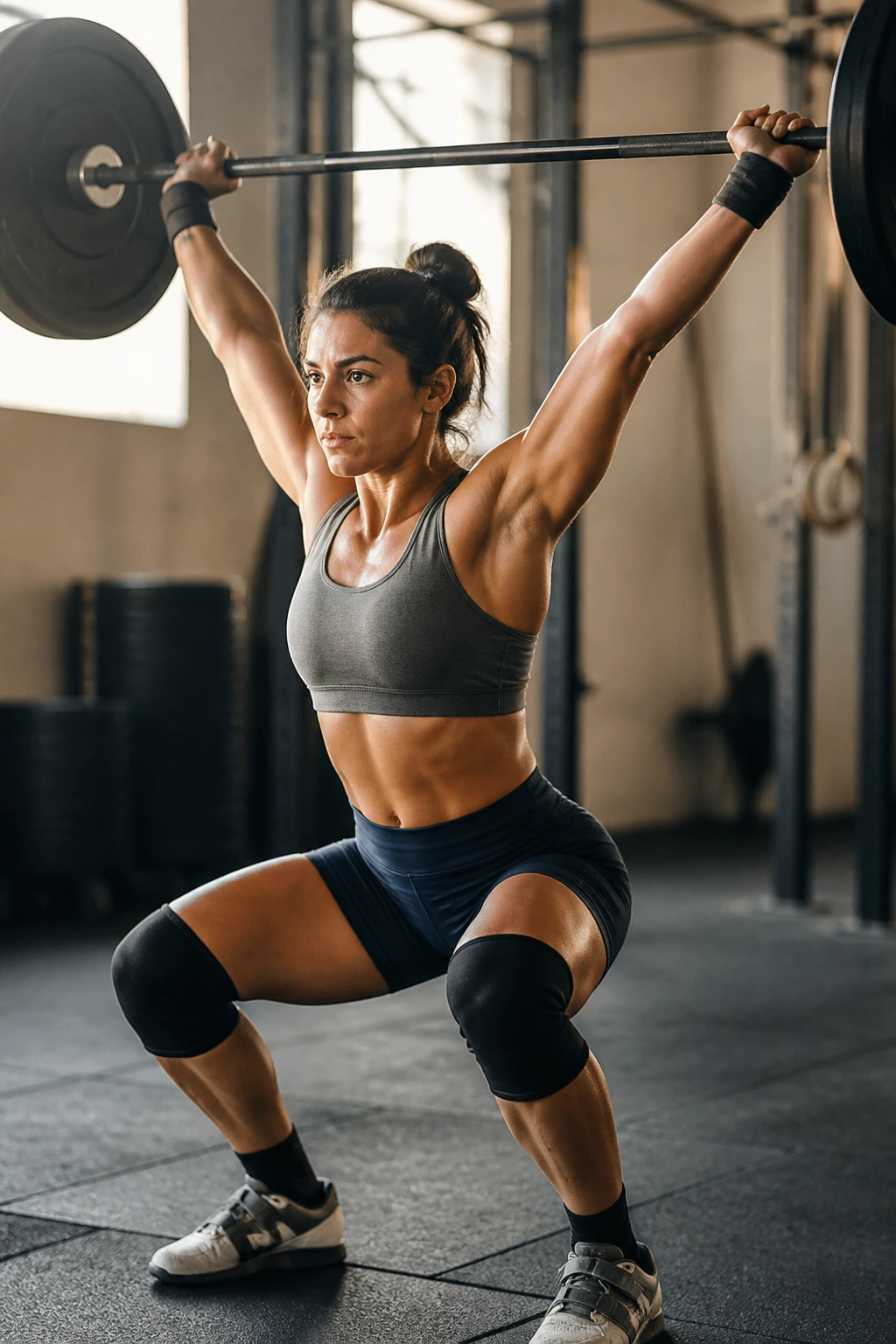
The bar starts at the hip, and that makes the whole lift less chaotic. That is why the hang snatch is such a good beginner choice.
Set up with the bar just above the knee, or at mid-thigh if the lower position still feels messy. Do 4 to 5 sets of:
- 2 hang power snatches
- 1 overhead squat with a 3-second hold at the bottom
Keep the load light enough that you never miss the lockout. If the bar crashes forward, shorten the hang and reduce the weight by 5 to 10 percent. The point is not to prove you can pull hard. The point is to learn how to stay tall, finish the extension, and receive the bar without chasing it.
How to Run It
Take a small breath before each rep. Brace. Then move. No rushing between the pulls and the catch.
- Hips and shoulders rise together on the hang.
- The bar stays close enough to graze the shirt.
- Feet land in the same place every time.
- The overhead hold should feel stable, not desperate.
A beginner who can hold the bottom of a snatch for three calm seconds is doing useful work. That carries over fast.
4. Clean Pulls That Build the First Pull
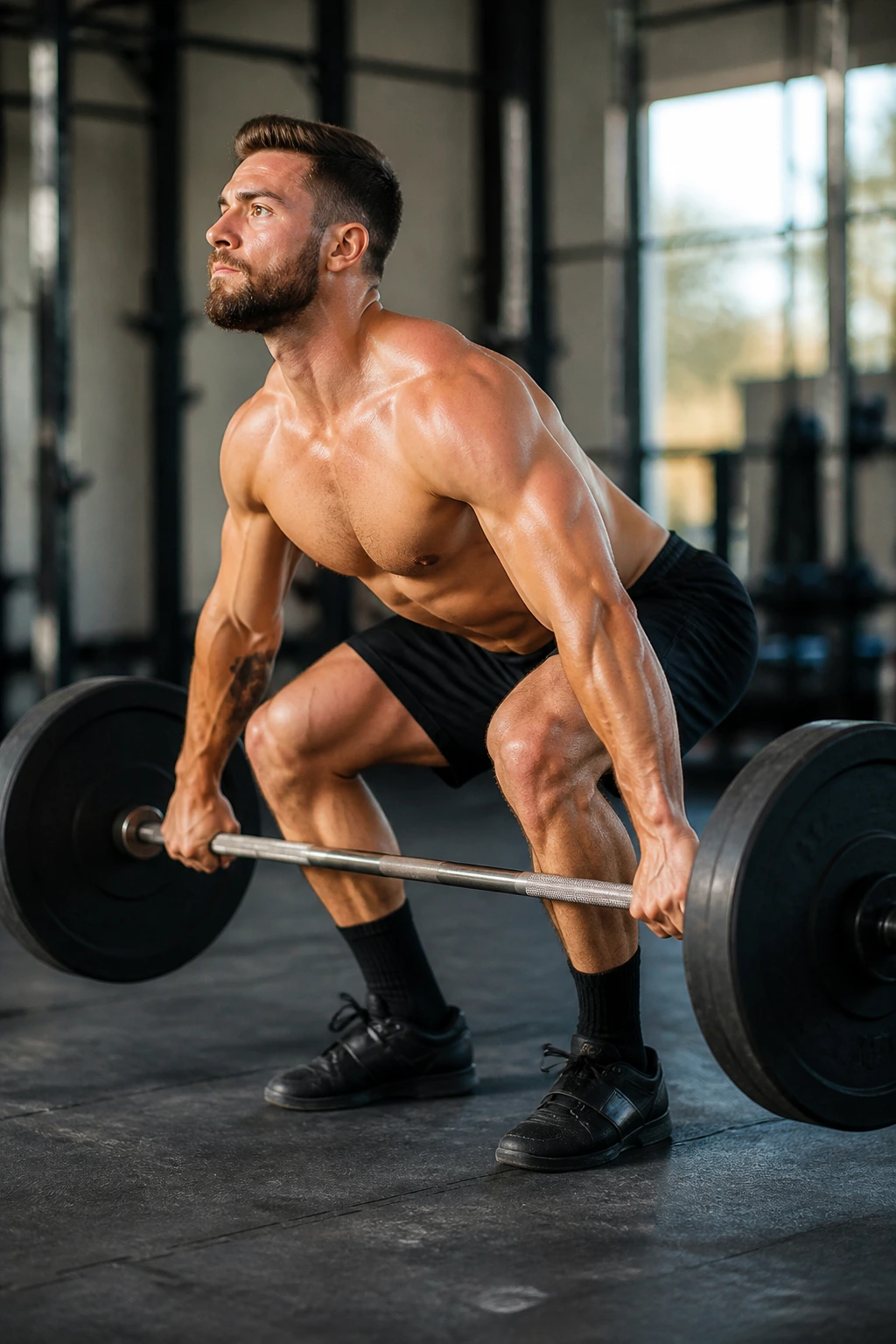
Pulls are not the boring cousin of the clean. They are the part that tells you whether the clean is built on good mechanics or wishful thinking.
Use 4 sets of 3 clean pulls with a 2-second pause at the knee, then finish each set with 1 high pull. Stay between 60 and 80 percent of your clean if your positions are decent; go lighter if the bar is still ripping away from the floor. The pause matters. It teaches patience off the ground, which is where a lot of beginners lose their shape and yank too early.
I like to watch the shoulders more than the plates here. If the shoulders shoot back before the bar passes the knee, the bar usually drifts forward and the catch gets ugly later. If the lats stay tight and the chest stays over the bar a little longer, the pull looks cleaner almost immediately.
No arm bend. No shrugging early. Finish the legs first, then rise. Small detail. Big difference.
5. Tall Clean and Jerk Footwork
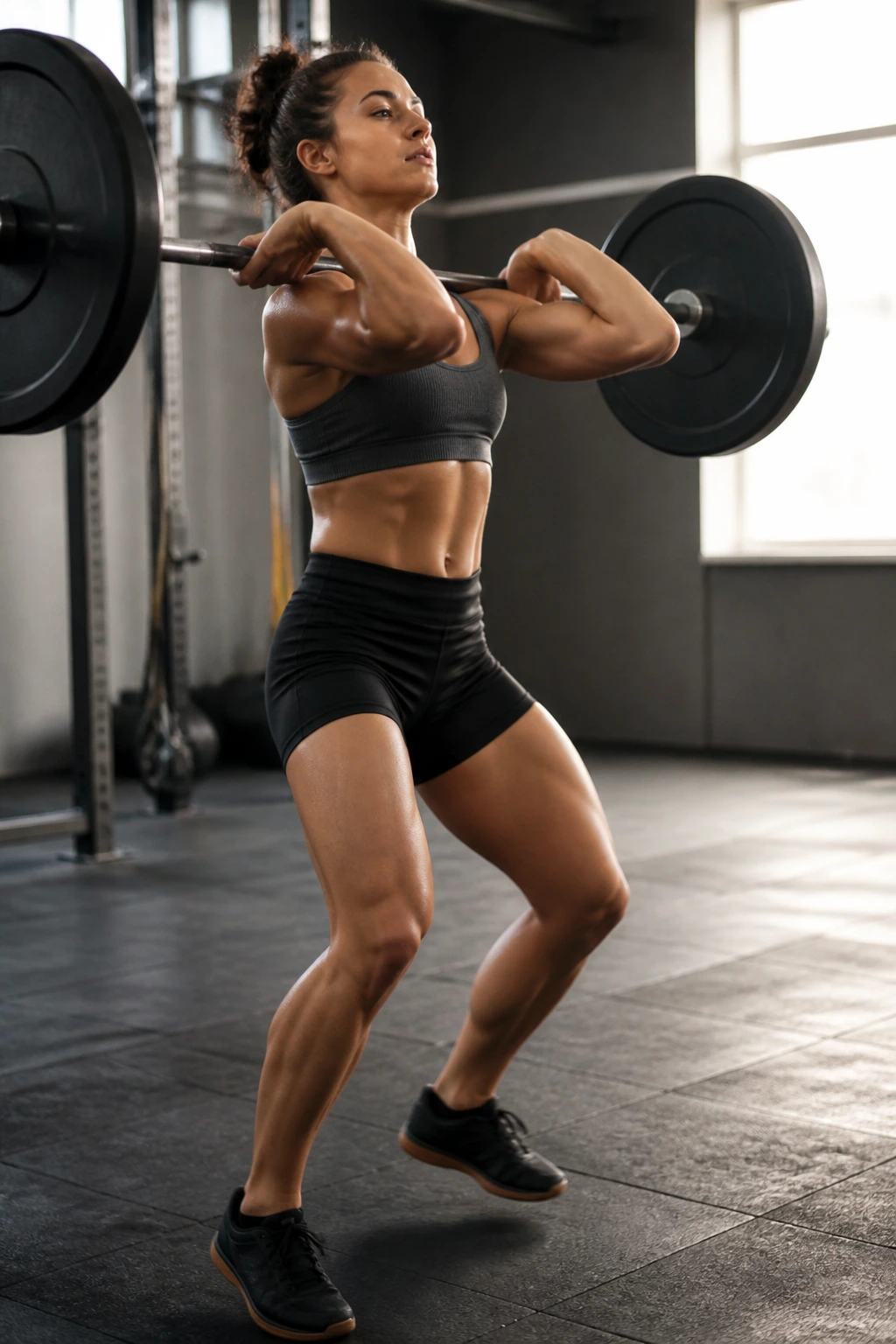
If you always feel late under the bar, this session fixes the scramble.
The tall clean takes the legs out of the equation for a second, which sounds rude until you realize how much it helps. Do 3 sets of 3 tall cleans with an empty bar or a very light load, then 3 sets of 3 tall jerk footwork drills. After that, finish with 3 singles of split jerk from the rack at a load that feels almost too light.
What to Watch For
- The tall clean should start from standing tall, not from a dip.
- The elbows have to move fast, or the bar smacks you.
- In the jerk, the dip is straight down.
- The front foot lands flat enough to support the catch, not on the toes.
The best thing about this workout is that it teaches speed without load distracting you. Beginners often think they are slow because they are weak. Sometimes they are just waiting too long to move their feet.
Keep the weights tiny. This is a timing day, not a proving day.
6. Snatch Balance and Overhead Squat Confidence
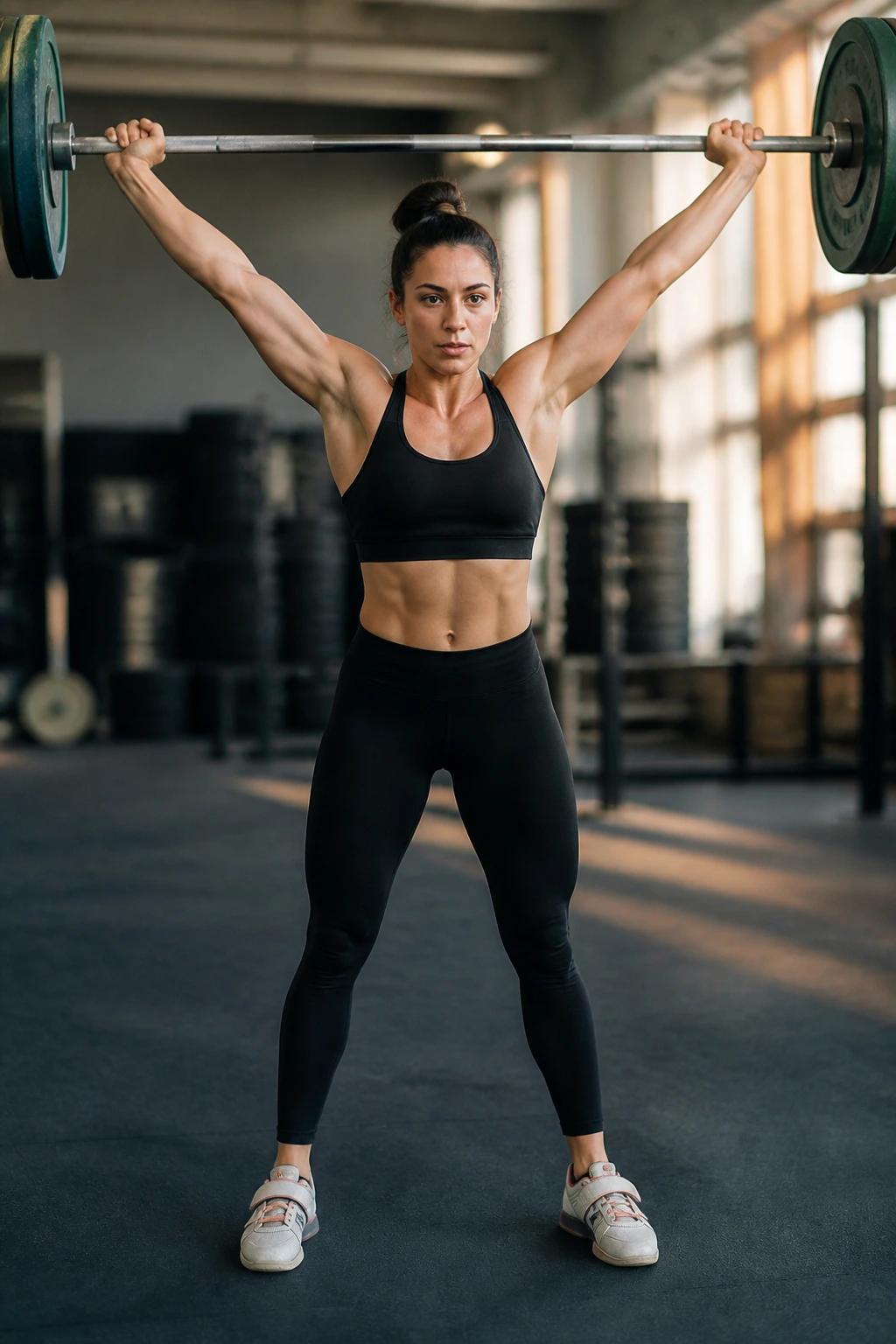
The bar feels heavier overhead than it is. That sensation is half fear and half bad positioning.
Snatch balance teaches you to drop under and trust the lockout. Run 5 sets of 2 snatch balances, then 3 overhead squats right after each pair. Use an empty bar at first, then add a little weight only when the drop feels quick and the bar stays stacked over the middle of the foot. A pause at the bottom is useful here, but it should not turn into a contest of who can sit the longest.
A lot of beginners press the bar up before they dip under it. That turns the drill into a slow push press with bad manners. The bar should feel like it’s punched upward and caught, not muscled into place. If the shoulders are tight, widen the grip a touch and cut the load.
One honest rep is worth more than three shaky ones. The bottom position needs to feel boring before it ever feels heavy.
7. Pause Clean Deadlifts Into a Light Clean
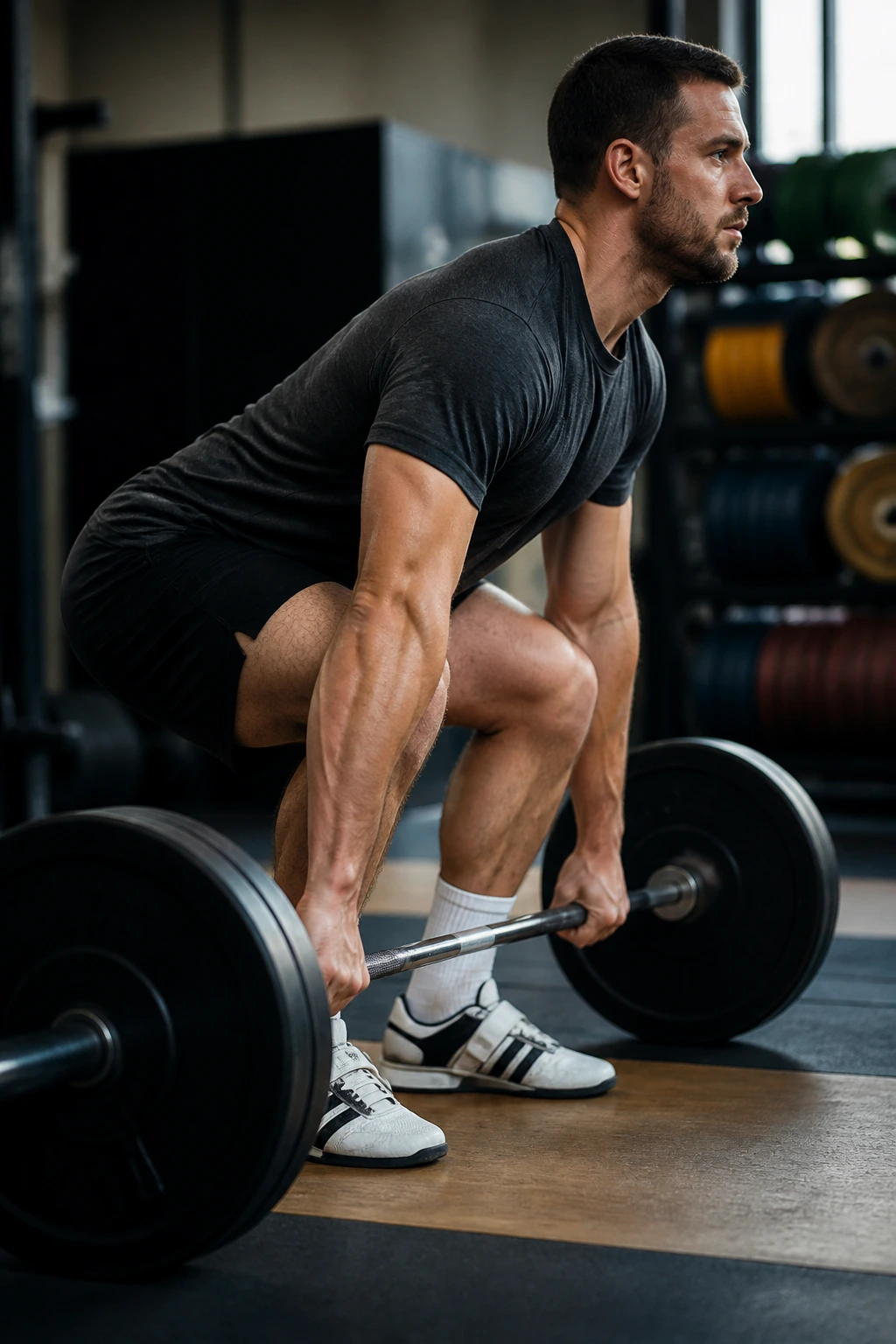
If the bar races off the floor, the rest of the lift pays for it. This session slows the start down on purpose.
Use 4 rounds of:
- 1 clean deadlift with a 2-second pause at the floor, knee, and mid-thigh
- 1 power clean
- 1 front squat
Stay around 50 to 70 percent of your clean. The deadlift should not turn into a yanking contest. You want to feel pressure through the whole foot, a tight back, and the bar brushing close as it rises. The pause at the knee is the real teacher here. That is where beginners often lose patience and throw the bar out in front of them.
Session Cue Sheet
- Chest stays proud.
- Arms stay long.
- Bar path stays vertical and close.
- Finish the legs before the shrug.
After a few rounds, the clean starts to feel less random. That is the win. The lift becomes more repeatable, and repeatable lifts are the ones that stick.
8. EMOM Singles for Olympic Lifting Workouts for Beginners
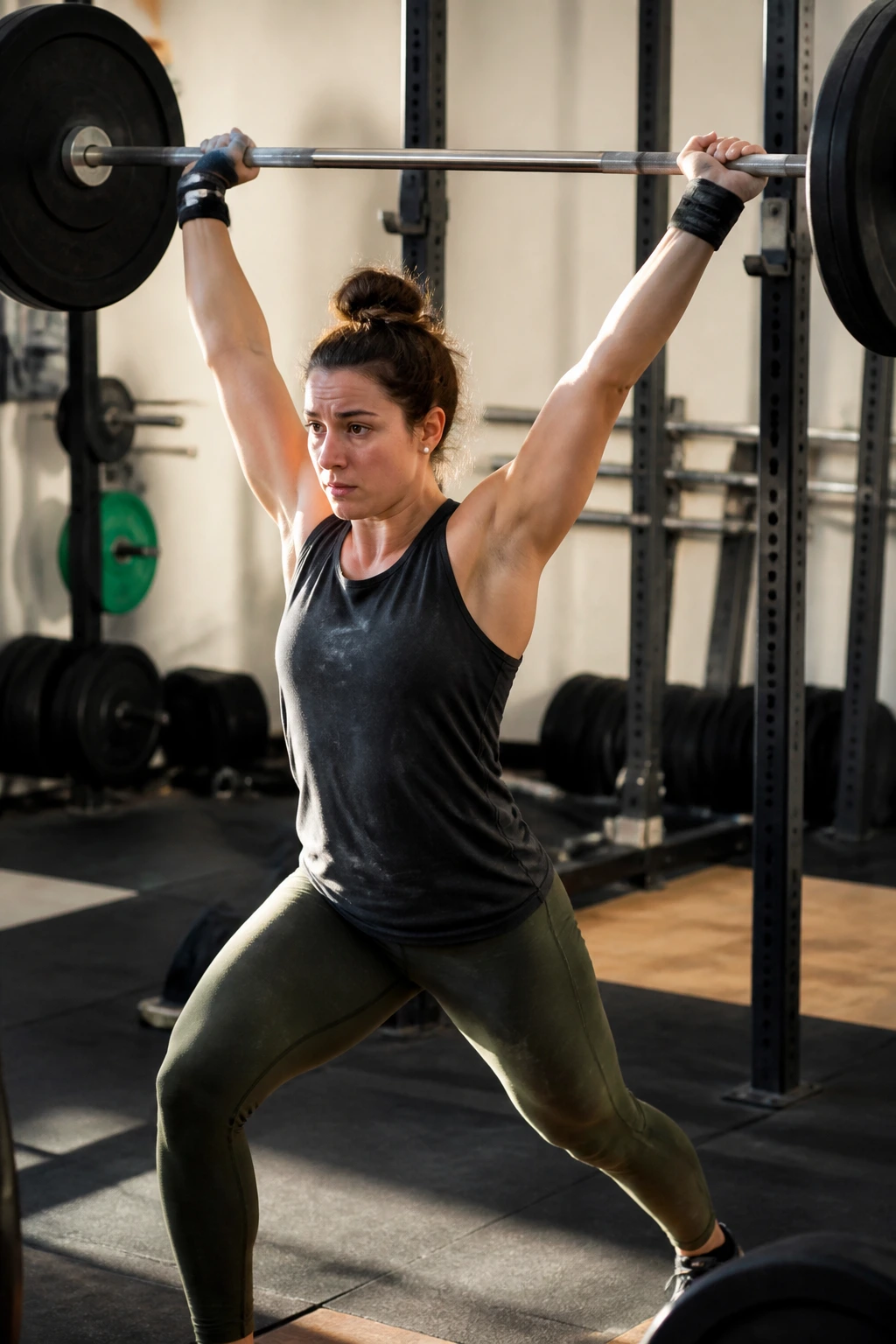
Why do single reps help so much? Because they give you room to think between lifts without killing the rhythm.
Try a 12-minute EMOM—every minute on the minute. On odd minutes, do 1 snatch. On even minutes, do 1 clean and jerk. Use a load that sits around 55 to 65 percent of your best guess for a smooth single, or lighter if you are still learning the catch. The minute you start rushing to beat the clock, the workout got too heavy.
A single rep is a clean read on technique. You can see whether the pull was close, whether the catch was sharp, and whether the jerk footwork stayed straight. You cannot hide much in a single. That is part of why it works so well for beginners.
How to Scale It
- If the bar speed drops, cut the load by 5 to 10 percent.
- If the clean rack feels jammed, switch the even minutes to power clean + front squat.
- If the snatch start gets sloppy, keep the bar at the hang instead of the floor.
This is one of the easiest Olympic lifting workouts for beginners to recover from, too. Short bursts. Plenty of rest. Good technique.
9. Muscle Snatch to Overhead Squat Complex
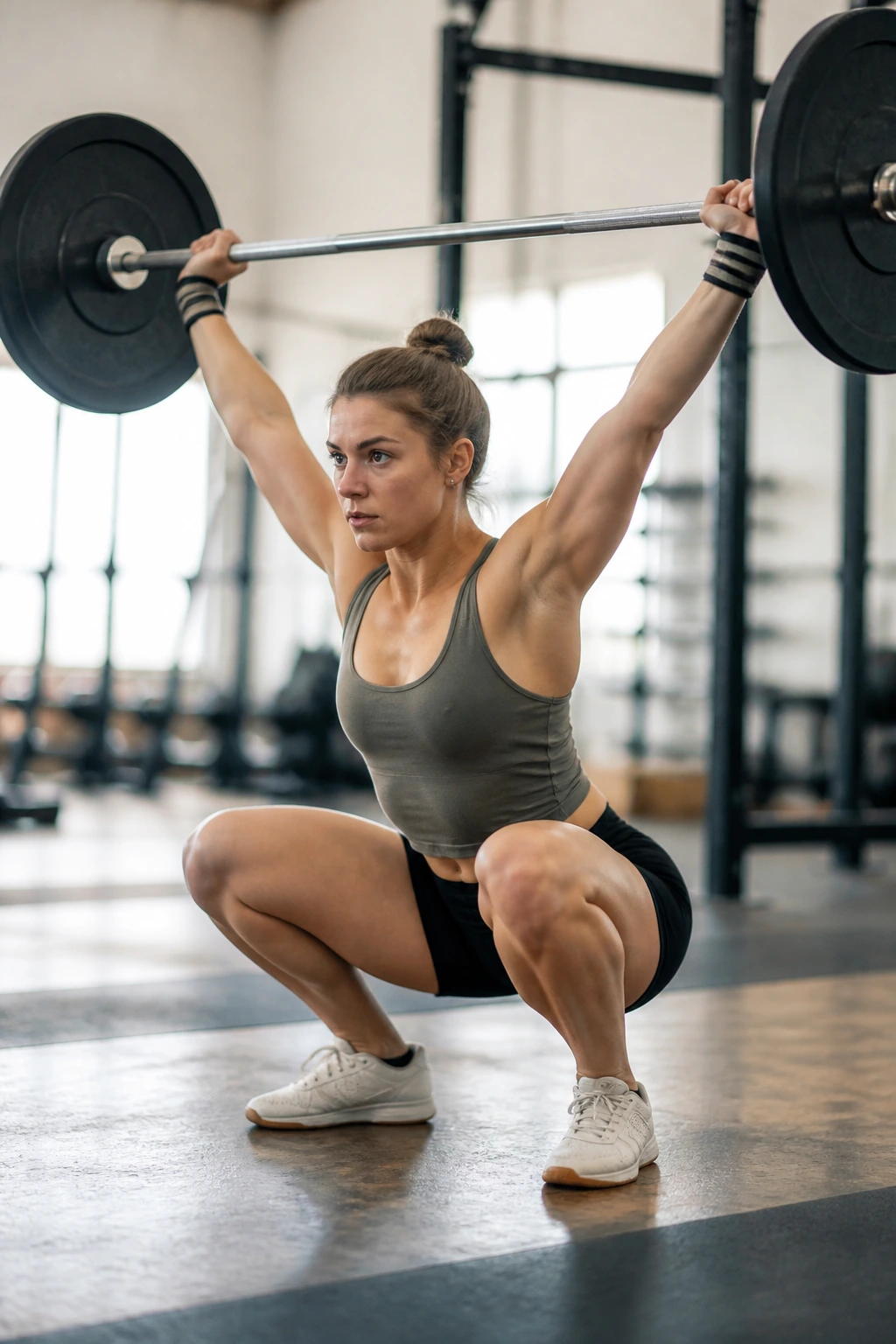
A broomstick can teach this complex just fine. That is not an insult.
The muscle snatch is where beginners learn to turn the elbows over without throwing the bar away from the body. Pair it with an overhead squat, and you get a clean little lesson in turnover and stability. Do 4 or 5 sets of 2 muscle snatches + 2 overhead squats. Keep the bar light enough that the shoulders never panic.
The first rep should feel tall and snappy. The second part should feel slow and anchored. That contrast is useful. You are teaching your body two different jobs in the same set: move the bar fast, then hold it still.
If the wrists or shoulders are grumpy, this is the day to listen. Cut the load, widen the grip a hair, and keep the overhead squat depth honest. If the bar wobbles at the bottom, the complex did its job. You just found the weak spot before it showed up with a heavier lift.
Simple. But not easy.
10. Hang Clean, Front Squat, and Jerk Complex
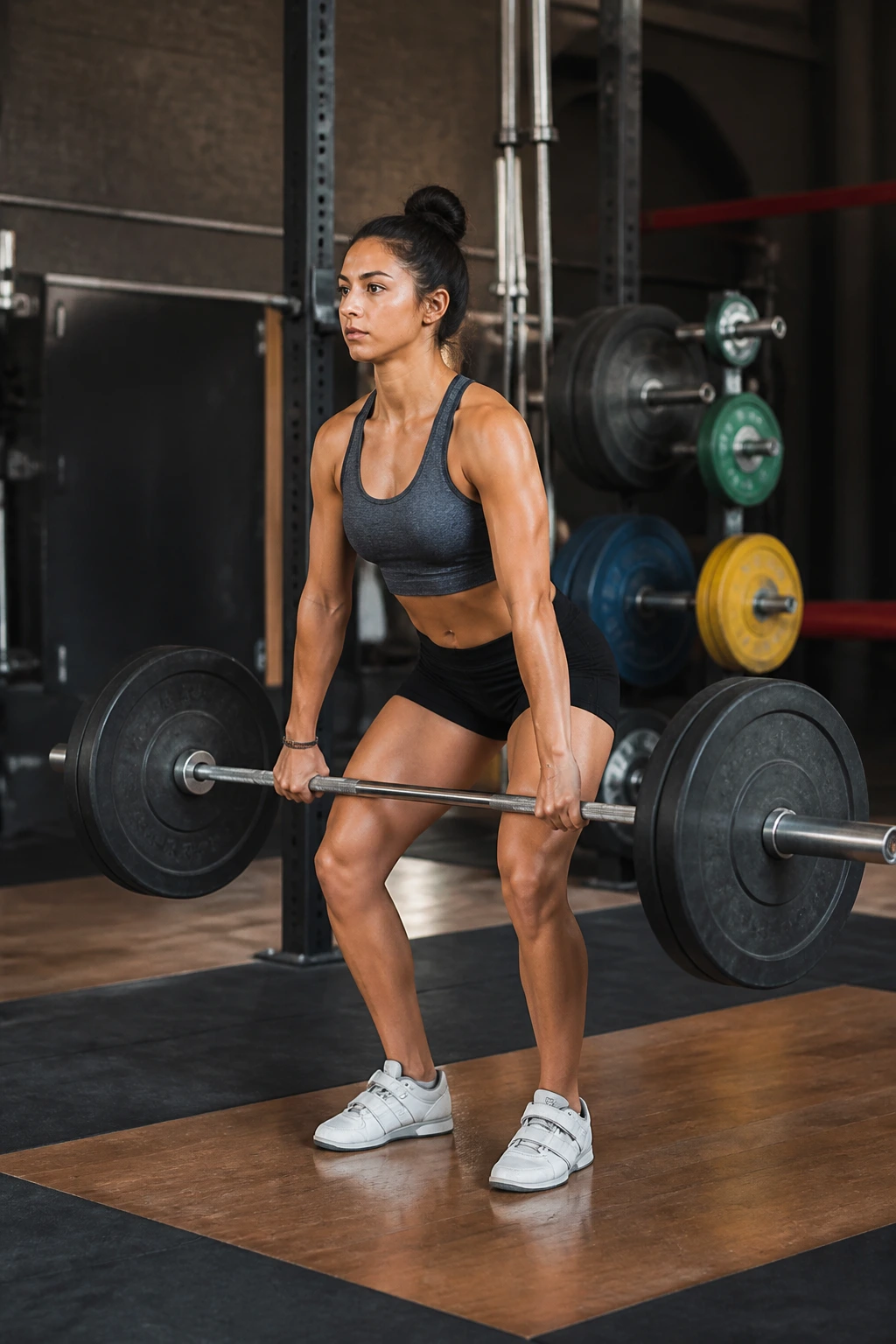
Unlike full lifts from the floor, this session removes the part that usually causes beginner chaos. That alone makes it worth keeping around.
Run 4 sets of:
- 1 hang clean
- 1 front squat
- 1 split jerk
Use the hang just above the knee so you can focus on the second pull, the rack, and the drive out of the legs. Keep the bar light, usually 40 to 60 percent, and rest about 2 minutes between sets. The clean should feel crisp enough to receive cleanly, but not so heavy that the jerk turns into a rescue mission.
Why This Combo Works
The hang clean gives you the clean. The front squat gives you the stand-up. The jerk ties the whole thing together.
That order matters. A beginner who can’t stand up from the clean cleanly will never enjoy the jerk after it. A beginner who rushes the jerk before the rack settles will usually miss it forward or press it out. This complex slows the whole chain down in a useful way.
If the clean rack gets messy, stop the set there. No shame. Clean reps matter more than finishing the full complex for the sake of the plan.
11. Block Snatch From the Knee
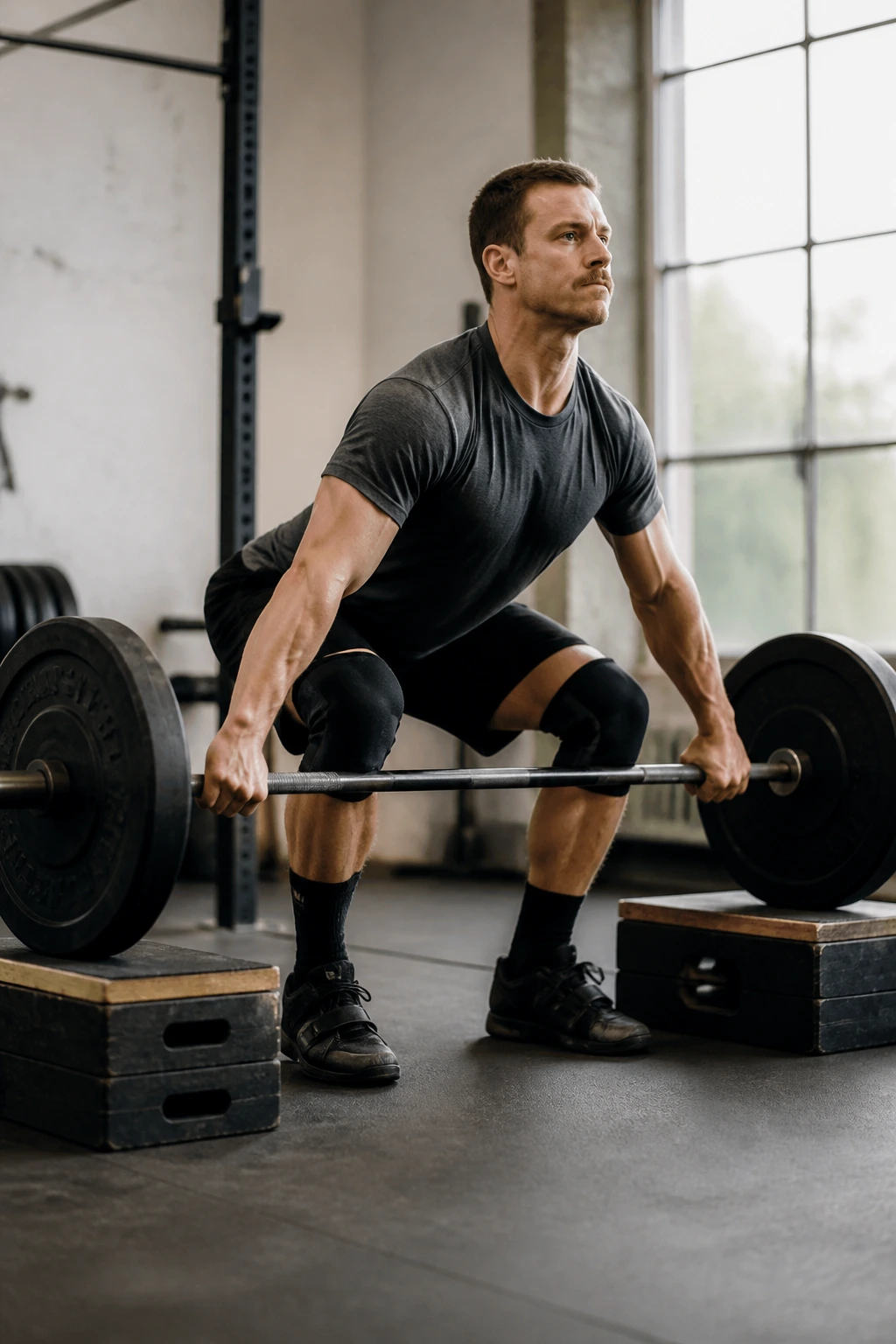
The bar does not need to start on the floor every time. In fact, for beginners, that can hide more than it reveals.
Set the bar on blocks, plates, or a rack so it starts just below the knee. Then do 6 singles at 60 to 75 percent with 90 seconds of rest. The lift should look sharp from the first inch. If blocks are not available, use a hang position from the knee and keep the reps one at a time.
The value here is obvious once you feel it. You get to practice the sweep into the thigh without the distraction of the floor. That makes it easier to keep the shoulders over the bar a little longer and stay patient until the finish. A lot of beginners feel the pull better in this setup because the start is less cluttered.
The bar should skim, not smash. If it bangs the thigh, the position is off or the load is too heavy. Keep it quiet. Quiet reps tend to be cleaner reps.
12. Jerk From the Rack With Split-Step Practice
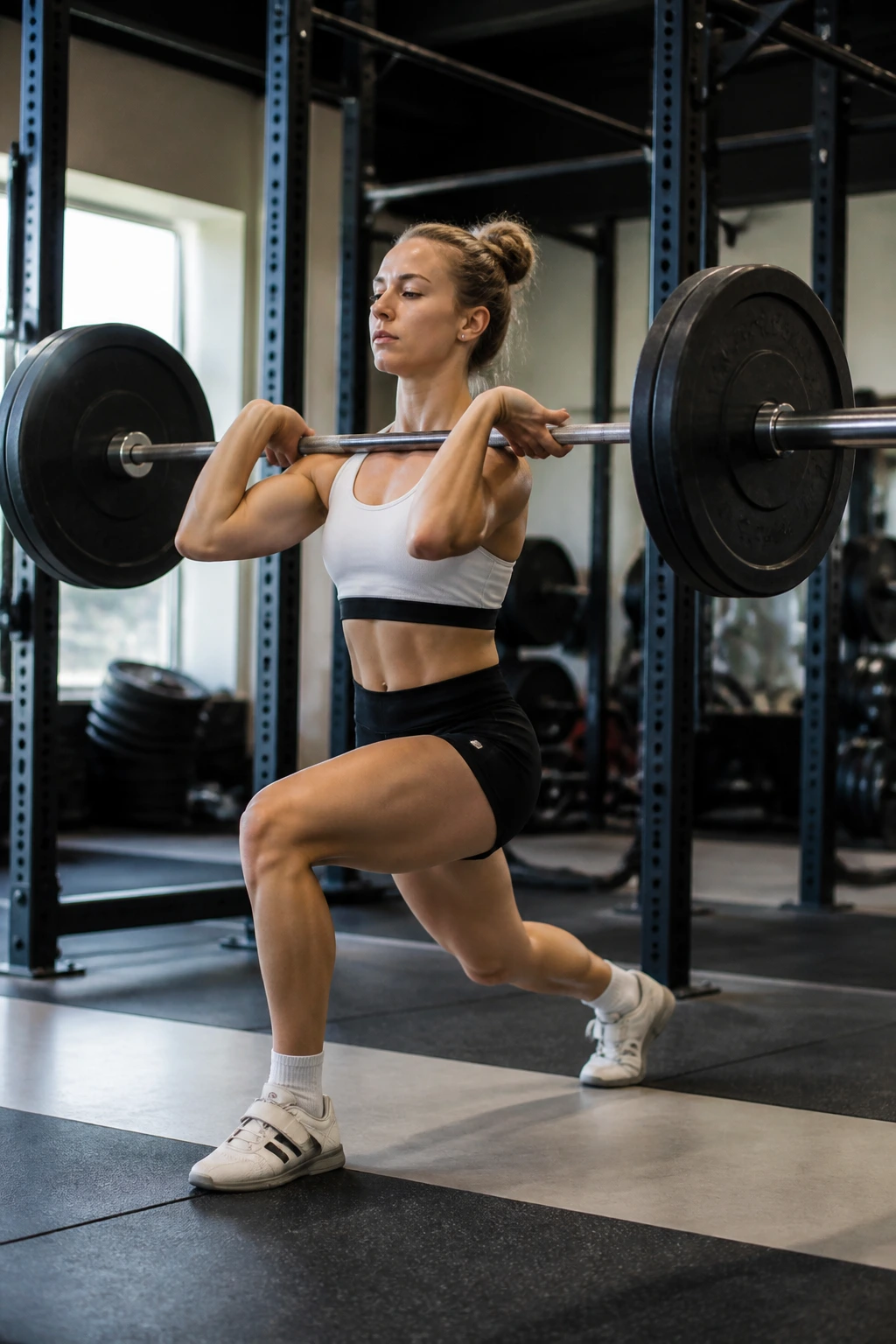
If the clean is there but the jerk gets ugly, this day fixes the ugly part.
Start with 3 sets of 5 split-step drills without a bar. Then move to 5 sets of 2 dip-and-drive jerks from the rack. Finish with 3 singles of split jerk at a light load, usually somewhere around 50 to 70 percent. The clean stays out of the picture so the focus stays on the dip, the drive, and the split.
What Good Looks Like
- The dip is vertical and only 3 to 4 inches deep.
- The front knee stays stacked over the foot.
- The drive feels like a hard push through the floor.
- The catch lands with the feet apart, not in a tiny lunge.
A sloppy jerk usually starts with a sloppy dip. That part matters more than people think. If you tip forward or bounce the chest, the bar goes where it wants, and that place is rarely good.
Take your time on the rack setup. The bar should sit across the shoulders with the elbows slightly in front of the bar, not dropped under it. That little detail saves a lot of misses.
13. Front Squat, Push Press, and Split Jerk Day
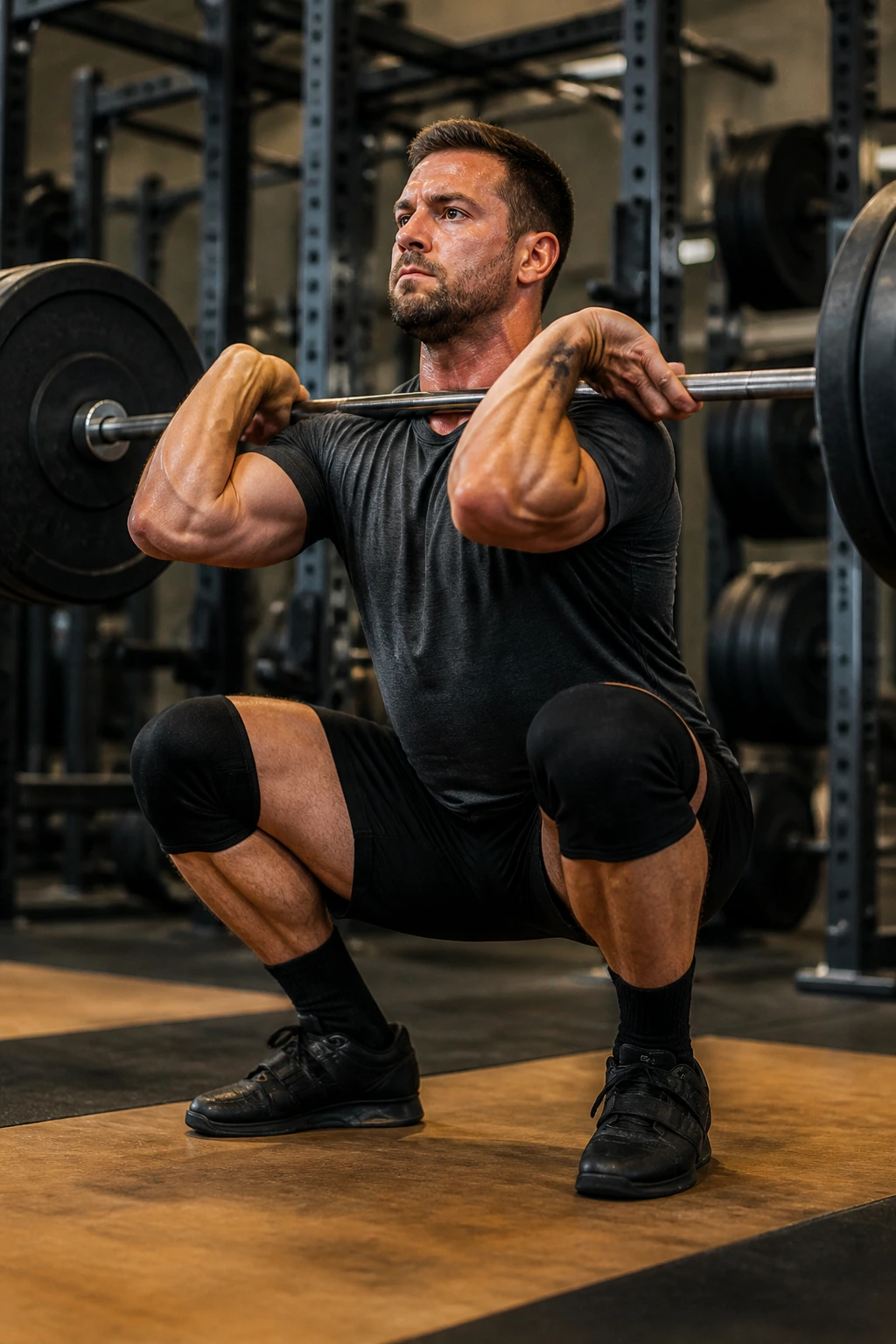
Squats are not a detour. They are the floor under both lifts.
Use this as a strength day and keep it honest. Run 4 rounds of:
- 3 front squats
- 3 push presses
- 1 split jerk from the rack
Stay around 60 to 70 percent of your front squat and a lighter load on the presses and jerk. The first half builds the legs and trunk. The push press teaches you to drive straight overhead without turning the dip into a lean-back circus. The jerk finishes the job with proper footwork.
What the Bar Should Feel Like
- Front squats should stay upright, with the elbows high the whole time.
- Push presses should feel like a hard leg drive, not a shoulder press with a bend in the knees.
- The jerk should feel faster than the push press, not slower.
I like this workout for beginners who can move the bar but keep getting beat up by the weight they can’t stand from. Strong legs and a stable rack solve more problems than people expect. Weird, maybe. True, too.
If the front squat depth gets shaky, cut the load and keep the torso vertical. There is no prize for a fast collapse.
14. The Accessory Day That Makes the Bar Feel Lighter
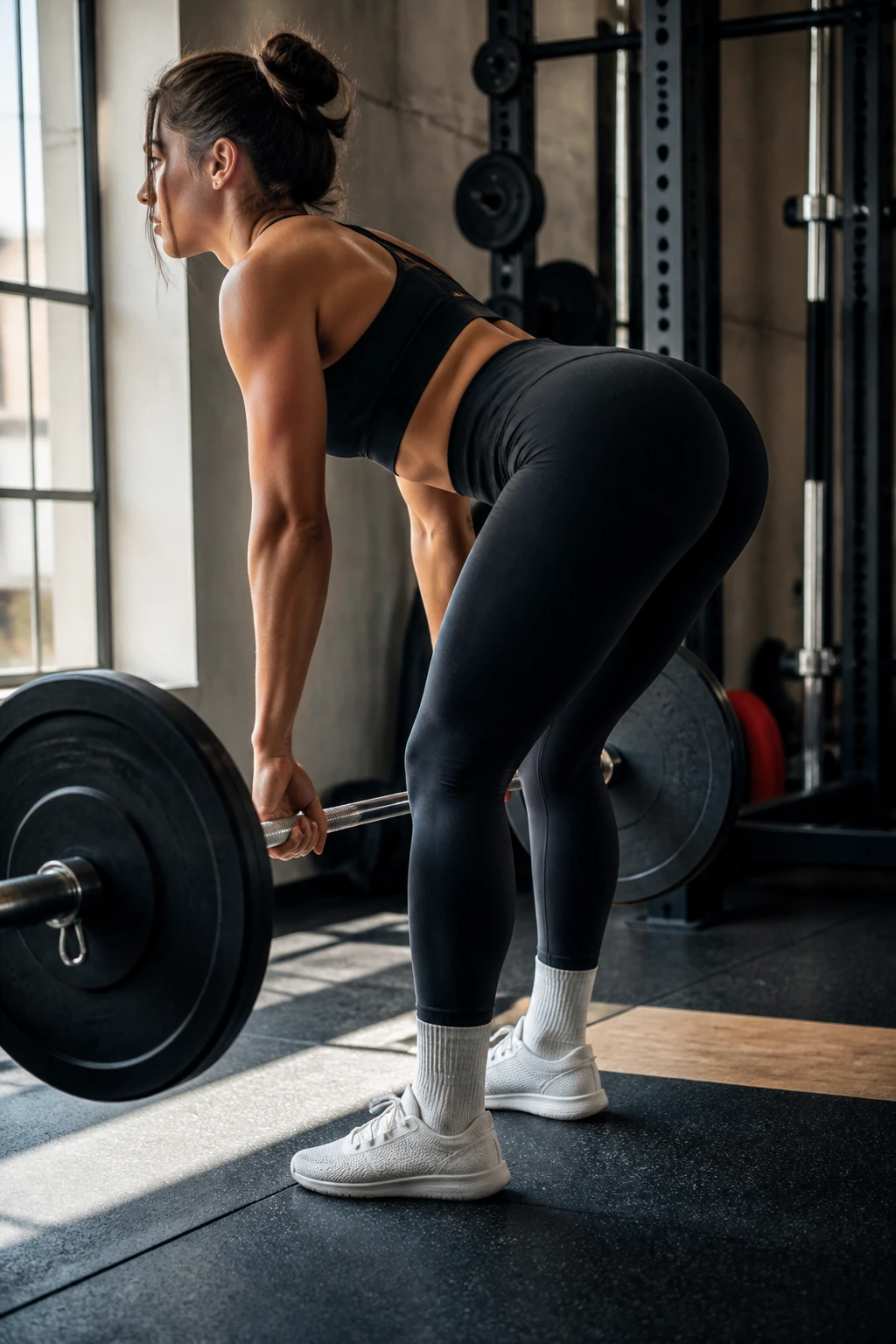
What if a beginner needs less barbell time and more support work? A lot of them do.
This is the day for the muscles that keep the lifts honest when the technique gets tired. Run 3 rounds of:
- 6 to 8 Romanian deadlifts
- 8 to 10 chest-supported rows
- 6 reverse lunges per leg
- 20 to 30 seconds of side plank per side
- 3 to 5 box jumps or broad jumps
Keep the weights moderate and the reps clean. The RDL should stretch the hamstrings without rounding the back. The rows should pull the shoulder blades back, which helps when you’re trying to hold position in the snatch and clean. The lunges build single-leg control, and the jumps wake up the legs without frying them.
This is not glamorous work. It is useful work.
Beginners often want to skip the boring session and live on the platform. That usually backfires. A stronger back, steadier trunk, and better leg drive make every lift feel lighter, even when the bar stays the same.
15. A Simple Technique Circuit and Video Check
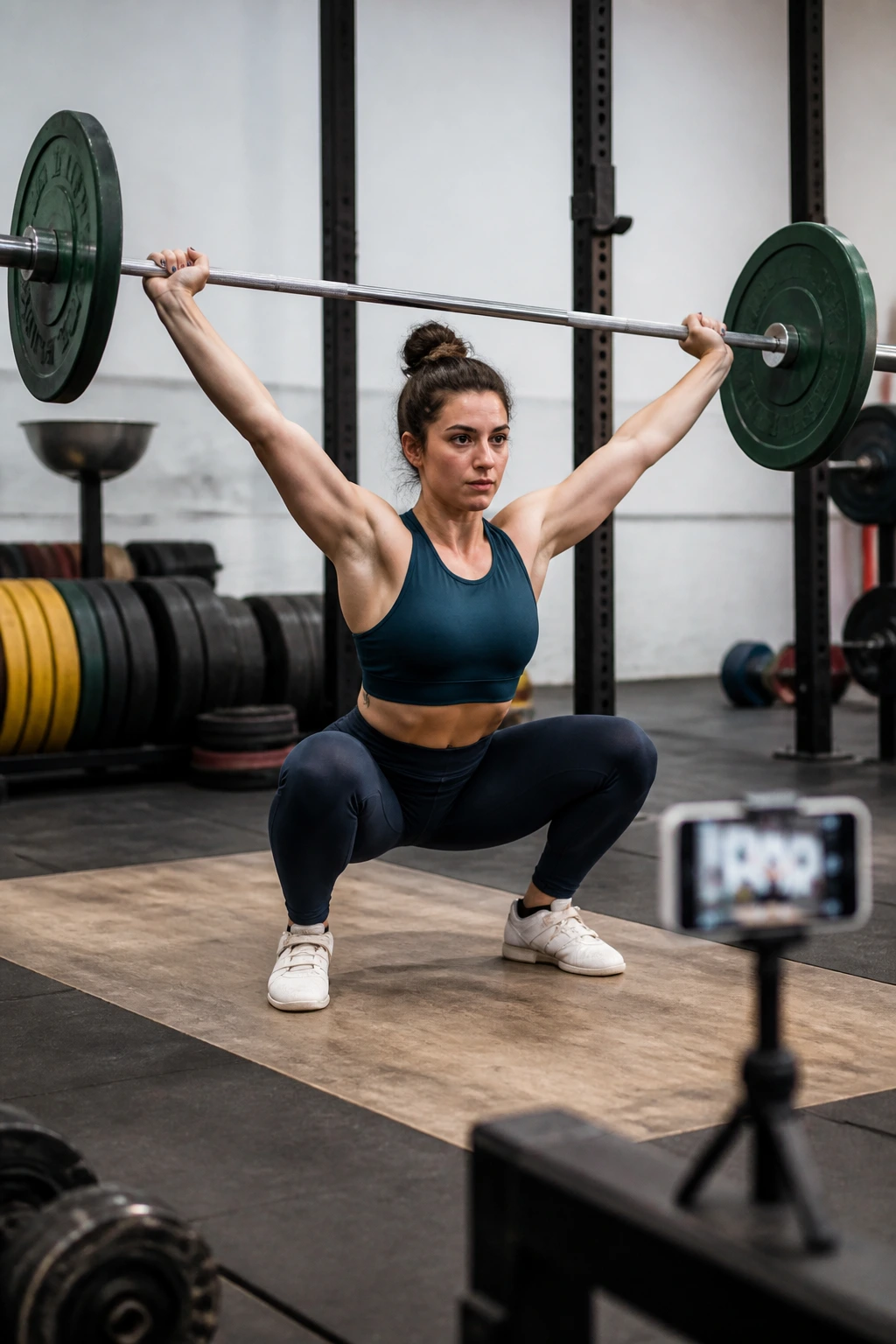
A good beginner plan needs one session that ties everything together and shows you what’s actually happening.
Set a timer for 15 to 20 minutes and run 3 rounds of:
- 1 snatch pull
- 1 snatch
- 1 clean pull
- 1 clean
- 1 jerk from the rack
Keep the load light—often around 40 to 55 percent—and film the side of the lifts on your phone. Film at hip height if you can. You want to see the bar path, the footwork, and the catch, not the back of your head. Rest 2 minutes between rounds so every rep stays sharp.
The Quick Video Check
- Does the bar stay close on the pull?
- Do the feet land in the same place every time?
- Does the catch look fast or late?
- Do the knees track smoothly, or do they cave?
That little review session saves time later. A beginner can spend months guessing, or ten minutes watching the video and spotting the obvious leak. One is cheaper.
This is also the place to clean up little habits that creep in when fatigue builds. The snatch pull tells you about the start. The clean tells you about the rack. The jerk tells you about balance. Nothing fancy. Just honest reps.
Final Thoughts
Beginner Olympic lifting does not need to be dramatic. It needs to be clean, repeatable, and light enough that you can keep learning while you move. The best sessions are the ones that make the snatch less mysterious, the clean less rushed, and the jerk less wobbly.
If one thing matters most, it’s this: own the positions before you chase load. That means overhead holds, pause pulls, front rack work, and plenty of singles that look the same from rep to rep. The bar will feel lighter once your shapes stop leaking force.
Pick three of these sessions, rotate them through the week, and stay patient with the boring parts. They are usually the parts that end up making the lifts look good.
