



A pair of sliders can turn a plain living room floor into a sneaky-hard training space. Two small pieces of plastic or fabric, and suddenly your core has opinions, your hamstrings wake up, and your legs stop pretending bodyweight work is easy.
That’s the charm of slider exercises. They look low-key. They are not.
On a smooth floor, a towel, paper plates, or furniture sliders give you a slick surface that makes every rep longer, slower, and more demanding. The sliding part matters. You have to control the out-and-back motion, and that extra control is where the abs, glutes, adductors, and shoulders start doing real work.
Some of these moves feel like warm-ups. A few feel like punishment. A couple are perfect when you want a quiet, apartment-friendly workout without jumping, banging, or hauling out a pile of gear. Start with control, keep the range honest, and let the friction do its thing.
1. Slider Mountain Climbers
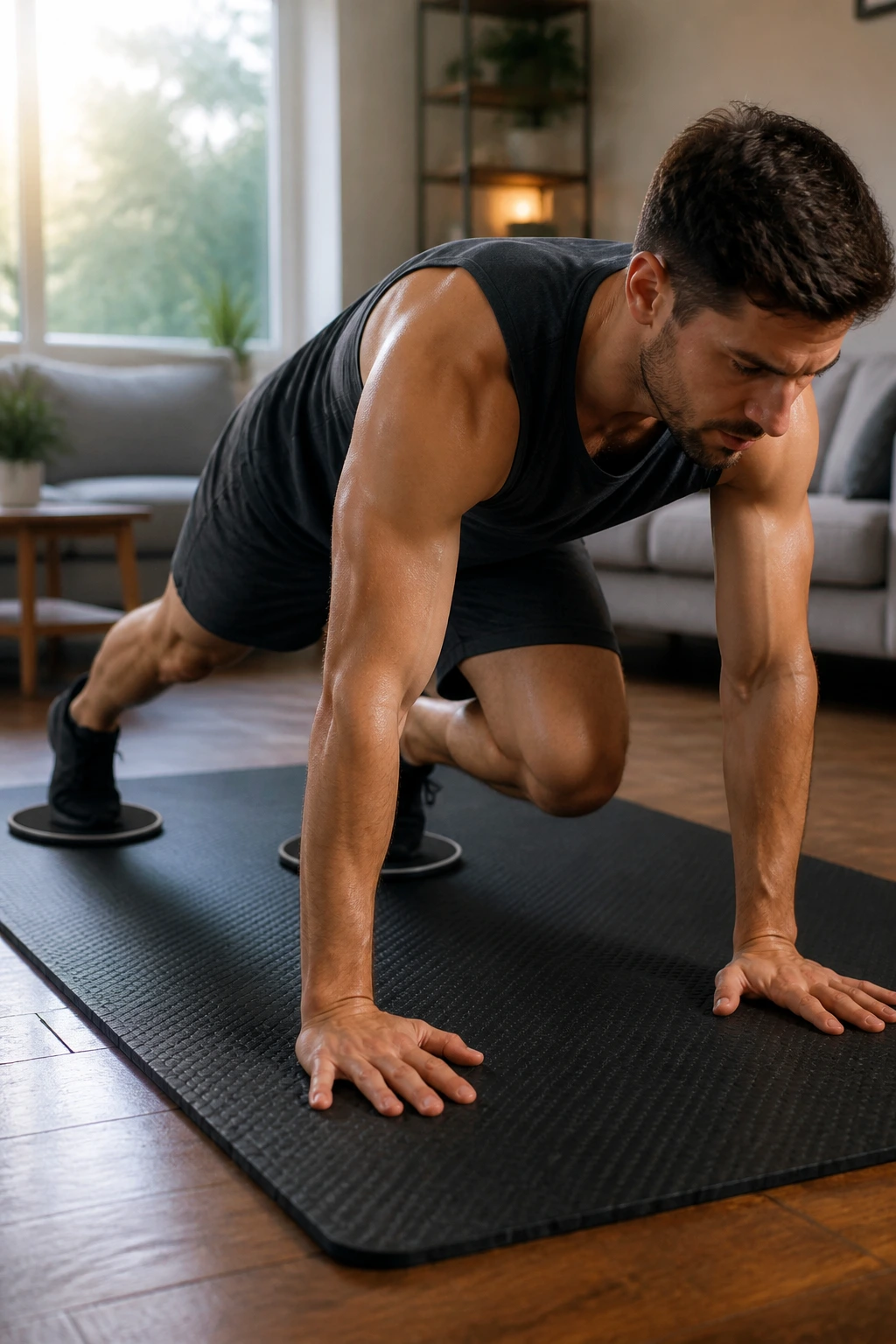
Mountain climbers on sliders look like a simple cardio drill, then your hips start wobbling and the truth comes out fast.
Set your hands under your shoulders, press your palms into the floor, and place the balls of your feet on the sliders. Drive one knee toward your chest while the other leg slides back long. Then switch sides without letting your lower back sag or your hips bounce up.
What to feel
- Shoulders: steady and planted
- Abs: tight enough to stop your ribs from flaring
- Hip flexors: working, but not pinching
- Breathing: short, sharp exhale with each drive
Best cue: think “slow sprint,” not “wild scramble.” If you’re slamming the knees forward, the floor is winning.
2. Slider Reverse Lunges
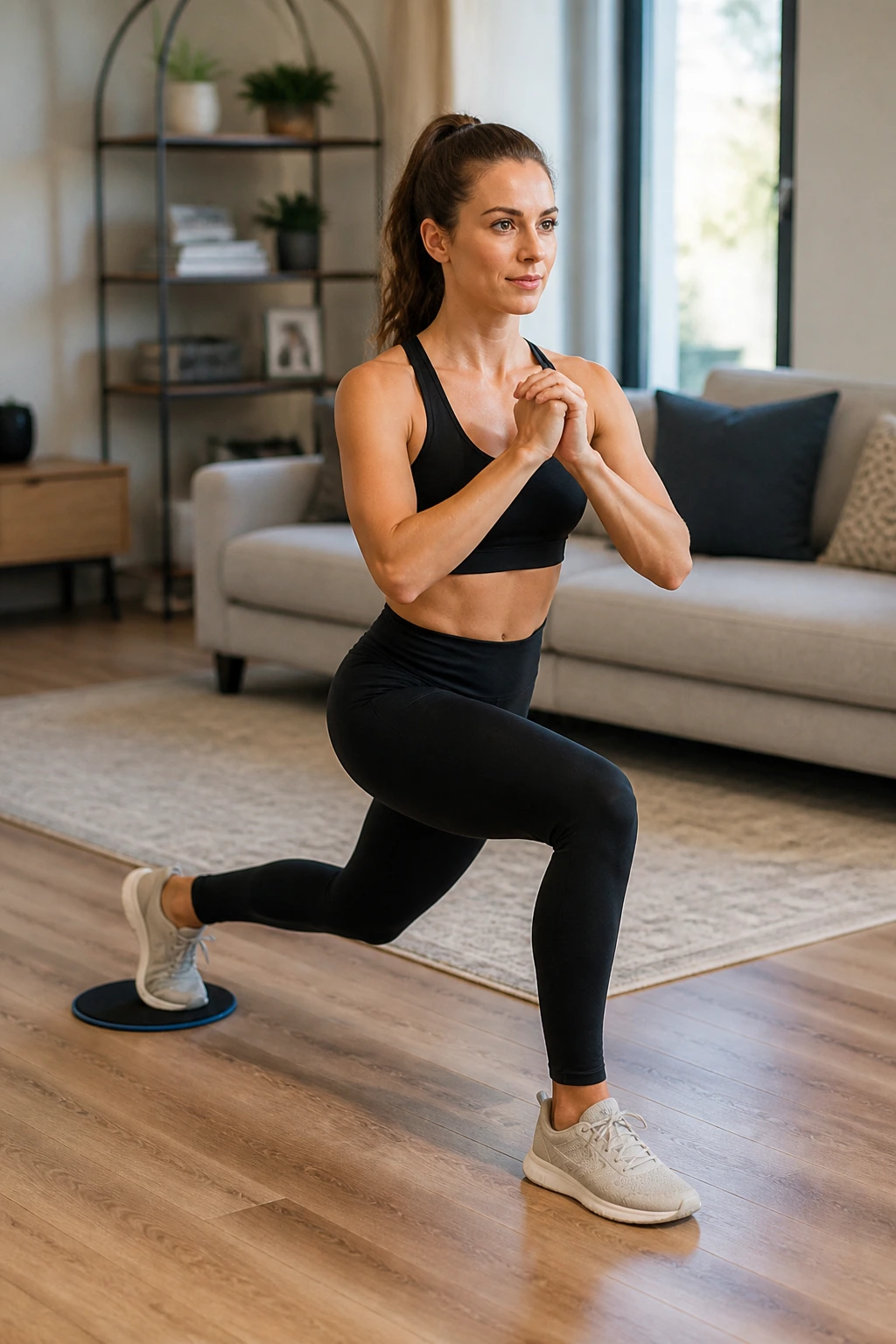
A reverse lunge with a slider feels smoother than a regular step-back lunge, but it asks more of your front leg than people expect.
Stand tall with one foot on the slider and the other foot planted. Slide the back foot straight behind you, lower until both knees bend, then push through the front heel to pull the slider back under you. Keep your torso stacked over your hips. Don’t tip forward like you’re reaching for a dropped coin.
The front leg should do most of the work. That’s the whole point. If you want more quad load, keep the torso upright. If you want a little more glute, let the hips drift back a touch as you descend.
3. Slider Curtsy Lunges
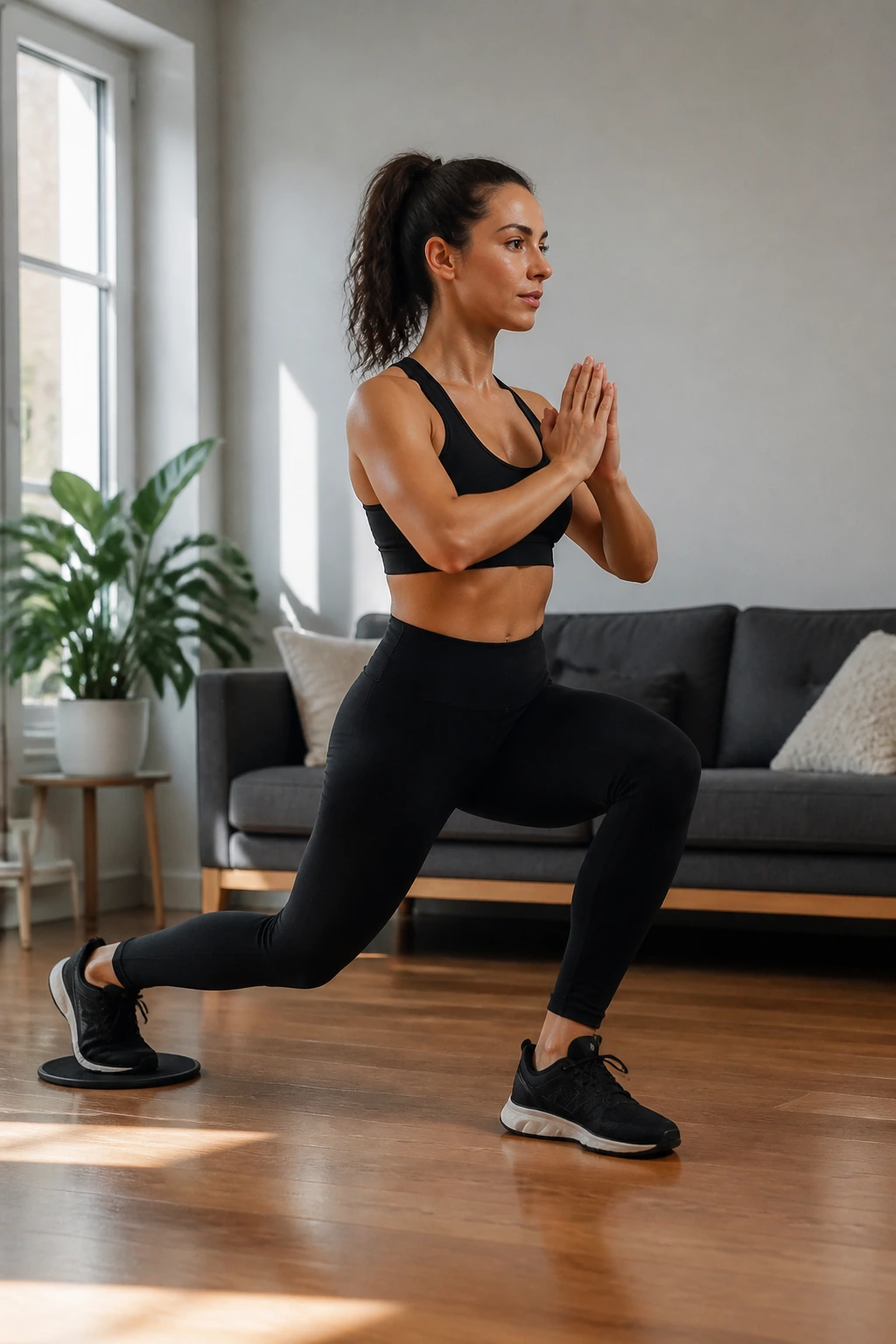
Curtsy lunges on sliders hit the outer hip in a way that regular squats often miss.
Start with one foot on the slider and the other planted. Slide the working leg back and across your body, like you’re tracing a diagonal line behind your standing foot. Lower only as far as you can keep the front knee tracking in a clean line. If the knee caves inward or the slide gets twisty, shorten the range.
What to watch for
- Keep the slide small at first.
- Do not yank the leg across.
- Keep your chest lifted.
- Push the floor away through the standing heel.
That outer-glute burn shows up fast. Good. It should.
4. Slider Lateral Lunges
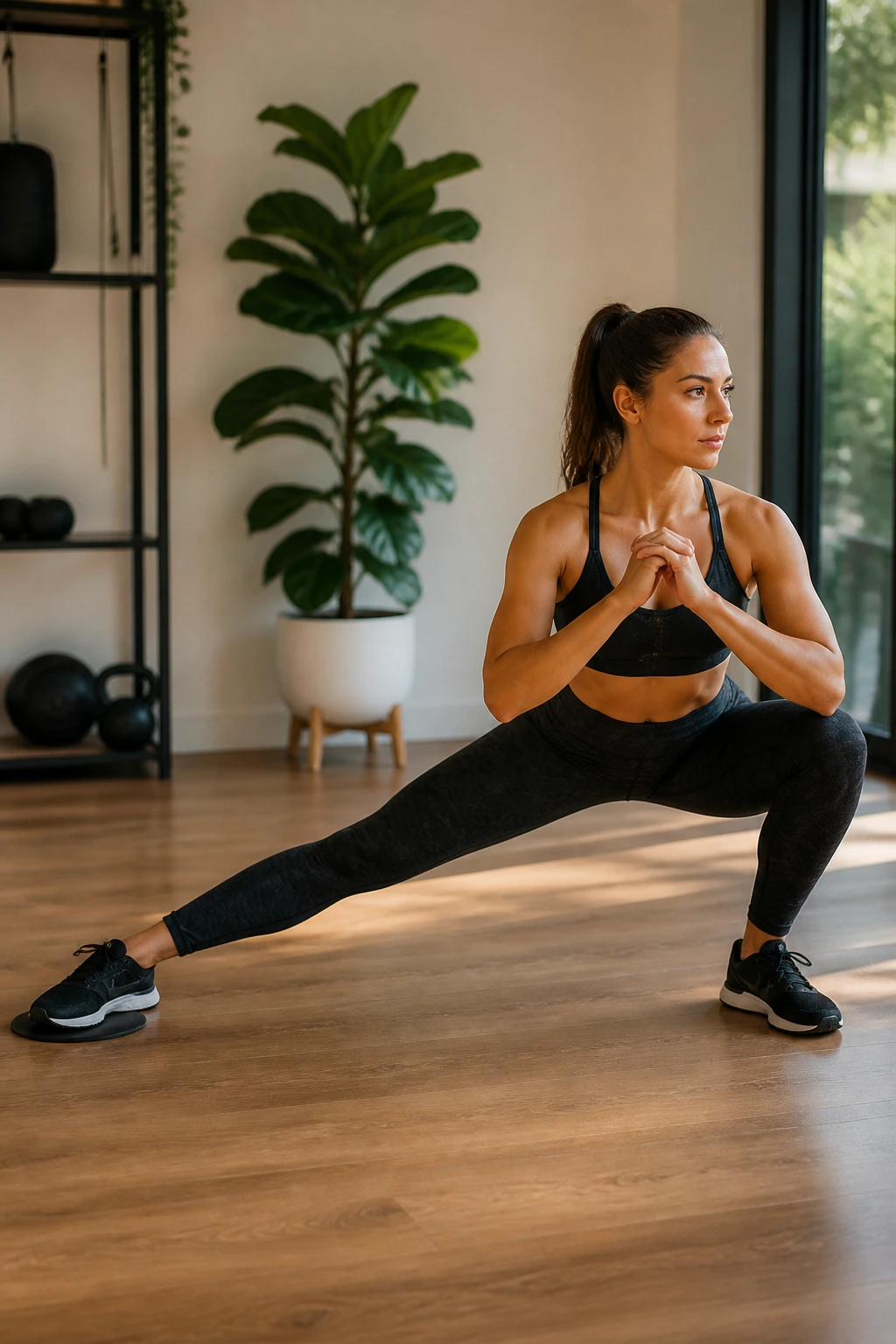
If your inner thighs are the part of your body that always gets ignored, lateral lunges fix that fast.
Place one foot on a slider and the other foot on the floor. Slide the working leg out to the side while you sit your hips back into the standing leg. The planted foot stays flat; the sliding leg stays long. At the bottom, the inner thigh of the sliding leg and the glute of the standing leg both have something to say.
This move works best when you move with patience. A rushed lateral lunge turns into a sloppy side step. A controlled one feels like a real strength drill.
5. Slider Hamstring Curls
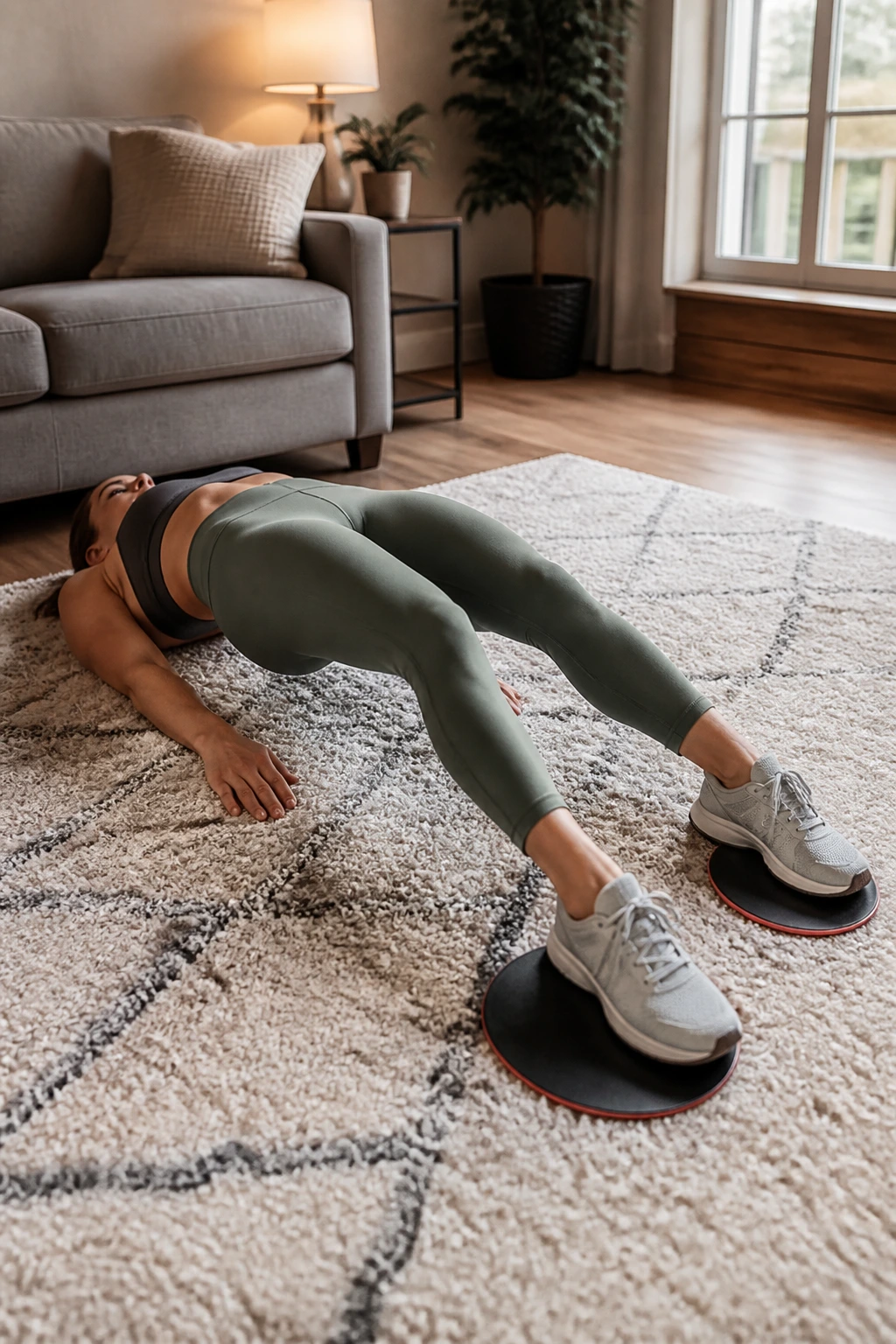
This is the move people buy sliders for, even if they pretend they bought them for “core work.”
Lie on your back with heels on the sliders and knees bent. Lift your hips into a bridge, then slide your heels away until your legs are almost straight. Pull them back in without dropping the hips if you can help it. The hamstrings will light up, and if they cramp a little on the first few reps, welcome to the club.
How to keep it clean
- Keep your ribs down.
- Keep your hips from sinking.
- Slide out on a slow count of 2 to 3.
- Pull in under control, not with a yank.
Best rep range: 6 to 12 quality reps. Once the hips start sagging, the set is over.
6. Single-Leg Slider Hamstring Curls
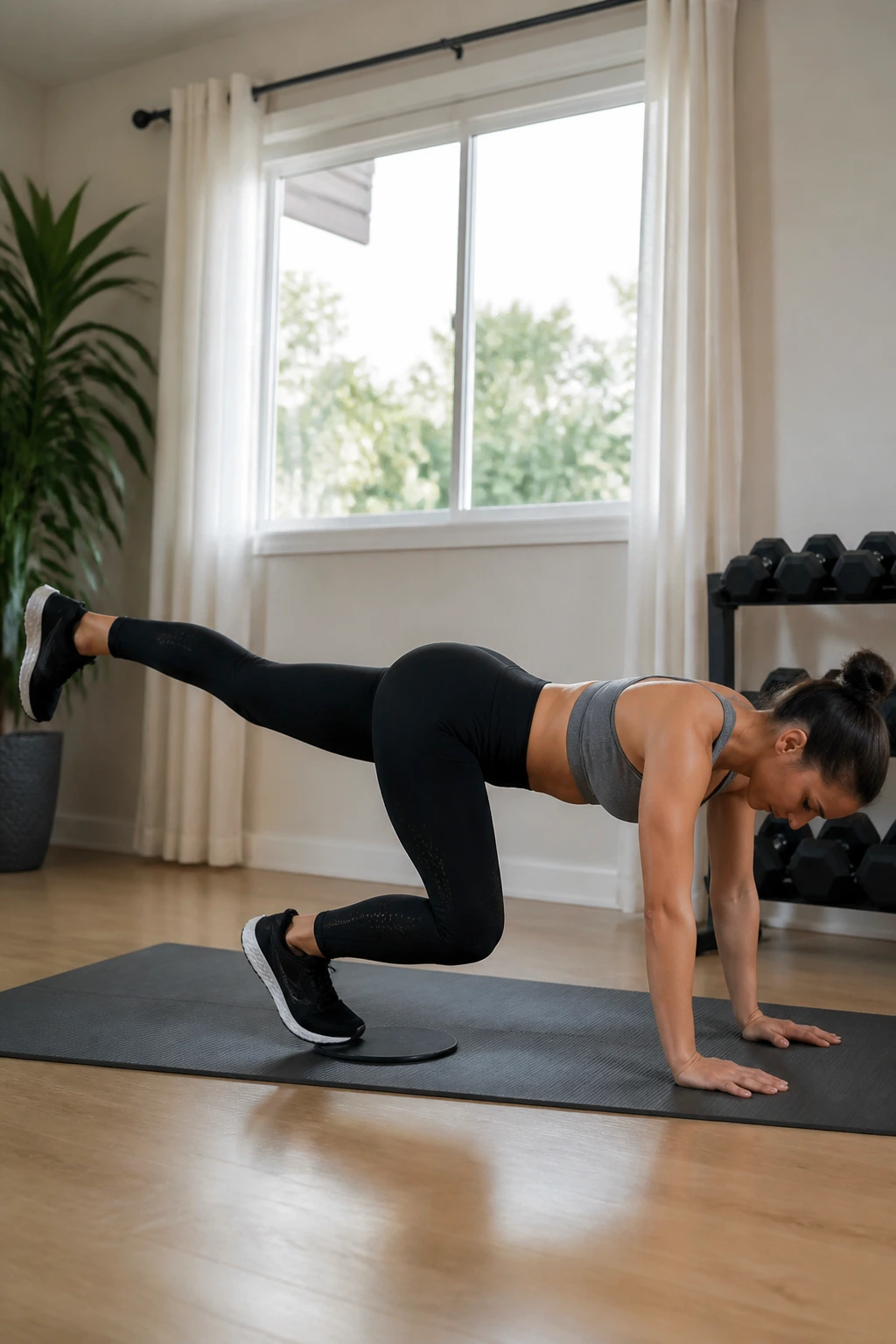
One leg at a time changes everything. It’s rude, honestly.
Set up like the two-leg version, then lift one leg off the floor and keep it bent or extended. The working heel slides away and back while the other leg stays in the air. Your pelvis will try to twist. Your job is to stop that from happening.
Why it hits so hard
The single-leg version strips away the easy stuff. You can’t hide behind momentum, and your glutes have to help keep the hips level. The first few reps may feel shaky. That’s normal.
Try 4 to 8 reps per side before the form gets messy. If your hamstring starts cramping, reduce the range and keep the heel path smooth.
7. Slider Glute Bridge Out-and-Ins
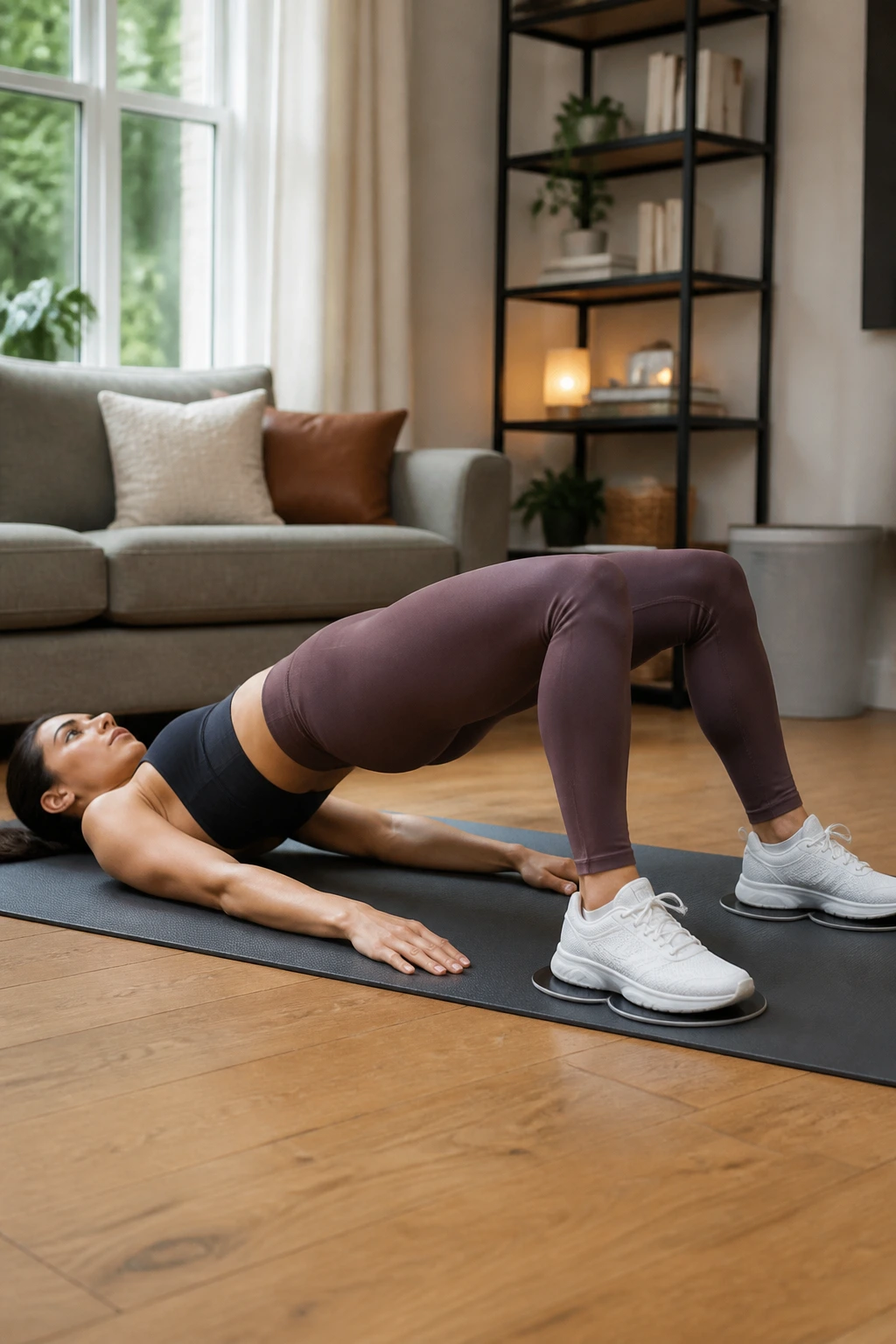
A bridge with sliders is not just a bridge. It’s a fight between your glutes and your hamstrings, and the hamstrings usually show up early.
Lie on your back, heels on sliders, and lift into a bridge. From there, slide both heels a few inches away from your body, then draw them back under you without letting your hips drop. The movement is small, but it burns because your pelvis has to stay quiet while your legs move underneath it.
The mistake here is trying to go too far too soon. Short slides count. A lot. If you keep the hips high and the ribs down, you’ll feel the work exactly where you want it.
8. Slider Bridge Marches
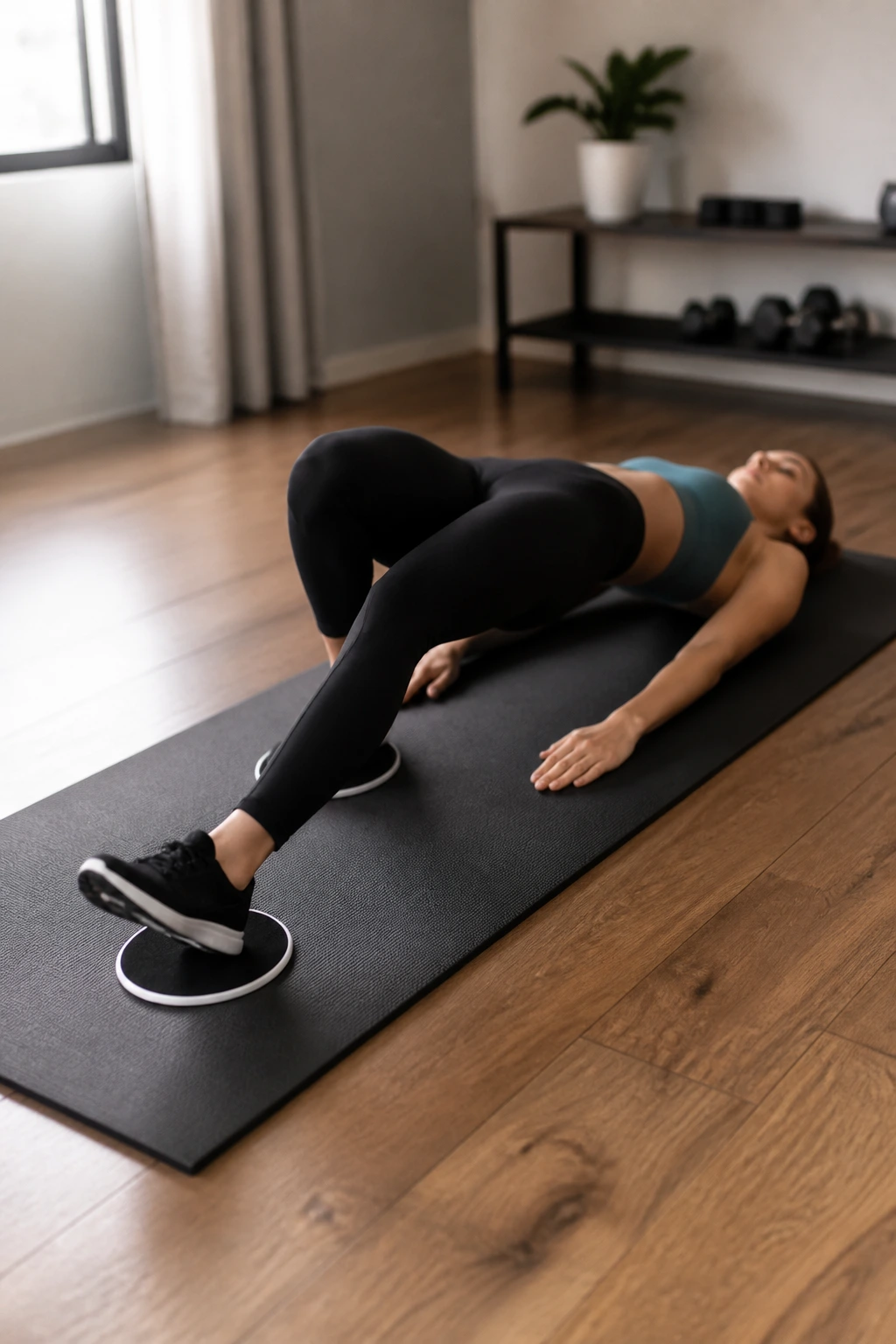
This one looks almost boring. Then the balance challenge sneaks in.
Set up in a bridge with both heels on sliders. Keep the hips lifted and slide one foot a few inches farther away, then bring it back and switch sides. The non-moving side has to hold the bridge while the moving side makes the slide. That means your glutes, hamstrings, and deep core all have to stay awake at the same time.
Small detail, big difference
If your hips tilt side to side, shorten the slide immediately. You’re not trying to prove anything. You’re trying to keep the pelvis level while one leg works.
Do 8 to 12 controlled marches per side or alternate for 30 seconds.
9. Slider Body Saw
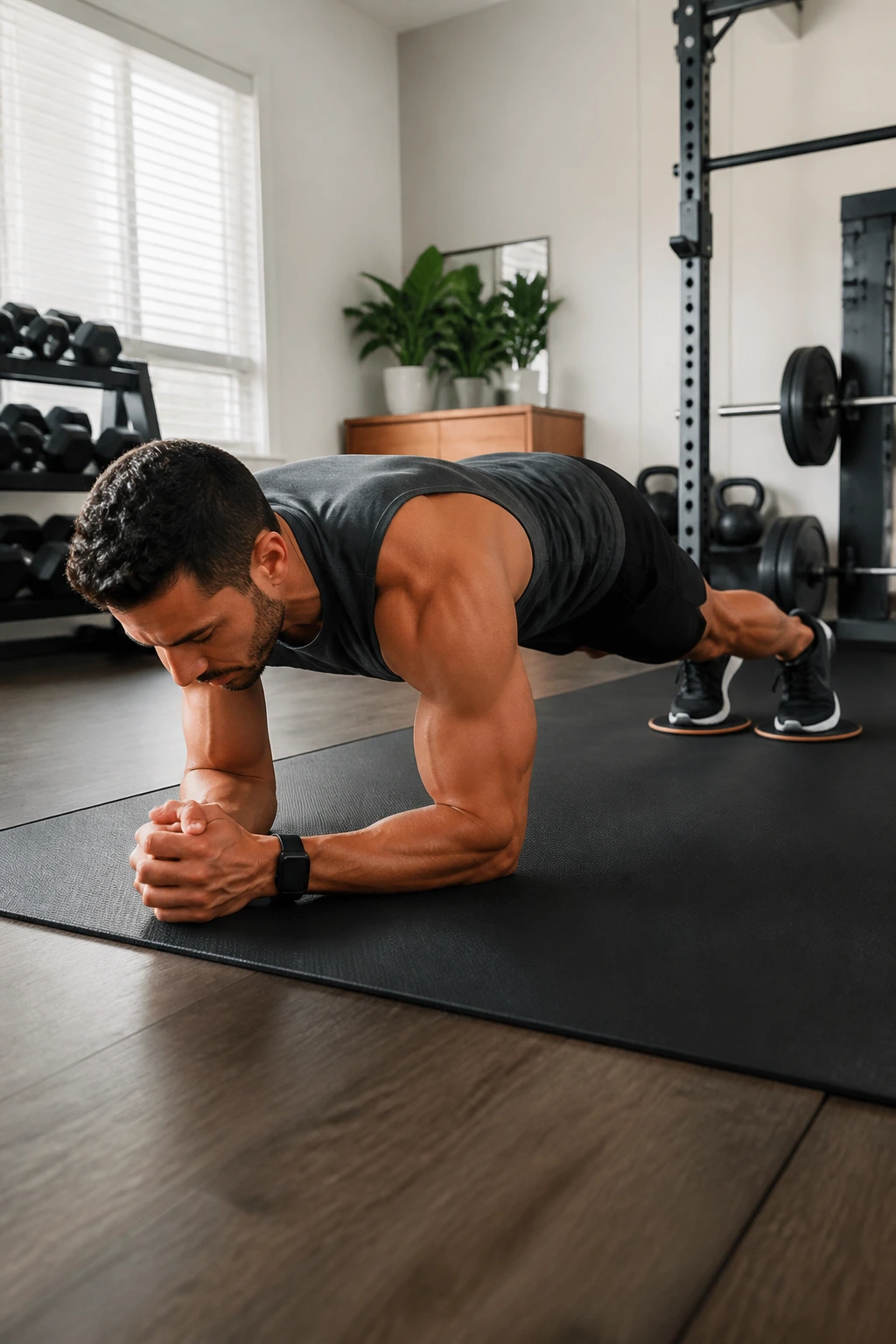
The body saw is one of those plank variations that feels tiny and ends up being huge.
Start in a forearm plank with your feet on sliders. Brace your abs, then gently push your body backward by sliding your feet away from your elbows. Pull yourself forward again using your forearms and core. The movement should be only a few inches. If you glide halfway across the room, the form is gone.
Your shoulders stay packed, your neck stays long, and your lower back should not dip. That last part matters. A body saw done with a sagging spine is just a recipe for grumbling.
10. Slider Knee Tucks
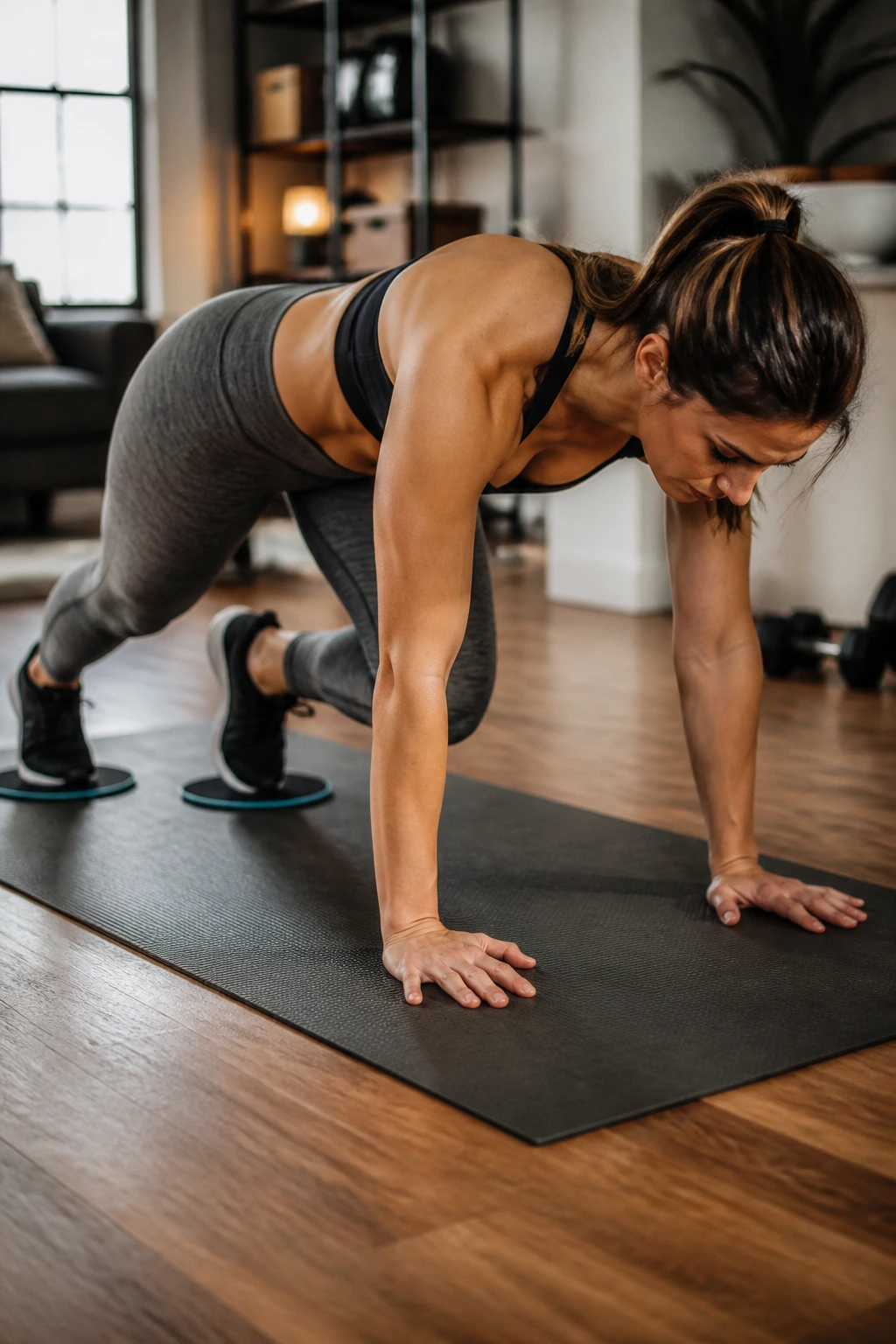
Knee tucks on sliders are the direct, no-nonsense cousin of mountain climbers.
Start in a high plank with both feet on sliders. Pull both knees toward your chest at the same time, then slide them back out to a long plank. Keep your hands fixed and your shoulders strong. The abs have to pull the knees in, but the shoulder line has to stay rock solid.
You’ll feel this in the lower abs if you keep the motion slow. Rush it, and it turns into a sloppy little shuffle. Slow wins here.
Good sign: your hips stay roughly level.
Bad sign: your head drops and your lower back arches.
11. Slider Pike Tucks
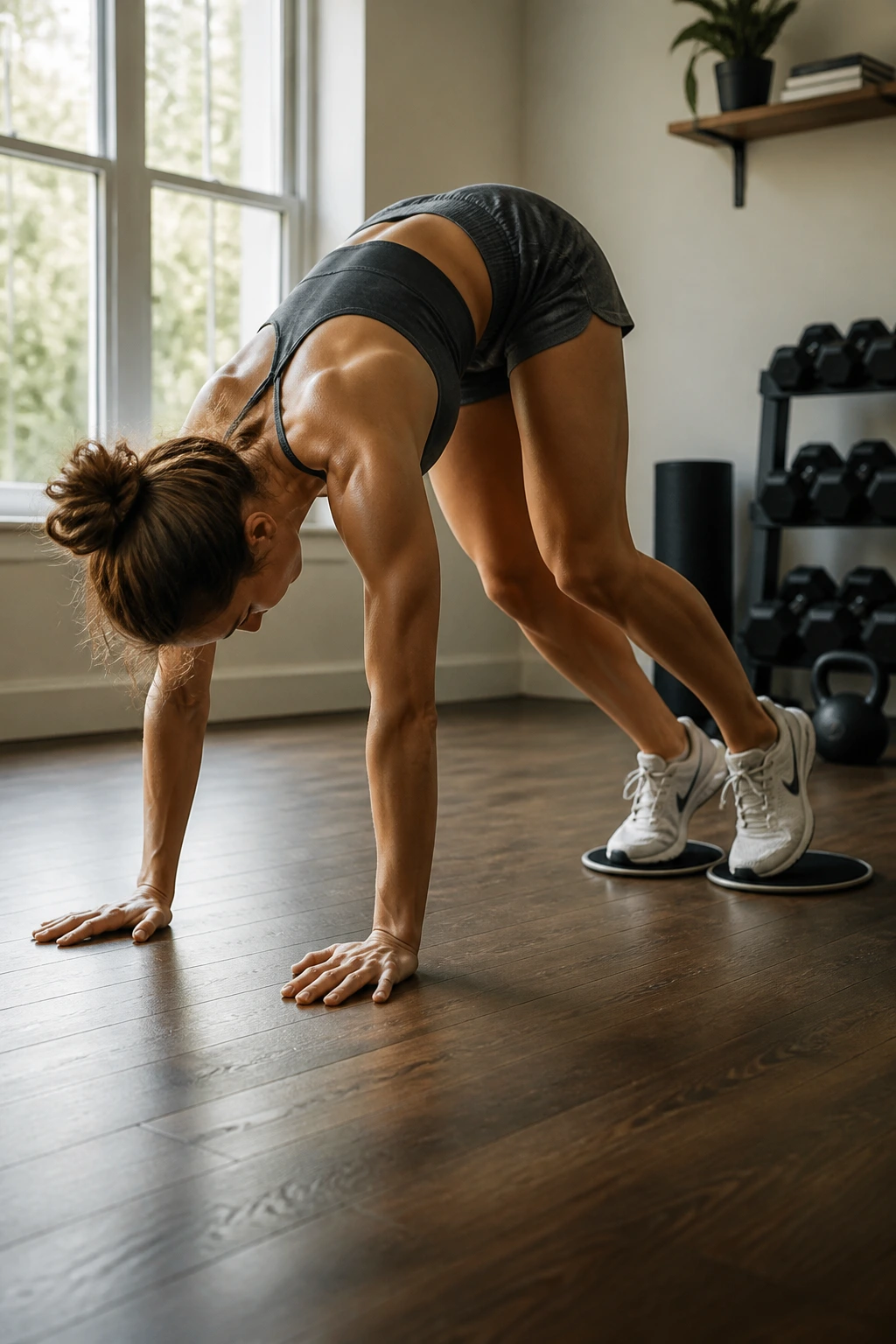
Pike tucks are the move that makes core training feel like a shoulder exercise too.
From a plank with feet on sliders, lift your hips up and draw your feet in underneath you, almost like you’re folding into a tiny tent shape. Then slide back out to plank. The closer your feet get to your hands, the more the shoulders and abs have to do together.
Keep the movement smooth. No jerking. If your lower back starts to complain, reduce the height of the pike and shorten the range of the tuck. A clean partial rep is better than a chaotic full one.
12. Slider Plank Jacks
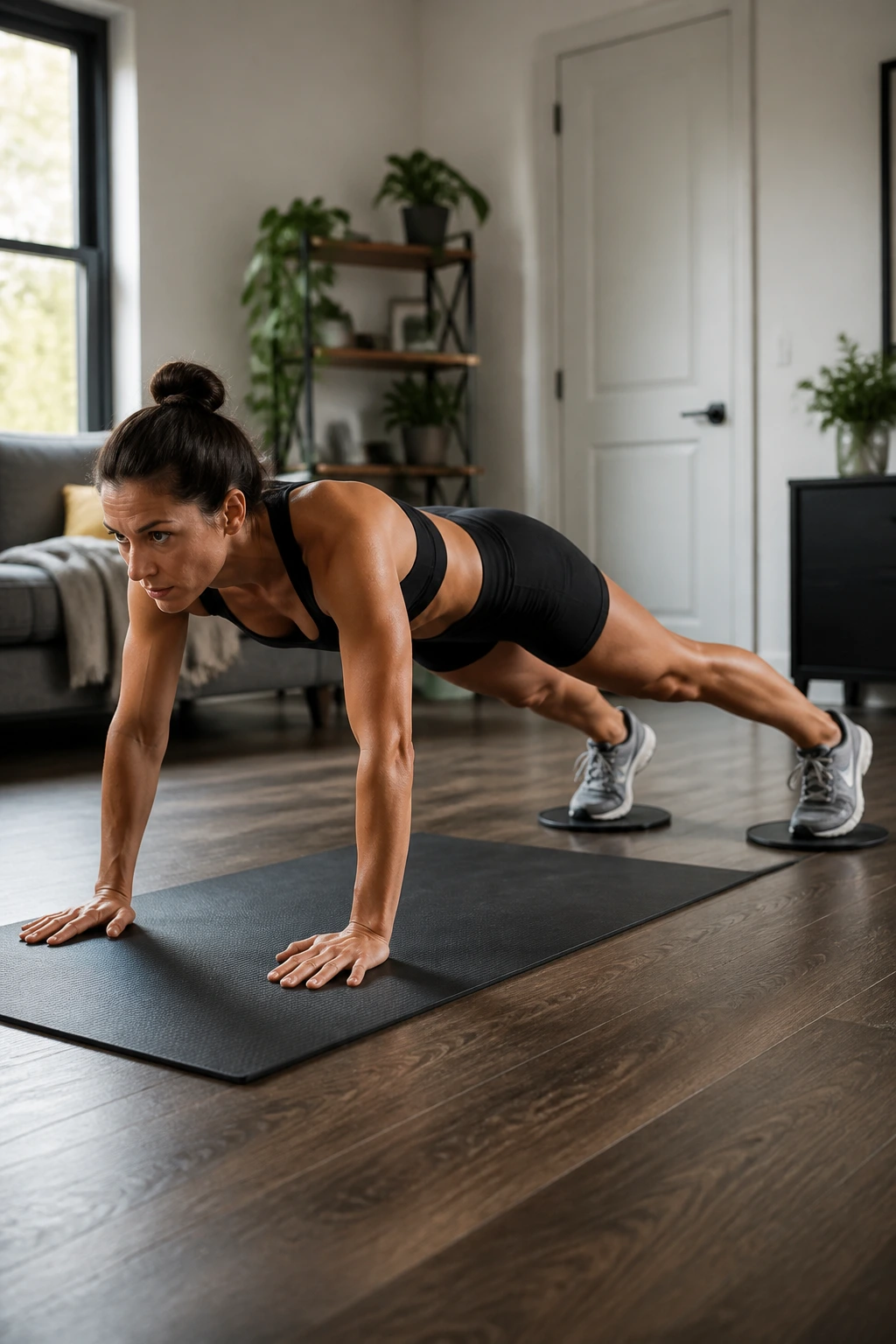
Plank jacks on sliders give you the cardio hit of jumping jacks without the noise.
Set up in a forearm or high plank with your feet on the sliders. Slide the feet wide, then back together, keeping your hips as still as possible. The body wants to rock. Don’t let it.
Quick form checks
- Hands or forearms stay planted.
- Core stays tight.
- Feet slide, not slam.
- Breathing stays rhythmic.
This is one of the better choices if you want a low-impact finisher that still feels fast. Ten to 20 controlled reps can wake up the whole front of your body.
13. Slider Push-Ups
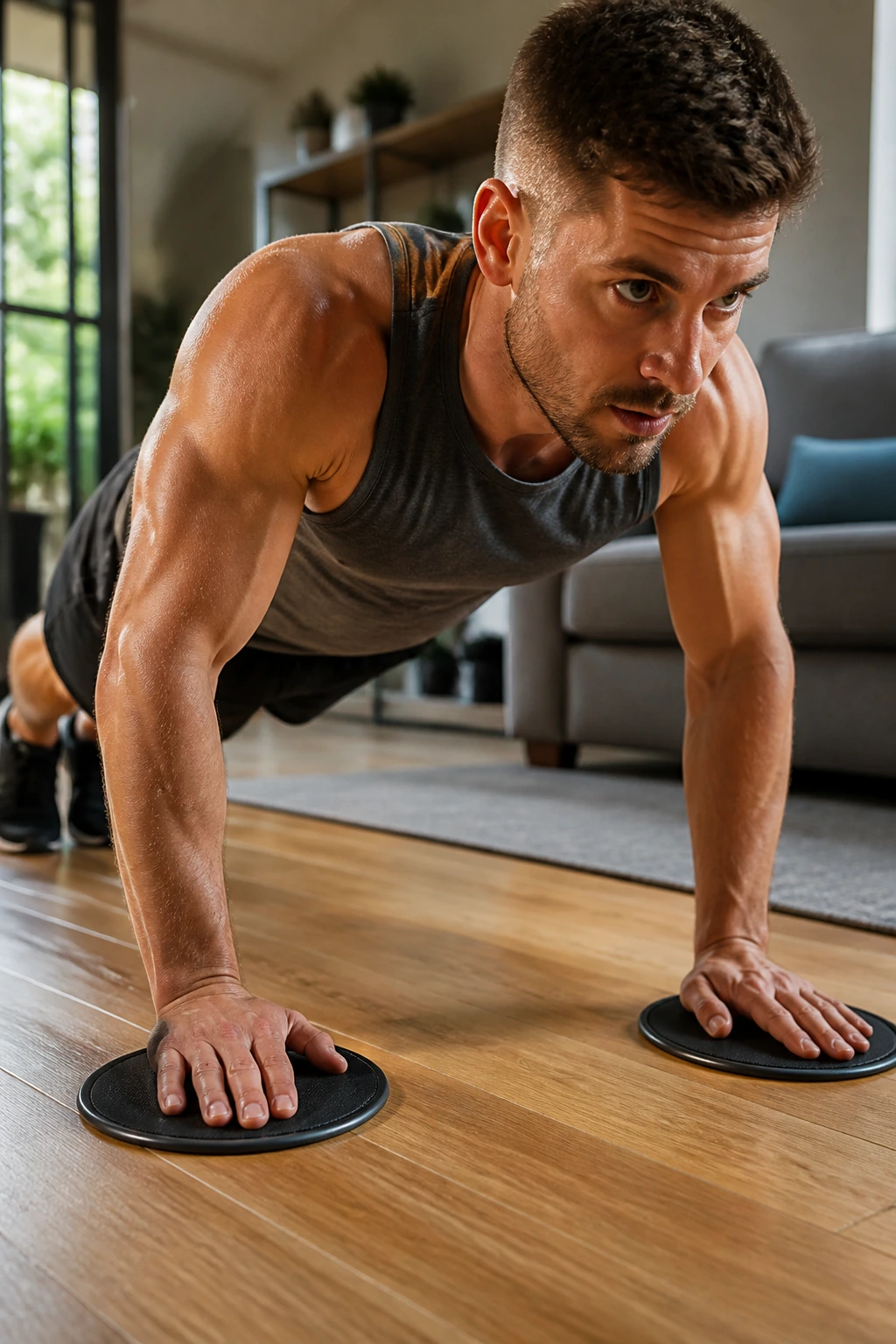
Push-ups get sneaky when the hands are on sliders.
Place your hands on the sliders and start in a high plank. As you lower, let the hands glide out just a little wider. Press back up and draw them back under your shoulders. The sliding action adds instability, which means your chest, triceps, and shoulders have to stabilize on the fly.
If your wrists are fussy, keep the range short. If your shoulders drift forward like they’re trying to escape, stop the set there. This is one of those moves where the clean rep count matters more than the number itself.
14. Slider Hand-Walk Push-Ups
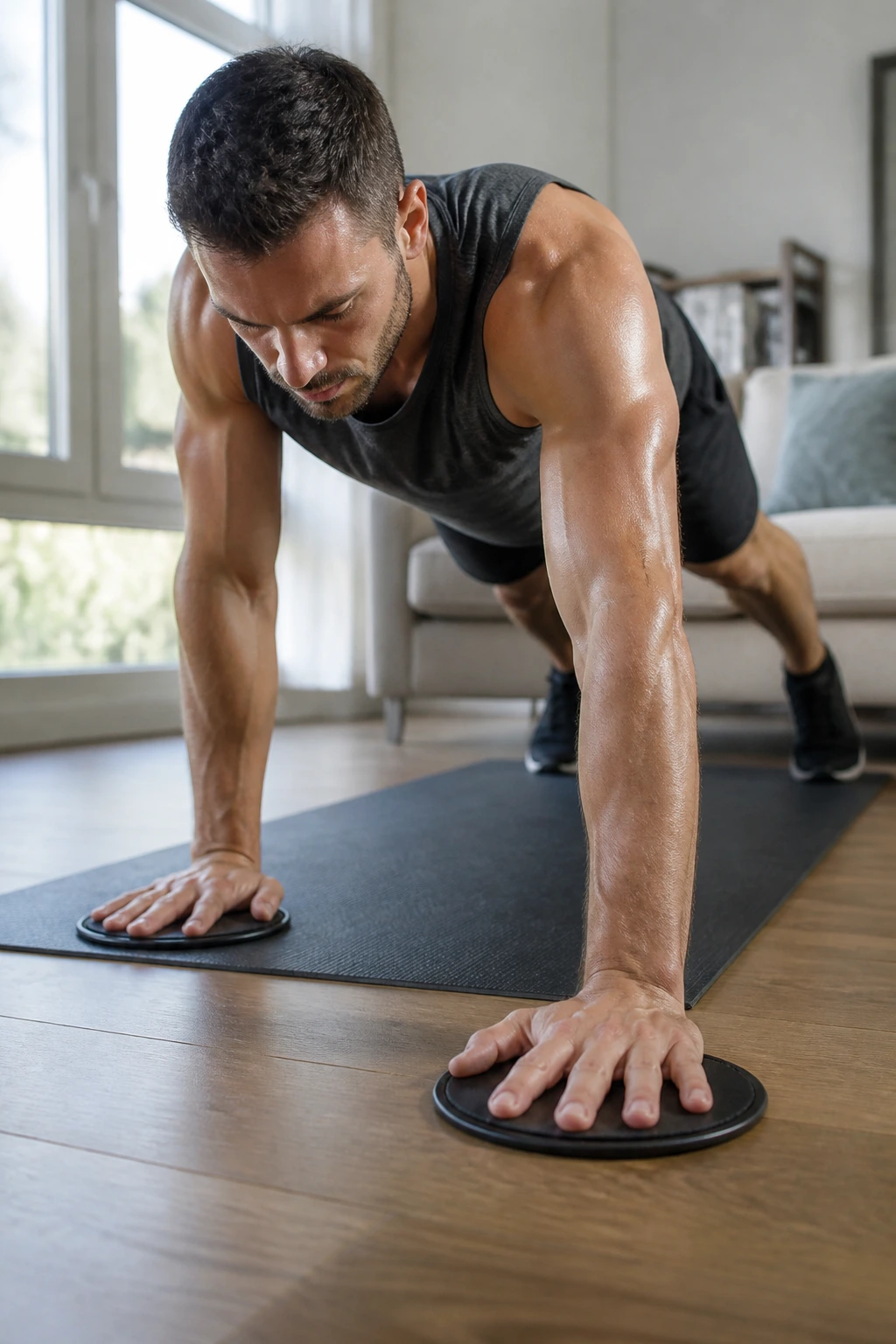
This version is less about chest strength and more about keeping your torso from twisting.
From a plank, slide one hand a few inches forward while the other stays put, then return it and switch sides. You can add a shallow push-up between switches if you want, but even without that, the anti-rotation demand is real. Your trunk has to resist the urge to tilt toward the moving hand.
What makes it different
Unlike a regular push-up, the challenge here is not just pressing the floor away. It’s holding your center while one arm reaches. That’s what makes it so useful.
Use small hand slides at first. Big reaches look dramatic and usually get ugly fast.
15. Slider Ab Rollouts
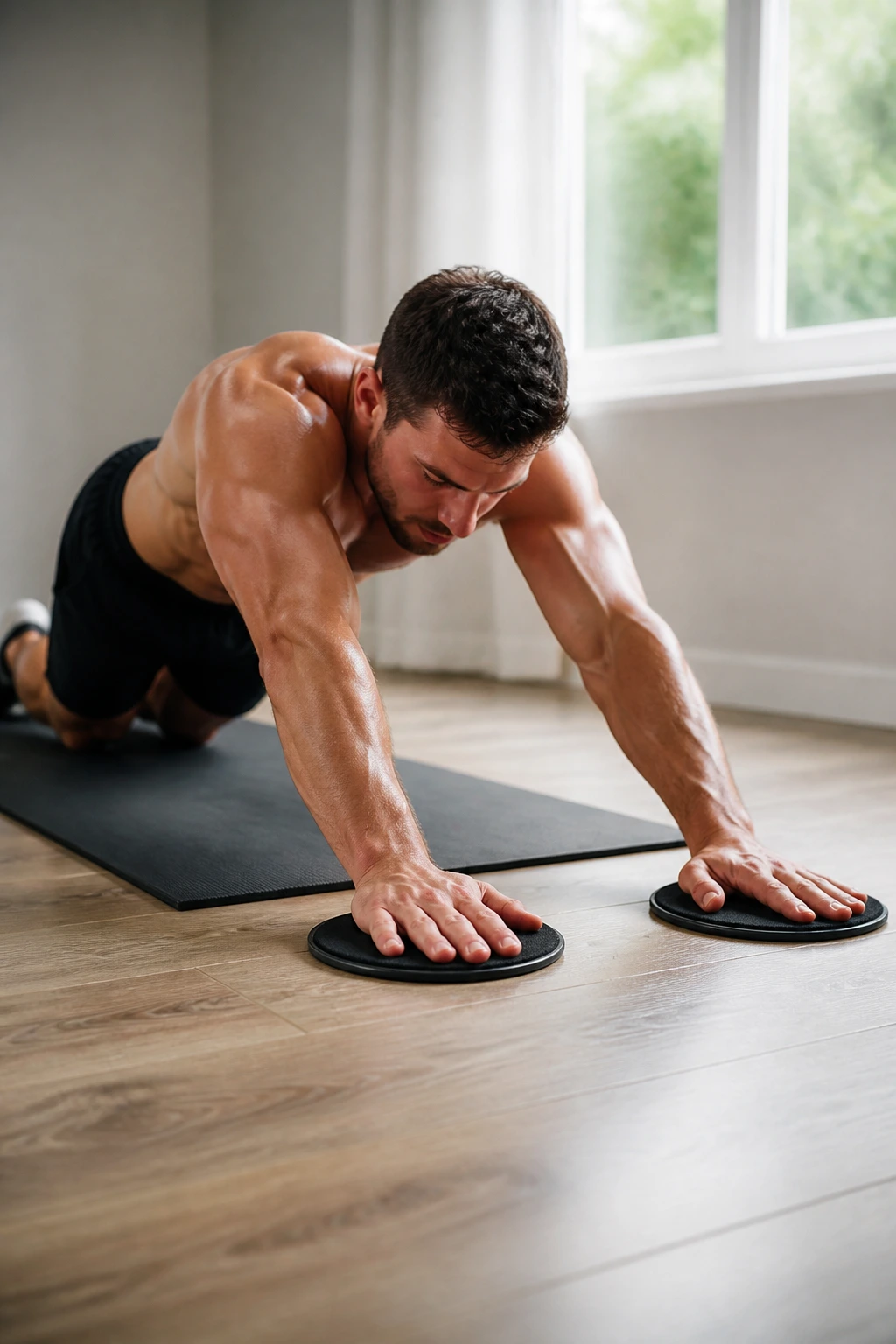
If you want an honest ab exercise, this is one of the cleanest choices.
Start on your knees with both hands on the sliders. Brace your core, tuck your tail slightly, and slide your hands forward until your body lengthens into a long line. Then pull back using your abs, not your hips. The farther you go, the harder it gets. Simple. Mean. Effective.
How to keep your back safe
- Start with a short rollout.
- Stop before your lower back arches.
- Keep your ribs pulled down.
- Think about dragging the floor back toward your knees.
A lot of people chase range too early. Don’t. A 6-inch rollout done well beats a 20-inch rollout that turns into a spine collapse.
16. Slider Bear Crawls
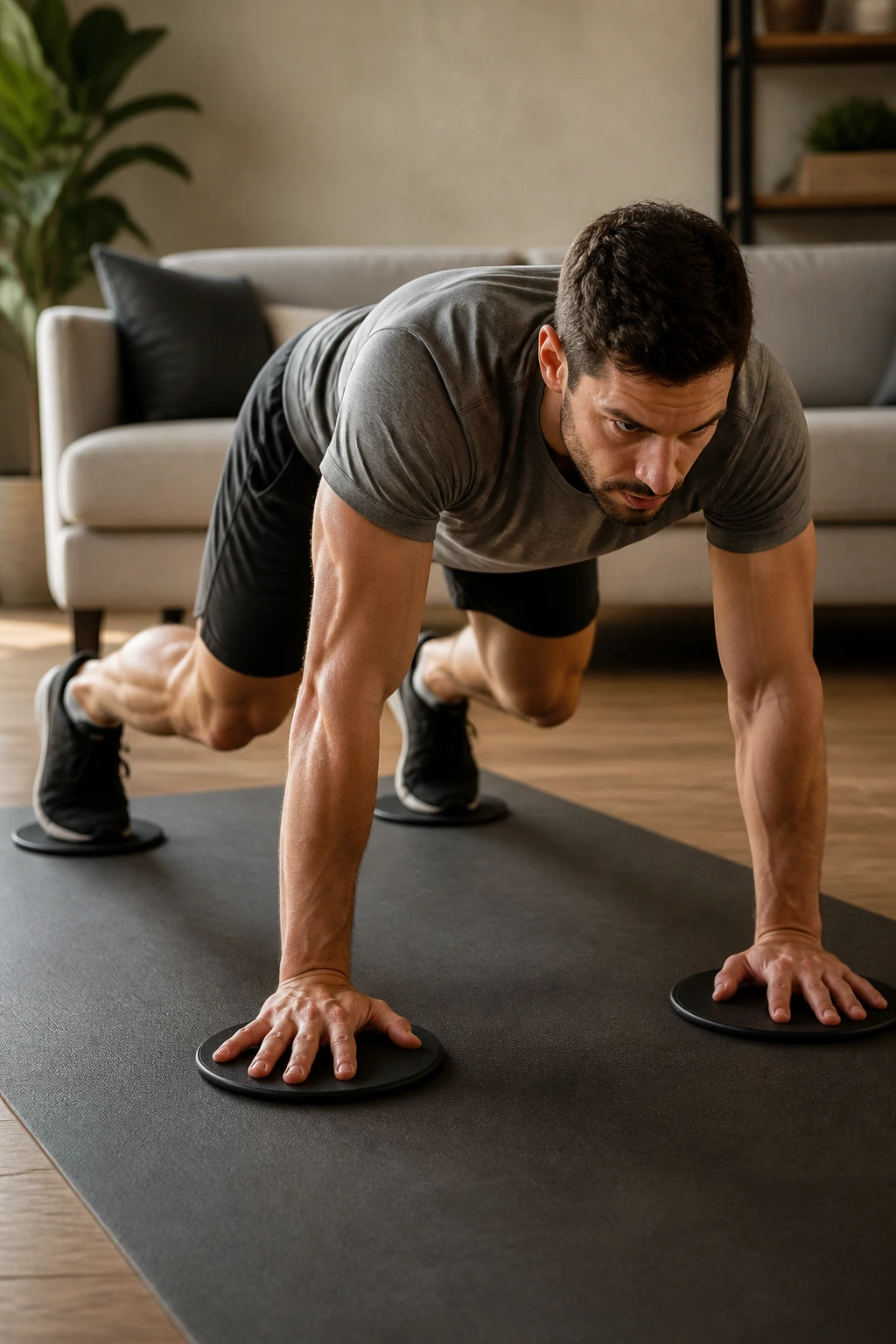
Bear crawls on sliders feel awkward for about three seconds, and then they start feeling weirdly useful.
Get into a bear position: hands under shoulders, knees hovering a couple of inches off the floor, feet on sliders. Move one hand and the opposite foot forward, then switch sides. Keep the knees low and the back flat. The challenge is not speed. It’s keeping the body from swaying side to side like a shopping cart with one bad wheel.
This is excellent for shoulder stability, core control, and coordination. It also tends to humble people who thought they were “pretty strong.” Good. Humility is useful in a workout.
17. Slider Frog Pull-Ins
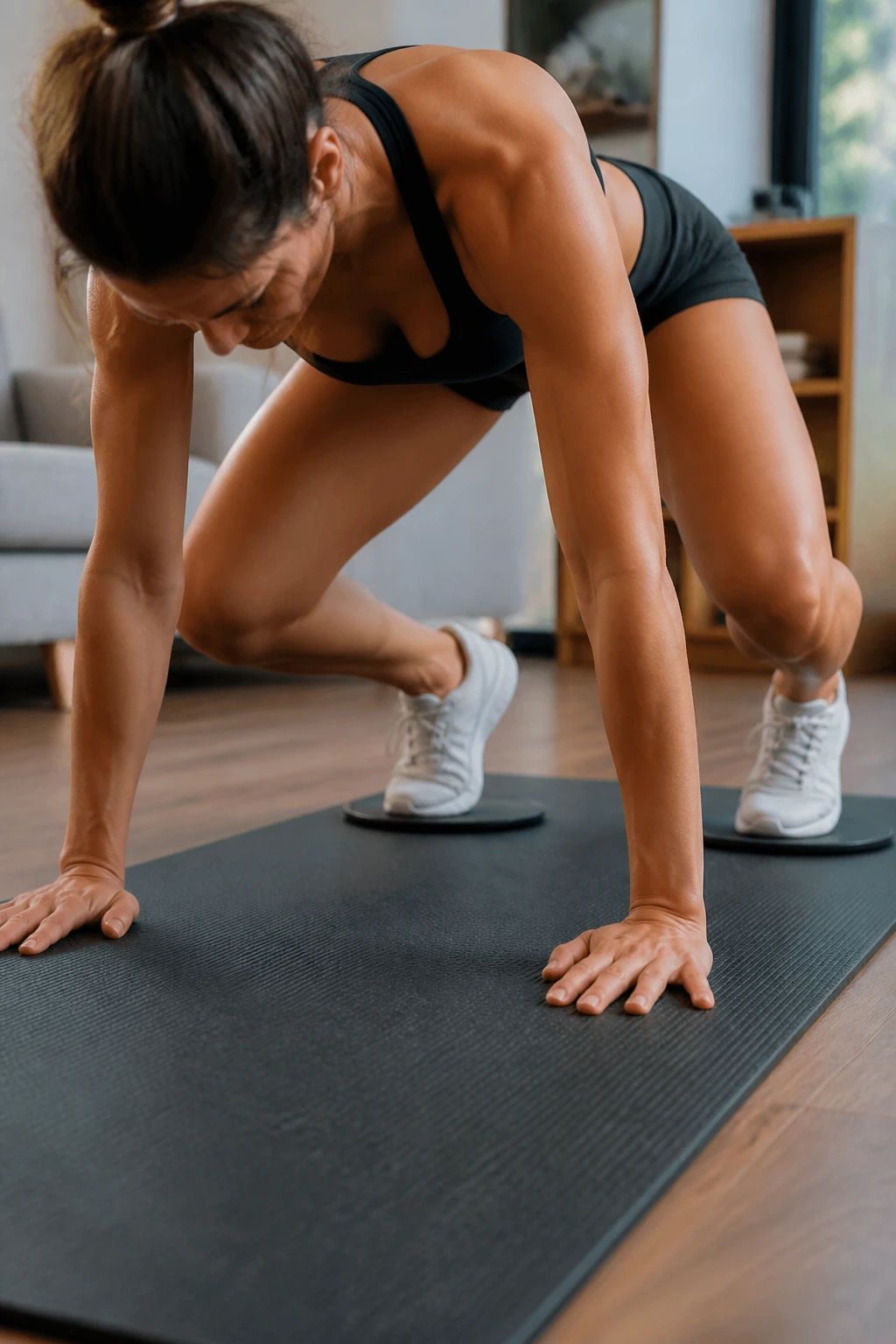
This one looks playful until your hip flexors start talking.
From a high plank with feet on sliders, turn the legs out slightly and slide both knees wide toward your elbows, then push them back to plank. The wide angle shifts the load toward the inner thighs and lower abs. It’s a nice change from straight-line knee tucks, and it tends to expose which side is doing more work.
How to get more from it
- Keep pressure through the palms.
- Move slowly enough to feel the inner thighs engage.
- Don’t let the hips pike too early.
- Keep the knees sliding, not hopping.
If your carpet grabs too much, use smoother sliders or a different floor. Friction can make this one miserable for the wrong reason.
18. Cross-Body Slider Climbers
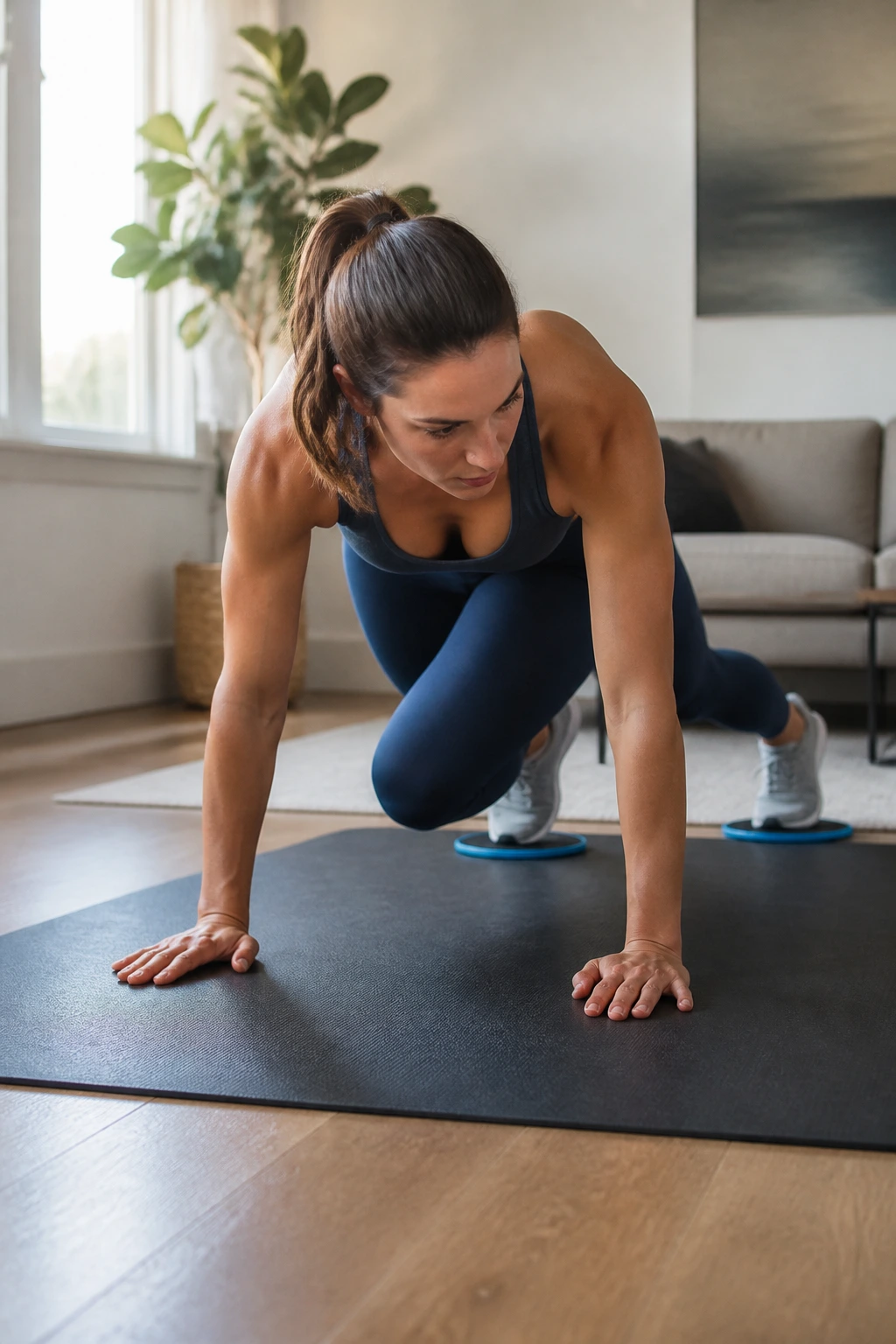
Cross-body climbers are the twisty version of mountain climbers, and they hit the obliques harder than the straight-line version.
Start in a plank with feet on sliders. Bring one knee toward the opposite elbow while the other leg stays long behind you. Alternate sides without letting the shoulders collapse. The cross-body path forces the trunk to resist rotation, which is where the obliques earn their keep.
A lot of people turn this into a fast knee shuffle. That’s not the goal. A cleaner rep with a full reach tends to work better than three sloppy ones. Keep the movement sharp, not frantic.
19. Slider Skater Slides
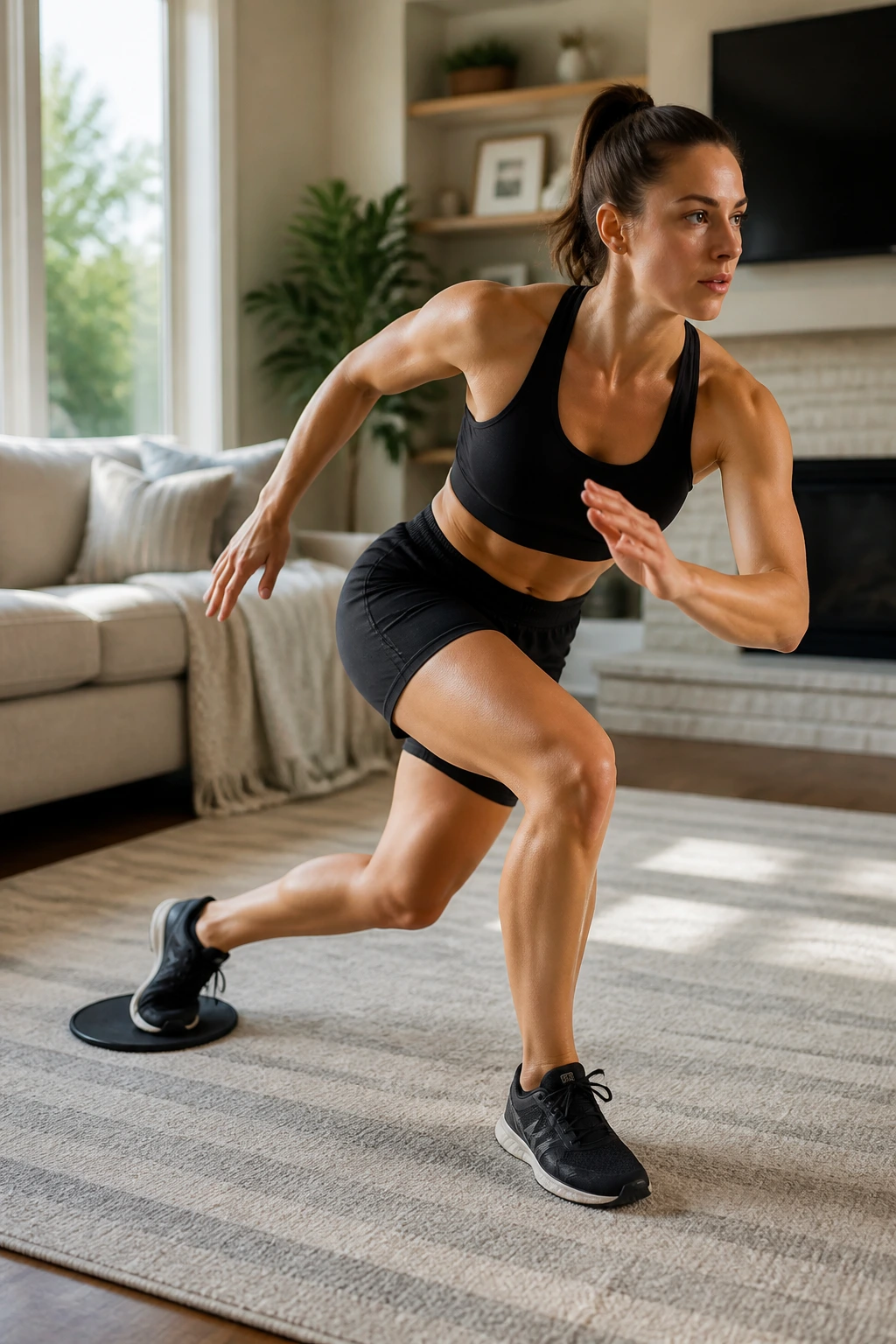
Skater slides are a better-than-they-look way to train the hips while keeping things low impact.
Stand on one foot with the other foot on a slider. Slide the free leg behind and across your standing leg, then push it back out to the side. Stay low in the standing hip and keep your chest proud. You’ll feel the outer glute working hard to keep you from wobbling.
Quick cue list
- Plant the standing foot firmly.
- Keep the moving foot light.
- Bend the standing knee.
- Push the floor away to return.
This one makes a nice cardio-strength crossover when you do it for 30 to 40 seconds a side.
20. Slider Cossack Squats
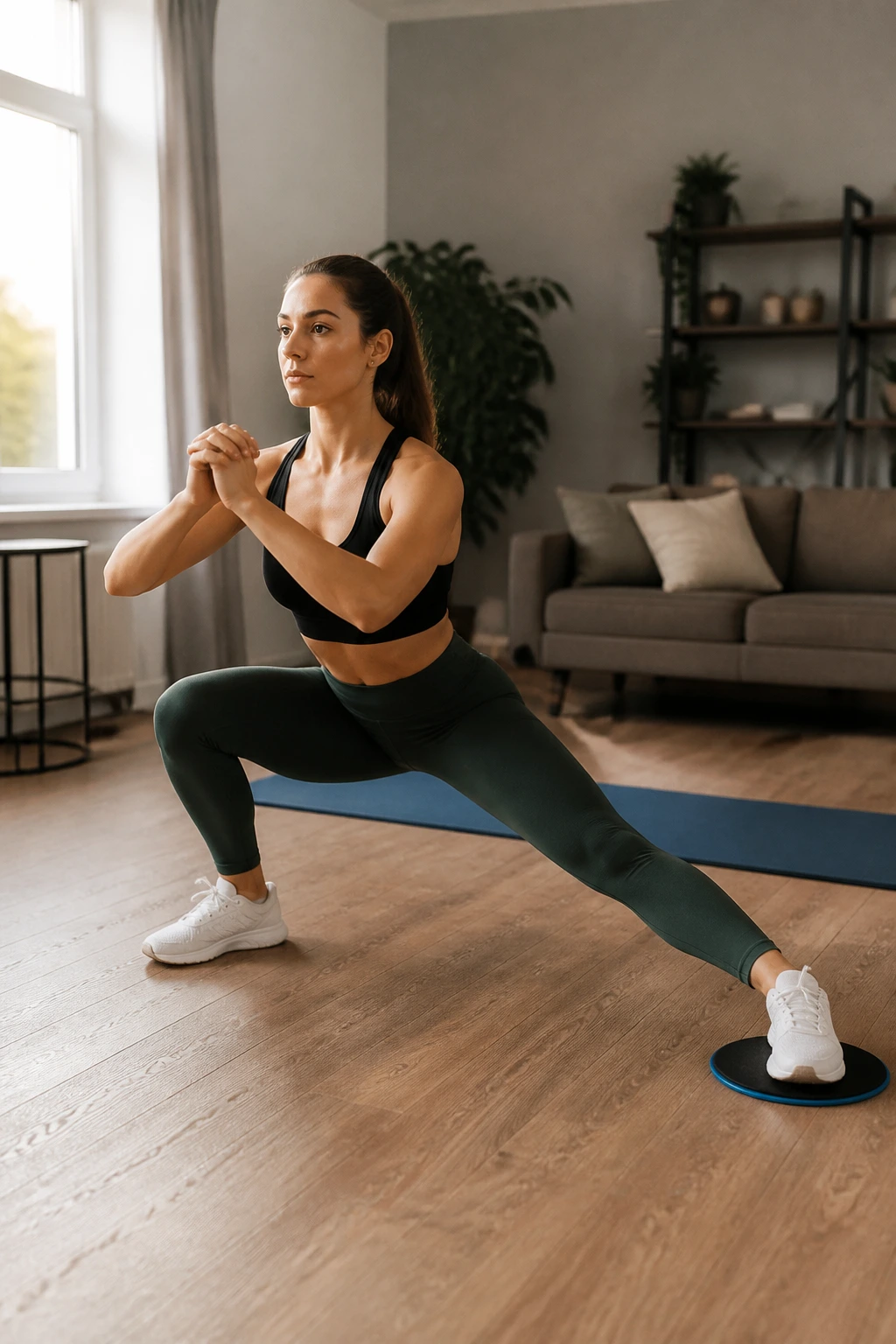
Cossack squats are what happen when a lateral lunge decides to stretch out and get serious.
One foot stays planted while the other slides wide on the floor. Sink into the bent leg, keep the other leg long, and let the hips shift side to side. The deeper the position, the more the adductors and ankle mobility get tested. That’s the appeal. It feels like strength work and mobility work decided to share a room.
Not everyone needs a huge range. A half-depth Cossack squat with clean alignment beats a deep ugly one every time. Keep the heel of the working side down, and don’t force the knee into a place it hates.
21. Slider Dead Bug Slides
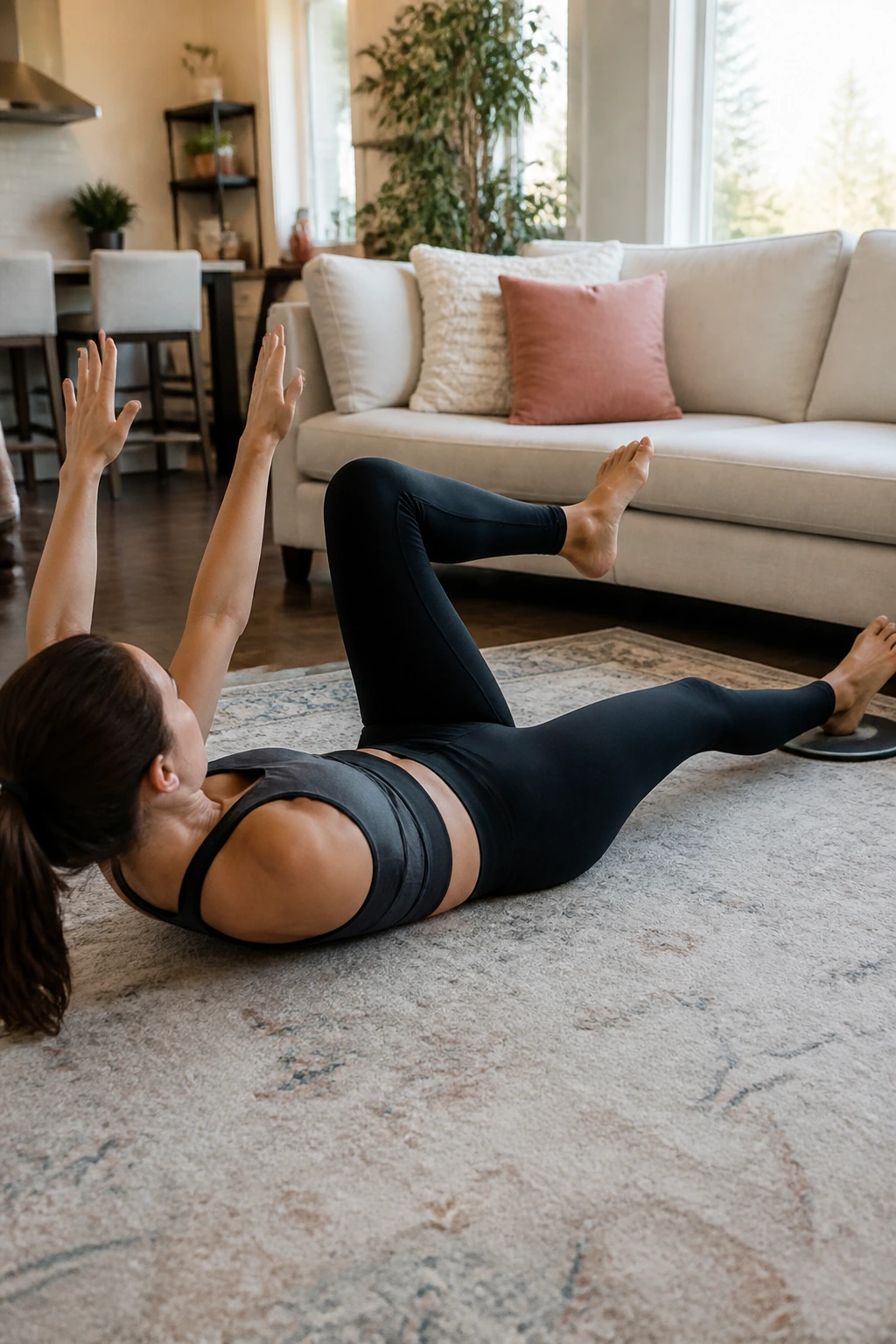
Dead bugs with sliders are calmer than the plank moves, but don’t mistake calm for easy.
Lie on your back with one heel on a slider and the other leg bent in tabletop. Press your lower back gently into the floor, then slide the heel away until the leg nearly straightens. Pull it back in while keeping the torso still. Switch sides.
Why this one matters
It teaches you to move the leg without losing the rib cage. That’s a big deal if your lower back tends to take over during core work.
Keep the exhale long as the heel slides out. If your back pops off the floor, shorten the range and slow down.
22. Slider Side Plank Knee Tucks
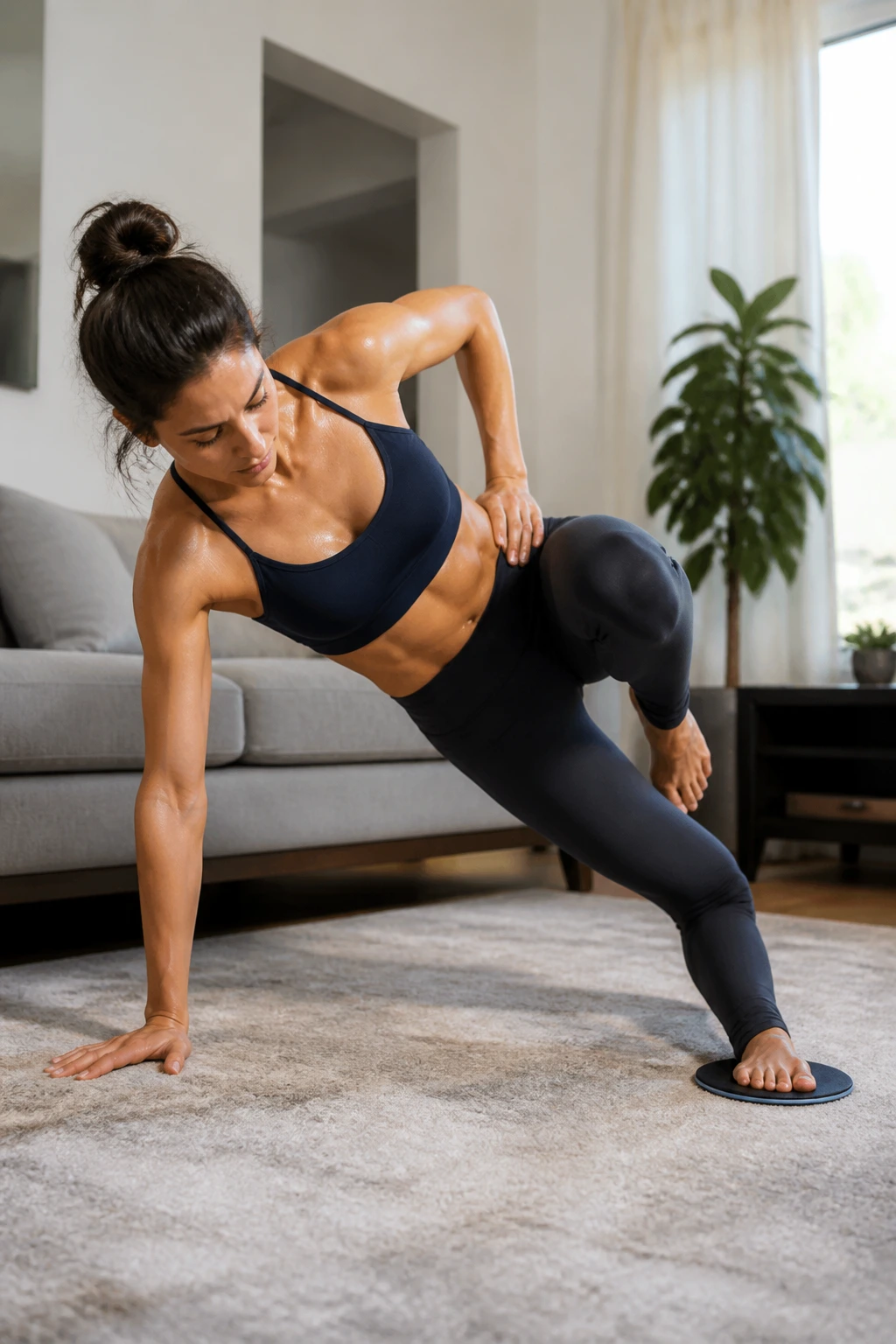
Side plank work is already demanding. Add sliders and it gets even more specific.
Set up in a side plank with the lower foot on a slider if you’re advanced, or keep the knees down for a modified version. Draw the top knee toward your chest, or slide the bottom leg in and out depending on the version you choose. The obliques, glute med, and shoulder on the bottom side all have to stay active.
This move is useful because it trains the side body in a way straight-ahead crunches never will. Keep the ribs stacked over the hips. If your body starts folding forward, reset. No shame in shortening the hold.
23. Slider Side Plank Leg Raises
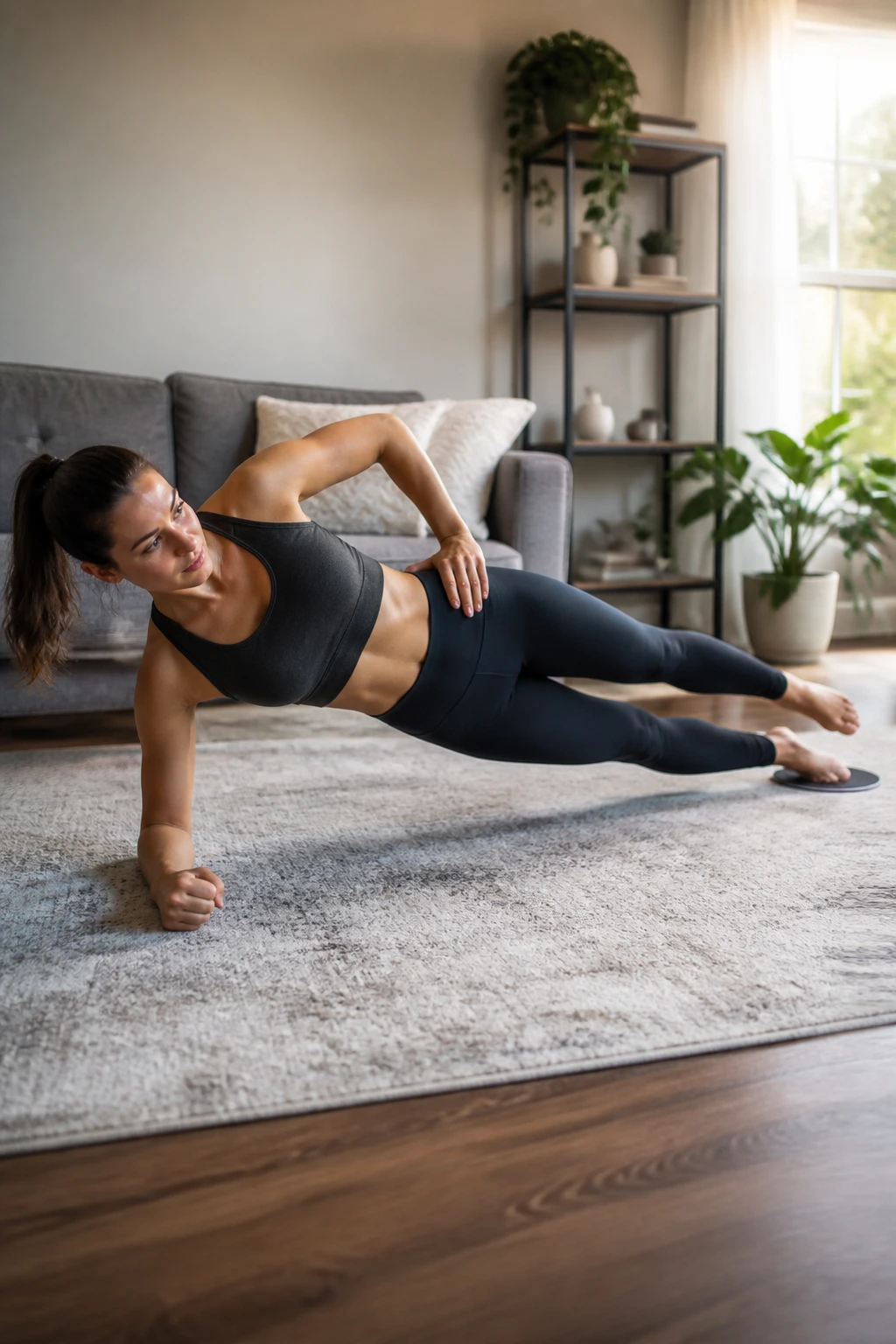
A side plank leg raise is a slow burn with a side of balance drama.
Hold a side plank and place the top foot on a slider. Slide the top leg forward a little, then pull it back, or lift and lower it in a small range if your floor setup allows it. Either way, the outer hip is doing a lot of stabilizing, and the waist has to stay tight so the body doesn’t collapse.
A few practical notes
- Keep the neck long.
- Move the top leg slowly.
- Don’t let the hips roll backward.
- Use a shorter hold if the shoulder is shaking hard.
It’s a small movement. That’s the trick. Small movements can be nasty.
24. Slider Squat Thrusts
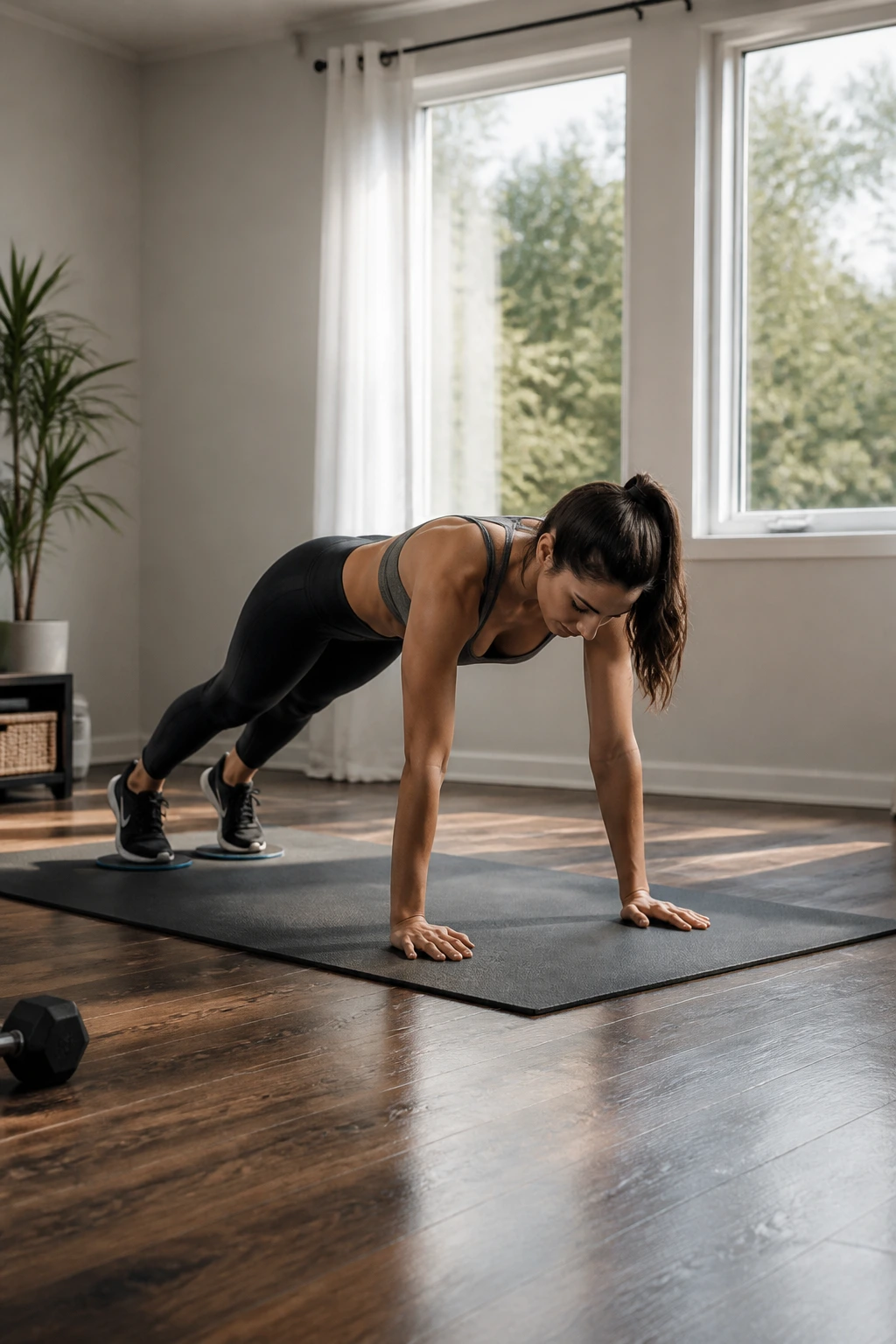
Squat thrusts are the quiet cousin of burpees, and sliders make them feel smoother under the feet.
Stand tall, place your hands down, and slide both feet back into a plank. Pull them back in under your hips and stand up again. No jump needed. If you want more pace, move faster. If you want more control, pause in the plank for a beat before stepping back in.
This is a tidy full-body drill when you want heart rate work without the loud, chaotic feel of jumping. Keep the core braced on the way back to standing so the lower back doesn’t arch as you rise.
25. Slider Burpee-to-Plank Finisher
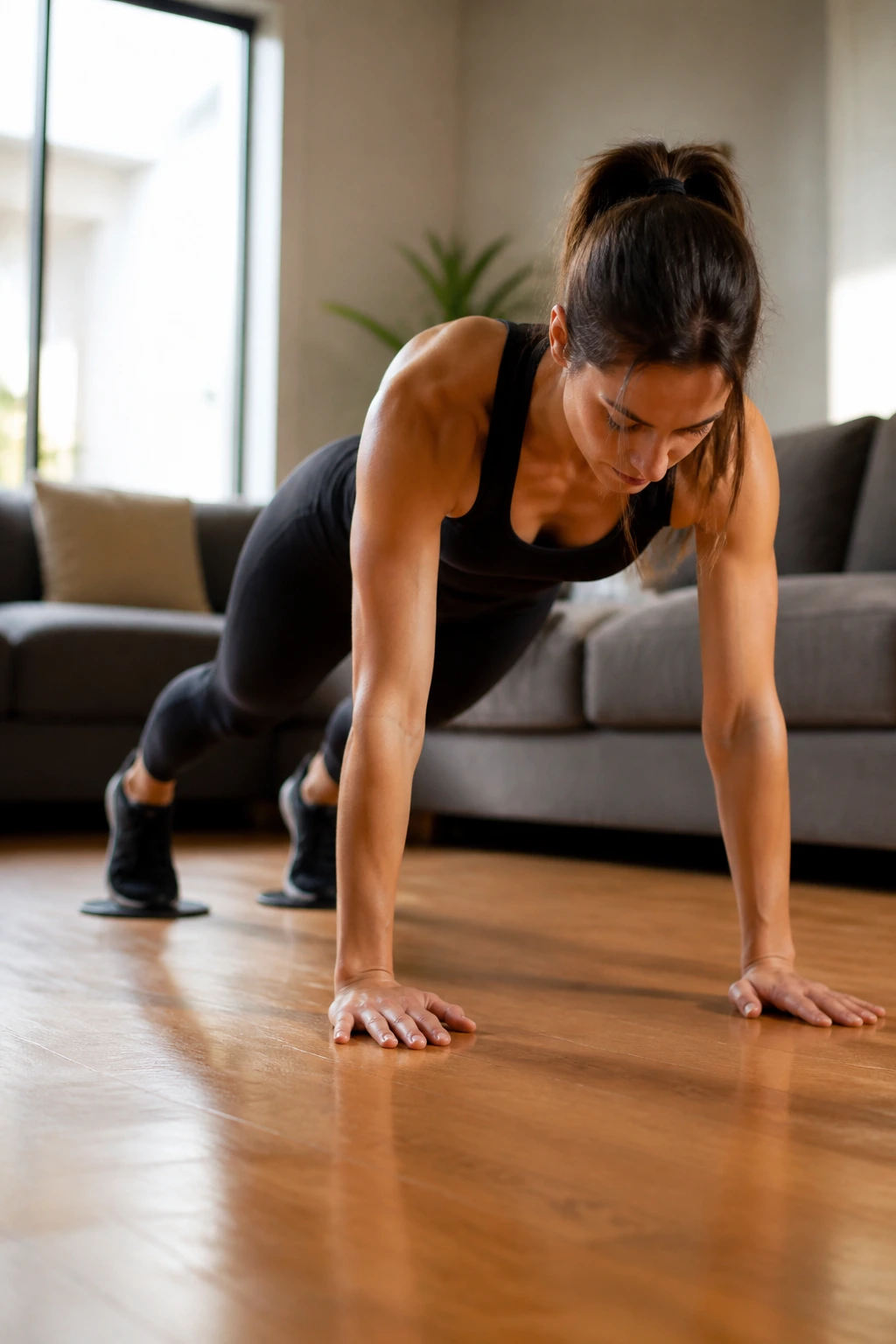
This is the one you pull out when you want the whole workout to feel finished.
Start standing, place your hands down, and slide your feet back into a strong plank. Add a push-up if your shoulders and chest are up for it. Then slide the feet back in, stand tall, and repeat. If you want a tougher version, bring the knees toward the chest before standing. If you want a simpler one, skip the push-up and keep the motion smooth.
A good slider finisher does not need to be flashy. Eight to ten controlled reps can leave your shoulders, core, and legs nicely cooked. Pair it with four or five of the earlier moves — say hamstring curls, reverse lunges, body saws, mountain climbers, and squat thrusts — and you’ve got a compact home session that feels complete without taking over your whole day.
