



The first time you walk into a gym, the machines can look like a row of metal puzzles. For many women, that’s the hardest part — not the workout itself, but the few seconds before you sit down and wonder whether the seat goes up, the pin goes in, or the handles are even meant for your hands.
The best beginner friendly gym machines for women are the ones that hold your body in place, show you a clean path, and let you learn pushing, pulling, and leg drive without juggling balance at the same time. Beginner-friendly doesn’t mean weak. It means stable, adjustable, and hard to mess up.
That matters because the CDC recommends at least 2 days a week of muscle-strengthening work, and the American College of Sports Medicine keeps resistance training right beside cardio for a reason. The trick is picking machines that make that habit easier, not more complicated.
Machines are not a cheat code. They’re a clean way to learn how a movement should feel, especially when the seat, back pad, and handles do some of the stabilization for you. Start with the ones that feel obvious, not the ones that look impressive. The leg press is usually the easiest place to begin.
1. Seated Leg Press
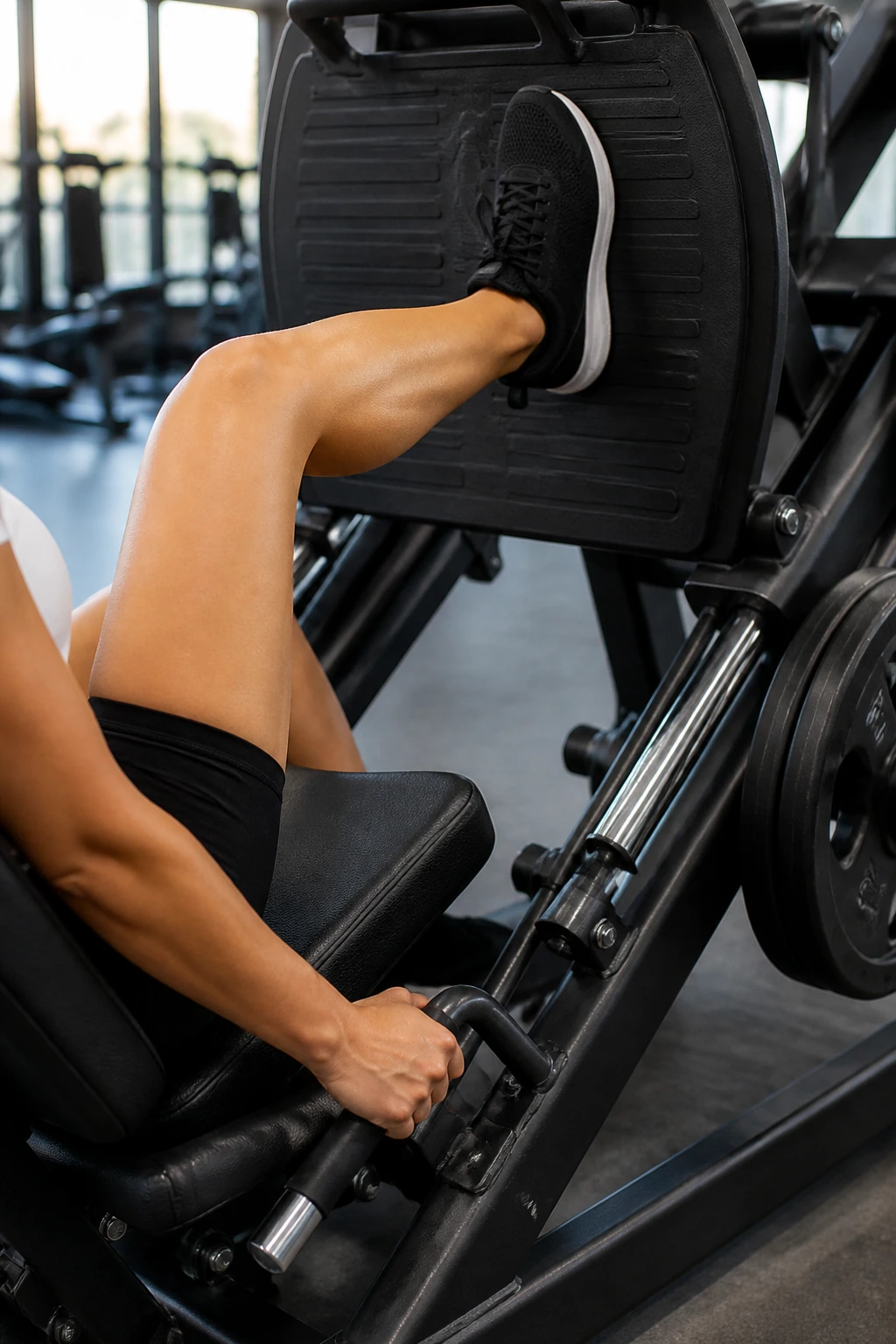
If I had to put one lower-body machine at the top of a beginner list, it would be the seated leg press. Your back stays against the pad, your feet press a platform, and the sled moves in one direction. That strips away a lot of the wobble that makes first-day lifting feel awkward.
How to Set It Up
- Set the seat so your knees bend to about a right angle at the bottom.
- Place your feet about shoulder-width apart to start.
- Press through your midfoot and heel, not your toes.
- Stop before your knees lock out hard at the top.
A lot of people load this machine too heavy too soon. Don’t. Start with a weight that lets you lower the sled slowly for 2 to 3 seconds, then push it back up without your hips lifting off the pad. If your lower back rounds, the seat is too deep or the range is too long.
I like the leg press for beginners because it teaches force without asking your balance to do extra work. It also gives clear feedback. If your knees cave inward, you’ll feel it. If your feet are too low on the platform, your knees will complain. That kind of honesty is useful.
2. Lat Pulldown Machine
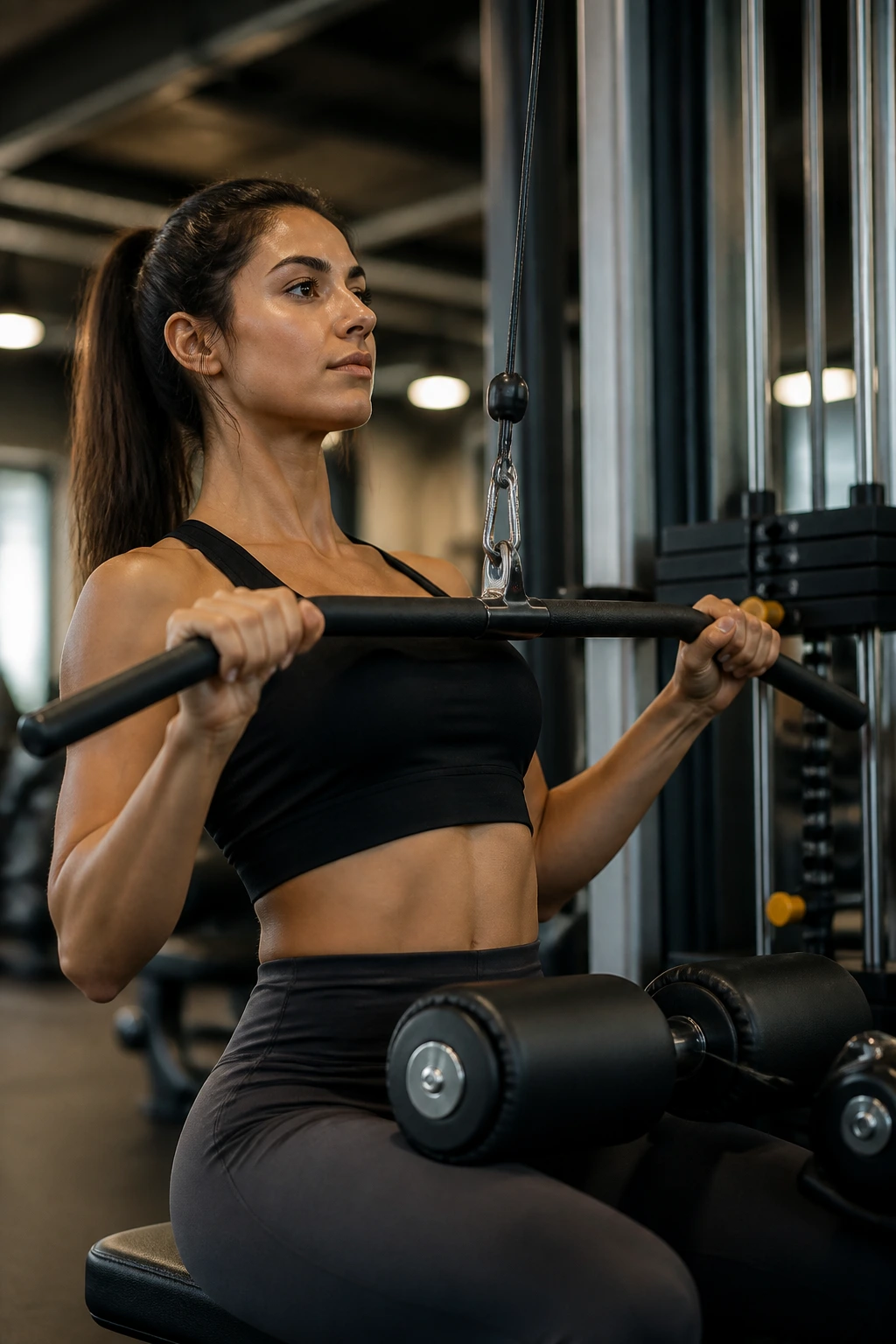
Why do so many new lifters end up liking the lat pulldown? Because it teaches a real pulling pattern while you stay planted in a seat. Your thighs usually tuck under a pad, your hands hold a bar, and the only job is to pull the bar to your upper chest with control.
The first thing I tell people is simple: don’t yank from your arms. Start by bringing your shoulder blades down and back a little, then drive your elbows toward your ribs. If the bar has to travel behind your neck to “feel right,” the setup is wrong. Pull to the front. Always.
This machine is especially useful if you want better posture, stronger upper back muscles, and a more confident feel in your arms. A clean set of 8 to 12 reps is usually plenty for a beginner. If the stack starts swinging, the load is too high.
One quiet bonus: the lat pulldown teaches patience. You can’t rush it and get much out of it. The rep works when you slow down.
3. Seated Chest Press
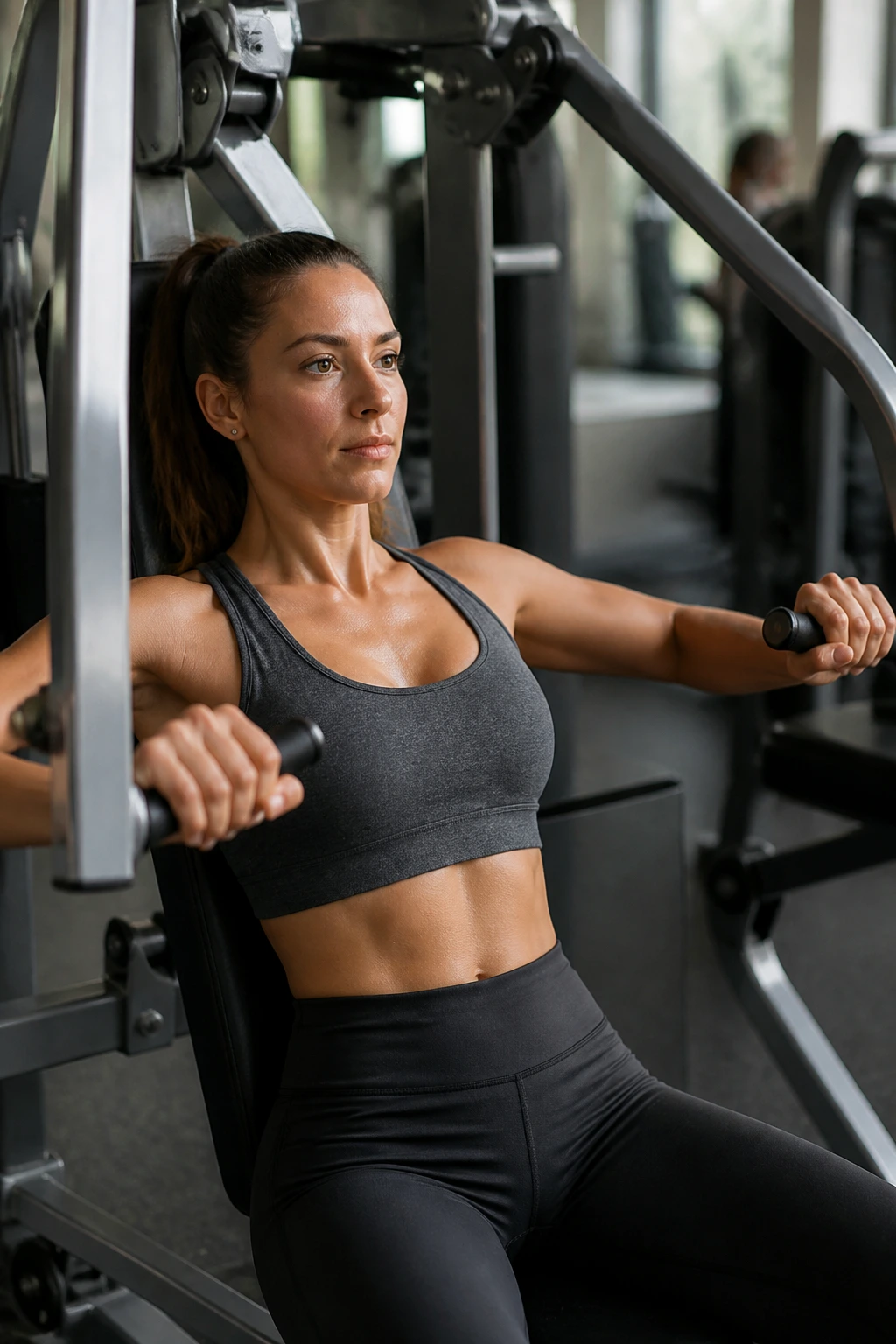
The seated chest press is one of the least intimidating ways to learn a push. You sit down, plant your feet, and press the handles straight out from your chest. No bar over your face. No guessing where the path should go.
A lot of women who are new to upper-body strength like this machine because it gives structure without making the movement feel cramped. Keep your shoulder blades lightly back and down, and let your elbows travel at about a 30- to 45-degree angle from your torso. If your elbows flare wide, your shoulders will usually complain before your chest does.
Do not rush the lockout. Press, pause for a split second, then return the handles with control until your upper arms are just behind your torso or wherever the machine feels comfortable. Pain in the front of the shoulder is a warning sign, not something to push through.
I’d use this for 2 or 3 sets of 8 to 12 reps. If you want a machine that builds confidence fast, this one is hard to beat.
4. Seated Row Machine
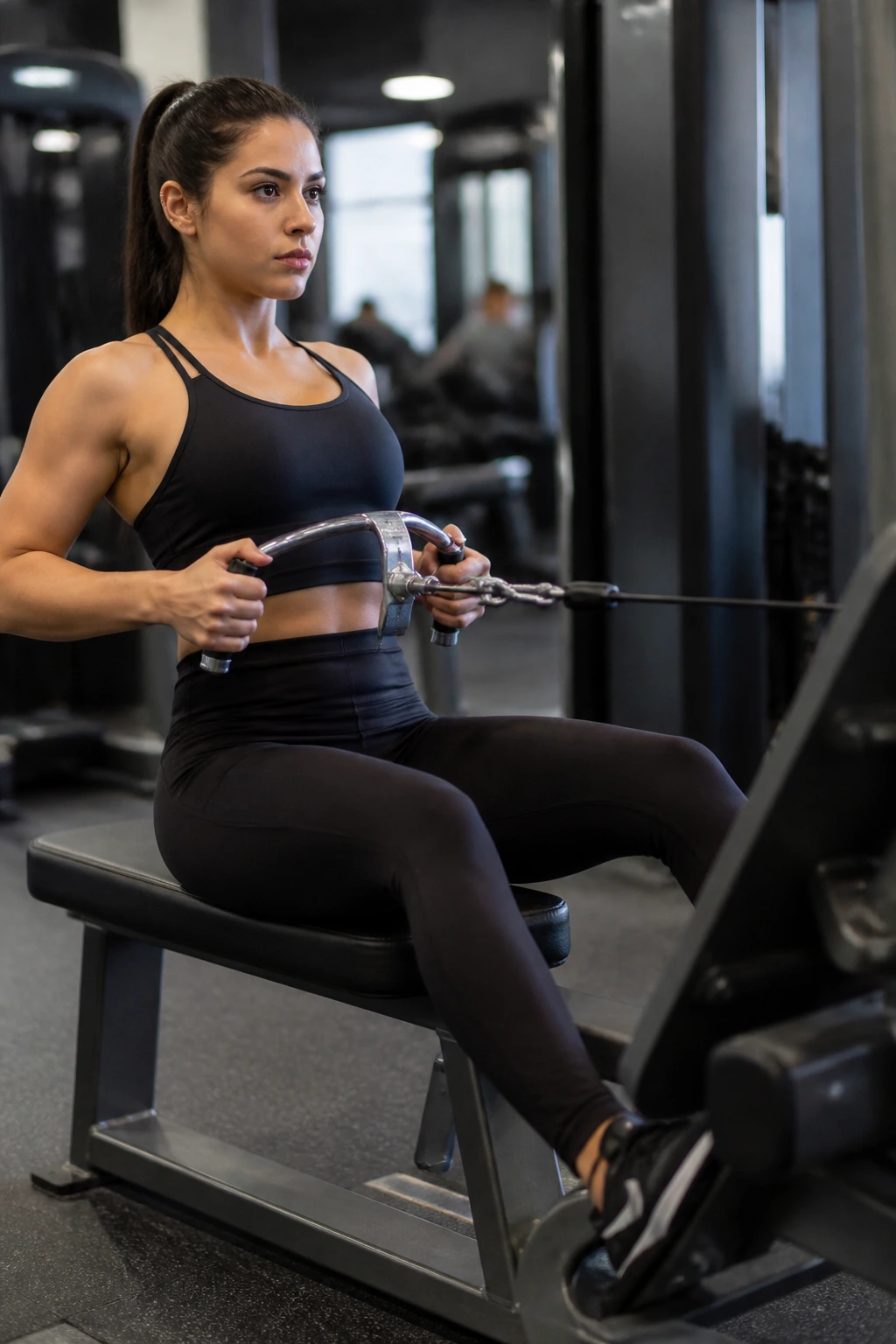
If your shoulders spend all day rounded toward a keyboard, the seated row machine feels like a reset. You sit upright, brace your feet, and pull the handles toward your torso. The movement is simple, but the effect is big when your upper back has been ignored for a while.
A good row starts with the chest staying tall. Then you pull your elbows back and slightly past your sides, as if you’re trying to tuck something into your back pockets. The machine should feel like a tug between your shoulder blades, not a biceps curl. If your torso rocks back and forth, the weight is too heavy.
What to Watch For
- Keep your shoulders down, not shrugged up.
- Pause for one second when the handles touch your body.
- Return the handles slowly so the stack doesn’t slam.
- Use 8 to 12 controlled reps, not a fast flurry.
This is one of those machines that makes you feel taller after a few weeks. That’s not magic. It’s just better upper-back strength.
5. Leg Extension Machine
The leg extension machine is simple, and that’s why beginners use it so often. It isolates the front of your thighs, also called the quads, and lets you feel exactly which muscle is working. That mind-muscle connection sounds corny until you try it and realize how useful it is.
Set the back pad so your knee joint lines up with the machine’s pivot point. The pad on the lower leg should rest just above your ankles, not halfway up your shin. Then extend your legs until they’re straight or close to straight, but do not slam into lockout. A short pause at the top is enough.
This machine is best used with control, not ego. A lot of beginners go too heavy and turn the movement into a swing. That usually shifts the work away from the quads and into the hips. If your knees feel pinchy, cut the range a little or reduce the load.
I’d keep this to 2 or 3 sets of 10 to 15 reps. It’s a small movement, but it can light up the front of the legs fast.
6. Seated Leg Curl Machine
If the leg extension is the front of the thigh, the seated leg curl machine is the back. It trains the hamstrings, which help bend the knee and support the hips. Beginners often skip this one, which is a mistake. Legs feel more balanced when the front and back both get attention.
Sit with your knees lined up to the machine’s pivot, and press your thighs firmly into the seat. The pad should sit just above your ankles or lower calves. Curl your heels down and back under control, then return slowly until the weight stack is almost settled again. Almost. Not a crash.
This machine works best when your hips stay glued to the seat. If your butt starts lifting or your lower back arches hard, the load is too much. A smooth set of 10 to 15 reps is usually better than chasing a higher number.
I like pairing the leg curl with the leg extension because the two machines give the legs a more complete feel without needing fancy technique. Straightforward. Quietly effective.
7. Hip Abduction Machine
The hip abduction machine has a goofy name and a useful job. It works the outer glutes and some of the smaller hip muscles that help keep your pelvis steady when you walk, climb stairs, or squat. That matters more than people think.
Why It Feels So Friendly
You sit down, brace your back, and push your knees outward against the pads. There’s no balance problem. No bar to hold. No awkward setup. For a beginner, that’s a gift.
How to Make It Count
- Start with a light weight and move slowly.
- Lean slightly forward if you want more glute feel.
- Open your legs until you feel the outer hip work, then pause.
- Return with control instead of letting the pads snap shut.
A lot of women like this machine because it’s easy to feel in the target area on the first try. That instant feedback makes the gym feel less mysterious. I’d use 15 to 20 reps here. It’s a machine that responds well to moderate burn, not heavy grinding.
8. Hip Adduction Machine
Do you need the hip adduction machine? Usually yes, if you want balanced lower-body work and your inner thighs never get touched anywhere else. The movement is the opposite of abduction: you bring the legs inward against the pads.
It can feel a little strange at first because the range is small and the position is close. That’s normal. Sit tall, keep your back against the pad, and close the pads with control until your inner thighs tighten. Then open back out slowly. If you slam the stack, the inner thighs won’t do the work cleanly.
I like this machine for beginners who want a fuller lower-body day, especially if they already do leg press, squats, or walking. The inner thighs help with hip stability and day-to-day movement, even though they don’t always get the spotlight.
Keep the load lighter than you think and use 12 to 15 reps. The goal is control, not a contest against the stack.
9. Cable Glute Kickback
Cable kickbacks are one of the few glute moves that stay honest. You work one leg at a time, the cable gives constant tension, and momentum shows up fast if you cheat. That makes it a smart beginner move if you want to learn how a glute contraction actually feels.
Clip the ankle strap on, hold the tower for balance, and lean forward a little so your torso stays steady. Drive the heel back and slightly up, but keep the movement small. A giant swing usually turns the exercise into a lower-back exercise, which is not what you want.
Tiny range. Big burn.
That’s the whole deal here. If your pelvis twists open or your lower back starts arching, the cable is too heavy. Lower the stack and keep the reps clean. I usually like 12 to 15 reps per side with a brief squeeze at the back of each rep. It’s not glamorous. It works.
10. Smith Machine
People either love the Smith machine or treat it like a crime scene. I think that’s silly. The fixed bar path can be useful for beginners who want to practice squats, split squats, hip thrusts, or calf raises without worrying about a bar drifting forward or back.
The big catch is that the path is fixed. Your body is not. So if a squat feels trapped or your knees hate the position, move your feet forward or back a little and try again. Small changes matter here. A foot position that works for one person can feel awful for someone with longer legs or a shorter torso.
Good First Uses
- Smith machine squats to a box or bench
- Split squats with the rear foot behind you
- Hip thrusts with the bar resting on the hips
- Standing calf raises
Set the safety stops before your first rep. That part matters. If you’re using the bar for lower-body work, 6 to 10 controlled reps is usually enough. The Smith machine is helpful, but it is not magic. It still rewards good setup.
11. Assisted Pull-Up Machine
The first pull-up is a stubborn milestone. The assisted pull-up machine makes it less brutal by taking some of your bodyweight off the lift, which lets you practice the real motion before you’re strong enough to do the full version alone.
Choose a stack that lets you complete 3 to 6 smooth reps. If you need enough assistance to bounce, the load is too light for the machine to teach you much. Grip the handles, let your shoulders rise slightly at the bottom if the setup allows it, then pull yourself up until your chin clears the bar. Lower under control.
This machine teaches more than the lat pulldown does. It asks your core to stay tight, your lats to work hard, and your whole body to line up. That said, there’s no prize for using the least assistance on day one. Use what lets you move well.
If you can already do pulldowns with confidence, this is a smart next step. It’s humbling. That’s part of why it works.
12. Pec Deck Chest Fly Machine
The pec deck chest fly machine feels like a controlled hug, and that is exactly why beginners like it. Your upper arms rest on pads or grips, and the arms swing together in front of your body to train the chest through a fixed arc.
A lot of people try to make the range huge. Don’t. Let the stretch happen only as far back as your shoulders feel settled, then bring the pads or handles together until the chest tightens. If your shoulders shrug upward, drop the seat or reduce the load. The chest should work. The front of the shoulder should not feel jammed.
This is a good machine for building awareness. You can feel the chest contract without worrying about stabilizing a dumbbell. Use 10 to 15 reps and keep the motion smooth. A one-second squeeze in the middle is enough to make the set honest.
It’s not the heaviest lift in the room. That’s fine. Some machines are there to build size, some to build skill, and some to teach your body what a muscle actually feels like.
13. Shoulder Press Machine
Want to train your shoulders without juggling dumbbells over your head? The shoulder press machine is the clean answer. It lets you press straight up in a supported seat, which helps new lifters learn the motion without wobbling through the whole set.
Set the handles around ear level or slightly below before you start. If they’re too low, the first part of the press can feel awkward. If they’re too high, your shoulders may feel jammed at the start. Once the seat is right, press up until your elbows are nearly straight, then lower slowly until the handles return to a comfortable bottom position.
Your ribs should stay down. That part matters. A big lower-back arch often means the stack is too heavy or the seat is set badly. Reduce the weight before your form gets messy.
This machine works the delts and triceps well, and it tends to feel safer than standing overhead presses for complete beginners. Use 8 to 10 reps and keep the movement smooth. No bouncing. No shrugging. Clean reps only.
14. Cable Machine / Functional Trainer
A cable machine can replace half the room if you know how to use it. That’s why I love it for beginners who want a little variety without jumping straight into unstable free weights. One stack, a few handles, and you can train most of your body.
Three Simple Cable Moves
- Cable row: pull the handle to your ribs for back work.
- Cable chest press: press forward from chest height for pushing strength.
- Pallof press: hold the handle out in front of you and resist rotation for core control.
The real advantage here is the smooth tension. Free weights get easier or harder at different points in the rep. Cables keep pulling the whole time, which helps you feel the muscle working. They also let you make tiny load jumps when the pin stack is marked in small increments.
The downside? A cable station can feel busy. Start with one handle and one height. Don’t wander around the machine trying six things at once. Pick one movement, learn the path, and move on only when it feels clean.
15. Treadmill
Walking belongs in the weight room too. The treadmill is still one of the easiest machines to use because the movement pattern is already familiar, and the settings are simple enough that you can focus on breathing instead of decoding a console.
Start with a pace where you can talk in short sentences. For many beginners, that’s somewhere around 2.5 to 3.5 miles per hour. An incline of 0% to 2% is fine for warm-ups, and a small incline walk can make the effort feel higher without turning the session into a run.
Easy Starter Settings
- 5 to 10 minutes for a warm-up
- 15 to 20 minutes for a light cardio block
- 1% incline for a subtle extra challenge
- Hands off the rails unless you need them for balance
If running feels rough on your knees or feet, incline walking is a smart middle ground. You still work hard, but the impact stays lower. The treadmill doesn’t need to be dramatic to be useful. Ten good minutes can wake up your whole session.
16. Elliptical
Your feet never leave the pedals, which is the whole point. The elliptical gives you a smooth cardio option that feels gentler than running for a lot of people, especially if you want to keep impact low while still making your heart work.
The key is posture. Stand tall, hold the handles lightly, and resist the urge to lean your weight onto the rails. If you do that, the machine turns into a moving chair. Not ideal. Keep enough resistance on the pedals that your legs have something to push against.
A good elliptical session should feel rhythmic, not jerky. The stride should be smooth, and your shoulders should stay relaxed. If the machine has movable arm handles, use them. If not, keep your arms at your sides and focus on steady breathing.
This is a nice choice for longer sessions when you want to move without pounding your joints. Twenty minutes on an elliptical can feel calm in a way a treadmill never quite does.
17. Stationary Bike
Why is the stationary bike still one of the easiest machines to use? Because the setup is simple, the position is seated, and the resistance is easy to understand. You sit, you pedal, you turn the knob or press the buttons until your legs tell you the work is real.
Seat height matters more than most beginners think. At the bottom of the pedal stroke, your knee should stay slightly bent, not fully straight, and your hips should not rock side to side. If your hips bounce, the seat is probably too high. If your knees feel jammed, it may be too low.
I like the bike for warm-ups, recovery days, and steady cardio when you want something that doesn’t feel aggressive. A recumbent bike can be easier on the lower back, while an upright bike usually asks a bit more from your core.
You can ride for 10 minutes or 30. You can do intervals or a steady pace. The bike doesn’t care. That simplicity is part of the appeal.
18. Stair Climber
The stair climber looks friendly until the first 90 seconds. Then it tells the truth. It hits the glutes, quads, calves, and cardio system at the same time, which is why so many beginners respect it after one honest session.
Start slow. Really slow. If you race the steps, your calves burn out before your legs get any real work. Keep one hand lightly on the rails if you need balance, but don’t hang on. Stand upright, place your whole foot on each step, and drive through the leg instead of bouncing on your toes.
This machine is not a first-day victory lap. It’s more like a sharp, efficient lesson in pacing. Five minutes may be enough at first. That’s not failure. That’s how people build tolerance without hating the machine.
If you want a machine that makes lower-body cardio feel more muscular, this one earns its place. It just does not flatter bad habits. Which, honestly, is useful.
19. Back Extension Bench
This is the machine people skip until their lower back starts complaining about sitting all day. The back extension bench trains the glutes, hamstrings, and spinal erectors, and it can be a solid beginner tool when it’s set up well.
Position the hip pad so it sits just below your hip bones. That lets you hinge from the hips instead of folding awkwardly at the waist. Lower your torso with control, then raise it until your body forms a straight line. Do not overextend into a big arch. Neutral is enough. Big range is not the point.
A lot of lifters turn this into a lower-back-only move. That’s usually a setup issue or a speed issue. Move slowly and keep the glutes involved on the way up. If bodyweight feels too easy, hold a small plate at your chest later on.
If you already have low-back pain that feels sharp, skip this machine until someone qualified checks your setup. It’s helpful, but it should not be a fight.
20. Ab Crunch Machine
The ab crunch machine is better than it looks if you use it like a curl and not a neck tug. It trains trunk flexion in a way that’s more controlled than doing sloppy floor crunches, and it gives beginners a clear way to feel the abs work.
Sit or kneel depending on the machine, brace your hips, and exhale as you crunch your ribs toward your pelvis. The movement should come from the torso, not from yanking with your hands or driving the hips forward. If your neck tightens, the load is too heavy or your setup is off.
How to Keep Your Neck Out of It
- Keep your chin lightly tucked.
- Pull through your ribs, not your elbows.
- Use a short, controlled range.
- Stop when the abs tighten hard, not when your spine folds.
I like this machine as a finisher after a full-body day or a lower-body session. Ten to 15 reps is plenty. The abs do not need drama; they need good mechanics.
Final Thoughts
If the gym still feels loud and strange, pick three machines and stick with them for a month. One lower-body press, one pull, one cardio or core move. That’s enough to build real confidence without turning the session into a scavenger hunt.
The small details matter more than people think. Seat height, pad position, and range of motion fix a huge number of “this machine feels weird” problems before they turn into bad reps.
A boring repeatable plan beats a random one. Once the setup stops feeling like a mystery, the whole room gets easier to use.
