



Small-space dumbbell workouts are easy to overcomplicate. People picture a rack, a bench, and a floor plan that belongs in a gym, not a bedroom or living room. You do not need that much room.
A pair of dumbbells can cover a surprising amount of ground if you pick the right moves. Hinge patterns, squats, presses, rows, carries, and a few floor-based drills will train most of the body without asking you to wander around the room or rearrange furniture. I like that kind of training. It feels tidy, and it wastes less time.
The trick is not “doing more.” It is choosing movements that earn their space. A good small-space lift gives you tension, balance, and enough room to breathe between reps, even if the area you have is about the size of a yoga mat and a half. That usually means unilateral work, floor presses, marching carries, and exercises where the dumbbells stay close to your body instead of flying around it.
A lot of people think compact training has to be light and boring. Wrong. If you load these movements properly and stay honest about form, they can be brutal in the best way. The first few belong in almost any home setup.
1. Goblet Squats That Only Need One Clear Patch of Floor
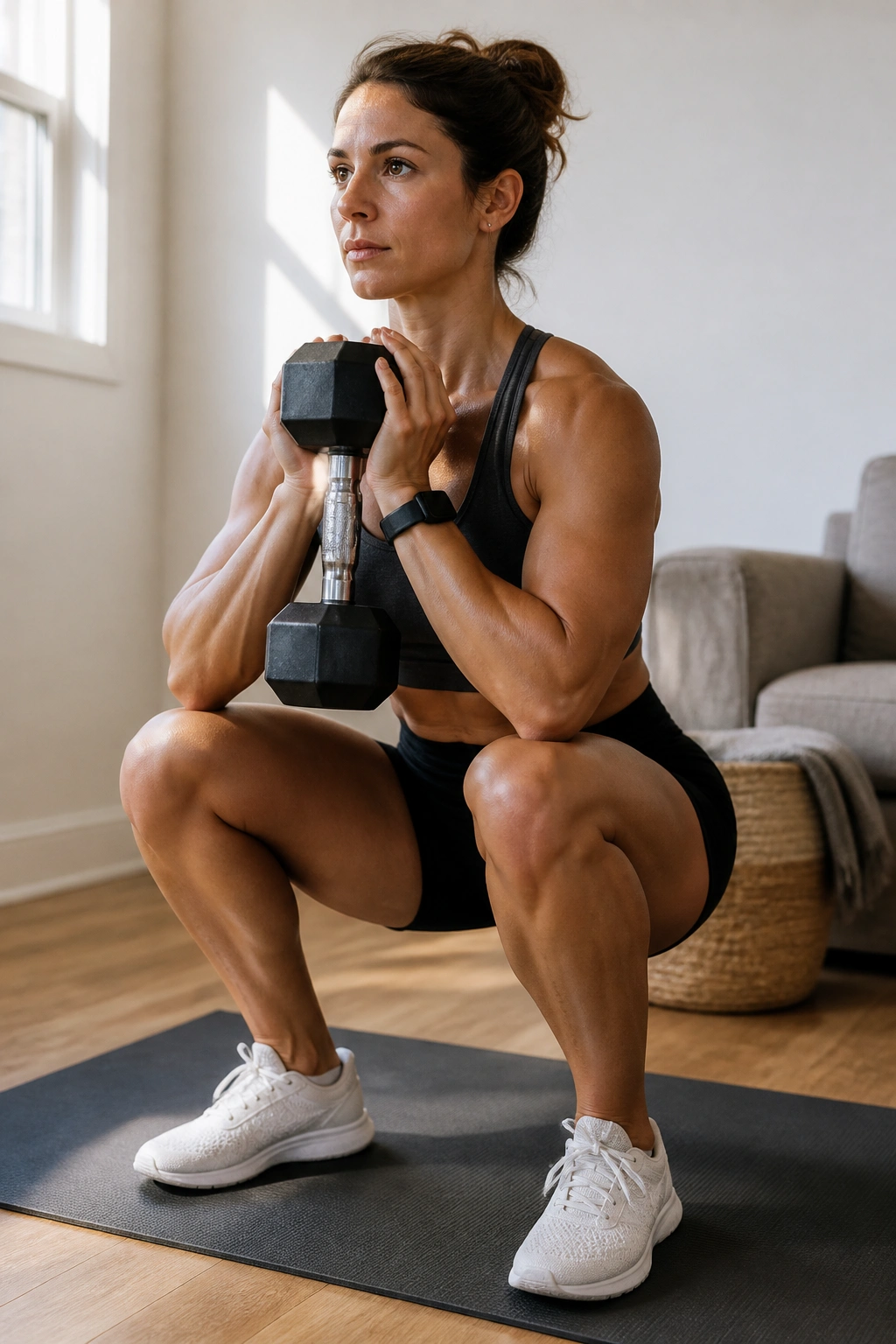
A goblet squat is the cleanest way to make a small room work hard. You hold one dumbbell vertically at chest height, plant your feet, and squat down with a torso position that is easier to manage than a barbell back squat. No rack. No walkout. No drama.
Why it fits a small space
The dumbbell stays tight to your body, which means you are not swinging it around or needing extra clearance. That matters when a coffee table is three feet away and the wall is closer than you’d like. The front-loaded position also keeps the core awake the whole time.
- Sets and reps: 3 to 4 sets of 8 to 12 reps.
- Load choice: Use a dumbbell heavy enough that the last 2 reps feel slow, but not sloppy.
- Form cue: Keep your elbows inside your knees near the bottom if your hips allow it.
- Space needed: About the space of one mat.
One good rep beats three rushed ones. If your heels lift or your chest caves, the weight is probably too heavy for the day.
2. Dumbbell Romanian Deadlifts for Hamstrings and Hips
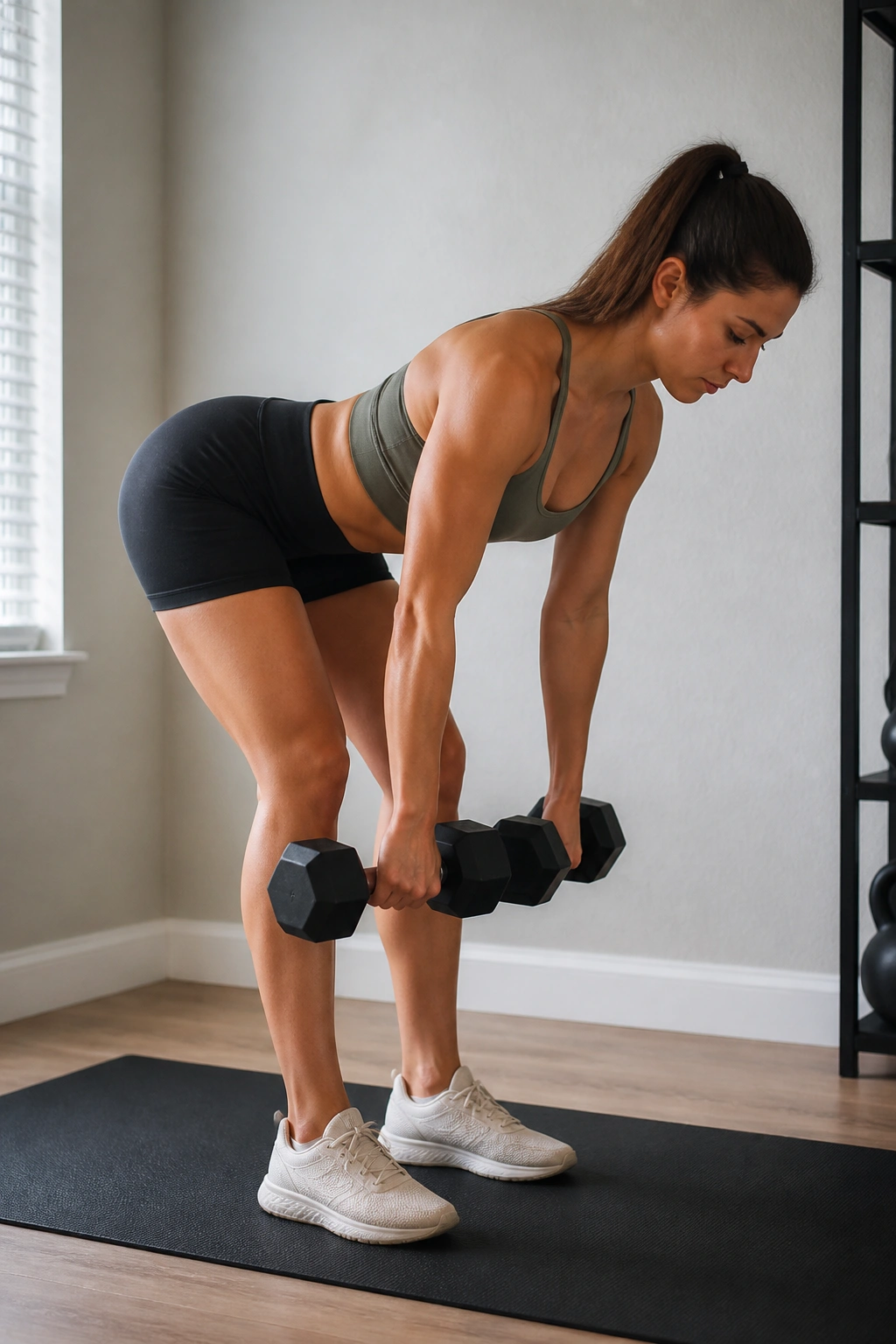
If you only have one open strip of floor, use it here. The dumbbell Romanian deadlift asks for almost no room, but it gives you hamstrings, glutes, upper-back tension, and grip work in return. That is a fair trade.
You do not squat the weight. You hinge at the hips, slide the dumbbells down the fronts of your thighs, and stop when your hamstrings start to pull. The bells should stay close to your legs the whole time. When they drift forward, your lower back ends up doing work it does not need.
The movement is quiet, controlled, and brutally honest. If you rush it, the exercise punishes you. If you slow down and own the hinge, it feels like a clean pull from the floor without actually touching the floor.
That makes it one of my favorite compact strength moves. It trains the back side of the body without requiring a big setup or a lot of room to reset between reps.
3. Reverse Lunges That Don’t Need a Long Walkway
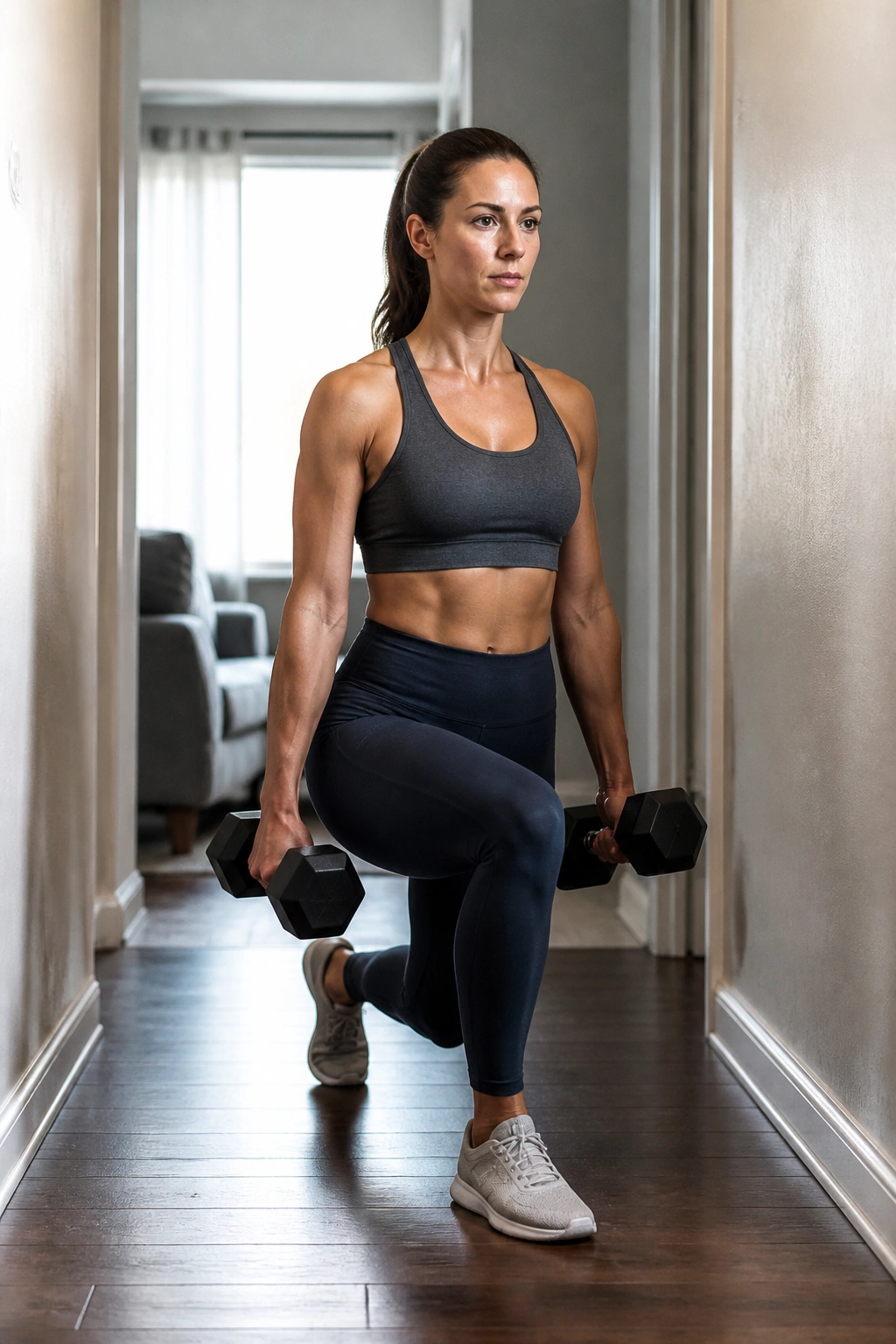
A reverse lunge does not care whether you have a garage gym or a hallway. Step one foot back, lower under control, stand up, switch sides. That is it.
The backward step is the part I like most. It tends to feel smoother than a forward lunge for a lot of people, and it lets you keep the front foot planted in one spot. If your space is tight, that predictability is gold. You are not taking big strides across the room or bumping into anything behind you.
What to watch for
- Keep your front foot flat.
- Let the back knee travel toward the floor, not slam into it.
- Hold the dumbbells at your sides for the least fuss, or in a front rack if you want more core demand.
- Use a short step back if balance is shaky; use a longer step if you want more glute work.
The move also exposes side-to-side weakness fast. No hiding. If one leg wobbles, you will know within two reps.
4. Static Split Squats When You Want Quads Without Extra Space
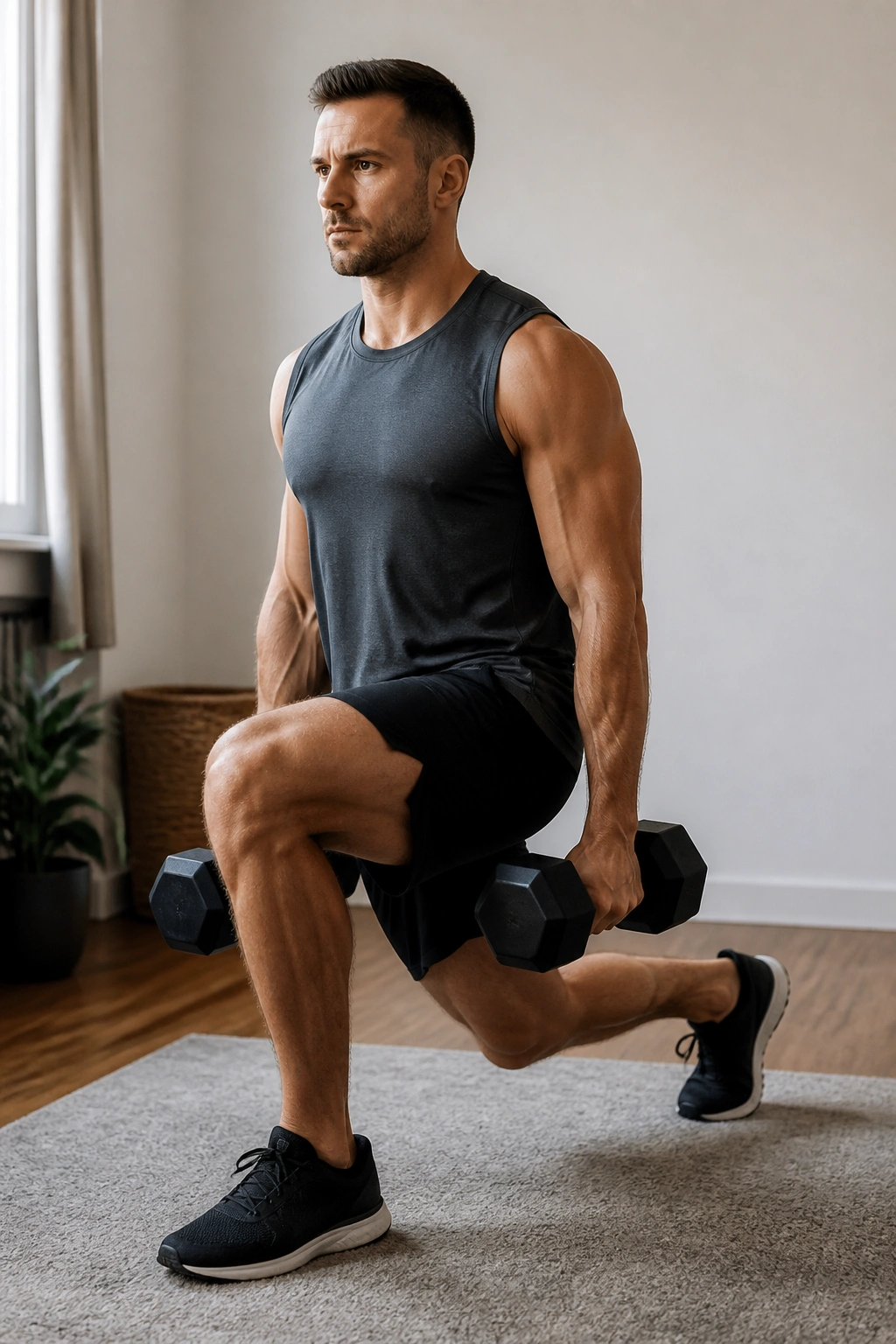
Why do split squats show up so often in home training? Because they are ruthless in a tiny footprint. Your feet stay in place, the torso stays more upright, and the front leg does most of the work while the back leg quietly helps with balance.
That fixed position is the whole point. You can set up once, take a breath, and grind through a set without chasing the dumbbells around the floor. If your room feels cramped, this is a gift.
How to make it harder
Half the battle is stance length. A shorter stance usually hits the quads more; a longer stance shifts more work into the glutes. Both are useful. Pick the one that matches the day.
- Hold the weights at your sides for a steady, simple setup.
- Keep the front knee tracking over the middle toes.
- Pause for 1 second at the bottom if you want less momentum.
- Use 6 to 10 reps per side for strength, or 10 to 15 for burn.
Do not bounce out of the bottom. A slow rise teaches control, and control is what keeps this move useful when space is tight.
5. Dumbbell Floor Press for Chest Work Without a Bench
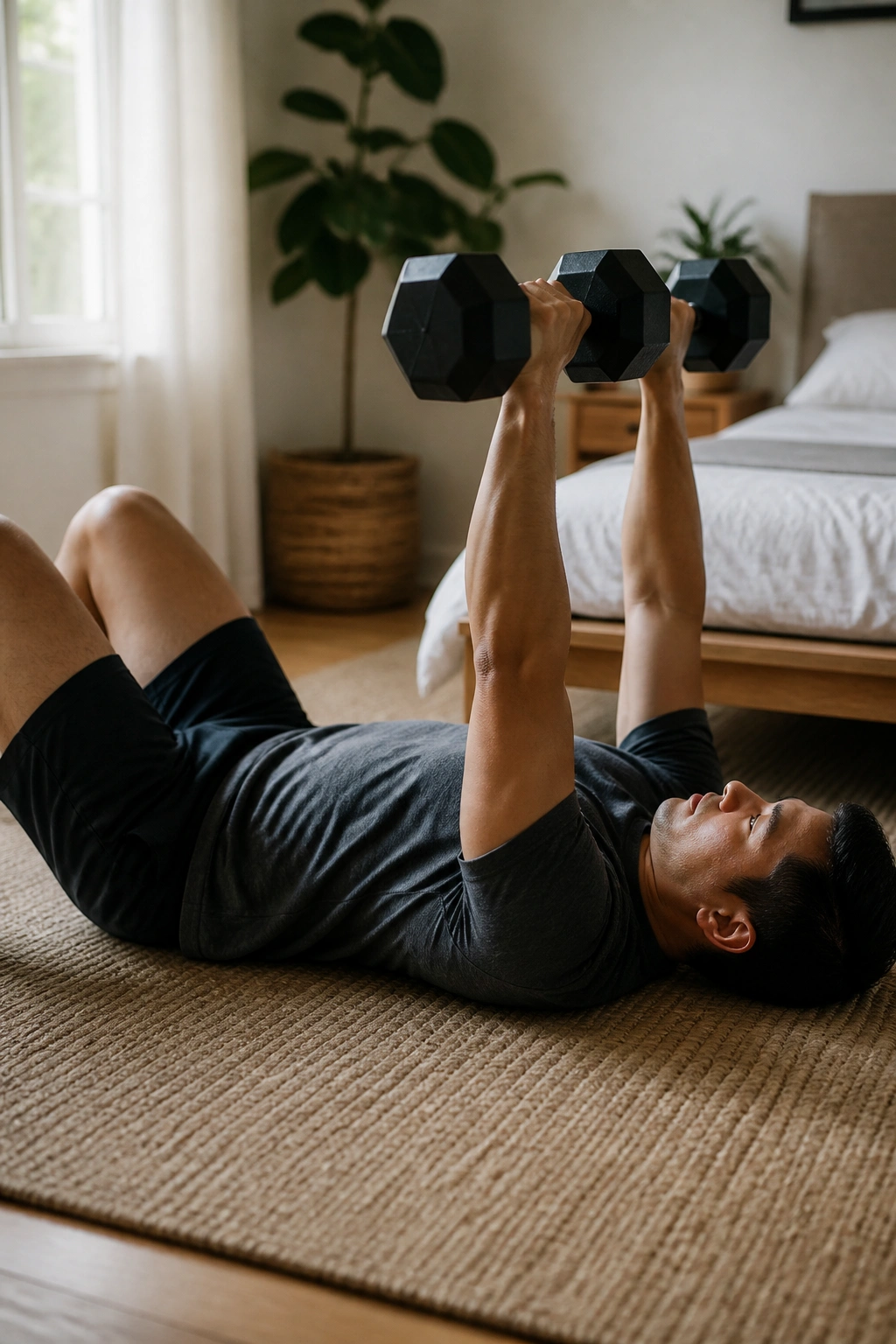
A floor press is the move I reach for when I want chest work without the hassle of a bench. Lie on the floor, bend your knees, and press the dumbbells from your chest until your upper arms meet the floor. That bottom stop changes the feel in a good way.
The floor shortens the range a little, which is easier on the shoulders for many people. It also keeps the dumbbells from dropping too deep, so you can push hard without worrying about a wobbly bench or a cramped setup. If you live in an apartment, that alone is worth something.
I also like how stable it feels. Your back is flat, your body is set, and you do not need much room to get from the start to the finish. A pair of moderate dumbbells can be a serious challenge here.
Keep your wrists stacked over your elbows. If the dumbbells drift toward your face, the press gets awkward fast. Straight up and down is the clean path.
6. One-Arm Dumbbell Rows Without a Rack or Bench
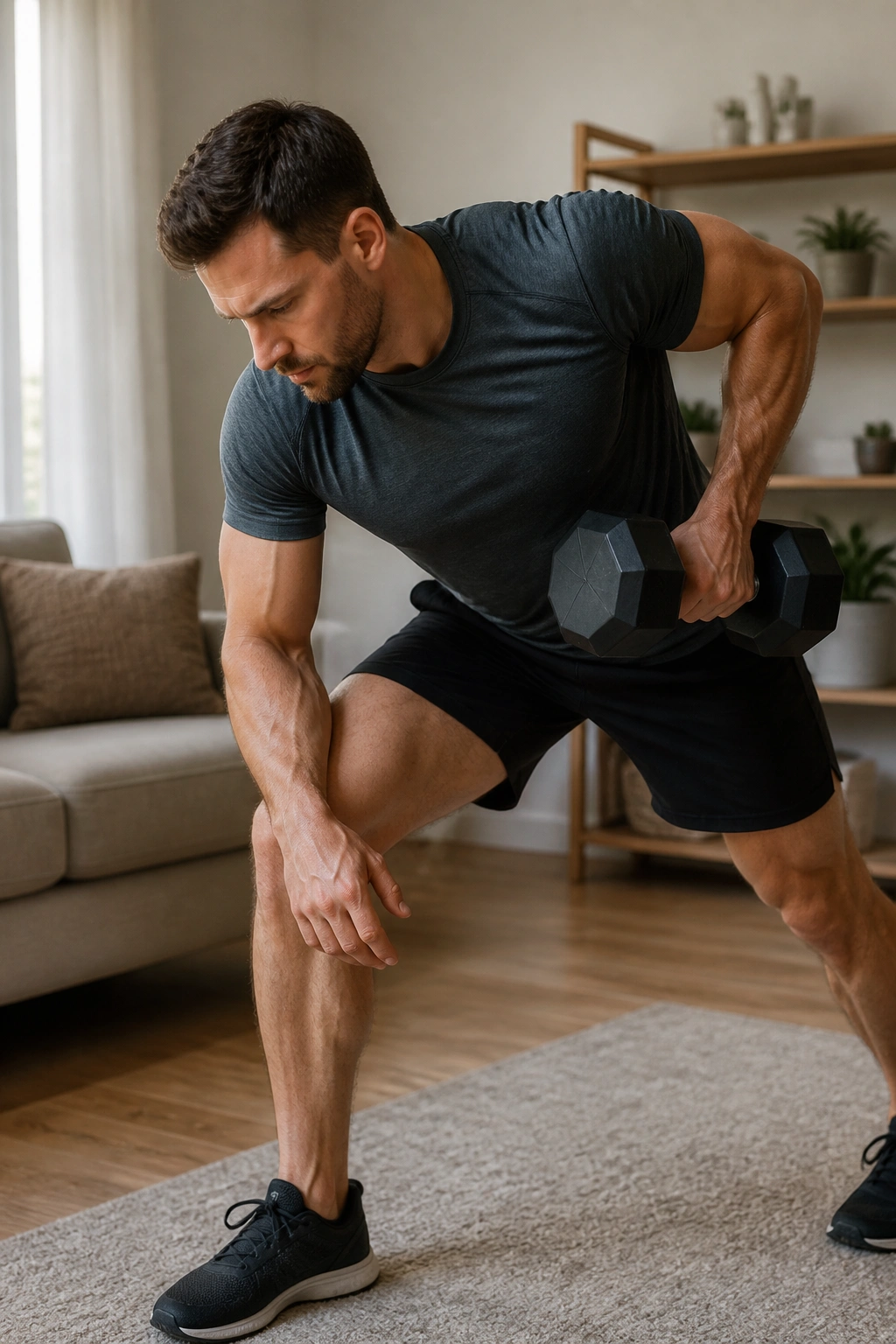
A one-arm row is one of those plain-looking exercises that keeps paying rent. You can do it with one hand braced on your thigh, one hand on a couch arm if you have one, or even from a hip-hinged stance with no support at all.
Unlike a chest-supported row or a machine row, this version asks you to brace your torso while you pull. That is useful. Real life does not hand you perfect support every time, and a small-space setup usually means improvising a little anyway.
What makes it different
The pull starts from the back, not the biceps. If you yank the dumbbell up with your arm, the upper back never really gets to work. Think about pulling the elbow toward your back pocket and keeping the shoulder blade from shrugging up to your ear.
The smaller the space, the more I like this move. It works one side at a time, needs almost no room, and pairs well with presses or squats if you want to build a fast circuit.
7. Half-Kneeling Dumbbell Press for Tight Rooms and Clean Reps
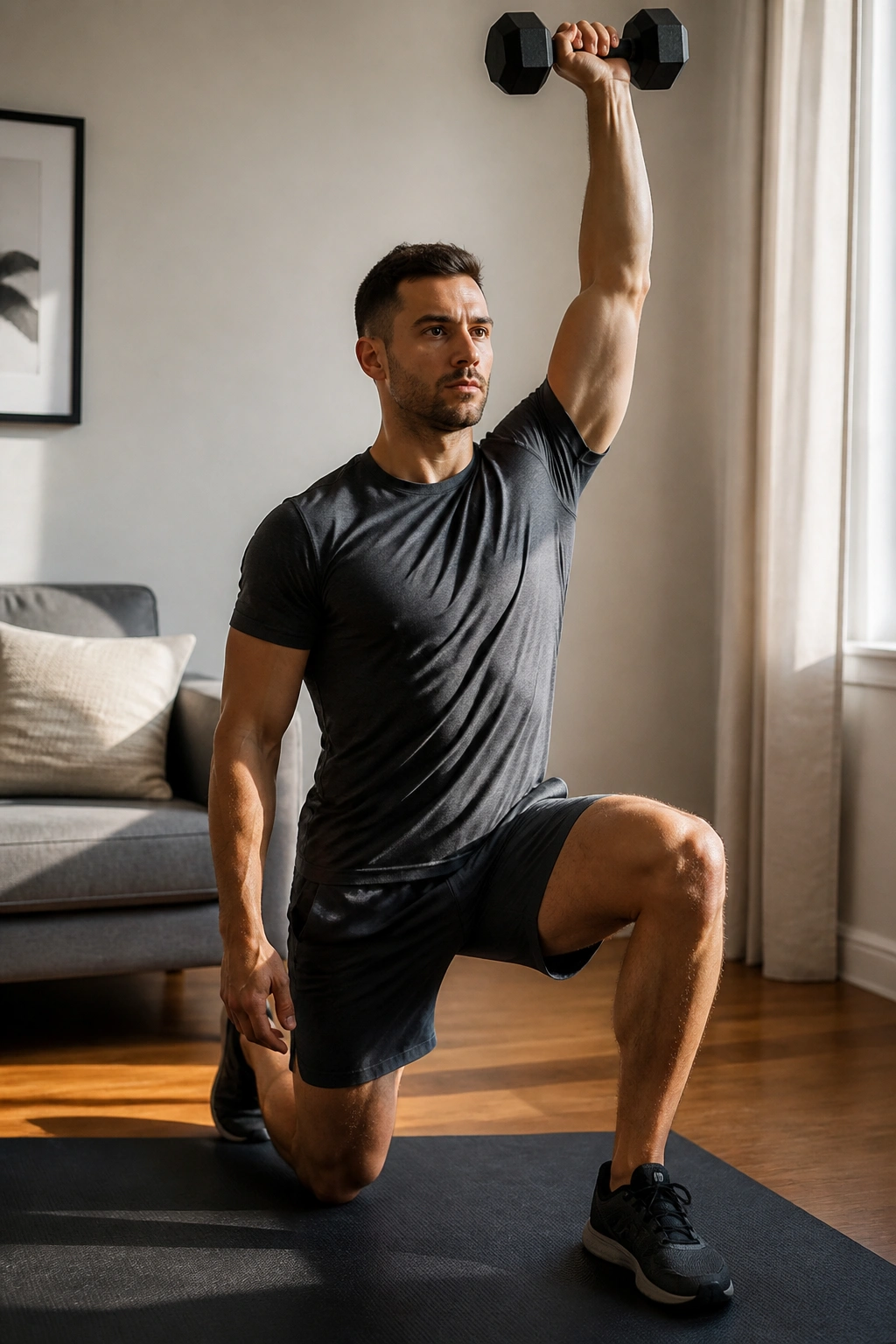
Half-kneeling presses are underrated because they look calmer than they feel. One knee is on the floor, the other foot is planted, and the dumbbell goes straight overhead without the torso flinging itself backward for help.
That kneeling position does two things at once. First, it shrinks your footprint, which helps in a cramped room. Second, it makes cheating harder. You cannot lean back and turn the move into a weird standing incline press. The core has to stay on.
If your lower back tends to arch during overhead work, this version is a friend. It encourages a tall ribcage and a stacked shoulder position. The pressing path stays honest.
Use one dumbbell at a time if the space is narrow. It is less fiddly, and you can focus on keeping the shoulder blade moving smoothly instead of trying to manage two bells at once.
8. Push Presses for Heavier Dumbbells and Shorter Sessions
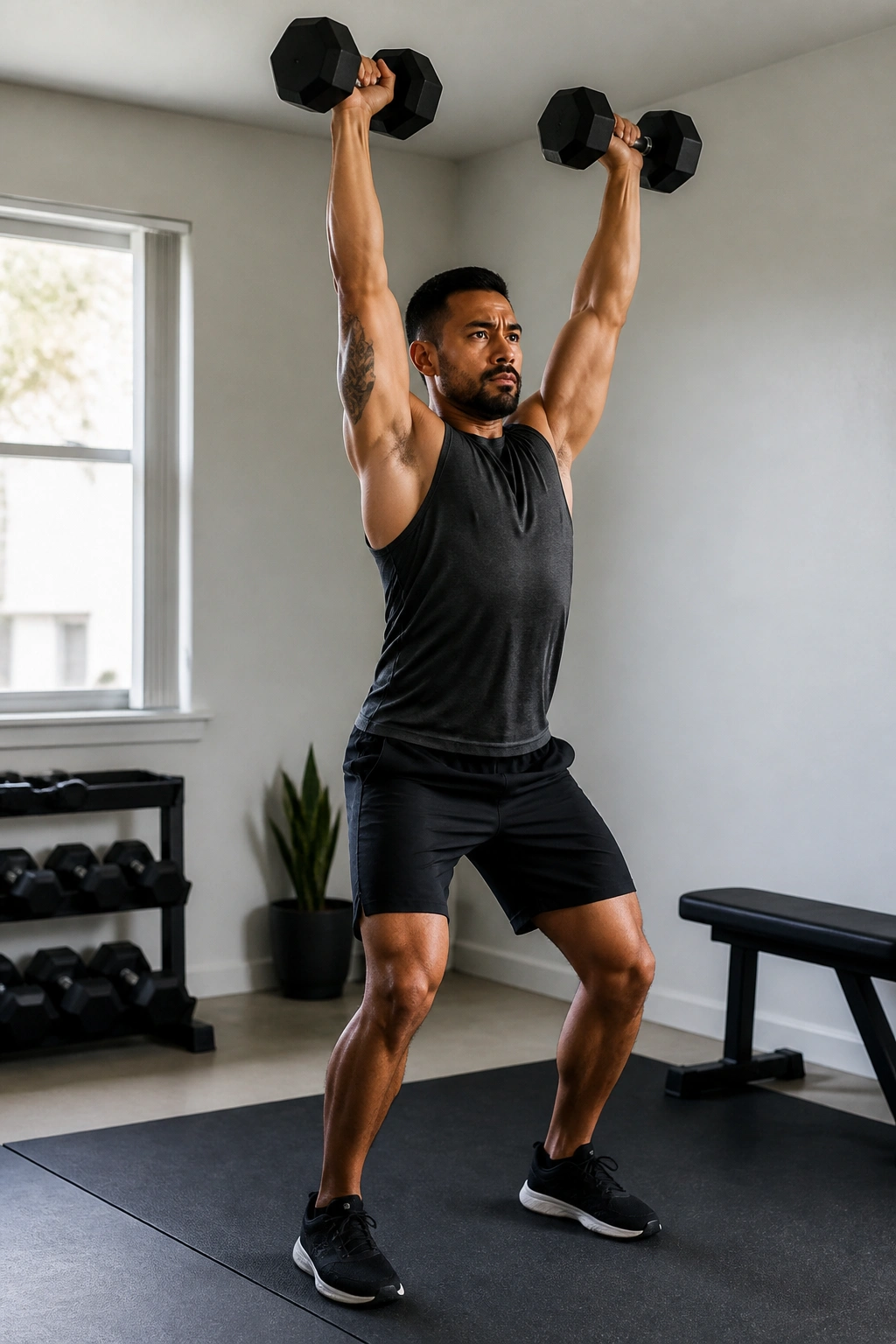
A push press lets you use your legs to help launch the dumbbells overhead. That little dip and drive turns a strict press into something more explosive. In a small room, that matters because it lets you train power without needing a long runway.
You only need a few inches of knee bend and a stable floor. Then you drive hard, transfer force through the arms, and lock the weights overhead. The movement is short, sharp, and a little rude. I mean that as praise.
It is a smart choice when the dumbbells are a bit heavier than your strict-press limit. You still have to control the catch overhead, though. That part does not disappear just because the legs helped.
Keep the dip vertical. If your hips shoot backward, the press turns sloppy and the lower back pays for it. Clean dip, hard drive, solid finish.
9. Renegade Rows for Core Work on a Small Floor Area
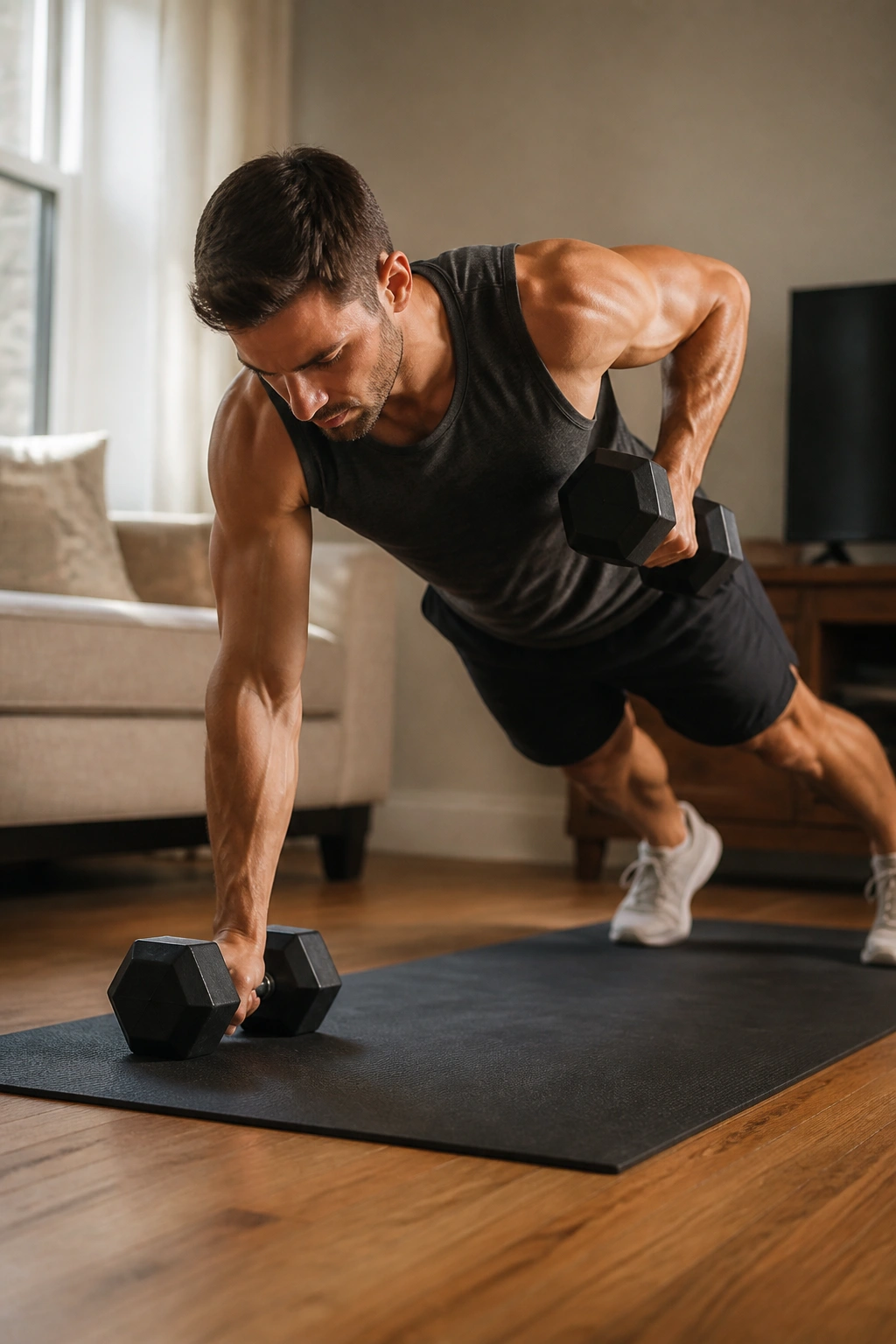
A renegade row is basically a plank that got tired of being polite. You hold a dumbbell in each hand, set up in a high plank, and row one weight at a time while trying not to twist your hips all over the place.
The exercise asks a lot from the core, shoulders, and upper back, which is why it earns its place in compact training. You are not just pulling. You are resisting rotation, balancing on a narrow base, and keeping the body from waving around like a flag.
Key details that matter
- Set your feet a little wider than shoulder width.
- Squeeze your glutes before the first rep.
- Row slowly. Fast reps make the hips swing.
- Use lighter dumbbells than you think at first.
If the floor feels unforgiving on your wrists, place your hands on the dumbbell handles with the ends planted firmly. And yes, this one gets ugly when you get tired. That is part of the appeal.
10. Z-Presses Seated on the Floor
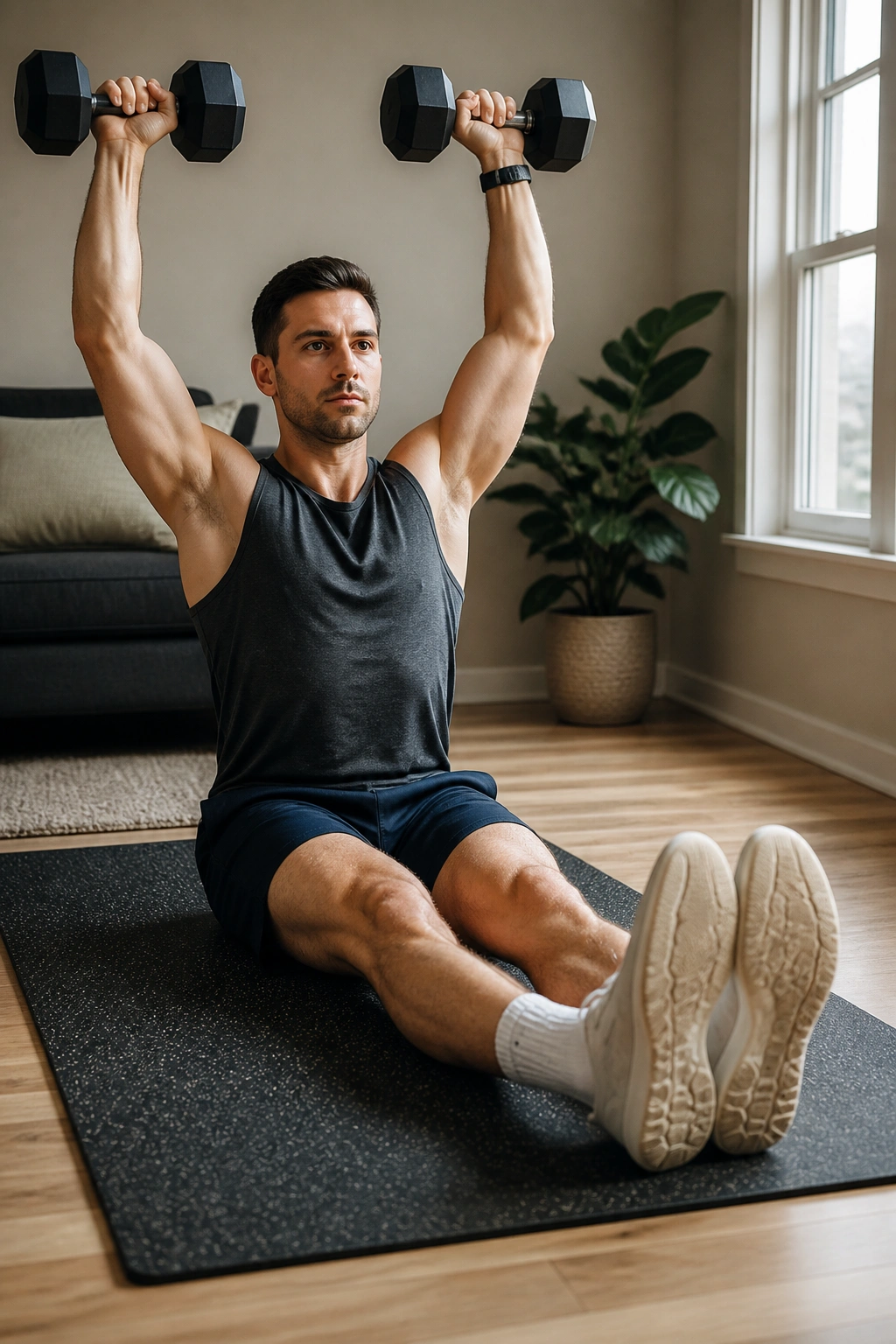
Why do I keep coming back to the Z-press for small-space training? Because it asks for almost no room and exposes weak pressing mechanics fast.
Sit on the floor with your legs straight out in front of you, torso tall, and dumbbells at shoulder level. Press from there. No back support. No leg drive. No sneaky arch. The whole body has to stay stacked.
How to use it
Start light. Much lighter than you expect. The seated position makes the press honest, but it also makes it humbling. If your hamstrings are tight, you will feel that before the first set ends.
Use 5 to 8 reps if you want strength, or 8 to 10 if you want cleaner volume. The rep quality matters more than the number. A crooked Z-press is just a bad press on the floor.
Tip: If you cannot sit upright without rounding your lower back, bend your knees slightly. That tiny change often saves the lift.
11. Lateral Raises for Side Delts Without Moving Around
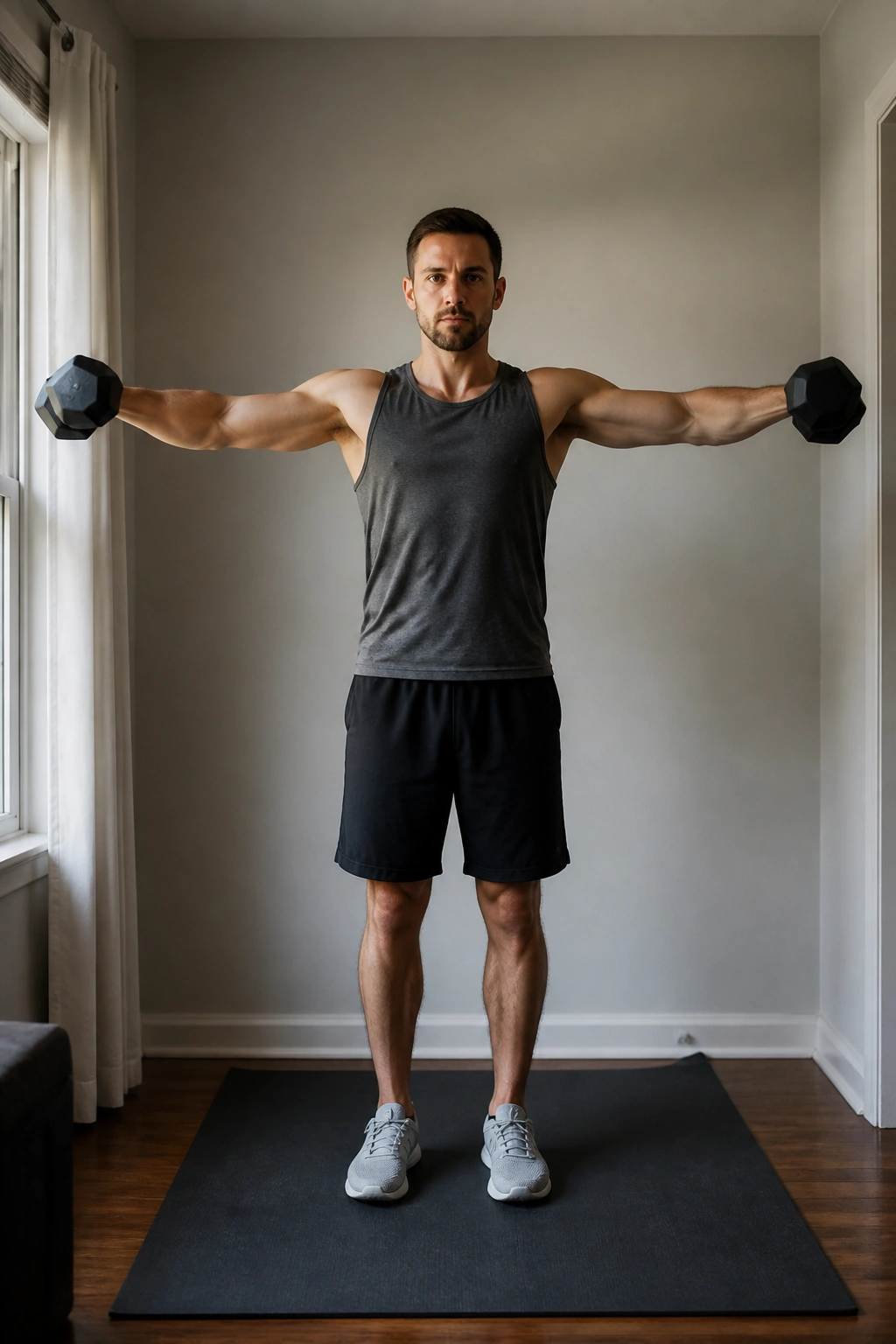
A lateral raise is about as space-friendly as lifting gets. Stand in one spot, hold a pair of dumbbells at your sides, and raise them to shoulder height with a soft bend in the elbows. That is the whole show.
The move is small, which is why people blow it off, and also why they do it badly. Swinging the weights turns the shoulders off. Slowing down turns them on. Simple. Brutal. Effective.
I like lateral raises in short sets, usually 10 to 15 reps, with a controlled lowering phase. If you have to throw your torso around to get the bells up, the load is too heavy. Side delts do not need heroics; they need clean tension.
A narrow room actually helps here. You are less tempted to use momentum when there is nowhere to go. Keep the dumbbells slightly in front of the body, lift until the hands are about level with the shoulders, and stop before the traps take over.
12. Bent-Over Reverse Flys for the Back of the Shoulders
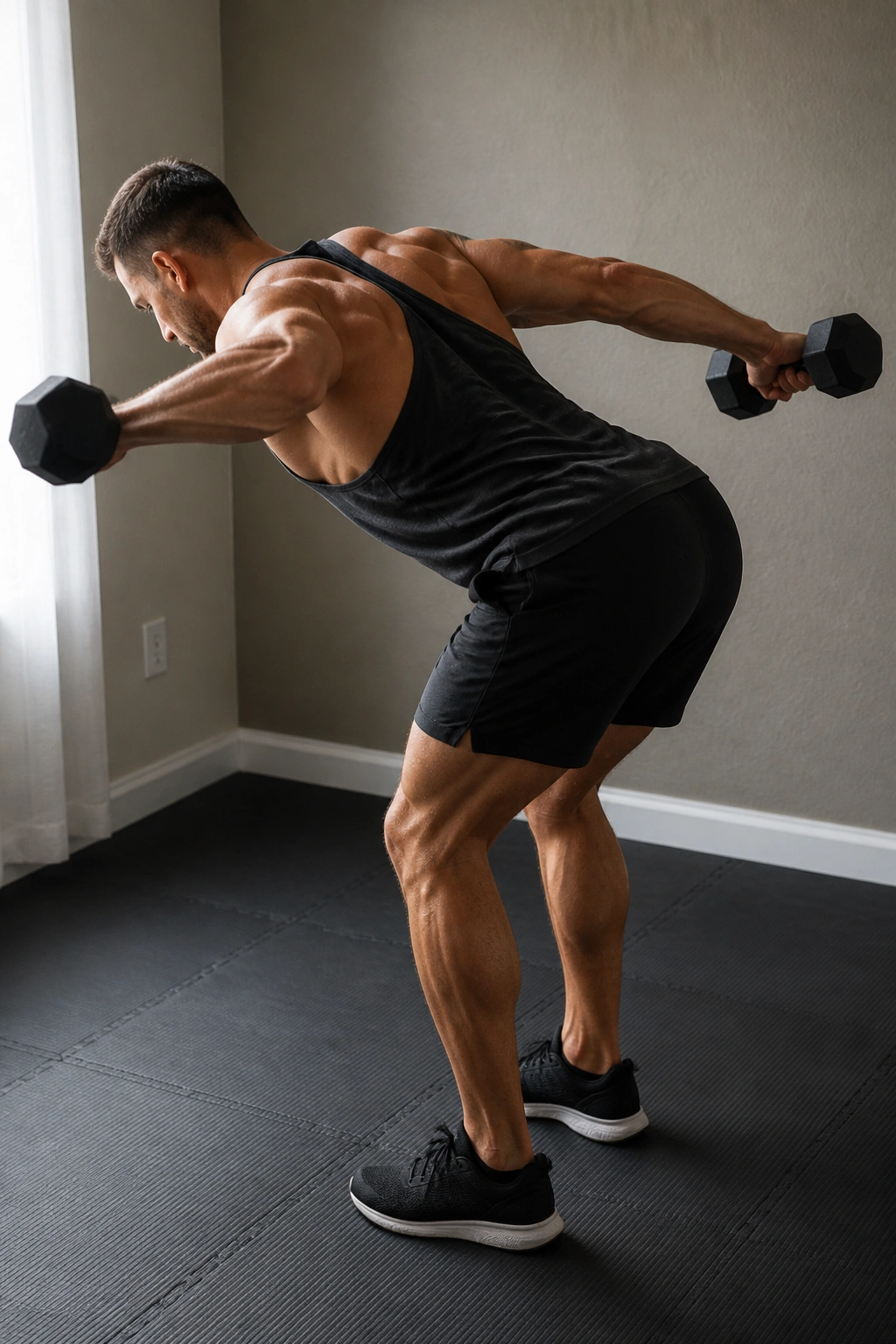
Reverse flys are the little sibling of rows, and I say that with affection. They target the rear delts and the upper back in a way that rows often miss. If your shoulders spend too much time in front of a keyboard, this one earns its keep.
Unlike a row, you are not chasing heavy load. You are chasing control. Hinge at the hips, let the dumbbells hang, and open the arms wide with a slight bend in the elbows. The range is small. The burn shows up fast.
That is useful in a small space because you do not need large movement to get a strong training effect. You can stand in place, hinge once, and stay there for the full set. No stepping, no bench, no setup change.
Keep the neck long and the shoulders down. If the upper traps are doing the lifting, reduce the weight and slow the tempo.
13. Farmer Marches in Place
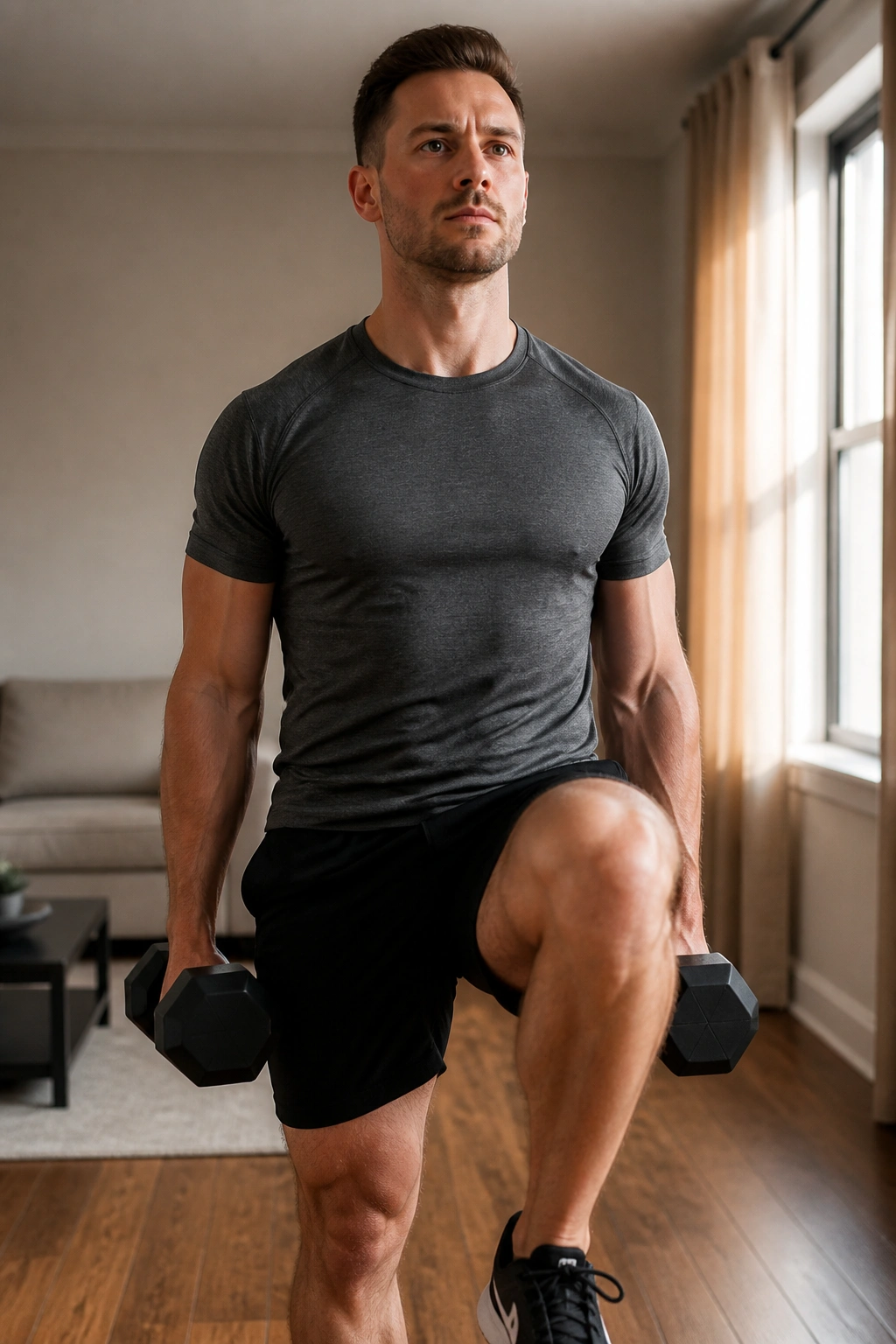
A farmer march is what happens when you take the carry and park it in one spot. Hold a dumbbell in each hand, stand tall, and march in place with controlled knee lifts. That is all you need.
It sounds almost too easy until your grip starts to complain and your trunk has to keep the body from wobbling. The dumbbells want to pull you down. Your job is to stay tall anyway. That tension adds up fast.
What to notice
- Keep the ribs stacked over the hips.
- Lift each knee to about hip height, or lower if balance needs it.
- Walk in place for 30 to 60 seconds.
- Use heavier bells than you would for lateral raises, lighter than you would for deadlifts.
This is one of my favorite apartment-friendly drills because it builds carrying strength without requiring an open hallway. If you can stand still, you can train hard.
14. Suitcase Carries That Train Your Obliques the Hard Way
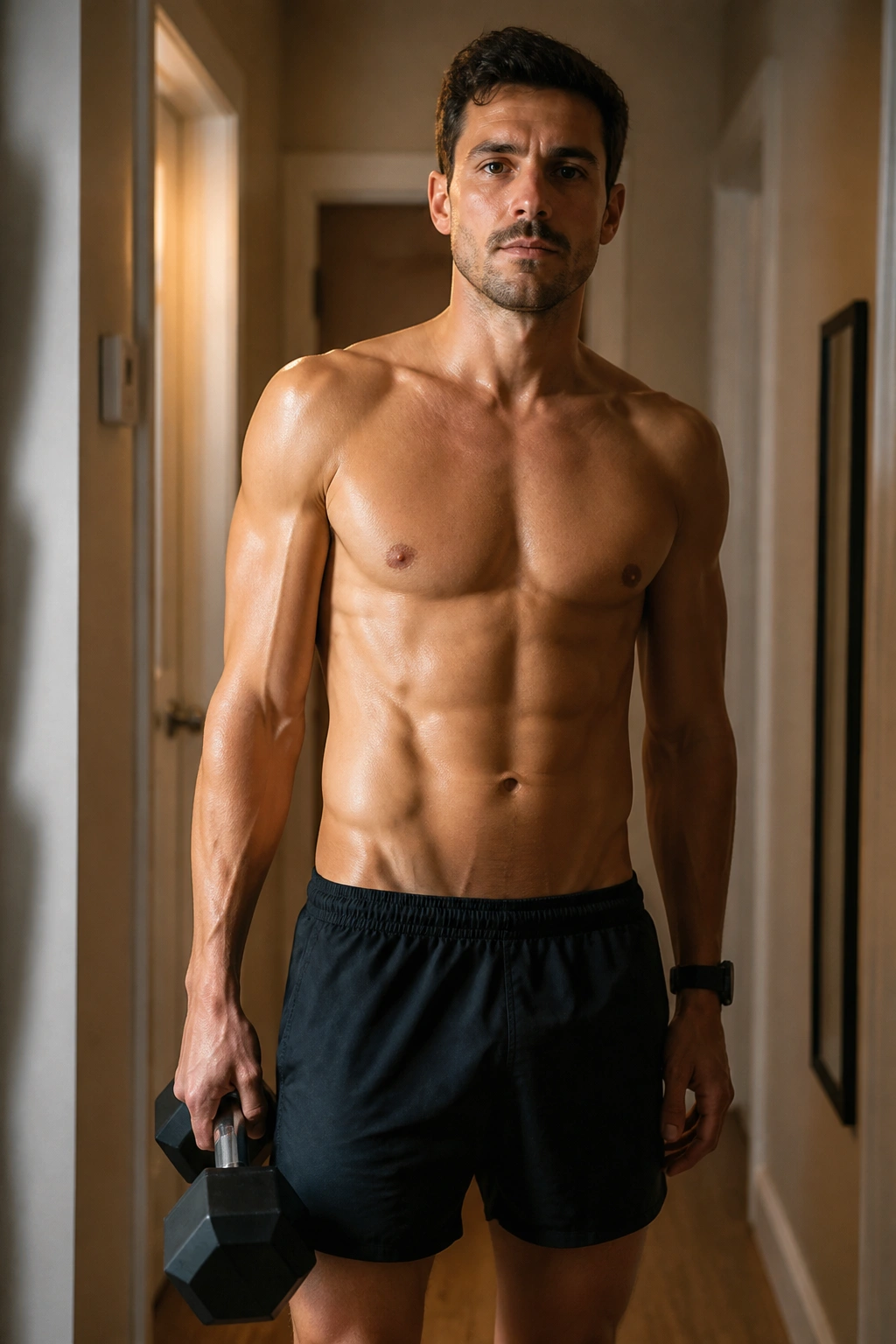
One dumbbell. One side. One very honest lesson in staying upright.
A suitcase carry is a one-sided carry done with the weight in just one hand. It lights up the obliques, the grip, and the muscles that keep the torso from leaning toward the load. The movement is tiny, but the effect is not. If your space is so tight that walking is awkward, you can even march in place with the dumbbell at your side.
That asymmetry is the value. Most everyday positions are not perfectly even, and a suitcase carry teaches the body to resist side bending while staying smooth at the shoulders and hips. It is a weirdly elegant drill for something so plain.
Pick a distance of 20 to 40 steps if you can walk. If you cannot, march for 30 seconds per side. Either way, do not let the loaded shoulder hitch upward. Tall posture wins.
15. Dumbbell Thrusters for Full-Body Work in a Few Steps
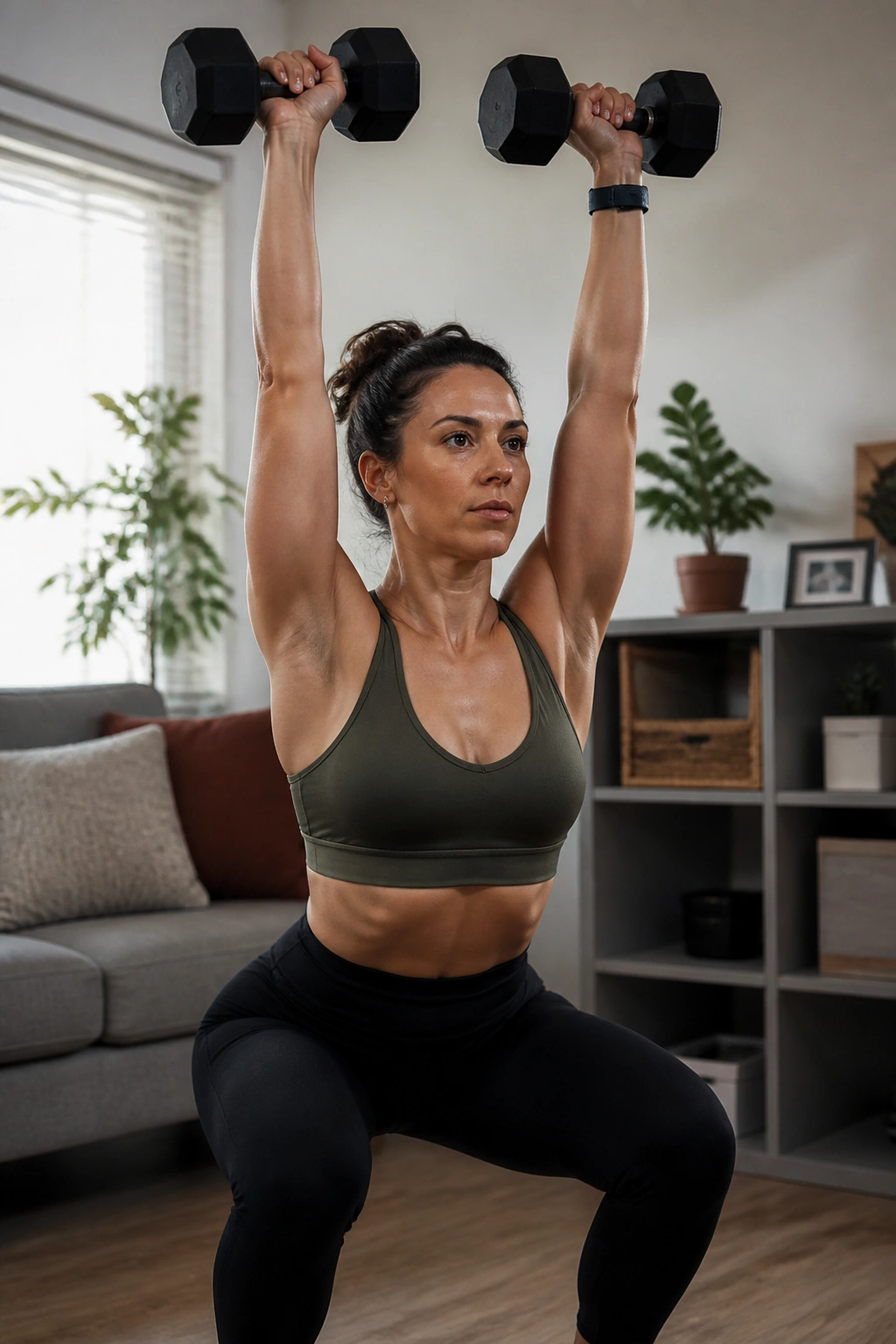
A thruster is basically a front squat that turns into a press the moment you stand up. It is efficient, loud in the lungs, and surprisingly friendly to a small room because you never need to travel far.
The move connects the legs and upper body in one clean chain. Squat, drive up, press overhead, lower, repeat. That continuous flow is what makes it useful when you want more work in less time. You will feel it in the quads first and the shoulders second, with the heart rate climbing somewhere in between.
Use lighter dumbbells than you think. Thrusters punish ego fast. If the squat turns shallow or the press gets sloppy, the load is too much for the pace you want.
A set of 6 to 10 reps is plenty. You do not need to chase a marathon here. Clean reps, steady breathing, done.
16. Glute Bridge Floor Presses for Glutes and Chest at Once
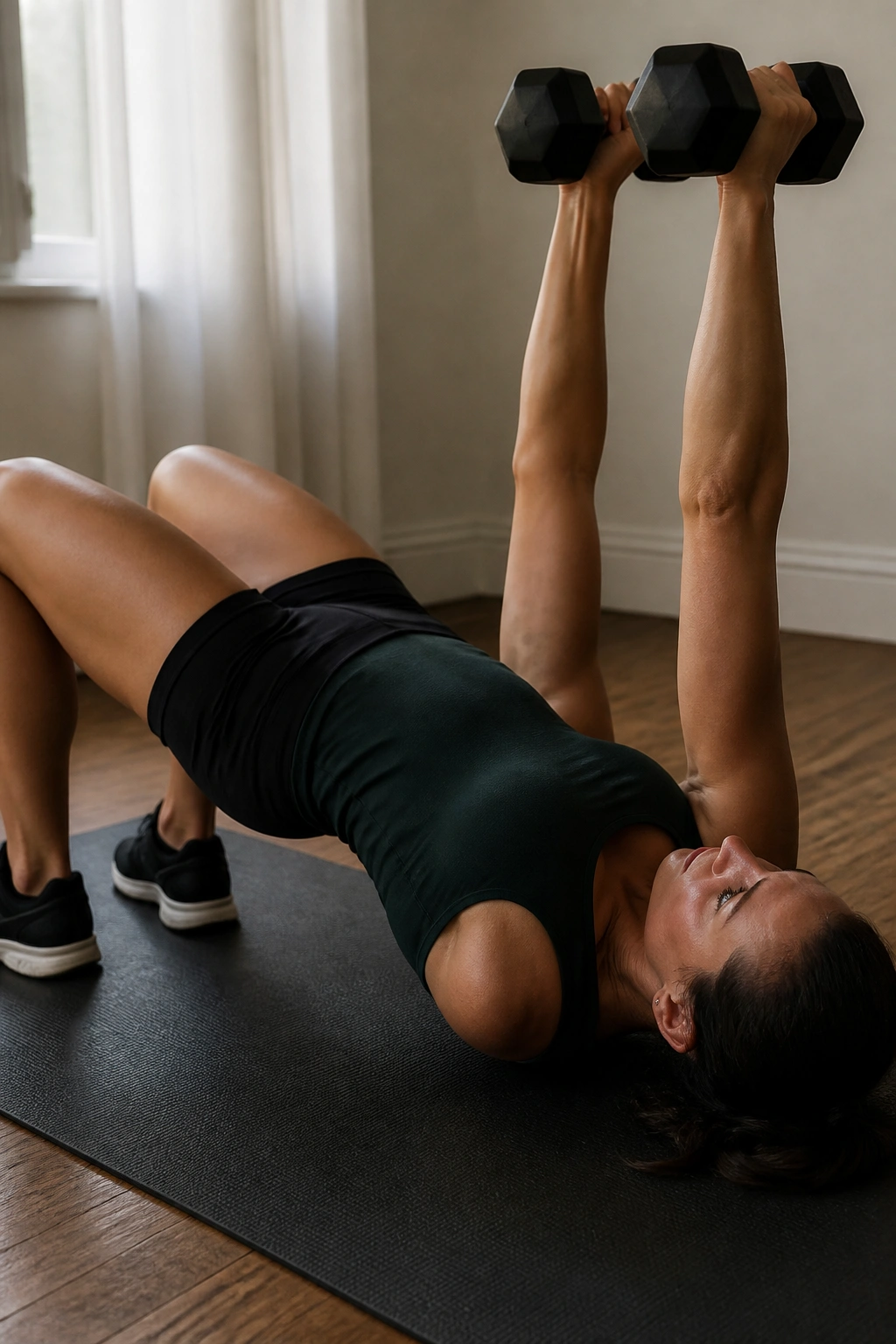
Why not train the chest and glutes in the same space and at the same time? A glute bridge floor press does exactly that. You set up for a floor press, lift the hips into a bridge, and press the dumbbells while the lower body stays braced.
The bridge adds a little extra core and glute work without needing another machine, another mat, or another inch of room. It also changes the feel of the press. Your torso has to stay stable while the hips hold the line, which makes the whole body pay attention.
This is one of those moves that looks odd until you try it. Then it makes sense. The floor limits the range, the bridge keeps the lower half active, and the dumbbells stay close.
Do not let the hips sag on the way down. Keep the bridge high enough that your glutes stay on, but not so high that your lower back takes over. That distinction matters.
17. Dead Bug Pullovers for Core Control on the Floor
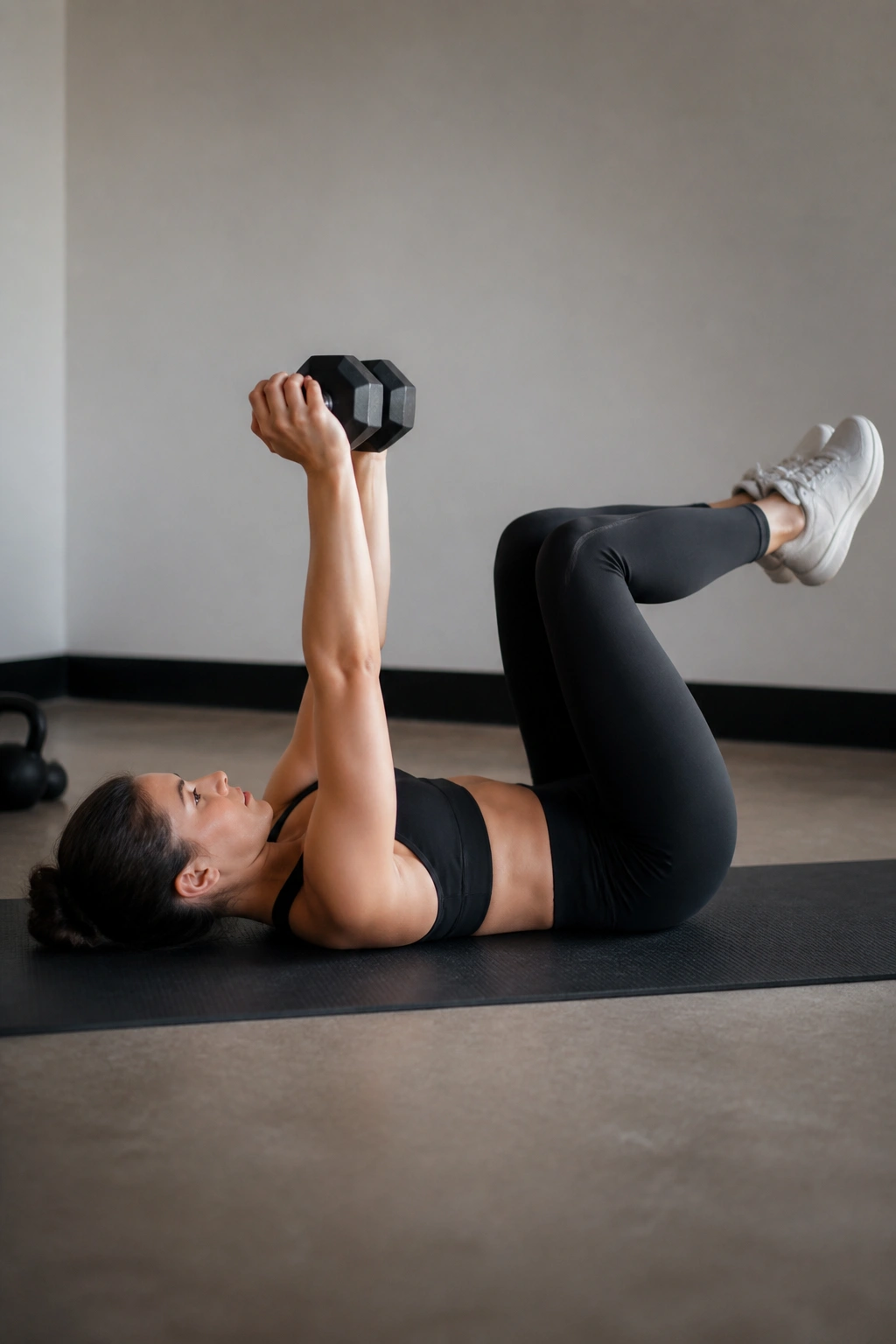
A dead bug pullover is the sort of exercise people skip until they realize how much it teaches. Lie on your back, hold one dumbbell with both hands, raise your legs into a tabletop position, and lower the weight overhead while keeping the lower back pressed into the floor.
The whole point is control. Your core has to stop the ribs from popping up and the lower back from arching. If the floor under your spine feels like it is losing contact, the load is too heavy or the range is too deep.
I like this one for small spaces because it stays low and quiet. No jumping. No large movement. Just tension and patience.
It also pairs well with pressing or rowing work. When your shoulders and hips get all the attention, the dead bug pullover keeps the trunk honest.
18. Dumbbell Skull Crushers Lying Flat
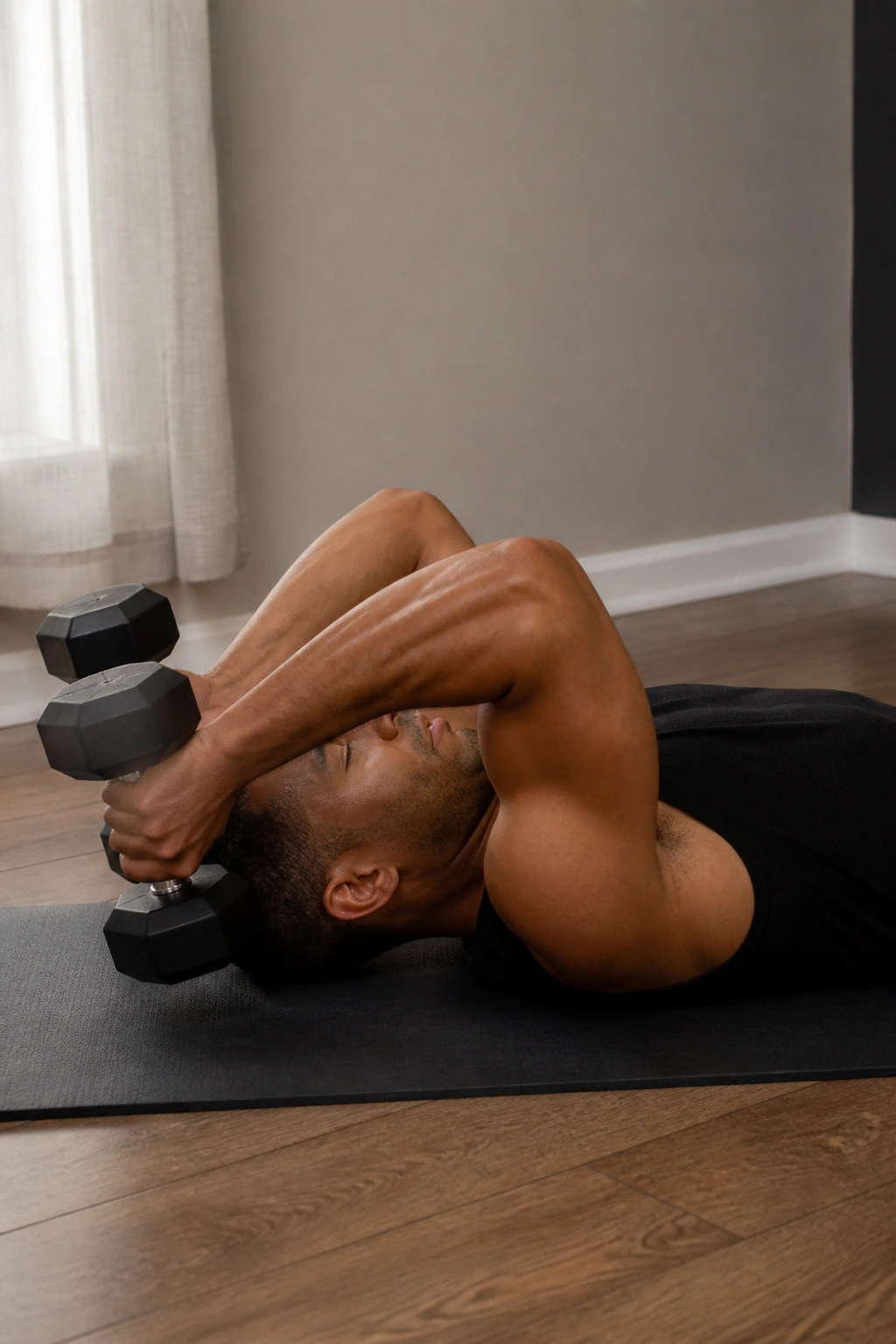
A skull crusher on the floor gives your triceps a direct job without demanding much space. Lie down, hold the dumbbells above the chest, bend at the elbows, and lower the weights until the backs of the upper arms touch the floor. Then press back up.
The floor acts like a built-in stop, which makes the rep path easier to manage than a full-range bench version. That is useful if you train in a cramped room and do not want the elbows wandering around. It also keeps the setup clean and quick.
What makes it different
You are not moving the shoulders much. The elbows stay in charge. That focused line of work is why the exercise feels so local by the third or fourth set.
- Keep the elbows pointed mostly up, not flared wide.
- Use moderate weight, not the heaviest dumbbells in the house.
- Stop when the forearms are roughly parallel to the floor or the dumbbells touch down lightly.
A slow lowering phase makes a big difference here. Rush it, and the triceps miss half the party.
19. Front-Rack Marches for Core Bracing and Posture
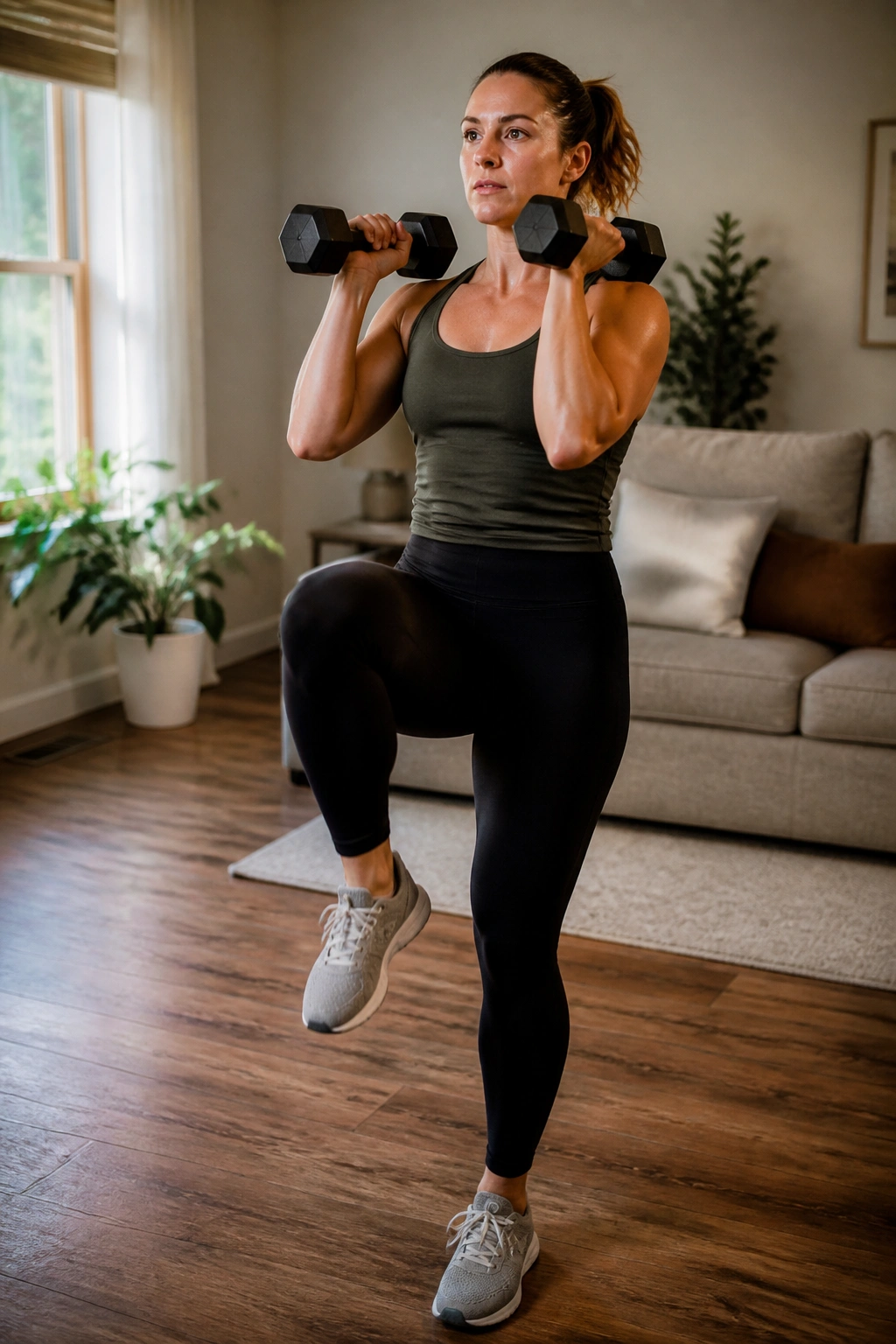
Hold the dumbbells at shoulder height, elbows slightly in front of the torso, and march in place. That is a front-rack march, and it looks simpler than it feels.
The front-rack position challenges the upper back, the abs, and the breathing pattern all at once. If the torso leans back or the ribs flare, you notice immediately. That feedback is useful. It tells you whether your bracing is real or just a good guess.
How to do it well
- Keep the dumbbells resting near the front of the shoulders.
- March slowly enough that the body does not sway.
- Breathe behind a tight torso, not into a loose rib cage.
- Start with 20 to 30 seconds and build from there.
This is one of those drills that quietly improves other lifts. Squats feel more stable. Carries feel cleaner. Presses stop turning into back bends. That is why it belongs in compact dumbbell training.
20. Single-Leg Romanian Deadlifts for Balance and Hamstrings
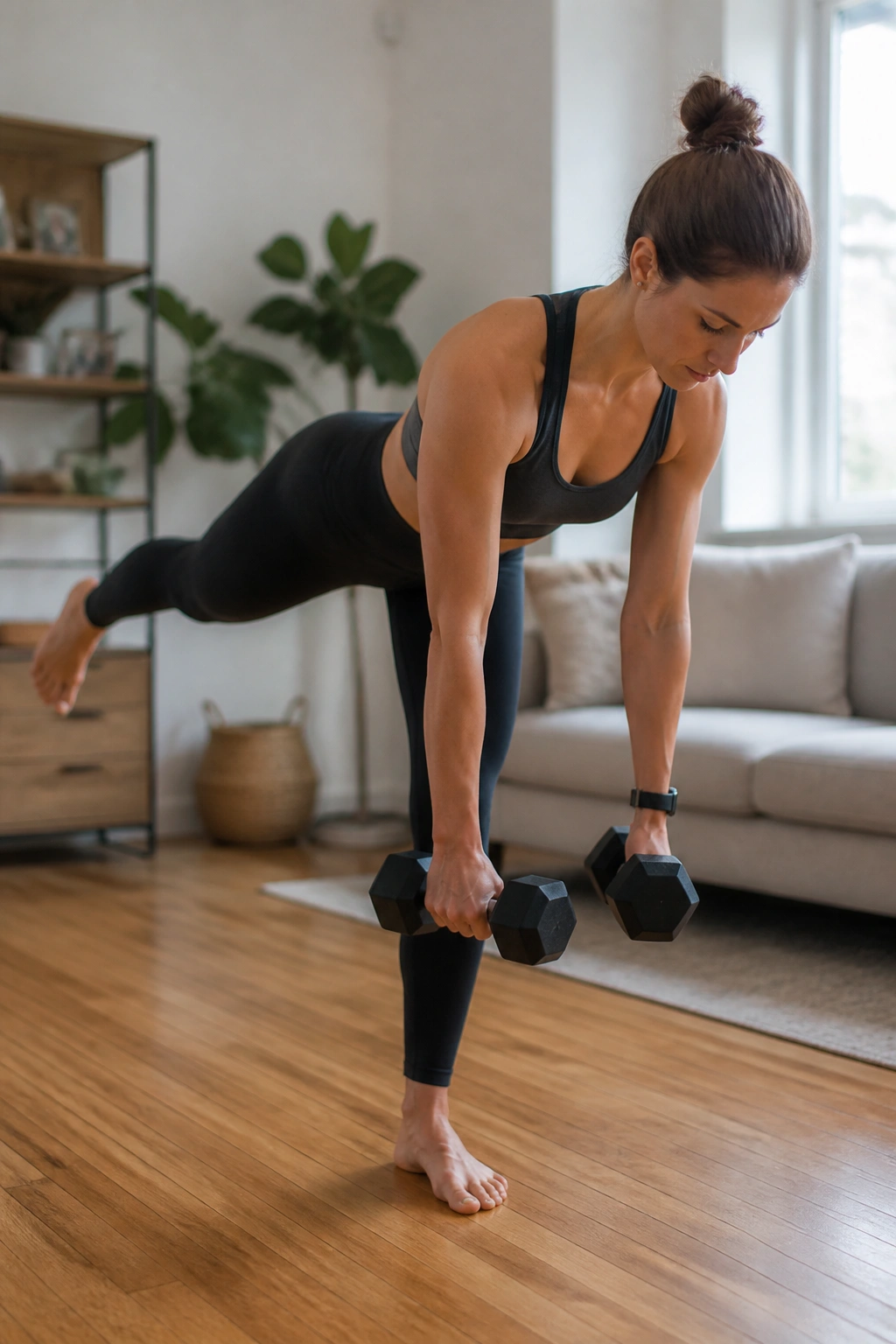
A single-leg Romanian deadlift takes the regular hinge and strips away the easy part. One foot stays grounded, the other leg reaches back, and the dumbbells track down the standing leg while the hips stay square.
The small-space appeal is obvious. You barely move. A foot or two of room is enough. The bigger value is balance, though. The standing leg has to control the load while the hip keeps from opening up to the side. That is harder than it sounds.
Start light and move slow. The floor gives you enough feedback already; you do not need a heavy dumbbell to make this useful. A controlled descent to mid-shin is usually enough for most people.
If balance feels shaky, keep the trailing toe lightly touching the floor behind you for the first few reps. That tiny kickstand can make the movement usable instead of frustrating.
21. Dumbbell Complexes Without Setting the Weights Down
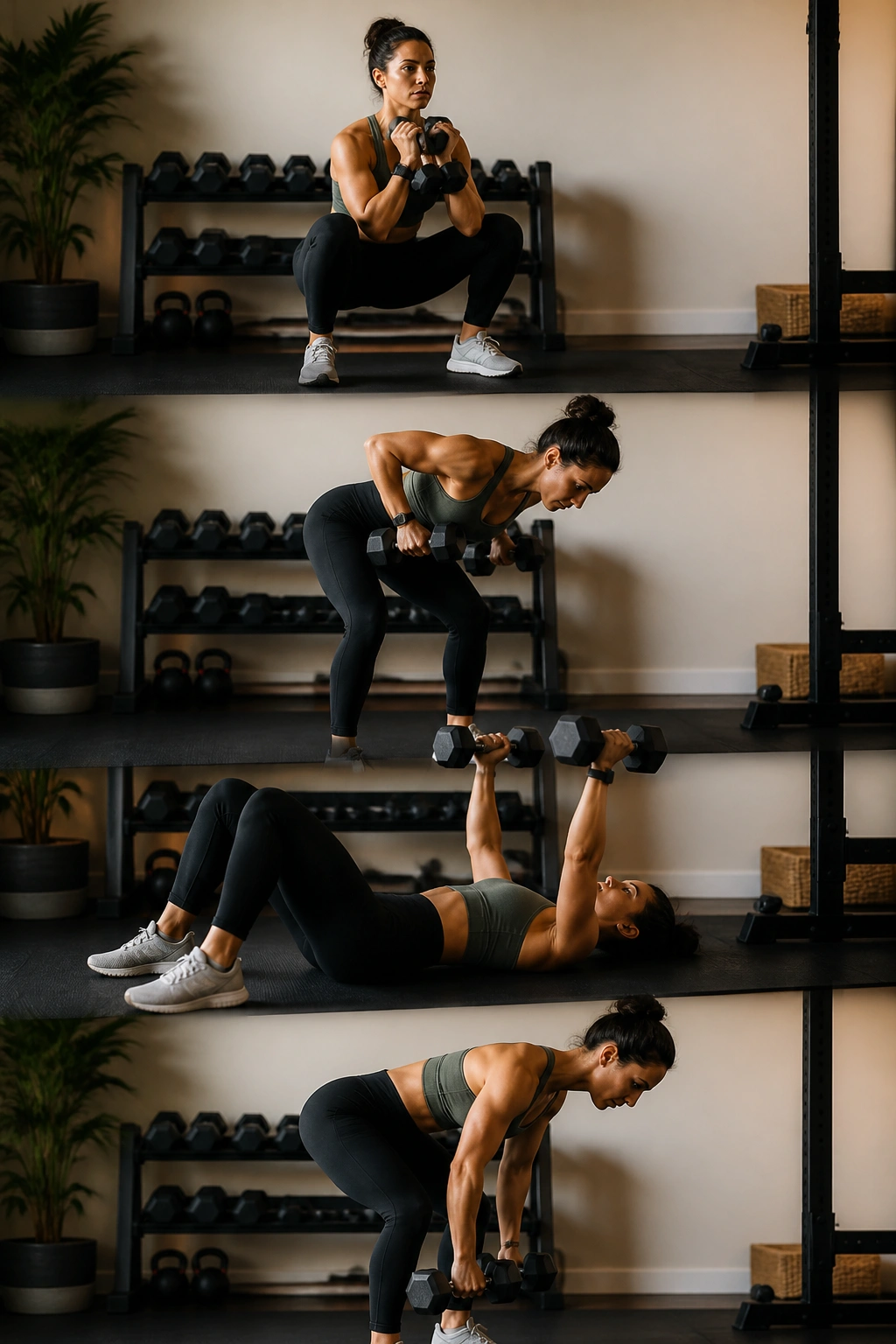
A dumbbell complex is where small-space training starts feeling almost clever. You pick two dumbbells, choose 3 to 5 moves, and run them back to back without putting the weights down. Goblet squat into row into floor press into hinge work. Or any sequence that makes sense for the body.
The beauty of a complex is that it compresses a lot of training into a short window. You do not need to re-rack anything. You do not need to pace around. You just keep moving until the set is done, then rest and do it again. That makes it a strong fit for a room that cannot spare much floor.
A simple structure
- 5 goblet squats
- 5 bent-over rows
- 5 push presses
- 5 Romanian deadlifts
Rest 60 to 90 seconds, then repeat for 3 to 5 rounds. Use a weight you can keep under control through the last move, not just the first one. That mistake is common, and it ruins the whole point.
22. A 10-Minute Density Circuit That Ties the Whole Thing Together
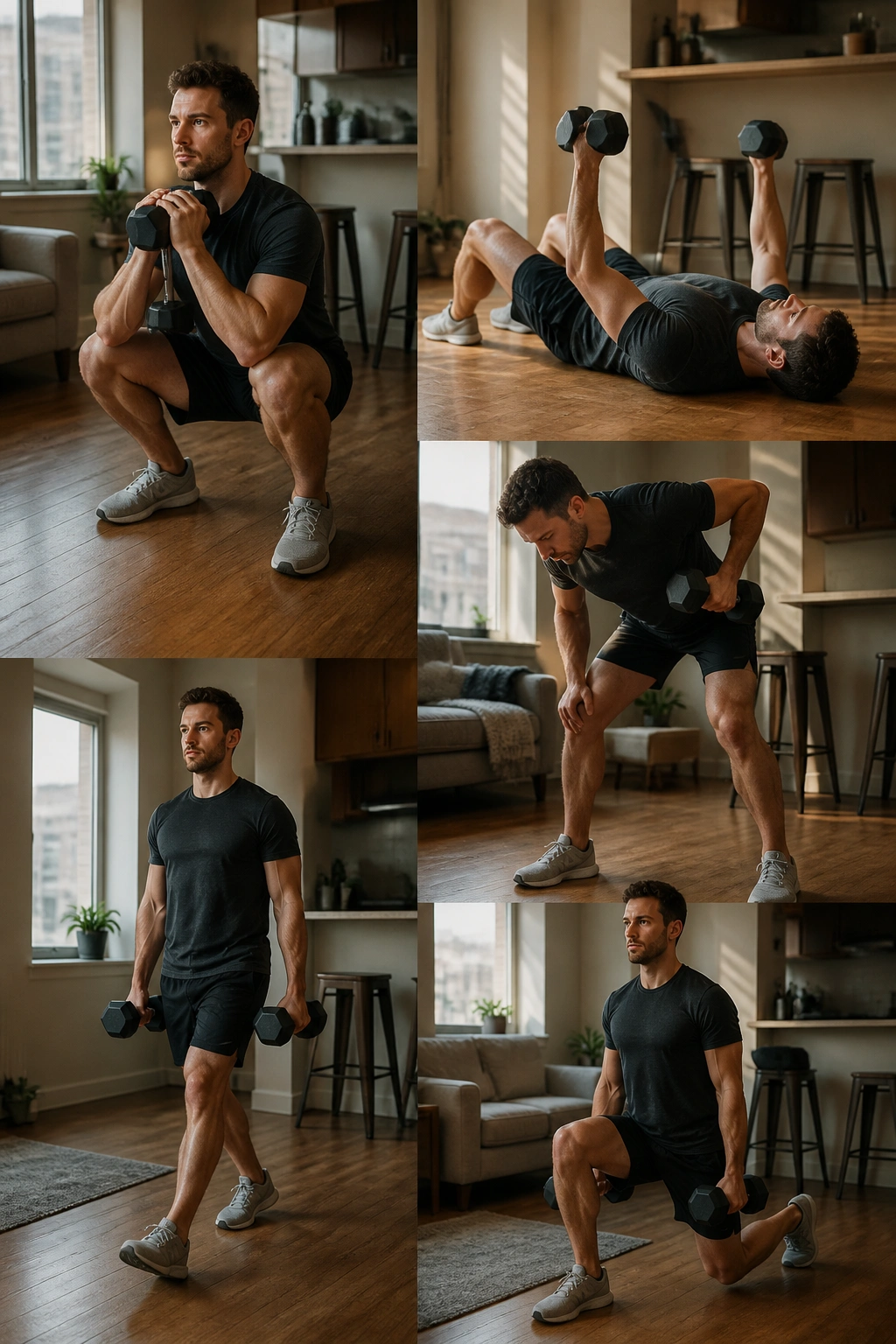
If you want one compact session that uses several of these ideas, this is the one I would hand to someone with a pair of dumbbells and not much else. Set a timer for 10 minutes and cycle through a few basic movements with little rest between them.
A simple version might look like this:
- 6 goblet squats
- 6 floor presses
- 8 one-arm rows per side
- 30-second farmer march
- 6 reverse lunges per side
Repeat until the clock runs out. That kind of density work is useful because it keeps the room small and the training honest. You are not wandering around looking for equipment. You are staying in one zone and getting real work done.
The trick is to stop before your form turns ragged. Ten minutes is enough if the reps are clean and the weights are chosen well. And that is the part people miss: small-space dumbbell work is not about making do. It is about trimming away the fluff so the useful stuff stands out.
