



Belly fat for women is stubborn in a way that feels personal, but the fix is usually less dramatic than people hope. The waistline tends to change when food choices stop sending mixed signals to hunger, blood sugar, and cravings, not when someone punishes herself with a tiny salad and a miserable afternoon.
Crunches do not choose where fat comes off. Neither does wishing, starving, or buying another “detox” tea that tastes like regret. A tighter waist usually comes from a boring stack of repeatable habits: enough protein, fewer liquid calories, more fiber, less grazing, and meals that don’t leave you prowling the kitchen an hour later.
There’s another wrinkle women notice all the time: some of what looks like belly fat is actually water retention, bloating, or a meal that is still sitting there after a salty dinner. That doesn’t make the problem imaginary. It just means the mirror can lie in a few different ways.
The useful part is that the fixes are measurable. A scoop of Greek yogurt. A smaller pour of wine. A cup of vegetables where the bread basket used to sit. Start there.
1. Put Protein First at Every Meal for Belly Fat Loss
Protein changes the whole tone of a meal. It slows digestion, takes the edge off appetite, and makes it a lot harder to drift into an hour of random snacking after lunch. If you want a waistline-friendly habit that does not feel dramatic, this is the one I’d put at the top.
What Protein Does Before You Reach for Seconds
Aim for 25 to 30 grams of protein at meals, especially breakfast and lunch. That could mean eggs plus cottage cheese, Greek yogurt with nuts, chicken on a salad, tofu with rice, or tuna in a wrap. The exact food matters less than the amount.
A plate that starts with protein tends to keep the rest of the meal in line. When people eat the bread, chips, or sweet drink first, they often keep eating before their body has time to catch up. Protein first slows that rush down.
- 3 large eggs plus 1 cup of Greek yogurt
- 4 to 5 ounces of chicken, turkey, fish, or tofu
- 1 cup of cottage cheese
- 1 can of tuna or salmon
- 1 to 1½ cups of cooked lentils or beans
Tip: eat the protein portion before you get into the starchy part of the meal. It sounds fussy. It works.
2. Treat Liquid Calories Like Dessert
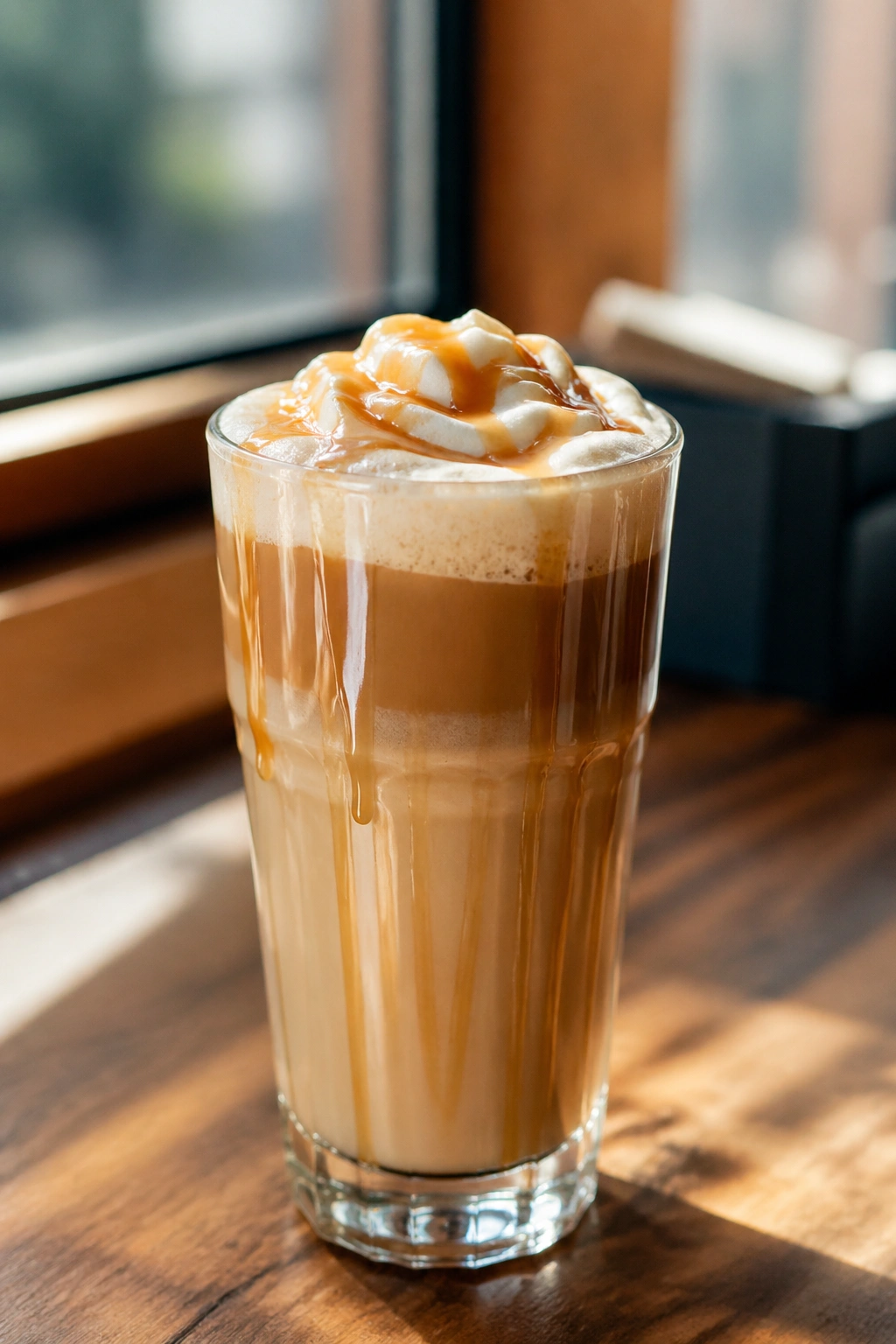
A drink can quietly do the damage that a cookie gets blamed for. Sweet coffee drinks, juice, bottled teas, smoothies that are mostly fruit, and alcohol all slip down fast, do not fill you up much, and can add up before lunch is even over.
A big latte with syrup does not feel like “real eating,” which is exactly why it is easy to overlook. Same with orange juice. Same with a second glass of wine while dinner is still on the table. You can love these things and still admit they are not helping the waistline.
I like a simple rule: if a drink tastes sweet, count it like a treat. Keep one if you want it. Make the rest plain. Water, sparkling water, unsweetened tea, black coffee, or coffee with a splash of milk do the job without turning breakfast into a sugar parade.
If you’re a smoothie person, make it count. Use protein powder, Greek yogurt, or soy milk, then keep fruit to a measured amount instead of pouring in three bananas and a mountain of honey. That version fills you up. The other one is dessert in a cup.
3. Hit a Real Fiber Target
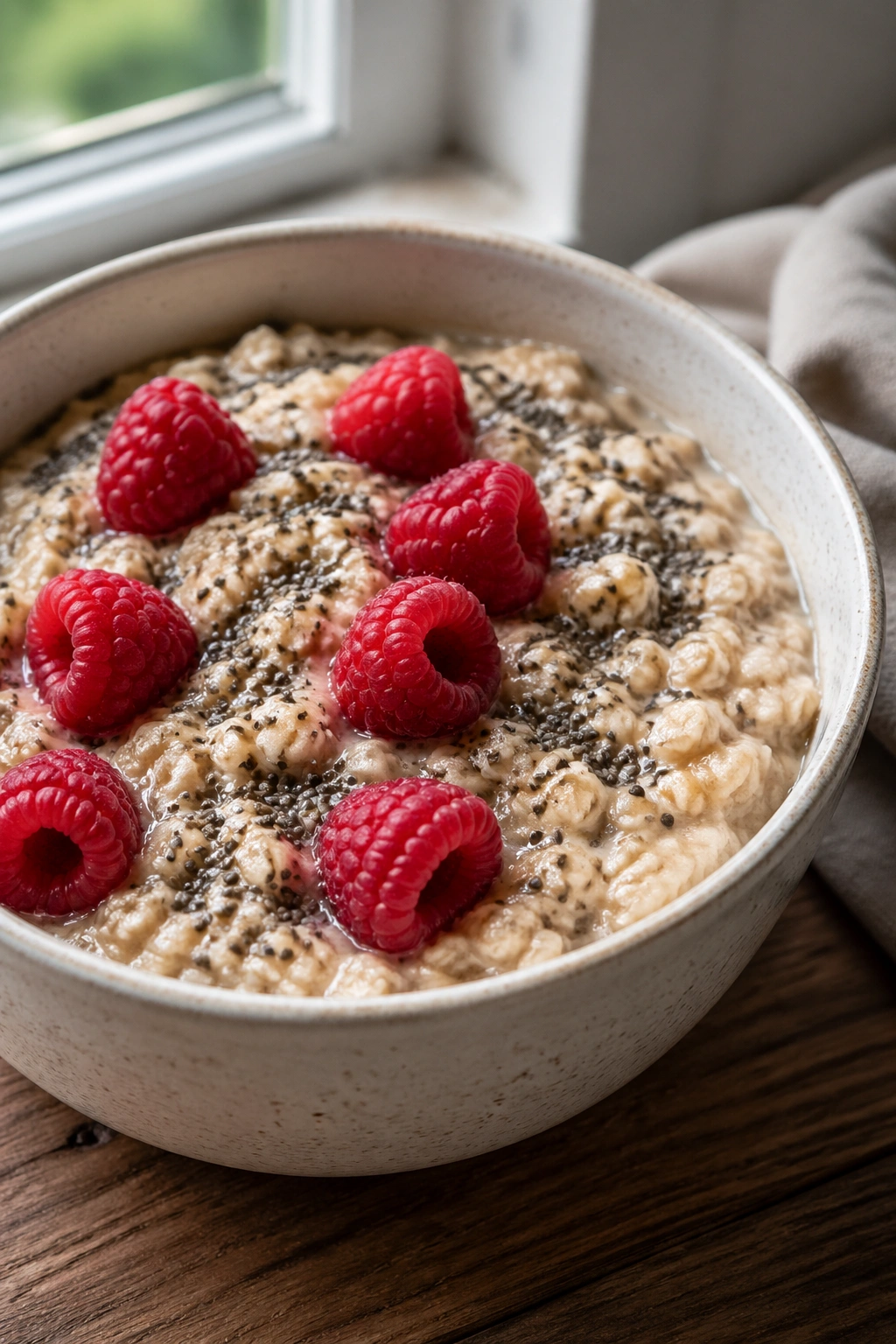
Fiber is one of the least glamorous tools for losing belly fat, which is probably why people skip past it. That is a mistake. Fiber helps you feel full, keeps meals from disappearing too quickly, and gives your digestion something to work with besides refined flour and sugar.
The Foods That Pull Their Weight
A practical goal for many women is around 25 grams of fiber a day. You can get there without living on cardboard. Beans, lentils, berries, pears, oats, chia seeds, broccoli, Brussels sprouts, and whole grains all bring useful fiber to the table.
The trick is not to wait until dinner and then hope a giant salad fixes everything. Spread fiber through the day. A bowl of oats with chia in the morning, berries in the afternoon, beans at lunch, and vegetables at dinner gets you there without drama.
- ½ cup cooked lentils
- 1 medium pear with skin
- 1 cup raspberries
- 1 tablespoon chia seeds
- 1 cup broccoli
- ½ cup black beans
Pro tip: increase fiber over a week or two, not overnight. Your stomach will complain if you go from zero to hero too fast.
4. Choose Slow Carbs, Not No Carbs
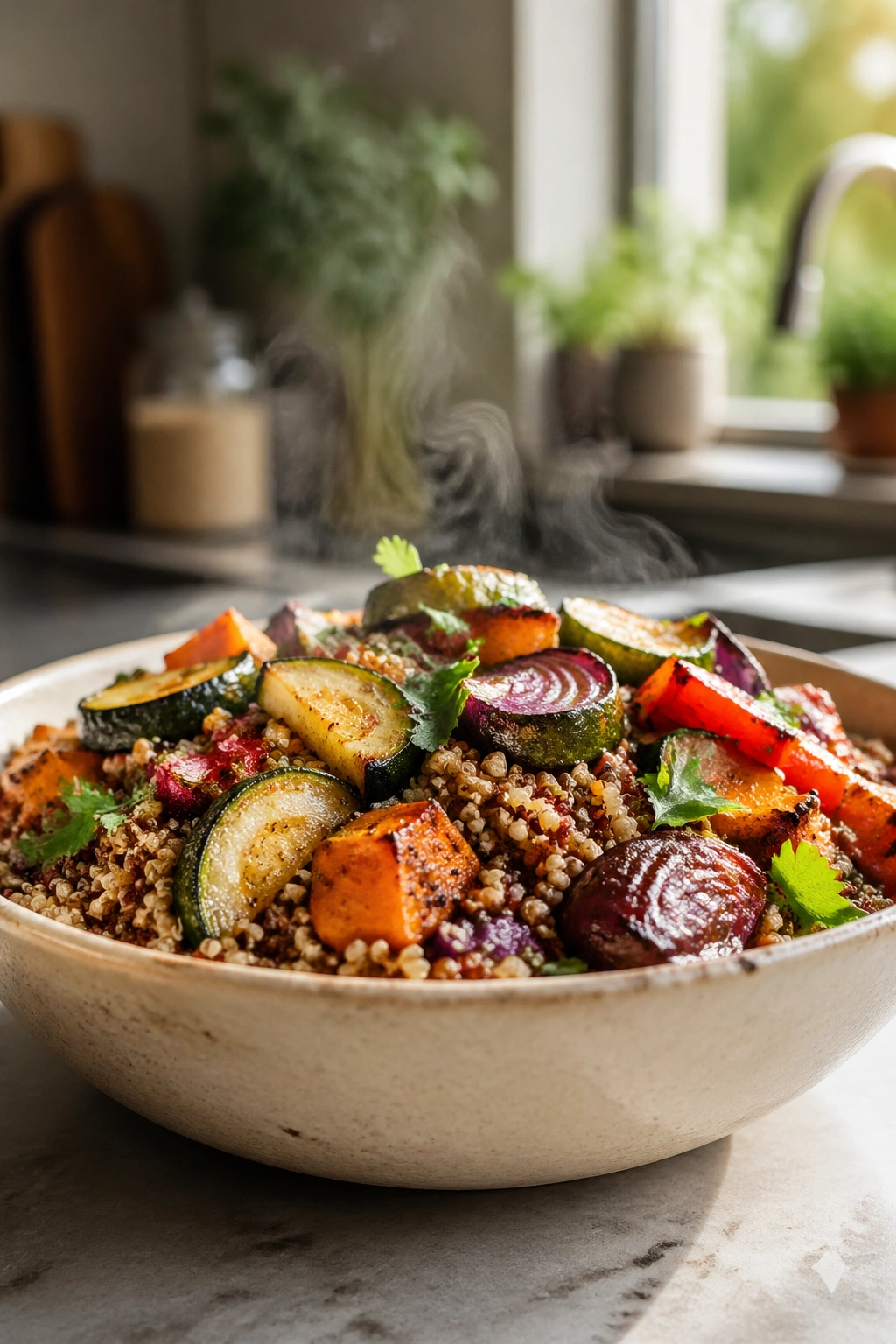
Carbs get blamed for everything from mood swings to a puffy midsection, which is lazy thinking. The better move is to choose carbs that do not hit your system like a flash flood. Oats, potatoes with the skin, beans, fruit, brown rice, quinoa, and whole-grain bread tend to keep hunger calmer than white bread, pastries, or candy.
The reason is simple: slower carbs usually come with fiber, water, and a bit more chew. That matters. Chewy food gives your brain time to notice that you ate, and the extra bulk helps the meal last longer. A bowl of rice with chicken and vegetables will behave very differently from a handful of crackers eaten standing at the counter.
I’m not a fan of cutting carbs to zero unless there’s a clear medical reason and a real plan behind it. Most women do better with carbs kept in a measured lane, not banned. A cupped-hand serving of rice or pasta alongside protein and vegetables is a lot more useful than a giant low-fiber bread binge that leaves you hungry again in 90 minutes.
5. Make Breakfast Earn Its Keep
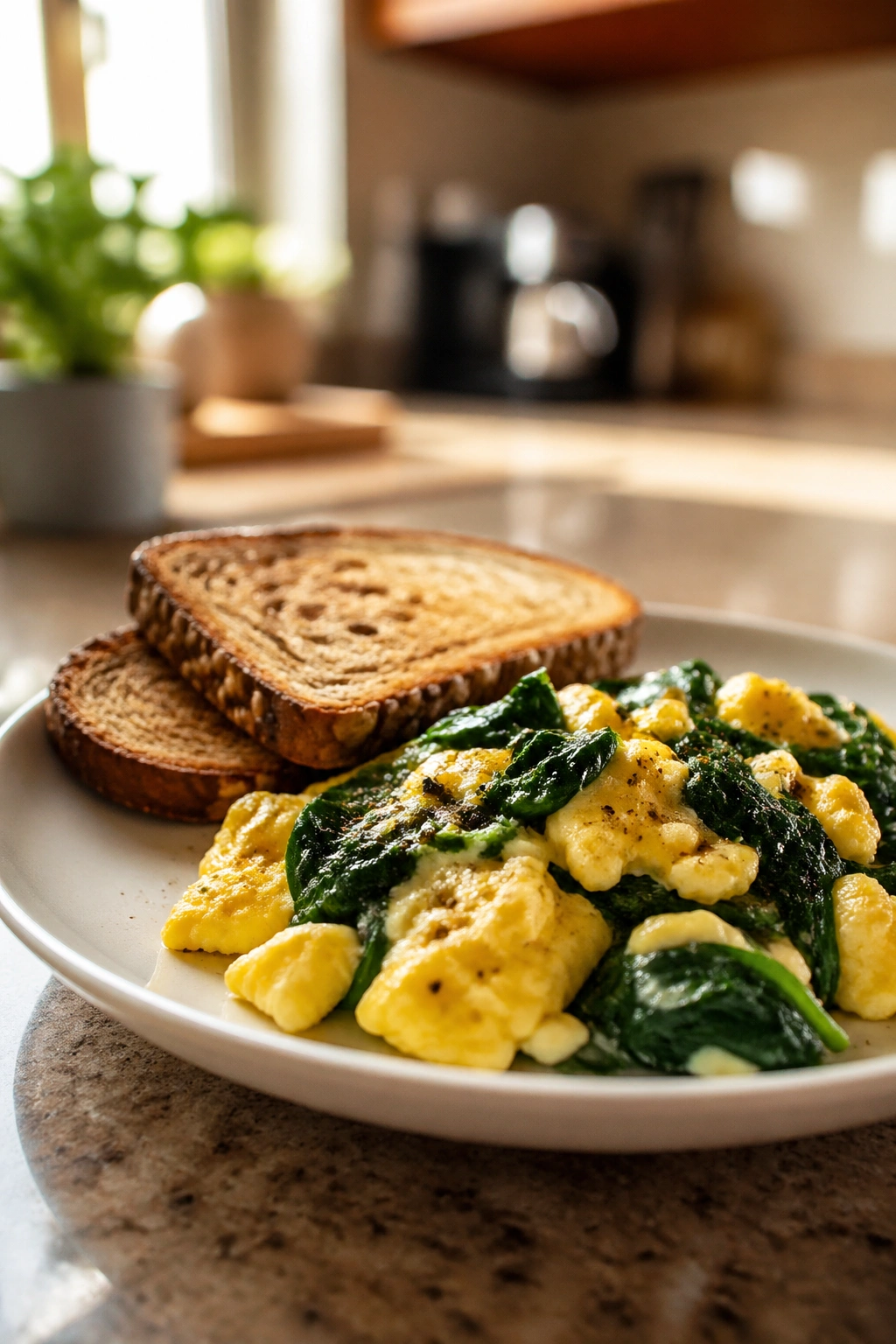
Breakfast is not magic. It is also not useless. If your mornings start with coffee and a pastry, then you are setting up a snacky, crashy day whether you meant to or not. If breakfast sits heavy in your stomach and makes you sleepy, it was probably too big, too sweet, or too low in protein.
A better breakfast for belly fat loss is one that feels calm and steady by 10 a.m. Eggs with spinach and toast. Greek yogurt with berries and chia. Cottage cheese with sliced peaches. A tofu scramble. Leftover chicken and vegetables if that is what you actually want. The point is not breakfast food. The point is protein plus enough fiber to avoid the 11 o’clock raid on the vending machine.
Some women are not hungry early, and that is fine. Do not force a big meal just because breakfast has a good reputation. If you skip it, make your first meal intentional, not random. A protein-centered first meal still matters. The clock is less important than the pattern.
6. Keep Alcohol in a Small Box
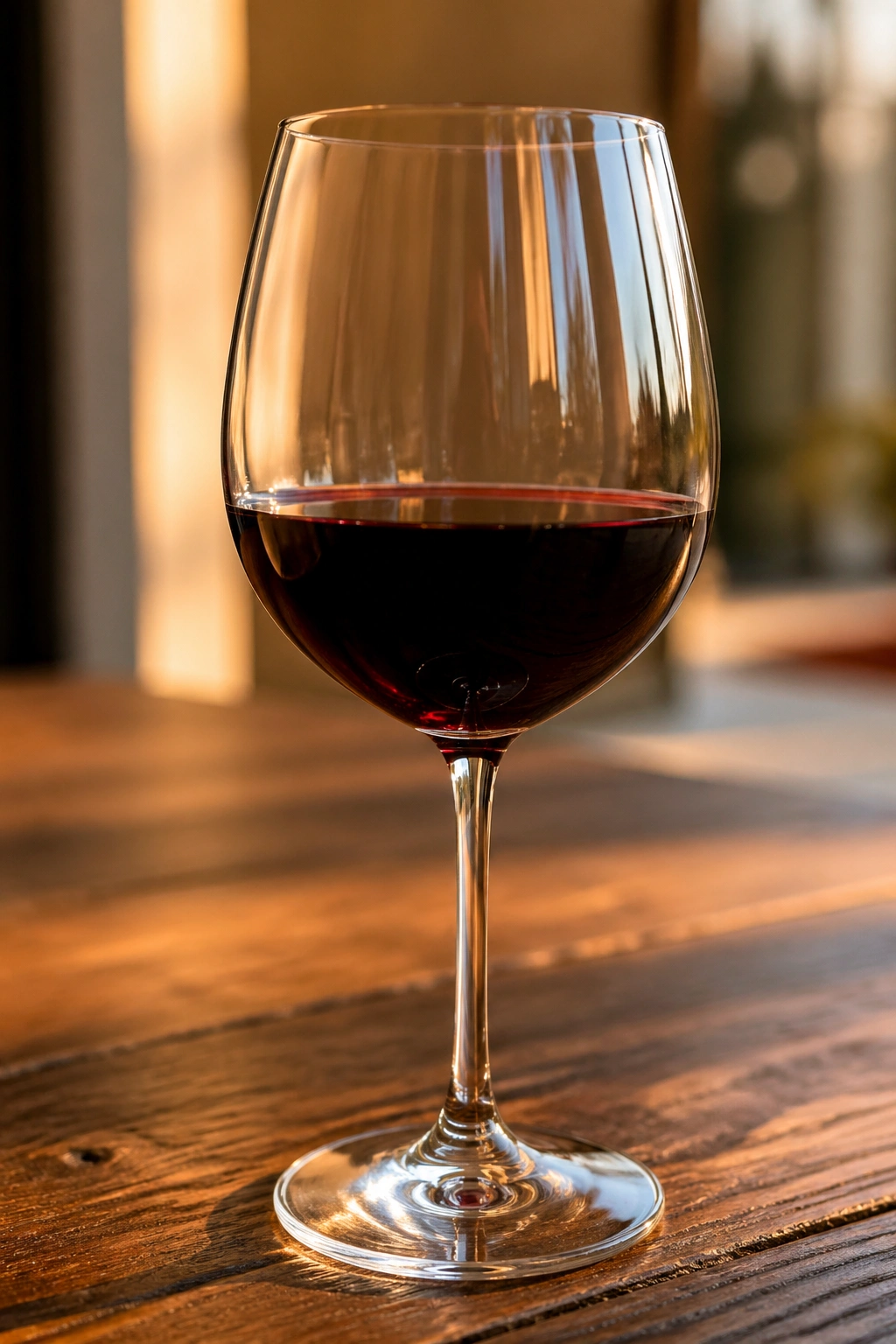
Alcohol has a sneaky way of making belly fat harder to lose. The calories add up, sure. The bigger problem is what happens after the second drink: weaker food choices, bigger portions, and a stronger pull toward salty snacks that were never part of the plan.
Wine, beer, cocktails, and hard seltzers all deserve a spot in the “count it, don’t ignore it” category. If you drink, tie it to food and keep the serving small. One glass with dinner is a different thing from sipping through the evening while picking at chips. Those chips are rarely innocent.
I like the idea of giving alcohol a role instead of letting it wander around the evening unsupervised. A couple of drinks at a social meal. Or a dry wine on a night you are not also eating dessert. Or a spirit mixed with soda water and lime. That is a far cry from “open bottle, open bag of pretzels, next thing you know it’s 11 p.m.”
7. Build a Repeatable Lunch Formula
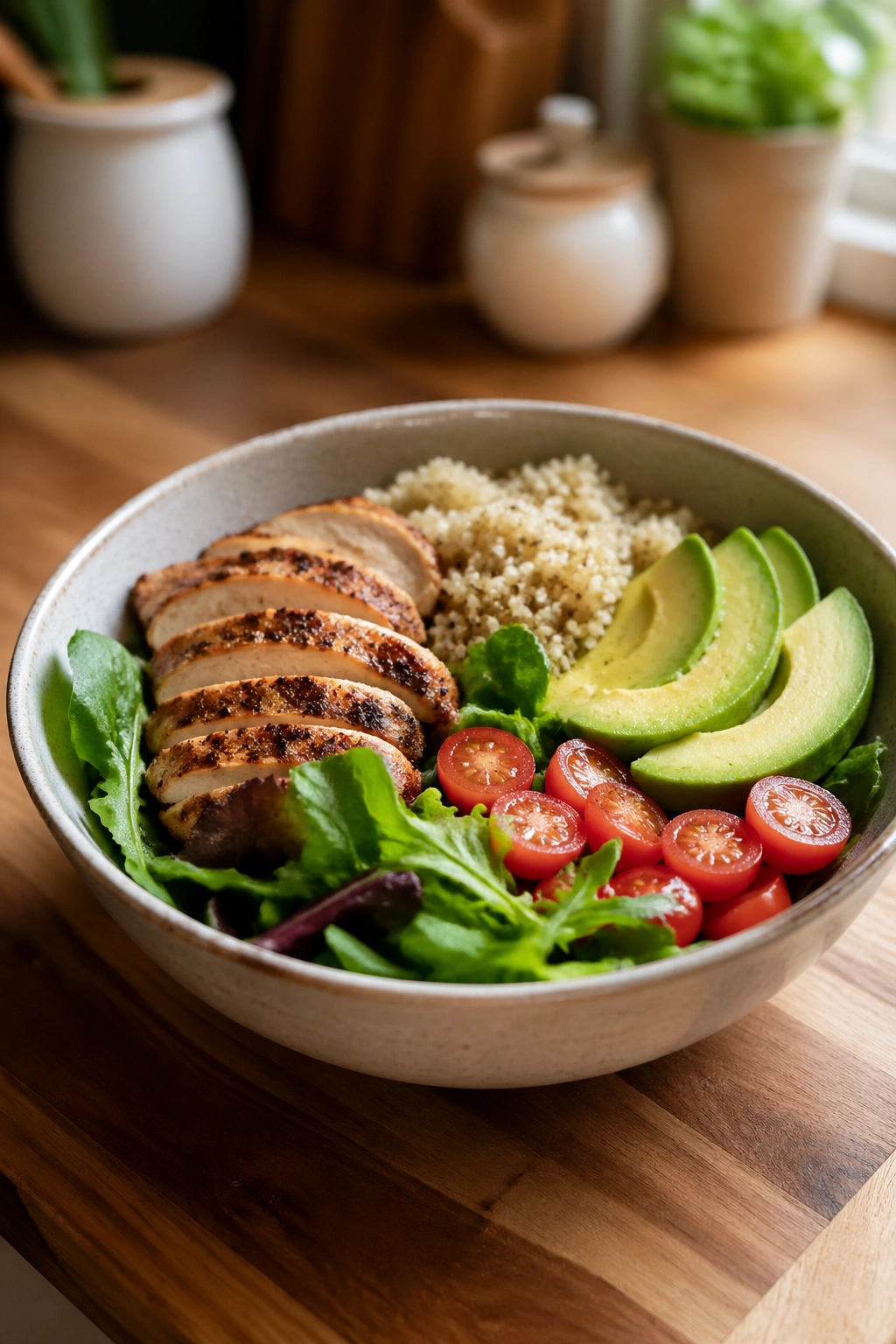
Lunch is where a lot of women lose the plot. Breakfast was fine, dinner will be handled later, and lunch turns into whatever is nearby. That usually means not enough protein, not enough vegetables, and too much convenience food that does nothing for appetite.
The Three-Part Template
Use the same basic shape most days:
- Protein: chicken, tuna, eggs, tofu, beans, turkey, tempeh
- Produce: salad greens, cucumber, tomatoes, peppers, slaw, steamed vegetables
- Carb or fat: rice, potatoes, whole-grain bread, avocado, olive oil, hummus
That pattern is boring in the best possible way. Boring lunches keep you from hunting for snacks an hour later. They also make grocery shopping easier because you stop trying to invent a new masterpiece every afternoon.
The lunch formula works because it removes decision fatigue. Put food in a bowl, a wrap, or a container. Keep the pieces familiar. You do not need a different lunch personality every day.
8. Stop Grazing Between Meals
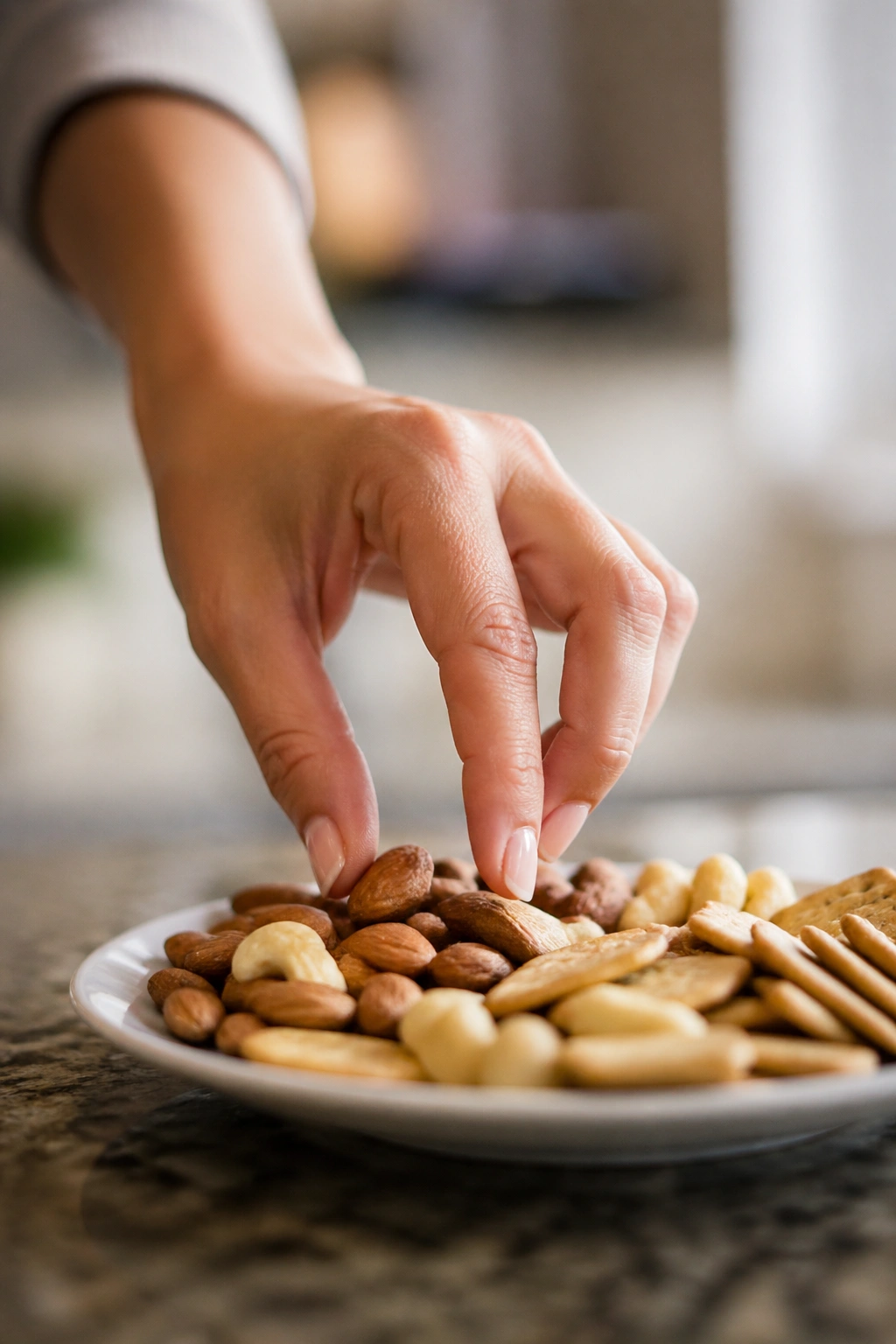
A handful of nuts here, a few crackers there, a bite of your kid’s leftovers, a spoonful of peanut butter while you wait for coffee. None of that looks like much on its own. All of it together can erase the calorie deficit you thought you were building.
The problem with grazing is that it keeps appetite fuzzy. You never feel full, but you also never feel properly hungry, which means meals get built on a shaky foundation. A woman can spend all afternoon nibbling and still sit down to dinner starved. That is when portions get weird.
Set a meal rhythm and keep it. Three meals and one planned snack works well for a lot of people. If you need a snack, choose one with protein or fiber: yogurt, fruit with nut butter, cheese and apple, edamame, hummus and carrots. Random bites from the pantry are not a snack. They’re a leak.
9. Measure the Foods That Sneak Up on You
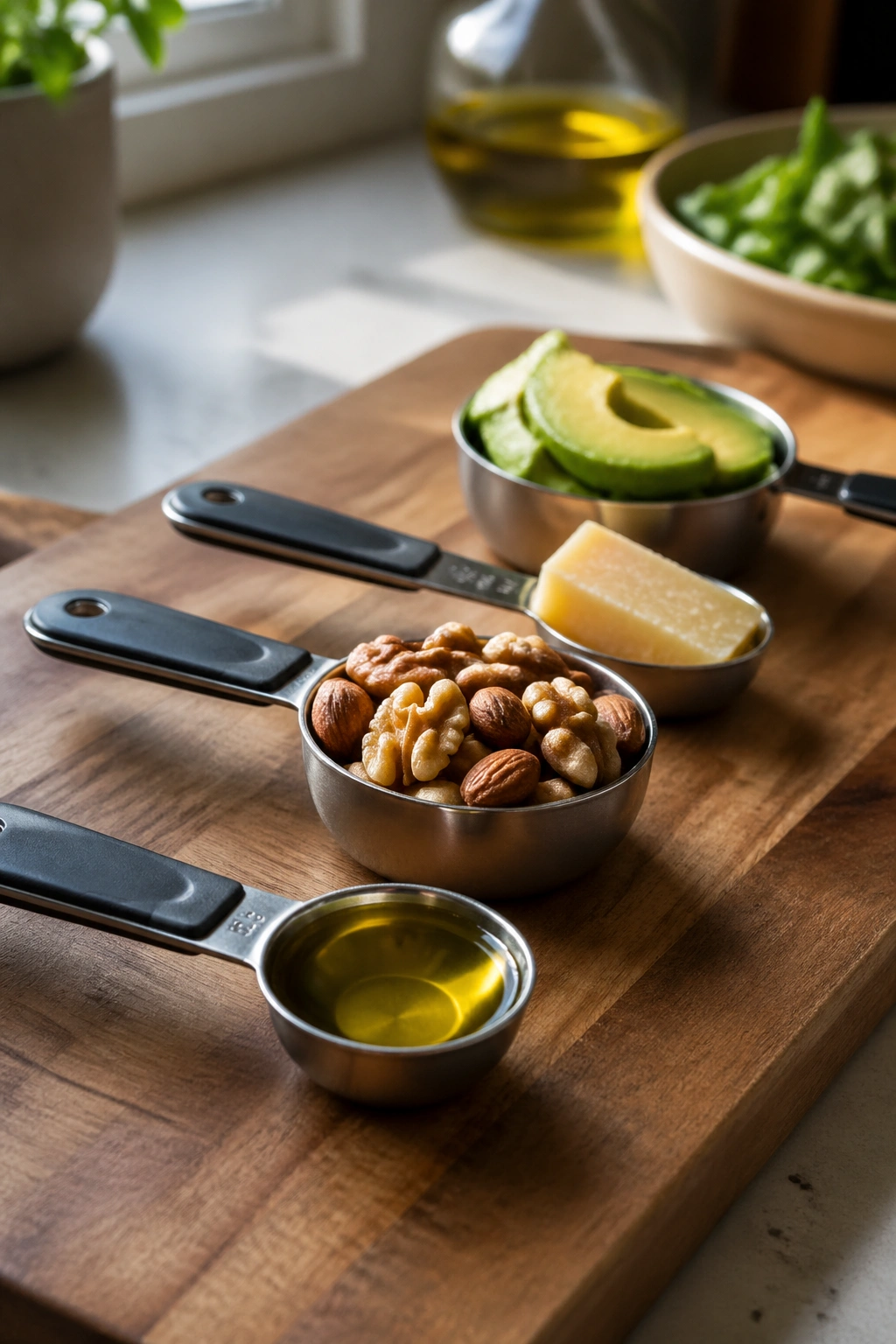
Some foods look harmless and then quietly blow past the number you had in mind. Nuts, nut butter, cheese, olive oil, pesto, granola, salad dressing, avocado. These are not “bad” foods. They are dense foods, which means a little goes a long way.
A woman can pour olive oil with a generous hand, throw in a few handfuls of granola, and still feel virtuous because the plate has vegetables on it. The vegetables are doing their job. The sneaky extras are doing theirs too. That is where the waistline gets tugged.
Use measuring spoons for the calorie-dense stuff until your eye is trained. One tablespoon of oil. Two tablespoons of dressing. A quarter cup of nuts. One ounce of cheese. It’s not glamorous, but it stops the “healthy meal” from turning into a 700-calorie surprise.
10. Use Healthy Fats With a Measuring Spoon
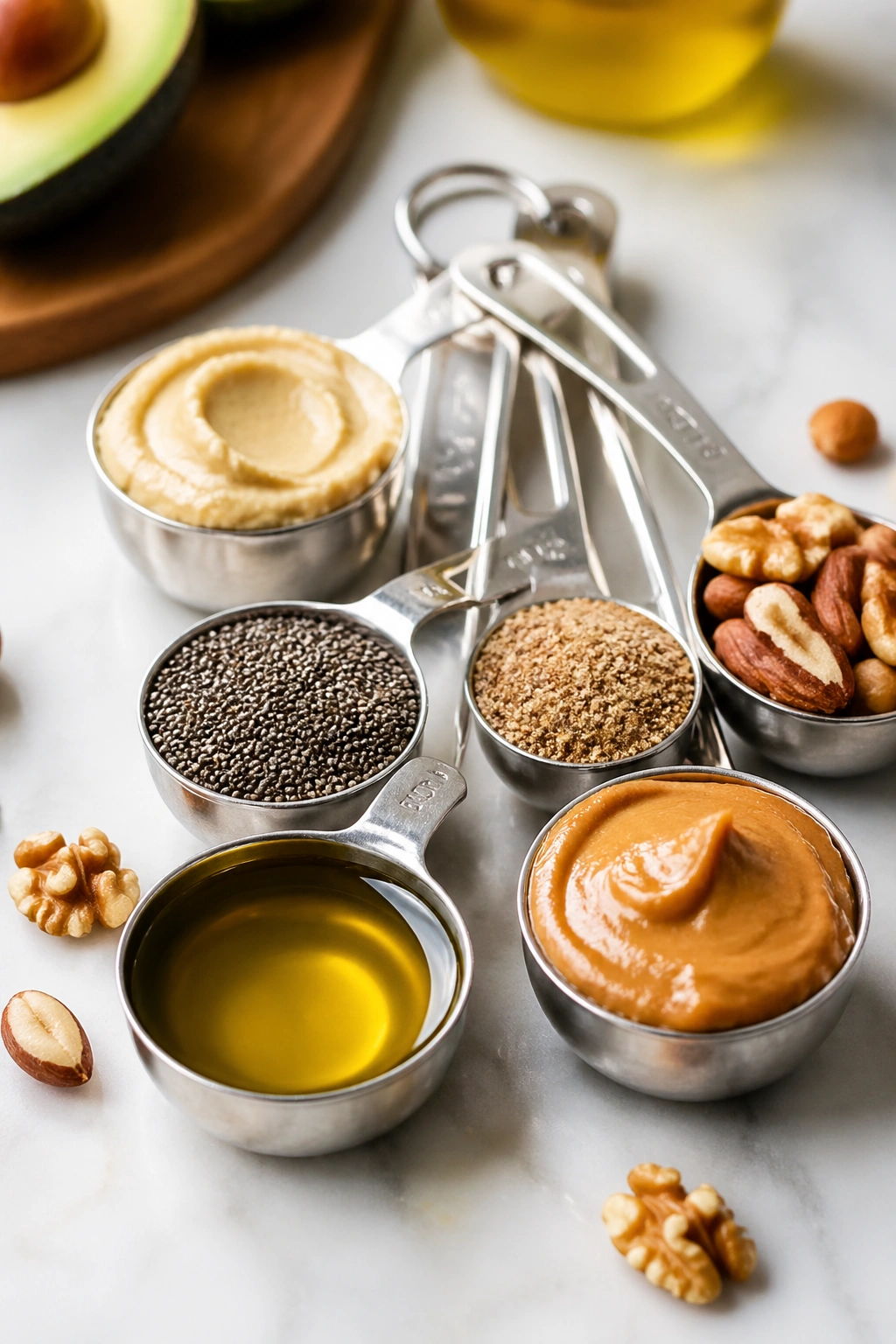
Healthy fats deserve a place in a belly-fat-friendly diet. They keep meals satisfying, help food taste like food, and make vegetables and lean proteins easier to stick with. The catch is that fats are compact. They do not take up much room on the plate, which is why people overshoot them.
What a Real Serving Looks Like
A few measured portions go a long way:
- 1 tablespoon olive oil
- ¼ to ½ avocado
- 1 tablespoon peanut butter
- 1 ounce nuts
- 1 tablespoon chia or ground flax
- 2 tablespoons hummus
That list matters because “healthy” does not mean unlimited. A salad drenched in olive oil and topped with nuts can carry more calories than a small bowl of pasta. Same with toast covered in almond butter. Same with avocado on everything.
I like to think of fat as the finishing layer, not the main event. Use it to make a meal satisfying, not to turn a good meal into a calorie bomb.
11. Build Half Your Plate From Vegetables
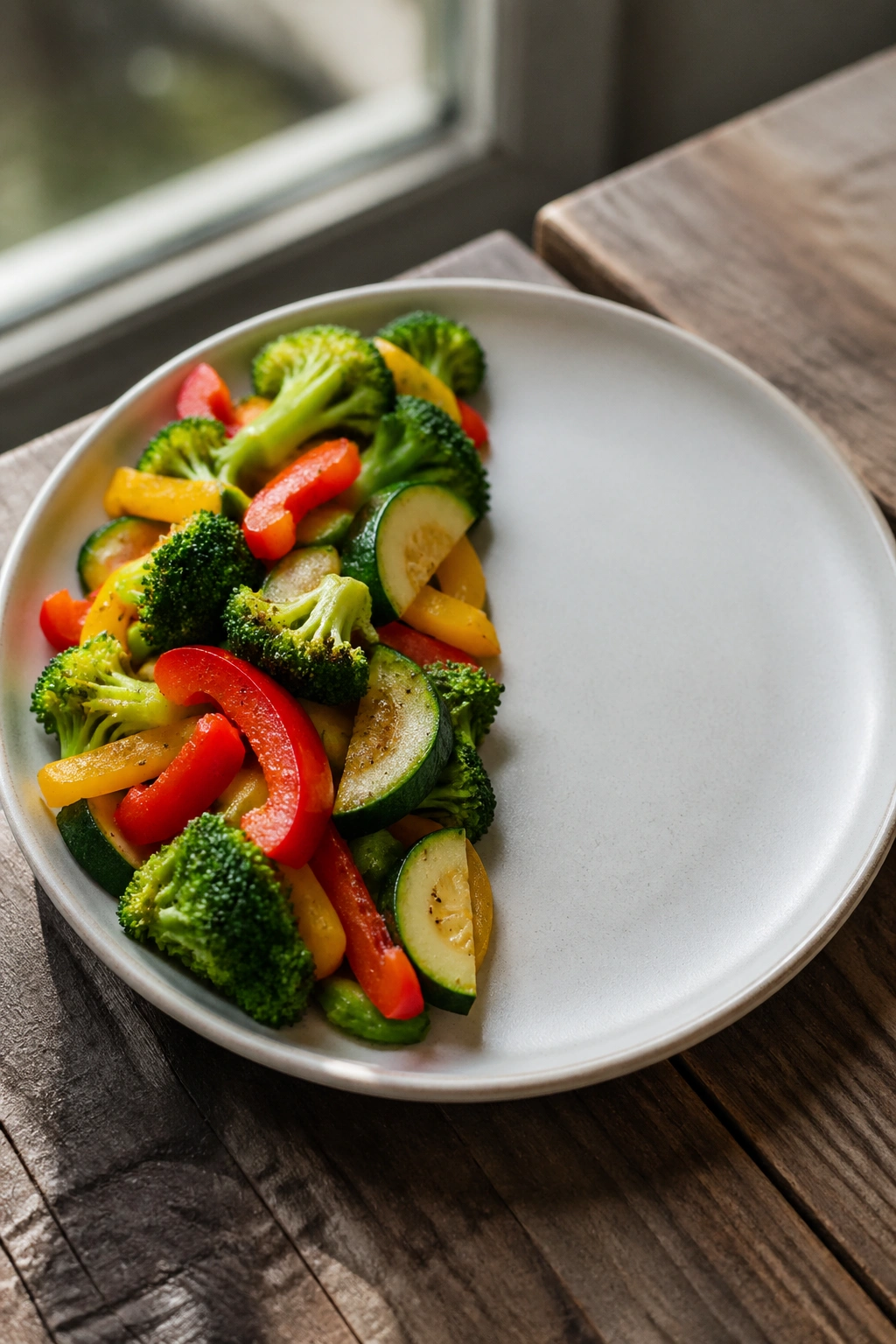
If you want one visual rule that almost never fails, use this one: fill half the plate with vegetables. Not every meal needs to look like a rabbit’s lunch, and no, I’m not recommending sadness on a plate. I’m recommending volume.
Vegetables are doing three jobs at once. They add water, fiber, and chew. They slow down eating because they take up space. They also make the rest of the meal easier to control without leaving you feeling deprived.
Roasted broccoli with olive oil and garlic. A cucumber and tomato salad. Sautéed zucchini. A pile of greens under salmon. Slaw next to a turkey burger. The exact vegetable matters less than the amount and the fact that you actually eat it. Crisp vegetables are especially useful because they take longer to chew, which gives your brain a chance to catch up with your stomach.
12. Keep Dinner Smaller and Earlier
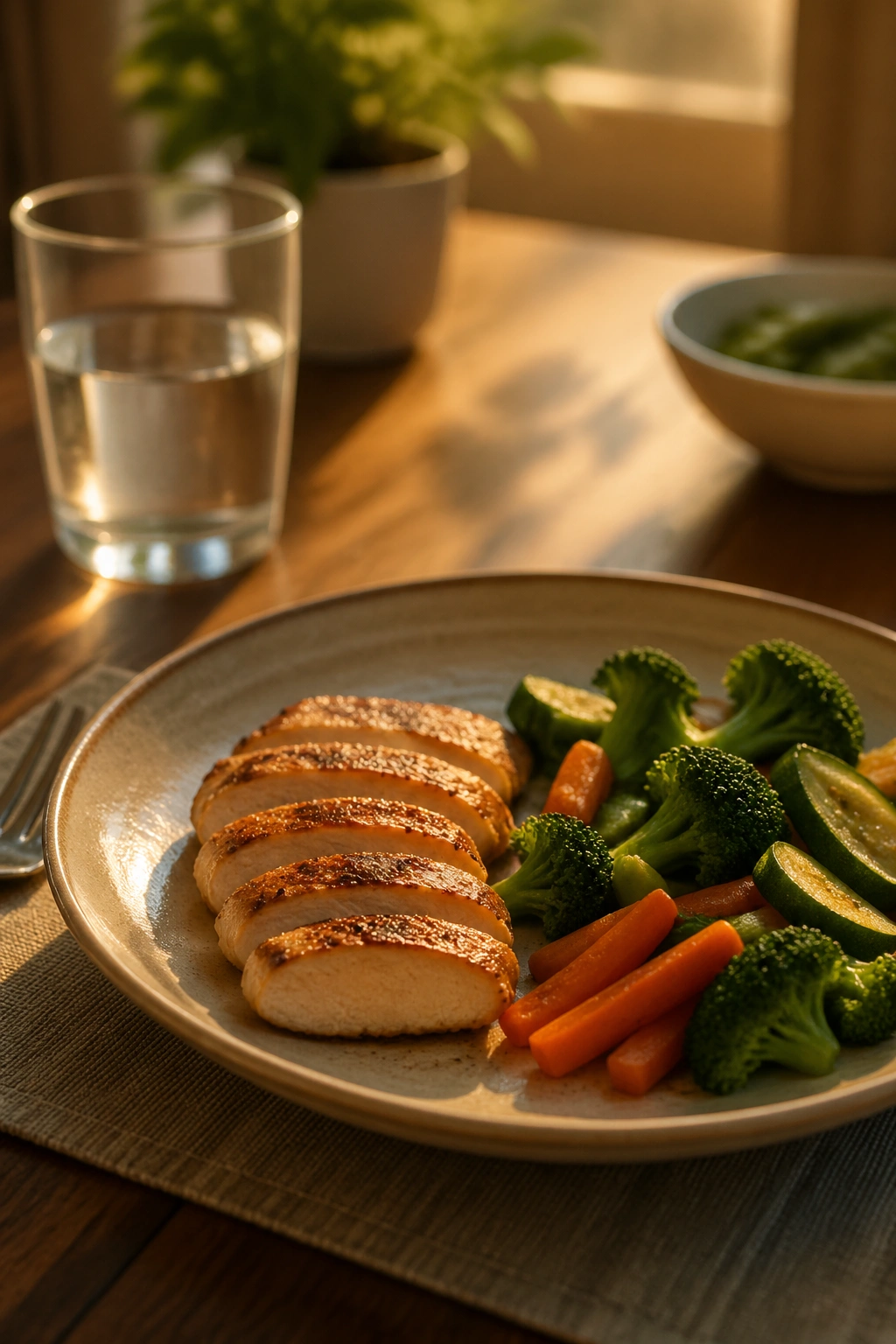
Late, heavy dinners have a way of stretching the waistline and the waistband. Part of that is calories. Part of it is the habit of finishing the day with the biggest meal, then sitting around long enough to notice every craving in the house.
Dinner does not need to be tiny. It does need to be sensible. A protein, a big pile of vegetables, and a measured carb serving usually works better than a giant bowl of pasta followed by dessert because “the day was hard.” Most days are hard. That is not a dinner plan.
Earlier dinners help because they leave less room for evening grazing. A meal at 7 p.m. with no kitchen wandering afterward looks different from eating at 9 p.m. and then circling back for chips while watching TV. One leaves the stomach alone to do its job. The other keeps feeding the loop.
13. Cut Back on Sodium and Ultra-Processed Foods That Puff Up Belly Fat
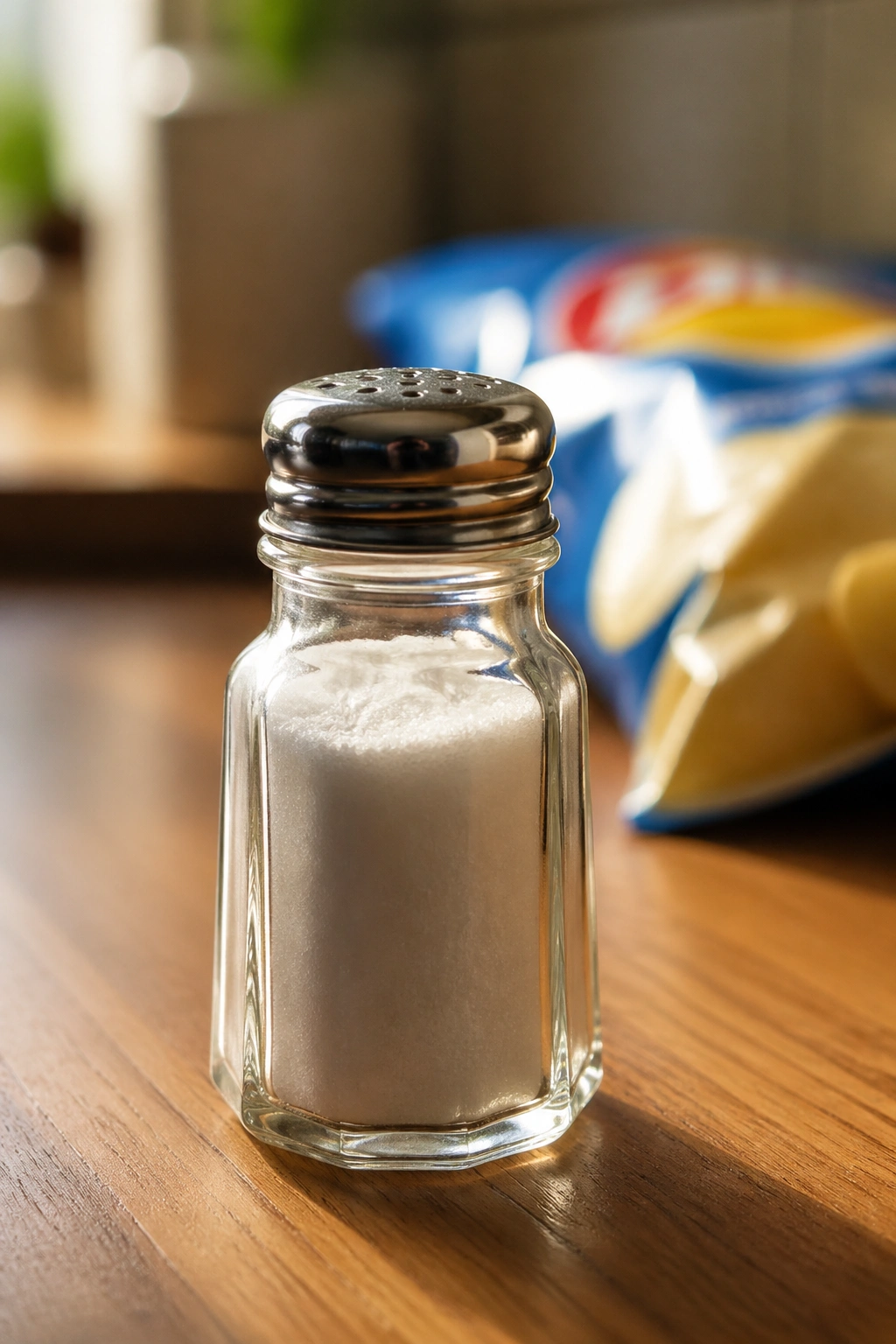
A belly that looks bigger after a salty meal is not always gaining fat. Often it’s water retention, bloating, or both. Restaurant meals, frozen dinners, deli meats, packaged snacks, and fast food can all push sodium high enough to make your midsection look and feel puffier by morning.
That is one reason women get frustrated. They think the problem is only fat, when some of it is fluid and digestion. The fix is not fear. It is choosing fewer packaged meals and more plain foods that you season yourself.
Salt-Trimming Swaps
- Choose roasted chicken over deli meat
- Swap chips for fruit or yogurt a few days a week
- Use herbs, garlic, lemon, vinegar, and pepper first
- Pick plain rice or potatoes and add your own seasoning
- Keep canned soups as an occasional backup, not a daily lunch
If you want to know whether the puffiness is food-related, watch the next morning after a salty dinner. The waistband tells the story fast.
14. Drink Water Before You Reach for Snacks
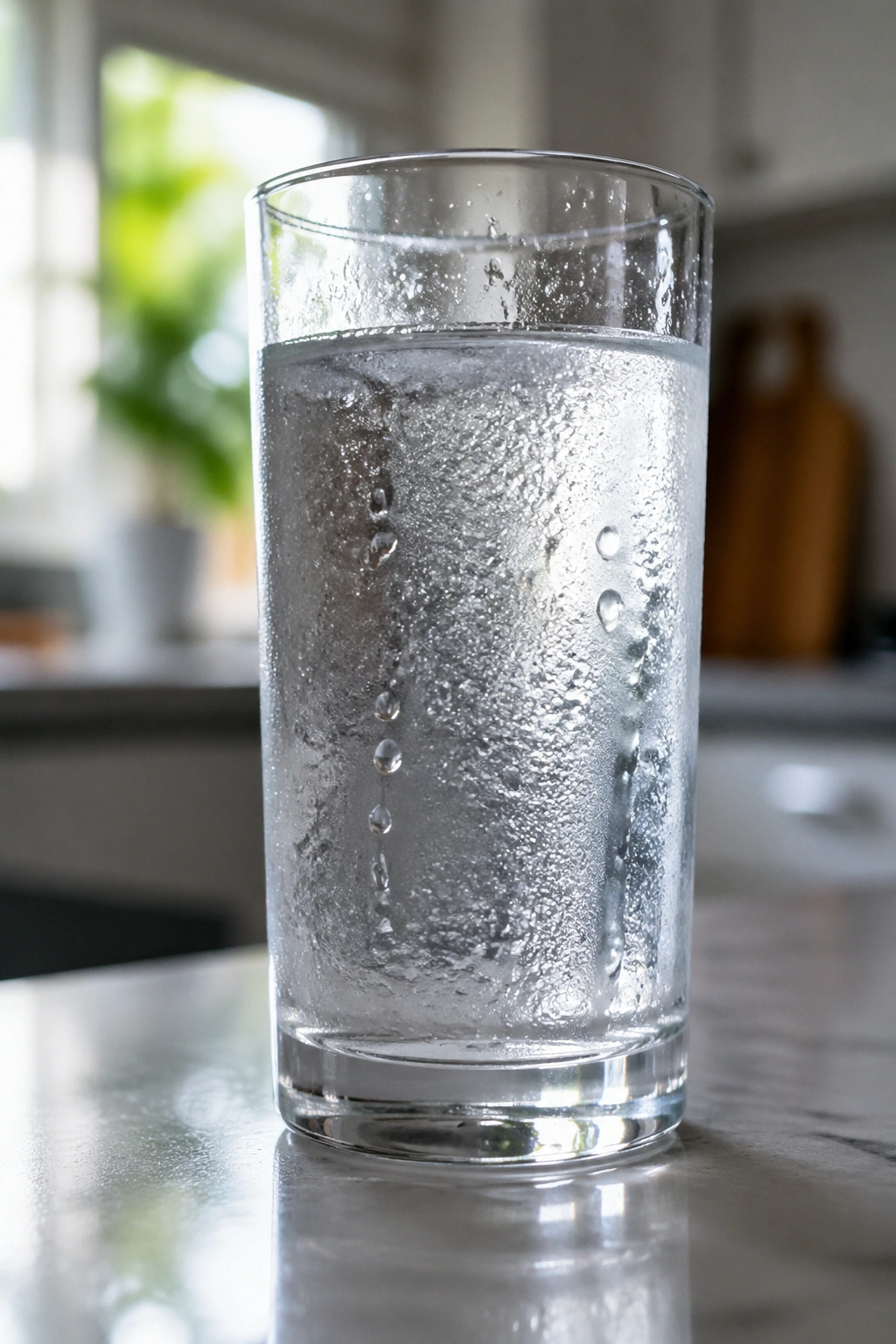
Thirst gets mistaken for hunger more often than people admit. A dry mouth, a tired brain, and a long afternoon can all feel like “I need something to eat.” Sometimes what you need is a glass of water and five minutes.
I like the simple rule of drinking a full glass before a snack, especially in the afternoon. Not because water is magic. Because it slows the automatic reach for food long enough to see whether you’re actually hungry. That tiny pause matters.
Cold water, sparkling water, herbal tea, water with lemon — all of it works. If plain water bores you, keep a pitcher in the fridge with cucumber slices or mint. The goal is not to turn hydration into a hobby. The goal is to stop confusing thirst with hunger and then blaming yourself for “snacking too much.”
15. Plan Sweets Instead of Accidentally Eating Them
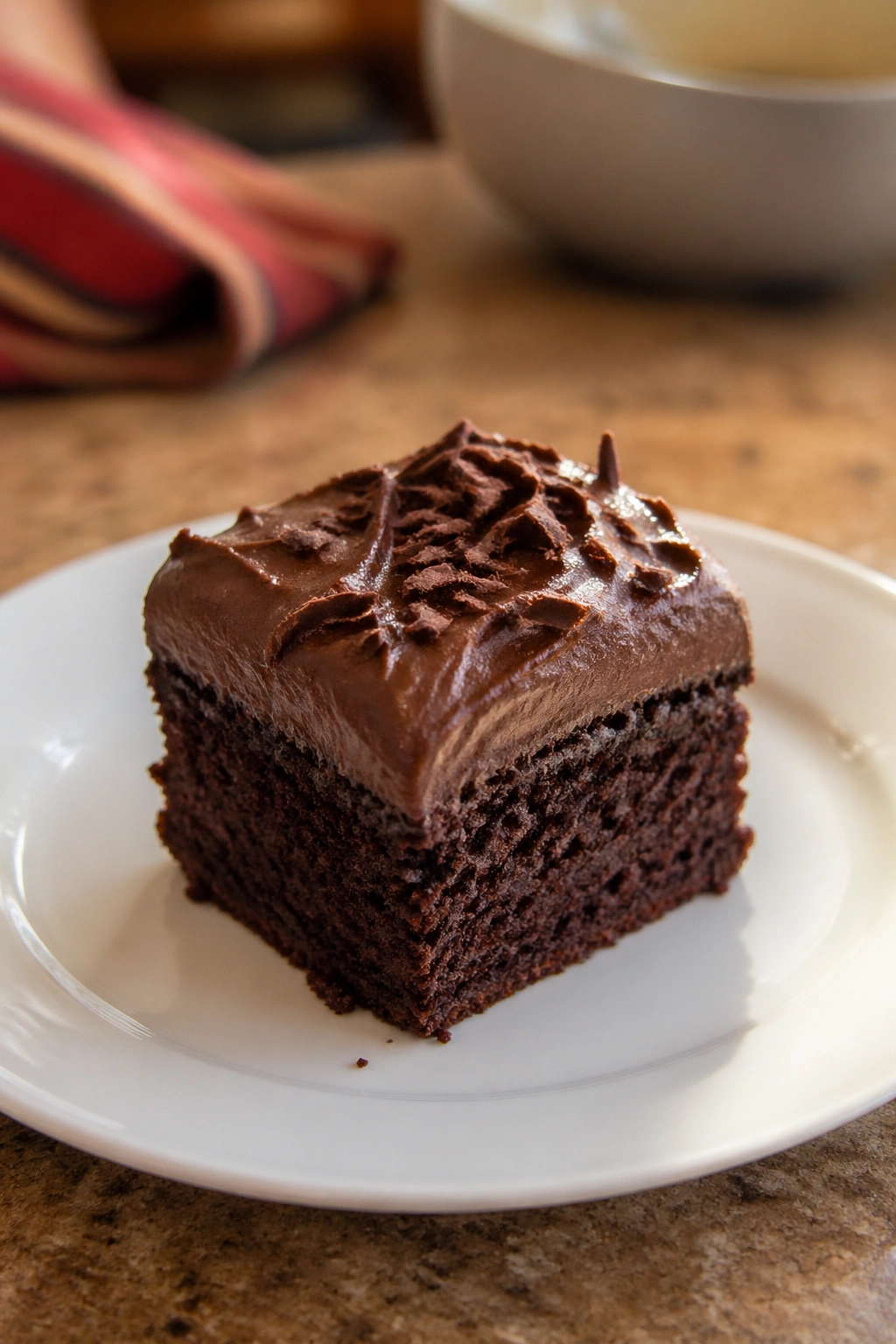
A planned sweet is almost always better than a dozen accidental ones. The random bite of chocolate, the handful of cereal, the cookie from the office jar, the spoonful of ice cream while standing at the freezer door — those are the things that quietly add up.
I would rather see one intentional dessert after a meal than a day of nibbling. That is not moral advice. It is arithmetic. A small bowl of ice cream, two squares of dark chocolate, one cookie on a plate, or a single serving of something you genuinely love can fit. The trick is making it a choice, not a drift.
Dessert works better when you sit down for it. No standing at the counter. No eating from the bag. Put the portion in a bowl, eat it slowly, and move on. That one habit alone can make a real difference for women who feel like sweets are running the show.
16. Pair Carbs With Protein or Fat
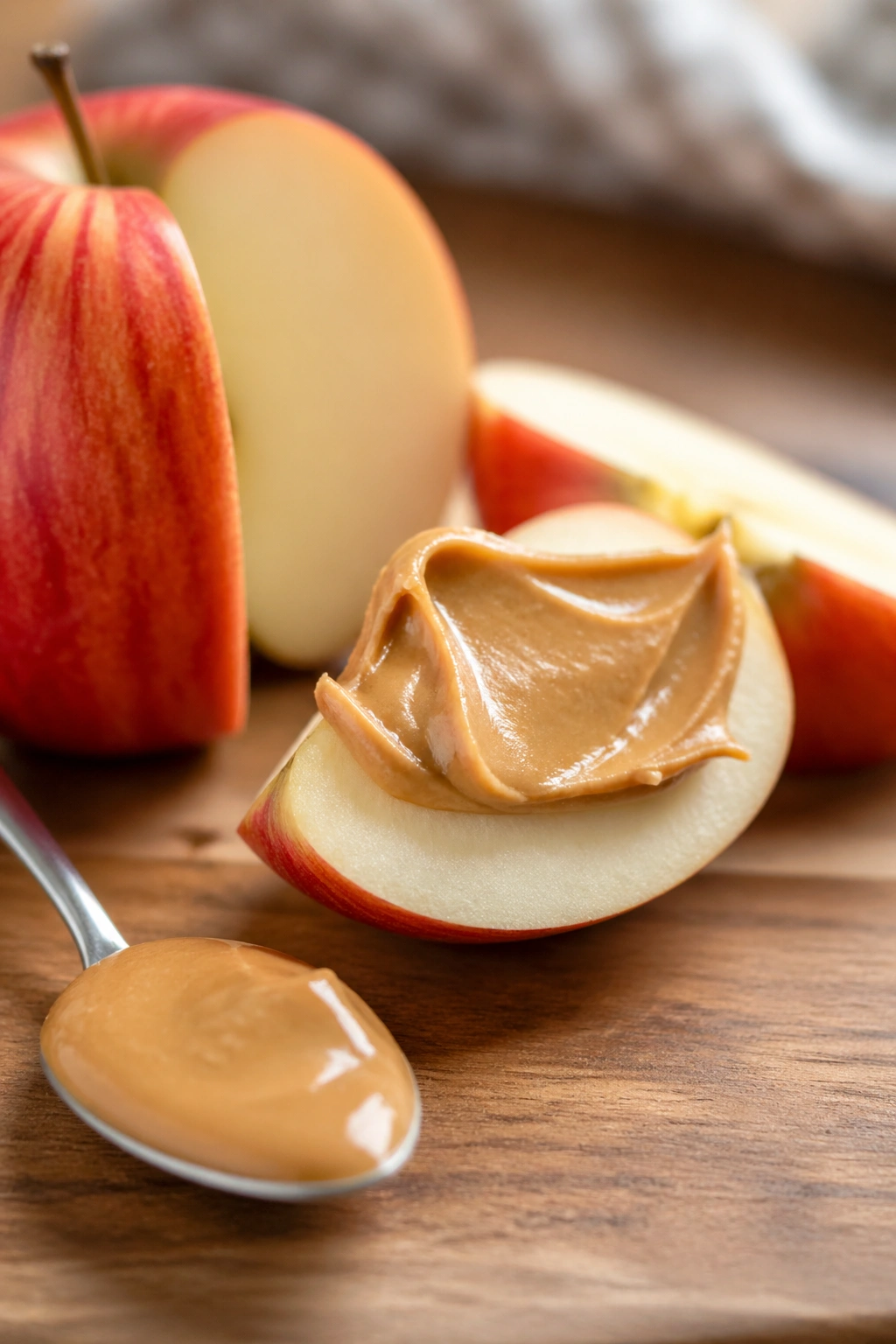
Carbs are much easier to live with when they are not alone. A plain apple will not hit the same way as an apple with peanut butter. Rice by itself will not satisfy the same way as rice with chicken and vegetables. The pairing changes the whole meal.
Fast Combos That Hold You Longer
- Apple + peanut butter
- Crackers + cheese
- Banana + Greek yogurt
- Rice + salmon
- Toast + eggs
- Oatmeal + chia + nuts
These combinations work because protein and fat slow down how fast the carbs move through your system. That means less of the sharp crash that sends you back to the kitchen. It also means fewer “I ate lunch and I’m somehow starving again” moments.
I’m a fan of simple pairings because they are easy to remember when you’re busy. You do not need a food rule book. You need one apple, one protein, and a little planning.
17. Shop From a List and Never Hungry
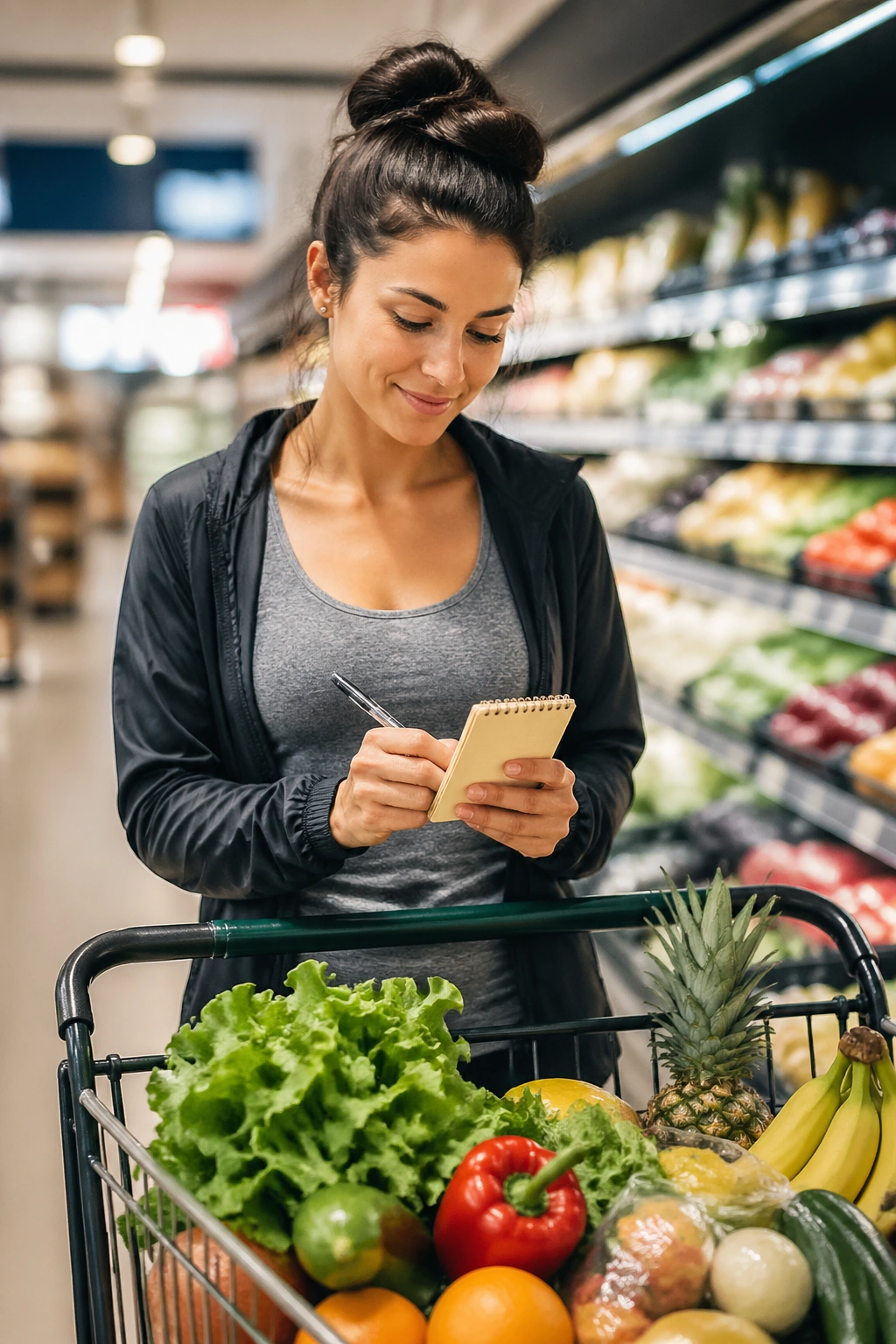
Grocery stores are full of traps for hungry people. The cart fills up with crackers, snack bars, chips, cereal, and whatever looked harmless near the checkout. Then you get home and wonder why the fridge is full but dinner still feels impossible.
Shop with a list built around actual meals. Not vague ideas. Actual meals. A few protein options, a pile of vegetables, fruit, one or two carb staples, and some backup snacks. That gives you enough structure to eat well without staring into the fridge like it owes you answers.
A useful list for belly fat loss might include chicken, eggs, Greek yogurt, canned tuna, spinach, peppers, cucumbers, berries, apples, oats, brown rice, potatoes, and one planned treat. If you shop hungry, all of that gets harder. Eat first. Then go.
18. Prep One or Two Protein Anchors Each Week
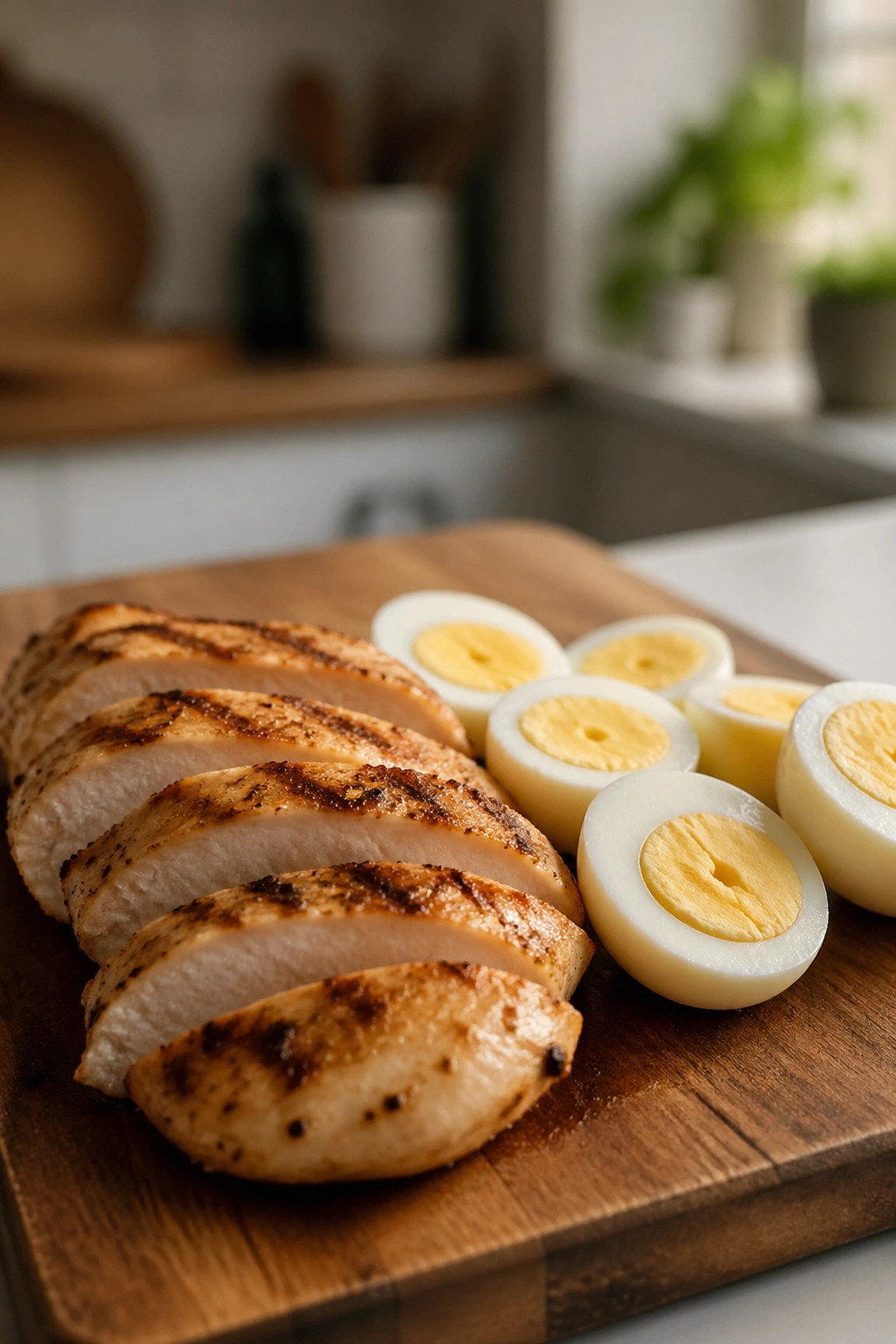
Meal prep does not have to mean plastic containers stacked like a science project. It can be as simple as cooking two proteins and washing a few vegetables. That alone can save you from a string of takeout meals that make it harder to lose belly fat.
The Anchors That Make the Week Easier
- Roast a tray of chicken breasts or thighs
- Hard-boil 6 to 10 eggs
- Cook a pot of lentils
- Bake tofu and keep it ready for bowls
- Make a batch of turkey meatballs
- Keep Greek yogurt in the fridge for grab-and-go meals
Protein anchors make lunch and dinner faster. They also keep you from making a junk-food decision because you were too tired to cook from scratch. That is where the real payoff lives. Not in perfect meal prep. In lower-friction meals.
Cook enough for 3 to 4 days, then refresh. Food gets boring after that anyway.
19. Eat Treats at the Table, Not on the Run
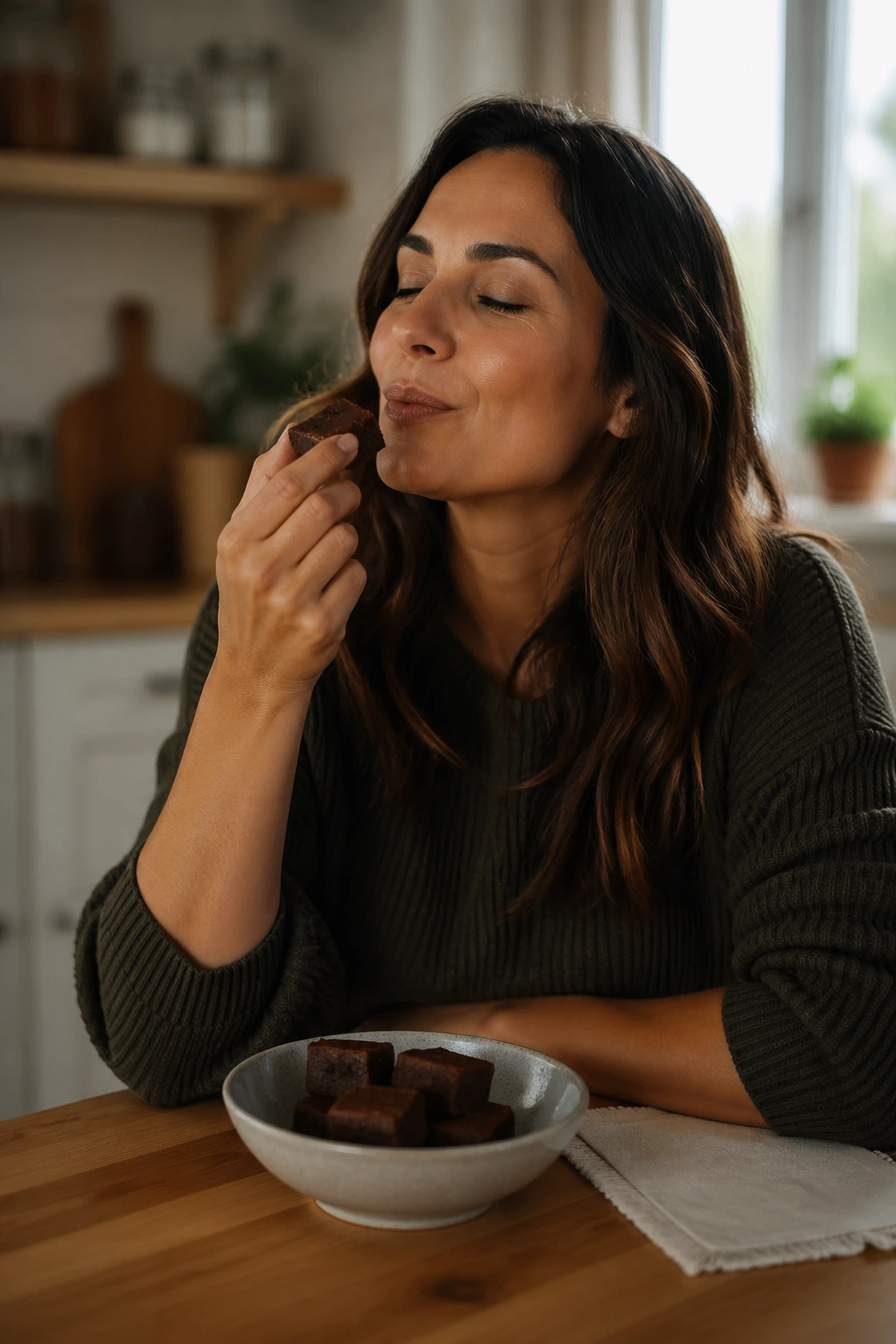
A treat eaten slowly tastes bigger than the same treat eaten in the car with one hand while answering messages with the other. That’s not poetry. It’s how attention works. When your mind is scattered, your appetite keeps asking for more.
Sit down if you want the food to count. Put the snack or dessert in a bowl. Leave the bag in the pantry. You’ll notice the texture, the sweetness, the salt, the crunch. You’ll also notice when enough has happened, which is the part that matters.
This is one of those habits that sounds too small to matter until you do it for a week. Then the difference shows up in the number of times you reach back into the package. That little repeat is often where belly fat loss gets quietly stalled.
20. Work With Your Cycle When Belly Fat Feels Stubborn
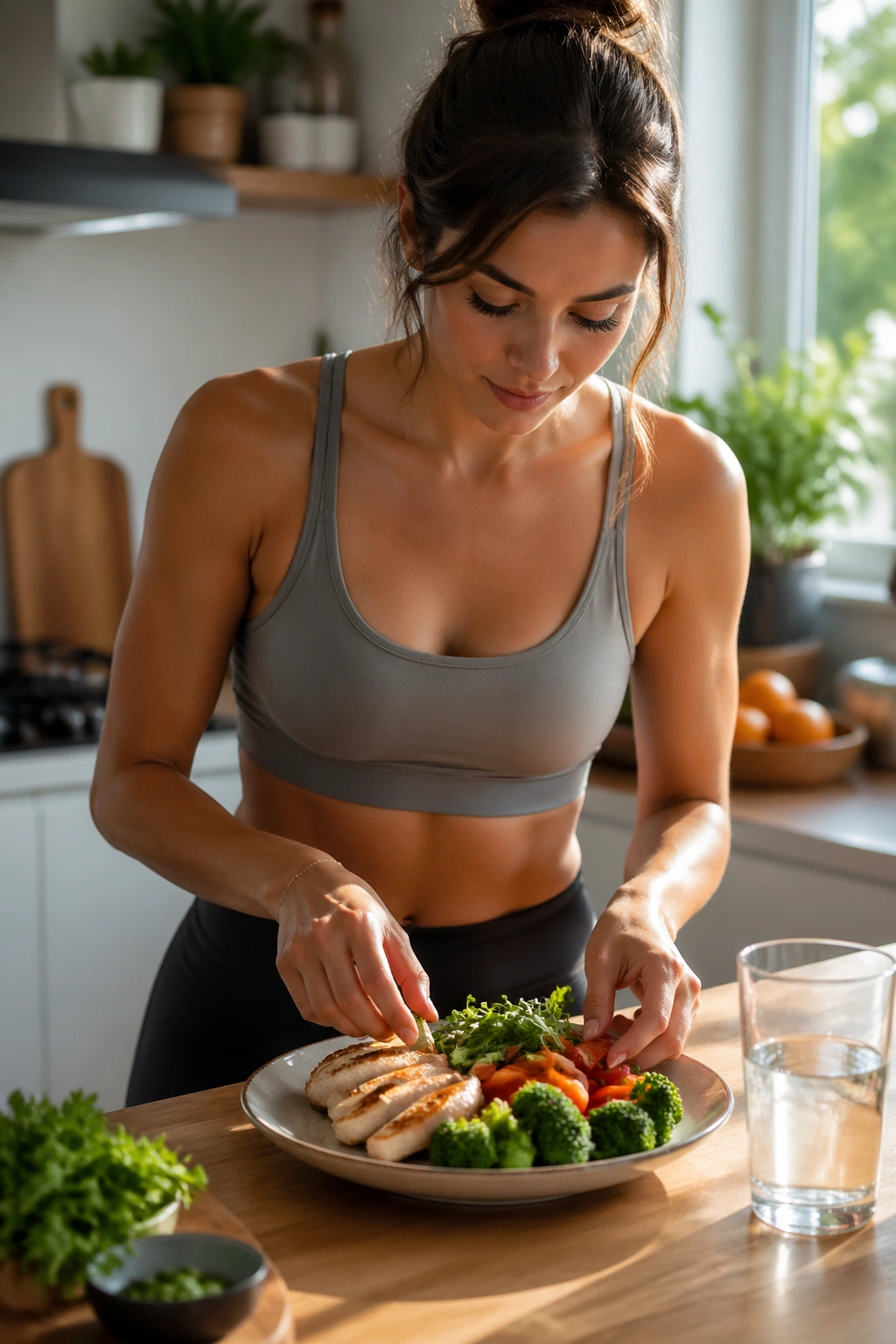
Women often notice sharper cravings, more hunger, or a tighter waistband in the days before a period. Sometimes that is fat gain. Often it is water retention, appetite changes, and a body that wants more food than usual. Fighting that with willpower alone is a good way to end up mad and hungry.
What to Change on Hungrier Days
- Build meals around protein first
- Add more vegetables and fruit
- Keep easy snacks ready
- Drink more water and tea
- Expect a little more appetite before your period
- Use salty takeout less often when bloating is already loud
I’m not a fan of turning every cycle shift into a medical drama. Still, ignoring it helps no one. If you know the days before your period are rough, plan for them. Use more filling food. Cut back on random snacking. Be a little kinder to the scale.
If the bloating is extreme, painful, or comes with other symptoms that feel off, that is a good time to talk to a clinician. Food has limits. Bodies do too.
21. Slow Down Long Enough to Feel Full
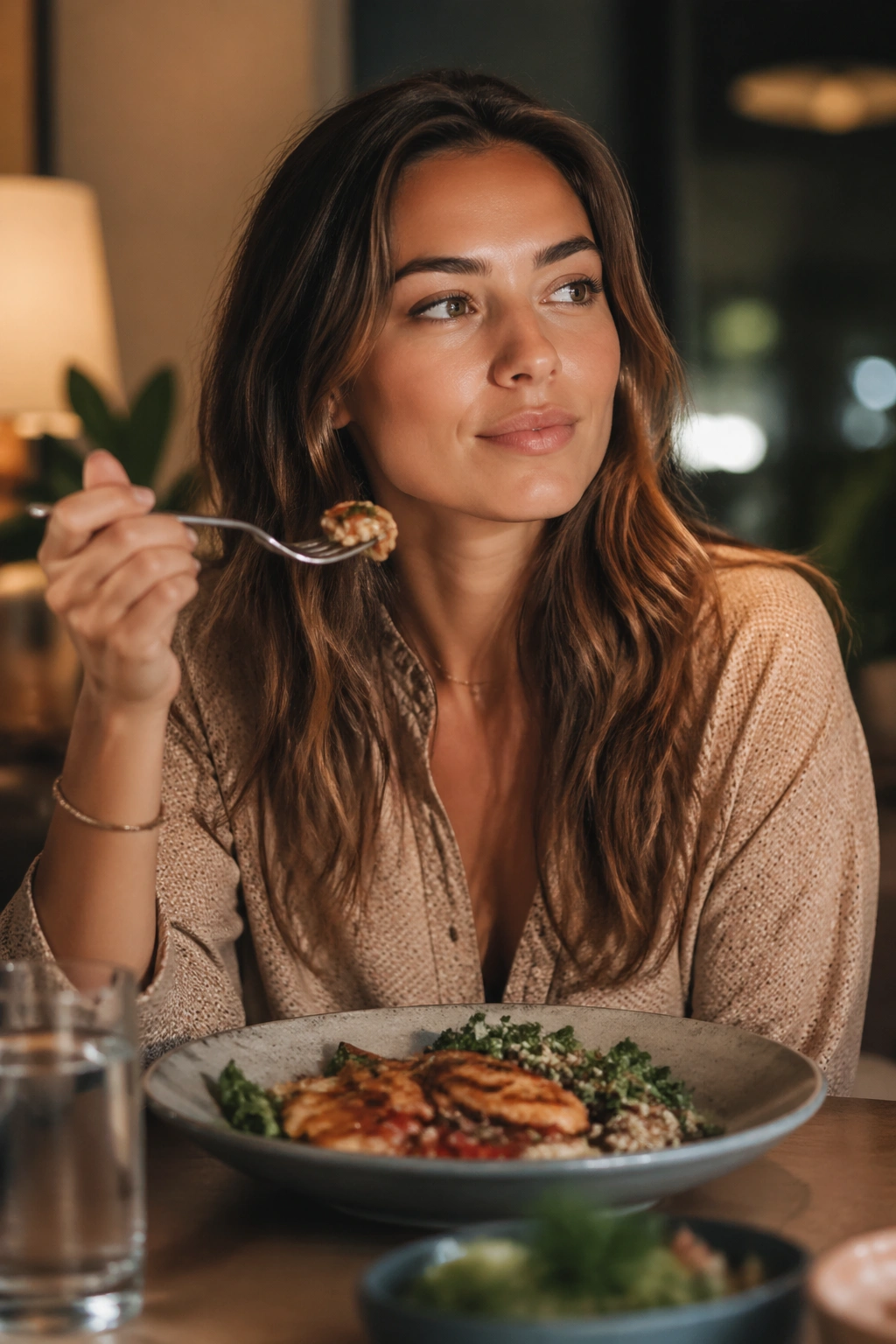
Most people eat faster than their fullness signal can keep up. That’s the problem. You can finish a plate, want seconds, and only then realize you were already fine. The stomach is not quick with its updates.
Put the fork down between bites. Chew the food all the way. Give yourself 15 to 20 minutes before deciding on more. And if that sounds annoyingly simple, good. The simple stuff is often the part that gets skipped.
A one-sentence reminder: fullness is delayed.
This habit is especially useful at dinner, when the day has been long and the body wants a fast payoff. Slower eating creates a little space between craving and action. That space is where waistline changes happen.
22. Track Food for Two Weeks and Adjust
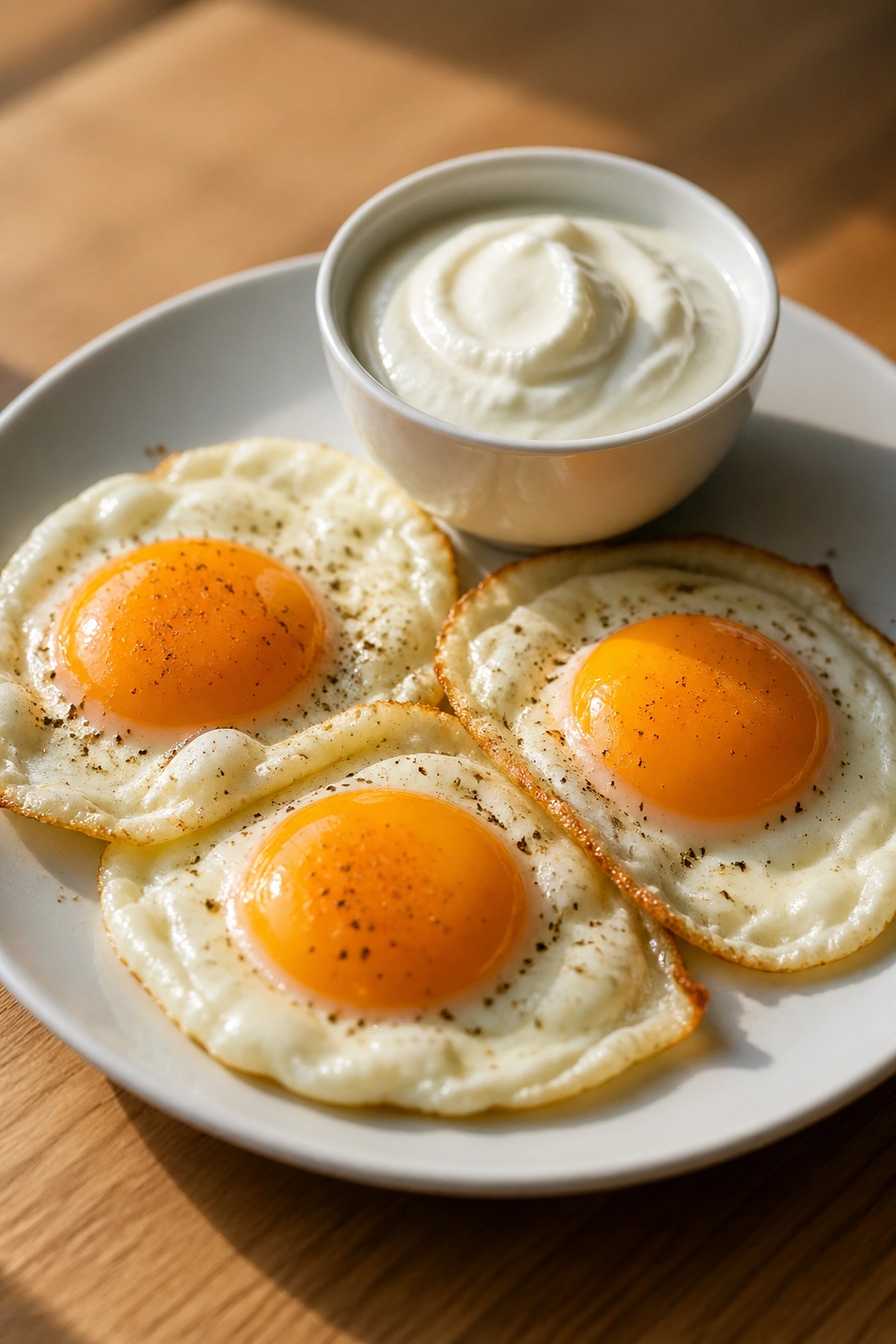
A short food log is a reality check, not a punishment. Keep notes on your phone, use an app, or write on paper. Two weeks is enough to spot patterns without making your whole life about calories.
Look for the real leaks. Maybe liquid calories are the problem. Maybe dinner is fine, but snacks after 8 p.m. keep wiping out your progress. Maybe the issue is not “overeating” in the dramatic sense, but a few hundred extra calories from nuts, cheese, dressings, and bites taken while cooking.
Track these things if you can:
- Drinks with calories
- Snacks between meals
- Portion sizes of oils, nuts, and cheese
- Restaurant meals
- Weekend eating
- Any time you eat standing up, driving, or scrolling
A lot of women want the answer to be mysterious because mystery sounds less annoying than math. The waistline does not care about that. It responds to patterns. Track the pattern, keep the parts that work, cut the parts that do not, and stop blaming belly fat for being harder than it is.
The honest win here is not perfection. It is seeing your own habits clearly enough to change one or two of them without guessing. That’s enough to start.
