



Belly fat does not disappear because you had one heroic salad and a nice thought before bed. It usually hangs around because the hours before sleep are messy: late snacks, bright screens, alcohol, stress, and a bedtime that shifts around like a loose wheel.
That matters more than people like to admit. Sleep debt pushes hunger up, makes cravings louder, and usually makes the next day sloppier too. You wake up tired, move less, snack faster, and tell yourself you will “get back on track” after dinner. The waistline hates that loop.
So the late-night routine deserves more respect than it gets. A few bedtime habits can make fat loss easier by calming the nervous system, cutting unnecessary calories, and helping your body get better sleep — which is where a lot of the repair work happens. No magic. No drama. Just boring little choices that add up.
1. Lock in a consistent bedtime
A body that never knows when sleep is coming tends to act like a body under pressure. Hormones drift, hunger gets louder, and late-night cravings start showing up with an annoying level of confidence. A steady bedtime won’t melt belly fat on its own, but it does make everything else easier.
Pick a bedtime you can keep most nights and treat it like a real appointment. Not a suggestion. Not “roughly around then.” If your schedule allows 10:30 p.m., aim for 10:30 p.m. with a 20- to 30-minute wind-down window before it. That steady rhythm helps your sleep drive build in a cleaner way, and cleaner sleep tends to mean fewer junky decisions the next day.
What people miss is this: a single long sleep after three short ones doesn’t fully erase the damage. The body likes repetition. It notices patterns. So does your appetite.
If you want one small upgrade that costs nothing, keep the same wake time too. The bedtime matters, but the wake time keeps the whole thing from wobbling.
2. Stop eating 2 to 3 hours before bed

Do you really need a snack at 10:45 p.m., or are you just tired, bored, and standing near the fridge? That question saves more calories than most fancy plans.
Digesting a heavy meal right before sleep can make you feel hot, sluggish, and weirdly restless. Some people also get reflux or wake up with a bloated stomach, which is a terrible trade for a bowl of cereal. If you finish dinner and let a couple of hours pass before bed, your body has time to settle down instead of trying to sleep through a food coma.
That does not mean you must go to bed hungry. If dinner was early or small, a planned snack is fine. The problem is random grazing: chips, cookies, leftover pizza, and that “just one more bite” behavior that turns into half the pantry.
A clean cutoff helps. Brush your teeth, close the kitchen, and make the rule simple enough to follow on a tired night. Simple wins here.
3. Build dinner around protein and fiber
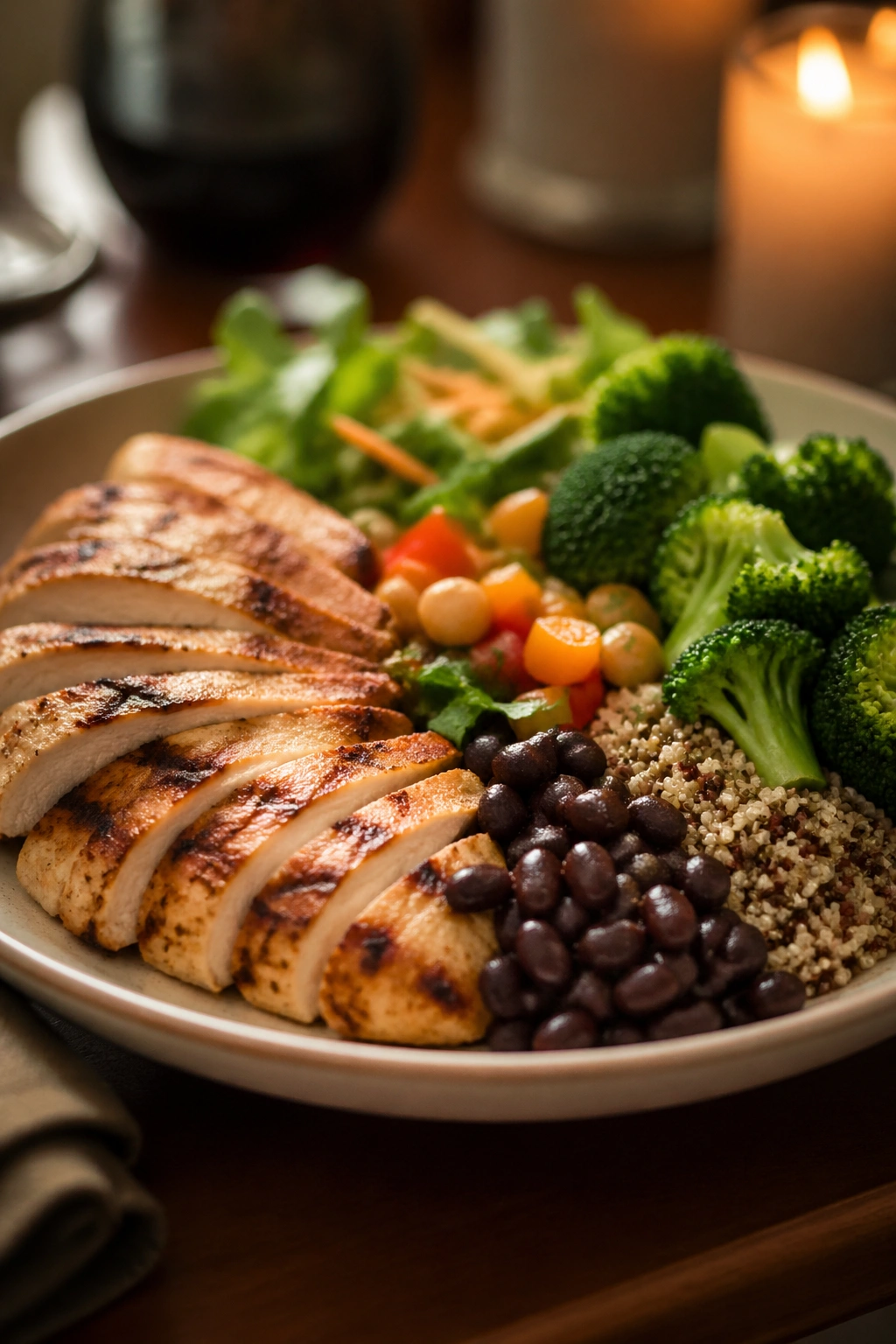
A better dinner makes bedtime easier. That is the part people keep skipping. If your evening meal is mostly refined carbs and not much protein, hunger tends to come back like an unpaid bill.
Protein helps because it keeps you fuller longer. Fiber does a similar job, but with more volume and slower digestion. A dinner built around chicken, fish, eggs, tofu, Greek yogurt, beans, lentils, or lean meat usually takes the edge off late-night snacking. Pair that with vegetables, beans, or a smaller portion of whole grains, and you get a plate that holds you longer.
What to aim for
- 25 to 35 grams of protein at dinner is a solid target for many adults.
- Add 2 cups of vegetables or a big salad when you can.
- Keep starch portions honest. A heaping mountain of pasta after a low-protein day is not doing your waistline any favors.
The goal is not a perfect macro count. It’s arriving at bedtime not feeling hunted by your own appetite. That alone cuts a surprising amount of mindless eating.
4. Take a short walk after dinner

A 10- to 15-minute walk after dinner does more than people give it credit for. It shifts you out of couch mode, helps digestion move along, and gives your muscles a reason to use some of the glucose from the meal instead of parking it right away.
Keep it easy. No power-hiking. No “I must earn my food” nonsense. A normal walk around the block, up and down the street, or on a treadmill at a relaxed pace is enough. If you can talk in full sentences, you’re in the right range.
There is also a sneaky behavior benefit. Once you leave the kitchen and put on shoes, you break the snack loop. That matters. Evening eating is often less about hunger and more about habit, and a short walk interrupts the autopilot.
If you live somewhere dark or cold, walk inside. March in place, pace while listening to a podcast, or loop around the house. A few minutes is enough to change the evening pattern.
5. Cut off caffeine early

That “I can drink coffee at any hour and sleep fine” crowd always tells on itself the next day. Maybe you fall asleep fast. That does not mean caffeine isn’t shaving quality off your sleep behind the scenes.
Coffee, strong tea, cola, chocolate, energy drinks, and many pre-workouts all contain caffeine. It can linger long enough to make sleep lighter, shorter, or more broken, and broken sleep often shows up as bigger hunger the next day. The exact cutoff varies a bit from person to person, but many people do better stopping caffeine at least 6 to 8 hours before bed.
Watch the hidden sources
- Iced tea after dinner.
- Chocolate dessert.
- “Just a small” energy drink.
- Pre-workout taken too late in the day.
If you are trying to burn belly fat, sleep quality matters more than the pleasure of a late espresso. That sounds blunt because it is. A tiny caffeine hit at night can cost you a lot more than it gives.
6. Skip alcohol as a sleep aid

Alcohol can make you sleepy. It can also wreck the second half of your night and make you wake up less rested, more dehydrated, and far hungrier. That is a bad bargain for fat loss.
A lot of people use wine or beer as a bridge into bedtime because it feels relaxing at first. The problem is what happens later. Sleep gets choppier. Recovery gets worse. The next evening, you are often more likely to crave salty food, greasy food, or both. Alcohol also lowers restraint, which is a polite way of saying the cookies are suddenly in danger.
If you do drink, keep it earlier and keep it modest. Two or three drinks close to bedtime is not a sleep trick. It is a sleep problem wearing a nice label.
No, you do not need to become a monk. But if belly fat is the target, alcohol deserves an honest look.
7. Dim the lights and shut down screens
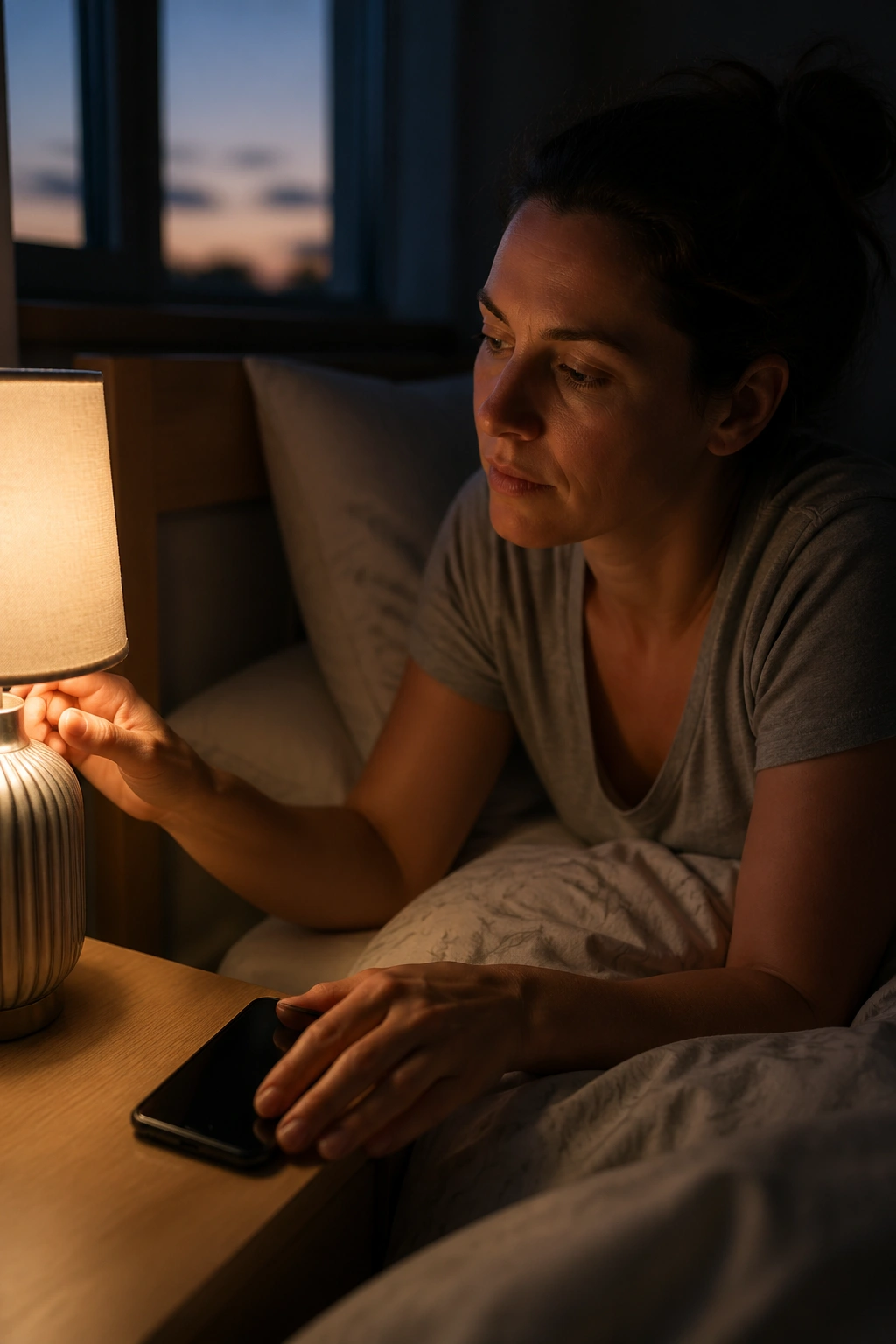
Bright light tells your brain it is still daytime. That is the whole trick. Your eyes do not care that it’s late; they care that the room is bright and the phone is still buzzing like a tiny emergency machine.
Why light matters
Dimmer light in the last hour before bed helps your body slide toward rest. Bright overhead bulbs, laptop glare, and a phone held six inches from your face all keep you a little too switched on. That makes it harder to sleep deeply, and shallow sleep tends to feed poor food choices the next day.
A simple evening rule
- Switch to lamps instead of overheads.
- Lower screen brightness and use night mode.
- Stop work messages and social feeds before bed.
- Save the intense shows and arguments for some other time.
I like this habit because it changes the whole feel of the evening. The room gets quieter. Your brain gets the hint. And once the light drops, so does the urge to keep nibbling and scrolling as if nothing matters.
8. Keep your bedroom cool and dark
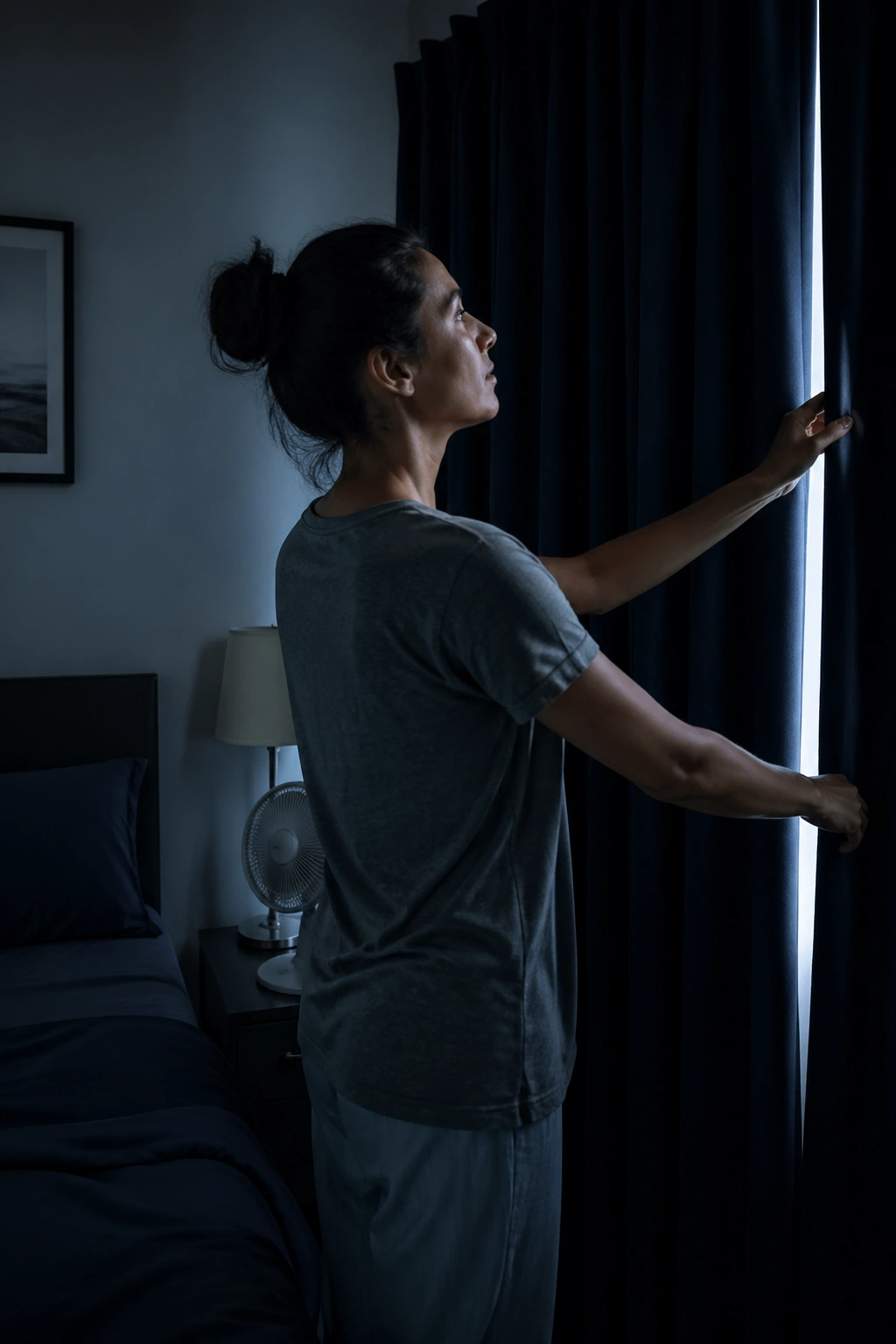
A hot, bright room is a terrible place to sleep. Your body temperature naturally needs to dip a bit for sleep to settle in, and a room that feels stuffy fights that process. People often blame stress when the real issue is a bedroom that feels like a parked car.
Aim for a cool room, blackout curtains if outside light leaks in, and bedding that does not trap heat. A fan can help more than people expect. So can a lighter blanket if you tend to kick covers off at 2 a.m. and wake up annoyed.
If you wake up sweaty or restless, that matters. Sleep fragmentation is not just annoying; it tends to leave people hungrier and less patient the next day. That can show up as extra snacking, bigger portions, and less interest in moving around.
A dark room helps too. Even a little light from a hallway, streetlamp, or charging brick can be enough to disturb sleep for sensitive people. Small detail. Big effect.
9. Do five minutes of stretching or mobility work

A hard workout right before bed can leave you wired. A short stretch session does the opposite. It tells your body the day is winding down, and it often softens the tight, clenched feeling that keeps some people awake.
Keep it gentle. Think hamstrings, hip flexors, chest opening, a few slow torso twists, maybe child’s pose. No sweat. No huffing. If your pulse jumps, you’ve gone too far for a bedtime habit.
The point is not flexibility for its own sake. It is a smoother transition from “doing” to “resting.” That transition matters because stress lives in the body as much as in the mind. A few slow bends and holds can take the edge off the evening and make you less likely to wander into the kitchen out of restlessness.
Some people prefer yoga. Fine. Some prefer floor stretches while watching the clock. Also fine. Just keep it light enough that you feel calmer afterward, not worked up.
10. Write tomorrow’s to-do list before bed

A brain that keeps repeating tomorrow’s chores at 11:30 p.m. is not helping your waistline. Stress tends to drive people toward comfort eating, and mental clutter often shows up as “I deserve a snack” behavior.
Set aside three minutes and write down the things that are circling in your head. Not a masterpiece. Not a life plan. Just the 3 to 5 items you need to remember tomorrow. If something is bothering you, park it on paper. The act of putting it down is often enough to stop the loop.
Keep it tiny
- Top 3 tasks for tomorrow.
- One thing to prep before leaving the house.
- One problem to handle after breakfast, not before sleep.
This works because it gives the brain a place to put unfinished business. Once that loop quiets down, bedtime gets less slippery. And when bedtime gets less slippery, late-night snacking usually gets less frequent too.
11. Use slow breathing to lower stress

Slow exhaling is underrated. It sounds almost too simple, which is probably why people skip it and then wonder why their nervous system feels stuck on high.
Try breathing in for 4 counts and out for 6 or 8 counts for 3 to 5 minutes. Keep the inhale quiet and the exhale longer. You are not trying to win a breathing contest. You are trying to tell your body that nothing urgent is happening right this second.
How to do it
- Sit on the bed or lie on your back.
- Rest one hand on your stomach.
- Breathe through your nose if you can.
- Let the exhale be slow and smooth.
This can be done with no app, no mat, and no special equipment. Some nights it does not feel dramatic. Fine. It does not need to feel dramatic. It just needs to lower the volume enough that sleep has a chance to show up.
12. Keep the bed for sleep only

If your bed is also your office, dining room, scrolling station, and TV lounge, your brain gets mixed messages. It starts associating the mattress with alertness instead of sleep, and that makes it harder to power down when you actually want to rest.
The fix is boring, which is a sign it probably works. Read in a chair if you like. Eat at the table. Watch one episode elsewhere. Then get into bed when you are ready to sleep, not when you are still halfway in the evening.
If you lie there awake for a long stretch, get up for a few minutes and do something quiet in low light. Return only when you feel sleepy again. That helps rebuild the connection between bed and sleep instead of bed and frustration.
This habit matters for belly fat because poor sleep quality tends to spill into the next day. And the next day is where the snack decisions live.
13. Put your phone on the other side of the room
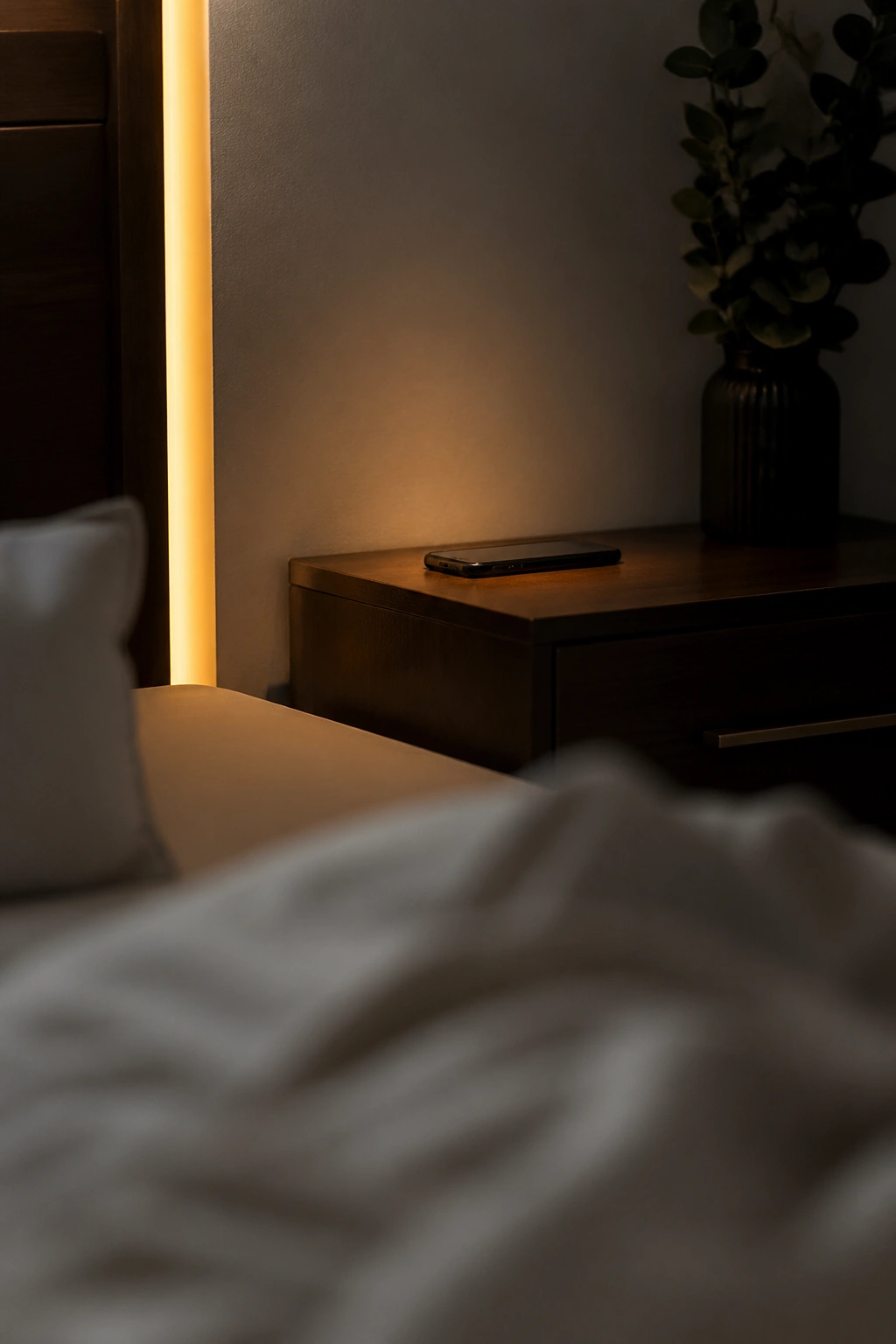
A phone at arm’s reach is not neutral. It is a tiny slot machine with endless food ads, messages, and videos. Put it six feet away, and the whole evening changes.
Charging the phone across the room or outside the bedroom reduces the easy drift into one more scroll, one more reply, one more search for something sweet to eat. People underestimate this. They think they use the phone for alarms. What they really use it for is procrastinating sleep.
If you need an alarm, buy a cheap clock. That is a much better trade than sleeping next to a glowing rectangle that keeps reopening the whole world at 12:15 a.m.
The physical distance is the point. Having to stand up creates friction. Friction is useful here. It gives your tired brain a second to ask whether the scroll is worth it. Most nights, it is not.
14. Front-load your water and taper late fluids

Dehydration can feel like hunger. That is a nuisance. So can chugging water right before bed and waking up twice to pee.
The cleaner move is to drink more earlier in the day and keep the last hour before bed pretty quiet. Have water with dinner. Sip if you are thirsty later. Do not slam a giant bottle at 10:50 p.m. and act surprised when your sleep gets chopped into pieces.
A practical cutoff
- Drink your main water with meals and earlier in the evening.
- Keep a small glass by the bed if you often wake thirsty.
- Stop heavy drinking about an hour before sleep if night bathroom trips are a problem.
This habit helps more than people expect because broken sleep can push hunger up the next morning. Better sleep, fewer interruptions, calmer appetite. Simple chain, decent payoff.
15. Brush your teeth and close the kitchen

Mint toothpaste is a decent boundary. So is the feeling of a clean mouth. Once your teeth are brushed, it becomes a little harder to convince yourself that a handful of chips is a fine bedtime decision.
Treat brushing your teeth like a hard stop. After that, the kitchen is closed. Lights off. Dishes done. Food put away. If you live with other people, say the rule out loud if you need to. A bedtime habit works better when it feels like a real ritual instead of a vague hope.
Make the ritual obvious
- Brush teeth.
- Put food away.
- Wipe the counter.
- Turn off kitchen lights.
That tiny sequence does a lot. It signals completion. It makes grazing less automatic. And on nights when you are tired enough to eat mindlessly, the ritual can be the difference between bed and an extra 400 calories you did not need.
16. If hunger is real, choose a small planned snack

Sometimes people push too hard and end up lying in bed starving. That backfires. A planned snack is smarter than pretending willpower can outmuscle real hunger.
Pick one snack, portion it, and eat it on purpose. Good options are usually 150 to 200 calories with protein and maybe a little fiber. Think plain Greek yogurt, cottage cheese, a small apple with peanut butter, turkey slices, or a boiled egg with a few crackers. The point is not perfection. It is keeping the snack from turning into a raid.
Better snack choices
- Greek yogurt with berries.
- Cottage cheese with cinnamon.
- Apple slices with 1 tablespoon peanut butter.
- Turkey roll-ups with cucumber.
- Boiled egg and a small piece of fruit.
Eat it away from the pantry. Sit down. Stop at one portion. If you need this snack every night, dinner may be too small, too early, or too light on protein. That is useful information, not failure.
17. Protect your bedtime on weekends too

A clean routine on weekdays and chaos on weekends is a classic way to stall progress. One late night does not wreck everything. A repeated swing from 10:30 p.m. to 2:00 a.m. absolutely can.
Weekend drift changes sleep timing, appetite, and next-day food choices. It also makes Monday feel like jet lag without the fun of travel. If you want your belly fat-loss efforts to stick, keep the gap small. A little flexibility is fine. A four-hour bedtime shift is not.
A workable rule
- Stay within about an hour of your normal bedtime.
- Keep the same wind-down routine.
- Avoid turning “one night out” into a two-night reset.
This one matters because consistency is doing the heavy lifting here. The body responds better to a stable rhythm than to dramatic swings, and stable rhythms are easier to live with than people think. You do not need to be rigid. You do need to stop treating sleep like a part-time job.
Final Thoughts

The bedtime habits that help burn belly fat are not flashy, and that is exactly why they have staying power. Consistent sleep, fewer late calories, less stimulation, and a calmer nervous system do a lot of quiet work over time.
If you only change three things, start with a fixed bedtime, an evening kitchen cutoff, and a phone that is no longer in your hand at midnight. Those three alone can change the shape of your nights.
And once nights get cleaner, days usually follow. That is where the waistline starts to notice.
