



A belly-fat stretches routine you can do in bed sounds almost too easy, and that’s part of the appeal. If the only plan you’ll stick with is one you can do lying down, that still counts for something. No stretch is going to melt fat off your stomach on contact, but a smart bedtime sequence can loosen a tight pelvis, calm a braced core, and make your whole body feel less cramped.
Fat loss still comes from the bigger picture: what you eat, how much you move, how well you sleep, and how stressed you are. These stretches support that bigger picture. They make it easier to get up, walk more, train better, and stop carrying so much tension through the middle of your body.
The tricky part is that a stiff lower back, tight hip flexors, and shallow breathing can make the waistline feel puffier than it needs to be. That is not belly fat, exactly. It’s posture, pressure, and tension doing their little bit of damage.
So keep this simple, keep it gentle, and skip anything that causes sharp pain. A mattress is enough. A pillow helps. And you do not need to turn bedtime into a boot camp just to feel a little looser tomorrow morning.
1. Knee-to-Chest Stretch
A bent-knee hug is the easiest place to start when your lower back feels tight and your abdomen feels braced. Lie on your back, bring one knee toward your chest, and let the other leg stay long or bent, whichever feels better on your spine.
Why It Helps
This stretch gives your low back a little room to stop gripping. It also nudges the pelvis into a more neutral position, which matters more than most people think when you spend hours sitting, driving, or curling up on the couch.
Keep the pull gentle. You want a soft stretch through the glute and lower back, not a tug-of-war with your own leg. If your neck tends to strain, rest the back of your head on a thin pillow and keep your jaw loose.
- Hold each side for 20 to 30 seconds.
- Keep the opposite knee bent if your lower back feels sensitive.
- Breathe out slowly as the knee comes closer; do not yank it in.
Tip: let the knee move toward you, not your shoulders toward the knee. That tiny difference keeps the stretch in the right place.
2. Pelvic Tilts That Flatten the Low Back
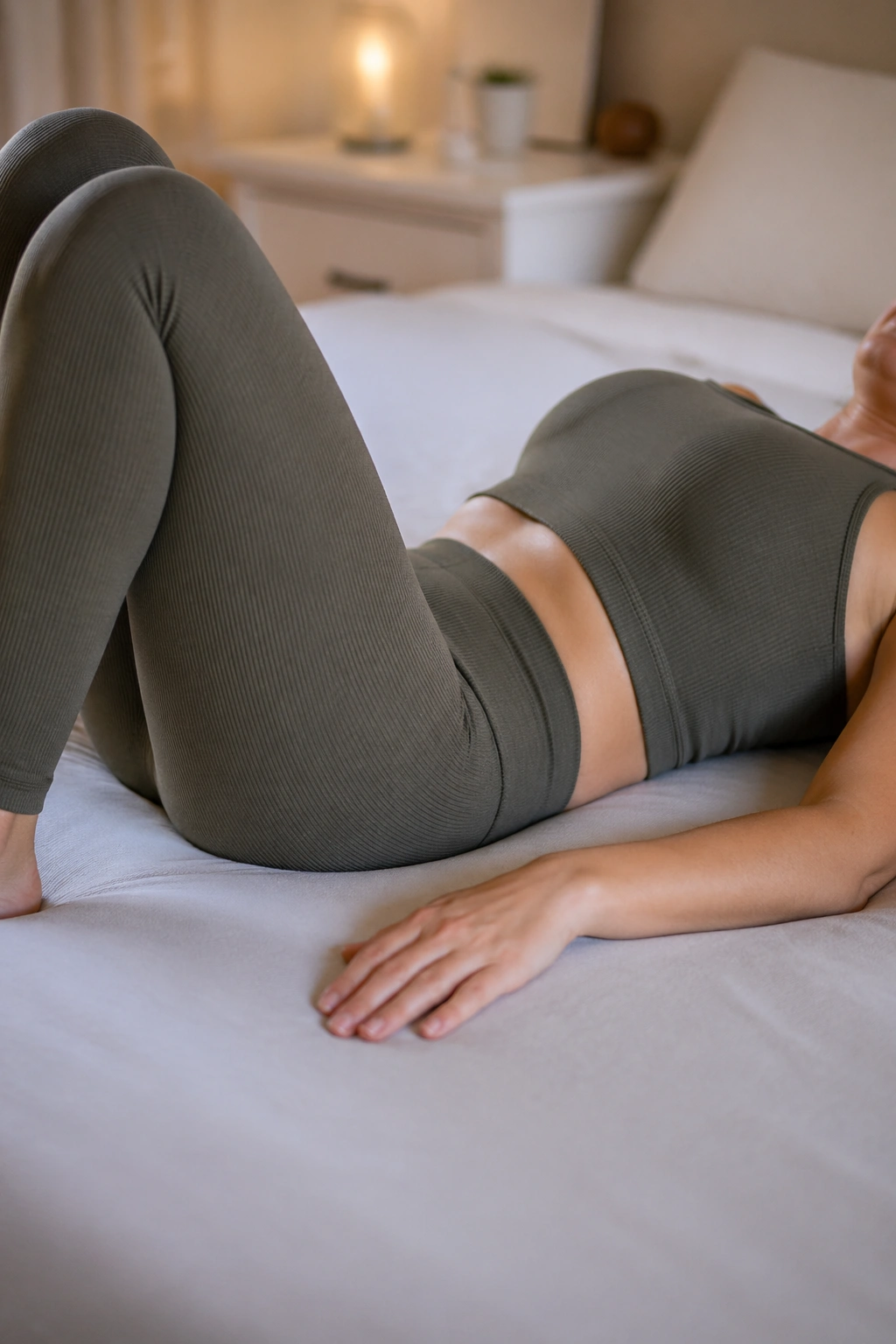
If your lower back arches hard in bed, your midsection often looks tighter than it really is. Pelvic tilts are small, but they are sneaky in a good way. Lie on your back with your knees bent, feet flat, and gently tip your pelvis so your low back presses into the mattress on the exhale.
Then release it on the inhale. That is the whole drill.
Small is enough. Seriously. If you try to make it dramatic, your abs will clamp down and the movement gets messy. Aim for 8 to 12 slow reps, and think about smoothing the curve of your lower back rather than smashing it flat.
A lot of people feel this in the front of the hips and deep in the lower belly. That is useful feedback. The point is not to squeeze your stomach hard; it is to teach your core to support you without bracing like a plank all day.
If you only do one thing tonight, make it this one. It’s plain, it’s boring, and it works better than people expect.
3. Supine Spinal Twist
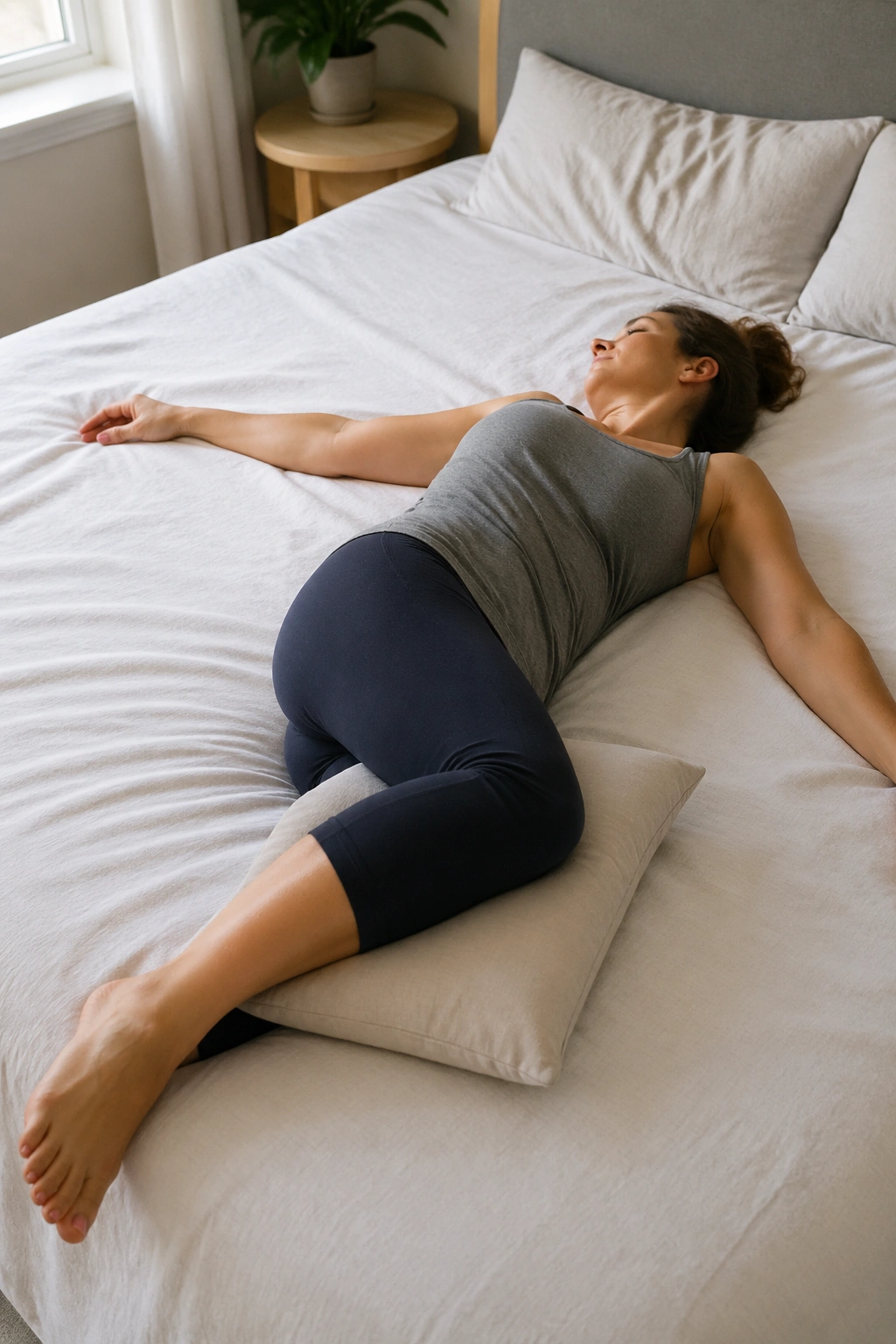
Why does a simple twist feel like it reaches from your ribs all the way down to your hips? Because the torso rarely rotates enough during a normal day. You sit, you sleep, you slump, and the middle of the body gets lazy.
Lie on your back, bring one knee across your body, and let it drop toward the opposite side. Keep both shoulders heavy on the mattress. If your top knee floats too high, place a pillow or folded blanket under it so the twist stays easy instead of cranky.
How to Set It Up in Bed
A mattress can make this stretch feel softer, which is a blessing if your back is sensitive and a nuisance if you overreach. Stay patient with the range. The stretch should show up in the side waist, lower back, and outer hip, not in a sharp twist through the spine.
Breathe into the side ribs for 4 to 6 slow breaths per side. On the exhale, let the knee settle a little farther only if the body gives you room. If one shoulder keeps popping up, back off and make the twist smaller.
This is one of those stretches that seems almost too calm to matter. Then you stand up and notice your torso feels less welded together.
4. Cat-Cow on the Mattress
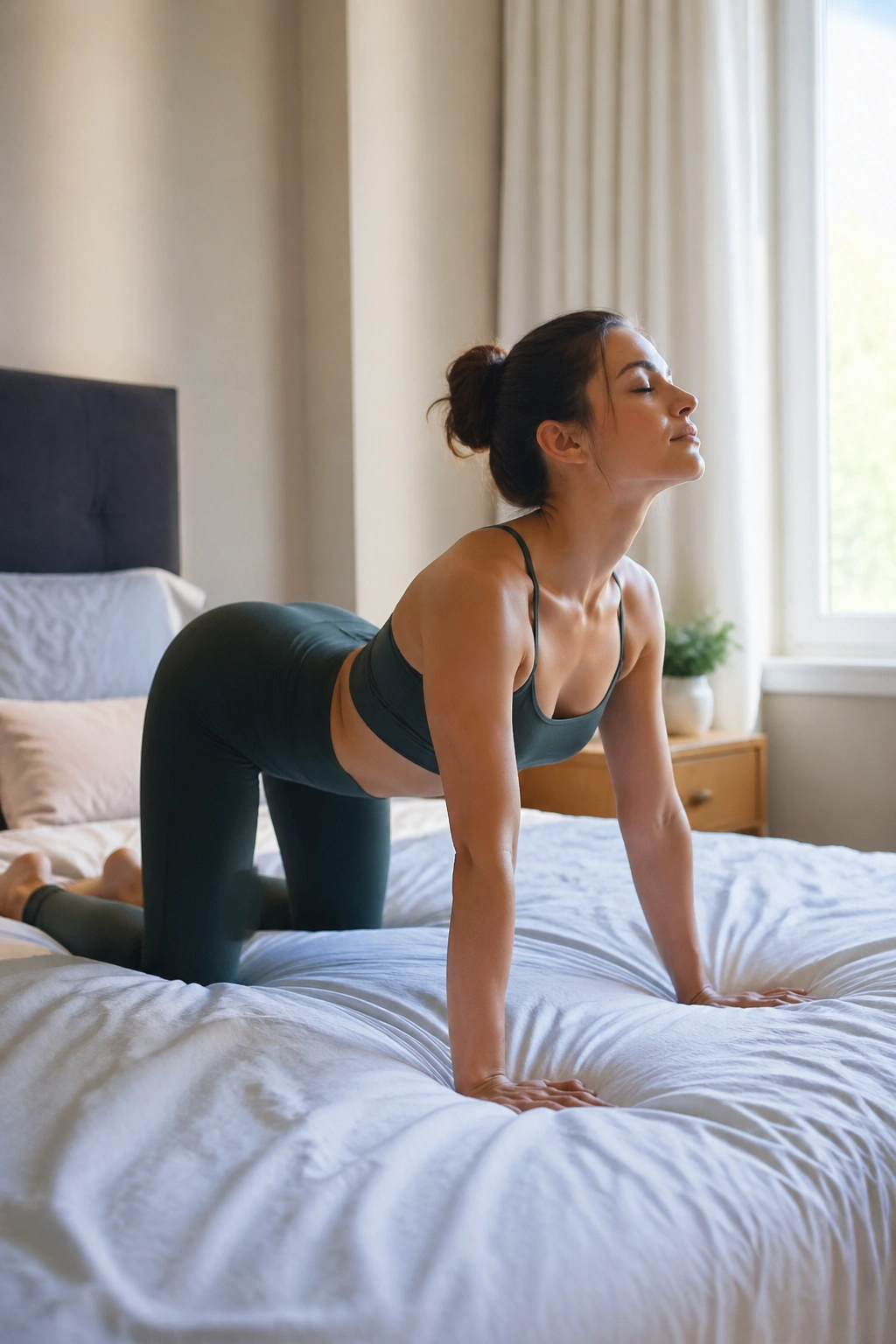
If you crawl into bed with your shoulders near your ears, this one pays for itself. Cat-cow wakes up the spine without impact, and the mattress gives it a softer edge than a hard floor.
Get onto hands and knees on the bed. If the surface is too squishy, tuck a folded blanket under your knees so you are not sinking into the mattress like a peanut into foam.
- Inhale and let your belly drop as your chest opens.
- Exhale and round your spine, pressing the bed away with your hands.
- Move through 6 to 8 slow rounds.
- Keep the motion smooth; do not force the end positions.
The reason this works so well before sleep is simple: it alternates spinal extension and flexion, which lets the back stop holding one shape all night long. It also encourages you to breathe with your ribs instead of only with your upper chest.
The trick is to keep it small on a soft surface. A mattress already gives way, so you do not need to chase a huge arc. Small and steady beats dramatic every time.
5. Figure-Four Stretch for Tight Hips
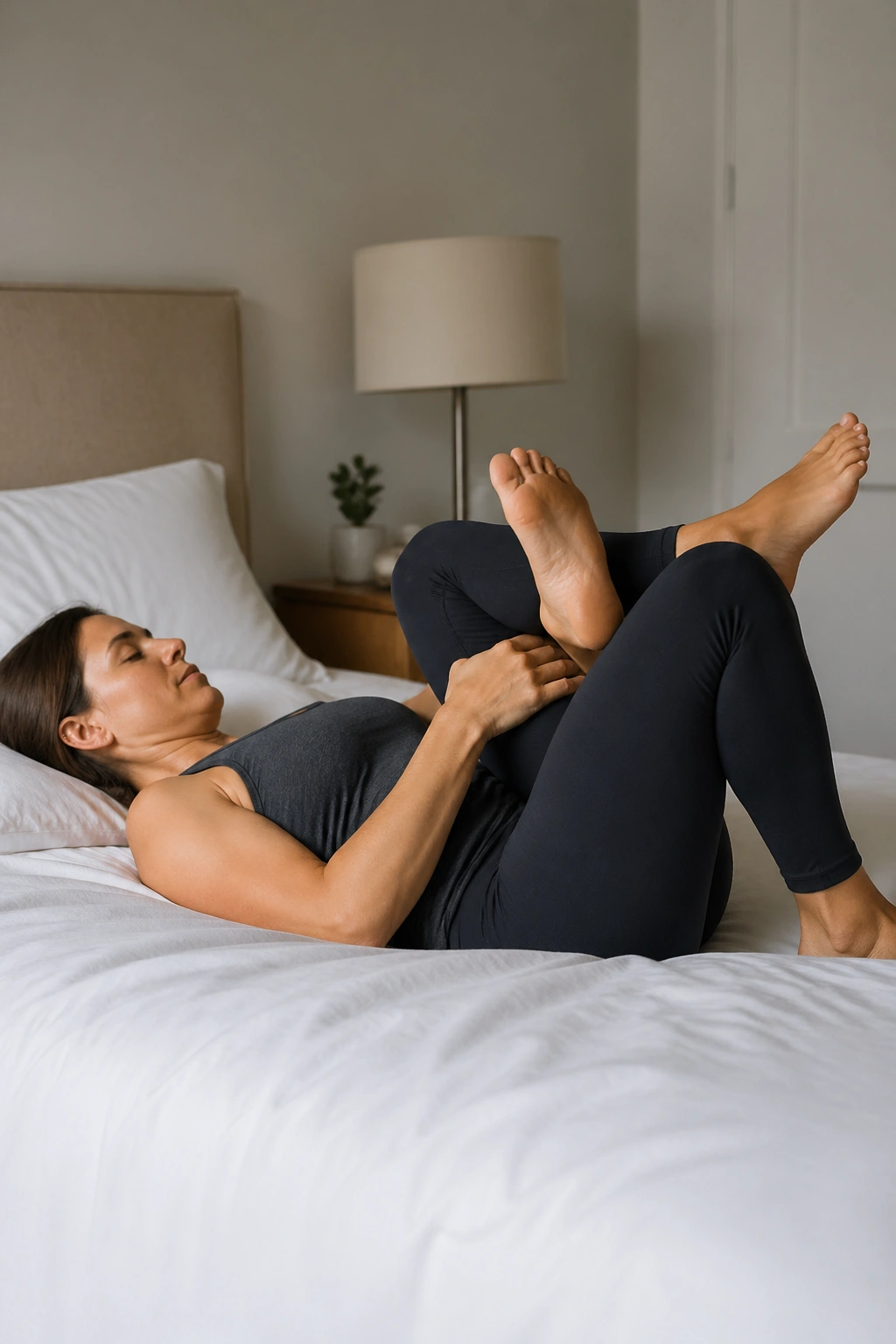
A tight seat can tug on the pelvis harder than people realize. When the hips clamp down, the lower back often pays for it, and the belly area can look more compressed because the whole front of the body is folded forward.
Lie on your back, cross one ankle over the opposite knee, and either stay there or draw the supporting leg toward you. You should feel the stretch deep in the outer hip and glute of the crossed leg. If the knee of the crossed leg feels pinchy, adjust the ankle farther down the thigh or reduce the pull.
I like this one for people who sit a lot, because the stiffness usually shows up exactly where you need relief. The stretch is calm, but it is not lazy. It asks the hip to open without forcing the lower back to do extra work.
No rush. Hold it for 30 to 45 seconds on each side, then switch slowly. If your hands cannot reach comfortably, loop a towel behind the thigh and use that instead of straining your shoulders.
The best version of this stretch feels deep and clean, not sharp or cramped.
6. Hamstring Stretch With a Pillow
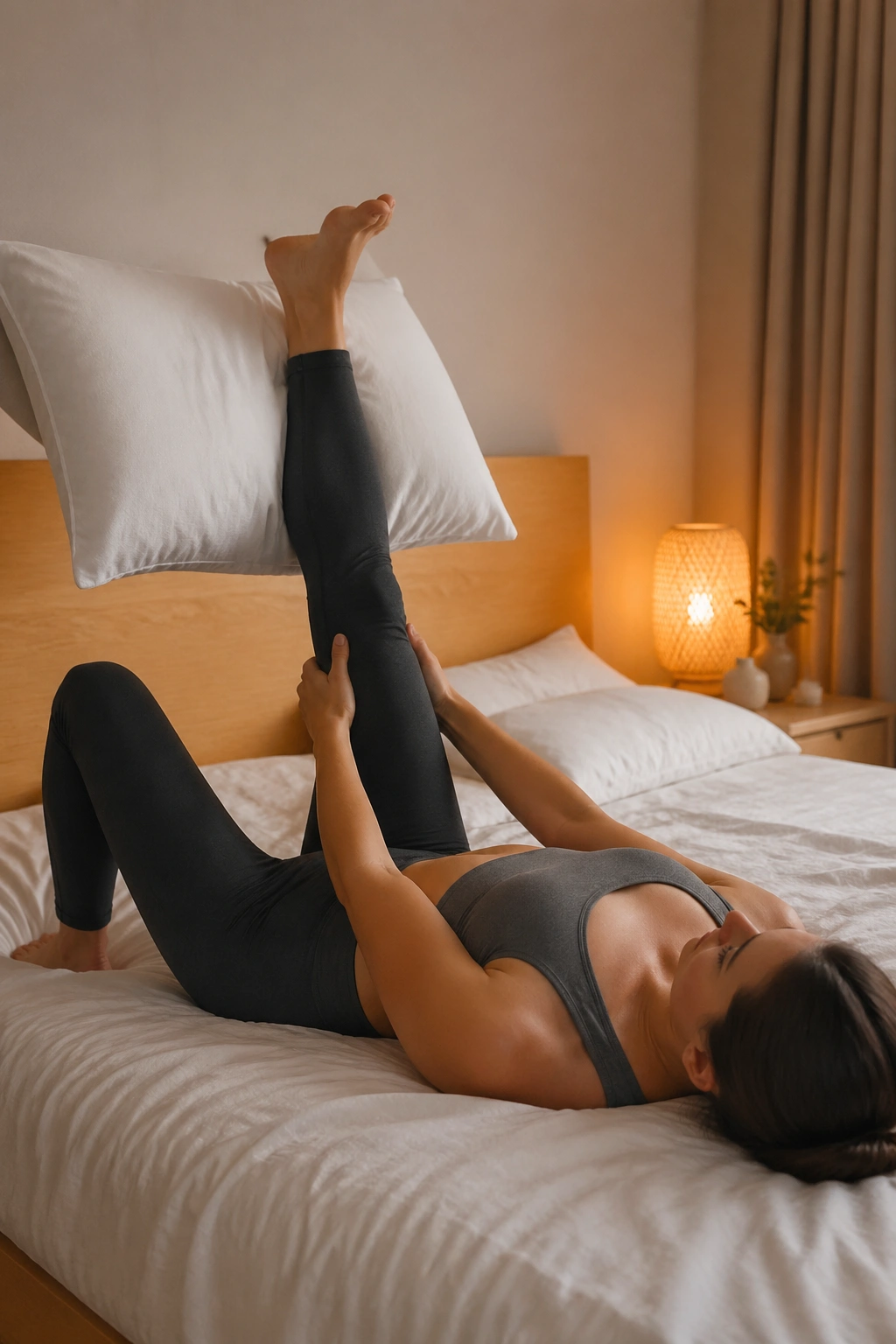
Unlike a standing toe touch, this version keeps your spine from folding into a tired C-shape. That matters if your lower back already feels touchy or if your hamstrings are so tight that bending forward turns into a fight.
Lie on your back and lift one leg with the heel resting on a pillow, or loop a towel around the foot and gently extend the leg upward. Keep a small bend in the knee if locking it straight makes the back of the leg grab or your pelvis tilt up.
The stretch should show up behind the thigh, maybe a little behind the knee, but never as a sting. If you feel your low back arch hard, bring the leg down a few inches. The goal is to lengthen the hamstring without dragging the pelvis out of line.
Best for desk workers, runners, and anyone whose legs feel tight the second they lie down. Hold for 20 to 30 seconds per side, then switch.
A little bend is not cheating. It is how you make the stretch usable.
7. Sphinx Pose for the Front of the Body
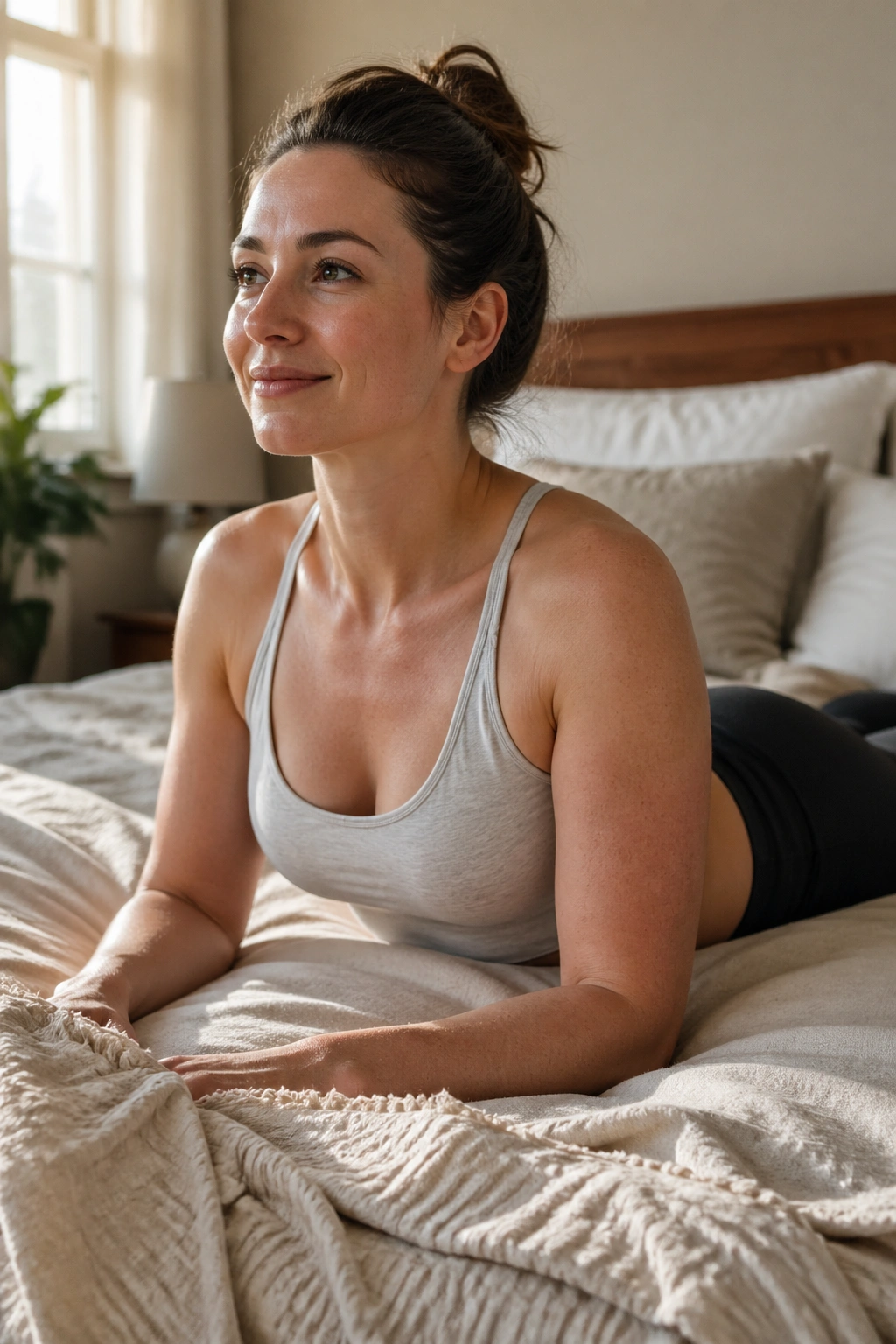
This is the one I reach for when the front of the body feels glued shut. Sphinx pose is gentle back extension, and on a bed it can feel even more inviting if you treat it like a soft opening rather than a deep bend.
Lie face down and prop yourself on your forearms, elbows under or slightly ahead of your shoulders. Let your chest drift forward, keep your hips heavy, and stop the moment your low back starts to complain. You should feel the front of the torso lengthen, along with the hip flexors and maybe the abs if they have been held tight all day.
What to Watch For
- Keep the glutes relaxed unless a light squeeze makes the low back happier.
- If the lower back pinches, move the elbows forward a few inches.
- A thin pillow under the chest can help on a very soft mattress.
- Hold for 15 to 20 seconds or 5 slow breaths.
This is not about cranking into a big backbend. It is about reminding the front side of your body that it can open without drama.
8. Happy Baby Stretch
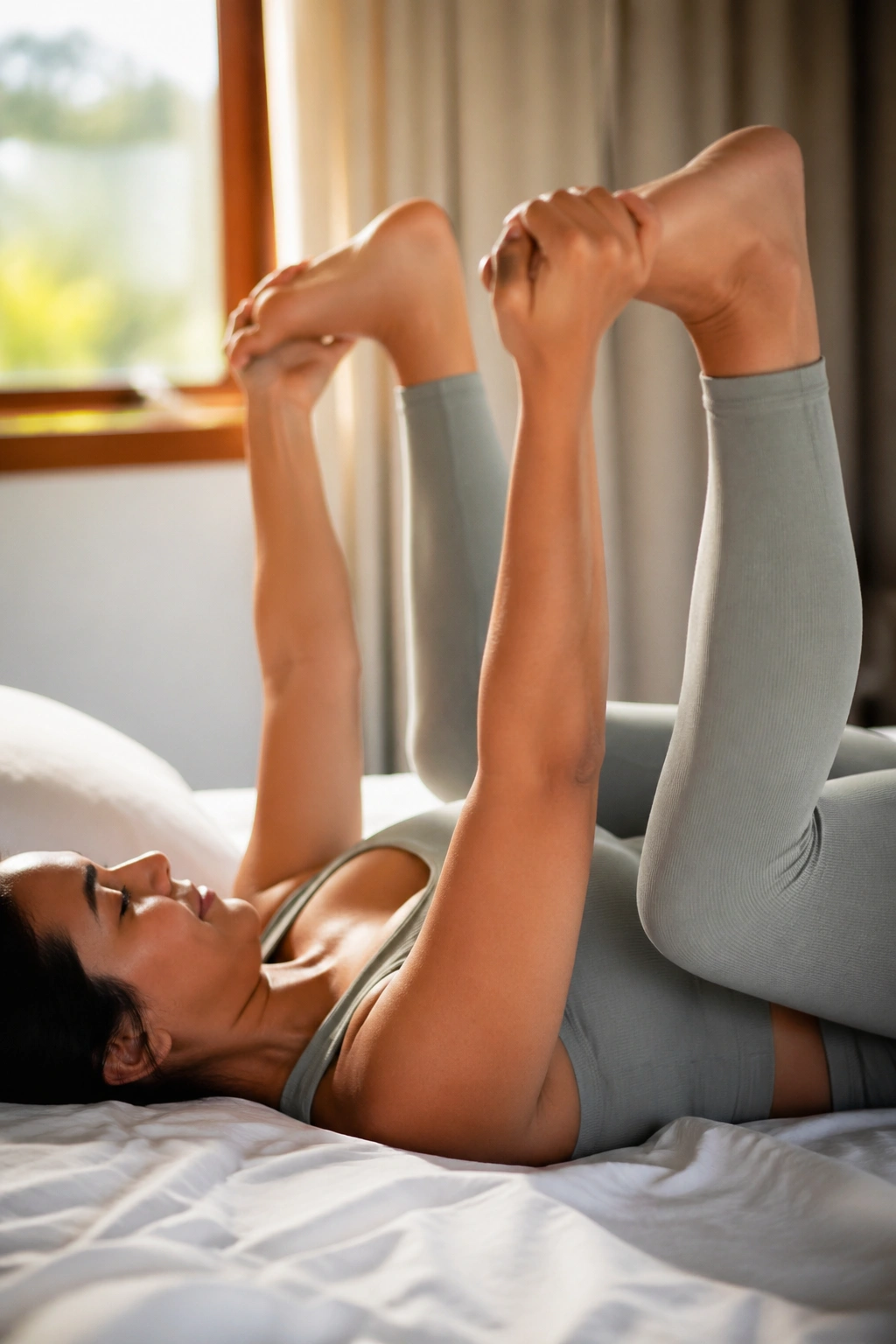
Ever notice how tight hips and a tight back seem to travel together? Happy baby is a clean answer to that problem, and it can be done without leaving the bed. Lie on your back, bend both knees, and hold the outer edges of your feet or the backs of your thighs if that is easier.
Let the knees drift toward the armpits and keep the tailbone heavy. The lower back should feel broad against the mattress, not jammed or arched. If both legs at once feels like too much, do one leg at a time and keep the other foot planted on the bed.
This stretch opens the inner thighs, outer hips, and low back in one shot. It also has a way of turning the nervous system down a notch, which is useful when your body is tired but your brain is still buzzing around.
Hold for 30 to 60 seconds, breathing into the back of the ribs. If the shoulders bunch up, relax your grip. The legs do not need to be yanked; they just need to be invited.
A soft grip usually works better than a heroic one.
9. Side-Lying Reach for the Ribs

Side body work gets ignored in a lot of bedtime routines, and that is a shame because a short, tight side line can make your whole middle feel compressed. Lie on your side, stack your hips, and stretch the top arm overhead while the bottom arm reaches long along the mattress.
The feeling should run from the hip to the armpit, through the ribs and obliques. If your shoulder rides up toward your ear, ease off and lengthen through the fingertips instead. The stretch is meant to create space, not an awkward cramp in the neck.
Best Cue to Remember
Reach the fingertips one direction and the heel the other. That simple idea keeps the whole side of the body engaged without turning it into a weird shoulder exercise.
Take 4 to 5 slow breaths on each side. On the exhale, let the ribs soften away from the hip a little more. On the inhale, keep the length without collapsing.
This one is underrated. It helps you feel less pinched through the waist, and that alone can change how your body settles into the mattress.
10. Open-Book Rotation for the Upper Back
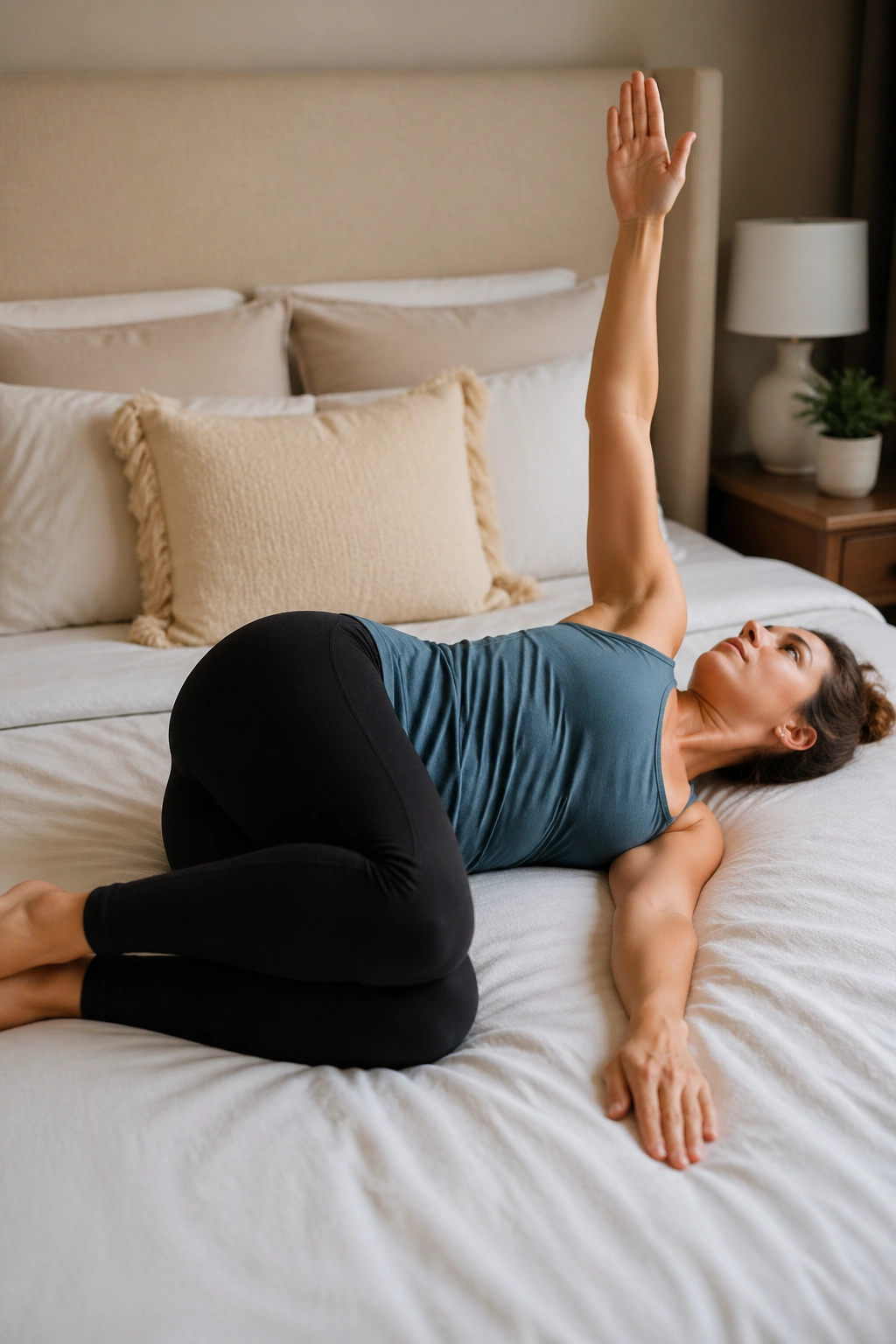
Upper-back stiffness changes how your waist feels more than most people realize. If your thoracic spine is locked up, your ribs stop moving well, your breathing gets shallow, and everything below feels tighter than it should.
Lie on one side with your knees bent. Extend the bottom arm straight out in front of you, then sweep the top arm open like you are turning a book page. Let your eyes follow your hand, but do not force the shoulder blade to hit the floor. It can stop halfway and still be useful.
The best part is the feeling in the middle of the back, right between the shoulder blade and the spine. That area gets sticky from desk work, phone posture, and sleeping curled up. A slow open-book twist wakes it up without making the lower back do all the work.
Do 5 slow reps per side, pausing for a breath at the open end. If both knees slide around, tuck a pillow between them. The twist should feel smooth and spacious, not like a wrestling move in soft bedding.
11. Legs-Up-on-Pillows Reset

Not every stretch needs to pull on something. Some of the best ones just let gravity do the work, and this is one of them. Put your calves on two stacked pillows or a folded blanket so your legs rest up and your hips can settle.
This position takes pressure off the low back and can calm the front of the hips after a day of standing, sitting, or walking. It also gives the abdomen a chance to stop bracing. That is useful if your stomach tends to feel hard or bloated when you lie down.
If your knees bend a little, fine. If you need to move the pillows farther from the bed frame or headboard, do that. The setup matters less than the sense of release.
Stay here for 2 to 5 minutes and breathe slowly into the sides of the ribs. That’s the whole trick. No heroic effort, no deep bend, no chasing a stretch that is not there.
This is the one I’d give to someone who wants to wind down without doing much at all.
12. Thread-the-Needle Stretch
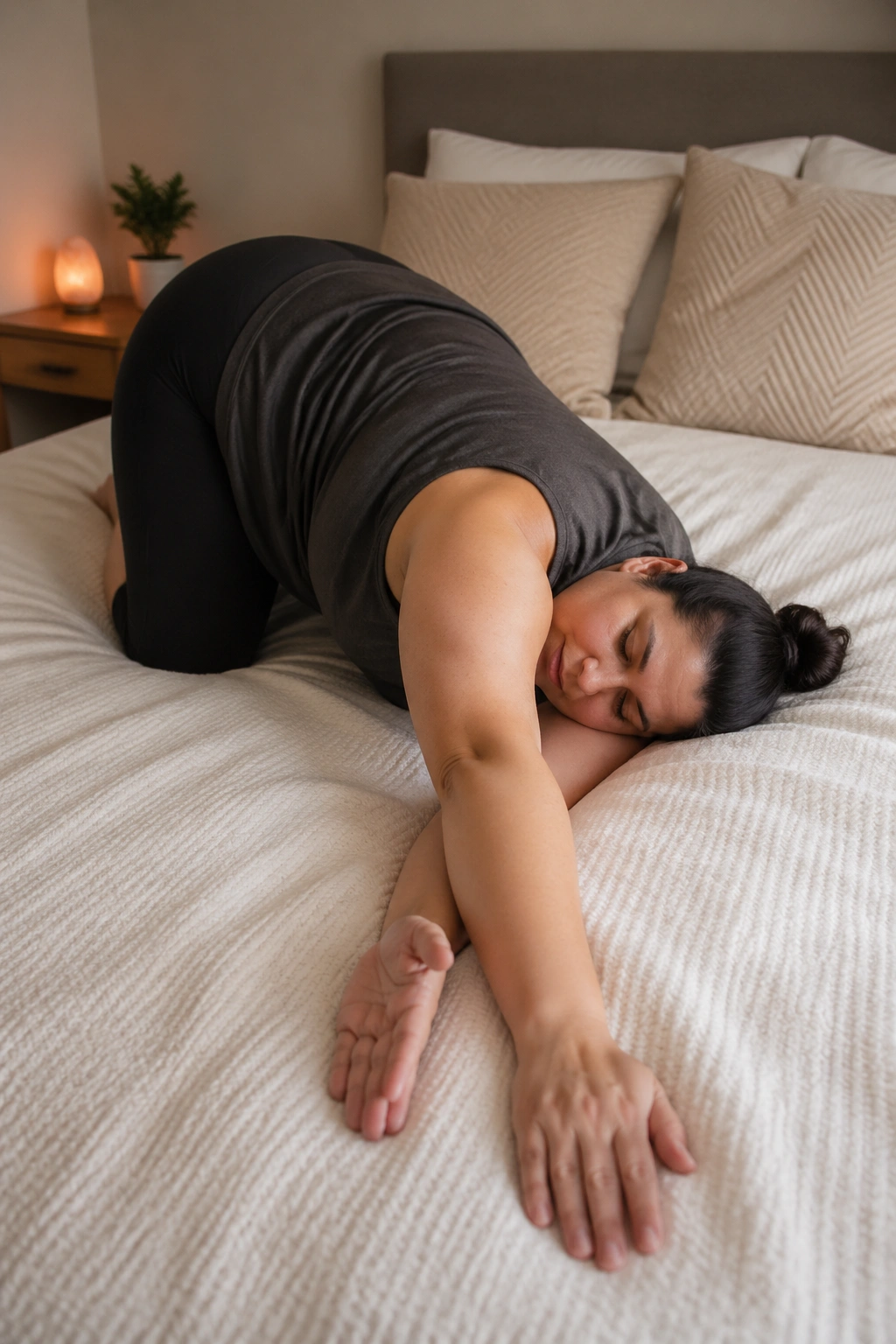
After a day of computer work, one shoulder often sneaks forward and stays there like it owns the place. Thread-the-needle is the fix for that kind of stiffness, and it works fine in bed if you move slowly and keep the mattress from swallowing your wrists.
Start on hands and knees. Slide one arm under the other, palm facing up, and let the shoulder and side of the head rest on the bed. The top arm can stay planted for support or reach forward a little more if that feels better.
If Your Shoulder Is Tight
- Keep the supporting hand closer to the shoulder.
- Put a pillow under the head if the neck feels jammed.
- Stop the twist when the shoulder blade starts to feel stuck.
- Take 4 slow breaths before switching sides.
This stretch opens the upper back, rear shoulder, and side ribs. It can also make the whole torso feel less compressed, which matters if you carry tension high and let it drip downward through the rest of the body.
A small range is enough here. The goal is relief, not a yoga photo.
13. Pillow-Supported Child’s Pose
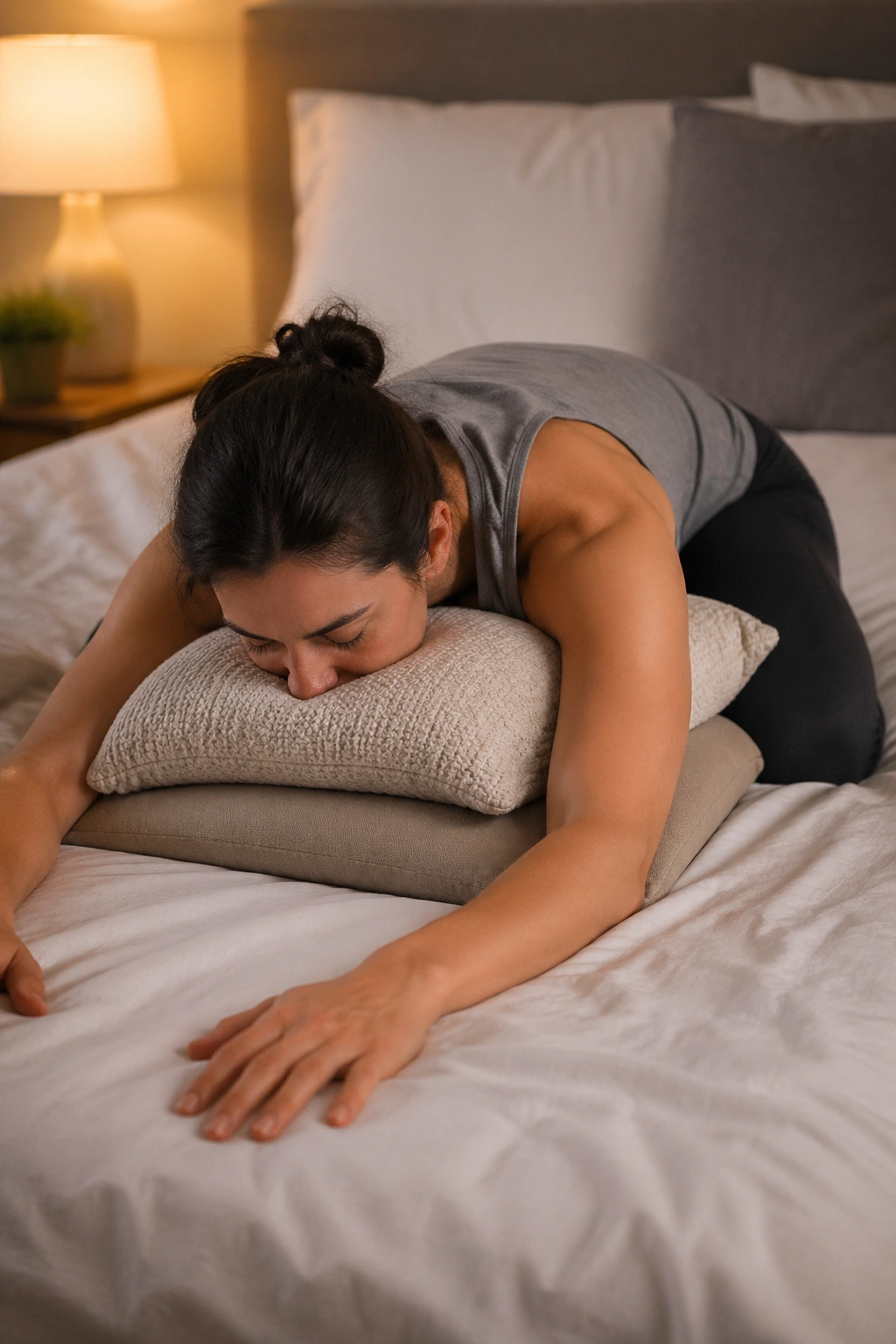
Pillows turn this from a yoga pose into something you can actually relax in. That is why I like it so much for bedtime. Kneel on the bed with your knees a little wider than hip-width, place a pillow or two under your chest and belly, and fold forward so your torso can sink without strain.
Your arms can stretch ahead or rest beside you. If your knees are cranky, place an extra pillow behind them or keep the hips higher. The stretch should feel like a soft opening through the back, sides, and hips, with your breath dropping lower than it usually does.
Hold for 45 to 60 seconds and let the exhale get long. The longer breath matters here. It gives your ribs room to move and your abdomen room to stop holding itself in.
This is a good one if your body runs hot and tense at the end of the day. It does not ask for much. It just gives the front and back of the body a chance to stop arguing.
14. Windshield Wiper Rotations
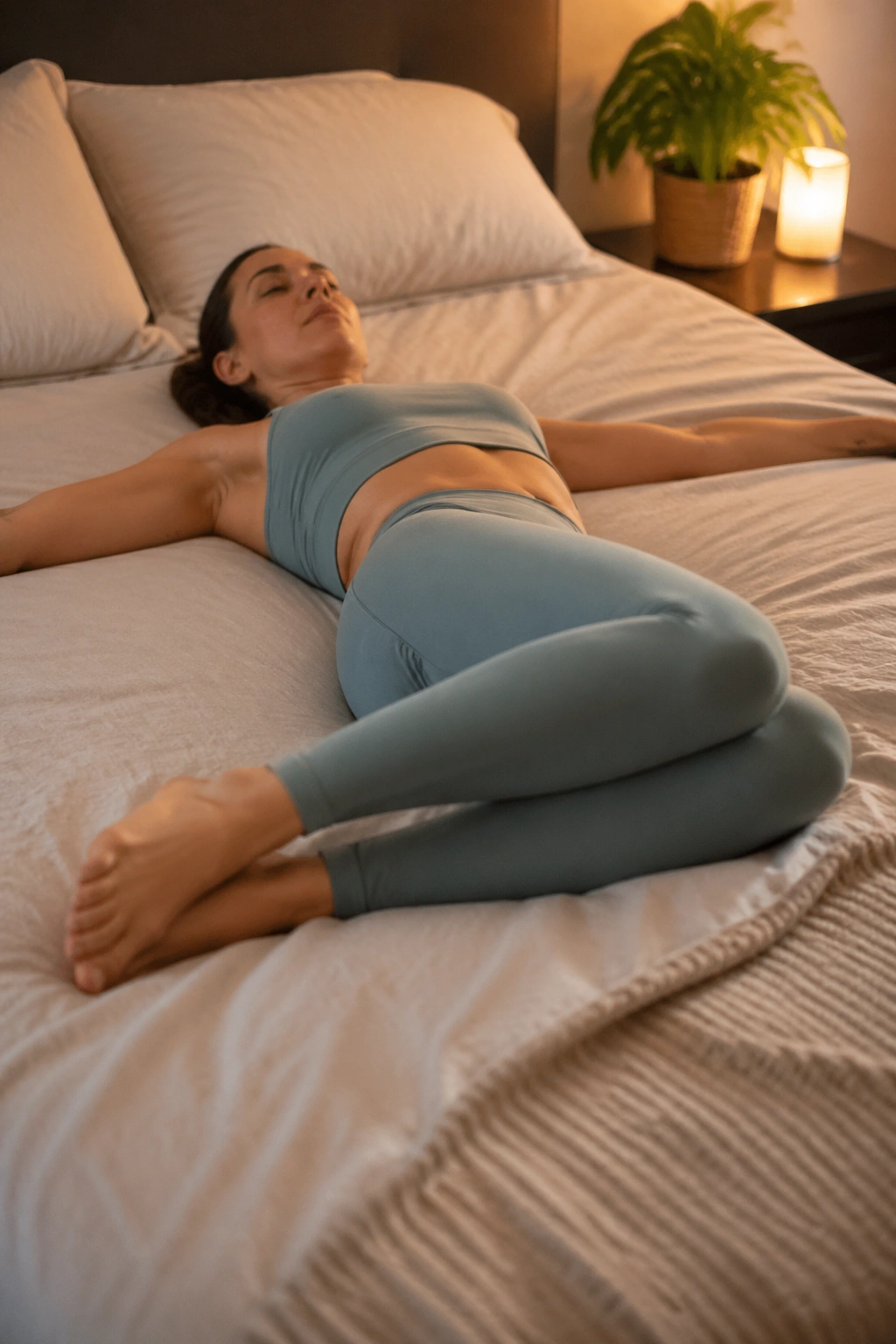
Want the gentlest waist rotation in the bunch? Here it is. Lie on your back, bend your knees, and let them drop side to side like windshield wipers while your shoulders stay heavy on the mattress.
Keep the motion slow and small. If the knees crash all the way over, you are probably using too much force and not enough control. The rotation should feel like a gentle sweep through the low back, hips, and lower belly.
What to Watch For
- Keep both shoulders on the bed.
- Move only as far as the mattress allows comfortably.
- Pause for one breath in the middle before changing sides.
- Let the exhale happen as the knees travel outward.
This move is especially nice when you feel a little puffy or stiff after a long day. It does not “burn” anything, and that is not the point. It just restores a bit of motion to a part of the body that likes to freeze up.
Eight to 10 reps per side is plenty. More is not better if the movement gets sloppy.
15. Full-Body Overhead Reach and Breathing
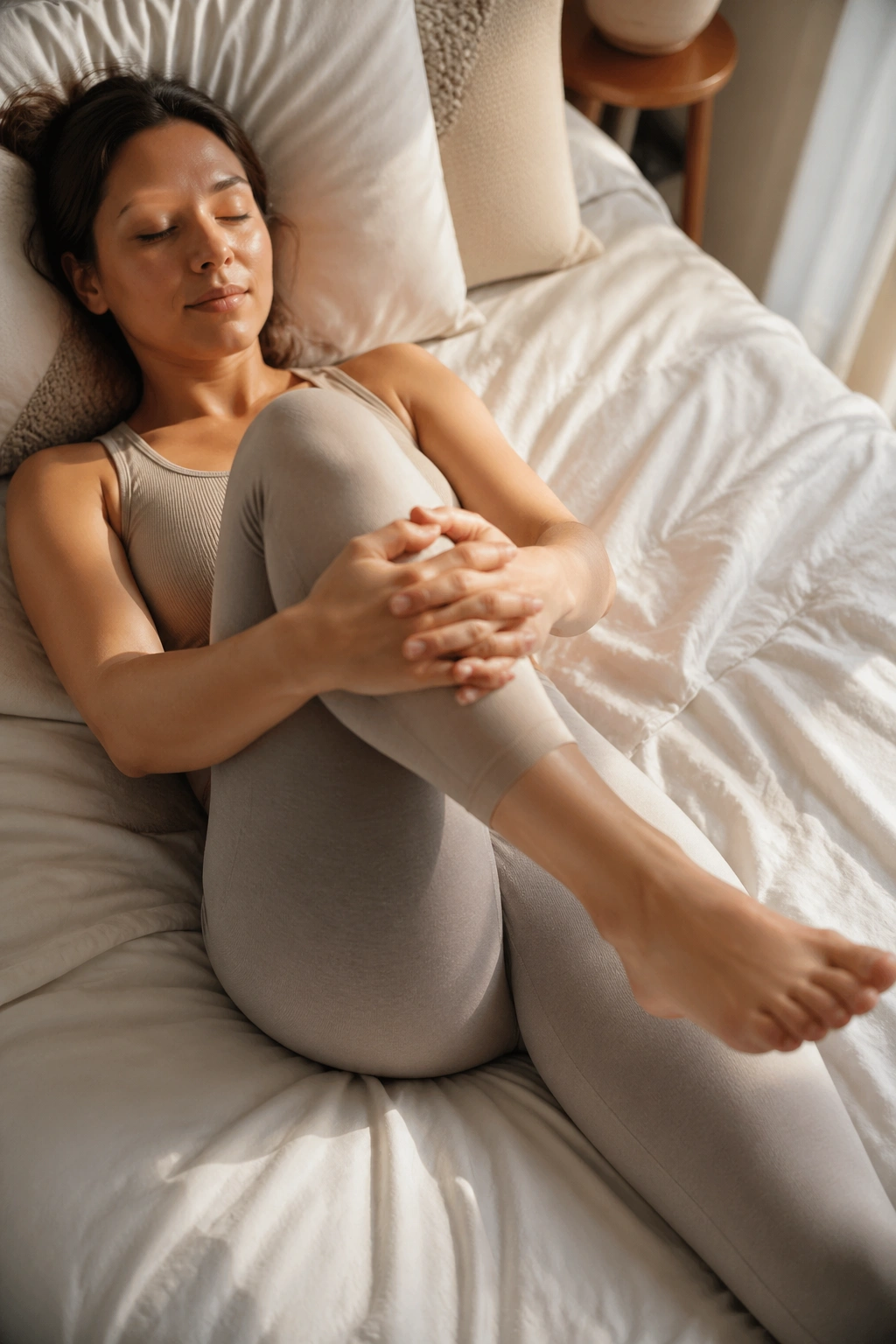
Finish with something so simple it almost feels like a cheat. Lie flat on your back, stretch both arms overhead, and reach the heels long in the opposite direction. Your body should feel wide, long, and a little uncurled, like it is taking up the space it forgot it had.
Breathe in through the nose and let the ribs expand sideways. Then breathe out through the mouth and let the belly soften without sucking it in hard. If your shoulders feel pinched overhead, keep the arms slightly bent or alternate one arm and the opposite heel instead of stretching both ends at once.
This is a good closing move because it ties everything together. The hips have opened, the spine has rotated, the low back has had a break, and now the whole body gets a final reset. You are not chasing intensity here. You are telling your nervous system that it can power down.
If you only have two minutes, do this and the pelvic tilts. That is enough to change how your body feels in the mattress and how it carries itself when you get up.
A quiet routine is still a routine. Do it often enough, and your body starts to expect the release.
