



At 3 p.m., when your energy drops and a cold soda starts sounding better than plain water, that’s where detox water recipes for belly fat loss can earn their keep. Not because lemon slices melt abdominal fat. They do not. They work because flavored water can make it much easier to drink more fluid, skip sugary drinks, and stay on track with the boring habits that actually trim body fat: a calorie deficit, enough protein, regular walking, resistance training, decent sleep, and meals that do not leave you raiding the pantry an hour later.
One blunt point first: your liver and kidneys already handle detoxing your body. A pitcher of fruit water is not replacing them. What these drinks can do is help with hydration, curb the urge to chase sweetness with juice or soda, and cut the “liquid calories” that sneak into the day faster than most people realize. Public-health guidance from the CDC has long pushed water as the easiest swap for sugary drinks, and controlled trials on pre-meal water intake have found lower meal calories in some adults when water comes first.
That matters.
Hands-on detail matters too. Citrus peels turn bitter when they sit too long. Mint needs a light slap or bruise to release its oils. Cucumber tastes crisp for a few hours, then starts to smell tired. Berries look pretty in a bottle, though they often need a gentle crush before they give up much flavor. If you’ve ever made “spa water” that tasted like nothing, the problem usually wasn’t the idea. It was the steep time, the slicing, or the ratio.
A good infused water should taste clean, sharp, and specific. You should know what’s in it from the first sip. The 22 recipes below are built that way—strong enough to make water appealing, light enough to keep calories low, and practical enough that you’ll make them again instead of once for a photo.
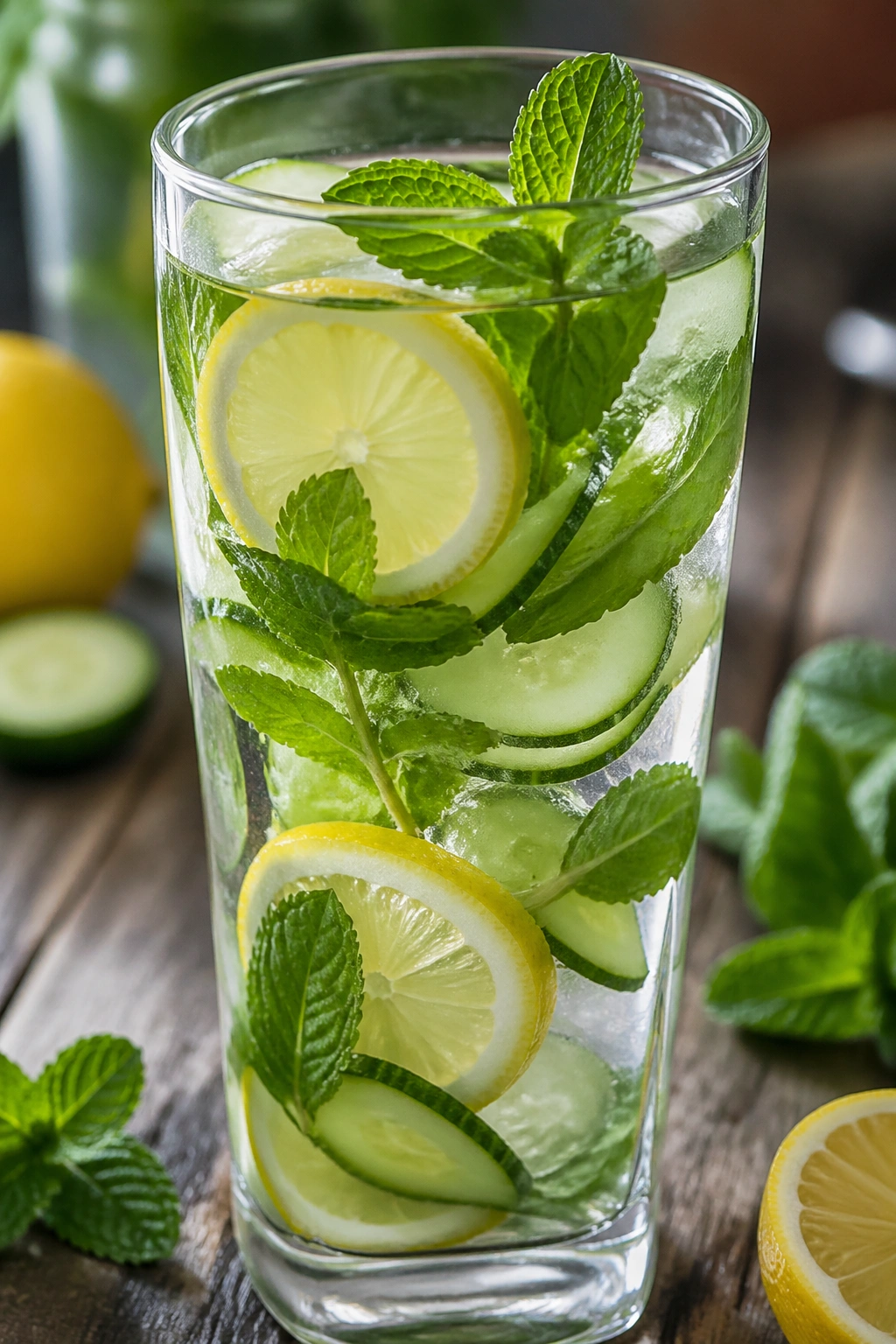
1. Lemon Cucumber Mint Water
Start here.
If someone tells me they want a flat-belly water that tastes fresh and not like a fruit salad left in the sun, lemon cucumber mint is the first pitcher I mention. The flavor is crisp, the ingredients are cheap, and it holds up well for a workday in the fridge.
Why this combo earns repeat status
Cucumber gives the water that cool, clean edge. Lemon adds acid and a bit of bitterness, which helps if you’re trying to step away from sweet drinks. Mint lifts the whole thing so it smells brighter before it even hits your tongue. That aroma matters more than people think; smell shapes flavor, and stronger flavor usually means you drink more.
Quick mix
- 1 liter cold water
- 1/2 English cucumber, thinly sliced
- 1/2 lemon, thinly sliced with seeds removed
- 8 to 10 mint leaves, lightly bruised between your fingers
- Steep time: 1 to 2 hours for the cleanest flavor
Leave the lemon in too long and the pith starts to take over. Four hours is fine. Overnight is pushing it.
Best use: drink a glass 15 to 20 minutes before meals if you’re using water to help with appetite control.
2. Grapefruit Rosemary Water
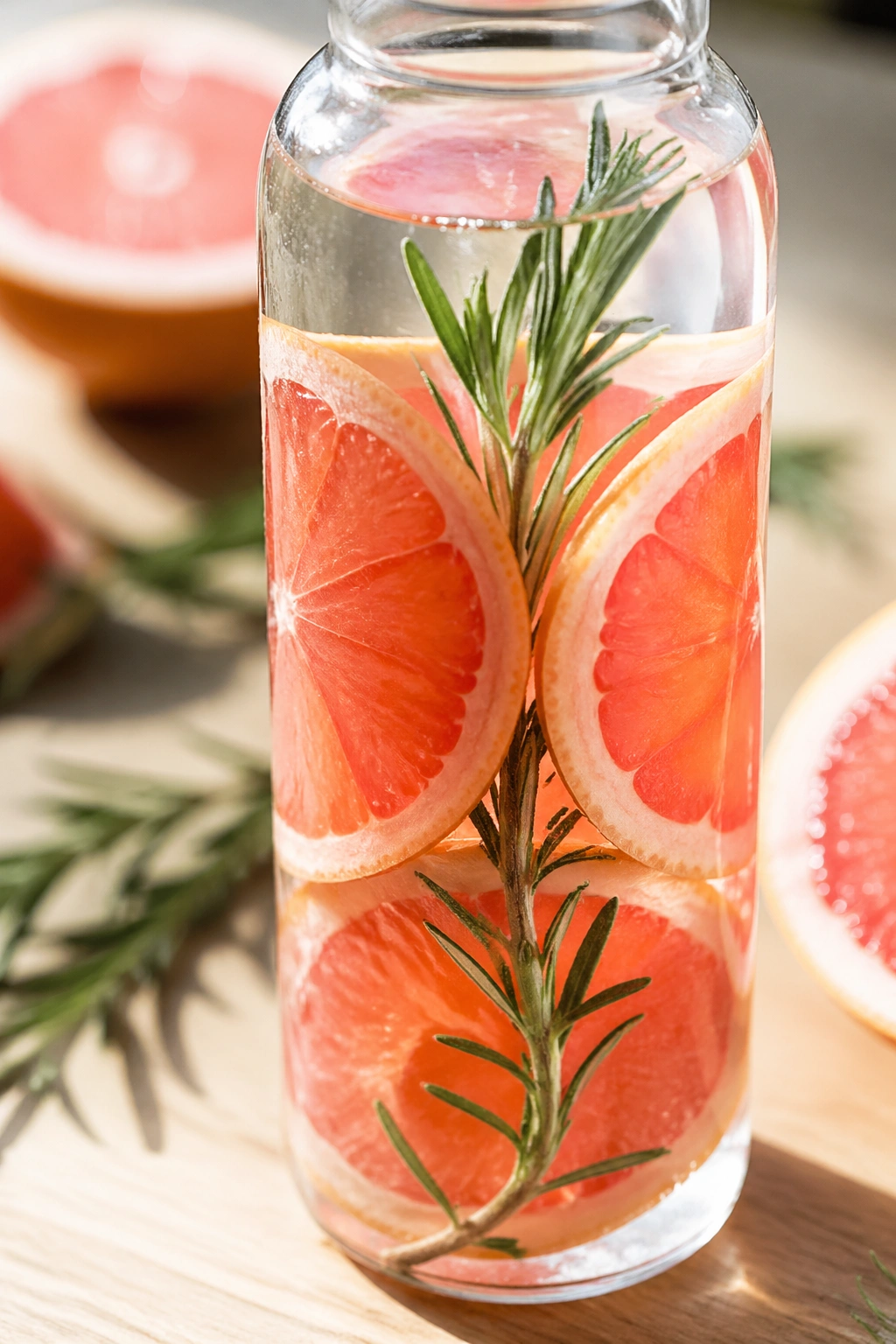
Grapefruit water is a sharp, grown-up answer to juice cravings. It tastes brisk, slightly bitter, and far more satisfying than plain water with a random lemon wedge floating in it.
That bitter edge is the point. Sweet drinks train your palate to expect a sugar hit every time you open the fridge. Grapefruit shifts you the other way. It gives you flavor without the calorie load of juice, which is one reason it fits neatly into a belly-fat plan. A 12- to 16-ounce serving of fruit juice can stack up calories fast; a grapefruit-infused water does not.
Rosemary changes the drink from “fruit water” into something that feels deliberate. One small sprig is enough for a 1-liter bottle. Any more and it starts tasting like a candle aisle. Slice 1/2 grapefruit into thin rounds, tuck in 1 small rosemary sprig, fill with cold water, and chill for about 2 hours.
One caution—an important one. Grapefruit can interact with medicines, including some statins and blood-pressure drugs. If that applies to you, skip this recipe and pick one of the citrus options below that uses orange or lemon instead.
3. Ginger Lemon Water
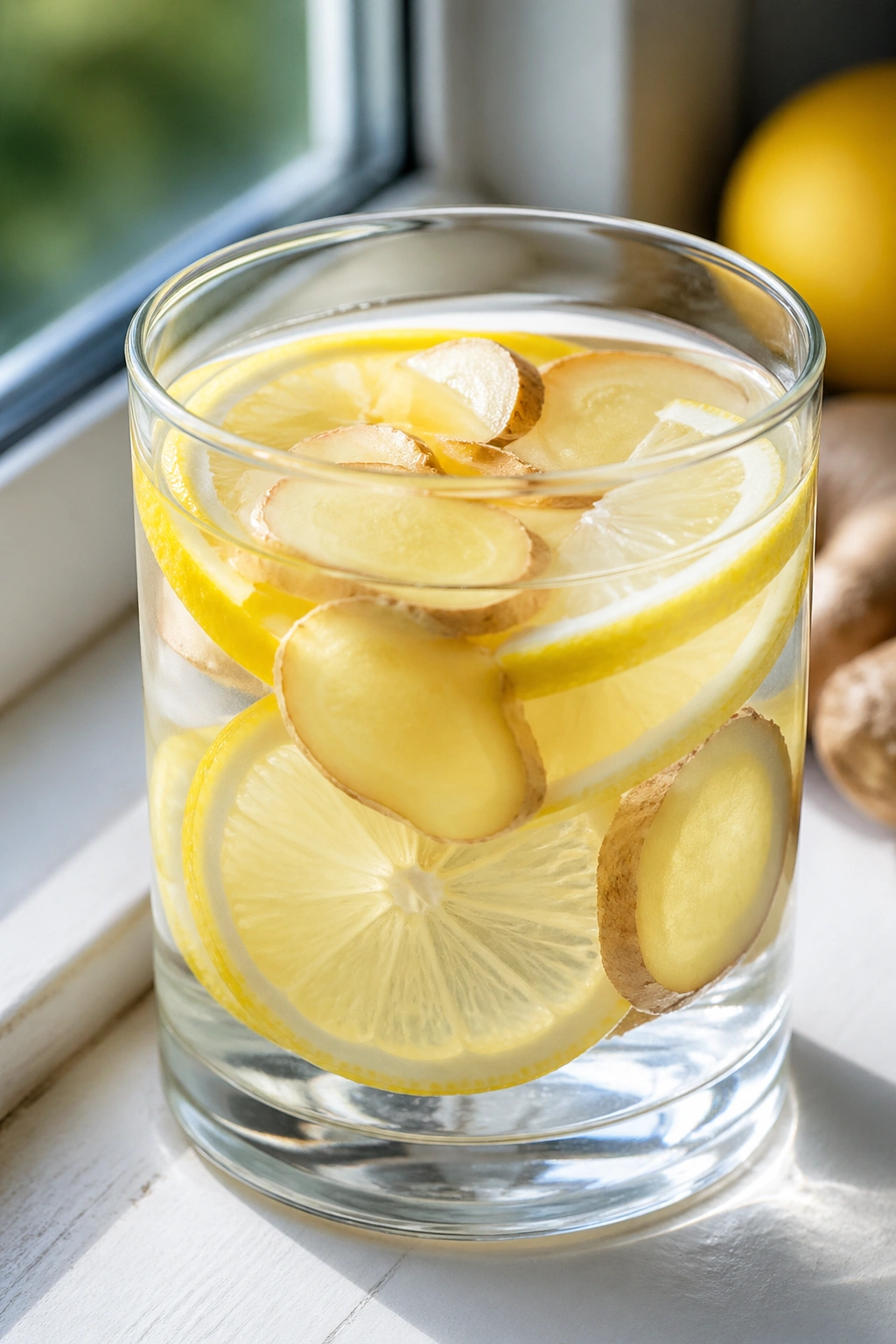
Why does ginger lemon water feel more satisfying than plain lemon water?
Part of it is the heat. Fresh ginger gives a slow, peppery warmth that makes you sip instead of gulp, and slower sipping often means you feel more content with the drink in your hand. Lemon brings brightness, though ginger is what keeps this one from tasting flat.
There’s also a practical angle. Ginger-heavy water works well first thing in the morning, especially if ice-cold water feels harsh on an empty stomach. You can make it cold, but I like it at cool room temperature too. Same ingredients, softer feel.
How to make it taste like something
Use 6 thin coins of fresh ginger and 1/2 lemon, sliced in 1 liter of water. For a stronger batch, pour 1 cup hot water over the ginger first, let it sit for 10 minutes, then add cold water and lemon. That wakes up the ginger faster than a straight cold infusion.
Do not dump in powdered ginger. It clouds the water and leaves gritty sludge at the bottom of the bottle. Fresh root is the move here.
4. Apple Cider Cinnamon Water
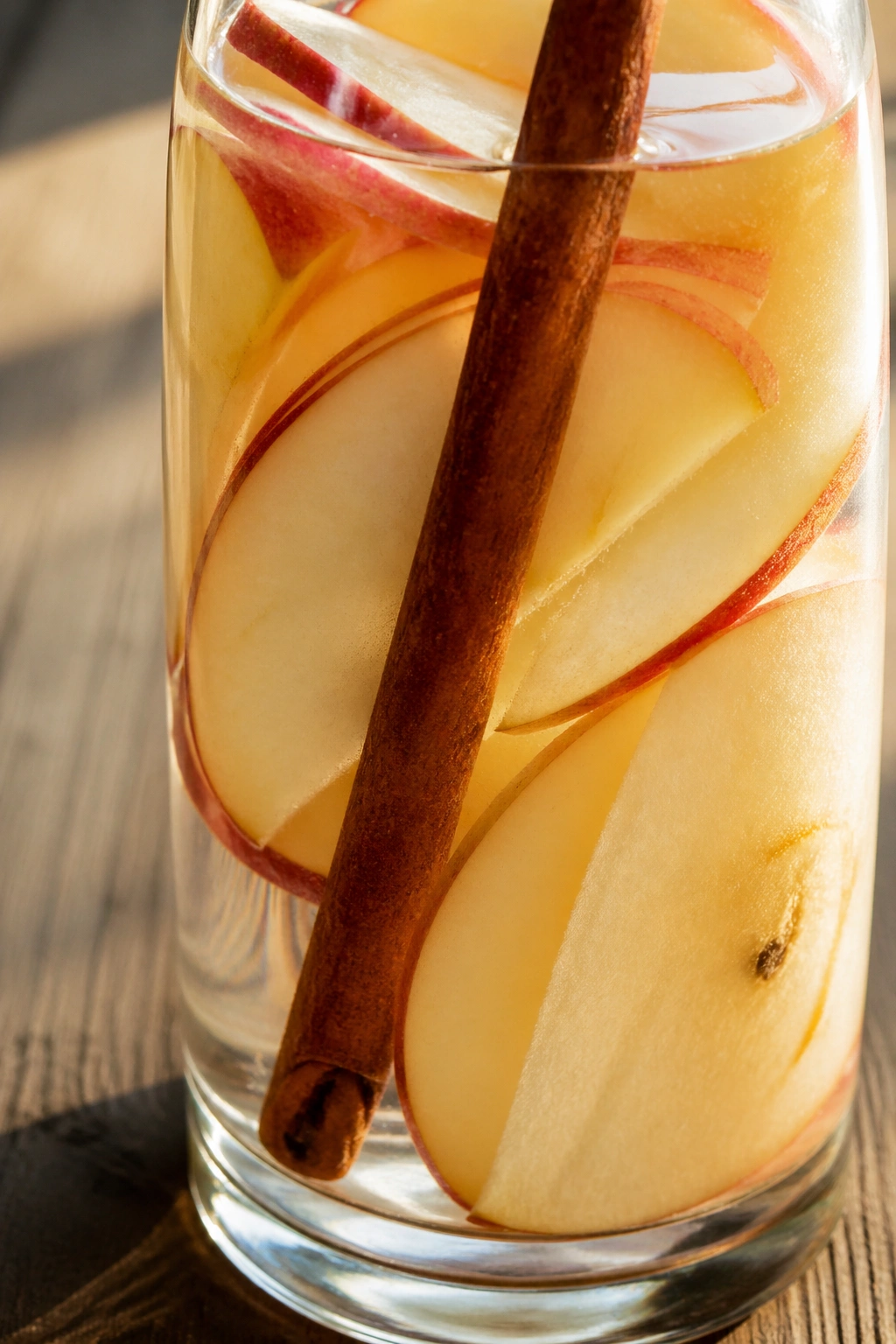
Picture the morning after a salty takeout dinner: your ring feels tighter, your stomach feels puffy, and plain water sounds dull. Apple cider cinnamon water is the sort of drink people reach for on that day, and when it’s mixed lightly, it works well.
No, apple cider vinegar does not target belly fat by itself. The value here is smaller and more realistic. The tang makes water more interesting, the cinnamon adds a warm scent, and the drink often scratches the “I want something with flavor” itch before you go hunting for a pastry or sweet coffee.
A good batch is restrained.
- 1 liter cold water
- 1 small apple, thinly sliced
- 1 cinnamon stick
- 1 to 2 teaspoons apple cider vinegar
- Steep time: 1 hour
More vinegar is not better. Push past 2 teaspoons per liter and the drink starts tasting harsh. Use a straw if you sip it slowly, and rinse your mouth with plain water after. Vinegar can be rough on enamel. If you deal with reflux, this one may not be your friend.
5. Strawberry Basil Water
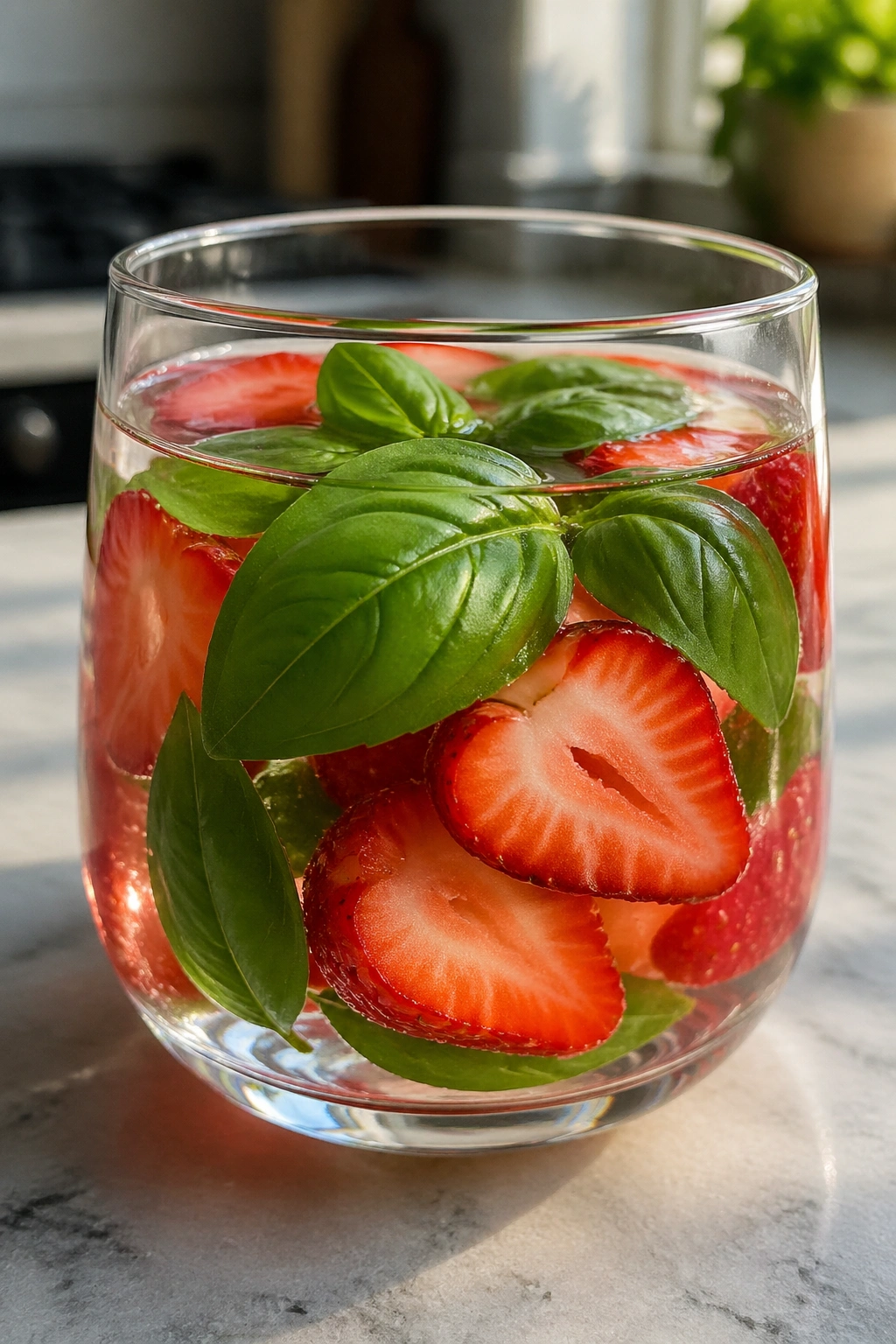
This is one of the few detox waters that can knock down a dessert craving without pretending to be dessert itself. Strawberry basil water smells sweet before it tastes sweet, which is why it works so well in the late afternoon or after dinner.
Ripe strawberries do most of the heavy lifting. If they are pale, hard, and flavorless, your water will be too. Slice 4 to 5 medium strawberries, add 4 basil leaves, and fill a 1-liter bottle with cold water. Give the basil a quick slap between your palms first. It sounds silly. It works.
A gentle muddle changes the whole drink. Press the berries once or twice with the back of a spoon—lightly, not into jam—and you’ll get better color and more flavor within 20 to 30 minutes. Leave the fruit intact and the infusion stays cleaner but weaker.
I use this one when someone is trying to replace sweetened iced tea. The switch feels less painful.
Basil can go from fresh to medicinal fast, so fish the leaves out after a couple of hours if you’re keeping the bottle around all day.
6. Pineapple Ginger Mint Water
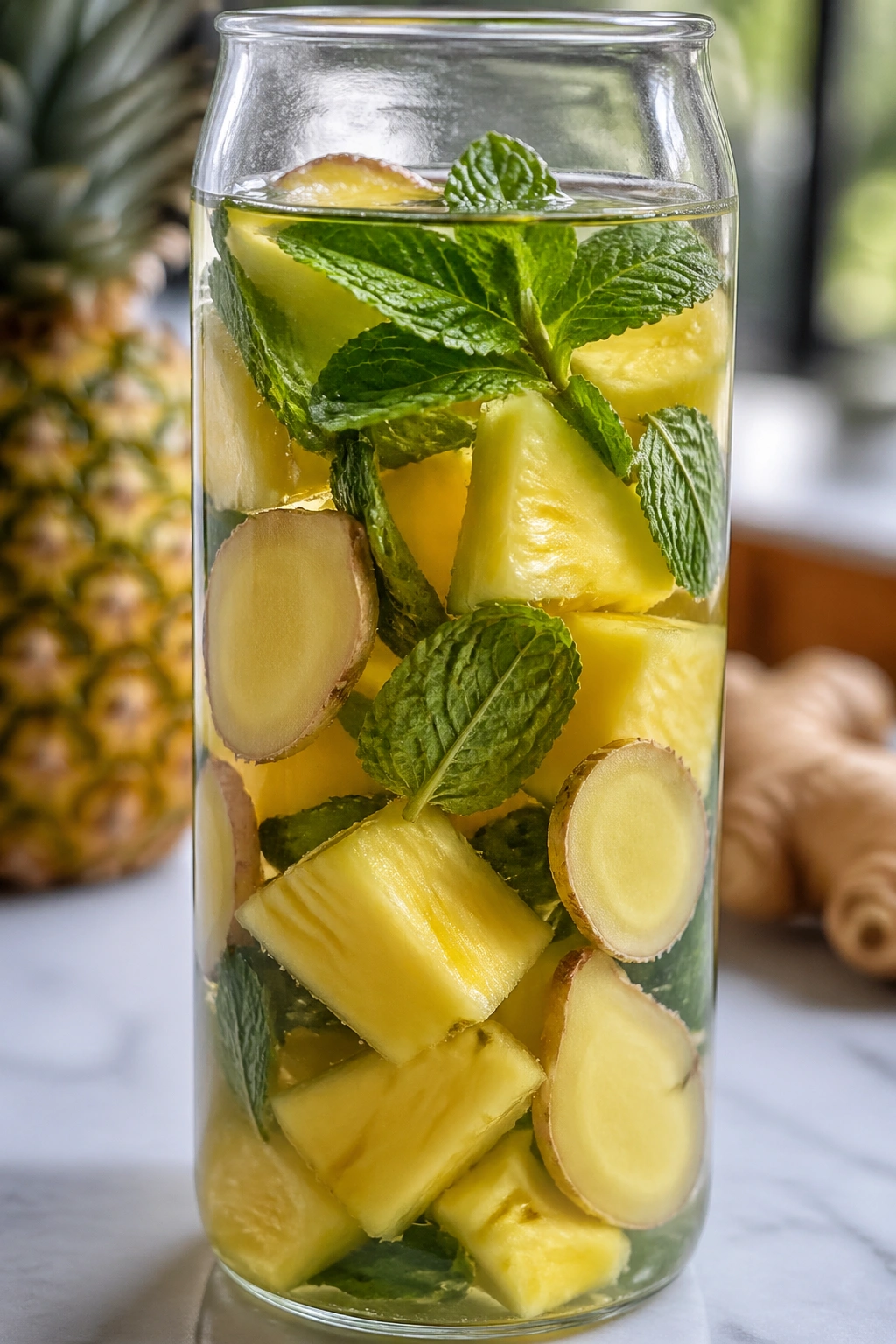
Unlike pineapple juice, which can be a sugar bomb in a tall glass, pineapple ginger mint water gives you the tropical smell and a little natural sweetness without turning your drink into liquid dessert.
That difference matters if belly fat loss is the goal. People often focus on food and forget the calories they drink. Swapping a large bottled juice for infused water a few times each week adds up faster than any “fat-burning” ingredient ever will.
This one is best for anyone who is trying to move away from sweet coffee drinks, bottled smoothies, or sports drinks after easy workouts. Use 1 cup pineapple chunks, 4 thin slices fresh ginger, and 6 mint leaves in 1.25 liters of water. Chill it for 2 to 4 hours. The longer it sits, the sweeter it smells.
Pineapple breaks down fast. After overnight storage, it can taste faintly fermented and a bit funky—there’s no elegant way to say that. Make it in the morning, drink it the same day, and you’ll get the best version.
7. Orange Blueberry Water
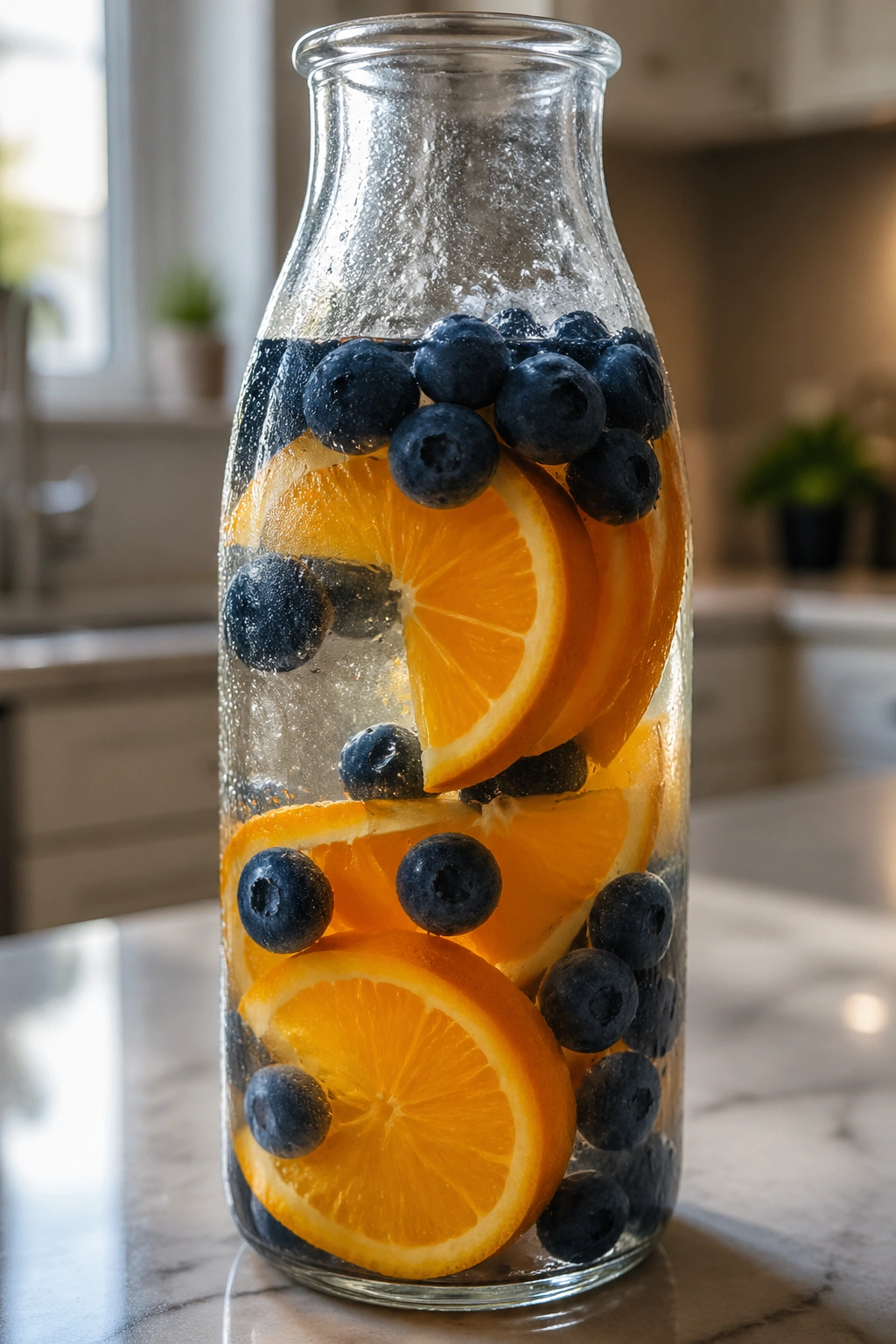
Orange and blueberry is softer than lemon-based water and easier for people who find sharp citrus tiring. It tastes rounder, less aggressive, and a little fuller on the tongue, which is why I like it for big 32-ounce bottles you plan to carry for hours.
What makes it useful
Blueberries do not dump flavor into water as quickly as raspberries or strawberries. They need a little help. Orange brings immediate brightness, while the berries slowly deepen the drink as they sit. If you lightly crack a few berries with your fingers, the infusion goes from weak to worthwhile.
Quick build
- 1 liter cold water
- 1/2 orange, thinly sliced
- 1/4 cup blueberries
- Optional: crack 6 to 8 berries for more flavor
- Steep time: 2 hours
Use this when you want something mild enough to drink steadily through the day. It also works well with sparkling water poured over the infused fruit at serving time, though I would not leave carbonation sitting in the bottle for hours. It goes flat and sad.
Small tip: navel oranges can turn bitter faster than mandarins. If you’ve got a choice, use the sweeter orange.
8. Watermelon Lime Water
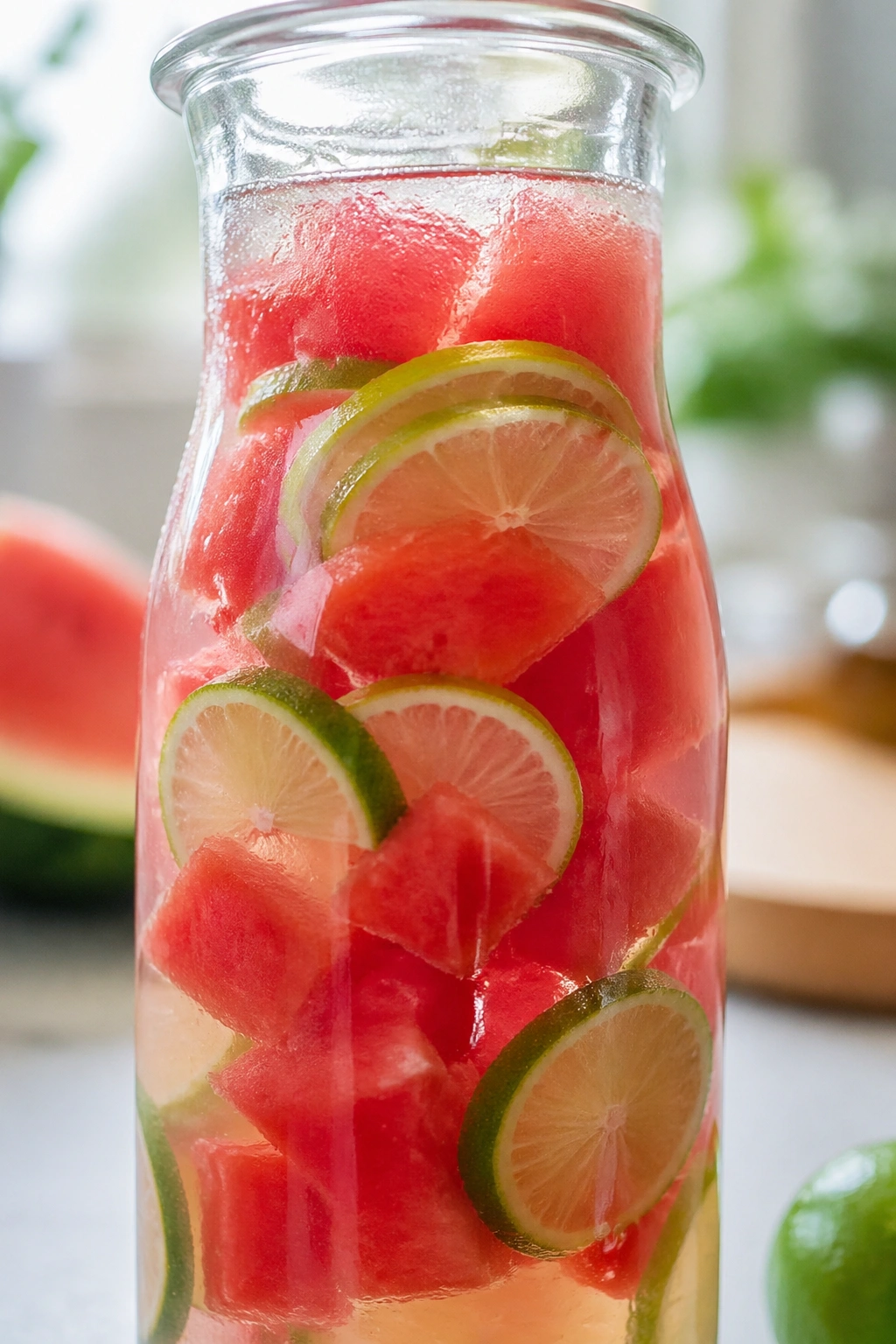
This is the bottle I reach for in hot weather when plain water feels like homework. Watermelon gives a quick hit of fresh melon aroma, and lime keeps the drink from drifting into candy territory.
You do need to build it with some care. Big chunks of watermelon look nice and contribute almost no flavor. Small cubes—or better, lightly crushed pieces—work far better. Use 3/4 cup watermelon, 1/2 lime in thin rounds, and 1 liter cold water. Press the melon once or twice with a spoon before adding the water.
Drink it the same day. Melon goes mealy, and once that happens the water loses its clean finish. A few ice cubes help, and a pinch of chopped mint can work, though I like this one plain because the watermelon is already soft and fragrant.
If you tend to grab sports drinks after a walk or an easy gym session, this is a cleaner swap. You’ll still want proper electrolytes after long, sweaty training, but for everyday movement, flavored water usually does the job.
9. Kiwi Cucumber Water
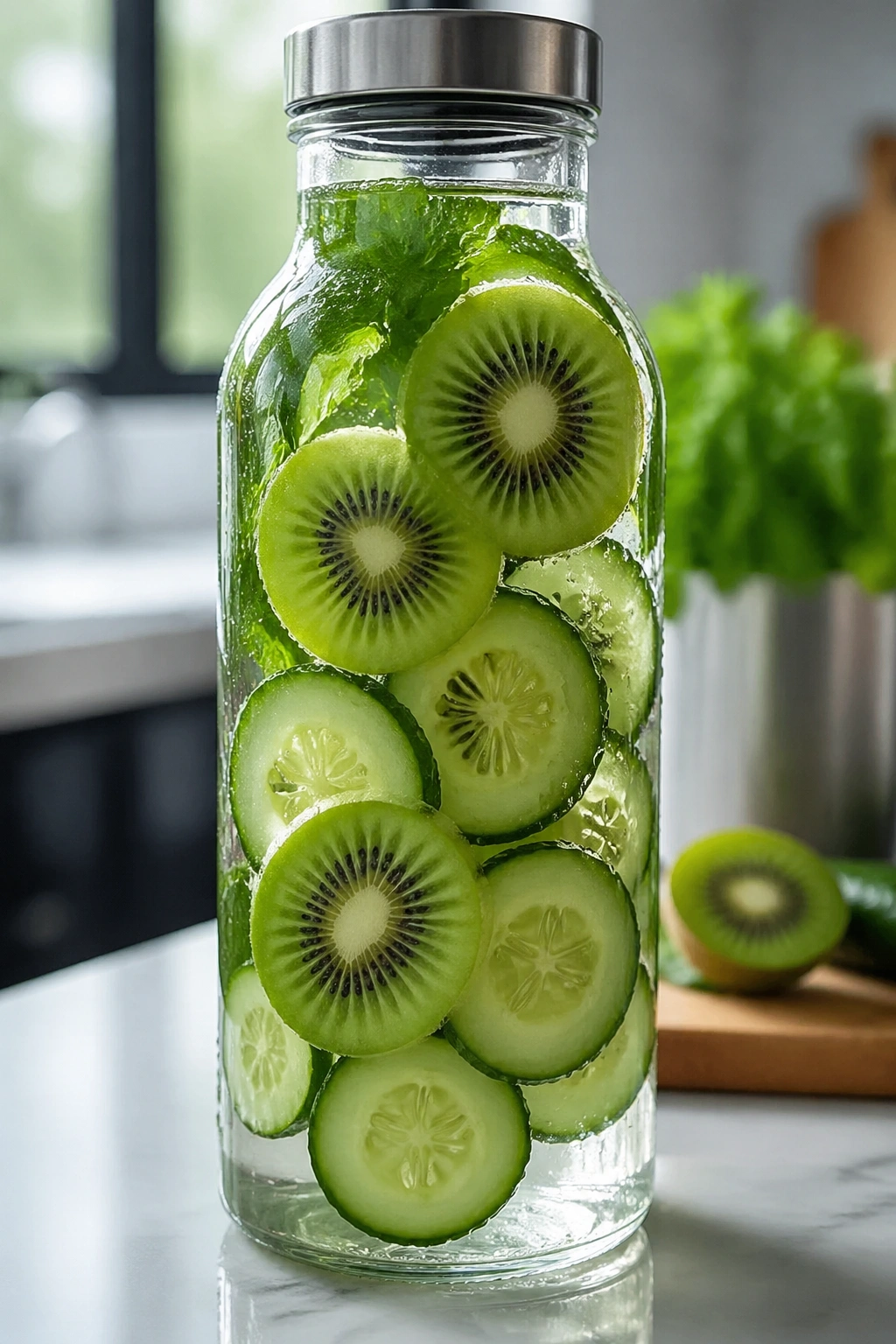
Why use kiwi in water at all? Because kiwi brings tartness without the bitterness lemon peel can develop, and that gives you a brighter bottle after a longer steep.
Peel 2 kiwis, slice them thin, and add them to 1/2 cucumber in 1 liter of cold water. Cucumber keeps the drink fresh and cooling; kiwi adds a tropical-acid note that lands somewhere between strawberry and lime. It’s a little odd on paper. In the bottle, it works.
The texture matters here. If the kiwi is rock hard, wait a day. Slightly soft fruit releases more flavor. Overripe kiwi turns mushy and makes the water look rough, so aim for the middle.
Best way to use it
Give this one 2 to 3 hours in the fridge. It’s a smart option for people who are bored with lemon but still want a tart drink before meals. I would not keep it past overnight. Kiwi seeds are fine, though the fruit itself can break down enough to make the last glass cloudy.
No magic belly-fat chemistry here—just a smart way to make another liter of water easier to finish.
10. Green Apple Lemon Parsley Water
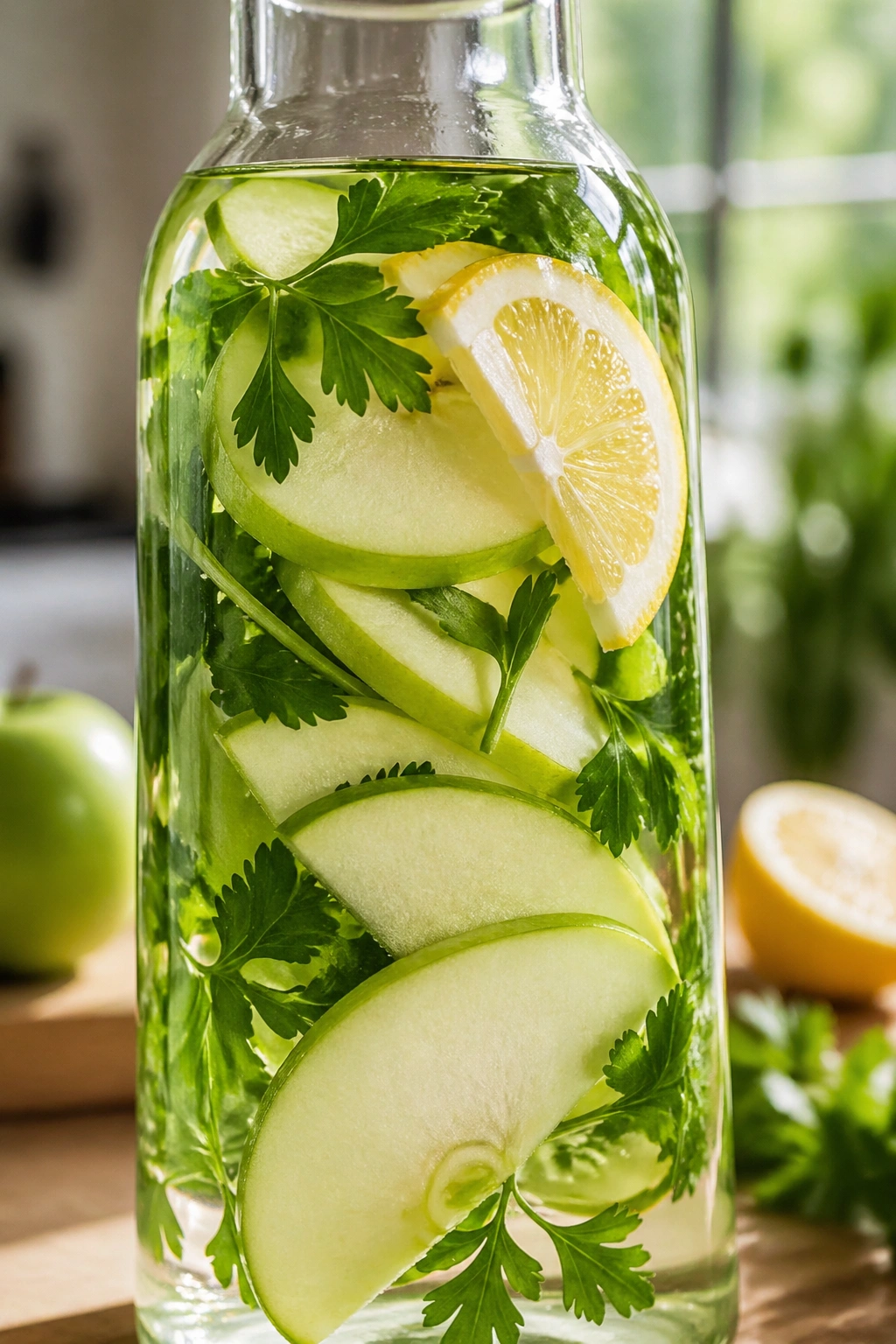
A lot of people side-eye this combination the first time they hear it. Fair. Green apple, lemon, and parsley sounds like something you’d invent while staring into a half-empty fridge. Then you taste it and realize it has a clean, almost crisp-salad sharpness that wakes up your mouth.
The apple should be tart. A sweet red apple makes the whole thing too soft. Use 1/2 green apple, thinly sliced, 1/4 lemon, and a small handful of flat-leaf parsley in 1 liter of water. Flat-leaf works better than curly. Curly looks decorative and tastes like almost nothing.
A few details make this recipe better:
- Slice the apple thin so it infuses faster.
- Use parsley stems too; they carry more flavor than the leaves.
- Keep the lemon modest or it bulldozes the parsley.
- Drink within 6 to 8 hours for the cleanest taste.
Parsley is not “detoxing” your body in some mystical way. What it does add is a green, savory edge that makes this water feel less like fruit punch and more like something you can drink with lunch.
11. Blackberry Sage Water
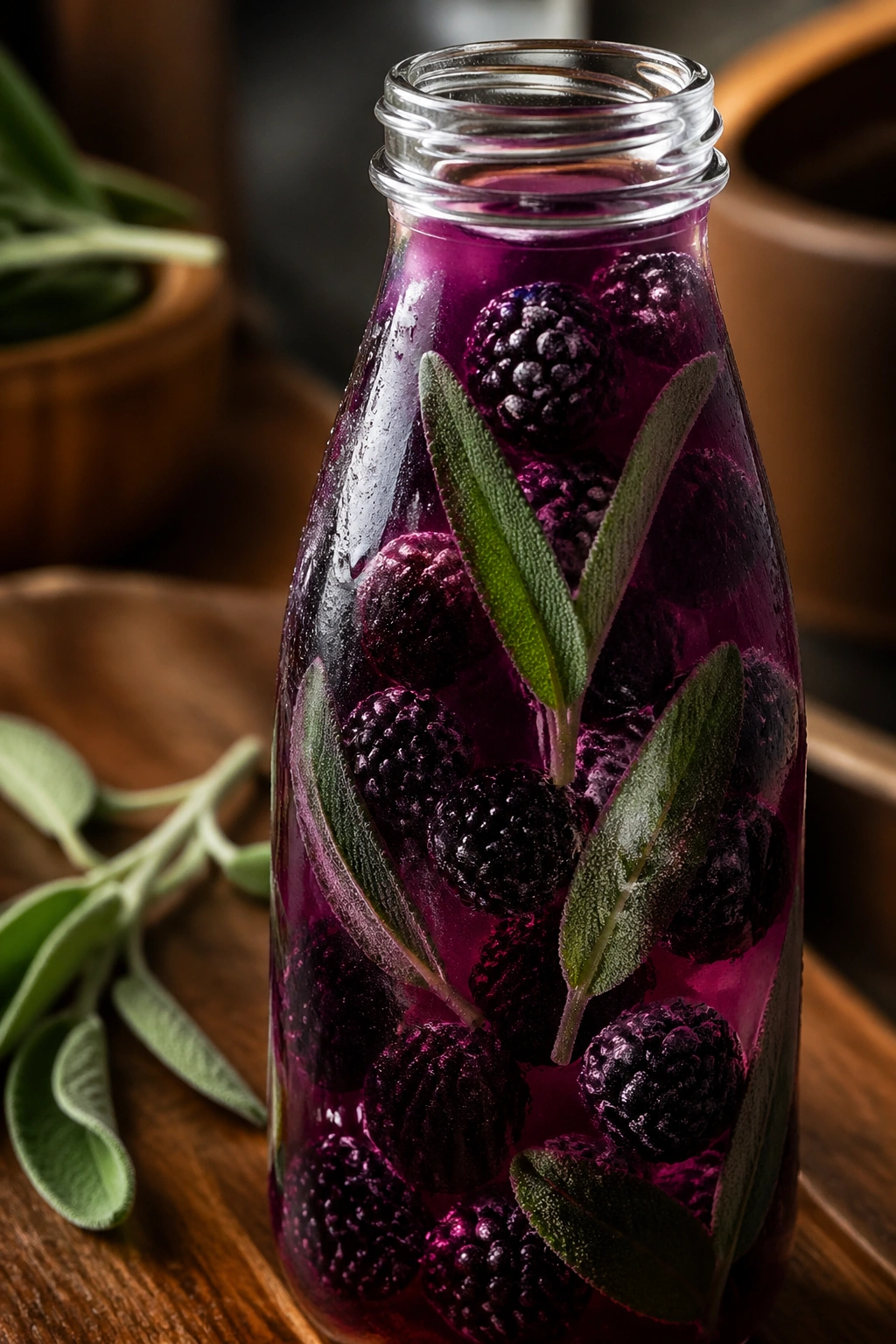
Blackberry sage has more personality than most infused waters. It is darker, woodier, and less “spa day” than the usual cucumber-mint lineup. I like that about it.
Frozen blackberries work well here. Better than fresh, sometimes. They crack open as they thaw, which means more color and more berry flavor with less effort. Drop 6 to 8 blackberries into a 1-liter bottle, add 2 small sage leaves, fill with cold water, and give it at least 1 hour.
Go easy on the sage. One leaf adds a savory backbone. Two gives balance. Three can push the drink toward roast chicken territory, and that is not where you want your water going.
This is a smart recipe for evening sipping because it feels deeper and less sharp than citrus waters. If you’re the kind of person who wants “a little something” after dinner, a strong-flavored infused water can interrupt that habit better than plain water can.
And yes, the color gets a little moody and cloudy. That’s part of the charm.
12. Celery Lime Water
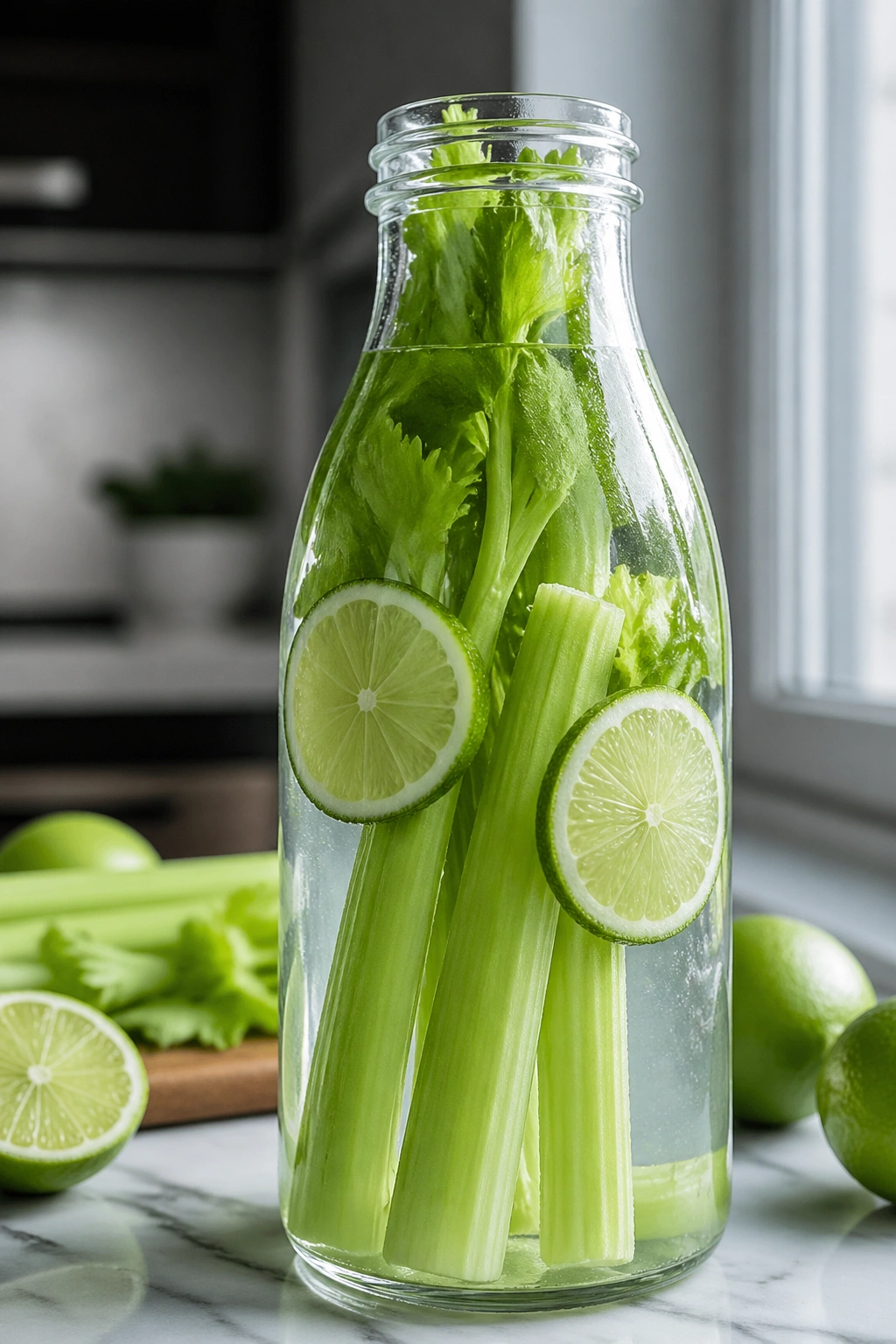
Unlike cucumber, which reads cool and mild, celery gives water a crisp green snap. It tastes sharper, more savory, and better suited to meals than to random sipping.
That makes celery lime water useful for a specific kind of person: someone who is trying to stop drinking soda or juice with lunch and dinner but does not enjoy sweet flavors at every meal. A fruity bottle beside a sandwich can feel wrong. Celery lime does not.
Use 1 rib celery, sliced very thin, leafy top included if it looks fresh, plus 1/2 lime in 1 liter of ice-cold water. Give it 45 to 60 minutes. Longer is fine, though the celery gets a little stringy if you leave it overnight.
There’s a clean, almost tonic-like quality to this one. I would pair it with savory meals, especially ones that usually trigger a craving for cola—burgers, wraps, takeout bowls, tacos. If your belly-fat plan keeps getting blown up by what you drink at dinner, a water with more bite can help more than a bland fruit infusion ever will.
13. Fennel Orange Water
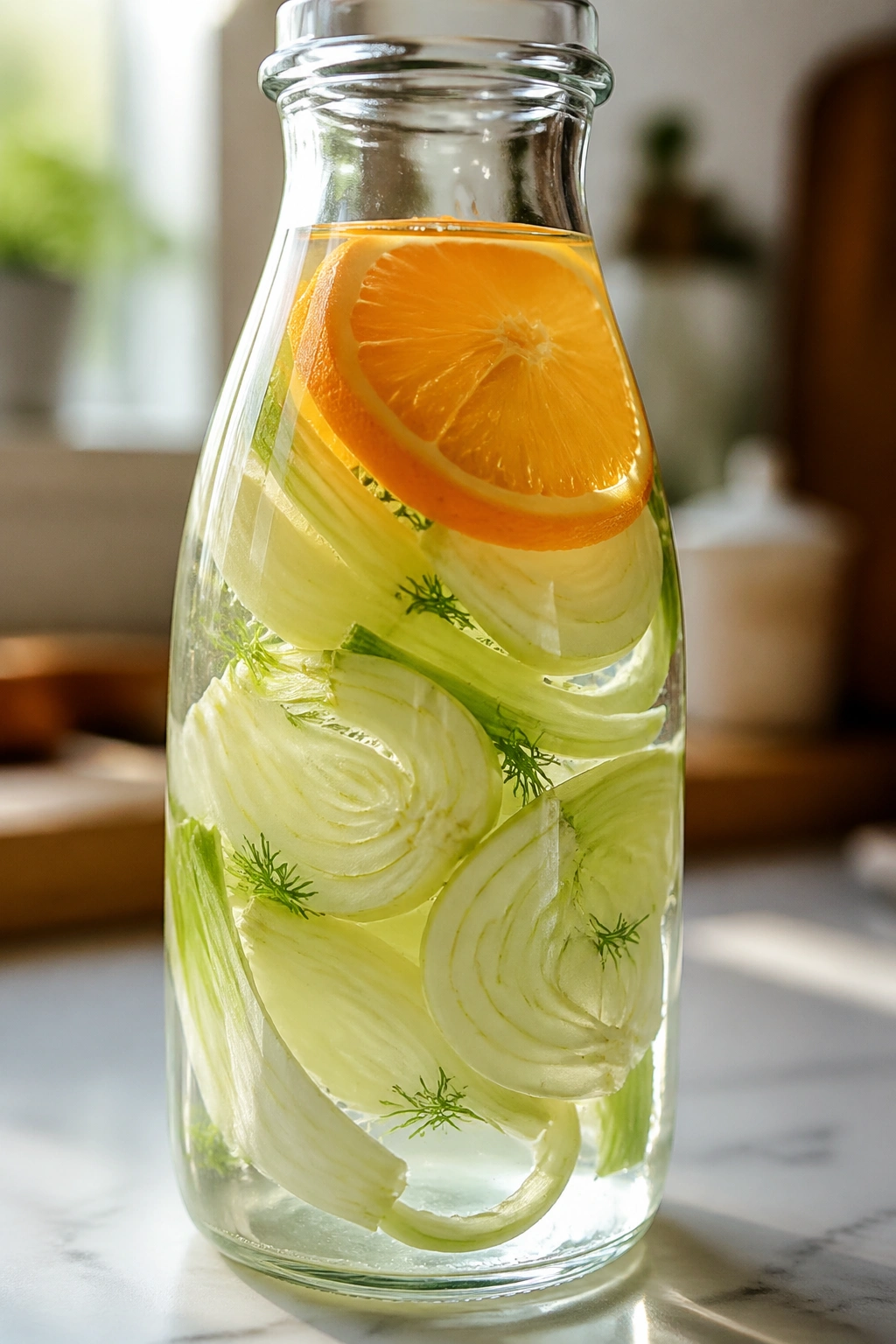
Fennel in water sounds odd until you remember how well fennel and citrus work together on a plate. The combo makes sense fast. Orange softens fennel’s licorice note, and fennel gives the bottle a fresh, cooling finish that feels especially good after a heavy meal.
Why it works after rich food
This one does not erase a giant dinner. Nothing does. What it can do is give you something refreshing enough to sip instead of heading straight for another sweet drink. That’s the job.
Quick setup
- 1/4 small fennel bulb, shaved thin
- 1/2 orange, sliced
- 1 liter cold water
- Steep time: 1 to 2 hours
Use a mandoline if you have one; thin fennel releases flavor far better than chunky slices. If the bulb came with feathery fronds, toss in a pinch. They smell stronger than they taste, though they make the bottle look lively.
Taste note: if you already know you dislike black licorice, start with less fennel. A little goes a long way.
14. Pear Ginger Cardamom Water
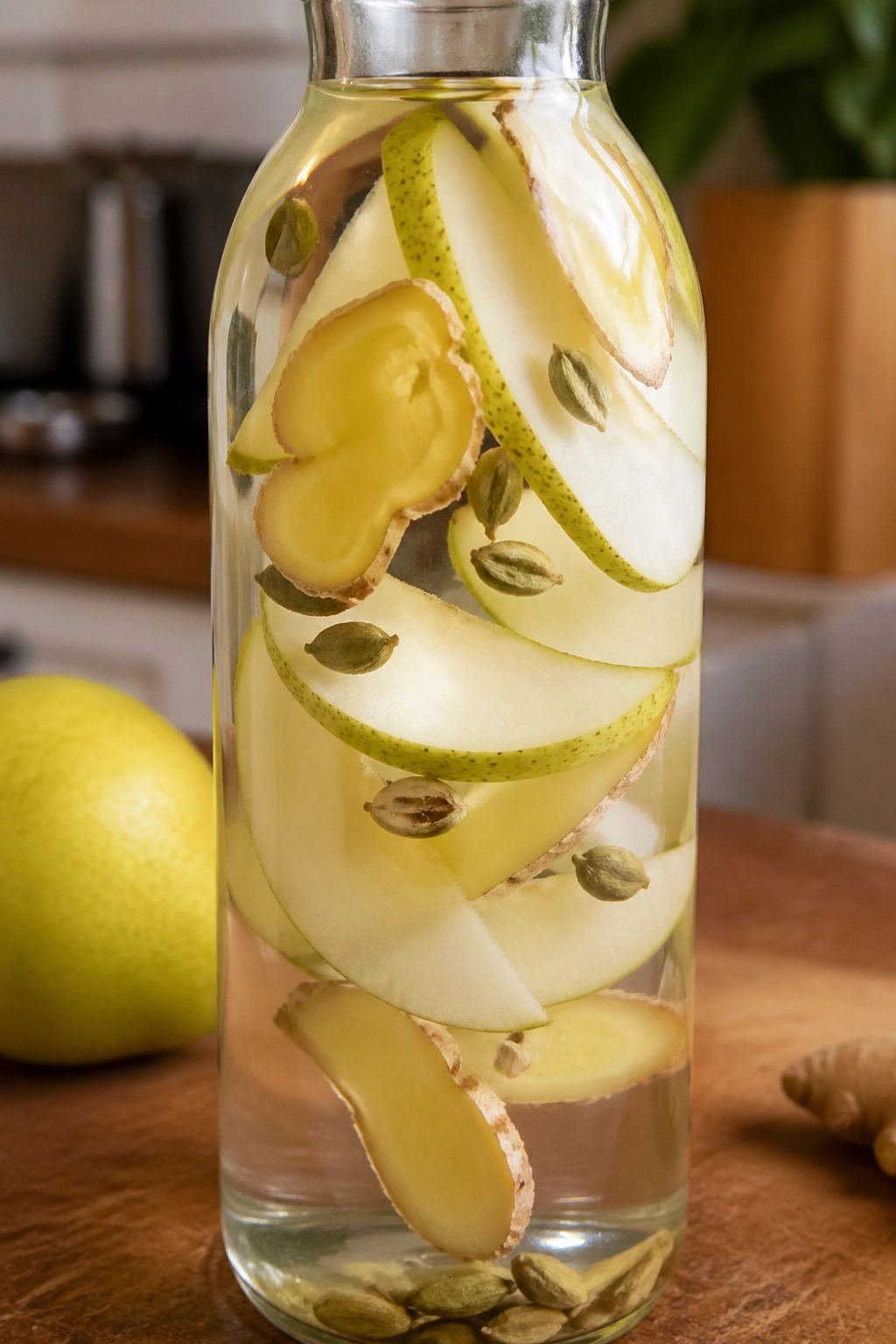
Pear ginger cardamom water is subtle on purpose. It is not the bottle you make when you want loud citrus. It is the one you make when you want something soft, fragrant, and a little different from the usual gym-bag flavors.
Pear alone tends to disappear into water. Ginger fixes that. Cardamom—the green pods, lightly cracked—adds a cool, almost floral spice that hangs around after the sip. Use 1/2 ripe pear, 3 thin ginger slices, and 2 lightly crushed cardamom pods in 1 liter of water. Give it 2 hours in the fridge.
Two things can go wrong. First, underripe pears do almost nothing. Second, too much cardamom tastes like soap. Stick with two pods for a liter unless you already know you love the flavor.
I like this one during colder months when a sharp citrus water feels a bit aggressive. It also works as a bridge drink for people who lean on sweet chai or flavored lattes. Different vibe, same comfort signal, far fewer calories.
15. Pineapple Cucumber Cilantro Water
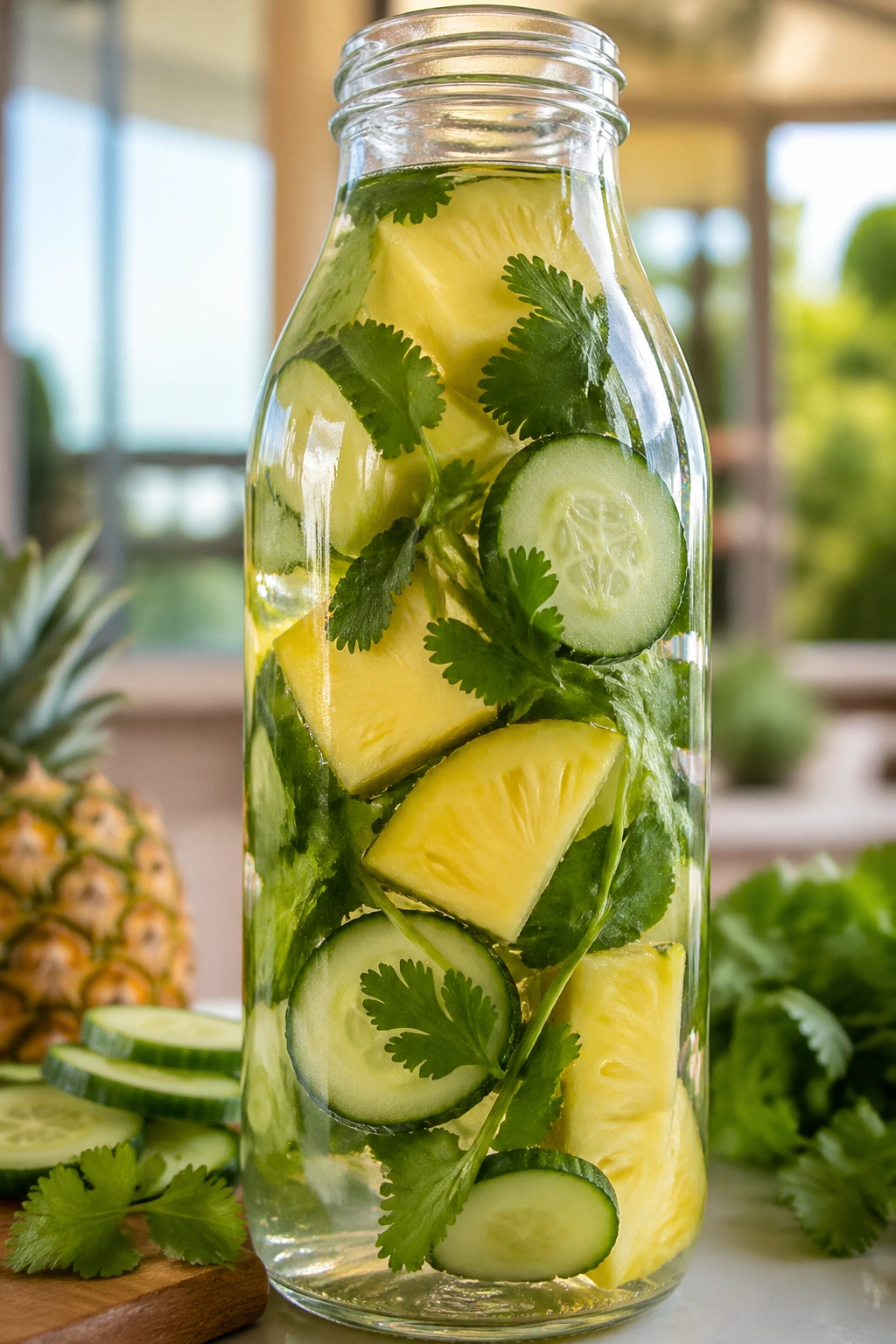
Can a detox water taste tropical and green at the same time? Yes, and pineapple cucumber cilantro pulls it off without becoming weirdly savory.
The trick is using cilantro stems, not a huge tuft of leaves. Stems carry plenty of flavor and infuse more neatly. Cucumber cools the pineapple, the cilantro adds a fresh herb edge, and the whole thing feels built for a spicy lunch where soda usually sneaks onto the table.
Mix it like this
Use 1/2 cup pineapple chunks, 1/3 cucumber, sliced, and 3 to 4 cilantro stems with a few leaves attached in 1 liter of cold water. Chill for 90 minutes to 2 hours. If you love cilantro, add one extra stem. If you’re on the fence, do not.
This is one of those recipes that sounds more “healthy” than fun until you try it. Then it clicks. It tastes cleaner than pineapple mint, less sweet than pineapple orange, and more useful with food.
And yes—if cilantro tastes like soap to you, skip this one. Genetics wins that argument.
16. Turmeric Orange Water
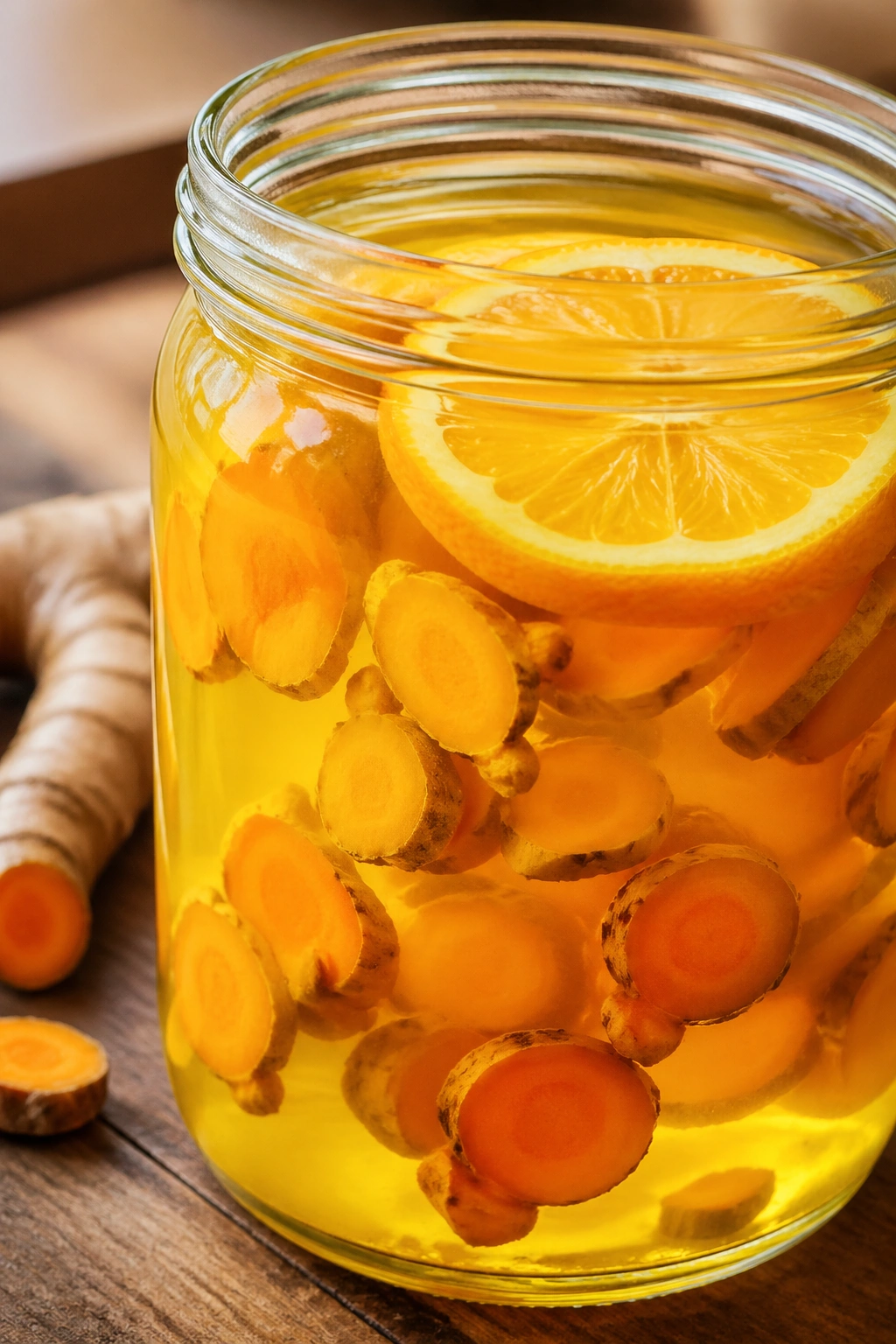
A cutting board stained yellow is usually the first sign that turmeric orange water is going to taste better than it sounds. Fresh turmeric has an earthy, peppery warmth that feels gentler than raw ginger and more interesting than plain orange water.
You want the fresh root here, not a spoonful of powder dumped into the bottle. Powder turns the water gritty and leaves a muddy layer at the bottom. Slice 4 to 5 thin coins of fresh turmeric, add 1/2 orange, and fill a 1-liter jar with cold water. Two hours is enough to pull flavor and color.
A few smart notes:
- Wear an apron or old shirt if you’re slicing turmeric in a rush. It stains.
- Remove the orange after 4 to 6 hours if you want to avoid bitterness.
- Add a squeeze of orange juice only if the fruit is bland; most batches do not need it.
- Use a glass jar if you can. Plastic can hold onto the yellow tint.
The flavor lands somewhere between citrus water and light herbal tea. It’s a quiet recipe, though it keeps people interested in the bottle—which is half the battle.
17. Pomegranate Lime Mint Water
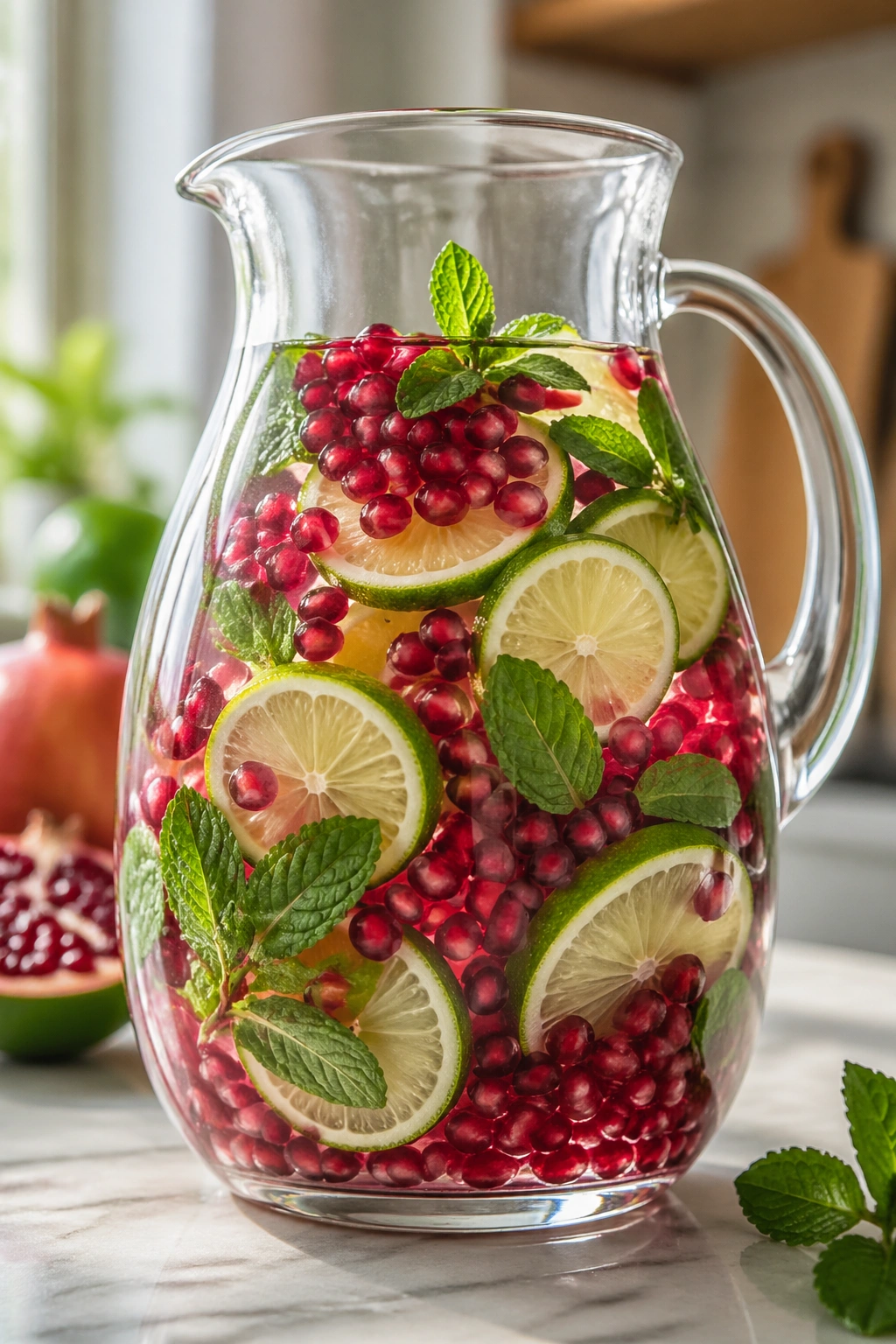
Pomegranate seeds look dramatic in a pitcher, though they need a little encouragement before they flavor the water. Press them lightly—not enough to spray the kitchen, enough to crack some of the arils—and the whole thing wakes up.
Lime and mint do the fast work. They make the first sip bright and cool. Pomegranate comes in later with a tart, almost wine-like depth that makes the water feel more substantial than most fruit infusions. That’s why I like it for evenings, or for parties where everyone else is drinking something sweeter.
Use 1/4 cup pomegranate arils, 1/2 lime, and 6 mint leaves in 1 liter of water. If you want a stronger drink without more fruit, make the infusion in still water and top your glass with chilled sparkling water right before drinking.
This one also teaches a useful lesson: visual appeal helps habits stick. A bottle you enjoy looking at gets refilled more often. Not always. Often enough to matter.
18. Hibiscus Citrus Water
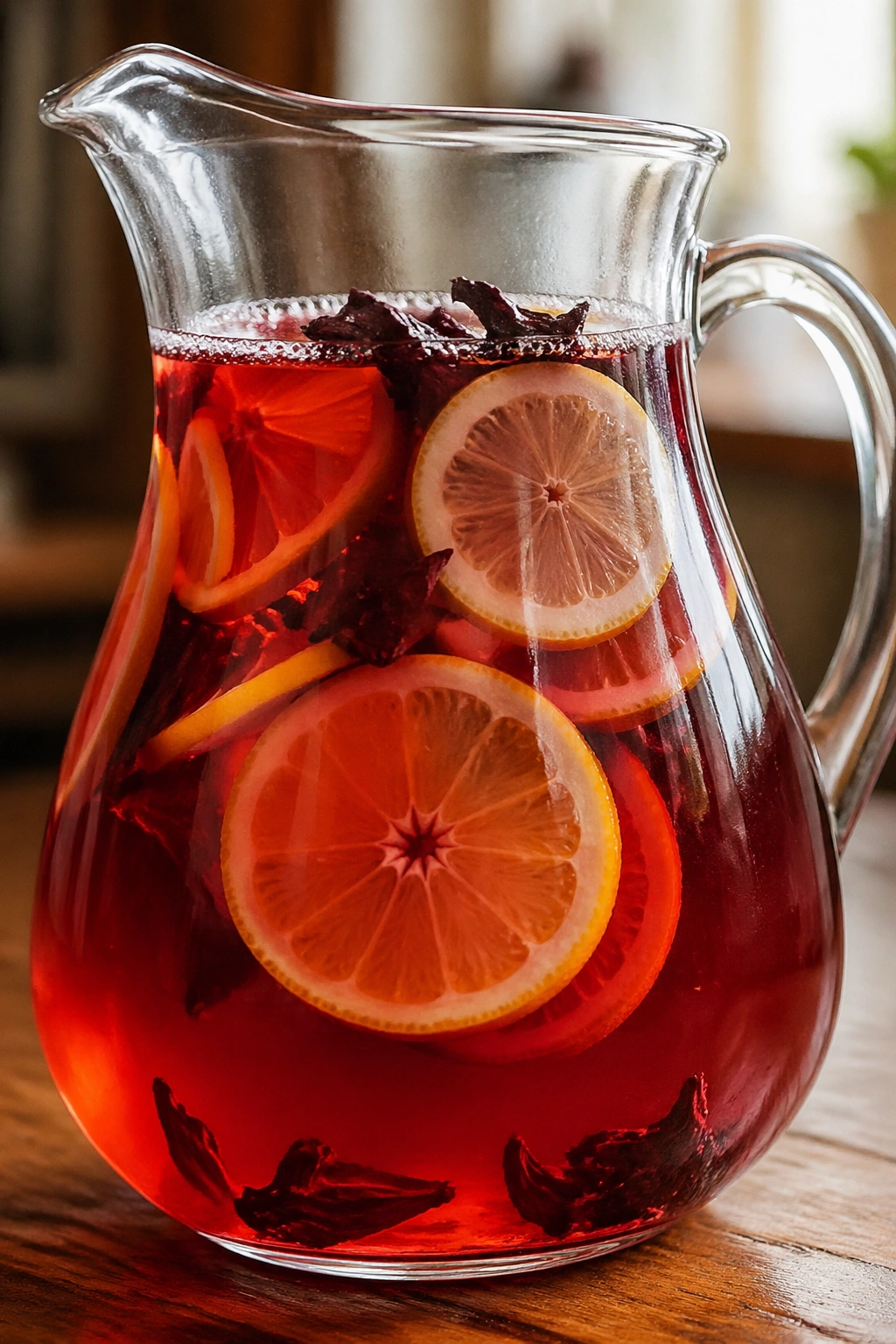
Unlike most detox waters, hibiscus citrus water has enough flavor to replace sweet tea for people who need a drink with real presence. It’s tart, ruby red, and sharp in a way plain fruit-infused water rarely manages.
That strength is the whole reason to make it. Weak-flavored water works for some people. Others need something with a firm edge or they drift right back to soda, sweet tea, or juice. Hibiscus covers that gap without piling on sugar.
Here’s the easy method: steep 2 hibiscus tea bags or 2 tablespoons dried hibiscus in 2 cups hot water for 5 minutes. Chill it, then pour it into a pitcher with 2 more cups cold water, 1/2 orange, and 1/2 lemon. Serve over ice. If you want a lighter bottle, stretch it with another cup or two of water.
One caution worth knowing: hibiscus can nudge blood pressure lower in some people. If you already take medicine for blood pressure, treat this like any other strong herbal drink and pay attention to how you feel.
19. Raspberry Lemon Mint Water
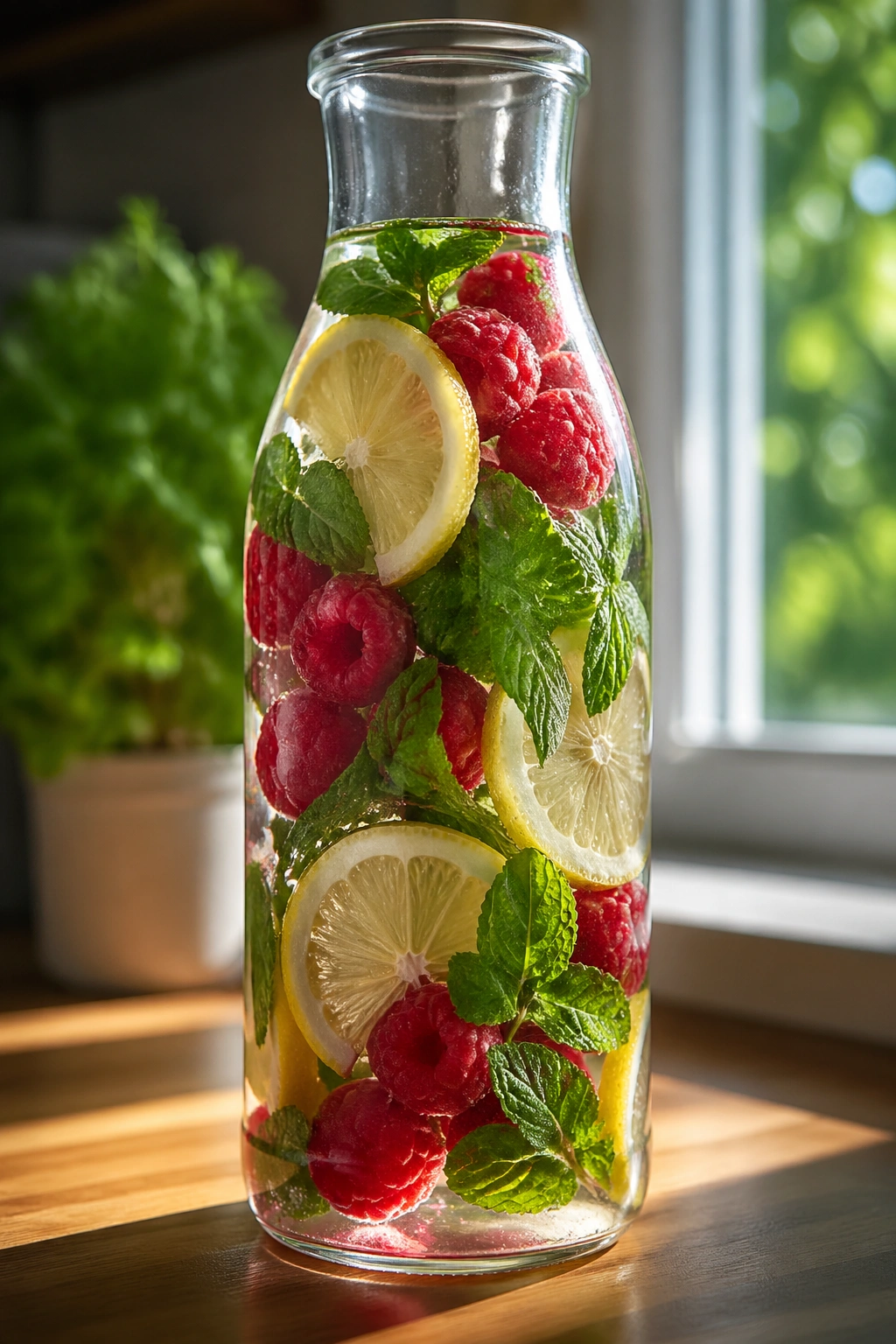
Raspberries are generous. Drop them into water and they start sharing flavor fast, which makes raspberry lemon mint water one of the least fussy recipes on the list.
Why it earns a spot
A lot of infused waters look nice and taste faint. Raspberries do not have that problem. Even 6 to 8 berries can turn a plain liter of water pink and tangy within half an hour. Lemon gives structure, mint keeps the whole thing from leaning too sweet.
Fast recipe
- 1 liter cold water
- 6 to 8 raspberries
- 1/4 to 1/2 lemon, thinly sliced
- 5 mint leaves, bruised
- Steep time: 30 minutes for light flavor, 1 to 2 hours for a stronger bottle
If you’re replacing an afternoon snack run with a drink, this is a good one. It tastes lively enough to feel like a treat, though it keeps calories low unless you mash the fruit to death and drink every last bit.
Quick warning: raspberries break apart fast. Make this one for same-day drinking.
20. Cranberry Orange Clove Water
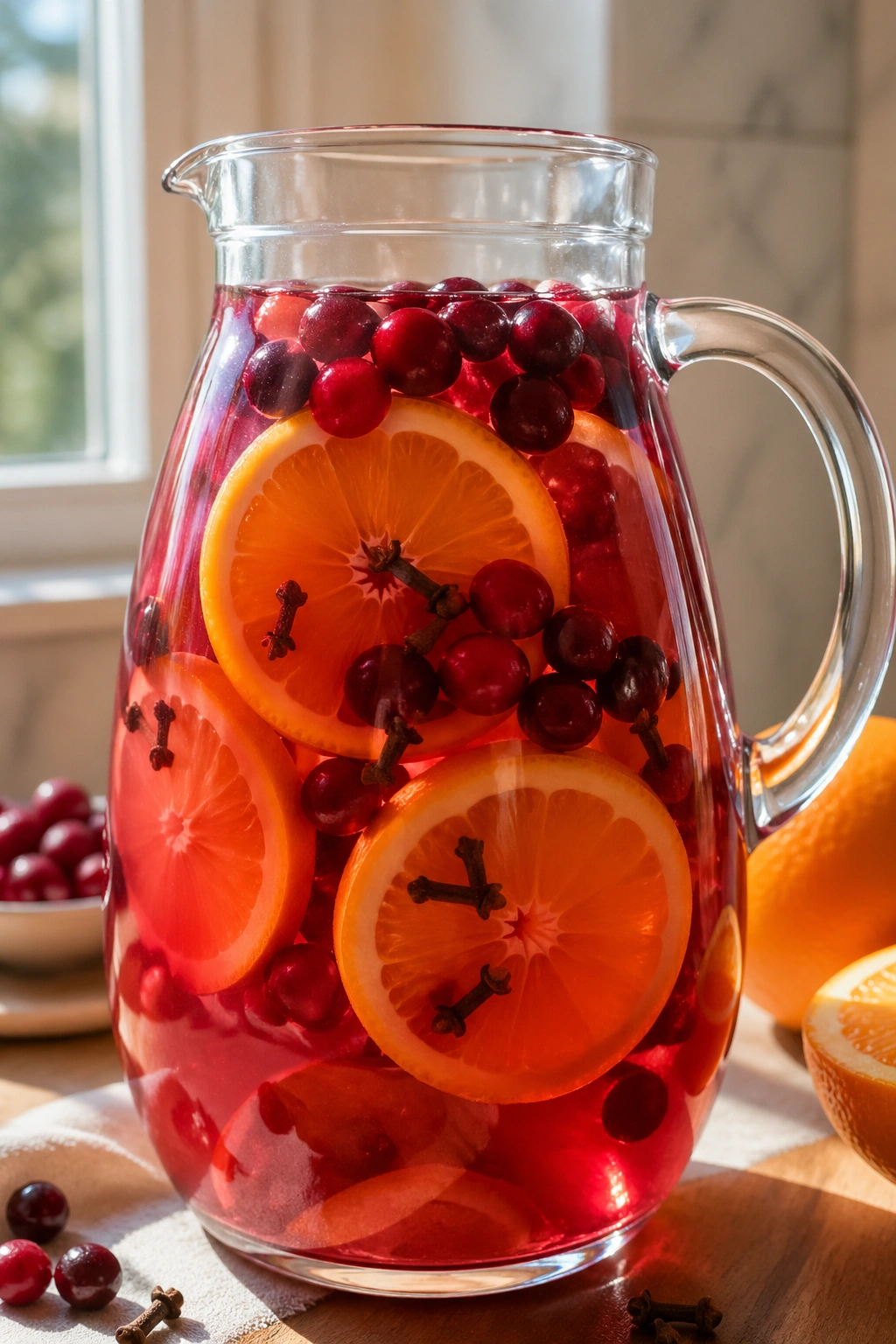
This one tastes like a punch bowl that cleaned up its act. Tart cranberry, sweet orange aroma, and one or two cloves make a bottle that feels festive without turning into liquid candy.
Fresh cranberries do not infuse much on their own unless you crush them, and then you’re dealing with bits everywhere. The easier route is to use 2 tablespoons unsweetened 100% cranberry juice in 1 liter of water, then add 1/2 orange in slices and 1 to 2 whole cloves. That tiny amount of juice goes a long way.
Read the label. Cranberry cocktail is not the same thing. It usually brings added sugar, and at that point you are drifting away from the whole reason these drinks help with fat loss in the first place.
Clove can take over fast, so pull it out after 20 to 30 minutes if you’re steeping the bottle for longer than an hour. Left all day, it tastes like you dropped a holiday candle into your water. One clove is often enough.
21. Cucumber Jalapeño Lime Water
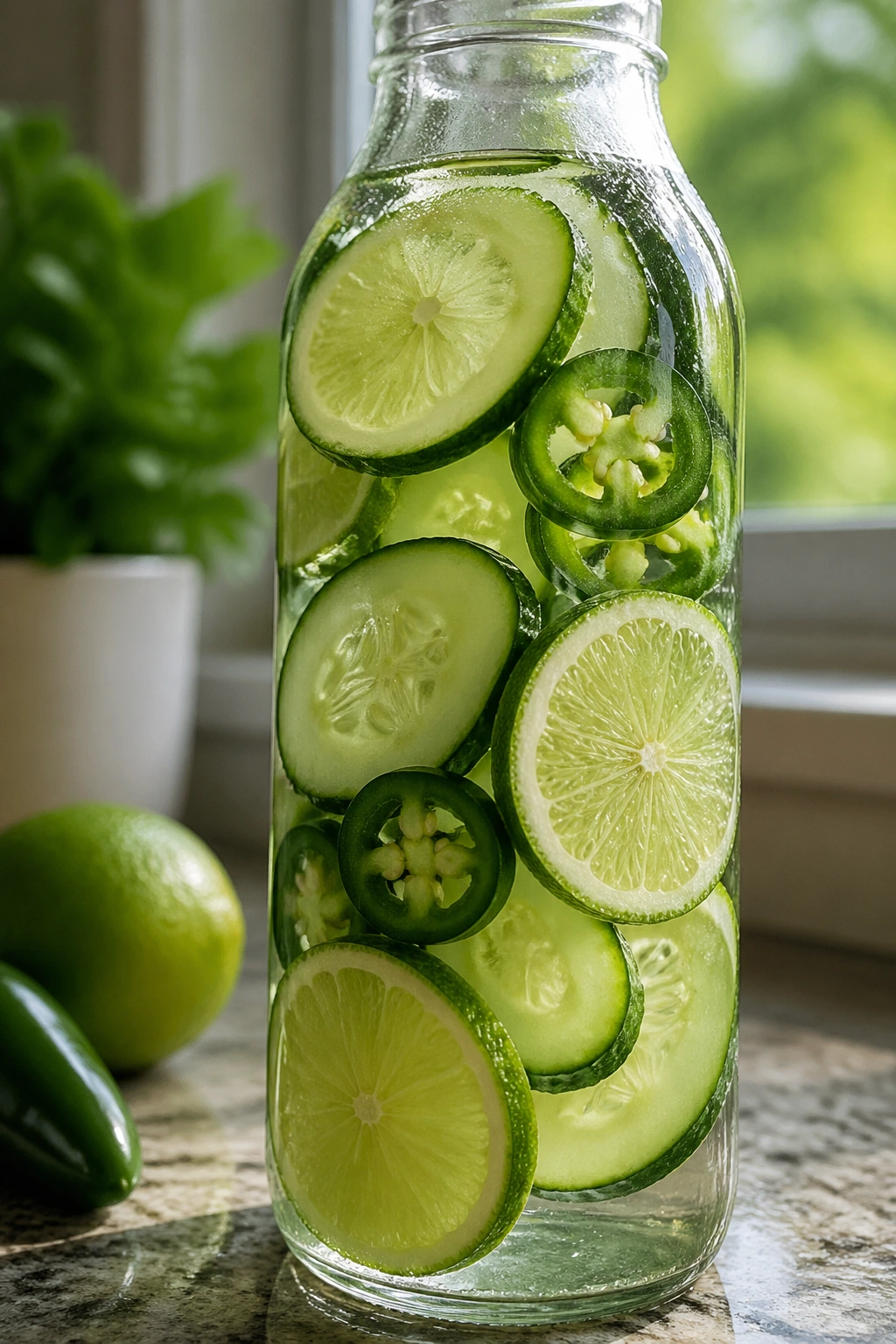
Too aggressive for water? Maybe on paper. In the bottle, cucumber jalapeño lime is crisp, punchy, and strangely addictive if you’re someone who likes savory drinks.
The heat is the key variable. One thin jalapeño ring with seeds removed gives a mild tingle. Three rings with seeds left in can hijack the whole bottle. Start small. You can always add another slice after 10 minutes.
How to keep it drinkable
Use 1/2 cucumber, 1/2 lime, and 1 to 2 thin jalapeño slices in 1 liter of cold water. Chill for 15 to 30 minutes, then taste. If the pepper is already where you want it, remove it and leave the cucumber and lime behind. That keeps the heat from building into something distracting.
This is a strong dinner water. Burgers, tacos, grilled chicken, rice bowls—foods that usually call for something fizzy or sweet work well with it. No, spicy water does not torch belly fat. What it can do is make a zero-calorie drink interesting enough that you do not miss the soda beside your plate.
22. Peach Ginger Mint Water
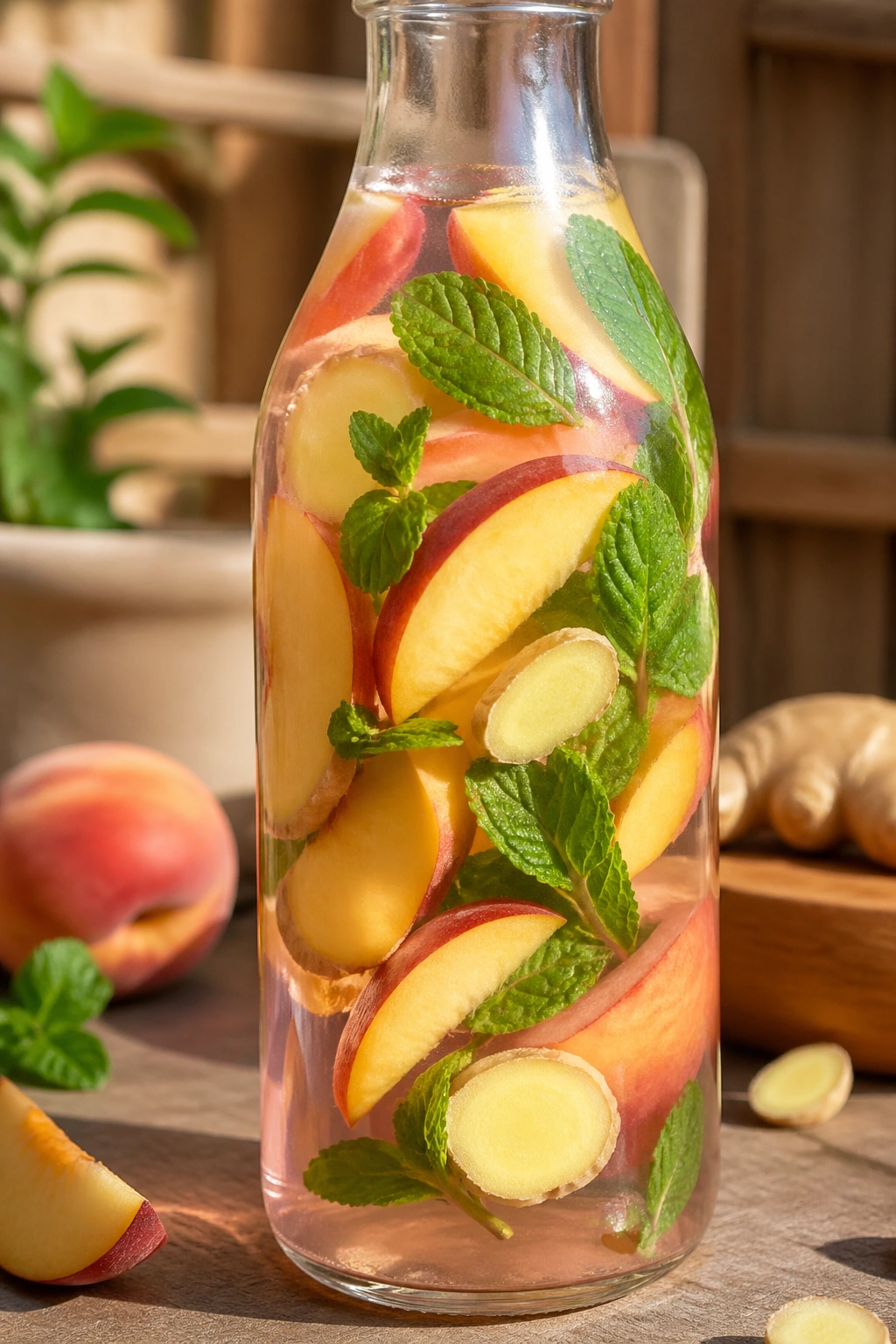
A peach that’s slightly too soft for slicing onto oatmeal is often right at the sweet spot for infused water. Peach ginger mint turns that fruit into a bottle that smells rich and summery while staying light enough for everyday use.
Ripe peach gives more aroma than flavor at first, which is why ginger matters. It sharpens the edges and keeps the drink from reading flat. Mint cleans up the finish. Together, they make a water that feels a little indulgent without pushing you toward a sugar hit.
Here’s the mix I use most:
- 1/2 ripe peach, thinly sliced
- 3 thin slices fresh ginger
- 5 mint leaves, lightly bruised
- 1 liter cold water
- Steep time: 1 to 2 hours
Peach skin is fine to leave on. It helps the slices hold together. If the fruit is overripe, the bottle will get cloudy fast, though the flavor can still be good. Drink it the same day, preferably over plenty of ice. It’s one of the few fruit waters that feels like a small reward, and that makes it useful.
Final Thoughts
If your goal is belly fat loss, keep the role of detox water in proper scale. These drinks do not burn fat on command. They help by making water easier to drink, lowering the odds that you reach for calorie-heavy drinks, and giving you a simple pre-meal habit that can rein in hunger.
Pick two or three recipes that fit your taste instead of trying all 22 in a rush. Stock the ingredients that overlap—lemons, limes, cucumber, mint, ginger—and your fridge starts doing more of the work for you. A 1-liter bottle filled before bed is often smarter than a burst of motivation at noon.
One last practical point: if an infused water tastes weak, the answer is usually thinner slices, a light bruise on the herbs, and enough steep time. If it tastes bitter, you left the citrus in too long. Small fixes. Big difference.
And if one of these pitchers helps you skip a daily soda and drink another 20 to 30 ounces of water, that’s not a tiny win. That’s the kind of boring, repeatable habit body-fat loss is built on.
