



Crunches are the first thing many women try when their jeans start digging into the lower stomach. It’s also one of the slowest ways to lose belly fat in a month for women if the rest of the day is full of skipped protein, poor sleep, random snacking, and workouts that burn you out by week two.
You cannot peel fat off one body part on command. What you can do is lower total body fat, chip away at visceral fat around the organs, hold onto muscle, and cut the bloat that makes your waist look softer by evening than it did at breakfast. That mix matters, because the “belly fat” women complain about is often a blend of fat, water retention, food volume, constipation, and posture—not one single problem.
Women also deal with a few extra wrinkles here. Menstrual-cycle shifts can push the scale up by 2 to 5 pounds without any real fat gain. Poor sleep hits hunger hard. Skipping meals early in the day can boomerang into late-night eating. And lower-belly softness tends to hang on longer when strength training is missing.
A month is enough time to notice a change if your routine gets tighter. Not movie-montage change. Real change: a looser waistband, a flatter stomach by night, better energy in the gym, and a tape measure that finally starts moving. Start with the habits that change the math of fat loss, then stack the smaller fixes that make those habits hold.
1. Create a calorie deficit you can hold for 30 days
A small, steady calorie deficit beats a crash diet every time. Most women do better with a daily gap of 300 to 500 calories than with a punishing low-calorie plan that lasts four days and ends face-first in cereal.
If you track food, look for the obvious leaks first: a 16-ounce flavored coffee, two heavy pours of olive oil, the handful of nuts grabbed while cooking, the “healthy” protein bar that eats up 240 calories in six bites. Those add up fast. If you do not track, shrink one starch serving by about one fist, remove one snack, and make dinner center on lean protein and vegetables.
Hunger should show up before meals. It should not feel frantic.
A workable deficit still lets you train hard, walk a lot, and think about something other than food. If your hands are cold, your workouts are flat, and you spend the evening prowling the kitchen, the deficit is too aggressive. Pull it back a notch and keep going.
2. Put 25 to 35 grams of protein in each main meal
Why does protein matter so much when the goal is a smaller waist? Because protein protects muscle while you lose fat, and muscle helps keep your daily calorie burn from sliding downhill when food intake drops.
Controlled feeding studies keep landing in the same place: when women eat around 1.2 to 1.6 grams of protein per kilogram of body weight, they hold onto more lean mass during fat loss. Translation: if you weigh 70 kilograms, a useful range is about 84 to 112 grams a day. Spread that across three or four meals and the target feels much less annoying.
Easy ways to hit the number
- 3 eggs plus 170 grams Greek yogurt gets you close to 30 grams.
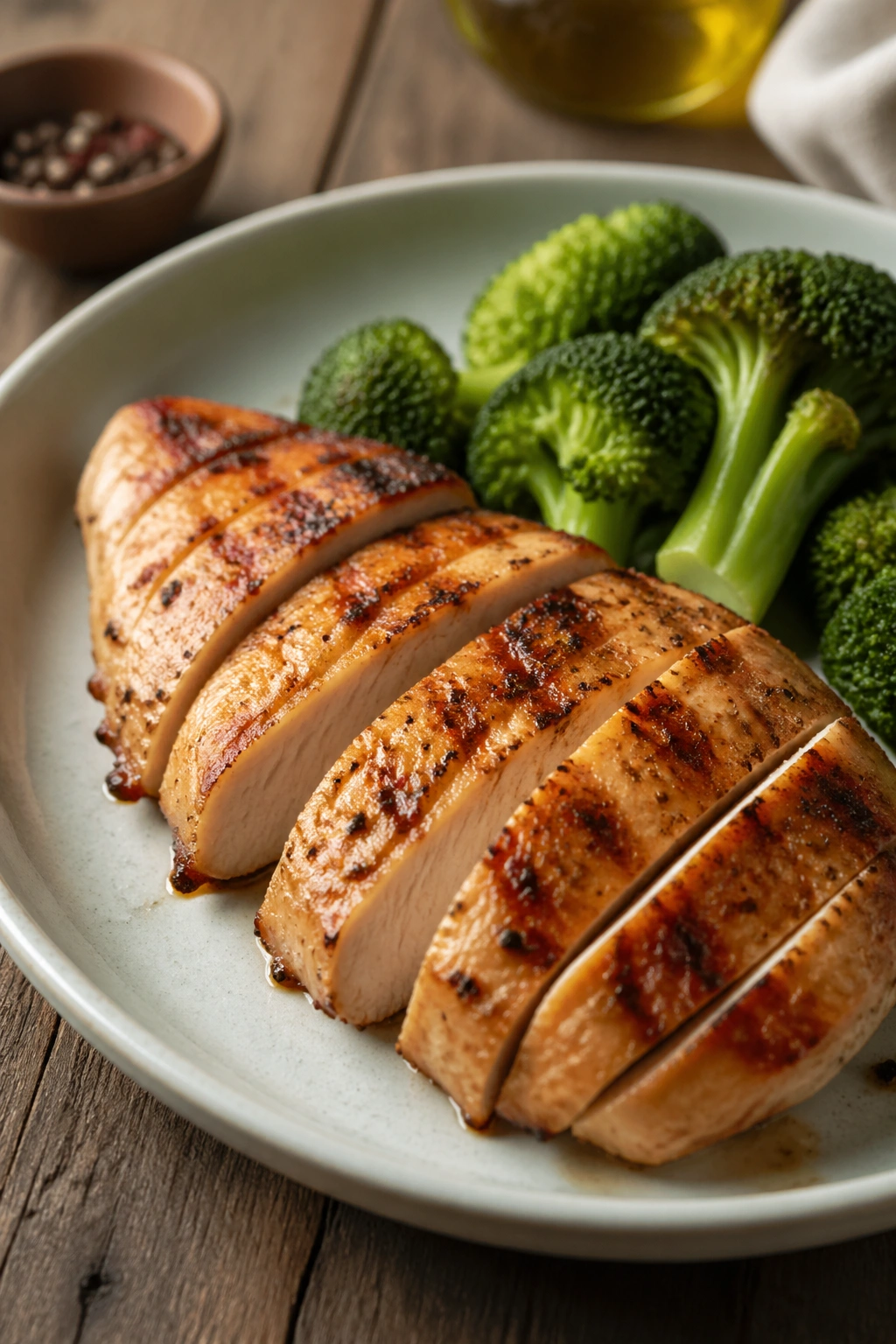
- 120 to 150 grams chicken breast lands near 35 grams.
- 1 can tuna plus 2 tablespoons Greek yogurt makes a fast 30-gram lunch.
- 200 grams extra-firm tofu gives roughly 24 to 26 grams before sides.
- 1 scoop whey mixed into oatmeal plus cottage cheese on the side can clear 30 grams without a huge meal.
Aim for protein first, then add carbs and fats around it.
3. Lift weights three times each week
Picture two women eating the same calories. One does random cardio five days a week. The other lifts three days a week, walks daily, and keeps protein high. The second woman usually ends the month looking tighter through the waist, hips, and arms—even if the scale difference is small—because strength training tells the body to keep muscle.
You do not need bodybuilding splits. Three full-body sessions are enough if they are honest.
A week that works
- Day 1: Goblet squat, dumbbell row, Romanian deadlift, push-up or chest press, plank
- Day 2: Split squat, lat pulldown, hip thrust, overhead press, dead bug
- Day 3: Leg press or squat, seated row, dumbbell bench press, kettlebell deadlift, Pallof press
Use 3 to 4 sets of 6 to 12 reps on the big lifts. The last 2 reps should feel hard. If the weight floats up like a warm-up, it is too light.
This is where a lot of women leave results on the table. Pink dumbbells and endless pulses feel busy. They do not give the body much reason to change.
4. Walk more than you think you need to
The dullest fat-loss tool is often the one that sticks. Walking burns calories without wrecking recovery, lowers stress, helps digestion, and slides into daily life better than a brutal bootcamp schedule.
A good target for belly fat loss is 8,000 to 12,000 steps a day. If that sounds far away, start where you are and add 2,000 steps. That could mean a 15-minute walk after lunch, parking farther out, a treadmill walk while answering emails, or one lap around the block before breakfast and after dinner.
Walking also smooths out the female fat-loss roller coaster. Hard cardio can be useful, but too much leaves some women hungry, sore, and weirdly puffy from stress and water retention. Walking does the opposite.
And yes, it counts if the pace is brisk enough that you feel warm and breathe a bit harder. It does not need to feel heroic.
5. Add two short interval sessions for belly fat loss—not daily punishment
Two interval workouts a week is enough. More than that, and a lot of women start dragging through lifts, sleeping worse, and craving every salty carb in sight.
Intervals work because they pack hard effort into a short window. A simple setup looks like this: after a 5-minute warm-up, do 8 rounds of 20 seconds hard and 100 seconds easy on a bike, rower, treadmill incline, or elliptical. Another option: 10 rounds of 30 seconds hard and 60 seconds easy. The full session can be done in 12 to 20 minutes.
Pick the right machine
- Bike: easier on joints, easier to recover from
- Rower: full-body, but technique matters
- Treadmill incline: big calorie burn, hard on calves if overdone
- Elliptical: solid choice if your knees get cranky
If your energy is poor, your cycle is making recovery rough, or heavy leg days already beat you up, swap one interval session for steady incline walking. Fat loss cares about the weekly total, not your suffering.
6. Build lunch and dinner around fiber
A salad that leaves you hungry an hour later does not help. Fiber works when it comes with enough food volume and enough chew, not when it shows up as a sad garnish next to six crackers.
Women aiming to tighten the waist usually do well with 25 to 35 grams of fiber a day. That means vegetables, beans, lentils, berries, oats, potatoes, chia, and fruit you chew—not only powders stirred into water.
A plate shape that works
- Half the plate: vegetables or fruit
- One quarter: protein
- One quarter: high-fiber carbs like beans, potatoes, oats, brown rice, or quinoa
- One thumb: fats like olive oil, avocado, nuts, or tahini
Try meals that actually fill the stomach: a chicken-and-bean taco bowl, lentil soup with Greek yogurt, salmon with potatoes and broccoli, or a turkey stir-fry over rice with a pile of cabbage and peppers.
Your stomach should feel pleasantly full, not teased.
7. Stop drinking your calories
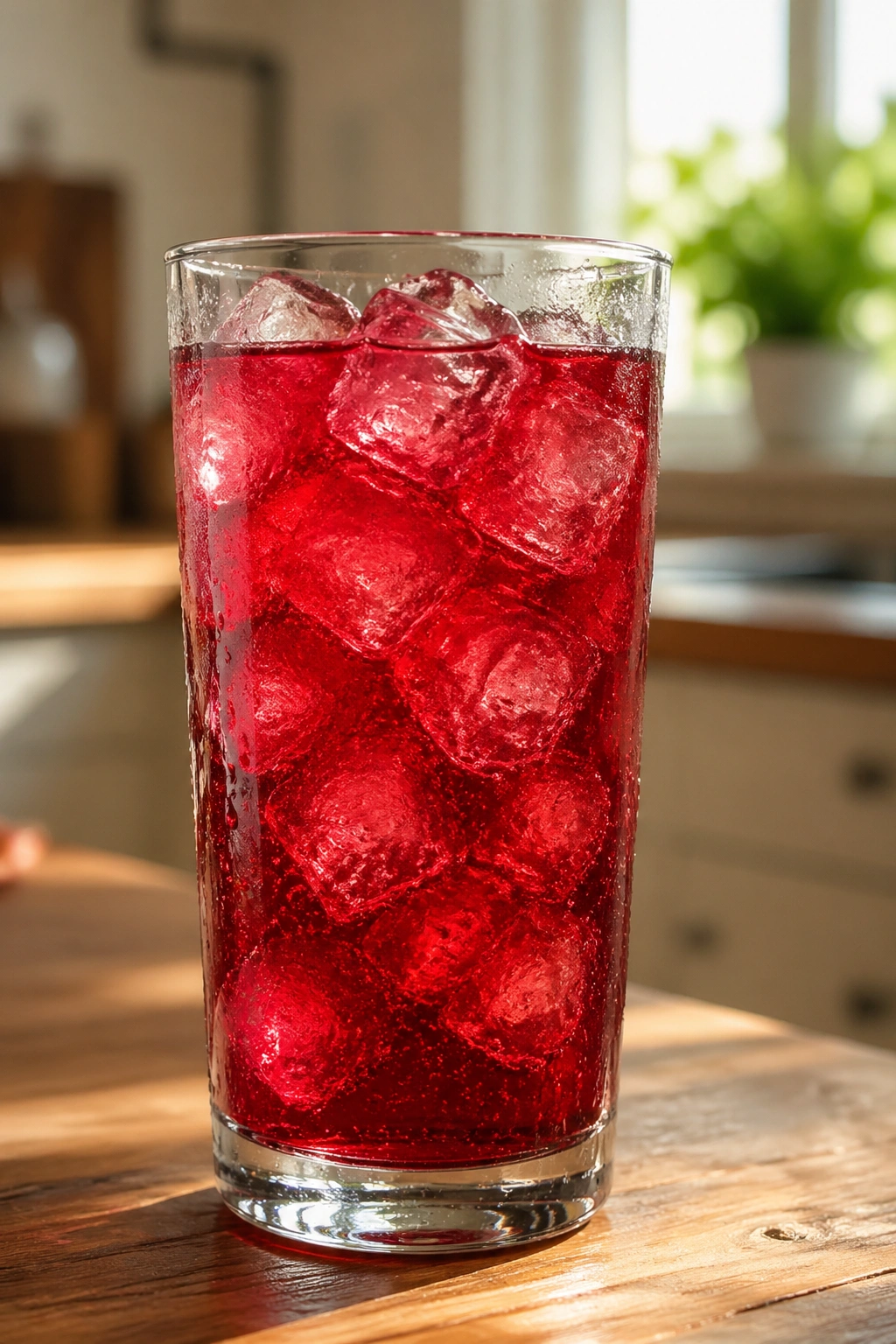
If your coffee order tastes like dessert, check the numbers. A flavored latte, juice, smoothie, soda, sports drink, or two glasses of wine can eat 300 to 700 calories without giving you the fullness that solid food does.
Liquid calories are sneaky because they disappear fast. You do not chew them, you do not slow down, and your brain often fails to “count” them the same way it counts a plate of eggs and toast.
Low-effort swaps
- Replace juice with whole fruit and water
- Switch from a sweet latte to cold brew with milk
- Use zero-calorie mixers instead of juice or tonic
- Save smoothies for days when you truly need portable calories, then build them with protein and fruit instead of nut butter, honey, oats, and random extras
A woman can create a real deficit without touching dinner by fixing what she drinks before 3 p.m.
8. Eat a real breakfast if night snacking keeps blowing up your deficit
I’ve watched women “save calories” all morning, eat a skimpy lunch, train after work, and then spend the evening roaming the kitchen. The issue is not willpower. The issue is that under-eating early makes the back half of the day harder.
Breakfast does not need to be huge. It does need protein and enough substance to register.
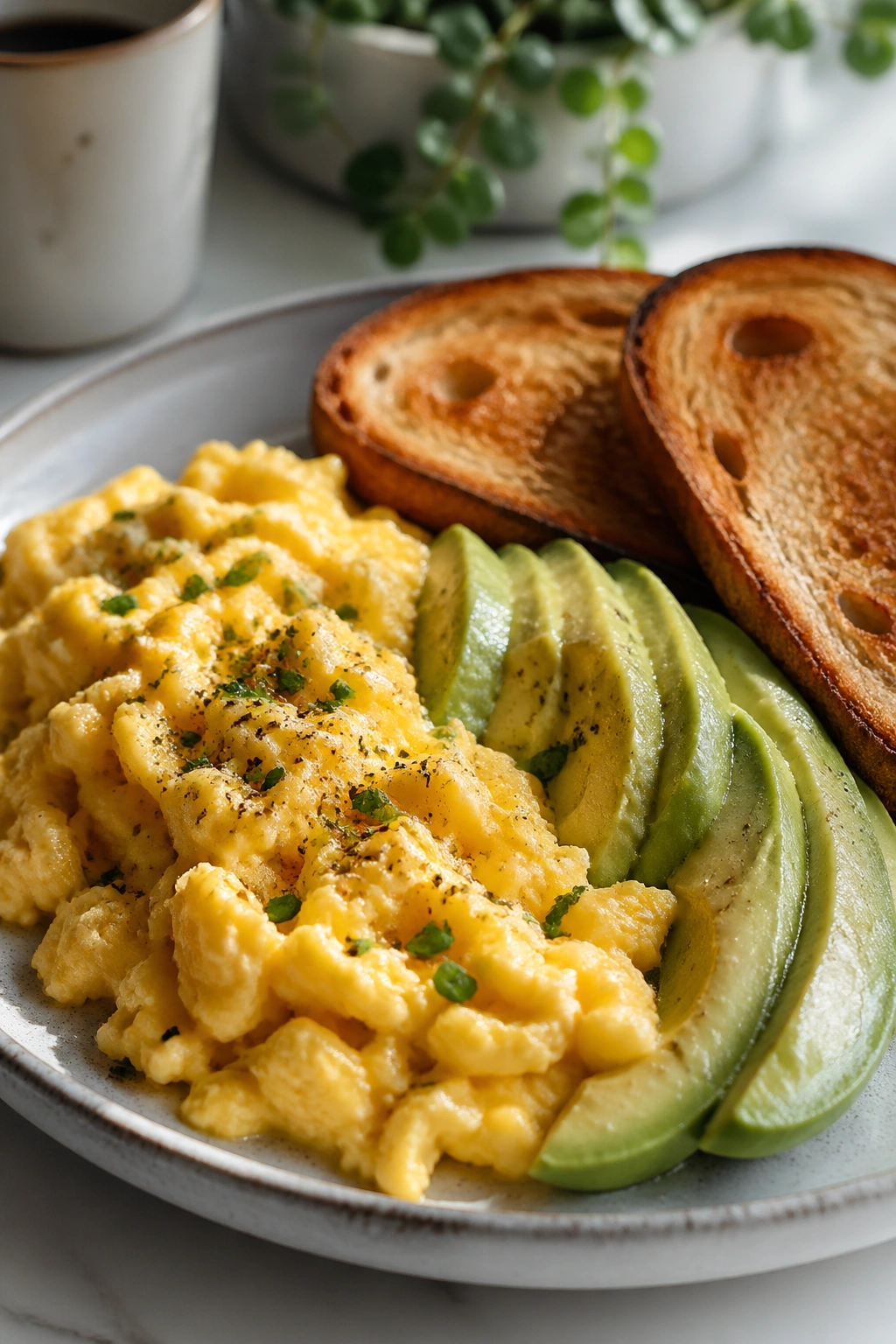
A smart target is 25 to 35 grams of protein plus fiber. Think eggs with fruit and toast, Greek yogurt with berries and oats, cottage cheese with a banana, or a protein shake alongside a bowl of oatmeal. If you train in the morning, add a carb source you can digest well—banana, toast, oats, cereal, rice cakes.
Some women feel fine skipping breakfast. No problem. But if the pattern leads to late-night cereal, cookies, peanut butter, and “I’ll restart Monday,” then breakfast is not optional anymore.
9. Keep alcohol rare for four weeks

Alcohol.
It hits fat loss from three sides at once: extra calories, lower food control, and worse sleep. Two large pours of wine can reach 300 calories before the chips come out. Add a restaurant meal, and a week’s deficit can shrink in one night.
There’s also the appetite piece. Drinking blunts restraint, and late-night food choices tend to lean salty, fried, and dense. Few women overeat grilled fish and green beans after cocktails.
If belly fat loss is the goal for the next month, treat alcohol like a special event instead of a default Friday habit. Keep it to 0 to 2 drinks a week, drink water alongside it, and never show up to drinks hungry. A protein-rich meal first changes the whole evening.
This one is not glamorous. It is brutally effective.
10. Train your abs for strength, not as a belly-fat shortcut
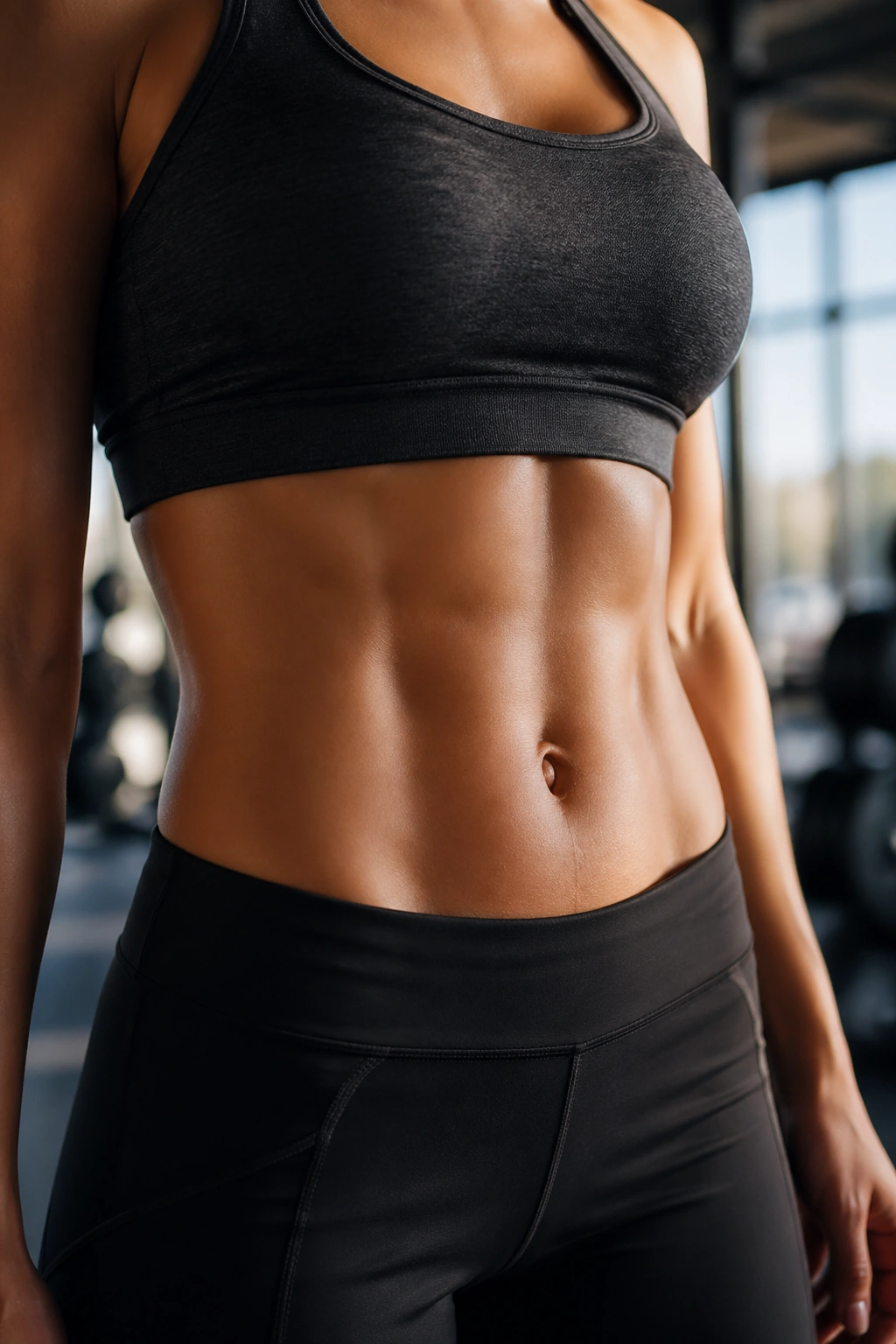
No, 200 crunches will not melt lower-belly fat. Spot reduction is not how fat loss works. Abs matter anyway, because a stronger trunk improves posture, helps your lifts, and can make your midsection look firmer as body fat drops.
The best core work resists motion instead of flinging your spine around for endless reps.
A better core circuit
- Dead bug: 3 sets of 8 to 10 reps per side
- Side plank: 3 sets of 20 to 40 seconds per side
- Pallof press: 3 sets of 10 to 12 reps per side
- Farmer carry: 3 rounds of 20 to 40 meters
- Hanging knee raise or reverse crunch: 2 to 3 sets of 8 to 12 reps
Do core training 2 to 4 times a week for 10 to 15 minutes. Keep the movements clean. If your lower back is taking over, slow down and own each rep.
Flat stomach ads love burn. Your body responds better to tension and progression.
11. Sleep on a fixed schedule

A dark room at 10:30 p.m. can do more for your waistline than another random ab circuit. Poor sleep ramps up hunger, makes cravings louder, and leaves you with less patience for the work that actually changes body composition.
Aim for 7.5 to 9 hours and, more important, a steady wake time. That rhythm matters. A weekday sleep schedule followed by a wild weekend pattern leaves some women puffy, tired, and hungrier than they expect.
Small fixes that pay off
- Keep the bedroom cool—about 60 to 67°F
- Shut bright screens down 30 to 60 minutes before bed
- Stop caffeine 8 hours before sleep if you’re sensitive
- Finish heavy meals 2 to 3 hours before bed
- Keep the room dark enough that you cannot read the clock without light
Short sleep also raises the odds that you skip the gym, snack more, and move less the next day. Belly fat loss gets harder long before metabolism becomes the headline problem.
12. Use a food log for two honest weeks
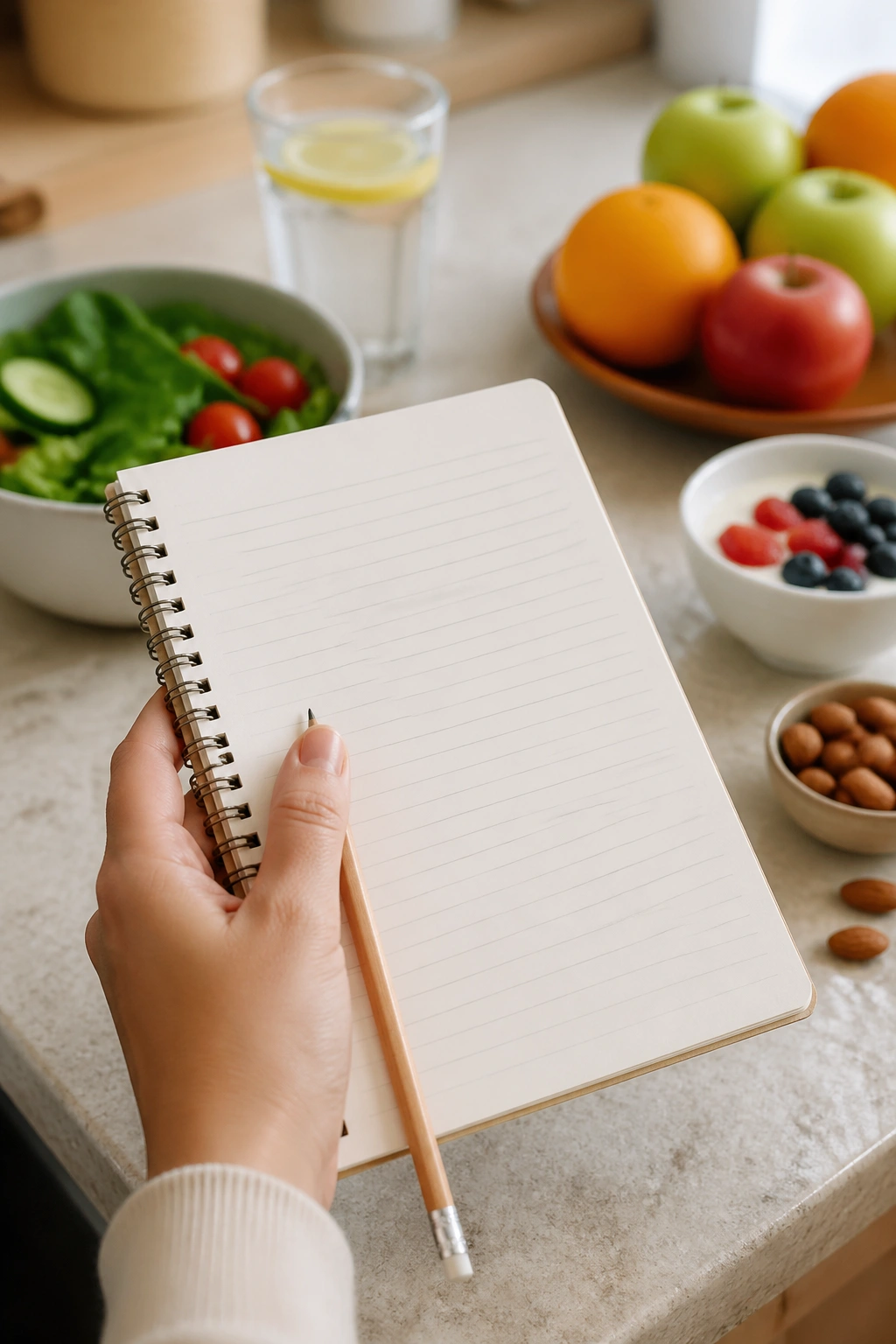
That olive oil drizzle? Count it. The handful of almonds while packing lunch? Count that too. Most women do not need to track forever, but two weeks of honest logging can expose the exact habits slowing fat loss.
You learn fast this way. A “light” salad can hit 700 calories once avocado, dressing, cheese, and crunchy toppings pile on. A spoonful of peanut butter is often two spoonfuls. Restaurant portions laugh at your good intentions.
Log the sneaky stuff
- Cooking oil and butter
- Coffee add-ins
- Bites, licks, and tastes while cooking
- Sauces, dressings, mayo, aioli
- Protein bars, nuts, dried fruit
- Weekend drinks
Do not use the log as a guilt diary. Use it like a flashlight. Once the calorie leaks are visible, you can fix them without guessing.
13. Keep trigger foods out of easy reach
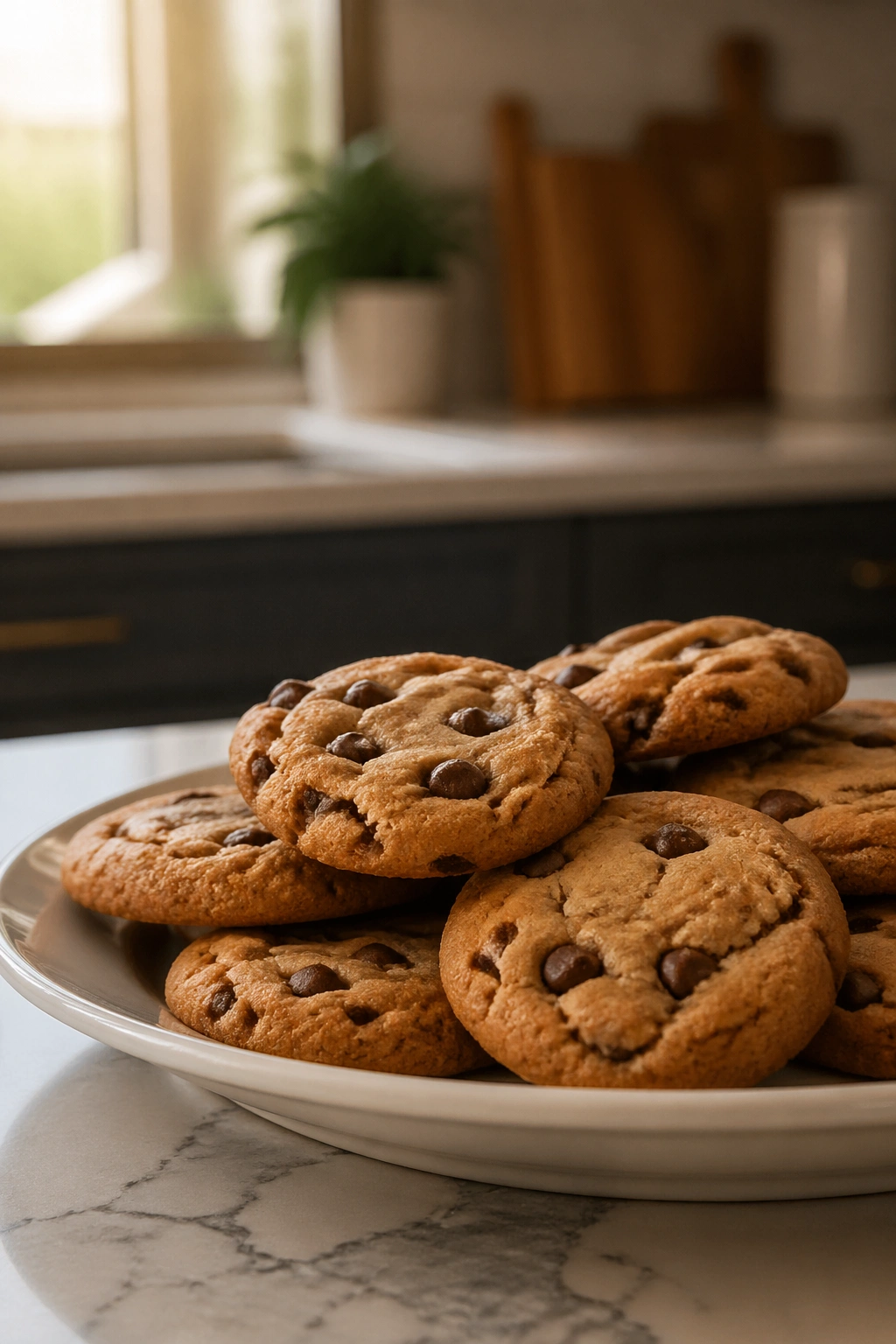
What do you eat when you are tired, bored, and standing in the kitchen at 9:15 p.m.? That answer matters more than your “ideal” meal plan.
Environment beats intention on a rough day. If cookies are on the counter, chips are eye-level in the pantry, and ice cream is always in the freezer, you will need discipline every single evening. That is a lousy setup.
Reset your kitchen
- Put fruit where you can see it
- Store protein choices at eye level in the fridge
- Keep chopped vegetables and Greek yogurt ready to grab
- Move snack foods to a high shelf or stop buying them for one month
- Portion calorie-dense foods into single servings instead of eating from the bag
You are not weak if you eat what is easy. You are human. Set the room up so the easy choice helps your waist instead of hurting it.
14. Slow each meal down to 15 to 20 minutes

Fast eating is sneaky. You can inhale 700 calories before your stomach and brain have time to catch up and say, “That’s enough.”
Women who eat on the run often miss the moment where hunger fades and overfull starts creeping in. Slowing meals down gives satiety hormones time to register. It also makes food less chaotic, which matters if you tend to bounce between restriction and overeating.
Try three small changes: sit down, put the fork down between a few bites, and drink water during the meal instead of only after. If you finish in six minutes, the meal was probably too rushed. Stretch it to 15 or 20.
This sounds boring. It works.
The side benefit is bigger than people expect: slower meals make moderate portions feel like real meals, not a tease.
15. Walk for 10 minutes after your biggest meals
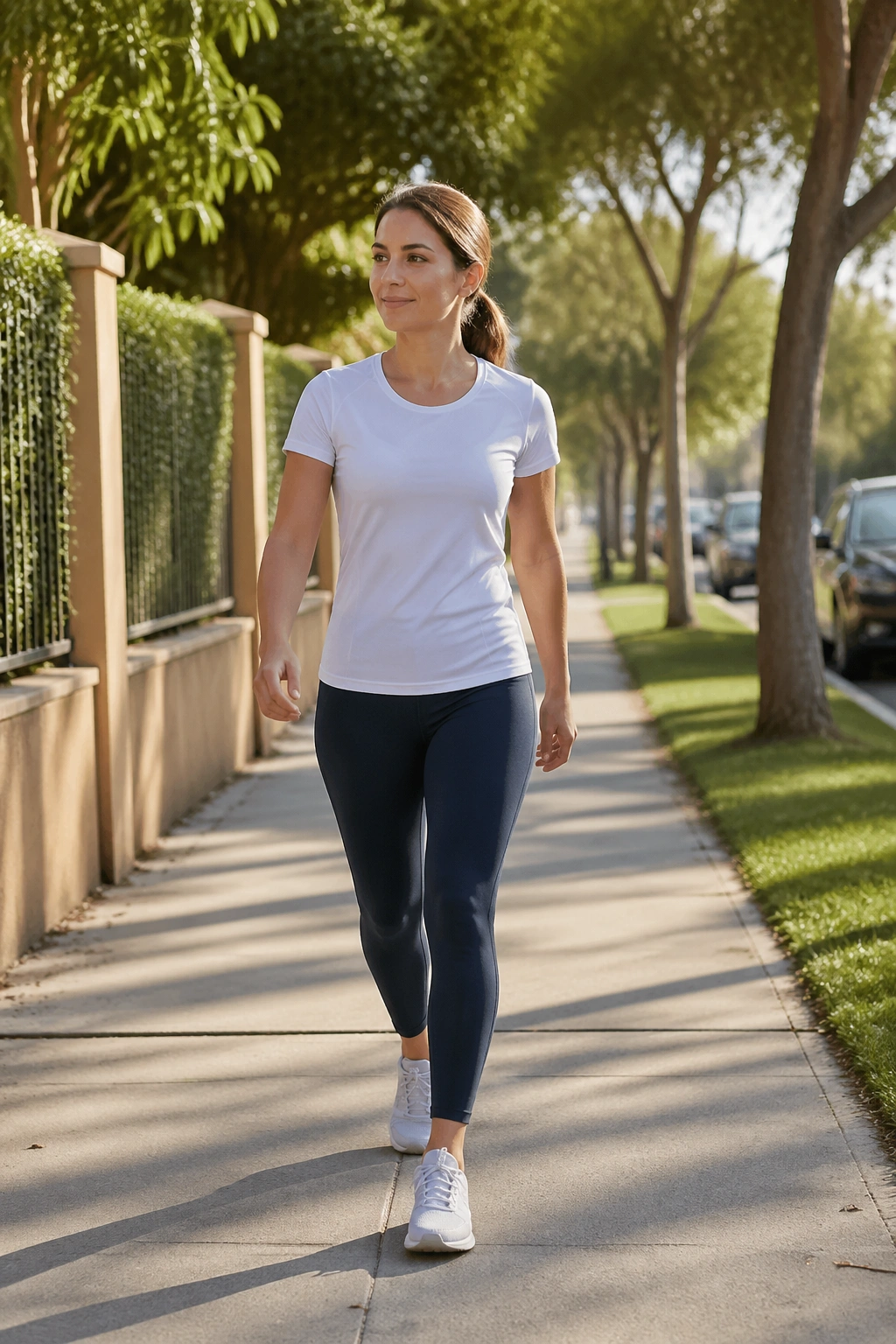
Finish lunch. Stand up. Walk for 10 minutes.
That tiny habit helps with blood sugar control, digestion, and daily calorie burn, and it chips away at the sluggish, swollen feeling that settles in after big meals. If dinner is your largest meal, a short walk afterward is one of the cleanest ways to reduce the “food baby” effect by bedtime.
You do not need workout clothes. You need shoes and a path.
Easy ways to make it happen
- Walk one block out and back after lunch
- Use the first 10 minutes after dinner as family walk time
- March on a treadmill at 2.5 to 3.5 mph
- Pace during a phone call instead of sitting
Women who sit most of the day get extra mileage from this. The change in how your stomach feels can show up before the scale notices anything.
16. Pick one stress habit you will do daily

Stress does not glue fat onto your abdomen by magic. The real problem is messier—and more fixable. Stress pushes women toward comfort eating, poorer sleep, missed workouts, and lower daily movement.
You do not need a one-hour meditation practice. Pick one thing you will do every day for 5 to 10 minutes: box breathing, a slow walk without your phone, journaling, light stretching, prayer, music in a dark room, or sitting on the floor and breathing like you mean it.
If you have PCOS, perimenopause symptoms, or a job that keeps your nervous system humming from dawn to bedtime, this matters even more. Stress management is not fluff in that case. It’s part of the fat-loss plan.
Choose the habit that lowers your shoulders. That is usually the one you’ll repeat.
17. Measure your waist once a week, not six times a day
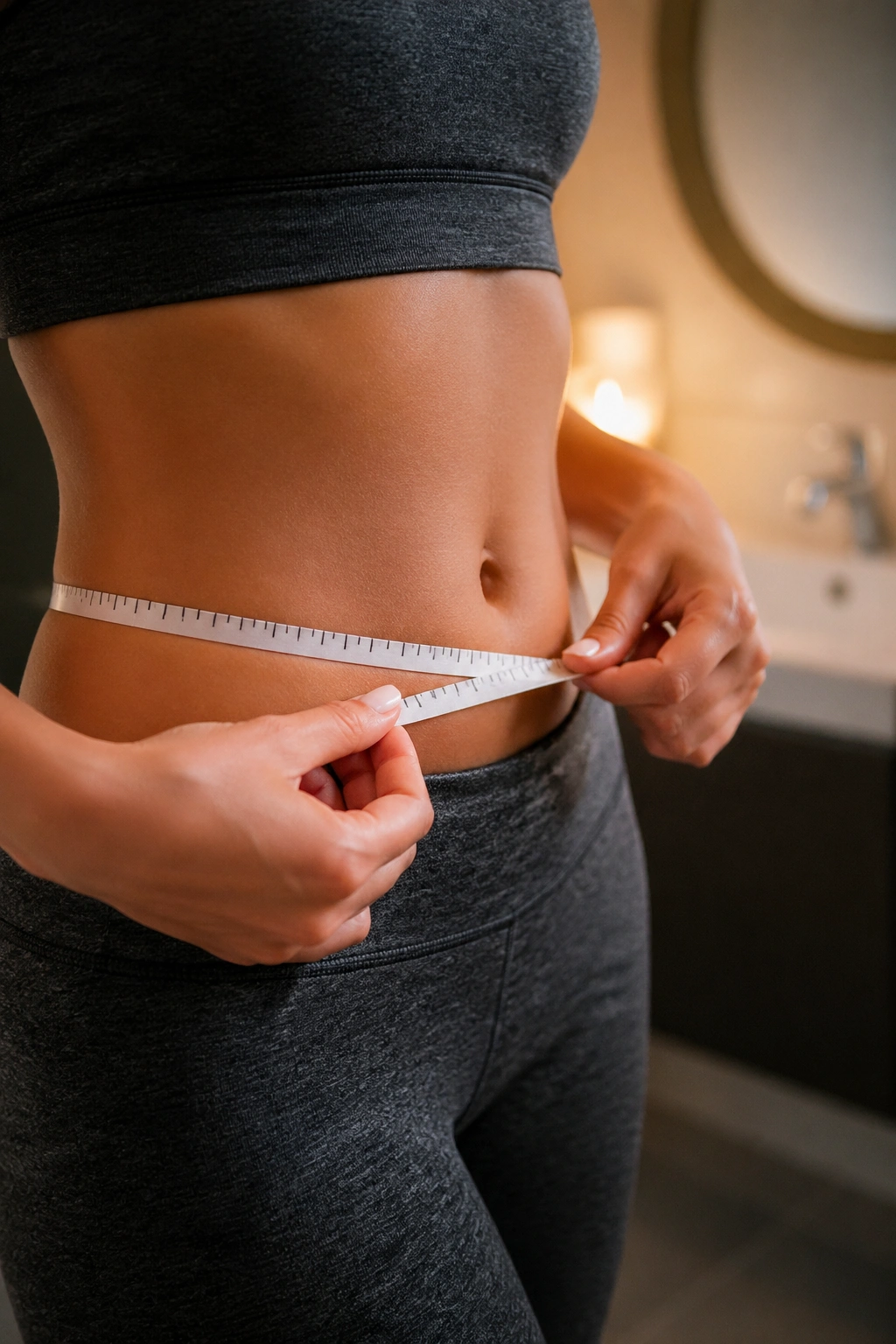
The scale is a blunt tool. A tape measure is sharper.
Women can hold water for half a cycle, especially around the lower belly, hips, and breasts. That makes daily weigh-ins noisy. Waist measurement cuts through some of that noise and tells you whether belly fat loss is happening even when the scale is moody.
Measure the same way every time
- Take it once a week
- Do it first thing in the morning
- Stand tall and relax your stomach
- Exhale normally
- Measure at the navel and, if you want, 1 inch above it
- Write it down
Add progress photos in the same light and the same clothes every two weeks. A softer waistband, less lower-belly protrusion, and a tighter side profile often show up there before the number on the scale catches up.
18. Track your menstrual cycle with your weigh-ins

A 2- to 5-pound jump before your period can be water, not fat. That point deserves its own section because it derails women all the time.
The luteal phase—the stretch after ovulation and before your period—often brings bloating, constipation, cravings, and scale spikes. If you do not know that, you can panic, slash calories, add cardio, feel miserable, and then overeat because your body is already stressed.
Track your cycle next to your weight, waist, appetite, and workouts. Compare week to week, yes, but also compare the same phase of one cycle to the same phase of the next. That is the cleaner read.
Cravings also tend to rise for some women during that phase. Plan for it. Add 100 to 200 calories of structured food if needed—fruit and yogurt, potatoes with dinner, a square of dark chocolate after a protein-rich meal. Planned beats chaotic.
19. Center your workouts on big compound lifts
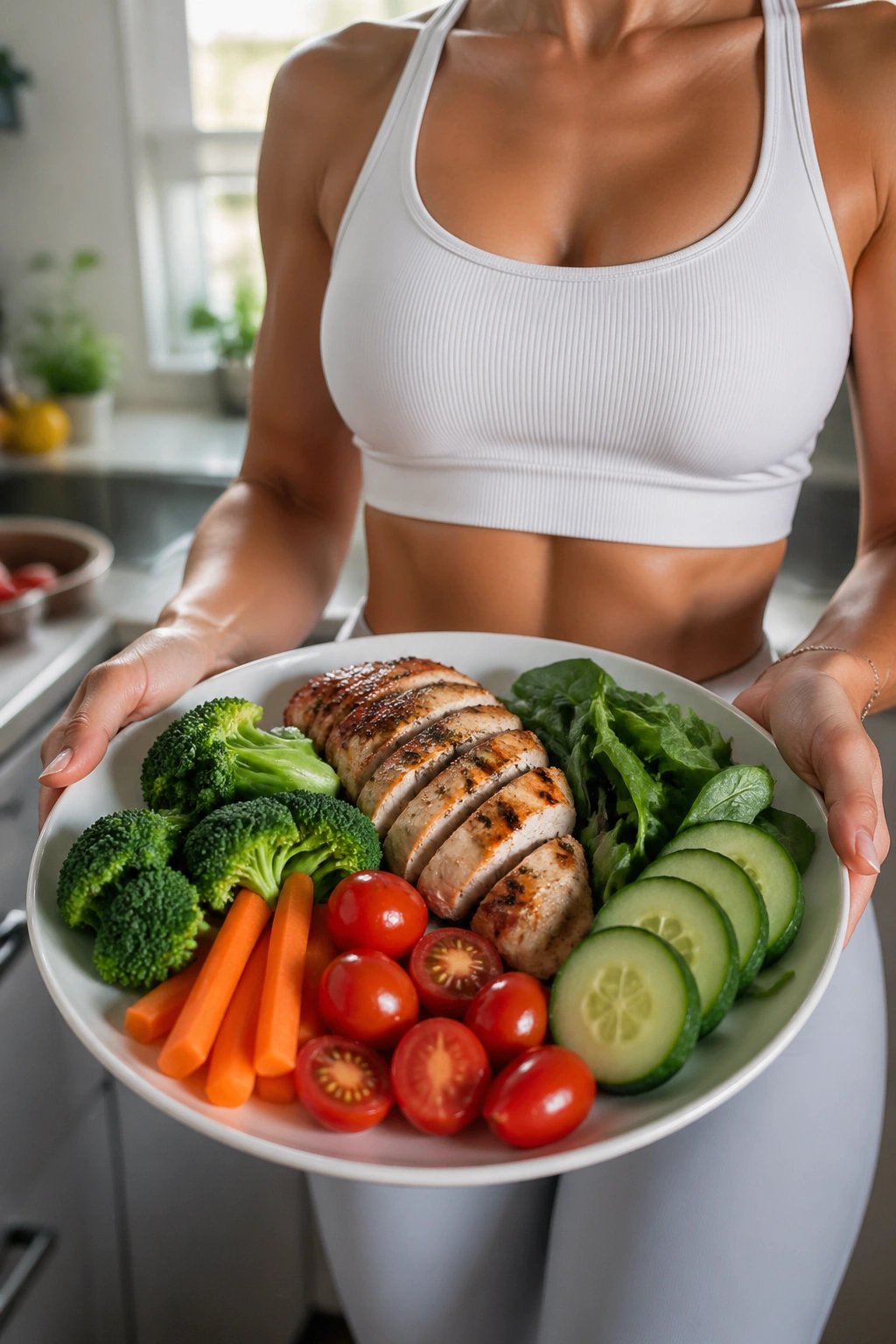
Isolation moves have a place. They should not be the spine of your program if belly fat loss is the goal. Big lifts train more muscle at once, let you use heavier loads, and give you more return for each minute in the gym.
Think squats, Romanian deadlifts, hip thrusts, rows, pulldowns, presses, split squats, step-ups, and loaded carries. Those ask your legs, glutes, back, and core to work together. Ten minutes of curls and kickbacks will not match that demand.
Use this rule in the gym
Start each workout with 2 to 3 compound exercises, then finish with smaller moves if you want them. A session could look like:
- Leg press: 4 sets of 8
- Romanian deadlift: 3 sets of 10
- Seated row: 3 sets of 10
- Dumbbell shoulder press: 3 sets of 8
- Lateral raises: 2 sets of 15
Women often underestimate how much weight they can handle here. If form is solid, push.
20. Use incline walking or cycling on recovery days
Harder is not always better. When your legs are sore, sleep is shaky, or life is stacked with work and family stress, low-impact cardio can beat another all-out session.
A strong recovery-day option is 25 to 40 minutes of incline treadmill walking at a pace where you can still talk in short sentences. Try 5 to 10 percent incline at 2.8 to 3.5 mph. On a bike, pedal steadily for the same amount of time with moderate resistance.
This kind of cardio builds your weekly calorie burn without digging a recovery hole. It also helps women who feel inflamed and puffy from too much high-intensity work.
And it is far easier to repeat. That matters more than a heroic workout you spend three days resenting.
21. Cut the weekend swing between “clean” and “off the rails”

Friday night pizza, two cocktails, brunch, a bakery run, and “I’ll tighten it up Monday” can erase five careful weekdays fast. Weekend calories count exactly the same as weekday calories, and the body does not hand out free passes because you ate a salad on Tuesday.
The problem is not one burger. It’s the swing. Restrictive weekdays often create rebound weekends, especially for women who try to stay “perfect” from Monday to Friday.
A better setup is to plan one or two indulgences inside the week. Have the burger. Skip the fries or share dessert. Drink one cocktail instead of three. Order the pasta and keep lunch lighter but protein-rich.
Fat loss loves boring consistency. The women who get leaner through the waist are often not the strictest. They are the ones who stop restarting.
22. Prep protein, produce, and carbs twice a week

Meal prep does not need twelve matching containers and three hours of Sunday misery. It needs a fridge that makes your next meal easy.
Prep two times a week—say Sunday and Wednesday—and focus on the big rocks: protein, produce, carbs. Cook 1 to 2 proteins, wash and chop vegetables, and make 1 starch you can reheat fast.
A smart 45-minute prep block
- Roast 1.5 to 2 pounds chicken thighs or breast
- Brown 1 pound lean ground turkey or beef
- Cook 4 to 6 cups rice or potatoes
- Wash lettuce, cucumbers, peppers, berries
- Boil 6 to 8 eggs
- Portion Greek yogurt, cottage cheese, or tofu
That setup gives you bowls, wraps, omelets, salads, and quick dinners for days. It also lowers the odds that 6 p.m. hunger ends in takeout and regret.
23. Watch the calorie pile-up in restaurant meals

Why does restaurant food slow belly fat loss so fast? Because the meal you picture and the meal you get are often two different calorie totals.
Chefs use more oil, butter, sugar, and salt than you would at home. Portions run big. Sauces hide in corners. A grilled chicken salad can hit 800 calories once dressing, cheese, candied nuts, and a generous oil pour land on the plate.
Order with a little strategy
- Ask for sauce or dressing on the side
- Pick grilled, roasted, broiled, or baked proteins
- Start with a side salad or broth-based soup
- Box half the entrée before you dig in
- Skip the bread basket if it is a trigger
- Choose either drinks, dessert, or an appetizer—not all three
Restaurant meals can fit. They just need a touch more intention than “I’ll be good.”
24. Choose high-volume carbs over tiny “healthy” snacks
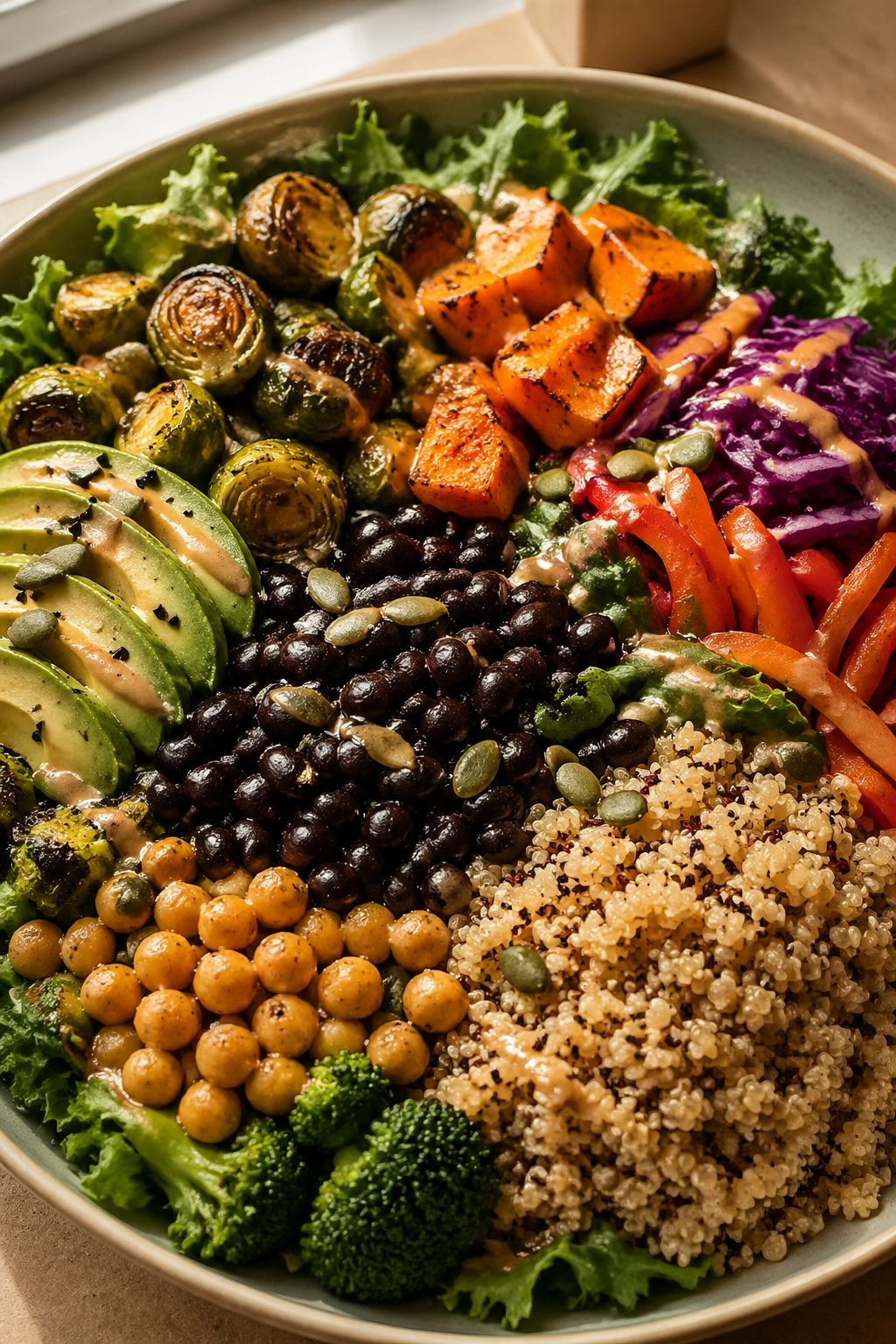
A medium baked potato fills more stomach space than a modest scoop of granola for fewer calories. That is the trick. Food volume matters when you are trying to lose fat without feeling deprived.
Women often get stuck in a strange loop of “healthy” foods that are easy to overeat: granola, trail mix, nut butter, dried fruit, coconut chips, energy bites. None of those are bad. They are just small, dense, and easy to blow past.
Try building meals around carbs that give you more chew and more fullness per calorie: potatoes, oats, beans, fruit, air-popped popcorn, high-fiber cereal, rice with lean protein and vegetables, whole-grain bread next to eggs.
Your stomach does not care that almond butter came from a wellness blog. It cares about volume, fiber, protein, and whether you still want a second dinner an hour later.
25. Follow one repeatable 30-day routine instead of reinventing every Monday
Consistency likes routine. Belly fat loss gets easier when your week stops being a daily debate.
Write a four-week template and run it on repeat. Same breakfast rotation. Same training days. Same grocery list. Same after-dinner walk. Decision fatigue drops, and your good choices stop depending on mood.
A simple week to repeat
- Monday: Full-body lift, 8,000 to 10,000 steps
- Tuesday: 30-minute incline walk, protein-focused meals
- Wednesday: Full-body lift, 10-minute walk after dinner
- Thursday: Interval session, early bedtime
- Friday: Full-body lift, planned restaurant meal
- Saturday: Long walk or bike ride, meal prep
- Sunday: Recovery walk, groceries, sleep reset
Keep the template boring enough to follow and flexible enough to survive normal life. Miss one workout? Slide it to the next day and keep the rest intact. The month is won by the week, and the week is won by the routine.
Final Thoughts
If you only keep five ideas from this list, make them these: a modest calorie deficit, high protein, lifting three times a week, daily walking, and better sleep. Those five do most of the heavy lifting for a smaller waist.
The rest sharpens the picture. Less alcohol cuts bloat and calories. Cycle tracking keeps you from panicking over water weight. Food prep, slower meals, and a calmer kitchen make adherence less dramatic and more boring—in fat loss, boring is useful.
Give the plan a full month of honest effort. If your waist has not moved after two weeks, trim 100 to 150 calories from the day or add 2,000 steps. Small adjustments work better than starting over.
