



There is a specific kind of silence that follows a brutal HIIT session. You are lying on the floor, chest heaving, listening to the hum of the gym lights or the sound of the wind outside your window. Your heart is hammering against your ribs like a trapped bird. You feel exhausted, but there is also a sharp, electric clarity in that moment. That right there—that total surrender to the work—is exactly why you do it.
Most people mess up High-Intensity Interval Training. They think it’s just about moving fast for a set amount of time until they feel sick. That is not training; that is just a recipe for burnout and injury. Real HIIT is a precise tool. It is about maximizing metabolic demand while maintaining enough structural integrity to actually build strength. If you are just flailing around, you aren’t doing the work. You are just wasting time.
If you want to move the needle on your body composition, you need a plan that forces your muscles to recruit fibers they usually ignore while simultaneously taxing your cardiovascular system. These circuits are not meant to be done every single day. If you can do these at maximum intensity seven days a week, you aren’t pushing hard enough. Mix these into your week, respect the rest intervals, and watch what happens to your capacity for work.
1. The Bodyweight Foundation Circuit
You don’t need fancy equipment to tear yourself down. The beauty of bodyweight HIIT is that it removes the friction of setting up machines or grabbing plates. It is just you against gravity. This circuit focuses on foundational movement patterns: pushing, pulling, lunging, and jumping. It builds kinesthetic awareness while keeping the heart rate in the red zone.
The Movement Pattern
Perform each movement for 40 seconds, followed by 20 seconds of rest. Do not rush the transitions. If you lose form, you have already lost the benefit of the exercise.
- Burpees: Chest to floor, explosive jump. No half-reps.
- Reverse Lunges: Keep your torso upright. Drive through the heel.
- Push-ups: Maintain a rigid plank from head to heel.
- Mountain Climbers: Keep your hips low. Do not let them pike into the air.
Why This Circuit Works
This sequence forces a shift in blood flow from the lower body to the upper body rapidly. This “peripheral heart action” causes the cardiovascular system to work overtime to keep up with the oxygen demands of changing muscle groups. It is brutal, effective, and requires absolutely zero setup.
2. The Dumbbell Metabolic Blaster

Dumbbells add an external load that forces your core to stabilize movements that would be trivial with just body weight. This circuit is designed to hit the posterior chain while demanding significant upper-body engagement. It is one of the most effective ways to build a “thick” physique without spending hours on bodybuilding isolation movements.
Execution Details
Pick a pair of moderate-weight dumbbells—something you can press overhead with some struggle, but not something that makes you lose form within the first ten seconds.
- Dumbbell Thrusters: 45 seconds of work.
- Renegade Rows: 45 seconds of work (alternating).
- Dumbbell Snatches: 45 seconds of work.
- Rest: 45 seconds between rounds. Complete 5 rounds.
Pro Tip: If your dumbbells start to feel light, increase the tempo rather than the weight. The objective here is time under tension coupled with velocity. Focus on the snap of your hips during the snatches. If your hips aren’t doing the work, your lower back will pay the price.
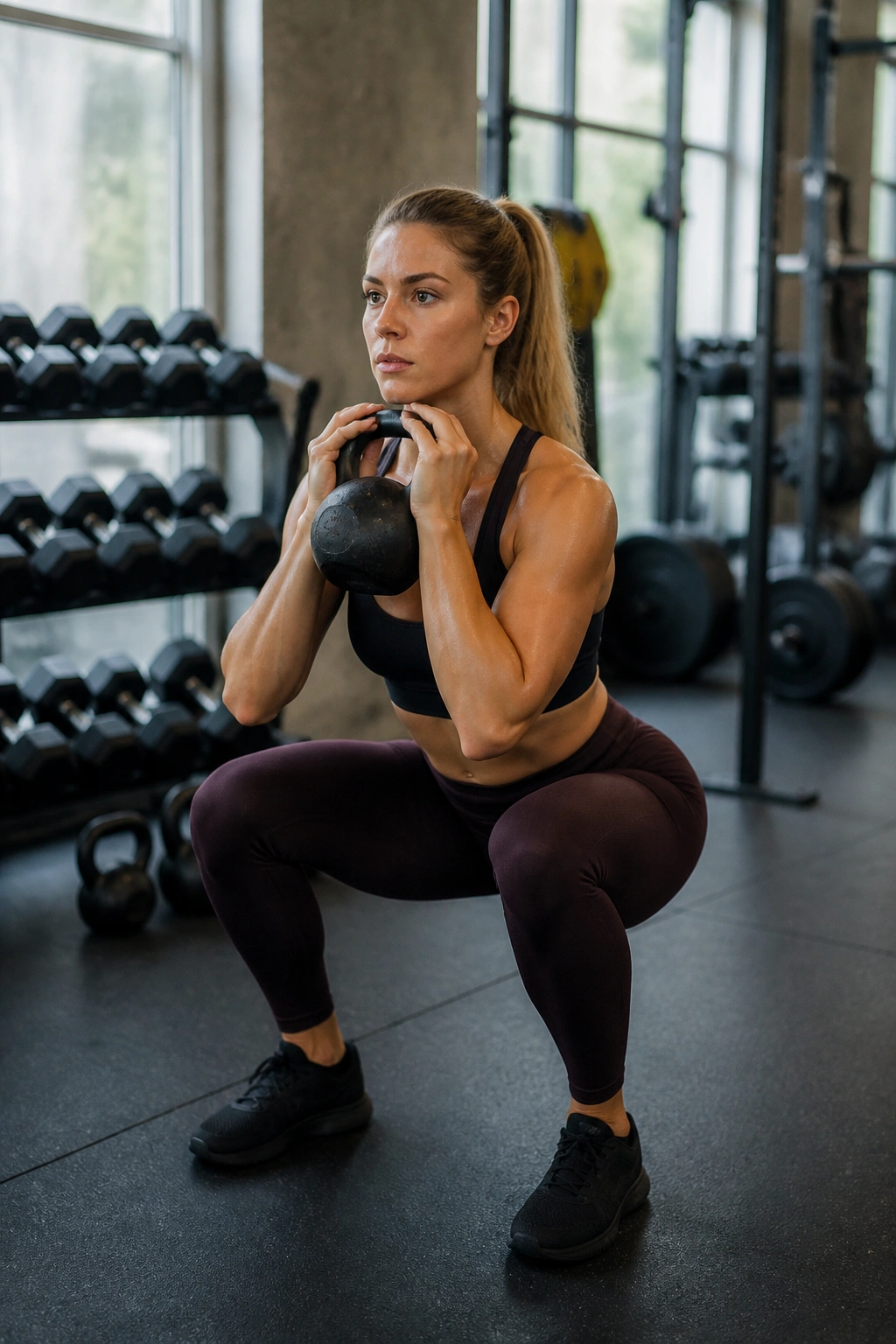
3. The Kettlebell Swing-Heavy Circuit

Kettlebells are not just weights; they are momentum machines. When you use them correctly, they train your body to produce power and, more importantly, to absorb force. This circuit is heavy on the posterior chain. Your hamstrings and glutes will scream. That is the point.
The Protocol
This is a density-based circuit. You are counting reps, not just watching the clock.
- Two-Handed Kettlebell Swings: 20 reps.
- Goblet Squats: 10 reps.
- Kettlebell Clean and Press: 5 reps per side.
- Rest: 60 seconds.
The Mechanics of the Swing
Do not treat the swing like a squat. It is a hip hinge. Your knees should bend only slightly. The power comes from the violent extension of your hips, not from pulling the bell up with your arms. If your arms are tired before your glutes, you are doing it wrong. Keep your shoulders packed down and back throughout the entire circuit.
4. The Plyometric Power House

Plyometrics are often misunderstood as “jump training for athletes.” In reality, they are the best way to train your nervous system to be explosive. This circuit isn’t about endurance; it’s about power output. If you feel like your movement is slowing down, stop. High-quality movement is the only way to reap the benefits of plyometrics without blowing out a tendon.
The Circuit Setup
- Box Jumps: Land softly. If you hear a loud thud, you are landing wrong.
- Broad Jumps: Focus on distance and stable landing.
- Lateral Skater Jumps: Drive hard off the outside leg.
- Depth Jumps: Step off a small box, land, and immediately explode upward.
Warning: Do not attempt these if you are already fatigued from a heavy leg day. Plyometrics require a fresh nervous system. If you are doing this as a standalone HIIT session, make sure you are fully recovered. The goal is maximum height and distance on every single repetition.
5. The Core-Focused Stability Burner

Most people treat “core work” as doing hundreds of crunches. That is useless for HIIT. Your core’s job is to resist movement—anti-rotation, anti-flexion, and anti-extension. This circuit hits those functions while keeping your heart rate high. It makes your torso look like a brick wall and improves your lifting performance in other sessions.
Movement Selection
- Plank Jacks: High plank position, feet hopping out and in.
- Dead Bugs: Slow, controlled, lower back glued to the floor.
- Medicine Ball Slams: Use your lats to slam the ball, not just your arms.
- Russian Twists: Keep your eyes on the weight, not just your hands.
How to Scale
Intensity in core work is about bracing. If you are just going through the motions, you aren’t doing anything. Every single rep needs to be done with maximum abdominal contraction. Imagine someone is about to punch you in the gut. Stay tight. That bracing is what turns these movements into actual strength building.
6. The EMOM Strength Hybrid
“Every Minute on the Minute” (EMOM) is the ultimate accountability tool. You set a timer for a specific duration, and at the start of every minute, you perform a task. Whatever time is left in that minute is your rest. It keeps you honest. If you are too slow, you have no rest. If you are too fast, you get a break.
The 20-Minute Grind
- Minute 1: 15 Goblet Squats.
- Minute 2: 10 Push-ups + 10 Plank Rows (each side).
- Minute 3: 12 Kettlebell Swings.
- Minute 4: Rest.
- Repeat this 5 times for a total of 20 minutes.
This style of training is fantastic because it allows you to track progress. If you finish your reps in 30 seconds one week, and 25 seconds the next, you are getting faster. You are improving your metabolic efficiency. It is simple math, and it never lies.
7. Lower Body Isolation Intensifier

Sometimes you just want to destroy your legs. This circuit combines compound movements with unilateral work to ensure there are no weak links. Unilateral training—working one side at a time—exposes imbalances that usually get hidden when you work both legs simultaneously.
The Leg-Burner Sequence
- Walking Lunges: 40 meters.
- Bulgarian Split Squats: 10 reps per side.
- Glute Bridges (Weighted): 20 reps.
- Jump Squats: Max reps for 30 seconds.
Why Unilateral Work Matters
If your left leg is stronger than your right, your body will compensate, leading to lower back pain or hip issues down the road. This circuit forces each leg to carry its own load. It is uncomfortable. Your legs will feel like lead. Do not skip the glute bridges—they help reset the pelvis and engage the posterior chain, which often gets neglected in favor of quad-dominant movements.
8. Upper Body Push-Pull Velocity

This circuit follows a “superset” philosophy. You pair opposing muscle groups—pushing and pulling—to keep the workload high while allowing one group to recover slightly while the other works. It builds a balanced physique and keeps your heart rate elevated because you are constantly moving between muscle groups.
The Pairing Strategy
- Dumbbell Bench Press: Heavy, controlled.
- Dumbbell Rows: Explosive pull.
- Overhead Press: Strict, no leg drive.
- Pull-ups: Strict, no kipping.
The Golden Rule: Keep your rest periods short—60 seconds tops between full rounds. The goal is to keep the pump in your muscles while pushing your VO2 max. If you find yourself taking two minutes to catch your breath, pick lighter weights. You are here to keep moving.
9. The Tabata-Style Sprint Finisher

Tabata is a specific protocol: 20 seconds of all-out effort followed by 10 seconds of rest, repeated eight times for a total of four minutes. It sounds easy. It is not. If you are doing Tabata correctly, you should be questioning your life choices by the third round.
Pick Your Poison
You can use this protocol on almost anything:
- Stationary Bike: Pedal like a car is chasing you.
- Rowing Machine: Hard, aggressive strokes.
- Sprints: Find a field or track.
- Burpees: The classic “do not stop” option.
The Reality Check
You cannot “pace” a Tabata. The point is 100% output. If you are saving energy for the last round, you are doing it wrong. The ten seconds of rest is not for relaxing; it is for setting yourself up for the next sprint. It is a four-minute torture session that leaves you gasping for air, but the physiological response is unmatched.
10. Sandbag Unstable Load Training

Sandbags are different from dumbbells. The weight shifts. It is an “unstable load.” Your body has to work harder just to control the object before you even start the movement. It mimics real-world tasks—like lifting a heavy bag of concrete or a child—far better than a perfectly balanced barbell.
The Sandbag Circuit
- Bear Hug Squats: Wrap your arms around the bag and squeeze.
- Sandbag Cleans: From the floor to the shoulder.
- Rotational Lunge: Hold the bag at chest height and twist towards the front leg.
- Carry: Hold the bag and walk for time.
Handling the Instability
Do not fight the bag. Control it. If the sand shifts, tighten your core and squeeze your lats. This requires a level of tension that standard gym machines simply do not provide. It builds functional strength that carries over into everything you do outside the gym.
11. Medicine Ball Explosive Complex

Medicine balls—specifically the heavy “dead” balls that don’t bounce—are fantastic for developing explosive power. This circuit is all about raw, unfiltered force. You aren’t doing reps for hypertrophy here; you are doing them to learn how to produce power from the ground up through your core to your hands.
The Routine
- Overhead Slams: Full extension.
- Rotational Slams: Throw the ball against a wall, catch, and rotate.
- Chest Pass: Throw against a wall.
- Squat and Throw: Deep squat into an overhead toss.
Why This Matters
When you slam a ball, you are using your entire body in a single, kinetic chain. It teaches you to coordinate your muscles for one powerful act. It’s also incredibly cathartic. If you have had a stressful day, this is the circuit that resets your nervous system better than anything else.
12. Battle Rope & Burpee Intervals

Battle ropes look like circus equipment, but they are one of the most brutal cardiovascular tools in the gym. They provide high-intensity upper body engagement with zero impact on the joints. Pairing them with burpees creates a “hybrid” fatigue that taxes both your lungs and your muscular endurance.
The Protocol
- Rope Waves (Alternating): 30 seconds.
- Burpees: 30 seconds.
- Rope Slams (Double): 30 seconds.
- Rest: 60 seconds.
The Secret to Ropes
Do not just flick your wrists. The power needs to originate from your core and your legs. Sit into a slight athletic stance. If your waves aren’t hitting the anchor point, you are just shaking your arms. Use your whole body to generate the force. You should see a consistent “wave” pattern travelling all the way to the end of the rope.
13. The Minimalist Apartment Circuit

Sometimes you are stuck in a hotel room or a small apartment with zero equipment. That is no excuse. You can create a punishing circuit using nothing but a chair or a sturdy piece of furniture. You don’t need a gym membership to stay conditioned.
The Space-Saving Routine
- Bulgarian Split Squats: Use the chair for your back foot.
- Incline Push-ups: Hands on the chair.
- Tricep Dips: Edge of the chair.
- Step-ups: Onto the seat of the chair.
The Mental Shift
The limitation is only in your head. When you don’t have heavy weights, you have to find intensity through tempo and volume. Slow down the eccentric (lowering) phase of the movement. Make the push-up take three full seconds. That “time under tension” is how you create muscle damage and metabolic stress without a single plate.
14. Agility Ladder & Agility Focus
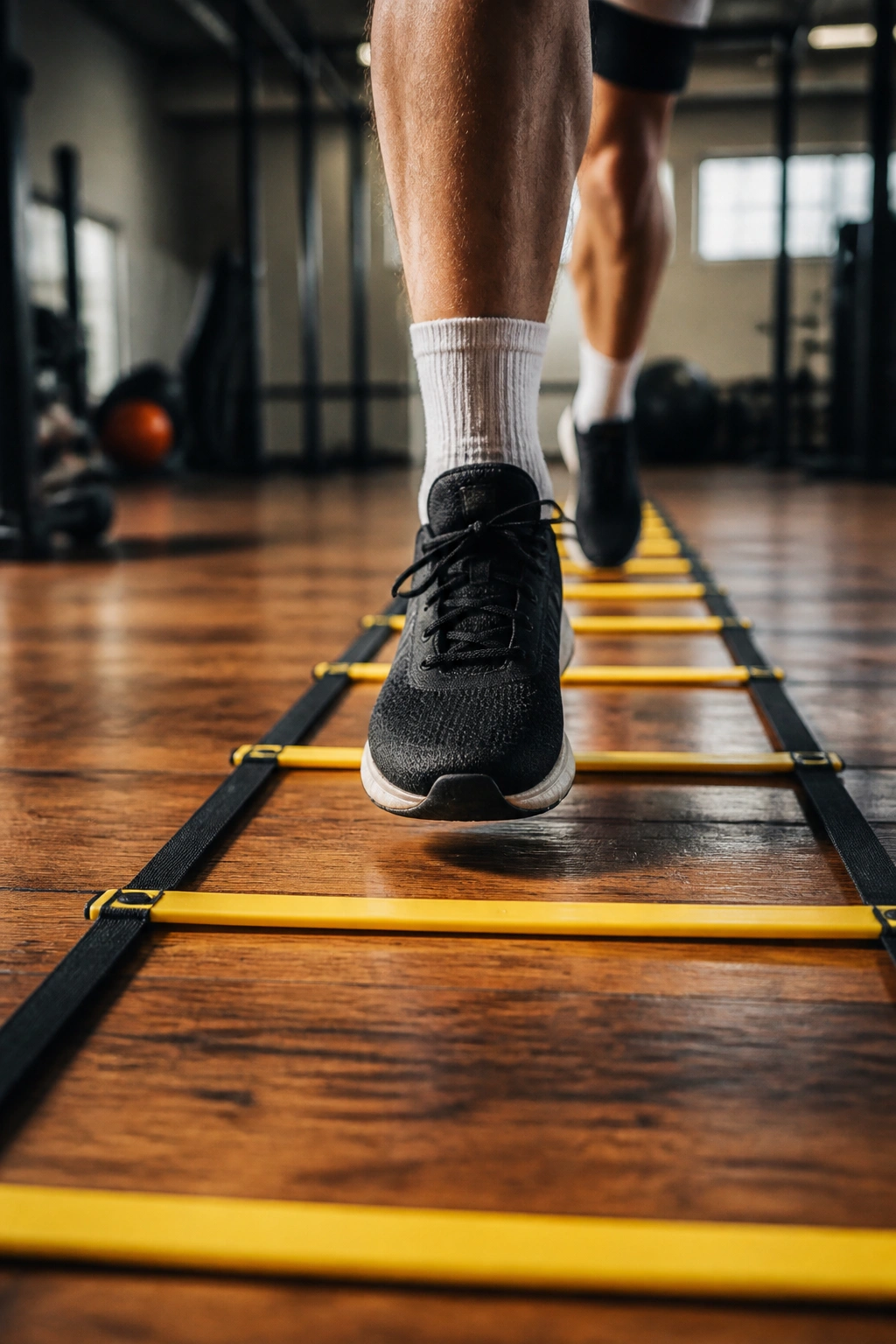
Agility training is often neglected in strength-focused programs, which is a mistake. Being strong is great, but if you move like a robot, you aren’t actually functional. This circuit brings coordination and fast-twitch footwork back into the mix. It keeps you athletic, not just strong.
Movement Patterns
- In-and-Outs: Quick feet in the boxes.
- Lateral Shuffles: Stay low.
- Ickey Shuffle: Two feet in, one out.
- High Knees: Maximum cadence.
The Focus
Do not look at your feet. Look straight ahead. The goal is to develop proprioception—the awareness of your body in space. If you are staring at your feet, you aren’t developing that skill. If you don’t have a ladder, use chalk or masking tape on the floor. It works just as well.
15. Suspension Trainer Stability
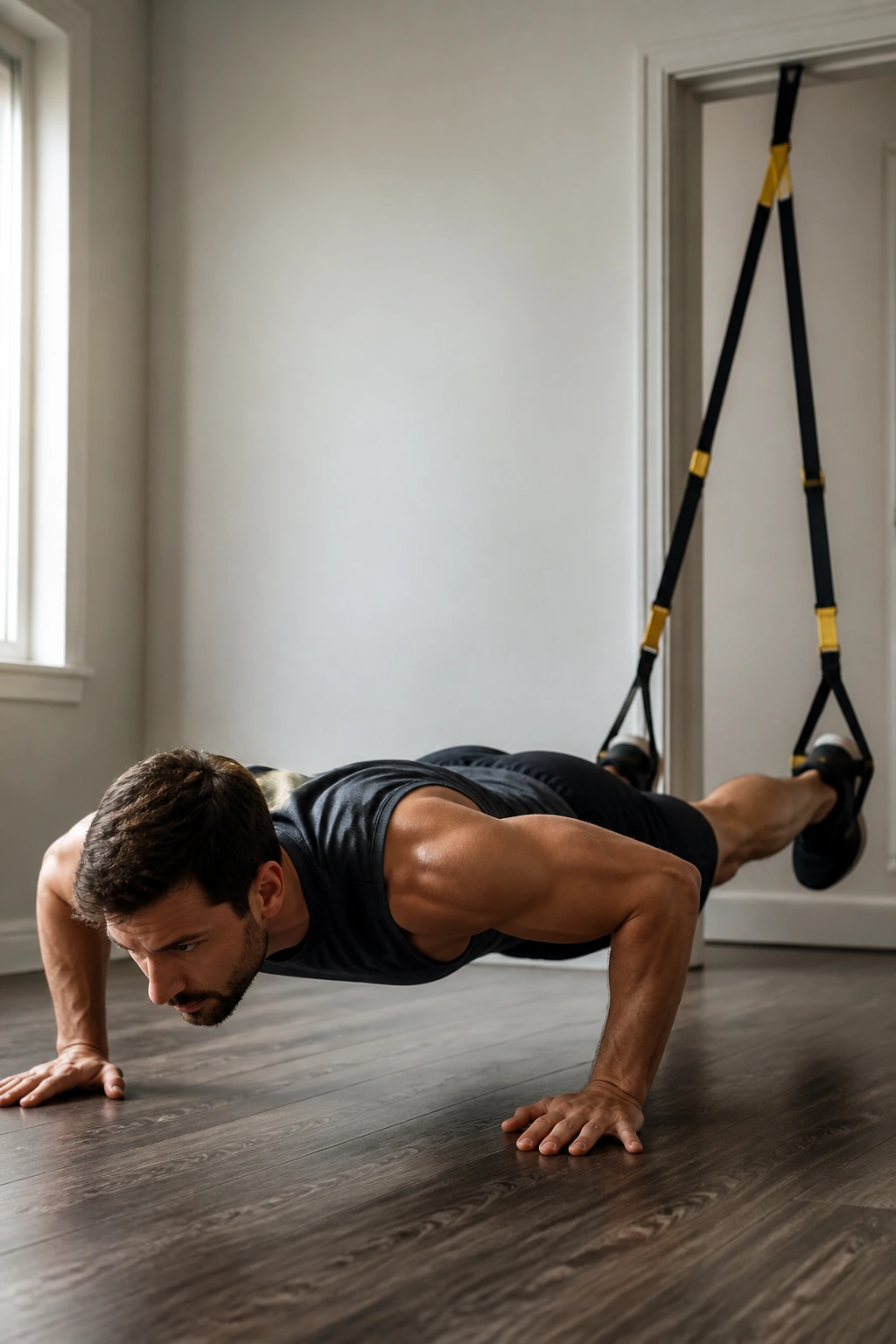
Suspension trainers (the TRX style) are deceptive. They look easy. They are not. Because the straps are unstable, your body has to fire small, stabilizer muscles to keep you from swinging. This is an incredible way to train for “functional” strength—the ability to move your own body weight through space.
The Suspension Complex
- Suspension Rows: Squeeze the shoulder blades.
- Suspension Push-ups: Feet in the cradles if you’re advanced.
- Hamstring Curls: Heels in the cradles, hips up.
- Atomic Push-ups: Push-up plus a knee tuck.
Why It’s Unique
You cannot cheat a suspension trainer. If your form breaks, the straps will wobble, and you will feel it immediately. It provides instant feedback on your movement quality. This makes it an elite tool for fixing posture and improving core engagement simultaneously.
16. The “Ladder” Volume Accumulator

Ladders are a classic method for increasing volume without feeling overwhelmed. You start with a low number of reps, climb up, and then climb back down. It’s psychologically easier to manage than a straight set of 50 reps, even if the total volume is the same.
The Ladder Structure
Pick two movements. Let’s use Push-ups and Squats.
- Round 1: 2 reps of each.
- Round 2: 4 reps of each.
- Round 3: 6 reps of each.
- Keep climbing until you reach 12 reps, then work your way back down to 2.
Pacing
The beginning of the ladder feels easy. Do not sprint. Save your energy for the middle of the ladder where the volume piles up. The middle rounds are where the “cardio” element kicks in. This teaches you how to pace yourself through a long bout of work, which is a skill in itself.
17. Partner-Style Motivational Circuit

Training alone is great for focus, but training with a partner is unmatched for intensity. You are far less likely to quit when someone else is watching you struggle. This circuit relies on the “I go, you go” method, which naturally enforces rest periods.
The Protocol
- Partner A does a movement (e.g., 10 Burpees).
- Partner B rests while watching A.
- Partner B does the movement.
- Partner A rests.
- This continues for 15 minutes total.
Accountability
The accountability is the “secret sauce.” You don’t want to be the one slowing down your partner, so you push harder. You don’t want to stop mid-set, so you find that extra bit of fuel. It changes the dynamic from “can I get through this?” to “I am not letting my partner down.”
18. The “Garage Gym” Heavy Compound Circuit
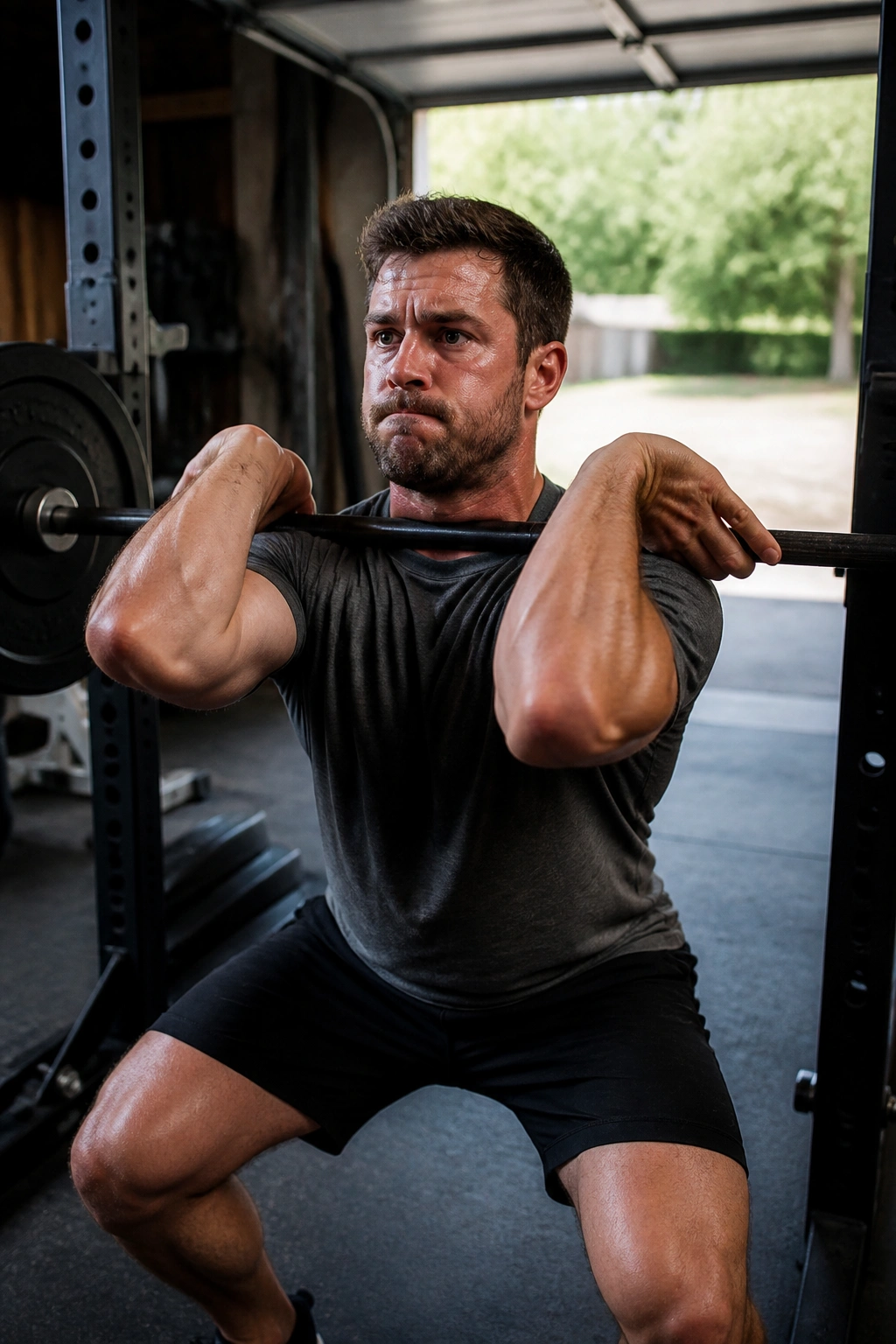
This is for when you have access to a rack and a barbell. This is the “big guns” of conditioning. You are using heavy, compound movements—the stuff that builds real strength—at a heart-rate-spiking tempo. This is not for beginners. This is for when you want to see what you are truly made of.
The Heavy Circuit
- Barbell Deadlifts: Moderate weight, fast singles.
- Front Squats: Focus on keeping the elbows up.
- Push Press: Use the legs to drive the weight overhead.
- Rest: 90 seconds.
Execution
Safety is the priority. Do not sacrifice form for speed. If you feel your form degrading on the deadlift, stop the set. The goal here is to maintain a high level of technical proficiency while breathing hard. If you can handle heavy weight with a high heart rate, you have reached a high level of physical conditioning.
Final Thoughts

You now have eighteen distinct ways to push your body. The mistake most people make isn’t choosing the “wrong” one; it’s failing to stay consistent. Pick two or three of these circuits and rotate them into your weekly routine. Track your times, track your weights, and be honest about your effort levels.
Conditioning is not built in a day, nor is it lost in one. It is a slow, grinding accumulation of effort over weeks, months, and years. Don’t look for shortcuts. Don’t look for the “secret” to results. The secret is simply showing up, setting the timer, and doing the work until the buzzer sounds. Listen to your body, manage your recovery, and stay the course. The results will take care of themselves.
