



Most arms and abs combo workouts fail for a dull reason: they chase the burn and ignore the pattern. You get a little shoulder pump, a few shaky crunches, and not much else.
A toned look comes from muscle you can actually see. That means enough resistance to make the biceps and triceps work, plus core drills that stop the ribs from flaring and the lower back from doing all the work. No magic here. Just honest training.
Pick a load that leaves two clean reps in the tank, keep the rest short enough that your breathing stays up, and watch what happens when form starts to slip. If your shoulders creep toward your ears or your hips wobble side to side, the set is already telling on you.
Start with the first pairing and keep the tempo honest. Your abs will notice before your ego does.
1. Dumbbell Arms and Abs Combo: Curl and Dead Bug Pair
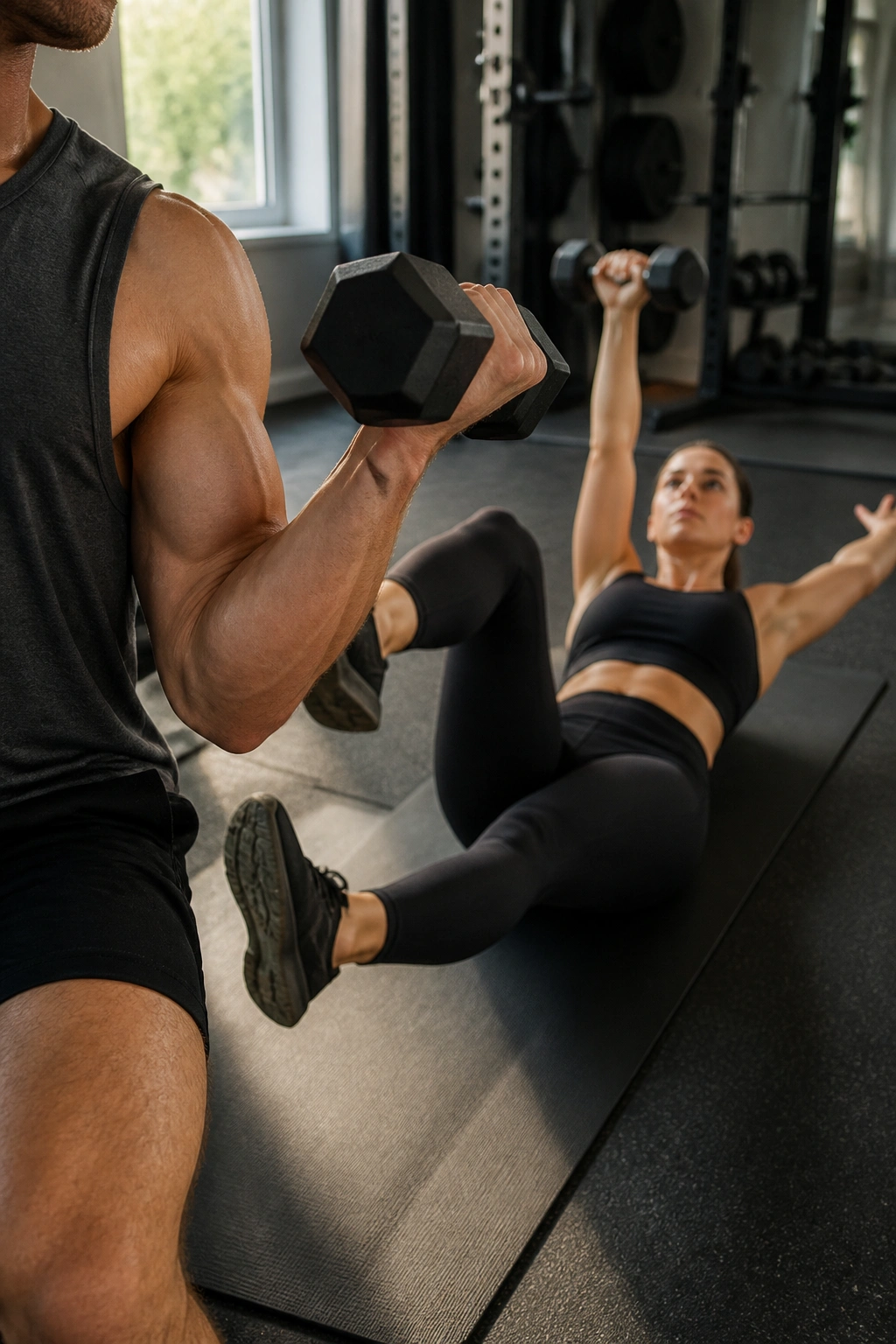
This is the kind of pairing that looks easy until the last few reps. Then the dead bug starts exposing every lazy rib flare, and the curl starts showing whether you’ve been swinging the weight instead of lifting it.
Why It Works
The dumbbell curl hits the biceps directly, while the dead bug trains anti-extension, which is a fancy way of saying your torso has to stay flat when your legs move. That combination matters because a lot of arm work gets sloppy the moment the core relaxes.
Run this as a tight superset. Do 10 to 12 alternating curls per arm, then 8 dead bugs per side, then rest 30 to 45 seconds. Three rounds is enough for most people. If the dead bug gets noisy in your lower back, shorten the leg reach and press your low back harder into the floor.
- 3 rounds
- 10 to 12 alternating dumbbell curls per arm
- 8 dead bugs per side
- 30 to 45 seconds rest
- Use a weight you can lift without shrugging
Tip: keep your elbows pinned near your sides on the curl. If they drift forward, the weight is too heavy or the set is too long.
2. Push-Up to Mountain Climber Combo
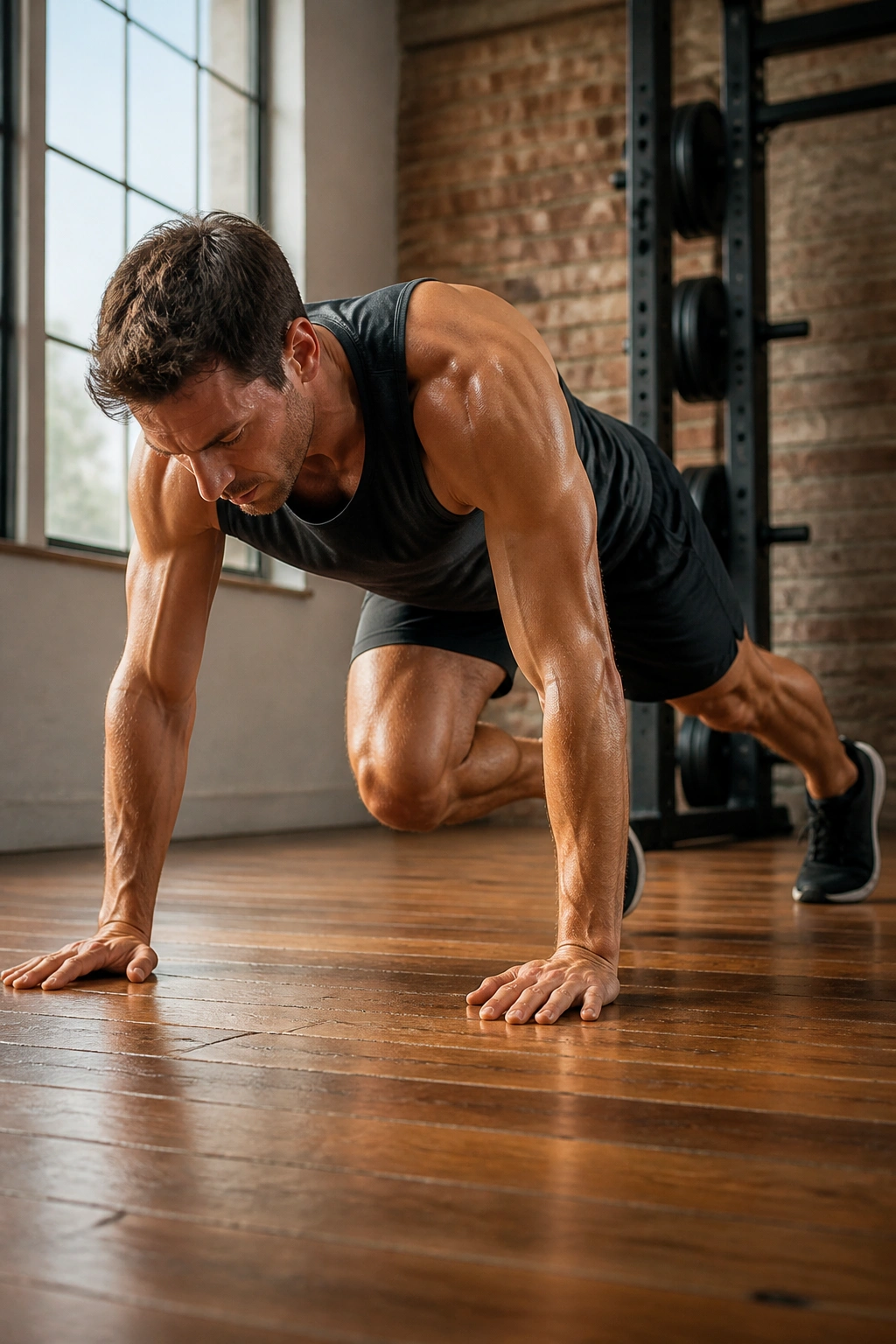
If your push-ups collapse at the hips, this combo is doing its job. The push-up asks your chest, triceps, and shoulders to push hard, while the mountain climber makes your core hold the line when the legs start moving fast.
A clean set should feel sharp, not sloppy. Drop to an incline push-up if your ribs sag before rep six. Then go straight into 20 mountain climbers, keeping your hands planted and your shoulders stacked over your wrists. The whole point is to make the trunk stay quiet while the limbs work.
That’s the part people skip. They chase speed and turn the climbers into a knee-marching scramble. Don’t. Slow the knees down just enough that your waist stays still. The burn will come anyway.
For a solid session, use 3 to 4 rounds of 8 to 10 push-ups and 20 climbers. Rest 30 seconds between moves if you need it, but keep the gaps short. That keeps the heart rate up without trashing your form.
3. Overhead Triceps Extension and Hollow Hold
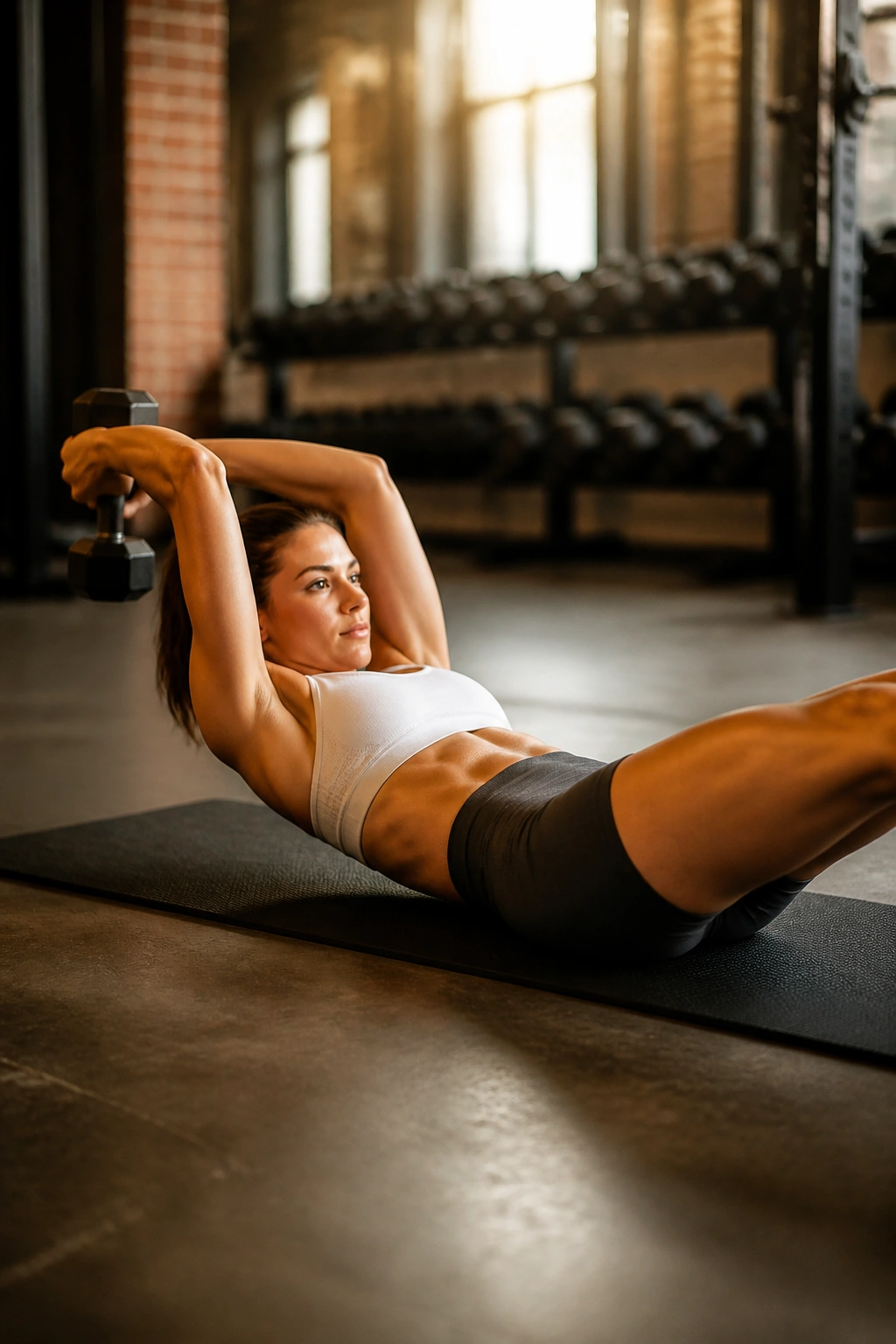
Can a triceps move and a hollow hold live in the same workout without wrecking your lower back? Yes, if you keep the ribs down and stop pretending the hollow hold is a neck crunch.
The overhead extension stretches the long head of the triceps in a way kickbacks never do. The hollow hold, meanwhile, forces your abs to brace while your arms stay overhead, which is a sneaky little stress test for body control. If your back arches, the hold is too aggressive. Bend the knees a little and keep going.
How to Use It
- 3 rounds
- 10 to 12 overhead triceps extensions
- 20 to 30 seconds hollow hold
- Rest 45 seconds between rounds
Keep your elbows narrow on the extension and let the dumbbell travel behind your head, not in front of it. The hollow hold should feel like your front body is one long tight sheet. If your neck starts doing the work, lower your legs and breathe slower. That adjustment is not cheating. It’s smart training.
4. Hammer Curl and Side Plank Reach-Through
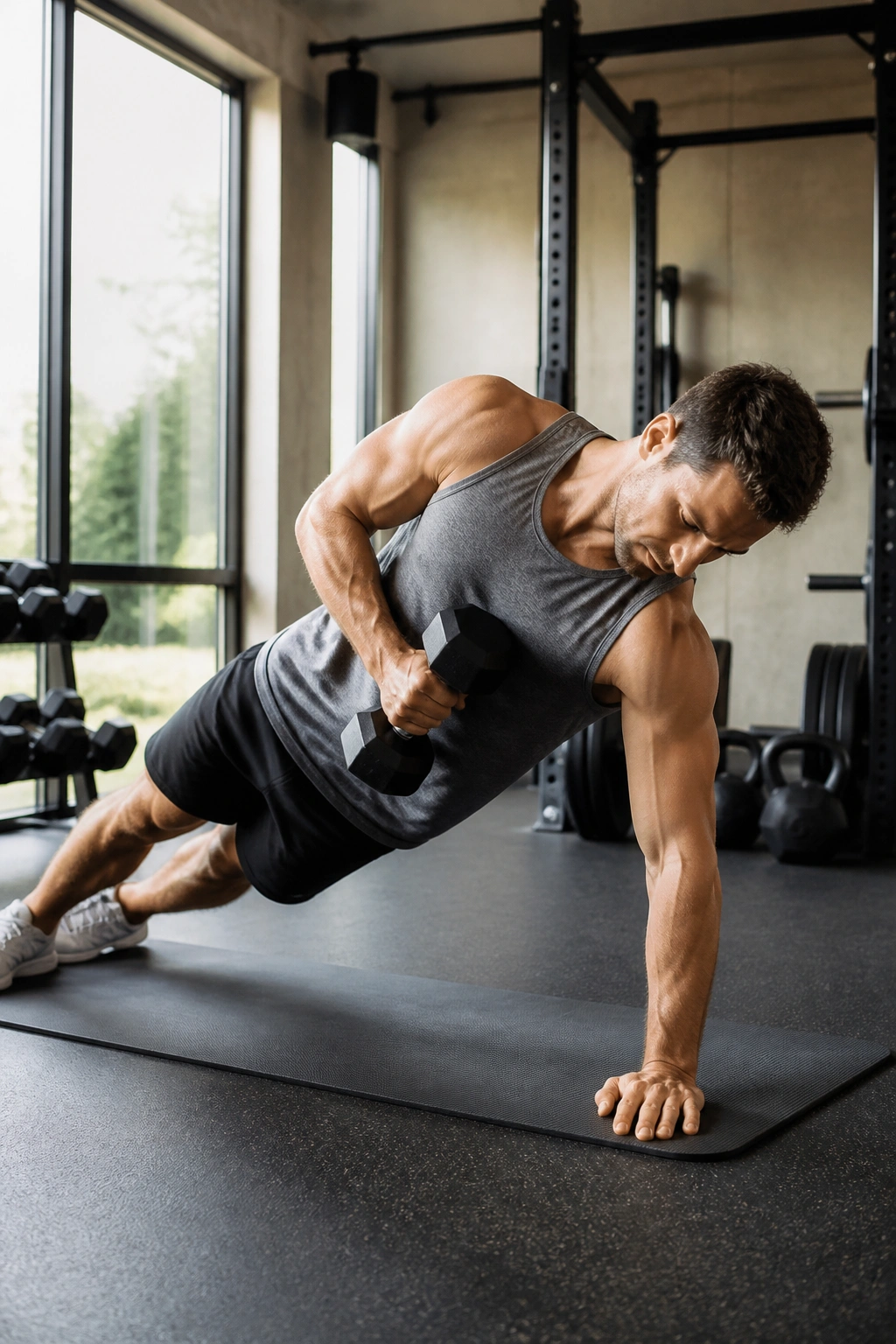
Picture the last five reps here. Your forearm starts to shake, your obliques wake up, and the side plank asks for a little more honesty than you expected. That’s the point.
Hammer curls hit the brachialis and forearms a bit more than a straight curl, which gives the upper arm a thicker look. The side plank reach-through rotates the torso under control, so the waist works while the shoulders stay set. Together, they make you manage load and rotation at the same time.
- 10 hammer curls per arm
- 8 side plank reach-throughs per side
- 3 rounds
- Rest 30 to 40 seconds
- Use a dumbbell that feels smooth, not jerky
The reach-through should come from the ribs, not from flinging the arm under your body. If your top shoulder rolls forward, pause and reset. A shorter lever helps here too—stack your feet for more challenge, or stagger them if balance is the issue.
5. Renegade Row and Toe Tap Crunch
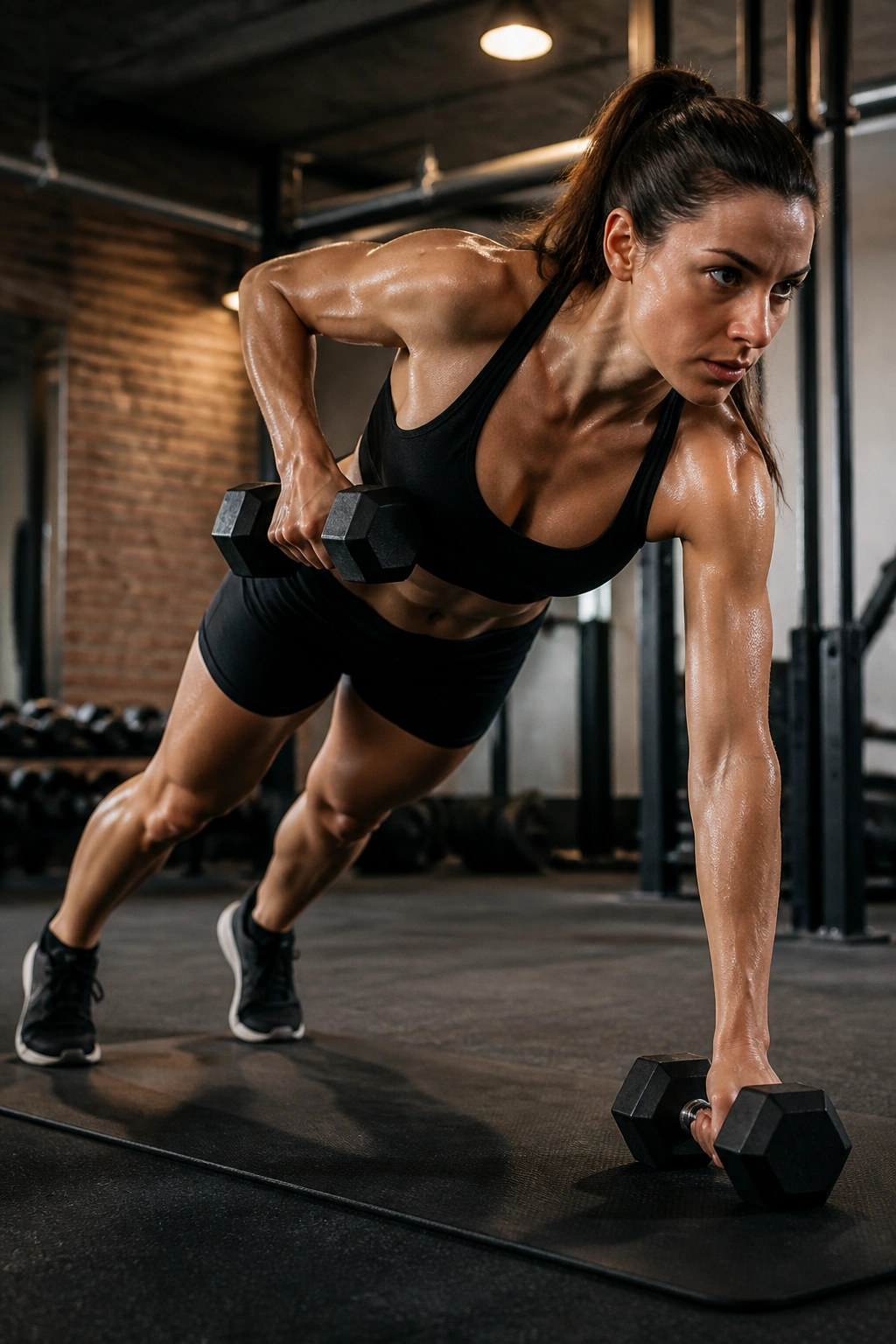
Renegade rows are messy for about ten seconds. After that, they become a little test of whether your abs can keep your hips from wobbling while your back and arms pull hard. That is why I like them.
The row gives you upper-back and arm work, but the real prize is the anti-rotation demand. One hand lifts a dumbbell, the other hand stays planted, and your trunk has to stop twisting. Pair that with toe tap crunches, and you get a nice contrast: heavy upper-body tension, then a pure abdominal movement that forces control through the lower half.
Keep your feet a little wider than shoulder-width if you’re new to the move. Narrow feet look cleaner in photos and feel worse in practice. A wider stance gives your hips a fighting chance, which lets the lats do their job instead of turning the set into a balance drill.
Try 4 rounds of 8 rows per side and 10 toe taps. If your wrists complain, use hex dumbbells or place the hands on push-up handles.
The good version of this combo feels disciplined. The sloppy version feels like a small disaster.
6. Band Arms and Abs Combo: Pressdown and Bicycle Crunch
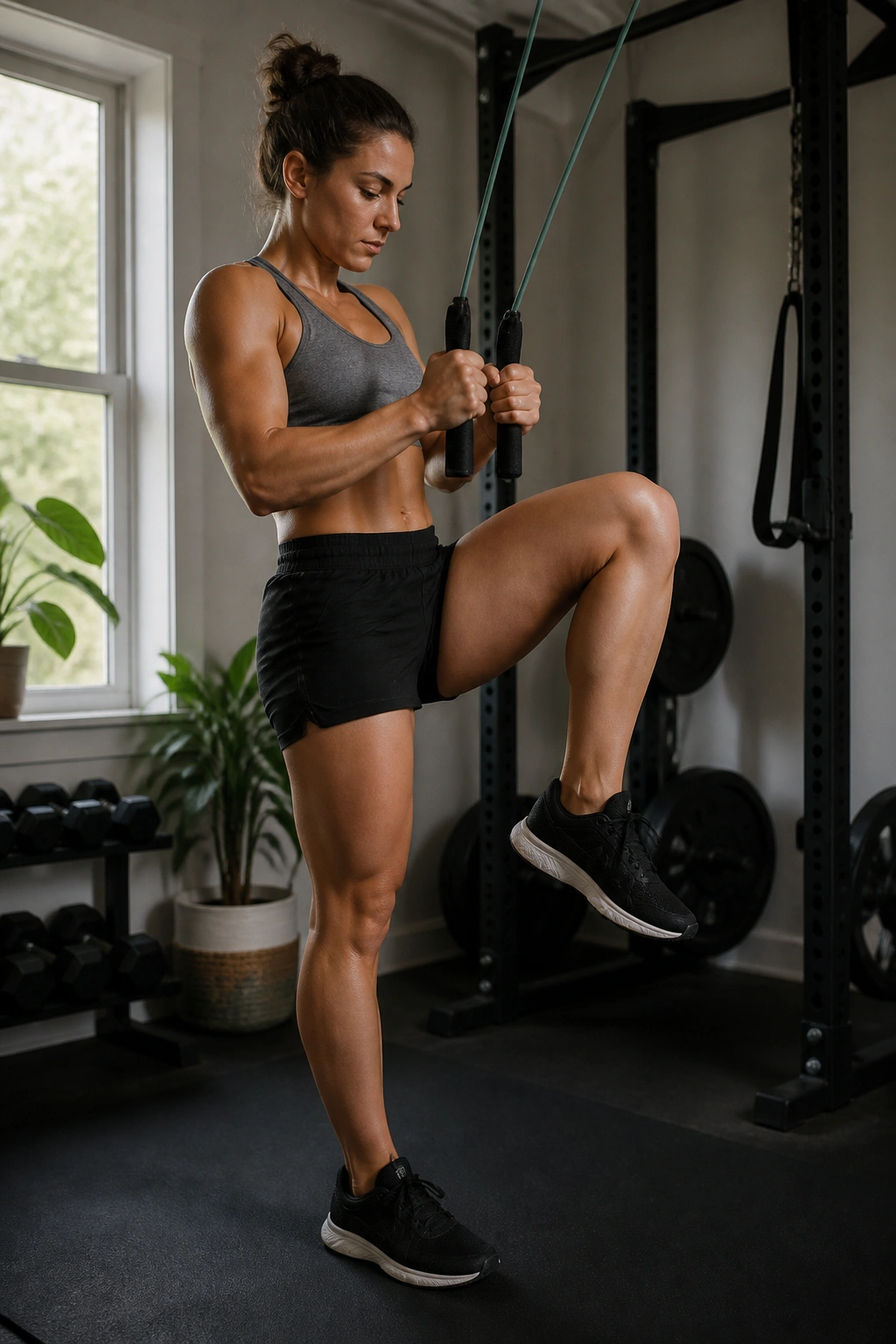
Band work gets dismissed too easily. That’s lazy thinking. A good band pressdown keeps tension on the triceps the whole way down, and bicycles make your midsection work through rotation without needing a pile of equipment.
Compared with heavy dumbbells, bands are easier on elbows and friendlier in tight spaces. They’re also better than people expect for high-rep arm work, because the resistance climbs as you extend. That means the last third of the rep can feel harder than the first, which is a useful change of pace.
If you train at home, this is one of the cleanest setups in the stack. Anchor the band overhead for pressdowns, stand tall, lock your upper arms in place, and finish with 15 to 20 bicycles on the floor. Keep the knees moving slowly enough that your shoulders do not start yanking your neck forward.
Best for: travel days, small rooms, and people whose elbows hate heavy skull crushers.
Use this when: you want a pump without needing a bench, a rack, or a long setup.
7. Arnold Press and Shoulder Tap Plank
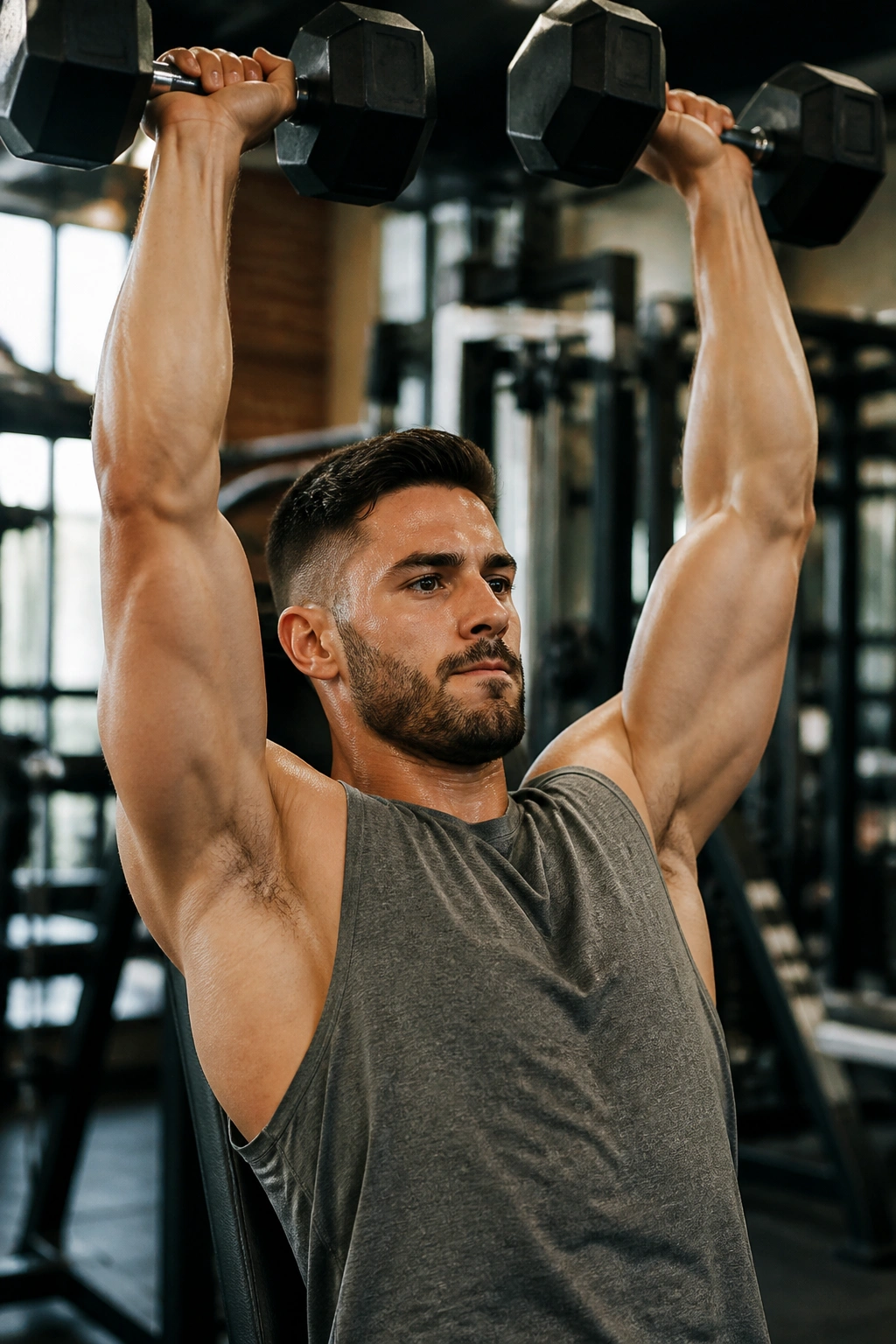
Fast shoulders. Slow abs.
That’s the whole trick here. The Arnold press moves through a full range and lights up the front and side delts, while the shoulder tap plank makes your core stop the body from swaying as each hand lifts. If your hips rock during the taps, the abs are not earning their keep.
Why It Works
The pressing motion builds the cap of the shoulder and keeps the triceps involved. The plank taps make the body resist movement instead of creating it. That mix gives you upper-body shape without turning the session into a pure arm grind.
How to Run It
- 3 rounds
- 8 Arnold presses
- 20 shoulder taps
- Rest 45 seconds
Use a pair of light to moderate dumbbells. Heavy load turns the press into a shrug, and shrugging is not the goal. In the plank, spread your feet wider if needed and tap slowly. A clean tap is better than four fast ones that swing your hips all over the place.
8. Bench Dip and Leg Raise Ladder
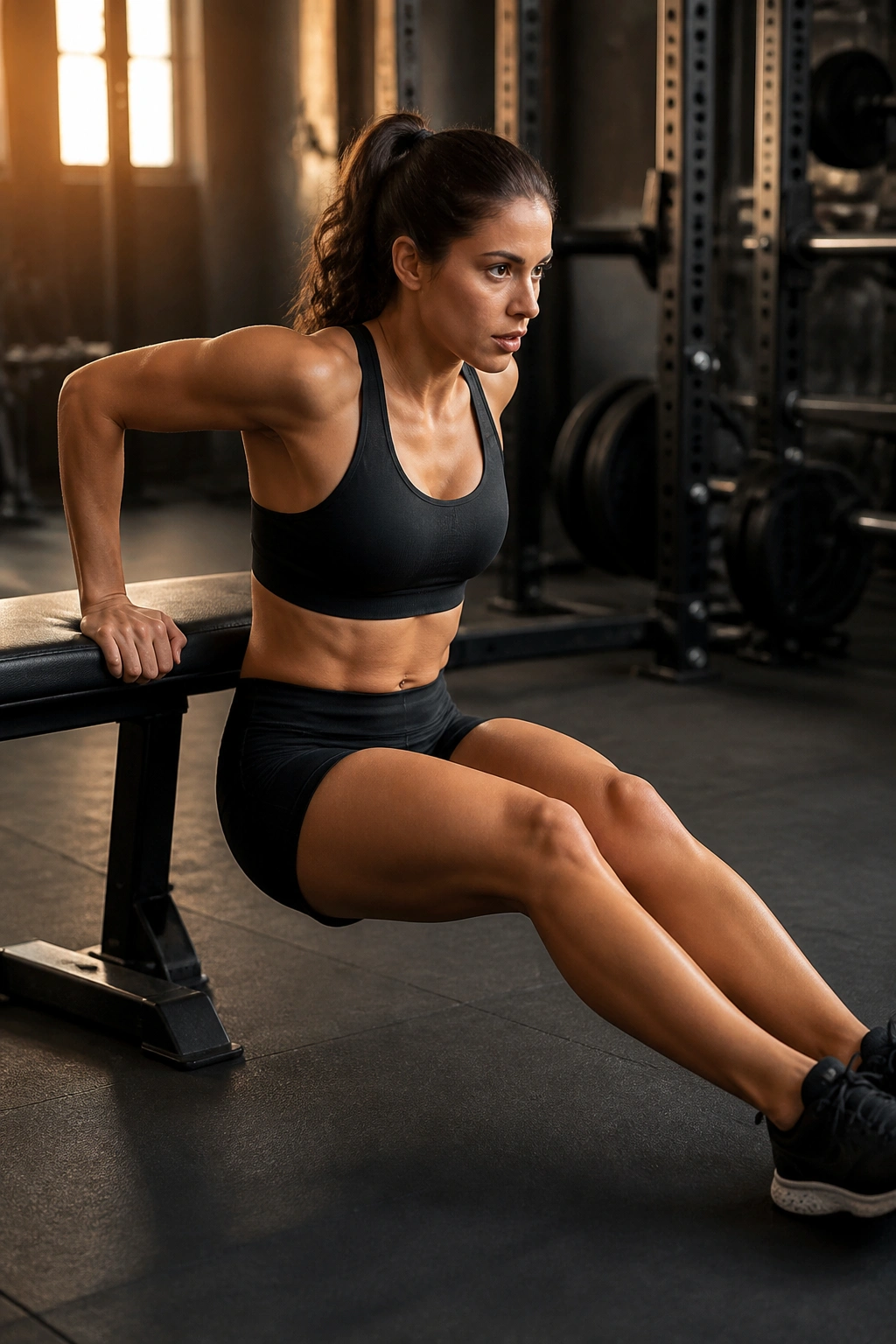
Bench dips can be rough if you throw your shoulders into them. Kept shallow and controlled, though, they’re a solid triceps builder. Add leg raises, and the lower abs have nowhere to hide.
This one works well as a ladder. Start with 6 dips and 6 leg raises, then move to 8 and 8, then 10 and 10. If your shoulders feel pinchy, stop the dip when the upper arms reach parallel to the floor. You do not need to sink deeper to make the triceps work.
A padded bench, a sturdy box, or even the edge of a sofa can work. Keep your hands close enough that your elbows point back, not out to the sides. On the leg raises, press the lower back into the floor before lifting the legs. If the back arches, bend the knees and shorten the lever.
This is a blunt little combo. It does not care much about excuses.
9. Zottman Curl and Russian Twist
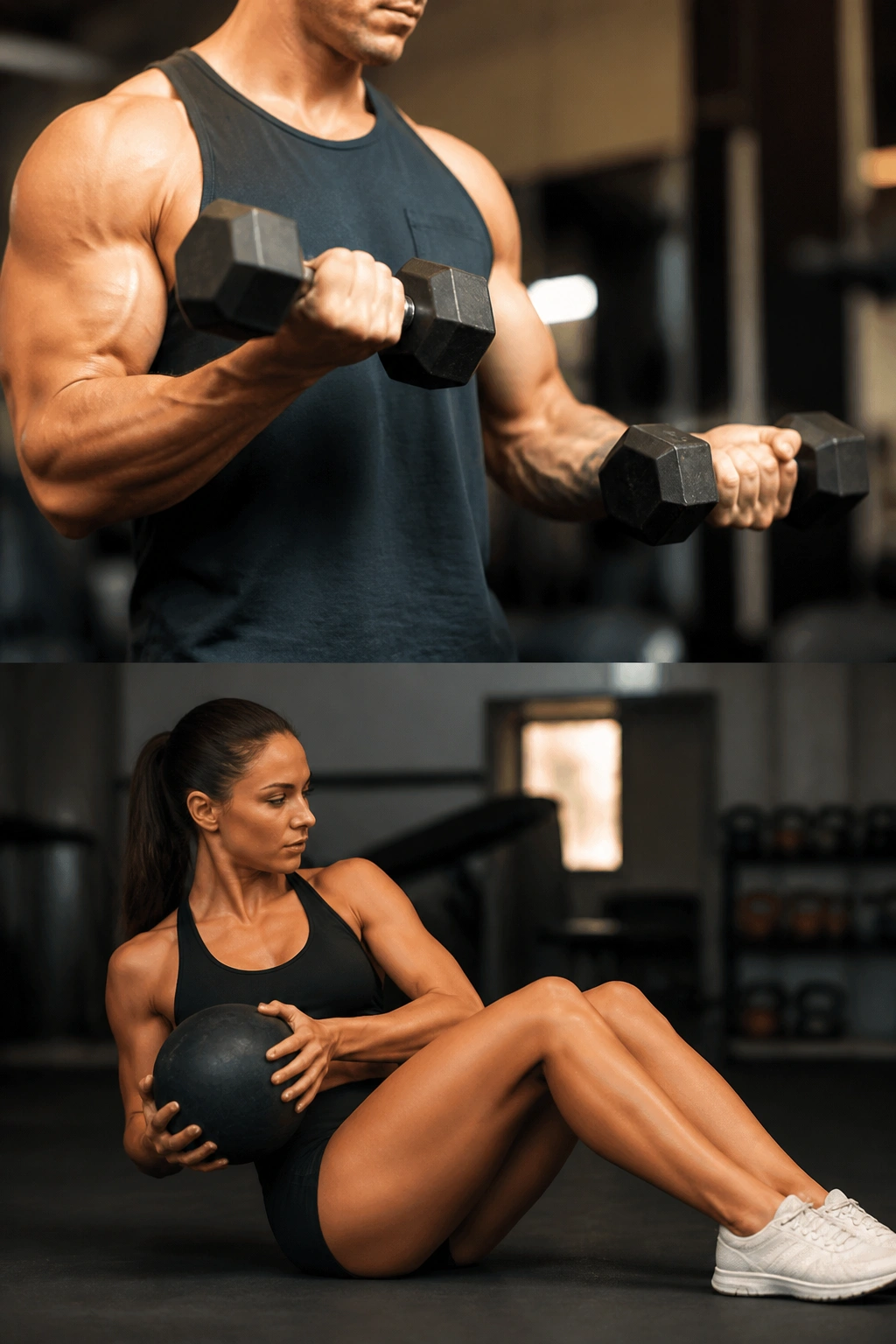
Why pair a Zottman curl with Russian twists? Because each move asks for control at a different point in the rep, and control is where a lot of toned-looking work gets built.
The Zottman curl starts like a regular biceps curl, then flips to a pronated lowering phase. That eccentric lowering taxes the forearms and brachialis in a way standard curls miss. Russian twists, done slowly, make the obliques work through rotation. The slow part matters. If you whip the dumbbell side to side, the torso checks out.
How to Get the Most From It
Keep the Zottman curls light enough that the wrist rotation stays smooth. Then sit tall for the twists, chest lifted, feet either lightly down or elevated if your back tolerates it well. A good target is 8 to 10 Zottman curls and 16 to 20 controlled twists per side, for 3 rounds.
The temptation here is to go too fast. Skip that. The slower lowering phase is the piece that gives the curl its edge.
10. Close-Grip Floor Press and Reverse Crunch
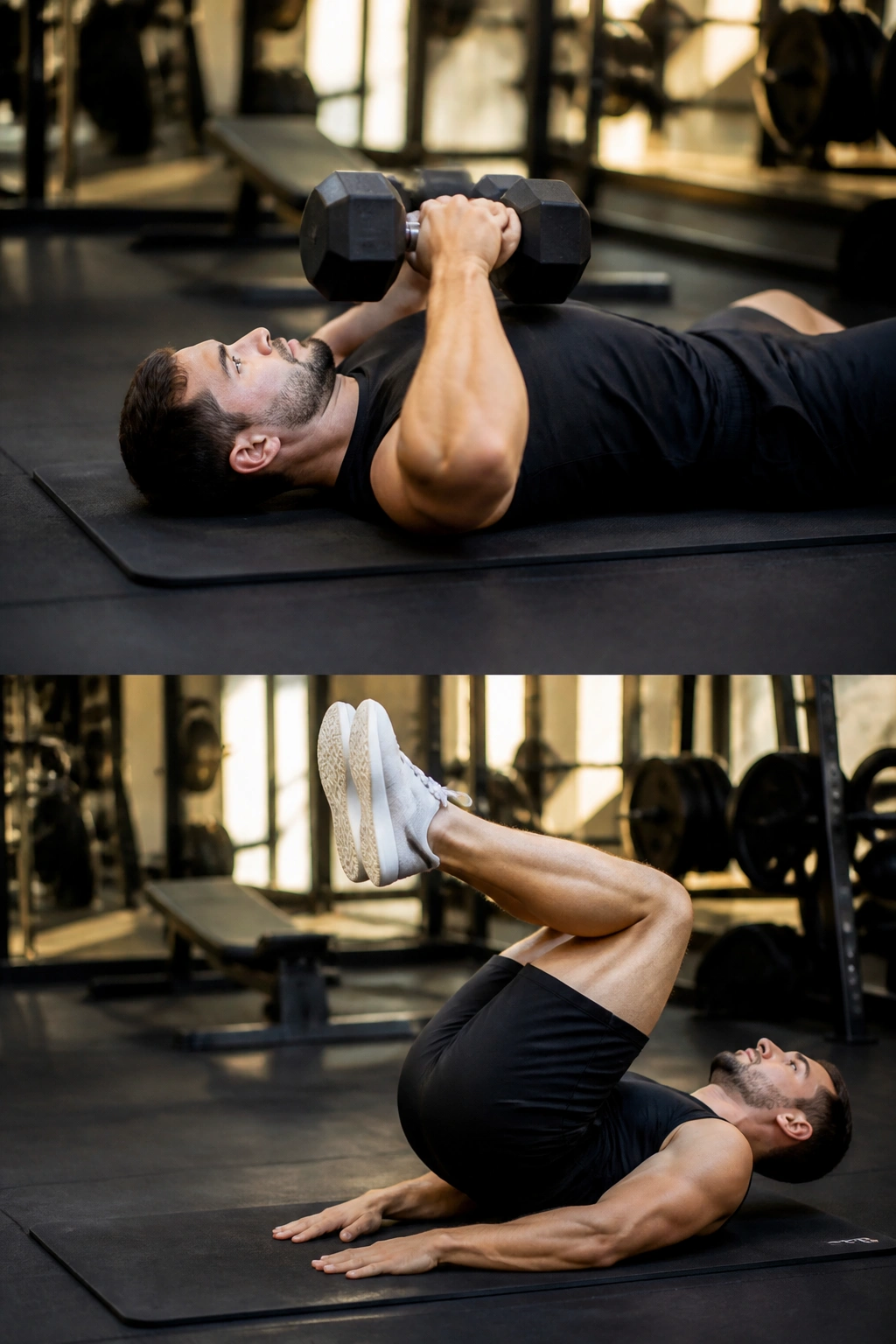
The close-grip floor press is one of those moves that looks plain and then quietly does a lot of work. The floor cuts off the bottom range, which tends to be kinder on shoulders, and the narrow hand position pushes the triceps harder than a wide press would.
Reverse crunches finish the job by making the lower abs curl the pelvis upward instead of letting the hip flexors steal the show. The press and crunch together give you a nice upper-lower contrast without needing much room.
I prefer this combo over a traditional bench press when the goal is arm shape plus trunk work. The floor press keeps the elbows from dropping too low, which usually means less shoulder fuss. The reverse crunch keeps the session honest by forcing the pelvis to move, not just the legs.
Use 4 rounds of 10 close-grip floor presses and 12 reverse crunches. Pause for one beat at the top of each crunch and roll the pelvis toward your ribs. Tiny pause. Big difference.
11. Resistance Band Curl and Bear Crawl
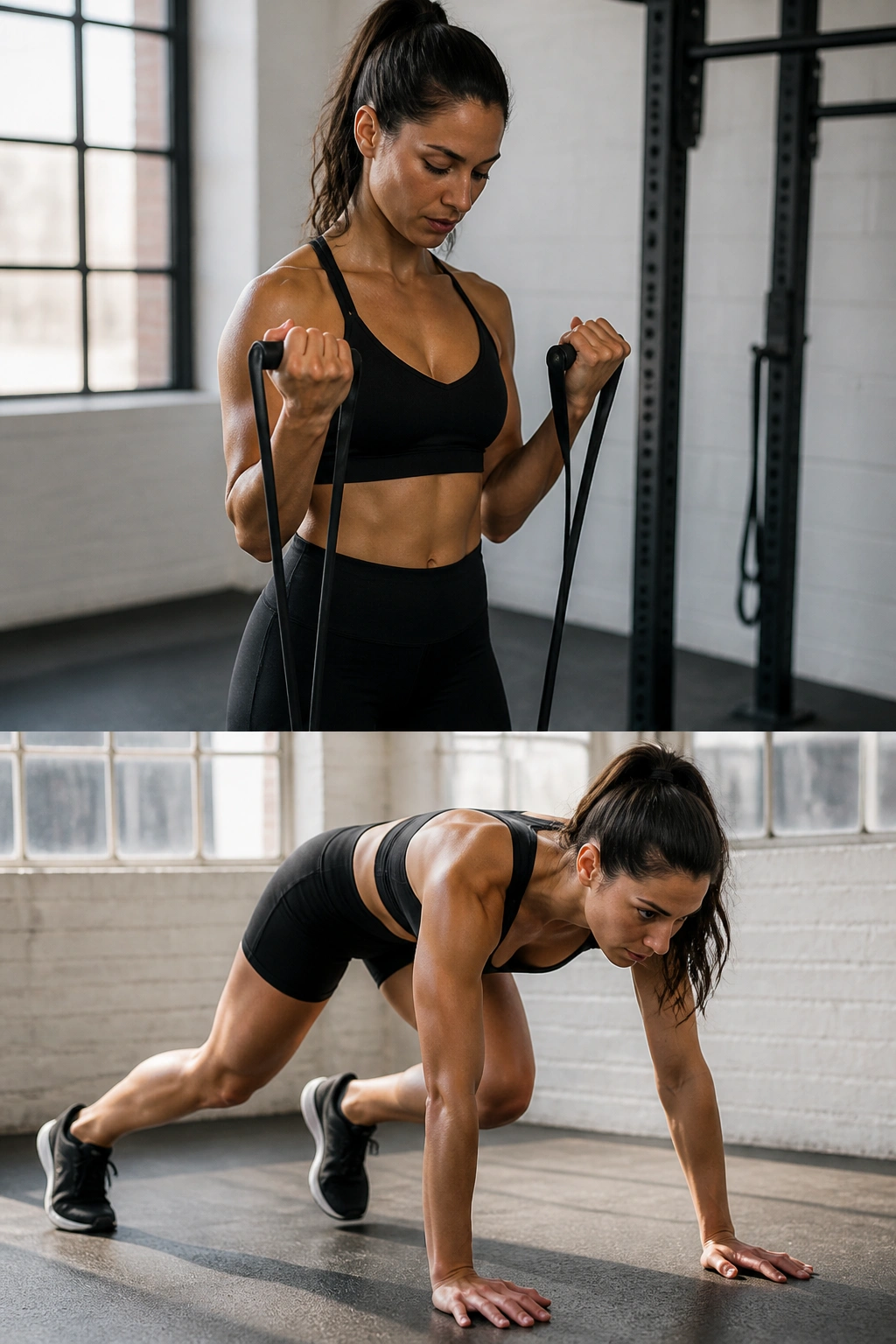
Bands look harmless until the curl tension ramps up near the top and the bear crawl starts making your shoulders and abs cooperate under fatigue. That is the appeal here. You get a standing arm move, then you hit the floor and have to hold your body together.
The band curl is good for constant tension, especially when you anchor it under a foot or at a low point. The bear crawl flips the script: now the core, shoulders, and hips all have to move in a tight pattern while the knees hover a few inches above the floor. It is not glamorous. It works.
Keep the crawl short and neat. Three to five steps forward, three to five steps back, then reset. If your knees slap the floor or your hips bounce, shorten the step length and slow down. A strong crawl feels almost quiet.
Try 12 to 15 band curls followed by 20 to 30 seconds of bear crawl for 3 rounds. If space is tight, crawl in place. That still counts.
12. Triceps Kickback and Cross-Body Climber
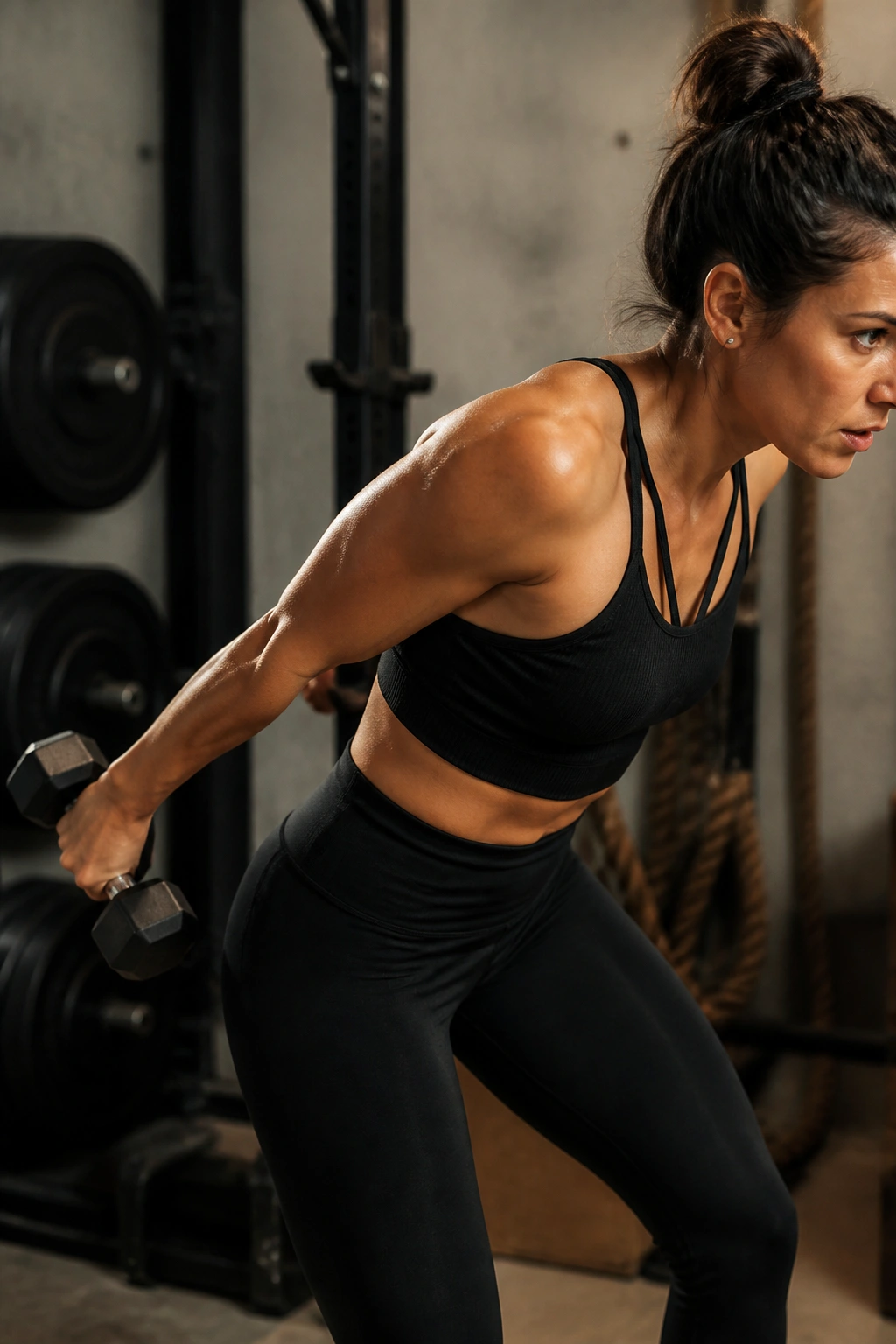
Kickbacks get dismissed because people use loads that are too heavy and turn them into tiny swinging pendulums. Done right, though, they keep the triceps under tension in a way that feels clean and precise.
The cross-body climber adds a direct hit to the obliques and the lower abs. Instead of driving the knee straight ahead, bring it toward the opposite elbow. That little diagonal path changes the core demand more than most people expect.
Compared with overhead triceps work, kickbacks are lighter and more controlled. That makes them handy for home workouts or days when your elbows want a break. The climber then keeps the heart rate up without needing a jump rope, bench, or fancy setup.
- 12 kickbacks per arm
- 20 cross-body climbers
- 3 rounds
- Rest 30 to 45 seconds
Keep the torso hinged on the kickback and freeze the upper arm in place. If the shoulder starts drifting, the rep has turned into cheating.
13. Single-Arm Arms and Abs Combo: Floor Press and Dead Bug
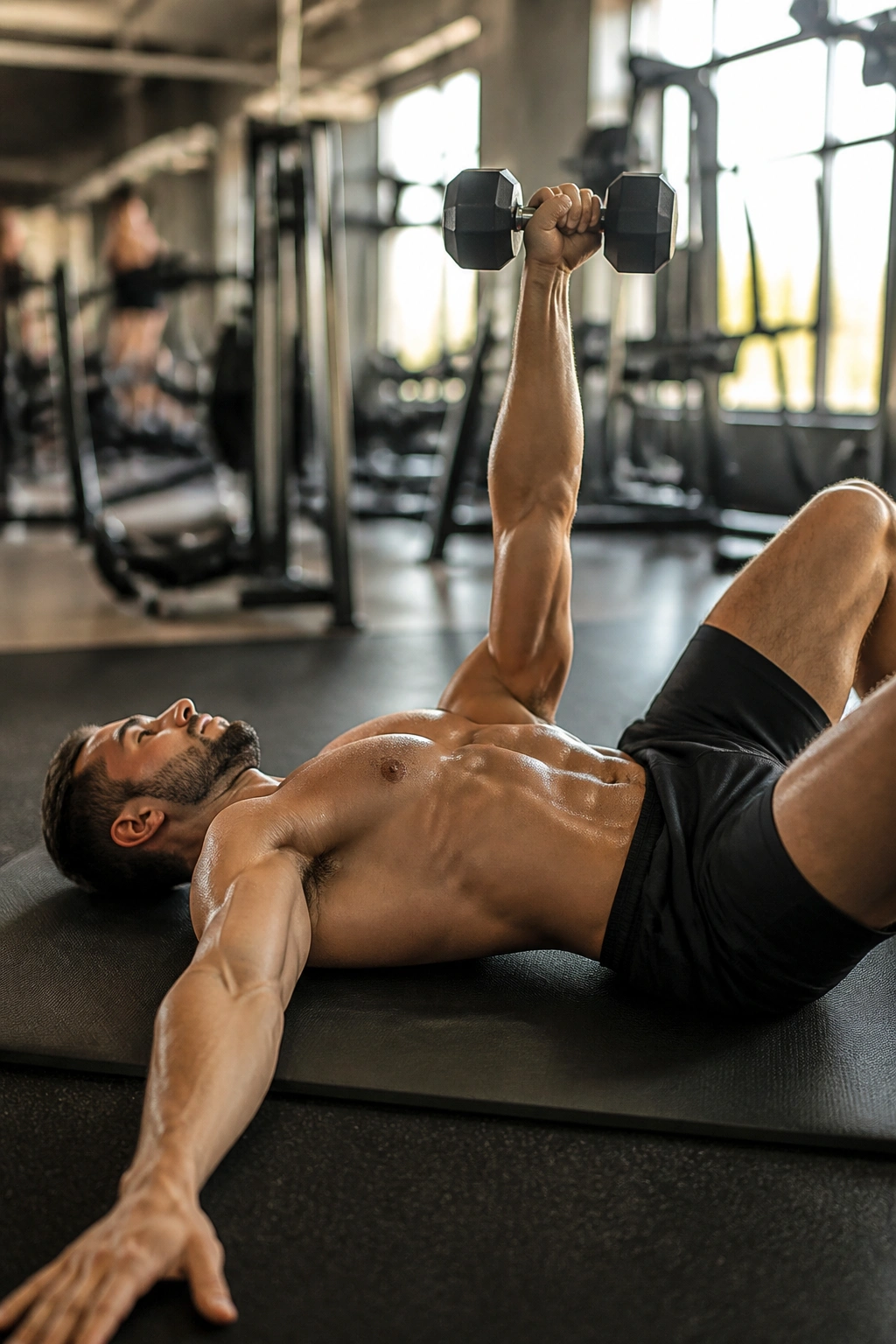
A single-arm floor press is sneaky. One side presses while the other side has to resist twisting, so your trunk gets involved even though you are lying on the floor. Pair that with a dead bug, and the midsection gets a second chance to prove it can stay flat.
Why It Works
Unilateral pressing is useful because it shows you where one side is doing more than the other. If the dumbbell pulls you toward one hip, the core has to correct it. The dead bug then reinforces the same idea from a different angle: the torso stays steady while the legs move.
What to Watch For
- 3 sets
- 8 to 10 presses per arm
- 8 dead bugs per side
- Rest 45 seconds
Keep the planted foot flat and the opposite arm relaxed when you press. On the dead bug, exhale as the leg extends and press the lower back down before the next rep. If you feel the back lift, shorten the range. That adjustment keeps the work where it belongs.
14. Plank Drag and Curl Hold
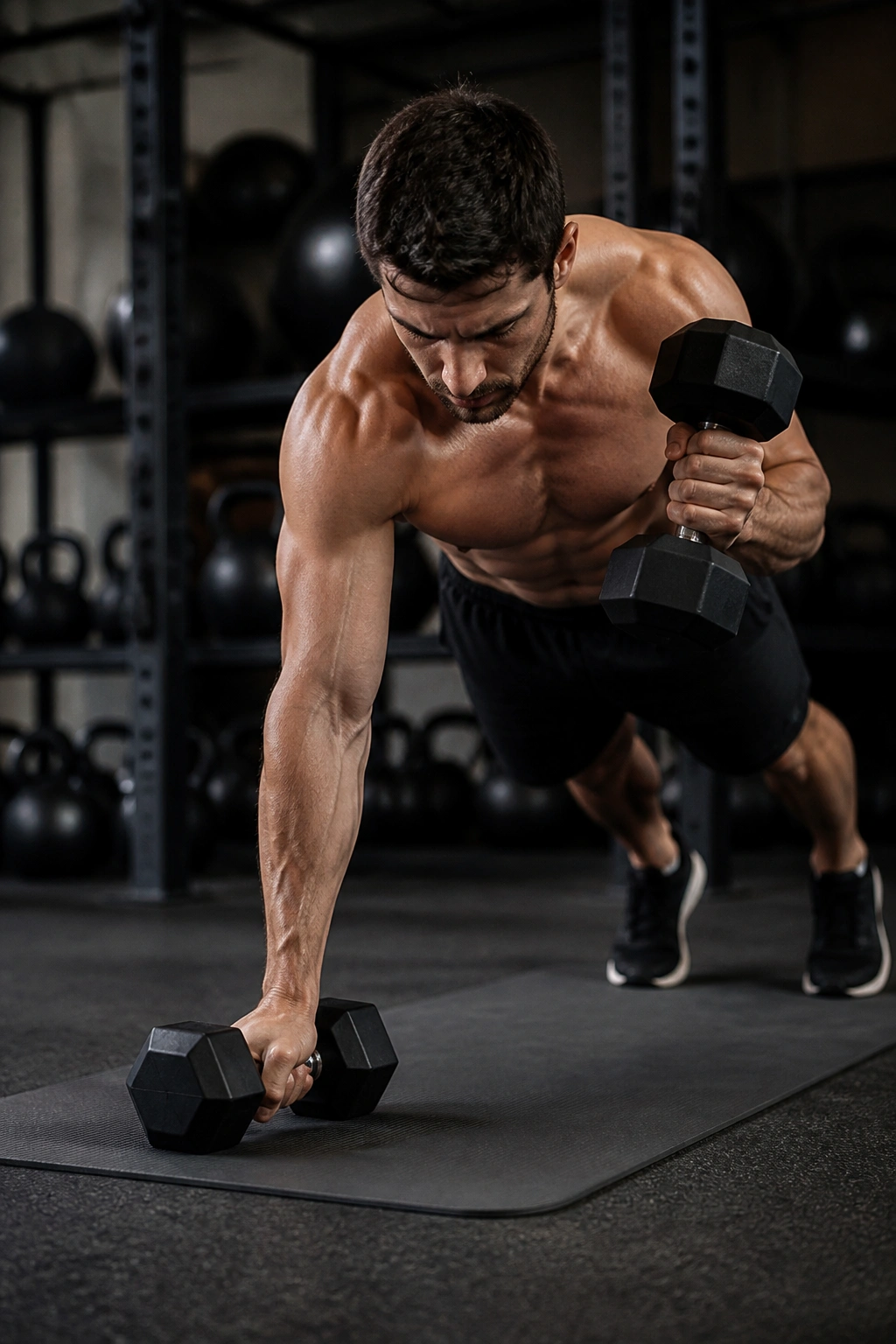
Plank drags punish sloppy hips faster than almost any abs drill. A dumbbell or kettlebell gets dragged from one side of the body to the other while the core resists the twist, and the wrists and shoulders have to stay stacked while all of that happens.
The curl hold is the pause that makes the combo sting. Hold a dumbbell halfway through a curl for 20 to 30 seconds and the biceps light up in a way reps alone do not always create. It is a different kind of fatigue—less flashy, more irritating.
This pair is not about speed. It is about staying square. Feet a little wider than shoulder-width help. Drag the weight under the chest, not way out in front of you. If your hips swing, slow the drag down and shorten the reach.
A clean session looks like 8 drags per side and 20 to 30 seconds of curl hold, repeated for 3 rounds. That is enough for most people. More is not always better here. Tighter is better.
15. Medicine Ball Slam and Plank Walkout
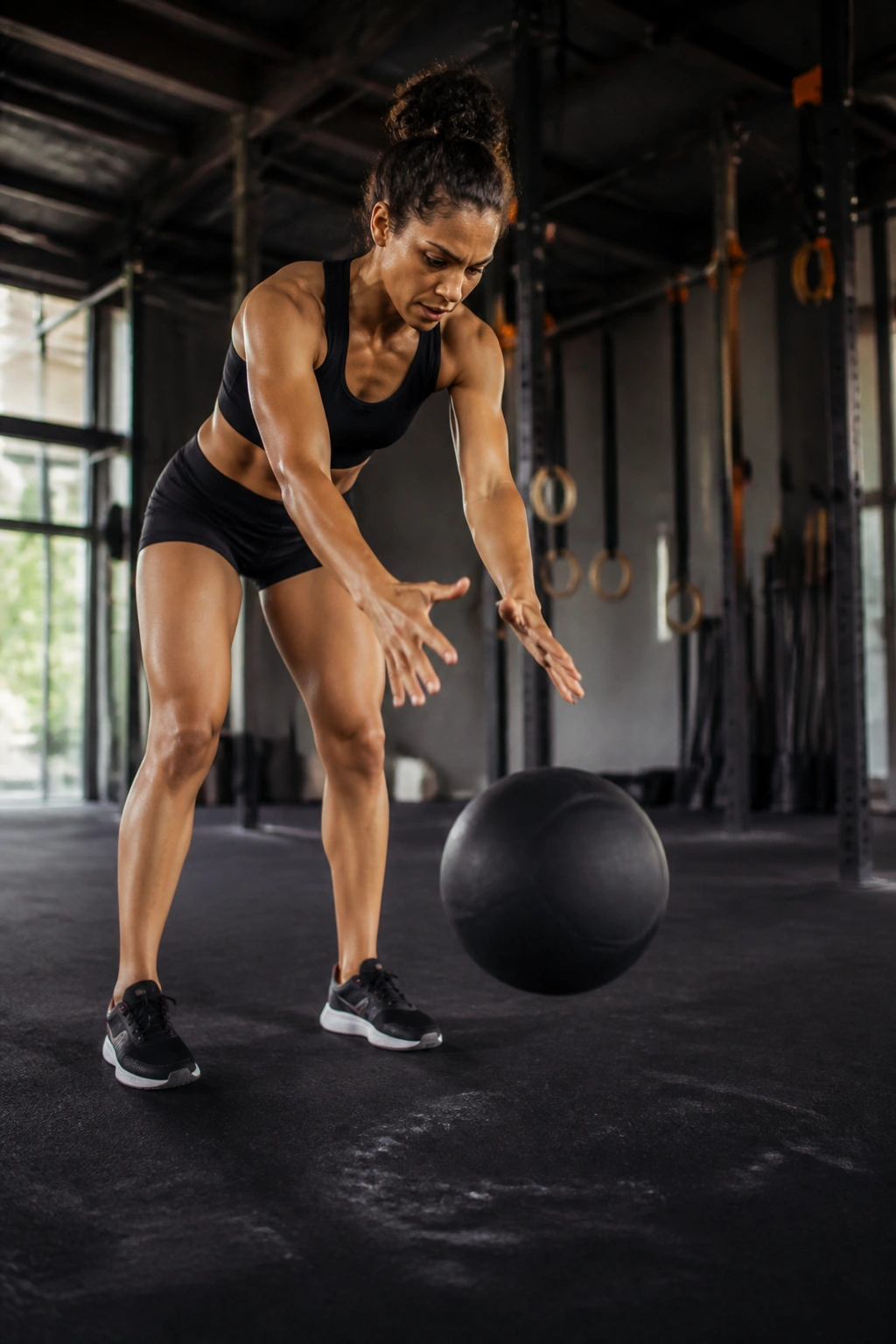
Can a slam and a plank walkout live in the same session without turning into chaos? Absolutely, as long as you respect the space around you and keep the walkout tight.
The slam is the explosive piece. It asks the arms, shoulders, and core to brace, then release force into the floor with a full-body snap. The walkout is the control piece. You reach forward from standing, walk your hands into a plank, brace, and then walk back. It is a nice way to punish weak midsection control without needing to do a thousand crunches.
A slam ball is ideal because it is built to take impact. If you only have a medicine ball that bounces, use a controlled downward chop instead of throwing it into a hard surface. The walkout should not sag at the hips. If it does, shorten the distance and stop one step earlier.
- 8 slams
- 6 plank walkouts
- 4 rounds
- Rest 45 seconds
This one makes sense on days when you want a little more power and a little less polish.
16. Incline Push-Up and Knee Tuck
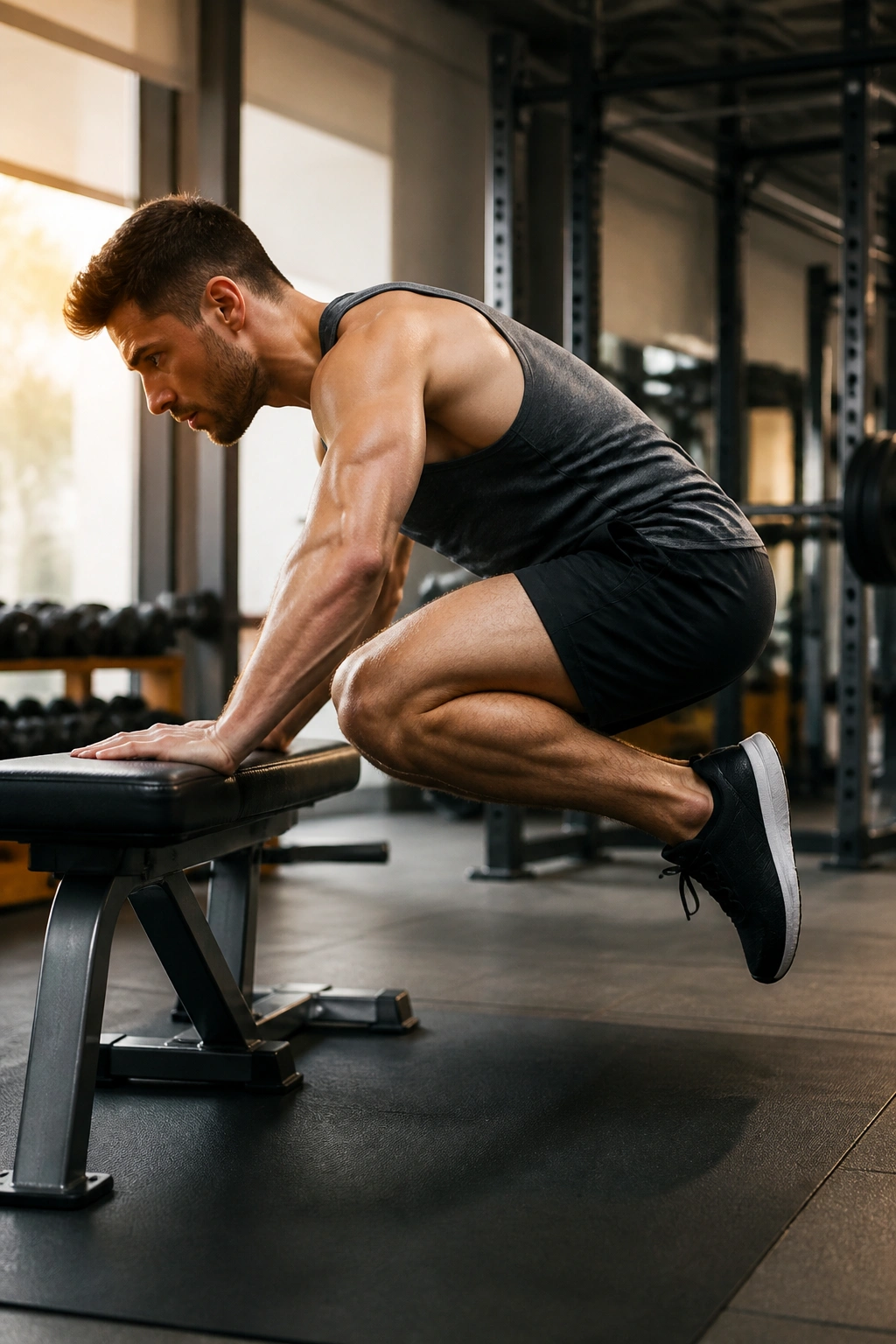
The incline push-up is the friendliest push-up variation in this whole list, and that is not a knock. It lets you keep clean chest and triceps work while taking some pressure off the shoulders and wrists. Pair it with knee tucks, and the abs get a job that feels real instead of decorative.
If a floor push-up turns ugly after the first set, use a bench, a sturdy box, or a wall. The goal is not to impress the room. The goal is to keep the ribs from collapsing and the hips from sagging. Then move to knee tucks, bringing one knee in at a time while the plank stays firm.
- 10 to 15 incline push-ups
- 8 knee tucks per side
- 3 rounds
- Rest 30 to 40 seconds
A good knee tuck starts from the abs, not the hip flexors. Keep the movement crisp and stop before the lower back starts to dip. The combo feels beginner-friendly, but that does not make it lazy.
17. TRX Row and Plank Saw
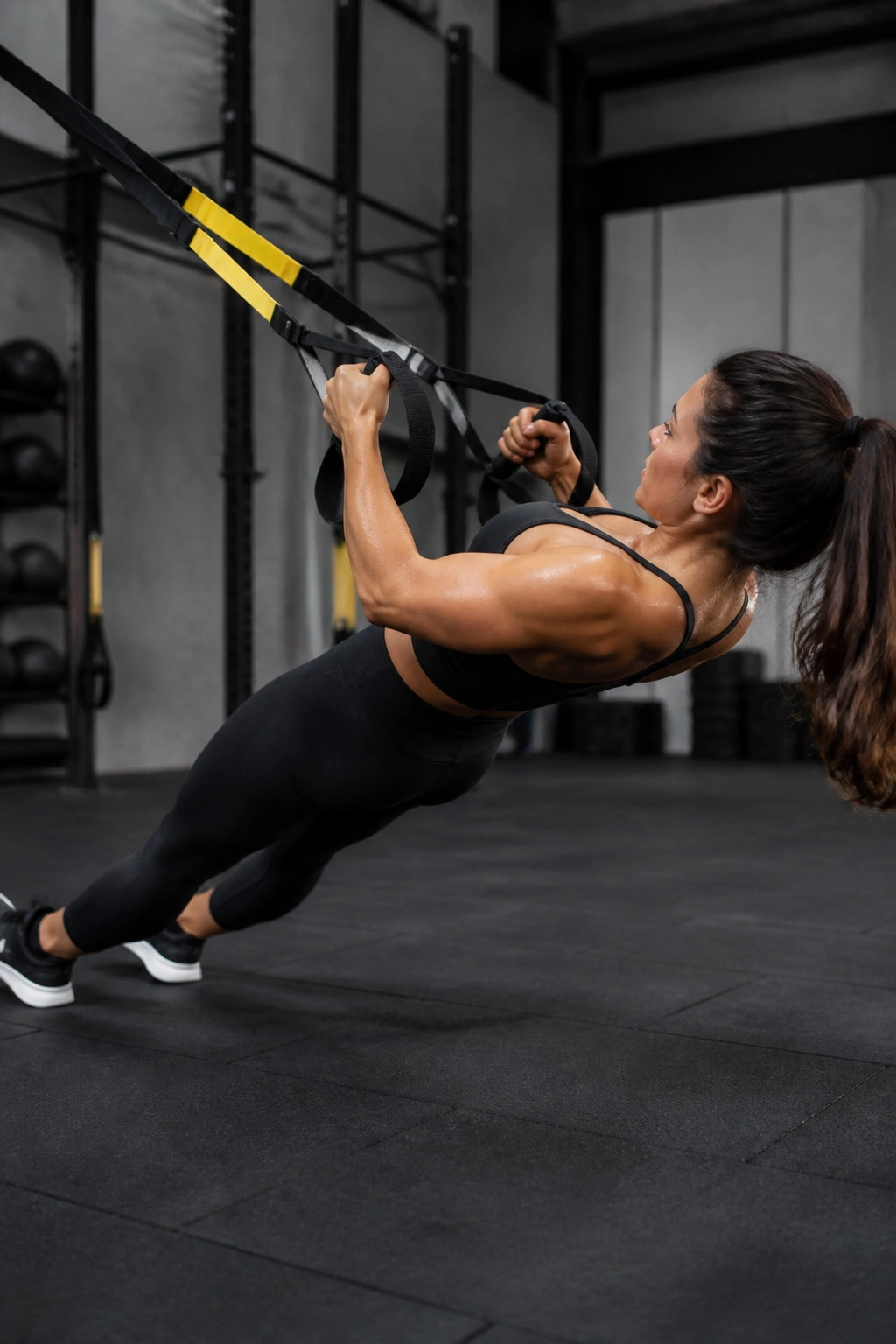
The TRX row is one of the cleanest ways to build upper-back and arm strength while forcing the trunk to stay organized. Steeper body angles make it harder. A more upright stance makes it easier. That is one reason suspension work is useful—you can adjust the challenge by moving your feet.
The plank saw adds an odd little sliding motion that wakes up the abs in a useful way. As you rock forward and back, the core has to keep the ribs from popping open. It looks smooth when done well. It feels harder than it looks.
Steeper angle, harder row.
Use 10 TRX rows and 20 seconds of plank saw for 4 rounds. If your lower back complains, bring your feet a little closer together and shorten the saw. If the row turns into a shrug, lower the angle and pull the handles toward your lower ribs. Clean scapular control matters here more than speed.
18. 12-Minute All-Angles Finisher
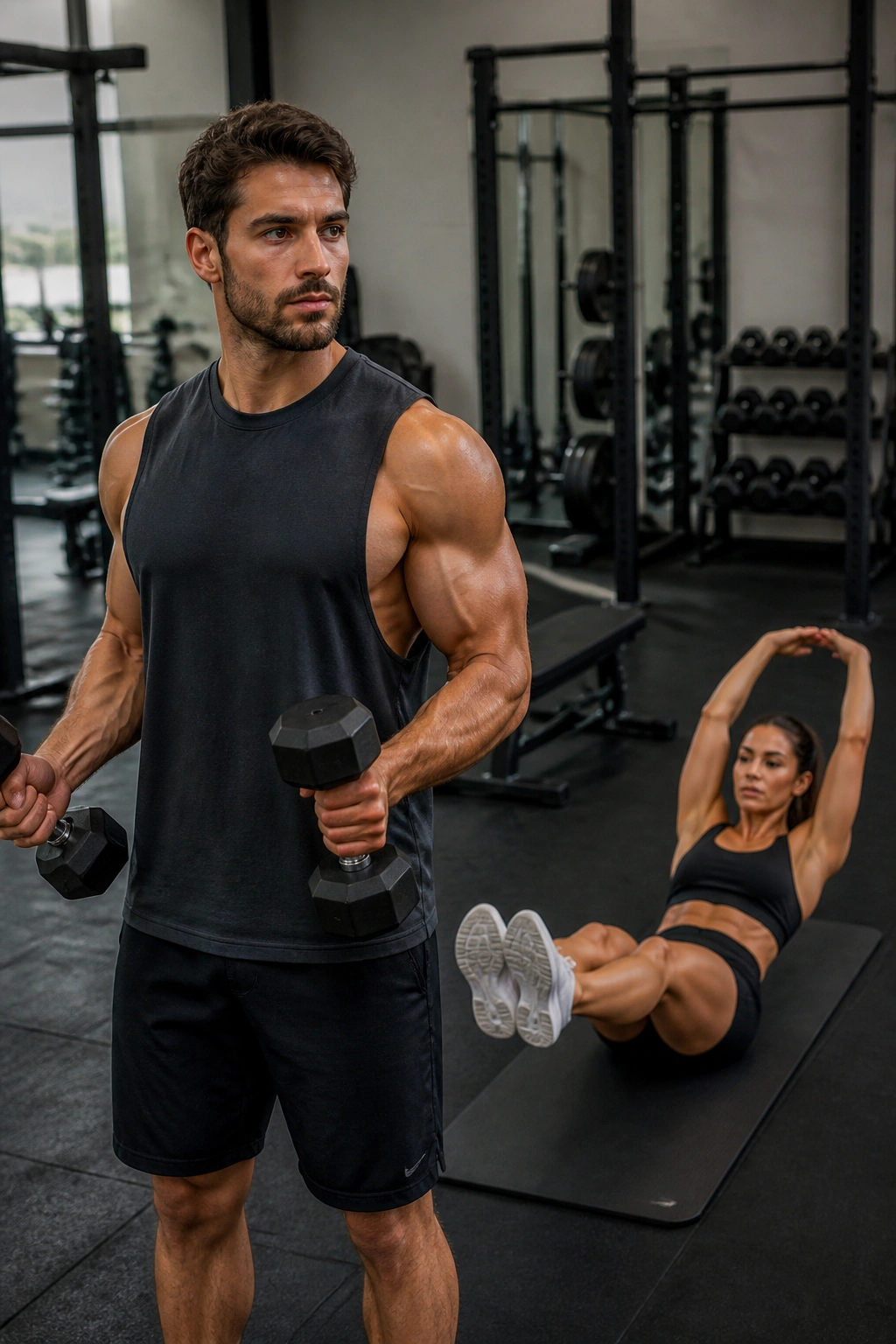
A random abs circuit can leave your body tired in the wrong way. This finisher keeps the arms and core in the same conversation, which is better when you want a short session that still feels complete.
Run the ladder like this: 40 seconds work, 20 seconds rest, then move to the next exercise. Do 3 rounds of the full block.
How to Run It
- Hammer curls
- Hollow hold or hollow rocks
- Triceps overhead extensions
- Mountain climbers
Keep the curl load moderate, not heroic. The hollow hold should be tight enough that your lower back stays glued to the floor, and the mountain climbers should stay fast without bouncing through the shoulders. If your grip gets cooked on the curls, drop the weight and keep the pace. That matters more than pretending you can hold heavy dumbbells forever.
This is the one I’d use when I want a blunt, no-fuss finish after a heavier day. It hits biceps, triceps, shoulders, and the trunk without dragging the session out. Pick one heavy combo, one bodyweight combo, and this finisher, and you’ve got a week’s worth of smart arms and abs work without repeating the same stress over and over.
