



The best cardio workouts are the ones you can repeat next week. A session that leaves you wrecked for two days looks hard, but it usually does less for consistency than people think.
That matters because cardio is not one thing. A brisk walk, a hard bike interval set, a swim, and a round of hill sprints all train your heart and lungs, but they ask very different things from your knees, your lungs, your schedule, and your patience. Some are quiet. Some are noisy. Some feel almost too easy right up until your watch starts beeping.
That’s the part many people miss. The right choice is not always the toughest one. A workout that fits your joints and your routine often beats a brutal session you avoid for the next six days.
So the useful question is simple: which type of cardio will you actually do well, safely, and often enough for it to matter?
1. Brisk Walking on Roads, Tracks, and Treadmills

Walking sounds modest until you do it with intent. A true brisk walk, the kind where your arms swing and your breathing picks up, can raise your heart rate enough to count as solid aerobic work without making your legs feel like wet sandbags afterward.
Why It Works
The magic is in the pace. You want a speed where you can still talk in full sentences, but singing feels like a bad idea. On flat ground, that often lands around 3 to 4 miles per hour, though your stride length and fitness level matter more than the numbers. Add a few hills, and the same walk gets much harder.
Brisk walking is one of the easiest cardio workouts to stick with because it does not require a warm-up ritual, a gym, or a heroic mood. Shoes on. Door open. Done.
- Good for beginners and deconditioned joints
- Easy to extend to 30, 45, or 60 minutes
- Works well as recovery between harder training days
- Can be made tougher with hills, faster arm drive, or a light weighted vest
Best tip: shorten your steps a little and move your arms more. That alone usually makes the walk feel livelier.
2. Incline Treadmill Walking That Jacks Up the Heart Rate
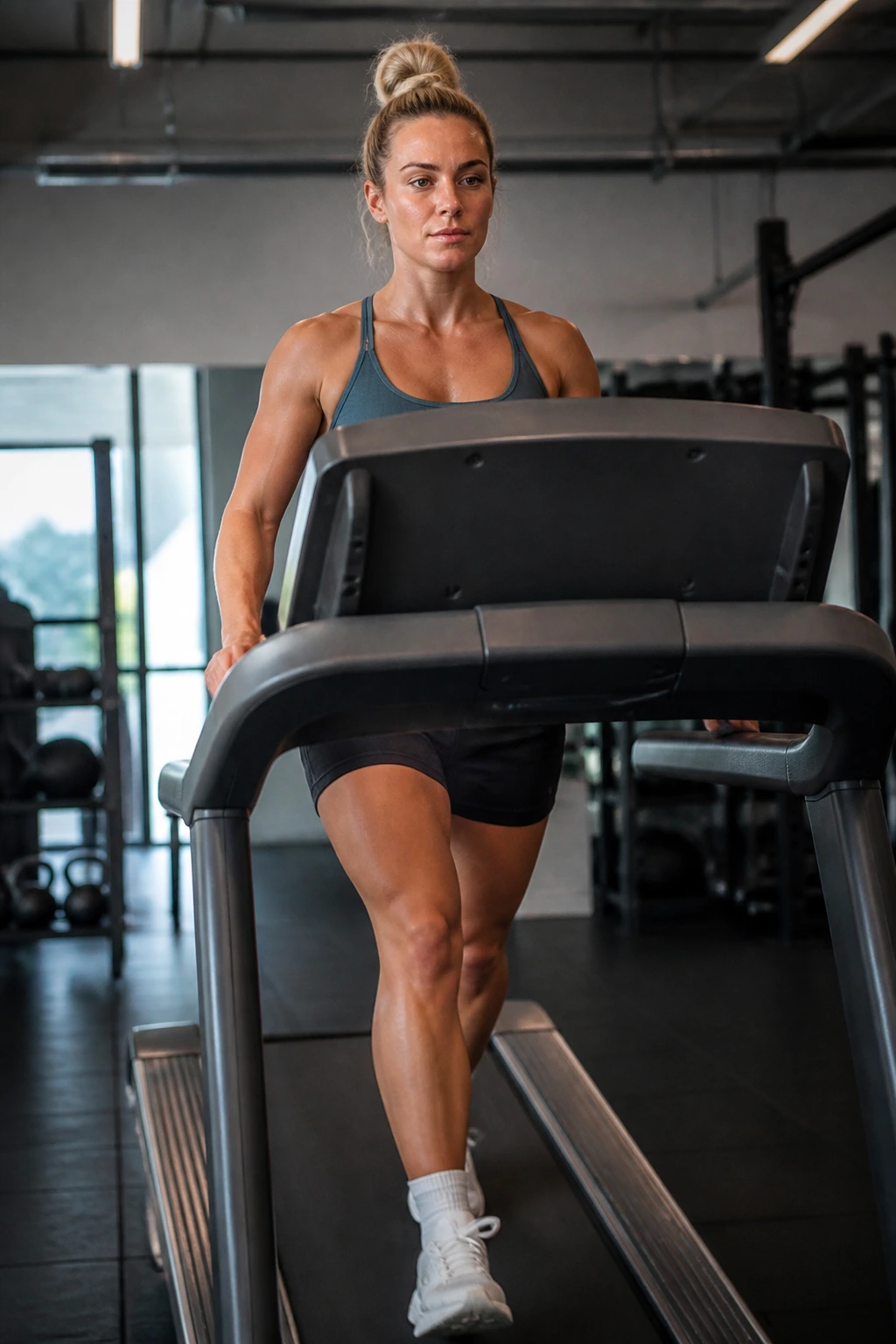
A 6% incline changes the whole deal. Your pace might stay the same, but your calves, glutes, and breathing will notice immediately, which is why incline walking is a sneaky-hard option for people who want a strong cardio session without running.
It also solves a common problem: flat treadmill walking can feel too easy once your body adapts. Incline work fixes that fast. Start with 10 to 20 minutes at a steady grade, or use intervals like 2 minutes at 4 to 8% incline and 2 minutes flat. Even a modest slope can turn a mellow walk into a serious conditioning block.
The nice part is joint stress stays lower than it would with impact running. The less nice part is that people often lean on the rails and turn the whole thing into a half-reclined shuffle. Don’t. Stay tall, let the belt move you, and keep the steps controlled.
Incline walking is especially good if you want extra glute work, hate pounding, or are coming back from a layoff and need something that feels productive without being aggressive.
3. Easy Jogging for Steady Aerobic Base

Why do so many people jog too fast? Because easy jogging looks easy from the outside, and then the first five minutes trick them into thinking they should push harder. That usually backfires.
Easy jogging should feel almost embarrassingly manageable. You should be able to speak in short, calm sentences and keep your shoulders loose. If you are huffing hard within two minutes, the pace is too hot. A mile pace does not matter much here; the feel matters more than the clock.
How to Keep It Easy
Keep the first 10 minutes slow enough that your breathing never spikes. A lot of runners ruin the session by starting at what they think is easy, only to drift into a pace that turns the run into a grind.
A few things help:
- Pick a route with few stoplights
- Use a pace that leaves you under control at minute 20, not just minute 2
- Treat the first mile like a warm-up, even if it feels slow
- Stay relaxed through your hands and jaw
Easy jogging is the backbone of a lot of cardio plans because it builds durability. Not drama. Durability.
4. Run-Walk Intervals for New Runners

You do not need to run continuously to call it training. Run-walk intervals are one of the smartest cardio workouts for people who want to build endurance without getting buried by soreness or shin pain.
A simple session might be 90 seconds of jogging followed by 2 minutes of walking, repeated 6 to 10 times. That sounds almost too gentle, and then you get to the last two rounds and realize the heart rate has climbed plenty. The recovery windows let you keep good form, which matters more than looking tough.
A Simple Way to Start
If 90 seconds feels like too much, cut it to 30 or 45 seconds. If you can comfortably jog for 3 minutes, stretch the work periods and shorten the walking breaks. There is no prize for suffering through sloppy reps.
What makes this style so useful is that it keeps the lungs and legs engaged without letting fatigue wreck your stride. That is a big deal. Bad running form is where a lot of people collect little aches they did not need.
Run-walk sessions are also easy to progress. Add one round, not ten. Extend the jog by 15 seconds. Trim the walk a little. Small changes work.
5. Outdoor Cycling for Longer, Smoother Effort

Cycling outside has a feel that stationary machines rarely match. The air moves. The terrain changes. A small hill can wake up your legs in a way that flat pavement never does, and the workout sneaks up on you if you stay out long enough.
It is also kind to the joints, which is why cyclists often build excellent endurance with less pounding than runners. A 45-minute ride at a steady cadence can feel smoother than a 20-minute run, even if the heart rate ends up in a similar place. The difference is in the load on your knees and hips.
What matters most is gear choice and pace. Grinding a giant gear at a slow cadence can turn your legs into concrete. Spinning a little faster, usually around 80 to 100 revolutions per minute on flatter roads, often feels better for sustained cardio. Hills are the wild card. They demand effort whether you planned for it or not.
Outdoor cycling suits people who want longer sessions, enjoy seeing a bit of scenery, and do not mind a workout that rewards patience more than flash.
6. Stationary Bike Intervals for Tight Schedules
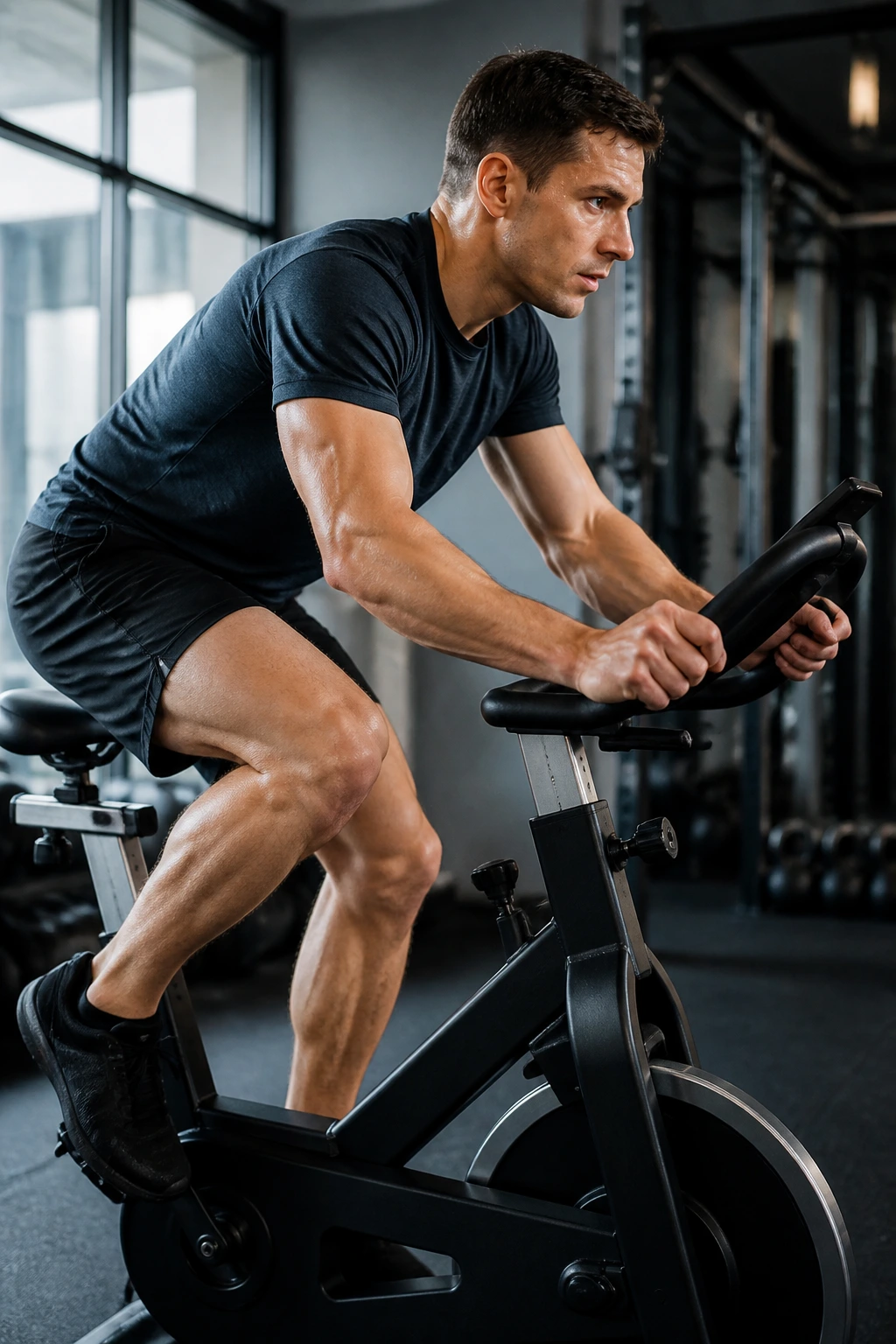
A stationary bike is the neatest form of cardio in the bunch. No traffic. No weather. No coasting downhill because the road decided to be generous. You set the resistance, you set the pace, and you can make the session brutally specific.
That control is the point. A 10-minute interval block can be enough if the hard work is hard enough. Try 8 rounds of 30 seconds strong and 90 seconds easy, or 5 rounds of 1 minute hard and 2 minutes easy. The flywheel does not care about your excuses.
The bike is also easier to measure than many cardio workouts. Resistance, cadence, and time all give you a clean read on progress. If you can hold the same output at a slightly lower effort, you are getting fitter. Simple.
This is the best pick for busy people who want a precise, repeatable session, and it is a good fallback when your legs are tired from impact work but you still want your lungs taxed.
7. Rowing Machine Sessions That Use the Whole Body
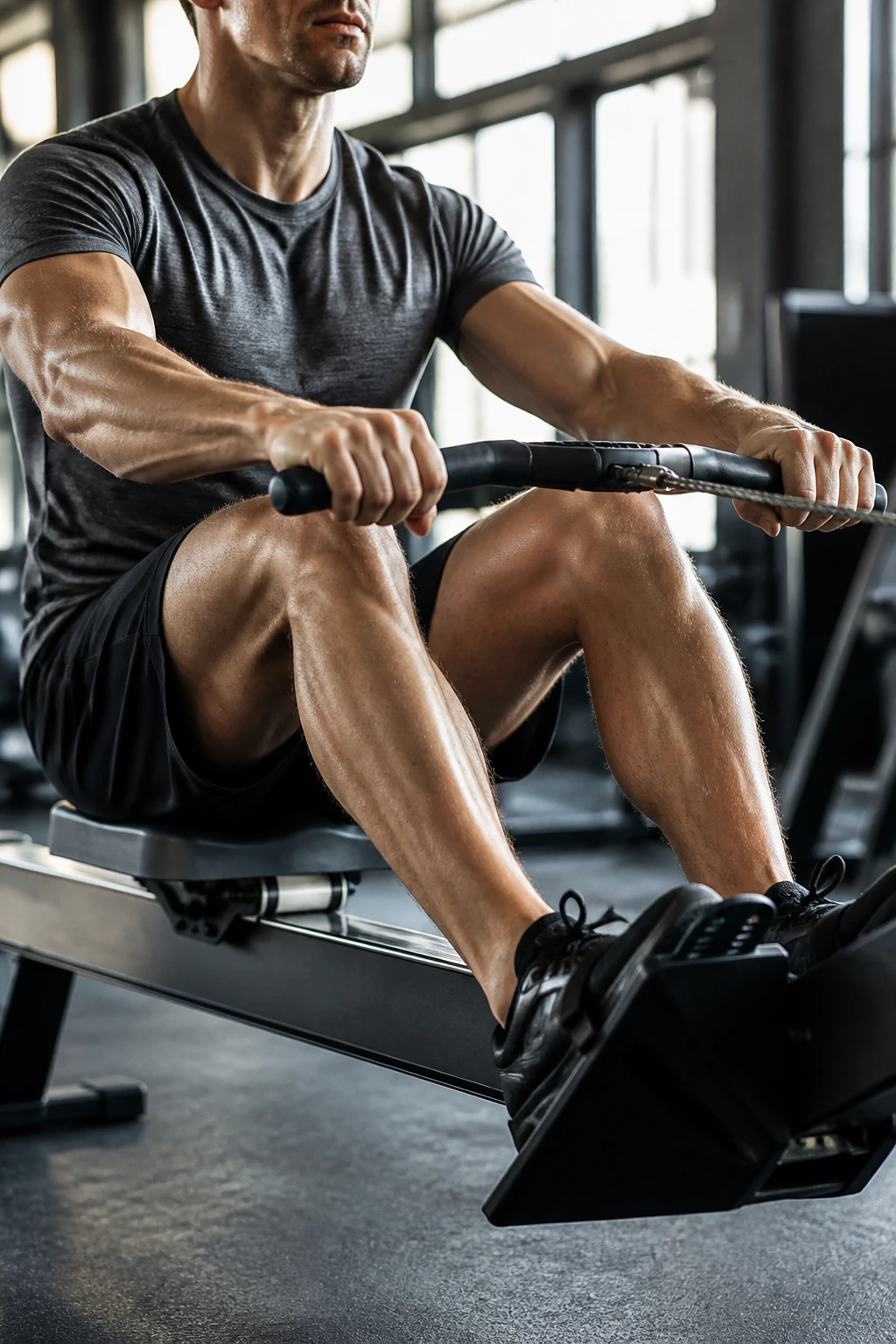
Rowing is one of the few cardio workouts that can light up your lungs, back, legs, and grip in the same minute. It looks smooth when someone else does it. Then you hop on, pull with your arms first, and realize there is a lot more going on.
What Makes Rowing Tricky
The stroke should start with the legs, not the hands. Push the footplates away, then open the hips, then finish with the arms. On the way back, reverse the order. If you yank early, the machine feels choppy and your lower back takes more strain than it should.
A good rowing session can be steady, like 15 to 25 minutes at a moderate pace, or interval-based, like 10 rounds of 1 minute hard and 1 minute easy. The damper does not need to be cranked to the top. That’s a rookie move, and it usually makes the stroke sloppy.
What to Watch For
- Shins near vertical at the catch
- Tall torso, not a rounded back
- Smooth recovery, not a sudden collapse forward
- Legs doing most of the work
Rowing is a favorite of mine because it feels honest. You cannot fake it for long.
8. Swimming Laps for Low-Impact Endurance
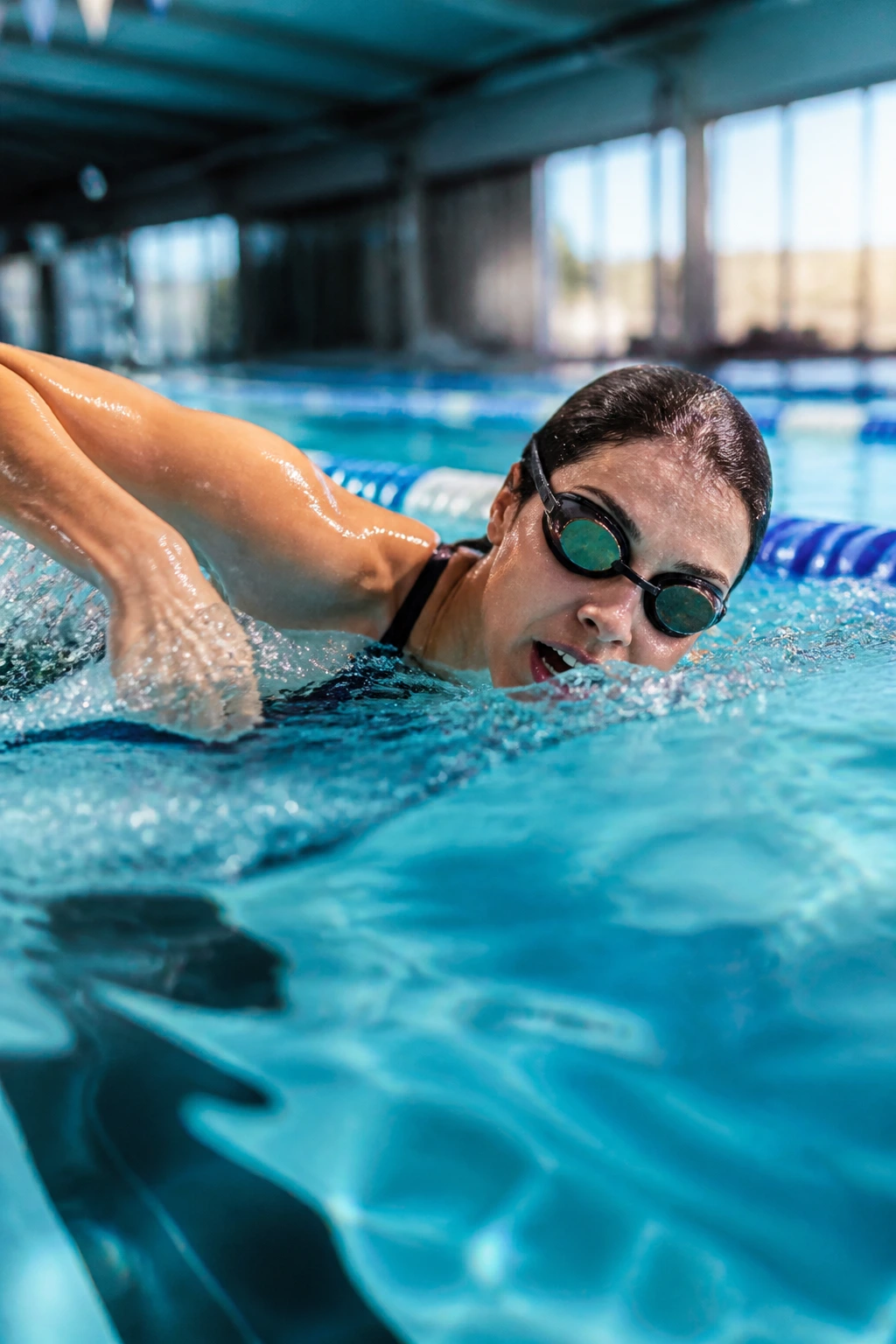
Swimming changes the rules because the water does part of the work for you while still making you earn every breath. That combination is why lap swimming is so useful for anyone who wants a cardio session with almost no impact.
Freestyle is the usual starting point, but any stroke that keeps you moving counts. The key is rhythm. You want enough rest between lengths to keep form clean, not so much that your heart rate drops all the way back down. A set like 10 x 50 meters with 20 to 30 seconds rest between lengths is a very different animal from mindless drifting.
Breathing is the part that humbles people. On land, you can get away with sloppy timing. In the pool, you cannot. The more relaxed your exhale is underwater, the easier the next breath feels.
Swimming fits people who like quiet effort, have cranky joints, or want a workout that leaves them tired without pounding them into the floor. It is also one of the few cardio workouts where a warm shower afterward feels like part of the reward.
9. Jump Rope in Short, Sharp Bursts
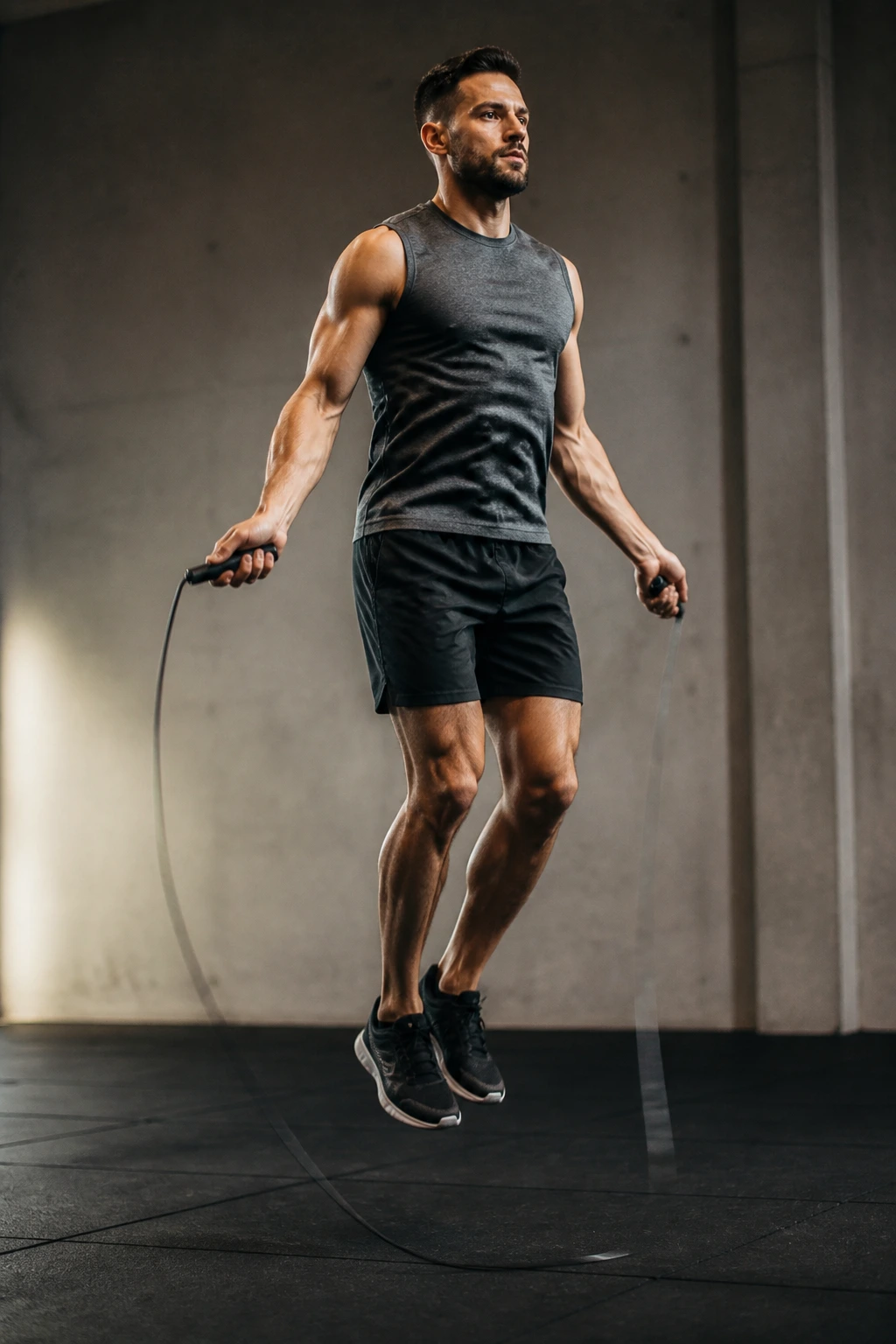
A jump rope turns a few square feet of floor into a small conditioning storm. Ten minutes can be plenty if the pace is honest, and your calves will let you know whether your setup was smart or sloppy.
Why It Works
The rope forces timing. That is half the challenge. Your feet have to stay light, your wrists have to stay loose, and your breathing has to keep up with the rhythm. Once that clicks, the movement becomes almost hypnotic.
Short rounds work best. Try 20 seconds on and 40 seconds off for 10 minutes, or 1 minute on and 1 minute off if you already have a decent base. The surface matters too. Concrete is unforgiving. Wood, rubber, or a mat is kinder on your shins.
- Use shoes with enough forefoot cushion
- Keep jumps low, barely off the floor
- Turn the rope with your wrists, not giant arm swings
- Stop when your form gets noisy and heavy
Jump rope is compact, cheap, and nasty in the best way.
10. Stair Climbing for Quads, Glutes, and Breath
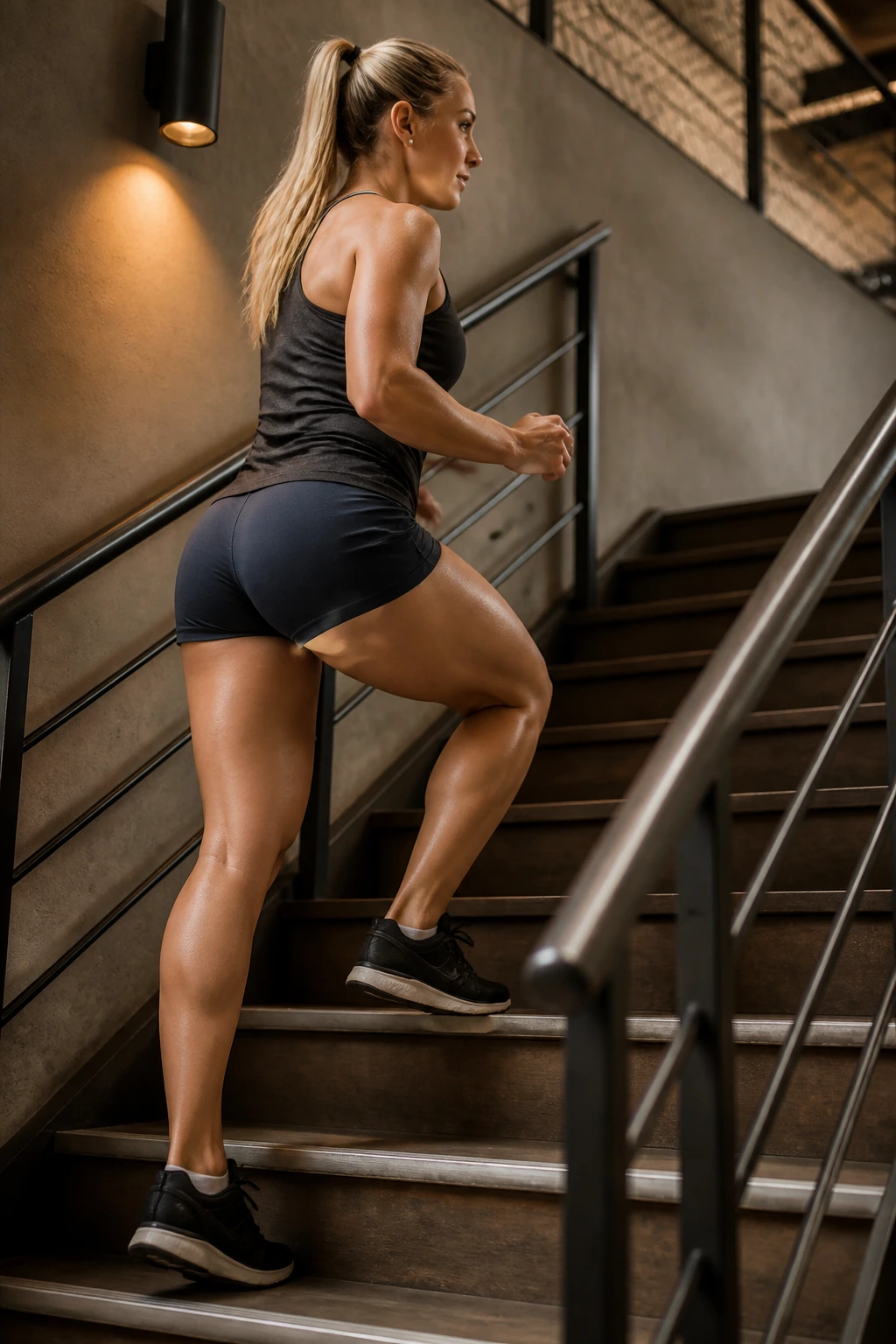
Stairs do not care how fit you think you are. A few flights can take a calm pulse and turn it into a loud one fast, which is why stair climbing shows up in so many hard cardio sessions.
Climbing stairs works the big muscles in your legs while forcing the heart to keep up. The challenge comes from both the step-up itself and the way your body has to stabilize each leg as it takes load. If you have a stair climber machine, the temptation is to lean on the handrails. Resist that. Let your legs carry the work.
Outside, stairs are even better because the rise is usually a little less forgiving. Indoor stair machines are more predictable, which helps if you want intervals: 30 seconds hard, 60 seconds easy, repeated 8 to 12 times. A steady 15-minute climb can be enough too.
This is a strong choice for people who want leg conditioning and cardio at the same time. It is also one of the most brutally efficient options on this list.
11. Elliptical Trainer Sessions With Less Joint Stress
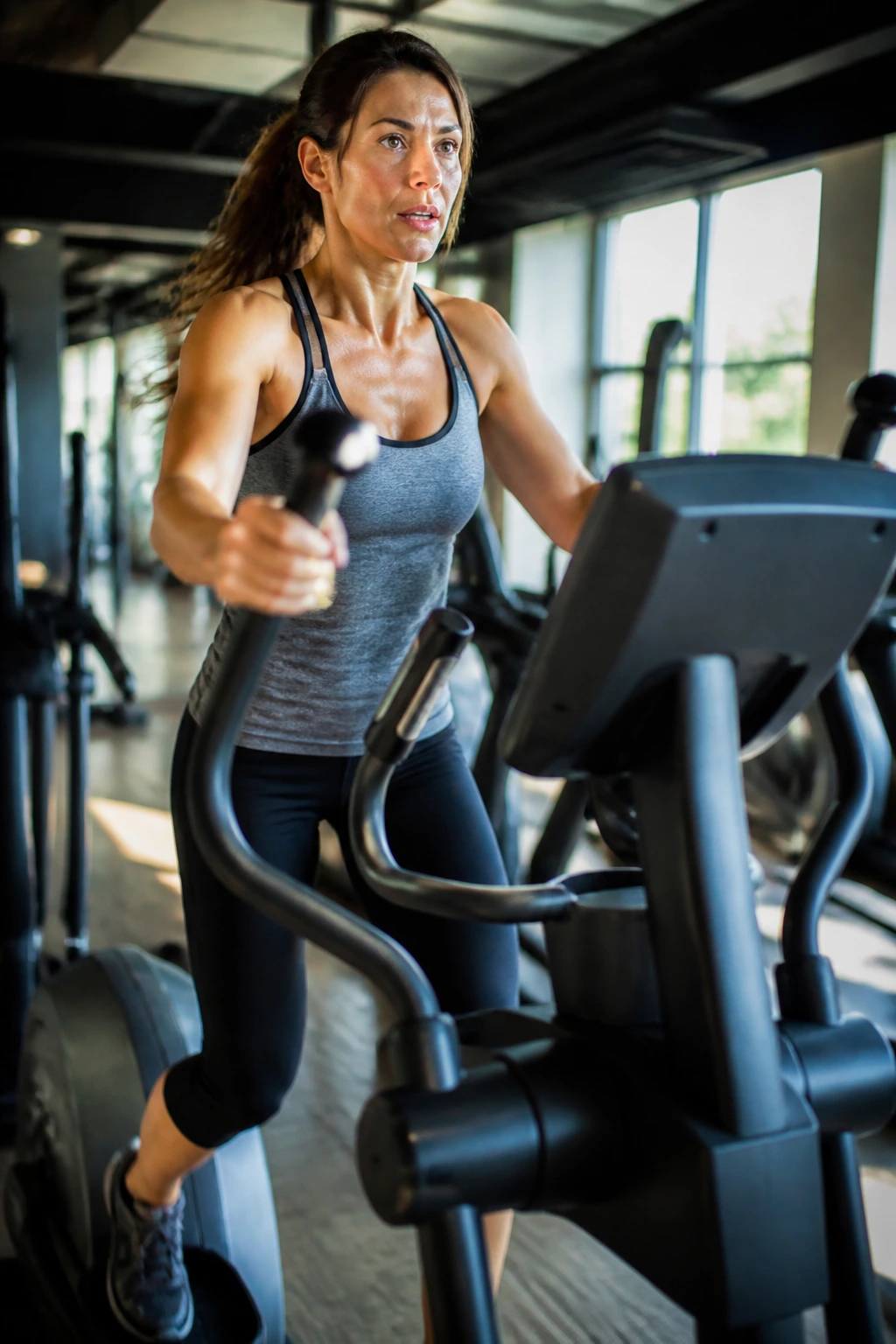
The elliptical gets overlooked because it looks too tame. That is a mistake. If you push the resistance and incline, it can deliver a tough aerobic session without the pounding that comes with running.
What separates a useful elliptical workout from a lazy one is intention. If you just coast while watching the console, your heart rate may barely budge. Add resistance, drive through the handles, and keep the stride honest, and the session changes fast. A 5-minute warm-up followed by 6 rounds of 2 minutes hard and 1 minute easy is a clean place to start.
This machine is best for people who want to keep moving while giving their ankles, knees, or hips a break from impact. It also works well on days when you do not want to think about route changes, traffic lights, or weather. Some people find it dull. Fair enough. But dull is not the same thing as useless.
If you like measurable effort with less joint stress, the elliptical earns its keep.
12. Dance Cardio That Feels More Like Music Than Work
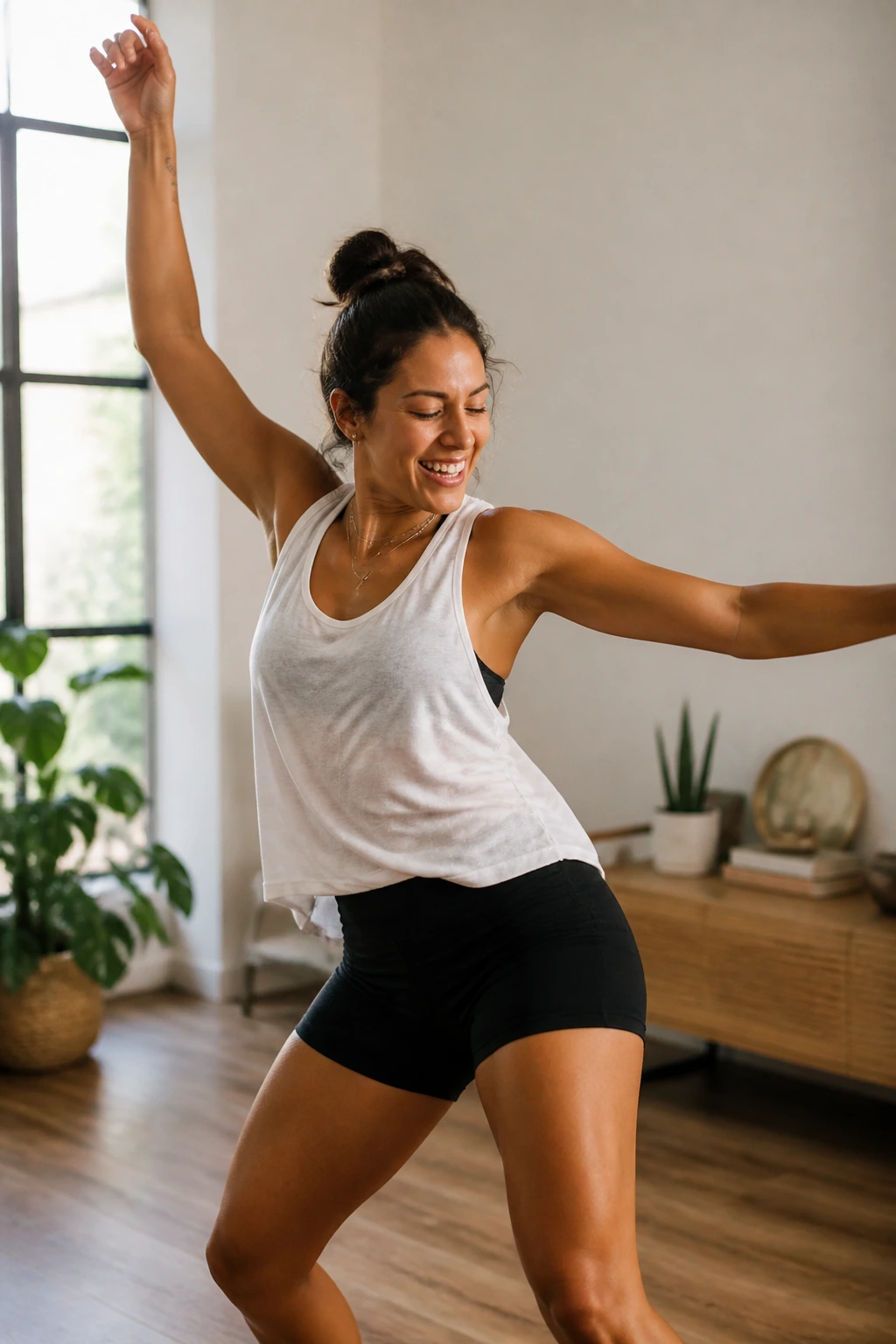
Dance cardio is the rare workout that can make you forget you are training for long stretches. The beat pulls you along, the moves keep changing, and your heart rate climbs while your brain stays busy enough to stop negotiating with itself.
That mental piece matters. People who hate repetitive cardio often do better with choreography because the attention shifts from discomfort to timing. You are not counting every breath. You are trying to keep up with the next sequence.
The best dance sessions are not about looking polished. They are about staying moving for 20 to 40 minutes with enough variety that boredom never fully settles in. You can do this with a class, a video, or a playlist that makes you want to move harder than you planned.
It works especially well for home training, and it is kinder on the joints than jumping-heavy routines if the footwork stays light. If you enjoy music and do not mind getting a little tangled at first, this is one of the easiest cardio workouts to return to.
13. Kickboxing Cardio for Fast Hands and a Fast Pulse

The first time you do kickboxing cardio correctly, your shoulders may complain before your lungs do. That is normal. Punching combinations, front kicks, knees, and fast footwork all stack effort in a sneaky way.
How It Feels in Practice
A round might look like 2 minutes of jab-cross-hook combinations, 30 seconds of kicks, then 30 seconds of nonstop movement. Repeat that for 4 to 8 rounds and you get a workout that feels part boxing, part dance, part controlled chaos. The beauty is that you can make it shadow work only, or hit a bag if you have one.
Hands should stay high. Hips should turn. The knees should bend enough that you are not punching from a locked-up upper body. If your neck is tense and your shoulders are creeping toward your ears, slow down and clean up the form.
- Use wraps and gloves for bag work
- Keep your chin tucked
- Pivot on the lead foot for hooks and kicks
- Stay light between combinations
Kickboxing is a strong option if you want cardio that feels aggressive without needing a treadmill.
14. Battle Ropes for Short, Brutal Conditioning Sets
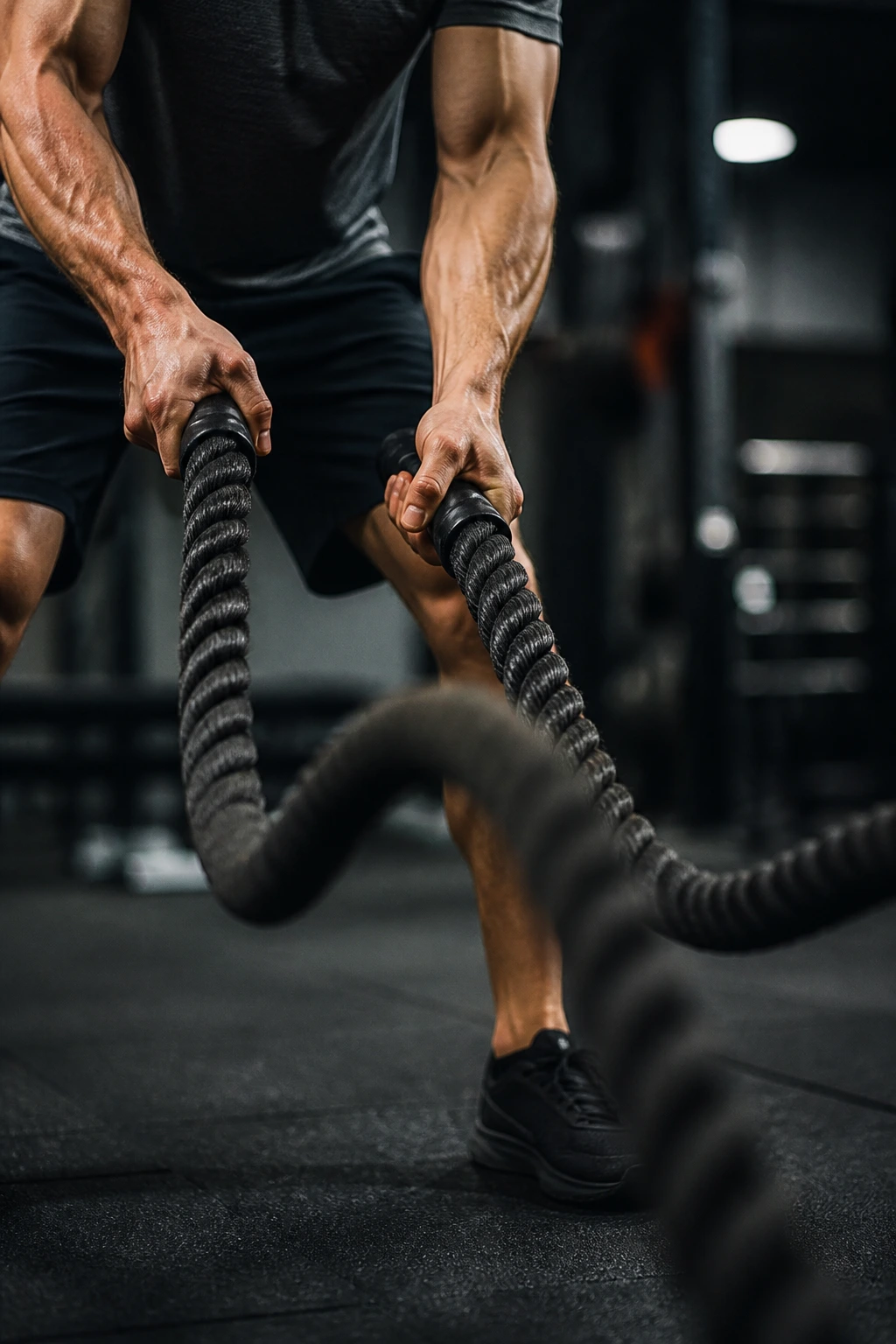
Battle ropes are the kind of conditioning tool that looks playful until the third round. Then your forearms start buzzing and your breathing turns sharp.
Why They Work
The rope forces repeated upper-body power output while your core and legs keep you from wobbling. Waves, slams, circles, and alternating arms each change the stress a little, which keeps the session from getting stale. A common setup is 15 to 20 seconds hard, 40 to 60 seconds rest, repeated for 8 to 12 rounds.
The best rope sessions are short on purpose. If you can go nonstop for several minutes, the load is probably too light. You want enough resistance that every wave feels deliberate. Stand with a slight knee bend, brace the midsection, and keep the shoulders from creeping into your ears.
How to Use It
Start with alternating waves if you want a steadier rhythm. Move to double slams or side-to-side moves once the basic pattern feels clean. The floor space is small, but the effort is not.
Battle ropes are ideal for people who like a sharp conditioning hit and do not need the workout to be graceful.
15. Hiking on Hills, Trails, and Uneven Ground

Hiking is cardio with texture. The slope changes, the footing changes, and your body has to keep adjusting in ways a flat road never asks for. That is a big part of the appeal.
A good hike can be gentle or seriously demanding depending on the terrain and the pack. A moderate trail with steady climbing may keep your heart rate up for an hour without ever feeling like a gym session. Add steep grades or loose ground, and the work climbs fast. The uneven surface also wakes up your ankles, hips, and balance in a way that feels useful, not decorative.
One thing I like about hiking is that it spreads the effort out. You are rarely doing one repeated motion at the same exact angle for long. That can feel kinder than a treadmill if your legs are tired from other training. It also makes the time go faster, which is no small thing.
Hiking is a good choice if you want endurance, fresh air, and a session that feels like a real outing instead of a box to check.
16. Aerobic Step Workouts for Home or Class Settings
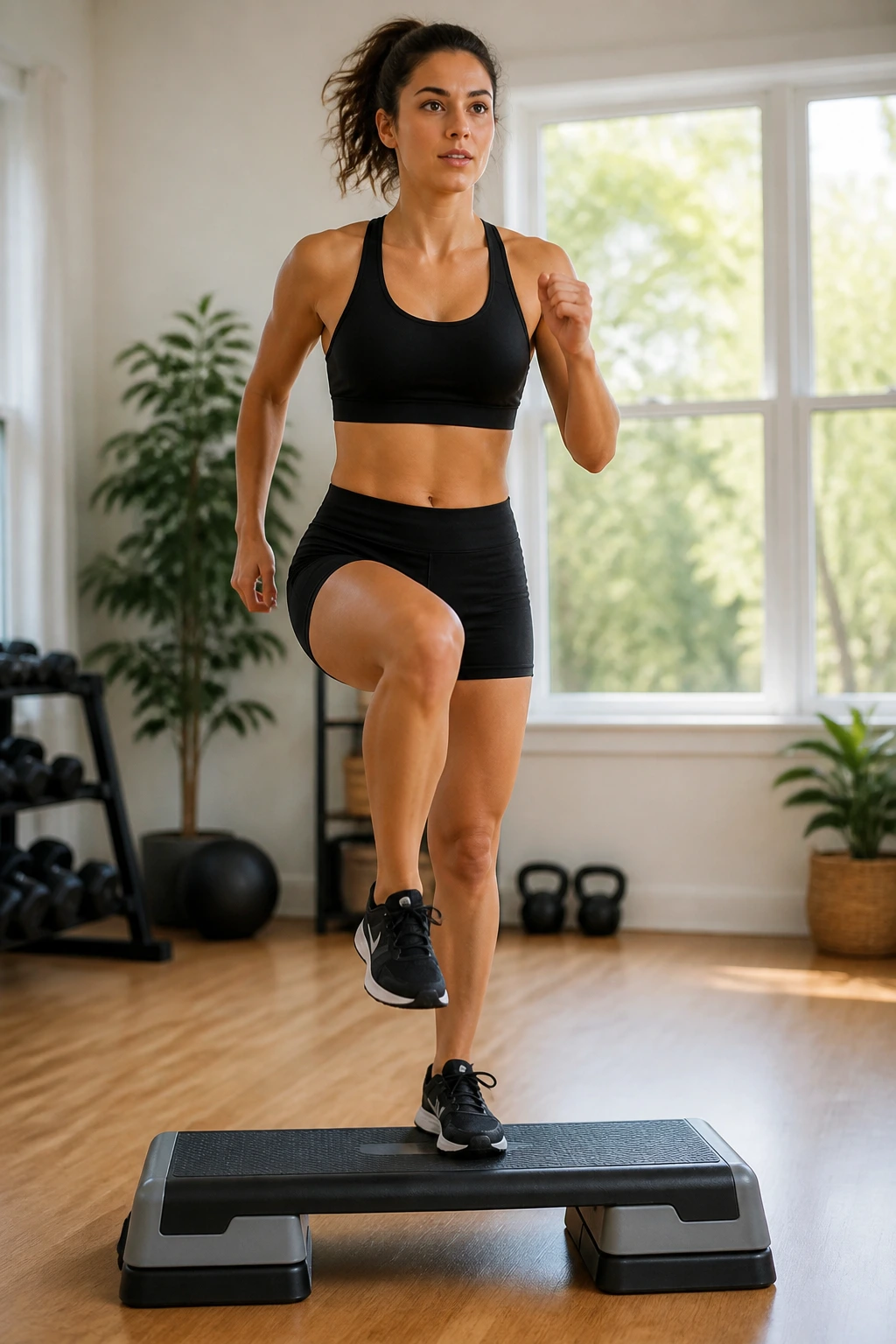
A step bench changes the whole shape of a cardio session. One low platform turns marching into work, and the repeated up-down pattern is sneaky enough to fool people right until their thighs start burning.
What Makes the Step Useful
The height is the first lever. A 4-inch step is easier than an 8-inch one, and that difference matters a lot once you are doing repeated reps. The second lever is pace. A steady rhythm with music keeps your feet moving, while faster sequences add a coordination challenge on top of the cardio load.
Step workouts are especially good if you like structure. Basic moves like step-touches, knee lifts, grapevines, and alternating lead legs can be strung together into a flow that keeps the heart rate high without impact-heavy jumps. A 20-minute session can be enough to feel real.
- Pick a step height that lets you keep clean form
- Land with your whole foot on the platform
- Switch the lead leg often
- Keep the core braced so the lower back does not overwork
Aerobic step is old-school for a reason. It works.
17. Shadow Boxing for Footwork and Flow
Shadow boxing is what happens when you strip away the bag and the gloves and keep the movement. It sounds simple, but a good round can be exhausting because you are managing punches, footwork, balance, and breath all at once.
Unlike heavy bag work, shadow boxing lets you focus on clean lines and quick feet. You can practice jabs, slips, pivots, and combinations without worrying about impact. That makes it a smart cardio workout for people who want speed and rhythm more than force.
A useful format is 3-minute rounds with 1 minute of rest, just like a boxing round. Move the whole time. Circle, jab, slip, change stance, throw a 2-3-2, then reset. The hands get tired, the legs do some surprising work, and your attention stays locked in.
If kickboxing feels too hard on the wrists or you do not have equipment, shadow boxing is the cleanest place to start. It is small, cheap, and much harder than it looks.
18. Sled Pushes for Heavy, Short-Burst Conditioning
Sled pushes are rude in the nicest way. You shove a weighted sled across turf or concrete, keep your torso angled forward, and very quickly learn how short a hard effort can feel when the load is honest.
Why They Hit So Hard
The sled is different because there is almost no eccentric lowering phase, which means the movement feels powerful without the same kind of impact you get from jumping or sprinting. That makes it useful for cardio and leg work at the same time. Push 15 to 25 meters, rest, and repeat. You do not need a marathon-length session.
The load should let you move steadily, not grind to a dead stop. If the sled barely moves, the workout becomes a strength contest and the cardio benefit drops. If it flies across the floor, add more weight.
A Good Setup
- 6 to 10 pushes of 15 to 20 meters
- Rest 60 to 90 seconds between efforts
- Keep the torso firm and the steps short
- Drive through the whole foot, not just the toes
Sled work is one of the best options if you want short, heavy conditioning without a lot of impact noise.
19. Pool Running for Injury-Friendly Conditioning
Pool running is exactly what it sounds like: you run in water, usually deep enough that your feet do not touch. It looks odd on land. In the pool, it makes perfect sense.
The resistance of the water keeps the effort honest while the buoyancy reduces impact. That combination makes it a smart choice for people who need to keep conditioning going while giving their joints a break. It is also a good change of pace when land-based cardio starts to feel repetitive or a little abrasive.
How to Do It Well
Use an upright posture, drive the knees the way you would on land, and swing the arms with purpose. A flotation belt can help you stay centered if the pool is deep. Work in intervals like 1 minute hard and 1 minute easy, or steady blocks of 20 minutes if you want a smoother session.
A lot of people underestimate how tiring water running can be. The water pushes back on every movement, and because there is no ground contact, your stabilizers have to work harder than you expect.
Pool running is a quiet little savior when impact is the problem and heart-lung work still matters.
20. Hill Sprints for Pure Speed and Power
Hill sprints are not polite cardio. They are short, hard, and demanding, which is exactly why so many athletes use them when they want conditioning without a long session.
A short hill reduces impact a bit compared with flat-out sprinting, but it also forces better posture and stronger drive through the hips and legs. The slope should be steep enough to make you work, not so steep that you are climbing like a hiker. Think 8 to 12 seconds of powerful running, then a full walk-back recovery. Full. Not rushed.
That recovery matters more than people expect. If you sprint again before your legs have come back online, the quality drops fast and the session turns messy. Four to eight good efforts are plenty for most people. Warm up thoroughly first with light jogging and a few easy strides. Cold hill sprints are a terrible idea.
Hill sprints suit advanced exercisers, former runners, and anyone who wants a short cardio hit with a big payoff in leg power and breathing load. They are also a good reminder that not every workout needs to be long to be serious.
