



Seven minute ab workouts look almost too small to matter, until you’re three minutes in and your breathing has gone tight, your ribs want to flare, and your midsection is doing that deep, unglamorous work that makes everything else feel steadier. Seven minutes is enough time to get a real core session in if the format is smart.
That’s the part people miss. The abs aren’t one muscle, and they’re not there only to crunch your torso toward your hips. The rectus abdominis does flexion, the obliques help with rotation and side bending, and the deep core muscles keep your trunk from wobbling when you walk, lift, run, or even sit up straight for more than ten minutes.
A short ab workout also has a practical edge that longer sessions sometimes lose. You’re less likely to waste time, less likely to drift, and more likely to keep the quality high enough that the reps actually matter. No, seven minutes won’t melt belly fat by itself. It will make your trunk stronger, cleaner, and harder to fold like a cheap lawn chair.
Some days you want floor work. Some days you do not want to hear your elbows on the mat or your neck complaining about crunches. That’s why these 15 seven minute ab workouts aren’t carbon copies of each other. Pick the one that fits your body, your mood, and the kind of day you’re having.
1. The Classic Seven-Minute Ab Workout
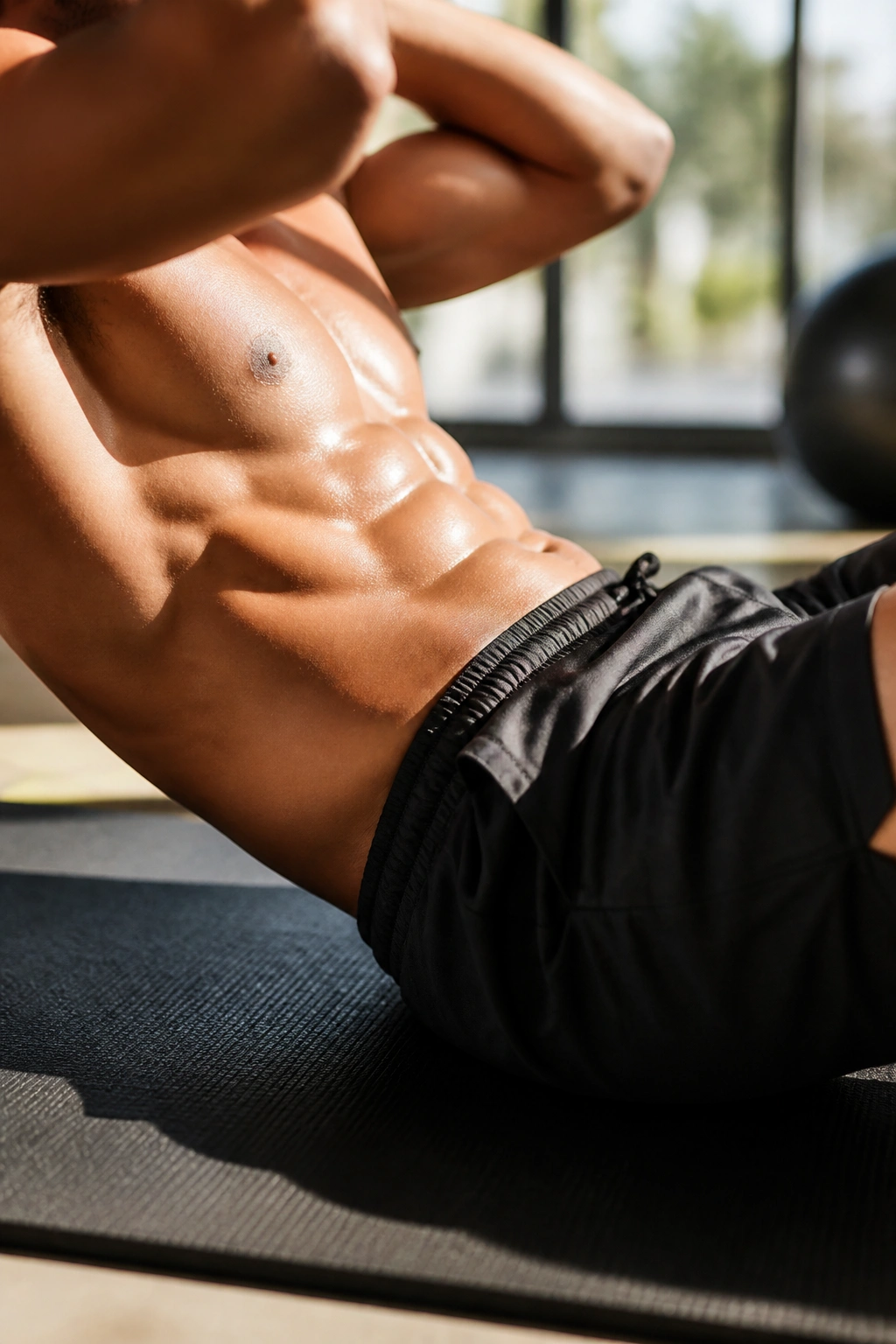
This is the old standby for a reason. It hits flexion, anti-extension, and a little bit of conditioning in one clean burst.
Why It Still Works
The classic format is simple: 7 moves, 45 seconds each, with 15 seconds to switch. That fills exactly seven minutes and gives you enough work to feel the session without turning it into a marathon. I like this one when I want a straightforward core workout and don’t feel like negotiating with the clock.
There’s a nice rhythm to it, too. Your abs get a chance to work in different ways without any one move going on long enough to become a sloppy mess. That matters. Fifty bad crunches are worse than twenty solid ones.
The Timer
- 45 seconds crunches
- 15 seconds rest
- 45 seconds reverse crunches
- 15 seconds rest
- 45 seconds bicycle crunches
- 15 seconds rest
- 45 seconds toe taps
- 15 seconds rest
- 45 seconds forearm plank
- 15 seconds rest
- 45 seconds mountain climbers
- 15 seconds rest
- 45 seconds hollow hold
One small rule: keep your lower back heavy on the floor during the floor work. If it starts arching, shorten the range and slow down. The workout gets better, not worse, when you stop chasing big motion and start chasing clean motion.
2. A Standing Seven-Minute Ab Workout You Can Do in Sneakers
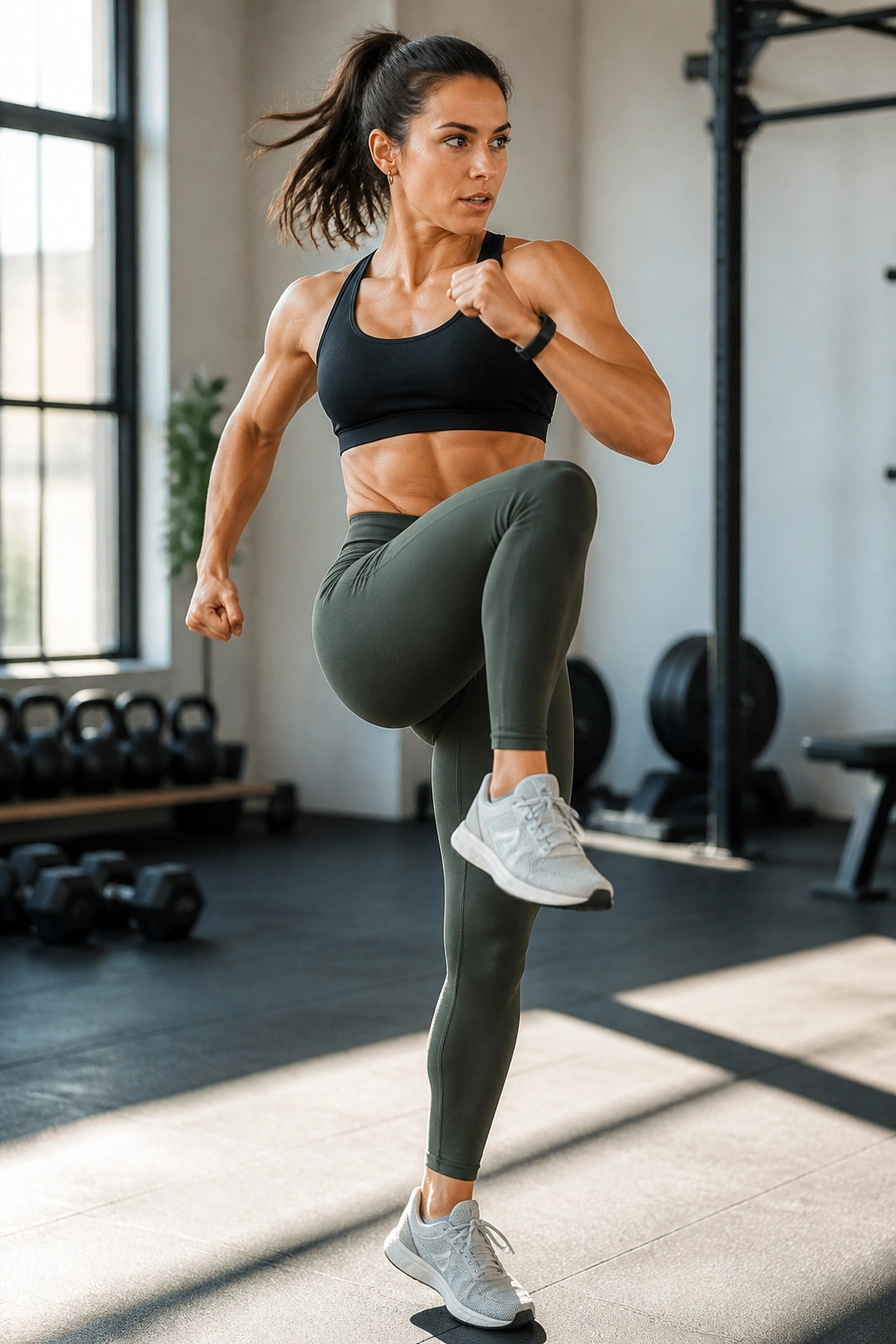
Do you ever want to train your core without getting down on the floor? Good. Standing work gets dismissed too easily, and that’s lazy thinking.
The point isn’t to replace all floor work. The point is to teach your trunk to brace while you move, which is what your abs do most of the day anyway. This version is also friendly for tight hips, cranky wrists, or a room where the carpet is doing its best impression of a sponge.
Set a timer for 7 rounds of 45 seconds on, 15 seconds off. Run through these moves:
- Standing cross-body knee drives
- Standing side crunch, right side
- Standing side crunch, left side
- Slow woodchops, right
- Slow woodchops, left
- Standing torso twists with arms at chest height
- March in place with an overhead reach
The trick is not speed. It’s control. When the knee drives up, brace first and move second. When the torso rotates, keep the hips mostly square so the twist comes from the midsection, not a wild swing through the lower back.
This is one of my favorite seven minute ab workouts for people who hate floor circuits. It feels lighter at the start, then surprisingly sharp by the end. That’s a good sign.
3. The Low-Back-Friendly Dead Bug Circuit
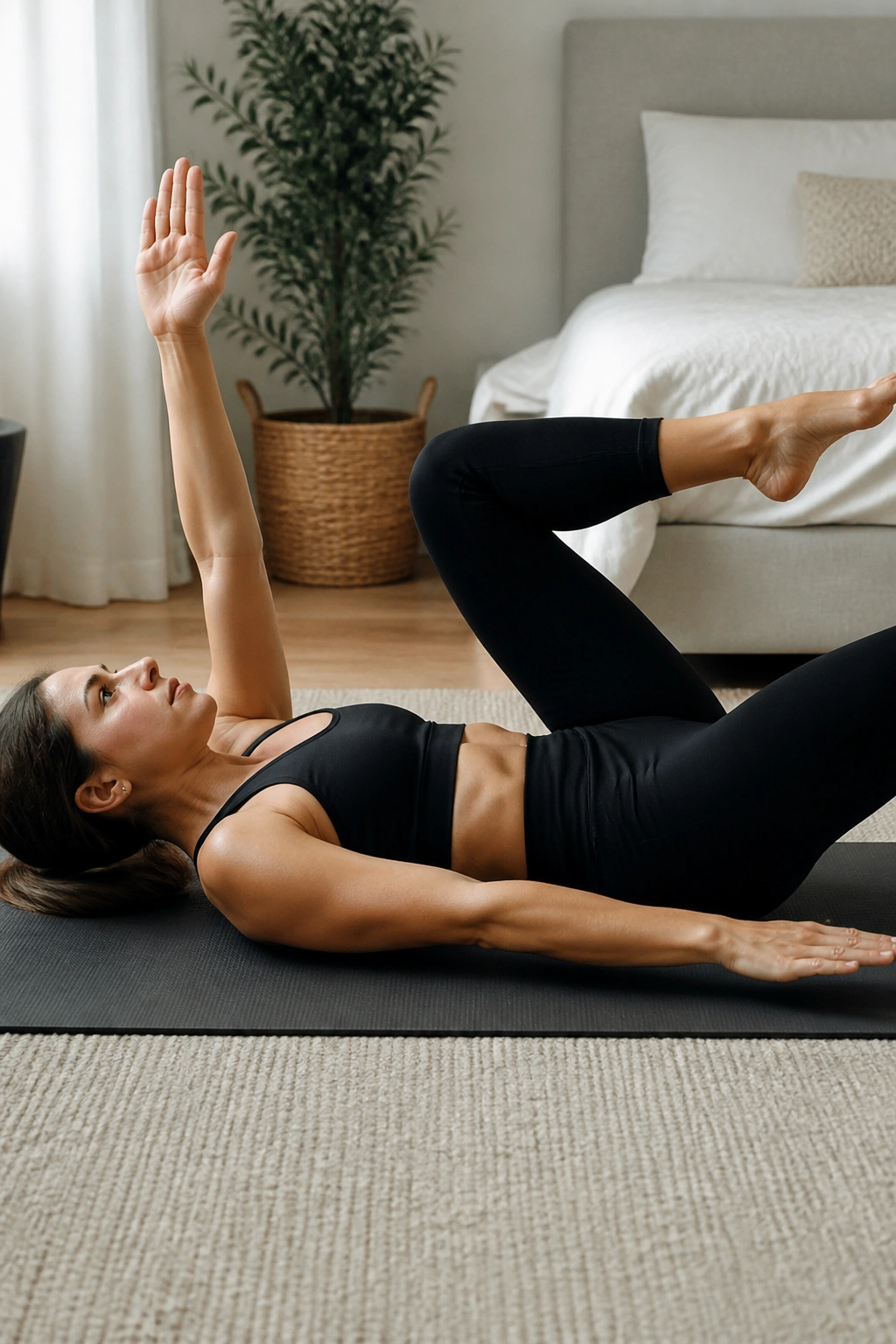
If crunches leave your lower back grumpy, stop pretending that means your core is weak. It usually means the movement choice is off.
The dead bug family is a much nicer place to start. It trains you to hold your ribs down, keep your pelvis quiet, and move your arms and legs without letting your spine turn into a trampoline. That control carries over into almost everything else.
What It Should Feel Like
You should feel the front of your torso working, but not in a sharp, pinchy way. If your hip flexors take over, pause and reset with a full exhale. The exhale is doing half the job here.
Seven Minutes, Quietly
- 45 seconds 90/90 breathing
- 15 seconds transition
- 45 seconds dead bug
- 15 seconds transition
- 45 seconds heel slides
- 15 seconds transition
- 45 seconds bird dog
- 15 seconds transition
- 45 seconds glute bridge hold
- 15 seconds transition
- 45 seconds bear hover
- 15 seconds transition
- 45 seconds side plank from the knees
This one is not flashy. That’s the point.
If you want a low-back-friendly abs routine that still teaches real bracing, this is the one I’d put near the top of the pile. It is especially useful after a long day of sitting, when your spine feels stiff and your abs feel asleep.
4. The Oblique Burner That Actually Trains Rotation
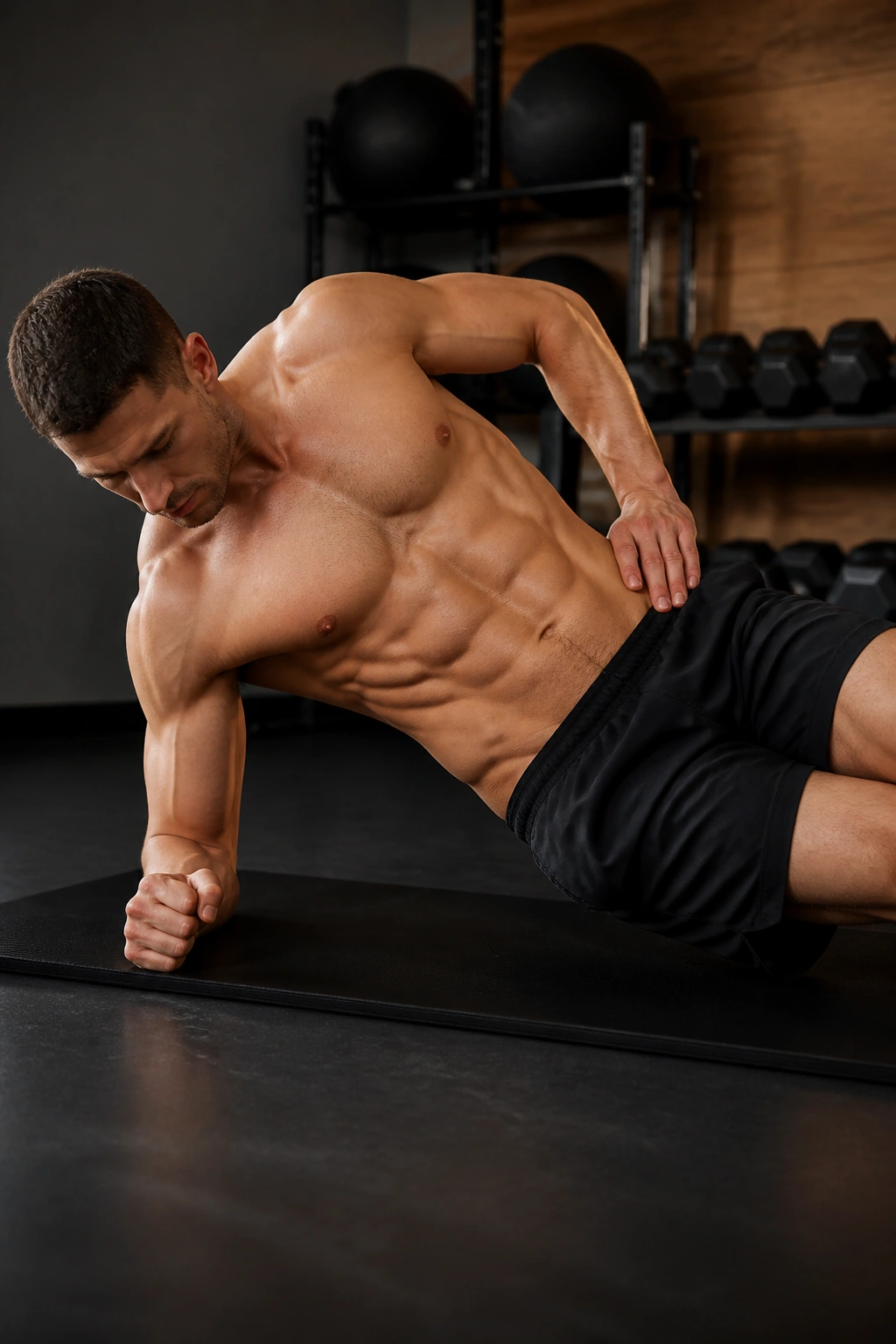
Side abs get treated like decoration far too often. They’re not decoration. They help you twist, yes, but they also help you resist twisting when a load shifts or your foot lands awkwardly.
That’s why a good oblique workout should include both rotation and anti-rotation. If you only do endless side bends with a dumbbell, you’re missing half the picture. If you only do planks, same problem.
Run this one as 45 seconds on, 15 seconds off for each move:
- Side plank, right
- Side plank, left
- Bicycle crunches
- Cross-body mountain climbers
- Russian twists
- Standing side bends
- Plank knee-to-elbow
The best cue here is simple: don’t fling yourself around. The obliques respond better when the movement is crisp and deliberate, not when you turn it into a kitchen dance routine at full speed.
I like this workout for people who want a more visible side-body challenge than a straight crunch circuit. It lights up the waistline area fast, and it also teaches the torso to stay organized while the limbs are busy. That’s the useful part. The burn is just the receipt.
5. The Pilates-Style Seven Minute Ab Workout
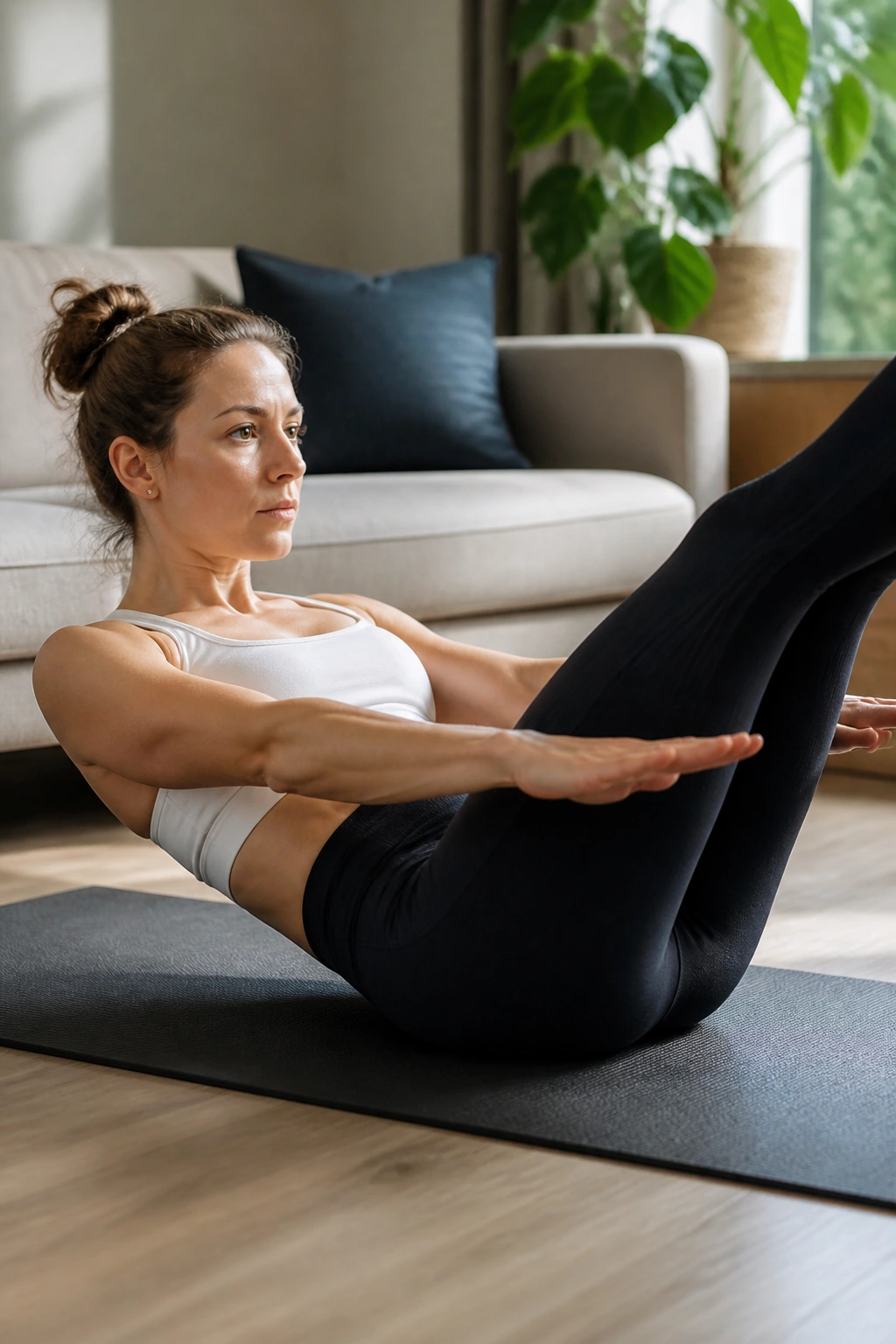
This one feels slower, almost sneaky. Then the shaking starts.
Pilates-inspired core work is built around control, breath, and small movements that punish laziness. You won’t be rushing through this routine, and that’s exactly why it works. The abs stay under tension longer, and the hips don’t get to steal the job.
The Rhythm
Use 45 seconds work and 15 seconds transition. Keep the pace smooth, not frantic.
The Move List
- The Hundred pulses
- Single-leg stretch
- Double-leg stretch
- Toe taps
- Pilates crunch
- Teaser prep
- Hollow tuck hold
A lot of people rush Pilates work and then wonder why they mostly feel it in the hip flexors. Slow down. Exhale when the limbs extend. Keep the ribs knitted down instead of puffing upward like you’re trying to impress somebody.
What Makes It Different
The tempo is the whole game here. Every rep should look almost boring from across the room. That’s usually the right sign.
If you like your core training to feel clean, controlled, and a little mean in the best way, this is one of the best seven minute ab workouts to keep in rotation.
6. The Quiet Apartment Core Session
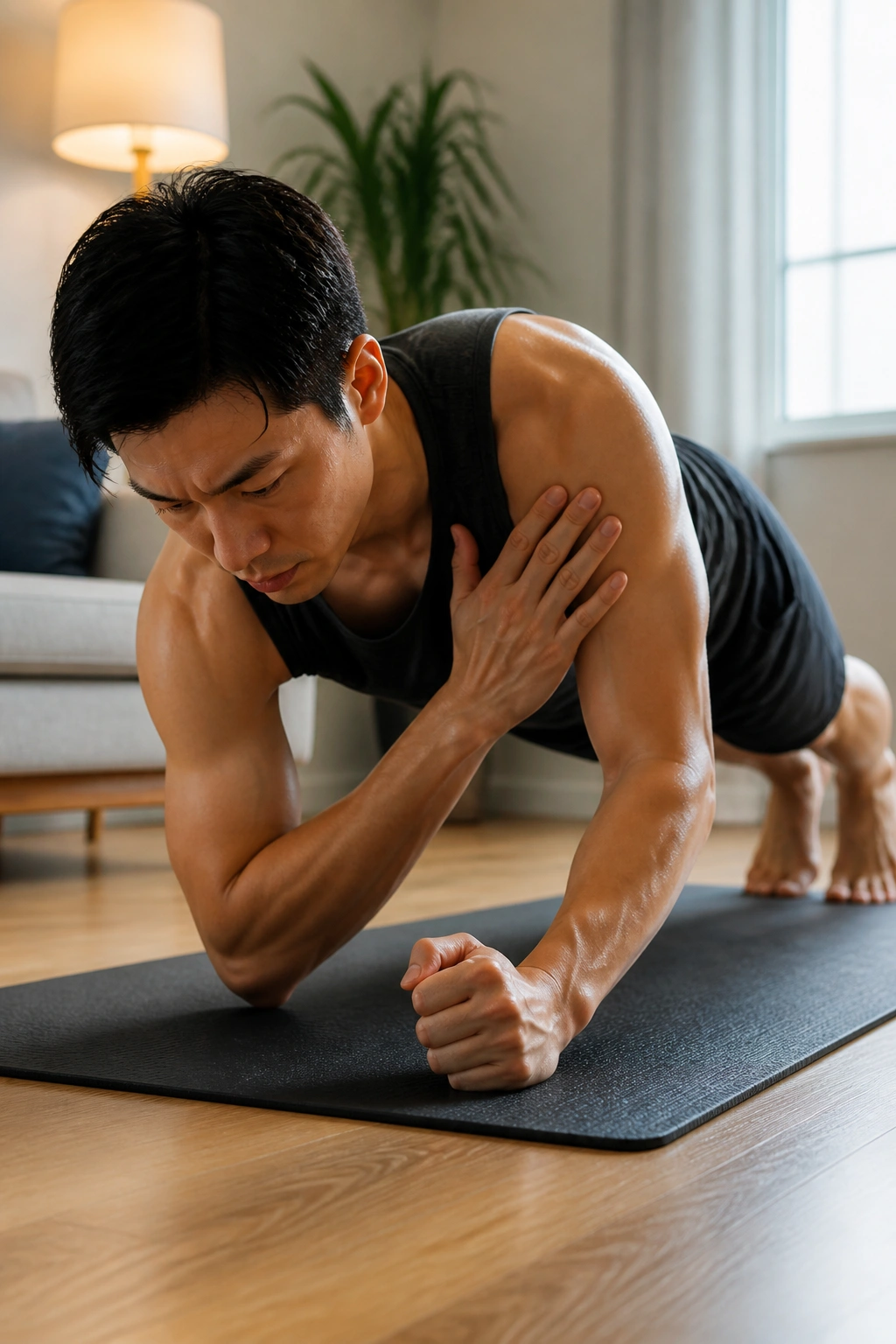
A shared wall changes the rules.
No jumping. No pounding. No high knees that sound like a small stampede. This version is for late nights, thin floors, hotel rooms, and anyone who wants to train without waking up the person below them.
Use 7 moves at 45 seconds each:
- Forearm plank shoulder taps
- Slow mountain climbers
- Reverse crunches
- Dead bug holds
- Side plank, right
- Side plank, left
- Hollow body hold
The pace should stay smooth enough that nothing thumps. If your feet are slamming down during mountain climbers, you’re moving too fast. Slow them down until the feet barely kiss the floor.
A quiet workout often turns out harder than a loud one. That’s not a joke. When you remove momentum, the abs have to do the actual work, and the work feels honest. That’s why I like this version on evenings when I want something focused but not chaotic.
If wrists are a problem, drop to forearms. If your neck tightens on the hollow hold, tuck the knees in a little and keep going.
7. The Lower-Ab Focused Pelvic Tilt Circuit
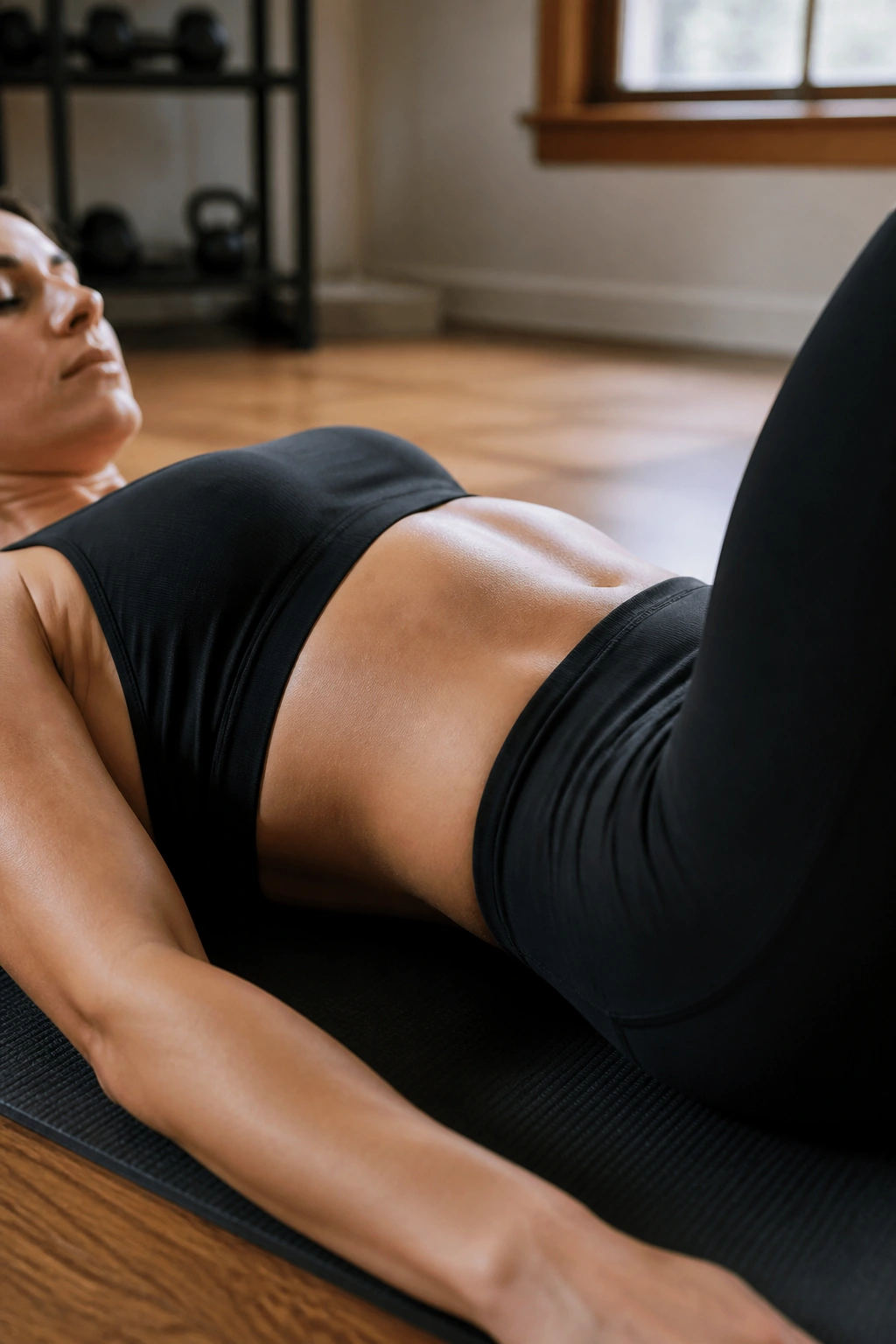
Lower abs are not magic. They are control.
Most people who say they want “lower ab exercises” really need better pelvic position and less swinging from the hip flexors. Once you stop letting the lower back arch, the same simple moves start feeling completely different.
Use This Cue First
Before each rep, tuck the pelvis slightly so your lower back feels long and heavy. That tiny tilt changes everything.
Seven-Minute Structure
- 45 seconds posterior pelvic tilts
- 15 seconds rest
- 45 seconds reverse crunches
- 15 seconds rest
- 45 seconds bent-knee leg lowers
- 15 seconds rest
- 45 seconds toe taps
- 15 seconds rest
- 45 seconds flutter kicks, small range
- 15 seconds rest
- 45 seconds plank knee tucks
- 15 seconds rest
- 45 seconds hollow hold
The mistake here is chasing a huge range of motion. Huge range usually means the lower back has peeled up and the hip flexors have taken over. Keep the legs lower only as far as you can manage while staying braced.
That’s the hard part. Not the leg movement. The control.
8. The Beginner-Friendly Starter Circuit
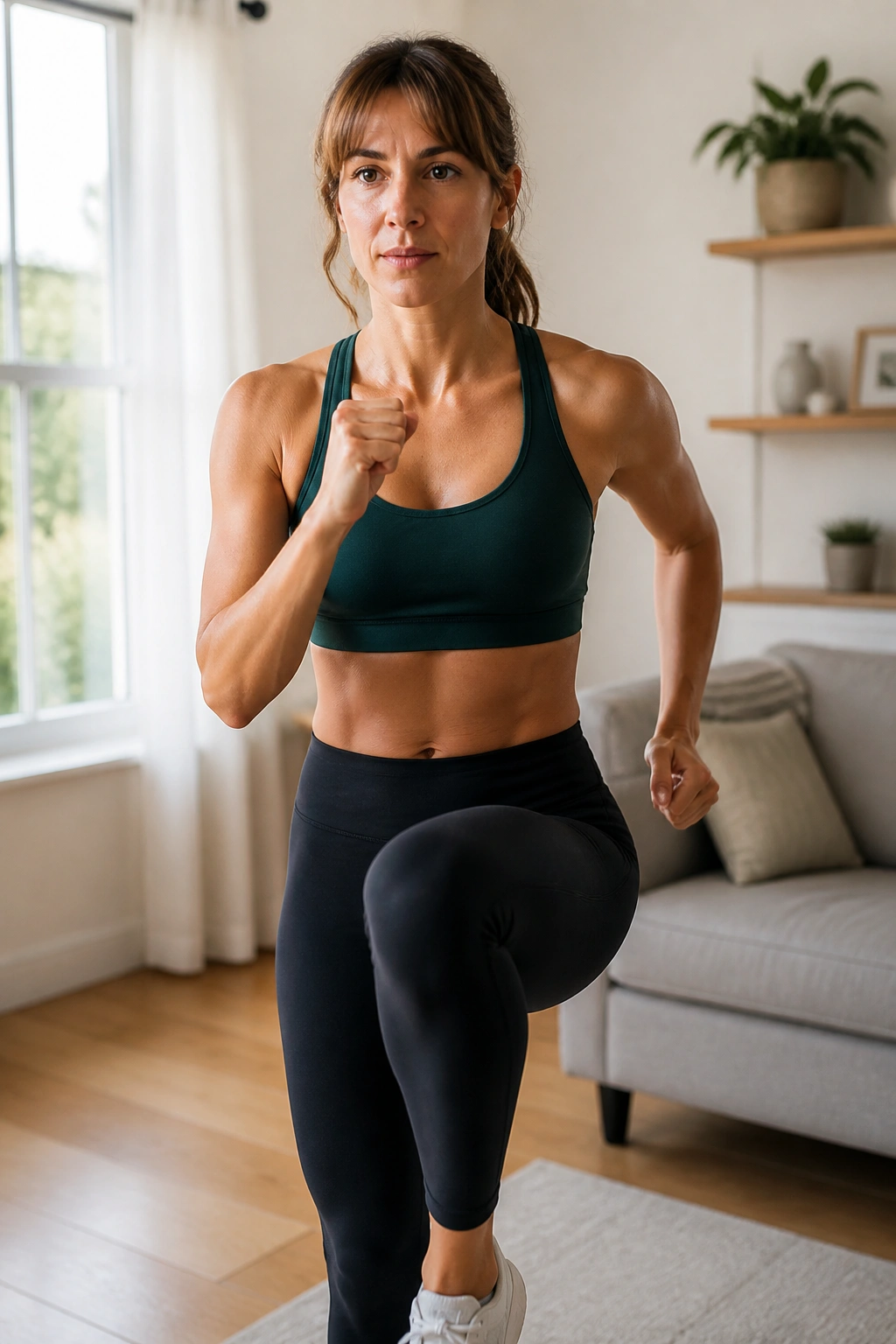
Need something you can finish without feeling like you’ve been hit by a truck? Start here.
The beginner mistake is usually going too hard too fast. People see a short ab workout and assume they need to sprint through it. They don’t. A clean, slower round beats a frantic mess every time.
Use 30 seconds of work and 30 seconds of rest. That fills seven minutes exactly with seven moves:
- March in place with a strong brace
- Heel slides
- Bird dog
- Kneeling plank hold
- Standing cross-body crunch
- Side plank from the knees
- Dead bug
Easier Swaps If You Need Them
- If kneeling plank feels rough, keep your hands on a bench or couch.
- If side planks are too much, hold the top-side knee down and lift the hips only a few inches.
- If dead bugs feel confusing, move one leg at a time instead of both.
The goal is not to win the workout. The goal is to finish it with decent form and enough energy to want to do it again tomorrow. That consistency matters more than any one heroic session.
This is the version I’d give to someone who’s new to core training and a little unsure of their lower back. Gentle doesn’t mean useless. Not even close.
9. The Advanced Endurance Ladder
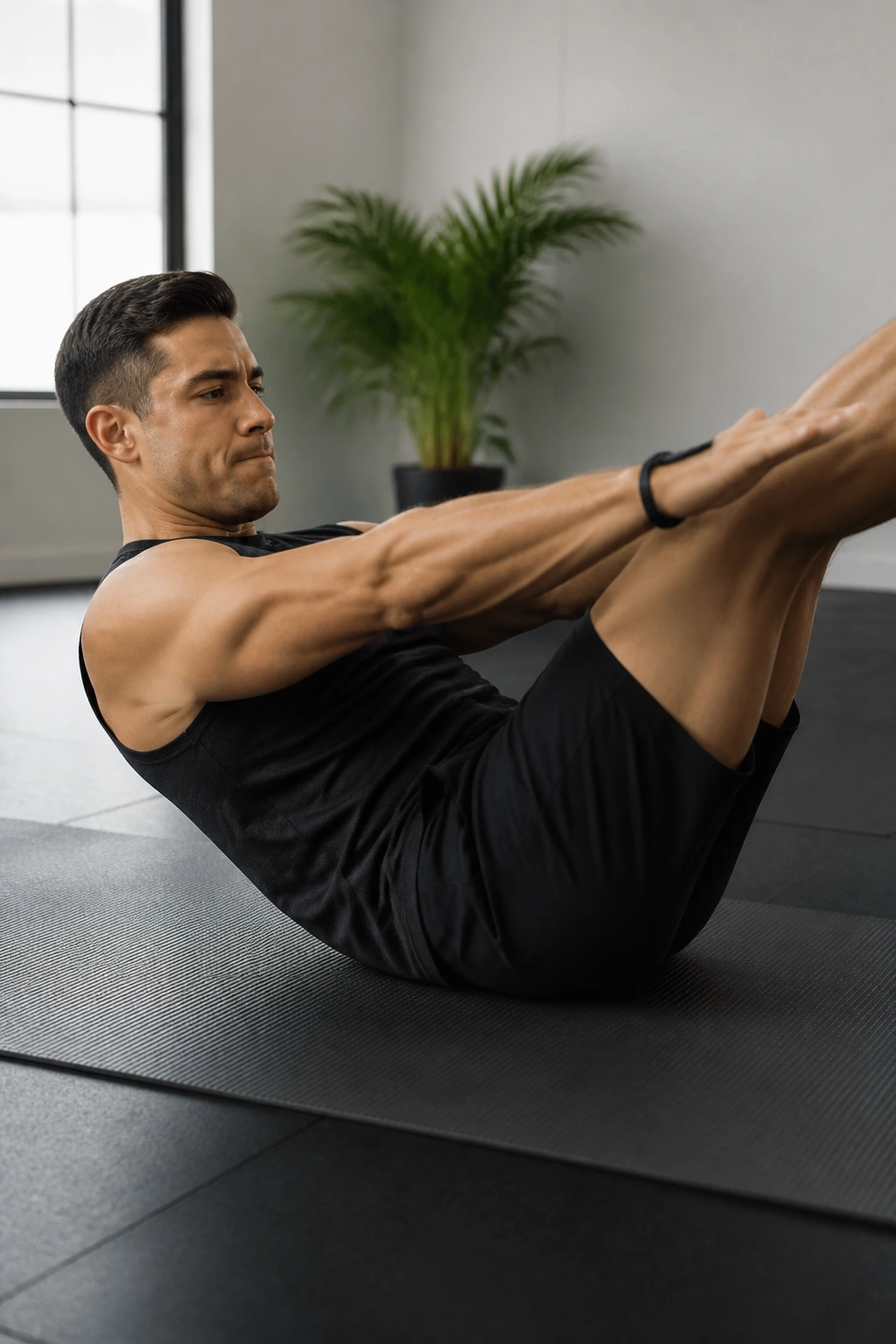
Seven minutes goes fast when the work blocks are short and the rests are stingy.
This one uses 14 rounds of 20 seconds work and 10 seconds rest. That’s the classic bodyweight interval structure, and it’s brutal in the right way because you never quite recover before the next movement starts. Your abs stay on, and your breathing climbs faster than you want.
Run these seven moves twice:
- Hollow rocks
- V-ups
- Plank shoulder taps
- Mountain climbers
- Side plank, right
- Side plank, left
- Tuck-ups
The first round will feel manageable. The second round starts peeling away your form if you’re sloppy. That’s where the workout gets useful. Keep the movement range tight and the tempo honest.
I like this as an advanced core endurance session because it mixes flexion, anti-extension, and side-body work without any fluff. There’s no room for daydreaming here. Your torso will be busy the whole time.
If your lower back starts talking, shorten the range on hollow rocks and tuck-ups before you bail. Most of the time, the fix is smaller motion, not quitting.
10. The Runner’s Trunk Stability Workout

Runners need more than “abs.” They need a trunk that stays steady when one leg is off the ground and the body wants to twist.
That means anti-rotation matters. So does hip control. So does the ability to keep breathing without collapsing through the ribs after mile two or three.
Why This One Fits Runners
After an easy run, this routine helps lock in good posture without trashing the legs. It’s also smart on a non-running day if you want core work that respects the pounding your lower body already took.
The Seven Moves
- Single-leg dead bug, right
- Single-leg dead bug, left
- Bird dog
- Front plank
- Side plank, right
- Side plank, left
- Slow cross-body mountain climbers
Use 45 seconds on, 15 seconds off.
The big cue is this: keep the pelvis level when one side wants to drop. That’s the same thing your hips need when you’re running over uneven ground or fatigue starts sneaking in. A strong runner’s core is less about showing off and more about not leaking energy.
This is a quiet, useful workout. Not flashy. Very useful.
11. The Cardio Core Hybrid
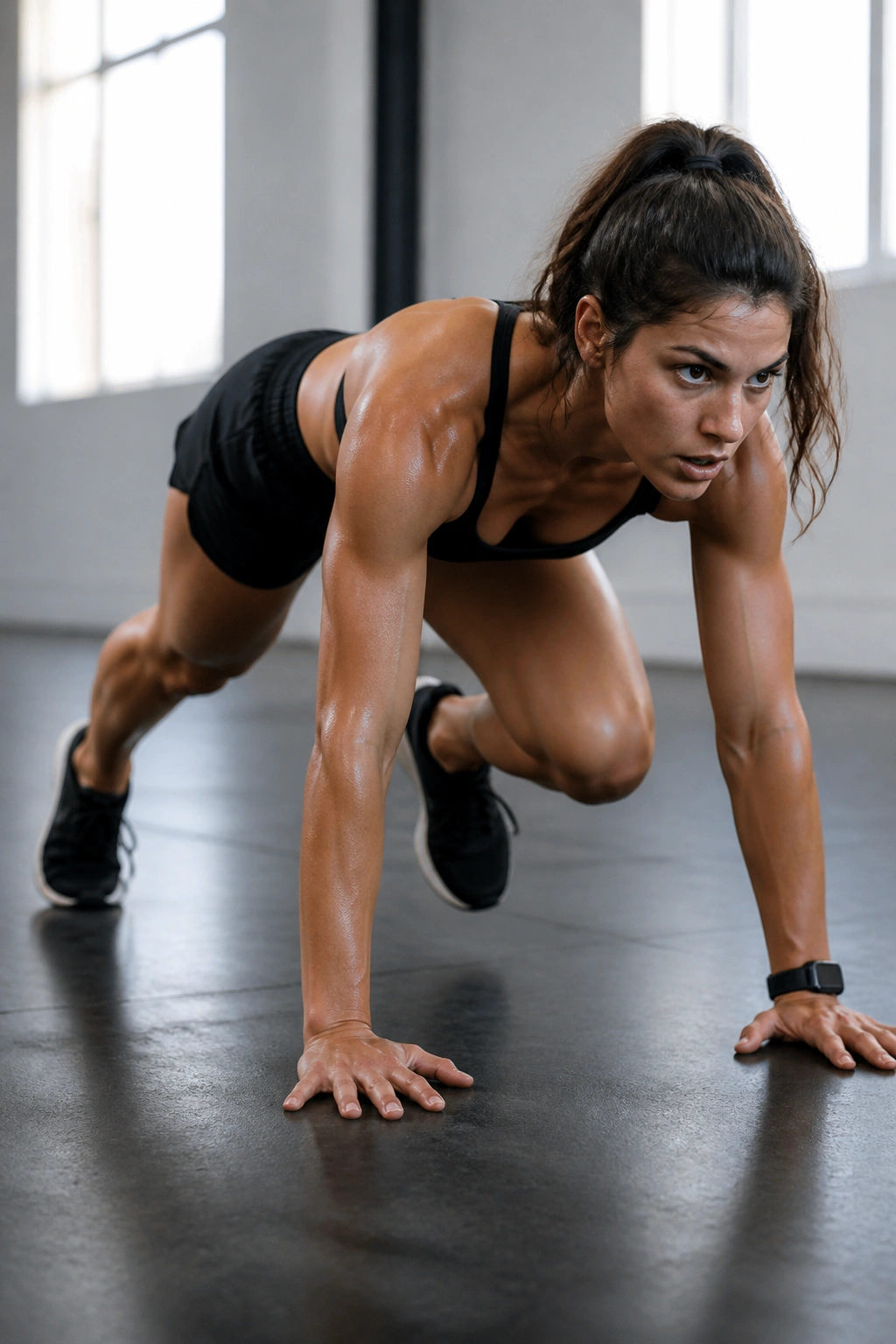
Not every ab workout has to stay glued to the mat.
Some days, the best move is to wake up the whole body a little while the core keeps its job in the middle. That’s what this hybrid does. Heart rate up. Midsection engaged. No nonsense.
Try 45 seconds per station:
- Squat to knee drive
- Bear crawl in place
- Plank step-outs
- Skater taps
- Mountain climbers
- High-knee toe touches
- Plank walkout to hold
The core has to brace through movement here, which is different from a static hold. That’s valuable. Real life is rarely a perfectly still plank on command.
This one also gets sweaty fast. If you’re short on time and want the session to feel more like a training block than a rehab drill, it delivers. If your wrists are sensitive, swap plank walkouts for standing cross-body reaches. No shame in that. The point is to keep the trunk working while the rest of the body moves.
I’d use this on days when a pure floor circuit sounds dull.
12. The Deep-Core Breathing Reset
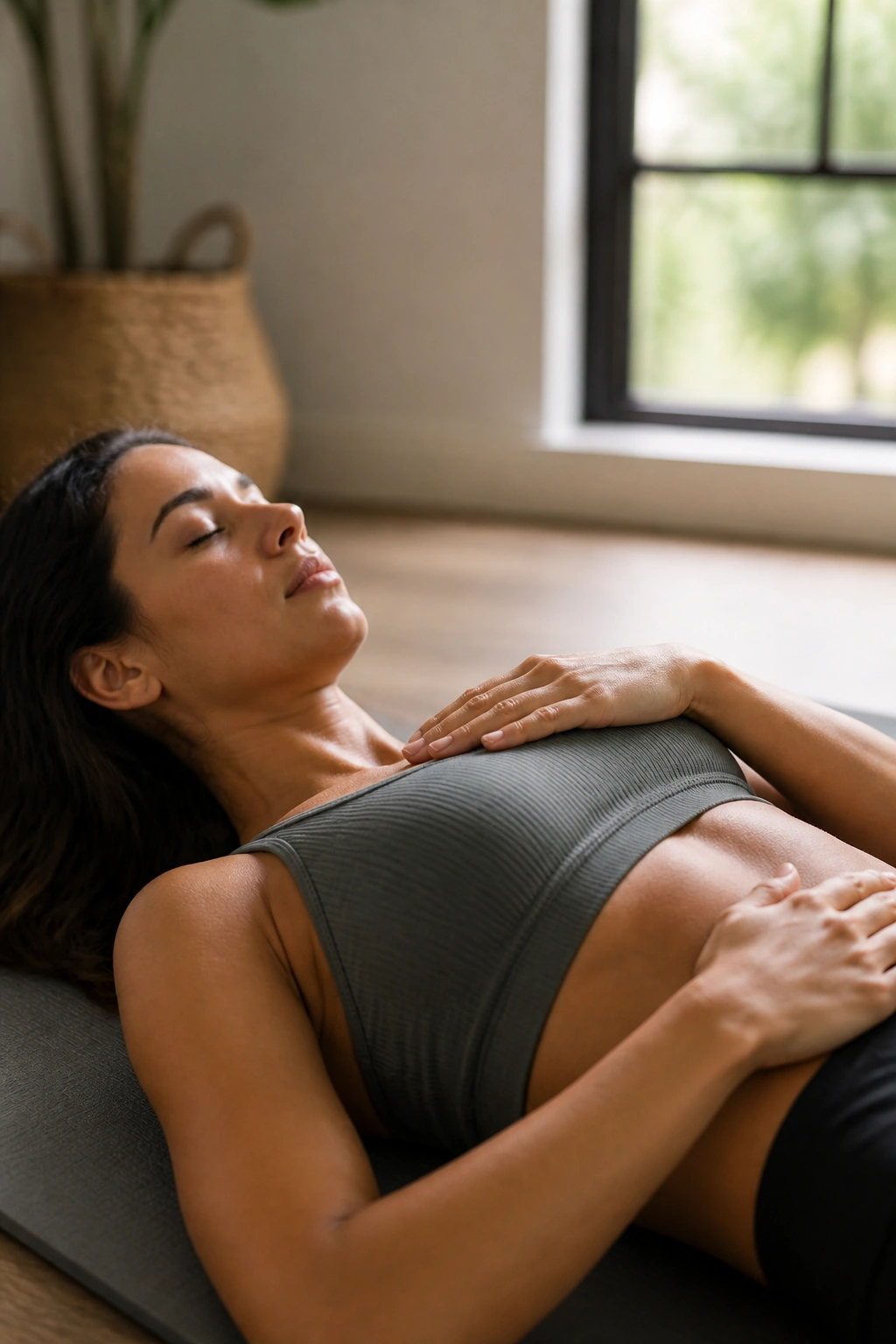
Why is breathing in an ab workout? Because the diaphragm and the deep core are a team, not separate departments.
If your ribs flare up during planks or your lower back takes over during crunches, this kind of session can clean that up fast. It’s not about burning your abs to the ground. It’s about teaching them to brace in a way that holds under pressure.
Start With the Breath
- 90/90 breathing
- Crocodile breathing on the floor
- Dead bug with a long exhale
- Bear hold breathing
- Side plank breathing, right
- Side plank breathing, left
- Front plank with controlled exhales
Keep each station to 45 seconds. Use the exhale as the brace. Long, slow air out through the mouth. The ribs should come down a little, not puff up like a balloon.
Why It Feels Different
The burn is gentler. The control is sharper. Afterward, a lot of people notice that their next plank or crunch feels cleaner because they’re not fighting their own breath the whole time.
That’s a useful reset on busy days, especially if you sit a lot or notice your torso feels jammed up before you start training.
13. The Travel-Friendly Hotel Room Circuit
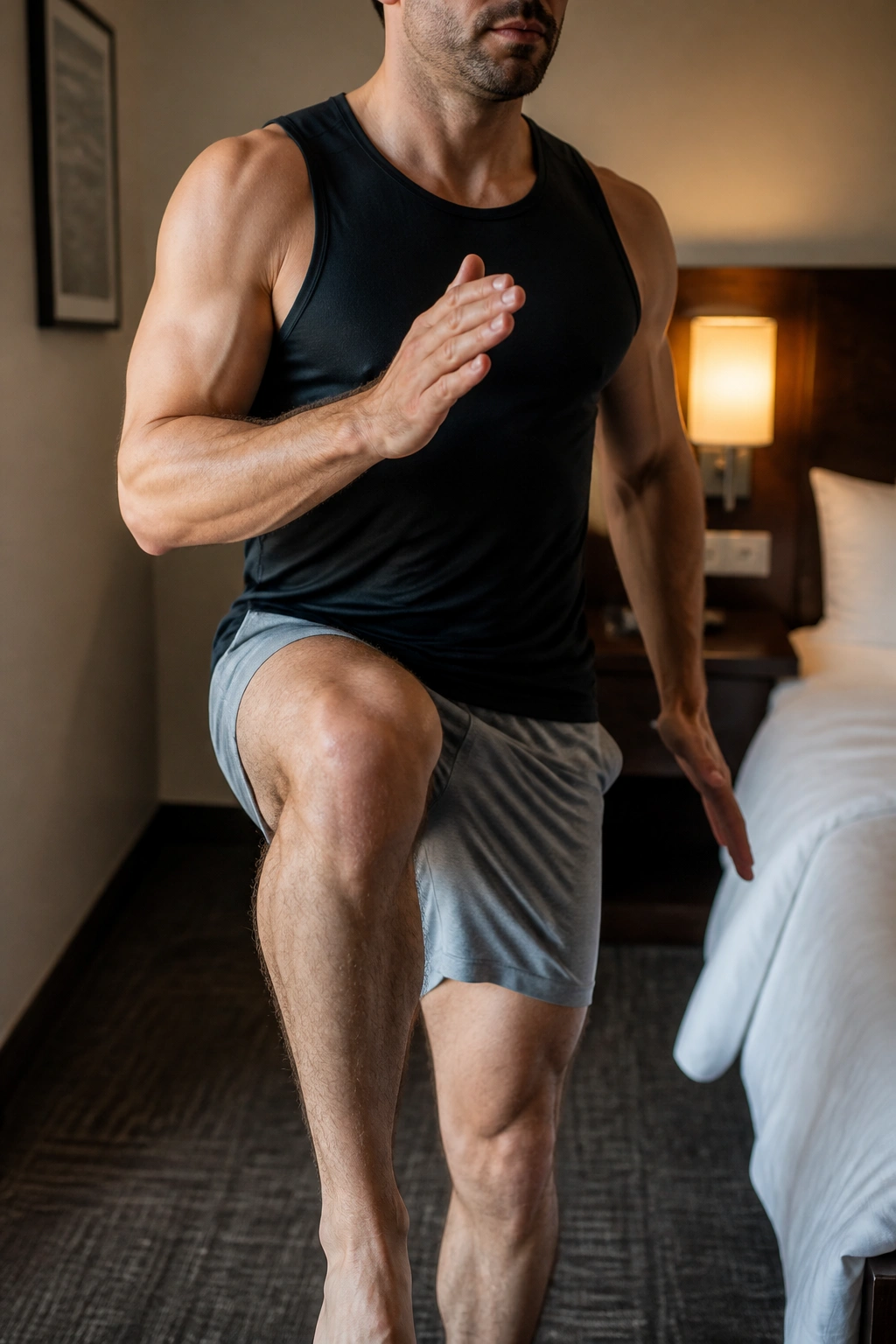
Thin carpet. Bad lighting. A timer on your phone. That’s enough.
Travel workouts get treated like a joke, but a small room can still hold a decent core session if you keep the moves tidy and the noise down. No jumping, no equipment, no excuses built into the plan.
Use 7 moves, 45 seconds each:
- Standing march with a strong brace
- Wall plank
- Bird dog
- Glute bridge
- Reverse crunch on the floor or bed edge
- Side plank from the knees
- Dead bug
If the floor feels questionable, lay a towel down first. If the bed is too soft for reverse crunches, skip that move and do heel taps on the floor instead. That kind of adjustment is part of the deal.
What Makes It Worth Doing
The workout is simple enough that you can start before you talk yourself out of it. That’s half the battle in a hotel room, honestly. Once you get moving, the body usually stops whining.
I like this setup because it respects the reality of travel. You’re tired, a little stiff, and not in the mood for an elaborate plan. Fine. Seven minutes, done.
14. The Minimalist Routine for Days You Don’t Want Choices
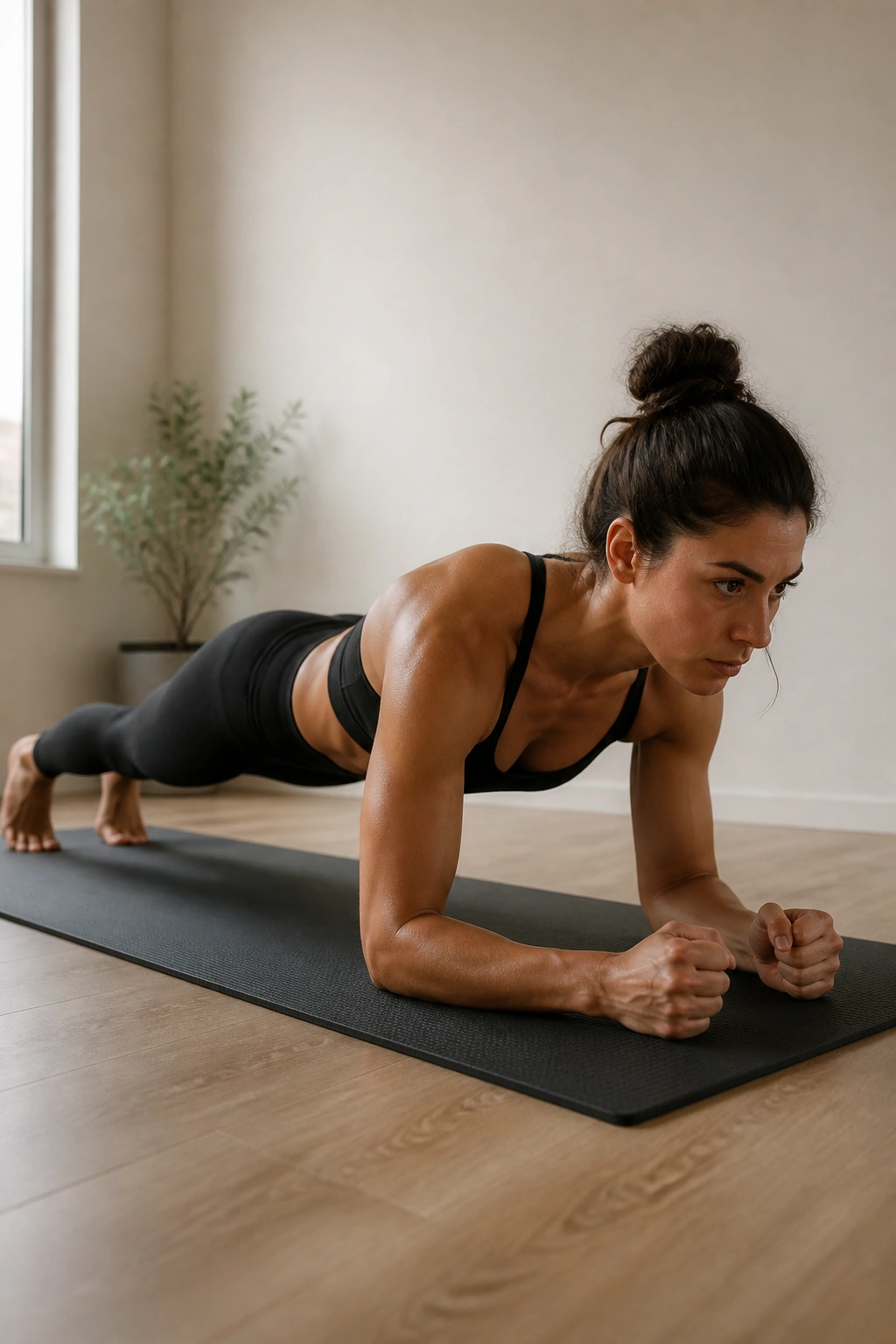
Some days, a big menu of exercises feels like homework.
On those days, a minimalist core circuit is a relief. You only need a few moves, a timer, and the willingness to hold your shape when the abs start muttering. Simple can be sharp.
Here’s a clean seven-minute setup: 45 seconds work, 15 seconds rest, 7 stations.
- Dead bug
- Reverse crunch
- Bicycle crunch
- Forearm plank
- Side plank, right
- Side plank, left
- Hollow hold
That is enough. Really. You don’t need twelve flavors of the same idea to get a worthwhile session. The benefit here is focus. When the choices shrink, the quality goes up.
I like this routine because it doesn’t waste time proving how hard it is. It just gets on with it. The plank cleans up your front brace, the side planks wake up the waist, and the hollow hold finishes with that nice, ugly trembling that tells you the session was honest.
If you want one of the more repeatable seven minute ab workouts on this page, this is a strong candidate. No drama. No extra parts.
15. The Bottom-Line Finisher for Days You Need One Last Push
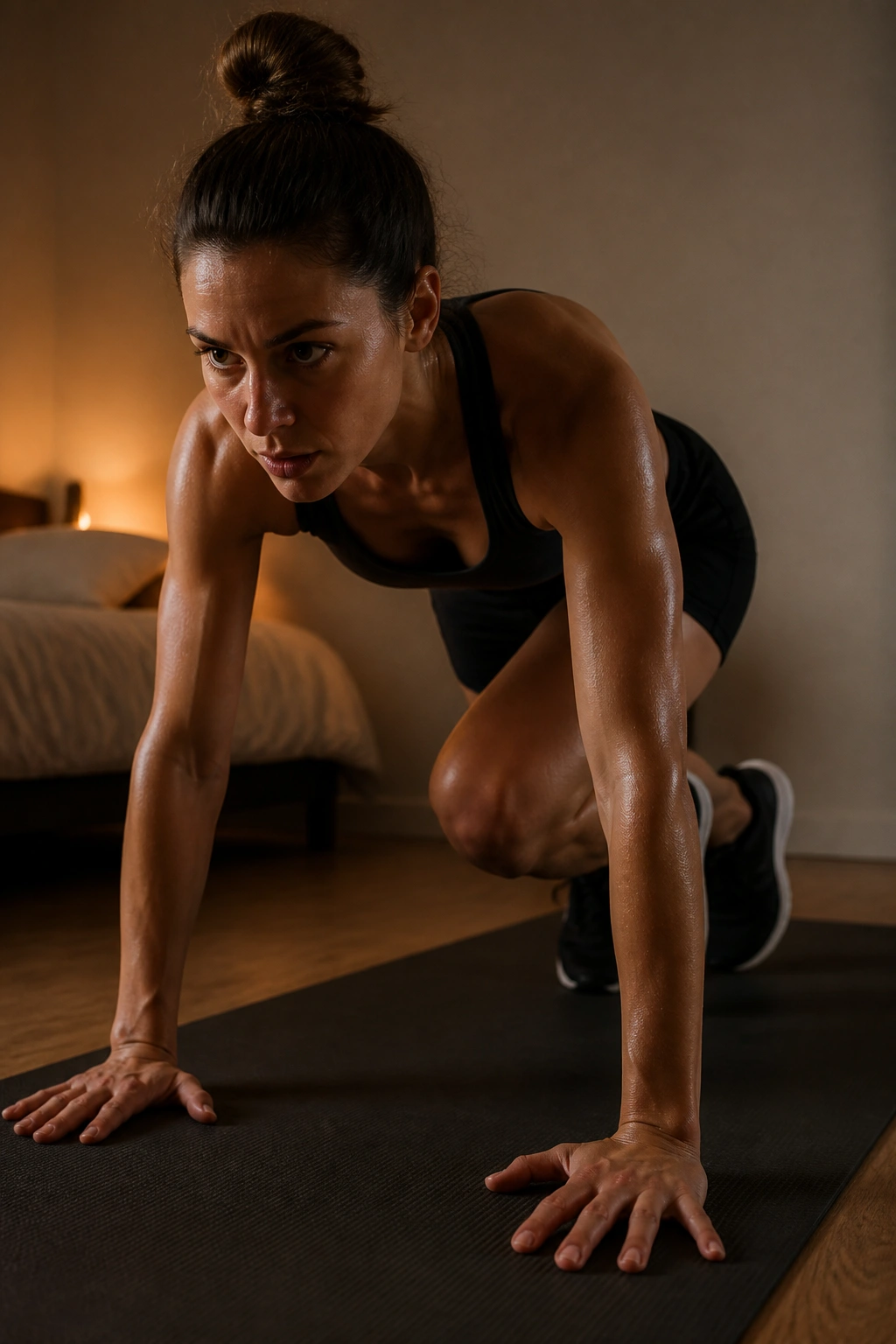
The day you’re already tired is the day this version earns its spot.
After lifting, after a run, after a long stretch of sitting — whatever got you there — this finisher is short enough to fit and hard enough to matter. It is the kind of core session I’d save for the end of a bigger workout when I still want to leave with my trunk feeling switched on.
Use 45 seconds on and 15 seconds off:
- Forearm plank shoulder taps
- Reverse crunches
- Mountain climbers
- Side plank, right
- Side plank, left
- Hollow rocks
- Slow plank hold
The order matters a little. Start with stability, move into flexion, then finish with the kind of isometric hold that makes you wish the timer moved faster.
One honest note: this is not the friendliest option if your form falls apart when you’re tired. If that happens, shorten the range on the hollow rocks and hold the plank with your knees down for the last round. That keeps the work useful instead of sloppy.
If you keep one hard seven-minute core finisher on your phone, keep this one. It’s compact, direct, and it does the job without begging for extra equipment or extra time.
