



A strong midsection doesn’t need machines, bands, or a pile of accessories taking up half the room. If you’ve got a floor, a little space, and the patience to move slowly, ab workouts at home with no gear can hit your core hard enough to make you rethink every rushed crunch you’ve ever done.
What usually gets missed is this: your abs are not just there to make sit-ups painful. They brace, resist twisting, keep your ribs from flaring, and help your pelvis stay where it belongs when your legs start moving. That means the best bodyweight core work mixes flexion, anti-extension, and anti-rotation. Sounds technical. It isn’t, once you feel it.
Do these moves fast and sloppy, and your hip flexors will do the heavy lifting. Slow them down, breathe out on the hard part, and keep your low back honest. Suddenly the same old floor exercises feel a lot more serious. Start with the one that teaches control before burn: the dead bug.
1. Dead Bug
A dead bug looks almost too calm to matter. Then you try to keep your low back glued to the floor while one arm and the opposite leg drift away, and the whole thing gets serious fast.
Why it earns a spot
This is one of the best no-gear ab workouts for teaching bracing without a lot of noise. Your job is simple: move the limbs, keep the trunk still. That’s core training in plain clothes.
- Lie on your back with your knees stacked over your hips and your arms pointed at the ceiling.
- Press your lower back gently into the floor before you move.
- Extend one leg and the opposite arm slowly, then come back to center.
- Stop the movement the moment your back starts to arch.
Best cue: breathe out as the leg reaches long. That tiny exhale helps keep your ribs from popping up.
If dead bugs feel easy, you’re probably rushing them. Slow reps expose weak spots fast. Good. That’s the point.
2. Forearm Plank
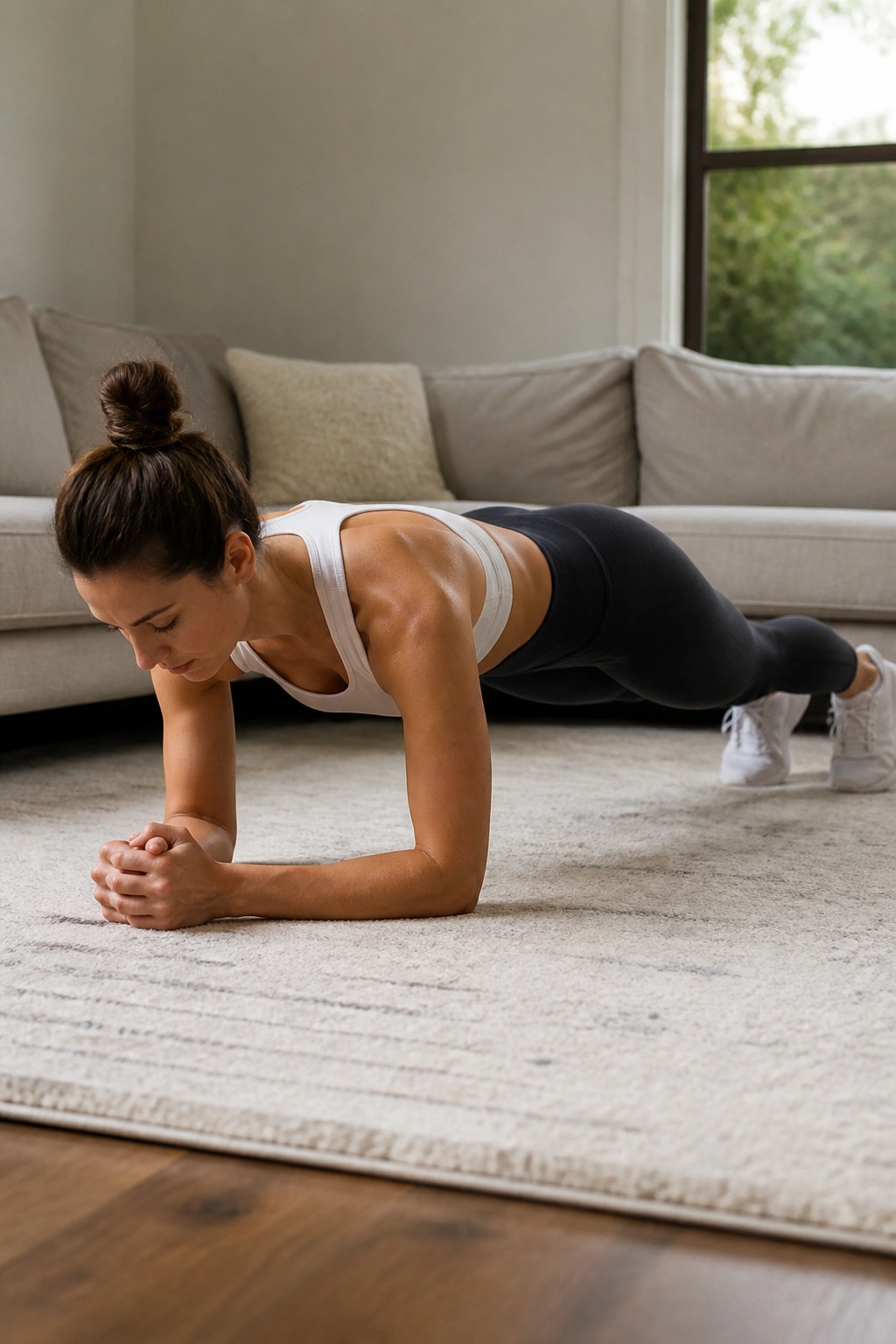
A plank is only boring when it’s done badly. Done well, it’s a full-body brace that teaches your abs to hold a shape instead of just crunching and releasing.
Your elbows should sit under your shoulders, your forearms parallel, and your body in one long line from head to heels. Squeeze your glutes a little, pull your ribs down, and imagine dragging your elbows toward your toes without moving them. That’s the feeling you want.
The mistake most people make is chasing time instead of position. Twenty clean seconds beats a shaky minute with a sagging lower back. Every time.
If you want to make this harder, try breathing slowly without losing your brace. If your hips dip every time you exhale, the hold is telling you something useful. Listen.
3. Side Plank
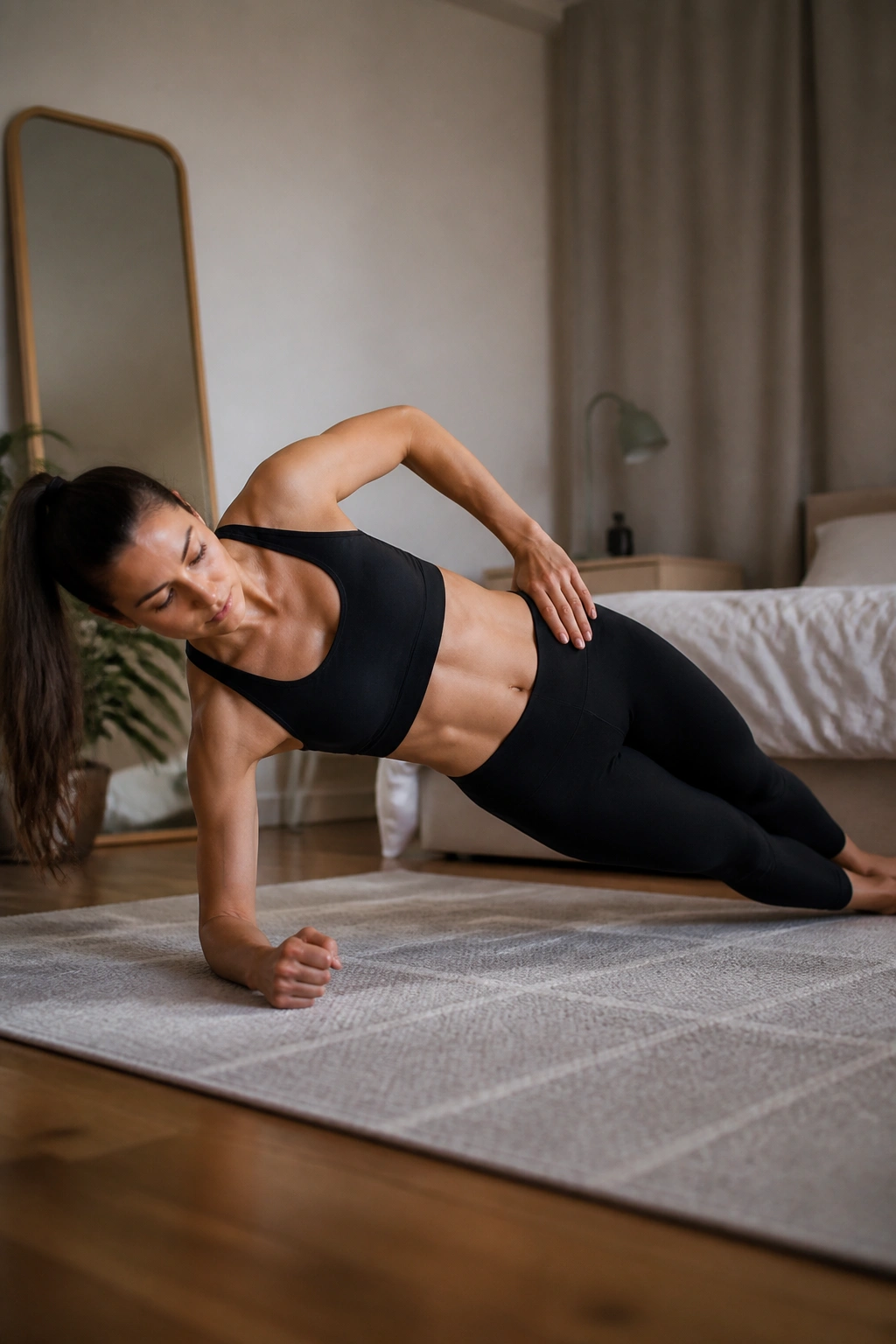
Why does a side plank feel so unfair? Because it catches the muscles most people ignore until they try to hold their body in a straight line on one arm.
What Makes It Different
This move hammers the obliques and the muscles along the side of your trunk, but the real win is control. You’re resisting sideways collapse, which is a big deal if you want a core that does more than curl.
Start with your elbow under your shoulder and your feet stacked if you can manage it. Lift your hips until your body looks like a slanted plank, then hold without letting the top shoulder roll forward. If stacked feet feel too spicy, stagger them.
Make It Easier or Harder
- Drop the bottom knee to the floor for a friendlier version.
- Lift the top arm straight up if you want more challenge.
- Add a top-leg lift only if your hips stay stacked.
Short holds work best here. Ten to twenty seconds, clean and controlled, usually beats a long wobble.
4. Bicycle Crunch
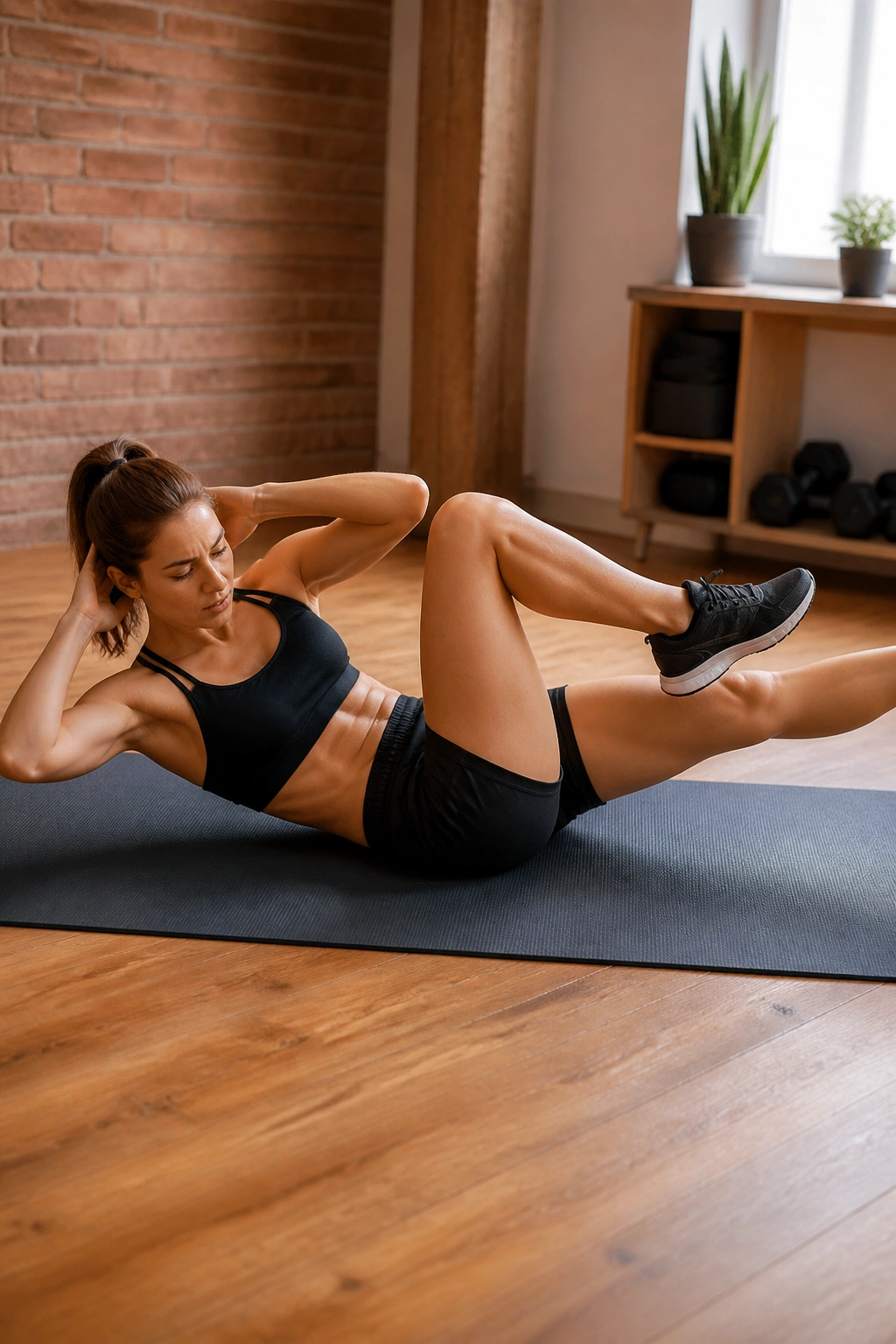
Bicycle crunches are one of those moves people love to rush. That’s a shame, because the slow version is far more honest and hits the abs without turning the neck into collateral damage.
Picture this: one shoulder blade lifts, the opposite knee comes in, and the other leg reaches long without slamming into the floor. That’s the rhythm. Elbow to knee is only a rough target, not a collision sport.
What to Watch For
- Keep your chin slightly tucked, not jammed into your chest.
- Rotate from the ribs, not just the elbows.
- Extend the straight leg with control.
- Move at a pace where you can feel each rep.
Small tip: if your hip flexors start screaming, shorten the leg extension and slow the tempo. The abs stay involved longer that way.
This one works best when it feels almost too controlled. Fast pedals look busy. Slow pedals actually do something.
5. Reverse Crunch
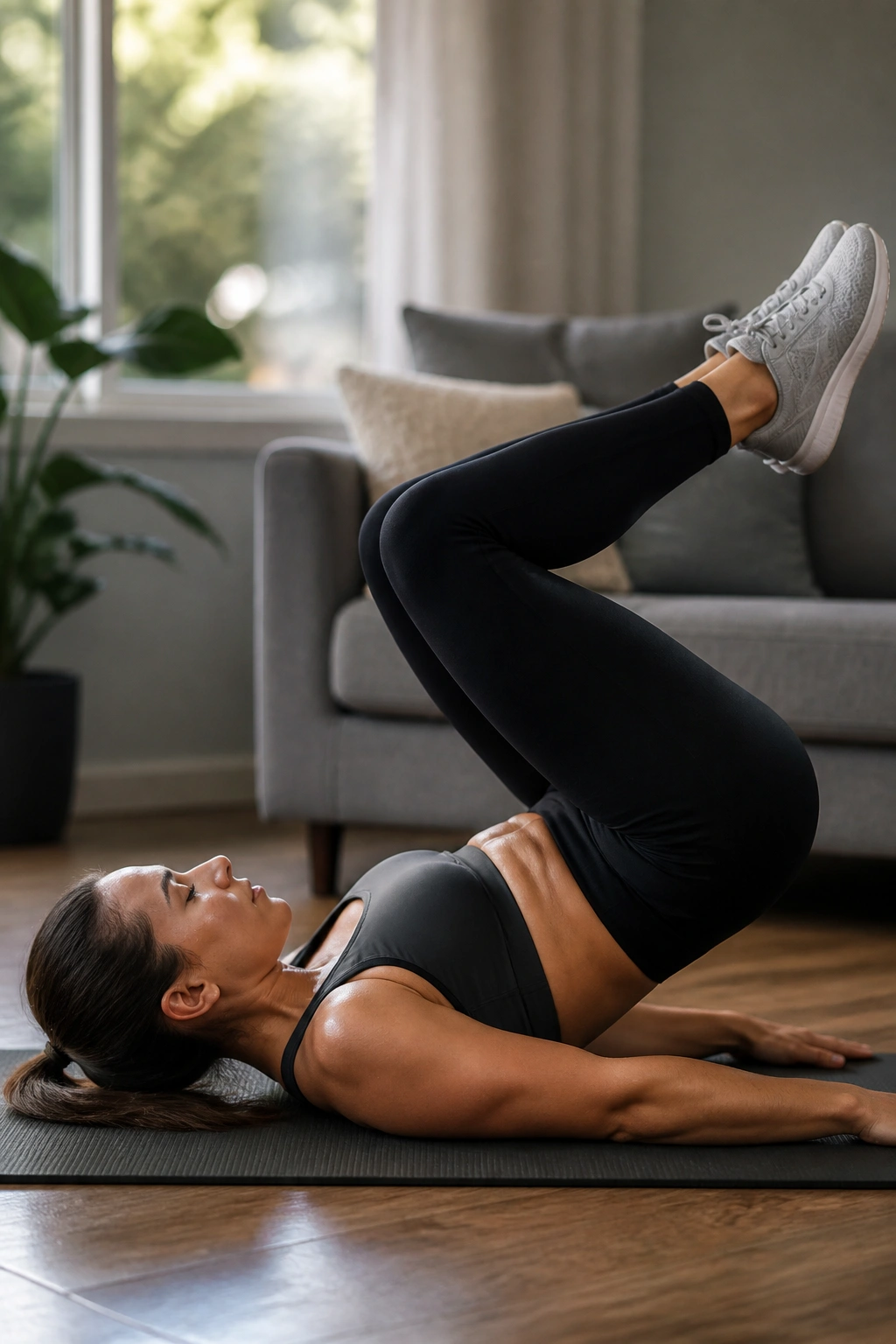
Reverse crunches are one of my favorites because they stop pretending the lower abs are some magical separate muscle. They aren’t. But this movement does make you curl the pelvis up, and that’s the part most people miss when they fling their knees around.
Lie on your back, bend your knees, and keep your thighs still while you roll your tailbone off the floor. The knees travel toward the chest, yes, but the real action is that small lift of the hips. That’s the money part. If your legs swing and your pelvis stays flat, you’re mostly cheating with momentum.
Do them slow. Lowering matters here more than the lift. A three-count on the way down is plenty.
No need to chase huge range. Clean, short reps with a clear pelvic curl beat a wild, fast version every time.
6. Hollow Body Hold
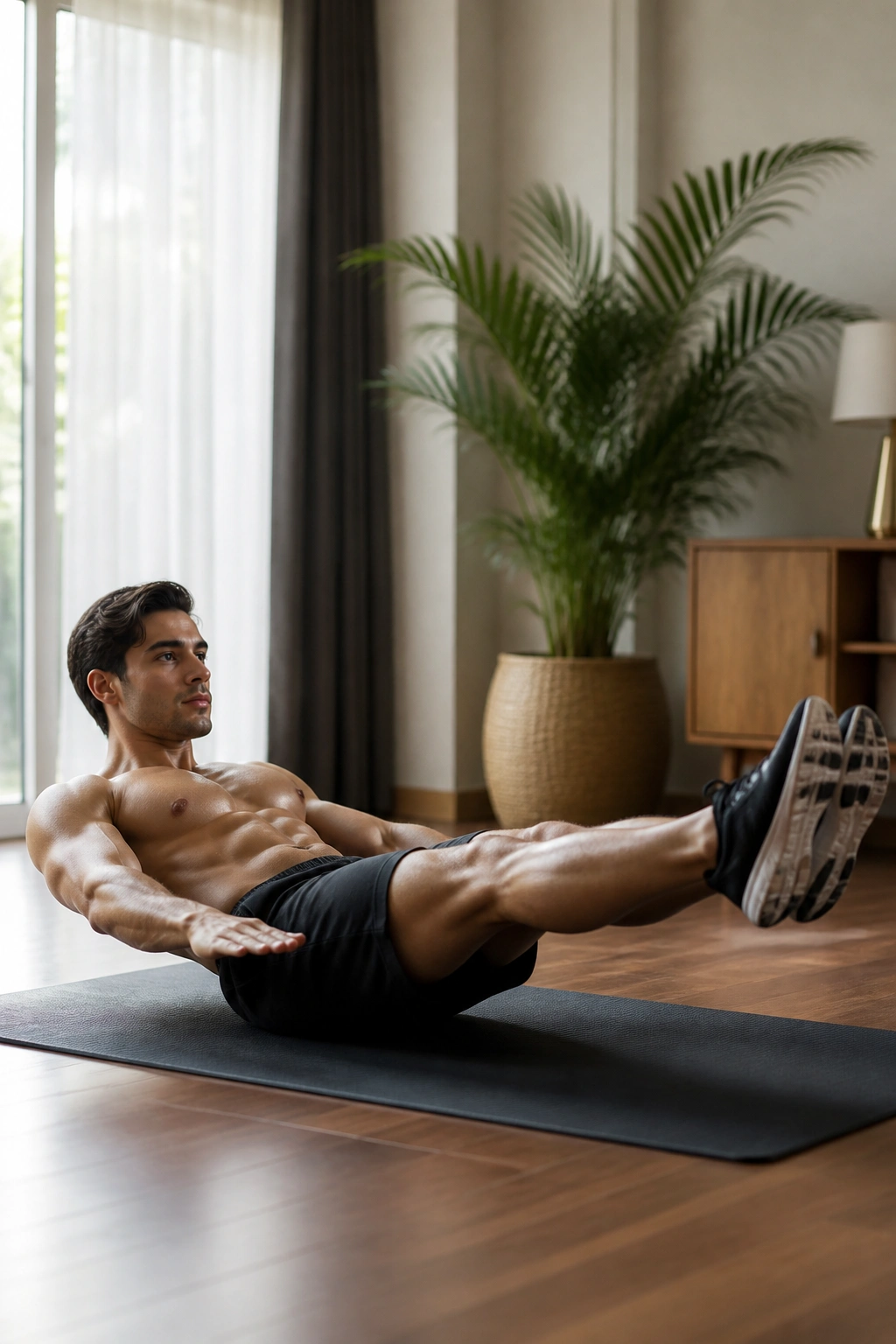
A hollow hold is the move that reminds you abs are not just for bending forward. They’re also for keeping your back from arching when your arms and legs want to drift apart.
Unlike a crunch, this one asks for tension from shoulder blades to hips. Press your lower back into the floor, lift your shoulders just off the ground, and float your legs a few inches up. Arms can stay by your sides at first. Then overhead, if you’re ready for a real test.
What to Watch For
If the low back pops off the floor, shorten the lever. Bend the knees a little. Raise the legs a little higher. Do whatever keeps the spine honest.
Ten to twenty seconds of a clean hollow hold can feel nastier than double that time in a sloppy plank. That’s not a joke. It’s a useful clue.
7. Mountain Climbers
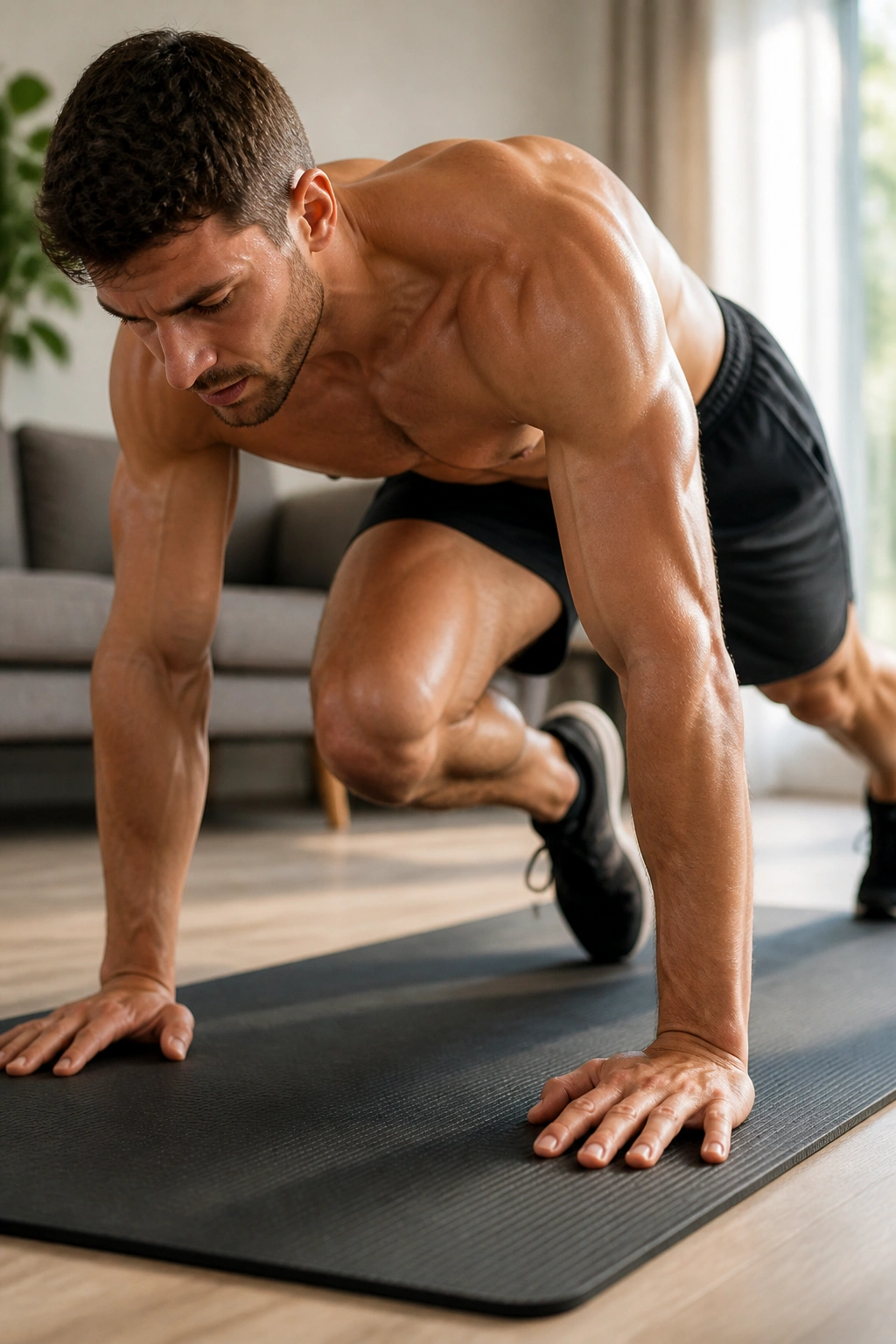
Mountain climbers are where ab training starts wearing a sweatier shirt. They’re dynamic, they’re fast, and they can turn into pure chaos if your hips start bouncing like a loose gate.
Set up in a high plank with your shoulders over your wrists. Drive one knee toward your chest, then switch. The trick is not speed. The trick is keeping your torso quiet while your legs move. That’s the ab work hiding inside the cardio.
If your hands are sliding and your shoulders feel unstable, slow it down. A deliberate knee drive gives your core time to resist rotation. That matters more than the burn in your thighs.
Try 20 to 40 seconds and stop before the form turns sloppy. The last few clean reps are the ones worth keeping.
8. Flutter Kicks
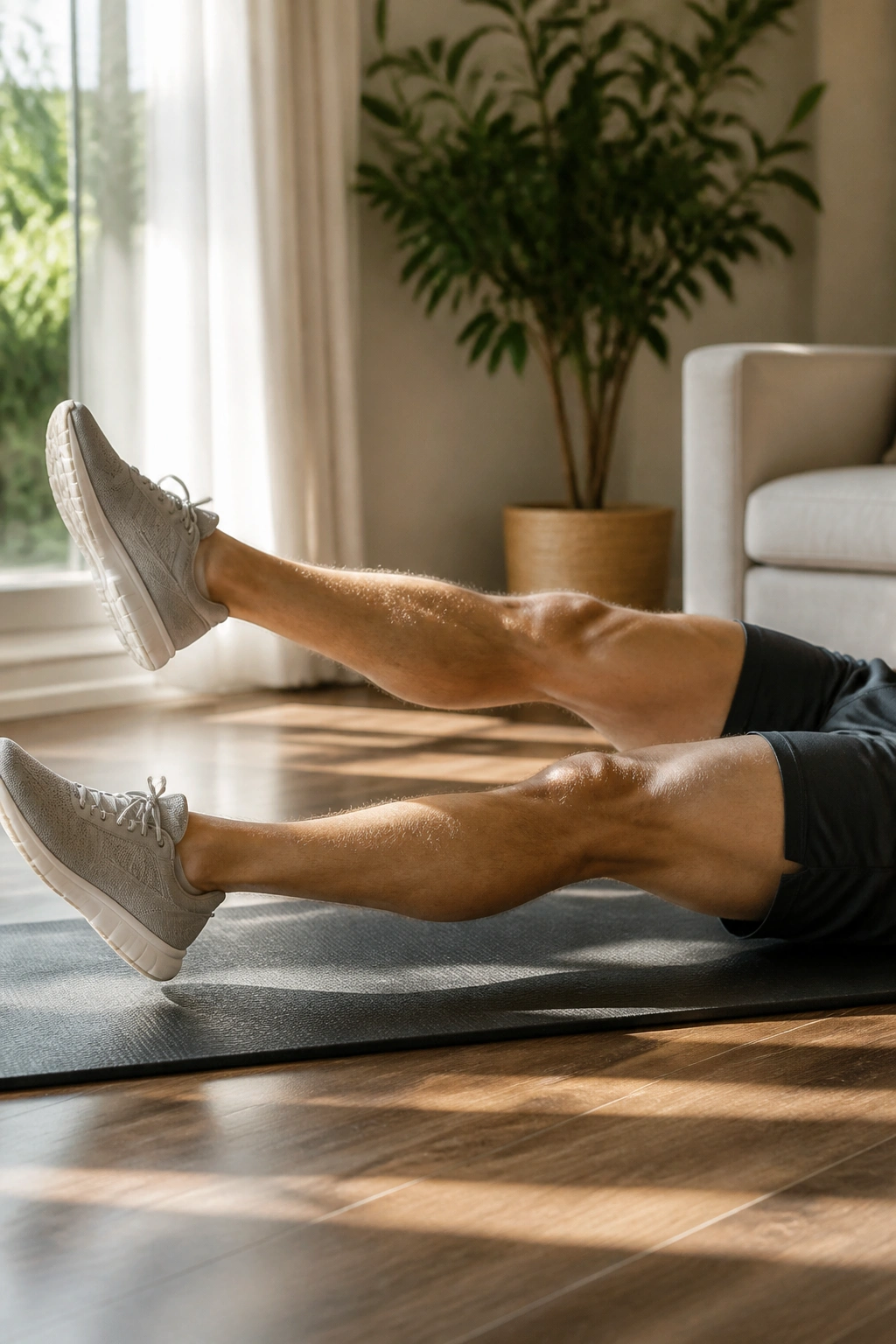
Big flutter kicks are a trap. They look dramatic and usually just yank the lower back off the floor. Small, low kicks do more work and complain less.
Lie flat, press your ribs down, and lift both legs a few inches from the ground. Alternate short kicks with straight knees or a soft bend if your hamstrings are tight. Your lower back should stay heavy, not floating like a tent flap in a windstorm.
Breathing matters here. Exhale in a steady rhythm and don’t hold your breath just because the set gets annoying. That only makes the tension leak into the wrong places.
A clean 20-second flutter set can smoke your lower abs better than a minute of oversized kicking. Tiny range. Harder than it looks.
9. Heel Taps
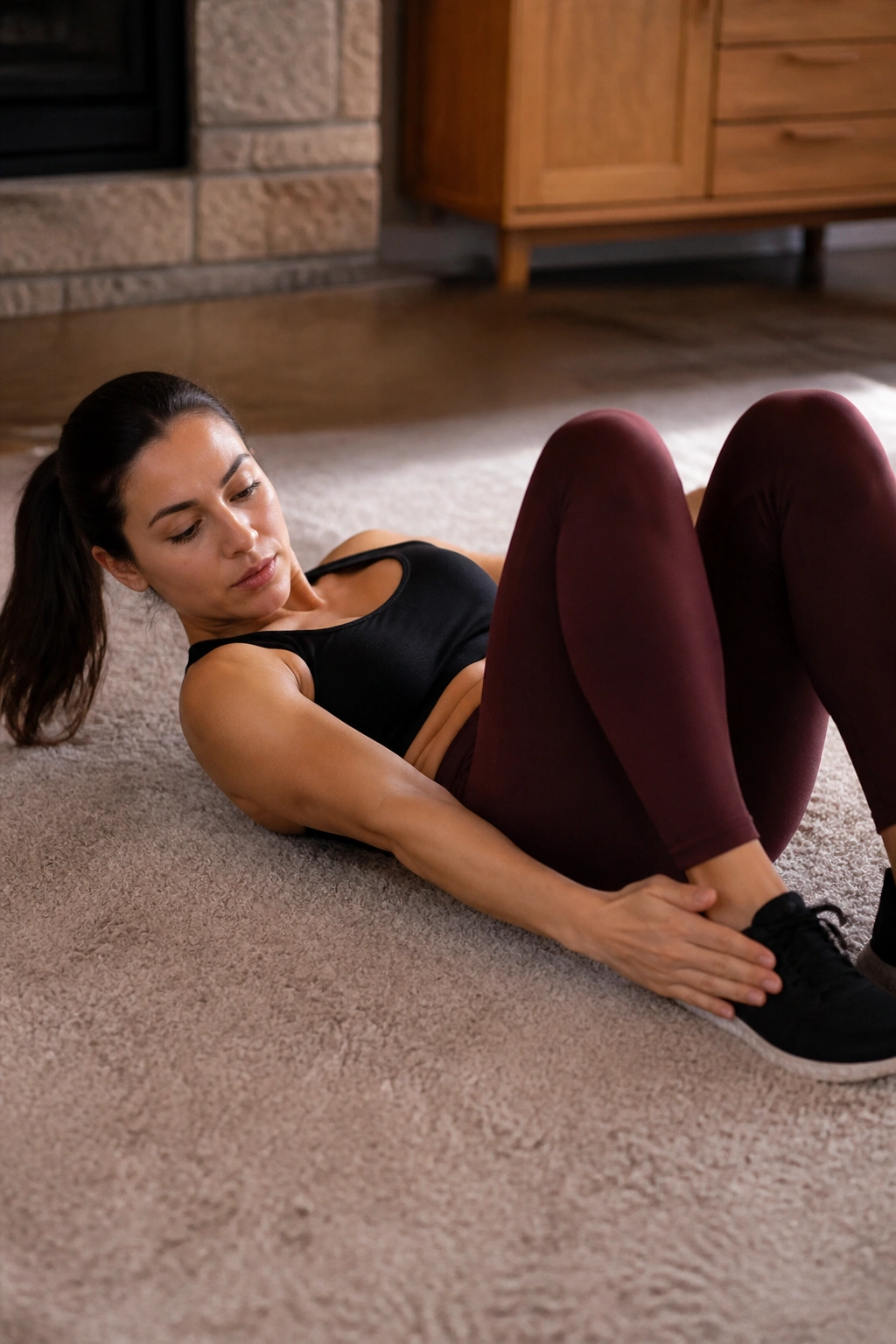
Heel taps are a friendlier floor move, but don’t mistake friendly for weak. They’re a solid bridge between beginner core work and harder crunch variations.
Lie on your back with your knees bent and feet flat. Curl your shoulders up just enough to clear the floor, then reach one hand toward the same-side heel and switch. Keep the movement small and deliberate. The upper abs and obliques do most of the talking if you keep your ribs down.
Quick Form Check
- Keep your chin away from your chest.
- Lift only your shoulder blades, not your whole upper back.
- Move side to side without jerking.
- Stop if your neck starts to take over.
Best use: slow sets of 16 to 24 taps, especially when you want something less brutal than full bicycles.
This is a good move on days when your core feels cooked but you still want honest work.
10. Toe Touches
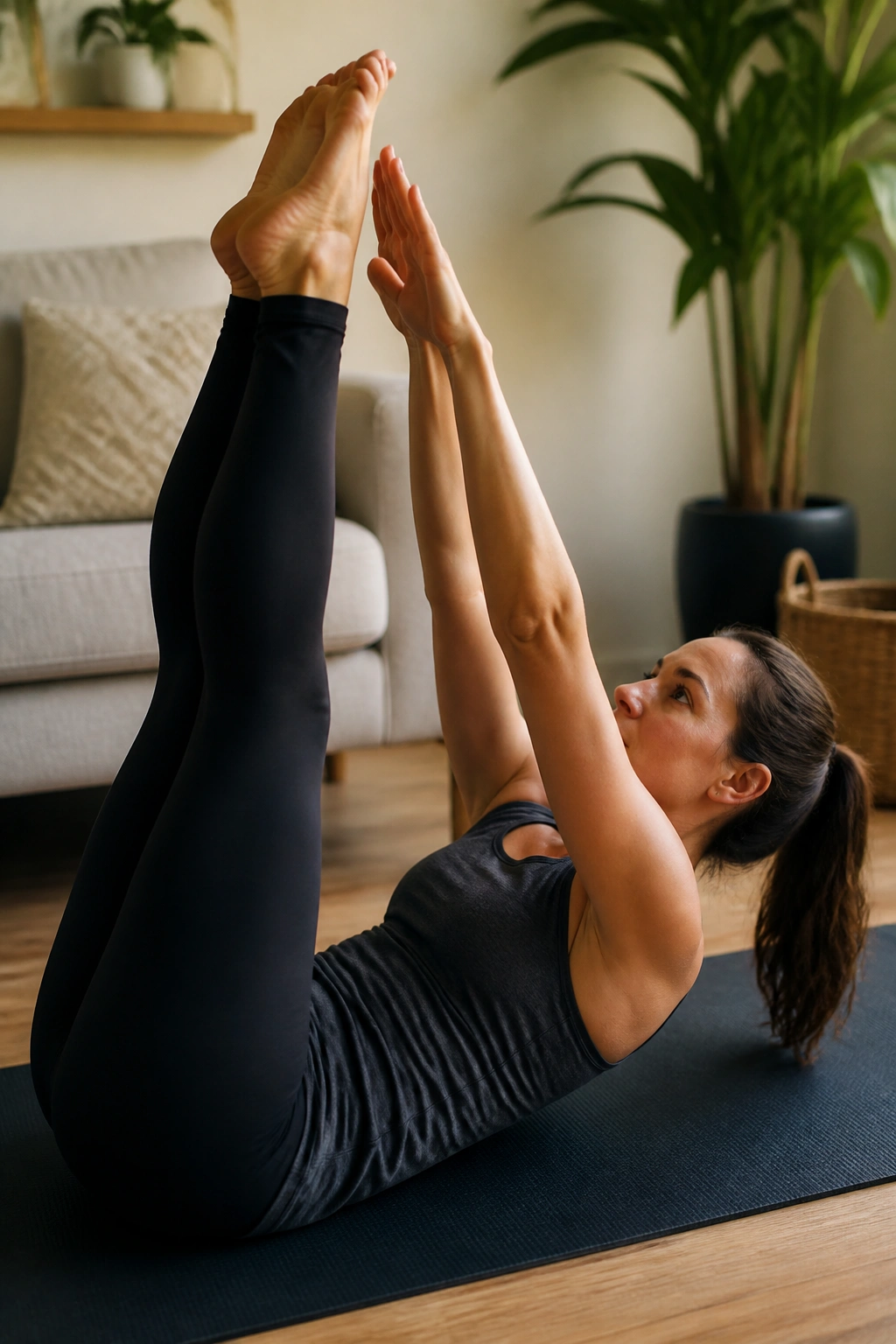
Toe touches are one of those exercises that feel simple until your abs start shaking halfway through the set. They’re especially good for the upper portion of the rectus abdominis, the long muscle people usually mean when they say “six-pack.”
Start on your back with your legs up. Reach your hands toward your toes while lifting your shoulder blades off the floor, then lower with control. If you need to keep your knees slightly bent, do it. Straight legs are not a badge of honor if they pull your back out of position.
How to Keep Them Honest
The rep should look crisp. No swinging. No yanking your head forward. No half-hearted reaches where the hands wave around and the trunk barely moves.
One short burst of these after dead bugs or reverse crunches works well because they ask for a different kind of contraction. More upward folding. Less bracing. Same abs, different complaint.
11. Plank Shoulder Taps
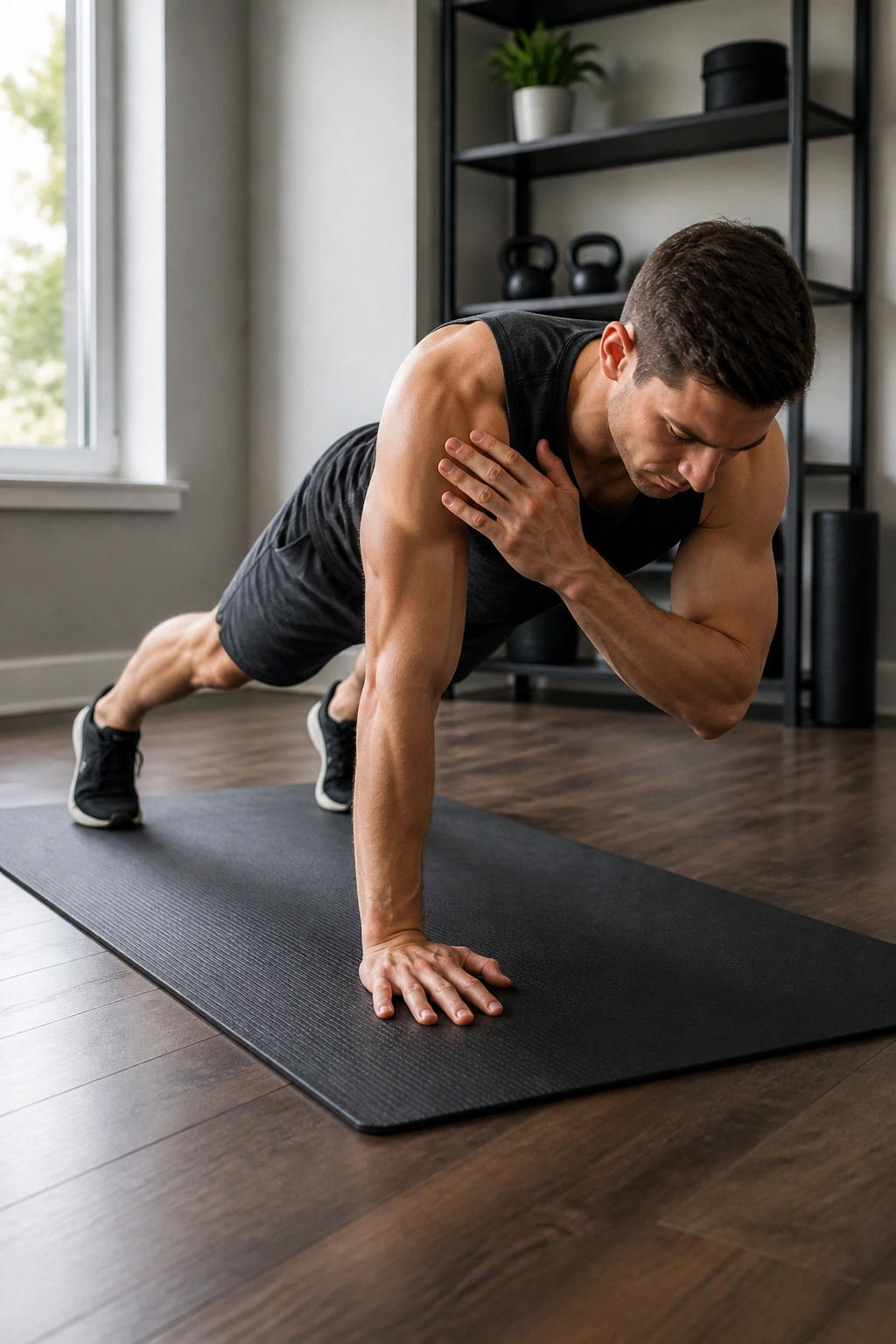
A plank shoulder tap is a sneaky anti-rotation drill. It looks almost casual until your hips start trying to swivel every time one hand leaves the floor.
Get into a high plank, spread your feet a little wider than hip width, and tap one shoulder with the opposite hand. Put the hand back down, switch sides, and keep the pelvis as still as you can. The wider stance helps, but the real work is in the abs and glutes staying tight enough to stop the wobble.
If your body rocks side to side, slow the pace. A clean tap every two seconds is more useful than a frantic flurry. This move teaches the trunk to keep working while one arm is busy elsewhere.
That skill shows up in everyday stuff too. Carrying bags. Reaching overhead. Standing up without twisting like a corkscrew.
12. Leg Raises
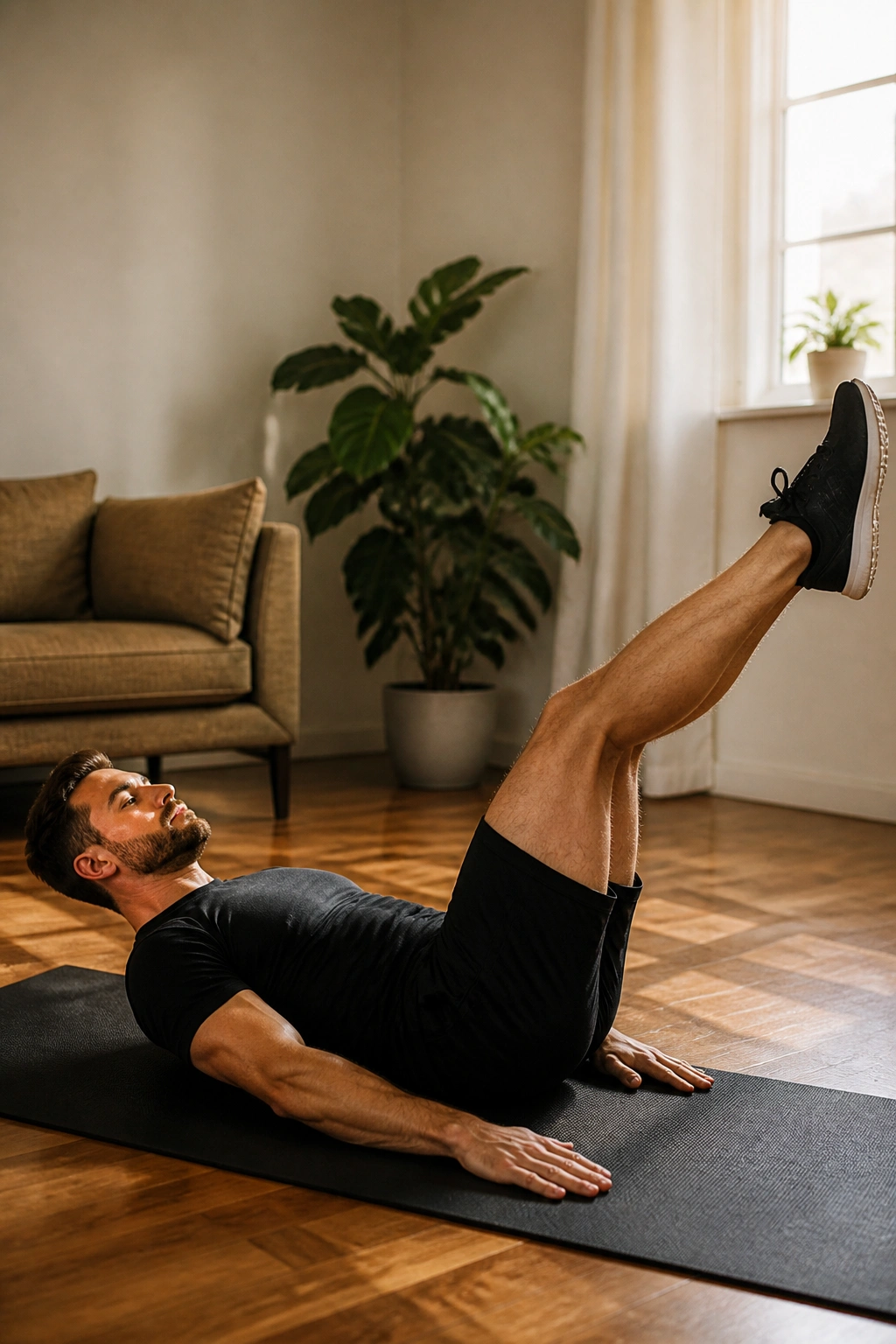
Leg raises are honest. If your low back is weak or your hip flexors try to do everything, they’ll let you know within a few reps.
Lie on your back and keep your hands by your sides or under your hips if you need a touch of support. Lift your legs only as high as you can lower them without your back arching. That’s the rule. Not a suggestion. If the floor under your lower spine starts to feel like a gap, stop there and shorten the range.
A Better Way to Think About It
You’re not trying to throw your legs into the air. You’re trying to control the descent. Three seconds down is a good start. If that’s too much, bend your knees and do tuck raises until you can keep your pelvis tucked.
Leg raises are one of the first moves people rush. Don’t. The slower version teaches far more control.
13. Scissor Kicks
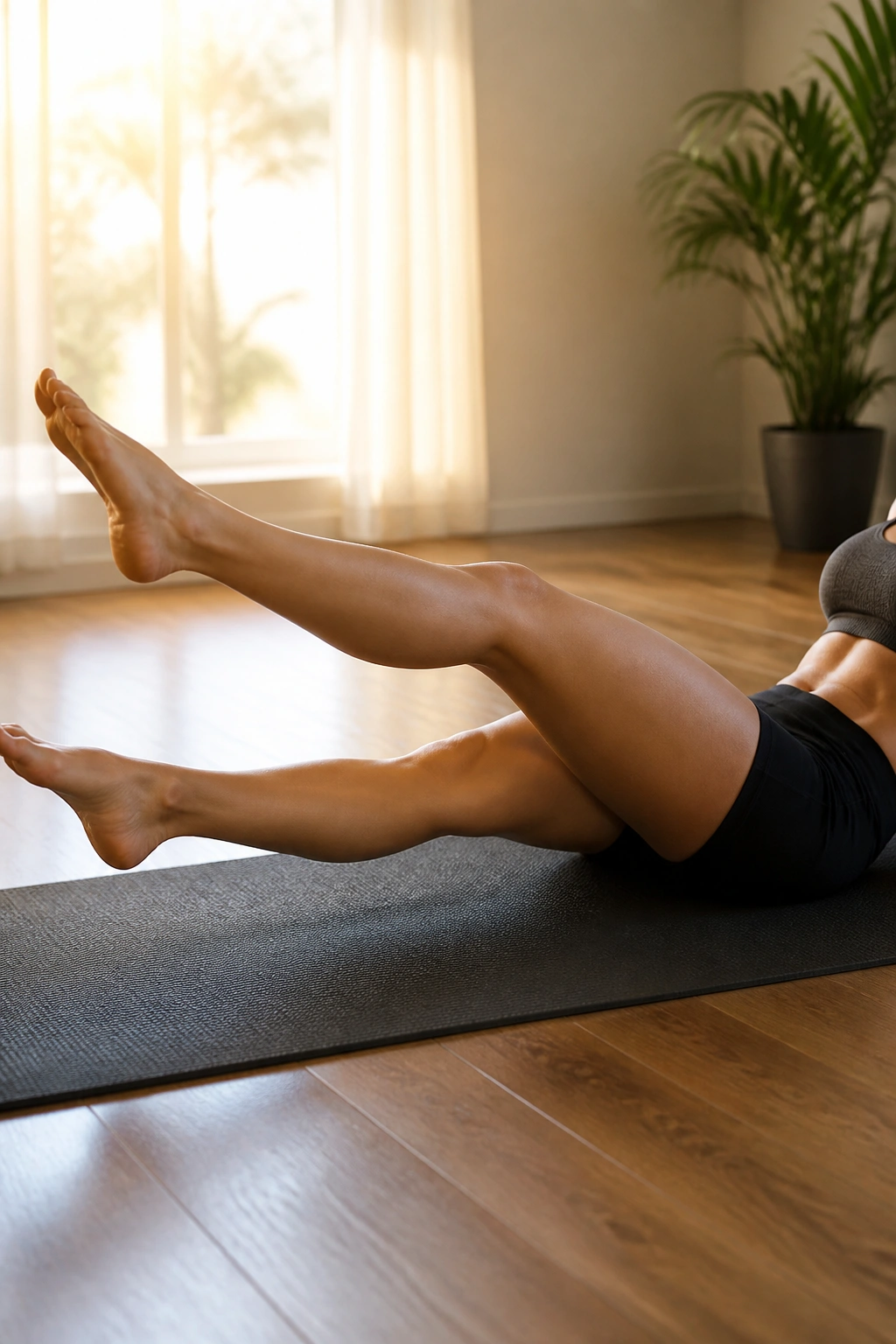
Scissor kicks have a strange quality: they look light, then the burn arrives, and then you’re suddenly bargaining with the clock. That’s exactly why they belong here.
Keep your lower back pressed down and your legs hovering a few inches above the floor. Cross one leg over the other in a small, controlled pattern, then switch. The movement should stay narrow. If your legs start swinging wide, the abs lose the job and the hips take over.
Breathing is the hidden piece. Short exhales keep your trunk from loosening. If you notice your ribs flaring, stop, reset, and reduce the range.
This is one of the better no-gear core drills for people who want a long, steady burn without crunching their neck or wrists. Quiet. Mean. Effective.
14. Bird Dog
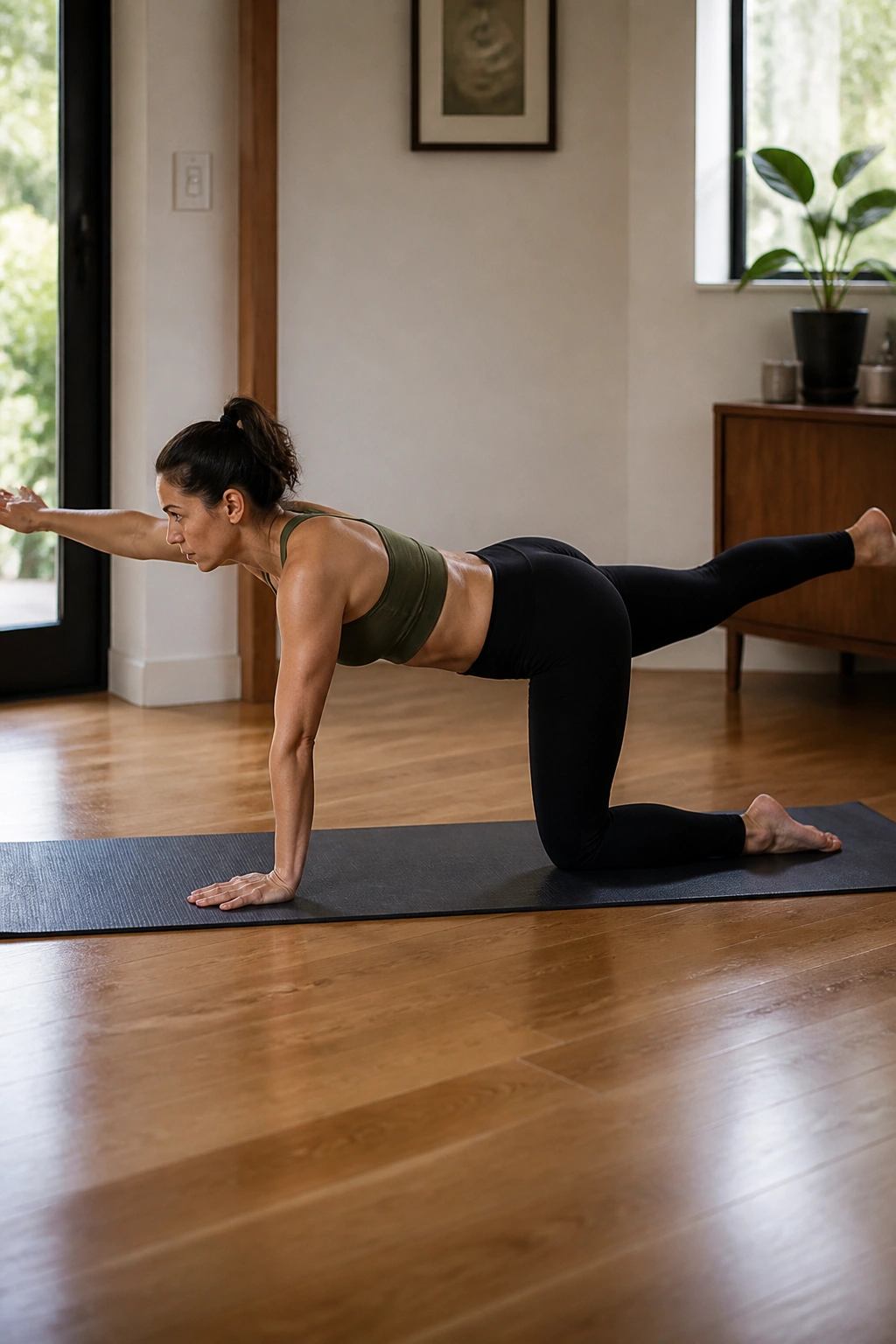
A bird dog is the kind of move people skip because it looks too easy. Then they try it with perfect form and realize stability is harder than it looks.
From hands and knees, extend one leg straight back and the opposite arm straight forward. Keep the hips level and the ribs pulled in. The goal is not height. It’s a long line from fingertips to heel without the torso twisting. Hold for a second, or two, then come back under control.
Why It Works So Well
Bird dogs train your core to resist movement while your limbs are reaching in different directions. That matters if your lower back tends to complain during floor work. It also builds control you can feel in standing exercises later.
A small pause at the top makes this move much better. No rushing. No flinging. Just reach, hold, reset.
15. Russian Twist
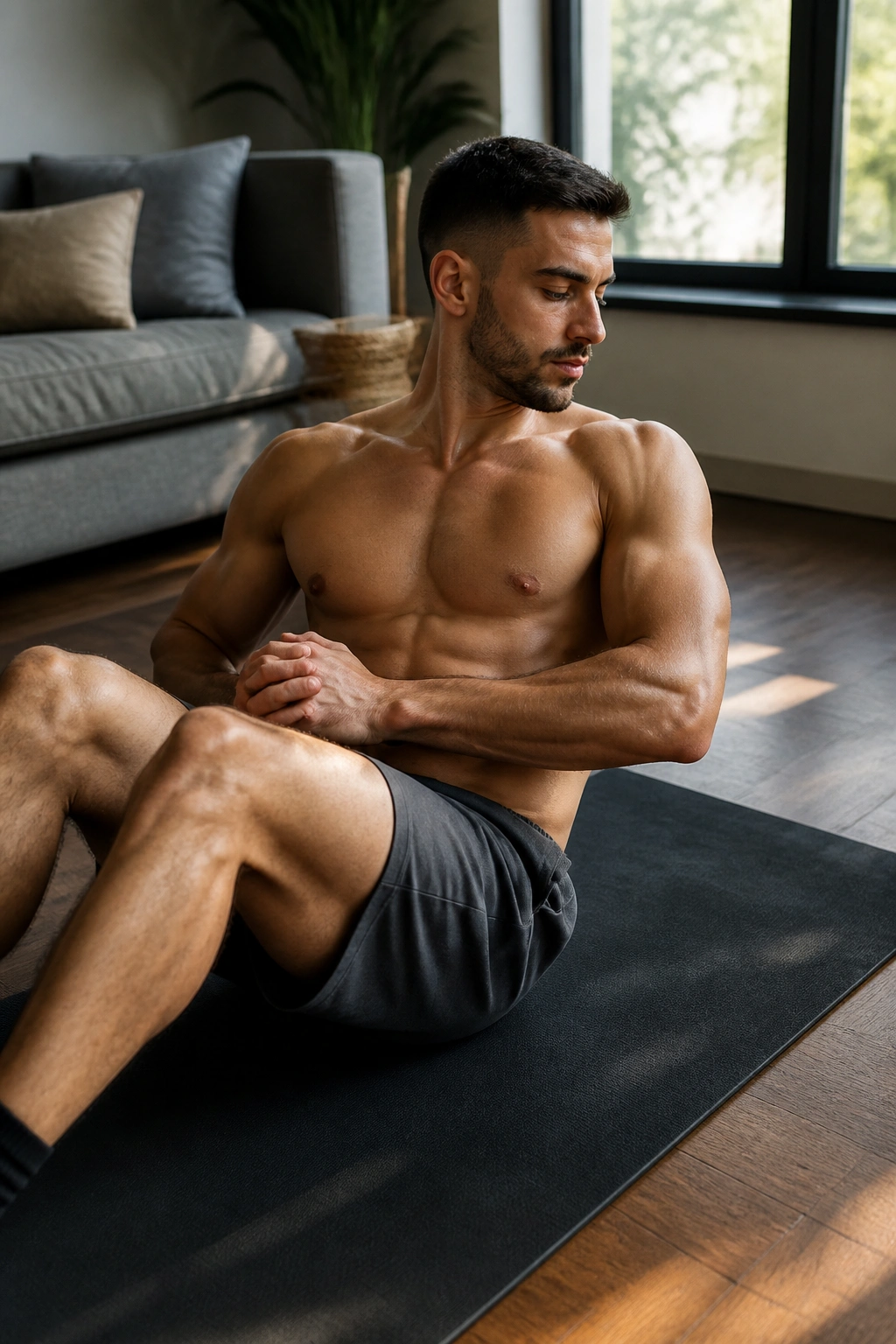
Russian twists get done badly so often that people forget why the move exists in the first place. Done with control, it’s a strong oblique exercise. Done like a speed drill, it turns into a sloppy torso fling.
Sit with your knees bent, lean back a little, and rotate your ribs from side to side. The hands can stay clasped, touch the floor beside your hips, or hold together at your chest. What matters is that the trunk rotates as one piece instead of the arms doing all the nonsense.
Unlike a crunch, this one asks your abs to manage twist. That’s useful, especially if your routine has been all up-and-down work and no rotation.
If your low back rounds hard, keep your heels on the floor. A taller chest and smaller twist are a better call than chasing a dramatic angle.
16. Jackknife Sit-Up
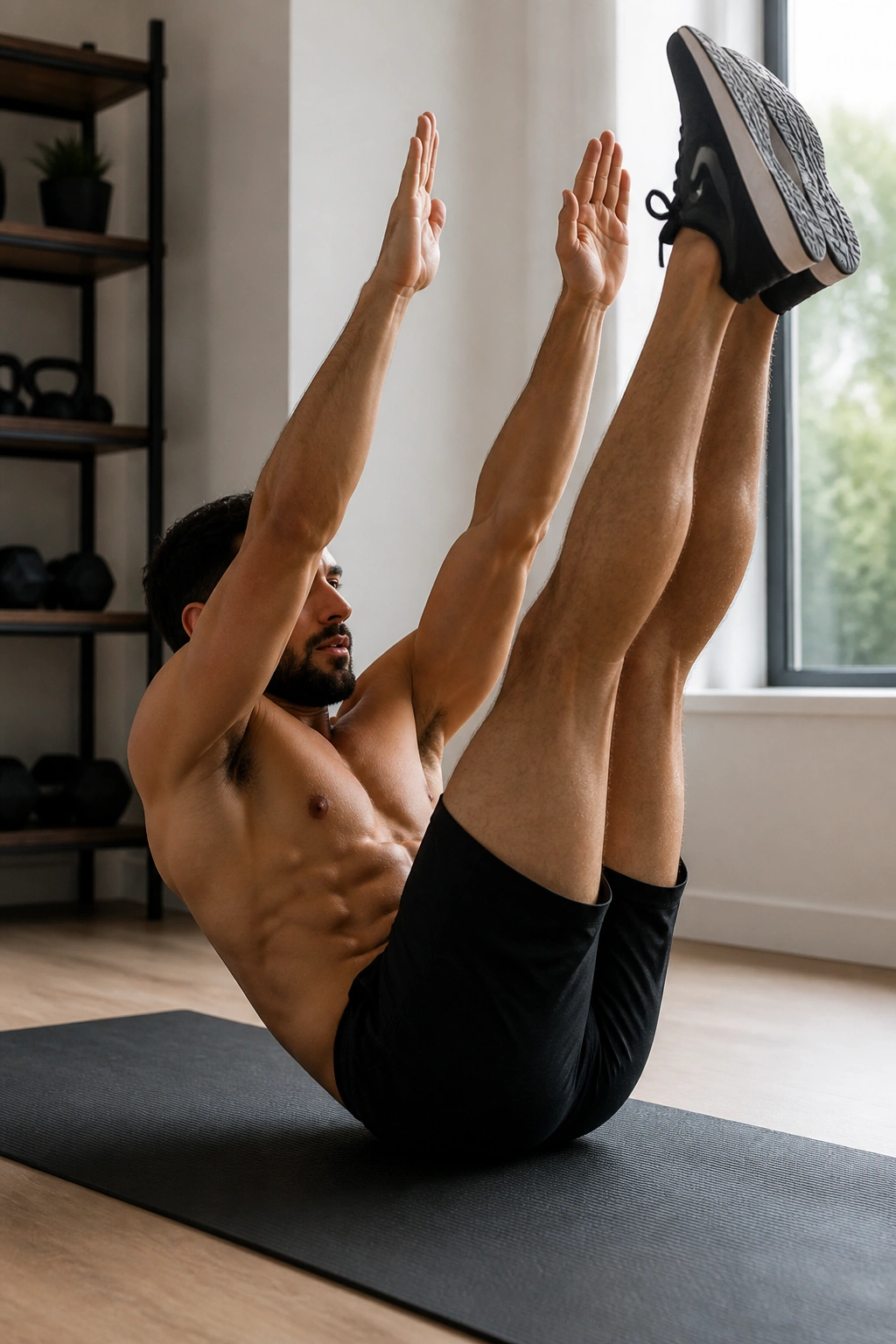
A jackknife sit-up is a sharp, demanding move. No fluff. It asks your abs to fold your torso and hips toward each other at the same time, which is why it feels so much harder than a standard sit-up.
Lie flat with your arms overhead, then lift your upper body and legs at once so they meet near the middle. If straight legs are too much, bend your knees slightly. That’s not cheating. That’s making the rep worth doing instead of turning it into a heave.
Key point: the lowering phase should be slow. If you drop back to the floor like a stone, you’re leaving half the exercise on the table.
This move is best kept for cleaner sets of 6 to 10 reps. It’s not the one to race through when you’re tired and sloppy.
17. Glute Bridge March
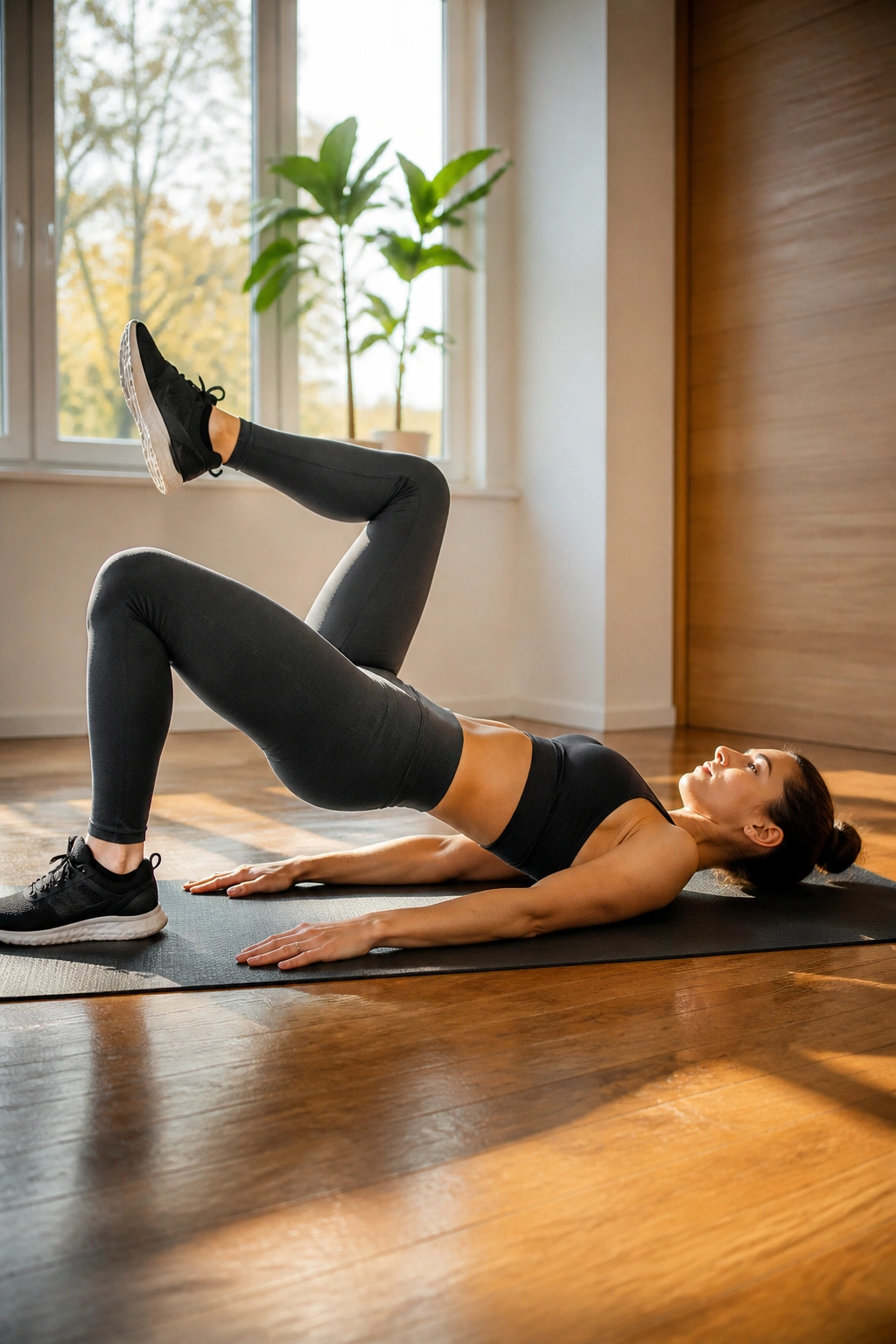
A glute bridge march may not look like an ab exercise at first glance. It is. A very sneaky one. The moment you hold your hips up and start lifting one foot at a time, your trunk has to stop the whole body from wobbling apart.
Why It Belongs Here
Your abs and glutes work as a unit when your pelvis stays level. If one side drops every time a foot leaves the floor, your core is telling on you. That feedback is useful.
Get into a bridge, squeeze your glutes, and lift one knee toward your chest without letting the hips shift. Put it down, switch sides, and keep the pelvis square. Short, controlled reps are the whole game.
I like this move for people who sit a lot. It wakes up the back side and the front side at the same time, which is rare and handy.
18. Bear Plank Hold
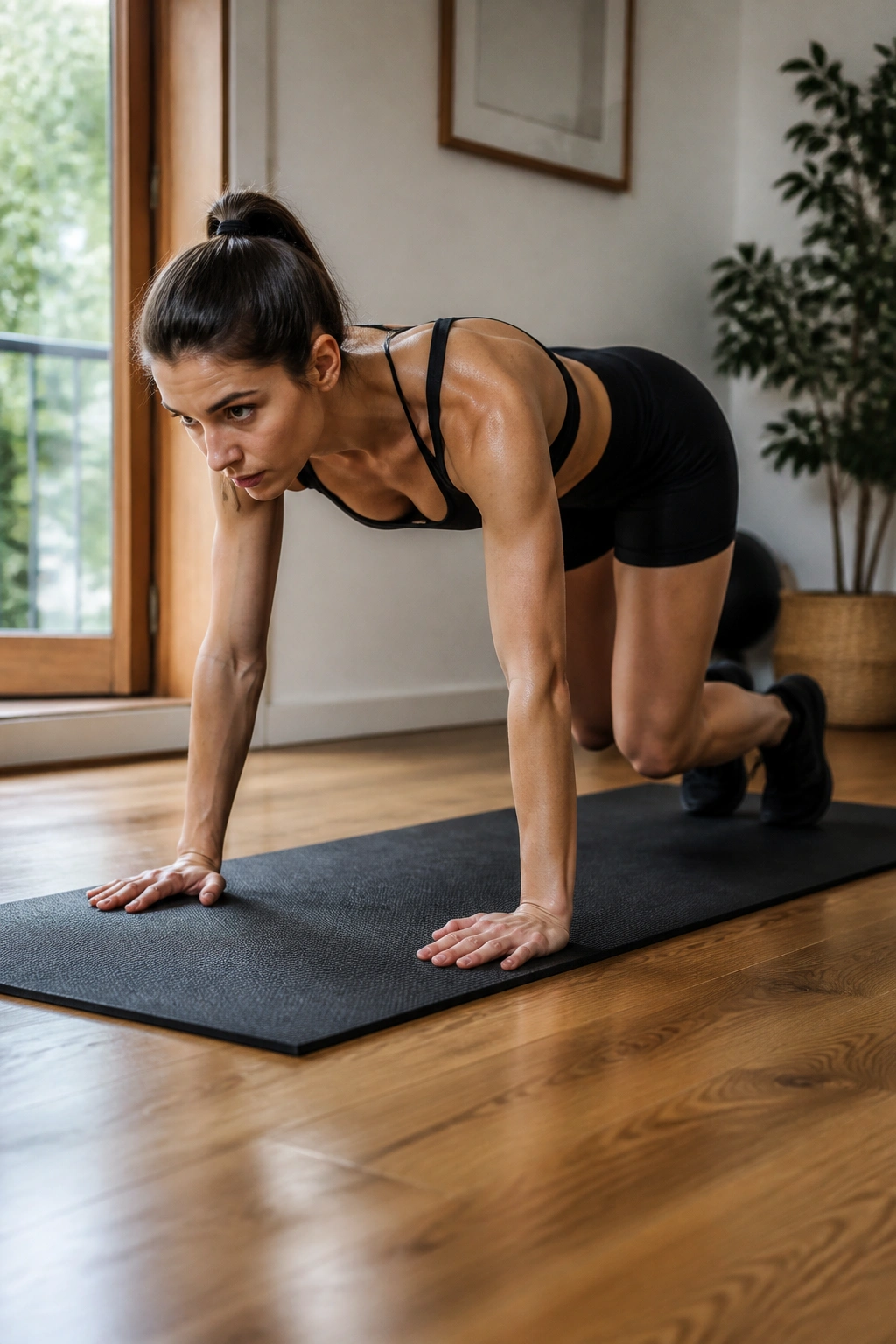
A bear plank is what happens when a plank gets a little meaner. Knees hover an inch or two off the floor, back stays flat, and your core has to lock down to keep everything from shaking apart.
Why does this feel so intense so fast? Because your body can’t hide. The smaller base means your abs, shoulders, and hip flexors all have to help keep you steady. No lazy spots. No drifting hips.
Keep your wrists under your shoulders and your knees under your hips, then hover. If the wrists get cranky, make fists or turn the hands slightly out. A 10-second hold is enough to start. Build from there.
This one is short, ugly, and useful. I mean that in the best way.
19. Cross-Body Mountain Climbers
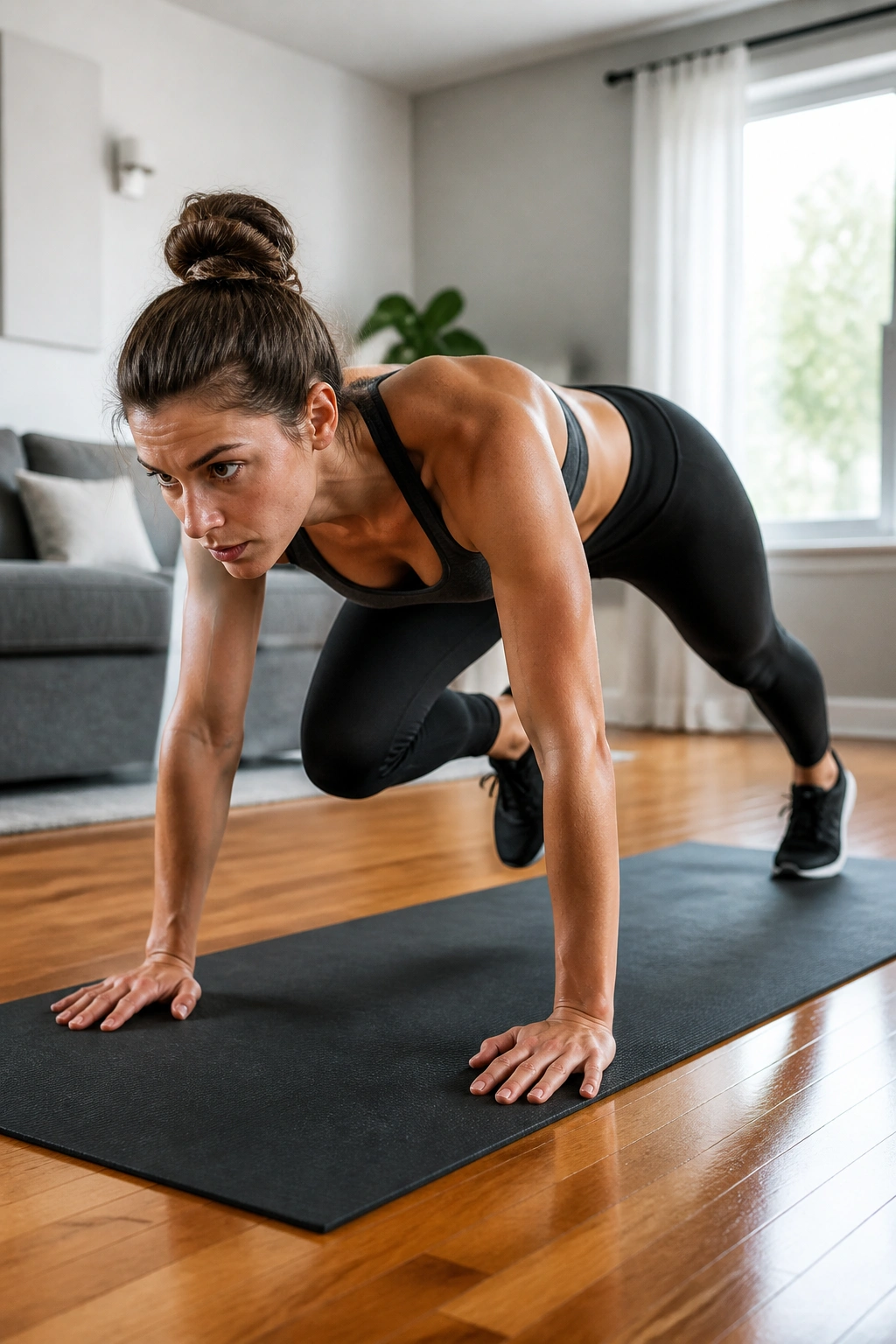
Cross-body mountain climbers bring the obliques into the picture more than the straight-ahead version. Instead of driving the knee forward, you drive it toward the opposite elbow.
Set up in a solid high plank and keep your shoulders steady. Bring the right knee toward the left side of your chest, then switch. The movement is small, but the torso has to fight rotation the whole time. That’s why it earns a place in a home core routine.
If your hips start swinging wide, slow the speed and shorten the range. Fast doesn’t mean hard here. Controlled usually does more.
A clean 30-second set leaves your abs lit up and your breathing honest. That’s usually enough.
20. Seated Knee Tucks
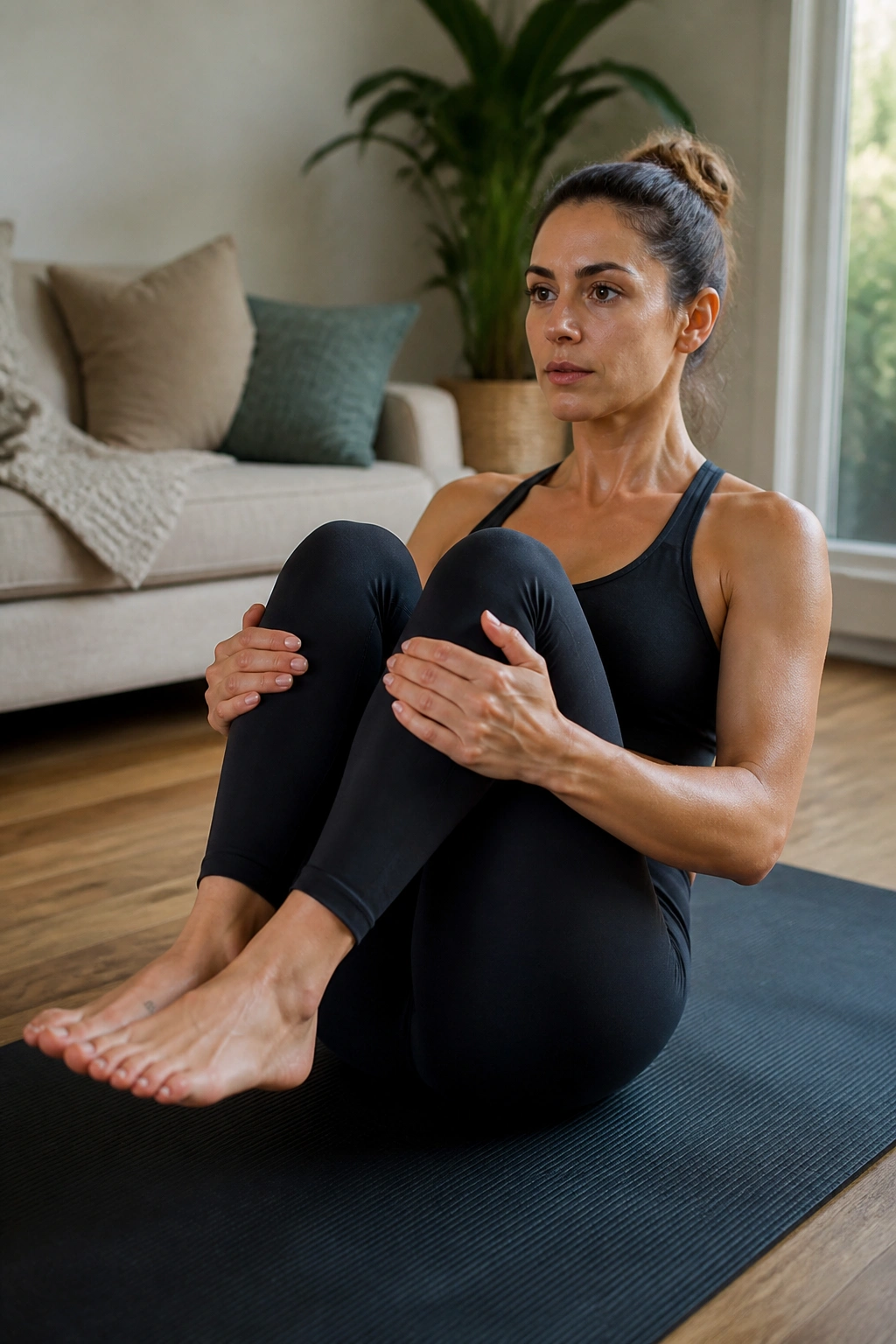
Seated knee tucks look a little awkward, and that’s part of the charm. You sit on the floor, lean back slightly, lift your feet, then pull your knees in while keeping the torso from collapsing.
The balance piece makes this one interesting. Your abs have to keep you from falling backward while your hips compress and open again. That compression strength matters more than people realize. It shows up in V-ups, hollow holds, and even simple posture.
How to Stay in Control
- Keep your chest lifted.
- Move the knees in and out smoothly.
- Don’t round your back into a slump.
- Put your heels down between reps if you need a reset.
This is a nice middle step between beginner floor work and harder tuck-up variations. It’s also a decent one to include when you want something that feels athletic without needing room to run.
21. Star Plank
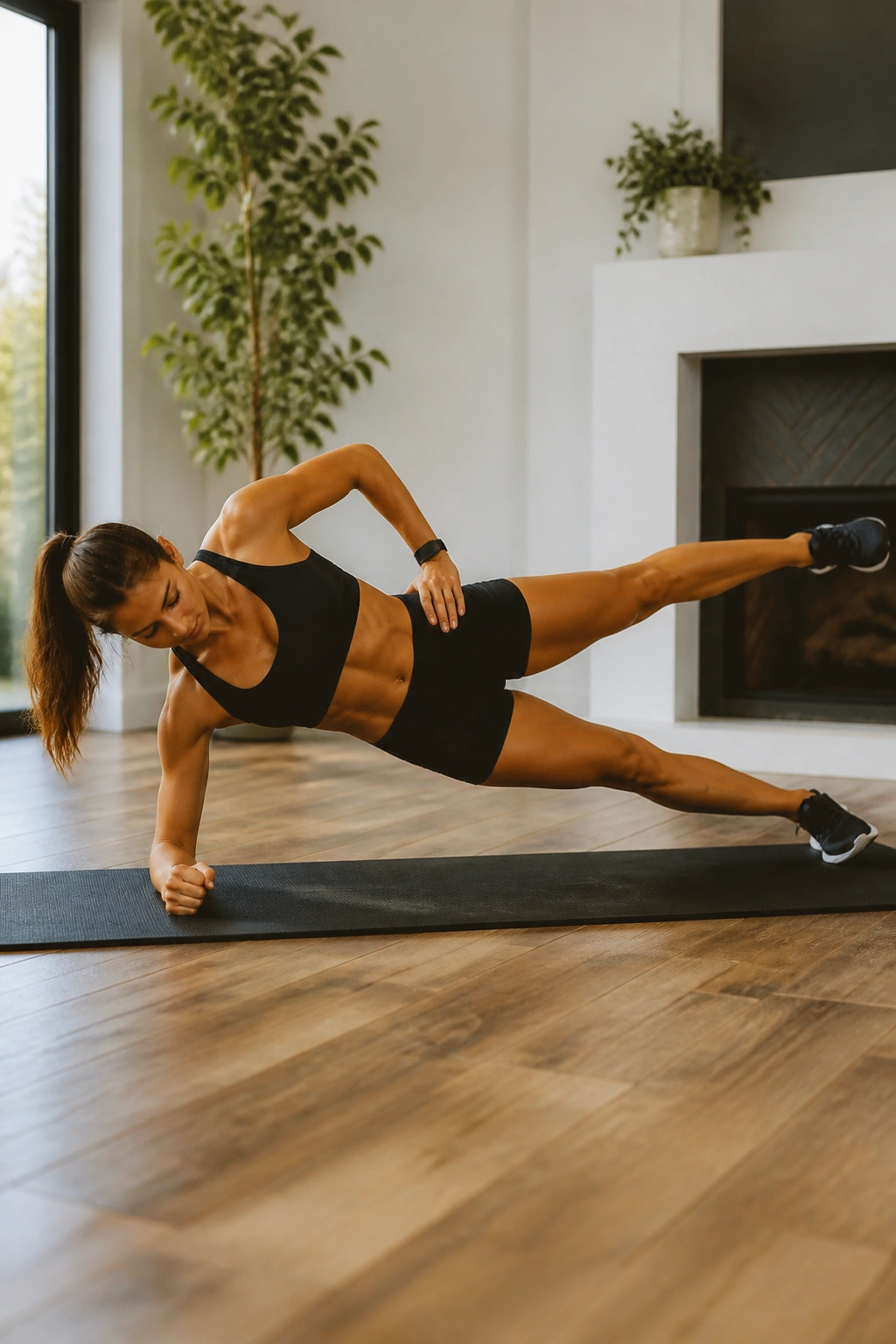
A star plank is a side plank with attitude. One leg lifts, the whole body has to stay stacked, and the obliques suddenly have a lot more to prove.
Can you hold it without the top hip rolling forward? That’s the real question. If yes, you’ve got a serious side-core drill. If not, drop back to a regular side plank and own that first. The star version is advanced for a reason.
Keep the bottom shoulder packed, press through the supporting foot, and lift the top leg only as high as you can manage without losing shape. Five to ten seconds per side is enough to make this feel real.
It’s a short move. It doesn’t need much time to humble people.
22. V-Ups
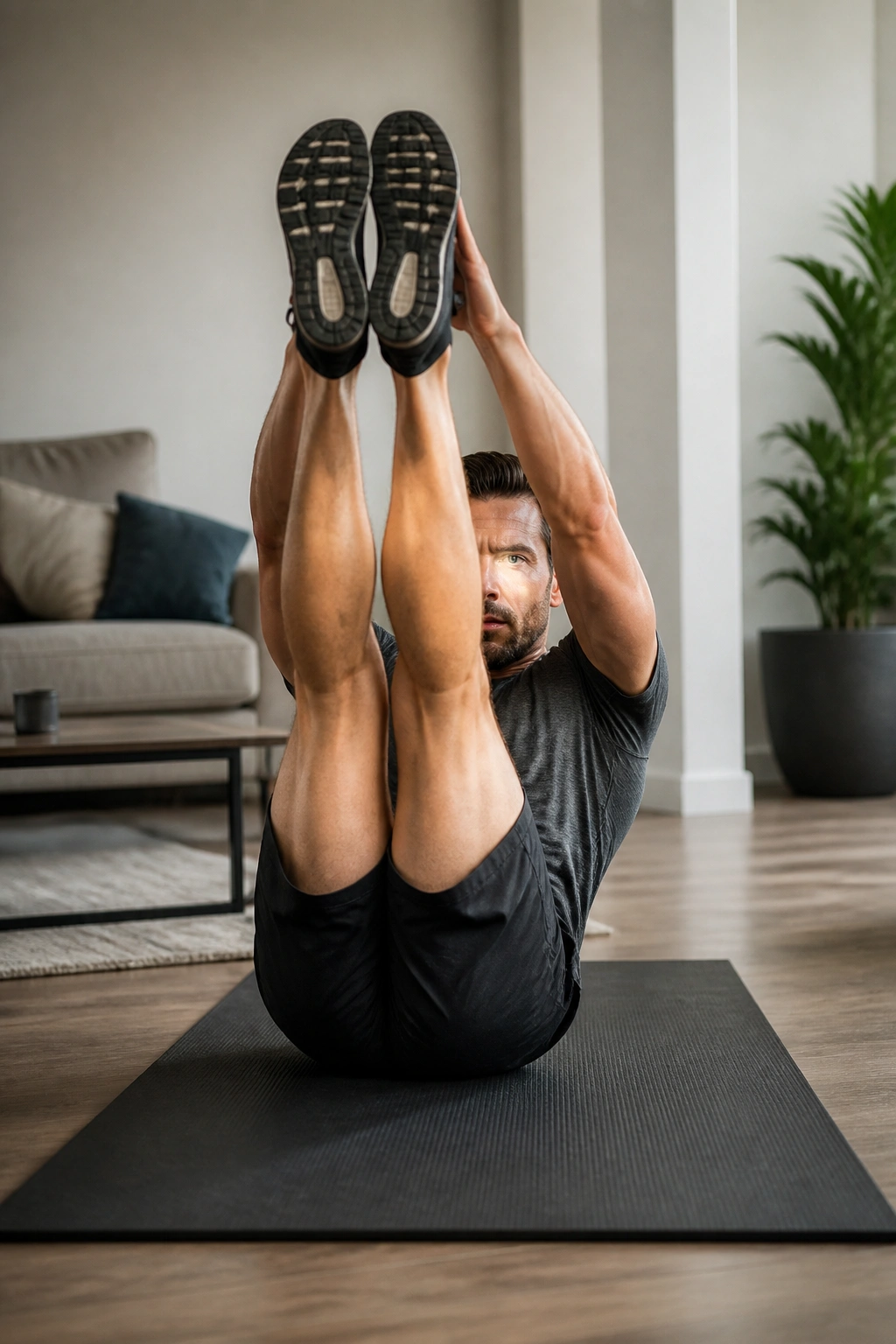
V-ups are the finisher that says you’re done pretending this was easy. They combine a crunch and a leg lift into one sharp fold, and when they’re clean, they hit the whole front side of the core.
Lie flat, extend your arms overhead, then lift your torso and legs at the same time so your hands meet your shins or feet. If full legs are too much, bend the knees a little. The goal is a strong fold, not a heroic swing.
Make Them Count
- Exhale hard as you come up.
- Lower with control instead of crashing back.
- Keep the neck relaxed.
- Use fewer perfect reps rather than more sloppy ones.
This move works best at the end of a session, when your core is already awake and you can still keep the shape clean. It’s a blunt exercise. That’s part of why people remember it.
Final Thoughts
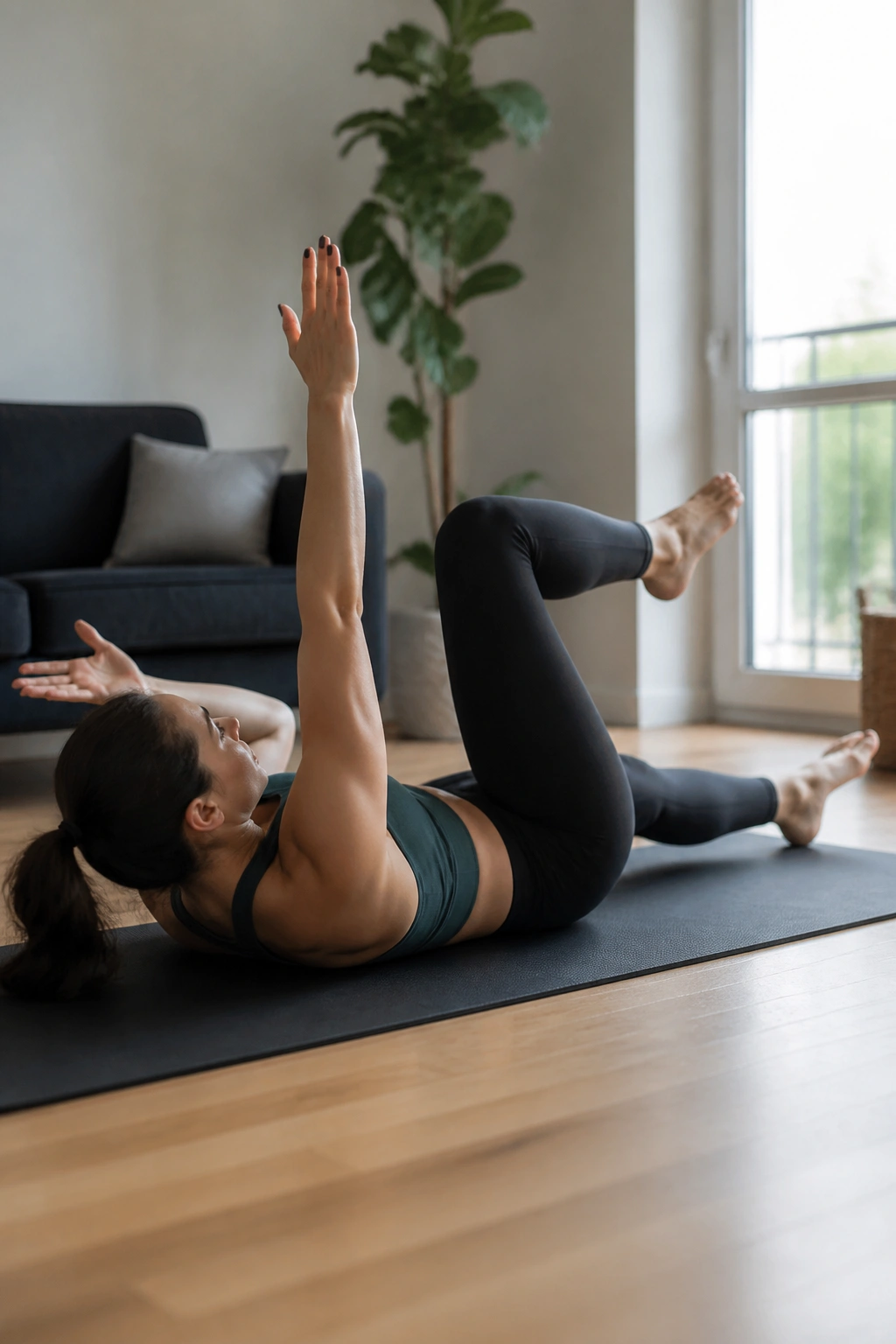
A good no-gear ab routine does not need to be fancy. It needs a few moves that make you brace, a few that make you resist twist, and a few that make you curl with control.
That mix matters more than chasing endless crunches. If your lower back stays quiet, your ribs stay down, and your breathing stays under control, you’re probably doing the right kind of work.
Pick three or four of these and repeat them often. Clean reps beat heroic messes every time.
