



A pair of dumbbells can build a serious chest if you stop treating them like backup equipment. The best dumbbell chest workouts do more than burn a little muscle; they make each side press on its own, clean up left-right imbalances, and give your shoulders room to move.
That freedom matters. A barbell locks your hands in one path. Dumbbells let you settle into a press that feels natural, which is why a low-incline dumbbell press often hits the upper chest harder than a barbell setup that looks impressive but feels awkward in practice. Go too heavy and the front delts take over. Go too steep on the incline and the movement turns into a shoulder drill in disguise.
There’s also a quieter benefit. Dumbbells punish sloppy reps. If your wrist caves, if your elbow flares wildly, or if you rush the lowering phase, the rep gets messy fast. That feedback is useful. It makes these lifts good teachers, not just good builders.
The smart play is to rotate styles. Some sessions should feel heavy. Others should stretch the pecs hard. A few should build stability or give you a bigger pump. That mix is what turns a pile of dumbbells into a real upper-body plan — starting with the flat press that most people think they already know.
1. Flat-Bench Dumbbell Press for Pure Pressing Strength
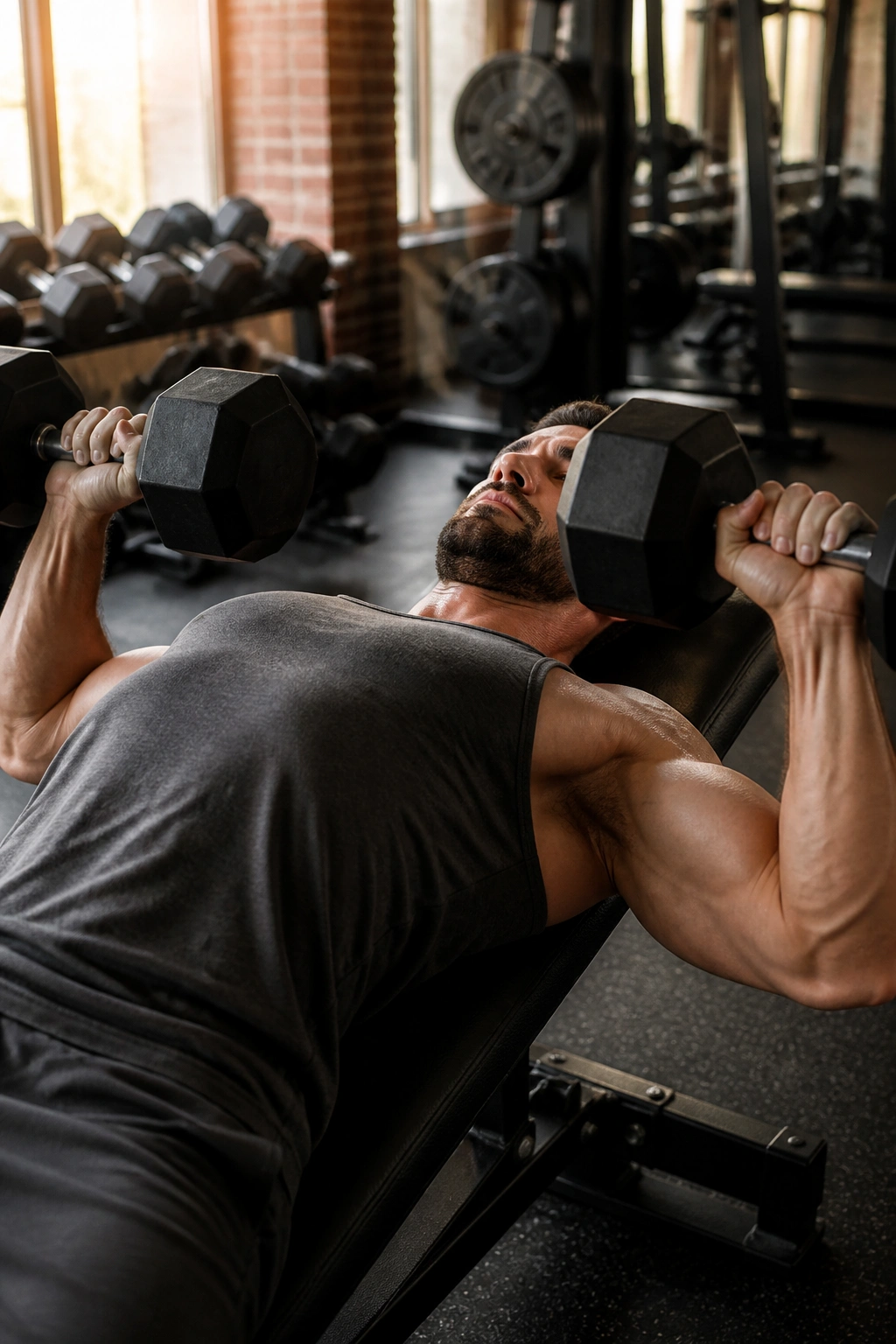
This is the plainest movement in the list, and it earns its spot anyway. The flat-bench dumbbell press gives you the cleanest blend of chest, triceps, and front-delt work, so it’s the one I’d use when the goal is simple size and stronger pressing. Because each arm moves on its own, you can’t hide a weak side behind the stronger one.
No ego reps.
Set your shoulder blades down and back before the first rep. Lower the dumbbells until your upper arms are just below parallel to the floor, then press up in a slight arc so the bells finish over your mid-chest. If the dumbbells touch at the top, fine. Don’t crash them together. That habit steals tension and makes the rep look busier than it is.
How to Run It
- Use 4 sets of 6 to 8 reps.
- Rest 90 to 120 seconds between sets.
- Leave 1 or 2 reps in reserve on the first 3 sets.
- On the last set, stop when the rep speed slows and your elbows start to drift forward.
Best cue: think “down and in,” not “straight up.” That small arc keeps the chest doing more of the work and keeps your wrists stacked over your elbows.
2. Incline Dumbbell Chest Workout for the Upper Pecs
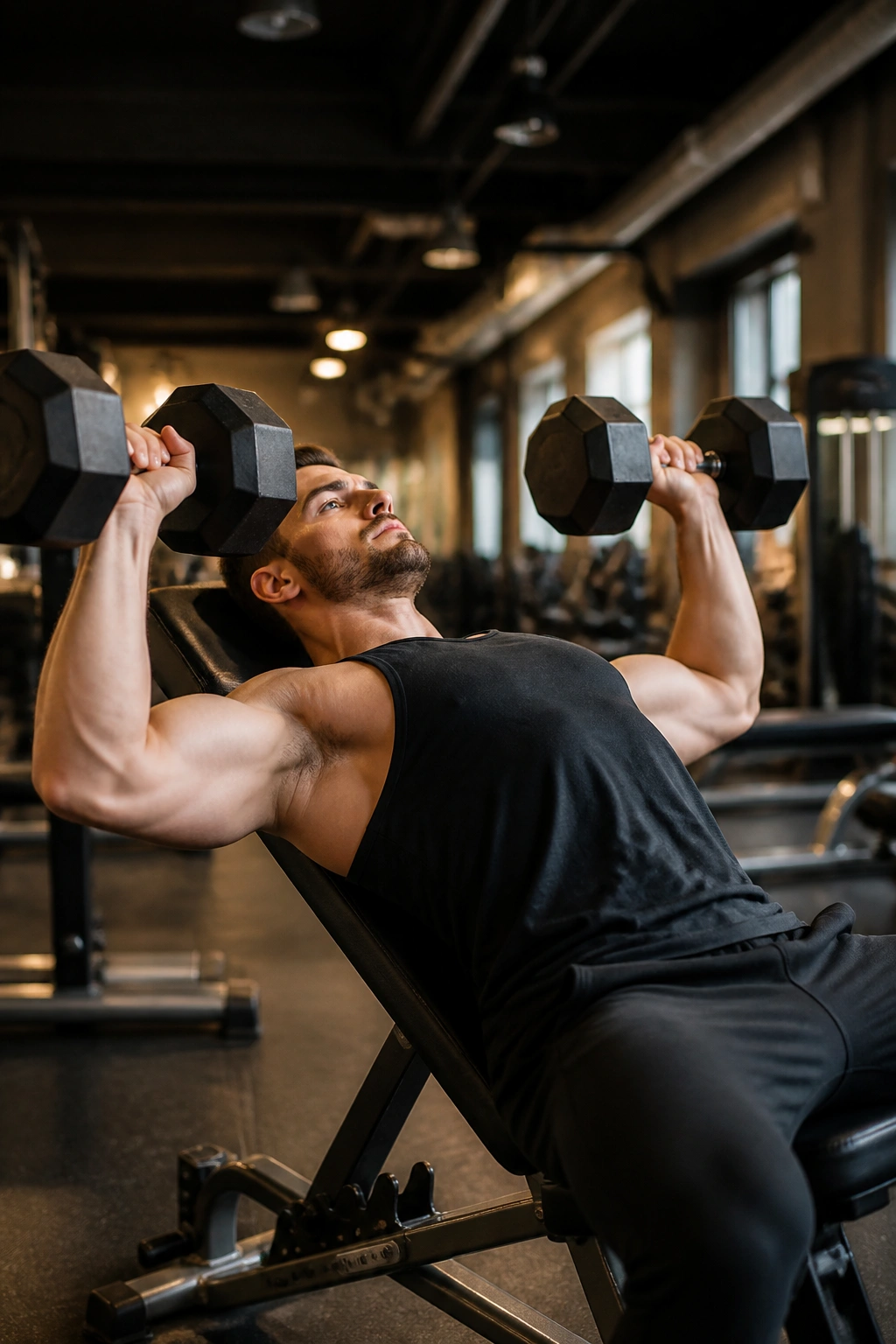
Why do so many lifters feel the incline press in their upper chest faster than the flat version? Because a low incline shifts the line of force toward the clavicular fibers of the pecs without turning the lift into a pure shoulder press. That’s the sweet range: roughly 15 to 30 degrees, not the near-upright bench angle people use when they want to look busy.
The dumbbell version gives you a little extra freedom at the top. You can bring the weights together slightly, which helps the pecs finish the rep instead of letting the triceps do all the closing work. Keep the path controlled, though. If you turn it into a shrug, the front delts take over fast.
This is the workout I reach for when someone wants a fuller upper chest and can’t seem to feel it on flat pressing. The trick is patience. Lighten the weight enough to own the lowering phase, and don’t rush the last third of the rep.
Good setup points
- Bench angle: 15 to 30 degrees
- Rep range: 8 to 10
- Rest: 75 to 90 seconds
- Grip: slightly wider than shoulder width
If the bench feels too steep, drop it. A lower angle usually gives you better chest work and less shoulder irritation.
3. Dumbbell Floor Press for Heavy, Shoulder-Friendly Sets
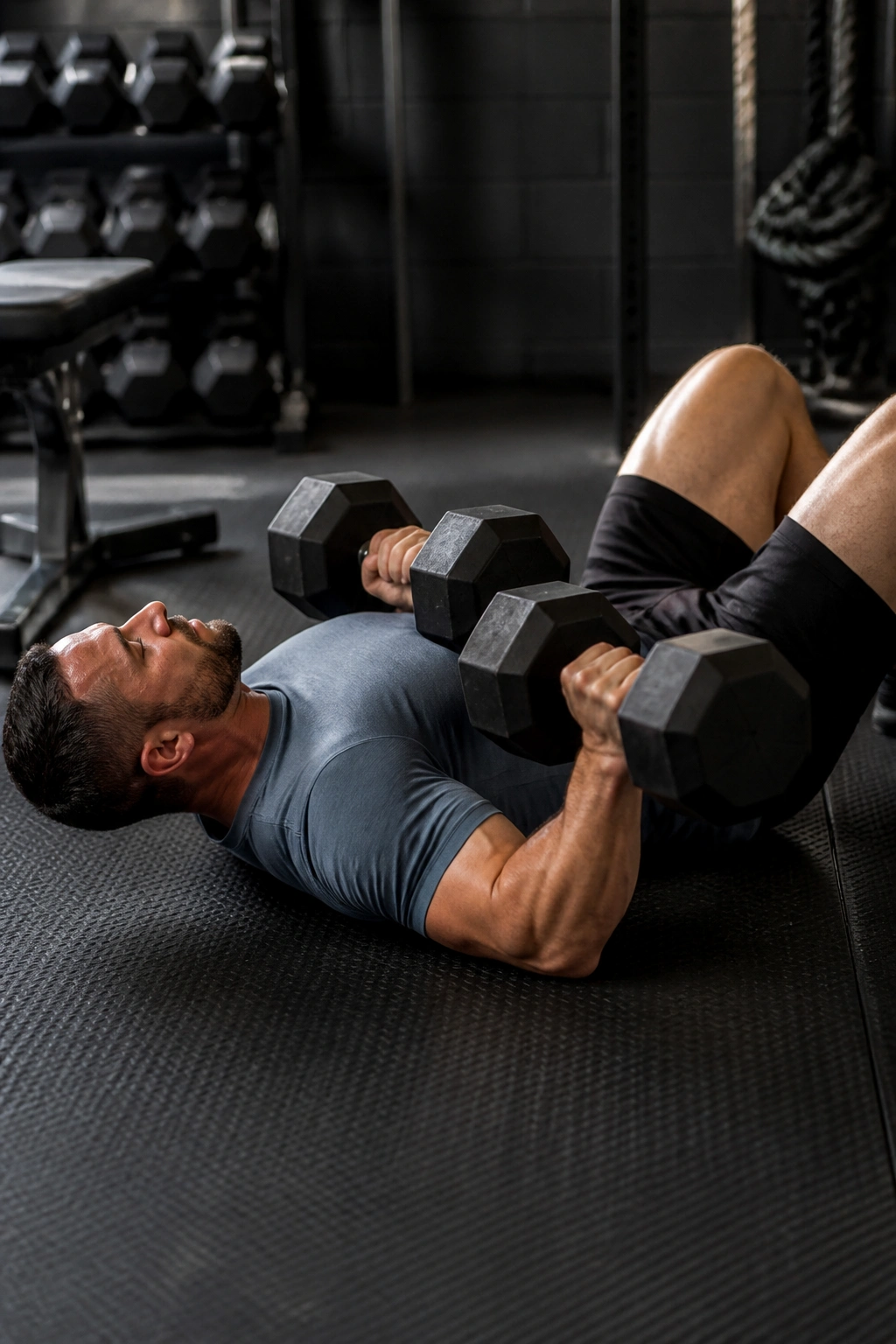
If your shoulders get cranky when the dumbbells go deep, the floor press is the move that keeps you training. The floor cuts the bottom range off at the elbows, so you still get a hard press without the long stretch that can bother the front of the shoulder. That makes it a smart choice for heavier sets and for lifters who want a strong lockout.
The setup is simple. Lie on the floor, bend your knees, and keep the upper arms close enough to the body that your elbows tap the floor softly. Press until the elbows fully extend, then lower under control until your triceps kiss the ground. No bounce. The floor is the pause, and that pause is the point.
Why the floor changes the game
- It reduces shoulder extension at the bottom.
- It lets you load the triceps harder near lockout.
- It keeps the rep honest because you cannot cheat the bottom with momentum.
- It works well with heavier dumbbells when a bench feels unstable.
Use 4 to 5 sets of 5 to 6 reps. Rest a full 2 minutes if you’re chasing strength. This is not the flashiest chest move in the room, but it’s one of the cleanest.
4. Squeeze Press for Constant Chest Tension
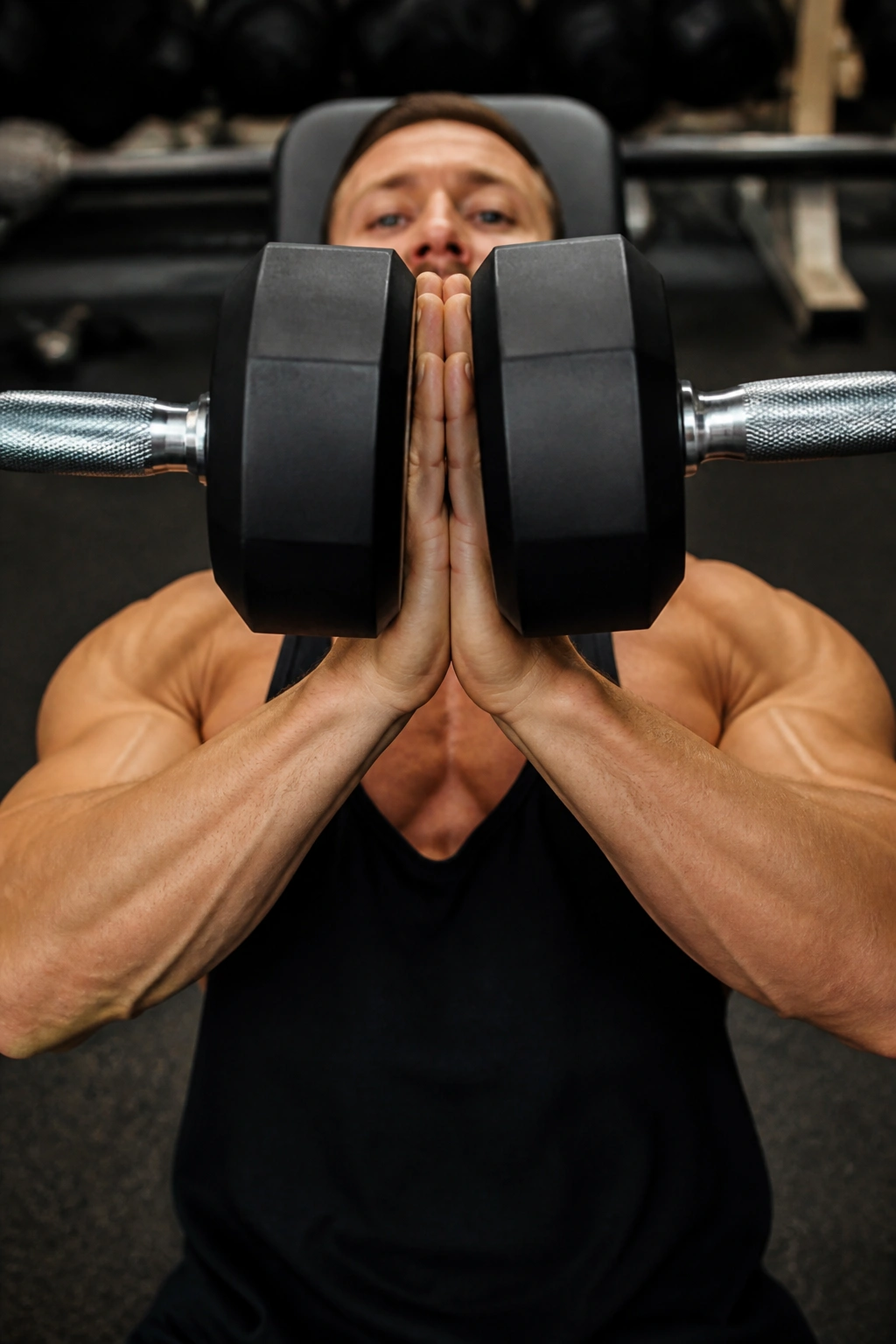
The squeeze press looks too simple to matter. It isn’t.
Press the dumbbells together the entire time — side to side, not just at the top — and the chest has to stay on. That inward pressure changes the feel of the rep. The pecs work hard to keep the weights from drifting apart, and the triceps still help finish the press. You end up with a lift that feels shorter, harder, and a little meaner than it looks.
I like this one with moderate dumbbells, not the heavy pair you’d use for flat pressing. If the weights are too heavy, the bells separate and the point disappears. Think clean tension, not brute force. The movement should feel like you’re trying to crush a foam block between the dumbbells while you press.
What to watch for
- Use 10 to 12 reps per set.
- Keep the dumbbells in contact from start to finish.
- Lower slowly for 2 seconds.
- Pause for 1 second at the bottom if you want more chest work.
Pro tip: if your chest burns before your triceps, you’re doing it right. If your wrists ache, the dumbbells are probably too heavy or too wide apart.
5. Alternating Dumbbell Press for Anti-Rotation Control
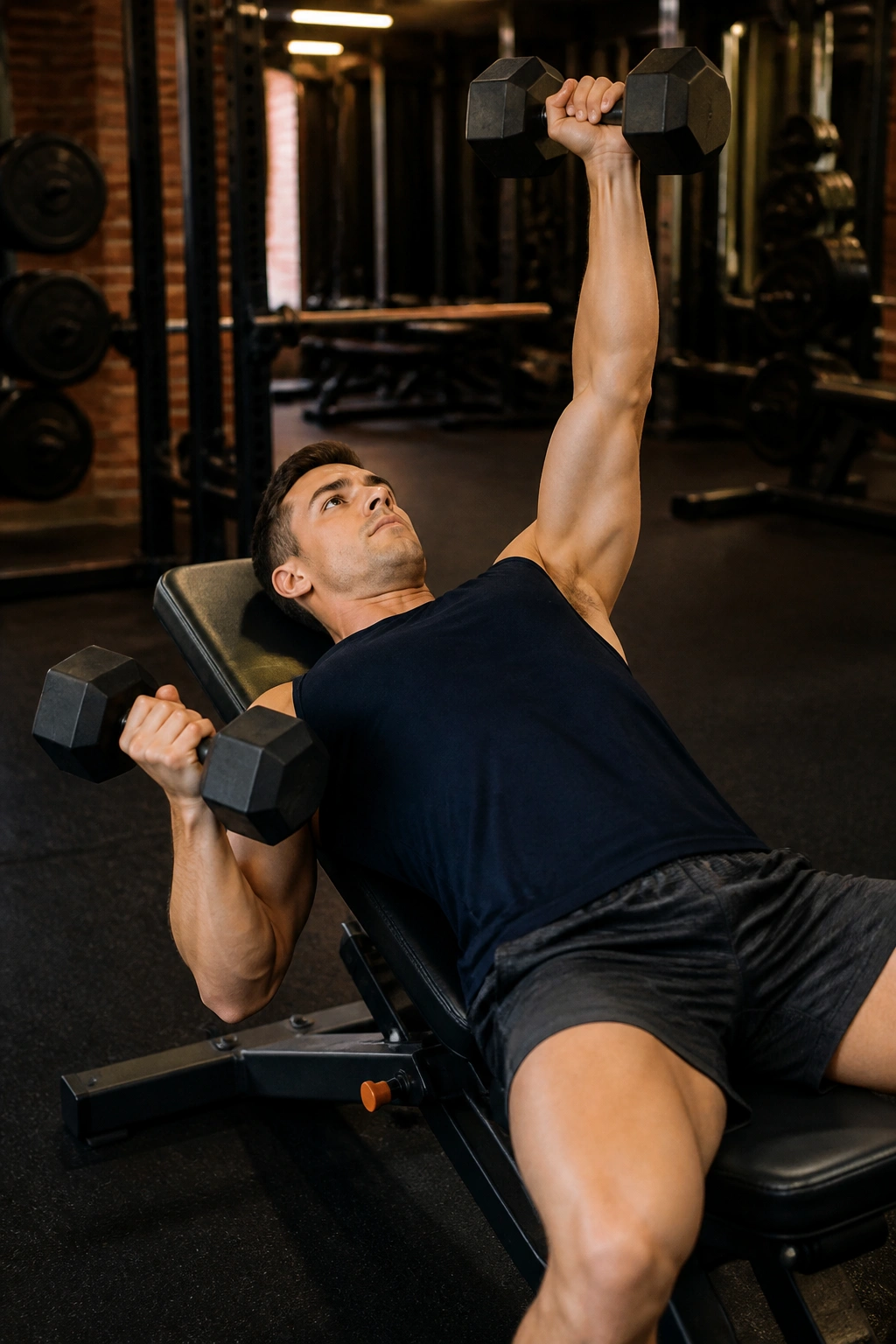
Picture this: one arm is locked out, the other is lowering, and your torso wants to twist. That little fight is the point. The alternating dumbbell press teaches your chest to work while the core keeps the ribs from flaring and the body from rolling side to side.
It’s a useful middle ground between a standard bench press and a single-arm press. You still get a bilateral setup, so the load can be decent, but each side spends time under tension on its own. That makes the movement useful for people who rush reps or let one arm dominate every set.
Keep one dumbbell up while the other lowers, then switch without dropping your hips or shrugging your shoulders. The non-working arm should stay active. Don’t let it drift lazily toward your face. That’s the sort of small mess that turns a solid drill into wasted motion.
Use 3 to 4 sets of 8 reps per side. Rest 60 to 90 seconds. This one feels best when you stay a little lighter than you think you need. Heavy enough to challenge you. Light enough to stay still.
6. Single-Arm Dumbbell Press for Left-Right Balance
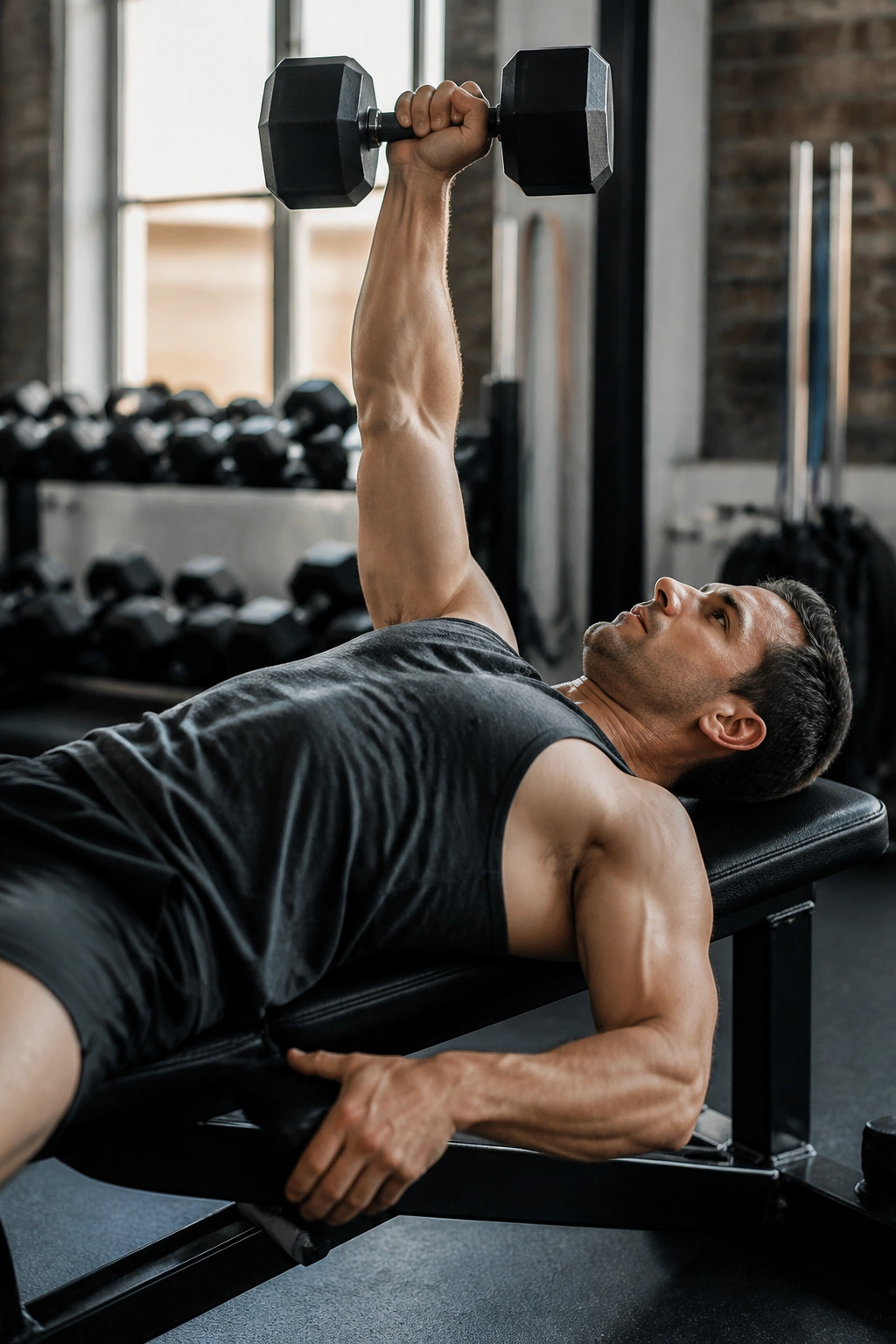
Can one dumbbell make a chest workout harder? Absolutely. The single-arm dumbbell press strips away the built-in stability of two hands on two handles, so your chest has to press while the torso resists twisting. That makes it a good choice if one side lags behind or if your bench work always turns a little crooked.
Use a flat bench or the floor, and brace hard before every rep. The free hand can rest on the bench for balance, but don’t lean on it like a crutch. You still want the working side to earn the rep. If you feel your ribs popping up or your hips sliding, the weight is too heavy.
This is one of those lifts that looks almost boring from the outside. Inside the rep, it’s a lot of work. The chest, shoulder, obliques, and even the grip all stay awake because there’s nowhere to hide.
Best way to use it
- Do 3 sets of 6 to 8 reps per arm.
- Start with the weaker side.
- Match the stronger side to the weaker side, not the other way around.
- Use a slower lowering phase on the final set.
If one side has always felt “off,” this is the kind of exercise that starts cleaning that up.
7. Neutral-Grip Dumbbell Press for Longer Volume Sets
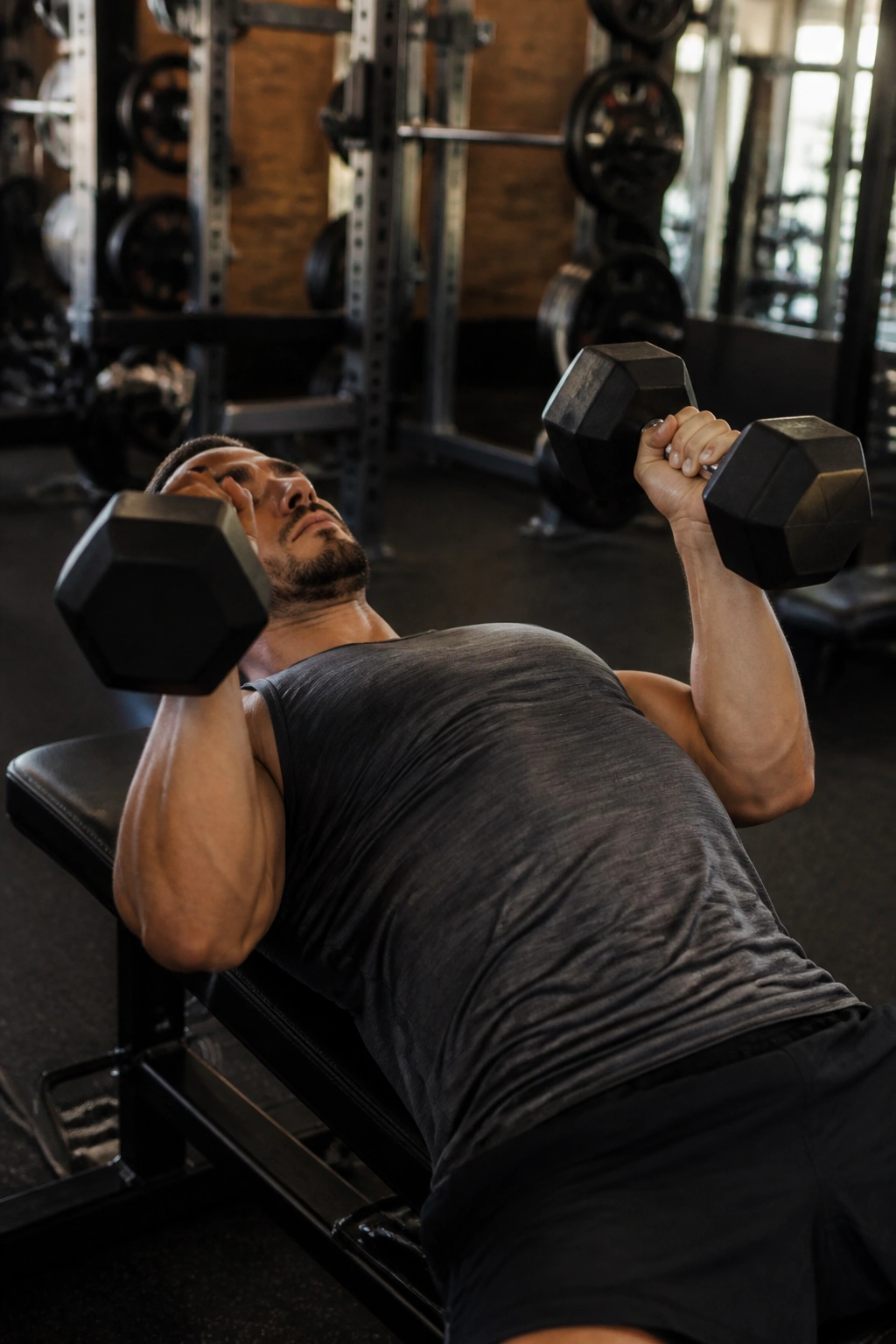
Palm-forward pressing is fine. Neutral-grip pressing is often kinder. When your palms face each other, the elbows stay a little closer to the ribs, the shoulder feels less jammed, and you can usually push through more volume without the front of the shoulder complaining.
That doesn’t mean the chest gets a free ride. Far from it. The pecs still work hard, especially through the midrange, but the joint angle is friendlier for long sets and higher reps. I like this version for lifters who want extra chest volume after heavier pressing or for anyone who feels pinching on flat dumbbell work.
The dumbbells should travel in a straight, controlled path. Don’t turn the movement into a weird shrug-to-press hybrid. Press up, stop just short of locking the elbows hard, and lower with enough control that the dumbbells never wobble.
Use 4 sets of 8 to 12 reps. Keep the tempo steady and the grip firm. If the shoulders start talking, this is one of the first pressing variations I’d reach for.
8. Dumbbell Fly for a Deep Chest Stretch
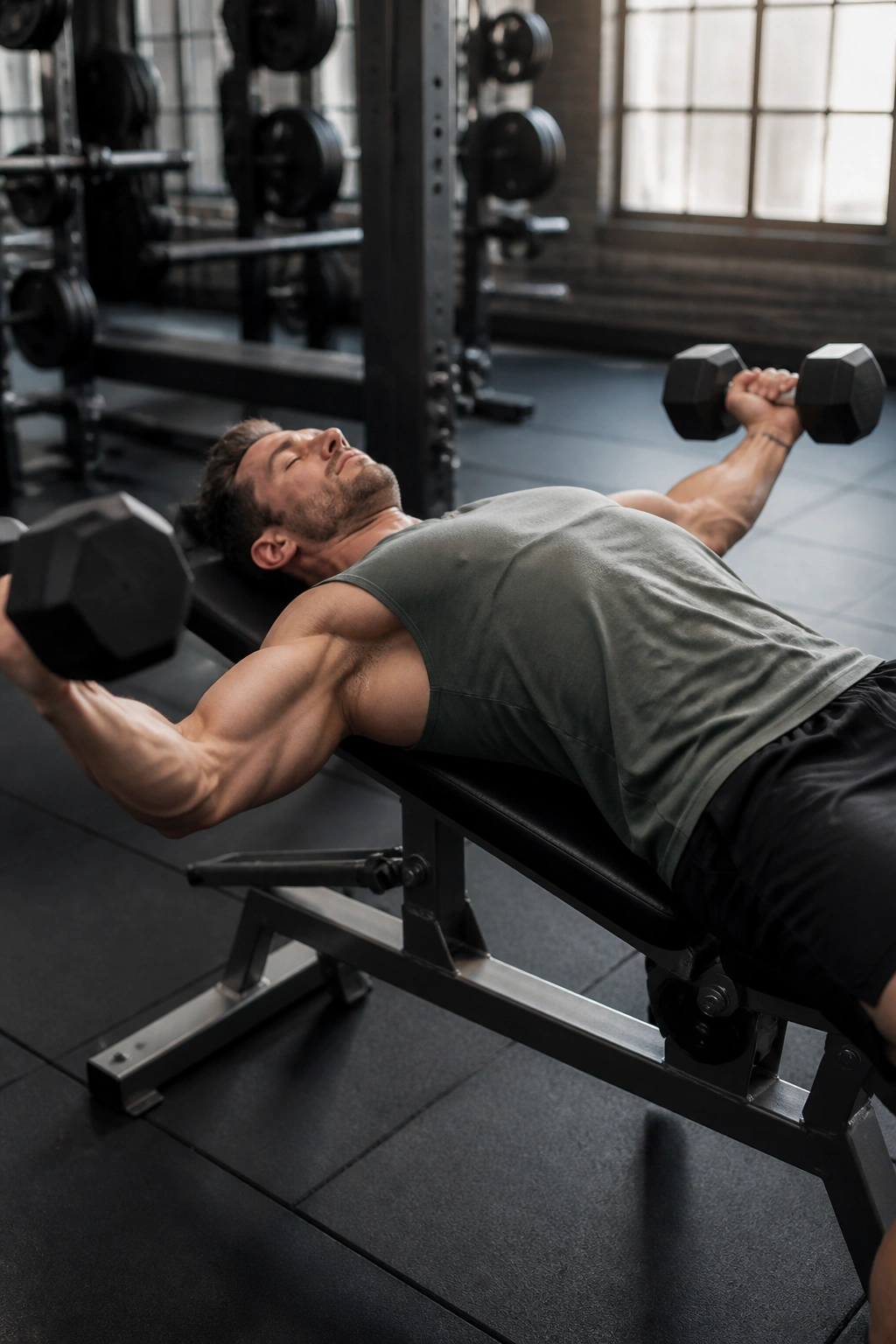
This is where the stretch shows up.
The dumbbell fly is not a press with fancy hands. It’s a chest isolation move that asks the pecs to control the arms as they open and close through a wide arc. That stretch can feel great when the load is right, and ugly when the weight is too heavy. Most people get that wrong. They grab dumbbells they can press, then wonder why the fly feels like a shoulder tug-of-war.
Keep a soft bend in the elbows and freeze that bend. Lower until you feel the chest lengthen, but stop before the front of the shoulder starts to pinch. On the way up, think about wrapping the upper arms back toward the center line rather than muscling the bells together with the hands.
What to watch for
- Use light to moderate weights.
- Lower for 2 to 3 seconds.
- Stop when the chest is stretched, not when the shoulders complain.
- Keep the elbows in the same bend the whole set.
A good fly feels smooth. A bad fly feels like you’re trying to rip the shoulder apart. Choose the first one.
9. Incline Dumbbell Fly for Upper-Chest Emphasis
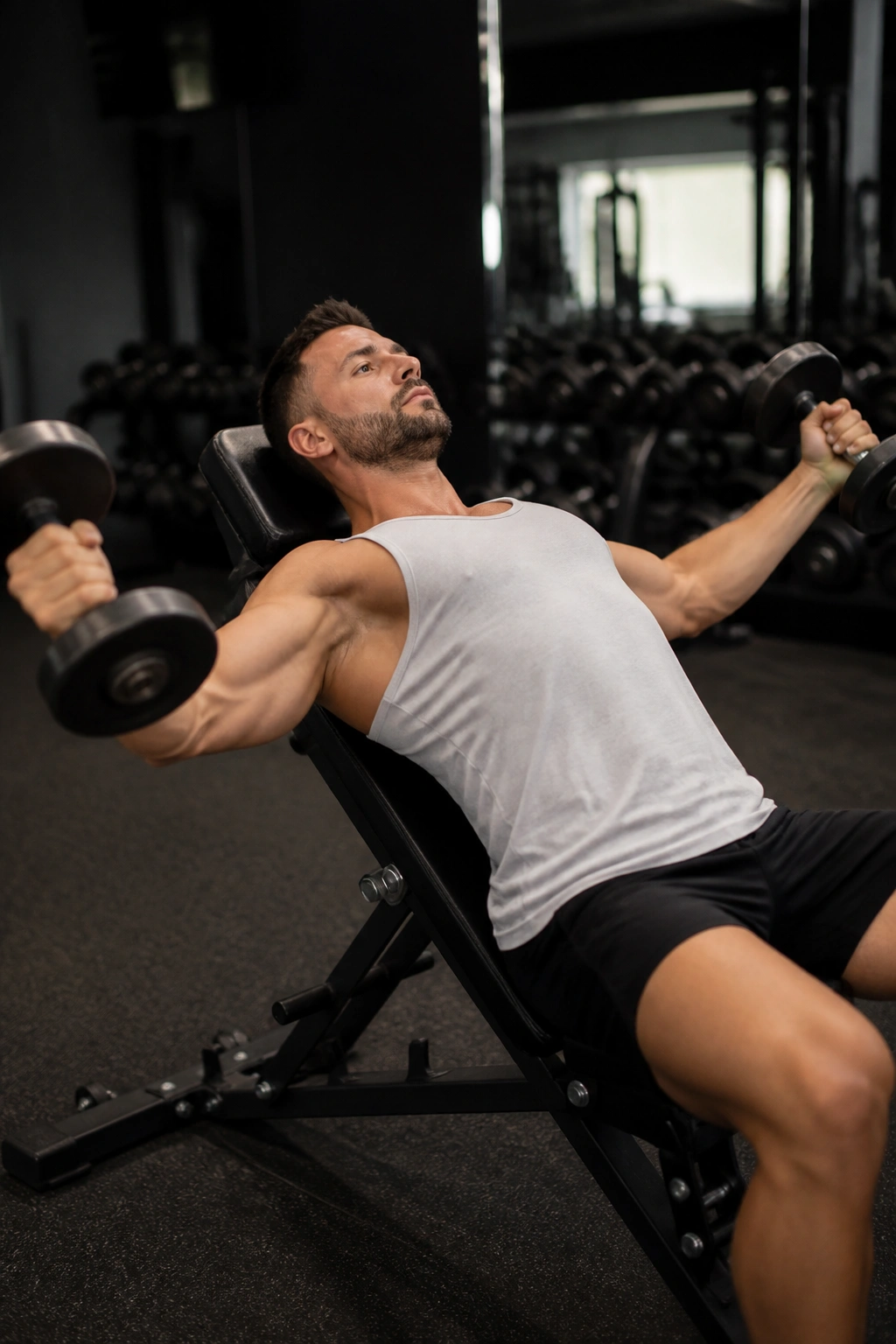
The incline fly does something the flat fly can’t quite copy. It changes the line of the stretch so the upper chest has to manage more of the load, especially when the bench sits at a moderate angle. That makes it a solid pairing with incline pressing if you want the upper pecs to do more than just survive the session.
You do not need big weight here. In fact, going heavy usually ruins the point. The rep should look slow and controlled, with the dumbbells opening just enough to challenge the pecs and then returning on the same arc. If the elbows bend more as you fatigue, reduce the load. That’s your body cheating for relief.
This is a patient exercise. It rewards clean position more than brute force. Use it after pressing, not before, and let it be the movement that finishes the chest instead of the one that tries to impress the room.
Use 3 sets of 10 to 12 reps, resting 60 to 75 seconds. If your shoulders are touchy, keep the range shorter and the angle lower. That adjustment usually helps.
10. Low-Incline Press-and-Fly Combo
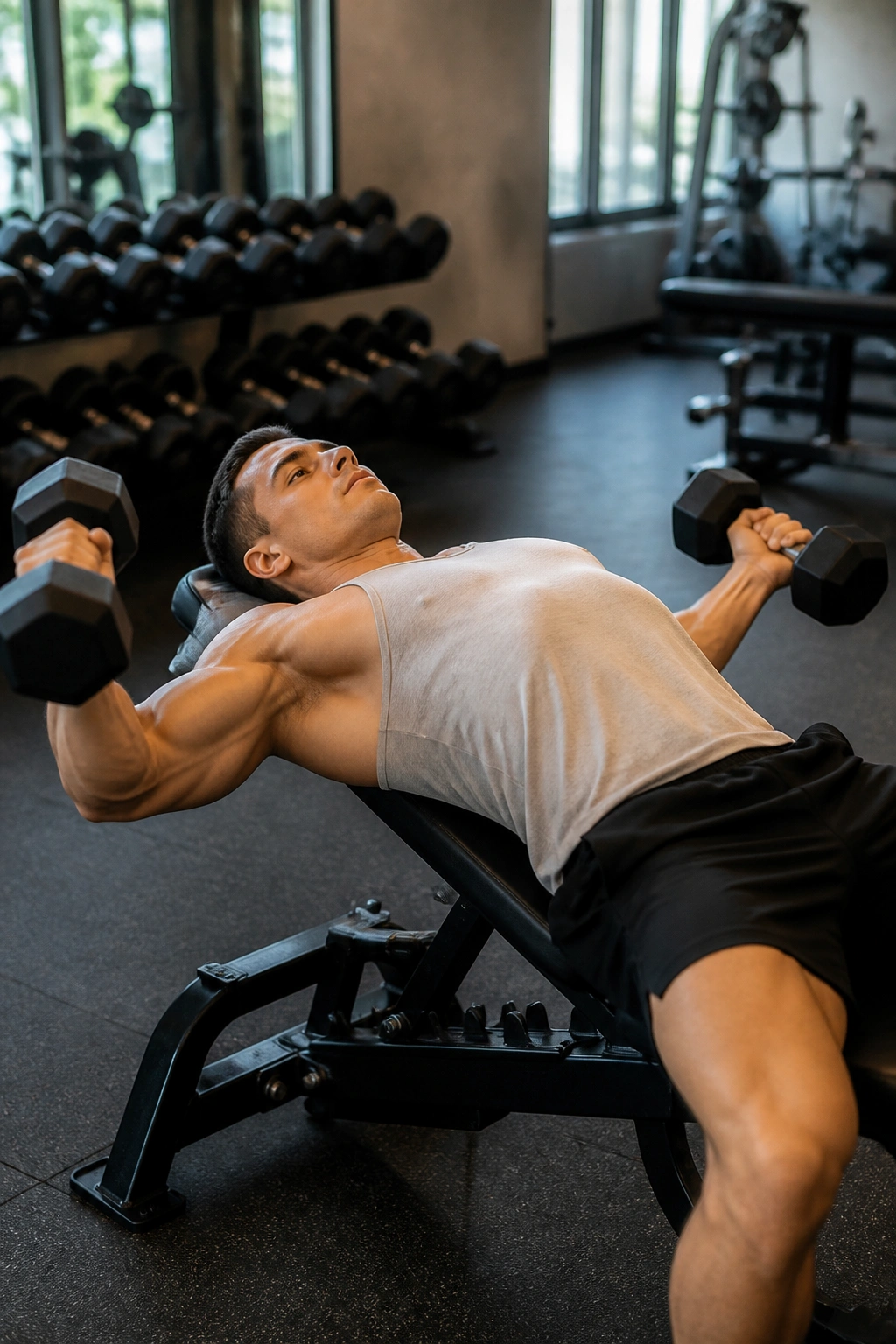
I like this when I want a session that feels like work without turning into a joint-killer. The combo starts with a low-incline dumbbell press and ends with an incline fly, using the same bench setup so you’re not wasting time moving around. The press gives you the load. The fly keeps tension on the chest once the triceps start to fade.
Run it as a paired block: 8 incline presses, then 10 incline flyes, rest, and repeat. Keep the weight honest. The press should still be smooth, and the fly should never get sloppy just because your chest is tired. If the second half turns into a shoulder shrug, the weights are too much.
Simple way to run the combo
- 3 rounds
- 8 presses
- 10 to 12 flyes
- Rest 75 to 90 seconds between rounds
This is a good middle-ground workout when you want size work and a decent pump, but you don’t want the session to drag on forever. It’s also easy to progress: add a rep to each piece before you add weight.
11. Dumbbell Pullover for Chest, Serratus, and Ribcage Control
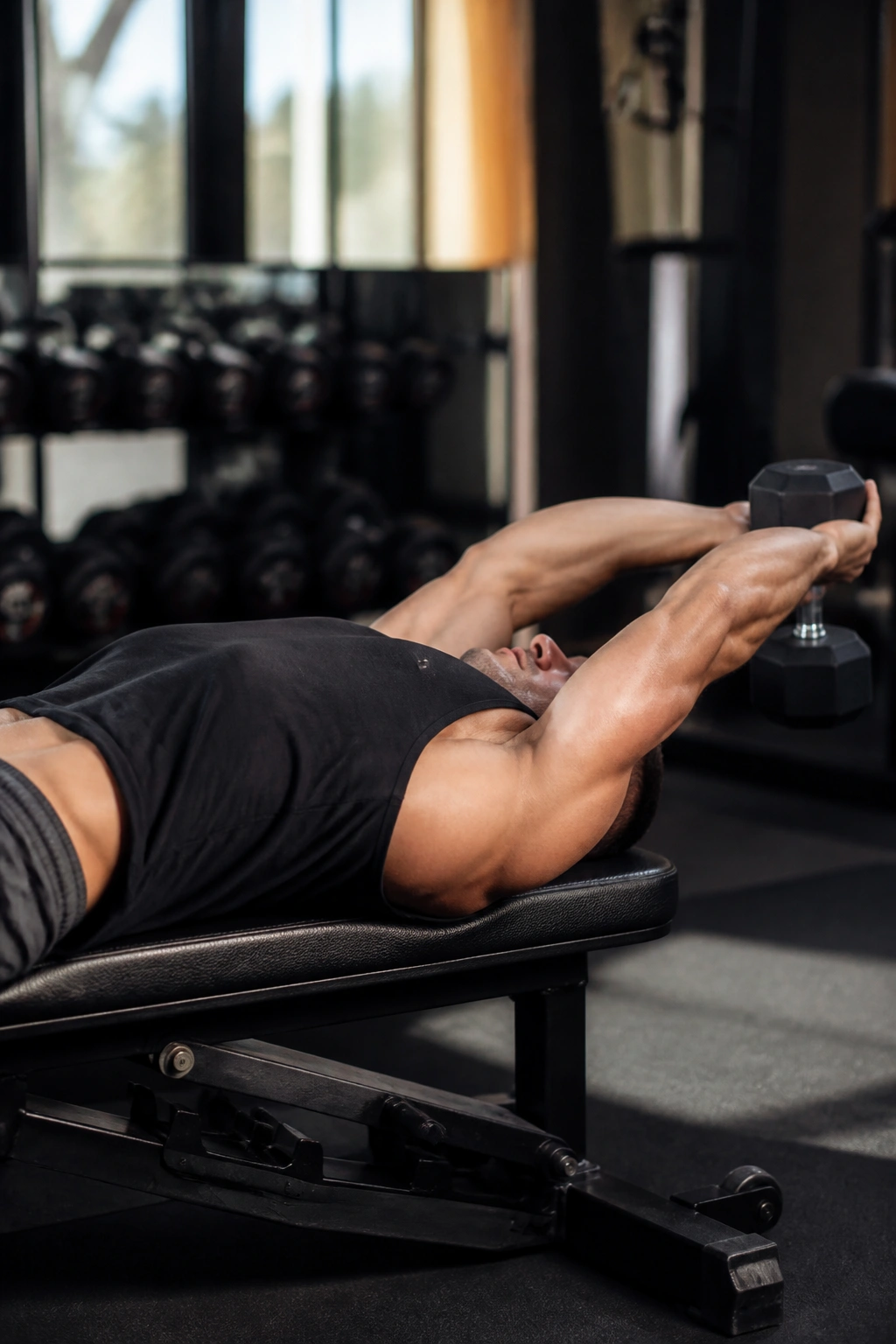
Pulovers are weird until they aren’t. One dumbbell, both hands on the handle, and a long arc behind the head — it looks more like a mobility drill than a chest movement until you feel the pecs and serratus work together to control the return. That’s why this lift hangs around in old-school chest routines. It does not behave like a press, but it supports pressing.
Set your upper back on a bench or lie on the floor if you want a shorter range. Keep a soft bend in the elbows, lower the weight until you feel the chest and lats lengthen, and bring it back over the chest without letting the lower back arch like a bridge. The ribs should stay down. If they flare up, the weight is too much.
How to use the pullover
- Use 3 sets of 10 to 12 reps.
- Move slowly on the way down.
- Stop the descent when the shoulders still feel safe.
- Keep the dumbbell under control on the return, not swinging.
It’s not a lat row in disguise. It’s a chest-and-upper-torso drill that teaches control in a long range, and that’s useful.
12. Tempo Dumbbell Press for Time Under Tension
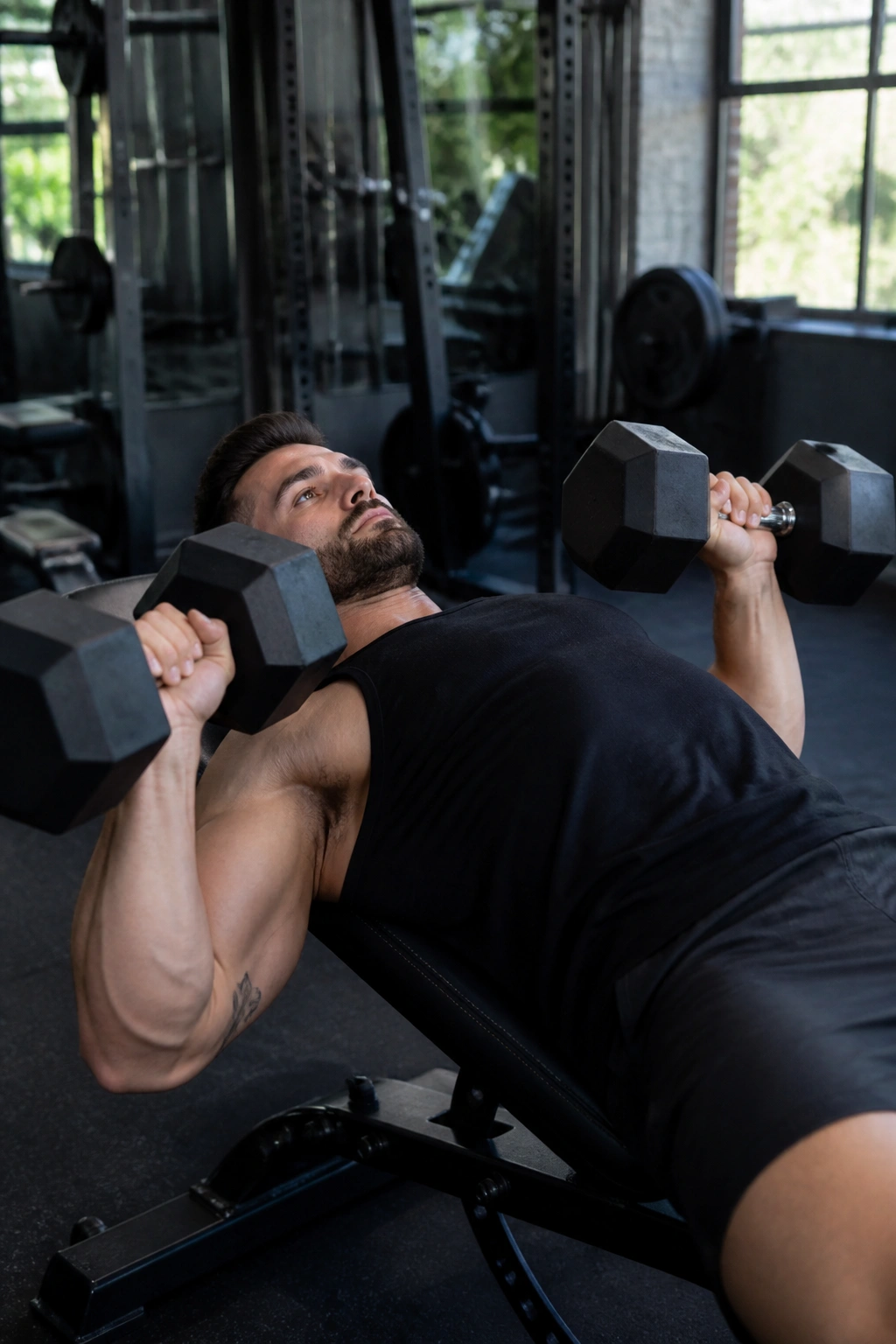
What if the problem isn’t strength but speed? A lot of lifters rush the lowering phase, bounce the dumbbells, and rob the pecs of half the work. Tempo pressing fixes that by giving the rep a rhythm you can’t fake.
A simple version works well: 3 seconds down, 1 second pause, 1 second up. That’s enough to slow the rep without turning it into a grind-fest. The pause matters. It kills the rebound, which is exactly why the chest has to stay honest.
Counting the tempo
- Lower for 3 seconds.
- Hold at the bottom for 1 second.
- Press up in 1 second with control.
- Repeat for 3 to 4 sets of 8 reps.
Use a weight you could normally handle for more reps. Tempo work exposes sloppy mechanics fast. If you lose position halfway through the set, the dumbbells are too heavy or the pause is too long. Keep the chest high, the shoulders packed, and the movement smooth. It should feel measured, almost stubborn.
13. Pause Dumbbell Press for Bottom-End Strength
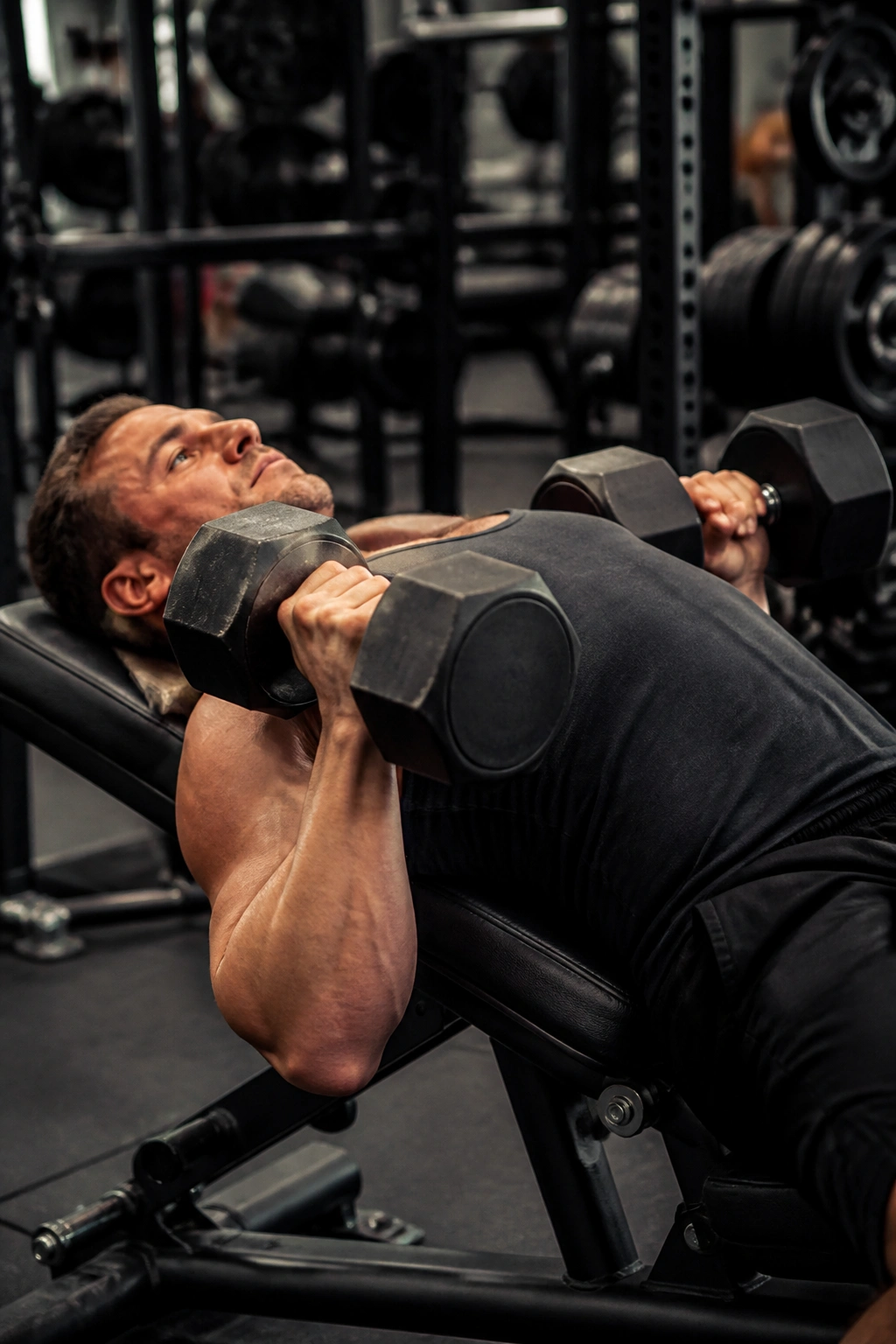
If you bounce the dumbbells, the pause press will humble you.
That little stop at the bottom kills momentum and forces the pecs and triceps to create force from nothing. It’s a clean way to build power off the chest, and it works with either flat-bench or floor pressing. The key is a real pause, not a tiny hover. Let the dumbbells settle for a count of 2 full seconds before you drive them back up.
This version is excellent for lifters who always stall a few inches off the chest. It also teaches control under load, which pays off in almost every other press. If your shoulders feel stable and your wrists stay stacked, the rep will feel heavy in a good way. If you rush it, the whole point disappears.
Use 4 sets of 5 reps with enough rest to keep the pauses clean. That usually means 90 to 120 seconds. Heavy enough to matter, light enough to stop the wobble.
14. Close-Grip Dumbbell Press for Triceps and Chest Lockout
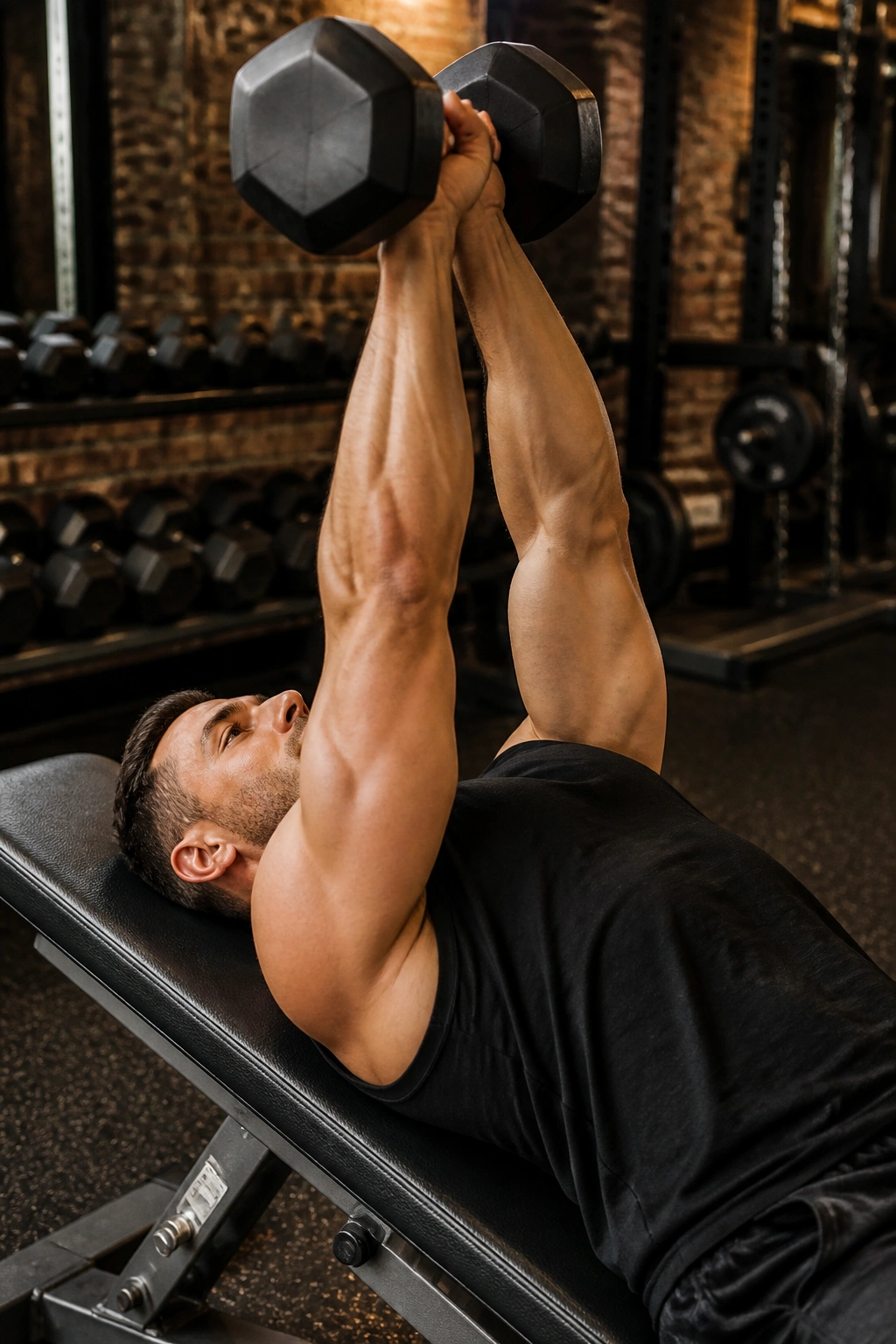
Close-grip dumbbell pressing is a little cleaner than the barbell version because the hands can move naturally. Bring the dumbbells closer to the midline, keep the elbows tucked a bit more than you would on a wide press, and the triceps get a stronger say in the lift. The chest still helps, especially through the first half of the press, but the finish gets harder in a good way.
I like this when someone wants a stronger lockout without beating up the shoulders. It’s also useful for lifters whose flat press stalls near the top. The dumbbells should travel close together, not touching like a squeeze press, and the forearms need to stay vertical enough that the wrists don’t fold back.
This one can be done a touch heavier than the squeeze press and a touch lighter than the classic flat press. That middle lane is what makes it useful.
Use 4 sets of 8 reps. Rest 75 to 90 seconds. If the elbows flare out, reduce the load and tighten the path.
15. Bridge Press for Full-Body Tightness
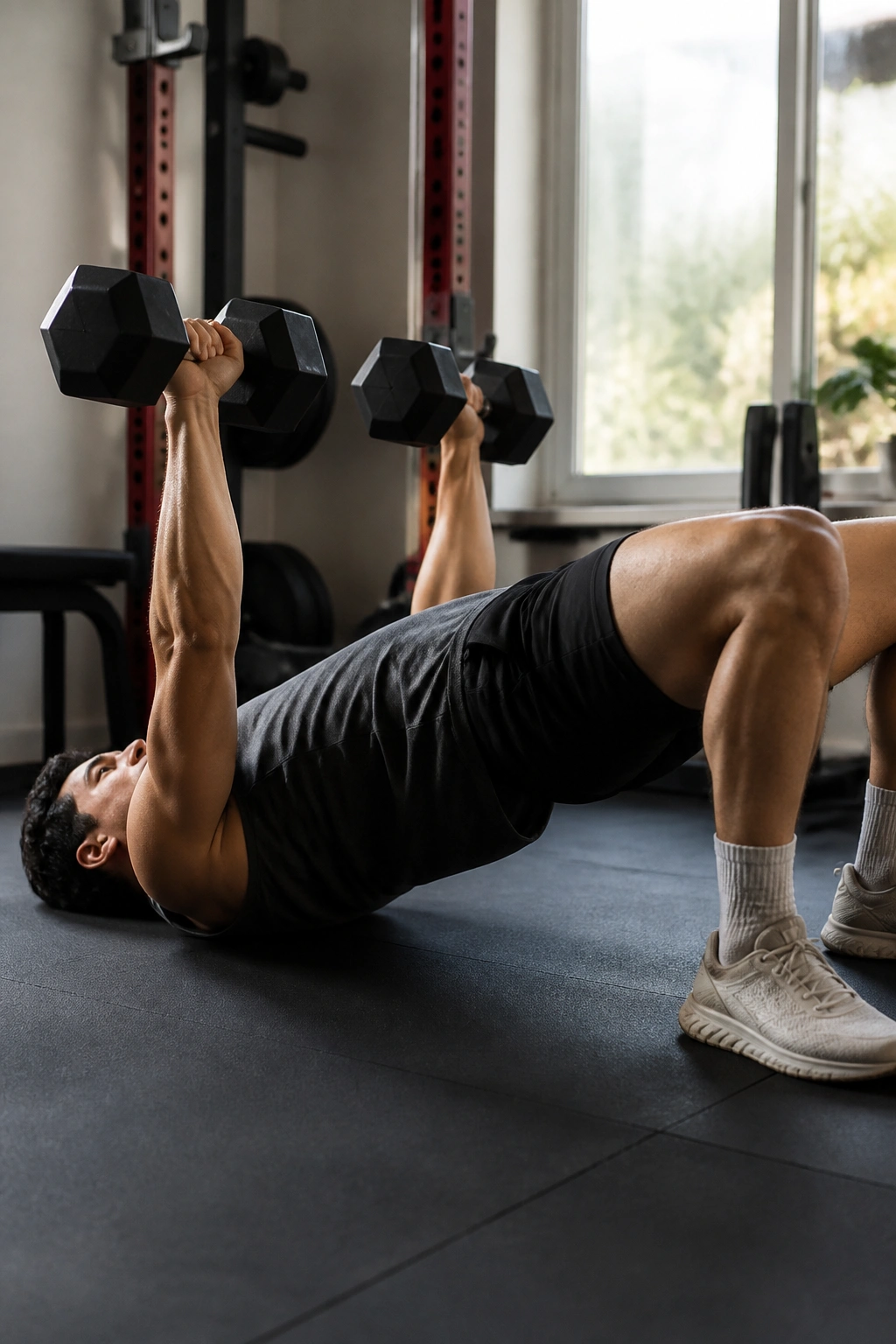
A bridge press turns a chest workout into a full-body lesson. Your feet drive into the floor, your glutes stay tight, and your upper body has to press while the torso stays stable. The dumbbells feel steadier than they should because the whole body is helping create a strong base.
Lie on the floor, hold the bridge at the top, and press from there. The hips should stay up, but the lower back should not overarch. That’s the trap. People love the idea of a bridge and then turn it into a lumbar-extension contest. Don’t. Keep the ribs tucked, squeeze the glutes, and press with control.
Why I like this variation
- It teaches whole-body tension.
- It gives the chest work without a long shoulder stretch.
- It pairs well with floor pressing.
- It works nicely when you only have dumbbells and no bench.
Use 3 sets of 10 reps. The movement feels a little strange at first, then it starts to make sense. Once it clicks, it’s one of the more useful home-gym chest variations around.
16. Mechanical Drop-Set Dumbbell Chest Blast
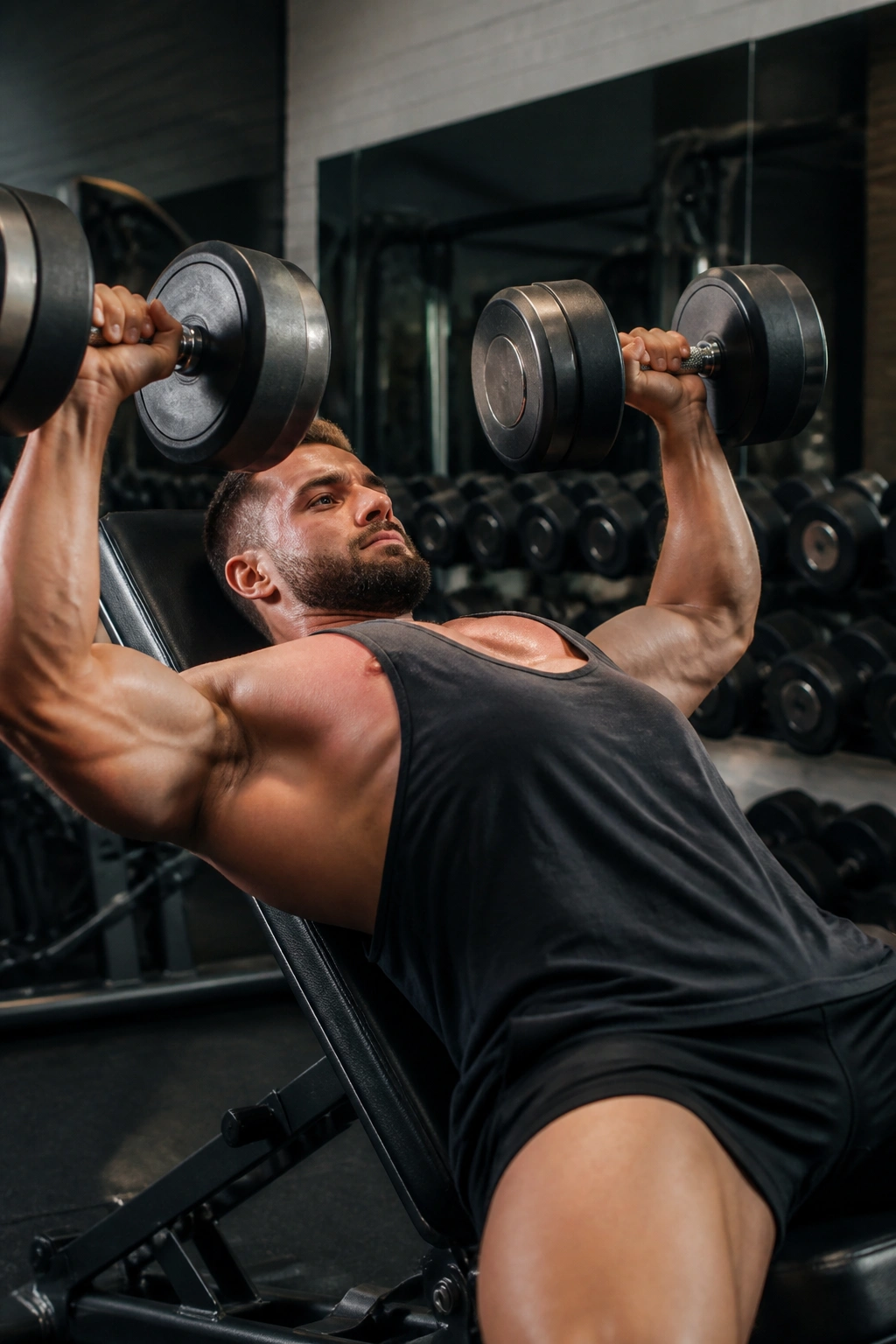
This is the workout you use when you want a brutal pump without changing the dumbbells. The idea is simple: start with the hardest version of the movement, then move to a slightly easier one while fatigue is high. The load stays the same, but the leverage gets friendlier.
A clean version looks like this: 8 incline presses, 8 flat presses, 8 floor presses. That sequence keeps the chest working hard while the range of motion gets shorter and the pressing angle gets easier to hold. Rest 90 seconds between rounds and run 2 or 3 rounds total. That’s enough to light up the pecs without wrecking the session.
What makes it work
- The first exercise handles the heaviest stretch.
- The second keeps the volume moving.
- The third lets you finish with a stable lockout.
This is not a max-strength day. It’s a volume-and-fatigue day. Use it when you want a chest session that leaves your shirt sleeves feeling a little tighter and your pecs needing a break.
17. EMOM Dumbbell Chest Workout for Conditioning
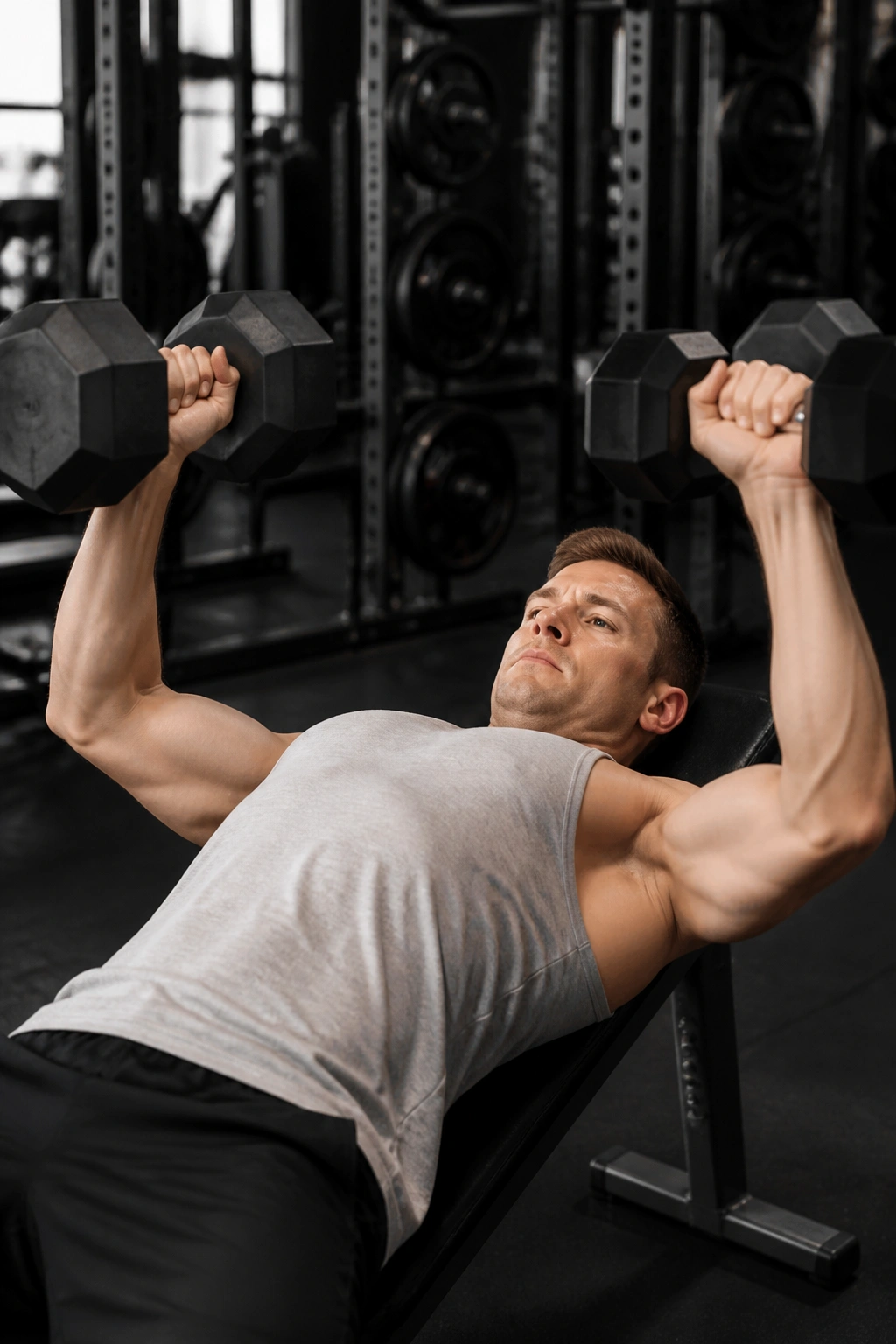
Every-minute-on-the-minute work is a blunt tool, and that’s why it works. You set a clock, start a round at the top of each minute, and use the remaining time to breathe. For chest training, that creates a workout that builds pressing endurance, keeps the pace honest, and removes the temptation to loaf between sets.
A simple setup works best. Try 10 minutes total. On each odd minute, do 8 flat dumbbell presses. On each even minute, do 10 neutral-grip presses or 8 squeeze presses if your shoulders like them better. Pick weights that let you finish each round in about 25 to 35 seconds. If a set spills over that, you loaded it too aggressively.
A clean EMOM rule set
- Keep the reps crisp.
- Stop each set before form gets sloppy.
- Use the rest time to reset your breathing.
- Reduce reps before you reduce control.
This is one of the better dumbbell chest workouts for people who want density. Not endless volume. Density. The session stays short, but it does not feel easy.
18. 20-Minute Dumbbell Chest Finisher for the Last Push
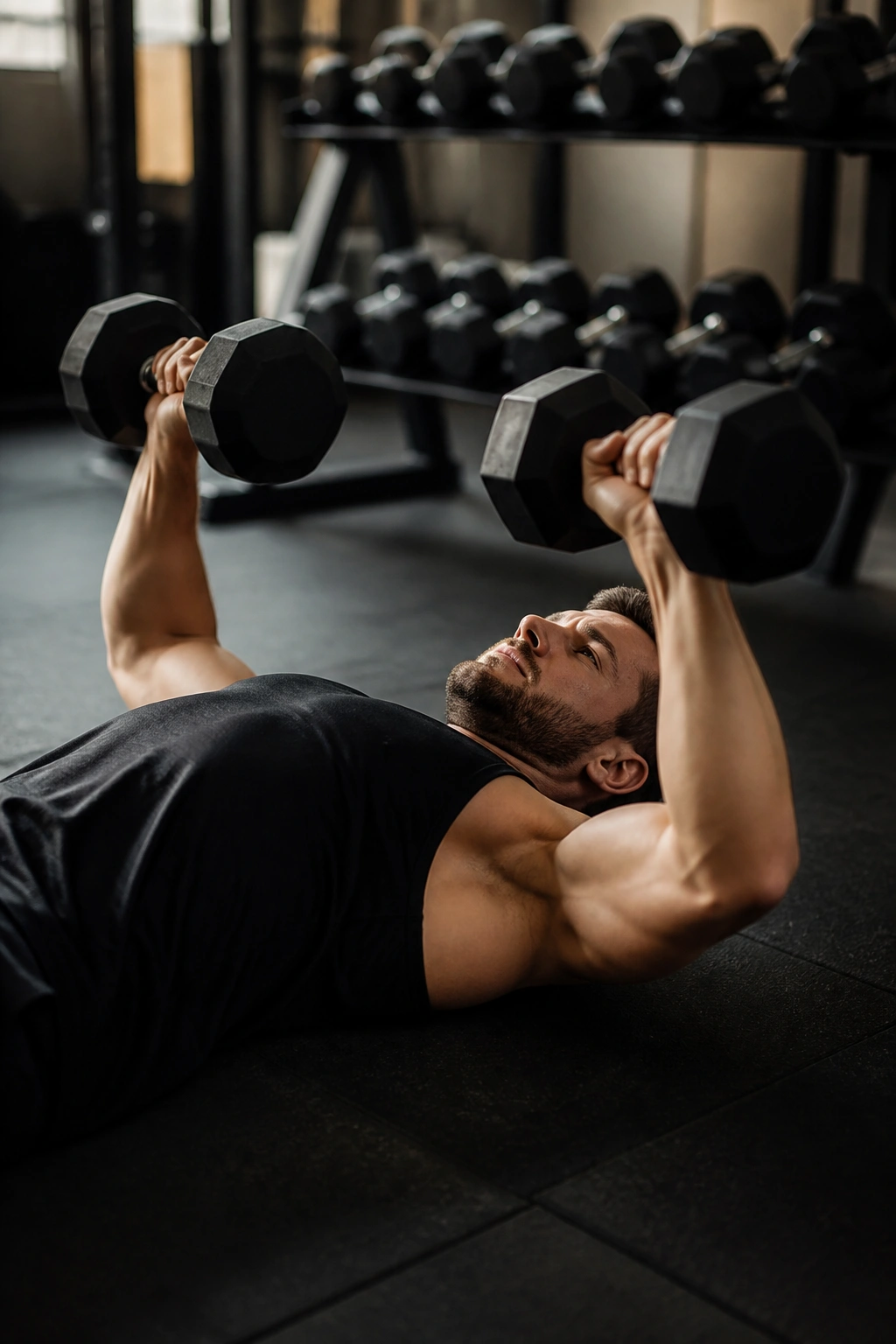
A short finisher can do a lot when your main work is already done. This is the kind of chest circuit I’d use at the end of a full upper-body day, or on a week when time is tight and the dumbbells are all you’ve got. It’s fast, it’s simple, and it does not waste effort on filler.
Run this as a circuit for 4 rounds:
- 10 flat dumbbell presses
- 10 incline dumbbell flyes
- 12 dumbbell pullovers
- 8 floor presses
Rest 60 to 75 seconds after each round. The idea is to keep the chest under work while switching angles enough that one movement doesn’t completely gas out before the next begins. The presses handle the load. The flyes chase the stretch. The pullovers keep the torso honest. The floor press finishes the set without turning the shoulders into a complaint department.
If your goal is raw strength, pick sections 1, 3, and 13 more often. If your goal is size, lean harder on 2, 4, 8, 10, and 16. If your shoulders tend to get cranky, keep 6, 7, and 15 in the mix. Rotate two or three of these workouts across the week, and the dumbbells stop feeling like second-best equipment. They start looking like a full plan.
