



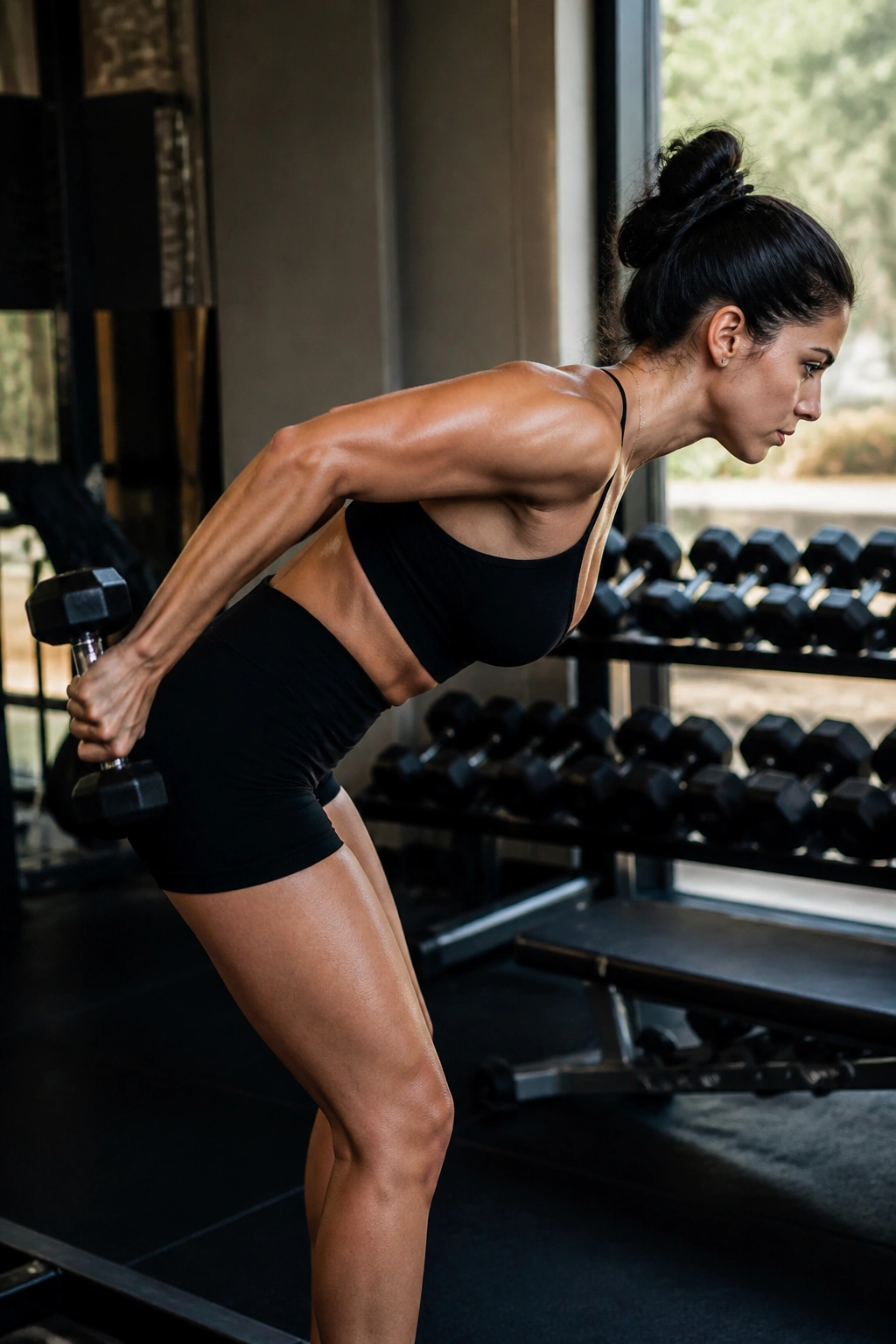
The first mistake I see with tricep kickbacks is also the most stubborn: people load them like a row, then fling the dumbbell behind them as if momentum counts as effort. It doesn’t. A clean kickback is a small, sharp move, and when you do it right, the back of your arm starts talking back fast.
That tiny range is the point. Triceps kickback variations work best when the upper arm stays put and the elbow only opens and closes like a hinge. The long head of the triceps also reacts to shoulder position, which is why one setup can feel flat and another can feel nasty in the best way.
I still like kickbacks for sculpted arms, though I treat them as a finisher, not the main event. They make sense after presses, dips, or close-grip work, when your arms are warm and you want direct tension without beating up your elbows. A 5-pound dumbbell can be enough if the rep is strict and the last inch of extension is honest.
The differences start with the setup.
1. Classic Bent-Over Dumbbell Kickback
A clean dumbbell kickback is tiny on purpose. That’s the whole charm. You hinge forward, pin the upper arm close to your ribs, and extend the forearm until the elbow reaches full lockout without the shoulder sneaking into the work.
Why It Works
The classic version is the version to learn first because it exposes bad habits fast. If you swing, you feel it in your lower back. If you let the elbow drift, the triceps stop working the way they should. If you go too heavy, the dumbbell wins.
Keep the weight light. Most people need less load than they think. Start with 5 to 15 pounds and chase a clean 10 to 15 reps, not ego points.
- Hinge at the hips until your torso is about parallel to the floor.
- Keep your elbow close to your side and slightly behind the rib line.
- Straighten the arm until the dumbbell lines up with your hip.
- Lower for 2 to 3 seconds. That slower drop matters.
Tip: if your upper arm starts bouncing, stop the set right there. The set is already done.
2. One-Arm Bench-Supported Kickback
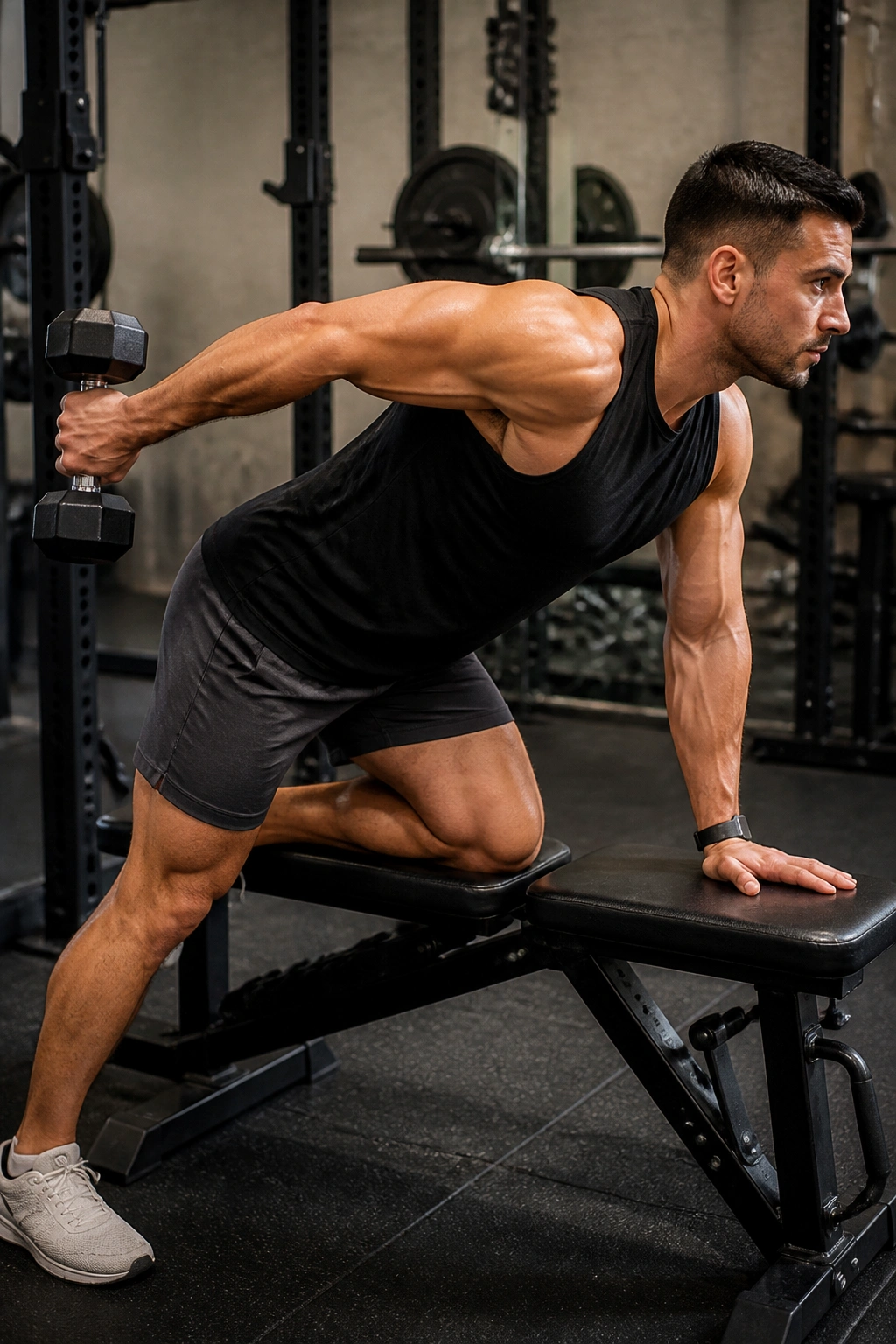
If your lower back gets tired before your triceps do, this is the version I reach for. One hand and one knee on a bench shut down most of the cheating, and that matters more than people admit.
The support lets you keep the working side honest. Your torso stops swaying, your hips stay quiet, and the dumbbell path gets cleaner almost instantly. That makes this variation useful for lifters who can’t seem to keep a stable hinge when they are tired.
You can also use the bench to correct side-to-side gaps. One arm is often stronger, or just cleaner, and a supported setup makes that obvious. Train the weaker side first, match the reps, and keep the load modest. Six to 12 controlled reps per side is plenty here.
A small detail: set the supporting hand far enough forward that your shoulder feels stacked. Too close, and you end up cramped. Too far, and the bench becomes awkward. Middle ground wins. Simple.
3. Low-Cable Kickback
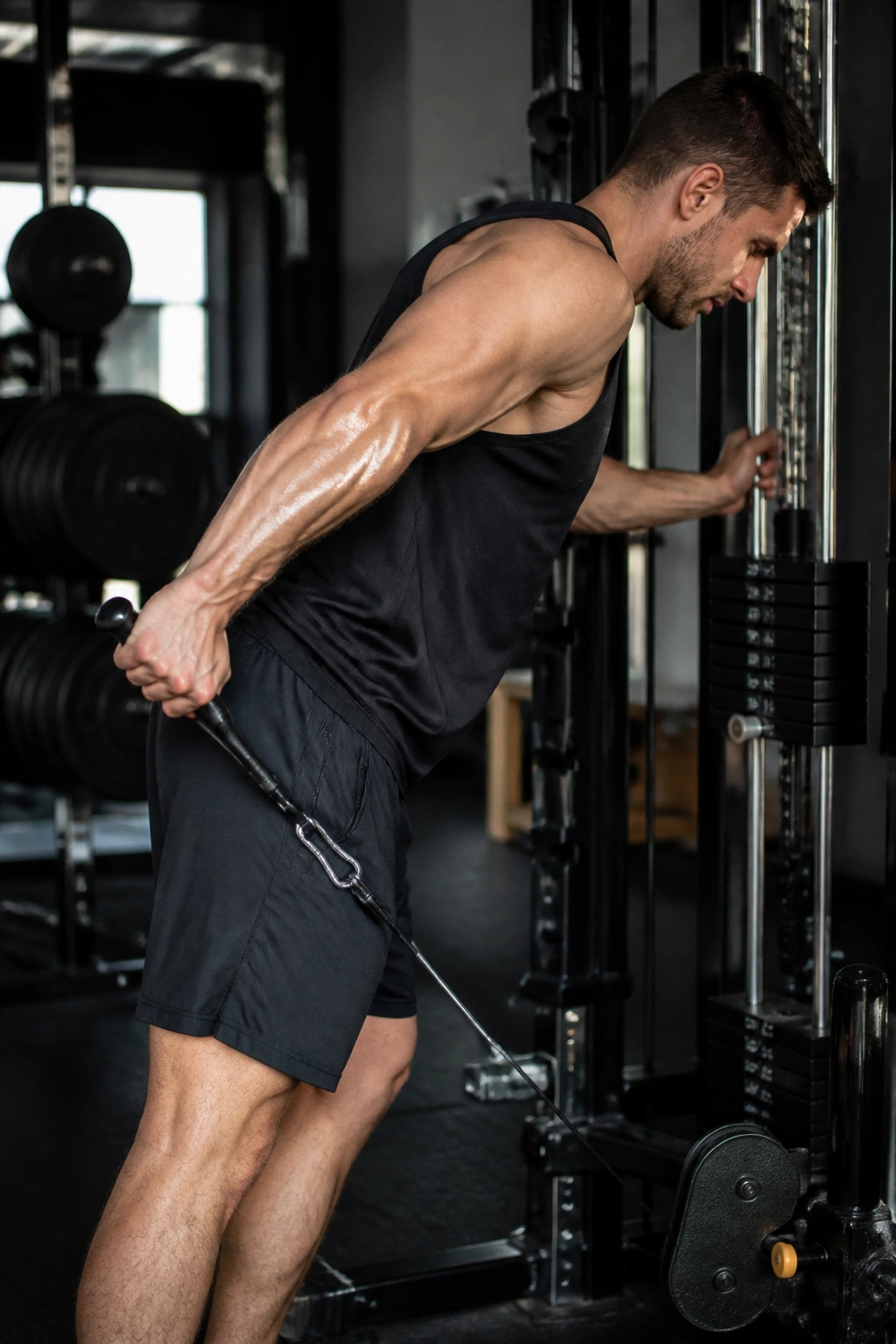
Why does the cable version feel so much meaner than dumbbells? Because the resistance stays alive all the way through the rep. A dumbbell gets easier near the top. A cable does not.
That constant pull is the whole appeal. With a low pulley and a single handle, the triceps keep working through the lockout, and the top position no longer feels like a resting place. If you want a kickback variation that gives you a cleaner burn without needing much weight, this is the one.
How to Use It
Set the pulley close to ankle height. Step back until the cable already has tension before the arm moves. Then hinge forward, lock the upper arm in place, and drive the handle back until the elbow straightens.
Use 12 to 20 reps and move with patience. Rushing the cable makes the stack slam and steals the tension. A slow return keeps the triceps on duty longer, which is exactly what you want here.
This version is especially good for people who lose the top squeeze with dumbbells. The cable fixes that in a hurry.
4. Kneeling Cable Kickback
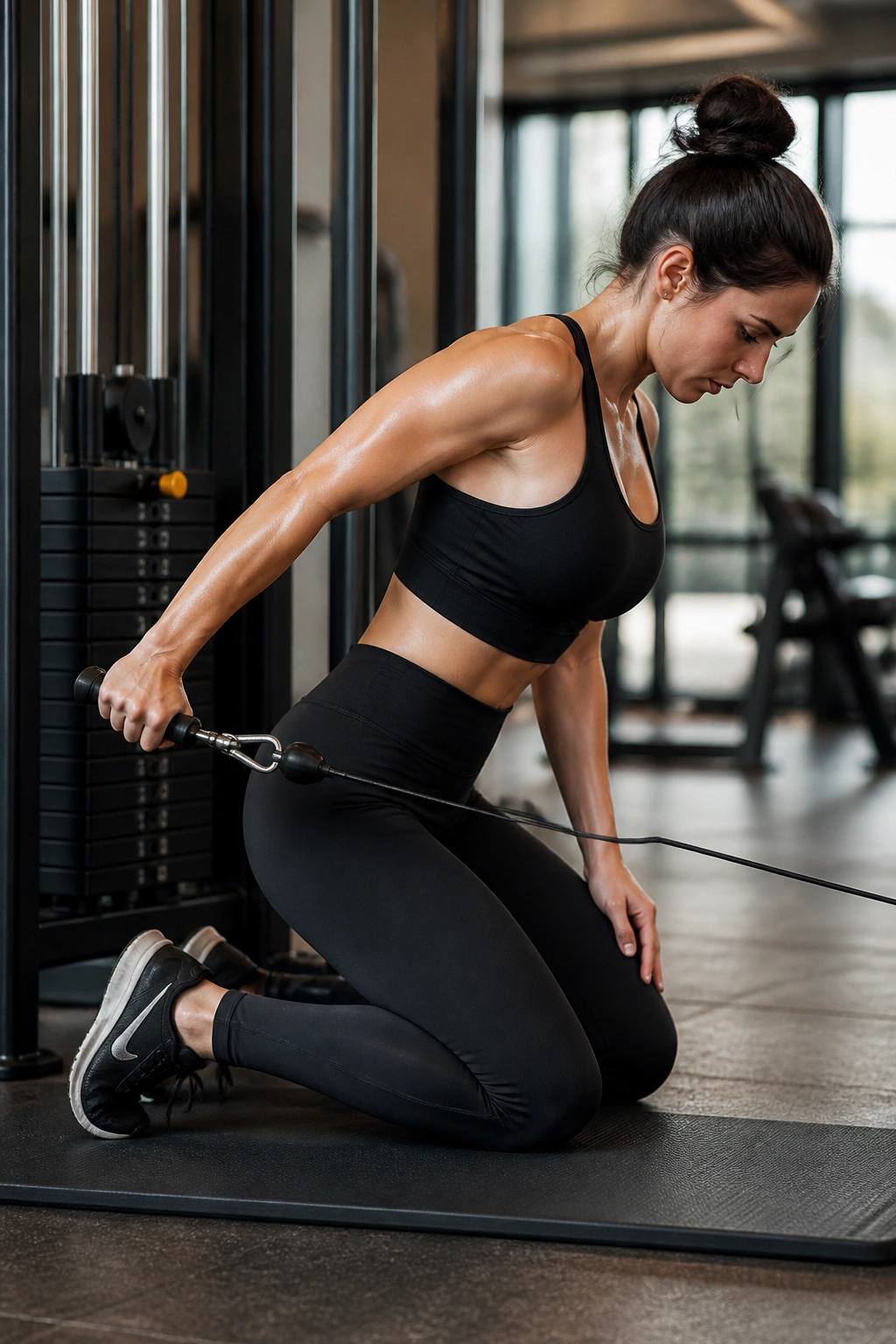
Picture a cable stack, a mat, and no room for cheating. That’s the kneeling version in a nutshell.
Going down to both knees strips away the little leg drive that sneaks into standing work. It also takes the urge to rock your torso and turn the movement into a half-row. The result is a very clean line from shoulder to elbow, which is why this variation hits so hard with light load.
The setup is simple. Kneel facing the stack or slightly sideways, hinge forward a bit from the hips, and keep the cable hand close to your body before extending. You do not need a ton of weight here. You need control. Ten to 15 smooth reps is a solid place to live.
This one is a nice choice when your lower back feels cooked from pressing or deadlifting. It asks almost nothing from the spine and still gives the triceps a real job. Honestly, that trade is hard to beat.
5. Resistance Band Kickback
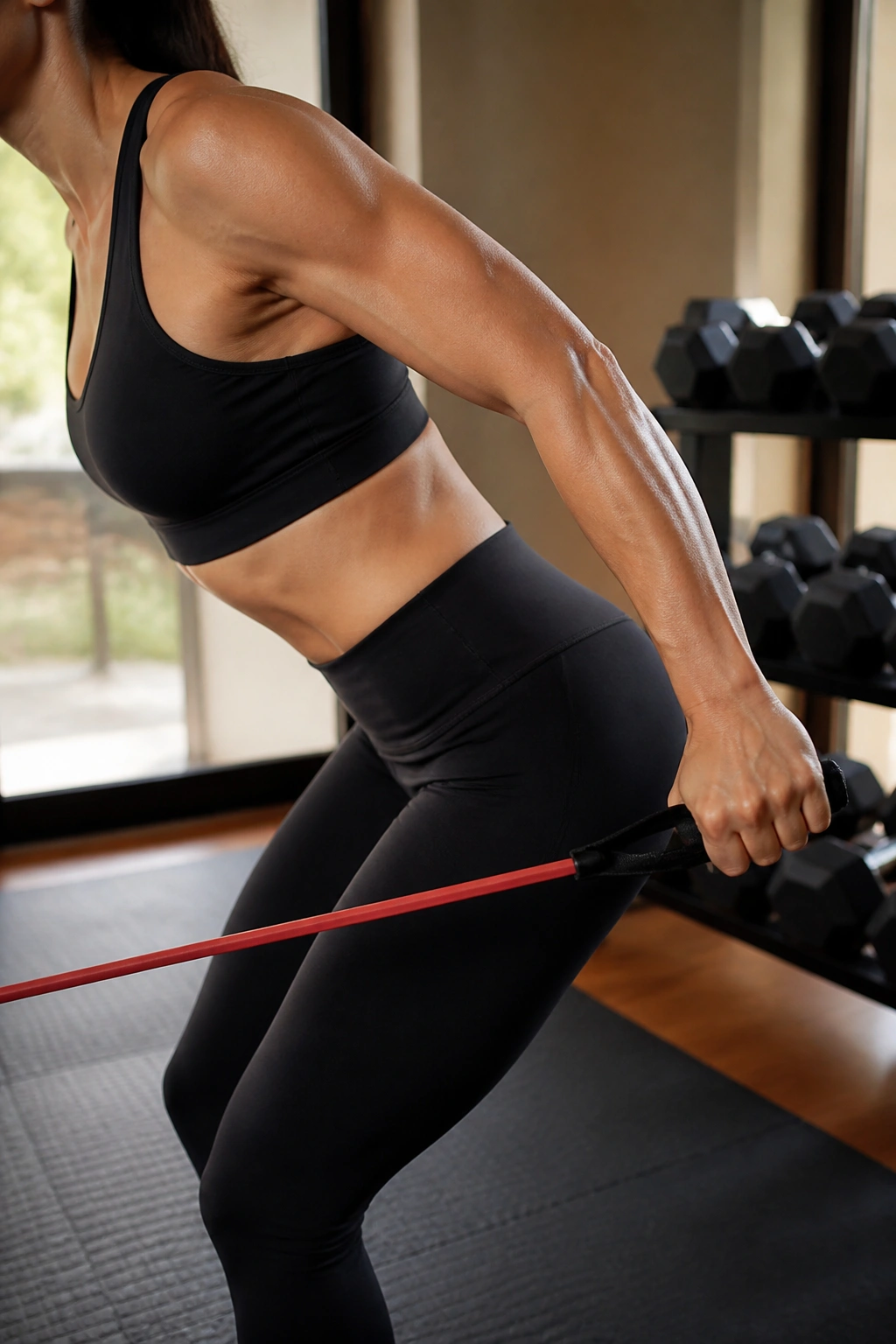
Resistance bands are sneaky. The movement looks harmless until you hit the last third of the rep and the band starts pulling back harder.
That rising tension is why band kickbacks work so well for higher reps and warm-ups. They are easy on the joints, cheap, portable, and not nearly as soft as they look. A band can turn a travel hotel room or a small corner of a gym into a decent arm session.
Quick Setup Notes
- Anchor the band low, or stand on it with one foot.
- Keep the wrist straight so the band does not twist your hand.
- Extend all the way, then control the return.
- Use 15 to 25 reps for a real burn.
This is the variation I like for finishers when the elbows feel cranky. The band keeps the load smooth, and the top squeeze gets ugly in a good way. The catch is obvious: if the band is too light, you are not training much. If it’s too heavy, your shoulder starts helping. Stay in the middle.
6. Incline Bench Kickback
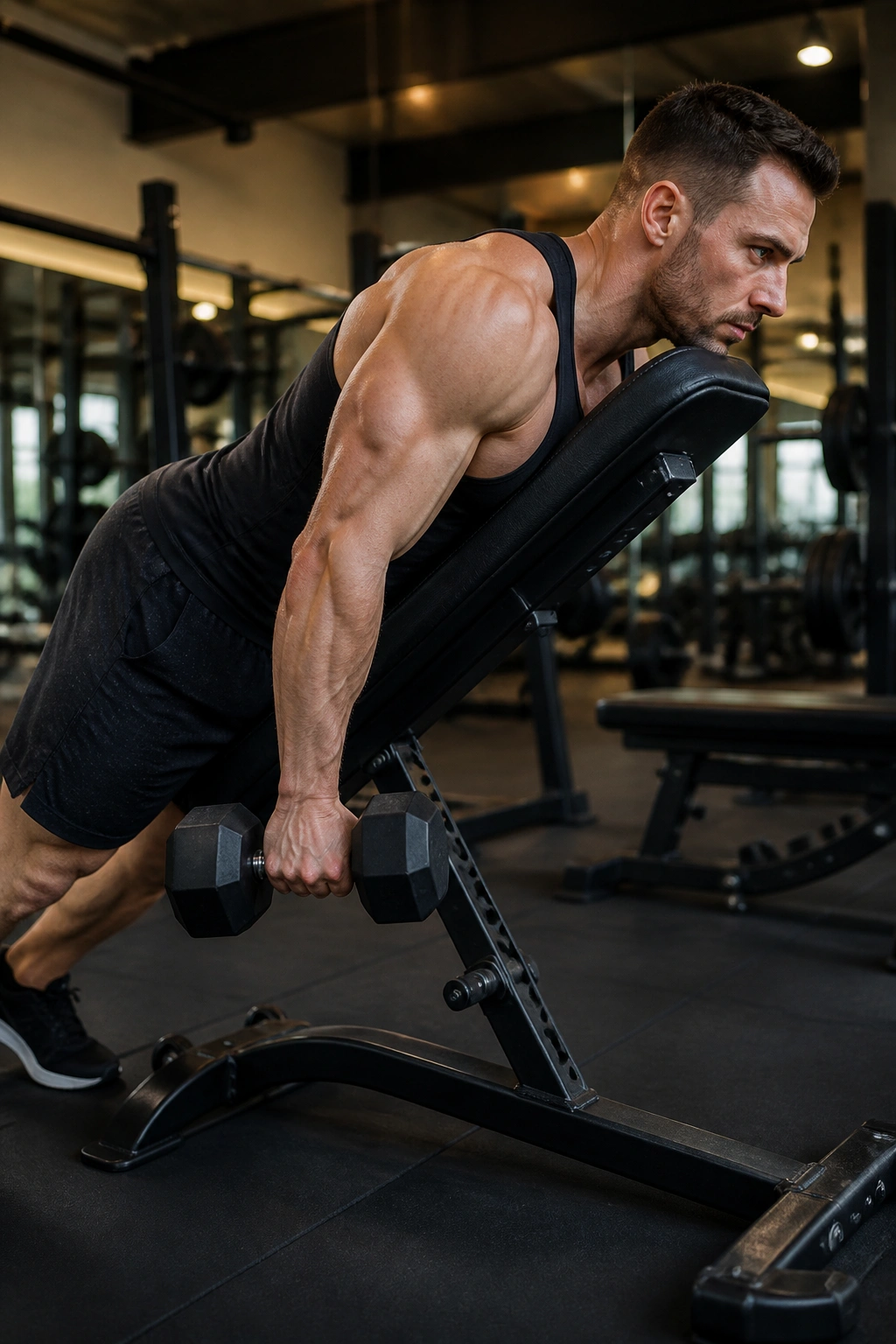
Compared with the classic hinge, this setup gives you a steadier line and less wobble. That is the main reason I use it.
Set your chest against an incline bench, plant your feet wide, and let the working arm hang just off the side of the pad. The bench takes a lot of the balance work out of the picture, so the triceps can own the movement without your torso trying to be clever. It feels stricter than the standing version, and stricter is often better here.
What Makes It Different
The incline changes your torso angle and gives you a little more support through the upper body. That support helps people who struggle with lower-back fatigue or who tend to turn every arm move into a body English contest.
A modest load is still the right move. Think 8 to 12 reps with a pause at the top. The pad should help you stay honest, not let you relax.
Best use: after pressing work, when the shoulders are warm but not fried.
7. Chest-Supported Kickback
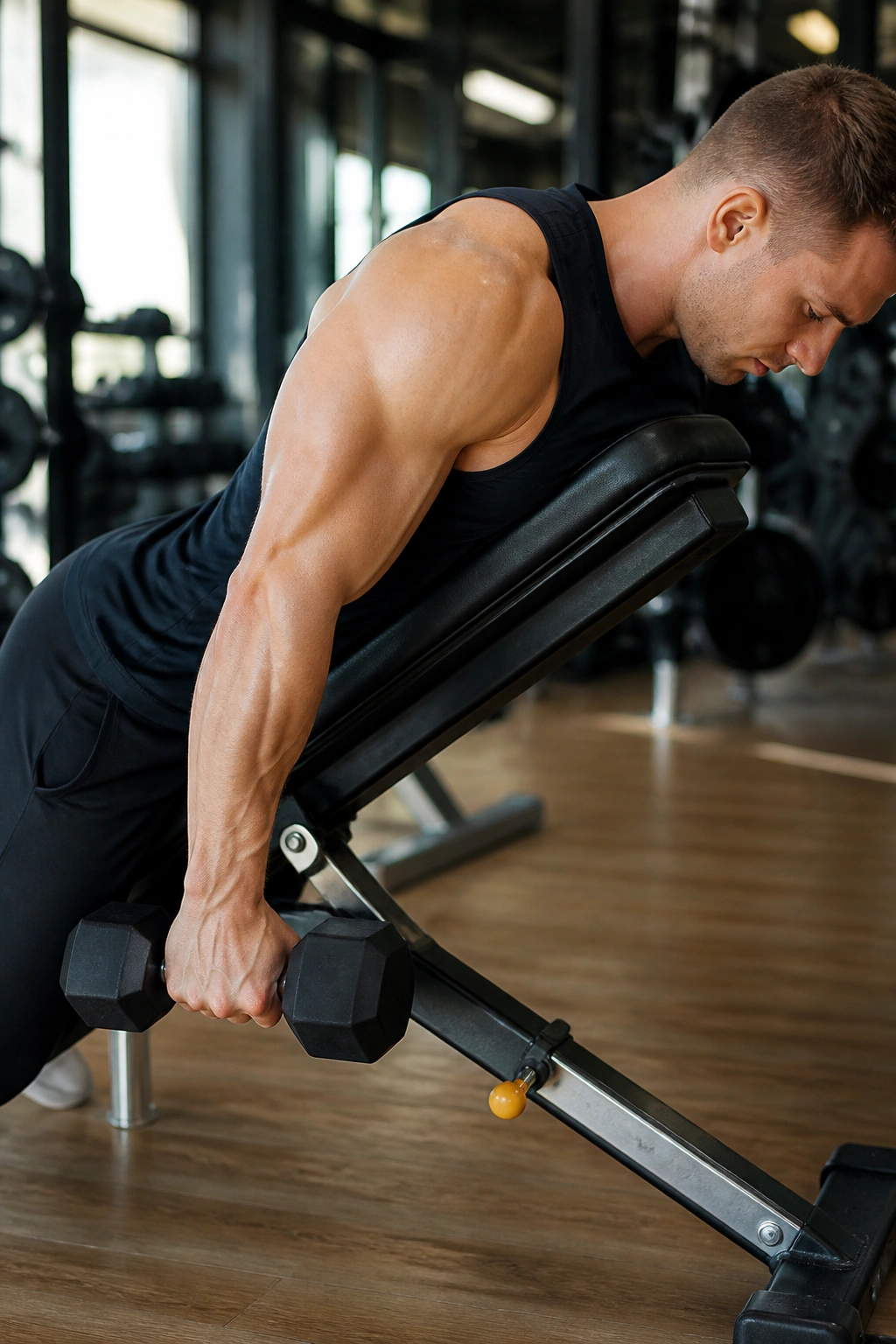
The bench changes everything. Not because it makes the exercise fancy. Because it locks out the nonsense.
A chest-supported kickback takes the torso out of the fight almost completely. You lie face down on an incline bench or high pad, let the arm hang, and drive the dumbbell back with almost no sway. The starting position feels a little awkward the first time. Then it clicks.
Setup Details
- Set the bench steep enough that your chest stays anchored.
- Let the working arm hang straight down at the start.
- Keep the elbow close to the body as you extend.
- Use a slow lower and a hard squeeze.
This version is a favorite for people who want cleaner isolation and less lower-back strain. It also makes cheating harder, which sounds annoying until you realize that cheating is usually what ruins kickbacks. A weight that feels light at the start can feel brutal by the last five reps.
8. Cross-Body Kickback
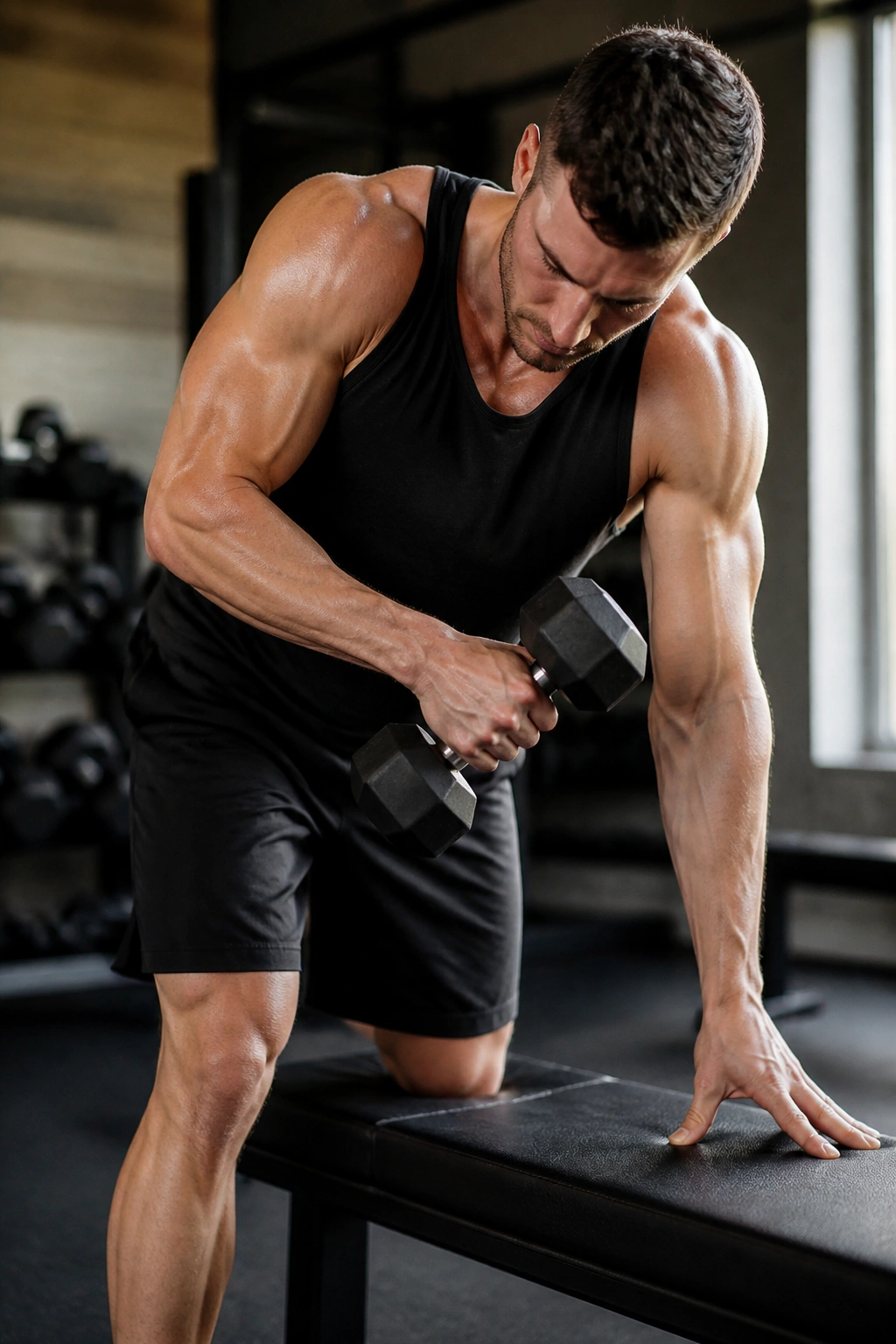
Cross-body kickbacks look a little odd the first time you try them. The hand doesn’t travel straight back in a neat line. It moves slightly across the torso before you finish the extension.
That tiny change alters the line of pull and can make the triceps feel the rep in a different way, especially near the end range. Some lifters notice the long head more; others just feel a stronger contraction around the elbow. Either way, it is a good reminder that the arm does not have to move like a robot to train well.
Common Mistake
Do not turn the shoulder into a twisting contest. The upper arm still needs to stay steady. The cross-body path is subtle, not dramatic.
A light dumbbell is the right call. Heavy loads make the shoulder take over, and then the movement turns sloppy fast. Use 10 to 14 reps and pause for a beat at full extension. If the elbow feels cranky, shorten the range a touch and keep the motion smooth.
9. Alternating Kickbacks
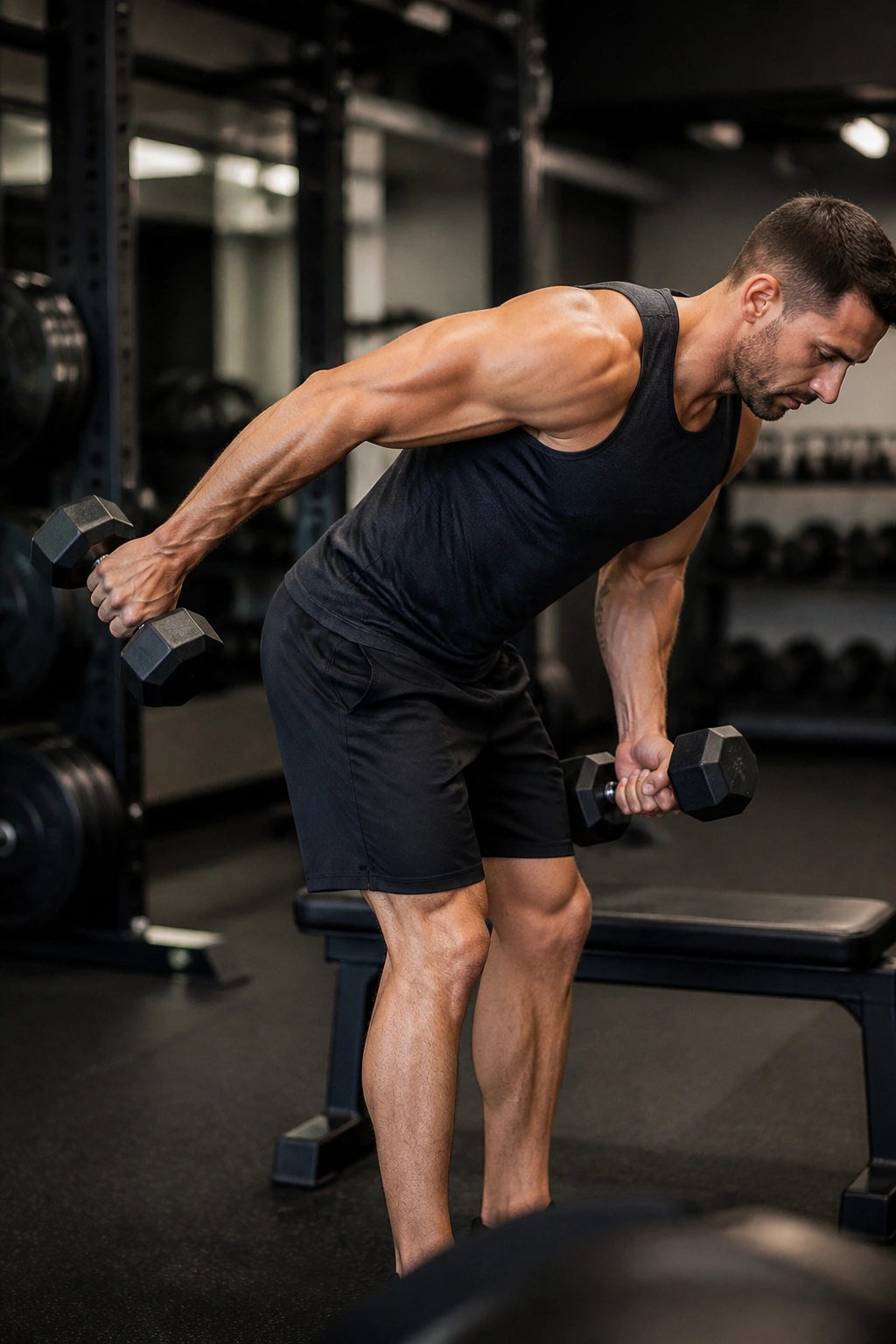
One arm works while the other rests. That’s the whole trick, and it matters more than it sounds.
Alternating reps let you keep tension on each side without rushing the entire set. You can stay a little cleaner because the resting arm gives you a brief reset. That makes this variation useful when you want more total time under tension without jumping to a heavier weight.
It also exposes side-to-side differences. The weaker arm usually tells on itself by rep three or four. Fine. That’s useful information. Match the same pace on both sides and resist the urge to “help” the slower arm with extra torso movement.
I like this version for 12 total reps per side or a straight 20-rep ladder with short rests. It is not flashy. It does not need to be. The steady rhythm is the point, and the burn builds quietly before it hits all at once.
10. Slow-Tempo Kickback
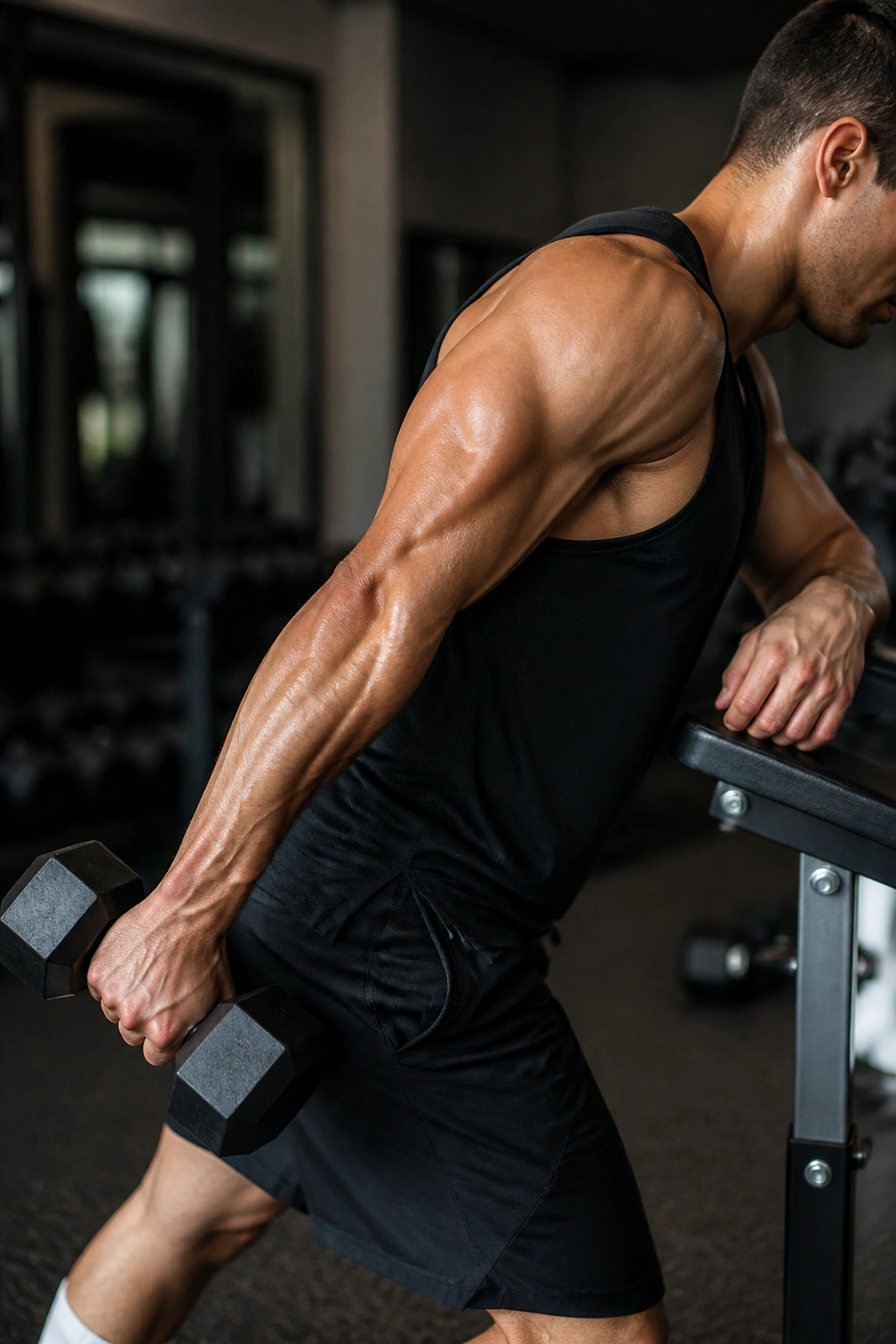
Three seconds down, one second up, and the set suddenly feels honest. Tempo changes do that.
A slow-tempo kickback makes the lowering phase matter, which is where a lot of people cheat. The triceps resist the return, not just the lockout, and slowing the descent gives that part of the muscle more time under tension. You do not need a circus-weight dumbbell to make it hard.
How to Count It
Try a 3-1-1-1 tempo:
- 3 seconds lowering
- 1 second pause with the elbow bent
- 1 second extending
- 1 second squeeze at the top
That pace is slow enough to feel each inch, but not so slow that the set turns into a grindy mess. If the shoulders start creeping up, the weight is too heavy. If the forearm is flying and the elbow is wobbling, the weight is too heavy.
This is one of the cleanest options for sculpting work because the tension never feels sloppy. The triceps just have to stay on.
11. Top-Hold Iso Kickback
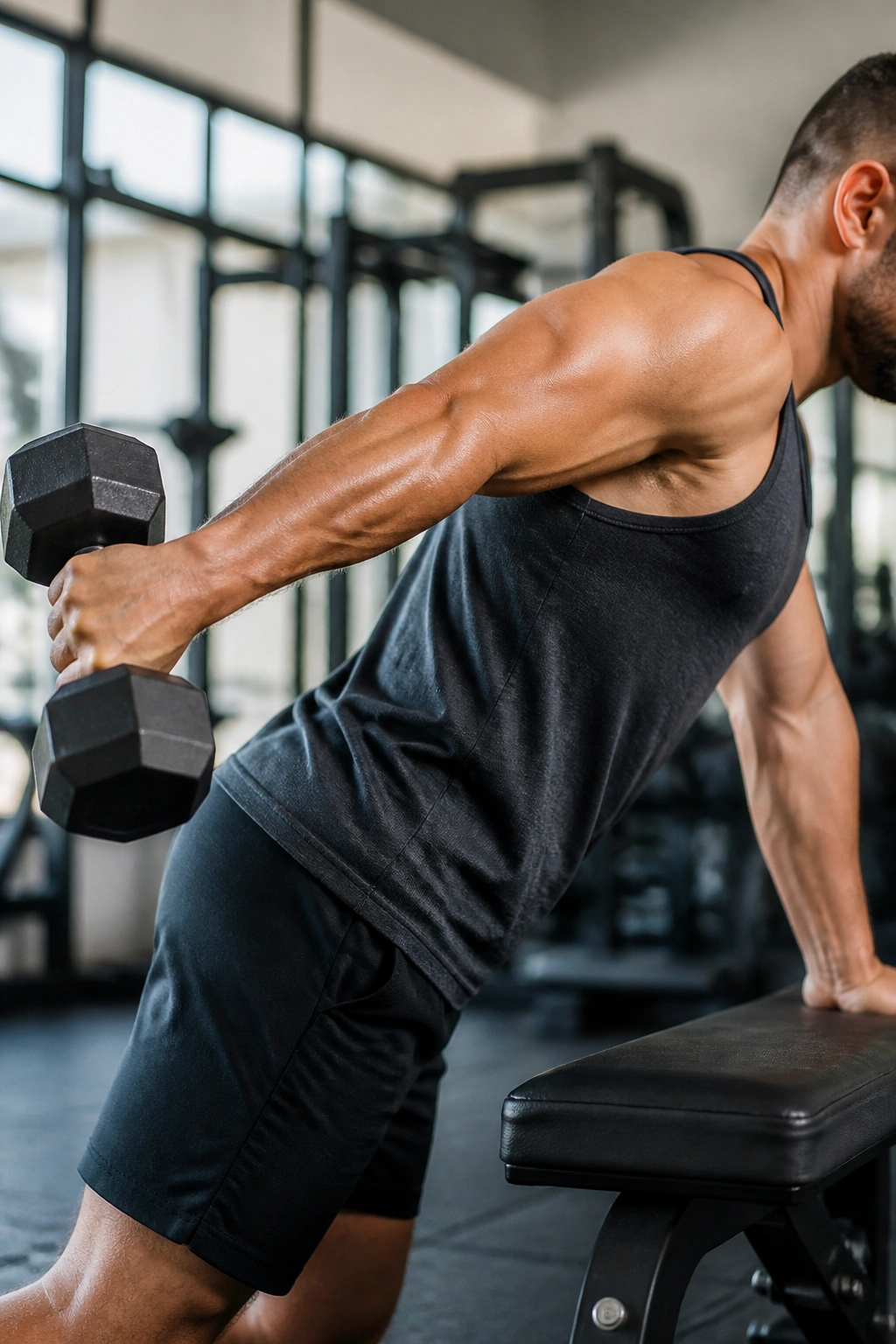
Hold the hand out there.
That’s the whole idea, and it works because the top position is where the triceps are fully shortened. A top-hold iso kickback keeps the arm locked out for a 2 to 10 second squeeze, which can turn a modest set into a very ugly finisher.
Why the Hold Matters
The isometric hold forces the triceps to keep producing force without movement. That can be useful when standard reps start to feel too easy at the top but the bottom still feels controlled. It also teaches you not to rush the lockout. A lot of people think “straight arm” means “done.” Not here.
Try six to eight normal reps, then hold the last rep for 5 to 15 seconds. Keep the shoulder down and the wrist straight. If the elbow drifts or the trap climbs, the hold is no longer doing what it should.
Use a lighter dumbbell than you think. Isometrics expose ugly form fast. Good.
12. One-and-a-Half Rep Kickback
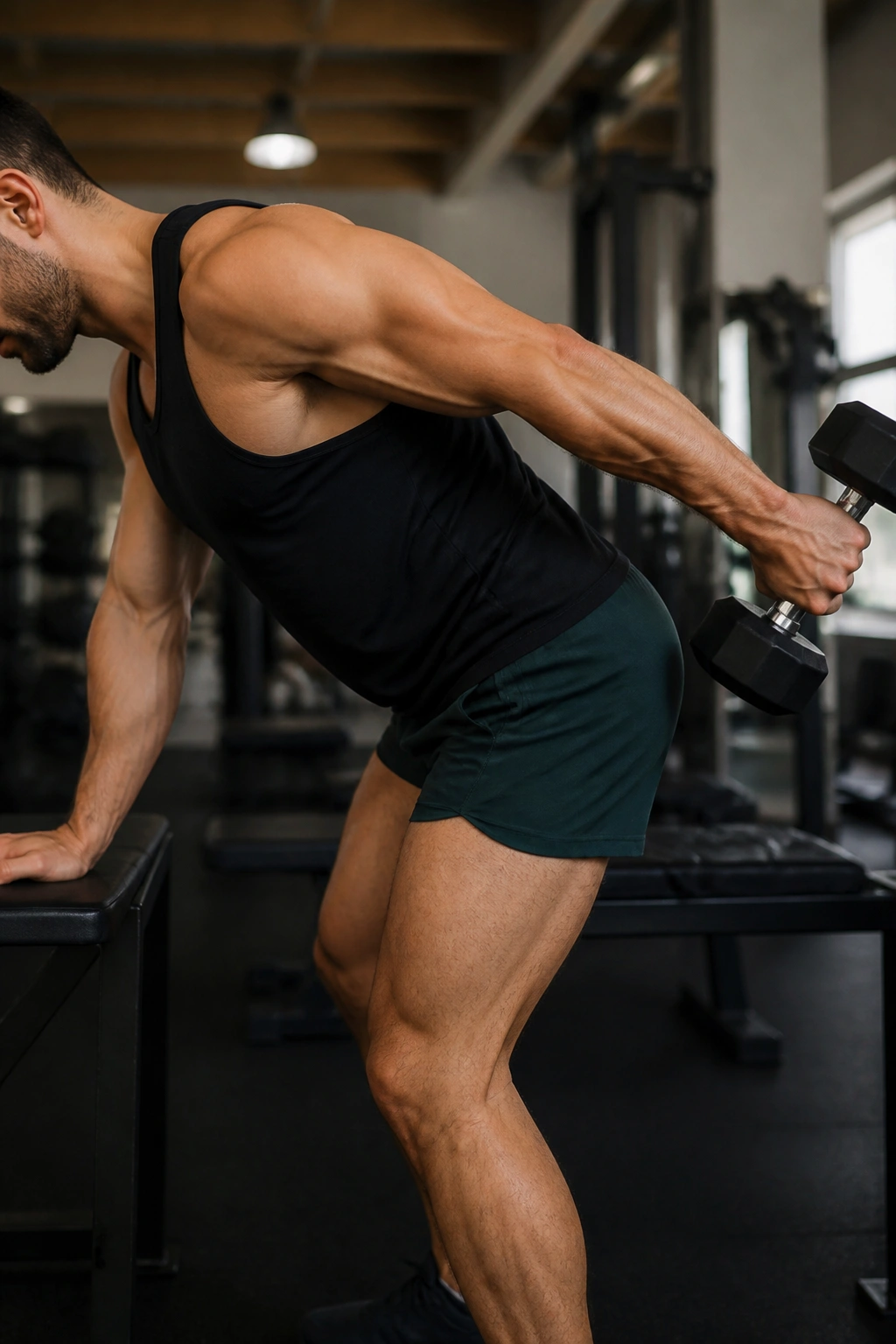
A one-and-a-half rep kickback turns a small move into a brutal one.
Here’s the pattern: extend all the way, lower halfway, extend again, then lower all the way. That halfway dip keeps tension from disappearing, and it makes every rep feel longer than it should. The triceps never get a full breather.
This version is nasty in the best way for short sets. I like it when a regular kickback starts to feel too easy but a heavier dumbbell would wreck the form. Use 6 to 10 reps and expect the last two to sting.
The key is not to get greedy with load. A one-and-a-half rep pattern already multiplies the work. Heavy weight only turns it into a swing fest. Keep the elbow fixed, keep the torso steady, and let the burn build the hard way.
13. Partial-Range Burnout Kickback
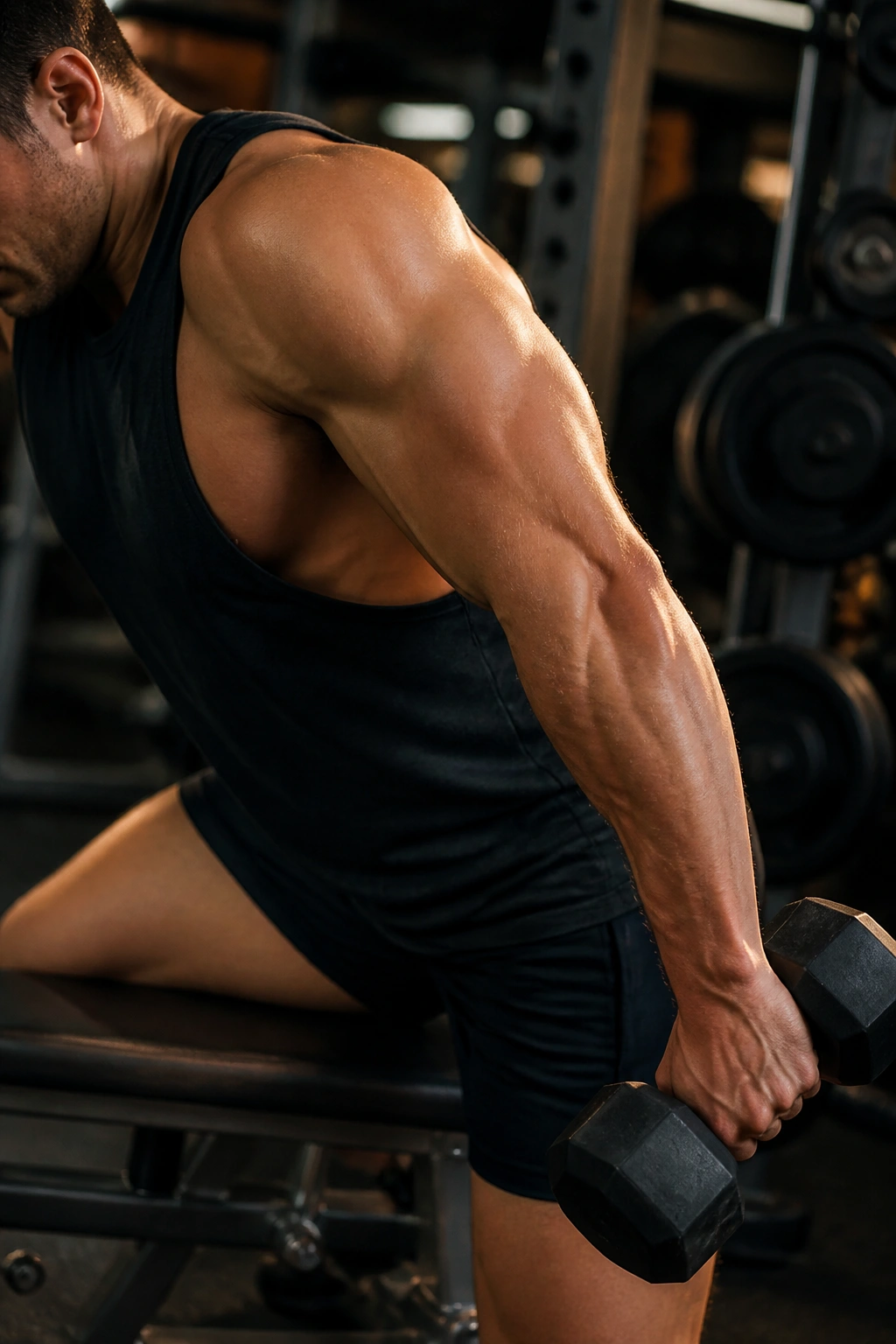
Partial reps get a bad reputation, usually because people use them lazily. Here, they have a job.
After a set of strict full-range kickbacks, stay in the top half and knock out short pulses for 10 to 20 more reps. That top half is where the triceps are shortest and where many people can still feel clean tension even after the full reps start to slow down.
What to Watch For
- Keep the upper arm frozen.
- Do not turn the pulse into a shoulder motion.
- Stay above the point where the elbow starts drifting.
- Stop as soon as the reps become sloppy.
This is a finisher, not a main lift. The whole point is to milk the lockout after the strict work is already done. If your elbows hate this variation, shorten the pulse range and keep the load tiny. It should feel like a controlled burn, not a joint test.
14. Reverse-Grip Kickback
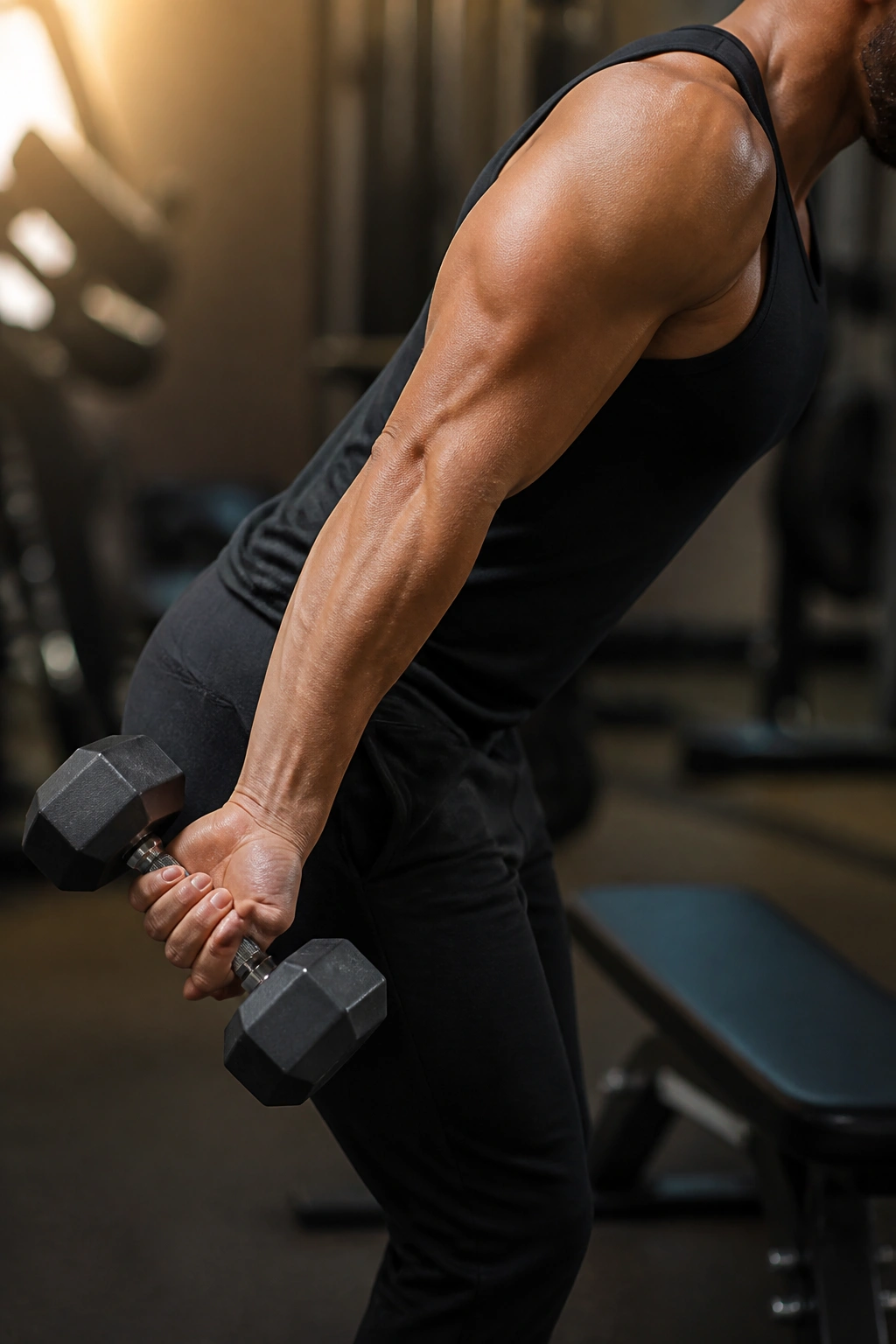
Palm-up kickbacks feel strange at first. That’s normal.
The reverse grip changes wrist and forearm position, which can make the movement feel smoother for some lifters and awkward for others. It also tends to reduce the urge to over-swing because the hand position is a little less natural to cheat with. Small shift, real difference.
Use a lighter dumbbell than usual and keep the wrist stacked. If the wrist bends back, the forearm starts doing odd things and the elbow can get irritated. A reverse-grip kickback should still look like a kickback. It is not a curl, and it is not a row dressed up in a new outfit.
This variation is useful if standard kickbacks feel boring or if your elbows like a different angle. Try 10 to 12 clean reps and see how the back of the arm responds. Sometimes a tiny change like this wakes the whole movement up.
15. Seated Kickback
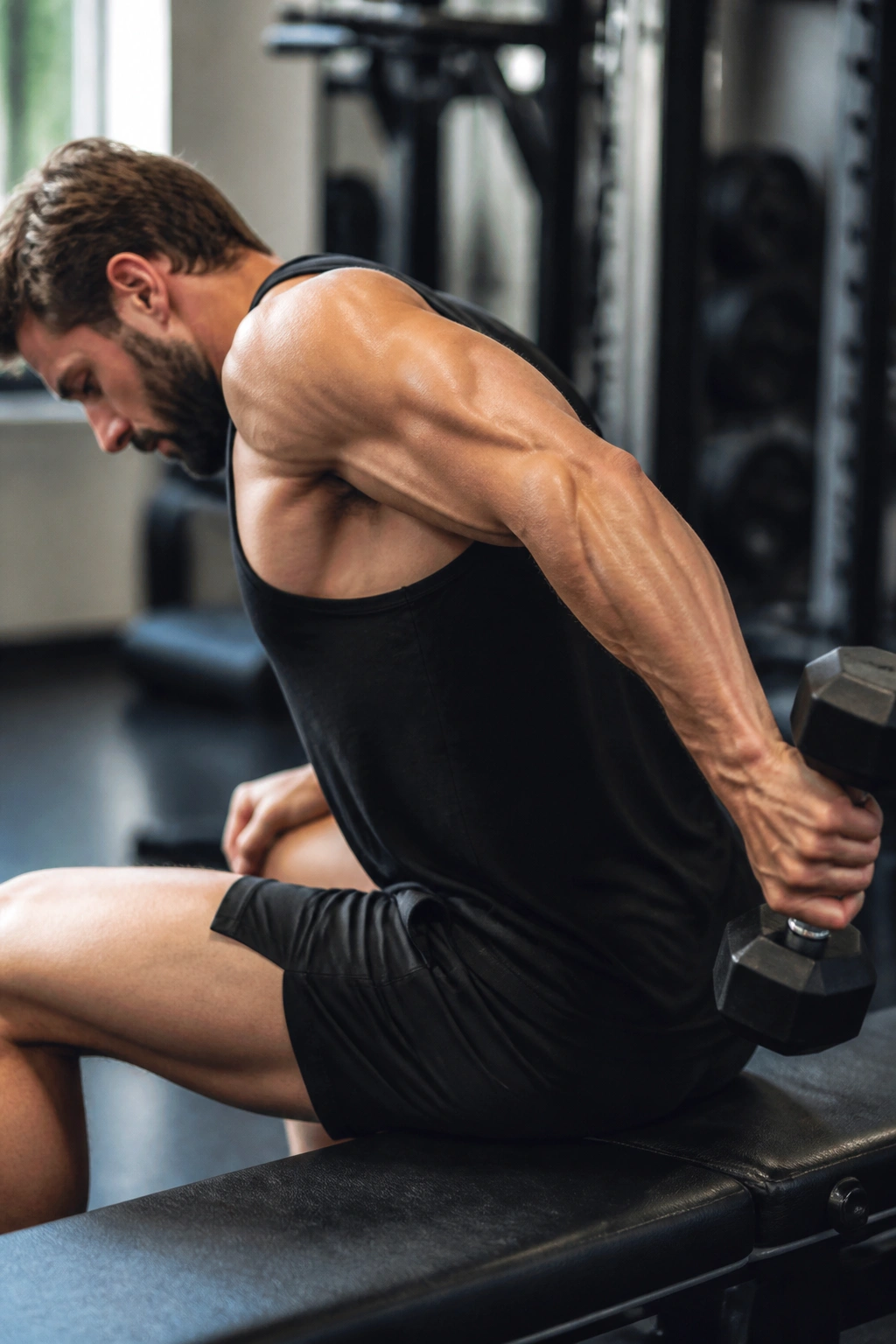
Sitting down removes a lot of nonsense.
That is why the seated version is so useful. You sit on a bench, hinge forward from the hips, and hold the dumbbell with your torso supported by your own posture rather than by your legs. There is less bounce, less drift, and less chance that the rep turns into a standing shrug.
A seated setup is also nice for people who get shaky during standing arm work. The base is steadier, the back angle is easier to repeat, and the exercise becomes surprisingly strict. I like it for moderate rep ranges, around 10 to 15 reps, with a one-second squeeze at the top.
If you tend to rush the first half of the movement, this version will expose that fast. The start is where most people cheat. Stay patient, and don’t let the dumbbell swing forward between reps. That reset matters.
16. Staggered-Stance Kickback
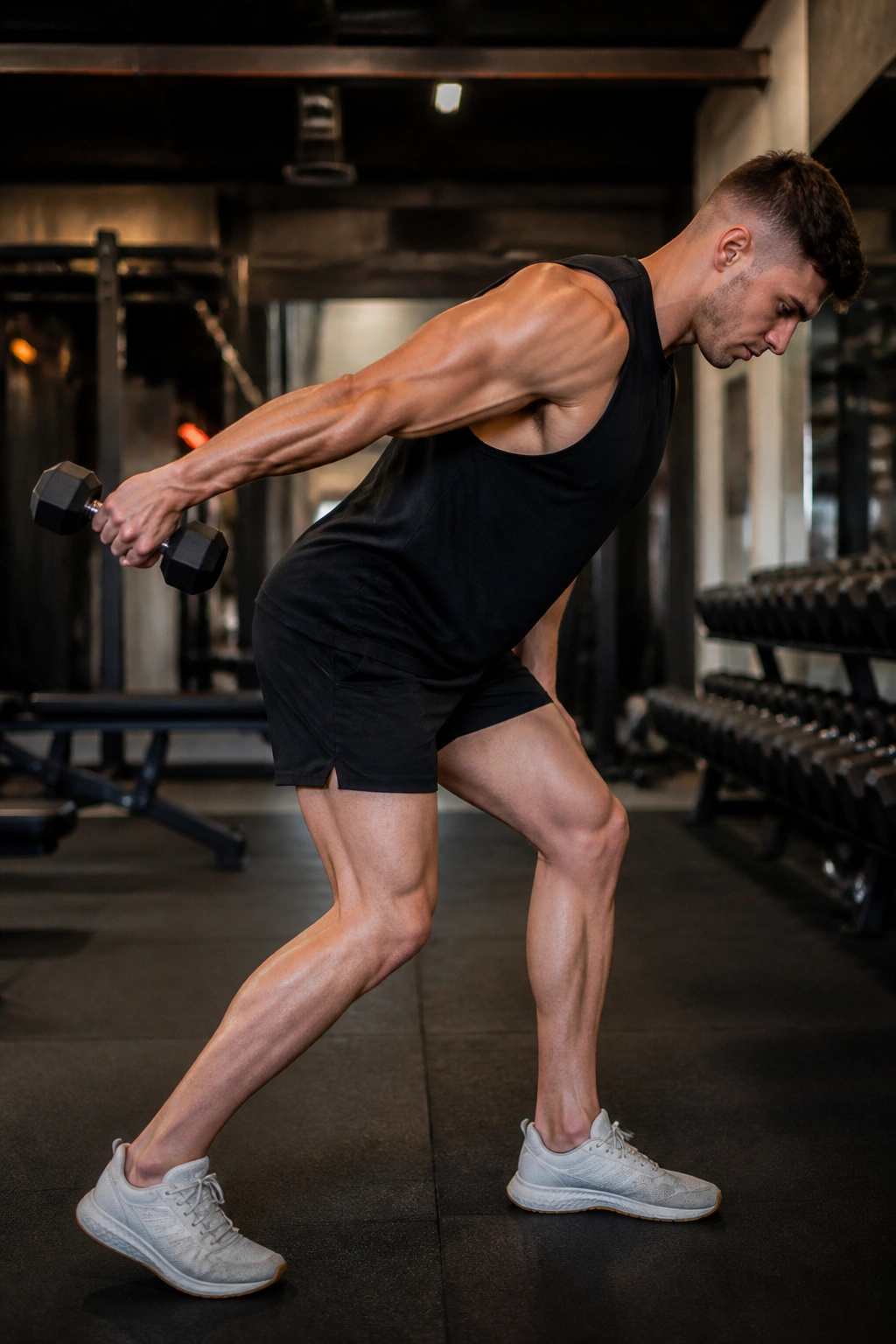
A staggered stance looks boring, which is exactly why it works.
One foot sits a step behind the other, and your weight shifts a little toward the front leg. That tiny change gives you more balance than feet-together hinging, but without the full support of a bench. It is a sweet middle ground for people who want a cleaner standing setup.
The stance also helps if your hips keep drifting side to side. You still hinge, still keep the upper arm fixed, and still extend from the elbow, but the base feels calmer. That means you can handle a little more load than the most unstable standing version, though not much more.
Use this when you want a stable standing kickback without a bench taking over. It is a good choice for supersets because the setup is fast. Eight to 12 reps with strict control is enough. No need to overcomplicate it.
17. Quadruped Donkey Kickback
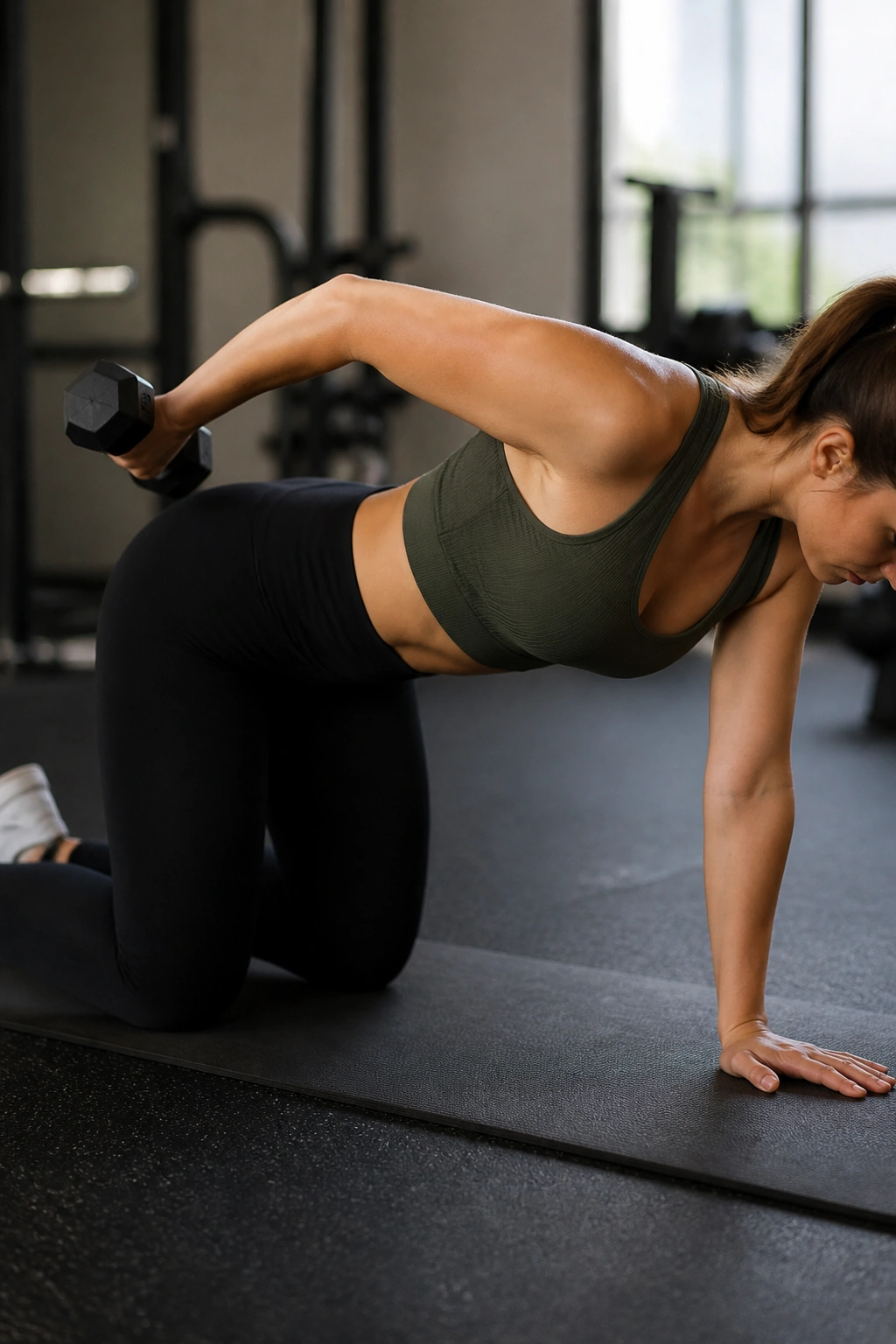
On all fours, the movement gets stripped down fast.
The quadruped version puts you in a hands-and-knees position, which cuts away most of the body sway you can hide in a standing hinge. One arm works at a time while the other three points on the floor keep you honest. It feels a little old-school, and that’s part of the appeal.
This version is especially useful for home workouts or very light finisher sets. You can use a dumbbell behind the knee, a band anchored low, or even a cable if your setup allows it. The exact load matters less than the control. Keep the upper arm high, extend fully, and avoid collapsing through the shoulder.
Setup Notes
- Place the supporting hand under the shoulder.
- Keep the working elbow bent and lifted.
- Extend the forearm back without rotating the torso.
- Use slow reps and a short pause at lockout.
This is not the prettiest variation. It does work, though, and sometimes the ugly-looking moves are the ones that make your triceps light up.
18. Lean-Away Cable Kickback
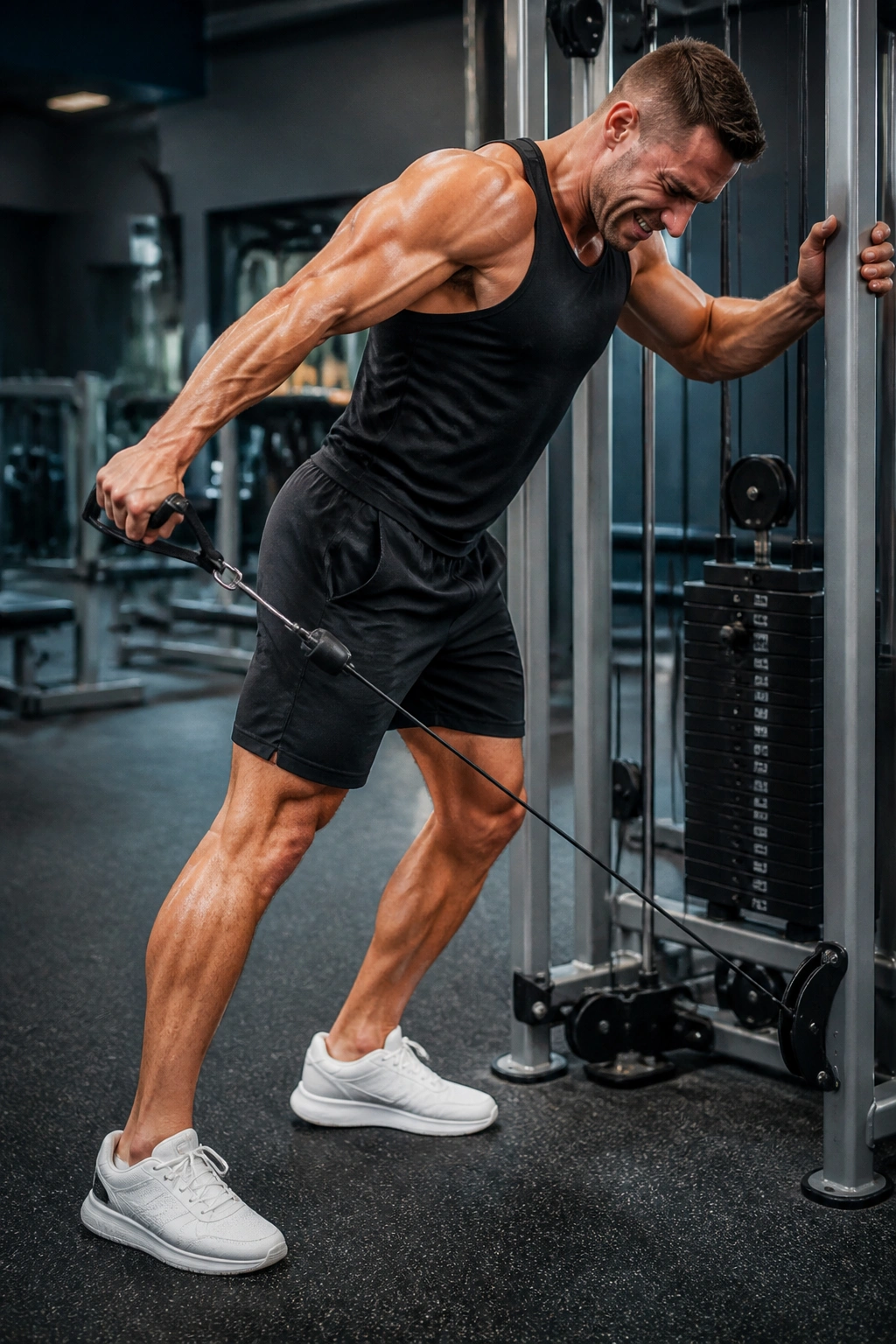
Step away from the stack and the line of pull changes in a useful way.
A lean-away cable kickback uses a little body angle to keep more tension in the top half of the rep. By stepping forward and leaning slightly away from the machine, you change how the cable pulls on the arm. That can make the lockout feel harder without increasing the load much.
This version is a nice pick when standard cable kickbacks start to feel too easy at the top. The leaning position keeps the stack interested longer, which is exactly what you want if the goal is a tight squeeze and not a sloppy swing. Use a moderate weight and keep the movement crisp.
It works well for 12 to 15 reps near the end of an arm session. If you lean too far, the shoulder starts helping and the whole point gets lost. Small angle. Small change. Big difference.
19. Dumbbell-and-Band Kickback
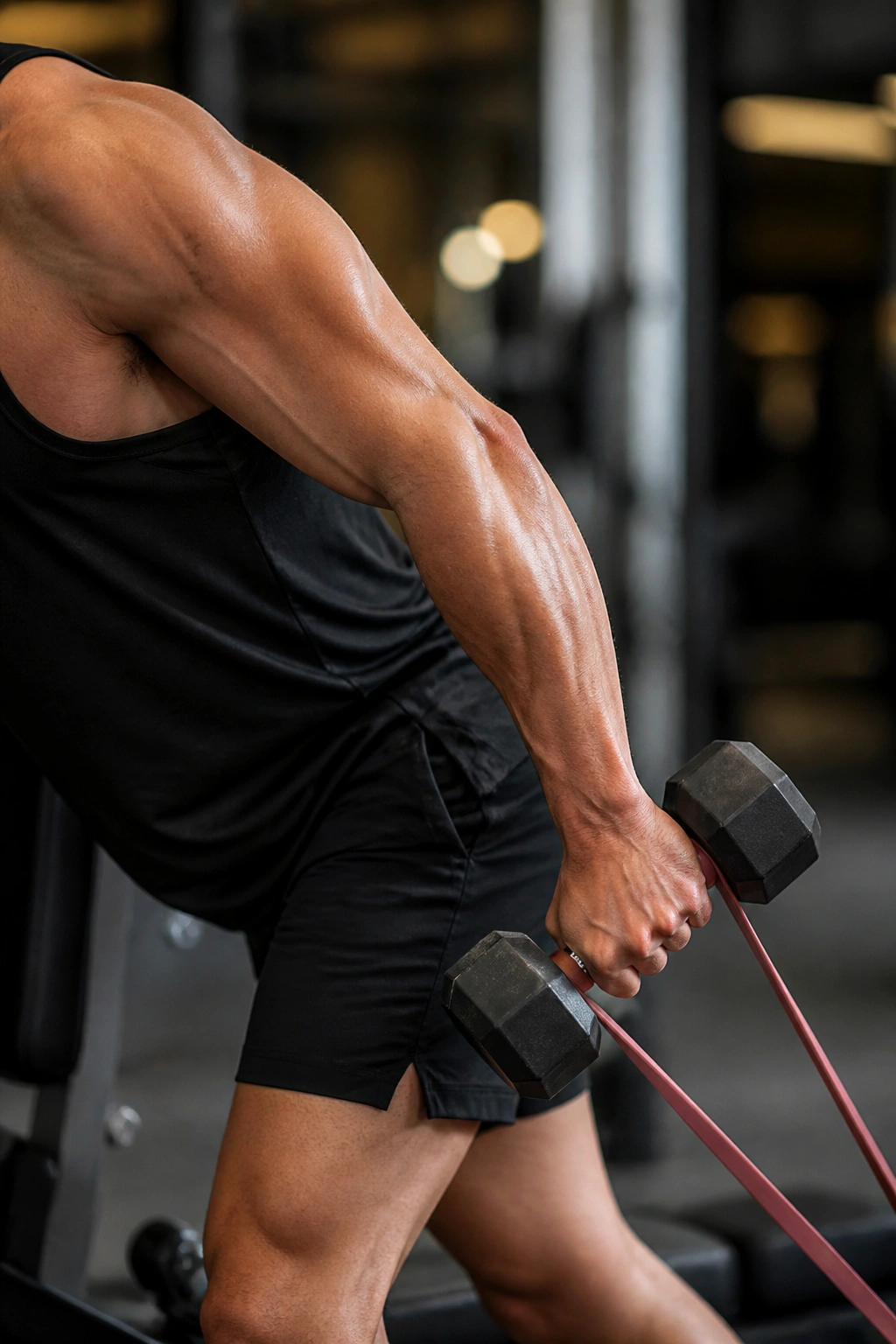
The dumbbell-and-band combo is the closest thing here to a burn that keeps climbing.
You hold a dumbbell while also fighting a band that adds tension near the end of the rep. That means the lockout gets harder than it would with the dumbbell alone. It is a useful trick when you want more peak tension but do not want to jump to a heavy weight that wrecks your form.
Where It Fits
- Use it for the last set of an arm workout.
- Keep the dumbbell modest and the band tension moderate.
- Stop before the shoulder starts to dominate.
- Expect the top few reps to feel much slower than the first few.
The band should help create resistance, not turn the movement into a wrestling match. If your wrist twists or the band pulls the dumbbell out of line, reset the setup. This variation is best for lifters who already know how to keep the upper arm still. If that part is shaky, fix that first.
20. Mechanical Drop-Set Kickback
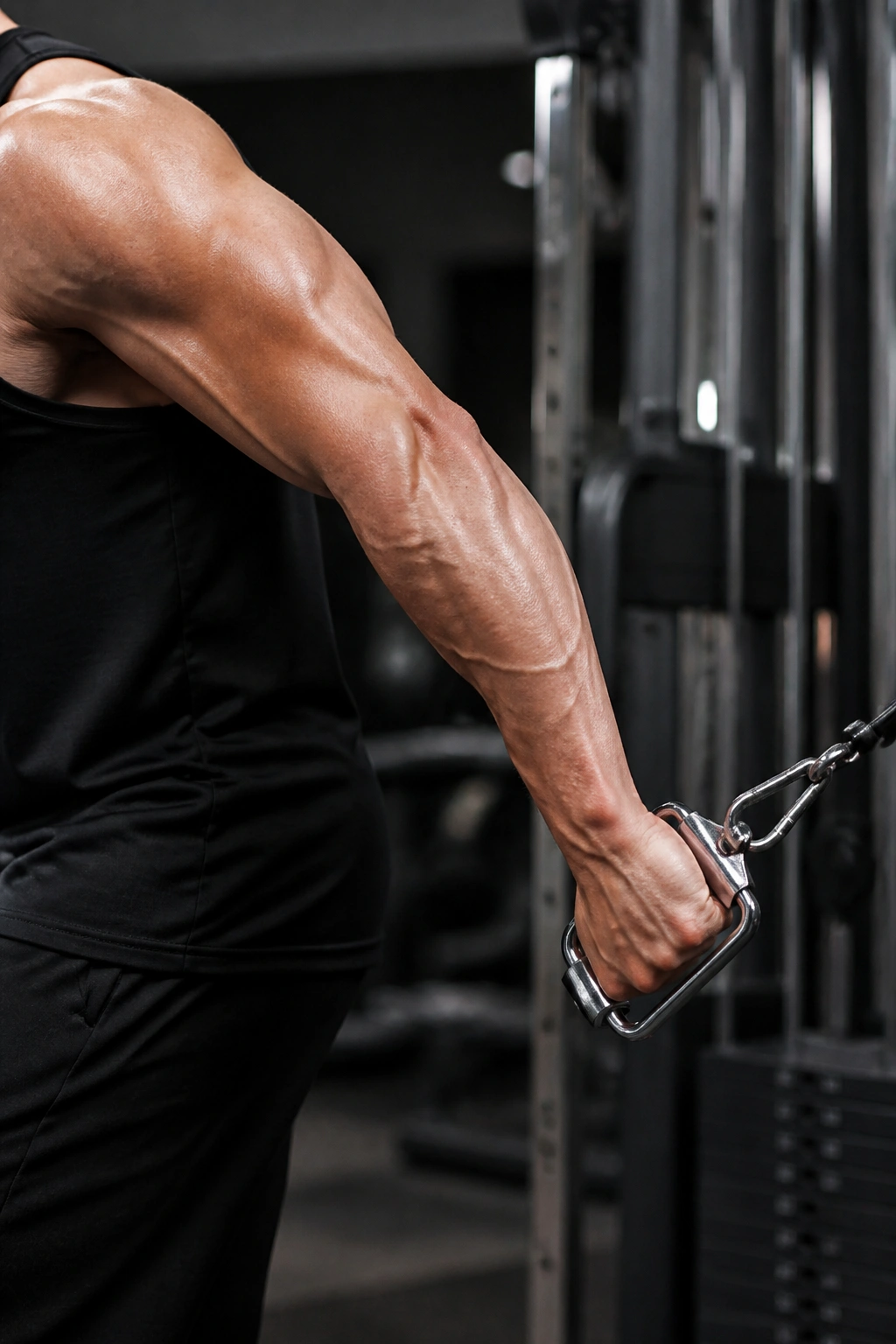
When a finisher needs to hurt in a controlled way, a mechanical drop set is hard to beat.
Start with a strict dumbbell kickback for 8 to 10 reps. Then switch to a cable kickback or a banded version for another 8 to 12 reps. Finish with short partial pulses or a top hold. The resistance gets easier in a technical sense, but the muscle work keeps climbing because the triceps never get a clean reset.
This is not a beginner move, and it does not need to show up every session. Use it when your arms already have some work behind them and you want a dense, ugly little finisher. Keep the transitions quick. Resting between pieces ruins the effect.
I like this one because it respects how kickbacks actually work: strict reps first, then a simpler angle, then a burn finish. That order keeps the form from collapsing too early and gives you a hard finish without turning the whole session into noise.
Final Notes
Kickbacks are not the hero lift. They are the detail work. That matters, because detail work is often what gives arms that finished look when the heavier pressing is already doing its job.
The cleanest versions are the ones that keep the elbow honest and the shoulder quiet. The moment the rep turns into a swing, the triceps lose their turn. A 10-pound kickback done right will do more than a 30-pound fling every single time.
Pick one strict version and one finisher. Train them hard, but not sloppy. The back of your arms will tell you when you got it right.
