



Finding the time is rarely the actual problem; it is finding the intensity. You can spend two hours wandering around a gym, shuffling between machines while checking your phone, and walk out having accomplished very little. Or, you can commit to thirty minutes of pure, unadulterated effort that leaves your lungs burning and your shirt soaked. That is the trade-off. You give up the duration, and in exchange, you must maximize the output.
High-intensity cardio is not about doing things slowly and steadily for an hour. It is about pushing your heart rate into that uncomfortable zone where talking becomes a struggle, sustaining it, backing off just enough to recover, and then hitting it again. This cycle is what builds VO2 max, burns calories long after you have stepped into the shower, and strengthens the heart muscle.
The beauty of the thirty-minute window is that it is sustainable. Almost everyone can find thirty minutes in a day, but few can consistently find ninety. These workouts are designed to be brutal enough to be effective, but brief enough that you cannot use the “I don’t have enough time” excuse. Put the phone on “Do Not Disturb,” set a timer, and get to work.
1. The Classic Track Sprint Interval
There is a raw, primal feeling to sprinting on a track that a treadmill just cannot replicate. The wind, the surface, and the lack of a motorized belt forcing your feet to move—it all adds up. You do not need to be a track star to use this method; you just need to be willing to push until you feel like you might throw up. That is the zone of adaptation.
The Protocol
Warm up with a light jog for five minutes to get the blood flowing. Once you are warm, perform a 100-meter sprint at 90 percent of your max effort. Walk the curve of the track for recovery. Repeat this for exactly twenty-five minutes.
The Benefit of Natural Surface
Running on a track puts less impact on your joints than concrete and forces your stabilizers to work harder than they would on a treadmill. You are fighting gravity and friction, not just keeping pace with a moving belt. If you are doing this right, by the tenth round, your legs should feel heavy, and your breath should be jagged. That is the goal.
2. Jump Rope Endurance Pyramid

The jump rope is arguably the most efficient cardio tool ever created. It costs pennies, fits in a bag, and demands total body coordination. If you are not tripping over the rope, you are likely not pushing hard enough.
How to Structure the Pyramid
Start with one minute of jumping, followed by thirty seconds of rest. Move to two minutes of jumping, followed by thirty seconds of rest. Increase the work time to three minutes, four minutes, and then five minutes, keeping the rest intervals strictly at thirty seconds. If you have time left, climb back down the pyramid.
Why This Works
The variable intensity forces your cardiovascular system to adjust constantly. The short rest periods prevent your heart rate from ever fully dropping, which keeps you in an aerobic-anaerobic crossover zone. If you are a beginner, do not worry about speed. Focus on rhythm. If you are advanced, incorporate double-unders to really spike that heart rate.
3. The Stairmaster “Death” Climb

Step machines are the most humbling piece of equipment in any gym. You can go for an hour at a slow, leisurely pace, but that is not cardio—that is just walking in place. To make it a workout, you have to treat the stairs like a mountain you are trying to summit before a storm hits.
The High-Low Technique
Set the machine to a moderate pace for two minutes. Then, crank the speed up to a level that feels almost impossible for one minute. Repeat this two-to-one ratio for the entire thirty minutes. Avoid the temptation to lean on the handrails; leaning takes the weight off your legs and ruins the point of the exercise. You want your glutes and quads to do the lifting, not your biceps.
4. Bodyweight EMOM (Every Minute on the Minute)

EMOM is a fantastic way to keep yourself honest. The format is simple: you perform a specific amount of work at the start of every minute, and whatever time remains in that minute is your rest. If you are slow, you rest less. If you are fast, you rest more. It gamifies the suffering.
The Setup
Set a timer for thirty minutes. Every minute, you will perform three specific movements: 10 burpees, 15 air squats, and 20 mountain climbers. If it takes you forty seconds to finish, you have twenty seconds to recover before the next minute starts. The fatigue will accumulate fast. By the twenty-minute mark, those twenty seconds of rest will feel like they disappear in a heartbeat.
5. Kettlebell Swing-Burpee Ladder

Kettlebell swings are a hinge movement, meaning they hammer the posterior chain (glutes, hamstrings, and lower back), while burpees are a full-body sprawl-and-jump movement. Combining these two creates a metabolic stressor that is incredibly effective.
The Ladder Format
Start with 10 kettlebell swings and 1 burpee. Then do 10 swings and 2 burpees, 10 swings and 3 burpees, and so on. Keep climbing until the thirty-minute timer goes off. You will find that the swings are your active recovery and the burpees are your heart-rate spikes. Keep your back flat during the swings. If you start rounding your spine, lower the weight immediately. Your lower back is not a hinge; your hips are.
6. Rowing Machine Pyramid

The rower is often ignored in favor of treadmills, which is a massive mistake. It is a full-body workout that engages the legs, back, and arms simultaneously. It also requires a level of technique that keeps your mind engaged, which helps pass the time faster.
The Strokes Per Minute Strategy
Set the damper to a moderate resistance. Spend the first five minutes warming up. Then, alternate between 500-meter sprints and 500-meter active recovery rows at a very low intensity. Do not stop moving. Keep the fan spinning. By the time you reach the twenty-minute mark, you will understand why rowers are considered some of the fittest athletes on earth. Focus on the leg drive—that is where 80 percent of your power should come from.
7. Shadow Boxing Rounds

You do not need a bag or a partner to get a world-class workout. Shadow boxing requires nothing but space and a bit of imagination. It improves agility, coordination, and aerobic capacity while helping you shed stress.
The Timer Drill
Set a timer for three-minute rounds with one minute of rest between each, mimicking a professional boxing match. During the three minutes of work, you must stay in motion. Punch combinations, weave, duck, and shuffle your feet. Do not just stand and swing; pretend you are reacting to an opponent. If you are standing still, you are doing it wrong. The constant bobbing and weaving will leave your shoulders and core screaming by the end of the second round.
8. Battle Rope Finisher

Battle ropes are deceptive. They look like arm exercises, but if you do them correctly, your core and heart rate are the primary victims. The goal is to keep the ropes moving with high amplitude—meaning big, consistent waves.
Alternating Wave Intervals
Perform 30 seconds of high-intensity alternating waves (as fast as you can), followed by 30 seconds of rest. Do this for 10 rounds. Then, switch to “slams” for 10 rounds. Finally, finish with 10 rounds of “circles.” It sounds simple, but you will be drenched in sweat before you even hit the halfway point. Keep your knees bent and your core tight. If your lower back starts to ache, you are likely leaning too far forward.
9. Mountain Climber and Plank Tap Combo

This workout is brutal on the core and shoulders. It is a stationary cardio routine that forces you to hold your body weight up while your limbs are in constant motion. It is deceptively difficult.
The 45/15 Split
Perform 45 seconds of mountain climbers followed by 15 seconds of plank taps (where you tap your opposite shoulder from a plank position). Do this cycle continuously for 30 minutes. You cannot drop your knees. If you absolutely have to stop, hold a plank until the next interval starts. The continuous tension on your abdominal wall will make you feel like your stomach is on fire.
10. The Elliptical Incline-Resistance Mix

Most people use the elliptical like they are taking a Sunday stroll through the park. To get a real cardio session out of it, you need to crank the resistance and the incline.
Building Resistance
Start with the incline at the highest level possible. Keep the resistance at a level where you can only maintain a steady pace for about 60 seconds before needing to slow down. Alternate between 2 minutes of “heavy” resistance at a steady pace and 1 minute of “low” resistance at a blistering sprint. This interval structure prevents the elliptical from becoming a comfort zone.
11. Stationary Bike Tabata

Tabata is a specific form of interval training: 20 seconds of all-out effort followed by 10 seconds of rest. It is short, it is sharp, and it is scientifically proven to boost VO2 max rapidly.
Why It Works for Cycling
On a stationary bike, you can exert maximum power without the risk of tripping or losing balance, making it perfect for the Tabata protocol. During the 20 seconds of work, your RPM should be high, and your tension should be heavy. During the 10 seconds of rest, you just spin slowly. Do this for 8 rounds, then take a 2-minute break. Repeat the entire cycle until the 30-minute mark. Your legs will feel like jelly, which is exactly the point.
12. Burpee-Box Jump Complex

If you have access to a plyometric box, this is a phenomenal way to combine explosive power with sustained cardio. It requires agility, strength, and endurance.
The Sequence
Do 5 burpees, then jump onto the box. Step down, do 4 burpees, jump onto the box, and continue descending the rep count until you hit 1. Then, start climbing back up. If you are struggling with the box jump, step up instead. The intensity should remain high throughout. The key here is rhythm; do not pause between the burpee and the jump. Make it one fluid flow.
13. Agility Ladder Drills
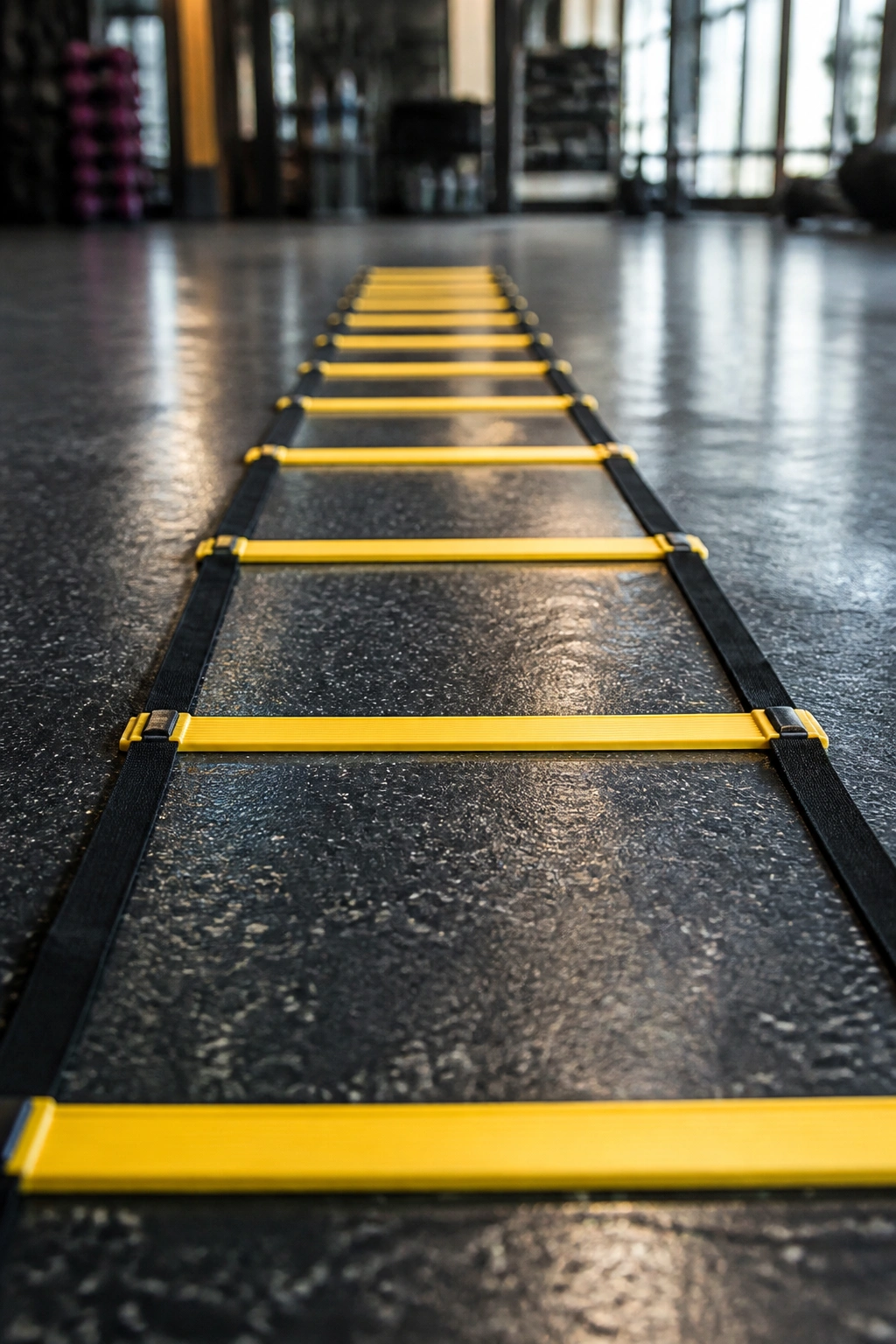
Agility ladders are not just for football players or sprinters. They are excellent for getting your heart rate up because they require both physical speed and mental focus. When your brain is busy processing footwork, you often forget how tired you are.
Mixing It Up
Move through the ladder with “high knees,” then “in-in-out-out,” then “lateral shuffles.” Go through the ladder as fast as you can, then sprint 20 yards away, and sprint back to the ladder. Repeat this for 30 minutes. The rapid fire footwork elevates the heart rate, while the sprints provide the anaerobic burst.
14. Bear Crawl and Sprint Intervals

Bear crawls are one of the most underrated movements in fitness. They engage every muscle in the body, specifically the shoulders, chest, and core. Combining them with sprints creates a brutal dichotomy: the slow, grinding crawl followed by the fast, explosive sprint.
The Pattern
Crawl for 20 yards, stand up, and sprint back 20 yards. Do not stop. Turn around and crawl again. The transition from being on the ground to sprinting upright is what makes this workout so difficult. Your heart has to work overtime to pump blood to your legs after they have been inactive during the crawl. It is a fantastic way to develop total body control and cardiovascular grit.
15. The “Deck of Cards” Bodyweight Shuffle

Take a deck of cards. Assign a movement to each suit: hearts are burpees, diamonds are mountain climbers, clubs are air squats, and spades are pushups. The number on the card is the number of reps you perform.
Dealing with Fatigue
Flip the top card and perform the movement. Immediately flip the next. Do not stop to look at the card or breathe; keep the rhythm moving. You will fly through the first half of the deck, but as you approach the final cards, the fatigue will set in hard. This workout is unpredictable, which keeps it mentally stimulating. It is one of the few workouts where you truly do not know what is coming next.
16. Treadmill Incline Walk-Run

You do not always have to sprint to get a great cardio workout. Walking on a steep incline at a fast pace can be just as taxing as running, with significantly less impact on your knees and ankles.
The Incline Formula
Set the treadmill incline to the maximum, usually 12 to 15 percent. Set the speed to a fast power walk, somewhere between 3.5 and 4.0 miles per hour. Walk for 5 minutes, then run for 1 minute, then go back to the walk. Repeat this cycle. The incline forces your calves and glutes to engage heavily, making your heart pump harder to move blood to those large muscle groups.
17. Swimming Lap Sprint Intervals

Swimming is the ultimate low-impact cardio. It forces you to control your breathing, which is a fundamental skill for any cardiovascular conditioning. If you have access to a pool, this is arguably the best thirty-minute investment you can make.
Sprinting the Laps
Swim one lap as fast as you can. Recover by swimming the next lap at a very slow, easy pace. Repeat this for the full thirty minutes. Focus on your technique—long, smooth strokes. The second you start flailing, you are wasting energy. Swimming sprints will leave you gasping for air in a way that running never will, primarily because of the breath control required.
18. Lateral High-Knee Shuffles

Most cardio happens in a straight line—forward and back. But life, and sports, happen in every direction. Lateral movement works the glute medius and adductors, muscles that are often neglected in traditional forward-running cardio.
The Drill
Shuffle laterally for 10 feet, touch the floor, and shuffle back. Immediately drop into high-knees in place for 30 seconds. Repeat. The change of plane (going from lateral to vertical) causes a significant spike in heart rate. It challenges your vestibular system and forces your heart to adapt to different movement patterns quickly.
19. Medicine Ball Slam Circuit

Medicine ball slams are an explosive movement that targets the entire core, lats, and shoulders. They are also incredibly satisfying. If you have had a long day, there is something cathartic about slamming a weighted ball into the ground as hard as you can.
The Combo
Perform 10 medicine ball slams, then 10 jumping jacks. Repeat this for 30 minutes without rest. The slam provides the explosive power (anaerobic), and the jumping jacks keep the aerobic engine running. Choose a ball heavy enough to be challenging, but not so heavy that your form breaks down. If you have to bend your back to pick it up, it is too heavy.
20. Thruster-Pushup Chain

Thrusters are a compound lift—a squat into an overhead press. They are notorious for being the most physically demanding movement in functional fitness. Adding pushups turns this into a total-body exhaustion machine.
The 10-Minute Blocks
Perform 10 thrusters followed by 10 pushups. Repeat this for 10 minutes. Take a 2-minute break. Do another 10-minute block. Then a final 10-minute block. If you cannot finish the reps within the timeframe, lighten the weight of the dumbbells. You should be moving constantly. This is not about lifting the heaviest weight possible; it is about keeping the barbell or dumbbells moving for the duration of the thirty minutes.
21. Kickboxing Kick-Combination Drills

Similar to shadow boxing, kickboxing drills force you to use your legs to strike, which requires significantly more energy than just throwing punches. It is a full-body engagement.
The Combination Strategy
Focus on one combination: Jab, cross, hook, roundhouse kick. Perform this combination on the left side, then on the right side. Do this for 30 seconds, then hold a squat for 30 seconds to recover. Repeat. The constant alternation between explosive kicking and isometric squatting will destroy your quads and leave you winded. It is a rhythmic, hypnotic workout that flies by.
22. The “30-for-30” Calisthenics Routine

This is a straightforward, high-volume bodyweight circuit. It relies on volume to drive the heart rate up, rather than speed or heavy weights. It is simple, effective, and requires absolutely zero equipment.
The Breakdown
Perform 30 jumping jacks, 30 air squats, 30 mountain climbers, and 30 high knees. That is one round. Rest for one minute. Repeat the cycle until you reach the thirty-minute mark. Because the rep counts are high, you will naturally have to slow down as the workout progresses. That is fine. The fatigue is the point. Keep your posture upright, breathe deeply, and keep grinding until the timer hits zero.
Final Thoughts

Consistency is the secret that no one wants to hear. You do not need the perfect thirty-minute workout; you need the one you will actually do three or four times a week. If you hate the treadmill, do not force yourself to run. If you love the rower, use it. The best cardio workout is the one that forces you to breathe hard, sweat, and push past the urge to quit.
Pick one of these twenty-two routines and try it. If you enjoy it, keep it. If you dread it, switch it out for another one next week. Variety keeps the body adapting and the mind interested. The goal is simple: thirty minutes of focus, intensity, and hard work. Everything else is just details. You have the time; the rest is just commitment.
