



You walk into a yoga studio expecting a quiet, meditative experience. You have your mat, your water bottle, and a mindset prepared for deep breathing and long holds. Then, the music kicks up. The instructor doesn’t lead you through slow, static stretches; instead, they move with a rhythmic speed that makes your heart race within the first three minutes. This is the reality of dynamic, cardiovascular-focused yoga. It is not about simply stretching your hamstrings or finding inner peace in stillness; it is about building endurance, spiking your heart rate, and turning your breath into a furnace that powers your movement.
Many people treat yoga as an add-on to their fitness routine—the “cool down” or the “stretching day.” That is a missed opportunity. When you select the right sequences and maintain a brisk tempo, you can create a workout that rivals any spin class or rowing session. You are essentially doing a HIIT workout, but with the added benefit of bodyweight strength and mobility work. The secret isn’t a magical pose; it is the transition. It is the speed between the movements, the engagement of your core, and the refusal to let your muscles rest for more than a heartbeat. If you are ready to sweat through your shirt and challenge your aerobic capacity, let’s get into the flows that change the game.
1. Sun Salutation B Variation
This sequence is the absolute foundation of heat-building yoga. Unlike the standard Sun Salutation A, the B version incorporates the Chair Pose, which forces your quads and glutes to work overtime. To turn this into a true cardio burner, you must remove the pauses. Do not stand in Mountain Pose for two breaths between cycles. Instead, treat it like a conveyor belt of movement.
How to Accelerate the Burn
The moment your hands hit the mat for your jump-back, you should be moving into your Chaturanga. Don’t linger. When you jump forward from Downward-Dog to the top of your mat, land softly in your Chair Pose—get low immediately. The repetition is where the cardio happens. Aim for ten continuous rounds without stopping. If your heart isn’t pounding by the fourth round, you aren’t moving fast enough.
2. Chair Pose to Jump-Back
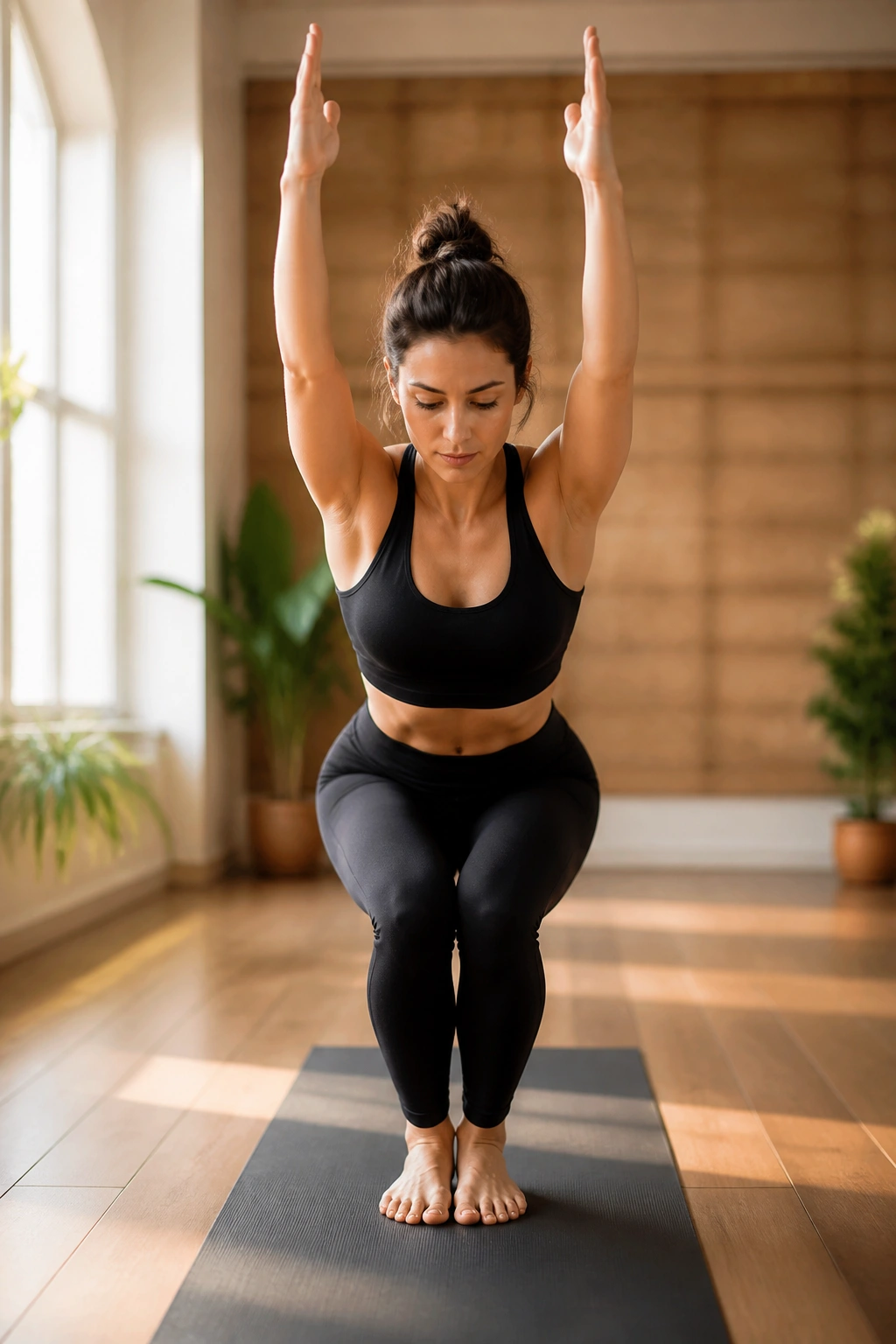
This move is explosive by design. Start in Chair Pose with your weight shifted firmly into your heels, chest lifted, and arms framing your ears. When you move to the next phase, do not step back. You need to plant your palms and jump both feet simultaneously into a high plank.
Why It Works for Endurance
The jump requires a full-body engagement. You are compressing your core to tuck your legs and using your shoulders to absorb the impact. After you jump back, hold the high plank for only a split second before dropping into a push-up. This hybrid of a squat, an explosive jump, and a push-up creates a massive oxygen demand. Your body has to work hard to stabilize after the impact, and the constant up-and-down motion keeps your heart rate soaring.
3. Low Lunge to High Lunge Transitions
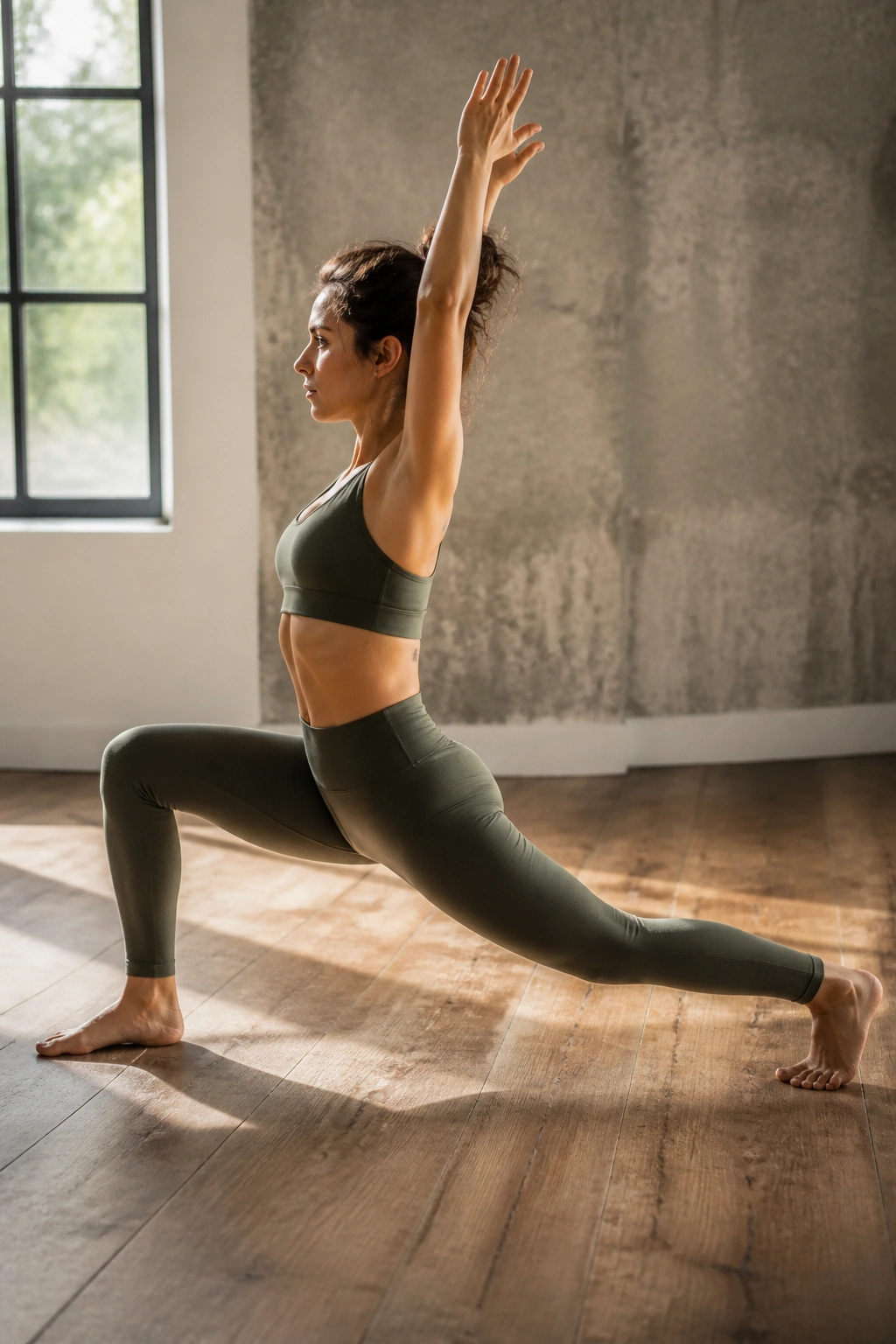
Lunges are excellent for leg strength, but when you cycle them quickly, they become a metabolic challenge. Start in a low lunge with your back knee hovering just an inch off the floor. From here, drive through your front heel to explode up into a high lunge, lifting your back knee toward your chest as you stand.
Getting the Rhythm Right
Tap your back toes down and immediately drive the knee back up. Do this for thirty seconds on one leg before switching sides. The unilateral nature of this flow forces your stabilizing muscles in the standing leg to fire rapidly, which prevents you from relying on momentum alone. It creates a burning sensation in the glutes that is impossible to ignore. If you find your balance wobbling, keep your core braced tight and gaze at a single, unmoving point.
4. Warrior II to Skandasana
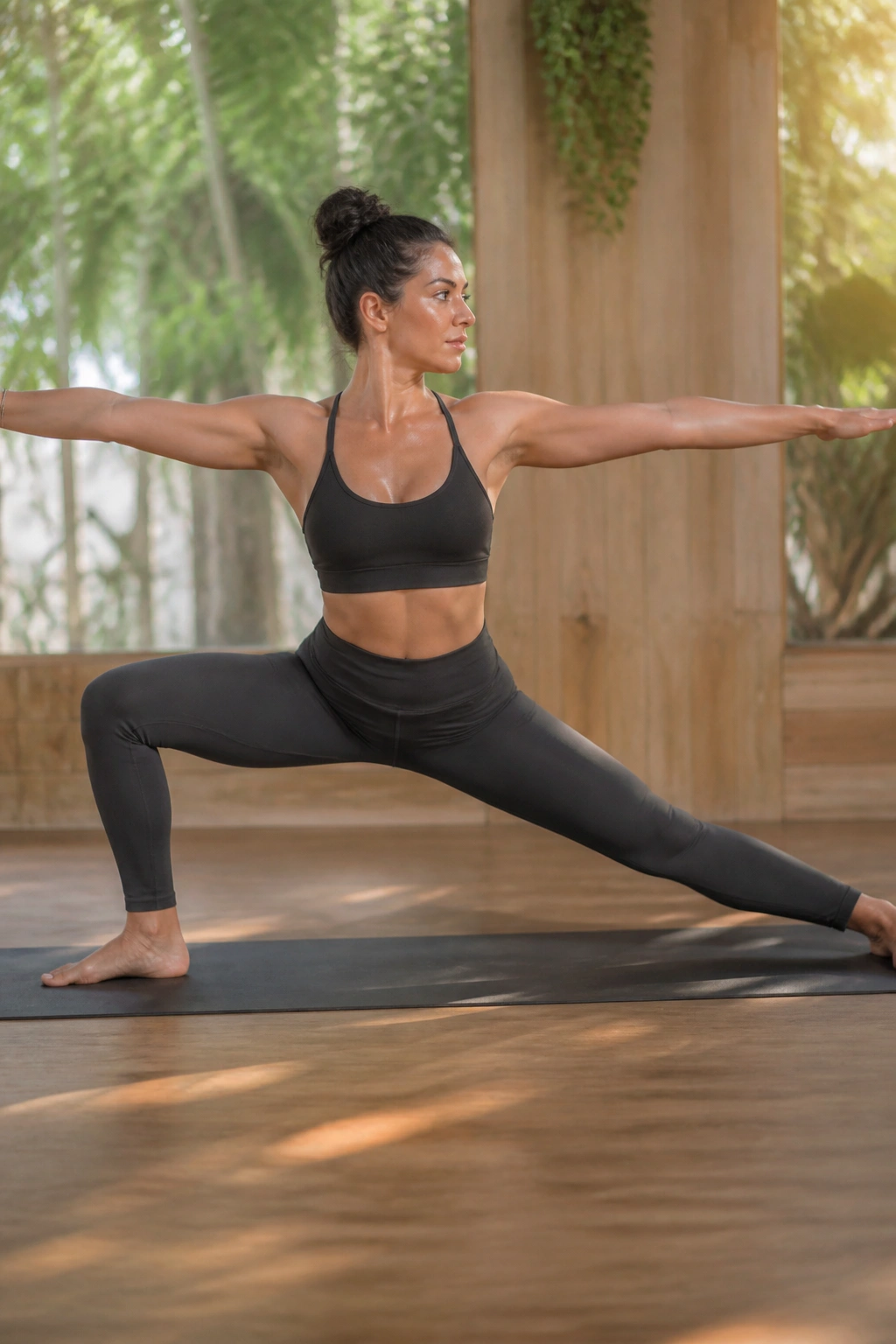
Lateral movement is often missing from typical fitness routines, which is why this flow feels so challenging for the hips. Start in Warrior II, with your front knee deeply bent and your arms extended wide. From this position, pivot your feet and sink your hips low into Skandasana (side lunge) on one side, keeping your chest upright and your other leg straight.
Building Dynamic Strength
The cardio comes from the flow between these two positions. Do not stand up fully between the moves. Stay low. Drag your hips through the center, transitioning seamlessly from one side to the other. You are essentially skating on your mat. This flow works your inner thighs, glutes, and obliques, but the rapid shifts in weight will force your heart to pump blood to all those engaged muscles simultaneously.
5. Plank to Chaturanga Jump-Throughs
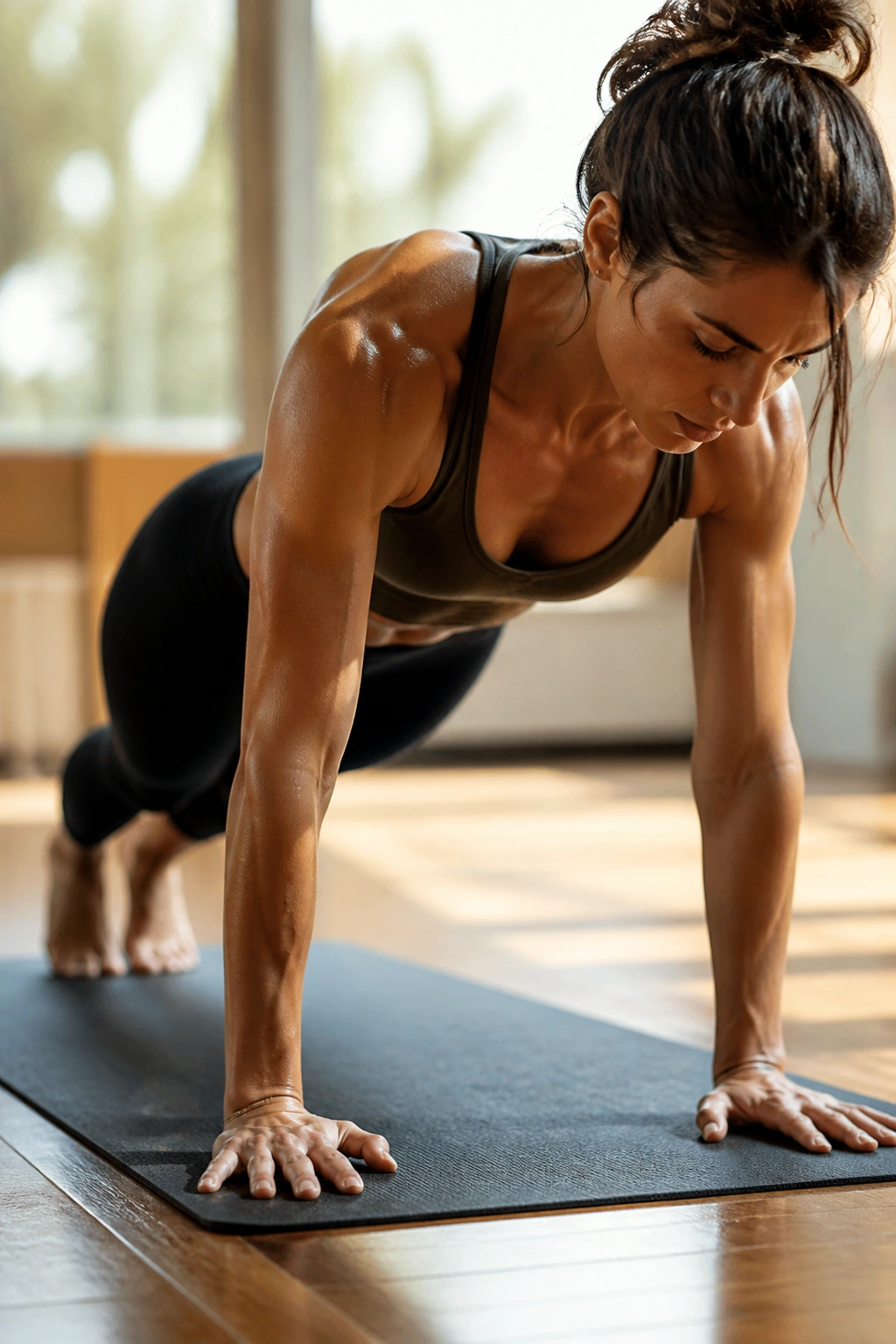
This is an advanced maneuver that demands significant core strength. Start in a high plank position. In one fluid motion, push off your palms and jump your feet forward, landing them outside your hands in a low squat. Immediately place your palms back down and jump your feet back into your plank position.
Mastering the Movement
Think of this as a yoga-based burpee. The key is to keep your hips low during the transition. If your butt pops up into the air, you lose the core engagement. By keeping your spine long and your core tight, you ensure that the effort is coming from your abdominals, not your lower back. Speed is the enemy of form here, so start slow to ensure your landing is quiet, then increase your tempo as you gain confidence.
6. Mountain Climber to Down-Dog Split
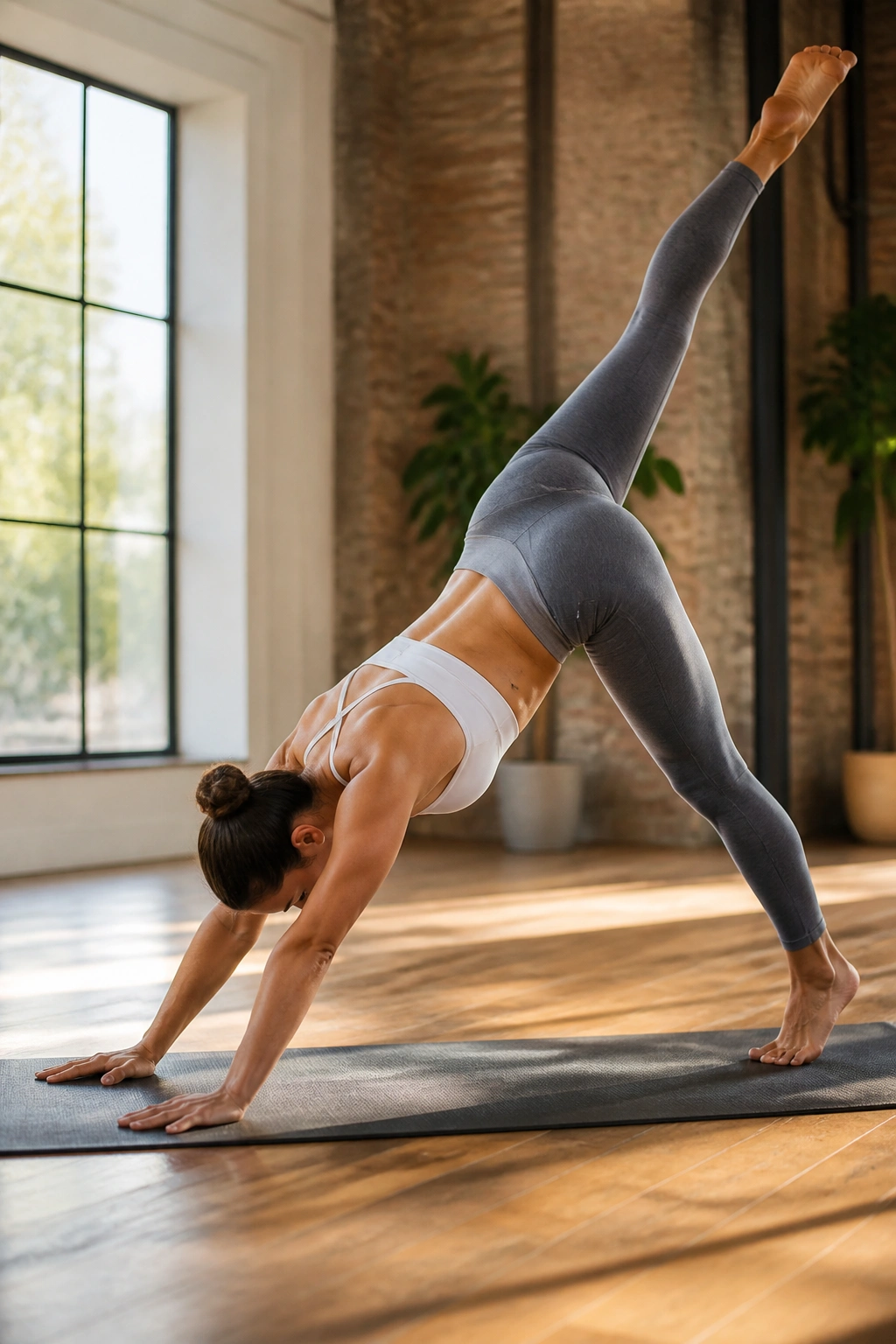
Yes, you can do mountain climbers on a yoga mat. Start in a high plank position with your shoulders stacked directly over your wrists. Bring your right knee to your chest, then your left, moving at a brisk running pace. After ten seconds of climbers, pike your hips up and back into Downward-Facing Dog, and immediately lift your right leg to the sky for a three-legged dog.
The Cardio Strategy
The shift from the horizontal plane of the plank to the inverted position of the Downward-Dog is what spikes your heart rate. Your heart has to work against gravity to pump blood differently as your head goes from level with your hips to below them. Cycle through this: ten seconds of climbers, one three-legged dog, switch legs, repeat. It is a fantastic way to combine shoulder endurance with cardiovascular intensity.
7. Squat to Forward Fold
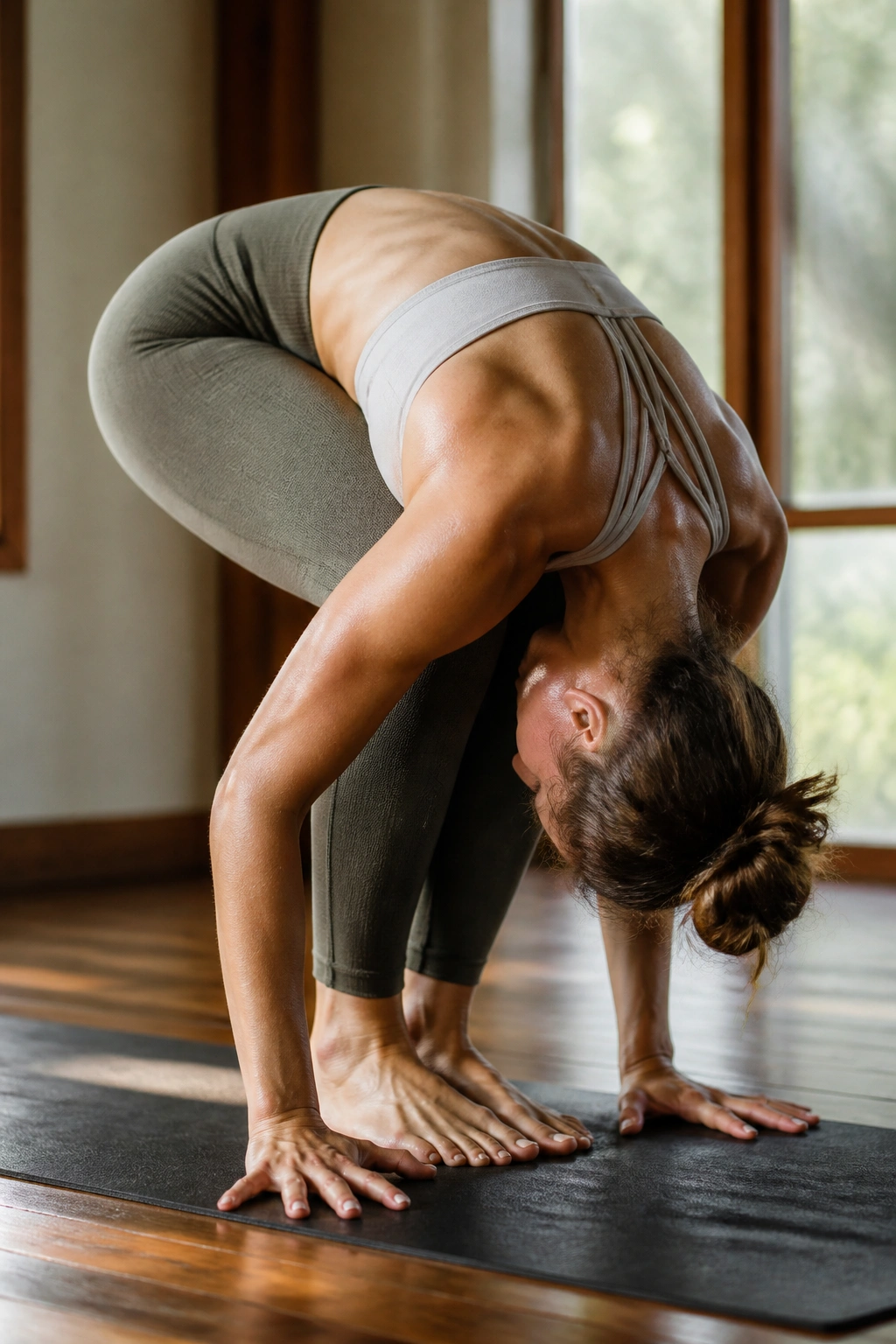
Sometimes the simplest movements are the most effective. Stand with your feet hip-width apart. Drop into a deep squat, keeping your chest open and weight in your heels. Then, explode upward and hinge forward into a deep Forward Fold, letting your head hang heavy.
Why Simplicity Wins
This creates a piston-like action for your legs. You are rapidly changing your vertical position, which is a classic cardio technique. To maximize the effort, make the squat as deep as possible—aim for your thighs to be parallel to the floor. When you fold, really reach for the ground. By using your full range of motion, you increase the amount of muscle mass you are moving, which in turn burns more calories and requires more oxygen.
8. Chaturanga Push-up to Cobra
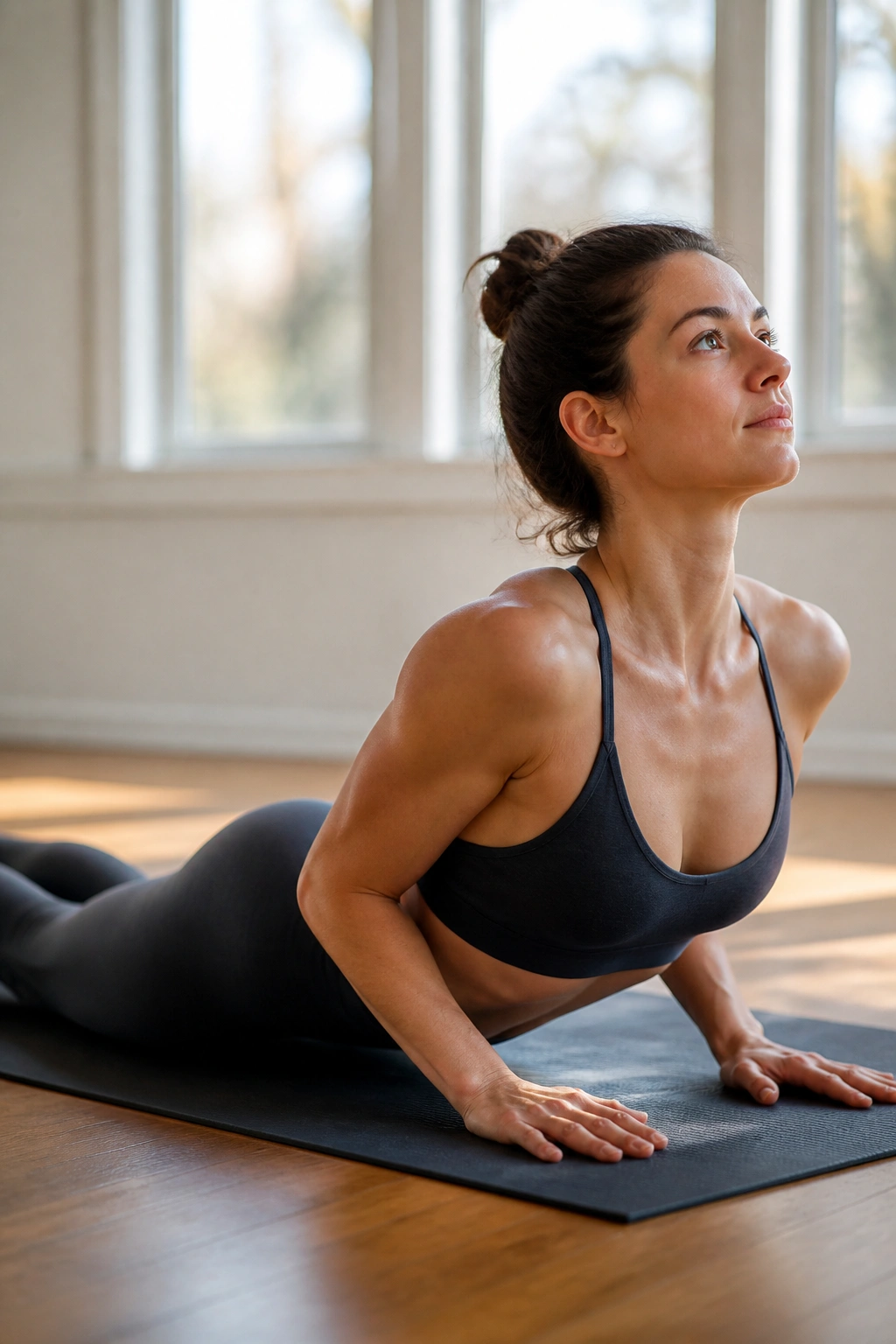
Standard vinyasa flows often move through Chaturanga, but rarely do they focus on the push-up aspect as a cardio move. Instead of just lowering down with control, treat each transition as a deliberate, powerful push-up. From high plank, lower your body in one solid line. When you hit the bottom, immediately press back up to high plank, then lower again. Do three of these mini-push-ups before moving into Cobra or Upward-Facing Dog.
Maintaining Control
The trick is to avoid letting your elbows splay out to the sides. Keep your elbows tucked close to your ribcage. This engages the triceps and chest heavily. By layering in these extra push-ups, you transform a standard flow into an upper-body endurance session. Your arms will fatigue quickly, so brace your core like someone is about to punch you in the stomach to protect your spine.
9. Wide-Legged Forward Fold Pulse
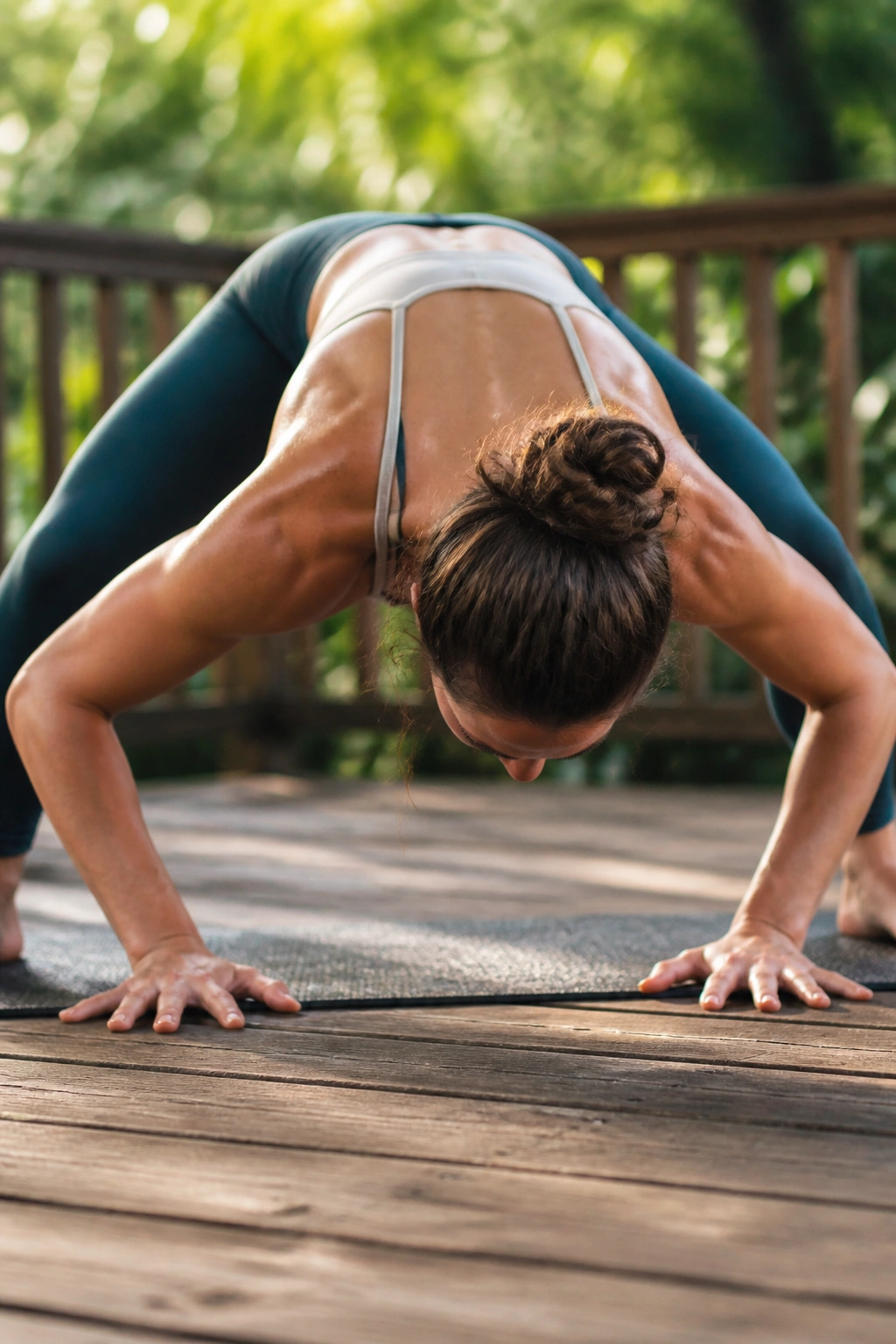
Stand with your feet very wide apart, toes pointing forward. Hinge at your hips to come into a wide-legged forward fold. Place your hands on the mat or your shins. Now, instead of holding, start to pulse your chest closer to your thighs by bending your elbows.
Elevating the Intensity
To make this cardiovascular, combine the pulse with a rapid arm movement. Reach your hands to your right ankle, pulse twice, reach to your left ankle, pulse twice, then reach through your legs behind you. The constant reaching and pulling of your torso creates a dynamic stretch that also challenges your core and balance. It keeps your upper body moving while your lower body stays anchored, forcing your heart rate to stay elevated.
10. Reverse Lunge with Knee Drive
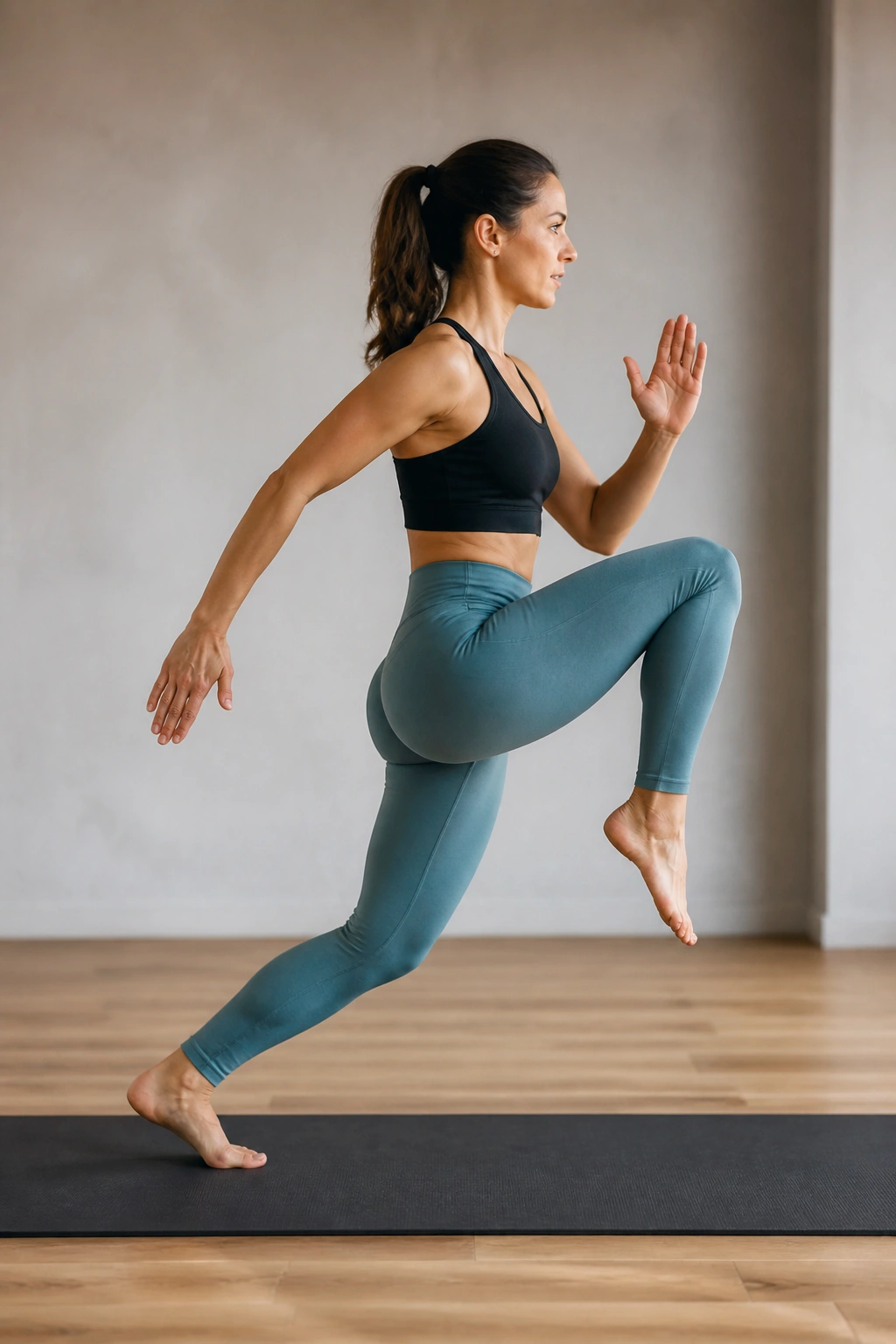
This move requires coordination and stamina. Start standing at the top of your mat. Step your right foot back into a deep reverse lunge, ensuring your front knee stays behind your toes. As you stand up, drive that right knee all the way up toward your chest, balancing on your left leg for a split second before stepping back into the lunge.
Finding Your Balance
The balance point is where you burn the most energy. By pausing at the top, you force the stabilizing muscles in your standing leg to twitch and fire. Do not just go through the motions. Use your arms to drive the movement—swinging them helps create momentum. Keep your tempo brisk, treating the lunge and the knee drive as one continuous, fluid rep.
11. Boat Pose Rockers
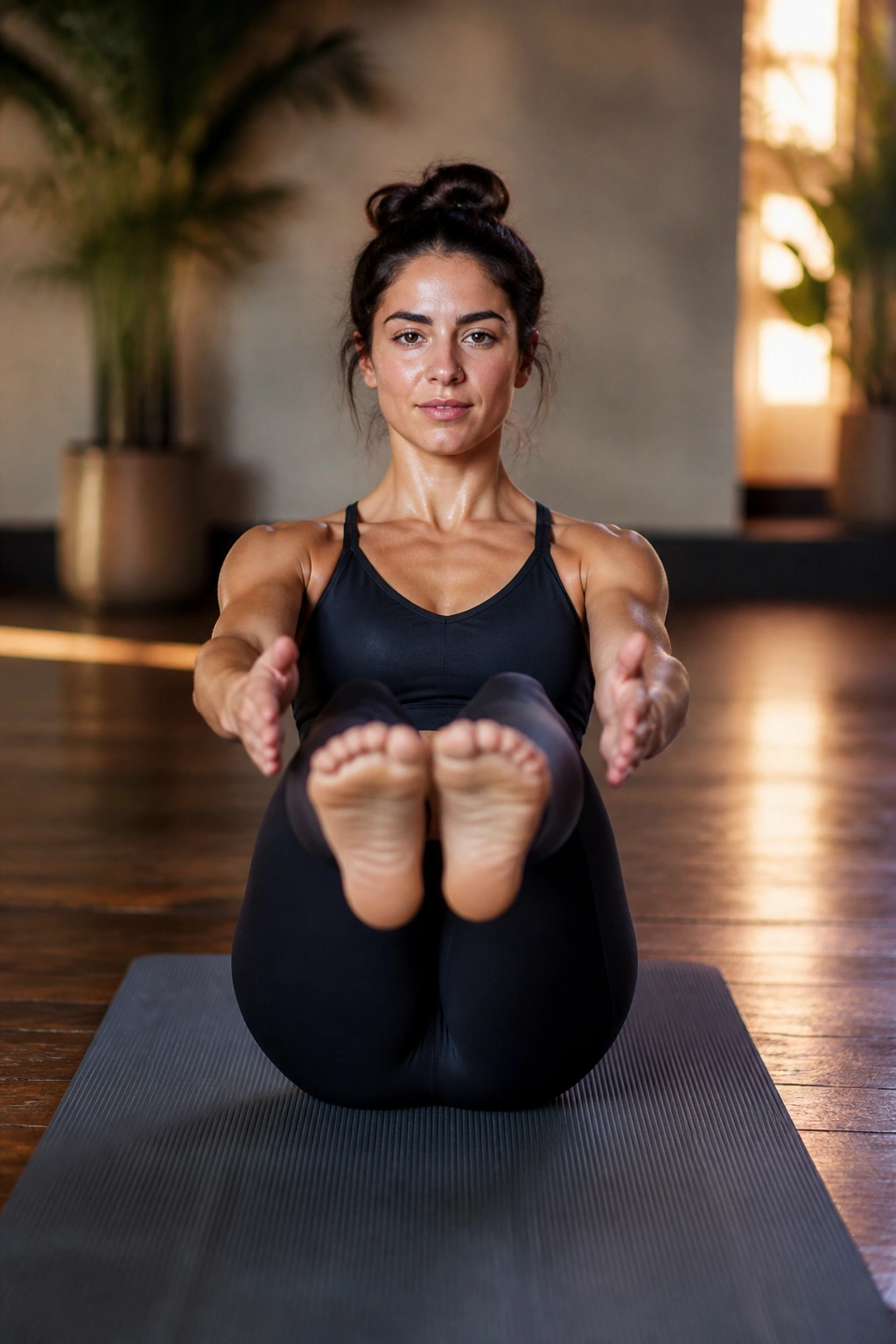
Boat Pose is famous for being a core-crusher. Let’s make it a cardio move. Sit on your mat with your knees bent, then lift your feet off the floor until your shins are parallel to the ceiling. Hold your core tight, arms extended. Now, rock back onto your sacrum, extending your legs out, then rock back up to the starting position.
Managing the Core Load
Do not let your feet touch the ground. If you are struggling, keep your hands on the floor behind you for support, but the goal is to keep your hands extended forward to challenge your balance. The constant rocking motion against gravity is exhausting for the abs. You will find that your breathing becomes heavy very quickly because your core is constantly contracting and expanding to maintain stability.
12. Plank to Side Plank Reach
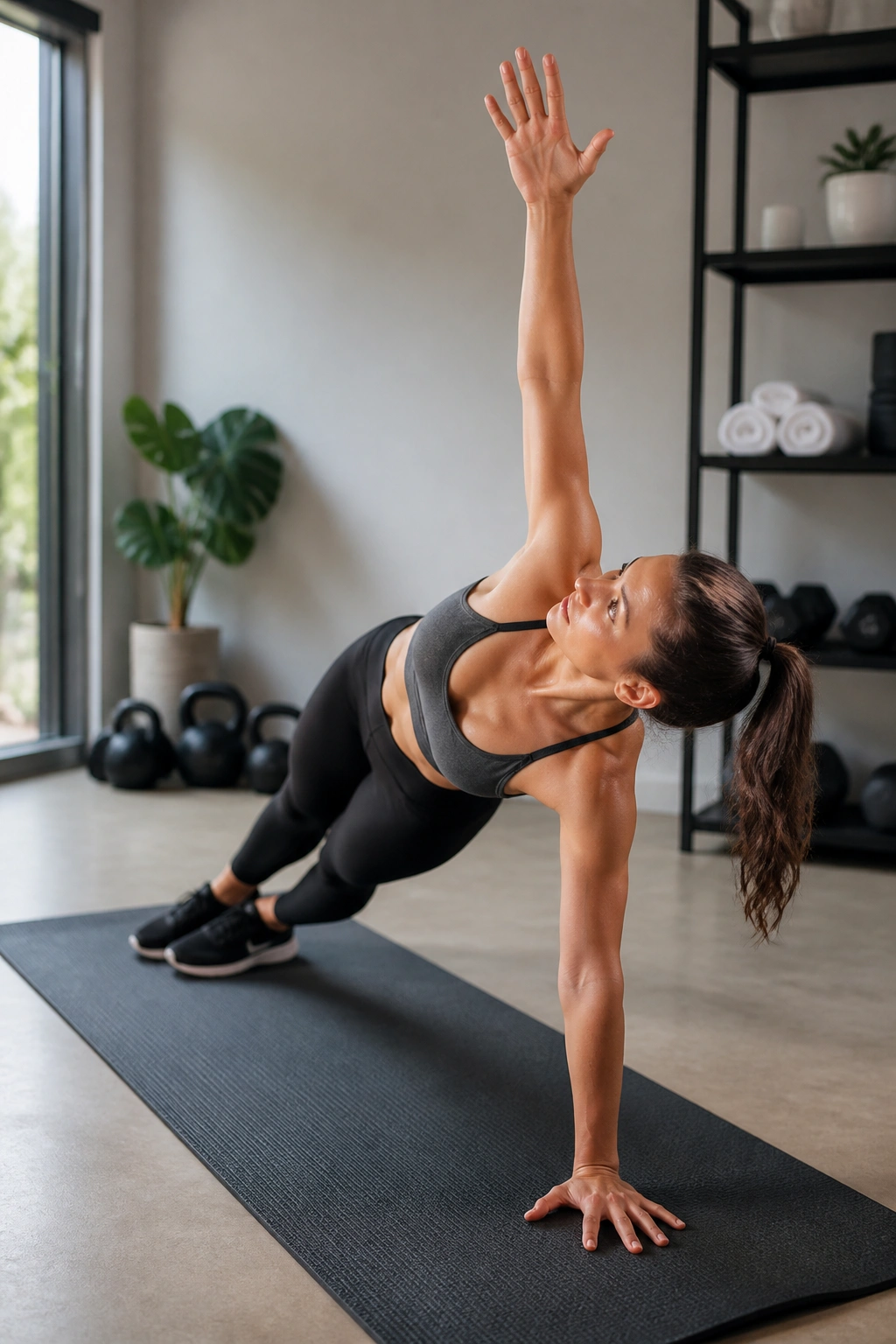
Begin in a solid high plank. Rotate your body to the right, lifting your right arm toward the sky to enter a side plank. As you hold, reach your right arm underneath your torso, twisting your chest toward the floor, then reach back up to the sky.
Why Rotation Matters
The twist engages your obliques and forces your body to stabilize in a totally different plane of motion. Perform five of these “reaches” on the right side, then immediately rotate back to high plank, and perform five on the left. The constant switching and the active reaching motion keep your heart rate up. It is far more demanding than holding a static plank, and it builds rotational power, which is essential for healthy, functional movement.
13. Dolphin Pose to Forearm Plank
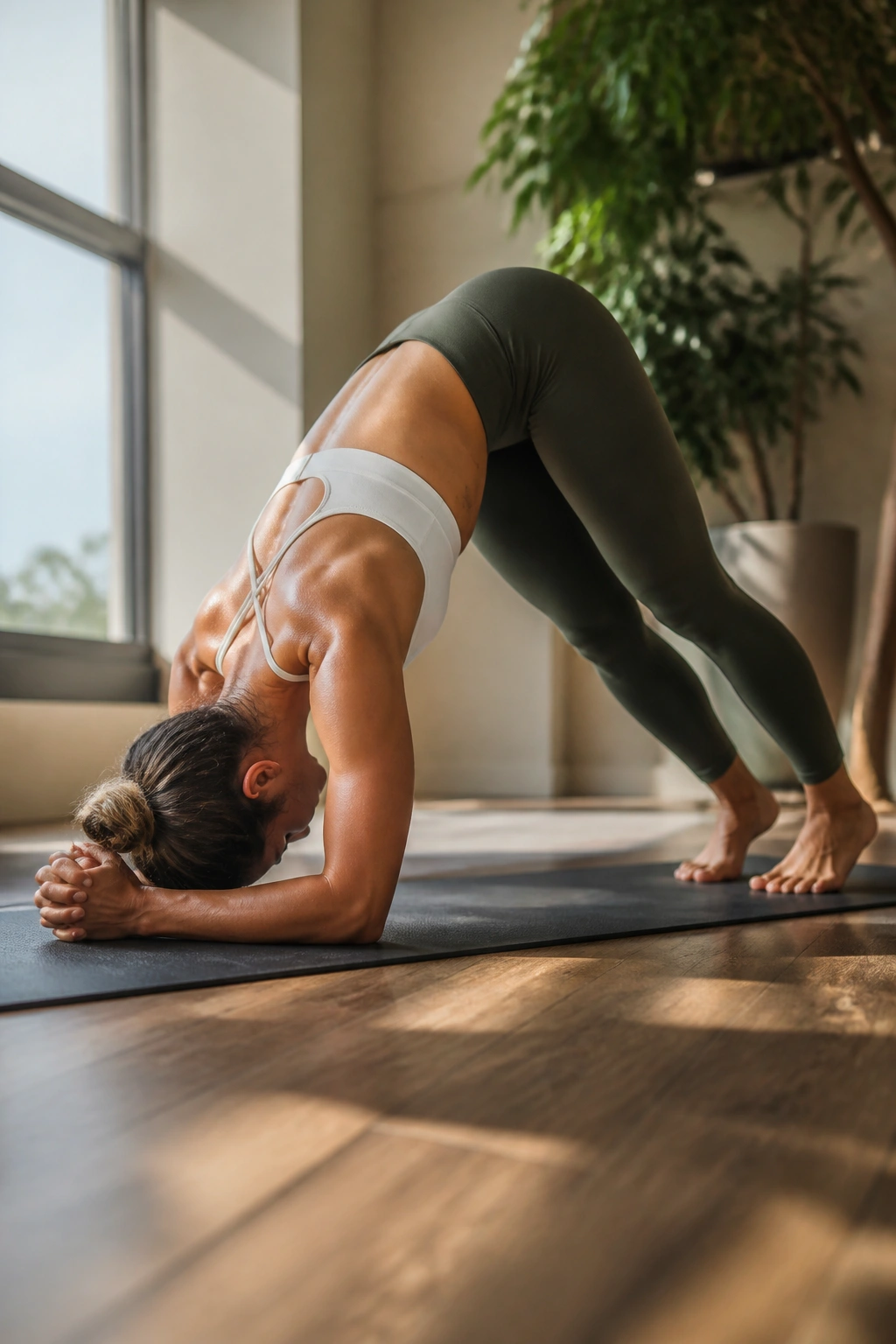
Dolphin Pose is like Downward-Dog, but on your forearms. It is a fantastic shoulder builder. Start in a forearm plank, then pike your hips up high toward the ceiling to enter Dolphin Pose. Hold for a second to stretch, then shift your weight forward back into your forearm plank.
Shoulder Endurance
The transition forward and backward is the key. Keep your core locked so your hips don’t sag when you hit the plank position. By moving your entire body weight back and forth using only your shoulders and core, you create a high-intensity burn. The shoulders are smaller muscle groups than your legs, so they will fatigue faster. When they do, focus on your breath—deep, rhythmic exhales will help you push through the lactic acid buildup.
14. Standing Leg Lifts
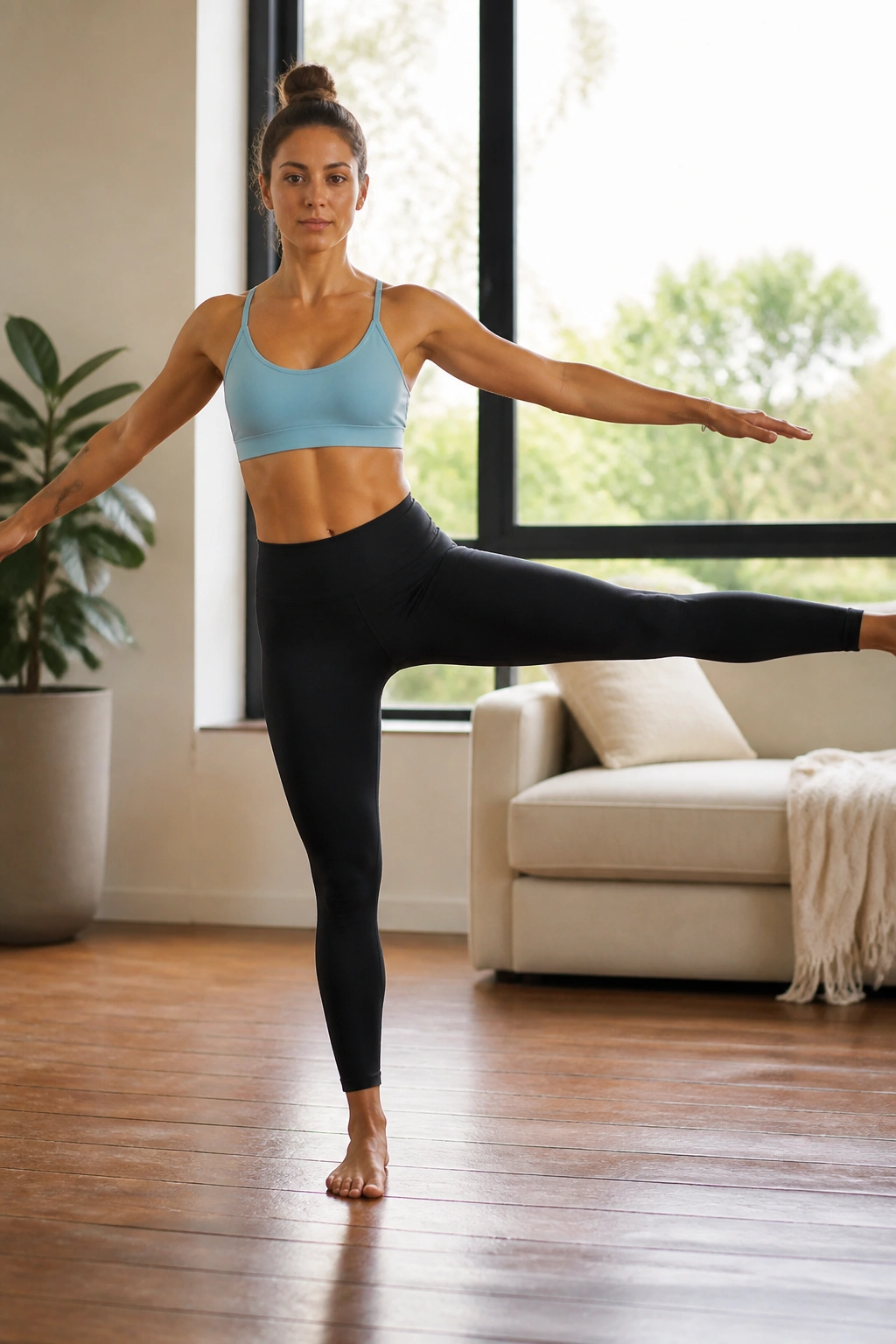
Find a wall for balance if you need it, but try this in the center of the mat first. Stand on your right leg. Extend your left leg straight out to the side. Lift it as high as you can, hold for a beat, and lower. Do ten on one side, then ten to the back, then ten to the front.
The Power of Isolation
This might not look like traditional cardio, but by the time you complete a full rotation—side, back, front—without putting your foot down, your heart rate will be spiking. The effort required to keep your body balanced while holding a heavy limb in the air is immense. It works your glute medius and hip flexors. By the time you switch legs, you’ll be out of breath and feeling a deep burn in your hips.
15. Speed Vinyasa
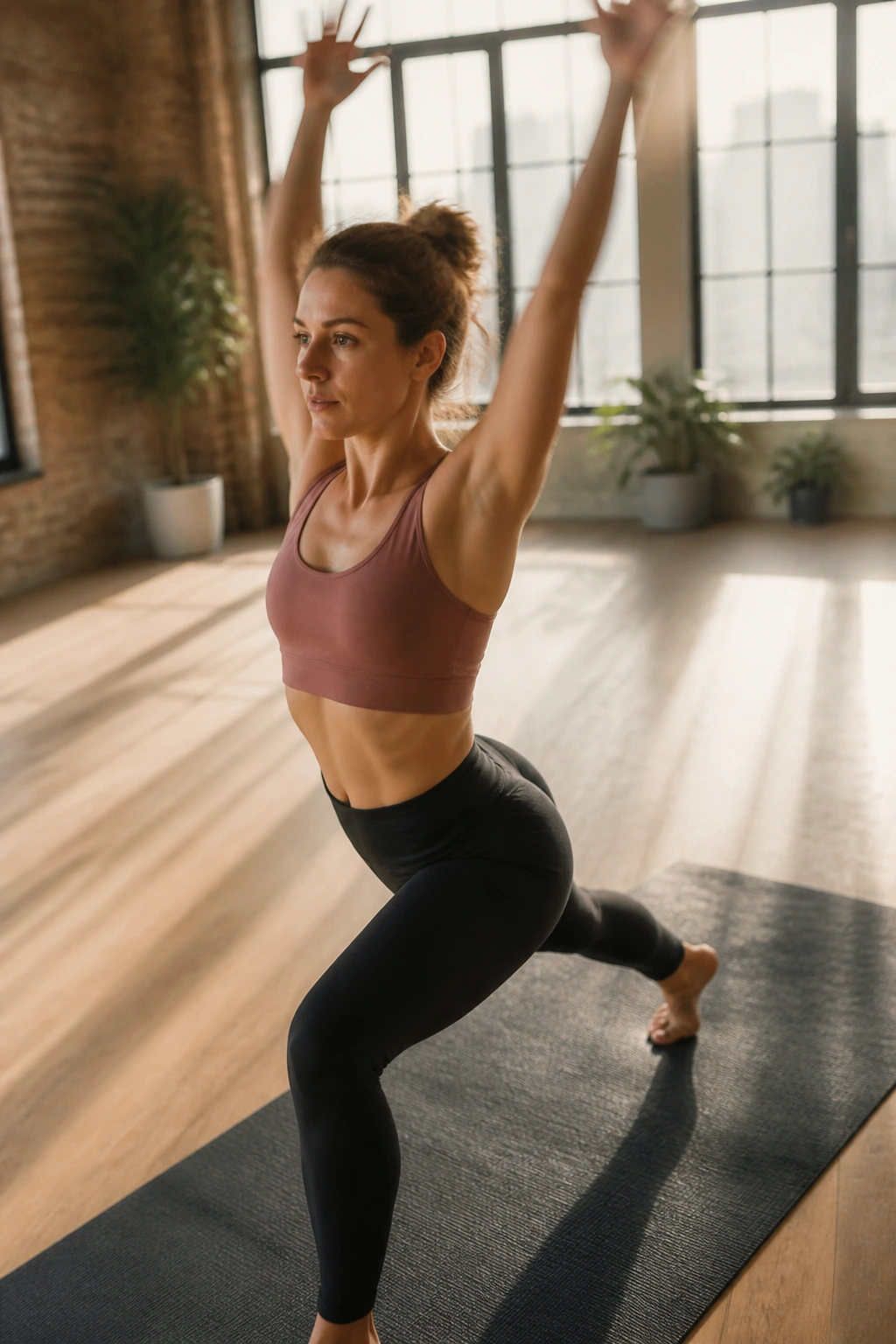
This isn’t a single pose; it is a mindset. A vinyasa flow is usually linked by breath, with one movement per inhale or exhale. To turn it into a cardio workout, double the speed. If you usually hold a pose for three breaths, hold it for one. If you usually transition slowly, transition with intention and pace.
The Flow as a Sprint
Your goal is to complete a full sequence (Chair, Forward Fold, Plank, Chaturanga, Up-Dog, Down-Dog) in under thirty seconds. It requires extreme focus to maintain good form while moving that fast. You aren’t just moving; you are flowing. The key is to keep your breath steady even when your heart rate is red-lining. If you find yourself holding your breath, slow down just enough to regain control of your inhales and exhales.
16. Burpee-Yoga Hybrid
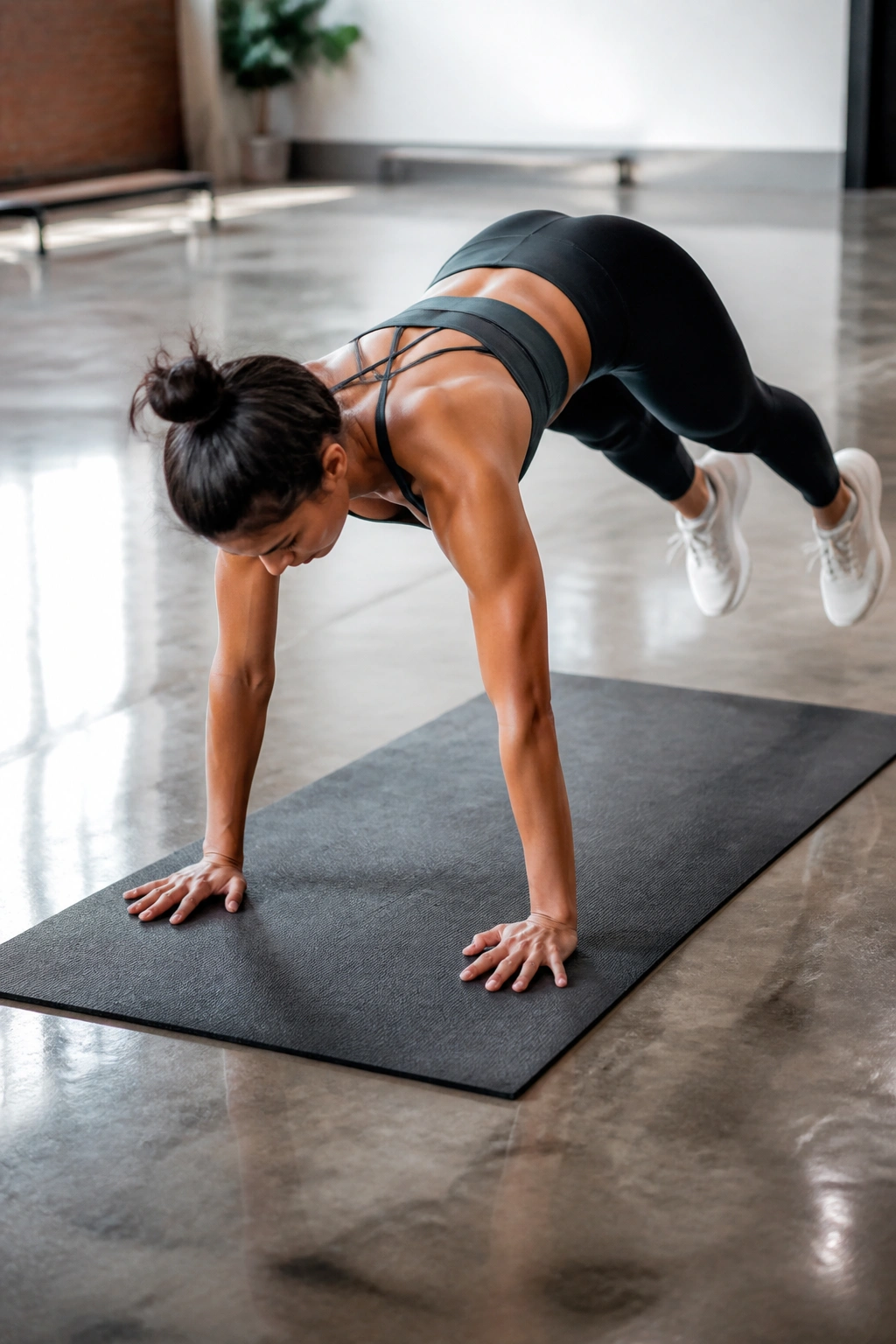
Let’s combine the most hated exercise in the gym with the most loved. Start standing. Drop into a squat, place your hands on the mat, and jump back into a high plank. Perform one Chaturanga push-up. Jump your feet back toward your hands and explode up into a jump, landing in a standing position.
The Ultimate Burner
You are effectively bridging the gap between calisthenics and yoga. The push-up is the yoga element; the burpee is the cardio element. Because you are combining high-impact jumping with controlled strength training, this is arguably the highest calorie-burning move on this list. Keep the transitions sharp. Do not sag in the middle. The faster you move, the harder your heart has to work.
17. Chair Pose Twists
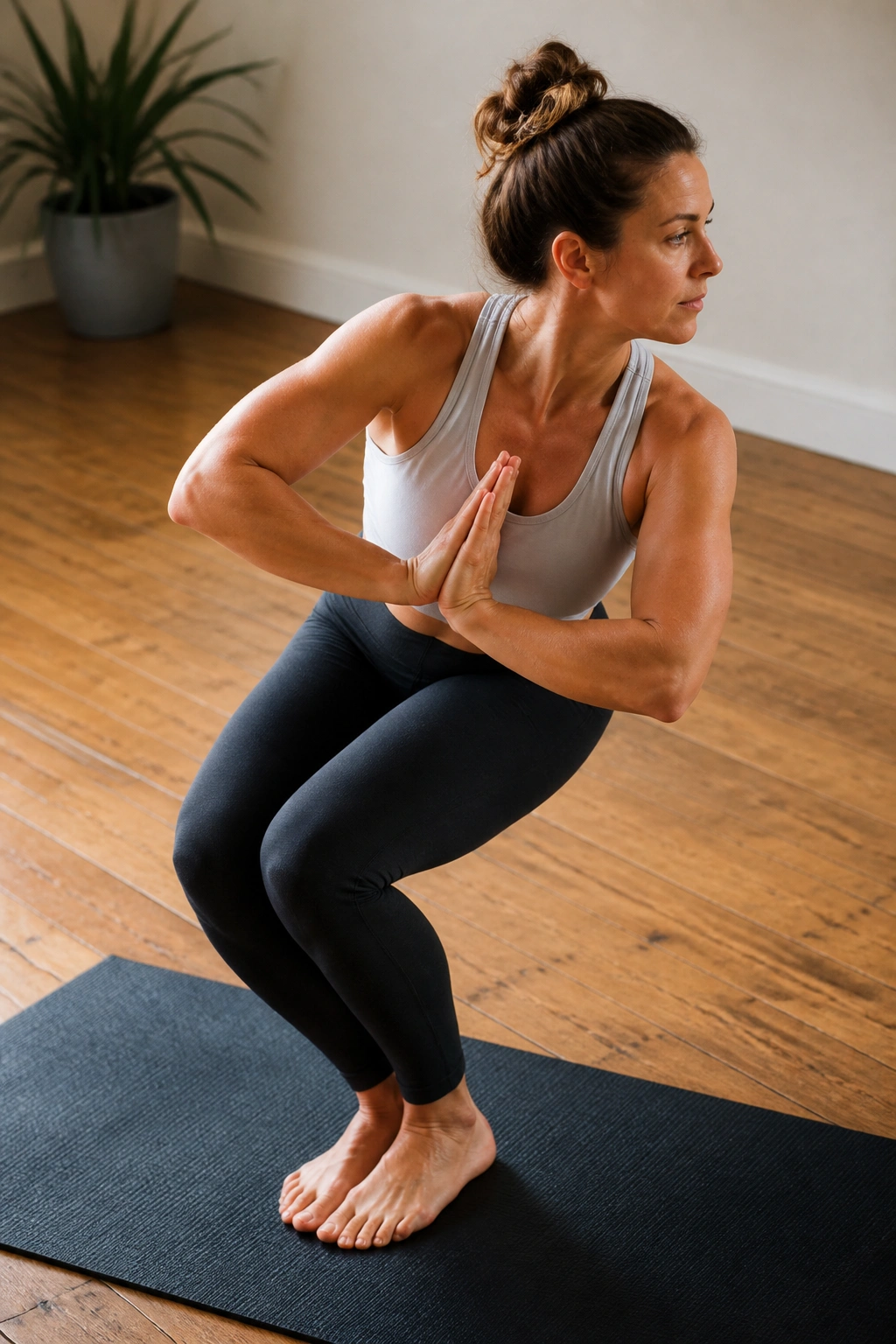
Chair Pose is already a leg burner. By adding a rotation, you ignite the core. Sit deep in Chair Pose. Bring your palms together at your chest. Twist your torso to the right, hooking your left elbow over your right knee. Hold for a second, then twist to the other side.
Why It’s More Than Stretching
The cardio comes from the pulsing movement between twists. Do not stop in the center. Flow rapidly from the right twist to the left twist. You are engaging your oblique muscles to twist your heavy torso while your legs are held in a static, isometric contraction. This combination of leg and core work is incredibly demanding. It will get your heart rate up quickly because your entire body is under tension at once.
18. Jump-Switch Lunges
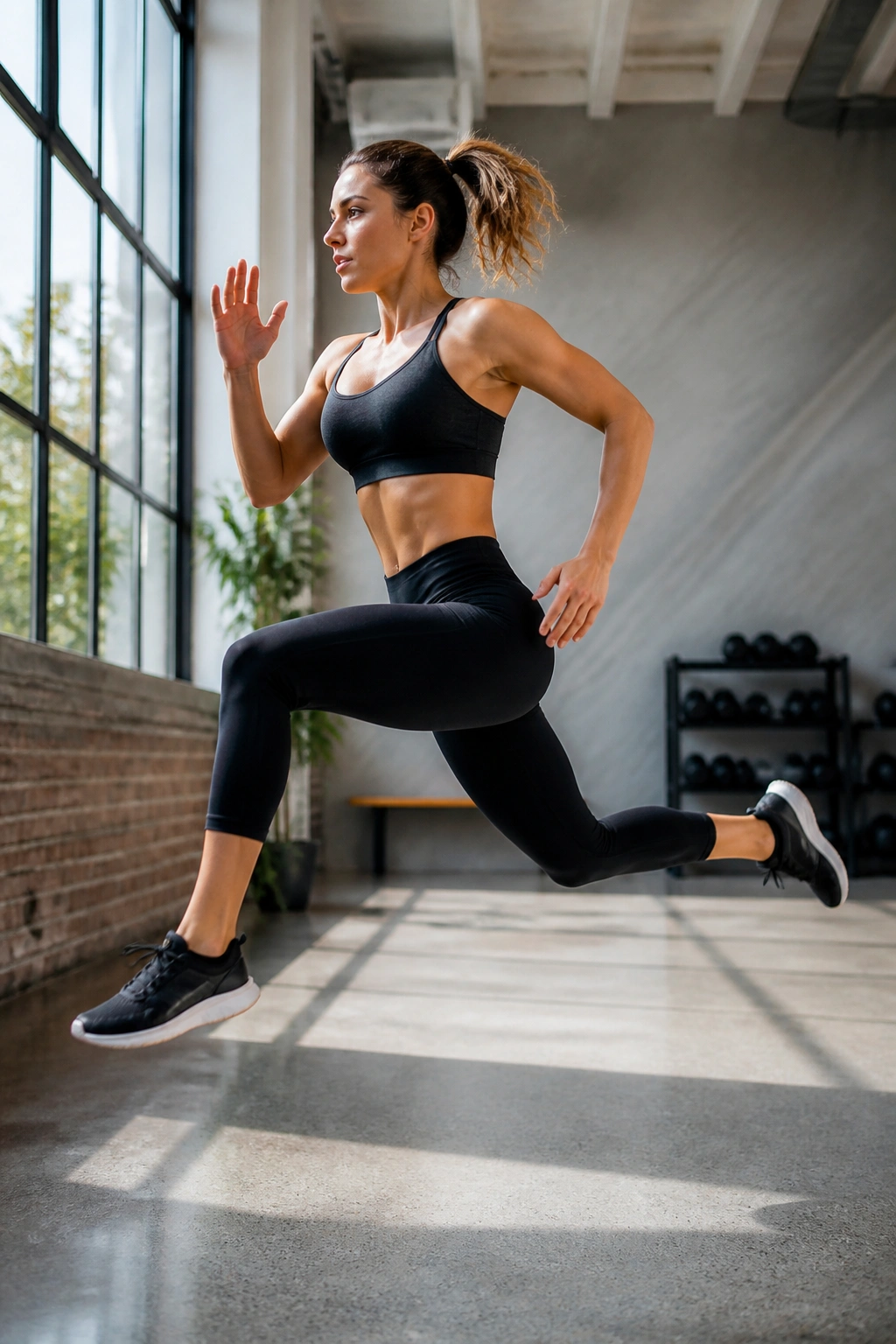
This is a plyometric movement that brings a serious level of intensity to your practice. Start in a low lunge with your right foot forward. Push off both feet, jump into the air, and switch your legs so you land with your left foot forward in a lunge.
Safety and Technique
These are high-impact. If your knees are sensitive, step back quickly instead of jumping. If you are good to go, the jump is where the cardio happens. Keep your core tight to protect your back. By alternating legs rapidly, you create a constant state of muscular fatigue in the quads, which forces your heart to work harder to shuttle oxygen to those hard-working muscles.
19. Plank Jack to Down-Dog
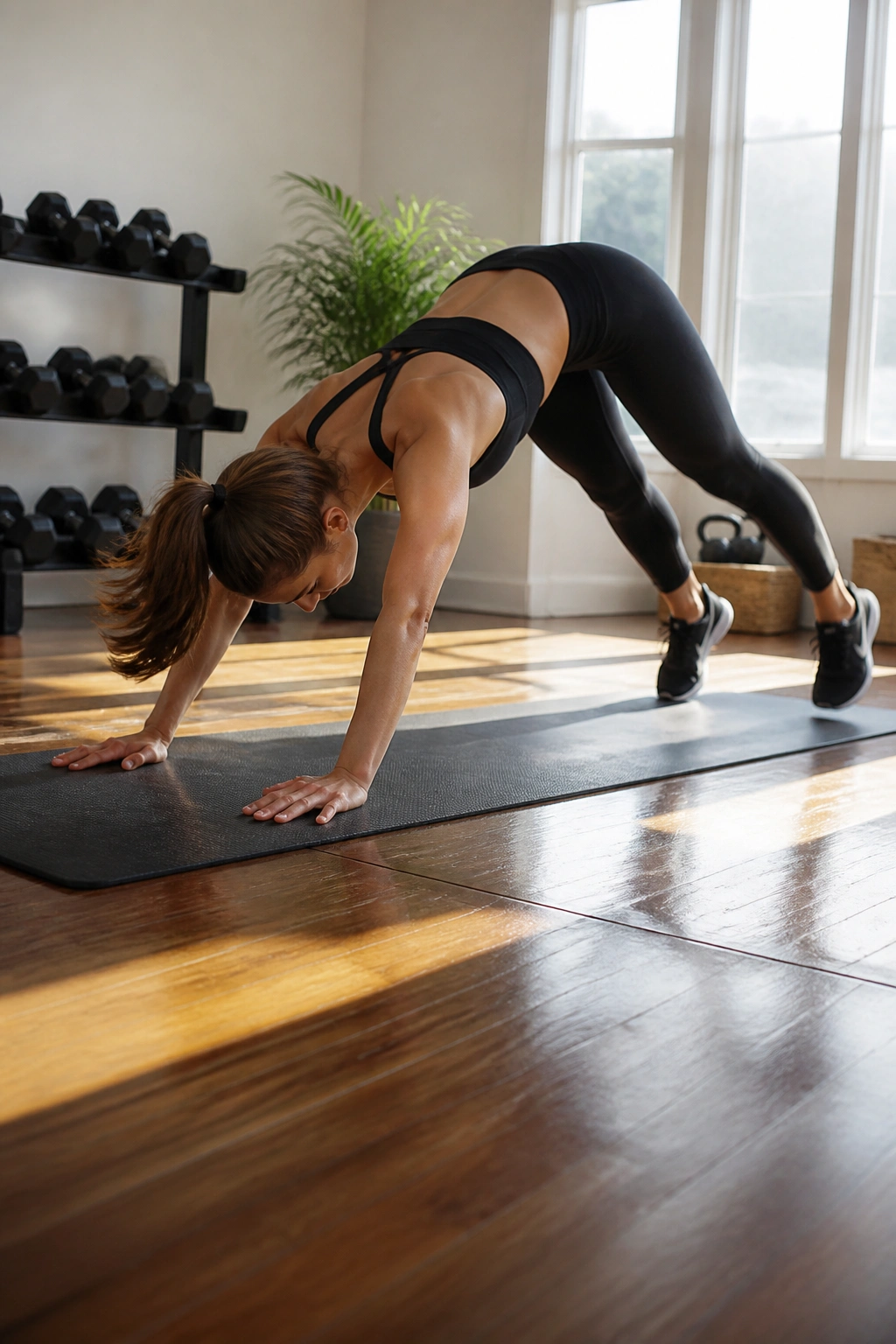
Start in a high plank position. Just like a jumping jack, jump both feet out wide, then back together. Do three of these jacks, then immediately push your hips back into Downward-Facing Dog. From there, jump your feet forward, jump them back, and repeat the sequence.
Total Body Conditioning
This flow hits everything: shoulders, core, quads, and hip flexors. The jumping jack motion engages the core and shoulders, while the transition to Down-Dog acts as an active recovery stretch for the back of the legs. The sequence is rhythmic and addictive. Once you find your pace, you can keep this up for several minutes without stopping, which is the definition of cardiovascular endurance.
20. Warrior III Pendulum
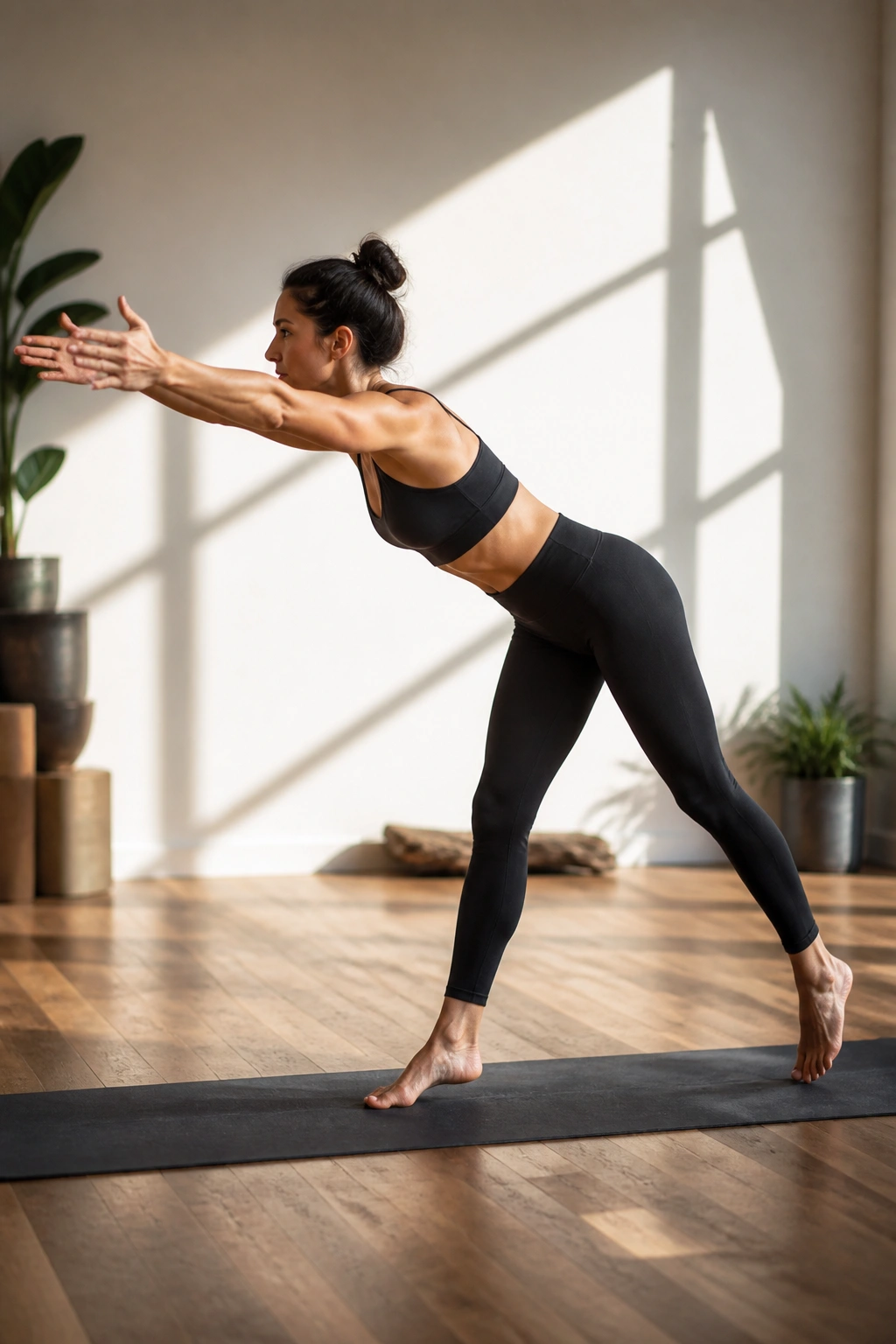
Warrior III is the ultimate balance test. Stand on your right leg and hinge forward, lifting your left leg behind you until your body forms a T-shape. Now, instead of holding, use your core to swing your left leg down to tap the floor, then swing it right back up into the Warrior III position.
The Stabilization Challenge
The pendulum motion is exhausting. Your standing leg is working non-stop to keep you upright, and your glutes are firing to lift the other leg. By swinging it, you add a cardiovascular element that makes the pose much harder than it looks. Switch legs after ten reps. Your heart rate will climb because you are stabilizing your entire body weight on one leg while moving the other against gravity.
Final Thoughts
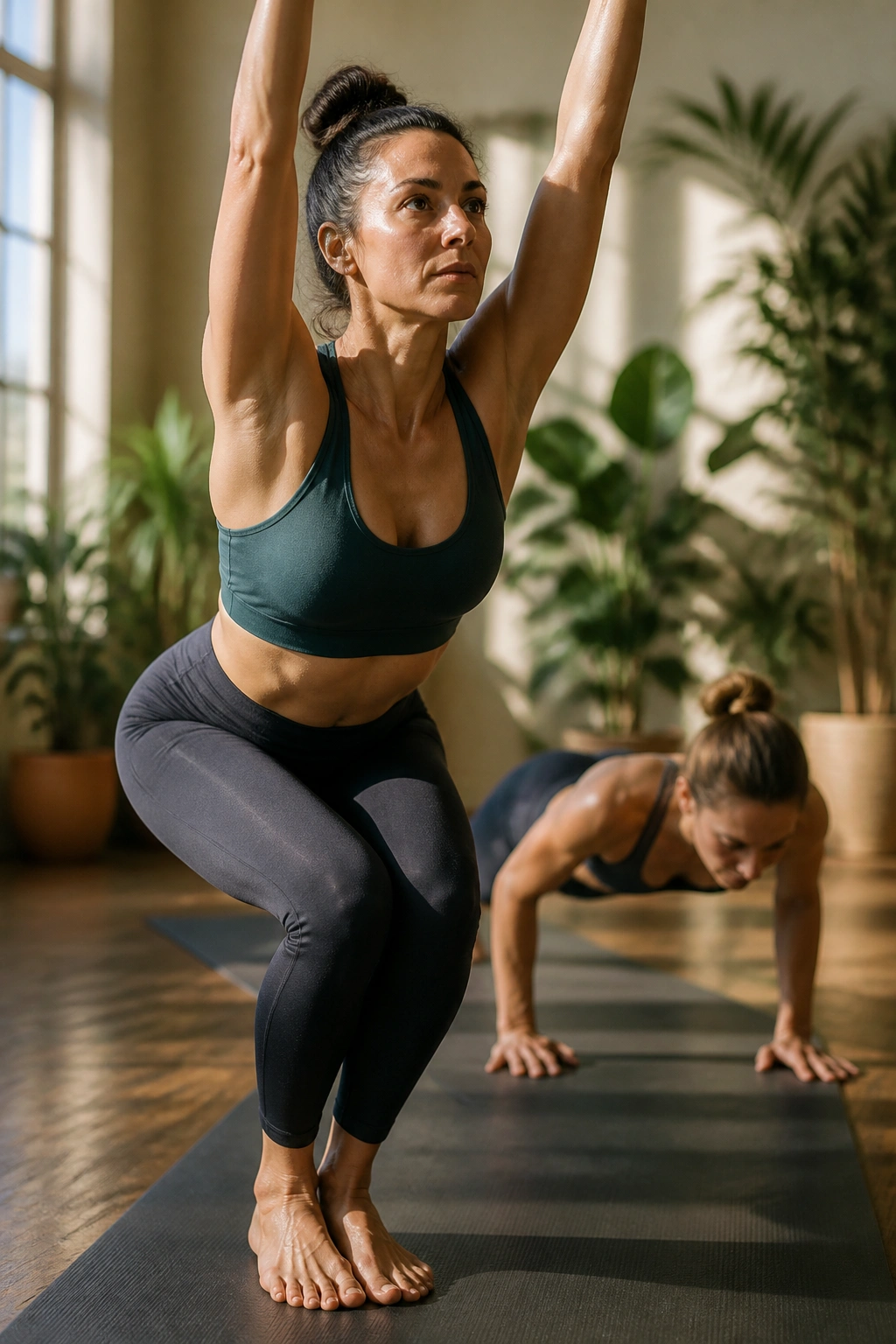
Building a cardio-focused yoga practice is not about ignoring the principles of yoga. You are not sacrificing alignment for speed; you are simply taking the principles of movement and applying them with more intensity. The goal is to reach a place where your breath becomes the primary guide for your heart rate. If you can maintain long, deep inhales and exhales while your heart is pounding, you are doing it right.
Consistency is more important than intensity when you are first starting. Start by incorporating just a few of these flows into your regular practice, then slowly build up until you can string them together into a continuous 30-minute session. Always listen to your body—if your form breaks down because you are too tired, slow down. A fast flow with poor form leads to injury, not fitness. Keep moving, stay mindful, and enjoy the sweat.
