



That lower-belly area is frustratingly common. You eat well, you stay active, yet that small pooch remains. Often, this isn’t just about fat storage. Frequently, it comes down to a combination of posture, the alignment of your pelvis, and the structural weakness of the deep core muscles, specifically the transverse abdominis. If your pelvis tilts forward—a condition known as Anterior Pelvic Tilt—it naturally forces the lower belly to protrude, regardless of how lean you are.
Addressing this requires more than just standard sit-ups. Traditional crunches often engage the hip flexors more than the abs, which can actually exacerbate that forward tilt. You need to focus on exercises that teach your spine to stay neutral and your pelvic floor to engage. Strengthening these deeper layers creates a corset-like effect, pulling everything inward rather than pushing outward.
Consistency matters here more than intensity. High-volume, high-intensity workouts might burn calories, but they rarely correct the structural imbalance that causes the “pooch” look. Focus on slow, controlled movements. If you can’t maintain the form, you’re not working the target muscle; you’re just creating momentum.
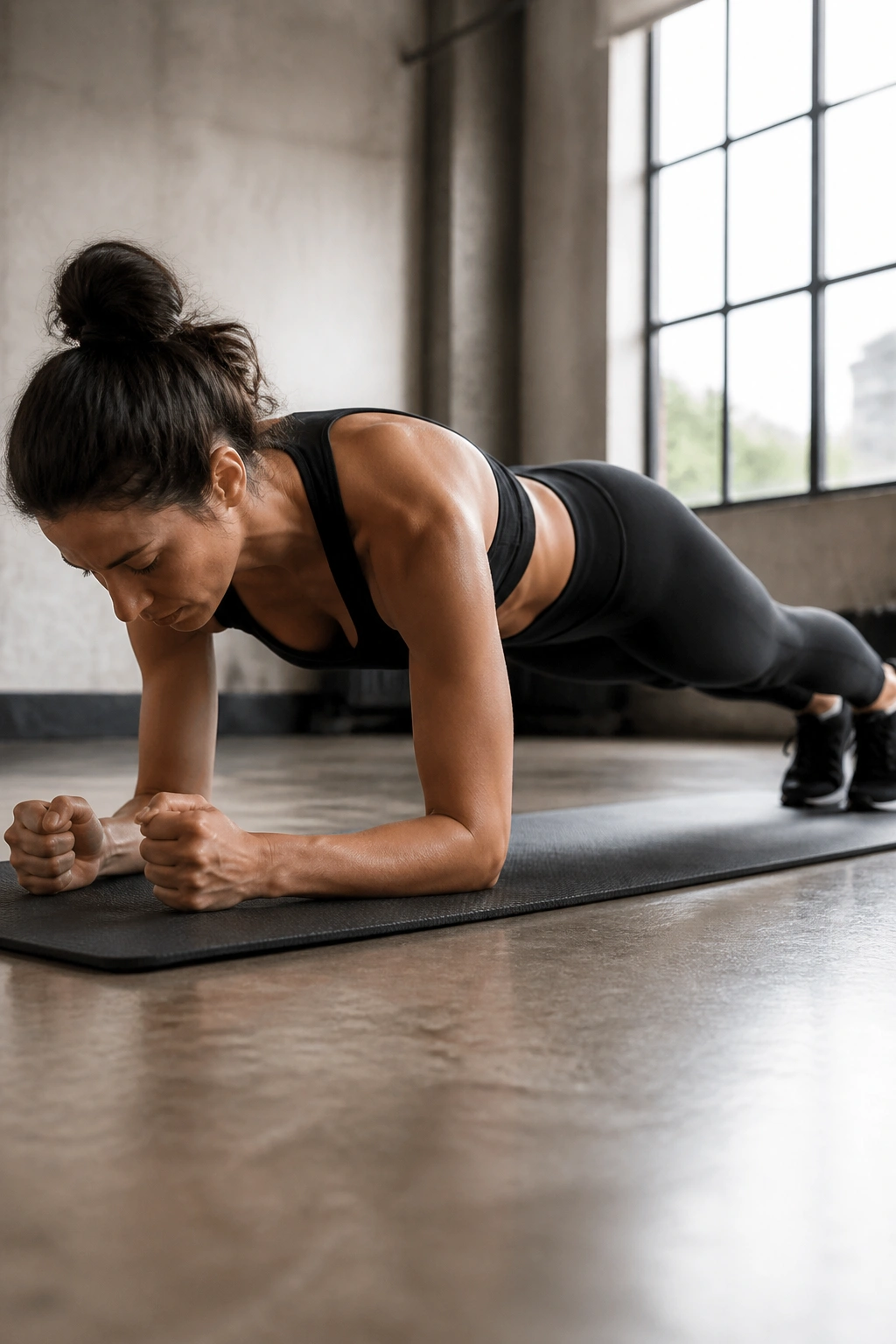
1. The Standard Forearm Plank
The plank is arguably the most misunderstood exercise in fitness. Most people rush through it, arching their back or shrugging their shoulders, which defeats the entire purpose of building core stability. When done correctly, this is the foundational move for drawing your stomach in.
To start, get onto your forearms, elbows directly beneath your shoulders. Extend your legs behind you. This is where the work begins. You must squeeze your glutes hard. Imagine pulling your belly button up toward your spine, but without holding your breath.
Common Form Mistakes to Avoid
- Sagging Hips: If your lower back dips toward the floor, stop immediately. Reset. A sagging back puts unnecessary strain on your lumbar spine.
- Butt in the Air: Raising your hips creates a triangle shape that takes the tension off your abs. Your body should form a straight, rigid line from your head to your heels.
- Shoulder Fatigue: If you feel your upper traps taking the weight, push the floor away with your elbows. Engage your lats.
The secret to making this effective is the “pulling” sensation. Actively drag your elbows toward your toes, and your toes toward your elbows. You won’t actually move, but the tension generated by this isometric pull will force your abdominal wall to activate significantly more than just holding a static position.
2. Dead Bug
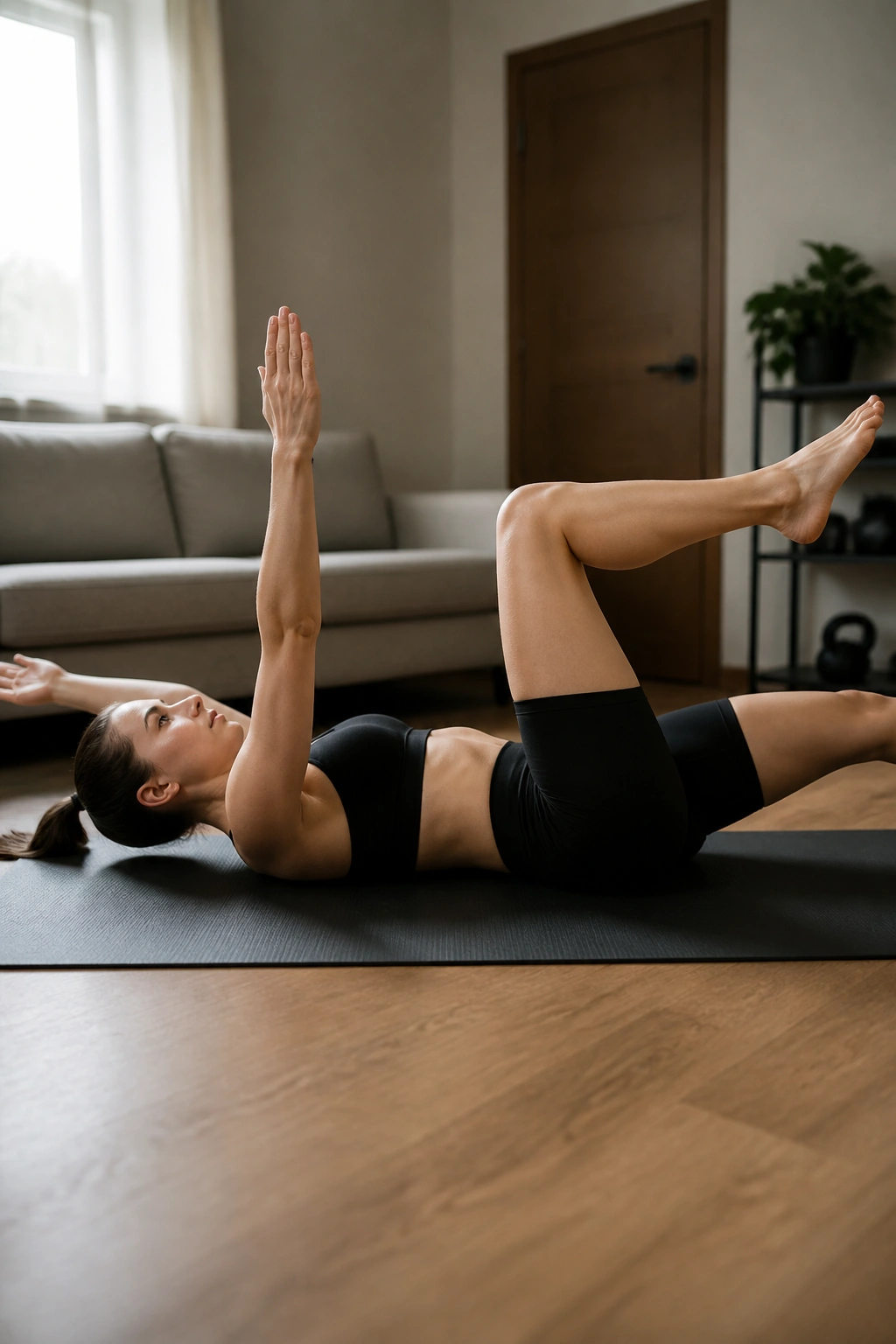
The Dead Bug is a masterclass in coordination and core control. It forces you to move your limbs while keeping your lower back glued to the floor. If you have that dreaded lower-belly pooch, this exercise is non-negotiable because it trains your body to stabilize the core while the extremities are in motion.
Lie flat on your back, arms extended toward the ceiling and legs in the air, knees bent at 90 degrees. This is your tabletop position. Press your lower back into the mat so hard that there isn’t even a sliver of space between you and the floor. This contact is the most critical part of the movement.
Slowly lower your right arm behind your head and extend your left leg forward simultaneously. Your arm and leg should hover just an inch above the ground. Do not let your back arch. If you feel your ribcage flare open, you’ve gone too far. Return to the starting position and switch sides. The slower you move, the harder it is.
3. Bird Dog Stability
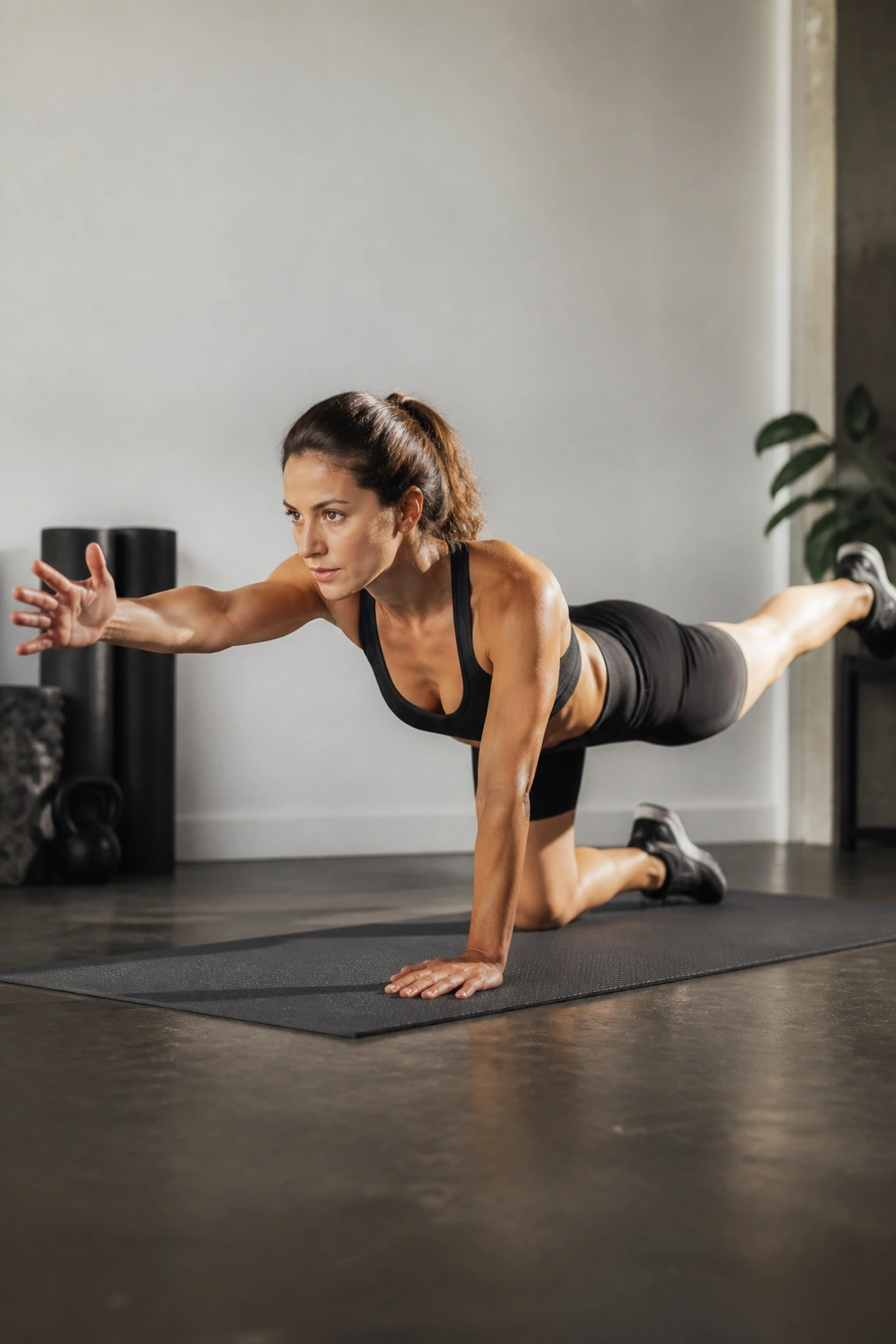
This exercise targets the erector spinae and the deep core, helping to correct the posture that often contributes to a protruding lower belly. It’s a cross-body stabilization move that forces your midsection to lock in.
Start on your hands and knees in a tabletop position. Your hands should be under your shoulders, knees under your hips. Reach your right arm forward and your left leg back, extending them until they are parallel to the floor. Do not kick your leg high into the air, as this forces your lower back to arch and negates the core benefit.
Keys to Execution
- Keep Your Hips Level: Your pelvis should not rock side to side. Imagine you have a glass of water balancing on your lower back.
- Reach, Don’t Lift: Focus on the length of your reach, extending your fingertips to the front wall and your heel to the back wall.
- Hold for Two: Pause at the full extension for two seconds, squeezing your glutes and your abs, before returning to the start.
This move is incredibly effective for anyone who spends long hours sitting, as it counteracts the tight hip flexors that often cause the pelvis to tilt forward.
4. The Bicycle Crunch
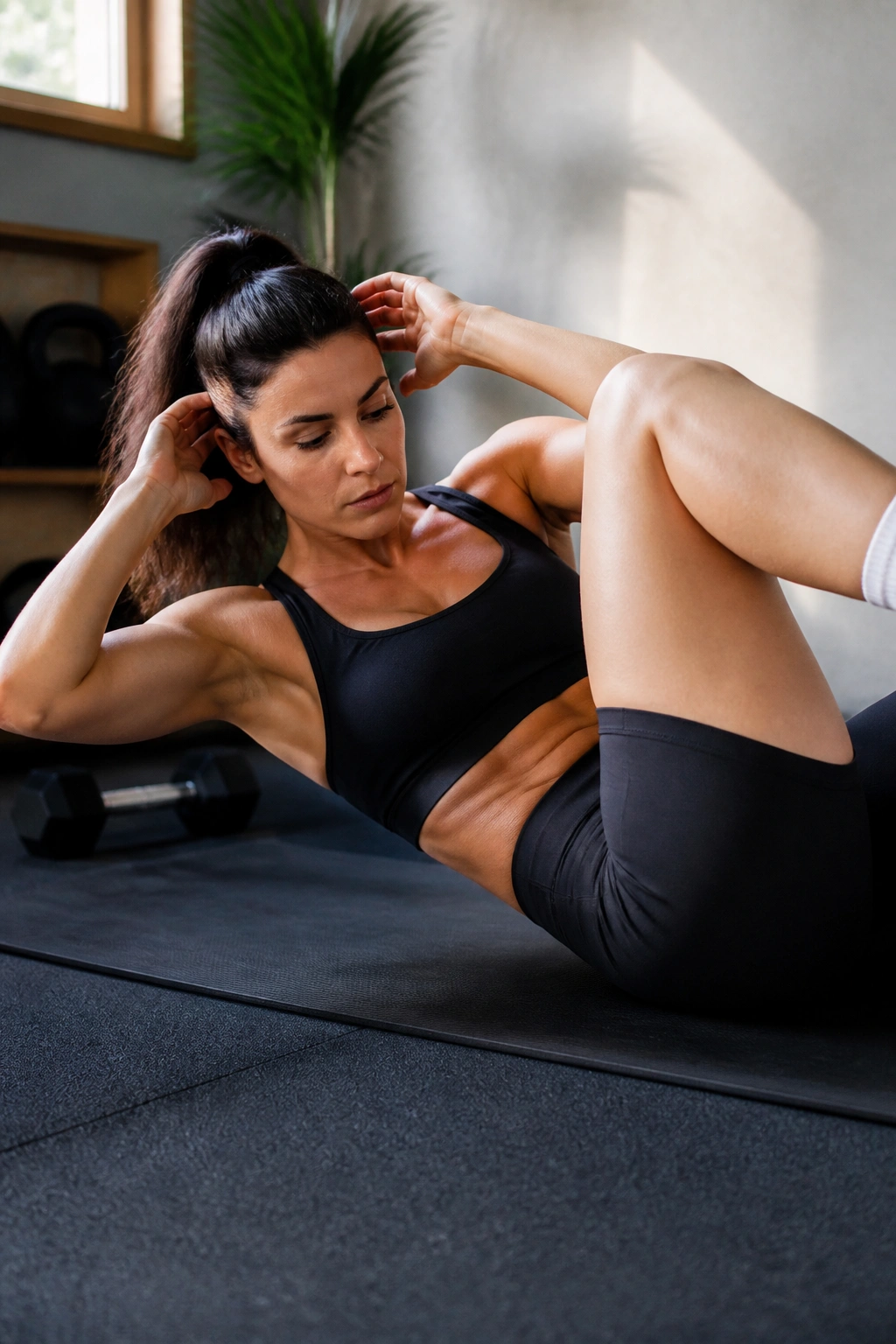
Most crunches are ineffective because they engage the hip flexors too much. The bicycle crunch, however, forces rotation. When you incorporate rotation, you engage the obliques, which act as the side panels of your abdominal wall, effectively “tucking in” the midsection.
Lie on your back, hands lightly touching the sides of your head. Lift your knees to a tabletop position. Extend one leg straight out while pulling the opposite knee toward your chest. At the same time, rotate your torso so the opposite elbow moves toward the bent knee.
The mistake most people make is yanking their head with their hands. Do not pull on your neck. The movement should come entirely from your mid-back and ribcage rotation. Imagine trying to get your armpit to your knee, not your elbow. This small mental shift changes everything about how the muscle activates.
5. Leg Raises
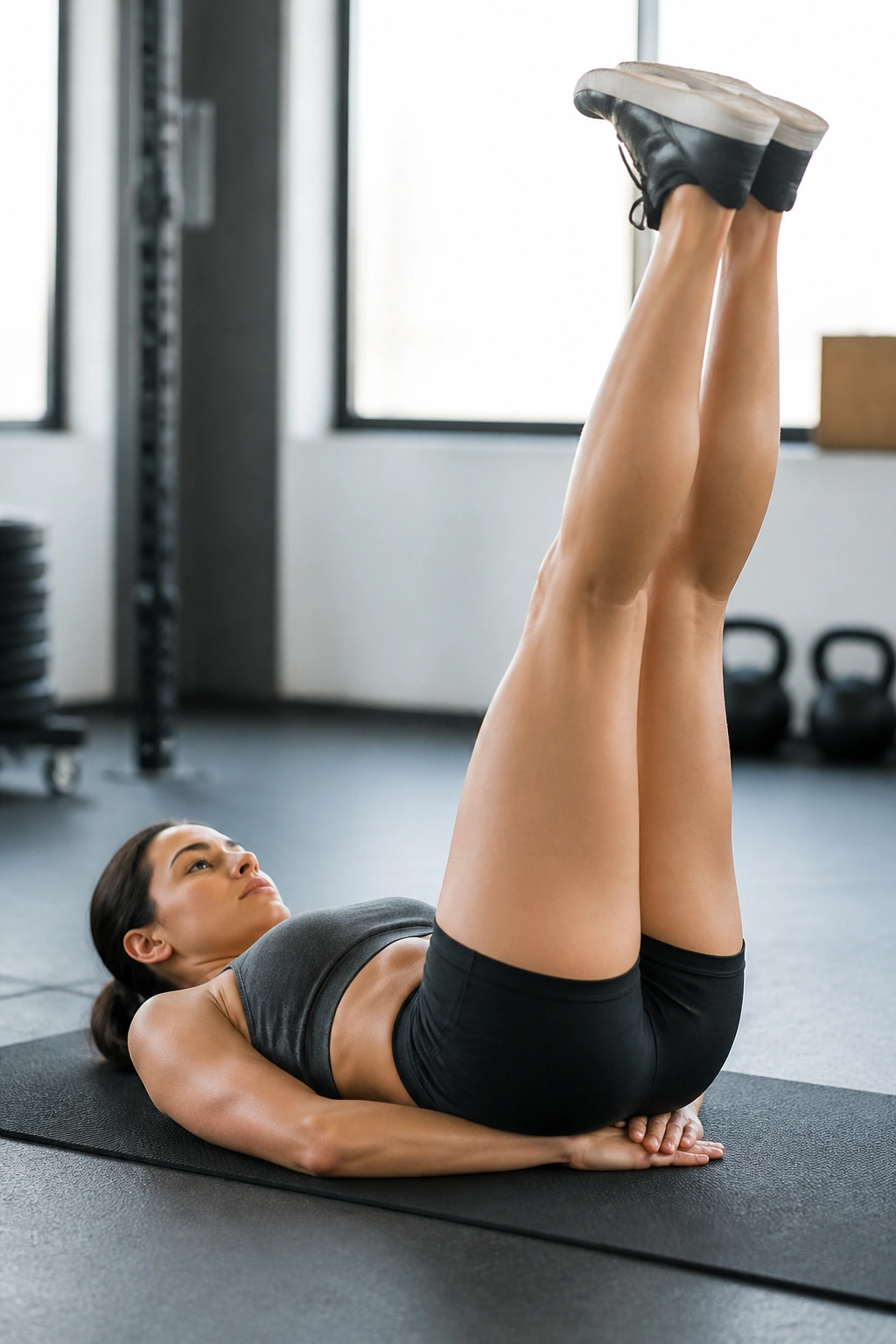
This is the classic, old-school move for the lower abs. The key to making it work, rather than just hurting your hip flexors, is the tilt of the pelvis. If you lay flat and just lift your legs, your hip flexors will take over, potentially causing lower back strain.
Lie on your back with your hands tucked under your glutes for support. Keep your legs straight or slightly bent. Press your lower back into the mat and lift your legs until they are perpendicular to the floor. Lower them slowly, but stop just before your heels touch the ground.
If your back pops off the floor at any point during the descent, your core is not strong enough to handle that range of motion yet. In that case, reduce the range. Only lower your legs as far as you can while keeping your spine perfectly flat against the floor. This “active range” is where the change happens.
6. Mountain Climbers
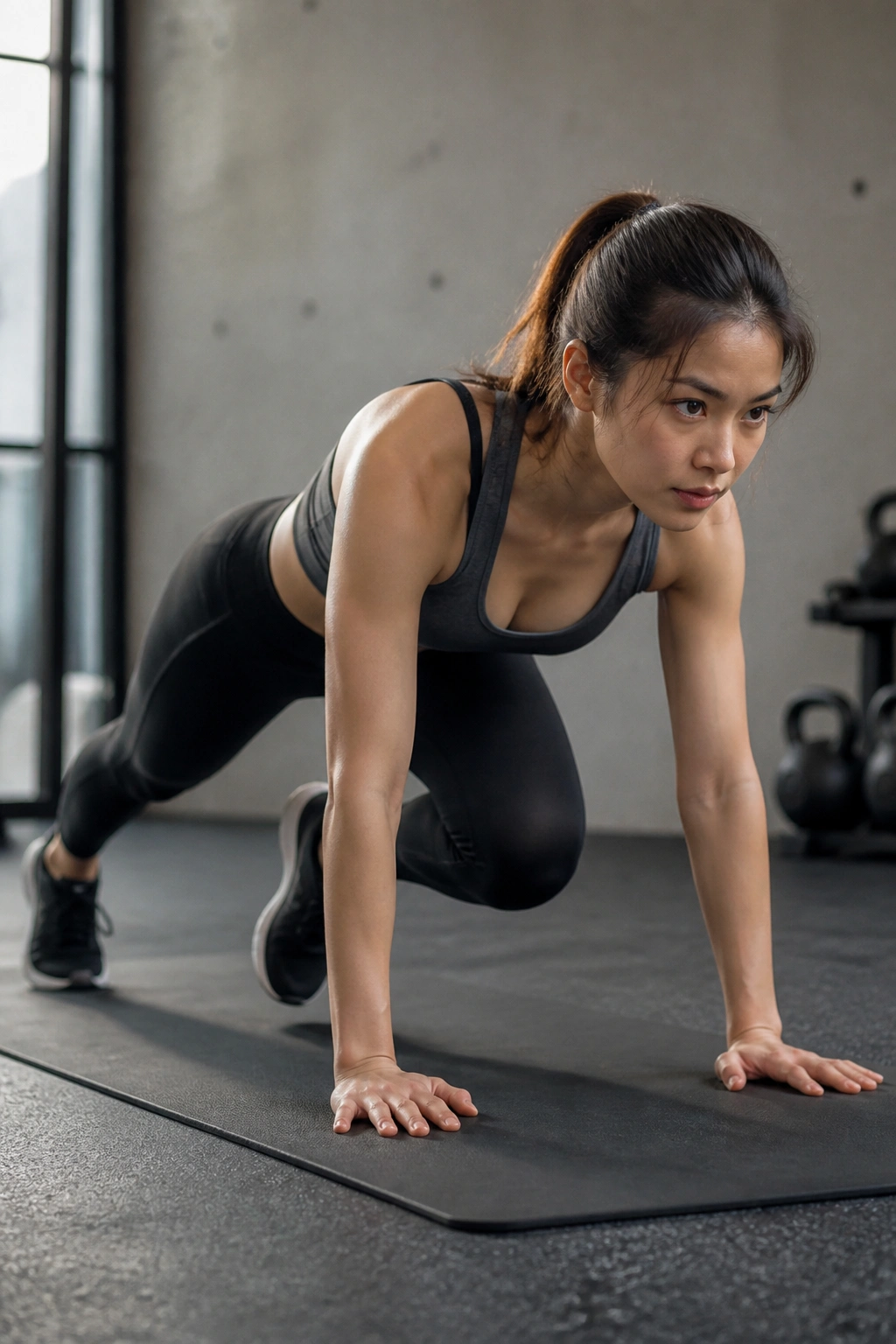
This is a cardio-core hybrid. The high-intensity movement forces you to stabilize your midsection while your hips are working in a dynamic, unstable environment. This is excellent for burning calories while keeping the core tight.
Start in a high plank position. Bring your right knee in toward your chest as if you are running. Then, switch legs, bringing the left knee in while the right leg returns. The speed is less important than the bracing.
Every time a knee comes in, exhale sharply. This forced exhale activates the transverse abdominis, that deep, belt-like muscle that wraps around your stomach. You should feel a deep contraction each time you pull the knee in. Keep your hips low—do not let them rise toward the ceiling as you speed up.
7. Russian Twists
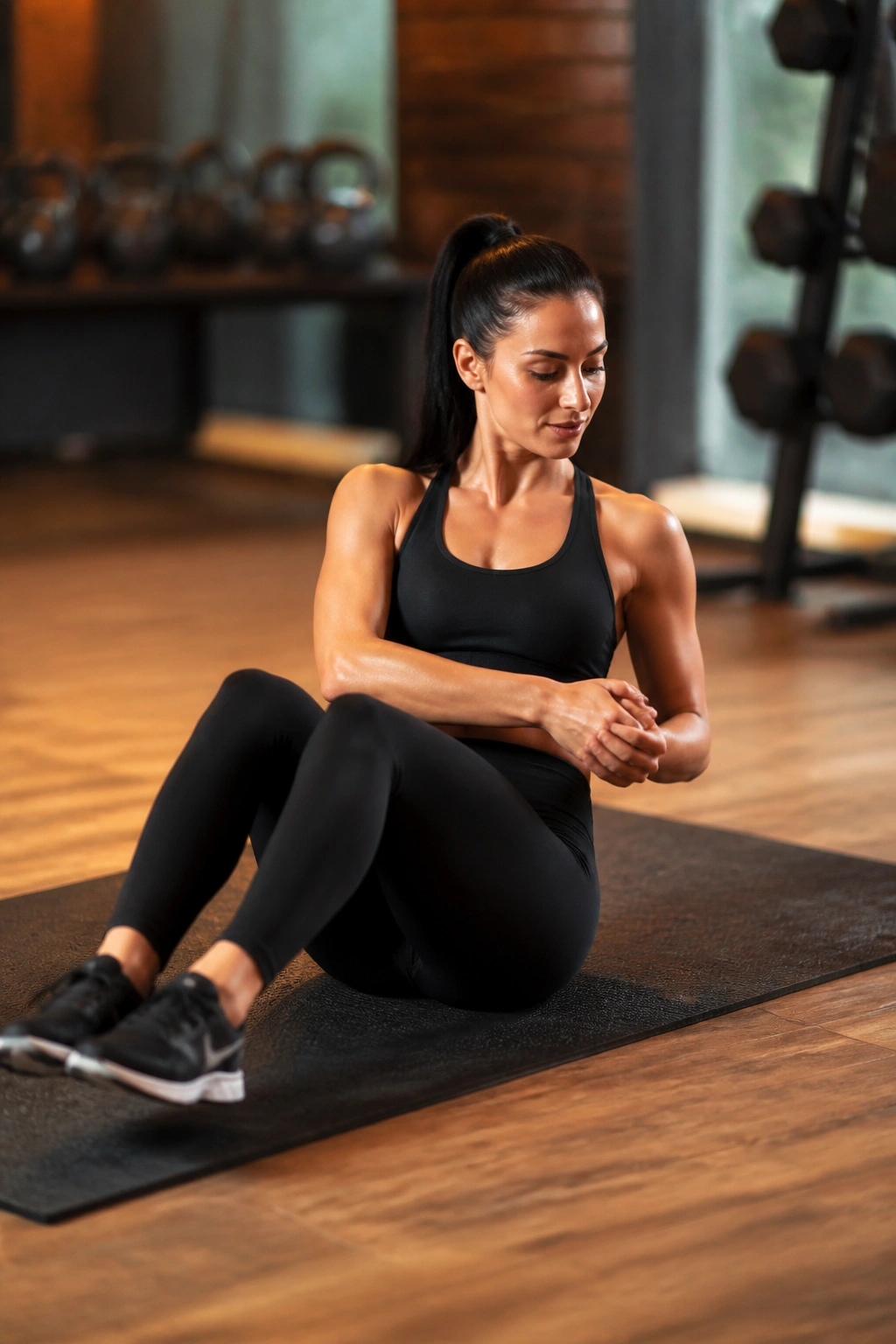
To trim the waistline, you need to engage the obliques. Russian Twists are a direct attack on these side muscles. Sit on the floor, lean back slightly, and lift your feet a few inches off the ground. Your torso and legs should form a V shape.
Clasp your hands together or hold a light weight. Twist your torso from side to side, bringing your hands toward the floor on either side of your hips. Keep your chest up—do not hunch your shoulders.
If your feet touching the ground makes the movement too easy, keep them elevated. However, if your lower back starts to ache, place your heels on the ground. You are still working the abs; you are just modifying for your current strength level. The rotation is what matters, not the elevation of your feet.
8. Hollow Body Holds
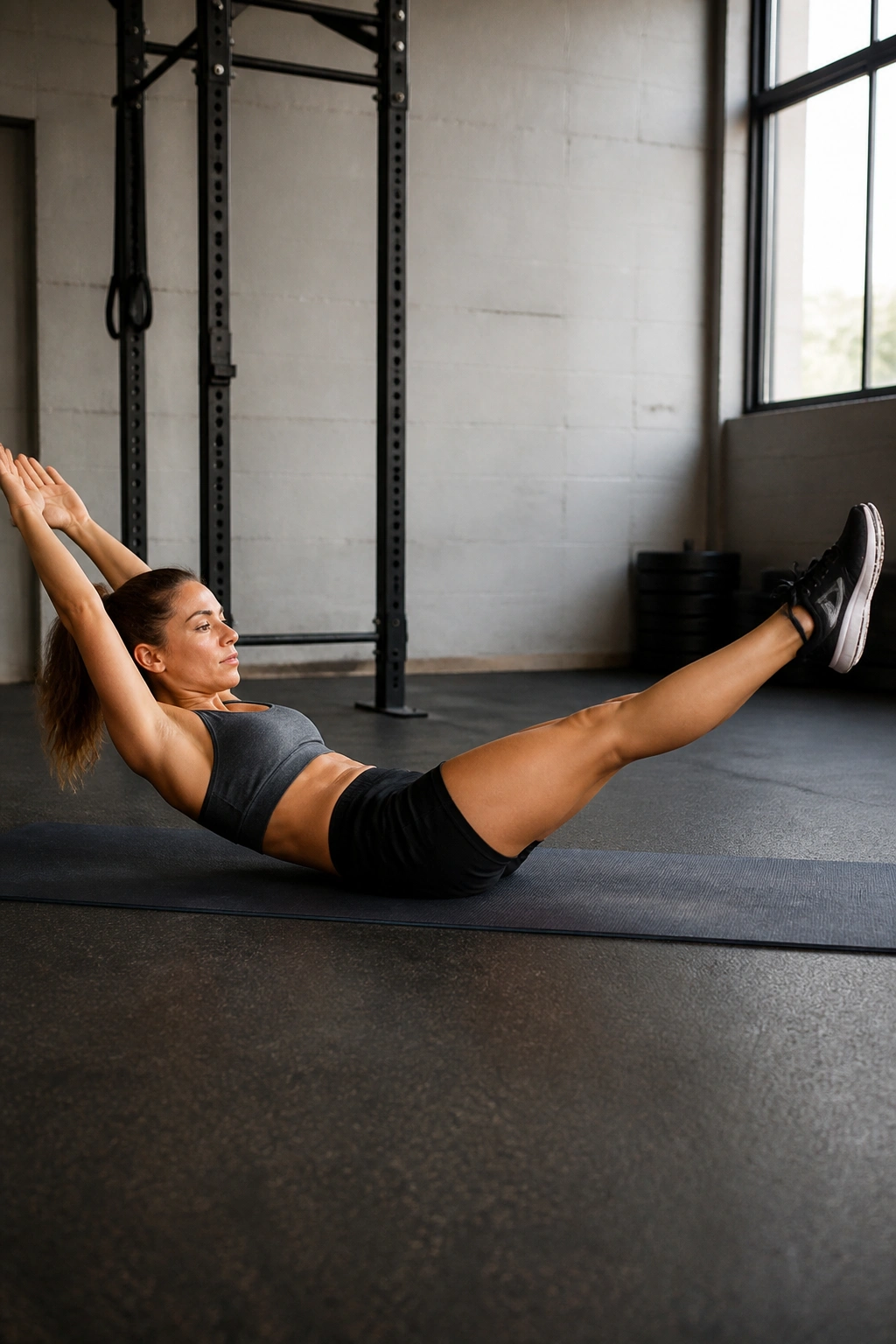
Gymnasts swear by this move, and for good reason. It is perhaps the most honest abdominal exercise in existence. It requires total body tension. If you relax, you lose the position immediately.
Lie on your back. Extend your arms over your head. Lift your legs and your shoulder blades off the floor simultaneously. Your body should look like a banana or a boat. Your lower back must stay firmly pressed into the ground.
If your lower back arches, lift your legs higher toward the ceiling until you regain the flat-back connection. The lower your legs are to the ground, the harder the exercise becomes. Hold this for 20 to 30 seconds. If you are shaking, you are doing it correctly.
9. Reverse Crunches
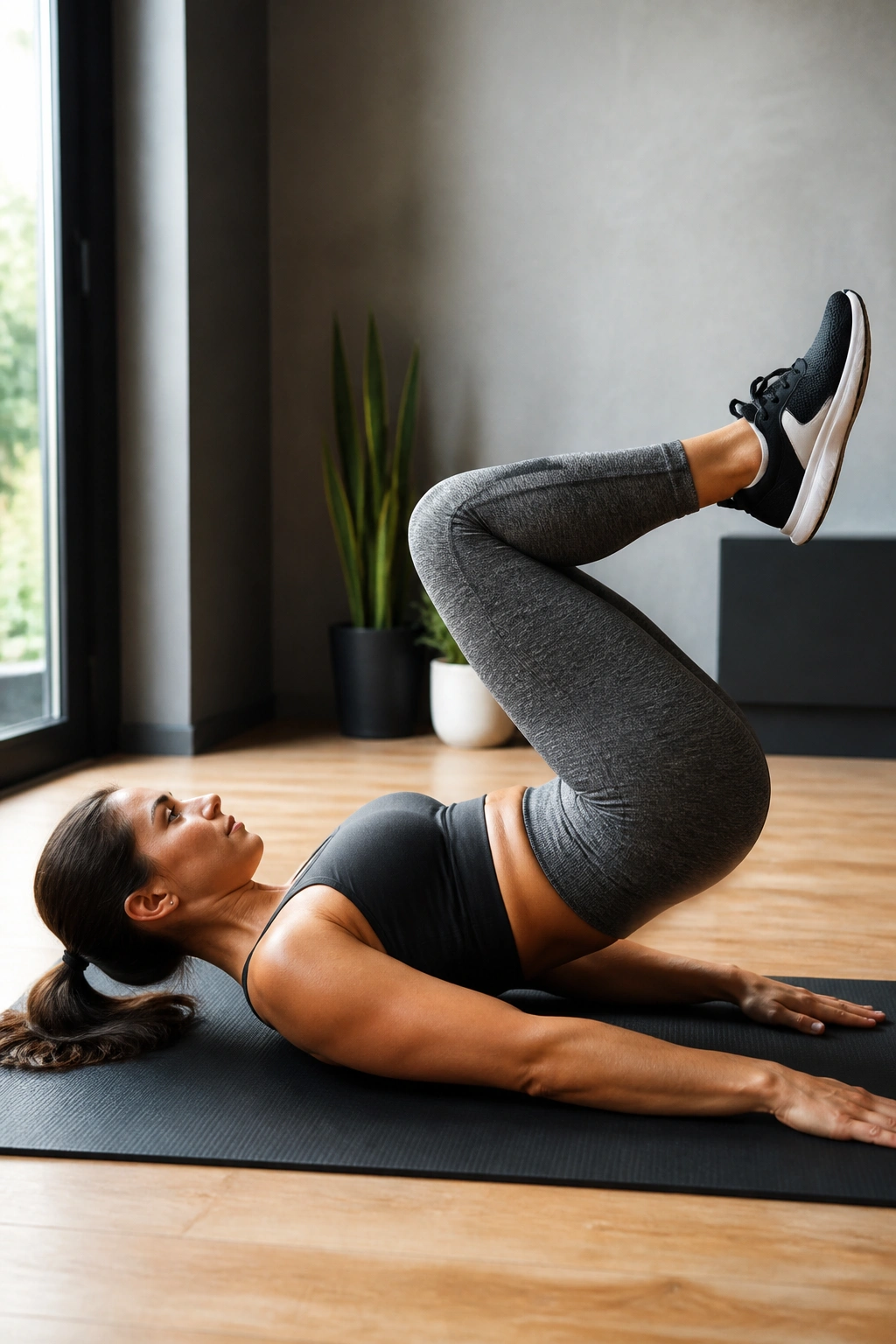
Unlike standard crunches, the reverse crunch isolates the lower abdominal area. Because you are moving your pelvis toward your ribcage rather than your ribcage toward your pelvis, you bypass the hip flexors entirely.
Lie on your back, arms at your sides. Bring your knees in toward your chest. Using your abs, lift your hips off the floor, curling your tailbone toward your ceiling. This is a very small movement. You do not need to kick your legs over your head.
Think about lifting your hips straight up, not rolling back. Once you lift, lower your hips back to the mat with control. Do not drop them. The slow, controlled return is where your muscles are doing the most work to stabilize your spine.
10. Flutter Kicks
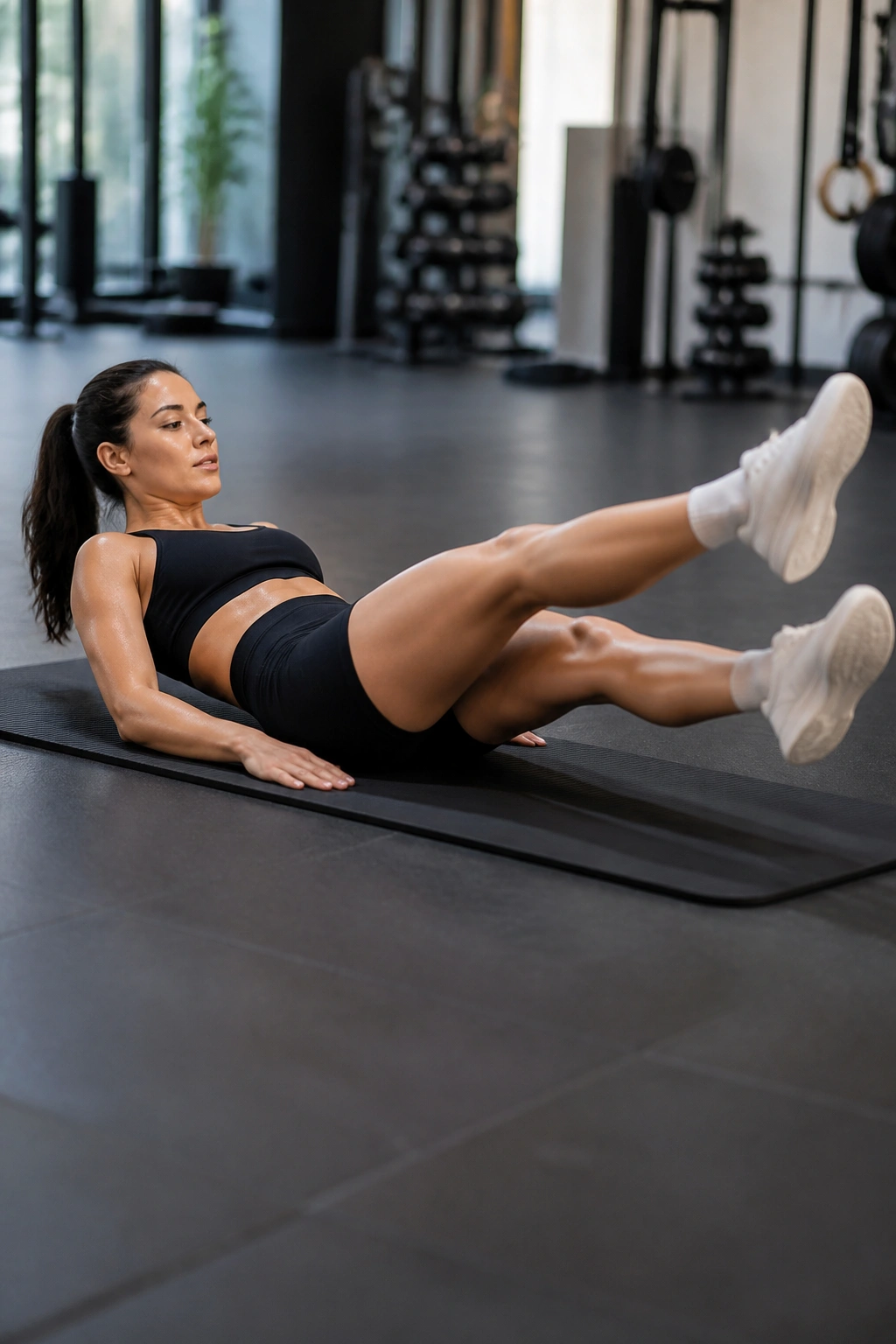
This exercise builds endurance in the lower abdominal muscles. It forces you to hold a stable position while moving your legs, which trains the core to handle dynamic instability—a skill that translates well to real-world movement.
Lie on your back, legs extended. Lift both legs about 6 inches off the floor. Keep your lower back pushed into the mat. Flutter your legs up and down in small, quick motions.
Keep the movements small. Huge, sweeping kicks will engage your hip flexors and pull on your lower back. Tiny, rapid kicks keep the tension exactly where you want it: deep in the lower belly. Try to maintain this for 30 to 60 seconds.
11. Pelvic Tilts

You cannot fix a stomach pooch without addressing the pelvis. Anterior Pelvic Tilt is often the hidden culprit behind a belly that sticks out even when you are lean. This exercise is more of a movement pattern reset than a high-calorie burner, but it is essential.
Lie on your back, knees bent, feet flat on the floor. There is naturally a small gap between your lower back and the floor. Use your abs to push your lower back into the mat, flattening that gap. As you do this, your tailbone will tuck up slightly toward your ribcage.
Hold this squeeze for five seconds, then release. This teaches your brain how to engage the deep core muscles that hold your pelvis in a neutral position. Practice this daily until you can find this neutral position while standing.
12. Bear Crawls
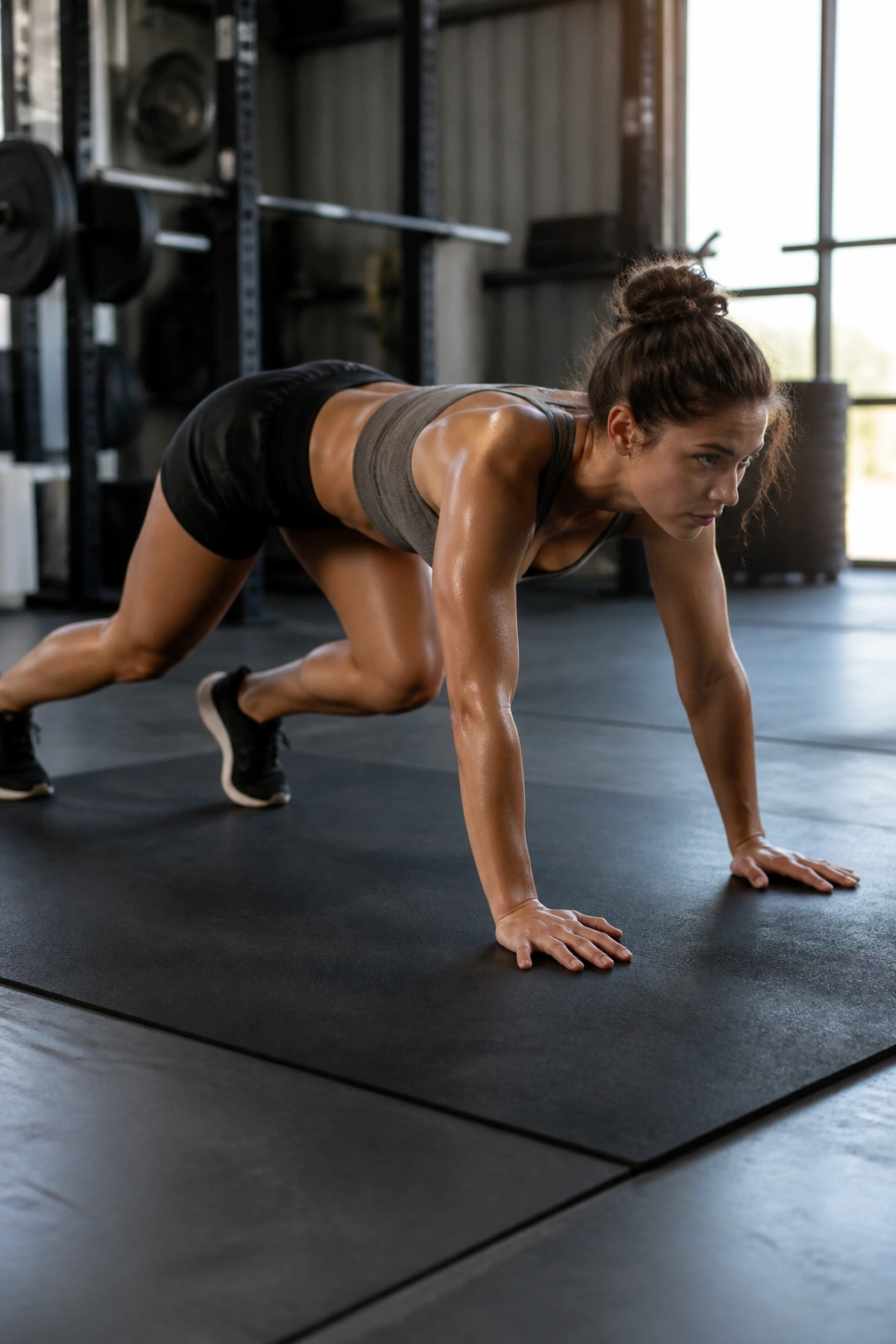
This is a functional movement that requires total core stabilization. By keeping your knees hovering just an inch off the ground, you force your transverse abdominis to work overtime to keep your back flat.
Start on all fours. Lift your knees just an inch off the mat. Crawl forward, moving the opposite hand and leg at the same time—right hand moves with left foot, left hand moves with right foot. Keep your back flat like a table.
Do not let your hips sway. The “bear crawl” pattern is a test of core stiffness. If your butt goes up into the air, reset and slow down. You will feel this in your abs much more than you expect.
13. Boat Pose
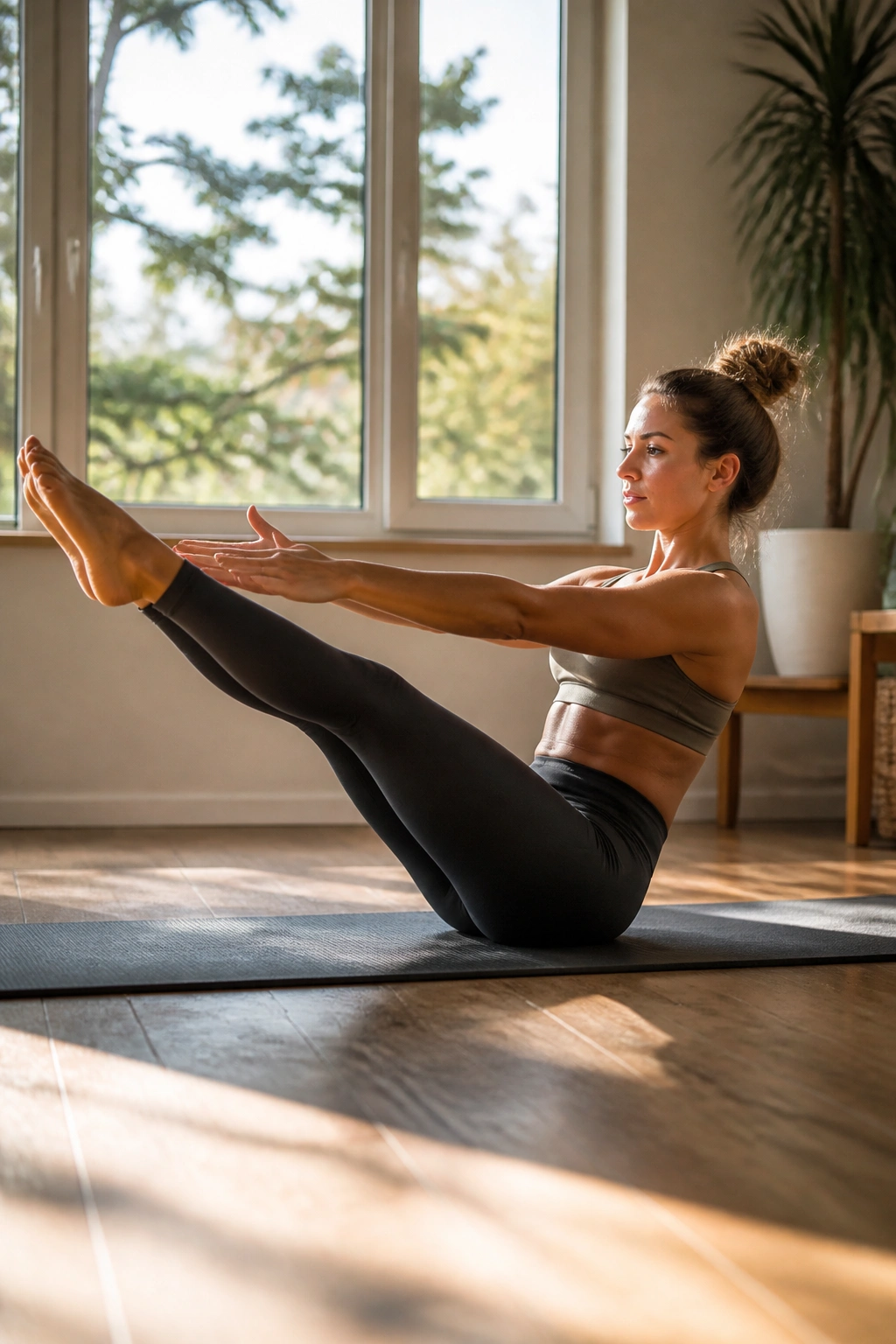
Borrowed from yoga, the boat pose is an isometric hold that targets the entire abdominal wall. It requires balance, strength, and endurance. Sit on the floor with your knees bent, then lean back until you feel your abs engage.
Lift your feet off the floor, balancing on your sit bones. Extend your legs straight if you can, or keep them bent for a modified version. Reach your arms forward, parallel to the ground. Keep your chest lifted; don’t collapse into your sternum.
Focus on your breath. In this position, it is natural to hold your breath, which creates pressure that pushes the belly out. Instead, exhale deeply and pull your navel to your spine. This engagement is what builds a flatter profile.
14. Heel Taps
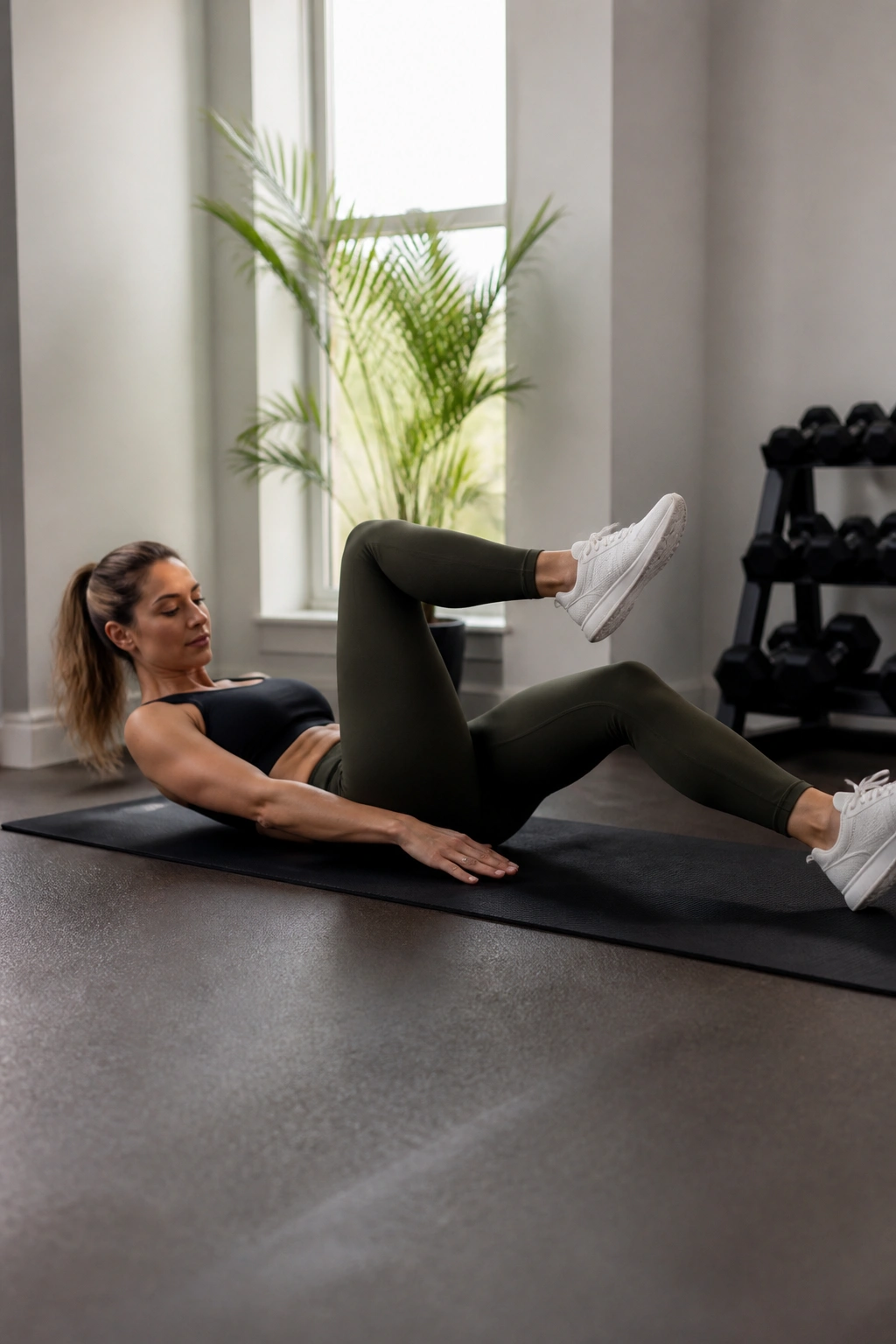
Heel taps are a fantastic variation for those who struggle with lower back pain during leg raises. By keeping the knees bent, you significantly reduce the leverage on your lumbar spine while still forcing the lower abs to stabilize.
Lie on your back with your knees bent at 90 degrees and lifted. Slowly lower one foot to tap the ground while the other stays in the tabletop position. Bring it back up and switch. Keep your lower back glued to the floor the entire time.
If you find that your back arches as your heel nears the floor, do not tap all the way down. Stop a few inches above the floor. Progressively increase your range of motion as your core strength improves.
15. Knee-to-Chest Holds
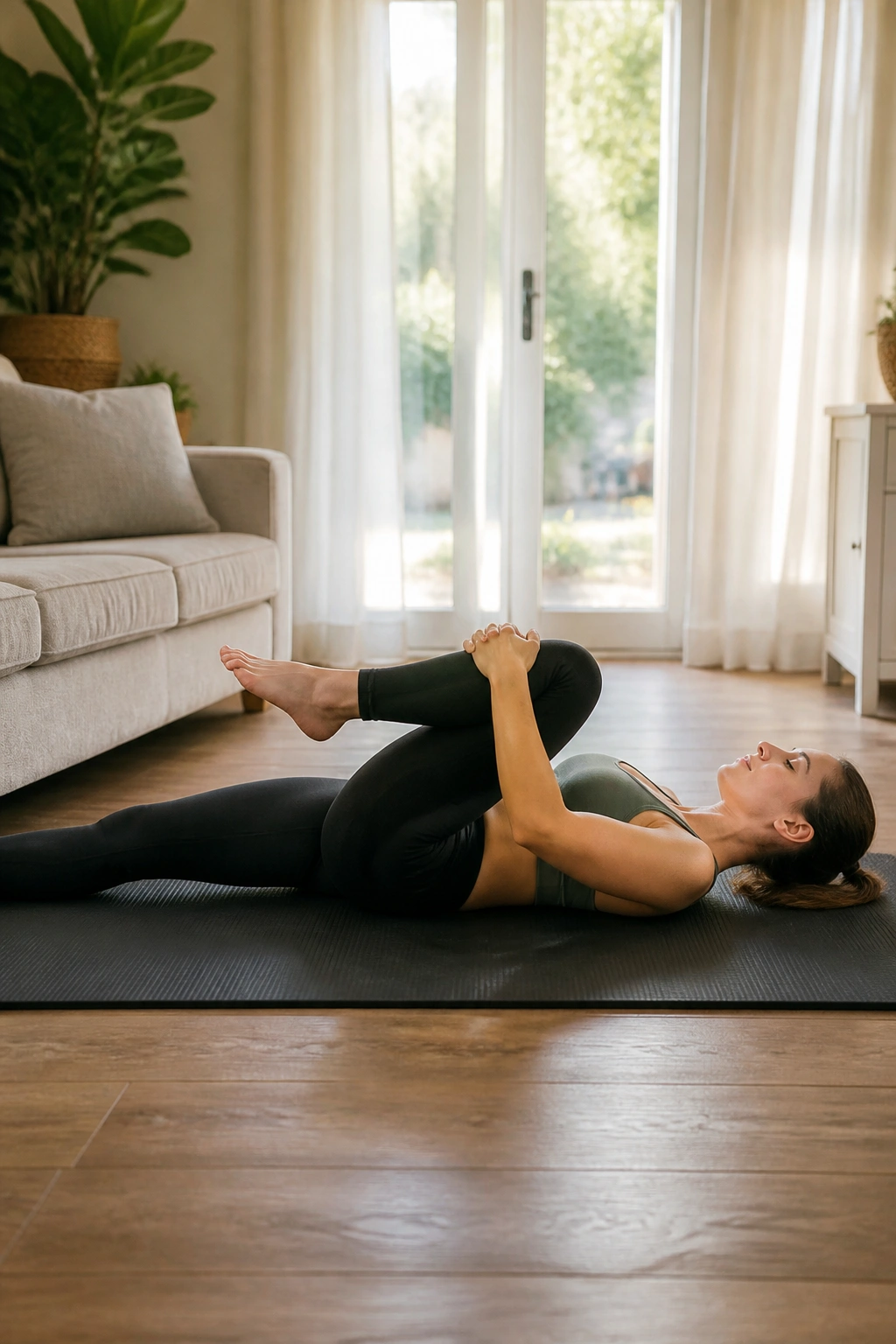
This is a simple, effective move to wake up the lower abdominal wall. It is often used in physical therapy for core retraining. Lie on your back, legs extended. Bring one knee toward your chest, clasping your hands around the shin.
Pull the knee in while actively pushing your lower back into the floor. Then, extend that leg slowly while pulling the other knee in. This is a rhythmic, controlled movement. It focuses on the eccentric contraction of the lower abs.
Don’t rush these. The benefit comes from the intentional engagement of the muscles as you slowly extend the leg back to the floor. Focus on the sensation of your navel pulling inward.
16. Spiderman Planks
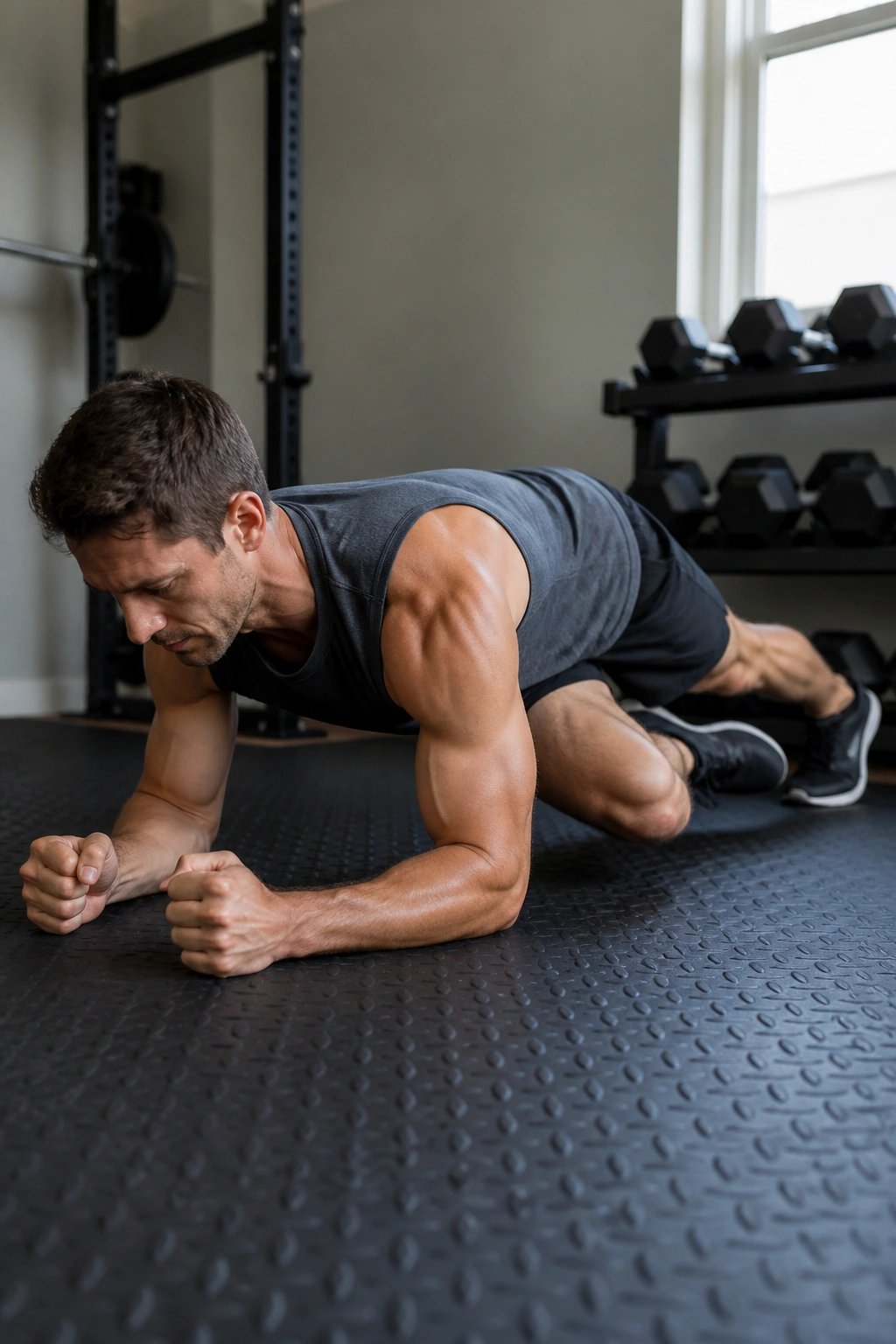
This variation of the plank adds an oblique component by bringing the knee toward the elbow on the same side. This forces your core to resist rotation, which builds strength through the entire midsection.
Start in a standard forearm plank. Bring your right knee toward your right elbow, crunching the side of your body. Return to the plank and switch sides. Your torso should remain as stable as possible; do not rotate your hips to meet your knee.
The crunch is small. You are not trying to touch your knee to your elbow if it requires sacrificing your form. Just bring them as close as possible while keeping your core braced and your spine neutral.
17. Jackknives
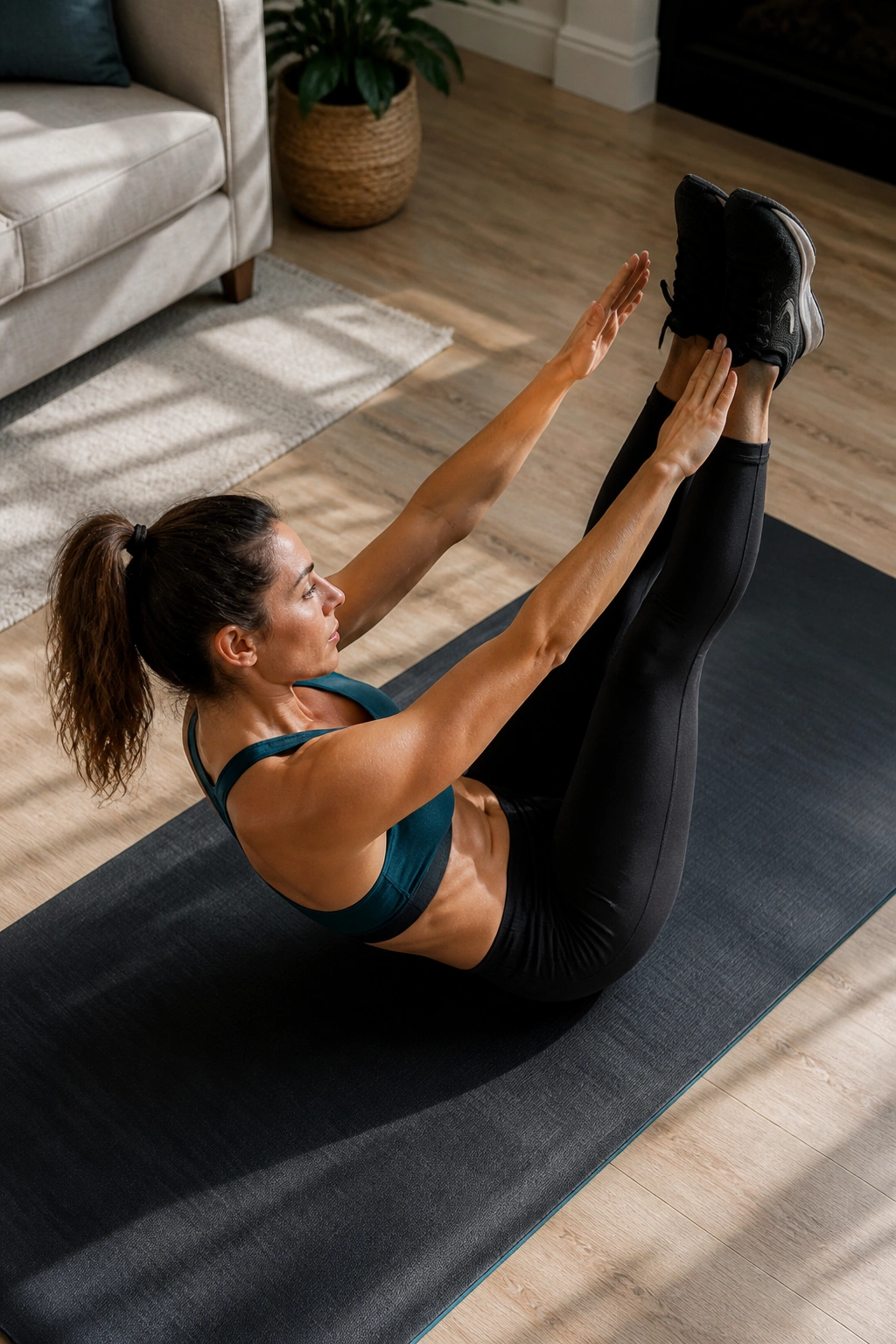
This exercise mimics the motion of a full sit-up but with much more control. It is very intense, so prioritize form over repetition counts. Lie on your back, arms extended behind your head, legs straight.
Simultaneously lift your legs and your upper body, meeting in the middle like a closing jackknife. Your hands should reach toward your toes. The key is to keep your legs straight and engage your abs to pull your torso up.
Lower your body back down with extreme control. Do not just flop onto the floor. If you cannot get your torso and legs to meet in the middle, modify the move by bringing your knees toward your chest instead of keeping the legs straight.
18. Walkouts
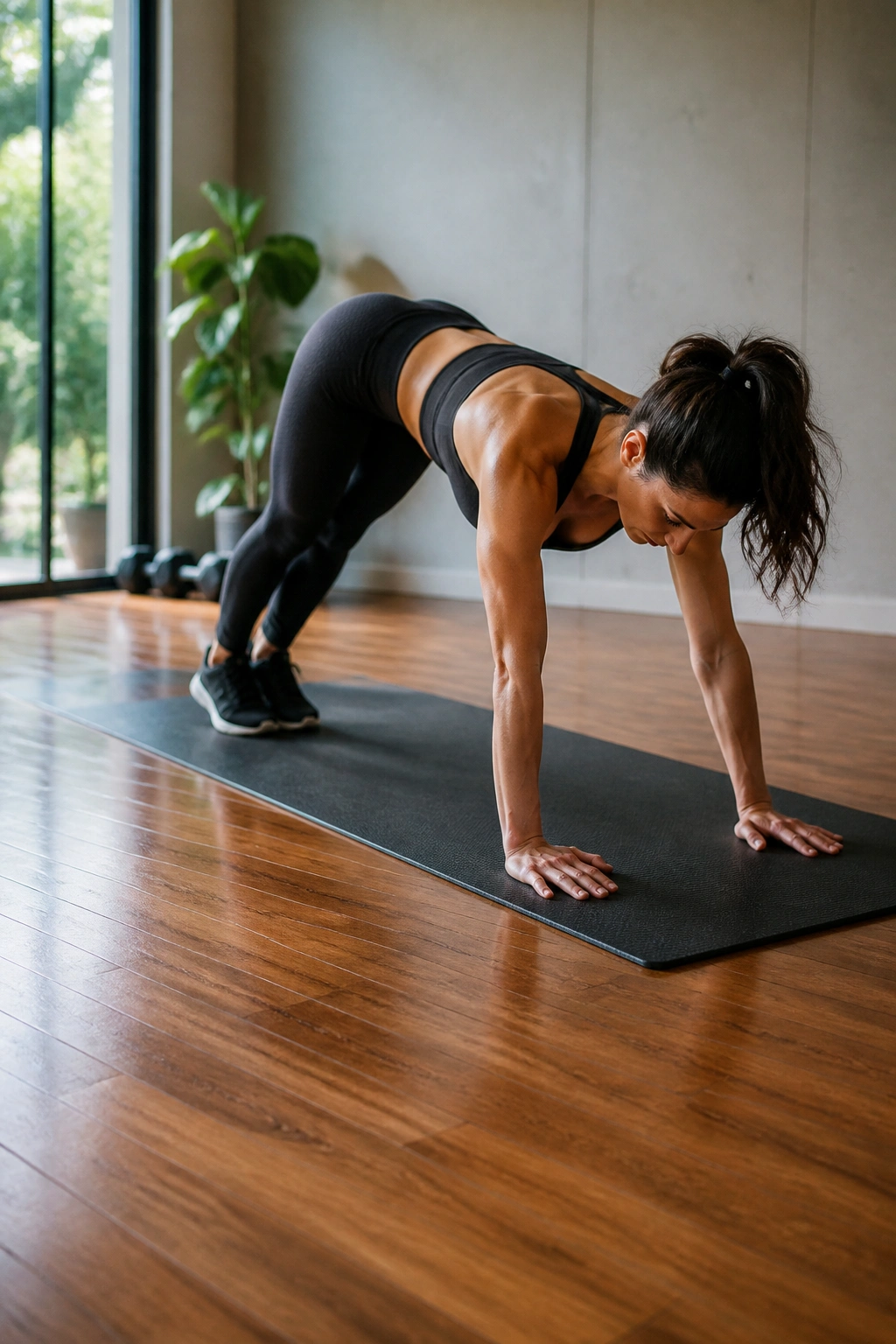
This move challenges the core stability through a full range of motion, moving from a standing position to a high plank and back. Start standing tall. Hinge at your hips and place your hands on the floor.
Walk your hands forward until you are in a high plank position. Hold for one second, bracing your core hard. Walk your hands back toward your feet and stand up. Keep your legs as straight as possible, but feel free to bend the knees if your hamstrings are tight.
The challenge here is to keep the hips from swaying as you walk your hands out. Every step forward adds a level of difficulty. This is a full-body exercise that targets the abs deeply due to the anti-rotational requirement.
Final Thoughts
Achieving a firmer core and addressing that stubborn lower-belly pooch takes patience. None of these exercises—or any exercise, for that matter—will magically burn fat from a specific spot. Spot reduction is a myth. The changes you are looking for come from a combination of consistent physical activity, posture correction, and a nutritional approach that supports body composition.
Pay attention to your body during these movements. If you feel pain in your lower back, you are likely using your spine to compensate for weak abs. Stop, reset, and reduce the range of motion. It is better to do five perfect repetitions than fifty sloppy ones. Quality of movement creates the physical changes you want. Keep the consistency up, prioritize the mind-muscle connection, and over time, the structural improvements will become clear.
