



The floor in front of your couch is rarely seen as a gym, but that’s exactly where the most effective calorie-burning sessions happen. You do not need a rack of dumbbells, a bulky treadmill, or a dedicated studio space to push your heart rate into the fat-burning zone. Gravity and your own body weight are the only tools required to transform your living room into a high-intensity training ground.
Many people convince themselves that fitness requires an expensive membership or a room full of iron. That mindset is the biggest barrier between you and consistent progress. When you remove the friction of traveling to a facility or waiting for equipment, the habit sticks. You can drop into a workout the moment you have fifteen minutes of downtime, regardless of what the weather is doing outside or how busy your schedule looks.
Real intensity comes from how you move, not what you hold. By cycling through specific, multi-joint movements without rest, you create a metabolic demand that forces your body to adapt. It is simple, effective, and completely accessible. Let’s look at the movements that will change how you approach training in small, empty spaces.
1. Jumping Jacks
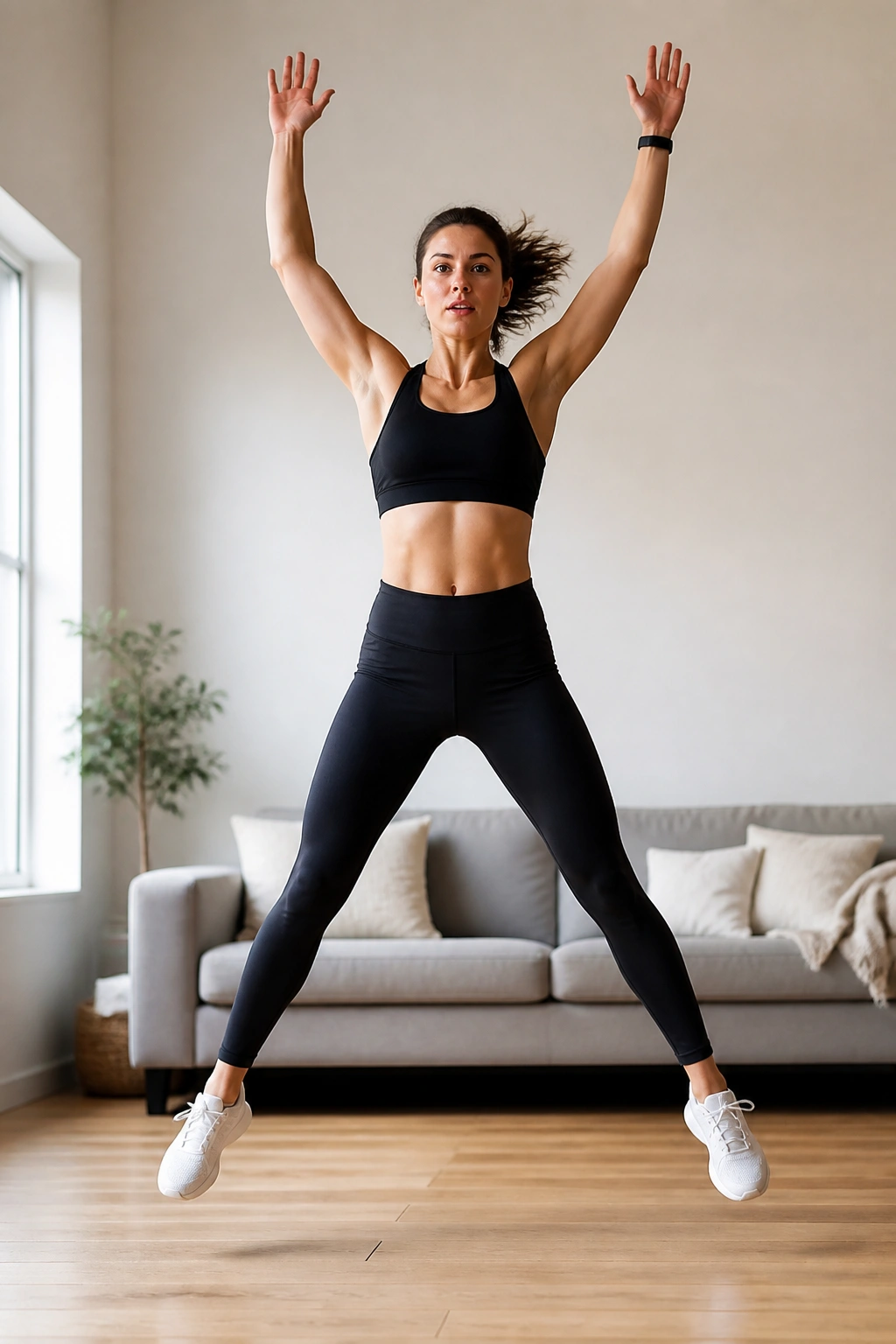
Jumping jacks are the foundation of effective home cardio. They get your heart rate up immediately by engaging both your upper and lower body simultaneously. It is a full-body movement that requires no equipment, but it needs correct form to protect your joints.
Why This Works for Efficiency
The movement forces your heart to pump blood to your extremities quickly. Because you are constantly moving your arms and legs away from and toward the center of your body, you are working your cardiovascular system and engaging your core for stability.
Key Technique for Success
- Keep your knees soft—never lock them out.
- Land on the balls of your feet, not your heels.
- Keep your core tight to prevent your torso from swaying.
- Maintain a consistent tempo throughout the entire duration.
Pro tip: If you find the high impact too much on your ankles, do a “step-out” jack where you tap one foot out at a time instead of hopping.
2. High Knees
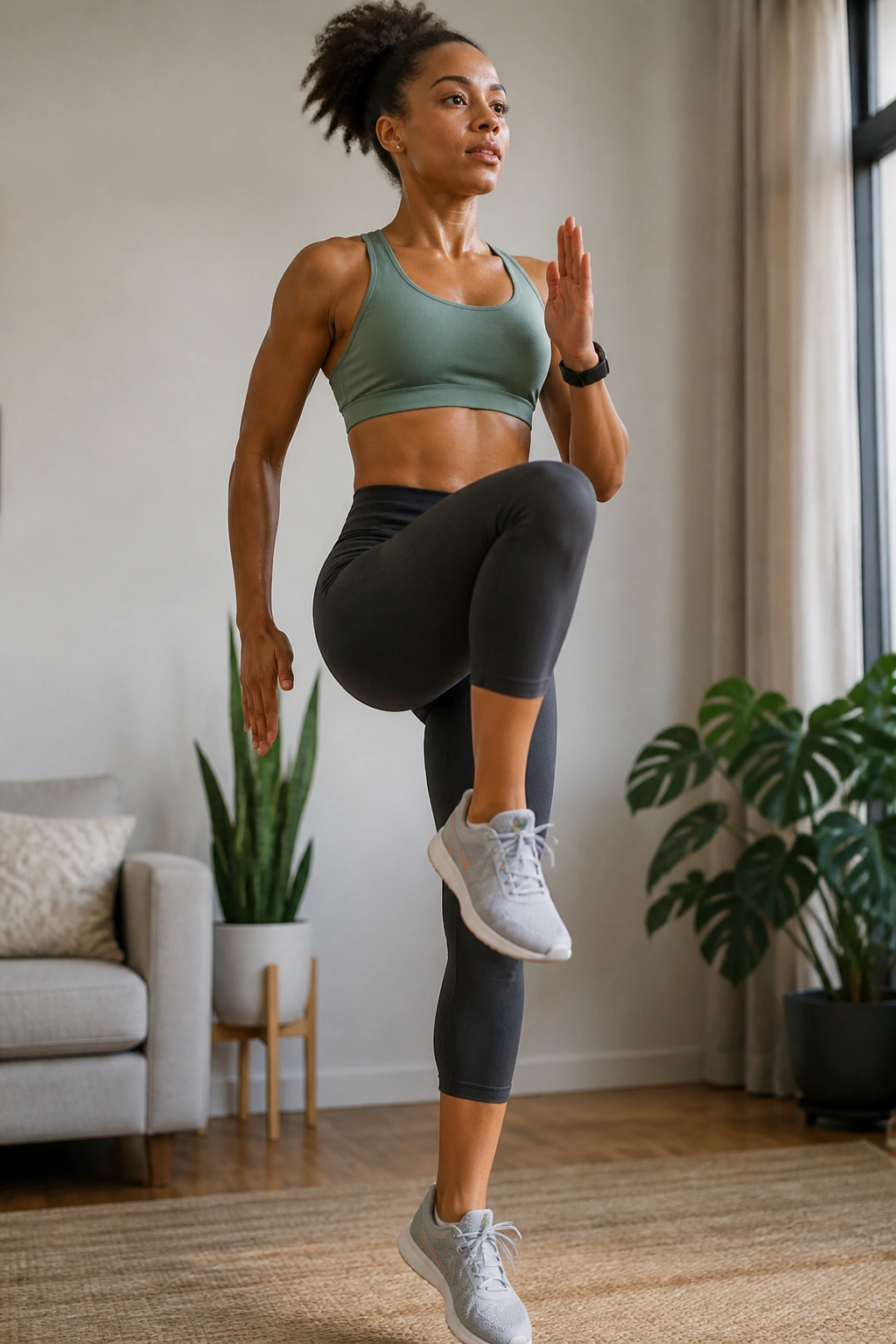
High knees are all about driving power from your hips and engaging your abdominal muscles. If you treat this move like a casual jog in place, you will miss the benefit. You need to treat it like a sprint where the goal is to bring your knees as high as possible.
Think of your midsection as a stabilizer that prevents your spine from arching while you pump your legs. The faster you move, the more your heart rate climbs. When you add arm pumping into the mix, you turn a leg exercise into a total-body challenge.
Start by standing with your feet hip-width apart. Focus on driving the right knee toward your chest while your left arm swings forward. As soon as that foot touches the ground, explode with the other side. Do not let your heels slap the floor; stay light and reactive.
3. Mountain Climbers
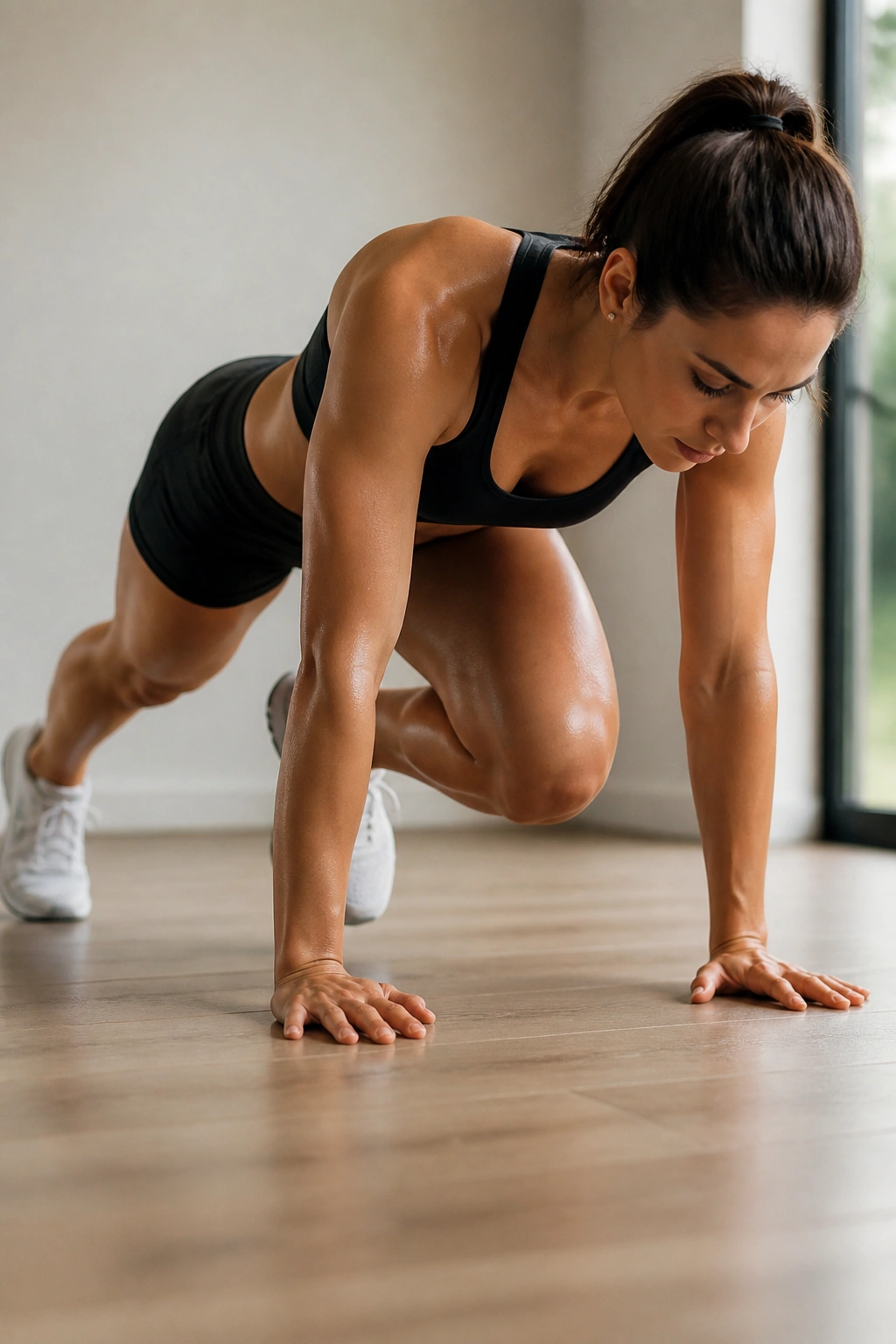
Mountain climbers are deceptive. They look like you are just running on the floor, but when done properly, they are one of the most punishing core-cardio hybrids you can perform. They keep your body in a plank position, which forces your shoulders and abs to work hard to hold you steady.
How to Master the Form
Start in a high plank position with your hands directly under your shoulders. Ensure your hips are not sagging toward the floor or piked too high toward the ceiling. When you begin, drive your right knee toward your chest, then quickly switch to the left.
Why This Is Different
Unlike a standing exercise, mountain climbers force you to work against gravity in a horizontal plane. This creates significant tension in the rectus abdominis, which makes this move a “two-for-one” workout—cardio endurance paired with abdominal strengthening. Focus on keeping your head neutral, looking slightly ahead of your hands, rather than staring at your toes.
4. Burpees
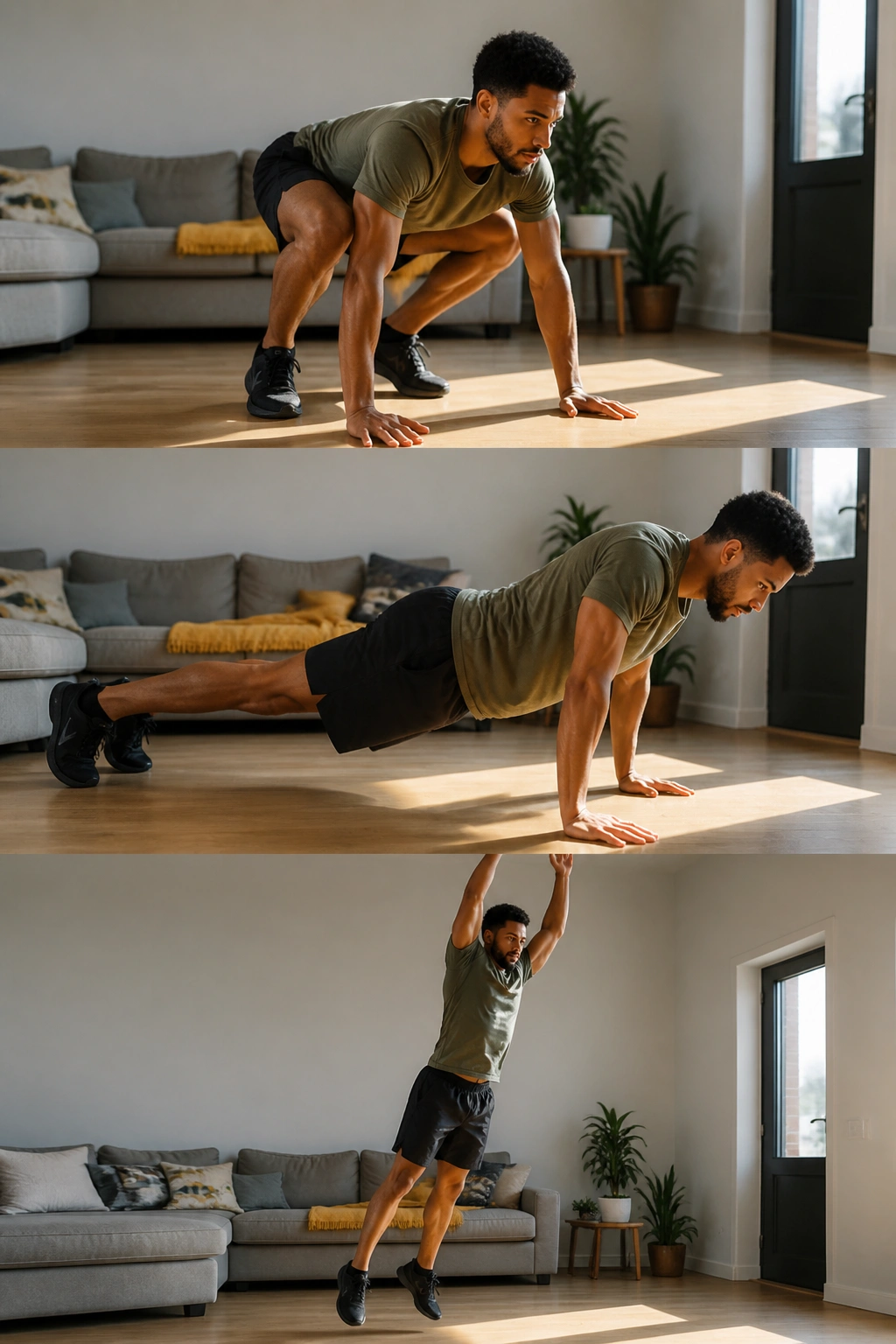
The burpee is arguably the most effective single movement for conditioning. It combines a squat, a plank, a push-up, and an explosive jump into one fluid motion. It is grueling, but it forces your body to transition between vertical and horizontal positions rapidly.
Most people perform burpees with poor form because they try to go too fast. Slow down initially. Drop your hips back and down into a squat, place your palms firmly on the floor, and jump your feet back into a high plank.
If you want to make it harder, add a full chest-to-floor push-up at the bottom. The key to a good burpee is the return to the standing position. Jump your feet back toward your hands, stand tall, and complete a small hop to finish. Doing these in sets of ten will leave you breathless faster than almost any other movement.
5. Butt Kicks
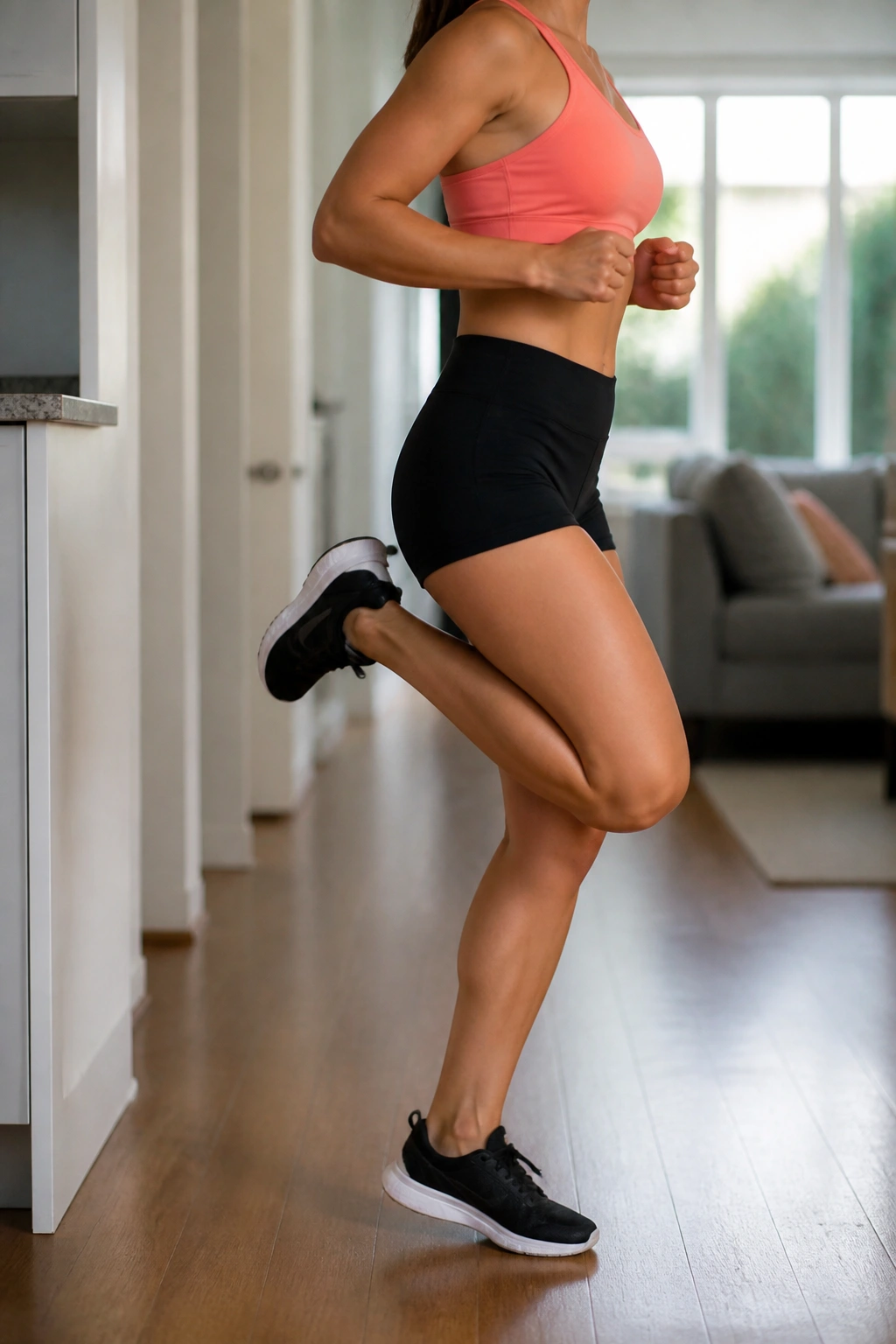
Butt kicks are the antidote to the heavy, pounding movements that leave your shins aching. While they look simple, they are excellent for flushing out the legs and increasing your cadence. They force you to engage your hamstrings actively.
The mistake most people make is simply jogging in place. To get the benefit, you must actively pull your heel toward your glute with each step. You are focusing on the contraction of the hamstring. As you pick up speed, your heart rate rises significantly.
Pair this with arm movement to increase the calorie burn. Keep your torso upright and avoid leaning forward, which is a common compensation pattern when the hamstrings get tired. If you perform these for sixty seconds straight, you will feel a distinct burn in the back of your thighs.
6. Shadow Boxing
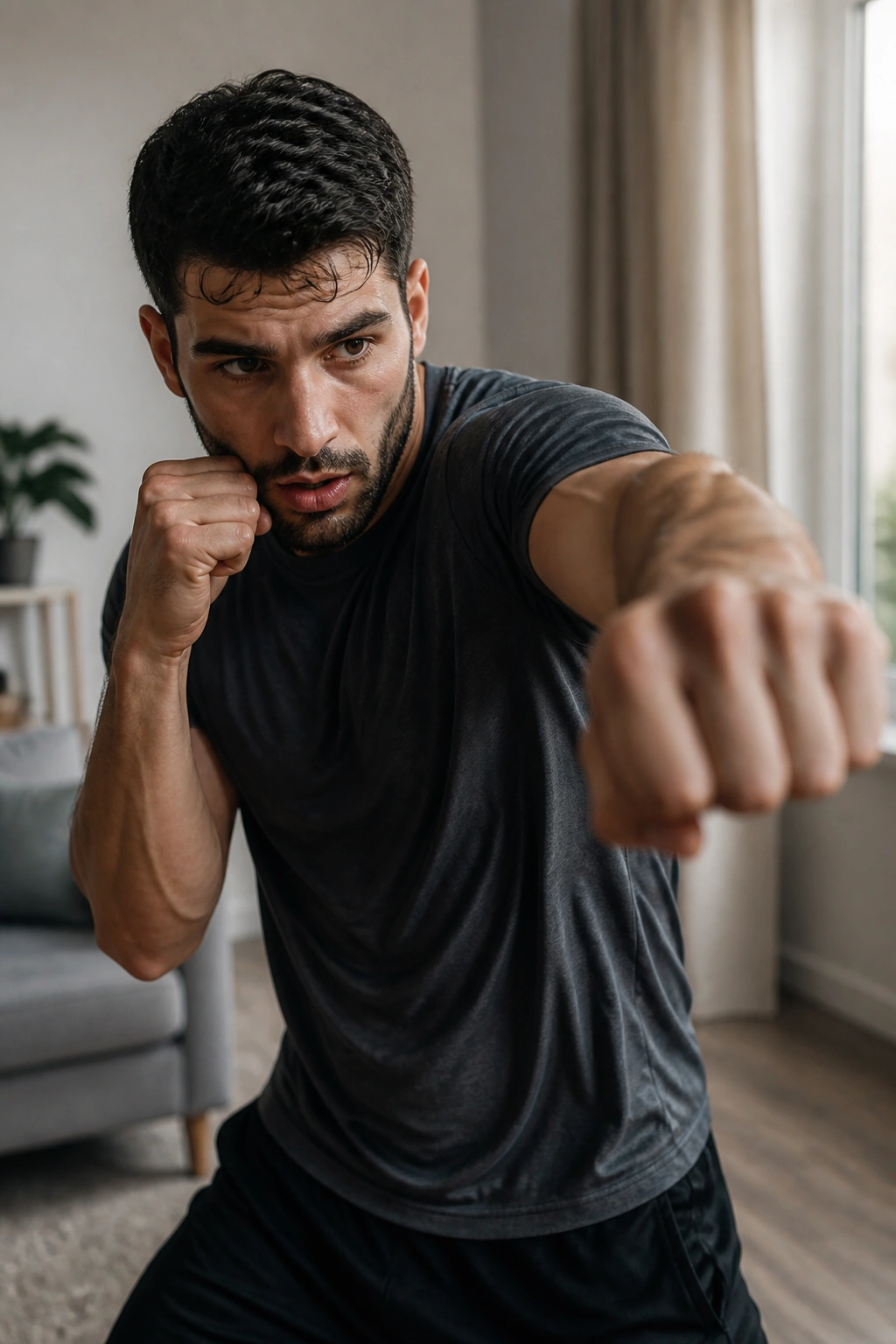
Shadow boxing is the ultimate mental and physical cardio workout. It requires zero space and zero impact on your joints, yet it demands high-level coordination and upper-body endurance. It allows you to move at your own pace while staying light on your feet.
Why This Is Effective
You aren’t just punching the air. You are engaging your core for every rotation and every strike. To get the best results, bounce on the balls of your feet. Keep your hands moving continuously—even when you aren’t throwing a punch, keep them up near your chin.
Key Tips for Shadow Boxing
- Keep your core engaged for every rotation.
- Never fully lock out your elbows when punching.
- Throw combinations (e.g., jab-cross-hook) to stay focused.
- Shift your weight from leg to leg to keep your balance.
Pro tip: Imagine a target in front of you. Aiming at a specific imaginary point keeps your form sharper than just flailing your arms.
7. Skaters
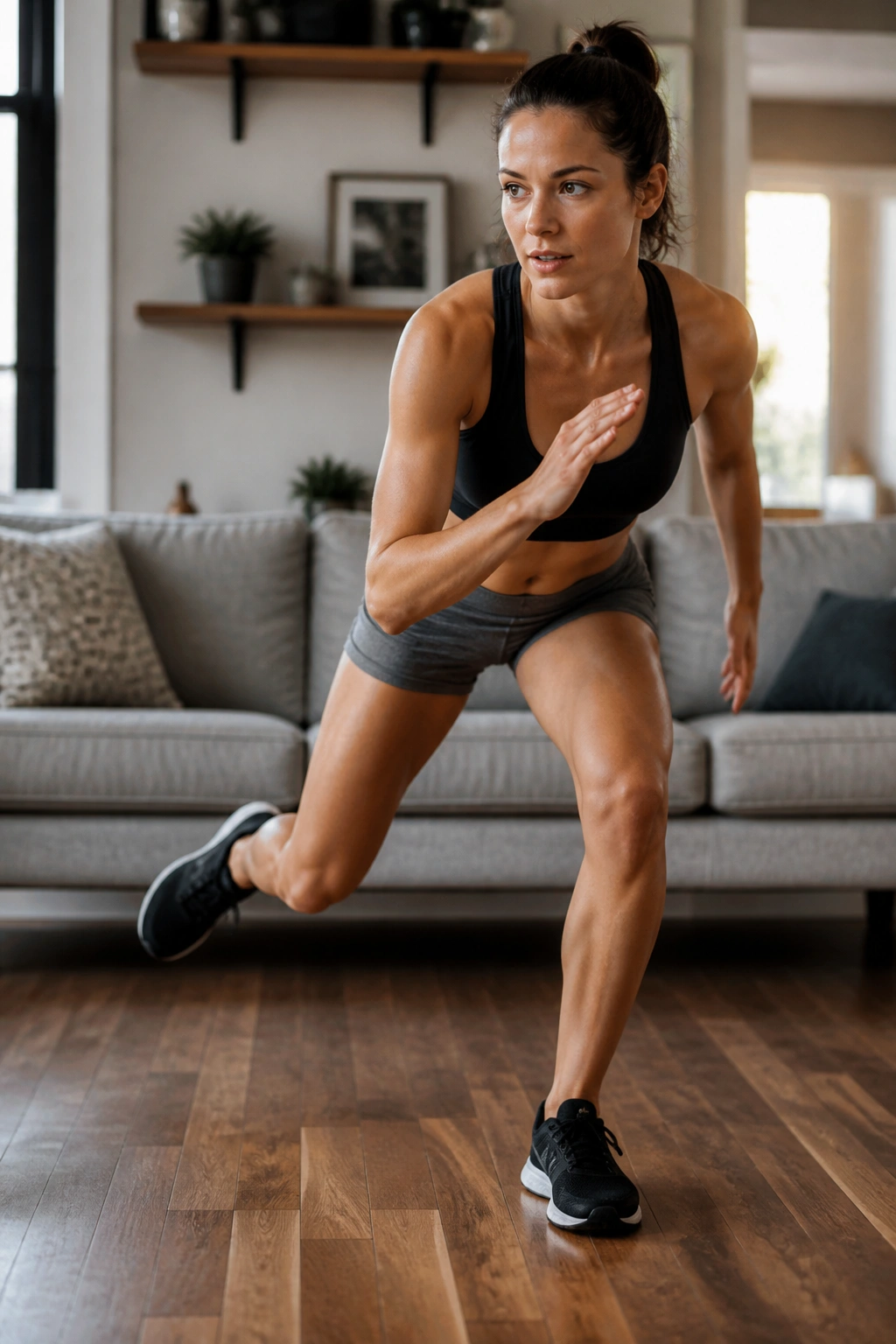
Skaters move your body through the frontal plane, which is a direction most standard workouts ignore. By jumping laterally from one foot to the other, you challenge your stabilizers in your hips, knees, and ankles. This is essential for balanced development and injury prevention.
Start by standing on your right leg. Jump to the left, landing on your left foot while sweeping your right leg behind you. You should land in a slight squat to absorb the force. Then, push off the left foot to jump back to the right.
The goal is distance and control. Do not just hop—jump with intent. The deeper you sink into the landing, the harder your glutes and quads will work. It is an excellent move for building explosive power and improving your coordination at the same time.
8. Plank Jacks
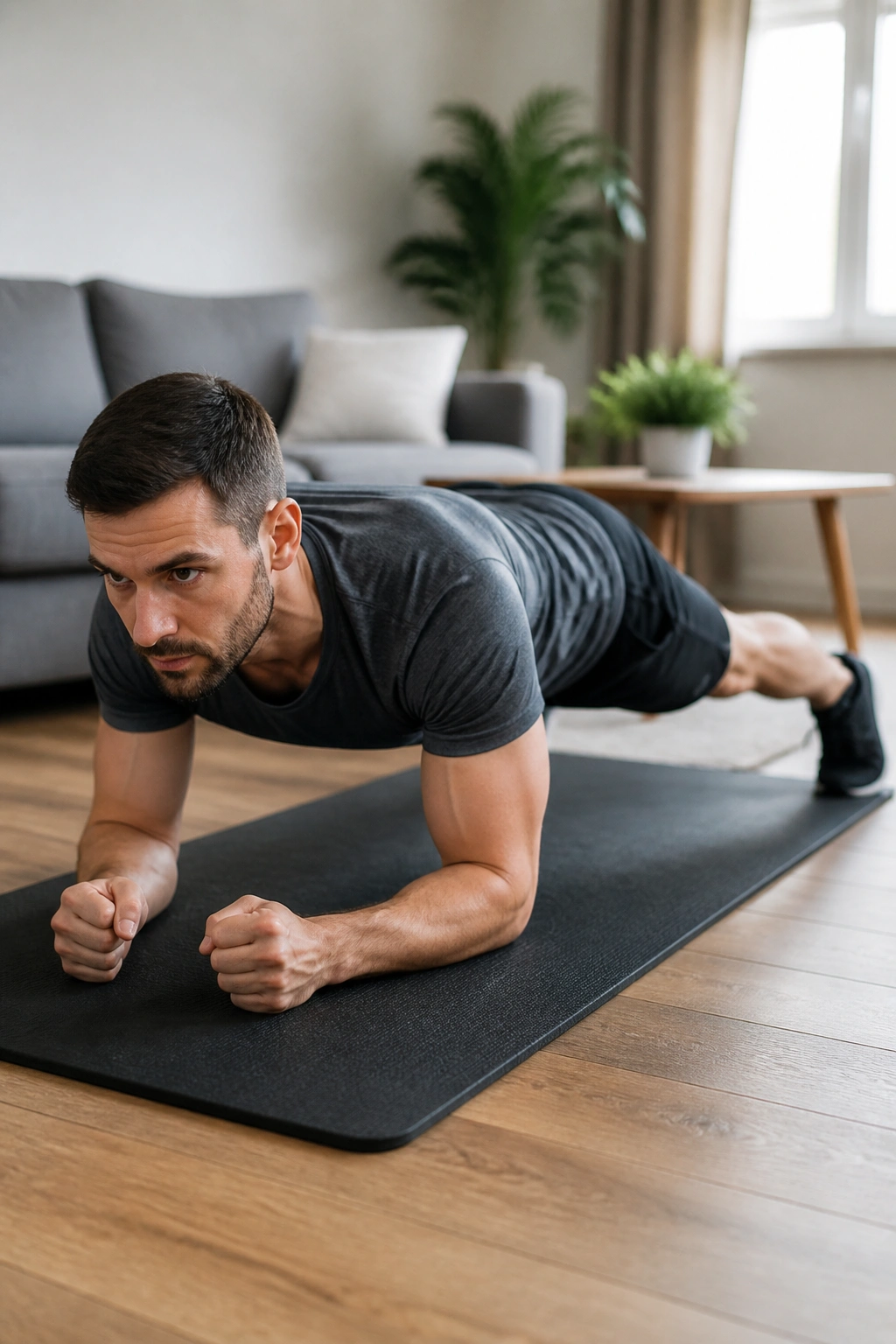
Plank jacks take the stability of a plank and add the cardiovascular stress of a jumping jack. You are essentially doing a jumping jack while in a push-up position. This move is incredible for teaching your core to remain rigid while your legs move independently.
Get into a solid forearm plank or a high plank. Keep your shoulders over your elbows or wrists. Jump your feet out wide, then back together. That is one repetition.
The challenge here is to keep your hips completely still. If your hips are bouncing up and down, you are losing the engagement of your deep abdominal muscles. It is better to move slower and keep your hips dead level than to move fast and let your lower back take the strain.
9. Inchworms
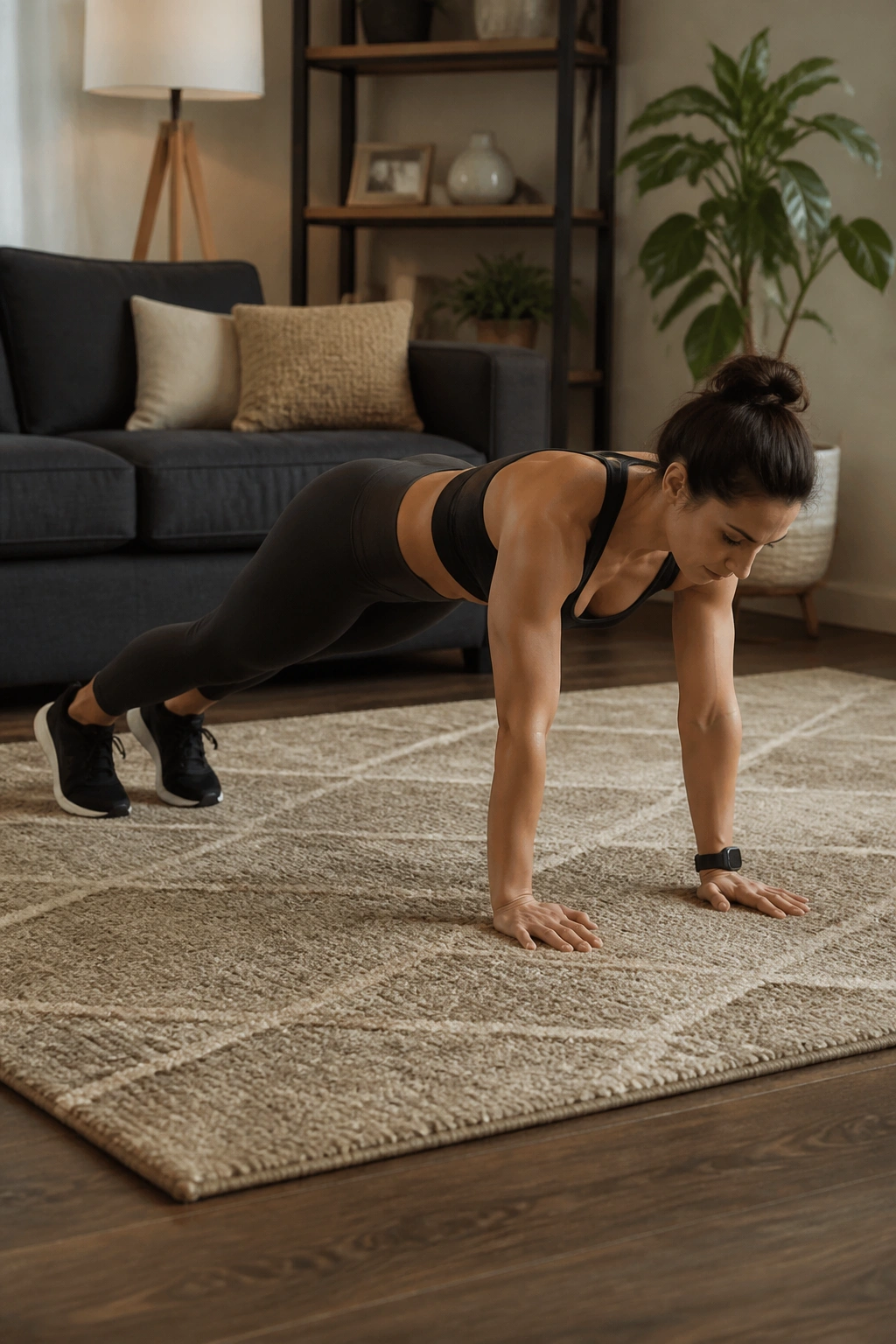
Inchworms focus on flexibility and shoulder strength, but they get your heart rate up because of the constant movement. They are often overlooked as a “warm-up” move, but they are a legitimate conditioning tool if done for volume.
Stand tall, reach down to touch your toes, and then walk your hands out until you are in a high plank position. Hold for a second, then walk your feet up to meet your hands. If you lack hamstring flexibility, bend your knees as much as you need to reach the floor.
This move stretches the posterior chain while demanding strength from your arms and core. It forces your heart to work because you are shifting your body position significantly, moving from standing to horizontal and back again continuously.
10. Squat Jumps
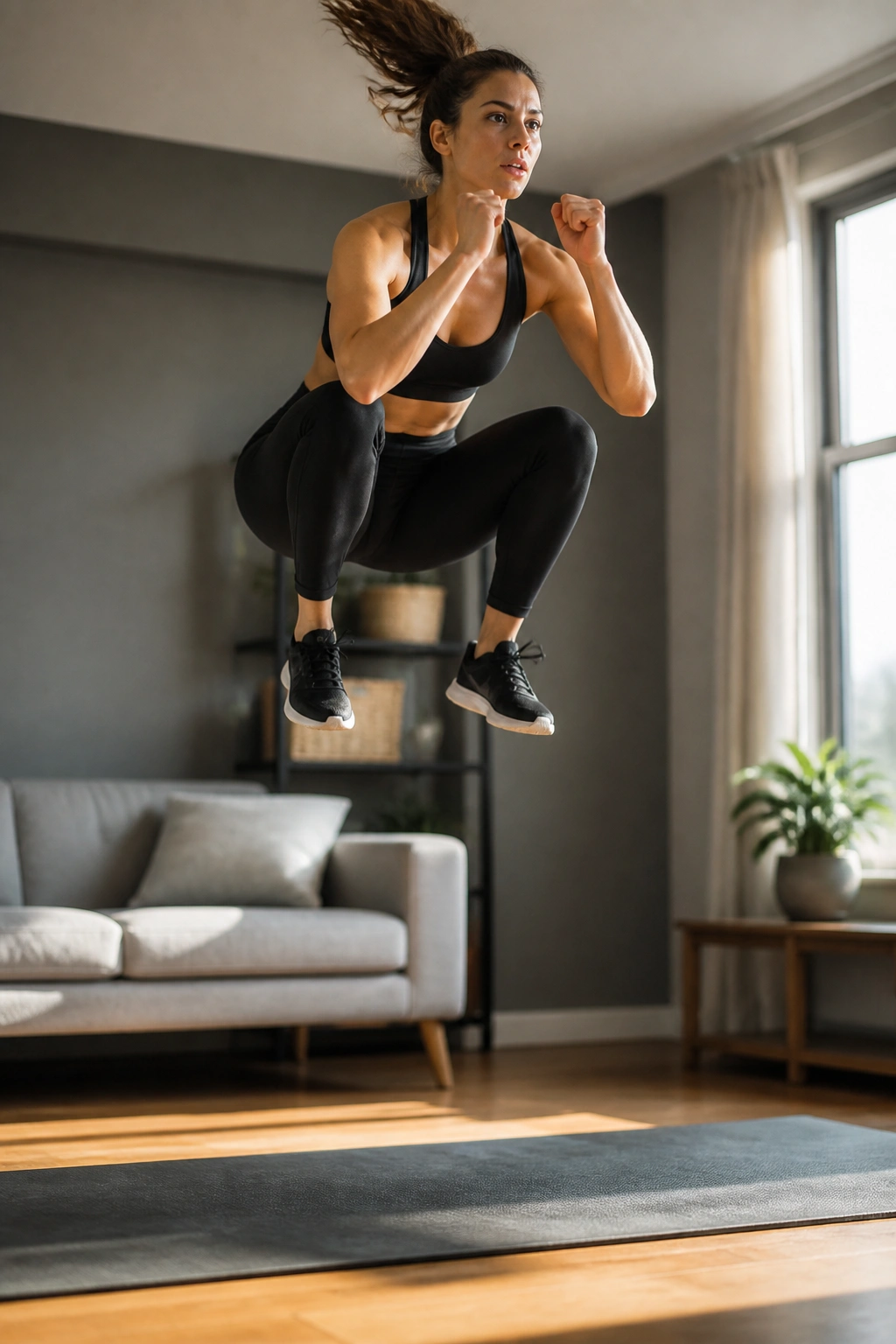
Squat jumps are an explosive power move that will drive your heart rate up in seconds. You are combining the squat—a fundamental strength pattern—with a vertical jump, which introduces an explosive, plyometric element to your training.
Start in your normal squat stance, feet shoulder-width apart. Sit your hips back, go down until your thighs are at least parallel to the floor, and then explode upward, leaving the ground. Use your arms to help generate momentum on the way up.
When you land, go immediately back into the squat position. Your knees should be soft and absorb the impact quietly. If you sound like a thud hitting the floor, you need to work on your landing mechanics. Quiet landings equal safer joints.
11. Seal Jacks
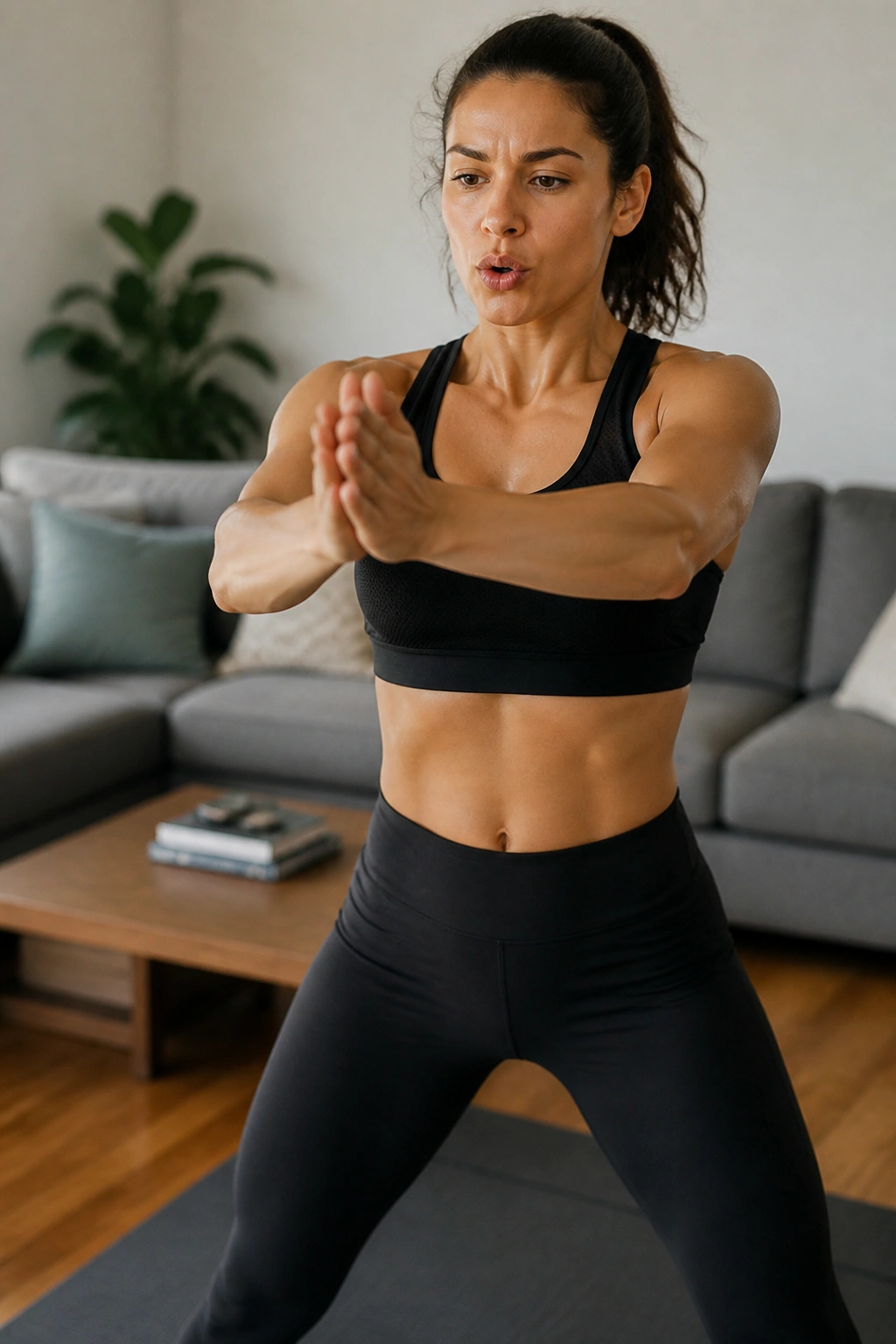
Seal jacks are a variation of the jumping jack that engages your chest and upper back muscles. Instead of bringing your arms overhead, you extend them out to the sides and clap them in front of your chest. This creates a different feel for your shoulders.
Why They Work
The clapping motion at the front engages the pectoral muscles. You get the same lower-body cardio as a traditional jack, but the upper-body engagement is more sustained. It keeps your posture upright and helps you avoid the slouching that often happens as you get tired during a workout.
How to Execute
- Stand with your feet together and arms extended out to your sides.
- Jump your feet out wide as you clap your hands in front of your chest.
- Jump your feet back together as you bring your arms back out to your sides.
- Maintain a rhythmic, snappy tempo.
12. Fast Feet
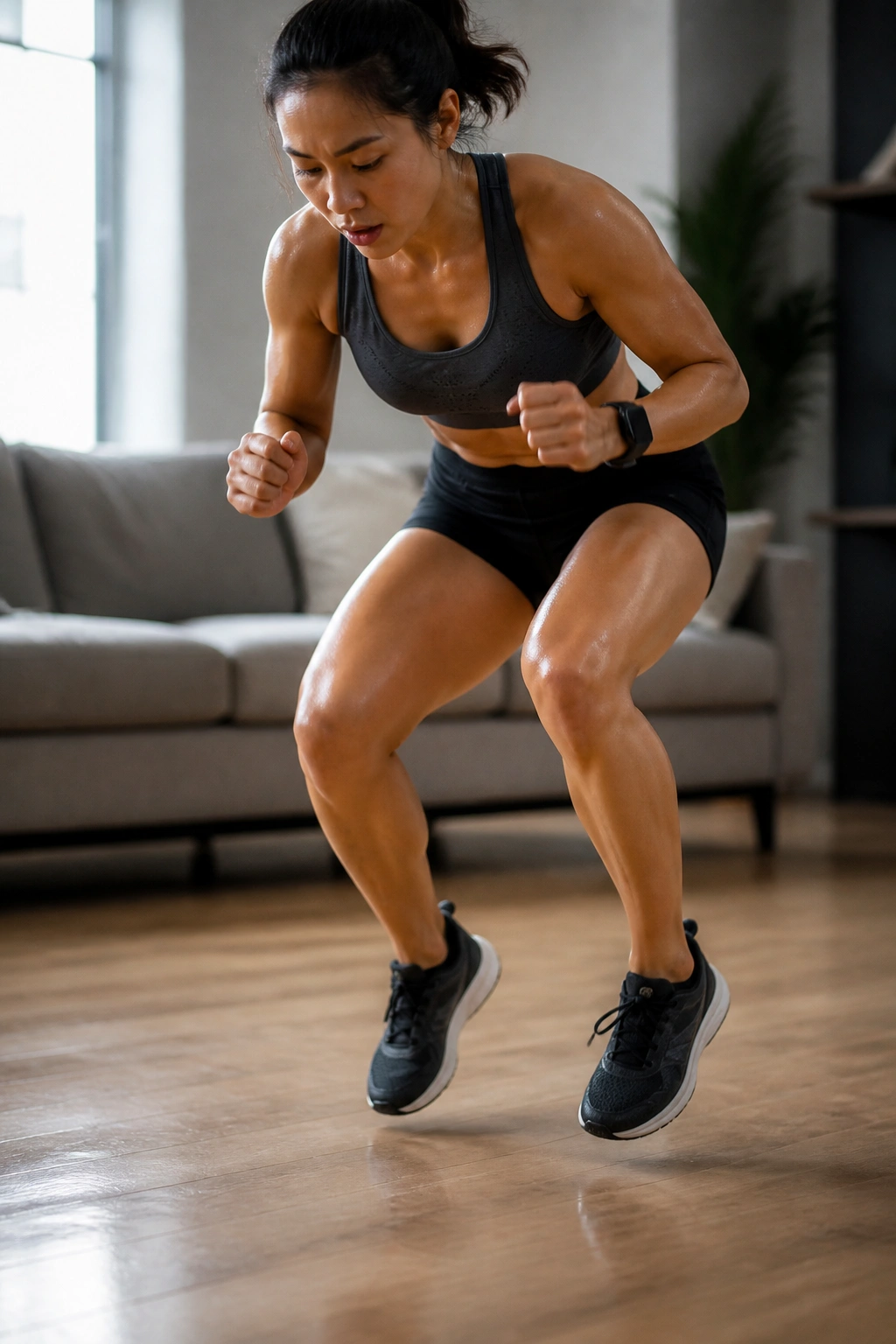
Fast feet is about frequency. You are basically running in place but with very small, rapid steps. Your goal is to have your feet touch the floor as many times as possible in a short window.
Stay low in a partial squat position. This keeps your legs under tension the entire time. Move your feet as fast as you can. It should sound like a drum roll on the floor. This is a massive test of your nervous system and cardiovascular endurance.
Because you are keeping your quads engaged in that shallow squat, you will feel the burn in your thighs very quickly. It is an excellent move to use for 30-second “bursts” at the end of a round to spike your heart rate.
13. Bicycle Crunches
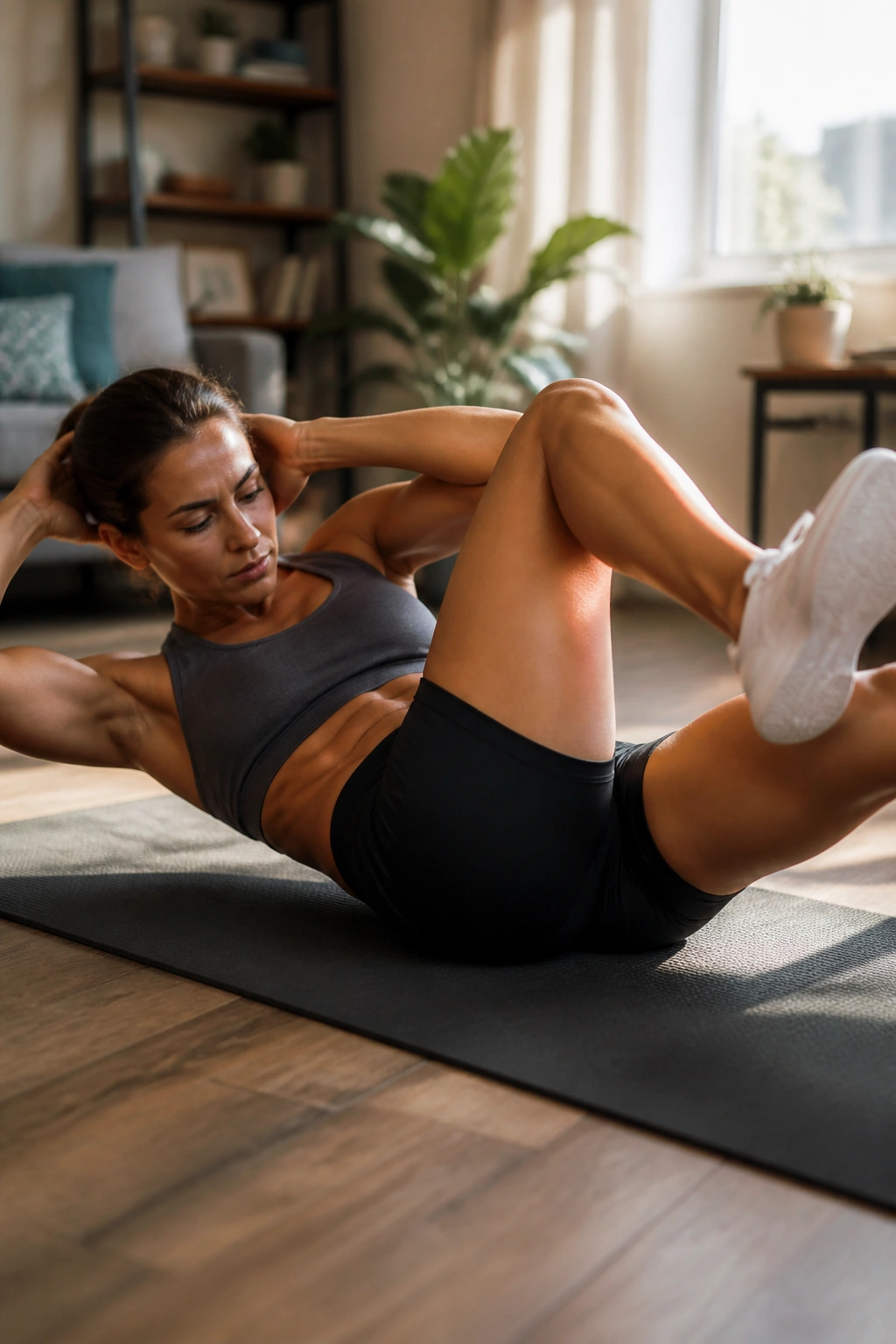
Bicycle crunches are a classic abdominal move, but they serve as an effective cardio tool when performed for high repetitions without stopping. They hit your obliques and rectus abdominis while demanding constant movement.
Lie on your back, hands behind your head. Bring your opposite elbow to your opposite knee while extending the other leg straight. Switch sides in a fluid, continuous motion.
The secret to making this a cardiovascular challenge is the tempo. If you move slowly, it is just a core exercise. If you move with rhythm and keep the legs moving in a cycling motion without letting your feet touch the floor, you are essentially performing cardio on your back.
14. Lunge Jumps
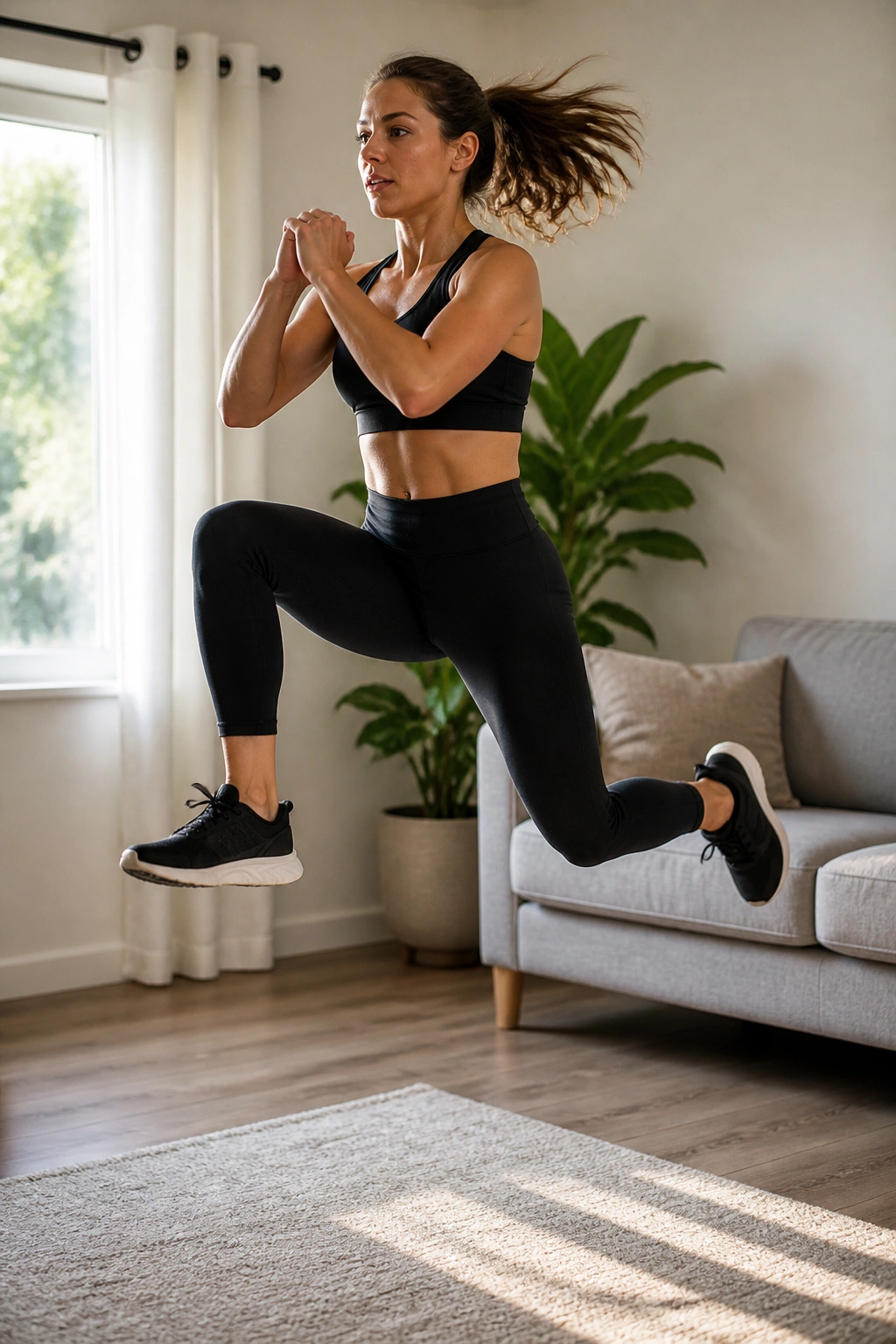
Lunge jumps are one of the most intense leg exercises you can do without gear. They require balance, strength, and explosive power. You are alternating your lunge position by jumping in the air and switching legs mid-flight.
Start in a lunge position with one foot forward and one back. Lower your back knee toward the floor. Explode upward, switch your legs in the air, and land in a lunge with the other foot forward.
This requires serious stability. If you feel shaky, drop the jump and perform “lunge pulses” instead. Always keep your front knee tracking over your ankle—never let it cave inward toward the midline. This move will leave your legs feeling heavy, which is exactly the point.
15. Bear Crawls
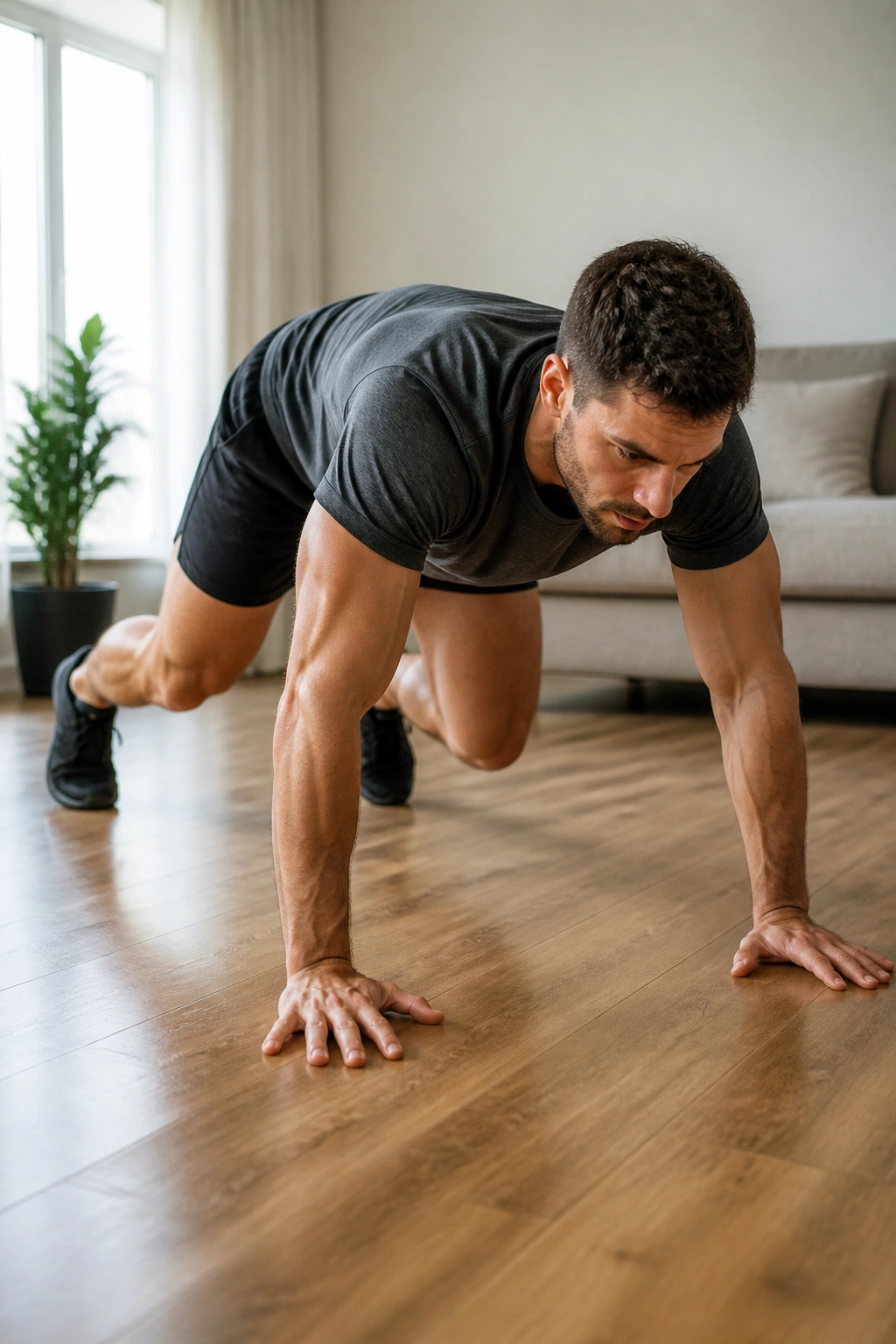
Bear crawls require you to move on your hands and feet with your knees hovering just an inch off the floor. It is a fantastic full-body move that builds shoulder endurance and core stability while forcing your heart to work to move your body weight.
Keep your back flat—like a table. Your knees should never touch the ground. Move one hand and the opposite foot forward at the same time. Then switch.
This move is agonizing if you go slow. It forces your muscles to stay under constant tension. Since you are moving horizontally, your heart rate climbs as your entire musculature fights to keep you stable. It’s a great way to break up standing cardio work.
16. Lateral Shuffle
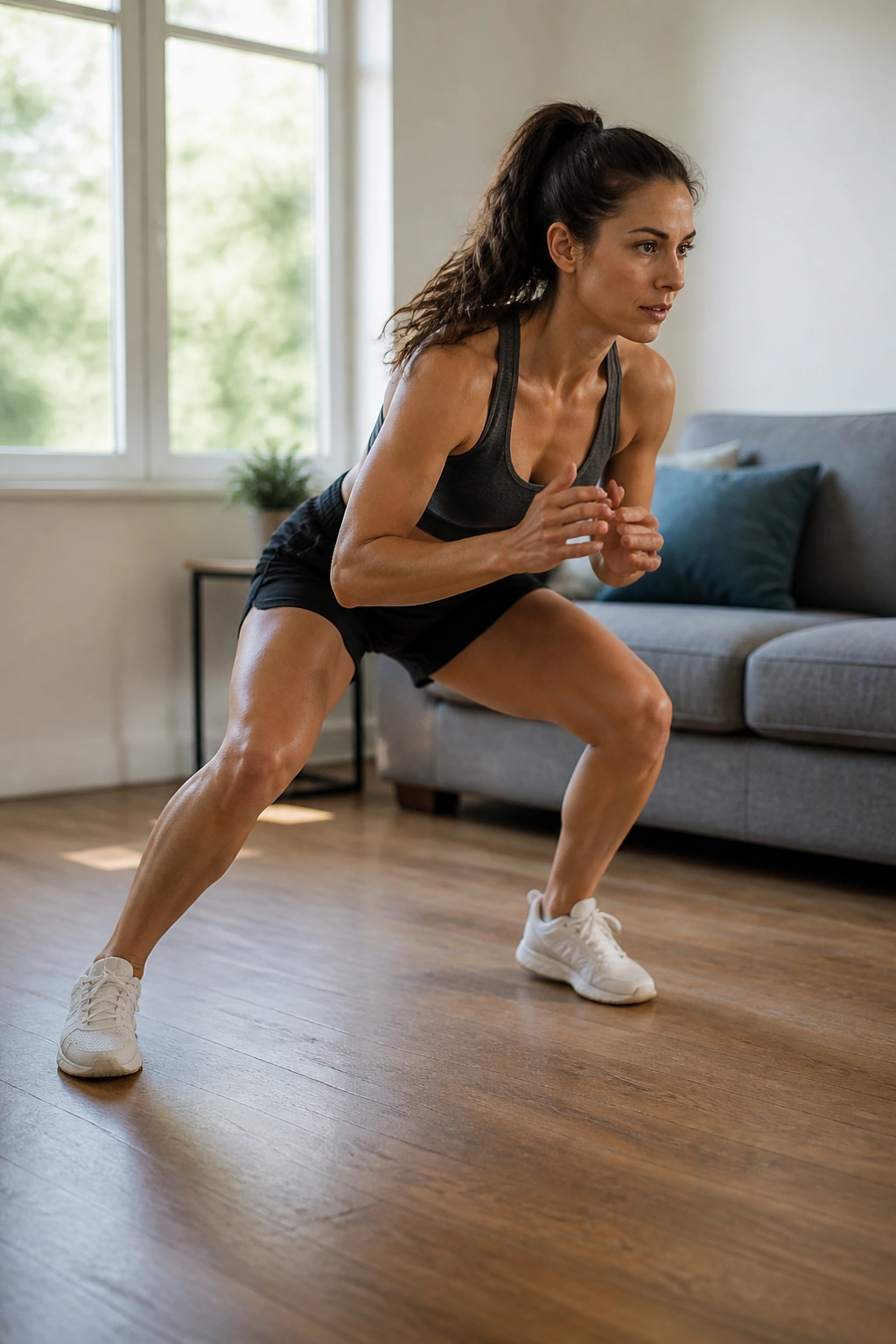
The lateral shuffle forces you to move side-to-side, which is essential for agility. Most people spend their lives moving forward and backward. Shuffling laterally develops your ankles and hip stabilizers while keeping your heart rate in the “work” zone.
Stay low in a squat position. Push off your outside leg to shuffle two or three steps to the side, then tap the floor with your hand. Shuffle back and tap again.
The depth of your squat determines the intensity. If you are upright, it is easy. If you are in a deep athletic stance, you will feel it in your glutes and quads almost instantly. Keep your chest up and look forward, not at your feet.
17. Star Jumps
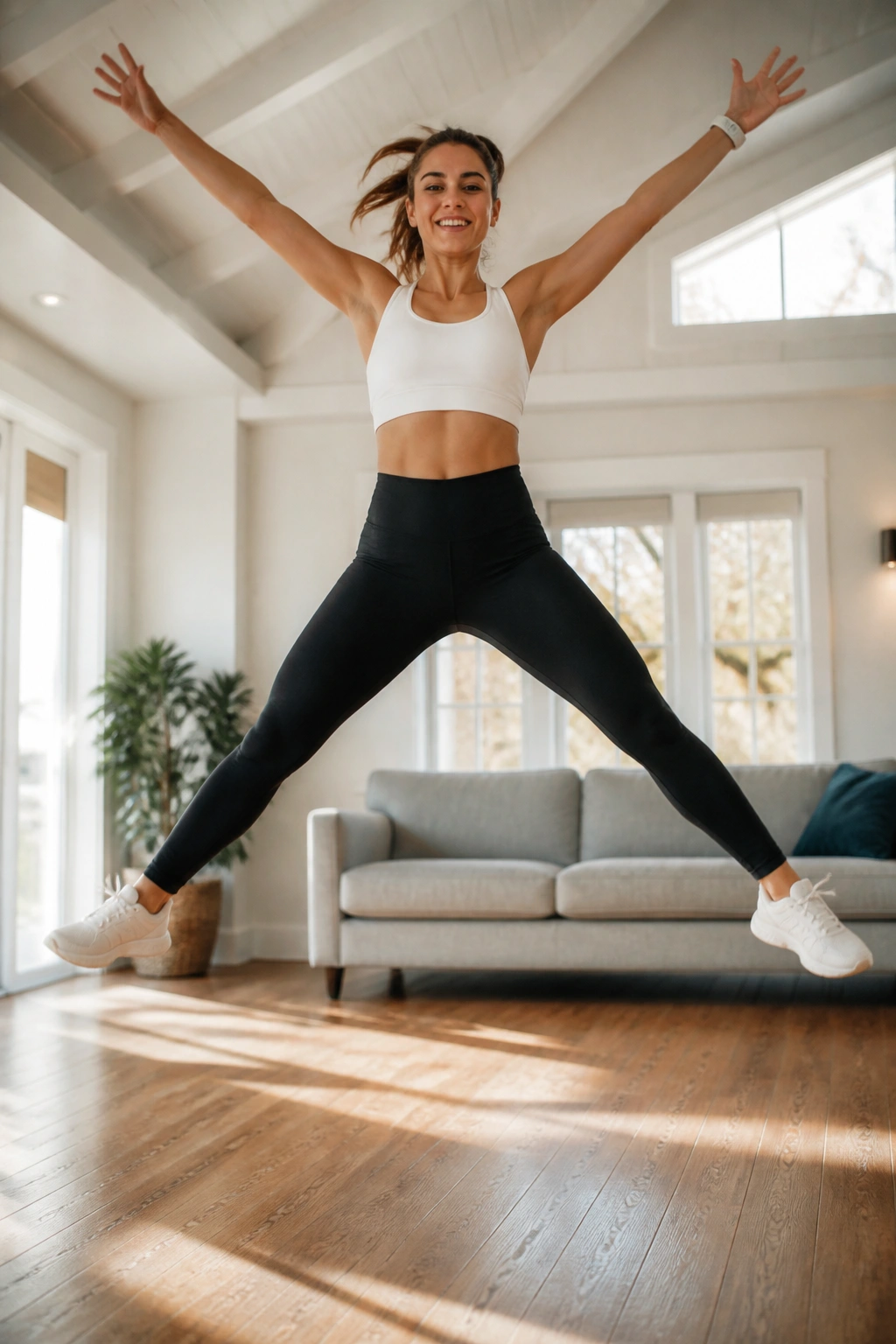
Star jumps are the high-intensity, plyometric cousin of the jumping jack. Instead of just tapping your feet, you jump explosively and spread your arms and legs wide in the air, creating a star shape.
Why They Are Intense
The explosive jump requires a maximum effort from your leg muscles. Unlike jumping jacks, you are leaving the ground with power. This creates a high metabolic demand.
Execution Tips
- Start in a deep squat position.
- Explode upward, extending your arms and legs out to the sides in the air.
- Land softly, returning immediately to the squat.
- Ensure you have space above you—do not do these under a low ceiling.
18. Mummy Kicks
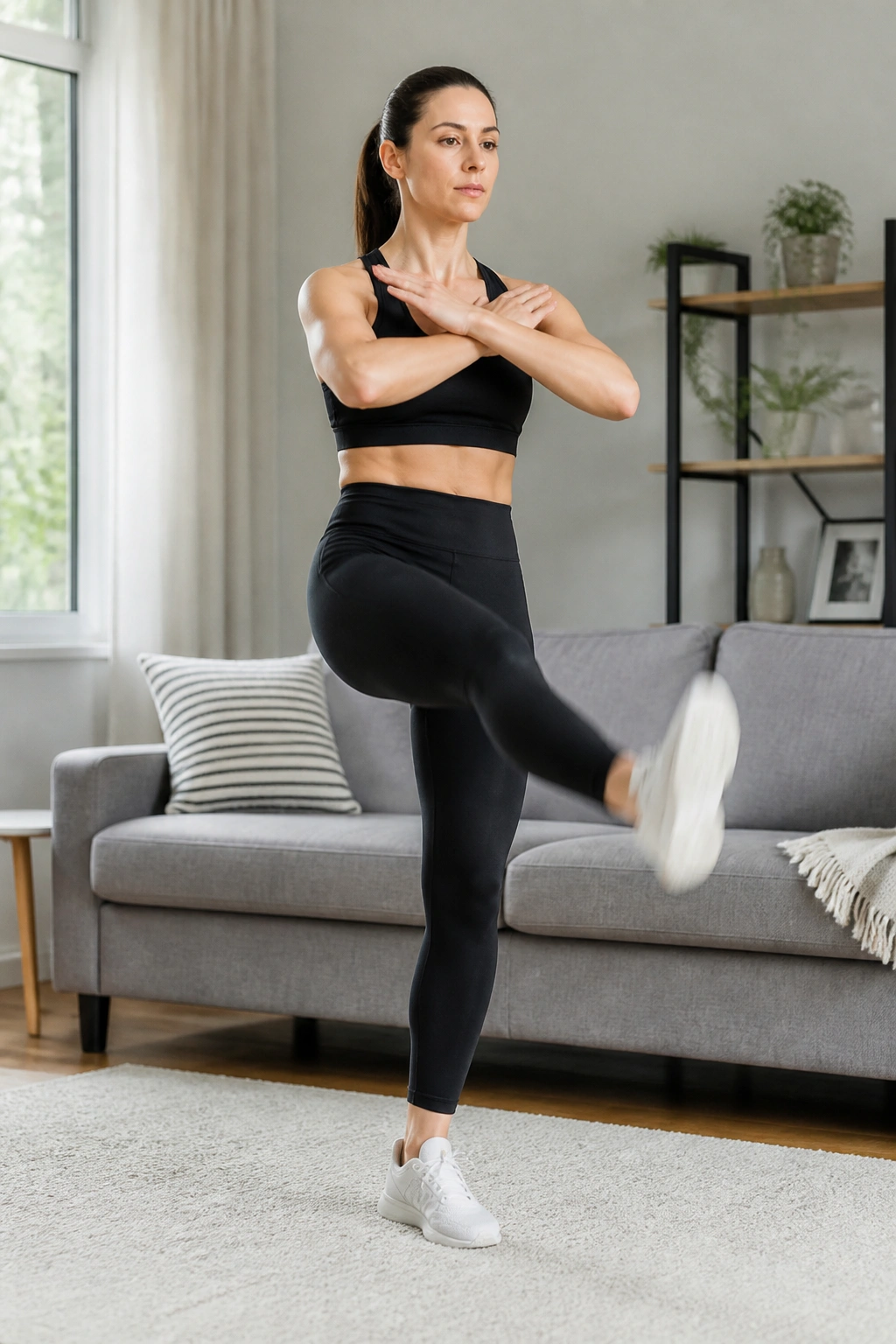
Mummy kicks are an odd-looking move, but they are great for coordination and keeping your heart rate up when you need a break from high-impact jumps. You stand tall and alternate kicking your heels forward while keeping your arms crossed in front of your chest like a mummy.
The motion involves a slight hop as you switch feet, or you can do it without the hop for low-impact work. The key is to keep your arms moving in rhythm with your feet.
It is a deceptively tiring movement. Because you are maintaining an upright posture and moving both your upper and lower body, it burns a surprising amount of energy. It is a perfect “active recovery” move to slot in between more intense exercises.
19. Standing Elbow-to-Knee
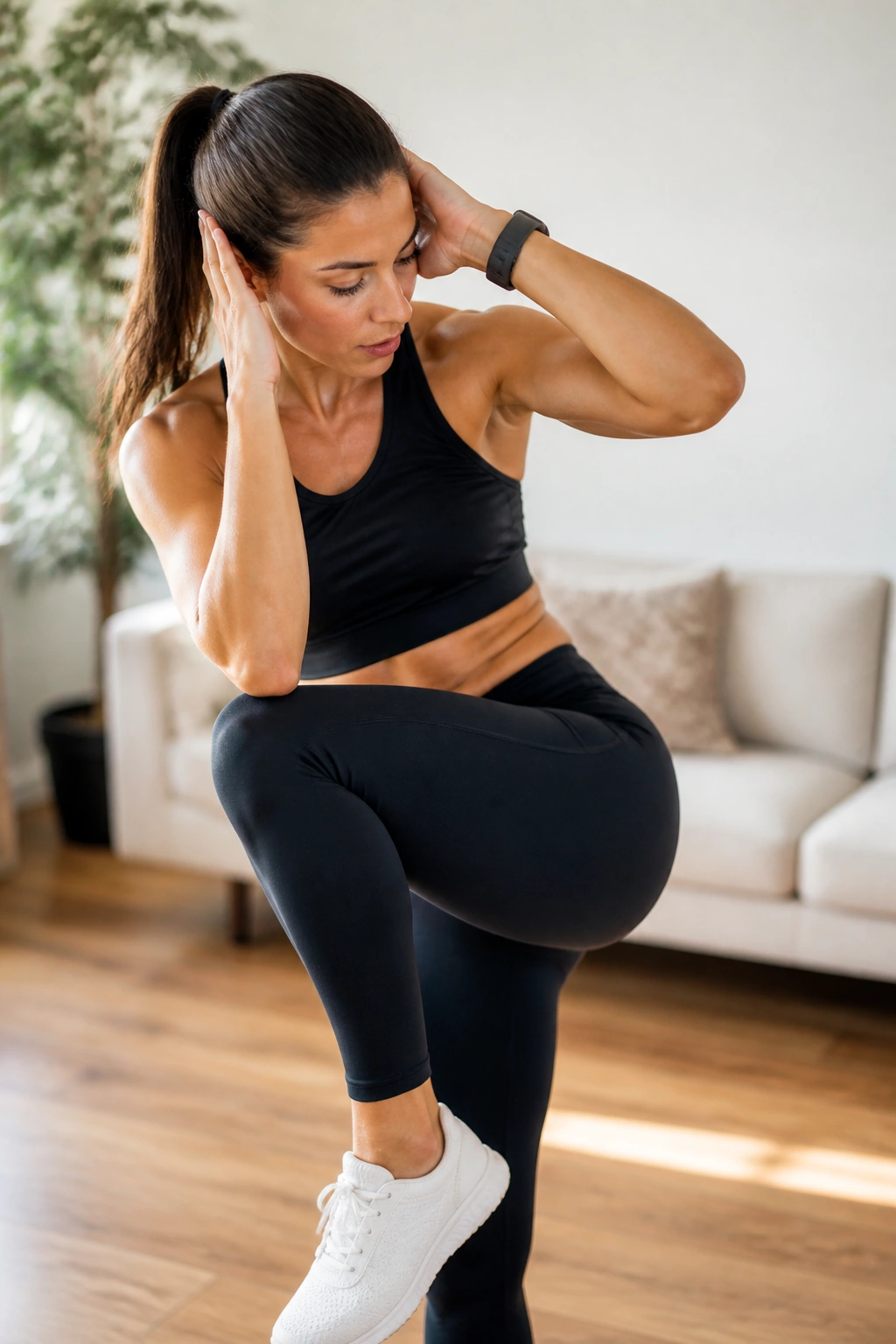
This is a fantastic standing core movement that requires no floor space. You stand with your hands behind your head and bring your right knee up to meet your left elbow, twisting your torso to facilitate the crunch. Then switch sides.
The movement should be deliberate. Don’t just swing your leg; crunch your torso. This engages the obliques. Because you are standing and using large muscle groups, you can maintain a high tempo, which makes it an effective aerobic exercise.
It is particularly good for those who find floor-based crunches uncomfortable for their neck. By doing it standing, you remove the strain on the cervical spine while still getting a high-quality abdominal workout.
20. Marching in Place with High Knees
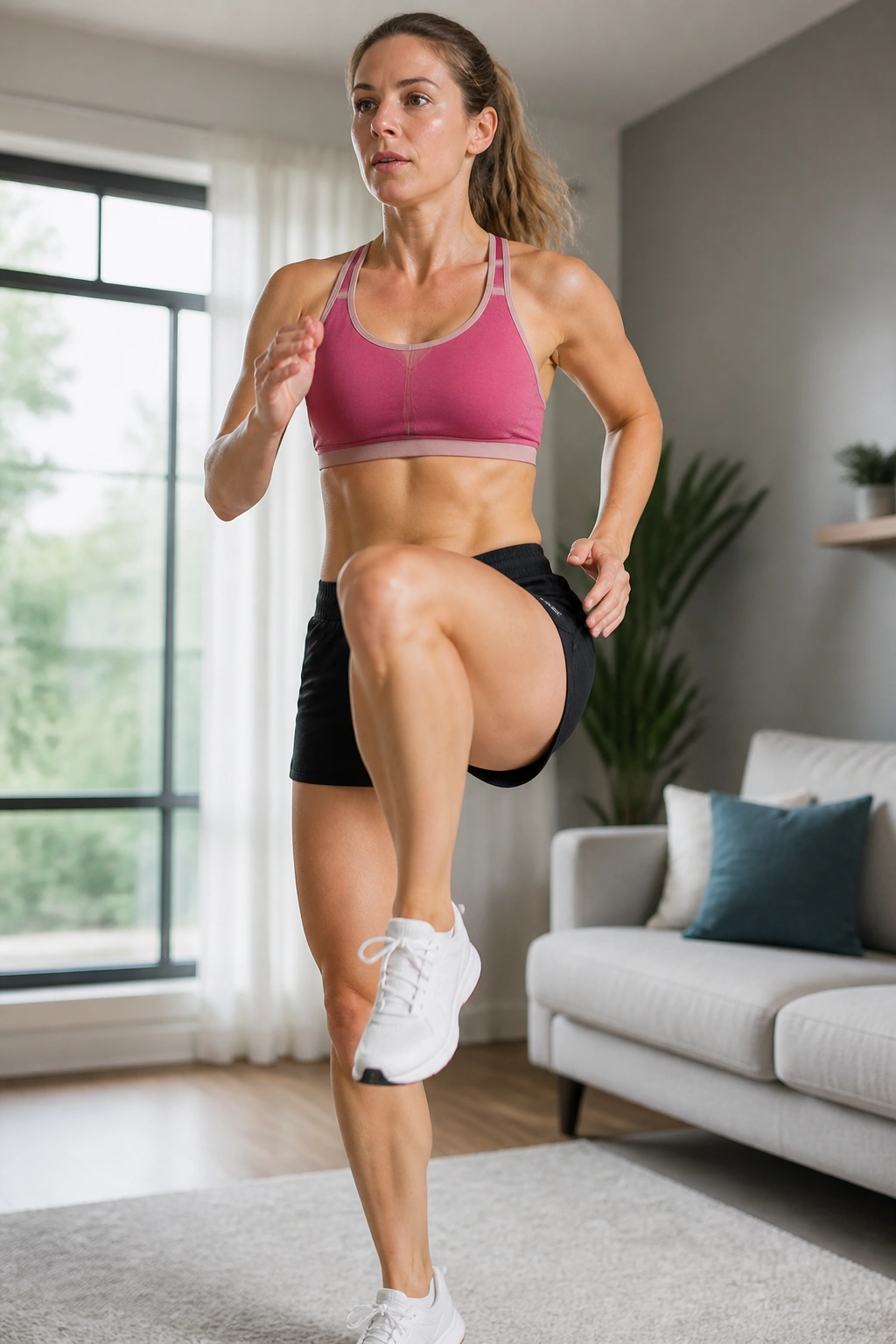
Sometimes, you need a move that keeps you moving but allows you to control the intensity. Marching with high knees is that move. It is more intense than a standard walk but more controlled than high-knee sprints.
Lift your knees high with every step. Really pull the knee toward your chest. Use your arms to create a forceful pumping motion. This keeps your heart rate elevated and forces your abs to stabilize your torso with every step.
If you are feeling overwhelmed by the intensity of jumps and sprints, use this movement to bring your heart rate down while still keeping your body moving. It is the perfect bridge between high-intensity sets.
21. Touchdown Squats
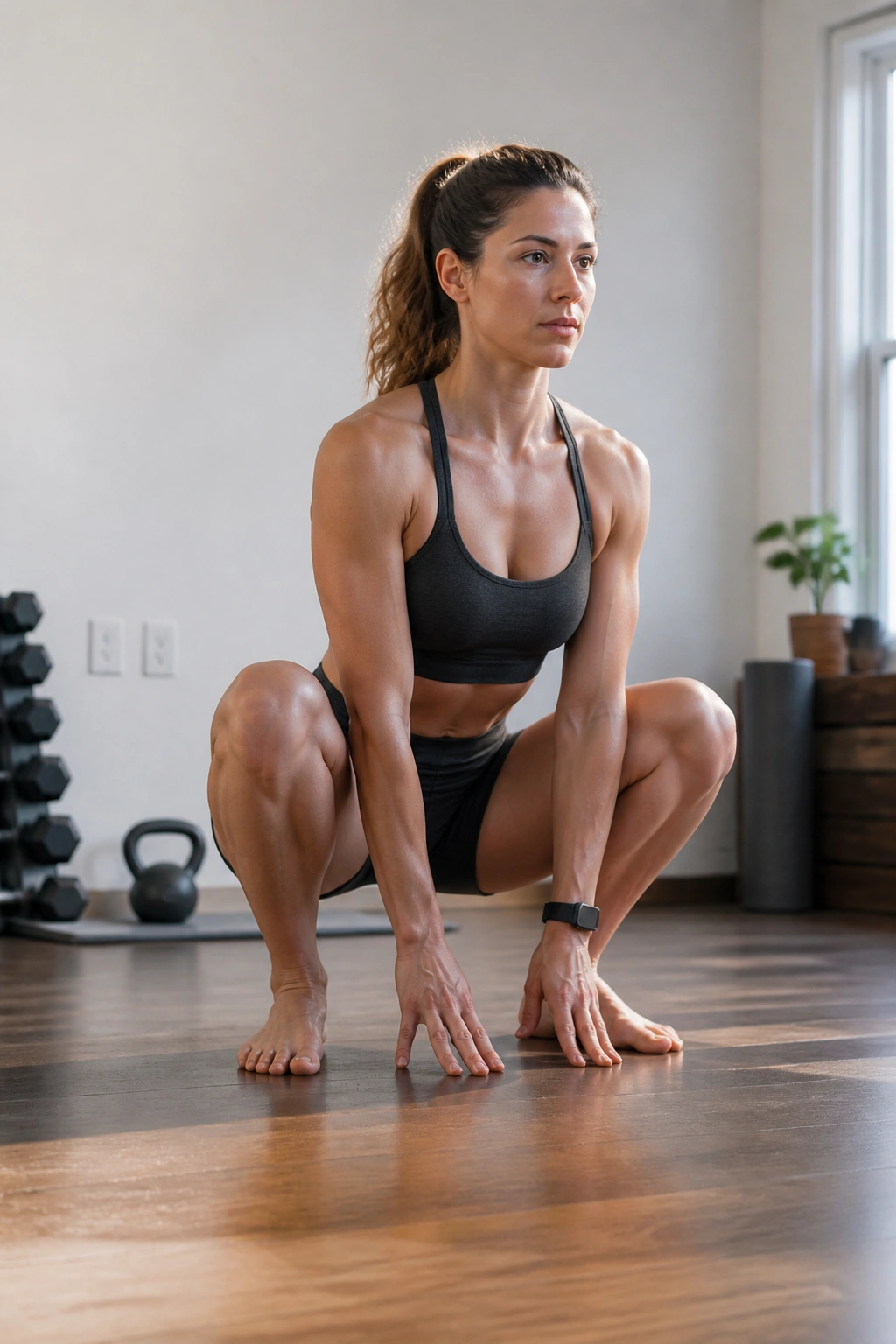
Touchdown squats are a great way to add range of motion to your squats. You squat down, touch the floor between your feet, then stand up and reach your hands toward the ceiling.
The act of reaching down and then up keeps your heart rate shifting as your body moves through a vertical plane. It also forces you to maintain a good squat posture, as you are aiming for the floor rather than just squatting into thin air.
Make sure to keep your heels flat on the floor. If you are rising onto your toes to reach the floor, you need to widen your stance slightly. The goal is to keep your chest tall while you reach down.
22. Sprinter High Knees
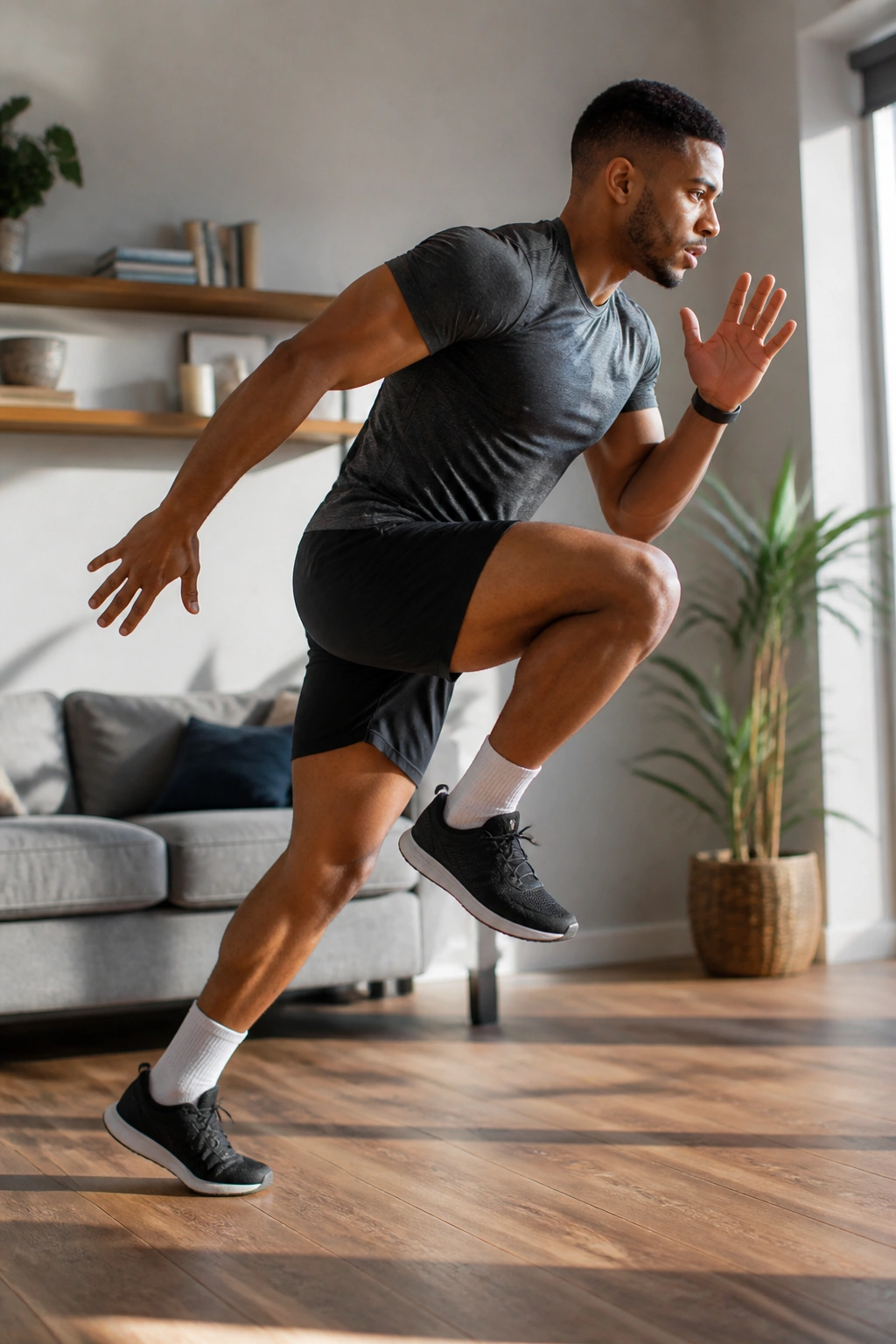
Sprinter high knees are a specific variation where you lean forward slightly and pump your arms in a “running” motion. It mimics the starting position of a sprinter.
Lean your torso forward at a 45-degree angle. This engages your core more aggressively than standing straight up. Drive your knees up with maximum intensity. Move your arms as if you are running a 100-meter dash.
This variation is excellent for training your body to generate power from a forward-leaning position. It is incredibly taxing on the cardiovascular system because of the intense effort required to maintain that lean while pumping the legs.
Final Thoughts
The equipment in your home is already there: your body. You do not need anything more to get a workout that challenges your heart, lungs, and muscles. The secret is not in the gear but in the consistency of the effort. When you rotate through these movements, you are not just burning calories—you are building functional endurance that transfers to every part of your life.
Pick five of these movements, perform each for forty-five seconds with fifteen seconds of rest, and repeat the circuit four times. You will have a complete, effective workout done in less than twenty minutes. Start there, find your rhythm, and stop waiting for the perfect setup. Your living room is waiting.
