



Forget the magazines promising you a six-pack in two weeks by doing nothing but crunches. If you want a tighter, stronger midsection, you need to understand that the “toned” look isn’t just about the muscle; it’s about the interplay between your body fat percentage and the actual thickness of the abdominal wall. There is no such thing as spot reduction. You cannot crunch your way to a flat stomach if your diet isn’t supporting fat loss. However, you absolutely can build the thick, dense muscle underneath that fat, which creates that sculpted, firm appearance once you lean out.
Building a solid core is about more than just aesthetics. It is your body’s primary support system. A strong core protects your spine, improves your posture, and transfers power from your lower body to your upper body. If you treat your abs like just another muscle group—something to be neglected until the end of the session—you are missing the point. These muscles respond to time under tension, progressive overload, and consistent, high-quality movement. Stop rushing through your sets. Start focusing on the contraction.
The following list prioritizes movements that challenge the core from every angle: flexion, extension, rotation, and anti-rotation. Each one serves a specific purpose, and mixing them into your weekly routine will yield better results than doing the same fifty crunches day after day. Stop looking for a shortcut. Start doing the work that actually builds structural integrity.
1. Plank Variations
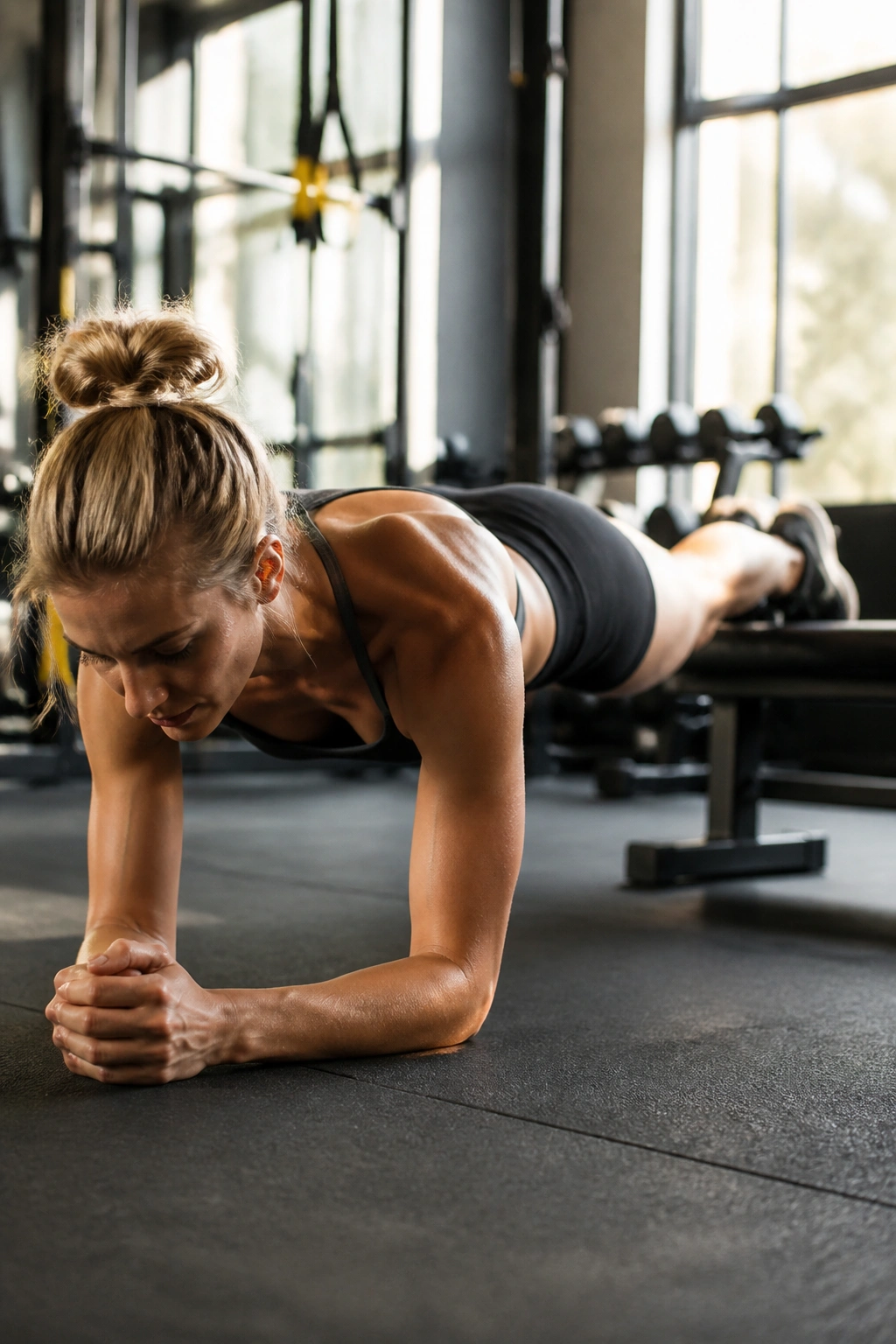
The standard forearm plank is a rite of passage, but doing the same static hold for months leads to stagnation. To force your core to adapt, you need to introduce instability. Try elevating your feet on a bench or using a suspension trainer to suspend your feet in the air. This requires significantly more activation from your rectus abdominis just to keep your hips from sagging toward the floor.
How to Progress the Movement
- Standard Plank: Focus on tucking your pelvis under and squeezing your glutes.
- Plank with Reach: From a high plank position, alternate reaching one arm forward without allowing your hips to rotate.
- Weighted Plank: Place a weight plate on your upper back. Do not put it on your lower back. This changes the load on your spine and compromises your form.
The key here is not time; it is tension. A sixty-second plank where you are shaking and squeezing every muscle is infinitely more valuable than a three-minute plank where you are just hanging on your joints. If you can hold a position for more than two minutes, you are resting, not working. Add intensity, not duration.
2. Dead Bugs
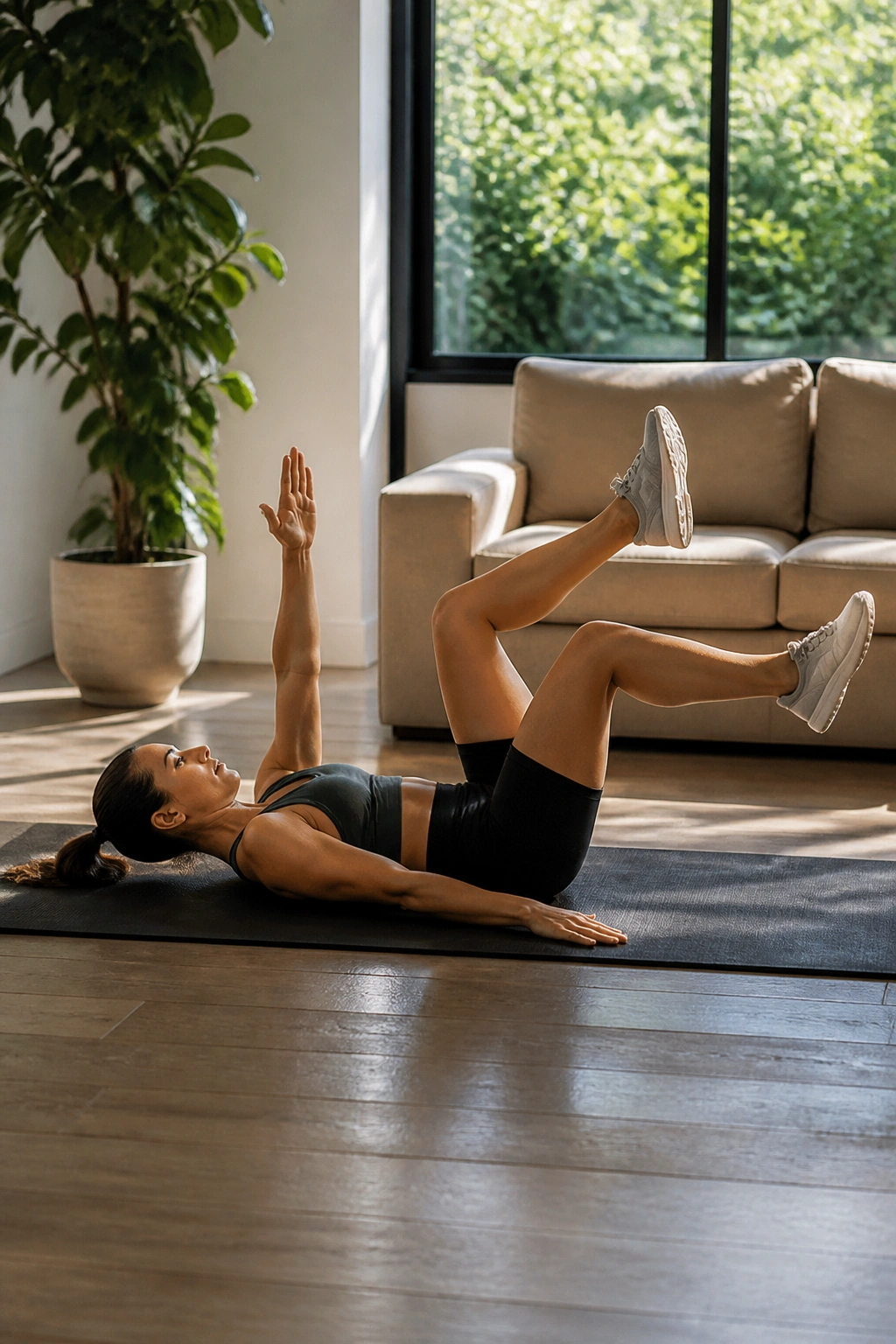
This is arguably the most misunderstood movement in the fitness world. People rush through it, swinging their arms and legs without actually controlling their spine. The goal of the Dead Bug is to maintain a neutral spine while your limbs move away from your center of mass. If your lower back arches off the floor, you have failed the exercise.
Why It Works for Deep Core Stability
- Posterior Pelvic Tilt: It forces you to learn how to keep your back pressed flat, which is the foundational skill for all ab training.
- Contralateral Movement: Moving the opposite arm and leg simultaneously trains your brain to coordinate complex motor patterns.
- Isolation: Because your upper back is supported by the floor, you can isolate the abdominal response without neck strain.
Imagine there is a laser pointing from your ribs to your pelvis. As you extend your leg, keep those two points locked together. If you feel your back arch, stop extending your leg so far. It is better to extend to a point where you can maintain control than to drop your leg all the way to the floor and lose the contraction.
3. Bird-Dogs
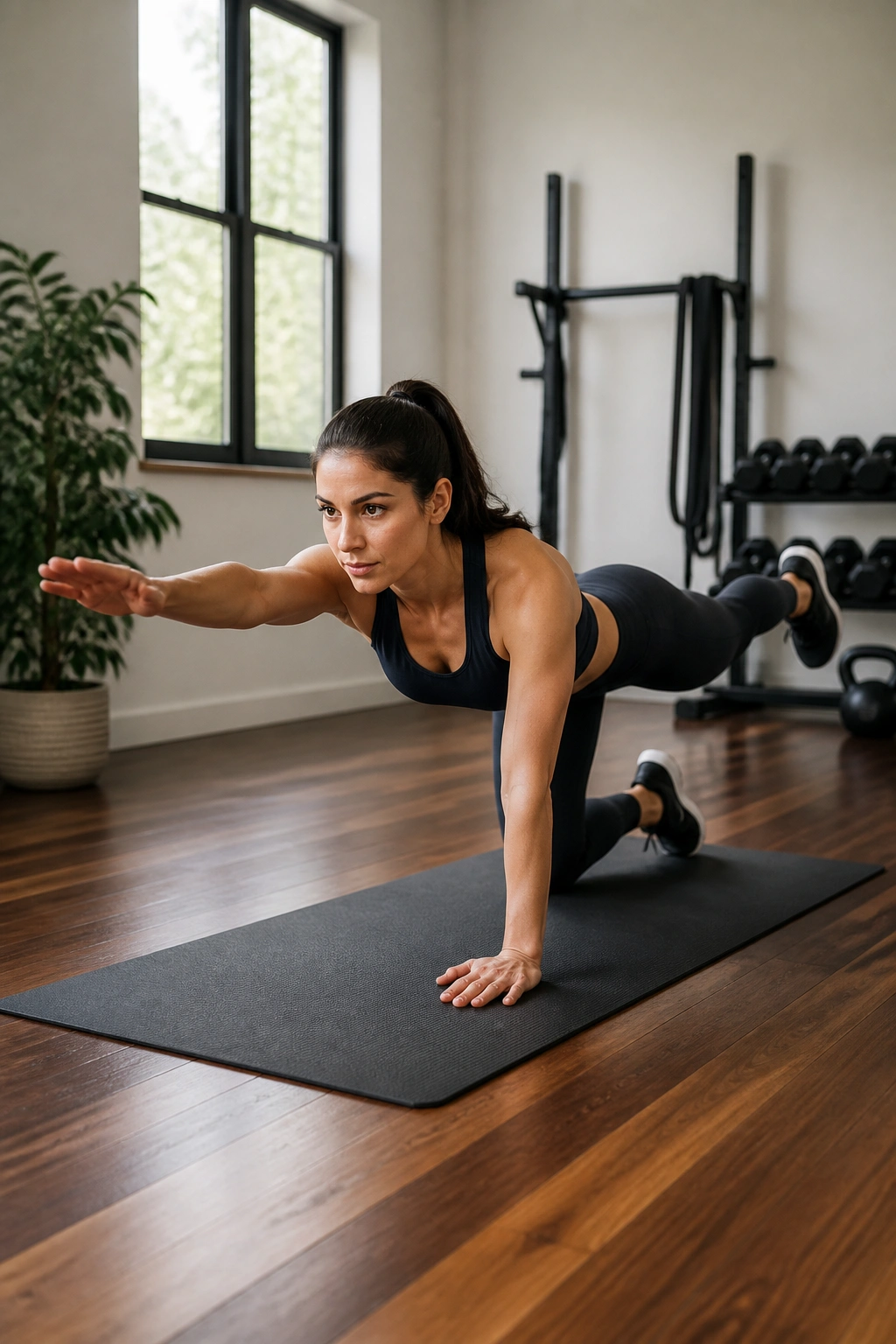
Often dismissed as a “physical therapy move,” the bird-dog is actually a powerhouse for spinal stability. It trains your core to resist rotation, which is arguably the most important function of your abs in real-world movement. You are effectively trying to keep your torso perfectly still while your limbs move through space.
If you are just going through the motions, you aren’t doing it right. Start on all fours with your knees under your hips and your hands under your shoulders. As you extend your opposite arm and leg, imagine you are trying to reach toward opposite walls. Do not lift your leg so high that you have to arch your back.
The Golden Rule: Keep your hips square to the ground. If you are wobbling side to side, you are not engaging your obliques properly. You want to be stable enough that a glass of water balanced on your lower back wouldn’t spill. Pause at the top of the movement for two seconds, squeezing your glute and your shoulder blade, then return slowly. This slow, controlled return is where the actual muscle building happens.
4. Side Planks
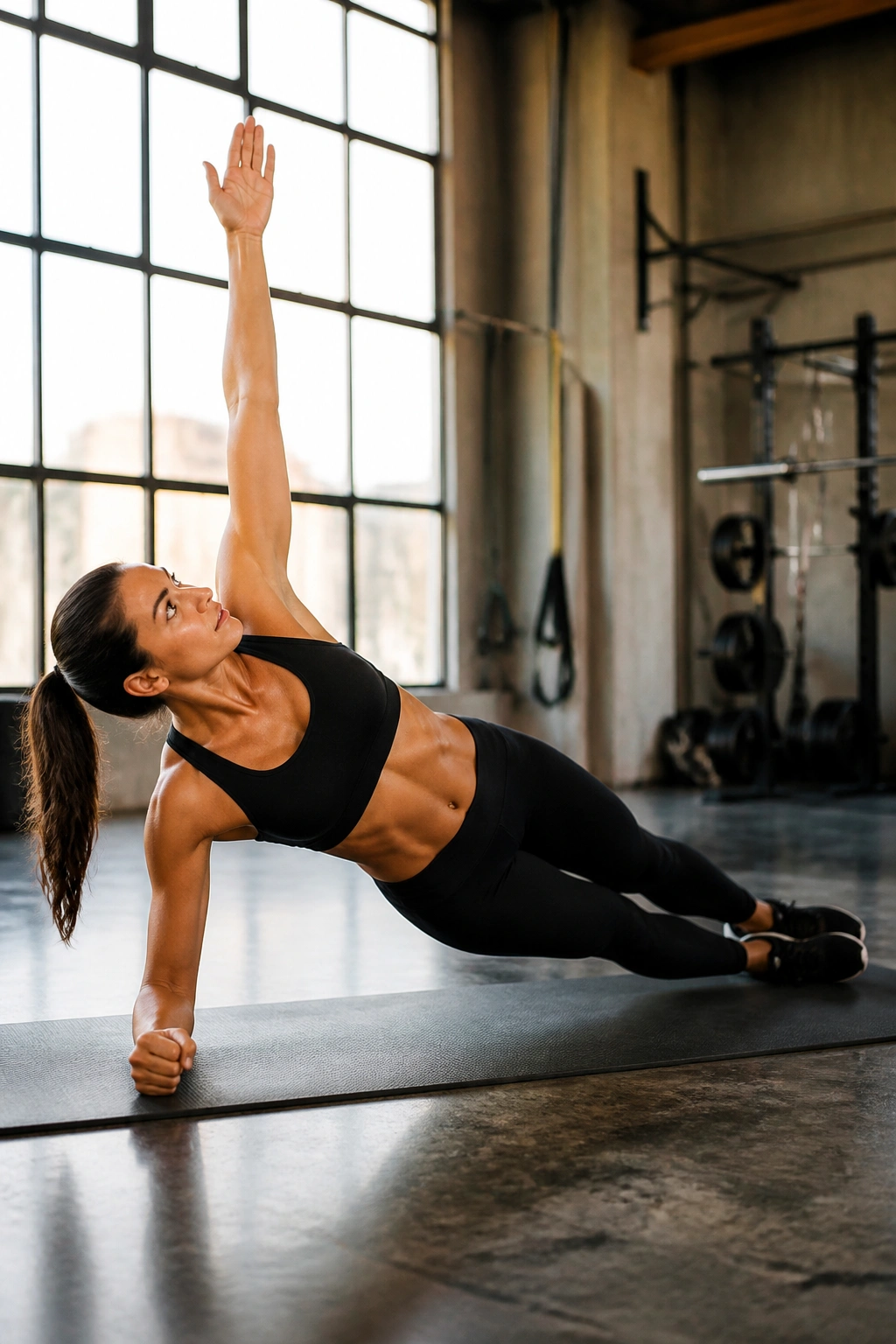
Lateral stability is what keeps your spine healthy and your waist looking tight. The side plank targets the obliques and the quadratus lumborum, a deep muscle that stabilizes the lower back. Most people sag in the middle, letting their hip drop, which puts unnecessary stress on the shoulder joint.
Form Checklist for Maximum Results
- Elbow Alignment: Ensure your elbow is directly underneath your shoulder to avoid shearing forces on the joint.
- Top Leg Placement: You can stack your feet, stagger them, or even drop to the bottom knee for a regression if you are a beginner.
- Rib Cage Awareness: Don’t let your rib cage flare out. Keep your body in a straight line from your head to your heels.
If a standard side plank feels easy, stop adding time. Start adding a reach. Thread your top arm underneath your body, rotating your torso toward the floor, then extend it back up to the ceiling. This adds a rotational component to the isometric hold, which dramatically increases the demand on your core.
5. Hollow Body Holds
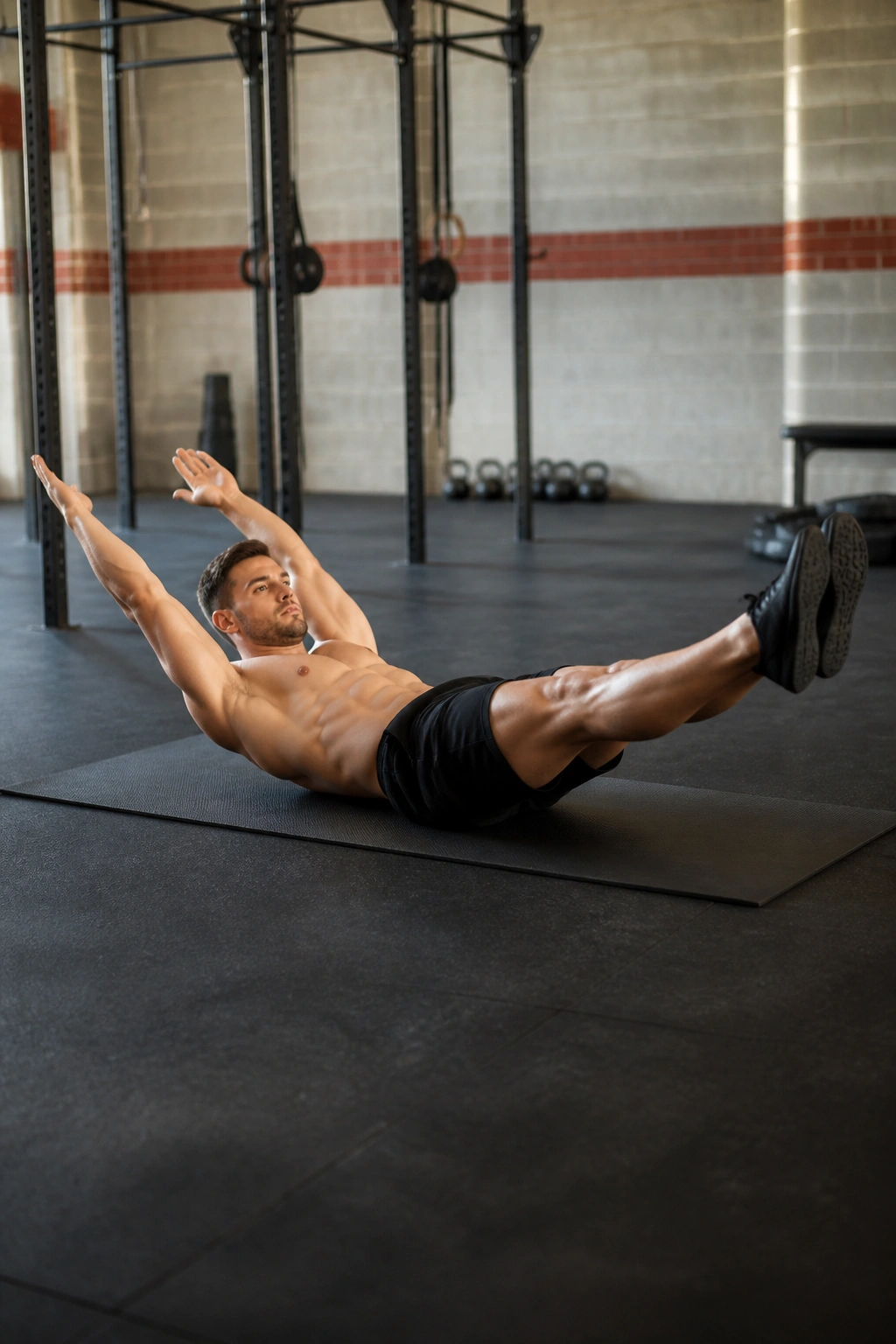
Gymnasts have some of the most impressive core strength in the world, and this move is the reason why. A hollow body hold requires you to push your lower back into the ground while lifting your legs and shoulders slightly off the mat. It is physically impossible to do this correctly without your abs trembling.
If your lower back comes off the ground, the movement is ineffective. The connection between your ribs and your hips needs to be absolute. If you struggle to hold this, start by keeping your knees tucked toward your chest. As you get stronger, extend your legs further. The longer the lever (the further your feet are from your hips), the harder the exercise becomes. Be patient. This is not a move to force; it is a move to build into over time.
6. Reverse Crunches
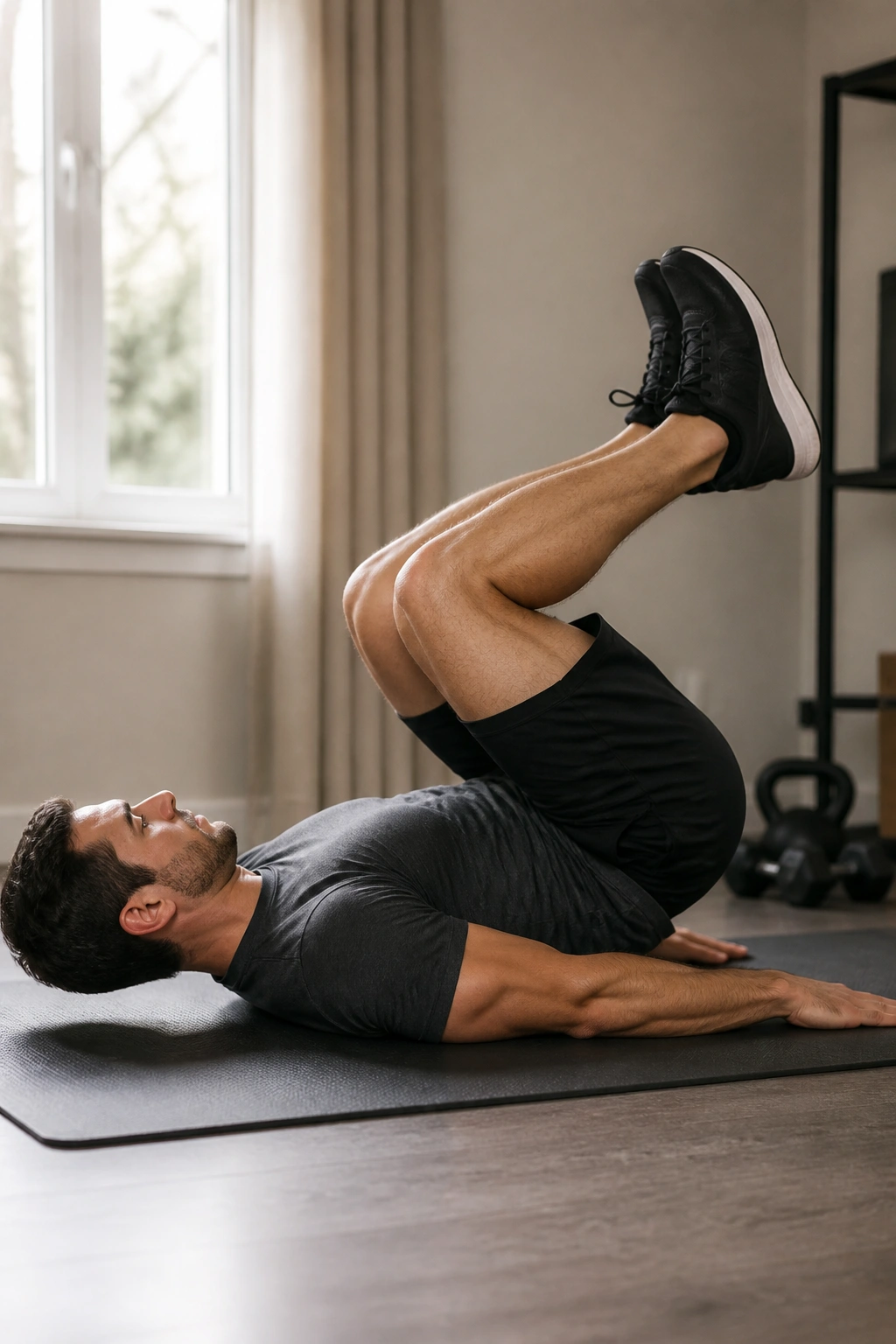
Traditional crunches often lead to neck pain because people pull on their heads. Reverse crunches flip the mechanics, focusing on curling your pelvis up toward your ribs. This is fantastic for targeting the lower portion of the rectus abdominis, which often gets neglected in favor of the upper abs.
Lie on your back, knees bent, and bring your knees toward your chest. Use your lower abs to curl your hips off the floor, bringing your knees toward your face. Do not use momentum. Do not kick your legs. If you are swinging your legs to get your hips up, you are using your hip flexors, not your abs. Think about a slow, controlled curl. If you can only lift your hips an inch off the floor, that is fine. The focus should be on the squeeze, not the height.
7. Flutter Kicks
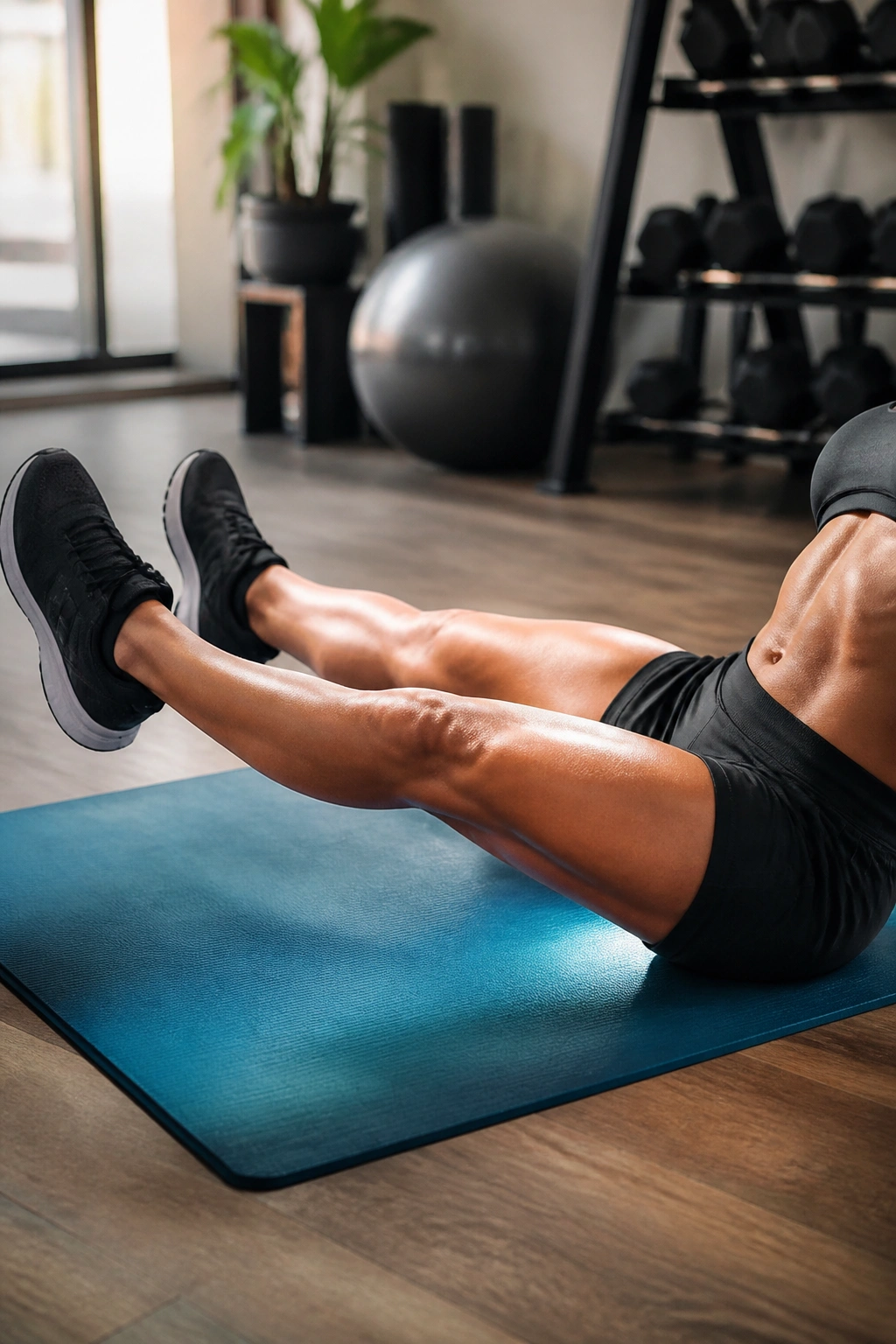
This is an endurance builder. Flutter kicks force you to keep your legs low and your core braced for an extended period, which creates significant metabolic stress—exactly what you want for muscle definition.
Keep your legs straight. The lower you hold your legs to the ground, the more difficult the exercise becomes, but only if your lower back remains anchored. If your back arches, raise your legs higher. Point your toes, keep your legs locked, and make small, rapid movements. You should feel the burn deep in your lower abdomen. If you feel it only in your hip flexors, try doing these with your hands placed under your glutes to provide a slight elevation, which can help keep the tension on the abs.
8. V-Ups
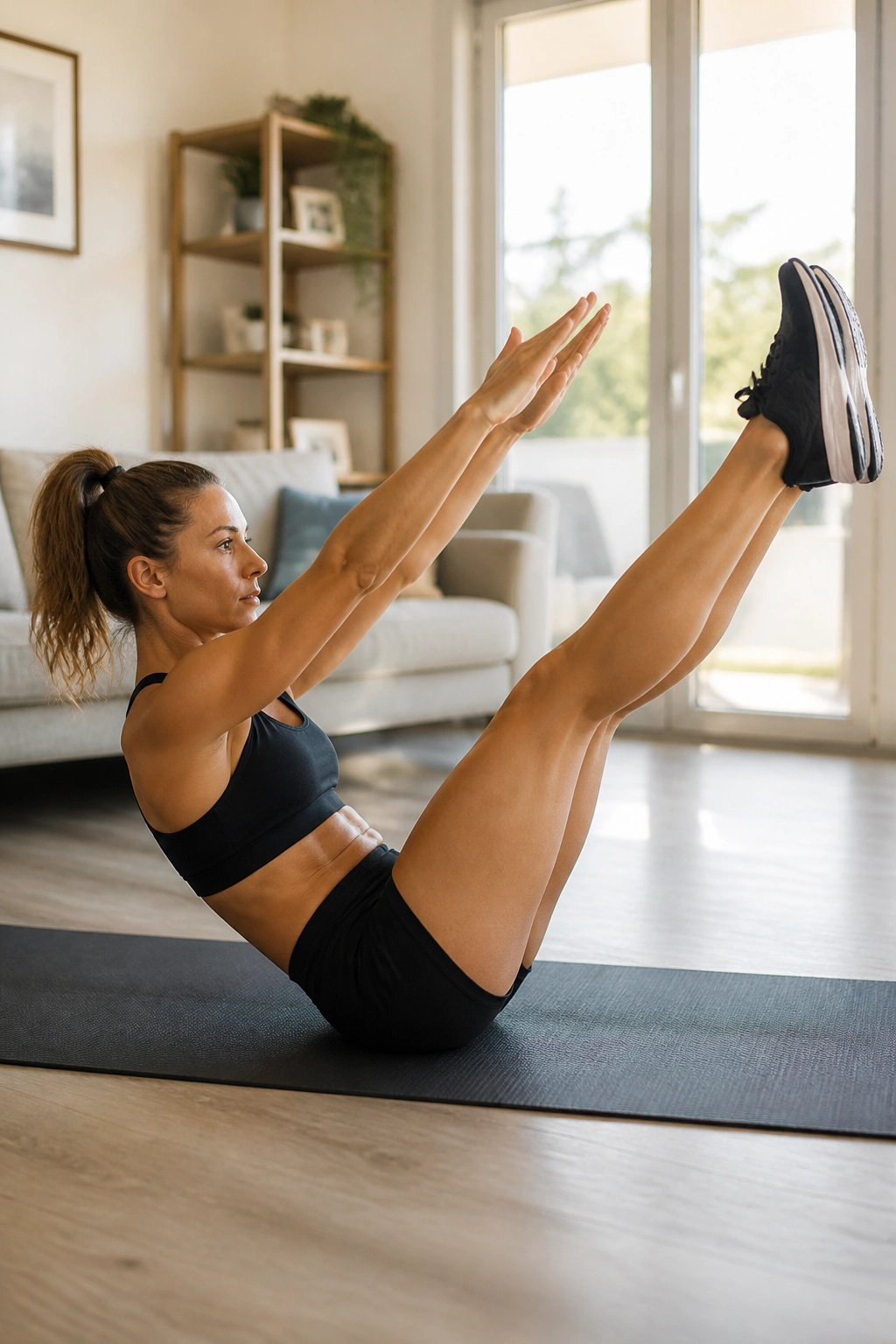
V-ups are a full-core contraction. You are simultaneously folding your upper and lower body to meet in the middle. Because this involves such a large range of motion, it is significantly more demanding than a standard crunch or leg lift.
Start lying completely flat. Explosively, but with control, fold your body into a “V” shape, aiming to touch your toes with your fingers. Your goal is to keep your legs as straight as possible. If you find yourself bending your knees, you are compensating. Don’t worry about touching your toes if you can’t reach them yet; focus on getting your shoulder blades completely off the floor. Lower yourself back down slowly—the eccentric (lowering) phase is where your abs have to fight gravity the hardest.
9. Bicycle Crunches
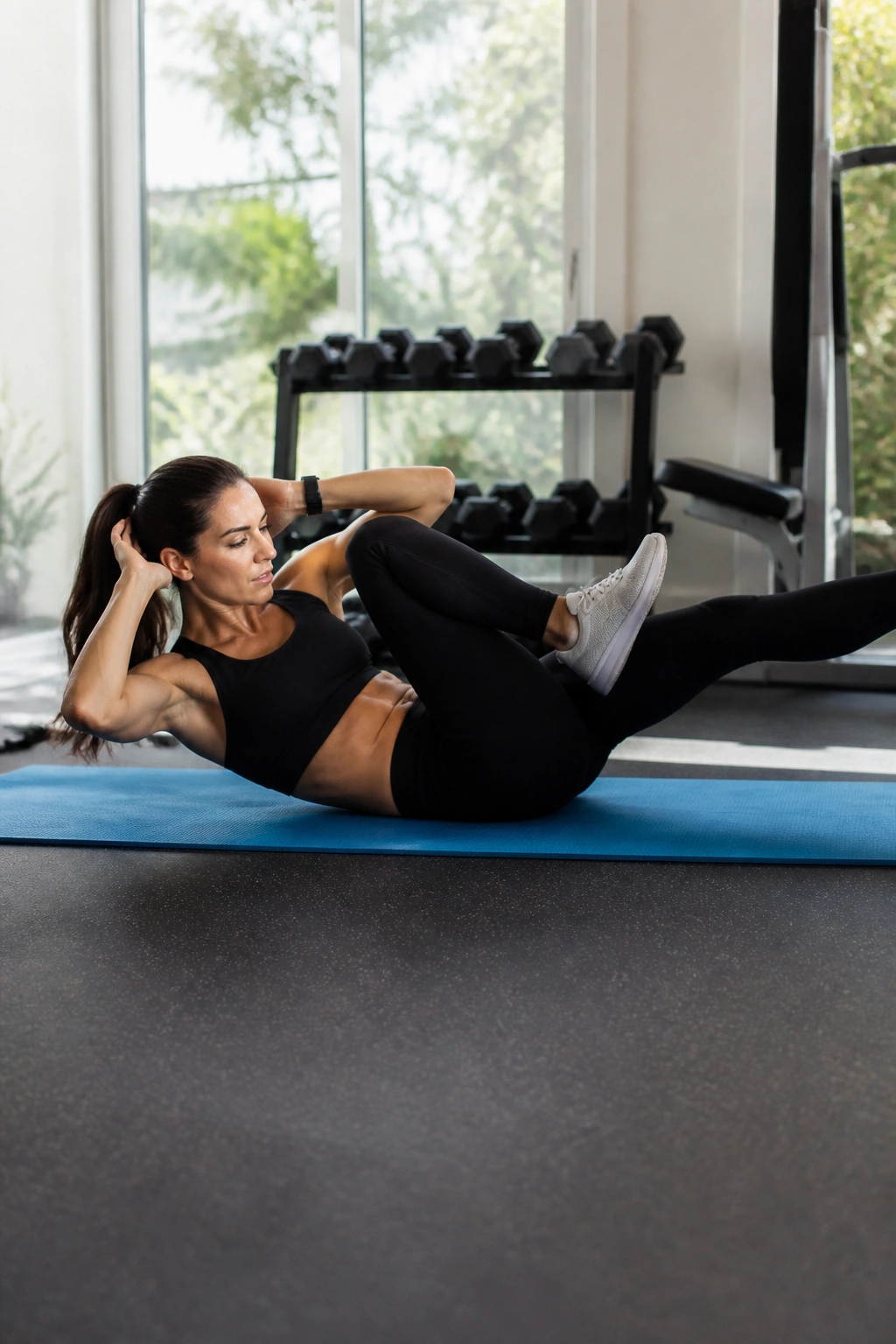
This move is a staple for a reason: it targets both the rectus abdominis and the obliques simultaneously. However, most people turn this into a frantic race. They move so fast that momentum does all the work, and they end up just rocking back and forth on their tailbone.
The Slow-Motion Approach
- Place your hands gently behind your head. Do not pull on your neck.
- Extend one leg fully while bringing the opposite elbow toward the knee.
- Twist your torso, not just your arm. Your shoulder should lead the movement.
- Hold the peak contraction for one second before switching sides.
When you slow the bicycle crunch down, you will realize how hard it actually is. If you finish your set feeling nothing but neck pain, you are doing it too fast. Focus on the rotation of the rib cage.
10. Russian Twists
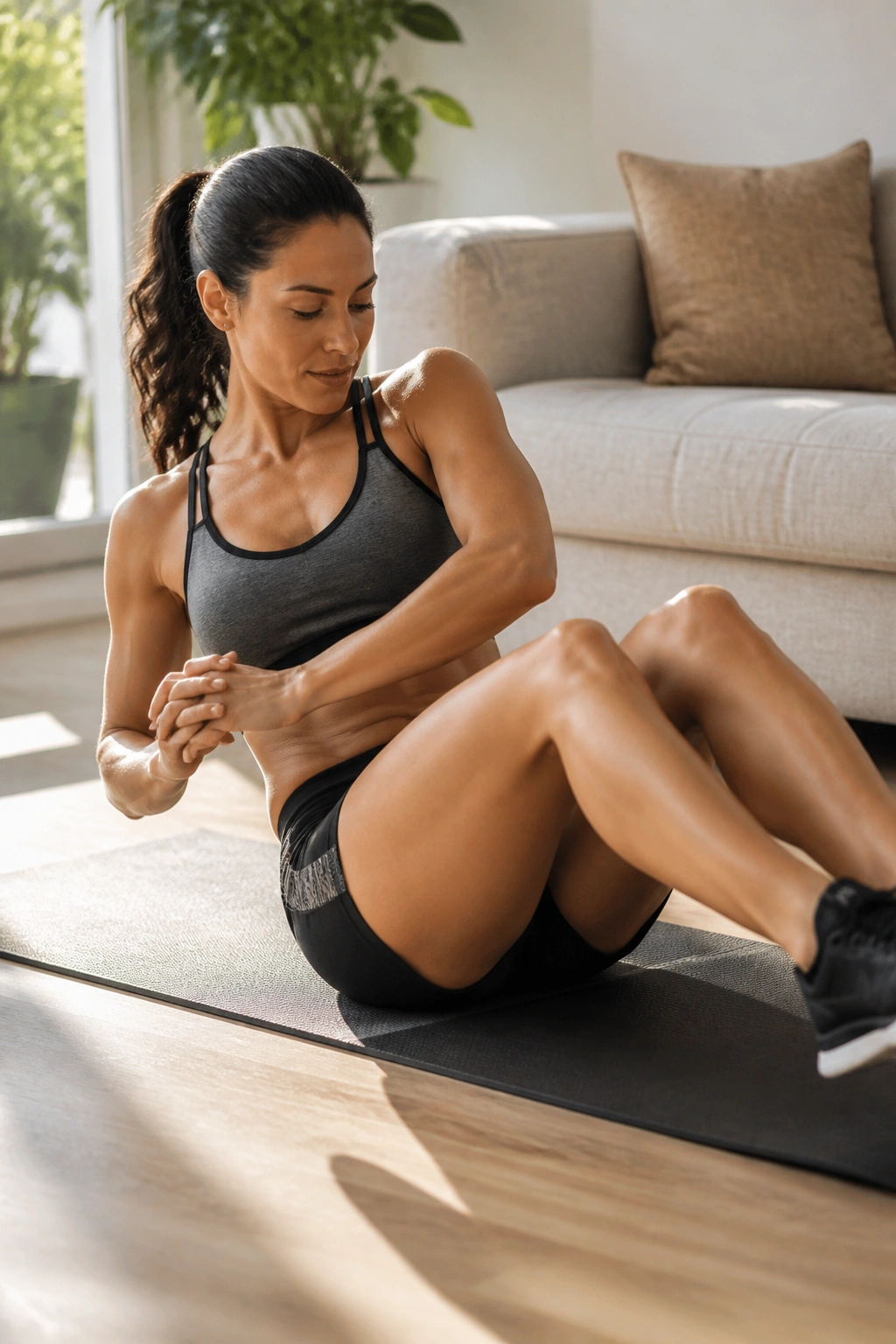
Rotational power is essential, but the Russian twist is frequently botched. People focus on getting their hands to touch the floor on either side, which often results in just moving the arms rather than twisting the core.
Sit on the floor with your knees bent and your feet slightly off the ground. Lean back until you feel your abs engage. Clasp your hands together or hold a weight. Rotate your entire upper body—shoulders, ribs, and torso—from side to side. Your eyes should follow your hands. If you are just moving your hands across your body, you aren’t engaging the obliques. You need to initiate the movement from the center. If you feel this in your lower back, your core is not braced tightly enough; stop, reset, and focus on pulling your belly button toward your spine before you rotate again.
11. Mountain Climbers
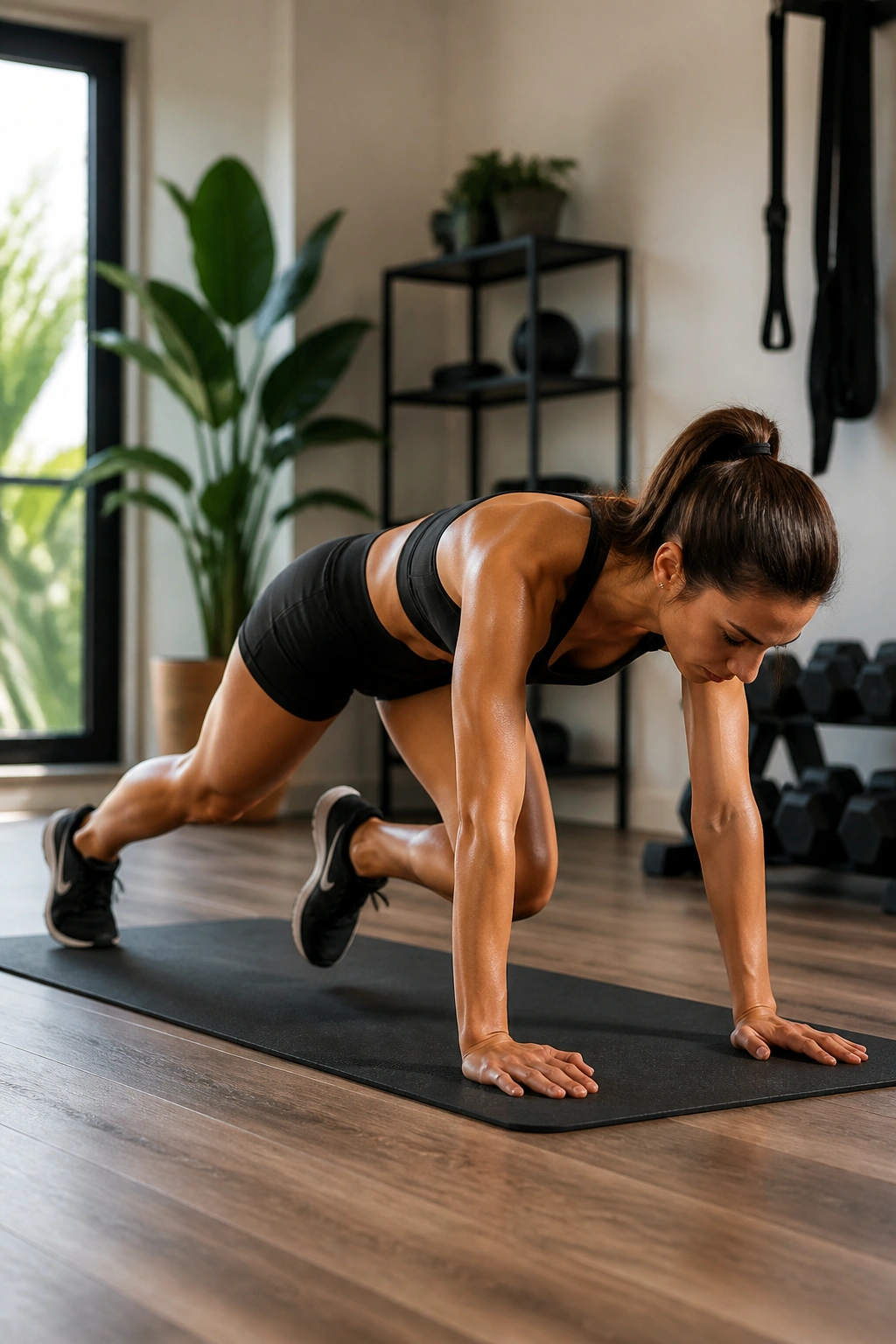
This is a cardio-core hybrid. It challenges your core to stabilize your pelvis while your legs are moving dynamically. Because it elevates your heart rate, it also helps with the calorie-burning aspect of getting leaner, which indirectly helps the abs pop.
Get into a high plank position. Drive one knee toward your chest, then quickly switch, driving the other knee in. The key is to keep your upper body frozen. If your torso is bouncing up and down, you are losing the core engagement. Keep your back flat. Imagine you are running in place horizontally. This move is intense, so do not try to do it for five minutes straight. Try thirty-second intervals with short rests in between to maintain perfect form.
12. Plank Jacks
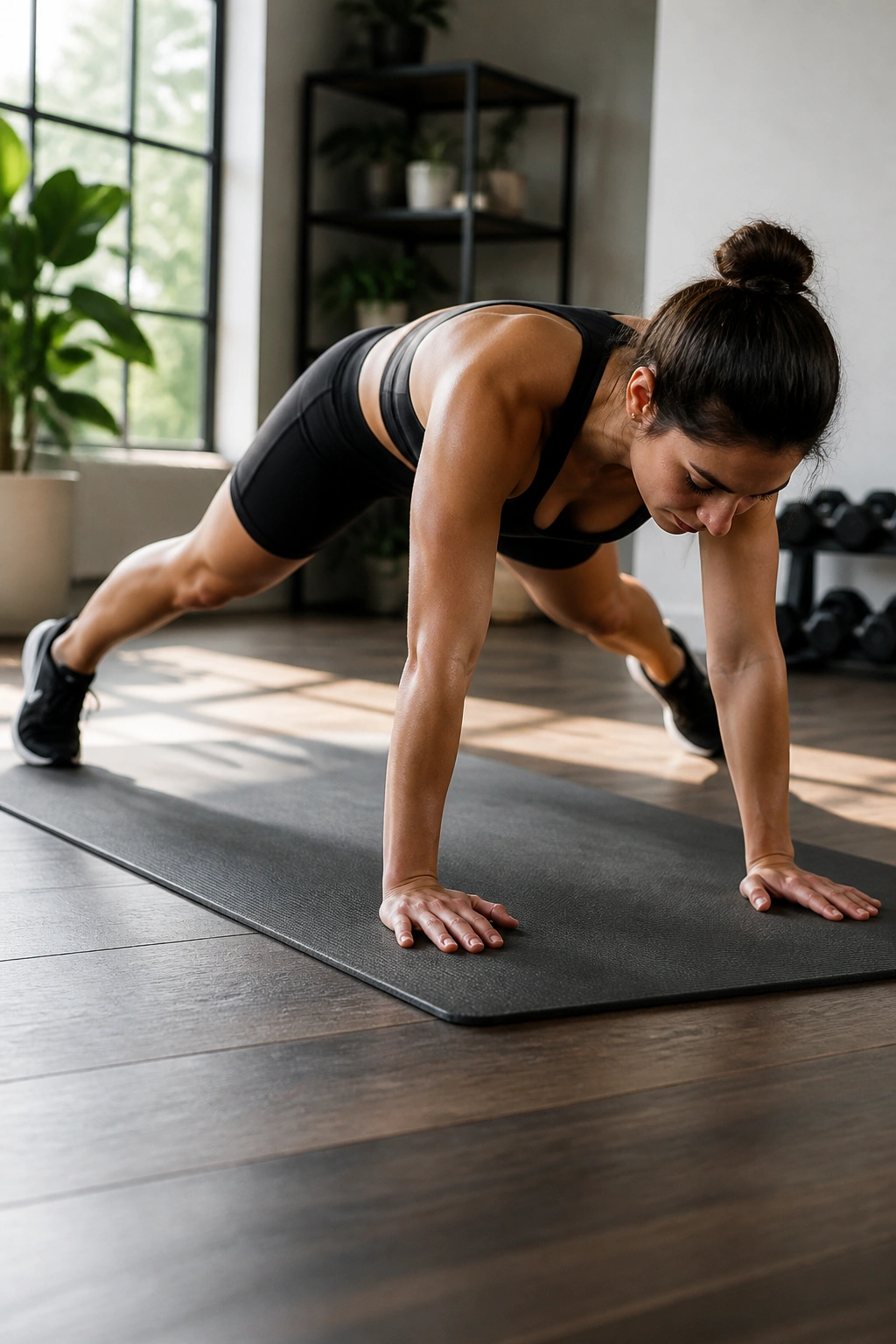
Take the standard plank and add a jump. This movement introduces a lateral impact that forces your core to reactively stabilize. It is excellent for athletic training and conditioning.
From a plank position, jump your feet out wide, then jump them back together, just like a jumping jack. The primary error is letting your hips bounce toward the ceiling when you jump your feet out. Keep your body perfectly level. If you can’t maintain a flat back, do not jump. Step your feet out one at a time instead. Quality of movement always trumps intensity. Once you master the step-out version, then you can transition to the explosive jump.
13. Ab Wheel Rollouts
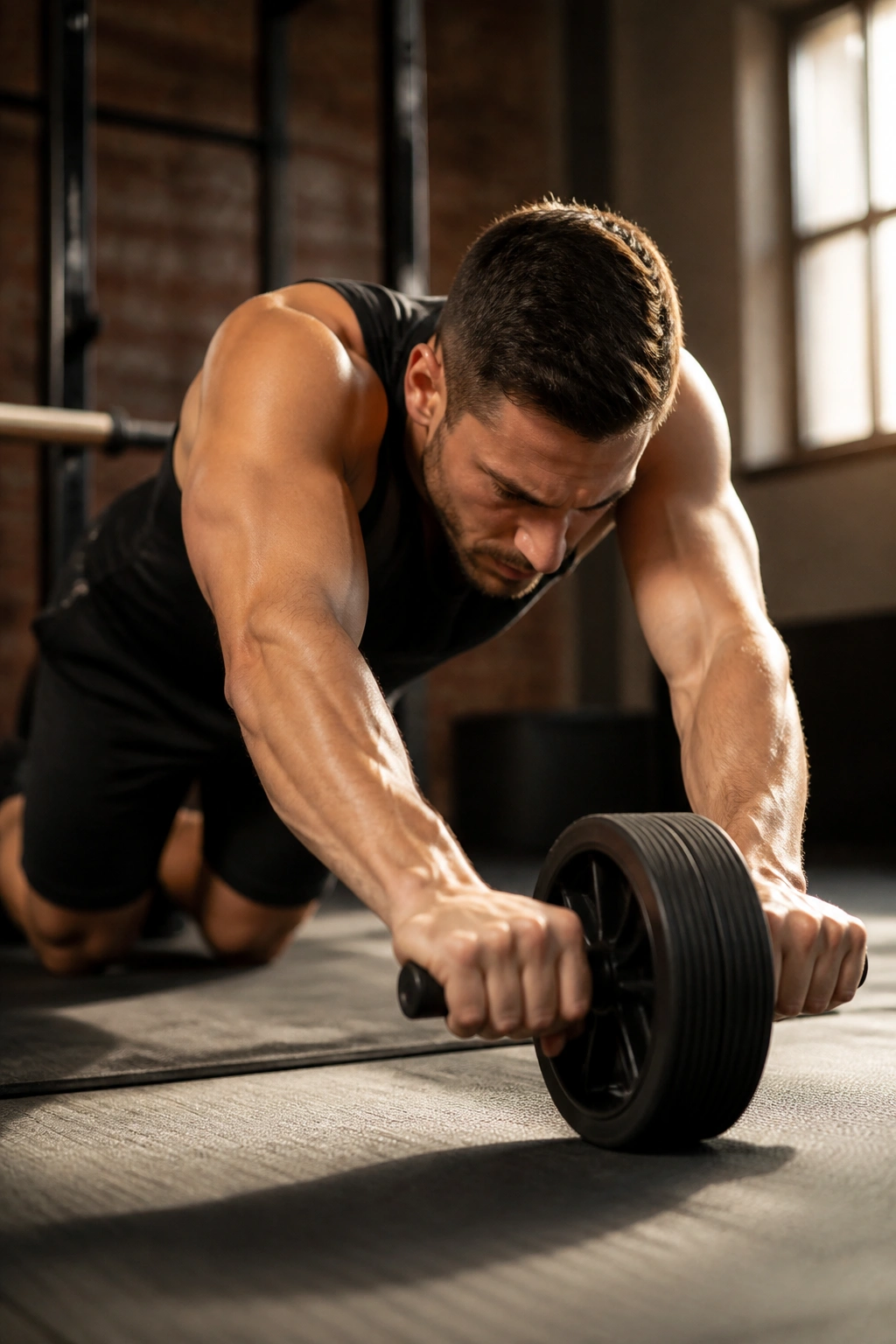
This is an advanced move. Do not attempt this until you have mastered the hollow body hold and can keep your spine neutral under pressure. The ab wheel is perhaps the most effective tool for building anterior core strength because it forces you to resist extension as you move.
Start on your knees with the wheel in front of you. Engage your core, tuck your pelvis, and slowly roll the wheel forward. Go only as far as you can while maintaining a perfectly flat back. If your back dips, you have gone too far. Rolling out is relatively easy; rolling back in is where the magic happens. Use your lats and your abs to pull the wheel back under your shoulders. If this is too hard, start by rolling out against a wall, which will act as a stopper.
14. Stability Ball Pikes
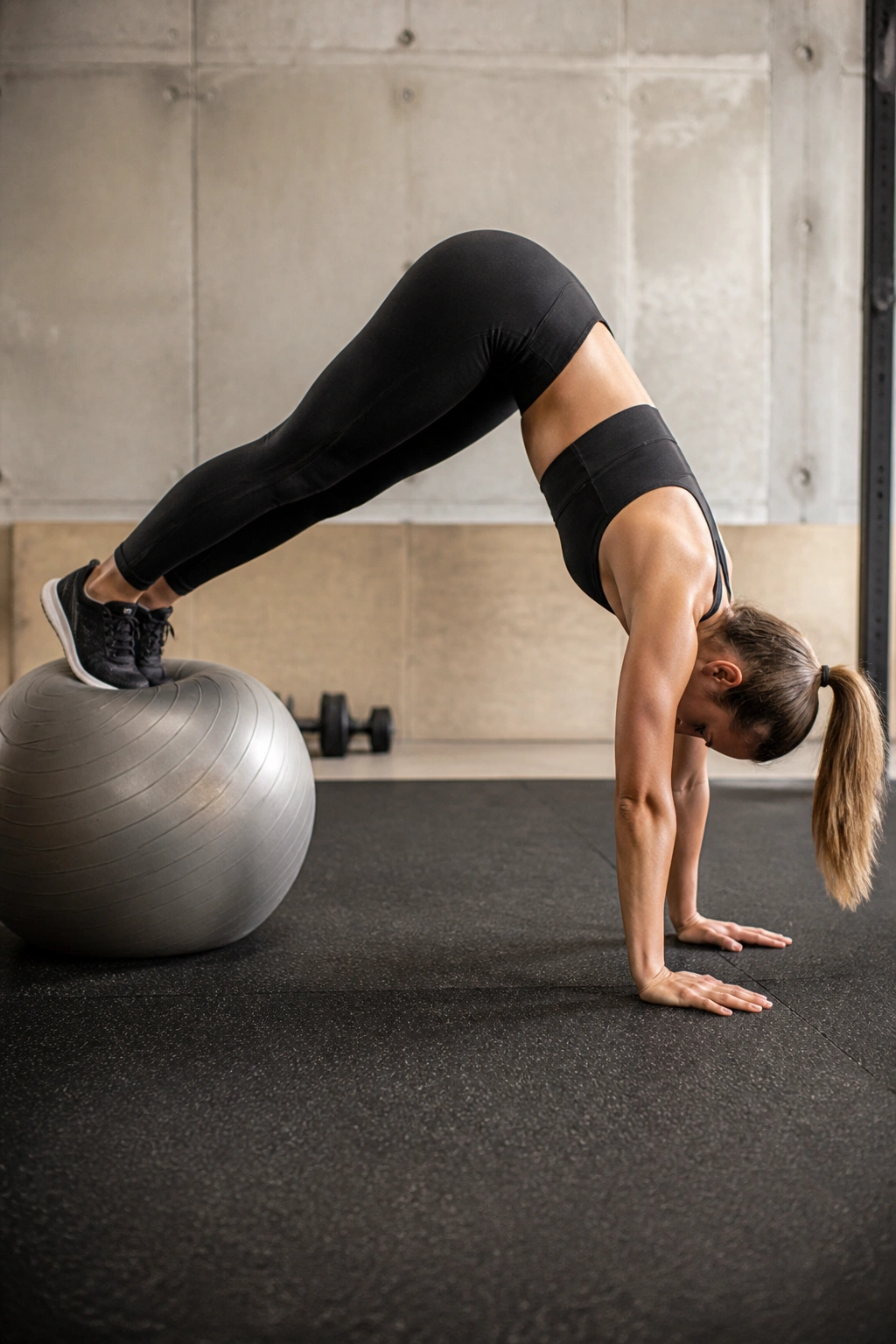
The stability ball adds a layer of proprioception—your body has to work harder just to stay balanced. The pike requires significant hip flexibility and core control.
Get into a plank position with your shins on the stability ball. Use your abs to pull the ball toward your hands, lifting your hips into a pike position. Your body should look like an inverted “V.” Lower yourself back to the plank position with control. Do not let the ball roll away. The stability ball is fickle; it will move if your core isn’t rock solid. This move hits the upper and lower abs, along with the stabilizers throughout your entire trunk.
15. Cable Woodchoppers
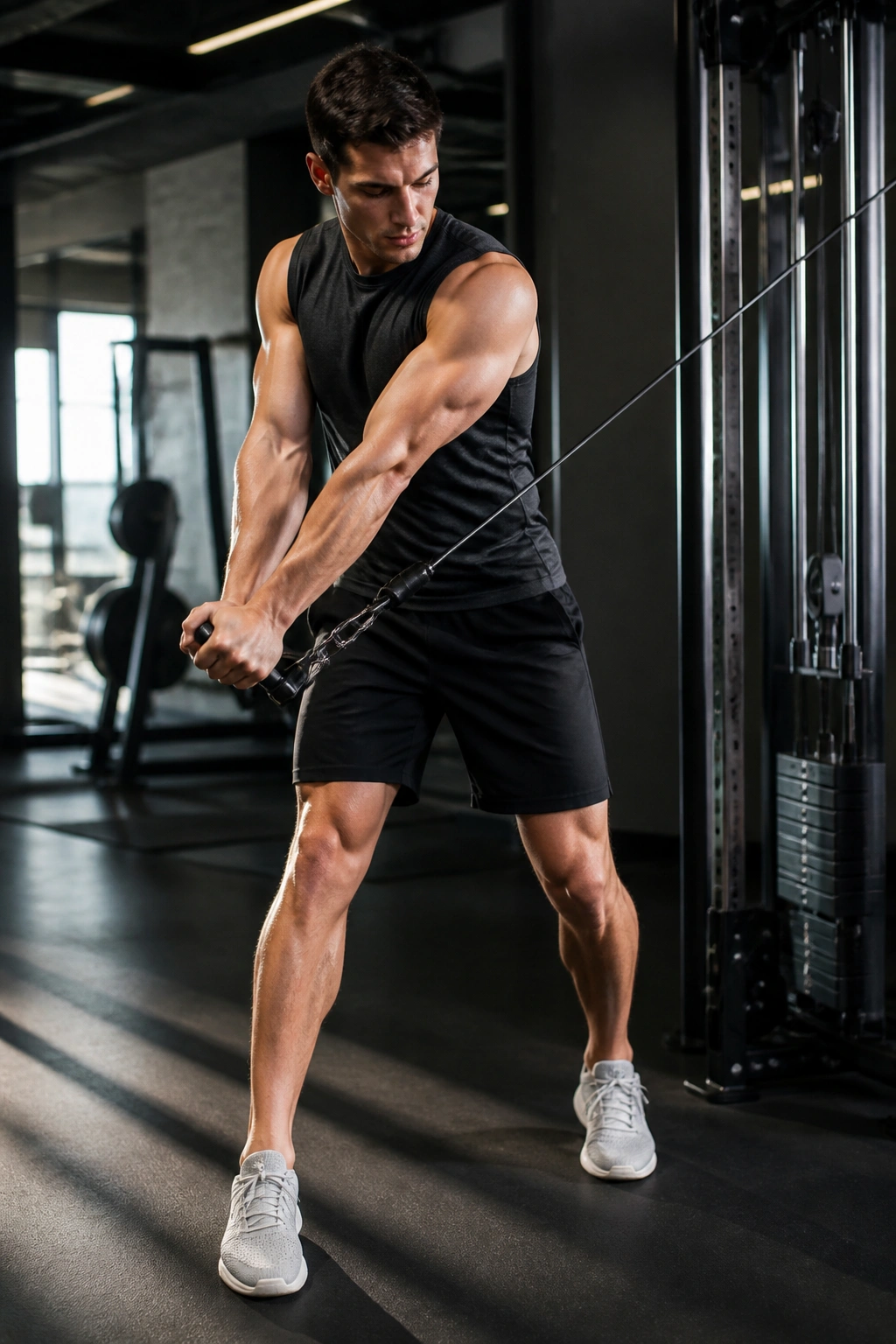
Core training isn’t always about lying on the floor. Standing core work, like cable woodchoppers, teaches you to brace your midsection under tension, which is much more functional for daily life and athletic performance.
Using a cable machine, set the pulley to a high position. Stand sideways to the machine, grab the handle with both hands, and pull it down diagonally across your body to your opposite knee. The movement should be explosive on the way down and controlled on the way up. Your core should be rotating, but your hips should remain relatively stable. If you find yourself turning your feet, you are rotating with your hips, not your obliques. Keep your feet planted and force your abs to do the turning.
16. Hanging Leg Raises
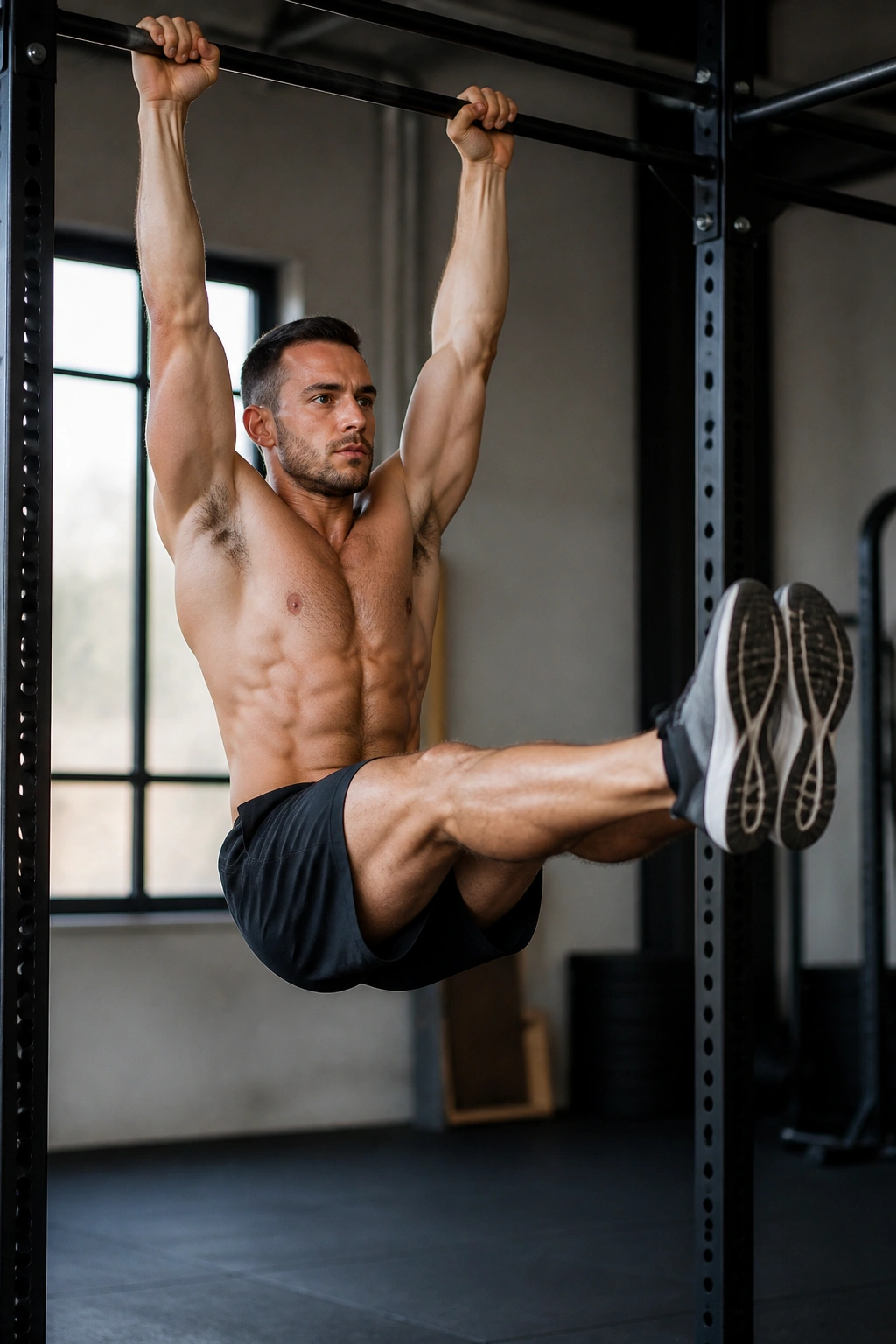
This is the gold standard for lower ab development. It is difficult because it requires grip strength, shoulder stability, and immense core control. If you are swinging, you are wasting your time.
Hang from a pull-up bar with an overhand grip. Keeping your legs straight, slowly lift them until they are parallel to the floor—or higher. The temptation is to use momentum to swing your legs up. Avoid this. Visualize tucking your pelvis under as you lift. If you cannot do a straight-leg raise without swinging, start with knee raises. Pull your knees to your chest, focusing on the curl of the pelvis, rather than just lifting the legs.
17. Bear Crawls
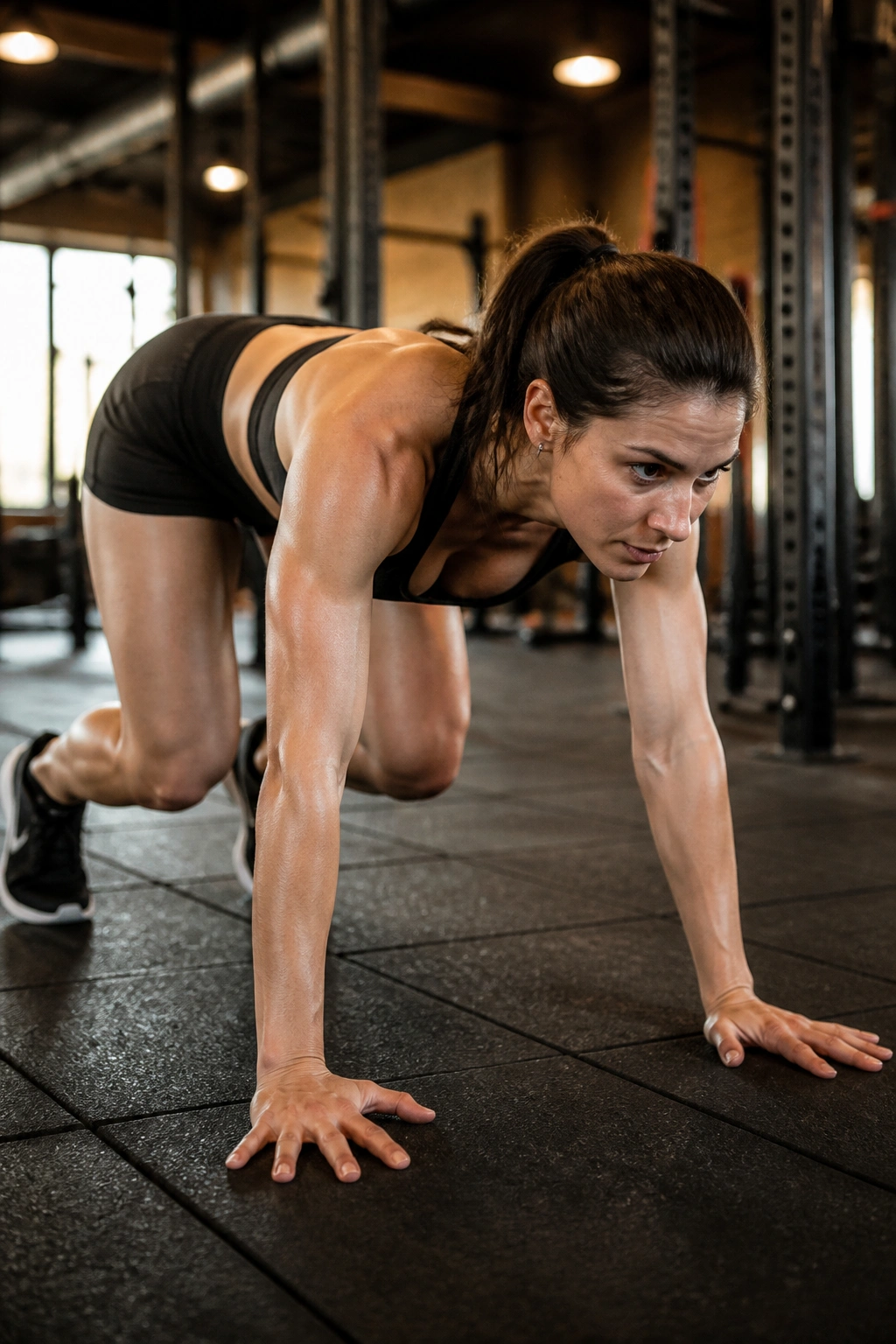
Bear crawls are an integrated core movement. They force you to maintain tension throughout your entire body while moving. It is a fantastic way to develop “functional” strength—the kind that makes you feel sturdy and powerful.
Start on all fours, but lift your knees two inches off the ground. Keep your back flat. Crawl forward, moving the opposite hand and opposite leg at the same time. This requires a tremendous amount of coordination and core stability to keep your torso from twisting or dipping. If you feel like your hips are swaying wildly, slow down. This isn’t about speed; it’s about keeping your spine neutral while your limbs move.
18. Turkish Get-Ups
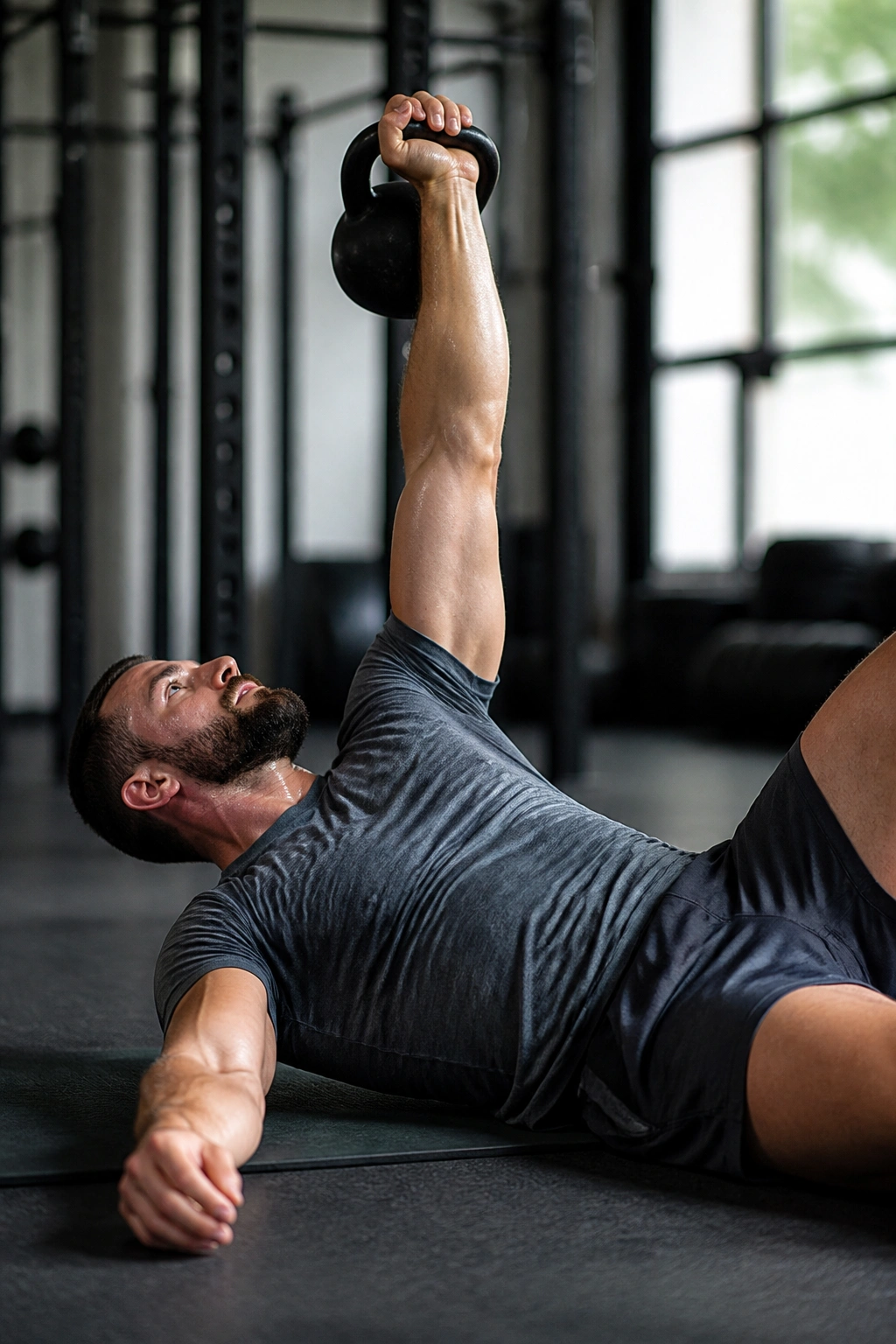
The Turkish Get-Up is not just an ab exercise; it is a full-body movement that happens to require a rock-solid core. It teaches you to control your body through a complex transition from lying on the floor to standing up, all while holding a weight above your head.
Because you have to stabilize a weight overhead, your core has to work overtime to prevent your torso from collapsing or twisting. It is a slow, methodical movement. You cannot rush it. Every single transition—from lying to sitting, sitting to kneeling, kneeling to standing—demands core engagement. It is arguably the best “bang for your buck” movement if you want a core that is strong, functional, and ready for anything.
Final Thoughts
Building a strong, toned midsection is not about finding the perfect ab exercise that will suddenly reveal hidden muscles. It is about consistent effort, progressive overload, and paying attention to the details of your movement. If you spend your workout rushing through crunches, you are just going through the motions.
Choose three or four of these exercises, focus on the technique, and make sure your core is engaged in every single rep. You should finish your workout feeling like your abs were a central part of the work, not an afterthought tacked onto the end of a cardio session. Consistency will beat intensity every time. Keep the pressure on your core, keep your movements controlled, and give your muscles the time they need to respond to the load. That is the only real formula for results.
