



You have a square of floor space that measures roughly six feet by six feet. Maybe it is in a cramped bedroom, a narrow apartment hallway, or between the kitchen table and the wall. Most people look at that space and think it is too small for a workout. They assume they need a gym membership, a treadmill, or at least enough room to run wind sprints to burn calories.
That assumption is the primary reason many people stay sedentary at home. You do not need a track to get your heart rate into a fat-burning zone. You need to understand how to manipulate body weight, intensity, and time. When floor space is limited, the solution is to trade horizontal movement for vertical intensity. Instead of running forward across a field, you stay planted and move with high frequency.
The physics of cardio in a tiny space requires shifting from long-stride movements to compact, explosive repetitions. You can simulate the intensity of a mile-long run in a space no larger than a yoga mat. The trick is to keep moving constantly. There is no downtime to walk around and reset; the transition from one movement to the next must be immediate. This creates a metabolic demand that forces your body to work harder to oxygenate your muscles.
Forget about complex equipment. If you have enough room to stand up and reach your arms out to the sides without punching a wall, you have enough space to build an elite cardio engine. The following methods are designed specifically to maximize intensity within a minimal footprint.
1. Jump Rope (or Ghost Rope)
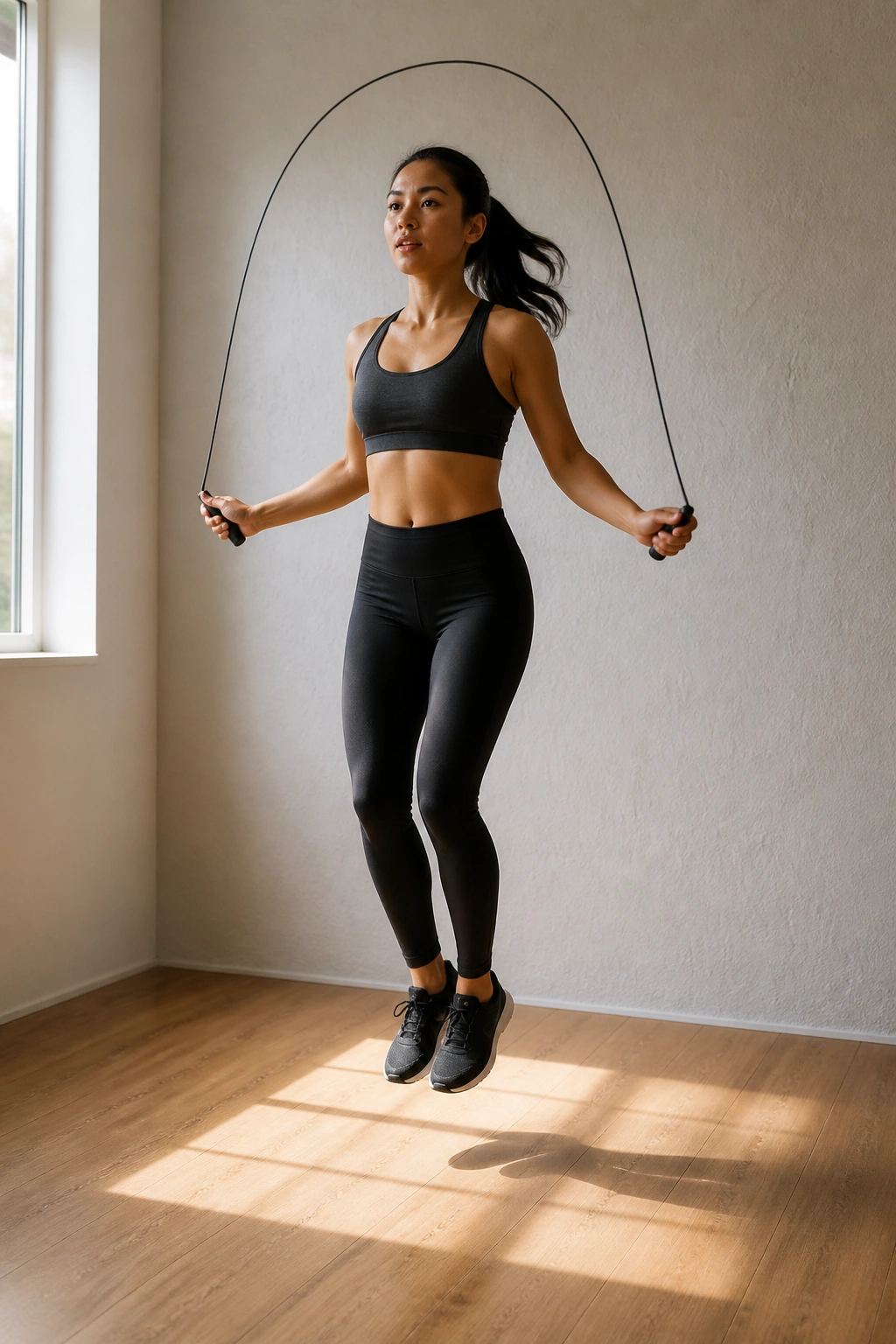
Jumping rope is arguably the most efficient cardio tool ever devised, and it has almost zero spatial requirements. You only need enough clearance for the rope to swing over your head. If your ceilings are low or you are worried about hitting a light fixture, you do not even need the actual rope. This is called “ghost roping.”
Mastering the Ghost Rope Technique
When you remove the physical rope, the movement changes slightly. You have to be more disciplined with your arm rhythm. Keep your hands tucked in near your waist, just like you would if you were holding handles. Snap your wrists rhythmically with every hop. This synchronizes your upper and lower body, which is what actually keeps your heart rate spiked.
Why This Fits Small Spaces
- Vertical efficiency: You are not traveling across the room.
- Adjustable intensity: You can alternate between slow rhythmic bounces and double-unders.
- Low equipment cost: Even if you use a real rope, the footprint remains within a three-foot radius.
Pro tip: If you are worried about noise for your downstairs neighbors, jump on a thick yoga mat or a folded towel. It absorbs the impact and silences the thud of your feet.
2. Burpees
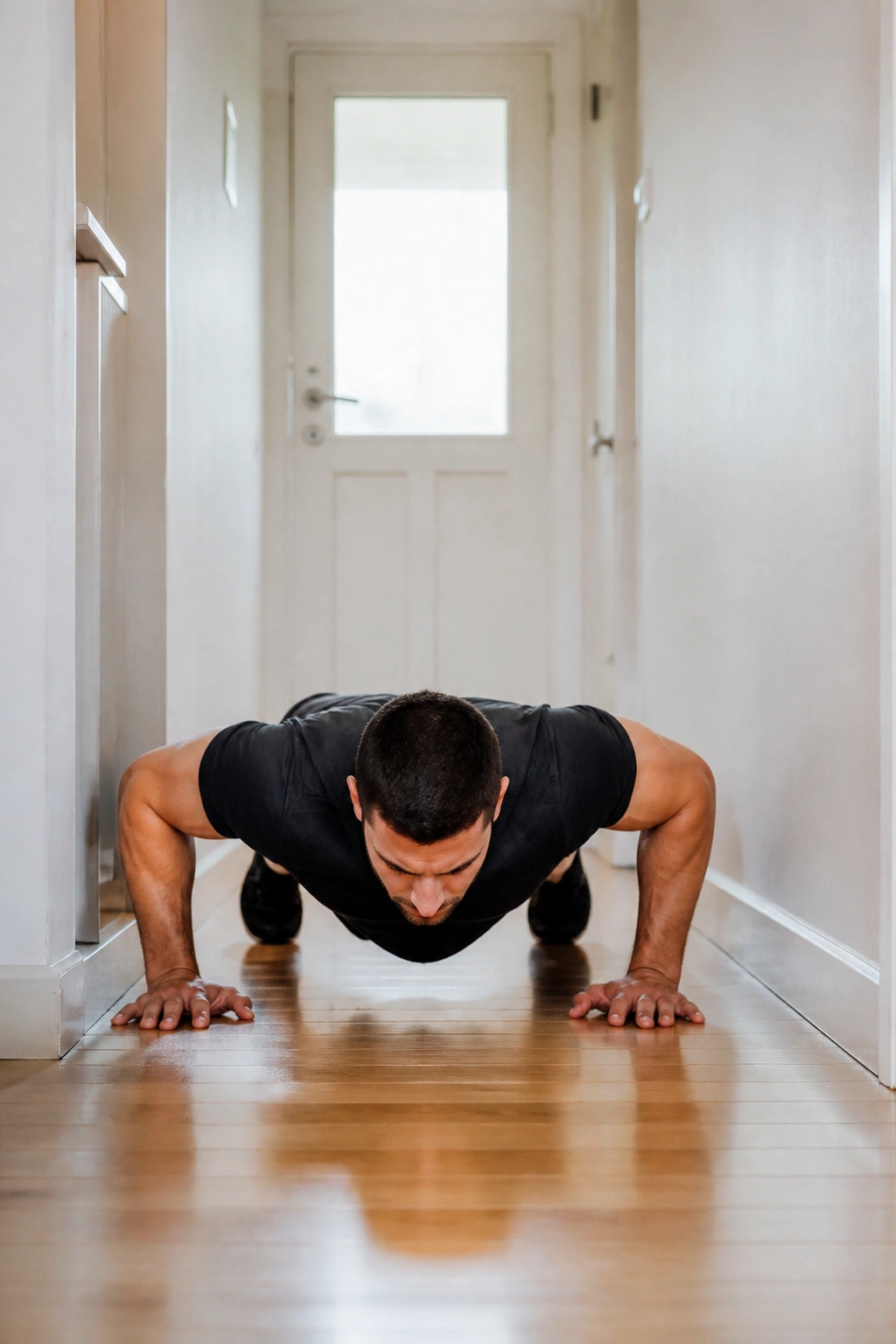
The burpee is often despised for a reason: it is incredibly effective. It forces you to drop your center of gravity to the floor and then explode back up to a standing position. In a tiny room, this is your primary tool for full-body exhaustion.
The Mechanics of the Small-Space Burpee
Do not worry about traveling forward or backward. Drop your hands directly to the floor beneath your shoulders, kick your feet back into a plank, drop your chest (if you want more intensity), snap your feet back under your hips, and jump straight up. If you are in a low-ceiling room, skip the jump and just reach for the ceiling. The movement remains the same, but you save your hands from a collision with the plaster.
Common Mistakes to Avoid
- Arching the back: Keep your core tight. If your lower back sags when you kick into the plank, stop and reset.
- Landing heavy: Try to land softly on the balls of your feet. Stomping will only tire your joints and annoy anyone living below you.
- Skipping the full lockout: If you do not stand all the way up, you are cutting the range of motion. Make every rep count.
3. Mountain Climbers
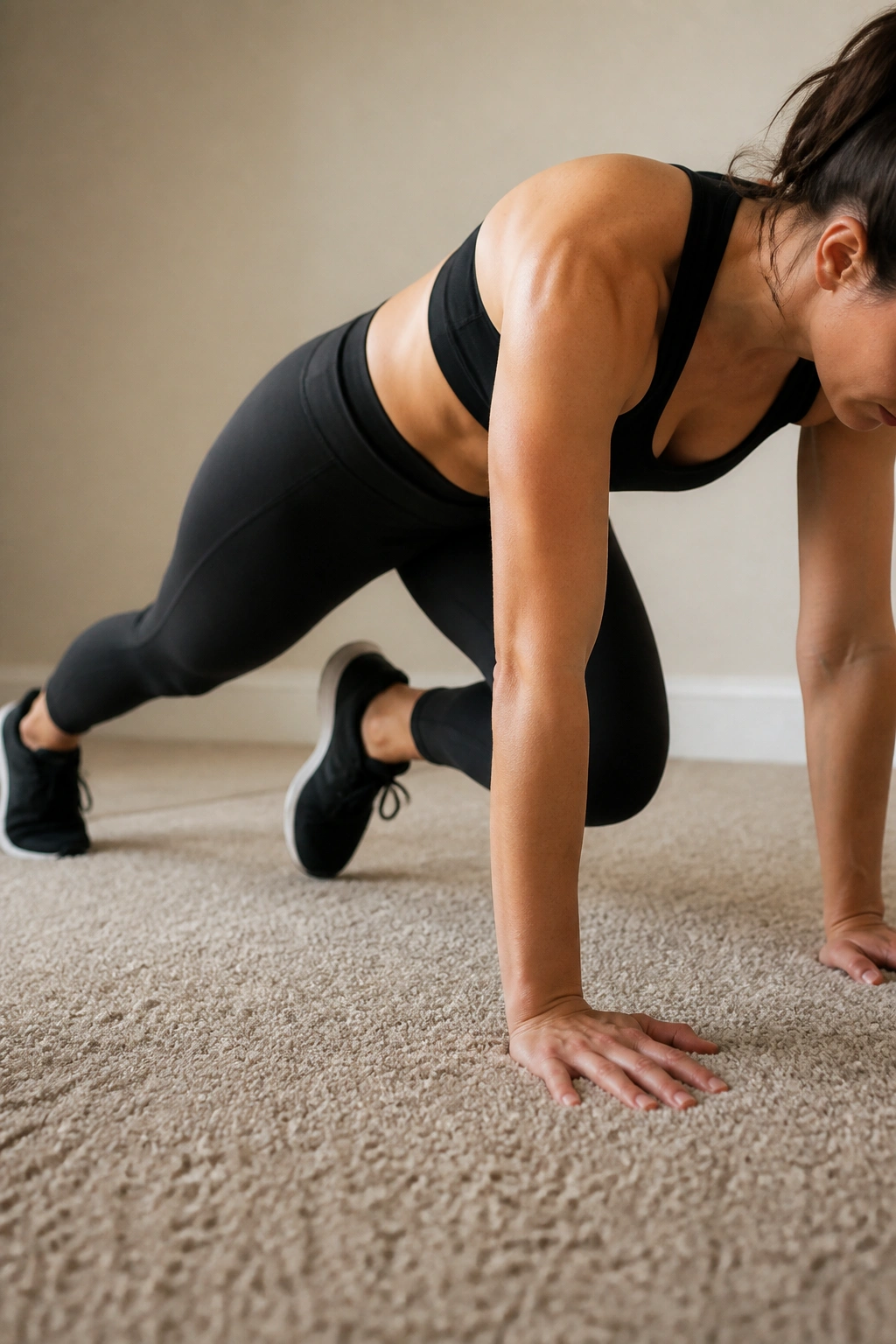
This is a horizontal cardio exercise that requires nothing but the length of your body. It is essentially running while in a plank position. Because you are already close to the floor, you never have to worry about hitting your head or running into furniture.
When you perform mountain climbers, the goal is not to see how fast you can thrash your legs. The goal is to drive your knees toward your chest with controlled, violent speed. Keep your shoulders stacked directly over your hands. If your hips hike up toward the ceiling, you have turned it into a hamstring stretch rather than a cardio movement. Keep the hips low, almost parallel to the floor.
If you have hardwood floors, wear socks. It makes the sliding motion easier and keeps your feet tucked close to the ground, which prevents you from kicking furniture legs. For carpet, you will need to physically lift your knees. Both variations are valid, but the sliding version often burns more gas because of the constant tension.
4. High Knees
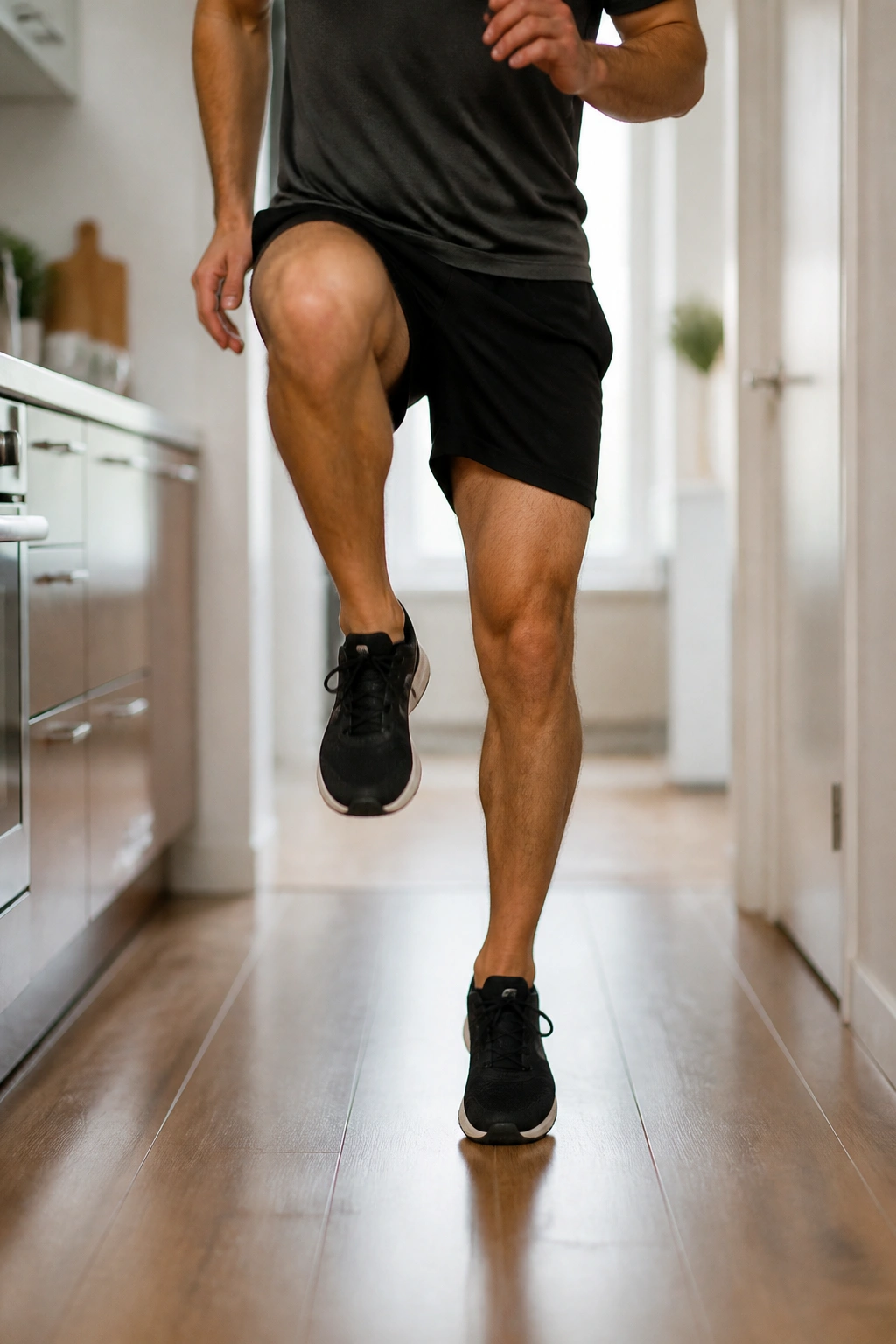
Running in place is the most straightforward cardio exercise, but it is often done incorrectly. To turn a casual jog in place into a high-intensity workout, you must drive your knees up to waist height every single time. If your knees are staying low, you are just marching, not doing cardio.
How to Maximize the Burn
- Arm drive: Pump your arms in sync with your legs. This creates a rhythm that forces your heart to pump more blood to your extremities.
- The cadence: Aim for a steady, rapid-fire tempo. Count to 100 on each leg, then take a 10-second breather.
- Posture: Stay upright. Do not hunch over. Hunching restricts your diaphragm and makes it harder to breathe, which will make the exercise feel artificially harder.
This is a high-impact move. If you have weak ankles or knees, ensure you are wearing supportive athletic shoes, even at home. The lack of forward motion means all the force is being absorbed directly into your joints.
5. Shadow Boxing

Shadow boxing is an art form, but for cardio purposes, we are focusing on frequency and duration. You do not need a heavy bag. You just need to throw punches at the air with intent.
Keep your feet light. Bounce on the balls of your feet, circling in a tiny, imaginary ring. Throw combinations: jab-cross, hook-uppercut. The cardio comes from keeping your hands up and moving constantly. Most people lower their hands when they get tired. Resist that urge. Keeping your arms elevated for minutes at a time is surprisingly exhausting for the shoulders and cardiovascular system.
If you have a pair of light dumbbells (one or two pounds max), use them. Even one-pound weights will make your shoulders burn like fire within two minutes. If you do not have weights, just clench your fists tight. The tension in your forearms and biceps acts as its own resistance.
6. Speed Skaters
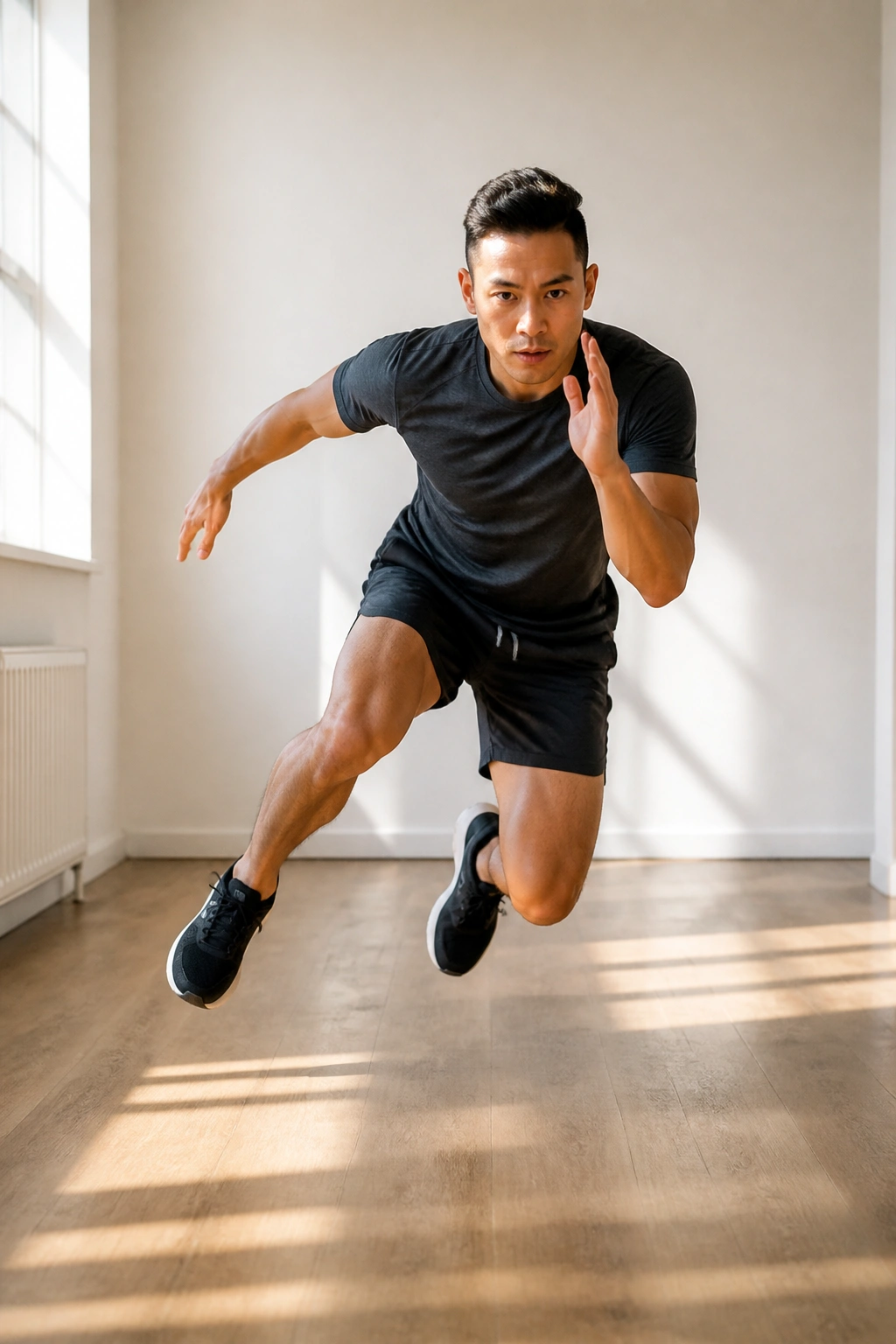
This exercise requires lateral movement, which is often neglected in standard cardio routines. Most people only move forward and backward. Speed skaters force you to shift your weight from side to side, which engages your glutes and obliques while keeping your heart rate high.
Imagine you are on a skating rink. Leap to the right, landing on your right foot while sweeping your left leg behind you. Then, leap to the left, landing on your left foot while sweeping your right leg behind. It is a graceful, sweeping motion. Because you are jumping laterally, you only need about four to five feet of width.
You can adjust the intensity by how far you jump. If you want a lower heart rate, take small, controlled hops. If you want a high-intensity burn, launch yourself as far as you can to each side. The “air time” between leaps is where the work happens.
7. Plank Jacks
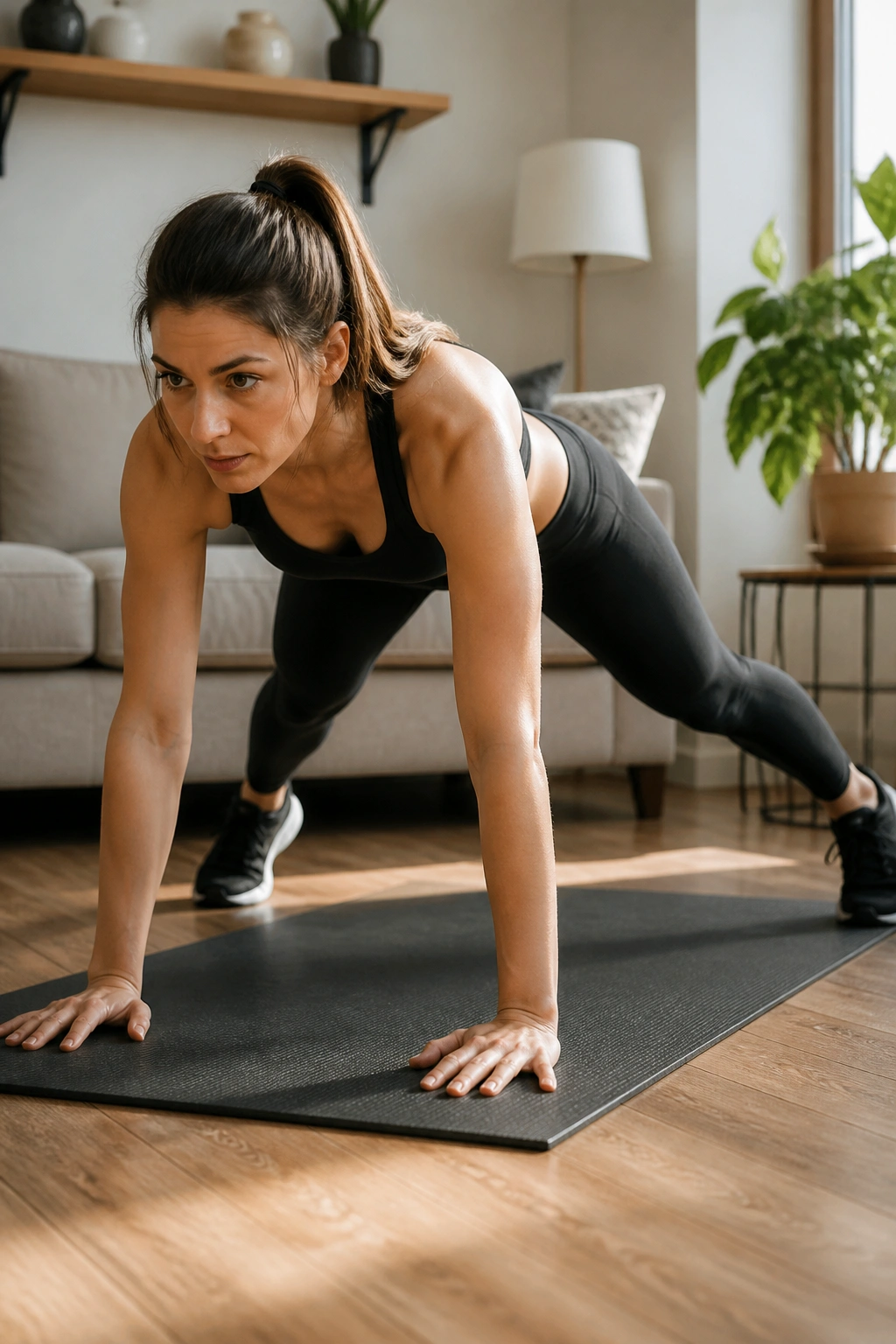
Plank jacks combine the isometric hold of a plank with the cardiovascular demand of a jumping jack. It is deceptive because it starts out feeling easy, but by the thirty-second mark, your core will be screaming.
Start in a standard push-up position. Your core must be braced as if someone is about to punch you in the stomach. Keep your body in a straight line. Now, jump your feet out to the sides and back in, similar to a jumping jack movement, while your upper body remains perfectly still.
The biggest error here is letting your butt bounce up and down. The goal is to keep your torso frozen in space while your legs do all the jumping. If you cannot jump, you can step your feet out one at a time. It is a lower-impact modification, but it still maintains the elevated heart rate if you keep the pace fast.
8. Squat Jumps
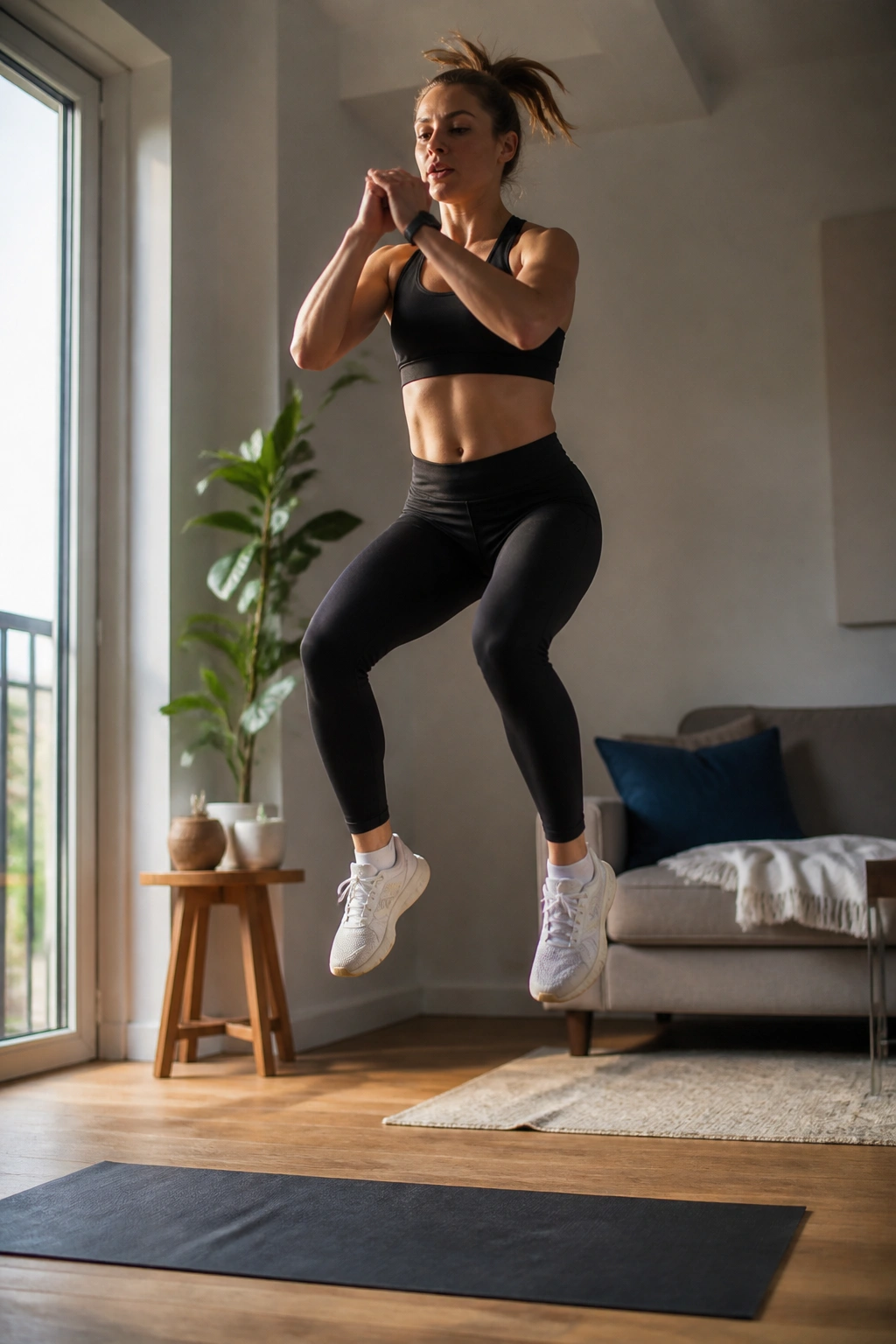
Squat jumps are an explosive movement that targets the largest muscles in your body—your quads and glutes. When you use your biggest muscles, your heart has to work overtime to circulate oxygen, which is why your lungs burn so fast during this move.
The Perfect Squat Jump
- Drop into a squat, keeping your chest up and your weight in your heels.
- Explode upward, driving through your heels to leave the floor.
- Land softly, immediately transitioning back into the next squat.
Warning: The landing is the most important part. If you land with straight, locked-out knees, you risk injury. Always land with bent knees to absorb the shock. If you are in a room with a low ceiling, be mindful of how high you jump. You do not need to reach for the stars; you just need to get your feet off the ground.
9. Inchworms
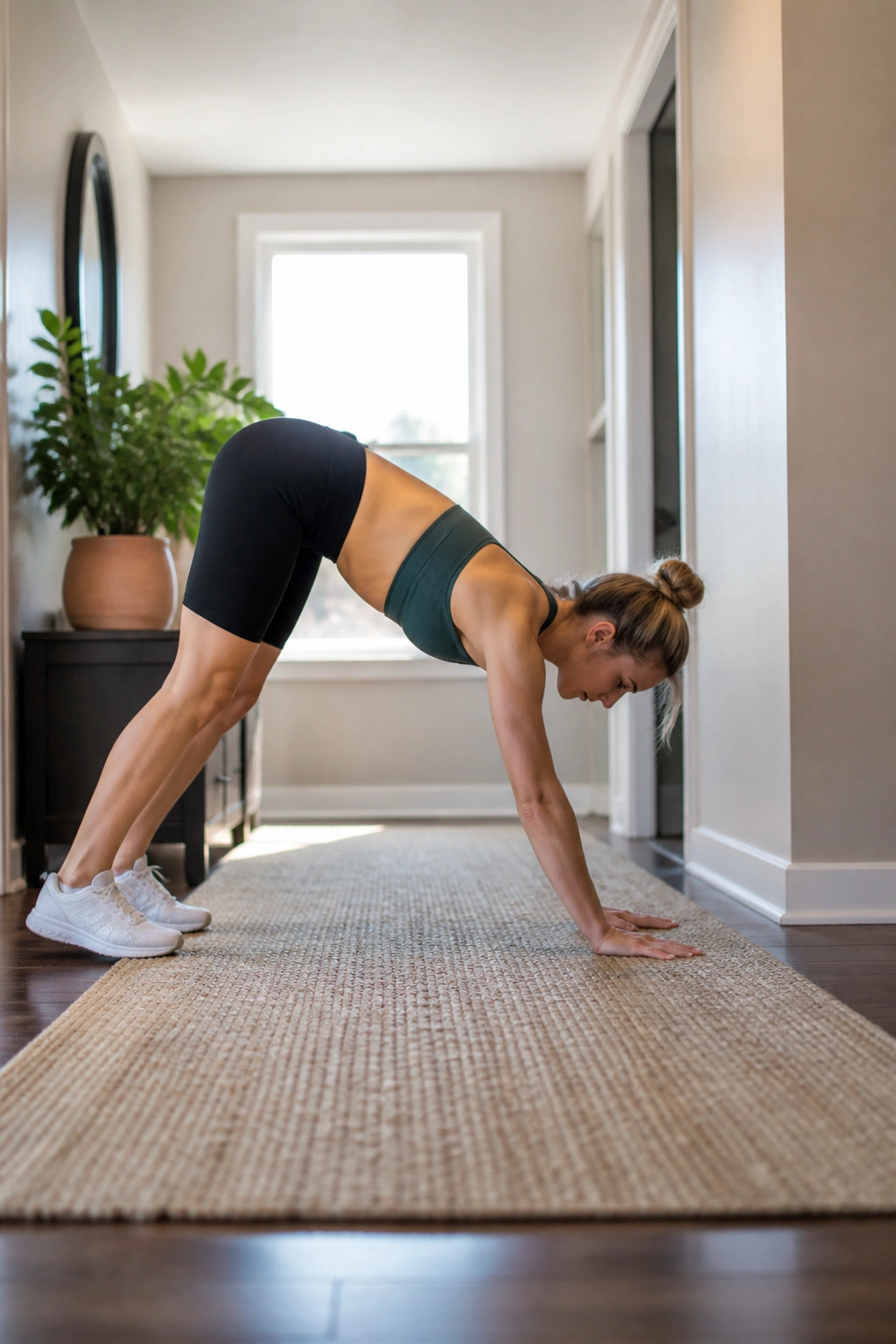
Inchworms are a fantastic way to combine mobility with cardiovascular conditioning. You start standing, hinge at the hips, place your hands on the floor, and “walk” your hands out until you are in a plank position. Then, you walk your feet up to meet your hands.
This movement forces you to engage your entire posterior chain. It slows your heart rate down slightly compared to jumping, but because you are constantly moving and bending, it keeps the intensity high. If you want to increase the cardio aspect, walk your hands out faster and add a push-up at the bottom of each rep. It turns a slow movement into a full-body sweat session.
10. Butt Kicks
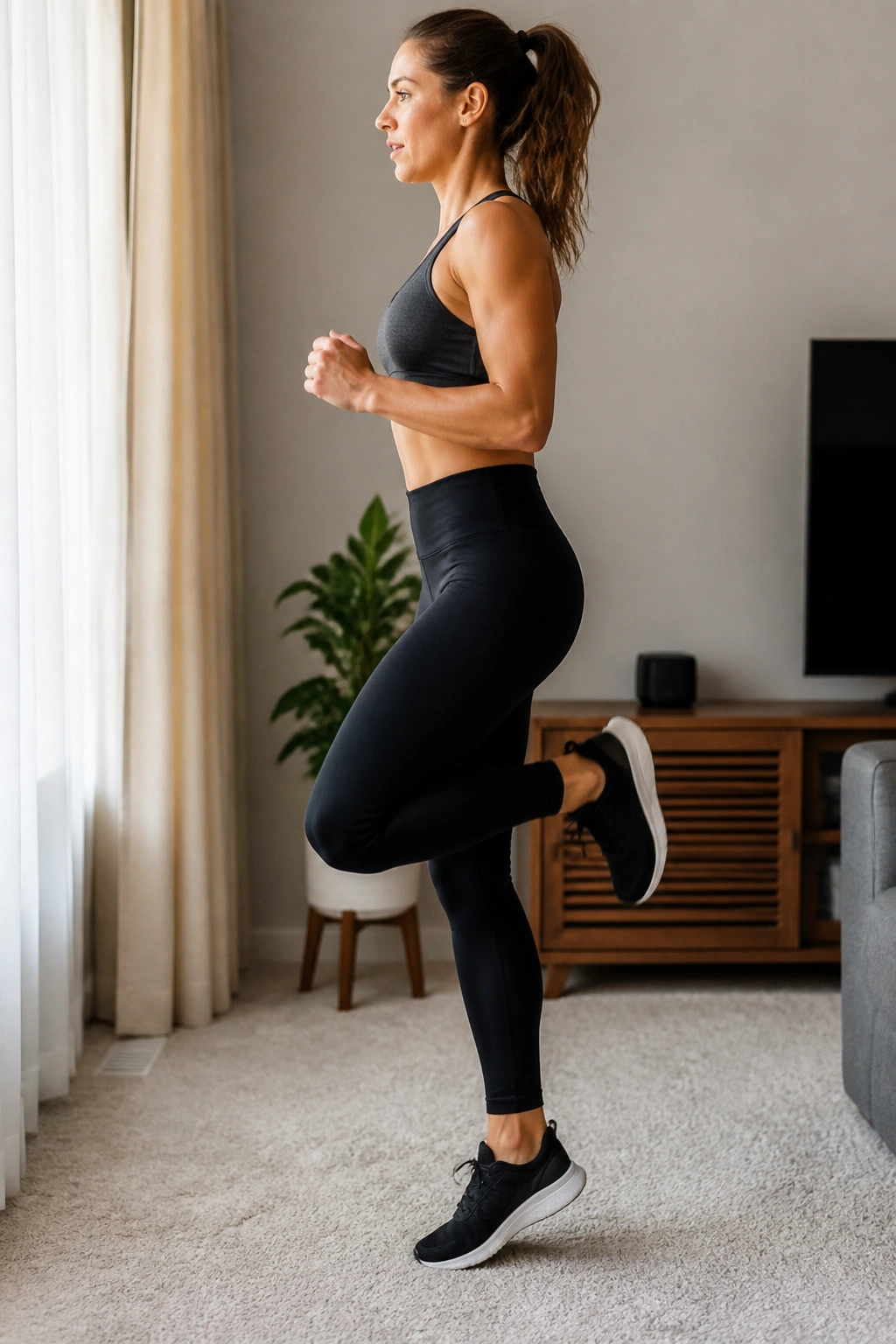
Butt kicks are similar to high knees, but they focus on the hamstrings. Instead of driving your knees up, you are snapping your heels back toward your glutes. It is a rapid, frantic motion that is surprisingly difficult to maintain for long periods.
The key to effectiveness here is the tempo. You need to snap your heels back hard and fast. If you are just lazily tapping your butt, you are not getting a cardio workout. Visualize that you are trying to kick yourself in the glutes with every single step. This constant tension keeps your heart rate elevated.
Because it is a repetitive, pounding movement, it can be hard on the shins if you have hard flooring. Do this on a carpeted area or a mat if you notice any soreness in your lower legs.
11. Bear Crawls
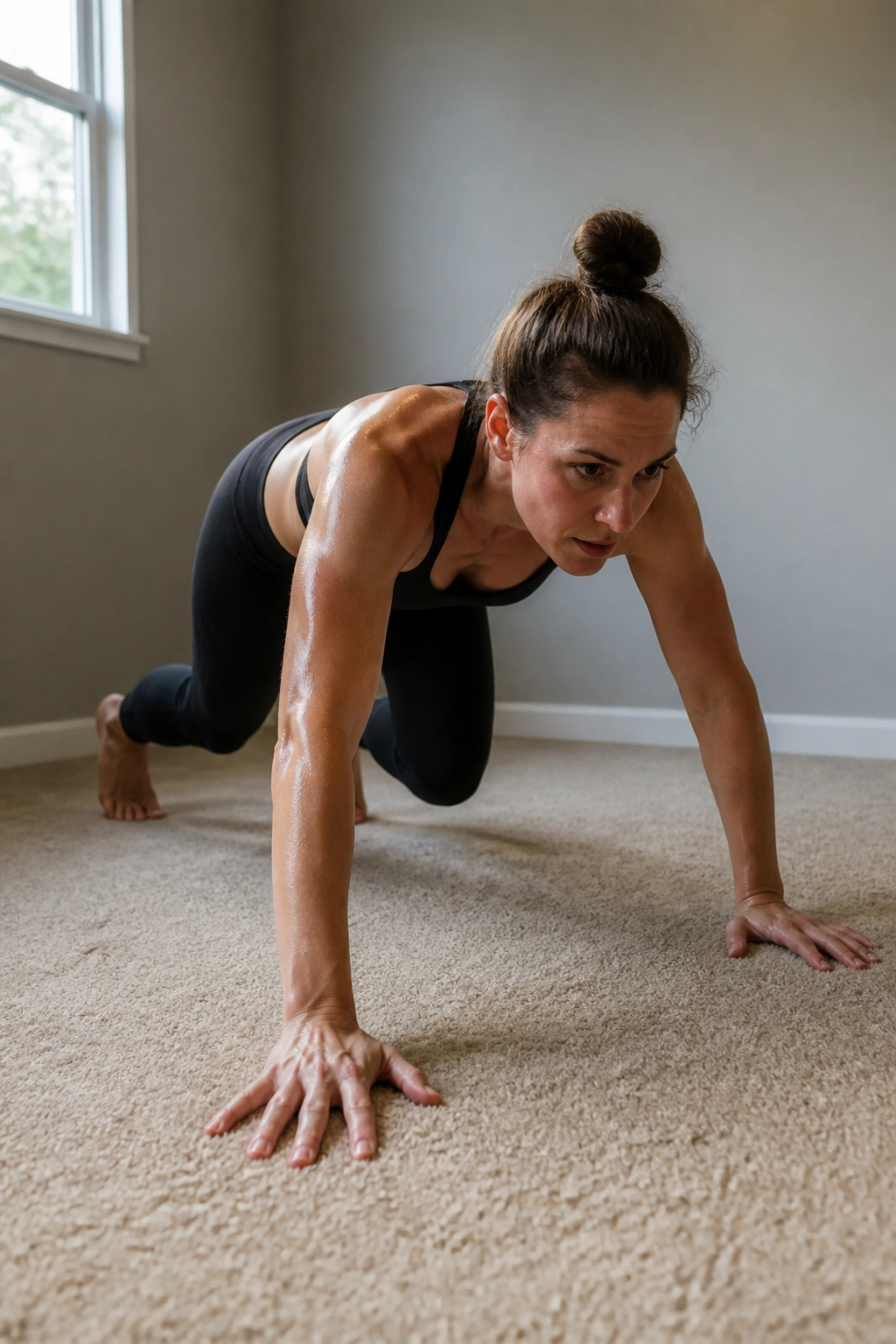
Bear crawls are a total-body challenge that will humble anyone who thinks they are fit. You get on all fours—hands and feet on the floor—and crawl forward and backward. In a tiny room, you can just do two steps forward and two steps backward.
The intensity here comes from the weight distribution. Keep your knees just an inch off the floor—do not let them touch the ground. Your quads will be under constant tension. Since you are moving all four limbs, the cardiovascular demand is massive. If you find yourself holding your breath, force yourself to exhale on every crawl step. This prevents the “locked-up” feeling that happens when you strain during isometric moves.
12. Tuck Jumps
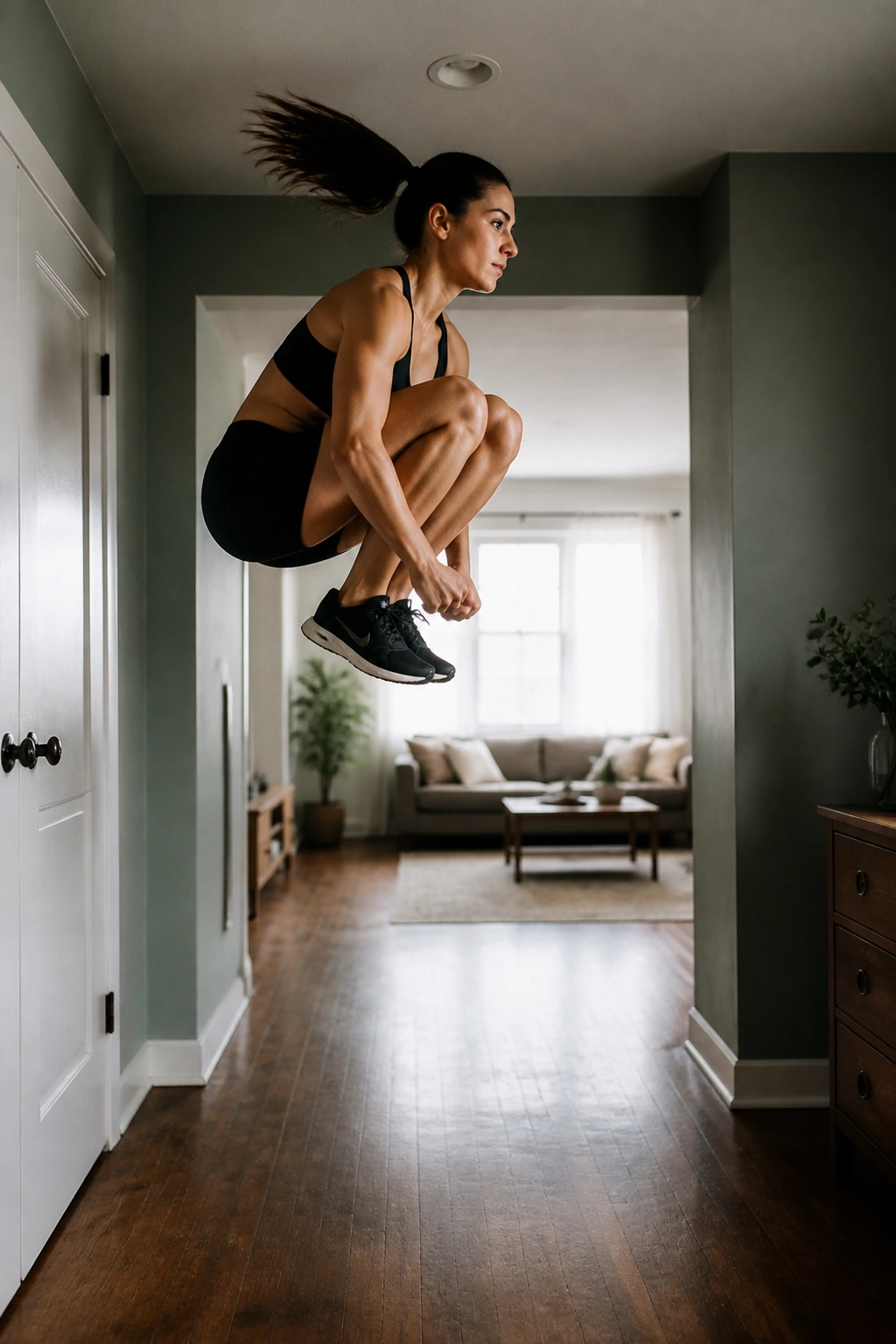
Tuck jumps are high-intensity plyometrics. You jump as high as you can and pull your knees up to your chest while you are in the air. This is an advanced move. It is not for beginners or those with knee issues, as the impact on landing is significant.
Why It Works for Tiny Spaces
You do not need horizontal room, just vertical clearance. It burns a massive amount of calories because the vertical lift requires total body power. Be careful with your ceiling height. If you are in a basement or attic, do a test jump first to ensure your head clears the light fixtures.
If the full tuck jump is too aggressive, perform “half-tuck” jumps where you just drive the knees up halfway. It still provides the cardiovascular benefit without the same level of landing impact.
13. Seal Jacks
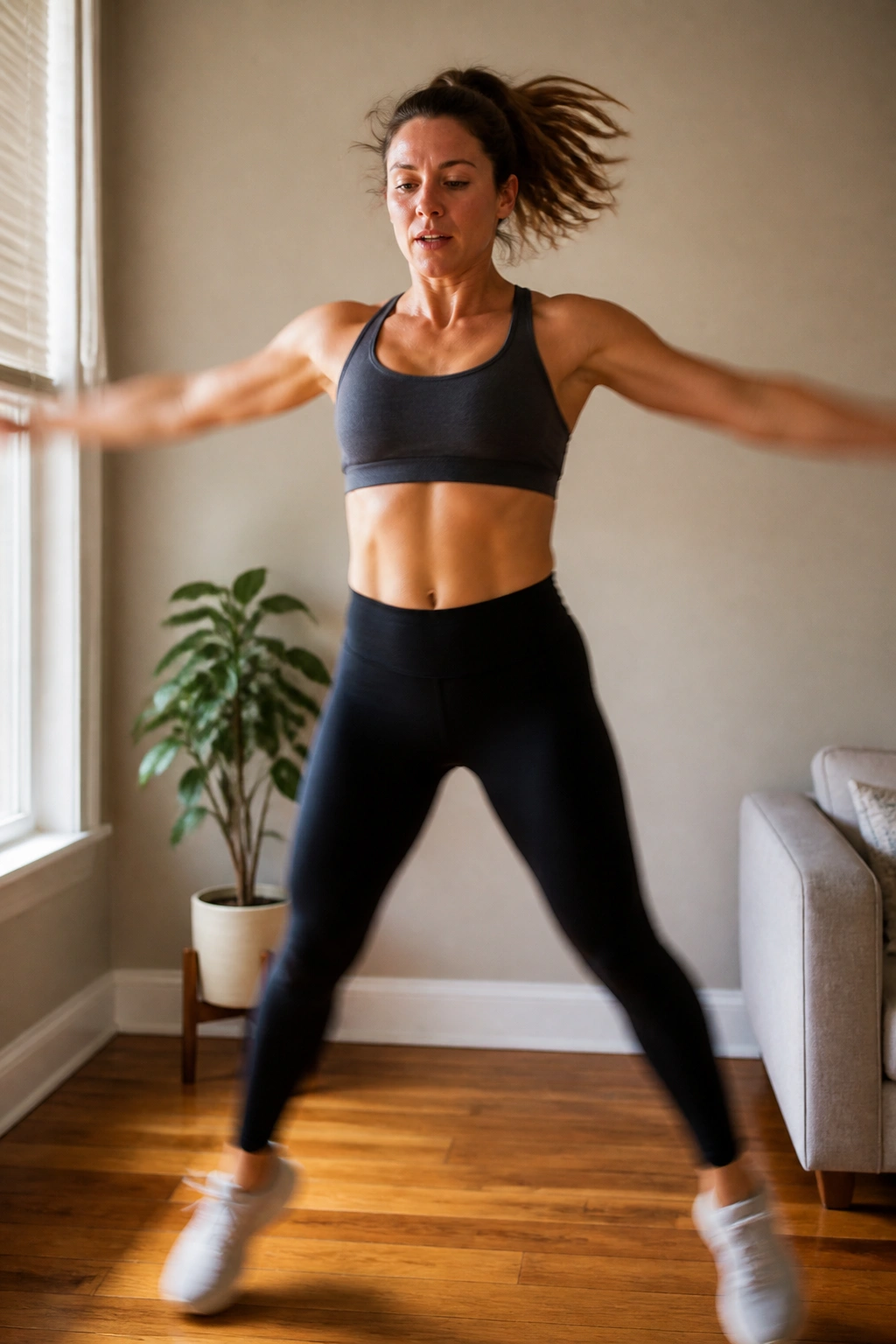
Standard jumping jacks are great, but seal jacks are an upgrade. Instead of clapping your hands above your head, you open your arms wide like you are clapping at your chest level, then swing them open as you jump your feet out.
This movement requires more chest and shoulder activation. Because you are moving your arms through a wider range of motion, you increase the surface area of your movement, which forces your heart to pump harder. It is a fantastic full-body coordination drill. If you keep the pace fast and stop clapping the hands—just touch your fingertips—you can move much faster, creating a blur of motion that keeps the intensity high.
14. Bicycle Crunches
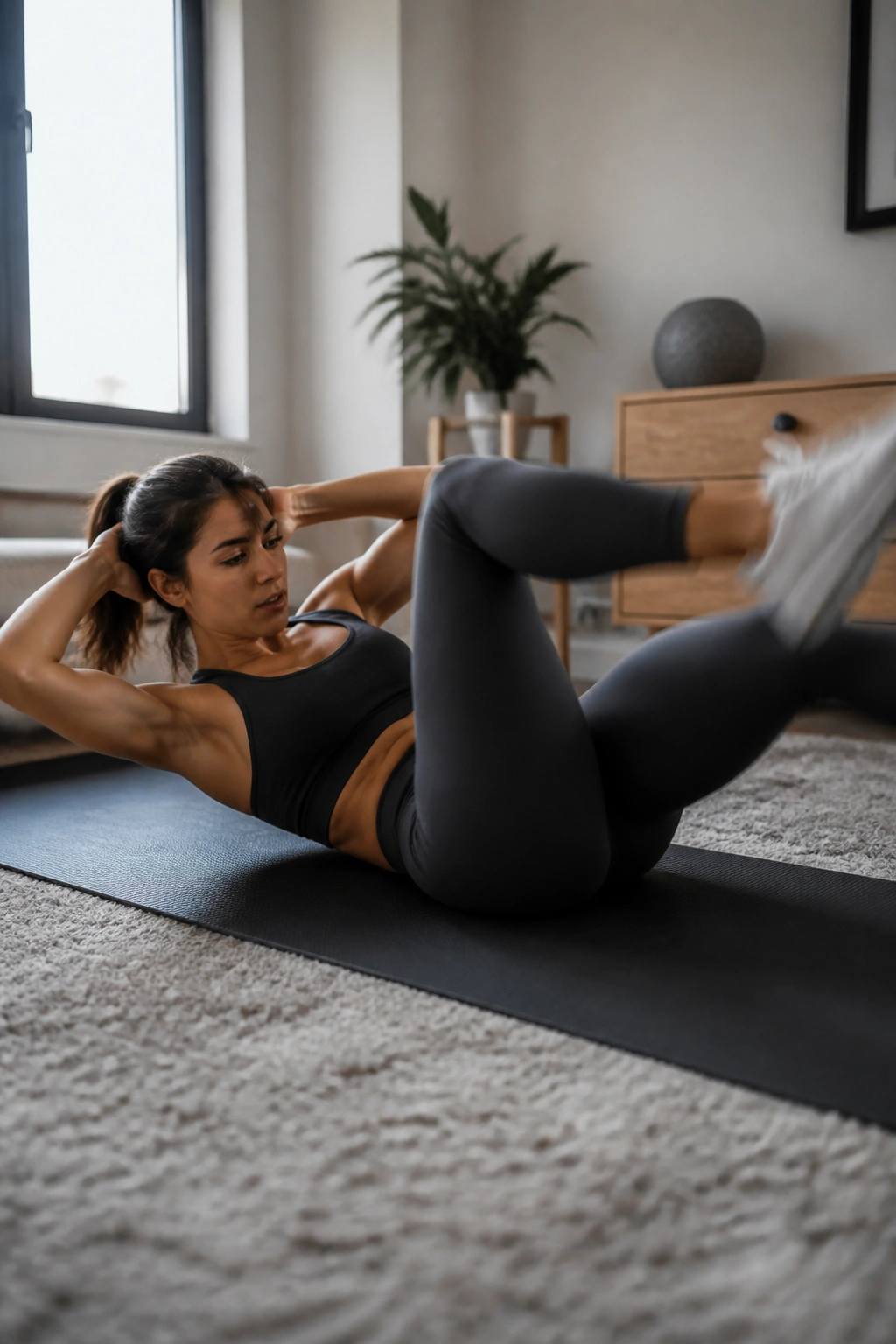
While typically thought of as an abdominal exercise, bicycle crunches can be a cardio tool if you perform them at high speed. The secret is the “cycle” motion. You are bringing the opposite elbow to the opposite knee, which involves a massive amount of torso rotation.
Lie on your back, hands behind your head. Elevate your legs. Pedal your legs as if you are riding a bike. The faster you pedal, the harder your heart has to work. This is the perfect “tiny space” cardio because you are lying flat. You occupy zero vertical space and can do this even if you are working out in a room so small you can only lie down.
15. Step-Ups
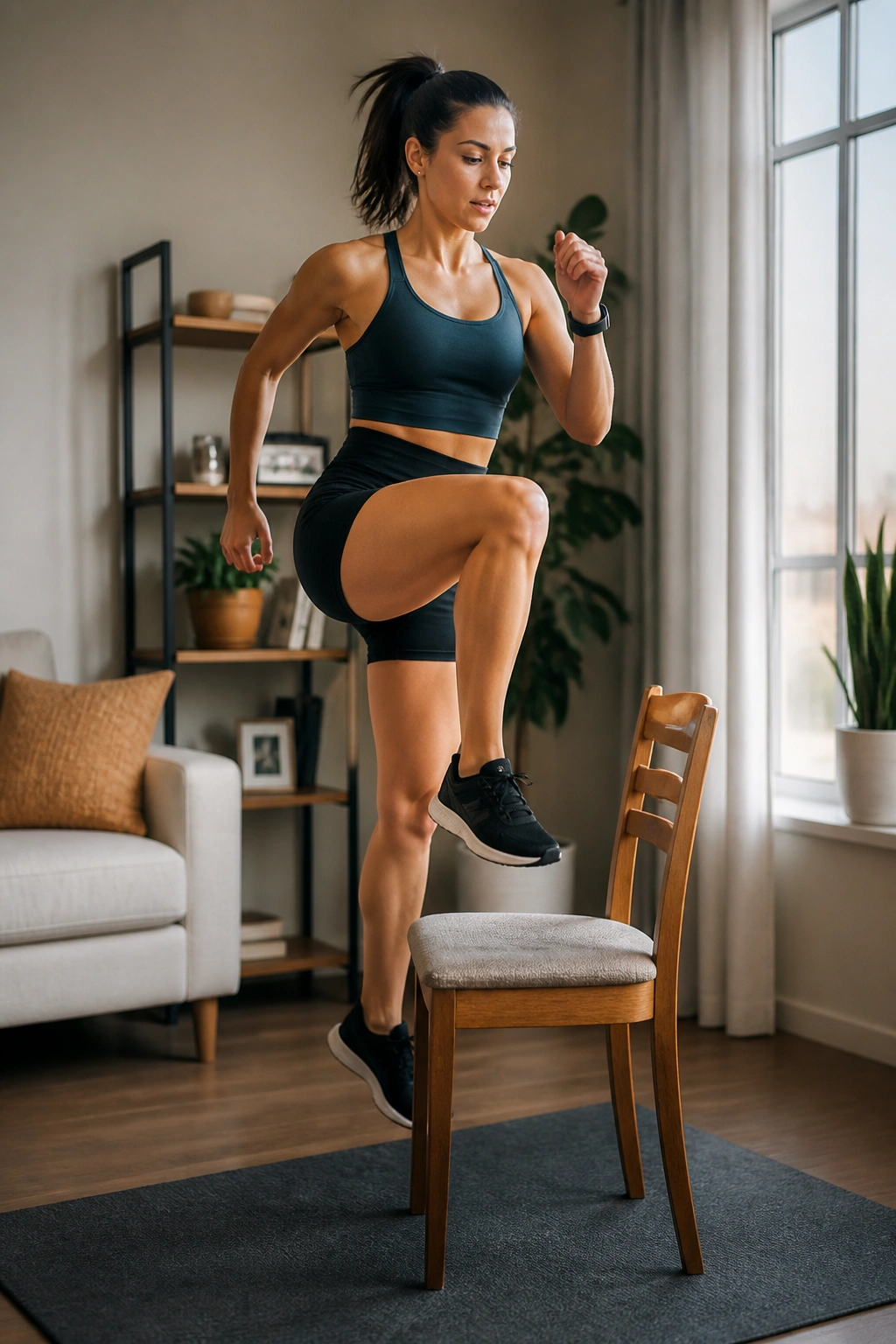
If you have a sturdy chair, a couch, or even a low, stable coffee table, you have a gym. Step-ups are one of the most underrated cardio movements. You step one foot onto the elevated surface, drive your body weight up, and bring the other knee up.
This is not a slow, controlled lift for building bulk. This is a rhythmic, rapid-fire step-up. Switch legs quickly. You are effectively climbing stairs at a sprint. Because you are constantly fighting gravity to lift your body weight, your heart rate will skyrocket within sixty seconds.
Ensure your surface is non-slip and sturdy. Do not use a rolling chair. Use something that is bolted to the floor or heavy enough that it will not move when you jump onto it. The psychological fear of the chair sliding will prevent you from giving 100% effort, so prioritize safety before you start.
Final Thoughts
Space is a convenient excuse for not working out, but it is just that—an excuse. Whether you are in a bedroom, a living room, or a hotel room, you have more than enough room to elevate your heart rate and break a sweat. The best cardio workout is the one you actually do, and simplicity is often the bridge between wanting to work out and actually starting.
Stop looking for the perfect environment. Start with the space you have. The floor beneath your feet is the only equipment you truly need. Keep the transitions fast, keep the intensity honest, and you will find that a small footprint can produce significant results. Your heart does not know the difference between a high-end gym and your bedroom; it only knows the workload you give it.
