



If you’ve been hammering out crunches and searching for lower belly fat workouts that actually make a dent, the issue usually is not effort. It’s the plan. The lower part of the abdomen tends to hold on to fat longer than people expect, and the body does not peel fat away from one exact spot because you did 80 leg raises before bed.
That can feel unfair. It kind of is.
The upside is that home training can still work well when you build it around the right mix: full-body moves that drive your heart rate up, core work that teaches your lower abs to brace instead of letting your hip flexors take over, and enough weekly consistency that your body has a reason to change. Public health exercise guidelines have long pointed to the same broad target: regular aerobic work plus muscle-strengthening sessions beat isolated “fat-burning” tricks every time.
I’ve made this mistake myself, and I see it constantly: people chase a burning sensation in the abs and assume the burn equals fat loss. It doesn’t. A better home plan blends cardio bursts, smart core training, and movements that keep your trunk tight while your arms and legs are working. When you feel your lower back arching off the floor, or your neck doing more than your midsection, that’s your cue that the move needs cleaning up before it needs more reps.
The workouts below are built for that exact problem. Some are quiet and low-impact. Some are sweaty and rude in the best way. A few look easy until 20 seconds in, which is often when the useful stuff starts.
Why Lower Belly Fat Workouts Need More Than Crunches
Crunches alone are a lousy strategy for lower belly fat.
Your abdominal muscles can get stronger from direct ab work, sure, but fat loss happens across the whole body, not only where you feel a movement. That’s why someone can get good at sit-ups and still feel soft around the lower stomach. The muscle may be improving under the surface while overall body fat stays the same.
The lower belly also gets blamed for things that are not always pure fat. Bloating, posture, tight hip flexors, weak glutes, and an anterior pelvic tilt can all make the area stick out more. When your ribs flare and your pelvis tips forward, your stomach often looks less flat even if your weight has not changed much.
A smarter plan hits four levers at once:
- Calorie-burning movement such as fast step-ups, squat thrusts, skaters, or mountain climbers
- Deep core bracing through moves like dead bugs, hollow holds, and tabletop toe taps
- Muscle work for the hips and glutes, which helps pelvic position and takes strain off the low back
- Weekly consistency, which matters more than one brutal session followed by three idle days
And yes, food still matters. If your training is solid but your meals are built around snack grazing, sugary drinks, and not much protein, the math gets hard in a hurry.
How to Make Lower Belly Fat Workouts Work at Home
Most people do better with 15 to 25 focused minutes than with a random hour once in a while. Home workouts win on convenience, so use that advantage. Train often enough that the sessions become routine, not heroic.
A clean setup looks like this: pick one cardio-focused move, one controlled core move, and one strength or stability move. Run them as a circuit for 3 to 5 rounds. On another day, swap in two different movements from the list so your joints and mind stay fresh.
Keep your effort honest. On hard intervals, you should feel like you could speak only a short sentence. On slow core drills, breathing should stay under control, and your low back should not feel pinched into the floor. If it does, shorten the range of motion. That is not backing down. That is better training.
Try this weekly rhythm if you want structure without turning your living room into boot camp:
- 3 home workout days: 20 to 25 minutes each
- 2 walking days: 25 to 45 minutes at a brisk pace
- 1 lighter mobility day: stretching, easy cycling, or a slow recovery session
- 1 full rest day: do less, sleep more, let your body absorb the work
Progress comes from boring little upgrades: 5 more seconds of work, 1 extra round, slower lowering on each rep, tighter form. Keep stacking those.
A Five-Minute Warm-Up Before the First Rep
Skipping the warm-up is how people end up feeling every “ab workout” in their hip flexors.
You do not need much. Five minutes is enough if you cover breathing, hips, and shoulder position. Go through these without rushing:
- March in place — 40 seconds: swing your arms and lift each knee to hip height
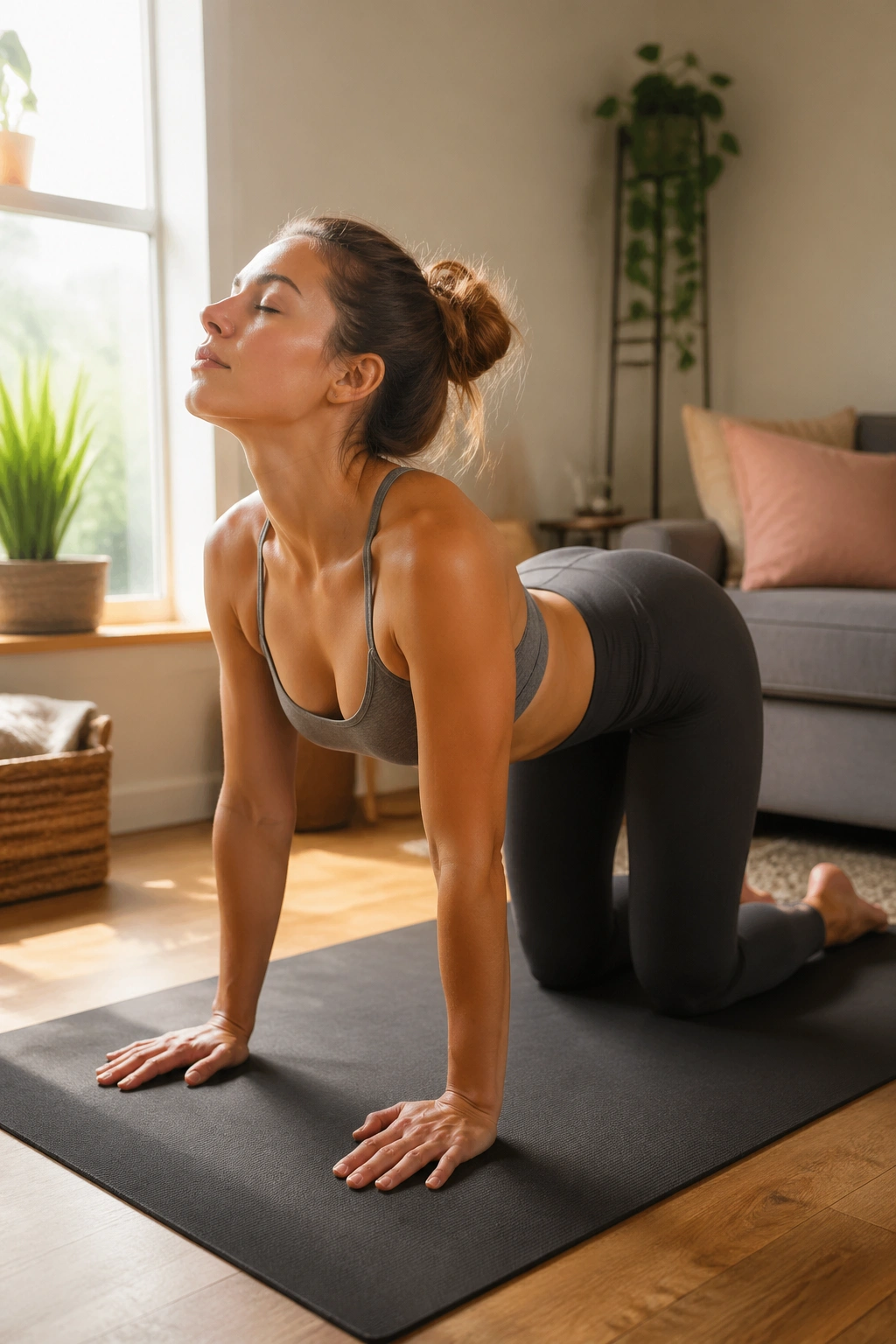
- Cat-cow on hands and knees — 40 seconds: round the spine, then extend it, moving one segment at a time
- Glute bridges — 40 seconds: squeeze at the top for 2 seconds on each rep
- Standing hip flexor stretch with arm reach — 40 seconds per side: tuck the pelvis under as you reach
- Dead bug breathing — 40 seconds: exhale through pursed lips until your ribs drop down
One more thing. If your wrists tend to complain, do 15 slow wrist circles each direction before plank-based work. Small detail, big difference.
1. Mountain Climber Sprint Ladder
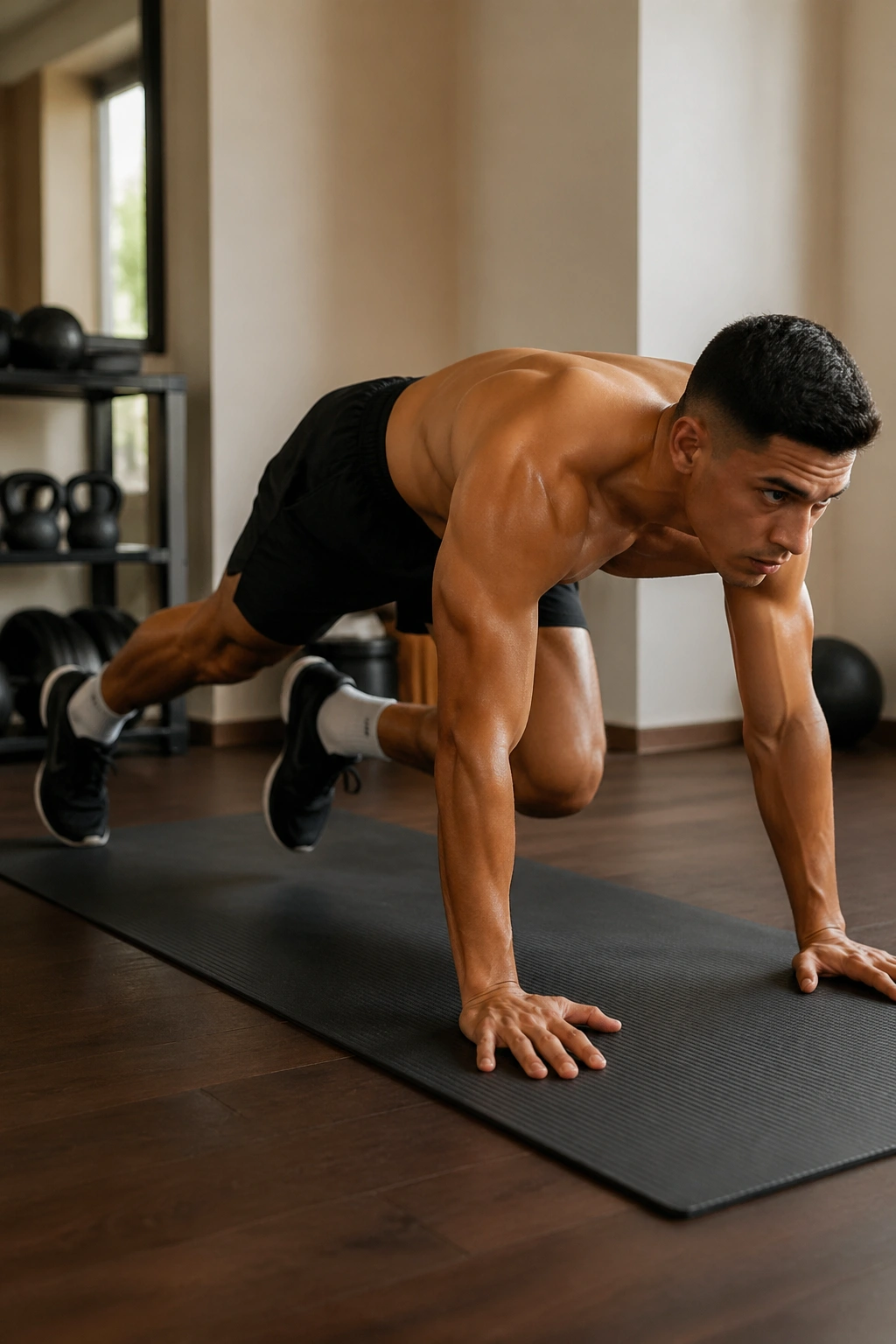
Few home moves raise your heart rate as fast as mountain climbers done well. Done badly, they turn into frantic knee flailing with your hips bouncing all over the room.
Start in a high plank with your hands under your shoulders. Pull one knee toward your chest, switch legs fast, and keep your body in a straight line from head to heel. The goal is not giant range. It’s quick, tight steps while the trunk stays braced.
Set your timer
- 20 seconds work / 10 seconds rest
- 30 seconds work / 15 seconds rest
- 40 seconds work / 20 seconds rest
- Then go back down: 30/15, 20/10
- Rest 60 seconds and repeat the full ladder once more
Your floor should sound light, not stomped. If your hips start climbing upward, slow down for 3 breaths and reset. Fast is useful only when form stays sharp.
2. Reverse Crunch and Slow Lower
Want a move that targets the lower part of the abs without asking your neck to do the job? Start here.
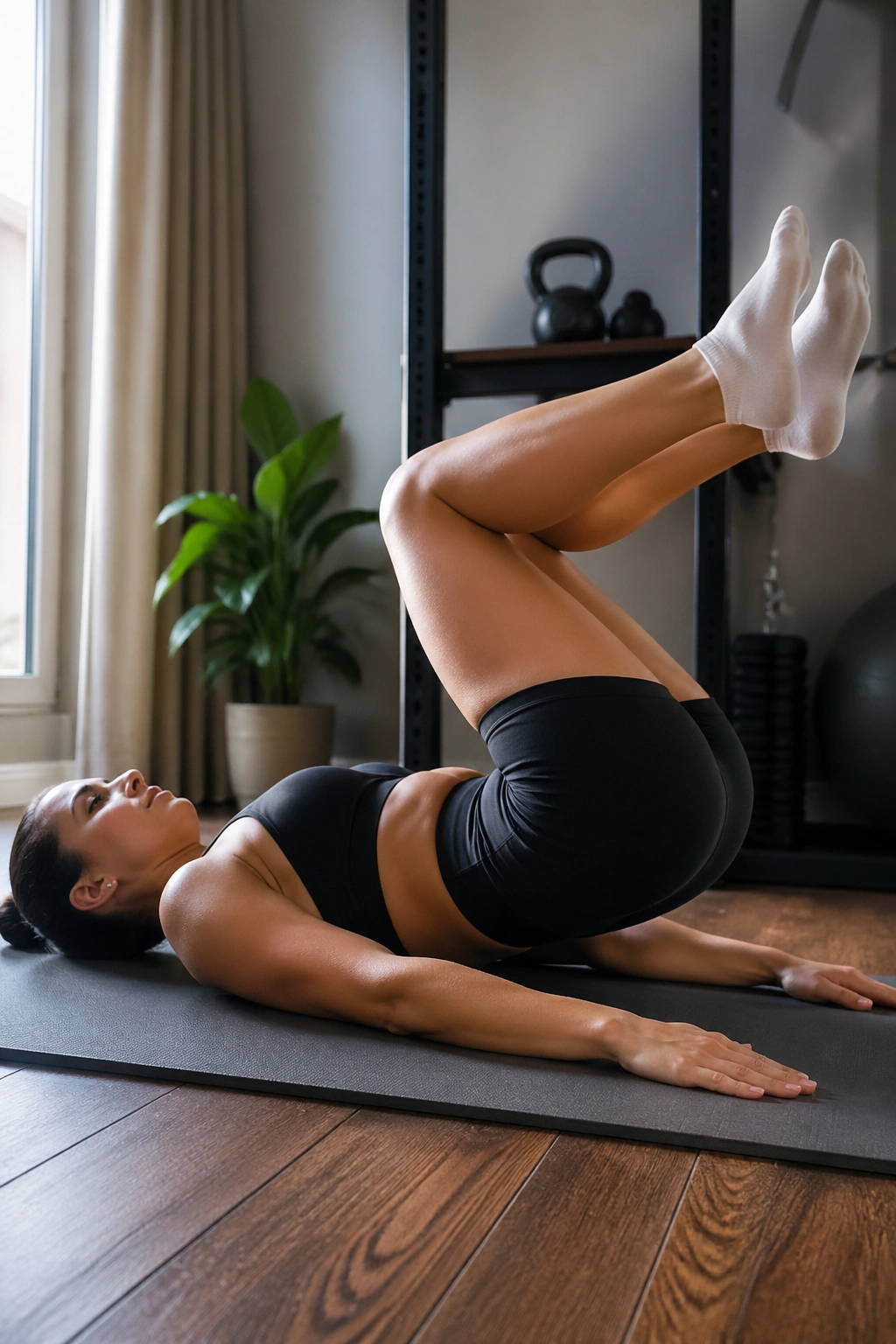
Lie on your back with your knees bent at 90 degrees and your arms by your sides. Flatten your low back into the floor, then curl your tailbone up an inch or two as your knees move toward your chest. That tiny pelvic curl is the whole point. If your thighs swing and your lower back never changes position, you are mostly rocking, not crunching.
Lower slowly. Three full seconds on the way down works well. Pause before your feet drift too far away and pull you into an arch. Ten to twelve reps per set is plenty when the form is right, and 3 sets will light up the lower abs far faster than 40 sloppy reps.
Bent-knee reps are not the easy version in a bad sense. They are the correct version for most people until control is solid. Once the movement feels smooth, extend your legs a little farther on the way down. Small change. Much harder.
3. High-Knee March to Fast Knees
Some home lower belly work needs noise and bounce. Some doesn’t. This one is a smart pick for small apartments, sore knees, or anyone easing back into training.
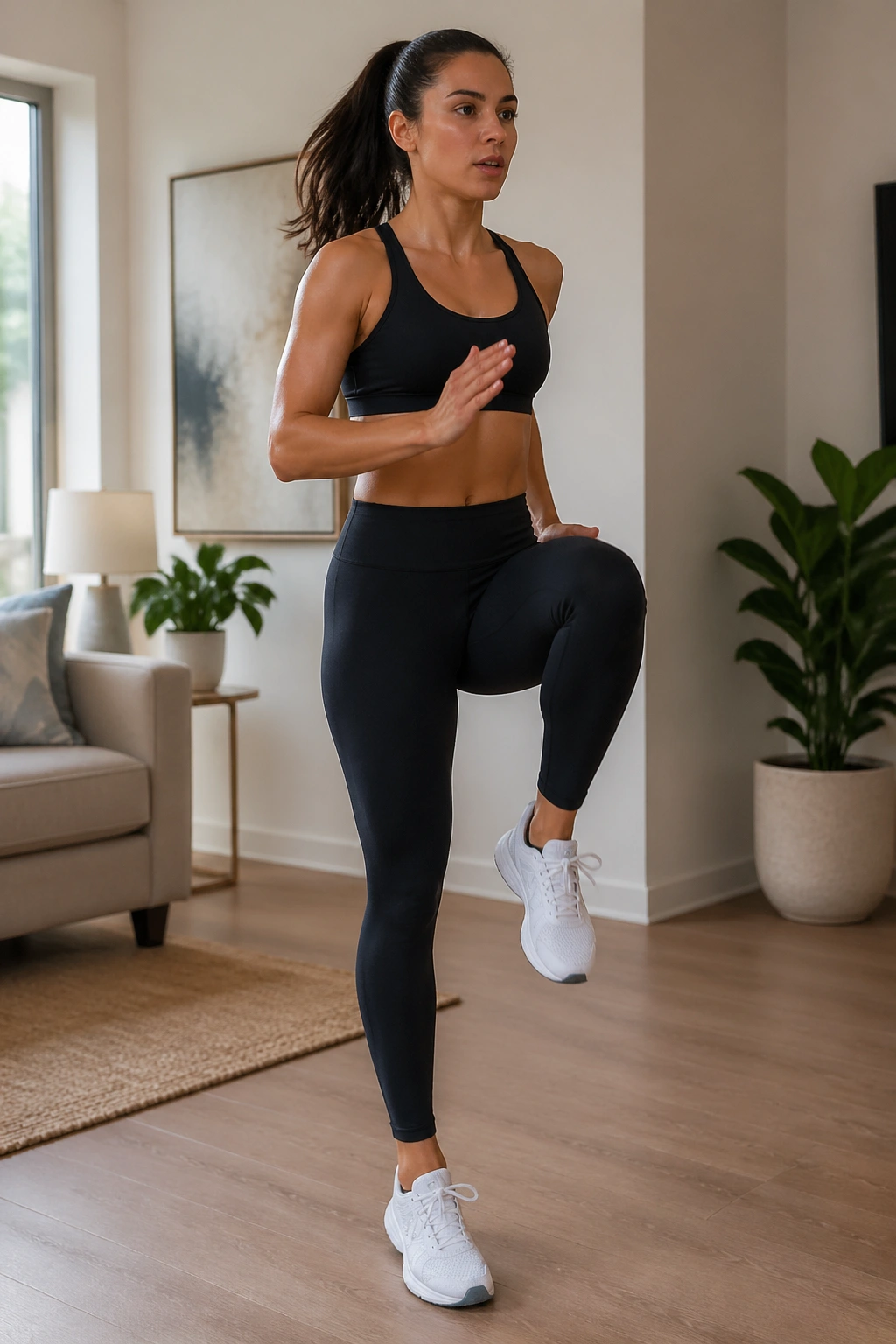
Begin with a high-knee march for 30 seconds. Drive one knee up at a time, swing the opposite arm, and brace your stomach as if you expect a light punch. Then switch to fast knees for 20 seconds, moving at double the speed without leaning backward.
That shift from controlled march to quick turnover bumps your heart rate without asking for jumps. Your abs work harder than you’d think because the trunk has to stop your torso from wobbling side to side.
Use this structure:
- 30 seconds high-knee march
- 20 seconds fast knees
- 10 seconds rest
- Repeat for 6 rounds
If balance feels shaky, keep your steps lower for the first 2 rounds. Once rhythm clicks, lift each knee toward hip height. You’ll feel the lower belly wake up when the ribs stay down and the pelvis stays stacked under you.
4. Dead Bug with Heel Tap Reach
The dead bug looks harmless. Then you try to keep your back flat while your limbs move away from the center, and suddenly it feels like work.
Lie on your back with your arms straight above your chest and your knees bent at 90 degrees. Exhale hard enough that your ribs drop, then lower your right heel toward the floor while your left arm reaches overhead. Return to the start and switch sides. The slow exhale matters because it helps the deep abdominal wall lock in.
Form check
Do 8 to 10 reps per side for 3 sets. Each rep should take around 4 seconds. If the lower back arches, shorten the reach. Touching the floor is optional; keeping position is not.
A folded towel under your head can help if your neck strains. And if you want more from the move, press your palms lightly into the air as if pushing the ceiling away. That little bit of tension makes the trunk work harder.
5. Flutter Kick Countdown
Short, sharp flutter kicks can turn into a brutal lower-ab interval when you keep the movement tight. The trick is resisting the urge to kick from the hips like you’re swimming freestyle.
Lie back, tuck the pelvis slightly, and lift both legs 6 to 12 inches off the floor. Alternate tiny up-and-down kicks. The smaller the motion, the easier it is to keep the low back pressed down. Once your back pops off the floor, the set is drifting.
Run a countdown:
- 30 seconds work
- 20 seconds work
- 15 seconds work
- 10 seconds work
- Rest 15 seconds between each block
- Do the full countdown twice
Hands under the hips are fine if that helps you keep contact with the floor. I’d still rather see shorter sets with a clean brace than long sets where your thighs take over and your stomach disappears from the effort.
6. Forearm Plank Knee Slides
Unlike a regular forearm plank, knee slides ask the core to move and resist movement at the same time. That combination makes them worth your floor space.
Set up in a forearm plank with socks on hardwood or a towel under your feet on tile. Keep your elbows under your shoulders, squeeze your glutes, and slide one knee forward a few inches. Return it, switch sides, and keep alternating. The movement is small on purpose. You are not trying to crawl across the room.
Aim for 30 seconds of work, 15 seconds of rest, 5 rounds total. When fatigue hits, most people let the hips sag first. Fix that before anything else. A sagging plank takes pressure off the abs and dumps it into the low back, which is the opposite of what you want.
No sliders at home? Use the same timing and perform slow forearm plank knee drives without moving the supporting foot. Same idea, slightly less slippery.
7. Bicycle Crunch Tempo Set
Bicycle crunches have a bad reputation because people race through them. Slow them down, and they become one of the better bodyweight drills for the front of the trunk and the waist.
Start on your back with your shoulder blades lifted. Bring one knee in, rotate your rib cage toward it, and extend the other leg long without letting it drop too low. Move as if someone is checking every inch of the rep. That slow extension is where the lower abs earn their keep.
Use this tempo
Do 10 slow reps per side, taking about 2 seconds each. Then hold the twist on one side for 10 seconds, switch, and hold the other side for 10 seconds. Rest 30 seconds. Complete 3 rounds.
A good bicycle crunch feels like a rotation through the ribs, not an elbow yanking toward a knee. Think chest to thigh, not elbow to knee. Small wording shift, better movement.
8. Bear Crawl Hold with Shoulder Tap
Try hovering your knees two inches off the floor and tell me bear positions are easy.
Set up on hands and knees, then lift your knees slightly so they float. Your back stays flat, your ribs stay tucked, and your weight is spread through hands and feet. From there, tap one shoulder with the opposite hand, place it down, then switch sides. Every tap forces your abs to stop the body from tipping.
This works well in tiny spaces because you do not need to crawl forward. You only need control. Go for 20 seconds of hover plus 10 shoulder taps per side, then rest 20 seconds. Three or four rounds is enough for most people.
If the taps are too much, hold the hover for 15 to 25 seconds. Even that is plenty when the knees stay low and the hips do not sway. By the second round, you’ll know whether you’ve been bracing your core or merely assuming you were.
9. Leg Raise with Hip Lift
Leg raises can be useful. They can also trash your lower back when you rush them.
Lie flat, place your hands beside you or under your hips, and lift your straight legs until they point toward the ceiling. From there, add a small hip lift—think tailbone peeling off the floor, not a giant swing. Lower the legs slowly until your back wants to arch, then stop and come back up.
Make the rep count
- 8 to 10 reps
- 3 sets
- 3-second lower on each rep
- Rest 45 seconds between sets
Bent knees are a smart option if straight legs pull too hard on the hip flexors. There is no prize for keeping the legs locked out if your stomach vanishes from the movement. The lower belly responds to pelvic control, not circus-range reps.
10. Standing Cross-Body Knee Drive
Not every lower belly fat workout has to happen on the floor. Standing knee drives are a clean way to train the core, raise the pulse, and avoid the “I do not want to lie on this rug” problem.
Drive your right knee up toward your left side while your left elbow pulls down slightly. Return fast, switch sides, and keep the torso tall. The motion should feel crisp, like you are zipping each knee upward through the center line of your body.
Use a timer instead of counting reps:
- 45 seconds work
- 15 seconds rest
- 6 rounds
Arms matter here. Pump them like you mean it, because strong arm action makes your heart rate climb faster. If you want more challenge, add a light hop on the standing leg. If impact bugs your joints, keep both feet kissing the floor and focus on speed.
11. Plank Jack Burst
Plank jacks are half cardio drill, half anti-wobble core test. That is why they belong on a lower belly list, even though nobody would mistake them for a classic ab move.
Start in a high plank. Jump your feet out wider than hip-width, then snap them back in. Each jump asks your trunk to keep the pelvis from rocking and the spine from sagging. Done cleanly, your midsection stays tight while the legs do the moving.
Go hard for 20 seconds, rest 10 seconds, and repeat for 8 rounds. That gives you a compact 4-minute finisher that can leave the shoulders, lungs, and abs equally annoyed.
Step the feet out one at a time if you want the low-impact version. I like that option more than people expect, because slower step-outs often expose weak bracing that fast jumping can hide. No shame in that. Better to spot the leak and fix it.
12. Seated In-and-Out Pulse
This one looks like old-school floor fitness. It still works.
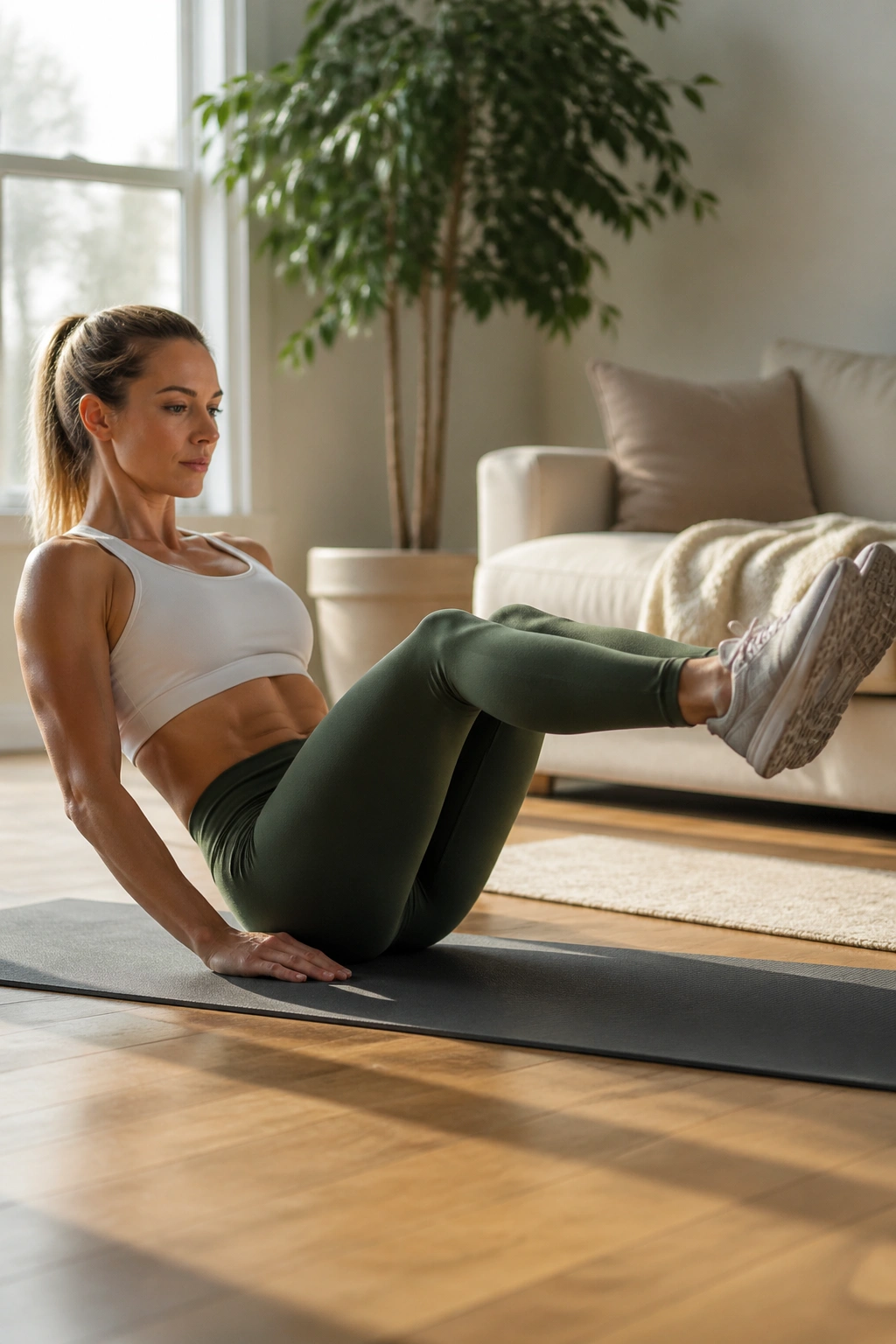
Sit with your hands lightly on the floor behind you or reach them forward if you want a harder variation. Lean back until your torso forms about a 45-degree angle, bend your knees toward your chest, then extend the legs out without letting your back collapse. That in-and-out motion hammers the front of the core when you keep the chest lifted and avoid shrugging.
Try 15 full reps plus 10 short pulses at the tucked position, rest 30 seconds, then repeat for 3 rounds. The pulses are where it gets spicy. Small movement, big demand.
If the lower back feels grumpy, keep your feet higher and the extension shorter. Long legs are not the goal. A steady torso is.
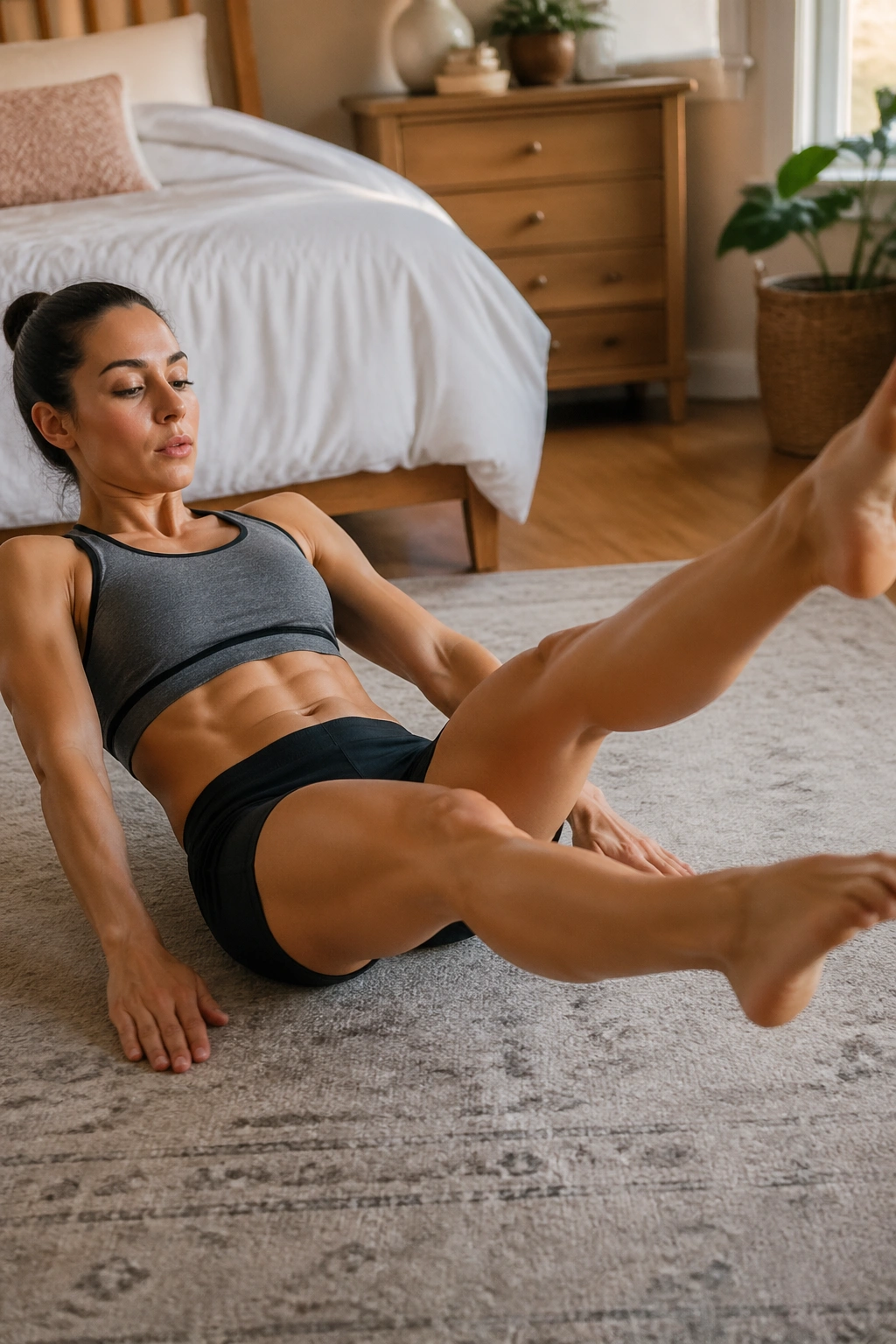
13. Hollow Body Heel Tap
Gymnasts use hollow holds for a reason: they teach the body to create one strong curved shape from ribs to pelvis. Add alternating heel taps and the exercise becomes a smart lower-ab builder for home training.
Lie back, lift your shoulders slightly, tuck your pelvis, and raise your legs. Then tap one heel down, bring it back up, and switch. The tap should be gentle. Think “brush the floor” rather than “drop the leg.”
Floor cues
- Keep your low back glued down
- Reach your arms long by your ears or toward your thighs
- Work for 20 to 30 seconds
- Rest 20 seconds
- Complete 4 rounds
Bend the knees if the full hollow position is too much. That change does not ruin the move. It teaches the shape first, which is what matters.
14. Skater Hop Floor Touch
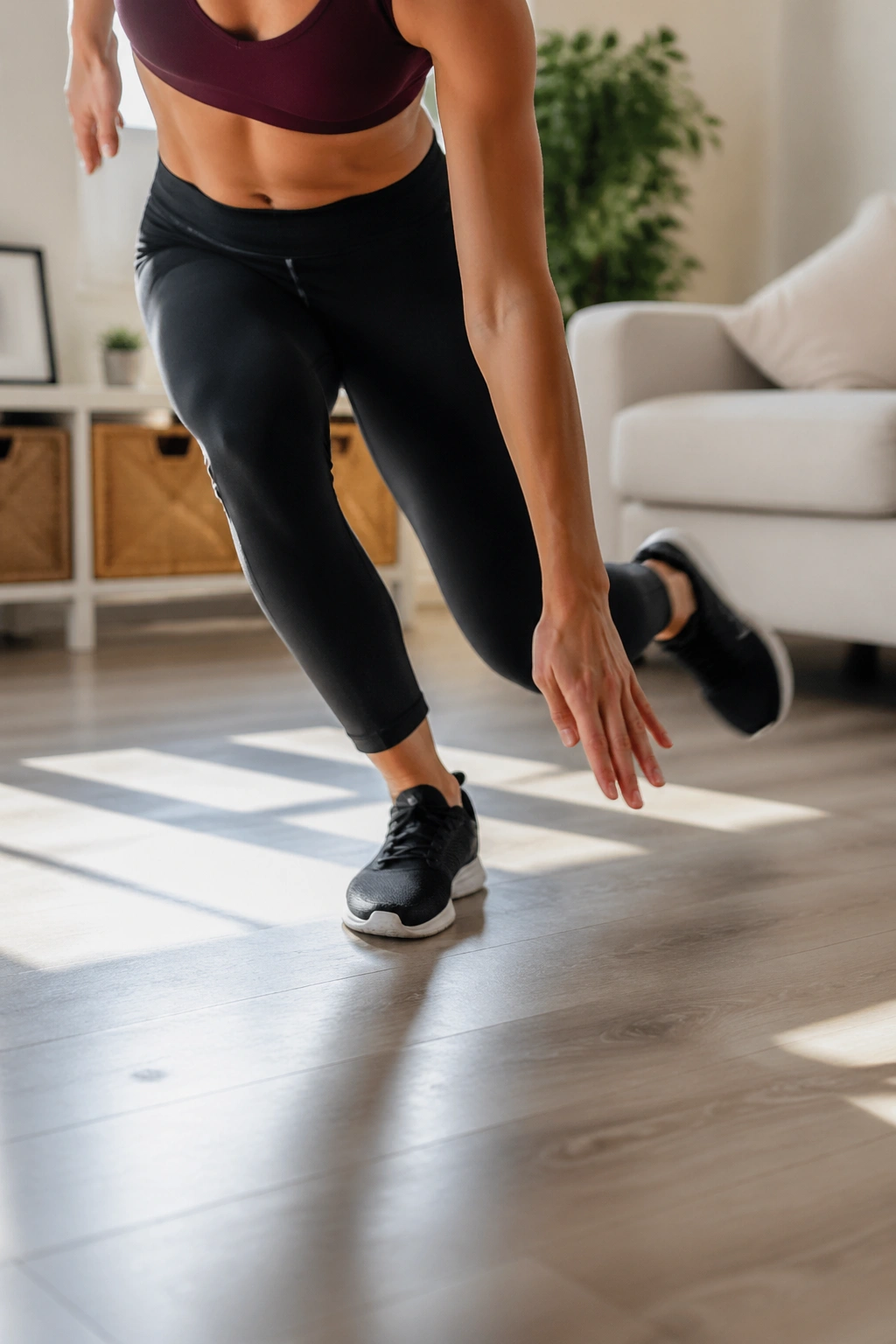
Some of the best home fat-loss work is not “ab work” in the old magazine sense. Skater hops are a clean example. They get you moving side to side, force the core to control rotation, and drive up energy use fast.
Hop to the right, land on your right leg, sweep the left leg behind, and reach toward the floor with the opposite hand. Push off and switch sides. The reach adds a nice trunk challenge, and the lateral push turns the glutes on hard.
Run 30 seconds of work with 15 seconds of rest for 6 rounds. Land softly. That cue matters because a loud landing usually means your knee and hip are not sharing the load well.
Small hops still count. In a living room, I’d rather see crisp 18-inch jumps with good balance than giant leaps that send you toward the coffee table halfway through round three.
15. Toe Reach Crunch Combo
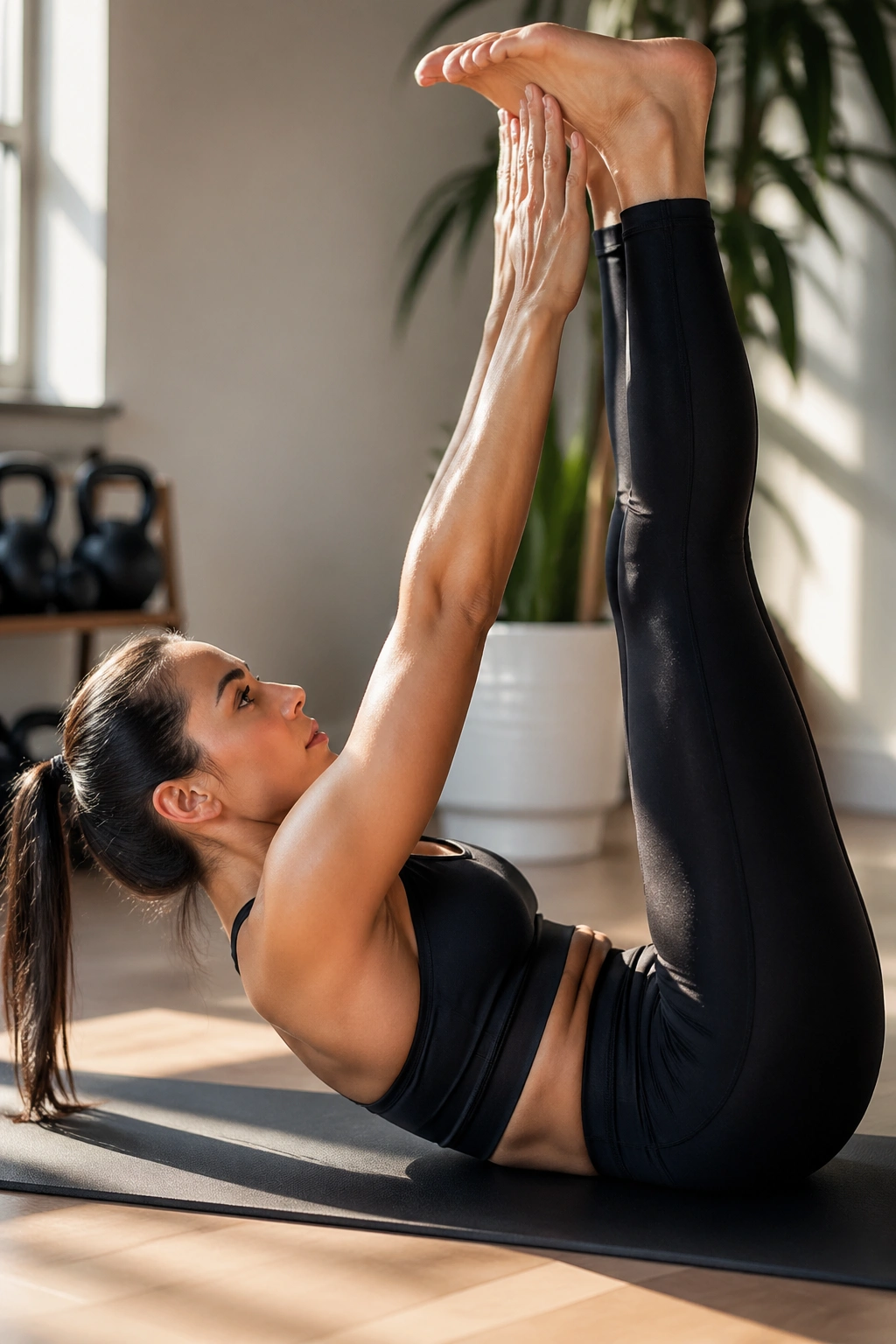
Question: do you need a fancy core sequence to feel your upper and lower abs in the same set? No. You need tension and timing.
Lie on your back, raise your legs toward the ceiling, and reach both hands toward your toes in a small crunch. Lower the shoulders, then pull the knees toward the chest for a tucked crunch. That one-two pattern makes the upper part of the abdominal wall and the lower portion work back to back.
How to run it
Do 12 combo reps, which means one toe reach plus one tuck equals one rep. Rest 30 to 40 seconds. Knock out 3 sets.
Move slower than you think you need to. The moment your legs start swinging like pendulums, the set loses its bite. A small, clean crunch beats a huge one where momentum does the heavy lifting.
16. Squat Thrust Cardio Burst
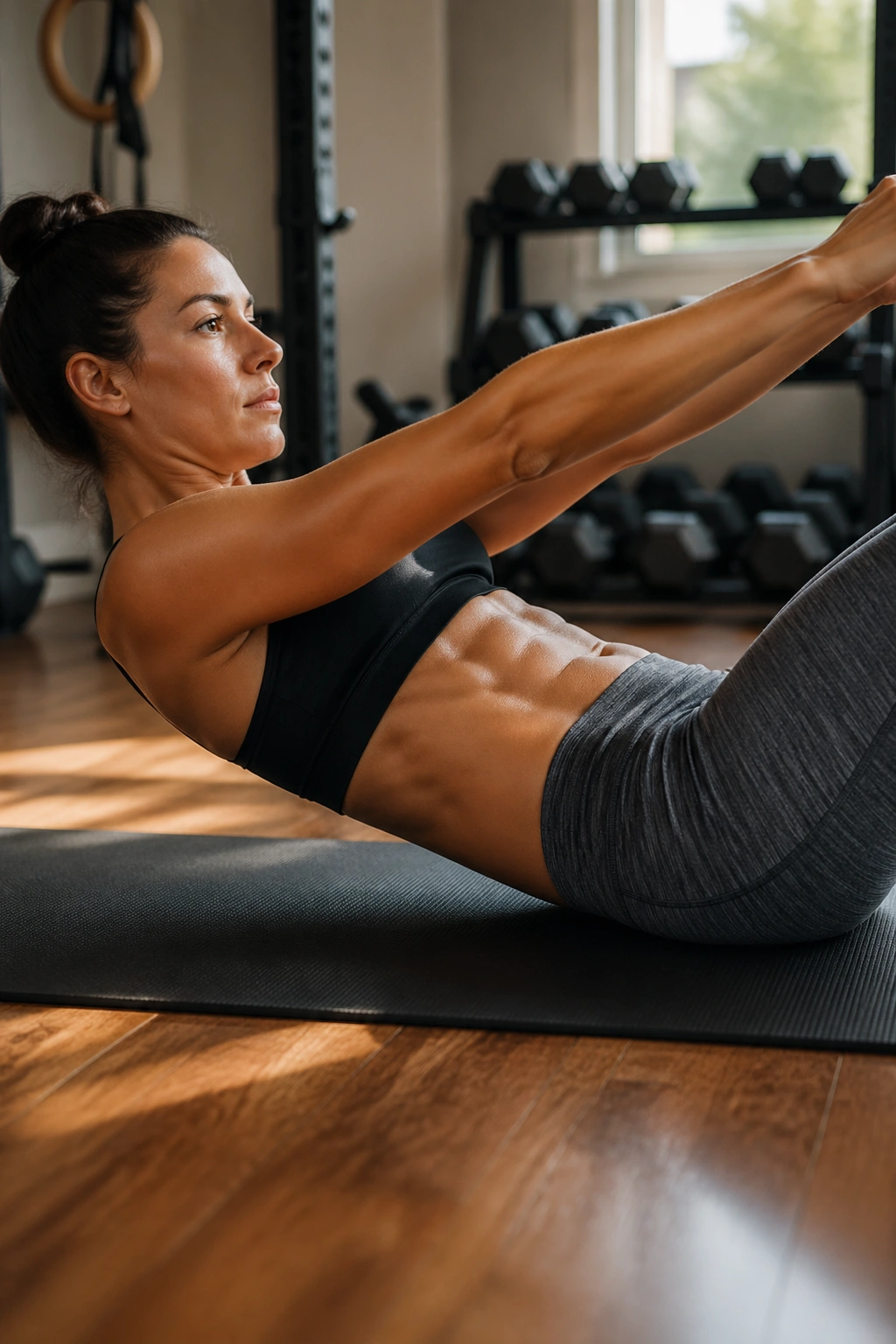
Picture a burpee with the fluff removed. That’s a squat thrust, and for lower belly fat workouts at home, that is often a smart trade.
Stand tall, squat down, place your hands on the floor, jump or step your feet back to plank, then snap them forward and stand. No push-up. No jump at the top unless you want one. The move still spikes your breathing because it takes you from standing to floor to standing over and over.
Use 25 seconds on, 20 seconds off, 6 rounds. Keep your hands planted before the feet kick back; rushing that part is how people jam wrists or twist awkwardly. On the return, aim to land with the feet outside the hands if your hips allow it. That tends to feel smoother and more stable.
Step-back reps are not the “lesser” option. For many people, they keep the core tighter because the motion stays under control.
17. Side Plank Knee Tuck
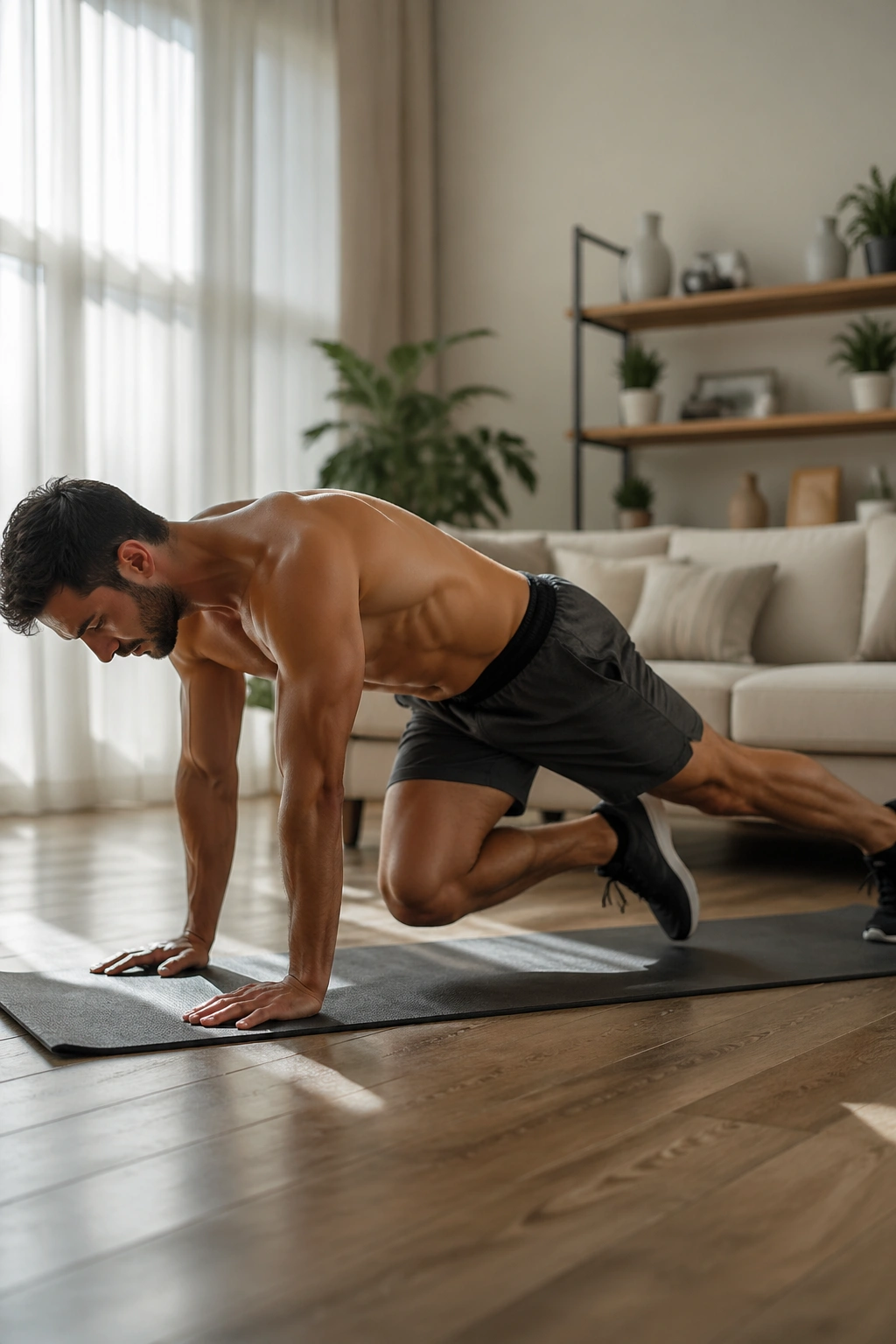
The lower belly does not work alone. When your side core is weak, the front of the trunk often loses position too. Side plank knee tucks fix that weak link in a hurry.
Set up in a side plank on your forearm. Stack your shoulder over your elbow, lift the hips, and bring the top knee toward your chest. Extend it back out without dropping the hips. The tuck adds motion; the plank keeps you honest.
Shoot for 8 to 10 reps per side for 3 sets. A slower pace is better here. If you rip through the reps, the hips usually start sagging and the top shoulder rolls forward.
Bend the bottom knee if the full side plank feels out of reach. The move still trains the obliques, hip stabilizers, and lower trunk in a way that carries over nicely to standing drills and running.
18. Reverse Lunge to Knee Drive
Unlike floor-only ab drills, reverse lunge knee drives teach your core to stabilize while one leg is doing real work. That makes them useful for both fat loss and everyday movement.
Step one foot back into a reverse lunge, drop until both knees bend, then drive off the front foot and bring the back knee forward and up. Pause for a beat at the top before stepping back again. That pause turns a leg move into a trunk challenge.
Do 10 reps per side for 3 sets, or set a timer for 40 seconds on and 20 seconds off if you want more of a conditioning feel. Hold your hands in front of your chest or reach them overhead for a tougher version.
If balance is a mess, stand near a wall and use one fingertip for support. No ego needed. Balanced reps with a firm brace beat wobbly reps where you spend half the set rescuing yourself.
19. Scissor Kick Ladder
Scissor kicks hit the front of the core from a slightly different angle than flutter kicks because the legs cross over each other, which adds a coordination piece on top of the tension.
Lie back, lift both legs, and cross one leg over the other in a steady switch. Keep the motion small and the pelvis tucked. Your thighs will want to take over if the legs drift too low or the lower back peels off the floor.
Try this ladder
- 15 seconds slow scissors
- 15 seconds fast scissors
- 15 seconds hold with legs crossed halfway
- Rest 20 seconds
- Repeat for 4 rounds
The hold is the mean part. It also tends to be the useful part, because it teaches you to own the position rather than bounce through it.
20. Walkout Plank Shoulder-Tap
Here’s a full-body move that feels almost like a mini circuit built into one exercise.
Stand tall, hinge at the hips, place your hands on the floor, and walk them out to a plank. Once you’re there, tap one shoulder, then the other, trying not to let the hips shift. Walk your hands back and stand. That sequence hits hamstrings, shoulders, and core while keeping the heart rate moving.
Eight to twelve reps is a solid set. Rest 30 to 45 seconds and do 3 or 4 sets. If your hamstrings feel tight during the fold down, bend your knees a little. The point is reaching the floor without rounding into a pretzel.
What I like about this one is how honest it is. If your core is loose, the shoulder taps expose it right away.
21. Glute Bridge March with Core Brace
Why put a bridge on a lower belly list? Because pelvic control changes how your stomach looks and how your abs work. Weak glutes and sloppy pelvic position often show up as a belly that sticks forward more than it needs to.
Lie on your back, plant your feet, and lift into a glute bridge. From there, march one knee up toward your chest without letting the hips twist or drop. Put it back down and switch. The bridge stays high the whole time.
What to aim for
Perform 20 total marches, rest 30 seconds, and complete 3 sets. Hold the top of the bridge for a 2-count before each march if you want extra glute work.
A mirror set to the side helps here. You’ll often catch one hip rolling open before you feel it. Once you stop that sway, the lower abs and glutes start sharing the job the way they should.
22. V-Sit Reach Pulse
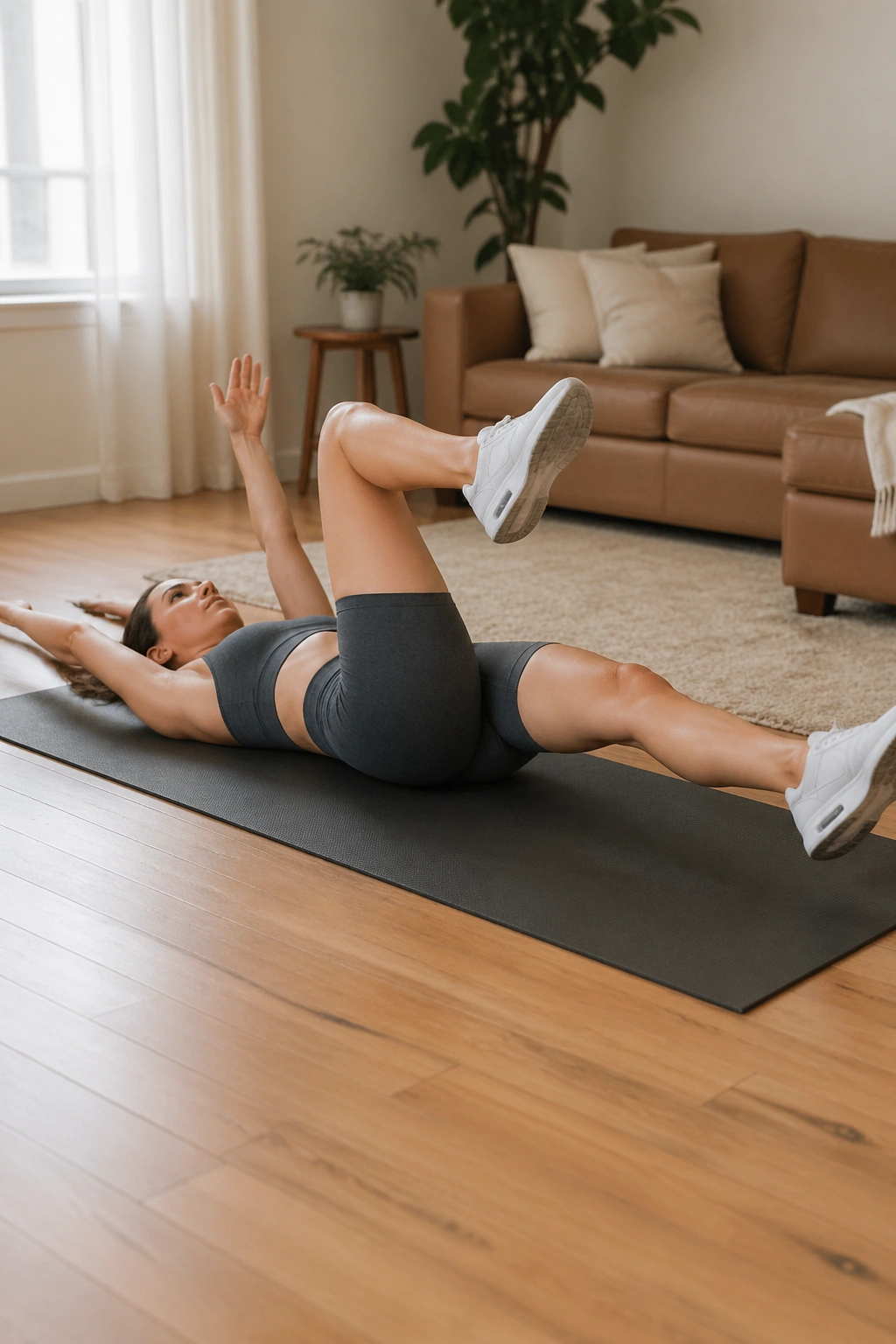
This one is for the days when you want a direct ab burner and do not mind hearing your hip flexors complain a little—as long as the abs still stay in charge.
Sit on the floor, lean back, lift your feet, and form a V shape with your torso and thighs. Reach your hands toward your shins and pulse forward in short controlled motions. Do not collapse your chest. The pulses stay tiny; the tension stays constant.
Use 20 pulses plus a 20-second hold, then rest 30 seconds. Complete 3 rounds. If the full V-sit is too much, bend the knees deeper and keep the chest tall. That change makes the set cleaner, not weaker.
There’s nowhere to hide in this position. By round two, you’ll know whether your brace is solid or whether you’ve been coasting through ab work with momentum.
23. Fast Feet to Drop Squat
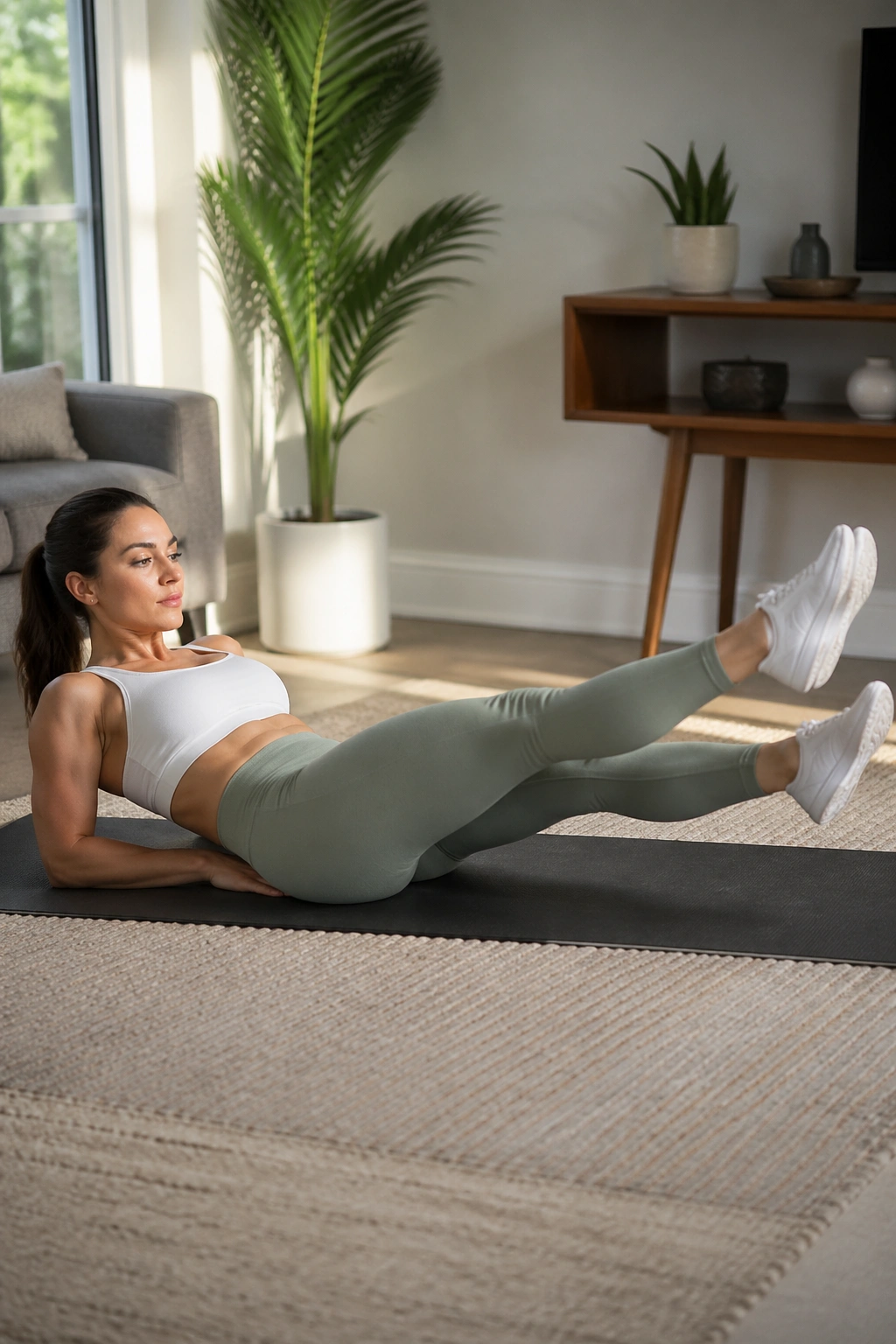
Fast feet are a sneaky conditioning tool. Pair them with a drop squat and you get a short home interval that wakes up the legs, lungs, and trunk at once.
Start with quick tiny steps in place for 20 seconds, pumping your arms hard. Then drop into a squat and hold the bottom for 10 seconds while keeping your chest up and your belly braced. Stand, shake out for 10 seconds, and go again.
That switch from speed to stillness is what makes the move useful. Your heart rate rises during the fast feet, then your core has to stabilize in the squat instead of flopping into rest mode.
Run 6 rounds. Keep the squat hold high enough that your heels stay down. If your heels pop up or your back rounds hard, you’re dropping lower than your body owns right now.
24. Tabletop Toe Tap Press
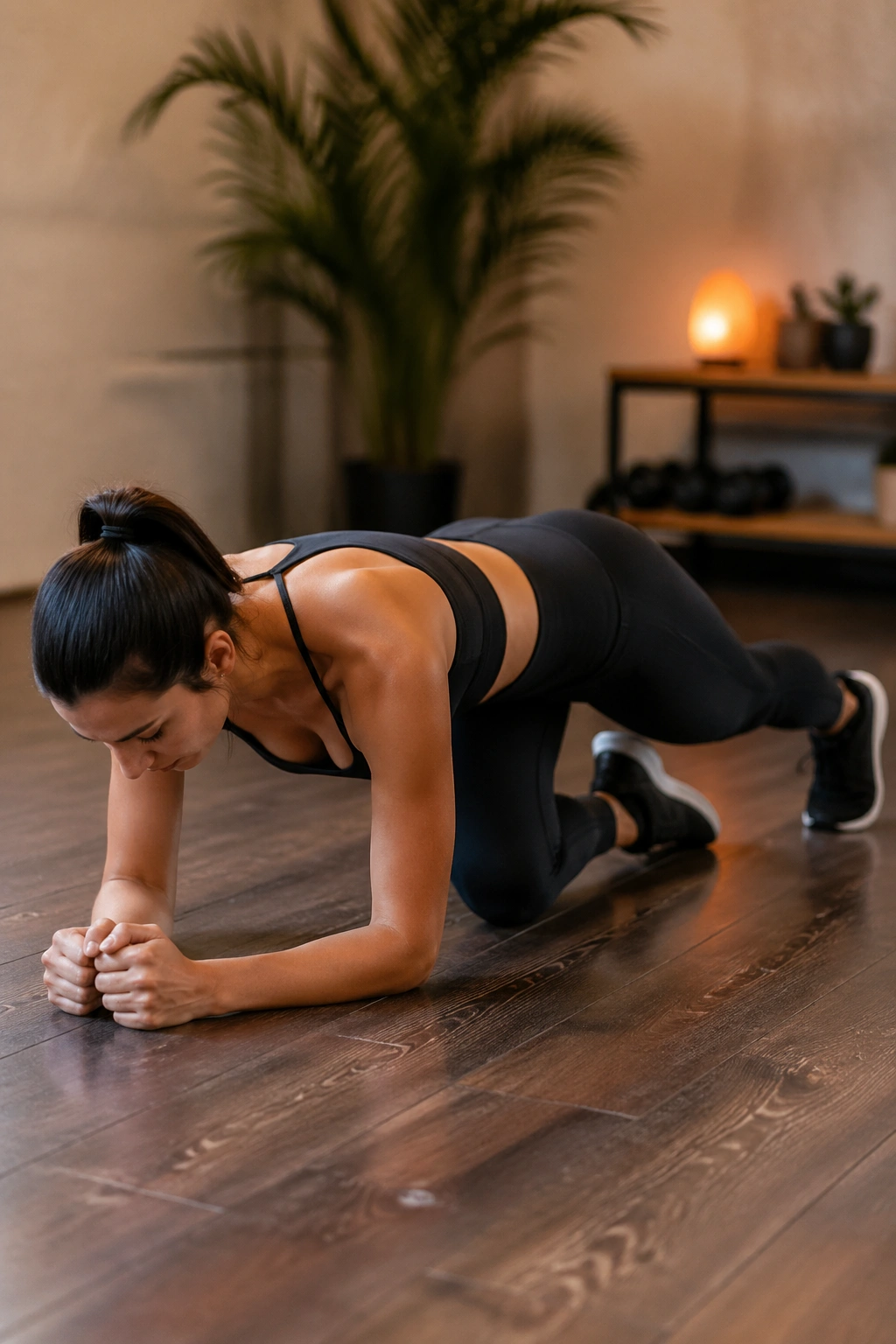
Compared with leg raises, tabletop toe taps are friendlier on the lower back and easier to load with breathing. That makes them one of my favorite choices for people who lose their brace fast.
Lie on your back with your hips and knees both bent to 90 degrees. Press your palms into your thighs lightly—enough to create tension without shoving the knees away. Then lower one foot to tap the floor and bring it back up. Alternate sides while keeping the rib cage down.
Do 10 to 12 reps per side for 3 sets. Exhale on the lowering phase. That exhale should feel like you are narrowing your waist and flattening your stomach, not sucking in from the chest.
You can skip the hand press if shoulder tension kicks up. The toe taps still work. I like the press because it gives people an instant cue for trunk stiffness, which many home exercisers need more than they realize.
25. Low-Impact Step-Up Intervals
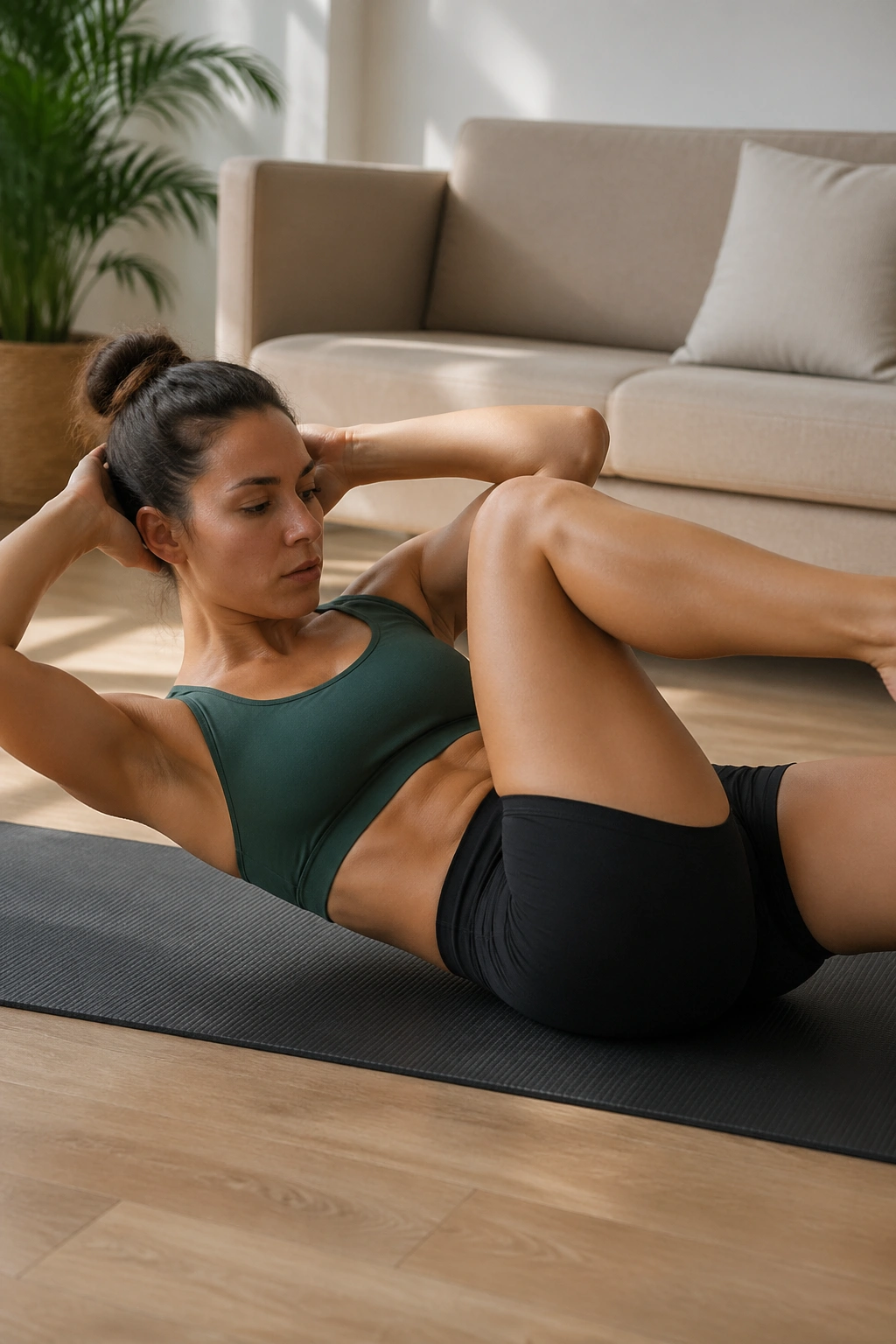
Stairs are one of the most underused fat-loss tools in the house.
Use the bottom step of a staircase, a stable aerobic step, or a sturdy low platform. Step up with one foot, bring the other foot up, step back down, and keep switching the lead leg. Move briskly, swing your arms, and stay tall through the torso.
Interval setup
- 60 seconds step-ups
- 30 seconds rest
- 8 rounds
That adds up to 12 minutes, which is enough to leave your legs humming. The trunk has to brace on every rep so your pelvis does not tip and your torso does not fold over. Add a knee drive at the top if you want more lower-ab involvement.
Pick a step height that lets you keep smooth form. If the platform is so high that you have to shove off the back foot or twist to finish the rep, lower it.
26. Burpee Step-Back Option
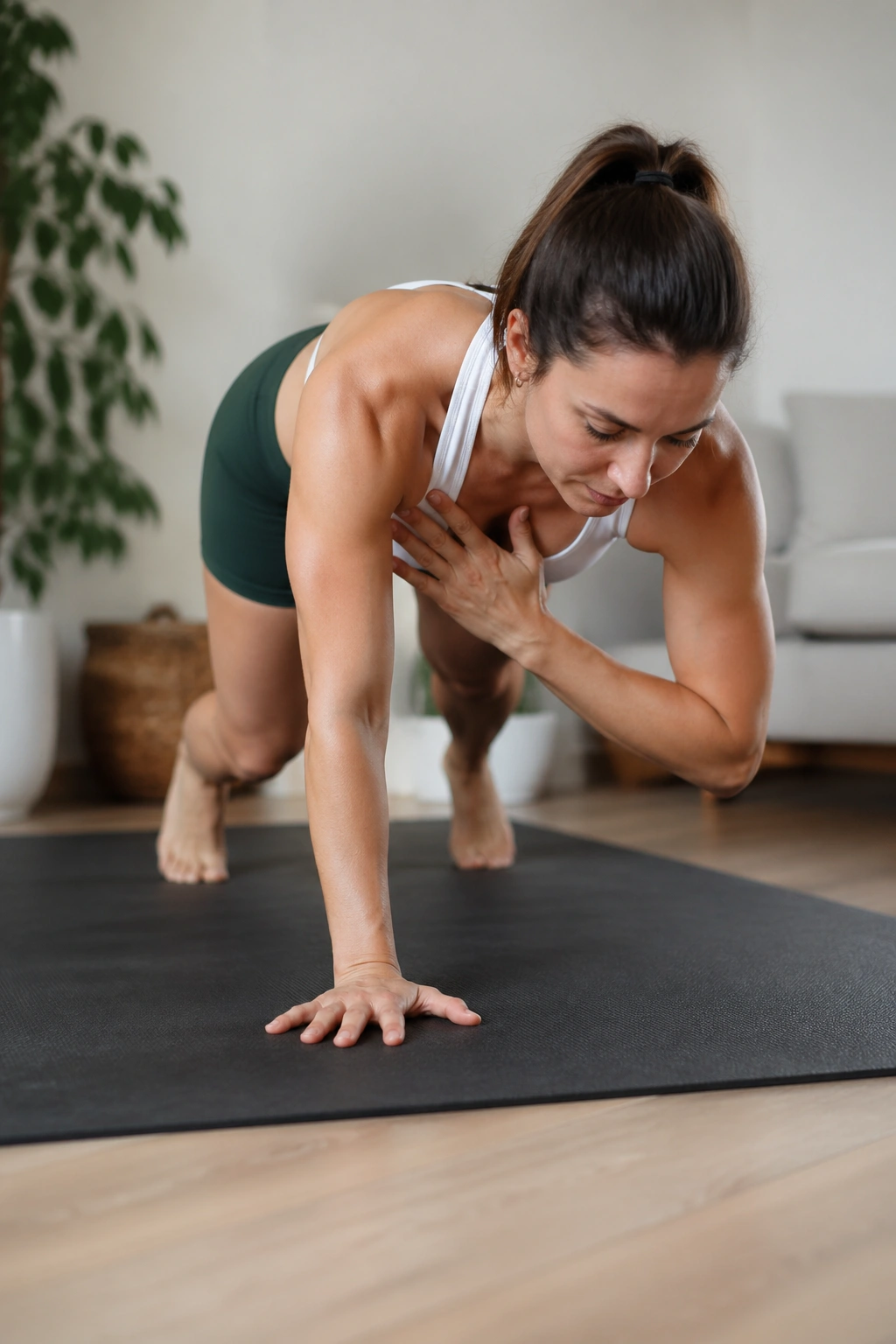
Classic burpees can be useful. They can also turn sloppy fast. The step-back version keeps the conditioning punch while cutting down on the chaos.
Stand, squat down, plant the hands, step one foot back and then the other into plank, step both feet back in, and stand tall. Add a small jump if you want more intensity. Leave the jump out if you want cleaner reps or quieter floors.
An easy way to structure this is 8 minutes on the minute: perform 8 to 10 reps, then rest for whatever time is left in that minute. Start the next set when the next minute begins. That format gives you built-in pacing. Too many people do the first set like a sprint, then unravel.
Hands first, feet second. That order matters. When people rush the feet backward before the hands are solid, the whole move gets ragged.
27. Hollow Rock Hold
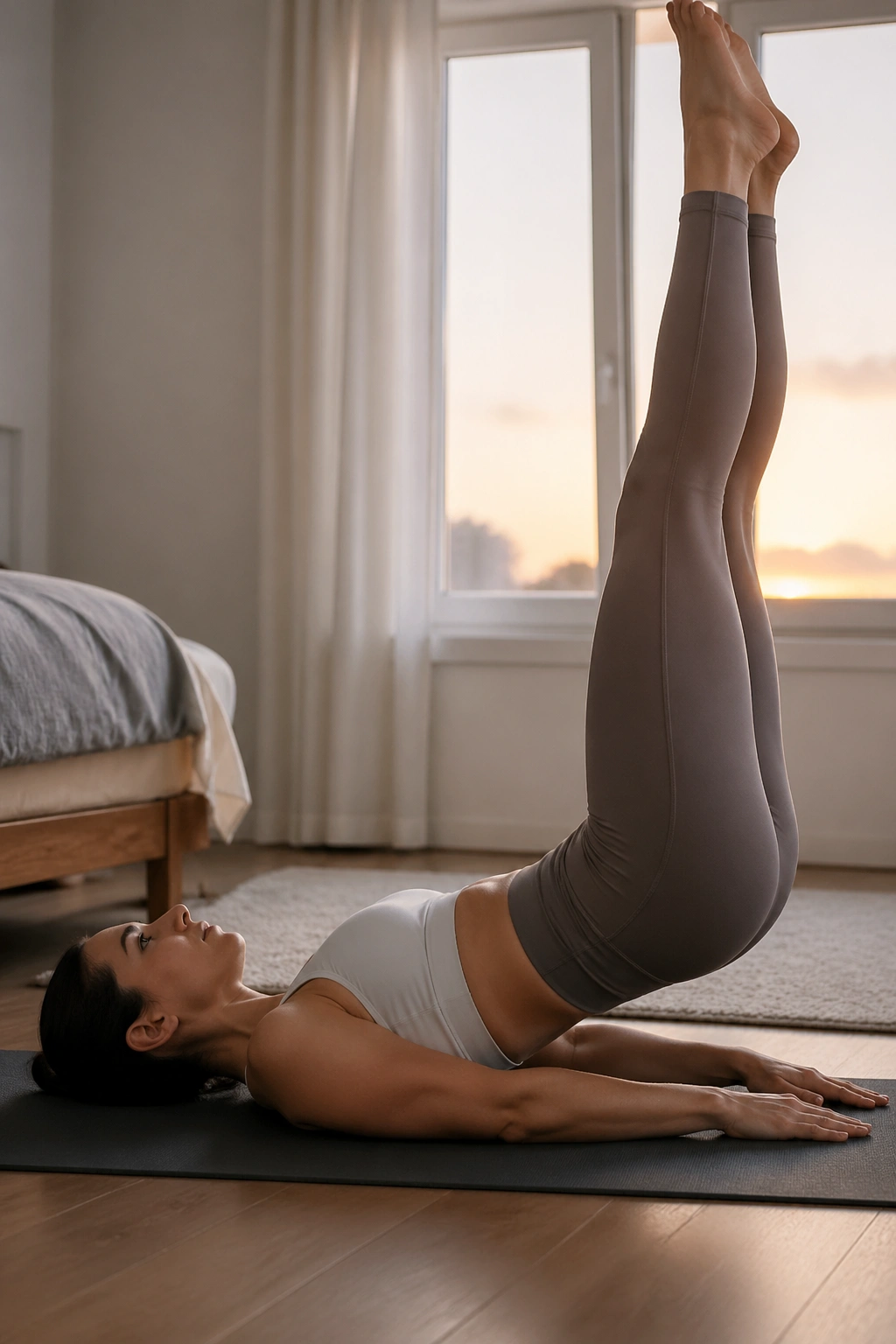
Want a move that makes a plain floor feel hostile? Try hollow rocks.
Lie in a hollow position—low back pressed down, shoulder blades slightly up, legs long—then rock gently forward and back without losing the curve of the body. The motion should be smooth, like a rocking chair with tight springs, not a flop from shoulders to heels.
Start here
Perform 15 rocks, then freeze in the hollow position for 15 seconds. Rest 20 seconds. Complete 4 rounds.
Bent-knee hollow rocks are a valid starting point. Keep the same tucked pelvis and steady breathing. Once you can hold that shape well, extend the legs farther. The rock itself is less important than maintaining the position through the whole set.
28. Towel Hamstring Slider Tucks
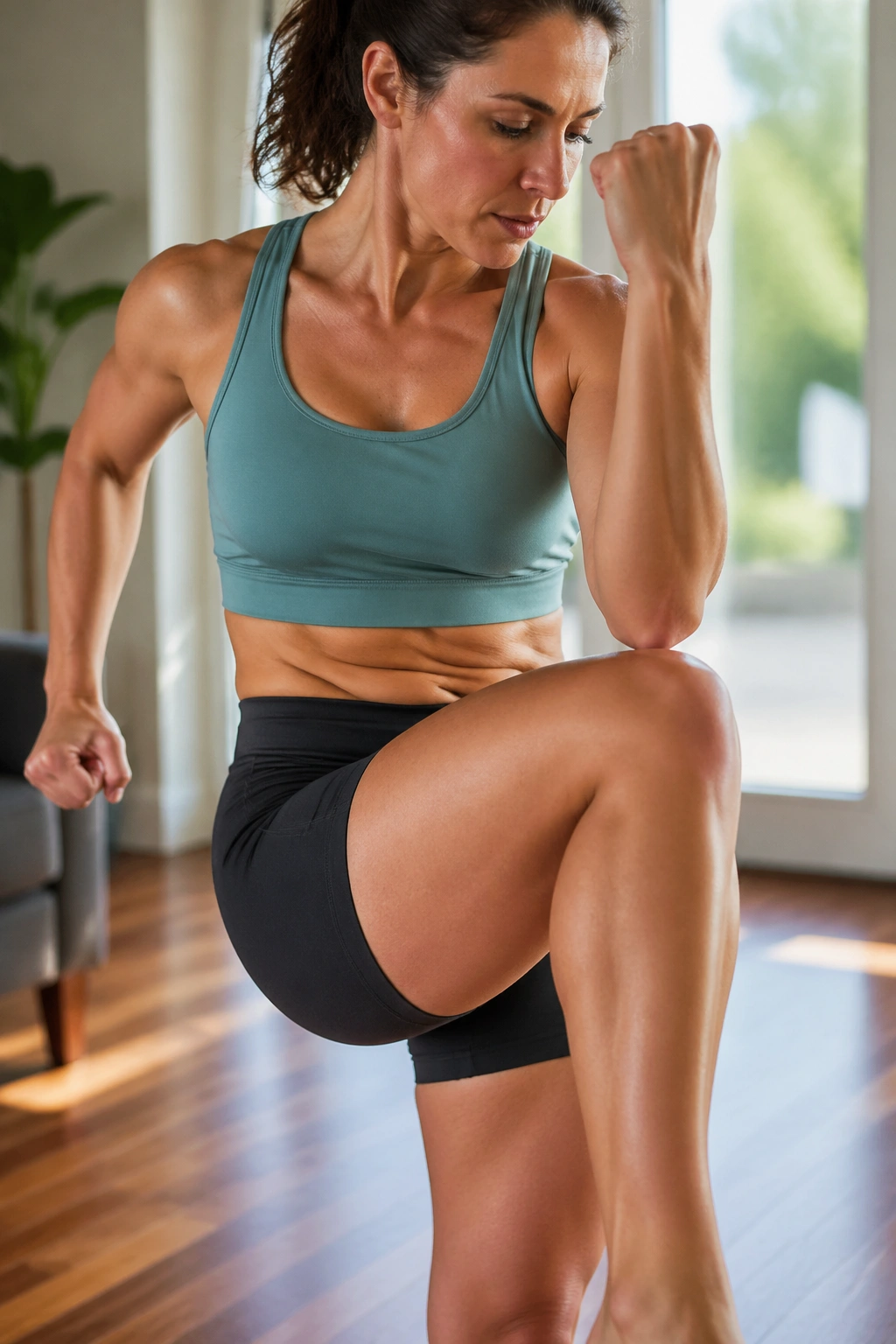
Here’s one that punches above its weight. Hamstring sliders look like a leg exercise until your core realizes it has to keep your pelvis from drifting into a mess.
Lie on your back with your heels on towels or sliders. Lift into a bridge, then slide your feet away until the legs are almost straight. Pull them back in while keeping the hips up. For a stronger lower-ab hit, add a tiny knee tuck at the end without letting the back arch.
Use 10 to 12 reps for 3 sets. Go slow on the way out. Eccentric control—the lowering part—makes this move nasty in a useful way.
If your hamstrings cramp, shorten the range first. That happens a lot. Once the muscles settle in, increase the slide distance by an inch or two.
29. Shadow Jump Rope Rounds
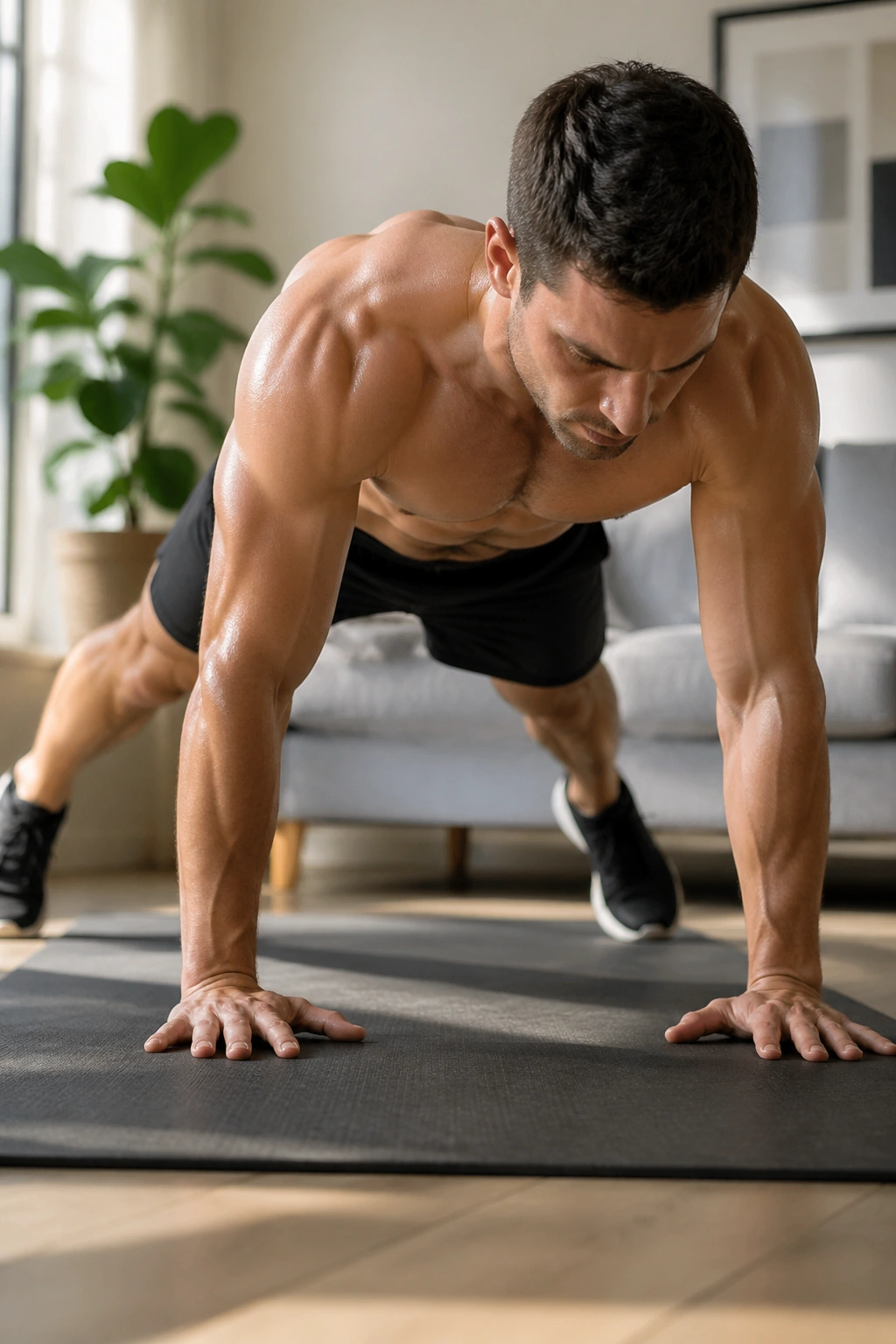
Jump-rope footwork without the rope is one of the easiest ways to build a home cardio block when you have no equipment and little patience for complicated choreography.
Bounce lightly on the balls of your feet, keeping each jump only an inch or two off the floor. Turn your wrists as if a rope is passing under you. Switch between a regular bounce, boxer step, and side-to-side shift to keep the calves from frying too early.
Go for 45 seconds on and 15 seconds off for 10 rounds. That is 10 minutes of work with a lot of calorie burn packed into a small window. Your abs will not feel it like a crunch set, but your trunk is still working to keep the torso stacked and springy.
If the bounce bothers your joints, perform the same rounds with a fast march and rope-turning arms. Same rhythm. Lower impact.
30. Lower Belly Fat Workout Finisher Circuit
If you do not want to pick from the list and would rather start with one done-for-you combo, use this. It is short, balanced, and mean enough to matter.
The 12-minute circuit
Work for 40 seconds, rest for 20 seconds, and move through all 5 exercises. Complete 3 rounds.
- Mountain climbers
- Reverse crunches
- Squat thrusts
- Dead bug heel taps
- Skater hops
The order is deliberate. You start with a fast heart-rate move, drop to the floor for controlled lower-ab work, spike the pulse again with squat thrusts, pull the tempo down for deep-core control, then finish each round with lateral skating. It alternates hard breathing with hard bracing, which is exactly what many lower belly routines miss.
If round one feels easy, you started too gently. If round two looks like a fight, you’re in the right neighborhood.
Final Thoughts
If I were building a home routine for lower belly fat from this list, I would not do all 30 in one week. I’d pick two cardio-heavy sessions, two slower core-control sessions, and one mixed circuit. That split is enough to make progress without torching your hips and lower back.
Three moves I come back to often are reverse crunches, step-up intervals, and dead bug heel taps. They cover pelvic control, calorie burn, and deep-core work without asking for fancy gear or circus-level coordination.
And here’s the part people skip because it sounds boring: walk more, sleep longer, and eat in a way that does not make your workouts fight an uphill battle. Do that while staying consistent with these sessions, and the lower belly usually stops feeling “stubborn” and starts looking like a body part that is finally getting the right message.
