



Beach yoga poses feel different at sunrise. The sand is cool, the light is soft, and even a simple standing shape can wobble if your feet sink too far into the beach.
That wobble is part of the charm. It makes the session less about looking polished and more about listening to your body, which is where yoga gets useful anyway.
Skip the heroics.
On the beach, the smartest poses are the ones that give you a wide base, a little patience, and enough room to breathe through a gust of wind or a wave of sand under your heel. A firm strip of damp sand near the waterline usually works better for balance work, while softer dry sand is kinder to knees, wrists, and hips when you want to kneel or lie down. A thin towel or travel mat helps, but thick cushy mats can feel unstable and a little annoying under standing poses.
What matters most is not the pose itself. It’s how the pose meets the ground. Once you accept that, sunrise sand sessions stop feeling fussy and start feeling like the cleanest kind of practice.
1. Mountain Pose
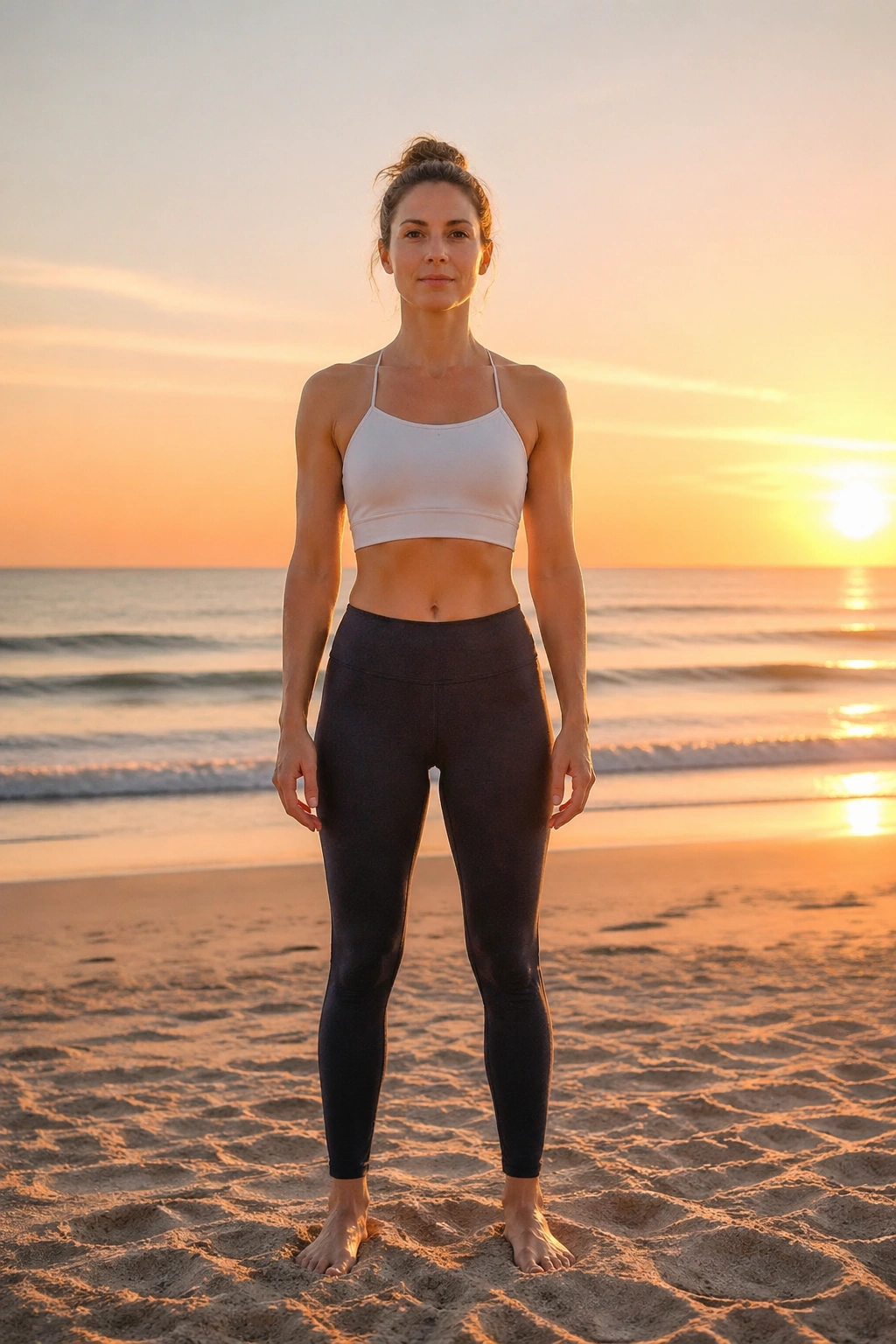
Mountain Pose looks almost too plain for a beach session, which is exactly why I like it. The first minute of sunrise is not the time to chase fancy shapes; it’s the time to feel where your feet land in the sand and how your breath changes when the air is still cool.
Stand with your feet about hip-width apart if the sand is soft, or closer together on firmer ground. Press down through the heels, the base of the big toe, and the little toe mound. Let your knees soften a touch. That tiny bend matters more on sand than on a studio floor, because it keeps your hips from locking while your ankles keep searching for balance.
What to notice here
- Weight spread evenly across both feet
- Ribs stacked over hips, not pushed forward
- Shoulders relaxed, not yanked down
- Gaze level with the horizon, which helps the neck settle
Tip: If your toes start gripping the sand, spread them wider and let the arches breathe.
2. Upward Salute
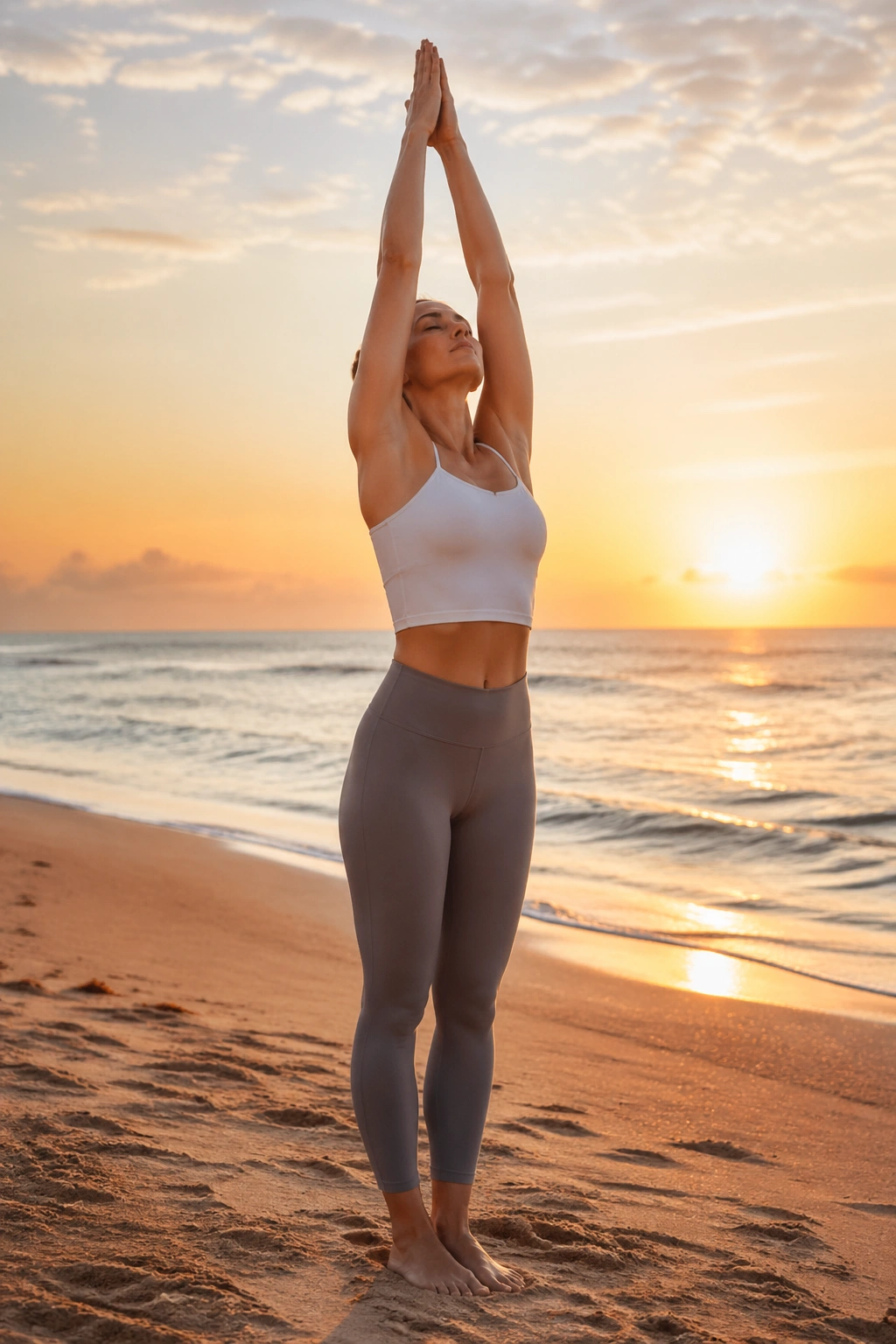
Why does a simple reach overhead feel so good by the water? Because the body wakes up fast when the chest opens and the ribs get space to move.
Upward Salute is a clean way to start feeding breath into the upper body. From Mountain Pose, sweep your arms up on an inhale, keep the shoulders away from the ears, and avoid flaring the lower ribs forward. On sand, that last part matters. A big backbend in the ribs looks dramatic for about three seconds, then the lower back starts doing too much work.
Think of the reach as long rather than grand. Fingers reach up, shoulder blades slide down, and the feet keep rooting into the ground like you mean it. If the wind is cool, the full-body stretch can feel even better, because the whole front line of the body gets a little wake-up call.
Best use: Pair this with a slow inhale, hold for two breaths, then melt straight into your first forward fold.
3. Standing Forward Fold
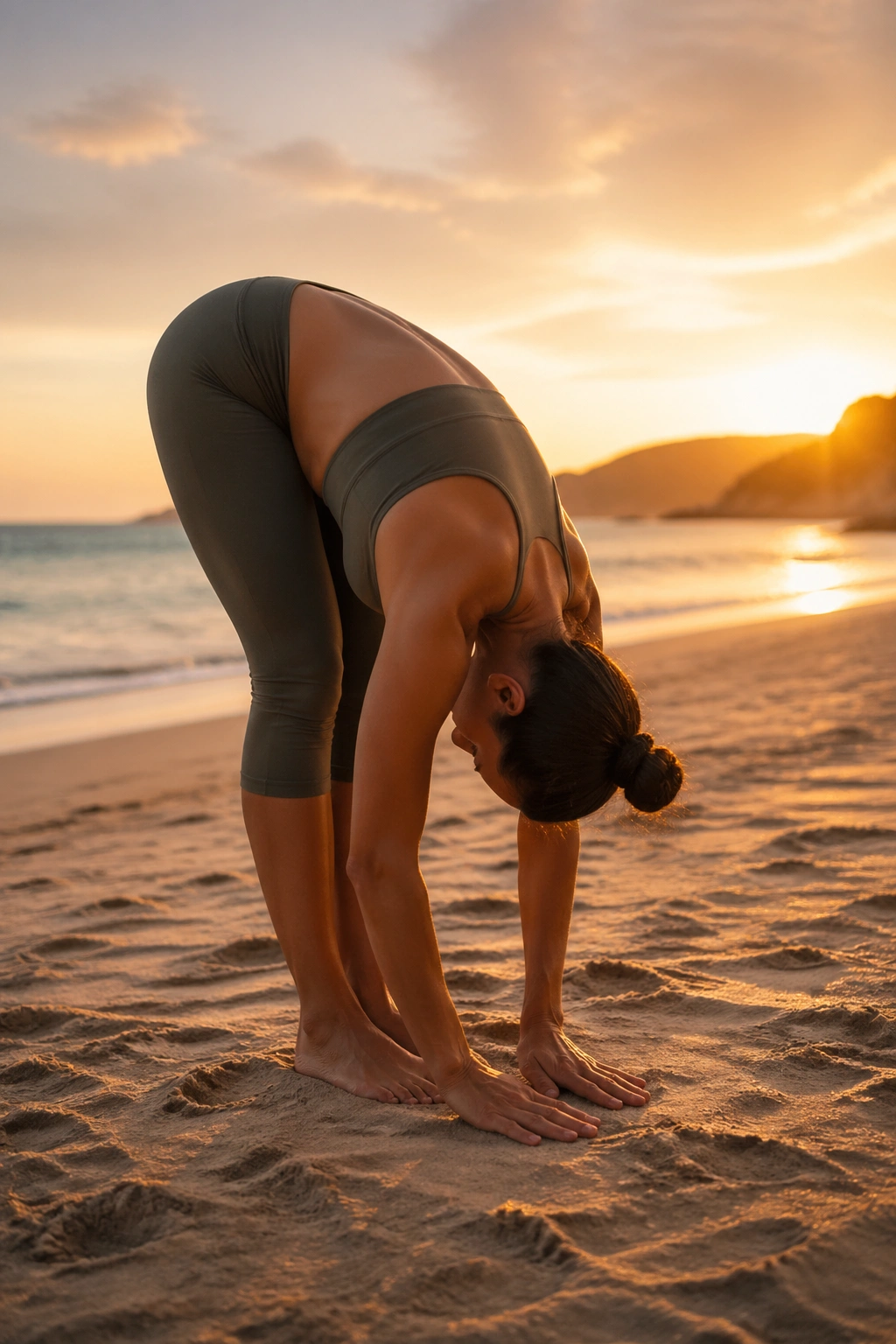
Standing Forward Fold is where the beach gets quiet. The head drops, the spine releases, and the sand beneath your feet reminds you not to take balance so seriously.
Bend your knees more than you would on a hard floor. That is not cheating. On soft sand, bent knees help the pelvis tip forward without pulling the hamstrings into a fight. Let your arms hang, or hold opposite elbows if your shoulders like a little more weight. The loose, dangling version feels especially good at sunrise because the whole upper body starts to feel heavy in the nicest way.
A small detail matters here: keep the weight slightly toward the balls of the feet, not the heels alone. If you sink back too far, the arches collapse and the pose turns into a wobble contest.
A simple beach cue
- Soften the knees
- Let the crown of the head drop
- Breathe into the backs of the legs
- Roll up slowly, one bone at a time
4. Half Lift
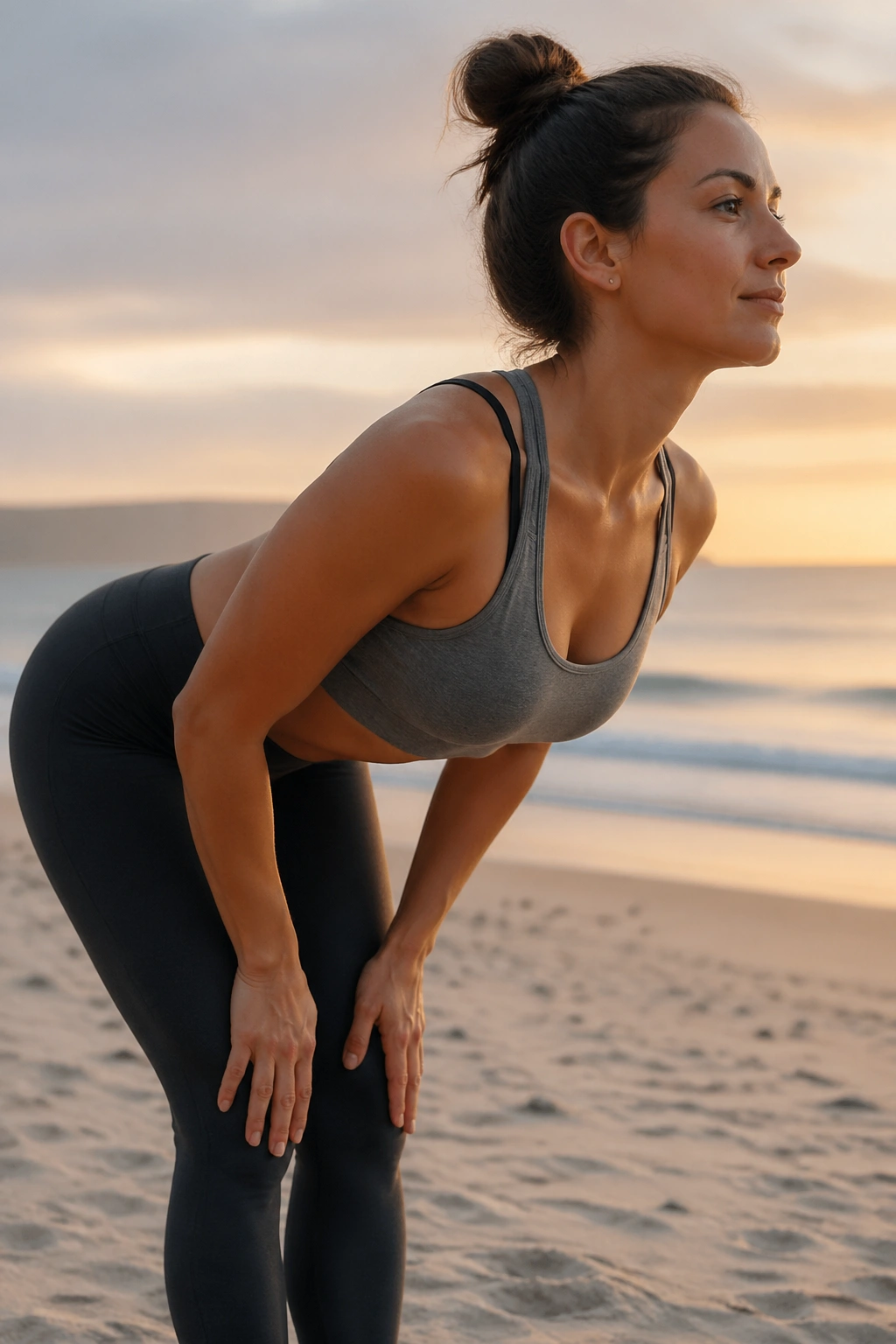
Half Lift is the middle gear between folding and standing, and on sand it earns its keep. The pose gives your spine length without demanding perfect stillness, which is useful when the ground keeps shifting under you.
Start from a forward fold and bring your fingertips to shins, thighs, or the top of your mat. Keep the back flat, not arched. The chest comes forward, the tailbone lengthens back, and the neck stays long so you are not staring at the sand like it owes you money.
I like this pose on a beach because it teaches you where your spine is in space. That sounds abstract, but it matters. When your feet sink a little, the torso can round without you noticing. Half Lift catches that before it becomes lazy.
How it should feel
- Hamstrings stay awake, not clenched
- Belly lightly engaged
- Back of the neck long
- Breath easy and smooth
5. Downward-Facing Dog
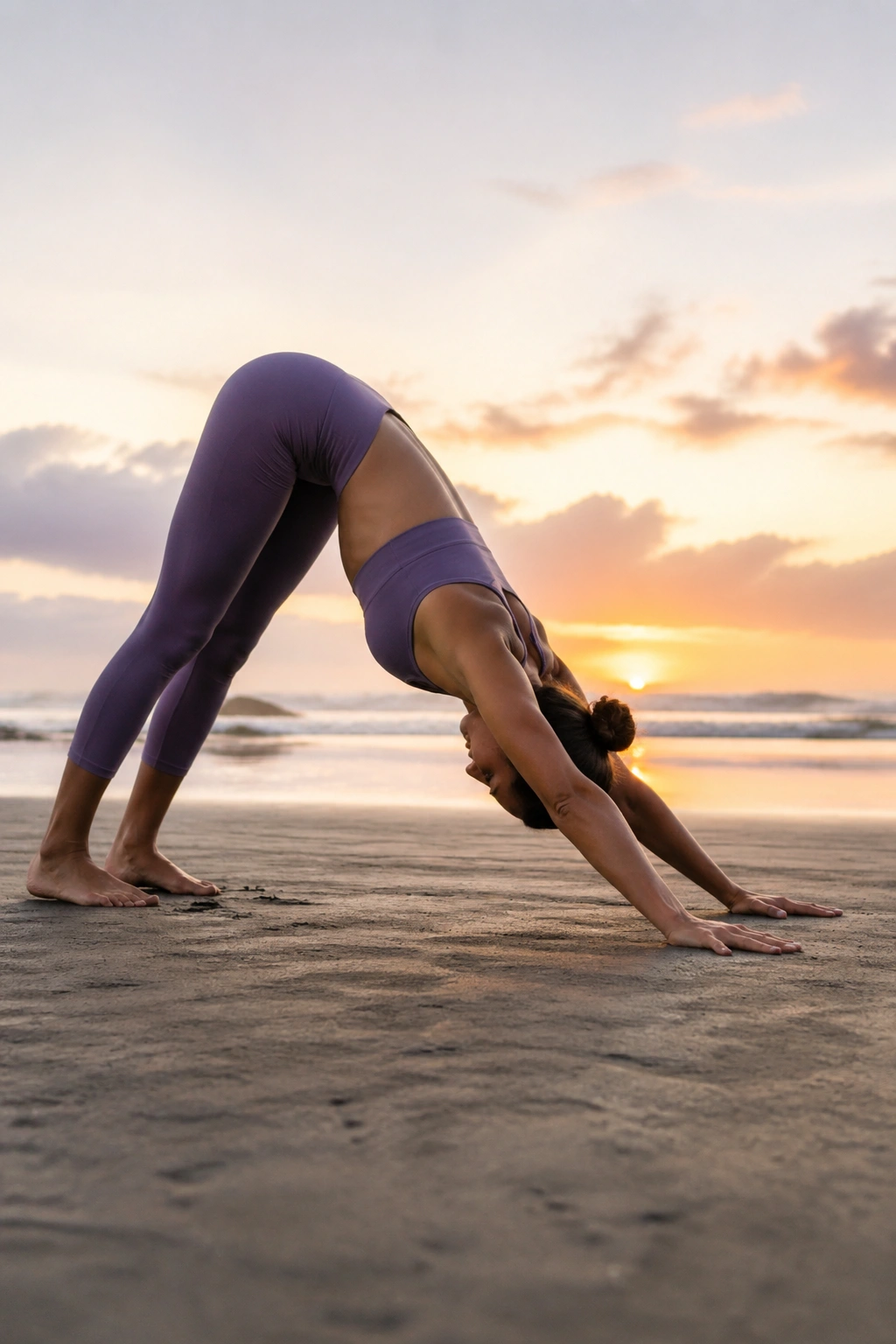
Can you do Downward-Facing Dog on the beach? Yes. Should you do it on loose, deep sand without a plan? Probably not.
The pose works best on firmer sand or with a thin towel under your hands. Spread your fingers wide, press evenly through the knuckles, and bend your knees enough that the spine can lengthen. If the heels never touch down, that is fine. On sand, the goal is not a perfect heel shape. The goal is a long back, stable shoulders, and wrists that do not feel wrecked ten minutes later.
Pedal the feet slowly if the calves feel tight. That little movement helps the ankles wake up after walking barefoot across uneven ground. It also gives you a chance to notice whether one side of the body is doing more work than the other. It usually is.
Watch for this: If your hands sink and the pose feels like a collapse, shift to a slightly firmer patch before you blame your form.
6. Low Lunge
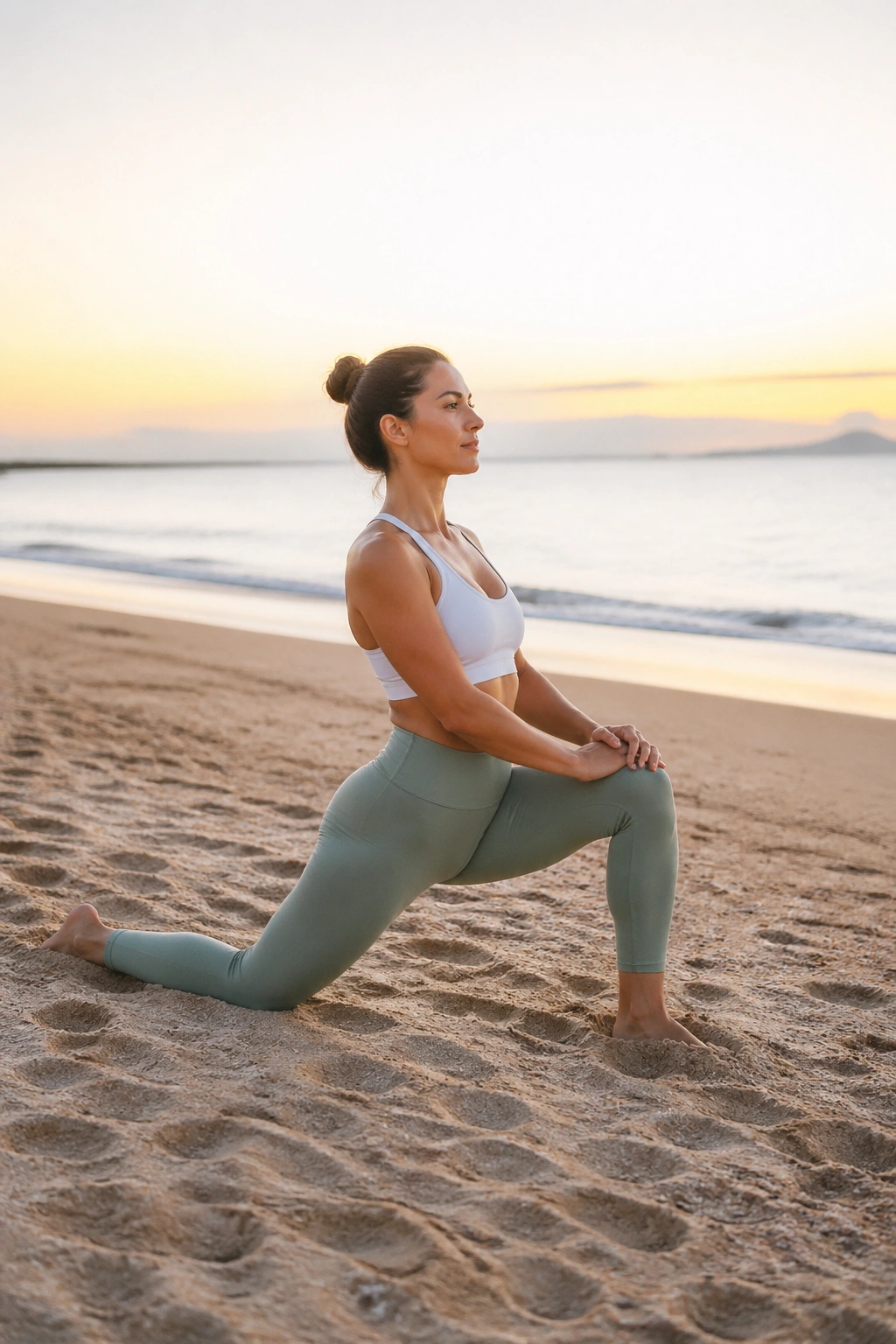
Low Lunge is one of the best beach yoga poses for sunrise because the sand does half the padding for you. Your back knee can settle into the ground without begging for a blanket, and the front hip gets a clean stretch after all that walking on uneven terrain.
Place the back knee down, untuck the toes if that feels okay, and keep the front knee stacked over the ankle. That front shin should not drift far ahead. If it does, the lunge gets sloppy fast, and the front thigh starts doing a job that belongs to the glute and core.
Make it kinder on the knees
- Fold the edge of a towel under the back knee
- Keep the torso upright for a gentler stretch
- Lift the chest if you want more hip opening
- Lower the hands to the sand if you want more balance
This pose can feel slow and almost plain. Good. Plain is useful here.
7. Crescent Lunge
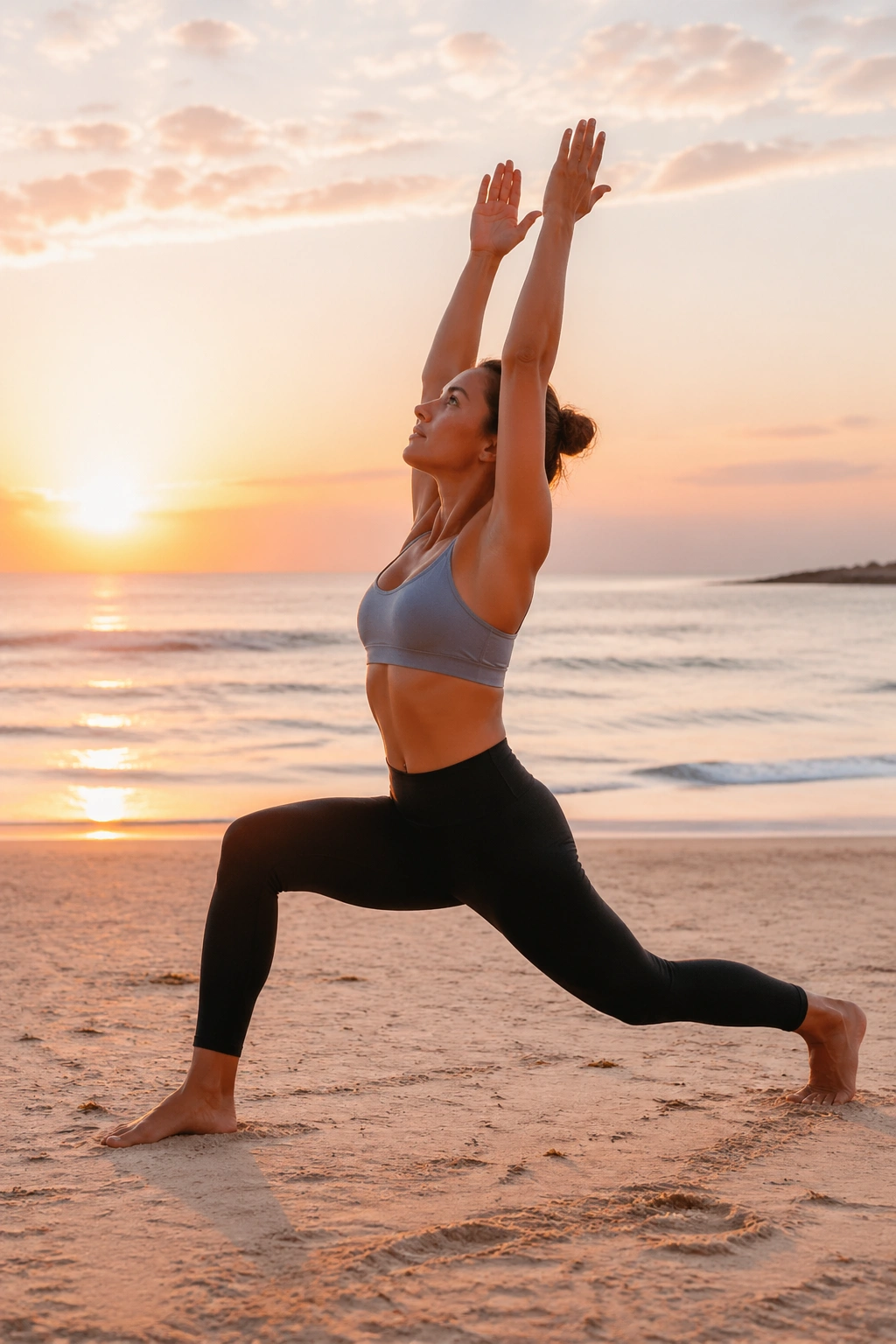
Crescent Lunge asks more from the standing leg, which makes it a stronger choice when the sand is firm enough to trust. The back knee lifts, the torso rises, and the whole shape starts to heat up without needing much movement.
Step your front foot forward from Low Lunge and lift the back knee off the sand. Bring the feet to a stance that feels stable, not heroic. On the beach, people often take the lunge too long because they want it to look open. It usually works better a little shorter. You get more control, more core engagement, and fewer moments where the back heel slides into nowhere.
Arms can stay at the sides for a calmer version or reach overhead if your shoulders are happy. Keep the front knee pointing where the toes point. If it caves inward, the balance gets messy and the hip flexors steal the show.
Good cue: Think “lift through the belly” before you think “reach through the hands.”
8. Warrior I
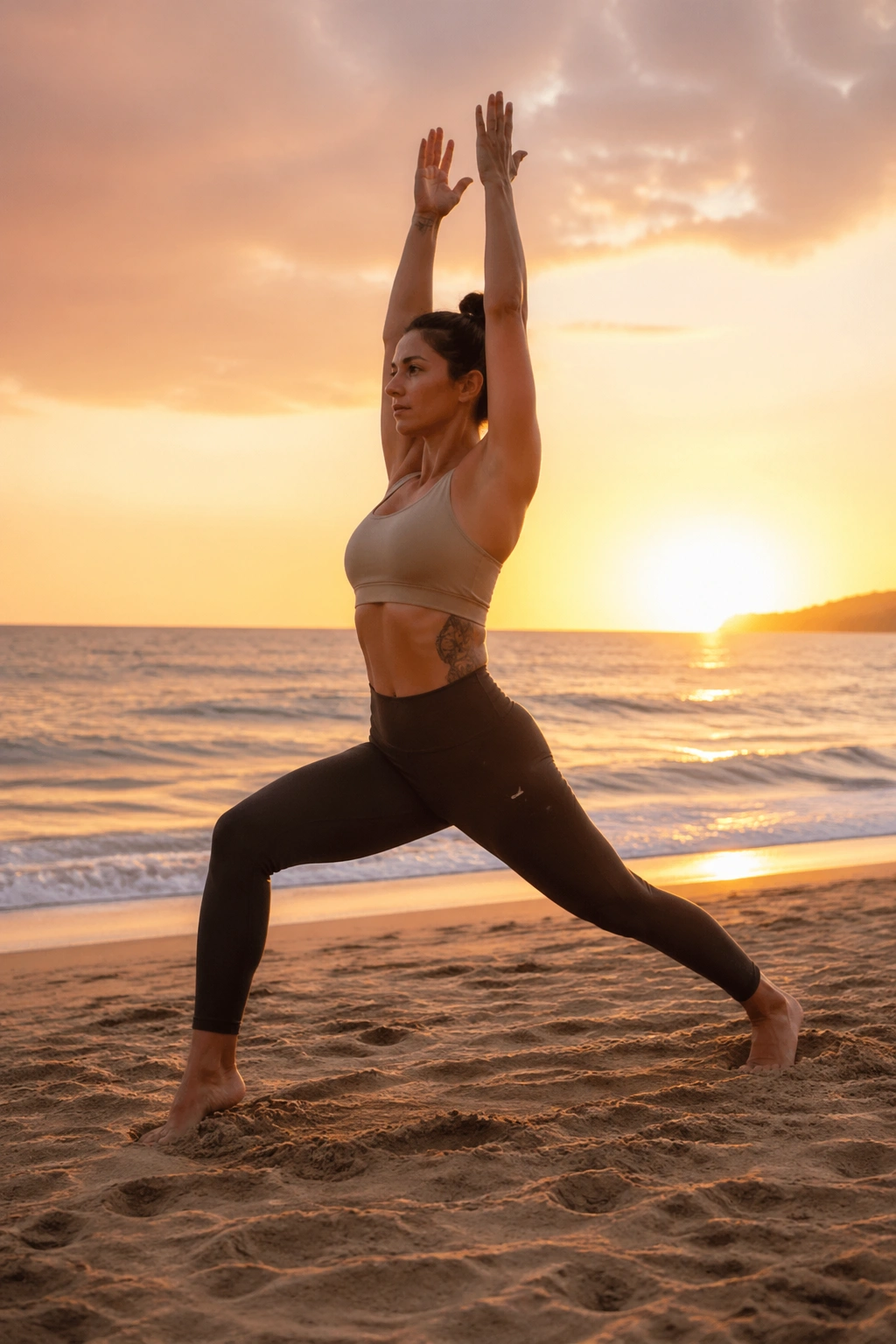
Warrior I on the beach has a certain stubborn beauty to it. The pose asks for strength, but the sand keeps reminding you not to clench everything at once.
Set the back foot down at a slight angle and ground the outer edge of that foot into the sand. Square the hips as much as your body allows, then bend the front knee. On a stable floor, people often try to force the hips square. On sand, that usually backfires. A smaller stance and a gentler turn feel better and save the lower back from doing strange overtime.
Reach the arms overhead or keep the hands on the hips if the shoulders want a break. The chest lifts, the back leg presses down, and the front thigh starts to heat up. That heat is the point.
I prefer Warrior I early in a sunrise practice, before the body gets too warm. It feels like a calm commitment rather than a showy hold.
9. Warrior II
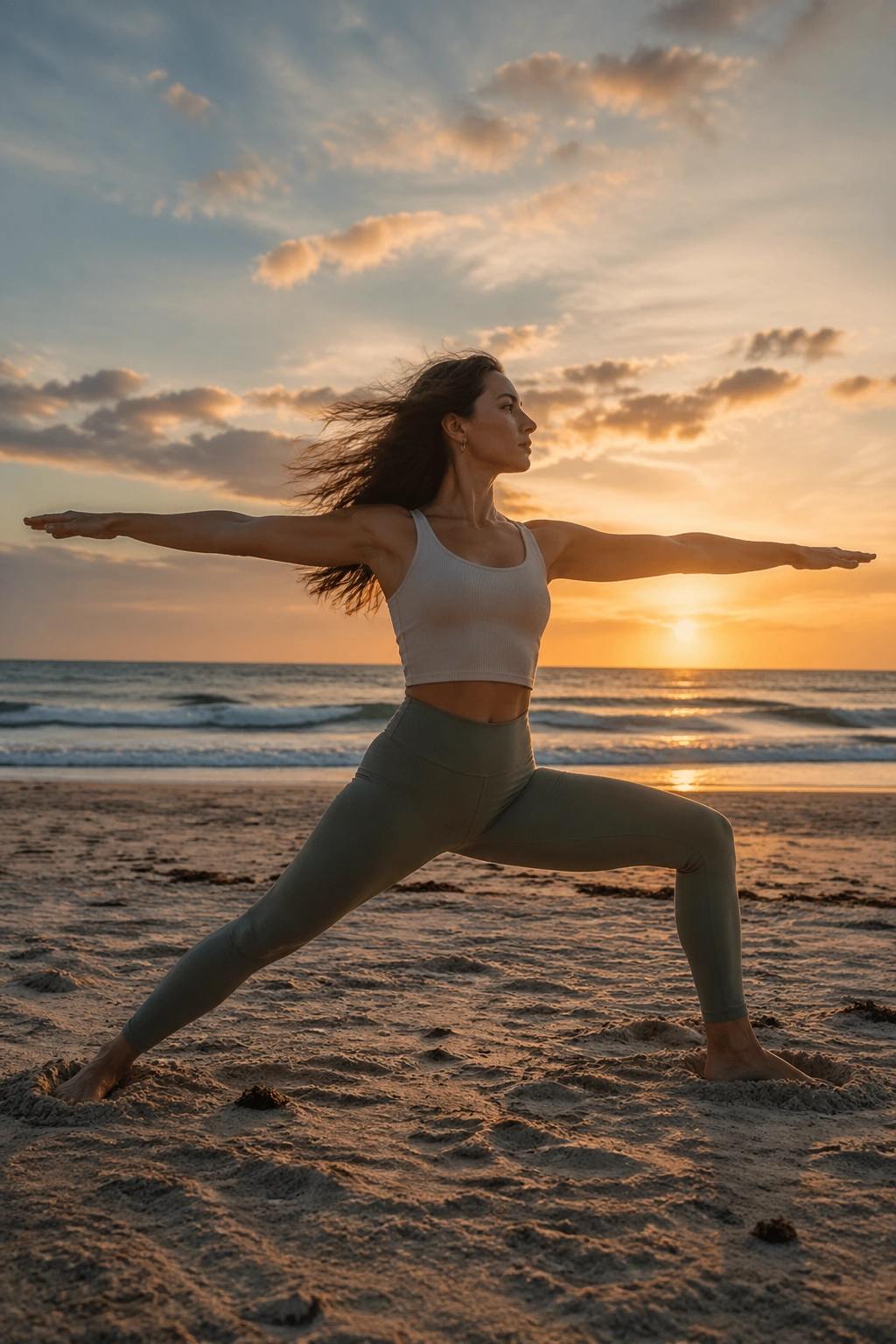
Warrior II looks straightforward until the breeze comes in. Then the pose gets honest.
Open the feet wide, turn the back toes slightly in, and bend the front knee until it stacks over the ankle. The arms stretch long in opposite directions, and the gaze settles over the front hand. On the beach, that gaze line can help more than people think. It gives the neck a job and keeps the chest from twisting too far toward the sea or the sunrise.
Sand changes the way the legs work here. You can’t coast on a hard surface. The inner thigh has to wake up, the outer hip has to steady the stance, and the arches keep making little adjustments under you. That is a good thing, even if it feels less graceful than the version you see in a studio.
What to keep steady
- Front knee over the second toe
- Back foot rooted, not lazy
- Shoulders soft
- Breath smooth, not held
10. Reverse Warrior
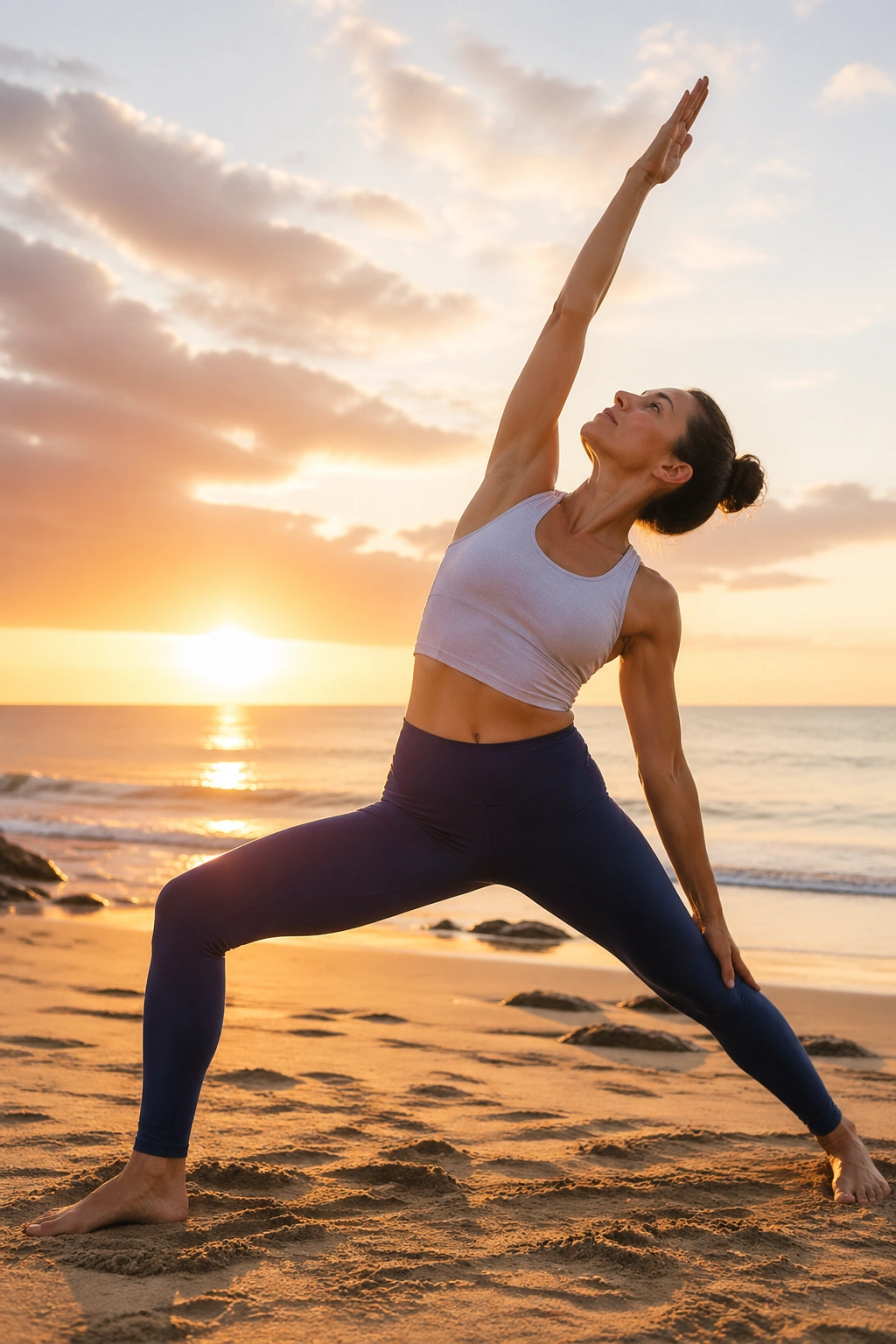
Reverse Warrior is what happens when a strong standing shape decides to breathe a little deeper. It is not a huge backbend, and it should not become one.
From Warrior II, let the back hand slide down the back leg lightly, then send the front arm up and overhead. Keep the front knee bent. That’s the part people rush. If the knee straightens too much, the pose turns into a side stretch that looks nice but does almost nothing for the legs. A bent knee keeps the thighs awake and the hips honest.
The stretch runs along the whole side body, from the outside of the back foot all the way to the fingertips. On a beach, that line feels especially clean because the upper body can open while the feet stay heavy in the sand. Don’t dump into the low back. Reach up and back, not just back.
A gentle exhale through this pose can feel like releasing a long-held breath you didn’t know you were holding.
11. Triangle Pose
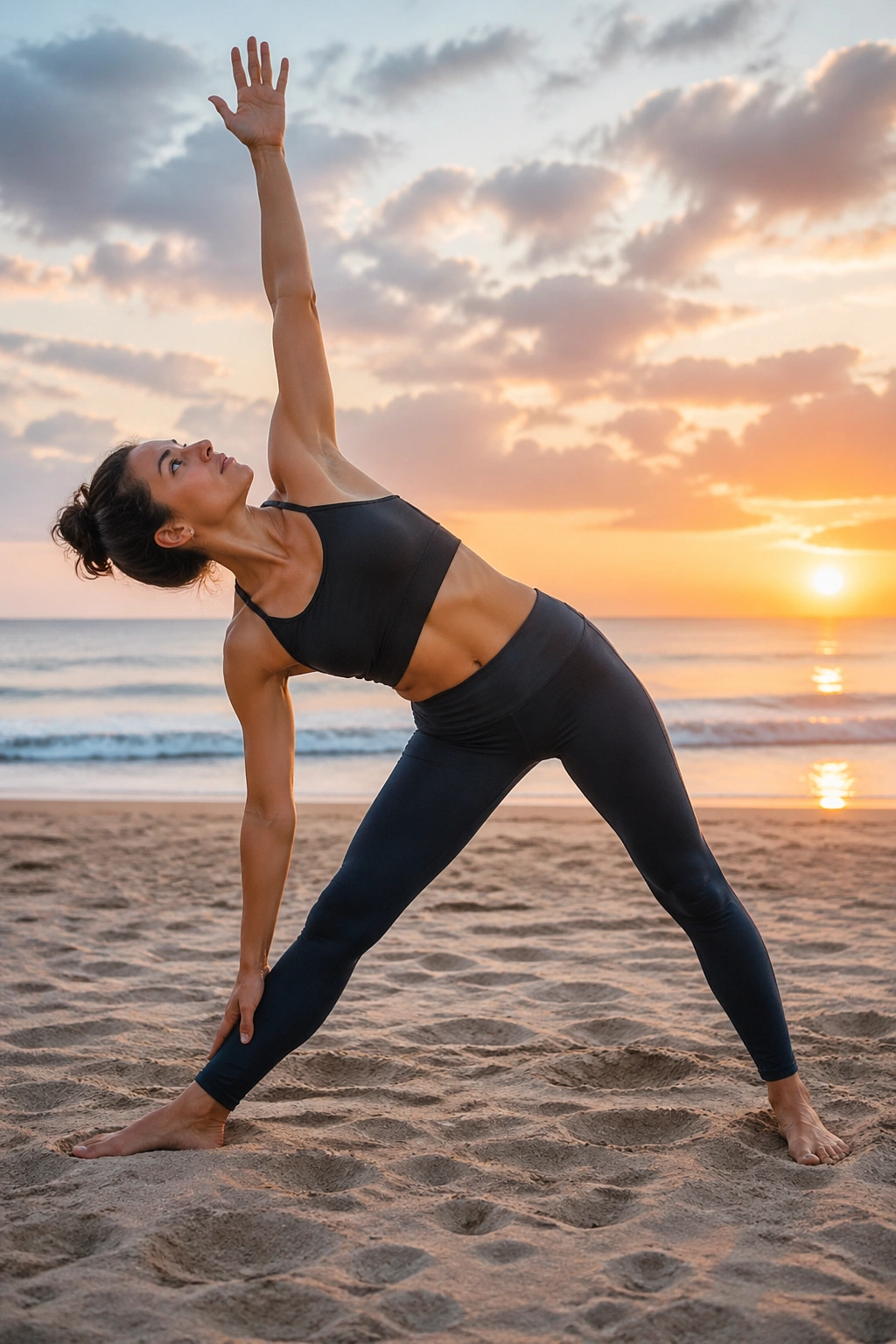
Triangle Pose is one of those shapes that looks airy but asks for a lot of leg work. On sand, that matters even more, because the floor does not hand you any free stability.
Take a wide stance, turn the front foot out, and hinge at the hip rather than reaching for the ground with a rounded spine. Your lower hand can rest on the shin, ankle, or a small block if you brought one. The goal is a long line through both sides of the torso, not a desperate grab at the sand.
How to keep it clean
- Keep a micro-bend in the front knee
- Stack the shoulders if it feels stable
- Press the back foot down firmly
- Lift through the chest without collapsing the waist
The temptation is to drop too low just because the sand feels soft. Don’t. Softer ground does not mean deeper alignment. It often means more wobble.
12. Extended Side Angle
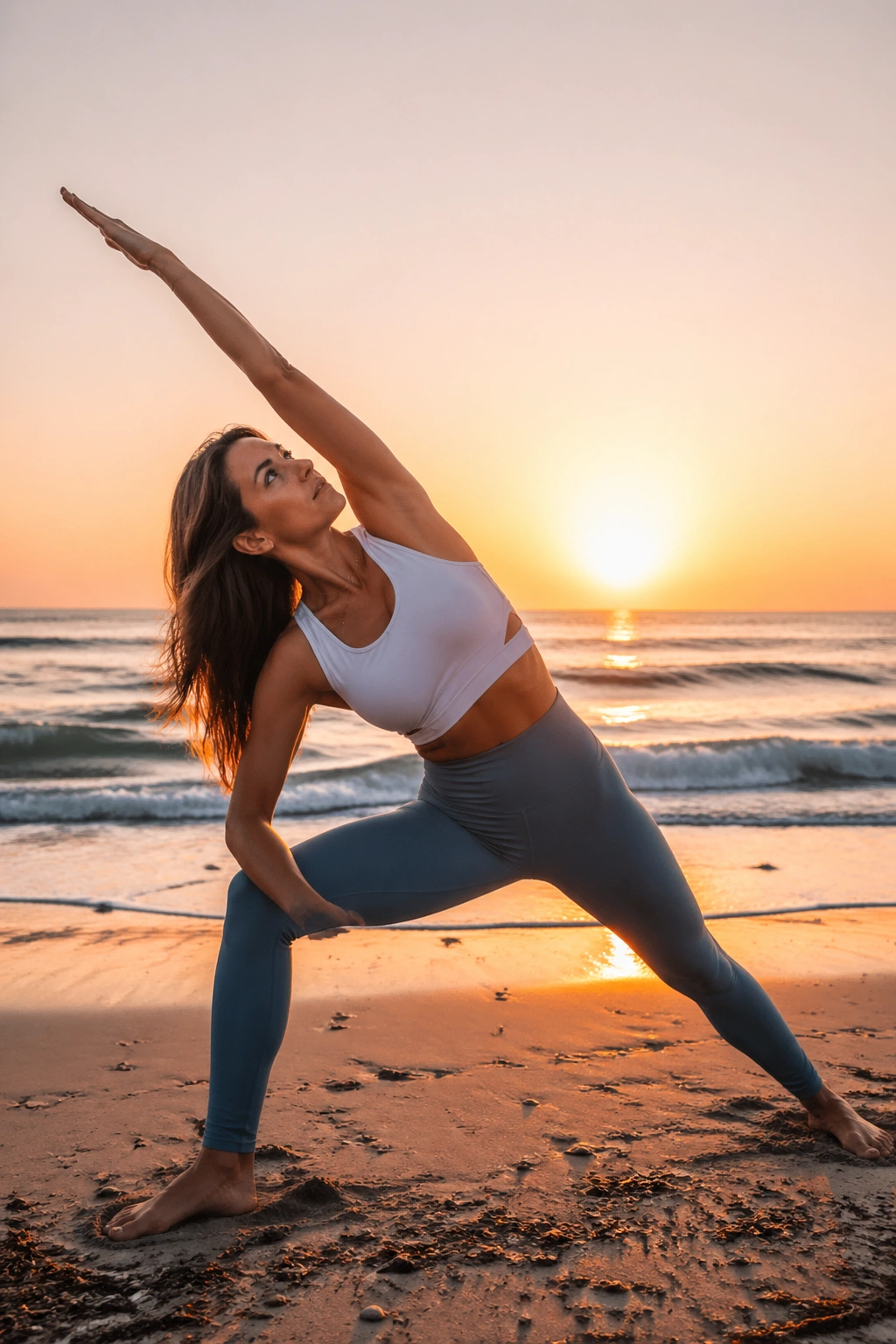
Extended Side Angle gives you the same strong lower-body shape as Warrior II, but with a longer reach and a little more drama in the side body.
From Warrior II, lower the front forearm to the thigh or place the hand on the sand if your shoulder and hip both have room. Reach the top arm over the ear and lengthen from the back heel to the fingertips. The line should feel long, not crunched. If the side waist collapses, the chest gets stuck and the breath turns thin.
This one is good when the beach wind picks up, because the pose teaches you how to stay open without being floppy. That sounds like a personality trait, but it’s also yoga. Keep the front knee bent enough to support the pose. If it straightens out, the legs stop working and the hips cheat.
A small correction that helps a lot: Don’t push the lower forearm into the thigh so hard that the rib cage collapses. Light contact is enough.
13. Tree Pose
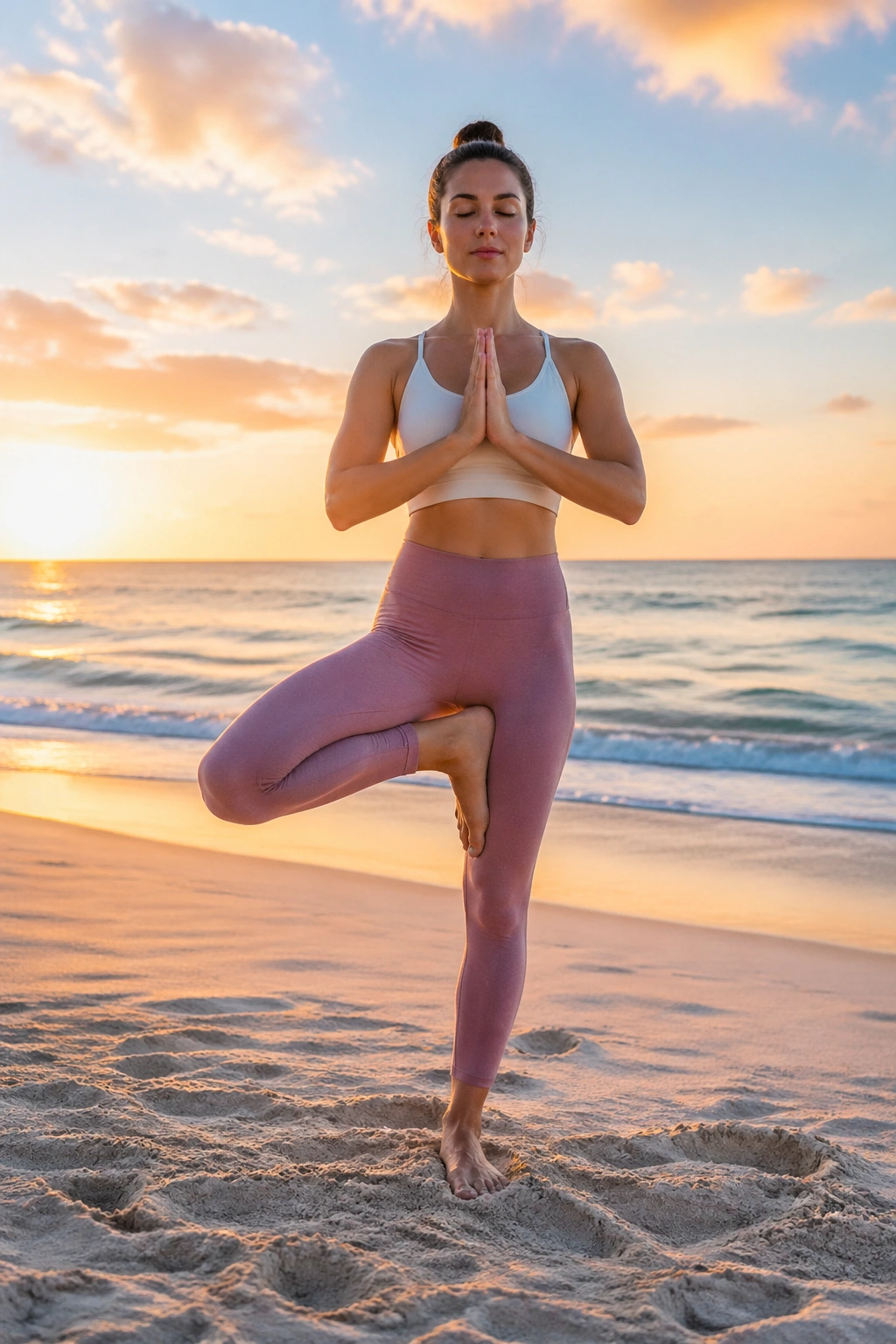
Tree Pose on sand is a little mischievous. The ground keeps shifting, so the pose turns from a balance drill into a conversation with your ankles.
Set one foot down and place the other at the inner calf or inner thigh, never on the knee itself. If the sand is soft, choose a firmer patch or move closer to the waterline. You want enough traction to stand, not enough tension to lock everything down. Once the foot finds a home, bring the hands to prayer at the chest or lift them like branches.
The first few breaths may wobble. Fine. Wobble is information. If you fall out of the pose, come back without making a drama of it. That quick reset is part of the work.
A useful rule
- Start low at the ankle if balance feels shaky
- Keep the standing knee soft
- Pick one still point on the horizon
- Breathe out longer than you breathe in
14. Dancer Pose
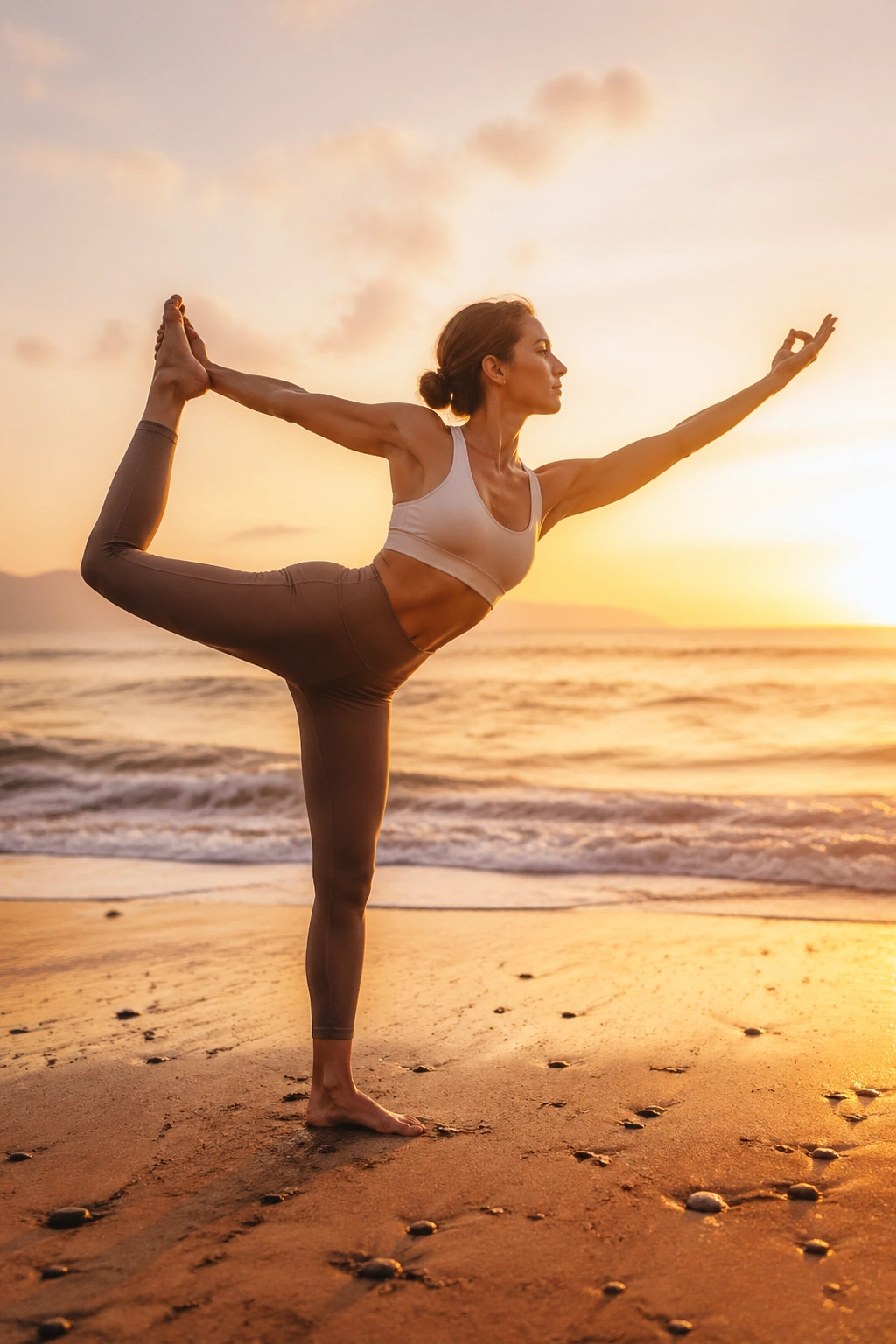
The first time Dancer Pose meets beach sand, it usually feels a little ridiculous. One foot roots down, one hand reaches back, and the whole body learns very fast whether it wants balance or theater.
That’s why I like it. The pose reveals a lot in a small amount of time. From standing, bend one knee, grab the inside of the foot or ankle behind you, and start to lift the chest while the free hand reaches forward. The standing leg stays active. If the knee locks, the pose gets wobbly. If the chest flares without control, the lower back pays for it.
A sunrise beach is a good place for this pose because it rewards patience. You don’t need to kick high. You need to stay centered while the lifted leg opens behind you.
If the full shape is too much
- Keep the lifted foot low
- Hold a wall, fence, or partner’s hand nearby
- Let the free arm stay at the hip for a round or two
15. Half Split
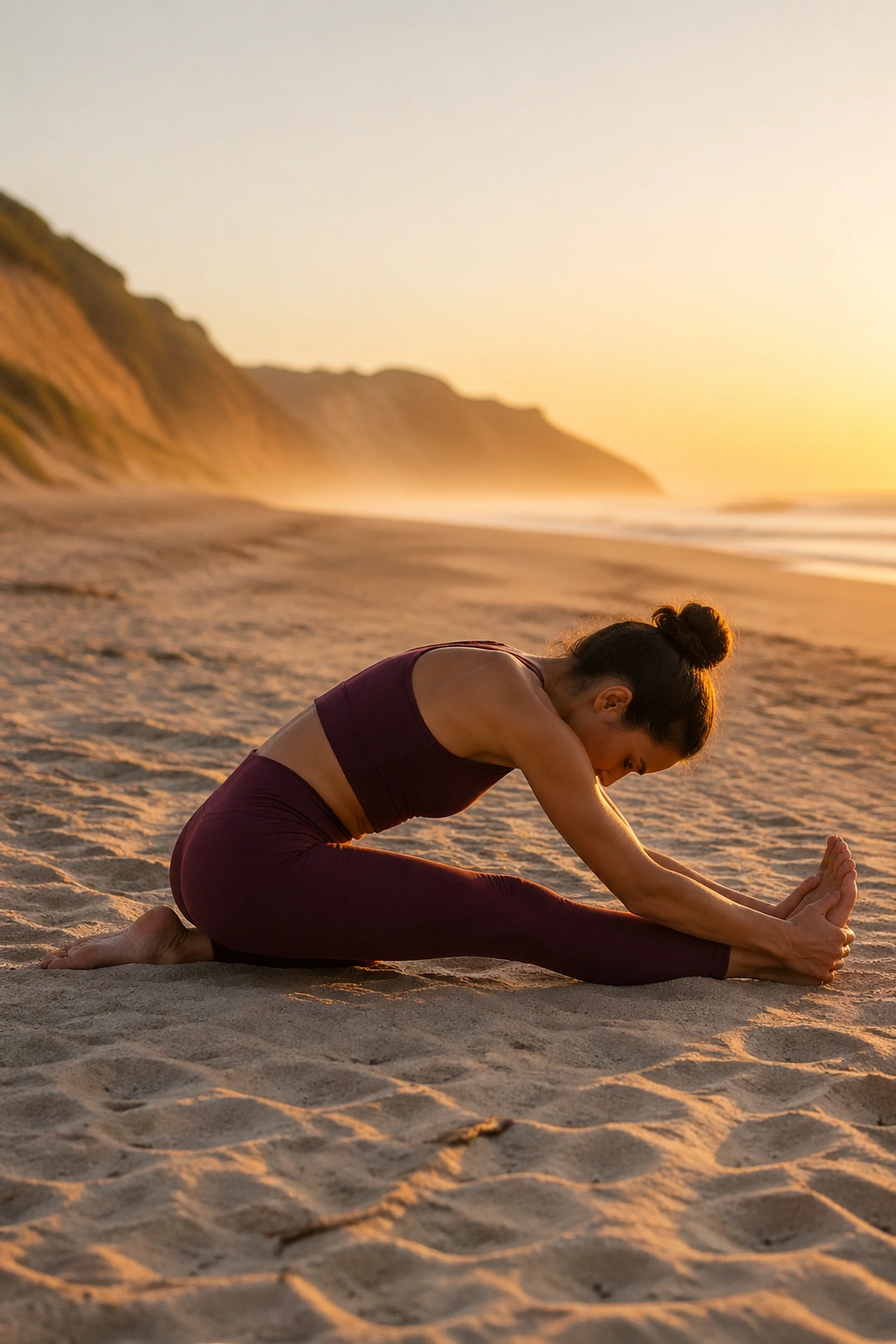
Half Split is the kind of pose that looks mild and then gets your hamstrings talking. On sand, it can feel even deeper because the back knee and front foot have a little give beneath them.
Start from Low Lunge and shift your hips back until the front leg begins to straighten. Keep a soft bend in that knee if the back of the leg feels tight. The spine stays long. The chest reaches forward before it folds down. That order matters. If you round immediately, the stretch moves out of the hamstrings and into the low back, which is not what you want.
This is a good reset between standing shapes. It slows the pace without killing the warmth you built.
I also like it because it teaches honesty. If your hamstrings are tight after a lot of walking on the beach, Half Split will tell you fast. That is not bad news. It is data.
16. Wide-Legged Forward Fold
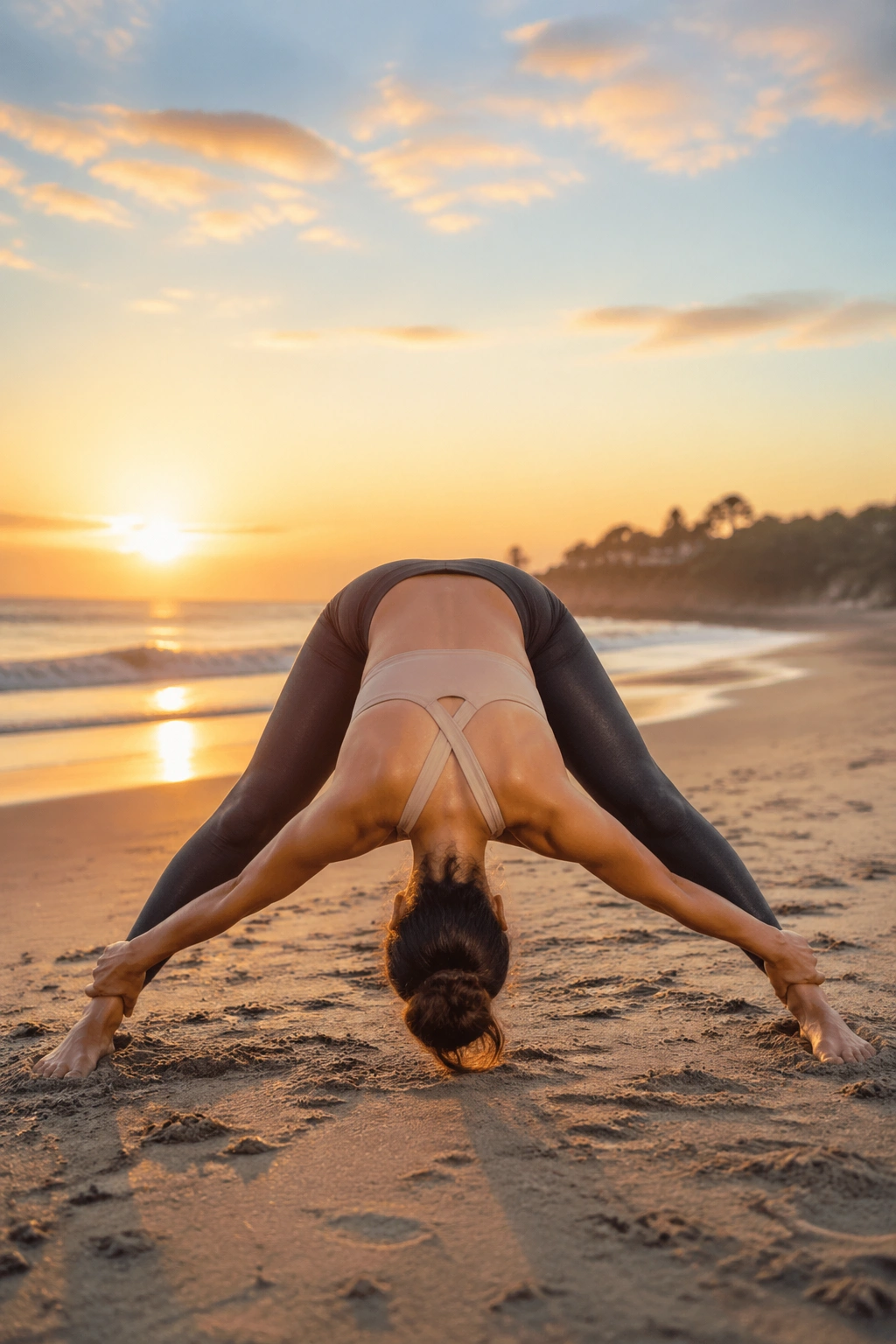
Wide-Legged Forward Fold is one of the most satisfying ways to let the whole session come down a notch. The legs go wide, the torso folds, and the head hangs in a way that feels almost too simple to be this useful.
Stand with your feet wide enough to feel stable but not so wide that the inner thighs start complaining. Turn the toes in a little, hinge at the hips, and let the hands come to the sand or to the ankles. On a beach, you may not get as deep as you would on a floor. That is fine. The soft ground changes the leverage, and fighting it only makes the pose awkward.
What helps most
- Keep the weight even through both feet
- Bend the knees if the lower back tugs
- Let the crown of the head drop
- Walk the hands slightly forward if the fold feels cramped
The pose works as a calm pivot between stronger standing work and the slower closing shapes.
17. Goddess Pose
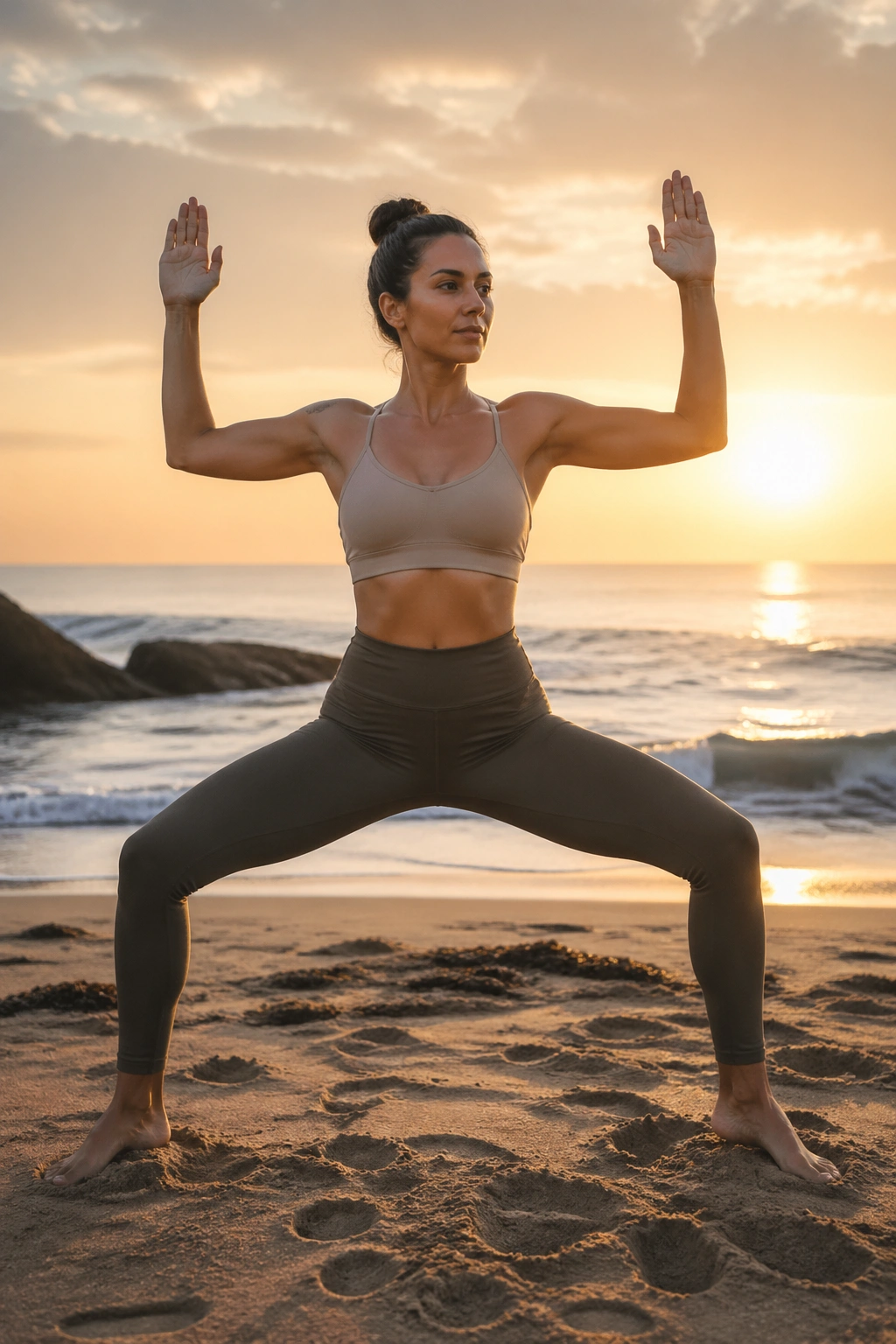
Goddess Pose is the beach squat I recommend to people who think yoga has to be quiet and delicate all the time. It doesn’t.
Open the feet wide, turn the toes out, bend the knees, and lower the hips into a strong seat. The thighs burn. Good. The heels press down. Better. Arms can lift into cactus shape, with elbows bent and palms facing forward, which helps the chest stay open while the legs do the heavy lifting.
The beach makes this pose a little more unstable than a studio floor, which is why it’s so useful. The outer hips and inner thighs have to cooperate. If the knees cave inward, the shape loses its clean line and the work slips into the joints. Keep the knees tracking in the same direction as the toes.
A quick cue
- Sit low enough to feel the quads
- Keep the spine tall
- Relax the jaw
- Smile if you want to; it helps
18. Bound Angle Pose
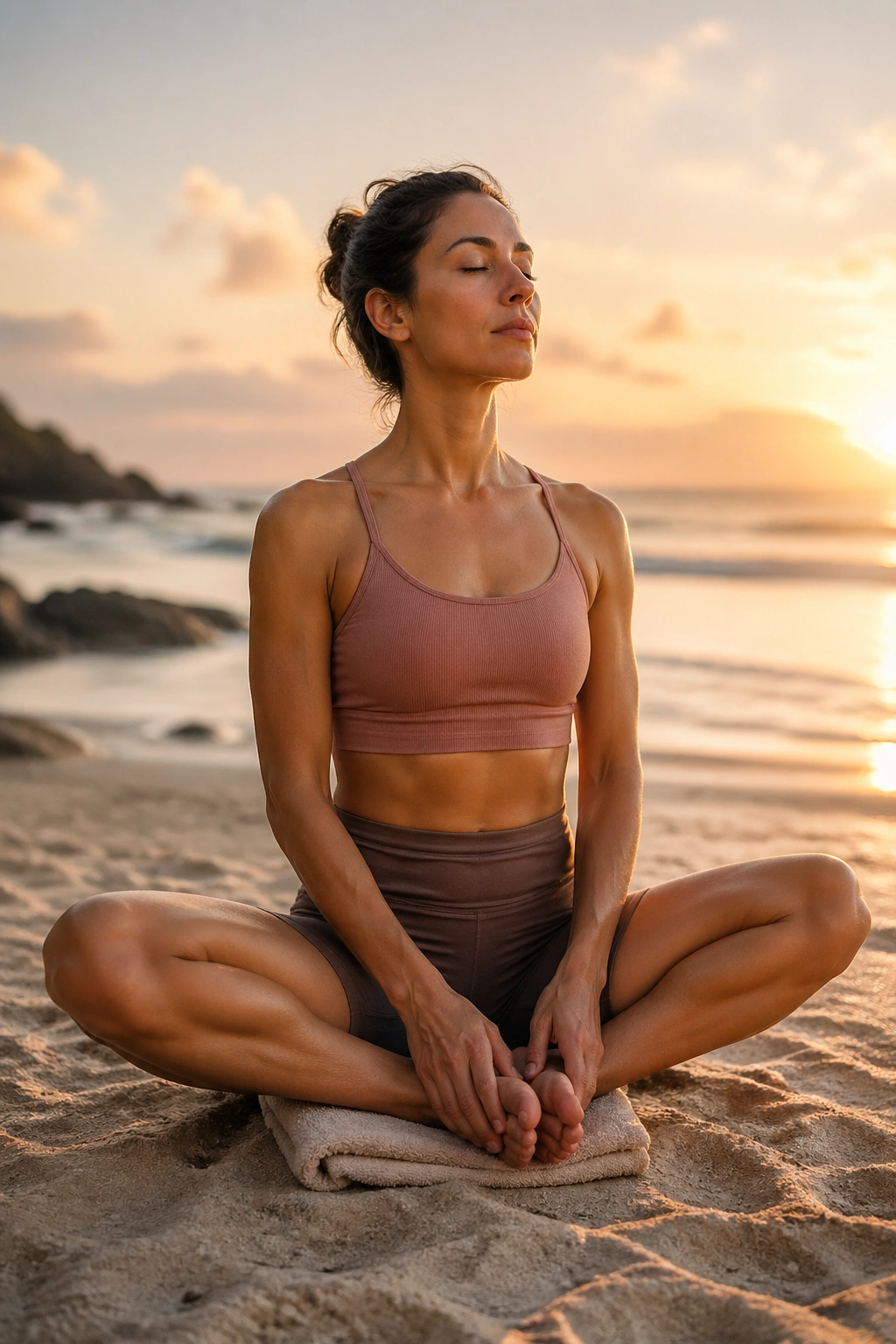
Bound Angle Pose on sand can feel like sitting in warm, shifting velvet, which is either lovely or annoying depending on how much your hips enjoy the morning.
Bring the soles of the feet together and let the knees fall outward. If the sand is soft, slide a towel or thin blanket under your sit bones so your pelvis doesn’t sink backward. That small lift changes everything. It makes the spine easier to stack and keeps the fold from collapsing into the low back.
You can stay upright and breathe here, or hinge forward from the hips if the inner thighs and groin want a deeper release. Don’t force the knees down with your hands. That’s old bad advice, and it usually just makes people tense. Let gravity do the heavy lifting.
This pose is a good place to pause between stronger standing work and the slower seated finish. The body feels the shift. That’s part of the point.
19. Seated Spinal Twist
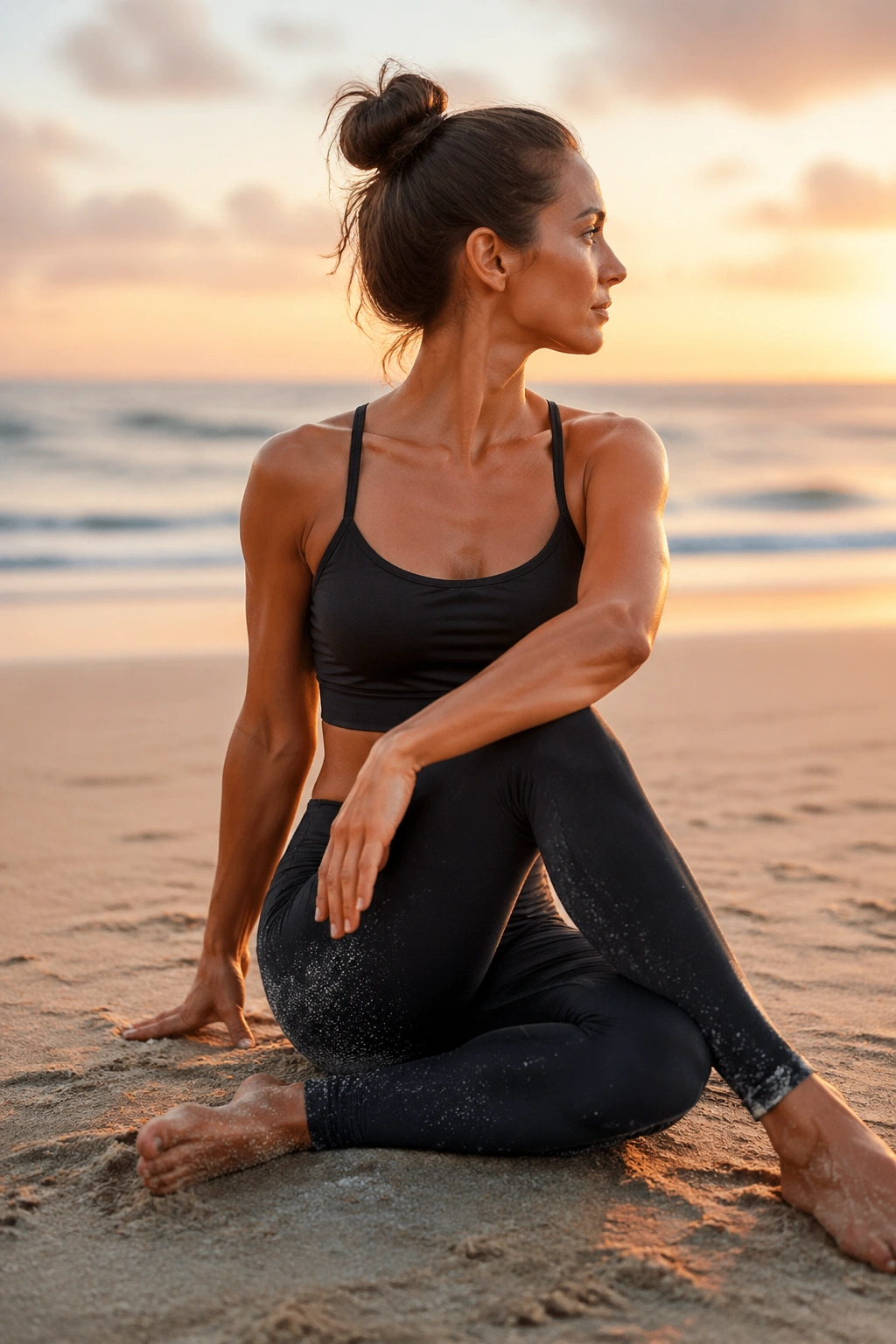
A seated twist on the beach does not need to be deep to be useful. In fact, a smaller twist often feels better because the hips sink into the sand and give you a little more range than you expected.
Sit with the legs crossed or extend one leg and bend the other. Lengthen the spine first. Then turn from the ribs, not just the shoulders. That sequence keeps the twist clean and saves the low back from cranking into the movement. One hand can rest behind you in the sand for support while the other comes to the opposite knee.
What to watch for
- Sit tall before you rotate
- Keep both sit bones as grounded as you can
- Inhale to lengthen
- Exhale to turn a little deeper
If the wind is moving, this pose can feel extra good. The body settles inward while the world keeps moving around it. That contrast is half the appeal.
20. Pigeon Pose
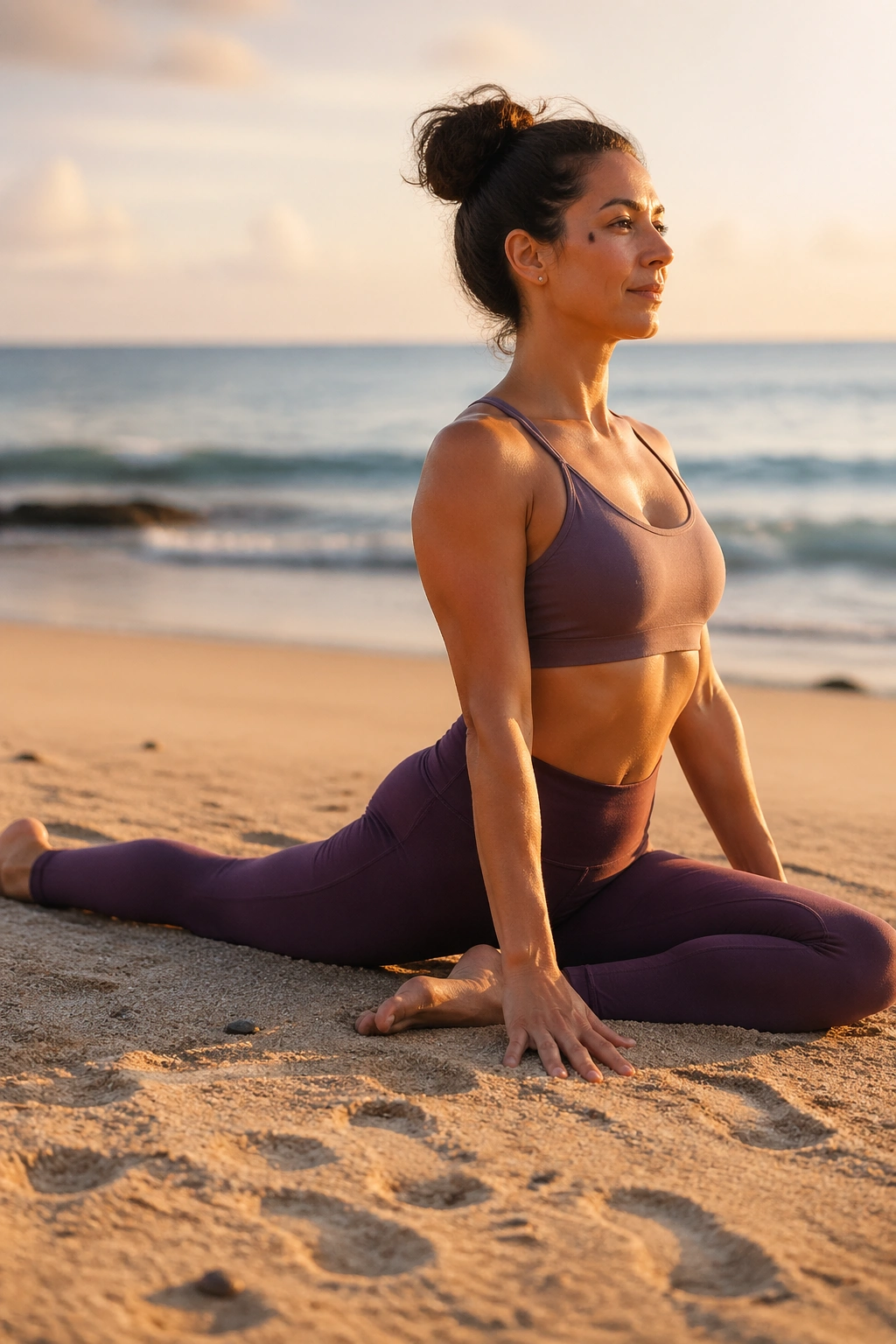
Pigeon Pose is where the hips stop pretending. After a walk on uneven sand, after standing balances, after all that tiny stabilizing work in the ankles, the outer hip often wants a real release.
Set the front shin down with the knee outside the hip line if that feels safe, then slide the back leg long behind you. On sand, you get a built-in cushion, which is nice, but it can also tempt the front knee to angle in a way it shouldn’t. Keep the front foot flexed and ease the pelvis down slowly. If the knee complains, stop. There is no prize for forcing this shape.
Easier options
- Lie on your back and cross one ankle over the opposite thigh
- Keep a block or rolled towel under the hip
- Stay upright instead of folding all the way down
This is one of those poses that deserves patience. Rushing it turns the stretch into noise.
21. Cobra Pose
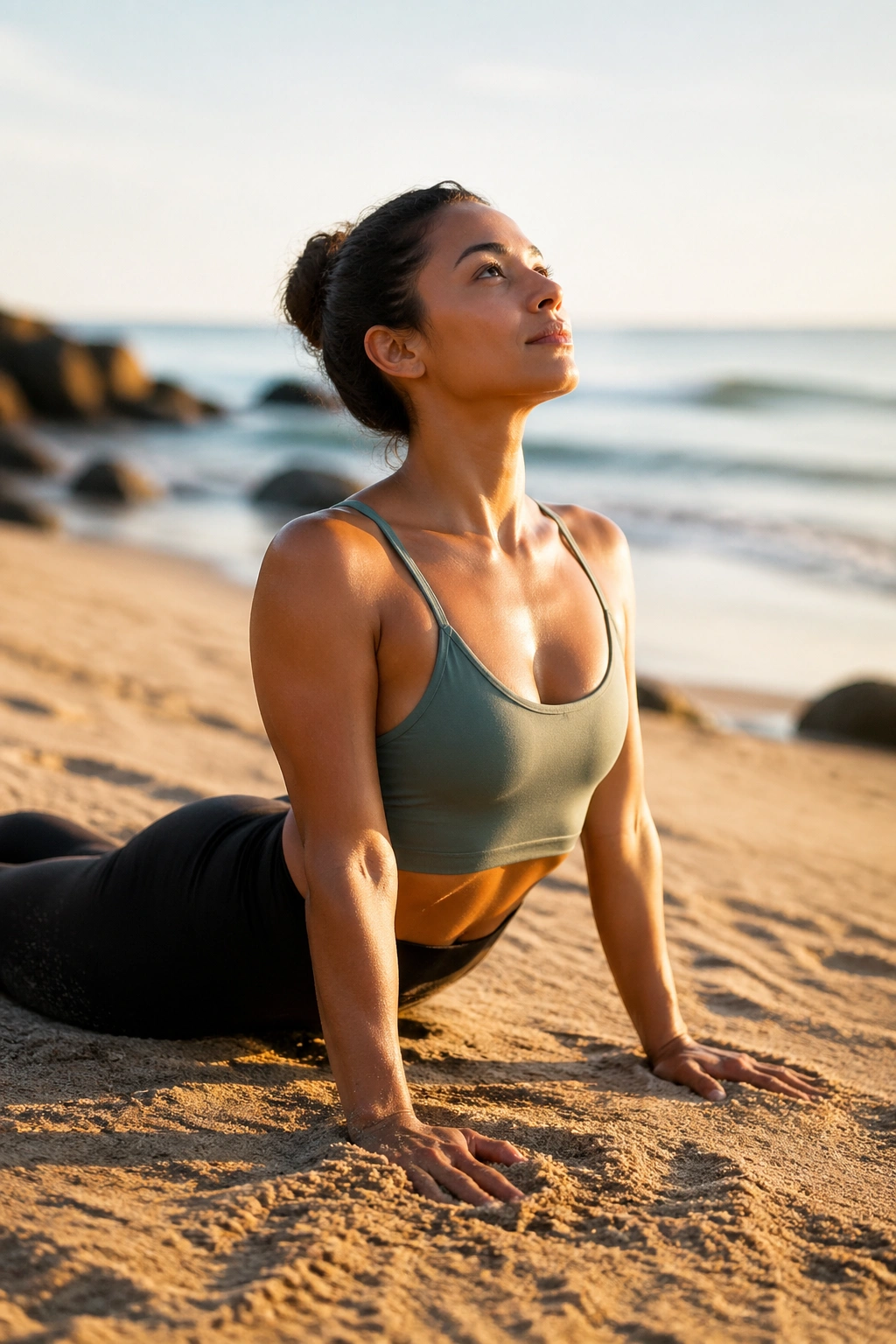
Cobra Pose feels especially good on warm sand because the chest lifts while the belly and thighs stay grounded, and that contact with the earth makes the backbend feel steady instead of dramatic.
Lie on your stomach with the tops of the feet pressing down. Place the hands under the shoulders, elbows tucked close to the ribs, and begin to lift the chest on an inhale. Keep the pubic bone heavy. That anchor is what protects the lower back. If the arms do all the work, the pose gets noisy fast.
I prefer a small Cobra on the beach over a huge one. A low lift lets the shoulder blades slide back and down while the chest opens toward the morning light. It is enough. More than enough, honestly.
Clean form notes
- Neck stays long
- Shoulders move away from the ears
- Elbows hug in
- Lower ribs stay connected to the sand
22. Savasana
Savasana on the beach is the part that makes the whole sunrise session land. Not because you earned it, and not because it looks poetic, but because the body needs a minute to stop managing everything.
Lie flat on your back, let the feet fall wide, and rest the palms up or down by your sides. If the sand is cool, place a towel under your body. If the light is bright, cover the eyes with a forearm or soft cloth. The breath gets smaller here, which is exactly right. You are not trying to fix anything. You are letting the earlier work sink in.
The ocean noise, the bird calls, the shifting warmth of the sand under your shoulders — all of it gets louder when you stop moving. That can feel strange at first. Then it starts to feel like the point of the whole practice. The body has worked, balanced, stretched, and steadied itself. Now it gets to stop proving anything.
If you only remember one thing from a sunrise sand session, let it be this: the beach rewards honesty. Pick the pose that fits the ground you are on, keep the stance a little shorter than you think, and let the sand teach you where control ends and ease begins.
