



Hair doesn’t grow on command, and that is the part most glossy wellness advice skips.
The best yoga poses for healthy hair growth don’t act like fertilizer. They support the messy, real-life parts of the process: a calmer stress response, steadier breathing, less jaw clenching, better sleep, and a body that isn’t permanently braced against its own desk job. Hair also grows slowly — roughly half an inch a month for many people — so the habits that help tend to be the boring ones you can repeat.
That matters more than people think.
If shedding is sudden, patchy, painful, or tied to a scalp that feels sore, yoga is not the answer by itself. Dermatologists usually want to rule out iron issues, thyroid problems, hormone shifts, illness, or traction from tight styles. Yoga can still sit in the background and do its job, but it should never replace real medical care when the pattern looks off — especially if the shedding is heavy or new.
The poses below are the ones I’d keep in a practical routine. Some are full inversions, some are floor stretches, and a few look almost too plain to bother with. Plain is often the point. The poses that help most are the ones you can actually do, breathe through, and repeat without turning it into a performance.
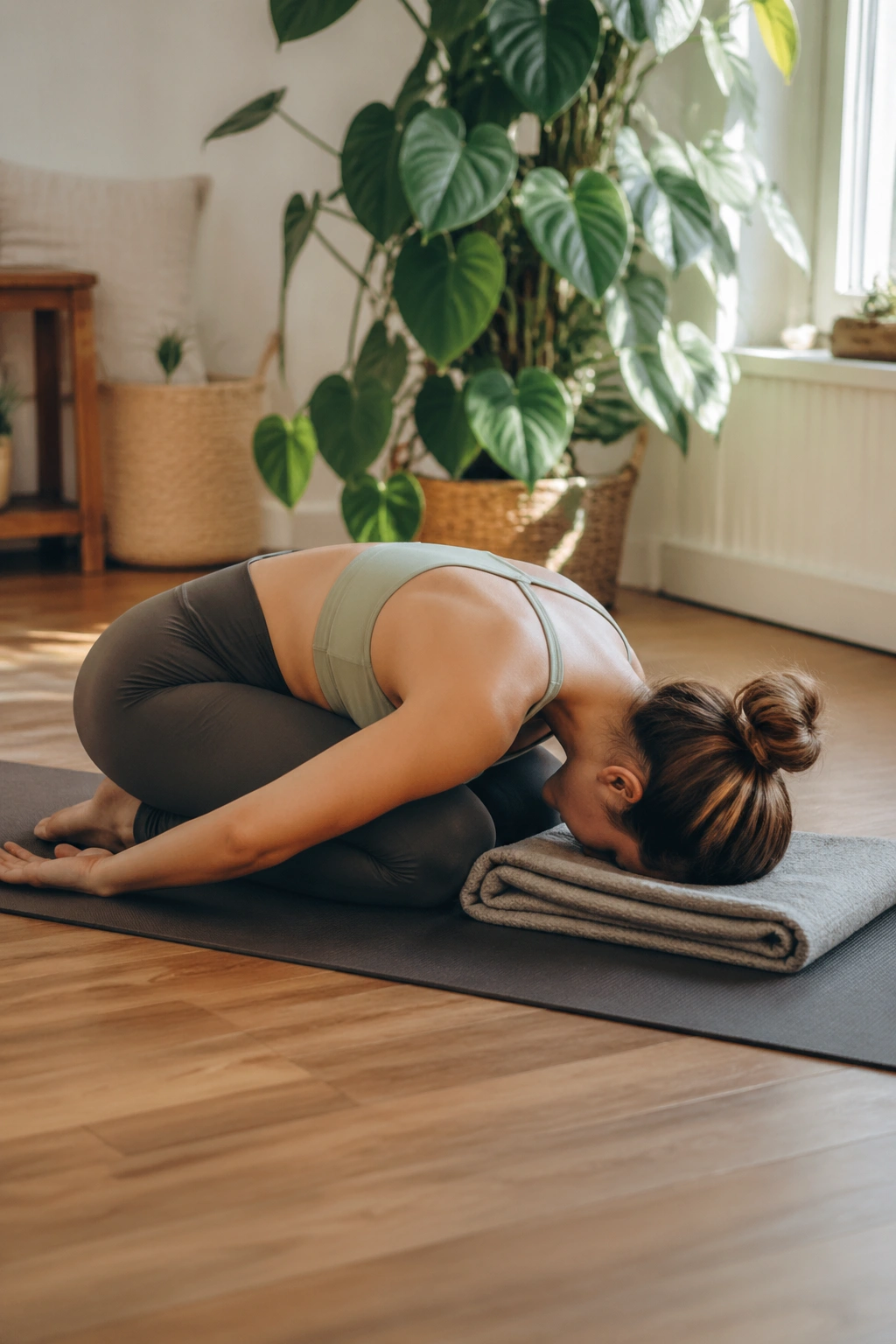
1. Child’s Pose and Slow Belly Breathing
Start here if your shoulders live somewhere around your ears.
Child’s Pose is one of the quietest ways to tell your nervous system to stop shouting. Kneel on the floor, sit your hips back toward your heels, and fold forward with your arms stretched long or resting beside your body. If your forehead doesn’t reach the mat, that’s fine. Put it on a block, a folded towel, or a stack of blankets and leave your ego out of it.
The reason this pose earns a spot in a hair-growth routine is indirect, and that’s exactly why it matters. Hair follicles do not care about hype. They care about what your body is doing over time, and a pose that encourages slow exhalations, unclenched jaws, and relaxed shoulders can help lower the kind of stress that makes shedding worse for some people.
How to make it work for you
- Hold the pose for 6 to 10 slow breaths or 1 to 3 minutes if it feels good.
- Let your belly press gently into the thighs on the inhale.
- Keep your elbows soft and your hands relaxed.
- If your knees complain, place a folded blanket behind them or keep your hips higher.
One useful rule: if you find yourself gripping the floor, you’re doing too much. Back off a little.
That tiny retreat is often the whole game. Not heroic. Just repeatable.
2. Standing Forward Fold with Soft Knees
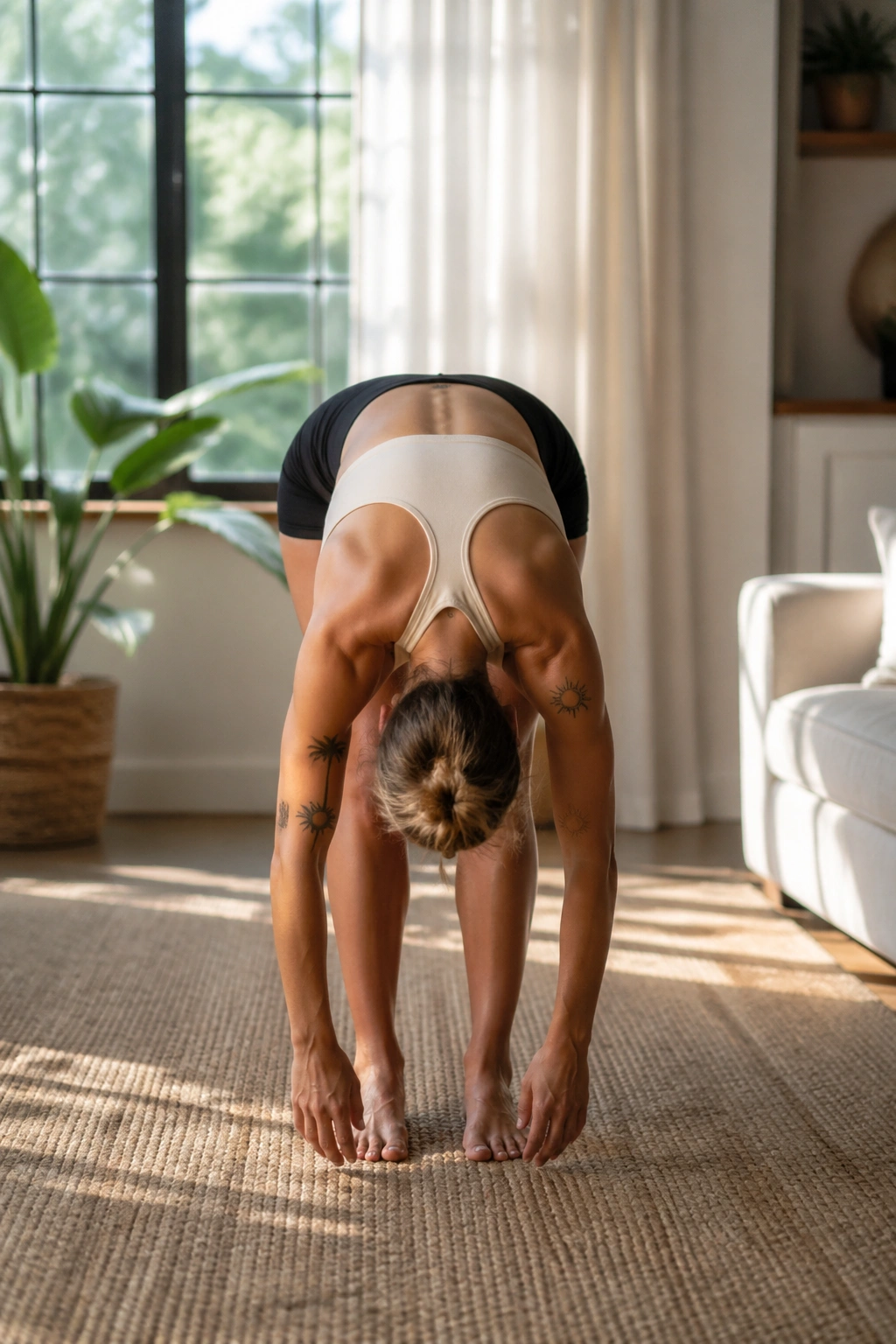
A forward fold looks simple, and that is why people rush through it.
Don’t. The useful version is slow, loose, and a little ugly in the best way. Stand with your feet hip-width apart, unlock your knees, and hinge at the hips until your torso drapes toward the floor. Let your head hang. Let your arms dangle. If the backs of your legs pull hard, bend your knees more and stop trying to “earn” the stretch.
The upside here is less about chasing an extreme shape and more about giving your whole upper body a chance to decompress. The back of the neck often holds onto tension you never noticed while you were busy answering messages, driving, and staring at screens. A soft fold gives that line from the scalp through the spine a break. That can be useful when you’re trying to support healthy hair growth, because stress and tension tend to travel together.
Keep it gentle. This is not a contest.
If you get lightheaded, come up slowly and widen your stance. People with high blood pressure, dizziness, or inner-ear issues often do better keeping this fold brief — just a few breaths instead of a long hang. The pose still counts even when it’s small.
Bend your knees before your back rounds. That one adjustment saves a lot of hamstring grumbling and keeps the stretch where it belongs.
3. Downward-Facing Dog for Gentle Circulation
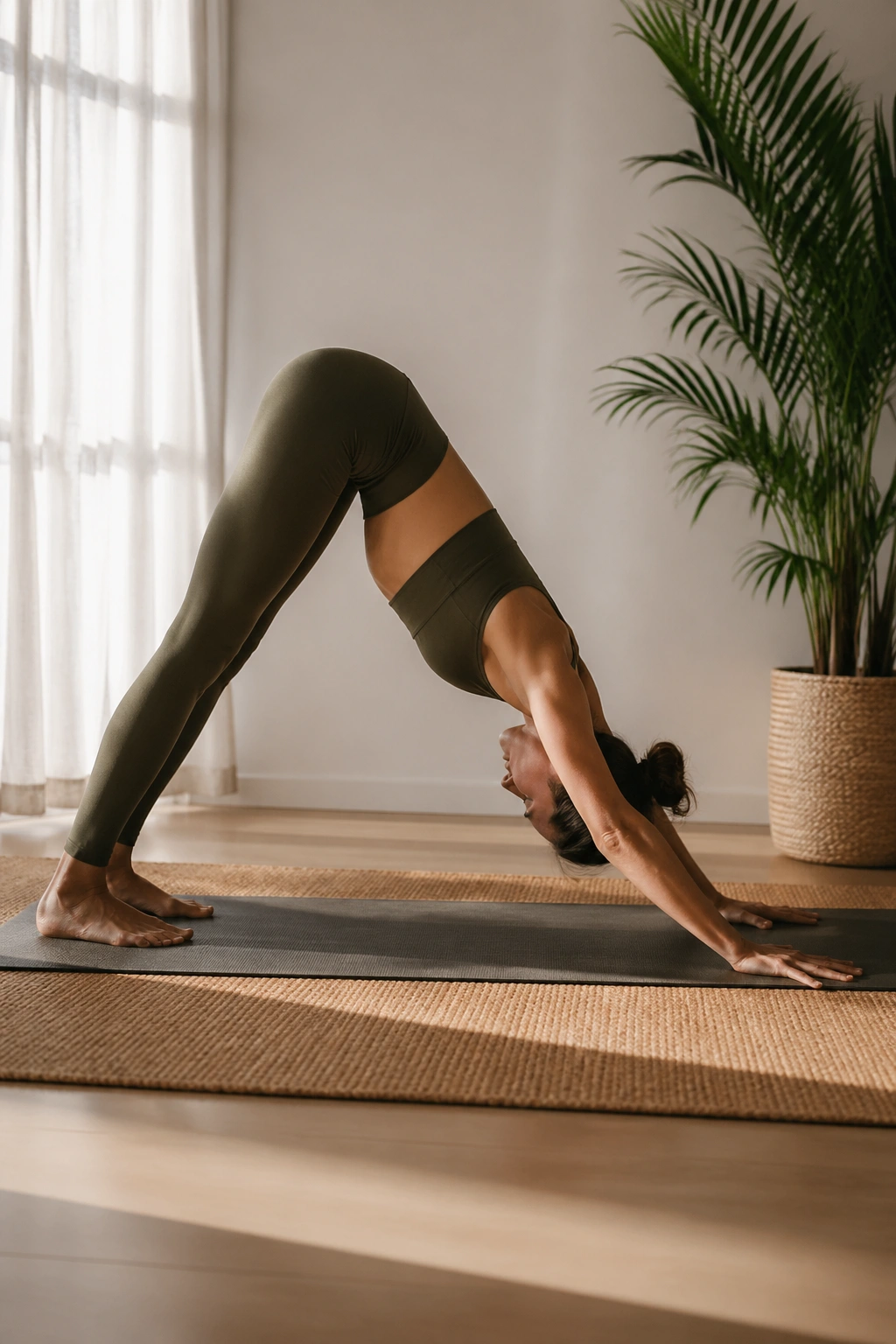
Why does Downward-Facing Dog show up in so many routines? Because it does a lot without asking for much.
From hands and knees, tuck your toes, lift your hips high, and make an upside-down “V” with your body. Spread your fingers wide, press the floor away, and let your heels drift toward the mat without forcing them there. The pose gives you a mild inversion, shoulder work, hamstring length, and a long line of breath all at once. That combination is part of why it’s so common in yoga poses for hair growth routines.
What I like about it is the balance. It wakes you up without revving you into the ground. Some poses feel sleepy. Some feel athletic. Downward Dog lives in the middle, which makes it useful for people who spend too much time hunched forward. That rounded posture is common, and it can make the neck and upper back feel like they’ve been carrying bricks.
How to get the most from it
- Stay for 5 to 8 breaths.
- Keep your knees bent if your back feels tight.
- Press the base of your index finger and thumb into the mat.
- Move your chest gently back toward your thighs instead of trying to flatten your heels.
- Exit if your wrists ache badly.
A lot of people turn this pose into a hamstring showpiece. Don’t. The stretch should feel long, not sharp. If your breath gets choppy, soften the pose and keep going anyway.
4. Legs-Up-the-Wall for Evening Reset
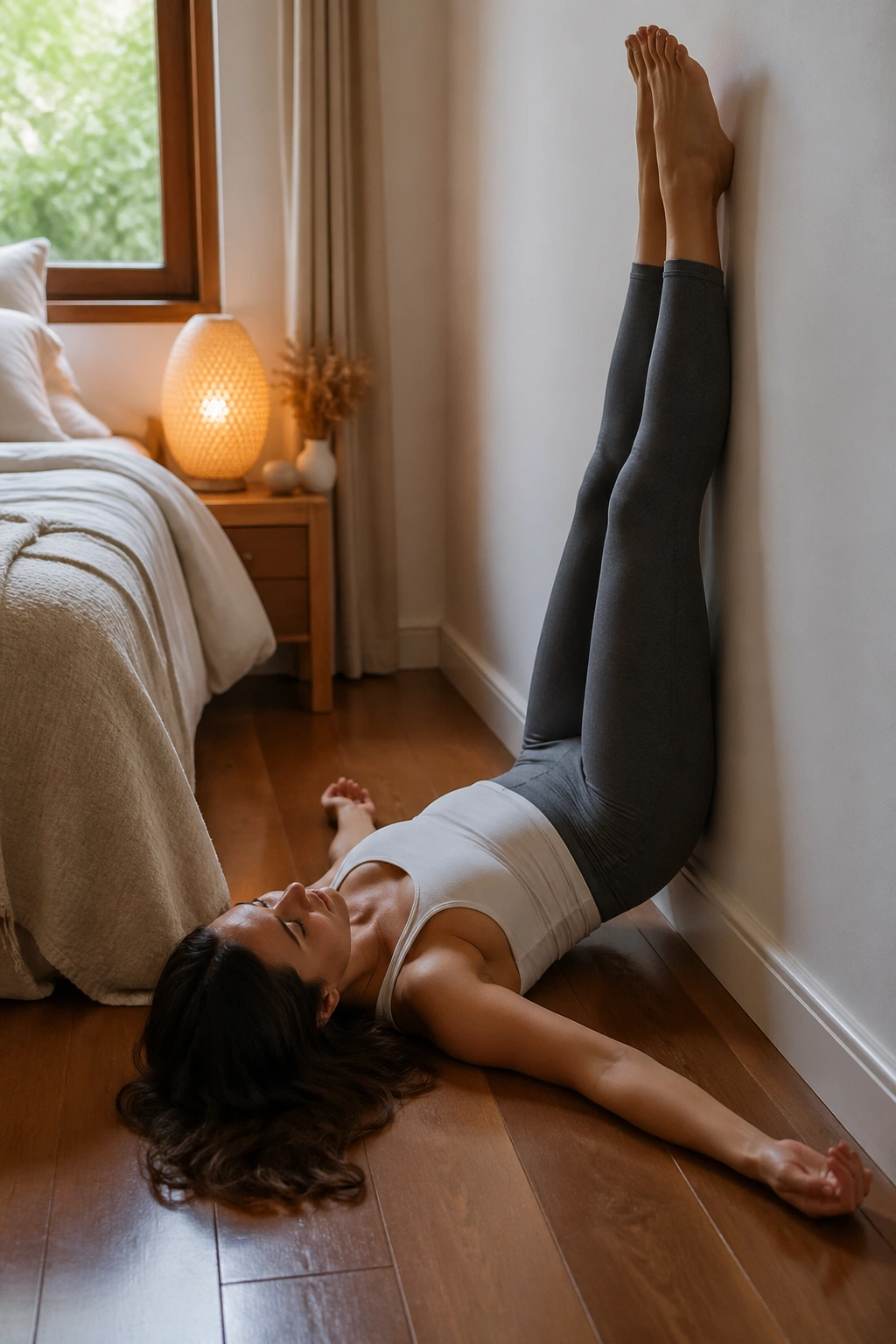
There’s something almost unfairly calming about putting your feet on a wall.
After a long day, Legs-Up-the-Wall feels like your body finally got permission to stop carrying itself for a minute. Lie on one side next to a wall, swing your legs up, and scoot your hips close enough that your legs rest vertically or close to it. Your arms can open out to the sides, or you can place one hand on your belly and one on your chest if that feels more grounded.
This is not a flashy pose. Good. Flashy is overrated here. The point is to make the nervous system notice that the danger has passed. When your breathing gets slower and your jaw unclenches, that quiet matters more than any promise of instant scalp magic. If stress seems to trigger extra shedding for you, this pose deserves a permanent place in your routine.
If your hamstrings are tight, slide a folded blanket or bolster under your hips. If you feel pressure in your lower back, move a little farther from the wall. If your reflux flares in this position, skip it or keep the stay short.
- Best hold time: 3 to 10 minutes
- Good times to use it: before bed, after standing all day, after a hard workout
- What it should feel like: heavy legs, slow breath, soft belly
If you only have five minutes, use those five minutes here. It’s that kind of pose.
5. Bridge Pose to Wake Up the Back Body
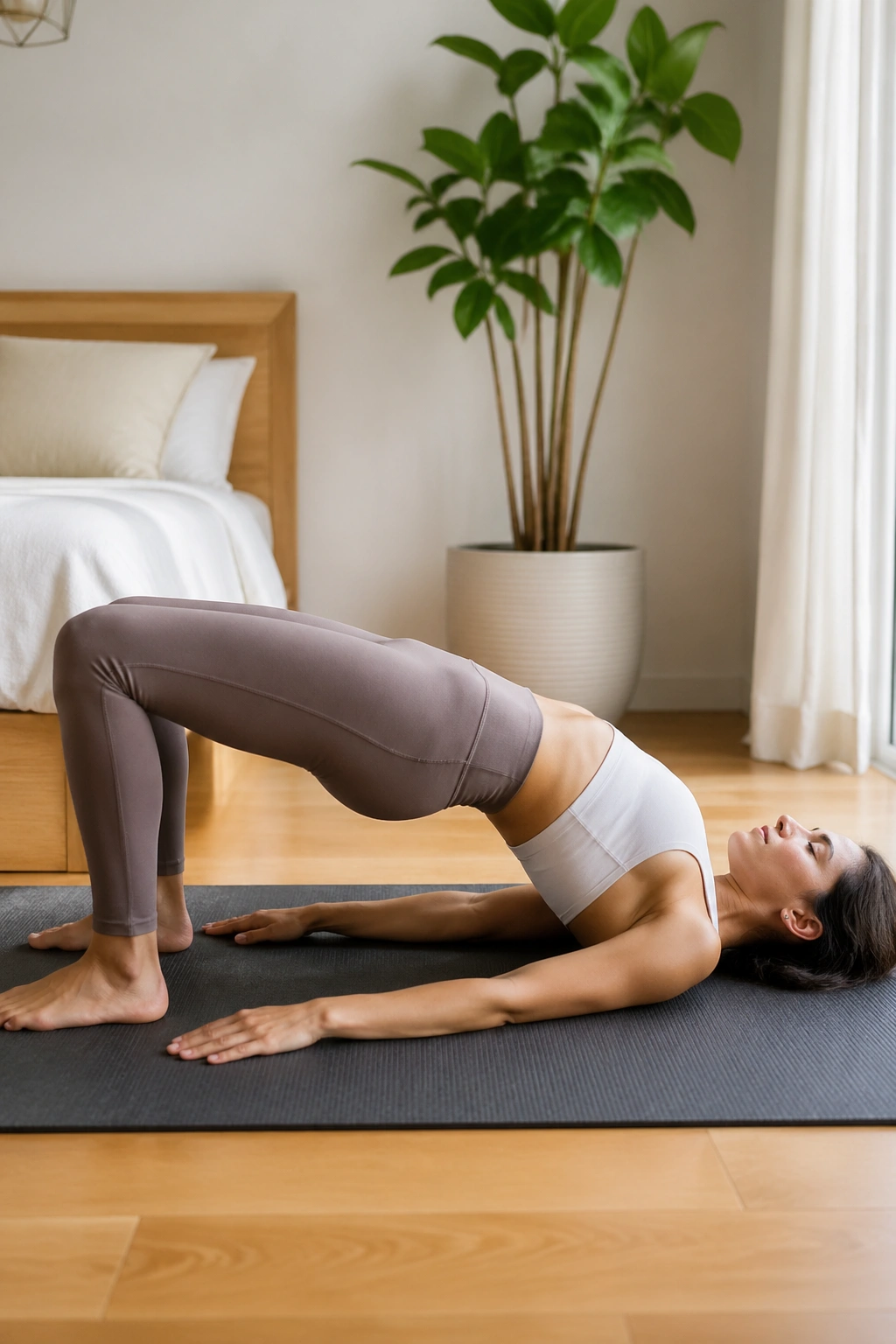
Bridge Pose is simple, but not sleepy.
Lie on your back with your knees bent and your feet flat on the floor, hip-width apart. Press through your heels, lift your hips, and let your chest open without flinging your ribs into a big arch. Your glutes will work. Your hamstrings will wake up. Your front body gets a gentle stretch. That’s a useful mix when you sit a lot and your posture starts to collapse in on itself.
I like Bridge because it feels honest. If your body is tired, you know it. If your back is overdoing it, you know that too. The pose teaches a bit of control. And control matters when you’re trying to support hair health through stress reduction, because a body that feels organized tends to breathe better than one that spends all day braced.
You can make this pose gentler by placing a yoga block or firm cushion under your sacrum for a supported version. That turns it into more of a rest pose than a strengthening one, which is often the smarter choice if you’re already carrying tension.
Your neck should stay long. If you feel pinching, back out immediately.
Keep the weight in your shoulders and feet, not your neck. That’s the difference between a helpful backbend and a stubborn one.
6. Cat-Cow to Loosen the Neck and Upper Back
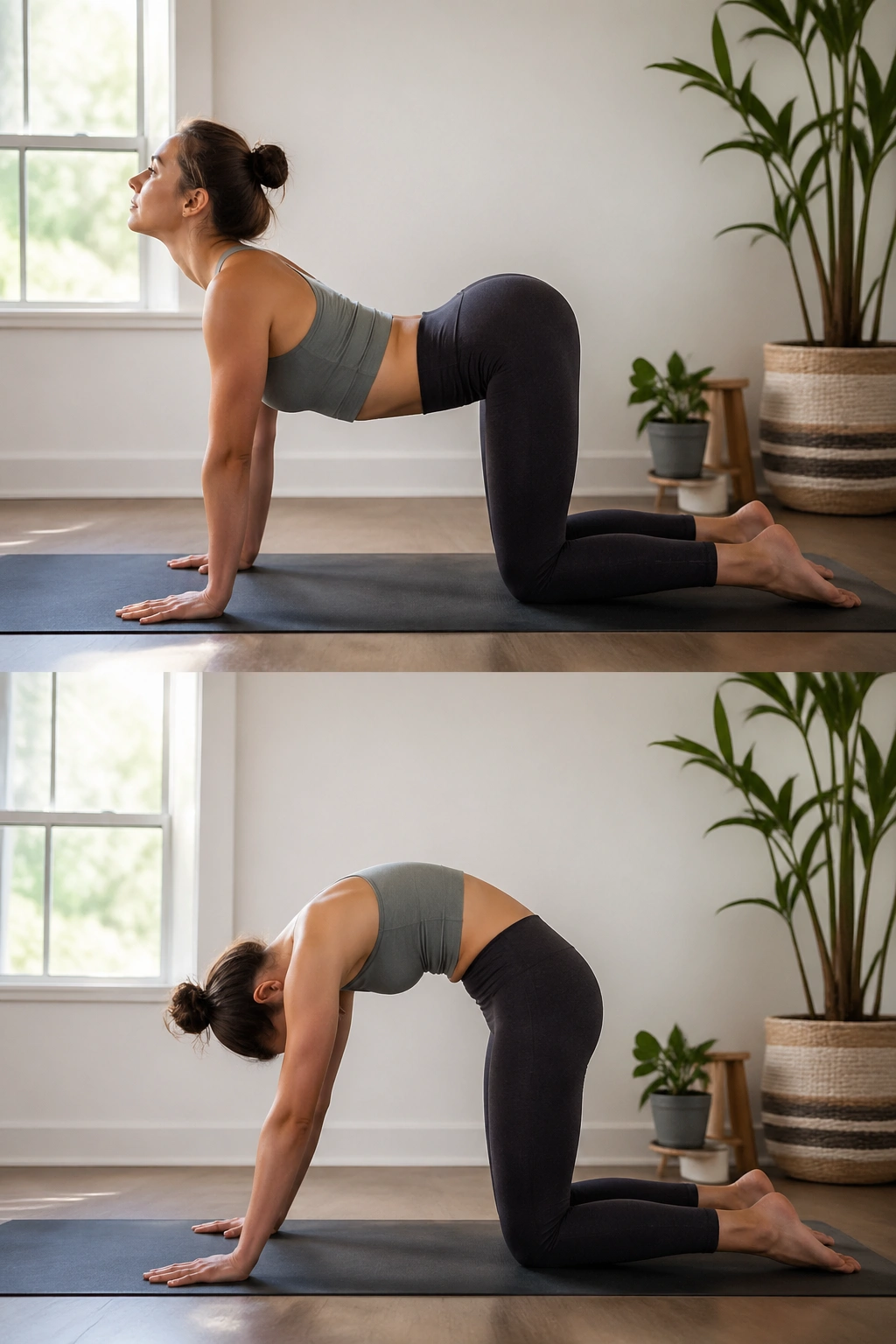
Unlike static stretches, Cat-Cow gives your spine a moving reset.
Come onto your hands and knees with your wrists under your shoulders and your knees under your hips. On the inhale, drop the belly and lift the chest into Cow. On the exhale, round the spine into Cat and let the back of the neck lengthen. The movement is small when it’s done well. That’s a good sign, not a bad one.
People who sit under overhead lights all day tend to carry a lot of hidden tension between the shoulder blades. Cat-Cow helps that area shift without forcing it. It also pairs breath with movement, which is one of the easiest ways to quiet the nervous system when your day has been loud from the first email onward. If you’re building a hair-growth-support routine, this is one of the easiest pieces to repeat because it asks for almost nothing.
What to watch for
- Move from the tailbone all the way up through the crown of the head.
- Don’t jam the chin up or drop it hard.
- Keep the elbows soft.
- If wrists hurt, come down to forearms or use fists on blocks.
Do 6 to 10 slow rounds and stop before it turns sloppy. Sloppy doesn’t help. Smooth does.
7. Seated Forward Bend for a Quiet Nervous System
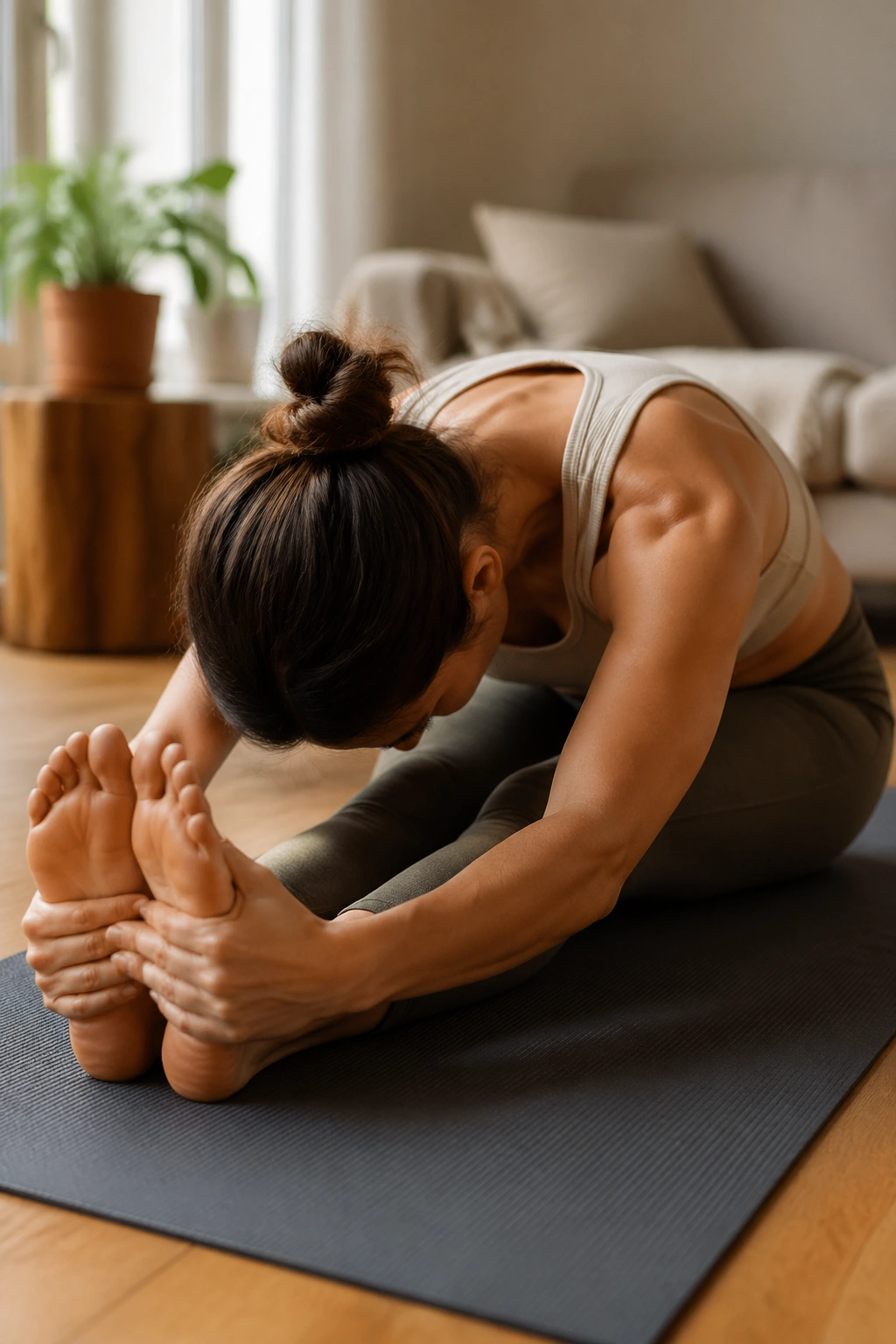
Can a seated fold help a stressed-out scalp? Indirectly, yes.
Sit with your legs extended in front of you, then hinge forward from the hips with a long spine. Reach for your shins, ankles, or feet — wherever your body can stay honest without yanking. A lot of people think the point is to touch their toes. It isn’t. The point is to create enough length through the back body that the breath starts to slow down on its own.
This pose does a nice job of calming the mind because it removes some of the visual noise. You’re looking down. The room gets smaller. Your breath gets quieter. That shift can matter if stress has been piling up and you want a routine that supports healthy hair growth without adding one more hard thing to your day.
This is not a contest.
If your hamstrings are tight, bend your knees. If your lower back rounds hard, sit on a folded blanket. If your feet cramp, flex them gently or soften the legs. The better version is the one you can breathe through for 5 to 8 breaths without gritting your teeth.
How to breathe here
- Inhale and lengthen the spine.
- Exhale and soften the shoulders.
- Keep the neck in line with the back.
- Let the fold deepen only after the breath settles.
A quiet stretch done well beats a dramatic stretch done badly.
8. Reclined Bound Angle to Open Tight Hips
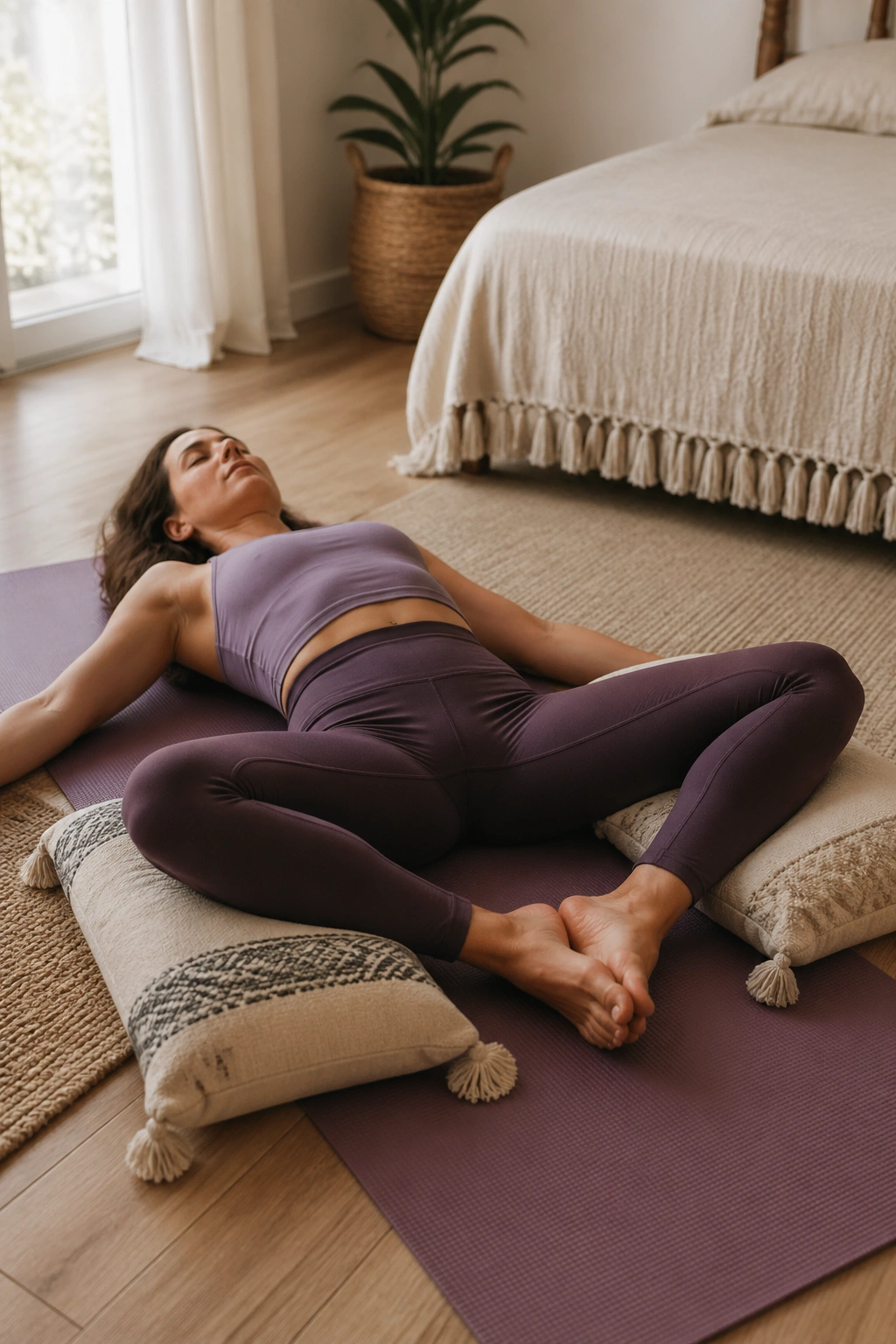
A few pillows turn this into a different pose.
Lie on your back, bring the soles of your feet together, and let your knees fall open. If your hips are tight, place blocks or pillows under each thigh so you’re not hanging on your groin muscles. That tiny bit of support changes everything. The pose stops feeling like a demand and starts feeling like a rest.
Reclined Bound Angle is one of my favorite options for people who carry stress low in the body. Tight hips, shallow breathing, clenched abdomen — those things often travel together. When your front body can soften, the breath tends to get lower and slower. That matters more than people think when they’re looking for yoga poses for hair growth, because the stress link is usually the real story.
If you lie there long enough, you can almost feel the day sliding off. Ten minutes is lovely. Three minutes still counts.
Set it up like this
- Keep the lower back comfortable, not flattened hard into the mat.
- Support the thighs if they hover.
- Put one hand on the belly if that helps you stay grounded.
- Exit if the hips pinch.
A pose does not have to be deep to be useful. It has to be sustainable.
9. Cobra Pose for Chest Opening and Posture
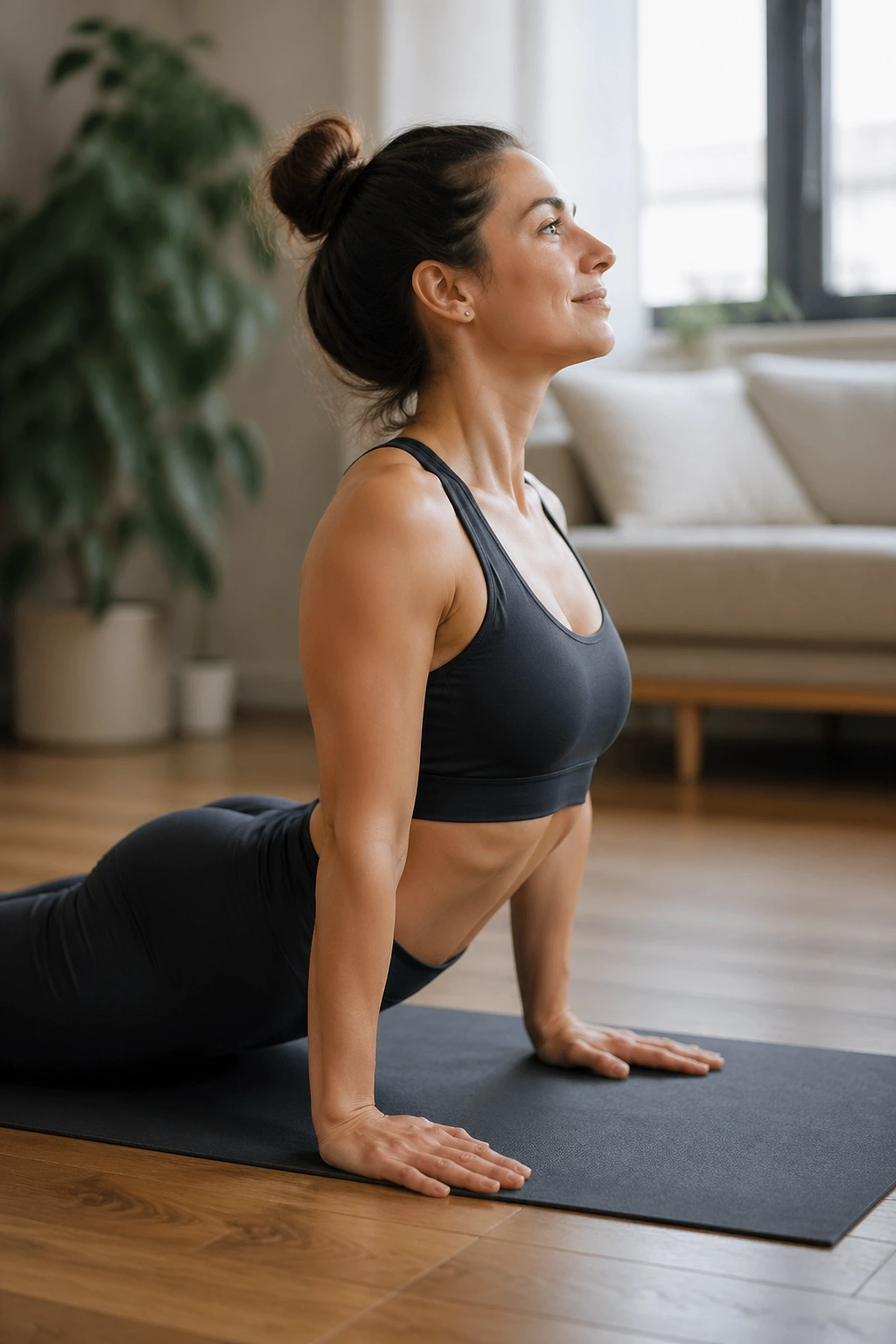
Cobra is one of the best posture fixes in the list.
Lie on your stomach with your legs long and the tops of your feet on the floor. Place your hands under your shoulders, press lightly, and lift the chest a few inches. The key is restraint. A small Cobra, done with the shoulders rolling down and the neck long, is much better than a high, cranky backbend that dumps all the work into your lower back.
Why include it in a hair-health routine? Because the front of the body gets short and tight when you spend hours curled over a keyboard. That shape can make breathing shallow and the neck feel trapped. Cobra helps undo that. A better breath pattern won’t grow hair overnight, but it can support the kind of steadier stress response that hair follicles seem to prefer.
The warning here is simple: do not crunch your low back to get height.
A low, clean lift is enough. If you want even less pressure, keep the hands on the mat and lift only from the upper chest. Sphinx Pose is a fine swap if your back wants something gentler.
One sentence is enough here: If your neck feels jammed, lower down.
10. Fish Pose with a Pillow Under the Upper Back
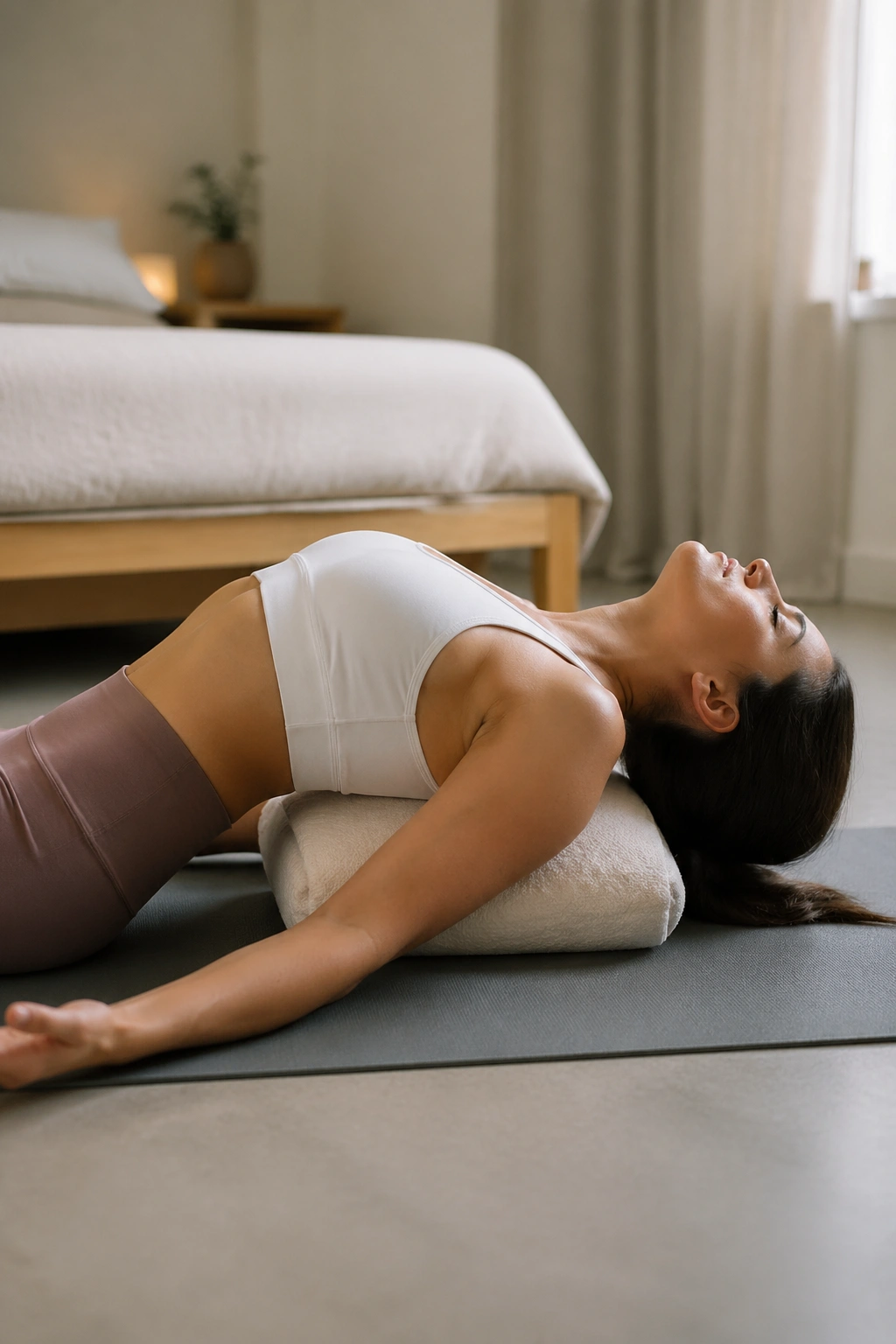
Fish Pose looks delicate until you try it.
Lie on your back with a folded blanket, bolster, or firm pillow under your upper back, close to the shoulder blades. Let your chest open over the support and allow the head to rest back only if your neck feels fine. Legs can stay long or bent. Arms can rest by your sides or open out softly. The first thing most people notice is the breath. The ribcage gets room. The front body stops feeling pinched.
That matters for hair growth support because a lot of tension lives right where the neck meets the shoulders. When that area loosens, breathing often becomes deeper without much effort. Fish Pose is especially nice if you tend to hunch inward all day and need a counter-shape that feels restorative rather than strenuous.
Feels fancy. It is not.
If you have neck issues, keep the head supported or skip the full shape and use a smaller chest opener instead. A folded blanket under the shoulders can be enough. You do not need a deep backbend to get the benefit.
The best version feels like a warm sigh, not a dramatic performance.
11. Extended Puppy Pose for Desk-Weary Shoulders
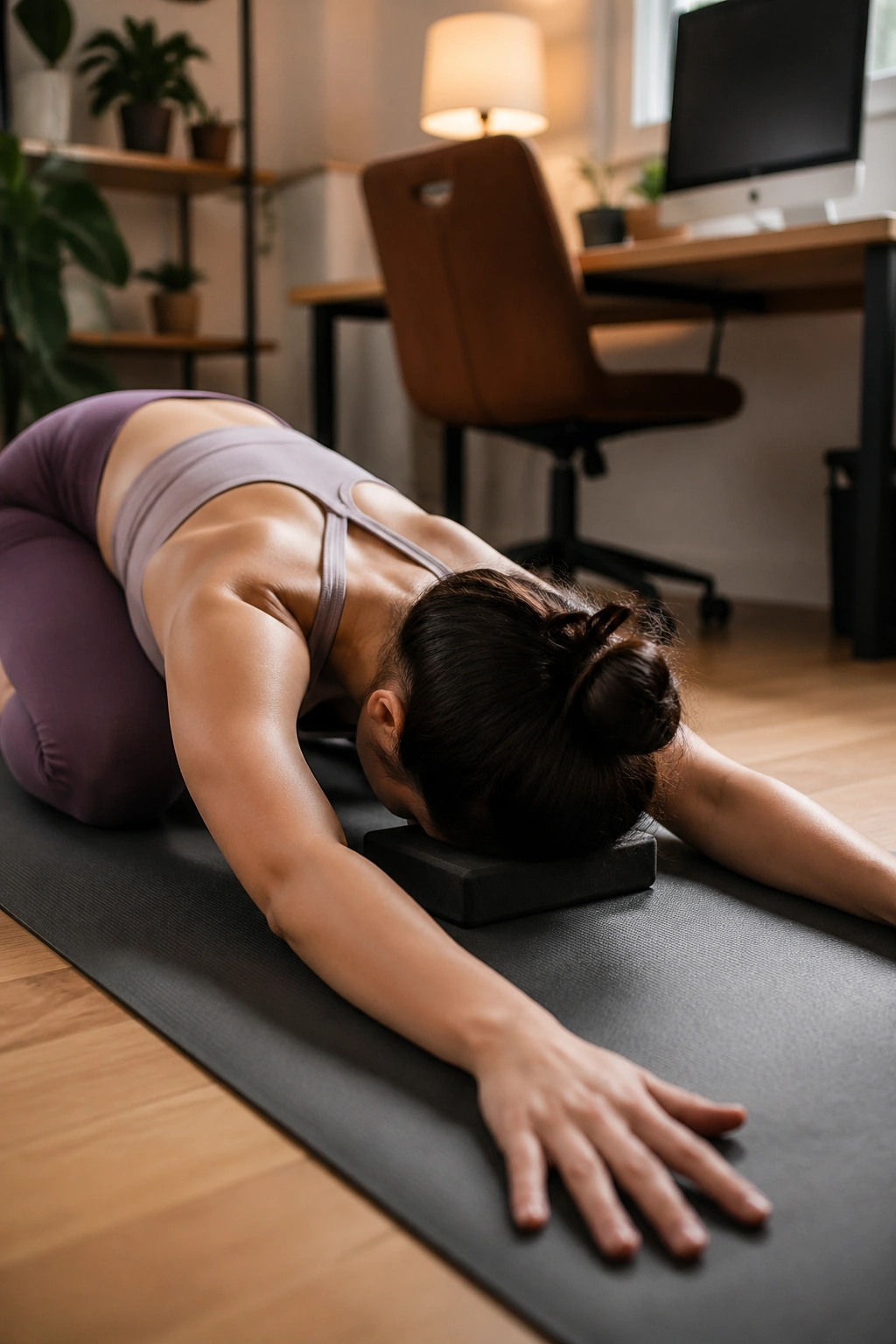
Extended Puppy Pose is what happens when Child’s Pose opens the shoulders more.
Come to hands and knees, then walk your hands forward while keeping your hips stacked over your knees. Lower the chest toward the floor and rest your forehead, chin, or upper chest on the mat or a block. The shape stretches the lats, shoulders, and upper back in a way that many desk workers badly need. It also opens the side ribs, which can make breathing feel less trapped.
That shoulder opening matters because tension often starts there and then marches upward into the neck. If your scalp feels tight when your shoulders are knotted, this is one of the best places to start. It won’t fix everything. It doesn’t need to. Even a few slow rounds can make your whole upper body feel less defensive.
Unlike Child’s Pose, this one asks a little more of the shoulders and upper back. That makes it a better fit for people who are stiff in the front line but can still tolerate a mild stretch without pain.
- Keep the hips above the knees.
- Slide a blanket under the chest if the floor feels too far away.
- Use a block under the forehead if your neck doesn’t like hanging.
- Stay for 5 to 8 breaths and come out before your lower back starts to sag.
If you feel a pinch in the shoulders, shorten the reach. That tiny adjustment makes the pose much kinder.
12. Supine Spinal Twist for a Calm Exhale
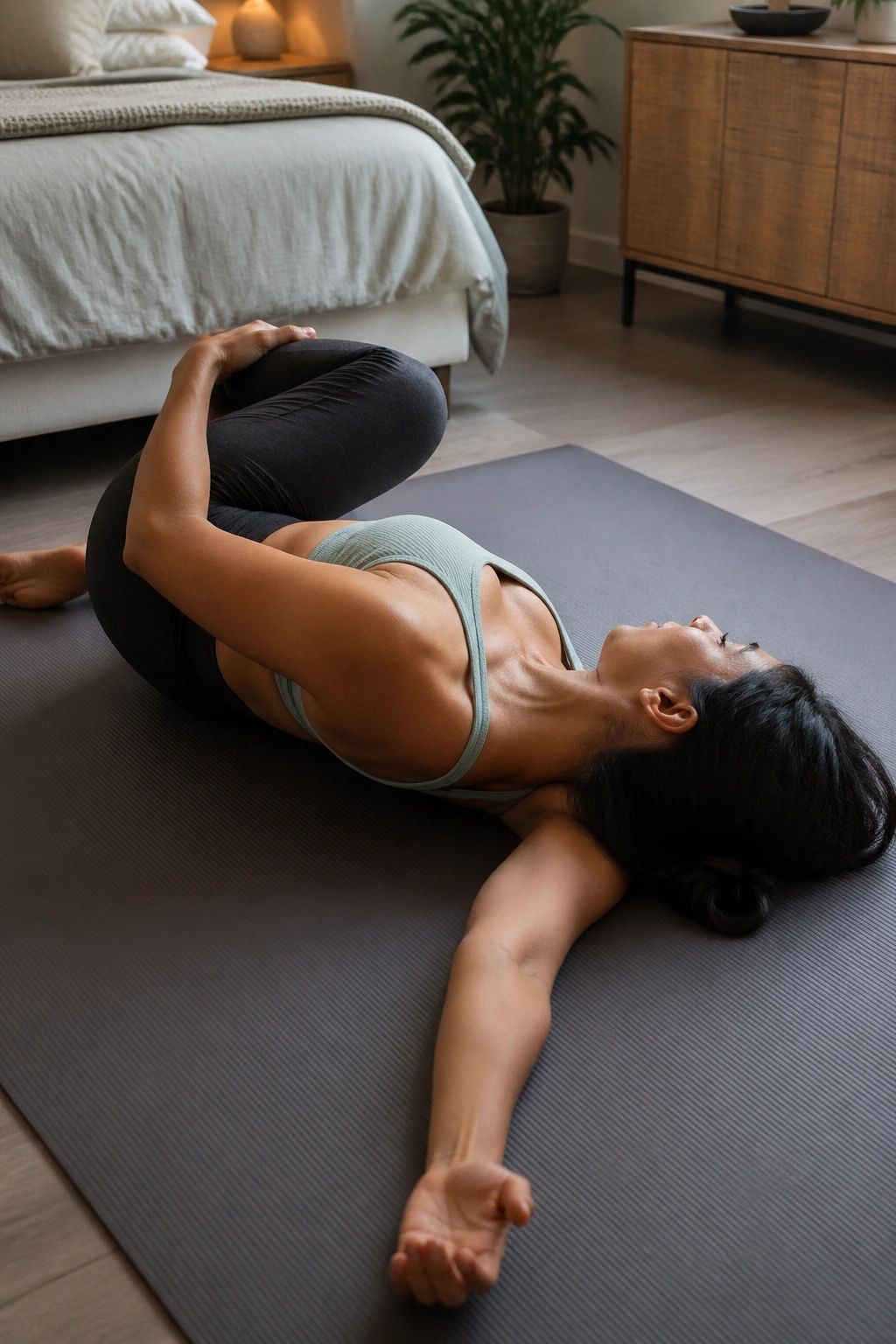
A twist after a long day can feel like wringing out a towel.
Lie on your back, draw one knee across your body, and let it rest toward the opposite side while both shoulders stay as close to the floor as possible. Stretch the opposite arm out to the side and turn your gaze away from the bent knee if that feels okay in your neck. The posture is simple. The effect can be surprisingly soothing.
Supine twists do a useful thing: they encourage the exhale to lengthen. A longer exhale is one of the easiest ways to cue the body toward rest. That is part of why this pose belongs in any yoga sequence built around hair growth support. Not because it magically changes follicles, but because it helps settle the system that may be driving extra shedding in the first place.
A few details that matter
- Keep the twist mild, not yanked.
- Use a pillow between the knees if your lower back likes support.
- Hold each side for 5 to 10 breaths.
- Come out slowly and pause in the middle before switching sides.
If the twist pulls on your knee or makes your shoulder lift, back off. A smaller twist is often the smarter one.
13. Thread the Needle for Neck and Scalp Tension
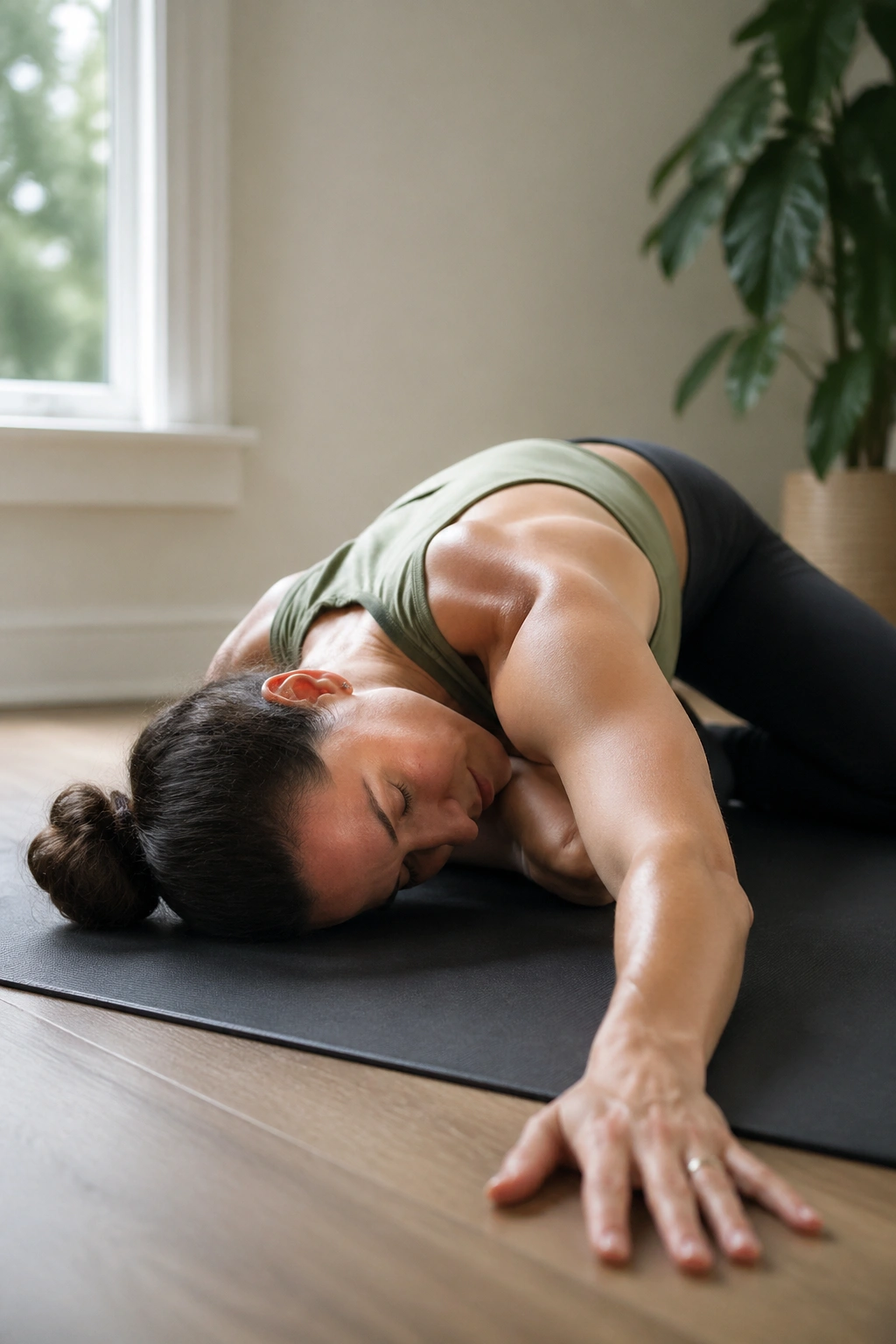
Why does Thread the Needle help when your neck feels like a fist?
Because it reaches into the shoulder blade area, and that’s where a lot of upper-body tension hides. Start on all fours, slide your right arm under your left arm, and rest your right shoulder and temple on the mat. Keep your hips above your knees if you can. Then breathe into the space between your shoulder blades and let the upper back soften around the twist.
This pose is a good match for people who carry tension high and small. Tight neck, clenched jaw, scalp that feels taut by the end of the day — that cluster is common. Thread the Needle won’t cure it, but it gives that whole region a break. And because the pose is low to the ground, it feels more restful than a standing stretch that you have to balance through.
How to get the most from it
- Keep the lower hand pressing lightly into the floor for support.
- Let the top shoulder stay heavy.
- Stay for 5 breaths per side, or longer if your breath stays smooth.
- If your neck dislikes pressure on the temple, rest the cheek or skip the head-down version.
A lot of people rush this pose and never get past the first breath. Don’t. Let the exhale do the work.
14. Wide-Legged Forward Fold for a Deeper Hang
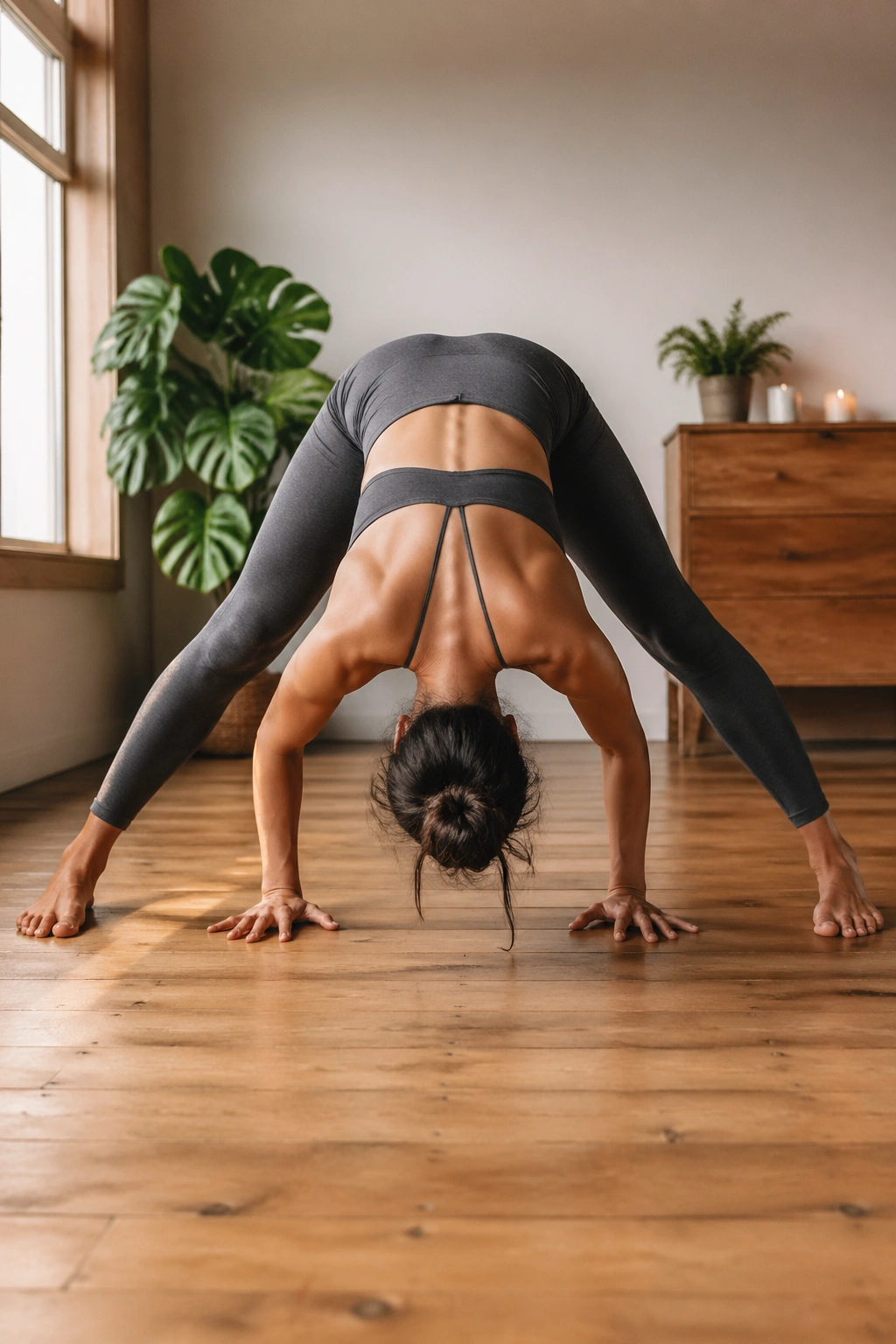
Wide-Legged Forward Fold gives you a head-down position with less jam in the lower back than a straight-leg fold.
Stand with your feet well apart, toes pointed forward or slightly in, and hinge at the hips until your torso hangs between your legs. Rest your hands on the floor, on blocks, or on your shins. Keep the knees soft enough that the hamstrings don’t start yelling. If the floor is far away, blocks are not a cheat. They are the tool.
I like this pose because it creates a lot of space without asking for precision. Your inner thighs get a stretch, the spine gets a long line, and the head drops below the heart in a way that can feel calming. It’s a nice middle ground for people who want some of the upside of an inversion without the strain of a full shoulder stand.
If the room spins, come up slowly. That sounds obvious, but people ignore it and regret it.
The fold should feel broad, not sharp. Broad is the word to remember here. If you can breathe evenly and your face stays soft, you’re in the right neighborhood.
For a slightly more restful version, bend the knees and let the torso hang closer to the thighs. That often gives a better stretch than forcing straight legs.
15. Supported Shoulder Stand at the Wall
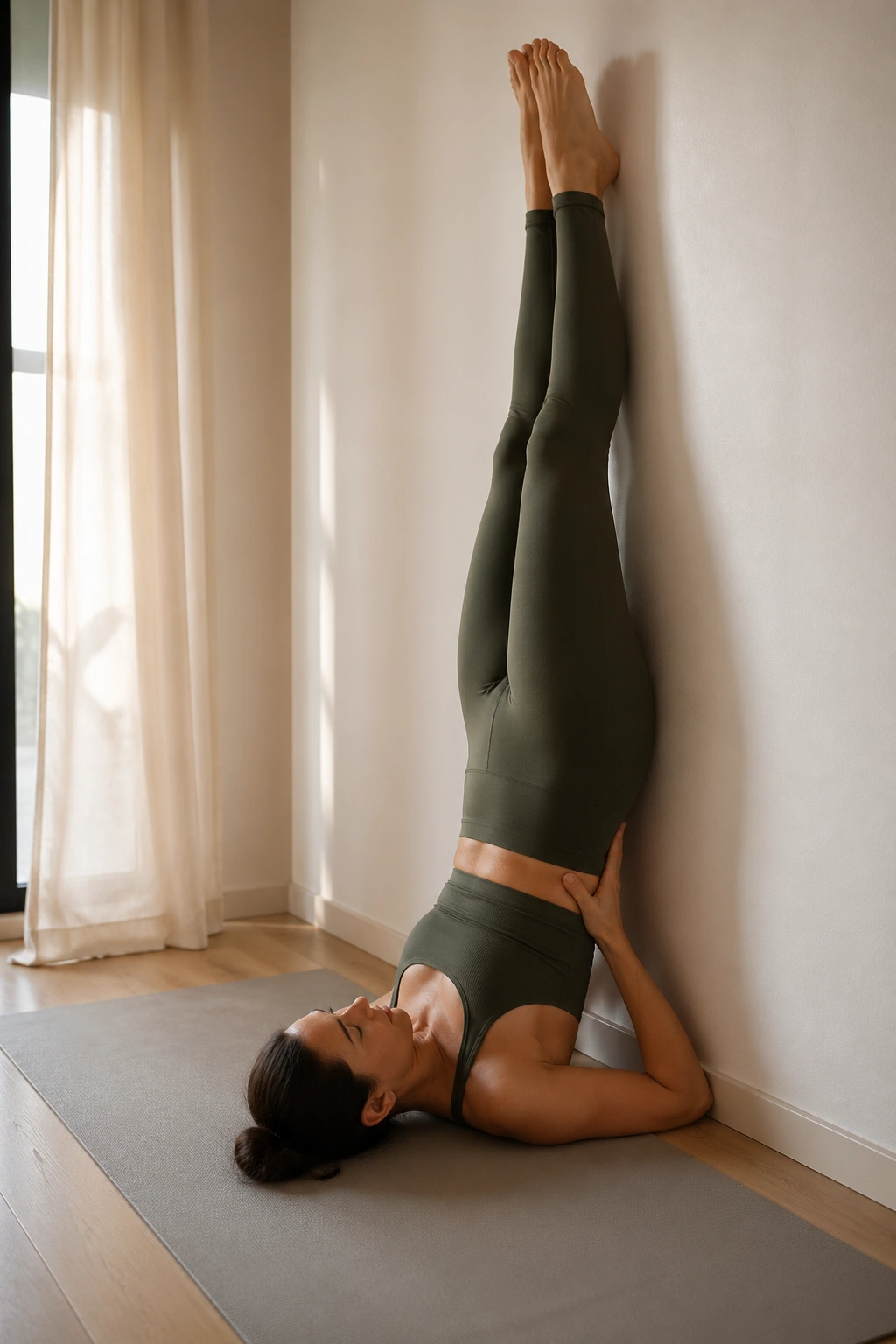
Shoulder stand is not the pose to impress anyone with.
Used well, a supported version can be useful. Used badly, it can irritate the neck fast. That’s why I prefer the wall-supported variation for most people who are curious about inversions and want to keep things safer. Lie near a wall, slide your hips up, and let your legs rest vertically while your shoulders and head stay grounded. If you already know Shoulder Stand and your neck feels fine, you can use a folded blanket under the shoulders and keep the neck free. If not, the wall version is plenty.
The reason it belongs on a list about healthy hair growth is the same reason Legs-Up-the-Wall works: the inversion is gentle, the breath slows, and the body gets a different kind of signal than the one it gets from standing, typing, and hurrying. Some people find that reassuring. Some find it too much. Trust the body’s answer, not the pose’s reputation.
Skip this pose if you have neck problems, glaucoma, uncontrolled high blood pressure, or if inversions make you feel uneasy.
That is not me being dramatic. That is just the sensible line.
If Shoulder Stand feels shaky, use Legs-Up-the-Wall instead. It gets you most of the way there without asking your cervical spine to play hero.
Final Thoughts
Hair growth is slow, and that frustrates people. Fair enough. A pose won’t rewrite your follicles by tomorrow morning, and no honest person should pretend otherwise.
What these yoga poses do offer is a way to lower the background noise that can make shedding worse: tense shoulders, shallow breathing, bad sleep, and the constant feeling that your body is braced for the next thing. That’s not glamorous work. It is the useful kind.
If I were building a short routine for hair growth support, I’d pick one fold, one inversion, one chest opener, and one floor rest, then repeat the same set for a few weeks instead of chasing novelty. Consistency beats intensity here. Every time.
