



Your muscles don’t need punishment after a workout; they need a clean exit. The best post workout yoga stretches do one simple thing well: they help you downshift from effort mode without making sore tissues feel bullied. That matters whether you just finished a heavy squat session, a long run, a pile of push-ups, or a ride that left your hips feeling like they’d been folded in half.
A good recovery stretch should feel like release, not strain. Warm muscles respond well to slow movement, steady breathing, and positions that let you settle rather than chase depth. Stretching cold, yanking at tight hamstrings, or holding your breath through a hip opener usually makes the whole thing feel worse, not better. A little patience goes a long way here.
The 18 stretches below are the ones I’d actually use in a real cool-down: some are gentle and grounding, some open the front of the body, some are there for shoulders, calves, glutes, and the parts that get cranky when training stacks up. You do not need to do all 18 every time. Pick the ones that match the work you just did, and stay with the ones that make you breathe a little slower.
1. Child’s Pose With Side Reach
If your lower back feels cooked, this is the first stretch I’d reach for.
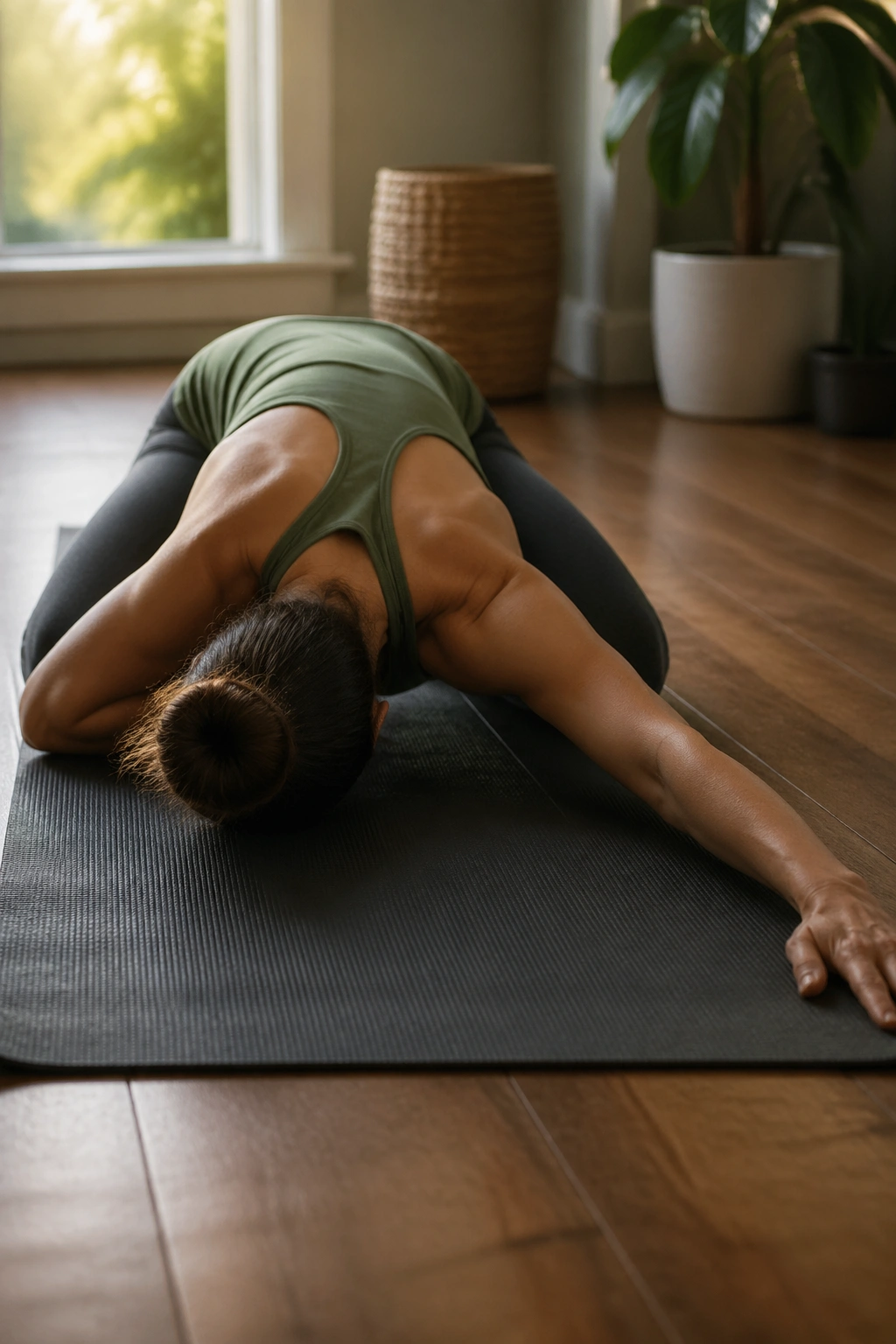
Child’s pose is already a nice reset, but the side reach turns it into something better for recovery because it gets into the lats, the side ribs, and the tissue that ties the shoulders into the low back. After pulling exercises, deadlifts, or anything that had you braced hard, this stretch can feel like someone finally turned the volume down.
Why it works
Start on your hands and knees, sit your hips back toward your heels, and walk both hands a few inches to the right. You’ll feel a line of length open along the left side of your torso. Hold for 4 to 6 slow breaths, then switch sides.
Keep your forehead down if that feels comfortable. If your knees are sensitive, slide a folded towel behind them or keep your hips a little higher. The point is not to force your chest to the floor.
What to feel
- A broad stretch along the side body
- Gentle pressure in the low back, not pain
- Easier breathing into the ribs
Your shoulders should soften before the stretch gets deep. If they stay tense, walk the hands out a little farther and let the breath do more of the work.
2. Cat-Cow
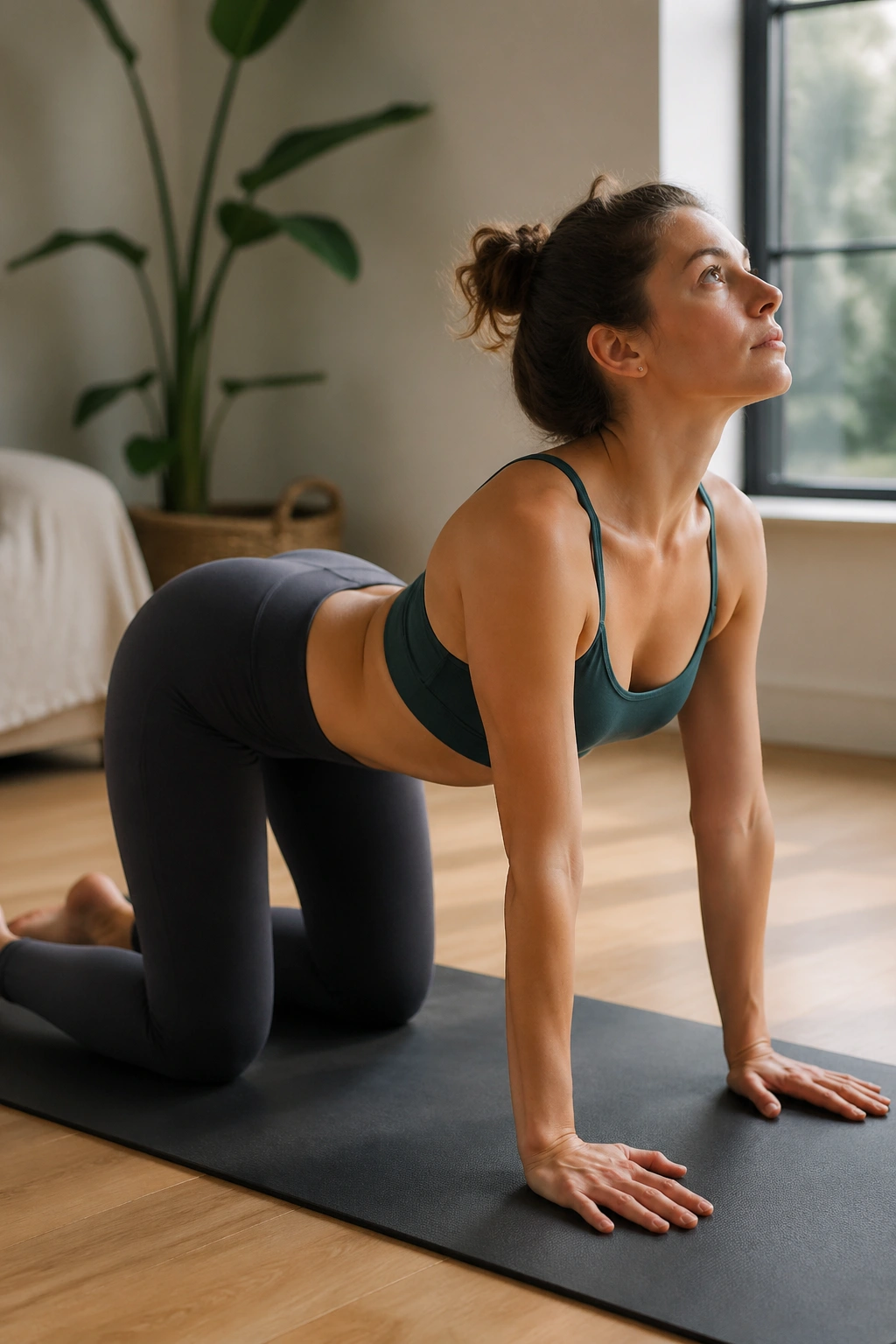
Why start with movement instead of a big hold? Because your spine usually wants motion first.
Cat-cow is one of those post workout yoga stretches that looks basic until you actually use it after hard training. A few slow rounds loosen the back without demanding much from tired legs or cranky hips. It also helps you find your breath again, which sounds small until you notice how much better everything feels once you do.
Get on hands and knees with your wrists under shoulders and knees under hips. On the inhale, tip the tailbone up, open the chest, and let the belly soften toward the mat. On the exhale, round the spine and push the floor away. Six to eight cycles is enough for most recovery sessions.
What to watch for
- Keep the movement smooth, not jerky
- Don’t dump all the bend into the low back
- If your wrists complain, come onto fists or forearms
One good round is worth more than five sloppy ones. Really.
A lot of people rush cat-cow because it feels familiar, but the slow version is the one that helps. Let your neck move with your spine instead of hanging stiffly in one shape. That tiny detail matters more than most people think.
3. Downward Dog Pedal
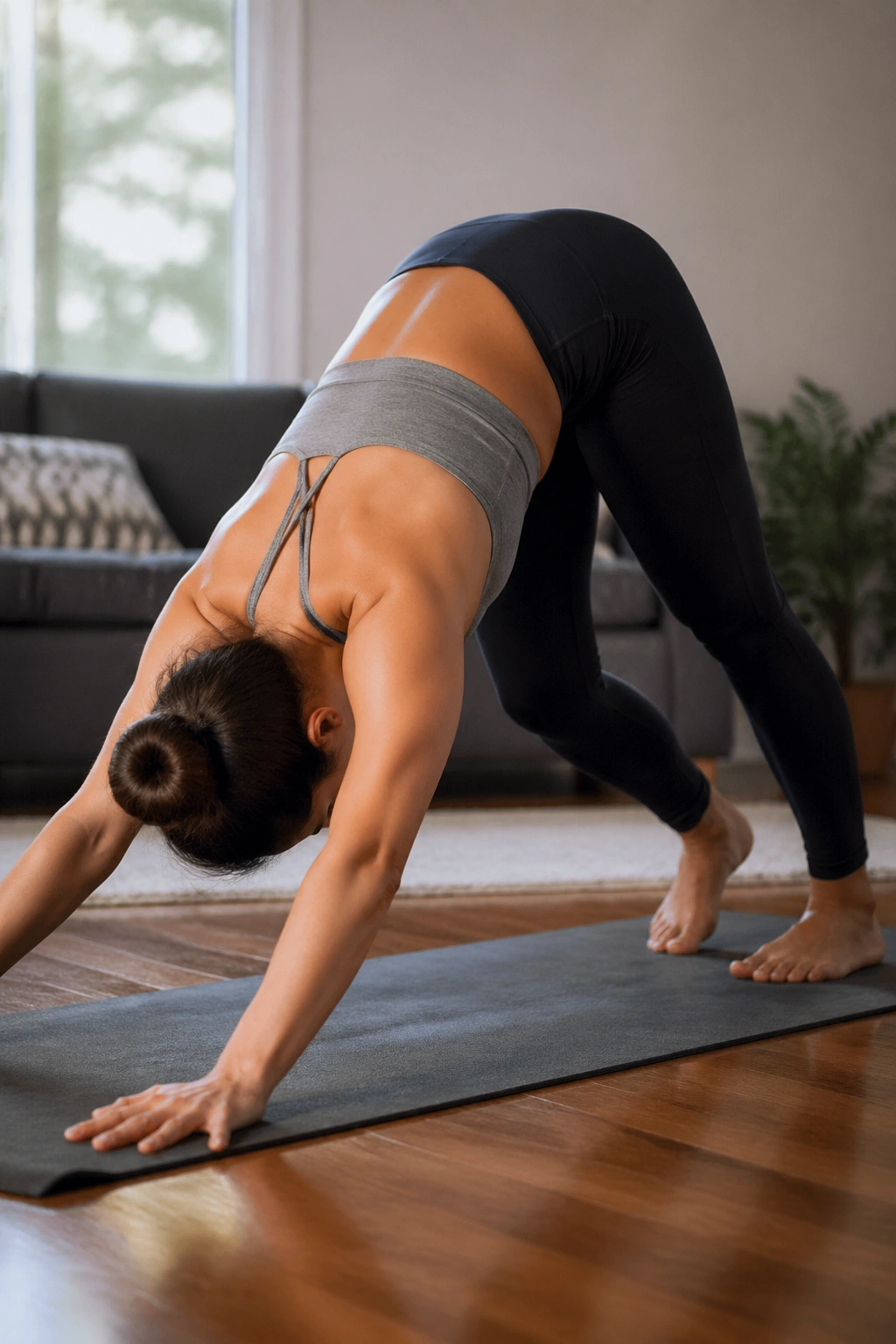
Calves can feel like guitar strings after running, jumping, or a lot of leg work.
Downward dog with a pedal is a better recovery move than the static version because you can change the line of stretch one side at a time. It gives the calves, hamstrings, and shoulders a chance to ease out without locking you into one place too soon. If you spent the workout on your feet, this one often feels like an exhale.
Press your hands into the mat, lift your hips up and back, and keep your knees bent enough that your spine can lengthen. Then slowly bend one knee while you press the opposite heel toward the floor. Switch sides for 8 to 10 gentle pedals.
A few things make this work better:
- Spread your fingers wide and grip the mat lightly
- Keep your ribs from flaring open
- Bend both knees more if your hamstrings grab hard
The heel does not need to touch the floor. If it does, fine. If it doesn’t, also fine.
After a sprint session, this stretch can be a little awkward at first because the calves may resist. Stay with the breath and don’t chase the deepest heel drop. The goal is to reduce tension, not win a flexibility contest.
4. Low Lunge Hip Flexor Stretch
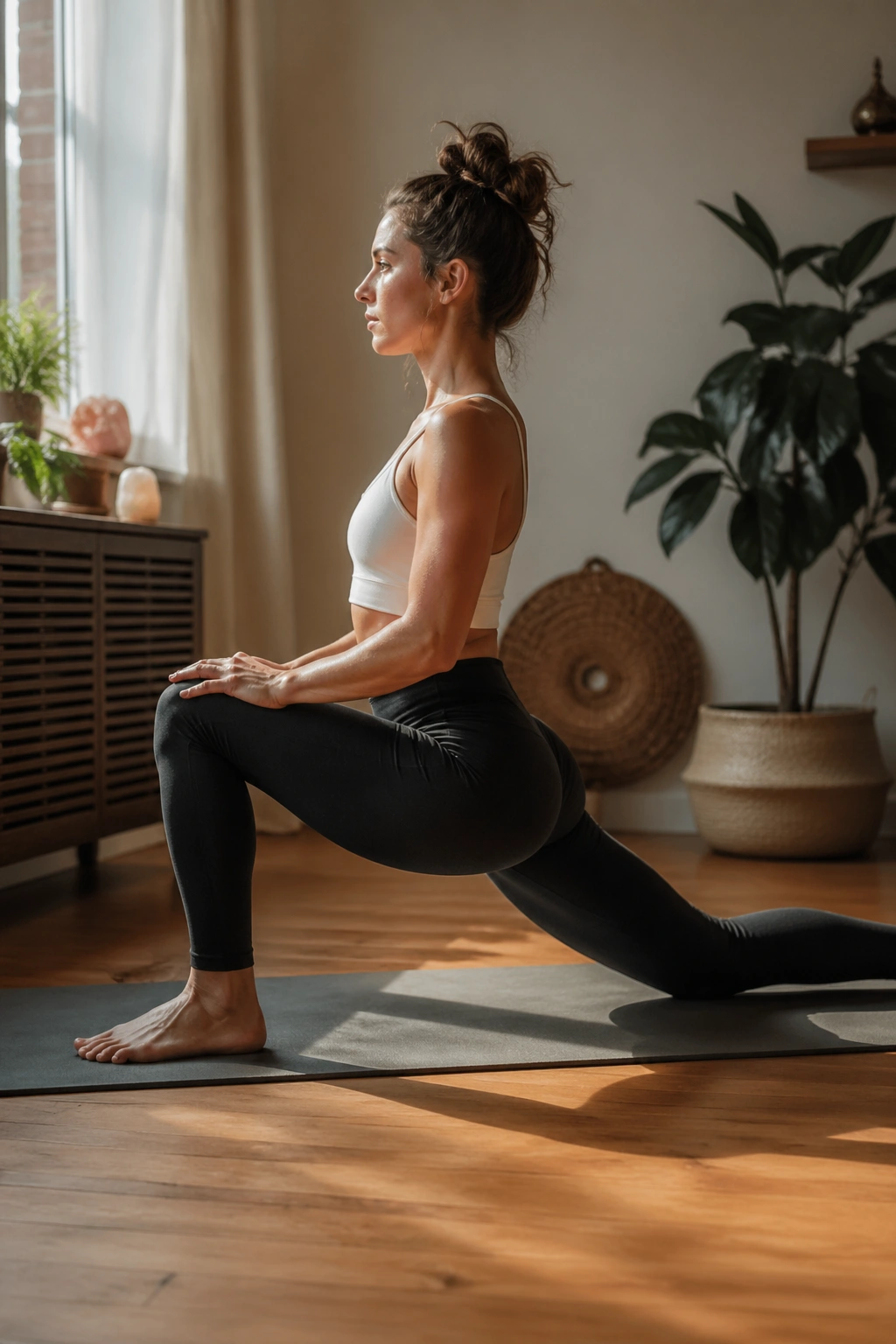
Tight hip flexors are a big reason your lower back feels weird after lifting.
Low lunge hits the front of the hip in a way that makes sense after squats, lunges, cycling, or long periods of sitting before training. The trick is to keep the pelvis tucked just enough that the stretch lands in the hip crease instead of sliding into the low back. That small adjustment changes everything.
Step one foot forward into a lunge, lower the back knee to the floor, and put a folded mat under it if needed. Gently squeeze the back-side glute and think about drawing the pubic bone slightly upward. Hold for 30 to 45 seconds per side.
How to set it up
A long, over-arched lower back is the common mistake here. Don’t chase height with your torso. Keep the chest lifted, but soft, and let the front hip open gradually.
If you want more, raise the arm on the same side as the back leg and reach slightly overhead. That adds a line through the psoas and the side body. It should feel spacious, not pinchy.
If the front knee drifts too far past the toes, reset the stance. There’s no prize for a dramatic lunge. A quiet one usually works better.
5. Half Split Hamstring Stretch
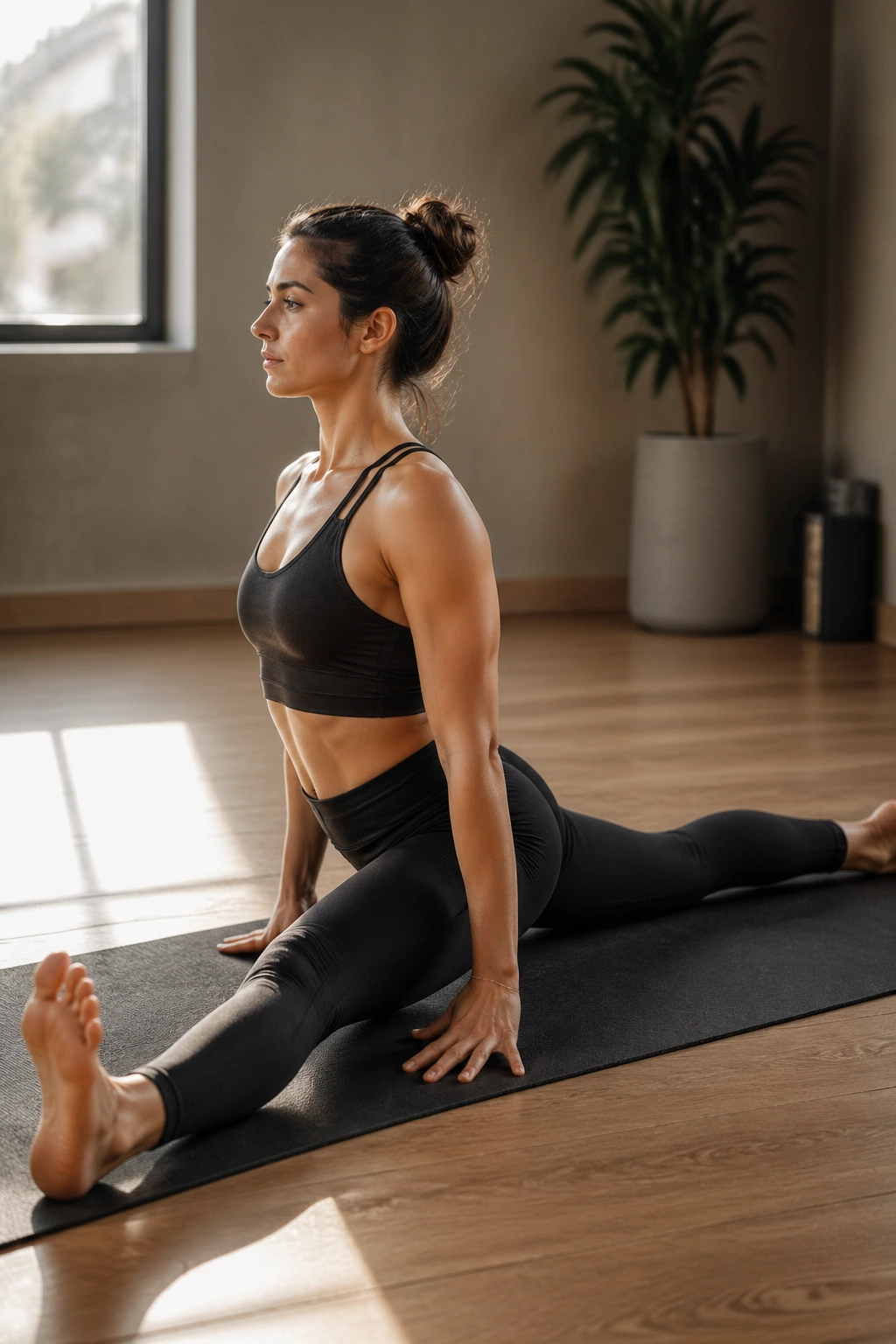
Are you trying to stretch the hamstring, or just round your back and hope for the best? Those are not the same thing.
Half split is where a lot of people finally feel the back line open in a way that doesn’t make the knee or low back complain. The key is the hinge at the hips. Keep the chest long, the front foot flexed, and the leg you’re stretching active instead of limp.
From a low lunge, shift your hips back and straighten the front leg as much as feels workable. Slide the heel forward only until the stretch is firm but calm. Hold for 4 or 5 breaths, then come out slowly and switch sides.
What makes this stretch work
- Flex the front toes toward the ceiling
- Keep a micro-bend in the knee if the hamstring grabs
- Think “long spine” before “straight leg”
That last piece matters. A bent knee with a clean hinge is better than a locked knee with a collapsed torso.
After sprints or deadlifts, the hamstring may feel more stringy than stretchy. That’s normal. Ease into the hold and let the muscle soften instead of forcing it to lengthen all at once.
6. Figure Four on Your Back
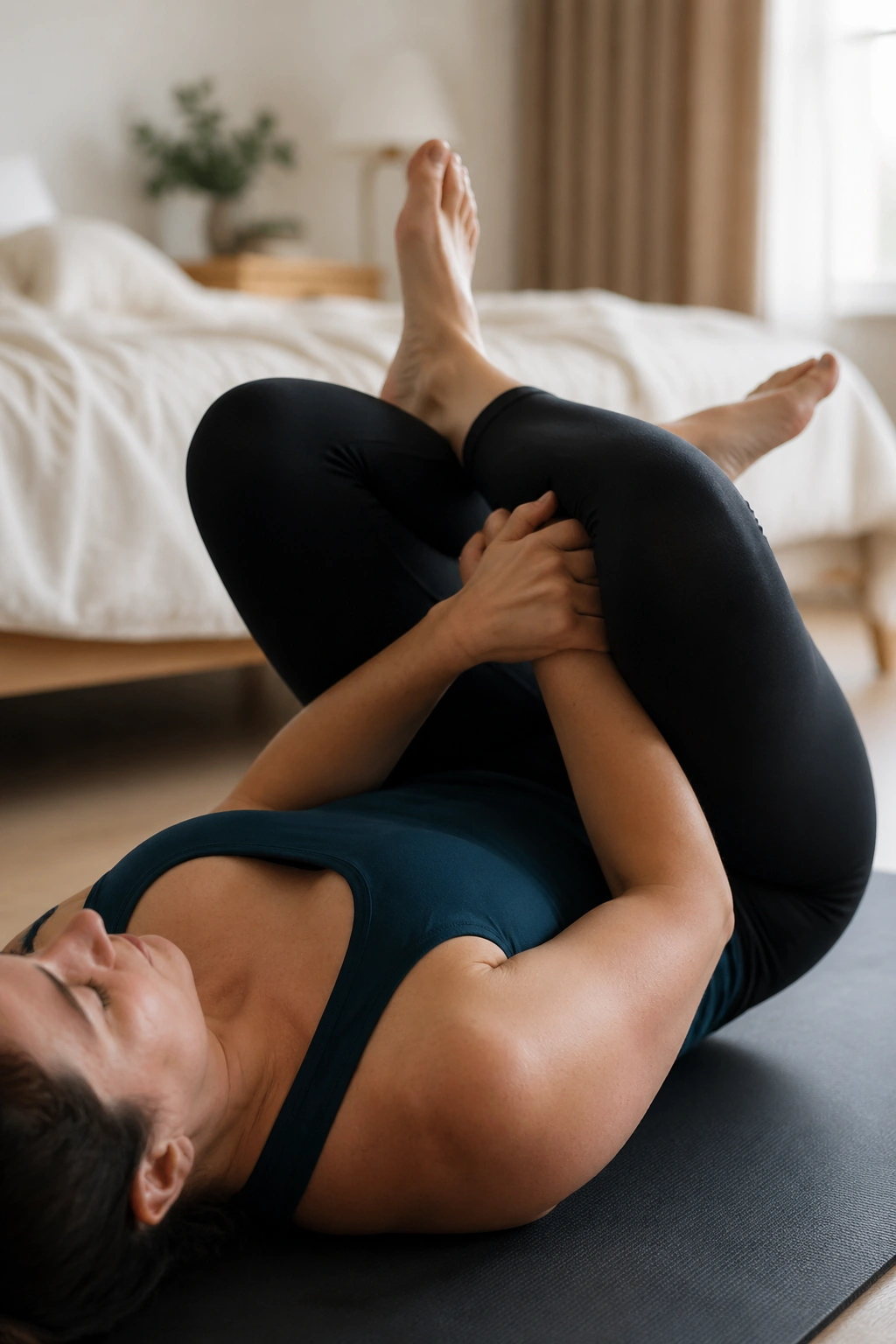
This one feels like a deep sigh for the hips.
Figure four on the back is one of the gentlest ways to open the outer glute, the piriformis area, and the space around the hip joint without loading your knees. If your workout left you feeling jammed up from squats, box jumps, or a long run, this is the kind of stretch that lets the body unclench without drama.
Lie on your back with both knees bent. Cross one ankle over the opposite thigh, then thread your hands behind the supporting leg and draw it toward you. Keep the head and shoulders relaxed on the floor. Stay for 30 to 45 seconds and switch sides.
The stretch should live in the outer hip. If you feel it mostly in the knee, back out a little and adjust the angle of the crossed leg.
A small detail helps a lot: keep the foot of the crossed leg flexed instead of floppy. That protects the knee and makes the stretch feel cleaner.
No fancy setup needed. Just a mat and enough space to lie down without bumping into a wall.
7. Pigeon Pose
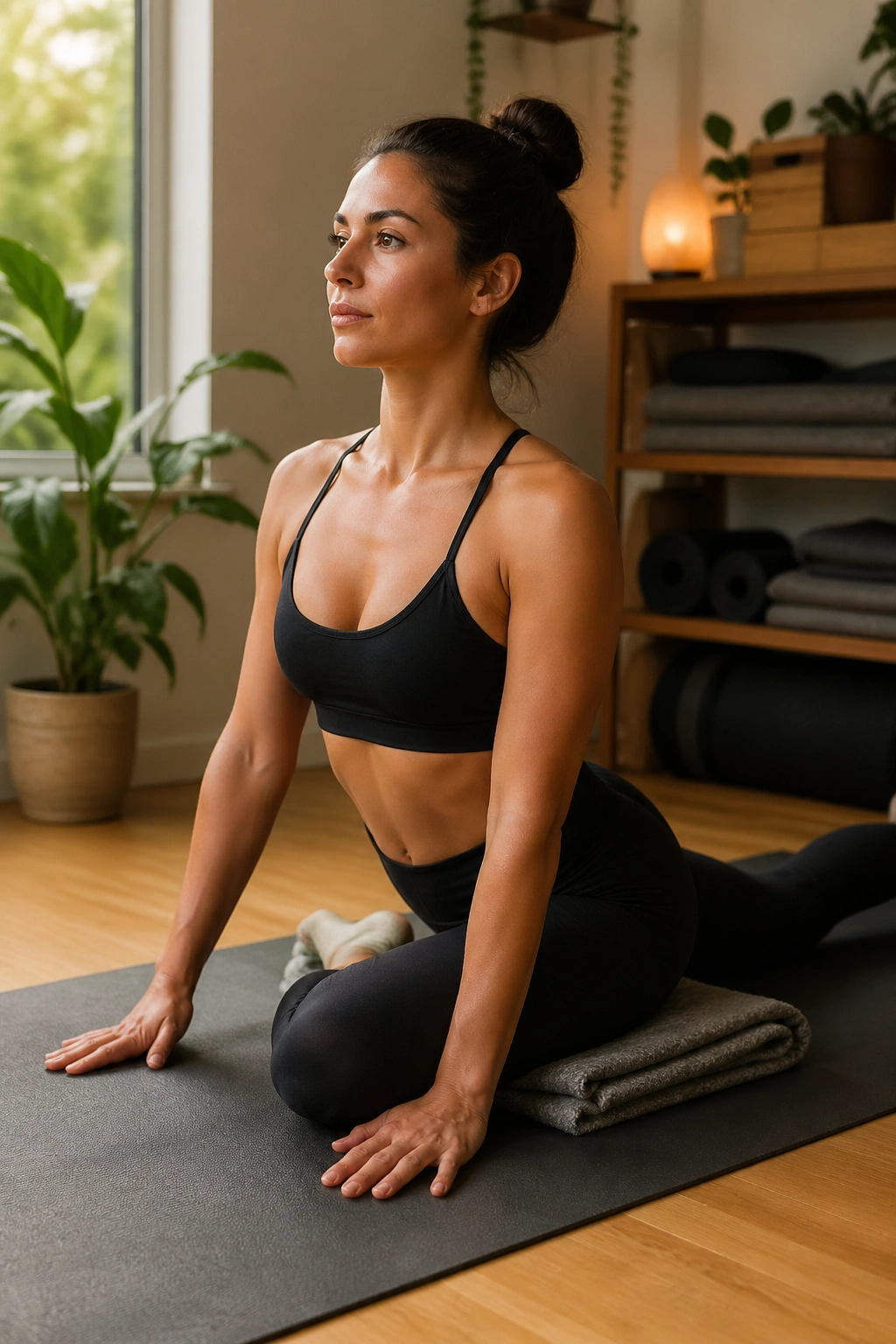
Pigeon gets all the glory, but it earns it only when you set it up kindly.
This is a strong post workout yoga stretch for the outer hip and glutes, especially after running or lower-body strength work. The catch is that people often dump too much weight into the front hip and turn it into a cranky mess. Don’t do that. Support matters here.
Bring one shin forward with the back leg extended behind you. Keep the front foot angled comfortably rather than forcing a right angle. If the front hip floats high off the floor, slide a folded blanket or block under it. Stay tall first, then fold only if the body actually wants to.
What to keep in mind
- Square the hips only as far as they can go without strain
- Keep weight centered instead of collapsing to one side
- Back out if the front knee feels twisty
A gentler version of pigeon is still pigeon. It does not need to be dramatic to work.
After a hard leg day, I’d much rather see someone use a supported pigeon for 30 seconds than wobble through a deep one for two minutes and then walk away sore in the wrong place. Recovery should leave you looser, not fussier.
8. Thread the Needle
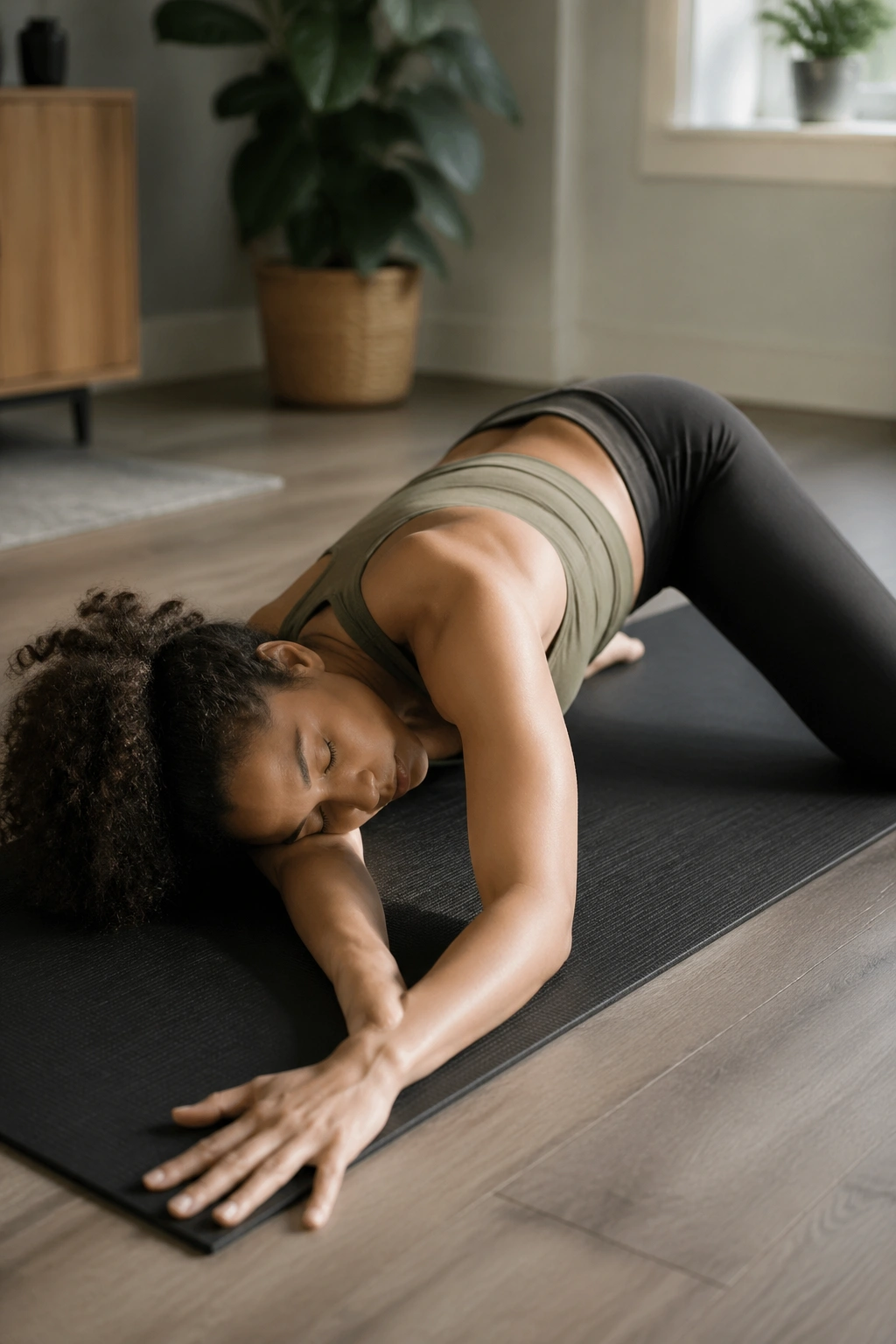
Your upper back can get surprisingly rigid after pressing, rowing, or holding a strong brace for a long workout.
Thread the needle is a tidy little stretch for the rear shoulder, upper back, and the space between the shoulder blades. It also asks the torso to rotate a bit, which feels good when everything has been moving in a straight line. A lot of people underestimate how much tension sits there until they drop into this position.
Start on hands and knees. Slide one arm under the other, palm up, until the shoulder and temple rest on the floor. Keep the other hand planted or reach it forward if that feels better. Hold for 5 slow breaths, then switch sides.
What it should feel like
You’re looking for a deep but manageable opening across the back of the shoulder and upper spine. If your neck is cranking to the side, tuck the chin a touch and let the shoulder do the work instead.
A block or folded blanket under the shoulder can make the position friendlier if the floor feels too far away. That tiny lift is often the difference between “nice stretch” and “why am I fighting this?”
This is one of those stretches that works well after push day and after pull day. Rare to find a shoulder move that earns both jobs, but here we are.
9. Sphinx Pose
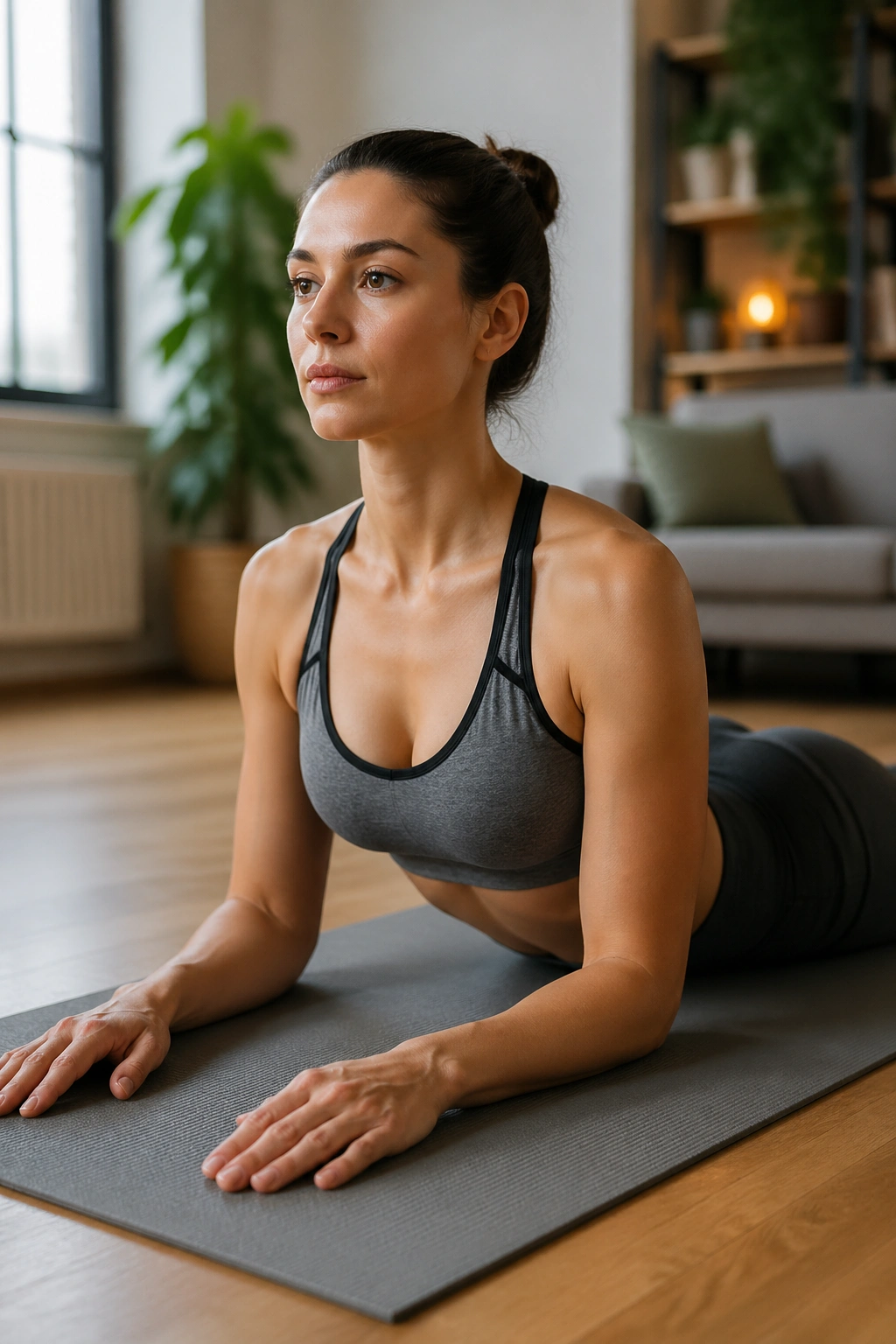
Not every recovery stretch has to fold you in half.
Sphinx is one of the best ways to open the front body after long sitting, ab work, or a workout that kept you hunched forward. It gives the abs, hip flexors, and front of the torso a chance to lengthen while the back does a little quiet strengthening. That mix is useful. Pure stretching can leave the body feeling floppy; sphinx adds a bit of shape back into the spine.
Lie on your stomach and place your forearms on the floor with elbows under shoulders. Gently draw the chest forward and lift through the sternum. Keep the glutes lightly engaged so the low back doesn’t take over. Hold for 20 to 30 seconds.
If you feel pinching in the lower back, lower the chest a little and widen the elbows. That usually fixes the issue.
A useful cue
Think of length first, bend second. If you just shove the chest up, the low back often complains.
Sphinx works well after exercises that compress the front body: crunches, planks, rows with a lot of bracing, even a hard run where your posture got a bit closed. It’s quiet, but it changes how the spine feels when you stand back up.
10. Seated Forward Fold
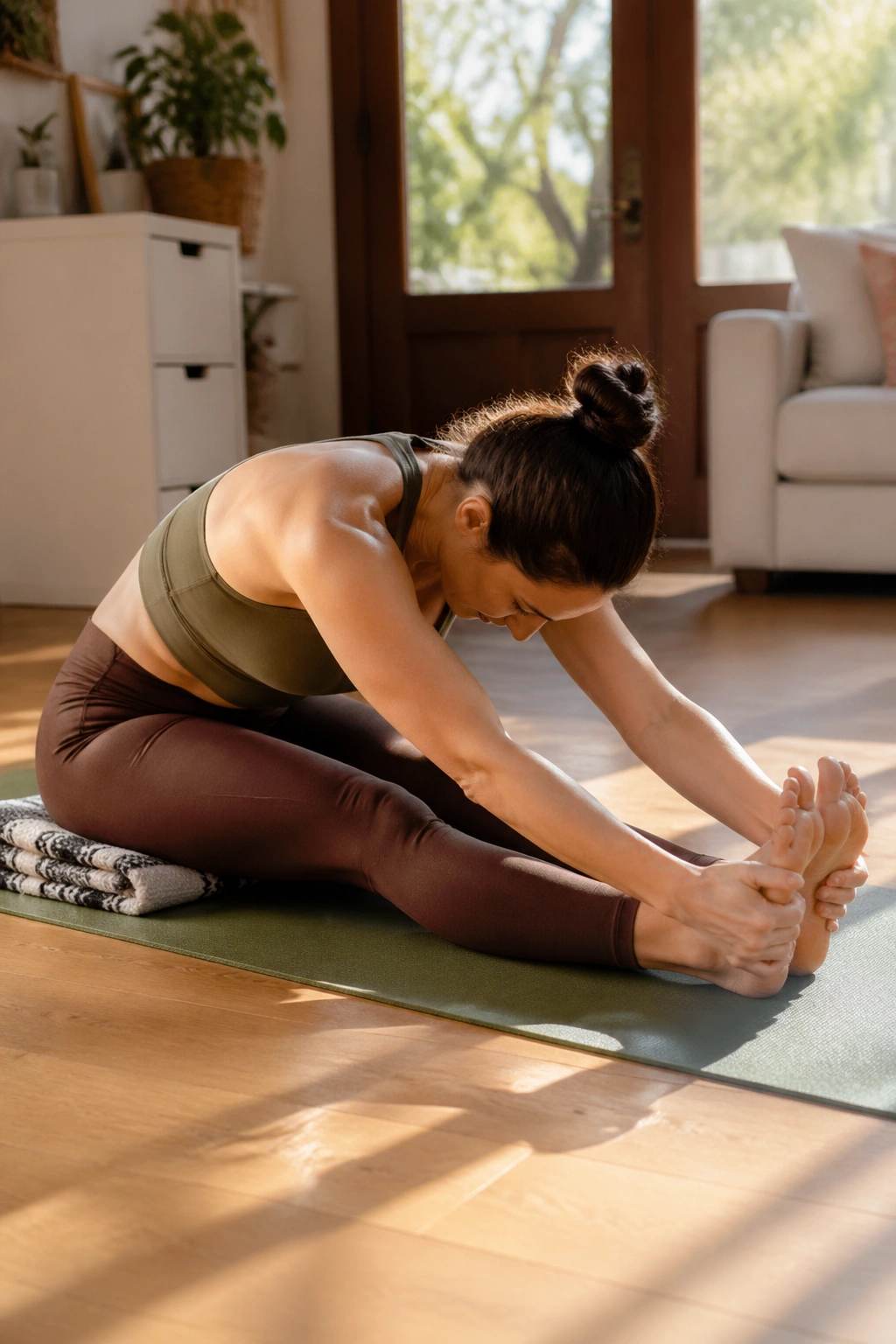
Compared with standing folds, this one lets you stay quieter.
Seated forward fold is a classic hamstring stretch, but the good version is never about yanking yourself toward your toes. Sit on a folded blanket if your pelvis tilts backward, extend the legs, and let the knees stay soft. Reach from the hips, not the neck, and let the spine lengthen before you fold.
This stretch tends to work well after cycling, rowing, or any day that left the back line tired. Hold for 30 to 60 seconds, breathe into the side ribs, and avoid pulling aggressively on the feet.
Quick form check
- Sit tall before you fold
- Keep the feet flexed or neutral
- Stop when the hamstrings say “enough,” not when your ego does
A lot of people round the back hard and call it hamstring work. It isn’t, at least not the clean kind that helps recovery. You want tension along the back of the legs, not a crunched lower spine.
If the stretch feels too intense, bend the knees more and keep the torso a little higher. That small change often makes it more useful, not less.
11. Reclined Twist
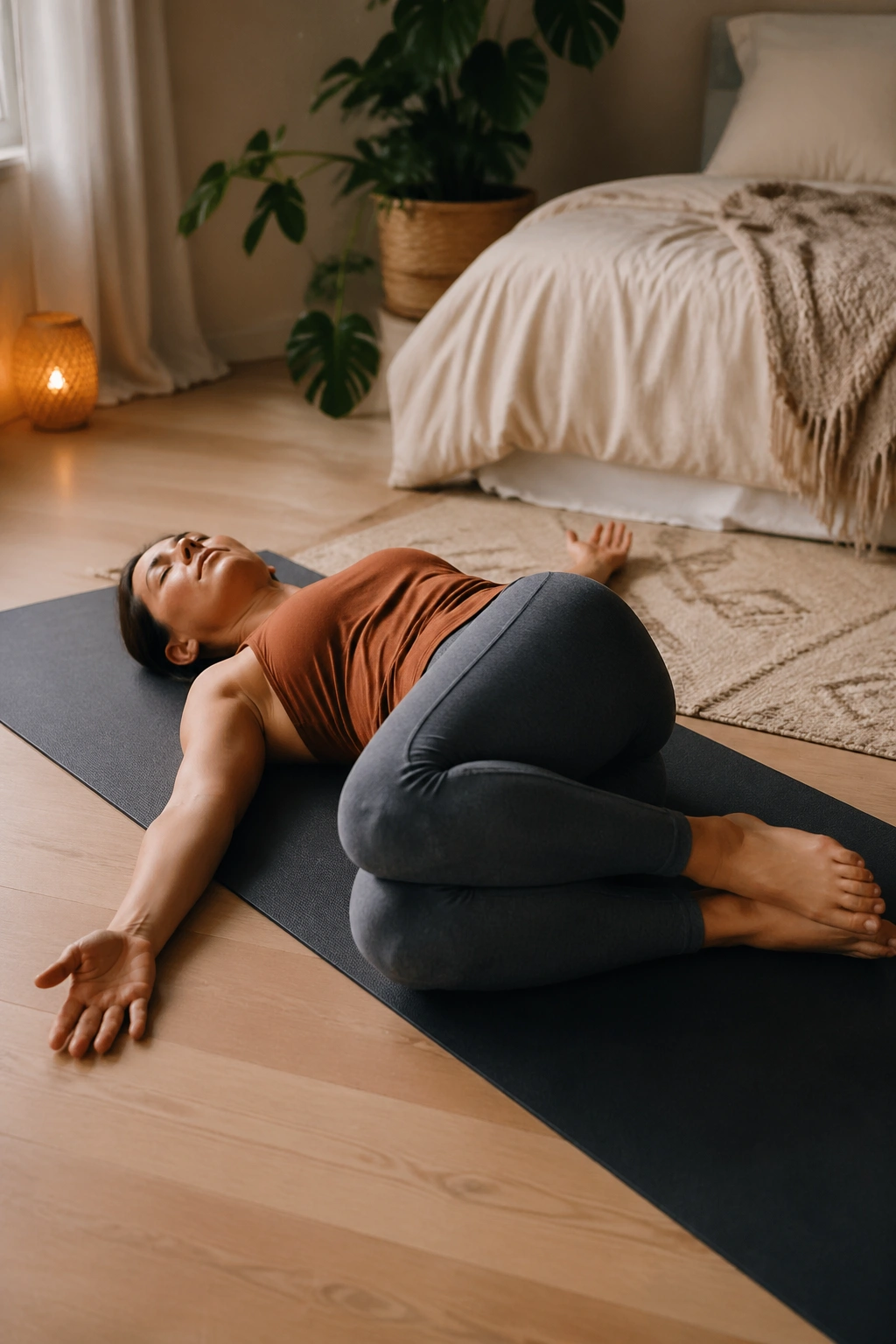
Why do twists feel so good after a hard session? Because they let the torso unwind without a fight.
Reclined twist is one of the nicest recovery positions for the low back, obliques, and spine when you want something gentle but effective. Lying on your back, bring both knees toward your chest, then drop them slowly to one side. Keep your shoulders heavy on the floor and stretch your arms out like a T.
Stay for 5 to 8 breaths per side. If your knees don’t reach the floor, let them rest on a pillow or bolster. The support makes the pose calmer and often deeper, weirdly enough.
A few things help this one land well:
- Let the exhale get longer than the inhale
- Keep the top shoulder from floating away
- Move the knees only as far as the back stays easy
This is not the place to force a big spinal twist. If your low back feels cranky, reduce the angle and keep the knees higher. Gentle beats dramatic every time here.
It’s a fine finish after a sweaty session because it leaves you feeling organized again. Not sleepy, exactly. More like the pieces are back in the right drawer.
12. Happy Baby
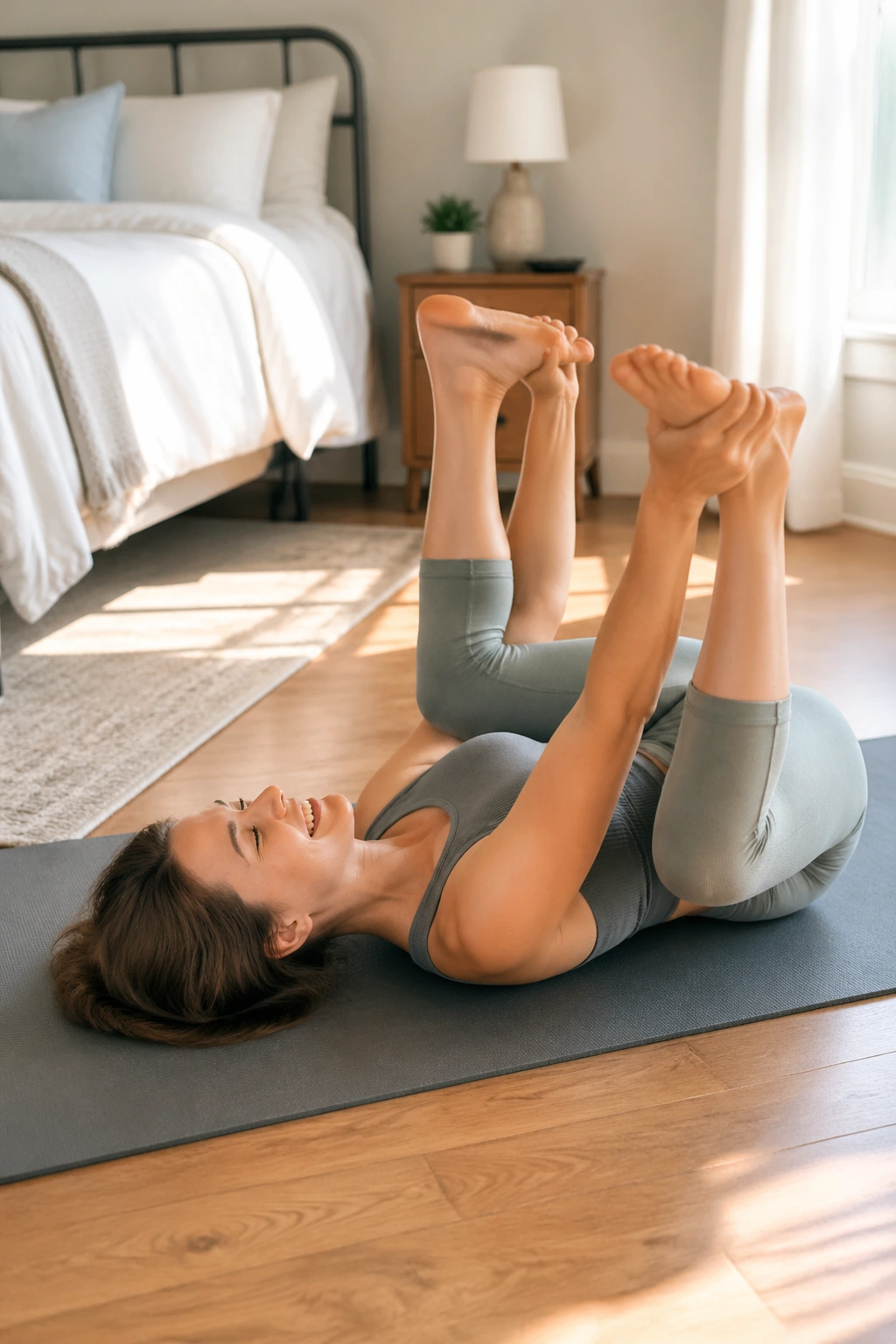
After a tough lower-body session, this one can feel almost playful.
Happy baby opens the hips, inner thighs, and lower back at once, and it does it in a position that usually feels less threatening than a deep squat or pigeon. Lie on your back, grab the outer edges of your feet or hold behind the thighs if that’s easier, and draw the knees toward the armpits. Keep the tailbone heavy.
A little rocking side to side is welcome. In fact, that soft sway often makes the stretch better because it releases the lower back without making the hips brace against stillness. Hold for 5 to 8 breaths or longer if it feels good.
How to make it gentler
- Hold the backs of the thighs instead of the feet
- Keep one leg down if both hips feel too loaded
- Place a folded towel under the head if the neck strains
The stretch should feel wide and open, not pinchy in the groin. If you feel compression in the front of the hip, reduce the pull and keep the knees a little farther away from the ribs.
I like this one after squat work because it makes the hips feel like they can move again. Tight, yes. Jammed, no. There’s a difference.
13. Standing Forward Fold With Bent Knees
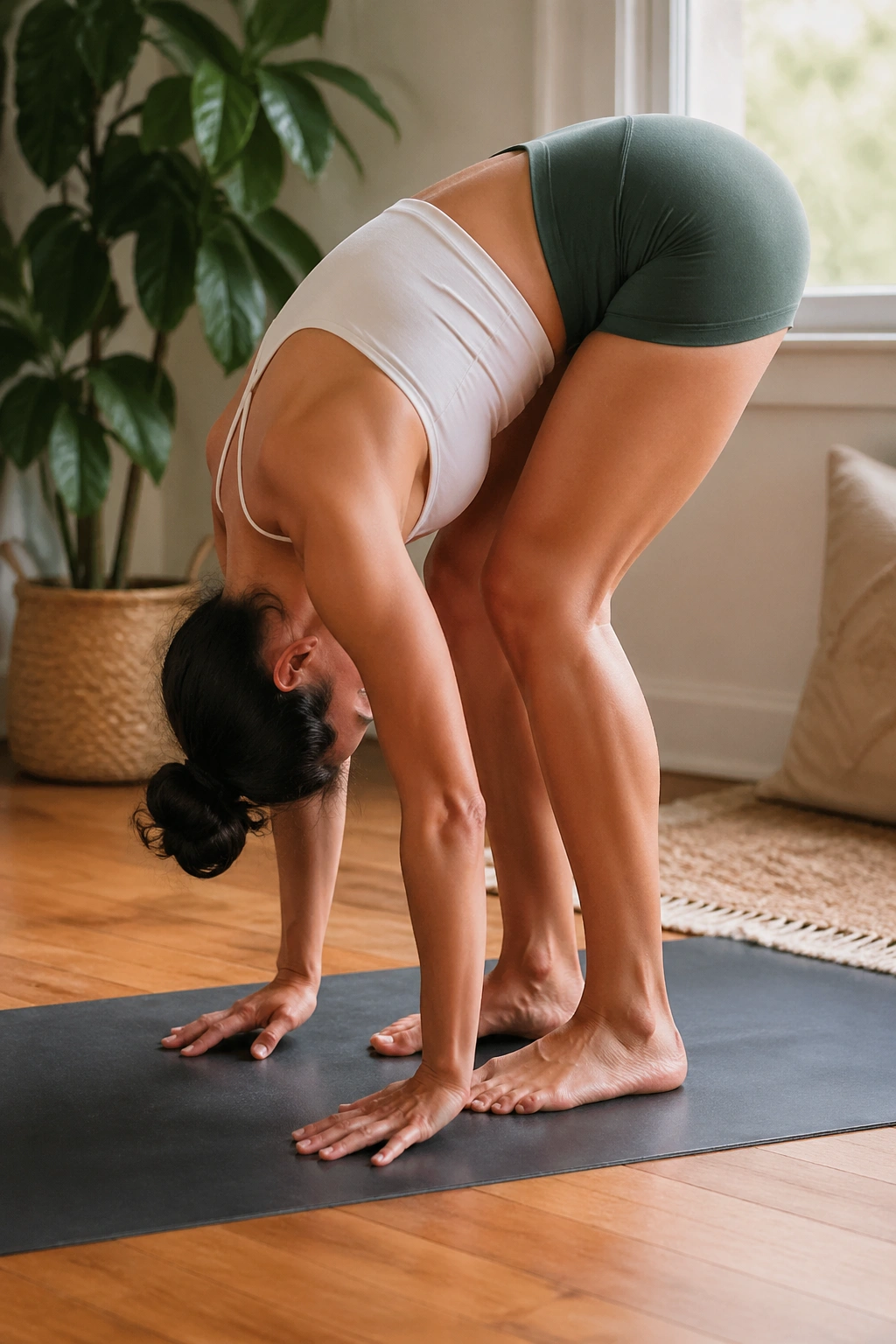
This is not the glamorous version, and that’s why I trust it.
A bent-knee standing forward fold is one of the safest ways to calm down a loaded posterior chain after training. It lets the hamstrings lengthen without forcing the spine into a hard round. If you’ve finished deadlifts, kettlebell swings, or a fast walk/run session, this is a tidy way to let gravity do some of the work.
Stand with feet hip-width apart, soften the knees as much as needed, and hinge forward from the hips. Let the head hang. Keep the hands on the floor, on blocks, or resting on the shins if that’s where the body lands cleanly. Hold for 30 seconds.
What makes it useful
The bend in the knees takes pressure off the backs of the legs, which often makes the stretch feel calmer and more effective. You can even sway gently from side to side if the low back wants to unknot a little.
Do not lock the knees just to touch the floor. That’s a fast way to turn a recovery stretch into a hamstring argument.
If your head rushes, come out slowly and keep one hand on a wall. Little fixes like that matter, especially after intense work when your system is already buzzing.
14. Garland Pose
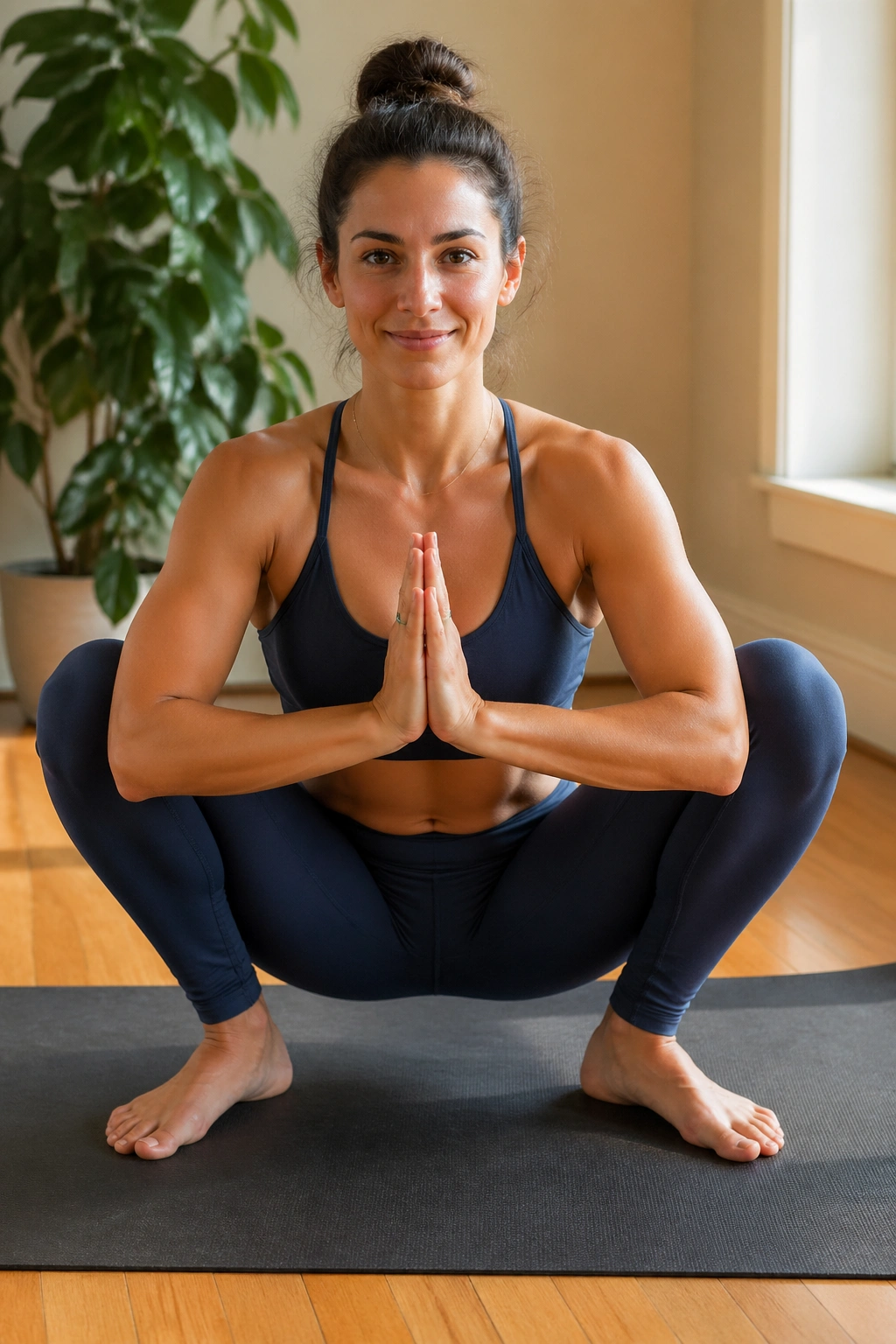
Unlike a couch sit, this squat keeps the hips and ankles honest.
Garland pose opens the inner thighs, ankles, and hips in one compact position. It’s excellent after leg training because it brings you into deep knee flexion without loading the joints with weight. The tricky part is finding a version your body can actually tolerate. For some people, the heels stay down. For others, a folded towel under the heels makes the pose workable.
Come into a deep squat with feet a little wider than hip-width. Bring the elbows inside the knees and press the palms together at the chest or keep the hands on the floor for support. Stay tall through the spine and breathe for 20 to 30 seconds.
What helps
- Lift the heels on a small folded mat if balance is shaky
- Sit between your heels only as low as your ankles allow
- Keep the chest proud instead of collapsing forward
That last cue matters. If the upper back rounds hard, the pose loses a lot of its usefulness.
Garland is one of those stretches that feels almost unfair after a run or a heavy lifting day, because the hips can open fast once the ankles stop fighting. Keep it small at first. The body will usually tell you when to go a little deeper.
15. Wide-Legged Forward Fold
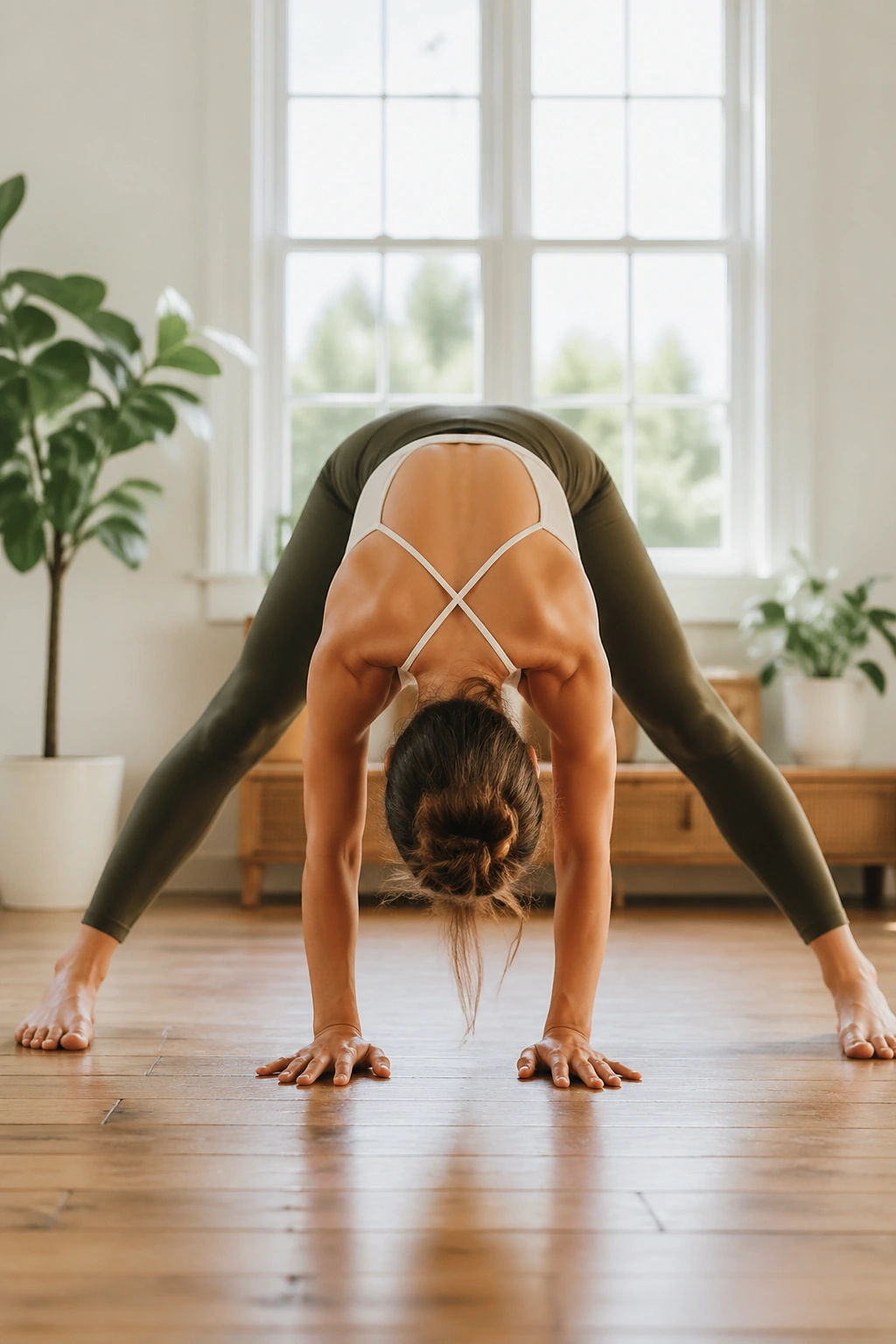
The inner thighs get ignored until they start talking back.
Wide-legged forward fold is a strong choice for the adductors, hamstrings, and the back of the hips, especially after cycling, skating, lateral drills, or lower-body work that used a wide stance. Stand with your feet about 3 to 4 feet apart, hinge at the hips, and let your hands come to the floor, blocks, or shins. Keep the neck loose.
The pose can feel intense fast, so a little restraint helps. You do not need to shove your chest between your thighs. Keep the weight spread evenly through both feet and let the spine lengthen before you deepen the fold.
If your head feels heavy or your blood pressure spikes in a fold like this, stay higher and keep your hands on your hips or blocks. Recovery should not make you dizzy.
Useful cues
A slight bend in both knees can make the fold feel safer and cleaner. The stretch should land along the inside of the thighs and the back line, not in a strained lower back.
This is one of my favorites after anything that made the legs feel “boxed in.” The opening is broad and quiet, which is exactly what tired hips often need.
16. Cow Face Arms
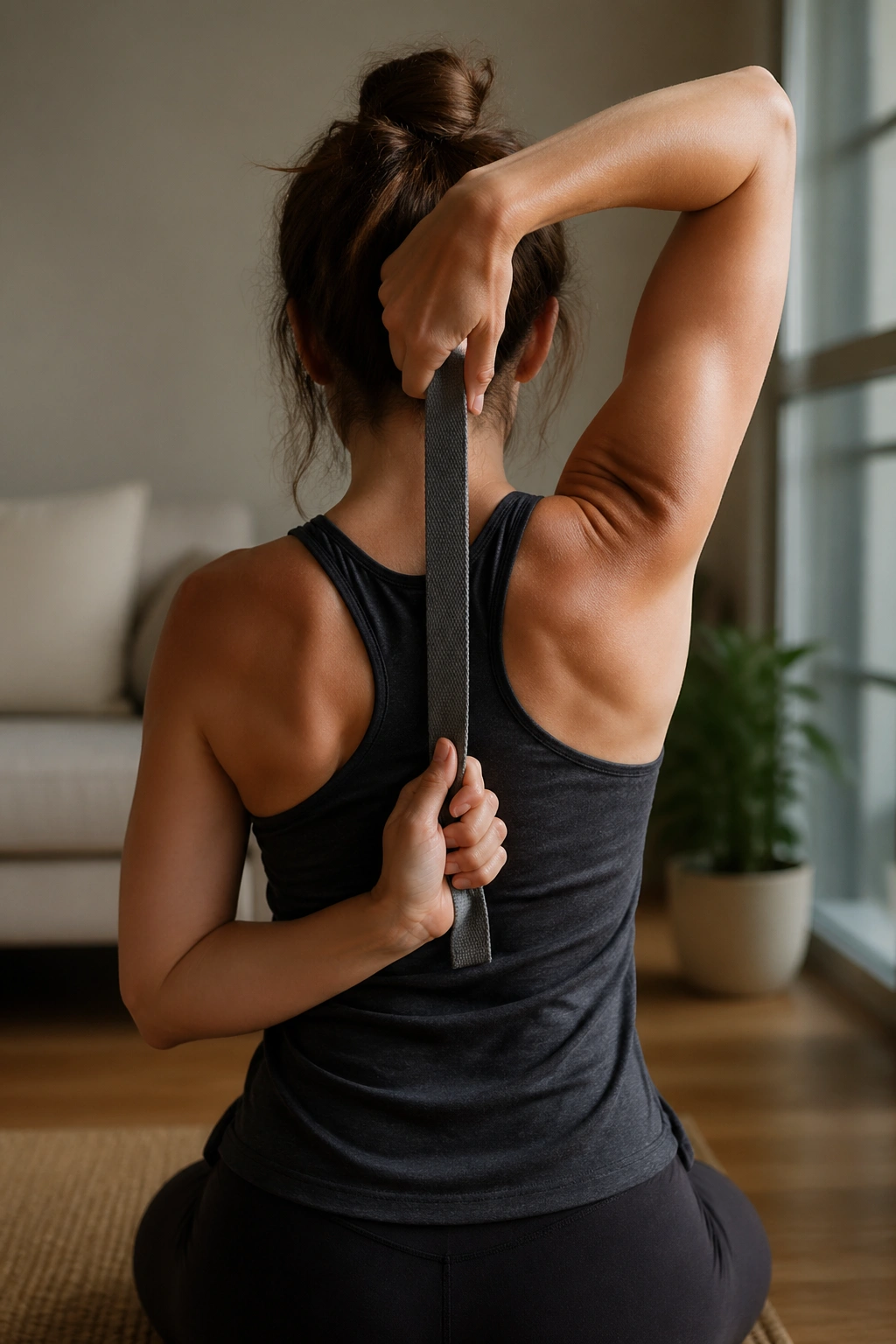
Why do shoulders tighten up after pressing, pulling, or even holding a steering wheel for too long? Because the upper body likes to clamp down.
Cow face arms get into the triceps, chest, lats, and the back of the shoulders in a way that feels precise. One elbow reaches up, the other down, and the hands either meet behind the back or use a strap to bridge the gap. It looks a little awkward. That’s part of the charm.
Sit or stand tall. Reach one arm overhead with the elbow bent, and slide the other arm behind your back, palm facing out. Aim the hands toward each other without forcing the shoulders into a bad angle. Hold 20 to 30 seconds, then switch.
What to watch for
- Keep the ribs from flaring open
- Use a strap if the hands are miles apart
- Stop if the front shoulder pinches
A strap is not a cheat. It’s a smart fix. If the hands are straining to meet, the neck and upper traps tend to take over, and the whole pose turns ugly.
This stretch works especially well after upper-body days because it opens the exact places that get cramped from pressing, curls, pull-downs, and overhead work. Quiet, direct, useful.
17. Eagle Arms
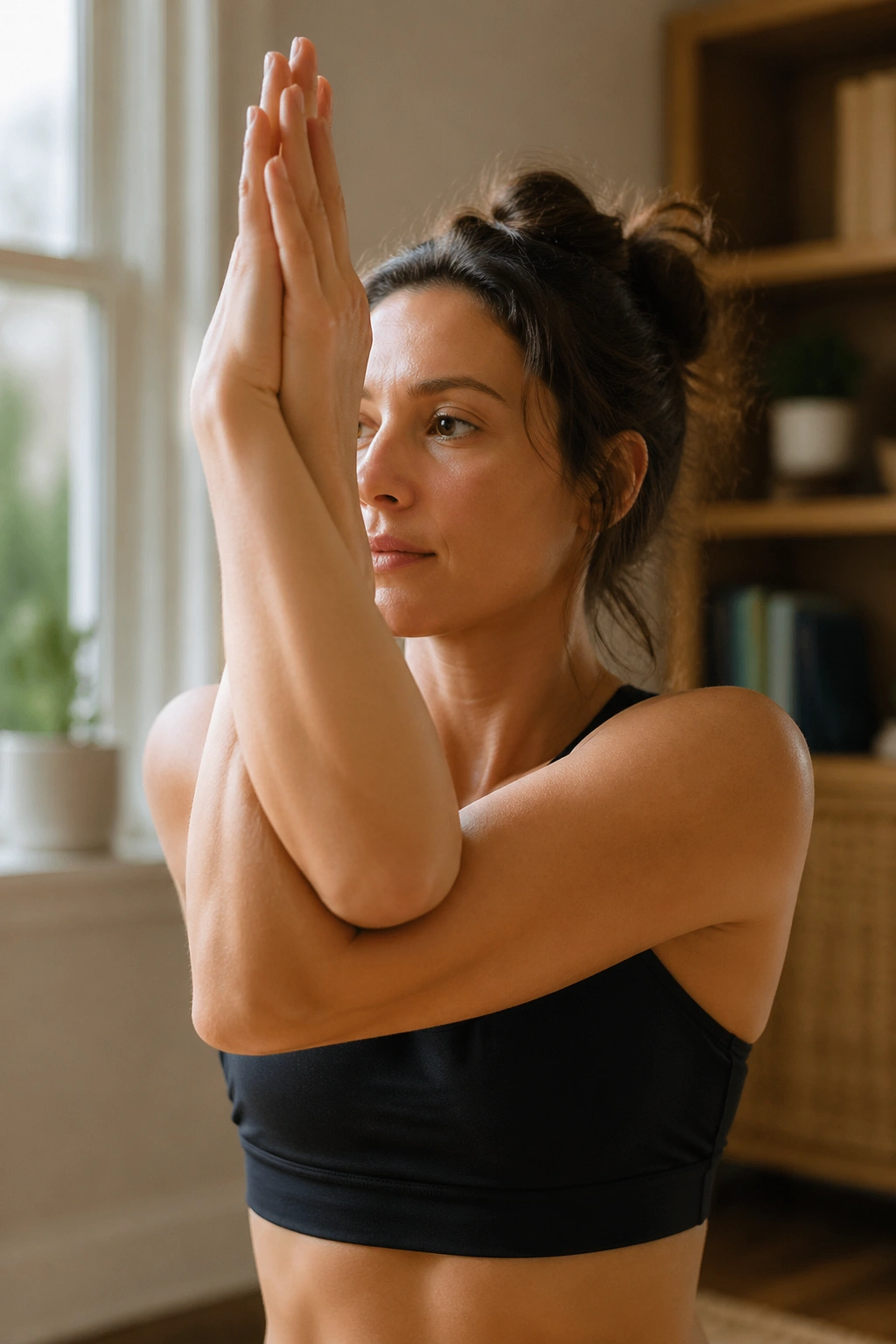
Your upper back can feel packed after bench work, rows, or a day spent rounding over a desk.
Eagle arms target the space between the shoulder blades and the rear shoulders in a way that feels compact and oddly satisfying. Wrap one arm under the other, bend both elbows, and try to bring the backs of the hands together. If the hands won’t touch, keep the forearms crossed and breathe there. That still counts.
Lift the elbows slightly and let the shoulder blades spread apart. Then soften the neck. Hold for 5 breaths, unwind, and switch the top arm.
A couple of details make this stretch better:
- Keep the chin level, not jutting forward
- Lift the elbows only as high as the shoulders stay relaxed
- Breathe into the back ribs, not the chest only
People often crank the elbows up and turn the neck into a brace. Don’t. You’ll lose the point of the stretch fast.
Eagle arms pair nicely with cow face arms because they hit different corners of the shoulder complex. One opens the back of the shoulders with a more vertical line; the other gives the upper back a wrapped, rounded feel. Both matter after upper-body training.
18. Legs-Up-the-Wall
This is the pose I’d save for the end.
Legs-up-the-wall is less a stretch in the dramatic sense and more a reset button for the whole lower body. It lets the calves, hamstrings, and hips relax while your breathing slows down and your nervous system gets the hint that work is finished. After a hard workout, that matters almost as much as the stretch itself.
Sit beside a wall, swing your legs up, and lie back so your hips are close to the wall or a few inches away if the hamstrings pull too hard. Let your arms rest at your sides. Stay for 2 to 5 minutes, or longer if it feels soothing.
If your low back feels cramped, move your hips a little farther from the wall. If your hamstrings feel too tight, bend the knees slightly. Small adjustments change the whole thing.
This is a good place to end a recovery routine because nothing here asks for effort. You’re done. Let the floor hold you for a bit, then roll to one side and sit up slowly before you head back into the day.
