



The last bell rings, and the day is still not done. There’s homework, group chats, a locker that smells like gym shoes, and a body that has been sitting, slouching, carrying, and bracing itself for hours. Yoga poses for teens work best when they fit that exact kind of day: short, gentle, and easy enough to do on a bedroom floor or beside the couch.
After-school stress doesn’t always look dramatic. Sometimes it shows up as tight shoulders, a clenched jaw, shallow breathing, or that weird heavy feeling in the chest when the backpack finally comes off. A teen does not need a perfect routine. They need a few poses that tell the nervous system, you can unclench now.
I like floor-based poses first because they feel less demanding. Standing work has its place, sure, but after a long school day, a mat, a wall, or even a folded blanket usually does more good than a big sweat session. Tight is fine; sharp pain isn’t. That’s the rule I’d keep closest.
1. Child’s Pose for the First Quiet Minute
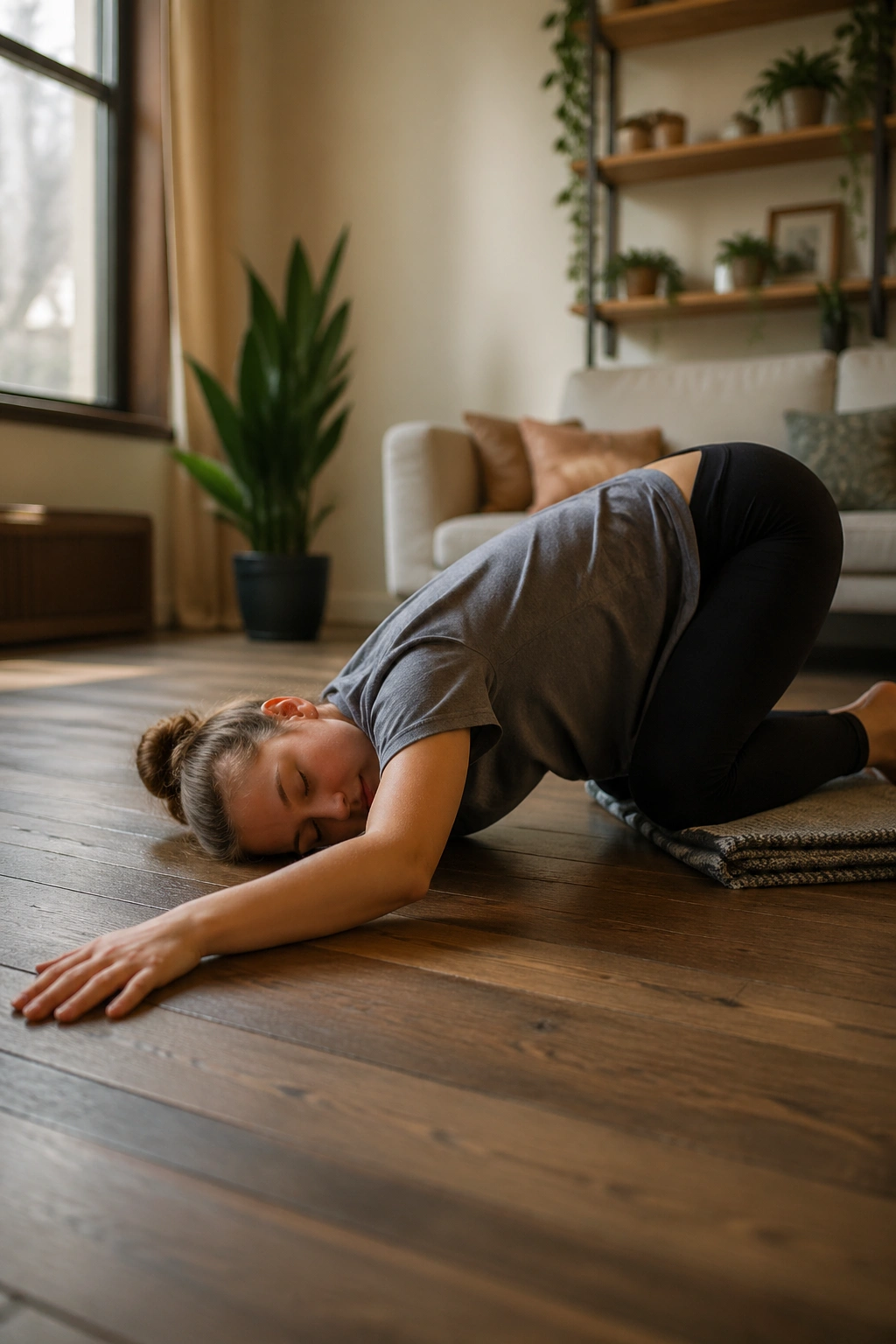
When the whole day feels too loud, Child’s Pose is the first thing I’d put on the floor. It gives the body a chance to stop holding itself up, and that alone can be a relief.
Why It Helps After a Long School Day
This pose lets the hips sink back while the forehead comes down, which often takes the edge off a stiff lower back. It also slows the breath without forcing anything dramatic, and that matters when a teen has spent the day talking, hurrying, and carrying stress in the shoulders.
A few small changes make it work better. Knees together usually feel more restful for the low back, while knees wide gives the hips more room. If the forehead does not comfortably reach the mat, stack the fists or use a folded towel. Hold it for 5 to 8 slow breaths, or longer if the room is finally quiet.
- Knees together: gentler on the low back.
- Knees wide: more space for the hips and belly.
- Forehead on fists: better if the floor feels too far away.
- Arms forward or by the sides: both are fine.
Tip: breathe into the back ribs, not just the chest. That one shift makes the pose feel deeper without making it harder.
2. Cat-Cow to Loosen the Spine and the Mood
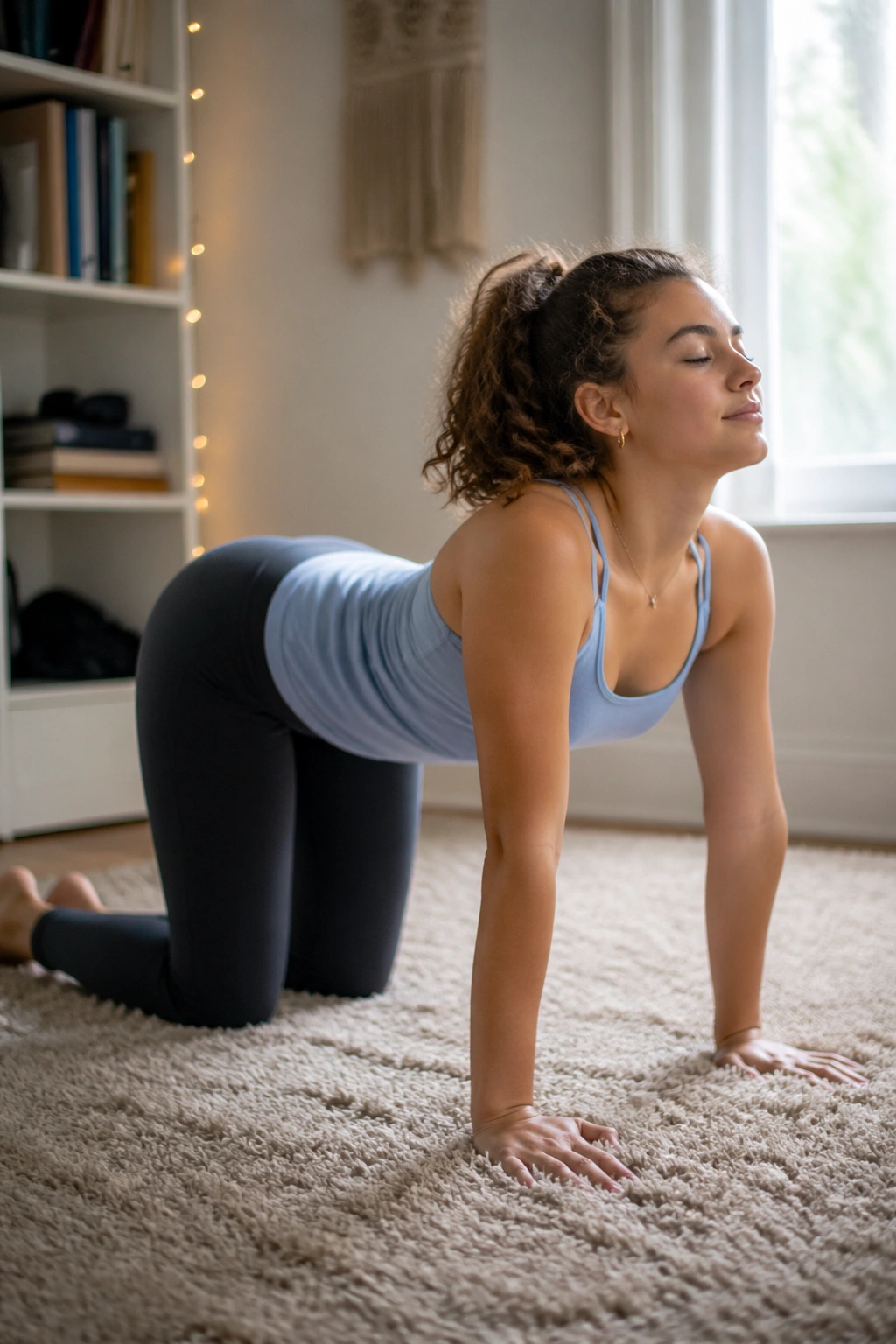
Cat-Cow looks simple. It isn’t.
The reason it works so well after school is that it moves the spine in both directions, which feels especially good after hours of sitting in one shape. Teens spend a lot of the day folded around desks, phones, and backpacks, and Cat-Cow gives that posture a clean break. Inhale into Cow, exhale into Cat, and keep the motion slow enough that the breath leads the body.
There’s no need to force a huge arch. A small, smooth wave through the back is enough. If wrists get cranky, come down onto fists or place forearms on a couch cushion. If the neck feels tight, keep the gaze down instead of throwing the chin up.
The best part is how it changes the pacing of the body. Six to eight rounds is plenty for most teens, and the rhythm itself can be calming before homework or dinner. That rhythm matters more than range of motion.
3. Standing Forward Fold When the Head Feels Full
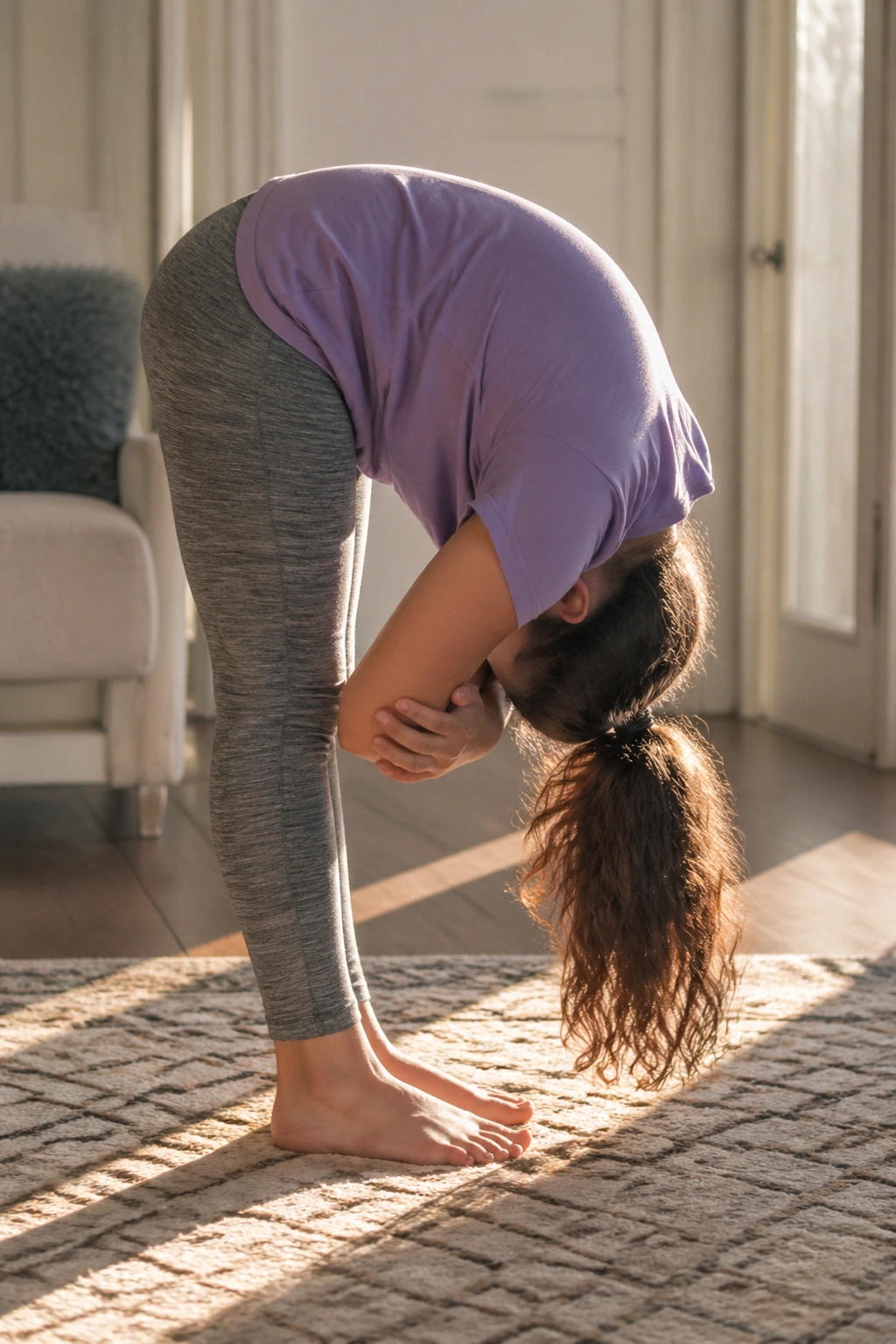
Why does bending forward feel so good when your brain won’t slow down?
A standing forward fold gives the nervous system a break from the constant “look forward and deal with it” posture of school life. The hamstrings stretch a little, yes, but the bigger win is the feeling of being able to drop the head and hang out for a moment without having to perform anything. It’s a small reset, not a test of flexibility.
How to Use It
Start with feet hip-width apart and knees bent. A teen who tries to lock the knees and grab the floor usually ends up tensing harder than before. Let the knees bend as much as needed, and let the belly rest on the thighs if that happens naturally.
- Hold opposite elbows and sway gently.
- Keep weight in the balls and heels of the feet.
- Let the head dangle instead of trying to “look pretty” in the pose.
- Stay for 5 slow breaths, then roll up one vertebra at a time.
If the hamstrings feel like guitar strings, that’s a sign to bend the knees more. Not less. This pose should feel quiet, not intense.
4. Thread the Needle for Backpack Shoulders
Picture this: one shoulder is higher than the other after hauling books, a laptop, a water bottle, and a backpack that somehow weighs more every month. Thread the Needle goes straight at that lopsided, upper-back tension.
What It Changes in the Body
The pose rotates the upper back and stretches the shoulder blade area, which is exactly where a lot of teens hold stress without noticing it. One side of the body often gets tighter from carrying bags on the same shoulder or hunching over a phone. This pose opens the space between the shoulder blades and gives the chest a little more breathing room.
Here’s the simple version:
- Start on hands and knees.
- Slide the right arm under the left arm.
- Rest the right shoulder and cheek down.
- Keep the hips high or sit them back a little, depending on comfort.
- Hold for 4 to 6 breaths, then switch sides.
A folded blanket under the knees helps a lot on hard floors. The stretch should feel like release, not a crank through the neck. If the neck complains, put the head on a block or stack of books.
5. Legs Up the Wall for a Hard Stop
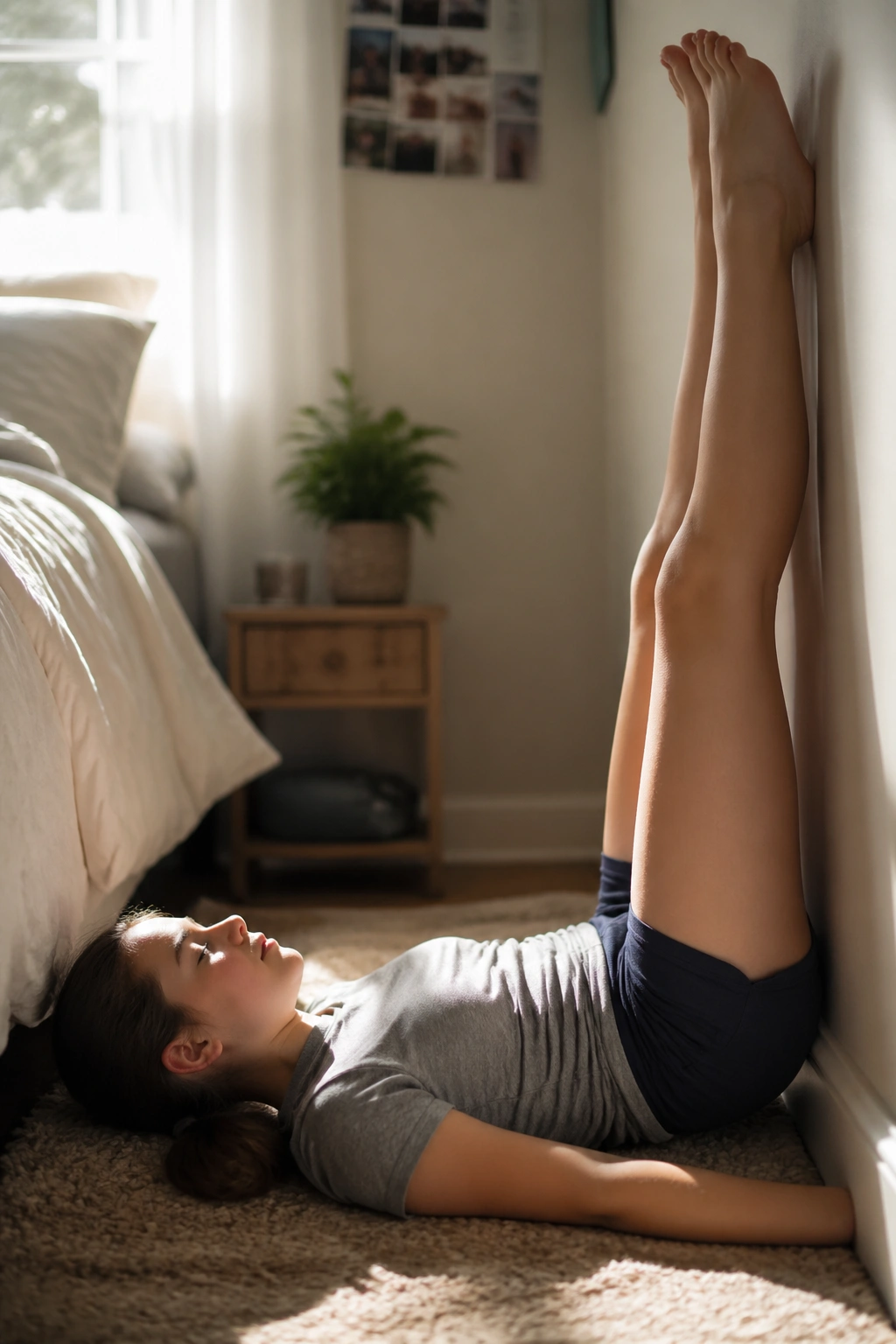
If there is one pose that makes a room go quiet, it’s this one.
Legs Up the Wall is the pose I reach for when the day has been all noise and no pause. There’s almost no skill required, which is part of why it works. You lie down, put the legs up, and let gravity do the boring work. For a teen who has been rushing from class to practice to a desk to a screen, that can feel weirdly luxurious.
The setup matters more than people think. Sit sideways next to a wall, swing the legs up, and scoot the hips close enough that the hamstrings feel calm instead of yanked. If the back of the legs complains, move a few inches away from the wall. That small distance change fixes a lot.
Stay there for 3 to 10 minutes if time allows. A hand on the belly helps the breath slow down. A hand on the ribs works too. This is not a stretch you force. It’s a pause you allow.
6. Seated Side Stretch for the Tight Rib Cage Feeling
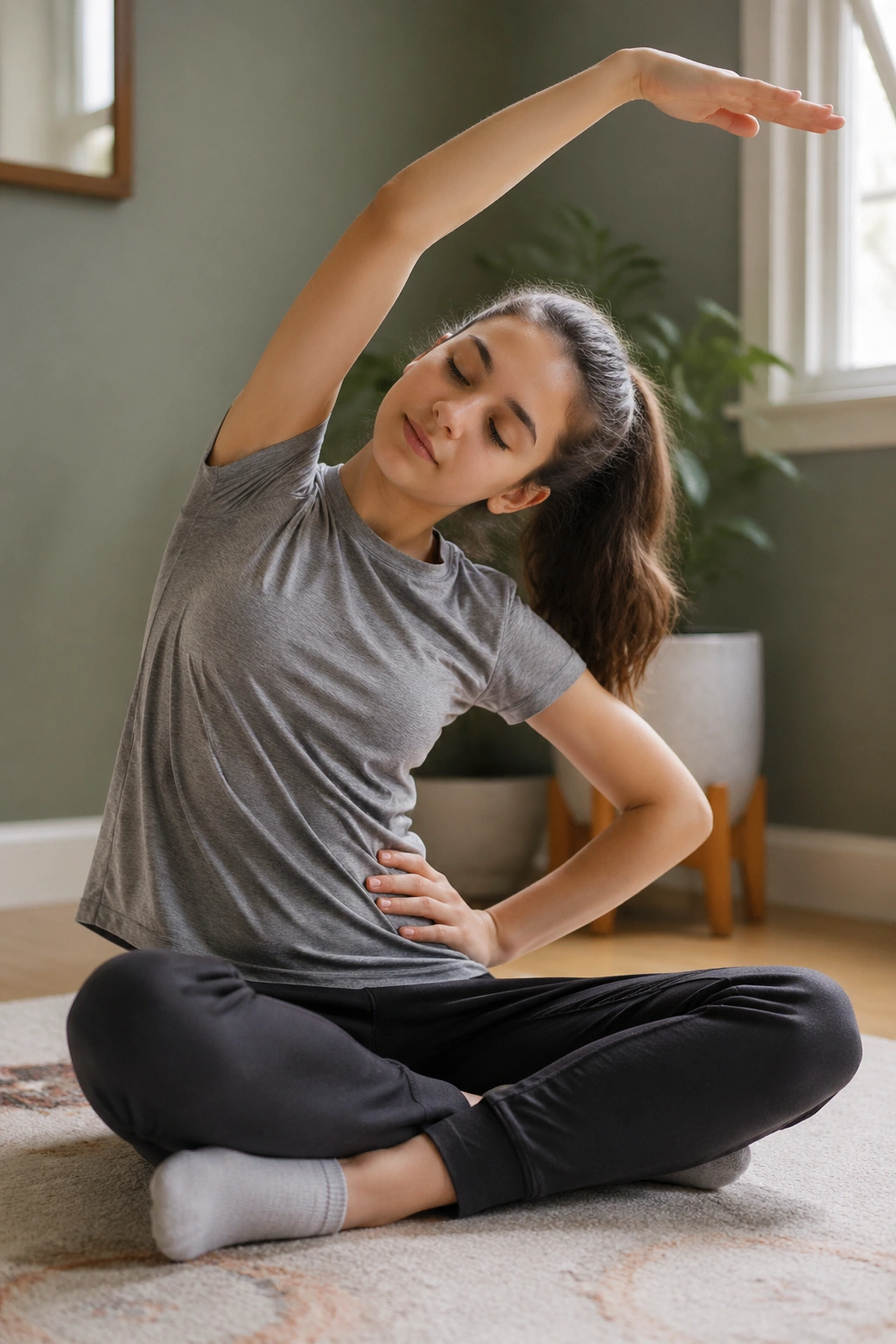
A side stretch does something a forward fold won’t.
When a teen feels like the breathing is stuck up high in the chest, the side body usually needs some attention. Seated Side Stretch opens the ribs, the space between the shoulder and hip, and the line along the torso that gets compressed during long hours of sitting. That can make the breath feel deeper without turning the whole session into work.
Sit cross-legged on the floor or on a chair, then reach one arm up and over. Keep the other hand grounded lightly beside the hip. The key is not to collapse sideways. Reach long first, then arc over. Hold each side for 4 to 5 breaths, and keep the face relaxed. If the neck tenses, look straight ahead instead of up.
This pose is especially nice for teens who carry stress in the sides of the body — singers, swimmers, students with heavy backpacks, or anyone who spends too long curled over a desk. It is small. It is useful. That’s enough.
7. Supine Figure Four to Unclench the Hips
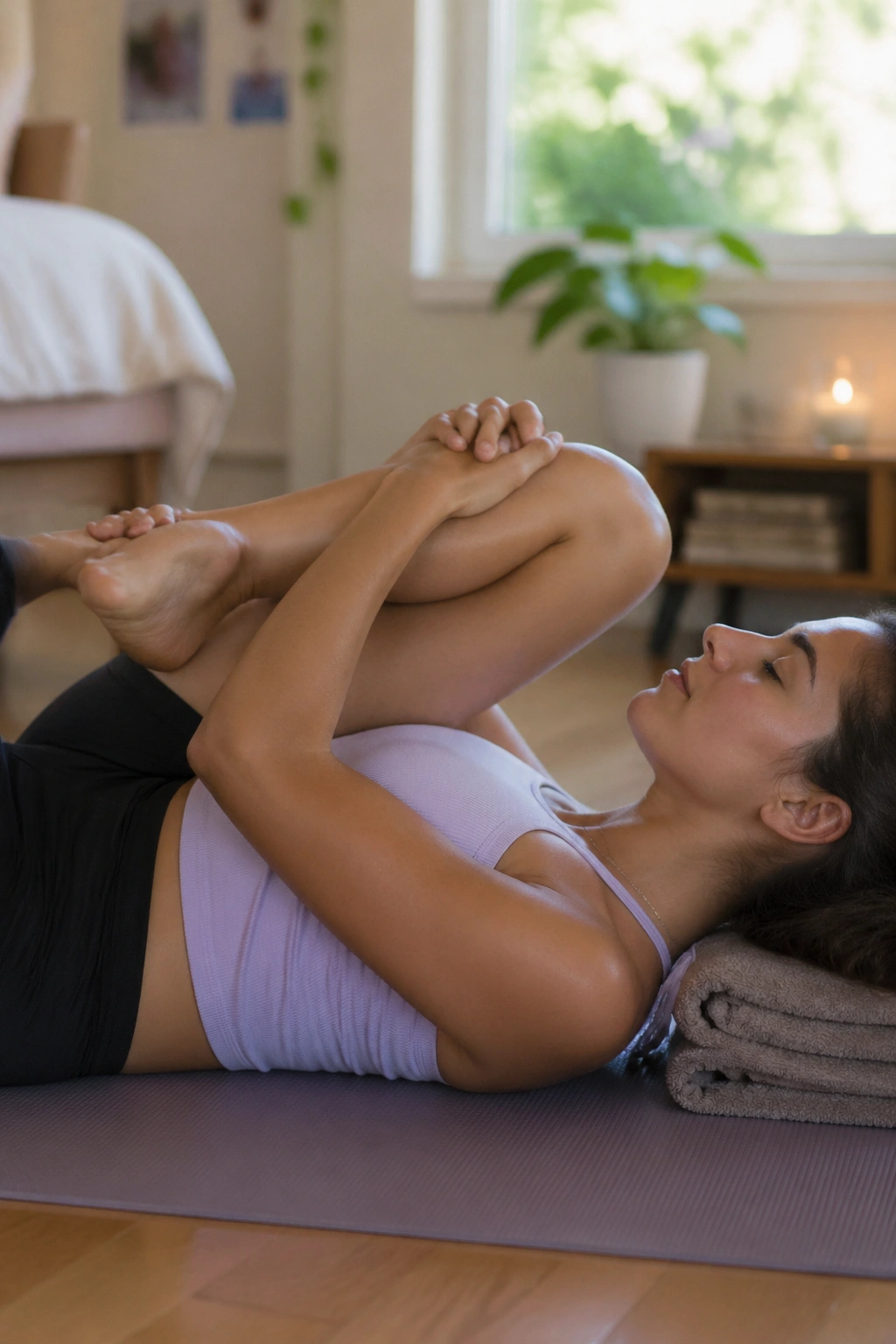
After a day of sitting, one hip often feels louder than the other.
Supine Figure Four opens the outer hip without asking the knees to do anything dramatic, which is why I like it so much after school. The body is already on its back, so there’s less effort involved. That makes the stretch easier to actually stay in, and staying matters.
Why It Helps
The crossed-leg shape targets the glutes and deep hip muscles that tighten when a teen sits too long or walks around with one side of the body doing most of the work. If the hips feel pinchy, place the standing foot on the wall or keep the uncrossed leg bent instead of straight. No need to pull hard.
- Lie on your back with both feet on the floor.
- Cross one ankle over the opposite thigh.
- Reach behind the uncrossed thigh and draw the legs in gently.
- Keep the head heavy on the floor or on a folded towel.
- Hold 5 to 8 breaths, then switch sides.
If a knee feels cranky, back off right away. The stretch is in the hip, not the joint.
8. Low Lunge for the Front of the Hips
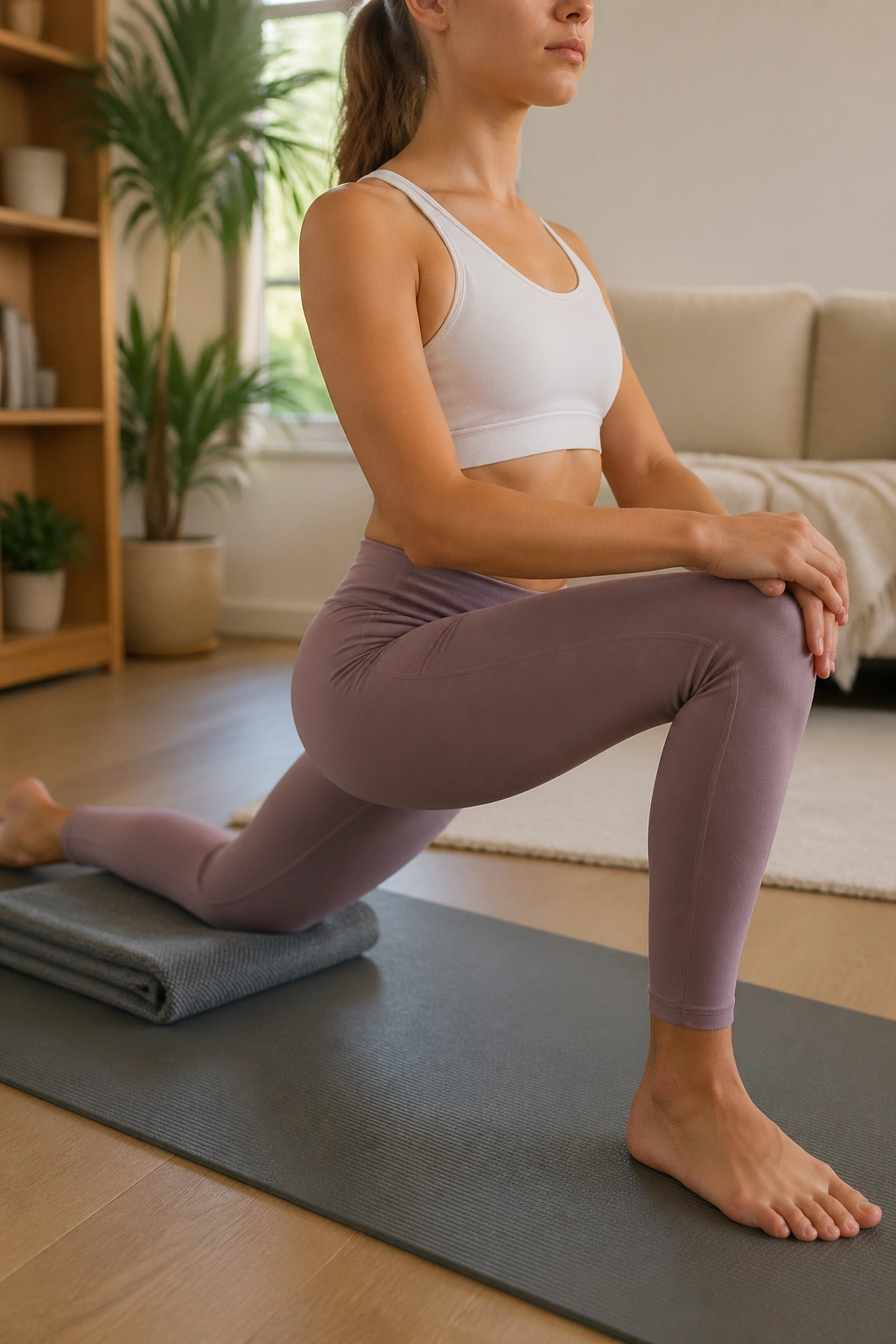
Low Lunge is the one I like when the hips feel locked.
A lot of school stress lives in the front of the body, especially when teens sit with the pelvis tucked and the shoulders rounded. Low Lunge opens the hip flexors on the back leg and gives the front of the body some space again. That can feel like a small miracle after a day in a desk chair.
The setup is straightforward. Place the back knee on a folded blanket, keep the front knee above the ankle, and lift the chest a little. You do not need to sink deep. In fact, a shallow lunge often works better because it lets the stretch settle where it should. A long spine beats a deep bend.
If balance feels shaky, keep both hands on the front thigh. If the low back pinches, shorten the stance and tuck the tailbone just a touch. Hold for 4 to 6 breaths on each side, then come out slowly. No rushing. That would defeat the point.
9. Sphinx Pose to Open the Front Body Gently
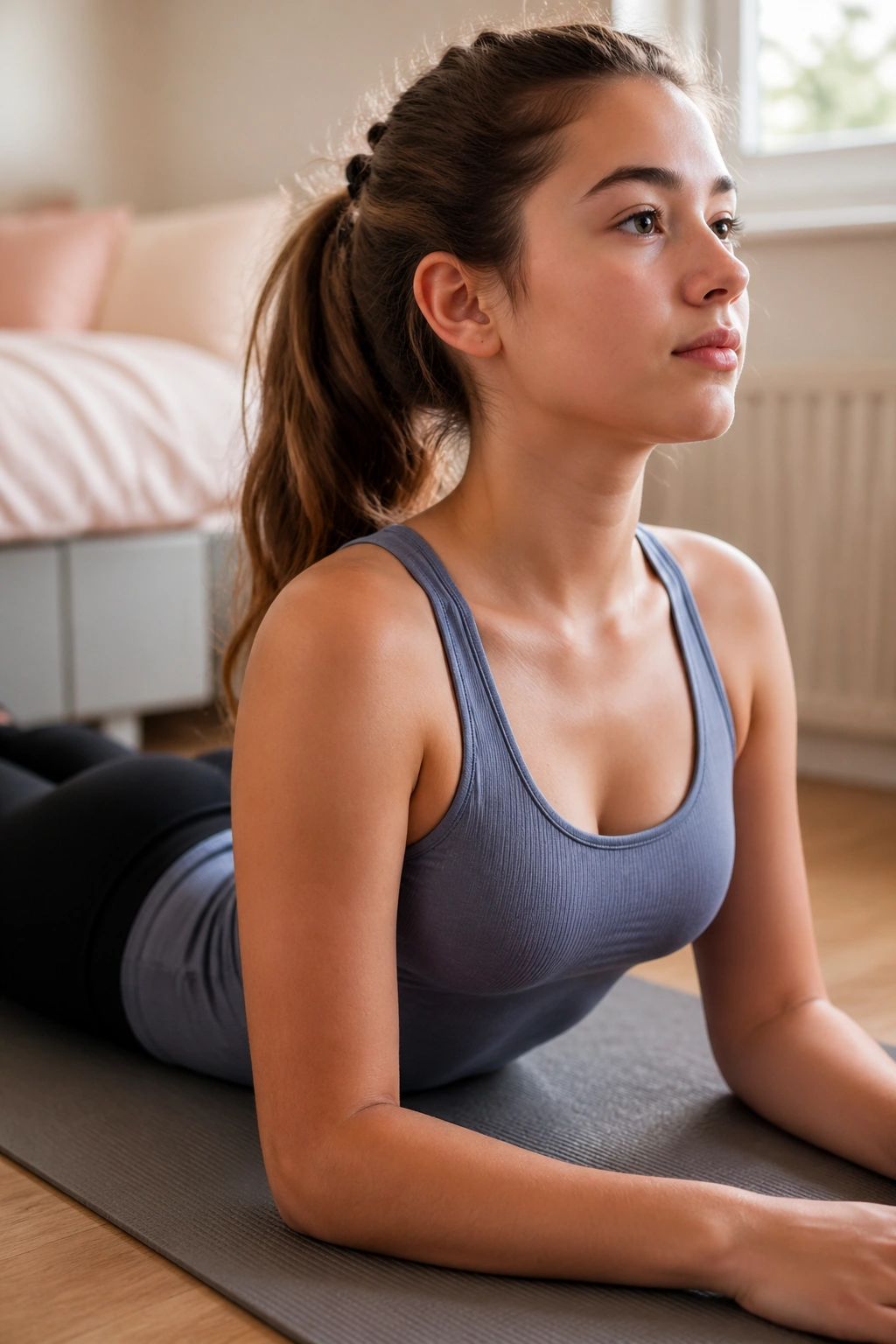
Can a backbend feel calming? Yes — if it stays gentle.
Sphinx Pose is one of the nicest ways to counter all the slouching that comes with schoolwork and phone time. The belly stays on the floor, the chest lifts a little, and the front of the body opens without the drama of a bigger backbend. For teens who feel hunched, this pose can be a quiet relief.
What to Watch For
Set the elbows under the shoulders and let the forearms rest on the floor. Press the pubic bone lightly into the mat so the low back doesn’t take over. If the lower spine feels compressed, lower the chest or move farther forward. The stretch should land in the belly and chest, not jam the low back.
Hold it for 3 to 5 breaths at first. The neck should stay long, and the shoulders should slide away from the ears. This is a good one for teens who feel chest-tight from stress or sports, especially after a day of sitting in a rounded shape. It looks calm because it is calm.
10. Reclined Bound Angle with a Pillow Under the Knees
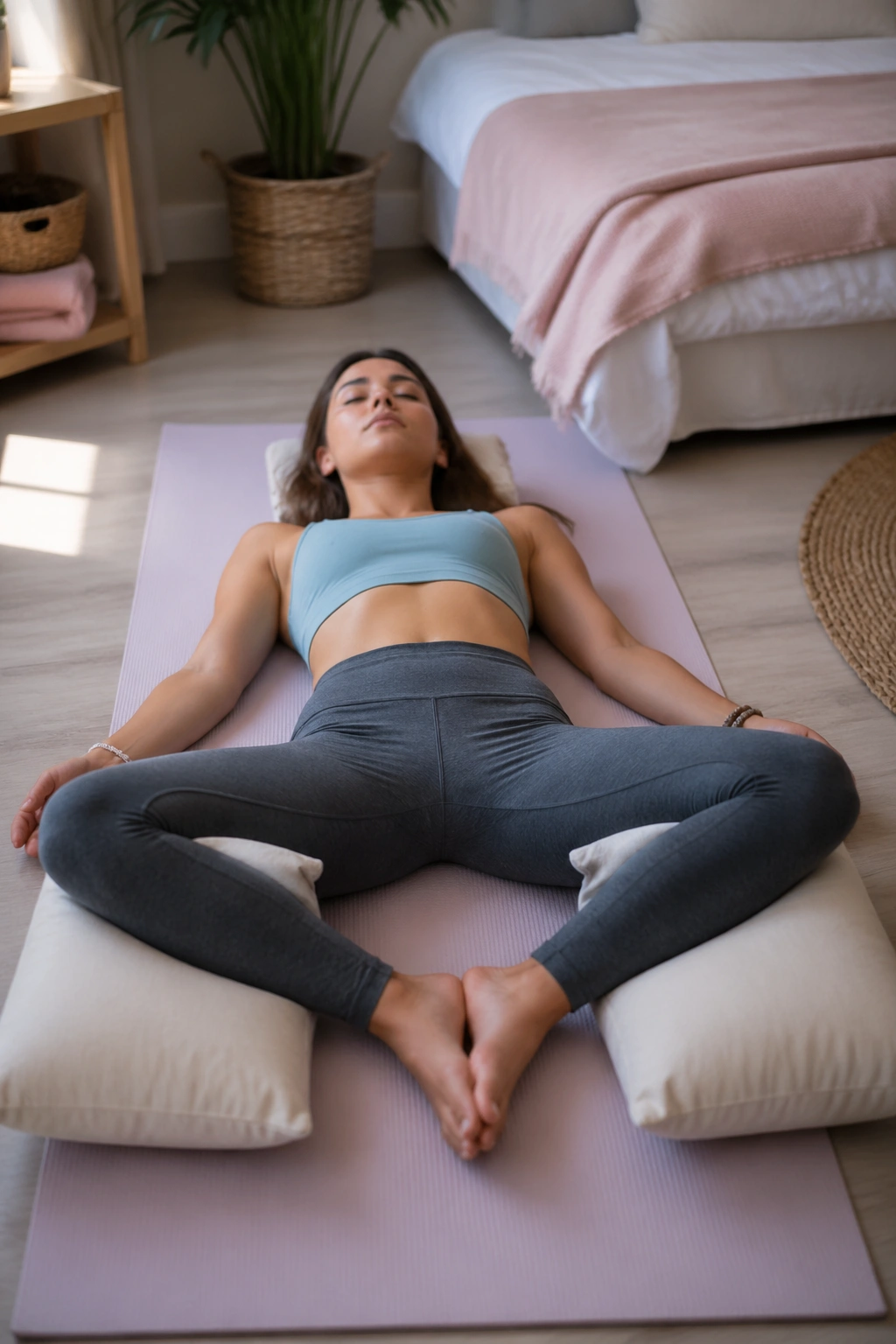
Some poses ask for effort. This one asks for a pillow.
Reclined Bound Angle is a favorite for the end of a rough day because it does not demand much from the muscles. Sit down, bring the soles of the feet together, then lie back and let the knees open. If the inner thighs feel too intense, slide a pillow or rolled blanket under each knee. That small support changes everything.
The pose helps the hips open while the chest stays relaxed, which makes breathing feel smoother. It’s especially good when a teen feels wired but tired — the worst combination, honestly. A hand on the belly, a slow exhale, and a floor that doesn’t ask anything back. That’s the mood here.
- Pillow under the knees if the hips are tight.
- Another folded towel under the head if the chin lifts.
- Stay for 1 to 5 minutes.
- Keep the feet active if the legs feel numb.
If the low back feels arched, place the feet a little farther away from the pelvis. That usually settles it.
11. Eagle Arms to Melt the Upper Back Knot
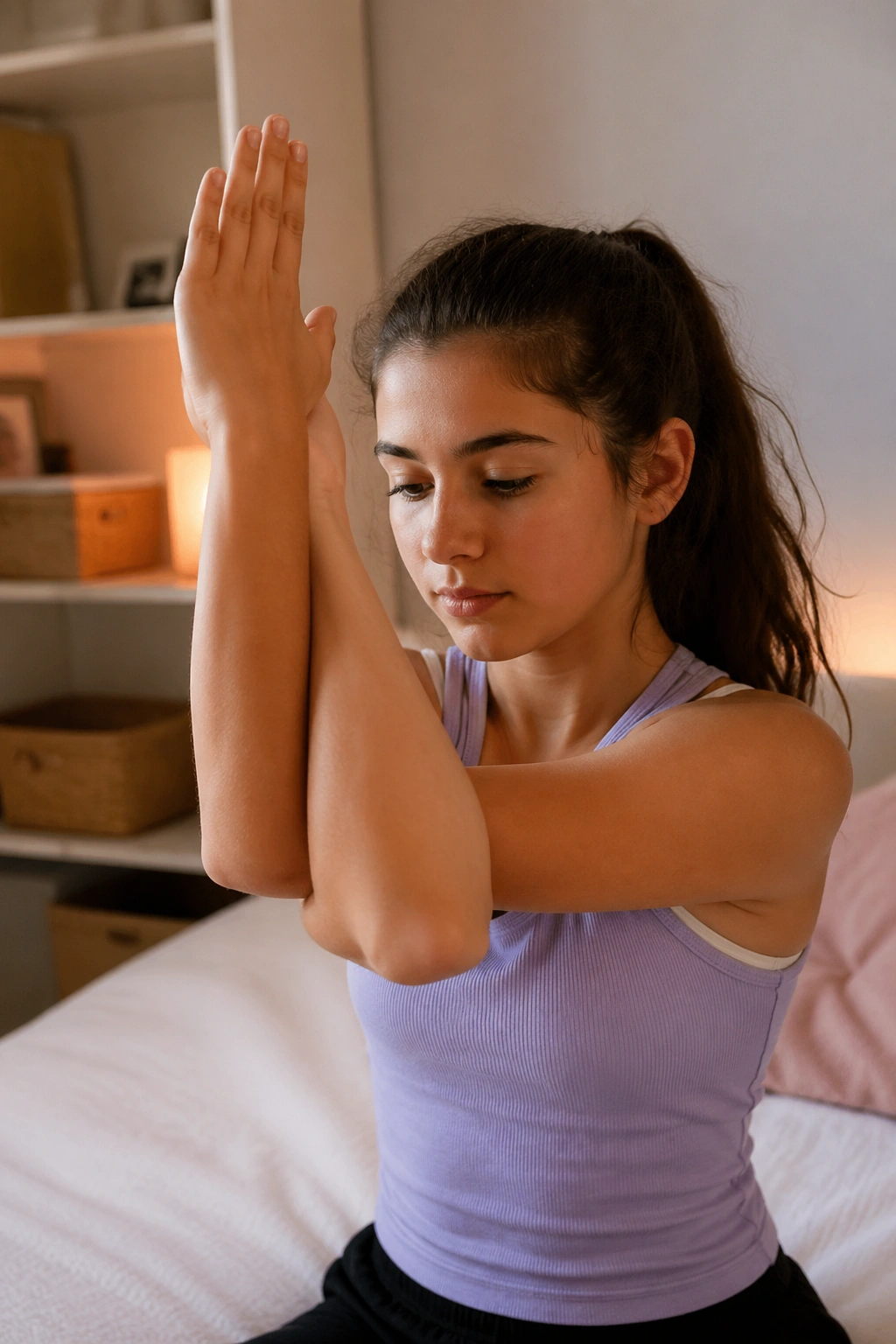
Eagle Arms lives in the shoulders, not the legs.
That’s what makes it so useful after school. A teen does not need a lot of space or a full mat to get something out of it. You can do it seated, standing, or even at the edge of the bed. Cross one arm under the other, bend the elbows, and either wrap the forearms together or press the backs of the hands. Then lift the elbows a little and let the shoulder blades spread apart.
The sensation is odd at first, then very good. Upper backs that have spent the day guarding, typing, and carrying backpacks usually respond fast to this shape. Take 4 to 6 breaths on one side, then switch the arm cross. If the wrists don’t like the full wrap, keep the arms crossed without the hands meeting. That still counts.
Don’t shrug. That’s the whole trick. Let the shoulders drop while the elbows float. It’s a small adjustment, but it changes the whole pose.
12. Happy Baby for the Hips and the Low Back
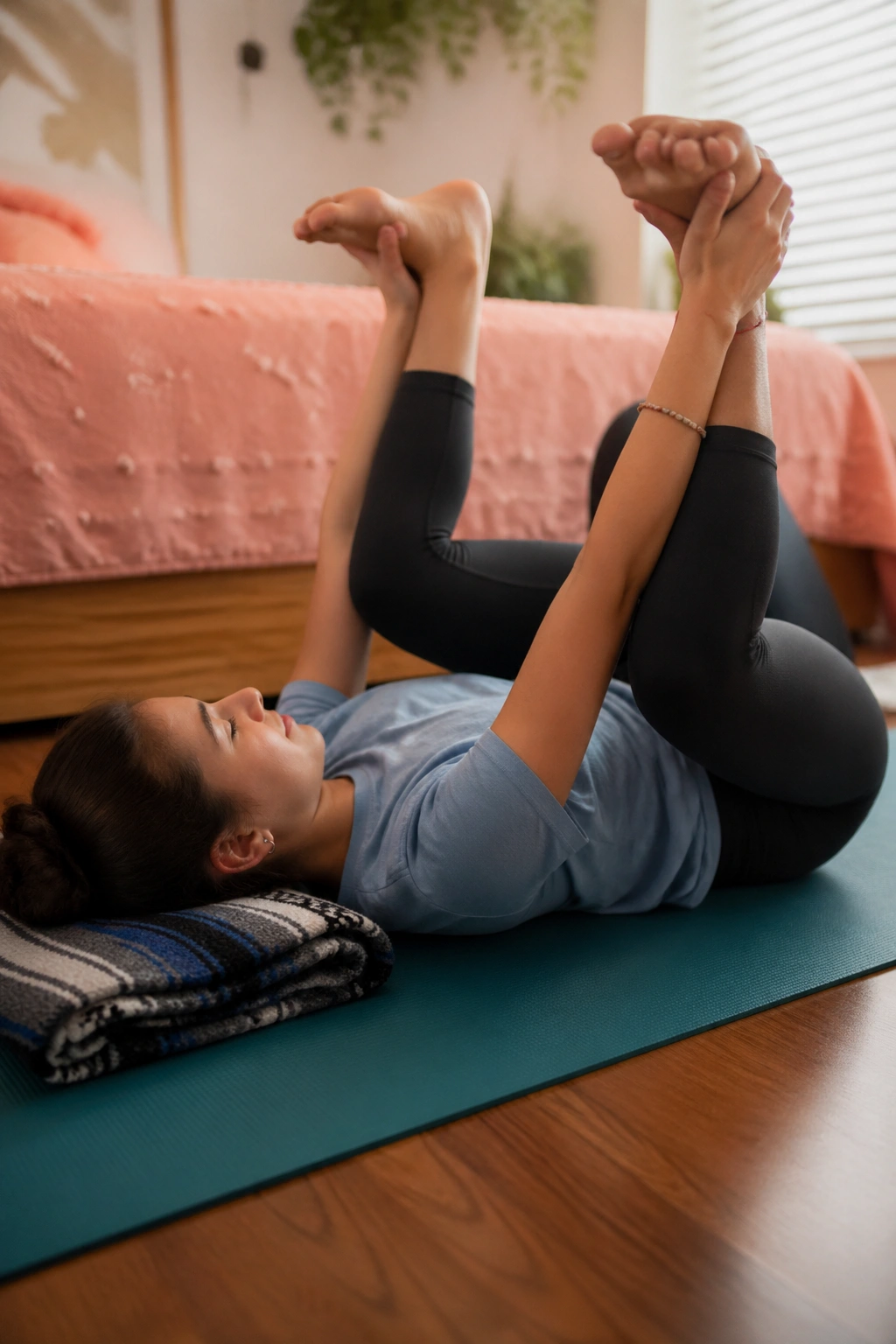
Happy Baby looks playful, but it is serious about the lower back.
Unlike a deep hamstring stretch, Happy Baby works the hips and low back together, which is why it feels so satisfying after a day of sitting or after sports practice. The knees come toward the armpits, the pelvis settles down, and the spine gets a chance to widen. It’s a nice release when the back feels compressed.
If reaching the feet feels awkward, hold behind the thighs instead. That version is not a downgrade. It’s often smarter. Keep the tailbone heavy, and let the knees open only as much as the body allows. A few tiny rocks side to side can help, but slow is better than bouncy.
Hold for 5 breaths or longer if the pose feels safe and comfortable. A folded blanket under the head keeps the neck from craning. If the shoulders are tight, don’t yank the legs wide. Small and easy works. No bonus points for forcing it.
13. Downward-Facing Dog to Shake Out the Day
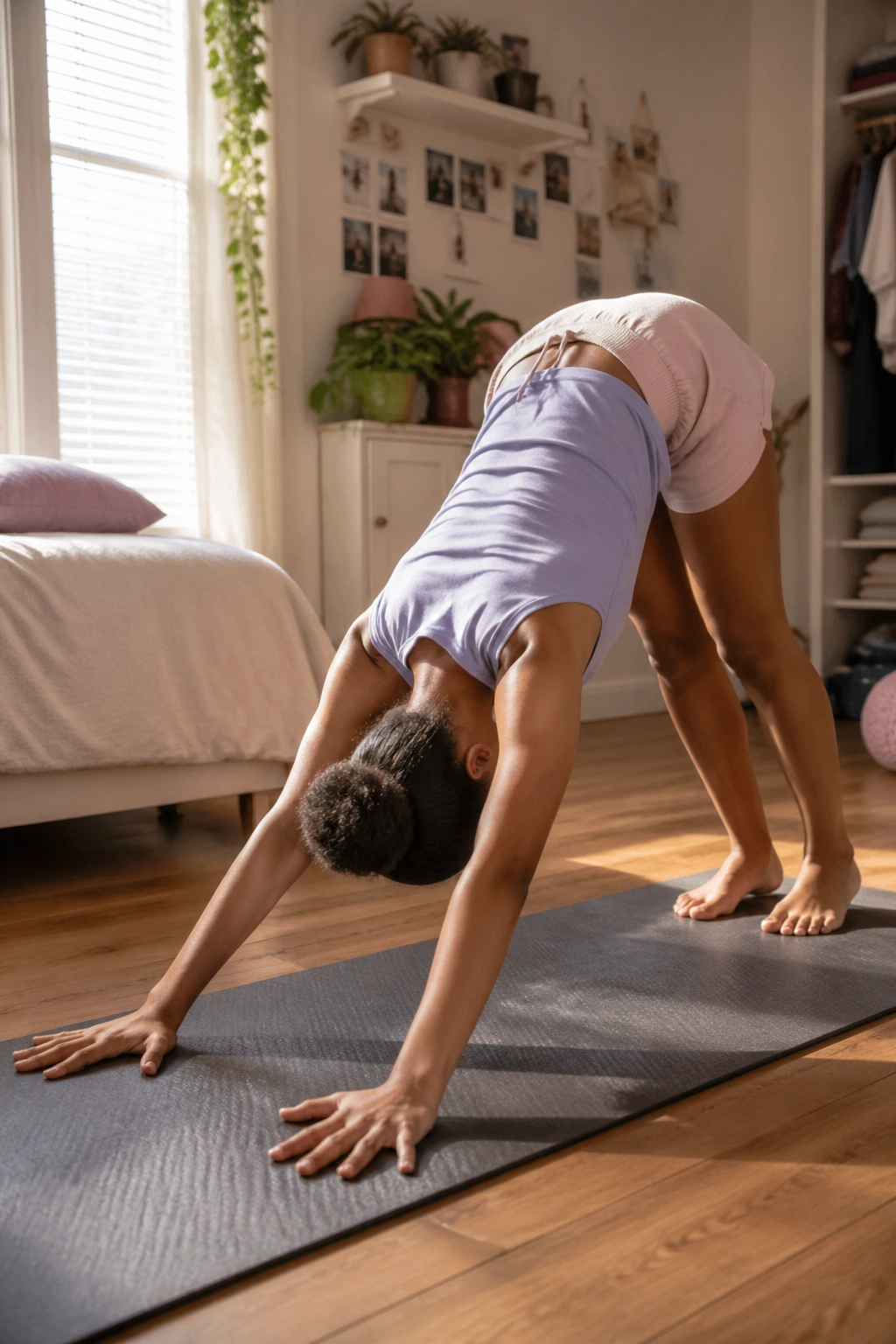
Downward-Facing Dog gets used as filler too often, and that’s a shame.
When done with care, it gives the back line of the body a long, clean stretch and creates a little space between the spine and the floor. That can feel good after hours of sitting, especially if the calves, hamstrings, and shoulders have all gone stiff in the same day. But this is not a pose to rush or treat like a contest.
How to Make It Feel Better
- Bend the knees as much as needed.
- Press through the whole hand, not just the wrists.
- Keep the head heavy and the neck long.
- Pedal the heels one at a time.
- Stay for 3 to 5 breaths, then come down.
A teen with tight hamstrings should not try to straighten the legs immediately. Bent knees are fine. Better than fine, usually. The goal is length, not shape. If the wrists get sore, move the hands a little wider or take the pose at a wall instead of the floor.
14. Knees-to-Chest for a Soft Landing
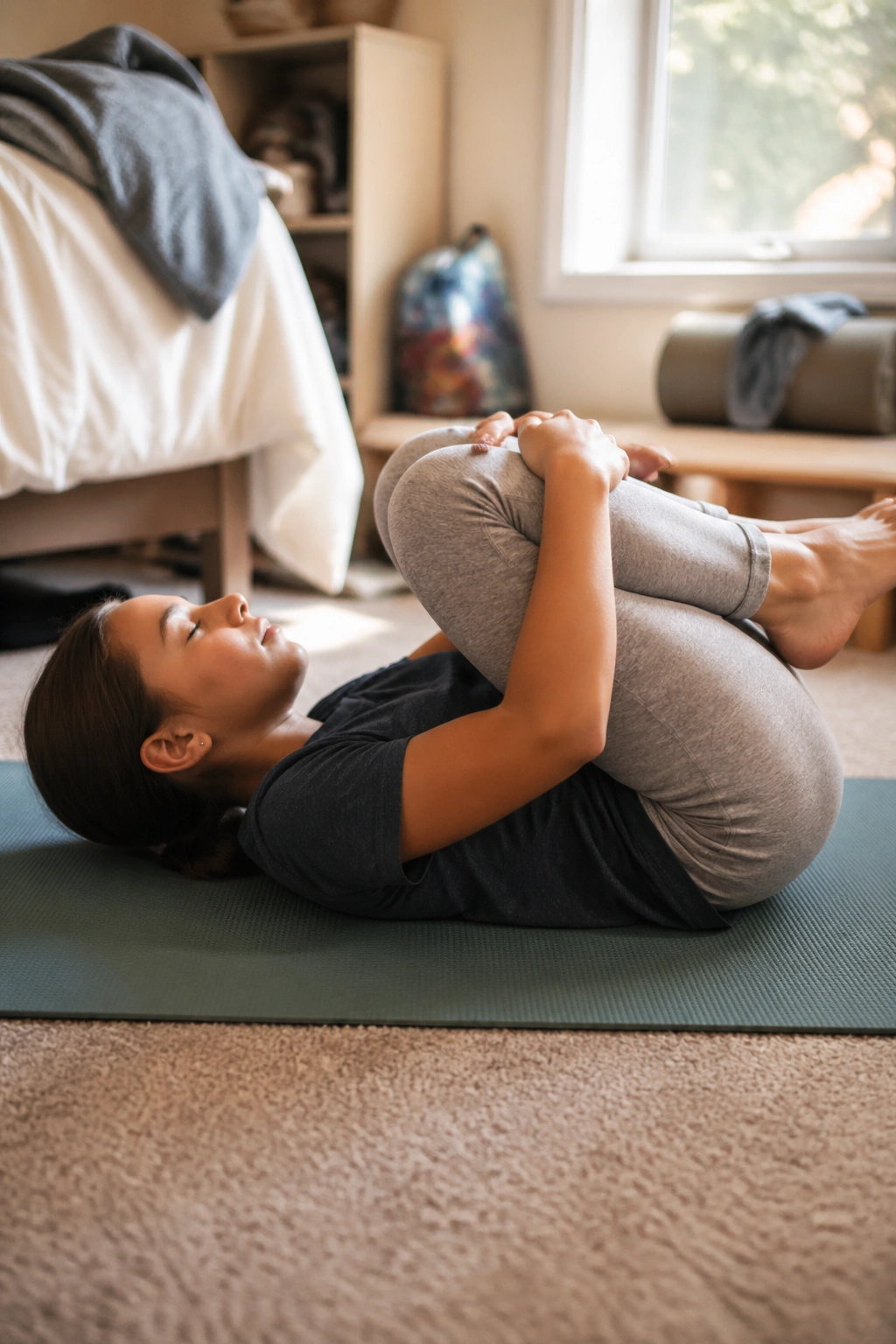
If the lower back feels grabby, start here.
Knees-to-Chest is one of the simplest ways to calm the body after school because it removes effort almost entirely. Lie down, hug the knees in, and let the spine flatten into the floor. That pressure against the back can feel grounding when the day has been full of noise, standing, and carrying.
Rocking a little side to side is fine, but not required. A lot of teens do better if they simply hold still and breathe into the low belly. The pose is short, direct, and not trying to impress anyone. That’s part of its charm.
If the knees feel crowded toward the chest, keep the feet a little farther away from the body. If the head is tipped back, slide a towel under it. Four to six slow breaths can be enough. This is a good bridge between more active poses and the pure rest at the end.
15. Supported Fish for Phone Neck and Chest Tightness
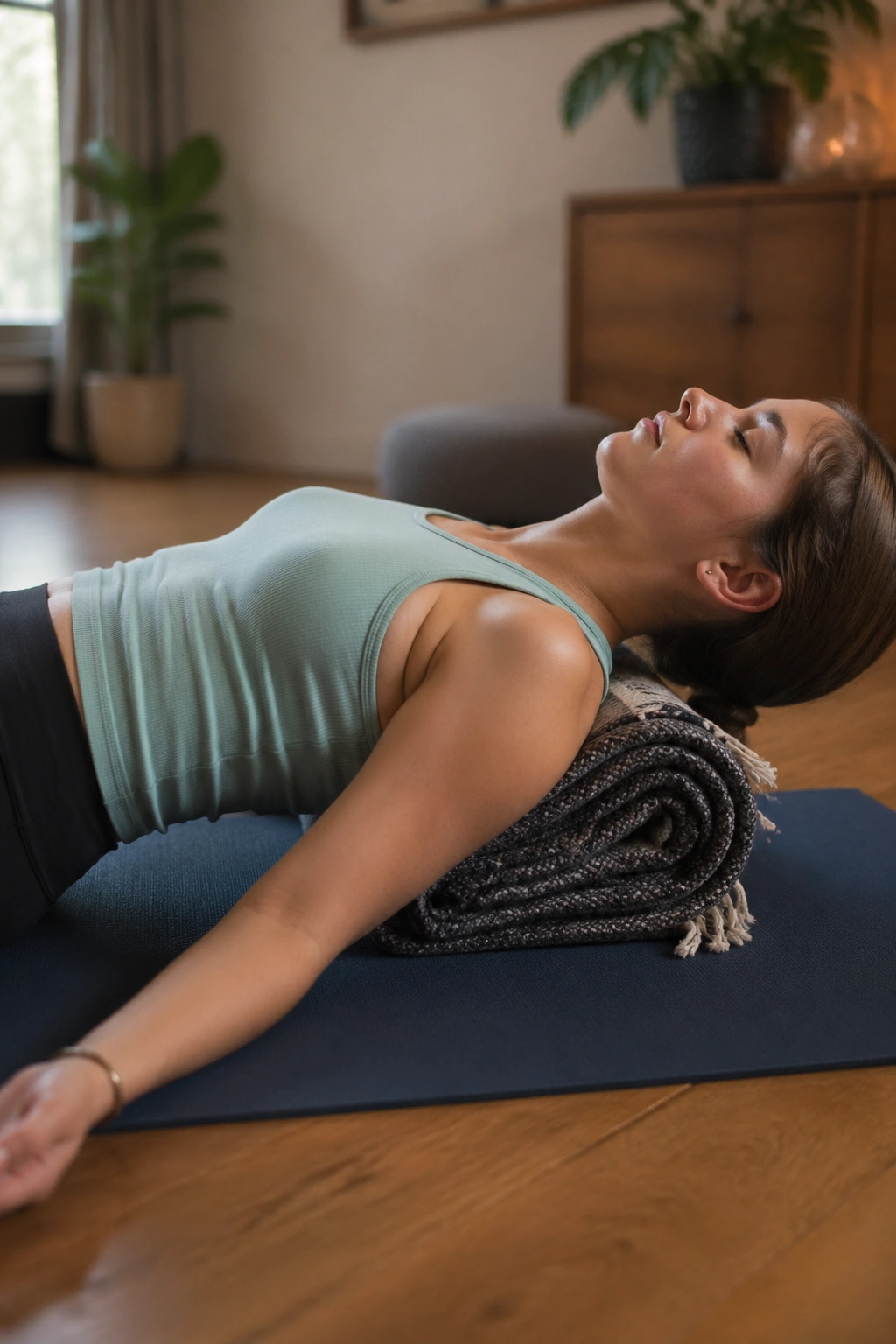
Want your chest to open without a huge backbend?
Supported Fish is the answer. It uses a rolled blanket, a foam block, or a firm pillow under the upper back so the chest can widen while the shoulders drop away from the ears. For teens who spend hours looking down at screens, this pose hits a very specific kind of soreness that forward folds and hip openers won’t touch.
How to Set It Up
Lie down with the support under the shoulder blades, not the lower back. Let the head rest on the floor or on a thin folded towel if the neck feels strained. Arms can open wide, rest by the sides, or bend in a cactus shape. The chest should feel lifted, but not jammed.
A little chest opening goes a long way here. Two to four minutes is plenty for many people. If the low back arches too much, move the support a bit lower or take it away and keep the pose flatter. That little adjustment keeps the stretch in the right place. It’s a smart pose, not a showy one.
16. Crescent Lunge with a Side Bend for Stiff Hips and Sides
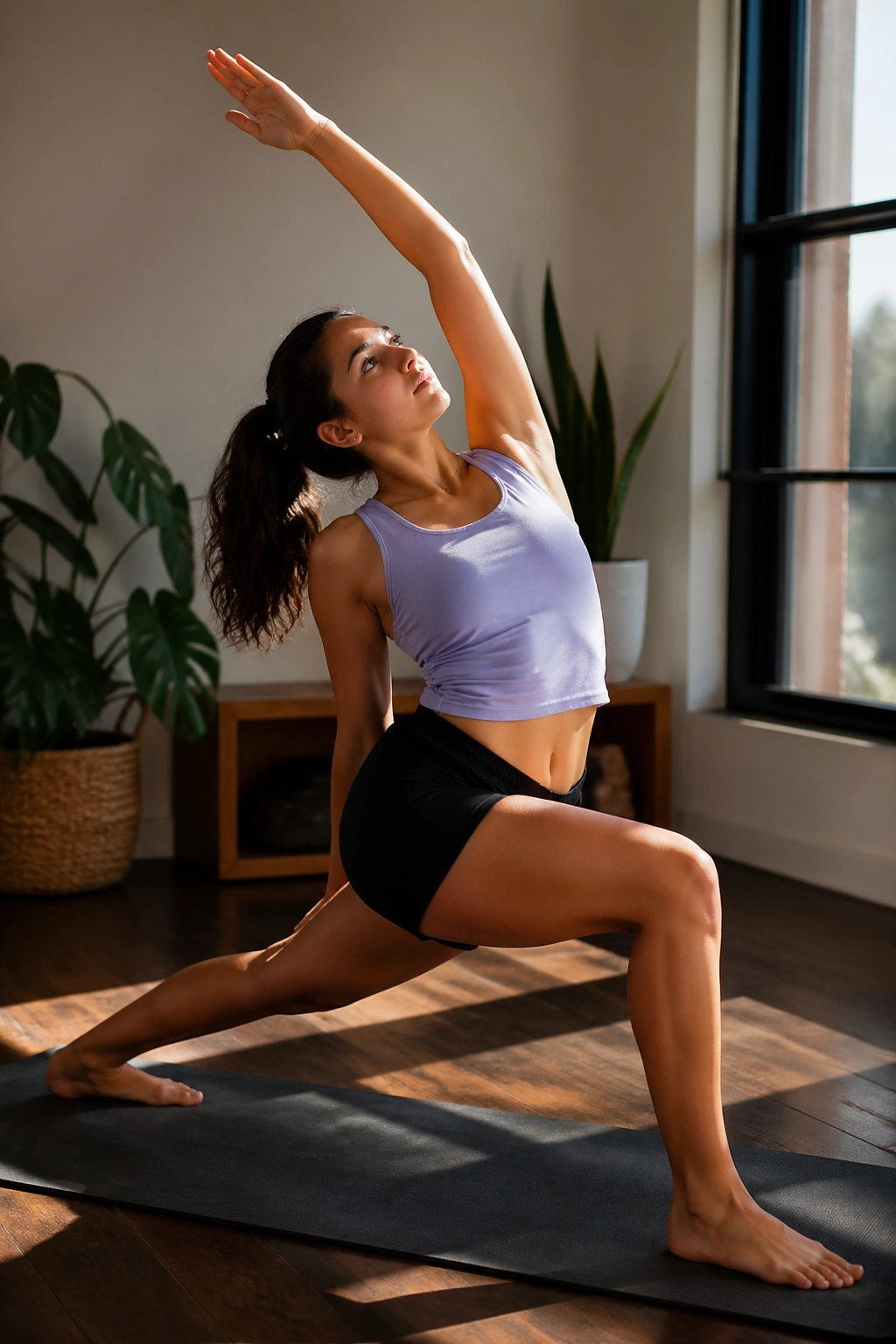
After sports practice or a long walk home, this one feels like a proper release.
Crescent Lunge with Side Bend opens the hip flexors on the back leg while stretching the side body on the same side as the lifted arm. That combination is useful when a teen feels tight everywhere but especially around the pelvis and ribs. It has a little more energy than the floor poses, which can be nice in the middle of a sluggish evening.
Keep the front knee stacked over the ankle, and lift through the torso before leaning sideways. The bend should come from the ribs, not from collapsing into the waist. If balance feels off, keep the back hand on the hip instead of reaching overhead. Shorter stance, calmer breath. That’s the better choice most of the time.
Hold each side for 4 breaths. If the back knee is down, use a folded blanket. If the back foot is lifted, keep the heel pressing away. This pose asks for a little control, but not strain.
17. Seated Twist to Rinse Out the Middle of the Body
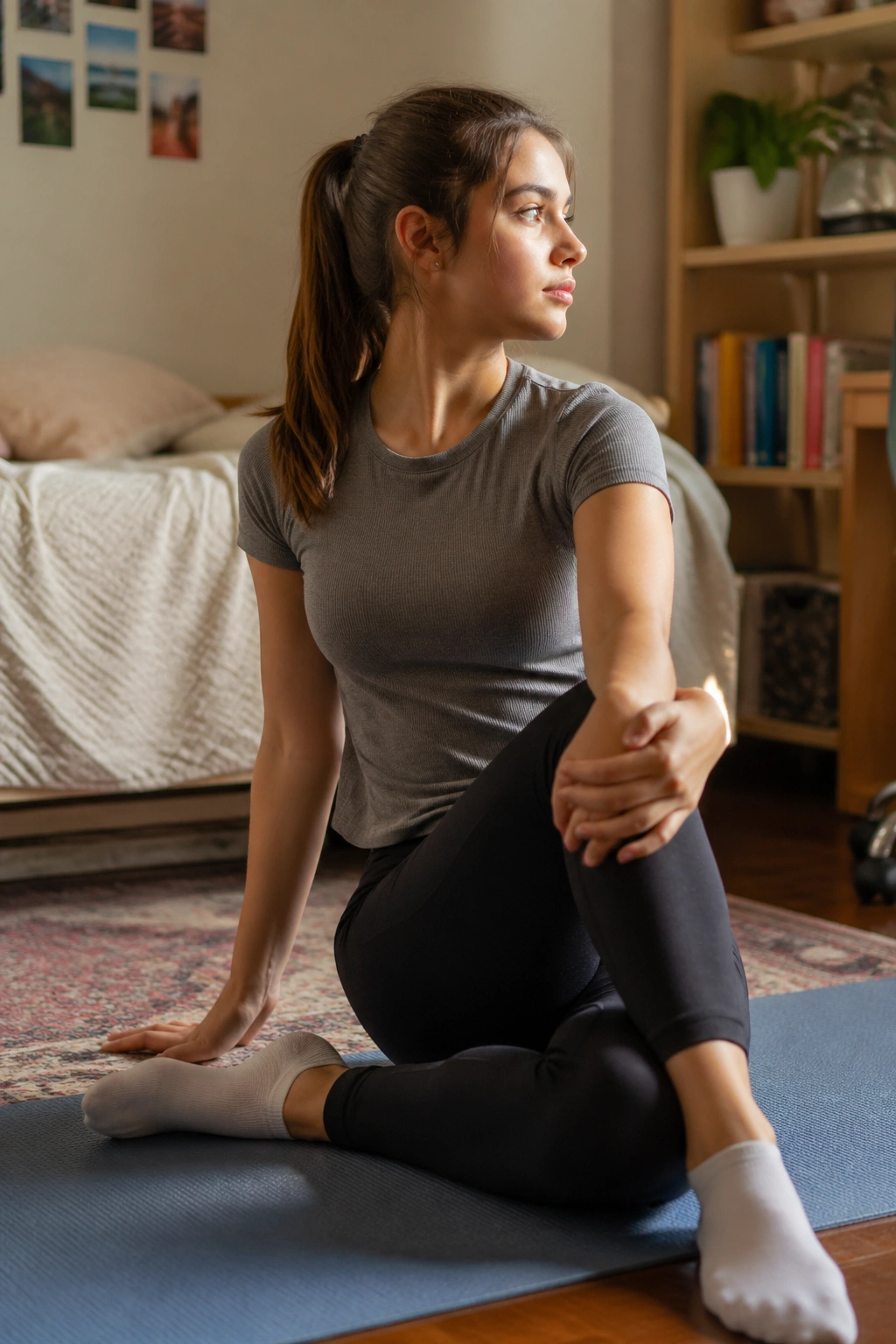
A seated twist can feel tiny on paper and huge in the body.
Teens carry a surprising amount of tension in the middle of the torso — around the ribs, the belly, and the spine — and twisting gently can help that area feel less boxed in. The trick is not to yank the shoulders around. Start by sitting tall, inhale to get longer, then exhale and rotate from the ribs. Keep the spine smooth.
You can do this on the floor or on a chair, which makes it easy to use right after school or even before homework at a desk. A hand on the chair back or knee gives the body a little leverage, but don’t crank it. Twists should feel like a slow wring-out, not a wrestling match.
Hold each side for 4 to 5 breaths. If the low back feels grumpy, keep the twist small. If the neck gets stiff, look straight ahead instead of over the shoulder. A gentle twist tends to calm more than a deep one, and that surprises people.
18. Puppy Pose for the Chest, Shoulders, and Upper Back
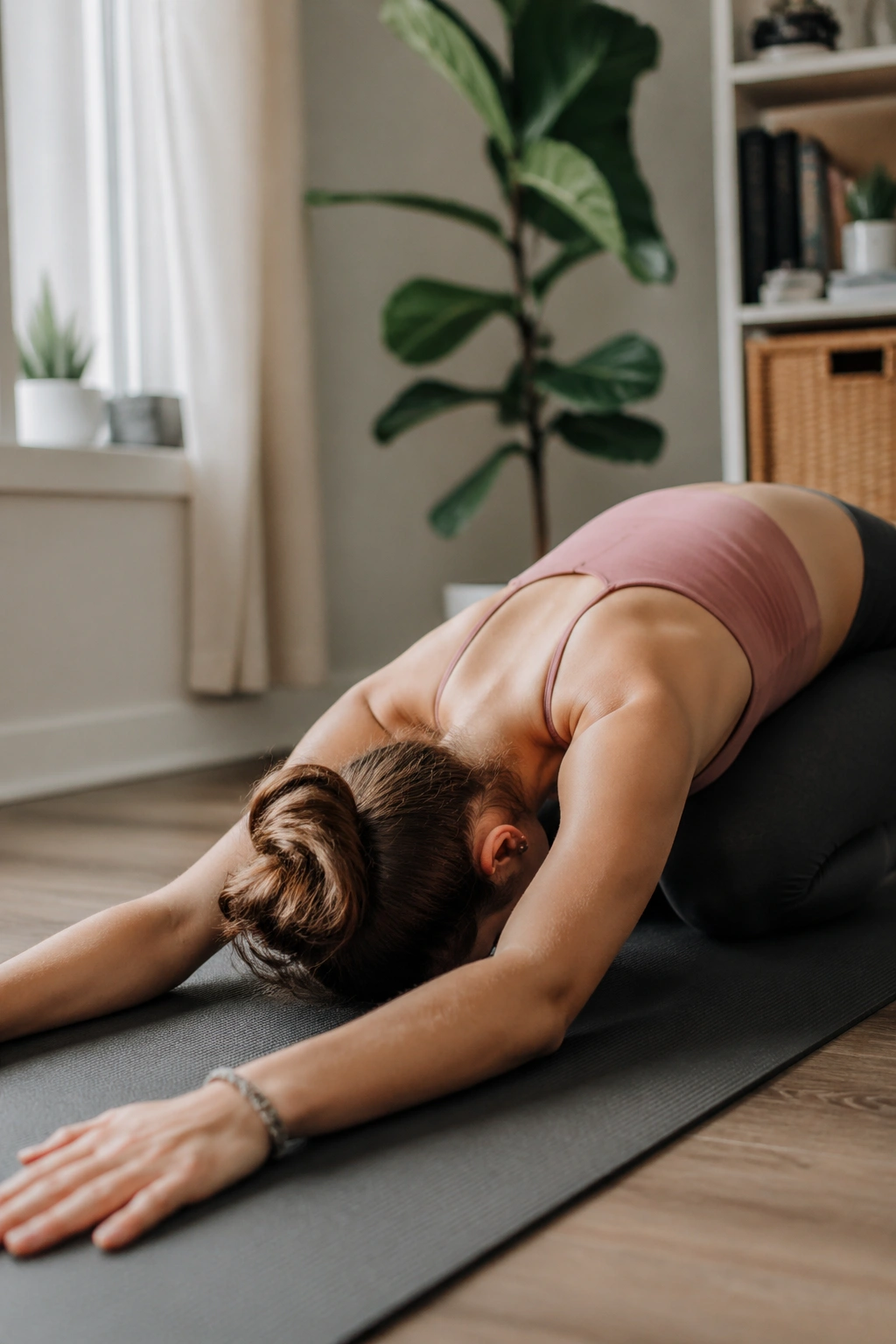
Puppy Pose sits in the awkward middle between Child’s Pose and Downward Dog, and that is exactly why it works.
The hips stay above the knees while the chest lowers toward the floor, which gives the shoulders and upper back a chance to open without the whole body having to work hard. For teens who carry stress in the upper body — and that’s a lot of teens — this pose can feel like a long exhale in physical form.
Use a mat or folded blanket under the knees. Walk the hands forward, keep the hips stacked over the knees, and let the chest melt down as much as is comfortable. If the forehead doesn’t reach the floor, rest it on a block or a stack of books. The lower back should stay quiet.
This is a good one when Child’s Pose feels too tucked and Downward Dog feels too active. It gives a nice middle ground. Hold for 5 breaths, maybe a little longer if the shoulders finally stop gripping. That’s the signal you’re after.
19. Wide-Legged Forward Fold for Space and Breathing Room
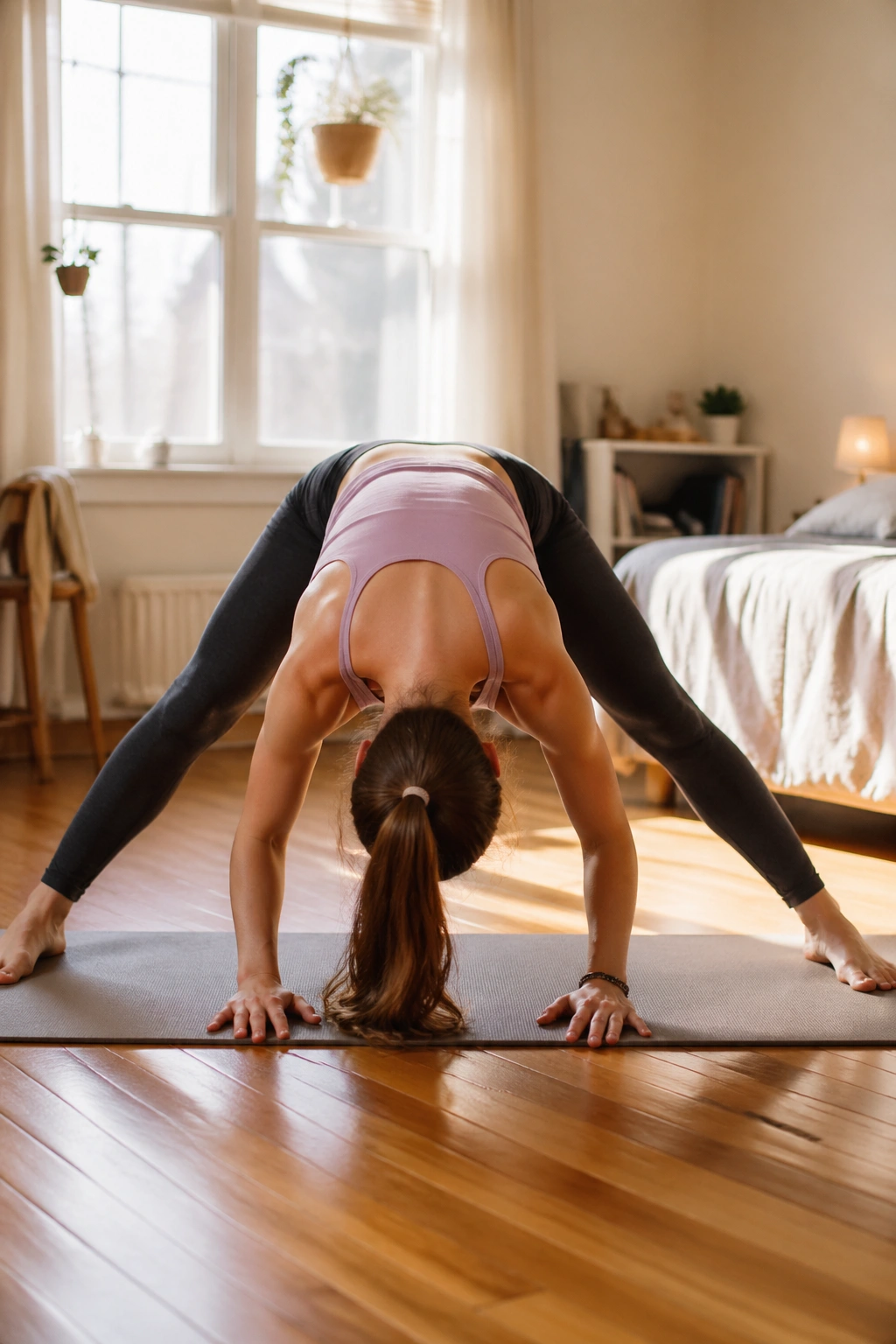
Give the legs room to breathe.
Wide-Legged Forward Fold opens the backs of the legs while making more space through the hips, and that wider base can feel easier than a narrow forward fold for teens who are tight or restless. It also tends to calm the mind because the body has to slow down to stay balanced. Not much drama. Just a lot of room.
How to Make It Gentle
- Stand with feet wide, but not sloppy-wide.
- Keep a soft bend in both knees.
- Fold from the hips, not the waist.
- Place hands on the floor, blocks, or even a sturdy chair.
- Come up slowly if the head feels light.
If the hamstrings are tugging, bend the knees more. If the inner thighs are pulling too hard, shorten the stance a little. You do not need your forehead anywhere near the floor. That image is popular, but it’s not the point. The point is a long back, relaxed neck, and a breath that can move again.
20. Savasana to Let the Whole Day Settle
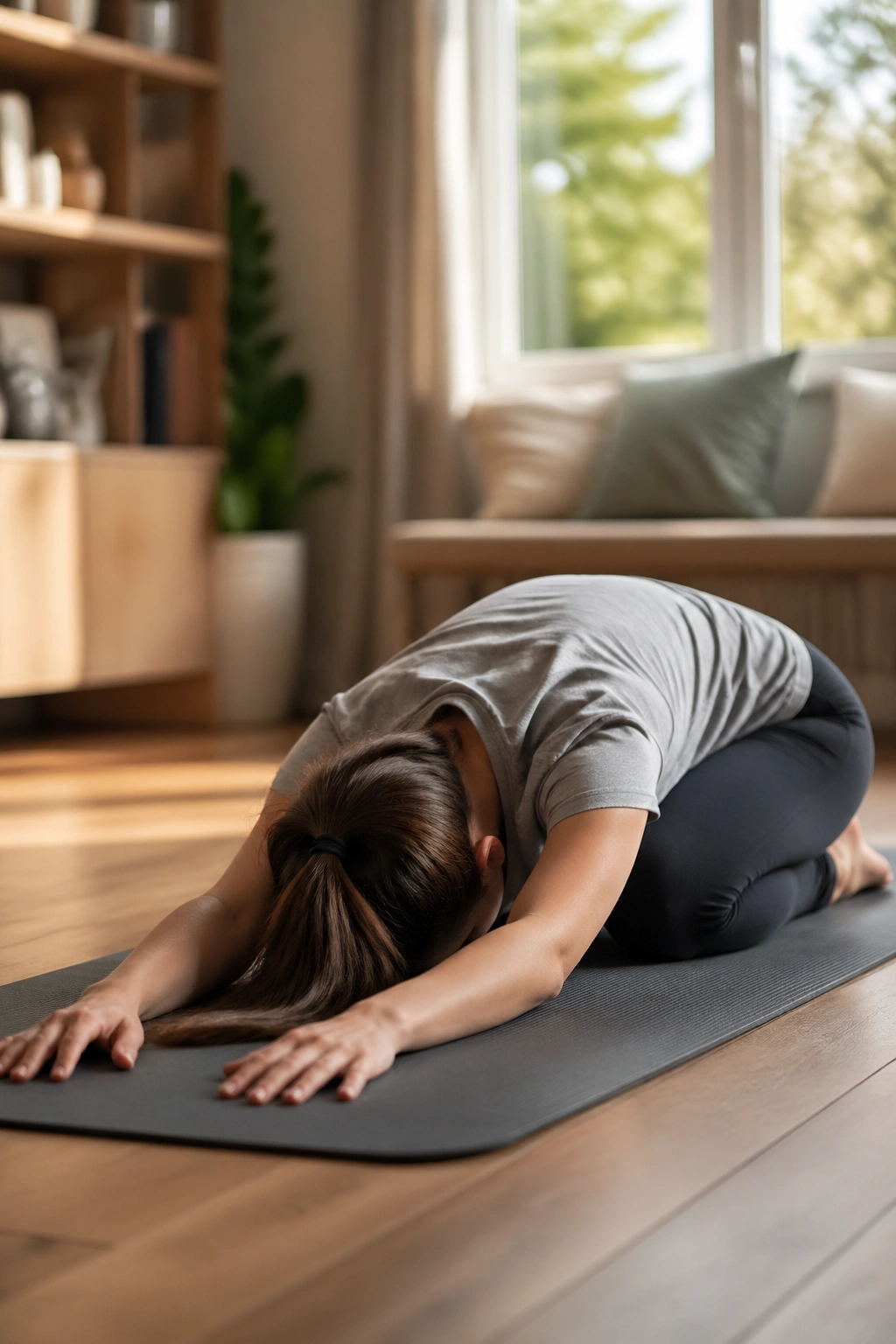
Stillness is part of yoga too.
Savasana is the pose that asks the least and gives the most, which is why I think it belongs at the end of any after-school reset. Lie flat on the back, let the arms fall away from the sides, and turn the palms up if that feels good. If the lower back arches, slide a pillow under the knees. If the room is cool, use a light blanket. Simple fixes. They matter.
The body has to know it is safe enough to stop. That’s the deeper job here. A teen who has been pushing through classes, tasks, and social stuff may need one final reminder that the evening does not have to stay clenched. Keep the eyes closed for 1 to 5 minutes, or longer if the body is calm and warm.
A short body scan works well here: jaw, shoulders, belly, hands, feet. Let each area drop a little. Then let the breath go back to normal.
If there’s one thing I’d tell a teen who thinks yoga has to be fancy, it’s this: pick three poses, not twenty, and do them well. Child’s Pose, Legs Up the Wall, and Savasana can carry a rough day by themselves. Add the others when the body asks for them.
