



A yoga pose can feel gentle and still make reflux flare. That’s the annoying part. Yoga poses for GERD and acid reflux relief have less to do with fancy flexibility and more to do with pressure, breath, and whether your stomach is getting squeezed at the wrong angle.
If you’ve ever finished a meal, stretched in a way that folded your middle, and felt that hot burn climb upward, you already know the problem. The body does not care that the pose looked elegant. It cares about physics. A deep crunch, a breath hold, or a long time lying flat can push against the lower esophageal sphincter and make acid reflux worse.
So the useful poses are usually the quieter ones. Upright standing shapes. Gentle back-body openers. Small movements. Long exhales. The kind of practice that leaves your belly uncompressed and your throat a little calmer.
One more thing, because this matters: if your reflux is frequent, severe, or shows up with trouble swallowing, vomiting, black stools, chest pain that feels new, or weight loss you cannot explain, that is not a yoga problem. Get medical help. Otherwise, the poses below are a solid place to start, especially when you want relief without treating your abdomen like a folding chair.
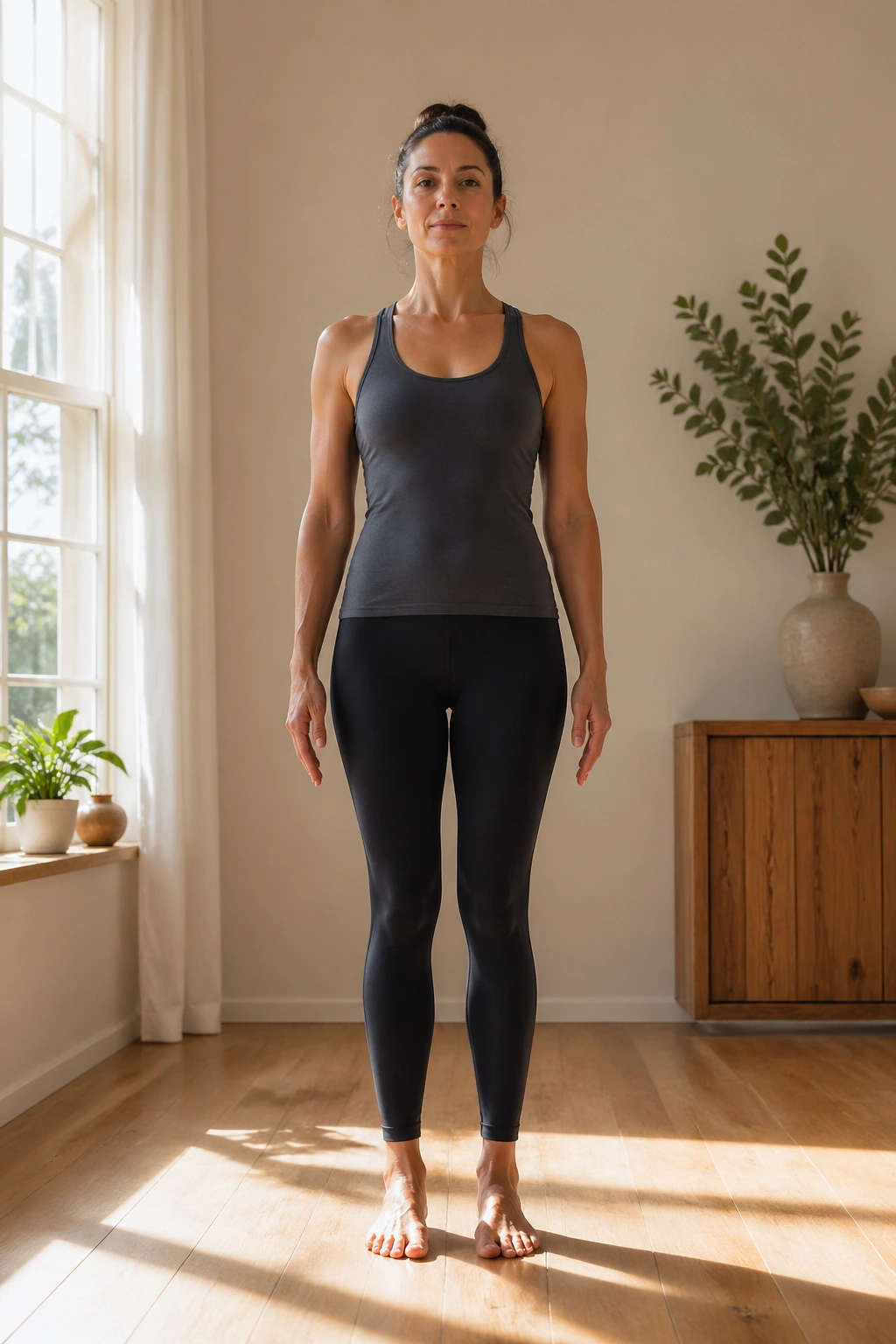
1. Mountain Pose (Tadasana)
Mountain Pose sounds almost too plain to earn a spot here. That’s part of why it works so well.
Stand with your feet hip-width apart, knees soft, ribs stacked over hips, and the crown of your head reaching up without strain. Then breathe. Slowly. The goal is not to “hold posture” like a soldier. The goal is to make enough room through the front body that your stomach is not being shoved inward.
Why It Works
Tadasana is the reset button. When your posture collapses forward, the belly gets compressed and the chest tends to cave. That can make reflux feel worse, especially if you’re already sensitive after eating.
A quiet standing pose won’t fix GERD on its own. But it gives you a place to start that does not add pressure. That matters more than people think. A calm, vertical stance can also help you notice whether you’re clenching your abs, holding your breath, or tucking your chin too hard.
- Stand for 5 to 10 slow breaths.
- Keep the weight even between both feet.
- Soften the jaw and tongue.
- Let the belly be broad, not braced.
Best cue: imagine the breastbone lifting a half-inch while the tailbone drops a half-inch. Tiny. Clean. No strain.
2. Cat-Cow
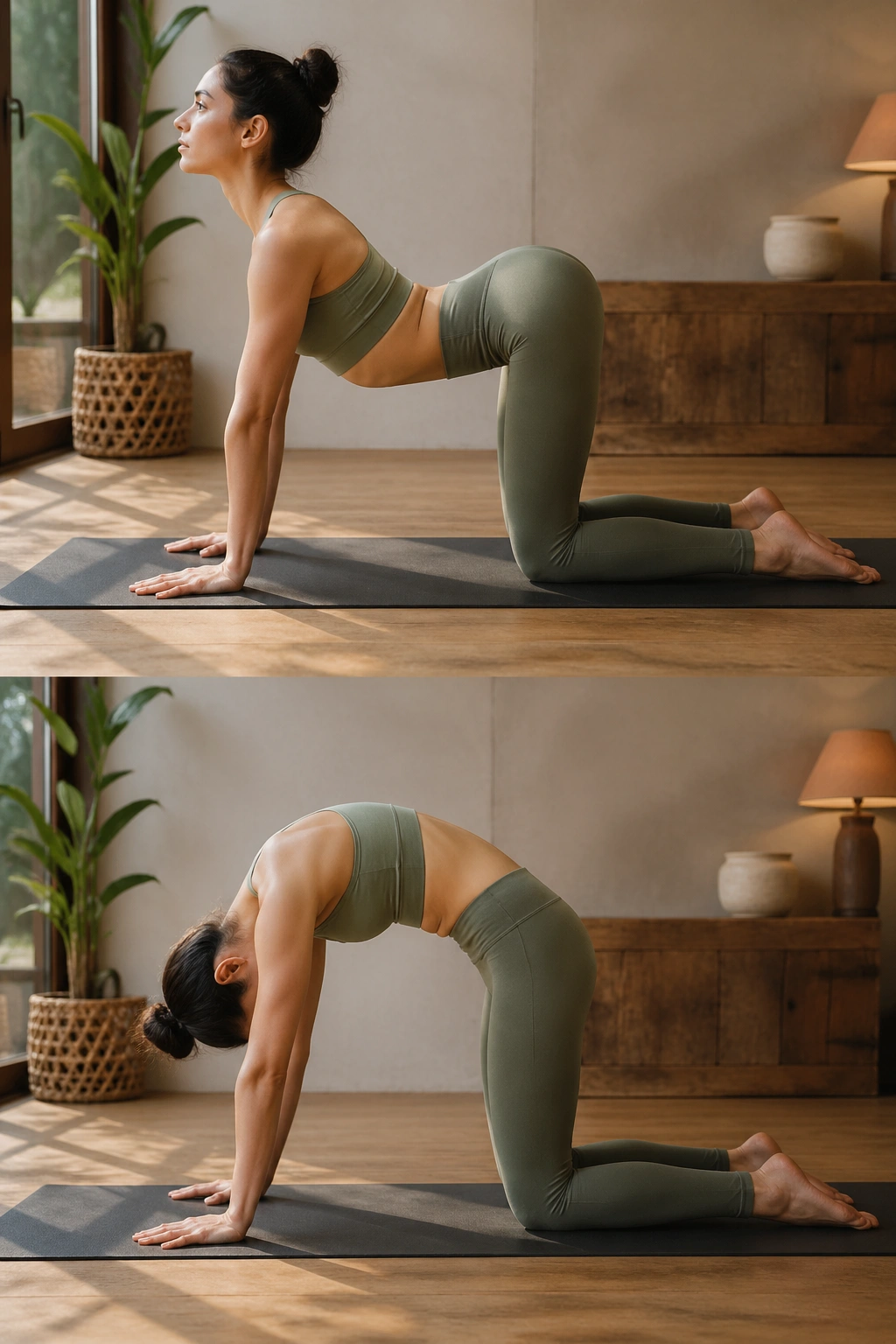
Cat-Cow is one of the safest ways to move the spine when reflux is touchy. The movement is small, familiar, and easy to control.
Come to hands and knees. Inhale as you tilt the tailbone up, let the belly soften, and open the chest a little. Exhale as you round the spine gently and draw the navel in just enough to support yourself. Keep the range modest. This is not the time for deep spinal drama.
The reason Cat-Cow earns its keep is simple: it gives the abdomen some motion without a hard squeeze. A lot of people with GERD feel worse when they stay still in one compressed shape for too long. This pose breaks that pattern.
It also helps if you breathe with the movement instead of fighting it. No breath holds. No fast pacing. If your stomach feels jumpy, keep the rounds to 4 or 5 slow cycles, then come upright and check in. If the burn rises, stop. Easy enough.
3. Standing Side Stretch
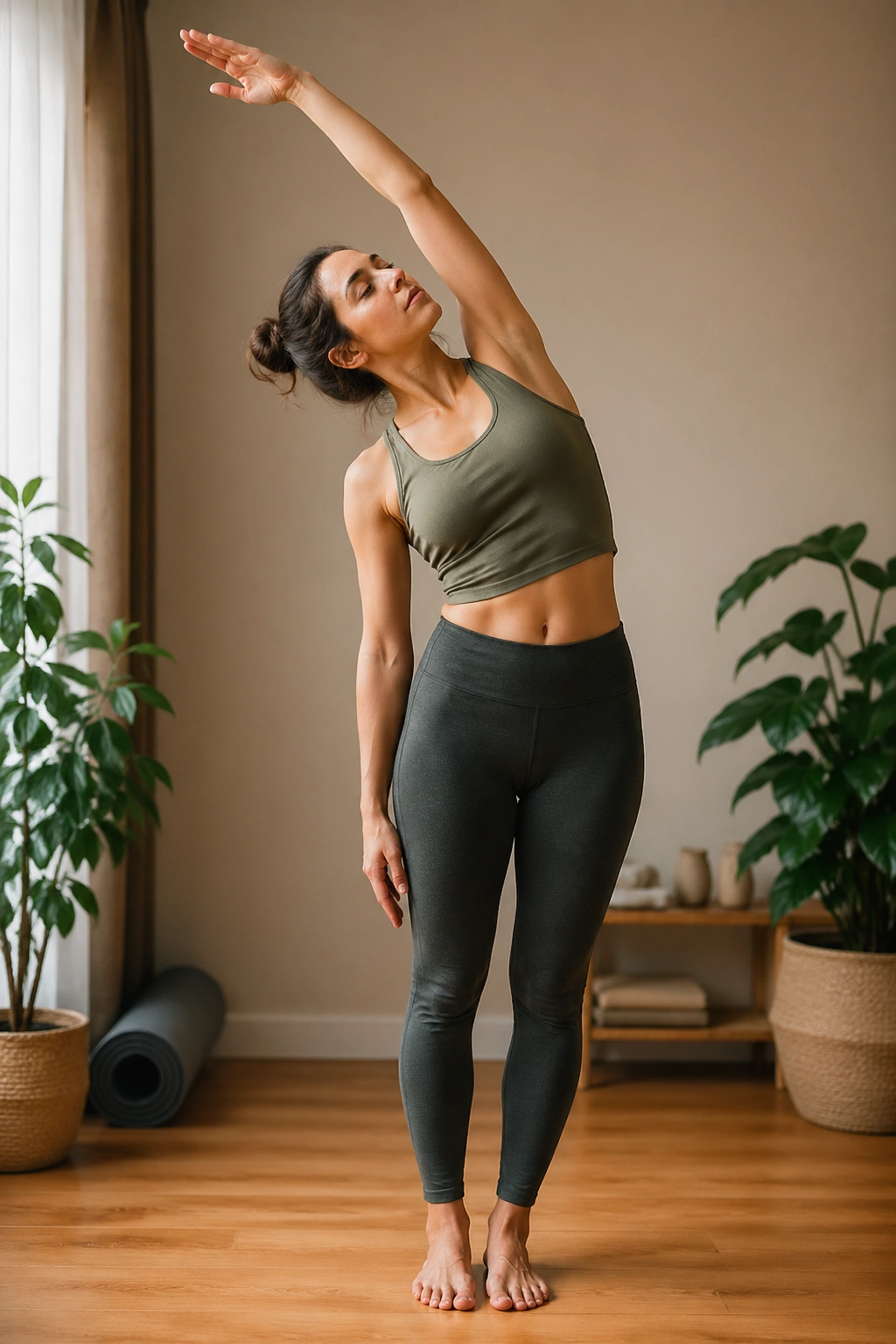
Can a side stretch help reflux? Yes, if you keep it tall and light.
Stand with both feet grounded, lift one arm, and tip only a little to the opposite side. The key word is little. You want a long line along the side body, not a deep bend that crunches the ribs into the stomach. If your elbow collapses forward, you’ve gone too far.
What Makes It Different
A standing side stretch gives the torso room without putting your head below your stomach. That alone makes it friendlier than a lot of classic yoga folds. It can also ease the tight, shallow breathing that shows up when reflux makes you tense and annoyed.
How to Use It
- Hold each side for 2 to 4 breaths.
- Keep the hips level.
- Reach up before you lean.
- Stop the second your ribs feel pinched.
A tiny side stretch can be more useful than a dramatic one. That sounds boring. It isn’t. Boring is often what your digestive system wants.
4. Wall Chest Opener
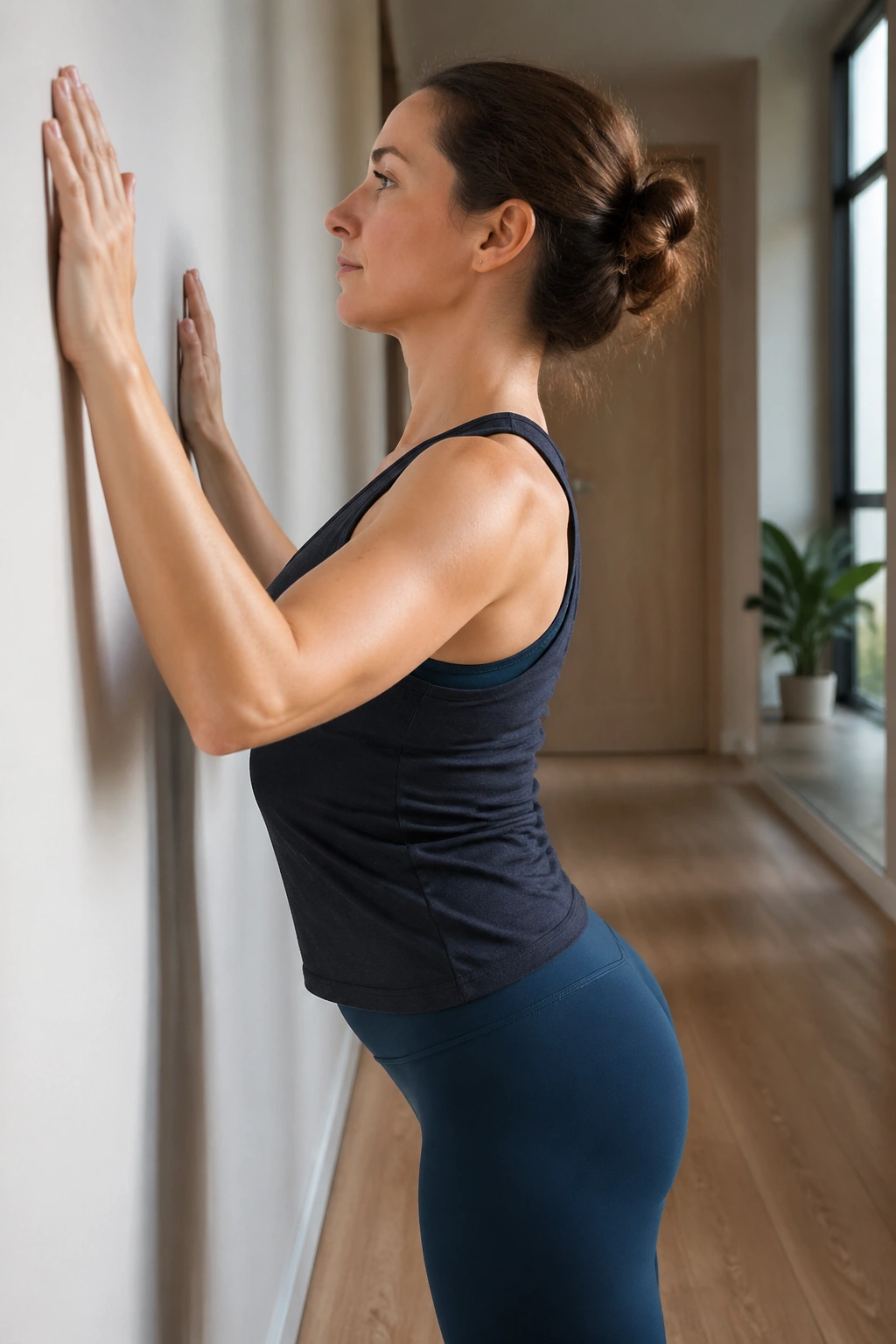
Picture this: you’ve had dinner, your upper back feels stiff, and the front of your body is slumping inward. That’s the exact moment a wall chest opener feels like a relief.
Place your forearms on a wall at shoulder height, step one foot back, and let your chest soften forward until you feel a mild opening across the collarbones. Keep the belly relaxed. Keep the neck long. If you sense pressure in the throat or a tug in the stomach, step back out of it.
This pose is useful because it opens the front body without asking you to lie down or fold over your middle. For many people with acid reflux, that matters more than the actual stretch. The chest can rise a bit while the abdomen stays quiet.
- Keep your elbows slightly lower than your shoulders if that feels better.
- Hold for 20 to 30 seconds.
- Breathe into the back ribs, not just the chest.
- Avoid this right after a heavy meal.
A wall is underrated. It gives you support when your own body is being grumpy.
5. Seated Cat-Cow
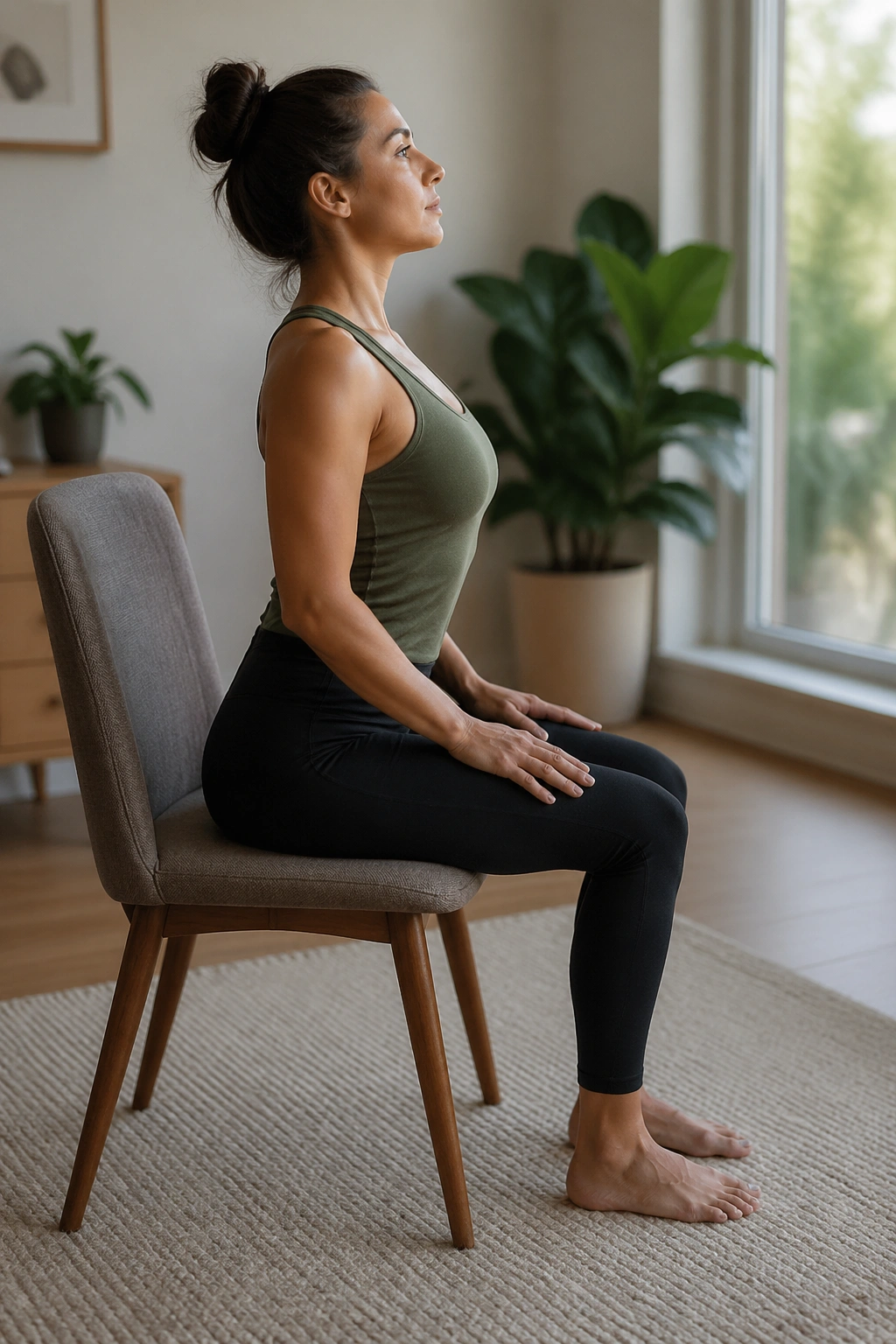
Seated Cat-Cow is the version I reach for when kneeling feels like too much work or the floor is simply not happening.
Sit on a firm cushion or the edge of a chair with your feet grounded. On the inhale, tilt the pelvis forward a touch and open the chest. On the exhale, round the upper back a little and let the chin nod. The movement should look almost tiny from across the room. Good. That’s the point.
The seated version matters because it removes wrist and knee strain while keeping the spine mobile. It also keeps you upright, which is friendlier than collapsing into a forward fold. When reflux is active, upright is often the least annoying place to be.
You do not need many rounds. Five is plenty. Eight if you feel loose. More is not automatically better. If your stomach starts to feel sloshy, pause and come back to neutral. A lot of people rush this and then wonder why they feel worse. The pace matters as much as the pose.
6. Easy Pose with Diaphragmatic Breathing
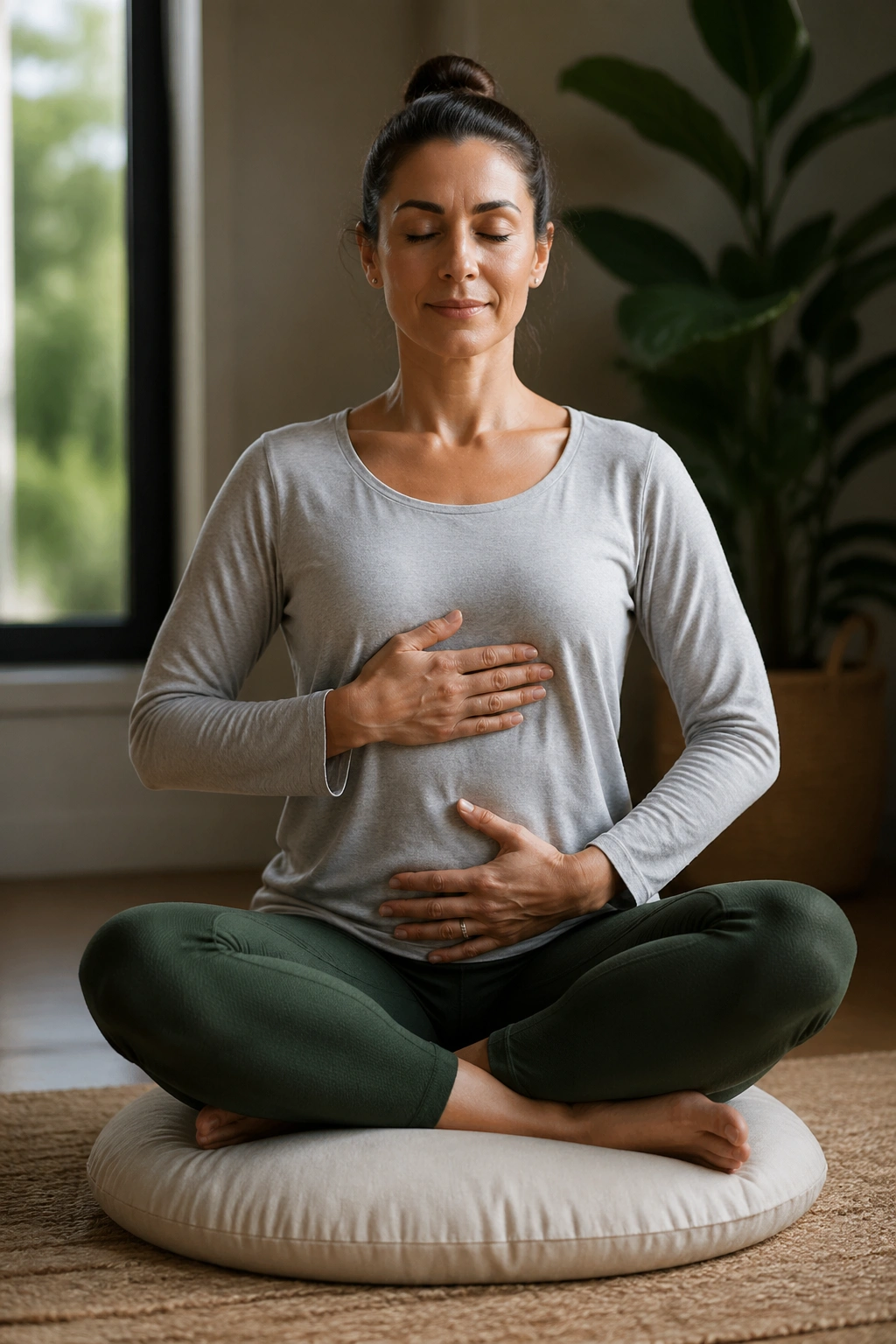
Easy Pose is not flashy. It is a seat. That’s exactly why it belongs in a GERD-friendly routine.
Sit cross-legged on a folded blanket or bolster so the hips are slightly higher than the knees. Rest one hand on the belly and one on the lower ribs. Inhale through the nose and let the side ribs expand first. Exhale slowly and let the belly fall without forcing it flat. You want the breath to move under your hands, not shove them outward.
Why It Feels Better Than Bracing
A lot of people with reflux breathe high in the chest when symptoms flare. That keeps the neck tight and the belly held in. Diaphragmatic breathing helps reverse that habit. The diaphragm moves down on the inhale, the belly softens, and the whole system tends to calm a little.
How Long to Stay
- Start with 6 to 10 breaths.
- Make the exhale longer than the inhale.
- Keep the shoulders loose.
- If sitting cross-legged hurts, sit in a chair.
This one is less about stretching and more about removing friction. That still counts.
7. Bird-Dog
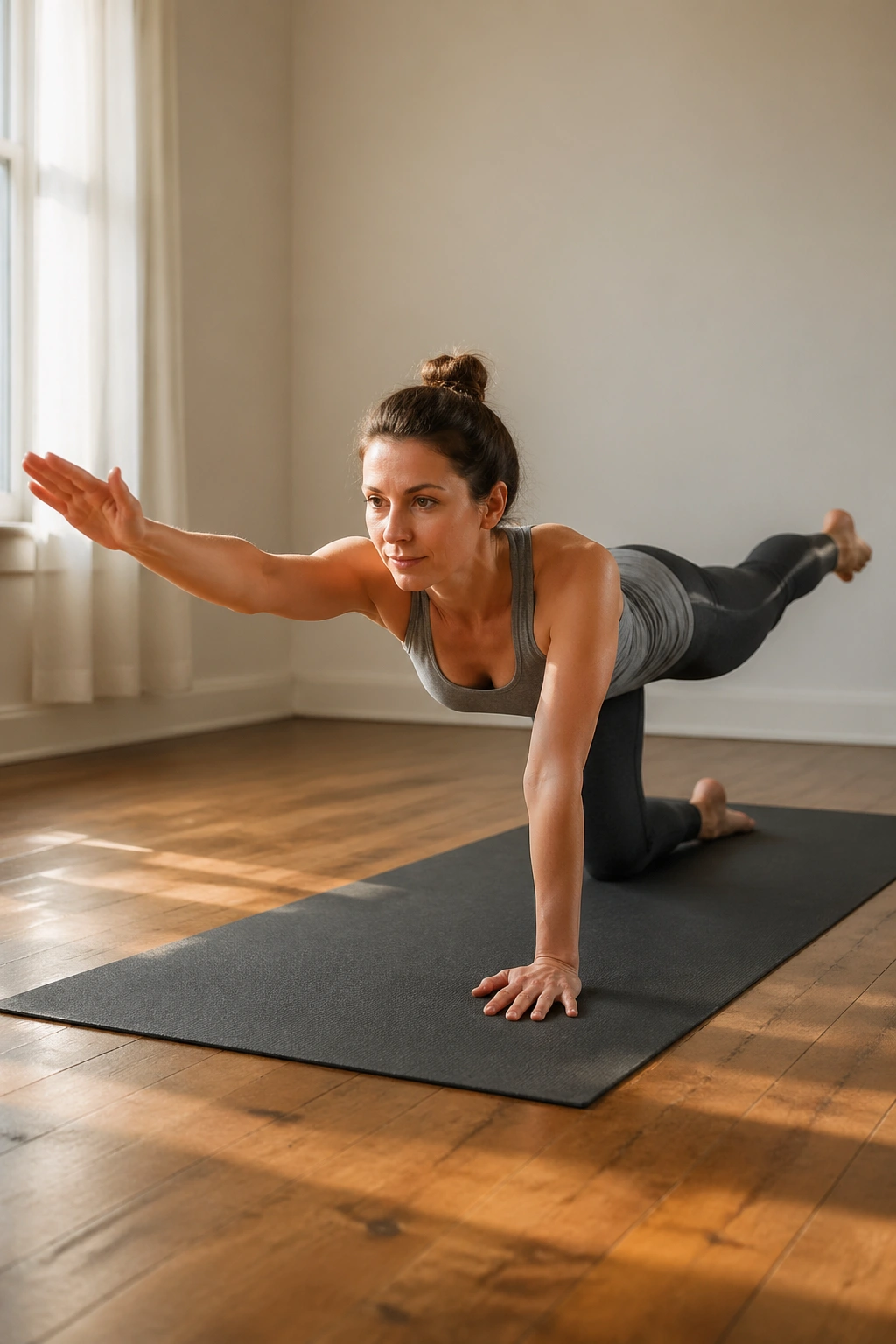
Bird-Dog is one of my favorite sneaky choices for reflux-prone bodies because it trains stability without squeezing the front of the belly.
Come onto hands and knees. Reach one leg back and the opposite arm forward, but only as far as you can keep the spine steady. The temptation is to lift higher. Don’t. Height is not the goal. Length is. Your lower back should feel broad, not jammed.
What Makes It Different
This pose strengthens the back body and helps you hold posture without living in your abs. That matters because a lot of reflux-friendly movement is really about reducing unnecessary core tension. When the front body is gripping all day, the stomach gets no peace.
Quick Practice Notes
- Do 4 to 6 slow reps per side.
- Keep the neck long.
- Think “reach” more than “lift.”
- If kneeling bothers you, pad the knees well or skip this one.
Bird-Dog also tends to reveal where people overwork. You’ll feel it fast. That feedback is useful. Slightly annoying, but useful.
8. Thread the Needle, Supported
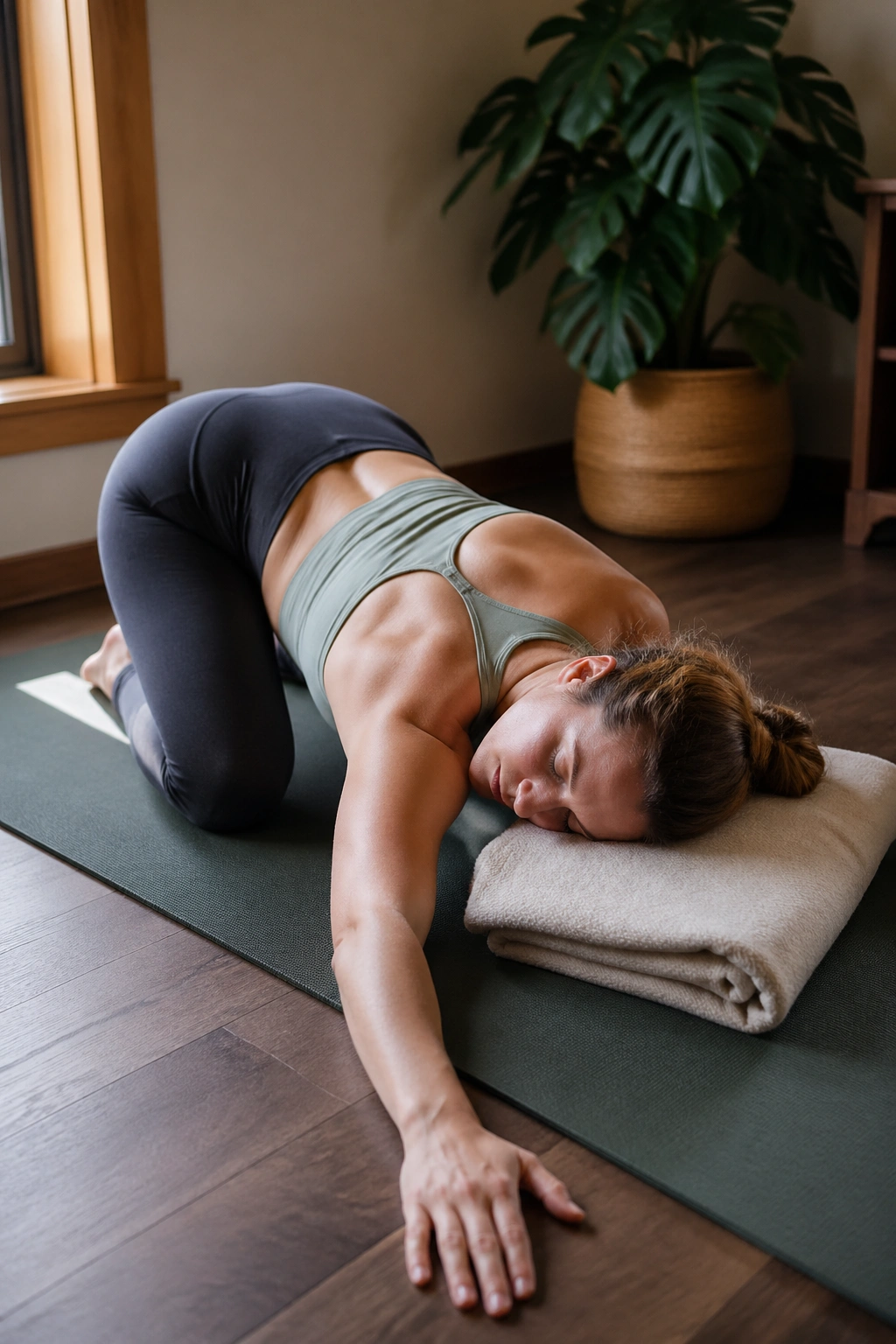
Thread the Needle can be soothing if you keep it supported and small. If you twist hard, it can turn into too much pressure. And pressure is the enemy here.
From hands and knees, slide one arm under the other and rest that shoulder and ear on a folded blanket, block, or the mat. Keep the hips stacked over the knees if you can. Don’t yank the shoulder down. Don’t force the torso deeper than it wants to go.
This is less of a deep twist and more of a shoulder and upper-back release. That distinction matters. Deep twisting can compress the abdomen, especially if you’re already full or irritated. A light version can help you loosen the upper body without making your stomach feel crowded.
If your reflux is active that day, stay very small with this one. If you feel a rising burn, come out. No need to be noble about it. Sometimes the body says no in the first five seconds, and that’s enough information.
9. Supported Bridge Pose
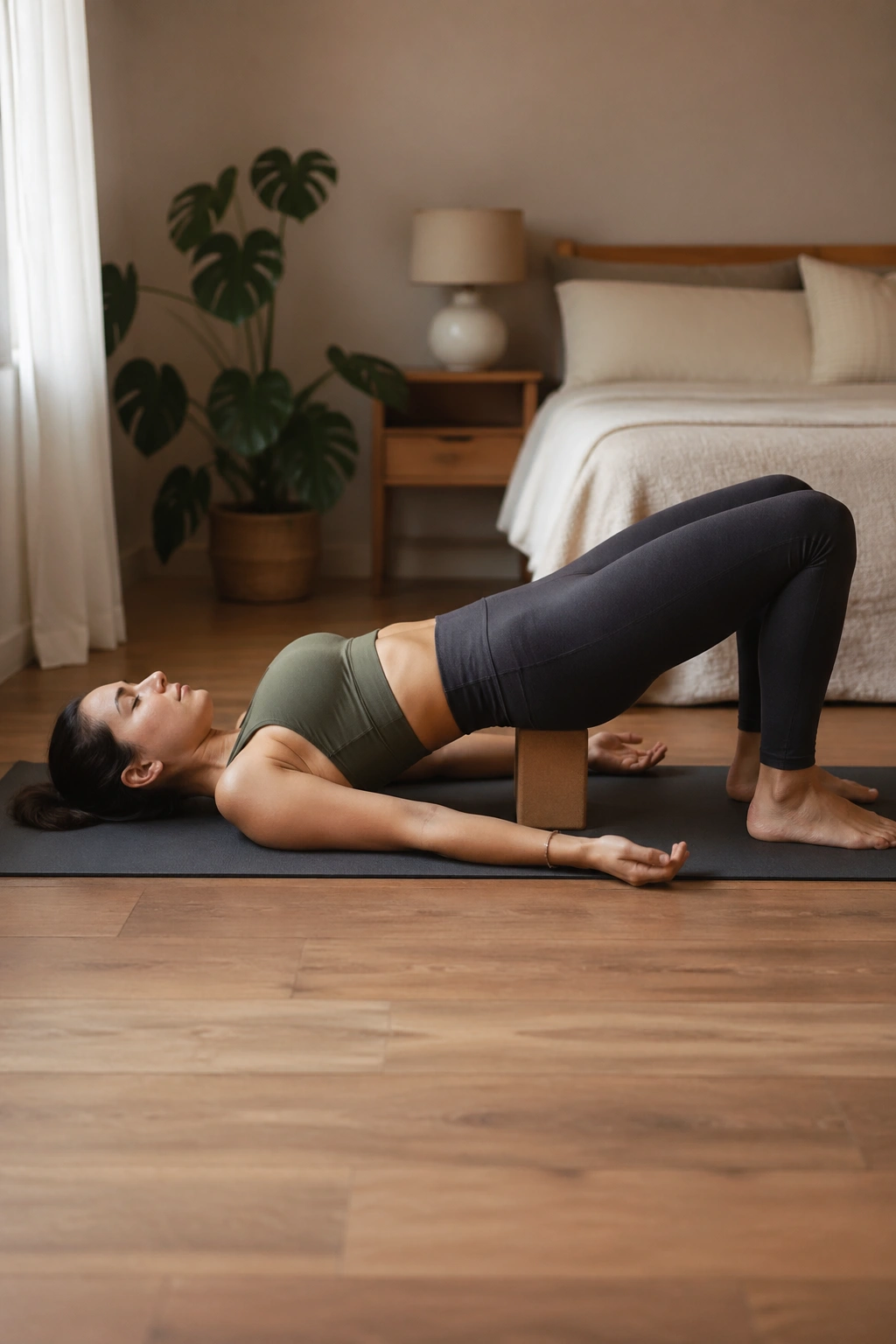
Supported Bridge can feel surprisingly kind when it is set up well. The support makes the pose less like a backbend and more like a quiet opening through the front body.
Lie on your back with your knees bent and your feet flat. Lift your hips just enough to slide a block or firm bolster under the sacrum, then let the weight settle. Keep the ribs soft. Keep the chin slightly tucked. If lying flat makes reflux worse, place a folded blanket under the upper back too, or skip it entirely.
The value here is not intensity. It is shape. A gentle supported bridge opens the chest and front hips while taking effort out of the lower back. That can feel calming, especially if reflux stress has you clenching without noticing.
A small warning: if being on your back makes you burp, feel sour, or feel pressure in the throat, this pose is not your friend on that day. Pull the plug. Try a more upright shape instead. The best pose is the one your body can actually tolerate.
10. Sphinx Pose, Low and Gentle
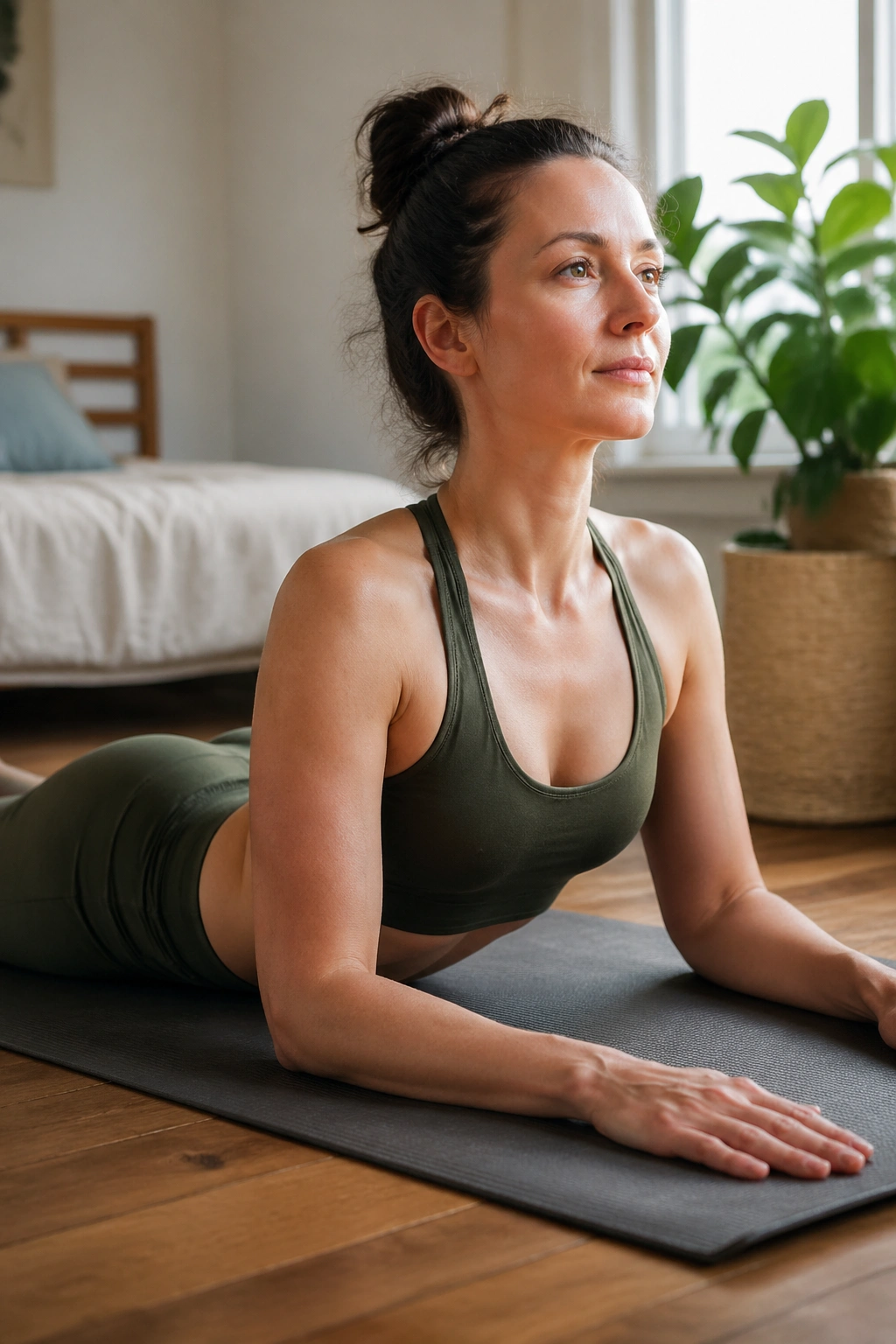
Sphinx Pose can go either way. Done low and soft, it opens the front body. Done too aggressively, it turns into a stomach squeeze.
Lie on your belly and prop yourself on your forearms, keeping the elbows slightly in front of the shoulders. Let the pubic bone stay heavy. Keep the front ribs broad instead of thrusting the belly down. The lift should be mild enough that you could stay there for a while without grimacing.
What to Watch For
- If your stomach feels compressed, come out.
- If the low back pinches, lower the chest.
- If you feel a throat burn, skip it on future meals-heavy days.
- If you can breathe long and easy, it may be a keeper.
Sphinx is one of those poses that teaches honesty. It either feels open or it doesn’t. There’s not much middle ground. I like that about it.
The practical sweet spot is a short hold, maybe 20 to 40 seconds, followed by a return to sitting or standing. No need to camp out here.
11. Low Lunge with an Upright Torso
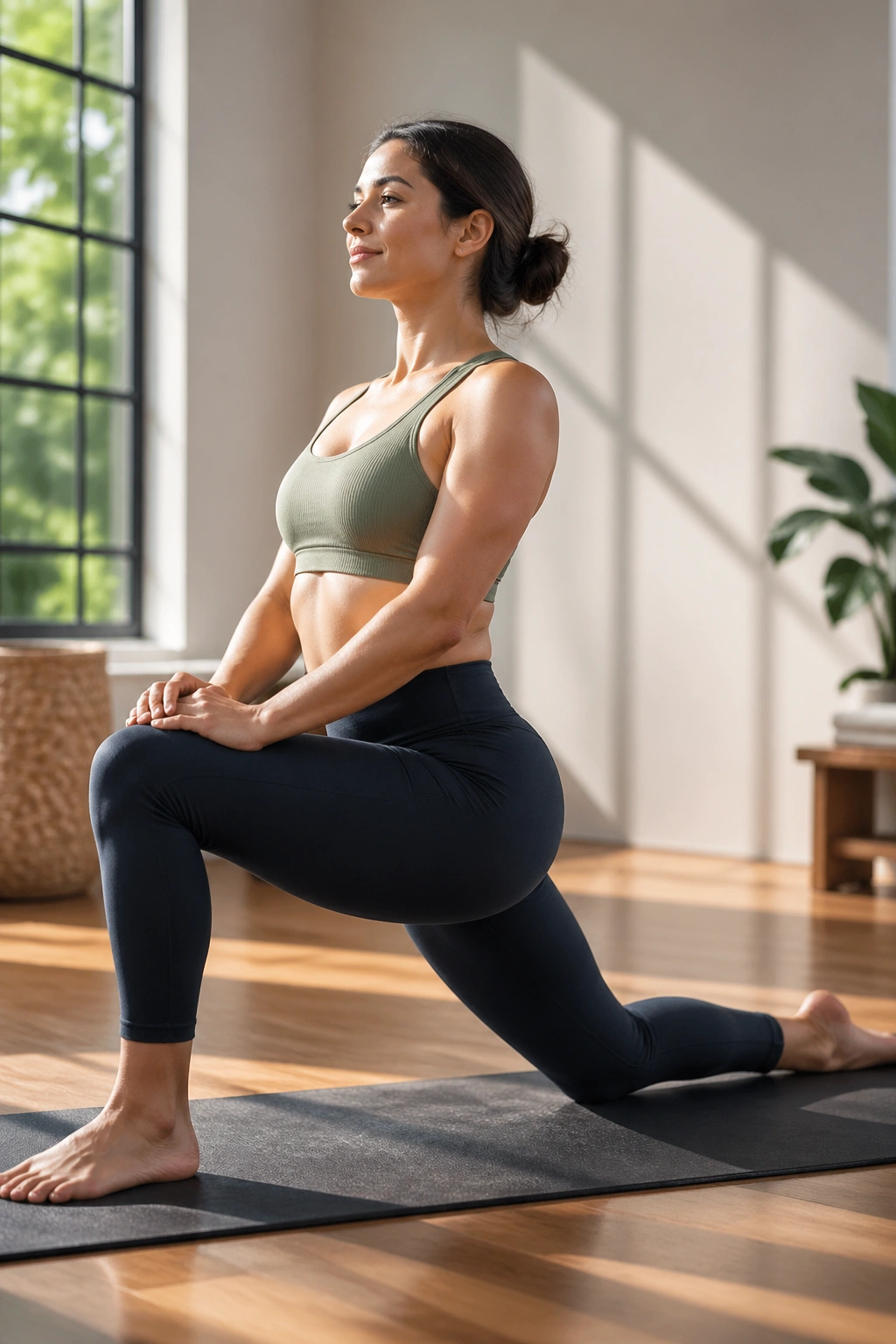
Low Lunge gets much better for reflux when you stop chasing depth and keep the torso upright.
Step one foot forward and lower the back knee to the floor. Then lift the chest over the hips, hands on the front thigh or on blocks. You want the stretch to land in the hip flexors, not the stomach. If your ribs collapse forward, the pose stops being helpful.
This is a nice option when reflux comes with that tight, cramped feeling in the abdomen and lower back. Opening the front of one hip can reduce the urge to slouch. It also gives you a chance to breathe into a tall spine, which tends to feel better than hunching.
Short holds work best here. Twenty seconds on each side is plenty to start. If you want a little more, breathe for another three cycles. Keep the pelvis tucked just enough to protect the low back. Nothing heroic. Just clean lines and easy breathing.
12. Seated Side Bend
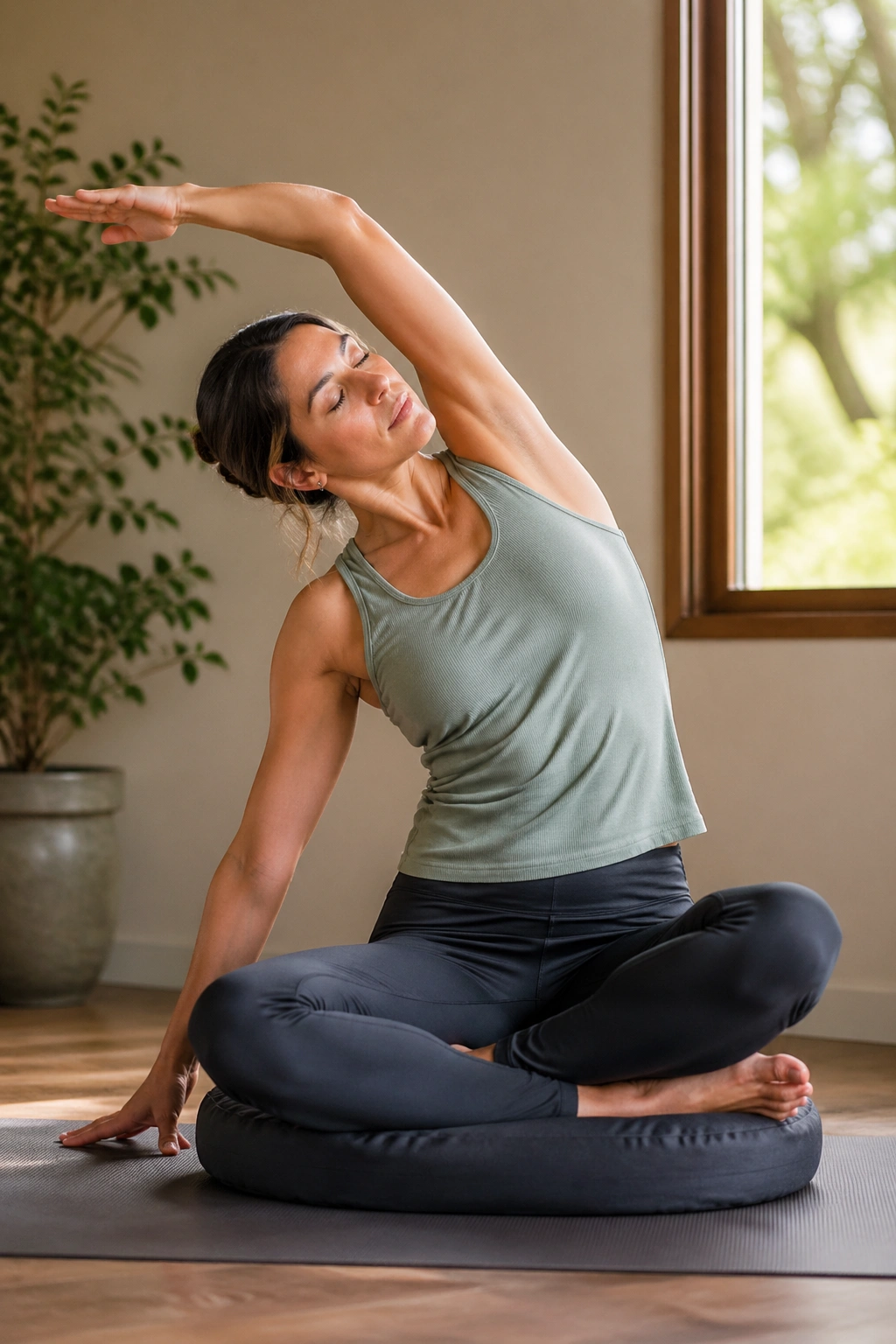
A seated side bend can be a nice alternative to standing work when you want less load on the legs and more control over the spine.
Sit on a cushion or chair, anchor one sit bone, and reach one arm overhead while keeping the chest open. Tip sideways only after you’ve lengthened upward. If you fold forward first, you’ve lost the point. The stretch should show up along the side waist and ribs, not as a crunch in the front belly.
Unlike a Forward Fold, This Stays Safer for Reflux
That’s the real win. A side bend keeps the torso more vertical than a classic hamstring stretch or seated fold. For someone with acid reflux, that can mean the difference between “pleasant stretch” and “why does my throat suddenly hate me?”
Use it with a long exhale and a soft face. Hold for 3 to 5 breaths on each side. If you’re feeling tight across the back of the ribs, that’s usually the area that wakes up first.
Not every stretch needs to chase the floor. Some of them work better when they refuse to go there.
13. Standing Quad Stretch
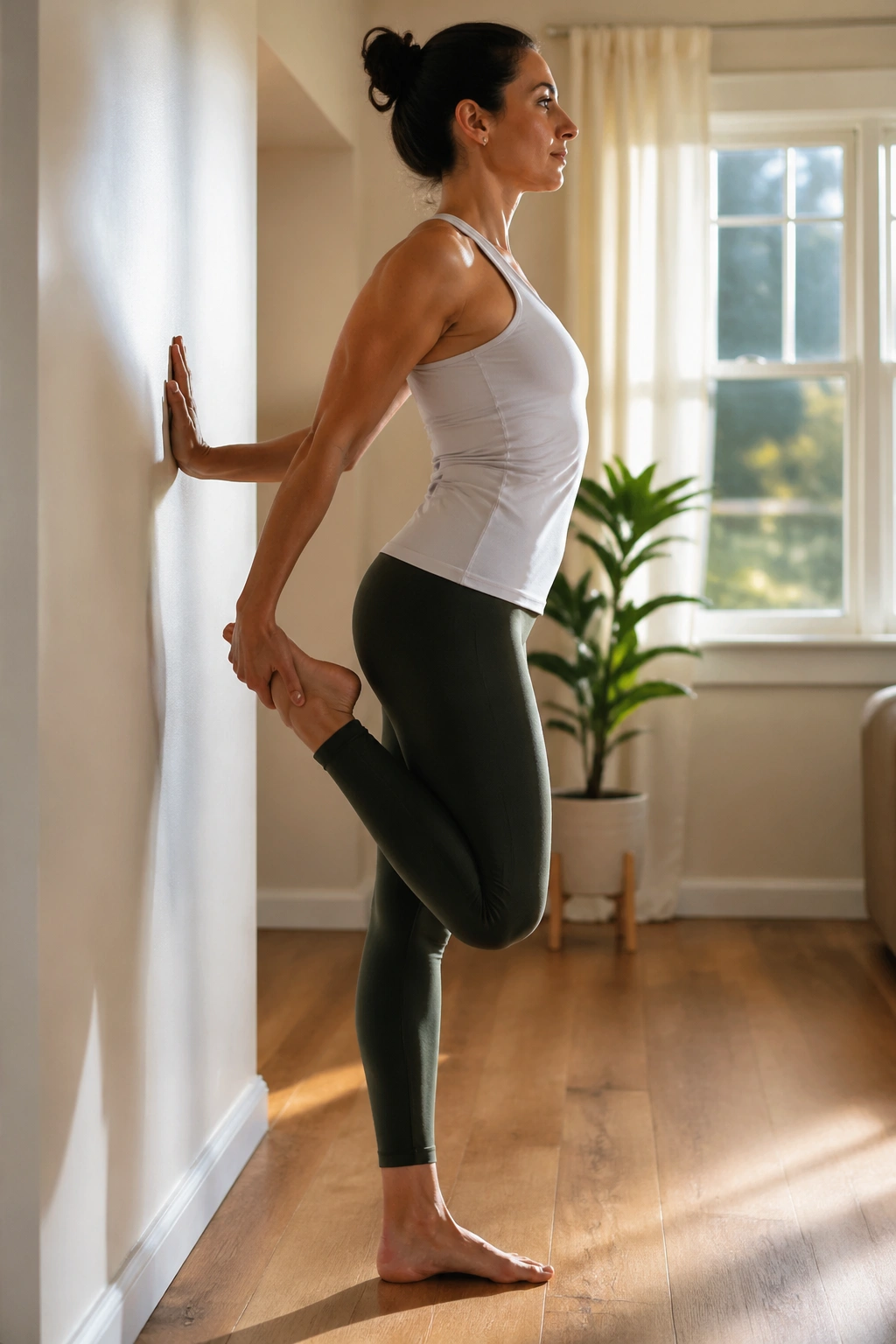
Standing Quad Stretch is a good choice when you want to move without lying down or folding your middle.
Stand near a wall, hold onto it with one hand, bend one knee, and draw the heel toward the glute. Keep the knees close, pelvis neutral, and chest lifted. If you arch your low back to yank the foot closer, you’ll replace one problem with another. Not a good trade.
The reason this belongs in a reflux-friendly list is simple: it opens the front of the thigh and hip without compressing the abdomen. Tight quads and hip flexors can pull the pelvis forward and make the lower back overwork. That kind of tension often shows up around the same time as shallow breathing and an irritated upper digestive system.
A few seconds is enough to feel it. Ten to fifteen seconds per side is a fine start. If balance is shaky, keep one hand on a wall and the other on a chair. No prize for wobbling harder than necessary.
14. Reclined Bound Angle with Bolsters
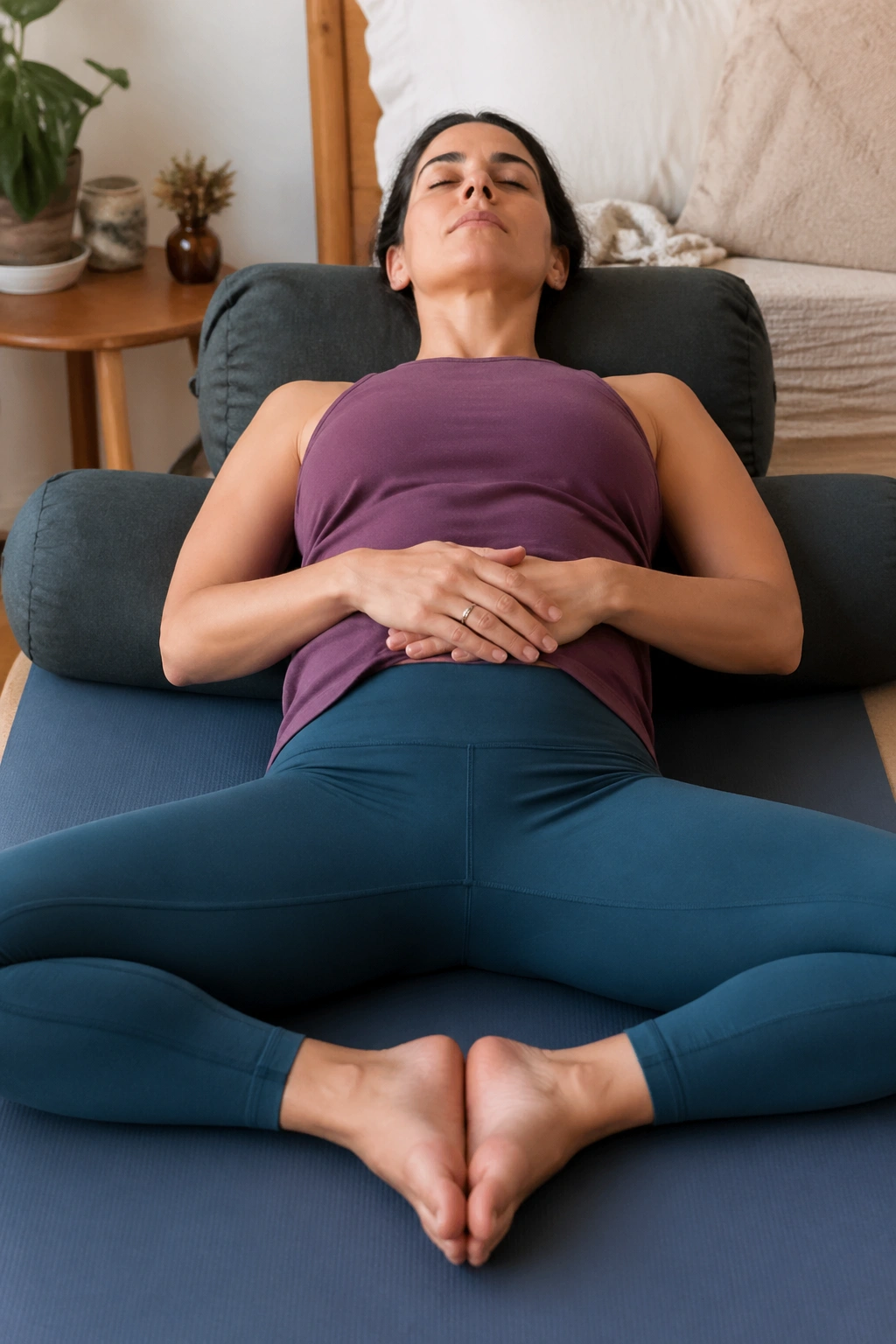
Reclined Bound Angle is only useful here if it is propped up well. Flat on the back with the knees wide can be rough for reflux. Elevated, it can be restful.
Set a bolster or two firm pillows under the upper back and head so your chest is slightly higher than your belly. Bring the soles of the feet together and let the knees fall open, but only as far as feels easy. Place blankets under the thighs if the groin feels strained. The shape should feel like rest, not a stretch contest.
This is one of the better ways to wind down when you are tired but do not want to lie completely flat. The support changes everything. It reduces abdominal pressure and keeps the torso angled enough that reflux is less likely to complain.
Stay for 1 to 3 minutes if it feels fine. Breathe long and quiet. If the throat gets sour, come out and sit up. That little adjustment can spare you a lousy evening.
15. Supported Savasana
Can you do Savasana with GERD? Yes, if you prop yourself so you are not flat and empty-headed about it.
Place a bolster, folded blankets, or a wedge behind the upper back and head so the torso is tilted up a bit. Bend the knees if that helps reduce belly strain. Some people even like a rolled towel under the knees. Keep the arms relaxed by the sides and let the exhale get a little longer than the inhale.
This pose works because it gives the nervous system a place to settle without forcing the stomach into a full horizontal position. That distinction is huge. A flat corpse pose after reflux-prone meals can be a bad idea. A supported one can feel like a relief, or at least a quiet pause where the body stops arguing with itself.
Stay alert enough to notice how you feel. If there’s burping, burning, or throat pressure, you’re done. If there’s softness and your breathing gets smoother, keep resting. Sometimes the win is not dramatic. Sometimes it’s just a calmer chest, a quieter belly, and the sense that your body has finally unclenched for a minute.
A decent GERD-friendly yoga practice is less about big shapes and more about choosing the right angles. Upright, supported, and slow usually beats deep, low, and fast. That is not glamorous. It is useful.
And that is the real trick with acid reflux relief through yoga: stop trying to impress the pose. Make it easy to breathe, easy to stay in, and easy to come out of if your stomach objects. That’s where the relief tends to live.
