



The humble air squat is the gold standard of functional movement, yet it is often misunderstood as a simple, repetitive drill. Most people perform it without intention, missing the opportunity to build real strength, mobility, and stability in the lower body. When you remove external iron and resistance machines, the focus shifts entirely to your own mechanics. You are forced to deal with your own body weight, your specific limb lengths, and whatever mobility restrictions you might be harboring in your ankles or hips. That is not a limitation; it is an advantage.
True mastery of the squat requires more than just sitting down and standing up. It requires a deep understanding of how your kinetic chain functions when the safety net of a barbell is removed. By introducing variations to your bodyweight routine, you can target specific weak points, improve your range of motion, and force your central nervous system to adapt to new stressors. You do not need a gym membership or racks of plates to build a powerful set of legs. You just need to know how to manipulate leverage, tempo, and stance.
If your training has become stale, or if you find yourself mindlessly grinding out sets of standard squats without feeling the burn where it counts, you are ready to diversify. We are about to break down a long list of movements that utilize your own mass and gravity to reshape your training. These are not just modifications; they are deliberate tools for athletic development.
1. The Standard Air Squat
You cannot build a house without a foundation. The standard air squat is the baseline from which all other movements evolve, yet it is where most people make their first mistakes. The goal here is a clean, hinge-driven movement pattern. Your feet should be roughly shoulder-width apart, with toes pointed slightly outward to accommodate your hip structure.
Why the Setup Matters
When you initiate the movement, do not just drop your hips. Think about pushing your hips back as if you are reaching for a chair that is just an inch beyond your reach. Your knees should track directly over your toes; if they cave inward, you lose torque and stability, which places unnecessary strain on the joint. Keep your chest up, maintain a neutral spine, and sink until your thighs are at least parallel to the floor.
Common Form Check
If your heels lift off the ground, your ankle mobility is likely the culprit. You can test this by holding a doorframe while squatting to see if you can keep your feet flat. If you can, keep practicing until you can replicate that depth without the assistance. This is the movement that teaches your body how to distribute weight through the midfoot and heel, which is essential for every other variation on this list.
2. Sumo Squat
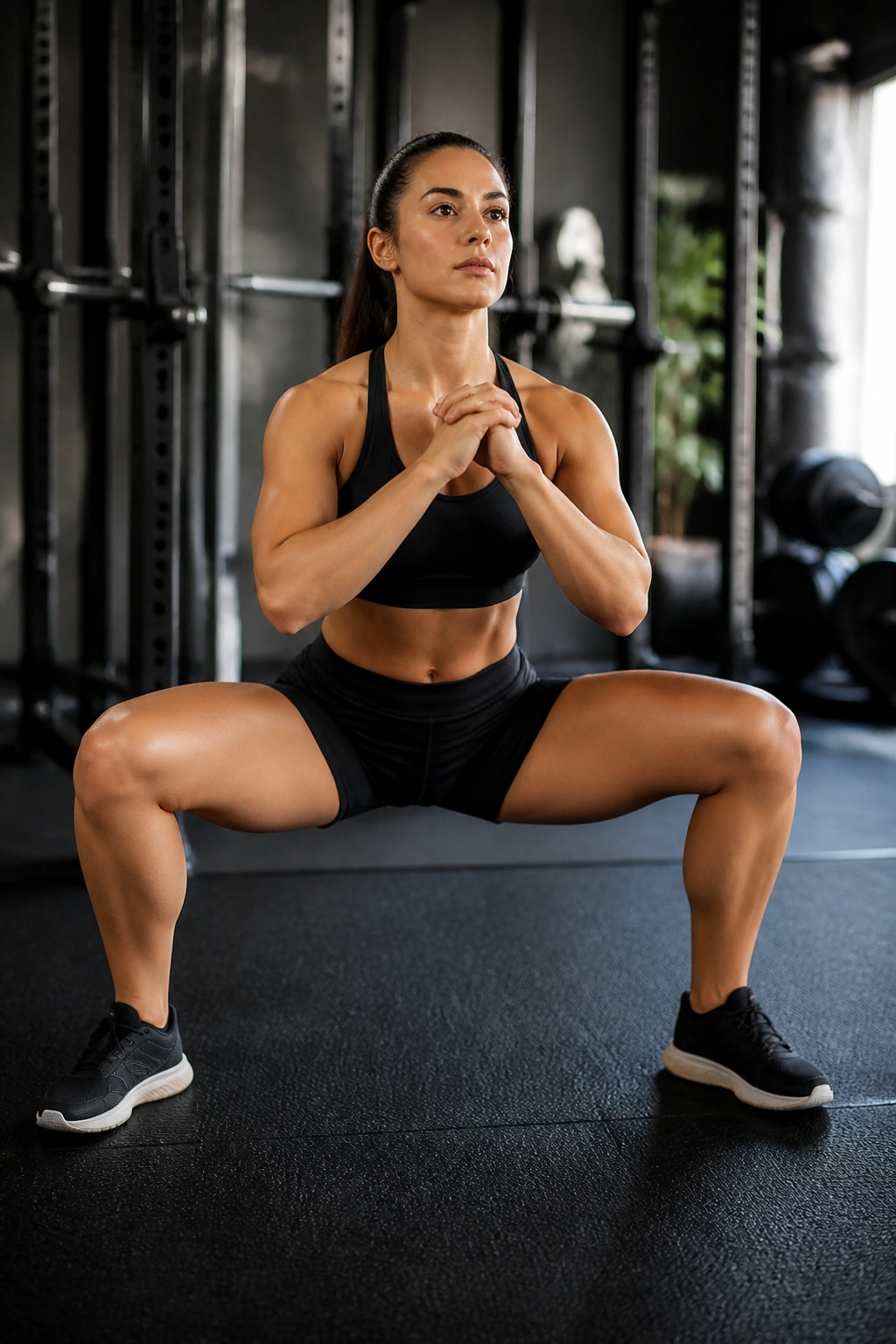
The sumo squat drastically alters your stance to change which muscles take the brunt of the load. By widening your feet well beyond shoulder width and pointing your toes outward at a 45-degree angle, you shift the focus toward the adductors—the inner thighs—and the glutes. This is a fantastic way to break up the monotony of traditional squatting and target muscles that often get neglected.
The Mechanics of the Wide Stance
Because your stance is wide, your knees will naturally push outward to follow your toes. This forces a different recruitment pattern in your hip rotators. Keep your torso more upright than you would in a standard squat to prevent your lower back from taking over. You will feel a significant stretch in your inner thighs at the bottom of the movement. If you do not feel that tension, widen your stance another inch.
Pro Tip for Maximum Engagement
Drive through your heels to stand up. As you reach the top of the movement, squeeze your glutes hard. This lockout is not just a place to rest; it is an active part of the repetition. By consciously contracting your posterior chain at the top, you ensure the muscles are fully utilized throughout the entire range of motion.
3. Narrow Stance Squat
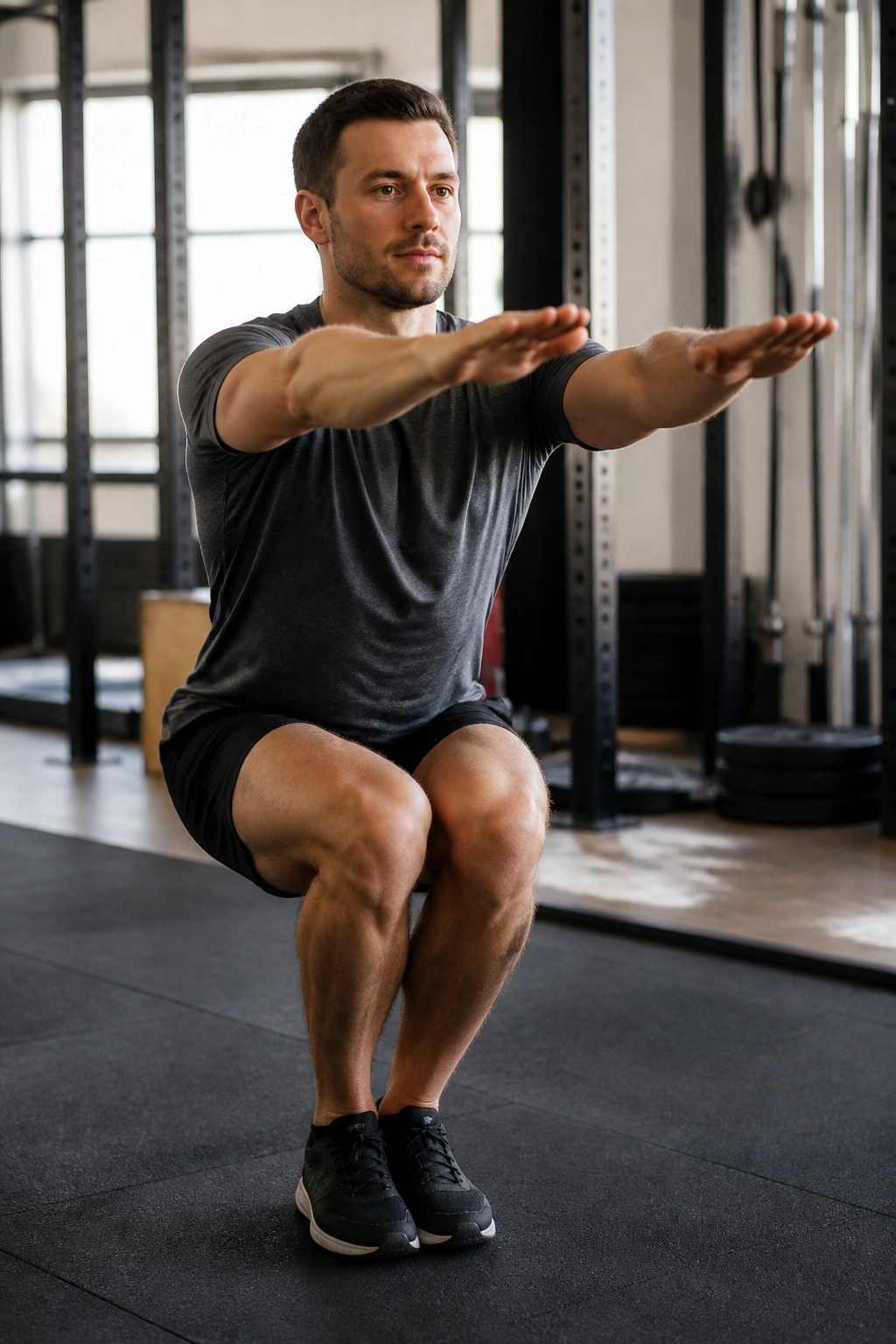
If the sumo squat builds the inner legs, the narrow stance squat is all about the outer quads. Place your feet together—or with only an inch of space between them—and perform your squat. This variation significantly reduces your base of support, which means your balance will be challenged from the very first rep. It is inherently unstable, but that instability is precisely what forces your stabilizers to fire.
Maintaining Balance
You will likely find that you cannot go as deep in a narrow squat as you can in a standard one. That is normal. Do not force your hips into a range of motion that causes your lower back to round. Focus on keeping your weight centered. If you feel yourself tipping forward, use your arms as a counterweight by extending them in front of your chest as you descend.
Why This Variation Works
This is a high-control movement. Because the base is narrow, you cannot cheat by rocking back and forth or shifting your weight laterally. You are forced to move in a straight, vertical line. This builds exceptional quad strength and helps identify and correct any hip imbalances you might have, as you will clearly feel if one leg is compensating for the other during the ascent.
4. Squat Pulse
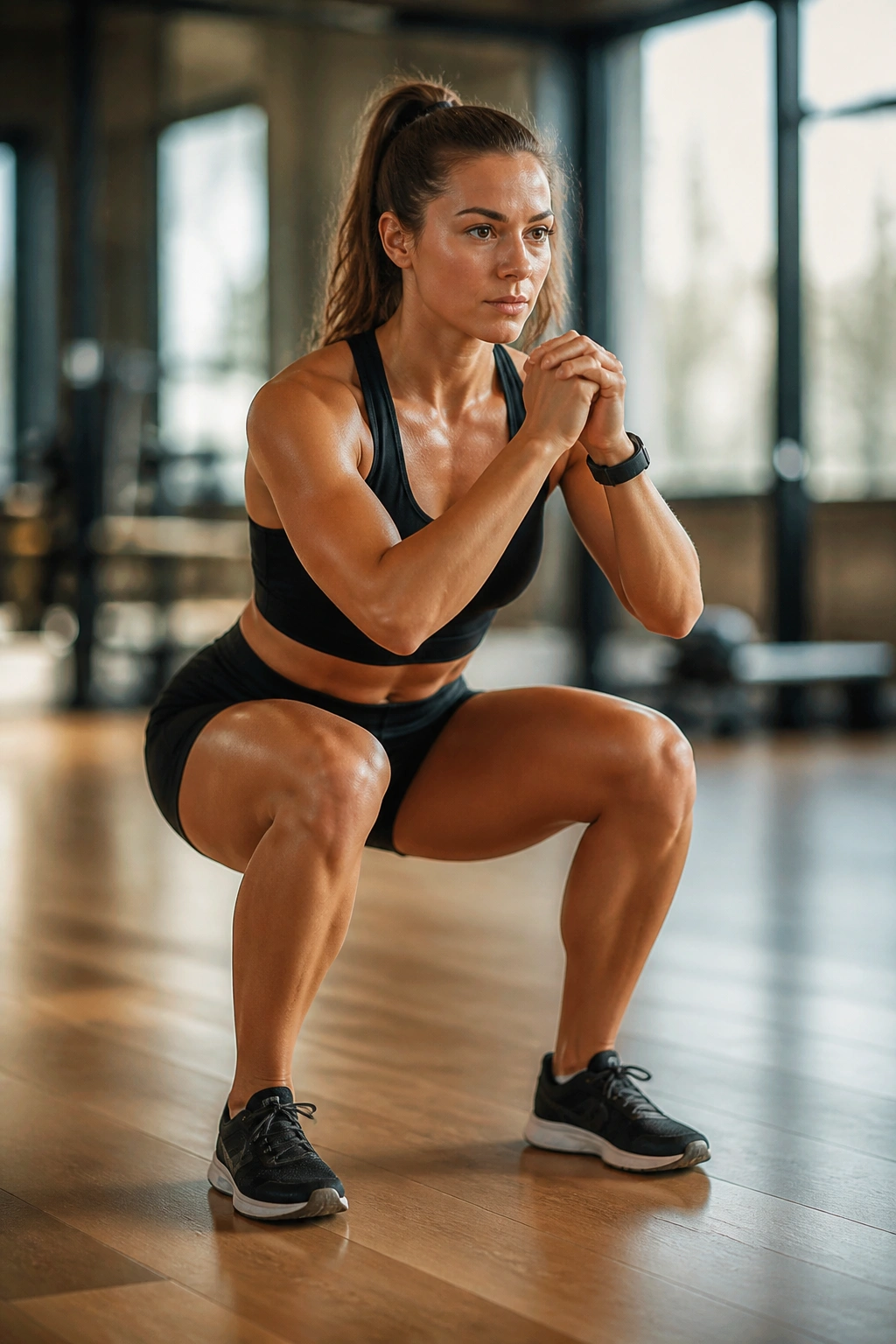
Sometimes the best way to get stronger is to make the rep last longer. The squat pulse removes the “rest” period at the top and the bottom of the movement. You sink into your squat, and instead of standing all the way up, you rise only about a quarter of the way, then sink back down to the bottom. You are staying in the “danger zone”—the part of the squat where tension is highest—for the duration of the set.
Time Under Tension
Your quads will scream during this exercise, usually within 30 seconds. That is the goal. Do not try to move quickly; control is everything. The tiny, rhythmic up-and-down motion should be fluid. Think of it as oscillating rather than bobbing. Your goal is to keep the muscles under constant tension, preventing the blood from leaving the muscle tissue and forcing a massive metabolic demand.
The Mental Challenge
These are deceptively difficult. It is easy to start fast, but the intensity builds exponentially. If you find yourself wanting to stand up to escape the burn, fight the urge. That burning sensation is just a sign that your muscles are working exactly as intended. Stick with it until your form breaks down, then take a breather.
5. Jump Squat
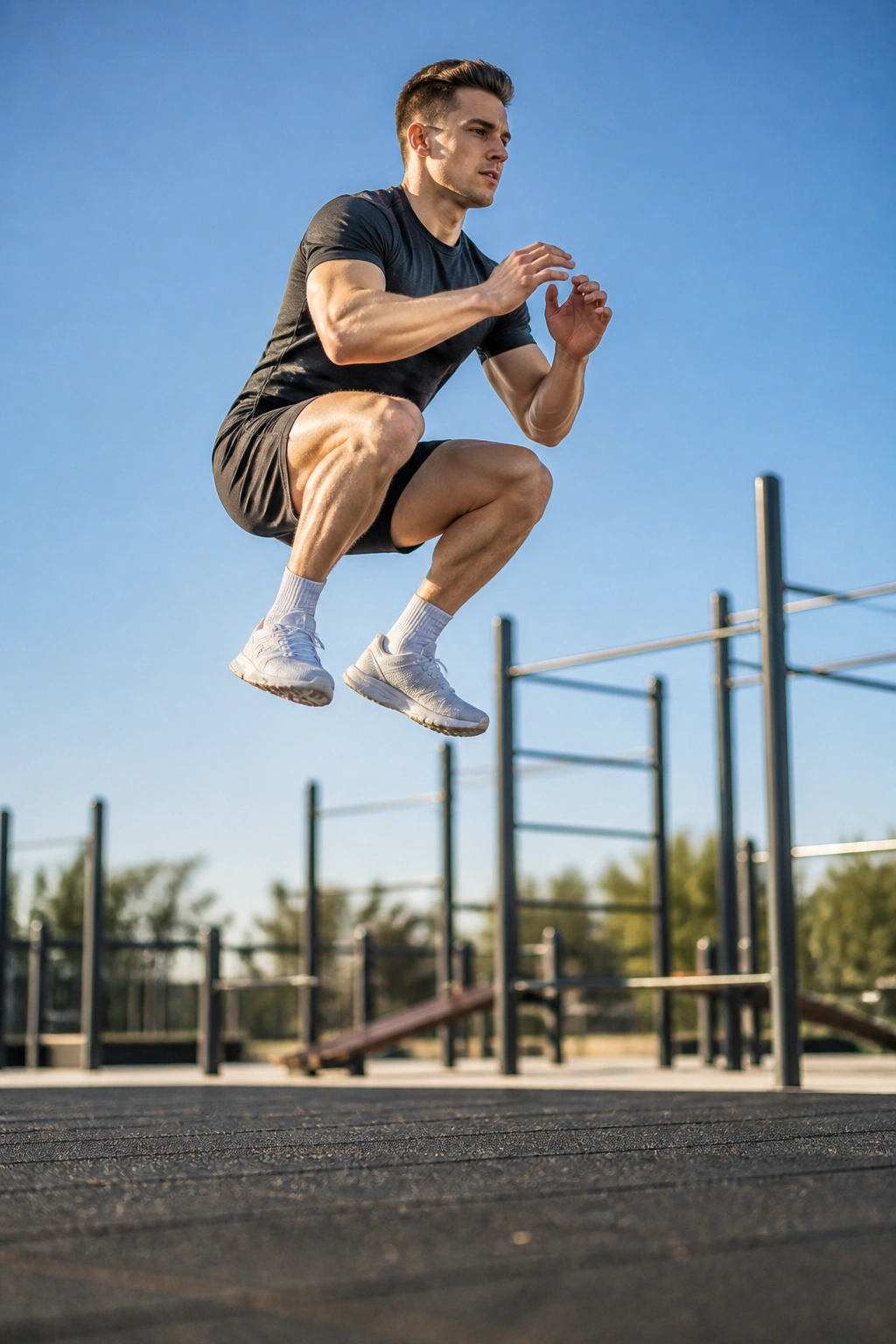
Explosiveness is a separate physical quality from raw strength. The jump squat bridges the gap between leg building and athletic performance. Perform a standard air squat, but as you reach the bottom, aggressively explode upward, leaving the ground entirely. When you land, do not just crash into the floor. Land softly on the balls of your feet, immediately rolling back onto your heels to transition into the next repetition.
Absorbing the Impact
The landing is just as important as the jump. You must control your descent. Think of your legs as shock absorbers. If you hear a loud “thud” when you land, you are not engaging your muscles enough to break your fall. You should land silently, absorbing the force into your quads and glutes rather than your joints.
Athletic Carryover
This variation increases your heart rate rapidly, making it as much a conditioning tool as a leg builder. It trains your fast-twitch muscle fibers to fire rapidly. If you play any sports or simply want to feel more athletic in your day-to-day life, this move is non-negotiable. Just ensure you are comfortable with standard air squats before adding the high-impact element of the jump.
6. Pause Squat
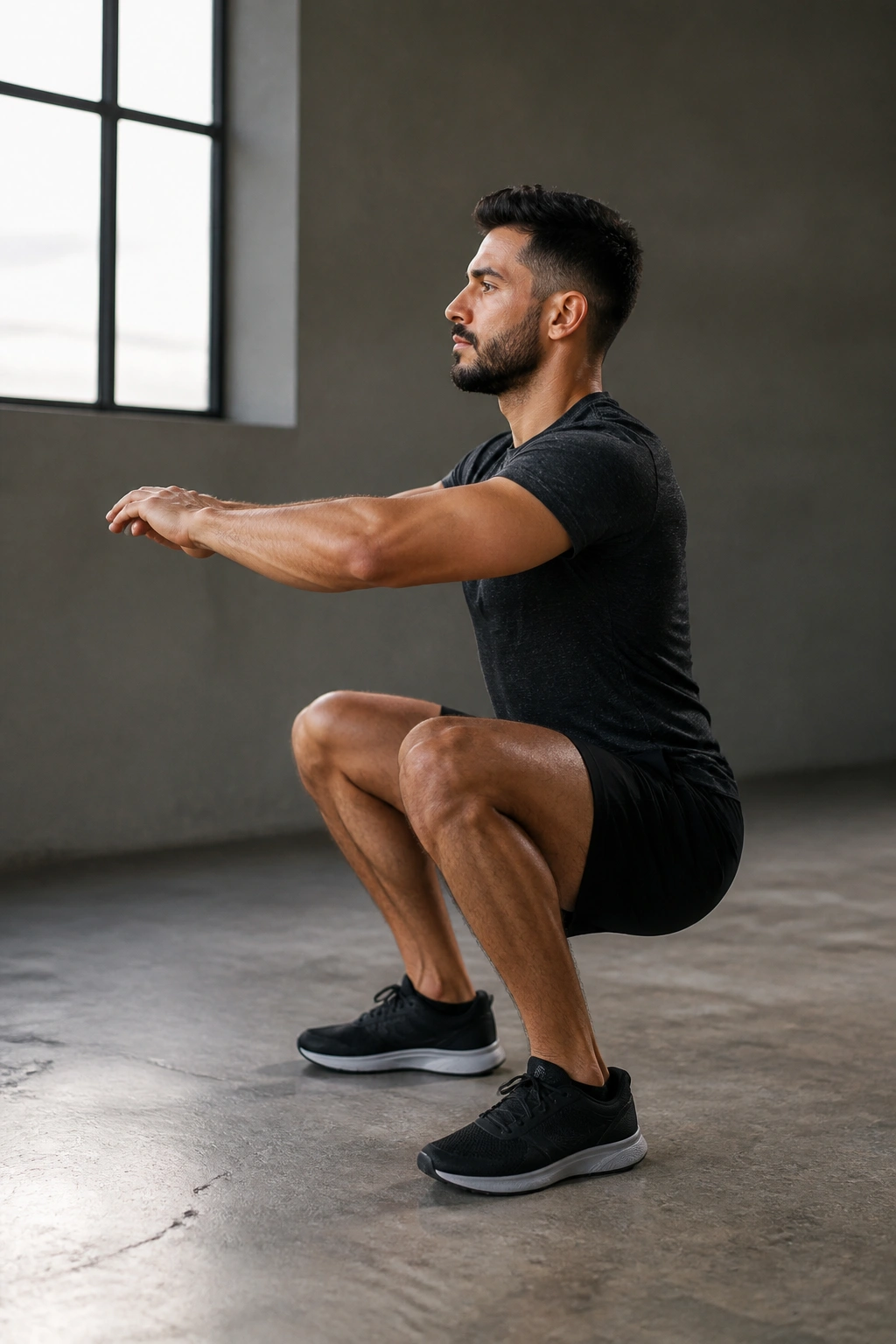
The pause squat is the ultimate diagnostic tool for your squat technique. Drop into your squat, and once you hit the bottom, hold that position for two to three seconds. Do not bounce. Do not fidget. Simply hold. After the hold, explode up to the starting position. This eliminates the “stretch reflex”—that elastic energy your tendons store when you bounce out of the bottom—forcing your muscles to work harder to initiate the climb.
Finding the Bottom
The pause forces you to own the bottom position. Many people have a “dead zone” at the bottom of their squat where they feel weak or unstable; this movement fills that hole. During the hold, check your position. Are your feet flat? Is your core tight? Is your chest up? If you cannot hold the bottom position, you are likely rushing your descent or lack the necessary mobility.
Building Strength from Zero
By removing the momentum, you teach your body how to generate force from a dead stop. This is a massive confidence builder. When you return to standard squats, you will find that the bottom portion of the movement feels significantly easier and more stable because you have learned how to hold tension while static.
7. Cossack Squat
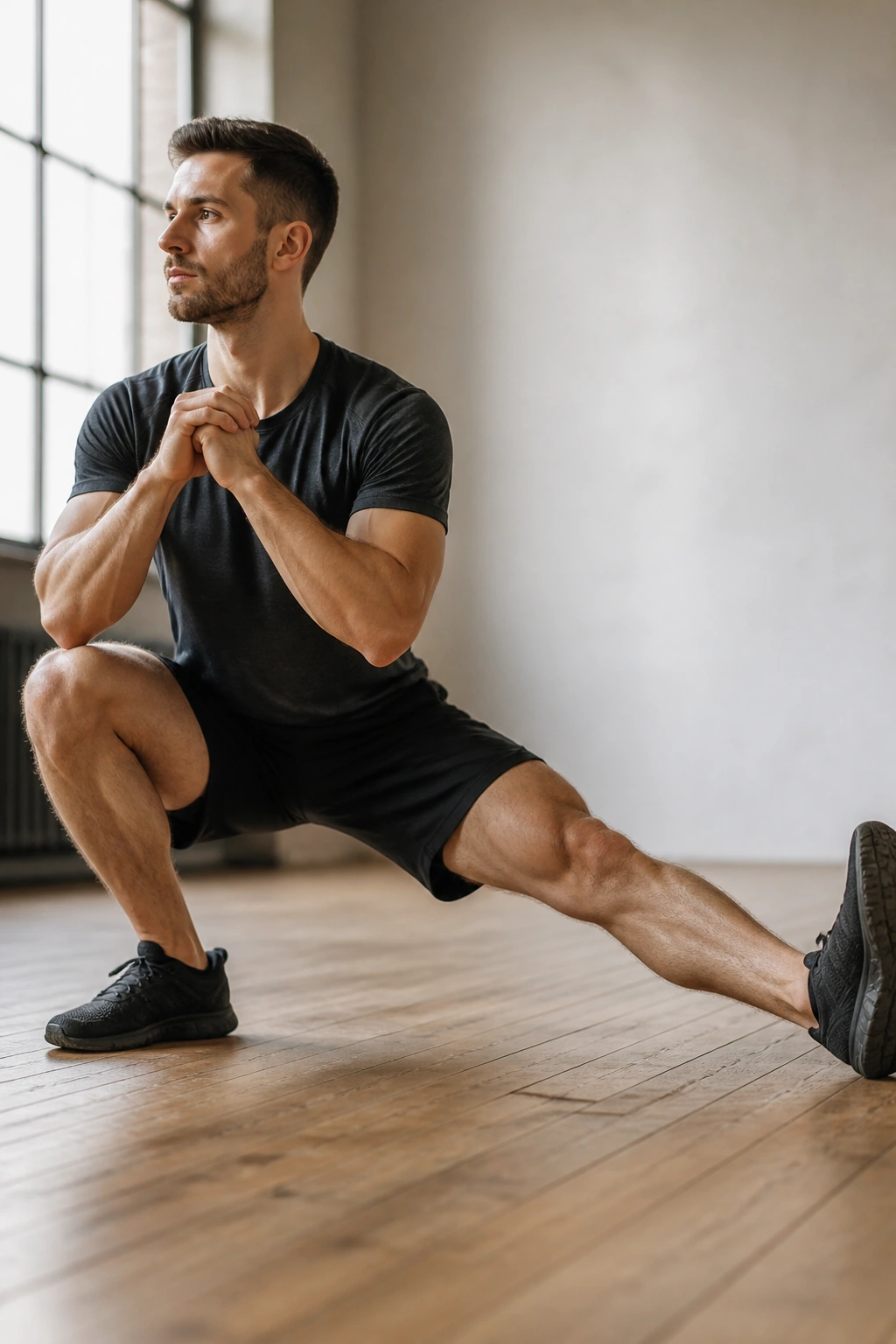
Most leg training happens in the sagittal plane—meaning you only move forward and backward. The Cossack squat introduces lateral movement, which is critical for hip health and knee stability. Start with a very wide stance. Shift all your weight to one side, bending that knee while keeping the other leg completely straight. Your toes on the straight leg should point up toward the ceiling. Return to the center and switch sides.
Hip Mobility Demands
This is an advanced move. It demands significant ankle dorsiflexion and hip opening. Do not be discouraged if you cannot sink very low at first. The goal is to keep your torso as upright as possible. If you find yourself folding over, reach your arms out in front of you for balance.
Why You Need It
Lateral movement is often missing from modern training routines, leading to stiff hips and weak stabilizing muscles. The Cossack squat strengthens the glute medius and adductors, which are the muscles responsible for keeping your pelvis stable during walking and running. If you want injury-proof knees, you need to train in the lateral plane.
8. Bulgarian Split Squat
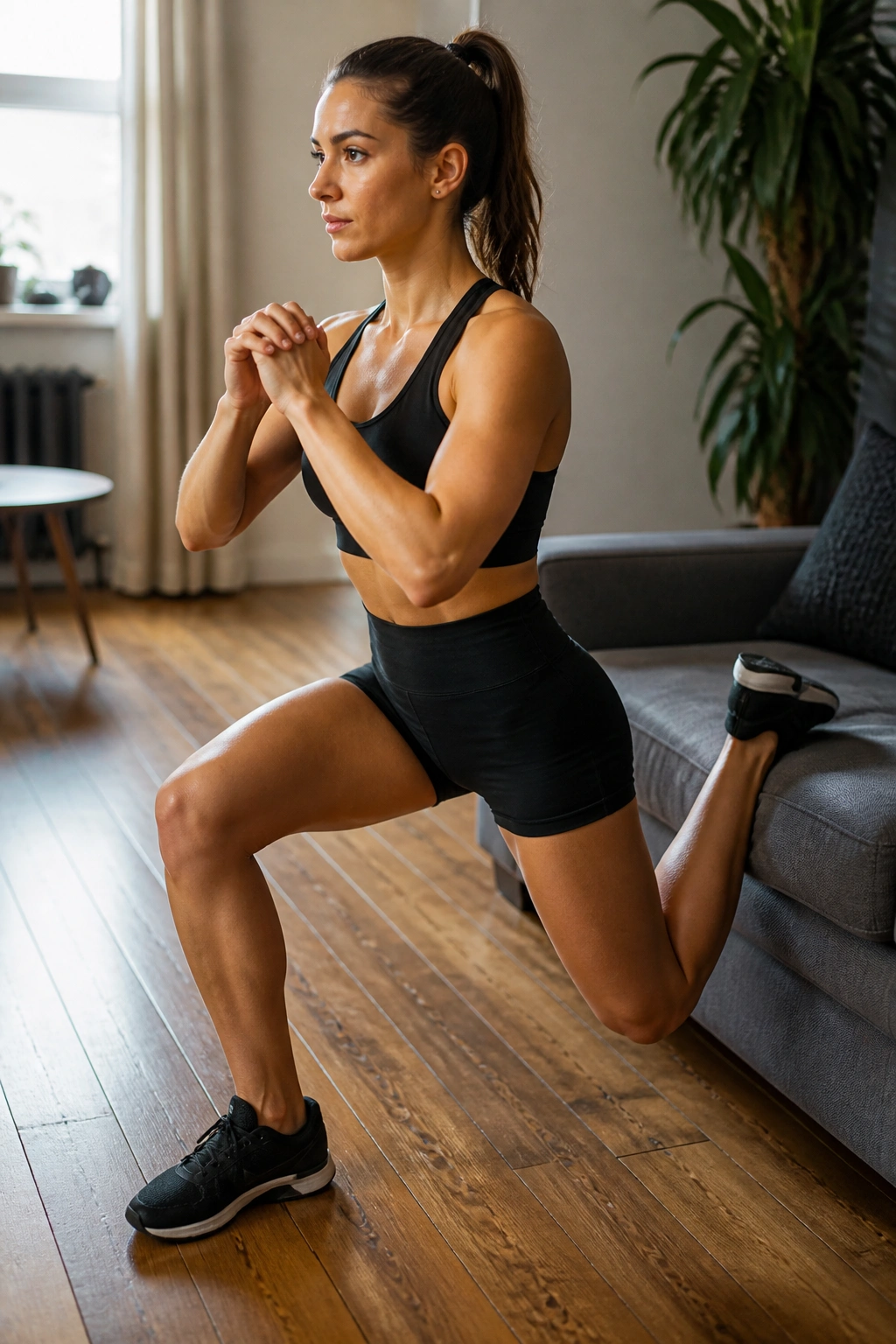
Technically, this uses a household item—a couch, a chair, or a bed—but it remains a “no gear” movement because it uses no external weights. Place one foot behind you on an elevated surface. The other foot stays flat on the floor. Squat down until your back knee is just hovering above the floor. This is a unilateral movement, meaning one leg does all the heavy lifting.
The Unilateral Advantage
Most of us have a dominant leg that compensates for the weaker one. Split squats expose this imbalance instantly. You will almost certainly find that one side feels significantly harder or less stable than the other. That is the point. By training unilaterally, you force the weak leg to catch up, resulting in more symmetrical leg development and reduced risk of injury.
Getting the Setup Right
The distance between your front foot and the object behind you is key. If it is too close, you will feel it mostly in your knees. If it is too far, you will feel it in your hip flexors. Experiment until you find the sweet spot where you feel the primary tension in your glutes and quads. This is one of the most effective movements for building lower body size without ever touching a dumbbell.
9. Pistol Squat
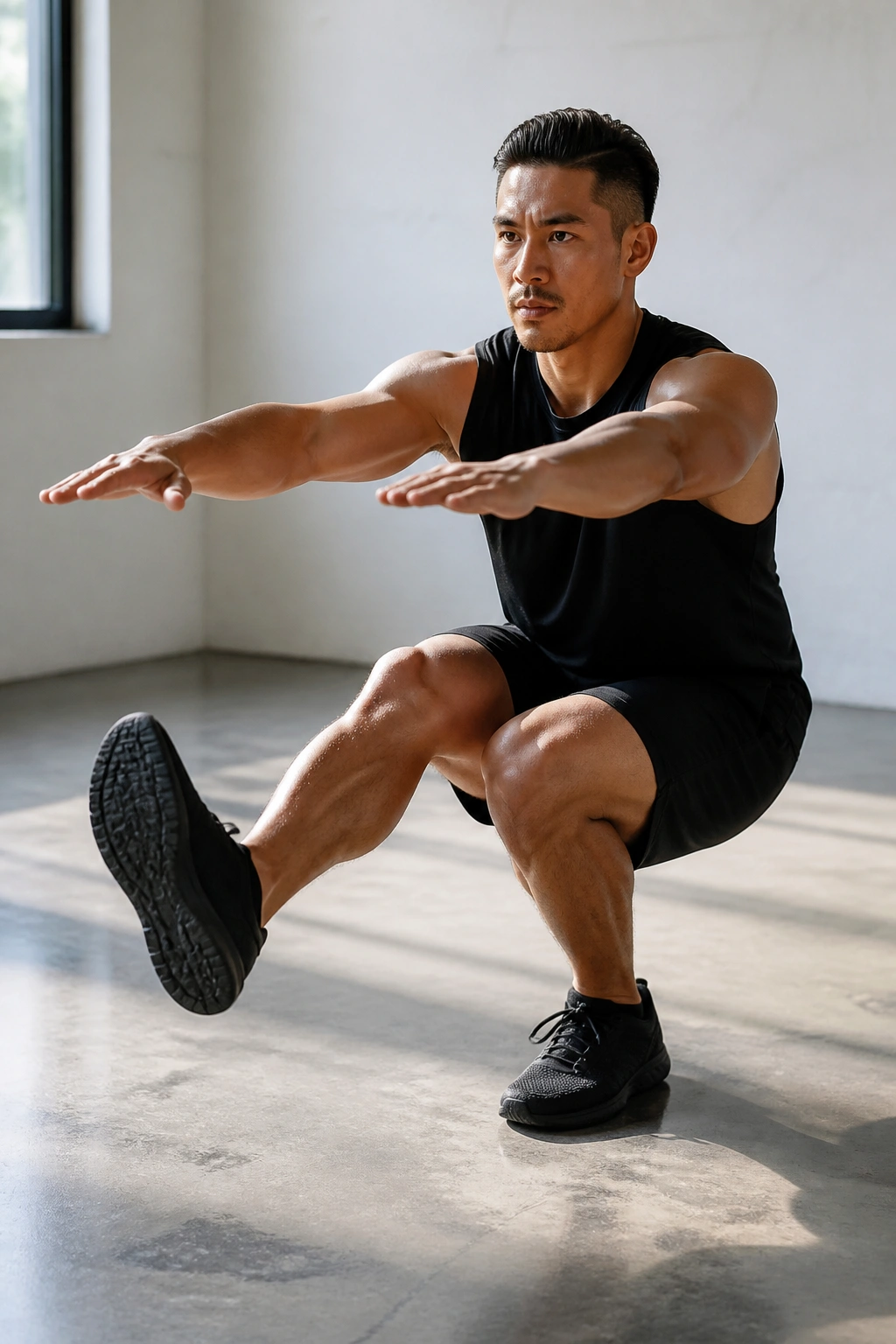
The pistol squat is the holy grail of bodyweight leg training. It is a one-legged squat where your other leg is extended straight out in front of you. It requires a rare combination of extreme strength, ankle mobility, and balance. Do not expect to master this overnight. It is a skill as much as it is an exercise.
Progression Strategies
If you cannot do a full pistol, start by holding onto a doorway or a sturdy table for balance. Use the assistance to get you through the bottom portion, then try to use as little help as possible on the way up. Alternatively, perform “box pistols,” where you squat down onto a chair or bench and stand back up on one leg.
Developing Control
The hardest part of the pistol is the bottom position, where your heel must stay flat on the floor while your hip is essentially touching your ankle. It challenges your balance in a way no other squat does. When you finally hit your first unassisted rep, it feels like a genuine athletic achievement. It is a perfect metric for tracking your progress as you get stronger and more mobile.
10. Prisoner Squat
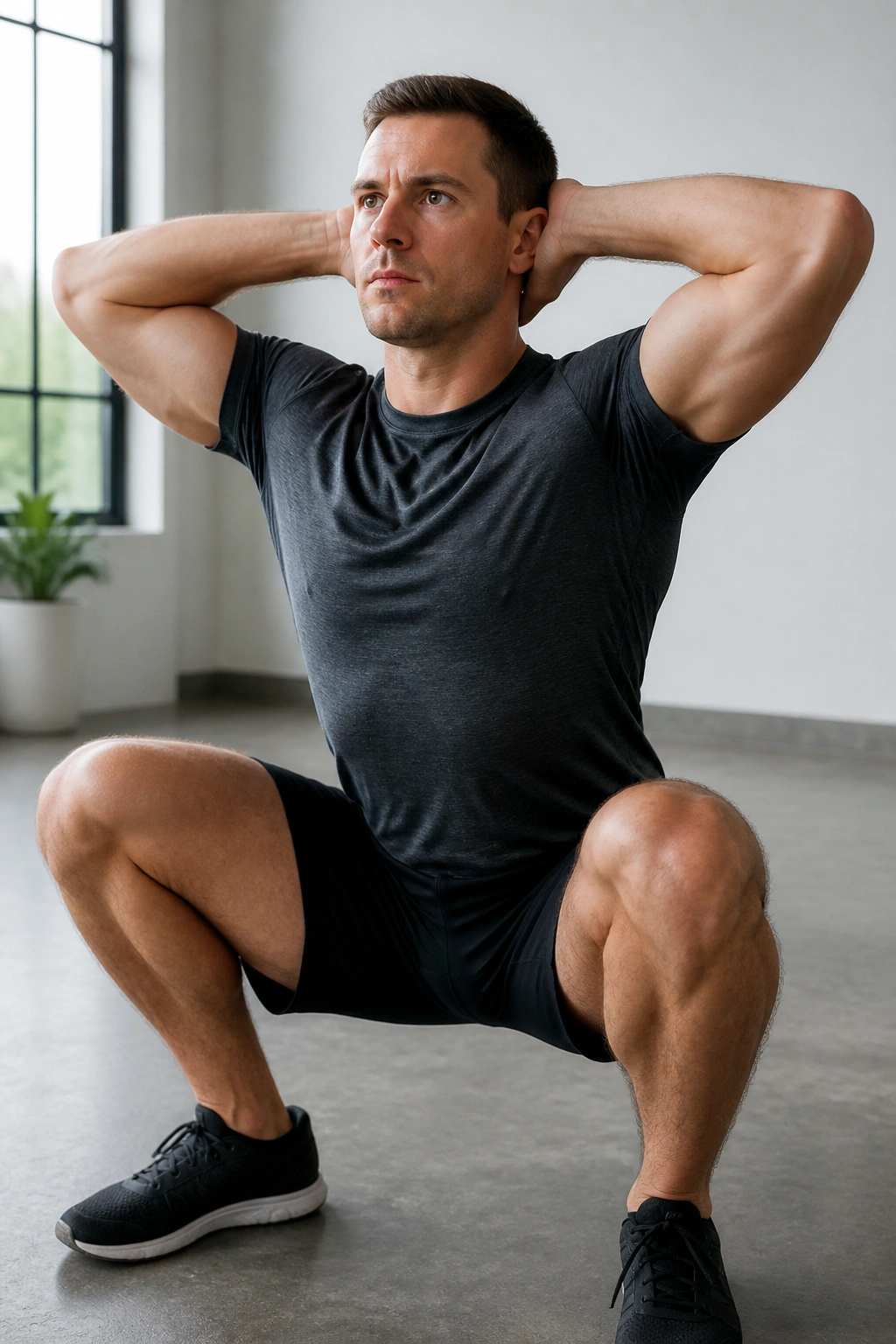
The prisoner squat is designed to fix one of the most common issues in squatting: forward lean. Interlace your fingers behind your head and pull your elbows back so they are pointing out to the sides. This position forces your chest to stay open and your upper back to stay tight. It creates an upright posture that makes it impossible to “cheat” by rounding your back.
Correcting Posture
Because your hands are behind your head, you cannot use them as a counterweight. This puts 100% of the stability requirement on your core and your legs. You will feel a much stronger demand on your erector spinae (the muscles along your spine). It is a brutal test of how well you can maintain a rigid, upright torso while your legs are moving.
Use This for Form Drills
If you find that your squat form is sloppy, perform a few sets of prisoner squats as a warm-up. They act as a “check engine” light for your body. If you cannot keep your elbows back or your chest up, it tells you exactly where you need to focus your mobility work. They are also incredibly humbling for those who think their air squats are perfect.
11. Wall Sit
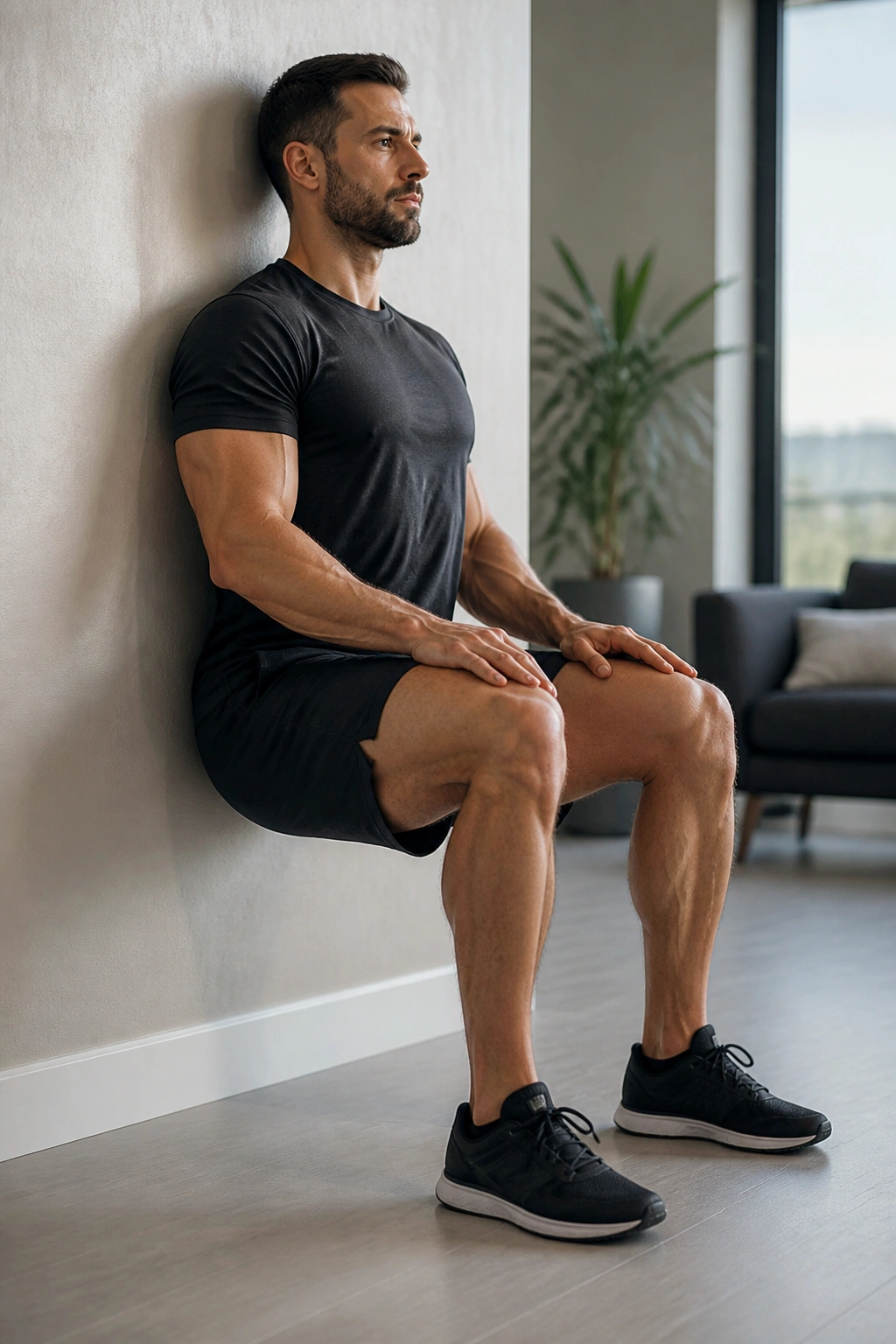
Sometimes the best way to fatigue the quads is to stop moving altogether. The wall sit is an isometric exercise, meaning your muscles are working, but the joint angle is not changing. Lean your back against a flat wall, walk your feet out, and slide down until your thighs are parallel to the floor. Hold that position until your legs feel like they are vibrating.
The Isometric Burn
Isometrics are fantastic for building endurance and knee health. Because there is no eccentric (lowering) or concentric (lifting) motion, the joint shear is very low. It is a “safe” way to overload the quads, which is why it is often used in physical therapy. The mental game is the biggest challenge—you are essentially racing your own nervous system to see how long you can ignore the burning sensation.
Don’t Cheat the Angle
A common mistake is staying too high. To get the benefit, your thighs need to be parallel to the floor. If you are sitting with your hips above your knees, you are just resting. Sink deep, drive your heels into the floor, and keep your back pressed flat against the wall. If you want to increase the difficulty, lift one foot slightly off the floor to turn it into a single-leg isometric hold.
12. Frog Squat
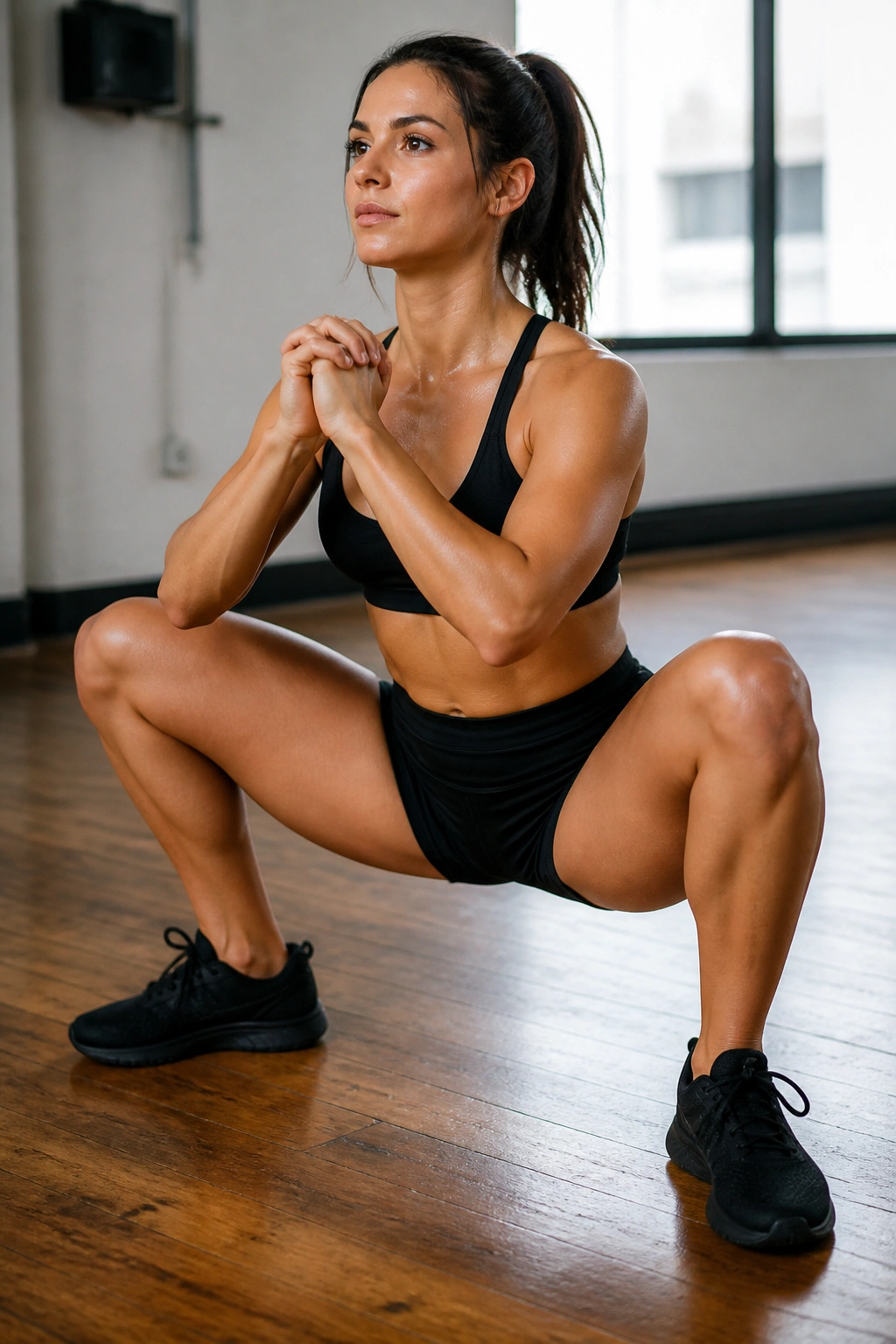
The frog squat is a quirky name for a highly effective glute-isolating movement. Start in a wide stance, like a sumo squat. As you descend, keep your knees pushed outward, and at the bottom, try to keep your chest up while letting your hips drop deep. You are essentially imitating a frog. This position places extreme tension on the glutes and opens the hips deeply.
Focusing on the Glutes
Unlike a standard squat where you might feel the quads dominate, the frog squat shifts the weight to the posterior chain. Because of the extreme knee bend and wide stance, the glutes are forced to do the heavy lifting to get you out of the hole. It is a fantastic movement for correcting “glute amnesia,” where the muscles are inactive from sitting too much.
Why It’s Unique
This variation teaches you to sit between your legs rather than behind them. It feels different because it removes the reliance on the quadriceps. If you have trouble “finding” your glutes during leg day, insert a few sets of frog squats at the beginning of your routine. You will feel them activated immediately.
13. Hindu Squat
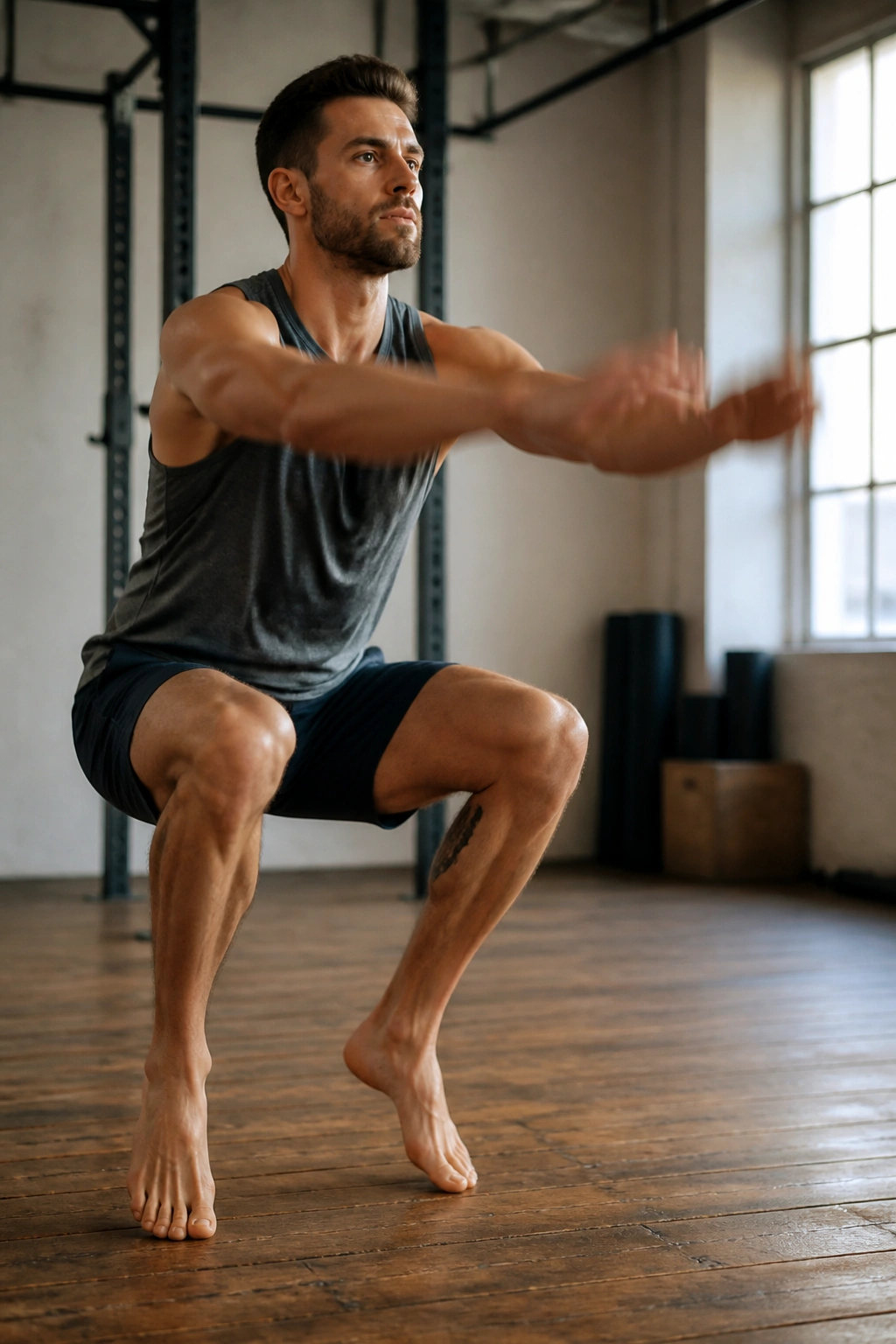
The Hindu squat is a traditional martial arts conditioning tool. It is dynamic, flowing, and requires coordination. As you squat down, you lift your heels off the ground and let your knees travel forward over your toes. Simultaneously, you swing your arms down and back, then forward and up as you stand. It is a fluid, rhythmic motion.
Managing Knee Health
There is a long-standing myth that your knees should never travel over your toes. The Hindu squat debunks this. By controlling the movement, you actually build strength in the connective tissues around the knee, which is vital for athletic longevity. However, do this with control. If you have pre-existing knee issues, approach this one with caution and move slowly.
The Rhythm Factor
The arm swing is not just for show; it creates momentum and engages the upper back. This is a total-body conditioning movement. You can perform high reps of Hindu squats to build incredible lower-body stamina. Because the heels are elevated, this variation creates a deep quad stretch that you simply cannot replicate with a flat-footed squat.
14. Squat to Calf Raise
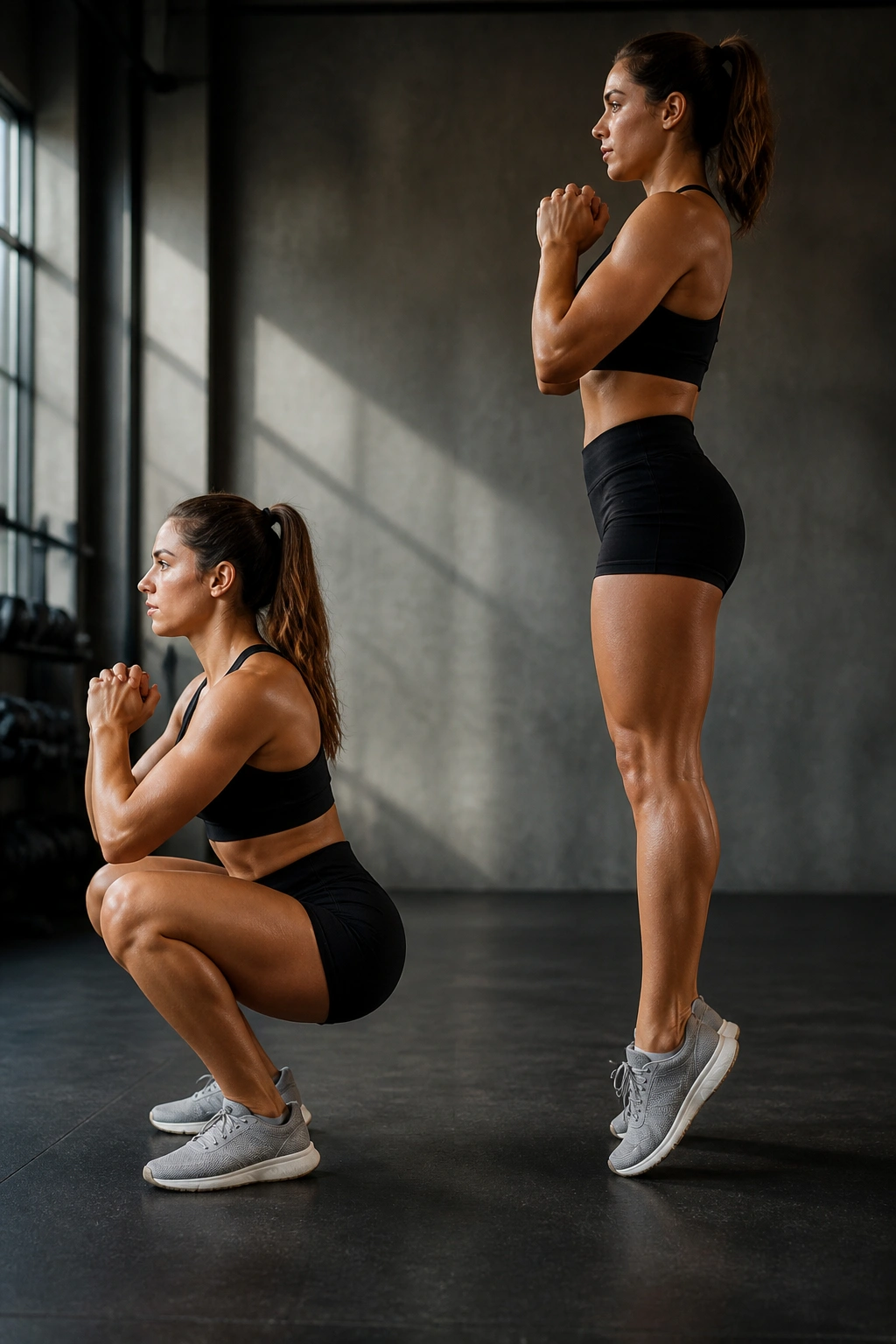
Why limit the lower body workout to the thighs? This variation integrates the entire leg by adding a calf raise at the top of every squat. Perform a standard air squat, and as you reach the full standing position, immediately push onto your toes, holding the contraction for a split second before sinking back into the next rep.
Connecting the Kinetic Chain
This is an excellent movement for runners or athletes who need explosive power from the ground up. It forces you to control your balance throughout the entire range of motion—from the squat, through the extension, and onto the toes. It is harder than it looks, especially as you start to fatigue and the stability of your ankle begins to waver.
The Calf Activation
Most people neglect calf training because it is boring. By attaching it to your squats, you ensure it gets done. You aren’t just building the quads and glutes; you are strengthening the lower leg, which acts as the stabilizer for your entire body. Do not rush the calf raise—actually squeeze the muscle at the top to get the full benefit.
15. Side-to-Side Squat Walk
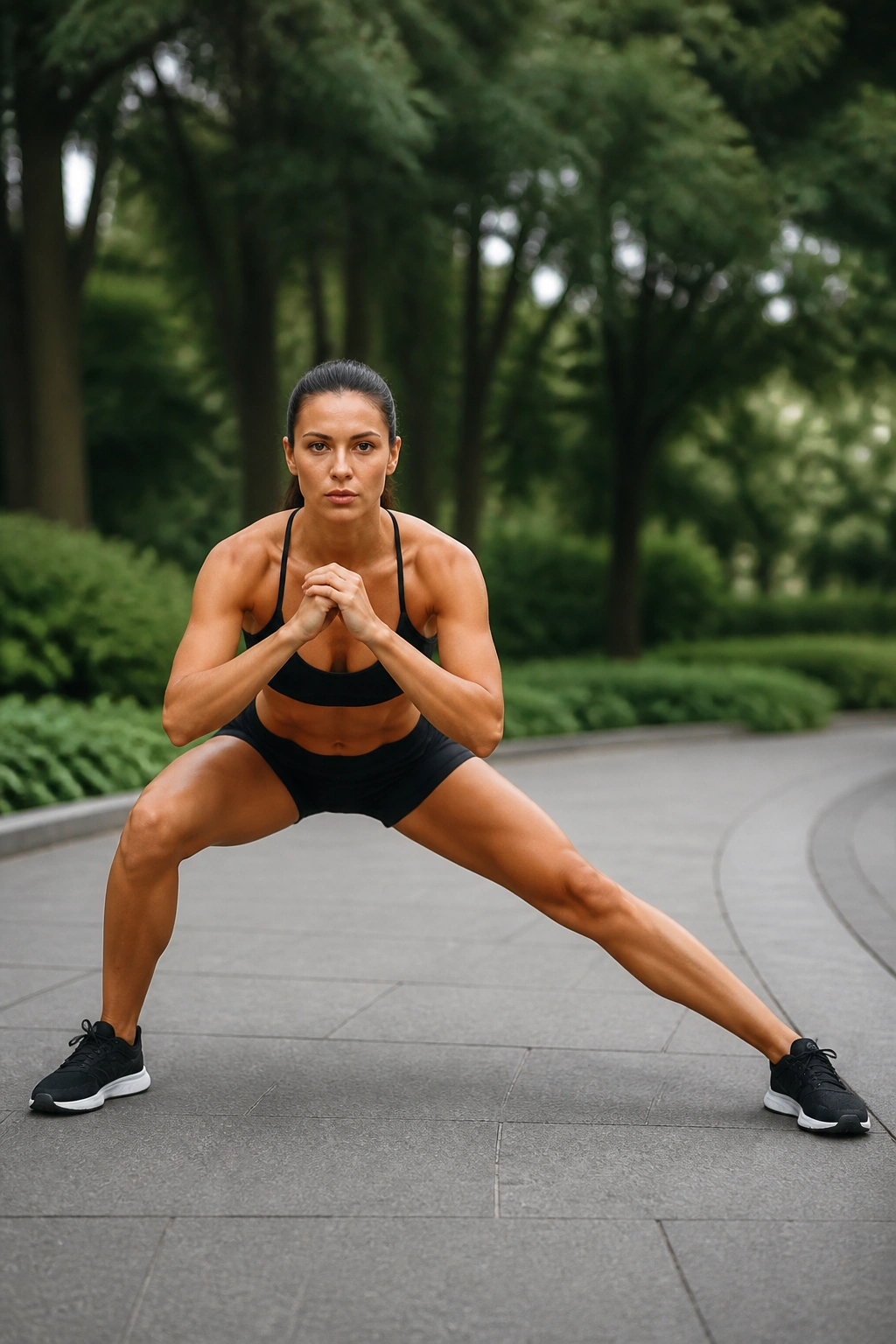
This movement is all about stability and fighting the urge to stand up. Get into a quarter-squat position—hips back, chest up—and stay there. Do not stand up. From this low position, take a step to the right, then another, keeping your knees bent the whole time. Then step back to the left. You are walking while maintaining a constant squat.
Targeting the Glute Medius
The glute medius is the muscle on the side of your hip, and it is responsible for preventing your knees from caving in. This exercise lights up that muscle immediately. By walking laterally, you force the hip stabilizers to work overtime to keep your torso stable. It is a burner that will leave your outer glutes feeling tight and fatigued.
Keeping Tension High
The biggest mistake is standing up as you take the step. Fight it. If you have to, place your hands on your hips or hold them in a prayer position at your chest to force yourself to stay low. If you do this correctly, you will feel the burn in your glutes within ten steps.
16. Tempo Squat
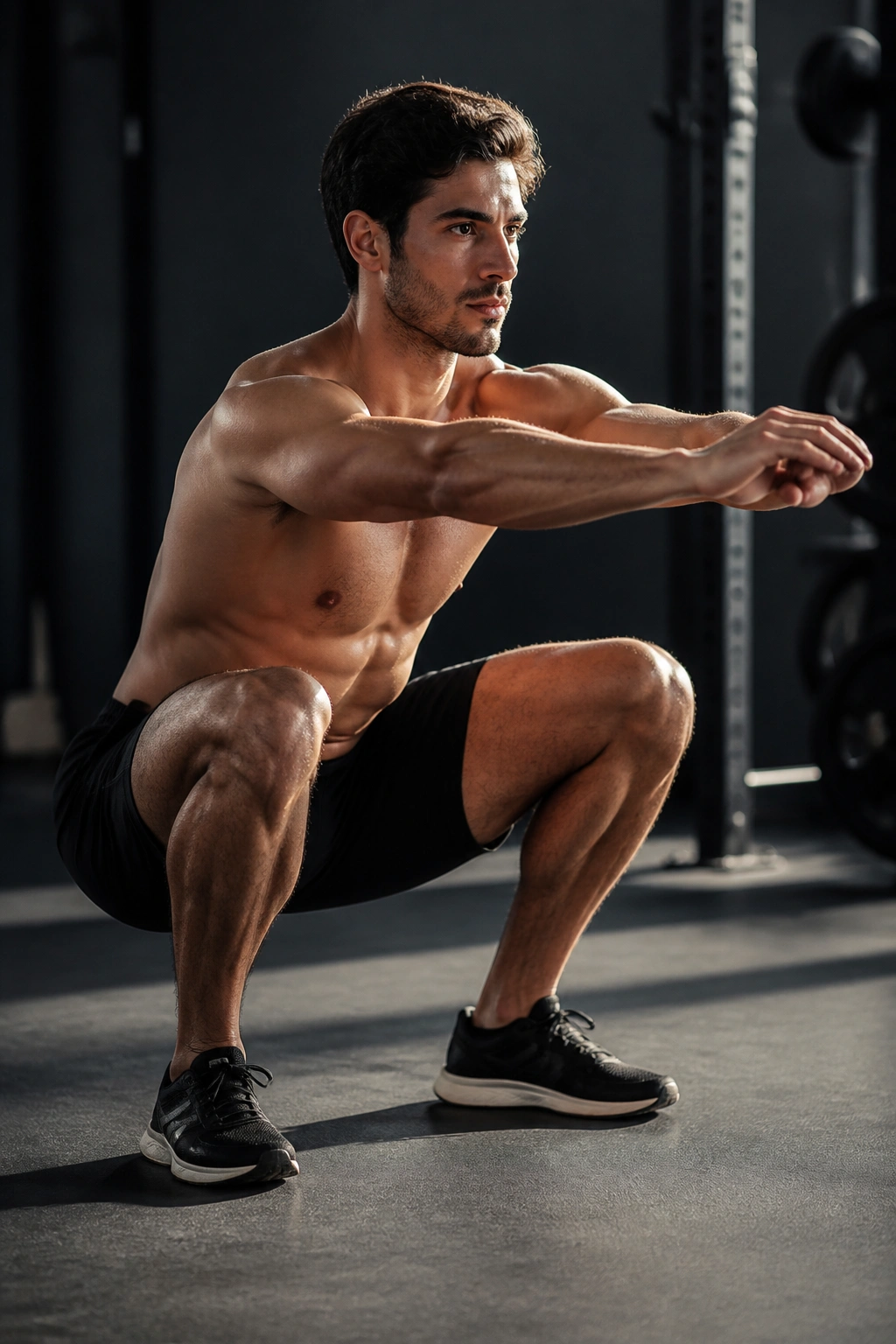
Tempo training is the secret weapon of strength coaches. It removes all ego. Instead of counting reps, you count seconds. Choose a tempo—for example, a 3-second descent, a 1-second hold at the bottom, and a 1-second ascent. This guarantees that you cannot rely on momentum or bouncing to finish the rep.
Mastering Control
The eccentric portion (the descent) is where the most muscle damage—and thus muscle growth—occurs. By forcing yourself to take three seconds to go down, you are essentially doubling or tripling the amount of time your muscles are under load compared to a fast, sloppy rep. This is the fastest way to improve your technique and build size without any extra weight.
Using a Clock
Do not guess the time. Actually count it out. “One thousand one, one thousand two, one thousand three.” When you are at the bottom, truly hold for a full second. It is agonizingly slow, and that is why it works. If you find yourself speeding up as you get tired, you are cheating yourself out of the benefits.
17. Skater Squat
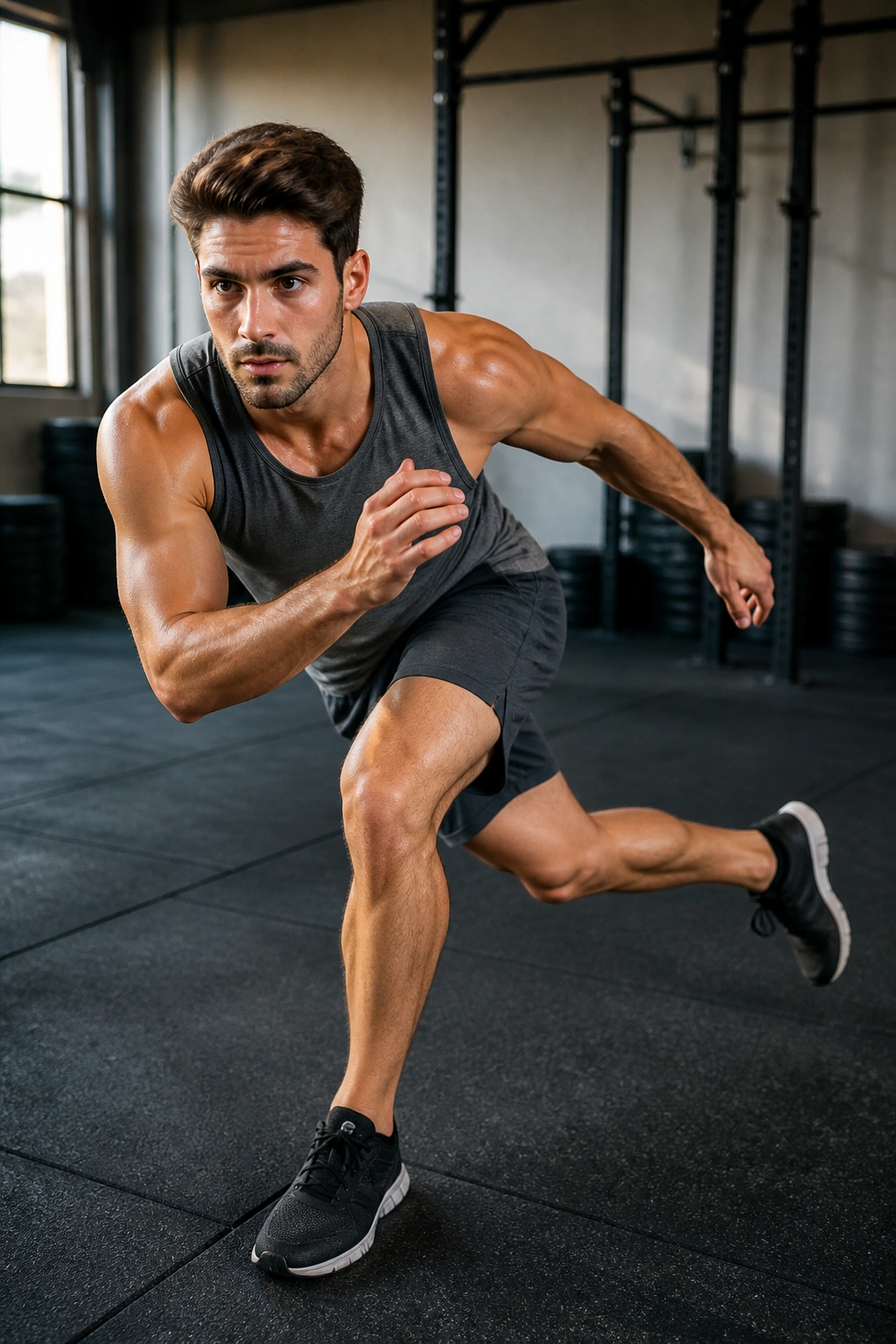
The skater squat mimics the movement of a speed skater. You reach one leg back and across behind the other leg as you squat, while swinging your arms in a skating motion. It is a unilateral movement that requires a high degree of balance and coordination. You are essentially doing a curtsy lunge crossed with a squat.
Athletic Coordination
This move is fantastic for improving spatial awareness and balance. You have to control your weight distribution so that you don’t tip over. It forces you to stabilize on one leg while the other leg creates a counter-balance. It is a staple in many athletic training programs for a reason—it builds functional strength that translates directly to moving on the field.
Progression for Stability
If this is too difficult, start by keeping your back foot close to the ground. As you get better, try to float that back foot, making the motion more fluid. The goal is to make it look smooth and athletic, not jerky. You should feel the primary work in the glute of the front leg.
18. Box or Chair Squat
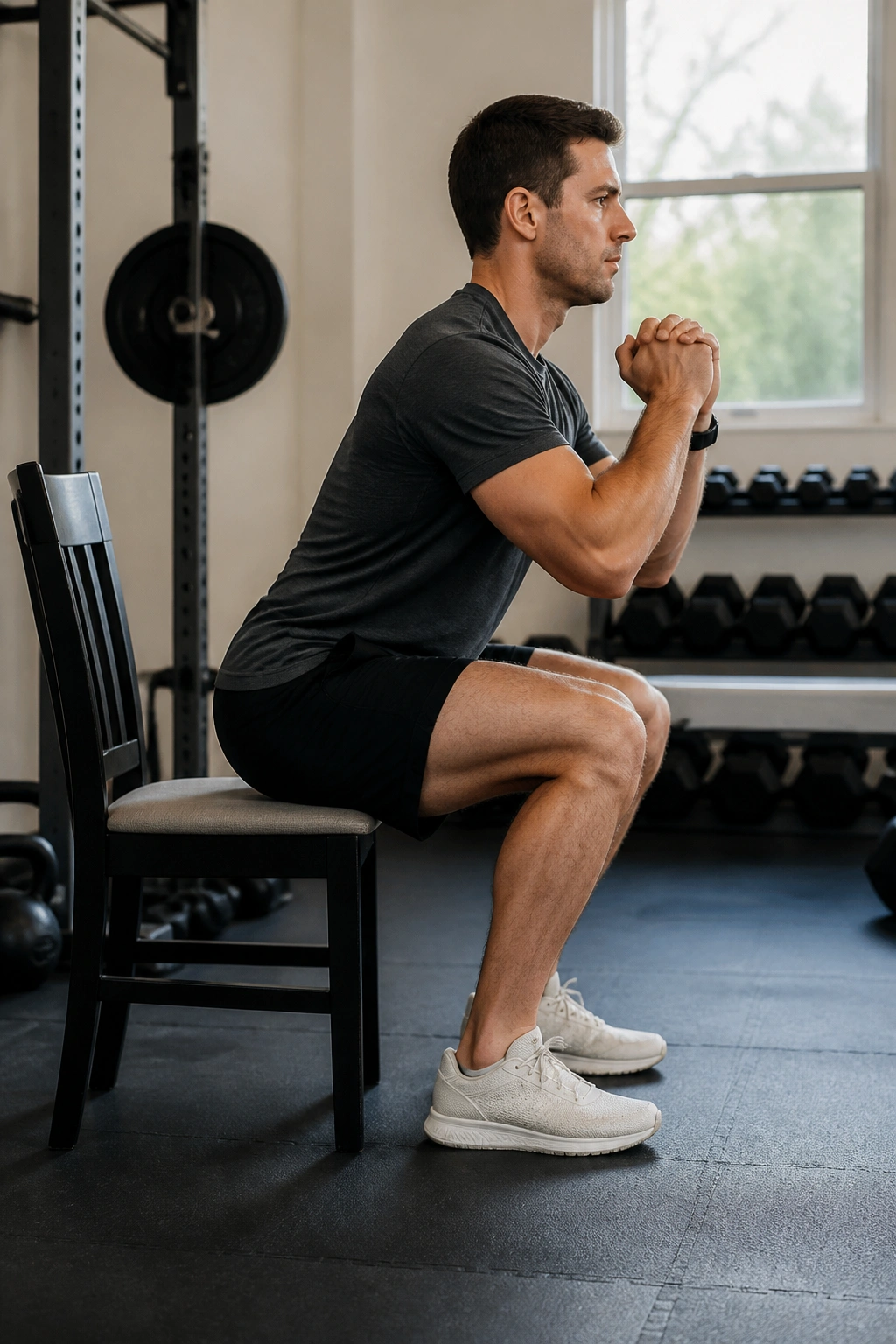
Sometimes you need a tactile cue to know how deep to go. Using a sturdy chair or a low couch, perform your squats by sitting down lightly—just tapping your butt to the surface—and then driving back up. This removes the “guesswork” of depth. You know exactly when you have hit the target, and it prevents you from stopping too early.
Maintaining Tension
Do not collapse into the chair. If you fall into the seat, you lose all the tension in your muscles. The goal is a controlled descent where you tap the surface and immediately reverse the direction. Think of the chair as a “depth gauge,” not a place to rest.
Why It Helps
If you are struggling with “butt wink”—where your lower back rounds at the bottom of the squat—the box squat is your best friend. By sitting down, you can keep your chest up and focus on keeping your spine neutral. It helps you learn the mechanics of the hip hinge without the fear of going too deep and losing your form.
19. Curtsy Squat
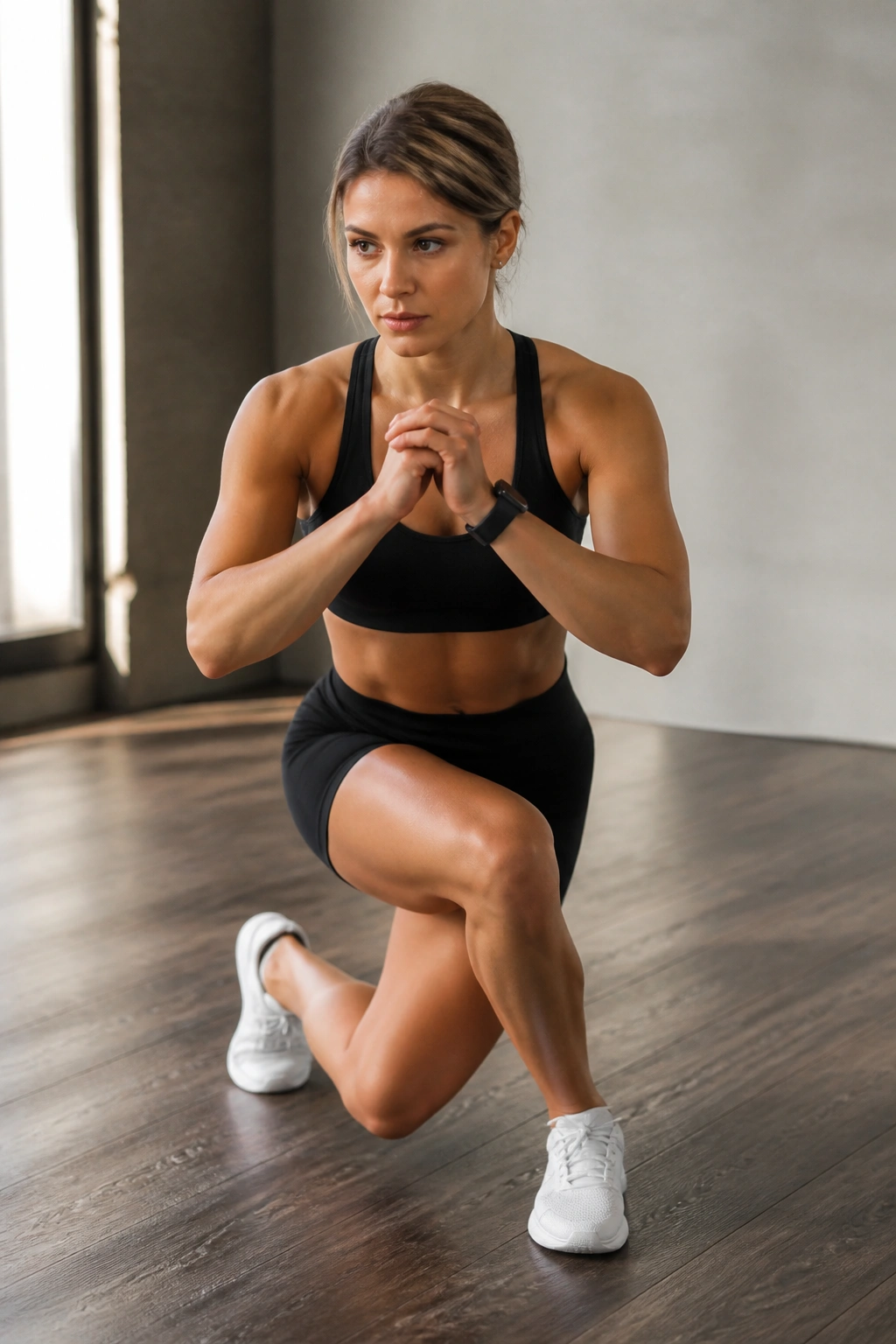
The curtsy squat is essentially a lunge and a squat hybrid. You step back and across, crossing the rear foot behind the front foot, and then drop down. The key difference between this and the skater squat is that you are coming to a complete stop at the bottom of the movement. It provides a deeper stretch in the glutes than almost any other squat variation.
Deep Glute Engagement
Because your legs are crossed, your hips are forced into a position that highlights the outer glute and the glute medius. This is incredibly effective for creating that “full” look in the glutes. Plus, it is a great movement for improving hip mobility in the transverse plane, which is often ignored in traditional leg workouts.
Watch the Knee
Because the leg is crossing behind, be careful with your front knee. Make sure it tracks over your toes and doesn’t buckle inward. If you have tight hips, you might find this one uncomfortable at first. Start with a smaller “step-back” and gradually increase the depth as your hips loosen up.
20. Squat Jacks
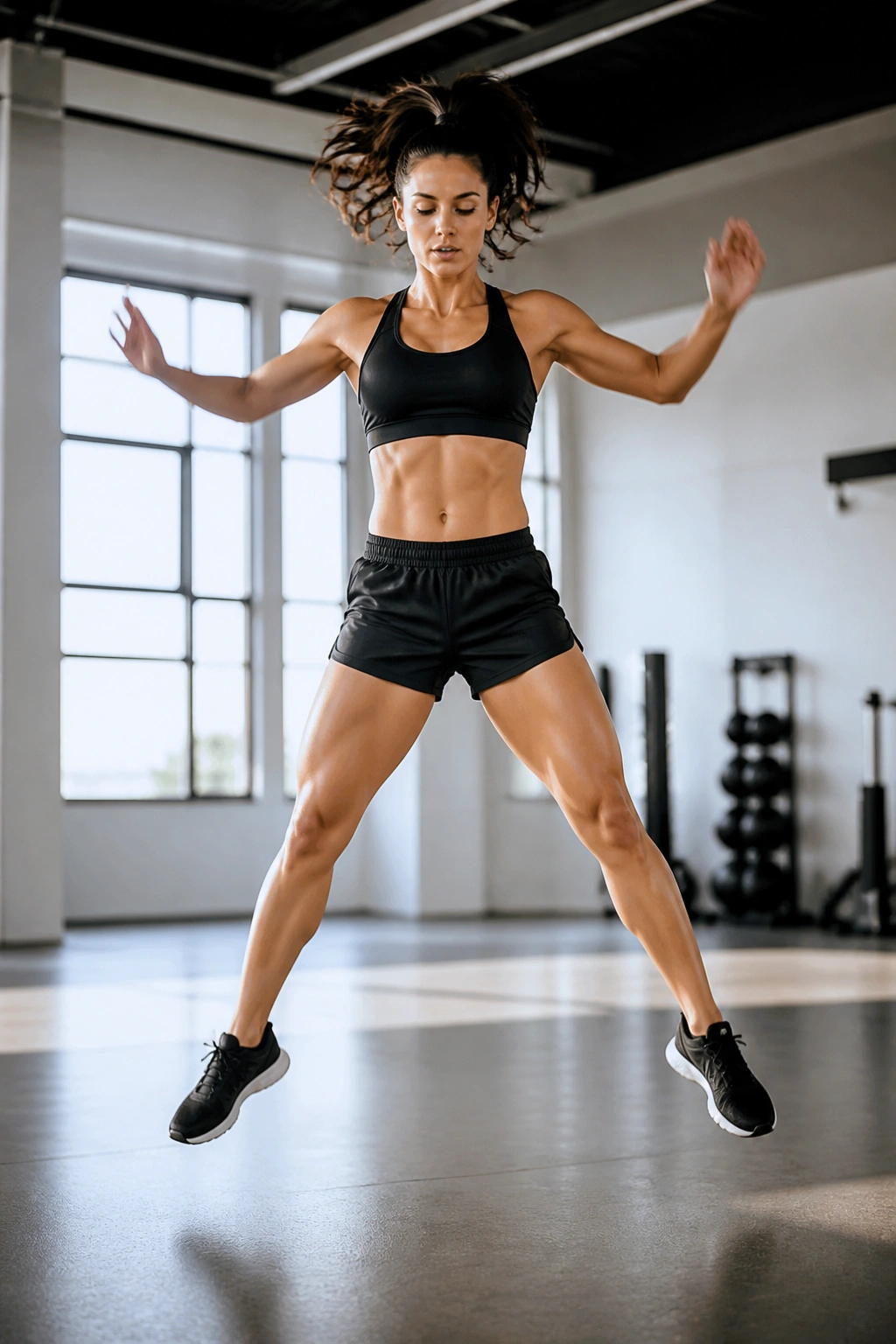
This is the “cardio” of the squat world. Start with your feet together. In one fluid motion, jump your feet out into a wide squat stance, land, and immediately jump back to the center. It is essentially a jumping jack combined with a squat. This gets your heart rate through the roof while keeping your legs under constant load.
Keeping the Intensity High
This is not a slow, grinding movement. It is meant to be performed with speed. Use the jump to propel your legs out, and use your quads to “catch” yourself and sink into the squat. It is exhausting, but it is one of the most efficient ways to burn calories while training the lower body.
Coordination and Core
This requires significant core stability. Because your feet are moving rapidly, your midsection has to work hard to keep you upright and prevent you from swaying. If you want a movement that combines leg strength, stability, and cardiovascular endurance, this is the one.
21. Isometric Squat Hold with Leg Abduction
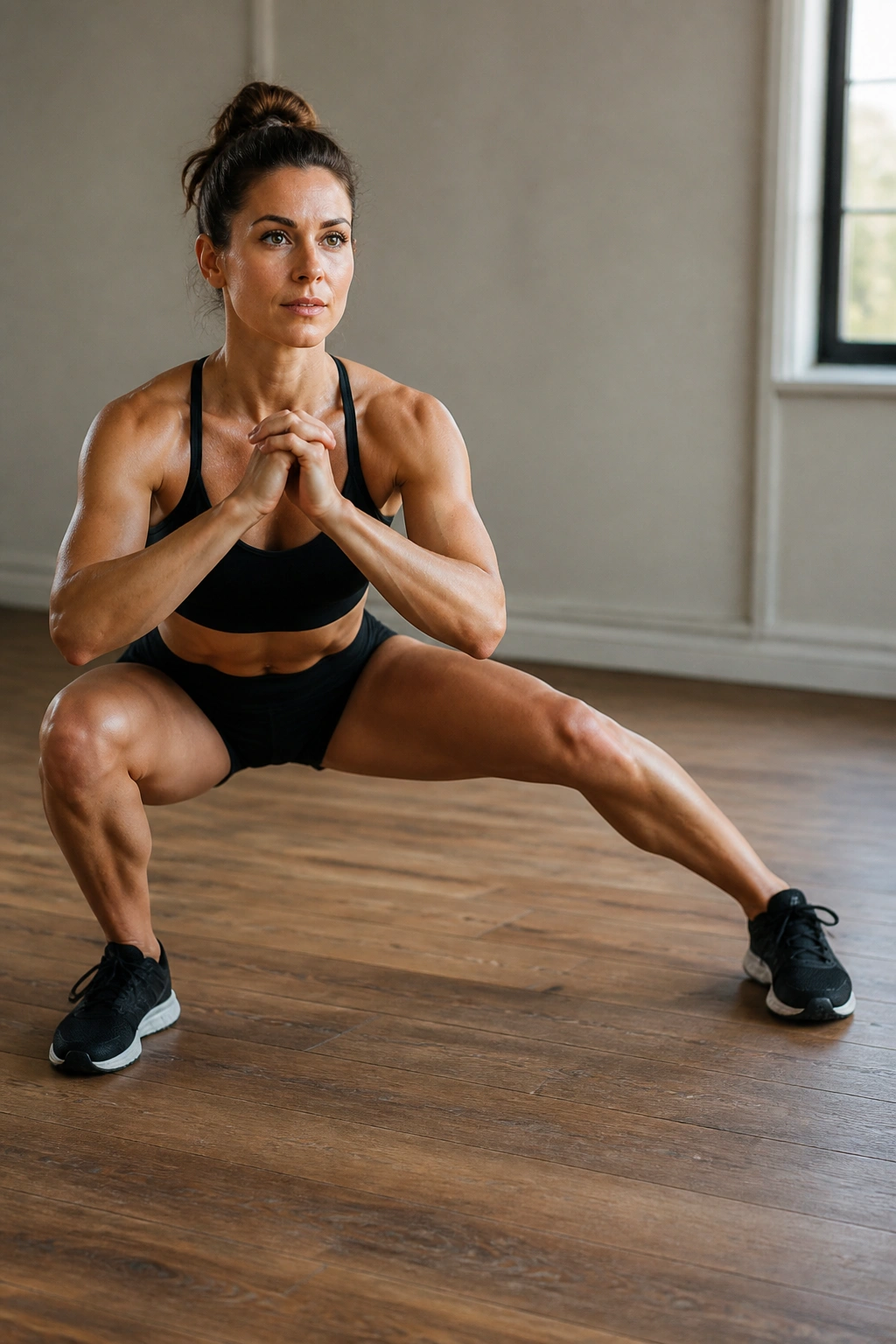
We already covered the wall sit, but this is the floor-based version. Drop into a deep bodyweight squat. Hold it. While you are holding that deep squat, perform small “abduction” movements—step your left foot out a few inches, bring it back, step your right foot out, bring it back. You are essentially doing a stationary squat while your legs perform small, rhythmic steps.
Why This Is Different
This puts the gluteus medius under extreme load. By holding the deep squat, you are already fatiguing the quads. By adding the abduction, you force the stabilizers of the hip to work in a fatigued state. This is high-level endurance training for your hips.
The Benefit of Stability
This is the ultimate exercise for hip stability. If you suffer from knee pain, strengthening the hip stabilizers—which this exercise does effectively—is often part of the solution. It is not glamorous, and it is definitely not easy, but the structural benefit for your lower body is immense.
22. Dive Bomber Squat
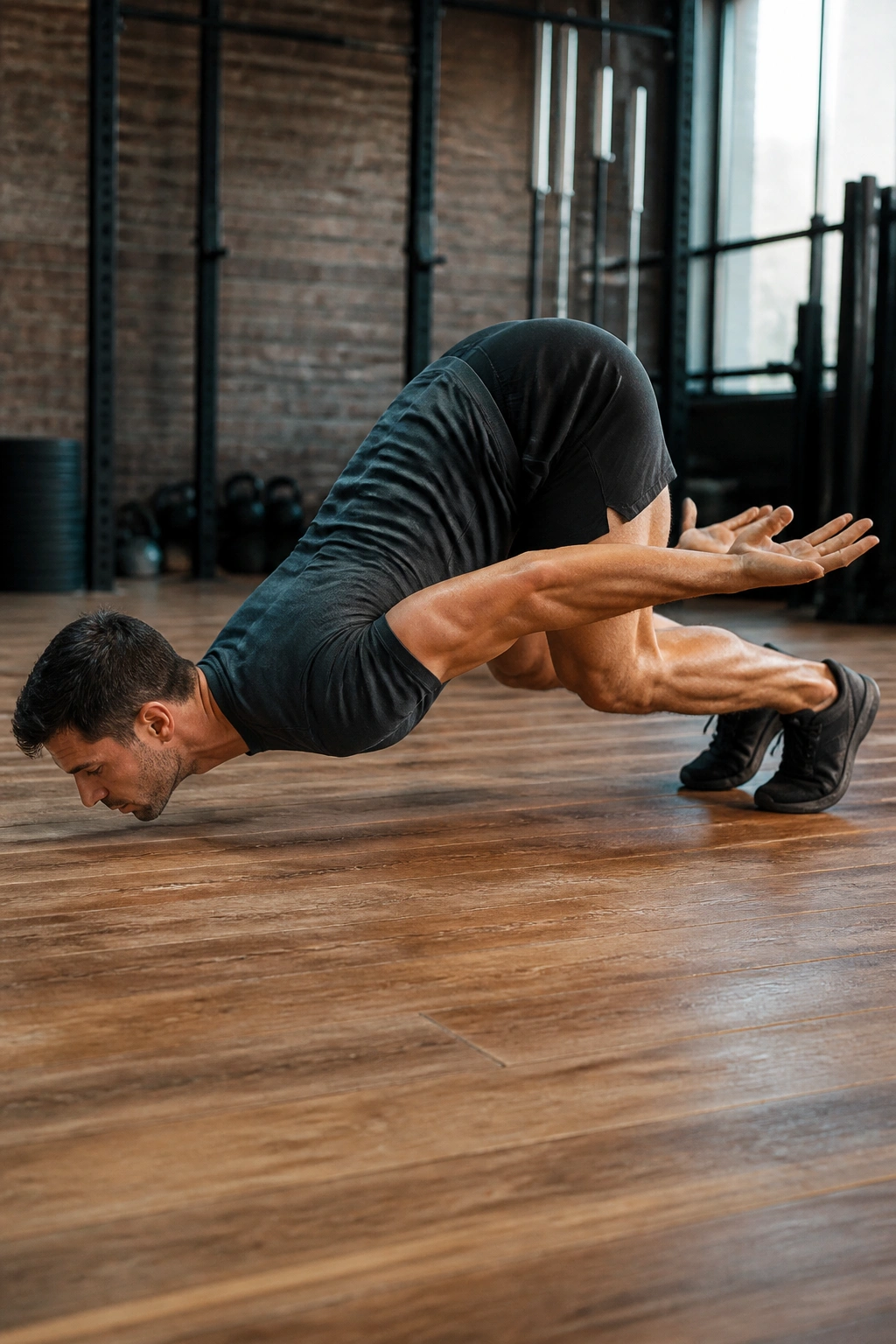
The dive bomber squat is a more advanced, fluid movement that incorporates a squat into a wave-like motion. Start in a standard squat, but as you go down, you roll your weight forward onto your toes, then push back up through the heels, letting your knees travel forward, then rocking back. It is a full-body fluid motion that tests mobility and ankle strength.
Embracing the Flow
This is less about “max weight” or “muscle burn” and more about range of motion and joint fluidity. It mimics the kind of movement used in some animal flow or yoga practices. It forces your ankles to work through their full range, your knees to track correctly, and your hips to stay mobile.
Why It’s the Final Variation
We end with this because it requires the most control. It is not a “grind” movement. It is a “flow” movement. Use this as a finisher to your workout to loosen up your joints and ensure you aren’t leaving the session feeling stiff. It is the perfect way to cap off a leg session that focused on building strength and stability.
Final Thoughts
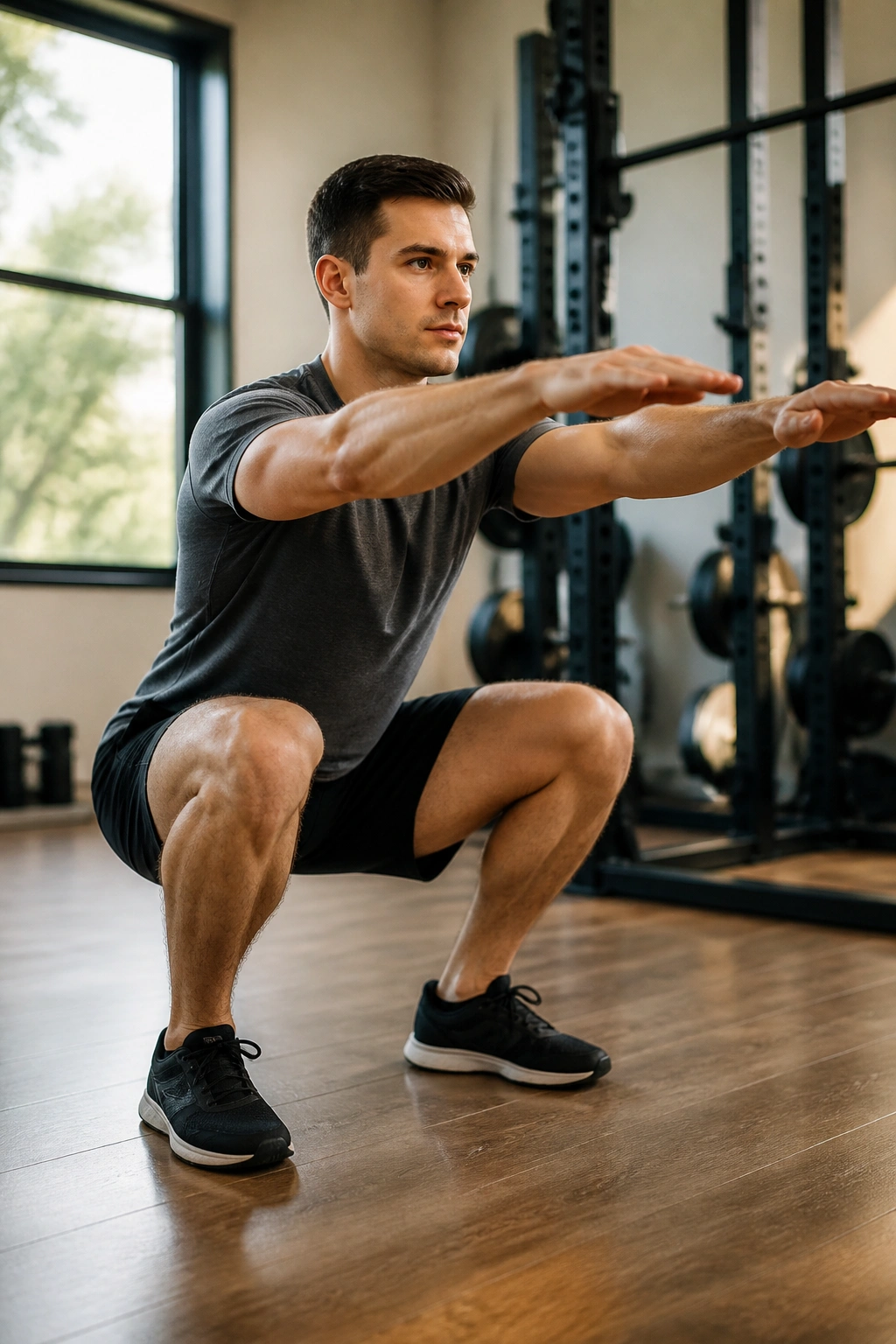
Building a powerful, capable lower body does not require an arsenal of weight plates or expensive cable machines. It requires mastery of your own frame. By cycling through these twenty-two variations, you keep your nervous system guessing, your muscles challenged, and your mobility sharp. You are essentially learning to speak the language of your own anatomy.
Pick two or three of these variations to integrate into your existing routine each week. Do not try to do all twenty-two in one day—your legs will not thank you for it, and your form will inevitably fall apart. Treat these as tools. Some days call for the stability of a wall sit; other days demand the explosive power of a jump squat. Listen to what your body needs, stay consistent with your mechanics, and remember that intensity is not just about weight—it is about how you move your own mass through space.
