



Leg day often feels like a slow, rhythmic grind—sets of heavy back squats, carefully controlled leg presses, and the endless accumulation of volume. While that standard approach builds the foundation, it can sometimes leave your fast-twitch muscle fibers feeling a little neglected. Your legs are built for more than just pushing heavy iron against gravity; they are designed for power, speed, and the ability to propel your entire body weight into the air.
That is where jump training comes in. By introducing explosive movements into your routine, you break through the plateaus that slow, steady lifting creates. It forces your nervous system to wake up, recruiting motor units that stay dormant during standard hypertrophy work. When you land from a jump and immediately absorb the force, you teach your tendons to be springy and your muscles to be responsive.
The goal here is not just to jump high. It is to move with intention. Every repetition should be a study in mechanics—controlled descent, violent extension, and soft landing. Whether you are looking to add inches to your vertical leap, sprint faster on the track, or simply build functional, dense muscle in your quads and glutes, these movements will shift the way your lower body operates.
1. The Classic Bodyweight Squat Jump
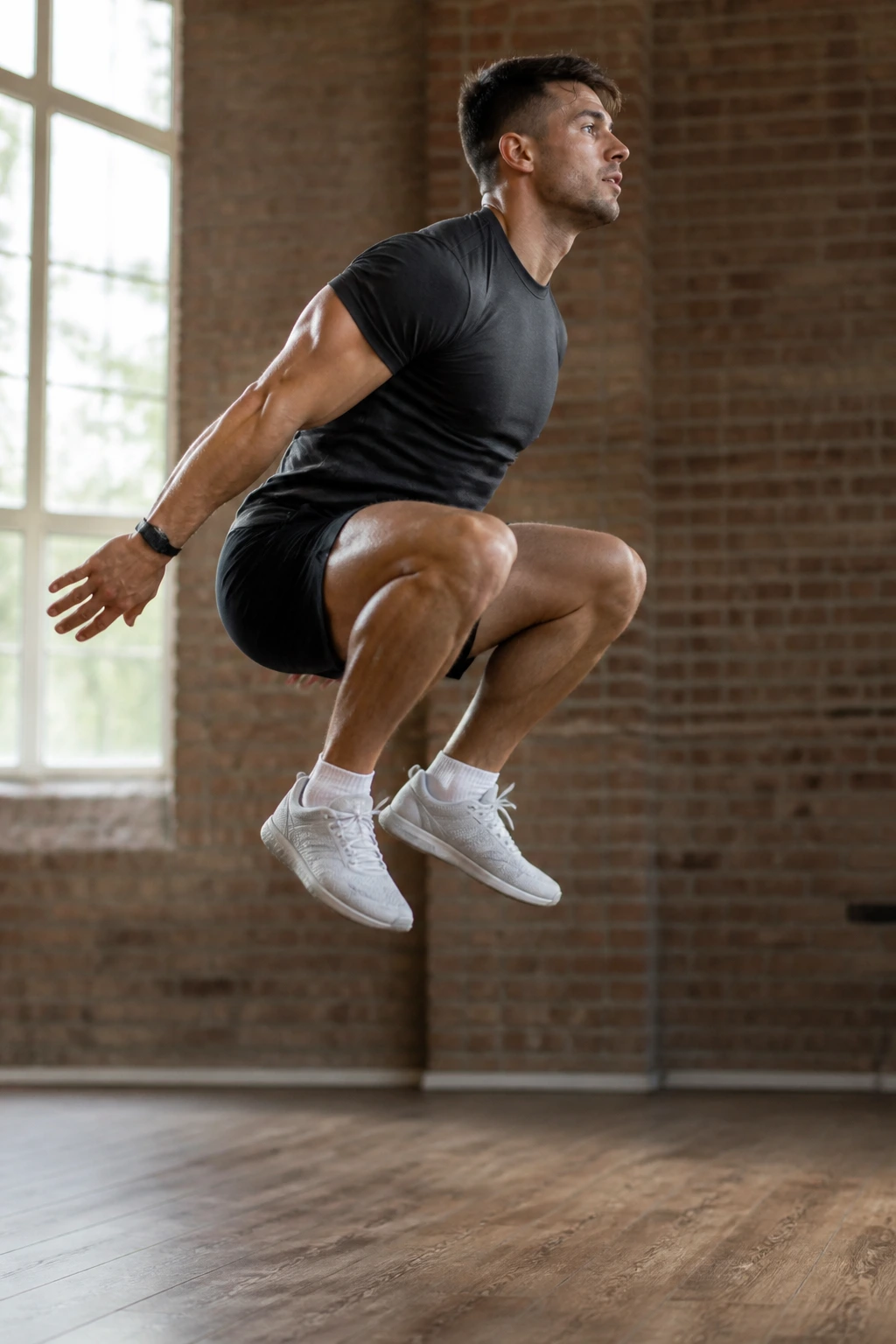
This is the standard, the baseline against which all other movements are measured. You start by standing with feet shoulder-width apart, lowering your hips until your thighs are roughly parallel to the floor, and then driving upward through your heels. The power must originate from your hips, not just your knees.
Why It Remains the Gold Standard
Focusing on the basic squat jump allows you to dial in your mechanics without worrying about external weights or complex landings. You are looking for a vertical displacement that feels effortless but controlled. When you reach the peak of your jump, your body should be fully extended from ankles to shoulders.
- Keep your chest upright throughout the entire descent.
- Swing your arms behind you as you load the hips, then drive them forward and upward as you jump.
- Land on the balls of your feet, immediately transitioning into a soft knee bend to absorb the shock.
Pro tip: Imagine you are jumping through a ceiling. If you stare straight ahead at a fixed point, you are less likely to lean forward and dump your weight into your toes.
2. Explosive Tuck Jumps

Tuck jumps take the vertical requirement of a standard jump and add a significant core and hip flexor demand. At the peak of your jump, you pull your knees toward your chest, aiming for maximum airtime and height. It is a violent, quick movement that rewards those with high explosive output.
If you are not used to this, your first few attempts will feel clumsy. That is okay. The goal is to bring your knees up to your chest, not to bring your chest down to your knees. Your torso needs to stay tall. If you hunch over, you are cheating yourself out of the power development this movement provides.
How to Master the Tuck
Timing is everything here. You have to wait for the exact moment of peak extension before snapping your knees up. If you pull them up too early, you cut your jump short. If you pull them up too late, you are already on the descent. Aim to land softly, absorbing the impact with your quads, and reset immediately for the next repetition.
3. Distance-Focused Broad Jumps

Broad jumps shift the vector of your power from vertical to horizontal. Instead of trying to touch the sky, you are trying to cover as much ground as possible. This movement is a fantastic test of your ability to project force forward while maintaining balance upon landing.
Why Forward Projection Matters
Many lifters are great at moving straight up and down but struggle when force is applied horizontally. Broad jumps expose weaknesses in your posterior chain—specifically your hamstrings and glutes—that standard squat jumps might mask. You need to coil your hips back, load your arms, and explode forward.
Keys to a Proper Landing
Landing is more important than the jump itself. If you land with your knees collapsing inward or your heels slamming into the floor, you risk injury. Stick the landing by keeping your feet shoulder-width apart, absorbing the force through the hips, and ensuring your knees track in line with your toes.
4. Unilateral Split Squat Jumps

Split squat jumps are the great equalizer. By placing one foot in front of the other, you force each leg to do its own share of the work. You cannot rely on your dominant leg to carry the movement, which highlights any strength imbalances you might have accumulated over time.
This movement is demanding. Start in a lunge position, back knee hovering just an inch above the floor. From this static lunge, drive up with enough force to switch your legs in the air, landing in the opposite lunge position. The transition in the air is where the magic happens.
Avoiding Common Pitfalls
Most people rush this movement, leading to a sloppy transition and an unstable landing. Slow it down. You do not need to move at high speed to get the benefits. Focus on landing softly in the lunge, ensuring that your front knee does not cave in. If you find your balance is poor, focus on pulling your core tight—it acts as your stabilizer throughout the switch.
5. Elevated Box Jumps

Box jumps remove the eccentric component of the landing, which makes them easier on your joints while still allowing for maximum explosive output. By landing on an elevated surface, you do not have to absorb your body weight from a tall jump height. It allows you to focus purely on the drive.
Safety First on the Box
You have to choose the right box height. Too high, and you will start scraping your shins or landing with your knees at your chest. Too low, and you are not challenging your explosiveness. A good box height is one where you land with your knees slightly bent, never fully locked out.
The Mechanics of the Jump
- Stand a comfortable distance from the box.
- Swing your arms and explode upward.
- Land with both feet flat on the box.
- Step down—do not jump down. Jumping off the box places unnecessary strain on your patellar tendons.
Crucial note: Your shins will thank you for stepping down every single time.
6. Rotational 180-Degree Squat Jumps

Adding rotation to your squat jump introduces an element of spatial awareness and dynamic stability. You start in a normal squat position, jump up, and rotate your body 180 degrees in mid-air, landing in a squat facing the opposite direction. It requires a calm head and active control over your core.
Why Rotation Matters
Athletic performance rarely happens in a straight line. Being able to change your orientation while in the air is a skill that translates directly to sports like basketball, soccer, or even just navigating uneven terrain in daily life. This movement forces your stabilizer muscles in the hips and ankles to work much harder to catch your weight upon landing.
If you struggle with balance, start with a 90-degree turn. Once that feels like second nature, work your way up to the full 180. The landing is the most difficult part, as your brain has to reorient itself while your legs are absorbing the impact. Keep your core braced throughout the entire turn.
7. Wide-Stance Sumo Squat Jumps
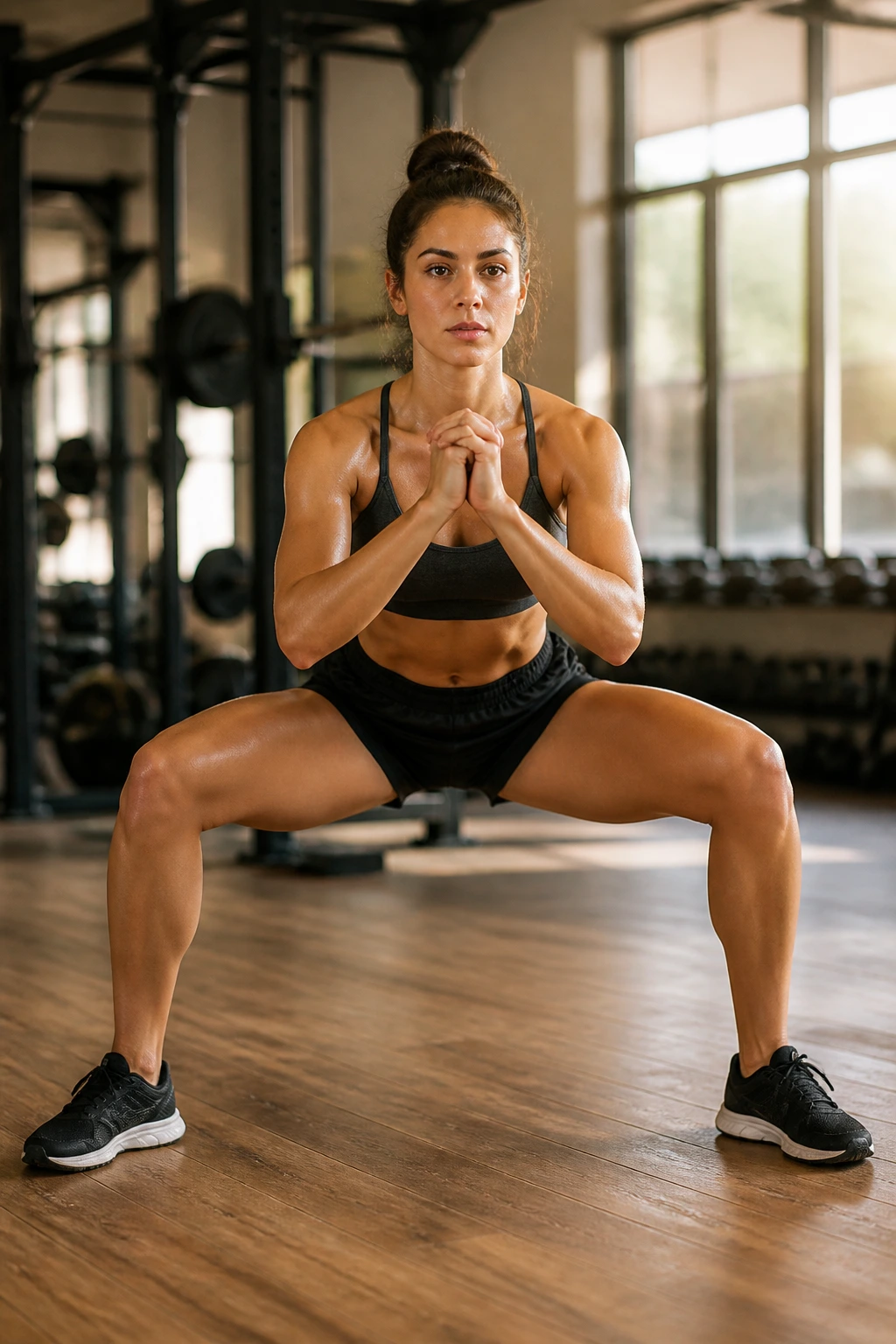
Sumo jumps target the inner thighs and glutes differently than a standard narrow or shoulder-width stance. By widening your feet beyond shoulder width and pointing your toes slightly outward, you change the mechanical advantage of the hip extensors.
Why Use This Variation
The wide stance forces you to sit deeper into the hips, which can be beneficial if you have tight ankles or limited range of motion in a standard squat. It creates a different “pop” from the floor. You might find you cannot jump as high as you do with a narrow stance, but the muscular recruitment in the glute medius and adductors is often higher.
Focus on keeping your knees tracking outward over your toes. If your knees cave in, you lose the benefits of the movement and increase stress on the medial ligaments of the knee. Drive from the heels, and keep the chest proud throughout the entire jump.
8. Resistance-Loaded Squat Jumps

When your body weight alone stops being enough of a challenge, it is time to add external resistance. A pair of light dumbbells or a weighted vest can completely change the intent of your jump training. Note that I said light dumbbells. This is not a max-effort lift; it is a power movement.
Mechanics of the Weighted Jump
- Hold a pair of dumbbells at your sides, keeping your shoulders retracted.
- Lower into your squat, feeling the tension in your hamstrings.
- Explode upward, but do not jump as high as you possibly can.
- Aim for a controlled jump, maintaining perfect posture with the weight.
Warning: Do not attempt weighted jumps if you have not mastered the landing technique with body weight. The added load makes the landing impact significantly higher, and if your landing mechanics are off, you risk putting too much stress on your ankles and knees.
9. Full-Body Burpee Squat Jumps
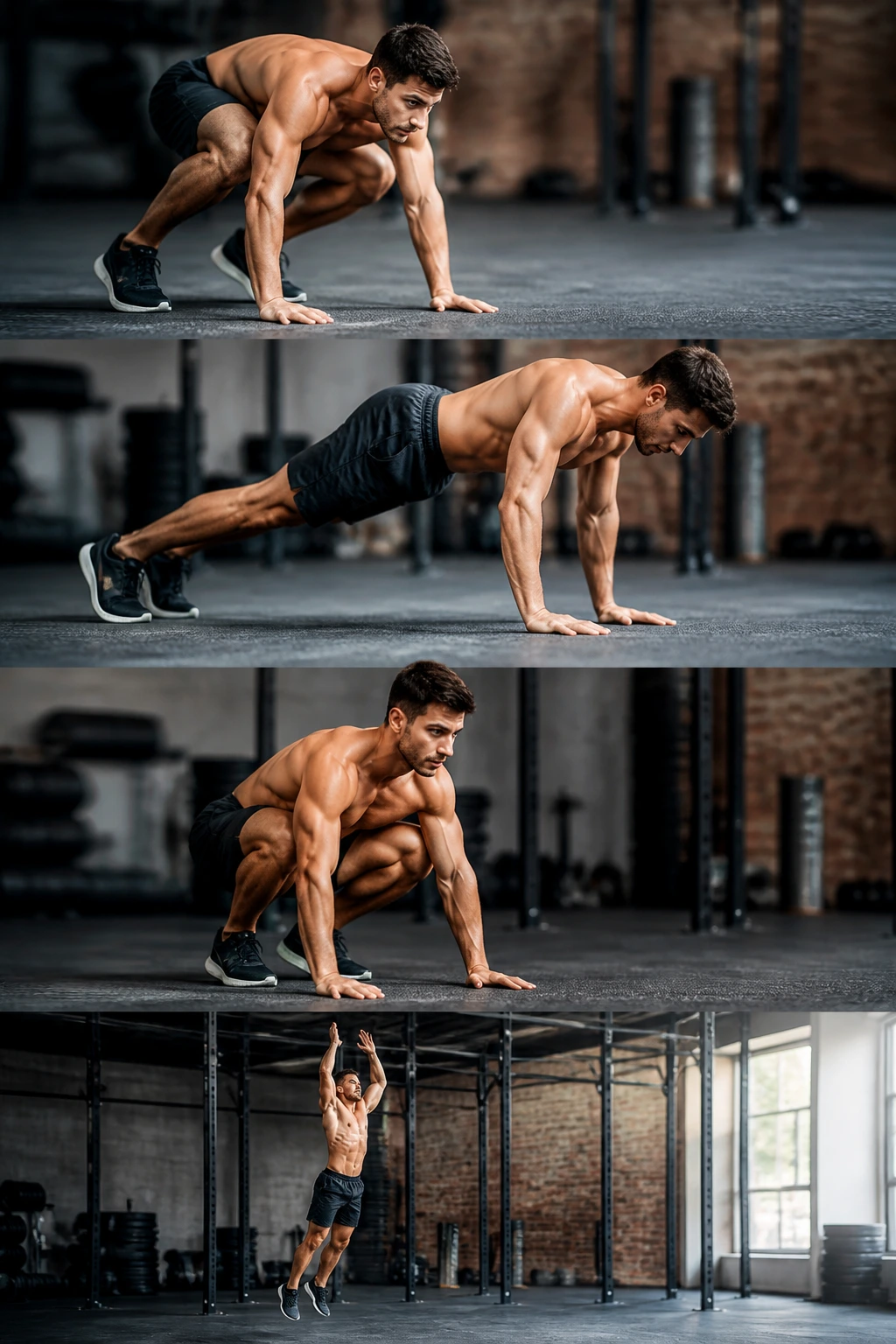
Burpees are polarizing for a reason—they are miserable, but they are effective. By combining a squat, a plank, a push-up, and a jump, you create a full-body movement that spikes your heart rate while taxing your lower body explosiveness.
The Breakdown
- Drop into a squat and place your hands on the floor.
- Kick your feet back into a high plank position.
- Perform a push-up if you want extra intensity.
- Jump your feet back to your hands.
- Explode upward into a high jump.
This is less about max height and more about maintaining power through fatigue. As the sets go on, your legs will want to quit. That is when you focus on landing the jump softly and resetting your core for the next repetition. If you lose your form, slow down. Quality is always better than speed in this specific instance.
10. High-Energy Star Jumps
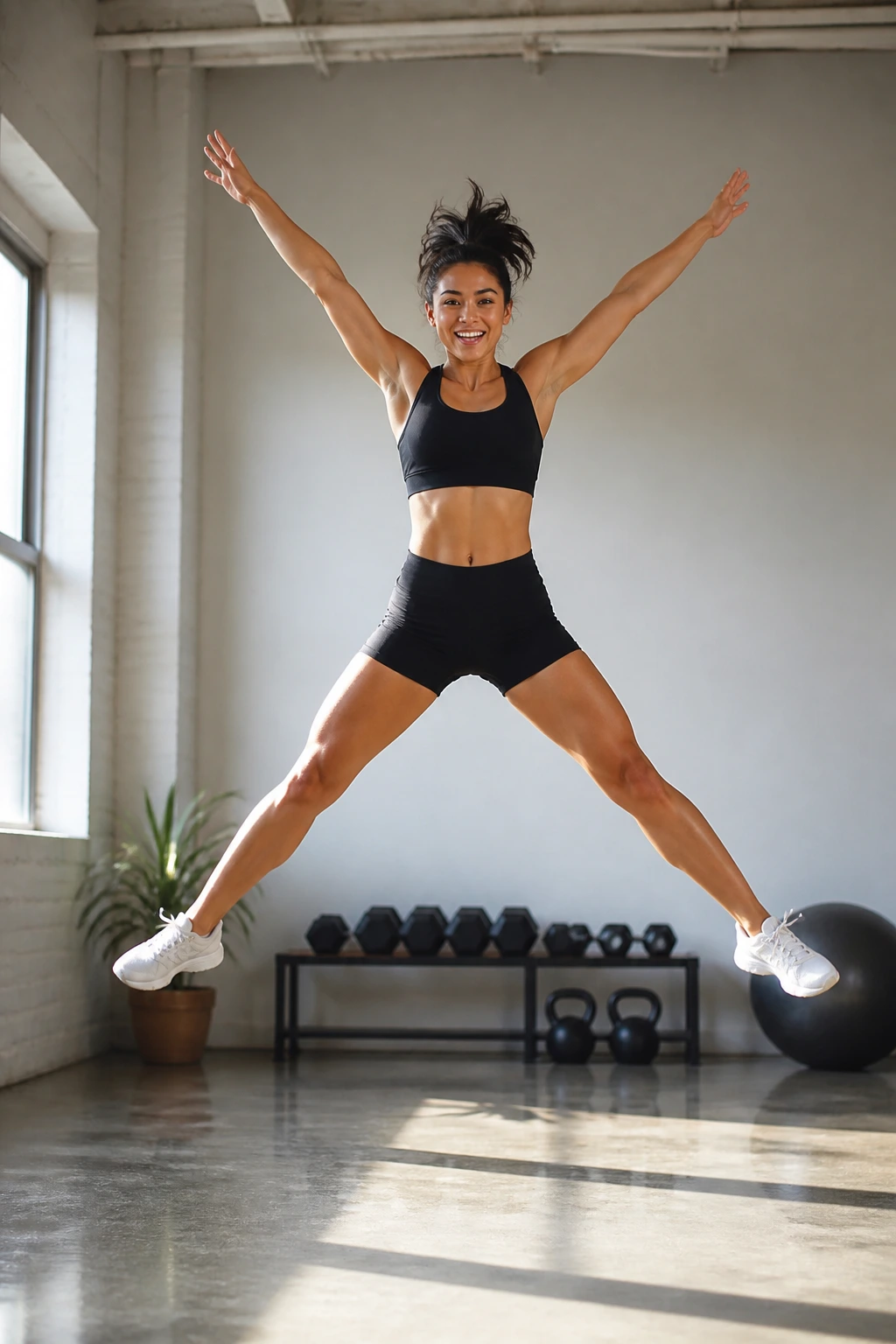
Star jumps are a plyometric movement that requires total body coordination. As you jump, you extend your arms and legs outward like a star at the peak of the jump, then return to a neutral landing position. They are deceptively taxing and will tire you out faster than you expect.
Coordination Is Key
The timing of your arms and legs is essential. If you don’t coordinate the opening of your limbs with the apex of your jump, you end up doing a frantic, uncoordinated sprawl. Practice the jump without the star motion first to get the height right. Then, add the extension once you feel comfortable with your vertical lift.
This movement is excellent for improving explosive hip abduction. It forces you to move laterally from the center line while mid-air, which builds reactive strength in your hips. Keep your core tight during the star extension to ensure you can pull your limbs back in time for a stable landing.
11. Side-to-Side Skater Squat Jumps
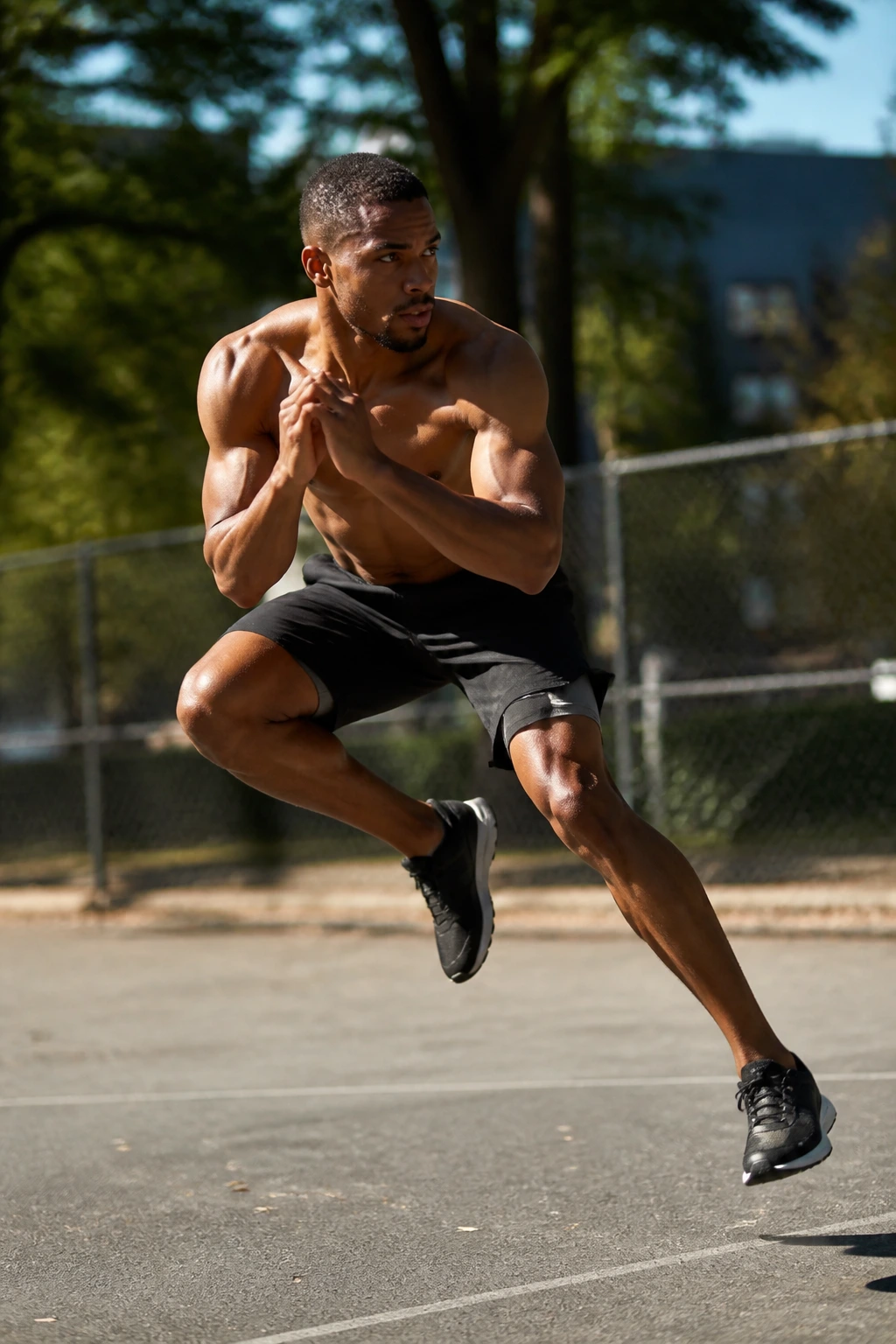
Skater jumps are the king of lateral power. You jump from one foot to the other in a sweeping motion, mimicking a speed skater. This variation builds significant strength in the gluteus medius, the muscle responsible for hip stability.
The Lateral Mechanism
Start on your right leg. Load your hip, then push laterally to the left, landing on your left leg. You should travel horizontally, not vertically. The goal is to cover as much distance to the side as possible, sticking the landing on the outside edge of your foot.
- Keep your back flat as you reach across your body.
- Use your trailing leg to help balance but try to put the majority of the weight on the landing leg.
- Make the jump smooth and continuous.
This movement teaches you to control force in the frontal plane, which is often ignored in traditional sagittal plane leg training like squats and deadlifts.
12. Form-Correcting Prisoner Squat Jumps
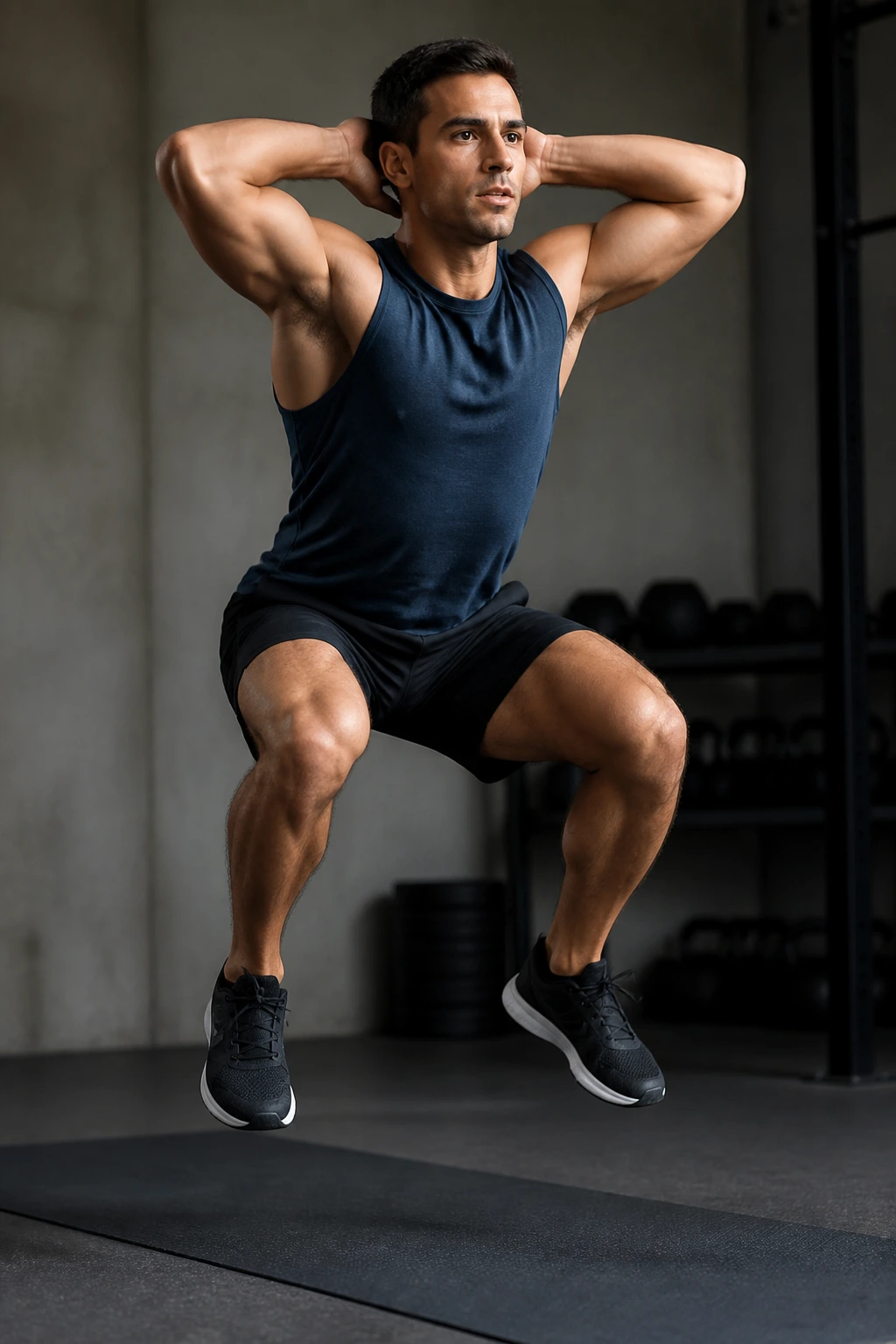
Prisoner squat jumps are named for the hand position: interlaced behind your head. By removing the arm swing, you force your legs and core to do 100% of the work. You cannot use the momentum of your arms to generate vertical lift.
Why This Matters
If you are a “cheater” who relies heavily on arm swing to compensate for weak legs, this will be a humbling experience. It isolates the lower body entirely. Because your hands are behind your head, you are also forced to keep your chest up and your spine neutral. If you lean forward, your hands behind your head will feel awkward and unnatural.
It is a fantastic drill for anyone looking to fix their squat form. If you cannot do a prisoner squat jump without your chest falling toward the floor, you need to work on your thoracic mobility and core strength. Keep your elbows back and wide to encourage an upright posture.
13. Transitioning Squat Jump to Plank

This is a technical variation that bridges the gap between plyometric explosiveness and static core stability. You perform a squat jump, land, and immediately drop into a perfect, controlled plank position, holding it for a second before jumping back up.
The Goal of the Combo
The point is to reset your nervous system. By landing from a jump—which is a high-energy, chaotic state—and immediately freezing into a plank, you practice active tension. It forces you to switch from “explosive mode” to “stable mode” instantly.
Ensure you do not collapse into the plank. Your back should be flat, your glutes squeezed, and your core engaged the second your hands touch the ground. This movement is brilliant for athletes who need to be able to make a play and then immediately stabilize for the next action.
14. Advanced Single-Leg Box Squat Jumps
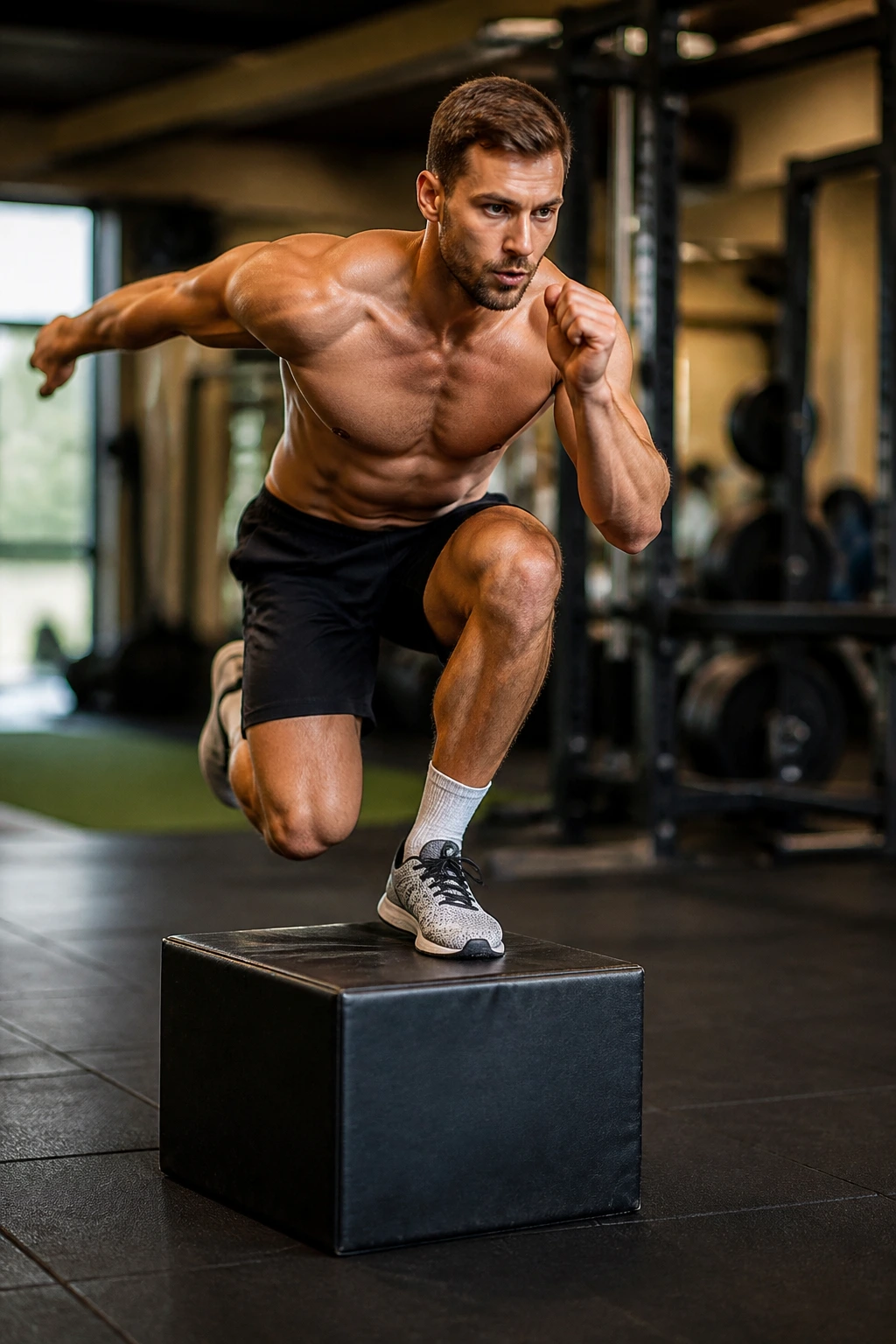
If you want to isolate your legs to the absolute limit, single-leg box jumps are the answer. This is not for beginners. You start standing on one leg, lower into a single-leg squat, and explode onto a box. It requires immense strength, balance, and nerve.
Why This Is Different
When you jump on two legs, you can hide weaknesses. When you jump on one, you cannot. This movement demands that your stabilizer muscles in the ankle, knee, and hip work in harmony. If one muscle group is lagging, the entire jump will fall apart.
Start with a very low box. I mean, very low—a 6-inch platform is plenty for your first sessions. Focus on the landing. You should land with the same leg you jumped off of, and your knee must remain in a stable line over your toes. If you feel shaky, drop the height immediately.
15. Dynamic Lateral Squat Jumps

These are similar to skater jumps but with more vertical emphasis. Instead of a sweeping, lateral motion, you are jumping over an object or an imaginary line. It is a series of rapid, rhythmic hops.
The Rhythm of the Jump
The goal here is minimal ground contact time. You want to spend as little time on the floor as possible. As soon as your feet touch, they should be pushing back off into the next jump. It is a test of reactive strength.
- Keep the jumps small.
- Focus on the bounce, not the height.
- Keep your torso quiet and stable; your legs do all the moving.
This variation is excellent for building “bouncy” legs that are quick to react. It mimics the kind of footwork needed in agility sports.
16. Reactive Depth Squat Jumps
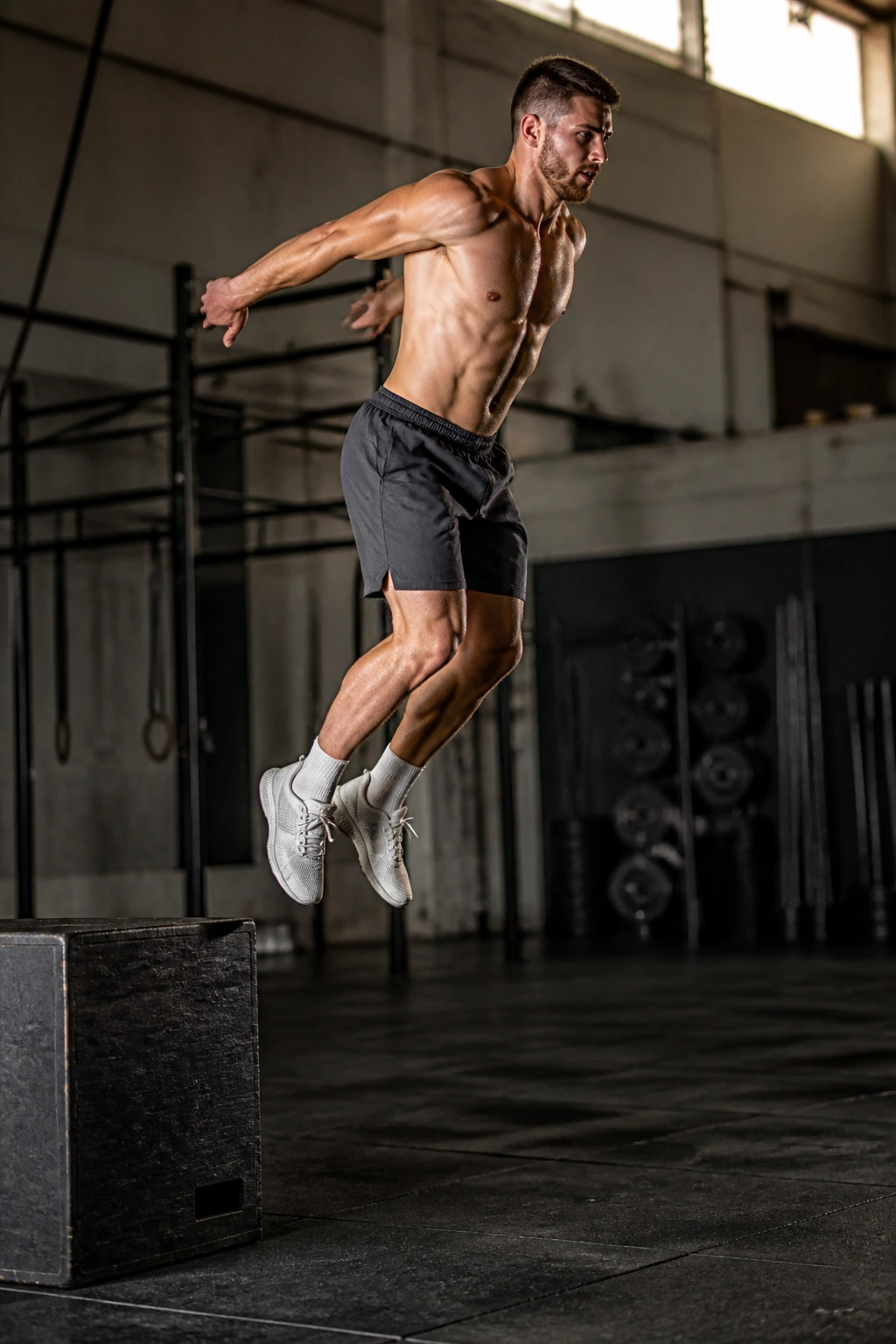
Depth jumps are the pinnacle of plyometric intensity. You step off a low box, and the instant your feet hit the floor, you explode into a maximum-height vertical jump. This is known as the “shock method.”
Understanding the Mechanism
The purpose of the box drop is to provide a pre-stretch to your muscles—a significant amount of eccentric force that your muscles must absorb and immediately turn into concentric force. It is incredibly taxing on the central nervous system.
Do not do these for high repetitions. 3 to 5 reps per set is sufficient. The focus must be on maximizing the height of the jump and minimizing the time spent on the floor during the transition. If you are sluggish on the floor, you are missing the point. You want to be a coiled spring that releases instantly.
17. Time-Under-Tension Pulse Squat Jumps

This is a hybrid movement. You perform a squat jump, but instead of jumping, you pulse at the bottom for three seconds, then explode up. This forces your muscles to work from a dead stop in a deep, fatigued state.
Why Pulsing Changes Everything
Normally, a jump relies on the stretch-shortening cycle—the elastic recoil of your tendons. By holding a pulse at the bottom, you dissipate that elastic energy, forcing your muscles to generate force purely through contraction. It makes the jump significantly harder.
It is a fantastic tool for building dense muscle. The added time under tension recruits more muscle fibers. When you finally do explode upward, you will find you have to work twice as hard to get the same amount of height as a standard jump. It builds raw, grinding power.
18. Dead-Start Kneeling Squat Jumps

We finish with a variation that requires absolute, raw explosiveness. You start on your knees, sit back onto your heels, and explode from that position into a standing squat jump. It eliminates the momentum of the descent entirely.
The Dead-Start Challenge
This forces your glutes and hamstrings to engage from a position where they have zero mechanical advantage. You are training the “first step” power. If you can jump well from a dead-start kneeling position, your ability to start moving from a standstill in any sport will improve drastically.
Swing your arms violently to generate momentum as you drive your hips forward. Your goal is to land on your feet in a squat position. If you find yourself falling forward or landing on your knees, work on your hip extension speed. It is a challenging movement, but it is one of the best ways to test your true explosive power.
Final Thoughts
Building stronger, more powerful legs requires you to step outside the comfort zone of traditional sets and reps. While back squats and lunges build the structure, explosive jumping variations provide the function. They teach your body to operate as a singular, unified force.
The key to progress is not how high you can jump, but how consistently you can maintain your form under the stress of these movements. Start with the basics, respect the mechanics of the landing, and always prioritize the quality of your movement over the raw output. Over time, these variations will create a level of lower-body athleticism that heavy lifting alone simply cannot touch.
