



Most ab workouts at home fail for a boring reason: they chase burn instead of control.
You can feel your stomach shaking and still miss the job of the core. A strong midsection keeps your ribs stacked, helps your pelvis stay steady, and makes everything from carrying groceries to getting off the floor feel less sloppy.
And no, endless crunches do not flatten your stomach by themselves. Ab training and body-fat loss are separate jobs, so the smarter move is to build strength from several angles — bracing, rotation, anti-rotation, flexion, and a little endurance — until your middle works like a unit instead of a loose pile of muscles.
Many women want home core work that’s quiet, short, and not a circus of equipment. That’s fair. You can do a lot with a mat, a wall, and ten focused minutes if you choose moves that ask the right question of your trunk.
If your lower back arches during floor work, start with the exercises that teach position first. The flashier stuff can wait.
1. Dead Bug for Deep Core Control
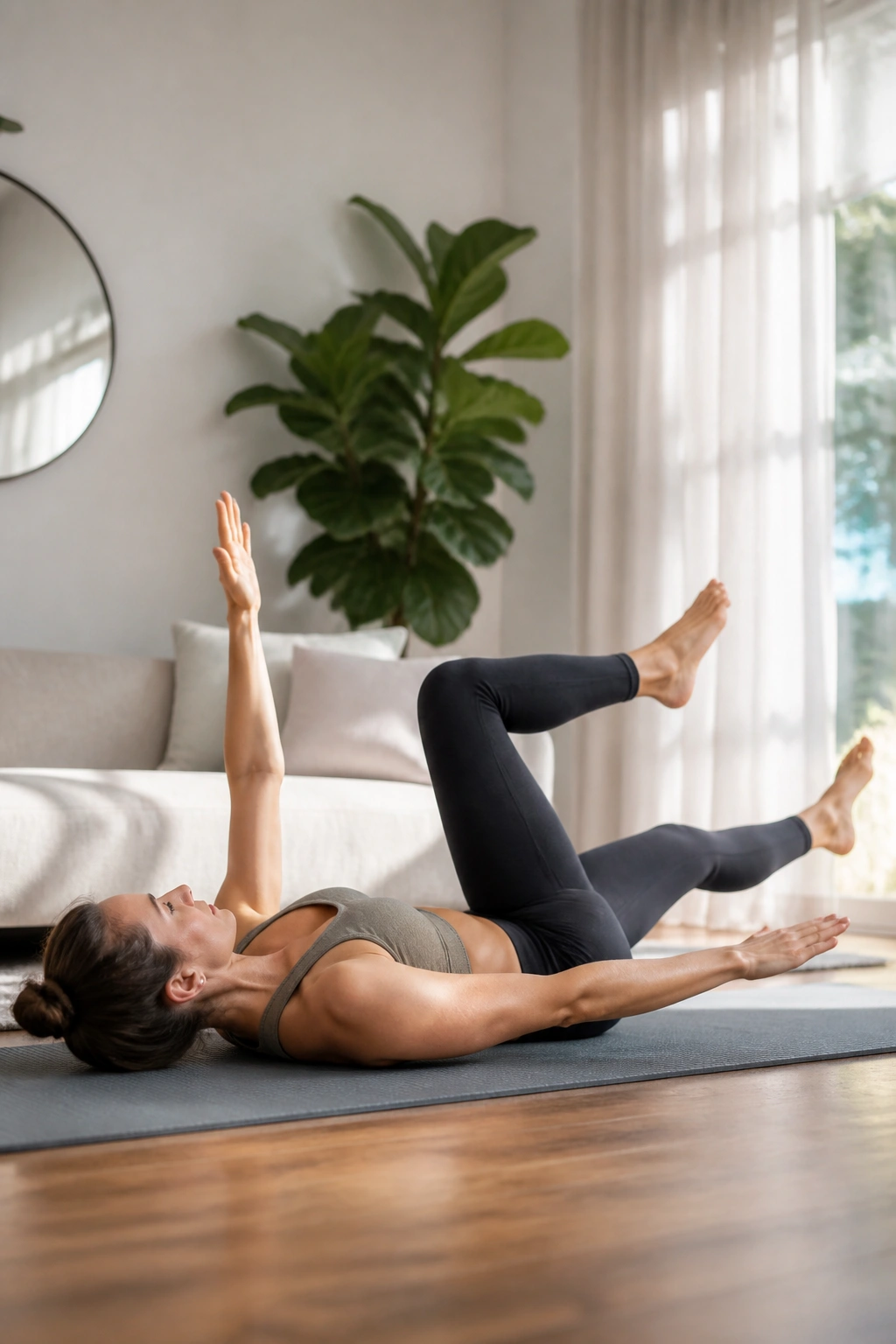
Dead bugs are the move I trust when someone says, “My abs never seem to turn on.” That usually means the body is stealing the work from the hip flexors and lower back.
Why It Works
You lie on your back, press your lower ribs down, and move the opposite arm and leg away from the center without losing that brace. The challenge is not speed. It’s staying still where you need stillness.
Do 6 to 10 reps per side, moving slowly enough that your lower back stays heavy on the mat. If that back starts to arch, shorten the range right away.
- Exhale as the arm and leg extend.
- Keep the bent knee over the hip.
- Move like you are balancing a glass of water on your stomach.
Tip: If the full version feels shaky, keep both knees bent and tap one heel out at a time. That still teaches control.
2. Forearm Plank Holds That Teach a Hard Brace
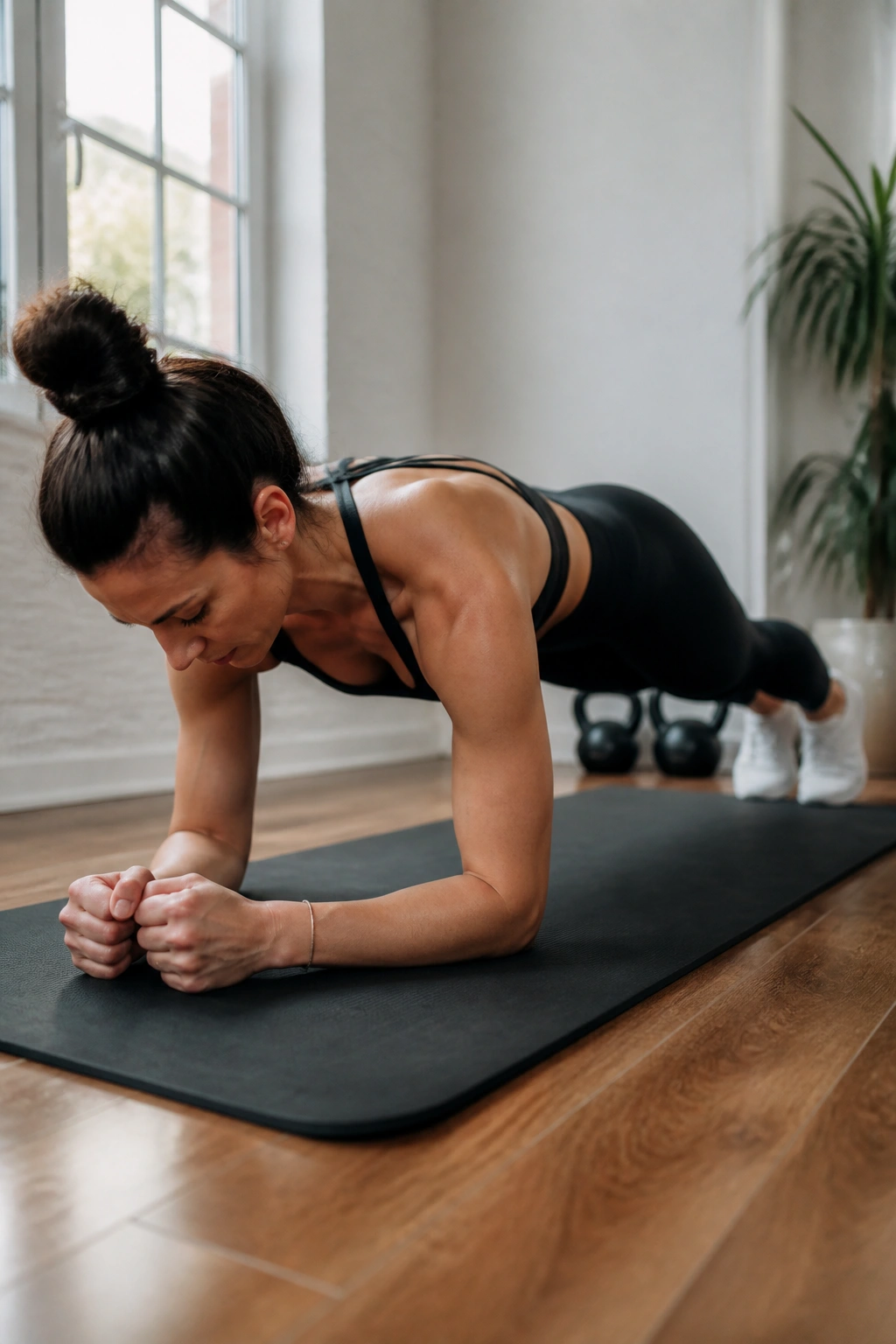
A forearm plank looks dull. That’s the point.
The real work happens when you stop treating it like a survival contest and start treating it like practice for your brace. Squeeze the glutes, pull the ribs down, and press the floor away with your forearms. Your body should look long and calm, not saggy in the middle.
Hold for 20 to 40 seconds, rest, and repeat 3 to 5 times. If your lower back dips or your shoulders creep toward your ears, the set is over. Don’t bargain with bad form.
A plank done well is short and honest. A plank done badly is just a long way to irritate your back.
3. Reverse Crunches That Curl the Pelvis
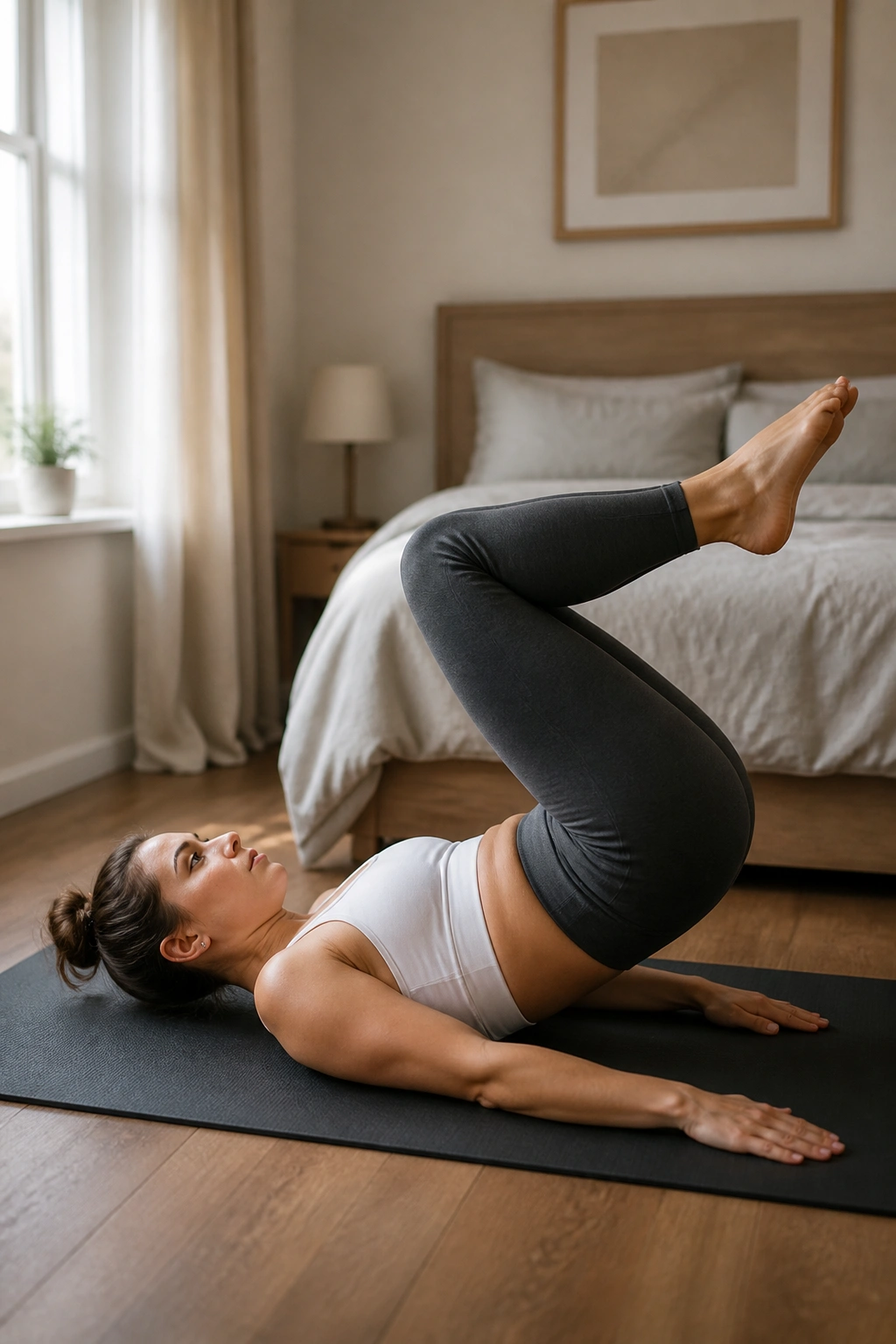
Why do reverse crunches feel so different from sit-ups? Because they ask the pelvis to roll instead of asking the neck to yank your torso up.
Lie on your back, bend your knees, and draw them toward your chest with control. At the top, think about curling your tailbone off the floor by an inch or two. That tiny lift matters more than swinging your legs overhead.
How to Do Them Cleanly
- Keep the knees bent at about 90 degrees.
- Exhale as the pelvis lifts.
- Lower slowly for 2 to 3 seconds.
- Stop before your lower back starts to arch.
Use 8 to 15 reps for 2 to 4 sets. If you feel it mostly in the front of the hips, slow down and make the motion smaller. Reverse crunches reward control. They do not reward drama.
4. Side Plank Hip Dips for the Obliques
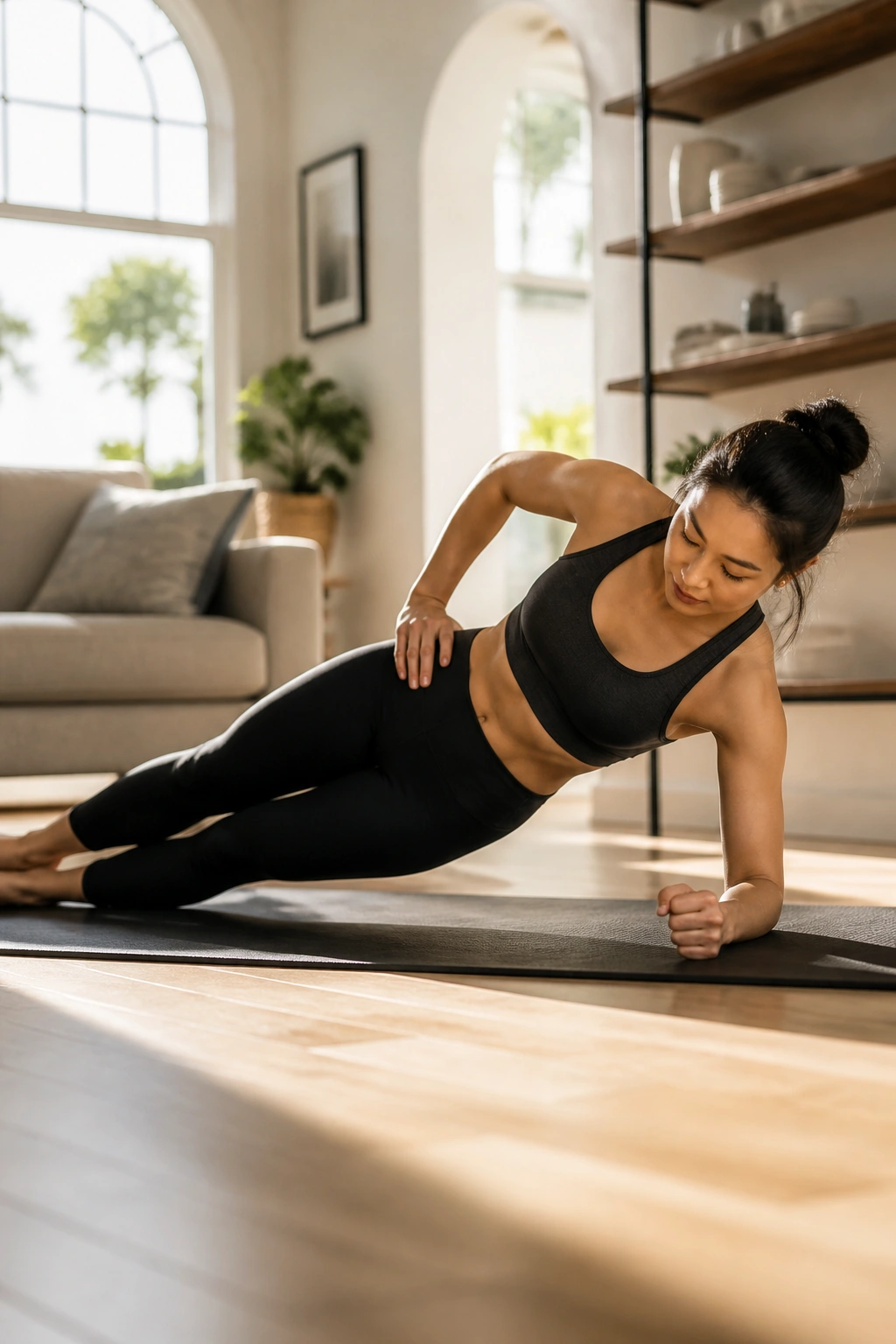
At the end of a long day, side planks feel honest. No cheating. No fancy angle to hide behind.
Your obliques help with side-bending and anti-rotation, which is why this move earns its place in a home core workout. Start from the forearm side plank, then lower the hip a few inches before lifting it back in line with your shoulder and ankle. The lift should feel deliberate, not jerky.
Try 8 to 12 dips per side, or hold the top position for 15 to 30 seconds if that suits you better. A bent-knee version is fine and often smarter when you’re still building strength.
The shoulder works here too. That’s not a flaw. It’s part of the package.
5. Bird Dog Reps for a Steady Midsection
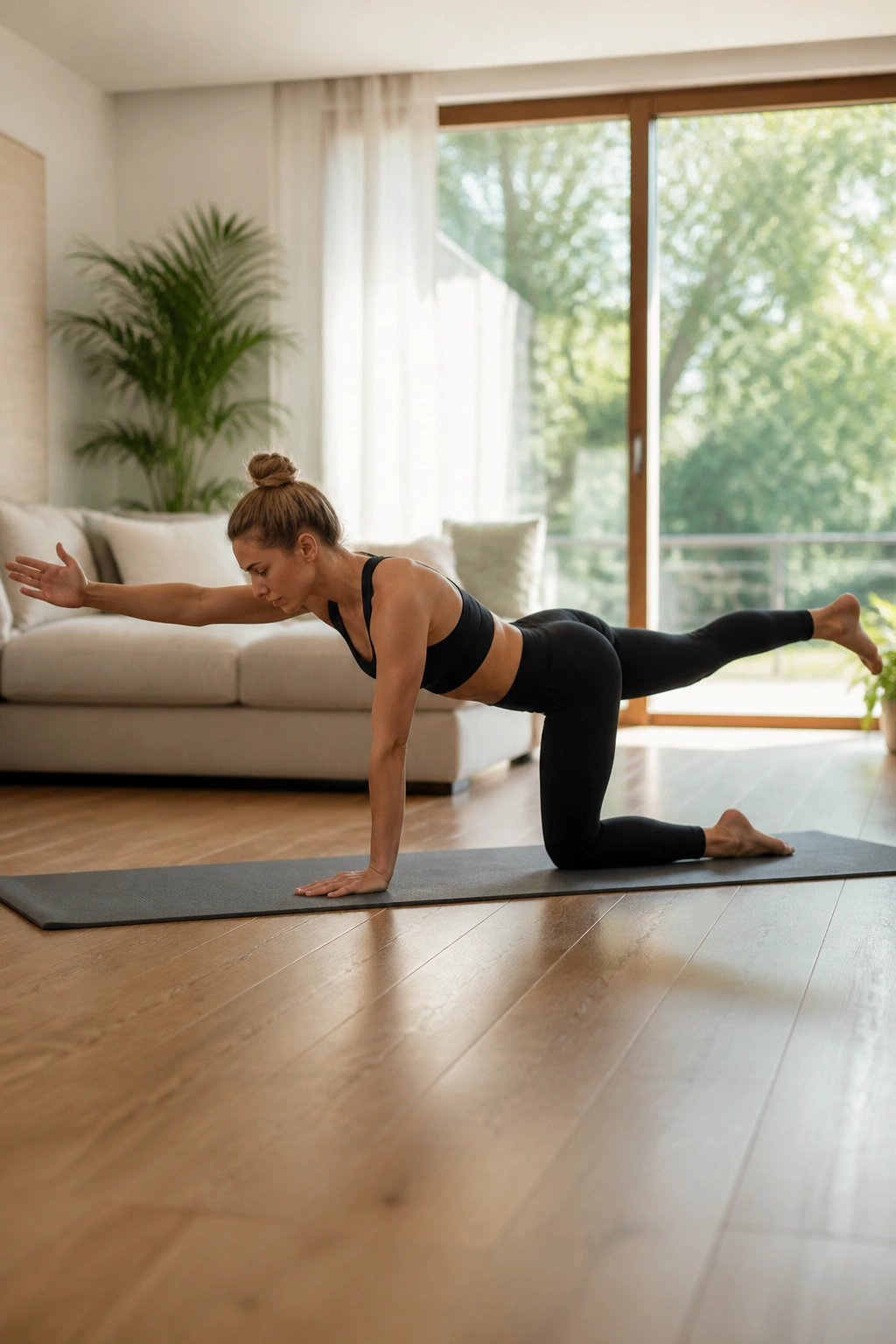
Bird dog is one of those exercises people dismiss because it looks too easy. Then they try it with a real pause and realize their trunk is doing far more than expected.
Start on hands and knees. Reach one arm forward and the opposite leg back, but keep your hips square and your ribs quiet. The goal is not height. A long line from fingertips to heel is enough. Better, actually.
Move for 6 to 10 reps per side, and hold each extension for 2 to 3 seconds. If you rush, the exercise turns into a balancing trick. Slow it down and it becomes a core drill.
One more thing: if your low back feels cranky, bird dog often earns a permanent spot in the routine.
6. Bicycle Crunches Done Slowly
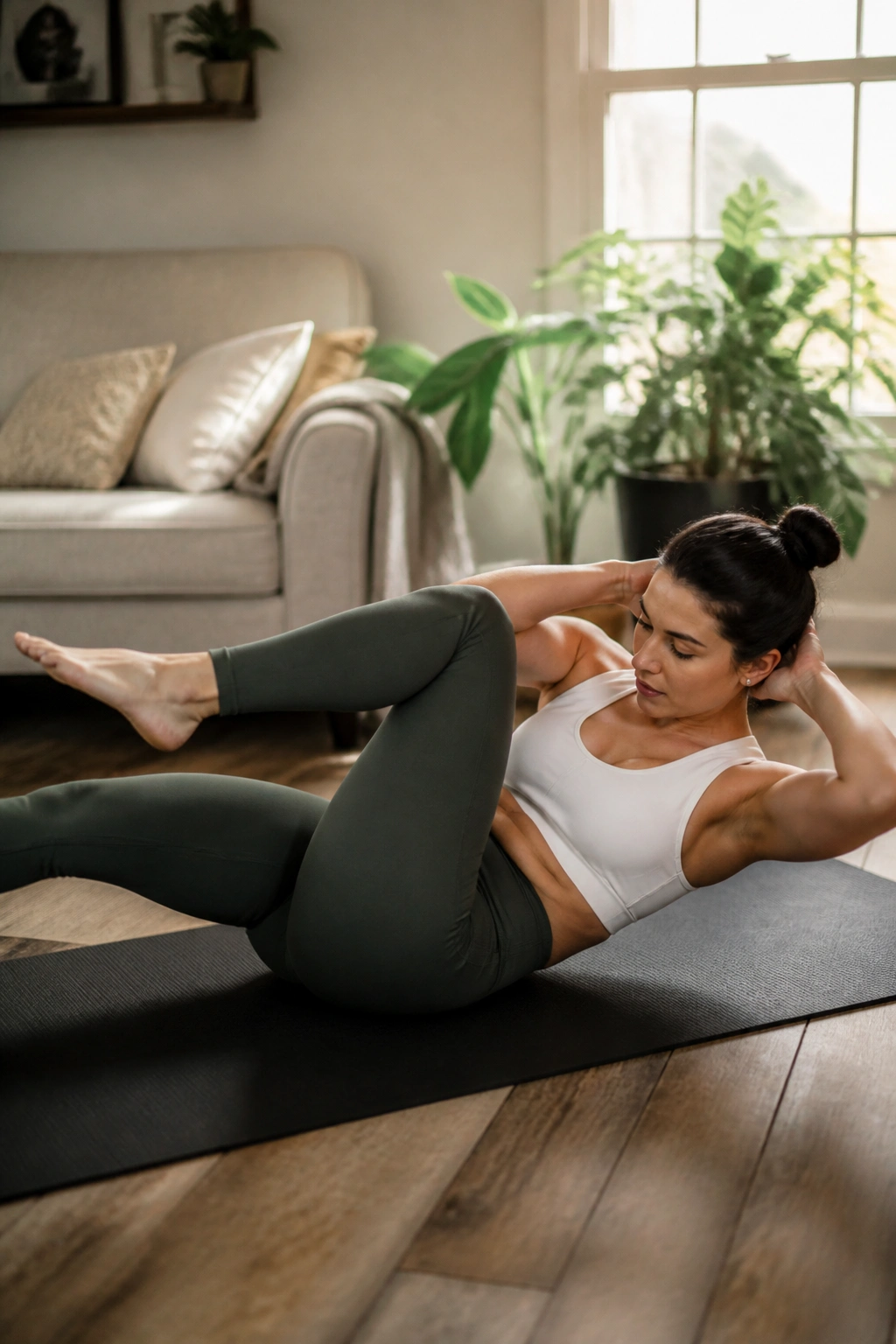
Unlike the frantic version people blast through in gym classes, slow bicycle crunches teach rotation without turning your neck into a victim.
Lie down, keep one knee in, and rotate the opposite elbow toward it while the other leg extends. The secret is not to chase the elbow and knee together. Think rib to hip. Think twist through the middle, not a full-body flop.
Do 10 to 20 controlled reps per side. If your elbows pull on your head, your hands are only there for light support, not leverage. Keep the chin slightly lifted and the eyes up.
This move works best for people who already have some basic core control. If you’re new, do dead bugs and heel taps first, then come back when you can hold position without flailing.
7. Hollow Body Holds for a Stronger Brace
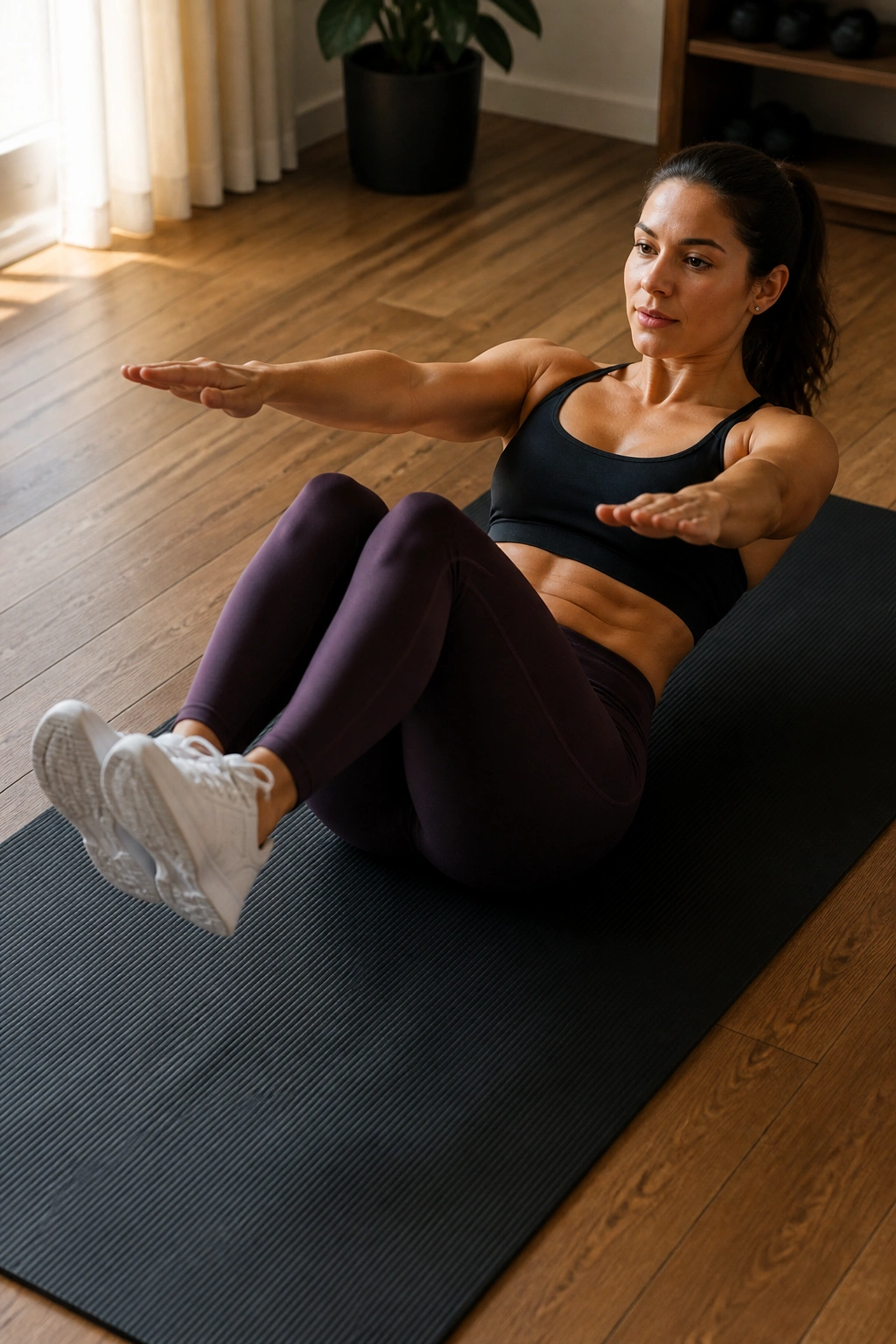
A hollow hold feels simple for about three seconds. Then it gets rude.
You press your lower back into the floor, lift the shoulders, and extend the arms and legs just enough to create tension through the whole front of the body. Gymnasts use this pattern for a reason. It teaches the trunk to stay tight when the limbs are moving far away from center.
Start with the Tuck Version
- Keep the knees bent if the full hold is too hard.
- Lift one leg at a time before both legs.
- Hold for 10 to 20 seconds at first.
- Stop the set the moment your lower back pops off the mat.
That last cue matters. A hollow hold with an arched back is not a hollow hold anymore. It’s a compromise.
8. Heel Taps for Gentle Lower-Ab Work
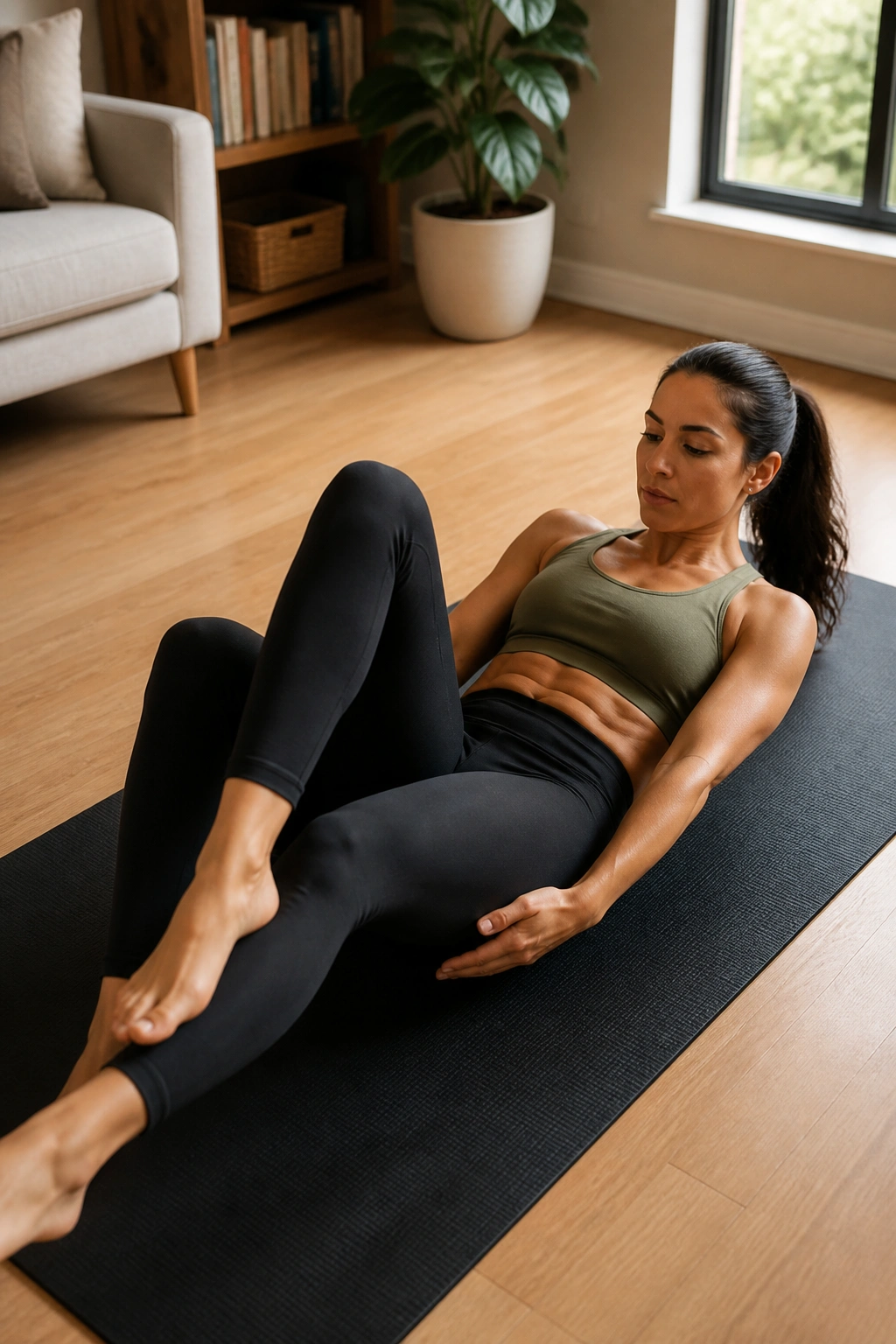
Heel taps are one of the nicest ways to train the front of the core without making the session feel like punishment.
Lie on your back with knees bent over the hips. Lower one heel toward the floor, tap lightly, then bring it back and switch sides. The core’s job is to keep the pelvis from tipping around while the legs move.
Use 10 to 20 taps per side, or stop at the point where your ribs start flaring. That’s usually the first sign you’ve lost the brace. A small range is enough.
This is a smart choice if crunches bother your neck or if your back prefers calmer work. Quiet does not mean easy. It just means precise.
9. Mountain Climbers With Core Control
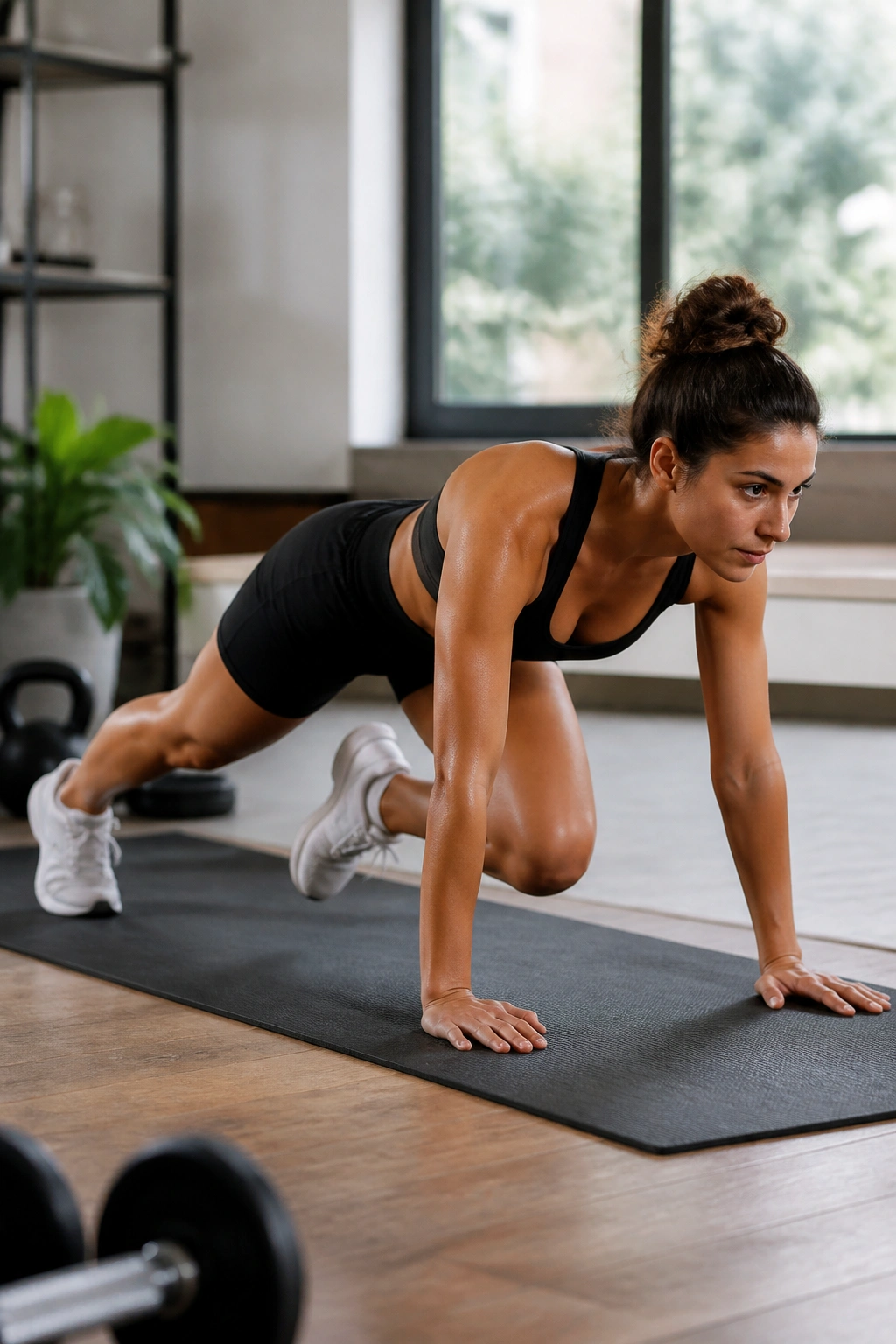
Do mountain climbers count as abs work? Yes, if you stop trying to turn them into a race.
Fast or Slow?
Fast climbers spike the heart rate. Slow climbers expose sloppy hips. Both have a place, but the slow version is the one that teaches the core to hold steady while the legs drive.
Set up in a high plank, bring one knee toward the chest, then switch. Keep the shoulders over the wrists and the hips level. If the pelvis bounces all over the place, widen your feet and shorten the drive.
Try 20 to 40 seconds for 2 to 4 rounds. If you want less impact, step the knees in one at a time instead of hopping. The room stays quieter that way, too.
10. Lying Leg Raises Without Low-Back Arching
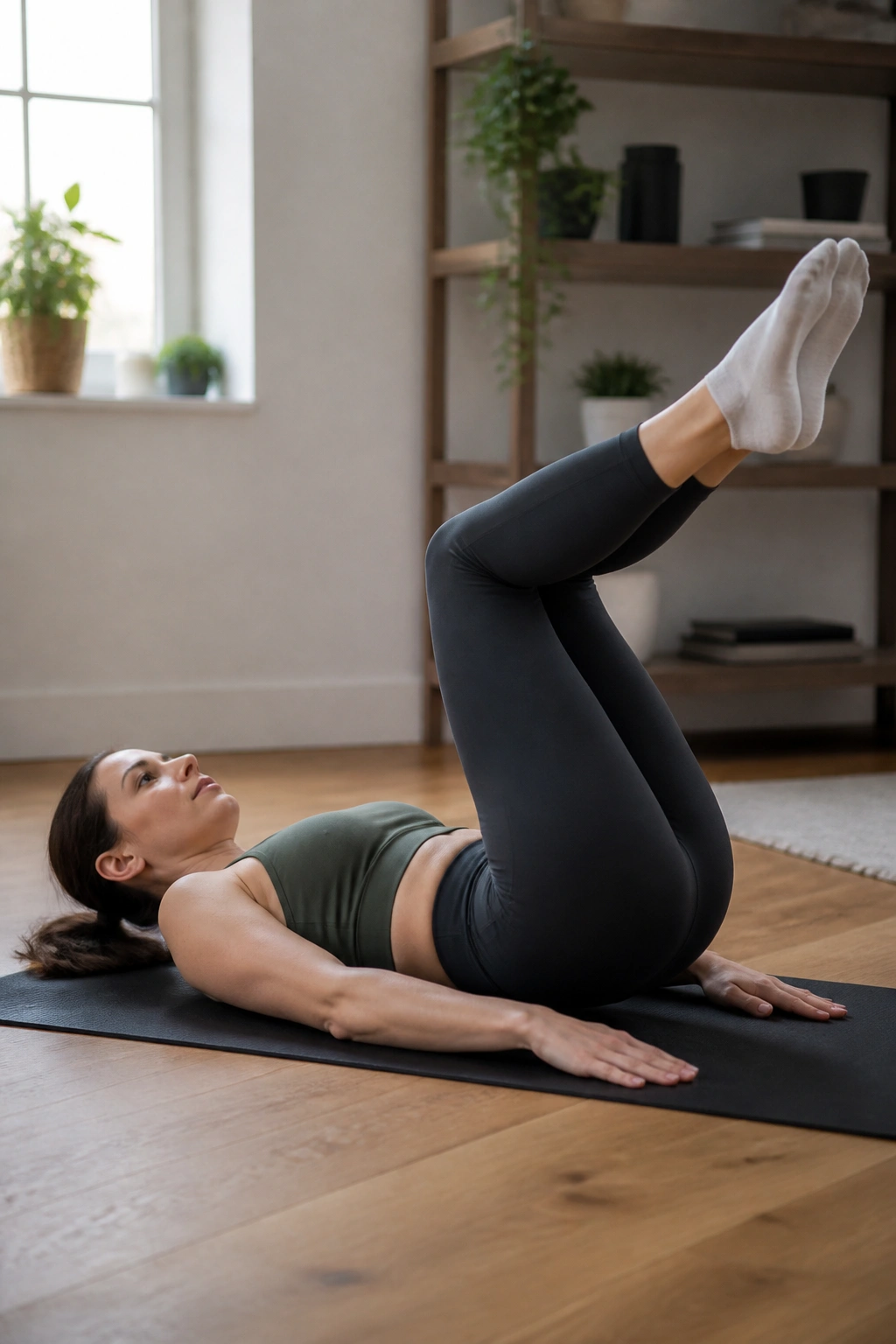
Leg raises are where a lot of home ab workouts get exposed.
The move looks basic, but it asks for a ton of control. Lie flat, press your low back into the floor, and lift both legs as one unit. Lower them only as far as you can while keeping that back glued down. The moment the arch appears, you’ve gone too far.
- Bend the knees if straight legs pull on the back.
- Use a 2 to 3 second lowering phase.
- Stop before the feet touch the floor if that changes your pelvis.
- Keep your hands under your hips only if you need extra feedback.
Eight to 12 reps is enough for most people. More is not always better here. More can just mean your hip flexors took over and your abs watched from the sidelines.
11. V-Ups for an Advanced Floor Burn
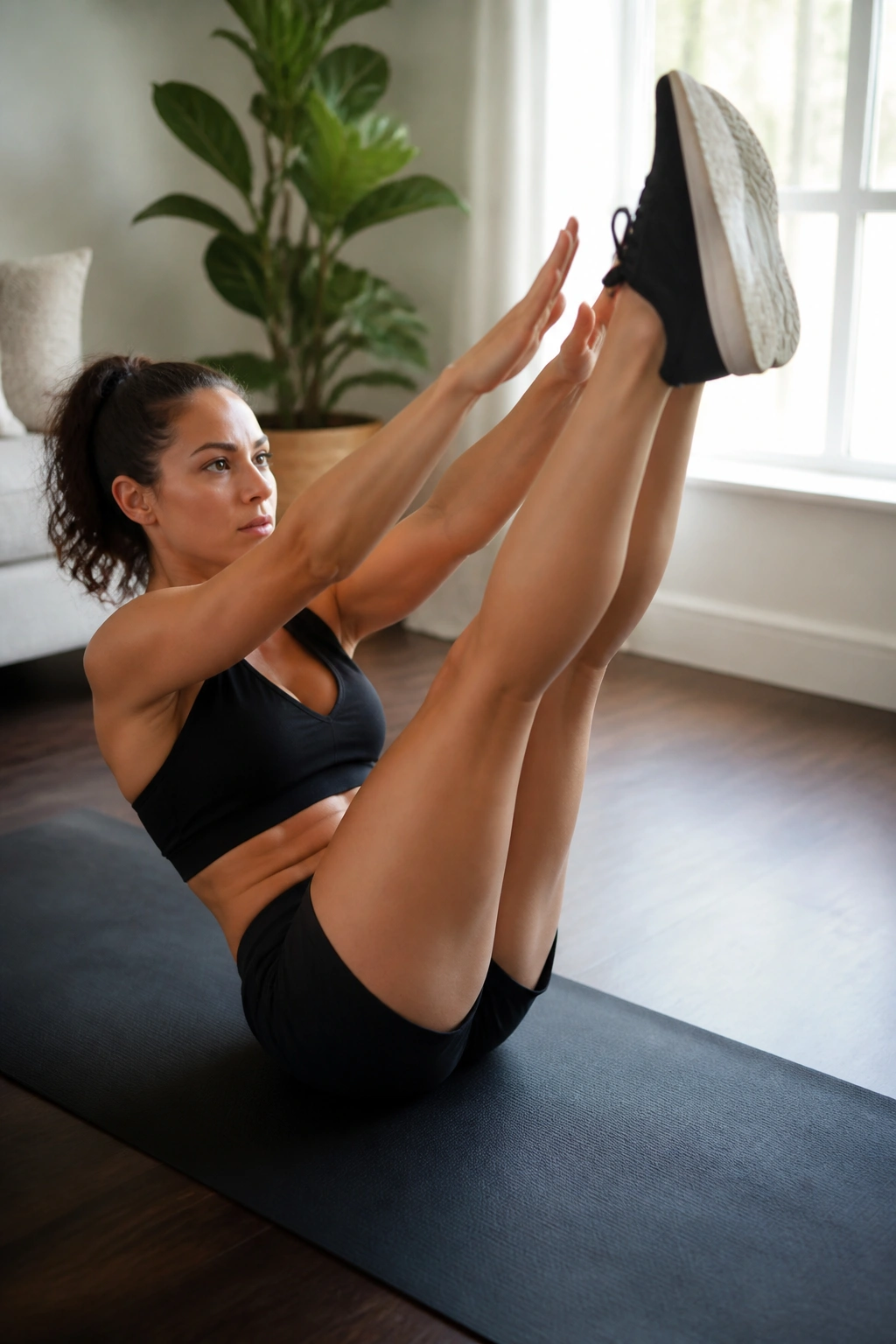
I like V-ups because they expose every cheat. You can’t hide much in this one.
From a flat position, lift your upper body and legs at the same time, reaching the hands toward the toes. The motion is short and sharp. If you’re throwing momentum around, the exercise loses its point fast.
Start with 6 to 10 reps, and use a bent-knee tuck-up if the straight-leg version is too much. That scaled version still challenges the front of the core without turning the set into a lower-back protest.
This is not a beginner move, and I wouldn’t pretend otherwise. Earn it. Then use it.
12. Russian Twists for Controlled Rotation
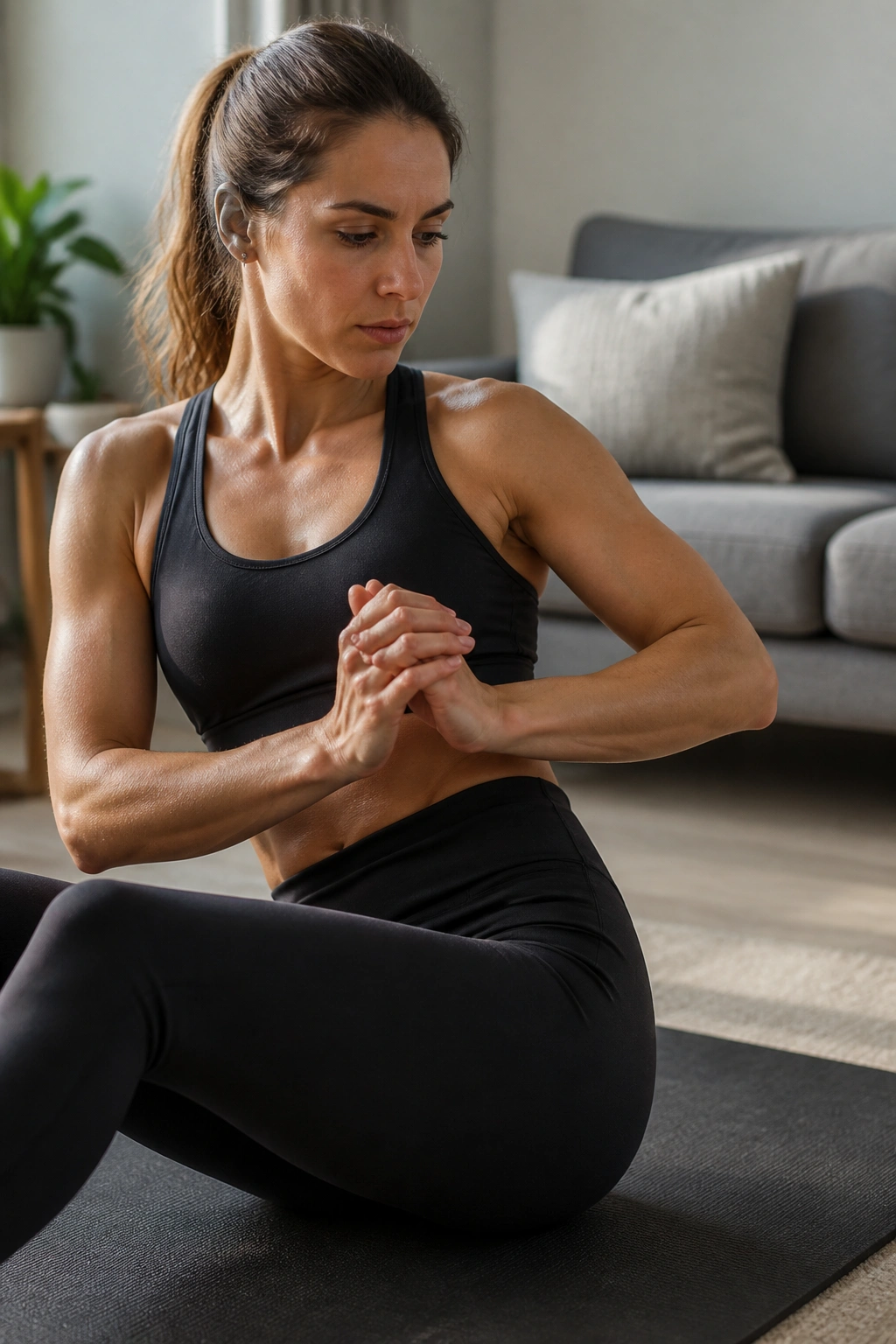
Russian twists are useful when the torso does the twisting, not when the arms just fling a dumbbell from side to side.
Sit with your chest tall, lean back a little, and rotate the ribs to each side. Keep the movement measured. Feet can stay down if you need more stability, and that’s often the better choice for real core work anyway.
What Makes Them Worth Doing
The obliques love rotation, but they also need control. Russian twists train both if you keep the range moderate and the spine long. If you round forward, the stress shifts to the low back and the whole thing gets messy.
Aim for 16 to 24 total turns. No rush. The slower version usually feels harder after the first few reps, which is usually a sign you’ve found the right load.
13. Plank Shoulder Taps to Stop Hip Sway
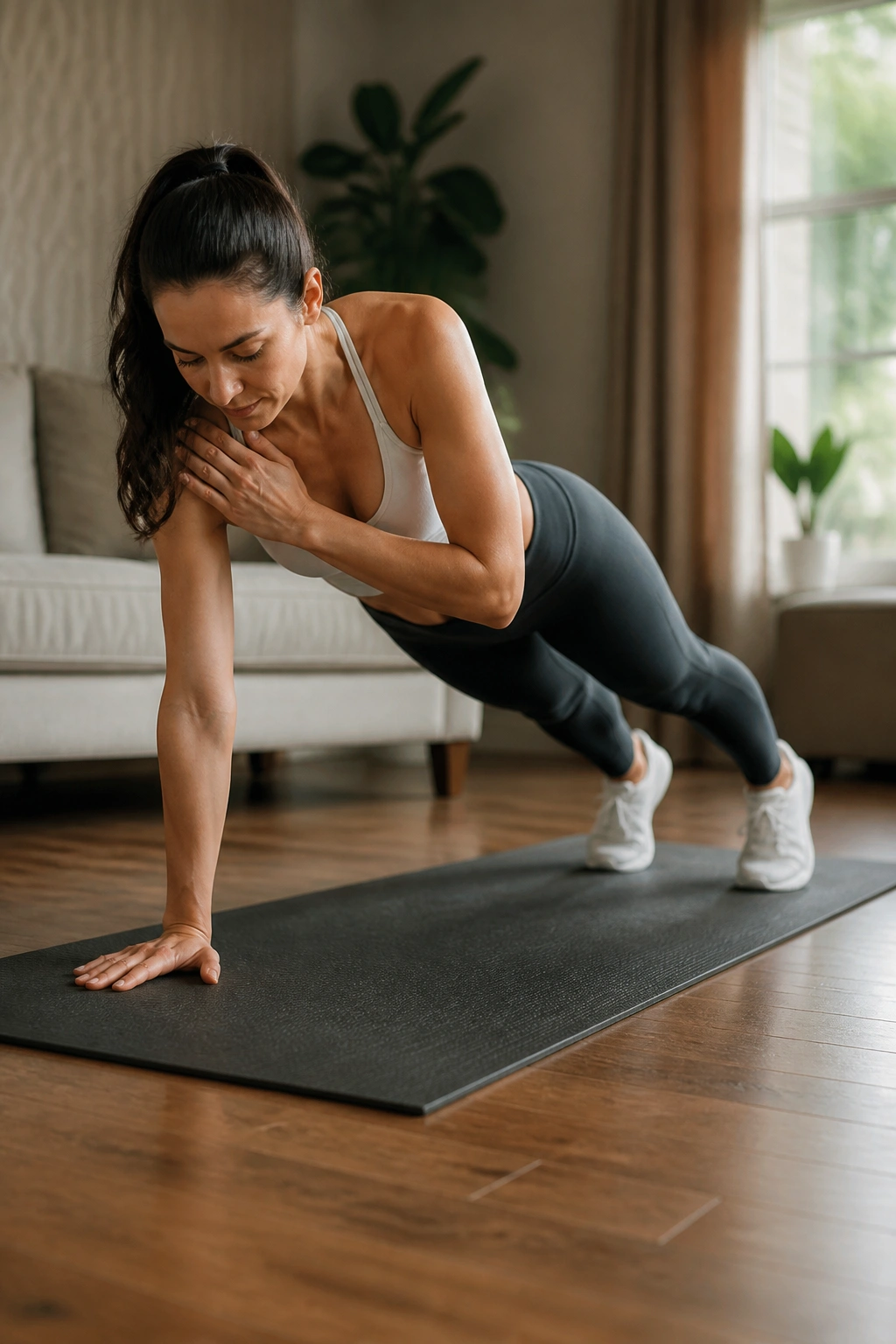
A plank without movement tests hold strength. Shoulder taps test hold strength while your body is annoyed by one-arm support.
How to Keep It Clean
Get into a high plank with feet a little wider than hip-width. Tap one shoulder with the opposite hand, then switch. The trick is to keep the hips as quiet as possible. If they rock side to side like a boat in choppy water, widen the stance more.
Use 10 to 20 taps total, or do 15 to 30 seconds. Slow taps beat fast slaps every time. Fast taps just create noise and bad habits.
This one is sneaky. It looks like an upper-body drill, but the core has to clamp down hard to stop rotation.
14. Toe Touch Crunches for Short, Sharp Reps
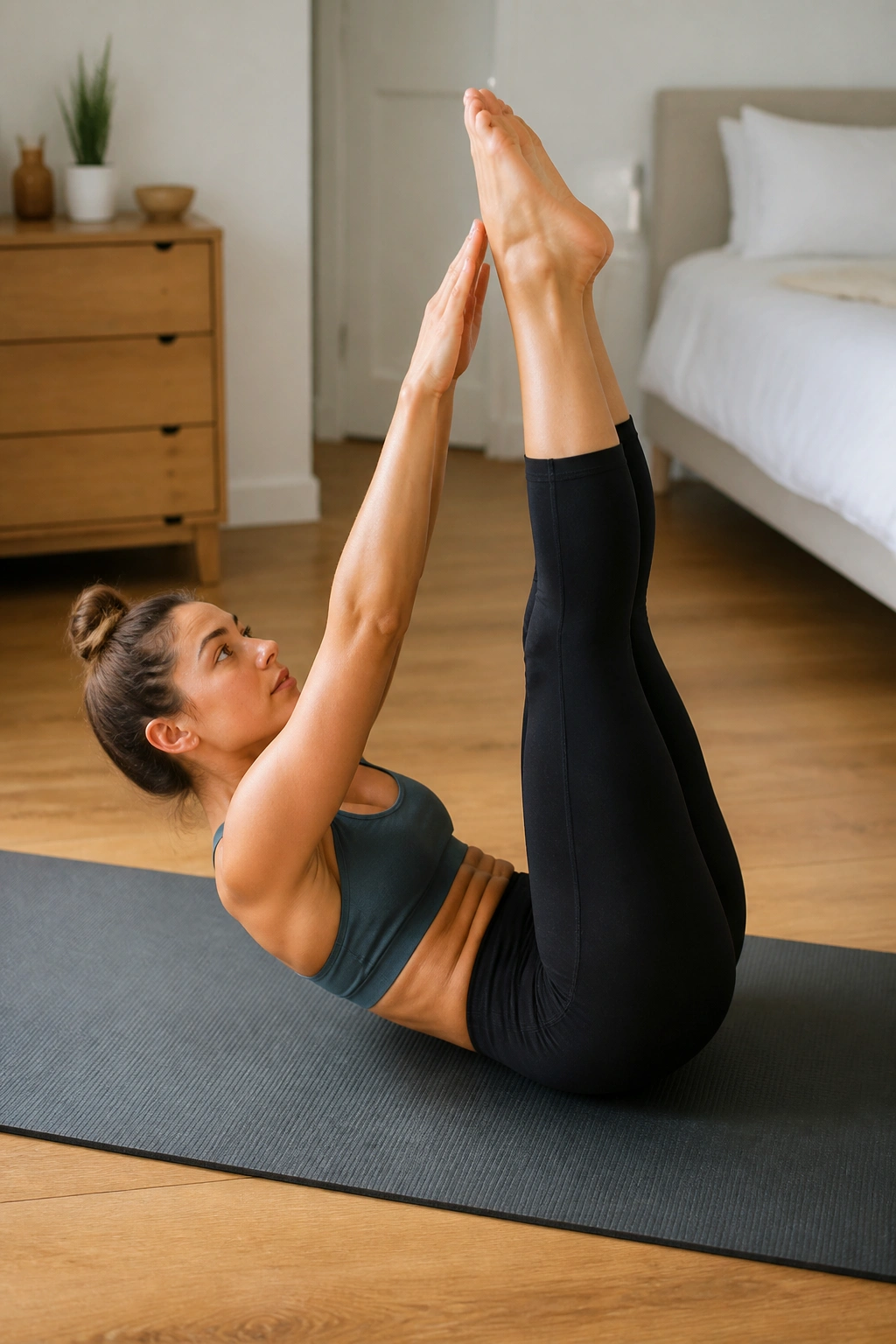
Toe touch crunches are a blunt little exercise. Straightforward. No mystery.
Lie on your back, lift the legs toward the ceiling, and reach toward the toes with a small curl of the upper body. The crunch should come from the ribs folding toward the pelvis, not from swinging the arms. Keep the neck long and the chin off the chest.
Do 10 to 15 reps and stop before the motion turns into a yank. If your hamstrings are tight, a slight bend in the knees is fine. That small adjustment often makes the whole thing cleaner.
I prefer toe touch crunches when I want a quick set that still forces precision. They are not fancy. They work because they make cheating obvious.
15. Glute Bridge Marches for Pelvic Stability
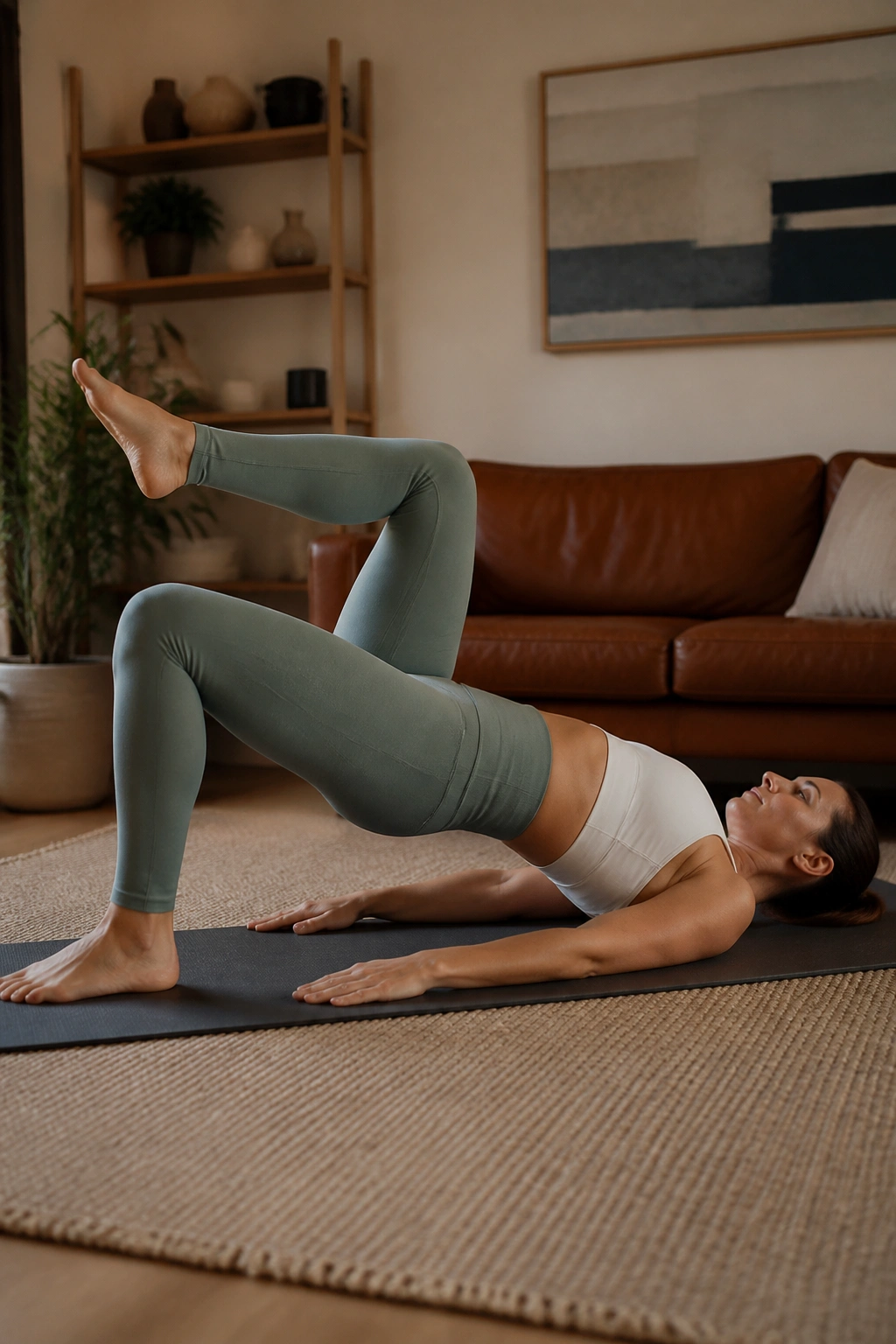
Why put a glute bridge march in an ab list? Because the core does not work alone, and pretending it does is how people end up with weak bracing patterns.
Lie on your back, lift into a bridge, and keep the hips level as you march one knee toward the chest. The glutes hold the pelvis steady while the abs stop the torso from tilting. That’s a useful skill, especially if floor crunches don’t agree with your body.
Try 8 to 12 marches per side. If the hips wobble, lower the bridge height a little. The point is not to get high. The point is to stay square.
This move is quiet, joint-friendly, and far more useful than it gets credit for.
16. Standing Cross-Body Knee Drives for No-Floor Training
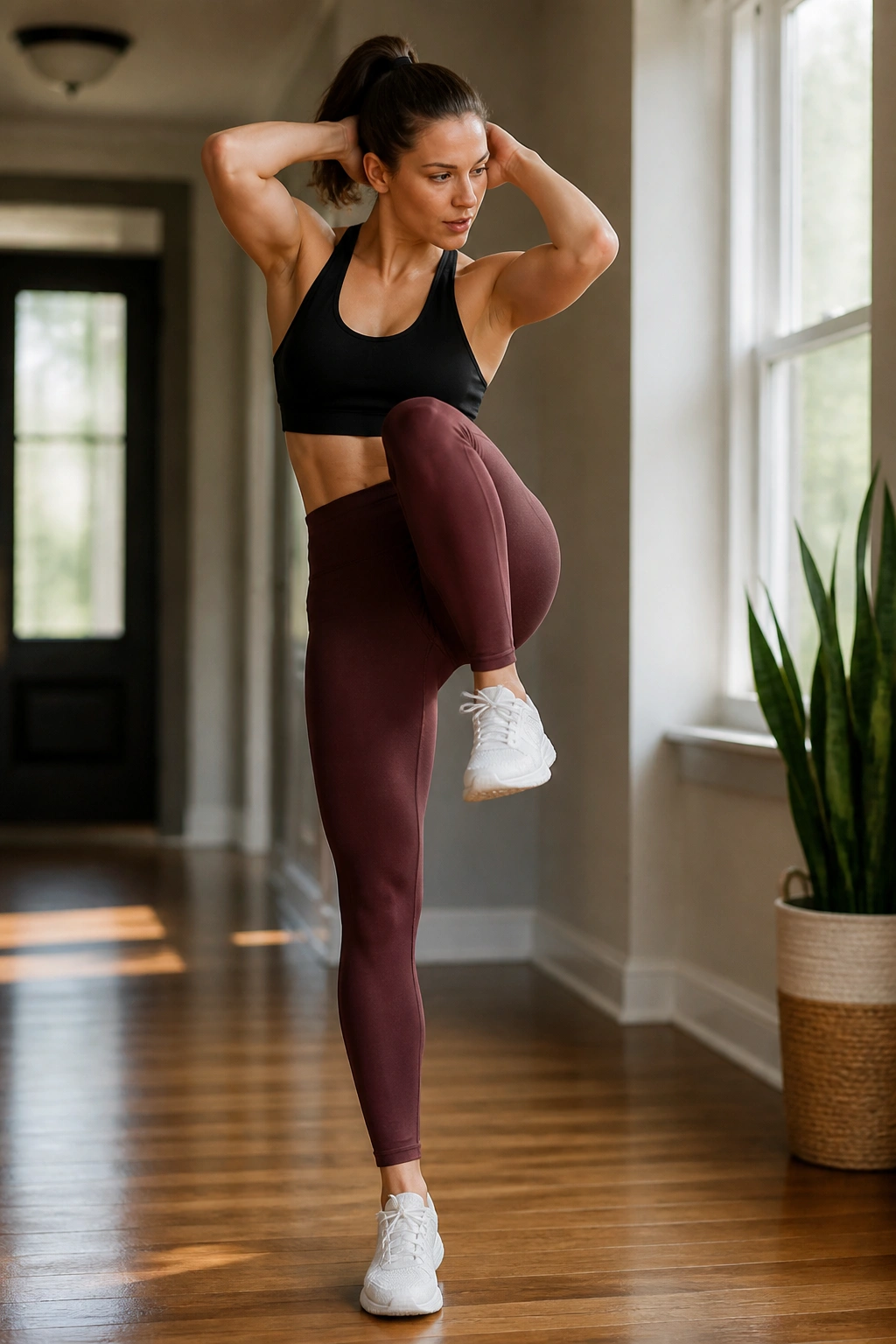
No mat? Good. You still have options.
Standing cross-body knee drives train the core without asking you to get down on the floor, and that makes them perfect for small spaces or noisy mornings. Drive one knee up and across toward the opposite elbow, then return to standing tall before switching sides. The standing leg should feel planted, not wobbly.
Use 12 to 20 reps per side, or 30 to 45 seconds of steady work. Add a brief pause at the top if you want more oblique engagement. That pause changes everything.
This is a fine finisher, but it also works as a warm-up. Your trunk wakes up. Your heart rate climbs a little. No jumping required.
17. Scissor Kicks for a Long, Controlled Hold
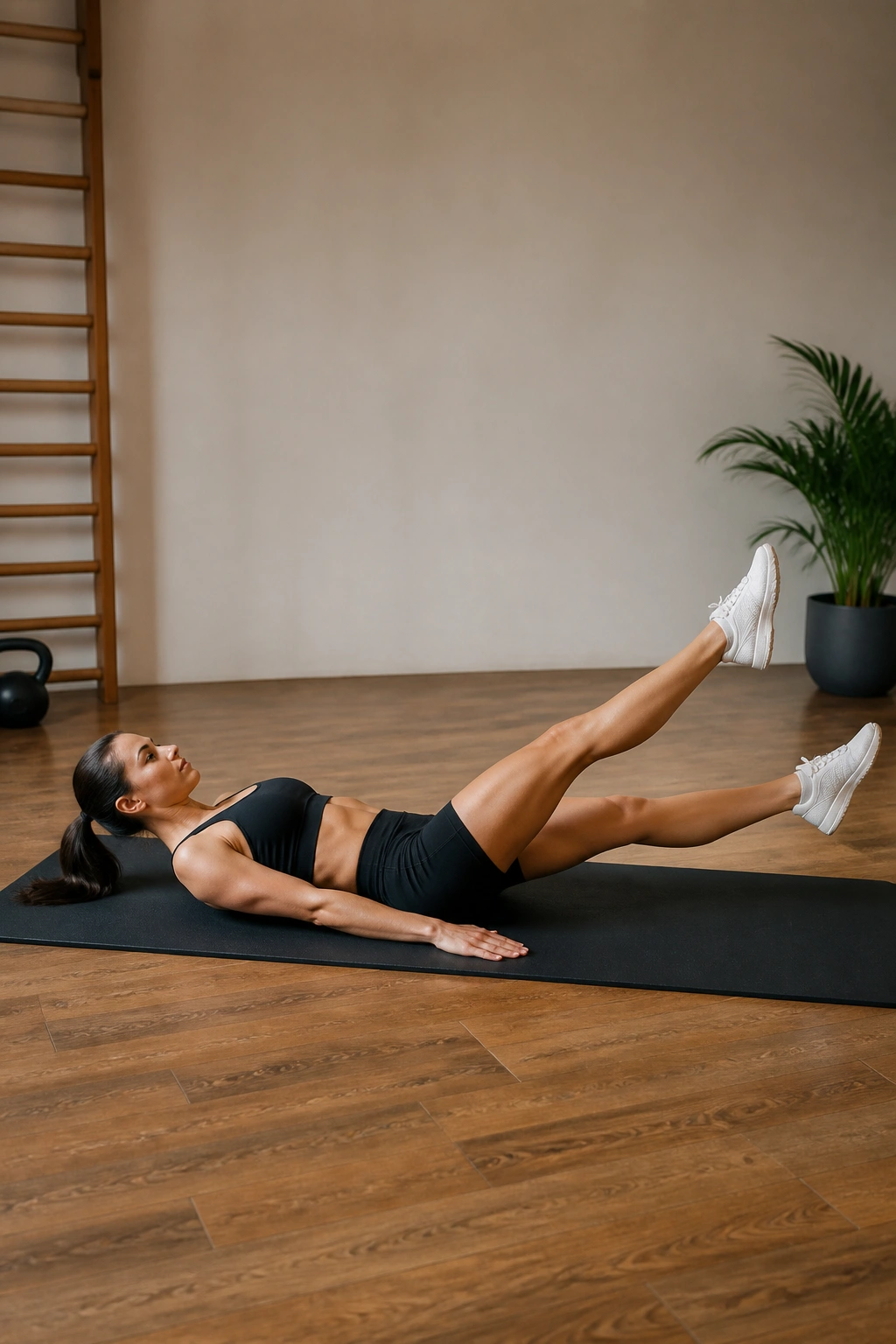
Scissor kicks are all about the burn that creeps in slowly. If you move too fast, you miss the point and usually annoy the hips.
Start on your back, lift both legs a few inches, and alternate them in a controlled up-and-down pattern. Keep the low back pressed into the floor and make the range smaller than you think. Tiny kicks are often the smarter choice.
What to Watch For
- Keep the shoulders relaxed.
- Breathe on the switch, not after.
- Stop if the lower back arches.
- Bend the knees slightly if needed.
Work for 20 to 30 seconds, rest, then repeat. The best version of this exercise feels steady and a little mean. The worst version looks big and does less.
18. Plank Jacks for Core and Cardio
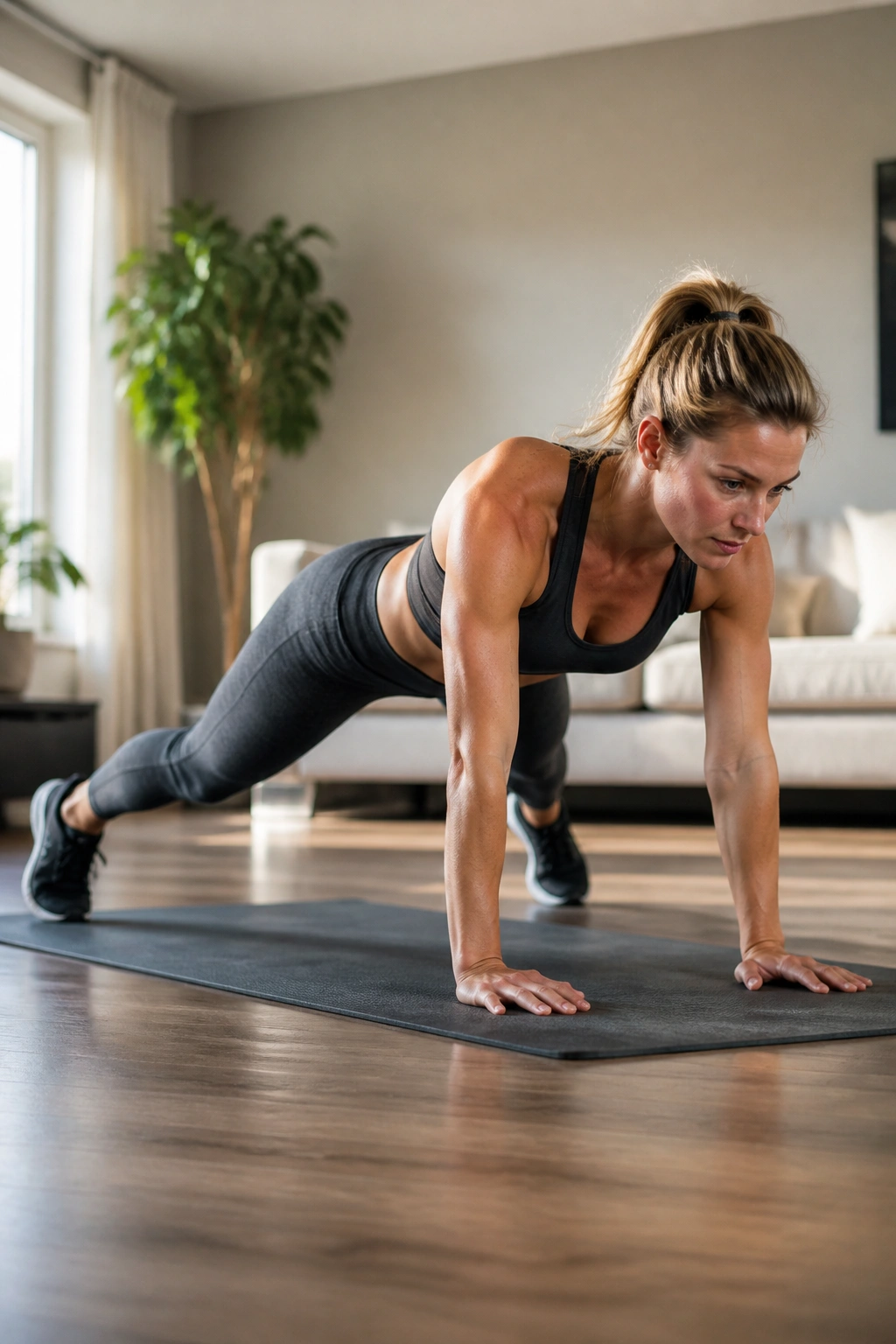
Plank jacks sit somewhere between a strength move and a wake-up call.
From a high plank, jump the feet wide and back together, or step them out one at a time if impact bothers you. The core has to keep the torso from bobbing while the legs move. That makes the exercise more demanding than it looks.
Compared with mountain climbers, plank jacks hit the shoulders a bit harder and can feel more full-body. They’re good when you want a little sweat with your abs work, but they’re not the place to lose form just to keep the pace high.
Try 20 to 30 seconds per round. Quiet version? Step. Fast version? Jump. Both count.
19. Bear Plank Knee Hovers for Deep-Brace Strength
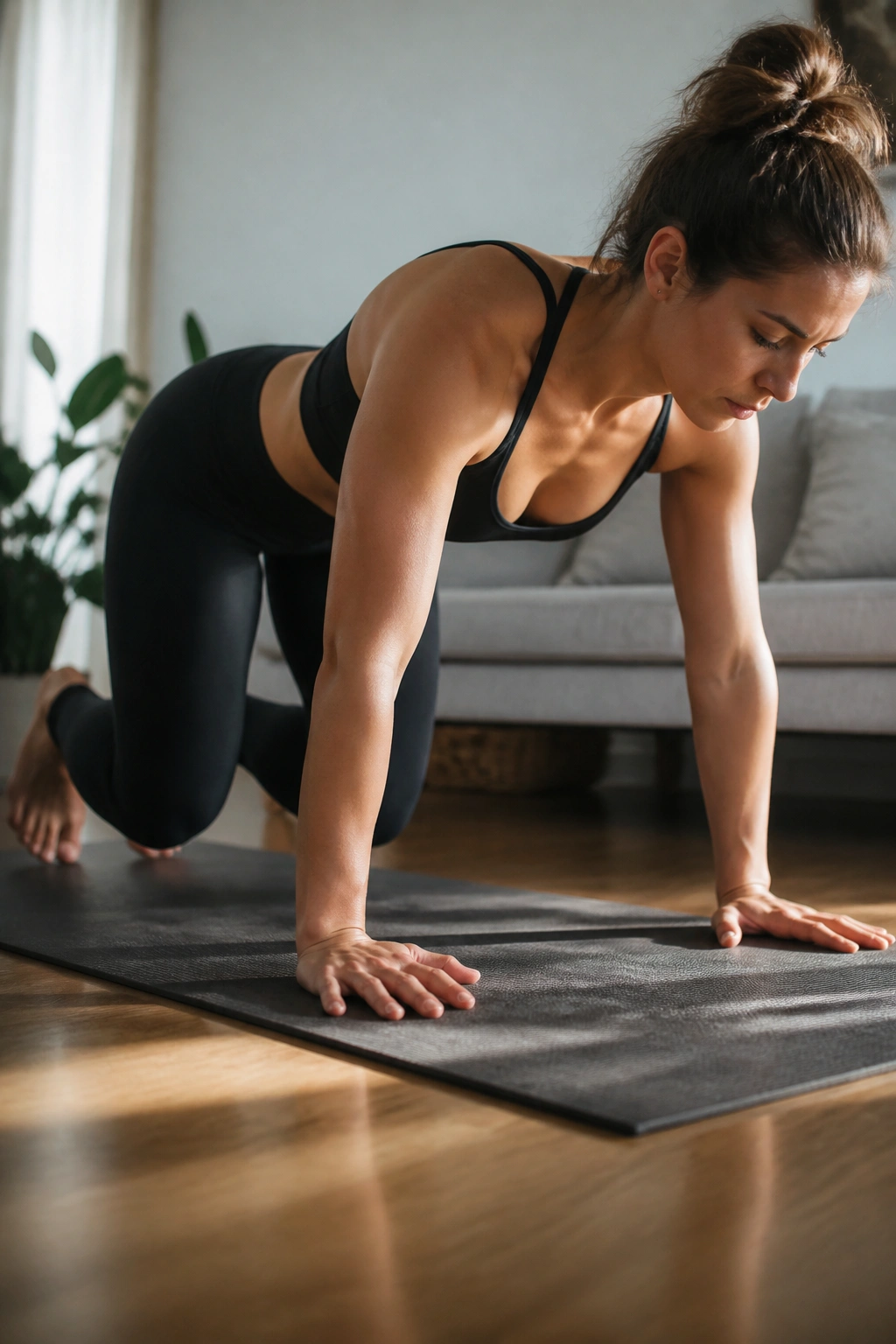
Bear plank knee hovers are one of the best ways to make the core work without leaning on momentum.
How to Make It Work
Start on hands and knees, then lift the knees just 1 to 2 inches off the floor. Keep the spine flat, the ribs down, and the knees under the hips. Hold for 10 to 20 seconds, or rock forward and back a few inches if you want a harder version.
The exercise lights up the front of the core, the shoulders, and the quads. It also shows you fast if your brace is weak. There’s no hiding in this one. If the back sags, the set is done.
Use this on days when straight planks feel stale. It has a different feel, and that matters.
20. Spider-Man Planks for Obliques and Hip Flexors
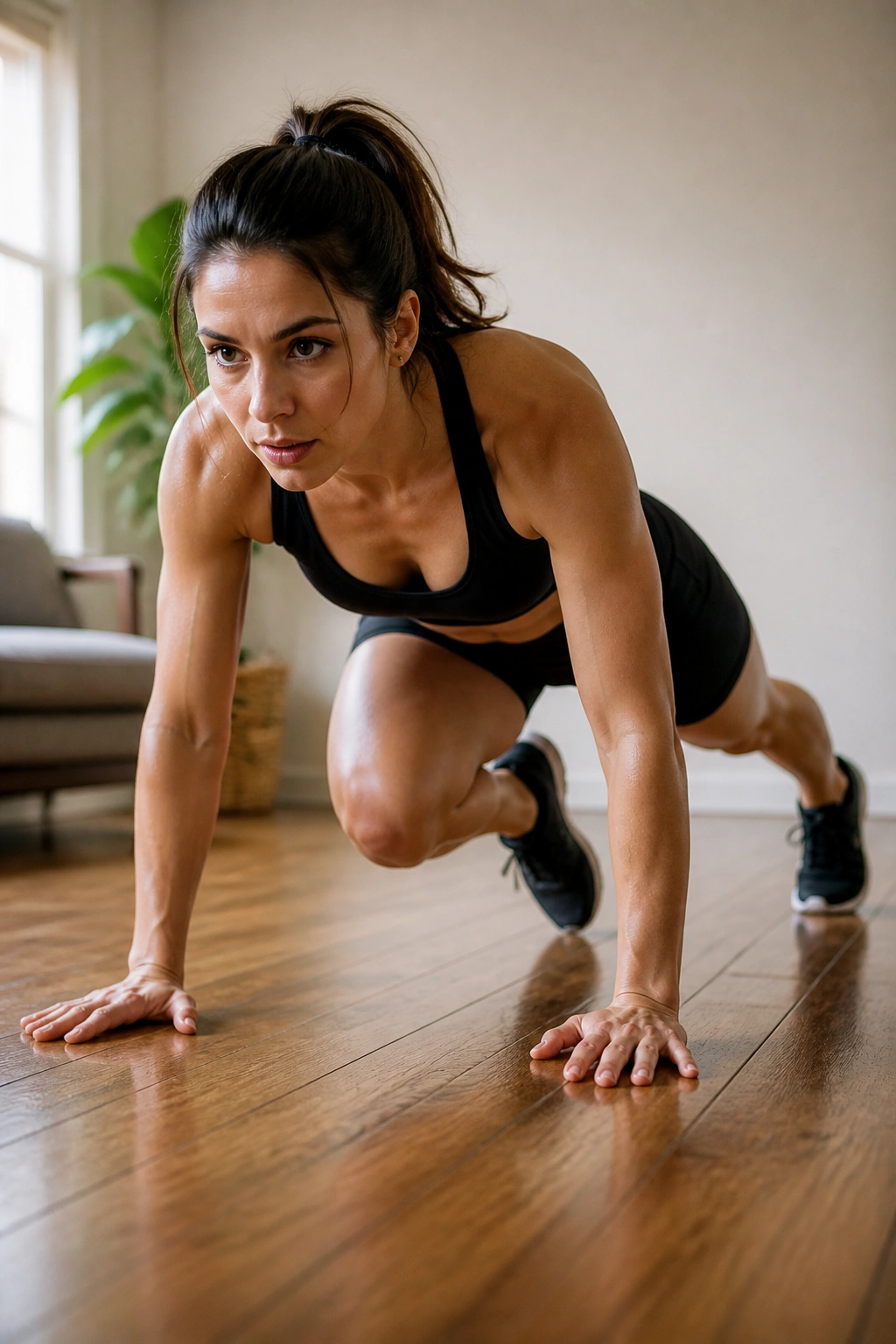
Spider-Man planks are what happen when a plank gets a little more athletic.
From a high plank, drive one knee toward the outside of the same elbow, then return it and switch sides. The side-bending action hits the obliques, while the shoulder stays busy keeping everything from collapsing. Slow is better than slick.
Think about bringing the knee to the elbow with control, not speed. A little pause at the top makes the exercise cleaner and harder at the same time. That’s a useful trade.
If ordinary planks feel stale, this one gives you a different angle without needing gear. It also feels more alive, which helps when motivation is thin.
21. Towel Body Saws for Anti-Extension Strength
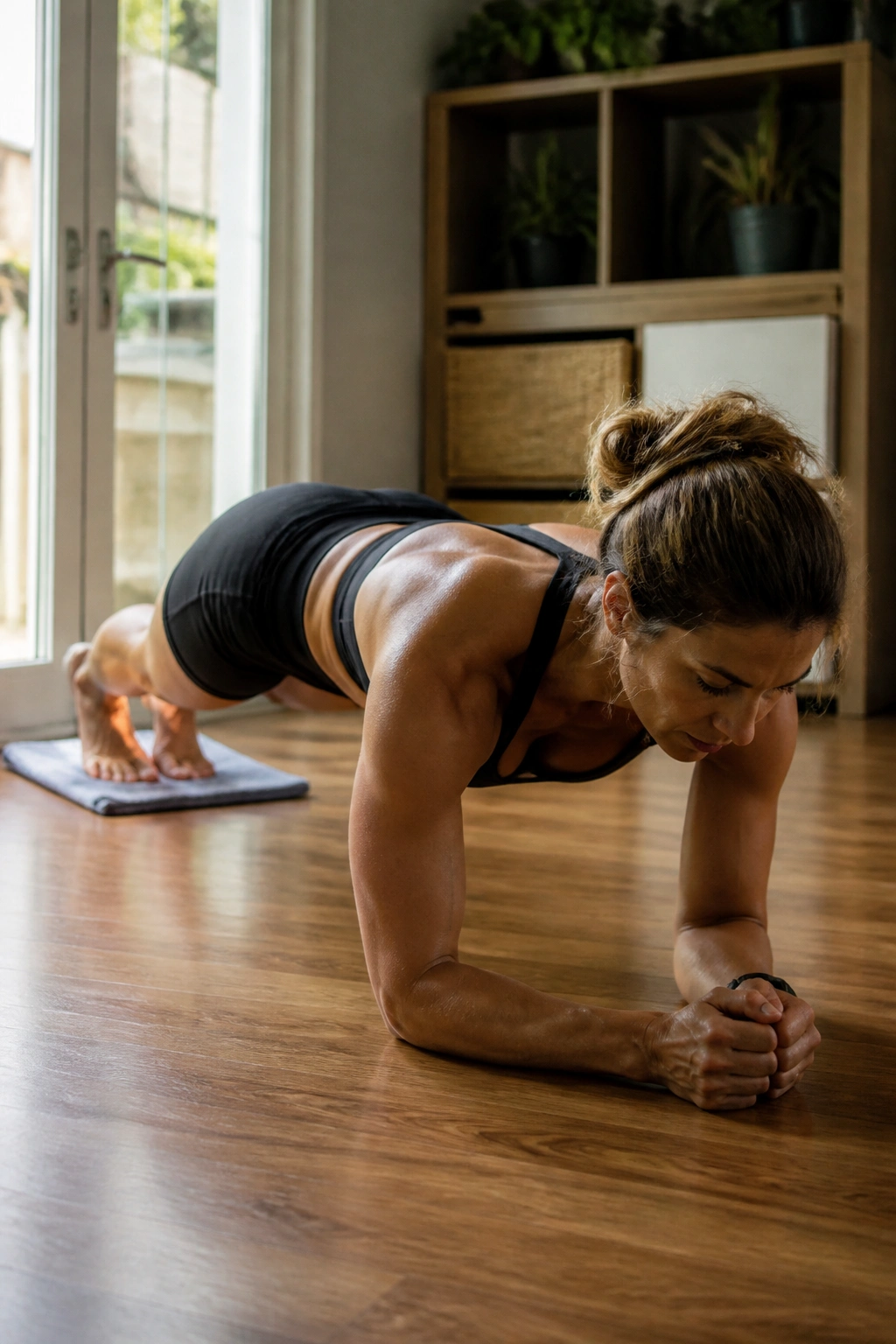
Can you turn a towel into a core tool? Absolutely. On a smooth floor, it’s one of the cheapest ways to train anti-extension.
Set up in a forearm plank with your feet on the towel, then slide the body back a few inches and forward again. The motion should be small. The torso stays braced while the shoulders drift just enough to make the core work overtime. Socks on hardwood do the job too.
Why It Feels Hard
The farther your body moves away from the elbows, the more the abs have to stop the low back from sagging. That’s the whole game. You are resisting extension, not chasing distance.
Start with 6 to 10 slow reps. If the low back dips or the shoulders shrug, shorten the slide. Tiny movements can be nasty in the best way.
22. The 10-Minute Home Core Circuit
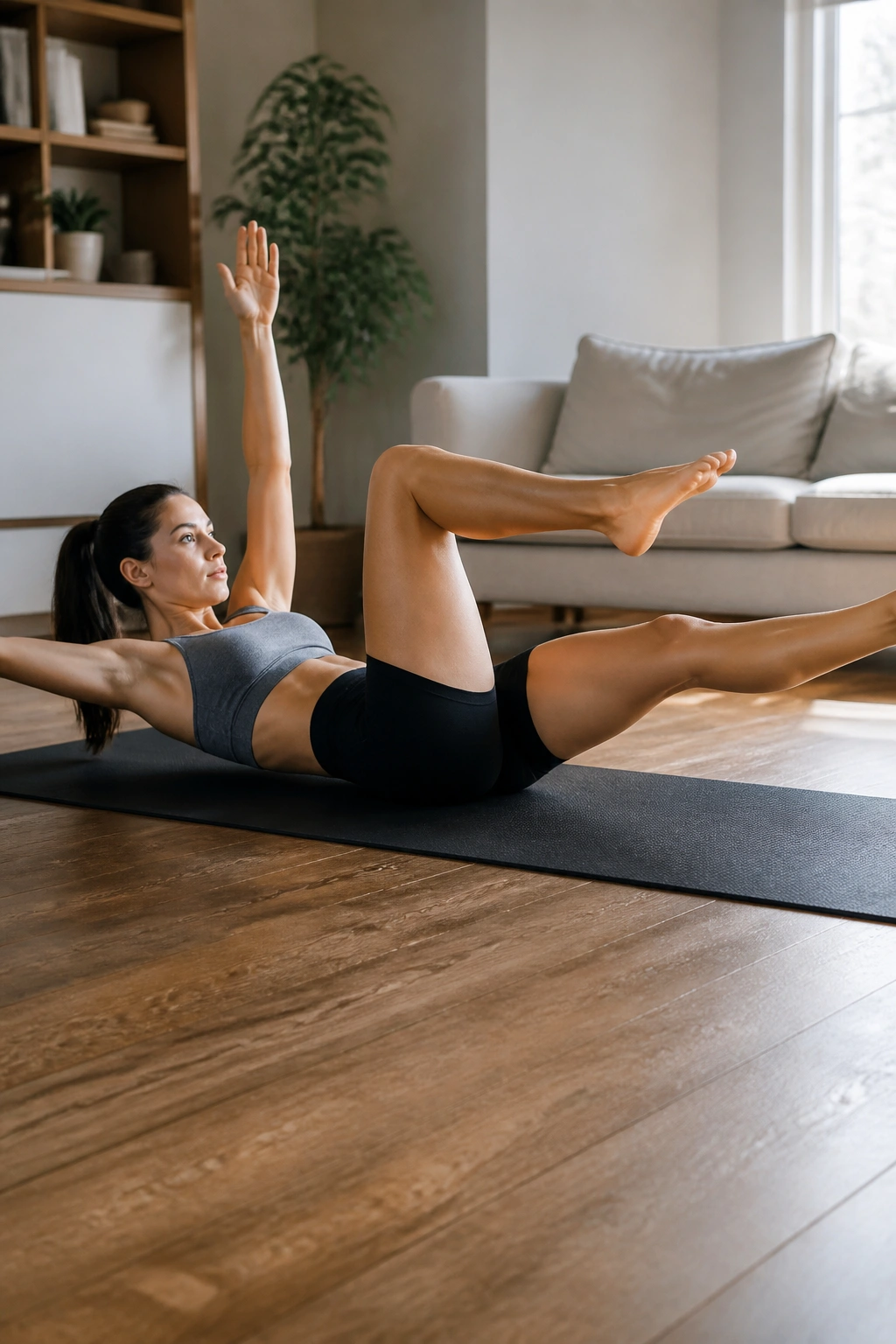
A good core circuit does not need seven exercises and a playlist with too much ambition.
A Simple Sequence
- 30 seconds dead bug
- 30 seconds forearm plank
- 30 seconds reverse crunch
- 30 seconds side plank, right
- 30 seconds side plank, left
- 30 seconds heel taps
- 30 seconds mountain climbers
- 30 seconds rest
Run that sequence twice for a solid 10-minute home core workout. If one move feels too hard, swap it for the easier version from earlier in the list. The point is to keep the trunk working in different ways, not to win a suffering contest.
I like this format because it covers bracing, flexion, and side stability without needing equipment or a lot of space. It also lets you see patterns. If your plank falls apart but dead bugs feel crisp, you know where to focus next.
Final Thoughts
The best ab workouts at home are the ones that make you pay attention. Not the ones that leave you flopping around in a sweaty mess with a sore neck.
A strong core comes from mix and consistency: a little floor work, a little standing work, some anti-rotation, some controlled flexion, and enough honesty to stop a set before form leaks. That’s the part people skip. It’s also the part that changes things.
Pick four or five moves from this list, keep the reps tight, and train them with the same focus you’d give any other muscle group. The middle of your body deserves that much respect.
