



Visible abs are stubborn. Effective ab workouts build the muscle, but they do not do the whole job; body fat, bracing, and the way you breathe under load matter too. If your lower back takes over every time you train your core, you are teaching the wrong muscles to do the work.
The best midsection training is not a pile of random crunches. It mixes spinal flexion, anti-extension, anti-rotation, and loaded carries so the whole trunk learns to stay put when the rest of you moves. That matters when you deadlift, press, sprint, reach overhead, or carry groceries up three flights of stairs.
No, you cannot crunch your way around sloppy eating or poor training habits. But you also do not need a hundred flashy moves to make progress; a short list of honest exercises, done with control and progressive load, works far better than frantic rep counting.
The list below leans on movements that expose weak links fast — the kind that show up as a sagging low back, twisted hips, or a neck that does all the work for the abs. Start where you can keep position clean, then make the exercise earn its keep.
1. Dead Bug: The Ab Workout That Teaches Control
If your lower back arches during core work, start here. The dead bug looks almost too easy, and that is exactly why it works: it forces your trunk to resist extension while your arms and legs move in opposite directions.
Lie on your back with your arms straight up, knees bent at 90 degrees, and low back pressed gently into the floor. Lower one arm and the opposite leg slowly, then return to the start before switching sides. The goal is not range for its own sake. The goal is to keep the ribs quiet and the pelvis steady.
That sounds boring. It isn’t.
Why It Pays Off Fast
A dead bug teaches the deep core to brace without stiffness creeping into your neck or hips. Three sets of 6 to 8 reps per side is enough for most people, and each rep should take a few seconds down and a few seconds back. If your back pops off the floor, shorten the leg reach. Simple.
- Exhale as the arm and leg move away from center.
- Keep the low back heavy on the floor.
- Pause for one second at the farthest point you can control.
- Make the motion smaller before you make it faster.
Pro tip: if the full version feels easy, press a light dumbbell into one hand or straighten the moving leg a little more, but only if the back stays flat.
2. Reverse Crunch
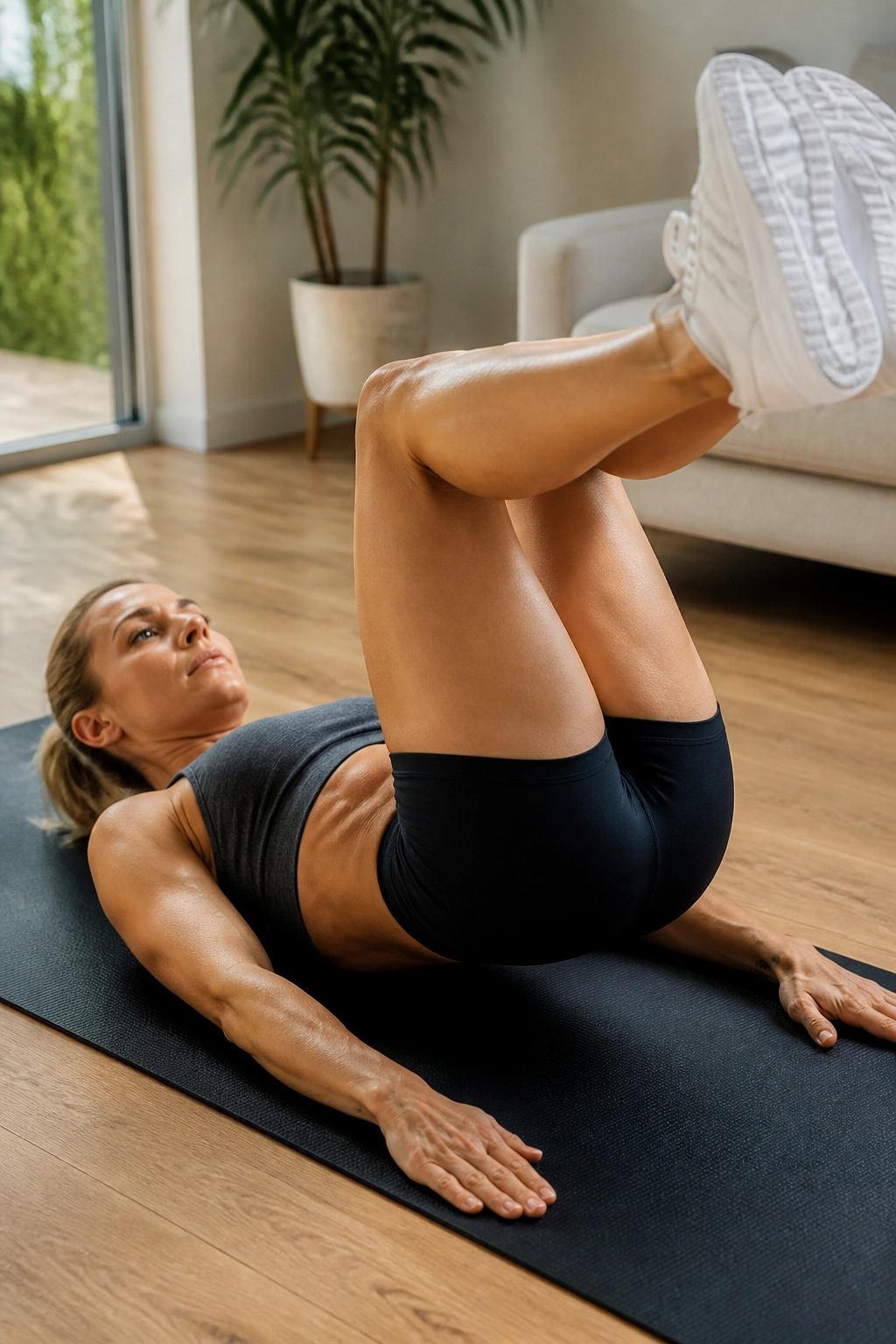
Why do reverse crunches work so well when regular crunches start to feel sloppy? Because the movement is coming from the pelvis, not a neck yank, and that gives the lower abs a cleaner job.
Lie on your back, bend your knees, and bring them up so your thighs are roughly vertical. From there, curl your tailbone off the floor by drawing your knees toward your chest. Don’t kick. Don’t swing. The lower back should peel up just a little, then lower under control.
That small curl matters. It trains posterior pelvic tilt, which is one of the missing pieces for people who feel every ab move in the hip flexors.
Momentum ruins this exercise. Keep the tempo slow, use 3 sets of 10 to 15 reps, and pause for a beat at the top when your tailbone lifts. If your neck or upper body starts helping, the set is already too fast.
3. Forearm Plank
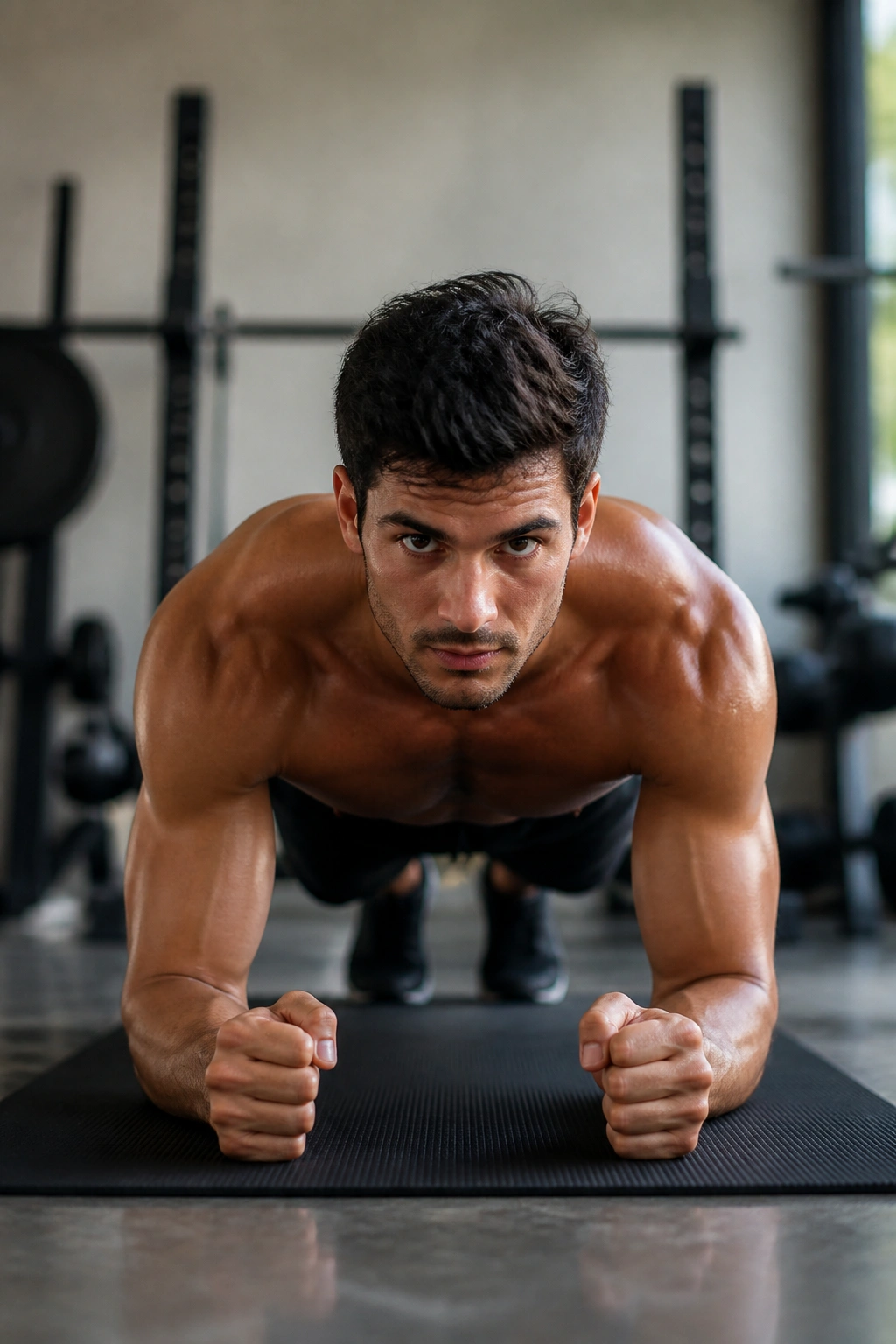
A plank that lasts two minutes while your lower back sags is not a win. It is endurance for bad position, and your abs do not get much out of it.
The forearm plank works when you squeeze hard enough to keep the ribs down, glutes tight, and shoulders stacked over the elbows. Imagine pulling your elbows toward your toes without moving them. That tiny full-body tension is the whole point. A good plank feels like pressure across the front of the abdomen, not a sleepy hold in the shoulders.
Check Your Shape Before You Chase Time
Start with 20 to 30 seconds if that is where your form stays honest. Build toward 45 seconds only when you can breathe without the hips drifting or the neck jutting forward.
- Elbows directly under shoulders.
- Glutes squeezed, not clamped.
- Ribs pulled down.
- Head in line with the spine.
One clean 25-second plank beats a messy 90-second hold.
4. Side Plank
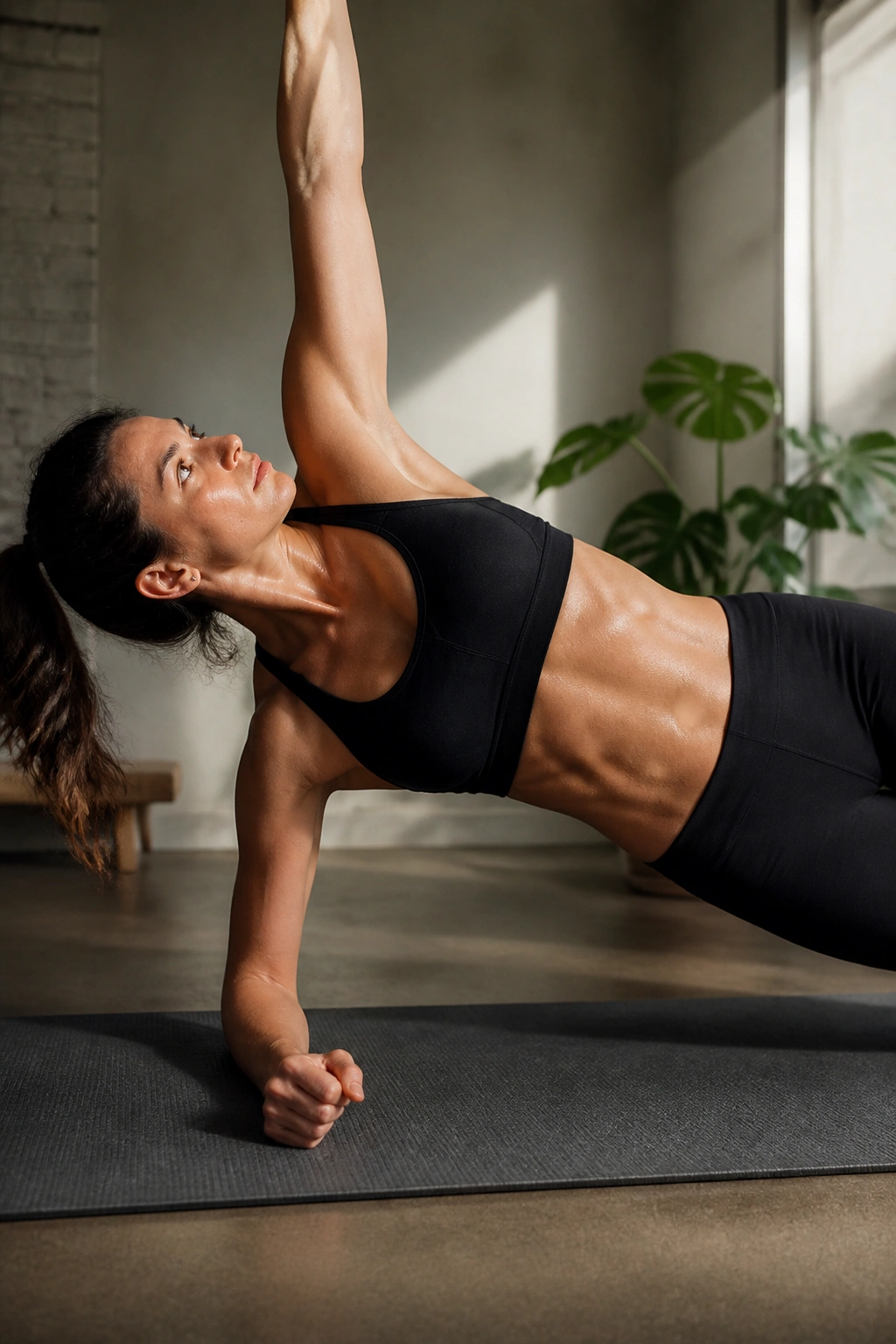
Straight-ahead bracing is only half the story. Side planks hit the obliques, the lateral hip, and the muscles that stop your torso from collapsing to one side when you carry or lift something heavy.
Set your elbow under your shoulder, stack your feet, and lift your hips until your body makes a straight line from head to heel. The tricky part is not the lift. It is keeping the ribs from flaring and the top shoulder from rolling forward. You want tension along the side of the waist, not a shrug in the neck.
What Makes It Worth Your Time
Side planks are one of the best tests for asymmetry. If one side shakes earlier, that usually tells you something. Short holds expose side-to-side differences fast.
- Bend the bottom knee if the full version is too much.
- Raise the top leg once the basic hold feels steady.
- Reach the free arm to the ceiling for a harder balance challenge.
- Hold 20 to 30 seconds per side for 2 to 3 rounds.
Keep it clean. A crooked side plank turns into a shoulder exercise with some wobble attached.
5. Hollow Body Hold
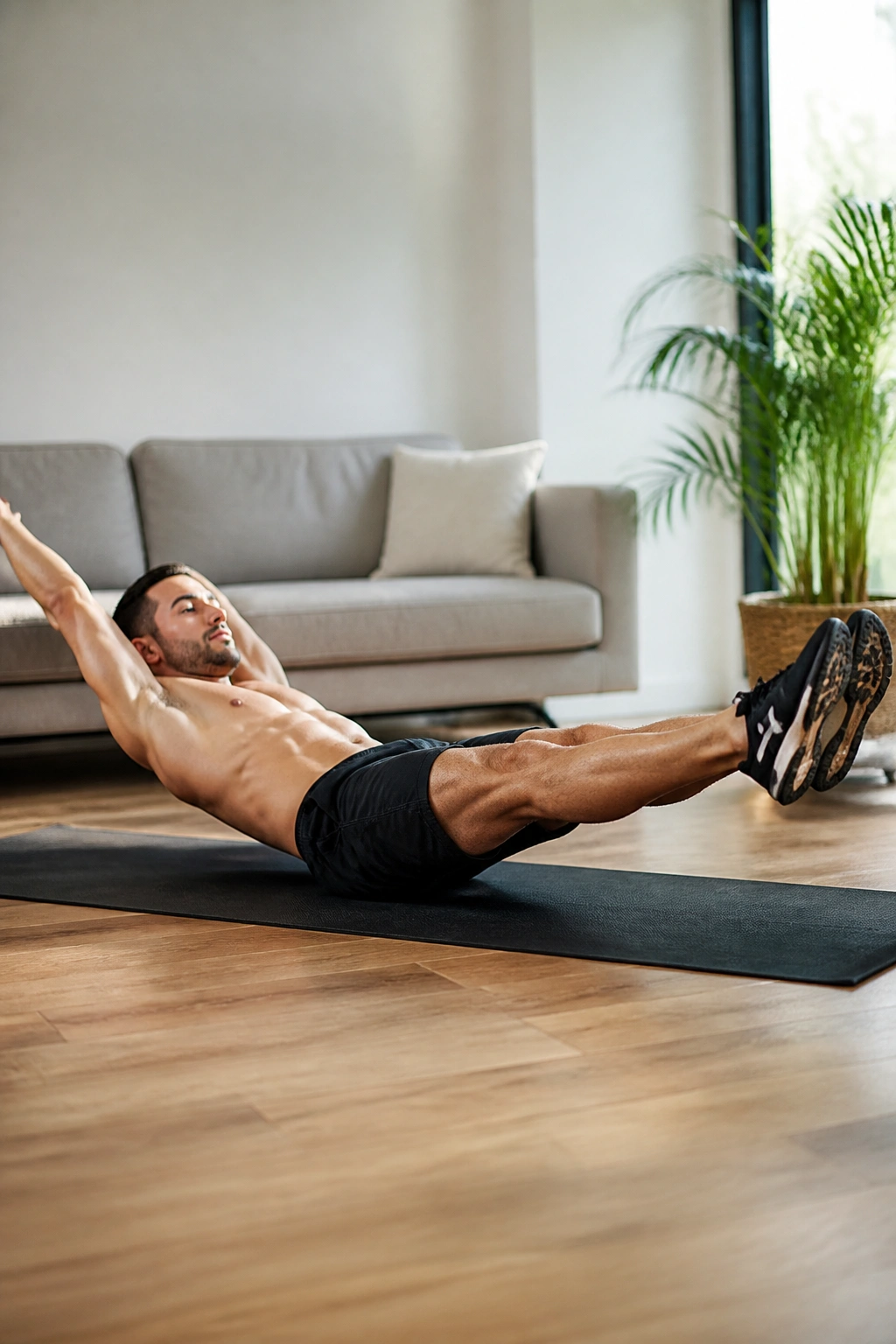
The hollow body hold feels like your midsection is getting zipped shut from sternum to pelvis. Your low back should be glued to the floor, your ribs should stay tucked, and your legs should hover without turning the exercise into a lower-back arch.
Lie down, press your lower back into the floor, and lift your shoulders and legs a few inches. Arms can stay overhead or reach forward if that version is too aggressive. What matters is that hollow shape — the slight curve through the upper back and the flat lower spine.
Do not chase time. That is the trap.
Start with 15 to 20 seconds, rest, then repeat for 3 to 4 rounds. If your back lifts, bend your knees. If your neck strains, bring the arms forward instead of overhead. The hollow hold is honest in a way that people hate and need.
6. Bicycle Crunch
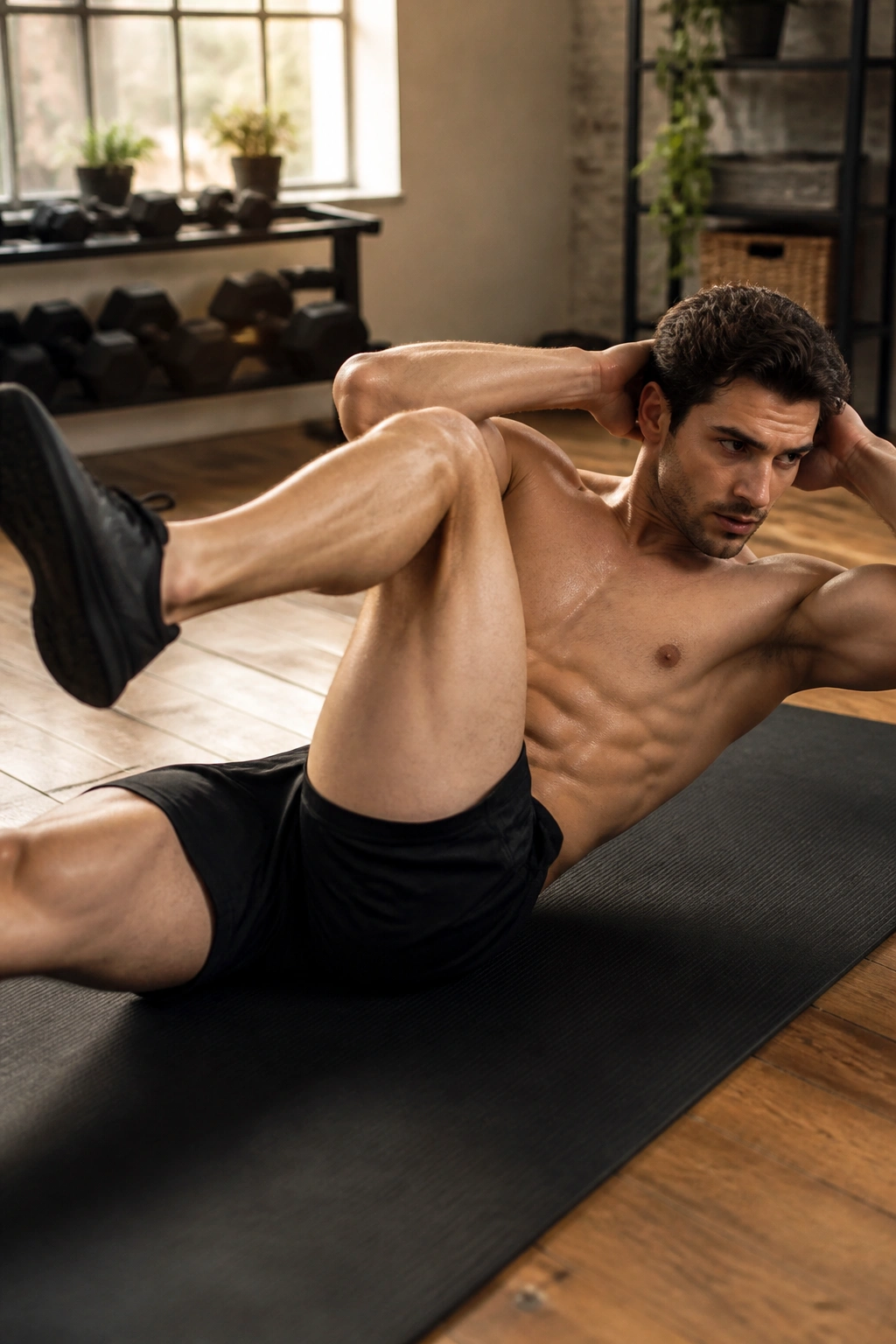
Fast bicycle crunches are noise. Slow bicycle crunches can be useful.
The reason is simple: when you rip through the reps, the hips and shoulders blur together and the abs never have to finish the job. When you slow down, the obliques have to control the twist and the rectus abdominis has to keep the trunk from folding apart.
Lie on your back, lift your shoulder blades, and rotate one elbow toward the opposite knee while the other leg extends. Keep your low back pressed down. Do not tug your neck. Aim for 2 to 3 sets of 12 to 20 controlled reps per side.
The best cue is boring and effective: exhale on every twist. That small breath cue keeps the ribs from flaring and makes the rep cleaner.
7. Hanging Knee Raise
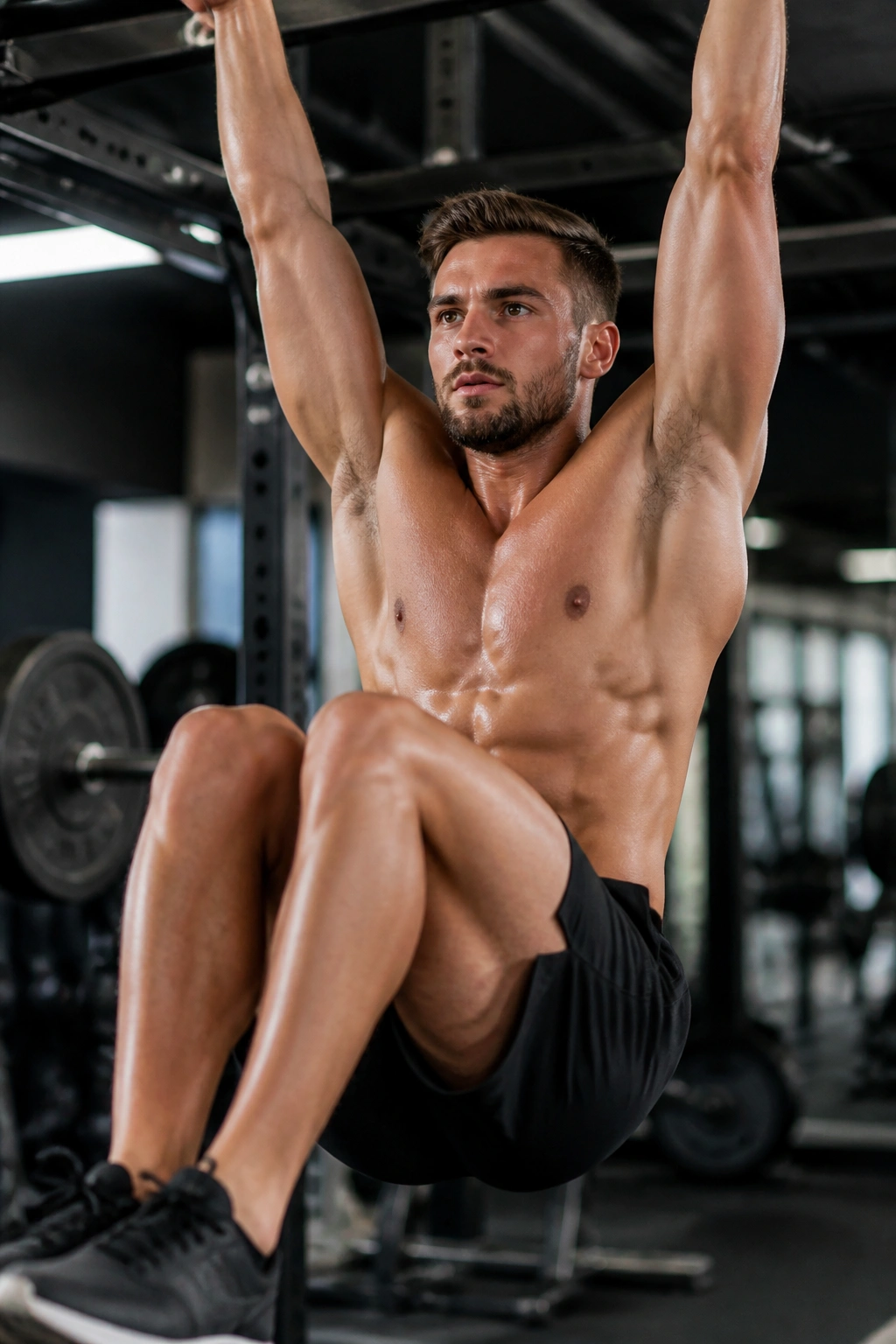
At the gym, this is the move that separates swinging from training. Hanging knee raises make your abs work against gravity, but only if you stop turning them into a momentum contest.
Hang from a bar with your shoulders active, not dead and loose. Pull your knees up toward your chest, then tip the pelvis slightly at the top so the lower abs finish the rep. If your body swings like a pendulum, pause between reps or lower the reps until you can control the motion.
How to Use It
Start with 3 sets of 8 to 12 reps. If that feels easy, slow the lowering phase to 3 seconds or move to straight-leg raises. A captain’s chair works too, though I prefer the hanging version because it forces cleaner control.
- Begin with bent knees before trying straight legs.
- Keep the chest from collapsing.
- Stop the swing before each rep.
- Tilt the pelvis upward at the top.
The rep should look crisp. Anything else is just hanging.
8. Cable Crunch
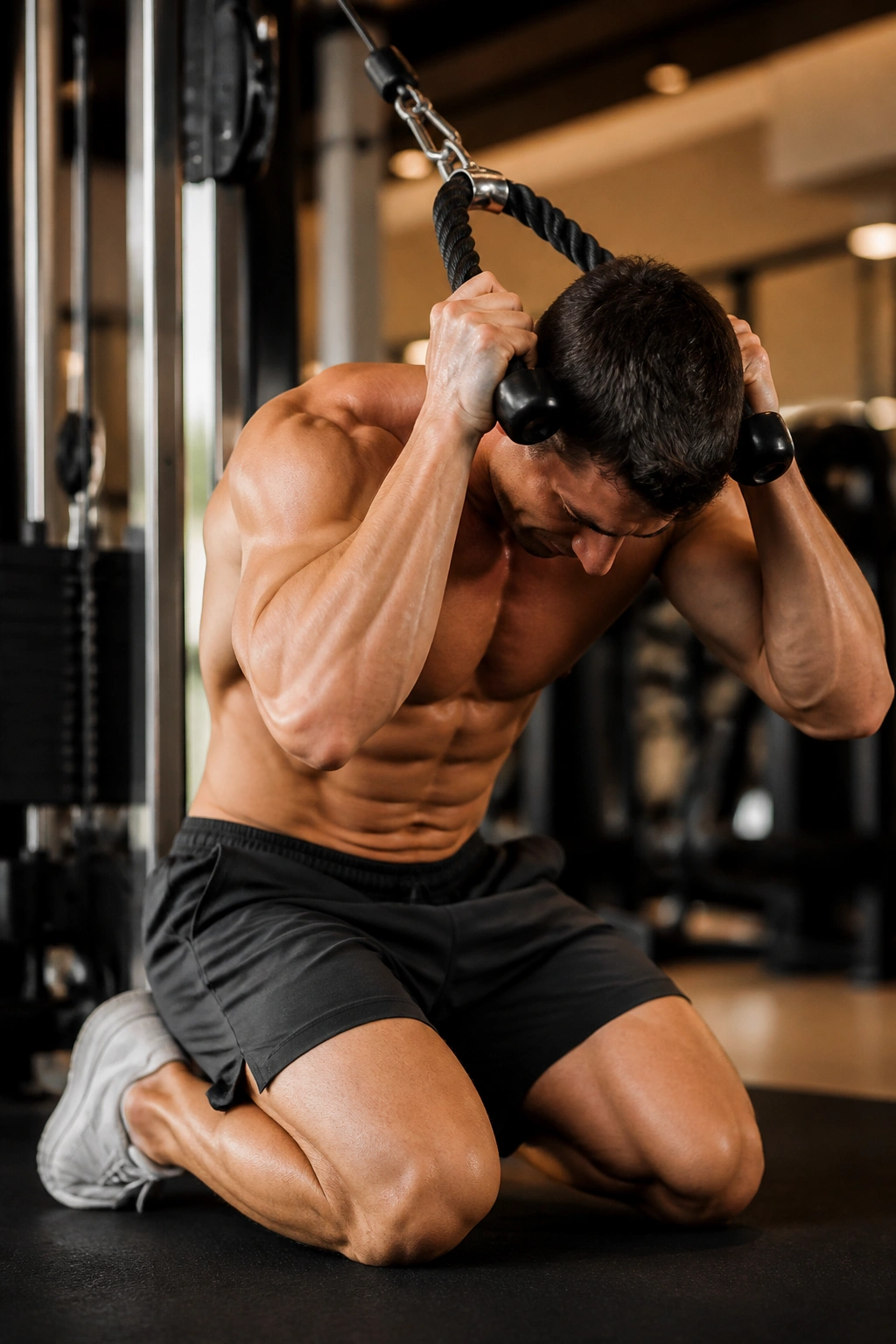
When people want abs that look thicker, loaded crunches matter. Floor work has its place, but the cable crunch lets you add real resistance without turning the exercise into a hip-flexor tug-of-war.
Kneel in front of a high pulley, hold the rope beside your head, and curl your ribs toward your pelvis. The movement is spinal flexion under control, not a hip hinge. If your hips are moving back and forth while your spine stays tall, you are missing the point.
Use a weight that lets you complete 10 to 15 strict reps for 3 sets. At the bottom, squeeze for a second before rising back up. That pause matters more than the load. A lot of people go too heavy here and turn the set into a fast bow-and-bounce. Ugly. Also not very useful.
If you want one ab move that progresses well over time, this is one of the first I’d pick.
9. Pallof Press
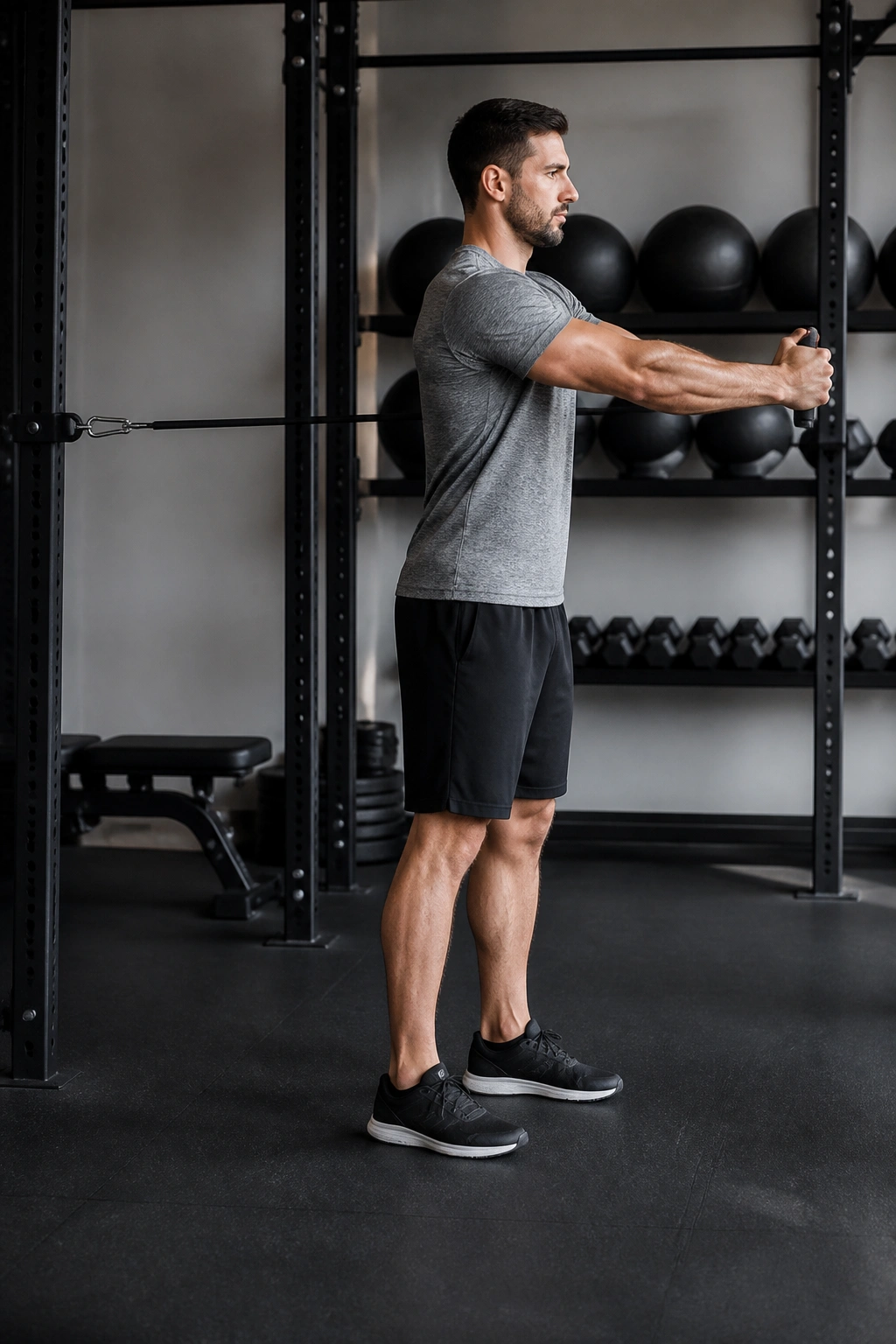
The Pallof press never looks dramatic, and that is the reason it works. You are fighting rotation, which is exactly what your trunk has to do when a load tries to twist you in real life.
Set a cable or band at chest height, stand sideways to the anchor, and press the handle straight out from your chest. Hold for 1 to 2 seconds before bringing it back in. Your hips should stay square, your ribs should stay down, and your torso should resist the pull without leaning.
Who Needs This Most
Anyone whose lower back gets cranky under load usually benefits from anti-rotation work. So do lifters who twist too much in presses, carries, or chops.
- Try 3 sets of 8 to 12 presses per side.
- Use a split stance if standing tall feels unstable.
- Switch to half-kneeling when you want more core and less leg help.
- Keep the shoulders relaxed. No shrugging.
This is one of those exercises that gets better the more honest you are about the hold.
10. Ab Wheel Rollout
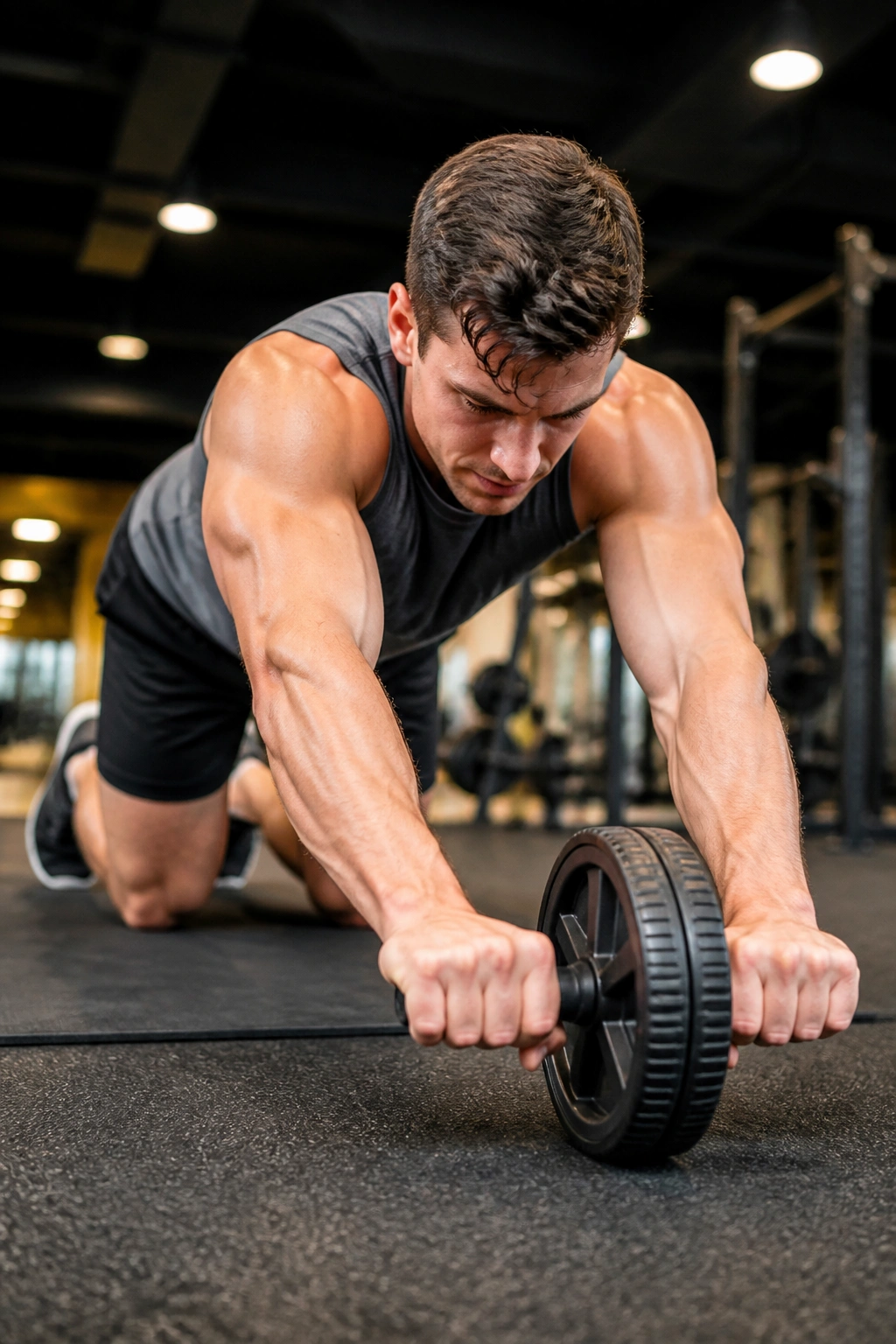
The ab wheel does not care about your ego. It will expose a weak brace, a lazy exhale, and a low back that wants to take the day off.
Start on your knees, grip the wheel, and set the ribs down before you move. Roll forward only as far as you can go without your lower back dipping or your shoulders collapsing. Then pull back by engaging the abs and lats together. The farther you roll, the harder it gets, which sounds obvious until you watch people chase a huge range and fold in half.
Start Here If Needed
- Roll to a wall and stop before you hit it.
- Use a barbell with plates if the wheel feels unstable.
- Limit the range to 6 to 12 inches at first.
- Exhale before the rollout begins.
Three sets of 5 to 10 good reps is plenty. If your lower back feels the exercise more than your abs, shorten the range. That is not a failure. It is a clue.
11. Mountain Climber
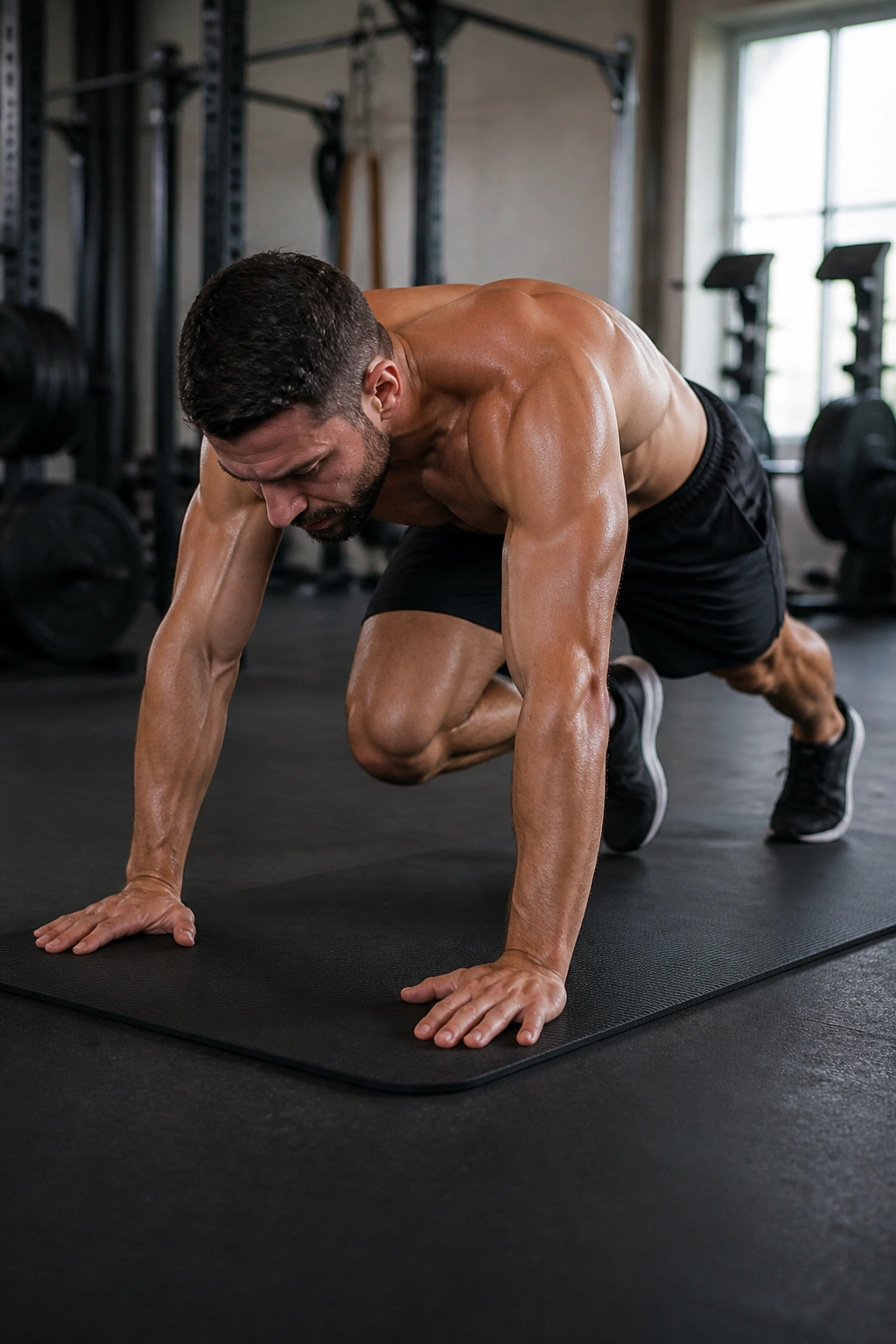
If you do mountain climbers like a frantic dance step, your core gets cheated. Slow them down and the exercise turns into a hard anti-rotation drill with a conditioning hit attached.
Set up in a strong plank, then drive one knee under the body while keeping the shoulders steady. Switch sides without rocking the hips from wall to wall. The whole point is control under speed, not wild speed itself. A 20- to 30-second set done cleanly is far better than a sloppy minute of sloshy knees.
What It Trains
- Rectus abdominis.
- Hip flexors.
- Shoulder stability.
- Conditioning, if you keep the pace up.
Use it as a finisher or a short interval piece. I like 3 to 4 rounds of 20 to 40 seconds, with enough rest to make the next set crisp. Speed is optional. Shape is not.
12. Toe Touch Crunch
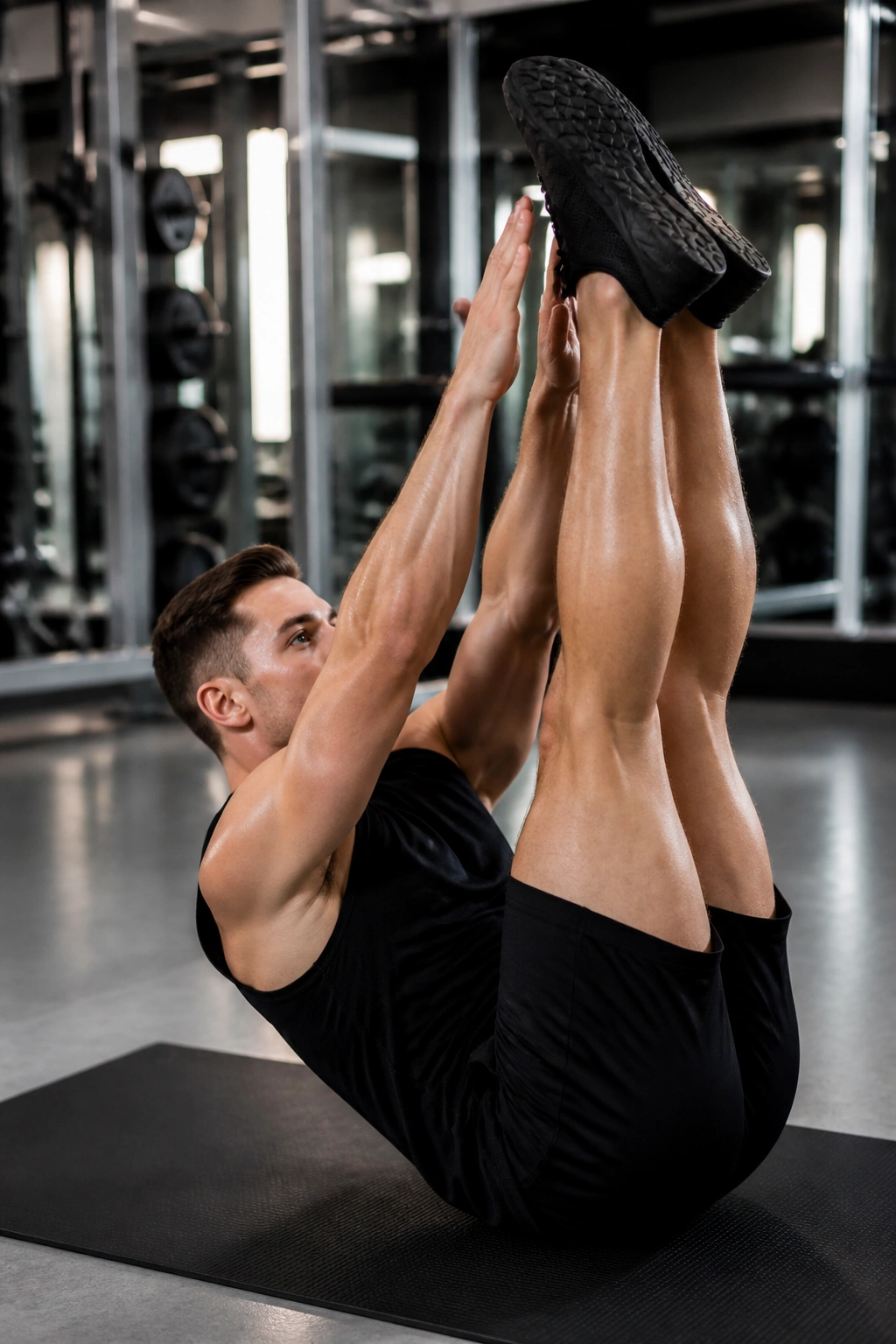
Why does this one light up the upper abs so fast? Because the ribs are traveling toward the pelvis in a short, direct line, and there is not much room for cheating if you keep the legs vertical.
Lie on your back, extend your legs toward the ceiling, and reach your hands straight up as you lift your shoulder blades off the floor. Don’t try to touch your toes by jerking the neck forward. Reach with the chest and keep the chin slightly tucked. If your hamstrings are tight, bend the knees a little. That is fine.
Three sets of 12 to 20 controlled reps is a good target. The lowering phase should be slow enough that you can feel the abs stay on the whole way down. If your low back arches off the floor, lower the legs a bit or stop sooner. Clean reps matter more than range here.
13. Flutter Kick
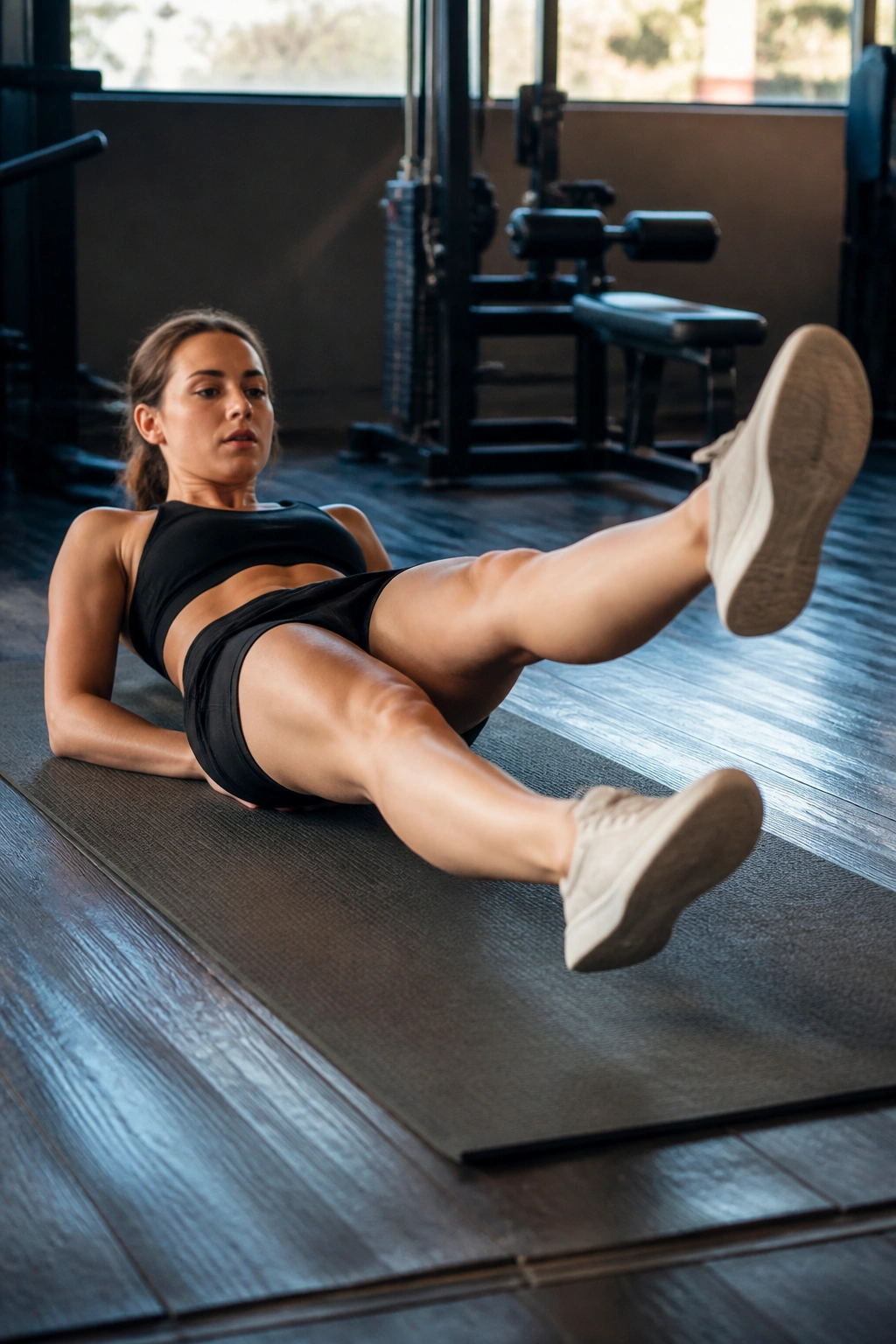
Flutter kicks burn fast because they keep the abs from going on autopilot. There is no huge motion, no big load, no clever trick. Just small repeated leg movement while the trunk refuses to fold.
Lie on your back with your hands under your hips if needed and lift both legs a few inches off the floor. Kick one up while the other lowers, but keep the motion small. The lower back should stay pressed down. If it arches, the legs are too low. Raise them until the spine stays flat.
Smaller kicks beat bigger kicks. That rule saves your back and keeps the work where it belongs. Try 3 rounds of 20 to 30 seconds, resting long enough to keep form steady. If you want to make it harder, extend the arms overhead. If your form breaks, bring them back to your sides.
14. Russian Twist
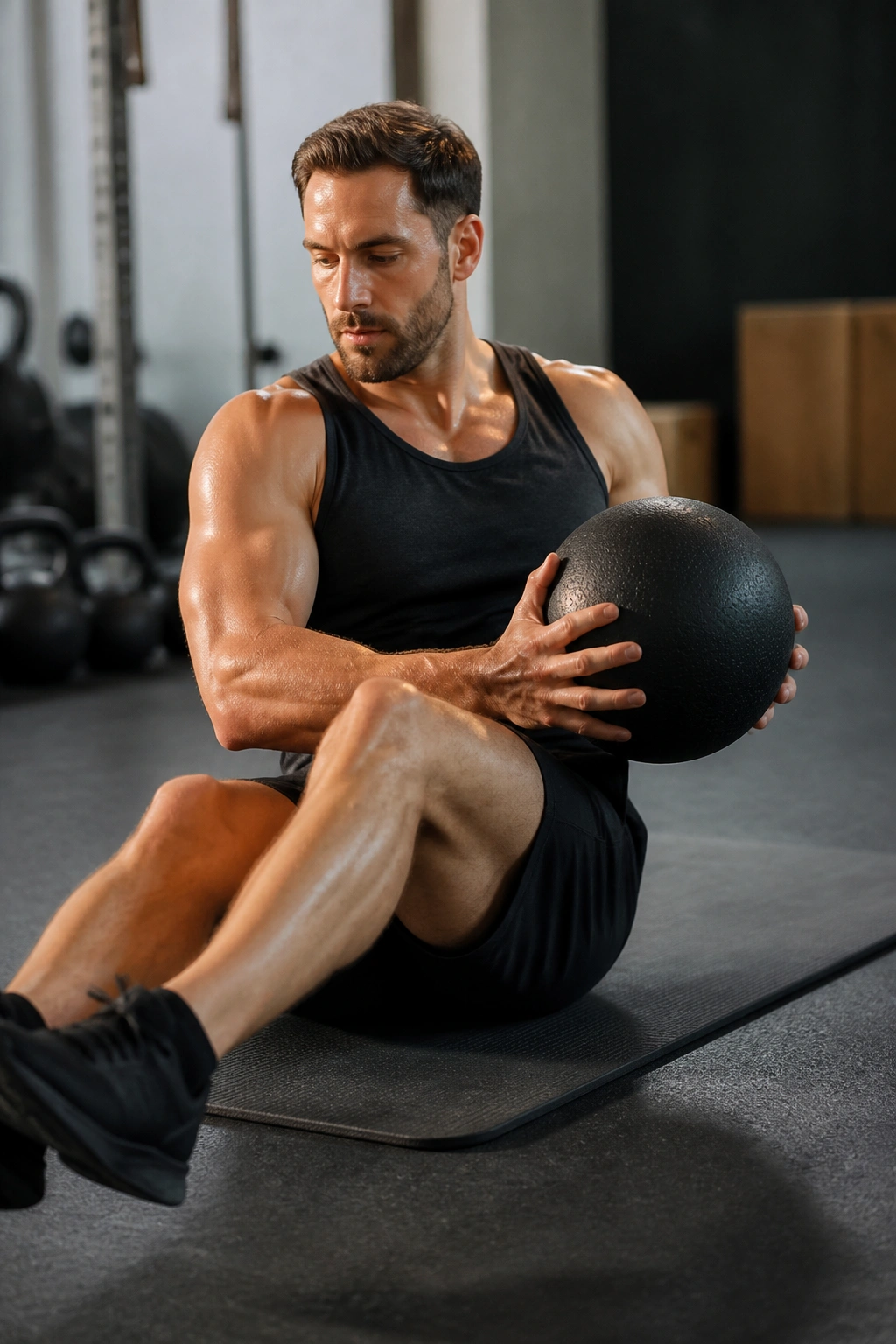
Twisting is not the villain. Sloppy twisting is.
A controlled Russian twist can train the obliques and teach the torso to rotate without throwing the shoulders around like loose hinges. Sit with your chest tall, lean back a little, and rotate the ribs from side to side with a medicine ball or plate. The arms follow the torso; they should not lead the whole movement.
Use a load you can move slowly for 8 to 12 reps per side. If the low back rounds hard or the feet need to fly around to create momentum, the set is too ambitious. And if your back hates seated twisting, skip it and use standing cable chops instead. That is not a surrender. It is smart selection.
A useful twist feels controlled and a little gritty. A wild one feels like a bad idea halfway through the first set.
15. Bird Dog
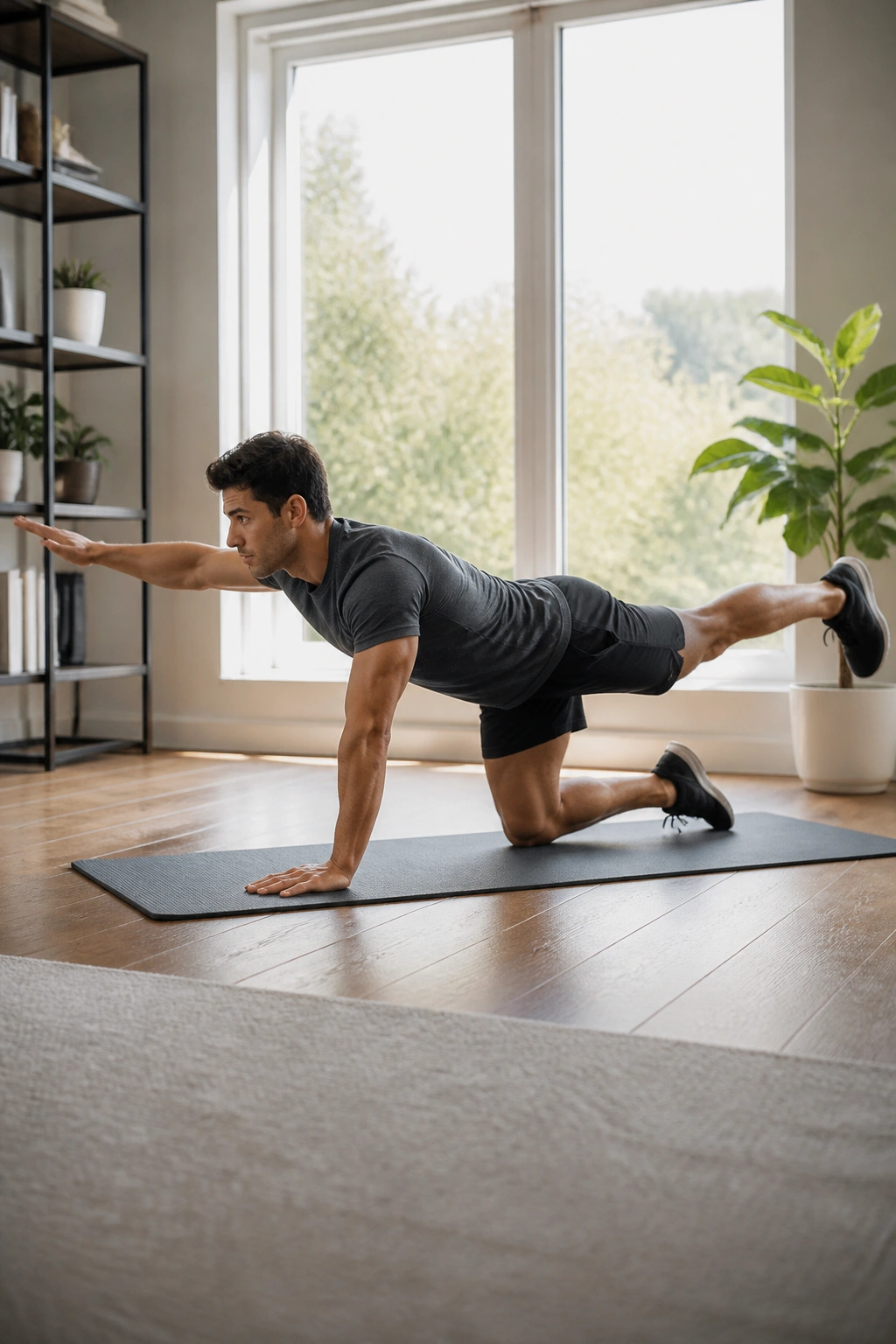
On paper, bird dog looks too easy. Then you actually do it with a long reach, a square pelvis, and a slow hold, and it becomes a very different exercise.
Start on hands and knees. Reach one arm forward and the opposite leg back while keeping the low back still and the ribs tucked. Hold the position for 3 to 5 seconds, then return without dropping into the floor. The magic is not height. The magic is control.
Why I Like It for Beginners
It teaches core stability without piling stress on the spine. It also reveals whether one hip rotates more than the other, which is useful information you can feel right away.
- Keep the pelvis level.
- Reach the heel back instead of kicking up high.
- Lengthen through the fingertips.
- Stay slow enough to avoid wobble.
Use 2 to 3 sets of 6 reps per side. If you can hold it cleanly, add a 2-second pause at the far end.
16. Stability Ball Jackknife
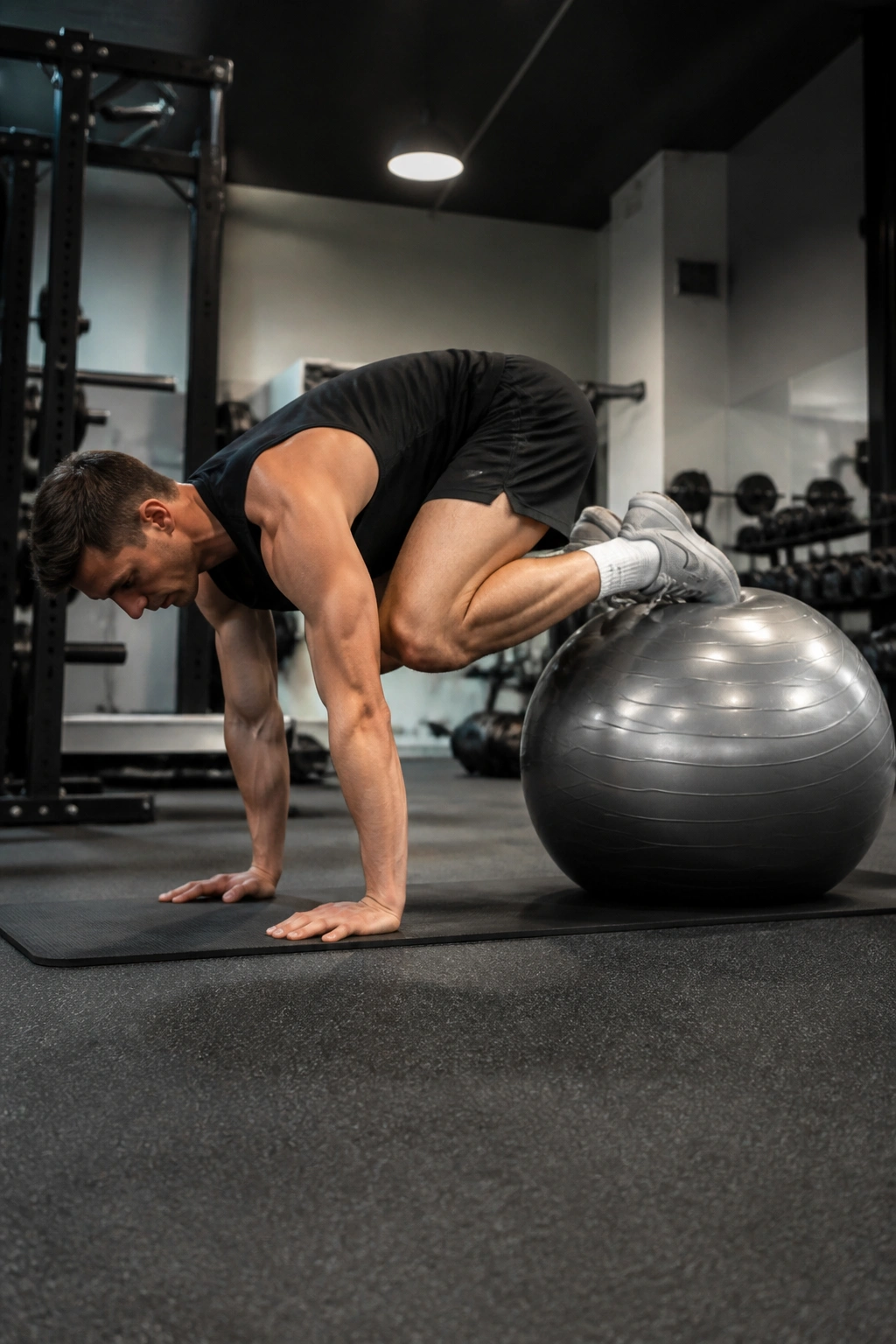
The ball makes everything less stable, which is the whole point. A stability ball jackknife challenges the abs while the shoulders and hips try to keep the body from folding in half.
Set your shins or feet on the ball in a plank position, brace hard, and pull your knees toward your chest. Then extend back out under control. Keep the hips lifted. If they sag, the exercise shifts into a shoulder shrug with some leg movement attached, which is not what we want.
Three sets of 8 to 12 reps works well for most people. If the ball slides around like it has its own plans, slow down and shorten the range. Hamstring cramps are common here, so start with a modest set of reps and build. The rep should feel like a controlled fold, not a desperate scramble.
17. Suitcase Carry
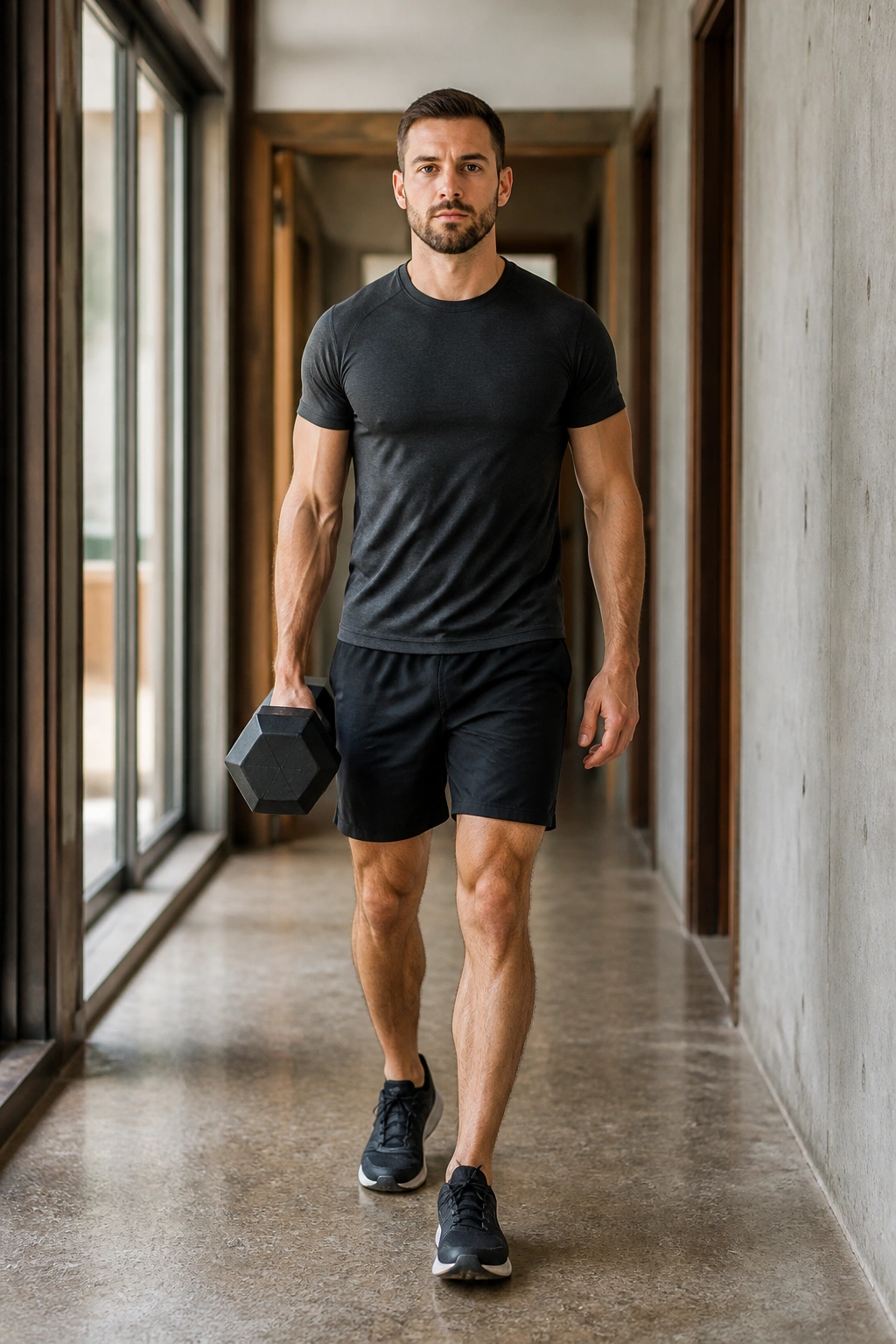
A heavy dumbbell and a hallway can do more for your midsection than 100 sloppy crunches. The suitcase carry is one of the cleanest ways to train the obliques, the deep core, and the muscles that stop you from leaning sideways.
Pick up one heavy kettlebell or dumbbell in one hand and walk tall. Don’t let the load drag your shoulder down or your ribs pop out. The body should want to tip, and your job is to resist that tilt with a tight, upright trunk. That is the whole exercise.
Walk 20 to 40 meters, switch hands, and repeat for 3 to 4 rounds. If your grip gives out before your trunk does, lower the load a little. If your torso leans, lower the load a little. The best suitcase carry is heavy enough to demand attention but not so heavy that you turn into a crooked flashlight.
18. Standing Cable Chop: A Standing Ab Workout With Real Carryover
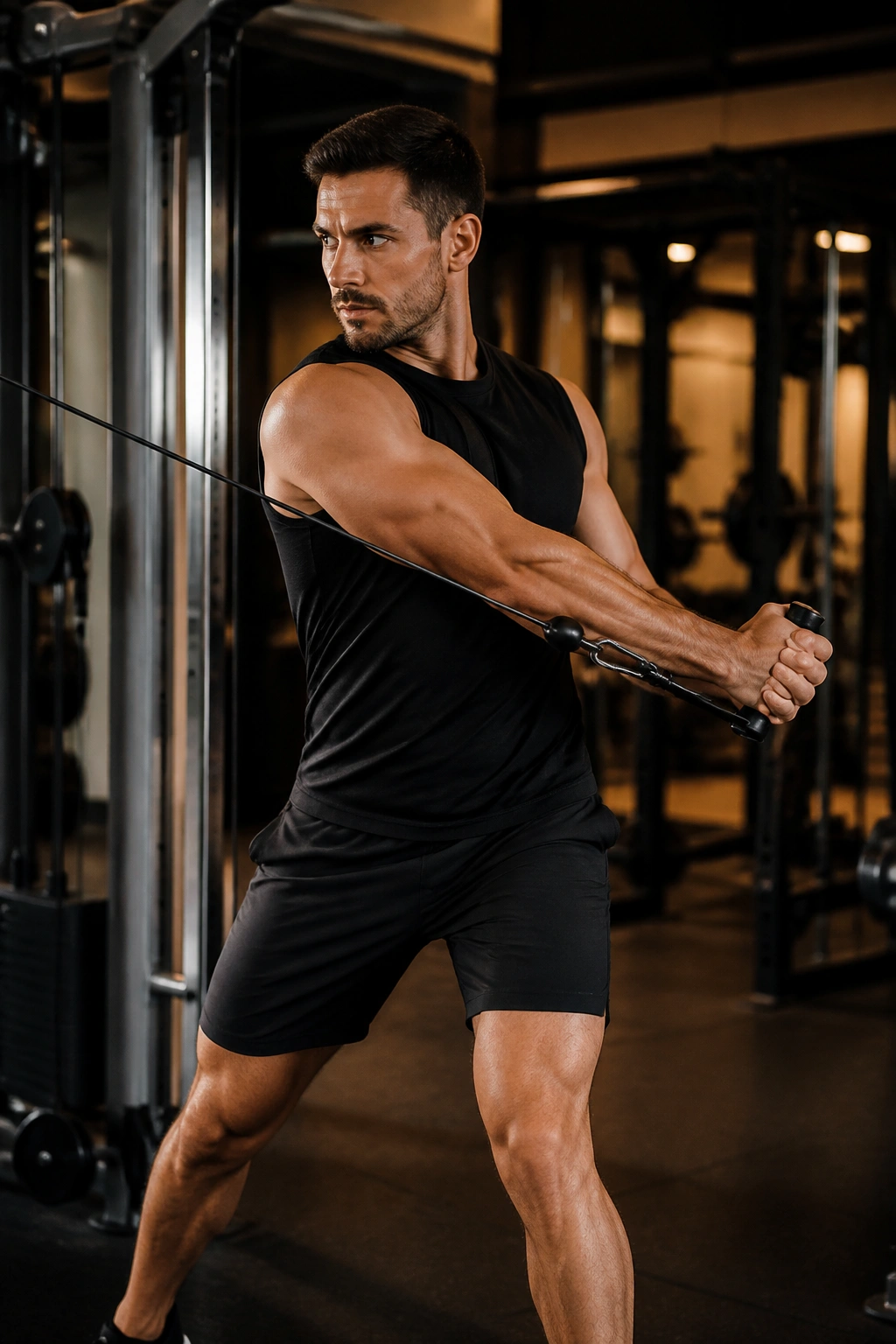
Diagonal strength matters more than people think. Standing cable chops train rotation, bracing, and hip control in a way that looks a lot closer to real movement than most floor ab exercises.
Set the cable high for a top-down chop or low for a bottom-up chop, then pull across your body with your torso and hips staying organized. The motion should come from a controlled turn of the trunk, not a yanking swing from the arms. Keep the rib cage from flaring and the pelvis from spinning loose.
How to Get the Most From It
Use 3 sets of 10 reps per side with a weight that lets you pause for a split second at the finish. The pause matters. It tells you whether you actually own the position.
- Brace before each pull.
- Move through a smooth arc, not a jerky one.
- Keep the arms connected to the torso.
- Stop if the lower back starts twisting instead of the ribs.
This is one of the more useful standing options when you want ab workout carryover outside the gym.
19. L-Sit Tuck Hold
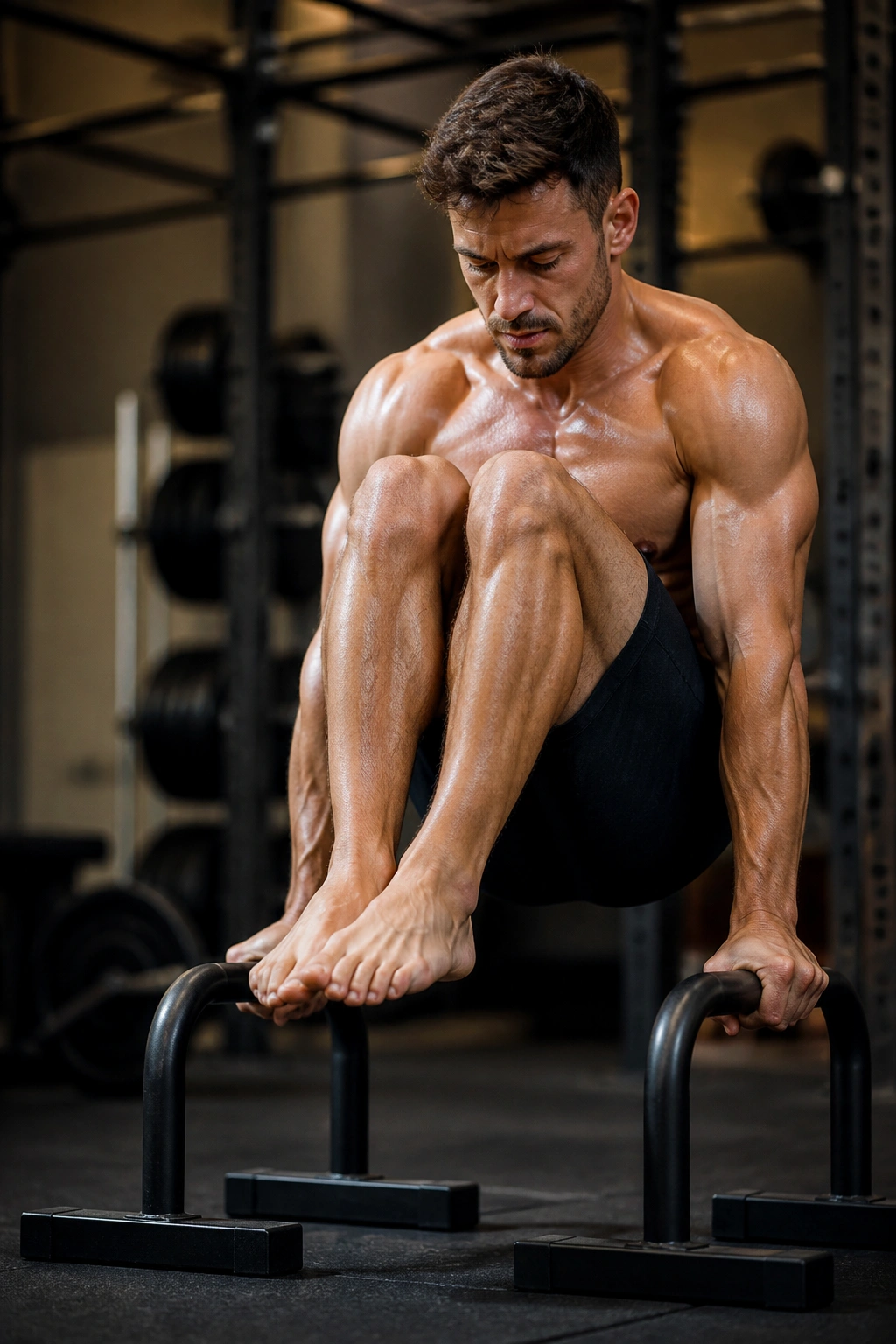
Hard move. Worth it.
The L-sit tuck hold looks tiny at first, but the combination of hip flexion, straight-arm support, and compressed trunk work makes it far tougher than it appears. Use parallettes, blocks, or even sturdy chairs. Lift your knees toward your chest, press the shoulders down, and hold the position without shrugging.
What makes this different is the combination of abs and shoulder support. You are not just holding your body off the ground; you are keeping the torso compact while the arms do a lot of stabilizing work. If that sounds miserable, it is. In a useful way.
Start with 10 to 15-second holds for 4 to 5 rounds. Build toward one leg extended, then both. If the neck strains or the shoulders creep up, stop the set. That shape needs to stay clean.
20. Weighted Sit-Up
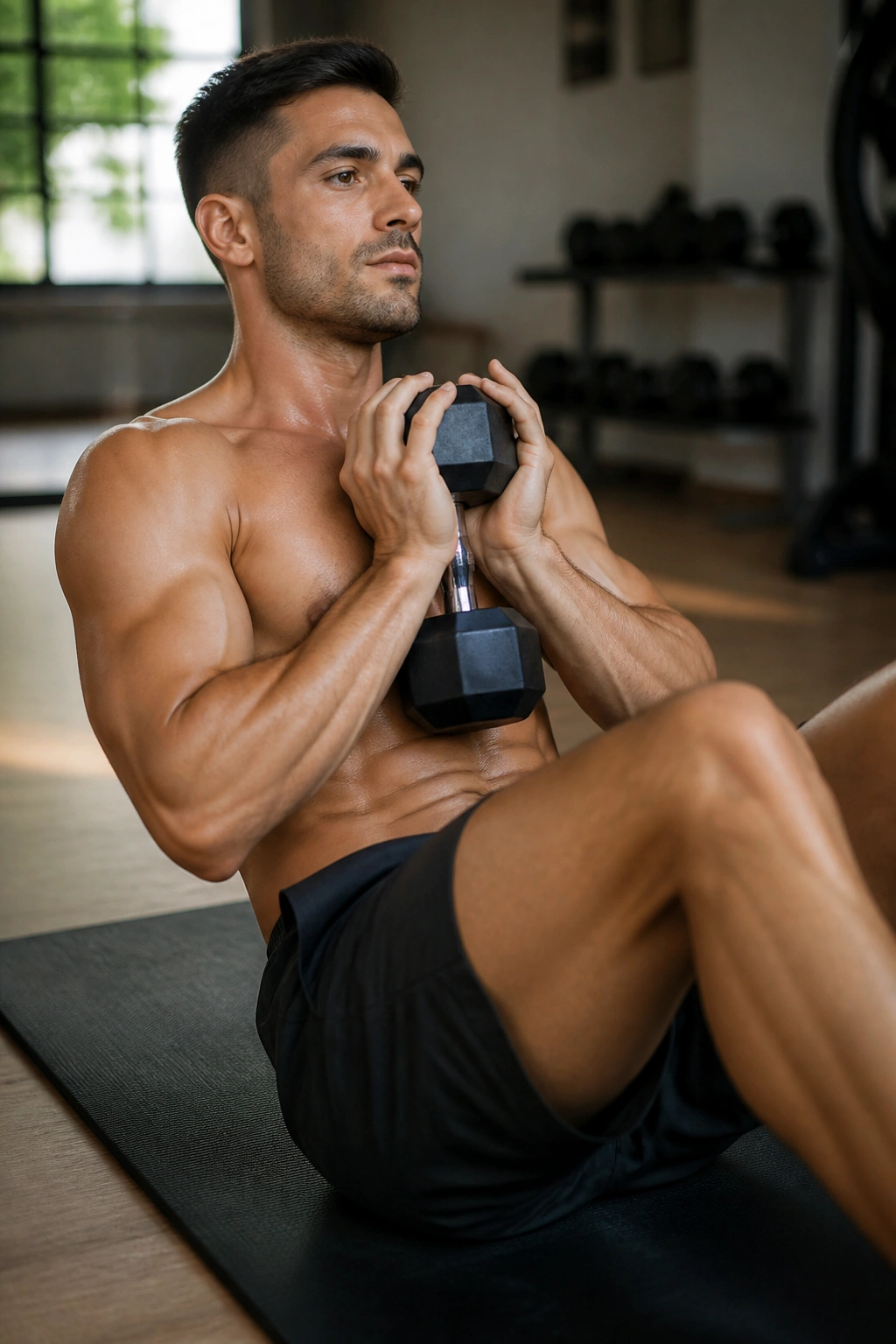
A controlled weighted sit-up can build abs faster than endless high-rep burnouts. The trick is to earn it, not rush it.
Hold a dumbbell or plate close to your chest, sit up with control, and lower slowly until your back touches the floor again. This exercise loads the abs through a longer range than many people are used to, which is part of why it works so well. It is also why people who rush it tend to complain about the wrong places.
Use 3 sets of 8 to 12 reps, and keep the descent slow enough that you never lose shape. If you need your feet anchored hard just to get through the rep, reduce the load. If your lower back gets cranky, choose a shorter range or skip this one entirely. Weighted sit-ups are useful, but they are not mandatory for everyone.
21. Spider Plank
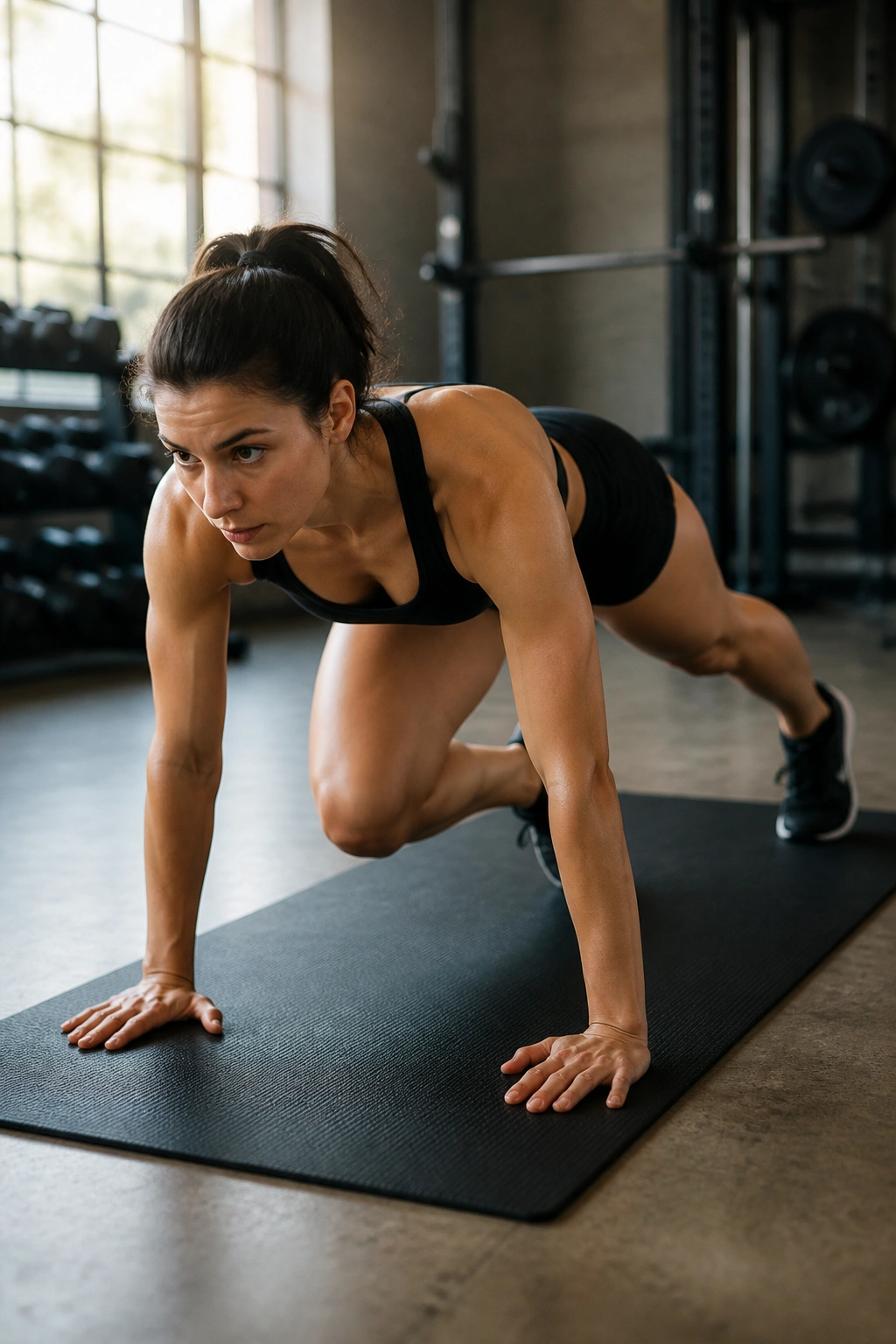
Spider planks are the plank’s meaner cousin. Instead of holding still and pretending nothing is happening, you bring one knee toward the outside of the elbow while the torso tries to stay square.
Set up in a strong plank, then step one knee wide toward the same-side elbow and return. The challenge is not the knee travel. The challenge is stopping your hips from rolling and your shoulders from drifting. If the body sways all over the place, the movement has turned into a mess with a core label on it.
What to Watch For
- Hands too close together.
- Hips spinning open.
- Neck jutting forward.
- Knees swinging without control.
Try 3 sets of 8 reps per side. Keep the motion slow enough that you can feel the side of the waist resisting the twist. If that feels easy, pause for one second with the knee outside the elbow before stepping back.
22. Bear Crawl: The Ab Workout That Exposes Weak Links
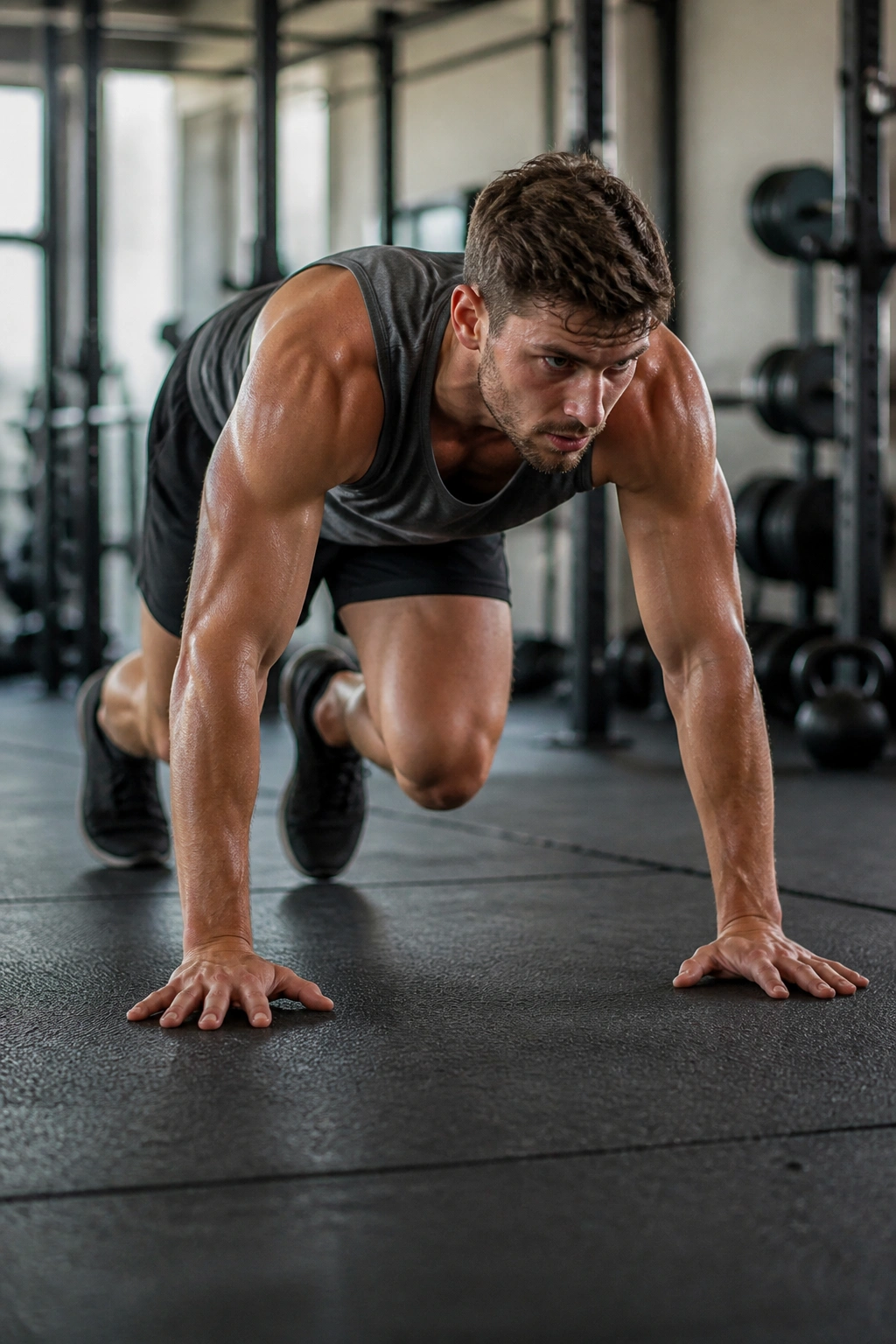
Bear crawls look childish for about five seconds. Then your shoulders, abs, glutes, and breathing all start talking at once.
Get on hands and knees, lift the knees one to two inches off the floor, and crawl forward with opposite hand and foot moving together. Keep the back flat, the head quiet, and the hips low enough that the whole body has to brace. If you rush, it turns into a sloppy scramble. If you slow it down, it becomes a full-core test.
Why It Works
Bear crawls force the trunk to stay organized while the limbs alternate, which is a fancy way of saying your abs have to do real work. They also expose weak shoulders and a poor brace immediately.
- Crawl for 20 to 40 meters, or 20 to 30 seconds.
- Keep the knees hovering, not bouncing.
- Move slowly enough to stay level.
- Try a short backward crawl if you have the space.
This is one of my favorite finishers when I want a move that feels honest and leaves no hiding place for weak control.
The Bottom Line
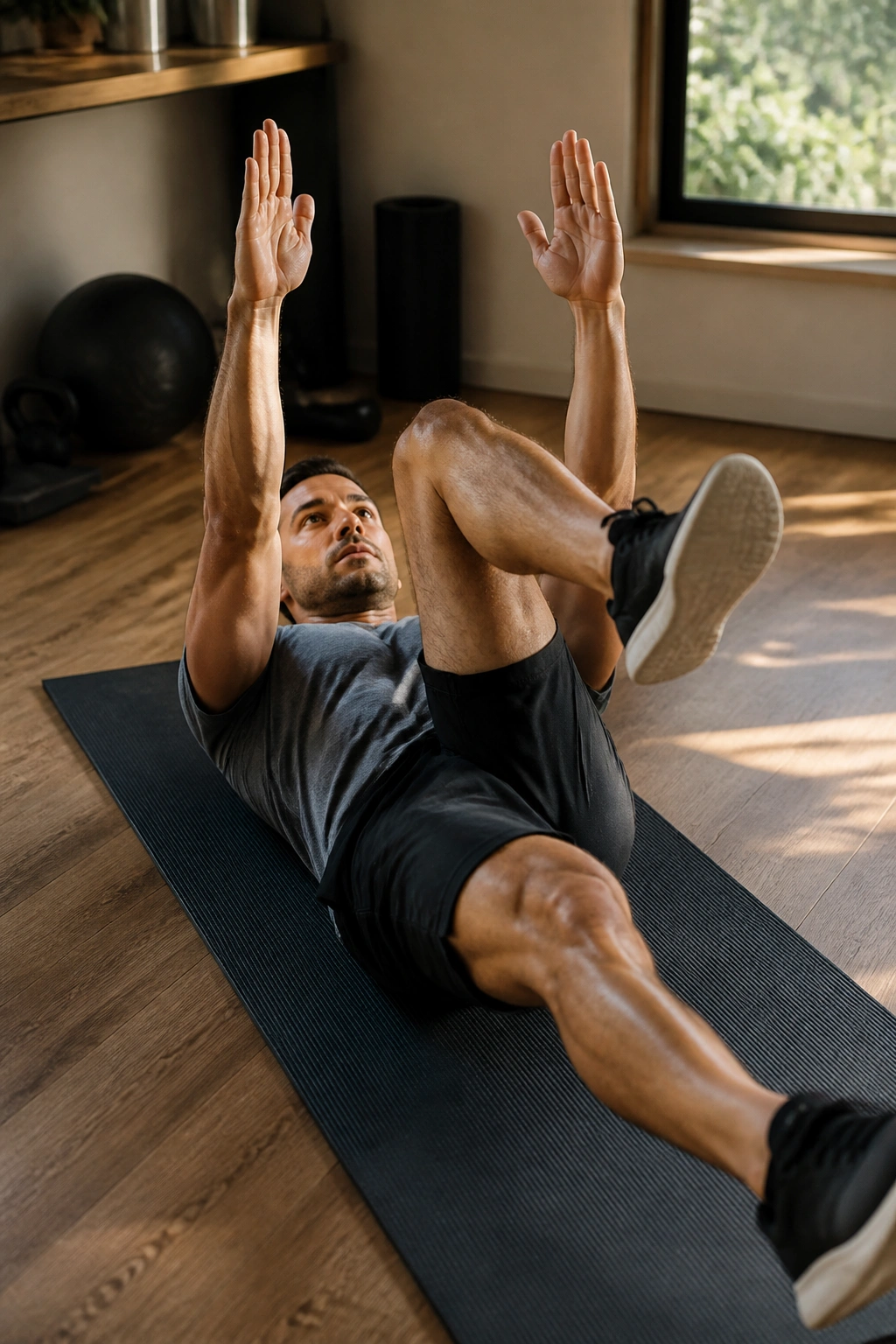
Visible abs come from more than one angle. You need exercises that build the muscle, exercises that teach bracing, and a training plan that respects load, recovery, and body fat. Pick four to six moves from this list and make them earn their place with clean reps and steady progression.
The easiest mistake is chasing the burn and ignoring position. A 20-second hollow hold with a flat low back does more for you than 50 sloppy crunches with your neck doing the work. Same story with planks, carries, and rollouts: if shape breaks, the set is over.
Keep the work honest, and the abs have a chance to show. Start with the move you can control today, then make it a little harder next week.
