



Weighted ab workouts work best when you treat your midsection like a real muscle group, not a place to do endless crunches and hope for the best. Add load, control the range, and the abs stop “participating” and start producing force.
That matters more than people think. A stronger rectus abdominis, tighter obliques, and a better brace carry over into deadlifts, squats, presses, running, carrying groceries, and the plain old business of not folding in half when life gets heavy.
And no, more weight does not automatically mean better abs. If your lower back arches, your ribs flare, or your hips start doing the work, the exercise stops being an ab drill and turns into a compensation drill. Ugly. But useful to learn from.
Pick a few of these, not all of them. One flexion move, one anti-extension move, one rotation or carry pattern — that’s enough to build a midsection that feels solid instead of fragile.
1. Cable Crunch
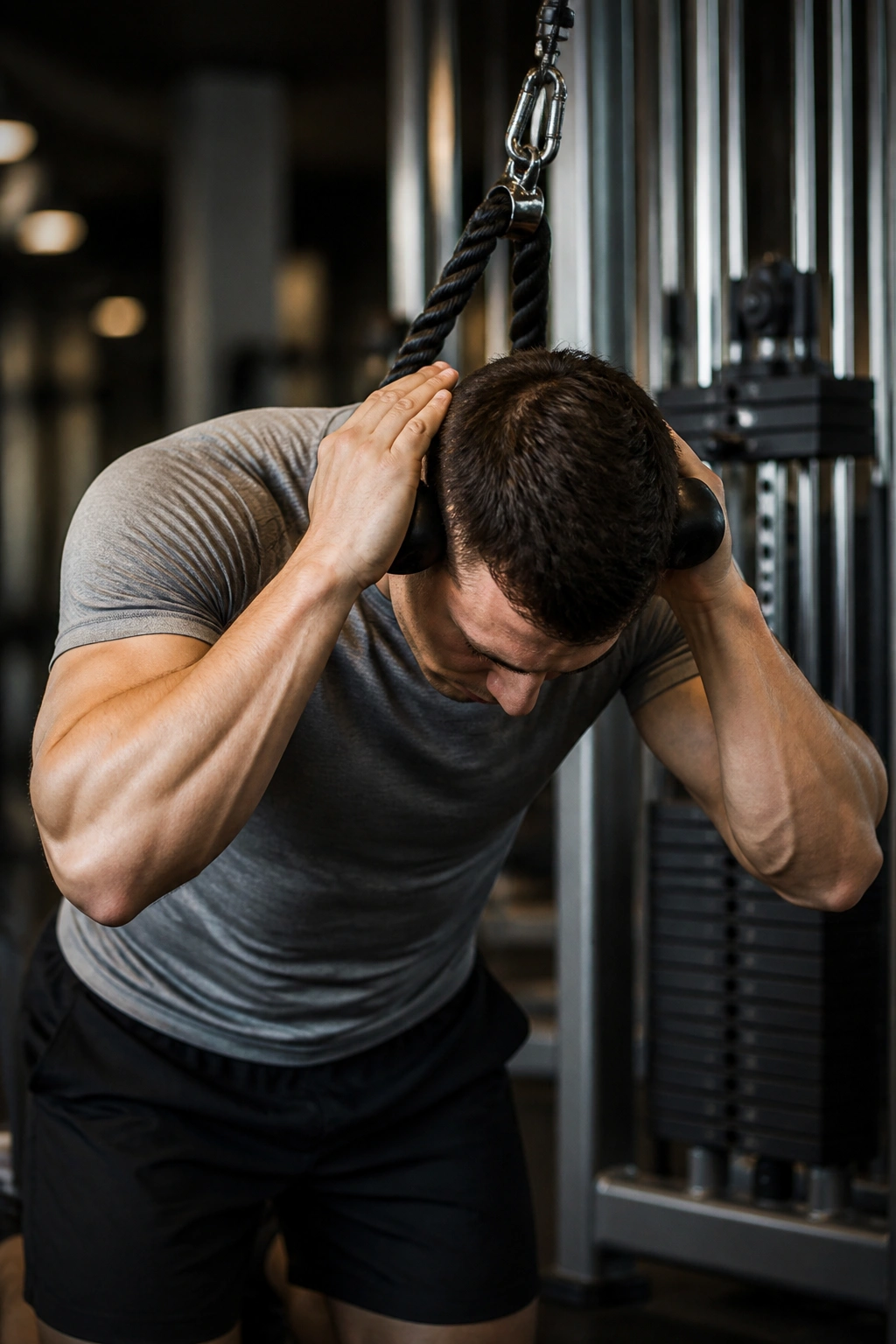
Cable crunches are one of the cleanest ways to load spinal flexion without turning the whole movement into a hip swing.
Set the rope high on a cable stack, kneel a few feet away, and pull the rope down so your hands are by your temples. The move comes from folding your ribs toward your pelvis, not from bowing at the hips. If you feel your thighs doing most of the work, you’re too far back or using too much weight.
What to Feel Here
- The top of the rep should feel like a hard squeeze across the front of your abs.
- Your hips stay mostly still.
- Your lower back rounds a little, but it does not collapse.
- A good set usually lives in the 10 to 15 rep range.
People rush cable crunches because the stack makes them feel “easy” at first. Then the last few inches hit like a brick. Slow down there. That’s the part doing the actual job.
My rule: if you can’t pause for one full second at the bottom, the stack is too heavy.
2. Overhead Plate Sit-Up
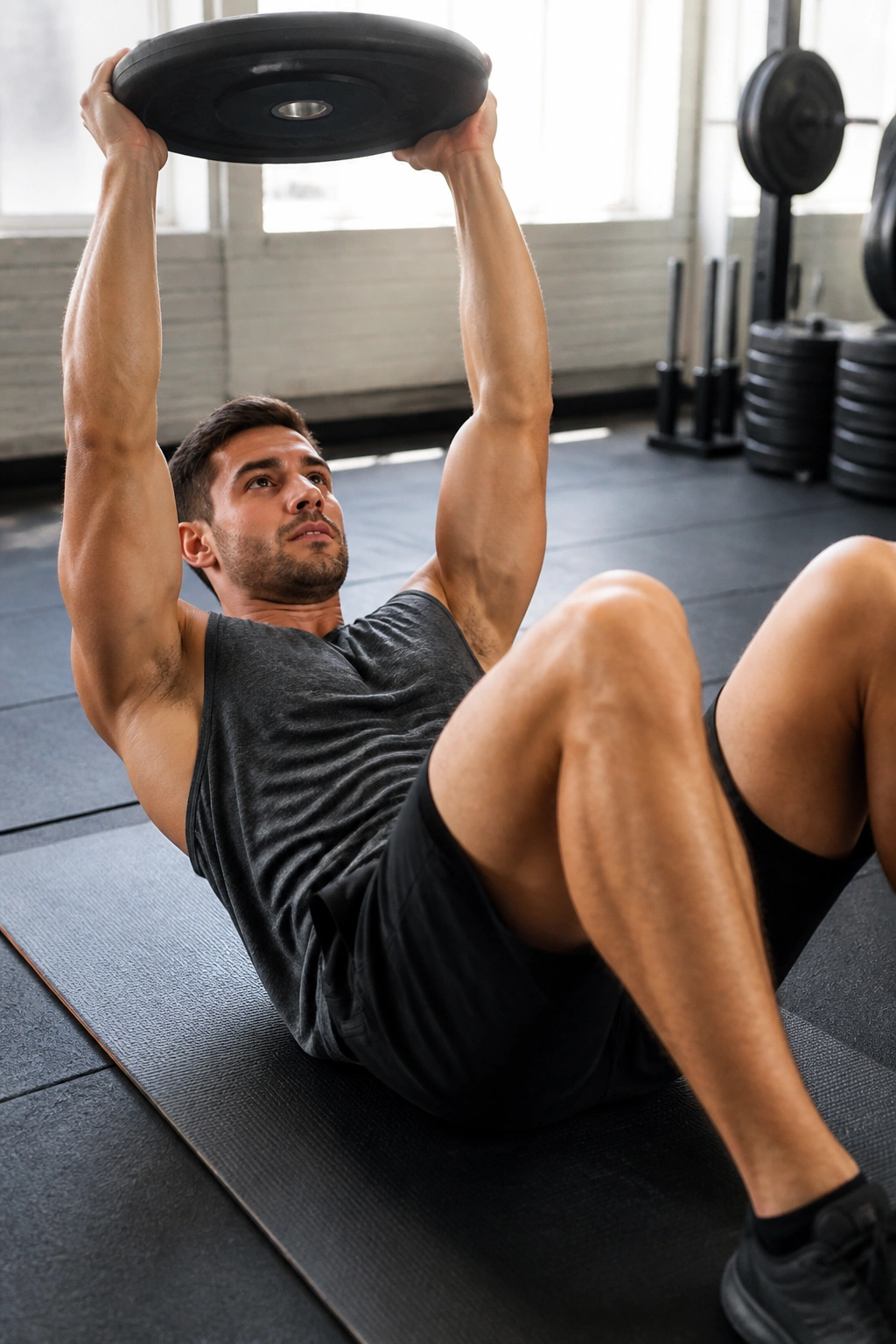
A 10-pound plate held overhead changes a sit-up fast. A 25-pound plate can turn it into a small disaster if your core isn’t ready for it.
Lie on the floor with your knees bent and press a plate straight overhead with both hands. Keep your arms locked out, then sit up by curling your torso and driving your ribs toward your thighs. The overhead position lengthens the lever, so the abs have to fight harder to get you upright.
How to Keep the Rep Honest
- Start with 5 to 10 pounds if you’re new to loaded sit-ups.
- Keep the plate stacked over the chest and face, not drifting behind your head.
- Exhale as you come up.
- Lower under control for 2 to 3 seconds.
The mistake I see most often is neck work masquerading as ab work. If your chin is jutting forward and your jaw feels tight, the plate is too heavy or your setup is sloppy. Keep the neck relaxed and let the trunk do the lifting.
This one is simple. That’s why it works.
3. Decline Bench Weighted Sit-Up
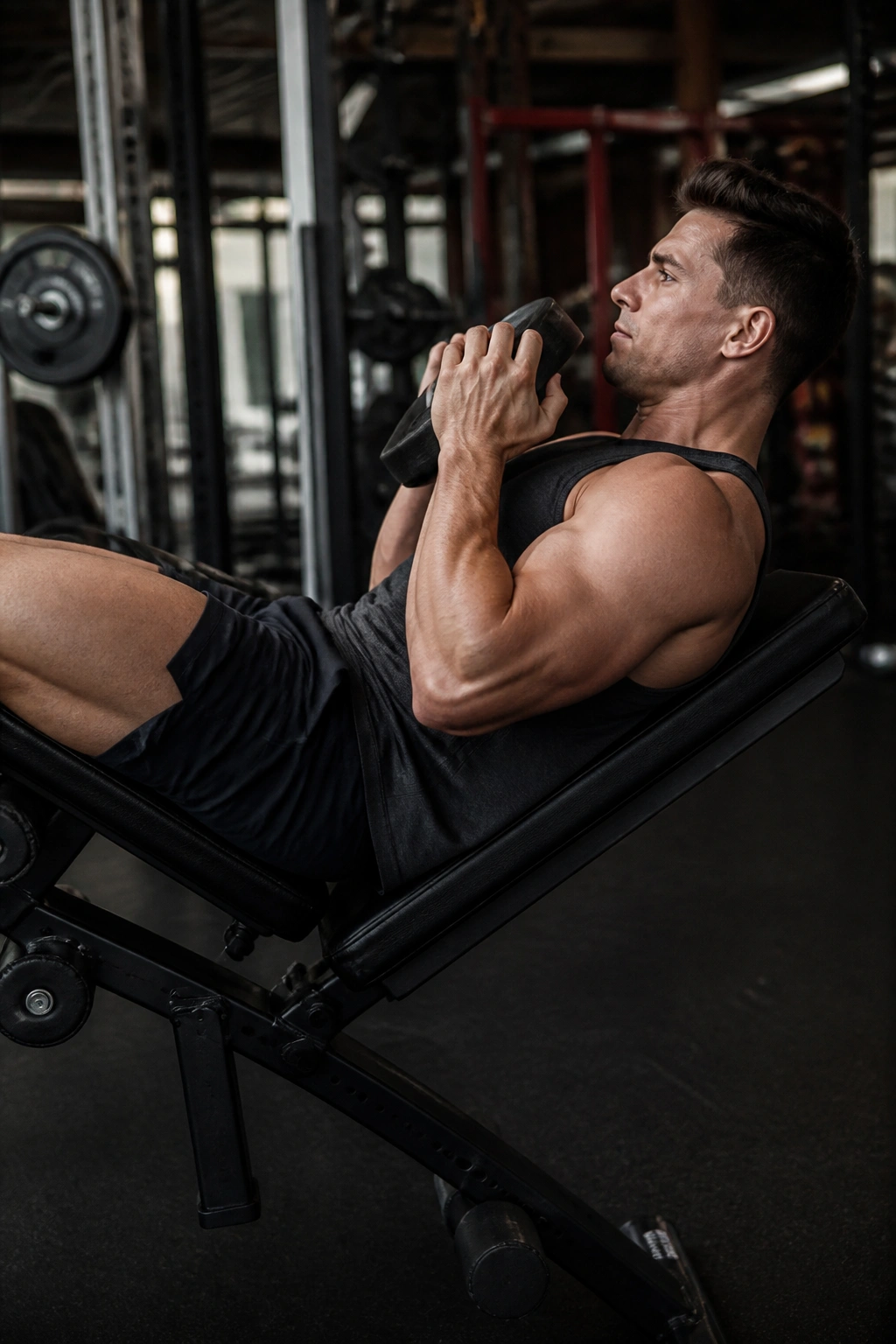
Why does a decline bench feel so much harsher than the floor? Because it gives you more range, less cheating, and a longer drop before the abs have to catch you.
Anchor your feet lightly, hold a dumbbell or plate at your chest, and lower back under control until your shoulder blades touch the bench. Then sit up without yanking on your hips. The decline angle makes the bottom half of the rep feel longer, which is exactly why this version builds a sturdier trunk.
A lot of lifters chase too much weight here and lose the actual sit-up. You do not need to turn your spine into a spring. A smooth set of 8 to 12 reps with a moderate load is cleaner than flailing through five ugly grinders.
If your lower back complains, cut the range short or switch to a cable crunch for a while. The bench is useful, but it is not sacred.
4. Weighted Dead Bug
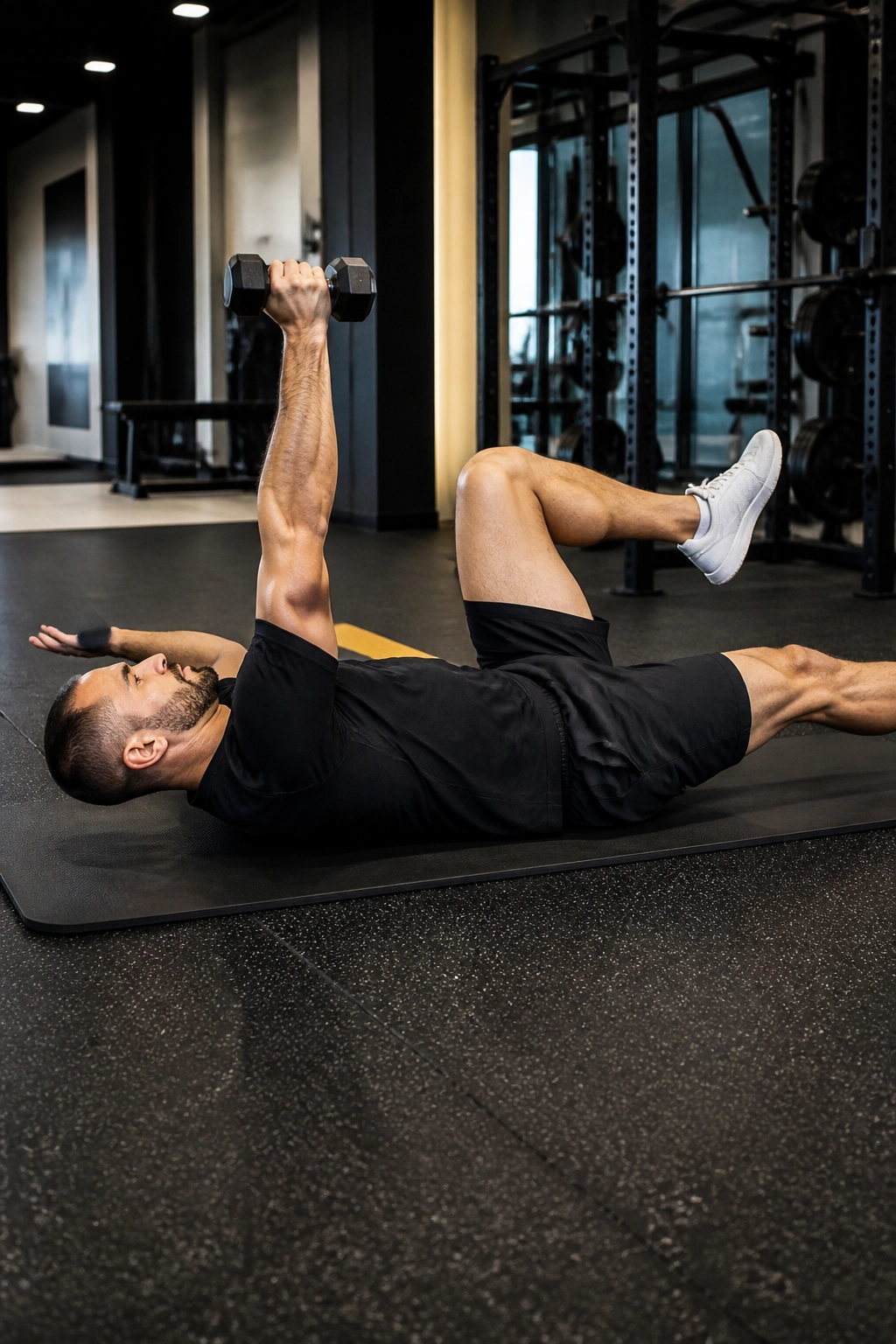
The dead bug looks tame until you add a dumbbell. Then it starts exposing every rib flare and low-back arch you’ve been getting away with.
Lie on your back, press a light dumbbell or medicine ball straight above your chest, and bring your knees up so your hips and knees make roughly 90-degree angles. Lower one leg and the opposite arm at the same time, then switch sides while keeping your lower back pressed into the floor. The weight overhead forces your trunk to resist extension instead of chasing motion.
The Low-Back Test
If your back pops off the floor, the load is too much.
If your ribs rise and your breathing gets choppy, slow down and shorten the leg reach.
If you can hold a light exhale through the whole rep, you’re in the right place.
This is one of my favorite starting points for weighted core work because it teaches control before load. It also pairs well with heavy lifting days, since it trains bracing without beating you up. Use 6 to 8 reps per side and keep the movement crisp.
5. Weighted Plank
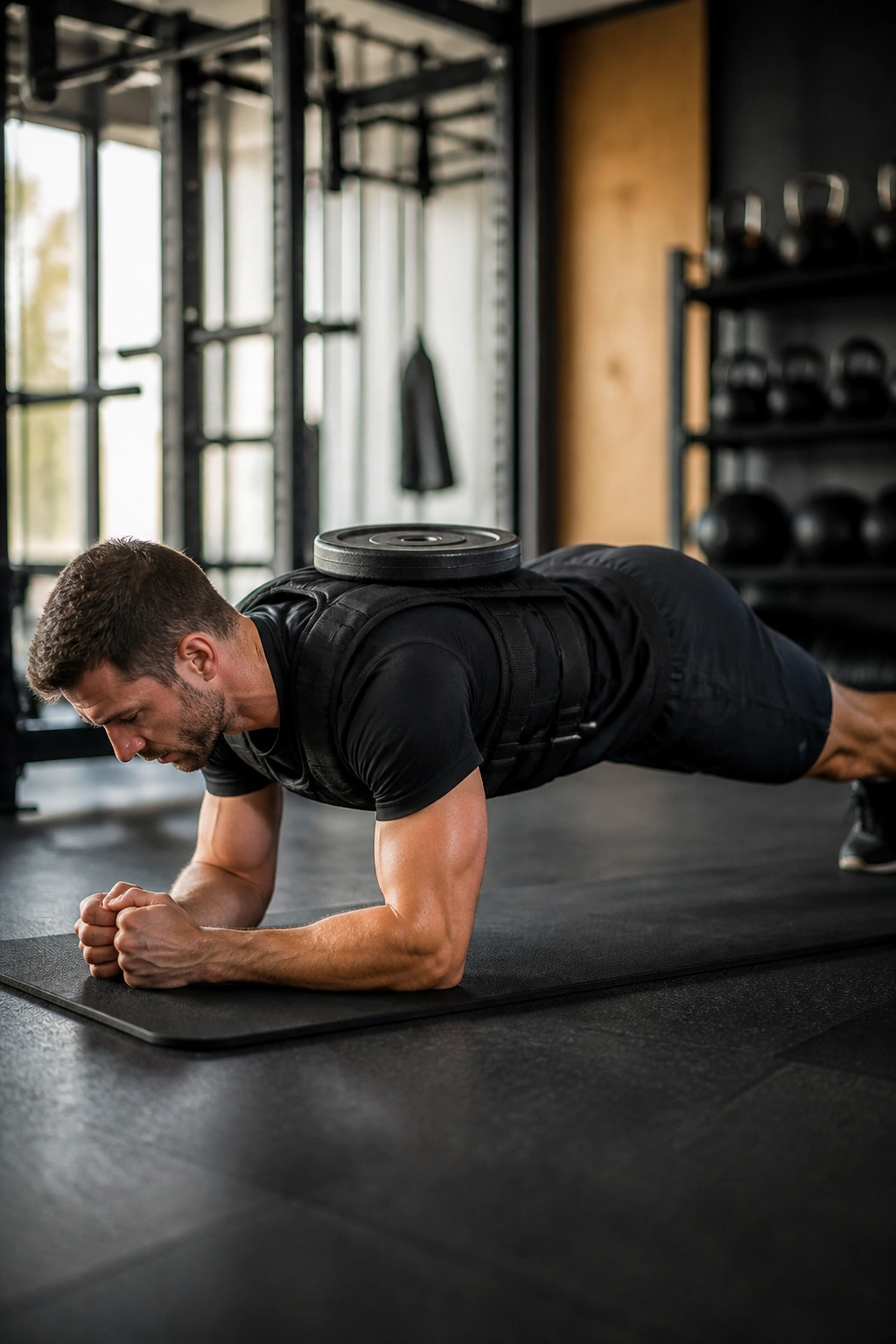
Still. Heavy. Honest.
A weighted plank looks boring from across the room, which is probably why people skip it. Put a weight plate on your upper back, or wear a weight vest if that feels more stable, and hold a plank with your elbows under your shoulders and your glutes squeezed hard. The goal is not to survive. The goal is to keep your spine from sagging while the load tries to pull you into extension.
Small Details That Matter
- Use a plate that sits flat, usually 10 to 25 pounds.
- Tuck the pelvis slightly so your low back stays long.
- Keep the neck neutral.
- Stop the set the second your hips start to drop.
I prefer short, hard holds over long, mushy ones. Twenty to forty seconds is plenty if the position is honest. Once your form starts unraveling, the set has already stopped being useful.
A plate sliding off someone’s back is not a badge of honor. It’s a sign the load got ahead of the position.
6. Barbell Rollout
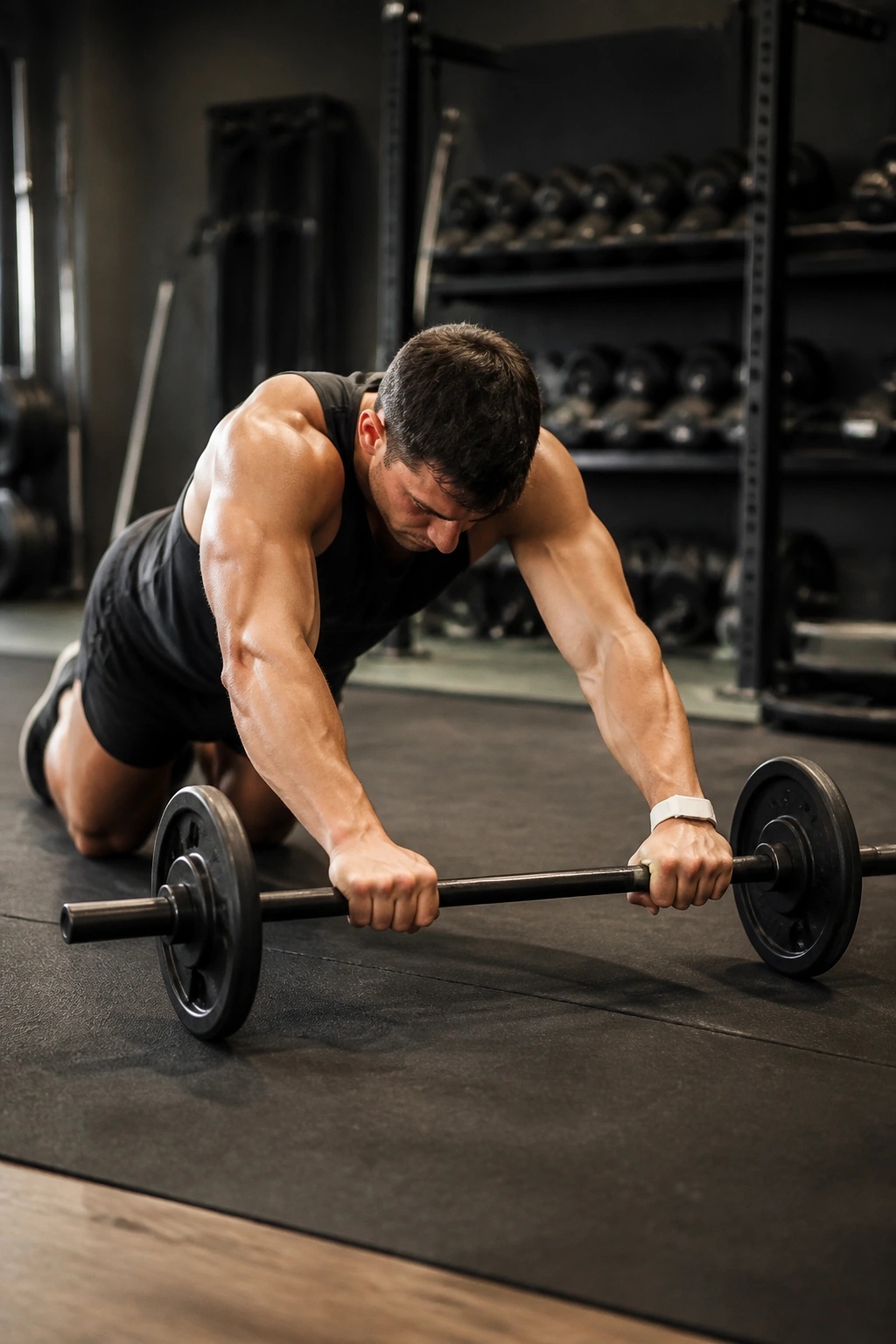
The barbell rollout looks like an arm exercise for about six seconds. Then your abs get the memo.
Load a barbell with small plates, kneel on a pad, and grip the bar just outside shoulder width. Roll the bar forward slowly while keeping your ribs tucked and your hips from dumping toward the floor. Go only as far as you can keep tension. Then pull yourself back using your abs, lats, and upper back together.
What to Watch For
- The lower back should stay long, not arched.
- The movement should feel controlled on the way out and on the way back.
- A short range is fine.
- If your belly drops first, stop there.
This is an advanced move. No shame in that. It’s hard because it punishes weak bracing immediately, and that feedback is useful even when it stings a little.
Start with 5 reps. Maybe 6. If the last rep looks the same as the first, you earned the right to add another inch next time.
7. Stability Ball Dumbbell Rollout
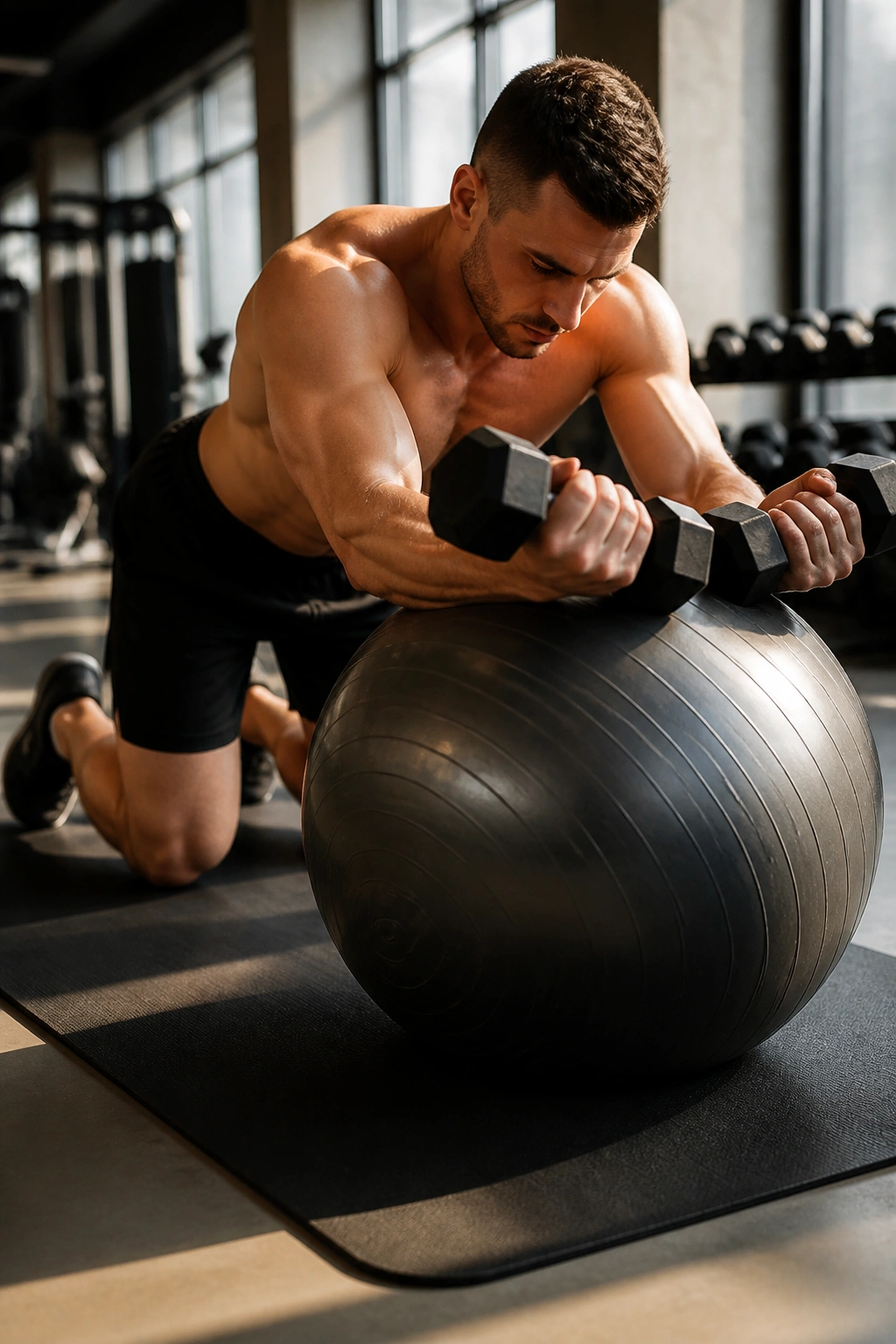
Put a pair of dumbbells in your hands and roll out on a stability ball, and the whole exercise changes. It still challenges the abs, but it spares the wrists a bit and gives you a smoother path than the barbell version.
Kneel on the floor, forearms or hands on the ball depending on the variation you pick, and let the ball roll away only until your torso starts to lose shape. The trick is to keep your ribs pulled in while the ball moves. If your shoulders creep up toward your ears, you’ve gone too far.
The interesting part here is that the ball makes the exercise feel easier right up until it doesn’t. That rolling surface tempts you to overreach. Then your core has to catch a long, messy lever and you feel the cost.
I like this one for higher reps, usually 8 to 12, because it teaches control without the same sheer brutality as the barbell rollout. It’s a smart bridge between basic planks and the nastier anti-extension work.
8. Medicine Ball Russian Twist
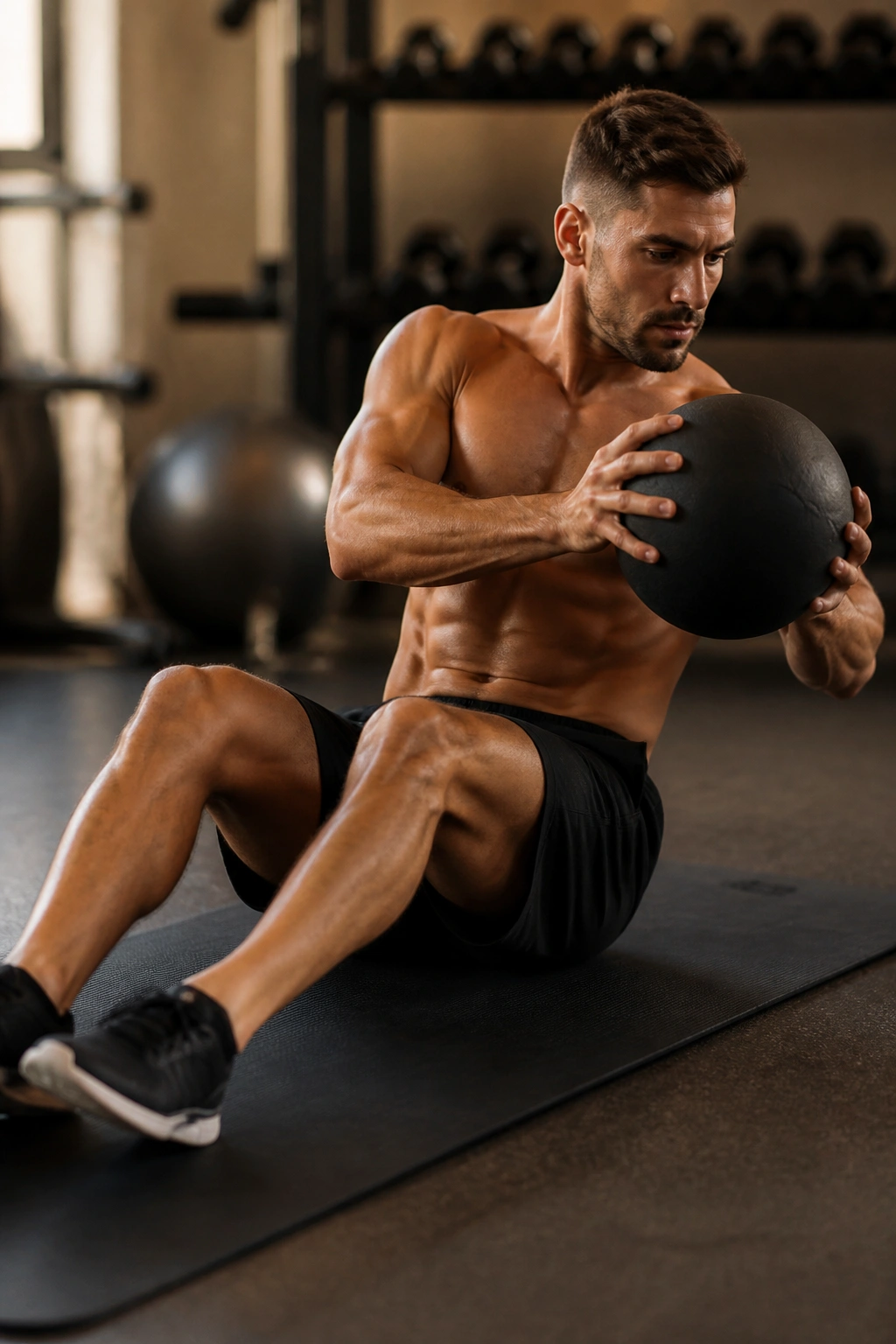
Fast Russian twists are a mess. Controlled Russian twists can be useful.
Sit on the floor with your knees bent, lean back just enough to feel your abs turn on, and hold a medicine ball or a single dumbbell at your chest. Rotate the torso from side to side while keeping the movement deliberate. The ball should travel as a load, not as a whipping object.
Quick Rules That Save Your Back
- Start with 6 to 12 pounds, not a monster ball.
- Keep the chest lifted and the spine long.
- Let the shoulders and rib cage rotate together.
- Keep the feet down if your low back gets cranky.
The goal is rotation under control, not speed. If the only thing moving is your arms, the exercise stops making sense. If your knees start bouncing around to fake momentum, cut the set and slow it down.
A tidy set of 10 to 16 total twists is enough to make the obliques work. More isn’t automatically better here. Cleaner is better.
9. Cable Wood Chop
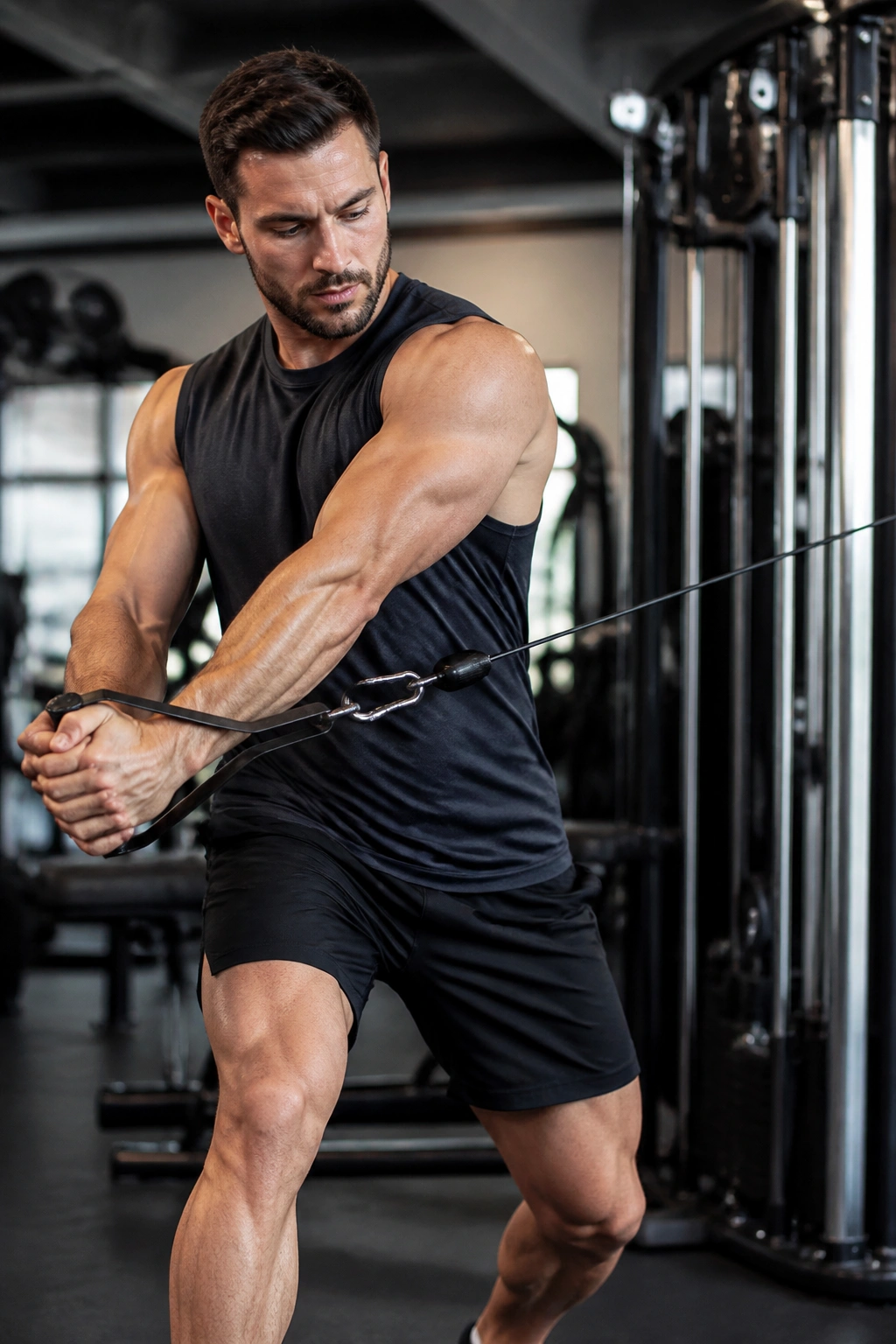
High-to-low or low-to-high? Both work, and both teach the trunk to handle rotation with tension in the line.
Set the cable at shoulder height for a high chop, or near the floor for a low chop. Stand in a split stance, grab the handle with both hands, and pull across your body in one smooth arc. The hips and torso should turn together a little, but the movement should finish with the abs controlling the deceleration, not the arms yanking the stack around.
How to Use It
- Keep the arms long but not locked stiff.
- Turn through the rib cage and shoulders.
- Finish near the opposite hip or shoulder.
- Use 8 to 12 reps per side.
This move is great when you want tension through a full range, not just a crunch at the top. It also carries over well to sports and any kind of twisting strength, because the cable keeps loading the line the entire time.
If the movement feels like a cable arm swing, lighten the weight and slow the finish. That’s where the abs earn their keep.
10. Landmine Rotation
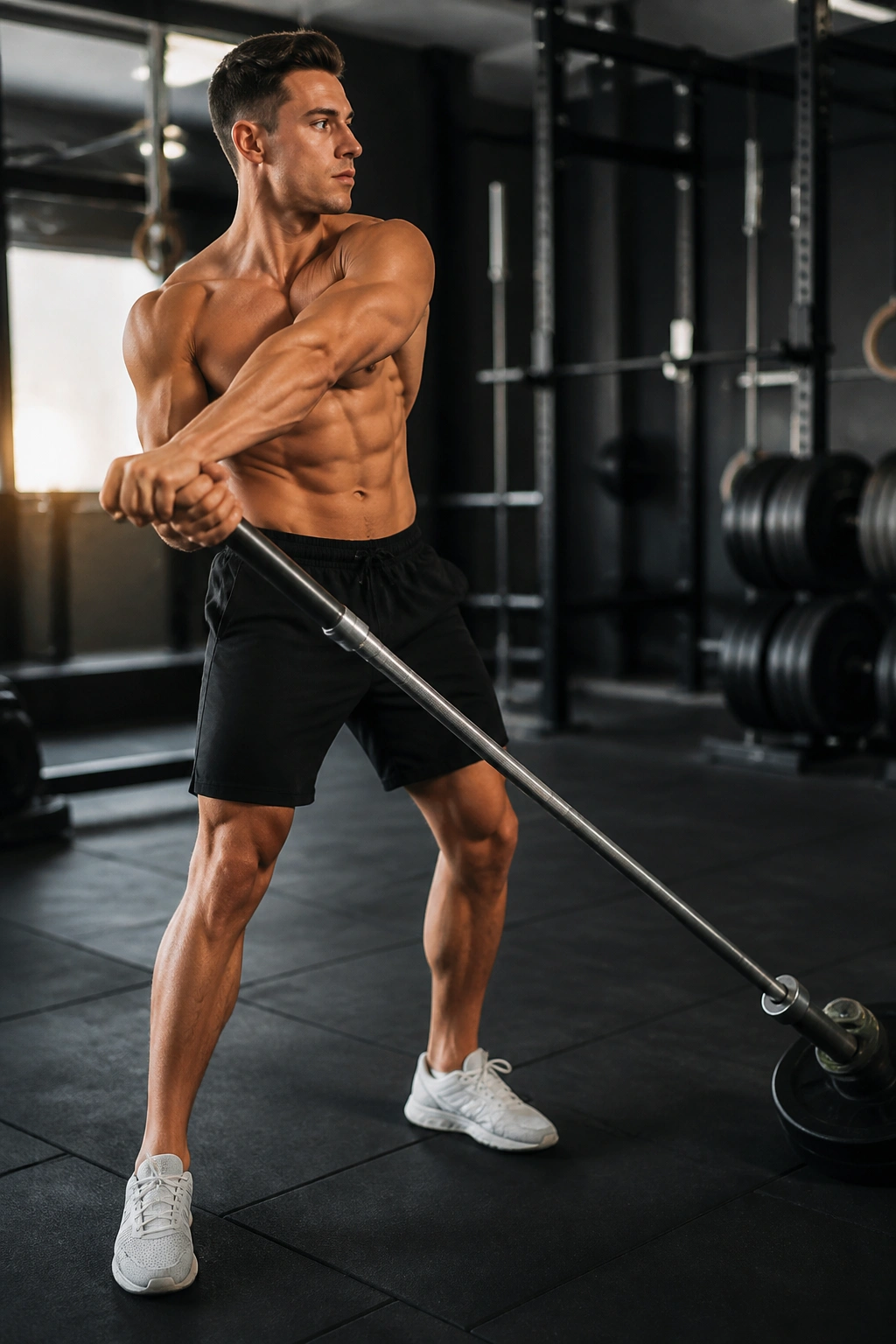
Most people think landmine work is for shoulders. Fair mistake. It can hit the abs hard when you use the bar path well.
Wedge one end of a barbell into a landmine base or a corner, hold the free end with both hands, and rotate it in a controlled arc from one hip toward the other side. The path is fixed, which makes it easier to feel than a free-weight twist. You get the loading of rotation without the chaos of an uncontrolled barbell turn.
What I like here is the balance between strength and restraint. You have to own the start of the movement, and you have to stop it too. That stop is where the obliques and deeper core muscles light up.
Use a moderate load, not a maximal one. 6 to 10 reps each side is enough. The bar should move smoothly, not snap through the arc like it’s trying to escape.
11. Pallof Press
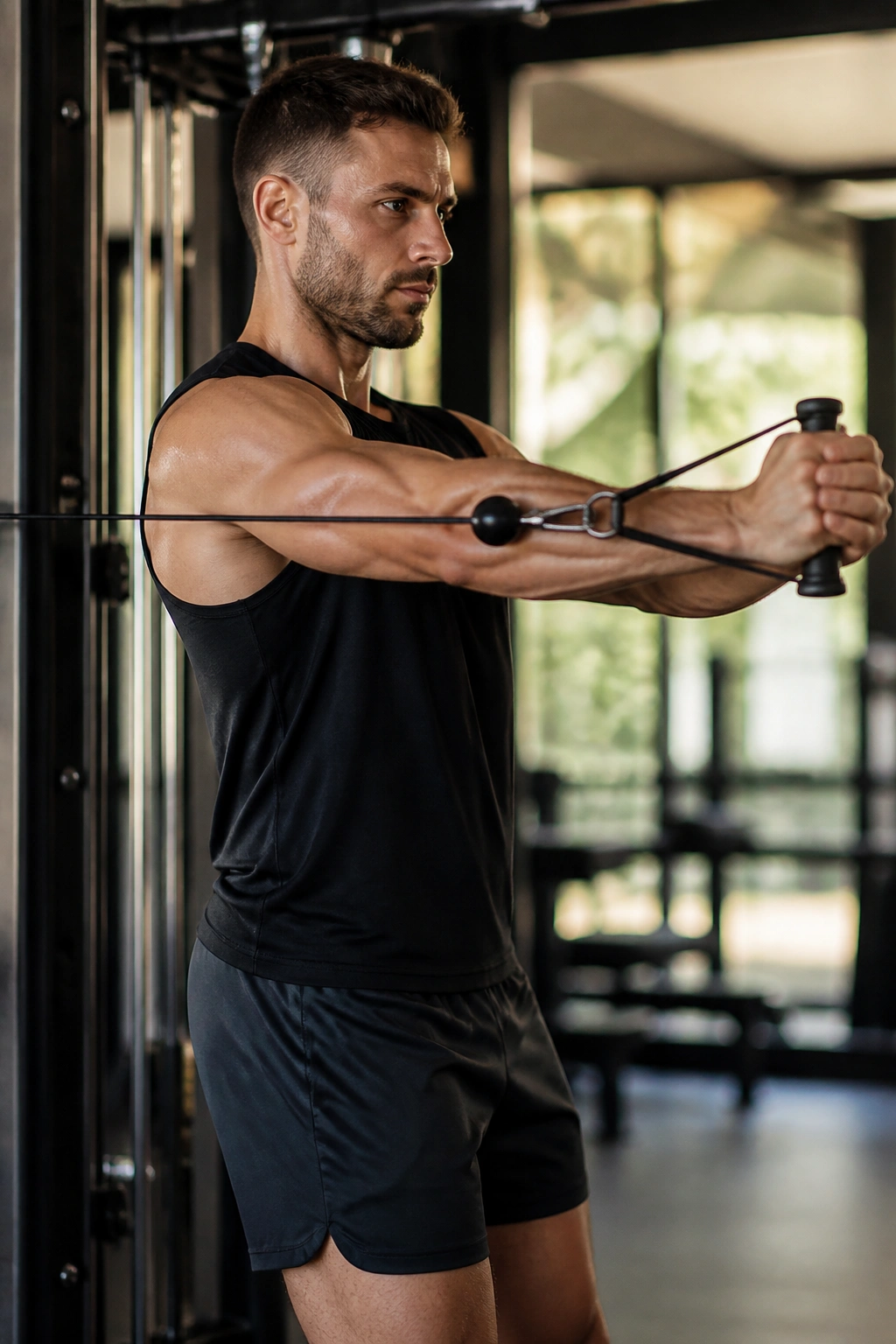
If your torso spins when you press, the Pallof press has already done its job.
Set a cable or band at chest height, stand sideways to the anchor, and hold the handle against your sternum. Press straight out in front of you, pause, then bring it back in. The entire challenge is resisting rotation while the arms move. That sounds simple. It isn’t.
Variations Worth Using
- Standing, for a straight anti-rotation drill.
- Half-kneeling, to calm down the hips.
- Tall-kneeling, if you want less help from the legs.
- Overhead hold, if you want an extra dose of shoulder stability.
The best part of this move is how honest it is. If the cable drags you off line, you feel it instantly. If your shoulders twist, you feel that too. There’s no place to hide.
I like 8 to 12 presses per side, or 10 to 20-second holds if you want a steadier burn. Boring on paper. Sneaky in real life.
12. Suitcase Carry
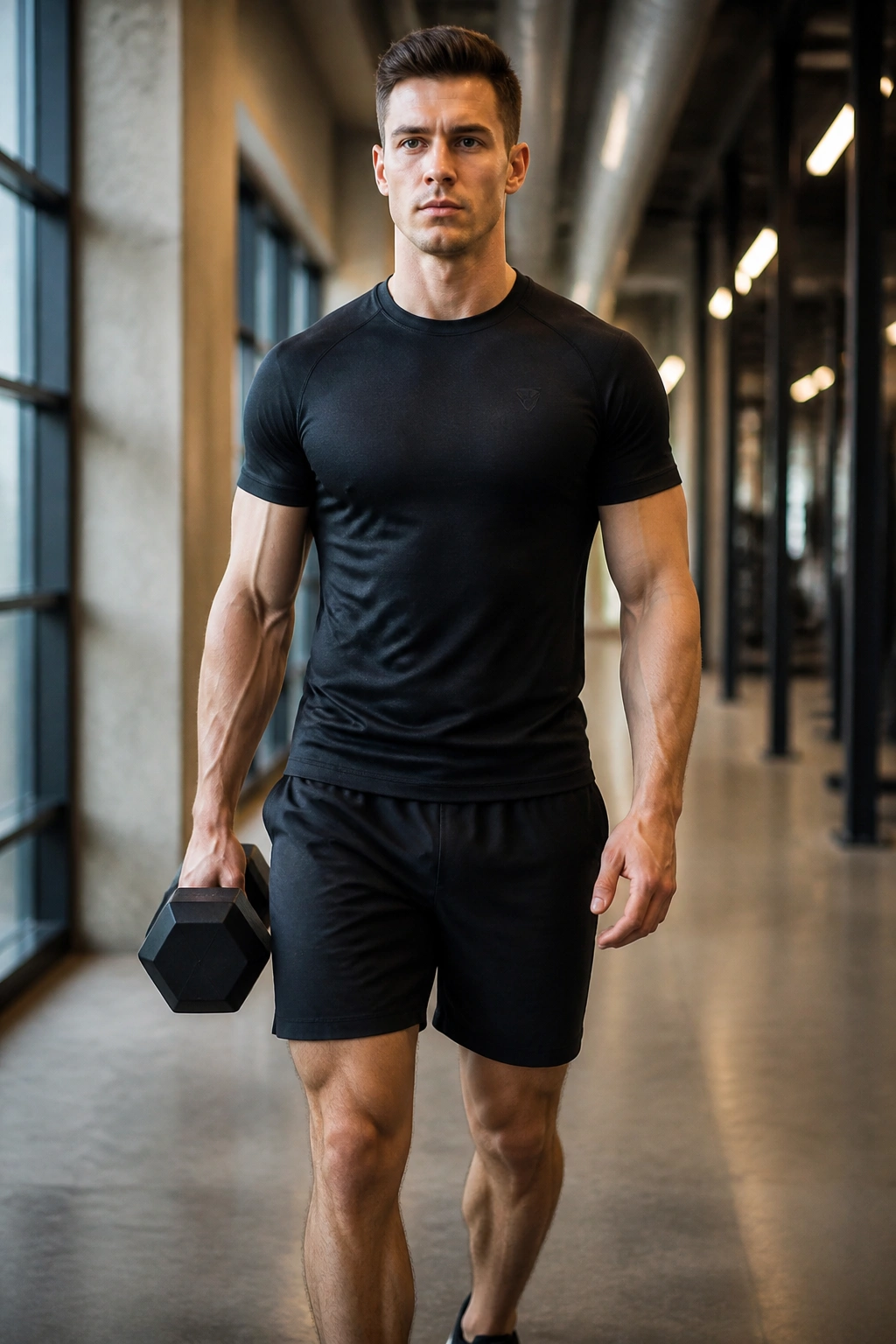
One heavy dumbbell, one side, and a walk across the room. That’s the whole exercise, and it’s far harder than it looks.
Pick up a weight in one hand, stand tall, and walk without leaning toward or away from the load. The obliques on the opposite side have to keep your torso from tipping. Your grip gets tested too, which is a nice bonus because the whole body tends to wake up when the hand starts getting tired.
Keep your steps smooth and your ribs stacked over your pelvis. If you start waddling or shrugging the loaded shoulder upward, the carry got too heavy or too long. Shorter walks are better than sloppy heroics.
I like suitcase carries in 20 to 40 step chunks per side. They’re especially good after heavy lower-body lifting, when your brace feels a little sleepy and you want it to come back online fast.
13. Farmer’s Carry
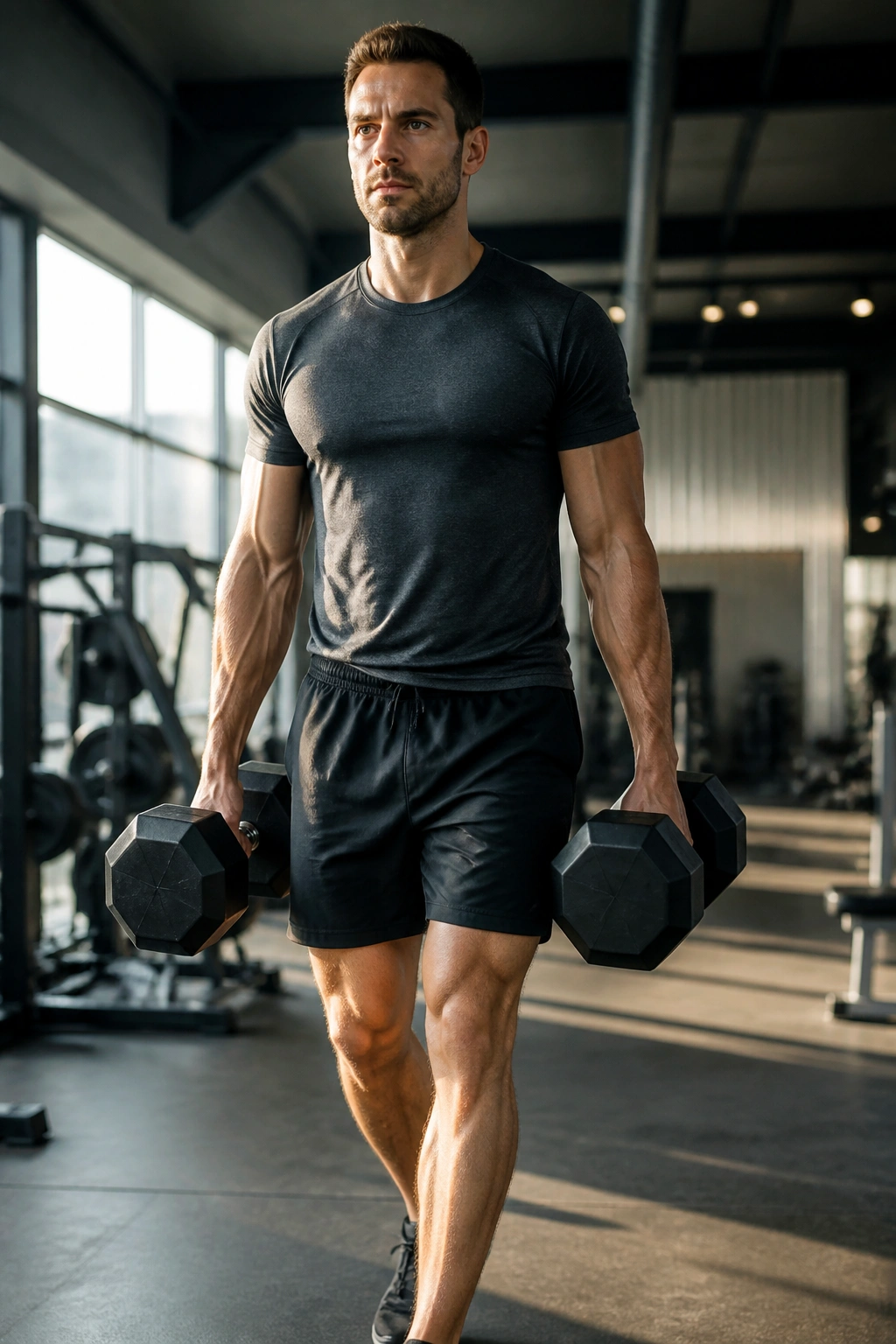
Two weights. No excuse.
Farmer’s carries use a dumbbell, kettlebell, trap bar, or loaded handles in both hands, and the job is brutally plain: walk with posture and don’t let the trunk collapse. Compared with a suitcase carry, the side-to-side challenge drops a bit, but the total bracing demand goes up. Your abs, grip, upper back, and feet all have to stay organized while you move.
That makes this one a workhorse. Not flashy. Just useful.
What Makes It Different
- Both sides load at once, so the brace has to stay symmetrical.
- The grip usually gives out before the core does.
- It builds posture under fatigue.
- A longer walk, around 30 to 60 steps, works well.
You do not need to stand like a statue. Walk normally. Breathe. Keep the shoulders set and the ribs quiet. If the dumbbells bang against your thighs because you’re rushing, slow down and shorten the steps.
This is one of those exercises I’d keep even if I only had a few tools in the gym. It teaches the body to stay useful while loaded. That matters.
14. Dumbbell Side Bend
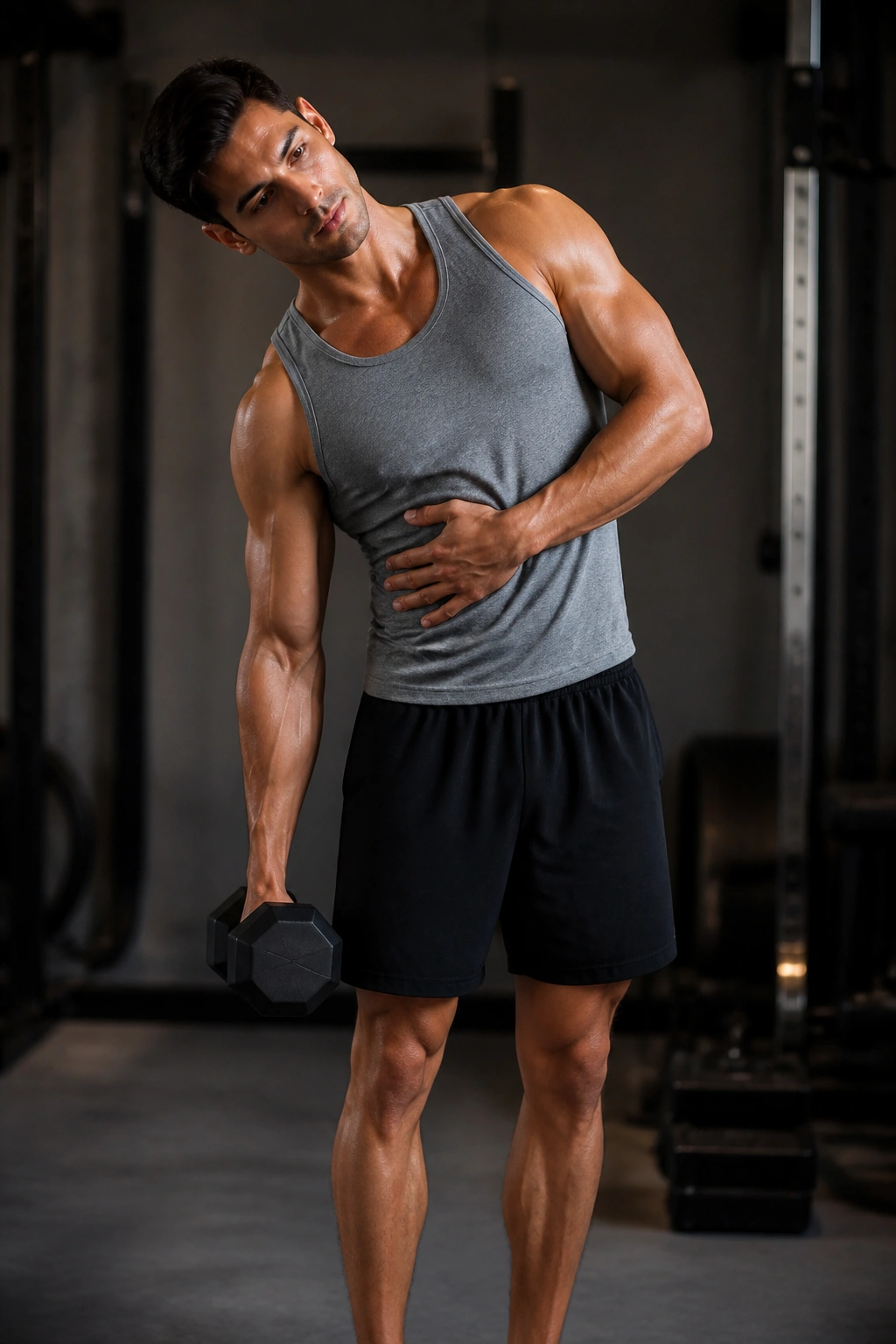
Done right, side bends train the obliques without circus-level load. Done badly, they turn into a hip hike with a dumbbell attached.
Stand tall with a single dumbbell in one hand and let it hang by your side. Lean straight to the loaded side until you feel a stretch along the opposite ribs, then pull back up using the side of the torso. The movement should stay clean and vertical. No twisting. No swinging. No dropping into the bottom like a sack of bricks.
The Right Weight Is Smaller Than You Think
- Use a load you can control for 8 to 15 reps.
- Keep the free hand on the side of your torso if that helps you feel the line.
- Stop before the shoulder rolls forward.
- Move slow enough that the dumbbell never swings.
Some lifters love side bends. Some avoid them because they’ve seen too many sloppy versions. I get it. The exercise has a bad reputation when people chase heavy dumbbells and lose the point. Still, when the load is sensible and the tempo is honest, it’s a good direct hit for the obliques.
15. Hanging Knee Raise with Ankle Weights
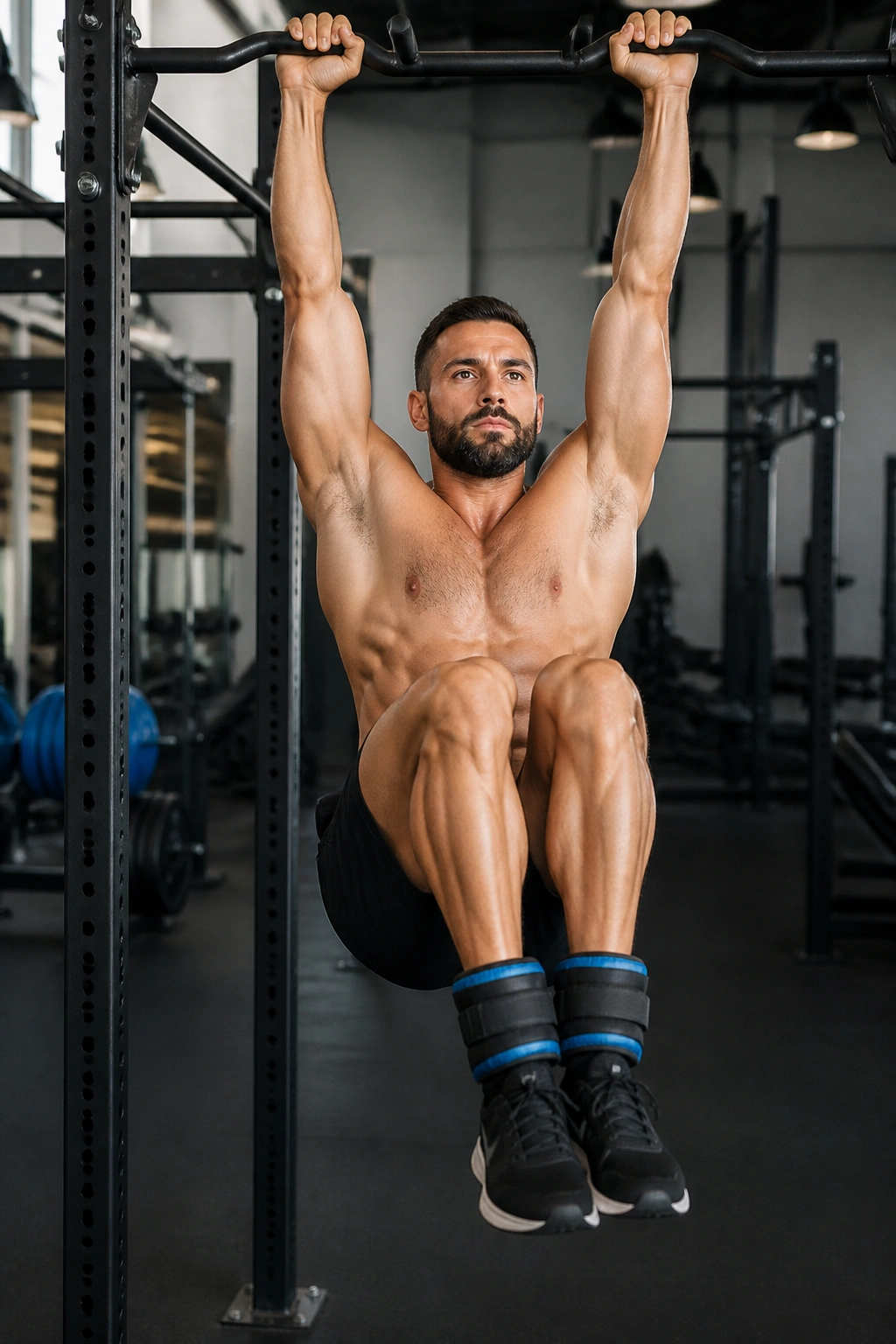
Why add weight to a knee raise that already feels hard? Because the extra load forces you to control the swing instead of surviving it.
Hang from a pull-up bar with ankle weights on, or use a captain’s chair if your grip is the weak link. Start from a dead hang or a supported hang, then bring your knees toward your chest while curling the pelvis upward at the top. That little pelvic tuck matters. Without it, the movement turns into a hip-flexor fling.
How to Keep It Clean
- Keep the lower body quiet at the start.
- Lift the knees, then finish with a small crunch.
- Do 8 to 12 reps with no swinging.
- Lower under control instead of dropping back to the hang.
The first sign of cheating is usually momentum from the bottom. The second is a jaw-tight, breathless shrug that has nothing to do with the abs. If you need to kick off the floor or swing backward to start, the set is too hard.
This version works well for people who already own basic hanging knee raises and want a harder, more controlled target.
16. Hanging Leg Raise with Ankle Weights
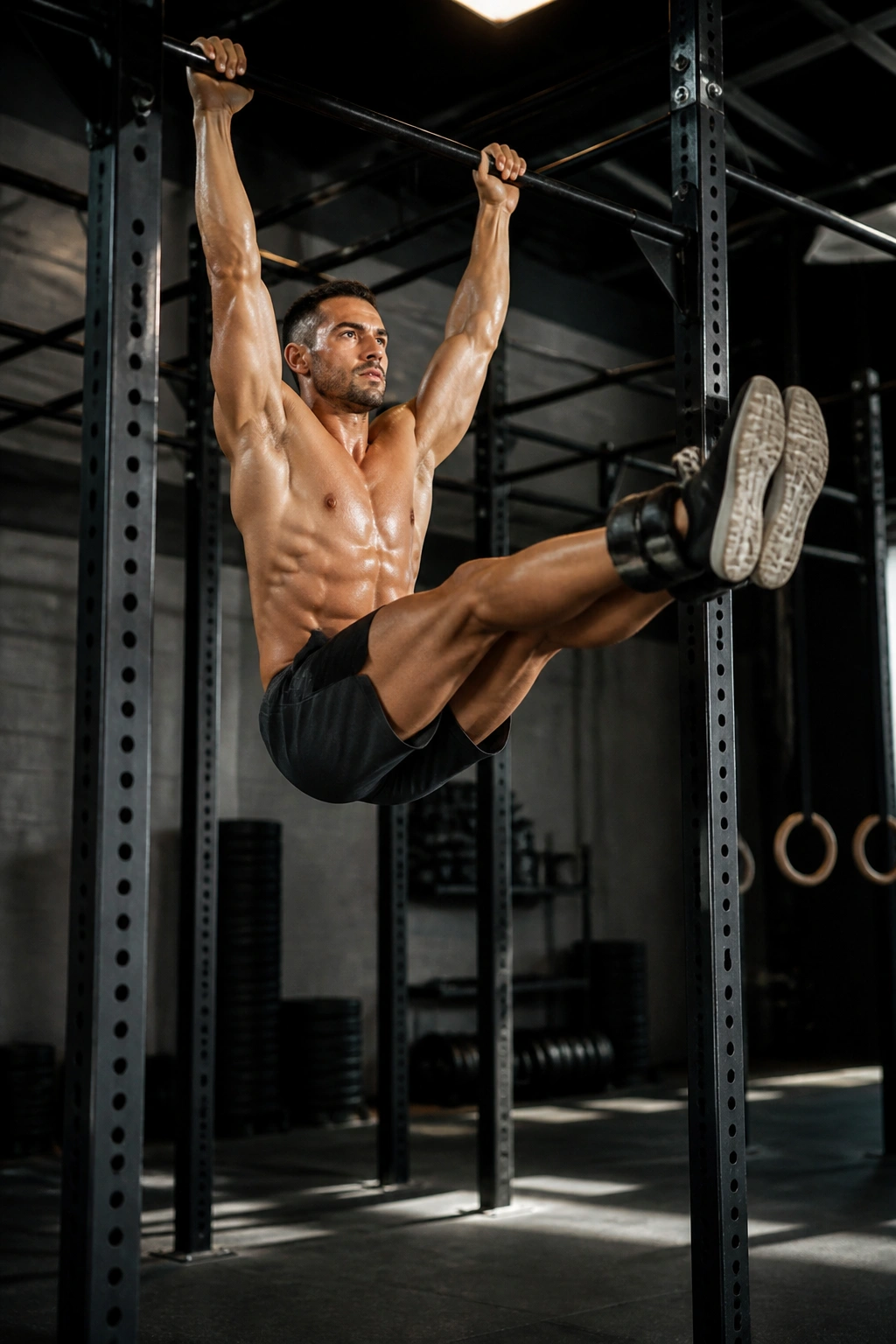
Straightening the legs changes everything. The lever gets longer, the swing gets nastier, and the abs have to work harder to keep the pelvis from tipping.
From a hang, keep the legs together and raise them as straight as you can without turning the movement into a kip. A slight bend in the knees is fine if hamstrings or hip flexors are fighting you. The aim is to lift the legs while keeping the trunk from folding backward into a wild arch.
A slow lower matters here more than the lift. Three seconds down is a good target. That eccentric portion tends to light up the abdominals and punish sloppy control in a way the top of the rep never will.
This is not the place to chase huge volume. 6 to 10 reps is enough for most people. Once the swing starts, the set is done. Hanging leg raises reward patience, and they punish impatience almost immediately.
17. Weighted Reverse Crunch
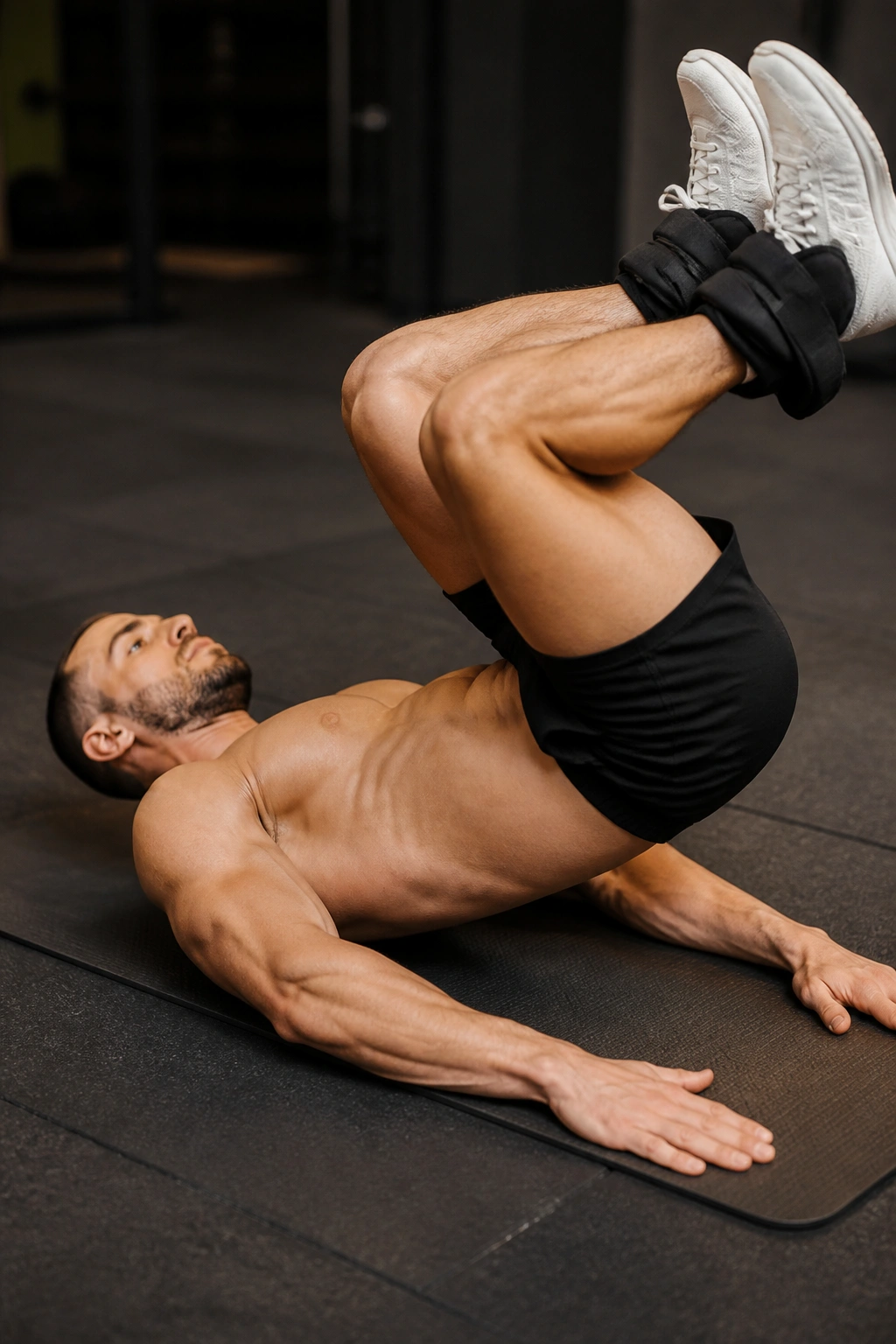
Not every great ab move has to curl your spine from the top down. The reverse crunch attacks the lower part of the movement and often feels cleaner on the back.
Lie on the floor or on a bench, bend your knees, and hold light ankle weights or a small dumbbell between your feet only if you can keep control. Better yet, use ankle weights or a cable setup so the load stays honest. Curl your pelvis up toward your ribs, then lower it slowly without letting the legs drift into a swing.
What the Lower Abs Are Doing
- The pelvis lifts first.
- The knees stay bent through the lift.
- The abs finish the curl.
- The lower back stays heavy against the floor on the way down.
A lot of people turn reverse crunches into a leg raise. That misses the whole point. The abs should do the curling, not the hip flexors hauling the legs around. If the weights make the setup messy, the load is too high.
I like 10 to 15 reps here. Smooth reps. Short pauses. No bouncing.
18. Kettlebell Windmill
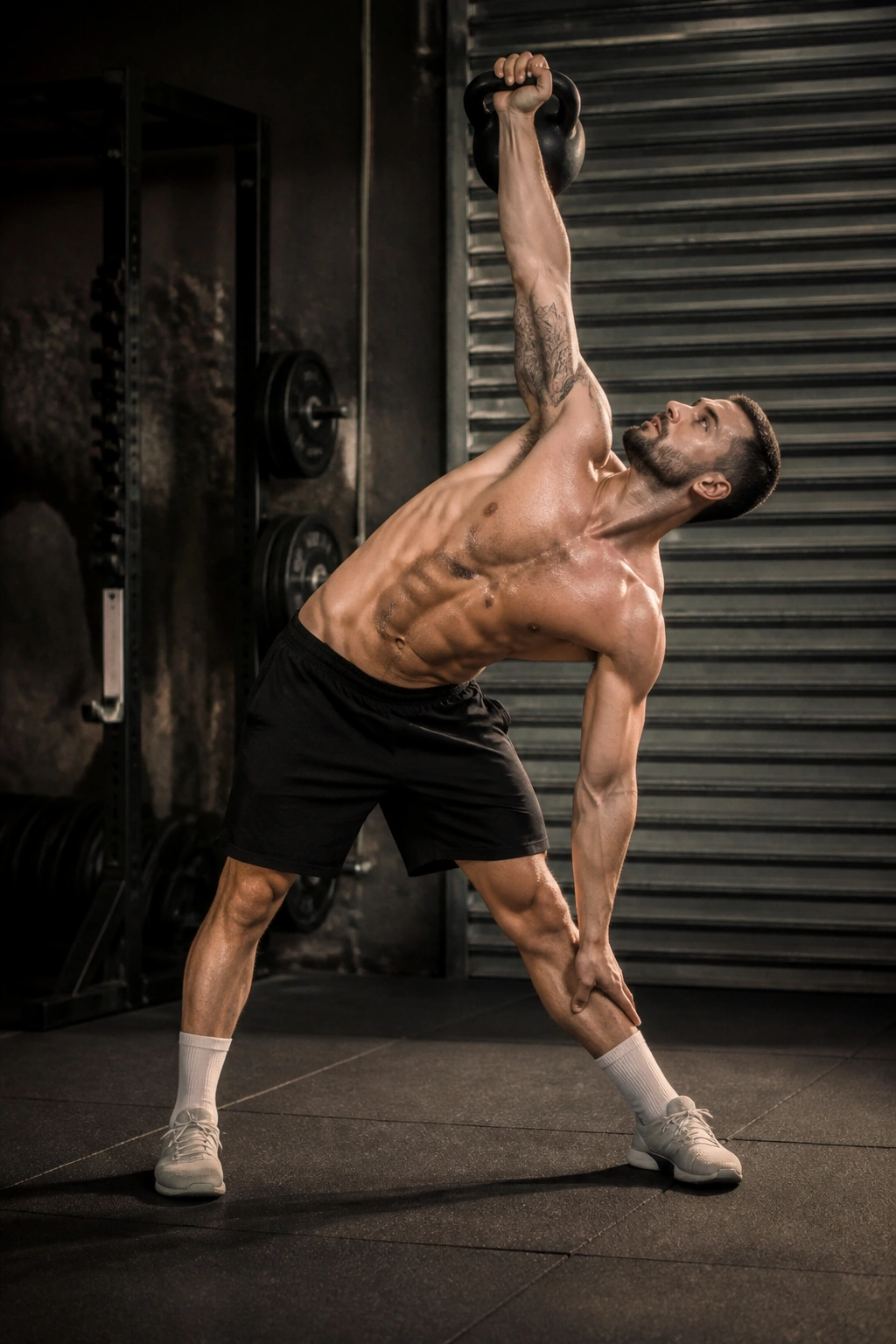
If you want one loaded oblique drill that also teaches shoulder control, make it the windmill.
Press a kettlebell or dumbbell overhead with one arm, turn the feet slightly away from the loaded side, and push the hip back as the free hand slides down the inside of the thigh. Keep your eyes on the weight overhead the whole time. The trunk has to resist rotation while the hips and hamstrings open the lower half of the body. It’s a strange mix. That’s why it works.
This is not a beginner move. Light weight first. Always. The windmill exposes weak shoulder stacking, tight hamstrings, and a lazy brace in one shot. That can be annoying, but it’s also useful because you can tell exactly what’s missing.
- Start with 5 to 15 pounds in the hand overhead if you’re learning.
- Keep the top arm vertical.
- Turn the front foot slightly out.
- Stop the descent the moment your chest starts twisting toward the floor.
If you only have time for a few weighted ab drills, pick one flexion move, one anti-rotation move, and one carry. That covers more ground than doing six random crunch variations and hoping your core gets the memo.
