



A kettlebell core workout does a better job of exposing weak links than a mountain of crunches ever will. The bell pulls you off center, and your midsection has to keep your ribs, pelvis, and shoulders from turning into a wobbling mess.
That matters because a stronger core is not just about visible abs. It is about keeping your torso steady when a weight hangs off one side, sits in a front rack, or moves overhead while your legs are doing the real work.
Kettlebells are especially good at that because they punish lazy bracing. Swings, carries, get-ups, presses, and offset holds ask for tension, breathing, and balance at the same time — which is a much more honest test than lying on the floor and counting reps.
Pick three or four of these movements, keep the loads clean, and the feedback is immediate. If your trunk stays tight and your breathing stays calm, the weight usually feels manageable. If not, the bell tells the truth fast.
The simplest place to start is on the floor.
1. Dead-Bug Kettlebell Press
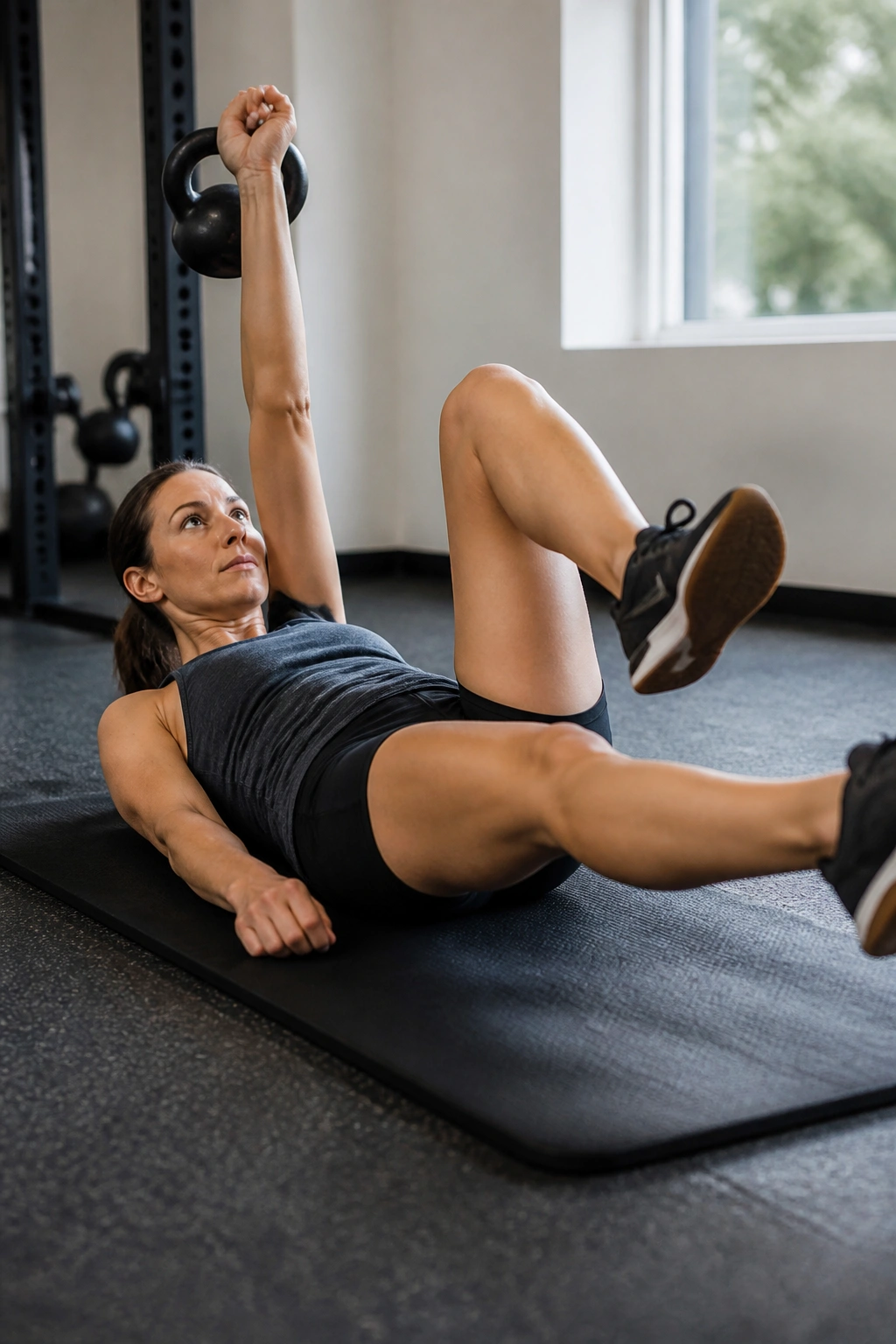
A dead bug with a kettlebell looks almost too easy. It isn’t. Once one arm presses overhead and the opposite leg reaches away, your torso has to stop the lower back from arching off the floor, and that is where the work lives.
Lie on your back with one kettlebell in the right hand, arm straight above the shoulder. Press the bell up hard, then slowly lower the left leg until the heel hovers an inch or two above the floor. Return to center, switch sides, and keep the movement slow enough that you never lose contact between your lower back and the mat.
3 sets of 6 reps per side is a clean starting point. Use a weight that feels almost annoyingly light; if the bell makes your ribs pop up, it is too heavy.
Your lower back should stay quiet.
This is one of the best entry points for kettlebell core work because it teaches bracing without fatigue getting in the way. I like it early in a session, before swings or carries, when your form is still sharp and your breathing can stay measured.
2. Half-Kneeling Halo and Press
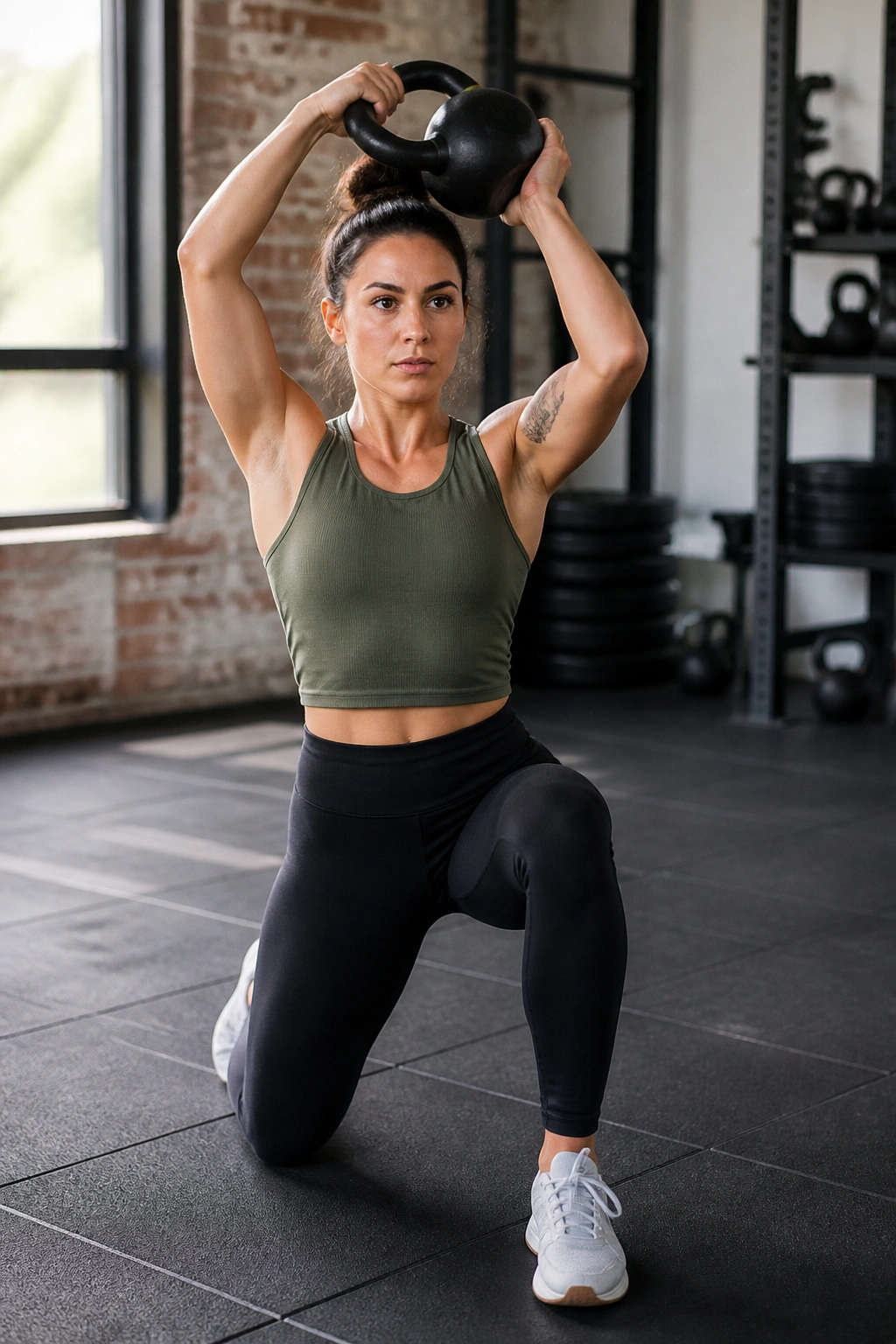
Why does a little circle around the head matter? Because the halo forces your upper body to stay stacked before you ever press the bell overhead.
Set up in a half-kneeling stance, right knee down, left foot forward. Hold the kettlebell by the horns near your chest, circle it slowly around your head once in each direction, then finish with a press on the working side. The kneeling position keeps you from cheating with your legs, which is exactly why this one lights up the obliques so fast.
How to Use It
- Do 5 slow halos each direction before pressing.
- Follow with 5 presses per side.
- Keep the kettlebell close enough to brush the hairline, not wide and sloppy.
- Use a lighter bell than you think you need.
A lot of people rush the halo and turn it into a neck swing. Don’t. The point is control, not speed. When the rib cage stays stacked over the pelvis, the press feels cleaner too, and that carryover matters when you move on to harder overhead work.
3. Suitcase Carry March
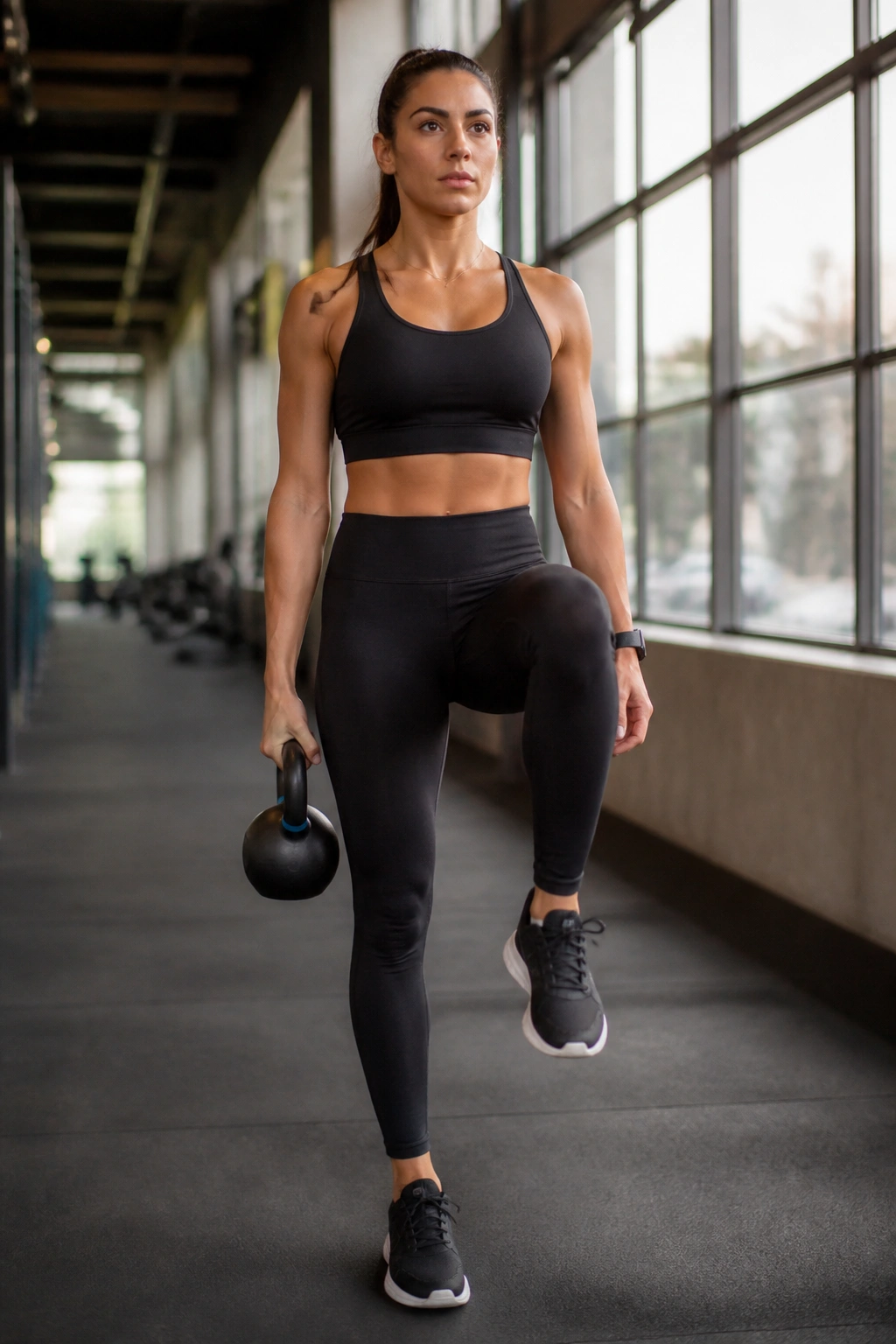
A suitcase carry is one of those drills that looks almost boring until your side starts talking back. Hold one kettlebell in one hand, stand tall, and march forward or in place without leaning toward the weight.
The trick is simple: the bell wants to drag you sideways, and your obliques, glute med, and deep trunk muscles have to stop that from happening. If you can keep your shoulders level while the load hangs on one side, you are training the kind of stiffness that shows up when you need it.
Quick Cues
- Walk with short, controlled steps.
- Keep both shoulders level in the mirror or with a phone camera.
- Don’t let the free hand flap around.
- Switch sides before your grip turns to mush.
I like 3 to 5 rounds of 20 to 40 steps per side. If you are indoors, march in place for 30 to 45 seconds instead. Simple. Miserable in the right way. And more useful than most people expect.
4. Turkish Get-Up
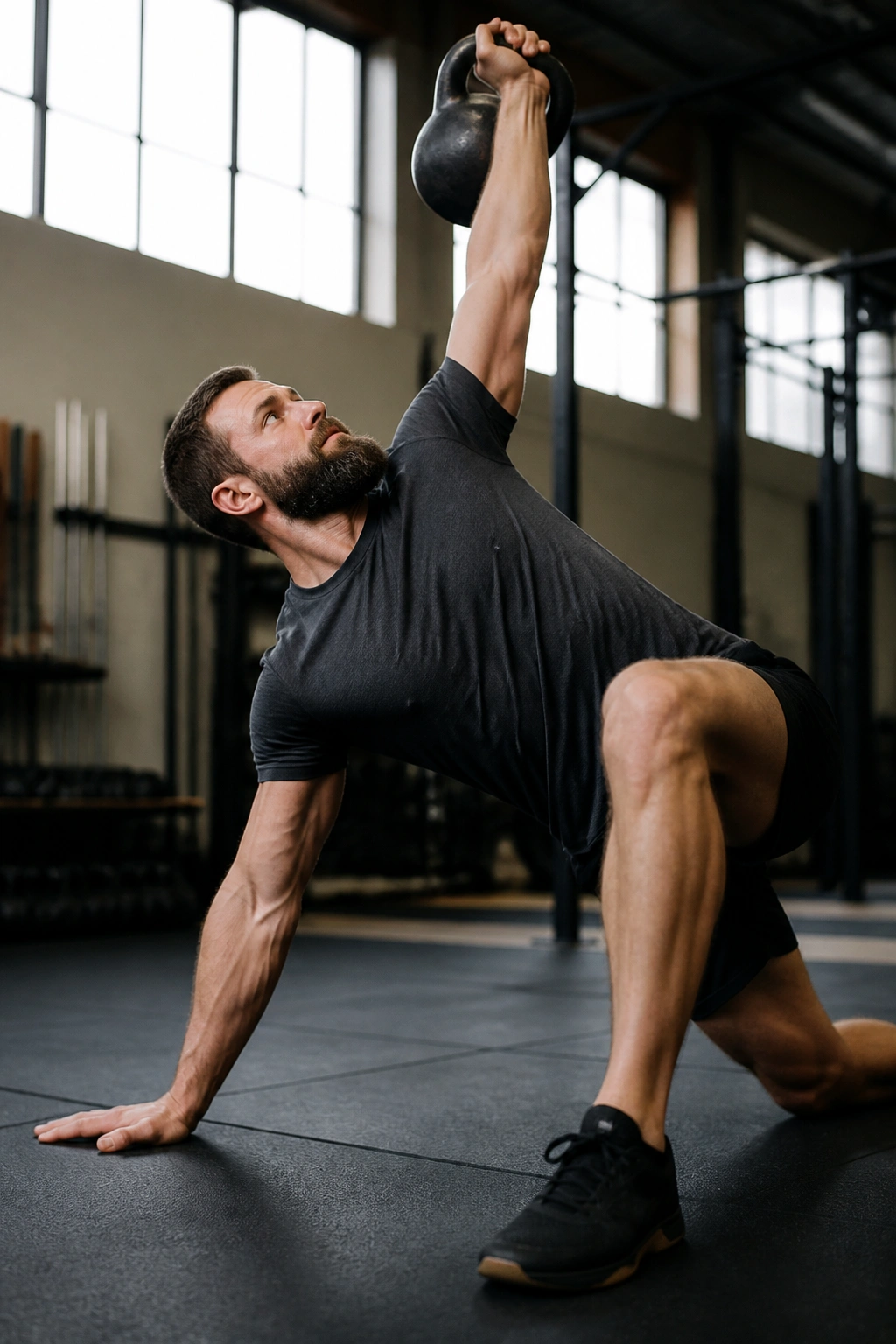
The Turkish get-up is not a fancy trick for people who enjoy complicated workouts. It is a full-body test that asks your core to stay organized while your body changes shape underneath the kettlebell.
Start on your back with the bell pressed over one shoulder. Roll to the elbow, then the hand, bridge the hips, sweep the leg through, come to a tall kneel, and stand. Then do the whole thing in reverse. Every transition demands a different kind of tension, and your midsection has to keep the bell stacked while your base changes from the floor to kneeling to standing.
Use 1 to 3 reps per side and keep the load modest. Heavy get-ups are a different animal, and they have their place, but most people should earn that later.
One-sentence truth: the cleanest get-ups are slow get-ups.
If you want one kettlebell move that teaches you to breathe under load, this is near the top of the list. It also exposes shoulder wobble, rushed footwork, and lazy hips in a way that is almost rude. That’s part of the charm.
5. Front-Rack Reverse Lunge
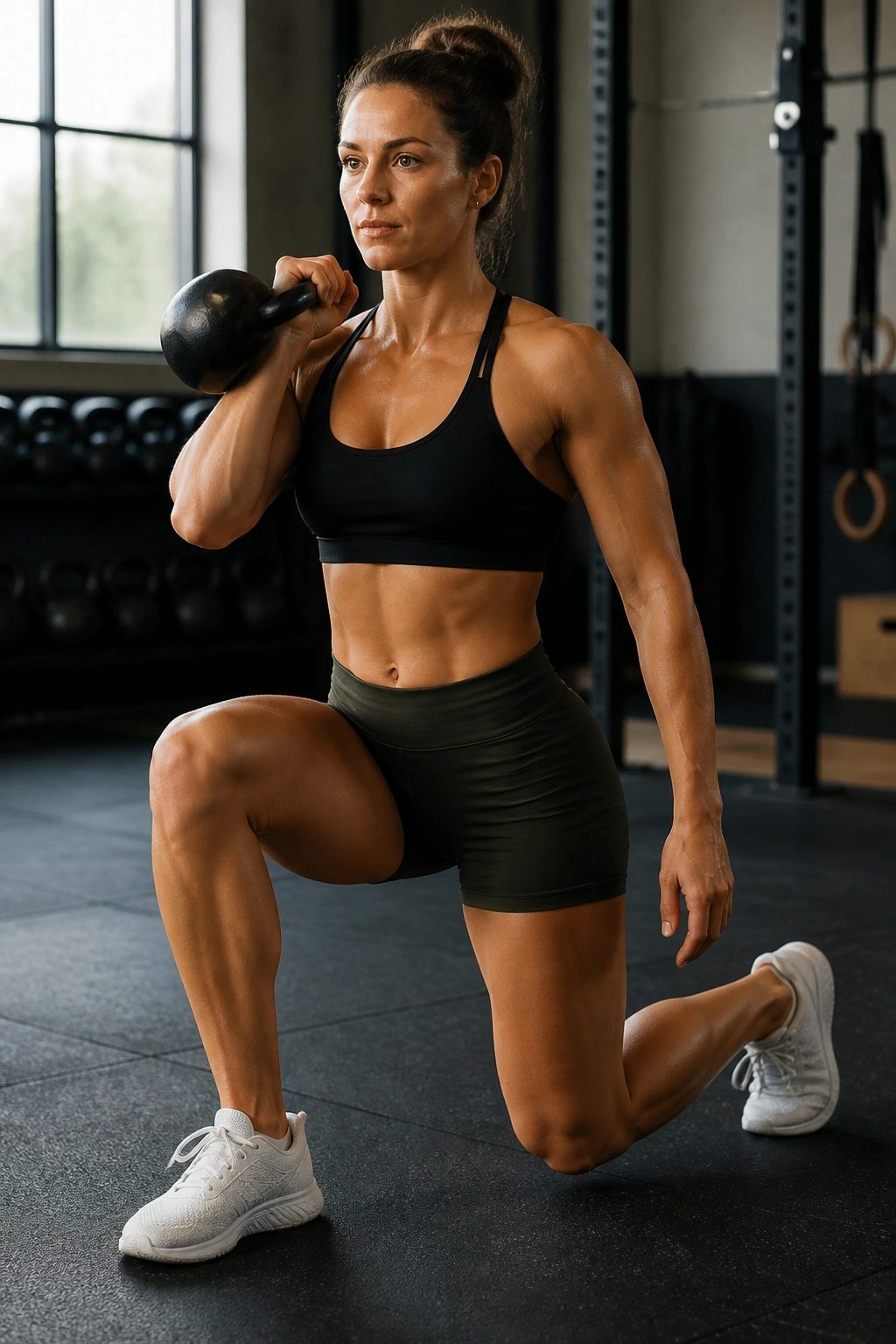
The front-rack reverse lunge looks leg-focused at first glance, but the torso work is hiding in plain sight. When one bell rests against the forearm and shoulder while one leg steps back, your abs have to stop the whole frame from twisting.
Hold one kettlebell in the rack position on one side, stand tall, then step the opposite leg back into a reverse lunge. Keep the front foot planted like a tripod and resist the urge to lean forward. The kettlebell will try to pull you off balance; your job is to stay tall and boring.
I prefer 3 sets of 6 reps per side with a 1-second pause at the bottom. That pause is where the midsection does its best work. Without it, people bounce through the rep and miss the point.
This one also teaches a useful lesson: not every core drill needs to look like a core drill. Some of the best trunk work happens when the abs are acting like a seatbelt for the rest of the body.
6. Windmill
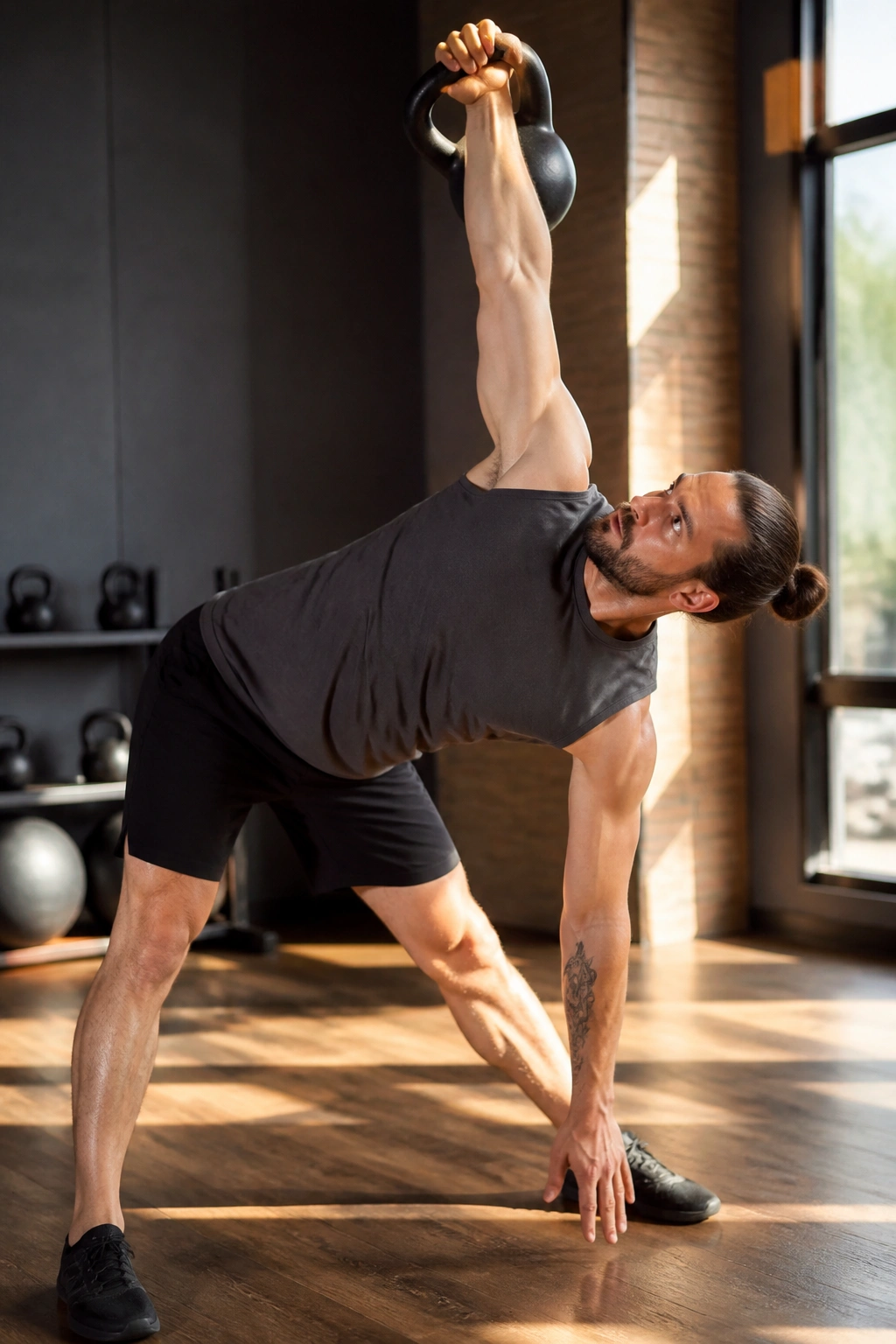
The kettlebell windmill is one of the best examples of a movement that looks slow but feels demanding almost immediately. Unlike a side bend, which just folds you over, the windmill teaches the torso to stay long and braced while the hips move back and the free hand reaches toward the floor.
Press the kettlebell overhead, turn the front foot slightly out, then hinge the hips back as the non-working hand slides down the inside of the front leg. Keep your eyes on the bell and stop the descent before your back rounds. A light bell is enough here. More weight does not automatically mean more value.
What Makes It Useful
- It trains obliques under load.
- It builds control at awkward angles.
- It asks the hips and rib cage to work together.
- It exposes stiff hamstrings fast.
Use 3 sets of 4 to 5 reps per side and keep the motion smooth. If your shoulder feels pinched or your lower back rounds, shorten the range and clean up the position before you chase depth.
7. Renegade Row
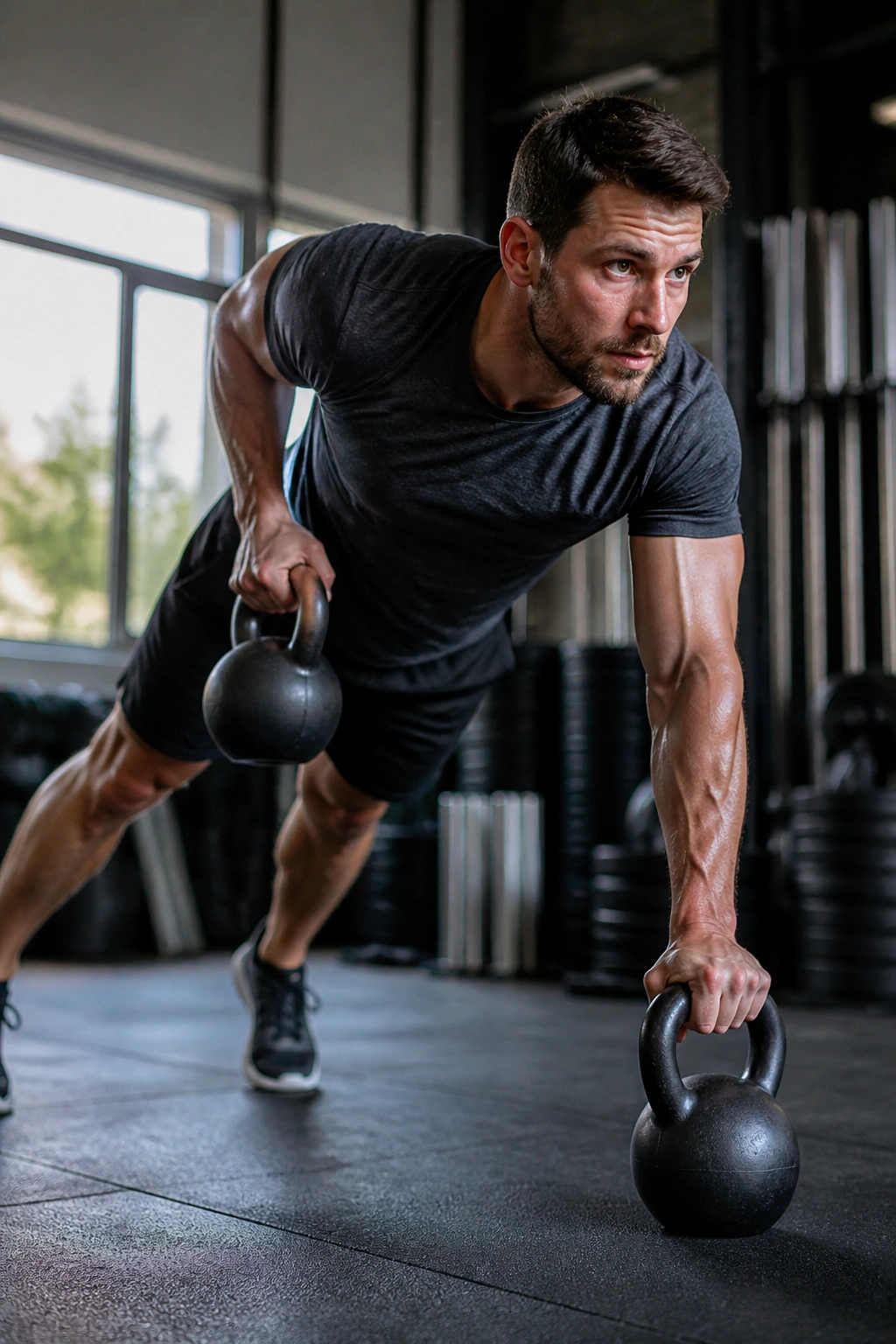
Can a row be a core workout? Absolutely. Put two kettlebells on the floor, get into a high plank with your hands on the handles, and pull one bell toward your ribs without letting your hips twist open.
The plank is the real challenge. The row just exposes it. Feet wider than shoulder-width helps most people stay square, and that is not cheating — that is smart setup. You want your torso to resist rotation while one arm moves, not survive by collapsing the whole shape.
How to Make It Work
- Place the bells a little wider than your shoulders.
- Row the bell straight up toward the lower ribs.
- Pause for half a second at the top.
- Keep the non-working hand pushing hard into the floor.
Try 3 sets of 5 to 6 rows per side. If the bell rattles around or your hips sway, reduce the load and widen the feet. There is no prize for turning a plank into a sloppy balance contest.
8. Plank Drag-Through
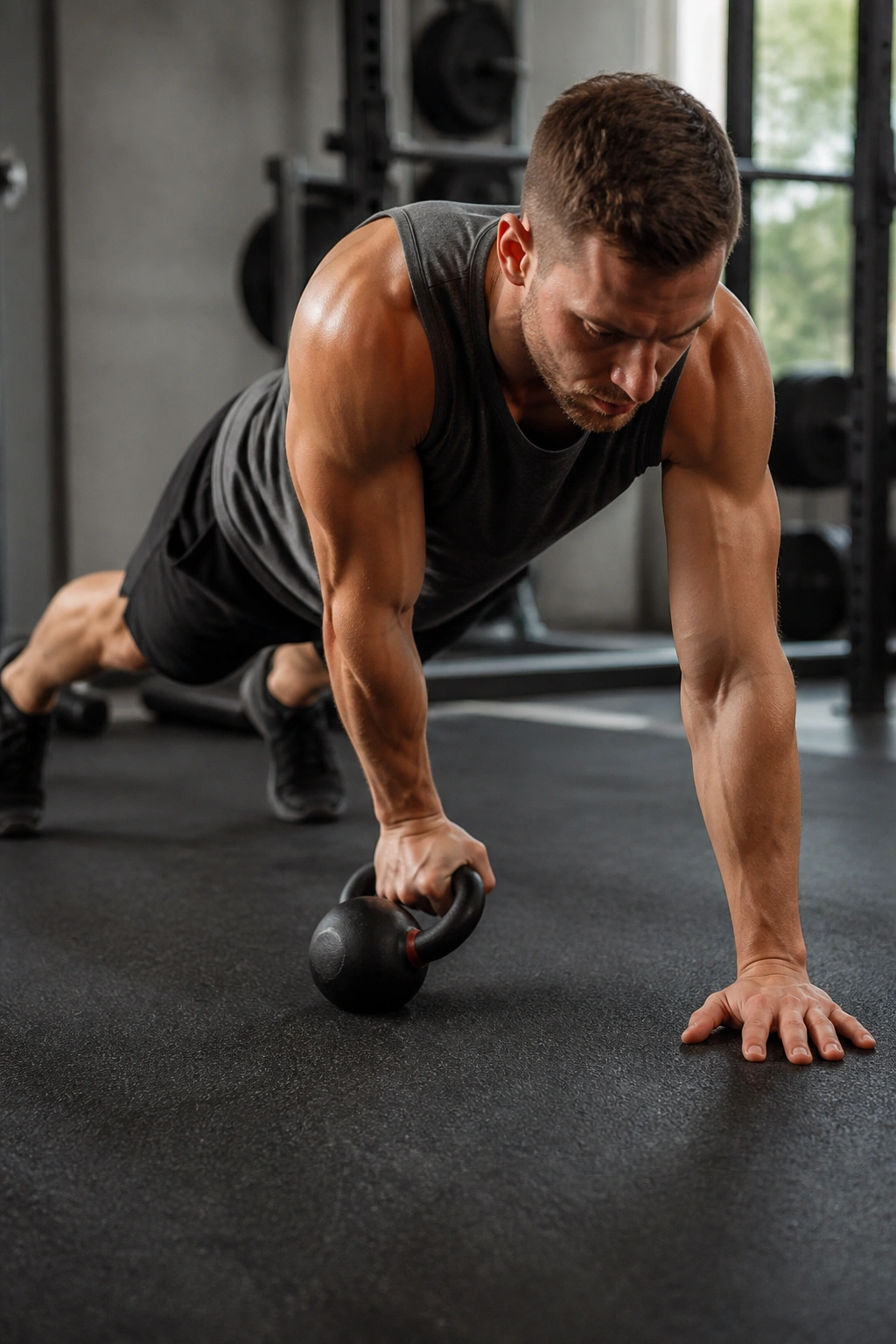
A plank drag-through feels small. It is not. Set a kettlebell just outside one hand, lock into a strong high plank, and drag the bell under your chest with the opposite hand.
The body wants to shift every time the weight moves. That’s the whole game. Your job is to keep the ribs quiet, the hips level, and the feet planted while the bell travels from one side to the other.
The cleanest version uses a slow reach, a controlled pull, and a brief pause each time the bell crosses the centerline. If the movement turns into a hip sway, the load is too heavy or your stance is too narrow.
Use 3 rounds of 8 drags total. I like to keep the reps crisp rather than long. Once fatigue starts making the plank shape messy, the value drops off fast.
This is one of those drills that makes a lot more sense after you’ve done it once. The floor feels steady. The bell does not.
9. Single-Arm Swing Intervals
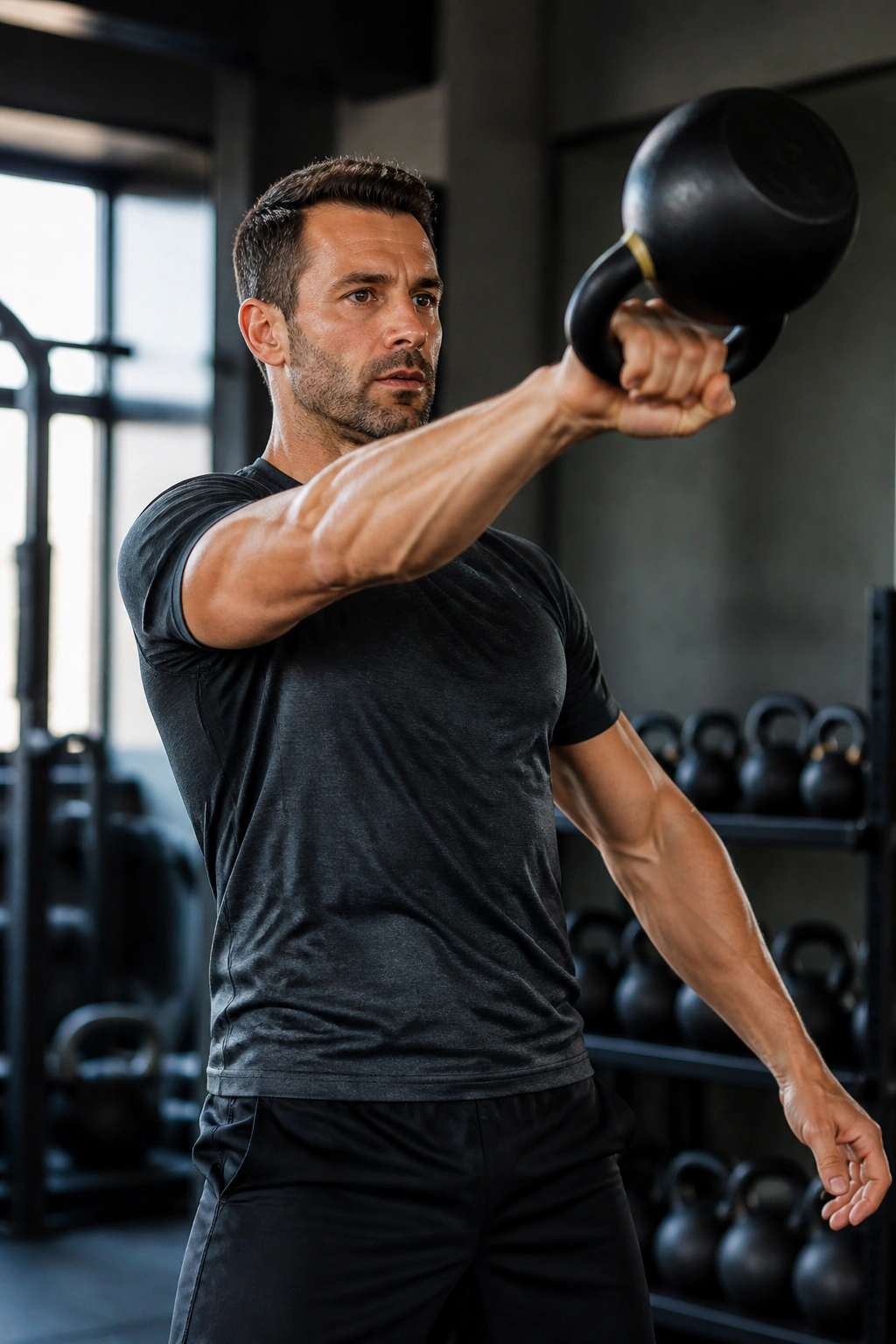
A single-arm swing hits the core harder than most people expect. The bell wants to twist your body away from the working side, and your abs, lats, and grip have to keep the whole line from unraveling.
Set up like a regular swing, hinge hard, and snap the kettlebell with one hand only. At the top, the bell should feel weightless for a split second, and your body should look tall, not leaned back. If your shoulder is getting yanked forward or your lower back is doing the lifting, the hinge has gone off the rails.
Quick Interval Plan
- 10 swings right, 10 swings left
- Rest 30 to 45 seconds
- Repeat for 6 to 10 rounds
- Stop the set when the hinge gets fuzzy
The twist is the point. That tiny offset load makes the trunk work to stay square while the hips keep doing their job. It is dynamic, loud, and a little rude — which is exactly why it earns a place here.
10. Bottoms-Up Carry
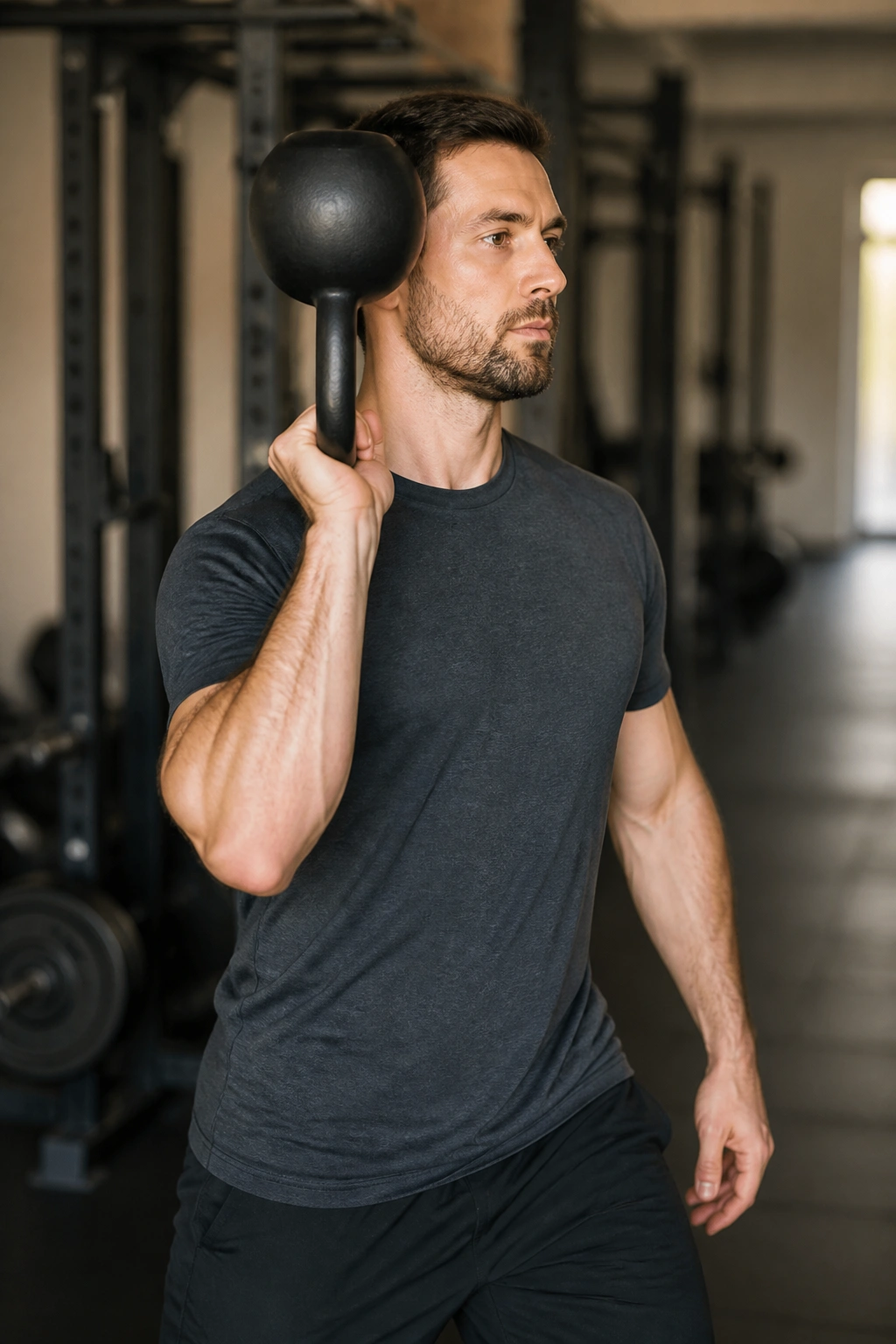
The upside-down kettlebell carry looks awkward for a reason. When the bell sits bottom-up, the wrist, shoulder, and trunk have to cooperate or the whole thing wobbles out of line.
Start in the rack position with the bell inverted, then walk slowly for 20 to 30 seconds per side. Keep the wrist straight, the elbow under the bell, and the ribs from flaring. If you try to go heavy too soon, the bell will start flopping around and your forearm will hate you for the rest of the day.
This works best as a control drill, not a strength ego test. A lighter bell with crisp shape beats a heavy bell you can barely hold in place. That upside-down position also teaches your shoulder to stay packed while your core stays quiet, which is a nice combo if you do a lot of overhead work.
One sentence is enough here: if the bell trembles, slow down.
11. Goblet Squat with a Pause
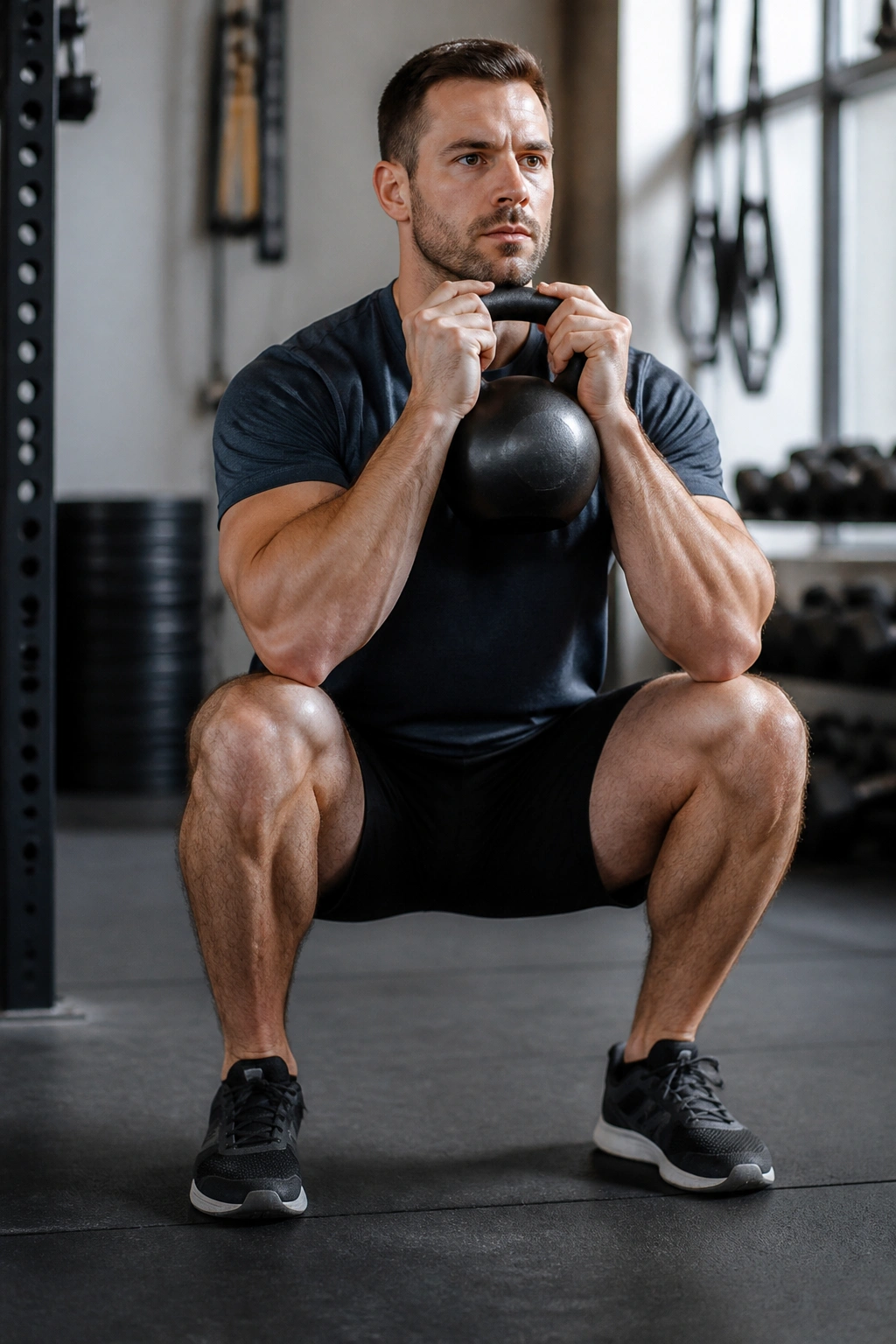
A goblet squat does more for the midsection than people give it credit for, especially when you stop for a few seconds in the bottom. The bell sits at the chest, the torso has to stay upright, and the pause forces your trunk to own the position instead of bouncing out of it.
Hold the kettlebell at chest height with both hands, sink into a deep squat you can control, then hold the bottom for 2 to 3 seconds. Keep the elbows inside the knees if your hips allow it, but don’t chase depth so hard that the lower back rounds. Breathe into the sides of the torso, not just the chest.
I like 4 sets of 5 reps with a slow descent. That pause changes the whole rep. It removes momentum, and once momentum is gone, the core has to work harder to keep the ribs from flaring and the knees from caving.
The midsection should feel braced, not crushed. There’s a difference.
12. Clean to Front-Rack Hold
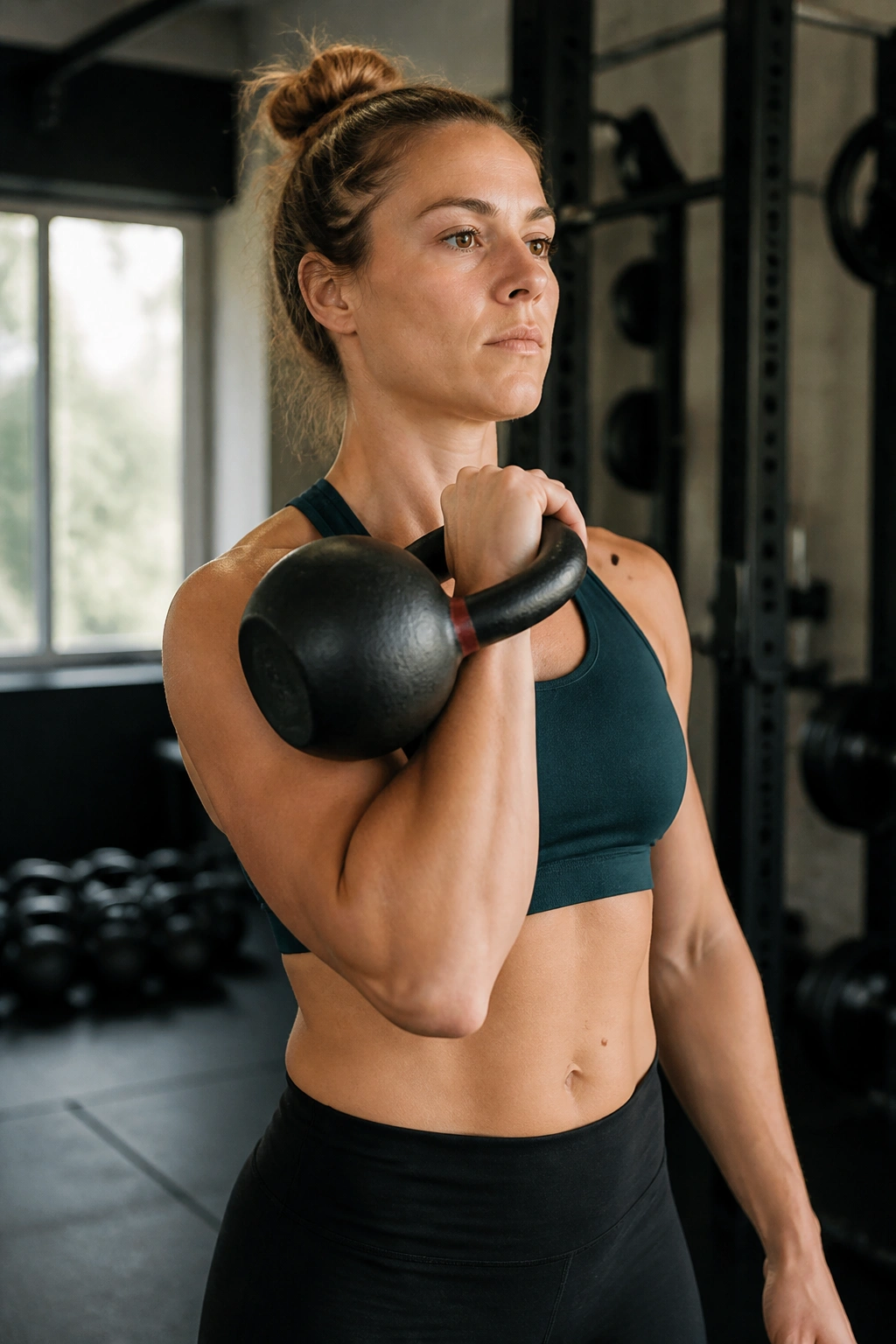
The clean is the entry ticket; the hold is where the core work gets real. After you pop the kettlebell into the front rack, stay there and own the position before you move on.
Pull the bell close, let it settle on the forearm, and hold for 15 to 20 seconds per side. The elbow should stay tucked, the wrist should stay neutral, and the bell should sit quietly instead of banging against the forearm like a loose tool in a drawer. If the rack feels shaky, lighten the bell and tighten the setup.
What to Feel
- The lat on the working side should stay connected.
- The ribs should stay down.
- Breathing should stay controlled.
- The shoulder should feel stacked, not jammed.
Use 5 rounds per side if you want a dense little finisher. This one carries over to presses, squats, and carries better than it gets credit for. The hold teaches you to stay organized when the bell is parked in a place that would make sloppiness obvious.
13. Around-the-World Pass
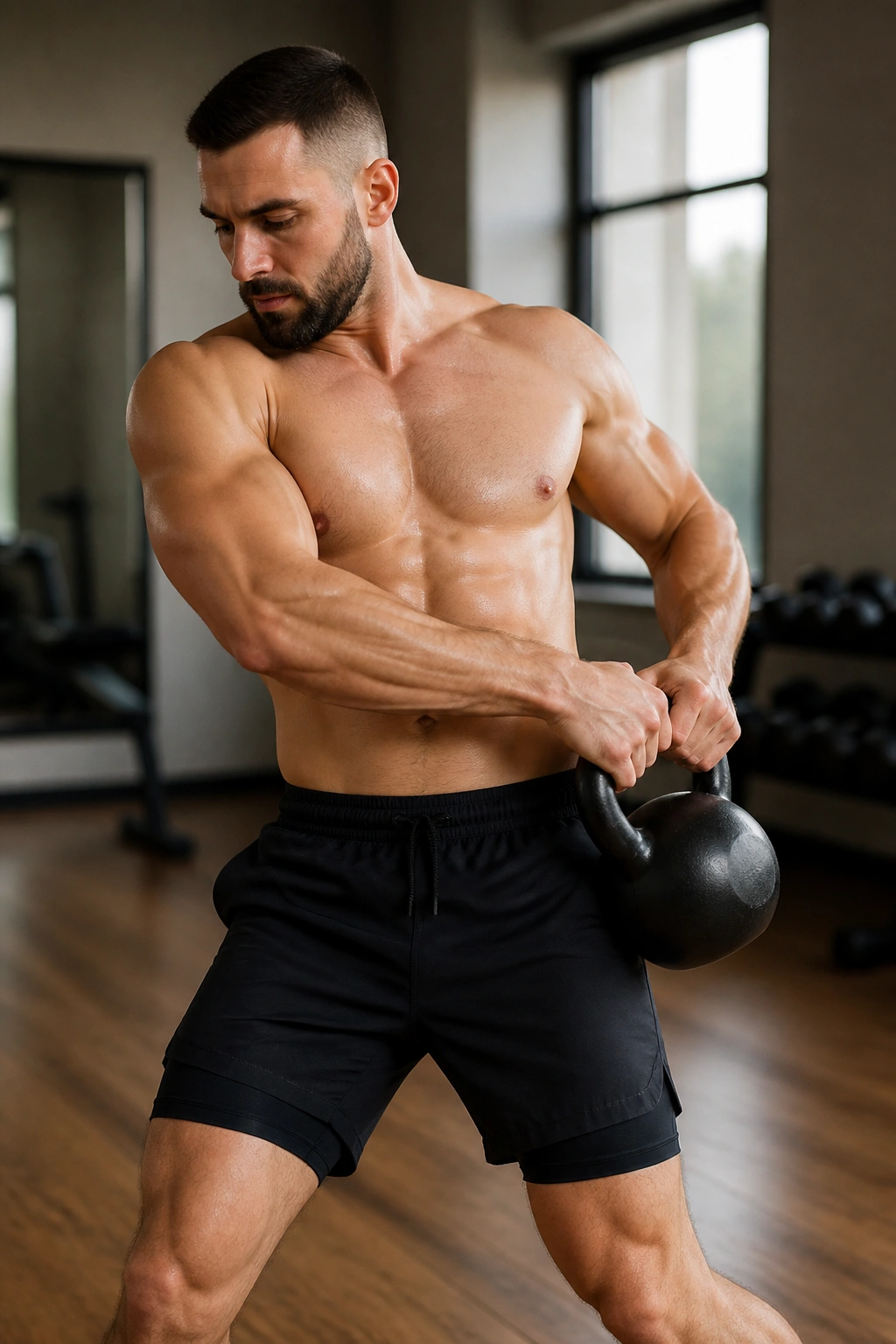
This one is less about brute force and more about timing. Pass the kettlebell around your waist or around the body in a smooth circle, keeping it close instead of letting it drift away from the hips.
Unlike a heavy lift, the around-the-world pass asks for rhythm, coordination, and a bit of patience. The core still has to resist the bell’s pull as it moves from hand to hand or circles the waist, but the load is light enough that you can focus on shape and control instead of survival.
Try 3 sets of 10 circles each direction. Keep your elbows soft, move the bell close to the body, and stop if the bell starts crashing into the hips or rib cage. That usually means you’re swinging the weight instead of guiding it.
This is a smart option on days when your shoulders want something friendlier than overhead work. It is not flashy. Good. Flashy is overrated here.
14. Farmer Carry Ladder
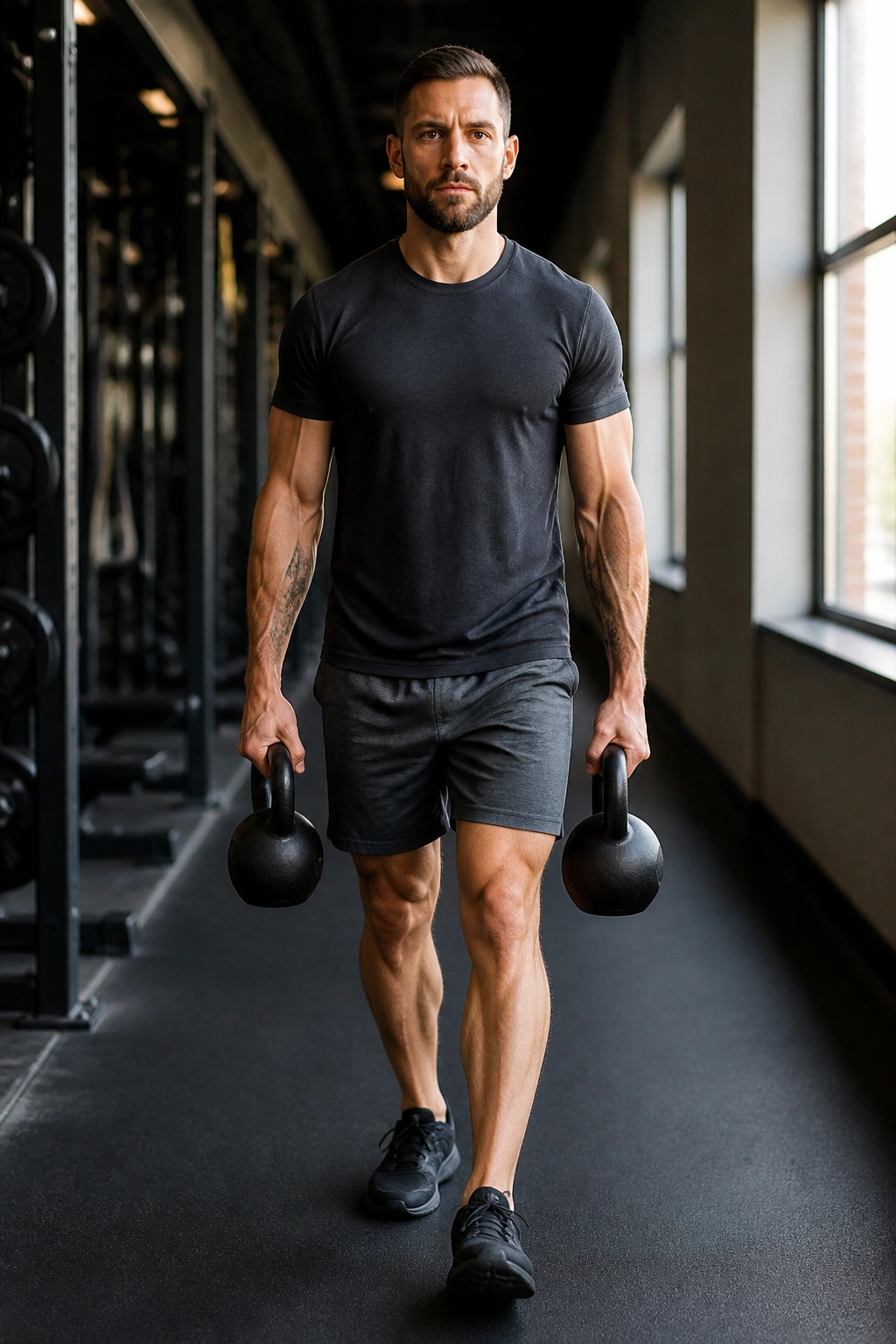
Why does a two-hand carry belong in a core list? Because a well-done farmer carry teaches posture under load better than most people expect, and the longer the walk, the more honest the test gets.
Pick a pair of kettlebells you can hold without bending sideways, stand tall, and walk a set distance. Then add distance in small jumps — say 20 yards, 30 yards, and 40 yards — before resting and starting again. The challenge is not just the grip. It is keeping the rib cage stacked over the pelvis while the legs keep moving.
A simple ladder works well:
- 20 yards out and back
- 30 yards out and back
- 40 yards out and back
- Rest 60 to 90 seconds
- Repeat for 3 rounds
The shoulders should stay square, the neck should stay relaxed, and the steps should look smooth rather than hurried. A lot of people turn carries into a death march. Slow down. The posture matters more than the suffering.
15. Sit-Up to Press
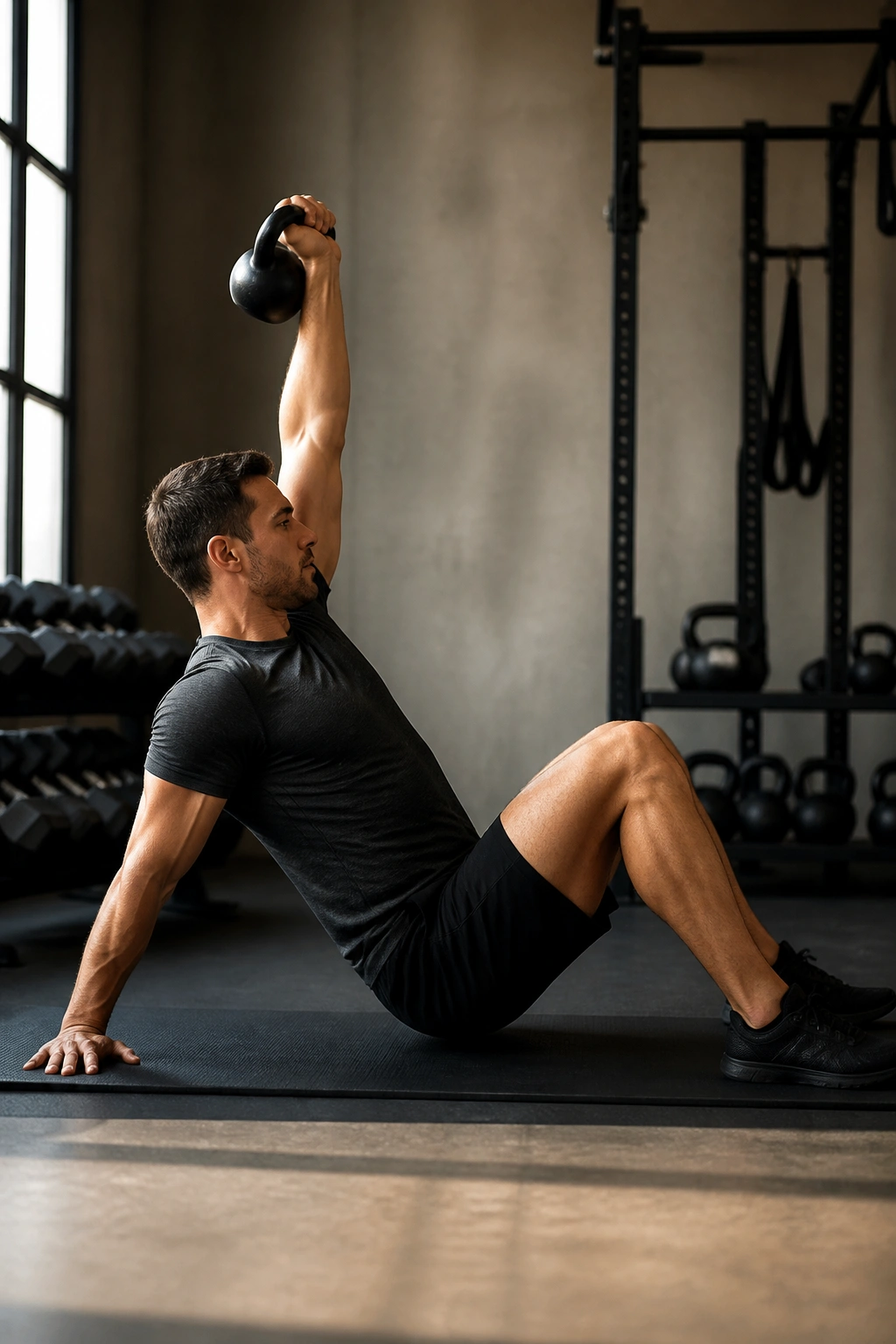
This one is not for everyone, and that is worth saying plainly. A sit-up to press combines controlled trunk flexion with overhead stability, which can be a very useful mix if your back tolerates it well.
Lie down holding a light kettlebell in one hand, perform a controlled sit-up, and finish by pressing the bell overhead at the top. Lower under control and reset. The key is to move like each part matters, because it does. If you yank yourself up or throw the bell overhead, the drill loses the point fast.
Use 3 sets of 5 reps per side with a light bell. The movement should feel deliberate, with the abs doing the lifting and the shoulder finishing the press. If your lower back gets cranky with sit-ups, skip this one and use the dead bug or the front-rack hold instead.
A good rep feels crisp. A sloppy one feels like a rescue operation.
16. Single-Leg RDL with Reach
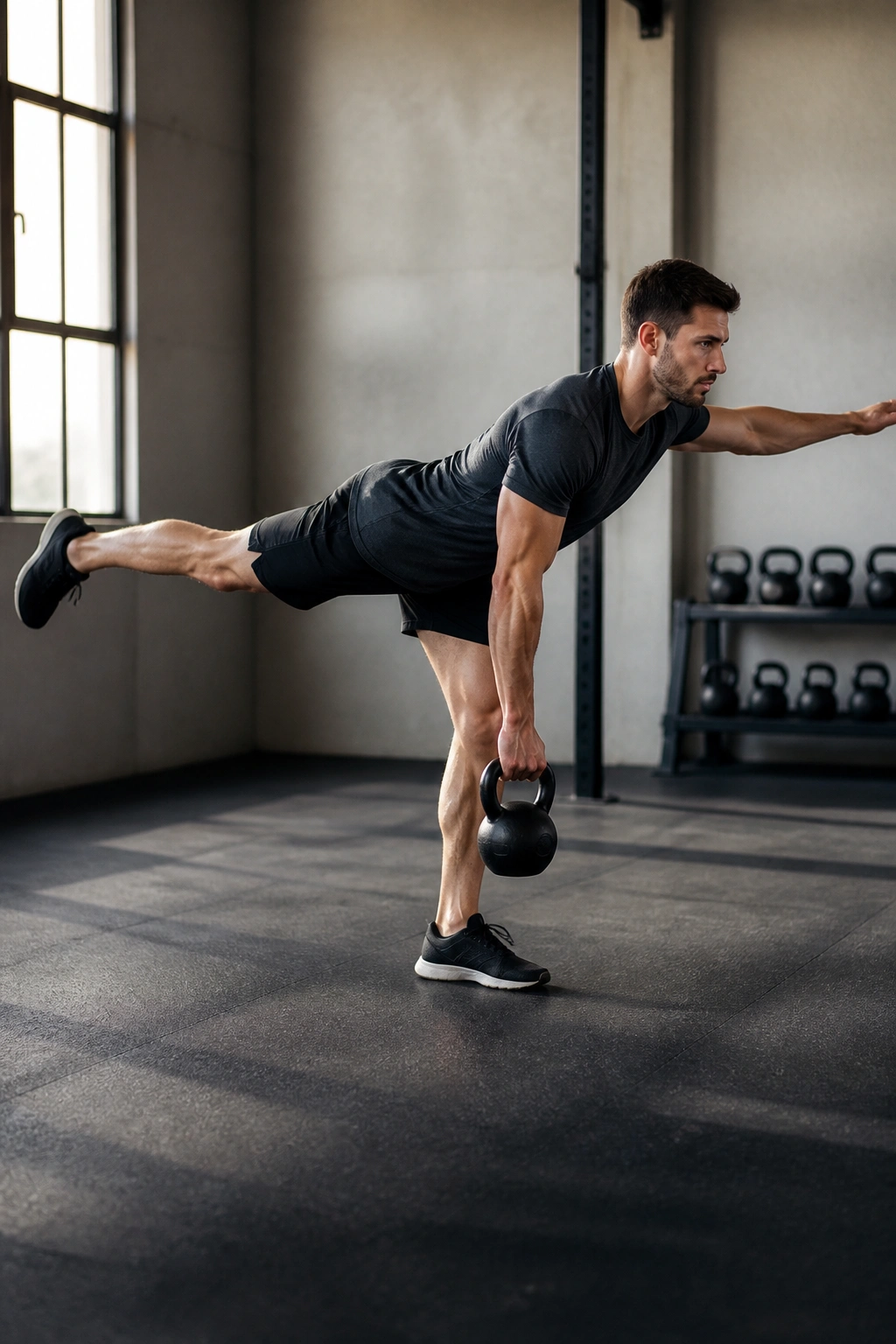
A stable midsection shows up fast in a single-leg hinge. Hold the kettlebell in the opposite hand from the working leg, hinge at the hip, and reach the free hand forward or toward the floor as the back leg extends behind you.
The bell tries to rotate the pelvis, and the trunk has to keep everything square while the hamstring and glute do their part. That anti-rotation demand is the reason this move belongs in a core list, even though plenty of people think of it as a leg exercise first.
How to Keep It Clean
- Move slowly on the way down.
- Keep the hips level.
- Stop the descent before the back rounds.
- Press through the whole foot on the standing leg.
Try 3 sets of 6 reps per side. Pause for one count at the bottom if balance is shaky. The bell should feel like a tool, not a wrecking ball. When the hinge is tidy, the abs have to stay on all the way through the rep, and that is where the value sits.
17. High-Plank KB Pass
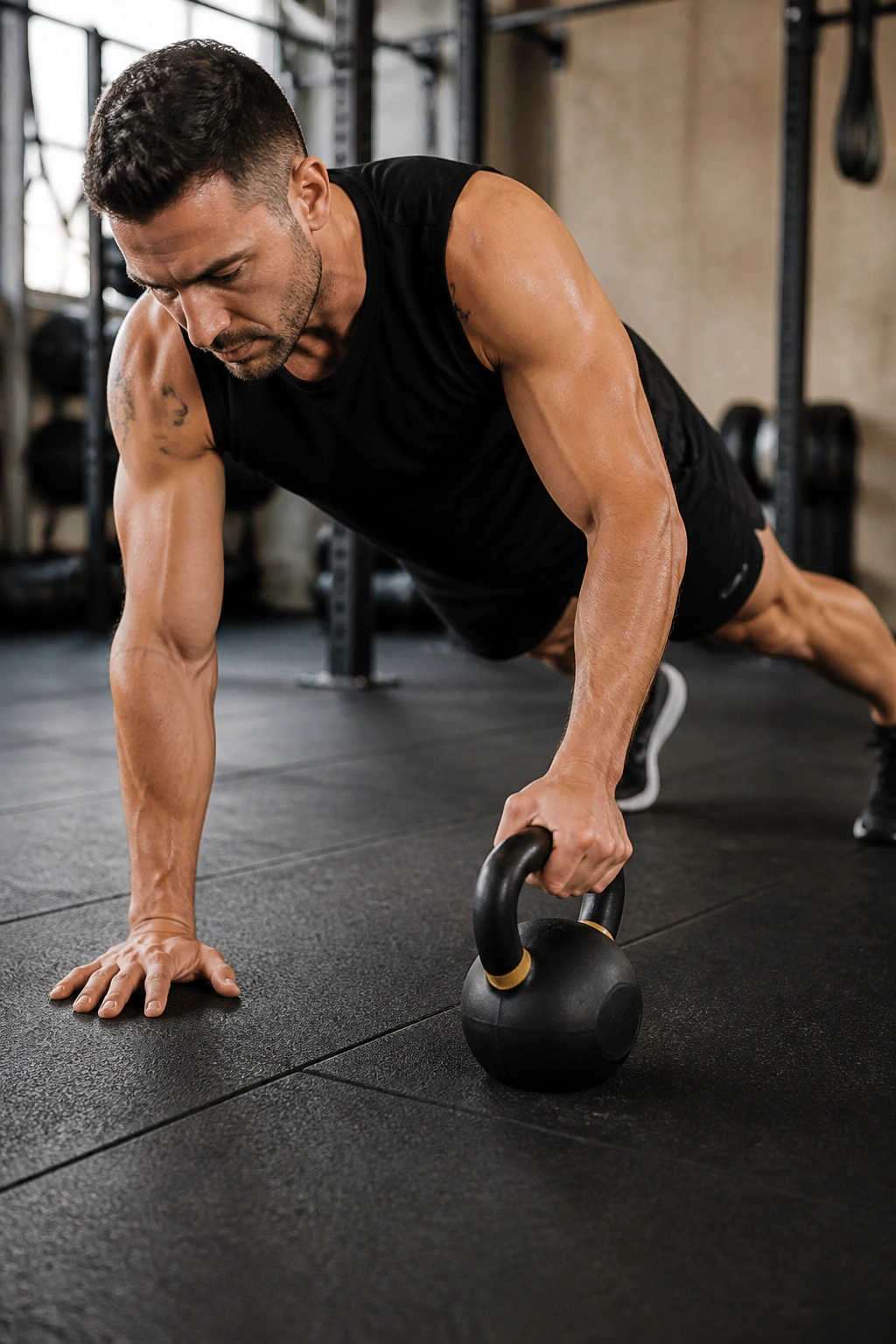
A high-plank kettlebell pass is the quieter cousin of the drag-through, but don’t let that fool you. Passing the bell hand to hand while holding a rigid plank asks for serious control through the shoulders, ribs, and hips.
Set the kettlebell just outside one hand, get into plank with your feet a little wider than normal, and pass the bell across your body with the free hand. Keep the hips as level as you can while the weight moves. If the pelvis swivels like a door hinge, slow the pace down and widen the stance more.
I prefer 3 sets of 10 passes total. Short reps keep the shape honest. A long set can turn into a wrestling match with the floor, and that is not the goal.
Compared with a drag-through, this version asks for a little more hand speed and a little more coordination. That makes it a solid progression if you already own the plank and want more challenge without jumping straight to harder weighted carries.
18. Marching Front Rack Carry
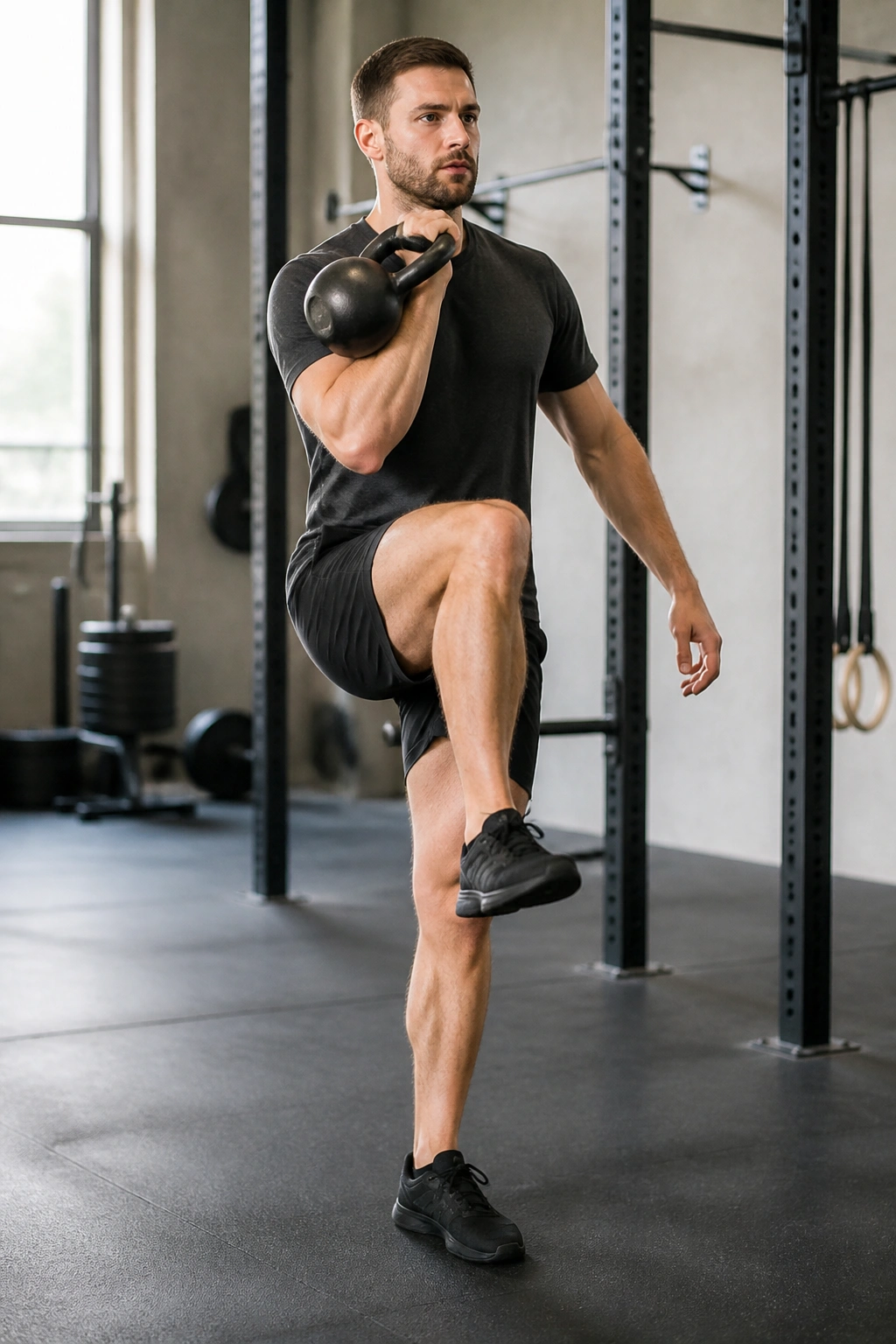
The marching front rack carry looks simple until you try to keep the bell still while one knee rises to hip height. Then the trunk starts talking.
Hold one kettlebell in the front rack, stand tall, and march slowly with deliberate knee lifts. The goal is not to rush. It is to keep the torso square while the lower body moves underneath the load. If the bell starts pulling you sideways, shorten the march and reset your posture.
Cues That Matter
- Keep the elbow under the bell.
- Lift the knee without leaning back.
- Exhale softly as the foot leaves the floor.
- Walk 20 steps per side before switching.
This is a strong choice for people who want a carry variation that feels more athletic than a static hold. It also has a nice carryover to cleaning, pressing, and any single-leg work where the trunk needs to stay calm while the hips move.
The bell should look parked, not swinging.
19. Offset Overhead Carry
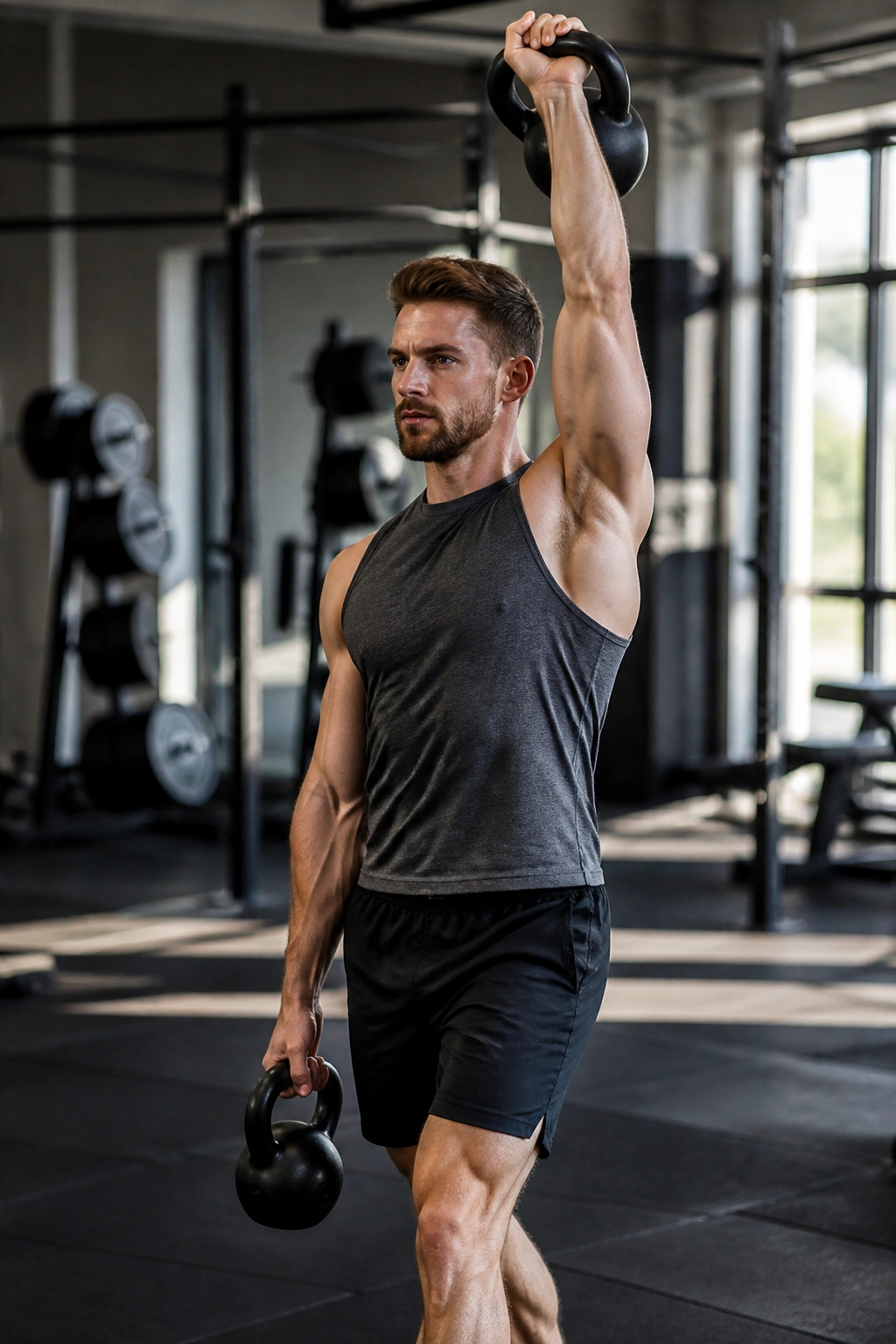
An offset overhead carry is a little mean in the best way. With one kettlebell locked out overhead and the other side of the body doing the walking, your ribs have to stay down or the whole line starts to arch.
Start light. Seriously. Press one bell overhead, lock the elbow, and walk for 20 to 30 steps per side. The shoulder should feel stacked, the wrist should stay straight, and the ribs should not flare just because the load is above you. If the lower back arches, the weight is too much or the walk is too fast.
This move is tougher than it looks because the brain wants to help by leaning away from the bell. Don’t. Keep the body tall and resist the tilt. If overhead work feels shaky, start with a half-kneeling press or a bottoms-up rack carry and earn your way here.
One clean step at a time. That is the whole drill.
20. The 10-Minute Core Finisher
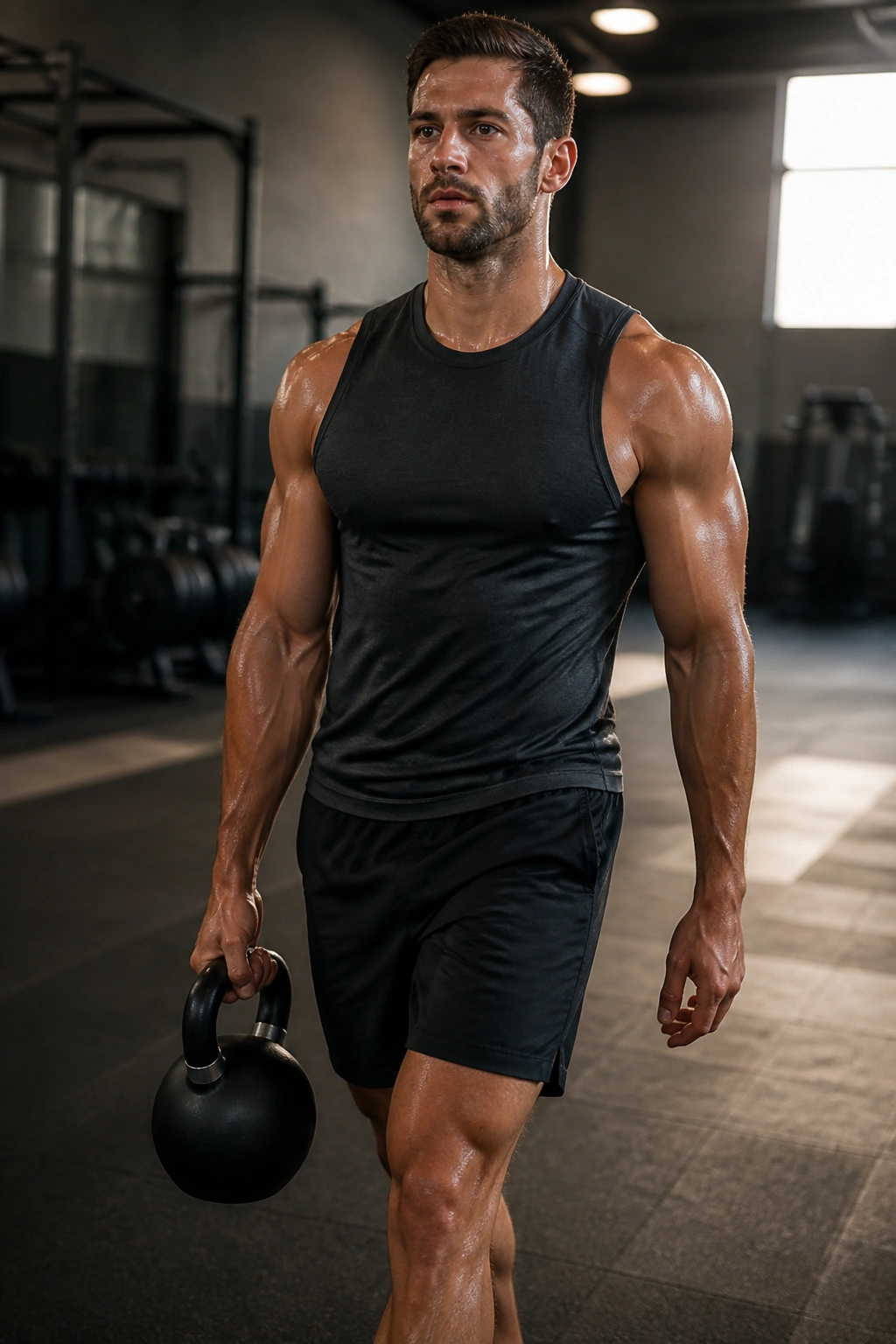
If you want one short kettlebell core workout that ties the whole list together, this is the one I’d put near the end of the session. It mixes hinge, carry, squat, and bracing work in a way that leaves your midsection busy without turning the workout into a random pile of moves.
Ten-Minute Density Circuit
- 5 single-arm swings per side
- 5 front-rack reverse lunges per side
- 20-yard suitcase carry per side
- 5 goblet squats with a 2-second pause
- Rest only as needed, then repeat until 10 minutes is up
Keep the bell light enough that your form stays crisp from round one to round ten. If the swings start looking like yanks, shorten the set to three reps. If the carries start leaning, cut the distance. The point is to stay clean while fatigue builds.
What I like about this finisher is that it shows whether the earlier drills actually stuck. You have to hinge well, breathe well, and keep the torso from wobbling under different kinds of load. Do that for ten honest minutes, and your core won’t feel hidden anymore.
