



A quiet morning can disappear fast. One minute you’re standing in the kitchen with cold feet, and the next you’re already negotiating with your phone before your spine has even warmed up. That’s usually when yoga and meditation combos earn their place: they give the body something gentle to do while the mind gets a softer landing.
No theatrics. No hard sweat. Just a few careful shapes, a few honest breaths, and a small stretch of stillness before the day starts making demands. That’s enough for a lot of people, and it’s usually more useful than trying to force a long practice you’ll resent by day three.
The trick is pairing movement with meditation in a way that fits the mood of the morning. Stiff back? Start with spinal motion. Restless head? Count the breath after a short flow. Heavy hips? Lie down and let gravity do some of the work. The best routines feel almost suspiciously simple once you’re inside them.
And that’s the point. A good quiet-morning routine shouldn’t feel like another task to complete. It should feel like you’ve given your nervous system a clean glass of water before the noise starts.
1. Breath-Led Cat-Cow and Seated Stillness
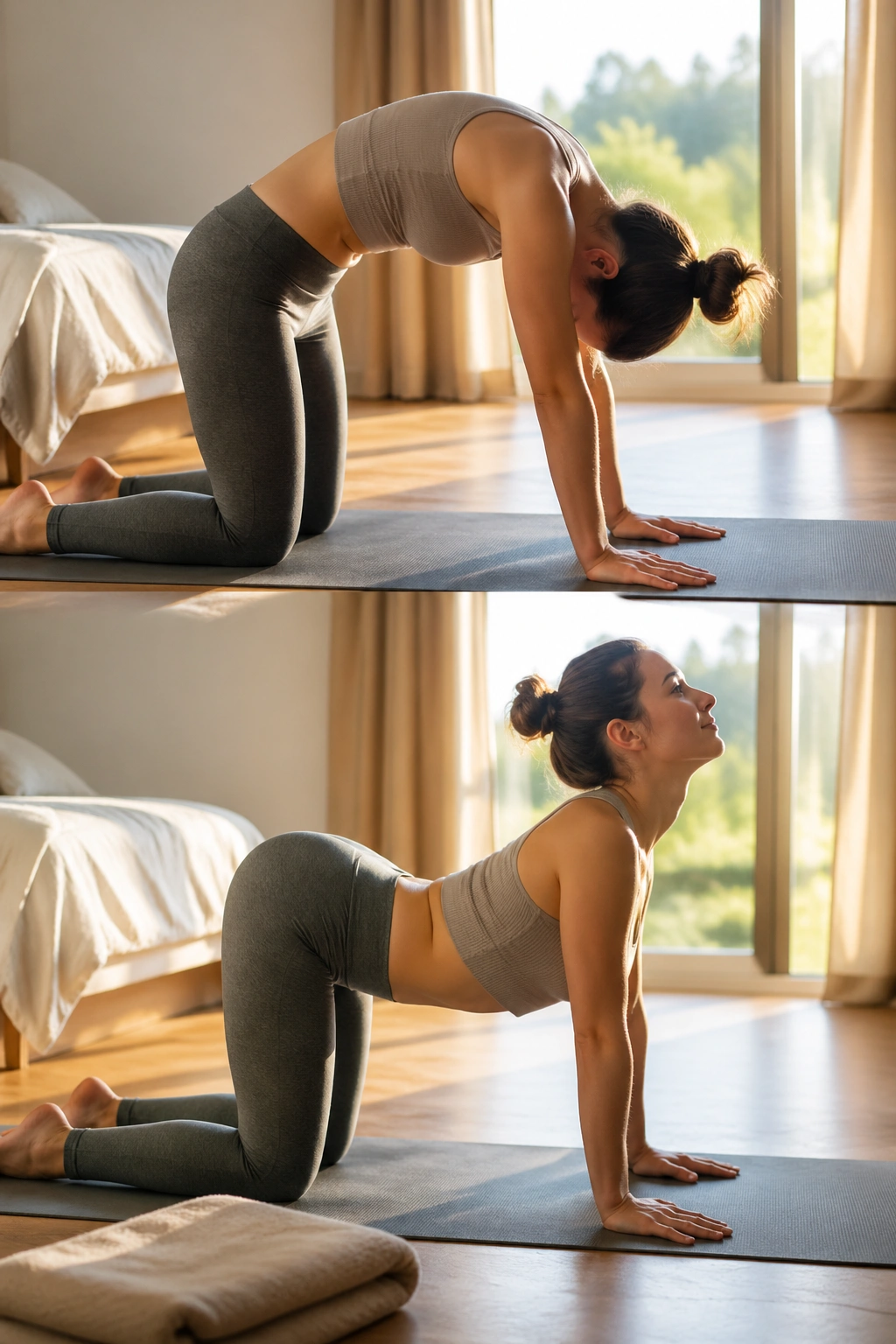
The first few minutes after waking can feel like your spine is made of folded cardboard. Cat-cow handles that beautifully because it asks for motion without asking for force. The movement is small, almost boring, and that’s exactly why it works so well before coffee.
How to move through it
Start on hands and knees with your wrists under shoulders and knees under hips. Inhale as you tilt the tailbone up and lift the chest into cow; exhale as you round the back into cat and press the floor away. Six slow rounds are enough for most mornings, though eight feels nice if your back is especially stiff.
Then sit back on your heels or on a folded blanket and keep your eyes soft. Count ten long exhales, one by one. The body gets the last word here, not the to-do list.
What makes this combo useful
- Best for stiff shoulders, a tight mid-back, and foggy first minutes
- A folded towel under the knees makes the floor feel less abrupt
- If wrists complain, make fists or lower to forearms
- Keep the motion small enough that the breath stays smooth
Tip: don’t chase a deep arch. A tiny spinal wave paired with steady breathing does more good than a dramatic bend that makes the breath hitch.
2. Downward Dog Walkout, Forward Fold, and Box Breathing
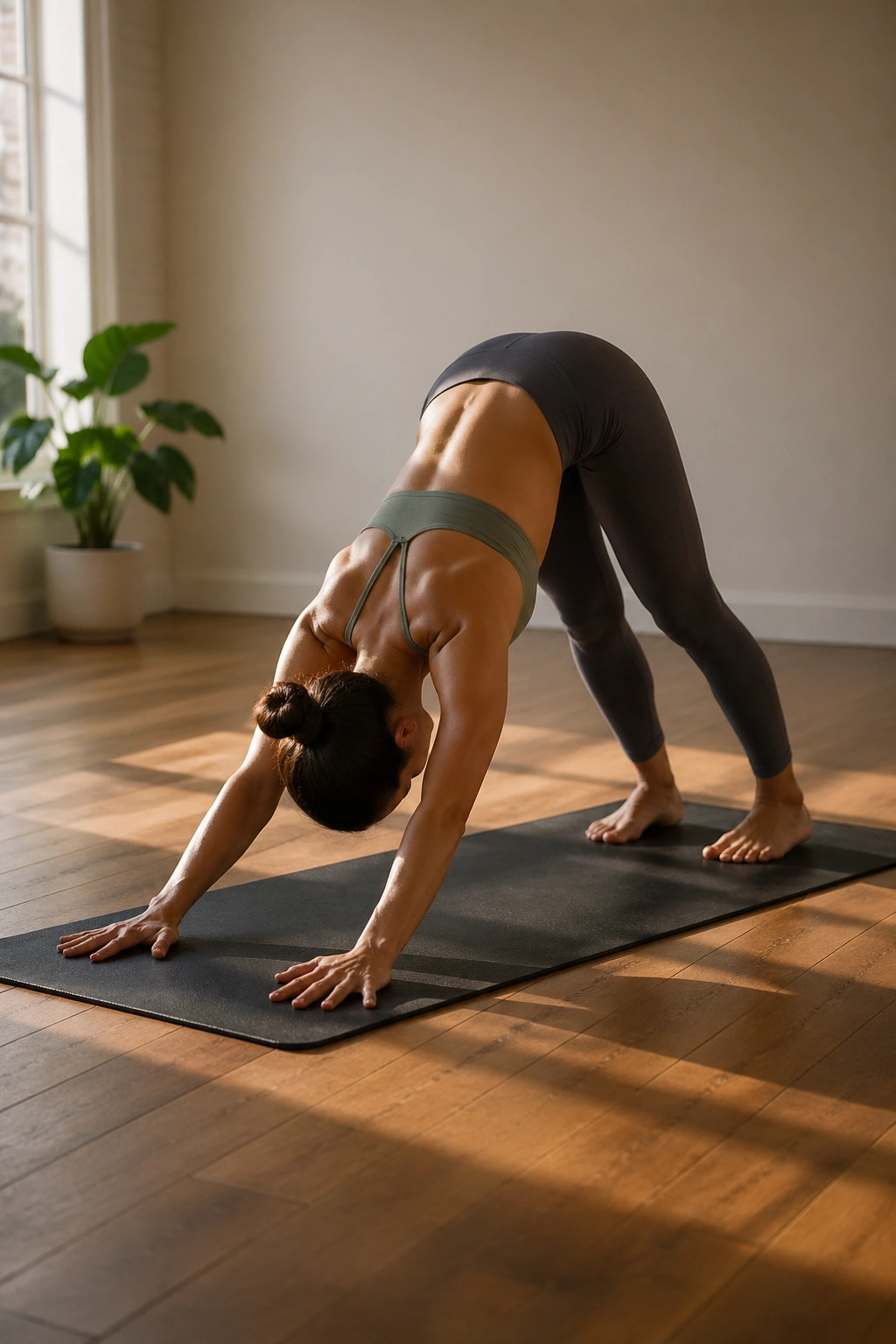
A short standing sequence wakes the whole body faster than a long, sleepy stretch. That’s not a virtue contest; it’s just mechanics. When you move from a forward fold into downward dog and back again, the legs, back, and shoulders all get a wake-up call without needing speed.
Stand with your feet hip-width apart and fold forward with bent knees. Let your arms hang for two or three breaths, then step into downward dog and pedal the heels slowly. Five breaths there is usually enough. Come back to a ragdoll fold, bend the knees more if needed, and finish by sitting or standing still for box breathing: inhale for four, hold for four, exhale for four, hold for four.
That little square of breath can feel surprisingly steadying. It gives the mind a shape to follow, which helps when the morning still feels unruly. If you’re someone who hates sitting first thing, this is a good bridge.
No heroics required.
If your head does not like being below your heart, stay in the forward fold and skip the dog. The combo still works. The point is not the pose names; it’s the clean shift from movement to breath.
3. Child’s Pose, Side Reach, and a Slow Body Scan
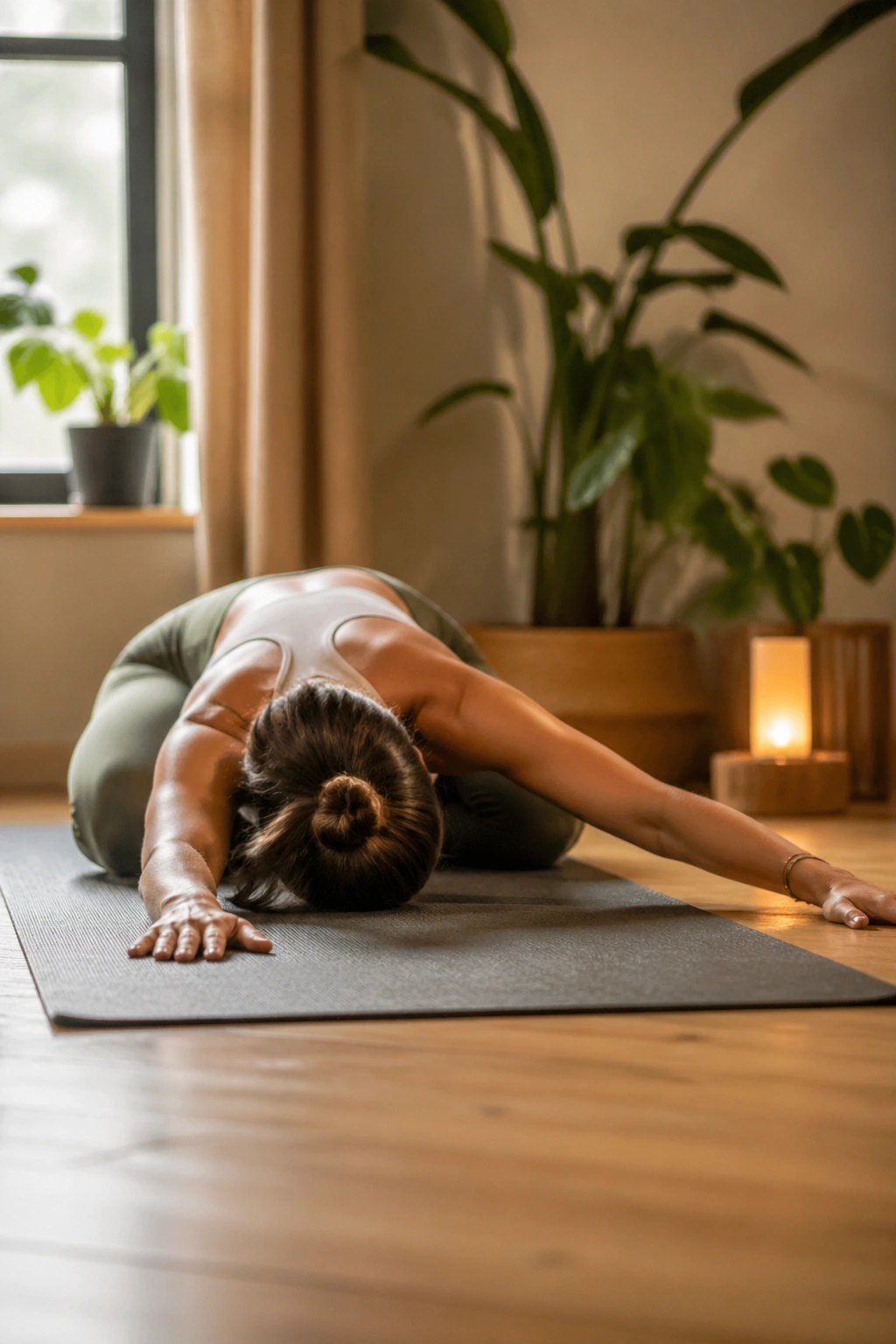
Why does Child’s Pose feel like the whole room got quieter? Because it reduces input. Your face is down, your ribs are supported, and the body gets permission to stop performing for a minute. That makes it a strong choice for mornings that feel a little too loud before they’ve even started.
Set your knees wide if your belly wants space, or keep them closer if that feels better. Stretch your arms forward for three breaths, then walk both hands to the right and feel the left side body open. Hold for two or three breaths, switch sides, and come back to center. After that, stay still and do a simple body scan from jaw to toes.
A quick body scan
- Notice the jaw and tongue first
- Let the shoulders drop one notch
- Feel the belly soften on the exhale
- Check the hands, feet, and the back of the neck
- End by noticing one sound in the room
A lot of people skip the scan because it sounds plain. That’s a mistake. Plain is useful here. The point is to notice where you’re already holding on before the day persuades you to hold on harder.
4. Sun Salutation A and Counting the Breath
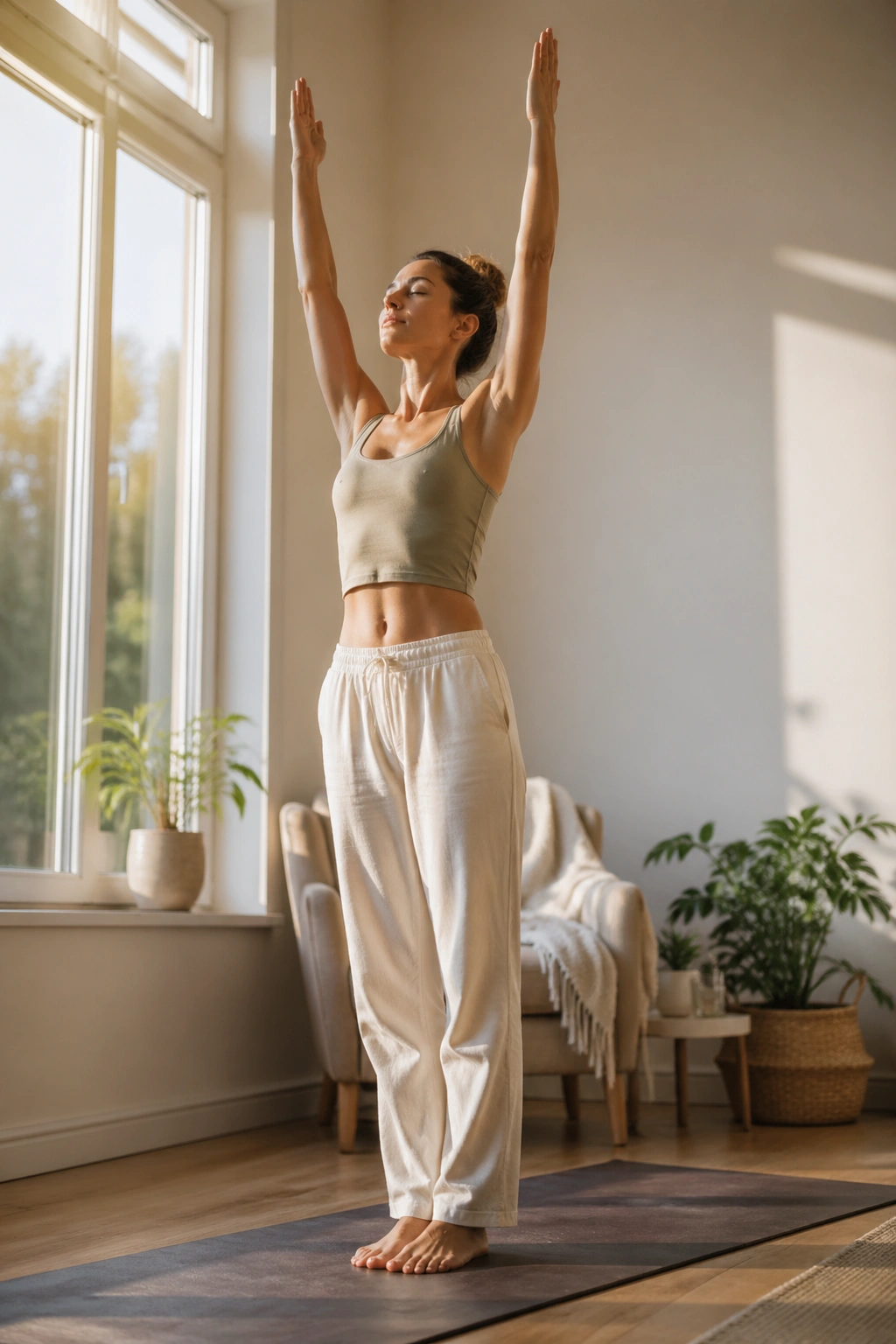
Some mornings need a little structure. Not a boot camp, not a sweat test — just a clear line to follow so your brain doesn’t wander off halfway through the first minute. Sun Salutation A gives you that line, and the breath count keeps it from turning into hurried choreography.
Start with three slow rounds. Inhale to reach up, exhale to fold, inhale halfway lift, exhale step or float back, inhale in plank or knees down, exhale lower, inhale into cobra or upward-facing dog, exhale back to downward dog, and walk or step to the top again. Keep every transition slower than your pride wants.
Then sit and count the breath from one to ten. If you lose the count, start over without commentary. That reset is part of the practice, not a failure.
How to keep it soft
- Bend the knees in every fold if the hamstrings are tight
- Skip chaturanga and lower the knees if the shoulders feel cranky
- Move at the speed of the breath, not the speed of memory
- Sit for at least 2 minutes after the last round
This combo works because it gives you enough motion to feel awake and enough repetition to settle the mind. That balance is the whole trick.
5. Low Lunge, Long Exhale, and a Quiet Reset for the Hips
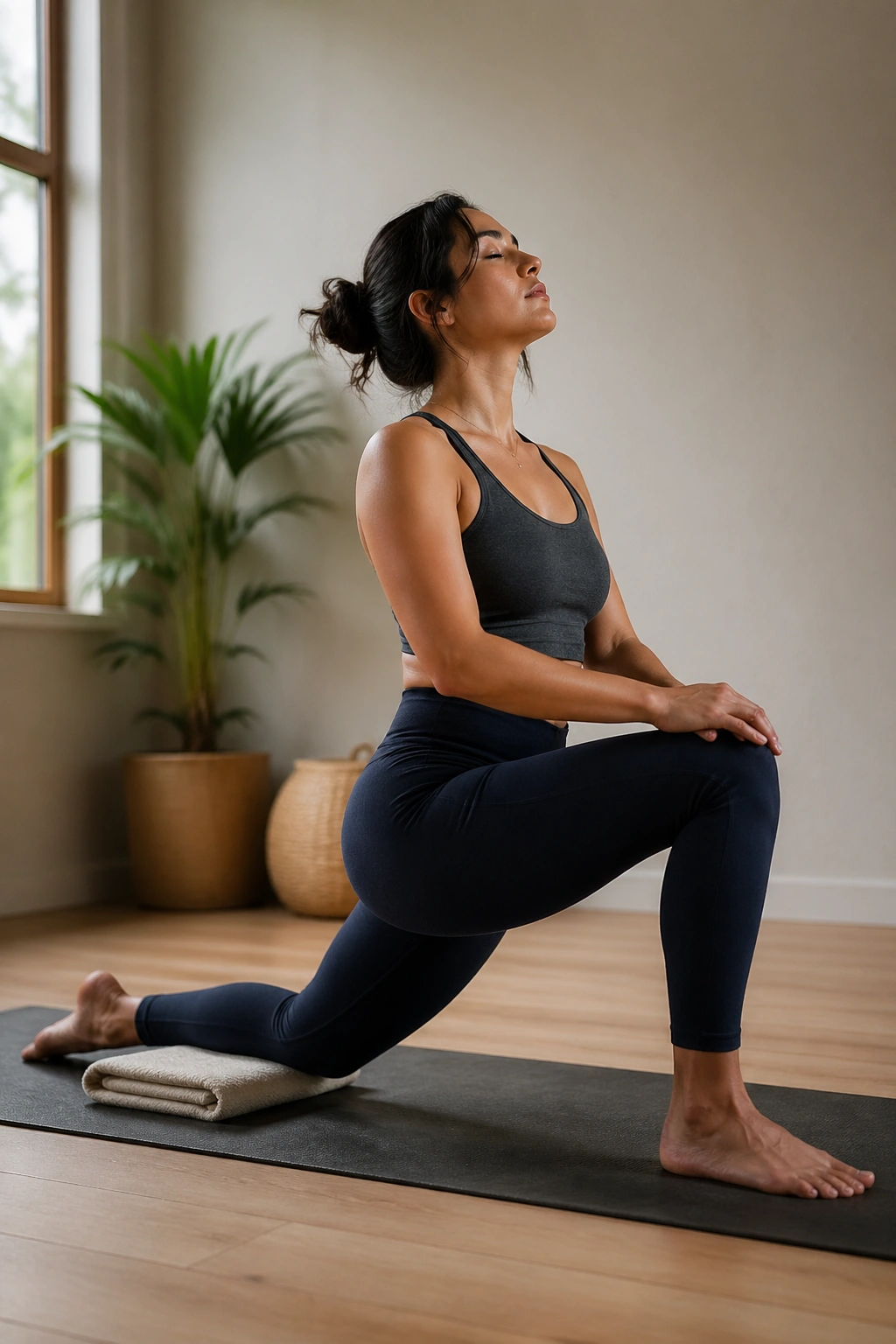
Low lunge earns its place because it opens the front of the hip without asking for a circus act. After sleep, a lot of people feel as if their hip flexors have shortened overnight, and the first thing they do is drag that stiffness into standing and sitting. Low lunge interrupts that pattern in a calm, direct way.
Start with the back knee on a blanket or folded towel. Step the front foot between your hands, keep the front knee over the ankle, and slide the back leg long enough that you feel a mild stretch in the upper thigh. The pelvis does not need to dump forward. In fact, if the low back starts to pinch, back off a little and lift the belly.
Hold for five breaths on each side. Make the exhale longer than the inhale by a beat or two. That small shift often helps the whole shape feel less effortful, almost as if the breath is telling the hips there’s no hurry.
Tiny movements count.
After the second side, sit upright for two minutes and notice the difference side to side. The mind tends to quiet when the body stops arguing with itself, which is one reason this combo feels cleaner than a more aggressive stretch first thing.
6. Supine Figure-Four and 4-6 Breathing
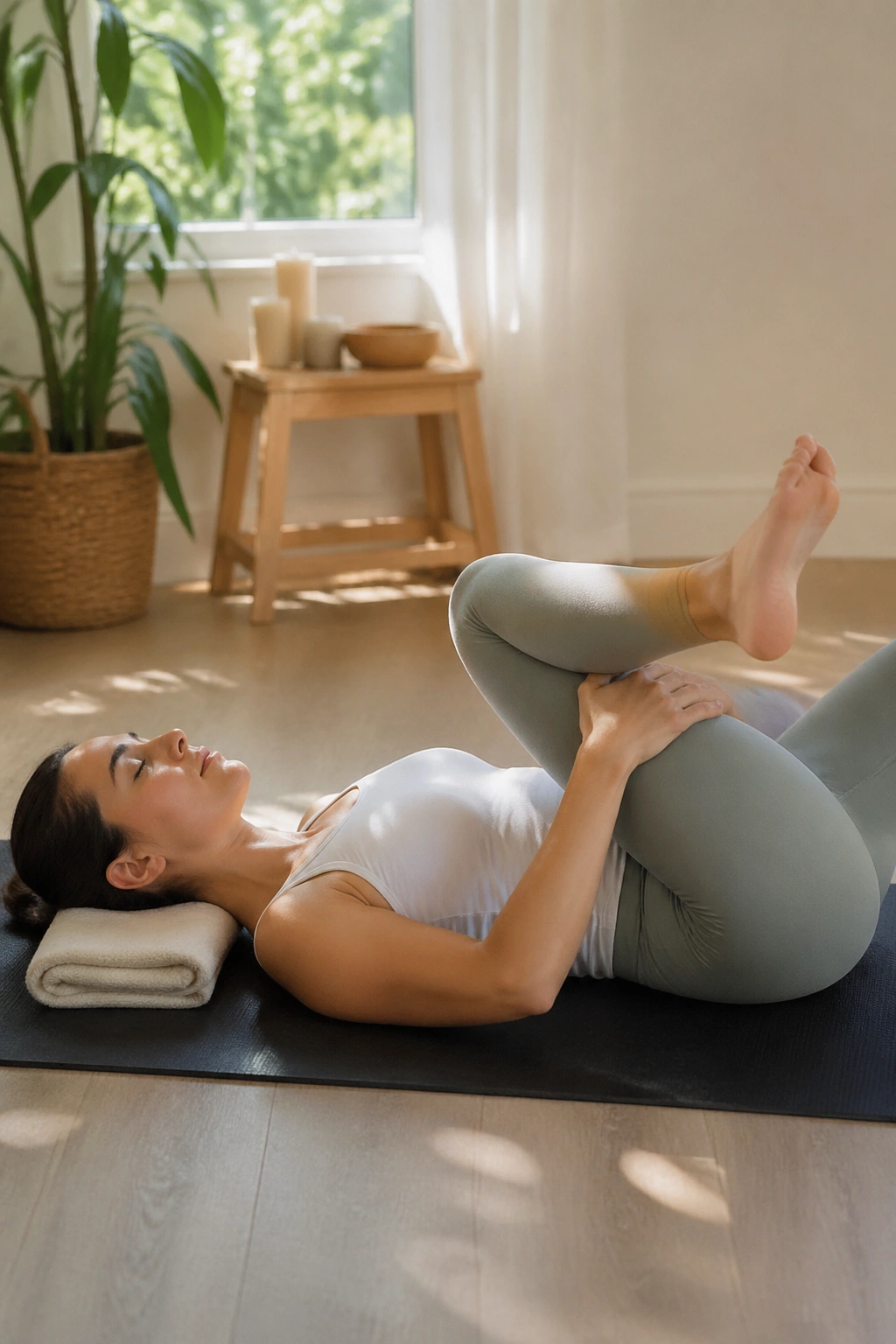
Unlike a deep hip stretch, the supine figure-four lets gravity do most of the work. That matters on mornings when the lower body feels tender or half-awake. It’s also kinder to people who don’t want to wrestle with balance before breakfast.
Lie on your back, cross one ankle over the opposite thigh, and draw the support leg toward you until you feel the outer hip open. Keep the flexed foot active so the knee stays honest. If your knee protests, move the ankle a little higher on the thigh or stop earlier. No prize for going deeper.
Pair each side with 4-6 breathing: inhale for four, exhale for six. That longer exhale tends to slow the whole rhythm down, which is why this combo works so well before a busy day. It gives the nervous system a reason to stay low and steady.
This one is best for people who want a quiet practice without standing work. It’s also good after a rough night’s sleep, when upright poses feel like too much too soon. After both sides, remain on your back for a few more breaths and let the floor do the resting.
7. Thread-the-Needle and a Single-Word Mantra
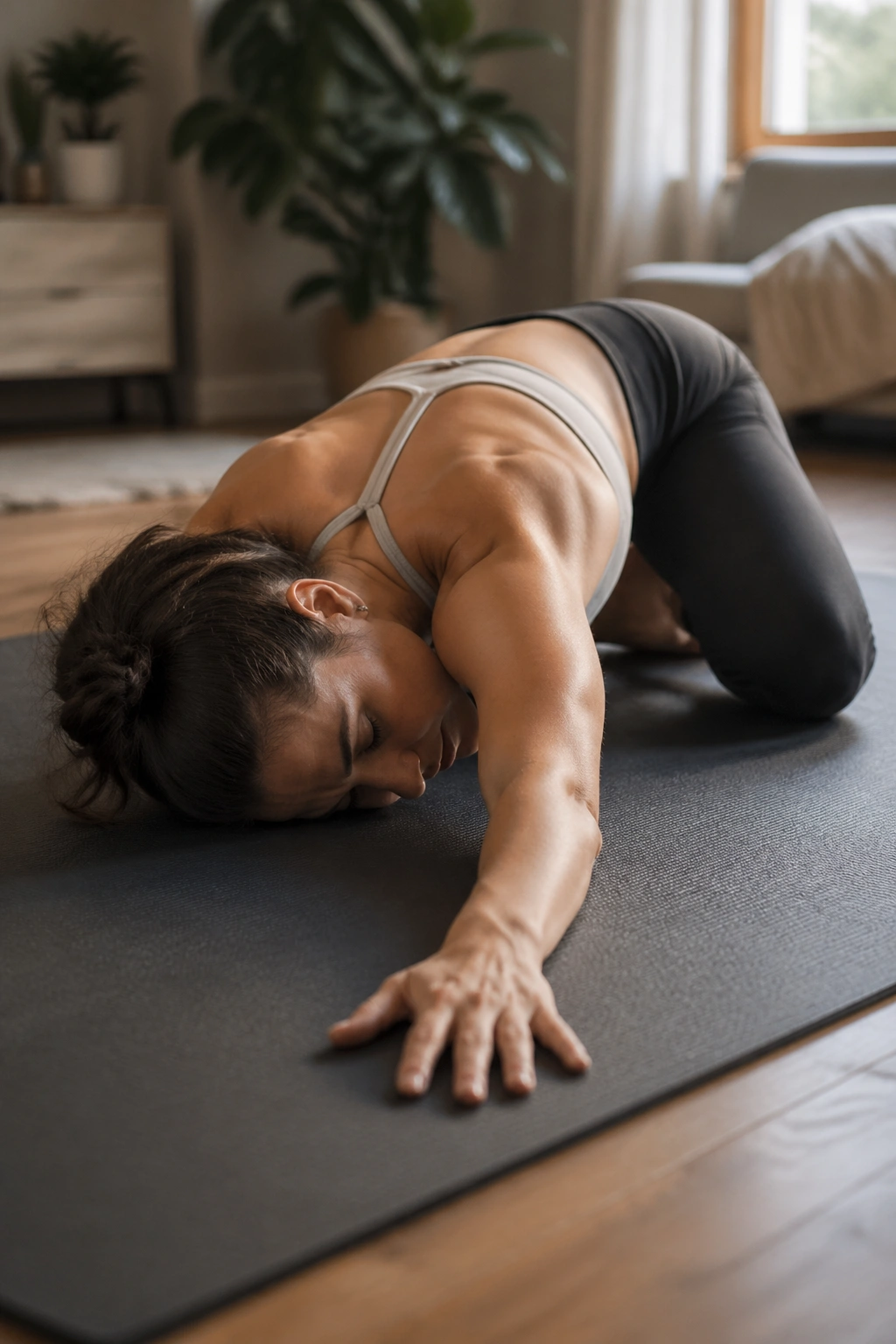
Shoulders that feel welded to the rib cage respond well to thread-the-needle. The twist is gentle, the shape is familiar, and the upper back usually softens after only a few breaths. Add a simple mantra after each side, and the combo turns from stretch into meditation without feeling precious.
Come to hands and knees, slide the right arm under the left, and lower the right shoulder and cheek toward the floor or a block. Keep the hips stacked above the knees as much as you can. Three to five breaths later, switch sides and do the same thing on the other arm.
What to watch for
- Don’t dump all the weight onto the neck
- Keep the lower ribs heavy so the twist stays honest
- Reach only until the breath remains smooth
- Pick one word, then repeat it quietly on the exhale
“Soften” works. So does “steady.” I like one-word mantras better than long phrases here because they leave room for the body to answer. After both sides, sit for one minute and let the shoulders hang where they want to hang.
8. Standing Forward Fold and a Slow, Quiet Sway
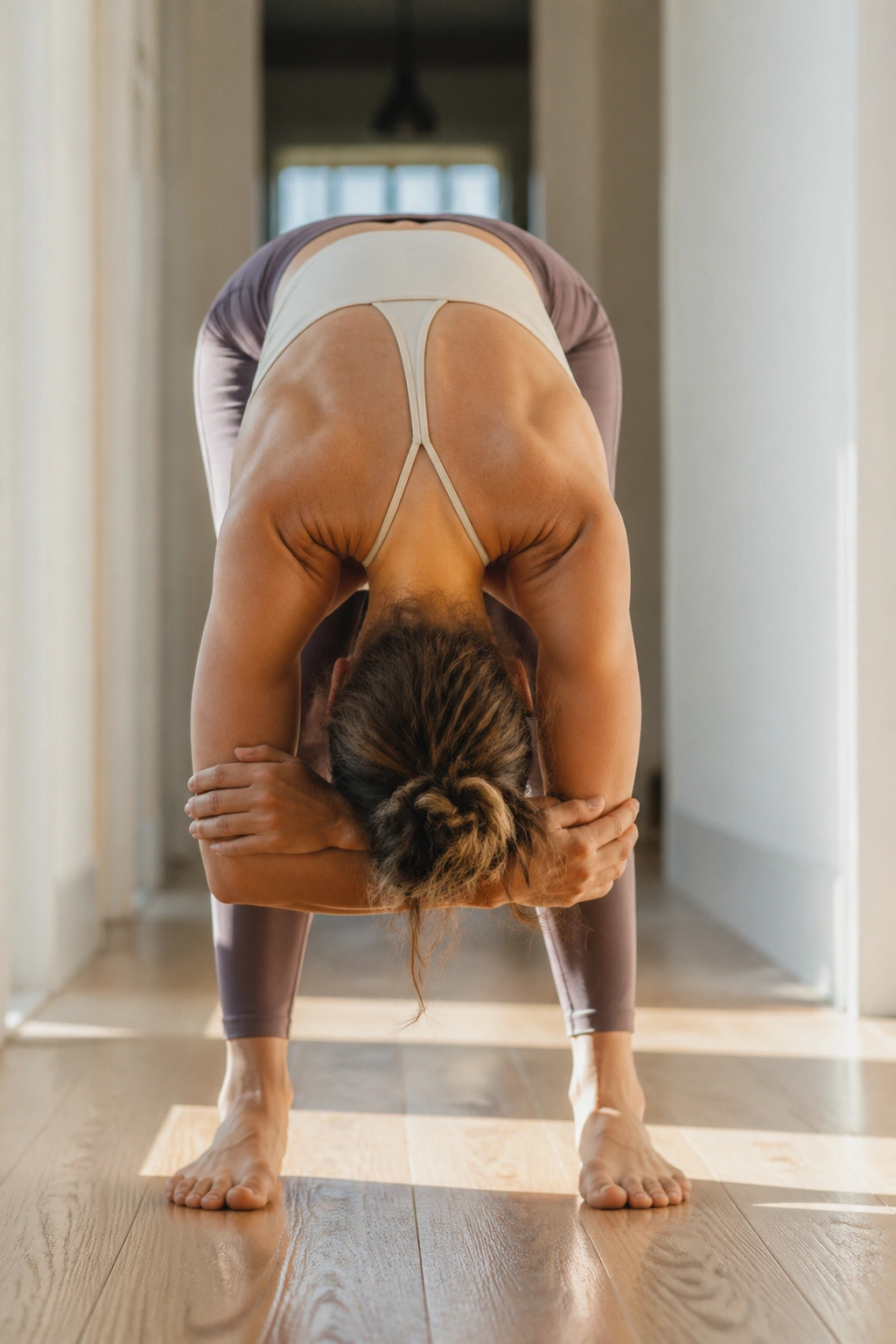
A still mind often starts with a moving body. That’s why a standing forward fold with a soft sway can be such a good morning reset. You get hamstring release, a little spinal decompression, and a chance to let your head hang without overthinking it.
Stand with your feet hip-width apart and fold with bent knees. Hold opposite elbows and sway gently side to side for 20 to 30 seconds. Then let the sway stop and stay there for five slow breaths. If your hamstrings are tight, keep the knees bent a lot. If your lower back feels edgy, bend them more.
No mat required.
When the body has settled, release the arms and stand halfway up. Take three slow breaths there and notice whether the front of the body feels a little more open. After that, sit or stand still for a brief breath count, maybe five inhales and five exhales.
This combo suits rushed mornings because it asks for very little space and almost no preparation. You can do it beside the bed, in a hallway, or near a window with cold light on the floor.
9. Figure-Four on the Back and a Simple Noticing Practice
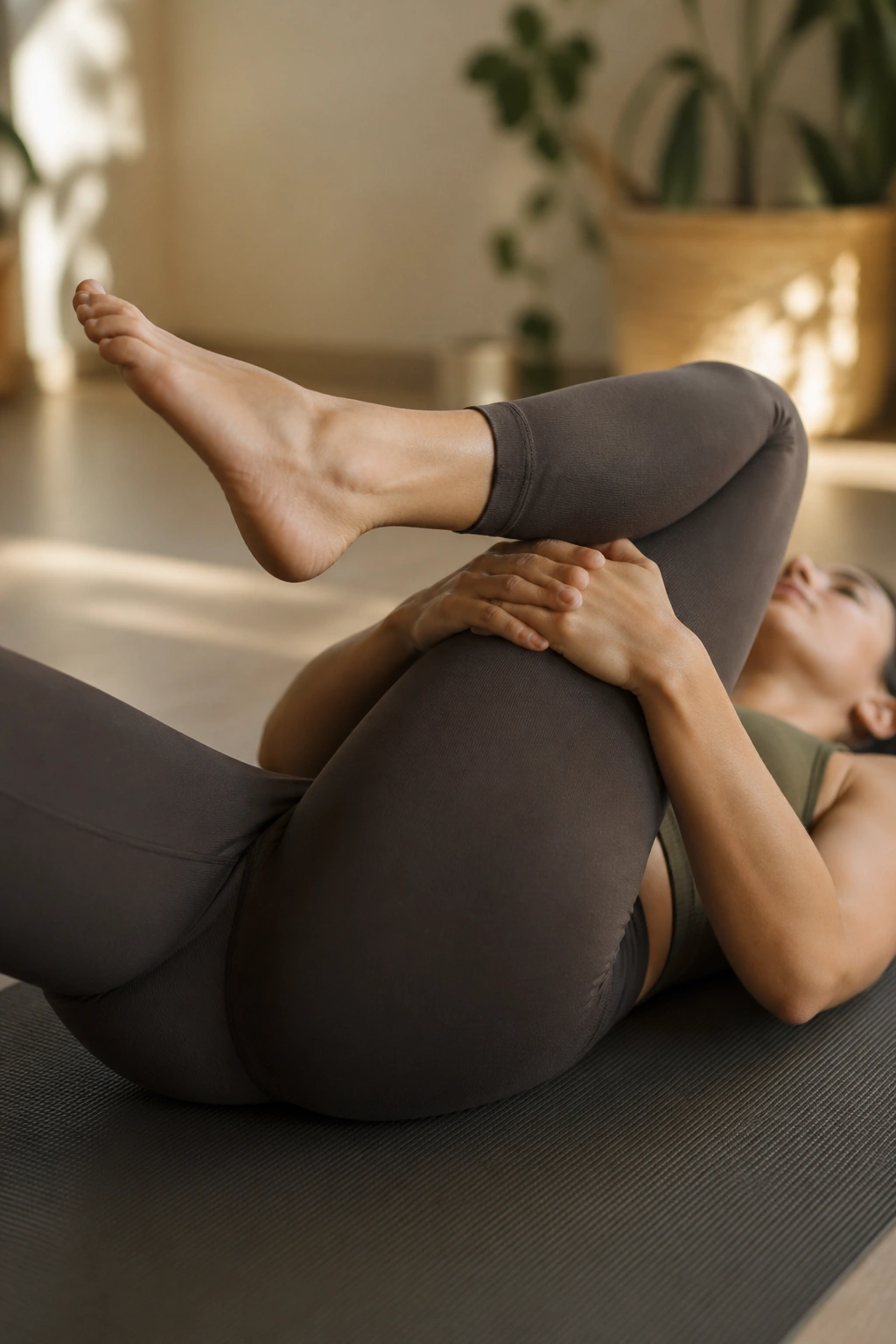
Can a hip opener make meditation easier? Yes, if the pose is quiet enough that your mind doesn’t have to keep checking whether you’re doing it right. The back-body figure-four is a good answer for that. It gives the hips space, but it doesn’t demand balance or a deep stretch.
Lie on your back and place one ankle over the opposite thigh. Pull the support leg in until the stretch lands in the outer hip, then stay there for five or six breaths. After that, shift the attention from the shape to the experience. Notice one sensation, one sound, and one thought. That is enough.
A calmer version for most people
If your knees are sensitive, keep the lower leg farther away instead of forcing it in. If your hips feel guarded, hold the back of the thigh rather than the shin. Either way, the goal is the same: a stretch that makes room for stillness rather than a stretch that steals attention.
Switch sides and repeat. Then lie flat for a minute and feel the weight of the pelvis on the floor. That pause matters. The meditation part is not an extra garnish; it’s what helps the stretch settle into the nervous system instead of fading the moment you stand up.
10. Mountain Pose, Shoulder Rolls, and Loving-Kindness
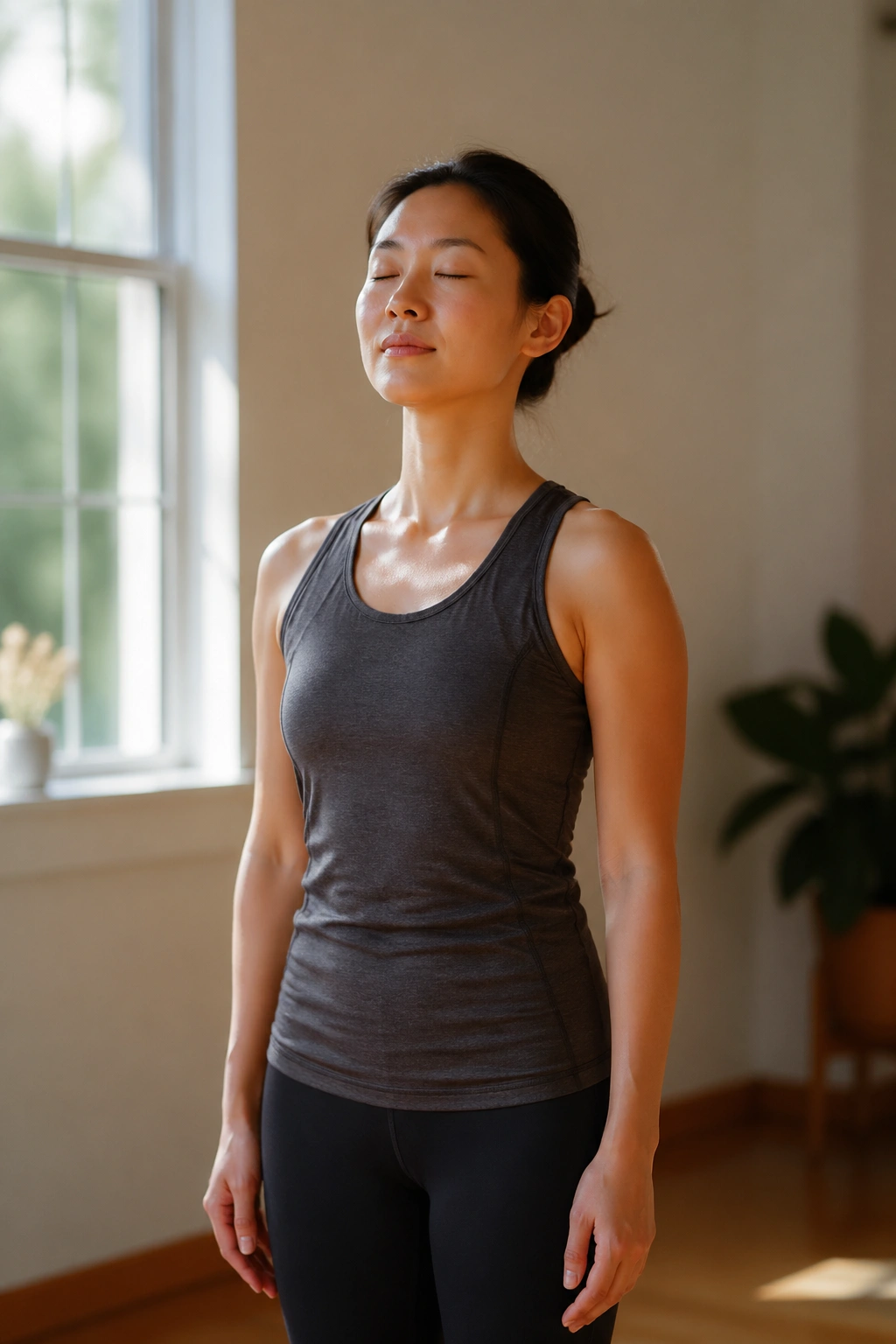
Some mornings do not need more stretching. They need to feel organized. Mountain pose does that better than people expect, especially when it’s paired with slow shoulder rolls and a short loving-kindness practice.
Stand with your feet grounded, hip-width apart or together if that feels steadier. Let the arms hang, roll the shoulders up, back, and down three times, and feel the chest broaden without puffing up. Then close the eyes halfway and stand there for a few breaths. Not frozen. Just present.
After that, place one hand on the chest or belly and repeat a simple phrase on the exhale: “May I be steady.” Then, “May I be clear.” Then, “May I be kind.” Keep each phrase linked to one breath. Two minutes is enough.
Why this combo works
- It trains balance without wobbling around in a fancy pose
- Shoulder rolls reduce that clenched, desk-shaped feeling in the neck
- The phrases give the mind a soft job
- Standing upright can feel more helpful than sitting when energy is low
This is one of the most underrated yoga and meditation combos for quiet mornings because it looks almost too plain to matter. Plain again. Useful again.
11. Wide-Legged Forward Fold and an Extended Exhale
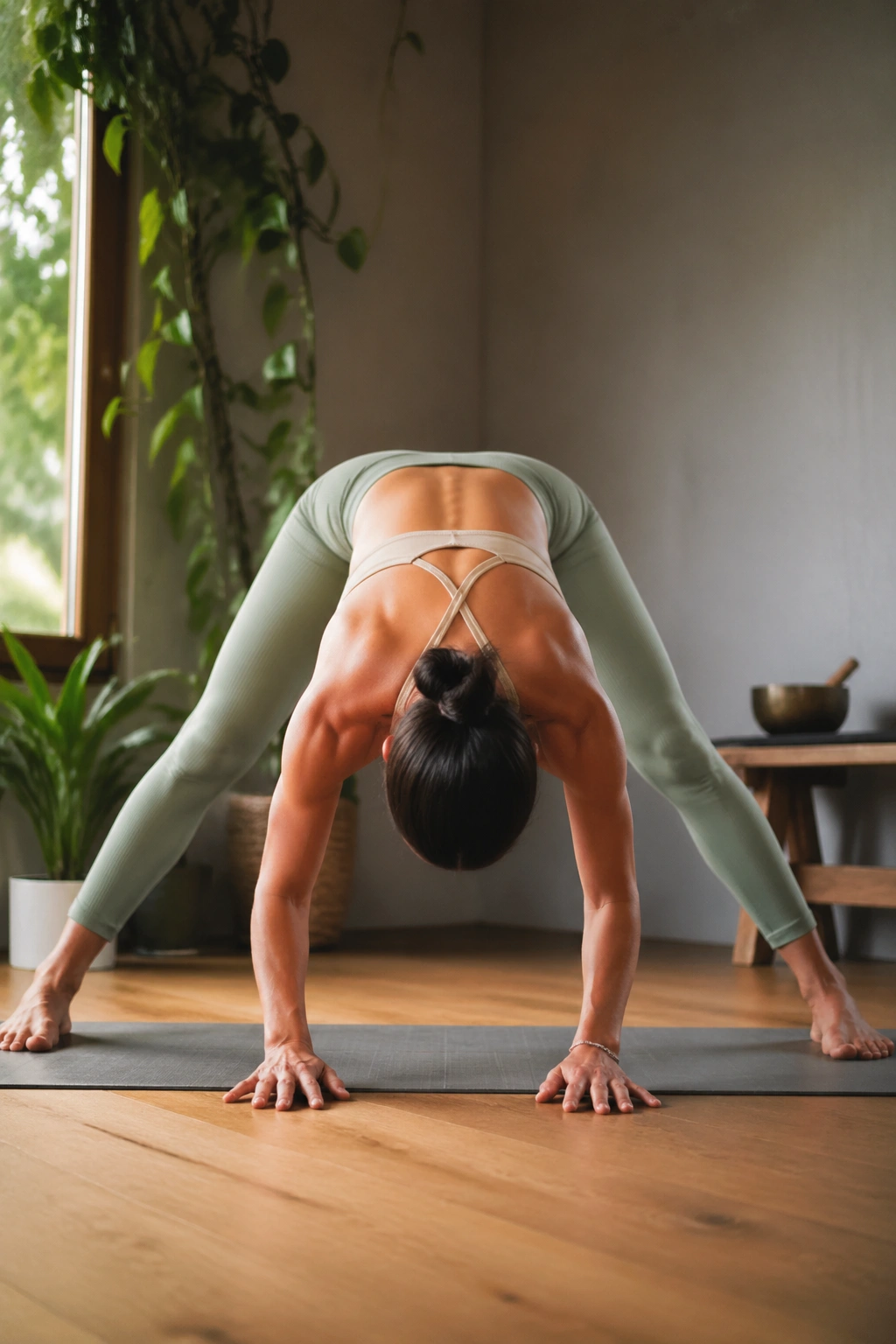
Wide-legged forward fold changes the shape of the breath in a way most people notice right away. The inner thighs open, the hamstrings get a different kind of stretch, and the torso has enough room to feel broad instead of compressed. It’s a good choice when the body wants space more than it wants intensity.
Step your feet wide enough that you feel stable but not strained. Turn the toes in slightly, hinge at the hips, and rest your hands on the floor, blocks, or a chair seat. Stay long through the spine for the first breath or two. After that, let the upper body drape if it feels good.
Then shift into an extended exhale. Inhale for four counts, exhale for six or seven. Five rounds is a practical starting point. If the neck feels heavy, place a block under the forehead so the head doesn’t have to hang in midair.
I like this one because it feels honest. If your legs are tight, you know it. If your breath is uneven, you know that too. There’s no place to hide, which sounds harsh until you realize that clarity can be calming.
Come up slowly. Feet wide folds can leave people a little wobbly if they rush the exit, and the last thing a quiet morning needs is a sudden head rush.
12. Sphinx or Cobra and Breath Awareness
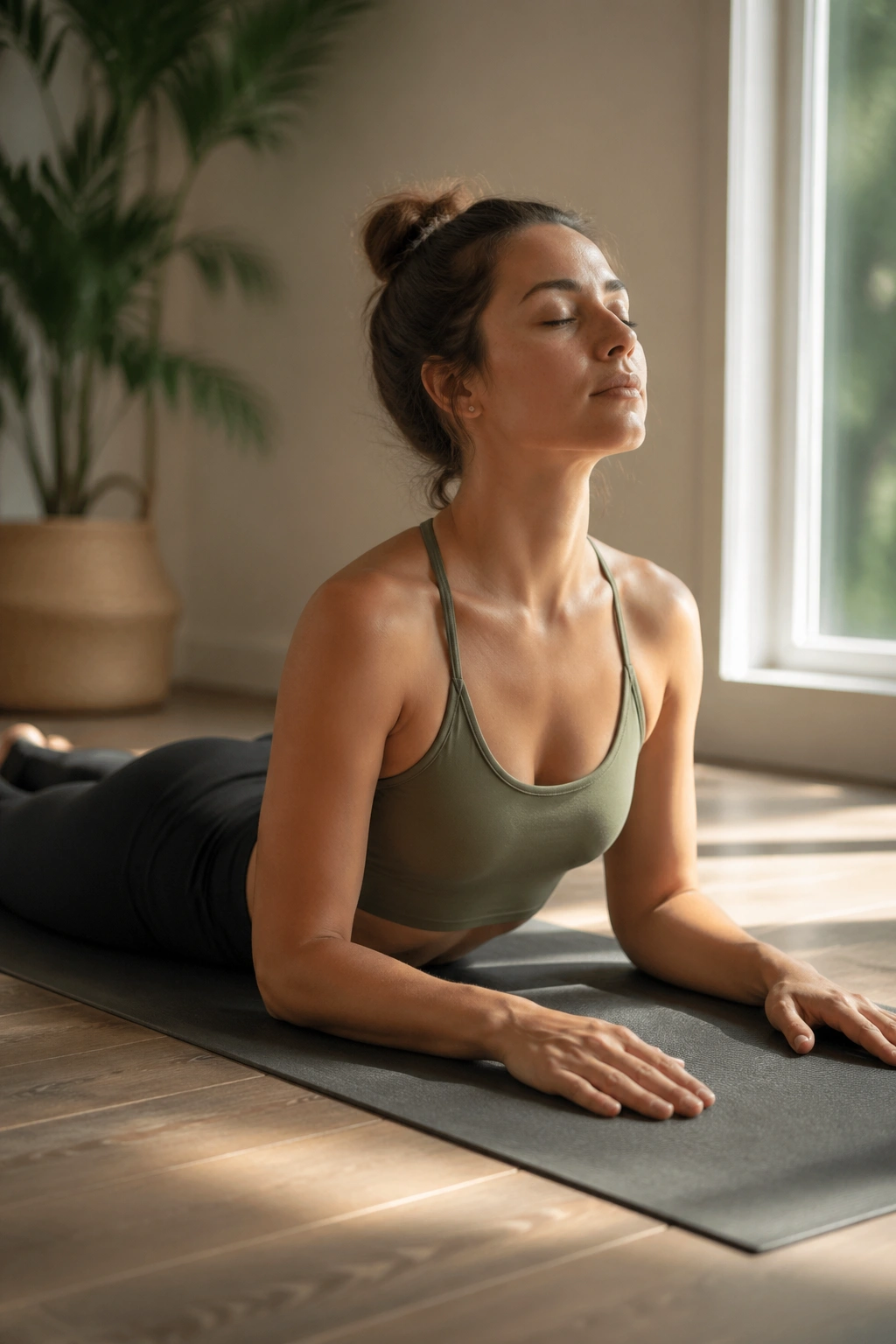
Sphinx and cobra are not the same thing, and morning backs notice. Sphinx is lower, steadier, and easier to hold without gripping the lower back. Cobra asks for a bit more active engagement, which can feel lovely or annoying depending on how your spine woke up.
If you’re stiff or slumped, start with sphinx. Lie on your belly, place your elbows under your shoulders, and press gently through the forearms so the chest lifts. Stay for five breaths. Let the belly stay soft. Then lower down and rest your forehead on your hands for a breath or two.
If that feels good, take two low cobras with the elbows hugged toward the ribs and the pubic bone grounded. Lift only as high as you can without jamming the low back. The lift should feel alive, not theatrical.
Who should choose which one
- Sphinx works well for sensitive lower backs and slow mornings
- Low cobra suits people who want a stronger wake-up for the front body
- Both pair well with breath tracking across the ribs
- Neither one needs to be a full backbend
After the backbend work, lie flat and notice the breath moving across the belly and side ribs. That little check-in is the meditation. Nothing fancy. Just a clear sense that the body is awake now.
13. Legs-Up-the-Wall and a Simple Awareness Practice
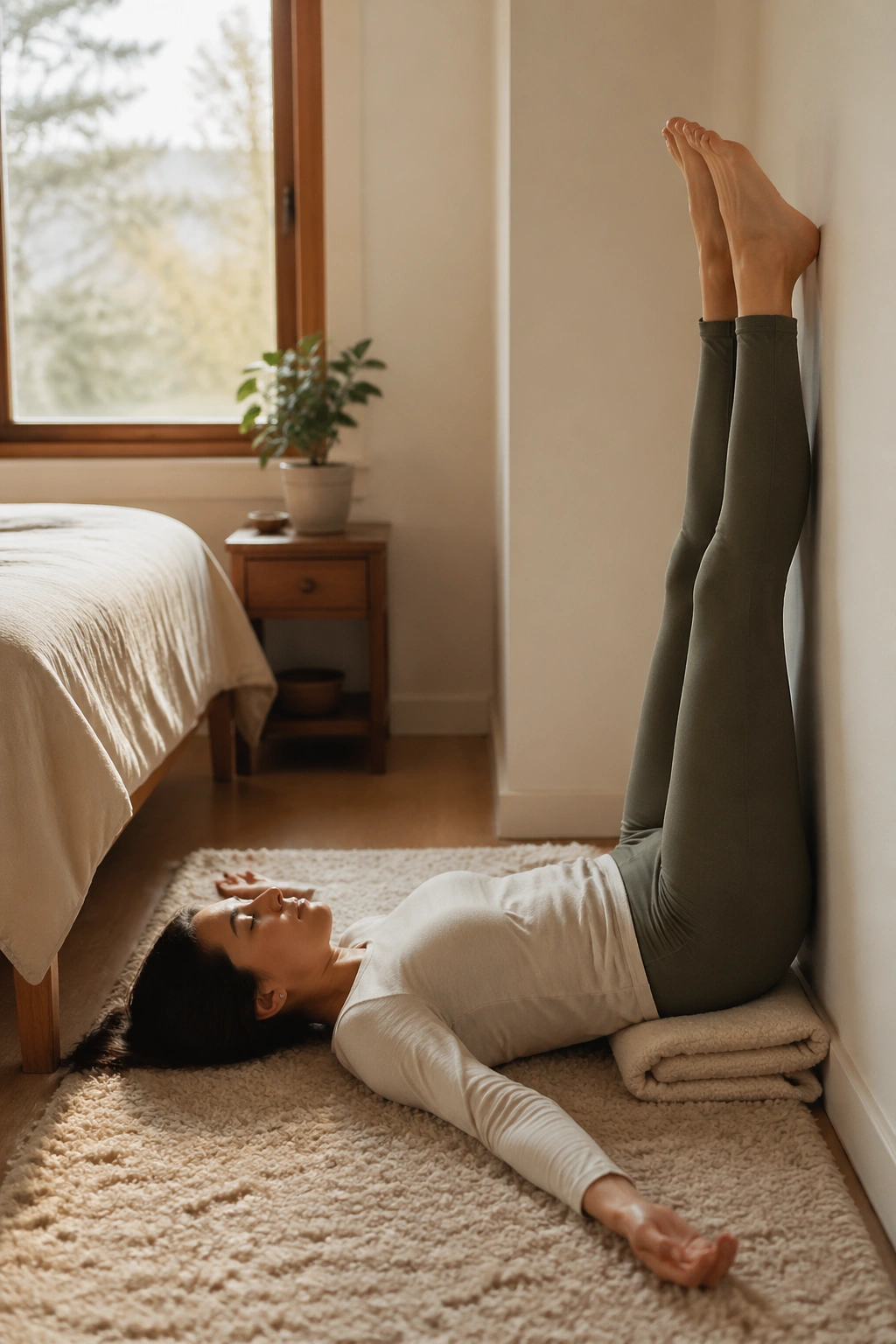
Gravity helps. Legs-up-the-wall is one of the rare shapes that feels restful and useful at the same time, which is probably why so many people keep coming back to it. It gives the hamstrings a break, settles the lower back, and creates a clean transition into meditation without asking for effort.
Sit sideways next to a wall, swing your legs up, and scoot your hips close enough that the thighs can relax. If your hamstrings complain, move an inch or two away from the wall. If the lower back wants support, slide a folded blanket or bolster under the pelvis. Stay for 5 to 10 minutes if you have the time.
How to settle into it
- Let the shoulders drop heavy into the floor
- Close the eyes or soften the gaze
- Count 20 slow exhales, then stop counting
- Notice the difference between the left and right leg
- Keep the jaw loose and the tongue wide
The meditation here can be as plain as watching the breath at the nostrils or as simple as noticing which parts of the body feel heavier than others. That’s enough. In a quiet morning, enough is a fine place to be.
14. Seated Side Bend and a Gratitude Breath
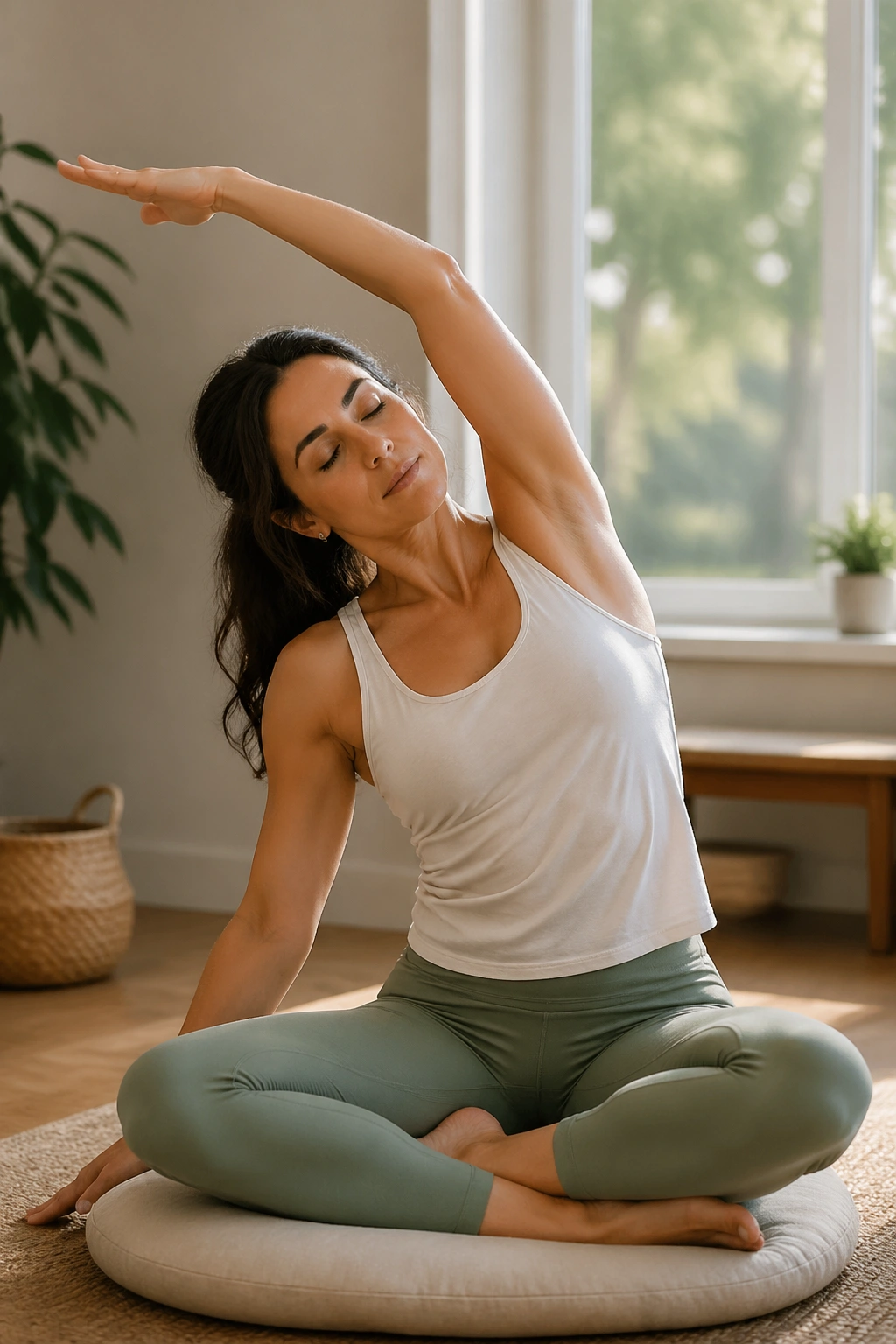
A side bend changes the shape of the breath more than most people expect. It opens the ribs, softens the waist, and can make a seated morning feel less boxed in. It’s a small shape with a surprisingly clear effect.
Sit cross-legged on a cushion or upright in a chair with both feet grounded. Reach one arm overhead and lean gently to the opposite side, keeping both sit bones heavy. Take three breaths there, then switch. You should feel the side body lengthen, not strain.
After both sides, place both hands on the chest or thighs and name three things you can actually sense. A warm mug. Cool air near the window. The rough edge of a blanket. Gratitude works better when it’s concrete and a little humble.
Three useful gratitude prompts
- Something you can hear in the room
- Something you can smell or taste
- Something small the body did without asking
That final breath practice can sound sentimental on paper. In real life it’s steadier than that. It gives the mind a place to land that isn’t locked to the day’s first problem.
15. The Gentle Reset for the Morning You Actually Have
Not every quiet morning has the same mood. Some feel stiff and sleepy, some feel anxious, and some feel almost blank. The smartest morning practice is the one that matches the day instead of fighting it.
Easy is the point.
If you have 4 minutes, do cat-cow for a minute, child’s pose for another minute, then sit and count ten exhales. If you have 7 or 8 minutes, add downward dog or a forward fold, then finish with a low lunge and a short seated breath count. If you have a little more room, layer in legs-up-the-wall or a figure-four hold before you sit in stillness.
A simple way to choose
- Stiff back: cat-cow, low lunge, seated breathing
- Restless mind: forward fold, box breathing, loving-kindness
- Heavy legs: figure-four, wide-legged fold, legs-up-the-wall
- Low energy: child’s pose, mountain pose, slow breath count
The best yoga and meditation combos for quiet mornings are the ones you can repeat without bargaining with yourself. That matters more than complexity, and it matters more than looking polished. A small practice done often beats a perfect one done rarely.
Start with the combo that feels least irritating. That’s usually the honest answer.
