



Swimmers know this feeling well: the reach looks easy from the deck, then the shoulder hits its limit a little early and everything starts to feel cramped. A smart set of yoga poses for swimmers can help, but not because yoga is magic. It helps because swimming lives in repetition — lots of overhead work, lots of internal rotation, lots of time with the chest closed and the upper back doing more than it should.
The tightness is rarely only in the shoulder joint. More often, the chest feels short, the lats grip hard, the upper back refuses to extend, and the shoulder blade loses some of the smooth glide it needs. That mix makes a freestyle recovery feel clunky and a butterfly pull feel even heavier. You can stretch the shoulder all day and still miss the bigger picture.
What I like about shoulder work for swimmers is that the best positions are not always the dramatic ones. A quiet supported opener can do more than an aggressive bind if your body is already guarding. And a little active work matters too — because a swimmer does not need floppy shoulders, just freer ones.
So the list below isn’t a random pile of stretches. It’s a practical set of yoga poses that target the places swimmers usually feel most: the front of the shoulders, the lats, the ribs, the upper back, and the scapular stabilizers that keep everything from pinching. A few are gentle. A few ask more of you. That balance is the point.
1. Thread the Needle for Rear Shoulder Relief
This is the pose I reach for when the back of the shoulder feels glued down. On hands and knees, slide one arm under the other and let the shoulder and temple rest on the floor or mat. Keep the hips stacked over the knees. Easy. Quiet. Effective.
What matters here is the angle of the shoulder blade, not how far you twist. If you force the stretch, the neck often takes over and the shoulder stops relaxing. I like to stay for 5 slow breaths per side, then ease out and notice whether the upper back feels a little less locked.
What to feel
- A stretch across the rear shoulder, not a sharp pinch in the front.
- Gentle rotation through the rib cage.
- The neck softening instead of bracing.
Tip: If your shoulder is sensitive, slide a folded towel under the resting shoulder or keep the top arm bent less deeply.
2. Puppy Pose to Open the Chest and Lats
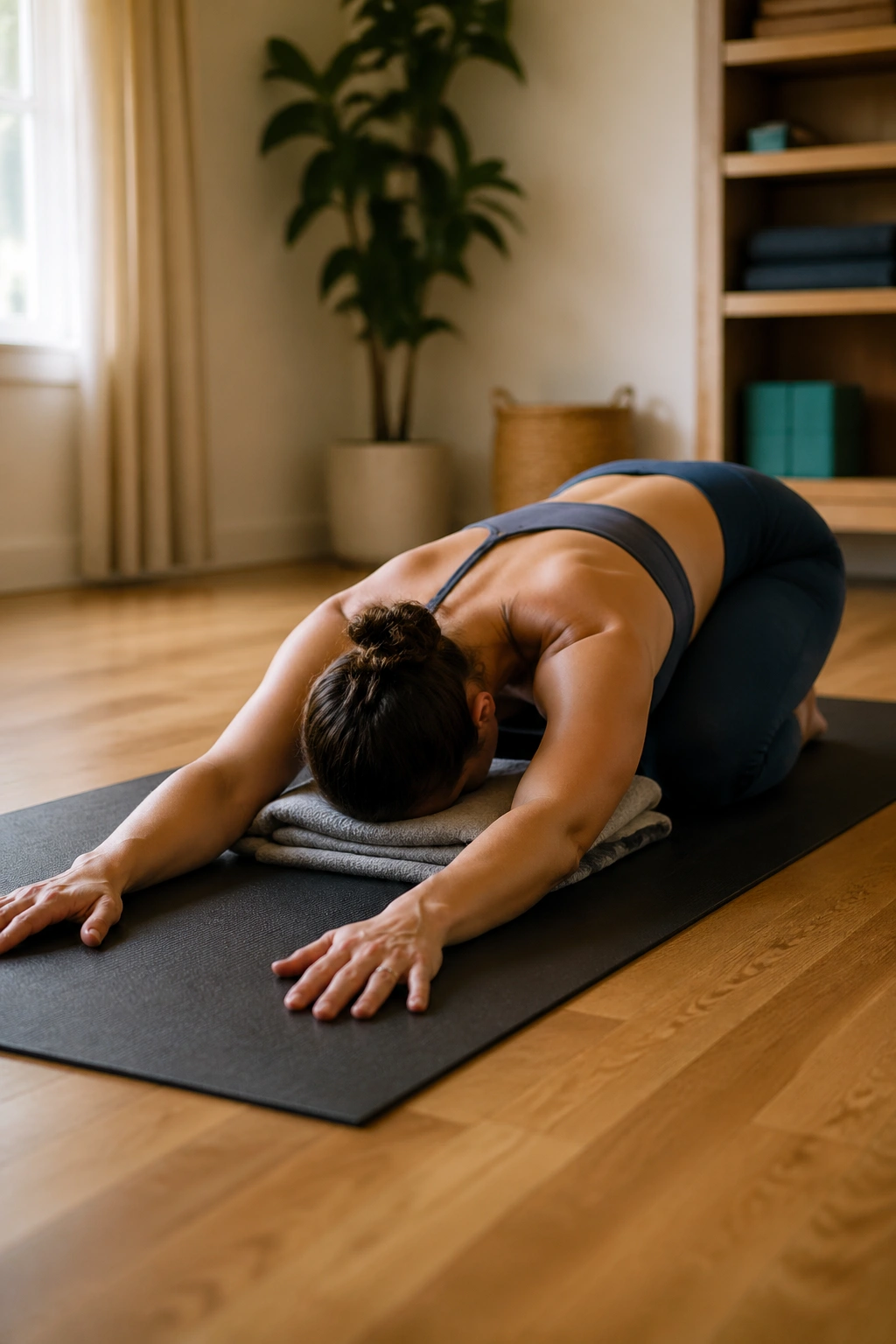
Puppy pose is sneaky. People assume it’s all about the shoulders, but swimmers usually feel it first in the lats and the upper chest. From all fours, walk your hands forward and lower your chest toward the floor while keeping the hips above the knees. Let the forehead rest down if it reaches.
The temptation is to dump weight into the shoulders. Don’t. Press the hands lightly, keep the ribs from flaring too much, and let the stretch spread from the armpits into the side body. That’s the spot. If the elbows want to splay far apart, bring them a little closer and you’ll often get a cleaner line.
A useful way to set it up
- Place a folded blanket under the chest if the floor feels too far away.
- Keep the neck long and the chin soft.
- Breathe into the sides of the ribs for 4 to 6 breaths.
Small but real detail: If your elbows start to ache, back out of the depth. Tight swimmers often think deeper is better. It isn’t.
3. Child’s Pose with Side Reach for the Lat Line
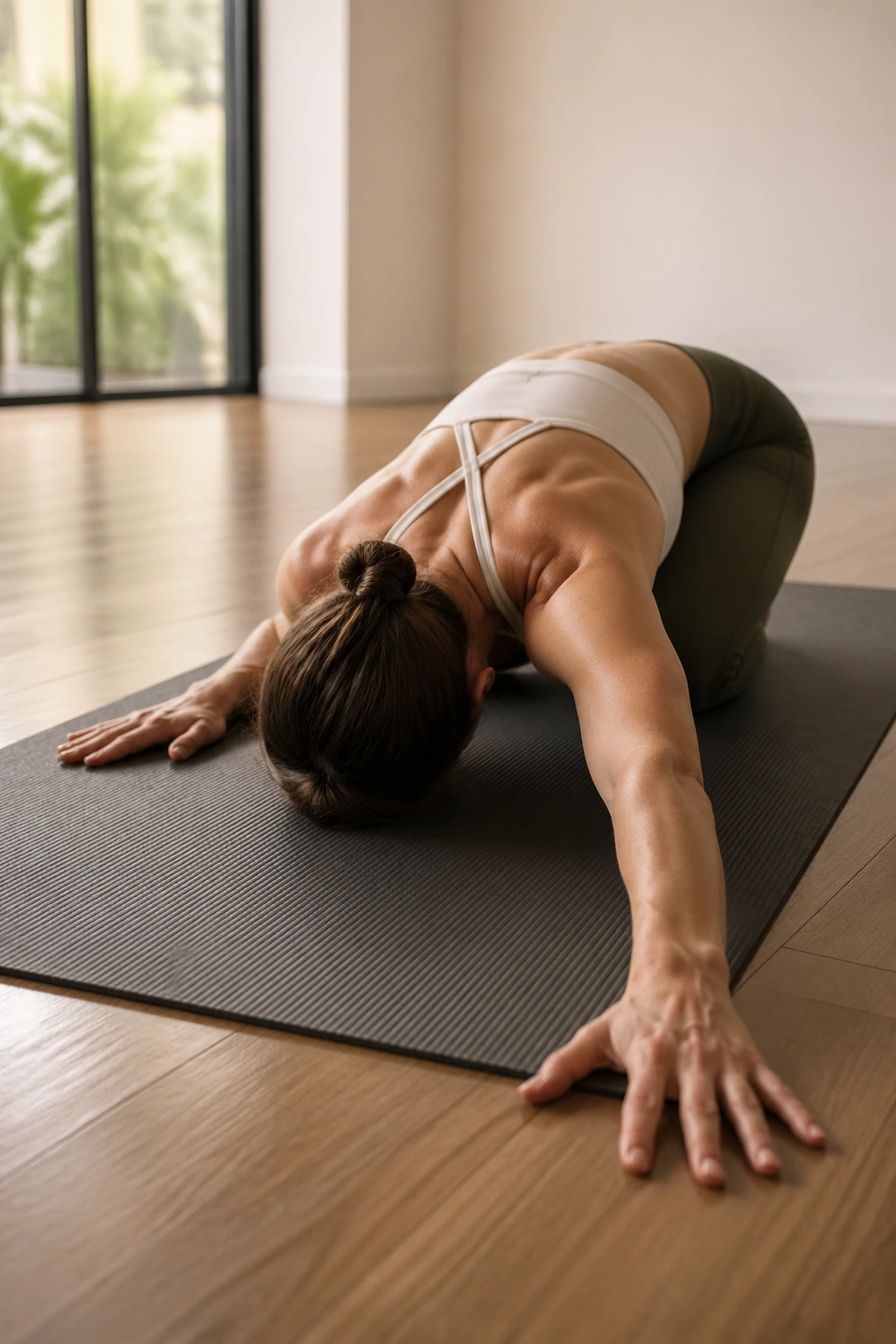
Why does one arm reach matter so much? Because one-sided lat tightness can make your recovery stroke feel uneven, especially if you always breathe to the same side. In child’s pose, walk both hands forward, then slide one hand a few inches farther to the opposite side. You’ll feel the stretch run from the outer ribs up toward the armpit.
That long side-body line is gold for swimmers. It’s the same tissue chain that tends to grip after long pool sets and kickboard work. Stay heavy through the hips, keep the opposite hand grounded, and let the ribs widen against the breath. No yanking. No forcing.
How to angle the hand
- Reach the hand to the right to stretch the left side body.
- Reach the hand to the left to stretch the right side body.
- Keep the head supported if the neck feels tight.
One good cue: think “ribs back and out,” not “arm as far as possible.” The stretch gets better when the body stops fighting it.
4. Eagle Arms for the Upper Back That Won’t Unknot
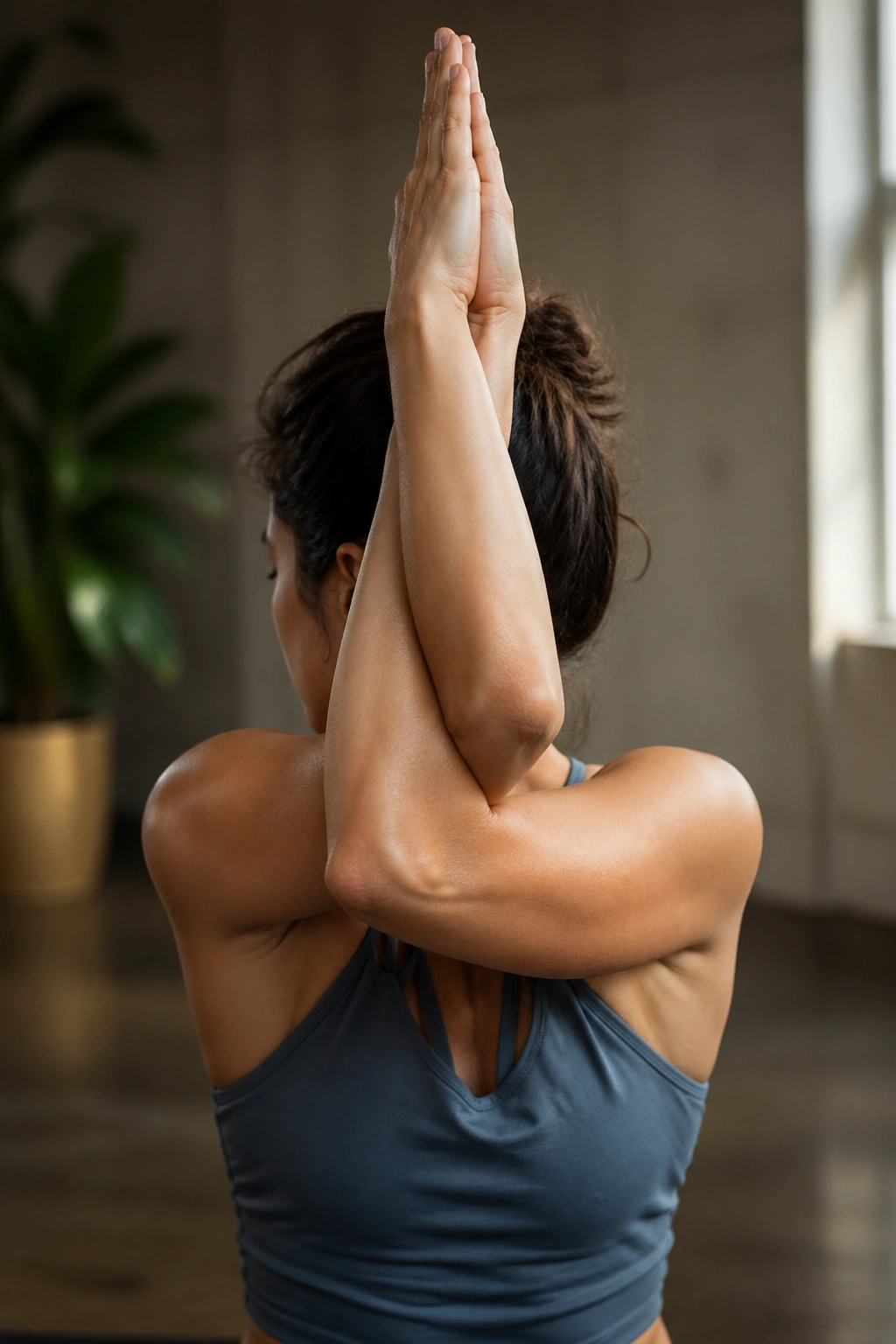
Eagle arms look simple, but they do a lot. Cross one elbow under the other, wrap the forearms, and lift the elbows a little while the shoulders stay down. The back of the shoulder blades spreads, the upper traps get a break, and the space between the shoulder blades wakes up.
This is a good choice after long laps because swimmers tend to live in a shrug without noticing it. Eagle arms gives you a chance to reverse that pattern. Keep the ribs quiet. If the elbows rise too high, the neck starts doing the work and the stretch gets messy.
What usually goes wrong
- The chin juts forward.
- The shoulders creep up.
- The forearms cross so tightly that breathing gets shallow.
Unwind the arms if needed and reset. That tiny reset often helps more than muscling through the shape.
5. Cow Face Arms When the Shoulders Feel Stuck
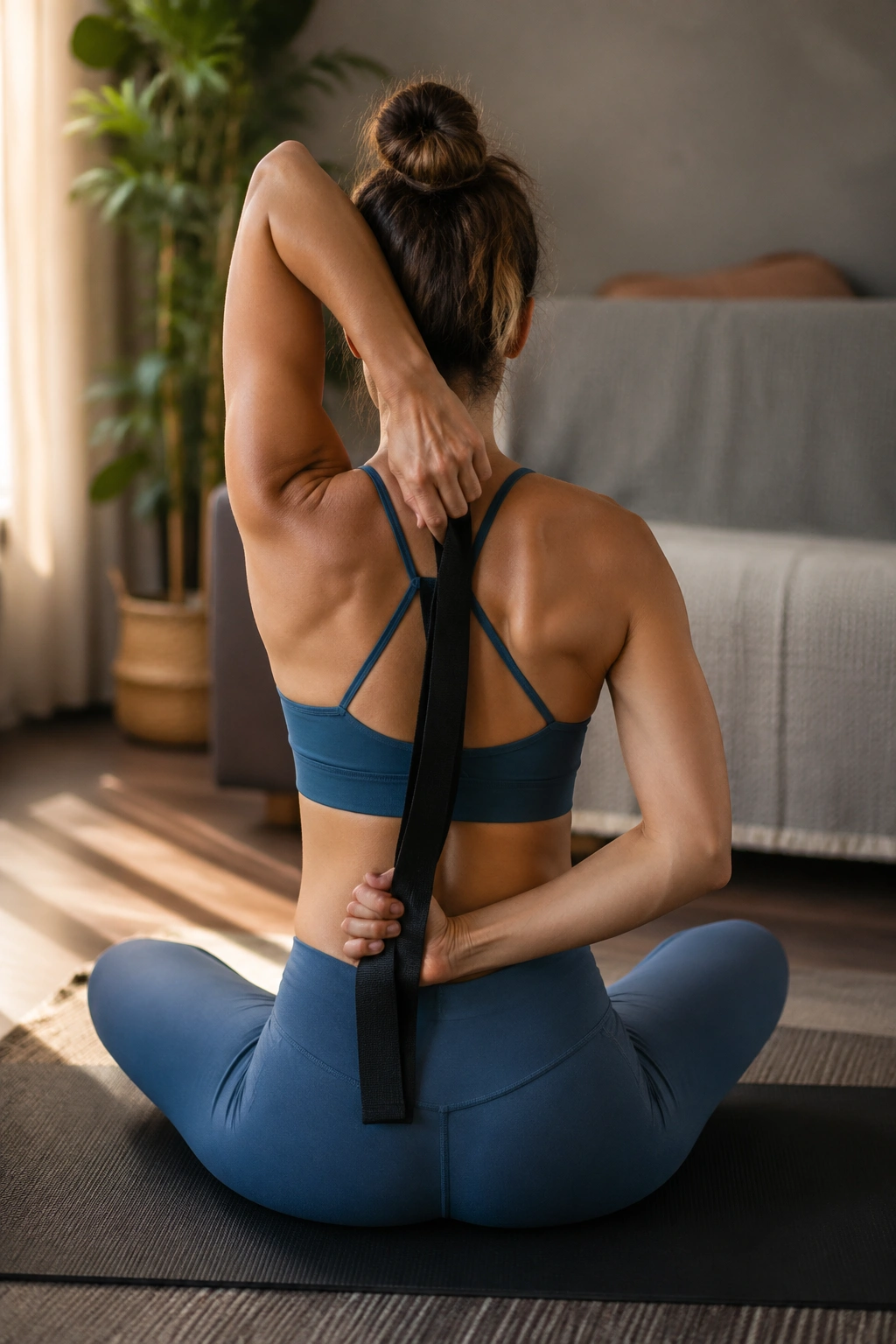
Cow face arms can feel awkward the first few times, and that’s normal. One elbow reaches up, the other reaches down, and the hands try to meet behind the back. For swimmers, this position is useful because it asks for shoulder rotation in a direction most strokes never really visit.
If the hands do not meet, use a strap. That’s not a downgrade; it’s the smart version. I’d rather see a clean line with a strap than a twisted struggle with the neck cranking sideways. Stay tall through the ribs and let the top elbow point up, not out.
A simple setup that works
- Keep the spine long.
- Use a strap between the hands if there’s a big gap.
- Hold for 4 to 5 breaths, then switch sides.
My honest take: this one works best when you stay patient. If you rush, the shoulder jams. If you breathe, the front of the shoulder often softens on its own.
6. Supported Fish Pose to Undo the Closed Chest
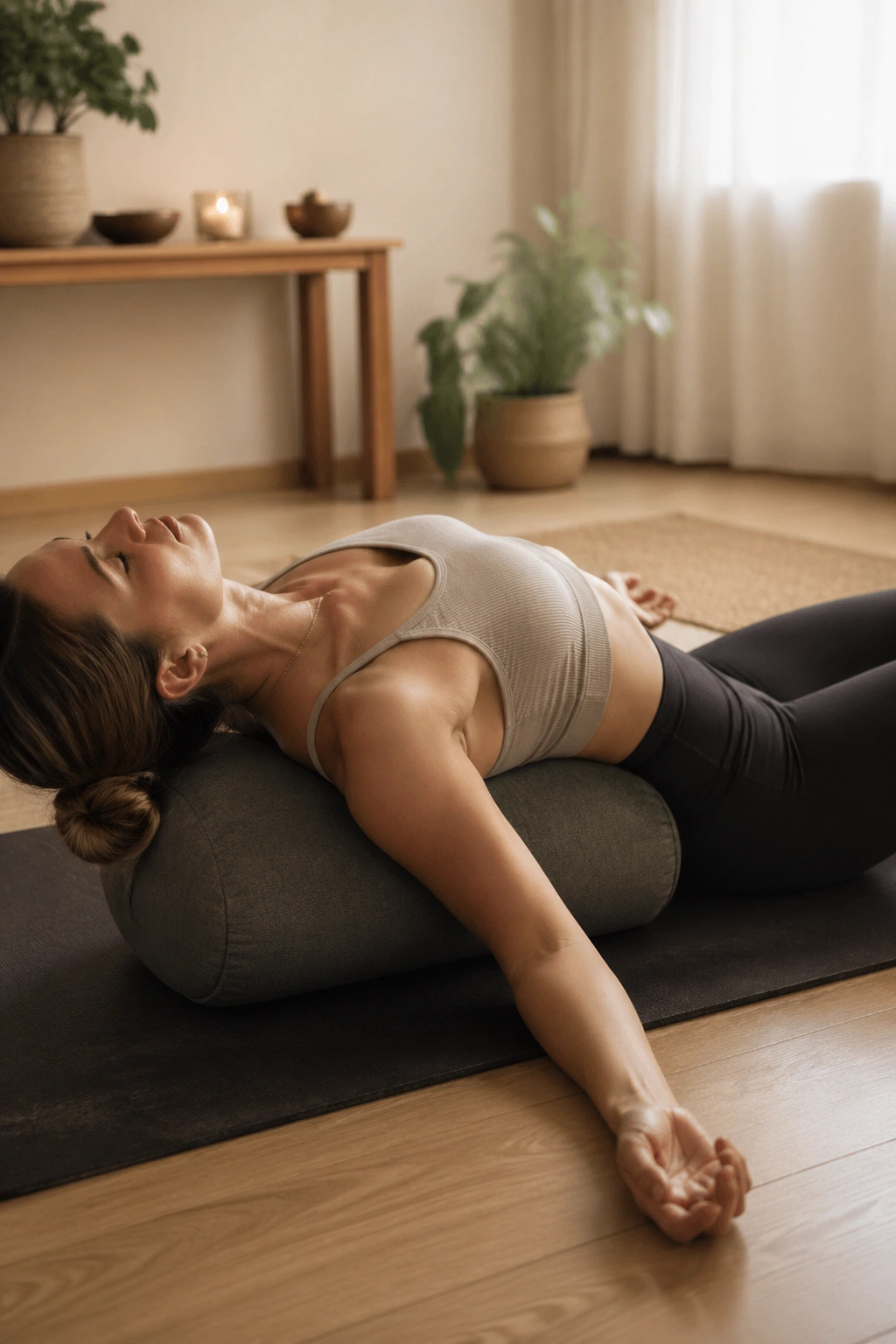
Supported fish pose is one of the nicest antidotes to a swimmer’s rounded upper body. Lie back over a bolster, firm pillow, or rolled blanket placed lengthwise under the spine. Let the chest open, let the shoulders drape, and let the arms rest where they can. If the floor is too much, this is the friendlier version.
The chest opening matters because tight pecs can pull the shoulders forward all day. That doesn’t just feel stiff; it changes how the arm sits when it reaches overhead. Supported fish gives the front line of the body a chance to lengthen without asking for effort. The breath tends to get bigger here, too, which is a nice bonus.
If your lower back arches hard, bend the knees or raise the support a little. The goal is openness, not drama.
7. Sphinx Pose for the Front of the Shoulders
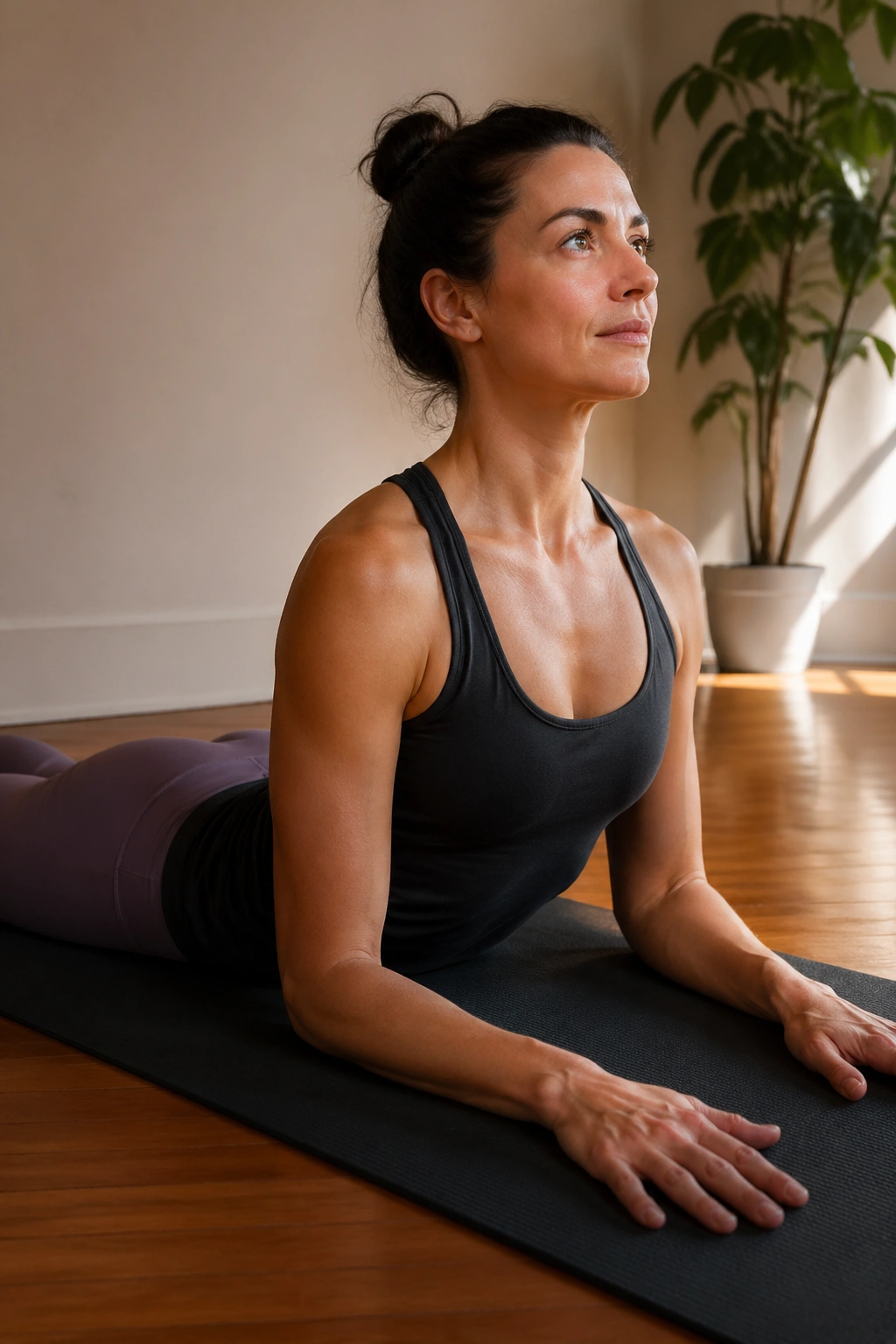
A lot of swimmers need more back-body tone and more chest opening at the same time. Sphinx pose gives you both. Lie on your belly, place the elbows under the shoulders, and press the forearms down while the chest lifts away from the floor. The shoulders roll back a bit, the collarbones spread, and the upper back has to participate.
This is not a giant backbend. Good. I prefer it that way. When you keep the neck long and the ribs from dumping forward, Sphinx helps counter the hunched shape that can build up after repeat sets and dryland work. It also teaches the shoulder to bear weight without collapsing inward.
What to avoid
- Pushing so hard that the low back pinches.
- Shrugging the shoulders toward the ears.
- Letting the head hang.
Useful cue: press the forearms down and imagine the sternum sliding forward a few inches. Small lift. Big difference.
8. Low Lunge with Cactus Arms for Chest and Hip Flexor Release
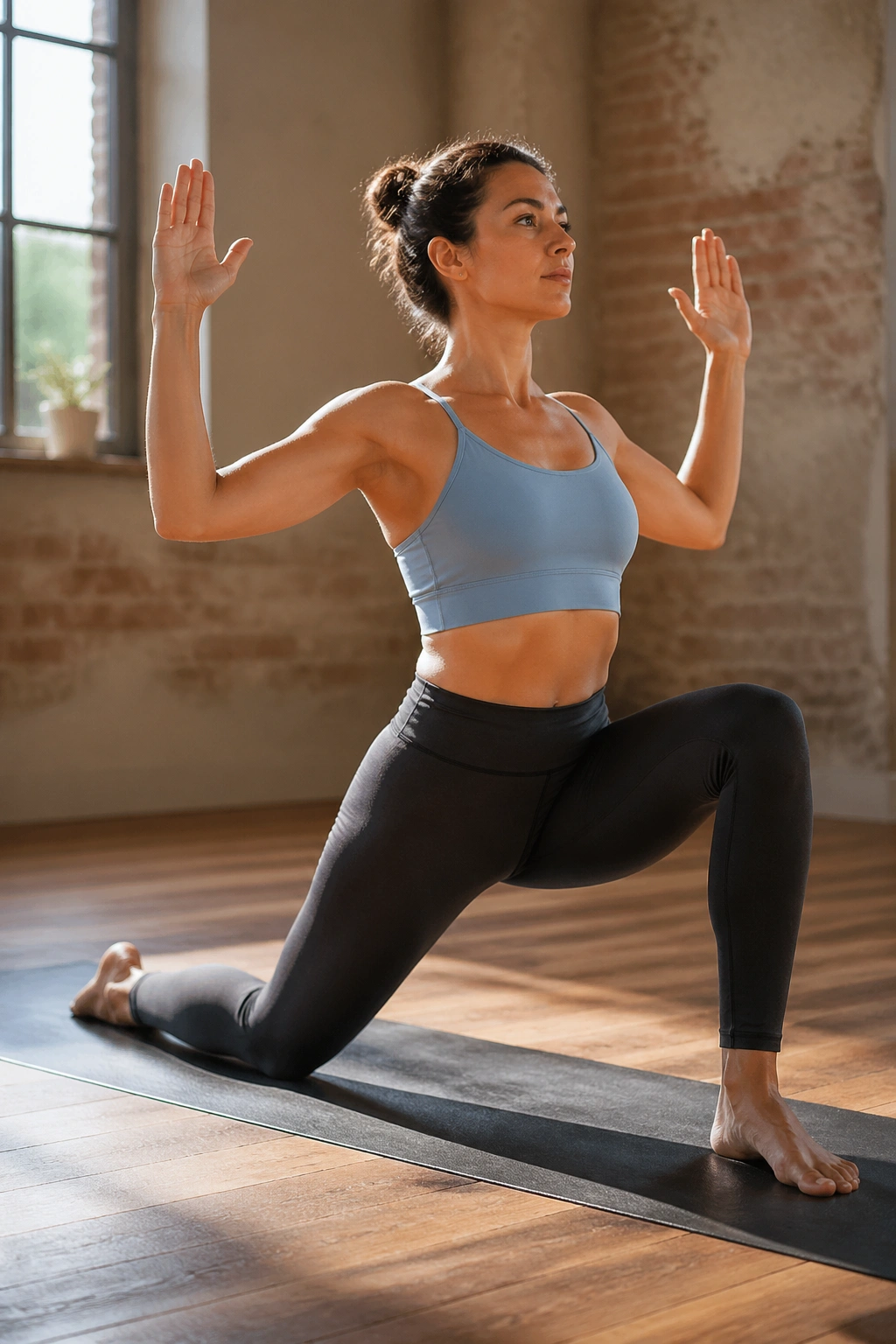
Swimmers often forget the hips when the shoulders are the thing that complain first. That’s a mistake. A stiff hip front can tug the pelvis forward, which changes how the ribs stack and how the shoulders move overhead. Low lunge with cactus arms tackles both ends at once.
Step one foot forward, lower the back knee, and bend the elbows into a cactus shape. Let the chest open while the hips sink forward a little. If the back knee feels cranky, pad it. If the shoulders feel pinchy, lower the arms or keep the hands on the front thigh instead. You don’t get extra points for forcing the full shape.
The best version feels like the front of the hips is lengthening while the chest stays open enough to breathe. That combination matters more than arm height.
9. Crescent Lunge with a Side Bend for Tight Lats
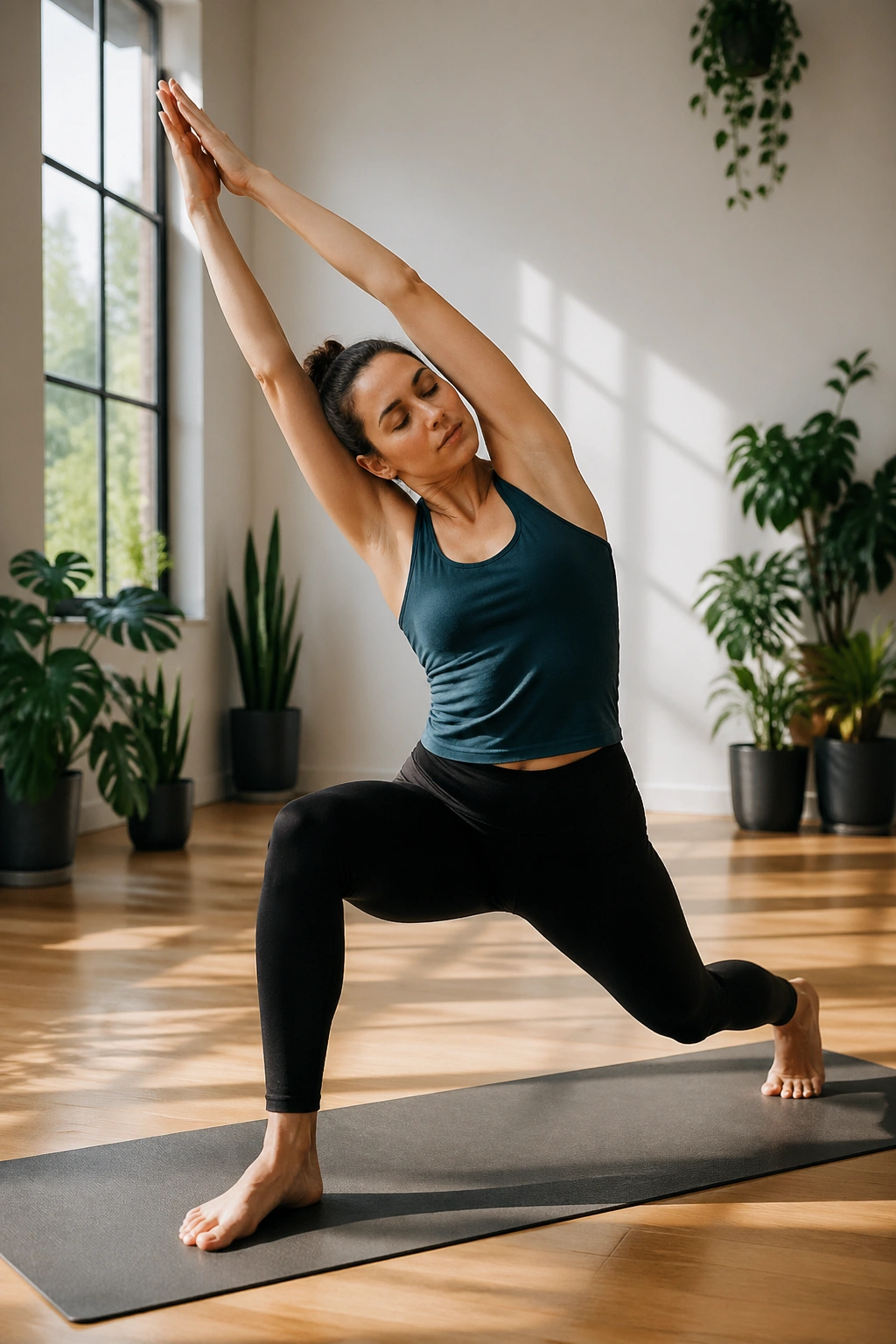
This is one of the most swimmer-friendly side-body stretches around. Start in crescent lunge with both arms up, then lean gently to the side of the back leg. The top side body lengthens, the lat stretches, and the ribs open without collapsing into the low back.
Why do I like this one so much? Because swimmers rarely just need a chest stretch. They need a line from the shoulder to the waist, especially after repetitive pull work. That long diagonal can feel like it’s been shortened for weeks. Sometimes it has.
A few cues worth using
- Keep the pelvis facing forward.
- Reach up before you bend sideways.
- Stay light through the back ribs.
Do not crank the bend from the lower spine. Make the upper body long first, then let the side bend happen.
10. Gate Pose for the Whole Side of the Torso
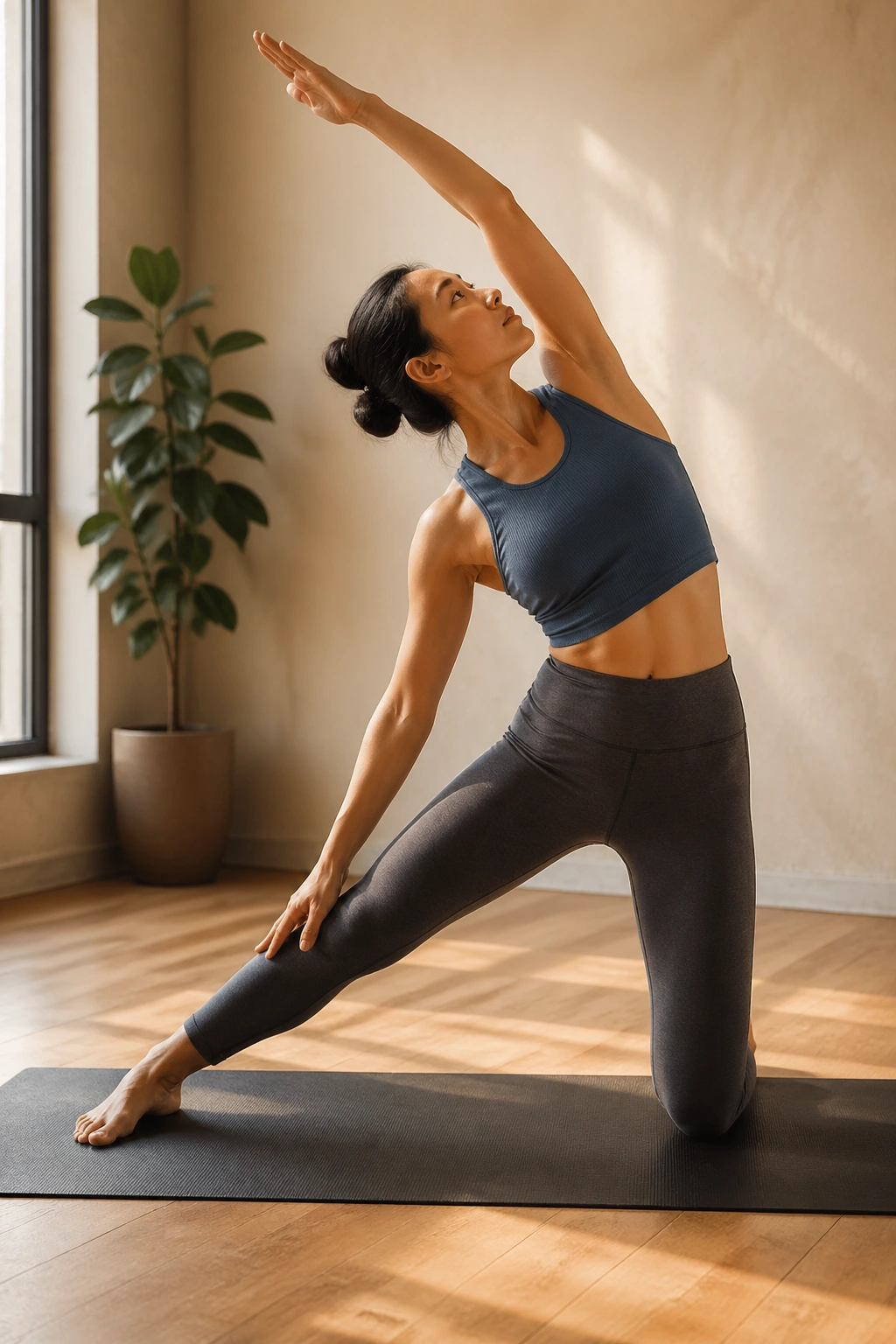
Gate pose looks almost too plain to matter, then it hits the exact tissue swimmers complain about. Kneel on one knee, extend the other leg out to the side, and slide the same-side hand down the leg while the opposite arm reaches overhead. The side body opens from the wrist or fingertips down toward the hip.
This one is excellent after pull-heavy workouts because the lats, obliques, and intercostals all get involved in a long, clean stretch. The trick is not collapsing into the lower rib cage. Keep the chest broad and the lifted arm active. It should feel long, not sloppy.
If your neck tends to tighten, look down a little instead of up. That tiny change can make the pose feel much kinder.
11. Reverse Prayer Pose When the Front of the Shoulders Is Tight
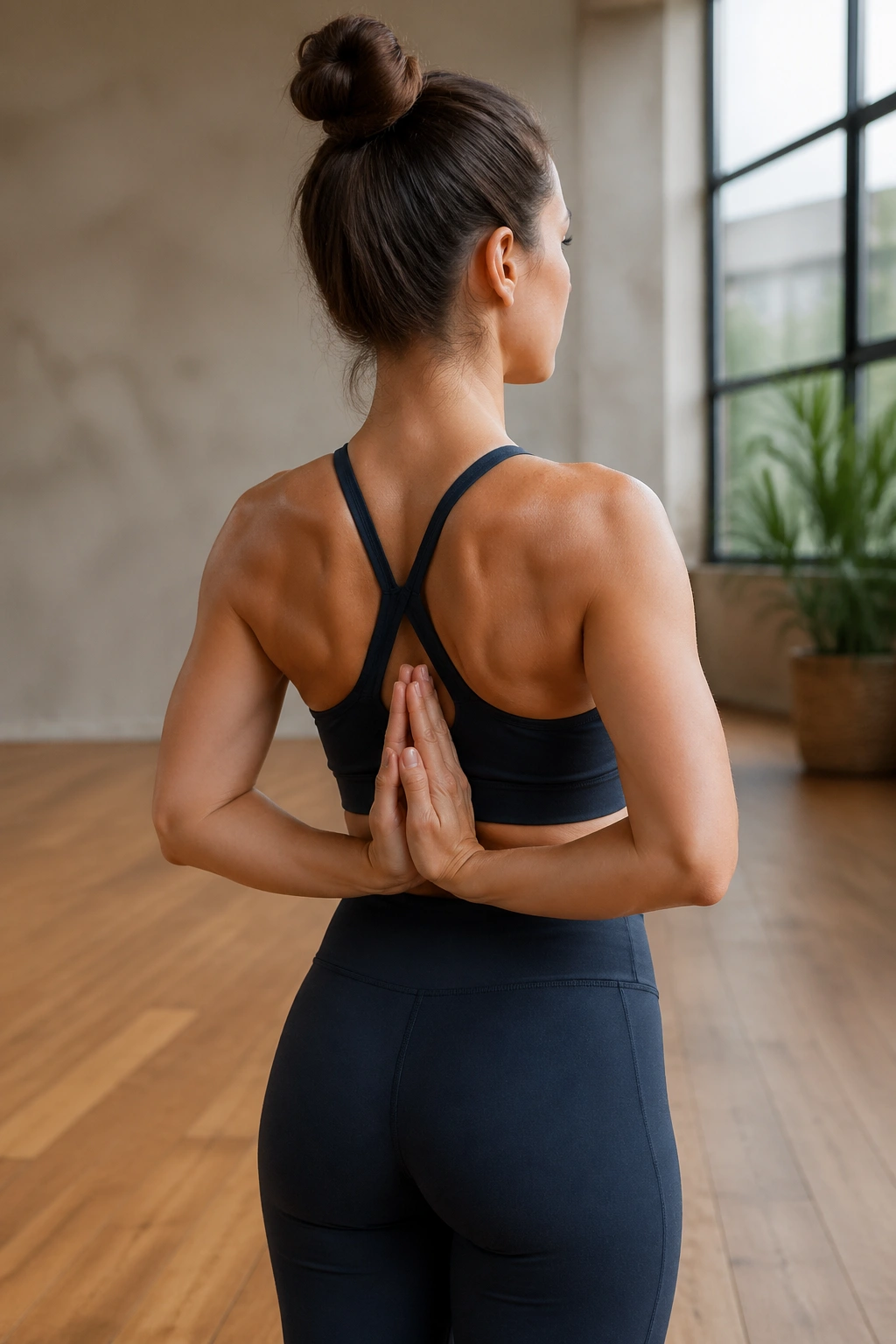
Reverse prayer is demanding, and I’m glad it is. Stand tall and bring the backs of the hands together behind the spine, palms pressed if that’s available. If the palms won’t meet, just let the backs of the hands touch the low back. Either version still asks the chest and shoulders to open in a useful way.
Swimmers often hate this one at first. Fair. The line is deep, and it exposes how much the chest and the front shoulder have been winning the tug-of-war. But it can be a clean way to work on external rotation and extension without lying down. Stay calm through the breath, and don’t jam the hands upward.
If the wrists ache, skip the full prayer and keep the hands lower. A lower hold is still a hold.
12. Standing Forward Fold with Clasped Hands
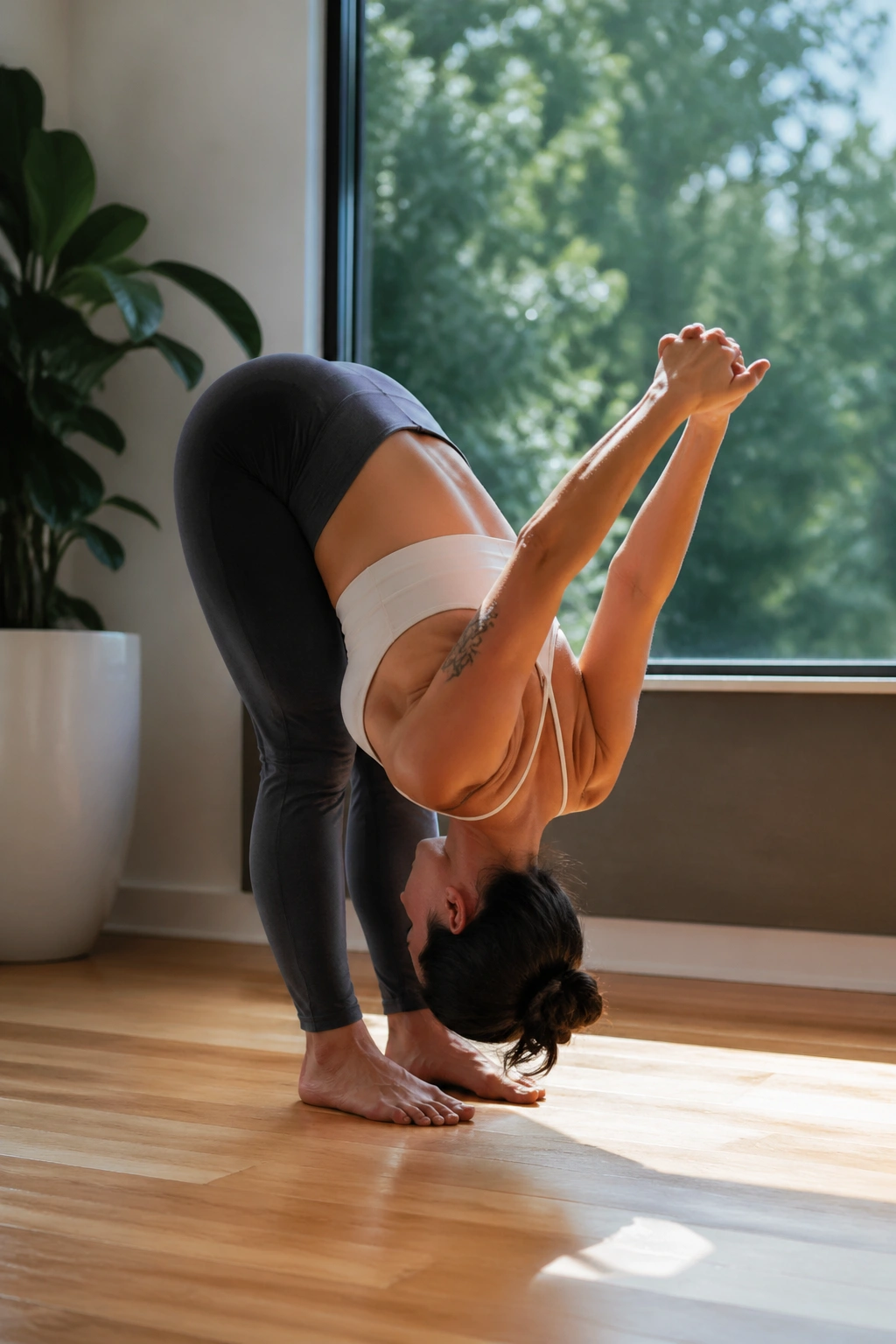
There’s more than one way to fold forward, and clasping the hands behind the back changes the whole story. Interlace the fingers, lift the knuckles away from the spine, then fold from the hips with the knees bent as much as needed. The shoulder line opens, the upper back releases, and the head can hang heavy.
This isn’t just a hamstring stretch. It’s a shoulder opener disguised as a forward fold. The lifted arms create a gentle line through the chest and front delts, which is exactly what a lot of swimmers need after hours of internally rotated arm work.
How to soften it
- Bend the knees.
- Let the head stay heavy.
- Keep the knuckles moving away from the back, not crashing down.
A little bend in the knees makes the pose more useful, not less.
13. Bound Half Forward Fold for Shoulder Mobility
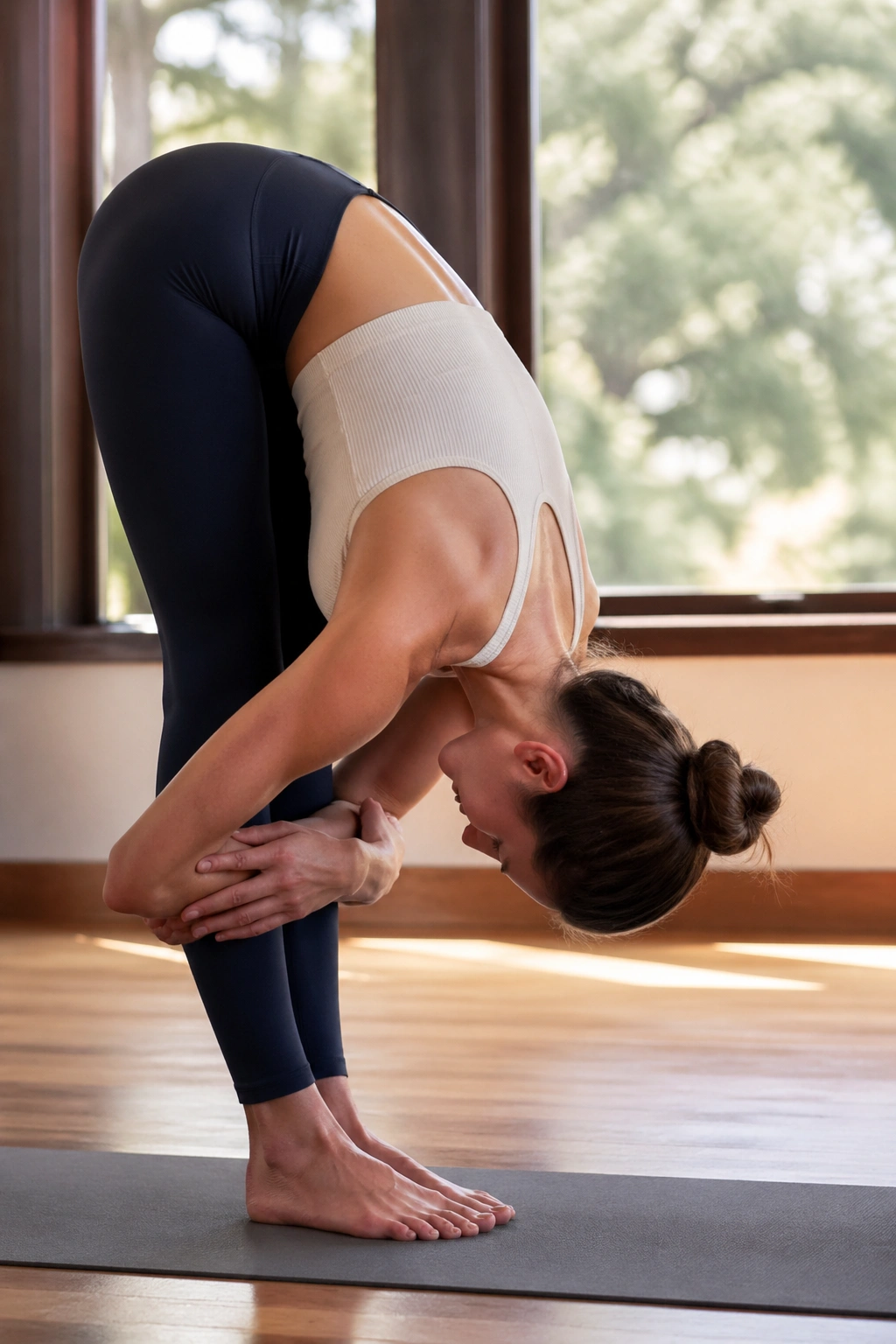
This one rewards patience. From standing, hinge forward slightly and bind the arms behind the legs or around the calves, depending on what your body allows. The shoulders work in a more active range, and the upper back has to stay long instead of collapsing.
For swimmers, I like this because it blends hamstring work with a shoulder position that asks for control. That matters. Passive flexibility alone can leave the shoulders loose in the wrong places. A bound half fold teaches the body to keep shape while still opening.
If the bind feels like a wrestling match, use a strap or just hold opposite elbows. The point is not the full expression. It’s the quiet feeling of the shoulder blades broadening while the neck stays calm.
14. Bridge Pose with Clasped Hands for Chest Opening
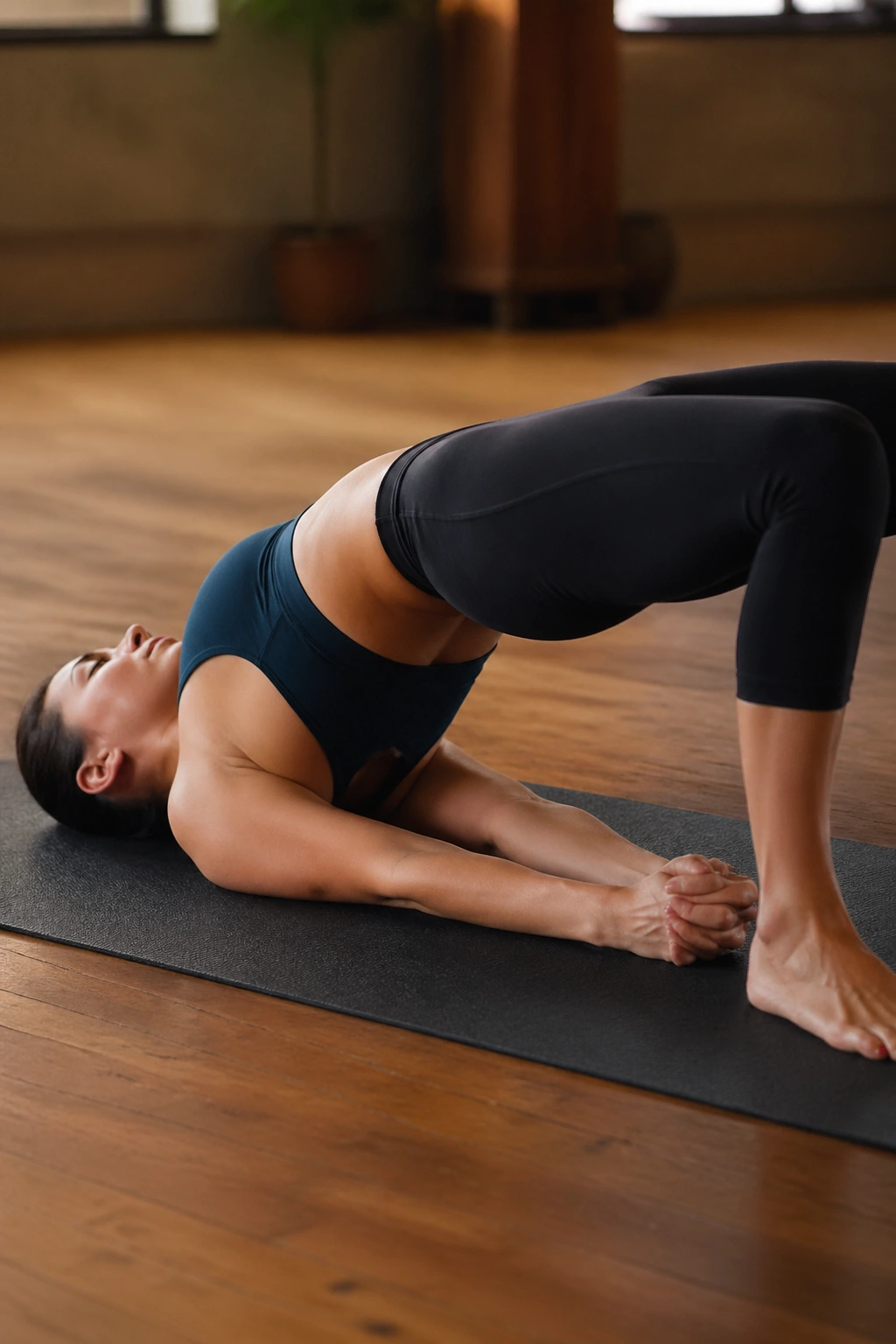
Bridge pose is one of those old-school shapes that keeps earning its place. Lie on your back, bend the knees, and lift the hips. If it feels right, tuck the shoulders under a bit and interlace the hands beneath you. The chest lifts, the front shoulders open, and the upper back gets a clean countershape to swimming posture.
What I like here is the blend of openness and work. You are not simply hanging out. You are lifting, which gives the posterior chain a little job to do while the front of the body stretches. The shoulders often feel better when they’re opened in a shape that also asks the glutes and back line to help.
A few useful cues
- Keep the feet hip-width apart.
- Press through the whole foot, not just the toes.
- If the neck is cranky, stay lower.
Worth repeating: a smaller bridge done well beats a high bridge with the ribs flaring and the low back complaining.
15. Locust Pose with Hands Clasped Behind You
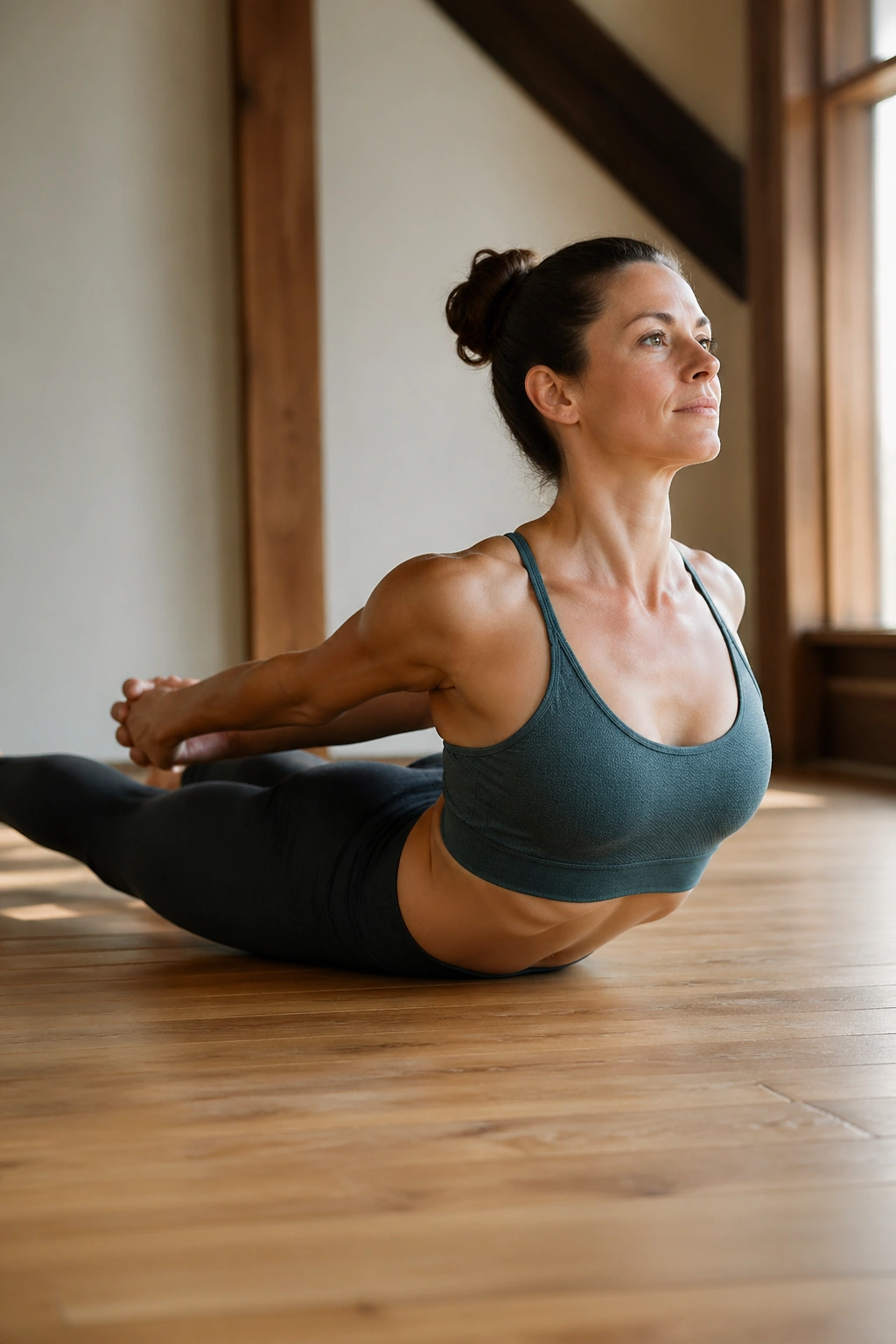
Locust pose is not a passive stretch, and that’s why swimmers should care about it. Lie on your belly, clasp the hands behind the back if possible, and lift the chest and legs a little off the mat. The front shoulders open while the back body learns to hold shape against gravity.
This is one of the better choices for swimmers who spend a lot of time in the water but not much time teaching the shoulder blades how to stay stable. The action here is subtle but real: the upper back, glutes, and back of the shoulders all wake up together. Don’t try to lift sky-high. That’s a common mistake and a bad one.
A small lift with steady breathing is plenty. If the hands won’t clasp, hold a strap or simply keep the arms by your sides.
16. Camel Pose with Hands on the Hips
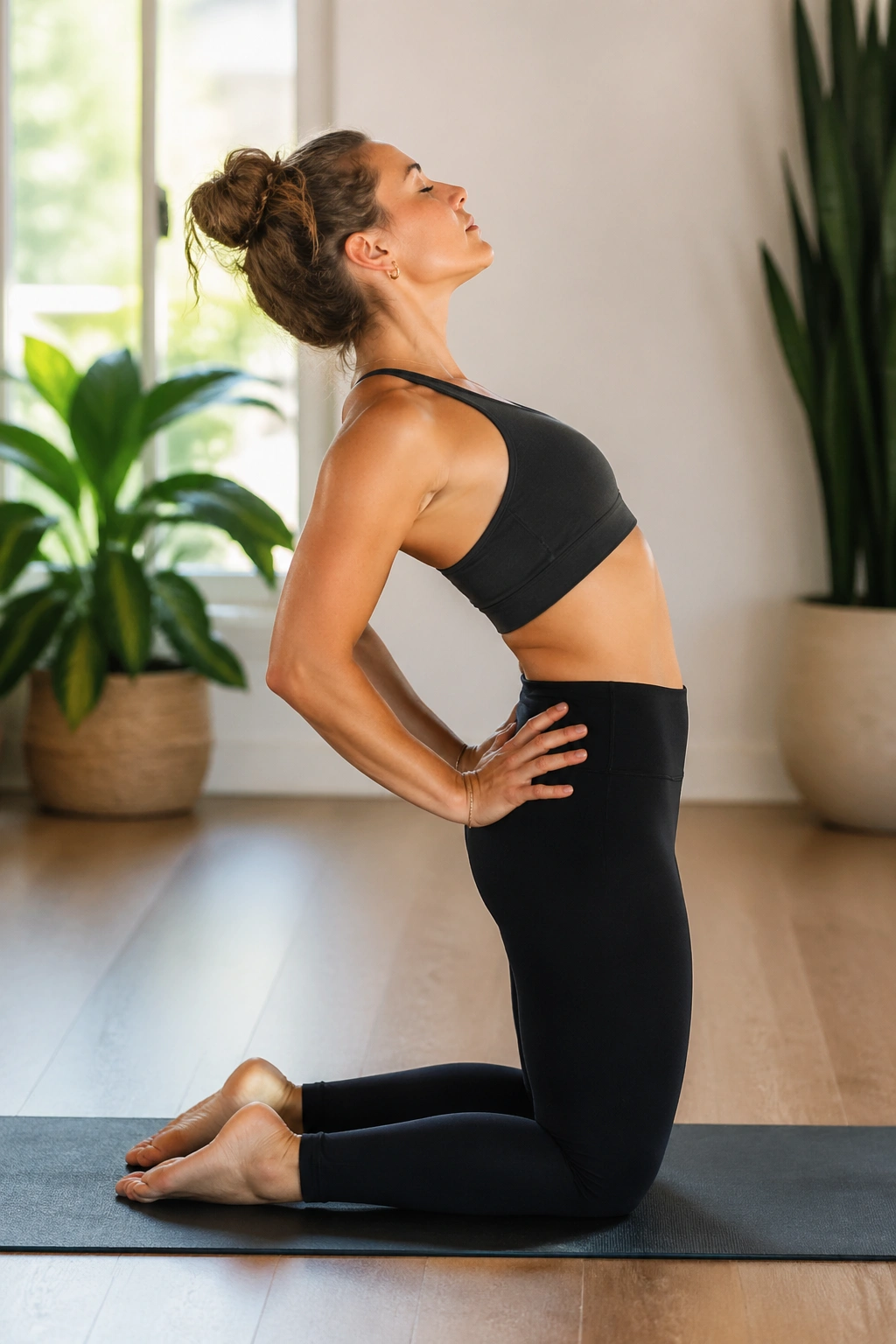
Camel pose opens the front body in a way swimmers usually need, especially if the chest feels narrow and the shoulders seem to live slightly in front of the ribs. Start tall on your knees, hands on the hips, lift the sternum, and let the upper back extend before you think about reaching back.
That sequence matters. If you dive straight into the backbend, the low back grabs the work and the shoulders don’t get much of a say. I prefer a conservative camel with a long spine, active thighs, and the chest lifting first. If the full reach back feels rough, stay with the hands on the hips. That version still counts.
Common sense modifications
- Pad the knees well.
- Keep the toes tucked if that feels steadier.
- Stop the moment the low back feels pinchy.
Camel should feel open through the chest and strong through the legs. If it feels like a hinge with no support, back off.
17. Downward-Facing Dog with Soft Knees
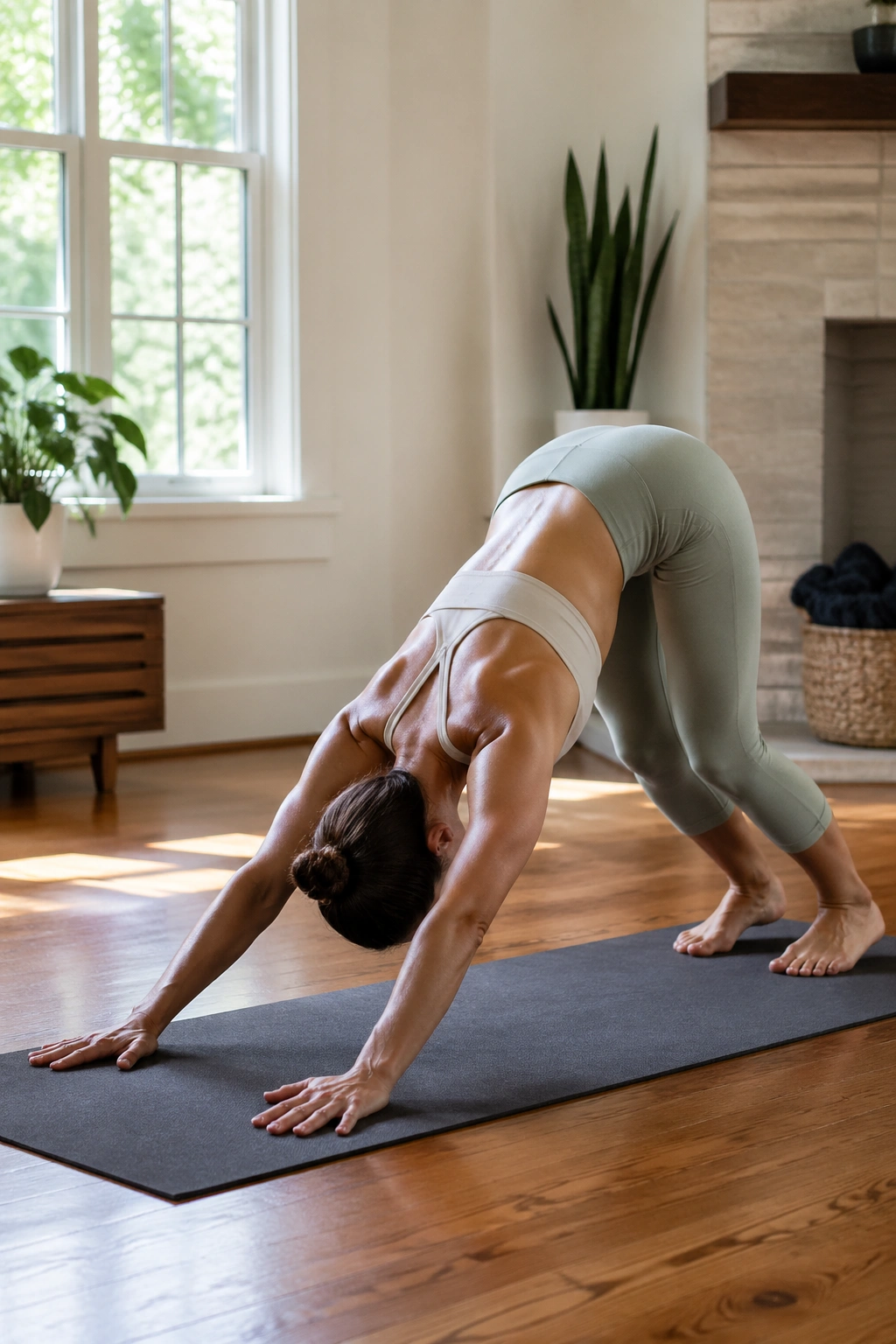
People obsess over straight legs in downward dog. I don’t. For swimmers with tight shoulders, bent knees are often the smarter choice because they let the spine lengthen and the shoulders work in a cleaner line. Press the hands down, lift the hips back, and let the shoulder blades spread wide across the back.
The real win here is the mix of shoulder flexion, lat length, and upper-back engagement. If the heels stay high, fine. If the knees stay bent, fine again. What you want is a long spine and a strong press through the floor, not a photo-ready shape that feels awful.
What to notice
- The hands should feel grounded.
- The neck should stay free.
- The ribs should not spill out like a popped umbrella.
If the shoulders burn in a bad way, shorten the stance and soften the elbows a touch.
18. Dolphin Pose for Shoulder Strength and Control
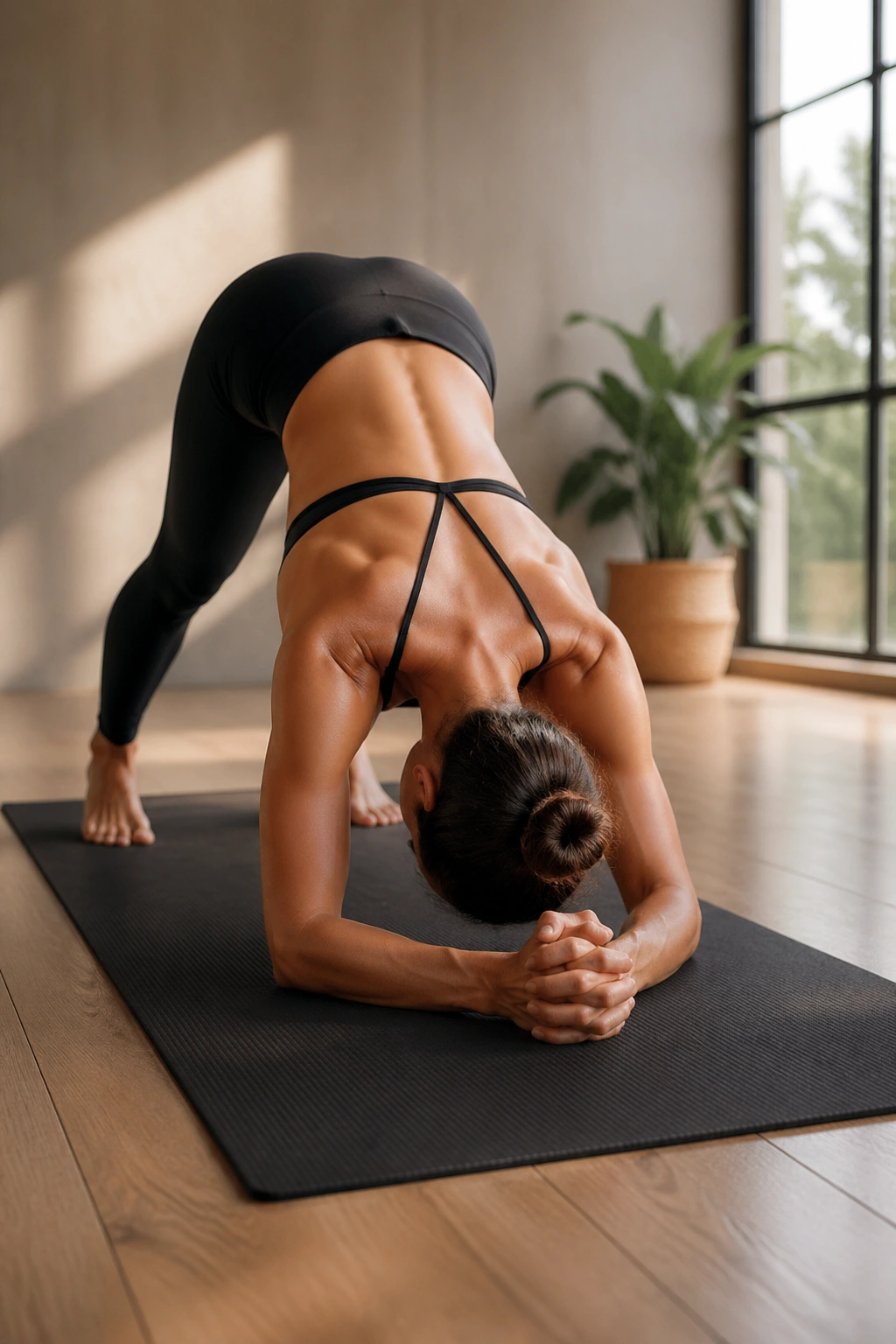
Dolphin pose is the tougher cousin of downward dog. Lower onto the forearms, lift the hips, and keep the shoulders active as the upper back works hard. For swimmers, this is where mobility meets strength in a way that actually matters. A shoulder that can only stretch is half a shoulder.
The first few breaths can feel intense. That’s normal. But the good kind of intense here is muscular, not pinchy. Push the forearms down, keep the head relaxed, and think about broadening the upper back instead of sinking into the armpits. If the pose feels too sharp, walk the feet farther back and shorten the hold.
I like dolphin because it asks the shoulder girdle to stabilize while the lats lengthen. That’s a useful combination for anyone who spends time pulling through water.
19. Forearm Plank to Build the Shoulder Base
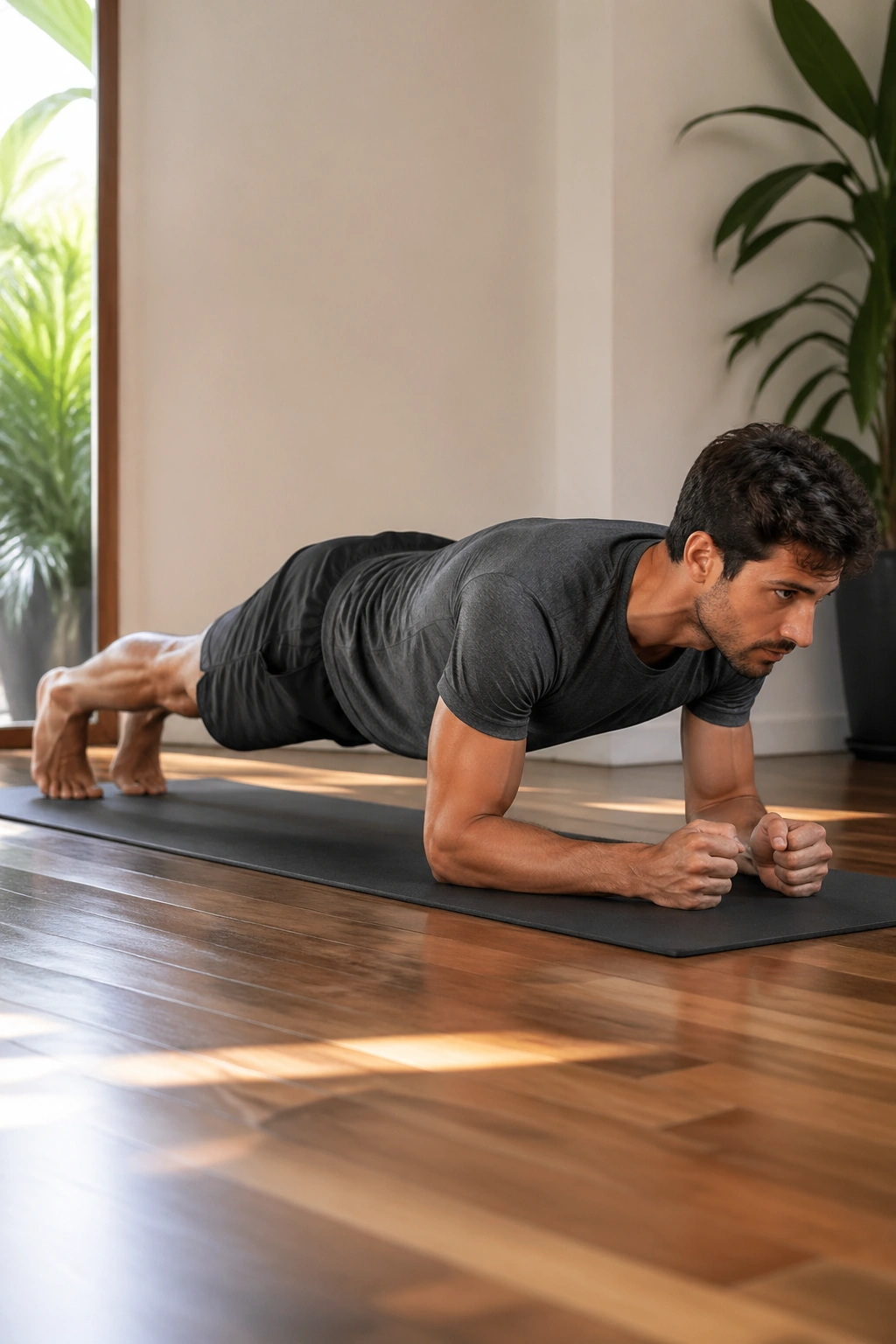
A lot of tight shoulders get worse because the body does not have enough support above and around them. Forearm plank helps with that. Set up on the forearms, step the feet back, and keep the body in one long line. The shoulders stack over the elbows, the ribs stay in, and the shoulder blades widen.
This is not a stretch in the usual sense. It’s a strength pose that protects the shoulder by teaching it where to sit under load. Swimmers often skip this kind of work and go straight for more opening. That’s backwards. A little support makes the opening more useful.
Form cues that matter
- Press the forearms down evenly.
- Keep the neck long.
- Drop to the knees if the low back starts to sag.
A 20- to 30-second hold can be enough when the form is sharp. Longer is fine only if the shape stays clean.
20. Supine Eagle Arms for the Last Bit of Shoulder Release
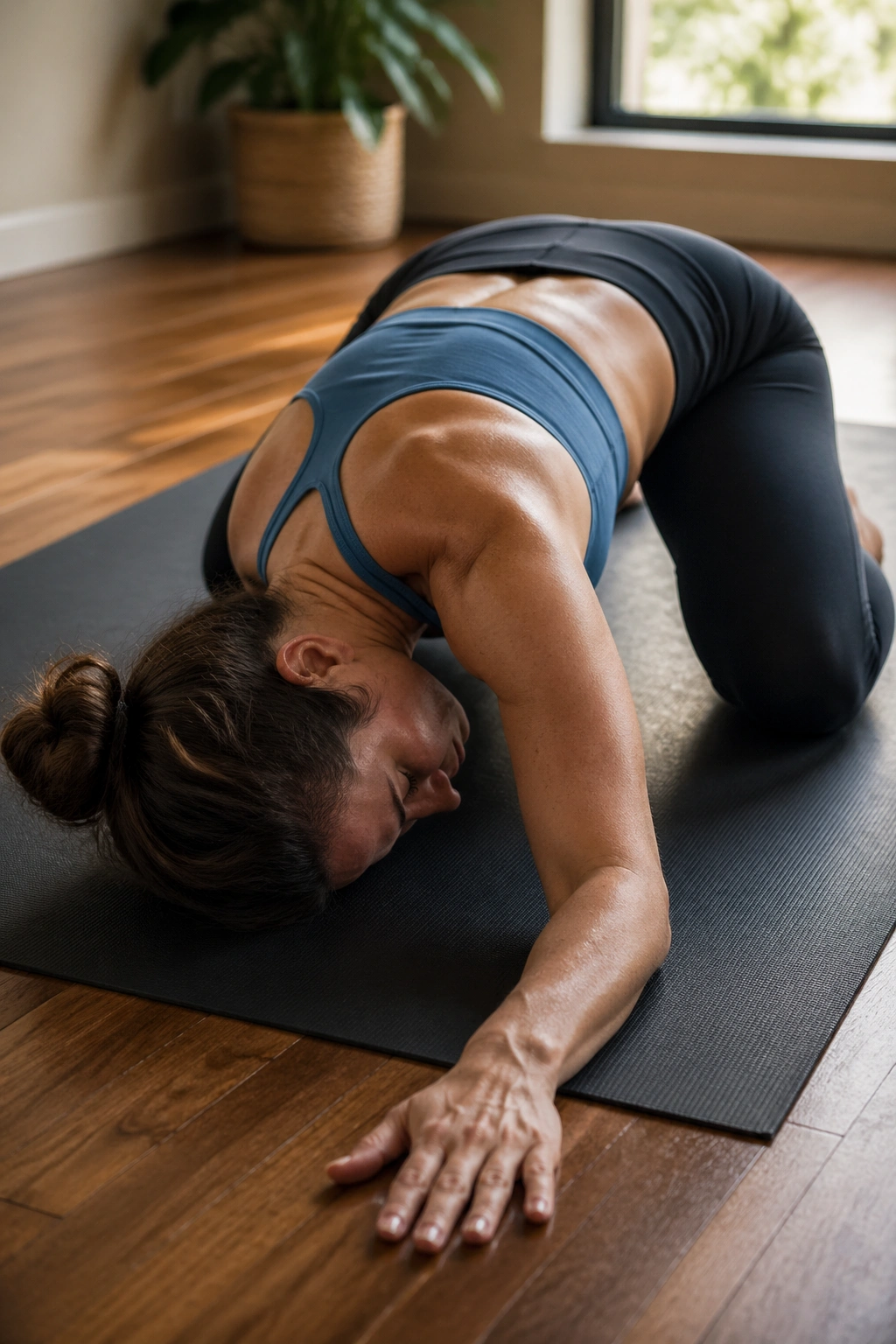
Lie on your back, cross one arm under the other in eagle arms, and let the elbows float away from the chest or rest near the ribs. This is a quiet, restful way to finish because it opens the back of the shoulders without asking for much effort. After a set of stronger shapes, it feels almost unfairly gentle.
The floor does the work here. You don’t need to pull hard or press into a deep twist. Just settle in, breathe into the side ribs, and let the upper back widen. If the shoulder blades feel sticky, move the elbows a little wider or narrower until the pull feels clean.
I like ending with this because it gives swimmers one last chance to soften the exact place that tends to grip during repeated overhead motion. It’s a small finish, but a useful one.
A simple way to use these yoga poses is to pick 4 or 5 and stay there long enough to breathe. One chest opener, one lat stretch, one rotation, one active strength shape, and one floor-based release is a solid mix. That combination usually does more than chasing every shoulder stretch you find online.
