



Anxiety often shows up in the shoulders before it shows up in the mind. Tight jaw, shallow breath, fingers buzzing, thoughts sprinting from one unfinished thing to the next — that is exactly where yoga poses for anxiety and racing thoughts can help.
These poses do not work like a switch. They work because they give the body slower input: longer exhales, pressure through the floor, less gripping through the belly, more room in the ribs. That can matter a lot when your nervous system feels like it has been stuck on fast-forward all day.
The nice thing is that you do not need a perfect practice. You need a few shapes that feel steady, a little patience, and the willingness to make the pose fit your body instead of forcing your body into the pose. A rolled blanket under the knees, a block under the hips, or a wall behind you can change everything.
Start with Child’s Pose. It is simple, and that is part of why it works so well when the mind is loud.
1. Child’s Pose
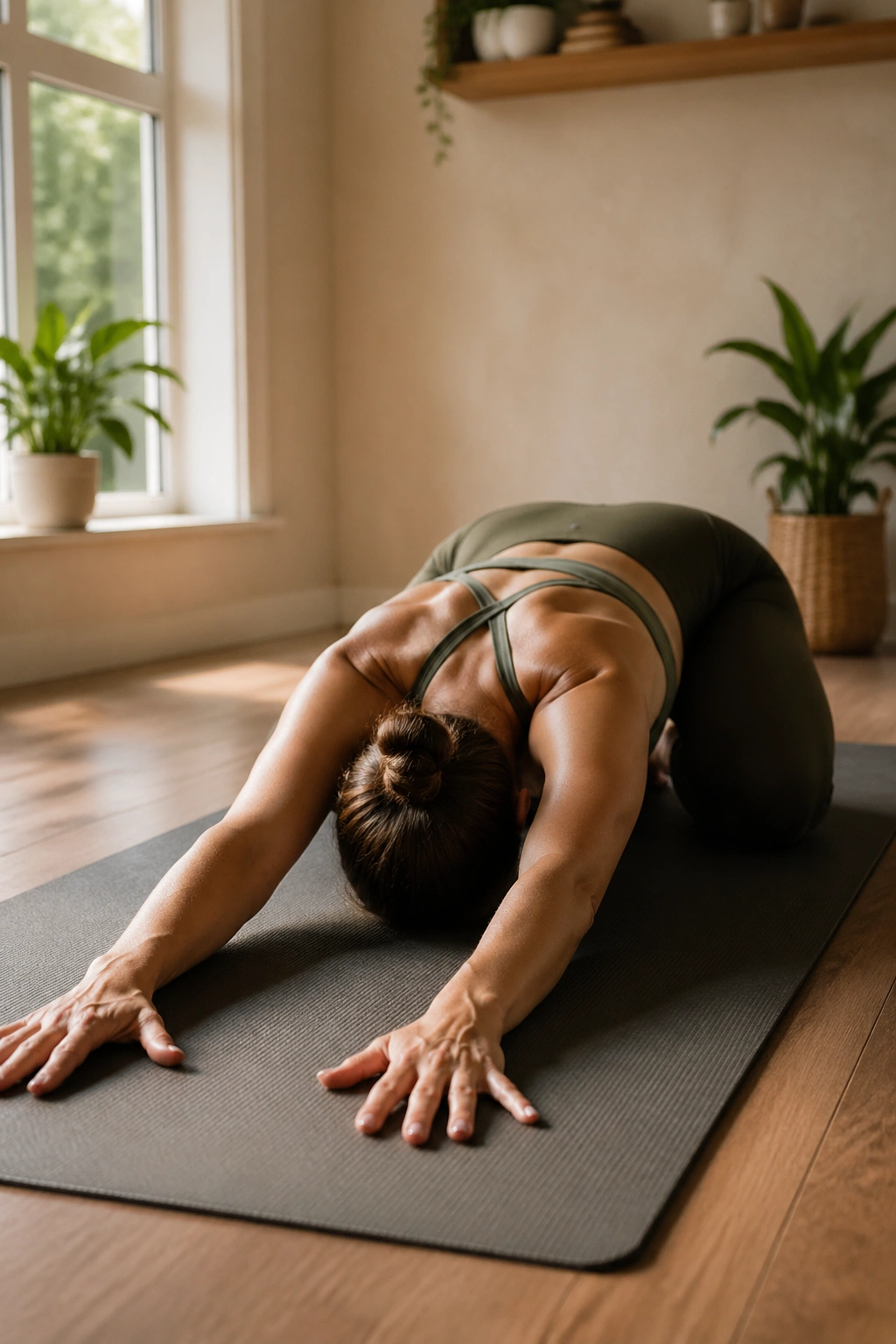
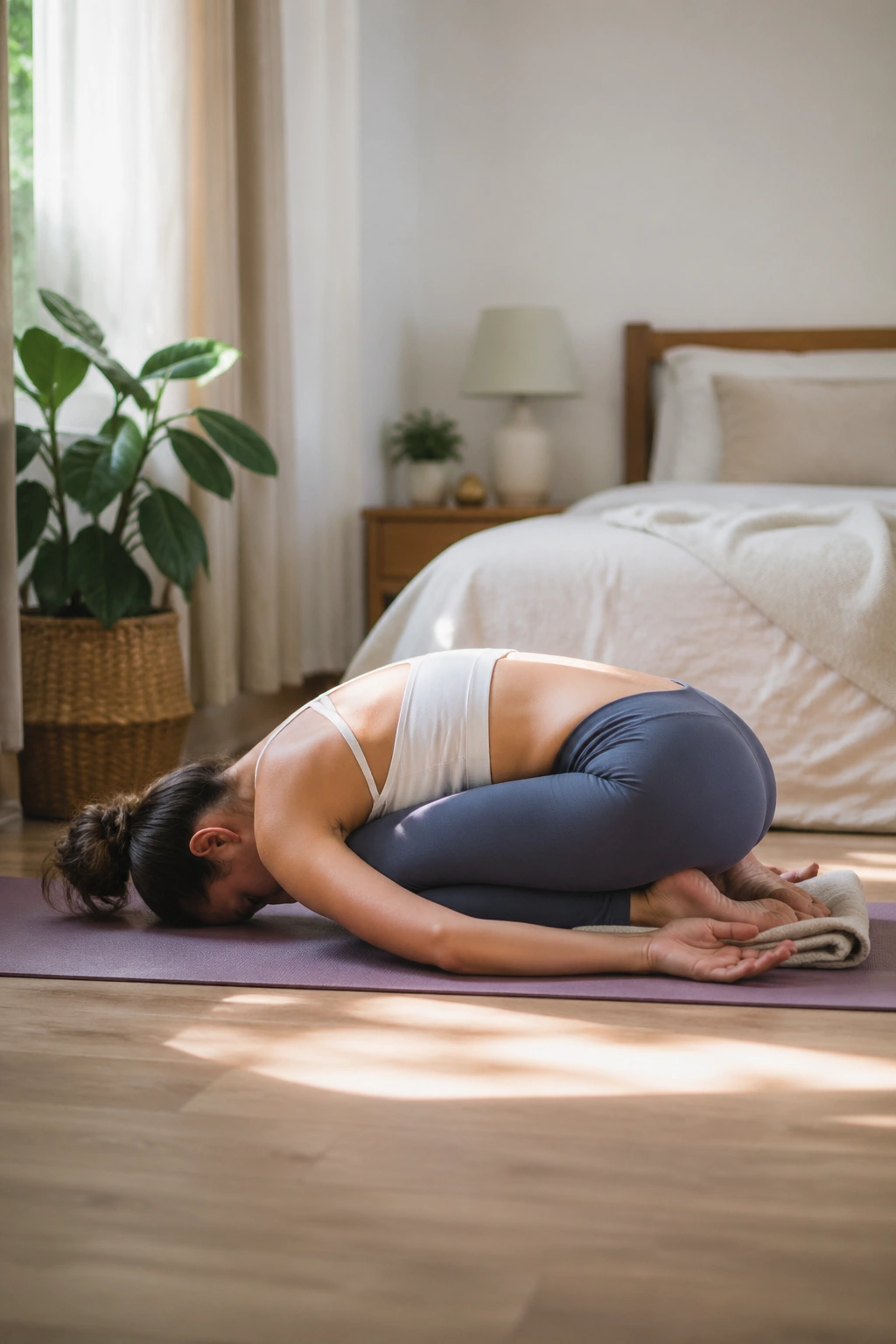
Child’s Pose is the pose I reach for first when a person looks overwhelmed and wants something gentle, private, and quiet. Knees wide or together, forehead down, arms stretched forward or tucked beside the body — it gives the brain one obvious job: soften.
The trick is not to collapse. Let the ribs feel heavy, but keep the breath moving into the back of the body. If the forehead does not reach the floor, stack fists or a folded blanket under it. If the hips feel jammed, widen the knees and place a pillow between the thighs and calves.
Make It Easier on the Body
- Put a folded blanket under the ankles if they feel pinched.
- Place a bolster under the chest if folding all the way down feels too intense.
- Keep the arms by your sides if reaching forward makes the shoulders tense.
- Breathe for 6 to 10 slow exhales before moving.
One breath can feel long here. That is the point. You are teaching the body that it does not need to brace for the next thing.
2. Cat-Cow Flow
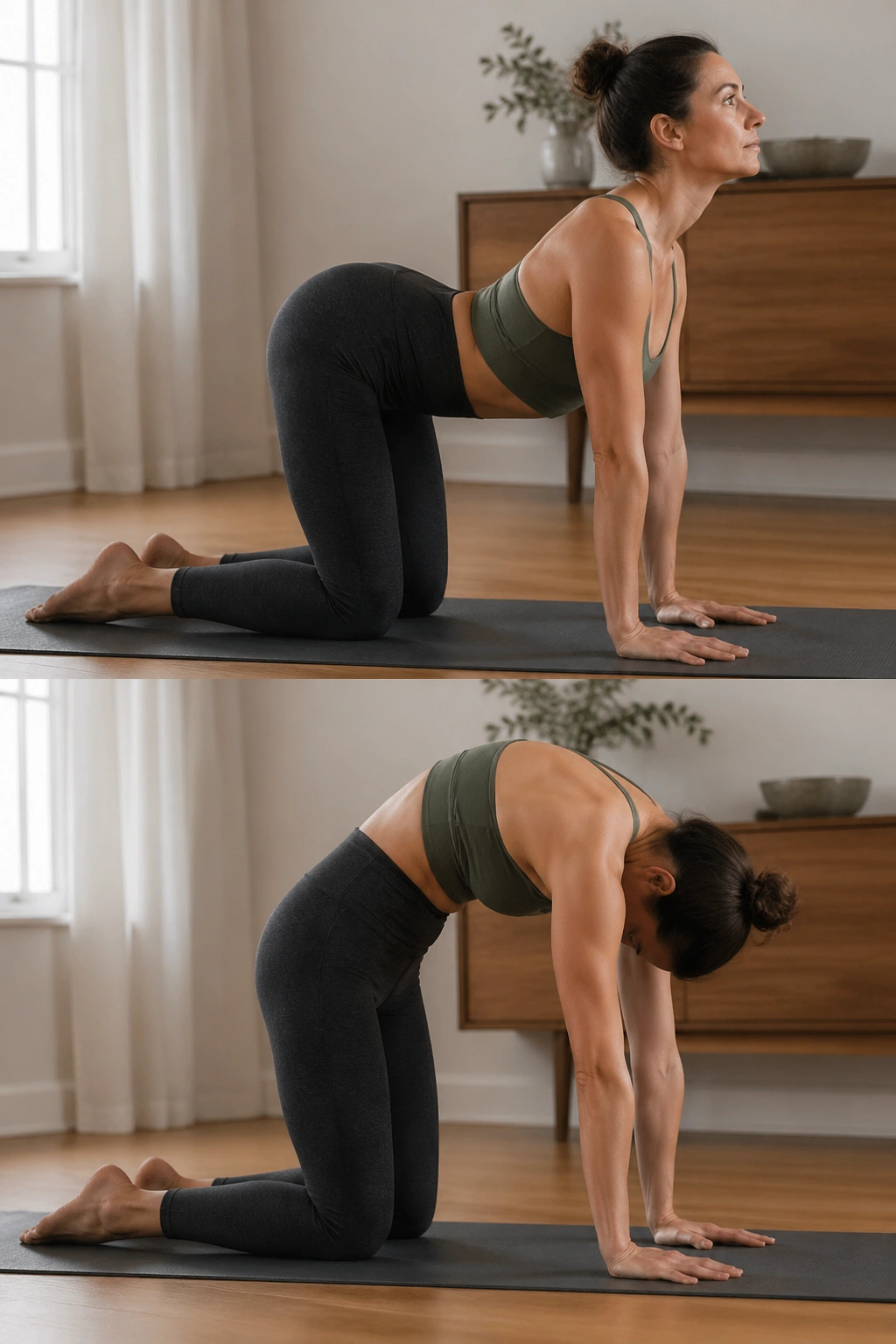
Why does this feel so good so fast? Because the spine likes to move when the mind is stuck in a loop.
Cat-Cow is not flashy. It is a small, rhythmic back-and-forth between arching and rounding the spine, and that rhythm gives your breathing something to latch onto. Inhale into Cow with the chest open and tailbone lifted. Exhale into Cat with the spine domed and the belly gently drawing in.
Keep the movement smooth and slow. If the wrists get cranky, drop to forearms or make fists under the shoulders. If the neck gets tense, let the gaze stay soft instead of throwing the head back. Five to eight rounds is plenty.
What to Feel For
- The front of the ribs widening on the inhale.
- The low belly softening on the exhale.
- The shoulders sliding away from the ears.
A lot of people rush this one because it looks easy. Don’t. A slow Cat-Cow is more useful than a fast one.
3. Standing Forward Fold
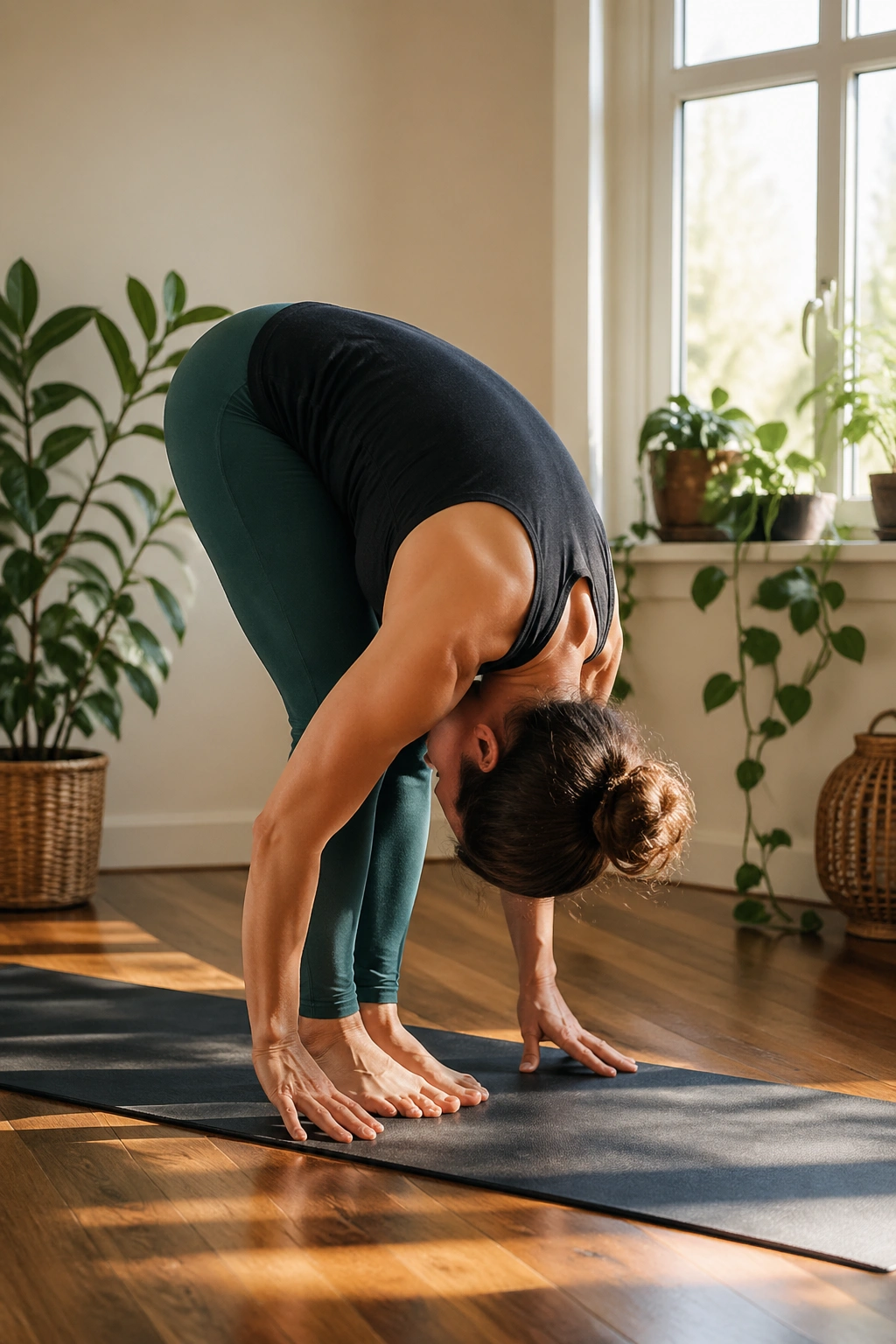
You do not need to touch the floor. Not even close.
Standing Forward Fold works because gravity does some of the work for you. With feet hip-width apart and knees bent as much as needed, let the torso hang. The neck can release, the jaw can unclench, and the arms can sway like dead weight. That dangling feeling is often exactly what a buzzing mind needs.
If the hamstrings pull hard, bend the knees more. If the low back talks back, keep the hands on blocks or on the shins. I like to let people stay here for five slow breaths, then slightly bend and straighten the knees once or twice to keep the lower back from gripping.
- Hands on blocks if the floor is too far away.
- Elbows holding opposite forearms for a ragdoll version.
- A micro-bend in the knees to protect the back of the legs.
There is no prize for straight legs. The calmer option usually wins.
4. Legs Up the Wall
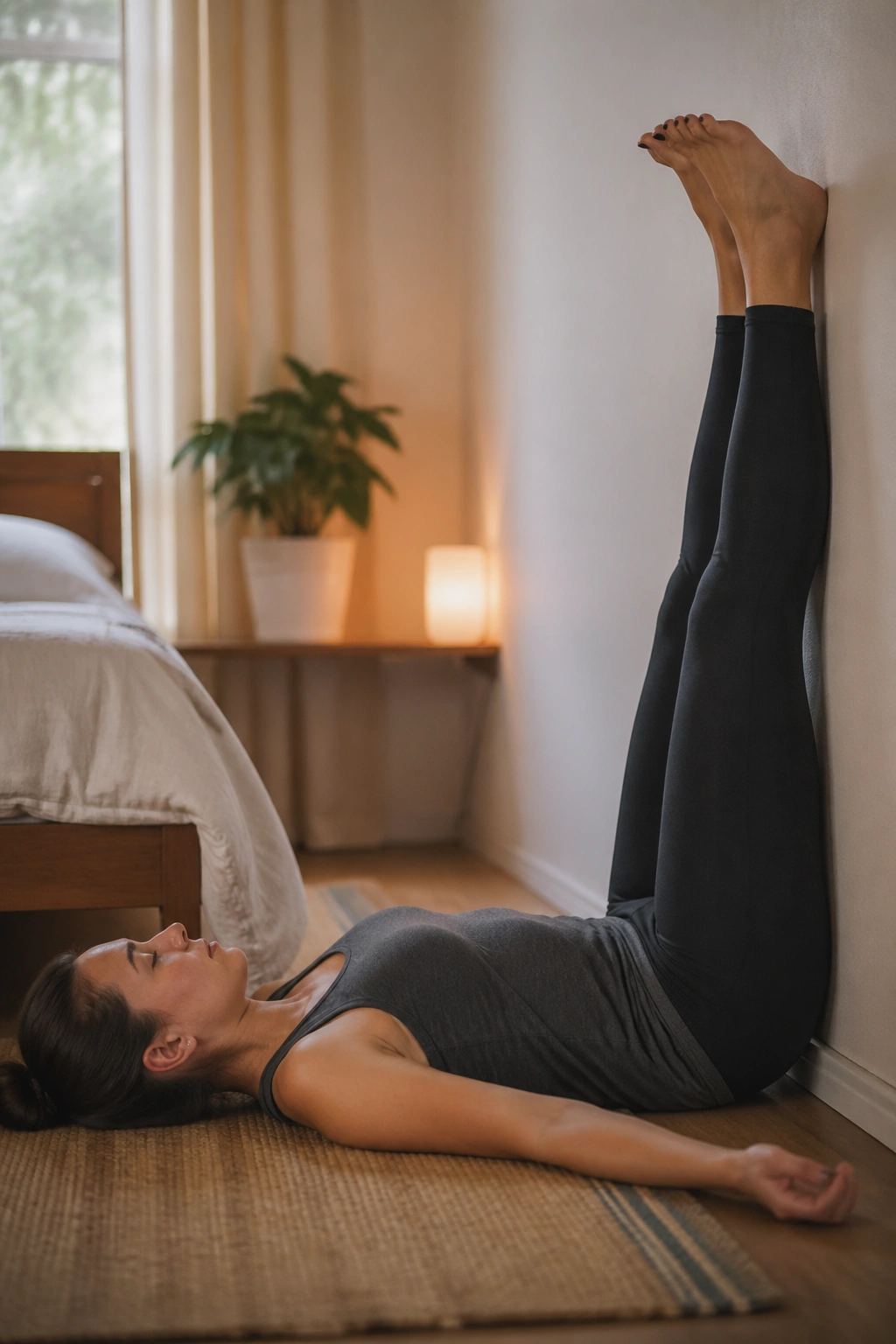
The room changes when the legs go up the wall. The hamstrings stop asking questions, the lower back settles into the floor, and the whole body gets a cue to stop scanning for trouble.
Lie down with the hips close enough to the wall that the legs can rest without strain. If that feels too tight behind the knees, slide a folded blanket under the pelvis or scoot a little farther away. Arms can rest wide, one hand on the belly and one on the chest, or simply at the sides. Stay for 3 to 10 minutes if it feels good.
This one is especially nice after too much sitting or a day spent on your feet. The breath tends to slow on its own when the legs are supported. If the position makes your face feel flushed or your head feel heavy, come out sooner and choose a more ordinary reclined pose. No need to force it.
A quiet floor. A wall. That is enough.
5. Thread the Needle
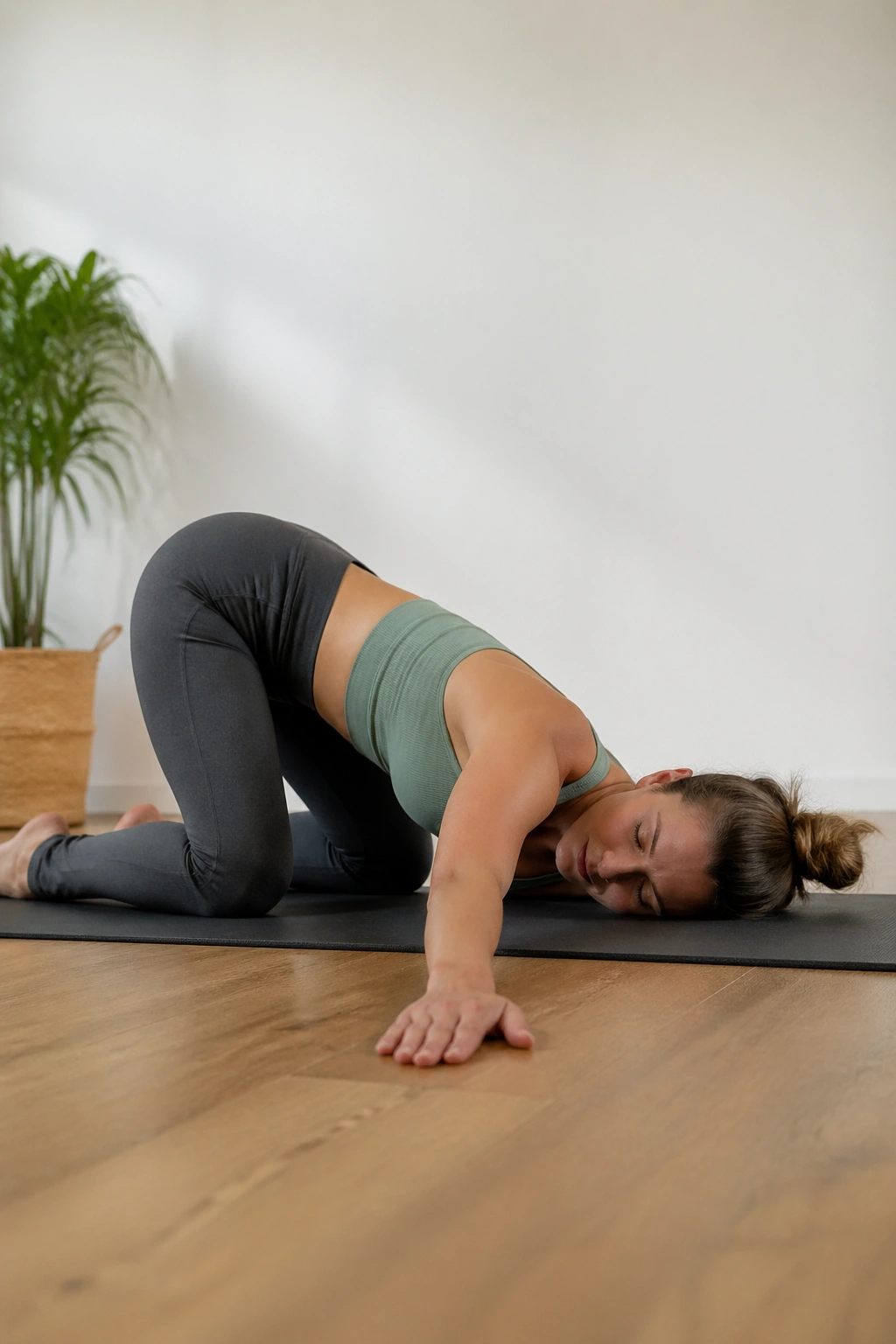
Picture this: your upper back feels like a knot, your shoulders are creeping toward your ears, and your mind keeps replaying the same conversation. Thread the Needle is a clean fix for that kind of tension.
From hands and knees, slide one arm underneath the other and rest the shoulder and side of the head on the mat. The twist happens in the upper back, not by wrenching the low spine. Keep the hips stacked above the knees, or widen the knees a little if that helps you stay steady.
Why the Shoulder Matters
The shoulder blades carry a lot of tension when people are anxious. This pose gives the back of the rib cage space to open, which is a small thing with a big payoff. Breathe into the side ribs for 5 to 8 breaths, then switch sides.
- Keep the weight light on the neck.
- Slide a blanket under the head if the floor feels too far away.
- Press the supporting hand into the mat if you want a little more twist.
It should feel like release, not strain.
6. Extended Puppy Pose
This is one of the quickest ways to melt a clenched upper back.
Extended Puppy Pose looks like a mix of Child’s Pose and a shoulder opener. Knees stay under the hips, arms reach forward, and the chest lowers toward the floor while the hips stay lifted. The shape invites the shoulders to lengthen without asking for a full backbend, which is why so many people find it calming.
Use a bolster, stacked blankets, or a yoga block under the chest if the floor feels too low. If the low back pinches, bring the knees a little closer together and shorten the reach. The breath should stay smooth. If it turns choppy, back out a bit.
- Keep the hips over the knees.
- Let the armpits soften toward the mat.
- Stay for 5 slow breaths or longer if it feels good.
There is a sweet spot here. Too little effort and the body stays guarded; too much and it turns into a stretch chase. Aim for the middle.
7. Bound Angle Pose
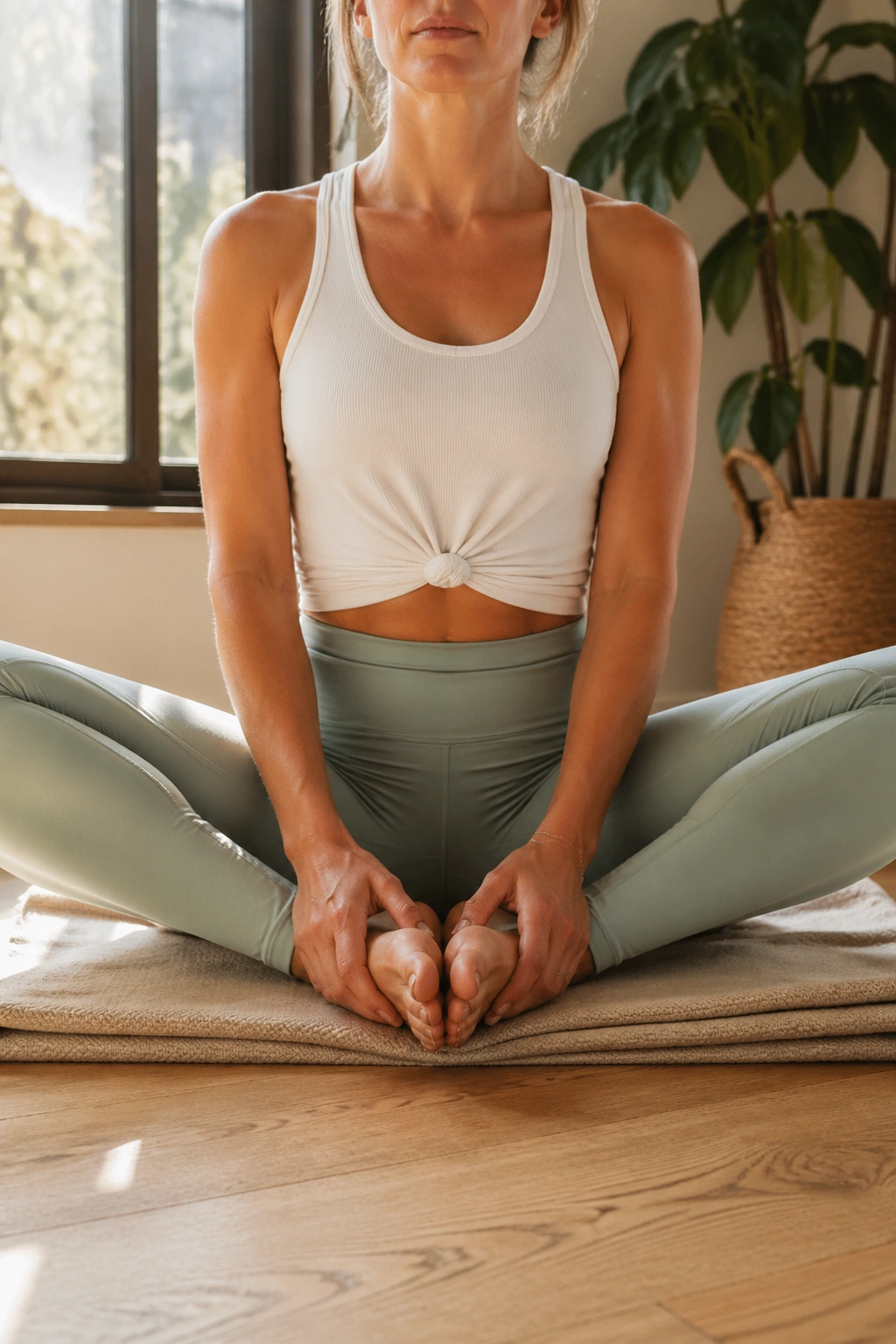
Can a seated pose calm a racing mind? Absolutely, if you sit in it with enough kindness.
Bound Angle Pose brings the soles of the feet together and lets the knees fall open. The legs may feel like they are doing very little, but the shape works through the inner thighs, hips, and lower belly. Sitting on a folded blanket can tilt the pelvis forward a little, which often helps the spine stay long instead of collapsing.
Do not press the knees down. That is the mistake people make when they think the stretch has to look deep to matter. A softer version with the feet farther from the groin is usually better for anxious bodies, since it keeps the breath open.
How to Sit It Up
- Sit on one to two folded blankets.
- Hold the ankles or feet lightly.
- Let the head stay over the heart, not falling forward.
- Breathe into the lower ribs for 6 to 8 breaths.
If the hips feel pinched, move on. No pose deserves a fight.
8. Reclined Bound Angle Pose
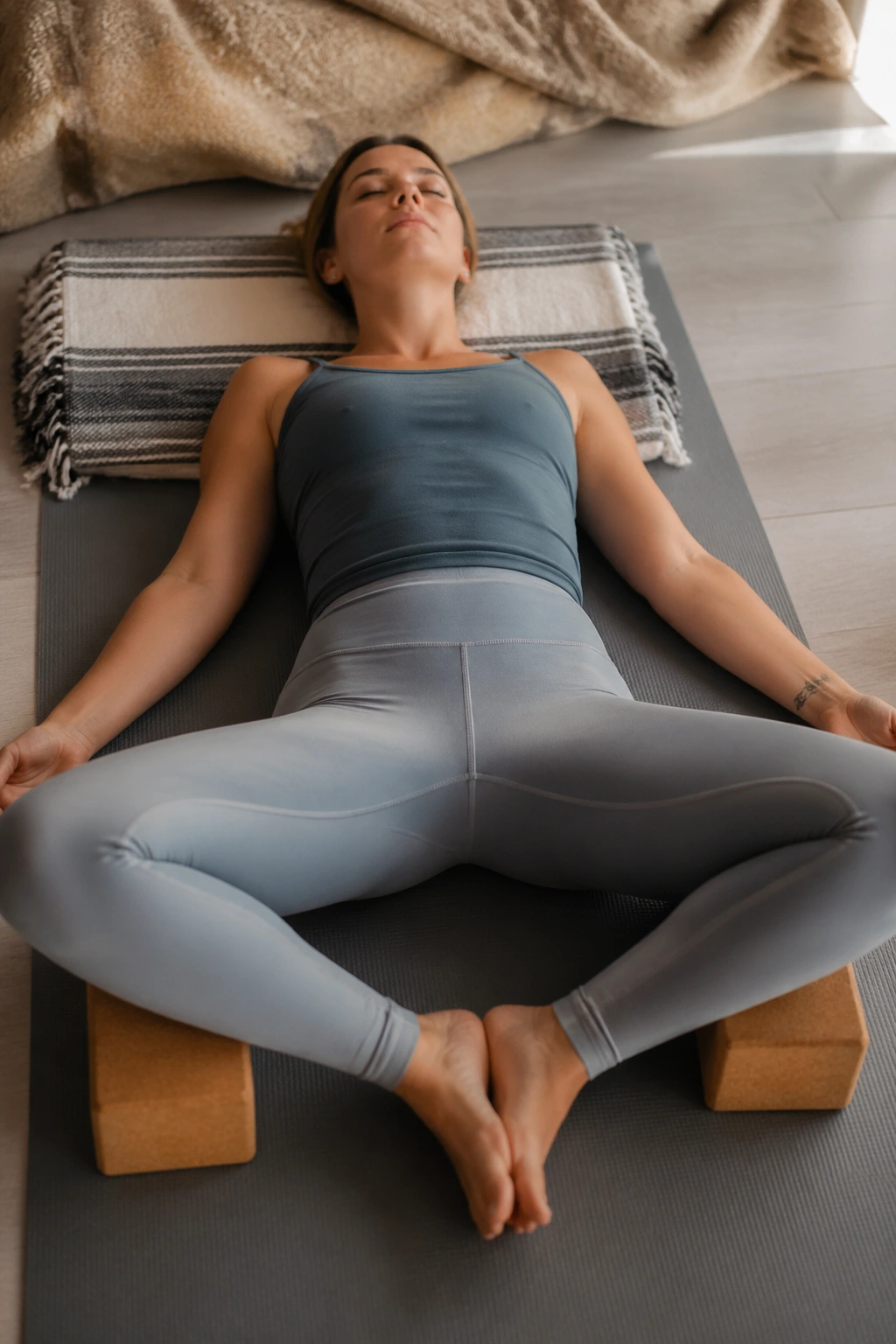
Lie back, let gravity do the work, and stop trying so hard. That is the whole charm of this one.
Reclined Bound Angle Pose turns the seated version into a supported rest. Bring the soles of the feet together, let the knees open, and place blocks, pillows, or rolled blankets under the thighs so the groin can relax. A folded blanket under the head can make the neck feel more settled, especially if the chin tends to tip upward.
This pose works well when anxiety feels tied to the belly or chest. The front body gets room, the hip flexors stop gripping, and the exhale usually lengthens without much coaching. Stay for 2 to 5 minutes and keep the jaw loose. If the knees drop too low and the inner thighs start tugging, add more support under the thighs instead of forcing depth.
A small prop under each leg can be the difference between “fine” and “finally.”
9. Supine Twist for Racing Thoughts
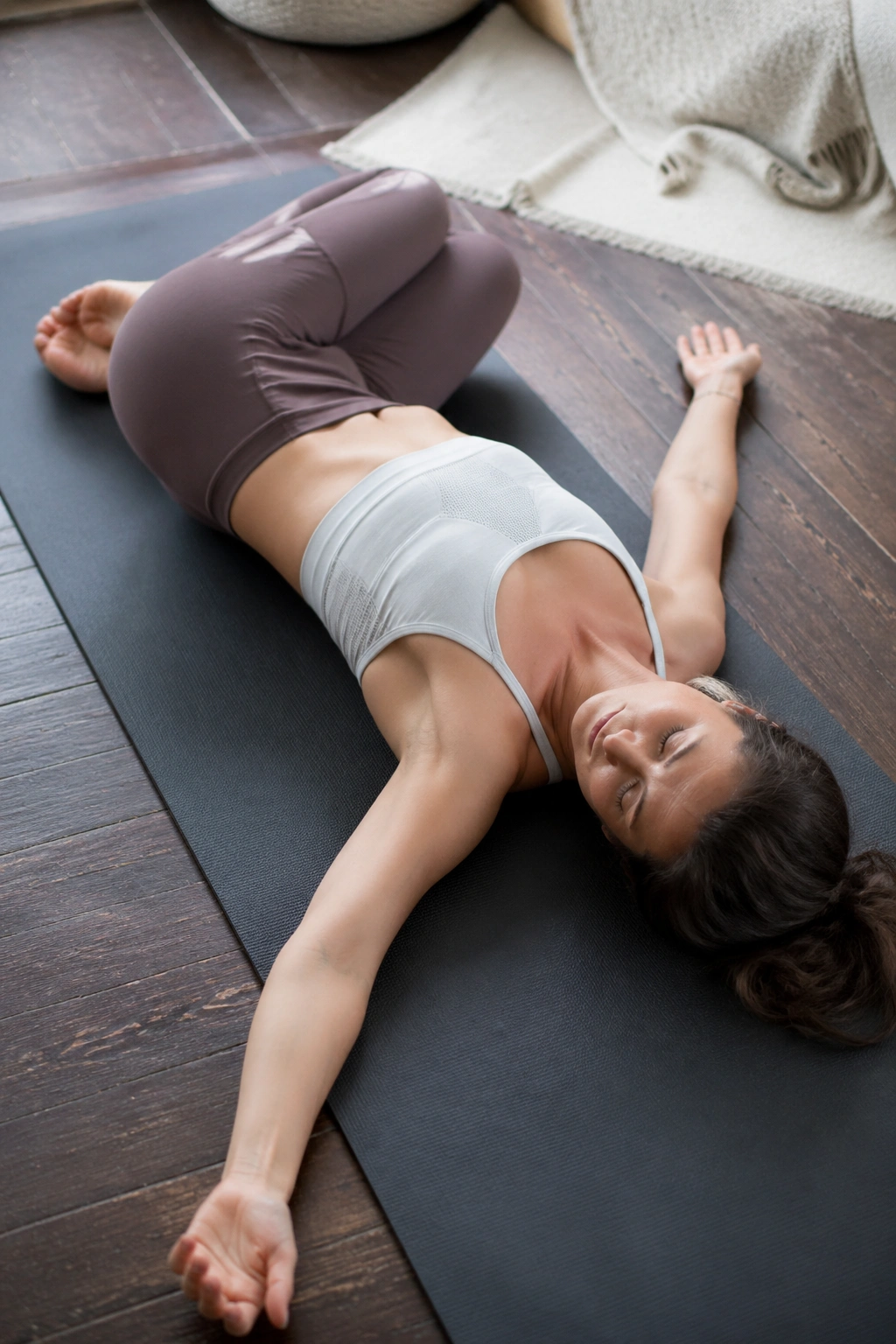
A gentle twist can feel like setting a spinning top down on the table.
Lie on your back, draw one knee in, and let both knees drift to one side while the arms open wide. Keep the shoulders heavy. Let the breath move into the side of the rib cage that’s on top. This is a quiet pose, but it’s not passive in the lazy sense — the body is still getting a clear message to organize, settle, and let go of some of the day.
Keep the twist mild. If both knees do not touch the floor, stack a pillow under them. If the top shoulder lifts, widen the arms a little and back off the depth. Hold for 5 to 8 breaths per side.
The best twists feel roomy, not yanked. If your breath catches, you have gone too far.
10. Happy Baby
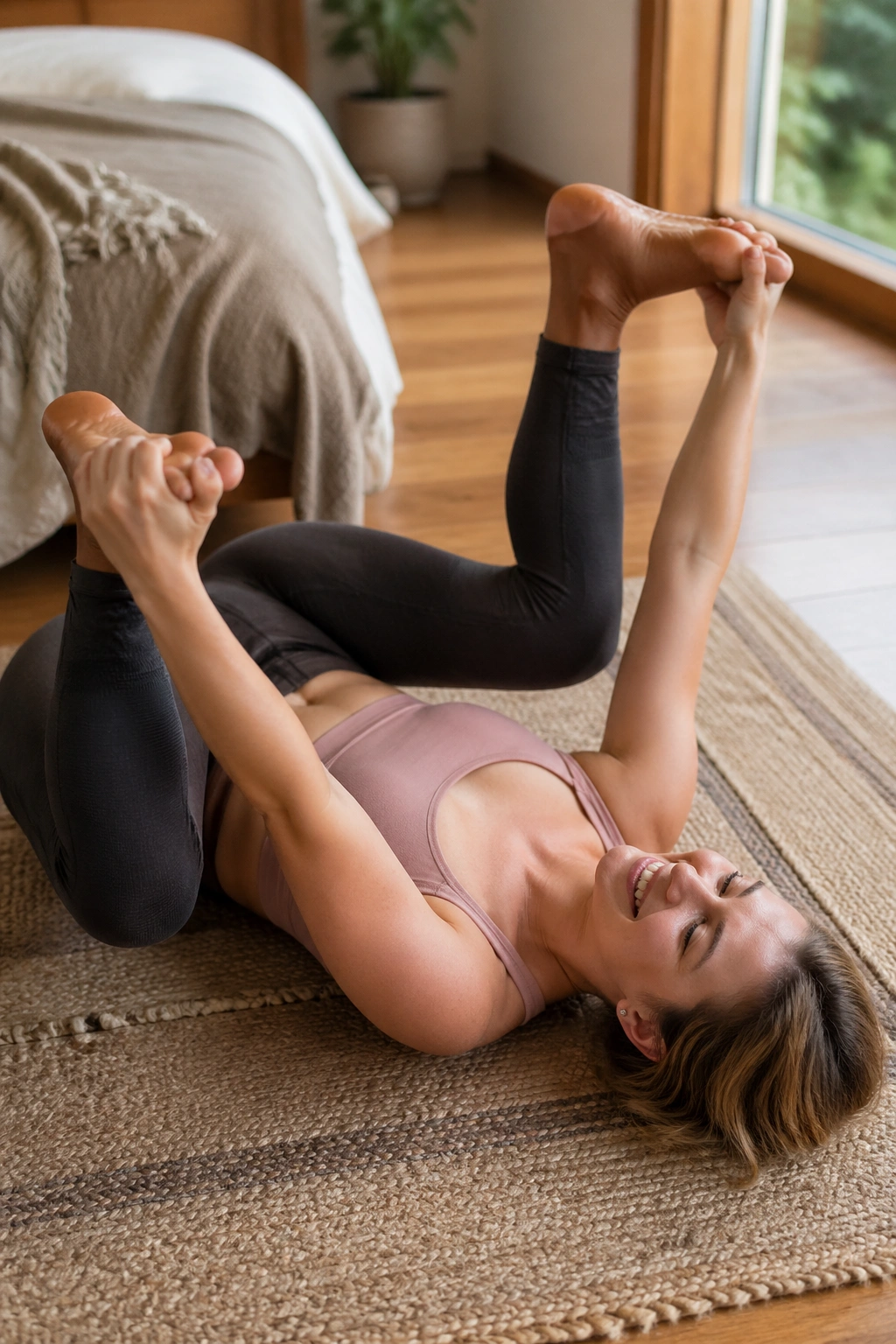
Why does something so playful calm people down? Because the body often relaxes faster when it gets a shape that feels familiar and non-threatening.
Happy Baby comes on the back with knees bent toward the chest, hands holding the outer feet or shins, and the knees opening wide. The low back gets a broad release, the hips get a little traction, and the posture gives the nervous system a chance to stop guarding. Rock side to side if it feels good. A small, easy sway can take the edge off a stressed-out day.
What to Watch For
- Keep the neck long; no tugging the head forward.
- If the feet do not reach, hold behind the thighs or shins.
- Let the tailbone stay heavy instead of lifting.
Some people love this pose. Others find it a little much, especially if the hips are tight. If that happens, bend less and hold more gently. The goal is relief, not a circus trick.
11. Sphinx Pose
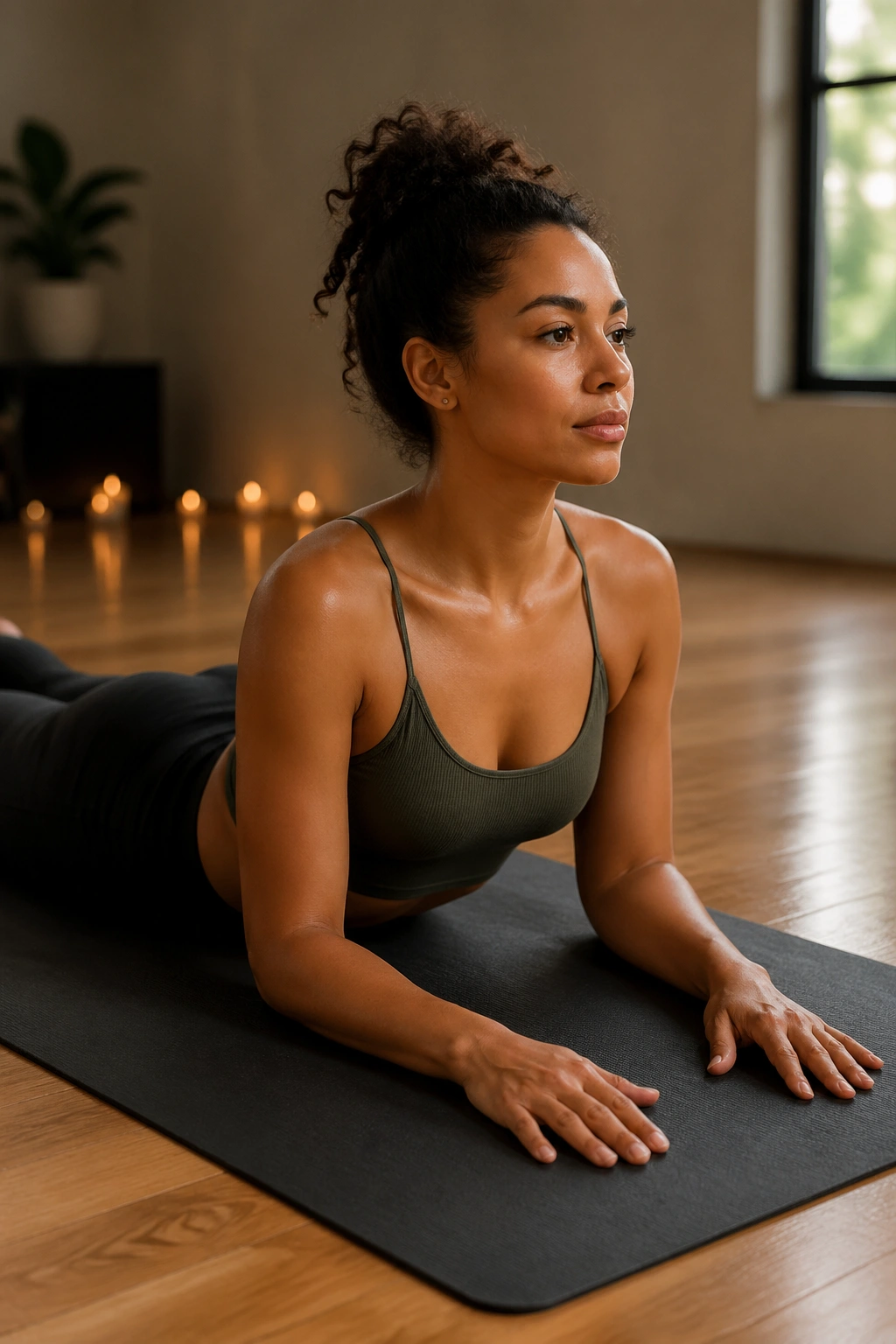
Not every calming pose is soft and folded up.
Sphinx Pose opens the front of the body while keeping the effort low. Lie on the belly, place the elbows under the shoulders, and lift the chest just enough to create a long line from the pubic bone through the sternum. The front of the ribs widens, the collarbones spread, and the breathing space often improves without the intensity of a deep backbend.
If the low back feels pinched, lower onto the forearms more and slide the elbows slightly forward. If the shoulders creep up, press the forearms down and soften the neck. Stay for 30 to 60 seconds, then rest your face on the hands or turn the head to one side.
This pose is good when anxiety feels like collapsing inward. It gives the body a different script.
12. Supported Bridge Pose
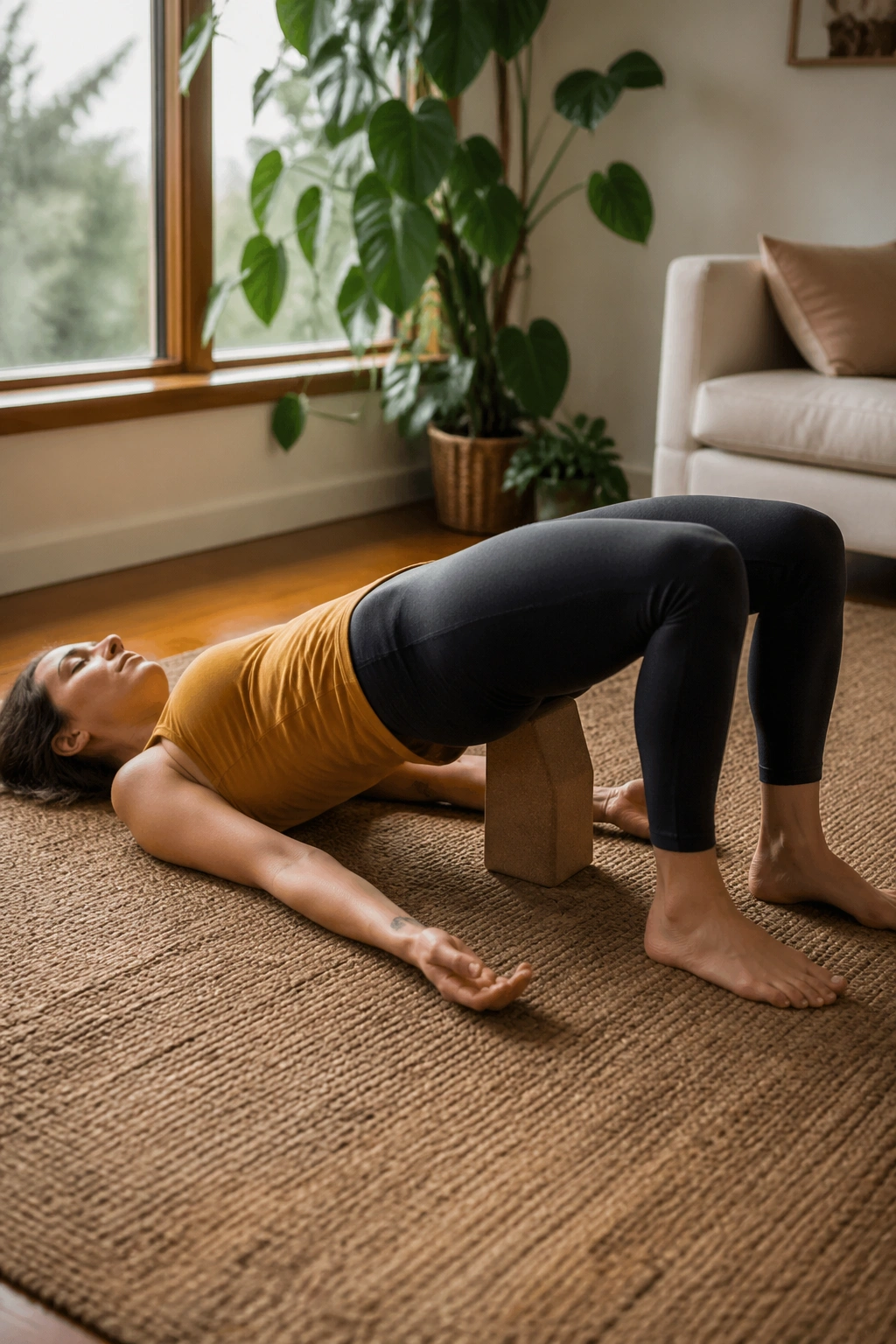
Can one block change the whole experience? Often, yes.
In Supported Bridge Pose, the hips lift and then rest on a yoga block or firm cushion. The chest opens, the front of the hips stretches, and the spine gets a gentle lift without muscular effort. Start with feet hip-width apart and heels close enough that the fingertips can graze the backs of the heels. Roll the block under the sacrum at the lowest comfortable height first; you can always go higher later.
Block, Breath, and Setup
- Keep the knees tracking straight ahead.
- Choose a low or medium block if you are new to it.
- Let the glutes soften once the block is in place.
- Stay for 5 to 10 breaths.
This is the kind of pose that can make your whole torso feel less boxed in. If the block feels unstable, use a folded blanket instead. Better steady than fancy.
13. Eagle Arms
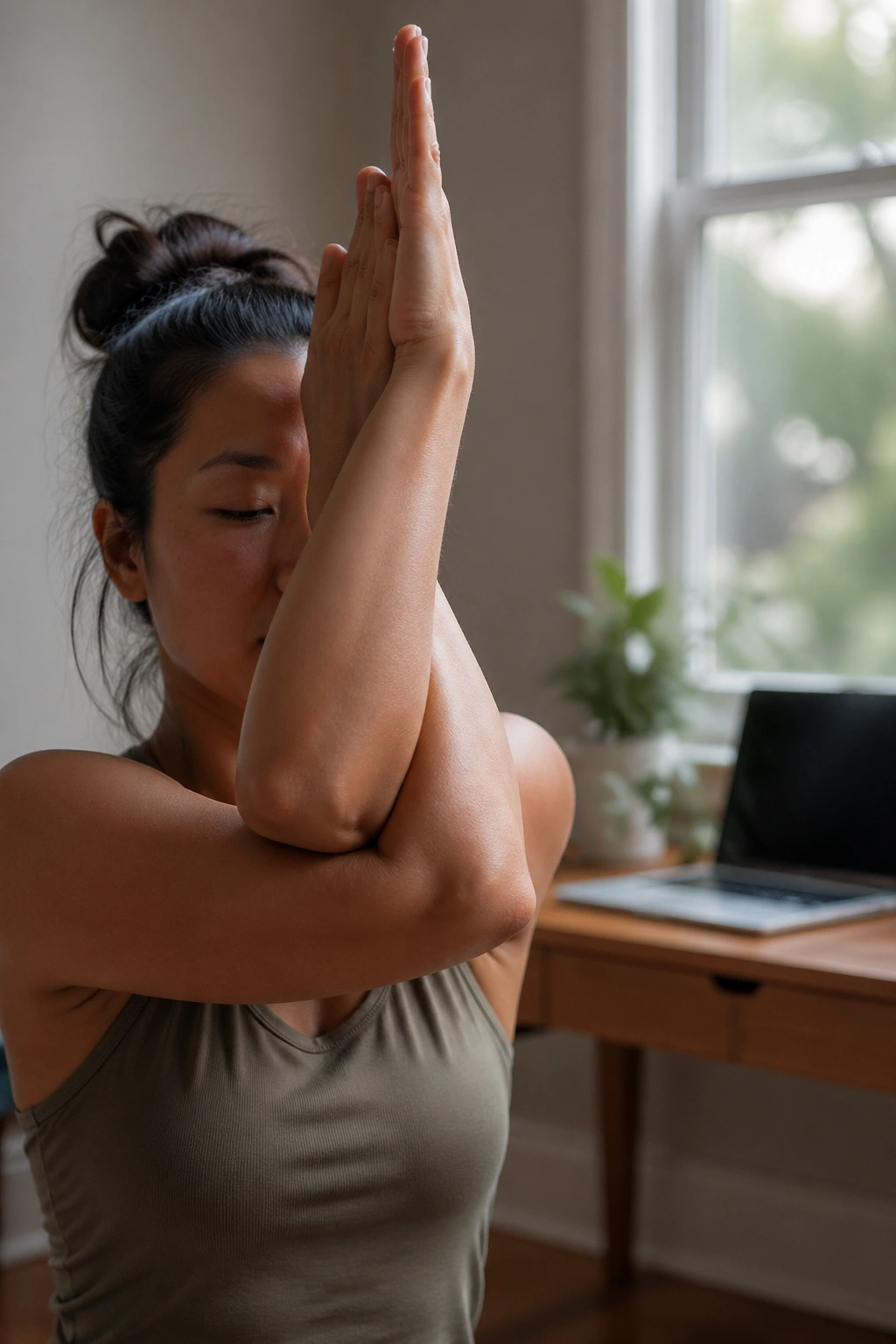
Shoulders around your ears? That’s where Eagle Arms earns its keep.
You can do this seated or standing. Cross one elbow under the other, bend the elbows, and either bring the palms together or the backs of the hands together if that’s where your shoulders land. Lift the elbows slightly and breathe into the space between the shoulder blades. The sensation is compact, and that matters. Anxiety often loves to live in the upper chest, and this shape gives that area something specific to do.
How to Use It at a Desk
- Sit tall with both feet on the floor.
- Hold for 3 to 5 breaths on each side.
- Keep the jaw loose and the tongue resting softly.
- Let the elbows drop if the shoulder tops feel pinched.
A tiny position shift can feel like a reset button. No dramatic stretch required.
14. Malasana, or Yogi Squat
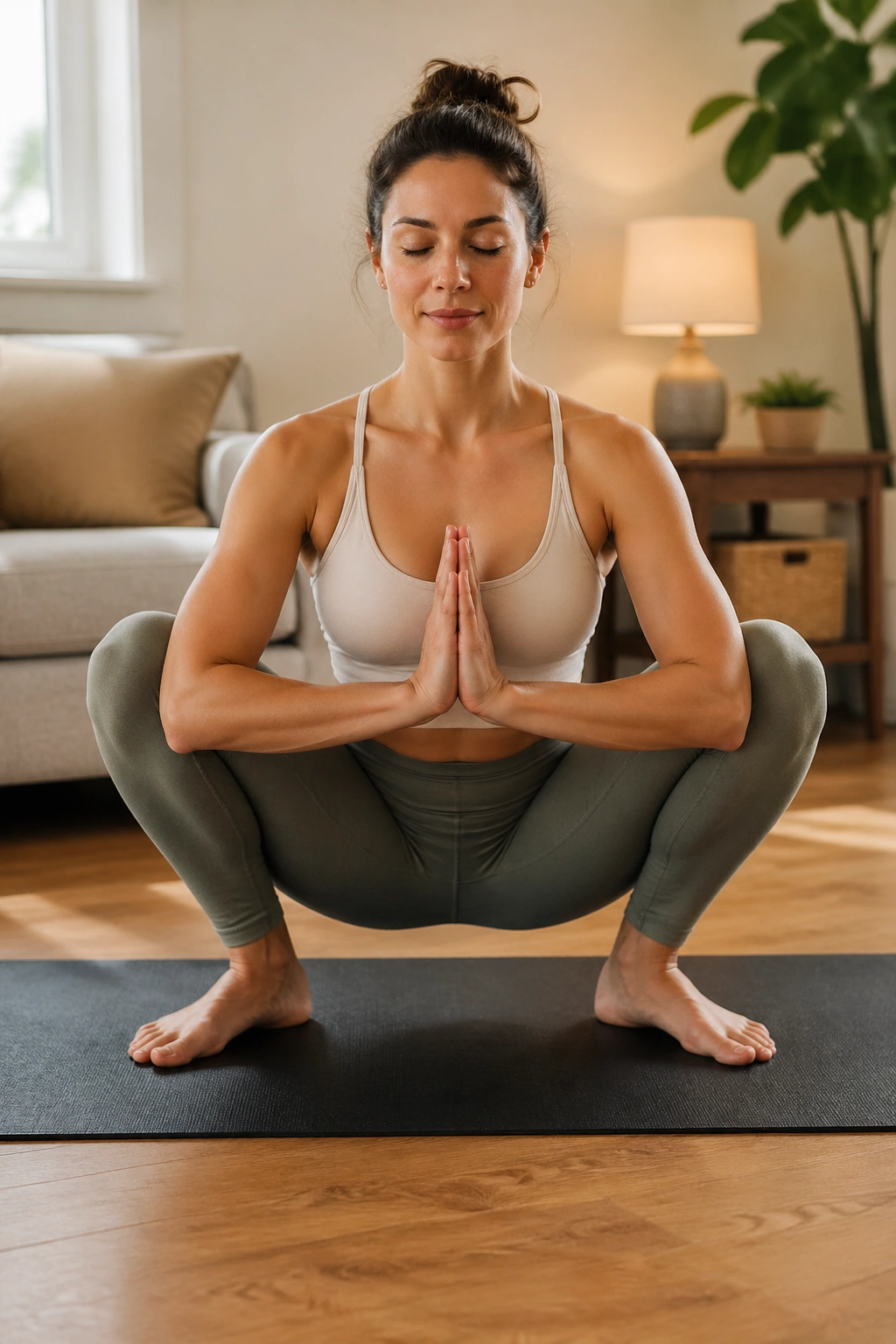
This one is earthy. Grounded. A little underrated.
Malasana asks the hips, ankles, and low back to open while the heels press toward the floor or a folded blanket. The position can feel like a release valve when the body has been bracing all day. Keep the chest lifted and the spine long. If the heels float, slide a rolled mat or blanket under them. If the low back rounds too much, sit on a block and bring the knees a little wider.
A Small Prop Goes a Long Way
- Place a block under the hips if the squat is too deep.
- Turn the toes out slightly if the ankles feel tight.
- Keep the hands at heart center if balance is shaky.
It is a strong pose, not a cute one. The strength is part of the calm.
15. Seated Forward Fold
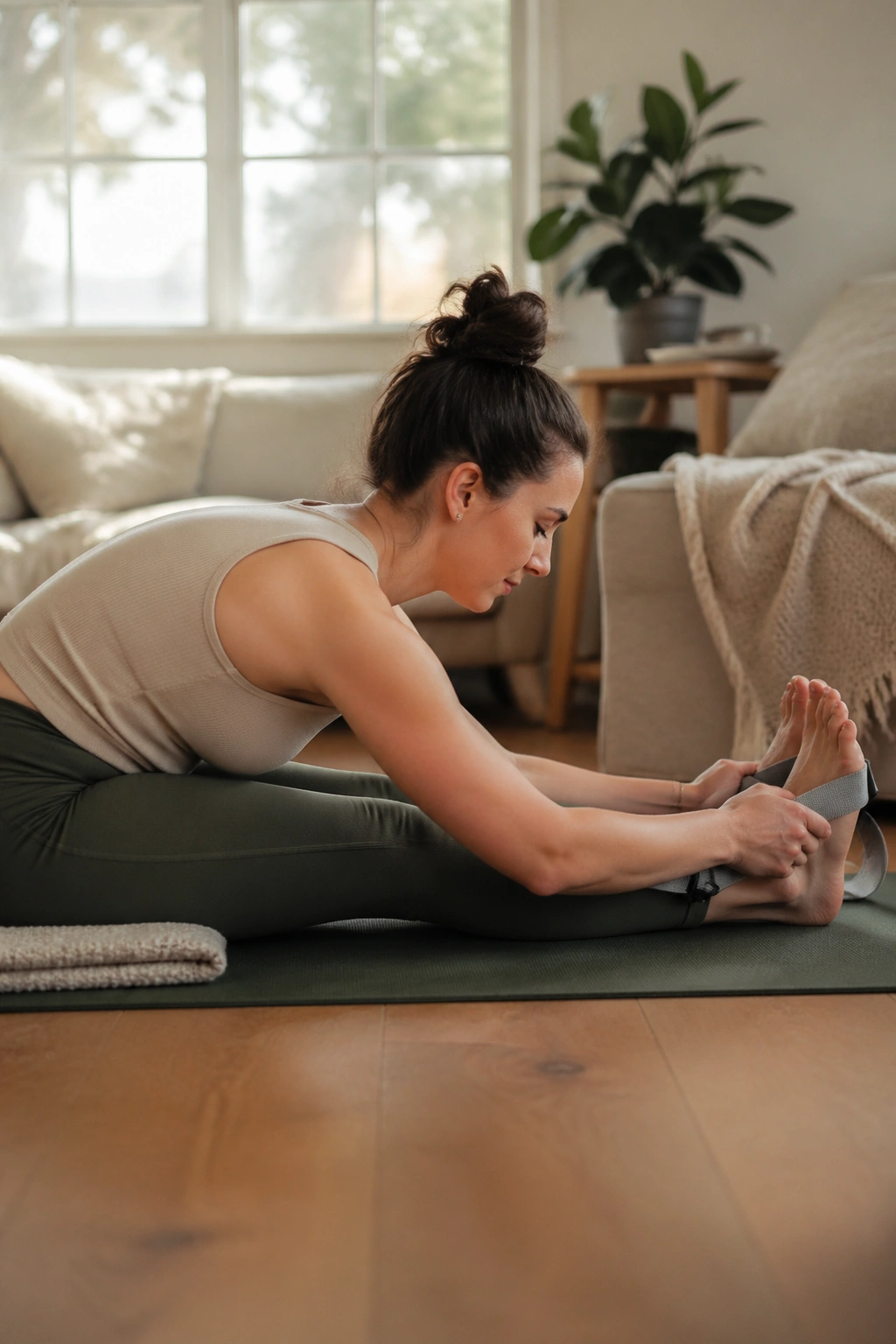
What matters here is not your flexibility. It is the shape of the breath.
Seated Forward Fold lengthens the back body and gives the hamstrings a chance to release without needing speed or force. Sit on a blanket if the pelvis tilts backward, extend the legs, and hinge forward from the hips with the spine long. A strap around the feet can keep the shoulders from hunching forward. If the hamstrings are tight, bend the knees. That is not cheating. That is smart.
I like this pose for people whose anxiety shows up as a wired-but-tired feeling. The chest softens, the face softens, and the exhale gets longer. Hold it for 5 to 8 breaths, then come out slowly so the low back does not grab on the way up.
If you feel the stretch behind the knees instead of the hamstrings, come out a little. That sensation usually means the body wants less depth.
16. Downward-Facing Dog
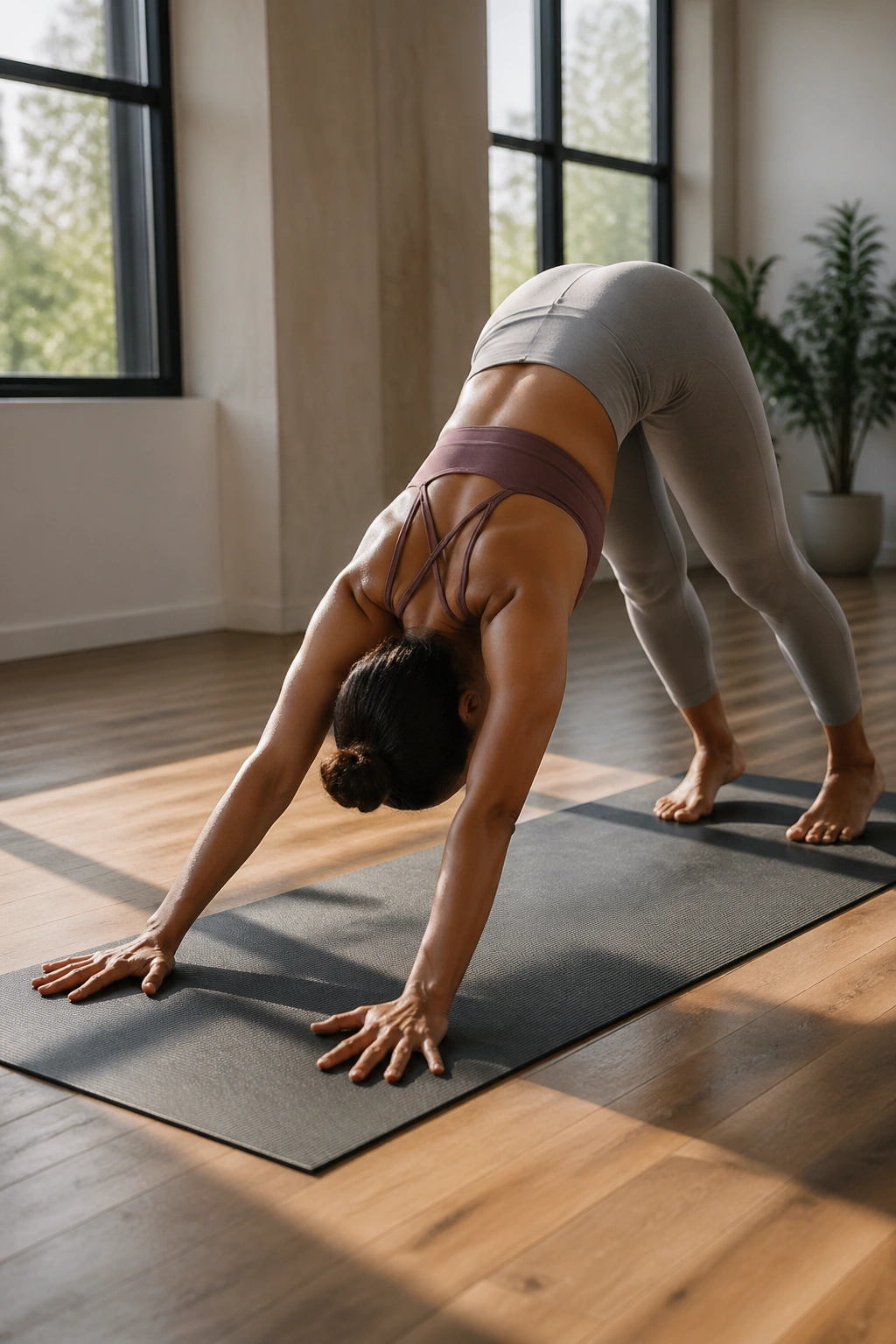
Downward Dog calms some people and fires up others. Pay attention to which camp you’re in.
The pose can be a strong reset: hands and feet on the floor, hips lifted, spine long, heels reaching. It gives the body length and the mind a task. But if you are already shaky, overheated, or on the edge of panic, this posture can feel like too much load. That is not a failure. It just means you need a different shape that day.
If you do stay here, bend the knees generously and keep the head relaxed between the arms. Pedal the feet to release the calves. Shorten the stance if the shoulders strain. Thirty seconds can be enough.
- Use blocks under the hands if wrists are sensitive.
- Keep the neck loose.
- Exit if the breath gets faster instead of slower.
A pose that adds stress is the wrong pose for the moment.
17. Dolphin Pose
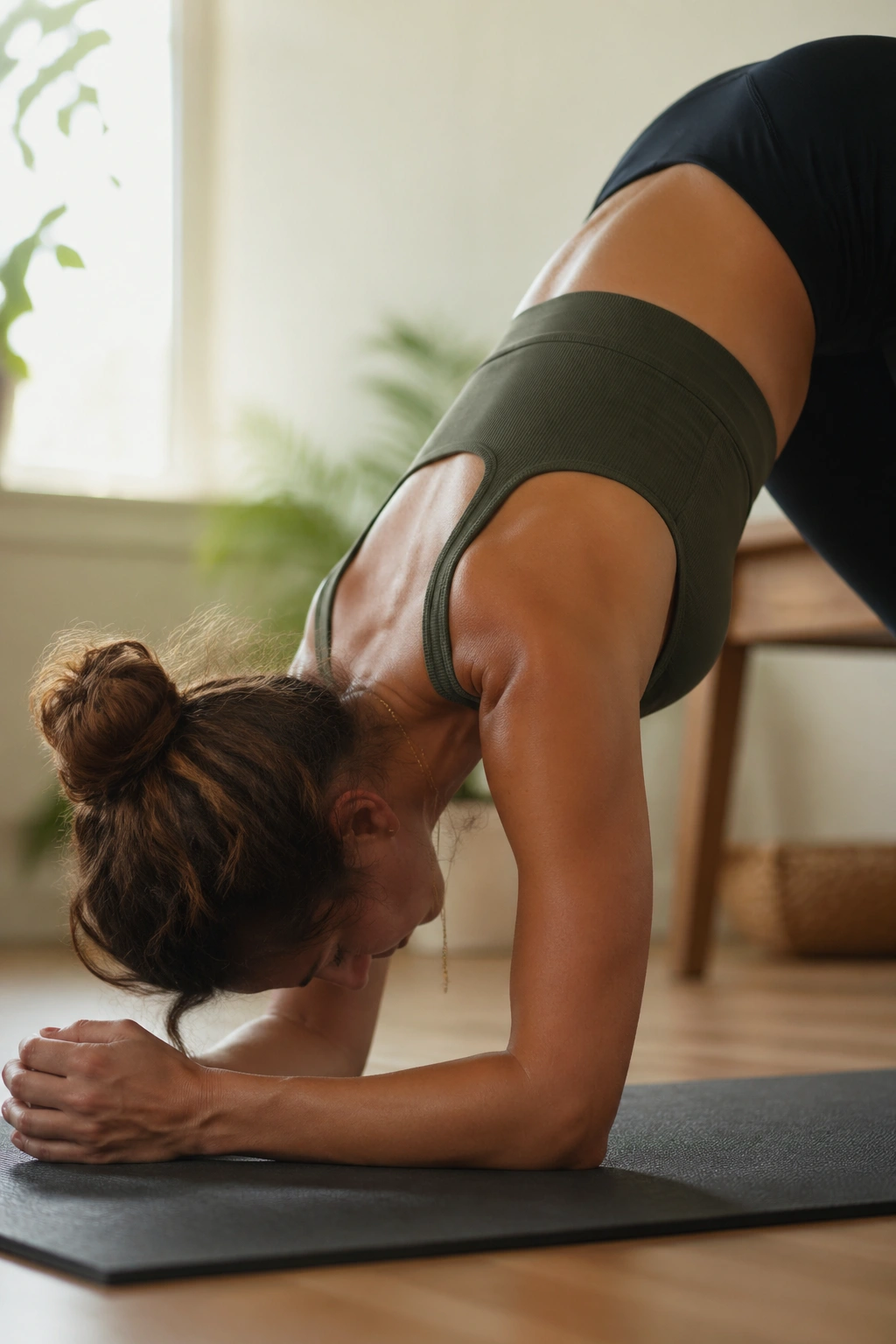
If your wrists are tired but your shoulders still need work, Dolphin Pose is the move.
It looks a lot like Downward Dog, except the forearms are on the floor. That shifts the load out of the wrists and into the upper back and shoulders. For a lot of people, that makes the pose feel more contained and less frantic. Start with elbows shoulder-width apart, hands clasped or flat, and lift the hips only as much as you can without crunching the neck.
When to Use It
- After long computer hours.
- When wrists need a break.
- When you want a stronger posture without a huge heart-rate spike.
Stay for 3 to 5 breaths. If the neck starts to jam, walk the feet back or lower the knees. It should feel sturdy, not like a wrestling match with the floor.
18. Low Lunge with Side Bend
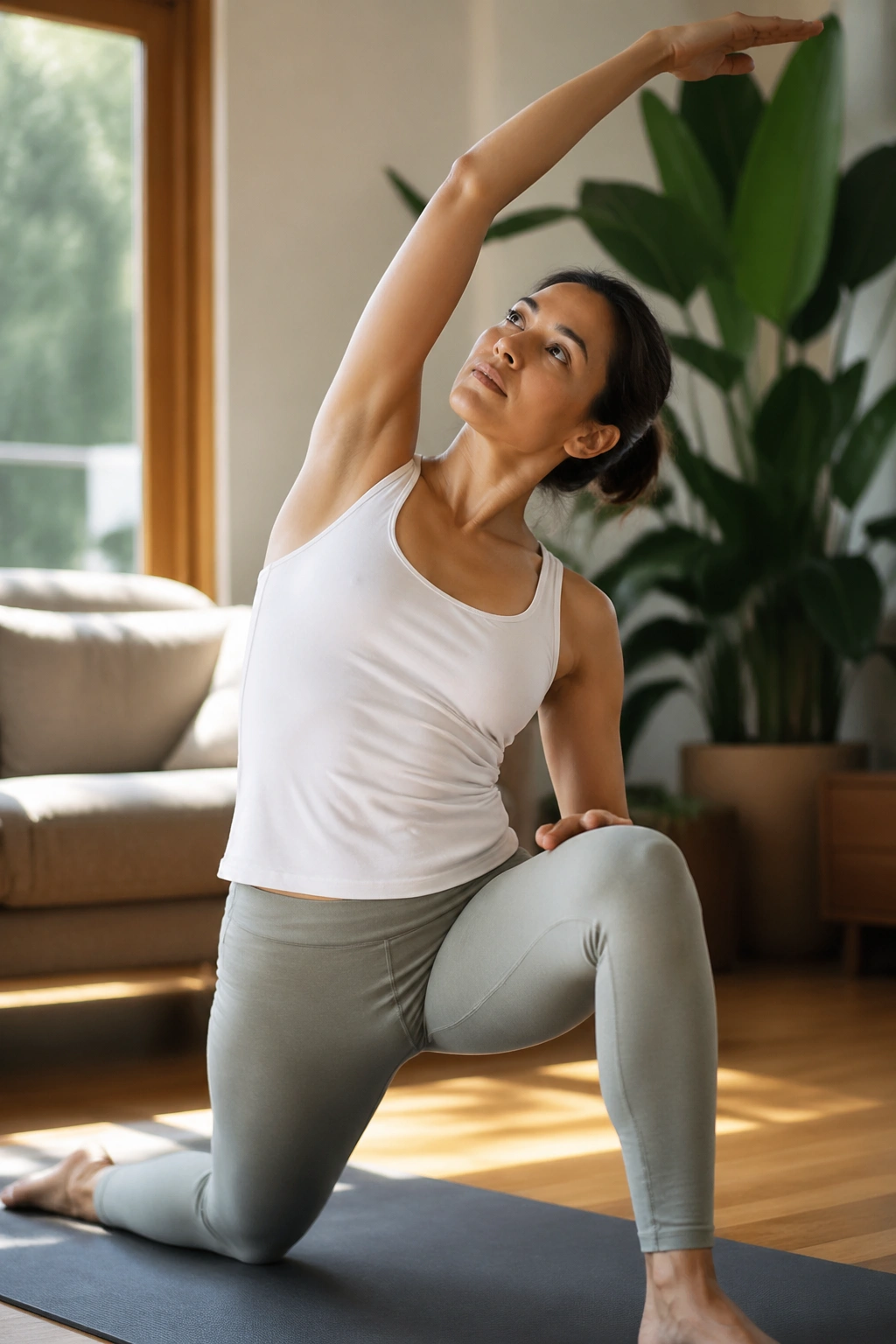
A lot of anxiety lives in the front of the hips and the sides of the ribs. This pose gets both.
From a low lunge with the back knee down, keep the front knee stacked over the ankle and lift the torso. Reach the same-side arm overhead for a side bend, or reach both arms up if that feels smooth. The front of the hip opens, the side body lengthens, and the breath gets a little wider. That side stretch is more useful than people expect.
If the back knee complains, put a folded blanket under it. If balance feels sketchy, keep the hands on the front thigh instead of lifting them high. Hold for 5 breaths per side and move slowly when switching.
The safest version is the one you can breathe through. If your breath catches, reduce the height or come out.
19. Reclining Figure Four
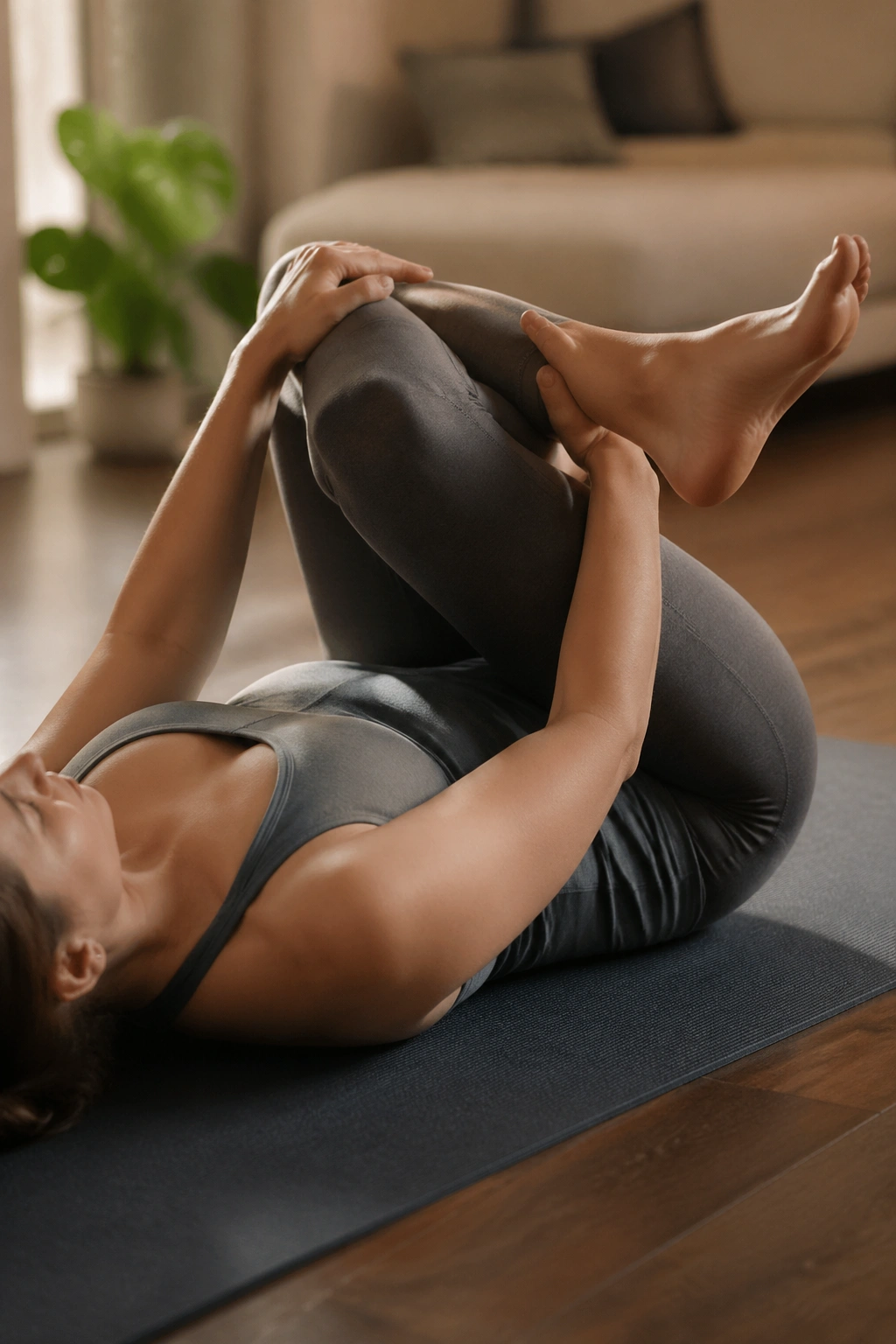
The first thing most people notice here is the hip tension. The second is how quickly the back settles.
Lie on your back, cross one ankle over the opposite thigh, and draw the supporting leg in toward the chest. The outer hip opens, the glutes soften, and the low back often stops bracing so hard. Flex the crossed foot to protect the knee. If the stretch is too sharp, keep the lower leg farther away from the chest.
This pose is especially nice after a day of sitting, when the hips feel sticky and the mind feels glued to one worry. Stay for 5 to 8 breaths each side. A strap behind the supporting thigh can make the whole thing gentler if the hands do not reach comfortably.
It is quiet work. The good kind.
20. Corpse Pose for Anxiety
Can lying down on the floor count as real practice? Yes, if you stay present enough to let it work.
Corpse Pose is where the body learns that nothing needs fixing for a few minutes. Lie on your back with the legs long or bent, arms a little away from the sides, palms up or down. Cover yourself with a light blanket if that helps the nervous system settle. Let the tongue rest, the teeth separate, and the breath become ordinary again. That ordinary breath is the point.
If racing thoughts keep barging in, give the mind one tiny task: feel the weight of the heels, then the calves, then the back of the pelvis. Or count five exhalations and start over. No drama. No big mental speech. If you only have time for one posture, this is the one I’d keep.
A short rest after movement often lands better than rest alone. Try Child’s Pose first, then finish here. That sequence tends to leave the body quieter than either pose by itself, which is saying something when the mind has been running the whole show.
And if a pose did not help today, that does not mean yoga failed. It usually means the body wanted a different shape, a longer exhale, or a little more support. That’s normal. Pick the one that felt most honest, use it again tomorrow, and let the practice stay small enough to repeat.
