



If your lower back feels like it steals the whole round, the problem usually isn’t the back alone. It’s the hips that won’t open, the mid-spine that won’t turn, and the same golf swing pattern repeating over and over until everything feels jammed by the time you reach the back nine.
That’s why yoga for golfers works best when it’s not treated like a random stretch session. The swing asks for hip rotation, thoracic rotation, glute strength, and a little hamstring length. When one of those pieces gets lazy, the lower back tends to volunteer for extra work. It’s a bad deal. The back pays the price, the hips keep getting stiffer, and the swing starts feeling shorter and tighter than it should.
You do not need to become flexible in some dramatic, bendy way. You need a little more room where the body actually turns. Hold most of these poses for 3 to 5 breaths, move slowly, and skip anything that causes sharp pain, numbness, or a grabbing feeling down the leg.
Start with the spine, then open the hips. That order matters.
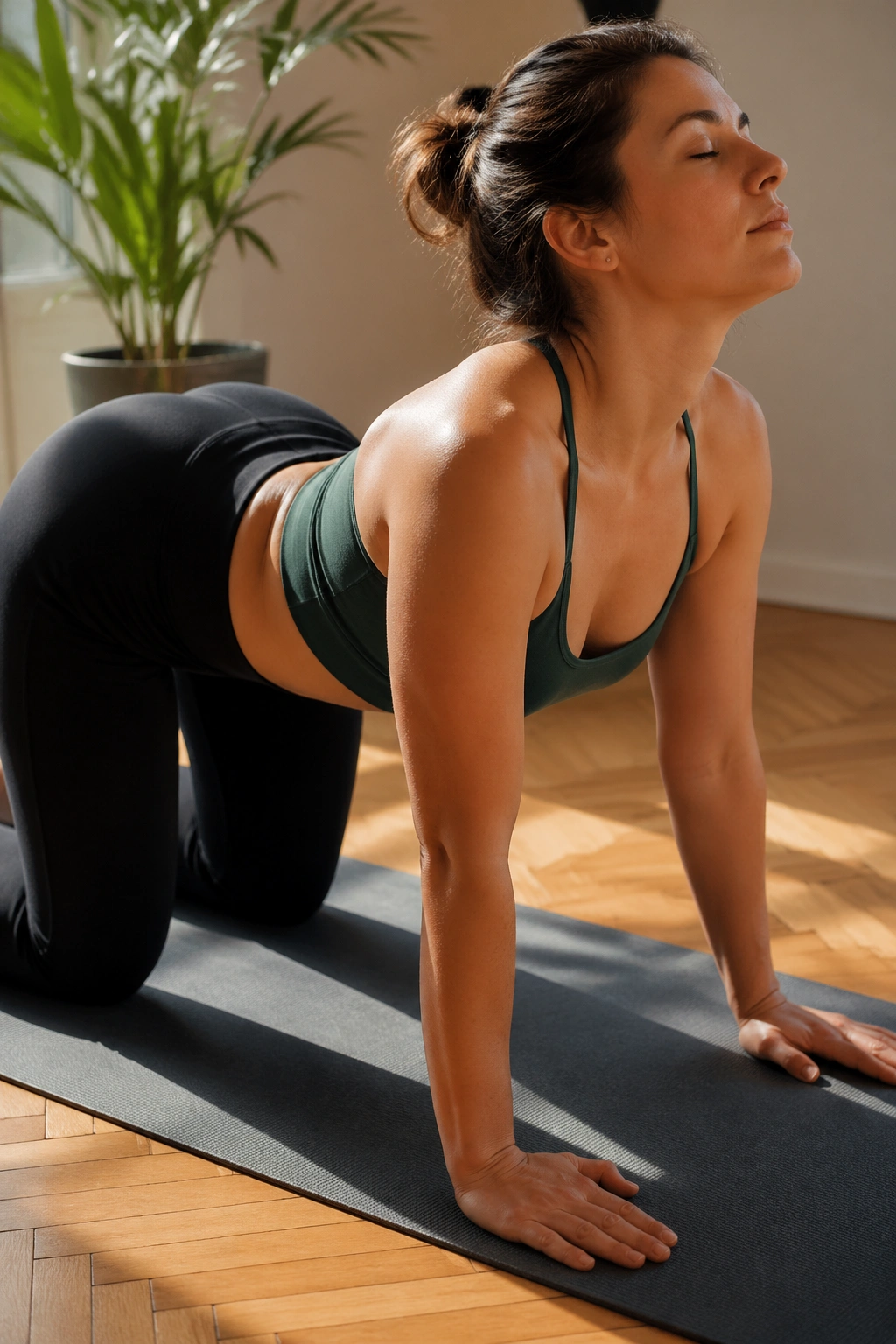
1. Cat-Cow
Cat-Cow looks almost too simple to matter. It matters anyway.
For golfers with tight backs, this is the easiest way to remind the spine that it still knows how to flex and extend without bracing like a plank. Get on hands and knees with your wrists under your shoulders and knees under your hips. On the inhale, let the belly drop and lift the chest. On the exhale, round the back and tuck the tail slightly. Keep the movement smooth. No yanking.
Why it helps before a round
Cat-Cow is less about stretching hard and more about restoring motion. A stiff golf back usually hates sudden rotation, and Cat-Cow gives you a warm-up that feels friendly instead of aggressive.
How to feel it correctly
- Spread your fingers wide and press evenly through both hands.
- Move at about one breath per shape.
- Keep the neck long; do not jam the chin up.
- If your wrists complain, put your hands on fists or on yoga blocks.
One clean set of 6 to 8 rounds is enough to change how your back feels.
2. Thread the Needle
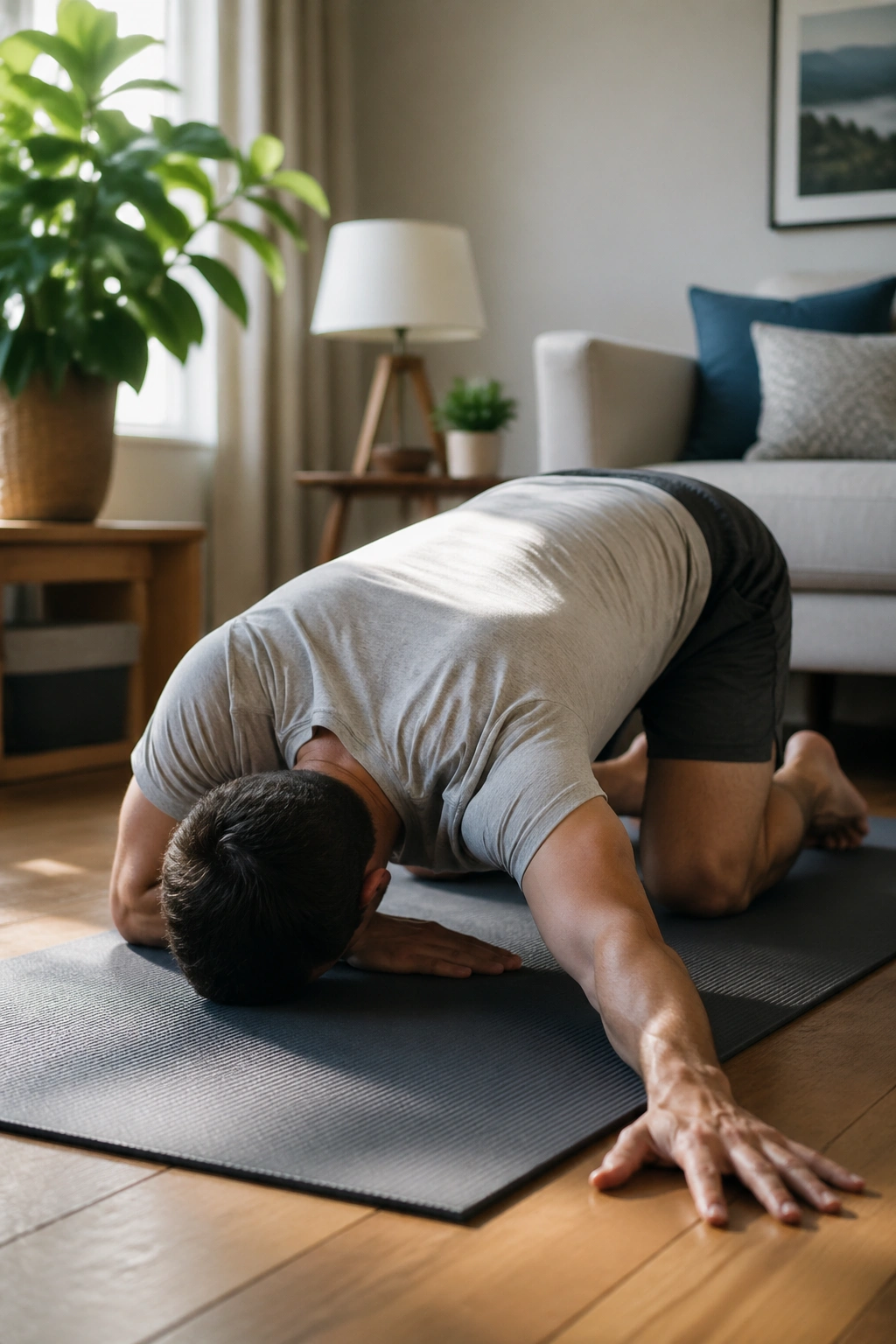
Have you ever twisted and felt one shoulder blade just refuse to move? Thread the Needle is built for that exact problem.
From hands and knees, slide your right arm under your left arm, palm up, and let your right shoulder and side of the head lower toward the floor. Keep the hips stacked above the knees instead of drifting backward. Breathe into the back ribs. The stretch should feel like it runs from the upper back into the rear shoulder, not like a wrench in the neck.
What golfers like about this pose is the way it opens the thoracic spine without asking the low back to crank through the motion. That matters. A lot. If your upper back turns better, your swing can pick up rotation without stealing it from the lumbar area.
How to get the twist without cranking
Hold for 4 to 5 breaths, then switch sides. If the floor feels far away, slide a folded blanket or a pillow under the shoulder. You can also keep the top hand pressing lightly into the mat for support. The goal is a calm twist, not a max-effort stretch.
3. Low Lunge
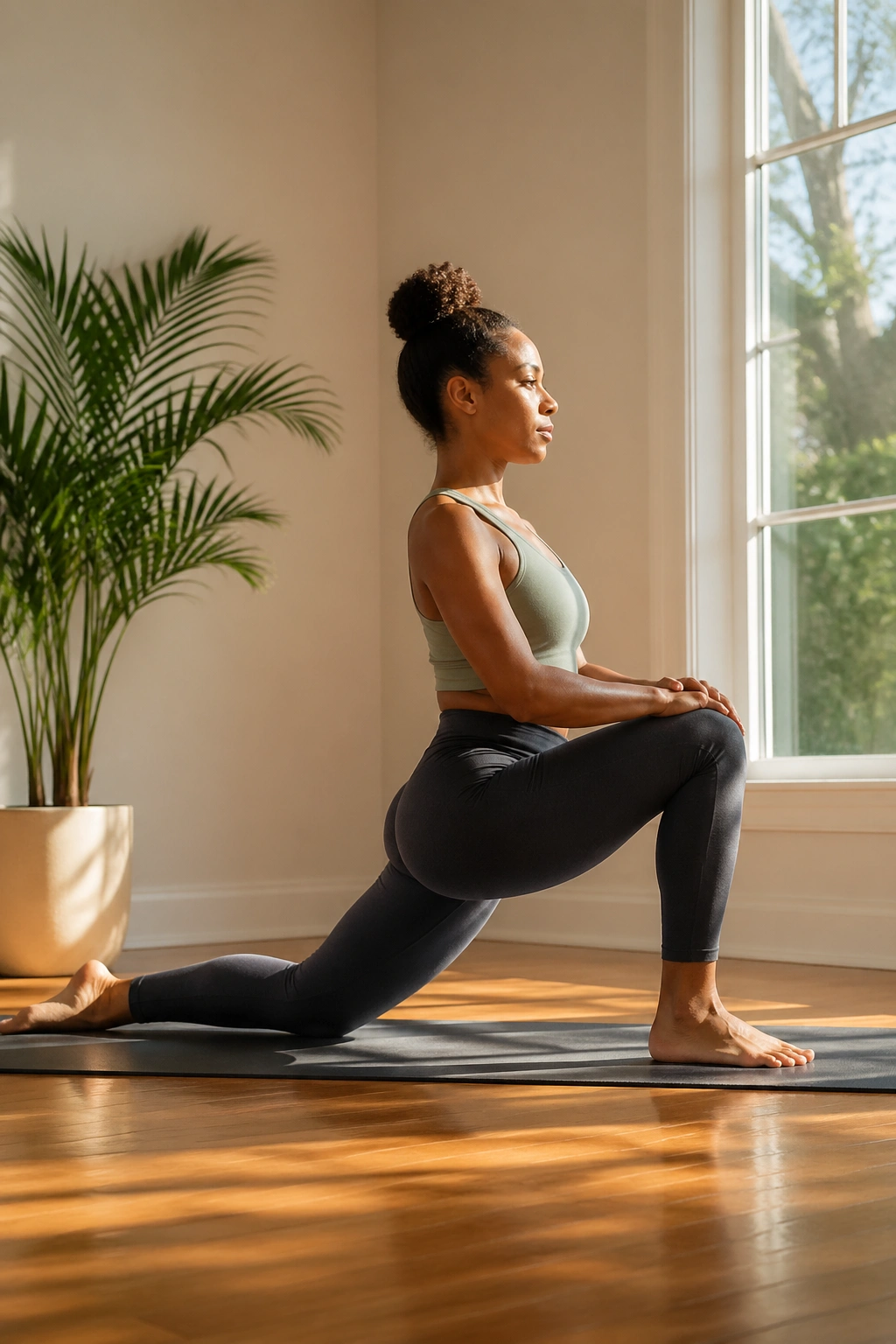
A golfer with tight hip flexors usually feels it first when stepping out of the car after a round. Low Lunge is the fix I reach for first.
Set the right foot between your hands and lower the left knee to the floor. Shift the hips forward only until you feel a stretch along the front of the left hip and thigh. Keep the front knee stacked over the ankle. Then, and this part matters, gently tuck the pelvis under instead of dumping into the lower back. That tiny tuck changes everything.
Why this one hits the right spot
The golf swing wants the lead and trail hips to rotate, but tight hip flexors can lock the pelvis in a forward tilt. That makes the low back do more work than it should. Low Lunge opens the front line of the hip so the pelvis can move with less resistance.
Clean form cues
- Keep the chest tall, but ribs soft.
- Squeeze the back glute lightly.
- Hold for 3 to 5 breaths.
- Reach the same-side arm overhead if you want a little more room.
Do not sink so far that the front of the hip pinches. That is a bad sign, not a deeper stretch.
4. Half Split
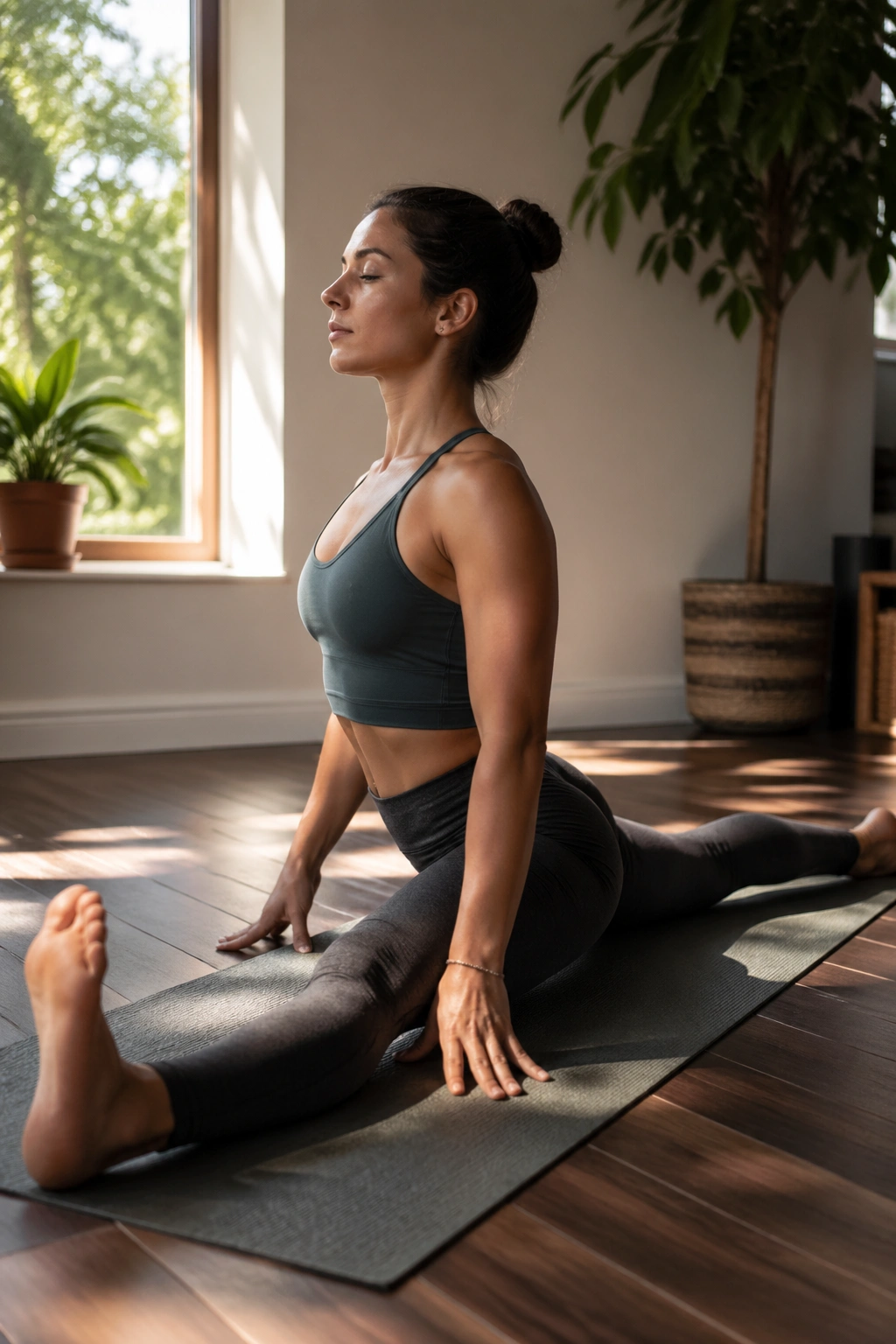
This one is a sneaky hamstring stretch, and golfers tend to hate how honest it feels.
From Low Lunge, shift the hips back and straighten the front leg while keeping a slight bend in the knee. Flex the front foot. The sensation should land in the back of the thigh, maybe a little behind the knee, but not in the joint itself. Keep the spine long and think about folding from the hips, not collapsing through the waist.
Hamstrings matter to golfers more than they get credit for. Tight hamstrings can pull the pelvis into a tucked position, which makes rotational mechanics feel clunky. You end up swinging around stiffness instead of through motion. Half Split gives you a controlled way to lengthen the back of the leg without forcing a deep forward fold.
One clean rule: if your back rounds hard, you have gone too far. Back off an inch, bend the knee a bit more, and try again. Better to get a mild stretch you can breathe through than a dramatic fold that turns into a tug-of-war.
5. Lizard Pose
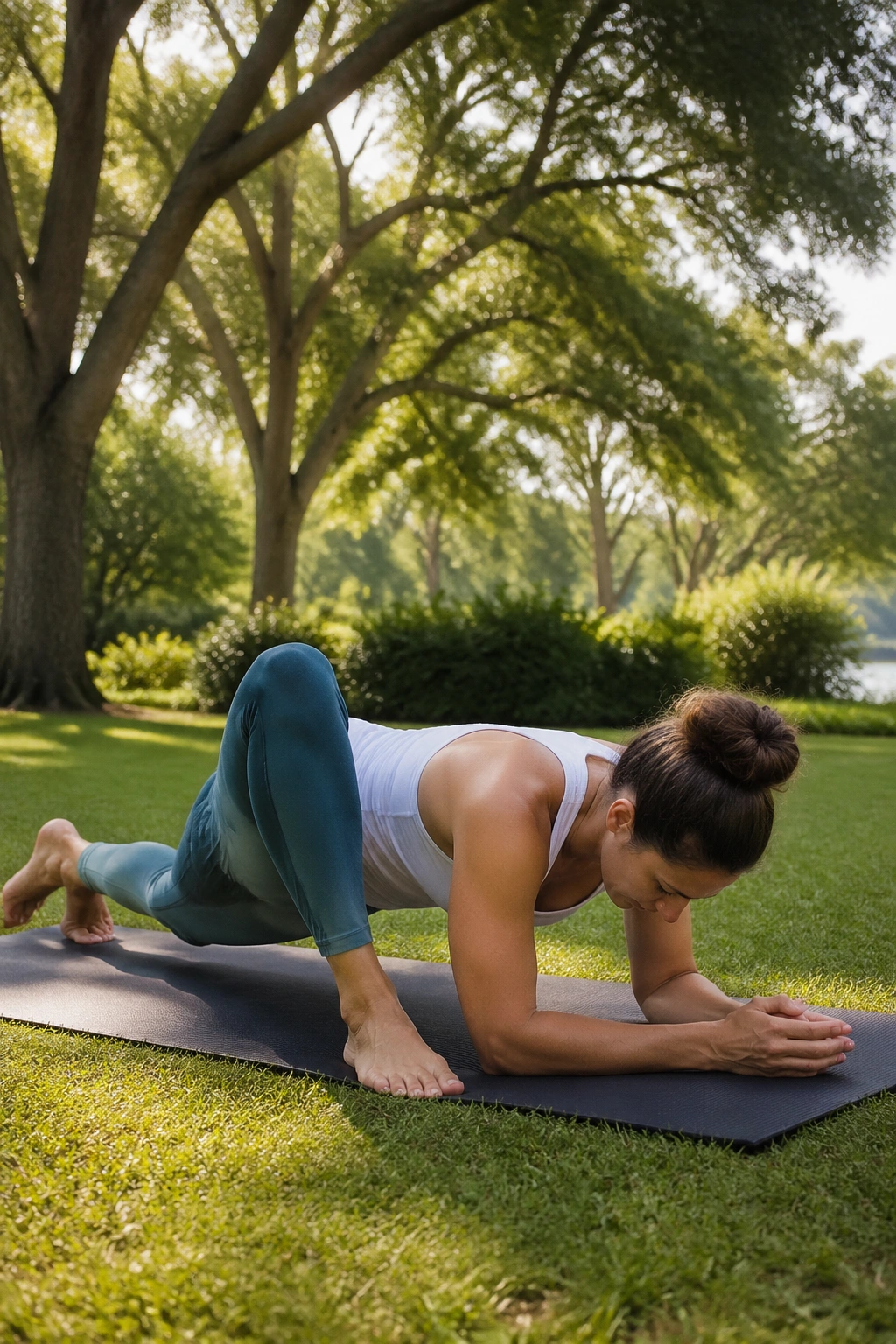
Is Lizard Pose intense? Yes. Does that make it useful? Also yes.
Step your right foot outside your right hand from a low lunge position, then lower the back knee if needed. Keep your front foot planted and let the hips drift forward just enough to open the groin, inner thigh, and front hip. You can stay on your hands, or drop to your forearms if that feels manageable. I usually tell golfers to earn the forearm version rather than rush into it. The strong version of this pose is earned, not forced.
What makes it different
Lizard gets into the adductors — the inner thigh muscles that often get tight in golfers who sit a lot and rotate hard. Those muscles help stabilize the pelvis. When they’re stiff, the pelvis feels stuck, and the swing loses some of its clean turn.
A practical way to use it
- Hold 3 breaths on each side if you’re warming up.
- Hold 5 to 8 breaths if you’re cooling down.
- Keep the front knee from collapsing inward.
- Use blocks under the hands if the floor feels too far away.
If your groin feels pinchy, come out sooner. Tight is fine. Pinchy is not.
6. Pigeon Pose
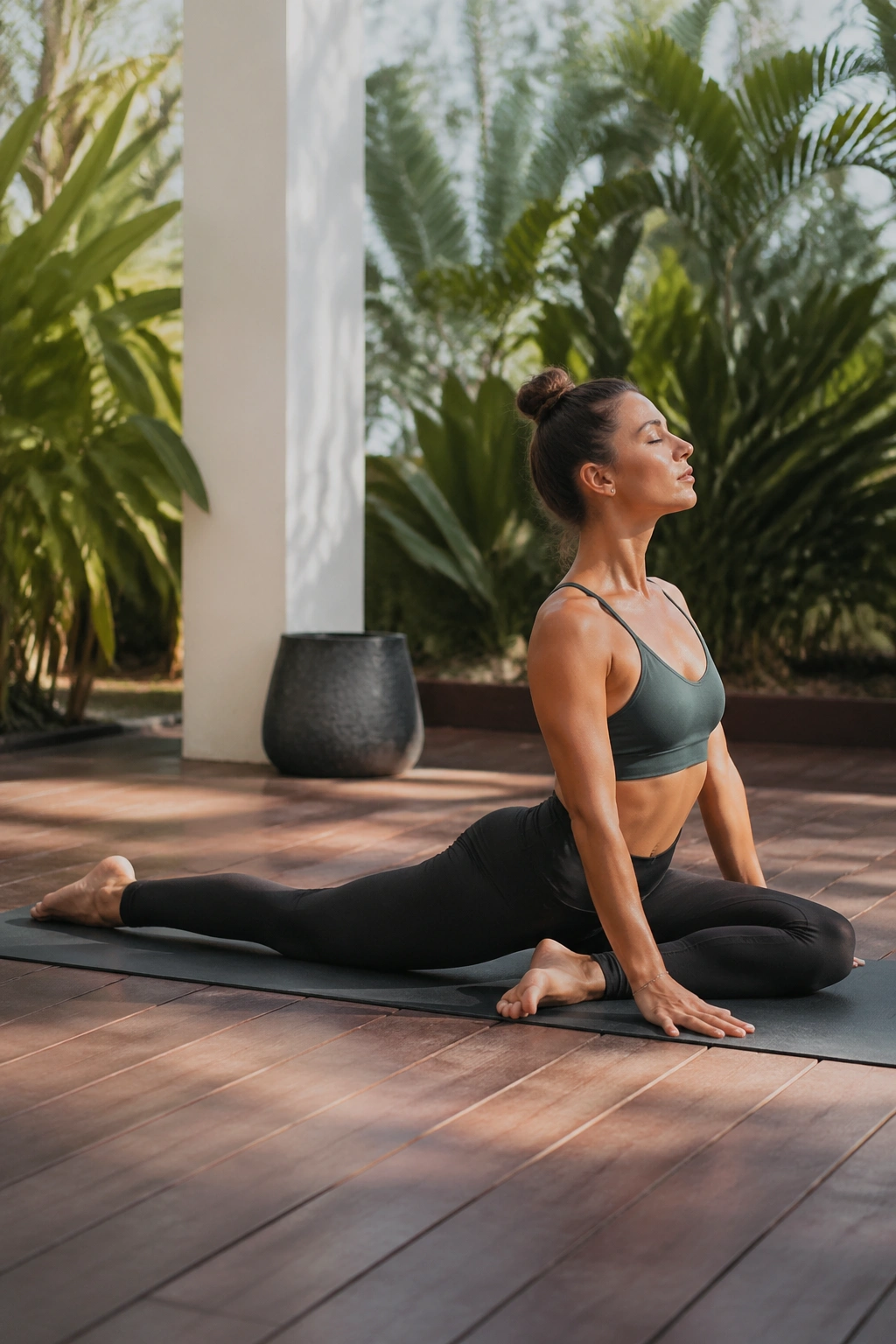
Pigeon Pose is the one people either love or avoid. I get it. It can feel dramatic.
Bring the right shin across the mat and extend the left leg long behind you. Square the hips as much as your body allows, then fold forward only if the front hip feels okay. The deep work here is in the glutes and external rotators, which is where a surprising amount of golf stiffness lives. A lot of golfers think their issue is the spine, but the real complaint is often in the outside of the hip, right where the back pocket would be.
Here’s the catch: Pigeon should feel like a stretch, not a joint grind. If the front knee feels unhappy, place a folded blanket or a yoga block under the right hip so you’re not hanging in space. That support often makes the pose more useful, not less.
A smaller version works too. You do not need your chest on the floor to get value from Pigeon. A tall torso and 5 steady breaths can be enough when the hips are barking.
7. Figure-Four on Your Back
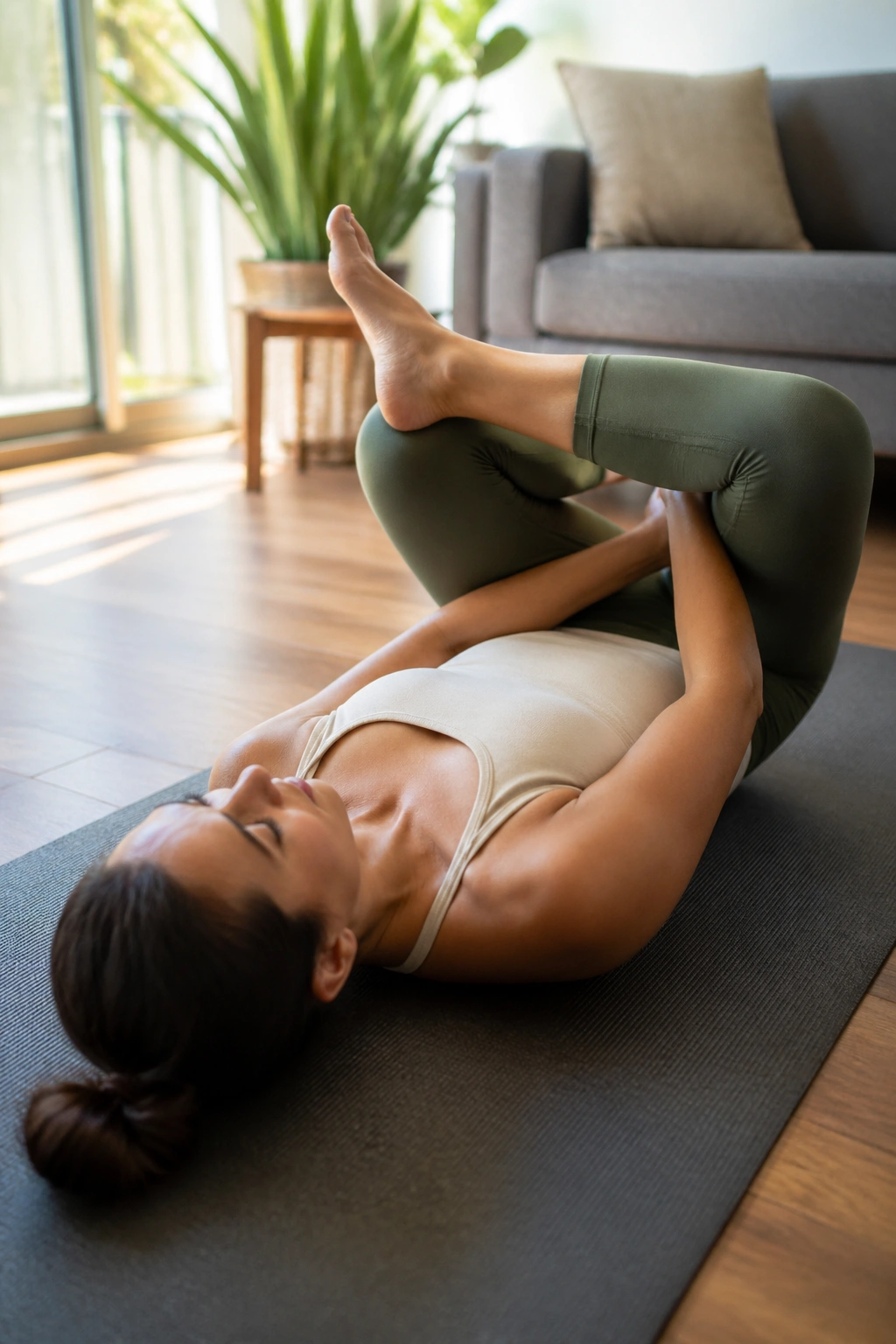
This is the friendliest hip opener on the list.
Lie on your back with both knees bent. Cross your right ankle over your left thigh, just above the knee, then thread your hands behind the left hamstring and draw the leg toward you. Keep the right foot flexed so the knee stays protected. You should feel a clean stretch in the outer right hip and glute.
For golfers who are tight but not eager to get down on the floor in a dramatic way, this pose is gold. It opens the same area as Pigeon with a lot less strain on the knees and lower back. That makes it easier to repeat on both sides without turning the session into a battle.
I like this one after a round because it lets the pelvis settle down. Your back feels heavier on the floor, your breath slows, and the hips stop trying to guard every little movement. Hold for 5 to 8 breaths per side. If the stretch is too much, keep the bottom foot on the floor instead of lifting the leg.
8. Supine Twist
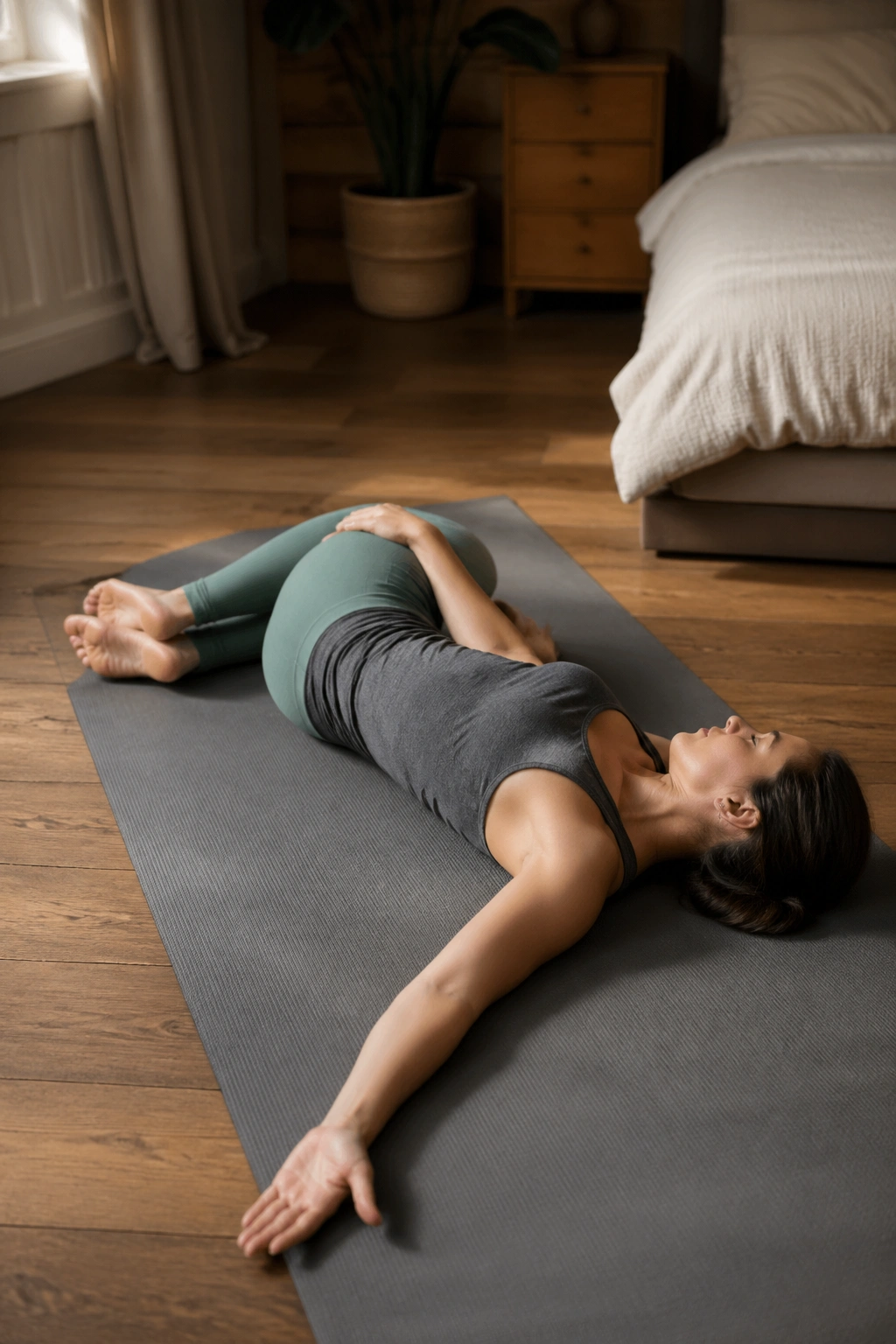
A good twist should feel like wringing out a towel, not twisting a rusty bolt.
Lie on your back, bring both knees into your chest, then drop them to one side while keeping both shoulders heavy on the mat. Extend the opposite arm out at shoulder height and turn your gaze the other way if your neck likes that. The twist should land in the mid-back, lower back, and outer hip.
Golfers usually chase rotational power, but the body needs a place to unwind, too. Supine Twist gives the spine a gentle reset after all that upright turning. It also helps the glutes and low back release the “hold everything together” tension that builds during long practice sessions.
How to keep it comfortable
- Put a pillow between the knees if your low back feels cranky.
- Keep the knees stacked a little higher if the floor feels too far away.
- Breathe into the ribs, not the neck.
- Hold 4 to 6 breaths, then switch sides.
If one shoulder pops up, that is your limit for the day. Stay there.
9. Sphinx Pose
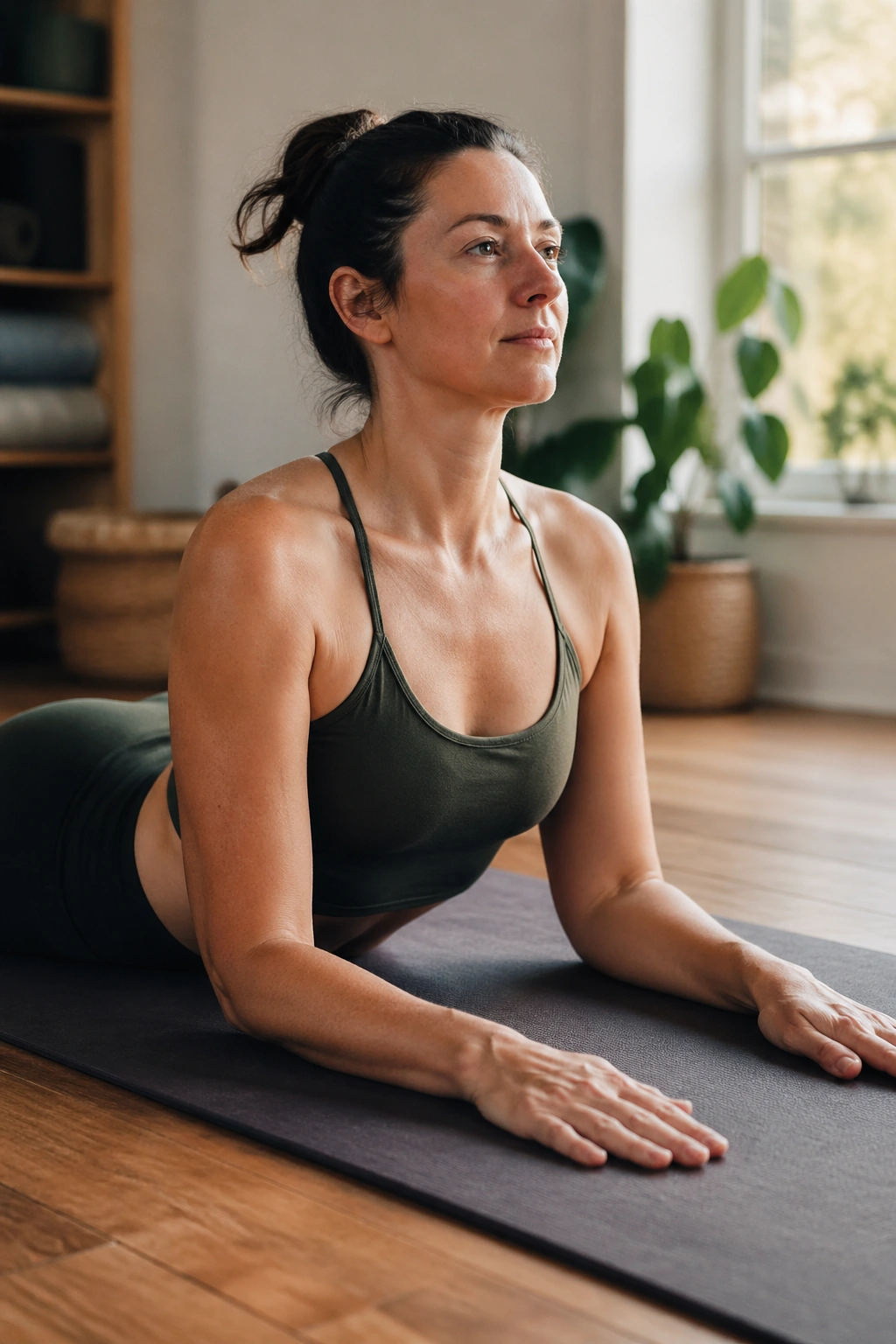
Sphinx is boring in the best way.
Lie on your stomach and place your forearms on the floor with elbows under your shoulders. Press gently through the forearms and lift the chest without collapsing into the low back. The tops of the thighs stay relaxed on the floor. You should feel a mild, steady opening across the front of the hips and lower belly, plus a bit of extension through the spine.
For golfers who sit a lot, this pose can feel oddly relieving. It reverses the flexed shape you spend much of the day in, and that matters when your back has spent hours bent over a desk or steering wheel. A little spinal extension can make the next round feel less like a grind.
One useful detail: keep the glutes soft. If you clench hard, the low back takes over and the whole thing gets crampy. Hold Sphinx for 4 to 6 breaths, come down, then repeat once if it feels good. This is not a pose to force. A mild backbend is enough.
10. Child’s Pose with Side Reach
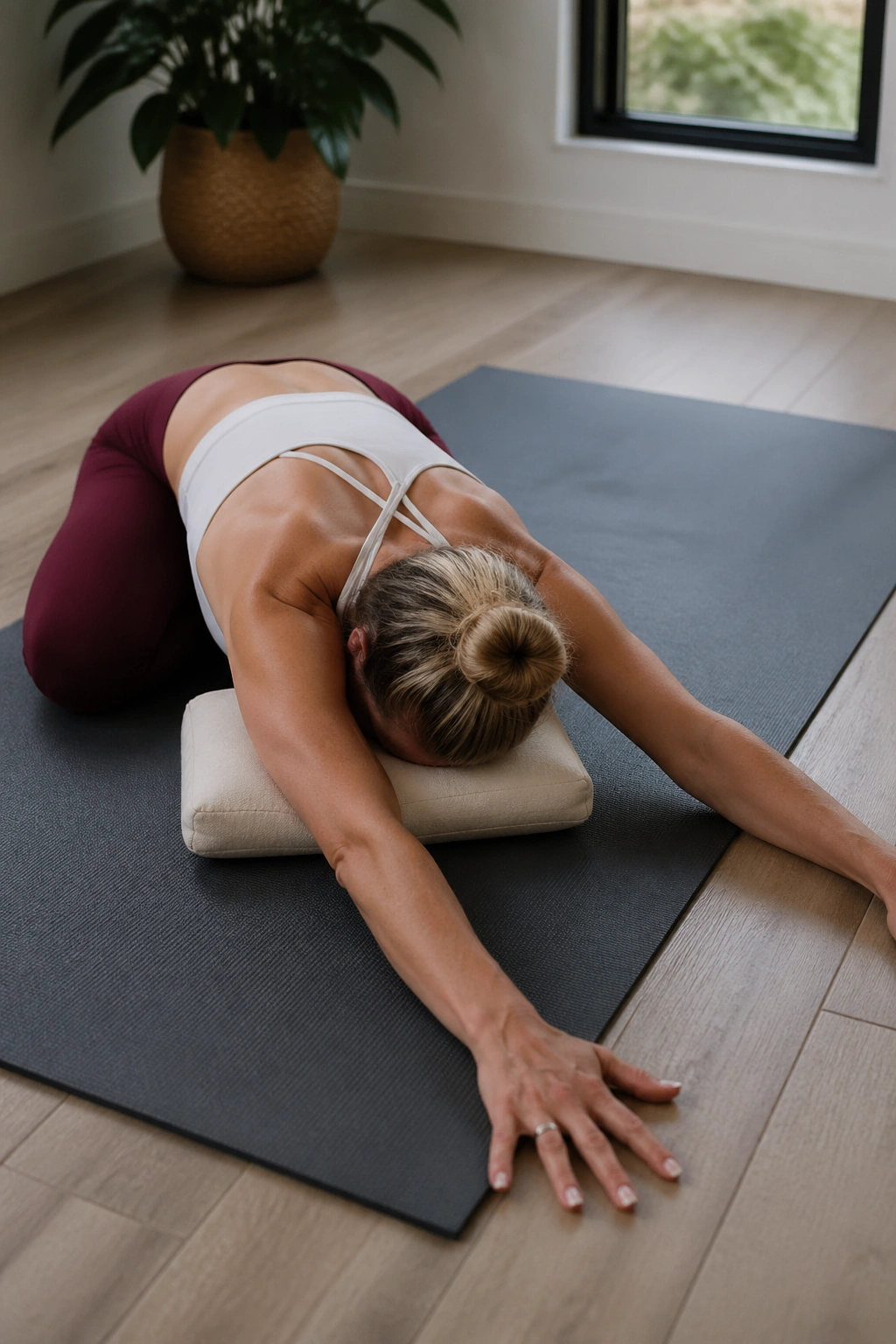
Why does Child’s Pose show up in so many mobility plans? Because it calms the whole system down fast.
Kneel on the floor, sit the hips toward the heels, and stretch the arms forward. Then walk both hands a little to the right to open the left side body and lats, which often tighten up in golfers who spend hours gripping a club and rotating through impact. Stay there for 4 breaths, then shift to the other side. You’ll feel a stretch from the ribs into the waist and down toward the hip.
This pose does more than relax the back. It also opens the sides of the trunk, which matters when your swing needs torso rotation without a locked rib cage. Tight lats can restrict overhead reach and make the shoulder girdle feel stiff. That stiffness shows up in the golf swing, too, even if the pain lives somewhere else.
A small pillow under the chest changes everything if your hips won’t sit back comfortably. Use it. No prize is given for suffering in Child’s Pose.
11. Downward-Facing Dog
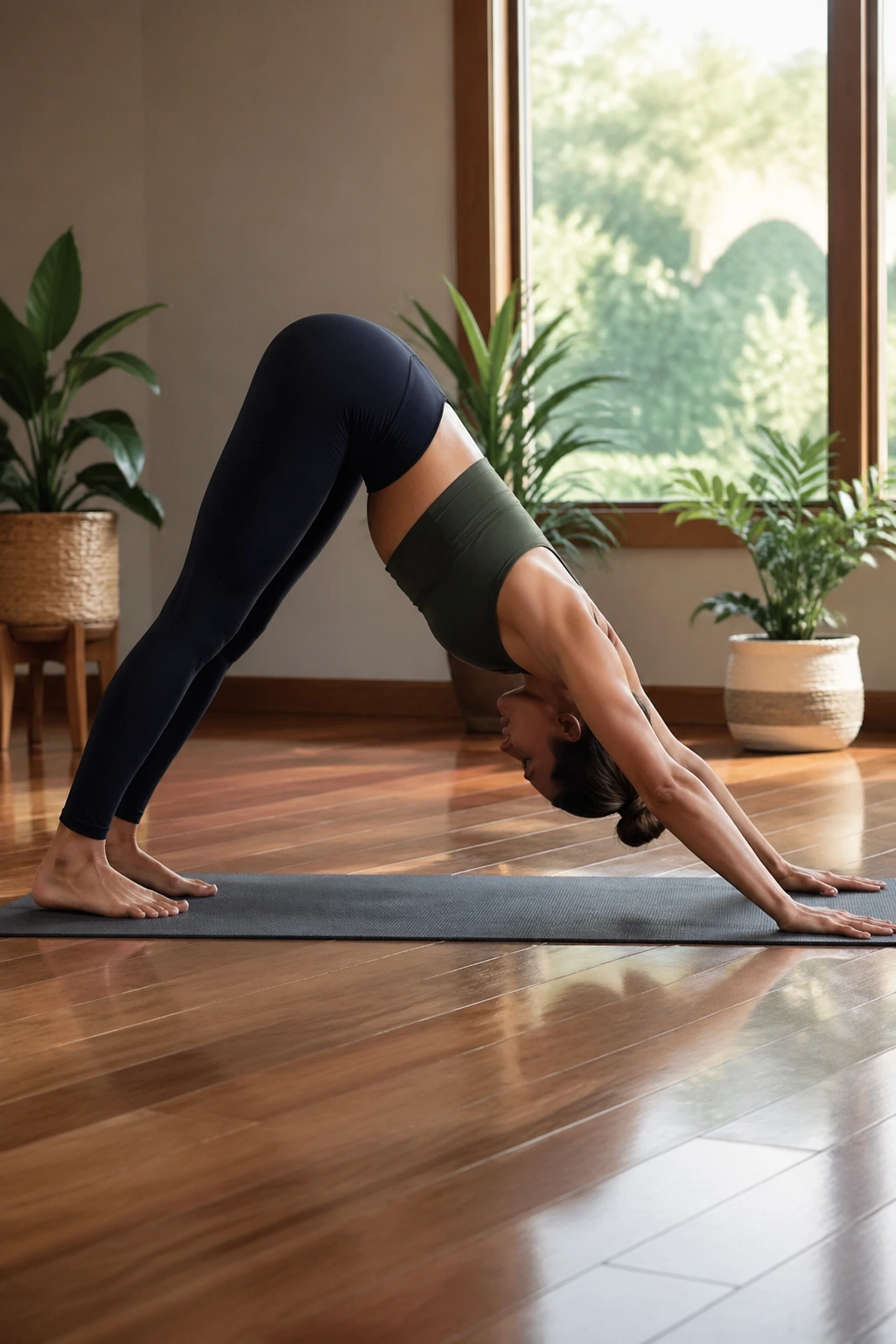
Downward Dog is not just a hamstring stretch, and it’s a mistake to treat it like one.
Start on hands and knees, tuck the toes, then lift the hips up and back into an inverted V shape. Bend the knees as much as you need. Seriously. Most tight golfers need bent knees to find the right line through the back, hamstrings, and shoulders. Press the floor away, lengthen the spine, and keep the head between the arms instead of hanging like a dead weight.
What it gives golfers
- Opens calves that get cranky after walking a course.
- Stretches the backs of the legs without forcing a deep fold.
- Encourages shoulder flexion, which helps the golf posture feel less boxed in.
- Gives the spine a long, decompressed shape after standing work.
If your heels don’t touch the floor, leave them up. If your wrists complain, set your hands on blocks or take a shorter stance. The pose works best when it feels steady and breathing stays easy. Hold 5 breaths, pedal the feet slowly, and then come down. No rush.
12. Crescent Lunge with Rotation
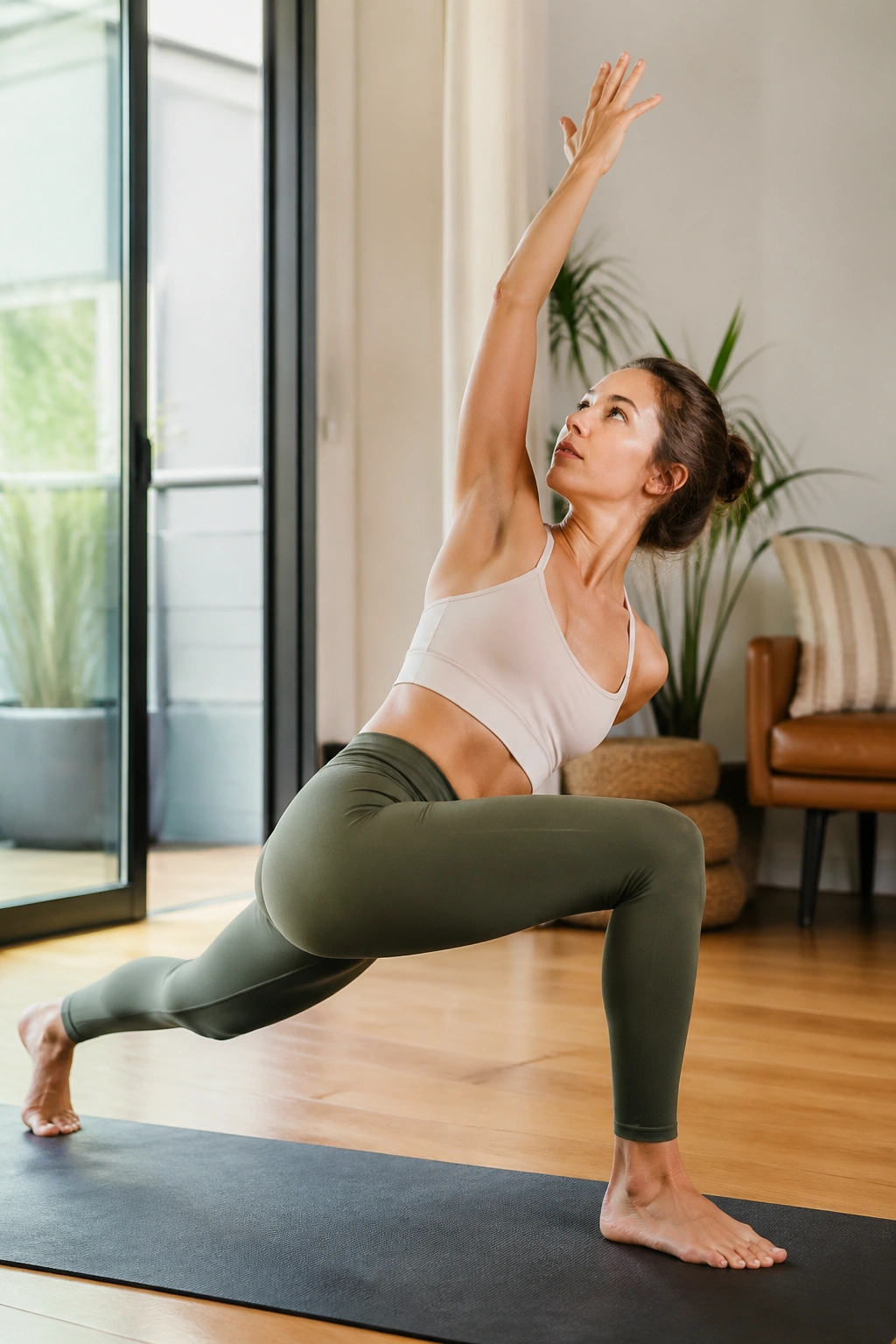
A golfer who cannot rotate through the trunk usually feels it in the follow-through first.
Set up in a high lunge with the right foot forward and the back heel lifted. Reach both arms overhead, then bring your hands to prayer at the chest and rotate gently toward the front leg. Keep the hips mostly square and the pelvis steady; the twist should come from the upper back, not from collapsing the front knee inward. That distinction matters more than people think.
This pose blends strength and mobility, which makes it a strong bridge between stretching and actual golf movement. You get hip extension in the back leg, openness through the front hip flexor, and controlled rotation through the ribs. It feels a lot closer to the demands of the swing than a passive stretch on the floor.
If balance is rough, widen the stance a little and lower the back knee. That is not “easier” in a bad way — it’s cleaner. Hold for 3 breaths per side, then come out slowly. Fast exits make the front knee grumble.
13. Warrior II
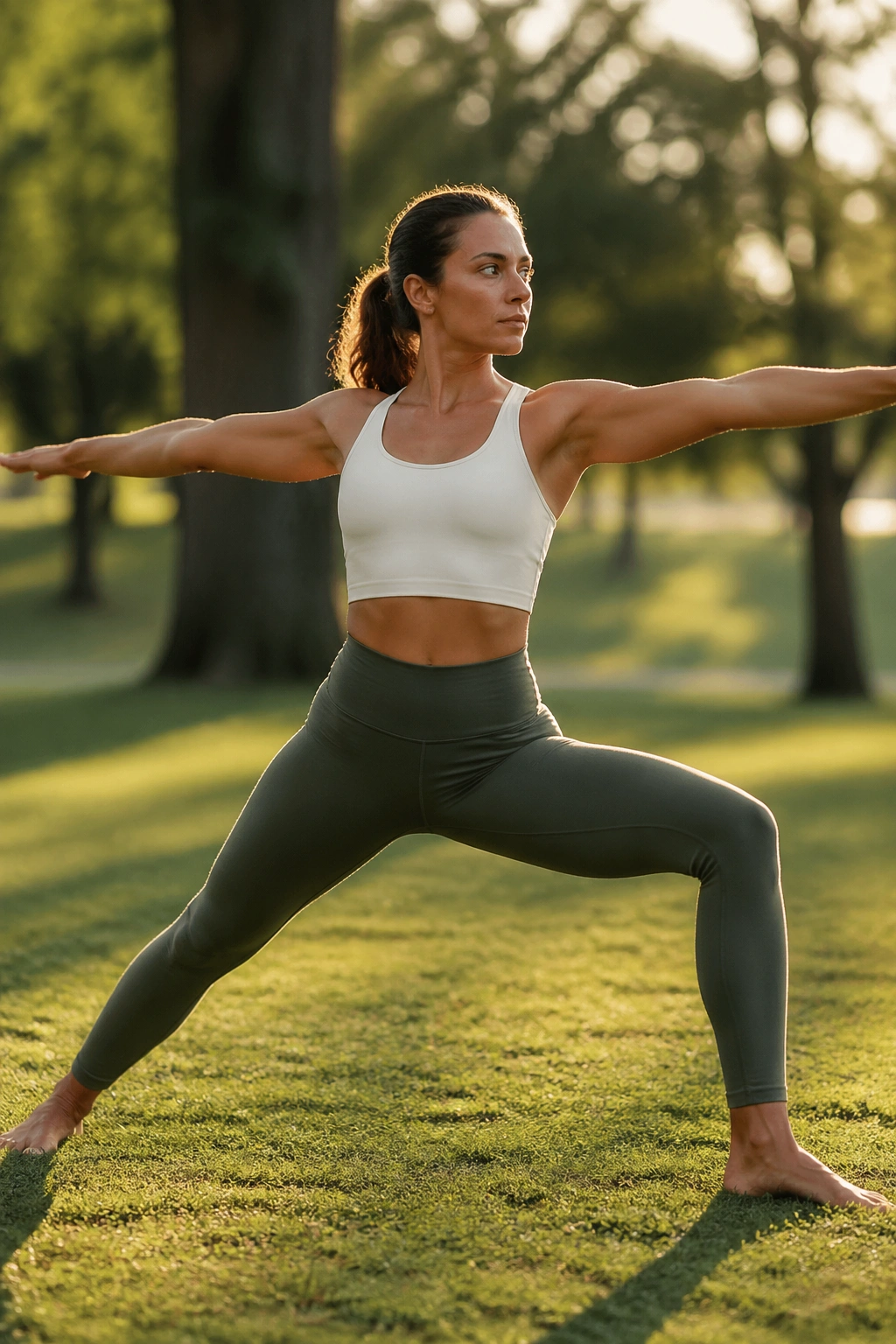
Warrior II looks static, but it’s doing more than people expect.
Step the feet wide, turn the front toes out, and bend the front knee so it stacks over the ankle. Arms reach out at shoulder height, gaze over the front hand, chest open. The pose builds leg strength while asking the hips to stay open and the torso to stay upright. For golfers, that combination is useful because it trains the body to hold shape while the lower body stays active.
You can think of Warrior II as the pose that teaches your legs not to fall apart while your upper body rotates. That’s a golf sentence if I’ve ever written one. The outer hip of the front leg works, the inner thigh of the back leg stays awake, and the pelvis gets a chance to feel centered instead of wobbly.
One good cue: keep the front knee tracking toward the second or third toe. If it caves inward, shorten the stance. Stay for 4 to 5 breaths on each side. If your shoulders creep up, lower them. The pose gets better fast when the body stops trying to look heroic.
14. Triangle Pose
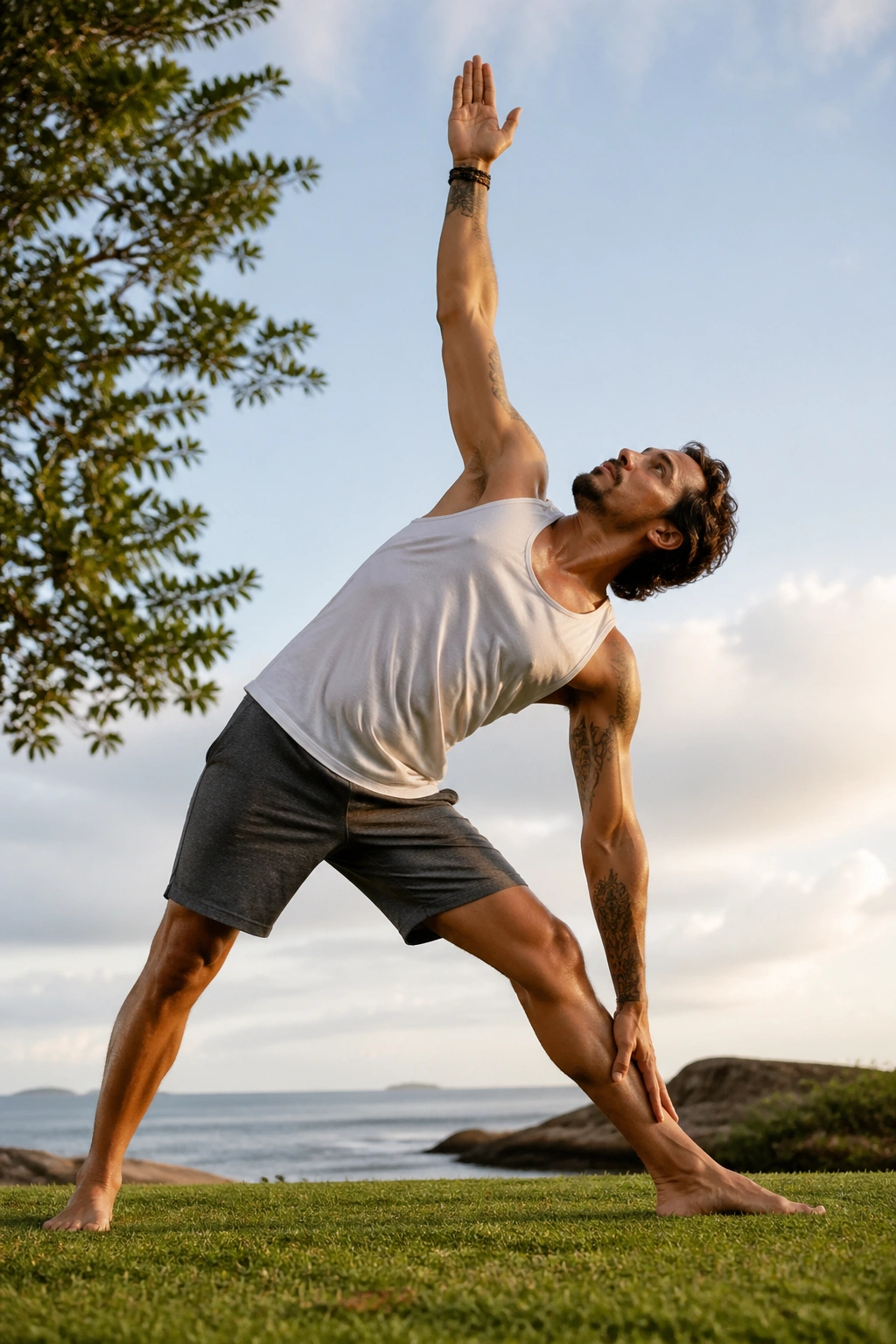
Triangle is one of those shapes that looks simple until you actually try to do it with decent form.
From a wide stance, turn the front foot out and hinge over the front leg, reaching the front hand toward the shin, ankle, block, or floor. Stack the top arm upward and keep the chest open. The goal is not to touch the floor. The goal is a long side body, a steady pelvis, and a hamstring stretch that does not make the lower back round like a scared cat.
Golfers benefit from Triangle because it stretches the hamstrings and inner thighs while asking the torso to rotate and lengthen at the same time. That’s useful. A tight side body can make the backswing feel trapped, especially if the ribs and hips don’t separate cleanly.
What to watch for
- Use a block if the floor makes you collapse.
- Keep both legs active.
- Don’t jam the bottom hand onto the shin.
- Breathe into the upper ribs, not into the neck.
Hold 3 to 5 breaths and come up slowly. The slow part is not optional here.
15. Garland Pose
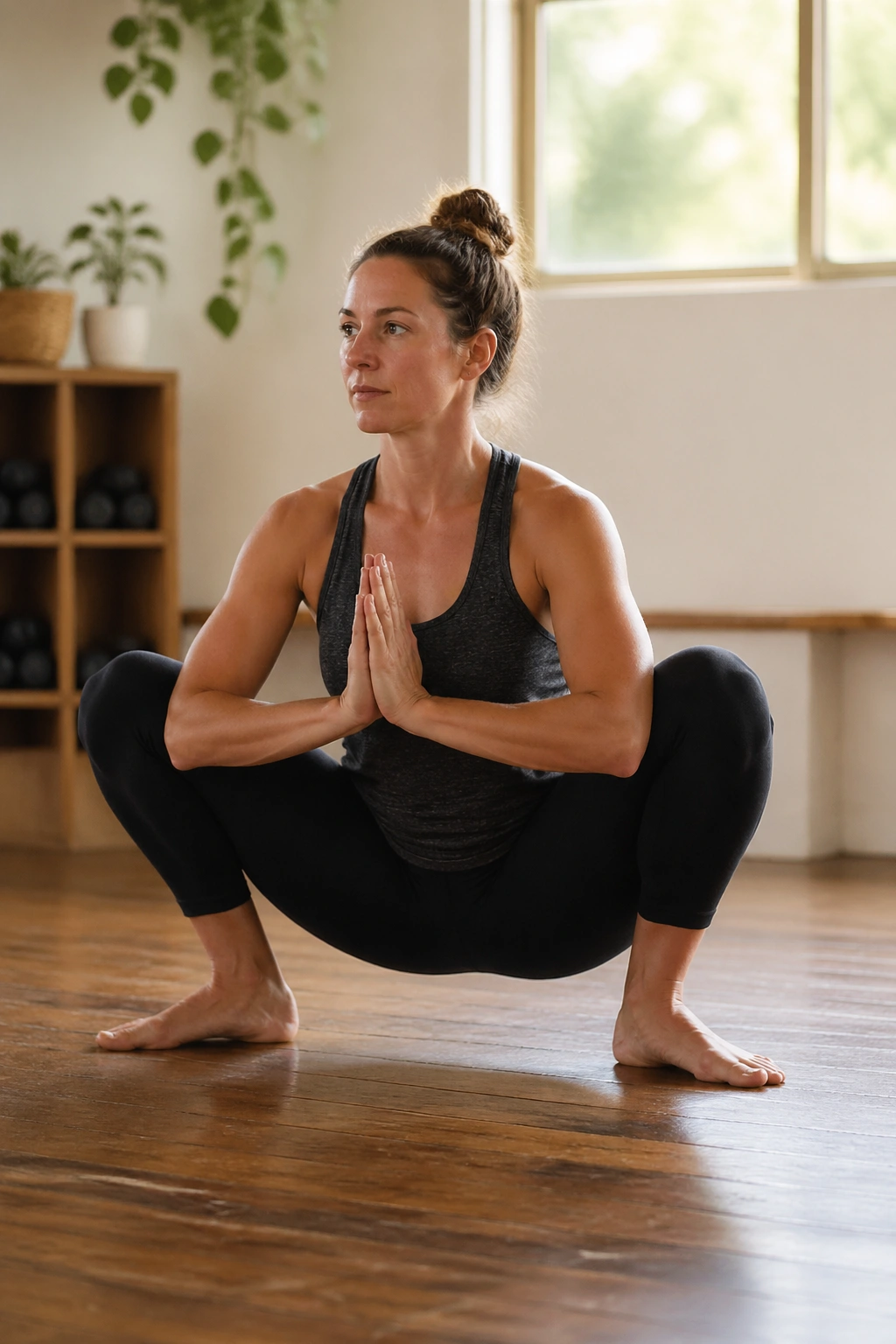
Garland Pose looks like a squat because it is a squat, and that is partly why it helps so much.
Bring the feet a little wider than hip-width, turn the toes out slightly, and sink the hips down as far as your ankles allow. Bring the palms together at the chest and use the elbows to gently press the knees open. Keep the spine long. If your heels lift, slide a folded blanket under them or sit on a low block. That one adjustment can make the pose ten times more usable for stiff hips and ankles.
A deep squat opens the hips in a way standing stretches never quite match. It asks the pelvis to settle down and the inner thighs to release while the ankles get a little more room. For golfers, that matters when getting down into posture or recovering from a long round of walking.
I like Garland because it exposes stiffness honestly. If you can’t sit here for 4 breaths, you’ve learned something useful about your hips and ankles. No drama. Just information.
16. Bridge Pose
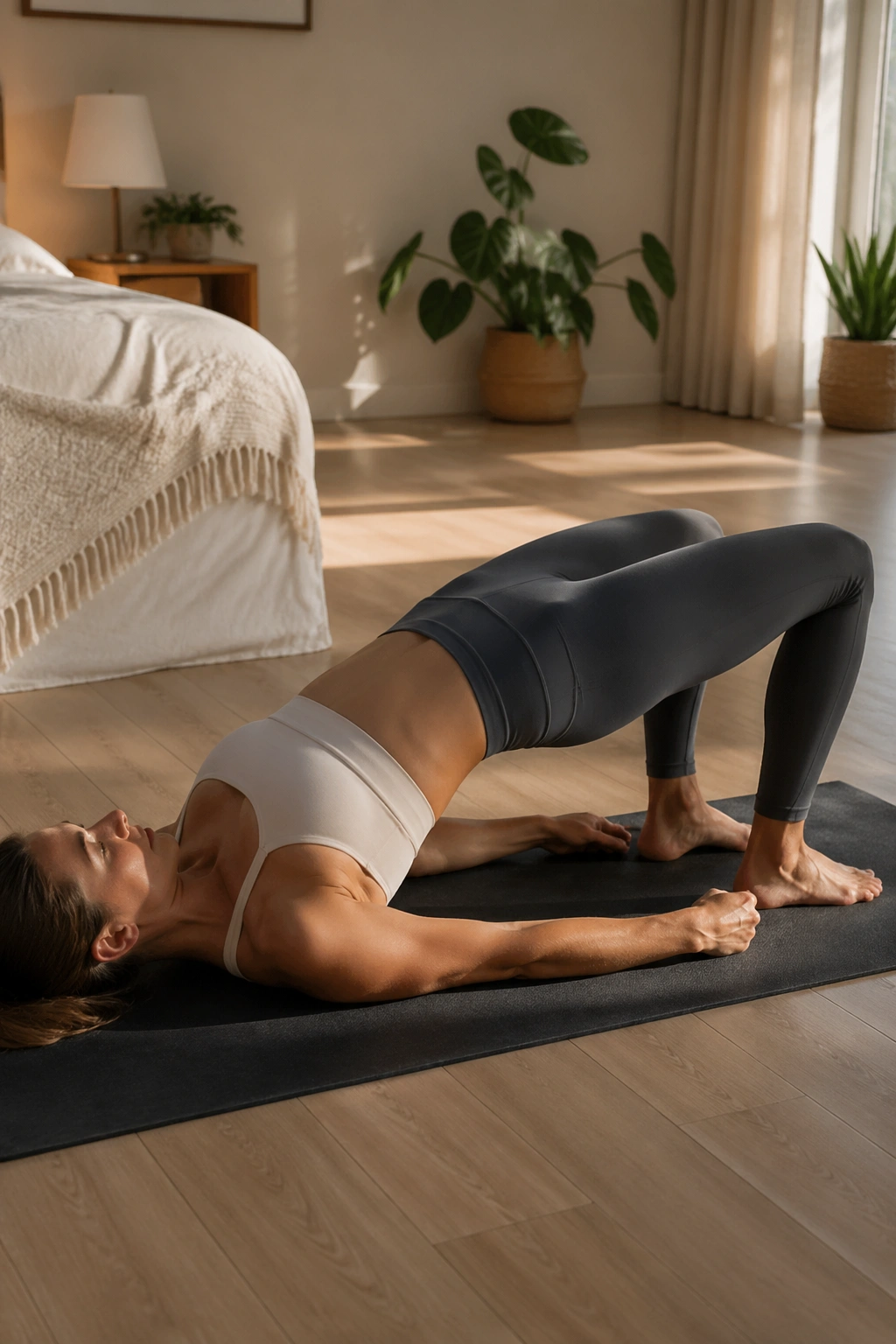
Bridge Pose is where hip mobility and glute strength meet.
Lie on your back with knees bent and feet flat, about hip-width apart. Press through the heels, lift the hips, and keep the knees tracking forward. Think about lengthening the knees toward the front of the room while the chest stays broad. The lift should come from the glutes and hamstrings, not from a hard squeeze in the low back.
That detail matters for golfers. Weak or sleepy glutes force the lower back to stabilize and extend more than it should, and then the swing starts to feel like it lives in the lumbar spine. Bridge gives the glutes a wake-up call while creating a gentle opening through the front of the hips.
You can hold it for 3 to 5 breaths, lower slowly, and repeat 2 or 3 times. If that feels easy, clasp the hands under the body and lift the chest a little more. If the neck feels compressed, come down. No need to prove anything to the floor.
17. Happy Baby
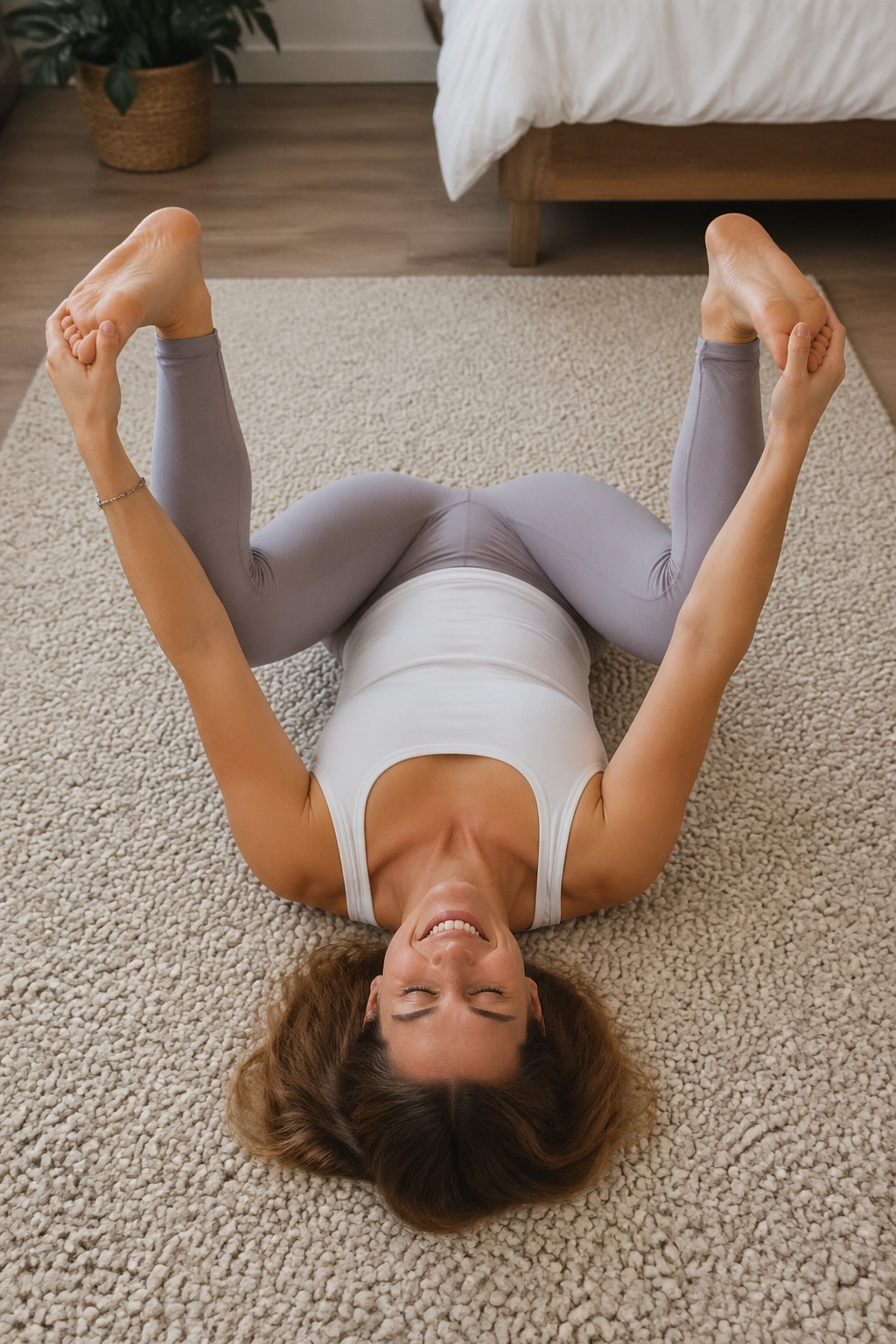
Happy Baby has a silly name and a serious payoff.
Lie on your back, bend the knees toward the ribs, and hold the outside edges of the feet or the backs of the thighs. Let the knees open wider than the torso while the low back stays grounded. Rock gently side to side if that feels good. The stretch should land in the inner thighs, hips, and maybe the lower back if it’s been doing too much.
For golfers with tight hips, this pose can feel like a small release valve. It opens the adductors and the hip joints in a very direct way, but it does so while lying down, which keeps the body from guarding. That alone makes it worth including after a long practice session or a stiff morning warm-up.
Make it easier
- Hold behind the thighs if the feet are hard to reach.
- Keep one foot on the floor if both hips feel too intense.
- Press the tailbone heavy into the mat.
- Stay for 5 slow breaths, then rest.
If the sacrum feels pinched, come out. The floor should feel supportive, not sharp.
18. Standing Forward Fold with Bent Knees
Some golfers chase a deep forward fold and end up with a rounded back and angry hamstrings. Bent knees fix that.
Stand with the feet hip-width apart, soften the knees, and hinge forward from the hips until the torso hangs over the legs. Let the head and arms relax. Keep the knees bent enough that the pelvis can tip forward and the spine can lengthen. If the stretch moves into the backs of the legs without tugging the low back, you’re in the right place.
This is a useful finishing pose because it gives the entire posterior chain a calm, non-dramatic release. The hamstrings, calves, glutes, and lower back all get a say. After a swing-heavy session, that can feel like the body exhaling. Hold for 5 to 8 breaths and sway gently if your back likes movement.
If you only have time for a short golf warm-up, make it this: Cat-Cow, Low Lunge, Figure-Four on Your Back, Downward Dog with bent knees, then Standing Forward Fold with bent knees. Five poses. No fluff. Your back and hips will usually tell you within a few minutes whether they like the order. Mine would keep the lunge and the figure-four every time, and I’m not shy about that preference.
