



Pre-workout yoga poses for flexibility should feel like oil on a hinge, not a spa day. If your plan is to lift, run, jump, or move fast, you want joints that travel cleanly and muscles that wake up instead of go slack.
That means short holds, active breathing, and positions that match the workout ahead. A body that has been sitting all day usually needs hips, hamstrings, thoracic spine, and shoulders to move a little before it moves a lot. Long, lazy stretches can wait for later. Right before training, smaller doses work better.
I like this kind of warm-up because it fixes the stuff people feel in real life: stiff hip flexors after a desk chair, hamstrings that tug on the first deadlift, shoulders that feel jammed overhead. None of that needs a dramatic routine. It needs the right poses, done with enough control that you finish feeling looser and more switched on, not sleepy.
Cat-Cow is usually where the chain starts.
1. Cat-Cow to Loosen the Spine
Cat-Cow is the easiest way to unstick a spine. It looks almost too simple to matter, and that’s exactly why it works so well before training. You get movement through the ribs, pelvis, and neck without asking your body to hold one big stretch and hope for the best.
Why It Belongs First
Think of Cat-Cow as a reset button for the middle of your body. If your back feels flat, boxed in, or stiff from sitting, this is one of the quickest ways to get some motion back through each segment of the spine. It also pairs well with almost anything else on this list, which makes it a clean opener.
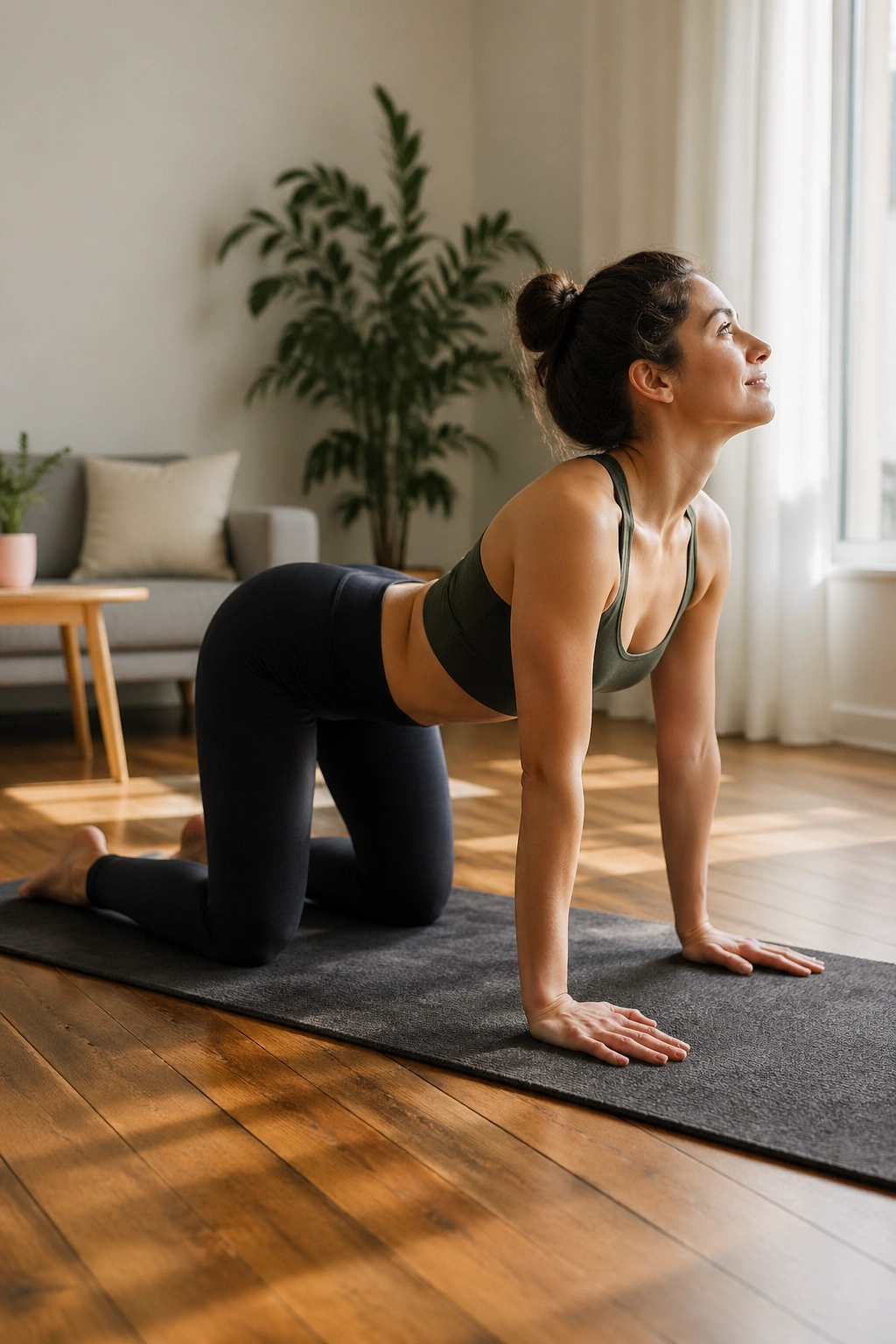
Hands under shoulders. Knees under hips. Inhale and let the belly drop into Cow, then exhale and round into Cat. Keep the movement smooth, not theatrical. Six to eight slow rounds is enough for most warm-ups.
- Move the pelvis first, then let the ribs follow.
- Keep the neck long instead of cranking the chin up.
- Press evenly through both hands so the shoulders stay steady.
- If the wrists complain, come onto fists or forearms.
Tip: If your lower back tends to feel cranky, make the curve smaller. A small, tidy Cat-Cow is better than a big one that pinches.
2. Downward Dog with Pedaling Heels
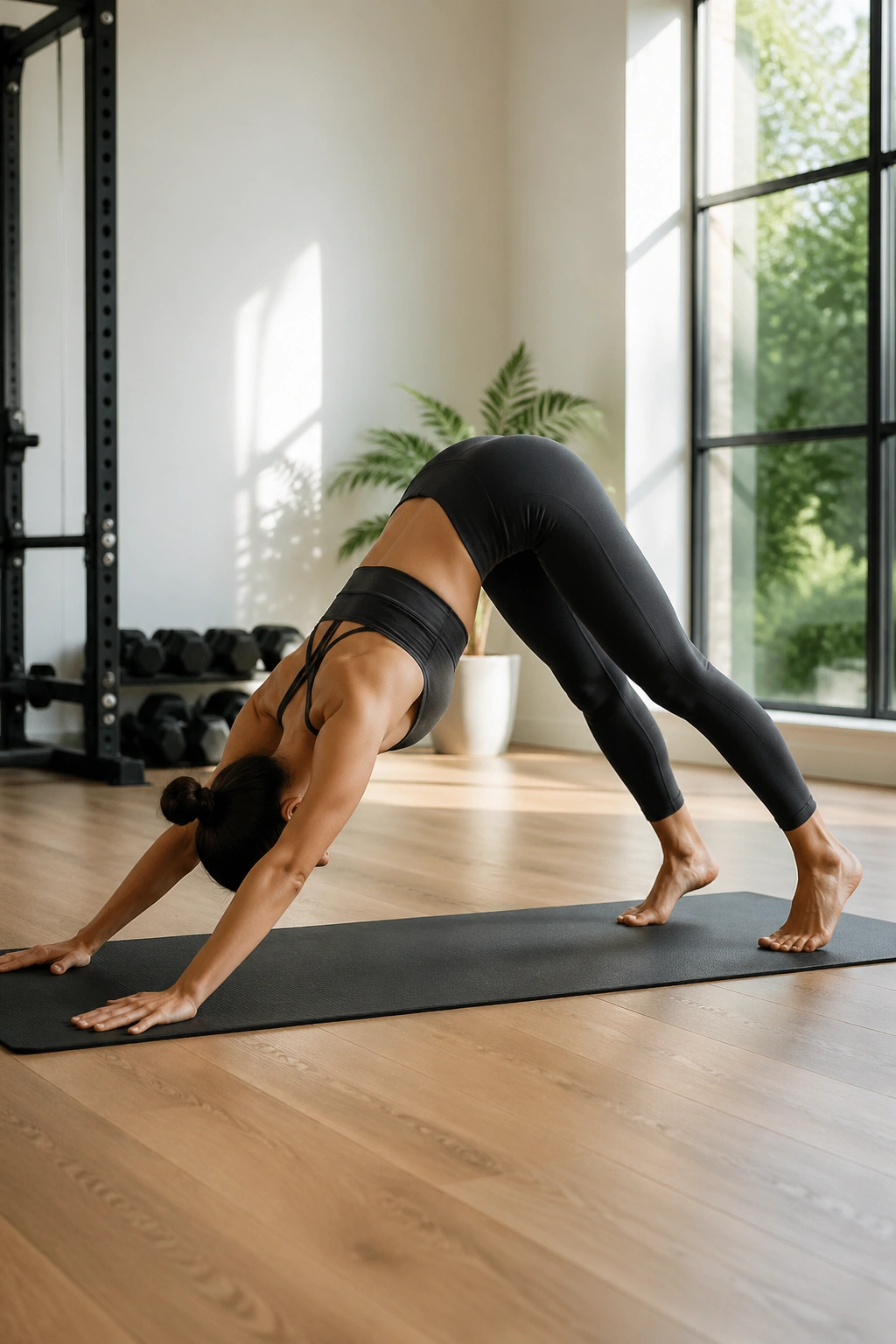
Why does this pose keep showing up in warm-ups? Because it hits the pieces that get tight fastest: calves, hamstrings, shoulders, and the sides of the body. Done well, Downward Dog feels less like a stretch and more like a full-body wake-up.
The trick is not to chase straight legs. Bent knees are fine. Often they’re better. A lot of people try to push their heels to the floor and end up rounding the upper back or yanking the hamstrings before those tissues are ready. Keep the hips high, press the floor away, and pedal the heels one at a time for 5 to 10 slow reps.
Then settle into a short hold. Three breaths is plenty. You should feel length through the spine and a mild pull along the back line, not a harsh tug behind the knees. If the shoulders are tight, widen the hands a little and let the chest drift between the arms without dumping into the joints.
This one is good before lower-body lifting, running, or any workout that asks your calves to do real work. It warms the chain without draining it.
3. Low Lunge for Pre-Workout Hip Flexibility
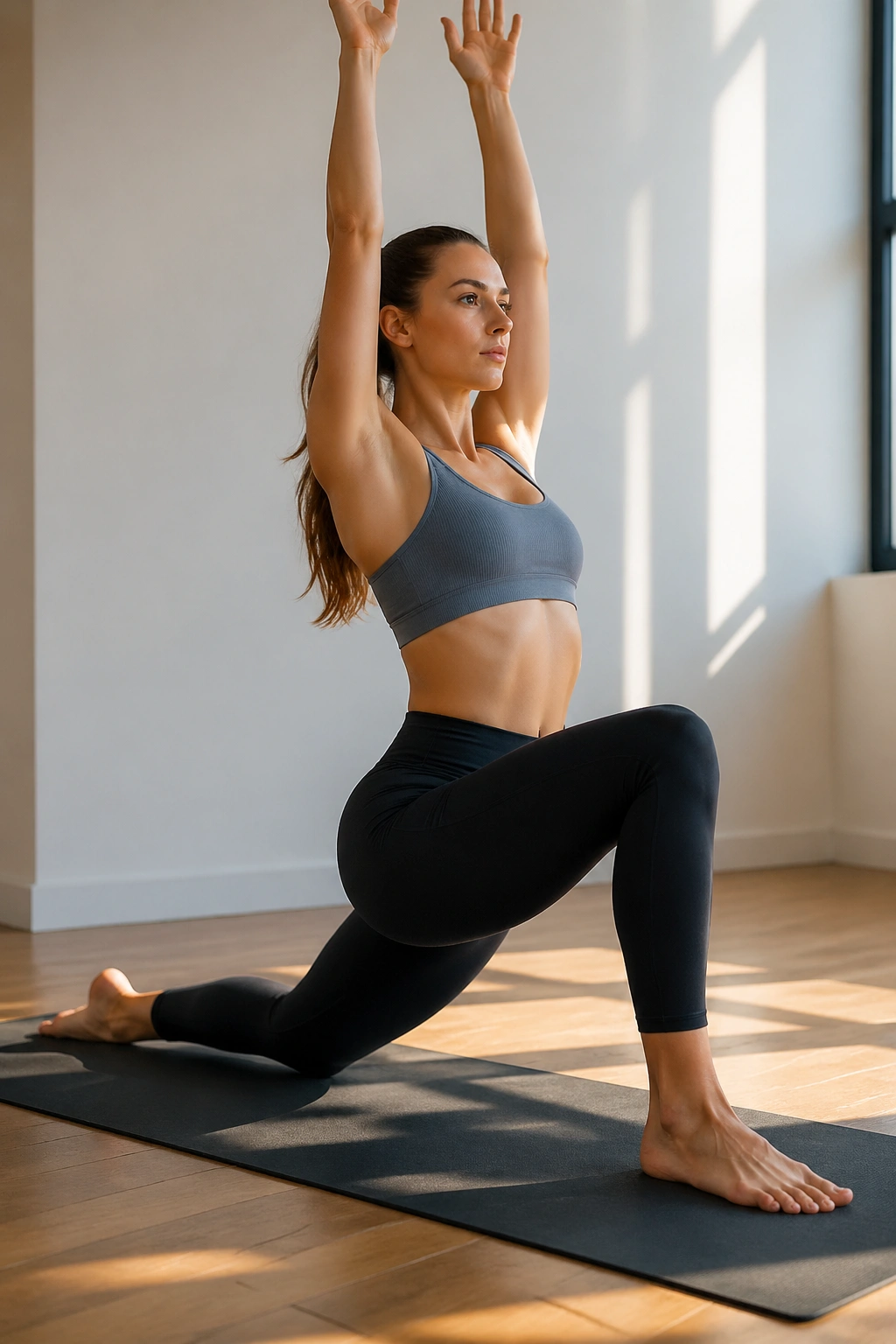
If your hip flexors feel glued after sitting, Low Lunge is the one that wakes them up. It is one of the cleanest pre-workout yoga poses for flexibility because it opens the front of the hip while still keeping the legs active enough for training.
How to Keep It from Becoming a Lower-Back Stretch
Start with the back knee down and a folded mat or towel under it if the floor feels hard. Step the front foot far enough forward that the knee lands over the ankle, or a touch behind it if that feels better. Then gently tuck the tail and squeeze the back glute. That little action matters. It shifts the stretch from the lower back into the hip flexor where it belongs.
Reach both arms up if your shoulders are open, or keep hands on the front thigh. Hold for 2 to 4 breaths on each side. The stretch should feel long and warm across the front of the hip, not sharp in the groin.
- Keep the front heel rooted.
- Lift through the sternum without flaring the ribs.
- Press the back toes into the floor if the knee is up.
- Use a block under each hand if balance gets messy.
One small thing: don’t sink forward and hang on the front knee. Stay a little active. That makes the pose feel better and leaves you more ready for squats, lunges, or any workout that needs stable hips.
4. Crescent Lunge with Side Bend
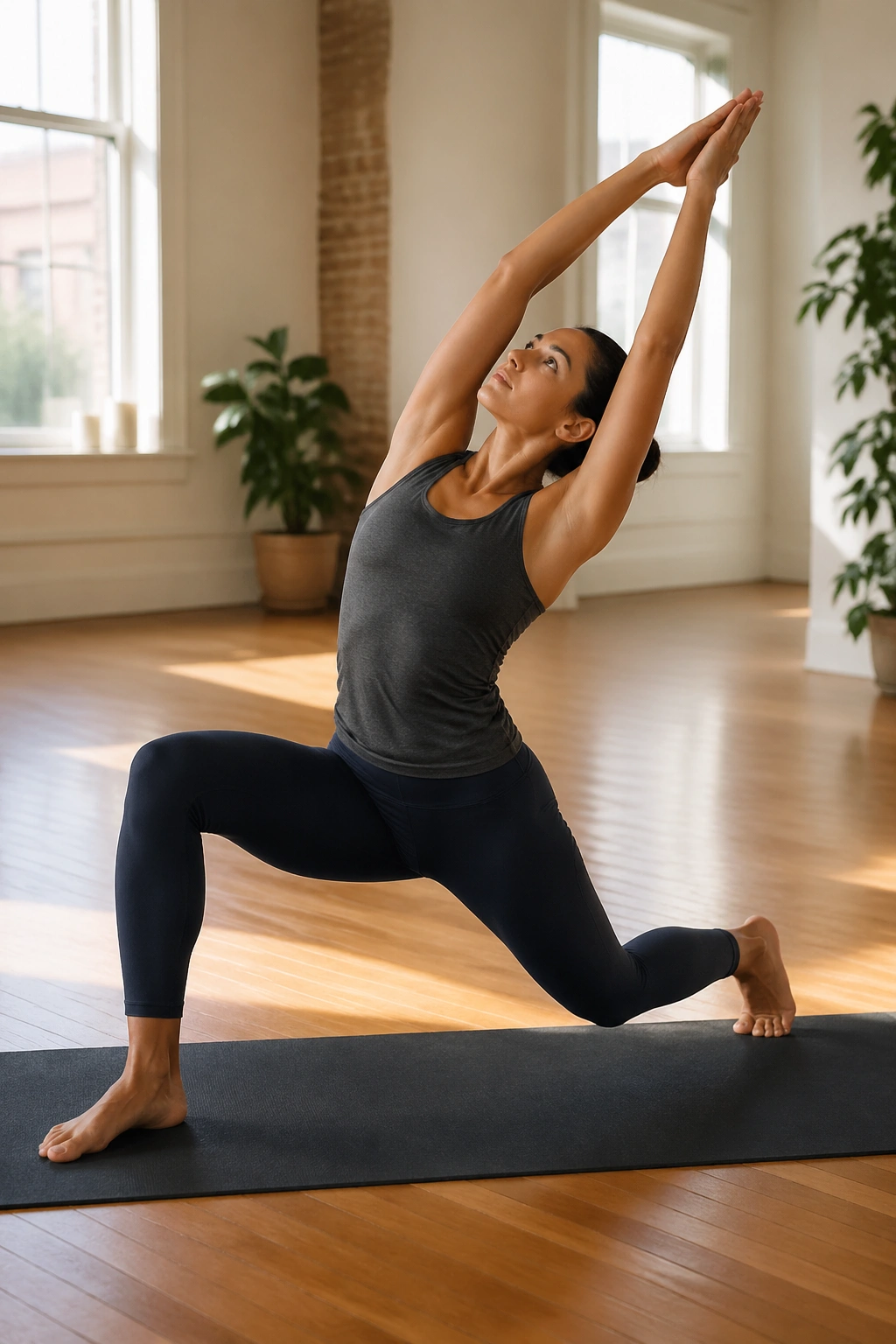
A lunge does not have to be deep to matter. Crescent Lunge proves that point. It gives you hip extension, quad engagement, and a nice opening through the side body without the sleepy, passive feel of a long floor stretch.
This version is more active than Low Lunge because the back knee stays lifted. That makes it useful right before a workout when you want mobility plus a bit of muscle tone. Step into Crescent with feet hip-width apart, front knee bent, and back leg strong. Reach the arms overhead, then lean slightly to the front-leg side for a clean side-body line.
Keep the pelvis square. That part matters. If the lower back arches hard, the stretch shifts out of the hip and into the wrong place. A tiny tailbone tuck and an exhale usually fix it. Hold for 3 breaths per side, then switch.
Best use case? Before runs, split squats, overhead presses, or any session where your hips and trunk need to move together. It feels athletic, not soft. That’s the point.
5. Lizard Pose for Hips and Inner Thighs
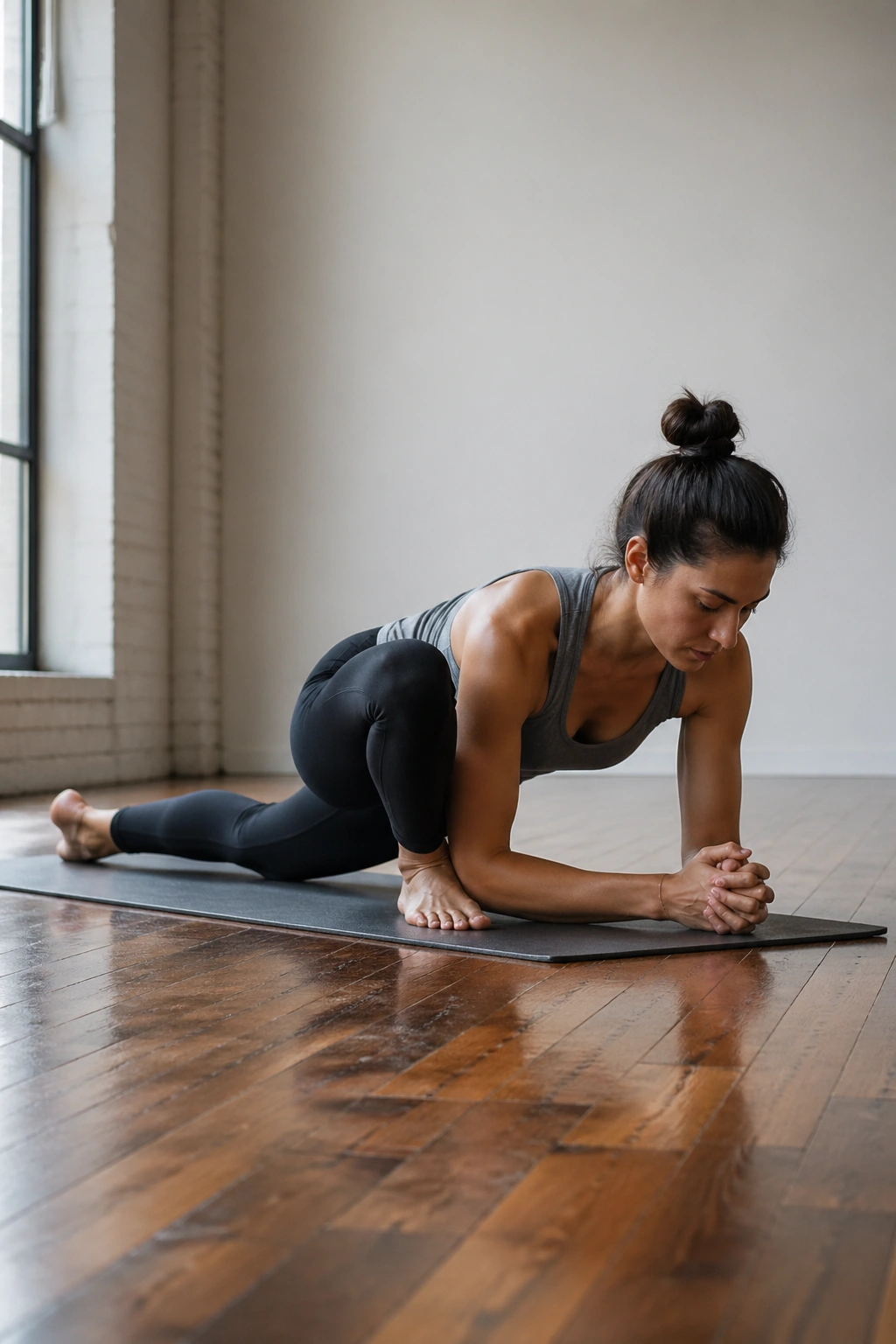
Lizard Pose looks intense on paper, but the useful version is smaller than most people think. If you drop in too fast, it turns into a groin yank or a wrist test. Keep it measured, and it opens the hips in a way that shows up later in squats, deadlifts, and even long walks.
I like to enter it from a low lunge and place both hands inside the front foot. The back knee can stay down. It usually should, at least if you’re doing this before training. From there, inch the front foot out a little and let the knee open only as far as feels smooth. You are looking for length, not drama.
A pair of blocks under the hands makes this pose much friendlier. Forearms on blocks is even better if your hips are tight or your wrists are tired. Hold for 2 to 3 breaths, then back out slowly and switch sides.
The best part is the inner-thigh work. That area gets ignored a lot, and then it complains on lateral moves, deep squats, or sudden direction changes. Lizard wakes it up without wrecking your energy. Nice trade.
6. Half Split for Pre-Workout Hamstring Flexibility
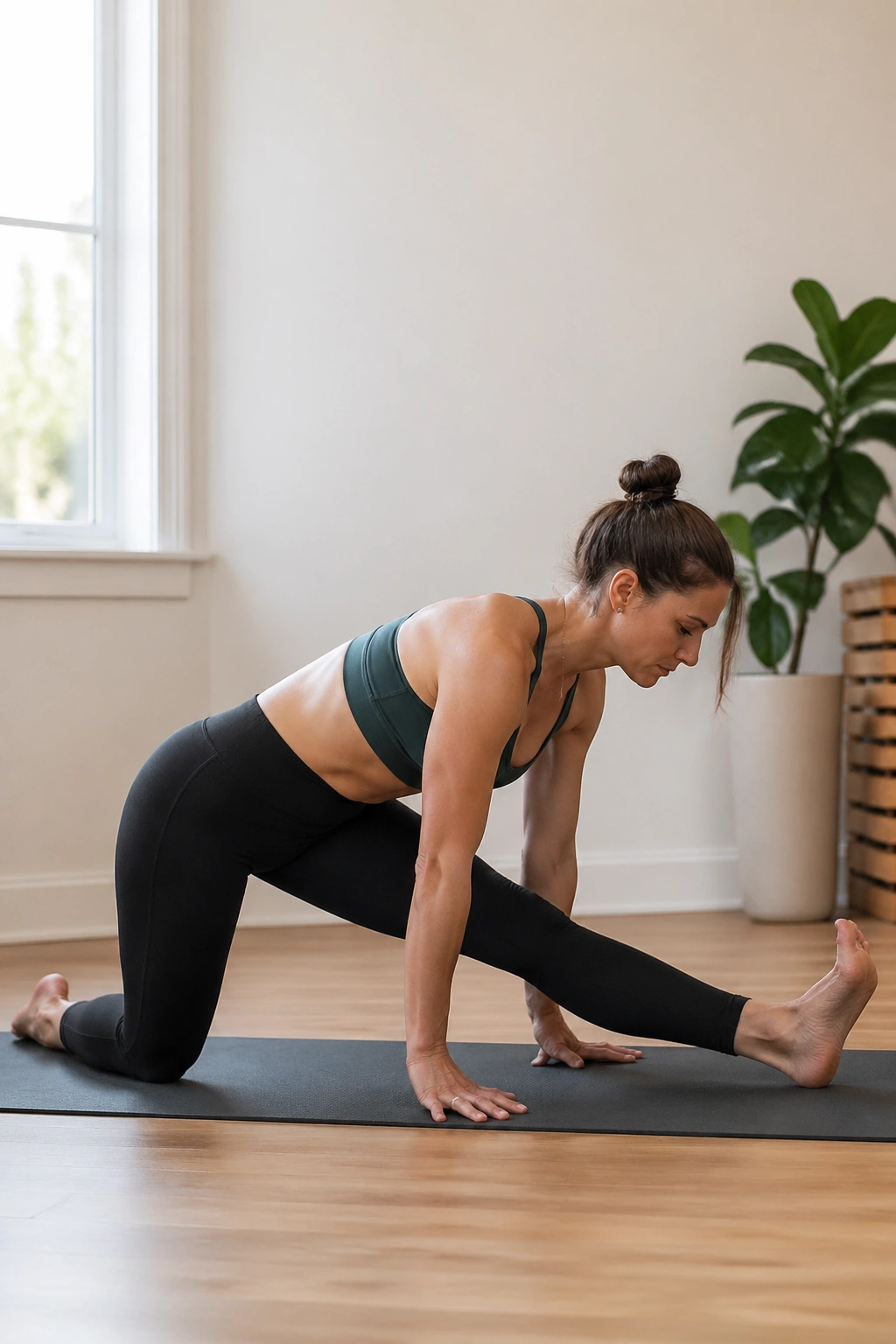
How do you open hamstrings without yanking them? Half Split is the clean answer. It’s one of the smartest pre-workout yoga poses for flexibility because it lengthens the back of the thigh while teaching you how to hinge instead of fold like a paper crane.
What to Feel
Start in a low lunge, then shift the hips back and straighten the front leg. Flex the front foot hard so the toes pull back toward the shin. That one detail changes the whole stretch. It wakes up the calf and hamstring together, and it protects the knee by keeping the leg engaged.
Keep a soft bend in the front knee if the hamstring grabs. You do not need a locked knee to get value here. Fold only until the spine stays long. If the back rounds hard, come up higher or place your hands on blocks. Hold for 3 to 5 breaths and think about lengthening the chest forward rather than reaching the nose to the shin.
- Hips move back, not down.
- Front foot stays active.
- Weight stays even through the front heel and ball of the foot.
- The stretch should feel broad, not sharp.
If you deadlift, sprint, row, or do anything that asks for a clean hinge, Half Split earns its place. It teaches the shape before the heavier work starts.
7. Garland Pose for Ankles and Hips
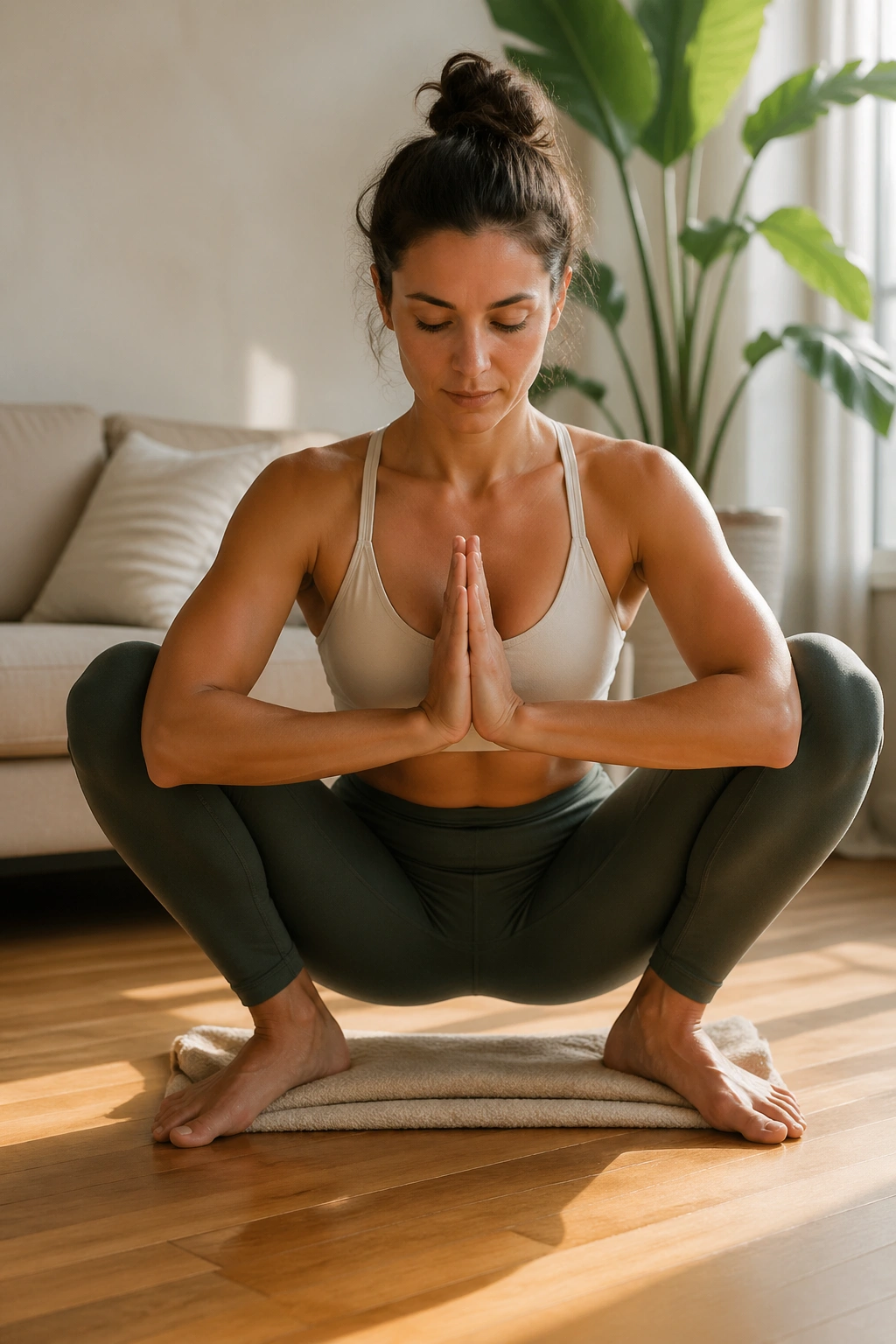
A deep squat can tell you a lot about your body. If the heels lift, the ankles are doing the talking. If the chest collapses, the hips and upper back are chiming in too. Garland Pose gives you a place to work on both without turning the whole thing into a strain.
Drop into a squat with the feet a little wider than hip-width. Heels can stay on the floor if they reach; if not, slide a folded towel or small wedge underneath them. Bring the palms together and press the elbows gently into the inner knees. That pressure opens the groin and helps the knees track in a useful way.
Hold for a few breaths, then rock side to side if the pose feels sticky. A small heel lift is fine. So is sitting on a block. The goal is not a picture-perfect squat. It’s usable range.
- Heels down if possible.
- Chest stays lifted.
- Knees track over toes.
- Exhale and let the hips settle.
I like this one before lower-body sessions because it wakes up the ankles, which people forget until they can’t get into a good squat depth. Small joint, big effect.
8. Standing Figure Four for Glutes and Outer Hips
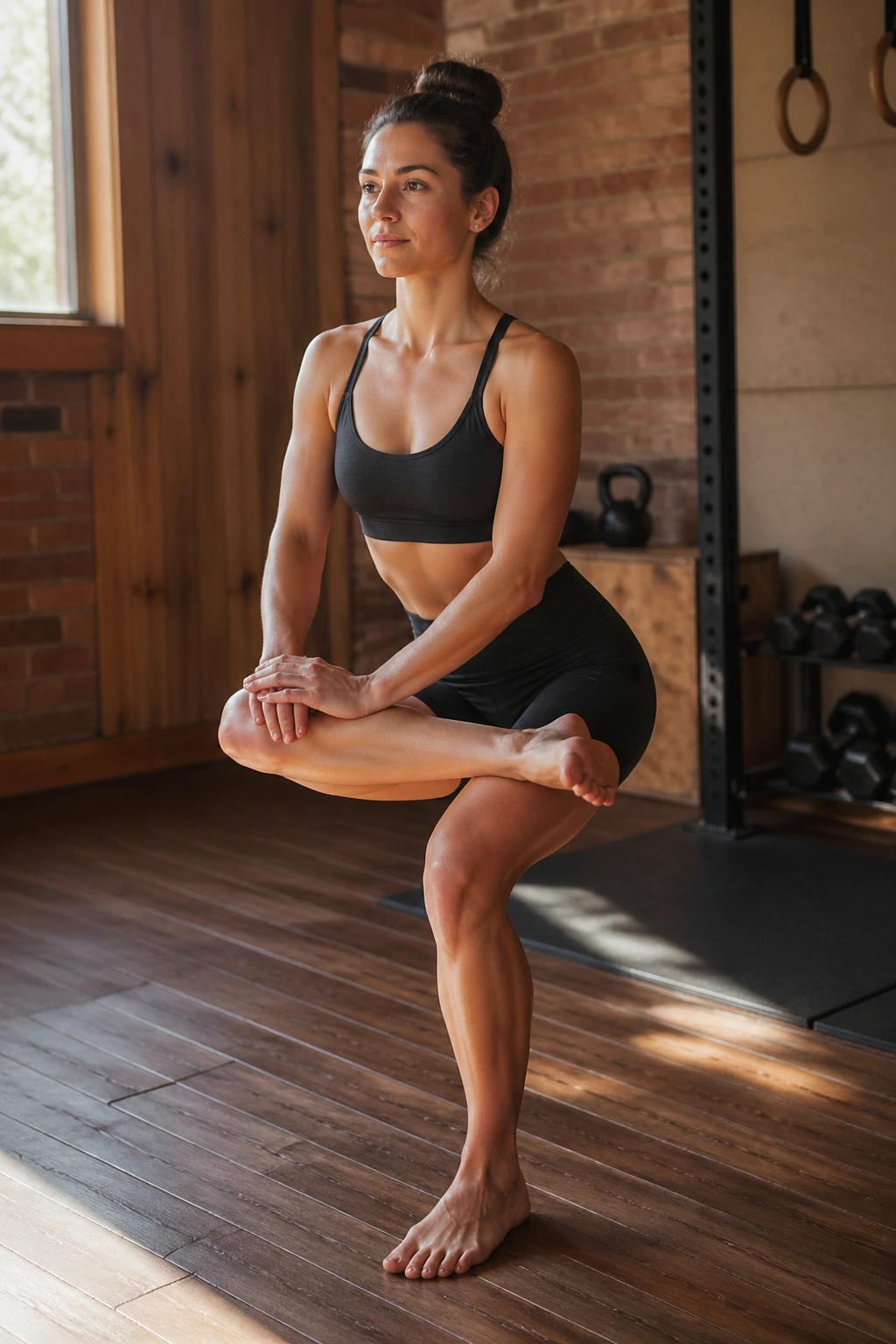
This is the best hip opener for people who do not want to get on the floor. Standing Figure Four works the glutes, outer hips, and balance system at the same time, which makes it a handy pre-workout choice when time is short.
Stand tall, shift weight into one foot, then cross the opposite ankle over the thigh just above the knee. Sit the hips back like you’re aiming for a shallow chair. Keep the standing knee soft but stable. If balance is shaky, touch a wall with one hand. No shame in that. It’s smart.
You should feel the outer hip of the crossed leg and maybe a bit of stretch near the seat. If you feel pinching in the knee, come out and make the figure a little higher. Never force this pose down with your hands. That just cranks the joints.
This one works well before runs, hikes, or squats because it opens the hip without putting you on the mat for long. Two or three breaths per side is enough. Move on while the area still feels warm.
9. Triangle Pose for Side Body Length
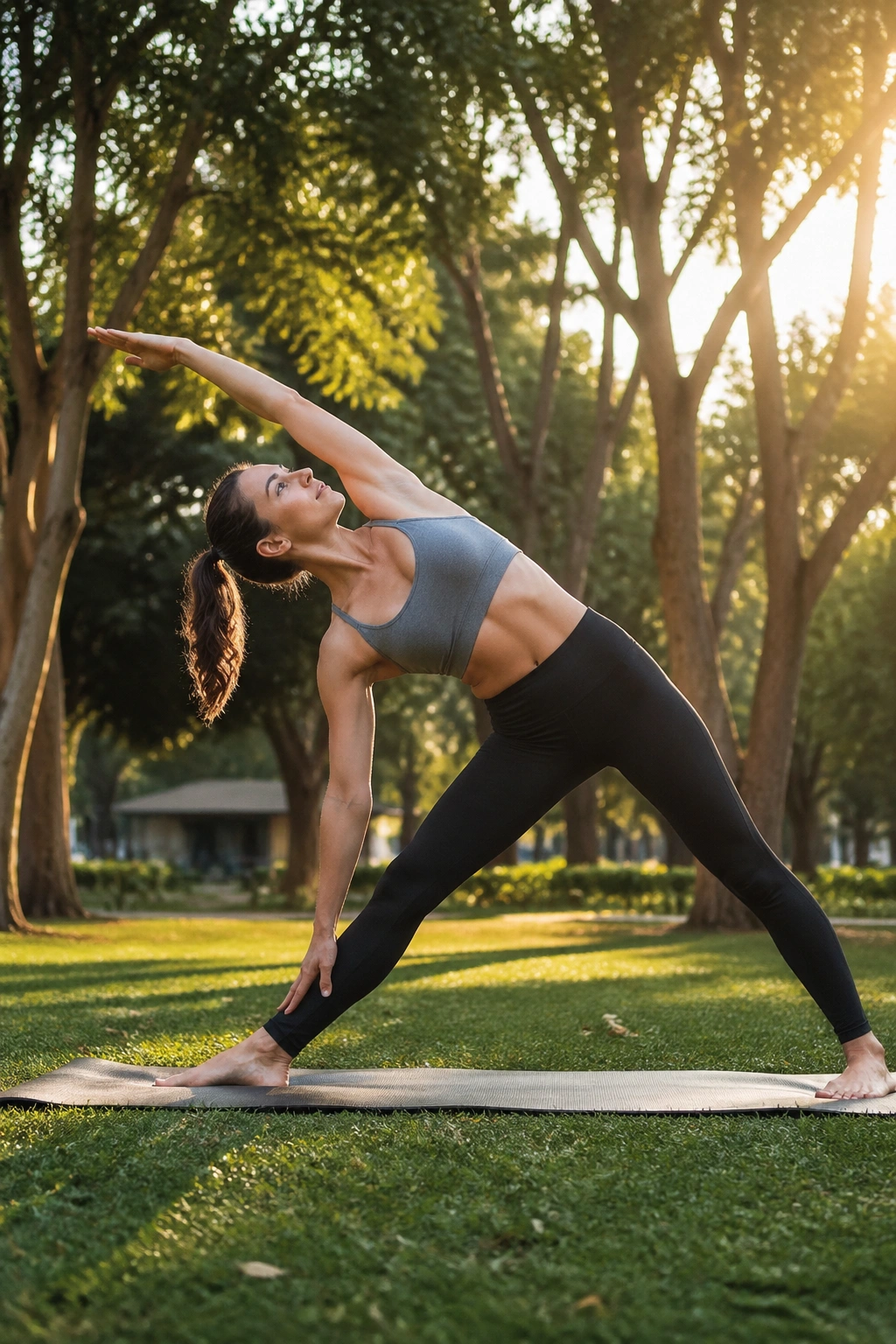
Triangle Pose does more than stretch the hamstrings. It gives the side body room to breathe, which is one reason it feels so good before workouts that need rotation, reach, or a long stride. Unlike a toe-touch, Triangle keeps the torso organized while the legs stay active.
Set up with a long stance, front toes forward, back foot turned in slightly. Reach the front arm forward first, then tip the torso down as the hand lowers to the shin, ankle, or a block. The back shoulder stacks over the front shoulder if your mobility allows it, but don’t chase the full shape if that yanks the ribs open. Keep the chest broad and the neck easy.
What Makes It Useful
The stretch spreads through the inner thigh, hamstring, and ribs at once. That matters. A lot of people can stretch their legs but still feel cramped through the torso. Triangle handles both, and that makes it useful before lifts, batting, throwing, or any workout where the trunk has to stay long.
Take 3 breaths per side. If the hamstring tugs too hard, shorten the stance a few inches. Tiny adjustment, big difference.
10. Side Angle Pose for Hips and Obliques
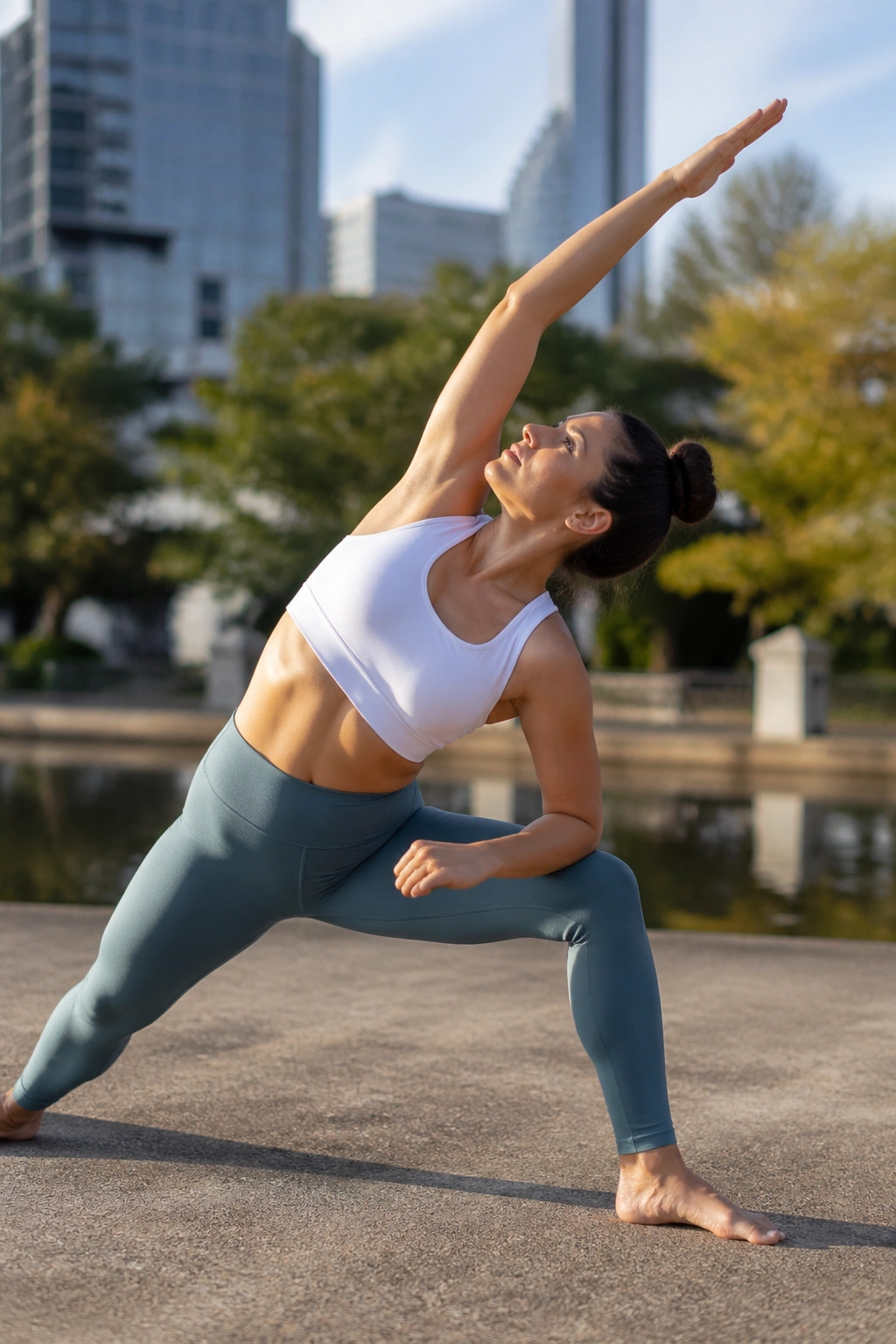
Boxers, lifters, and runners all get stiff through the ribs. Side Angle Pose helps with that by linking the front hip, back leg, and obliques in one clean line. It’s not passive. You have to work for it a little.
From a wide lunge, bend the front knee and lower the front forearm to the thigh or a hand to the floor if it reaches without collapsing. Sweep the top arm overhead and turn the chest open. Keep the back leg strong and the outer edge of the back foot grounded. If the front knee caves in, reset it over the second or third toe. That keeps the pose honest.
A good Side Angle should feel long through the side body and sturdy through the legs. If it becomes a groin jam or low-back pinch, shorten the stance and rise a little. You do not need to get dramatic to get the benefit.
- Front thigh stays supported.
- Back heel presses down.
- Chest opens toward the side wall or ceiling.
- Breath stays smooth, not strained.
I like this one before workouts that use rotation or lateral drive. It wakes up the body in a way that feels athletic, not sleepy. Exactly what you want.
11. Thread the Needle for Pre-Workout Shoulder Flexibility
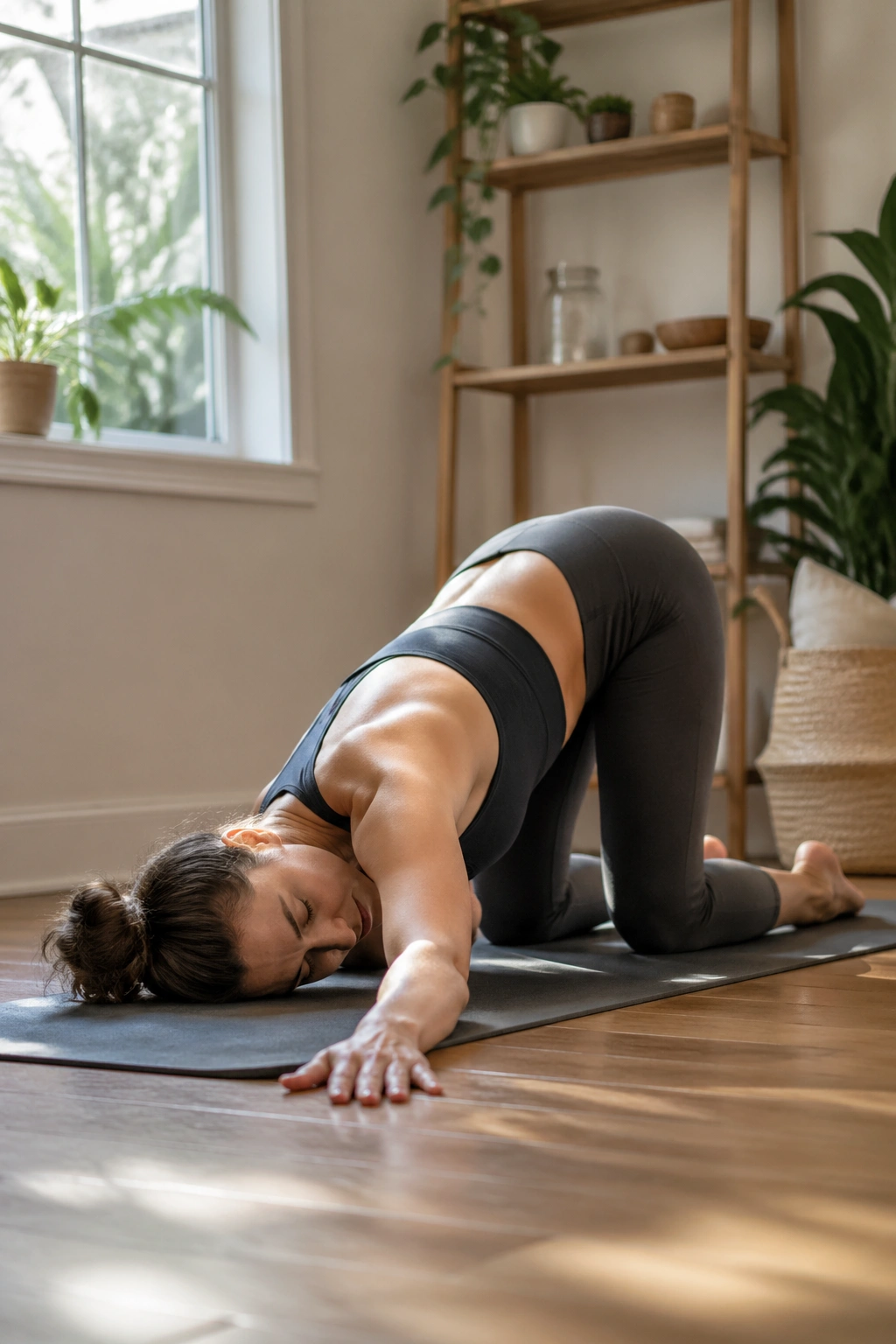
Thread the Needle is one of those poses that looks modest and then surprises you. Give it thirty seconds and the upper back usually starts to soften. That matters before pressing, climbing, swimming, or any workout that asks the shoulders to work overhead.
Come to all fours, slide one arm under the other, and rest the shoulder and side of the head on the floor or mat. Keep the hips stacked over the knees instead of dumping backward. That keeps the stretch in the upper back and rear shoulder where you want it. If the neck feels jammed, place a folded towel under the head.
The best version is slow. Breathe into the ribs on the side that’s open. You may feel the stretch travel along the shoulder blade or into the back of the arm. That’s fine. Don’t yank the arm farther under just to make it feel deeper. Deeper is not always better.
For pre-workout use, I’d keep each side to 2 or 3 breaths, then switch. It gives the thoracic spine a little twist without making the shoulder joint sleepy. That balance matters more than most people think.
12. Puppy Pose for Chest and Lats
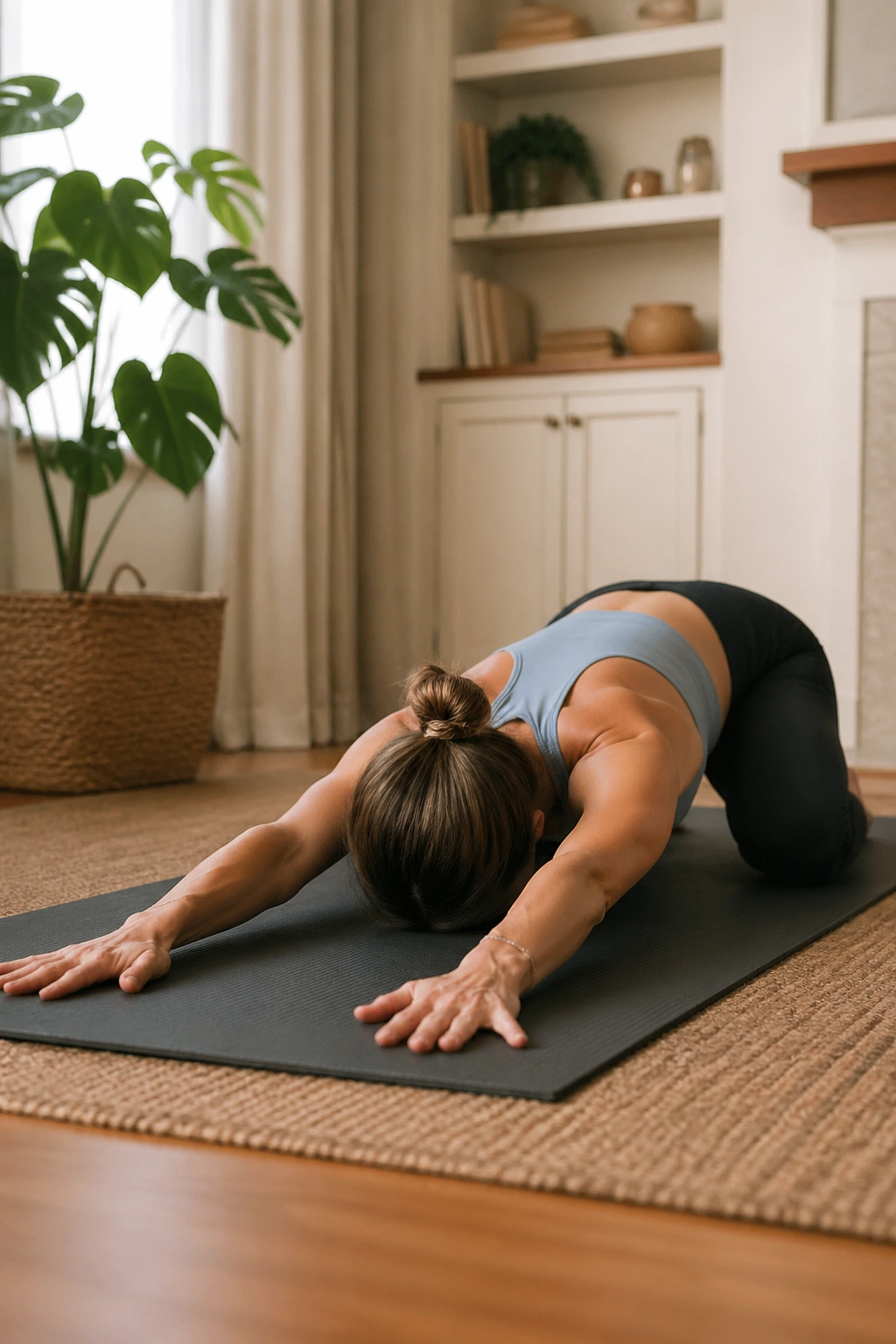
Unlike Child’s Pose, Puppy Pose keeps the hips over the knees and puts the stretch where overhead work needs it most. If your chest feels caved in or your lats grab the moment your arms go up, this pose is a smart fix before training.
Walk the hands forward from all fours and let the chest sink toward the mat while the hips stay stacked above the knees. Keep the elbows lifted or rest the forehead and chest on a block if the floor is far away. The important part is that the arms reach long while the ribs stay controlled. If you let the lower back sag hard, the pose turns sloppy fast.
This is a favorite before presses, pull-ups, handstands, or yoga flows with lots of arm work. It opens the front of the shoulders and the sides of the torso at the same time. The feeling should be broad across the chest, not pinchy at the front of the shoulder.
Best Tweaks for Tight Shoulders
If the shoulders are cranky, widen the hands a little. If the lats are the issue, walk the hands farther forward and keep the ribs from flaring. Three or four breaths is enough. Then come out slowly and shake the arms once or twice.
13. Sphinx Pose for a Gentle Backbend
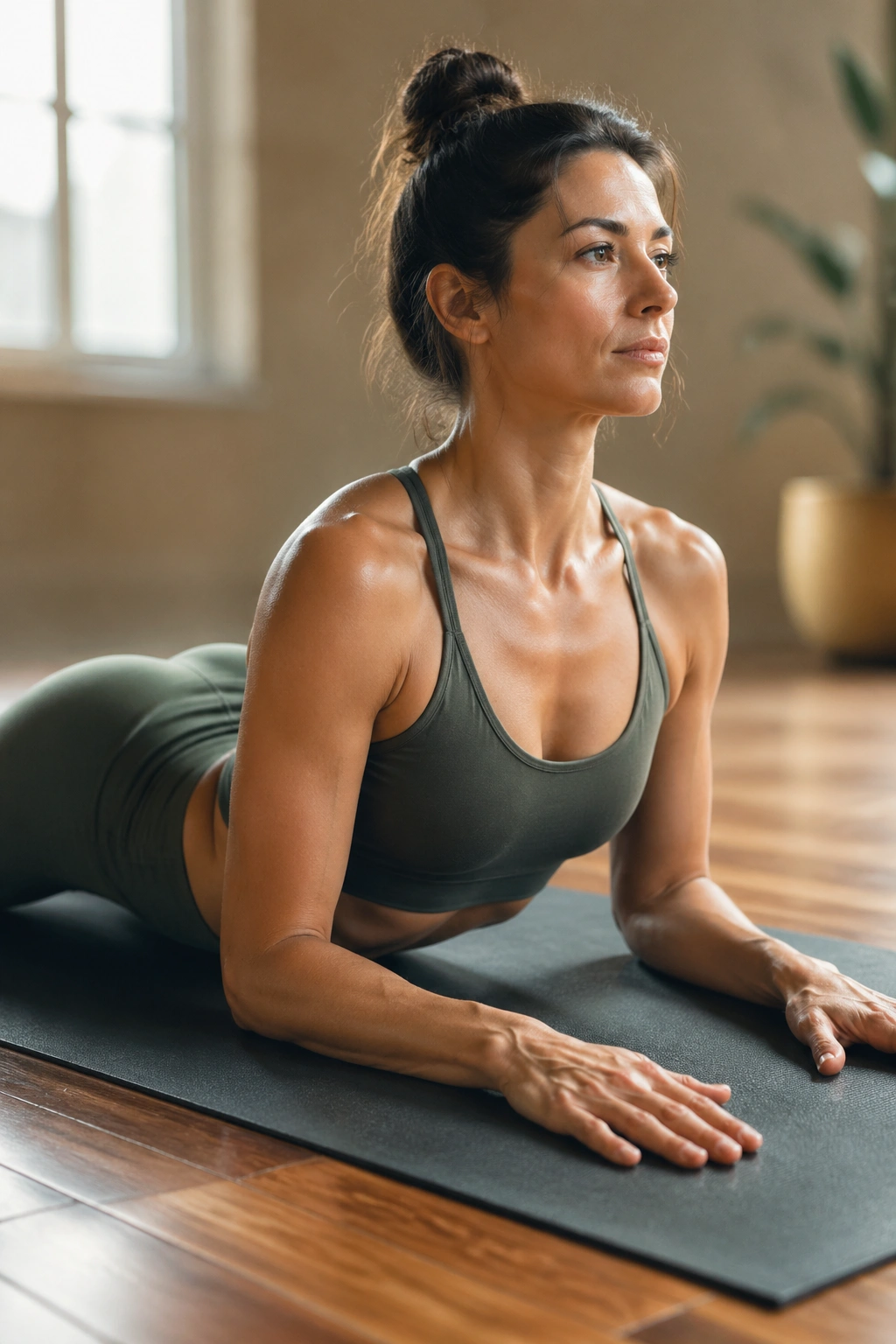
If your lower back feels sleepy, Sphinx is the gentler way to remind it how to extend. It is a controlled backbend, not a throw-yourself-back pose. That distinction matters, especially before workouts that ask you to stand tall, brace hard, or move the spine through full range.
Lie on your stomach and prop up on the forearms with elbows under the shoulders. Press the forearms down and gently draw the chest forward. Keep the pelvis heavy and the glutes soft. If the low back starts to pinch, come down a little and shift the elbows farther forward. You want a lift through the front body, not a crunch in the spine.
Sphinx is useful after a lot of sitting, and it pairs nicely with hip openers because the front side of the body often tightens as the hips do. It can make breathing feel easier too, which is a nice side effect before training.
Hold for 3 to 5 breaths. Short is enough. If you turn this into a long, saggy hold, the value drops fast.
14. Wide-Leg Forward Fold with Gentle Sways
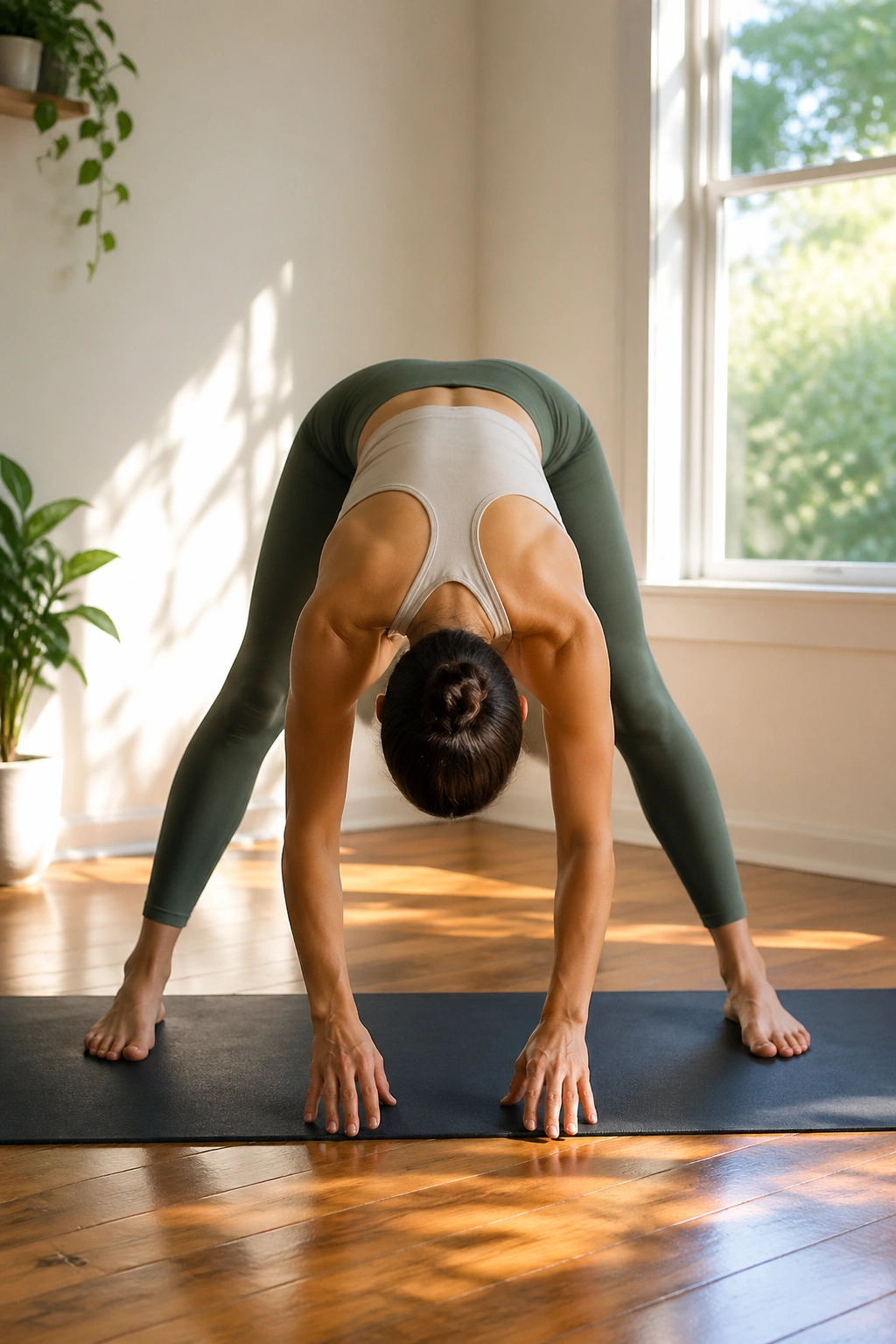
Why does a small side-to-side sway feel better than a still hold? Because the body rarely wants to open all at once. Wide-Leg Forward Fold gives the adductors, hamstrings, and calves a broad stretch, but the gentle sway keeps it from becoming a dead-end pose.
Stand with feet wide, toes slightly turned in or forward, and hinge at the hips until the hands reach the floor, shins, or blocks. Keep a microbend in the knees. That’s not cheating. It keeps the hamstrings from screaming and helps the hips tip forward without strain. Then sway a few inches left and right. The movement should be slow enough that you can breathe through it.
- Hinge from the hips, not the waist.
- Keep the spine long on the way down.
- Use blocks if the floor pulls you too far.
- Shift weight toward one heel, then the other.
This pose is handy before lower-body days because it opens a big area in one shot. It also leaves your legs feeling warmer rather than weaker, which is exactly what a pre-workout stretch should do. Too much stillness before speed work can feel flat. A little movement keeps the engine on.
15. Open Book Twist for Thoracic Mobility
An Open Book Twist is a clean way to wake up the ribcage without cranking the lower back. That makes it a smart final piece in a pre-workout yoga routine for flexibility, especially if your session involves pressing, throwing, swimming, or any work that needs the upper body to rotate.
Lie on one side with knees bent and stacked. Reach both arms forward, then sweep the top arm open in a slow arc until the chest rotates toward the ceiling. Let the head follow if it feels good, or keep the gaze forward if the neck is touchy. Keep the knees pinned together so the twist stays in the middle of the back instead of spilling into the lumbar spine.
The range does not need to be huge. A smooth open-and-close for 3 to 5 reps per side usually does more than one aggressive crank. You should feel the shoulder blade move, the ribs shift, and the chest open.
If you only have five minutes before training, I’d pair this with Cat-Cow, Low Lunge, Half Split, and Downward Dog. Those four hit the spine, hips, hamstrings, and shoulders fast. Clean. Useful. Enough to matter.
