



A routine with twenty-two yoga poses sounds like a lot on paper. In practice, it works only if it feels easy enough to start on a tired morning and steady enough to repeat after a long day.
That’s the part most people miss. They build a practice around ambition, not repetition. So the sequence is too long, too fancy, or too intense to survive a missed night of sleep, a stiff back, or plain old boredom.
The better approach is almost boring. Start with poses that wake up the spine, open the hips, and ask for a little balance, then finish with shapes that calm the nervous system and make you want to come back tomorrow. A block, a wall, and a folded blanket can do more for consistency than a perfect-looking pose ever will.
So the real goal is not to perform all twenty-two every single day. The goal is to make the sequence feel like something your body recognizes, trusts, and doesn’t argue with. Start there.
1. Mountain Pose
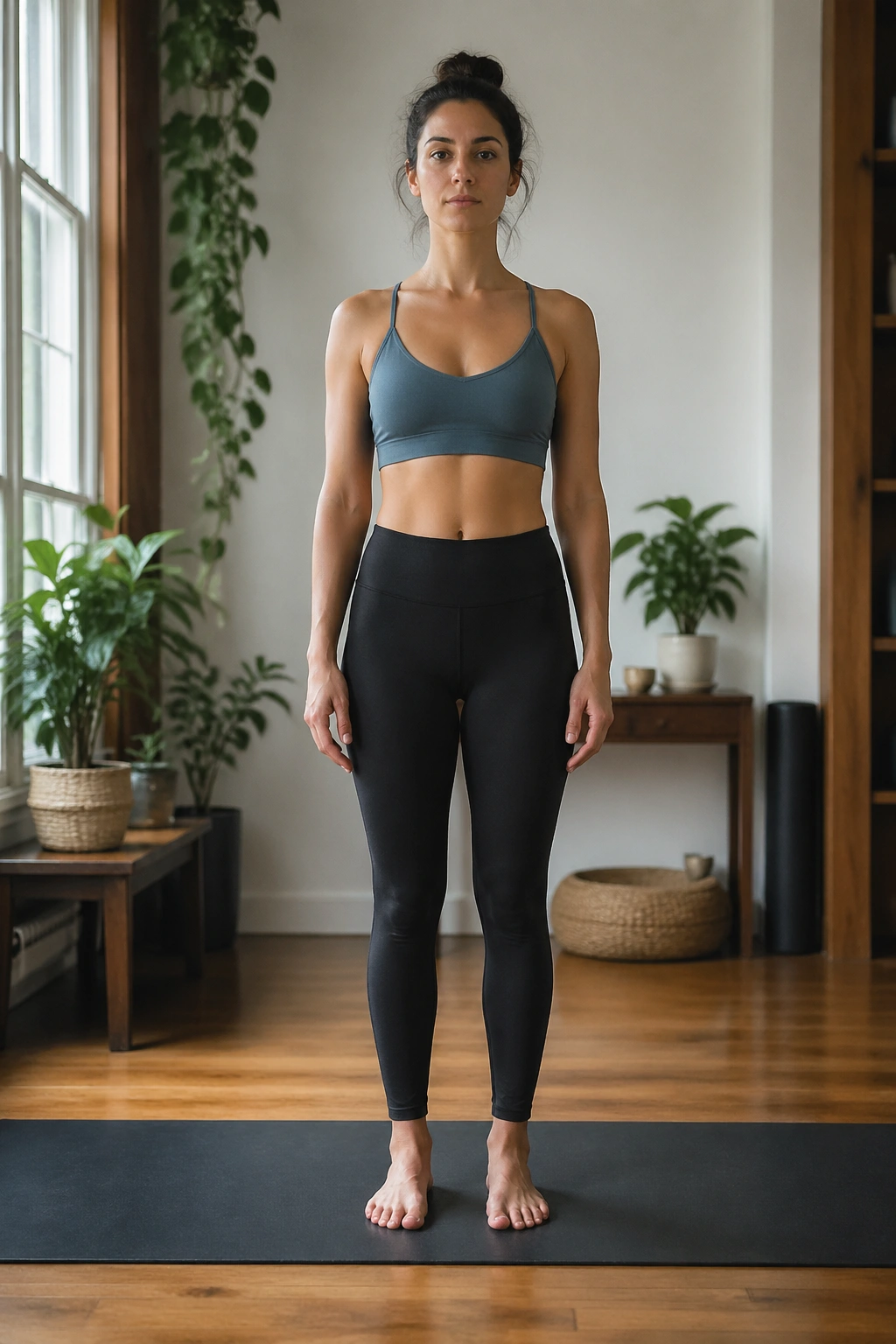
Mountain Pose looks like standing still, but it’s where the whole routine gets honest. If your feet are sloppy here, everything else tends to wobble a little. If your breath is scattered here, the rest of the practice usually follows suit.
Stand with your feet hip-width apart or together if that feels steadier. Spread your toes, then let the soles of your feet settle into the mat in four places: the base of the big toe, the base of the little toe, the inner heel, and the outer heel. Lift your kneecaps gently, stack your ribs over your pelvis, and let the crown of your head reach up without puffing your chest.
A lot of people rush past this pose. Don’t. Even three slow breaths in Mountain Pose can make the rest of the sequence feel cleaner and less chaotic.
What to Feel For
- Weight balanced between the heels and the balls of the feet
- Thighs active, but not clenched
- Shoulders soft, not rolled back like a parade stance
- Jaw loose, tongue relaxed
One good standing habit starts here. If you can feel the floor, you can usually feel everything else a little better too.
2. Cat-Cow
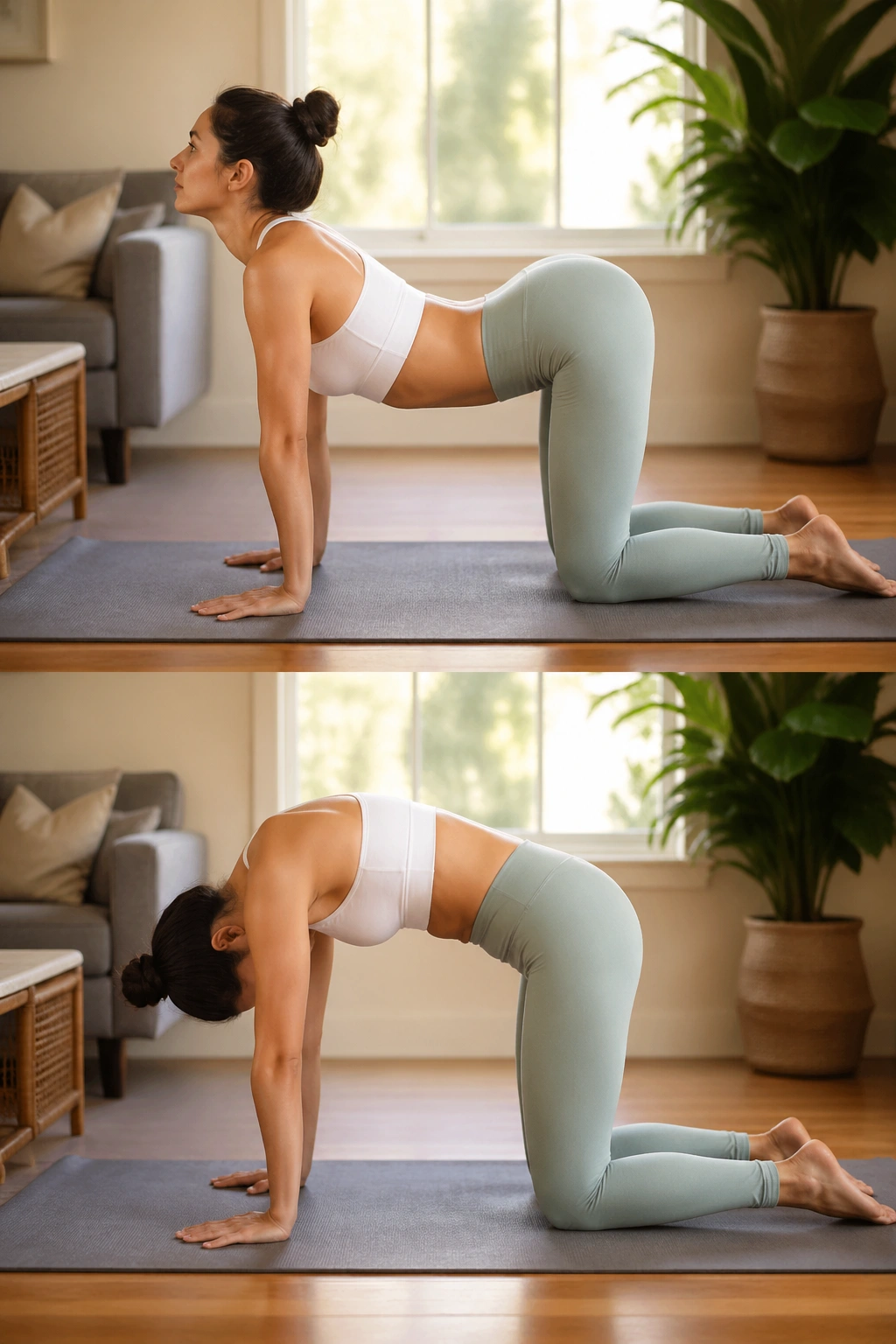
Why does this pose stay in so many daily routines? Because the spine likes simple movement before it likes deep stretching. Cat-Cow wakes up the back in a way that feels friendly, not bossy.
Come to hands and knees with wrists under shoulders and knees under hips. On an inhale, tip the tailbone up, let the belly soften, and broaden across the collarbones for Cow. On the exhale, press the floor away, round through the upper back, and draw the navel in for Cat. Keep the movement slow enough that you can actually match it to the breath.
Why It Helps a Routine Stick
- It feels good almost immediately
- It doesn’t require a lot of flexibility
- It gives you a clear breath rhythm
- It makes the rest of the sequence feel less stiff
Do five to eight rounds. If your wrists complain, lower to forearms or place your hands on blocks. Smooth, small movement beats big, sloppy movement every time.
3. Downward-Facing Dog
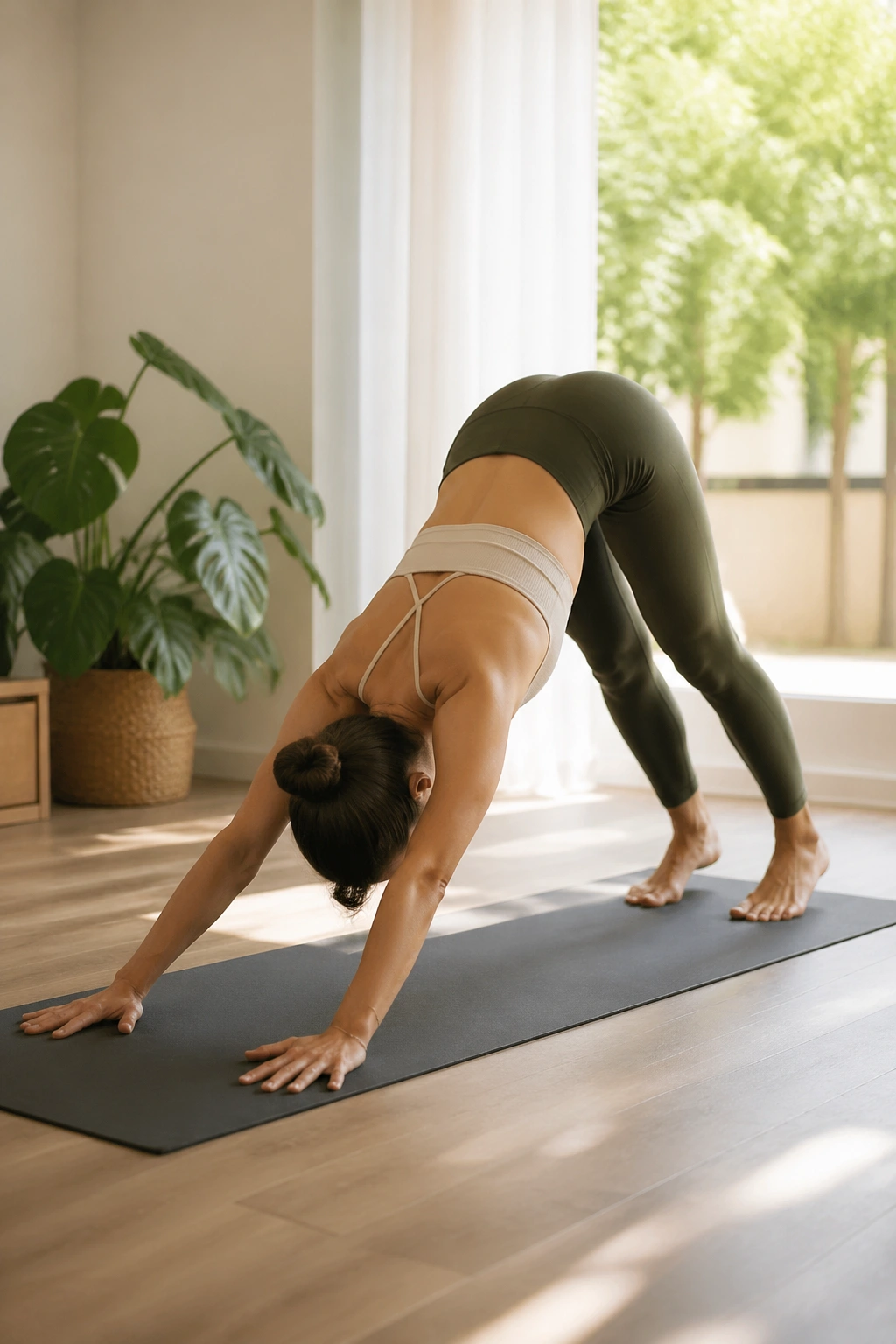
The first time Downward-Facing Dog feels good, it usually feels a little surprising. Most people expect a hamstring stretch and get an entire-body wake-up instead.
Start from hands and knees, tuck your toes, and lift your hips up and back. Bend your knees as much as you need so your spine can lengthen. Push the floor away, let your head hang between your arms, and pedal your feet if one calf feels tighter than the other. The shape should feel long, not strained.
A lot of people think this pose is about straight legs. It isn’t. A bent-knee Down Dog with a long spine is better than a straight-legged version that rounds your back and yanks on your hamstrings.
Hold for five breaths if it feels like a stretch, or longer if it feels like a reset. It works well in the middle of a routine because it links the standing work to the floor work without making the transition feel abrupt.
4. Low Lunge
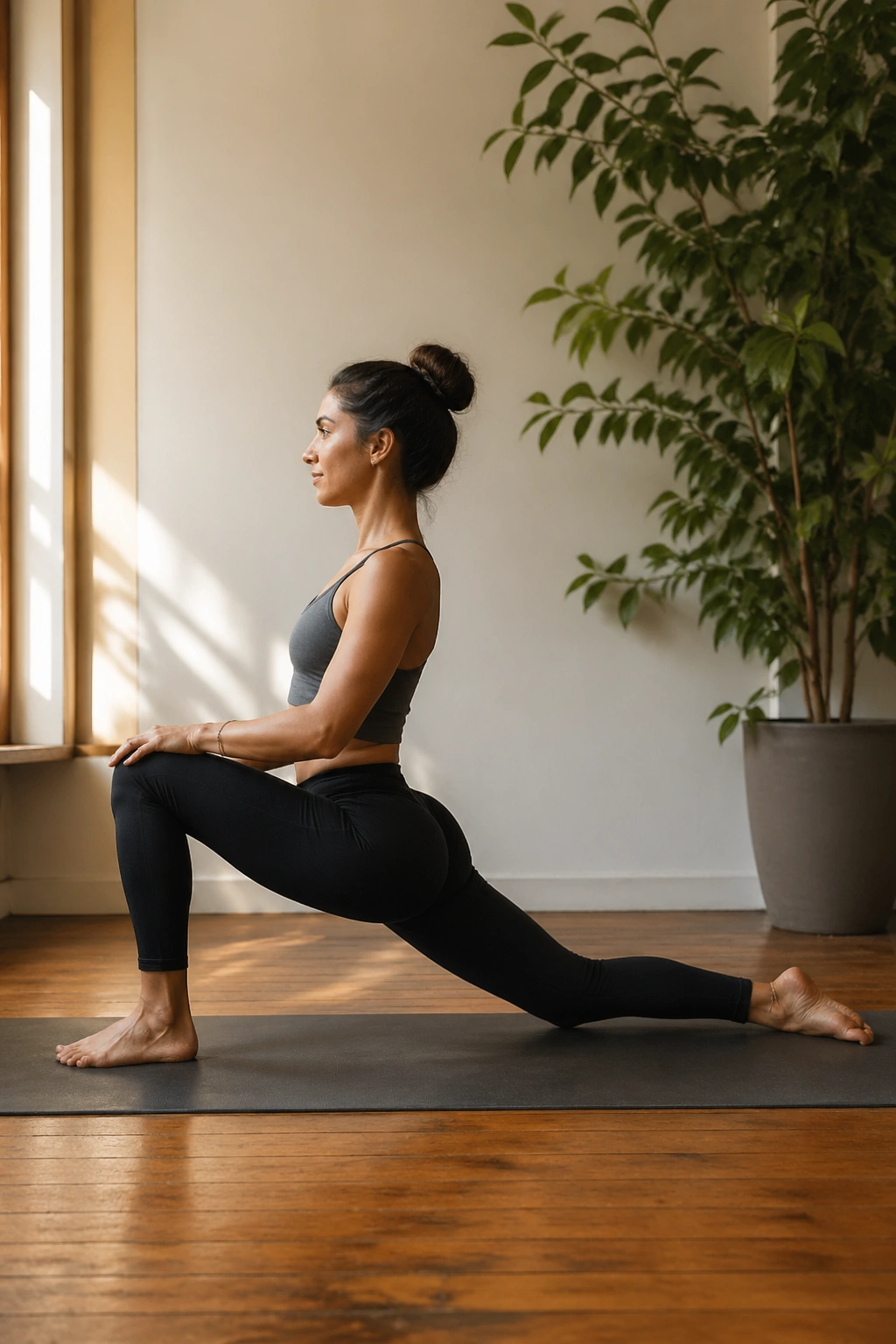
If your hips spend all day folded in a chair, Low Lunge is the one that reminds the front of your body how to open. It’s especially useful in a daily routine because it shows up quietly and does its job without drama.
Step one foot between your hands, lower the back knee to the mat, and keep the front knee stacked over the ankle. Let the hips sink forward only a little, enough to feel a stretch across the front of the back thigh and hip. If your lower back pinches, shorten the stance and tuck the tailbone slightly.
You can stay with the hands on blocks, lift the arms overhead, or keep the fingertips on the floor. I like the version that feels stable enough to breathe in. Fancy is overrated here.
Quick Cues
- Back knee down on a folded blanket if needed
- Front foot flat, not rolled out to the side
- Belly lightly engaged
- Ribs stacked, not flared
This pose works best when it feels steady first and deep second. That order matters.
5. Standing Forward Fold
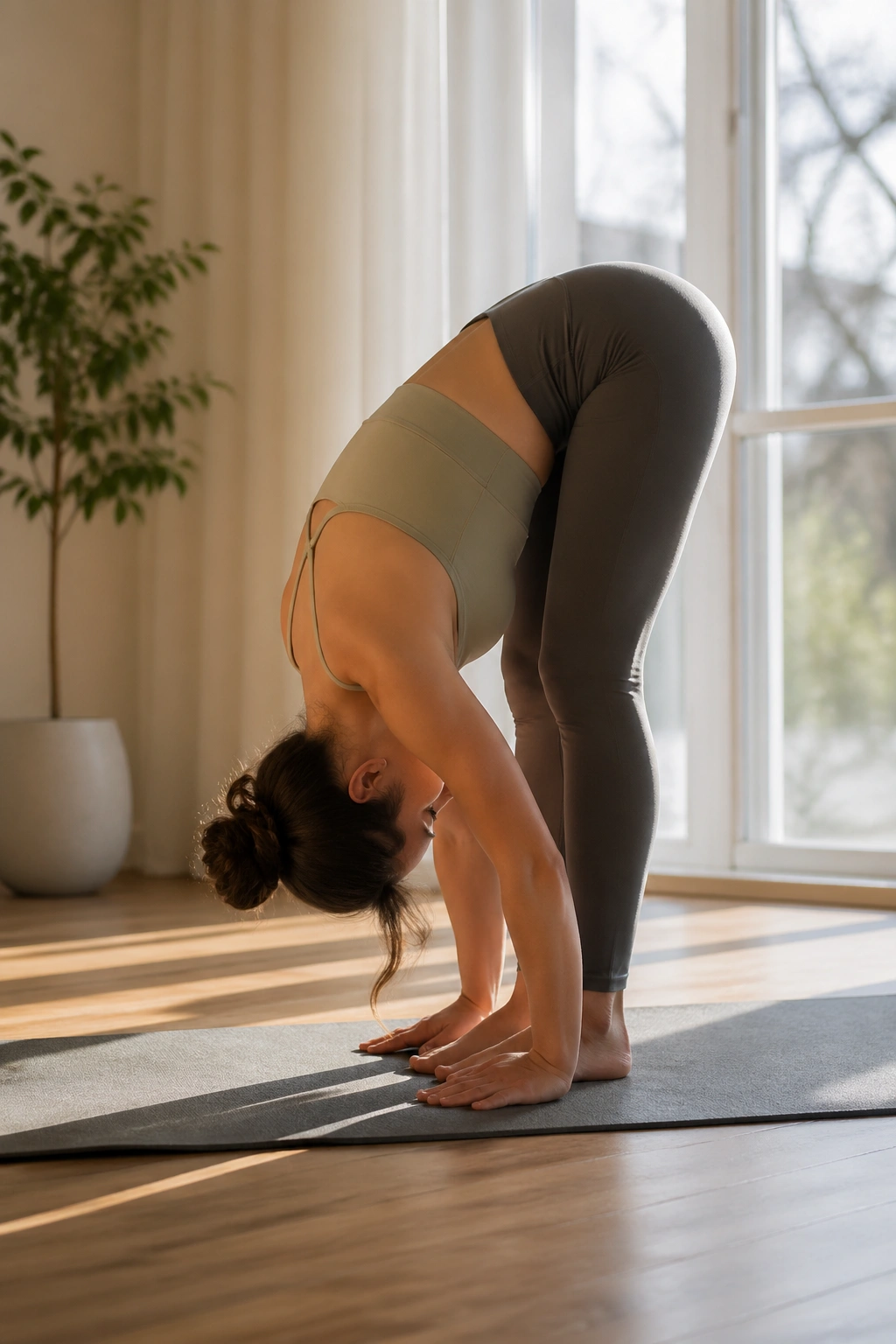
A Standing Forward Fold can be either a sigh or a struggle. The difference usually comes down to one thing: whether you bend your knees enough to let the spine release.
From a standing position, hinge at the hips and fold forward. Let your hands rest on the floor, your shins, blocks, or even hold opposite elbows. Keep a soft bend in the knees if your hamstrings feel tight or if your low back starts talking back. The point is not to touch the floor. The point is to let the back line of the body soften without pulling.
This is one of the best poses for a daily routine because it gives you a small dose of calm without asking for a long commitment. A forward fold done with patience can feel like someone turned the volume down in the room.
Stay for five to eight breaths. If your neck feels cranky, let the head hang heavy. If dizziness shows up, come halfway up right away.
6. Chair Pose
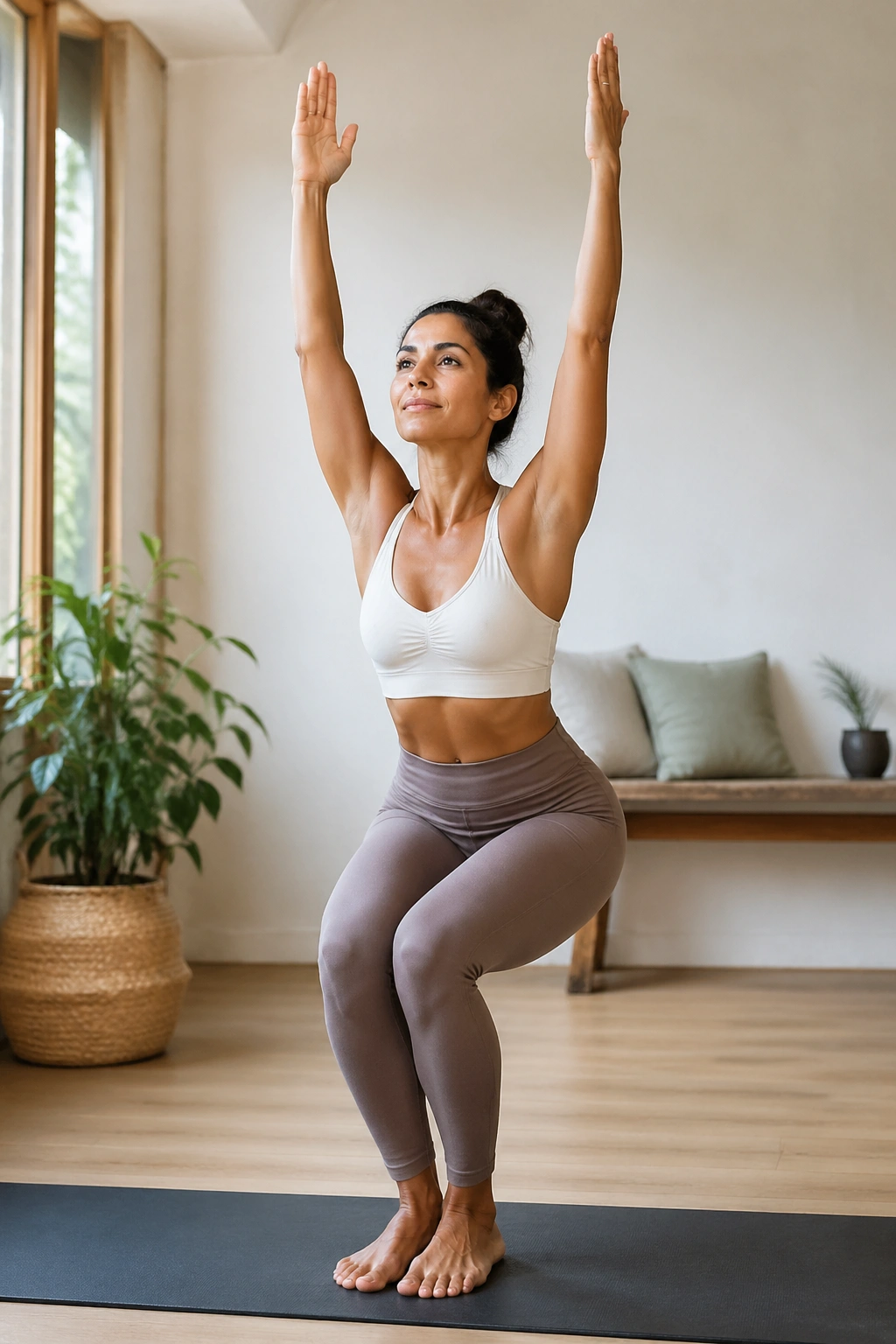
A routine that never asks your legs to work will be easy to quit. Chair Pose fixes that fast.
Sit your hips back as if you’re lowering into an invisible chair. Keep the weight mostly in the heels, lift the chest a little, and reach the arms forward or overhead. Your knees will bend, your thighs will start to complain, and that’s fine. The pose is doing its job. Try not to let the knees collapse inward. That little detail matters more than people think.
Why It Earns a Spot
Chair Pose builds heat without needing a jump or a long sequence. It also gives your practice a point of commitment. You’re not just stretching; you’re showing up with effort.
Hold for three to five breaths, then stand tall and notice the difference. A few seconds of honest leg work can make the rest of the sequence feel more awake. If your shoulders tense, drop the arms and keep the sit-back shape.
7. Warrior I
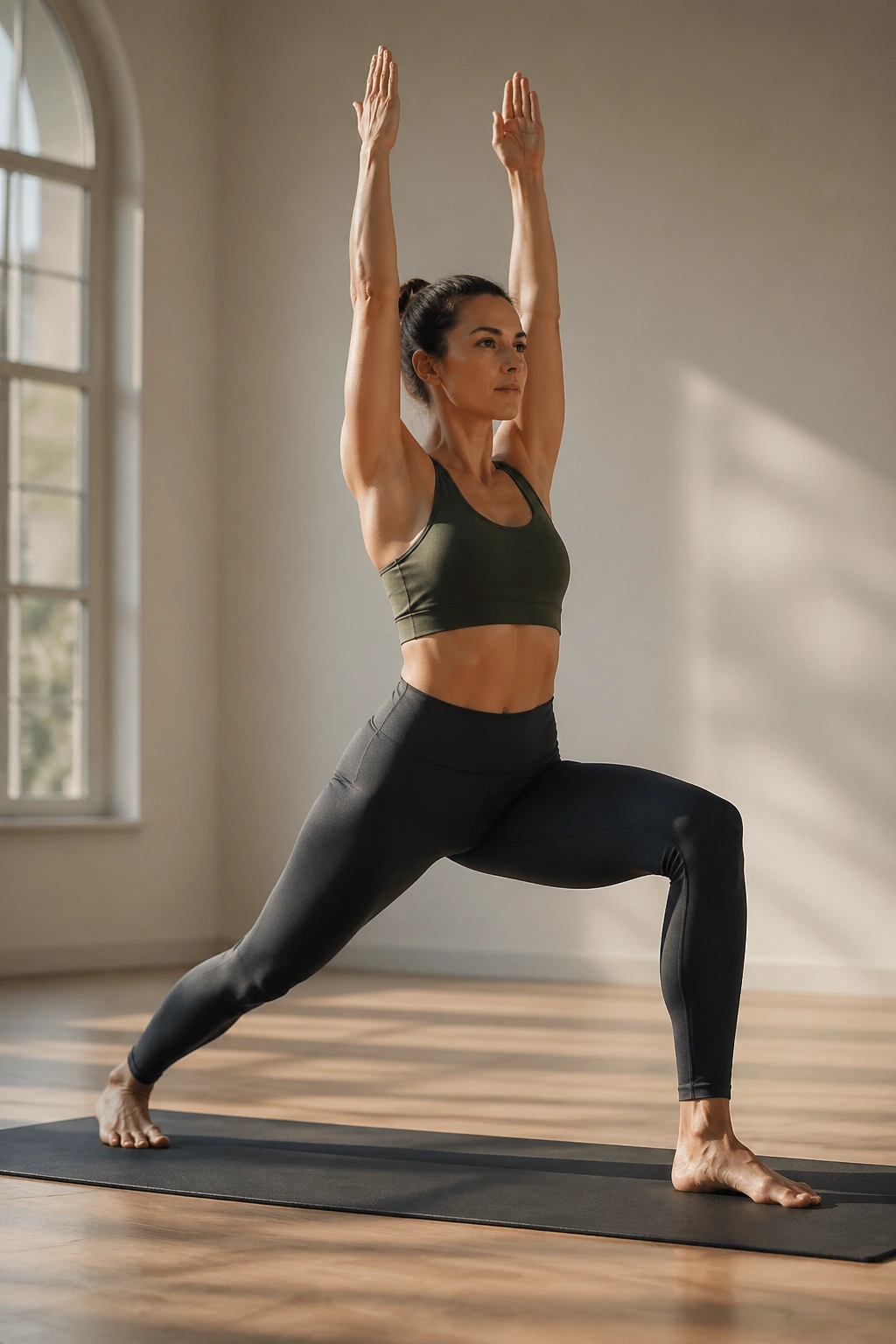
Warrior I gives a daily routine some backbone. It’s one of those poses that looks simple until you notice how many things have to line up for it to feel clean.
Step one foot forward, angle the back foot slightly in, and bend the front knee so it tracks over the ankle. Square the hips as much as your body allows, then lift the arms overhead with the ribs staying contained. If your lower back arches hard, shorten the stance or keep the hands on the hips.
What Makes It Worth Repeating
Warrior I teaches the body to stay grounded while reaching upward. That combination matters in a daily routine because it links strength with breath, not strength with force. You can feel tall without hanging into your joints.
Hold for four to six breaths. Then switch sides and notice whether one side feels smoother. It usually does. That side-to-side difference is information, not a flaw. Use it.
8. Warrior II
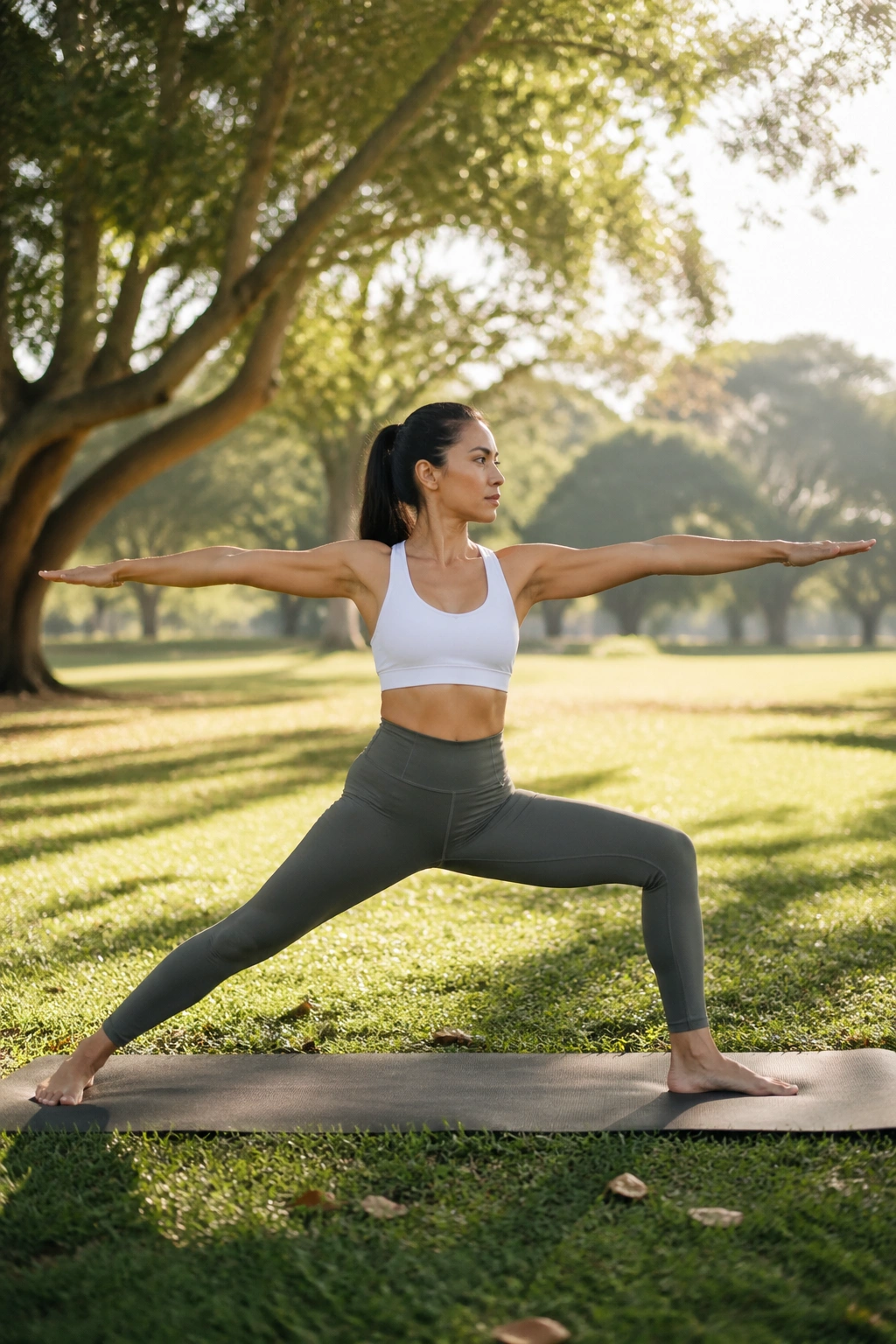
Warrior II feels different from Warrior I in the best way. It opens the body sideways instead of forward, and that tiny shift changes the whole mood of the sequence.
Open the back foot parallel to the long edge of the mat, bend the front knee, and extend the arms out at shoulder height. Gaze over the front fingertips or straight ahead if your neck prefers that. The front knee should point toward the second or third toe, not collapse inward. Keep the torso tall and let the shoulders rest down.
This pose gives a daily practice a sense of spaciousness. After the focused work of standing and folding, Warrior II says, stay present, but breathe wider. That’s a useful message when you’re trying to make a habit last.
It also pairs well with short routines because it looks and feels complete even when you only hold it for a few breaths. Big shapes help people stay interested.
9. Side Angle Pose
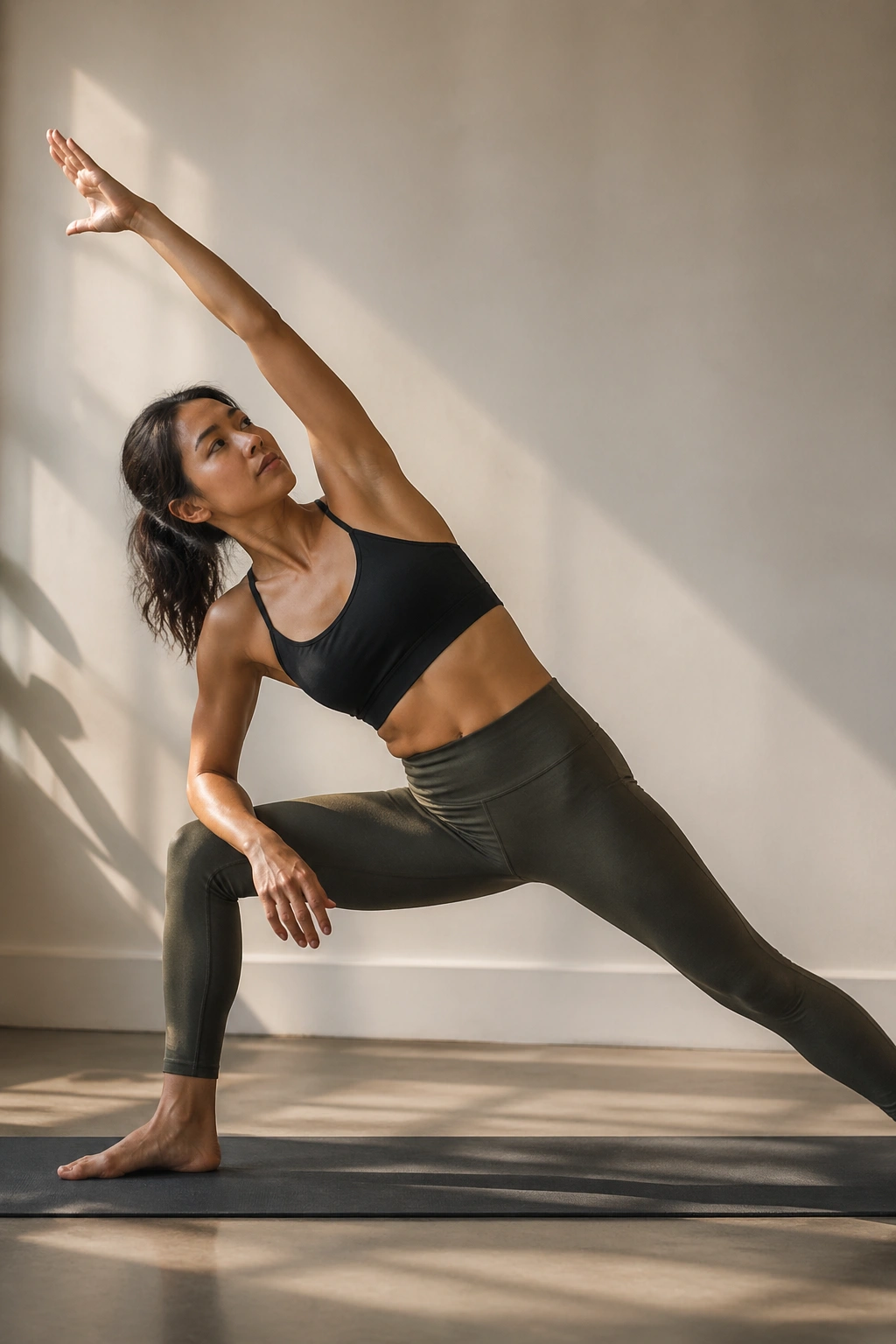
Need a pose that wakes up the sides of the body without feeling fussy? Side Angle does that well, especially when your routine starts to feel flat.
From Warrior II, rest the front forearm on the thigh or place the lower hand on a block inside or outside the front foot. Stretch the top arm overhead or let it reach forward in a long line from heel to fingertips. Keep the chest open enough that you’re not dumping weight into the shoulder.
The useful part here is the side-body stretch. You feel it along the ribs, waist, and outer hip, which is exactly the area many people forget to move. If your balance wobbles, widen the stance a bit and use a block. There’s no prize for touching the floor.
This pose tends to feel better after Warrior II than before it. It’s a good example of why order matters in a daily routine.
10. Triangle Pose
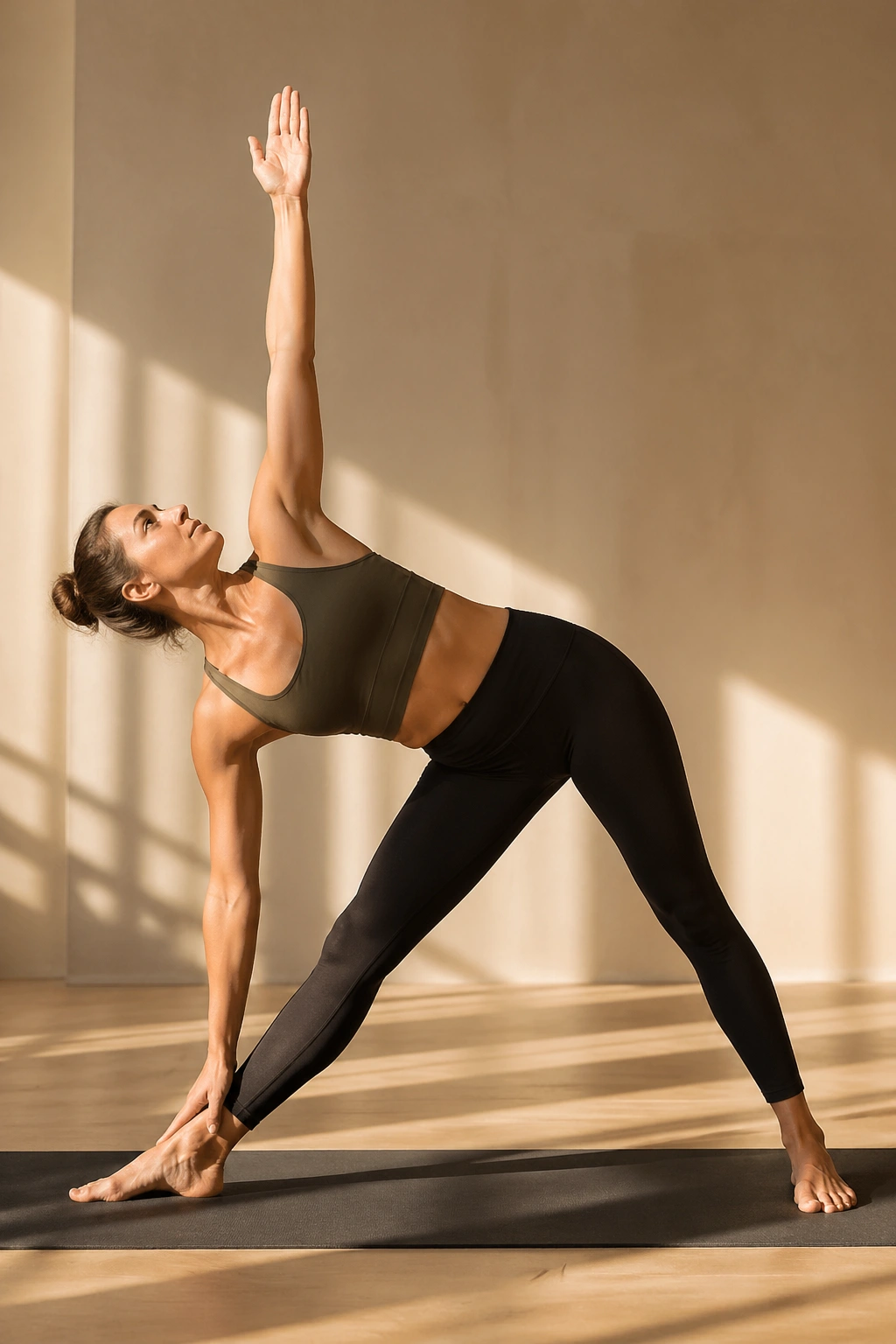
Triangle Pose asks for patience, and that’s one reason it earns a place in a routine meant to stick. People rush it, yank the torso downward, and then wonder why the shape feels awkward.
Straighten the front leg, shift the hips back slightly, and reach forward before hinging at the hip. Place the lower hand on the shin, ankle, block, or the floor if the body can keep the chest open there. The top arm reaches upward, but the pose isn’t about cranking the torso open with force. It’s about length first, then rotation.
A soft bend in the front knee is often smarter than a locked knee. Your hamstrings will thank you. So will your lower back.
Triangle is one of those poses that gets better with repetition because your body starts to understand the line of it. Lengthen first, reach second. That little order change saves a lot of frustration.
11. Tree Pose
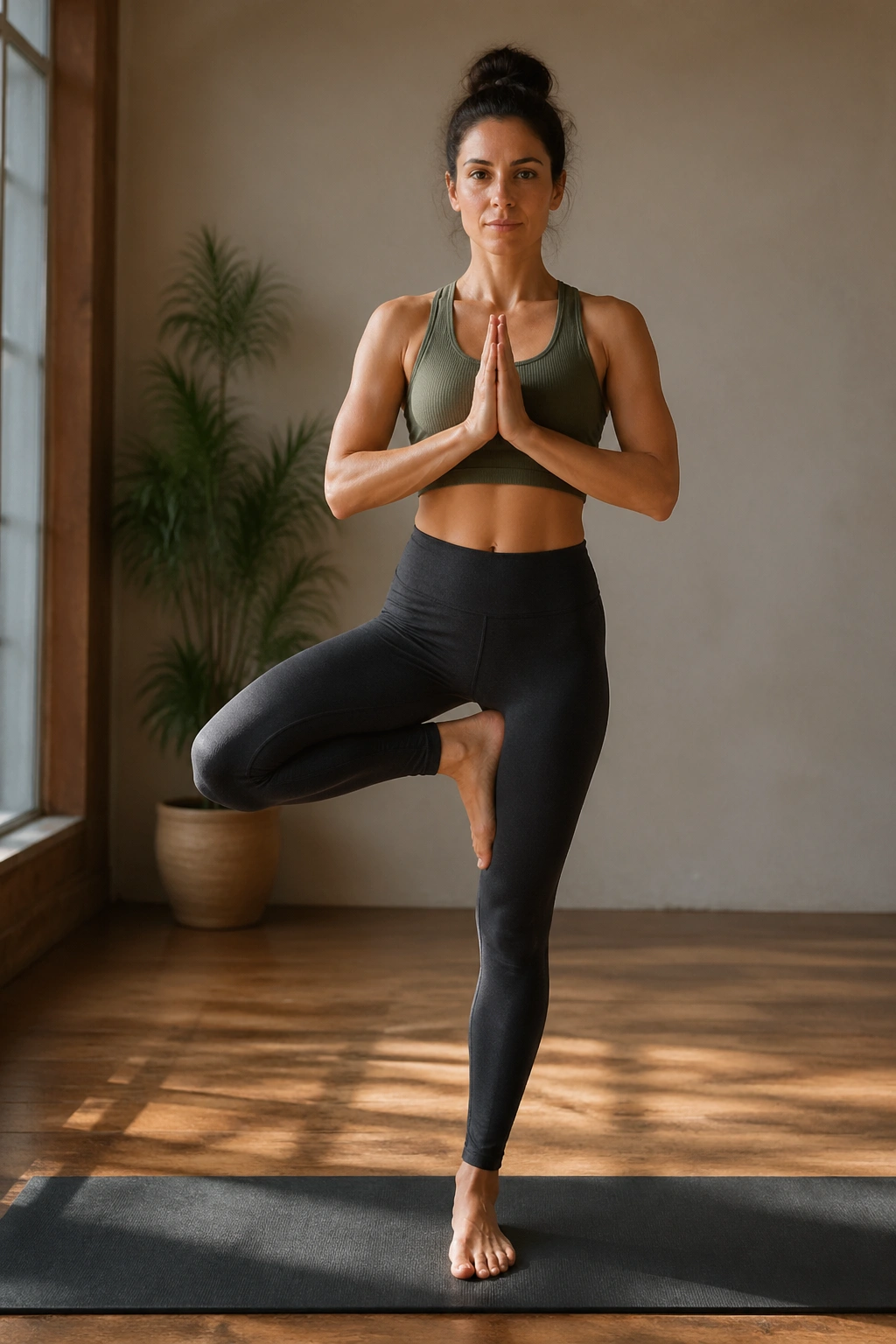
Balance poses make routines memorable. They also expose how distracted you are, which can be irritating on a bad day and oddly useful on a good one.
Place one foot on the inner ankle, calf, or thigh of the standing leg. Skip the knee. That part matters. Bring your hands to prayer at the chest or stretch them overhead if your balance is steady enough. Pick one point in front of you and keep your eyes there.
A Simple Way to Keep It Stable
- Start with the toes of the lifted foot on the floor if needed
- Use a wall lightly with one fingertips
- Keep the standing hip from jutting out
- Breathe out longer than you think you need to
Tree Pose works in a daily routine because it asks for attention without being long. That makes it repeatable. Short balance work done often beats one heroic wobble once in a while.
12. High Lunge
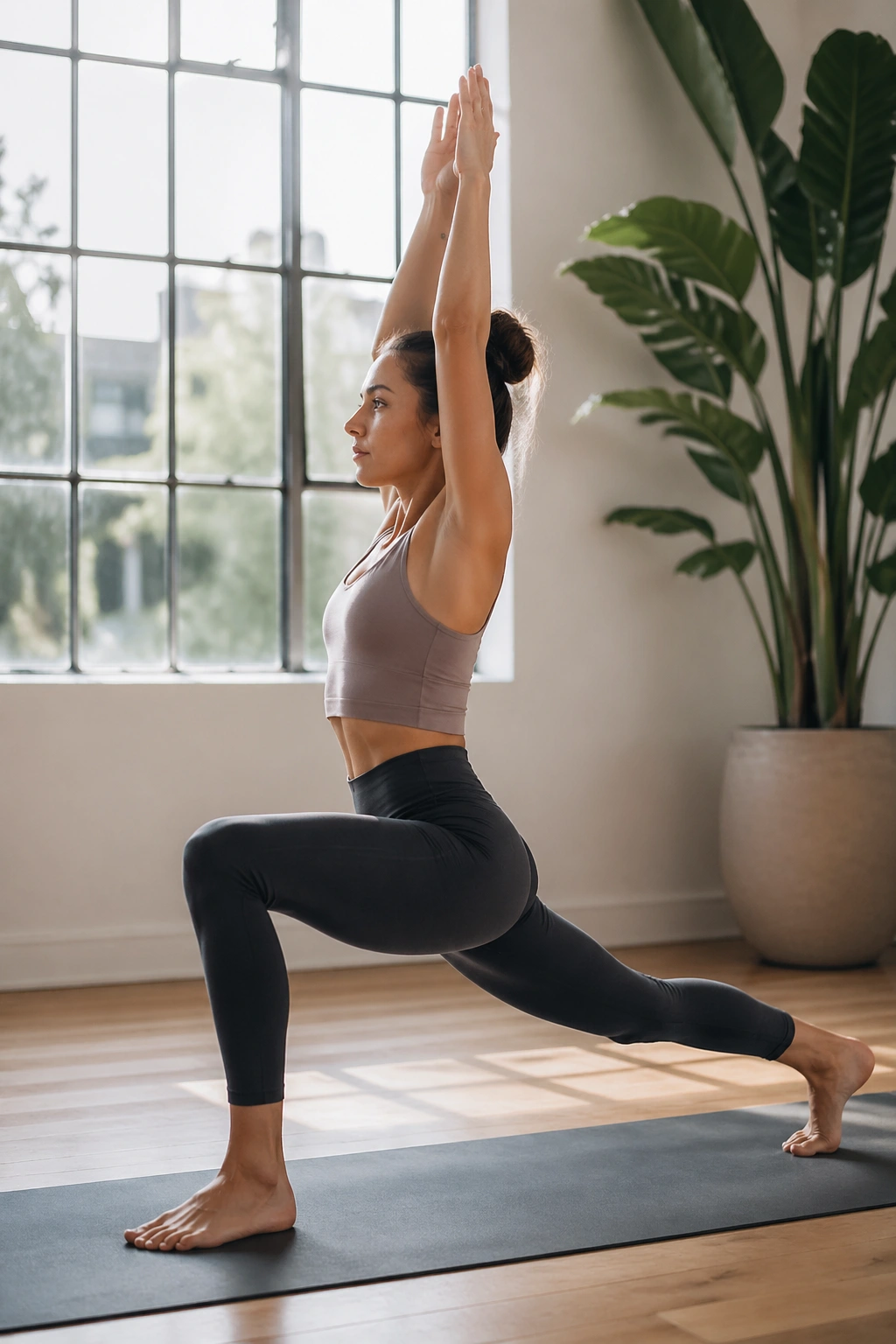
High Lunge gives the sequence a burst of energy without turning it into a workout video. It’s clean, direct, and a little demanding in a way that can be useful.
From a standing split stance, lift the back knee off the mat and bend the front knee over the ankle. Keep the pelvis level, arms overhead or at the hips, and ribs stacked over the pelvis. If the back heel lifts, that’s fine. If the torso folds forward, shorten the stance a little.
This pose feels good when you want the routine to wake you up fast. It also teaches single-leg stability, which matters more in daily life than people usually admit. Carrying groceries, climbing stairs, stepping over a puddle — all of that asks for this kind of control.
Hold for three to five breaths. Then switch. The shape should feel active, not chaotic.
13. Cobra Pose
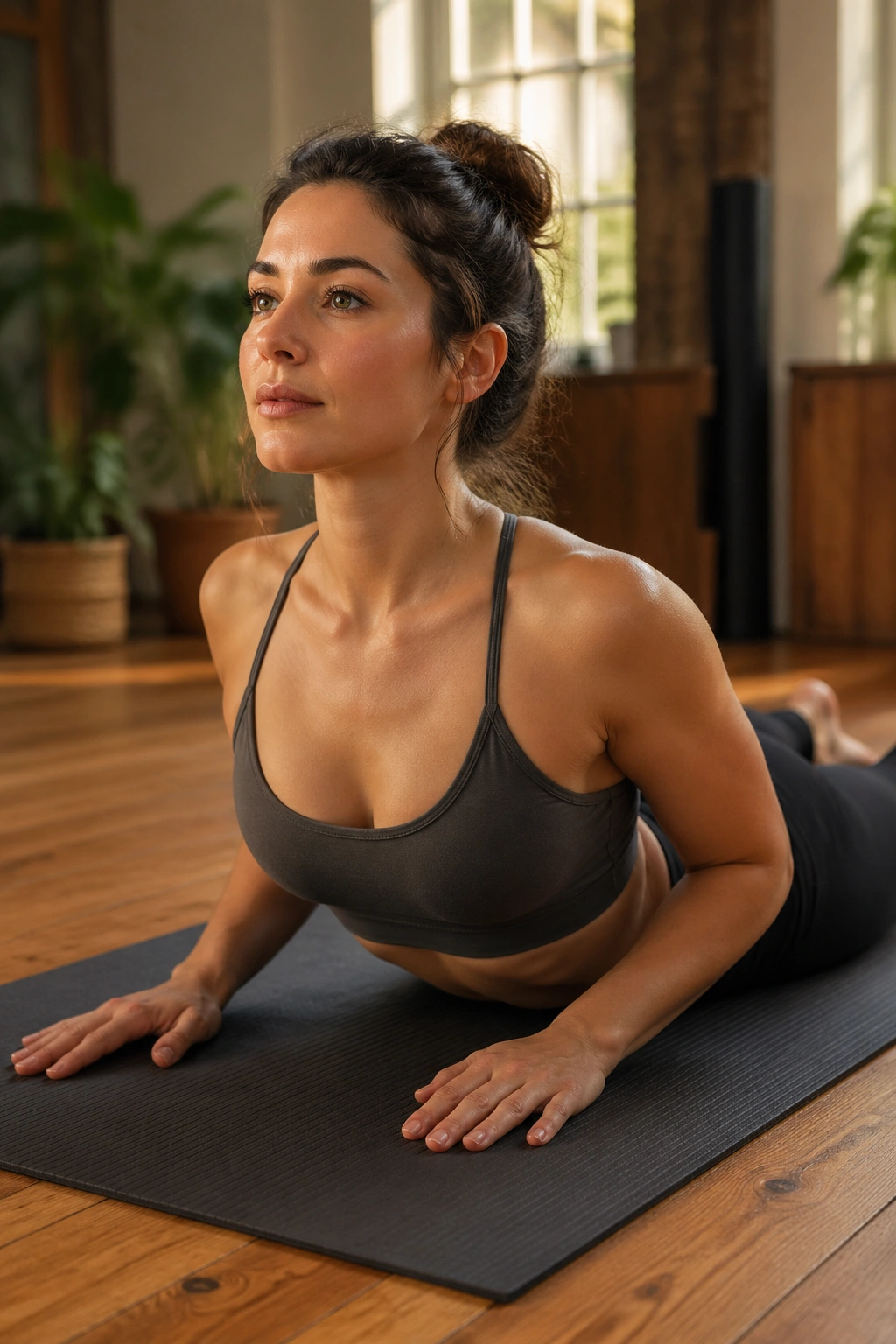
Cobra Pose can be lovely, or it can be a cranky lower-back mistake. The difference is in the lift.
Lie on your belly with your legs long behind you and the tops of the feet on the mat. Place the hands under the shoulders or slightly forward, press the pubic bone lightly into the floor, and lift the chest a little on an inhale. Keep the elbows close. The lift should come from the upper back lengthening, not from a hard shove into the low spine.
Do not throw your head back. That’s the fastest way to turn a smooth backbend into a neck pinch.
Cobra belongs in a daily routine because it reverses a lot of the day’s forward shape. Sitting, driving, leaning over counters — all of it rounds the front of the body. Cobra offers a gentle counterpoint. Stay low if that’s where it feels clean. Small lifts count.
14. Locust Pose
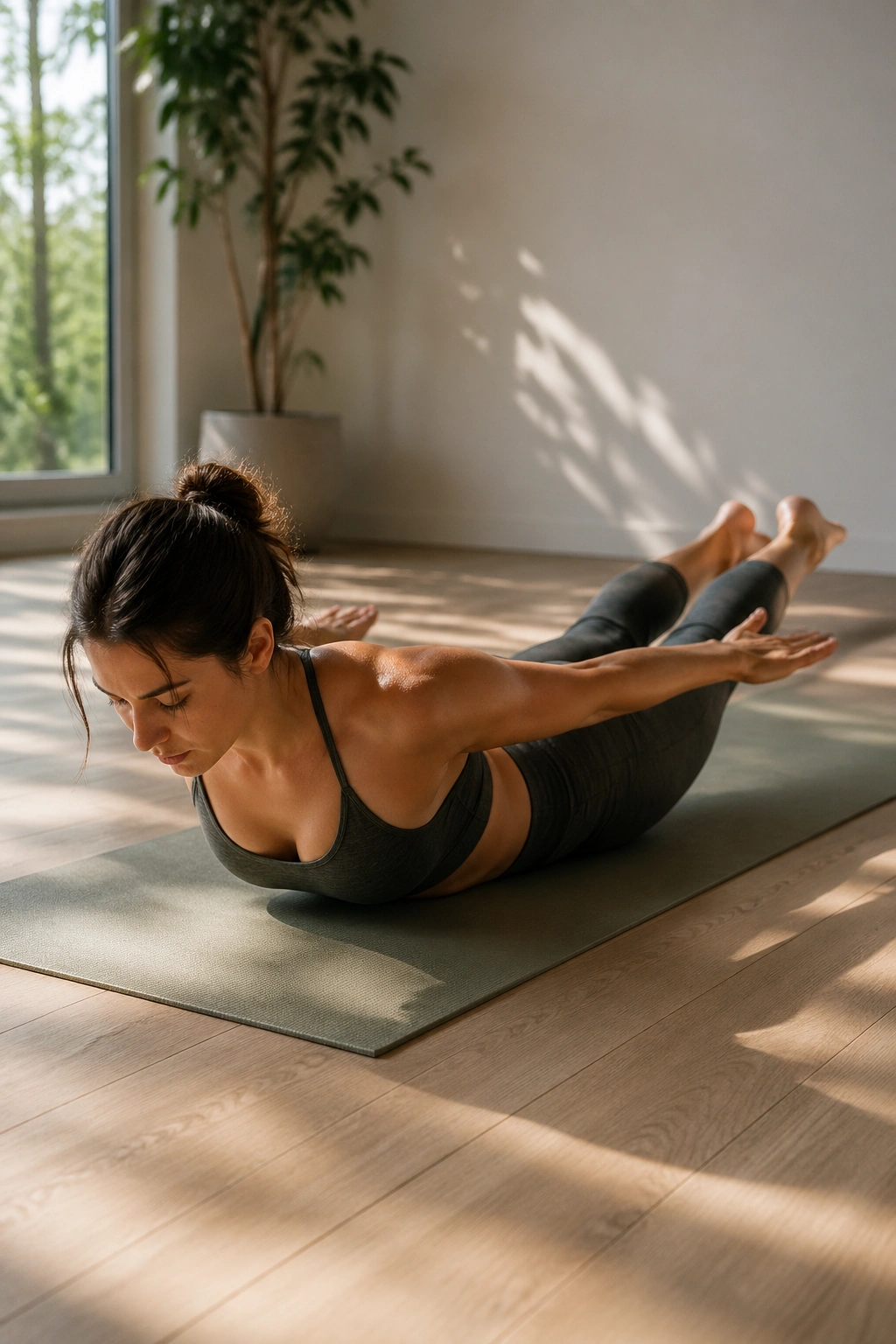
Locust Pose is the quiet strength pose that too many people skip. It doesn’t look dramatic, which is part of the reason it’s useful.
Lie on your stomach with your arms by your sides, palms down or facing in. On an inhale, lift the chest, arms, and legs a little off the floor. Keep the neck long and the gaze down so you’re not crunching the back of the neck. The effort should spread through the back body — glutes, hamstrings, upper back — instead of jamming into the low back.
Why the Back Body Matters
- It helps balance all the sitting most people do
- It builds support for standing posture
- It teaches effort without speeding up
- It feels stronger when done for less time
Hold for two to four breaths, rest, then repeat once if it feels good. A small lift done cleanly is worth more than a big lift that makes you brace.
15. Bridge Pose
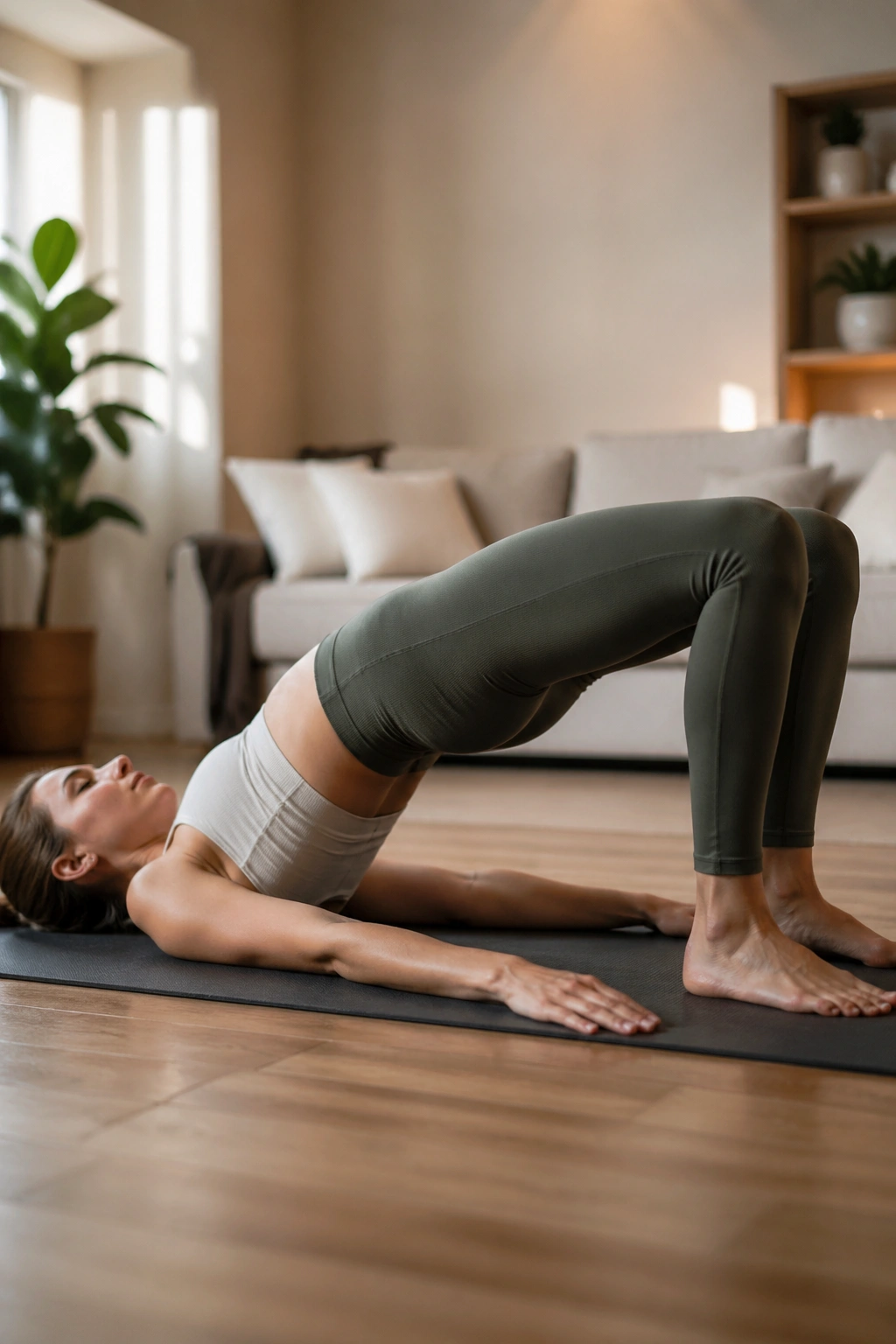
Looking for a pose you can do half-awake and still feel something? Bridge is usually the answer.
Lie on your back, bend your knees, and plant your feet hip-width apart with the heels close enough to touch with your fingertips. Press into the feet, lift the hips, and let the chest broaden. Keep the knees parallel instead of letting them drift apart. If the lower back feels compressed, lower down and try again with a smaller lift.
Bridge is useful because it opens the front of the hips while asking the glutes to help. That mix makes it a strong middle-to-late routine pose. You can stay for three to five breaths or pulse gently in and out of the pose a few times.
A block under the sacrum turns this into a quieter version if you want a slower, more restful stretch. That variation keeps the pose in the routine even on lower-energy days.
16. Seated Forward Fold
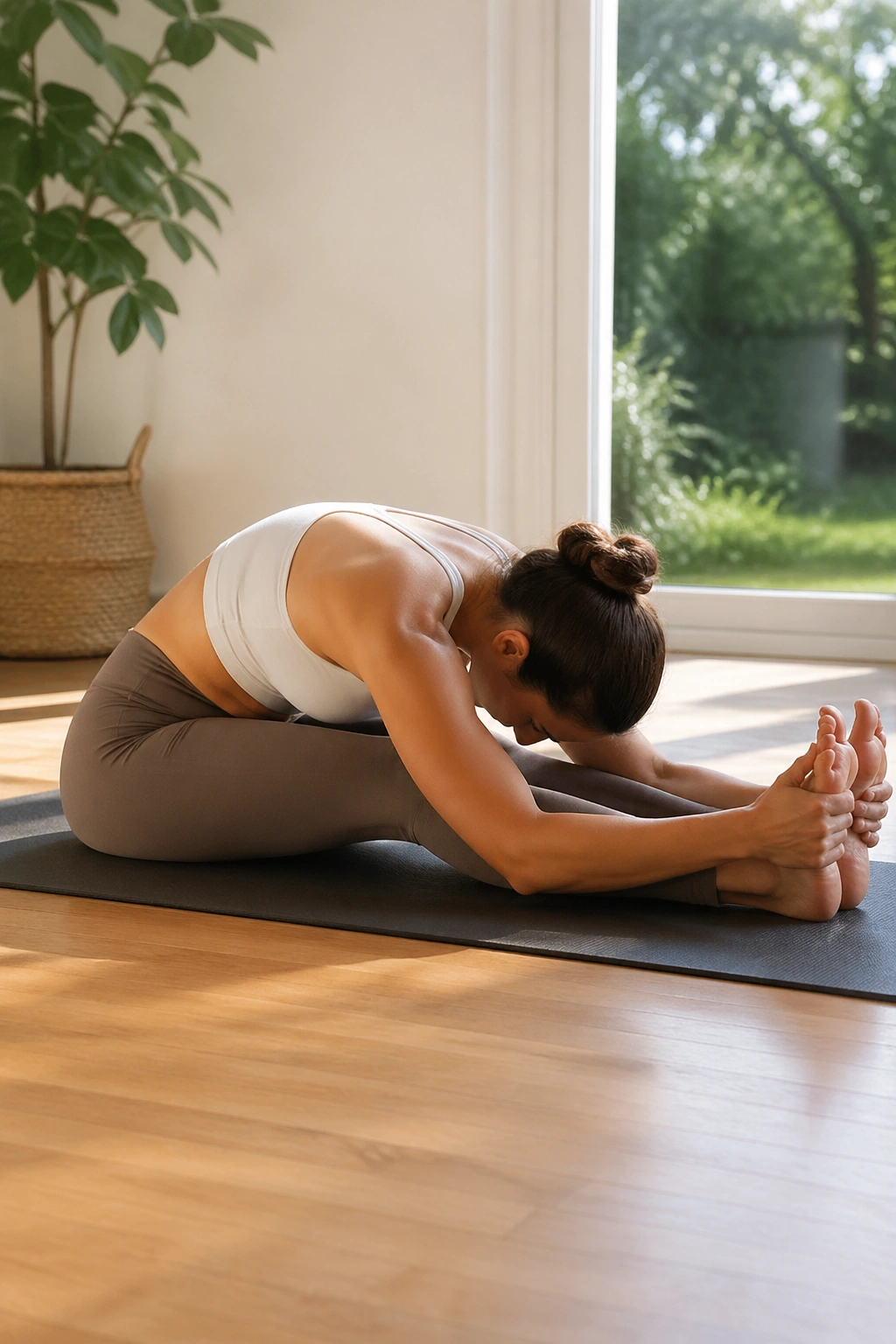
Seated Forward Fold is one of those poses that rewards patience more than flexibility. If you try to force it, it usually pushes back.
Sit with both legs extended. Flex the feet, sit tall for a breath, then hinge forward from the hips with a long spine. Hold the shins, feet, a strap, or the floor wherever your body can keep the back from rounding hard. A bend in the knees is completely fine. Better, even, if the hamstrings are tight.
The quieter the exhale, the better this pose tends to feel. You’re not trying to fold yourself in half. You’re lengthening the back of the body while letting the nervous system settle a little. That makes it a nice transition toward the end of a daily routine.
Stay for five to eight breaths. If the stretch jumps sharply into the back of the knees, back off. That’s your signal.
17. Figure-Four Stretch
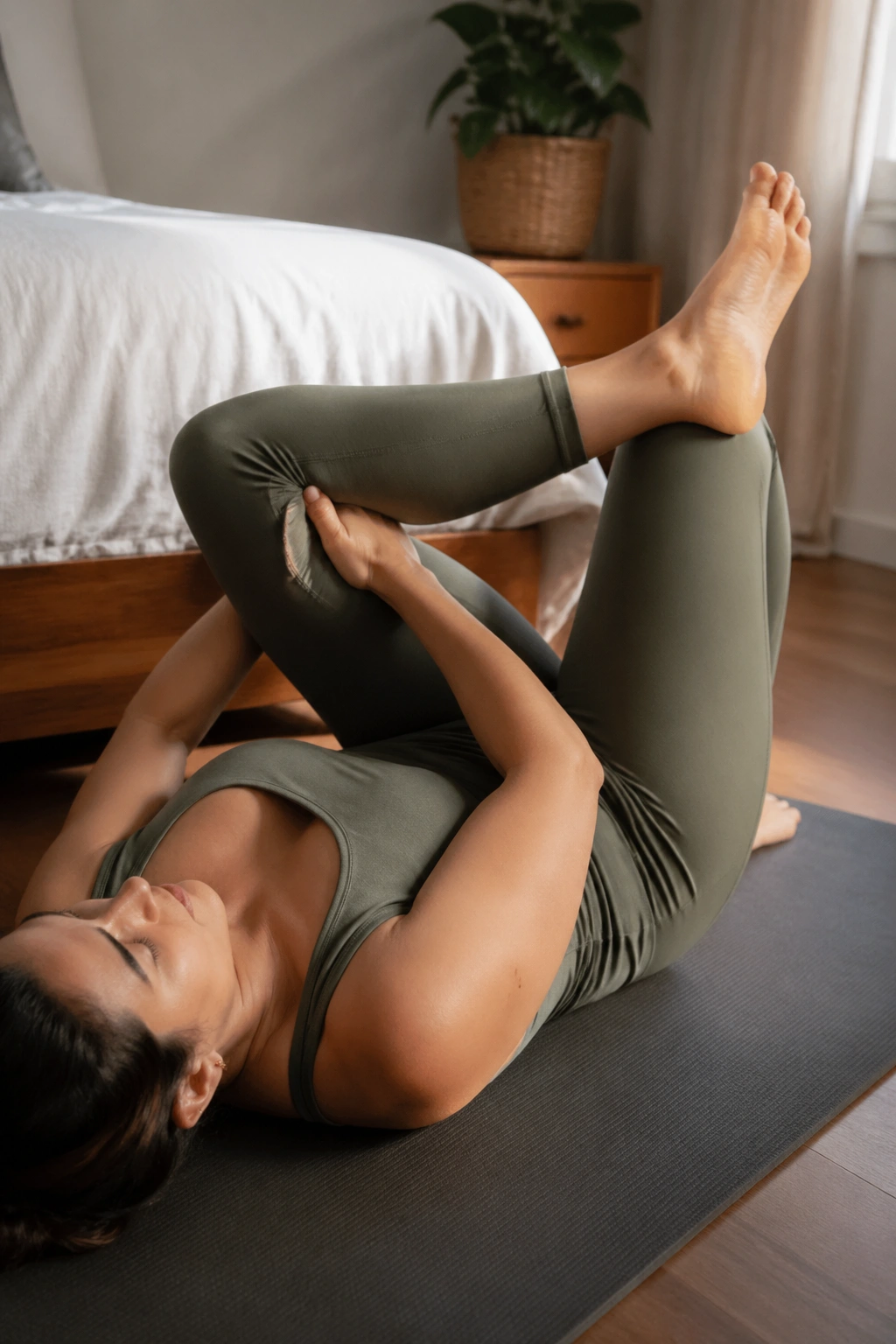
Figure-Four Stretch is the simpler cousin of pigeon, and that makes it a better daily habit for a lot of bodies. It stays on your back, which means less balance drama and fewer reasons to skip it.
Lie on your back, cross one ankle over the opposite thigh, and draw the bottom leg toward you. Flex the crossed foot to protect the knee. You should feel the stretch in the outer hip and glute on the crossed-leg side. If it feels too strong, move the bottom foot farther away or keep the hands behind the thigh instead of the shin.
Why I Reach for This One
- Easy to do after standing poses
- Friendly on tight hips
- Good on days when kneeling feels rough
- Simple to adjust without losing the shape
This is a strong choice for people who sit a lot or run often. It gives the glutes a direct, manageable stretch without asking your body to arrange itself like a pretzel.
18. Supine Twist
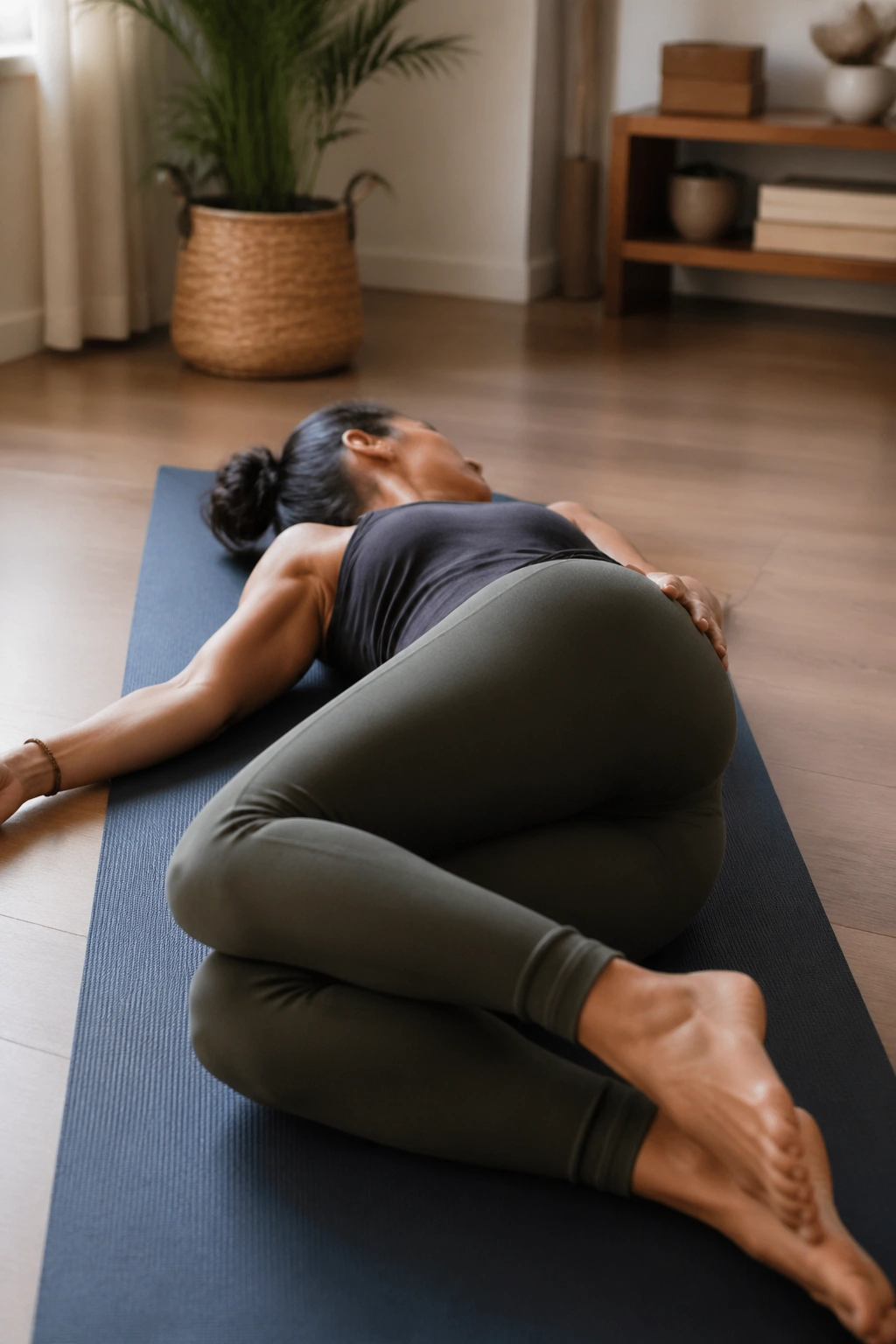
A Supine Twist feels like a reset button, especially after all the standing work and hip opening above it.
Lie on your back, draw one knee across the body, and let it fall toward the floor while keeping both shoulders heavy. You can stretch the opposite arm out to the side and turn your head away if that feels comfortable. If the knee doesn’t reach the floor, place a blanket or pillow under it. No need to force the twist deeper than the breath can support.
The useful part here is the slow release through the spine and outer back. It often feels best after the rest of the sequence has already done some work. Think of it as the exhale after the exhale.
Stay for five breaths on each side. If the shoulder lifts or the neck tightens, reduce the twist. Smaller is usually smarter here.
19. Happy Baby
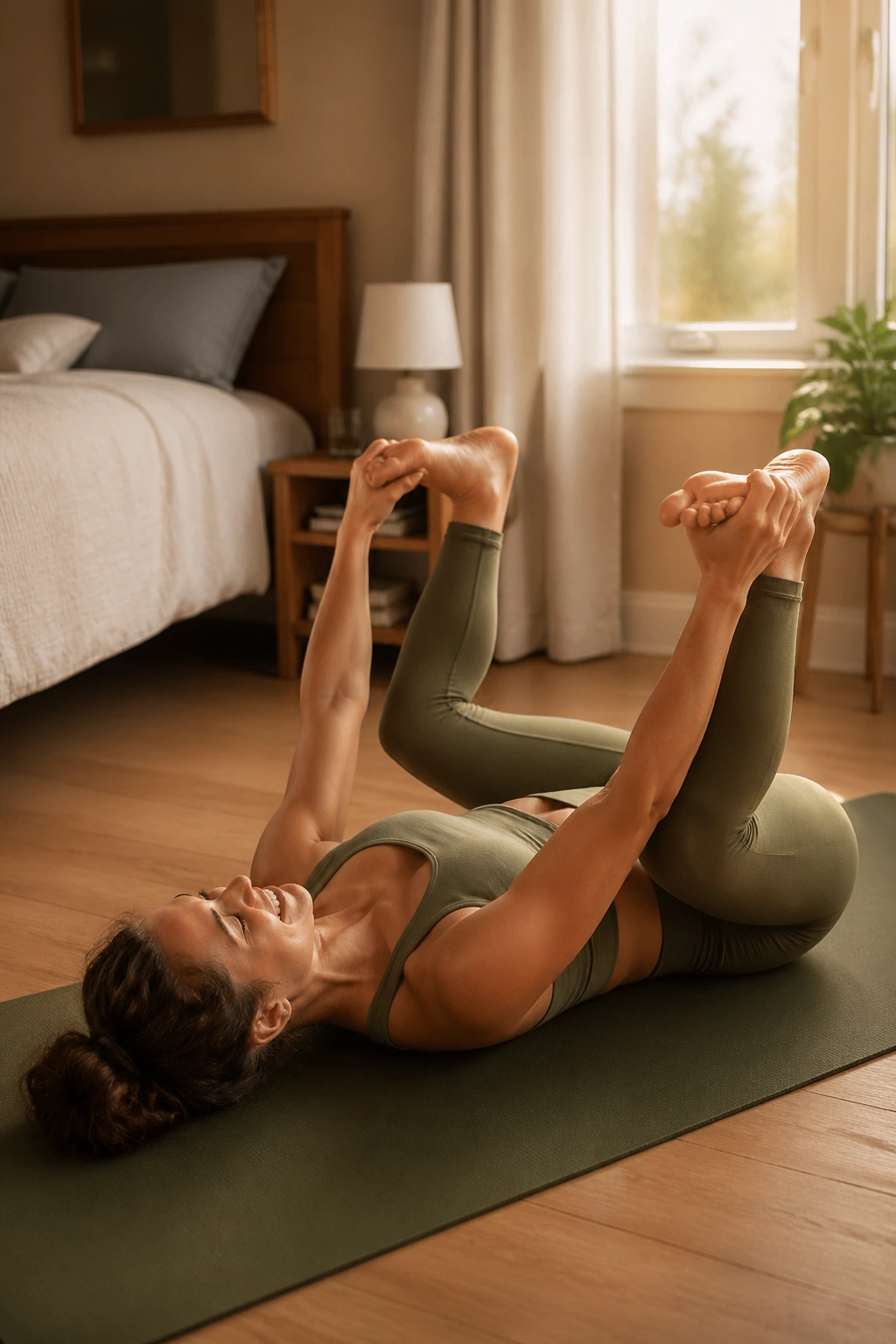
Happy Baby looks playful, but it can turn into a hamstring tug-of-war if you’re not careful.
Lie on your back and grab the outer edges of your feet or the backs of your thighs. Bend the knees toward the armpits, keep the tailbone heavy, and let the sacrum settle into the mat. The shins can be vertical, or you can hold one leg at a time if that feels calmer.
What to Watch For
- Don’t yank the knees downward
- Keep the feet flexed if the ankles feel vulnerable
- Relax the shoulders before pulling harder
- Breathe into the back ribs, not the chest only
This pose belongs near the end of a daily routine because it loosens the hips without demanding much effort. If it feels more like strain than release, ease off immediately. That’s the whole rule.
20. Legs Up the Wall
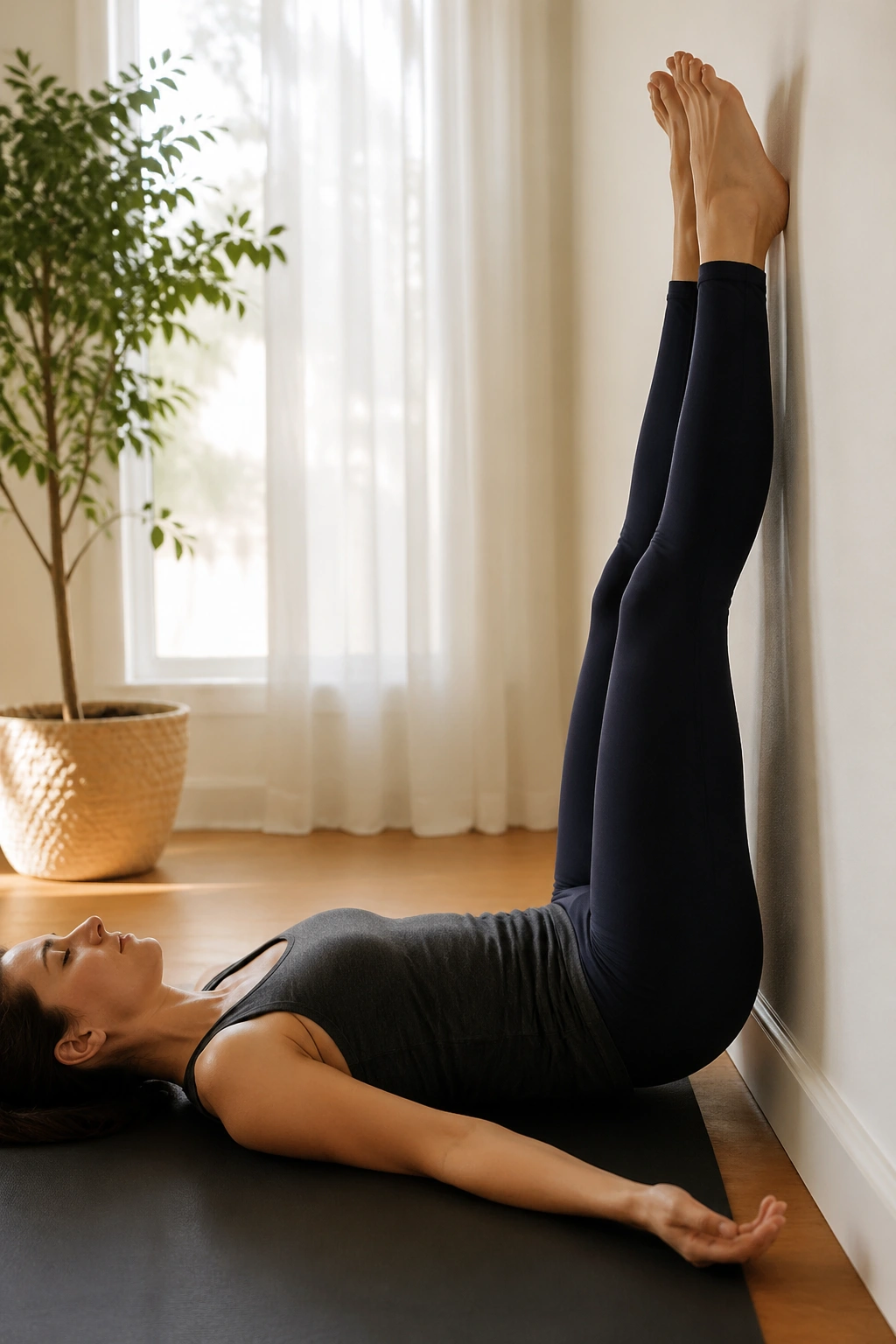
Legs Up the Wall is the kind of pose people skip because it looks too easy. Which is exactly why it belongs.
Sit sideways with one hip near a wall, swing the legs up, and lie back with the spine on the floor. You can keep the hips a few inches from the wall if that feels better for your hamstrings or lower back. Arms can rest by your sides, hands on the belly, or elbows bent like a lazy little frame.
This is one of the best finishing shapes in a daily routine because it asks almost nothing and gives back a lot of calm. After standing, balancing, folding, and backbending, being still with the legs elevated can feel almost suspiciously simple. It isn’t. It works because the body gets to stop trying.
Stay for five to ten minutes if you have them. A folded blanket under the hips is optional, not required. Use it if it feels better, skip it if it doesn’t.
21. Child’s Pose
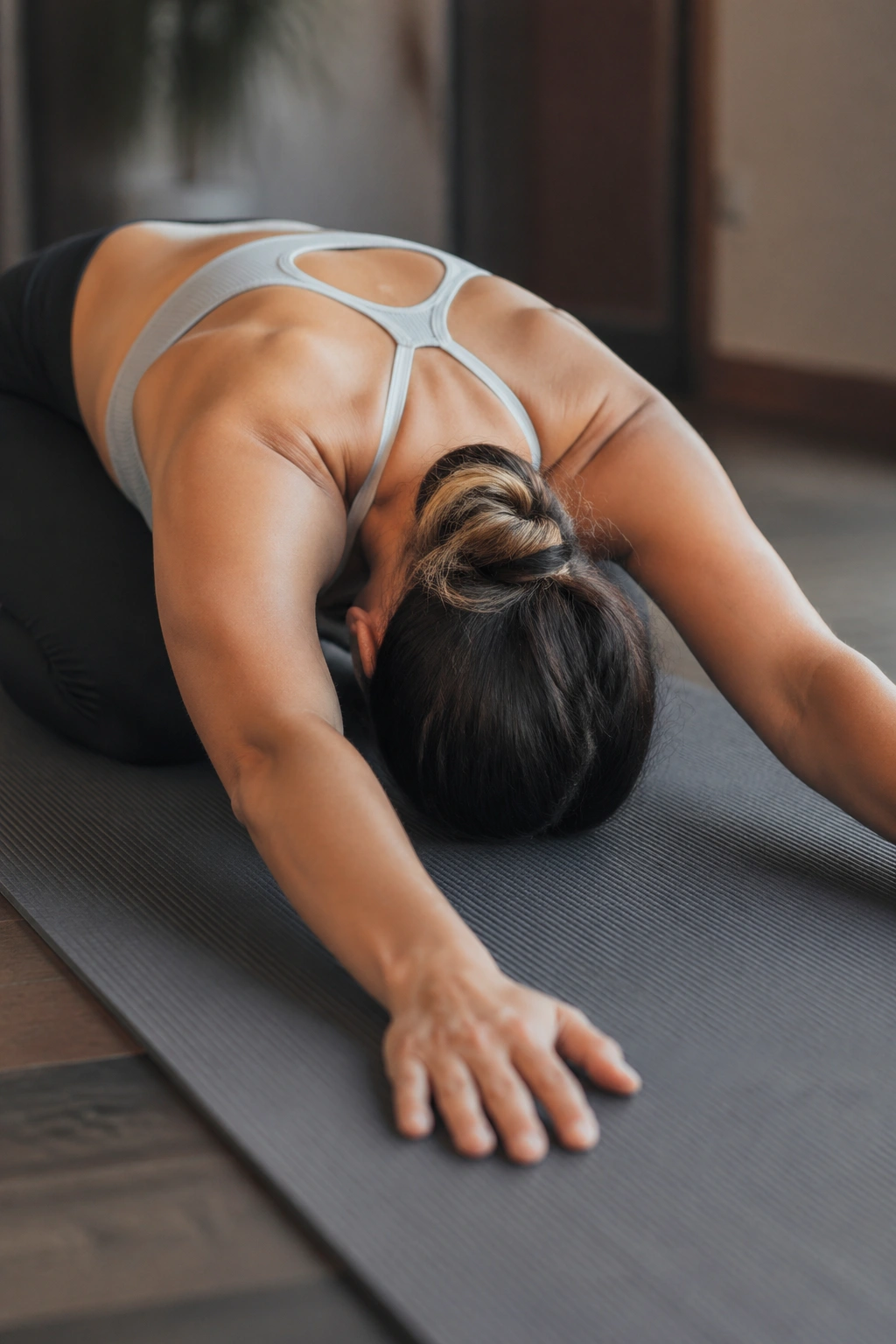
Child’s Pose is the pose you reach for when the day has already been loud and your body wants a quieter answer.
Kneel on the mat, bring the big toes together, and widen the knees if your belly or hips need room. Fold forward and rest the torso between the thighs, arms stretched ahead or tucked alongside the body. If the forehead doesn’t reach the floor, use a block, stacked fists, or a cushion. The shape should feel like a pause, not a test.
I like this pose in a daily routine because it gives you permission to stop without quitting. That sounds small. It isn’t. People stick with habits when the habit knows how to soften.
Take five to eight slow breaths here. If the knees feel crowded, widen them more. There’s no medal for keeping them close.
22. Savasana: The Quiet Finish
Savasana is where the routine stops trying to impress anyone. That matters more than people admit.
Lie flat on your back with the legs long and the arms a little away from the sides, palms up if that feels natural. Let the feet flop outward. Let the tongue drop. Let the eyes close or soften. If the low back feels strained, slide a rolled blanket under the knees. If the mind keeps running, don’t fight it. Just keep returning to the feeling of the floor under your body.
A daily practice that sticks needs an ending the body can trust. Savasana gives you that. It tells the nervous system the work is finished, and it does so without fanfare.
Stay for two to five minutes if time is tight, longer if the room is quiet and the body wants it. Leave the mat feeling like you could do the whole thing again tomorrow. That’s the trick, really.
