



Dancers live at a strange edge. Strong enough to throw a leg high, hold a turn, or sink into a deep plié, but tight enough that one skipped warm-up can make the hips feel welded shut. These 20 yoga poses for dancers to build flexibility are the ones worth keeping close because they target the places that actually limit movement — calves that fight a clean landing, hip flexors that pinch in arabesque, hamstrings that tug in développé, and upper backs that refuse to open when the arms go overhead.
Flexibility without control is a bad deal. The body can always be yanked into a shape. That does not mean it’s useful on stage or in the studio. What dancers need is range that shows up cleanly, with balance still intact, and with enough strength around the joints that the shape can be repeated without gritting your teeth. So the goal here is not to chase the deepest stretch in the room. It’s to build usable length.
A good sequence mixes standing work, floor work, gentle backbends, and a few recovery poses that let the nervous system downshift. Some of these will feel immediate. Some will feel stubborn for a while. Fine. That’s normal. Start with the shape that opens the back line of the body and reminds the feet and shoulders how to share the load.
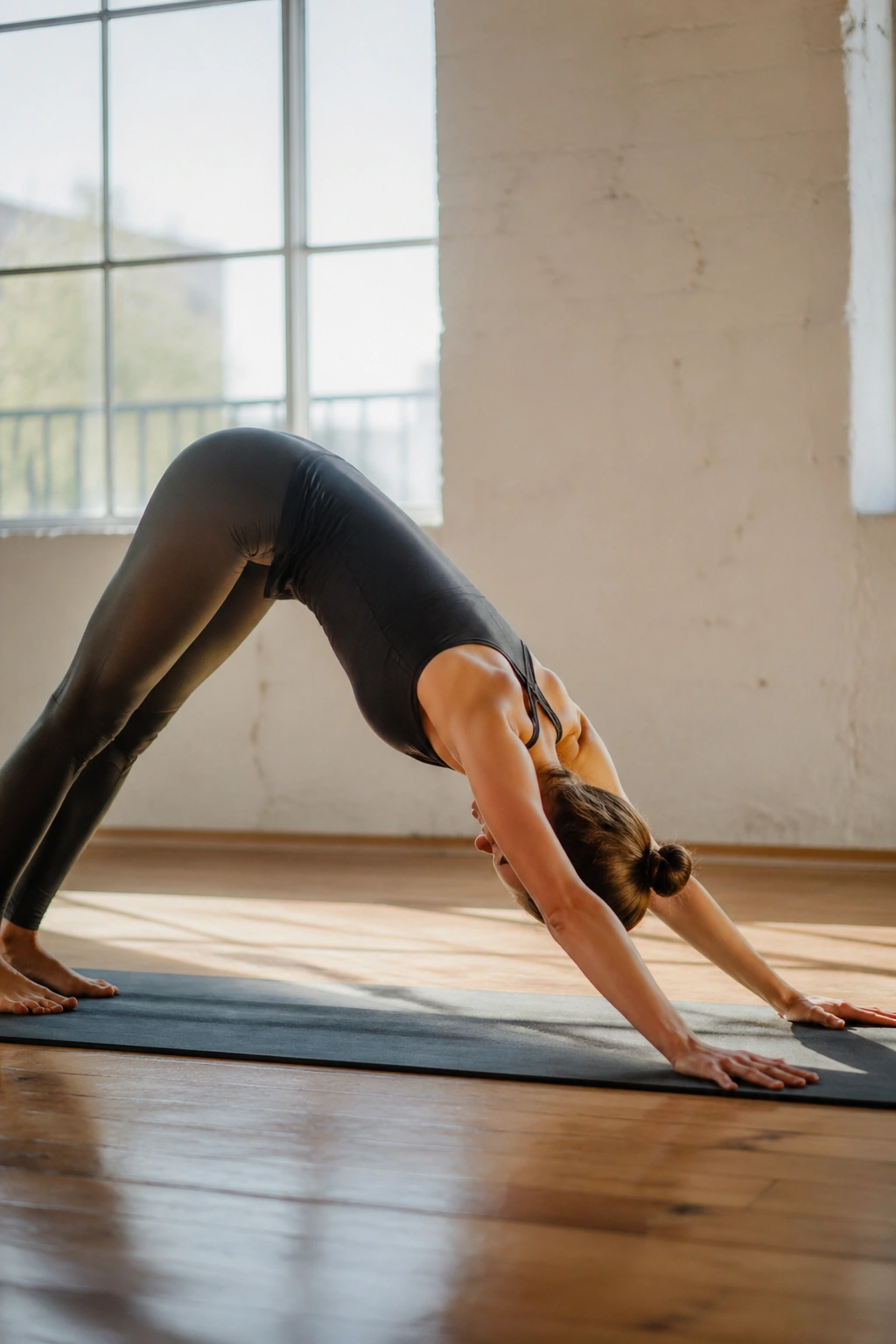
1. Downward-Facing Dog
Downward-Facing Dog looks basic until you hold it for half a minute and notice how much is happening. The calves lengthen, the hamstrings wake up, the shoulders press, and the spine gets long without needing drama. For dancers, that matters because the pose gives you a full-body reset without flattening everything into the floor.
Why dancers feel it in the right places
Keep your hands shoulder-width apart and your feet about hip-width apart, then press the floor away so the shoulder blades spread across the upper back. That little action helps the lats open and takes some strain off the neck. If your heels do not touch the mat, do not force them. Bend the knees a little and aim the tailbone up instead.
- Pedal the feet slowly to wake up the calves.
- Keep the ribs from flaring forward.
- Let the head hang heavy rather than craning the neck.
- Slightly bend one knee, then the other, if the hamstrings are pulling hard.
Pro tip: hold for 5 to 8 slow breaths after jumping, turning, or any session that leaves the back body feeling tight.
2. Low Lunge
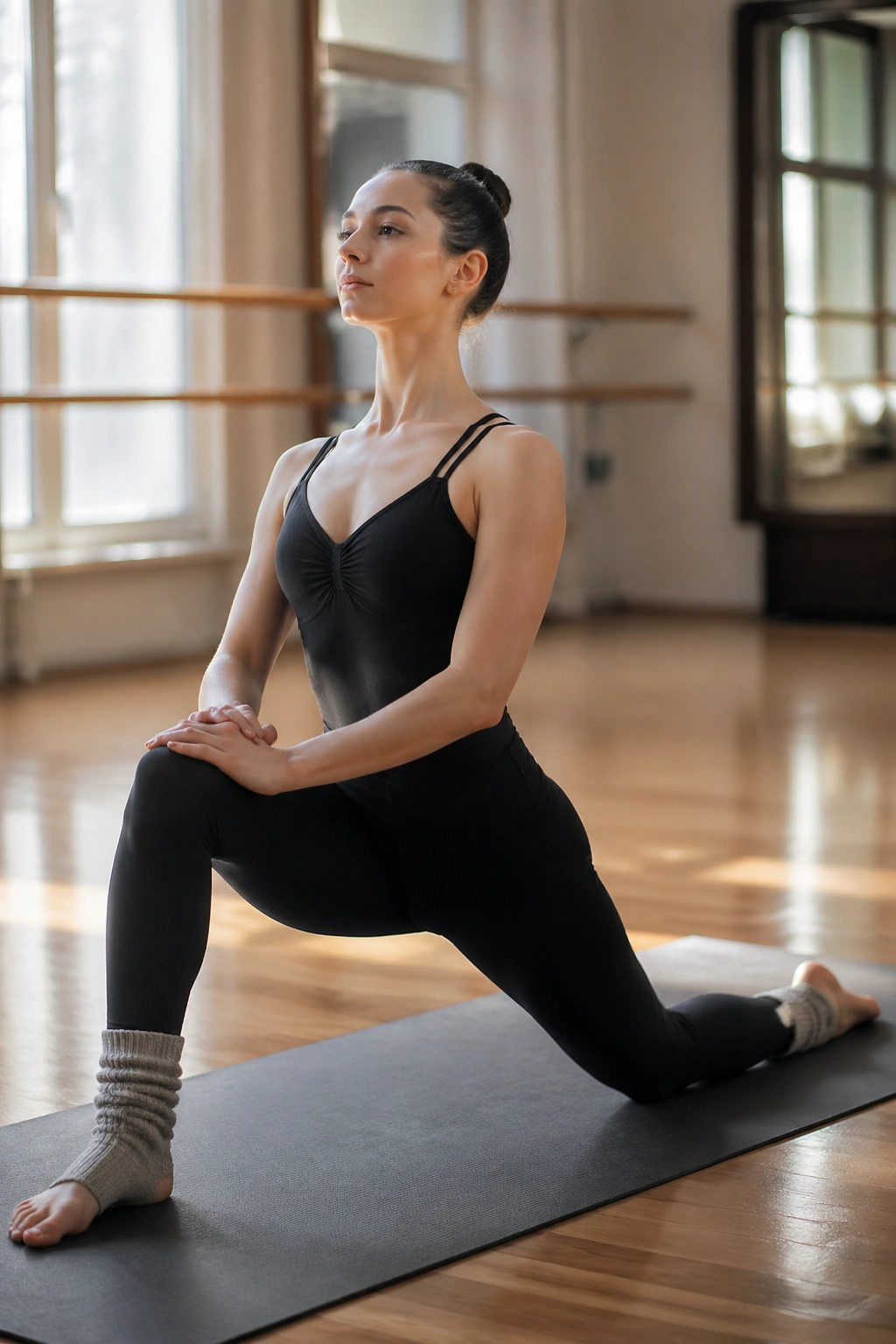
If your hip flexors lock up, your lines show it fast. Low Lunge is one of the cleanest ways to open the front of the back leg without asking the body to do too much at once. It stretches the psoas, the quads, and the deep tissue across the front of the hip, which is exactly where a lot of dancers carry hidden tension.
Set the back knee down, stack the front knee over the ankle, and bring the pelvis forward only until the stretch lands in the right place. Too much forward push turns the pose into a low-back compression exercise. No one needs that.
A small, gentle tuck of the tail can help you find the front of the back hip, but don’t jam the pelvis under hard. Think length, not squeeze. Hands can stay on blocks if the spine wants more space. That usually helps people breathe more evenly, and breathing is half the work here.
3. Crescent Lunge
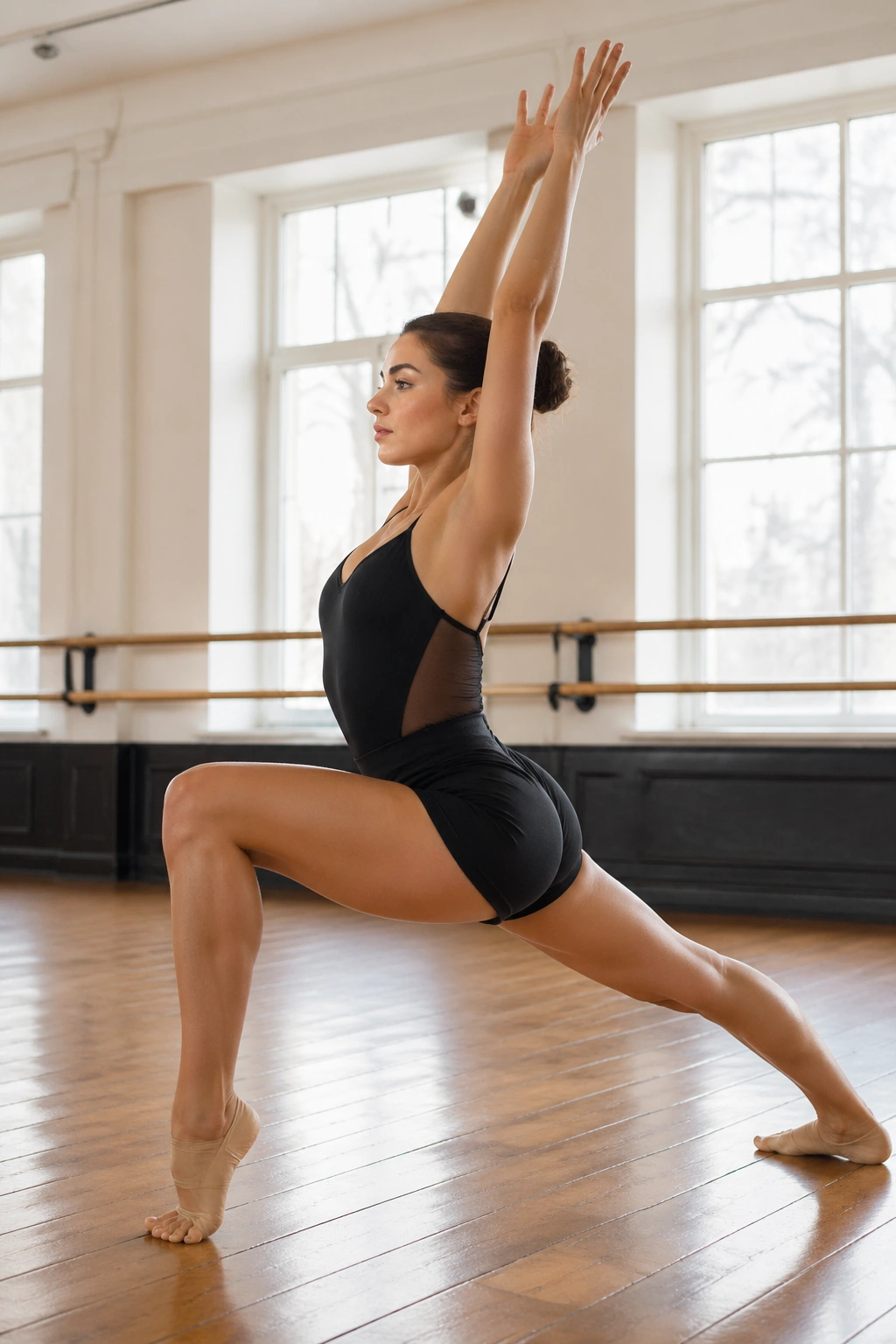
Why keep the back knee lifted? Because the stretch becomes active instead of sleepy. Crescent Lunge asks the back leg to stay awake while the front hip opens, which is useful for dancers who need flexibility that can hold up under load. It’s a hip flexor stretch, yes, but it also teaches the standing leg to organize itself.
How to use it
Lift from the lower belly, reach the arms overhead, and keep the front knee bent enough that you can breathe without clenching your jaw. If the pelvis tips forward and the low back takes over, shorten the stance a little. That small adjustment usually changes everything.
- Press through the back toes.
- Keep the front knee tracking over the middle toes.
- Draw the ribs in without collapsing the chest.
- Stay for 3 to 5 breaths on each side.
The pose feels especially useful before center work. It wakes the legs up, opens the front body, and reminds the body that range is not only something you sink into. Sometimes it needs to be held upright.
4. Lizard Pose
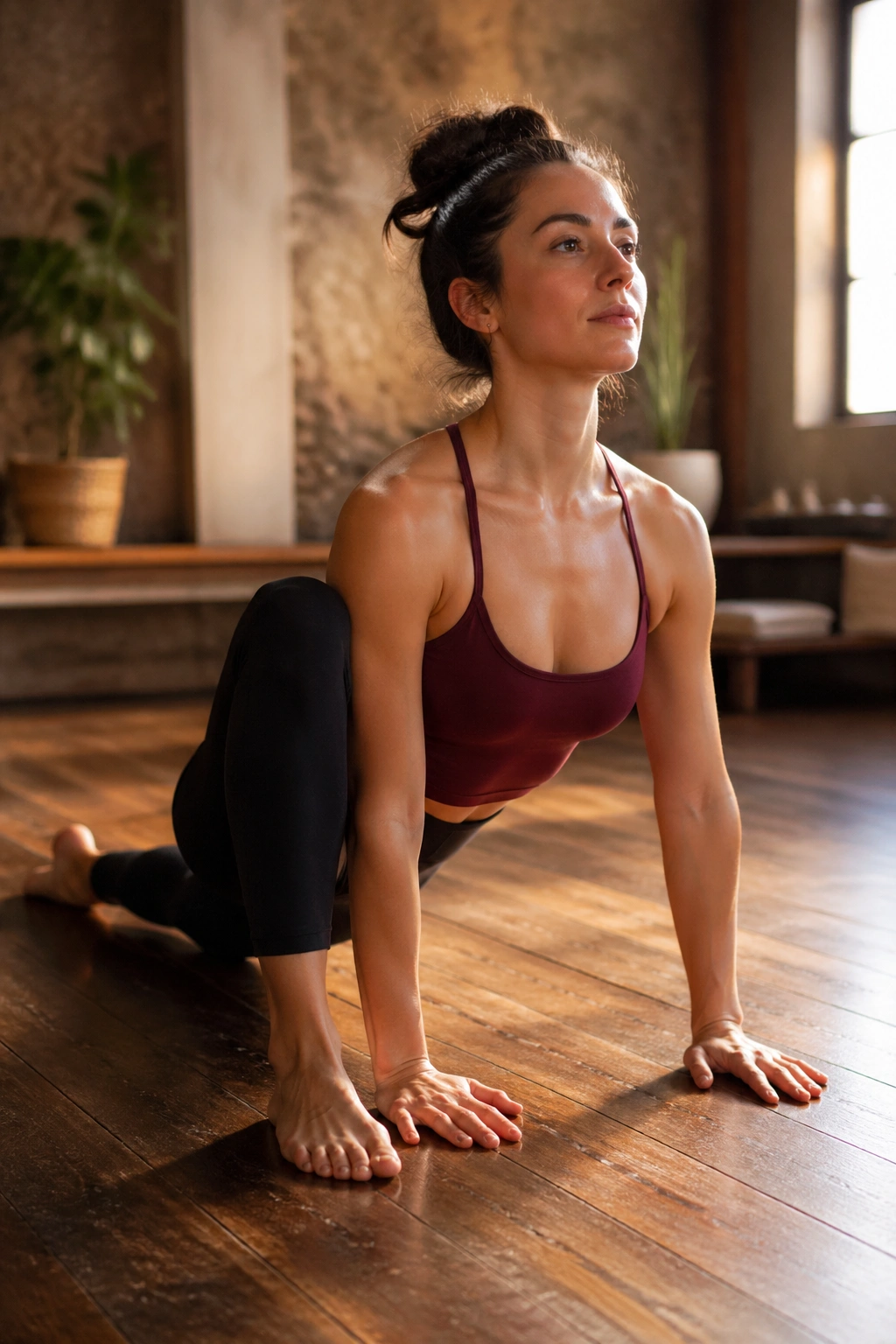
After rehearsal, this is the shape that makes tight hips feel less boxed in. Lizard Pose goes after the groin, the inner thighs, the hip flexors, and the outer hip all at once, which sounds intense because it is. That’s also why it works so well for dancers who spend a lot of time turned out, lifted, and rotating through the hips.
Set the front foot outside the hands, lower the back knee if needed, and use blocks under the forearms or hands so the chest does not cave. The lower you go, the more the body wants to dump into the joints. Resist that. Keep the pelvis honest.
What makes it useful after rehearsal
A folded blanket under the back knee can save the kneecap from complaining later. If the front hip feels jammed, stay high on the hands and let the breath do more of the work than the depth of the pose.
Good rule: if the stretch is landing in the knee, back out a little and change the angle. The hip should do the stretching.
5. Half Split
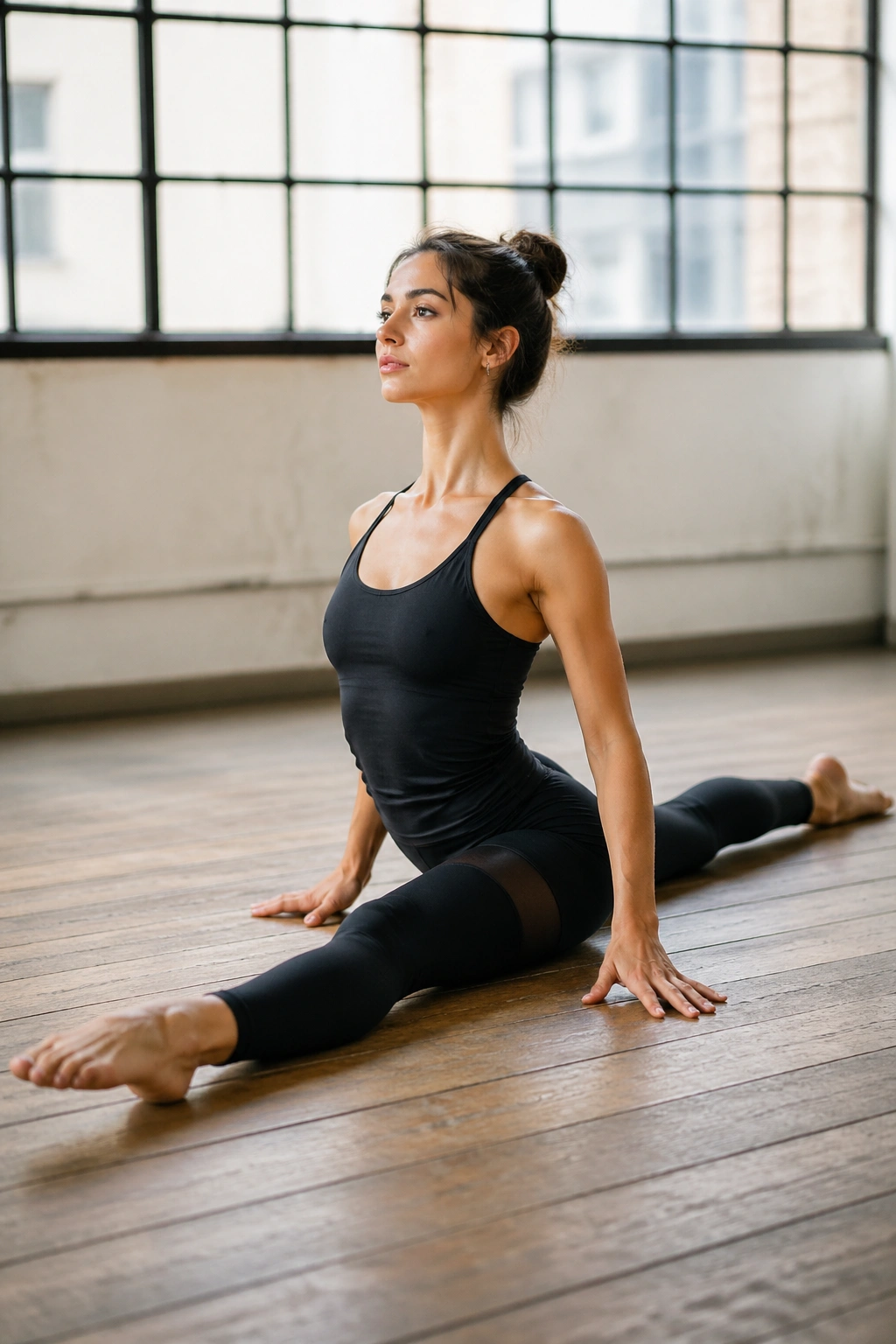
Half Split is not about touching the floor with your chest. That’s the mistake people make when they rush it. The real value is in teaching the hamstrings to lengthen while the hips stay square, which is much closer to what dancers need in a line than a sloppy fold with twisted pelvis.
Start from a low lunge, shift the hips back, and straighten the front leg only as much as the back of the thigh will allow. Flex the front foot hard. That matters. A pointed foot changes the feel completely and can trick you into thinking you’ve gained more range than you actually have. Keep the spine long first, then fold from the hips.
If the stretch bites behind the knee, bend the front knee a little and try again. The goal is a strong line from the sit bones to the heel, not a competition with the mat. This pose rewards patience. It usually feels better on the second breath than on the first.
6. Pyramid Pose
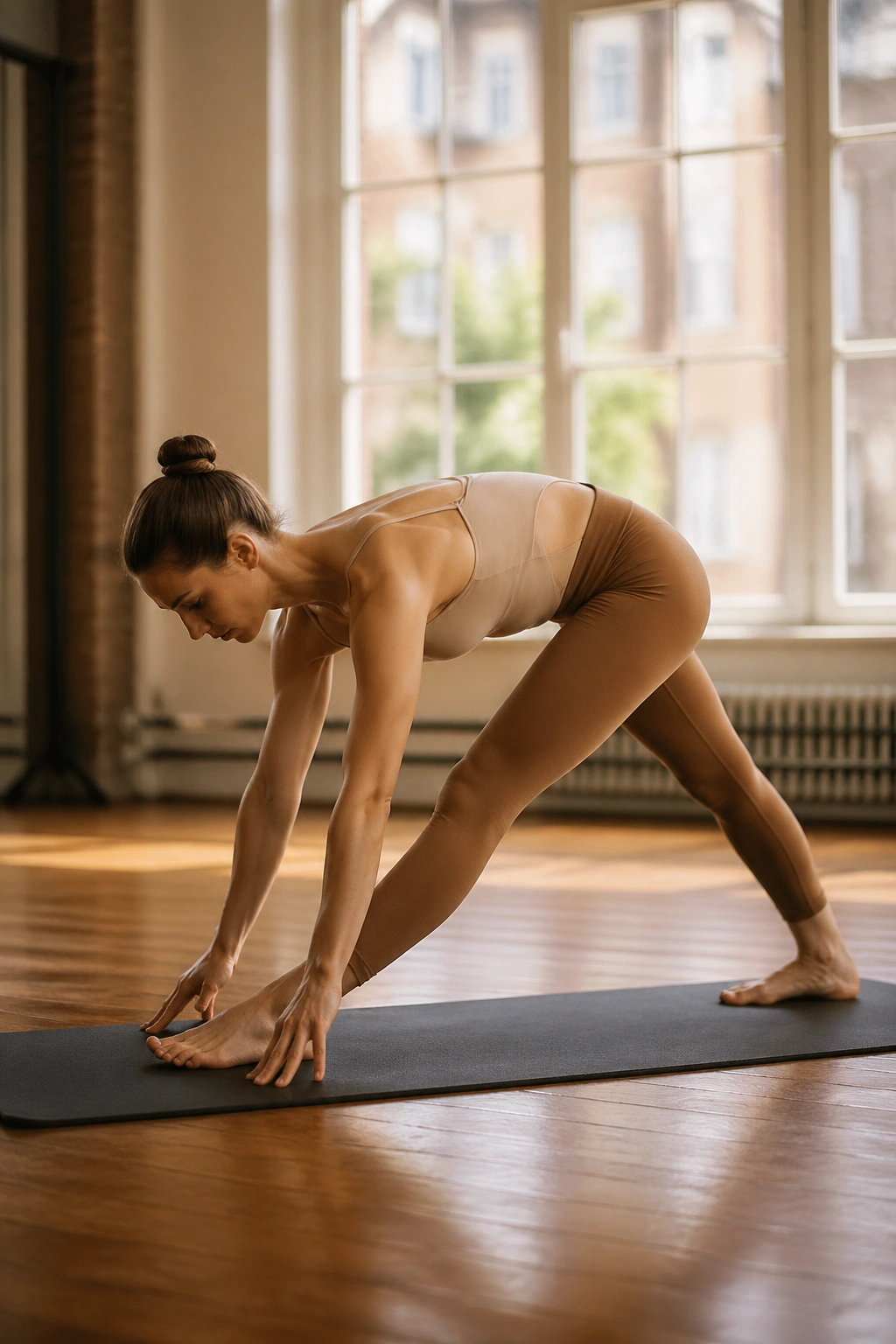
A lot of dancers fold forward and call it a hamstring stretch. Pyramid Pose is cleaner than that. It asks for a narrow stance, a long spine, and a very honest stretch through the back leg without collapsing the torso. The result is more useful than a loose, rounded fold because the body has to organize itself while lengthening.
Set the front heel and back heel in a stable line, then square the hips as much as your anatomy allows. Do not force a perfect square if the pelvis rebels. A tiny bend in the front knee is smarter than locking the joint and yanking the hamstring from the wrong angle.
This pose also reaches into the calves and the back of the ankle, which dancers tend to forget until relevé or landing mechanics remind them. Use blocks under the hands if the chest is diving and the lower back is taking the brunt. Clean alignment beats depth every time.
7. Standing Forward Fold
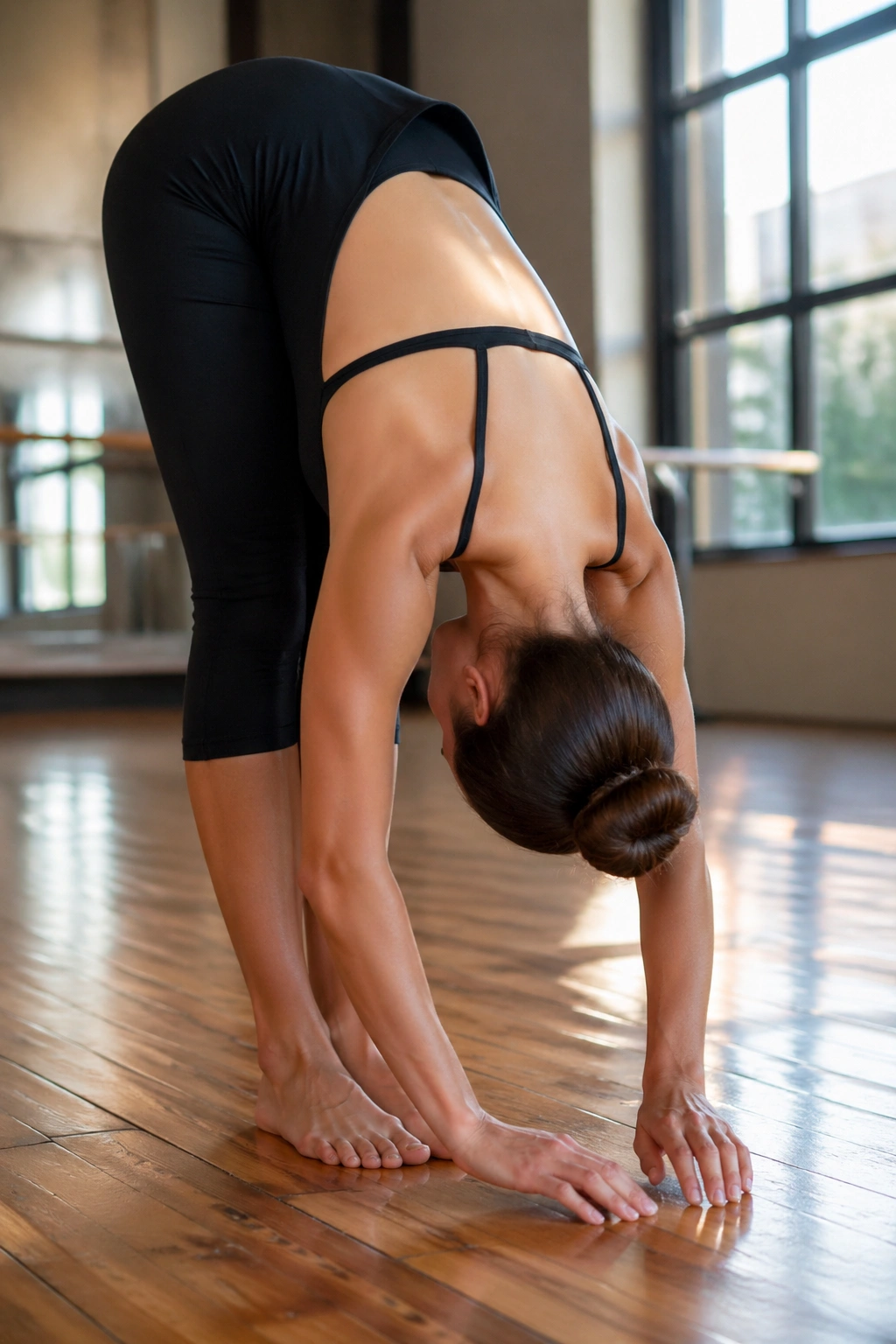
When your head hangs below your heart, the whole back line gets a chance to soften. Standing Forward Fold is one of the simplest ways to decompress the spine, loosen the hamstrings, and give the calves a long exhale. It also carries over well to dance because it teaches control in a position that can easily become sloppy.
Feet can stay hip-width apart if that helps the lower back release. Let the knees bend more than you think if the hamstrings are stubborn. That bend is not cheating. It makes the stretch land where it should instead of pulling the pelvis out of place.
A useful variation is to hold opposite elbows and sway gently from side to side for a few breaths. Another is to keep the fingertips on blocks and let the crown of the head aim toward the floor without forcing contact. The body often opens better when the demand is smaller. Funny how that works.
8. Wide-Legged Forward Fold
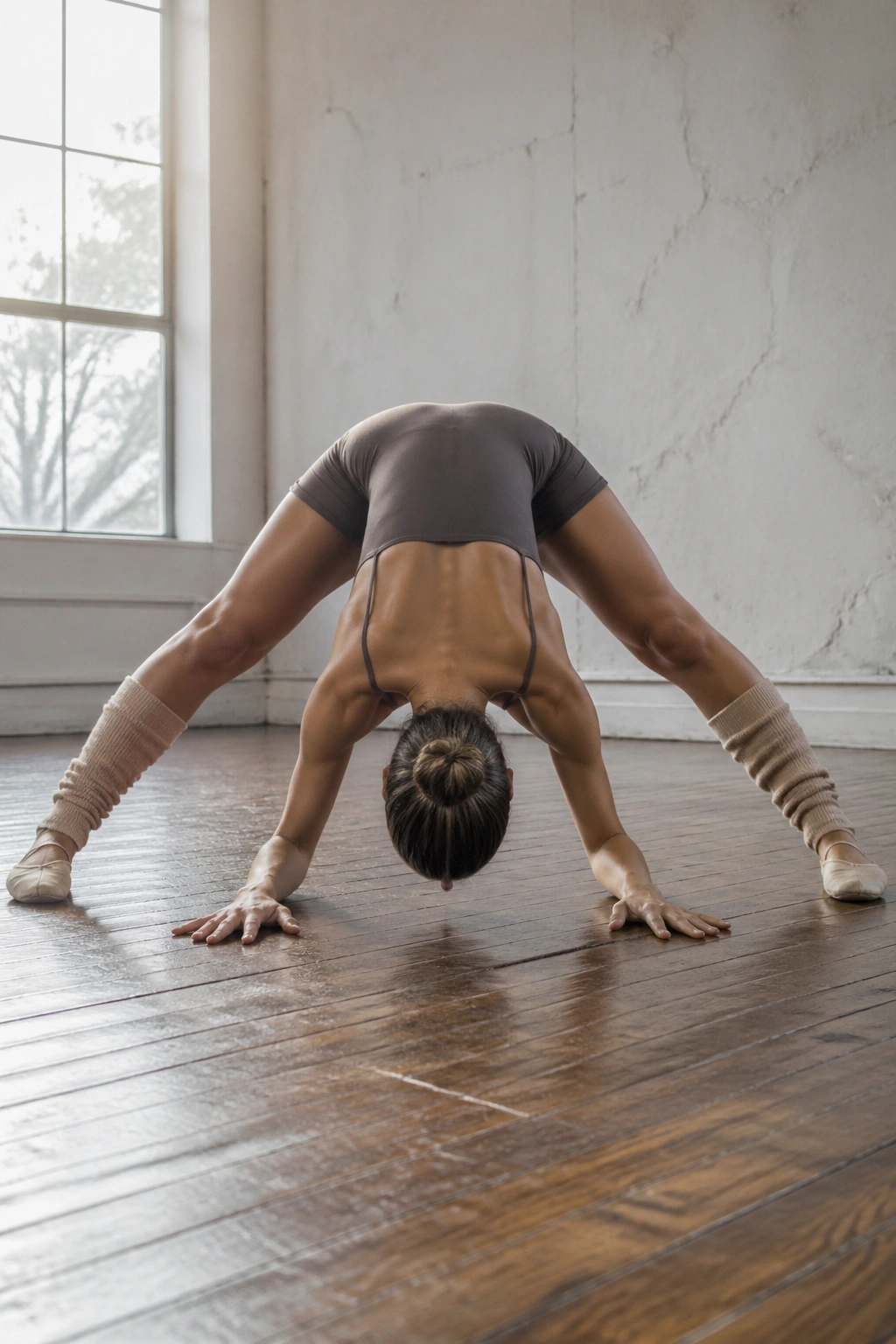
The inner thighs are often the missing piece. Wide-Legged Forward Fold reaches the adductors, the hamstrings, and the side body all at once, which makes it a strong choice for dancers who need open second-position work or smoother side extensions. It also gives the spine a different kind of length than a narrow fold.
Set it up right
Stand with the feet wide but not cartoonishly wide. There’s no prize for going too far. Turn the toes slightly in or leave them parallel, then hinge from the hips before the torso drops. If the lower back rounds immediately, bring the stance in a little closer.
- Place the hands on blocks if the floor is far away.
- Keep a soft bend in both knees if the inner thighs are grabbing.
- Let the weight sit evenly through the outer and inner edges of each foot.
- Stay for 5 to 8 breaths and come up slowly.
This pose can feel calm and intense at the same time. That’s normal. The trick is to keep the neck soft while the legs work.
9. Bound Angle Pose
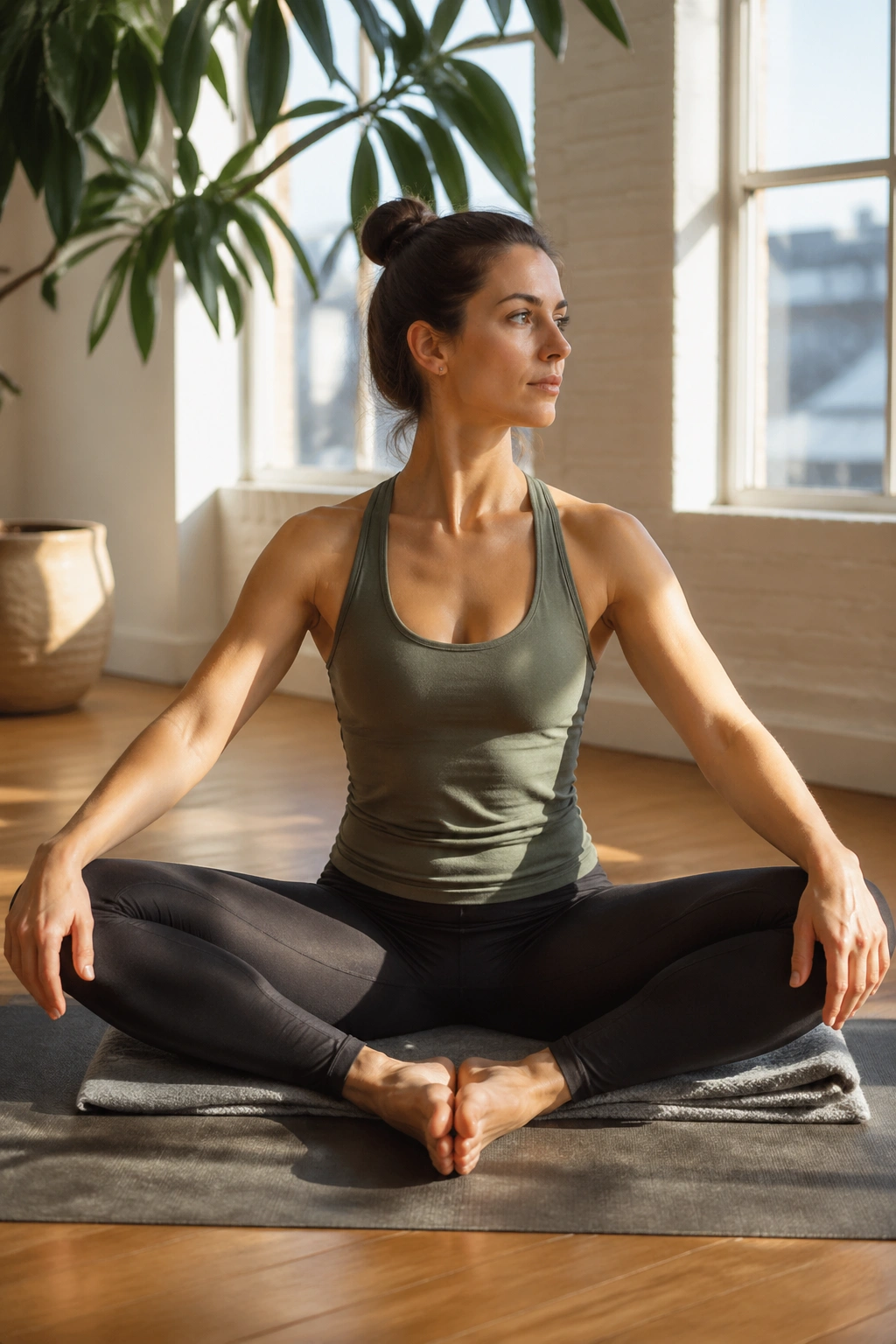
Bound Angle Pose is one of those positions that looks gentle and then surprises you. The soles of the feet come together, the knees open out to the sides, and the inner thighs get a long, steady release. For dancers, that matters because the groin and adductors often hold a quiet kind of tension that never really leaves the room.
Sit on a folded blanket or block if your pelvis tucks under. That little lift helps the spine stay tall and keeps the stretch from dumping into the lower back. Press the feet together lightly rather than muscling the knees toward the floor. The stretch should feel like it is opening from the hip sockets, not forcing the knees.
If you want more length, hinge forward from the hips with a long spine. If you want a lighter version, stay upright and breathe into the sides of the waist. Both versions have a place. One isn’t “better” just because it looks deeper.
10. Pigeon Pose
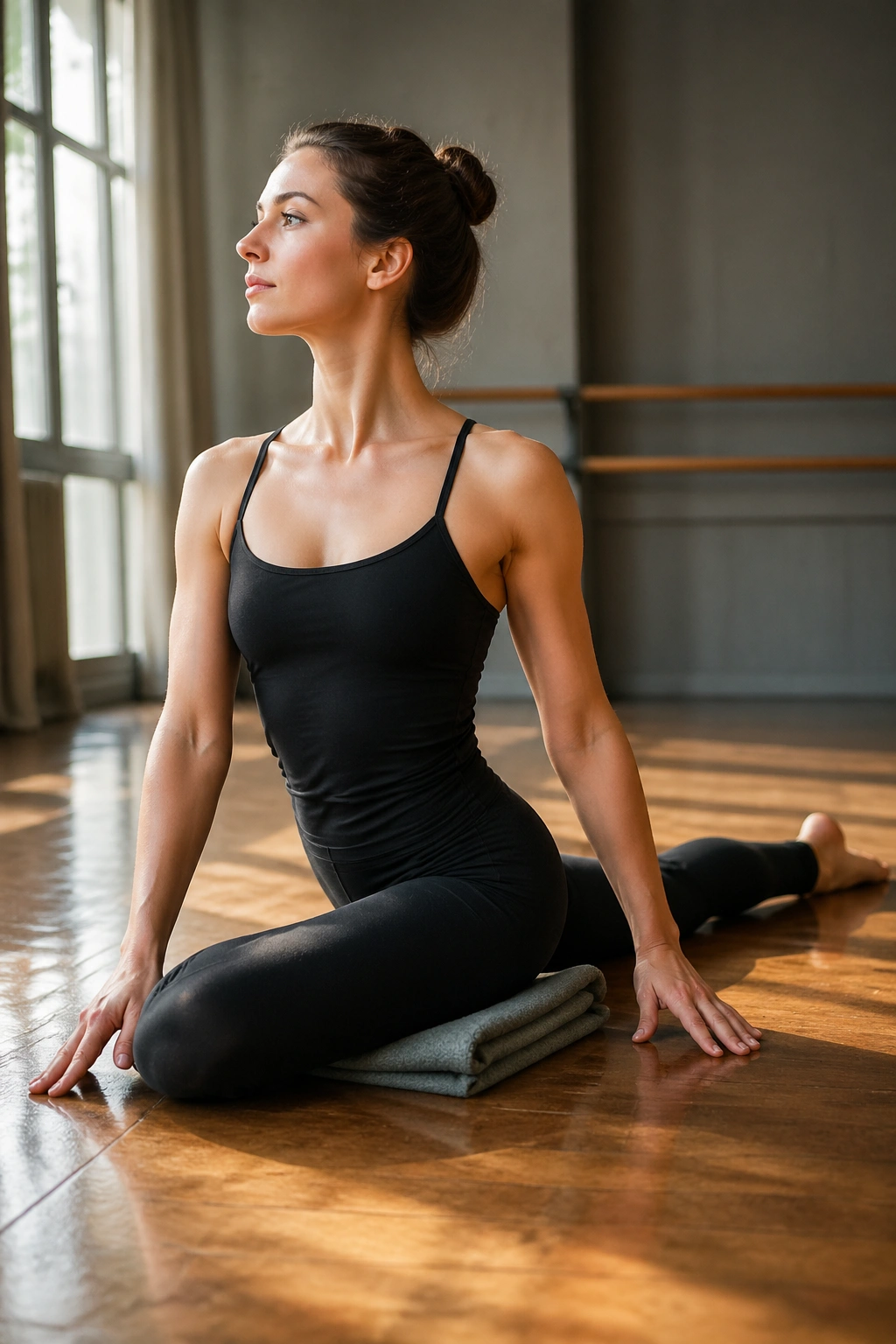
Pigeon Pose is the one many dancers love and many knees hate. It’s a deep opener for the glutes, piriformis, and the outer hip, which is useful after lots of turnout, floorwork, or repeated jumps. But it only helps if the setup is kind to the joint.
Keep the front shin at an angle that works for your hip. It does not need to be parallel to the front edge of the mat. A lot of people force that line and then wonder why the front knee feels sharp. A folded blanket under the front hip can make the pose far more workable, especially if one side is tighter than the other.
The back leg should stay long and quiet. Let the pelvis stay as square as possible without wrestling it into place. If the front knee feels pinchy or unstable, switch to a reclined figure-four instead. That swap is not a downgrade. It’s smarter practice.
11. Reclined Figure-Four Stretch
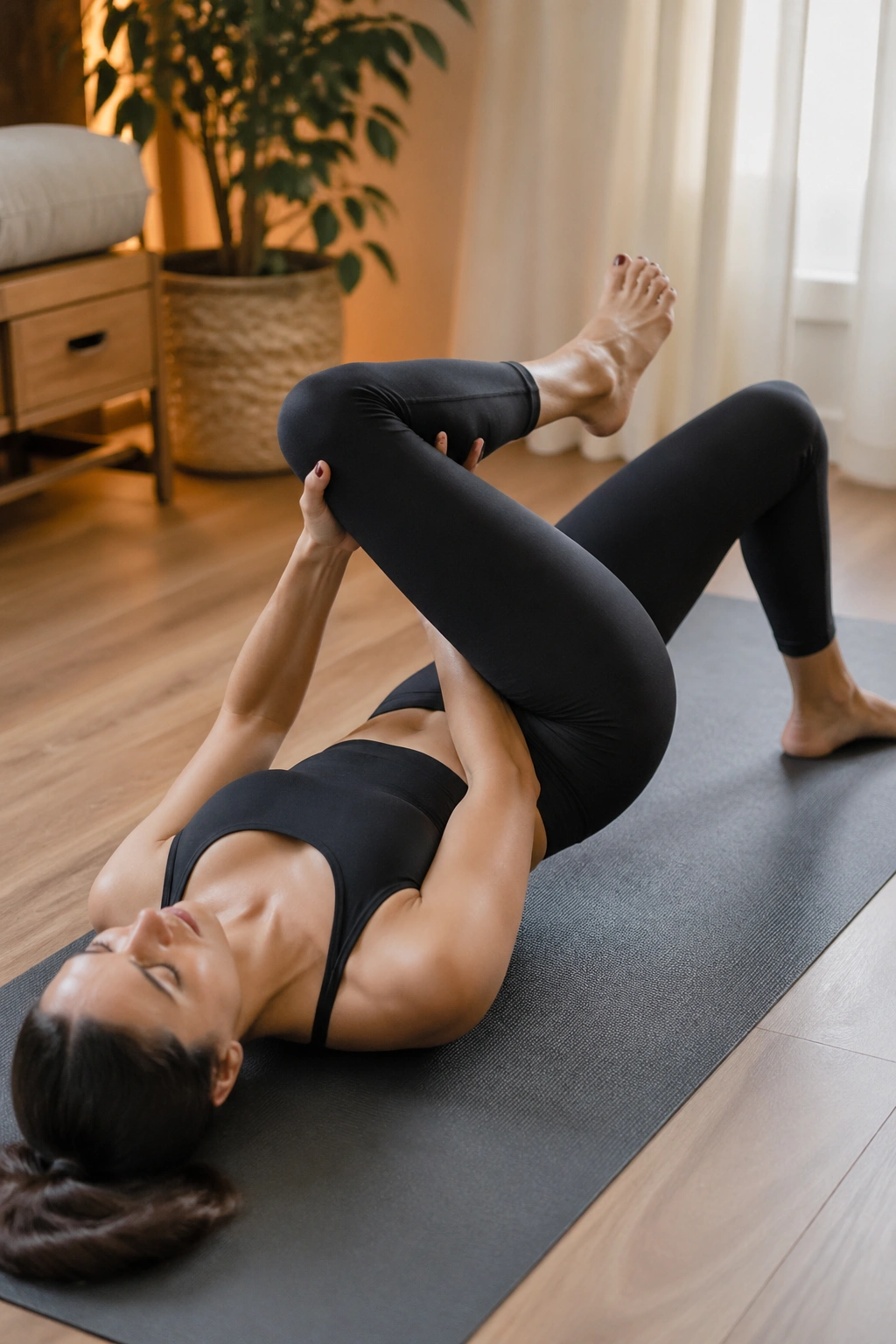
Want the same hip-opening benefit with less drama? Reclined Figure-Four Stretch is the answer. It works the same outer-hip area as Pigeon, but the back stays on the floor, so there’s less pressure on the knees and more control over how deep you go. For dancers with a touchy front knee, this can be the better choice.
Lie on your back, cross one ankle over the opposite thigh, and draw the supporting leg toward the chest. Keep the lifted foot flexed so the ankle stays active. That flex gives the stretch a clearer line through the hip instead of letting the foot go limp and stealing some of the sensation.
How to use it after rehearsal
Hold for 5 to 10 breaths on each side. If the lower back starts arching hard, lower the supporting leg a little and keep the tailbone heavy. A strap around the back thigh can help if the hands cannot reach comfortably.
This is the kind of stretch that feels boring in the best way. Quiet. Direct. Useful.
12. Frog Pose
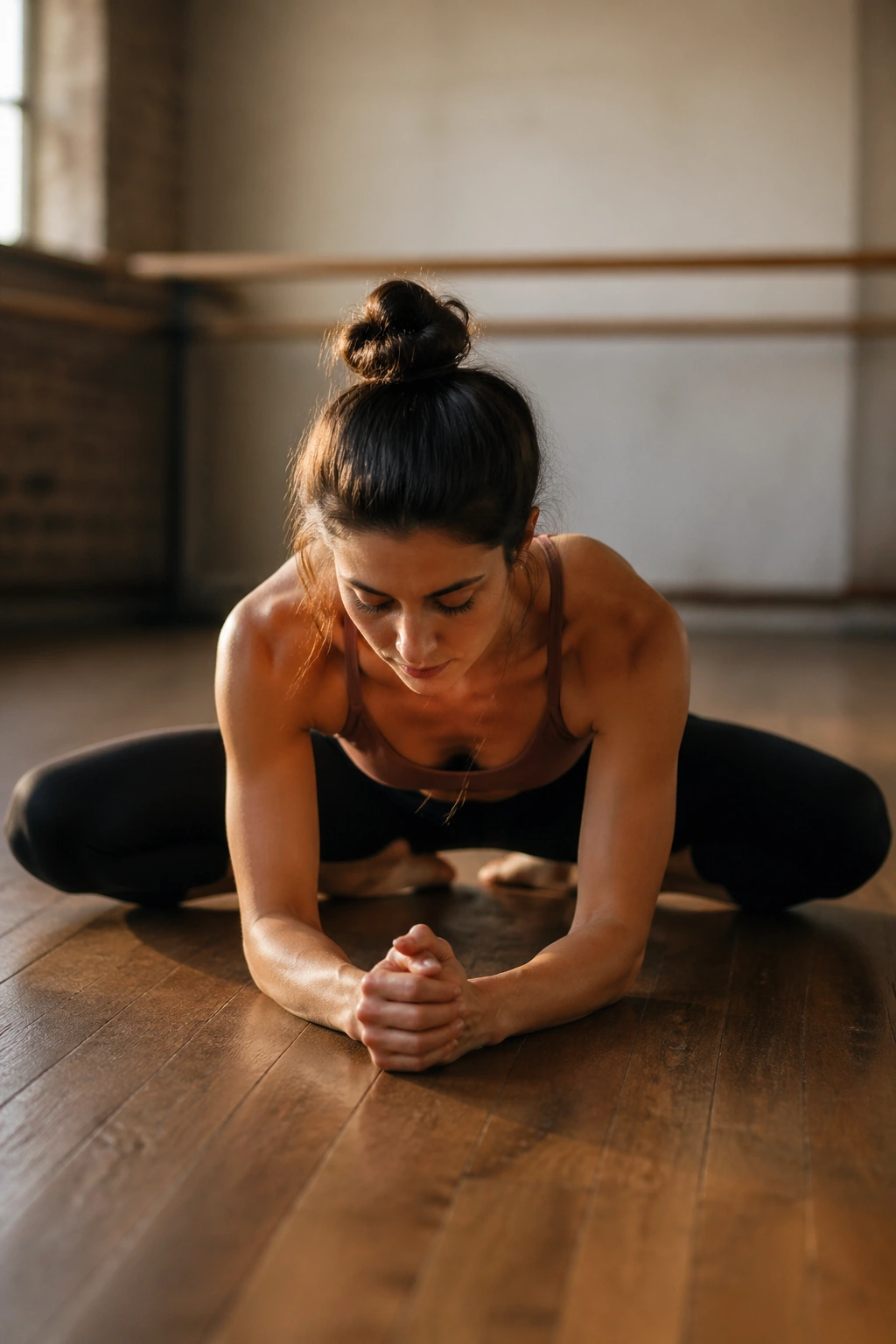
Frog is not a polite stretch. It goes straight at the inner thighs and groin, which makes it one of the strongest adductor openers in the whole sequence. Dancers who spend time in second position, grand plié, or wide directional work usually feel it fast.
Come down onto the forearms, bring the knees wide, and line the ankles up with the knees as closely as the body allows. If the hips are high and the groin is yelling, place a folded blanket under the knees or reduce the width. You do not need to sink into the deepest version to get a real stretch.
This pose is a better fit after a warm-up than at the start of a cold session. The tissues around the inner thigh can be stubborn, and they do not love being yanked. Breathe low and slow, and let the pelvis settle in tiny increments rather than in one big drop. That usually lands better.
13. Triangle Pose
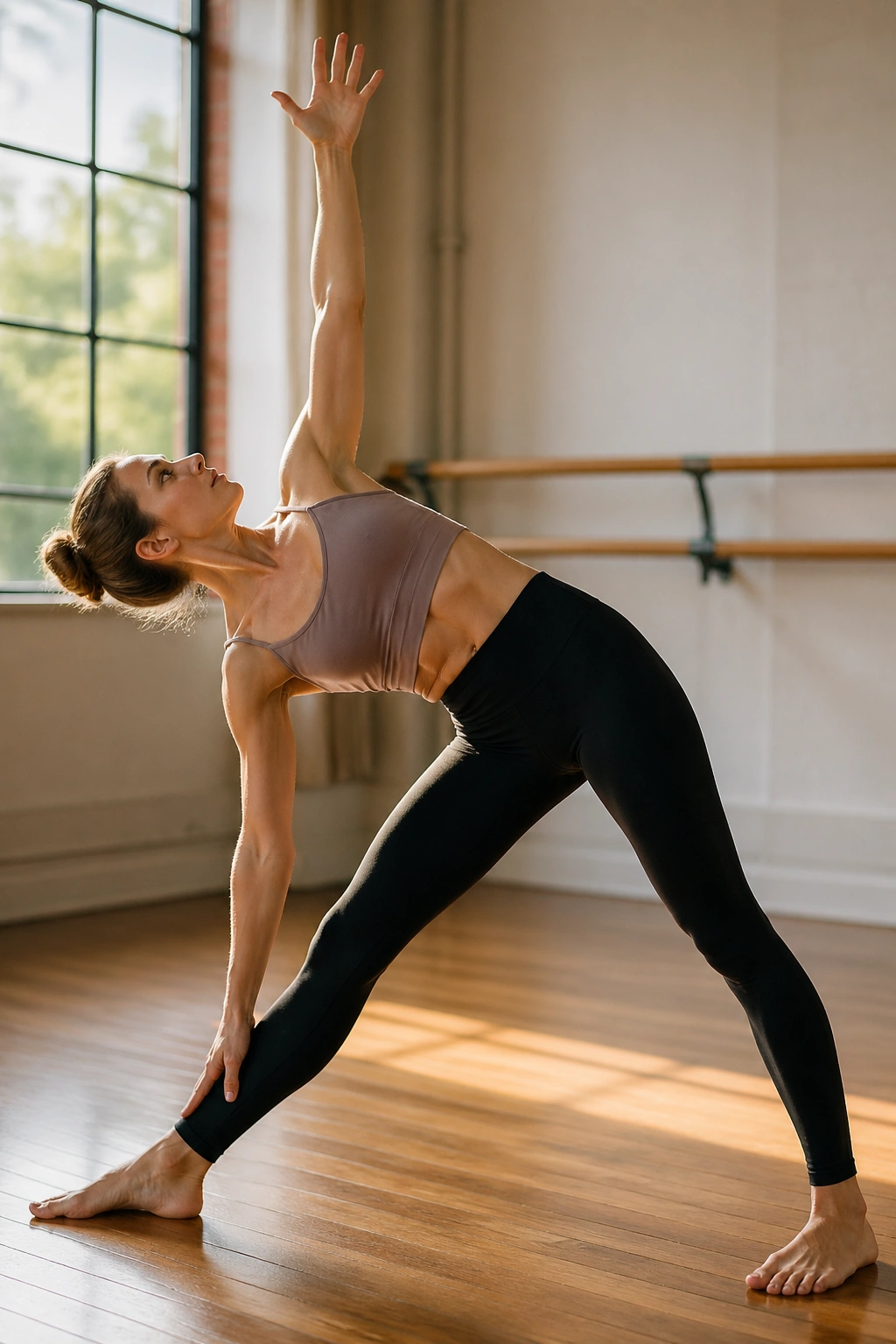
A clean Triangle Pose feels like a line being drawn from the back heel to the fingertips. It lengthens the hamstrings, opens the side waist, and gives the spine a long, elegant reach that dancers can actually use. The trick is to keep the torso long instead of collapsing toward the floor.
Set the feet in a wide stance, turn the front toes forward, and angle the back foot in slightly. Reach forward before tipping the torso down. That reach matters. It keeps the pose from turning into a side bend that cheats the hamstrings.
If the lower hand cannot reach the shin without rounding the back, use a block. Simple fix. No shame in it. The upper chest should stay open enough that the shoulders don’t cave forward. Triangle is more about space than depth, and that space is what gives the line its clarity.
14. Extended Side Angle
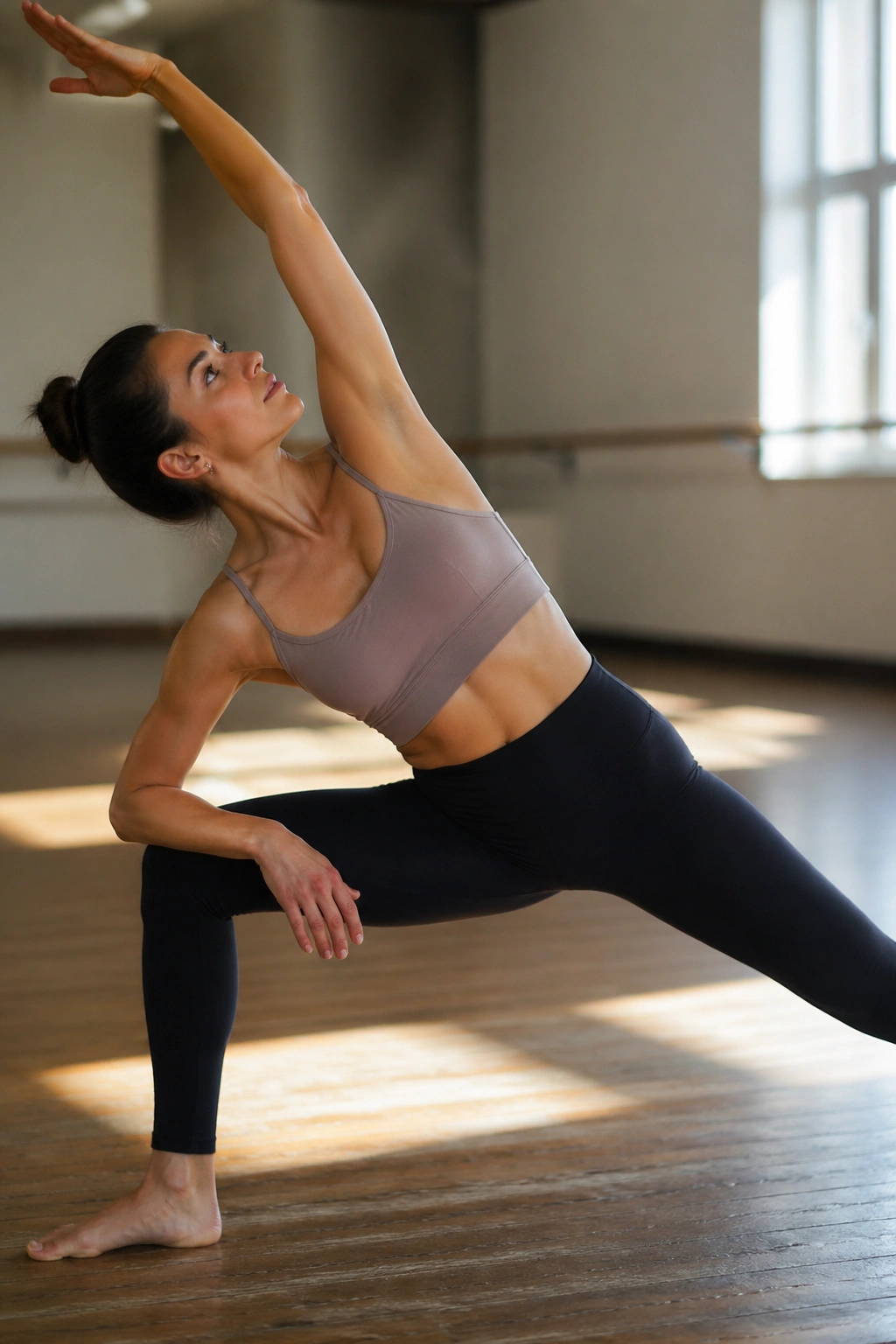
Why does this pose matter so much for dancers? Because it pulls together the side body, hips, and thoracic rotation in one shape. Extended Side Angle lengthens the inner thigh of the front leg while also asking the rib cage to open upward, which makes it a sneaky good stretch for anyone who spends too much time folded or curled.
Keep the front knee bent and the forearm resting on the thigh or a block if the floor feels too far away. The key is to keep the chest rotating open instead of dumping into the front hip. When the lower waist collapses, the pose loses half its value.
What to watch for
Don’t let the front knee drift inward. Don’t let the back foot spin open too much. And don’t treat the torso like a hinge with no spine. It’s better to hold a smaller, cleaner shape for 5 breaths than to contort into something dramatic and lose the line.
This one is useful before or after choreography that asks for long side reaches and torso twists.
15. Thread the Needle
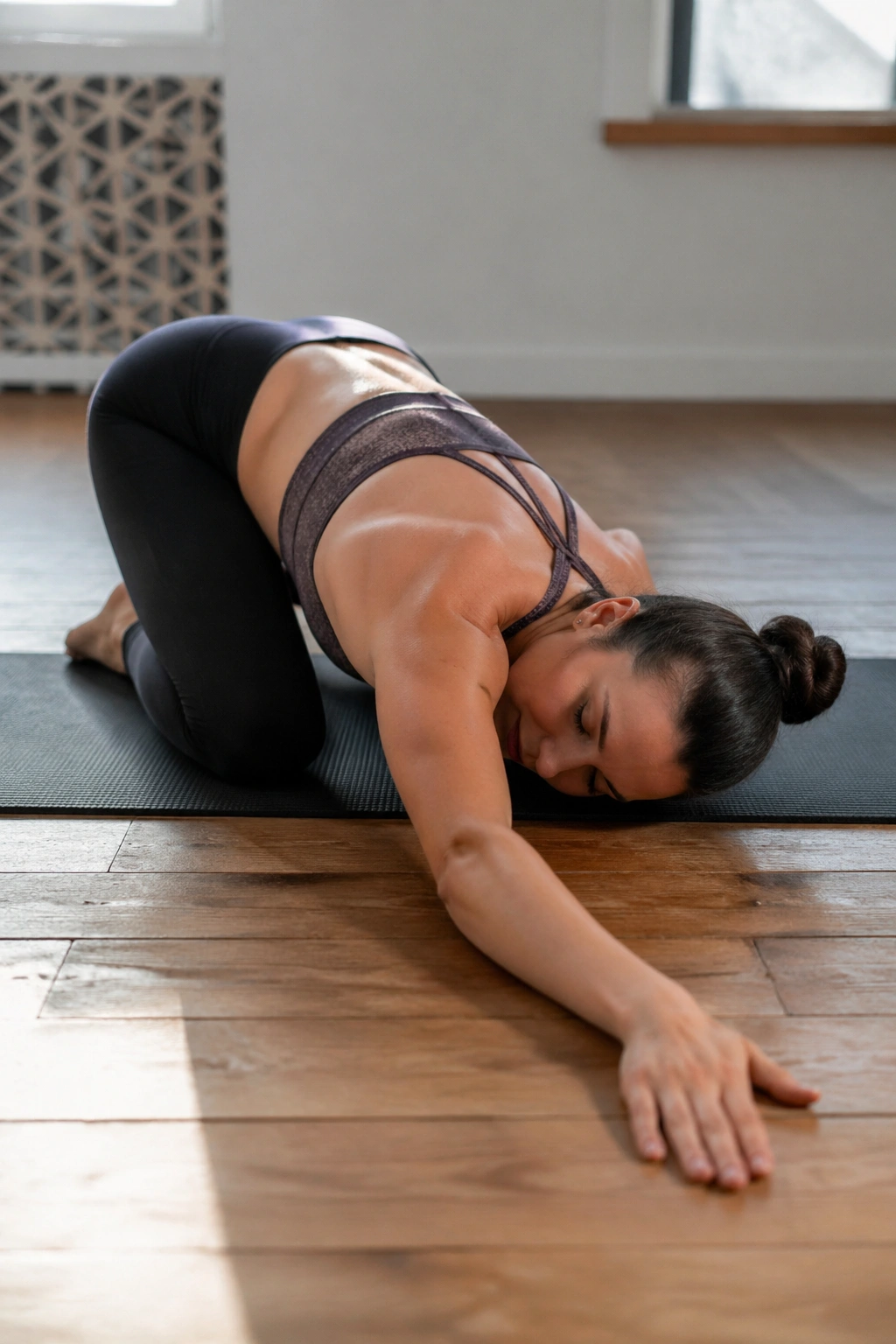
Thread the Needle is one of the better upper-back and shoulder openers for dancers because it gets into the space between the shoulder blades without forcing the neck to do extra work. That matters when the arms spend all day lifted, rounded, or reaching in stylized lines.
From all fours, slide one arm under the other and rest the shoulder and side of the head on the mat if that feels good. Keep the hips stacked over the knees so the stretch stays in the upper back instead of turning into a lazy twist through the low spine. A block or folded blanket under the head can make the pose easier to hold.
If the shoulder is tight, keep the top arm active and reach through the fingertips. That small detail changes the sensation a lot. Stay for 4 to 6 breaths per side, then unwind slowly. The spine likes a little time coming out of twists.
16. Cow Face Pose
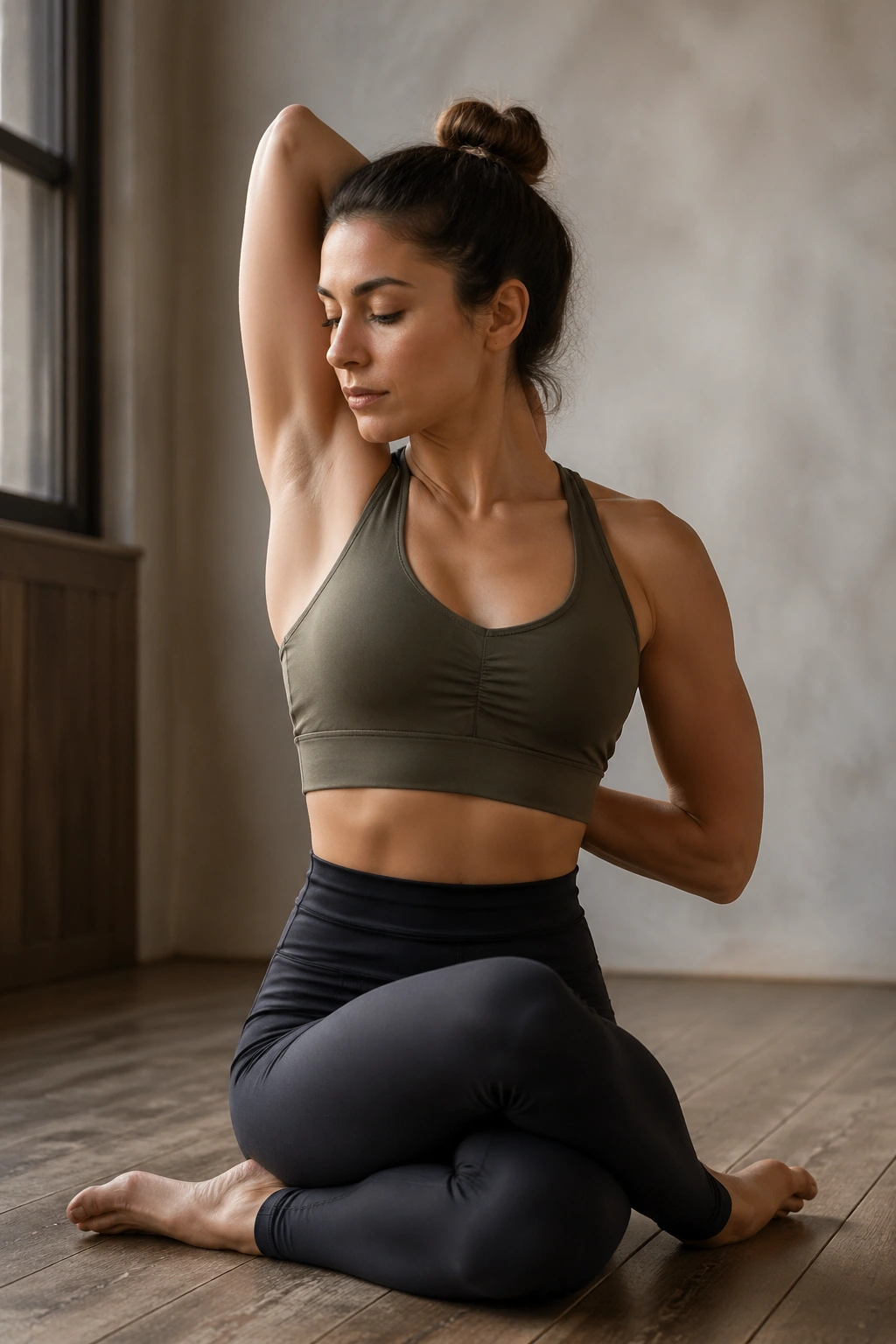
Cow Face Pose looks neat. Feels messy. That’s part of why it’s so useful. It can open the shoulders, triceps, outer hips, and even the side body if you stay patient with it. Dancers who have a tight upper back or sticky rotator cuffs usually notice the arm stretch first.
Arms first, hips second
Start with the arms if the lower body is already cranky. One elbow lifts overhead, the other reaches down the spine. If the hands do not meet, use a strap between them. That’s not a failure. It’s just a normal setup.
- Sit on a block if the knees are stacked awkwardly.
- Keep the chest from jutting forward.
- Hold the strap lightly instead of yanking on it.
- Stay for 3 to 5 breaths, then switch sides.
If the hips are part of the picture, cross the knees and stack the feet as comfortably as you can. There’s no need to force the full shape right away. A steady, workable version beats a strained bind.
17. Bridge Pose
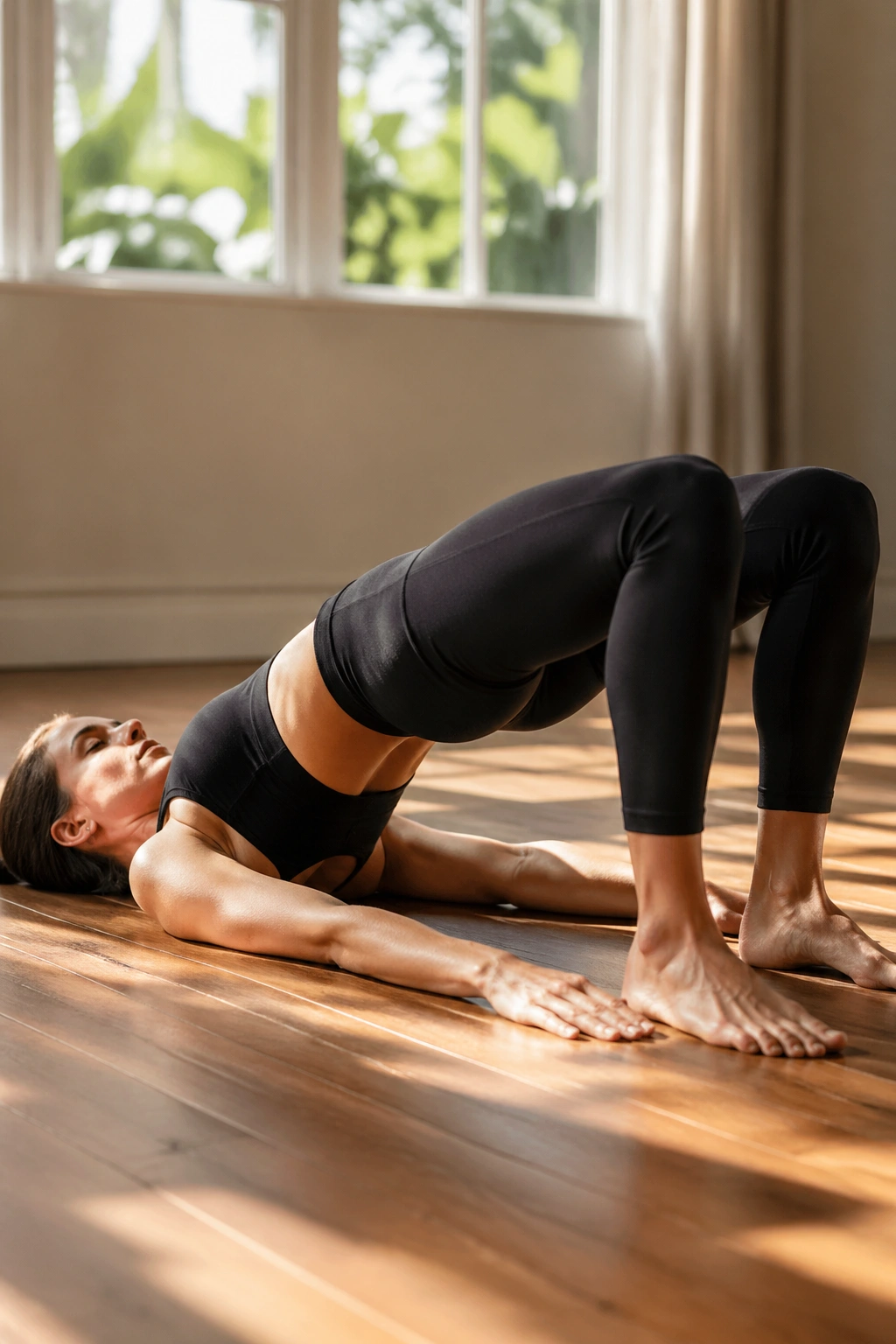
Flexibility gets better when the glutes help. Bridge Pose is one of the clearest reminders of that. It opens the hip flexors and the front body while strengthening the hamstrings, glutes, and back line. For dancers, that combination matters because passive stretching alone rarely holds up under repeated use.
Lie on your back, bend the knees, and press through the feet to lift the hips one vertebra at a time. Keep the knees tracking forward rather than flaring apart. If the lower back starts to feel compressed, lower the lift a little and re-engage the thighs.
A supported version with a block under the sacrum can be useful after a hard class. Hold it for several breaths and let the pelvis sink into the block while the chest stays open. That kind of gentle opening often lands better than a huge backbend. The body likes options.
18. Sphinx Pose
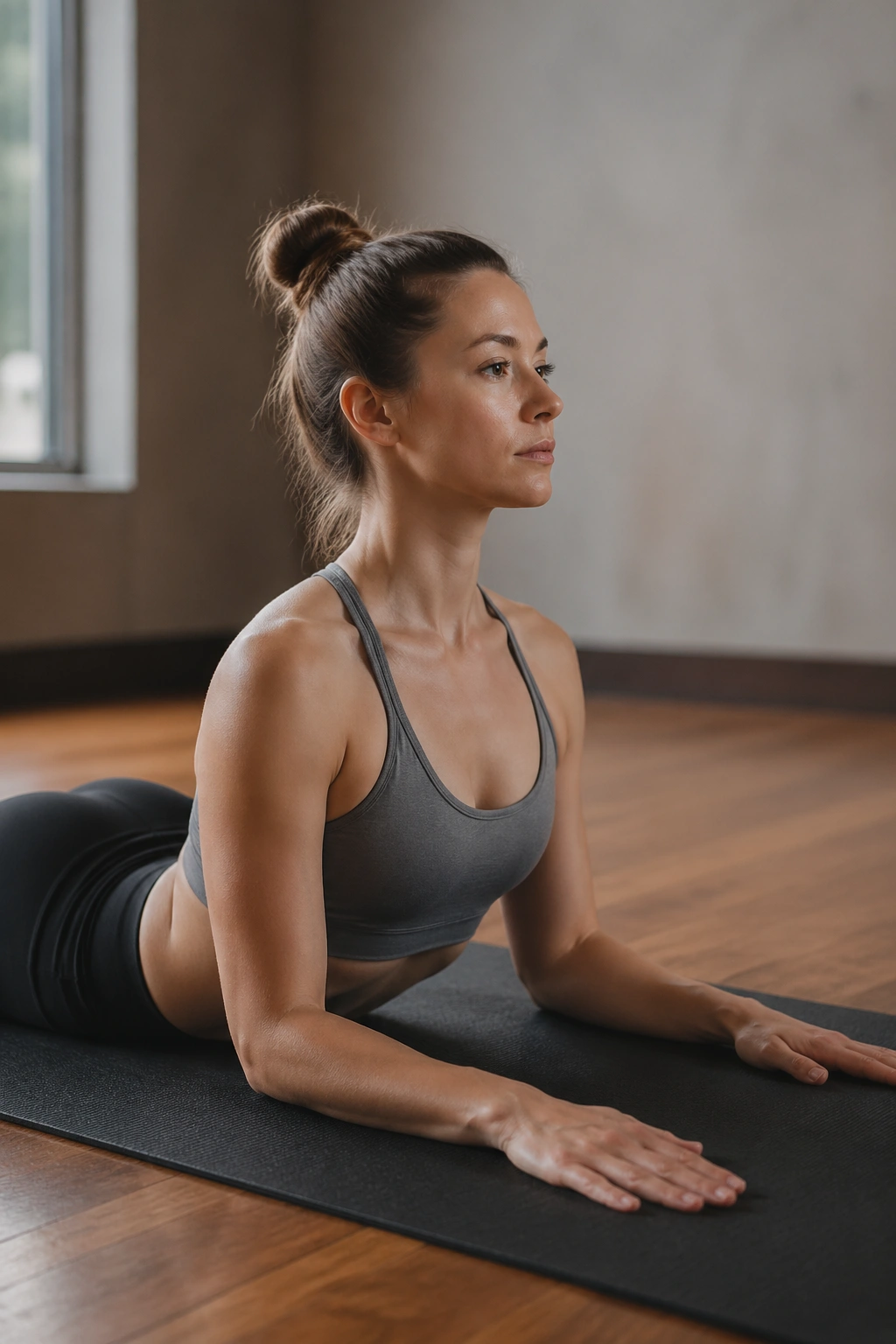
Sphinx Pose is a small backbend with a big payoff. It opens the front of the hips, lengthens the abdominal line, and gently brings the spine into extension without asking for a dramatic arch. After a day of folds, turns, and curled postures, it can feel like the chest is finally allowed to breathe.
Lie on the stomach, bring the forearms to the floor, and stack the elbows under the shoulders. Press the pubic bone down and let the top of the sternum glide forward. That image is useful because it keeps the low back from taking over. The lift should come through the spine, not a hard crunch in the lumbar area.
How long to stay
Hold for 6 to 10 slow breaths and keep the neck long. If the shoulders feel jammed, move the elbows slightly forward. If the lower back complains, lower the chest a bit. Tiny adjustments matter more here than people think.
It’s a calm pose. Quietly effective.
19. Camel Pose
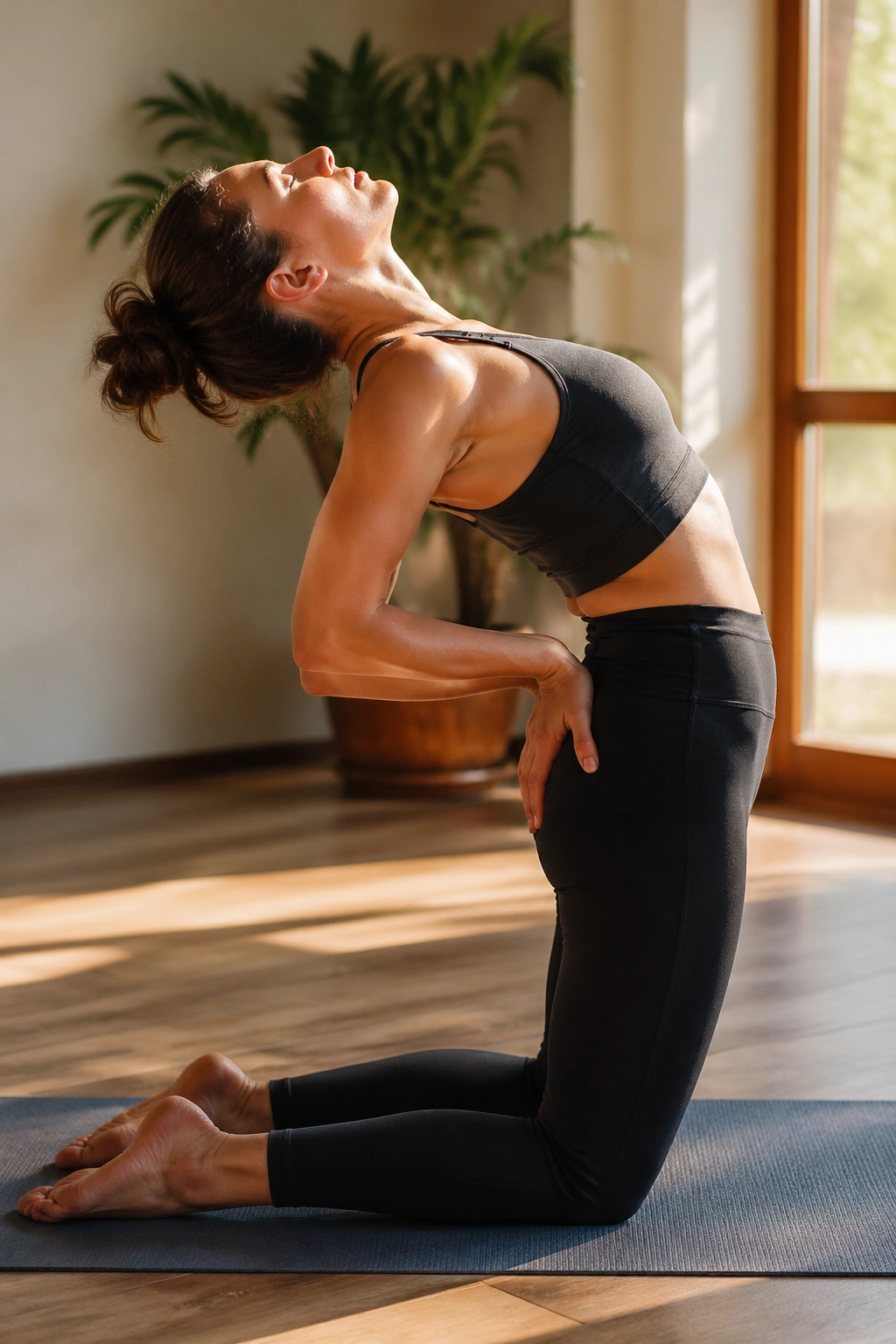
Camel Pose is a deep chest, quad, and hip flexor opener, but it asks for respect. Dancers who live in a lot of flexion — folding, contracting, hinging, and curling — often feel a huge sense of release here. They also tend to overdo it if they rush the shape.
Start tall on your knees. Tuck the toes if the ankles are sensitive, or keep the tops of the feet down if that feels better. Hands can stay on the lower back or sacrum while you lift the sternum. If the body wants more, reach back toward the heels only as far as you can keep the ribs contained.
Do not throw the head back. That’s the fastest way to turn the pose into a neck problem. Think of the chest leading and the crown following. If full Camel feels too ambitious, stay with the hands on the sacrum and breathe there. Even that smaller version can open the front body nicely.
20. Dancer’s Pose
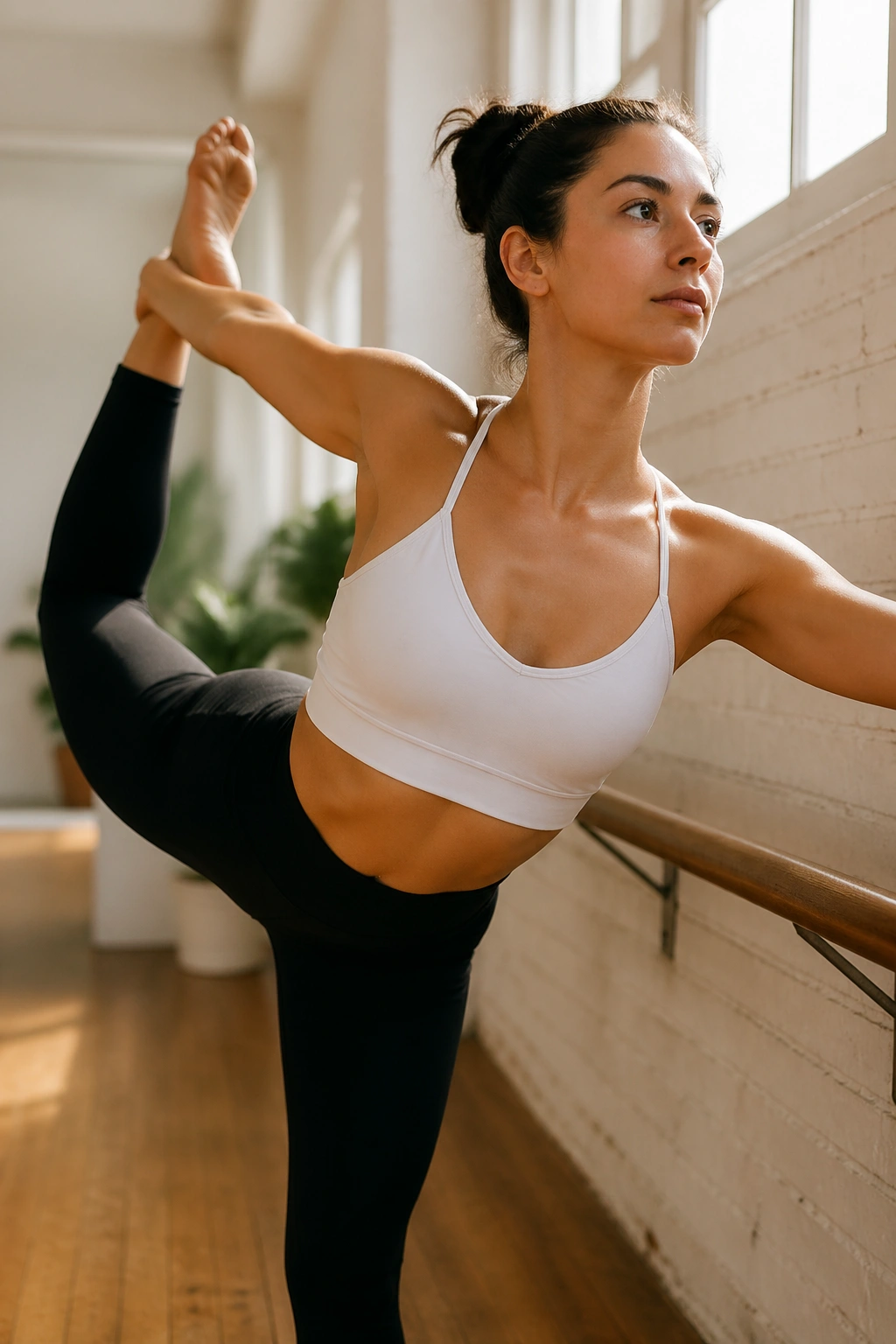
Dancer’s Pose belongs on this list because it ties flexibility to control. The lifted leg opens the quad and hip flexor, the standing leg works on balance, and the chest opens just enough to feel graceful without becoming floppy. That mix is exactly what dancers need.
Use the wall if balance is shaky
Hold one ankle from behind, press the lifted foot into the hand, and tip the torso forward as the back leg reaches up and away. A wall under the standing hand makes the pose far less wobbly if the balance is having a bad day. A strap around the lifted foot can also help if the hand cannot reach comfortably.
The pose should feel long through the front of the lifted thigh and calm in the standing foot. If the lower back arches hard, shorten the reach and keep the ribs in. That small correction keeps the stretch where it belongs.
It’s a nice final shape because it feels like dance, not just stretching. Strong. Open. Awake.
Final Thoughts
The best flexibility work for dancers usually looks less dramatic than people expect. That’s the funny part. A clean Low Lunge, a patient Half Split, and a well-supported Camel Pose can do more for usable range than a bunch of forced end positions held with clenched jaws and shaky knees.
Mix active and passive shapes. Pair hip openers with hamstring work, shoulder opening with spinal extension, and floor stretches with a few standing poses that ask the body to organize itself. That combination tends to stick better because it teaches the muscles how to hold the new range, not just visit it.
One simple way to build the habit: choose one front-body opener, one hamstring stretch, one hip opener, and one recovery pose after rehearsal. Keep the holds honest, breathe slowly, and back off the second a joint starts to feel pinchy. The body keeps score, and it usually rewards the quieter work.
