



Low energy changes the rules.
A workout that felt fine before can feel like a wall when hypothyroidism is making your body move through molasses. The answer is not usually to push harder. It’s to choose movement that wakes up the joints, steadies the breath, and leaves you clearer instead of wiped out.
That’s where yoga helps. Not the hot, sweaty, power-packed version that leaves you staring at the floor for ten minutes afterward. The useful version. The one with bent knees, props, slower transitions, and a little respect for the fact that fatigue is not laziness.
If your energy has been flat for a while, or the tiredness comes with dizziness, palpitations, swelling, or sudden changes in weight or mood, get checked by a clinician. Yoga can support how you feel day to day, but it does not replace thyroid care. What it can do is make the hours between meals, meetings, and medications a little easier to live in.
1. Mountain Pose
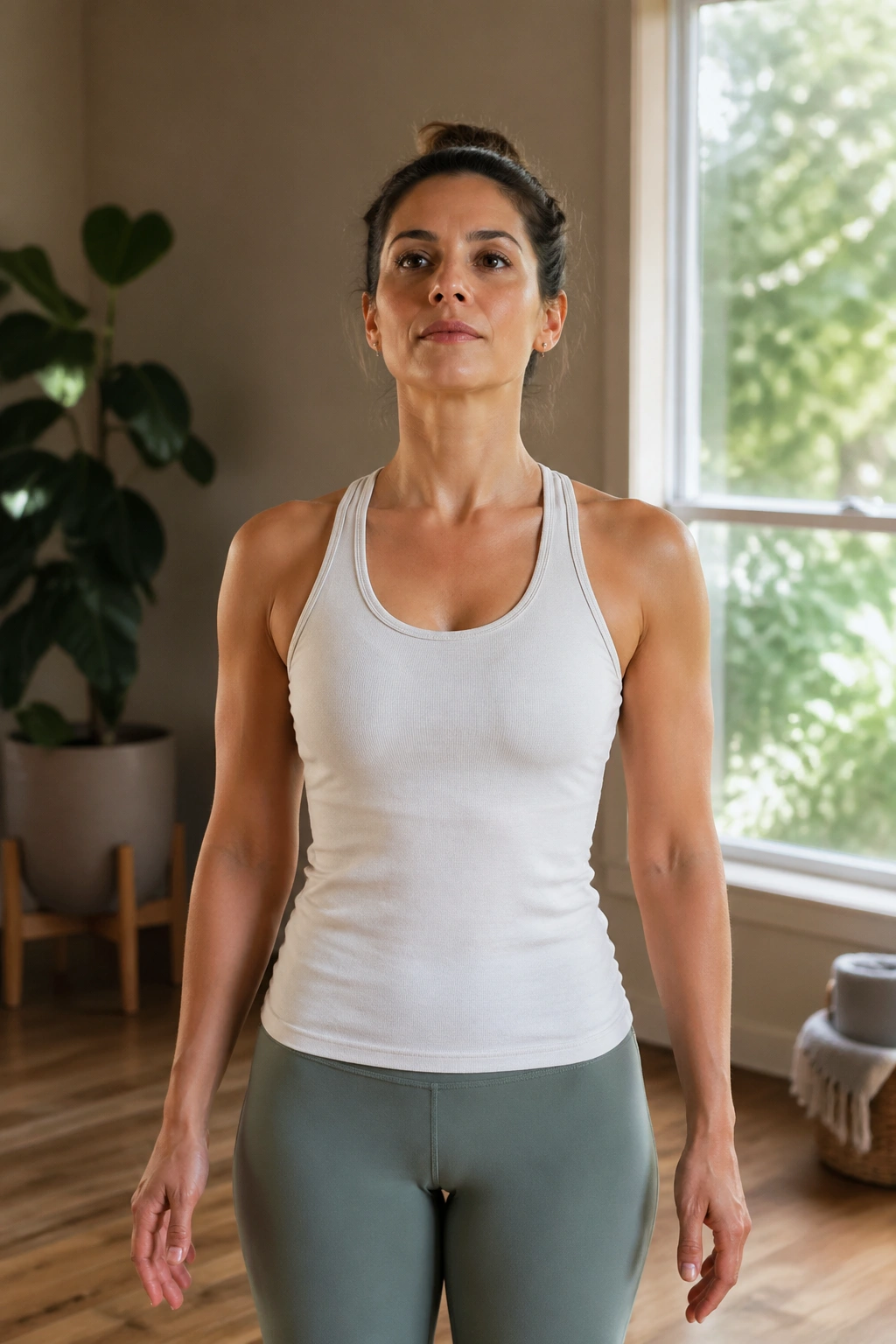
Standing still is harder than it looks.
For people looking for yoga poses for hypothyroidism and low energy, Mountain Pose is a quiet reset. It asks for almost nothing, which is exactly why it works so well when you feel drained. Feet on the floor. Breath in the ribs. Shoulders that are not climbing toward your ears.
How to stand in it
- Place your feet hip-width apart, or touch the big toes together if that feels steadier.
- Soften the knees a little. Do not lock them.
- Let the tailbone point down, not tucked hard under.
- Roll the shoulders up, back, and down once, then leave them alone.
- Breathe for 5 to 8 slow rounds.
The benefit here is subtle. Mountain Pose helps you notice whether you’re bracing, slumping, or holding your breath without realizing it. That matters when fatigue makes your posture collapse into a heap by midafternoon.
Tiny shift: imagine the top of your head lifting while your feet press down evenly through the big toe mound, little toe mound, and heel. It sounds simple. It is simple. And on an exhausted day, simple is a gift.
2. Chair Pose
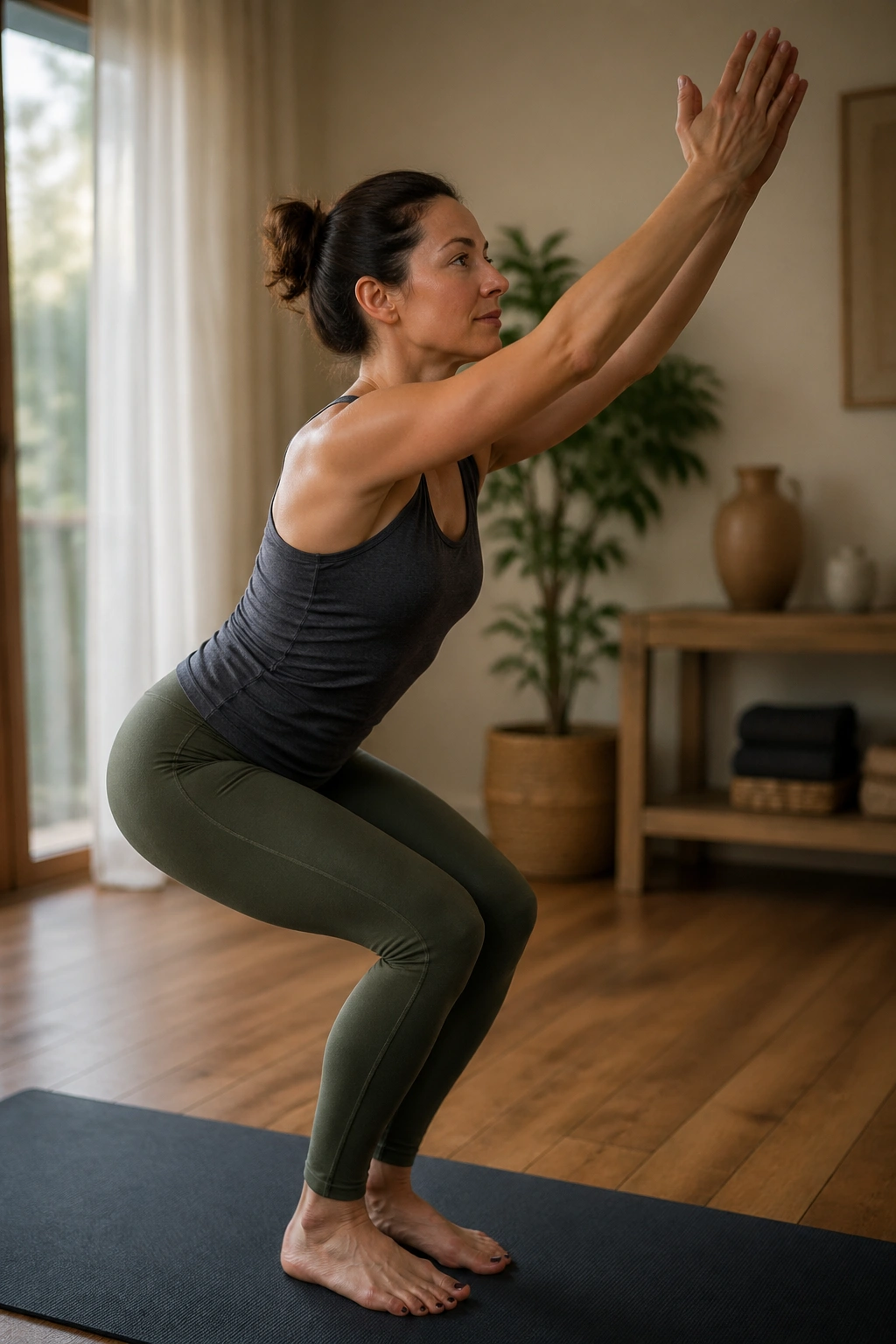
Need a wake-up that doesn’t turn into cardio?
Chair Pose can do that job if you keep it shallow. It wakes up the thighs, ankles, and core without requiring speed, jumps, or long holds. For a tired body, that short burst of effort can feel cleaner than a full workout, especially if you’ve been sitting for hours and your legs have gone a little sleepy.
Keep the knees bent only as much as you can manage with ease. Sit the hips back a few inches, lift the chest, and keep the weight in the heels. A block between the thighs can help some people feel more stable, though you do not need it.
Watch for this: if your lower back starts to pinch or your breath gets choppy, you’ve gone too low. Back off fast. Two or three holds of 10 to 15 seconds are enough on a low-energy day.
Chair Pose is one of those shapes that rewards honesty. If you make it tiny, it still counts.
3. Standing Forward Fold
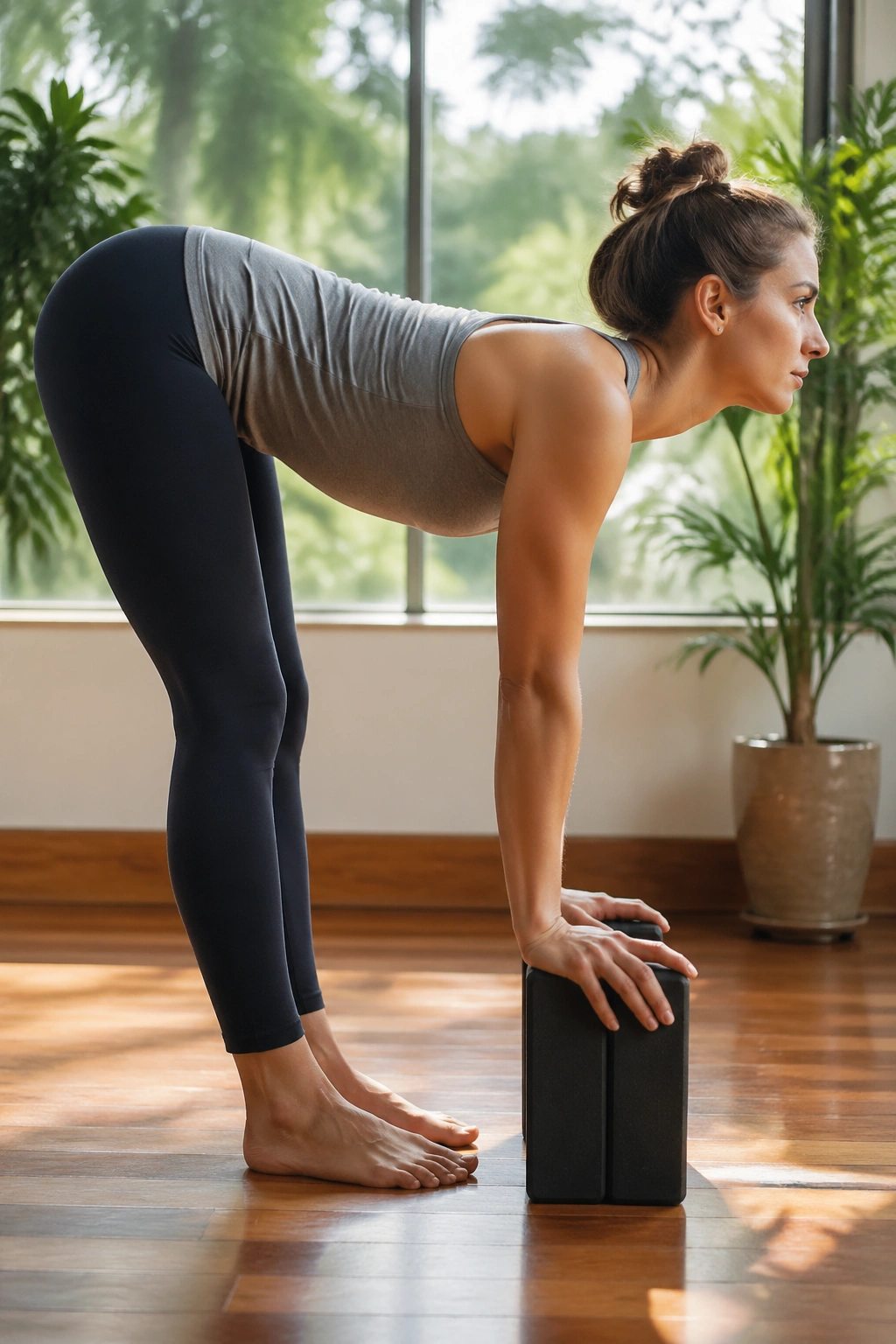
The first thing most tired bodies want is release.
Standing Forward Fold gives it, but only if you let go of the idea that straight legs are the goal. Bent knees are your friend here. They protect the hamstrings, ease the lower back, and make the pose feel like a decompression rather than a tug-of-war.
Try folding from the hips with your hands on blocks or on the backs of your calves. Let your head hang only if it feels comfortable. If hanging the head makes you dizzy, keep the neck long and look at the floor a few feet ahead.
A lot of people yank themselves down too far and then wonder why they feel worse afterward. That’s not a mystery. It’s a signal.
Good cues for this fold
- Bend the knees enough to keep the spine long.
- Shift the hips slightly over the ankles, not way behind them.
- Exhale and soften the jaw.
- Stay for 3 to 5 breaths, then roll up slowly.
This pose can be a nice reset after a stiff morning, especially when your back feels as if it’s made of cardboard.
4. Cat-Cow
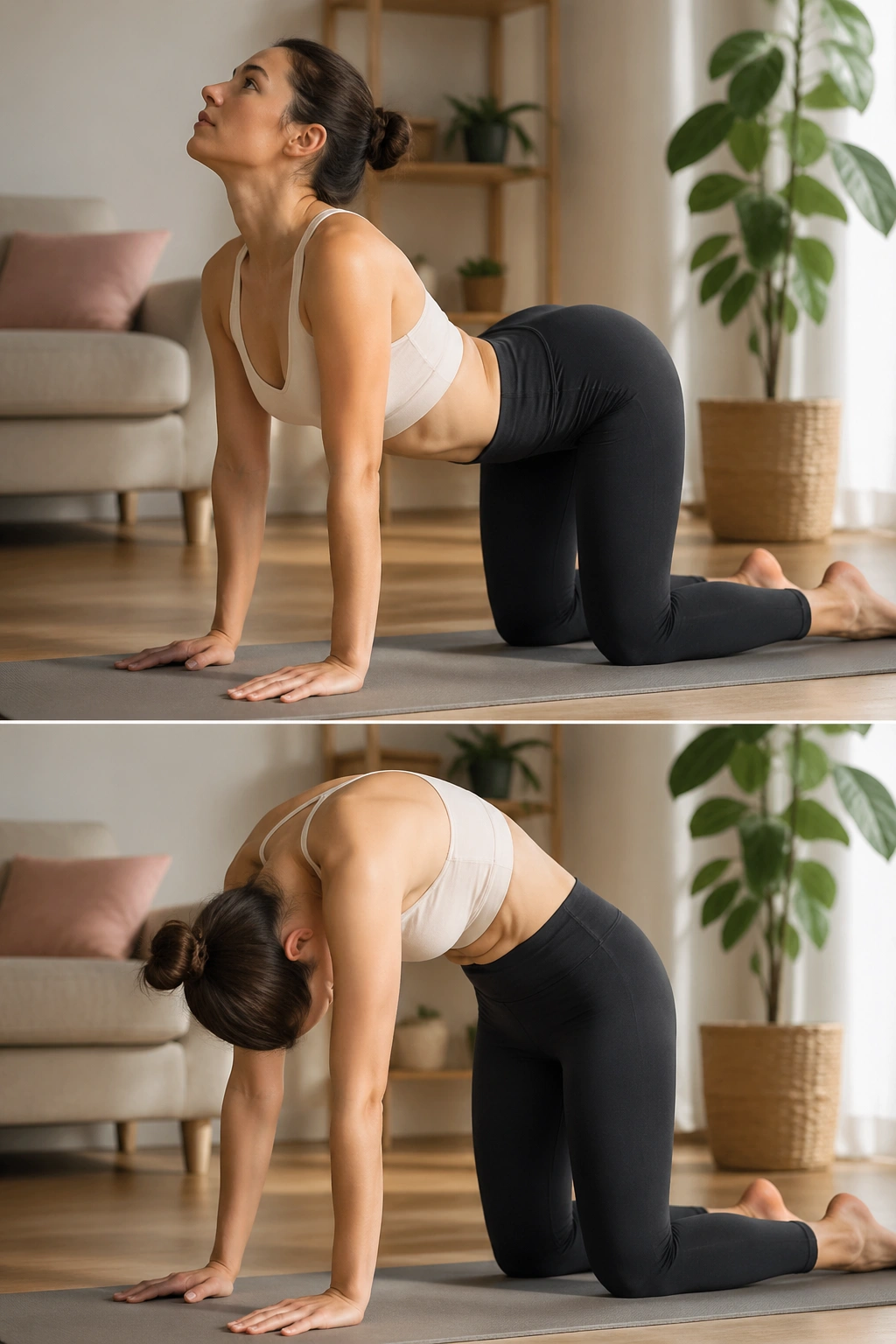
A stiff spine tends to make tiredness feel worse than it is.
Cat-Cow is one of the best low-drama ways to start moving because it links breath to motion without asking for strength. On the inhale, tip the pelvis forward and gently lift the chest. On the exhale, round the spine and let the tailbone tuck a little. No need to perform it. A smooth, slow rhythm is enough.
Slow spine, slow breath
Use 6 to 10 rounds and keep the movement small if you’re depleted. Big spinal waves are nice when you’re fresh. On a heavy day, they can feel like too much. The neck should move last and stay relaxed.
A small trick helps here: press the hands into the mat and think about creating space between the shoulder blades on the exhale. That tends to reduce the upper-back stiffness many people carry when fatigue and stress pile up together.
Cat-Cow also gives you feedback. If one side feels tight, or the low back complains every time you arch, that’s useful information. You can keep the range smaller and still get the benefit.
5. Thread the Needle
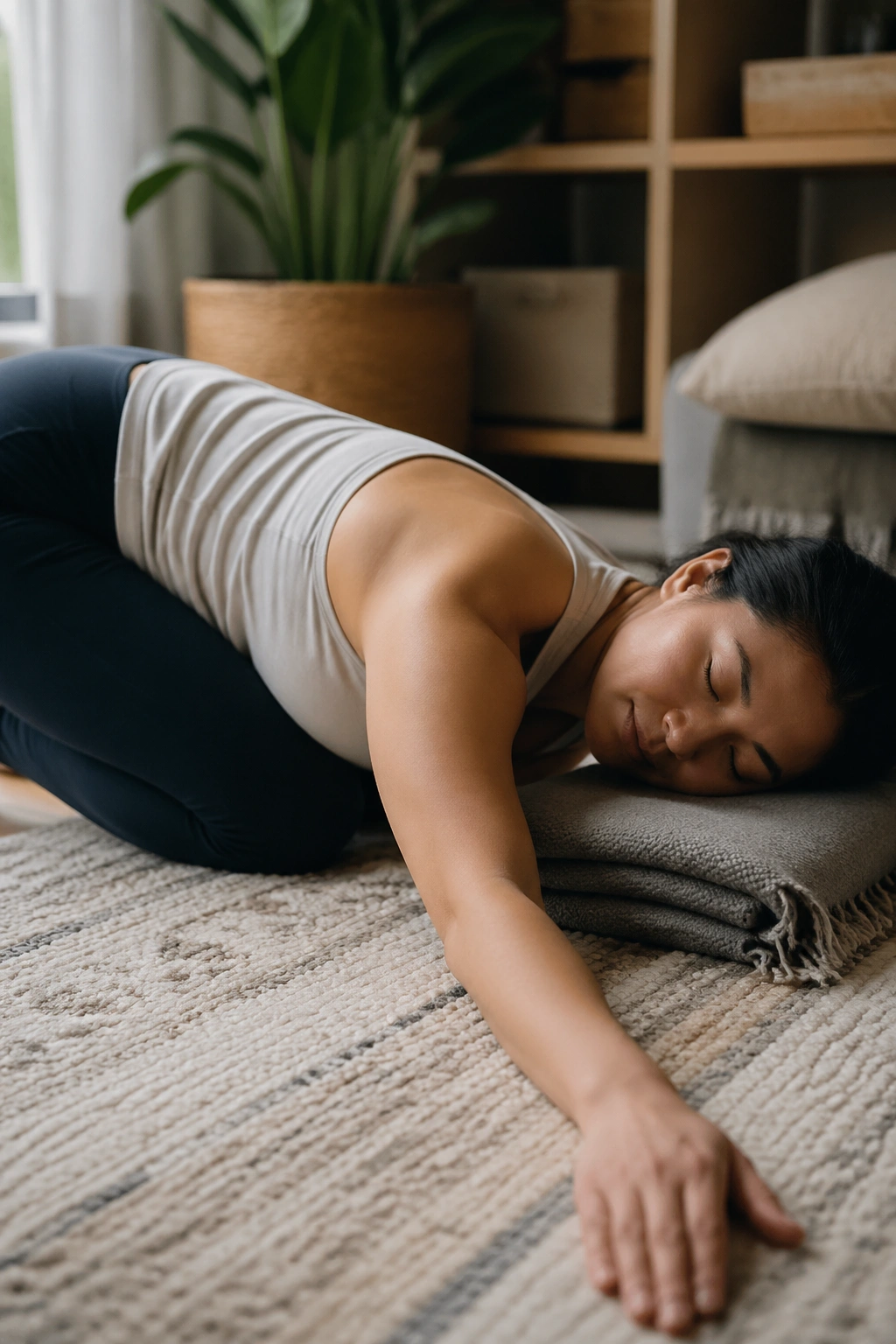
Big chest openers are not always the answer.
Thread the Needle is gentler than backbends and often nicer for people whose energy is low and whose shoulders have been living near their ears. It opens the upper back, gives the neck a break, and nudges the ribs into a slower breathing pattern. That can feel almost suspiciously good after a long day of hunching over a desk or steering wheel.
Start on hands and knees. Slide one arm under the other, palm up, and rest the shoulder and ear on the floor or a folded blanket. The other hand can stay planted in front of you for support, or you can let it rest by your head.
What to look for: a mild stretch across the back of the shoulder, not a sharp jab. If the weight on the lower arm feels weird, adjust the angle or put more padding under the shoulder.
Hold each side for 4 to 6 breaths. Slow is the whole point.
6. Child’s Pose
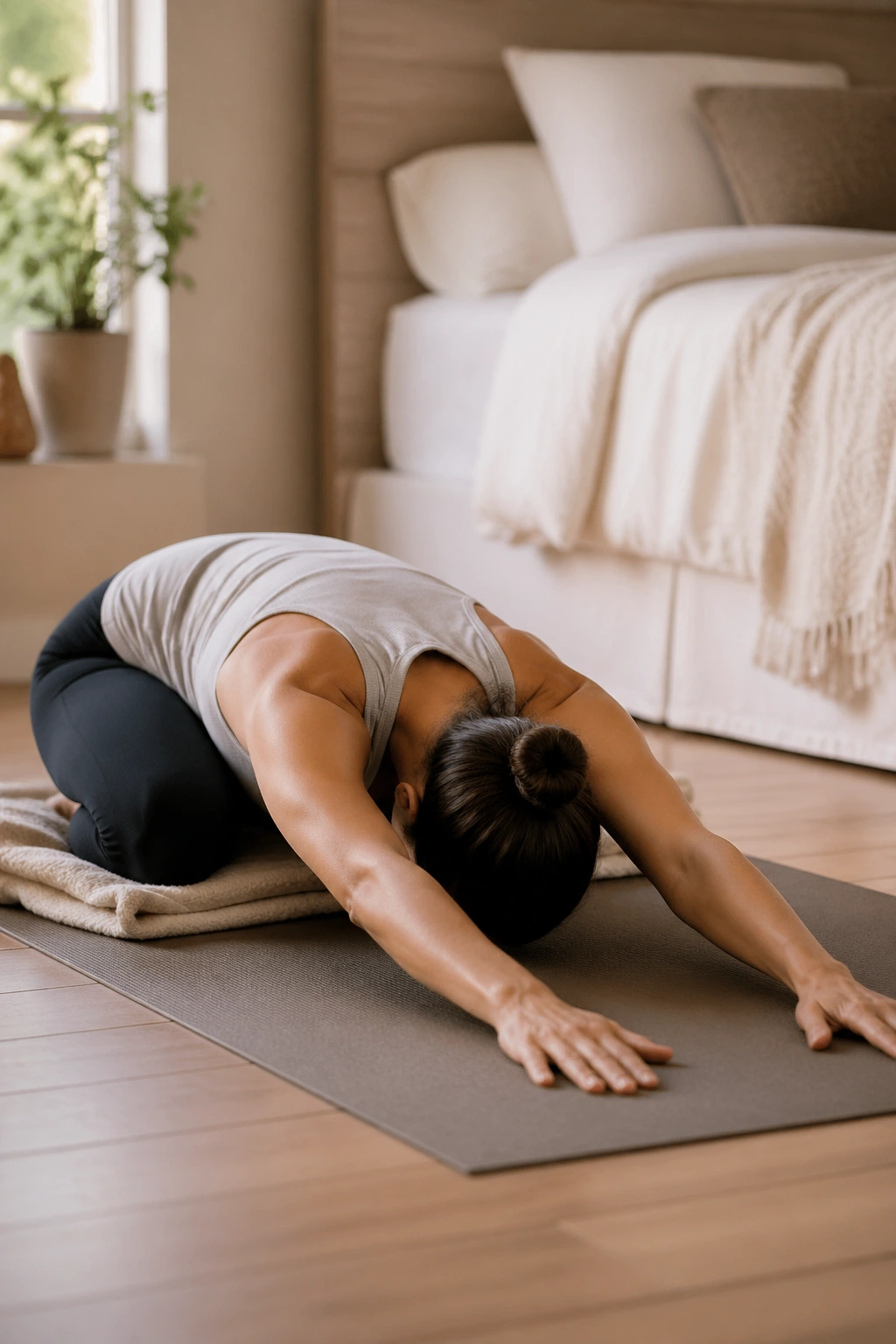
This is the pose I’d hand someone who walks onto the mat feeling fried.
Child’s Pose gives the nervous system a break. It lets the belly soften, the forehead rest, and the breath move into the back body instead of staying high in the chest. On a day when fatigue feels less like sleepiness and more like being wrung out, that kind of support matters.
Keep the knees together if you want a compact shape. Open them wide if your belly feels cramped. Arms can stretch forward, or you can tuck them alongside your body with the palms up. That version is often more restful than the standard reach-forward shape, which surprises people.
A folded blanket under the hips can take pressure off the knees and ankles. So can a rolled towel under the forehead.
One breath at a time. That’s enough here. If you stay for 30 seconds, fine. If you stay for 2 minutes, also fine. The pose doesn’t care.
7. Sphinx Pose
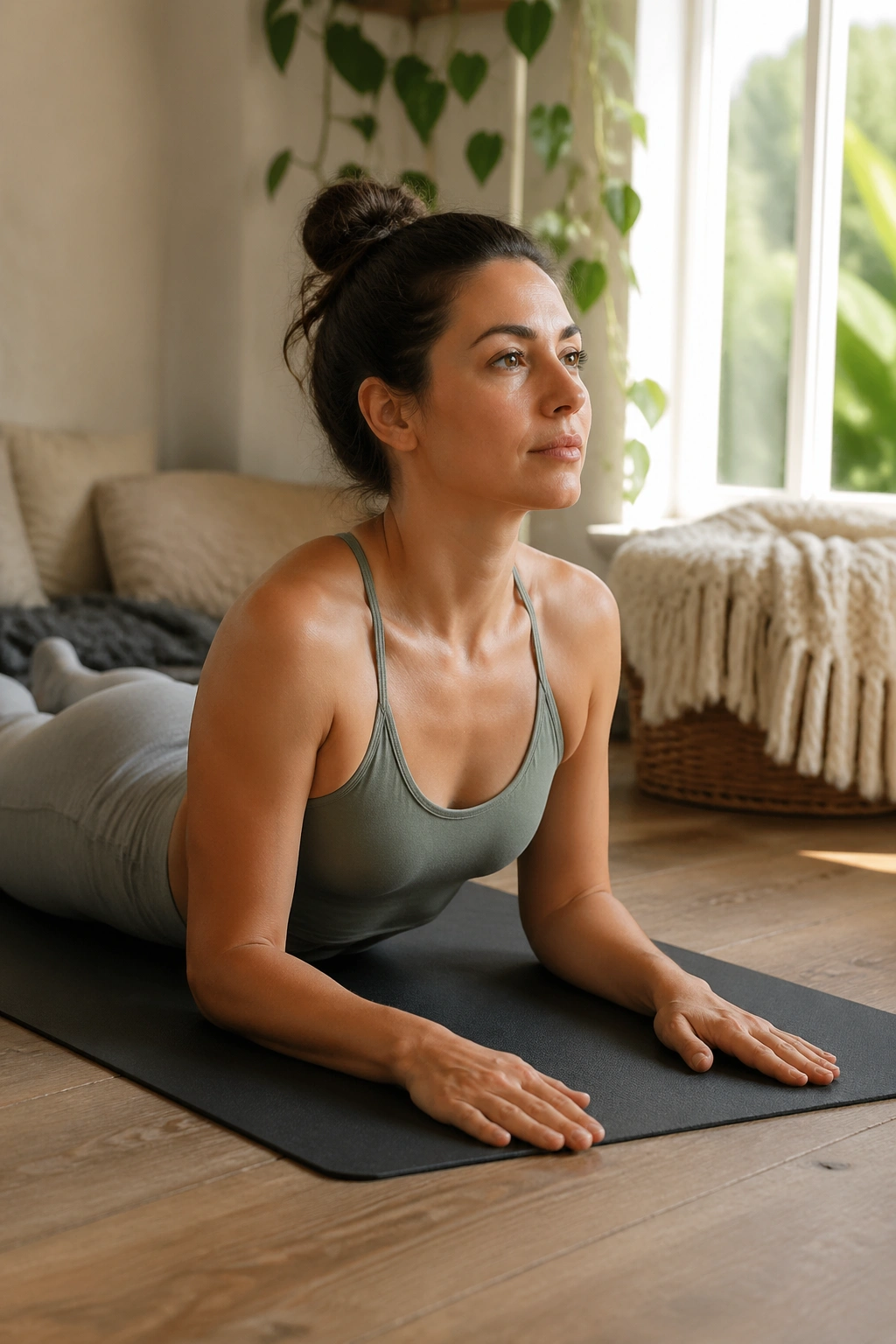
If you want one gentle backbend, this one earns its place.
Sphinx Pose opens the chest without asking the low back to do all the work. It can feel especially good when hypothyroidism leaves you stiff through the front of the body and a little collapsed through the ribs. Forearms on the floor, elbows under the shoulders, legs relaxed behind you. That’s the shape.
What to feel, and what not to feel
- A mild opening across the chest and abdomen.
- A sense of length through the spine.
- Not a crunch in the lower back.
- Not strain in the neck.
Press the forearms down and imagine the sternum drifting forward rather than up. That keeps the backbend small and friendly. Stay for 3 to 5 breaths, or a little longer if it feels easy.
I like this pose on low-energy days because it has a wake-up quality without the slap of an intense stretch. It nudges the body forward. Gently.
8. Cobra Pose
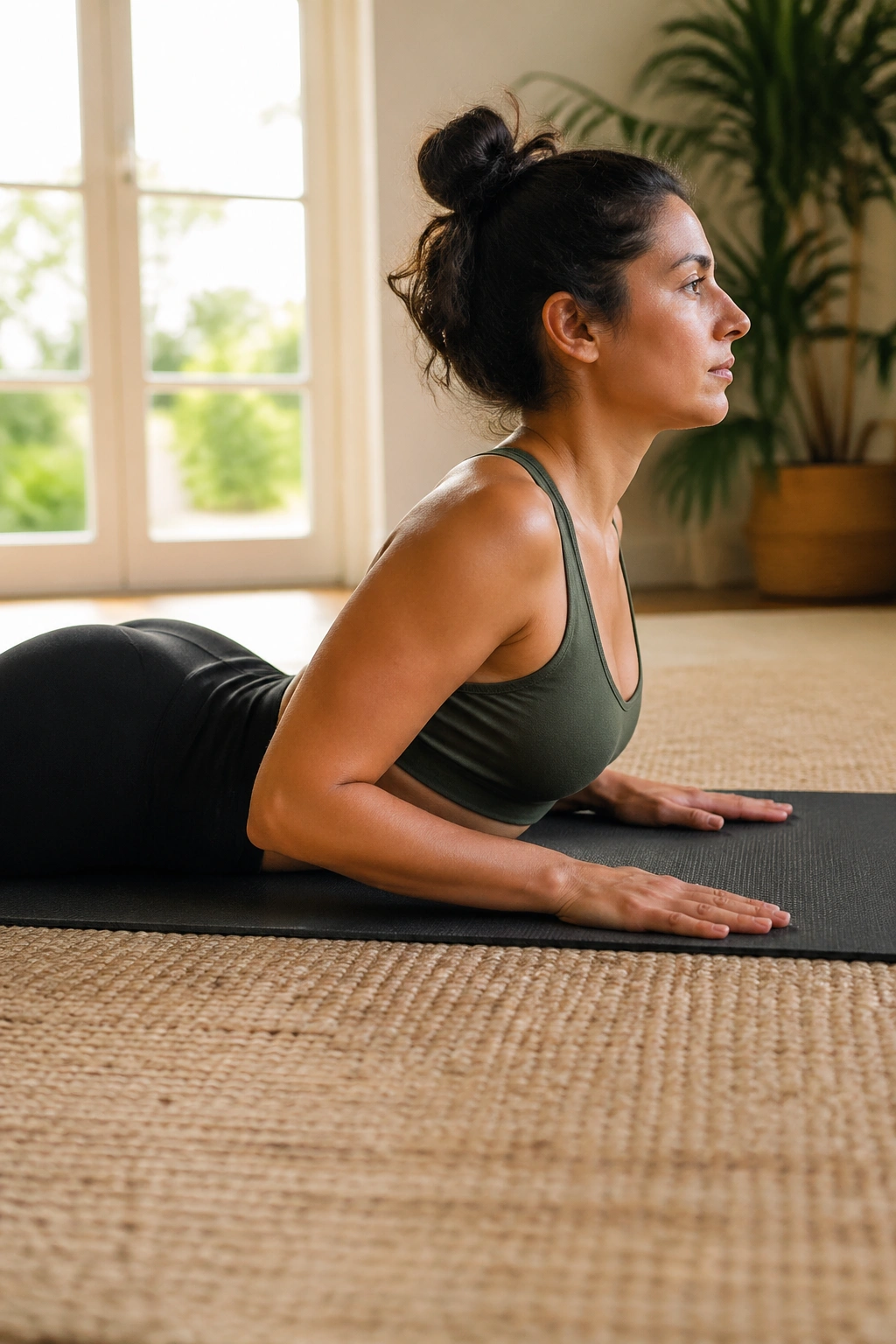
Can a backbend wake you up without making you cranky?
Yes, if you keep Cobra low and honest. High Cobra is where people get ambitious and then pay for it in the lower back. Low Cobra is the better choice here. It gives you lift through the chest, a little tone in the back body, and a brighter feeling without taking much out of you.
Lie face down with your hands under your shoulders. Press the tops of the feet into the floor, draw the shoulder blades down, and lift the chest just an inch or two. The pelvis should stay heavy. If you feel the ribs thrusting forward or the neck jutting out, lower back down and try again.
Use this version
- Lift only as high as you can breathe smoothly.
- Keep elbows bent close to the sides.
- Hold for 2 to 4 breaths.
- Lower with control, not a flop.
A little cobra is enough. On tired days, a little is usually the smart move anyway.
9. Low Lunge
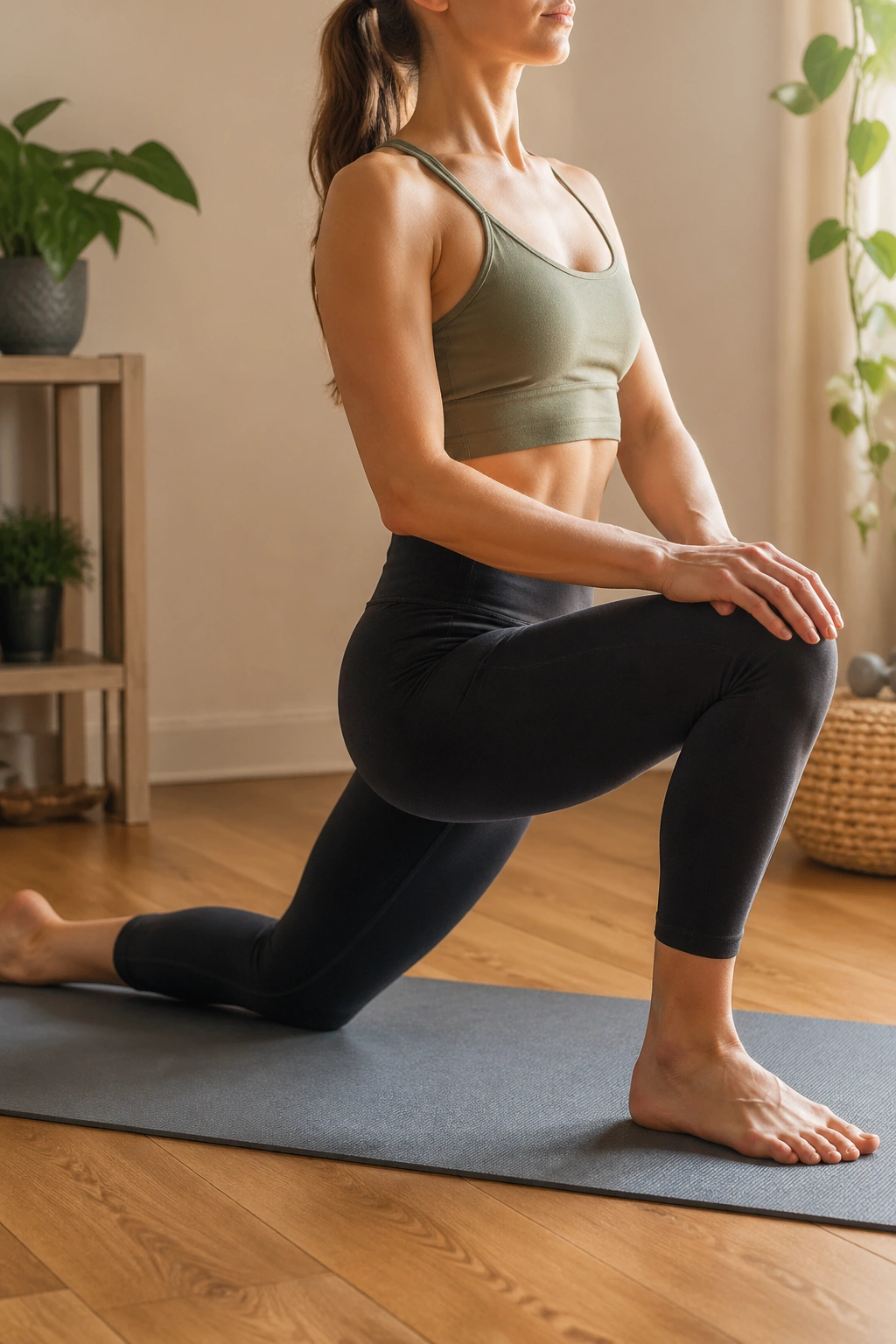
Your hip flexors probably have opinions.
Low Lunge is one of the best standing-ish shapes for a sluggish body because it opens the front of the back leg, lengthens the thighs, and gives the pelvis space to breathe. Sitting tends to tighten these areas. A lot. That tension can make you feel even more sluggish than you already are.
Drop the back knee to the floor and pad it with a blanket if needed. Step the front foot forward so the front knee lands over the ankle. Keep the torso upright or rest the hands on blocks. If the stretch feels aggressive, shorten the stance and back off.
Make it friendlier
- Keep the back toes tucked if you want more stability, or untuck them for a softer quad stretch.
- Stay lifted through the chest.
- Squeeze the glute of the back leg lightly, not hard.
- Breathe for 4 to 6 rounds on each side.
Low Lunge gives a gentle charge without feeling like a gym drill. I’d take that over a rushed flow any day.
10. Half Split
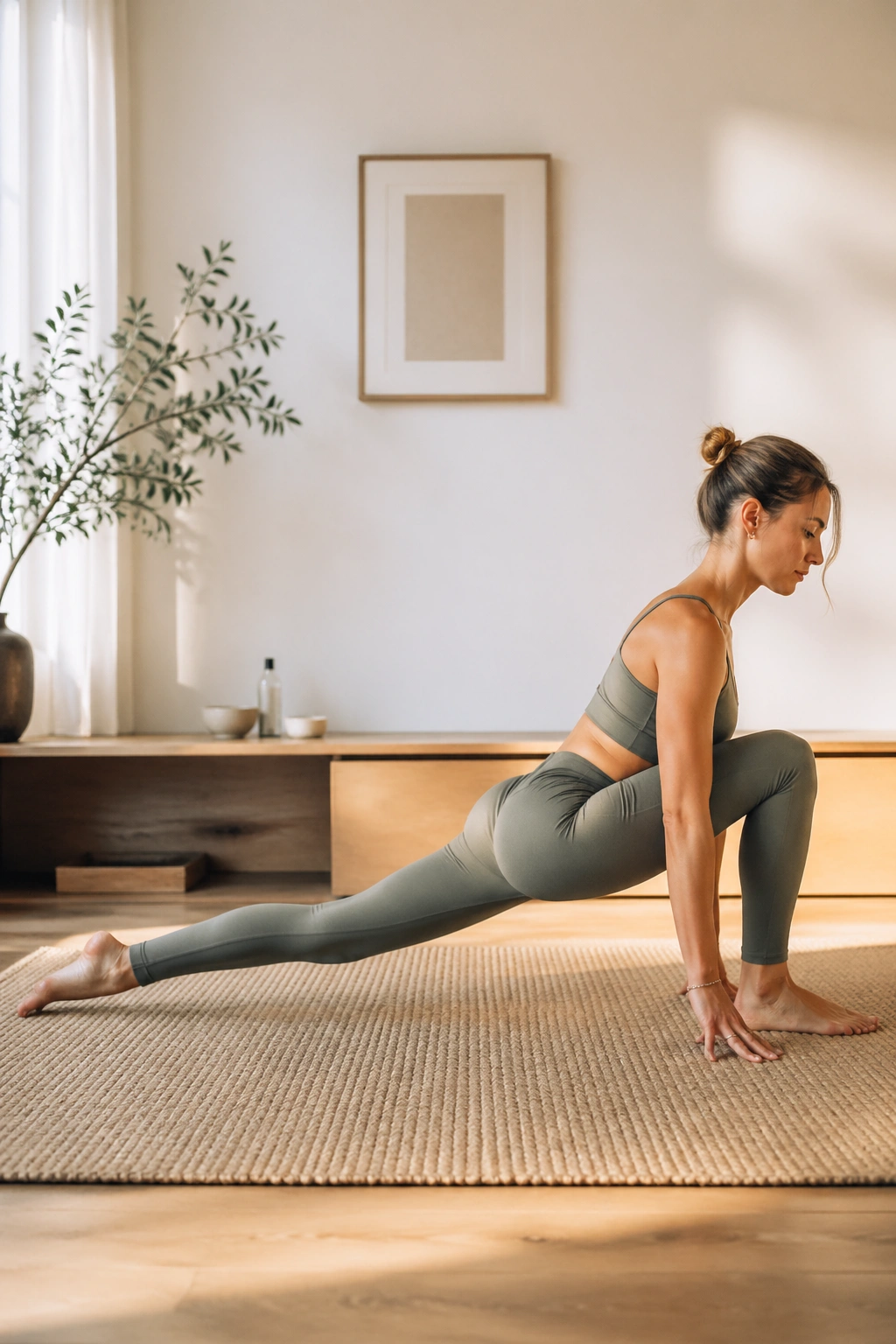
A full hamstring stretch can be too much on a tired day.
Half Split is better because it backs the intensity off. You start in Low Lunge, then shift the hips back over the back knee while straightening the front leg. Keep a soft bend in the front knee if the hamstring grabs. Flex the front foot. That helps protect the knee and keeps the stretch honest.
The goal is length, not reach. If you can keep your spine long and breathe without bracing, you’re doing it right. A strap around the foot can help if your hands don’t meet the floor comfortably.
This pose is useful when low energy comes with that achy, heavy feeling in the backs of the legs. It opens the line from heel to hip without a hard yank. Nice and clean.
Stay for 3 to 5 breaths, then switch sides. If your lower back rounds hard, bend the knee more and come up a little.
11. Warrior II
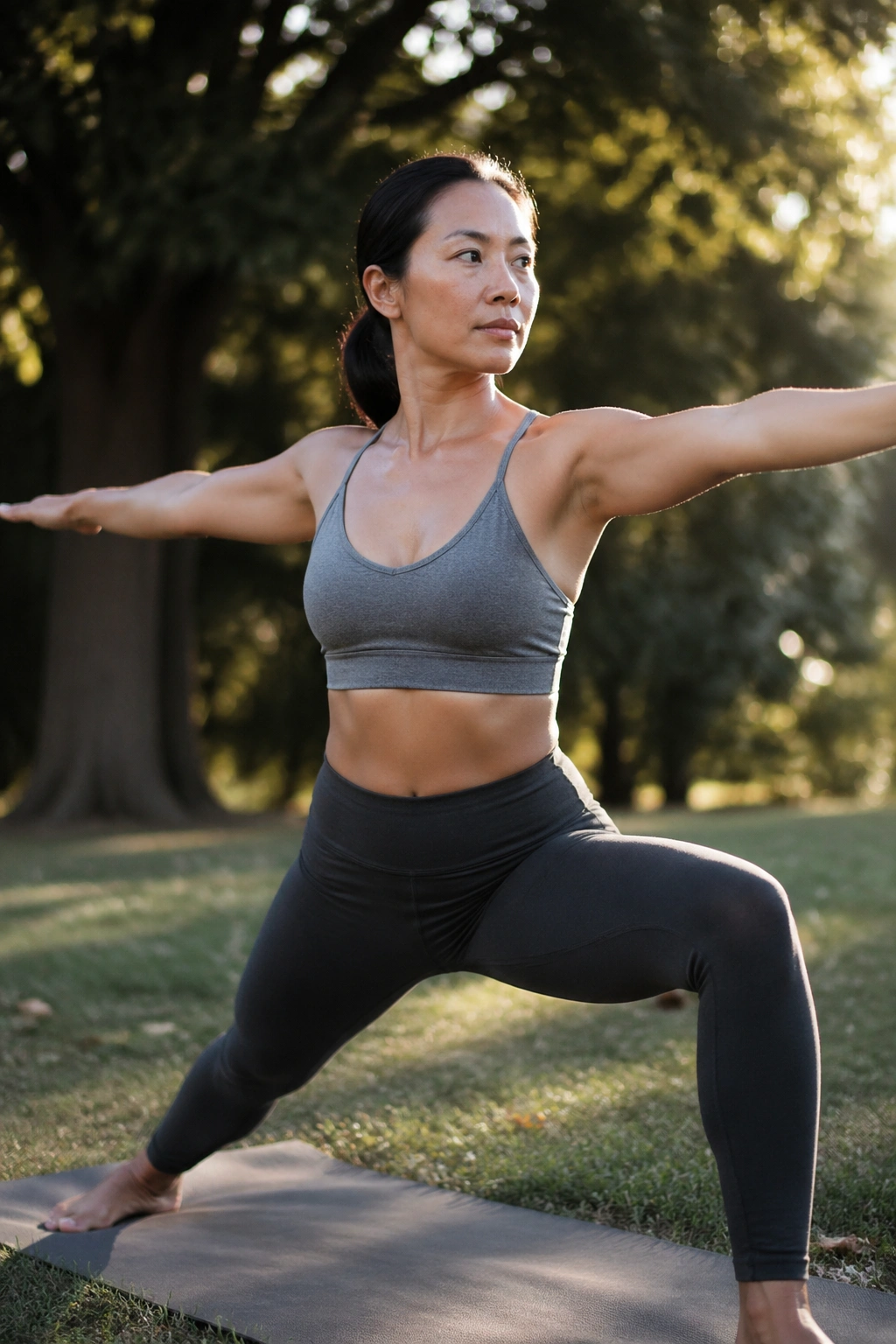
Warrior II is the first standing pose here that feels like it means business.
That’s not a bad thing. For hypothyroidism and low energy, you sometimes need a pose that reminds the legs they still know how to hold you up. Warrior II does that without speed. Feet wide, front knee bent, back leg straight but not locked, arms reaching in opposite directions. Strong, grounded, steady.
Keep the stance shorter than you think you should. People often go too wide and then wobble through the whole shape. A narrower stance is easier on tired hips and knees.
A few useful cues
- Front knee tracks over the middle toes.
- Back foot turns in slightly.
- Gaze goes over the front hand, but the jaw stays loose.
- Hold for 3 to 5 breaths, then switch sides.
I like Warrior II for a low-energy afternoon because it feels organized. The body gets a job. The mind usually settles a bit when that happens.
12. Extended Side Angle
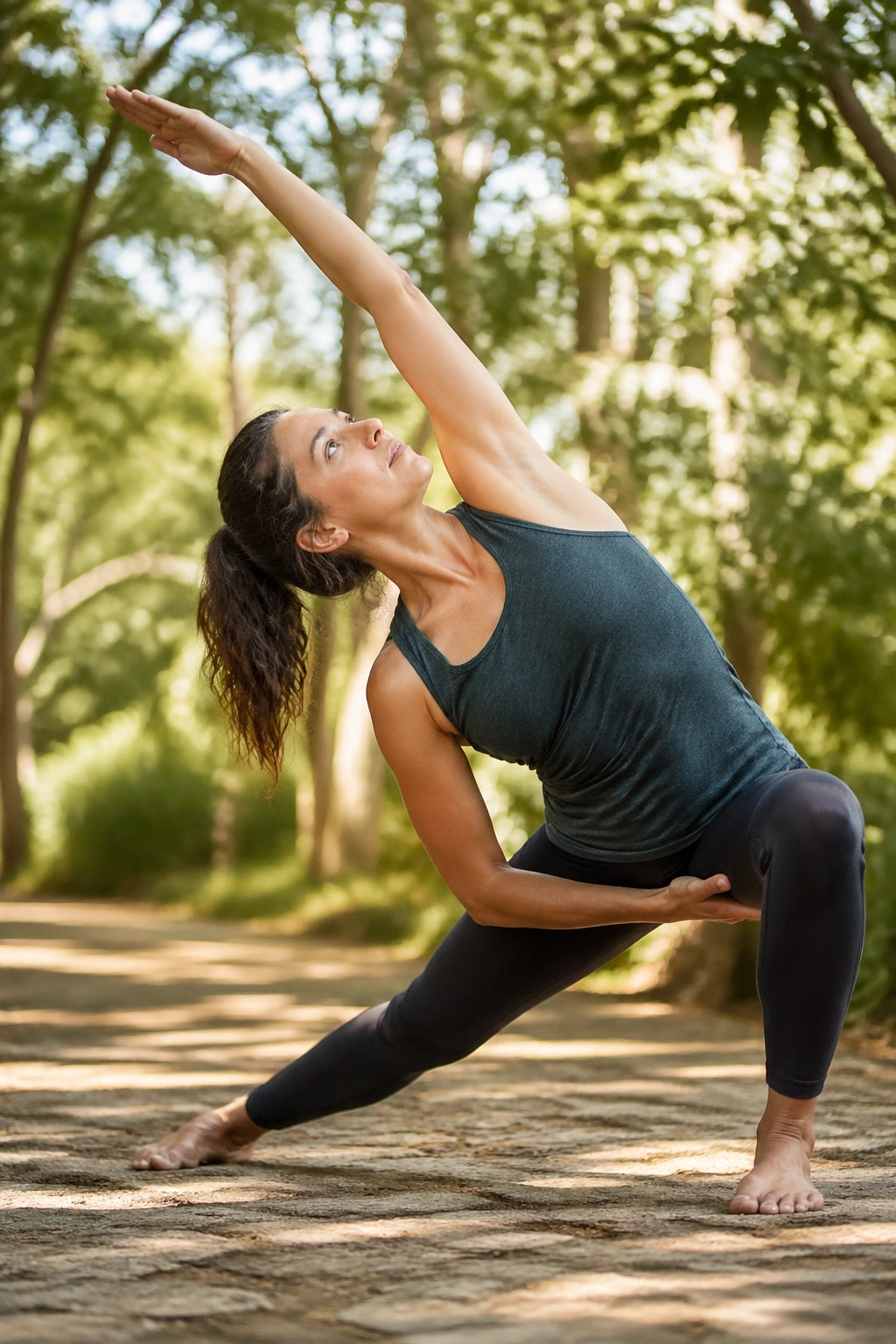
Why does this one feel so spacious?
Extended Side Angle opens the side body, the ribs, and the line from the back heel through the fingertips. That can help breathing feel less boxed in, which matters when fatigue makes you breathe shallowly without noticing. It also gives the legs a bit of work, so you get stretch and strength in the same shape.
Start from Warrior II, then rest the front forearm on the thigh or place a hand on a block inside the front foot. Reach the top arm overhead and keep the chest open. Don’t collapse into the bent knee. That’s the trap. The side body should feel long, not folded.
How to keep the front knee happy
- Keep the knee stacked over the ankle.
- Use a block if the floor pulls you down.
- Press the back outer edge of the foot into the mat.
- Breathe into the ribs, especially the upper side of the body.
If your shoulders hate the overhead reach, leave the top hand on the hip. Still counts.
13. Triangle Pose
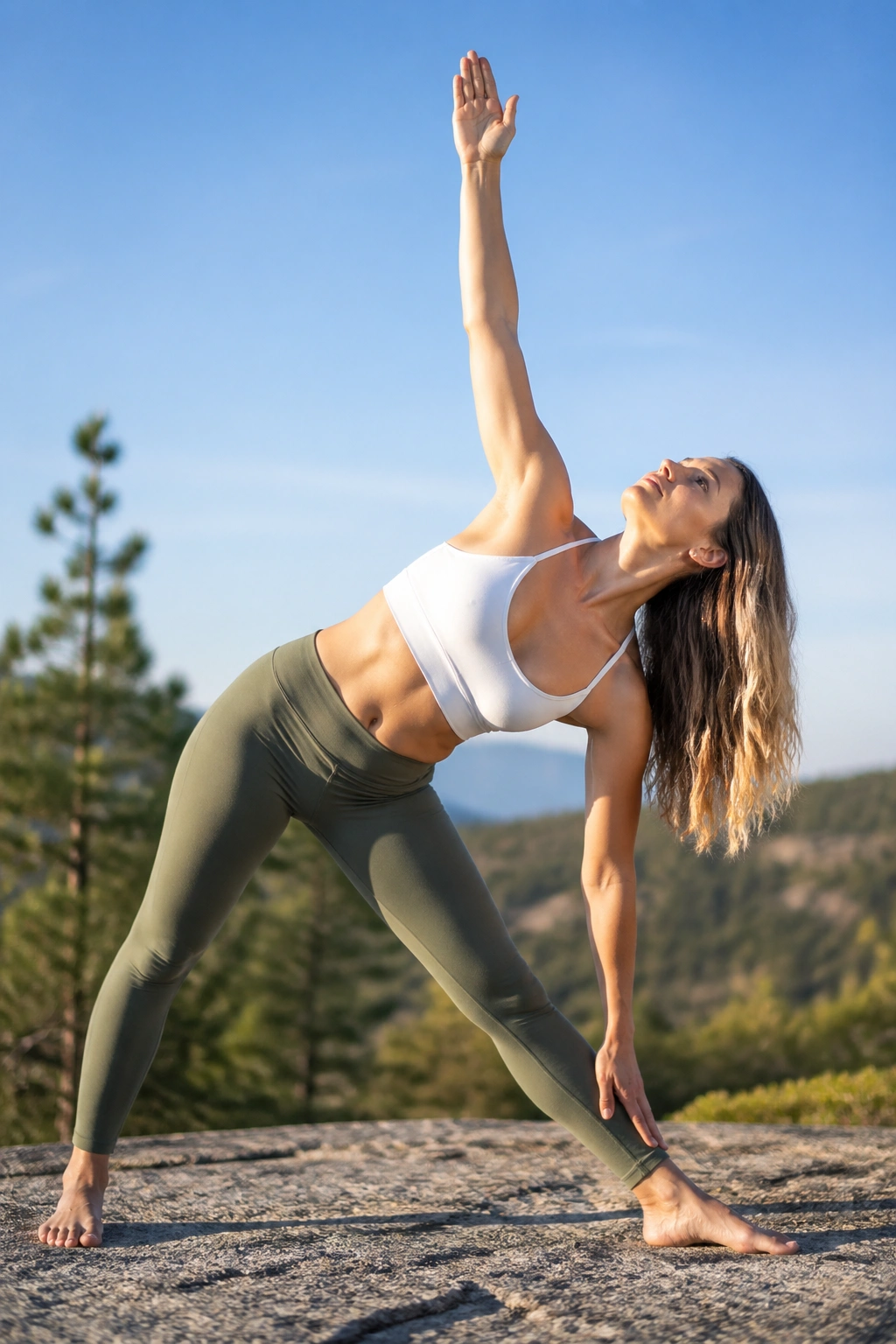
Triangle Pose is not about touching the floor.
That’s the mistake people make. They reach down, round the torso, and miss the whole point. What you want is length along both sides of the body, a long spine, and a stable base. The lower hand can rest on a block, a shin, or even a chair seat if balance is shaky.
Step the feet wide. Turn the front toes forward and the back foot in slightly. Hinge at the front hip and lengthen the torso before you go down. If the chest starts folding toward the floor, stop there. That’s your range for today.
A wall behind you can make Triangle much more forgiving. So can a shorter stance.
This pose is useful when low energy makes you feel compressed from the waist up. It creates room without demanding effort you don’t have. That’s a rare combination.
14. Supported Bridge Pose
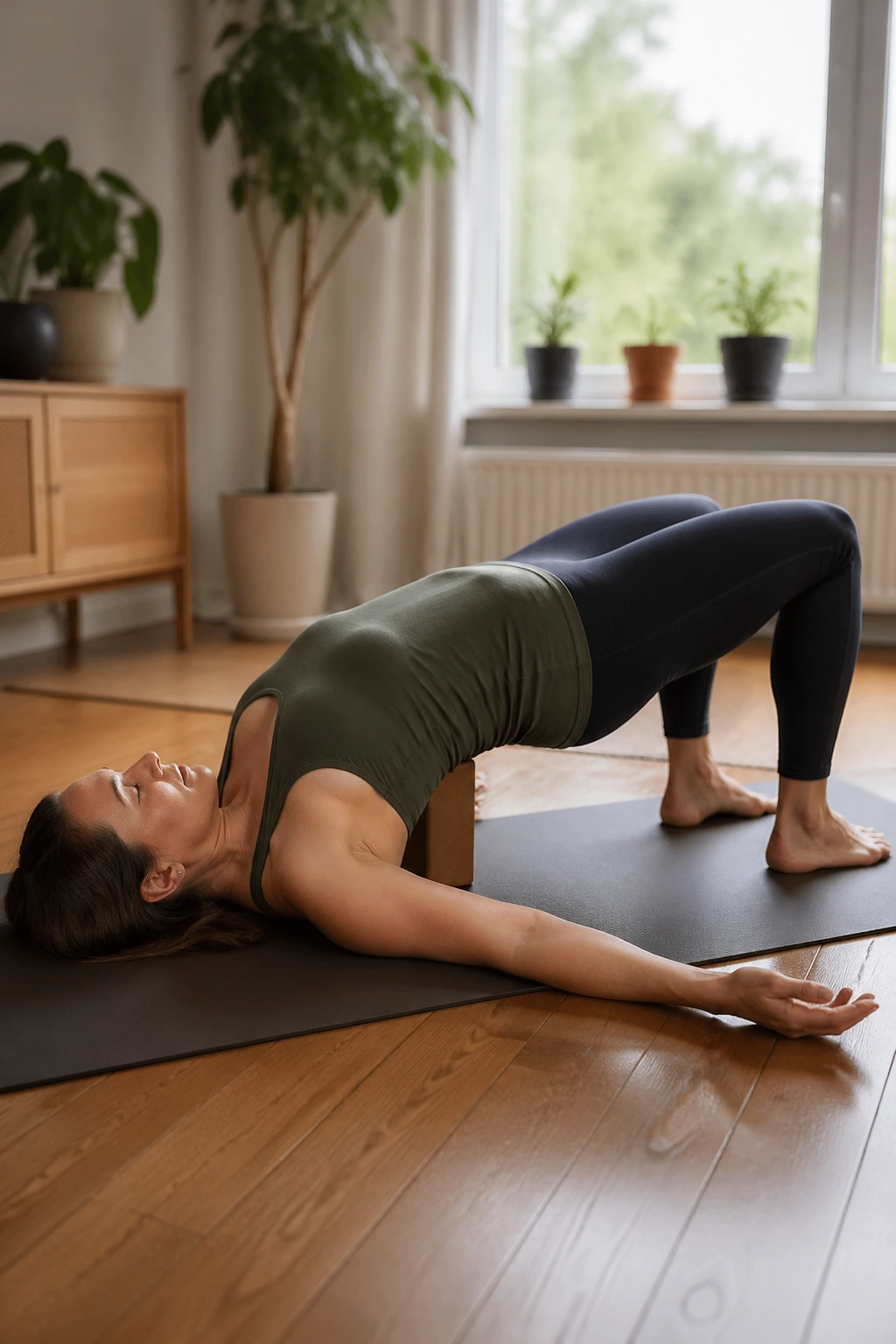
A supported backbend can feel like lying on a very polite piece of furniture.
Supported Bridge Pose is one of my favorite options for tired days because the props do most of the work. Lie on your back, bend the knees, plant the feet, and lift the hips just enough to slide a block or bolster under the sacrum. Then settle there. The chest opens, the front of the hips release, and the low back gets to rest instead of brace.
How long to stay
- Start with 1 minute if you’re new to it.
- Build toward 2 to 3 minutes if it feels calm.
- Exit slowly by pressing into the feet and lowering the spine one vertebra at a time.
A block on the lowest or middle setting is usually enough. You are not trying to make a huge arch. You’re trying to let gravity help.
On low-energy days, this pose gives back more than it takes. That’s the whole charm.
15. Reclined Bound Angle Pose
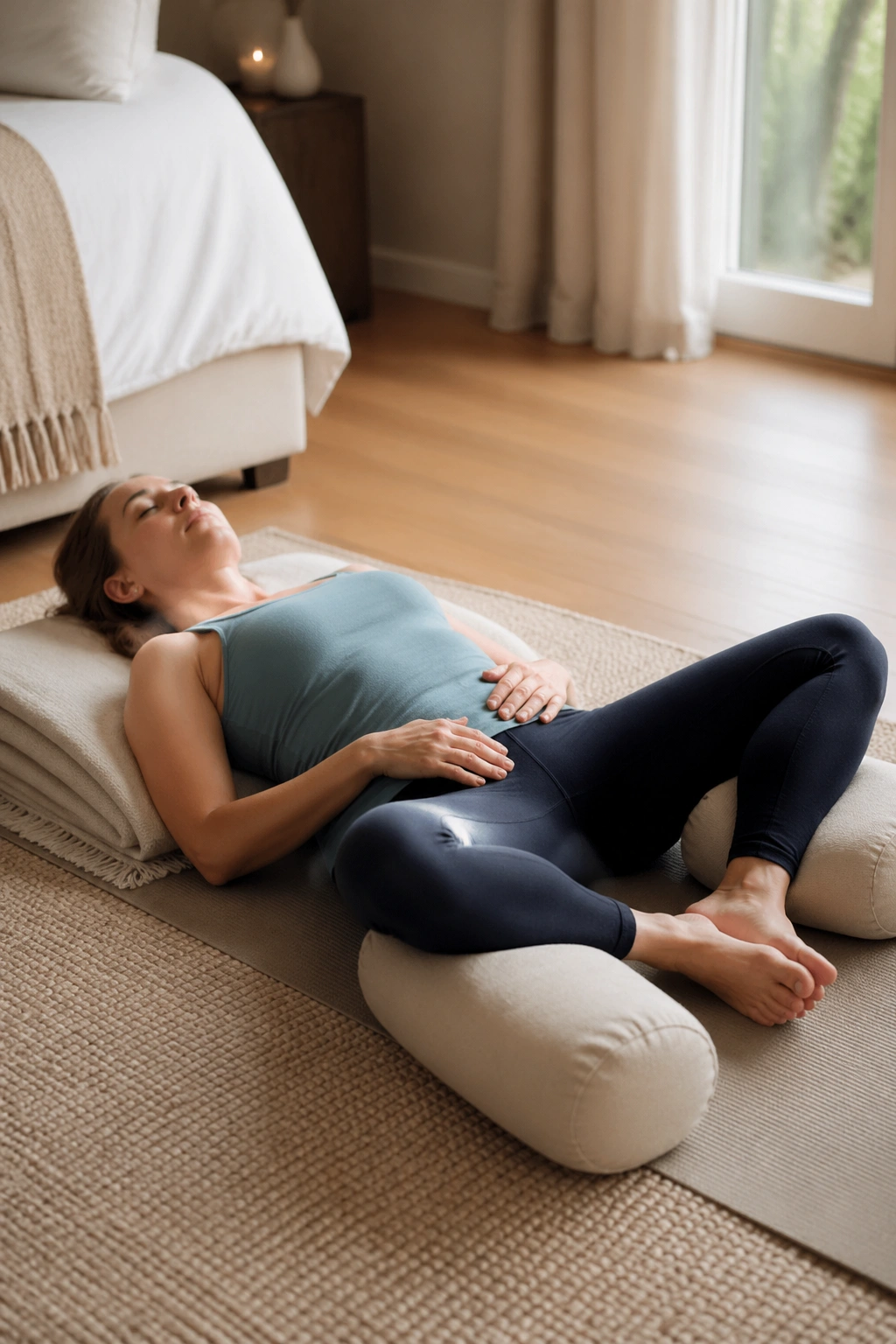
This one feels soft in the best way.
Reclined Bound Angle Pose opens the inner thighs and hips while letting the spine rest flat on the floor. Bring the soles of the feet together and let the knees fall out to the sides. If the inner thighs feel too intense, slide pillows or blocks under the knees. No heroics. The floor does not need to win.
A blanket under the head can make the neck happier. Some people also like a small bolster lengthwise under the spine for a more chest-opening version, though that can feel like too much if you’re already depleted.
The pose is useful when fatigue has made your whole front body feel tight and compressed. It doesn’t ask for effort. It asks for surrender, but the manageable kind.
Stay for 1 to 5 minutes, breathing low and easy. If the groin pinches, support the knees more. Easy fixes count.
16. Supine Twist
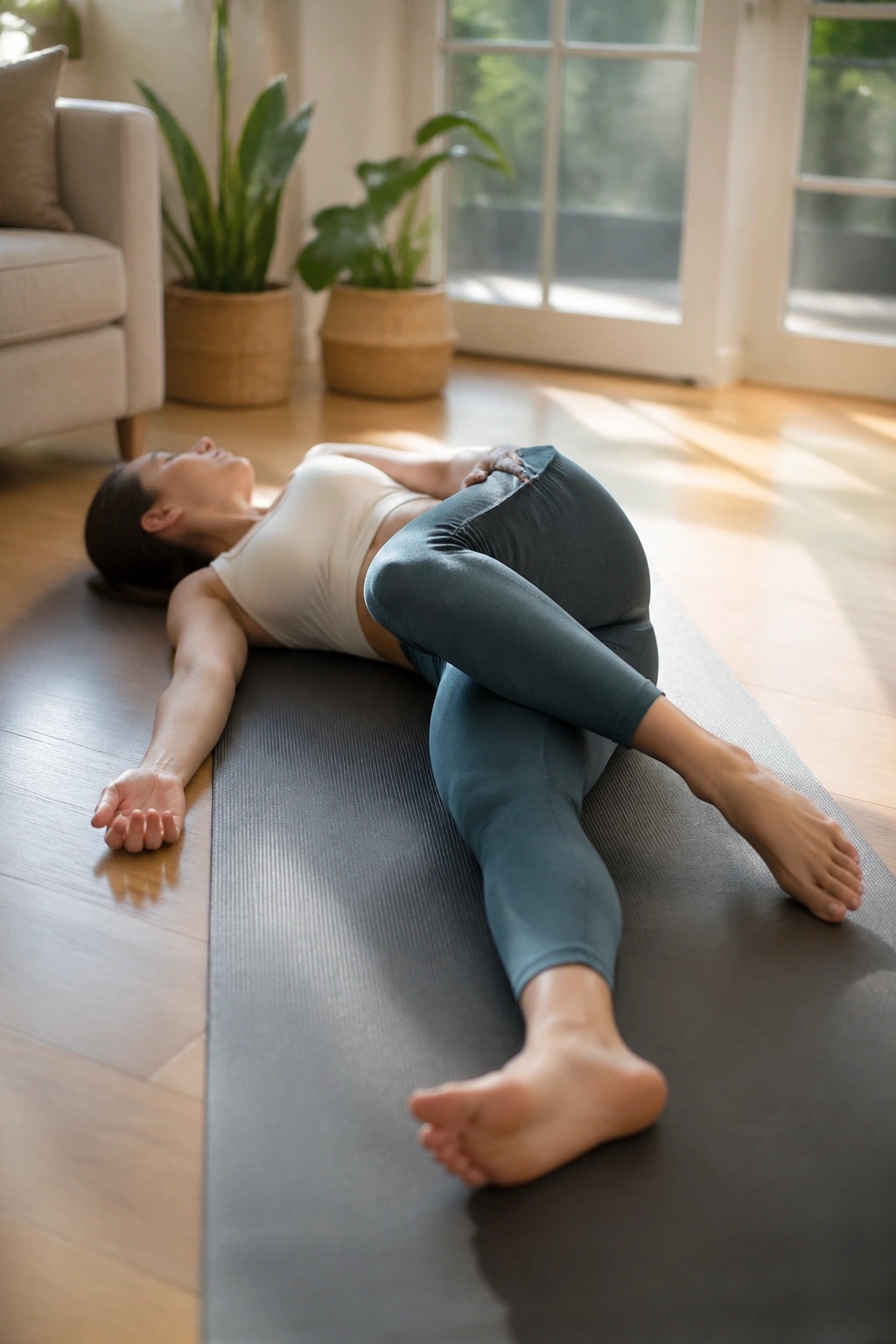
Why does a simple twist feel so good after a sluggish day?
Because it lets the back settle, the waist soften, and the breath move into places that have probably been stuck for hours. Supine Twist is gentle enough for low energy, but it still gives a clean sense of release. That’s useful when your body feels creaky and your head feels full.
Lie on your back, draw one knee into the chest, then guide it across the body. Keep both shoulders heavy on the floor. If the top knee floats too high, place a block or pillow under it. The twist should feel like a melt, not a wrench.
A few details that matter
- Keep the movement slow when you change sides.
- Let the gaze go opposite the knees if the neck agrees.
- Stay for 3 to 5 breaths per side.
- Skip the deepest version if the low back is sensitive.
A twist after a long day can feel like wringing out a towel. Not dramatic. Just clean.
17. Seated Forward Bend
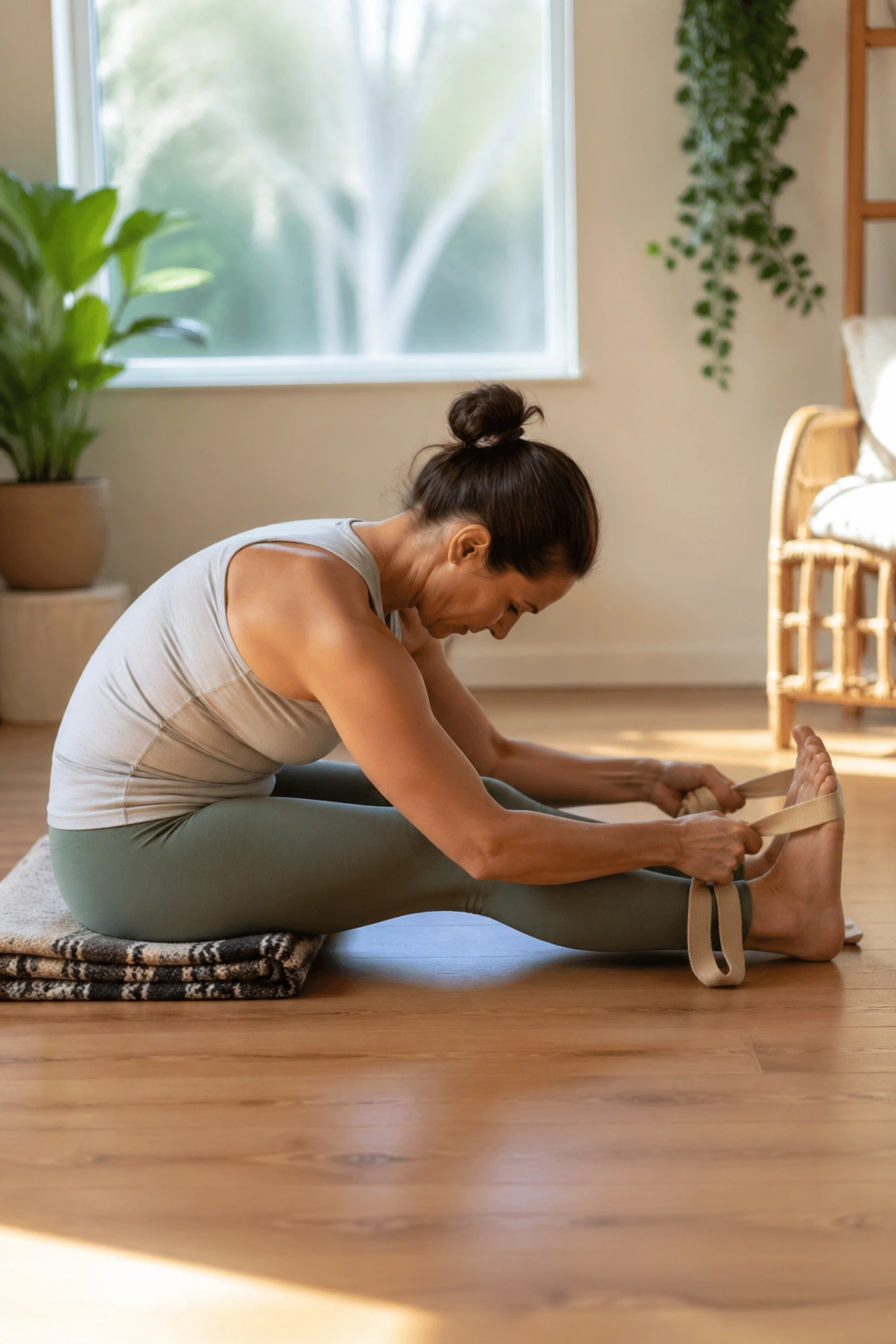
This is where people usually get impatient.
Seated Forward Bend can be wonderful for calming a tired mind, but only if you stop treating it like a test. Sit on a folded blanket so the pelvis tilts forward a bit. Bend the knees. Loop a strap around the feet if your hands can’t reach. Then lengthen the spine before you fold. That order matters.
A hard forward fold tends to round the back and yank on the hamstrings. A softer one lets the body relax into it. If your energy is low, soft is the point. Reach the chest forward first, then let the hands go where they may.
How to avoid turning it into a hamstring fight
- Keep the knees slightly bent.
- Hold the feet, shins, or strap.
- Stop as soon as the breath gets tight.
- Rest your forehead on a pillow if you need more support.
Some days this pose feels meditative. Some days it just feels like a stretch. Both are fine.
18. Wide-Legged Forward Fold
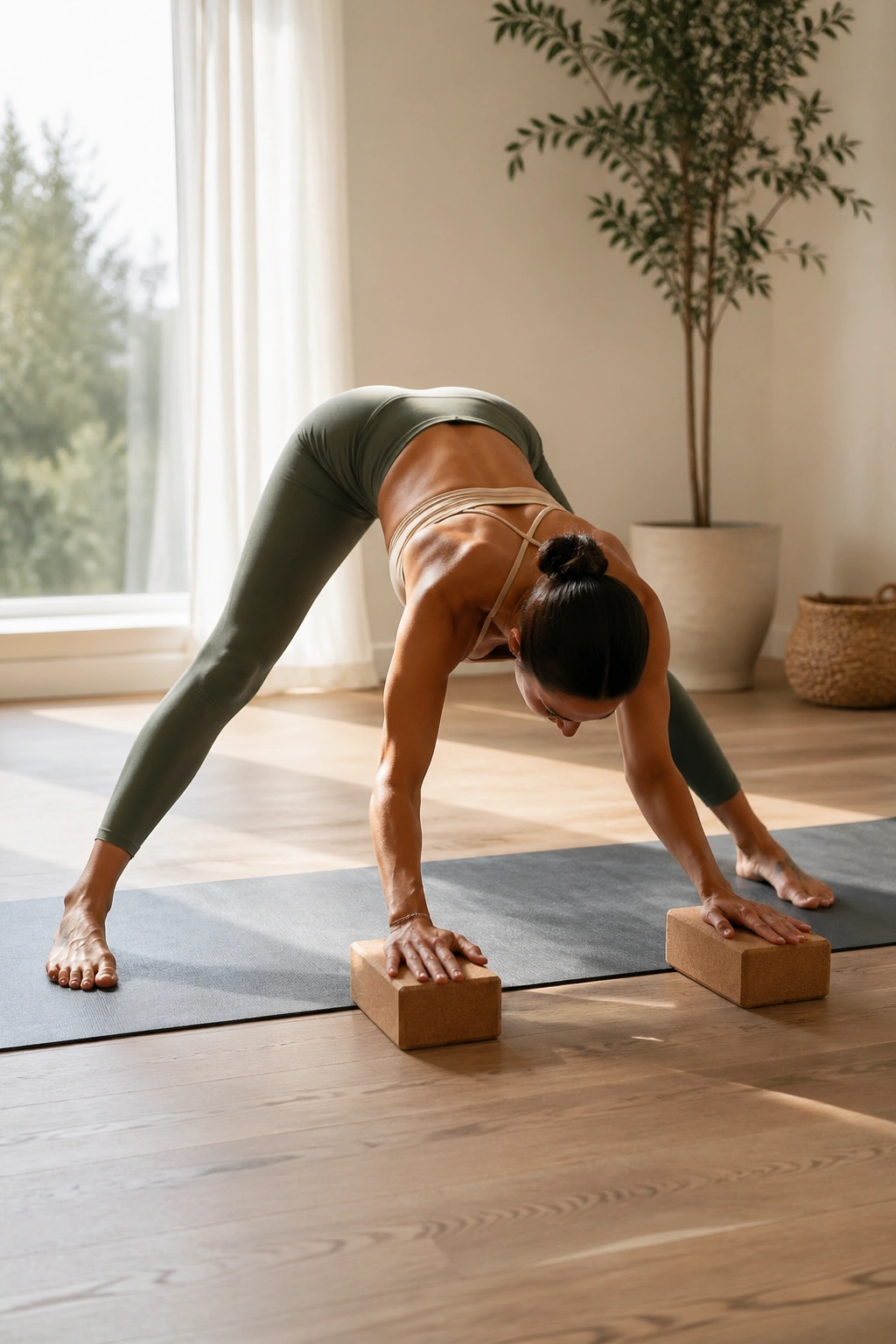
More space is sometimes easier than more depth.
Wide-Legged Forward Fold gives tired legs room to open without the pinched feeling you can get in narrower folds. Step the feet wide, turn the toes in slightly, and hinge at the hips. Hands can rest on blocks, a chair seat, or the floor if the body allows it. The head does not need to hang low unless that feels fine.
This pose can be especially nice after a day of standing or walking slowly with heavy legs. It spreads the load across the inner thighs and hamstrings instead of dumping everything into one tight line. If you feel dizzy, come up. Slowly. No rushing.
A small bend in the knees often makes the entire pose better. People resist that, and I never quite understand why. Bent knees are not a failure. They’re a smarter stretch.
19. Legs Up the Wall
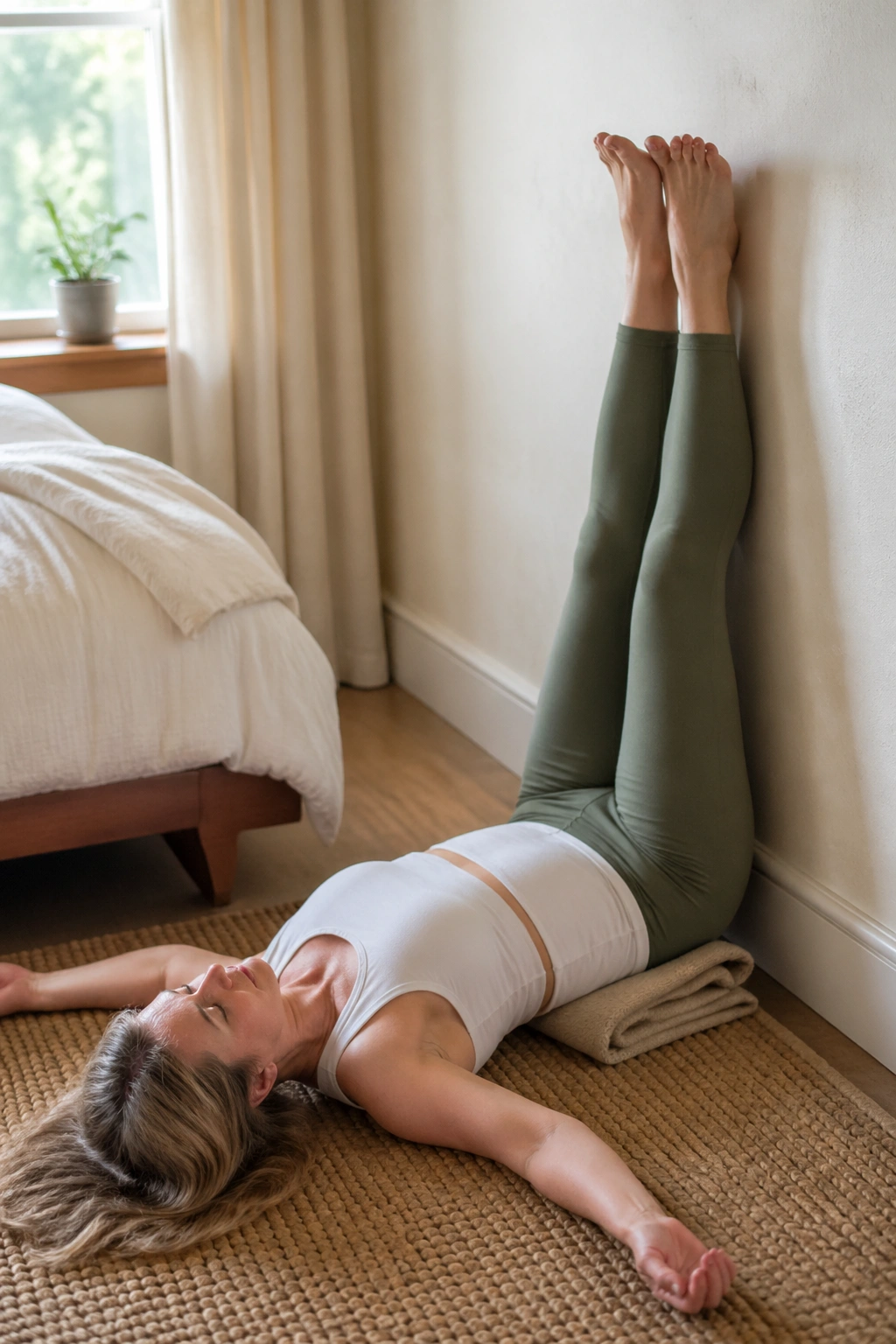
Need one pose that asks almost nothing of you?
Legs Up the Wall is hard to beat. You lie on your back with your hips near a wall and your legs resting up it, or close to it. That’s the whole thing. No balance demand. No big stretch. Just a quiet place for the body to settle down after a long day.
A folded blanket under the hips can feel good, but it is not required. If the hamstrings pull, scoot farther from the wall. If the lower back aches, move a little closer or bend the knees slightly. This pose should feel like relief, not a hamstring contest.
Stay for 5 to 15 minutes if time allows. Breathe normally. Close the eyes. If your mind is busy, count slow exhales instead of trying to force calm.
How to come out
- Bend the knees.
- Roll to one side.
- Pause for a breath or two before sitting up.
That pause matters. Especially when you’re tired.
20. Savasana
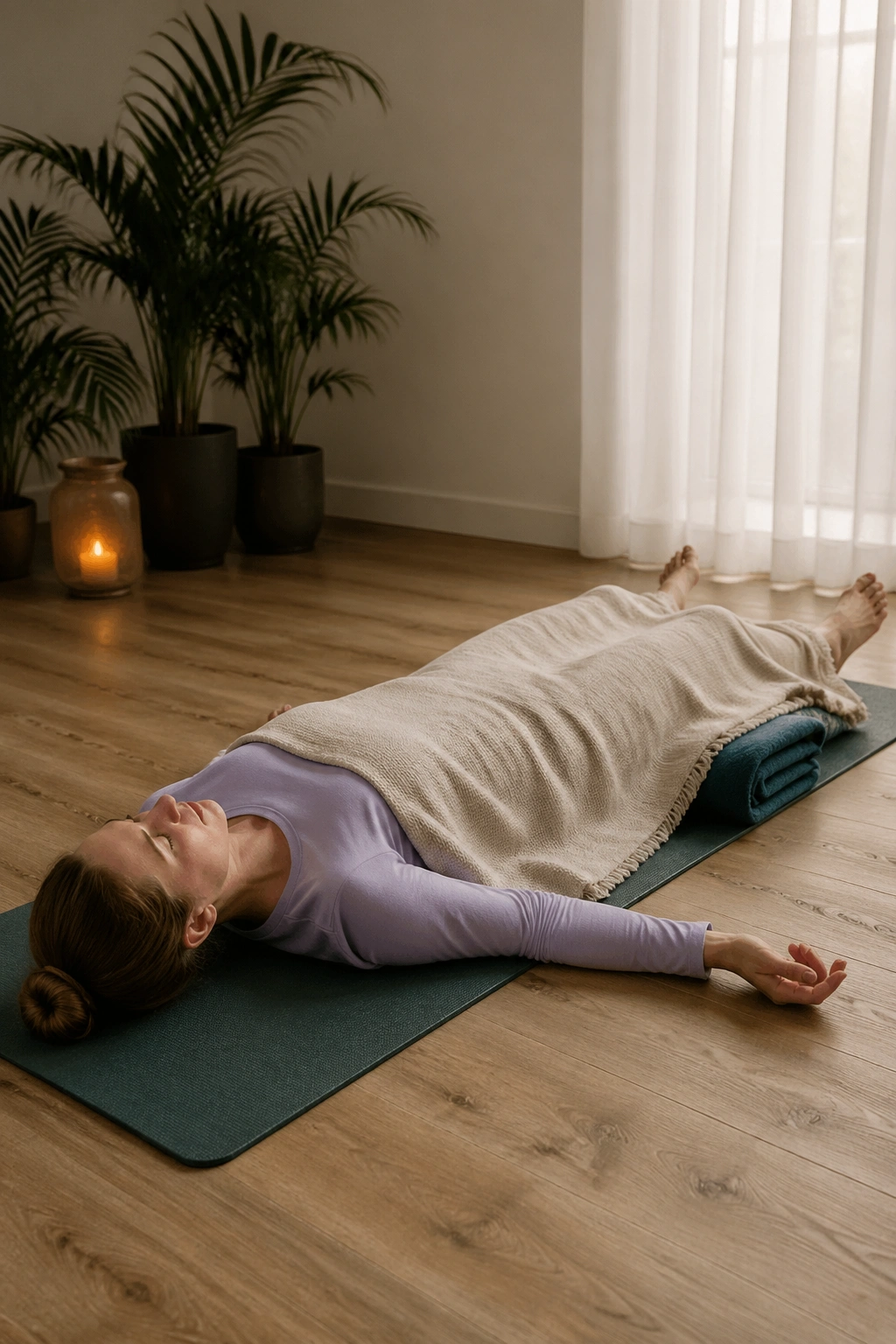
Rest is not the bonus round.
Savasana is the part where the practice lands. For low energy and hypothyroidism, it may be the most honest pose on the page. You lie flat, or with a bolster under the knees, and do nothing on purpose. No correction. No pushing. No chasing a feeling.
A blanket over the body helps more than people expect. So does a rolled towel under the neck if the head tips back. The goal is to reduce small annoyances so the nervous system can stop fussing and settle.
If you only have a few minutes, do Mountain Pose, Cat-Cow, Legs Up the Wall, and Savasana. That short sequence covers grounding, gentle motion, passive rest, and a clean landing. Four pieces. Enough for a rough day.
And if all you can manage is Savasana itself, that still counts. Sometimes the most useful practice is the one that lets the body stop fighting for a minute.
