



Tired eyes feel like a small problem until they don’t. They ache after a long screen stretch, go dry in a warm room, and start losing focus the second you ask them to read one more line. Yoga eye exercises can ease that tight, scratchy feeling, but the useful ones are the gentle ones—the kind that give your visual system a real pause instead of another chore.
Most eye strain comes from two boring habits: staring too long without blinking and keeping the focus locked at one distance. That is why a short, steady routine can help more than a dramatic one. You’re not trying to “work out” the eyes. You’re trying to stop them from grinding through the same small motion all day.
And no, these exercises won’t erase a prescription or fix a sudden vision change. They can, however, calm brow tension, loosen the grip of close-up work, and make your eyes feel less cooked by the end of the day. If pain, flashes, new floaters, double vision, or one-sided redness show up, skip the routine and get checked.
Start with the easiest one.
1. Palming
Warm palms beat cold ones.
Palming is the classic reset in yoga eye exercises because it gives the eyes darkness, a little heat, and a clean break from visual input. It sounds almost too plain to matter. That’s usually a good sign.
How to do it well
Rub your hands together for 10 to 15 seconds until they feel warm, not hot. Then cup them over closed eyes without pressing on the eyeballs. The goal is soft darkness, not a face massage.
Breathe slowly for 5 to 8 breaths. Let the shoulders drop. Let the jaw unclench. If your palms leak light in at the nose bridge, adjust them a little so the dark feels even.
- Keep your fingers relaxed, not stiff.
- Rest your elbows on a desk or pillow if they get tired.
- Stay there for 30 to 60 seconds, or longer if it feels good.
- Do not press on the eyes. That part matters.
You should feel the eye area soften a little, almost as if the muscles around the brow are finally backing off. If the palms are cool or sweaty, warm them again before the next round. Small detail. Big difference.
2. Blinking
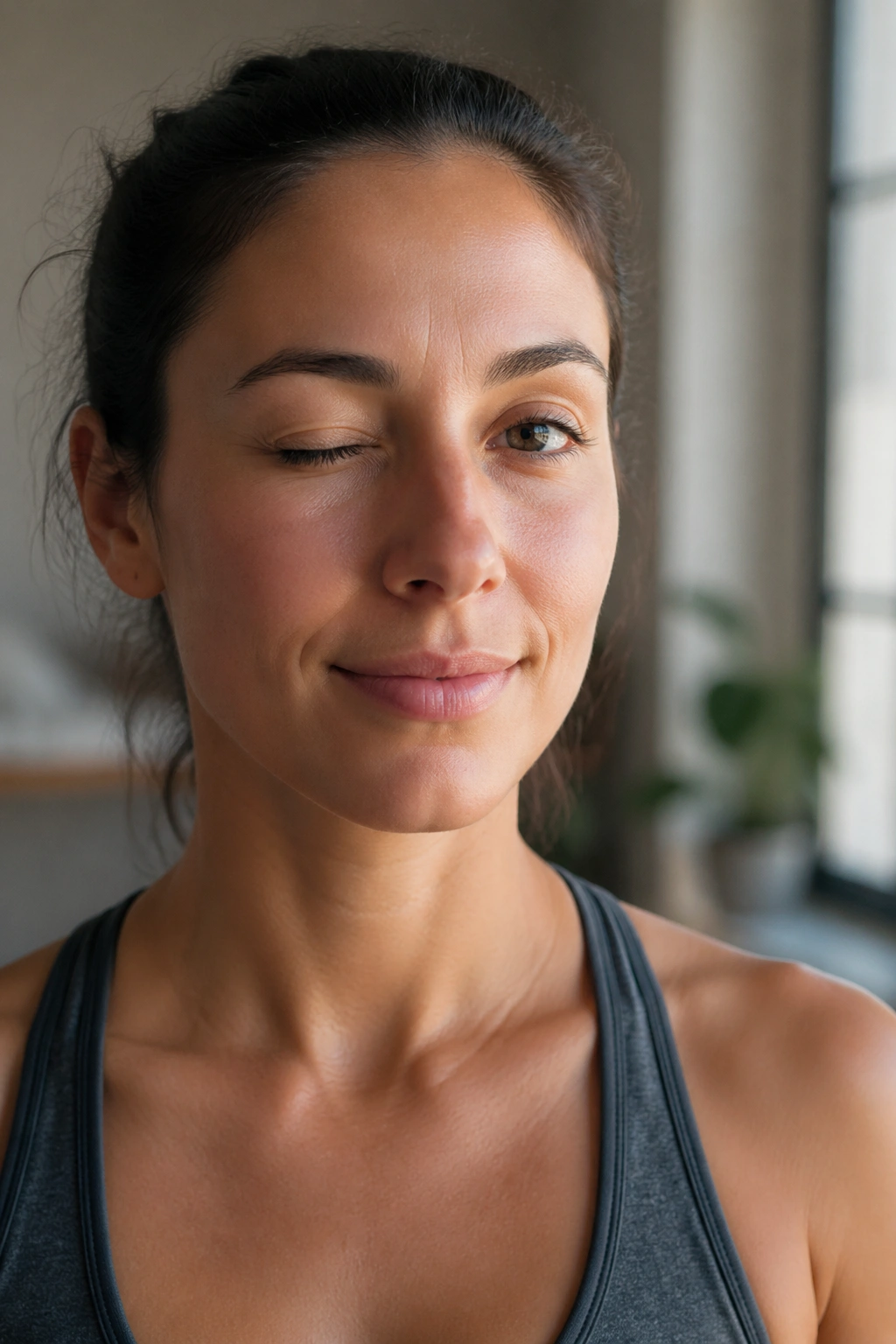
A good blink is underrated.
When people stare at a screen, the blink gets shallow and lazy. That leaves the tear film thinner, which is why the eyes start to feel dry, sticky, and weirdly tired all at once. A slow blinking reset is one of the fastest yoga eye exercises for that exact problem.
What a full blink looks like
Close the lids fully, but gently, for about one second. Open them again without a snap. The blink should feel like a soft reset, not a squeeze. If you feel your forehead tense, you’re working too hard.
Try 10 slow blinks in a row. After that, look away from the screen for a few seconds and blink normally. That second part matters more than people think. You’re teaching the eyes to stop hovering halfway open like they’re waiting for a deadline.
- Blink every time you switch tasks.
- Use this before reading, after reading, and after any long call.
- Pair it with an exhale.
- If the eyes feel gritty, blink before rubbing. Rubbing usually makes things worse.
One clean blink won’t fix a day of strain. Ten deliberate ones can take the edge off fast. That’s the point.
3. Near-Far Focus
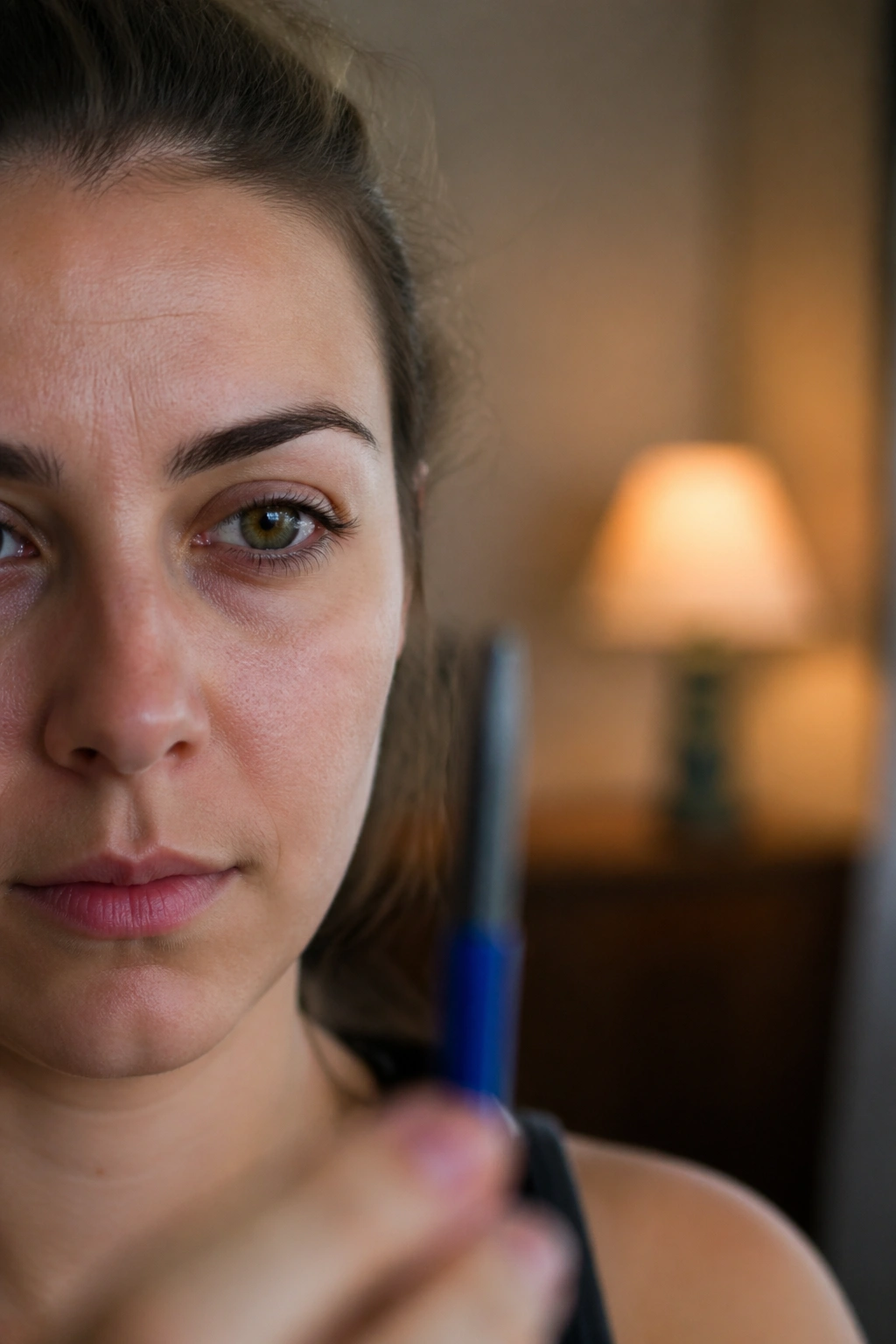
Why does looking near and far help so much?
Because the muscles that change focus can get sticky after a long run of close work. Reading, typing, stitching, drawing, scrolling—those all ask the same small set of muscles to stay in one gear. Near-far focus gives them a little gear change.
Hold a thumb or pen about 10 to 12 inches from your face. Pick a distant object too, like a lamp, tree, or wall clock. Focus on the near object for 3 seconds, then shift to the far object for 3 seconds. Keep going for 5 to 10 rounds.
How to use it
Move your eyes only. Don’t bob your head around like you’re following a tennis match. The head stays still, the focus moves, and the breathing stays even.
This one can feel slightly odd at first. Good. It should. The near object may sharpen, then blur. The far object should do the same. You’re not forcing clarity; you’re making the focus system change distance without panic.
If you work at a desk all day, this is one of the most useful eye yoga breaks to insert between blocks of reading. Short. Clean. No drama.
4. Figure-Eight
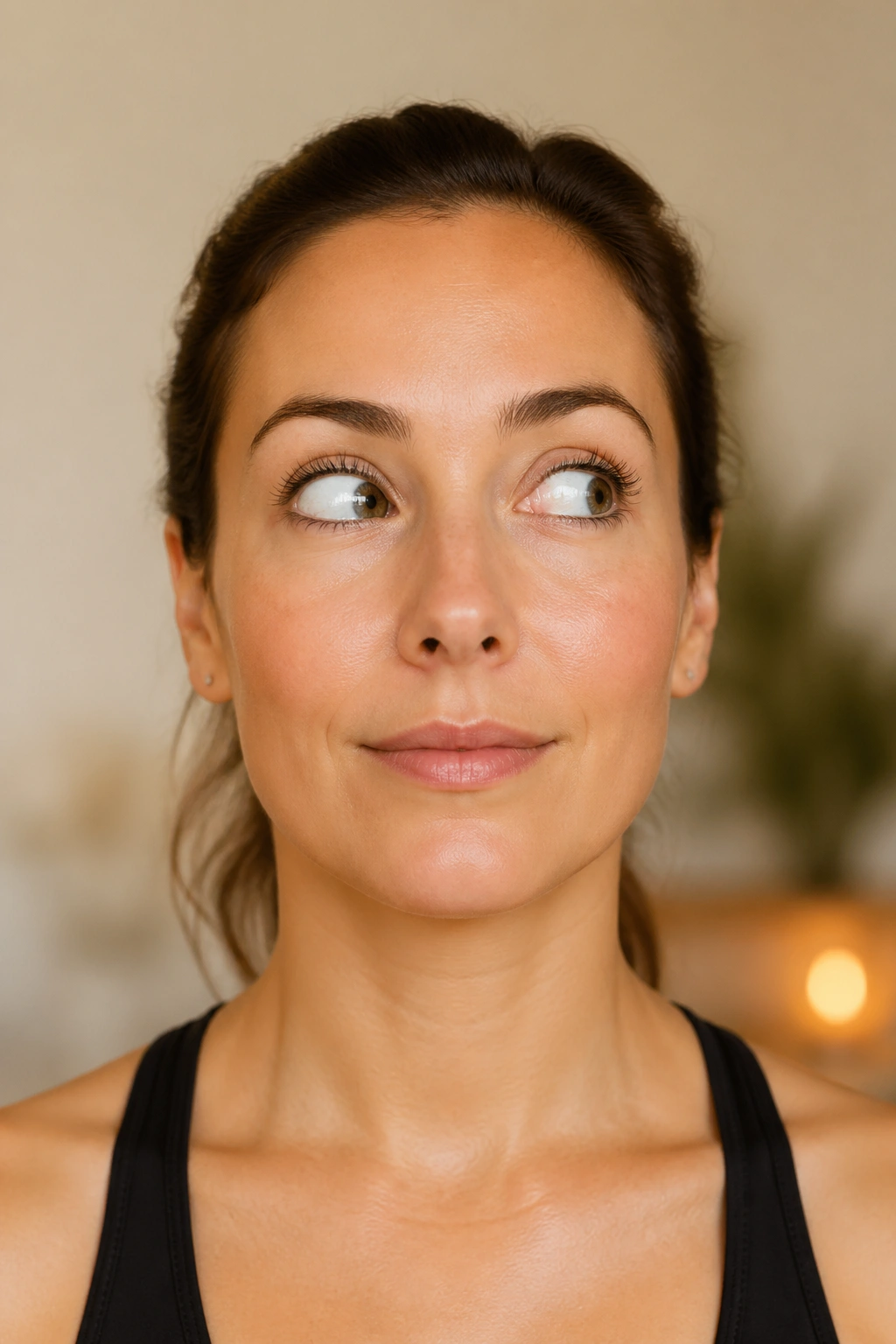
Picture a wide, sideways 8 floating on the wall.
That image is the whole exercise. Figure-eight tracking asks the eyes to trace a smooth path without the jerky stop-start pattern that screens train into us. It’s a little like loosening a stiff wrist with circles, except the motion comes from the eyes.
Stand or sit about 6 to 10 feet from a blank wall. Imagine a sideways figure-eight that’s about as wide as a dinner plate and as tall as a coffee mug. Trace it slowly with your eyes for 3 to 5 rounds in one direction, then reverse.
Keep your head still. That’s the rule people ignore. If the neck joins in, the work gets messy and the point gets lost.
- Make the path smooth, not huge.
- Go slower than you think.
- Stop if you feel dizziness.
- If the eyes want to jump, shrink the shape.
Figure-eight tracking can wake up tired eyes without making them work hard. That balance is the trick. It should feel like guided motion, not a stunt.
5. Side Sweeps
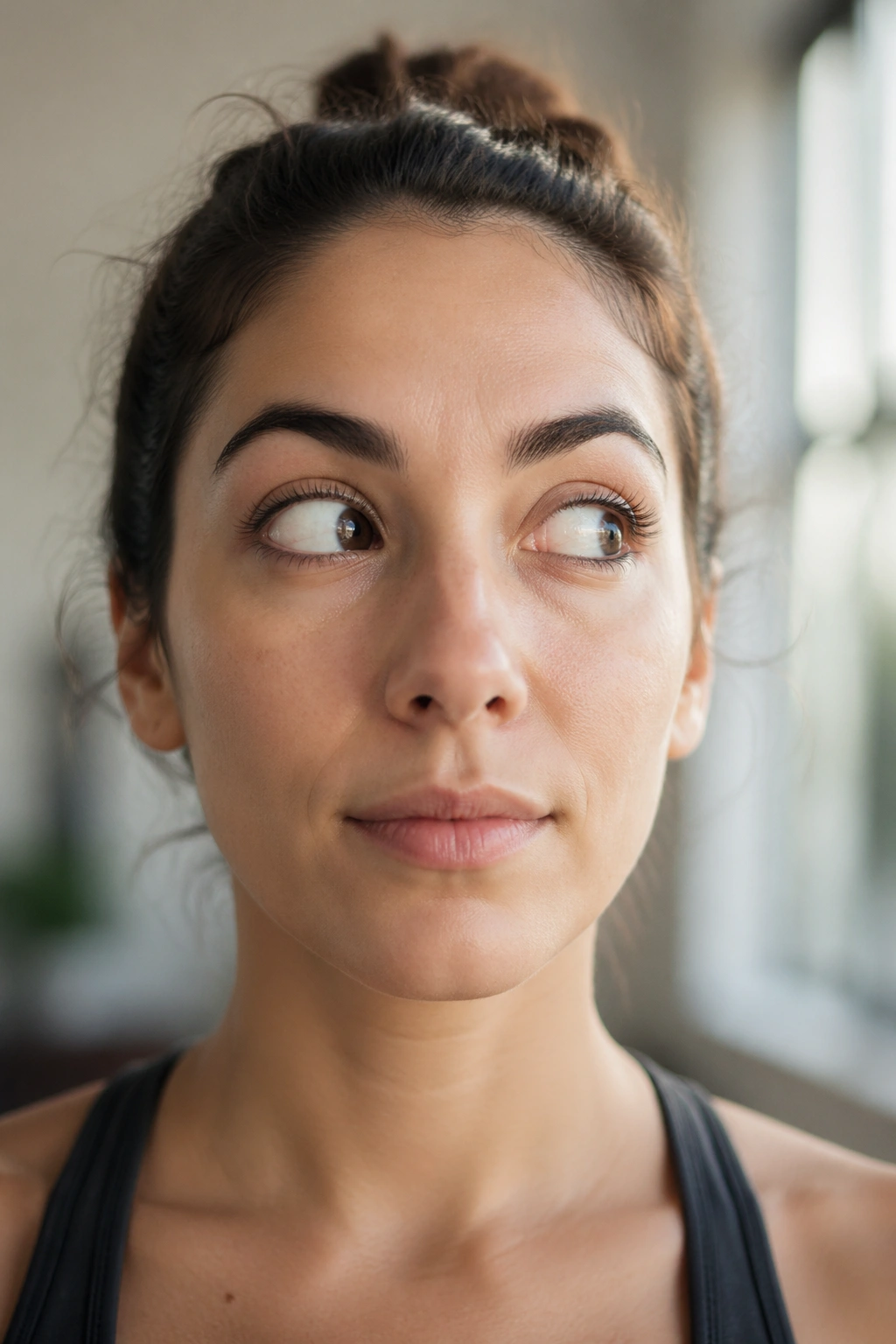
Unlike circles, side sweeps stay calm and direct.
There’s something nice about a horizontal eye sweep after a long reading session. Reading pulls the eyes across lines, one line after another, and that creates a certain narrow, tunnel-like fatigue. Side sweeps loosen that feeling by asking the eyes to glide from left to right with no rush.
Fix your gaze at the far left side of a room, then slowly move it all the way to the far right side. Do not turn your head. Let the eyes travel across the space, pause for a beat at each edge, and come back through the center.
What makes it work
The center pause matters. It gives the eye muscles a tiny rest before the next sweep. Without it, people tend to flick back and forth too fast, which feels more like strain than release.
Try 5 to 8 sweeps. If you have a window, let the gaze travel from one side of the frame to the other. That clean boundary can make the movement easier to control.
This is one of those exercises that feels boring in the best way. Boring means gentle. Gentle is what tired eyes usually want.
6. Up-Down Sweeps
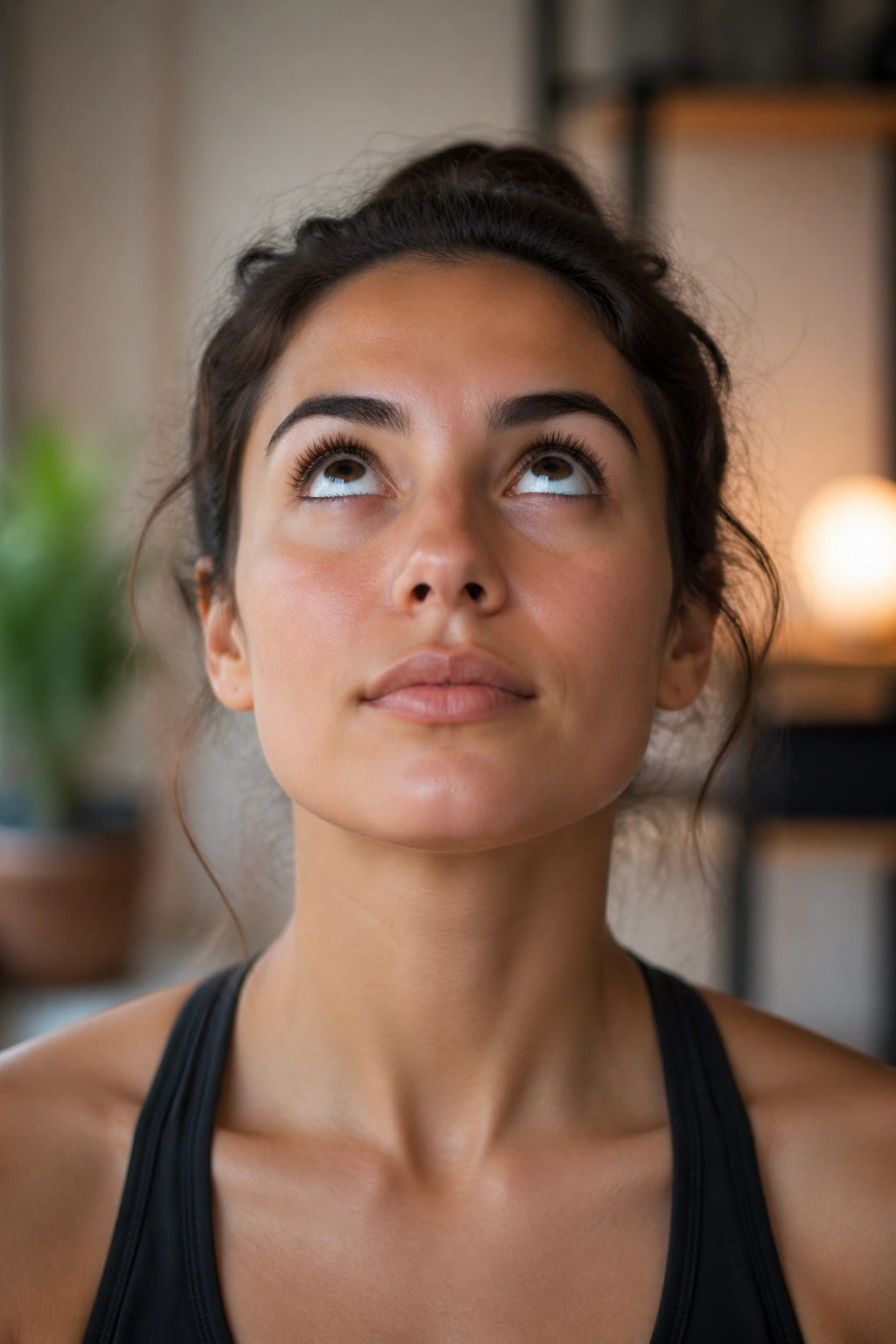
Up and down is where many people notice the tension.
Eyes spend a lot of time locked at a single height—laptop screen, phone, book, dashboard. Up-down sweeps interrupt that habit and remind the eye muscles that vertical motion still exists. Simple sentence. Useful exercise.
Sit tall and look straight ahead. Move your eyes slowly up toward the ceiling, pause for one second, then down toward the floor. Keep the head still and the jaw loose. Repeat 5 to 6 times.
The motion should be smooth enough that you could almost miss it. If the movement feels sharp or effortful, shorten the range. You do not need to chase the ceiling.
A lot of people clench their forehead during this one. Don’t. If the brows pull together, stop, blink twice, and try again with less intensity.
One small rule helps here: move the eyes, not the face. The body will try to help. It doesn’t need to.
7. Diagonal Looks
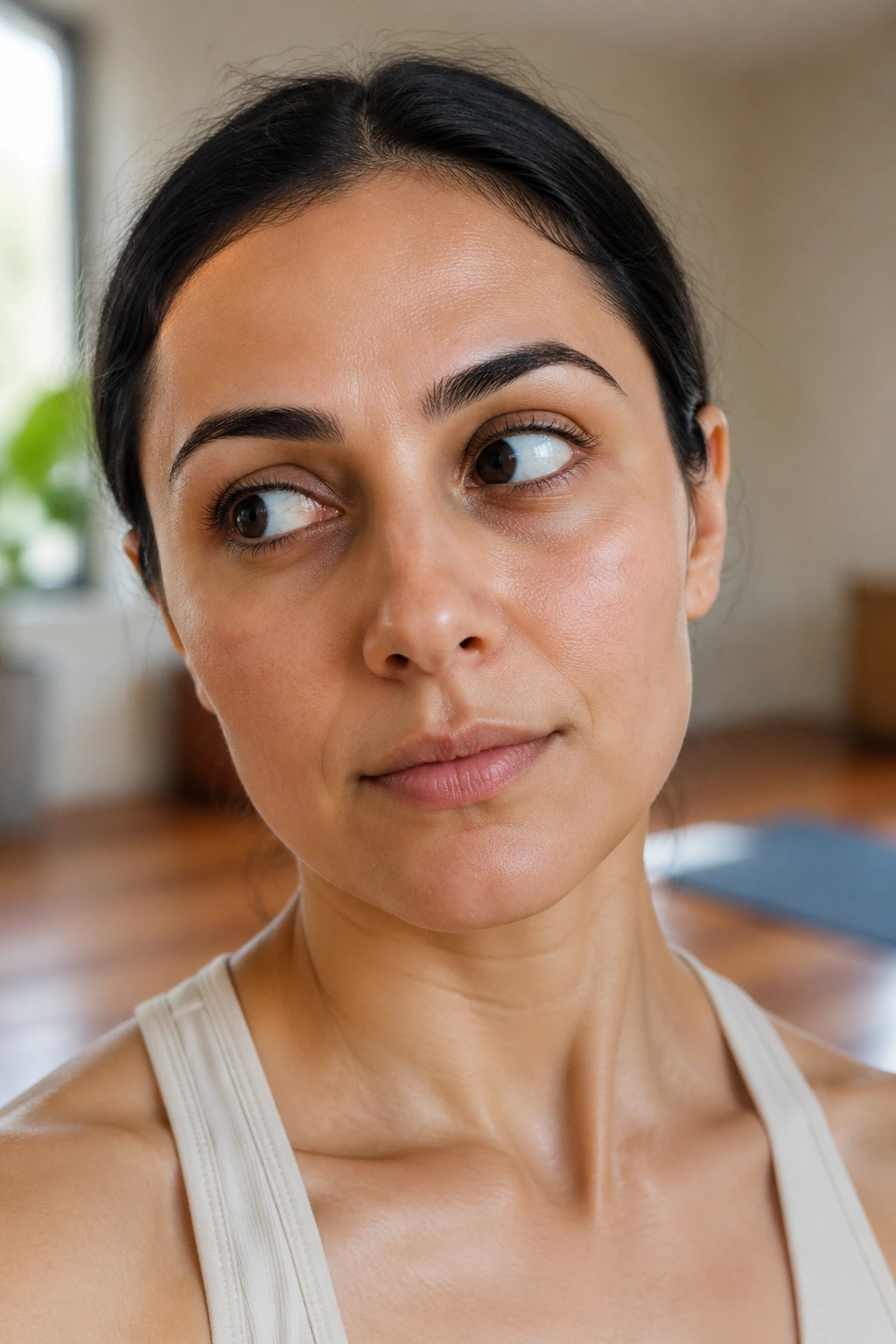
Why diagonals? Because the eyes rarely get to move that way on their own.
This is one of the more overlooked yoga eye exercises, and I like it for that reason. It catches the spaces between the obvious motions. Up, down, left, right—sure. But diagonals bring in a different angle and keep the routine from becoming stale.
Look toward the upper left corner of the room, hold for a second, then shift to the lower right. Return to center. Then go upper right to lower left. That’s one round. Do 3 to 5 rounds total.
The diagonals people skip
The movement should feel smooth and slightly longer than the side sweeps. If one diagonal is much harder than the other, don’t force it. Just notice it and keep the motion smaller on that side.
This is a good one after lots of close reading because it breaks the eye habit of scanning in one narrow band. It also tends to bring out hidden tension around the temples.
If the eyes feel fussy, make the diagonal shorter. A half-room diagonal is fine. A tiny diagonal is fine too. Scale matters less than smoothness.
8. Eye Circles
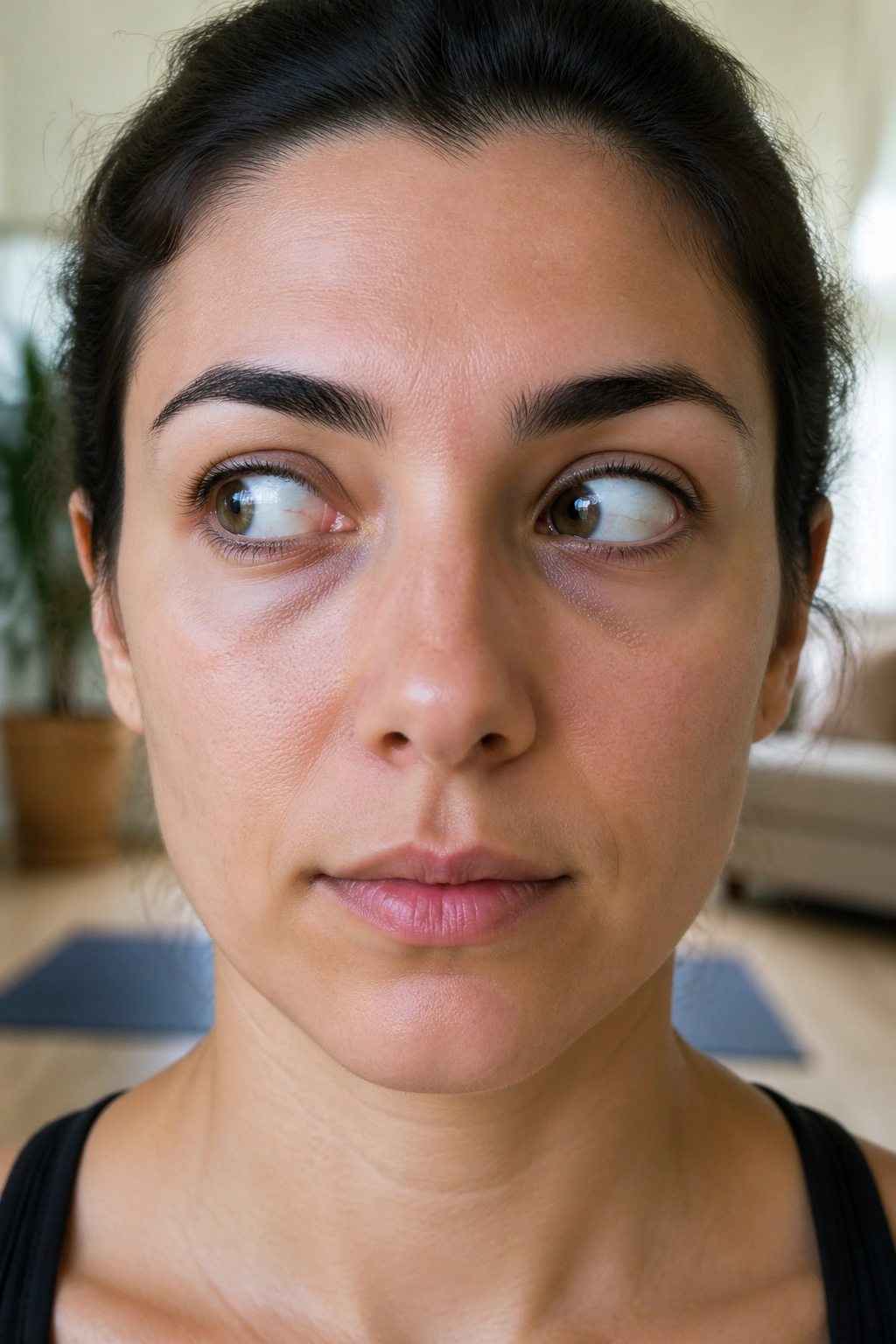
Eye circles work only when they stay small.
Big, dramatic rolling is not the goal here. That usually turns into neck movement and a bit of dizziness. Small, slow circles are cleaner. Better. Less annoying.
Look up, then slowly to the right, down, and left, making a smooth circle with your gaze. Do 3 circles clockwise, then 3 counterclockwise. Keep the motion light and even. If the eyes feel gritty or the room starts to spin, stop early.
What to watch for
- The circle should feel smooth, not jagged.
- The head stays fixed.
- The brows stay soft.
- Dizziness means you went too far.
This movement can feel especially useful after a long spell of fixed attention. There’s a tiny release when the eyes get to travel in a shape instead of a line. That release is the whole reason to do it.
I’d keep this one short. A little goes a long way. Ten sloppy circles are worse than four careful ones.
9. Pencil Push-Ups
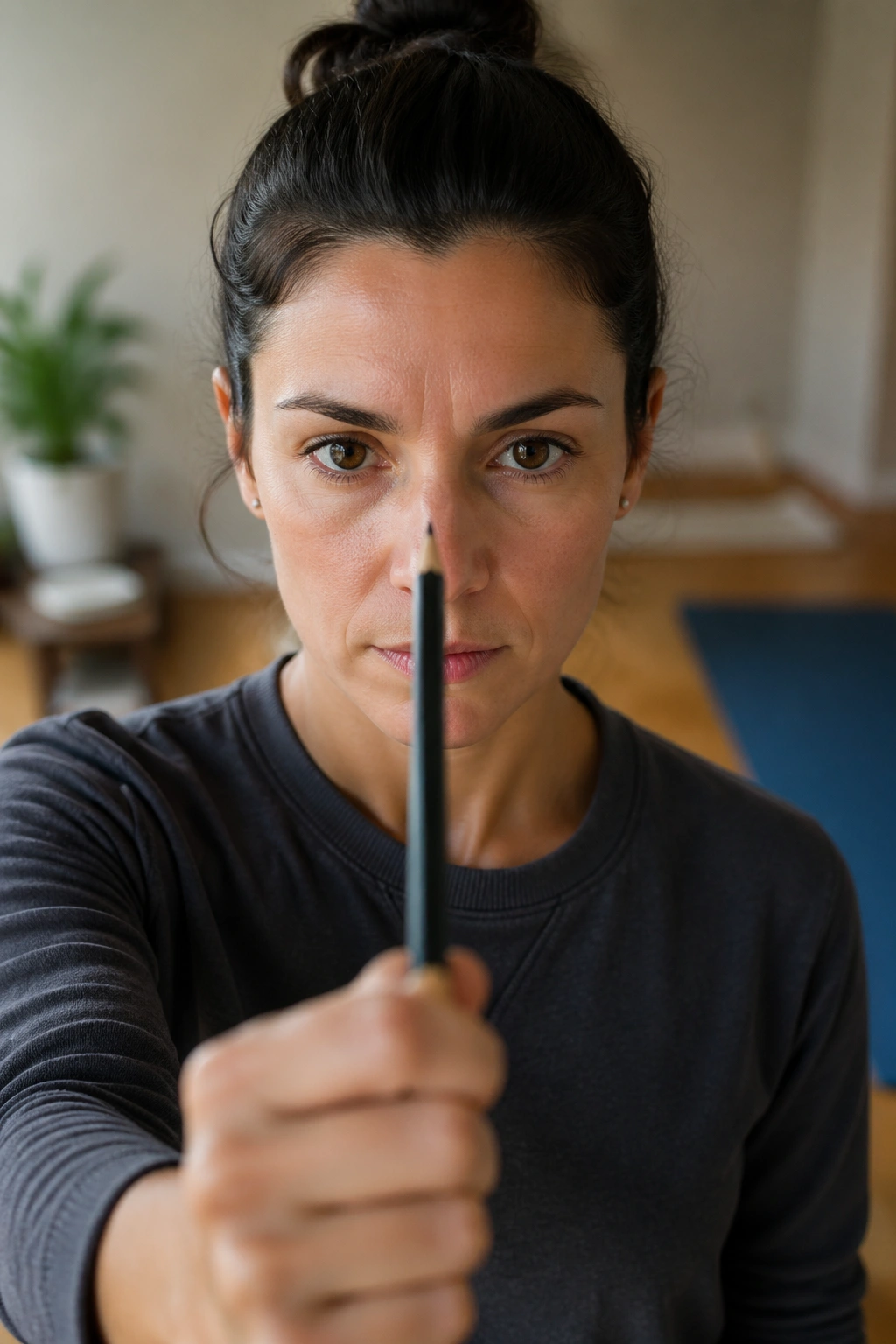
This one has a specific job.
Pencil push-ups are about convergence, which is the eye team-up that helps you keep one near object clear with both eyes. If the eyes feel tired because close work starts to blur or drift, this exercise can be useful. If you ever get double vision that hangs around, that’s a separate conversation with an eye professional.
Hold a pencil at arm’s length, centered between your eyes. Pick the tip or a small letter on it. Bring the pencil slowly toward your nose while keeping that tip as clear as possible. Stop when the image doubles or starts to slip, then back up a little until it becomes single again.
A clean way to practice
Do 5 to 10 slow passes. Rest after each pass if needed. The point is control, not speed.
- Keep the pencil aligned with the bridge of your nose.
- Focus on one small detail.
- Stop before strain turns into squinting.
- If it doubles and stays doubled, stop.
A lot of readers like this one because it gives a very obvious feedback loop. Clear. Blur. Clear again. No guesswork. That makes it oddly satisfying, which is rare for eye work.
10. Squint Release
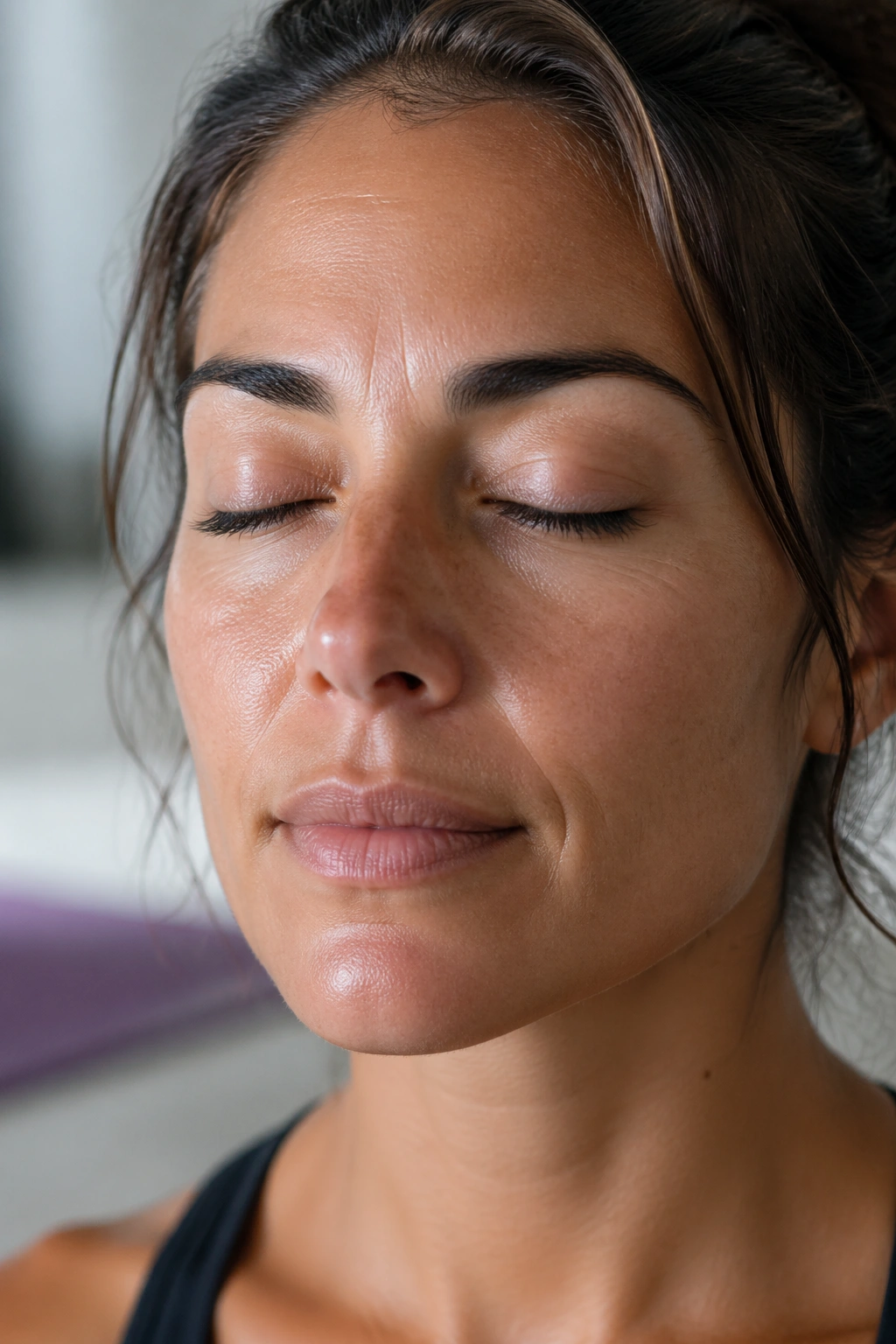
The release matters more than the squint.
Soft squint release is a tiny tension-and-relax drill for the muscles around the eyes. It’s useful when your face feels fixed in concentration, which happens more than people admit. Brows pulled down. Jaw set. Eyes doing the same narrow stare for hours. Ugly little bundle.
Close your eyes halfway and make the tiniest gentle squint for 2 seconds. Then release completely and let the lids fall soft. Breathe out as you release. Repeat 5 times.
The release part matters
You are not trying to train a stronger squint. You’re showing the muscles the difference between holding and letting go. That contrast is what creates relief.
Some people notice the brow area drop after the second or third round. Others feel it more in the cheeks and temple line. Either way, it’s the relaxation you want, not the effort of the squeeze.
If you wear glasses, take them off for this one if that feels comfortable. Keep the movement subtle. Tiny is the right size.
11. Temple Massage
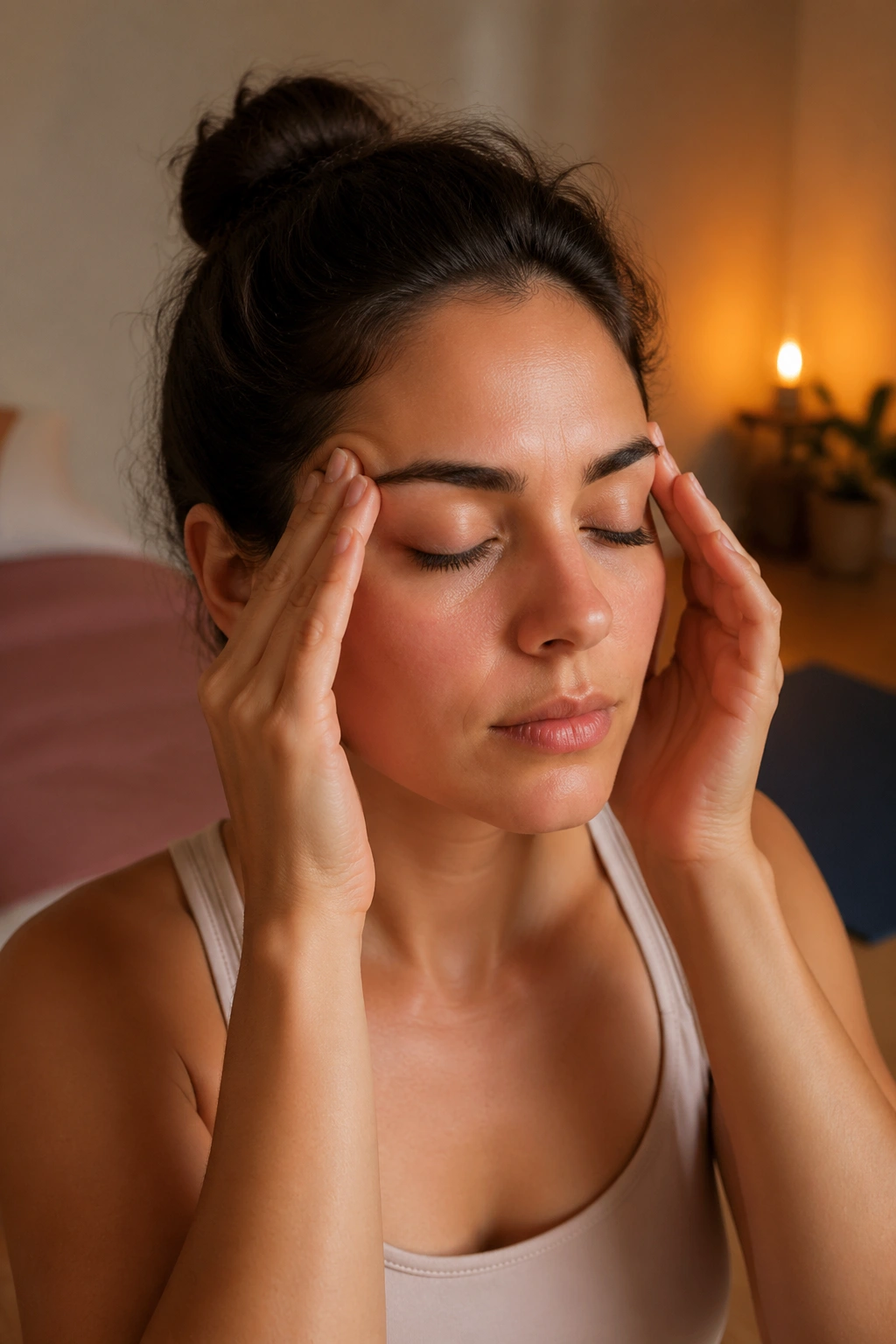
The muscles around the eyes are often the real sore spot.
Temple massage and brow work don’t move the eyeballs at all. That’s fine. They deal with the ring of tension around the eyes, which is usually where the ache lives after a long day. This is one of the few eye yoga practices that feels almost like a tiny self-massage break.
Use clean fingertips to make slow circles at the temples, just outside the brow line. Then glide along the brow bone, staying above the eye socket and nowhere near the eyeball itself. Keep the pressure light.
Where to press and where not to
- Temples: small circles for 10 to 15 seconds.
- Brow bone: gentle sweeps from the center outward.
- Between the brows: a soft press, not a poke.
- Never press on the eyeball.
Pair the massage with a long exhale. That simple link tends to make the face unclench faster. If you’ve spent hours frowning at a screen, this is the place to start.
It’s not flashy. It’s practical. And when the brow line is tight, practical is enough.
12. Peripheral Vision
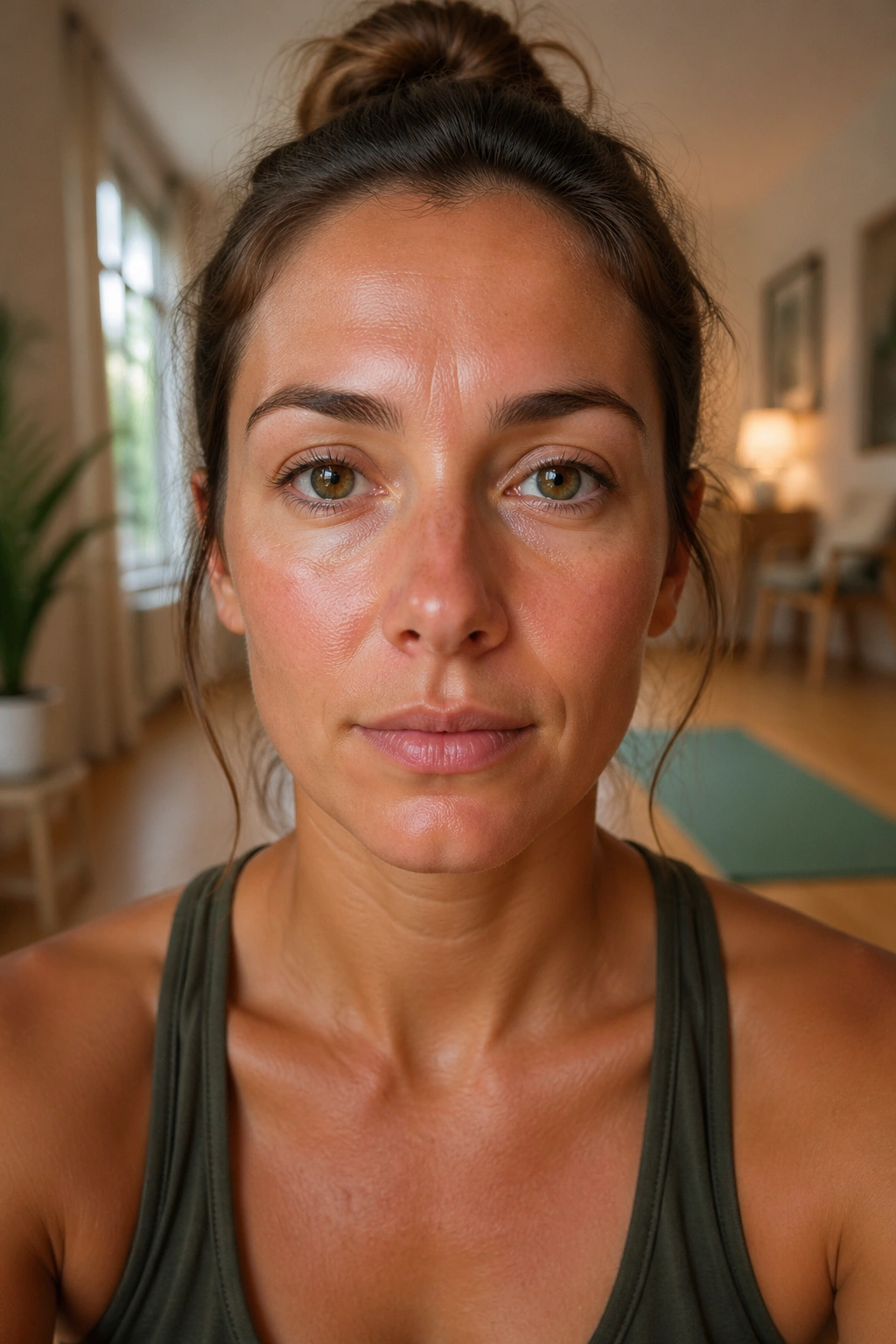
What if the problem is not focus, but narrow focus?
Peripheral vision expansion shifts attention away from the tiny center point and toward the wider field around it. That can feel refreshing after a day of tunnel-like screen staring. Your eyes stay still, but your attention opens up a bit.
Sit facing a wall or window and pick one small central point to look at. Keep your gaze steady on that point. Then, without moving the eyes, notice the edges of the room, the corners, the shapes to either side, and anything moving at the edge of view.
How to practice without straining
The trick is not to search. Searching turns this into work. You’re only noticing what’s already there. Keep the face soft and let the peripheral field come into awareness on its own.
Try 30 to 60 seconds of this. Then blink a few times and let the gaze rest normally. If you want, add a slow breath cycle—inhale while noticing the space, exhale while letting the shoulders drop.
This one is especially nice after close-up tasks because it reminds the whole visual system that the world is wider than the rectangle in front of your face.
13. Letter Tracing
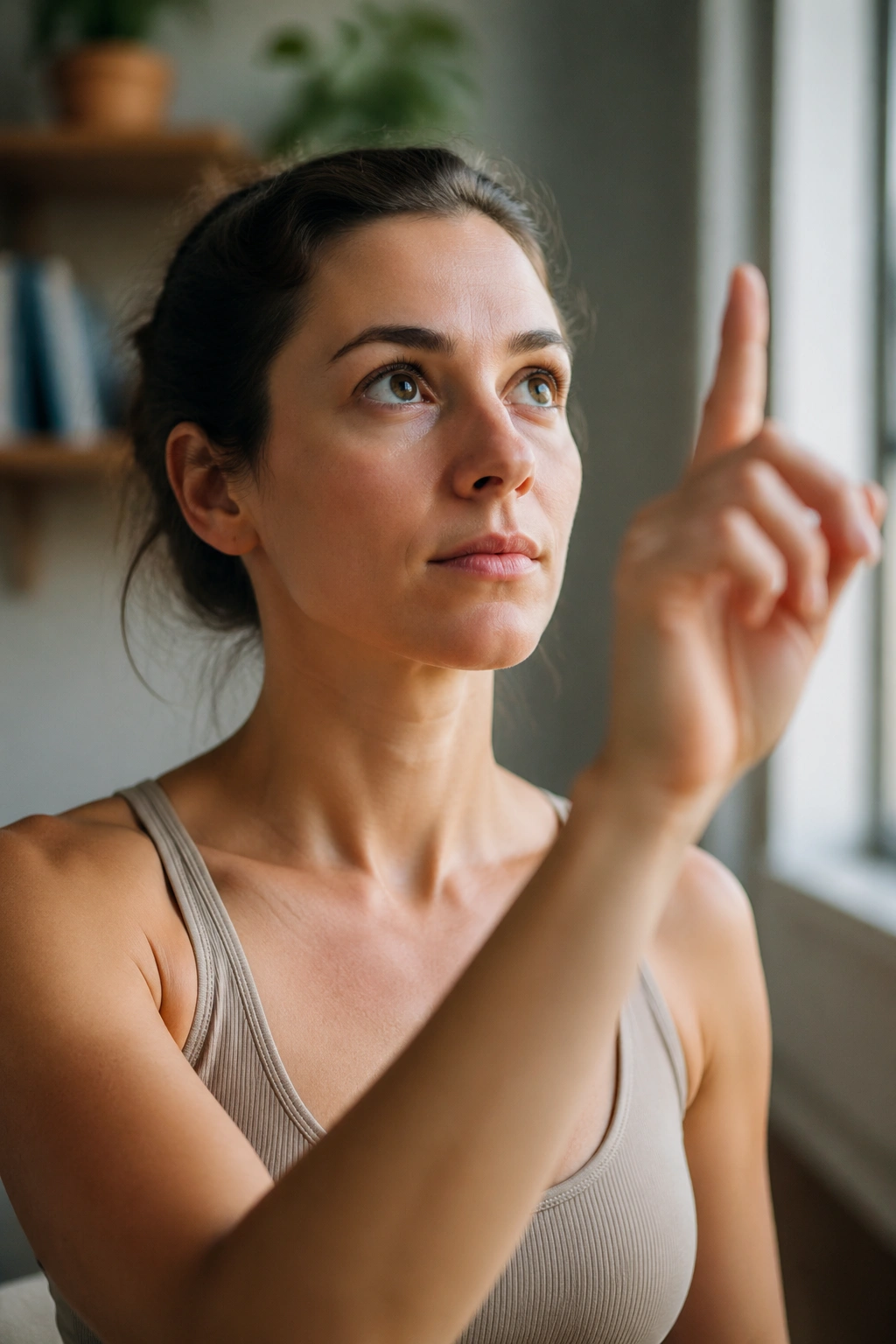
A blank wall can be useful.
Letter tracing gives the eyes a larger, more playful path than circles or sweeps. Instead of tracing shapes with your hands, you trace them with your gaze. Big letters. Slow motion. No rush. It’s one of the more underrated yoga eye exercises because it feels almost like a child’s game, which makes people relax into it faster.
Pick a large invisible letter in front of you—A, M, Z, or even your initials. Trace it slowly in the air with your eyes, keeping the head steady. Each line should be smooth enough that you could draw it again from memory.
Then switch to a different letter or shape. A triangle works. So does a square. The point is to give the eyes a pattern that is not the same old line-by-line reading path.
If you feel strain, make the letters bigger and slower. That usually fixes the problem. Smaller is not better here. Clear is better. Smooth is better.
14. Distance Gazing
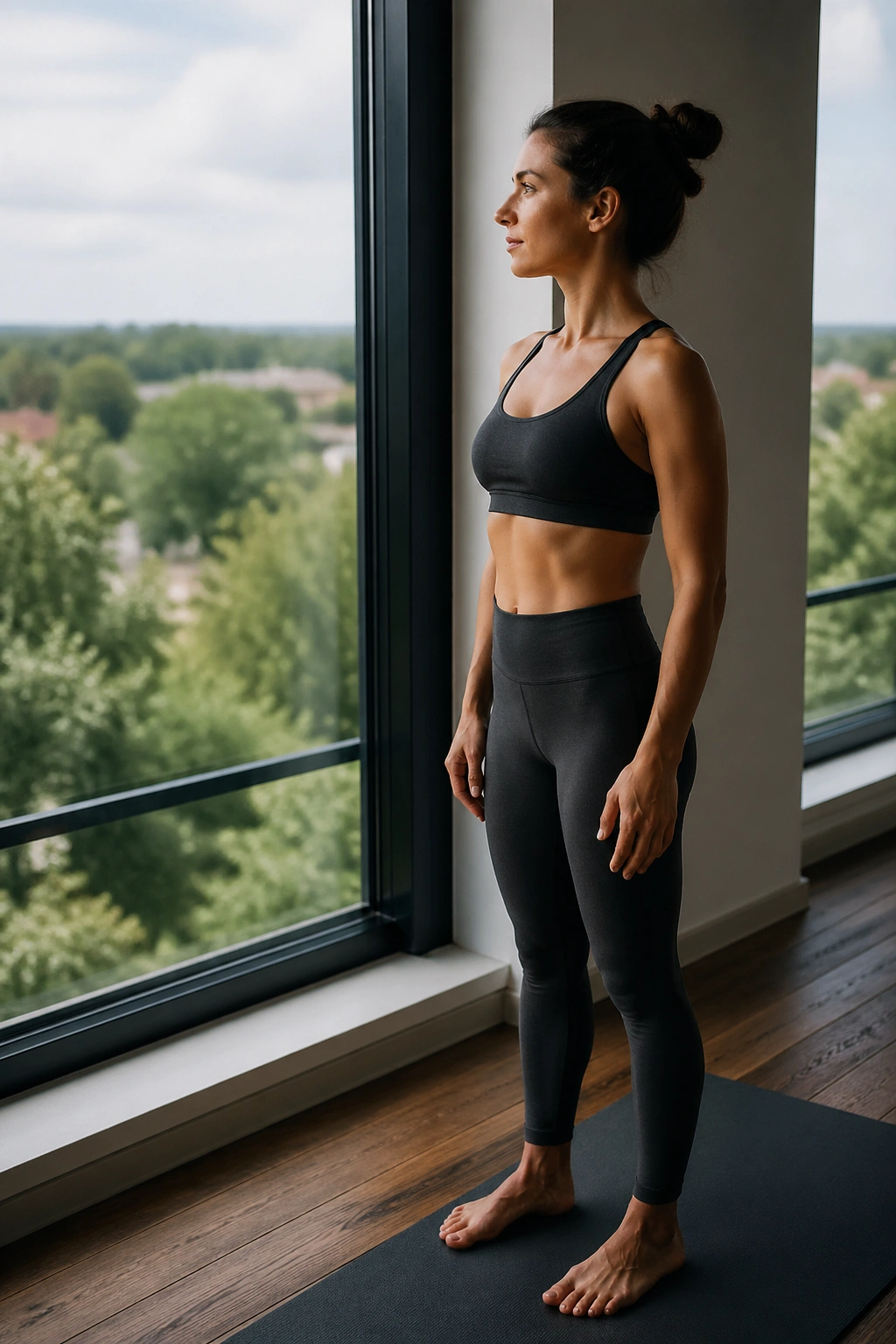
Distance gazing is the desk worker’s best friend.
When your eyes spend hours parked on a book, a screen, or a close object, they forget what far focus feels like. A slow look into the distance gives them that change back. Add breathing, and the whole thing gets calmer fast.
Stand by a window or step outside and pick a distant object: a tree, roofline, sign, or far hill. Let your gaze rest there for 20 to 30 seconds. Blink naturally. Then soften the eyes a little more on the exhale and stay with the same object.
A simple breathing rhythm
- Inhale for 4 counts.
- Exhale for 6 counts.
- Blink at the top of the exhale.
- Do not stare with a hard face.
This is not about locking onto detail. It’s about letting the focus widen and loosen. If the object goes a bit soft around the edges, that’s fine. Better than fine, honestly.
I like this one near the end of a work block because it feels like the eyes are stepping out of a tight room and into open air.
15. Savasana

Save this one for last.
Savasana for the eyes is less about movement and more about quitting gracefully. Close the eyes, let the forehead flatten, loosen the tongue from the roof of the mouth, and sit still for 1 to 2 minutes. No scanning. No focusing. No fixing. Just rest.
If you want a slightly more structured version, keep the hands on the thighs and take 5 slow breaths. Let the exhale drag out a little longer than the inhale. That’s enough. The eyes do not need a grand finale.
A simple end-of-day reset
This is the one I’d choose when the whole face feels tired, not just the eyes. After a long day of reading, typing, driving, or scrolling, stillness can help more than another movement drill. You are telling the visual system to stop performing.
A good rule: if your routine starts feeling like work, end with this. If the eyes still feel dry, gritty, or off after a break, that’s a clue to back away from self-help and get an actual eye check. Simple beats heroic.
And that’s the real trick with yoga eye exercises. Keep them short. Keep them gentle. Use them like a break, not a test.
