



A stiff neck and a foggy, tired body can send you hunting for fixes fast. When thyroid function is part of the picture, yoga is one of the few tools that can help you slow down, breathe better, and stop gripping everything from your jaw to your shoulders.
That is the part people miss. Yoga does not make an underactive thyroid produce hormones on command, and it does not replace medication, blood work, or a clinician who can read your labs properly. What it can do is nudge the nervous system out of high alert, open the chest and throat, and reduce the kind of muscle tension that keeps the whole upper body locked up.
I like poses that feel clear rather than dramatic. A blanket under the shoulders, a gentle backbend, a slow fold with bent knees — those small choices matter more than flashy shapes, especially if your neck is already sensitive or your energy is low.
If a pose makes your throat feel squeezed, your face rush, or your neck chatter with pain, skip it. The better thyroid-support practice is the one you can repeat tomorrow without grimacing, and the first pose on the list earns its place because it respects that reality.
1. Supported Shoulder Stand for Thyroid Support
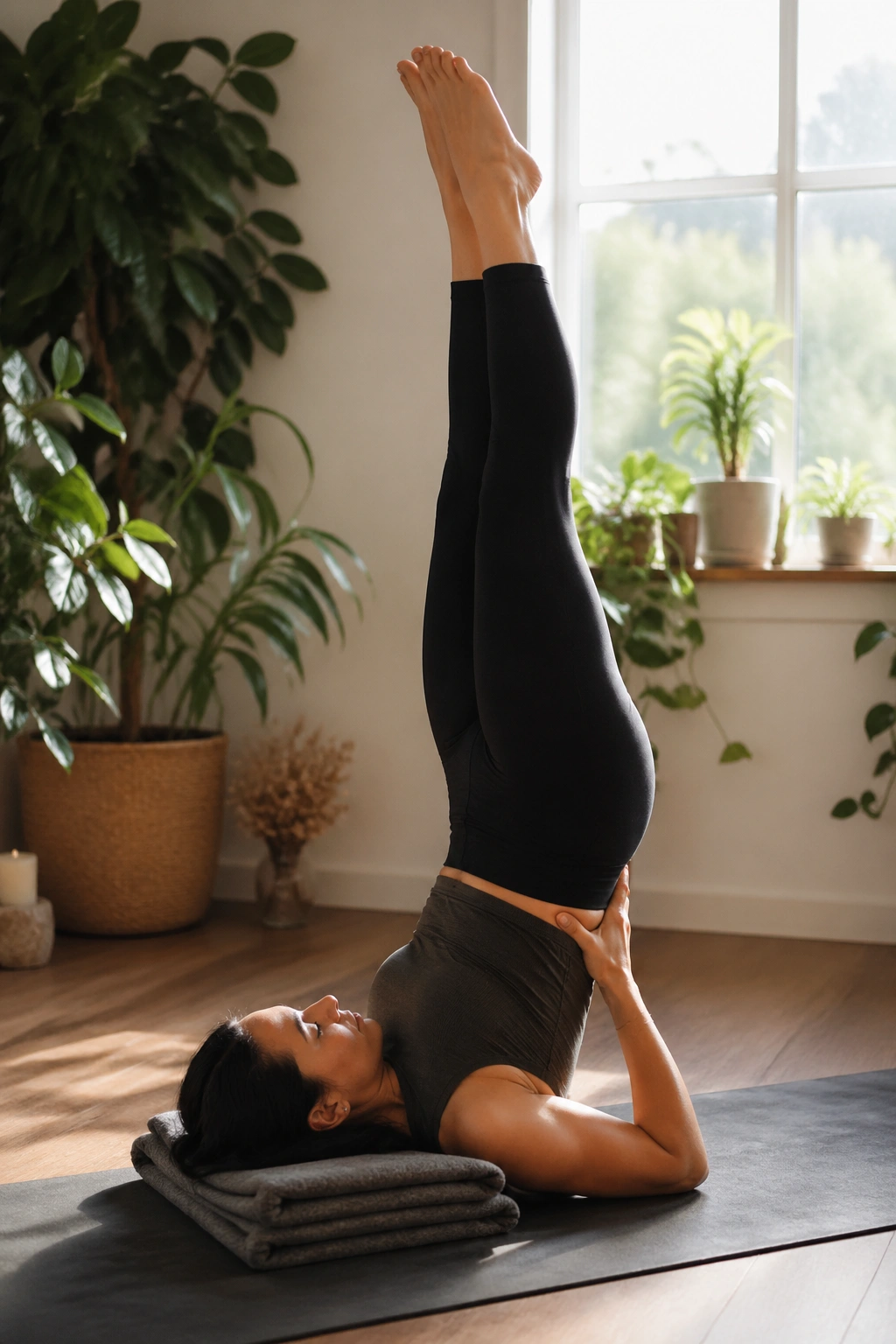
This is the pose people talk about the most — and the one that deserves the most respect. Supported Shoulder Stand can feel calming and strangely organizing when it’s done with the right amount of padding and patience. Done carelessly, it turns into a neck crank.
Why the Support Matters
A folded blanket or two under the shoulders changes the whole experience. The goal is to lift the thoracic spine a bit while keeping the cervical spine free of load, not to jam your chin toward your chest and call it yoga. That little distinction matters more than most people realize.
I prefer a supported version with the feet reaching upward only as high as the neck can stay easy. If the back of your throat feels compressed, you’re forcing it.
- Use 1 to 3 firm blankets, folded so the shoulders rest on the padding and the head stays on the floor.
- Keep the back of the neck long; do not turn the head side to side once you’re up.
- Hold for 3 to 5 slow breaths at first, not a full dramatic stay.
- Skip this pose if you have neck pain, uncontrolled blood pressure, glaucoma, or if inversions have been ruled out for you.
The people who love this pose usually love it for the same reason: it feels like a reset. But the reset only happens when the setup is humble.
2. Plow Pose
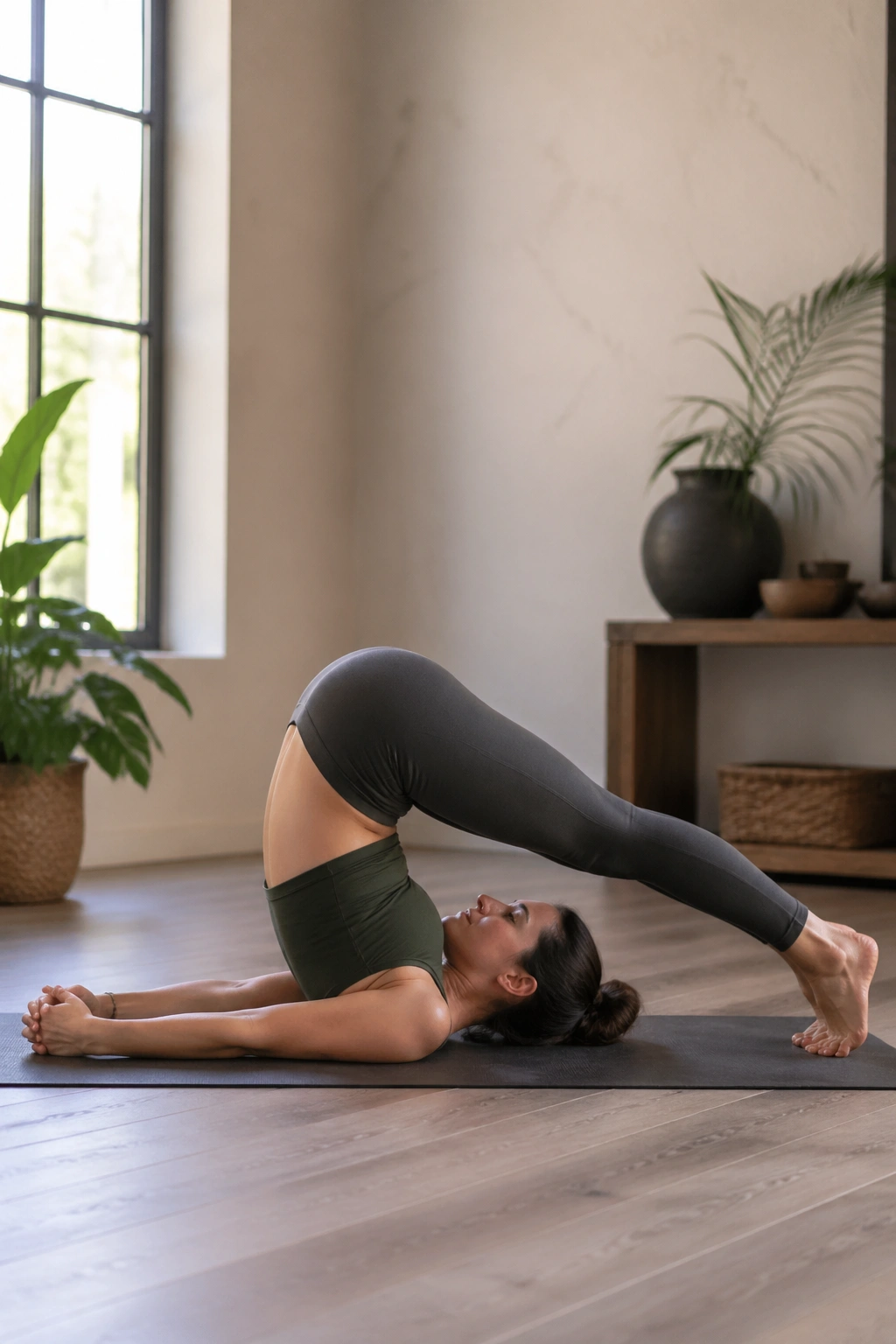
Plow Pose looks elegant in photos and mildly ridiculous in real life. That’s fine. It also asks more from the neck than most people expect, which is why I put it near the top of the list but not at the top of my enthusiasm.
When the legs fold overhead, the back of the body gets a deep stretch and the upper back has a chance to soften. For thyroid support, the draw is less about some mystical gland action and more about the change in pressure, the quieting effect on the breath, and the way the pose interrupts a wired nervous system.
The catch is obvious. If your neck is the least bit cranky, Plow can feel like too much, too soon. A chair, blocks, or a wall can make this pose less aggressive, but if your body says no, listen.
One thing I tell people all the time: your chin does not need to smash toward your chest to make this count. A small fold is enough.
3. Fish Pose
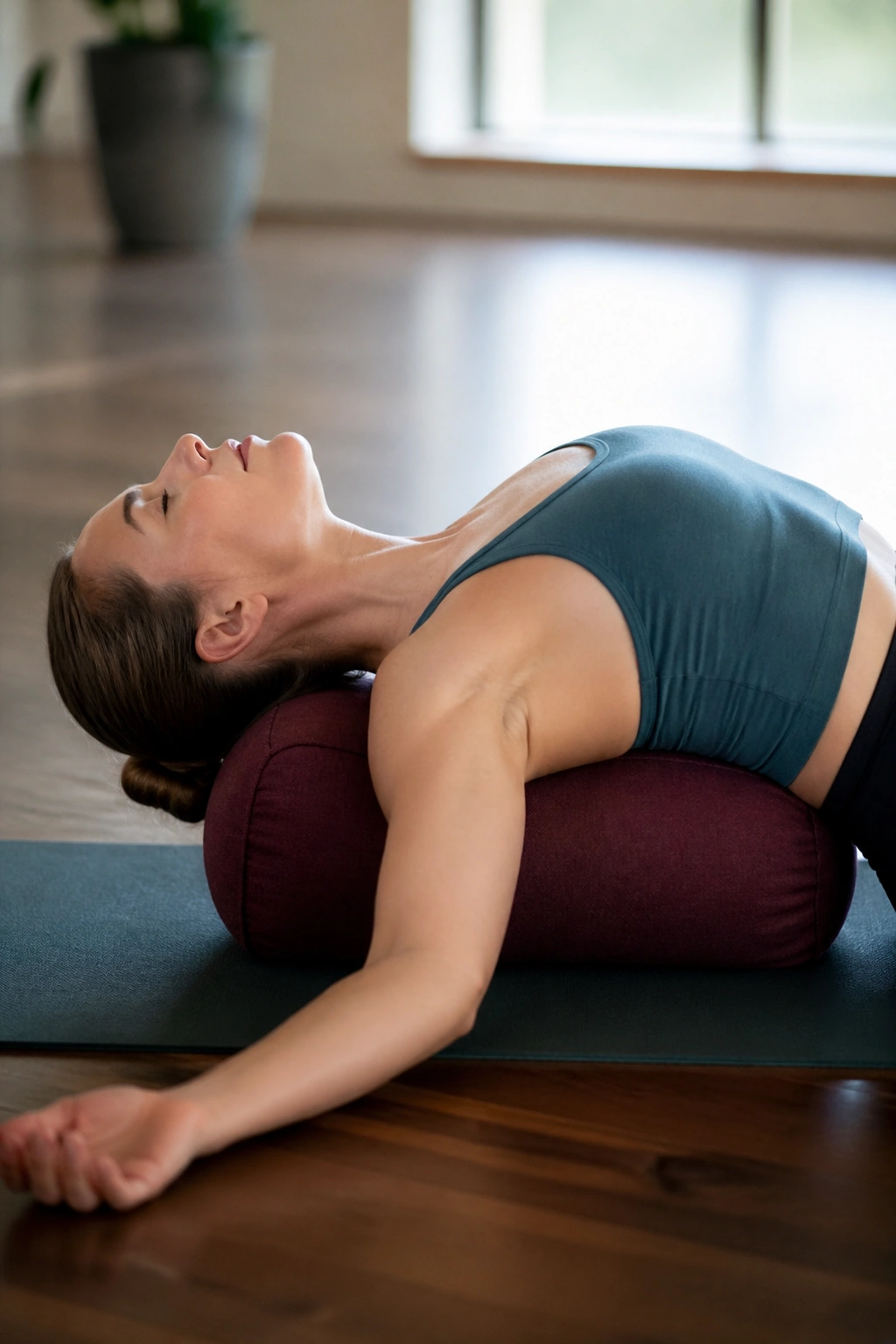
If Shoulder Stand and Plow leave you feeling compressed, Fish Pose is the release valve. It opens the front of the chest, lengthens the throat, and gives the neck a break from all that folding.
Why It Works
The body often holds stress in the upper chest and jaw before it shows up anywhere else. Fish Pose goes after that tension without stacking weight on the cervical spine. That is a much better trade for many people.
I like it on a bolster, with the upper back supported and the head resting lightly. The pose should feel like an opening, not a performance. If the lower ribs flare out or the low back arches hard, you’ve gone too far.
- Set a firm bolster or rolled blanket under the upper back.
- Let the shoulders drop away from the ears.
- Keep the throat soft and the jaw unclenched.
- Stay for 5 to 8 breaths, breathing into the side ribs instead of the neck.
Fish is one of those poses that feels small at first and then sneaks up on you later. Your breathing changes. Your face changes. The whole front of the body gets a little more room.
4. Bridge Pose
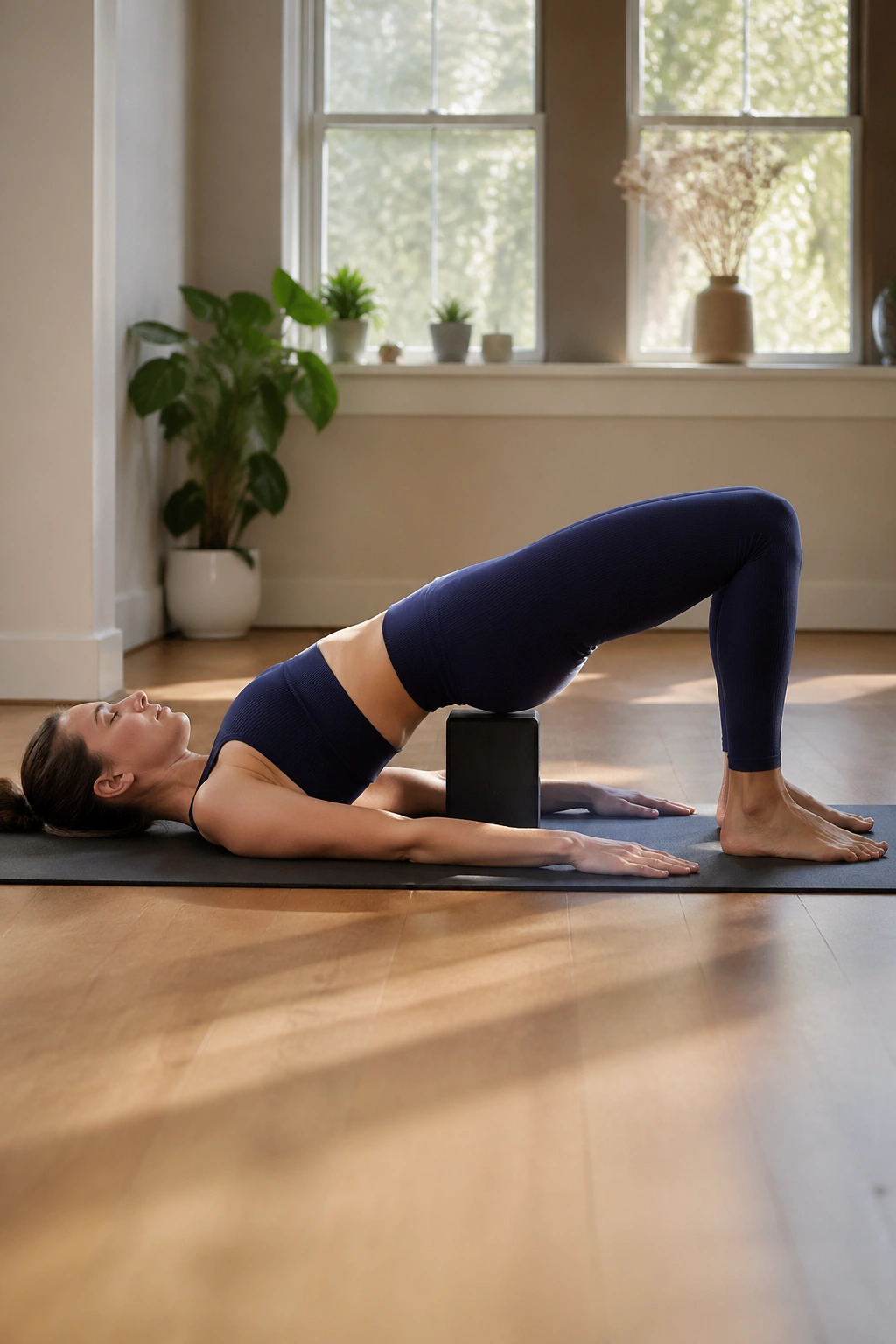
Bridge Pose is the workhorse here. It opens the front line of the body, strengthens the back body, and does it without the neck gymnastics that make some inversions feel like a bad bargain.
What I like most about Bridge is that it works in two gears. A gentle active Bridge asks your legs, glutes, and upper back to do some honest work. A supported Bridge, with a block under the sacrum, lets you stay longer and calm down while the chest stays open.
That combination matters for thyroid support because stress shows up fast in the neck and shoulders. A pose that lengthens the front body while keeping the breath even can take the edge off that pattern.
If you want one move to use on a packed day, this is a strong candidate. It’s stable, easy to scale, and less likely to leave you feeling wrung out.
One small note: don’t mash the knees outward. Keep them hip-width and let the back of the body work.
5. Cobra Pose
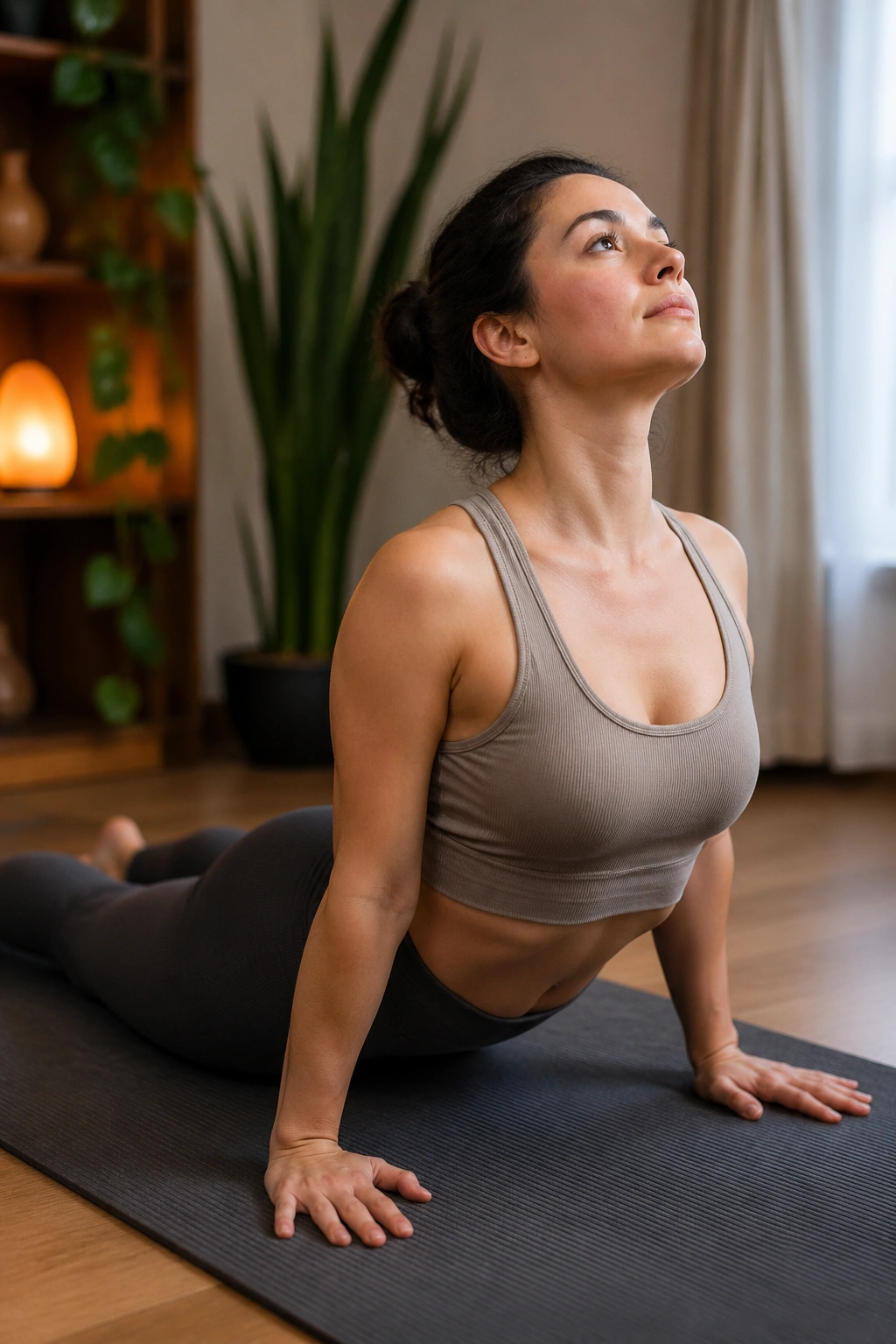
Does Cobra belong on a thyroid list? I think so, as long as you keep it modest. It opens the chest, strengthens the spine, and gives the front of the throat a gentle lengthening without the pressure of a full backbend.
How to Get the Most From It
Cobra is one of those poses people often overdo. They fling the chest up, lock the lower back, and crank the chin. None of that helps. A low Cobra, with the pubic bone rooted and the lift coming from the upper back, is the cleaner version.
Use your hands lightly under the shoulders and keep the elbows soft. The neck should feel long, not pinched. If you only lift the chest a couple of inches, that is still Cobra.
- Press the tops of the feet into the mat.
- Keep the shoulder blades sliding down the back.
- Lift only until the low ribs stay grounded.
- Hold for 3 to 5 breaths, then lower slowly.
A good Cobra leaves you more awake, not more compressed. That’s the standard.
6. Camel Pose
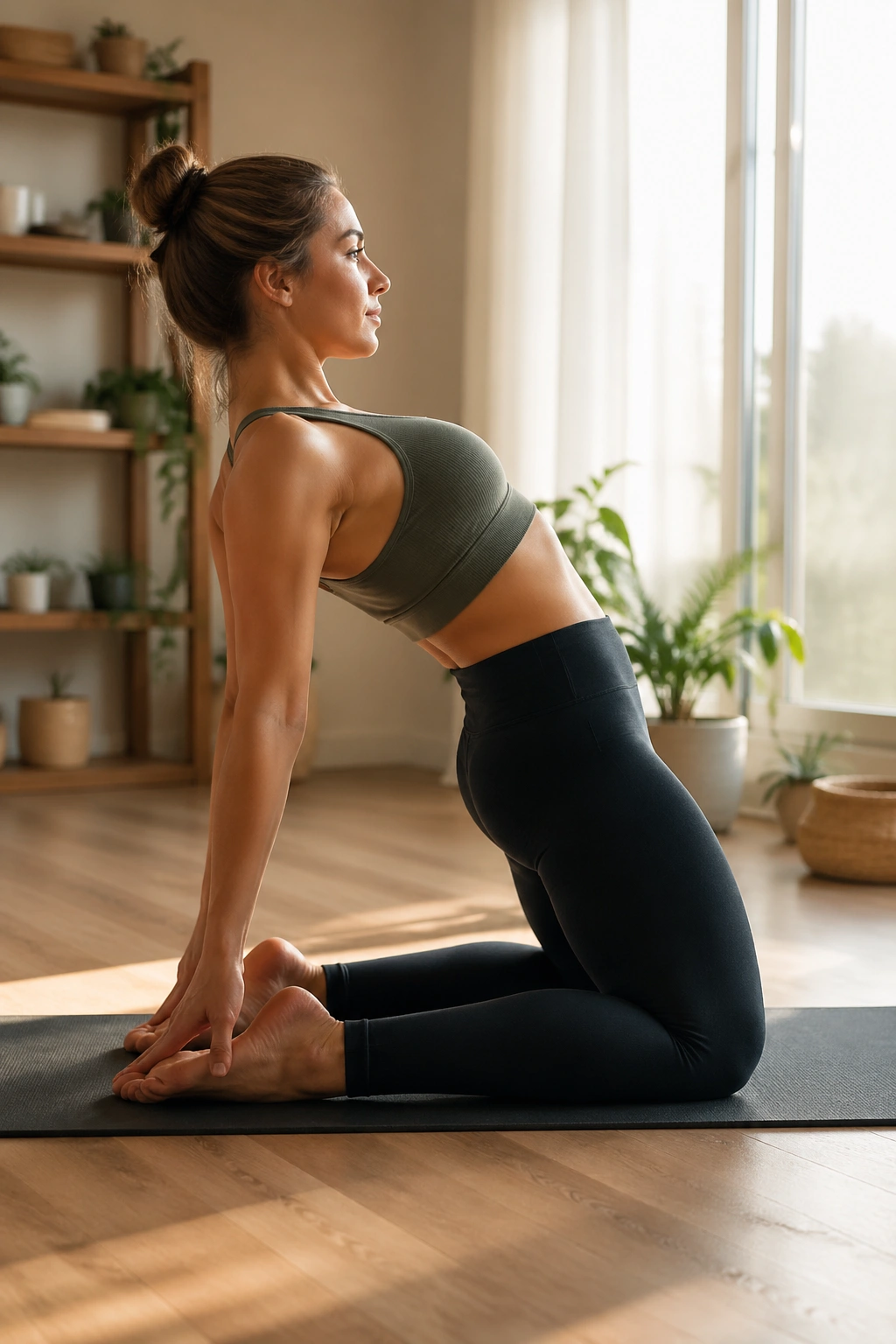
A lot of people reach for Camel when their chest feels glued shut. Fair enough. It is a bold pose, and when it’s done carefully, it can feel like a real opening through the front of the body and the throat.
The trouble is that Camel can turn into a neck dump fast. So I would never treat it like a pose to rush into cold. Warm the spine first with Cat-Cow, Bridge, or a few low Cobras. Then let Camel be about length, not depth.
Keep your hands on your lower back if the full reach to the heels feels like too much. If you do take the heels, think “lift the sternum” before you think “bend backward.” That order saves the low back from getting yanked around.
A few details matter here:
- Knees stay hip-width apart.
- Glutes stay soft, not clenched hard.
- Gaze can stay forward or slightly up; it does not need to drop back.
- Hold for 2 to 4 breaths if you’re new to it.
Camel should feel expansive. If it feels like a neck hinge, back out.
7. Bow Pose
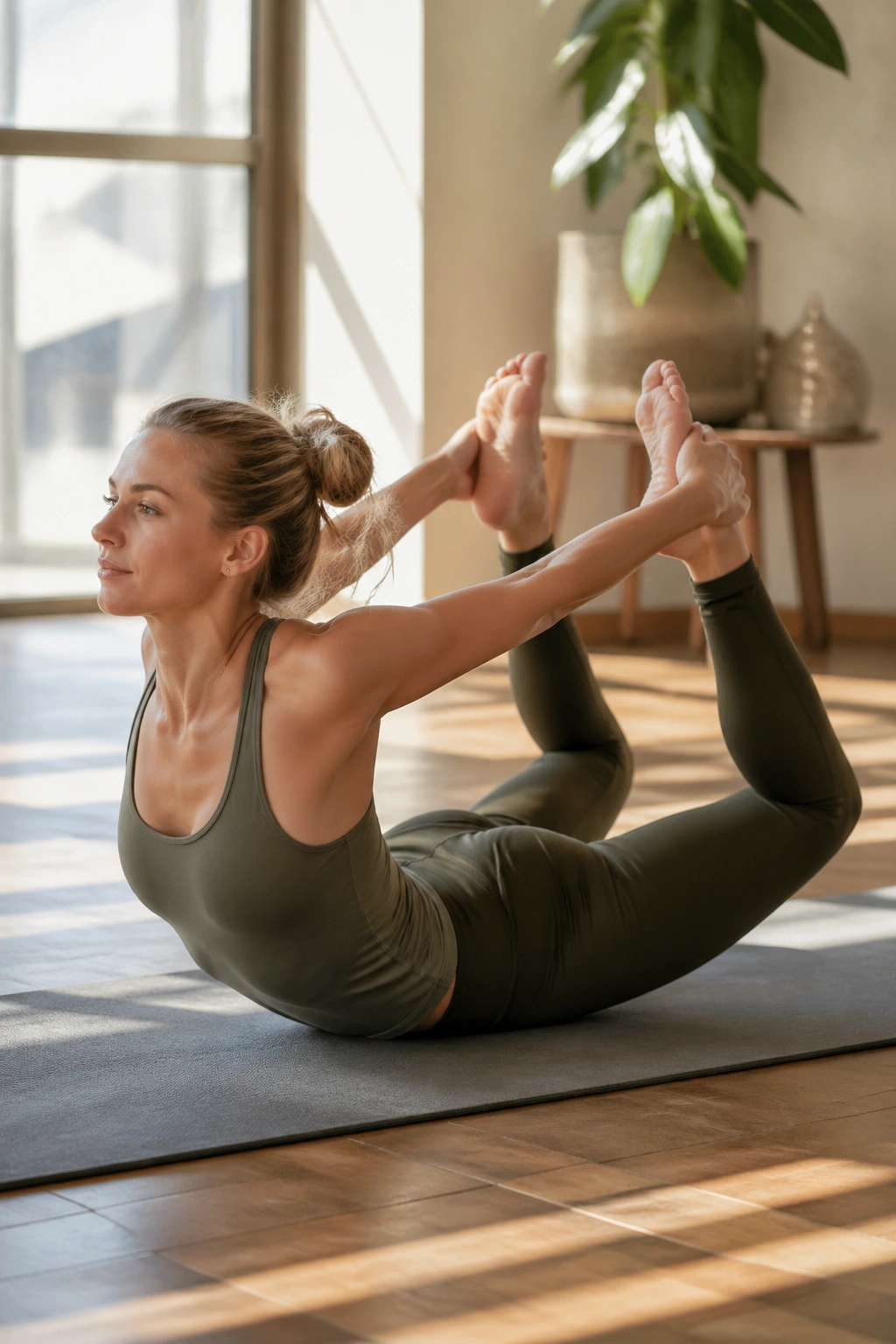
Bow Pose is more demanding than it looks. The body is in a strong backbend, the chest lifts, the thighs work, and the whole front line gets a big stretch. That can be useful for people who spend most of the day folded over a desk, a steering wheel, or a phone.
It also has a stubborn streak. Bow is not the pose to bully. If your low back is sensitive, if your shoulders are tight, or if your neck feels vulnerable, you need to stay modest with it or skip it. I’m not being dramatic. I’ve seen too many people try to “go deeper” when the smarter move was backing off by an inch.
The best Bow is steady. The grip on the ankles is secure, the knees don’t splay wildly, and the breath stays smooth even though the shape is intense. You should feel the back body working hard and the front body opening at the same time.
And yes, a strap around the ankles can help if the hands cannot quite reach. That is not cheating. That is good judgment.
8. Legs-Up-the-Wall for Thyroid Support
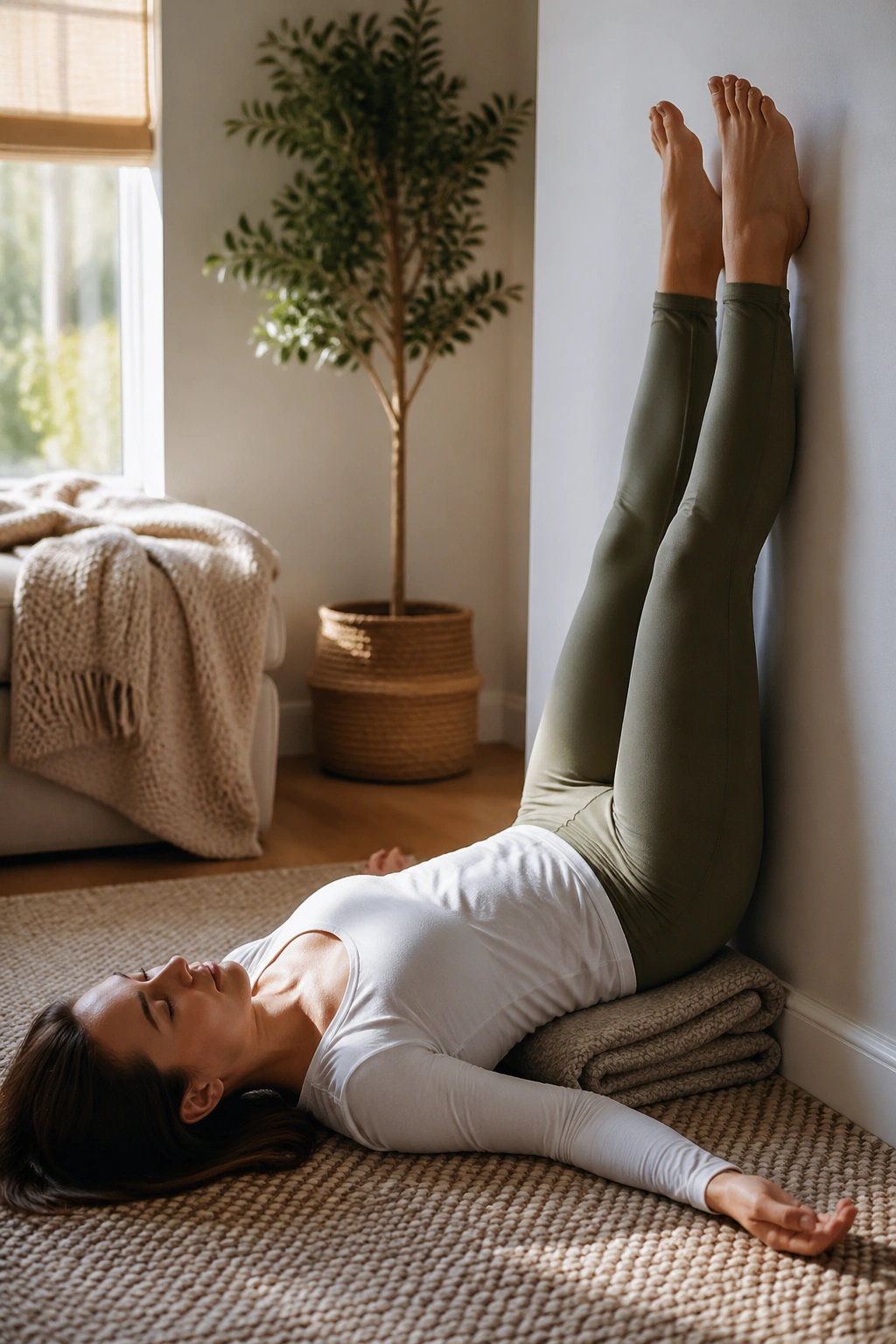
This is the quietest pose on the list, and one of the most useful. Legs-Up-the-Wall doesn’t shout. It doesn’t ask for flexibility. It just lets gravity do a bit of the work while your breath and pulse settle down.
What Makes It Different
Unlike stronger inversions, this version is gentle on the neck and easy to hold for a longer stretch of time. That makes it a smart choice if you feel run down, overstimulated, or too tired for anything athletic. The wall gives you a clean shape, and the support underneath can be as simple as a folded blanket under the hips.
I like this pose after a long day, especially if the shoulders have climbed toward the ears. If you sit a lot, the back of the legs may complain at first. Bend the knees a little. That solves more problems than people expect.
Who Should Choose It
- People who want an easy restorative inversion
- Anyone whose neck dislikes Shoulder Stand or Plow
- Practitioners who need a low-effort wind-down
- People who want a pose that pairs well with slow breathing
If your lower back is cranky, place your hips a few inches away from the wall and keep the knees softly bent. That small adjustment can save the whole pose.
9. Cat-Cow
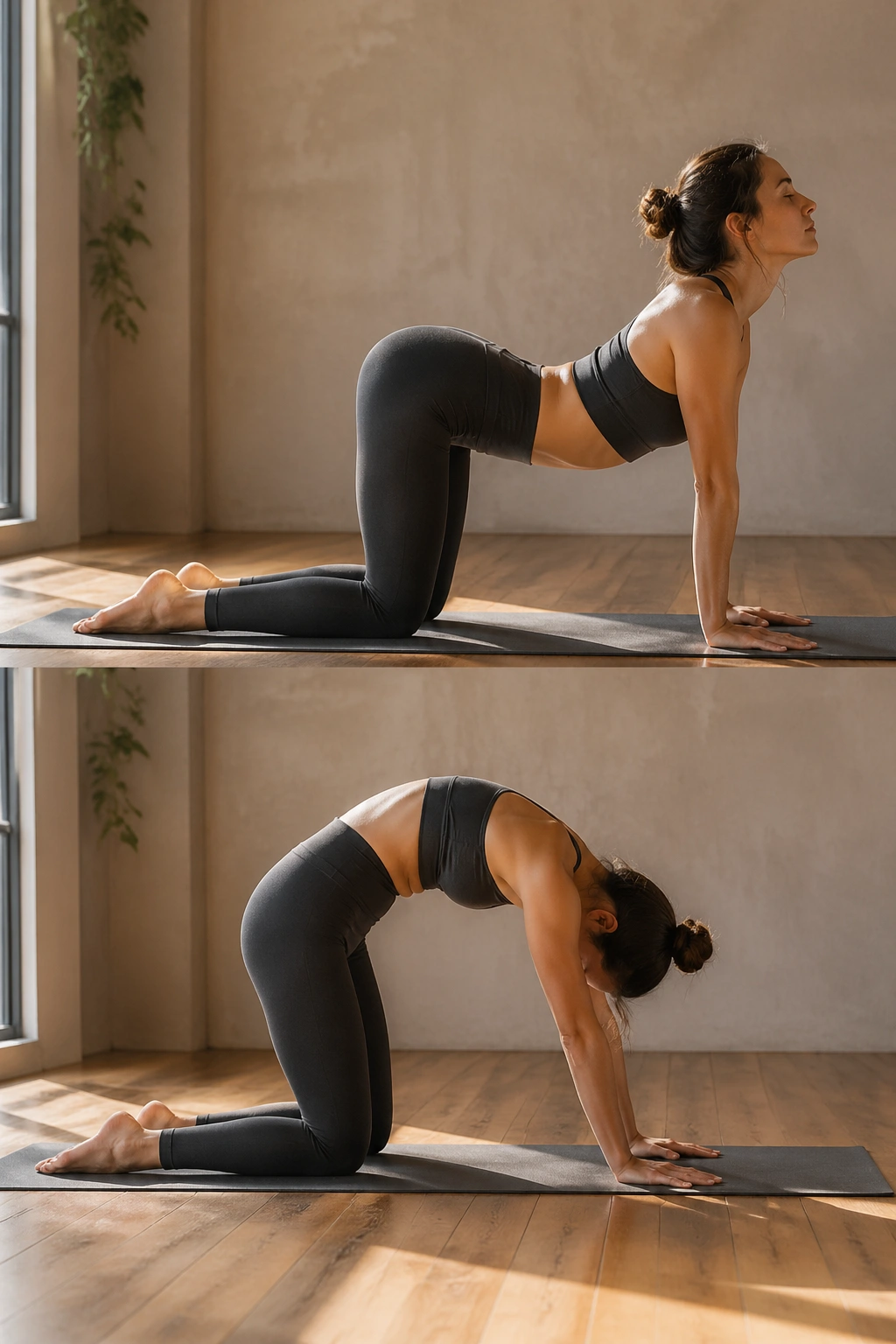
This is the warm-up I wish more people took seriously. Cat-Cow looks simple, and that’s exactly why it works so well. It links breath to movement, loosens the spine, and wakes up the neck without yanking on it.
When you inhale into Cow, the chest broadens and the belly softens. When you exhale into Cat, the spine rounds and the back of the neck lengthens. That repeated motion can be deeply useful if your upper body feels stuck in one shape all day long.
Do not rush it. A slow Cat-Cow is worth more than ten quick ones. Move with your breath, not ahead of it.
If you only have five minutes, start here. Six to eight rounds can change the mood of the whole practice. And if the wrists complain, come down to forearms or make the shape at the wall with your hands sliding up and down.
10. Standing Forward Fold
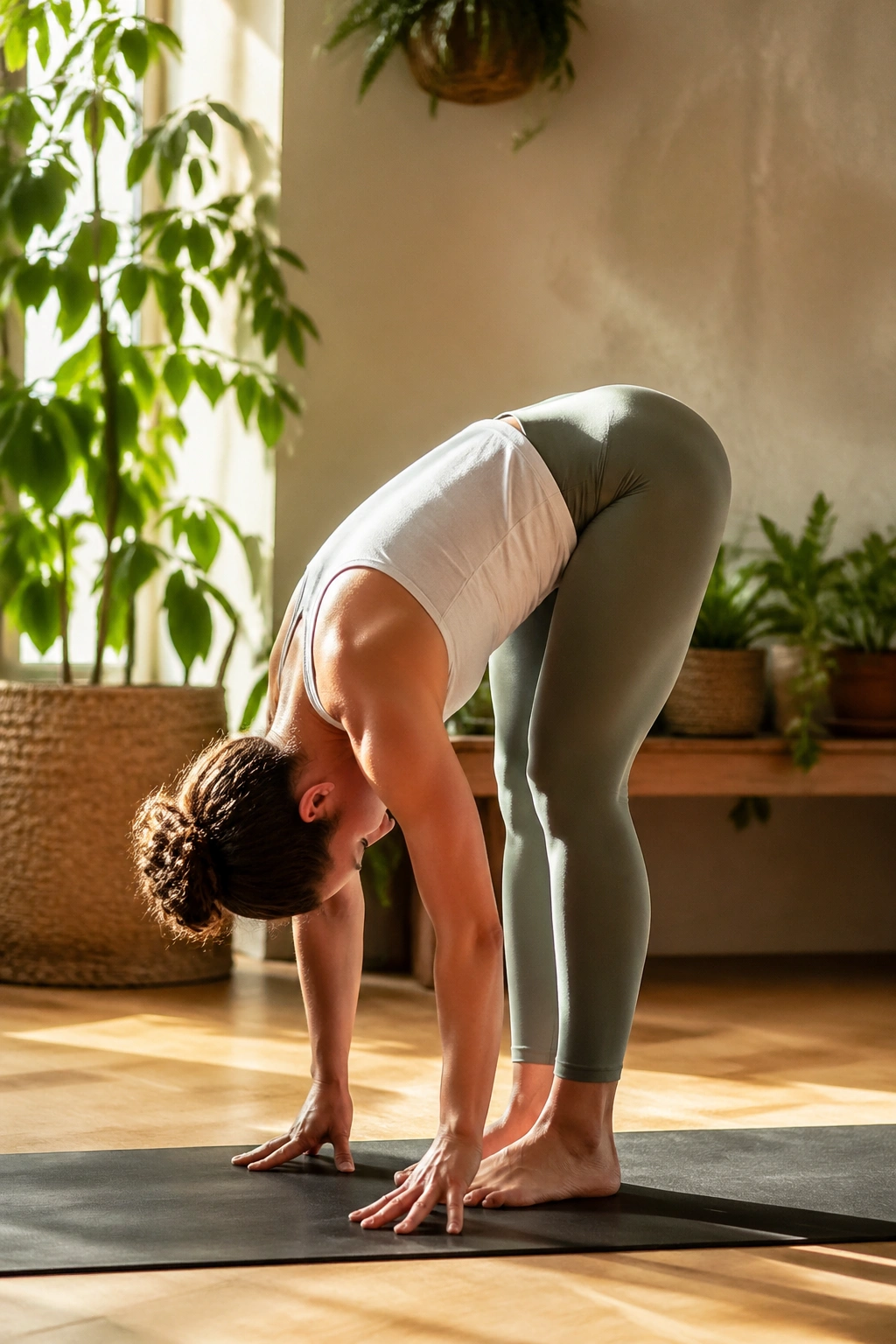
Why do so many people like Standing Forward Fold when they’re stressed? Because it gives the body an honest way to let go. The spine hangs, the neck softens, and the breath has room to slow down.
How to Use It
The trick is not to chase the floor. Bent knees are welcome. In fact, for many bodies they’re the smarter choice because they keep the low back from getting tugged and let the torso fold from the hips instead of collapsing forward.
I like to let the head hang heavy here for a few breaths, then sway side to side a little. That tiny motion often wakes up the back of the neck in a good way. If your hamstrings are like piano wire, put the hands on blocks or shins and keep the fold shallow.
- Bend the knees enough to protect the low back.
- Let the crown of the head hang, but do not force it.
- Keep weight balanced through both feet.
- Stay for 5 slow breaths before rolling up with control.
This one can be surprisingly calming after screen time. The body gets a little reset, and the head stops feeling so full of static.
11. Sphinx Pose
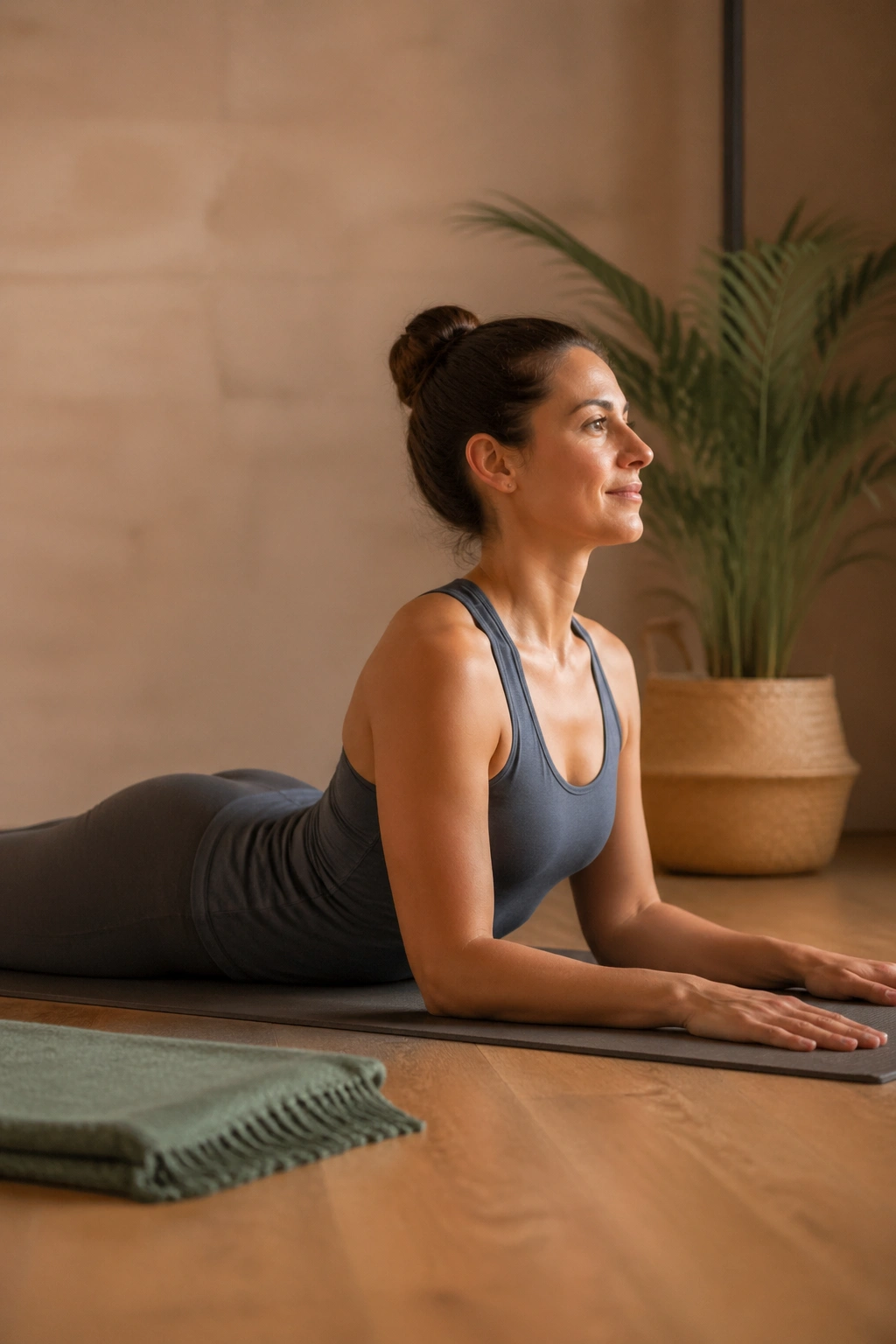
If Cobra feels too spicy, Sphinx is the kinder cousin. It gives you a gentle backbend, a little chest opening, and a chance to lengthen the neck without loading the spine much at all.
The setup is simple: forearms on the mat, elbows under shoulders, chest gliding forward. The low belly stays light, the pubic bone roots down, and the shoulders stop trying to live around the ears. That alone is enough to make many people breathe more easily.
Sphinx is especially nice for people who spend a lot of time hunched over. The upper back gets a quiet invitation to wake up. No drama. No strain.
A Few Things to Watch For
- Keep the elbows no wider than the shoulders.
- If the low back pinches, come down lower or stop.
- Let the back of the neck stay long instead of dropping the chin.
- Hold for 6 to 8 breaths and then rest flat.
I’m fond of Sphinx because it asks for less than people think and gives back more than it looks like it should.
12. Seated Forward Fold
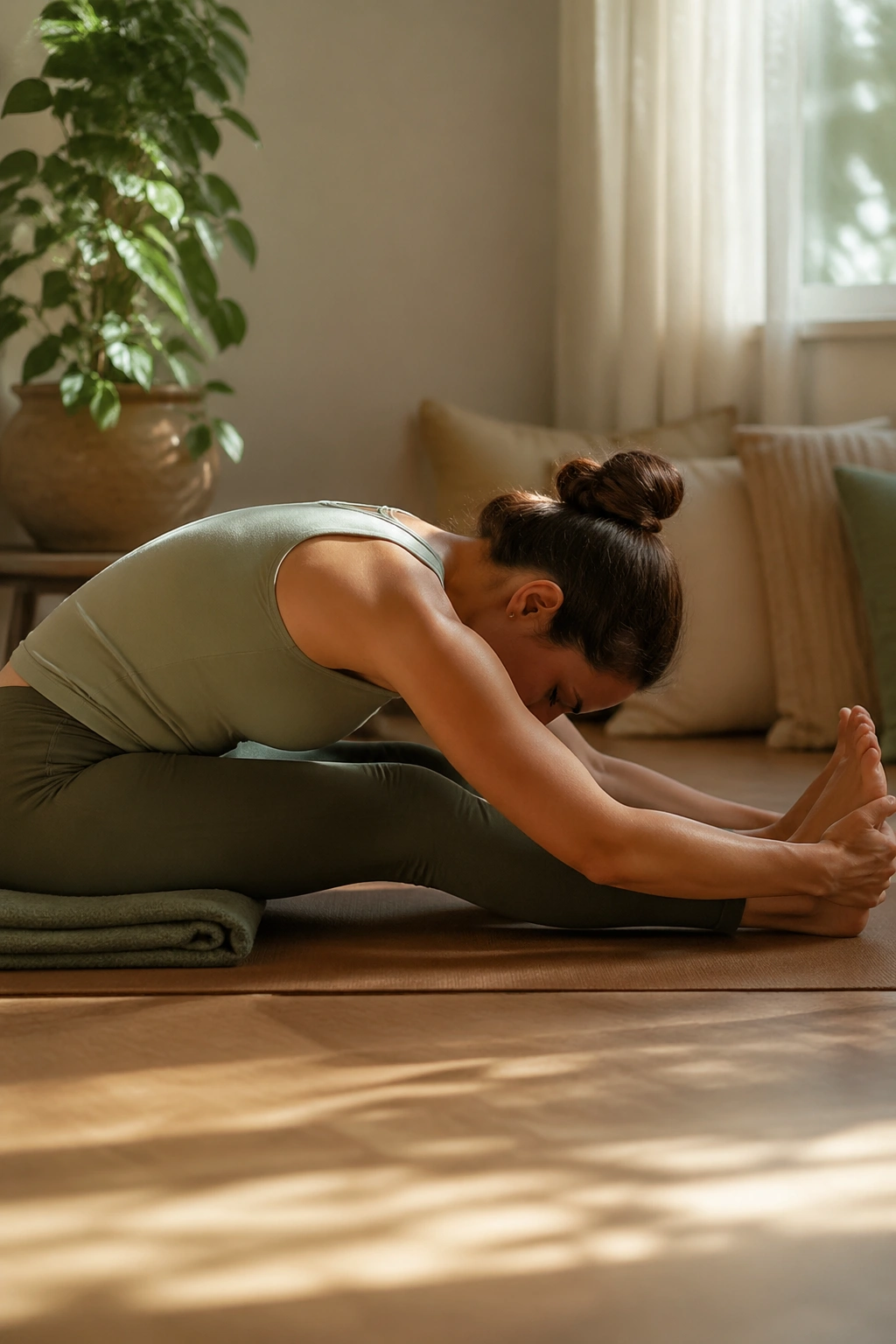
Seated Forward Fold can be a mess if you try to force it, and a relief if you approach it like a conversation. The pose asks for patience. The body answers when it’s ready.
For thyroid support, the benefit is less about the hamstrings and more about the nervous system. A slow fold encourages the exhale to lengthen, and that alone can soften the brace pattern around the neck and jaw. People often carry their stress in those exact places.
Sit on a folded blanket if your pelvis tilts backward. Bend the knees if the hamstrings pull hard. A rounded back is not a moral failure; it’s just feedback. Work with the shape you’ve got.
I prefer to hold this one for longer than the flashy backbends — maybe 8 to 10 breaths — because the quiet has a chance to sink in. If the forehead doesn’t reach the shins, leave it. No prize is waiting there.
13. Thread the Needle
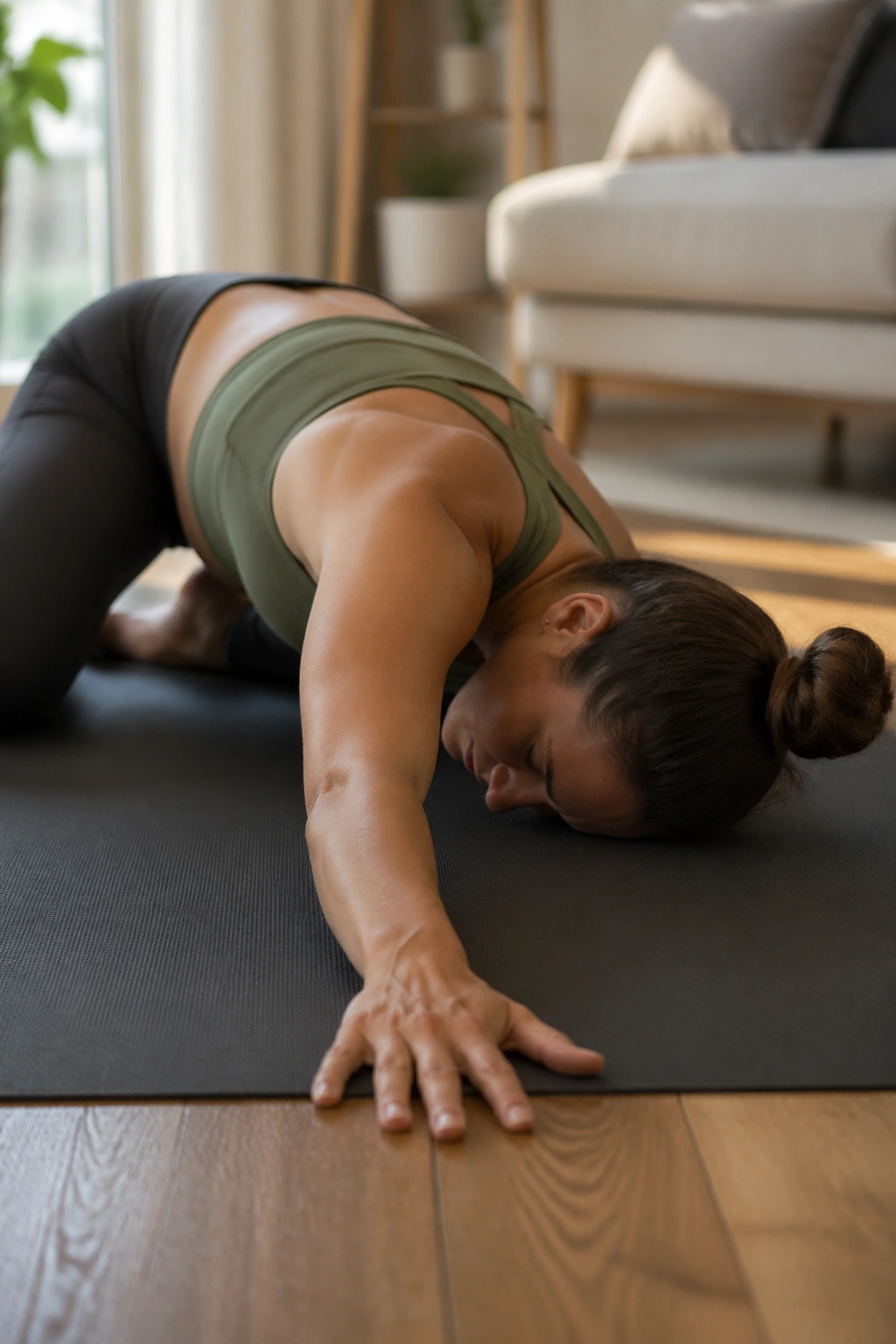
Thread the Needle is one of the best upper-body releases for people who carry stress in the shoulders, and that’s a lot of people. It doesn’t look like much. Then you hold it for a few breaths and realize how much the shoulder blade area was bracing all day.
What makes it especially useful here is the way it rotates the upper back without asking the neck to do extra work. That means the throat can stay soft while the chest and rear shoulder finally get some space. For thyroid support, that matters because the whole front of the neck tends to tighten when the upper back won’t move.
I like this one for desk workers, drivers, and anyone who wakes up with a tight upper trap. It’s also a nice substitute when bigger twists feel messy.
How to Get the Most From It
- Slide one arm under the other and rest the shoulder lightly.
- Keep the hips stacked above the knees.
- Let the forehead, temple, or cheek rest on the mat or a block.
- Breathe into the back ribs for 5 to 6 breaths per side.
If the shoulder is too tight to thread all the way through, stop halfway. That still counts.
14. Seated Spinal Twist
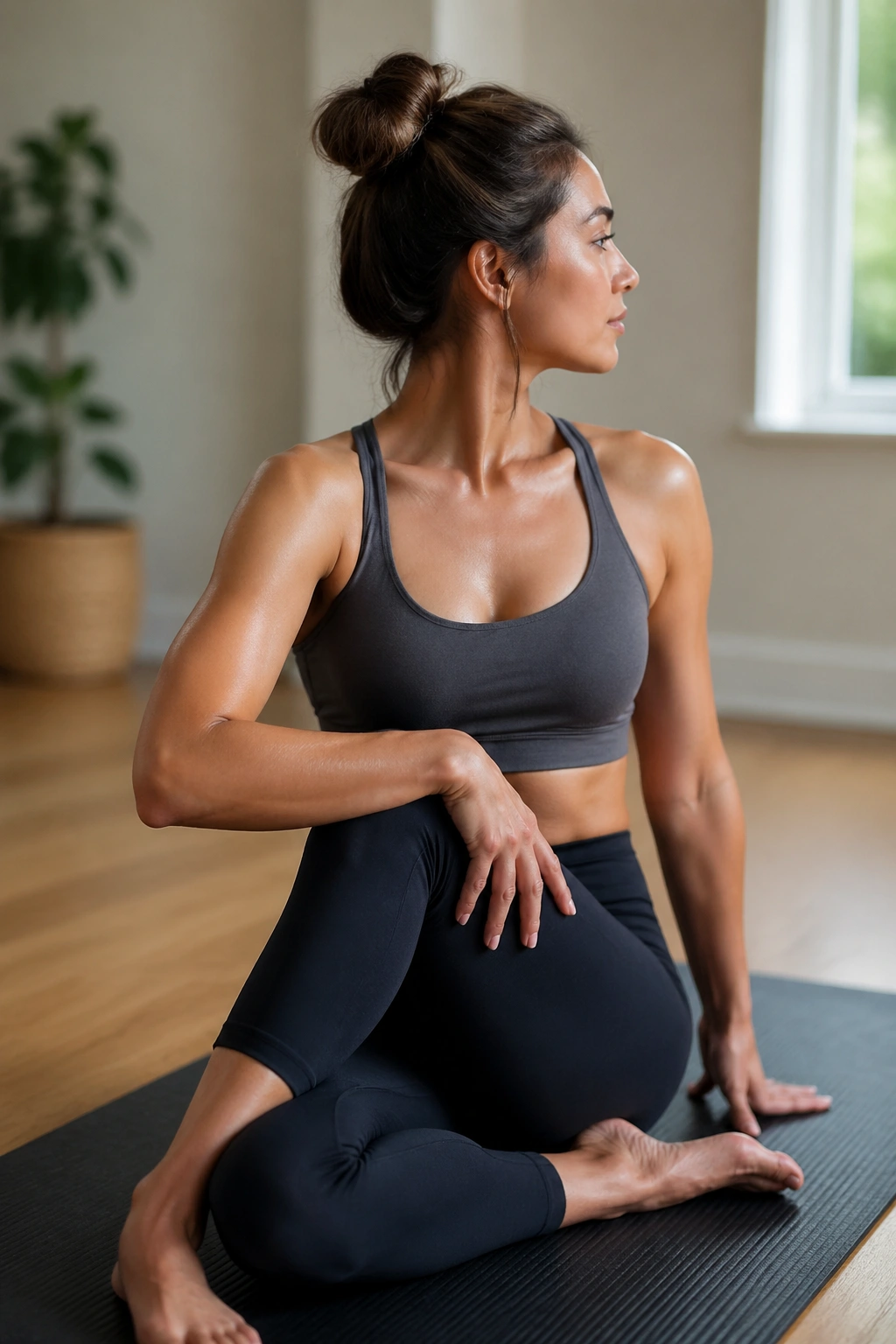
Twists are useful, but only when they’re honest. A seated twist should come from the ribs and mid-back, not from yanking the neck around like a broken hinge.
I like this pose because it gives the torso a clean reset after forward folds and backbends. The inhale lengthens the spine. The exhale deepens the turn. That rhythm can feel grounding, especially if the body has been tense for hours.
The neck should follow the torso, not lead it. If you turn the head too aggressively, you can end up with a stiff jaw and a grumpy upper back. Nobody needs that.
Use a folded blanket under the sit bones if the pelvis won’t stay upright. A tall spine makes the whole twist cleaner.
15. Supine Twist
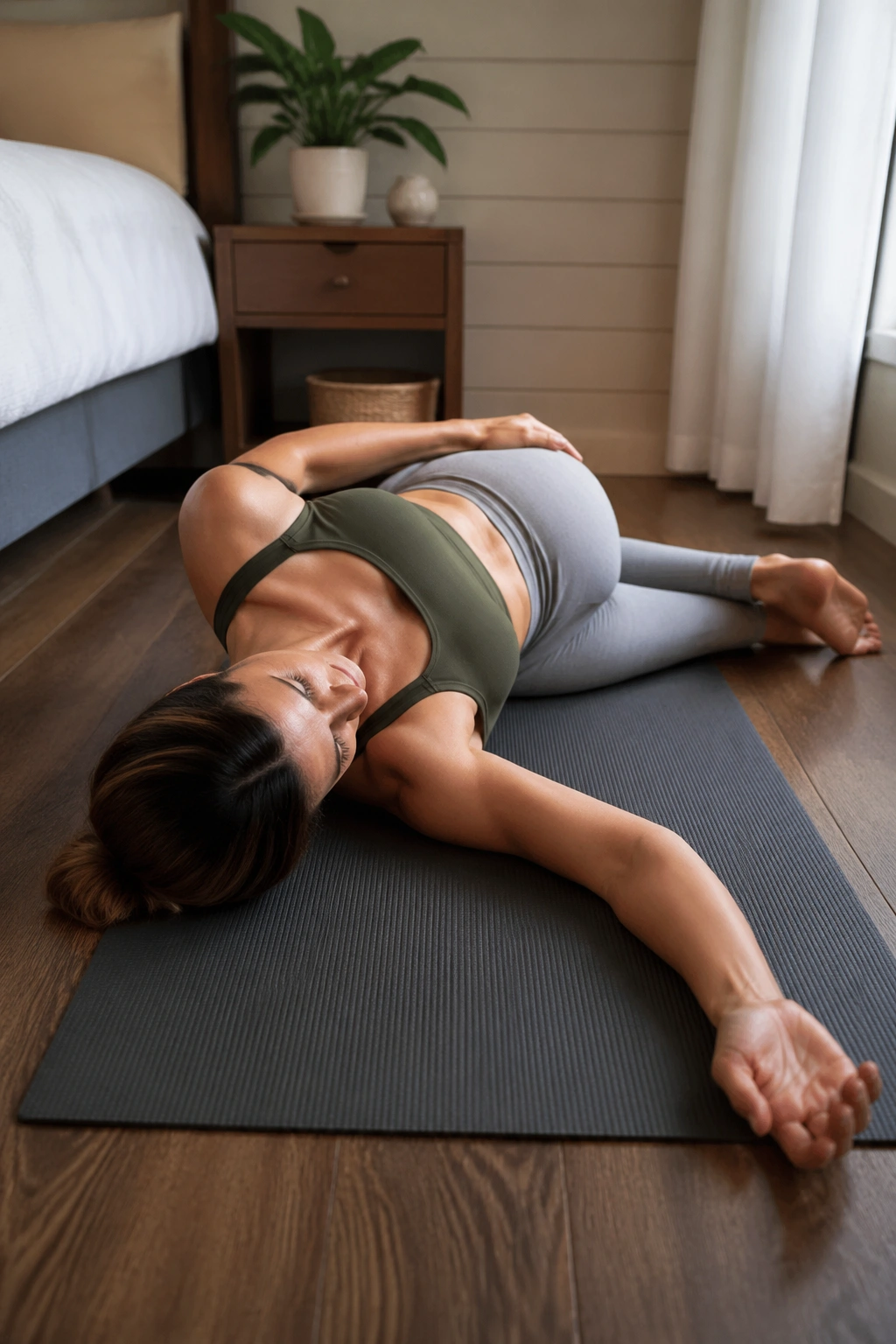
Why do so many tired bodies prefer the supine version? Because it’s easy. The floor does the work. Your spine gets a gentle rotation, and your shoulders can stay heavy instead of wrestling for position.
How to Use It
Lie on your back, draw the knees in, and lower them to one side while keeping the opposite shoulder grounded. You can stack the knees together or separate them slightly. A pillow between the knees often makes the twist feel smoother, especially if the hips are tight.
For thyroid support, the value here is the calm finish. This is the kind of pose that helps the breath slow down without asking you to be strong or flexible or disciplined for one more minute. Some days that’s the most useful thing in the whole practice.
- Keep the movement slow and controlled.
- Turn the head only if it feels easy on the neck.
- Let the top arm rest where it can.
- Hold for 6 to 8 breaths on each side.
If the lower back tugs, reduce the depth. More twist is not always better.
16. Half Locust Pose
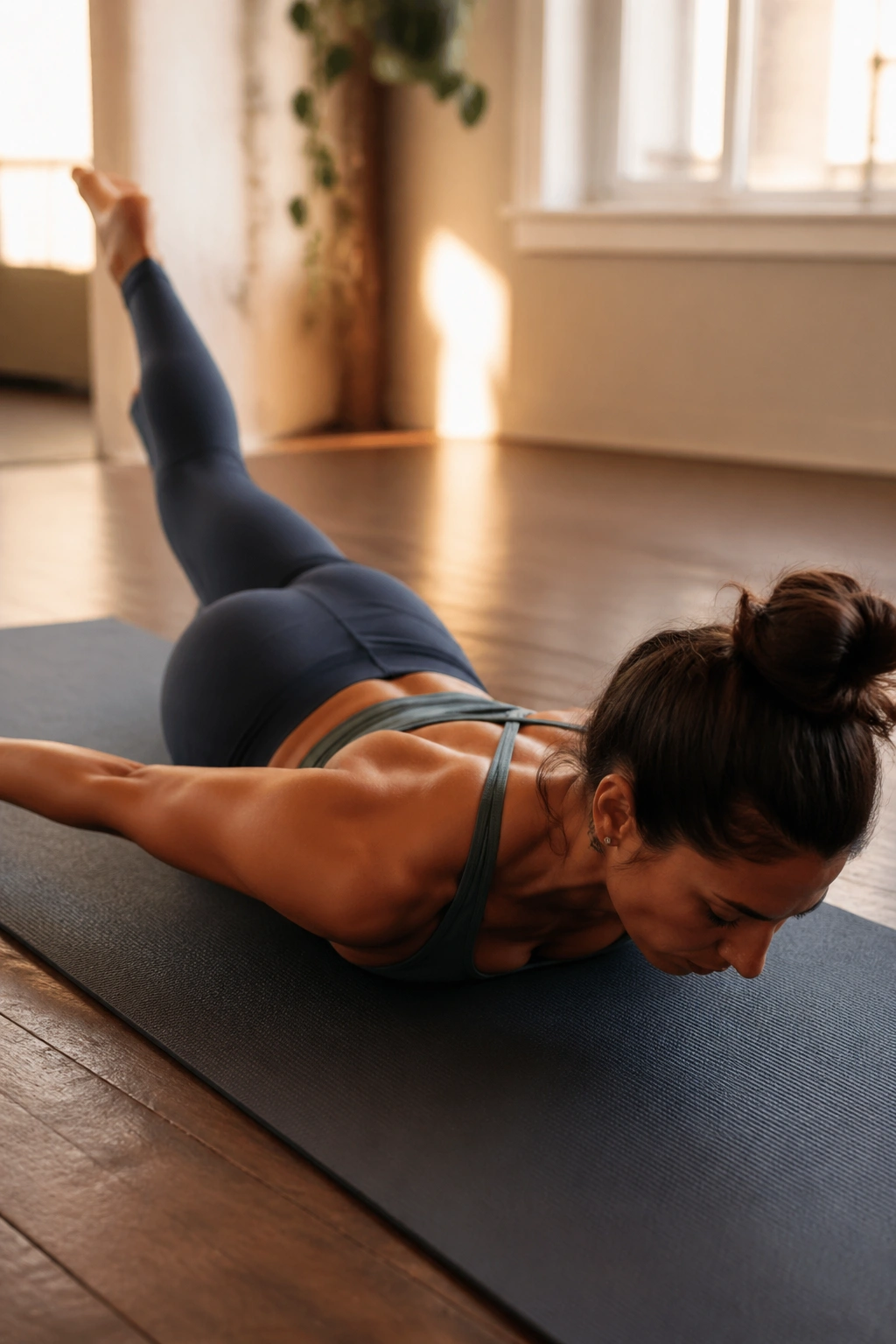
Half Locust is the sort of pose that sneaks up on you. It looks plain. Then you lift one leg or one arm and feel the back body wake up in a hurry.
That matters because posture changes how the neck feels. When the upper back is weak and the chest collapses forward, the head drifts out in front of the body and the throat area gets compressed. A pose like Half Locust works against that pattern by making the spine and back body do a little honest lifting.
I like it when someone wants strength without a full backbend. It’s easier to control than Bow Pose and less fiddly than a deep Cobra. You can keep the lift tiny — an inch or two is enough — and still get the benefit.
Key Details
- Lie face down with arms by your sides or one arm reaching forward.
- Lift one leg, or opposite arm and leg, only a little.
- Keep the gaze down so the neck stays long.
- Hold for 3 to 5 breaths before switching sides.
Small lift. Big honesty.
17. Reclined Bound Angle Pose
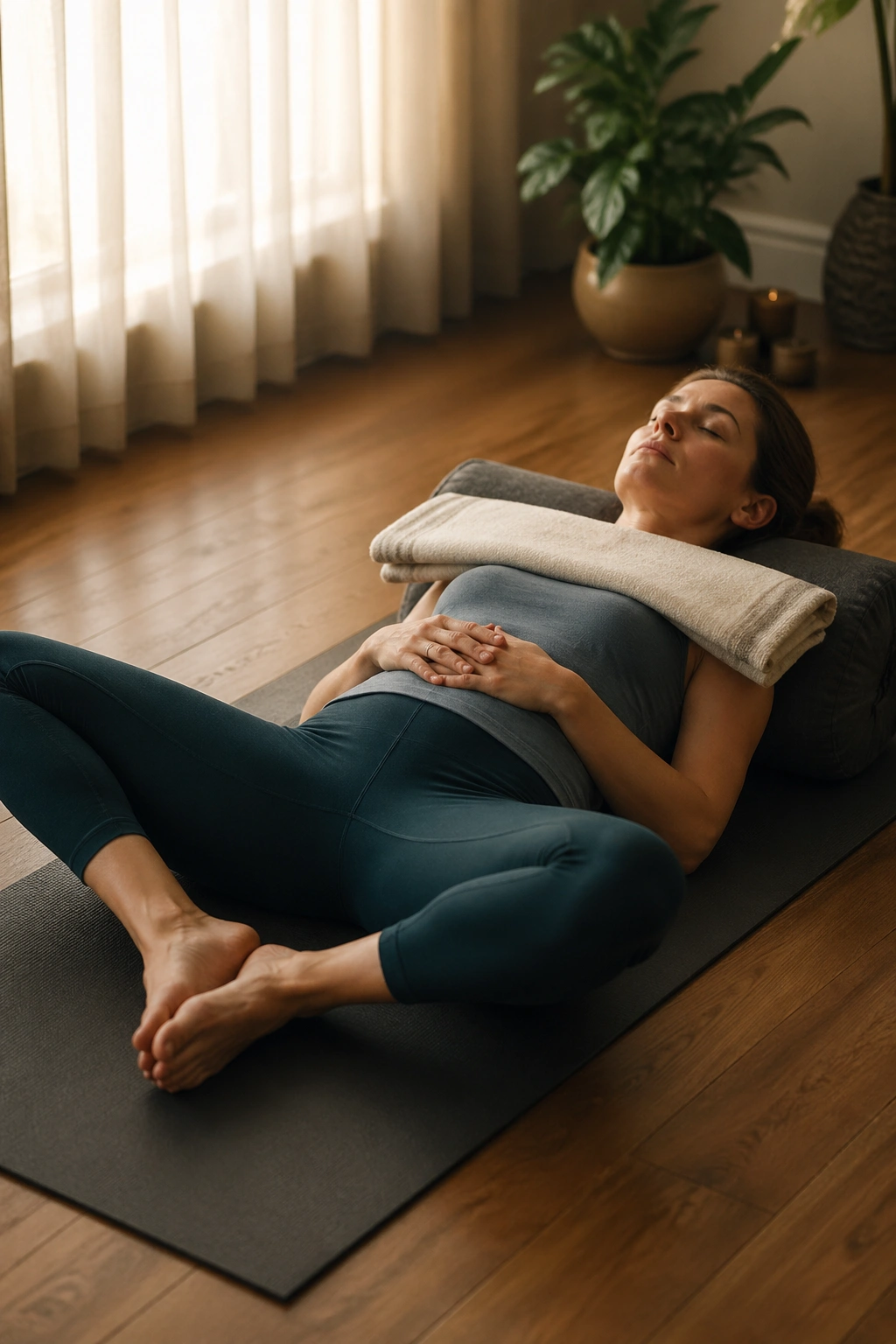
This is the pose I reach for when the body wants support more than stretch. Reclined Bound Angle opens the front of the hips and chest while letting the legs relax outward in a way that feels almost suspiciously easy.
If you place a bolster or folded blanket along the spine, the chest gets a mild lift and the throat has room to soften. That can be a nice match for thyroid support because the whole posture encourages the nervous system to settle. Not in a flashy way. In a “lower your shoulders and stop clenching your teeth” kind of way.
The knees may need blocks or cushions underneath them. Don’t treat that as an afterthought. It’s the difference between lounging and fighting the pose.
A hand on the belly and a hand on the ribs can make the breath more obvious. That’s useful. People are often surprised by how shallow their breathing has become until they lie here and notice it.
18. Corpse Pose with Breath Awareness
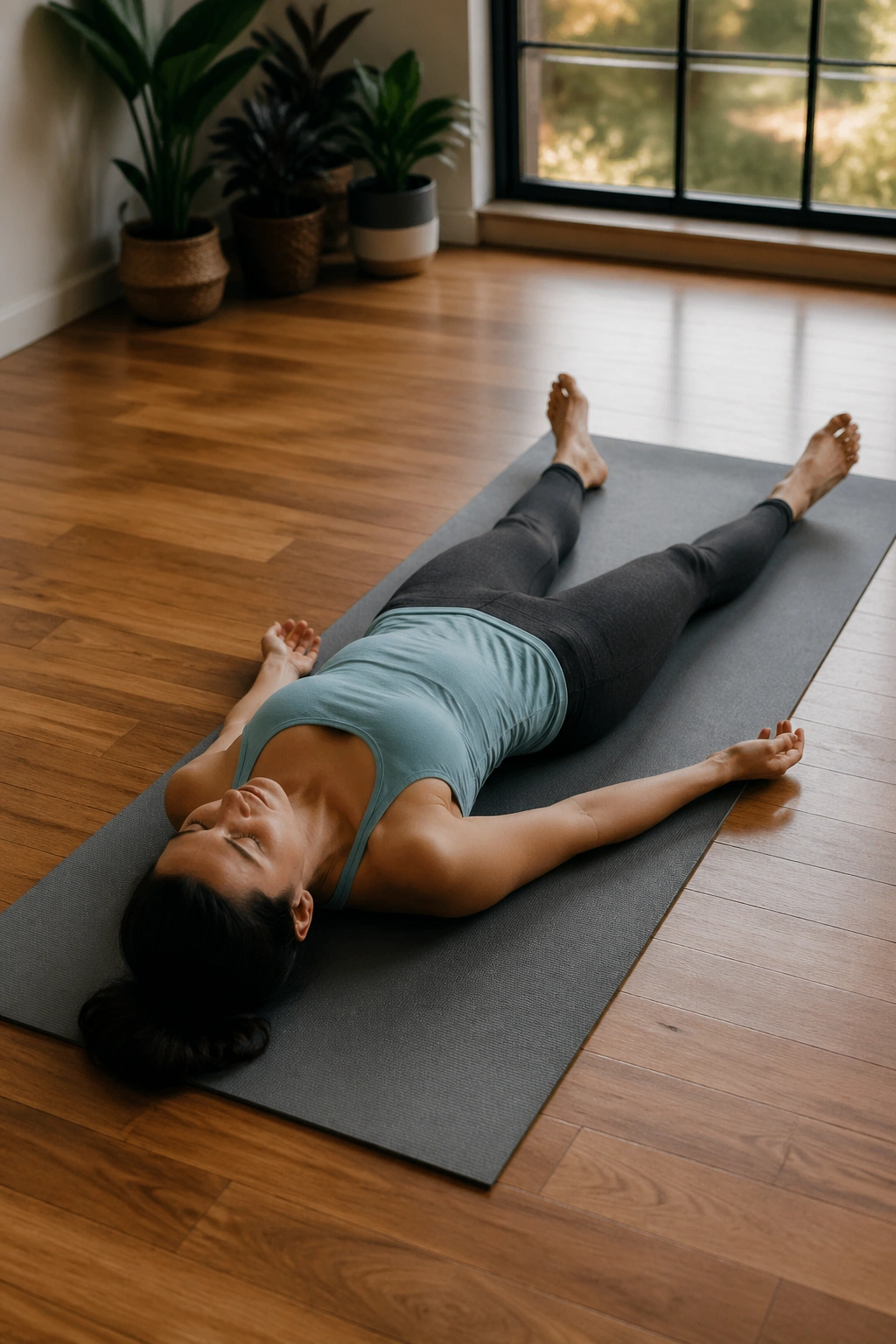
If you skip Savasana, you miss the part your body actually remembers. Corpse Pose is where the practice stops trying so hard. The floor supports everything, and you get to notice what changed.
For thyroid support, this is where the nervous system gets the final nudge toward rest. A long exhale, a soft jaw, and a quiet throat matter more here than any shape. If you’ve been moving through a sequence of backbends, folds, and gentle inversions, lying still gives the body a chance to keep the benefit instead of dropping it the second you stand up.
I like a thin blanket under the head if the chin tips up. Sometimes I place one hand on the belly and one near the collarbones, just to feel the breath moving in two places at once. That tiny bit of attention changes the quality of the rest.
- Lie with the legs long, or bend the knees if the low back prefers it.
- Let the tongue relax away from the roof of the mouth.
- Breathe through the nose for 8 to 10 slow rounds.
- Stay a little longer than feels necessary.
That last part matters. A rushed rest is not much of a rest.
Final Thoughts
If you want the shortest honest answer, pick the poses that open the chest, calm the breath, and don’t irritate the neck. Bridge, Fish, Legs-Up-the-Wall, and Sphinx are the ones I’d trust most often for a steady thyroid-friendly routine.
The flashier inversions have their place, but they are not the whole story. For some bodies, the quieter shapes do more good because they can be repeated without strain. That’s the real test.
And if your thyroid symptoms are strong, new, or getting in the way of daily life, yoga belongs beside medical care, not in front of it. A practice that leaves you calmer, looser, and less wound up is worth keeping. A practice that hurts your neck is not.
