



Hemorrhoids do not care how fit you are.
A hard stool, a long bathroom sit, or a day of clenching your abdomen can turn an ordinary morning into something you’d rather forget. That is where yoga poses for hemorrhoid relief and prevention can help: not by “curing” anything, but by lowering pressure, softening the pelvic floor, and making the whole lower body less tense.
The trick is to stay gentle. Breath-holding, deep straining, and aggressive core work usually make the area angrier, not calmer. A good pose should feel like relief spreading through the hips, low back, and belly—not a test of grit.
One more practical note. If you have heavy bleeding, a hard lump, fever, black stools, or pain that feels sharp and constant, get medical care. Yoga is supportive work. It is not a substitute for treatment when something more serious is going on.
1. Child’s Pose
Gentle beats heroic here.
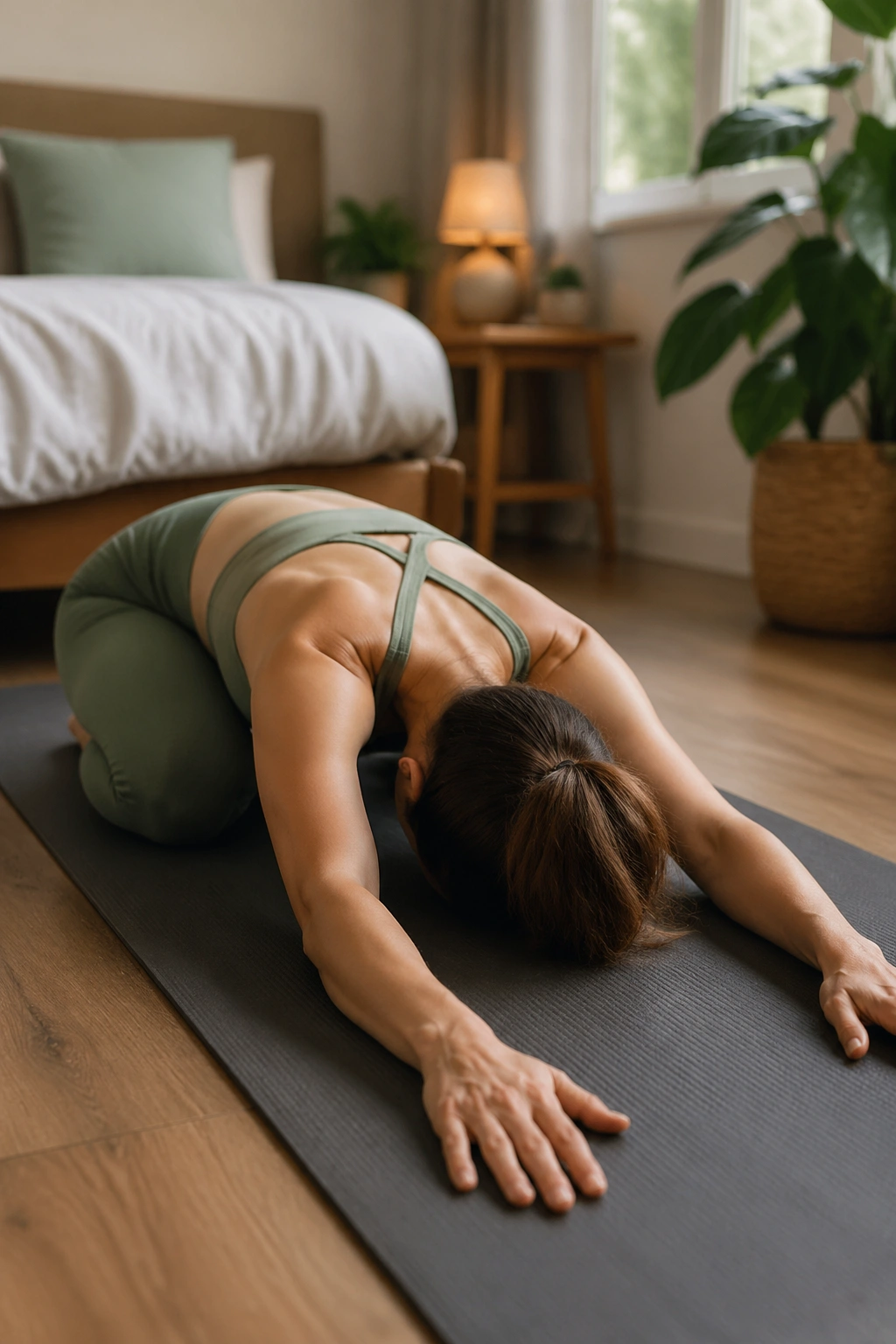
Child’s Pose is one of the first shapes I’d reach for because it gives the belly space and takes the load off the pelvic floor without asking much from you. When the knees are wide and the torso rests between the thighs, there’s less downward pressure, which is the whole point on a rough day. Keep the forehead on the floor or a folded towel, and let the exhale lengthen. Long exhalations tend to quiet the bracing reflex people do without noticing.
If your hips feel tight, place a pillow under your chest or hips. If sitting back toward the heels makes the area feel pinched, stay higher and let the buttocks hover a little. You are not trying to sink deep; you’re trying to stop gripping.
A good hold lasts 5 to 8 slow breaths. If the pose makes you feel compressed in the groin or abdomen, widen the knees more and back off the depth. That small adjustment often changes everything.
2. Cat-Cow
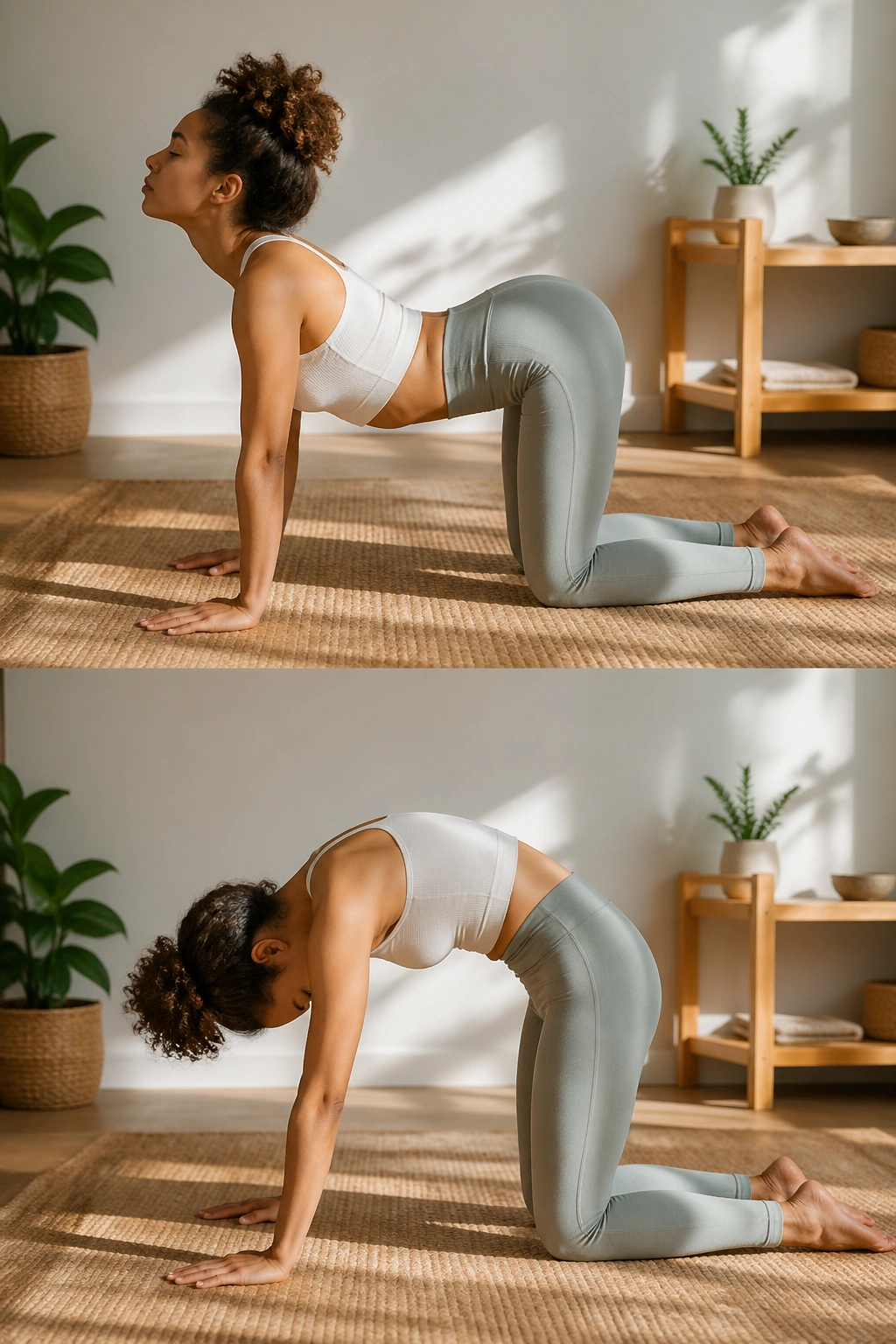
Why does a spinal mobility drill matter for hemorrhoid relief and prevention? Because people who sit a lot usually move like they’re holding their breath. Cat-Cow fixes that in a simple, low-drama way.
Why It Helps
On the inhale, drop the belly gently and lift the chest. On the exhale, round the spine and let the ribs draw in. That rhythm gives your abdomen a chance to move without the hard bracing that often shows up during constipation or stress. It also wakes up the mid-back, which matters more than people think. A stiff spine tends to dump extra work into the low back and pelvis.
How to Do It
- Set hands under shoulders and knees under hips.
- Keep the movement small for 6 to 8 rounds.
- Let the neck follow the spine instead of cranking it.
- Do not force a big arch if the low back already feels sore or crowded.
I like this pose as a warm-up before anything else. It opens the system without stirring up pressure.
3. Knees-to-Chest Pose
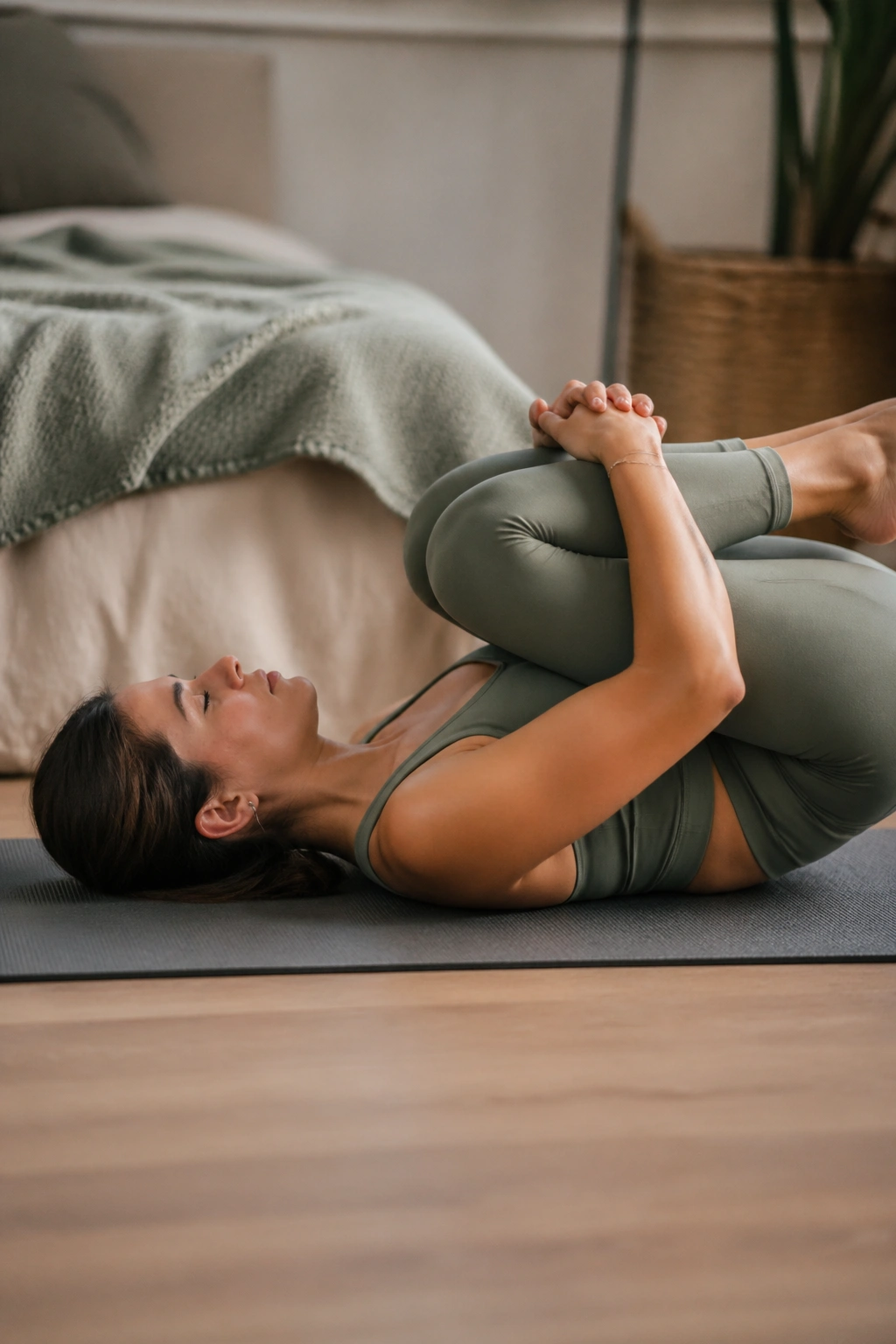
Picture a morning after a long sit. The low back feels boxed in, the belly feels a little tight, and everything down low seems to want some space. Knees-to-Chest is good for that exact mood.
Bring both knees toward your chest and hold behind the shins, or rest one leg at a time if the full version feels too compressive. The light pressure against the abdomen can feel soothing, and the lower back usually settles into the floor in a way people notice fast. That doesn’t mean it fixes the problem in one minute. It does mean the area gets a break.
Keep your shoulders soft and your jaw unclenched. If you catch yourself gripping the thighs hard, ease up. The goal is a gentle squeeze, not a crunch.
I’d stay here for 30 seconds to 1 minute, breathing into the back ribs. If the pose feels good, rock a little side to side. If it feels pinchy around the anus or tailbone, switch to one knee at a time. That’s still useful.
4. Happy Baby Pose
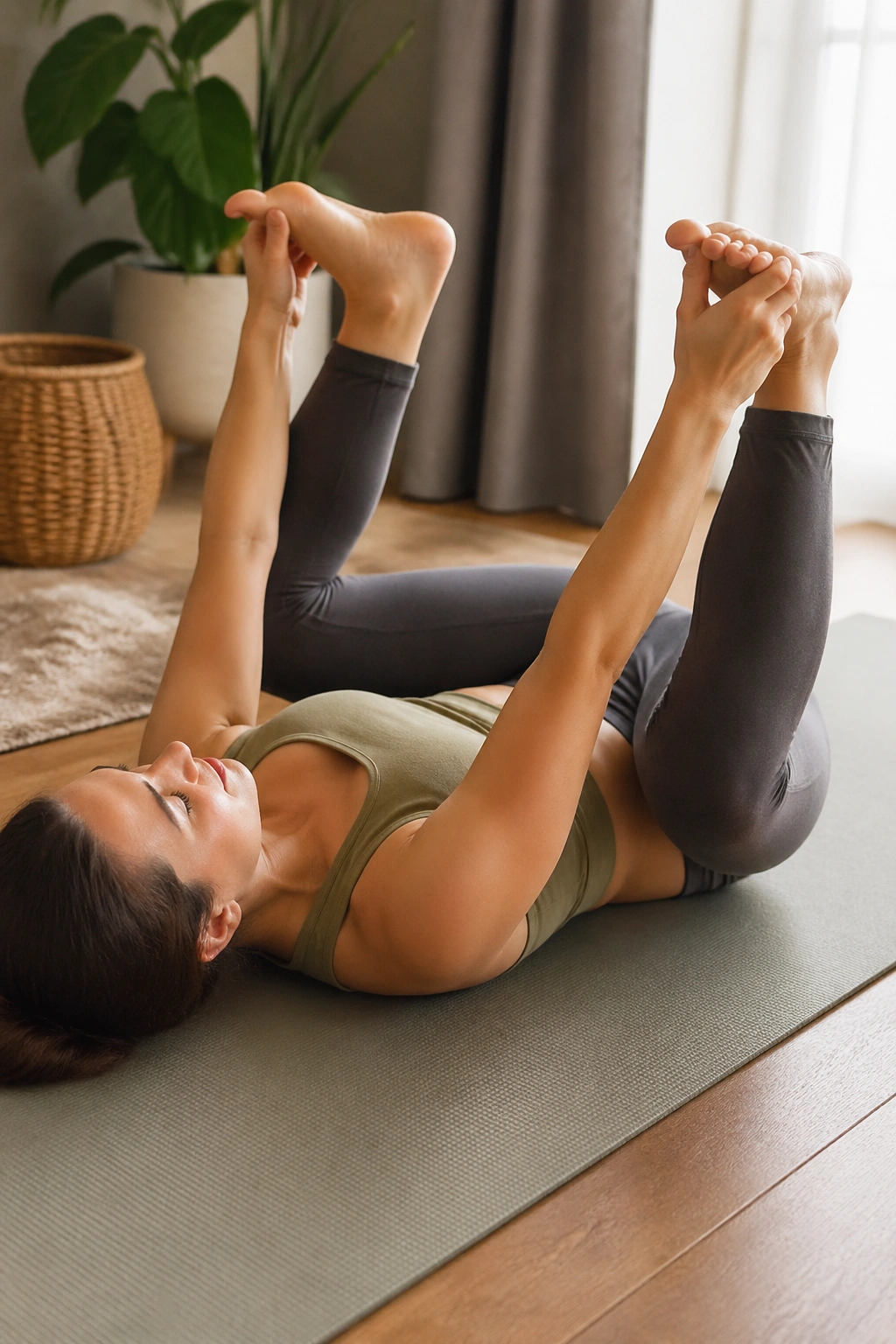
Happy Baby earns its place because it opens the hips without asking your pelvic floor to work hard. That makes it one of the better choices when you want release rather than effort.
Lie on your back, bend the knees, and hold the outer feet or shins. The knees can stay wide, but they do not need to be yanked toward the floor. A lot of people overdo this pose and turn it into a tug-of-war. Bad idea. Keep the sacrum heavy, the shoulders relaxed, and the breath smooth.
How to Make It Easier
- Hold behind the thighs if the feet are too far away.
- Keep one foot on the floor if both legs feel intense.
- Rock gently from side to side for 3 or 4 breaths.
- Stop if the groin feels strained or the lower belly feels pushed outward.
I like this pose for prevention more than for an active flare. It teaches the hips to open without the strain that often sneaks into sitting, squatting, and bathroom posture.
5. Legs-Up-the-Wall Pose
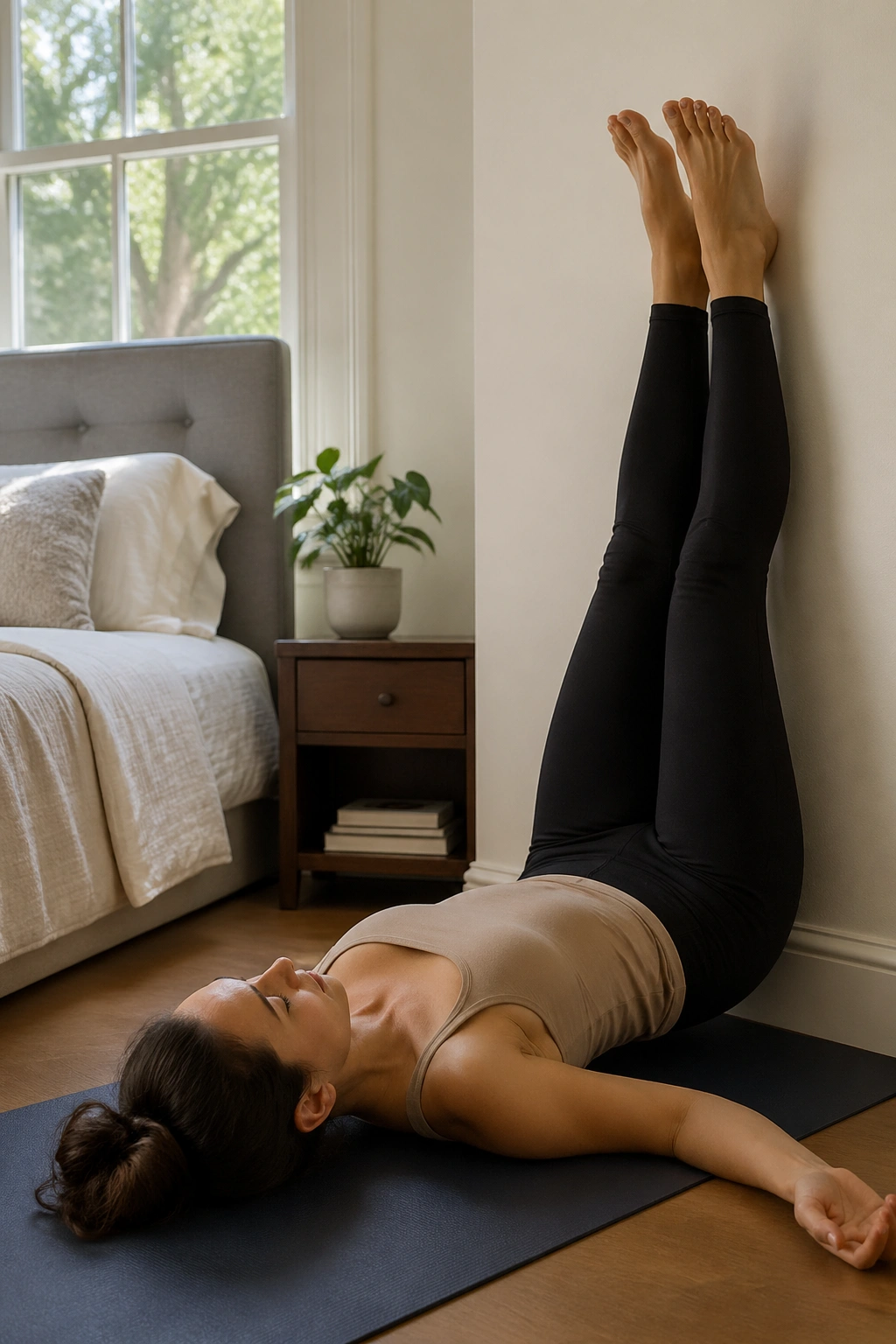
Legs-Up-the-Wall looks simple, which is part of why it works.
Slide your hips a few inches from a wall, swing the legs up, and let the heels rest together or a little apart. If your hamstrings are tight, bend the knees. If the low back complains, put a folded blanket under the pelvis or move farther from the wall. The pose should feel restful, not like a stretch contest.
Gravity does the heavy lifting here. Blood and fluid shift out of the legs, the hips stop carrying your body weight, and the lower body gets a break from standing or sitting pressure. For people dealing with hemorrhoids, that sense of unloading can be a relief in itself.
Stay 5 to 10 minutes if it feels good. Longer is not automatically better. If your head starts feeling fuzzy or the pose makes your lower back arch, come out sooner. A comfortable 4-minute hold beats a strained 12-minute one every time.
This is one of those poses I’d happily use at the end of the day, especially after long periods in a chair.
6. Supported Malasana
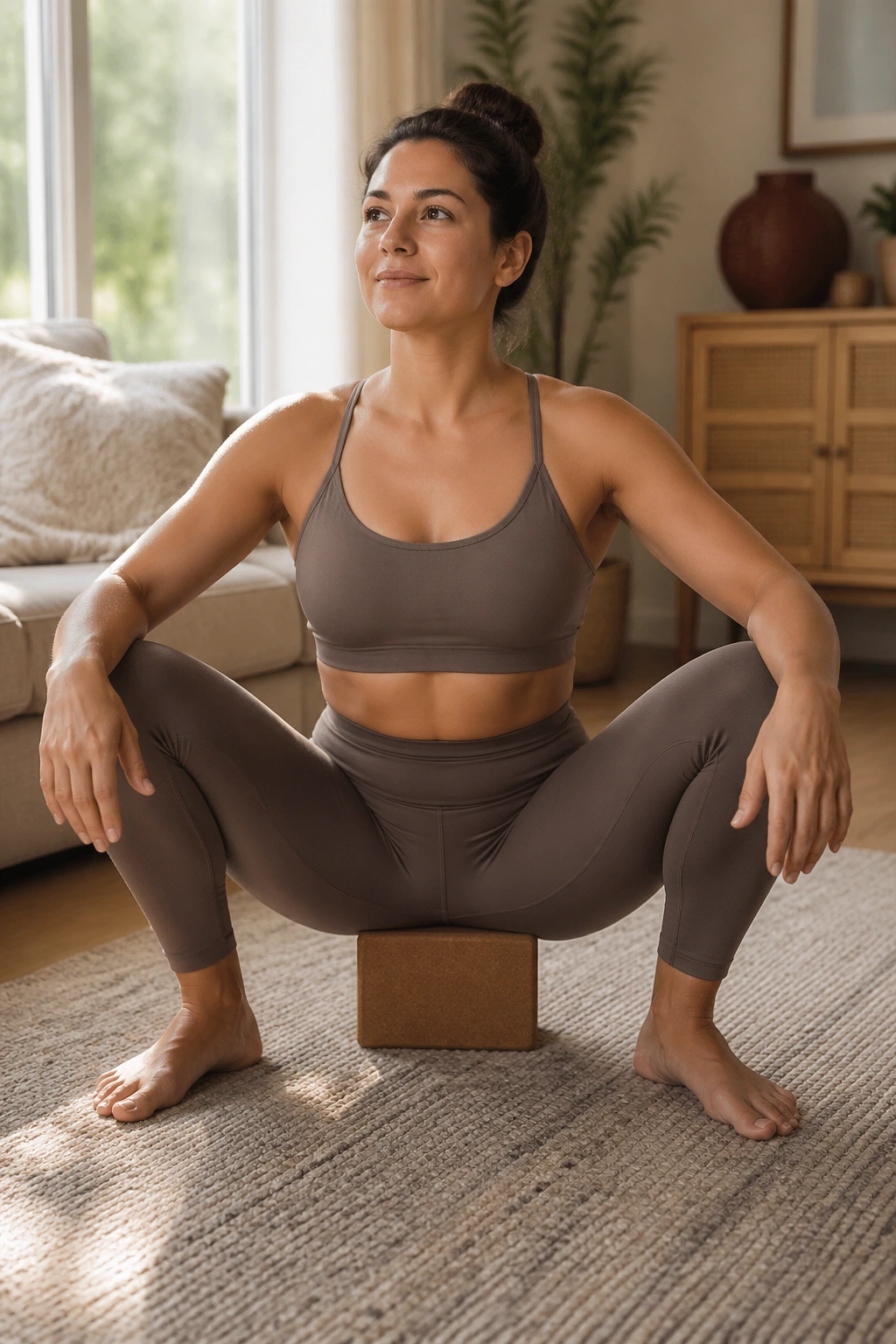
A deep squat can be a friend or a bully.
Supported Malasana, or yogi squat, is worth using because it trains the body for a healthier elimination position without demanding a full, hard drop. Put a block, rolled blanket, or stacked books under the sit bones if the heels lift or the knees complain. You want a squat you can breathe in, not one you have to survive.
The wide stance can lengthen the pelvic floor and encourage the hips to open. That matters for constipation prevention, because straining often gets worse when the hips and ankles are stiff. The squat position itself is the useful part; the depth is negotiable.
If you are in the middle of a painful flare, this may not be the pose. I’d skip it if sitting low causes throbbing or pressure. Use it later, when things are calmer, and hold for 20 to 30 seconds at a time. Two or three rounds are enough.
A wall or chair in front of you can make the whole thing feel much safer. That’s not cheating.
7. Reclined Bound Angle Pose
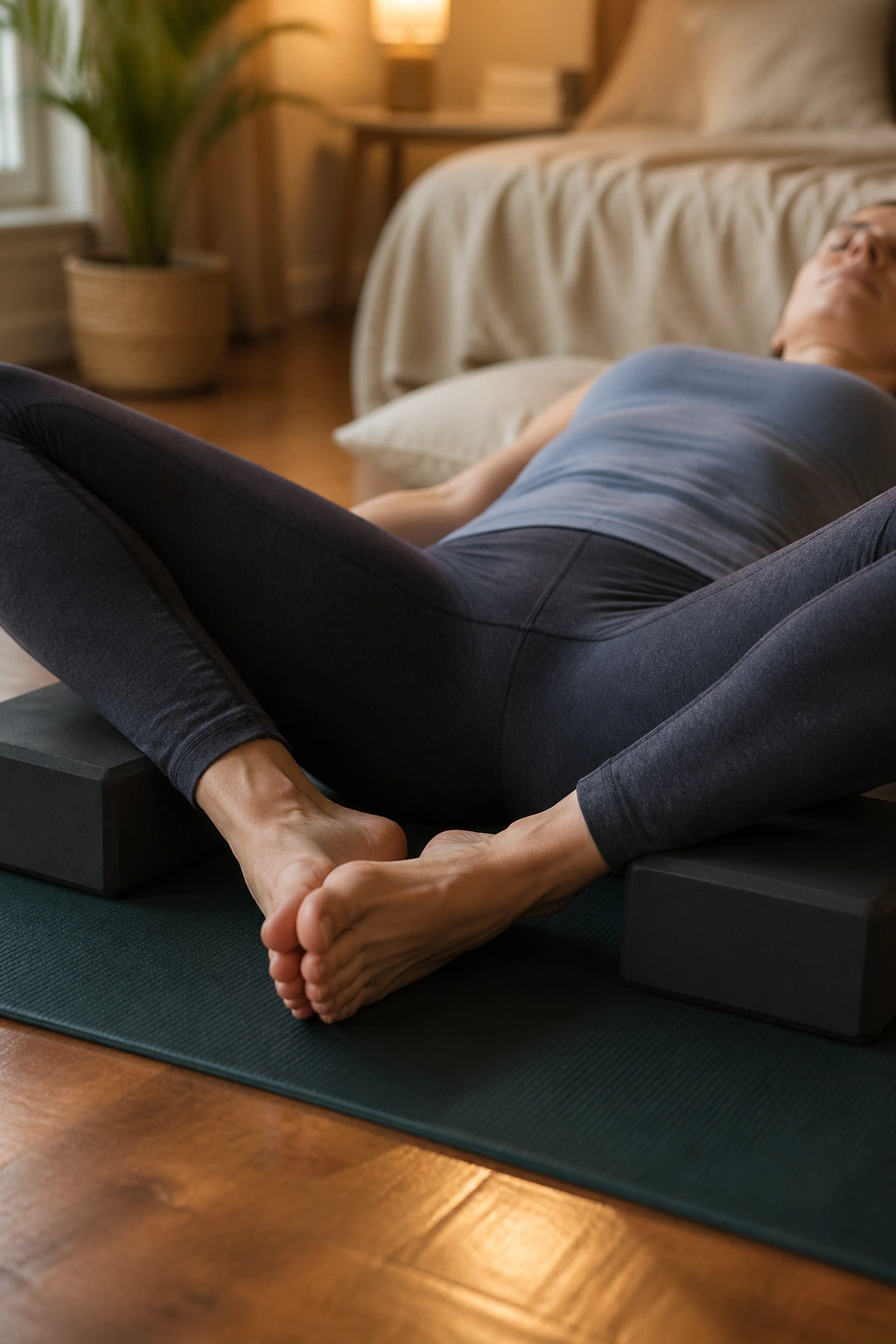
Can a hip opener help when the problem is down low? Yes, if it relaxes the groin and belly instead of cranking them.
Lie on your back, bring the soles of the feet together, and let the knees fall open. Put blocks or pillows under the thighs if the hips feel pulled. The shape should be spacious through the inner legs and soft across the abdomen. That softness matters. People who tense their inner thighs tend to tense the whole pelvis with them.
Breathe toward the sides of the ribs and let the exhale get a little longer than the inhale. If the lower back arches, place a rolled towel under the knees or a cushion under the sacrum. No pose is worth a pinched groin.
I think of this as a decompression pose. It does not look dramatic, and that’s a good thing. For hemorrhoid prevention, the body often needs less force, not more. This pose gives you that.
8. Sphinx Pose
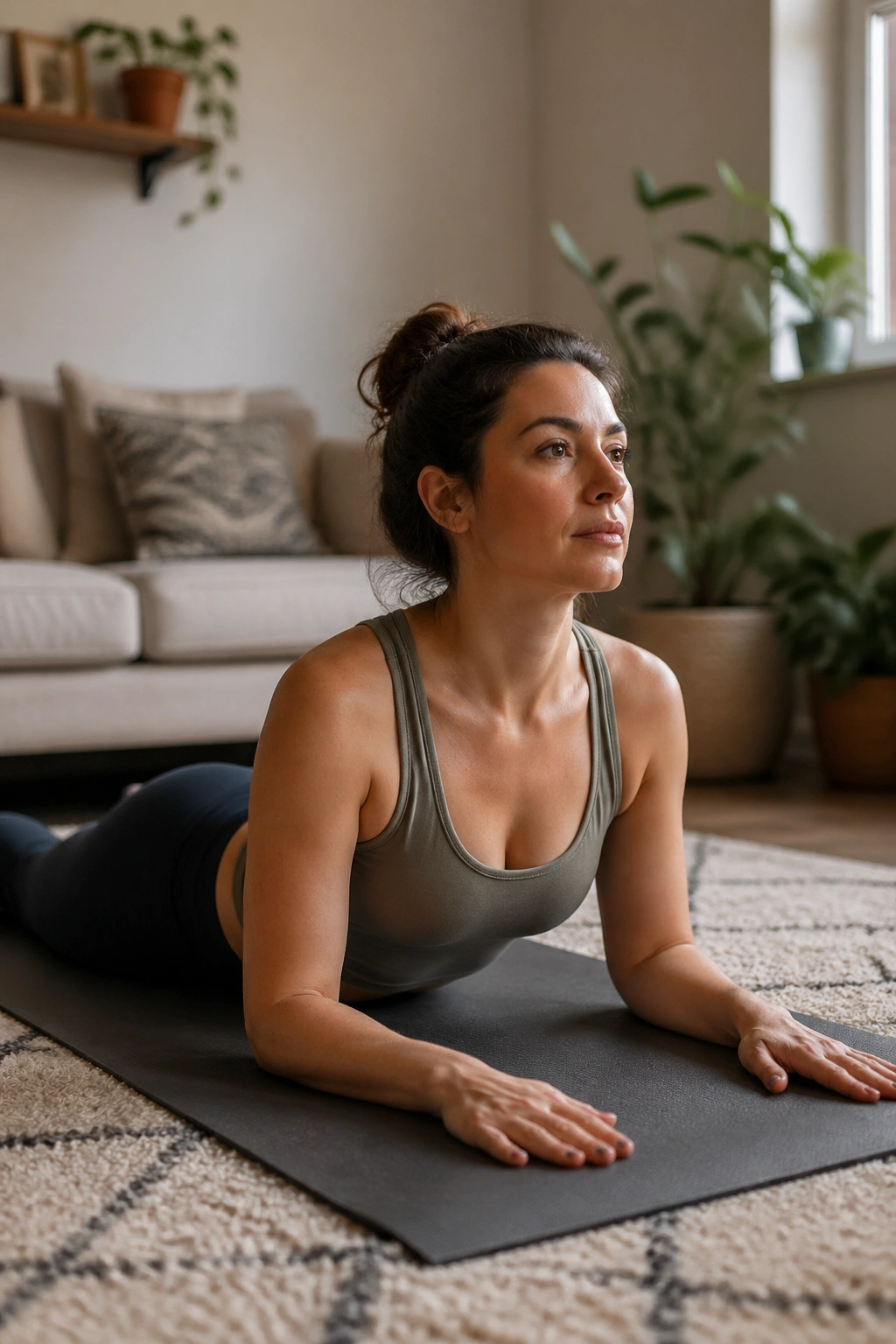
Sphinx feels like a quiet backbend, not a stunt.
Lie on your stomach, prop the forearms on the floor, and place the elbows under the shoulders. Press the pelvis and pubic bone lightly into the mat while the chest drifts forward. You should feel a gentle opening across the front of the body and a mild support through the low back. Not a pinch. Not a squeeze.
That front-body length matters because a lot of people with bowel trouble spend their days collapsed forward. Sphinx nudges the spine in the opposite direction without forcing the abdomen to work hard. Keep the glutes soft and the shoulders away from the ears.
If the low back feels compressed, move the elbows farther forward or lower the chest. If the belly feels jammed into the floor, come out. You want a mild stretch, not pressure in the abdomen.
This pose is useful after sitting, after walking, or after a long day at a desk. Hold for 5 to 8 breaths and let the front ribs expand on each inhale.
9. Supine Spinal Twist
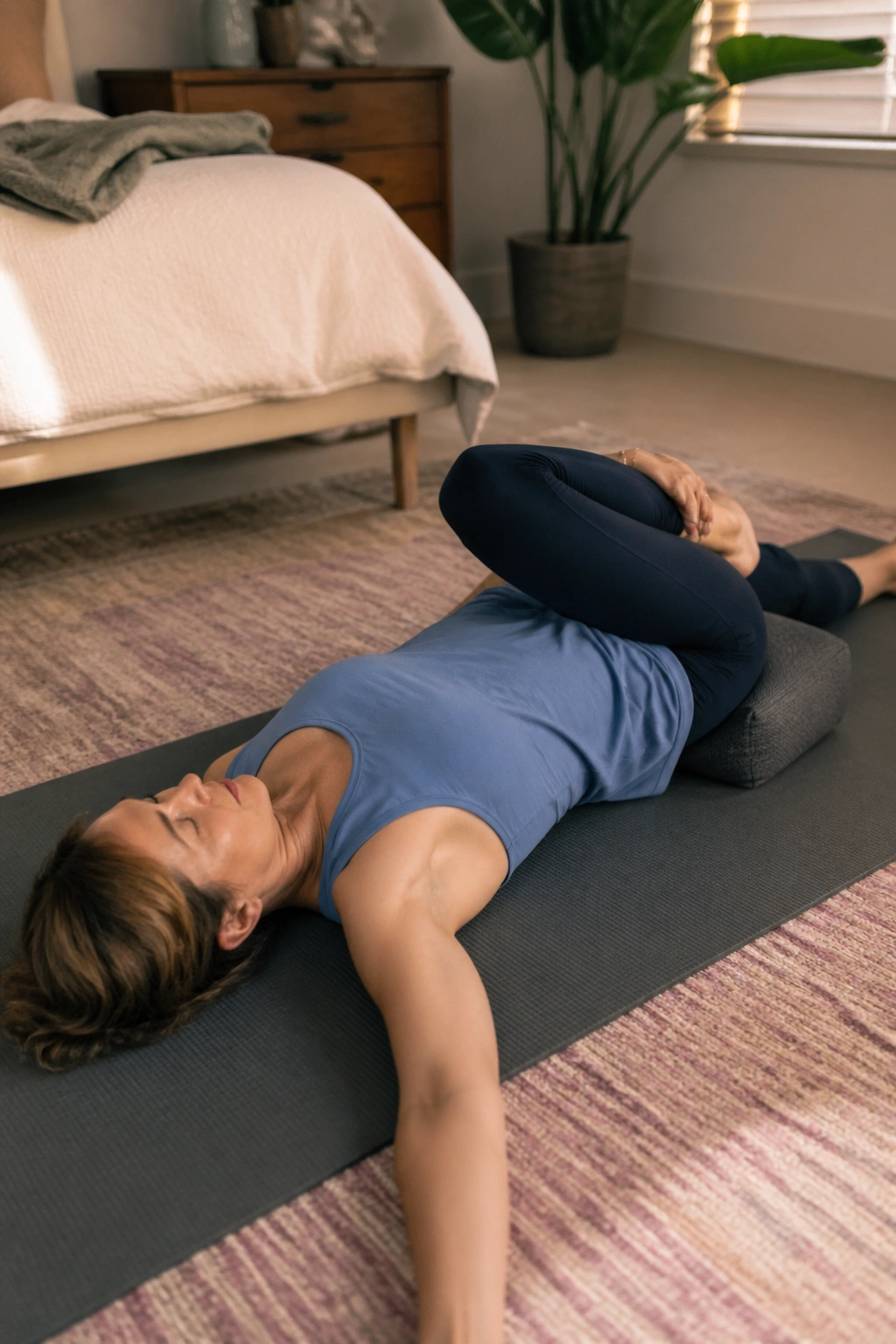
A spinal twist can feel out of place on a hemorrhoid list until you try the gentle version.
Lie on your back, hug one knee in, and guide it across the body only as far as the lower back stays calm. Keep both shoulders heavy. If the knee touches the floor and the twist feels too deep, place a pillow underneath it. The point is to release the back, not to wring out your torso like a towel.
What to Watch For
- Keep the twist small if the abdomen feels sensitive.
- Do not yank the knee down with your hand.
- Breathe into the ribs instead of bracing the belly.
- If the twist causes a pulling sensation in the groin or rectal area, back off immediately.
I like twists after the hips have warmed up a little. They can help you notice where you are still gripping, which is often half the battle with bowel issues. A body that relaxes well tends to strain less later.
10. Bridge Pose
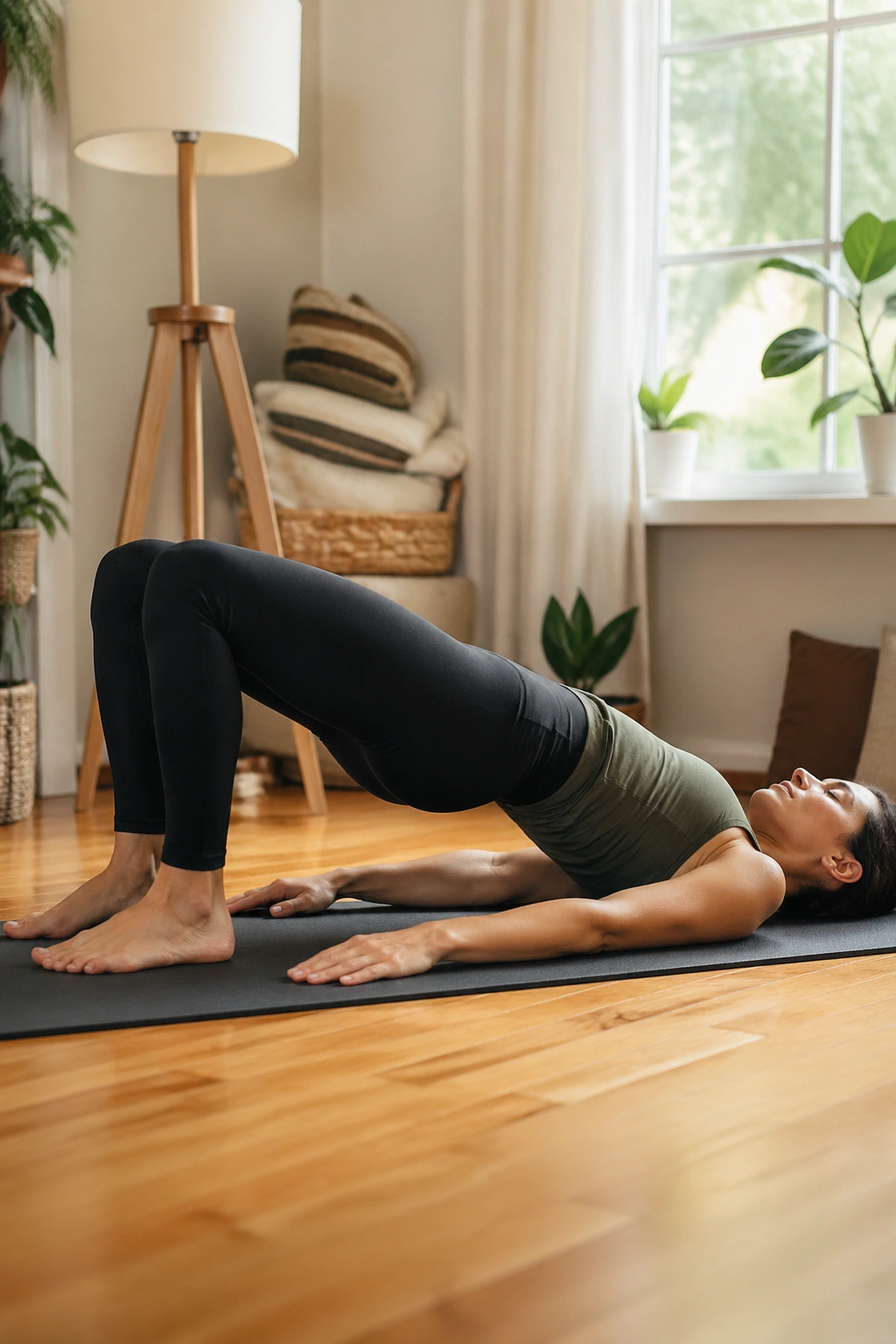
Bridge is one of the better strength poses here because it teaches you to support yourself without squeezing the abdomen like crazy.
Lie on your back with the feet flat, hip-width apart. Press through the heels, lift the hips a little, and keep the knees tracking forward rather than flaring out. The lift does not need to be high. A low, steady bridge is often better than a big dramatic one. If you feel the low back taking over, reduce the height and think more about glutes than spine.
Strong glutes and a steadier pelvis can help with posture, sitting, and the general tendency to collapse into the belly. That matters for prevention. You are not training the pose to “fix” hemorrhoids directly; you’re training the whole support system around them.
A few clean cues
- Exhale as you lift.
- Keep the ribs from popping up.
- Hold for 3 to 5 breaths.
- If the front of the hips cramp, come down and reset.
A supported version with a block under the sacrum works well on easier days, too.
11. Wind-Relieving Pose
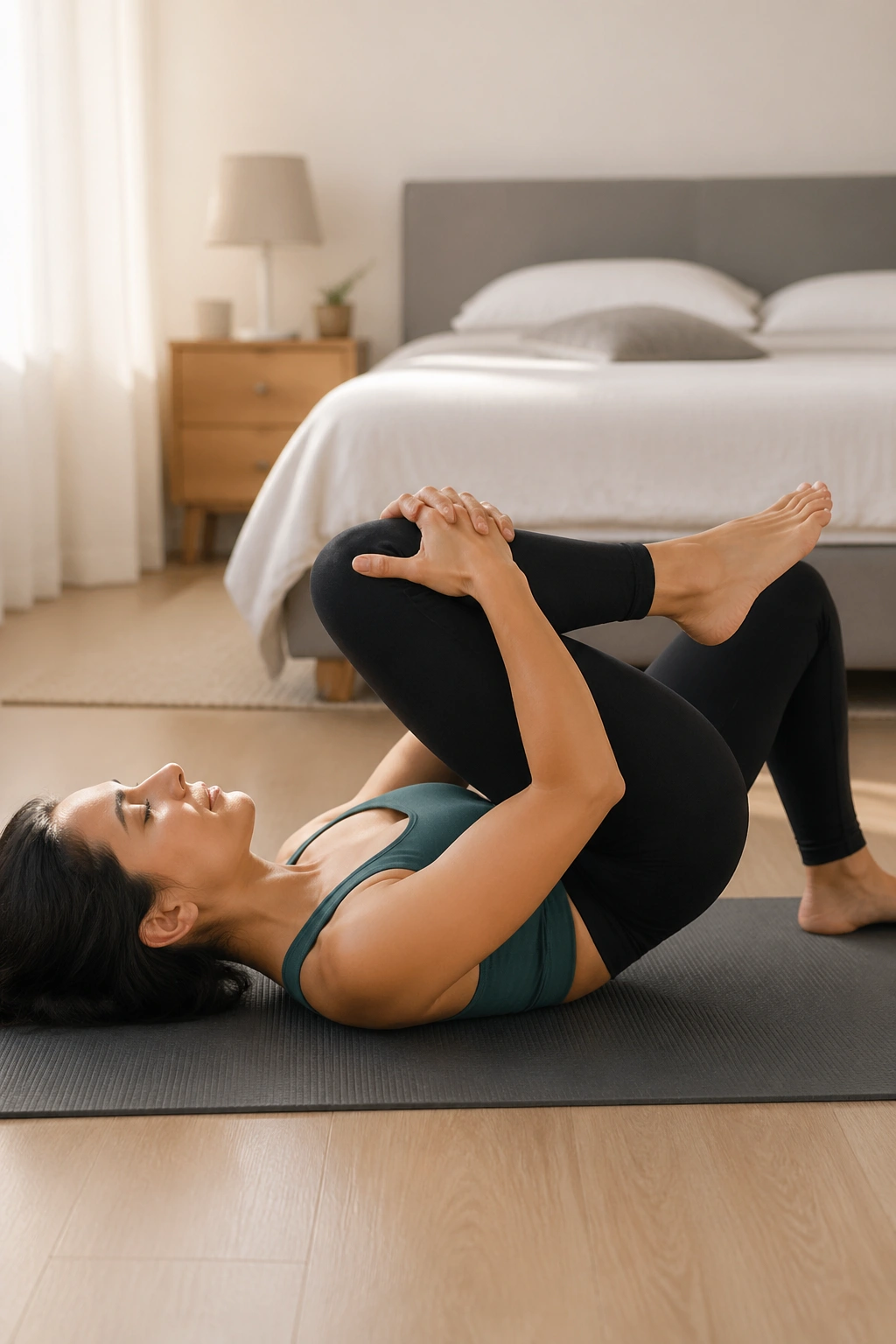
If bloating and pressure show up together, is this the one? Often, yes.
Bring one knee toward the chest while the other leg stays bent or extended on the floor. Hold the shin lightly, not with a death grip. The pose is named bluntly for a reason: it can help the abdomen feel less crowded and can encourage a little movement in the belly. That movement is welcome when constipation is part of the picture.
Keep the neck relaxed and the lower back heavy. Some people rock the knee in tiny circles, which can feel nicer than a static hold. If both knees come in, watch your breath. A lot of people accidentally clamp the stomach and hold their breath here, which defeats the purpose.
How to use it well
- Hold each side for 5 to 8 breaths.
- Switch sides slowly.
- Keep the movement soft, not compressed.
- Skip the pose if it causes sharp pressure in the anus or tailbone.
This one is not fancy. It does not need to be. Simple, gentle compression can be enough.
12. Wide-Knee Child’s Pose
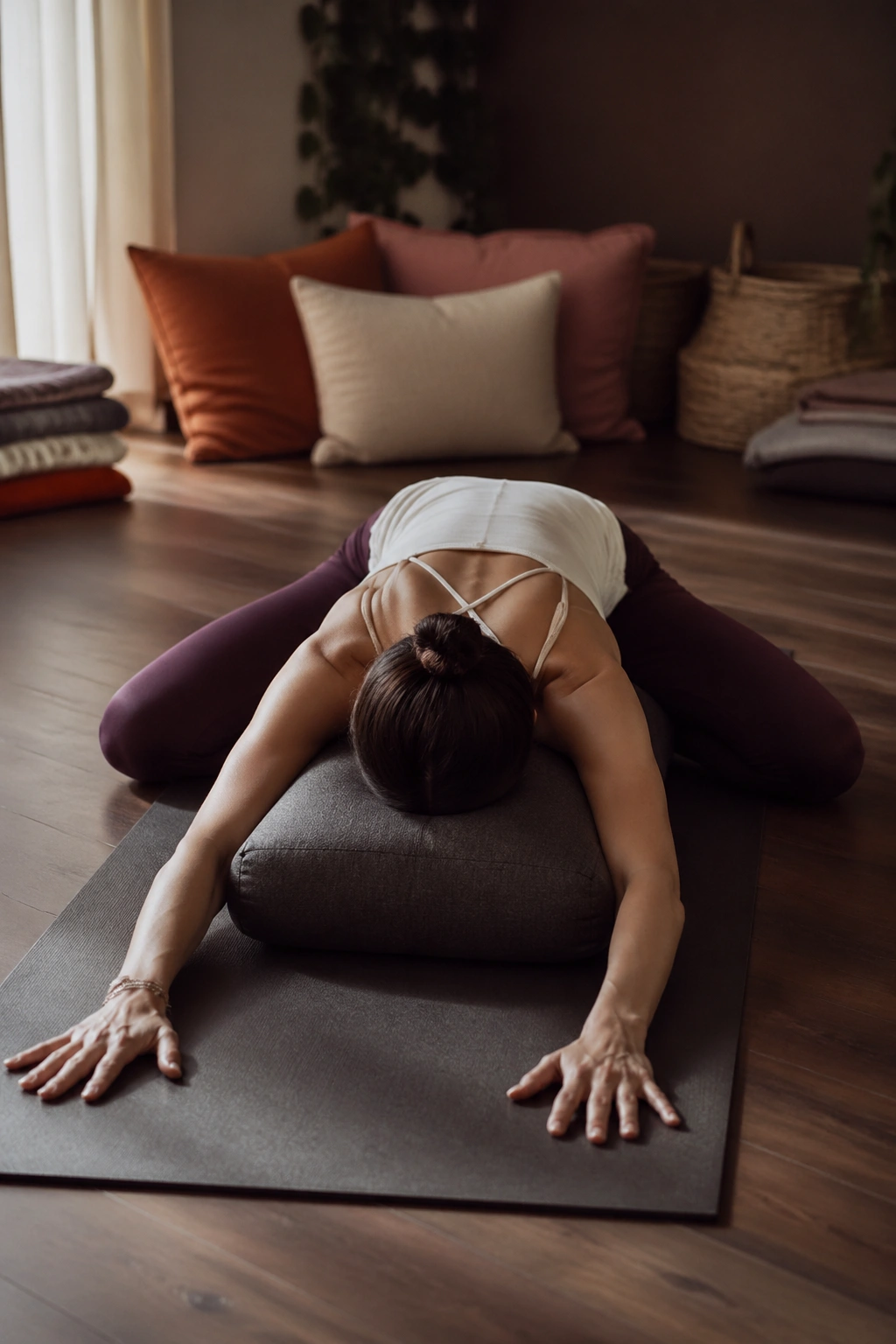
On the days when a normal Child’s Pose feels too pinchy, widen the knees.
That small change makes a real difference. A broader shape gives the belly more room to soften and can take direct pressure off the lower abdomen and pelvic floor. Rest the torso on a bolster, stack of pillows, or a folded blanket if coming all the way down feels like too much work. The arms can stretch forward or rest by the sides.
I prefer this version when someone says, “I want the feeling of resting, but the standard shape feels wrong.” That complaint is common, and the fix is usually mechanical, not mystical.
- Spread the knees wider than the hips.
- Keep the big toes touching only if that feels comfortable.
- Support the chest with cushions.
- If sitting back on the heels increases pressure, stay lifted.
Give it 1 to 3 minutes if the breath stays easy. The longer hold tends to work better than a quick drop-and-pop version.
13. Gentle Seated Forward Fold
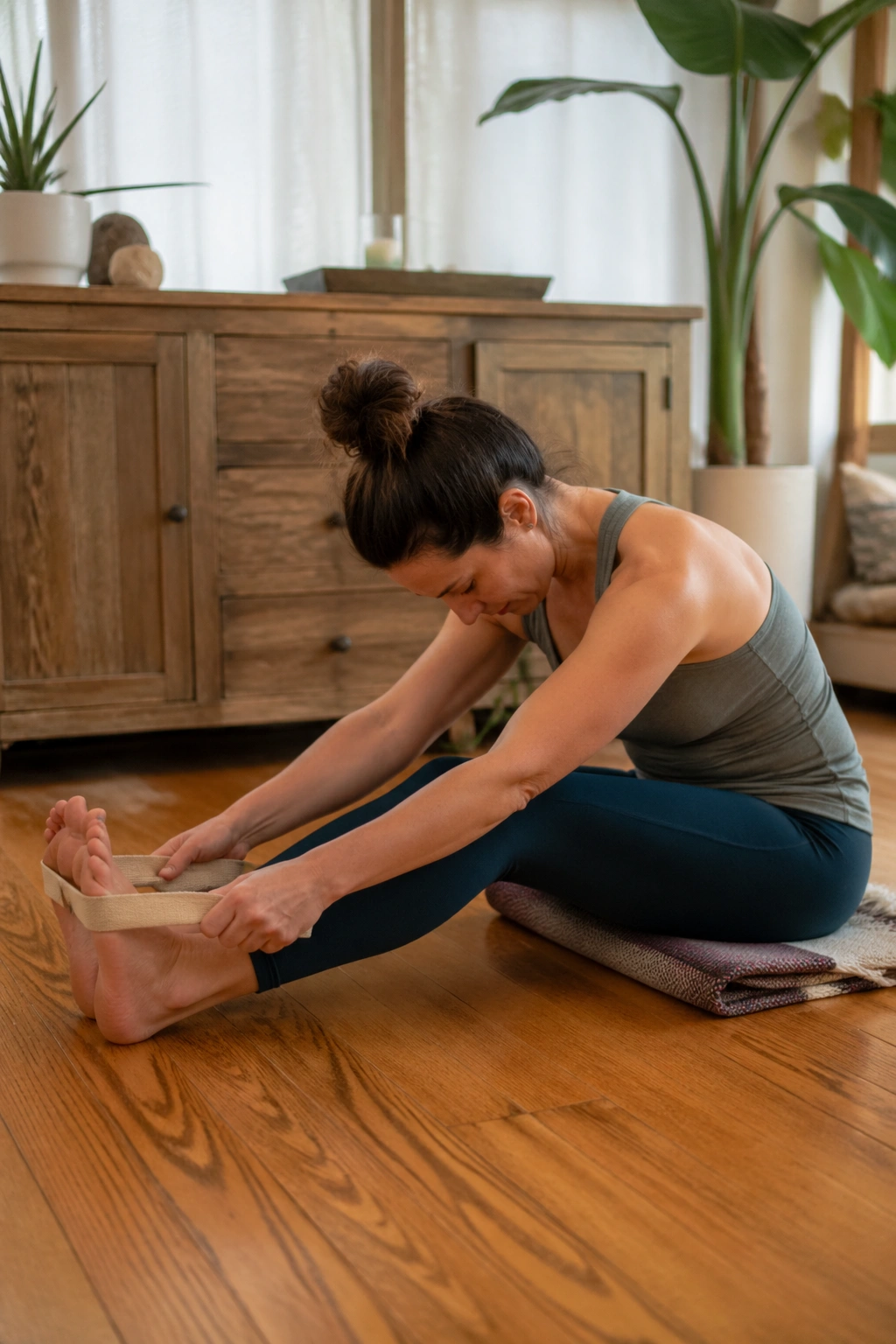
A soft fold is fine; a hard pull on the hamstrings is not.
Sit on a folded blanket, bend the knees a lot if needed, and hinge from the hips with a long spine. Reach toward the shins or feet only as far as you can keep the breath smooth. The low back should feel lengthened, not yanked. That distinction matters more than most people think. A deep, forceful forward fold can make the belly brace hard, which is the opposite of what you want.
This shape can calm the nervous system and give the back body a mild stretch, both of which help when the body gets tight around bowel discomfort. It’s also a nice reminder that flexibility does not need to be chased. You are not trying to touch your toes for a badge.
If the stretch hits the rectal area or creates a “bearing down” feeling, bend the knees more or come up higher. A small fold with steady breathing beats a deep fold with strain.
I like to use a strap around the feet so the shoulders can stay soft instead of creeping toward the ears.
14. Downward-Facing Dog
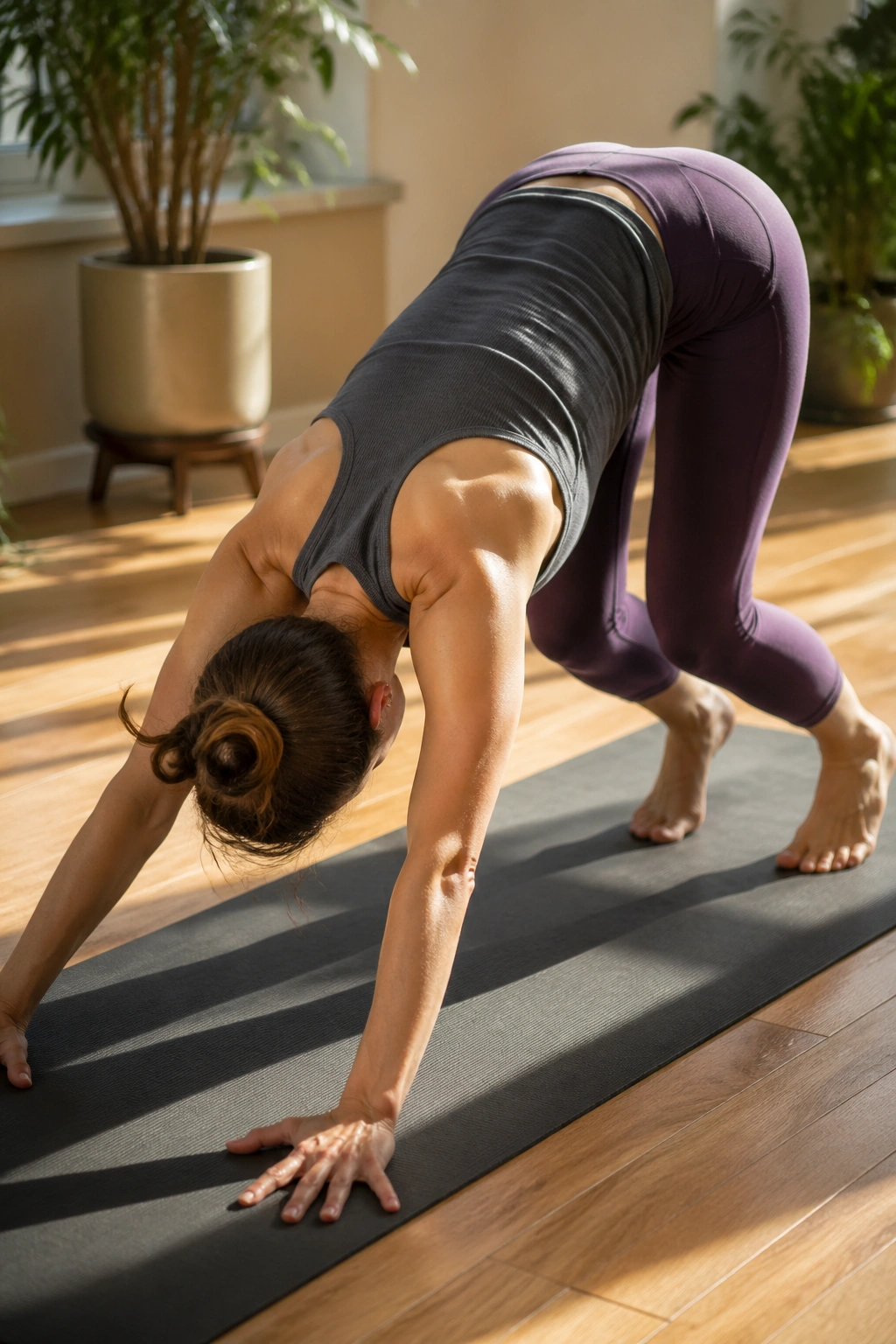
Downward Dog has a place here, but only if you keep it short and loose.
Think of it as a mild circulation reset, not a hold-you-can-brag-about later. A bent-knee version takes pressure off the hamstrings and lets the pelvis tip back without forcing the abdomen to brace. Pedal the feet a little, bend one knee and then the other, and keep the gaze soft toward the feet or knees. The pose should feel like length, not strain.
For hemorrhoid prevention, the useful part is the shift away from sitting and the stretch through the backs of the legs and spine. For an active flare, though, a long Downward Dog may be too much. Wrist load, head position, and abdominal pressure can all become annoying fast.
Keep it to 3 to 5 breaths at first. If you notice throbbing, heaviness, or a pressing sensation in the lower rectum, come down. No pose earns extra points for making the area feel heavier.
I like this one more as a prevention pose than a relief pose, and that’s fine. Not every useful shape has to feel restorative.
15. Corpse Pose with Diaphragmatic Breathing
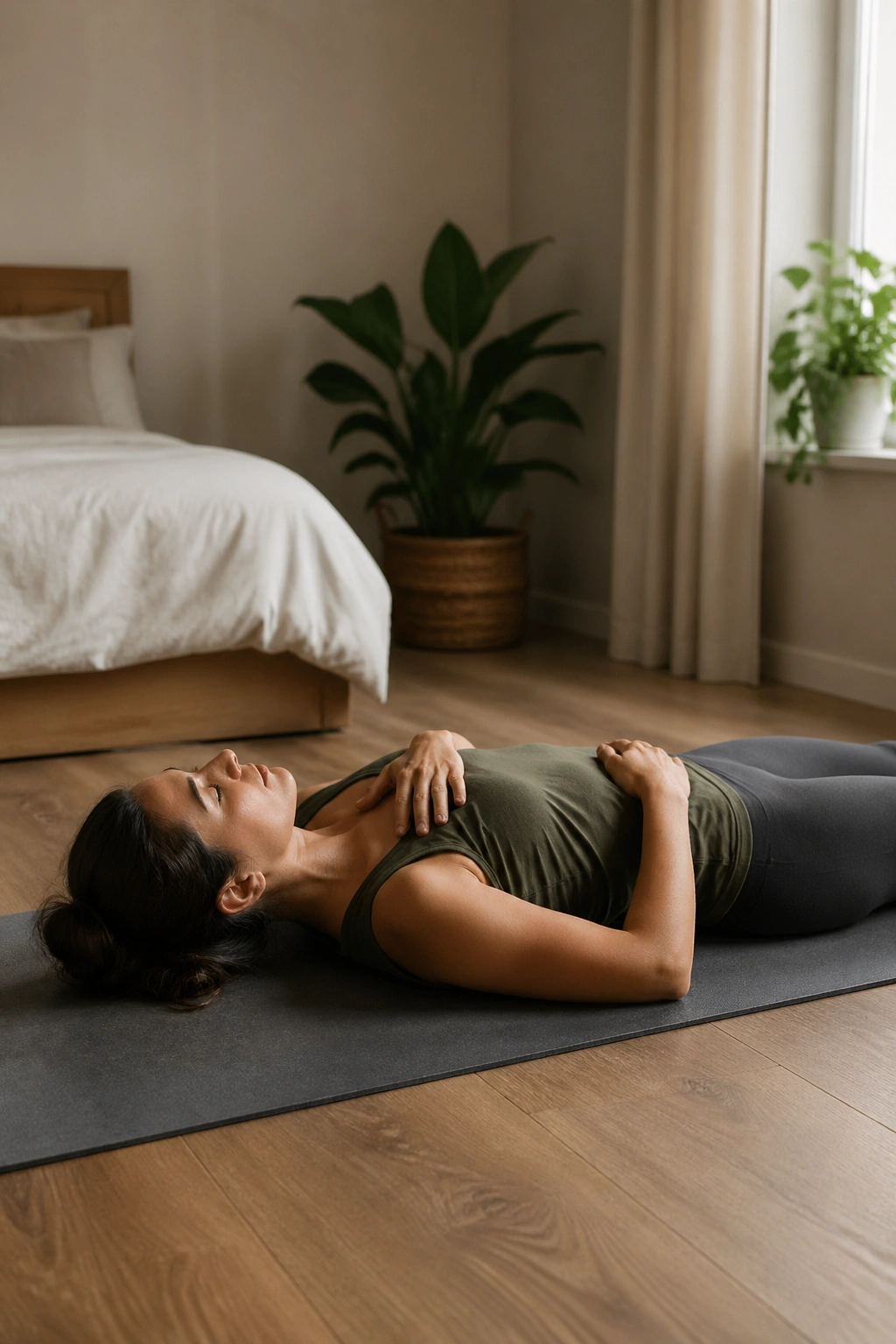
Can lying still count as part of the plan? Absolutely.
Lie on your back with the legs long or bent, and place one hand on the belly and one on the side ribs. Inhale so the ribs widen and the belly rises a little; exhale so the belly softens and the pelvic floor drops. A slower exhale—say 4 counts in and 6 counts out—can help people stop bracing through the lower abdomen. That matters because straining starts with tension long before it reaches the bathroom.
The pose itself is plain. The breathing is the work. Over time, this teaches the body a less forceful pattern, which can make other poses feel safer and bowel movements less tense. If your mind wanders, fine. That’s normal. Keep returning to the breath without turning it into a project.
A small practice that helps
- Stay for 3 to 8 minutes.
- Keep the jaw loose.
- Let the hands rest heavy.
- Do not hold the breath or “push” the exhale out.
This is one of the most underrated tools for hemorrhoid relief and prevention because it trains relaxation instead of effort.
16. Locust Pose
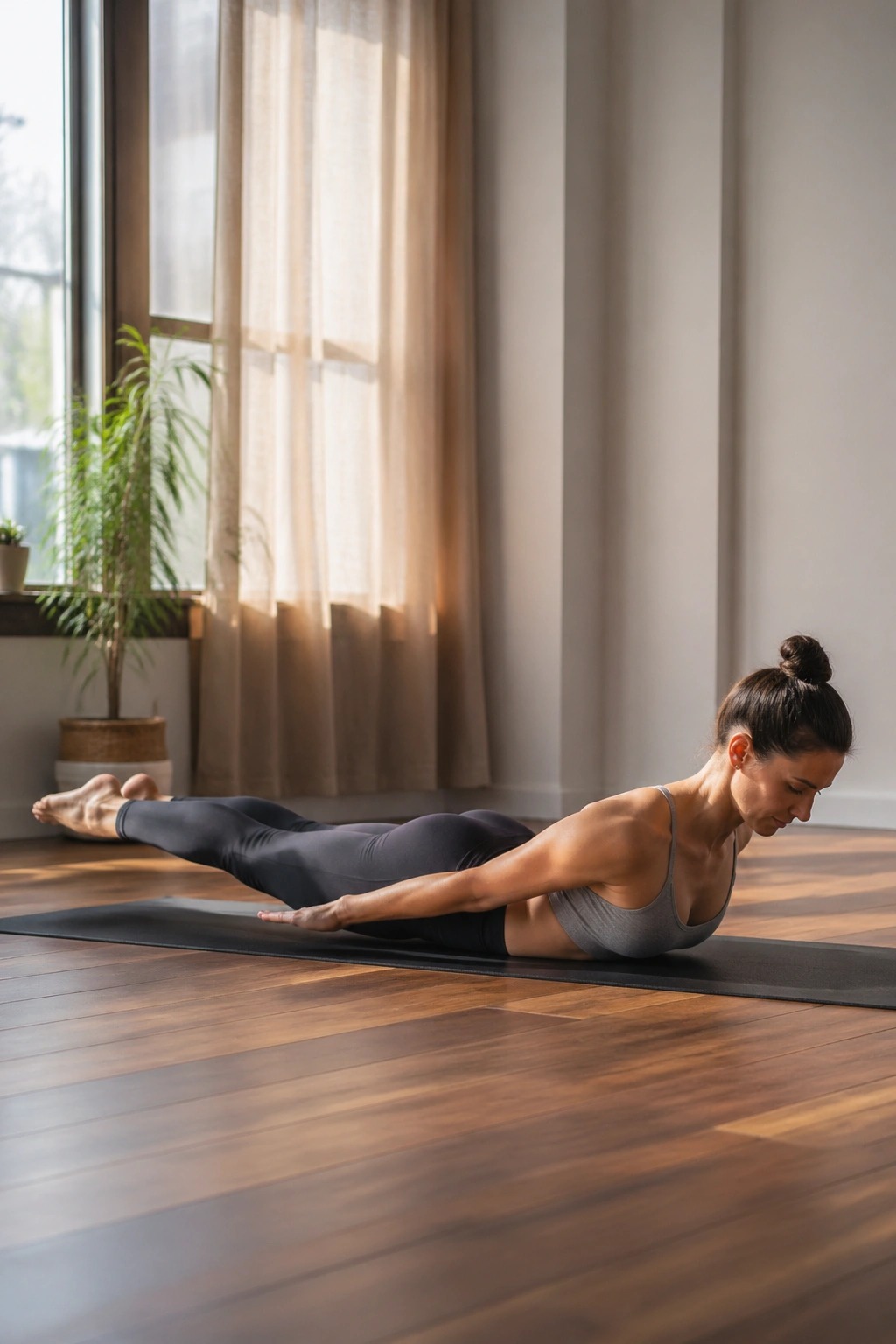
Locust looks modest, but it earns respect fast.
Lie on your stomach with the arms by your sides, palms down or facing inward. Lift the chest a little, maybe the legs a little, and keep the lift small enough that the neck stays long. The work should come from the back body—glutes, spinal muscles, and upper back—not from a hard abdominal brace. That distinction matters. People often squeeze the belly so hard in backbends that they defeat the point.
Why include a stronger pose on this list? Because a body that stays folded and slack all day tends to sit badly and strain badly. Locust gives you a chance to build support without compressing the front of the body. A short, clean lift is enough.
Hold for 2 or 3 breaths, lower, and repeat once or twice. If the low back tightens, reduce the lift. If the neck feels jammed, keep the gaze down.
I’d use this as a prevention tool after the gentle floor poses, not before them.
17. Half Lord of the Fishes Pose
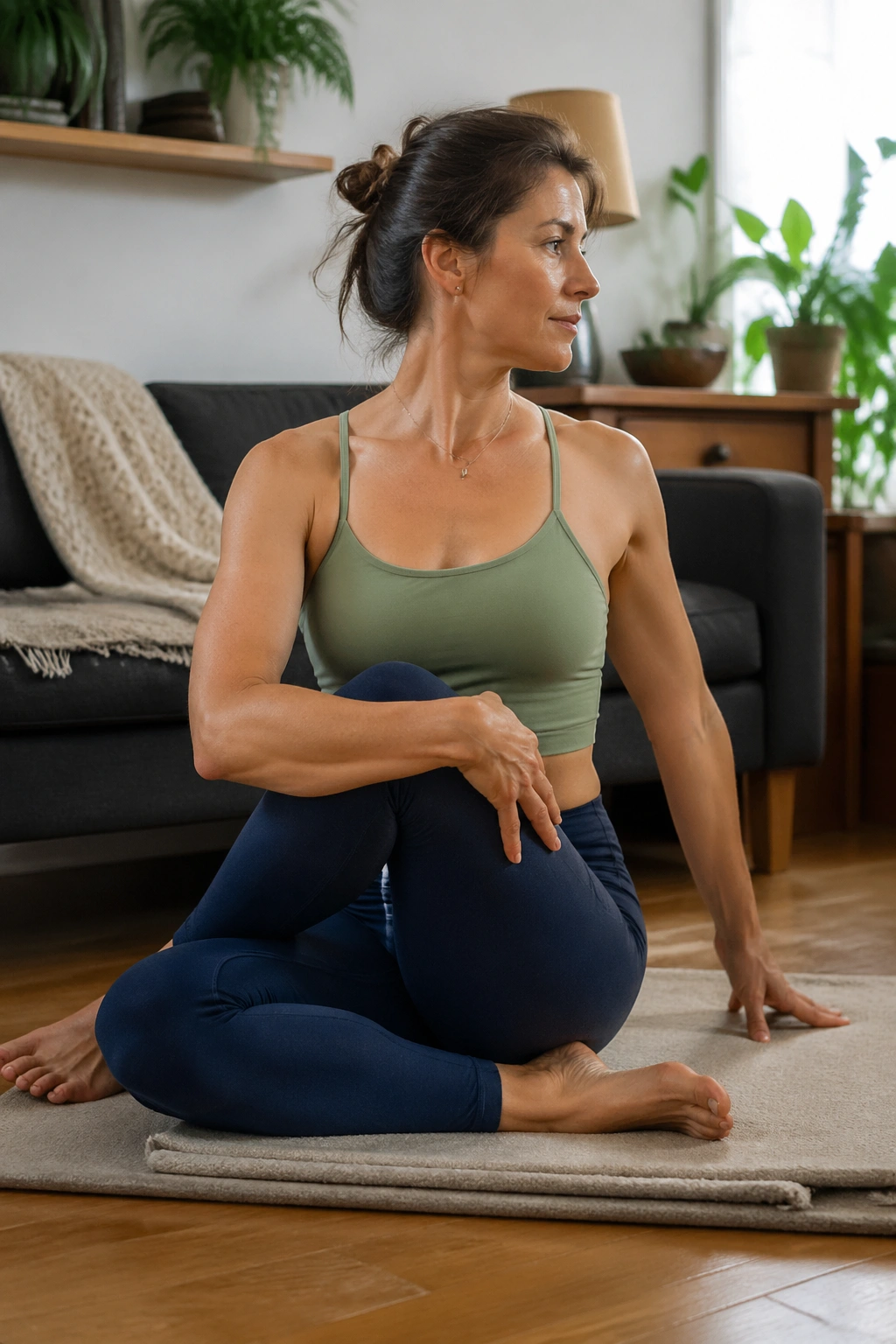
A full seated twist can be too sharp; this one behaves better.
Sit on a folded blanket so the pelvis tips forward a bit, then cross one leg over the other and twist from the ribs upward. Keep the spine tall before you turn. That’s the part people skip, and it’s why they end up wrenching the lower back. The twist should feel like a spiral through the midsection, not a crank at the waist.
Half Lord of the Fishes can help undo the seated slouch that tends to make the pelvis feel stuck. It also gives the abdomen and back a mild massage, which some people find useful after meals or after long periods at a desk. If the belly feels crowded, make the twist smaller.
What makes it work
- Sit higher on a blanket.
- Keep both sitting bones grounded.
- Twist on an exhale.
- If the pose feels like pressure instead of rotation, stop early.
I prefer this to deeper seated twists because it gives you a cleaner line of movement with less drama.
18. Supported Goddess Pose
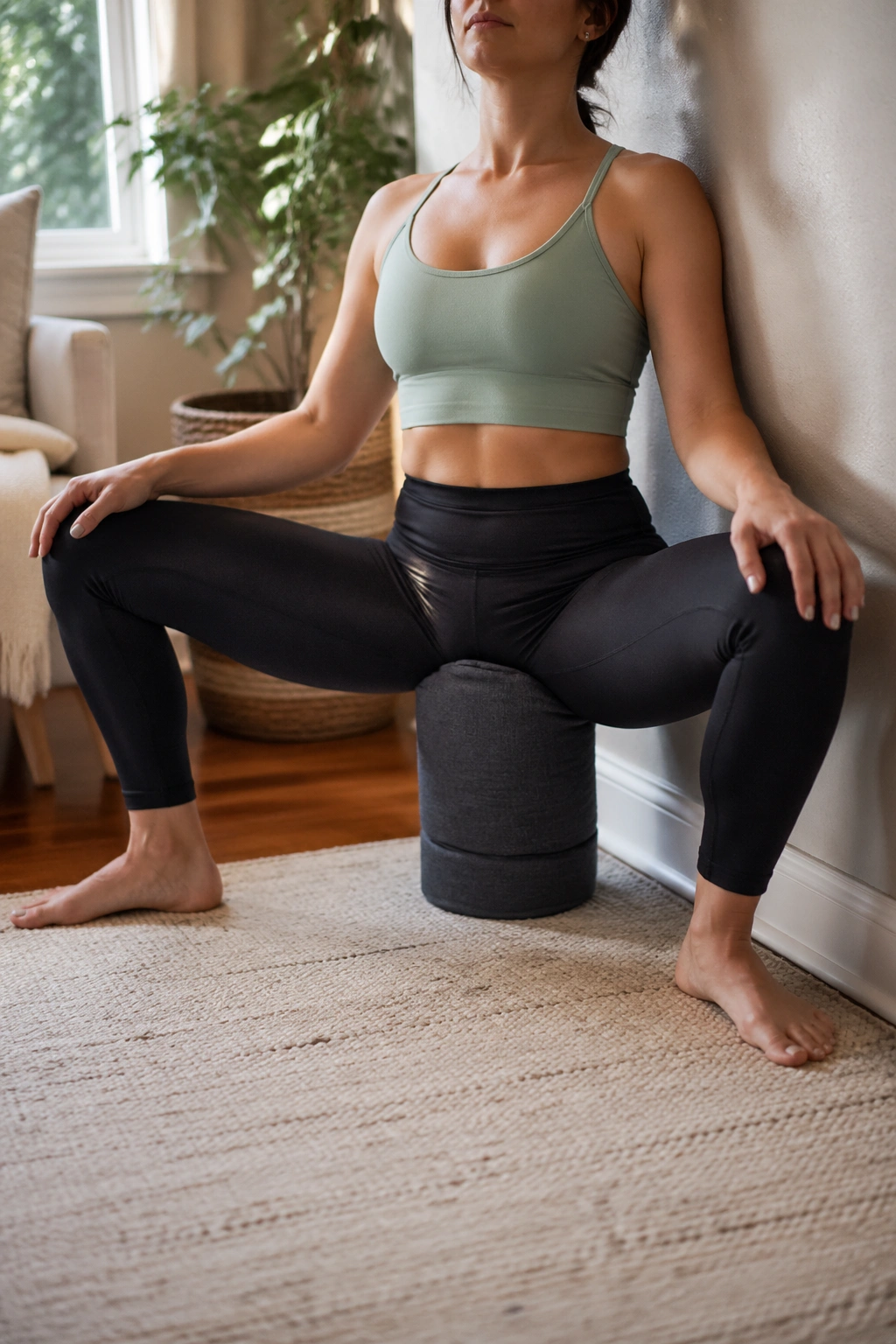
This is the squat’s calmer cousin.
Stand with the feet wider than the hips, turn the toes out a little, and bend the knees only as far as you can keep the breath slow. Place the hands on the thighs or use a wall for balance. If the squat feels wobbly, that’s a sign to reduce the depth, not push through. A supported stance gives you leg strength, hip opening, and a toileting-friendly shape without dropping all the way into strain.
Setup
- Feet a little wider than hip-width.
- Toes turned out 20 to 30 degrees.
- Knees tracking over the toes.
- Hold for 20 to 30 seconds, then stand up and rest.
The useful part here is the combination of openness and support. You get the pelvic opening people want from squatting, but without the pressure of a deep hold. That makes it better for prevention than for a flare-up.
If your knees or ankles complain, come out. No prize for depth.
19. Thread the Needle Pose
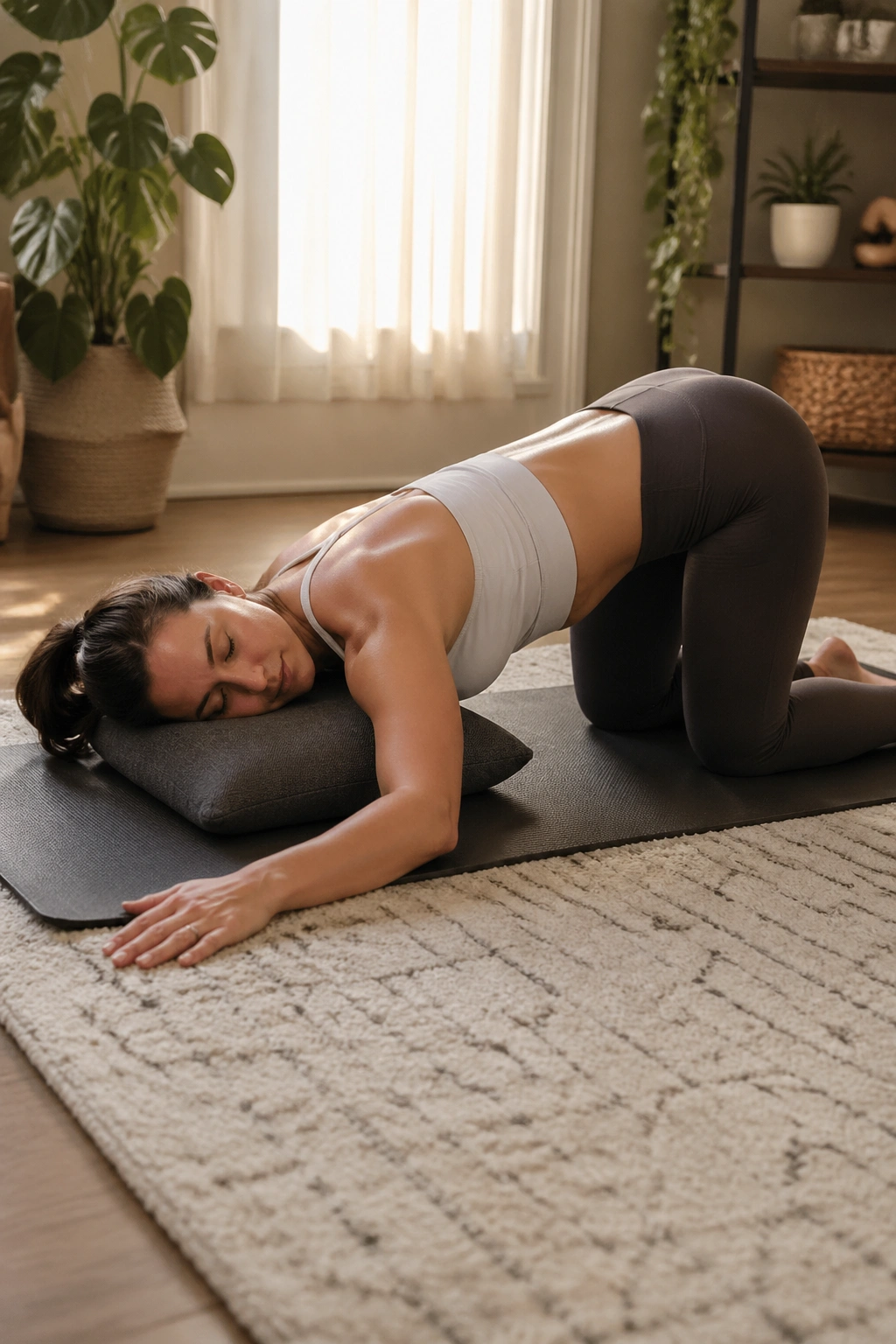
Thread the Needle is not a hemorrhoid pose in the obvious sense, and that is why it belongs here.
Come onto hands and knees, slide one arm under the body, and rest the shoulder and side of the head on the floor or a cushion. The twist is mild, the shoulder opens, and the spine gets a chance to rotate without much abdominal strain. That can sound unrelated, but posture matters. A tight upper back often leads to a rounded pelvis and a belly that never fully softens.
Keep the hips over the knees if you can. If the kneeling position bothers your knees, pad them well. If the chest feels trapped, stay higher on the fingertips or use blocks. You want a quiet twist, not a deep fold.
I like this pose for people who spend too much time hunched over a desk or phone. That posture does not help hemorrhoids, and it tends to make breathing shallow. Thread the Needle helps undo that pattern a little.
20. Easy Pose with Diaphragmatic Breathing
Prevention often comes down to this boring little shape.
Sit cross-legged on a folded blanket, or sit in a chair with both feet flat if that’s better for your knees and hips. Lengthen the spine, rest the hands on the belly or thighs, and breathe low and wide into the ribs. On the exhale, let the abdomen soften instead of drawing it in hard. That softening is the part most people miss, and it’s a big one. A lot of bathroom strain starts with a body that never learned how to release.
Use this pose as a reset before bed, after a walk, or after a bathroom trip if you notice yourself tensing up. Two minutes is useful. Five is better if you can stay relaxed. The point is not meditation points or perfect posture; it is learning not to bear down.
I’d pair this with the gentler poses above, not as a stand-alone fix. A few minutes of real relaxation done often will usually beat one long session done badly.
