



Your nervous system does not need another hard push. It needs a clean downshift.
That’s where the vagus nerve comes in. It’s the long cranial nerve that helps steer the body toward the rest-and-digest side of the autonomic nervous system, and yoga can support that shift in a few very practical ways: slower breathing, gentle spinal movement, soft belly pressure, and positions that tell the jaw, throat, and rib cage to unclench a little.
Not every pose does the same job, and not every body likes the same shape. A deep fold that feels soothing to one person can make someone else feel crowded, dizzy, or cranky in the neck. So the smartest approach is not to chase the biggest stretch. It’s to choose poses that make your exhale longer, your face softer, and your breath quieter.
Keep a blanket, a block, and a wall nearby. A pose does not need to be dramatic to matter, and some of the best vagus-nerve-friendly shapes look almost boring until you stay there for a few slow breaths.
1. Child’s Pose for the Vagus Nerve
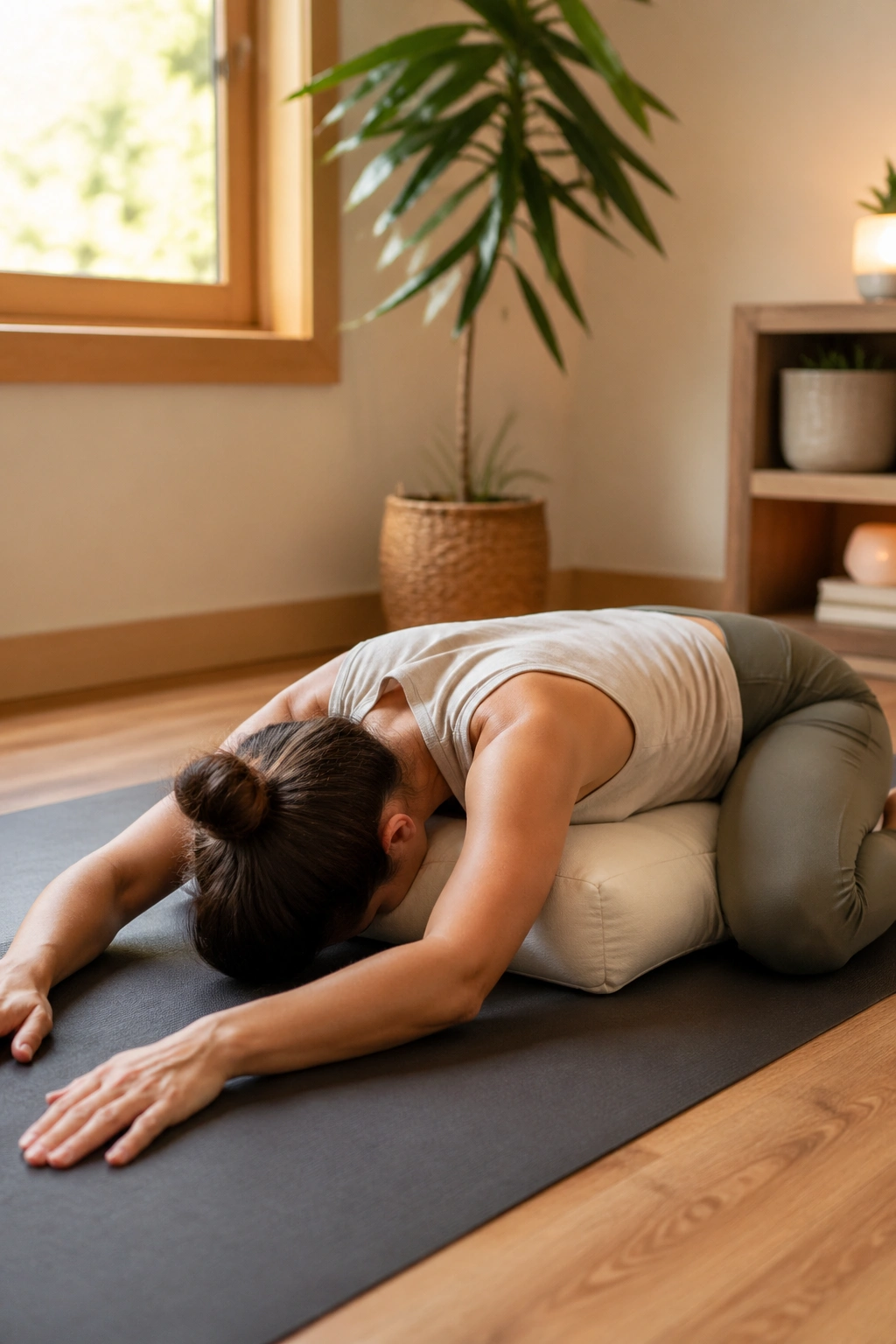
Child’s pose earns its place right away because it reduces the amount of effort your body has to spend just holding itself up. That sounds simple, and it is. But simple is the point.
When your forehead lowers to a mat, block, or folded blanket, the head gets a little support and the jaw often stops gripping quite so hard. If you widen the knees and let the belly rest between the thighs, the lower back can soften too. From there, the only real work left is breathing slowly through the nose and letting the exhale stretch out a bit longer than the inhale.
I like this pose most when it stays roomy. No forcing the hips down. No folding into a tight ball and calling it “relaxing.” If your knees complain, slide a bolster or pillow under the torso. If your ankles feel pinched, place a rolled towel behind them. Small fixes make the pose stay peaceful instead of fussy.
A softer version works better
A lot of people collapse into child’s pose and then wonder why they feel cramped. That usually means the setup is too small.
- Place a folded blanket under the shins or ankles.
- Rest the chest on a bolster if the floor feels too far away.
- Turn the head to one side for 3 breaths, then switch sides.
- Keep the hands relaxed, not jammed forward.
The goal is not a deep fold. It’s a slow exhale.
2. Cat-Cow on Hands and Knees
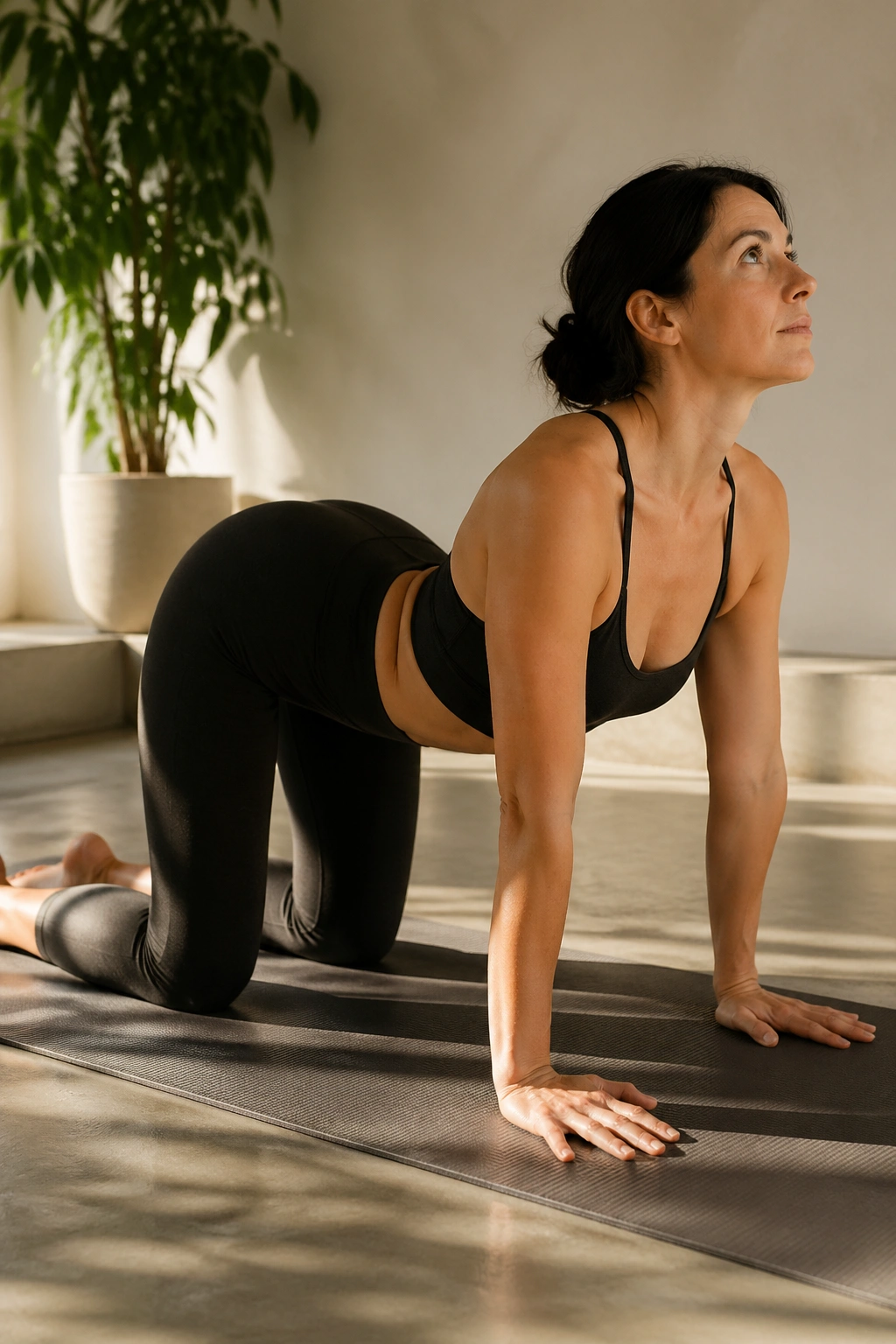
Why does a simple spinal wave calm people down so quickly? Because it coordinates breath with movement, and that combination is hard to beat when you want the nervous system to settle.
On the inhale, the belly drops a little and the chest opens in cow pose. On the exhale, the spine rounds and the abdomen firms gently in cat pose. That pairing gives the rib cage a chance to move in both directions, which can make the breath feel fuller and less stuck. Keep the motion slow enough that your neck stays easy. If the chin juts forward or the shoulders creep toward the ears, the pose has gone too far.
How to move through it
Start on hands and knees with the wrists under the shoulders and the knees under the hips. Move for 6 to 10 rounds, or longer if it feels good.
- Inhale into cow for 3 to 4 counts.
- Exhale into cat for 4 to 6 counts.
- Keep the elbows soft.
- Let the belly follow the breath, not the other way around.
Cat-cow is one of those poses that looks almost too plain to matter. Then your breath smooths out. And that is the whole trick.
3. Supported Bridge With a Block
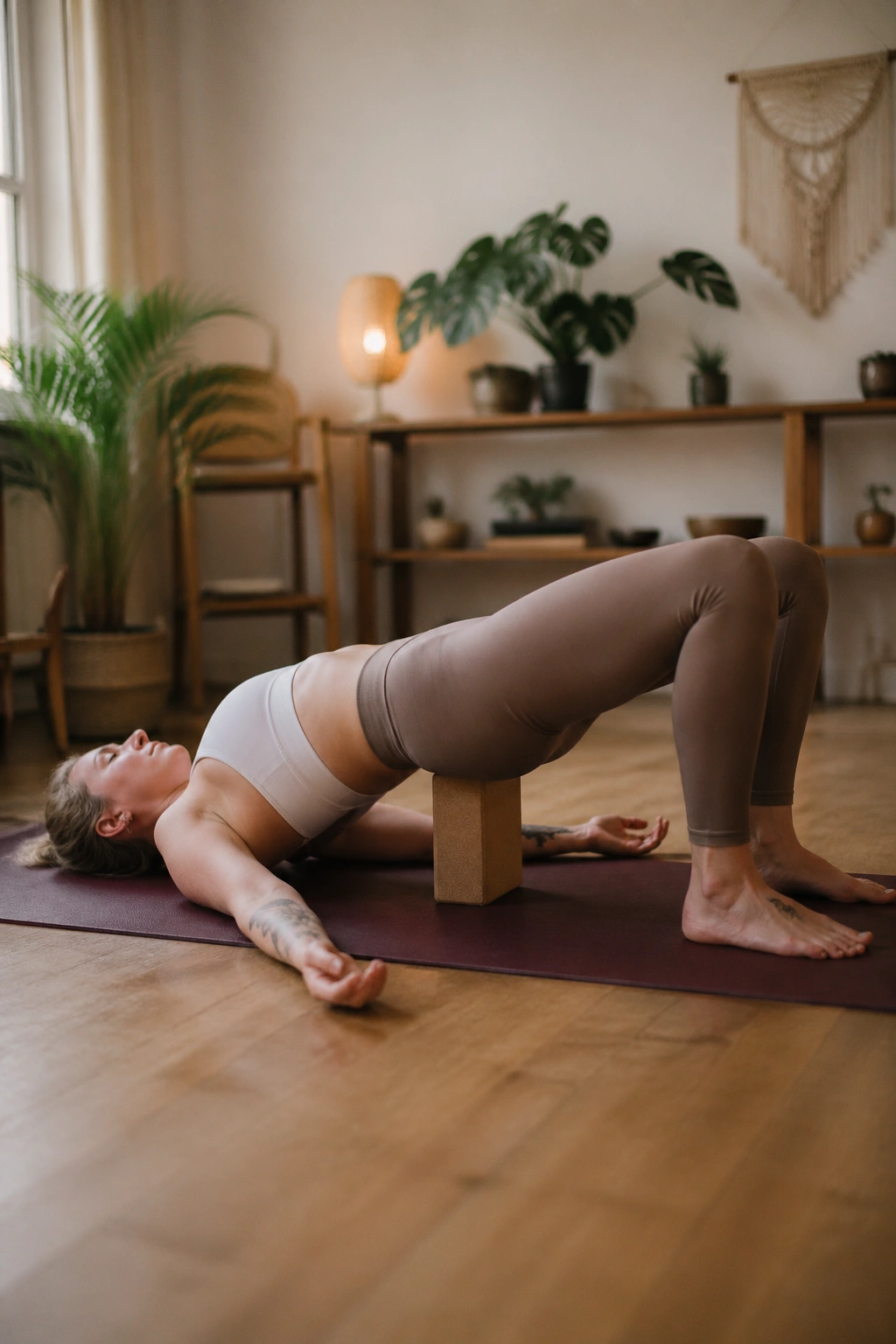
Supported bridge can feel like a nervous-system reset disguised as a backbend. The shape lifts the front of the hips without demanding much from the legs, and that matters when you want relaxation without strain.
Place a block under the sacrum, not the lower back, and let the pelvis rest there like it’s been waiting all day for a chair. The chest opens a little, the throat often softens, and the belly gets a mild, steady lift instead of a crunch. Hold for 5 to 8 slow breaths. If the block feels too high, drop it down. This is one of those poses where less is often better.
Small details that change the feel
- Use the lowest block setting first.
- Keep the feet hip-width apart.
- Let the knees point straight up.
- Avoid turning the head side to side while in the pose.
- Come out slowly by removing the block before lowering the spine.
The best version leaves you feeling broad, not jammed open. If your lower back pinches, shift the block lower or skip the pose that day.
4. Legs-Up-the-Wall for the Vagus Nerve
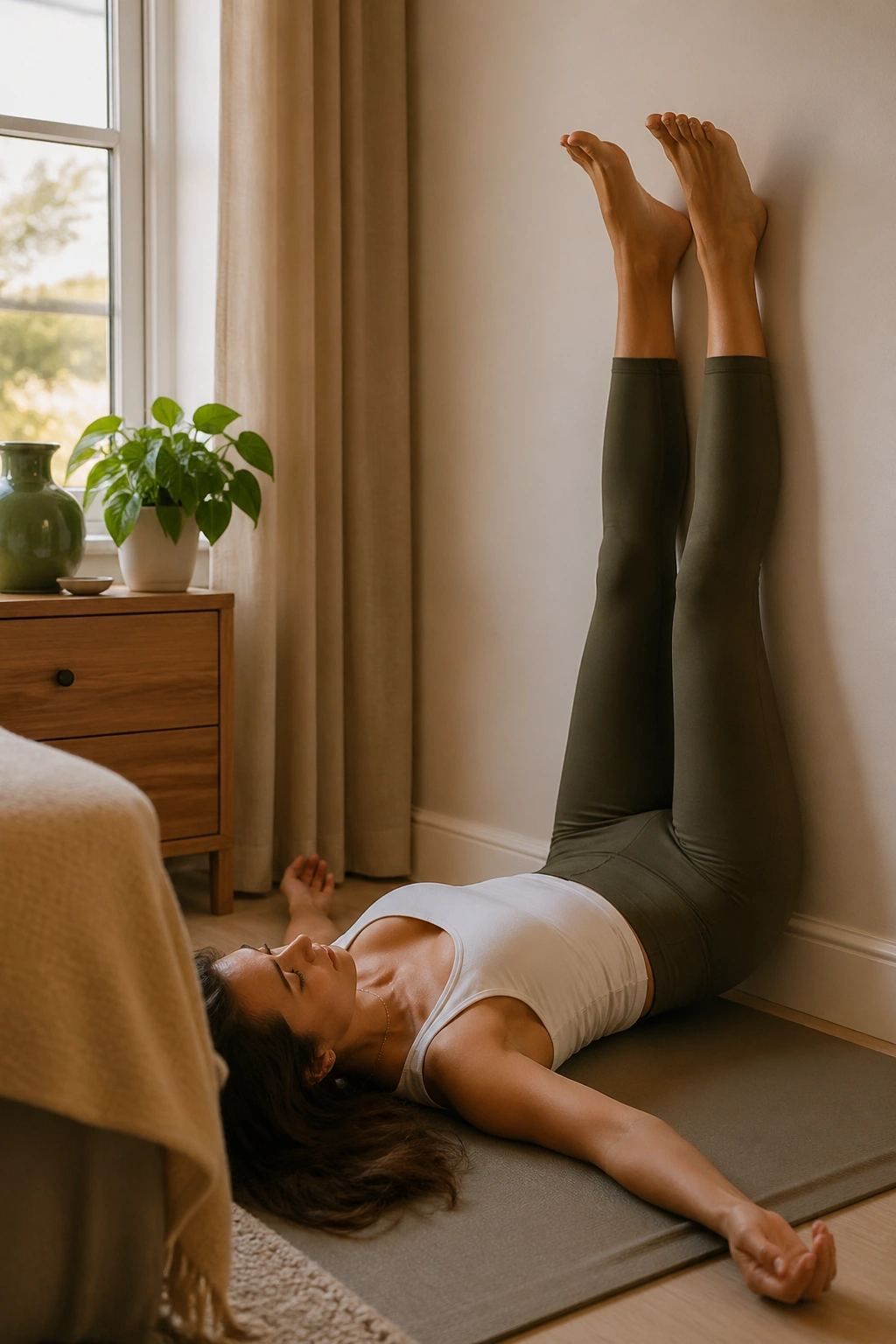
I reach for this one when the body feels buzzy but tired at the same time. You know the feeling: heavy legs, busy head, and no interest in doing anything fancy.
Legs-up-the-wall gives the lower body a break from gravity and often makes the breath easier to notice. The pose is also friendly to people who do not love backbends or deep folds. Lie on your back, scoot your hips close to the wall, and let the legs rest there without locking the knees. If your hamstrings protest, slide a folded blanket under the pelvis or move a few inches away from the wall. The difference is bigger than it looks.
What helps here
- Keep the arms wide enough for the chest to open.
- Use a folded blanket under the head if the chin tilts up.
- Stay for 3 to 10 minutes if it feels pleasant.
- Leave immediately if you feel pressure in the head or eyes.
This pose is not dramatic. Good. It doesn’t need to be. The stillness does the work.
5. Reclined Bound Angle Pose
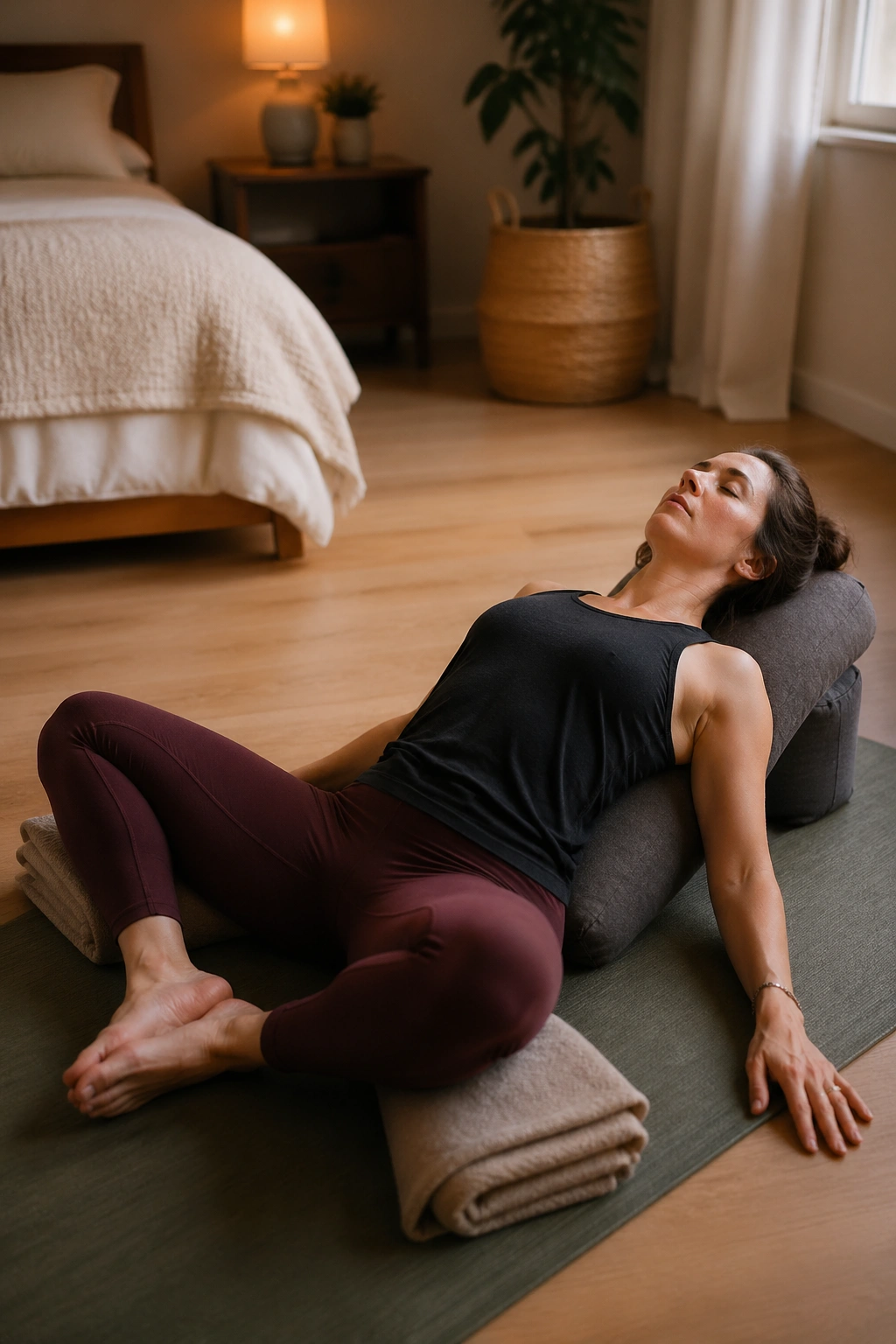
Reclined bound angle pose has a softening effect that sneaks up on you. The hips open, the thighs drop outward, and the front body gets enough space to stop bracing.
Set a bolster or folded blanket lengthwise along the spine, then bring the soles of the feet together and let the knees fall apart. If the inner thighs tug, slide blocks or cushions under each knee. That small support can make the difference between “restful” and “why am I clenching my jaw again?”
The best part is the way the breath shifts. With the chest supported and the hips unforced, the exhale usually gets longer on its own. You may notice the belly moving more easily, and the throat often feels less guarded too. Stay for 8 to 12 breaths, or longer if the pose stays comfortable.
One-sentence truth: if your knees hover in the air, you’re not relaxing.
6. Seated Forward Fold With Soft Knees
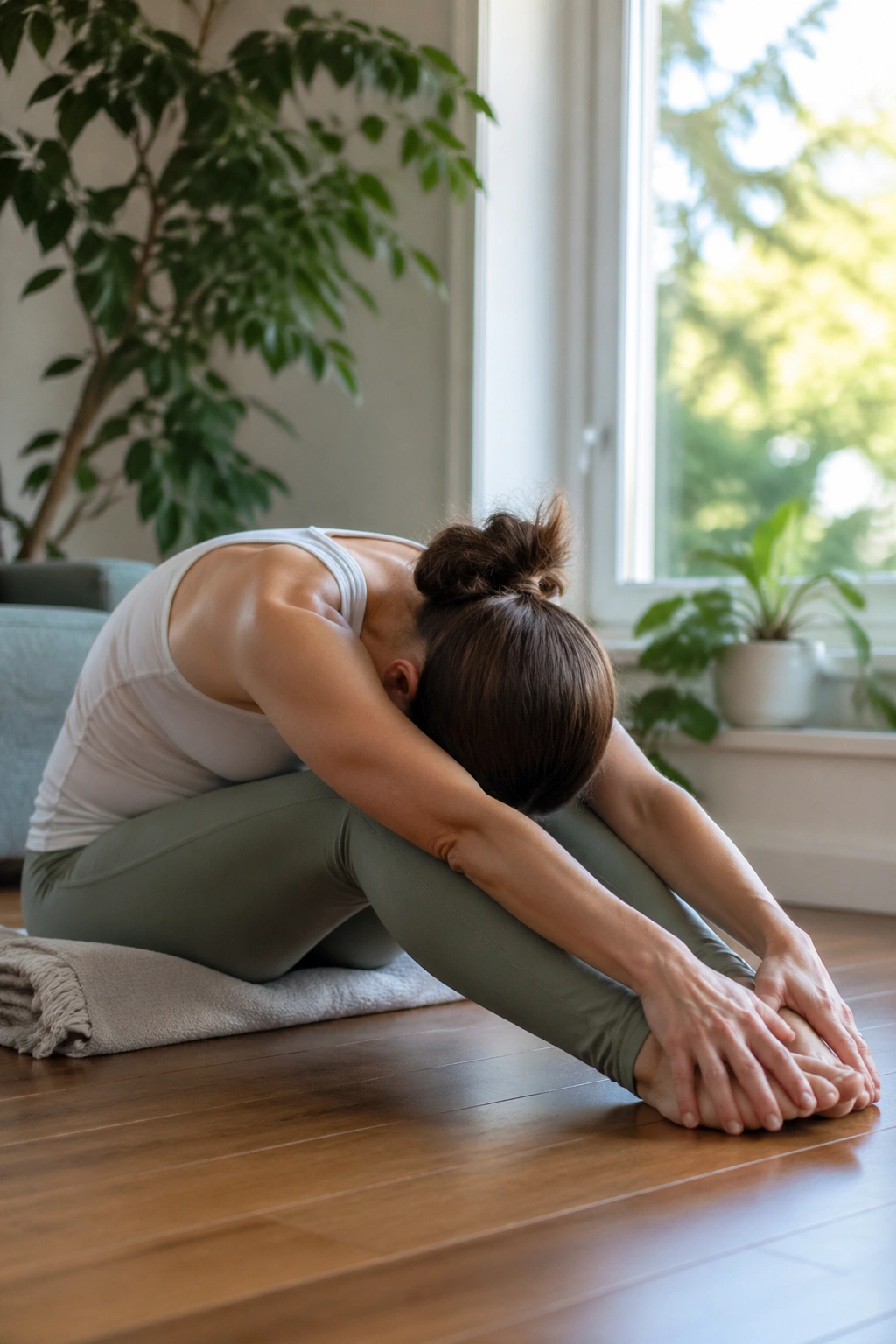
Most people treat forward folds like a hamstring contest. That’s a mistake.
A vagus-nerve-friendly seated forward fold should feel long and quiet, not aggressive. Sit on a folded blanket if your pelvis tilts backward, bend the knees as much as needed, and tip forward from the hips with a long spine before rounding. If the chest stays lifted on the way in, the breath usually stays calmer too. And if the head drops but the breath turns choppy, you’ve gone too far.
Why softness matters
A hard forward fold can trigger a bracing response, especially if the hamstrings are tight or the low back is sensitive. Soft knees change the whole story. They let the spine lengthen without that pulling sensation behind the legs, which means the body is more likely to settle instead of defend.
A simple way to use it:
- Inhale to lengthen the front of the torso.
- Exhale to fold a little deeper.
- Keep the shoulders heavy.
- Hold for 5 to 8 breaths.
Skip the heroics. A calm fold beats a deep fold every time.
7. Supine Figure-Four Stretch
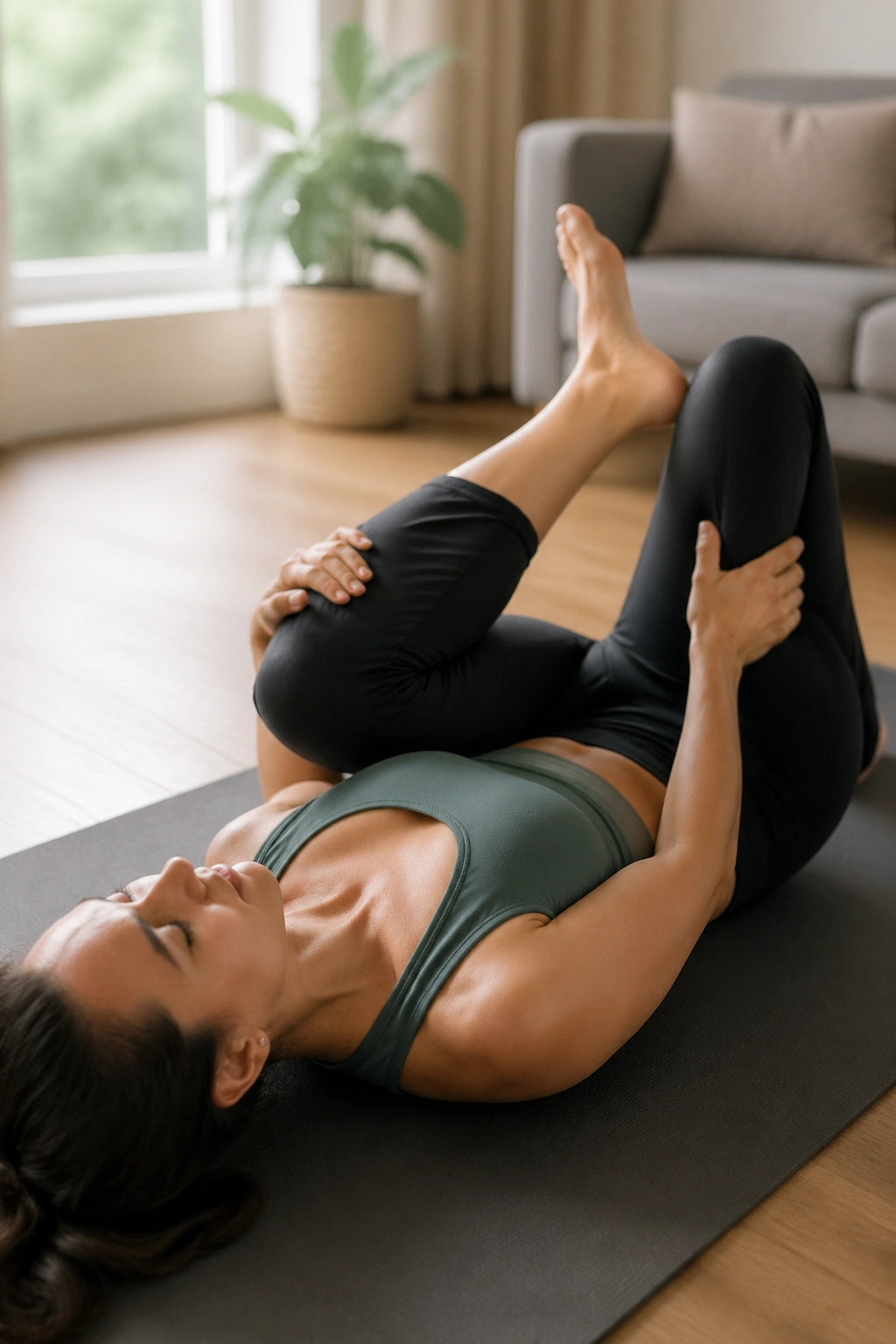
A good figure-four stretch can melt the hips in a way that feels oddly emotional. That’s not nonsense. Tight hips often make people breathe shallowly, and shallow breathing is not exactly calming.
Lie on your back, cross one ankle over the opposite thigh, and keep the head and shoulders relaxed on the floor. If the stretch is too intense, stay with the lower leg on the floor instead of drawing it in. If it feels easy, gently pull the uncrossed thigh toward the chest for a few breaths. The key is not to squeeze the figure into place. Let it hang.
What to notice
- The back of the neck should stay long.
- The jaw should stay loose.
- The lower ribs should move with each breath.
- One side will probably feel tighter. That’s normal.
I like this pose because it never needs force. If the outer hip starts shaking or the face tightens, back off. The vagus nerve likes calm input, not a wrestling match.
8. Supine Spinal Twist
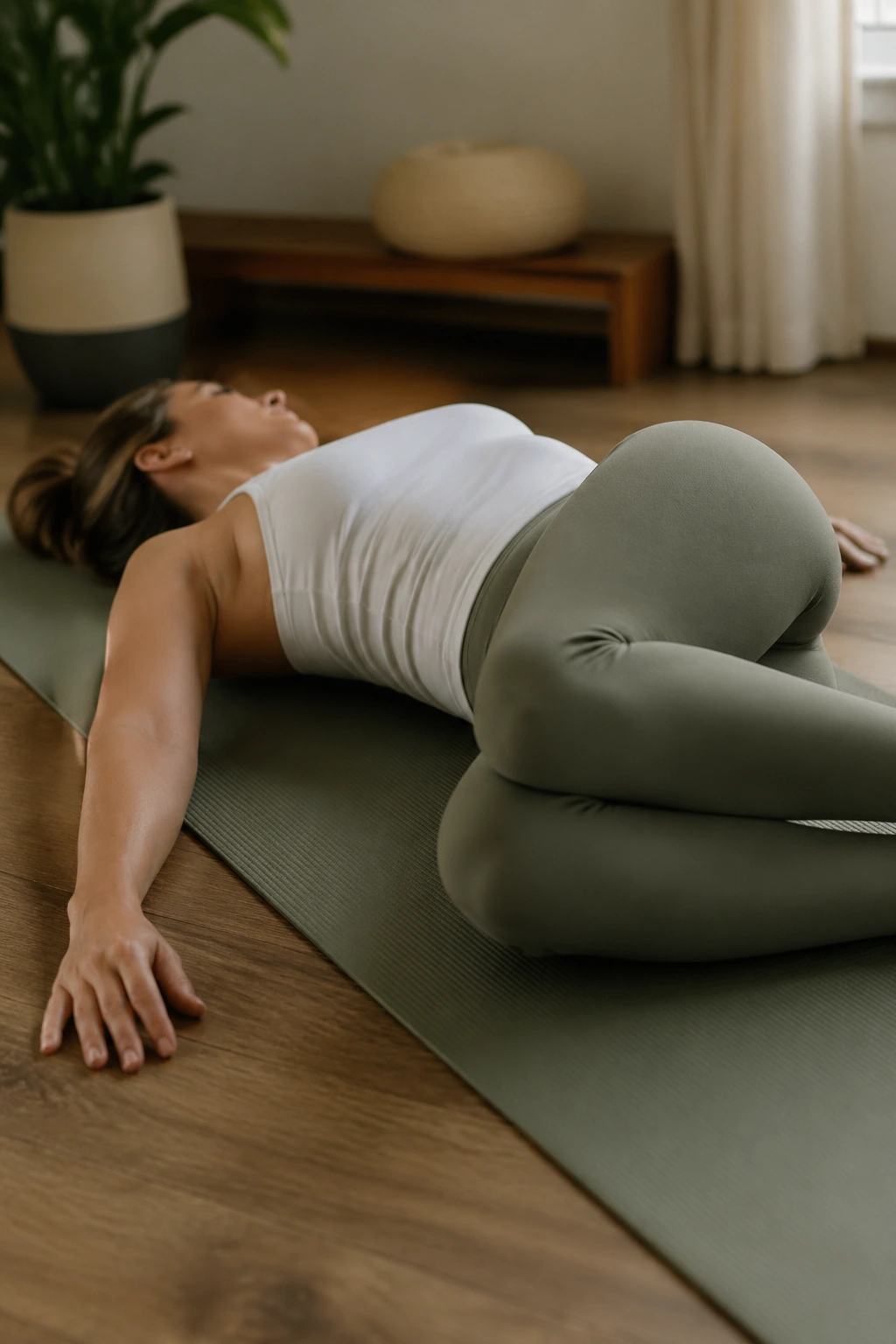
A twist done well can feel like wringing a wet towel. A twist done badly feels like a bad idea in the middle of the lower back.
The safest version is gentle and low. Lie on your back, draw one knee toward the chest, and let it cross the body only as far as the spine can stay easy. Keep both shoulders heavy on the floor. If the top knee wants to hover far above the ground, put a pillow under it. No need to chase the floor. That’s where people get cranky.
How to use your breath
The breath matters more than the twist itself.
- Inhale into the side ribs.
- Exhale and let the belly soften.
- Keep the turn slow for 5 to 8 breaths.
- Return to center before switching sides.
A twist can help the rib cage and belly move more freely, which is useful when the whole torso feels locked up from sitting or stress. Don’t crank the neck to match the hips. The head can stay neutral or turn only a little. Clean and easy beats deep and strained.
9. Happy Baby Pose
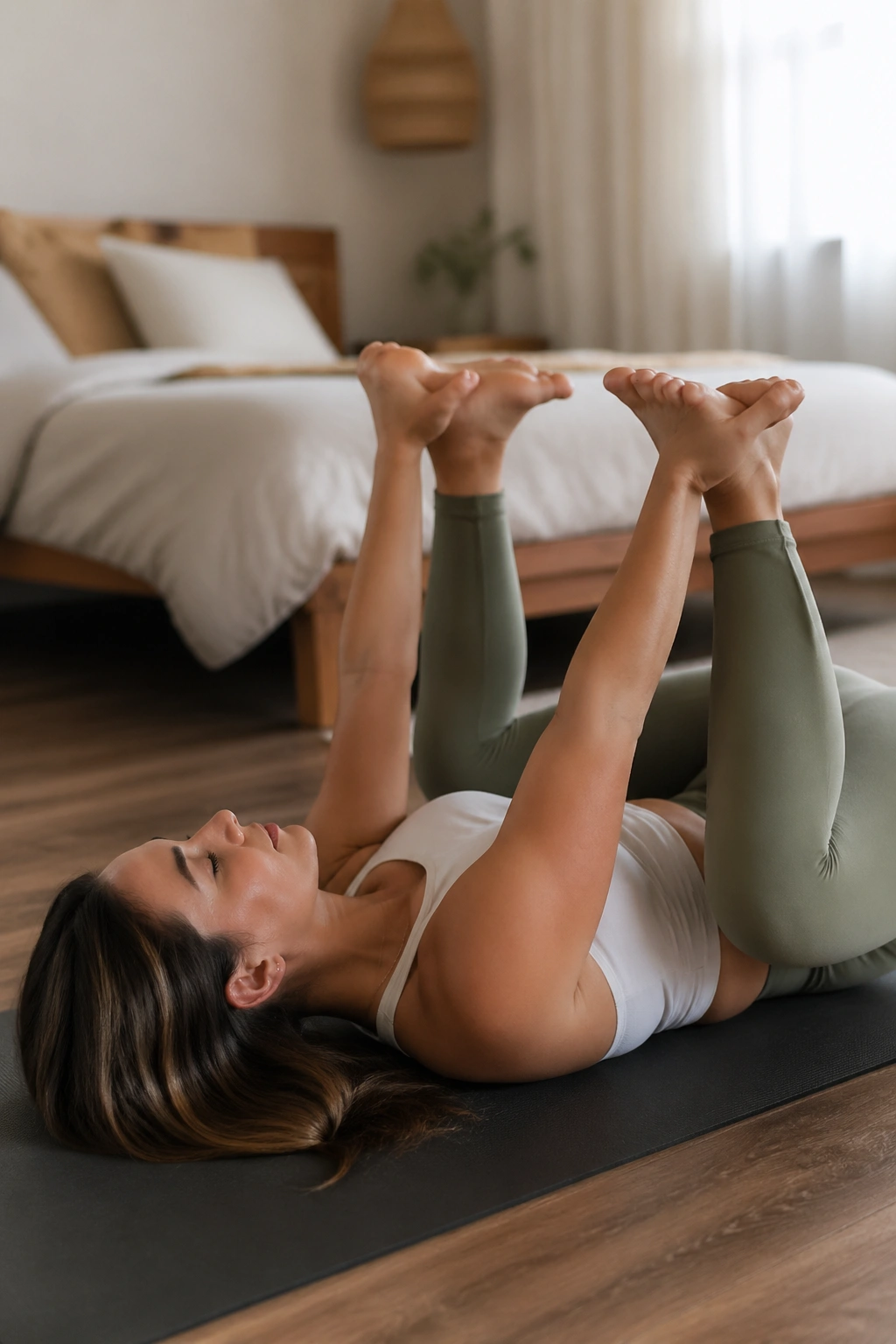
Happy baby looks playful, but it can also be one of the most grounding stretches in the room. The reason is simple: it widens the hips while keeping the back flat and the breath unforced.
Lie on your back, bend the knees, and hold the outside edges of the feet or the backs of the thighs. If the ankles or hips complain, grab behind the thighs instead. Keep the sacrum heavy and the tailbone settled. If the knees drift toward the shoulders and your low back arches off the floor, ease up. That’s too much.
Keep it roomy
- Rock side to side only a little.
- Keep the chin away from the chest.
- Let the elbows bend.
- Stay for 5 slow breaths, then rest.
There’s a reason people grin in this pose. It opens a place in the body that often gets tucked away under stress. Still, it works best when the stretch stays broad and easy, not yanked open like a stubborn drawer.
10. Sphinx Pose With Belly Breathing
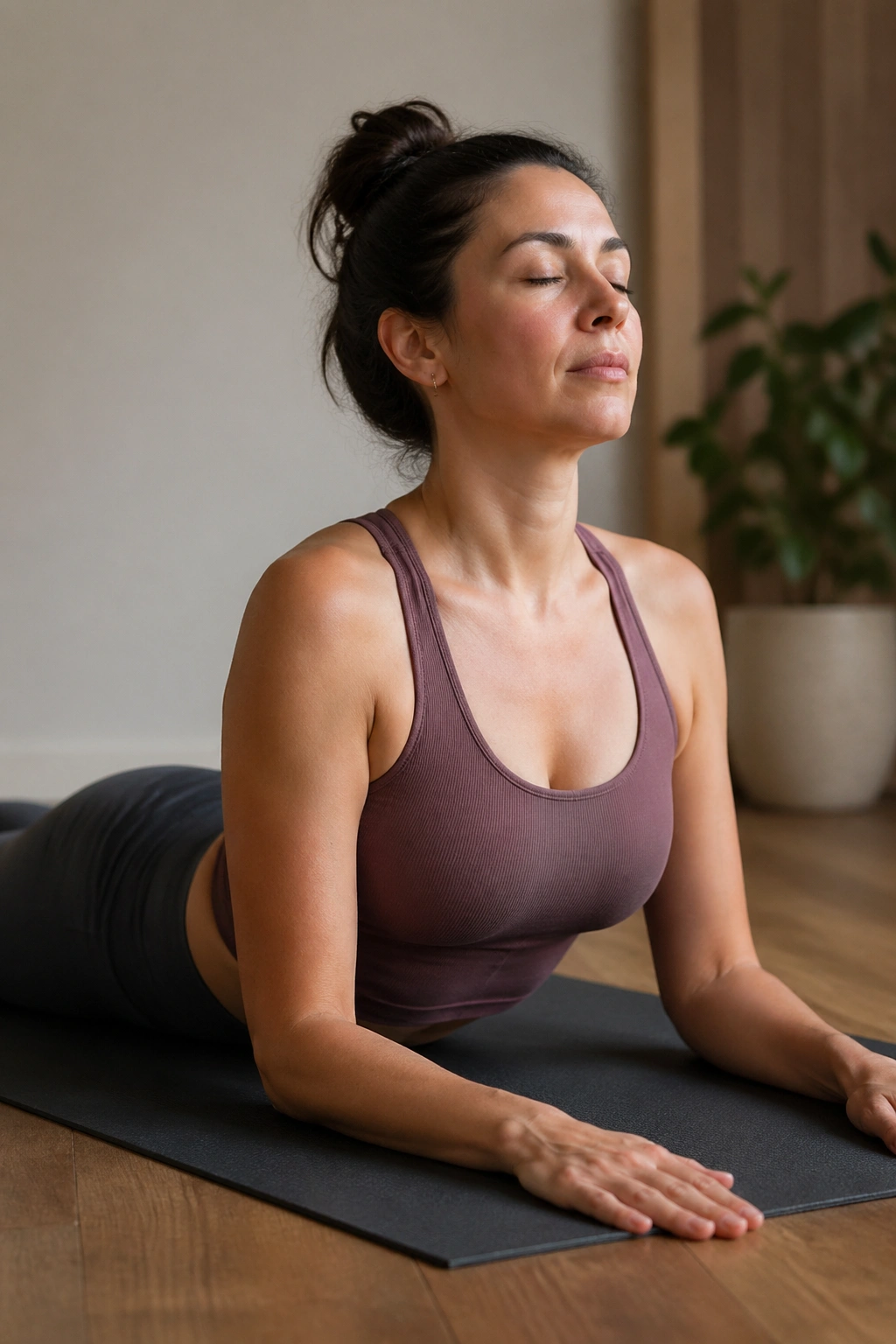
Sphinx pose gives you a mild backbend without the drama of cobra. The chest lifts, the front of the body lengthens, and the belly still has room to breathe. That combination can be a surprisingly nice reset if you spend too much time hunched over a desk or a steering wheel.
Lie on the belly, place the elbows under the shoulders, and press the forearms into the floor. The pubic bone should stay grounded. If the lower back pinches, move the elbows forward a little and lower the chest. If the neck feels compressed, look straight ahead instead of lifting the chin. One small adjustment can change the whole shape.
The vagus nerve isn’t being “hit” by the pose. That’s not how any of this works. But gentle chest opening plus slow nasal breathing often helps the body shift away from the guarded, curled-in posture that stress loves.
One-sentence cue: let the belly move on the inhale instead of holding itself tight.
11. Supported Fish Pose
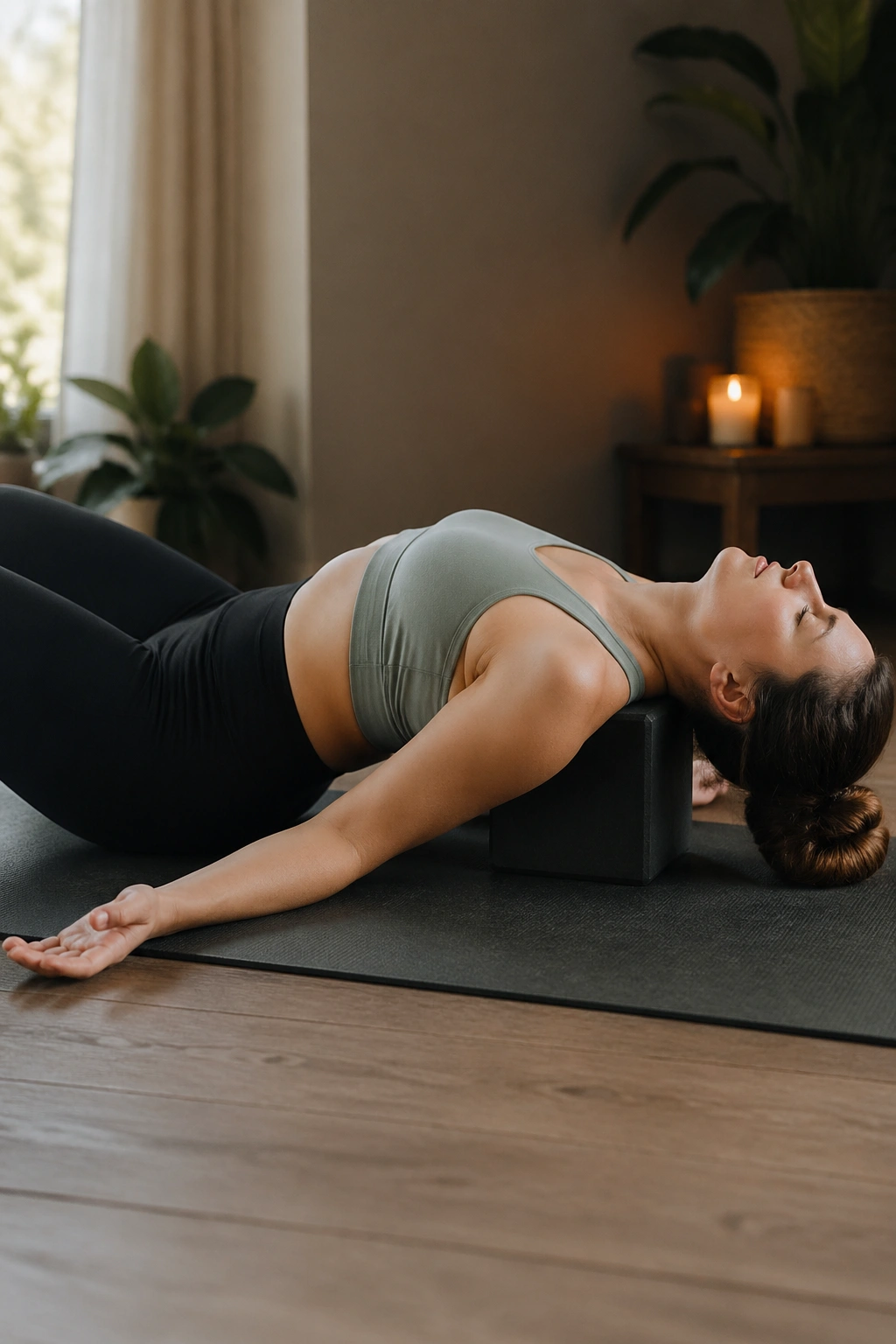
Fish pose is the better-known chest opener, but the supported version is the one I trust most for calm. The built-in lift under the upper back lets the throat and sternum open without making the neck work overtime.
Set a block or bolster lengthwise under the upper spine, somewhere between the shoulder blades, then let the head rest on the floor or a folded blanket. The arms can stay out wide or rest by the sides. If the lower back arches too much, bend the knees or lower the support. If your neck feels like it’s bearing weight, stop and re-adjust. That part matters.
Why this version is kinder
- It opens the front body without forcing range.
- It can quiet the breath by making the rib cage feel wider.
- It often feels better than a full fish pose for tight shoulders.
- It’s a decent choice after too much sitting.
Supported fish is one of those poses that looks almost too passive to do much. Then you stay for 6 breaths and notice your mouth has unclenched. That’s enough.
12. Puppy Pose at the Wall
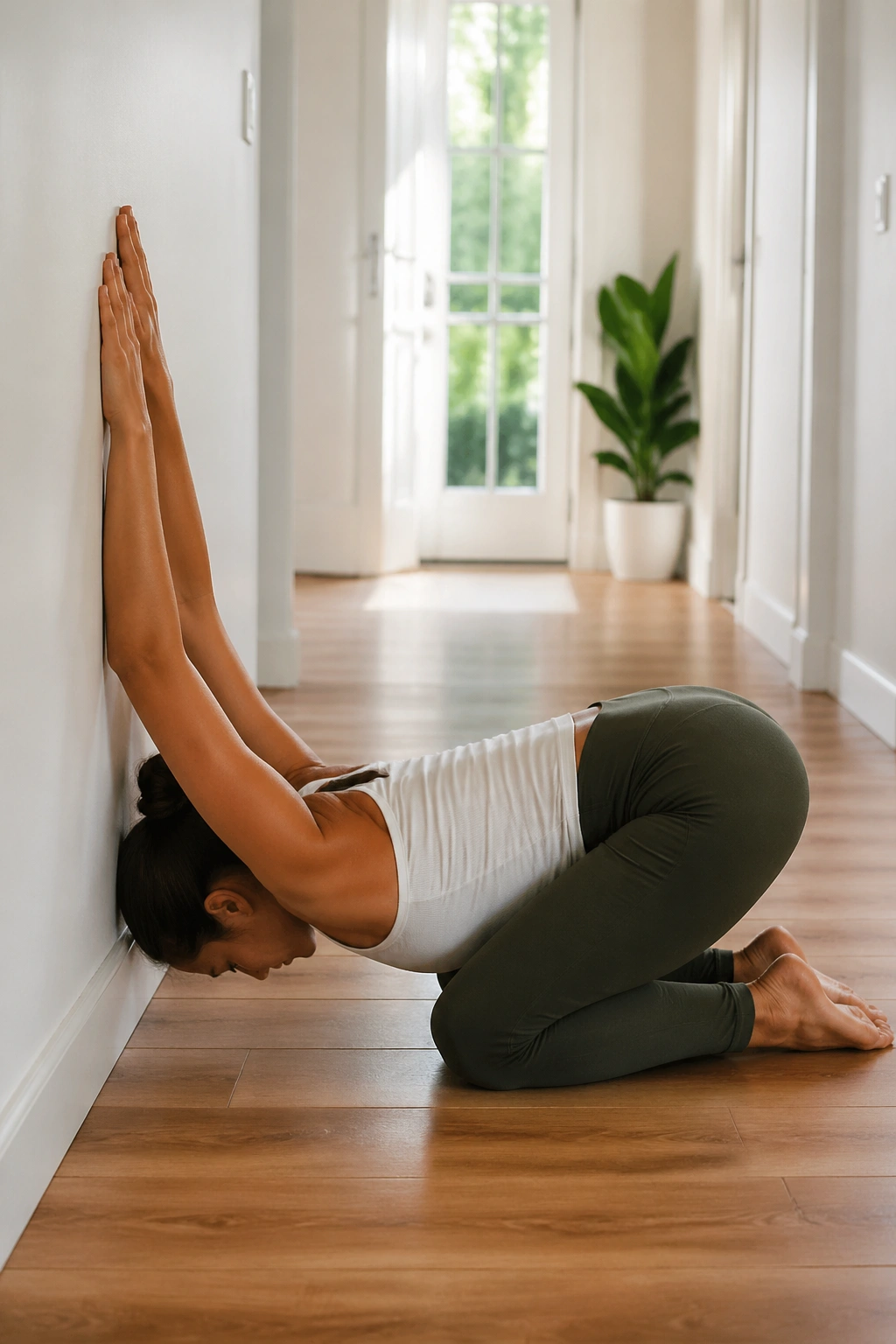
Puppy pose can be lovely or awful, and the wall version gives you a way to keep it on the lovely side.
Stand facing a wall, walk the hands up to shoulder height, then hinge the hips back so the chest drops toward the floor while the arms stay long. The neck stays neutral, the ribs have room to expand, and the shoulders get a different kind of stretch than they do in downward dog. If your lower back rounds hard or the wrists get cranky, move your feet closer to the wall and reduce the angle.
This pose is useful because it opens the upper back and the side ribs without asking you to bear full weight on the hands. That makes the breath feel easier, which is the point. Stay for 5 to 8 breaths and keep the forehead or cheek relaxed if you can rest it lightly on a block or forearms.
A small warning: if the pose makes your chest feel panicky, skip it. A nervous system reset should feel like space, not pressure.
13. Eagle Arms in a Seated Hold
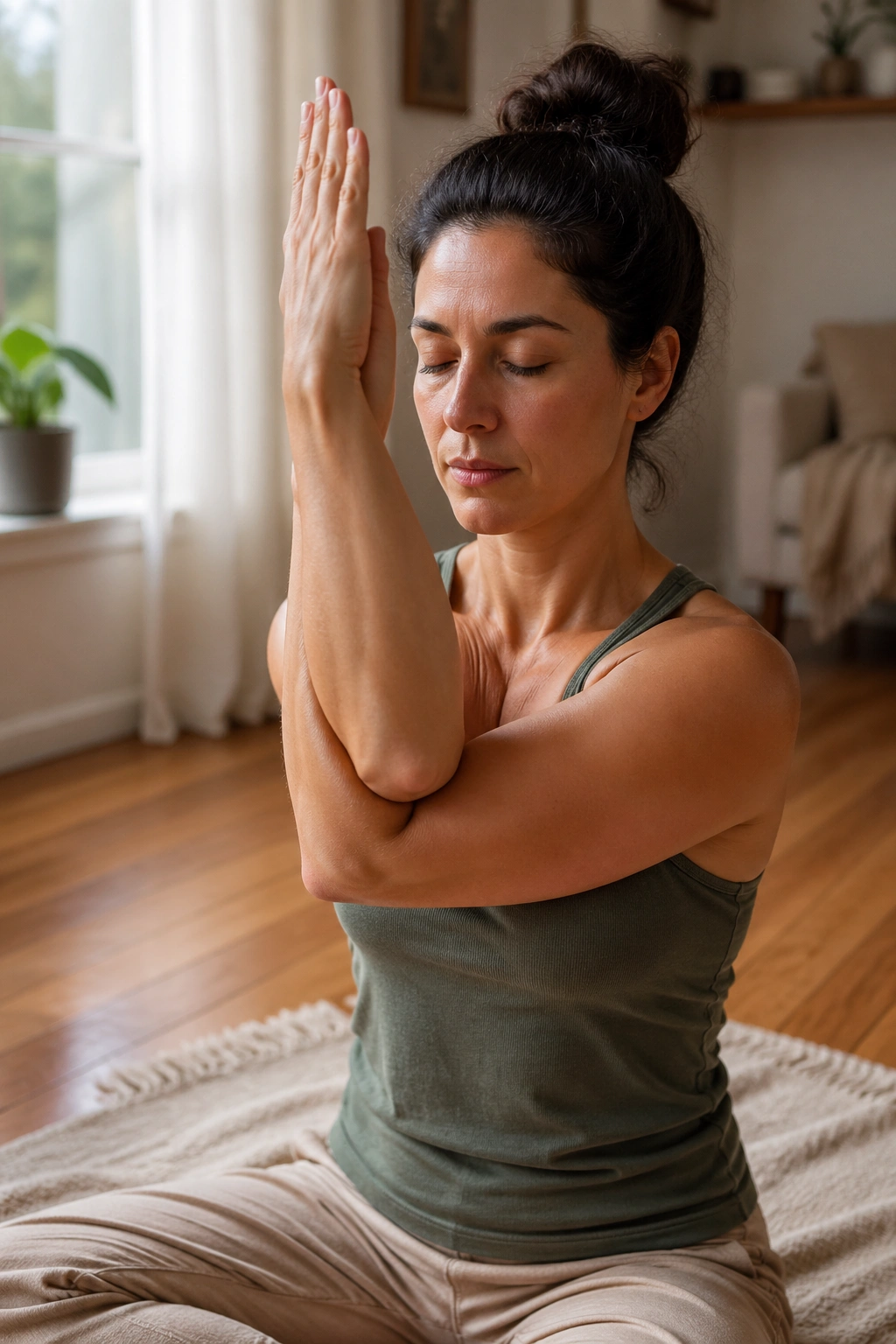
Eagle arms are underrated. Not because they’re flashy. Because they sneak into all the places that get tight when stress lives in the shoulders and upper back.
Sit tall on a blanket or chair, wrap one arm under the other, and either press the backs of the hands together or cross the forearms. Lift the elbows only as high as the shoulders can tolerate. Keep the ribs stacked over the pelvis. If the neck starts to jut forward, soften the lift. If the shoulders grind, open the arms a little and try again.
What makes this different
Unlike a big stretch that throws the chest open all at once, eagle arms create a controlled squeeze-and-release feeling through the upper back. That can be useful when your breathing gets shallow from shoulder tension.
- Hold one side for 5 breaths.
- Switch slowly.
- Keep the face neutral.
- Let the exhale get longer than the inhale.
This is a quiet pose, and I mean that in the best way. It does not ask for much, but it often gives back more than people expect.
14. Easy Seat With Alternate Nostril Breathing for the Vagus Nerve
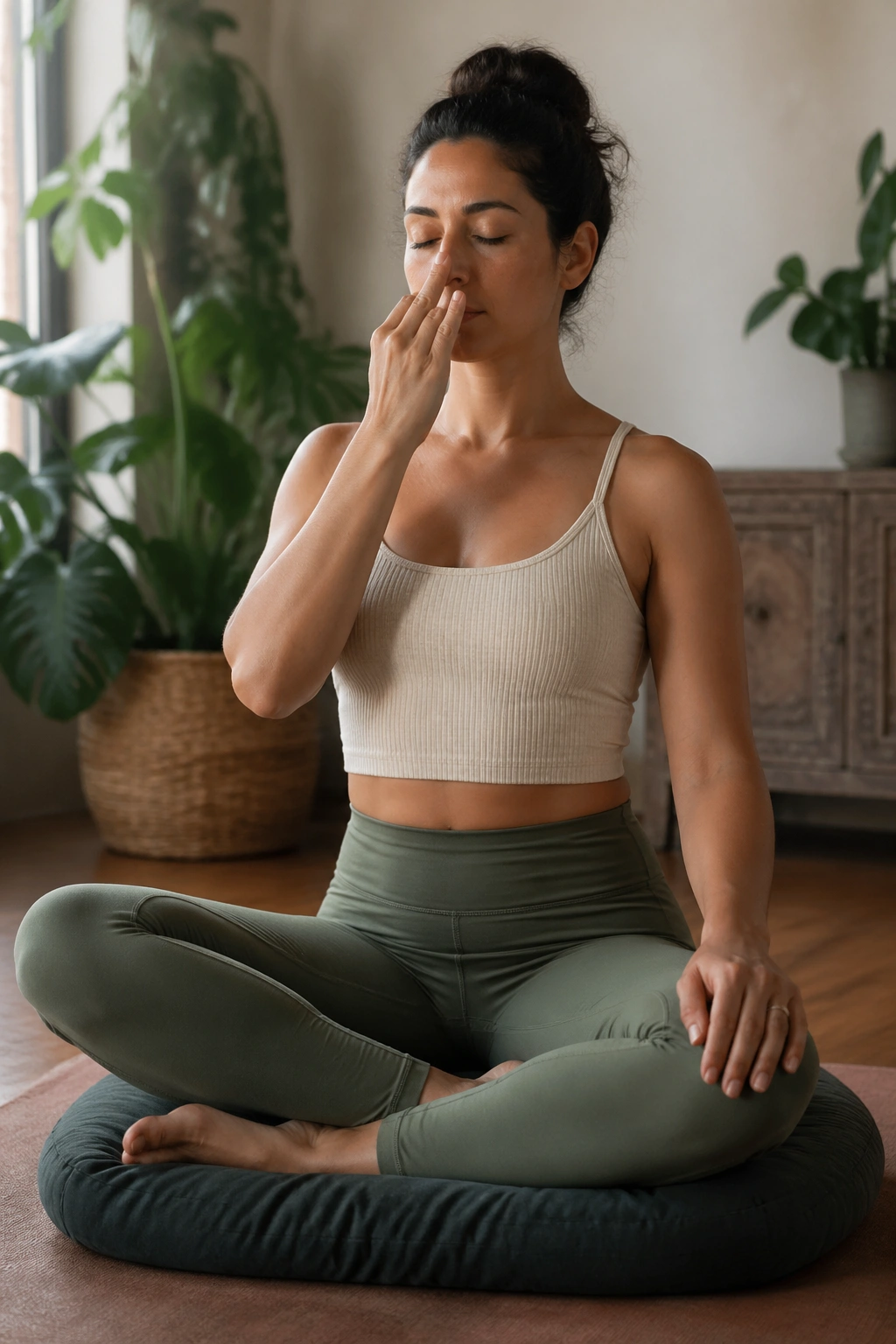
Does the pose matter here, or does the breath matter more? Honestly, both do.
Sit on a cushion, folded blanket, or the edge of a firm chair so the pelvis can tilt forward a little and the spine can stay long without strain. Then settle into alternate nostril breathing if it feels comfortable and familiar. The shape of the seat matters because it keeps the ribs free to move and prevents that sagging, sleepy slump that cuts the breath short. A tall seat is not fancy. It’s practical.
How to keep it steady
- Rest one hand on the thigh.
- Use the other hand lightly at the nose.
- Keep the breath smooth, not forced.
- Stay with a gentle count, such as 4 in and 4 out through each side.
If you get dizzy, stop and breathe normally through both nostrils. If nasal breathing feels congested, skip the technique and sit quietly instead. No pose is worth making yourself miserable over.
I like this one because it asks for focus without effort. That’s a rare combination.
15. Savasana With Lengthened Exhale
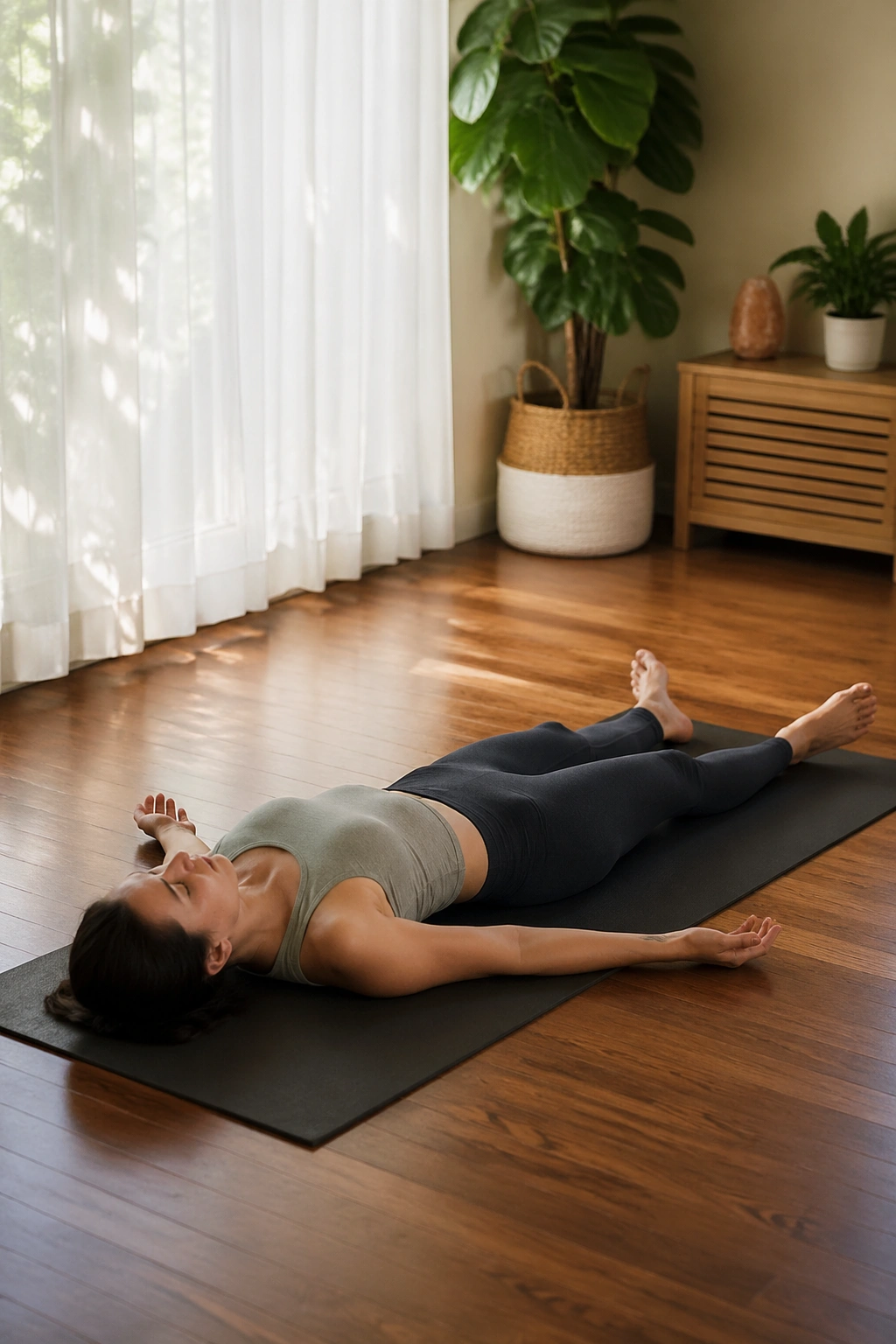
Savasana is where the whole practice pays off. Not because you’ve earned rest. Because rest is part of the work.
Lie flat on your back, or elevate the calves on a chair if the low back prefers that. Let the feet flop outward, palms face up, and jaw go slack. Then turn attention to the exhale and let it run a little longer than the inhale. Not by a huge amount. One or two counts is enough. If the breath gets too controlled, it starts feeling like homework. That’s not the goal.
A simple way to stay with it
- Inhale through the nose for 4 counts.
- Exhale through the nose for 5 or 6 counts.
- Soften the tongue away from the roof of the mouth.
- Rest for 3 to 10 minutes.
This is the pose I’d keep if I had to choose only one. It asks for almost nothing and gives the nervous system a chance to settle without chatter, strain, or cleverness. The longer exhale is doing more than it looks like.
Final Thoughts
The best vagus-nerve-friendly yoga is not the deepest stretch in the room. It’s the version that makes your breathing smoother, your jaw looser, and your shoulders stop guarding everything for no good reason.
If a pose feels clean for two breaths and worse on the third, trust the third breath. Back off a little. Add a blanket. Bend the knees. Use the wall. Small changes are often what turn a pose from irritating into useful.
And if you want a simple sequence, start with child’s pose, move through cat-cow, then finish with legs-up-the-wall or savasana. Nothing fancy. Just enough shape, enough breath, and enough stillness to remind the body it can come down a notch.
