



A long walk can leave your legs feeling worked over in a dull, stubborn way. Not injured. Just tight, heavy, and a little annoyed that you asked so much of them.
That’s the sweet spot where a few yoga poses for walking days with sore legs can help. The right ones don’t yank on tired tissue or make you chase some heroic stretch. They give the calves space, ease the hip flexors, un-knot the glutes, and let the lower body settle without another round of punishment.
Walking soreness has a funny shape to it. The calves often feel springy but overused, the front of the hips can feel short, and the hamstrings can complain even when they’re not truly the main problem. A gentle sequence works better than a hard one. Push too far and your body guards the area. Ease in and the muscles usually let go.
One more thing: if the pain is sharp, one-sided, swollen, or changes the way you walk, that’s not normal post-walk stiffness. Stop and treat it like something else. For plain old soreness, though, the poses below are the ones I reach for first.
1. Child’s Pose to Let the Hips Unclench
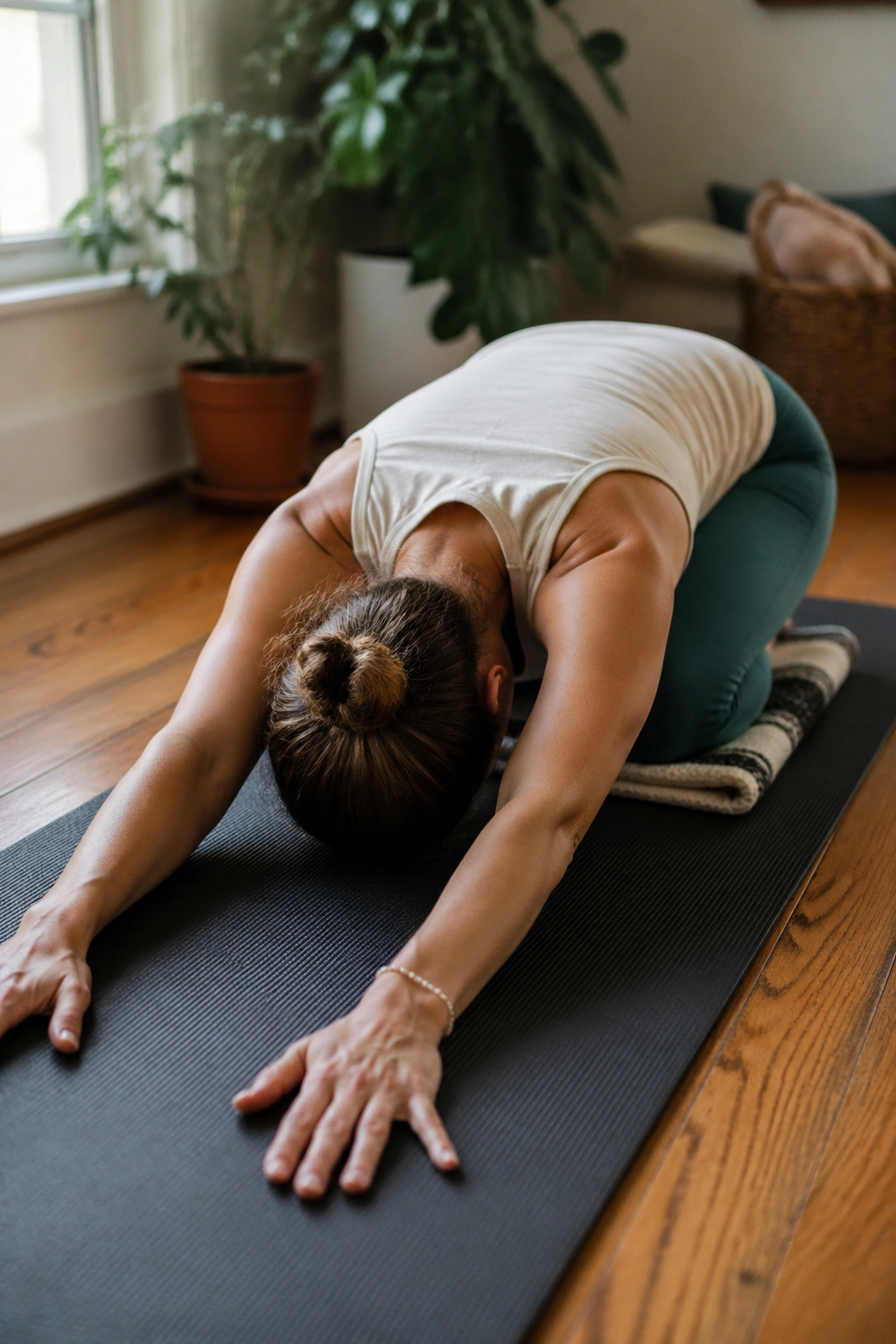
Child’s Pose is the first stop for a reason. It takes the weight off the legs, lets the hips open without drama, and gives the calves a break from doing any holding at all.
Why It Helps
After a long walk, your body often wants one thing: permission to stop bracing. Child’s Pose does that neatly. The knees fold, the ankles relax, and the lower back gets a chance to lengthen while you breathe into the ribs.
If your hips feel pinched or your thighs are buzzing from hills and pavement, this pose feels like turning down the volume. It is not flashy. That’s the point.
How to Make It Friendlier
- Bring your big toes together and separate the knees as wide as feels comfortable.
- Slide a folded blanket under the hips if sitting back on the heels feels rough.
- Reach the arms forward, or stack the forearms and rest the forehead there.
- Take 5 to 8 slow breaths and let the exhale get a little longer than the inhale.
Tip: If your knees are cranky, place a pillow between your hips and heels instead of forcing the seat down.
2. Downward-Facing Dog for Calves That Feel Packed Tight
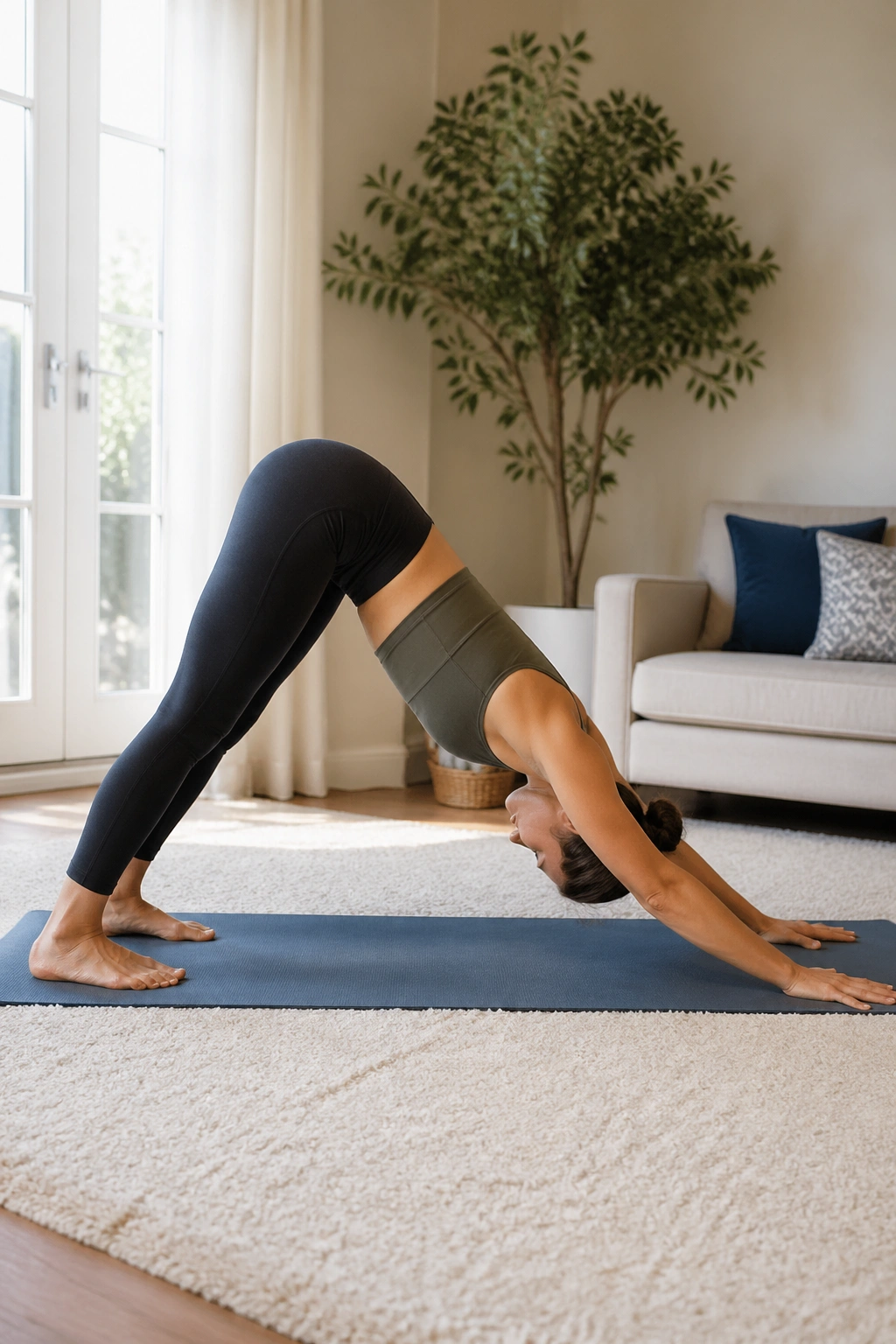
Downward-Facing Dog is not gentle in the fake-soft way. Done well, it gives the back line of the body a long, clean stretch, especially the calves and the backs of the knees.
The trick is not to chase the straightest legs possible. Bend your knees as much as you need. Seriously. A softly bent-knee Down Dog often does more for sore walking legs than a rigid one, because it lets the spine lengthen while the calves open without strain.
Press through the hands, spread the fingers, and think about sending the hips up and back rather than down and forward. Pedal the feet one at a time for 20 to 30 seconds if one calf feels tighter than the other. That little motion is simple, but it works.
If your wrists hate full weight-bearing, do it with your hands on a kitchen counter, a sturdy bench, or the arms of a couch. Same shape. Less pressure. Nice trade.
3. Low Lunge for Hip Flexors That Shorten on Long Walks
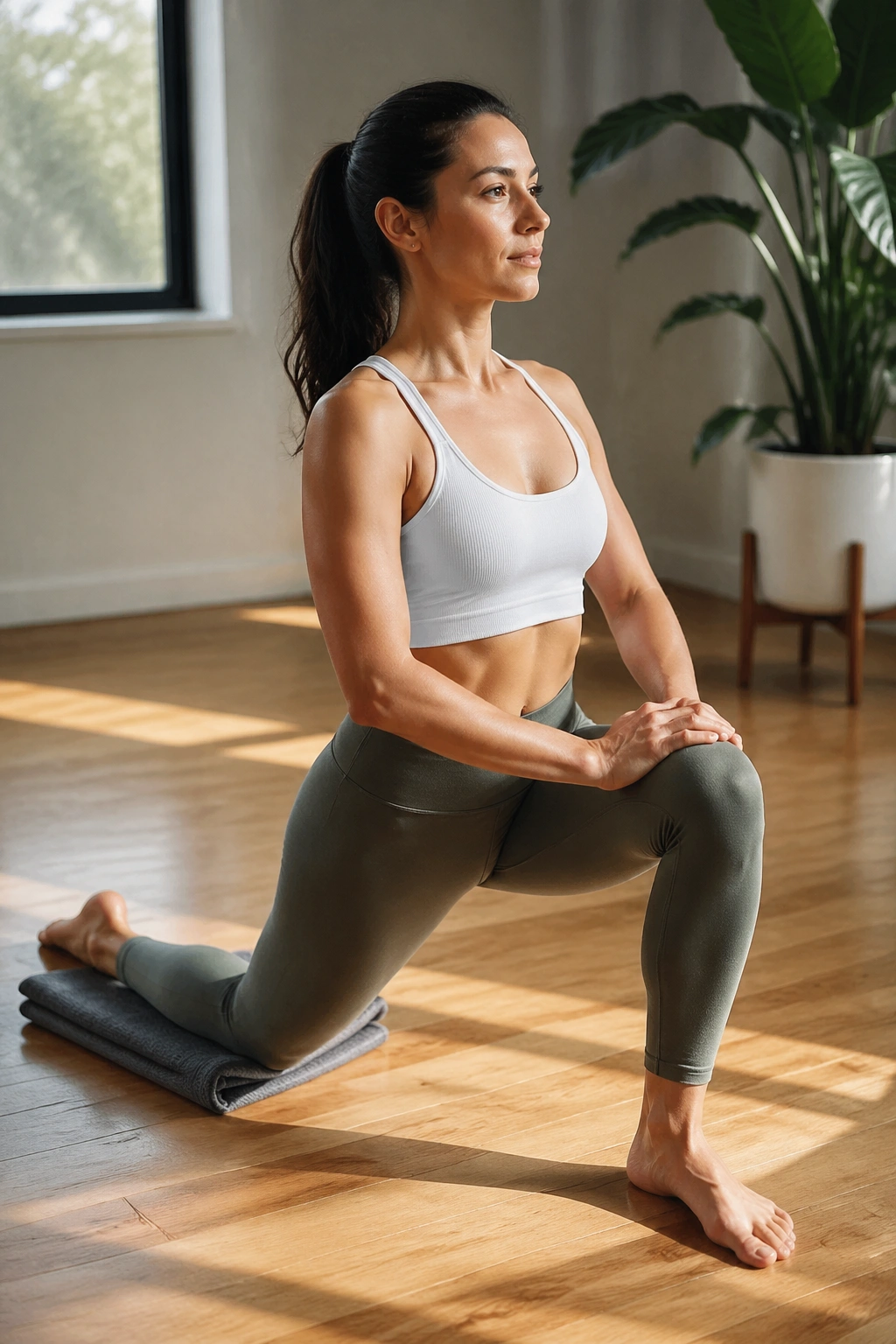
A long walk asks the hip flexors to keep repeating the same motion, step after step, and they can come out feeling short and grumpy. Low Lunge opens that front-of-hip line in a way that usually feels better than trying to stretch the hamstrings first.
Set It Up
Start with the back knee on a folded blanket or mat. Bring the front foot far enough forward that the knee stacks roughly over the ankle. Then tuck the tailbone a touch under so the low back does not dump forward.
That small pelvic tuck matters. Without it, the stretch often slides into the front of the low back instead of the hip.
What You Should Feel
You want a mild, steady pull along the front of the back leg and maybe a bit into the top of the thigh. You do not want a sharp pinch in the groin.
A few slow breaths here can change the whole feel of the pose. If it helps, raise the arms only after the hips settle. If not, keep the hands on blocks or on the front thigh.
That’s enough. More is not better here.
4. Half Split to Ease the Back of the Thigh
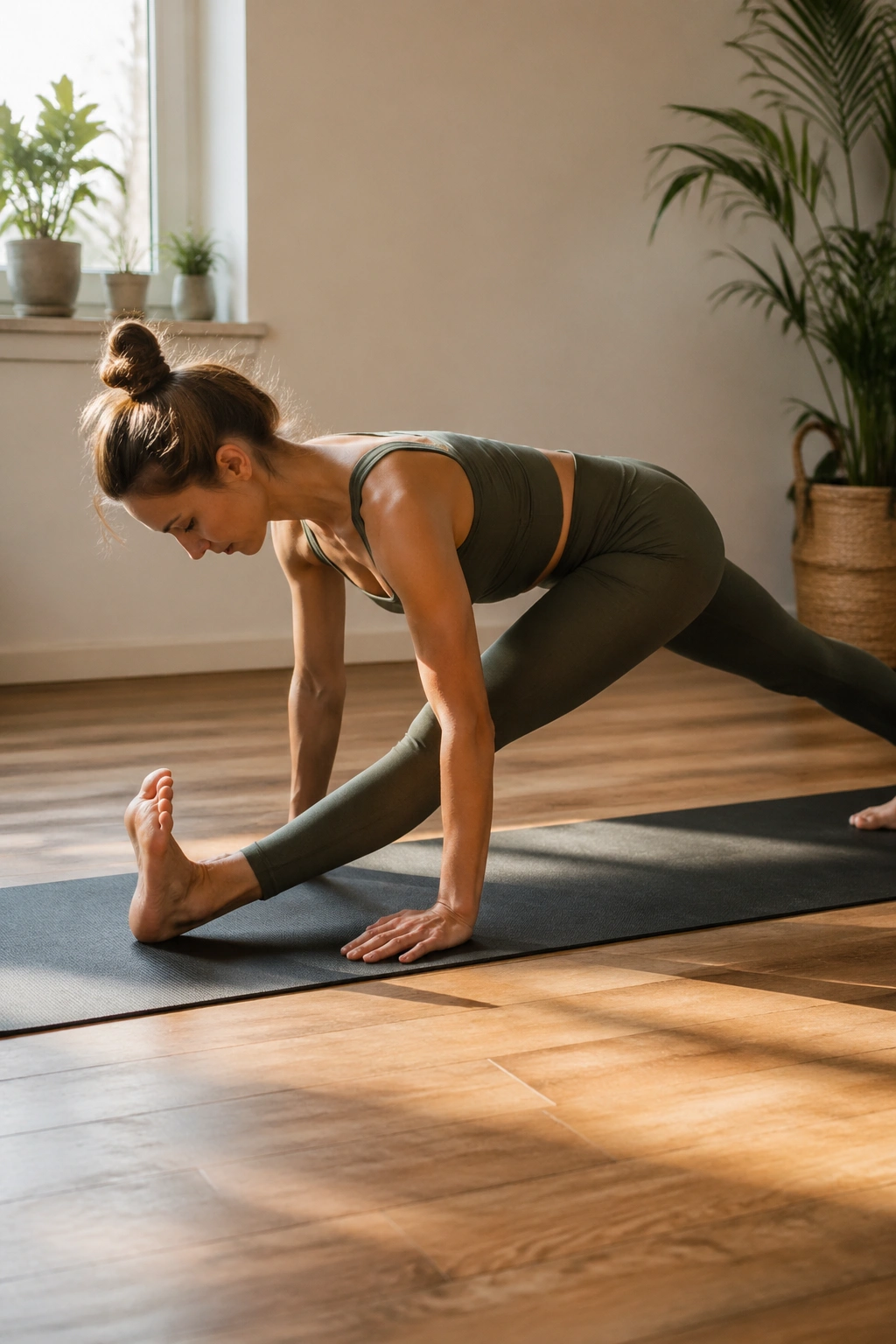
Why does Half Split help when walking has left the hamstrings feeling cranky? Because it gives the back of the leg a line of tension without loading the whole body.
The key is to keep the front leg mostly straight, not locked. A soft bend at the knee keeps the stretch from becoming a nerve-y tug behind the knee. Flex the front toes up, hinge the hips back, and stop the moment the back of the thigh starts to protest.
What to Watch For
If your lower back rounds hard, you’ve gone too far. Back up, bend the knee a little, and move the hips a few inches back instead of trying to fold lower.
This pose works best after Low Lunge, when the hip flexors have already been softened a bit. That sequence keeps the body from guarding. Try 5 slow breaths, then come out halfway and re-enter once more rather than forcing one long hold.
Small adjustments. Big difference.
5. Reclined Hamstring Stretch for Gentle, Supported Release
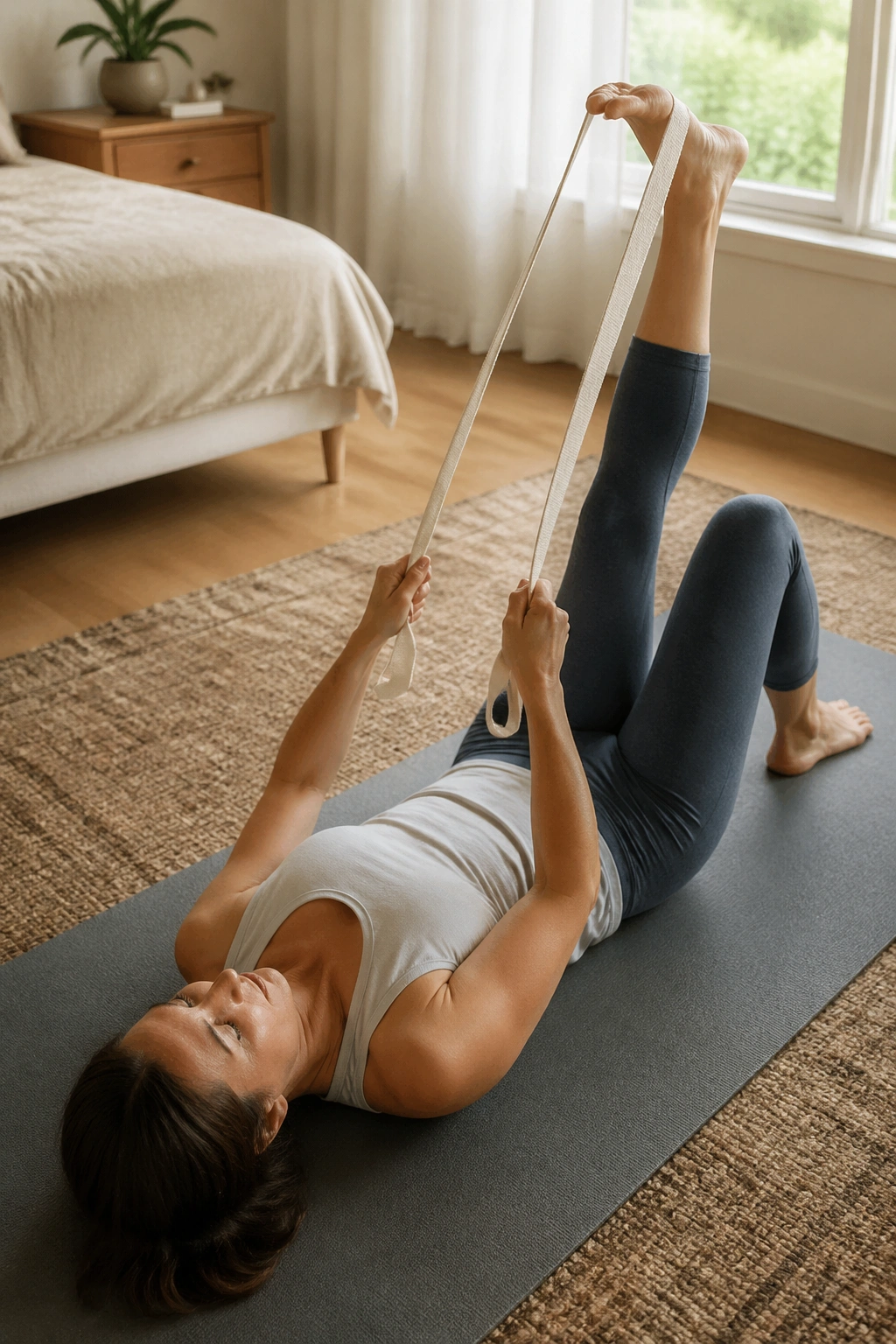
Reclined Hamstring Stretch is the version I like when standing stretches feel like too much work. Lying down takes the balance game out of the picture, so the leg can relax instead of gripping to stay upright.
Use a strap, a towel, or even a belt looped around the ball of the foot. Keep the opposite leg bent if your low back feels fussy. The raised leg should come up only until you feel a clear stretch along the hamstring, not until the pelvis twists or the shoulder lifts off the mat.
A lot of people pull the leg toward the face and call it a stretch. That usually turns into a fight. Better to hold the strap lightly, bend the knee a little, and let the calf and hamstring lengthen together over 30 to 60 seconds.
Breathe through the back of the ribs. One long exhale after another. If the foot starts to tremble, that is your cue to soften, not force.
6. Reclined Figure-Four for Glutes and Outer Hips
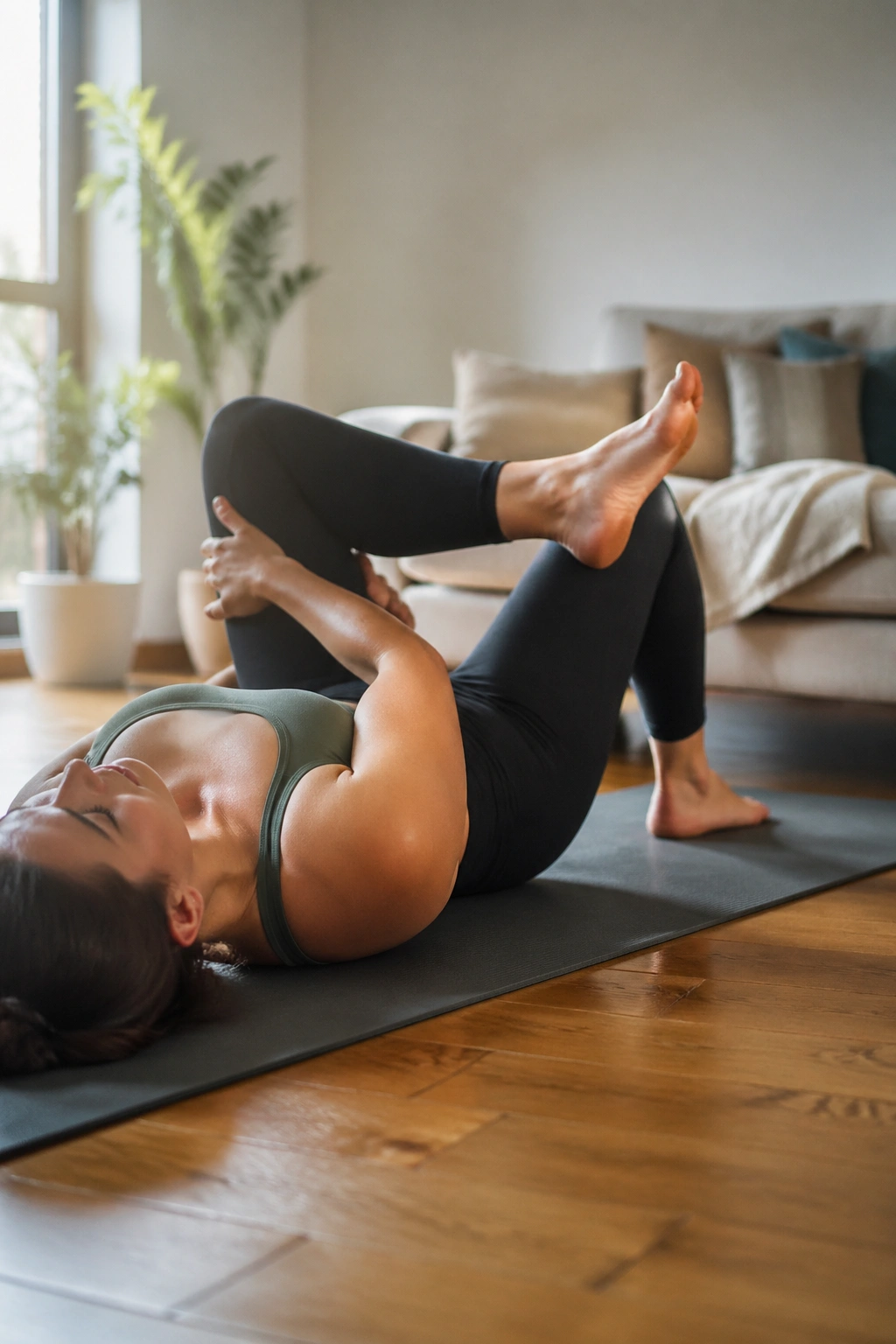
If the sore spot sits deep in the butt or along the outer hip, Reclined Figure-Four often hits better than a hamstring stretch. It gets into the piriformis and the surrounding glute muscles without asking the knees to do anything weird.
Unlike Pigeon Pose, this version keeps you on your back. That makes it a smarter choice for days when the legs are tired but the joints feel a little bossy. Cross one ankle over the opposite thigh, then draw the legs in only until you feel the stretch through the outer hip.
The foot on the floor can stay planted, which takes pressure off the spine. You can also press the crossed-knee side away a bit with your hand if the stretch feels uneven.
If one side feels much tighter than the other, don’t rush to “fix” it. Hold each side for the same amount of time and let your body sort out the difference.
7. Supported Bridge to Wake Up Stiff Glutes
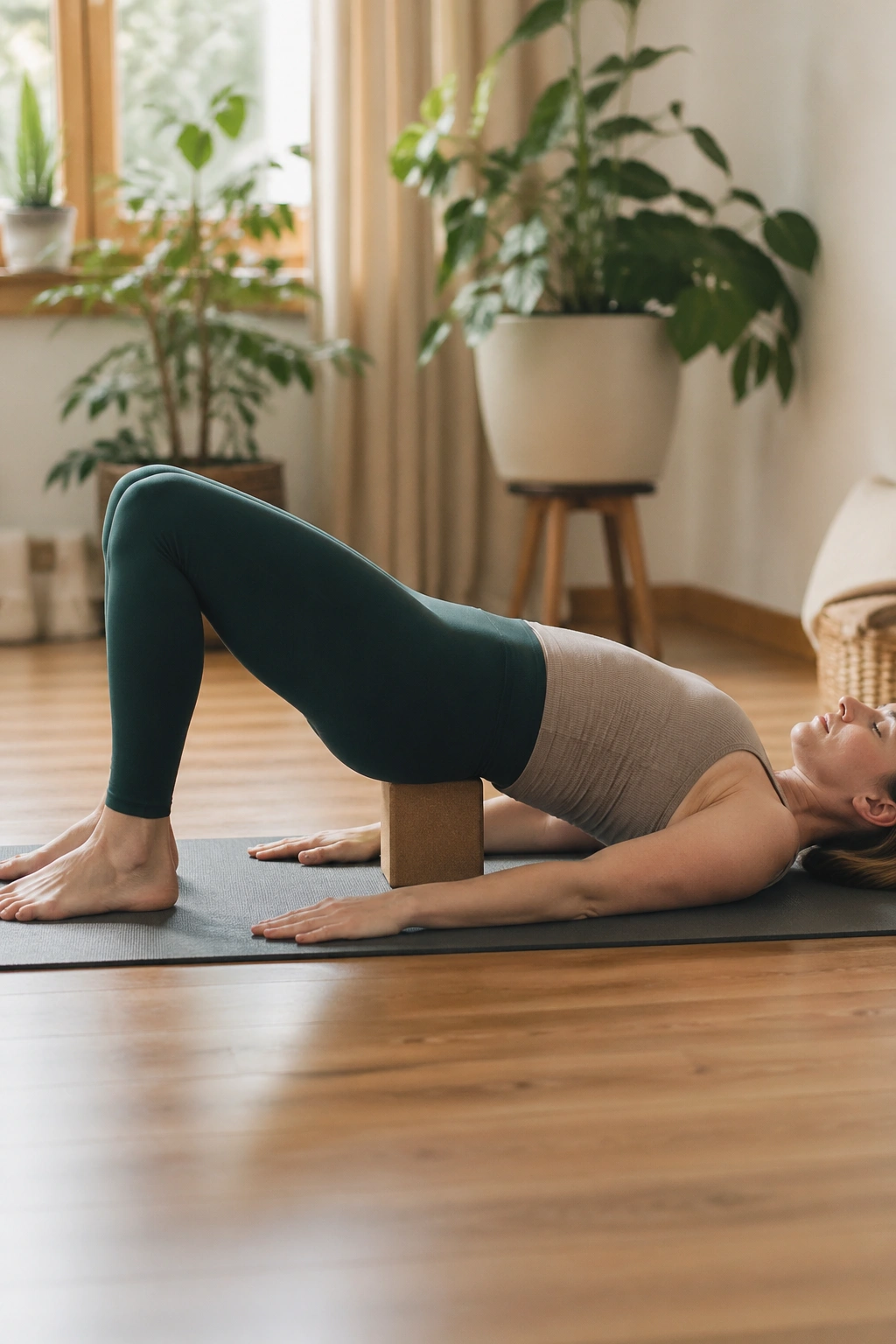
There’s a difference between stretching tired legs and reminding sleepy glutes to do their job. Supported Bridge does the second one beautifully.
Slip a block, bolster, or stacked firm pillow under the sacrum after lifting the hips. The support should sit low enough that the lower back feels long, not jammed. Feet stay flat, knees bent, and the thighs parallel. That setup takes pressure off the hamstrings and gives the front of the hips a mild opening while the glutes get a little wake-up call.
- Place the feet about hip-width apart.
- Keep the heels close enough to touch the fingertips.
- Let the shoulders stay heavy on the mat.
- Hold for 5 to 10 breaths, then lower slowly.
If your lower back likes Bridge but hates deep backbends, this supported version is usually the sweet spot. It’s calm, not dramatic. Which is exactly why it helps on sore-leg days.
8. Legs-Up-the-Wall for Heavy, Tired Legs
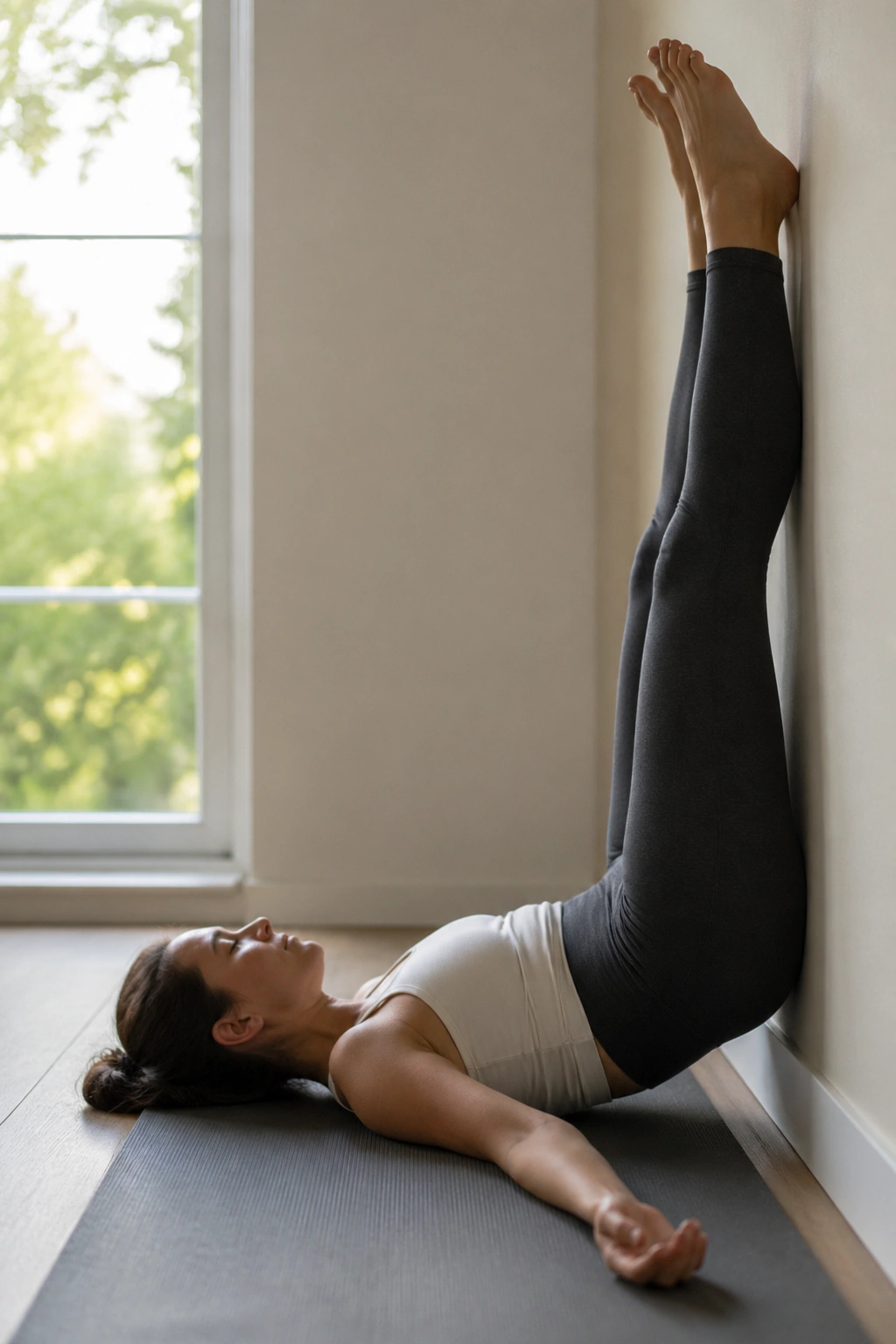
This is the easiest recovery pose in the bunch. It often feels better than a deeper stretch because it stops asking the legs to hold your weight at all.
Scoot your hips close to a wall, swing the legs up, and rest the heels there. If that hamstrings feels too intense, move your hips a little farther from the wall or bend the knees. The goal is ease, not a perfect right angle.
A few minutes in this shape can make the legs feel less puffy and less buzzy, especially after a lot of standing or walking on hard ground. The blood and fluid shift is subtle, but you can feel it in the calves once they stop fighting gravity.
If inversion doesn’t suit you, lie with the calves on a couch or chair instead. Same basic idea. Less vertical. Still good.
9. Sphinx Pose for Front-of-Hip Relief and Low-Back Space
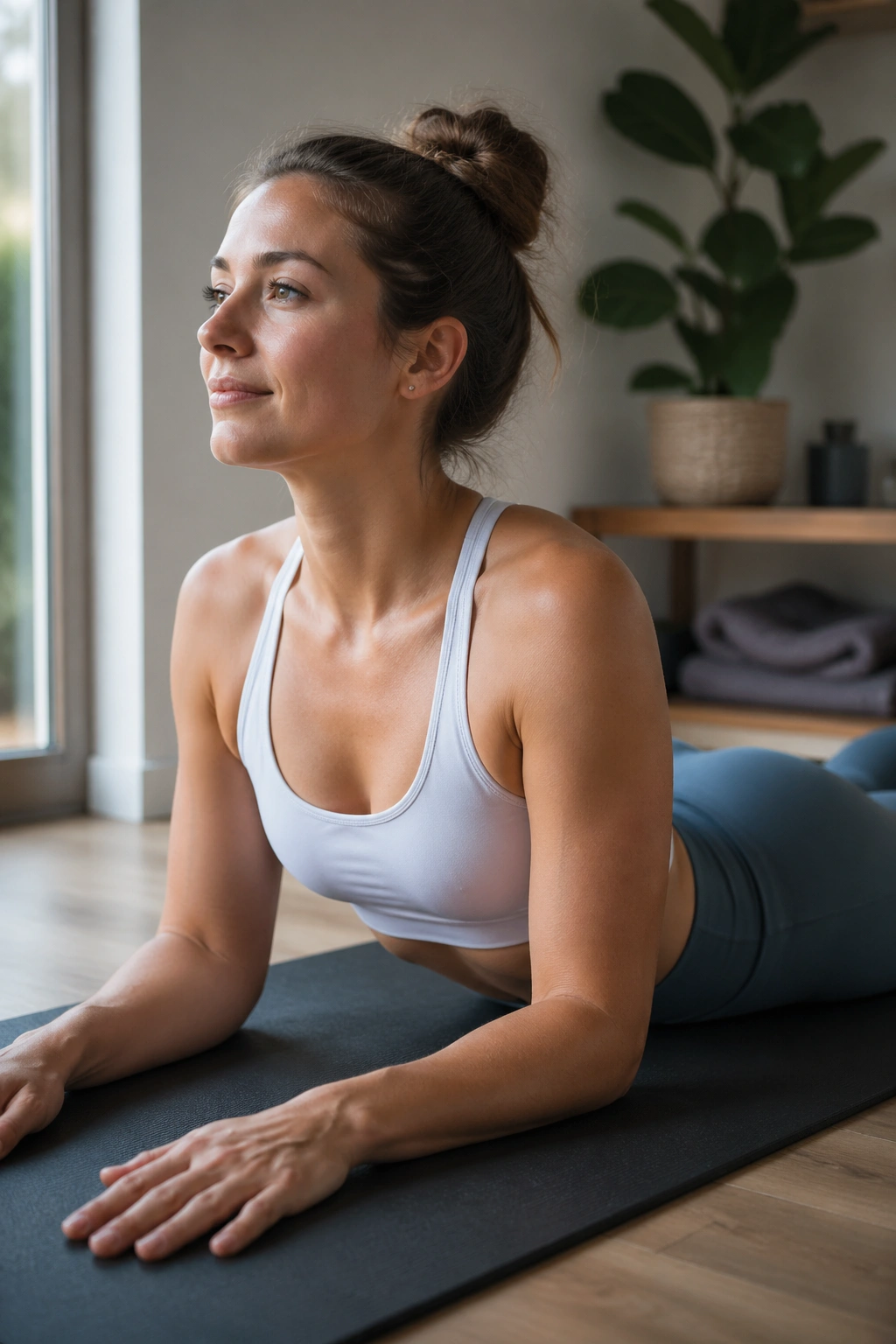
Why put weight on the elbows when the legs are the sore part? Because walking can leave the front of the hips tight and the low back compressed, and Sphinx gives that whole chain a gentler shape.
Lie on your belly, slide the elbows under the shoulders, and press lightly into the forearms. Keep the pubic bone heavy on the floor so the low back doesn’t take over. The chest lifts just enough to create space through the front body.
How to Use It Without Pinching Your Back
If the low back feels pinchy, move the elbows a little farther forward and lower the chest. You want a mild opening, not a hinge.
Hold for 20 to 40 seconds, come down, and rest your head on your hands. One short round is enough for some people. Others like two. Both are fine.
This is a clean little reset after a walk that kept you upright for too long.
10. Standing Calf Stretch for Tight Lower Legs
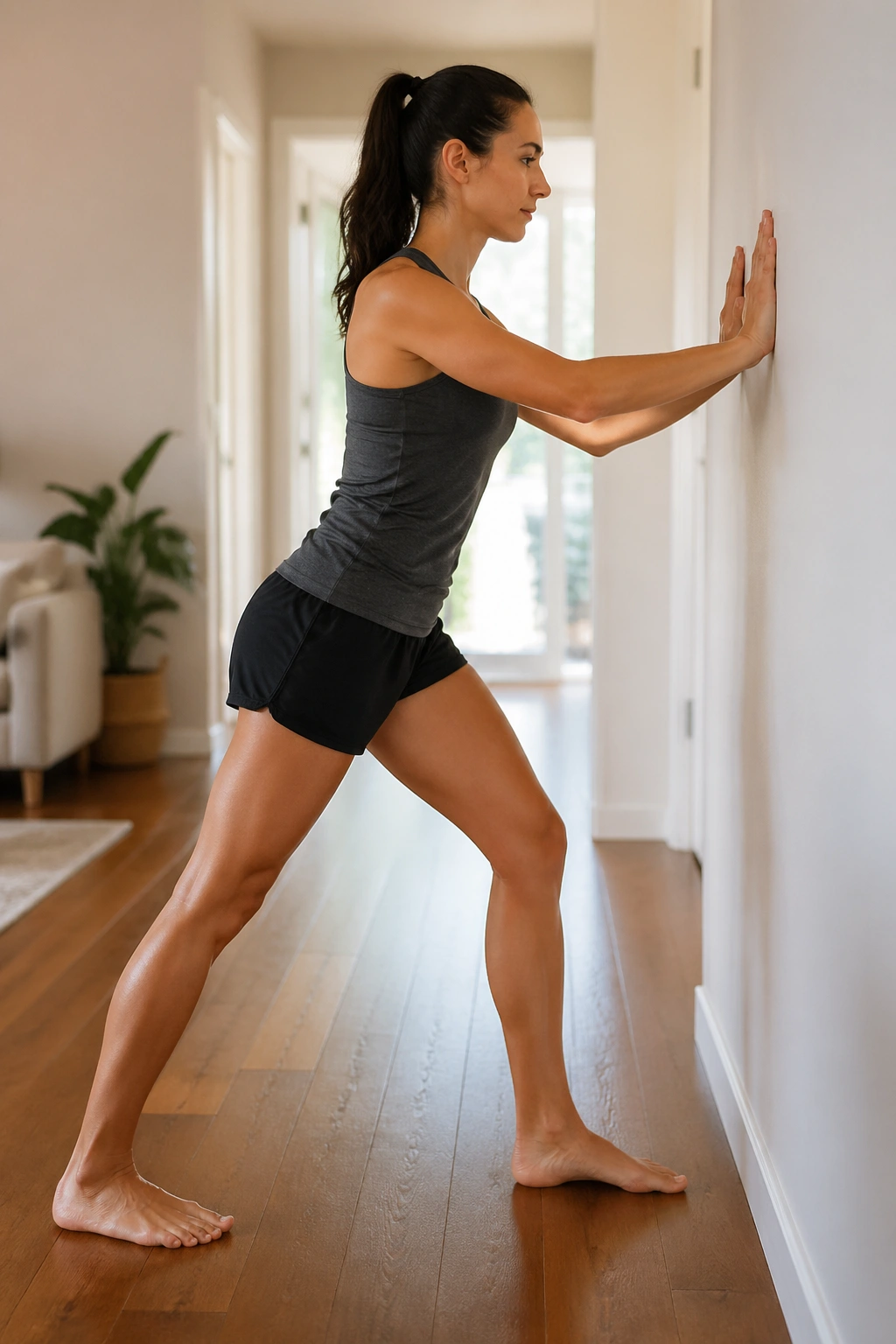
The calves take a beating on hills, stairs, and long stretches of pavement, and they usually complain late, after you’ve already sat down. A wall calf stretch is simple, but it hits the spot fast.
Plant both hands on a wall, step one leg back, and keep that back heel rooted. Straightening the back knee targets the larger calf muscle; bending it slightly shifts more work toward the soleus, the deeper lower-calf muscle that often gets tight after long walks.
That distinction matters. A lot. If you only stretch with a straight knee, you may miss the part of the calf that is actually sore.
Keep the back foot pointing straight ahead. Don’t let the arch collapse. Hold 20 to 30 seconds, then switch sides. If the stretch feels too intense, shorten the stance before you try to force the heel lower.
11. Wide-Leg Forward Fold for Inner Thighs and Hamstrings
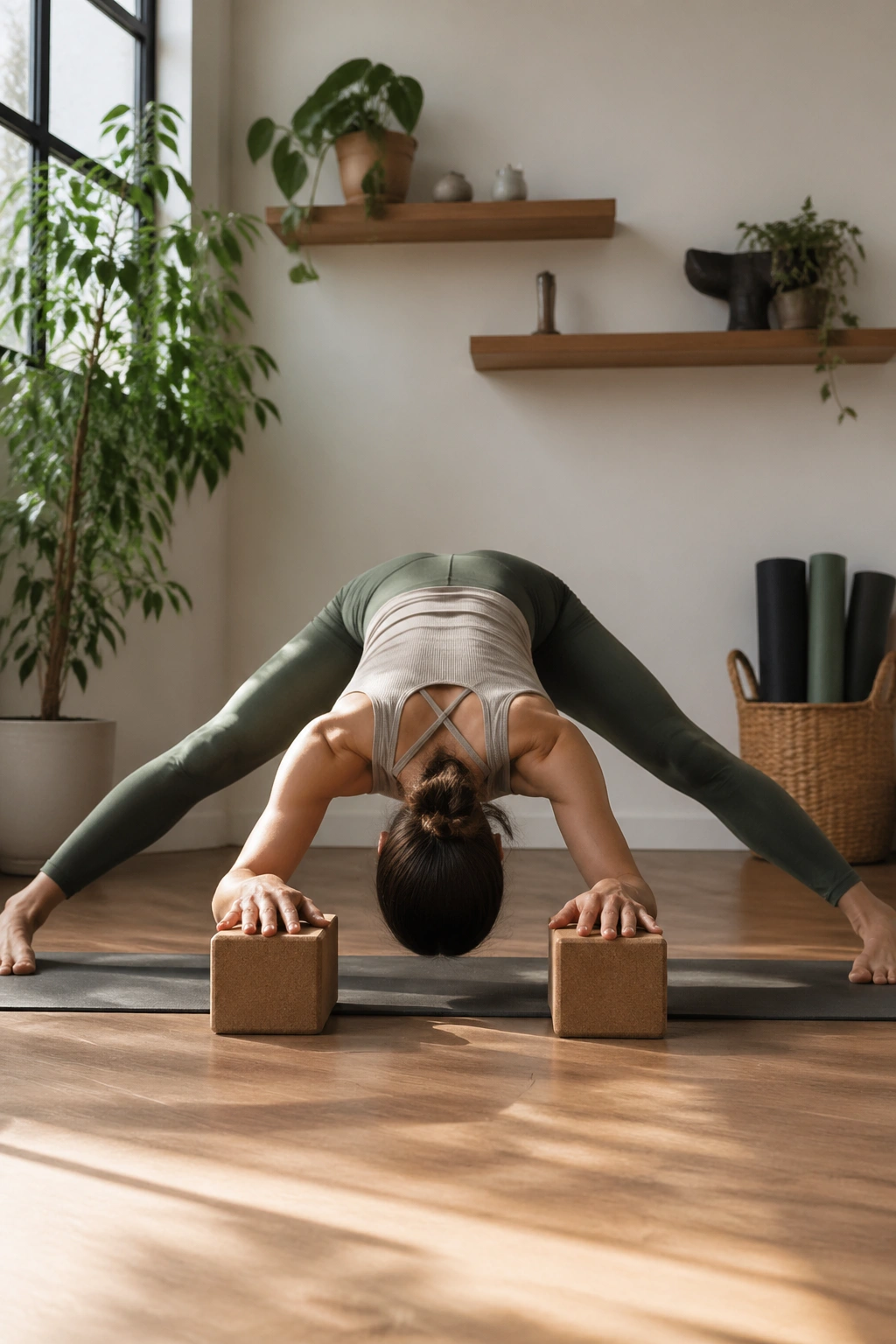
Wide-Leg Forward Fold gives you a different angle on sore legs. Instead of pulling one line at a time, it opens the inner thighs, hamstrings, and low back together in a slower, more spacious way.
Set the feet wider than the hips, turn the toes in just a little, and hinge at the hips rather than collapsing from the waist. Hands can stay on blocks, a chair, or the floor if the floor is close enough. If not, staying halfway up is fine. Better, even.
The body likes this pose when the hips feel crowded after a lot of walking. It also helps if one side of the body is doing more work than the other, which happens more often than people think on uneven sidewalks, slopes, and crowded city blocks.
A small bend in both knees can make the pose cleaner. Straight legs are not a prize.
12. Lizard Pose for Deep Hip Opening Without Rushing
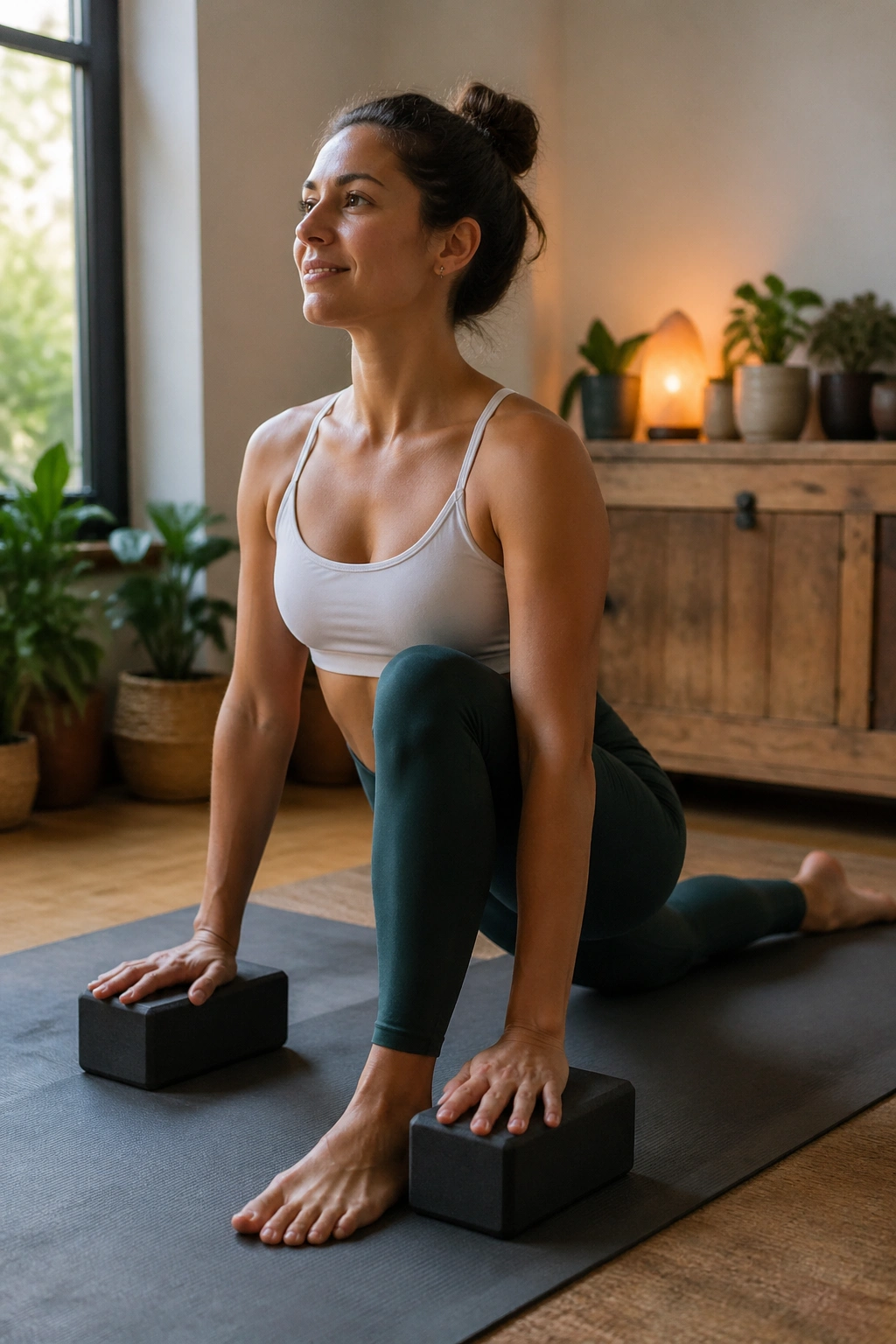
Deep does not mean better here. That’s the first thing to say about Lizard Pose, because sore walking legs often need patience more than depth.
From a low lunge, step the front foot to the outside edge of the hand and keep the back knee down if you want the gentlest version. You’ll feel the inner thigh, hip flexors, and sometimes the outer glute on the front leg side. It can be a strong stretch, so keep the breath smooth and the chest lifted on blocks if needed.
How to Keep It Gentle
- Pad the back knee well.
- Stay on hands or blocks instead of dropping to the forearms.
- Keep the front foot active so the arch doesn’t collapse.
- Exit early if the front knee starts to twist inward.
Lizard is one of those poses people either love or overdo. I’d rather see you undercook it by 20 percent than force a range your hips aren’t ready for.
13. Pigeon Pose for Deep Glute Release
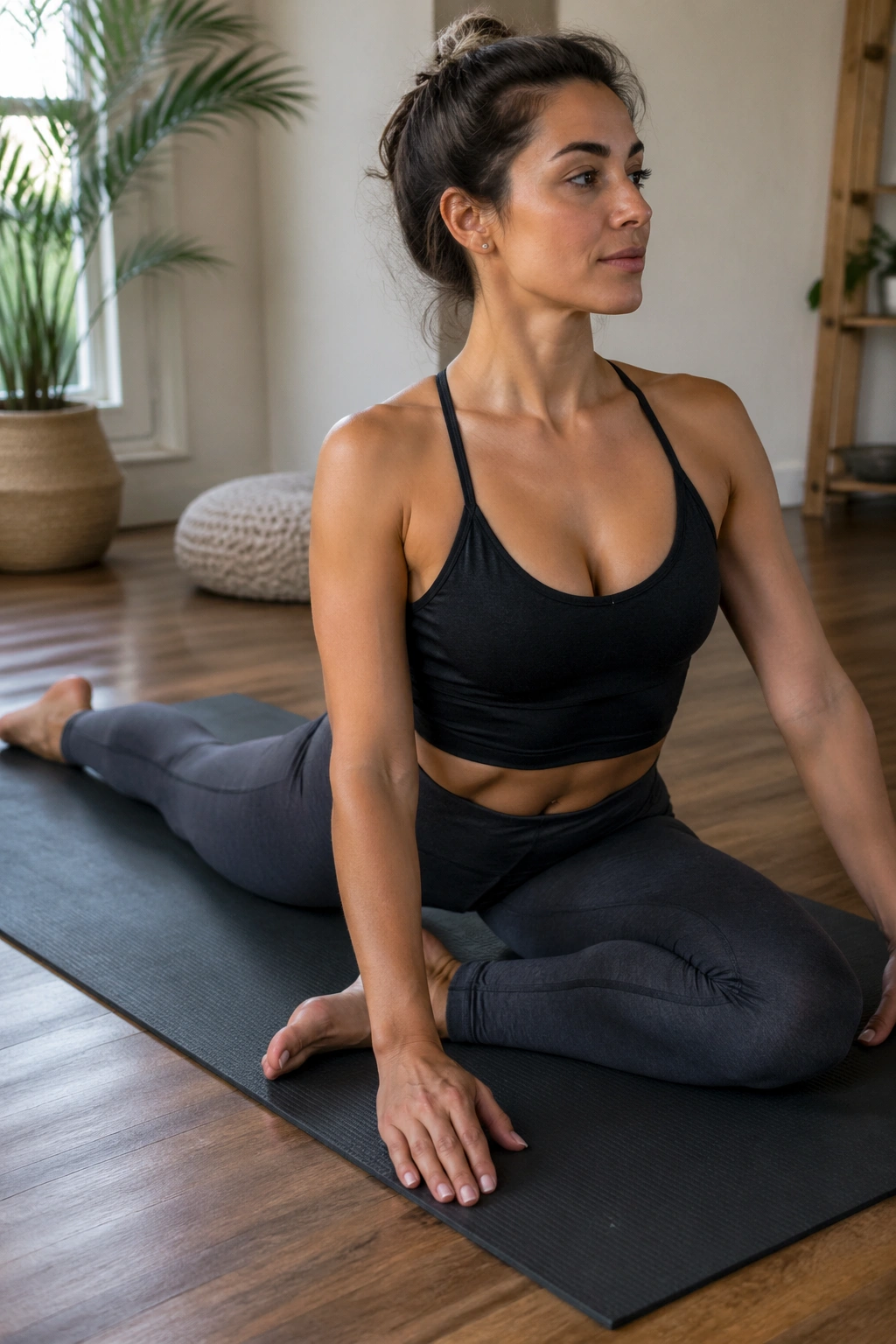
If your soreness lives in the glutes, Pigeon Pose can feel like a pressure valve opening. It lengthens the front hip while giving the outer hip of the bent leg a long stretch, which is useful after a walking day with lots of push-off and stride.
The catch is the knee. If your front knee doesn’t like this position, skip it and use Reclined Figure-Four instead. No prize is waiting for people who ignore joint warnings.
Use a folded blanket under the front hip if one side hovers above the floor. That simple support keeps the pelvis from dumping to one side and makes the stretch feel more even. Stay upright if the fold-forward version makes the front hip clamp down.
The best version of Pigeon is the one where you can breathe steadily for 5 full breaths without bracing your jaw. If you can’t do that yet, back off. Easy enough.
14. Happy Baby Pose for the Whole Back Line
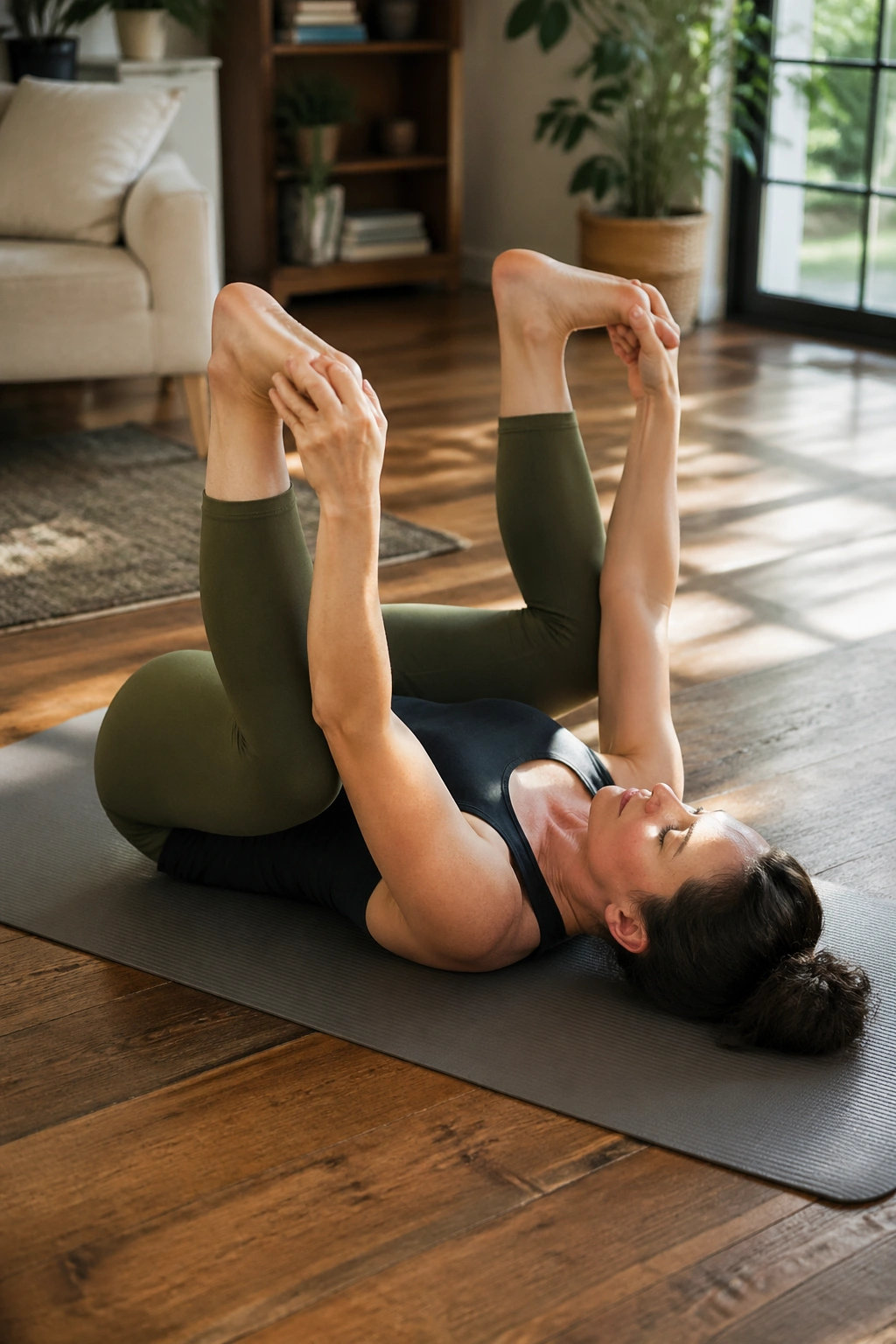
Happy Baby looks playful, but it’s doing serious work. It opens the inner thighs, eases the low back, and gives the hips a chance to rotate in a way that walking never does.
Lie on your back, bend both knees, and hold the outer edges of the feet or the backs of the thighs. Let the knees come toward the ribs only as far as they can without the tailbone popping off the floor. If the hands can’t reach the feet comfortably, grabbing behind the thighs works fine.
A little side-to-side rock can be nice here. Not big. Just enough to massage the sacrum and let each hip take a turn relaxing.
- Keep the shoulders soft.
- Pull only lightly with the hands.
- Let the ankles stay relaxed instead of flexed hard.
- Stop if the neck strains.
This pose is one of my favorites after a day with a lot of footwork because it touches the hips and low back at the same time.
15. Constructive Rest to Finish the Day Softly
Constructive Rest is the pose I use when the legs are sore and I don’t want to “do yoga” so much as stop being upright for a minute. Lie on your back with the knees bent, feet flat on the floor, and knees resting against each other or sitting a few inches apart. A pillow under the knees can make the whole thing easier on the low back.
There’s no stretch contest here. The job is to let the nervous system drop a notch. After walking, that matters more than people think. Tired legs often stay tense because the whole body still feels like it’s on duty.
Breathe low and slow for 1 to 3 minutes. If the calves feel restless, slide the feet a little farther from the hips. If the low back feels compressed, move them closer. Small changes are enough.
A simple way to use these poses is to pick three from the list and stay with them for 30 to 60 seconds each: one pose for calves, one for hips, one for the back of the body. That’s often all a sore walking day needs. Keep it plain, keep it gentle, and let the legs come down from the walk instead of asking them to power through one more thing.
