



Migraine pain has a way of turning ordinary movement into a negotiation.
For chronic migraine relief, yoga works best when it stays small, slow, and almost stubbornly gentle. The goal is not to stretch until something gives. It’s to lower muscle guarding, ease the jaw and neck, and give your breathing a steadier rhythm.
A lot of people make the same mistake here. They reach for fast flows, deep neck circles, or anything that looks active on a studio wall. That usually backfires. When the head is already sensitive, less drama tends to work better.
A bolster, two blocks, and a folded blanket can change everything. So can bending your knees, keeping your gaze soft, and stopping the second a pose starts to feel pushy. If your headache is new, unusually severe, or paired with weakness, fever, fainting, or vision changes, skip the mat and get medical help.
The poses below lean into support, not intensity. Some are floor-based, some use a wall or chair, and a few look almost too plain to matter. That’s fine. Plain is often the point.
1. Child’s Pose With Wide Knees
Child’s pose is the first place I send people when the day feels too loud. The wide-knee version gives your belly and ribcage more room, which matters more than people think on migraine days. A tight, compressed front body can make breathing shallow fast.
How to Set It Up
- Start on hands and knees, then bring your big toes together and separate your knees wide enough that your torso can slip between them without squeezing.
- Slide a folded blanket or bolster under your chest if your forehead to floor distance feels awkward.
- Rest your forehead on stacked fists, a block, or the mat if that feels calm, not jammed.
- Breathe for 6 to 10 slow breaths, letting the back ribs expand into the support.
If the posture makes your temples pound harder, lift your head a little or skip it. A migraine-friendly pose should feel like a downshift, not a test.
2. Cat-Cow on Hands and Knees
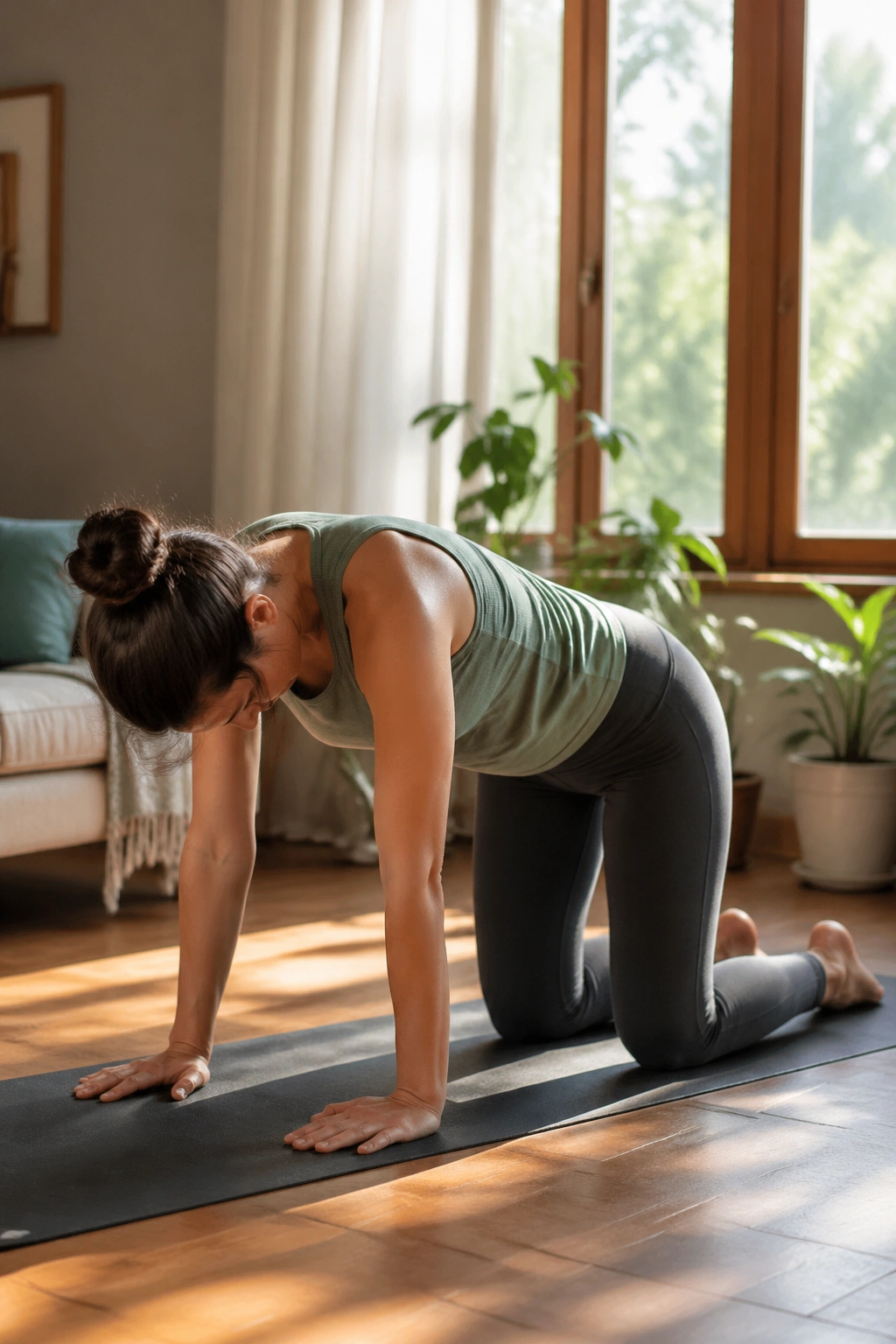
Cat-cow is not about making the spine bend as far as it can. On migraine-prone days, it’s about keeping the neck from seizing up while the upper back moves in a smooth, predictable rhythm.
A tiny range works better than a showy one. Round the spine slowly on the exhale, then arch just enough on the inhale to feel the chest widen and the tailbone tip up. Keep your eyes down so the neck stays easy; don’t throw your head up like you’re trying to impress somebody in the next room.
A lot of people rush cat-cow and turn it into a warm-up drill. Don’t. Go so slowly that you can feel each vertebra changing shape. Six rounds is enough on a tender day. If your wrists dislike bearing weight, drop to forearms or make fists under the hands.
3. Thread the Needle
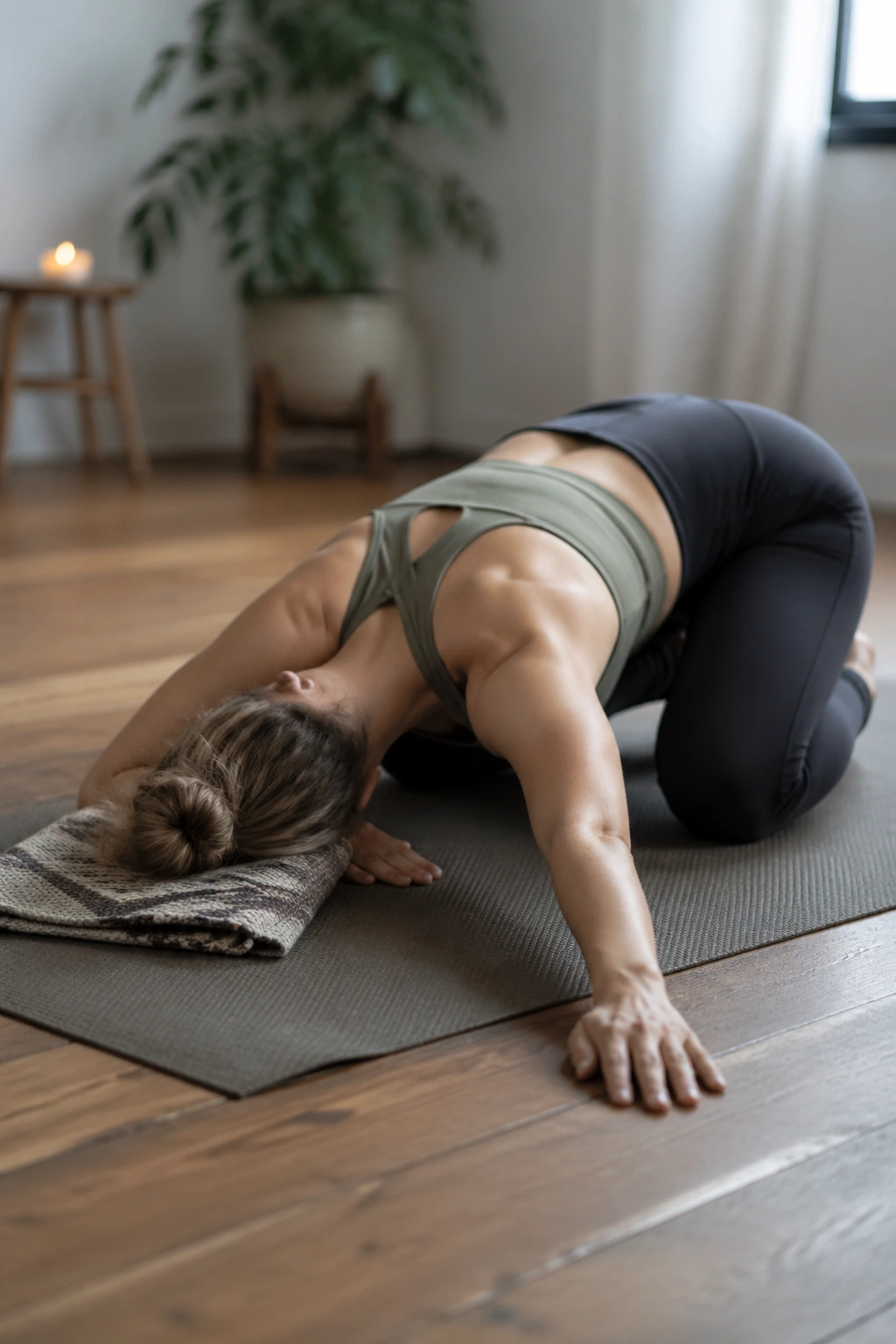
Why does this pose help when your shoulders feel welded to your ears? Because a lot of migraine tension lives in the upper back, not just the head itself. Thread the needle gives the shoulder blade area a chance to soften without asking for a giant stretch.
You can keep this one tiny. Slide one arm under the other while staying on hands and knees, then rest the side of your head lightly on a block or folded blanket if the floor feels too low. The key detail is that the head should feel supported, not dumped into the mat.
Make It Gentle
- Keep the top arm active so the chest doesn’t collapse.
- Place a folded blanket under the shoulder if the twist feels sharp.
- Stay for 4 to 6 breaths, then switch sides.
- Skip the deepest version if turning your head makes the pain flare.
The best version of this pose feels like pressure easing out of the shoulder blade, one notch at a time.
4. Supported Standing Forward Fold for Migraine Days
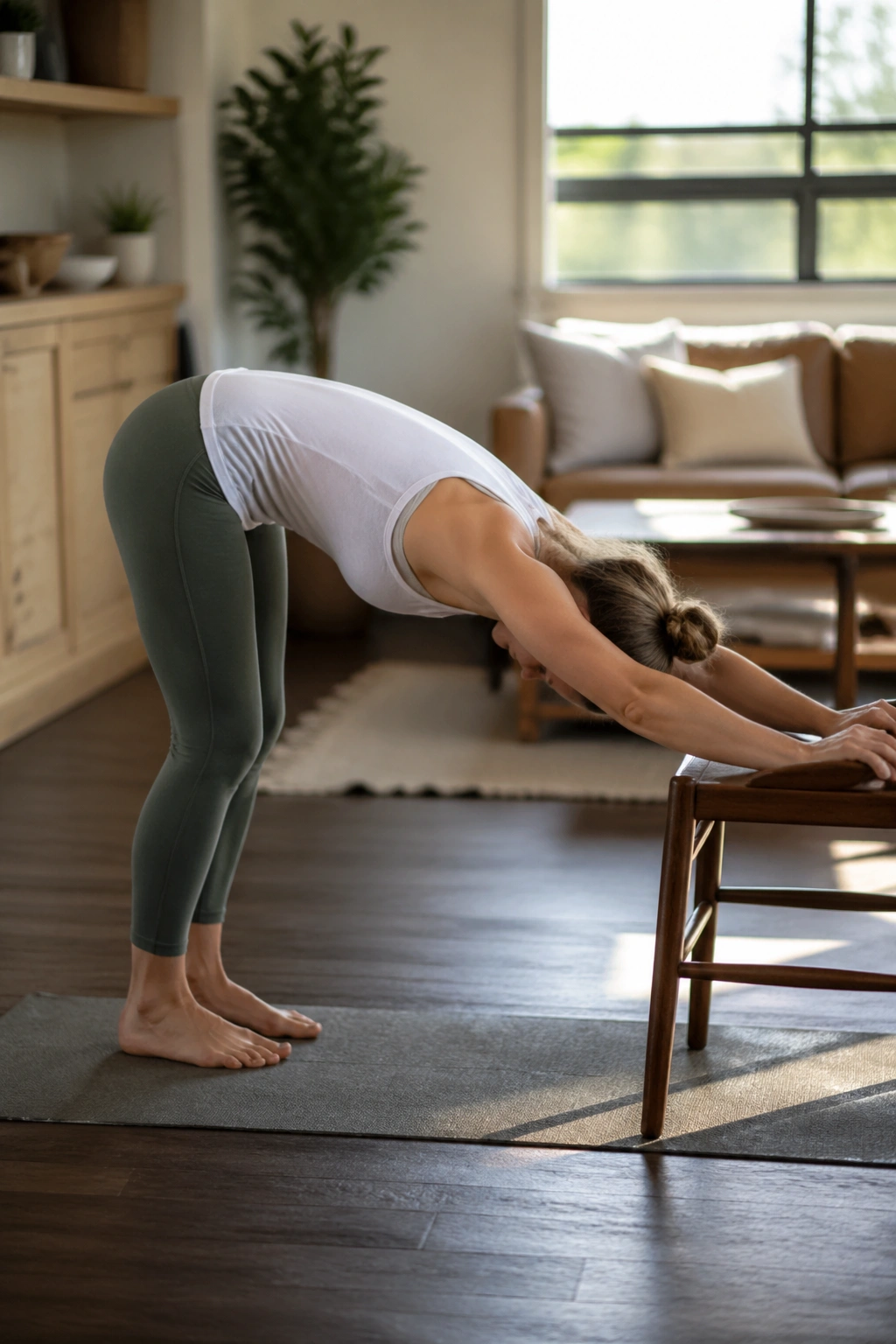
You know the kind of day: screen glare, clenched jaw, shoulders up near your ears, and a headache that seems to sit behind the eyes. A supported standing forward fold can take some load off without sending you into a deep inversion.
Set your hands on a chair seat, blocks, or a counter. Bend your knees as much as you need. The head does not need to hang heavily if that makes the pressure feel worse. Sometimes just folding at the hips a few inches and letting the arms rest is enough to calm the neck.
What matters here is support, not depth. If the hamstrings are tugging hard, back off. If your balance feels shaky, keep one hand on a wall. The fold should create a soft spill of effort, not a rush of blood to the head.
5. Wide-Legged Forward Fold With Blocks
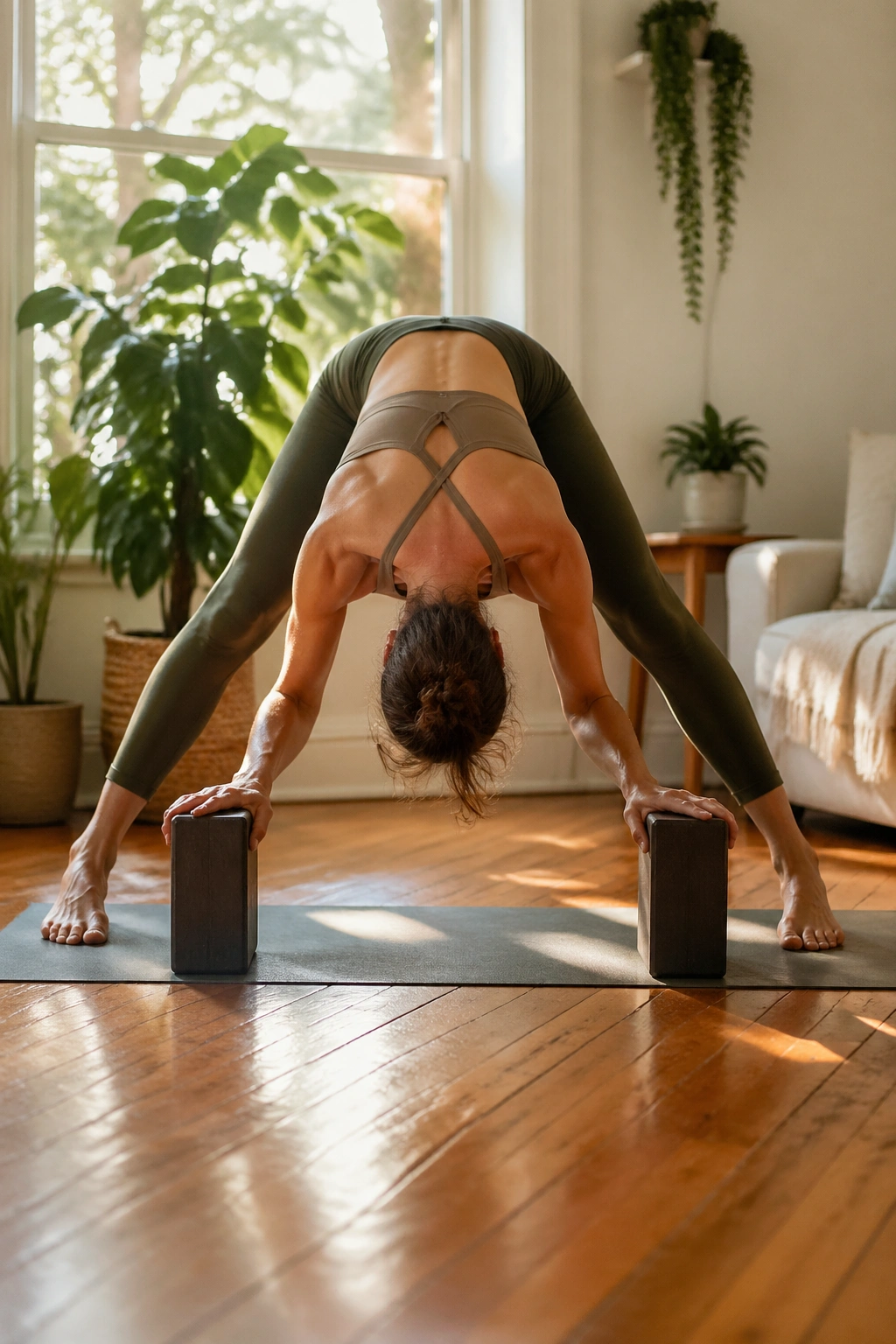
This is the pose people often turn into a hamstring contest, and that’s a waste on migraine days. The real win comes from giving the torso room to drop between the legs while keeping the neck quiet and the breath unforced.
Stand with your feet wide but comfortable, maybe a little wider than your hips. Hinge forward with bent knees, then place your hands on blocks so your spine can lengthen instead of collapsing. If letting the head dangle feels soothing, fine. If it feels like the top of your skull is getting heavier, keep the head higher than the heart.
Bent knees are not cheating. They’re the difference between a pose that calms you and one that leaves you groaning afterward. Stay long through the back of the neck, and let the belly hang without clenching it in.
A few slow breaths here can be enough to change the tone of the whole afternoon.
6. Legs-Up-the-Wall for Migraine Relief
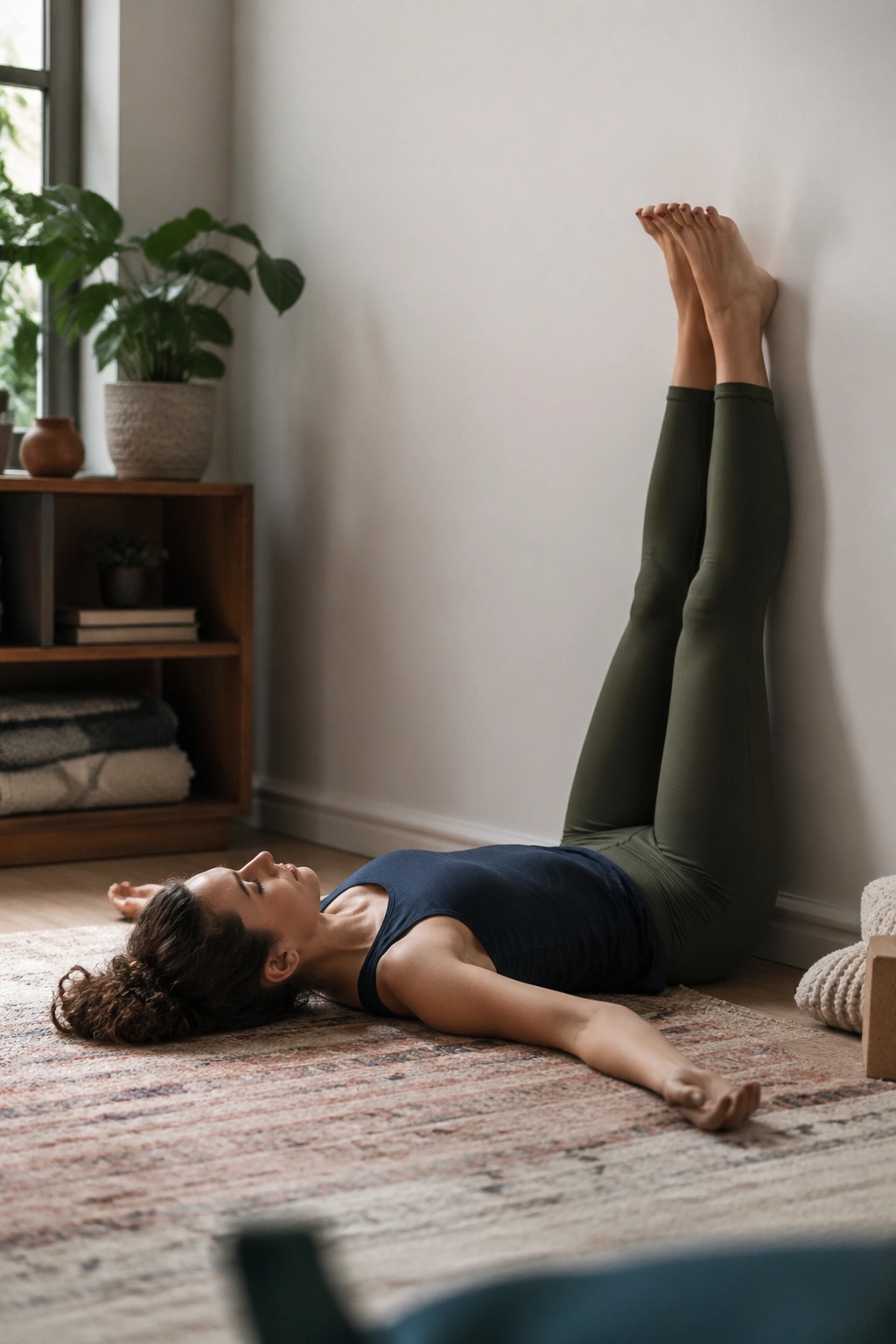
Compared with a full inversion, legs-up-the-wall is the friendly version. It gives you the sense of being turned upside down without the strain of a shoulder stand or handstand, which is exactly why so many migraine-prone bodies tolerate it better.
Scoot your hips close to the wall, swing your legs up, and let your arms rest out to the sides. If the stretch in the back of the legs pulls at your lower back, slide a folded blanket under the pelvis or move the hips a little farther from the wall. Some people like a pillow under the head. Others hate it. Use what keeps the face soft.
This pose is especially useful after long computer work, a long drive, or any day that leaves your feet heavy and your head buzzing. If head pressure rises instead of settling, move your legs to a chair seat and keep the torso flat on the floor.
7. Reclined Bound Angle Pose
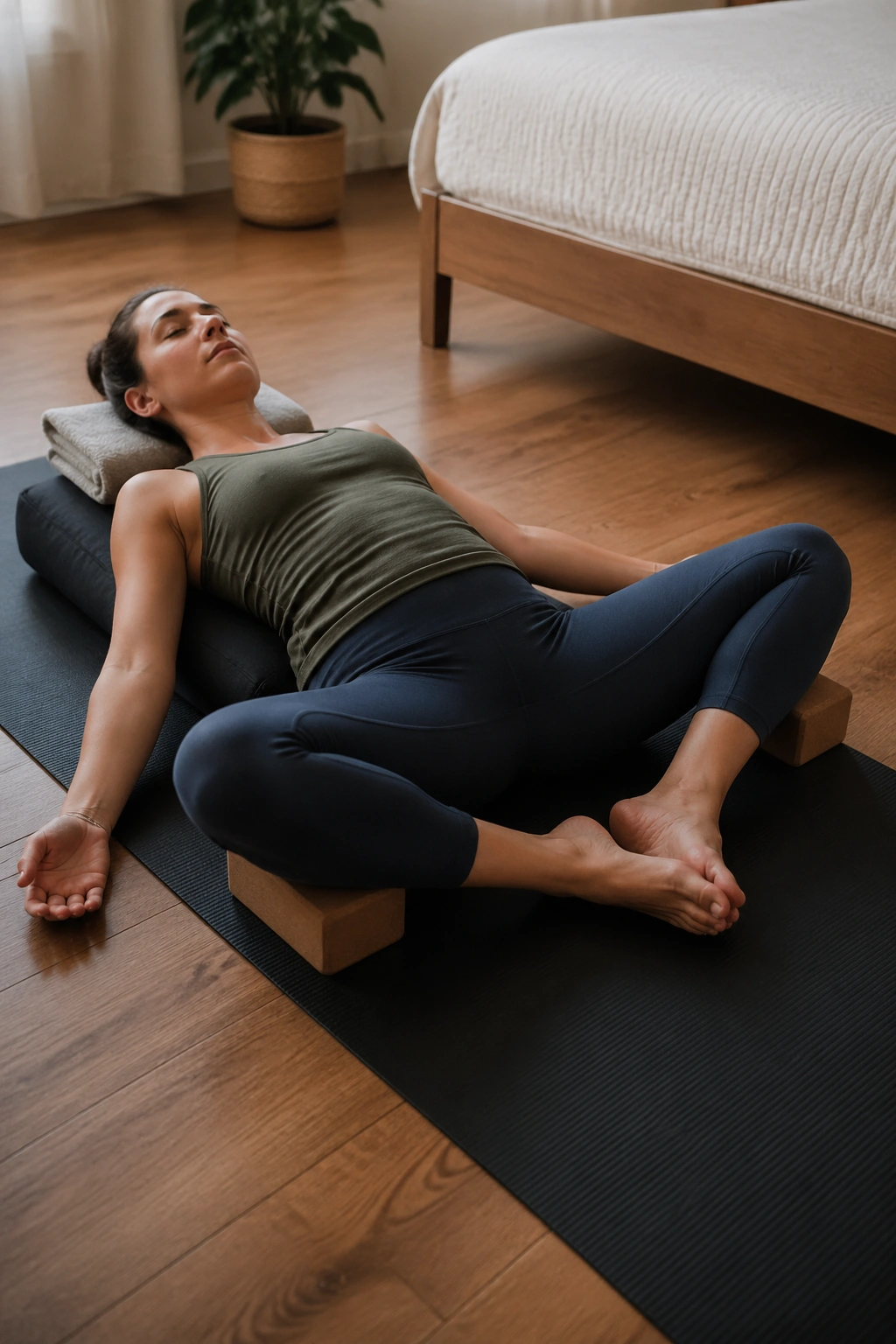
Reclined bound angle looks easy, and when it’s set up well, it is easy. That’s why I like it for migraine relief. A supported opener gives the hips and belly a chance to release without asking your neck to do any work at all.
Best Prop Setup
- Sit with the soles of the feet together and the knees open.
- Place a bolster, firm pillow, or rolled blanket along your spine as you lower down.
- Support each thigh with a block or blanket if the groin feels too stretched.
- Add a small folded cloth under the back of the head if the neck tilts back.
Stay for 1 to 3 minutes and breathe low into the ribs. If your lower back pinches, raise the support under your spine a little. If the knees float and feel strained, prop them up. There’s no prize for letting the knees sink lower than your tissues can handle.
The whole pose should feel like the body is settling into a deeper exhale.
8. Bridge Pose With a Block
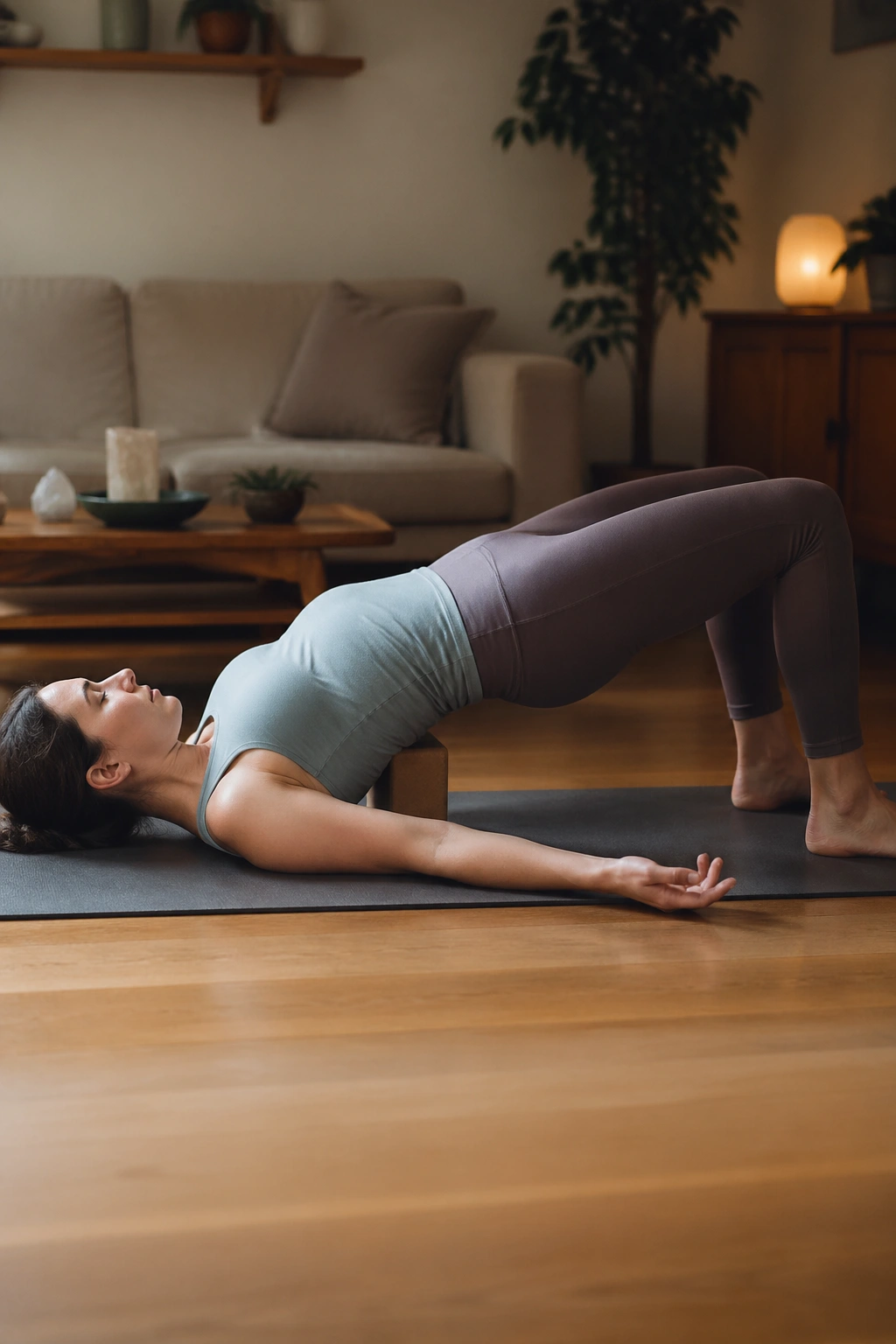
A small bridge can help more than a big forward fold, especially when the whole front body feels locked up. That’s the part people miss. You do not always need to stretch the head and neck to make a migraine day better; sometimes you need to wake up the back body and give the chest a little room.
Lie on your back with the knees bent and feet hip-width apart. Press the feet down, lift the hips a few inches, and slide a block under the sacrum for a supported version if you want less effort. Keep the chin slightly tucked so the back of the neck stays long. If the neck feels compressed, come down immediately.
This pose works best in small doses. Two or three slow lifts, or a 30-second supported hold, is plenty. What you’re after is a sense of the pelvis being carried, not a sharp backbend.
9. Supine Spinal Twist
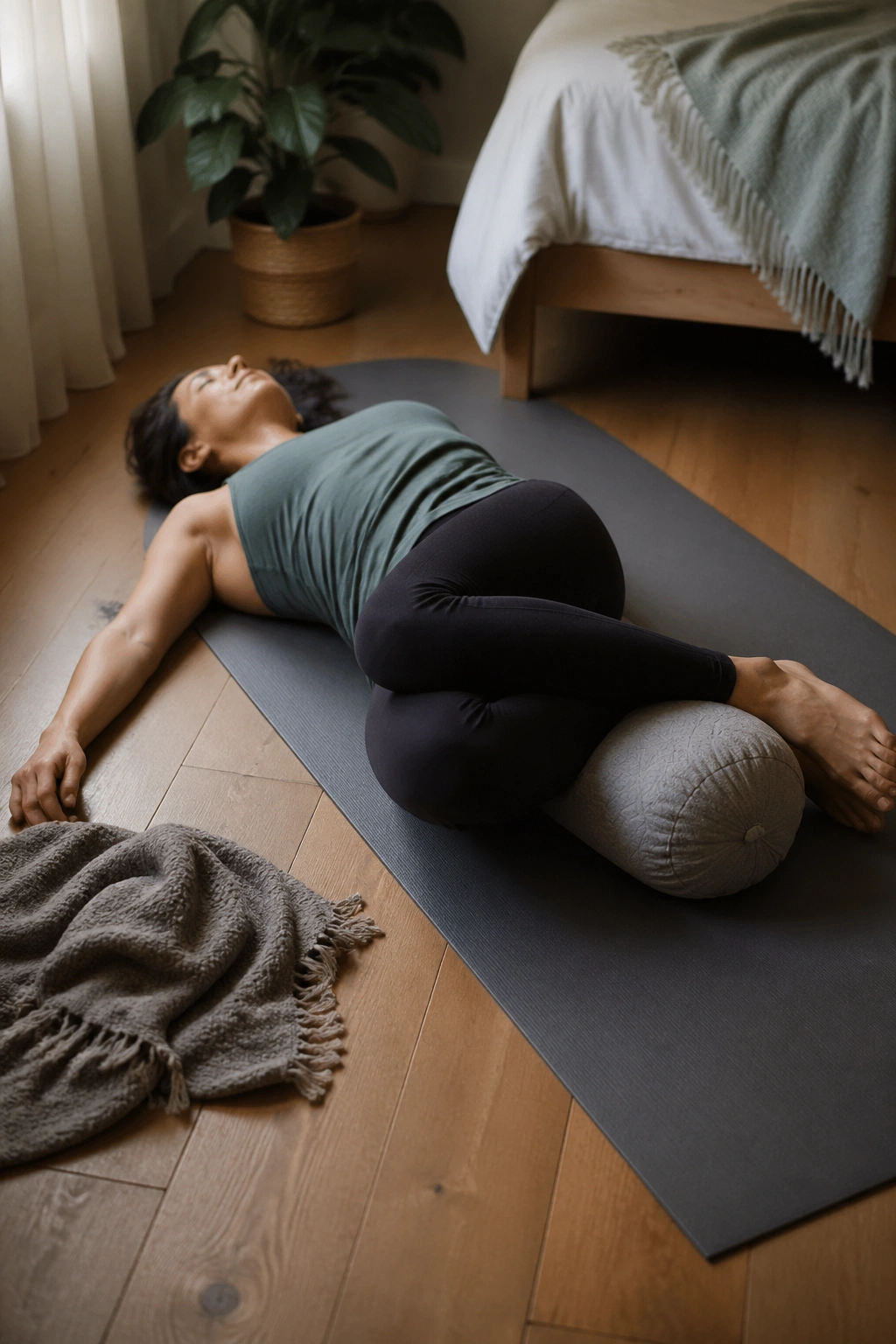
Can twists help or hurt migraine days? Both, which is why the soft version matters. A gentle reclined twist can ease the lower back and give the mid-back a little room to rotate, but it should never feel like wringing water from a towel.
Lie on your back, draw the knees in, and let them fall to one side with a pillow or bolster underneath if needed. Keep both shoulders heavy. Keep the turn small. The head can stay neutral or turn the opposite way only if that feels good and doesn’t spark the neck.
What the Twist Should Feel Like
The belly should feel broad, not squeezed. The breath should move around the side ribs. The low back should feel supported, not yanked.
That’s the real clue here. If the twist feels like a hard stretch through the spine, it’s too much for a migraine day. Aim for a slow, low hum of release instead.
10. Sphinx Pose
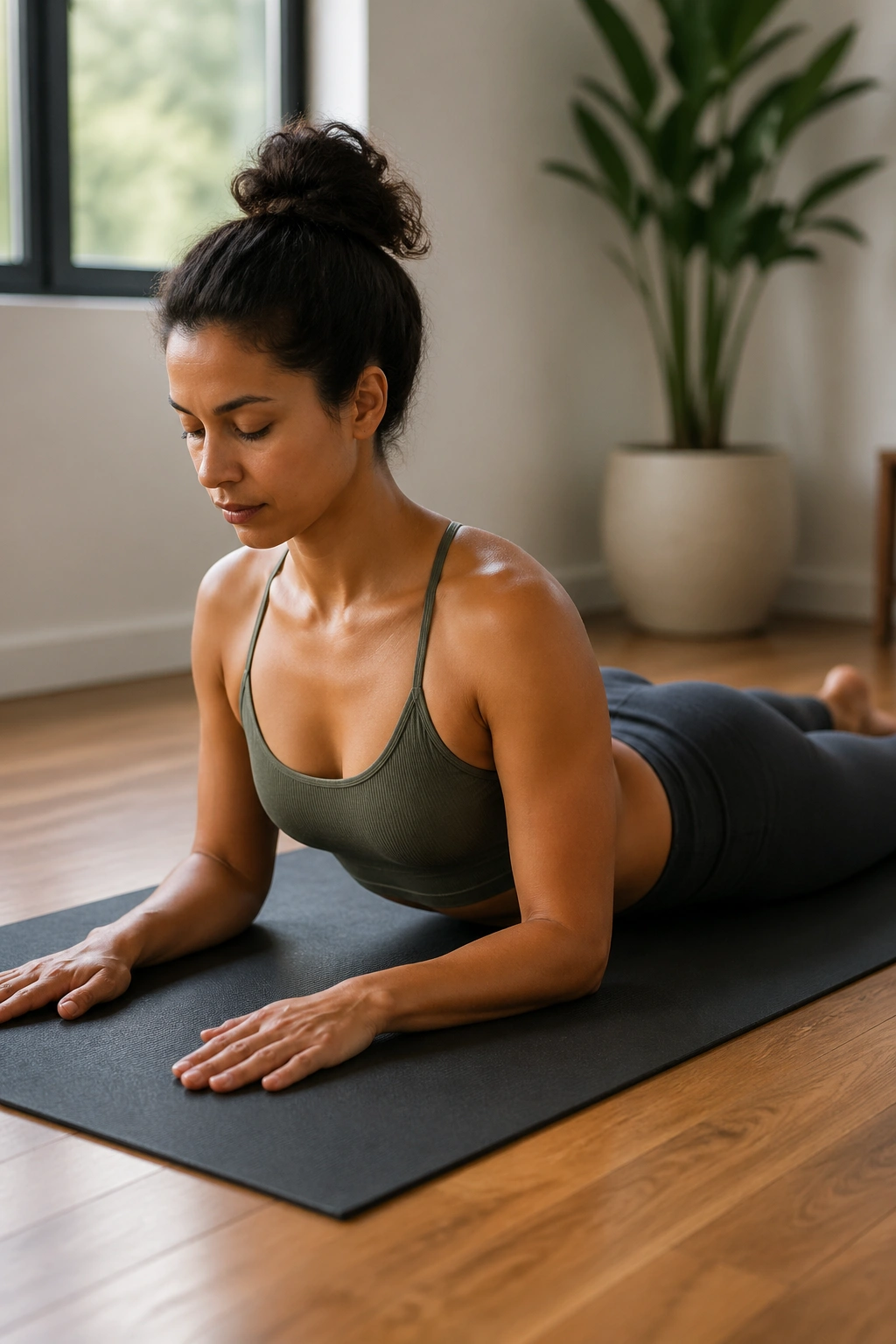
Sphinx is one of those poses that looks almost plain until you stay in it for a minute. Then you start noticing how much your upper back, chest, and throat have been bracing. For some migraine sufferers, that gentle lift is enough to make the front of the body feel less folded over by tension.
Lie on your belly and bring your elbows under your shoulders. Press the forearms into the mat and let the chest float forward just a little. Keep the gaze down so the neck stays long. If the low back starts pinching, spread the legs a bit wider or come out.
A few small details matter here:
- Keep the shoulders away from the ears.
- Press the forearms evenly, not just into one side.
- Stay for 5 to 8 breaths, then rest.
- Use a folded blanket under the ribs if the floor feels too firm.
Sphinx is subtle. That’s part of its charm.
11. Supported Fish Pose
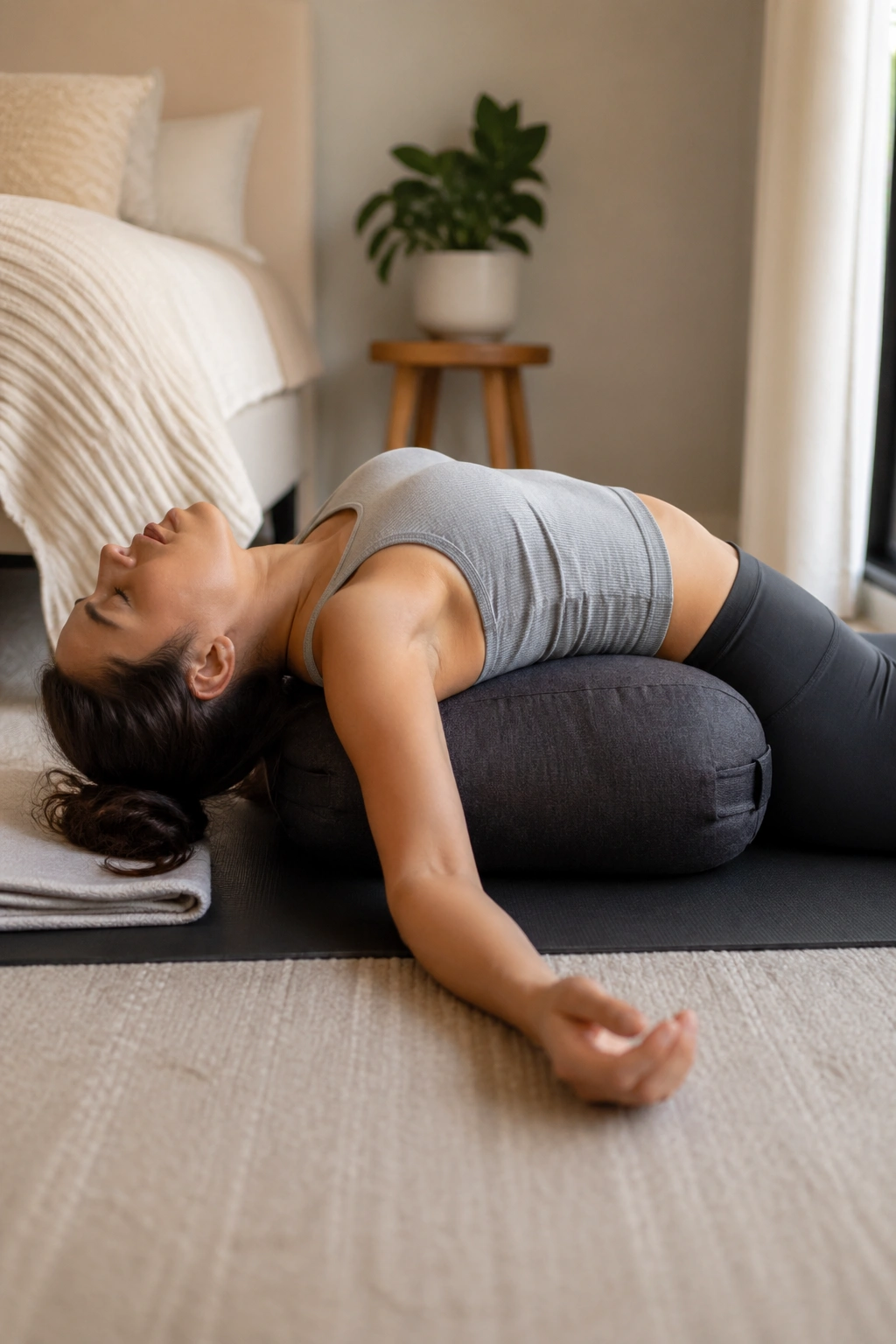
Supported fish can feel almost luxurious, though I hesitate to use that word because this is less about indulgence and more about giving the chest a place to open without strain. A bolster or rolled blanket under the upper back changes the entire shape of the posture.
Lie back over the support so it runs lengthwise along the spine, then let the head rest on the floor or on a folded blanket if the neck needs it. The chest should feel lifted, but not shoved upward. If your lower ribs flare or your breath gets sharp, lower the support a little.
This pose can be surprisingly calming on headache days because it reverses the hunch that comes from laptops, phones, and stress. The throat should feel open enough to breathe easily. If you feel pressure behind the eyes or in the temples, come out sooner rather than trying to “get used to it.”
A minute can be enough. Five slow breaths can be enough. More is not always better.
12. Knees-to-Chest Pose
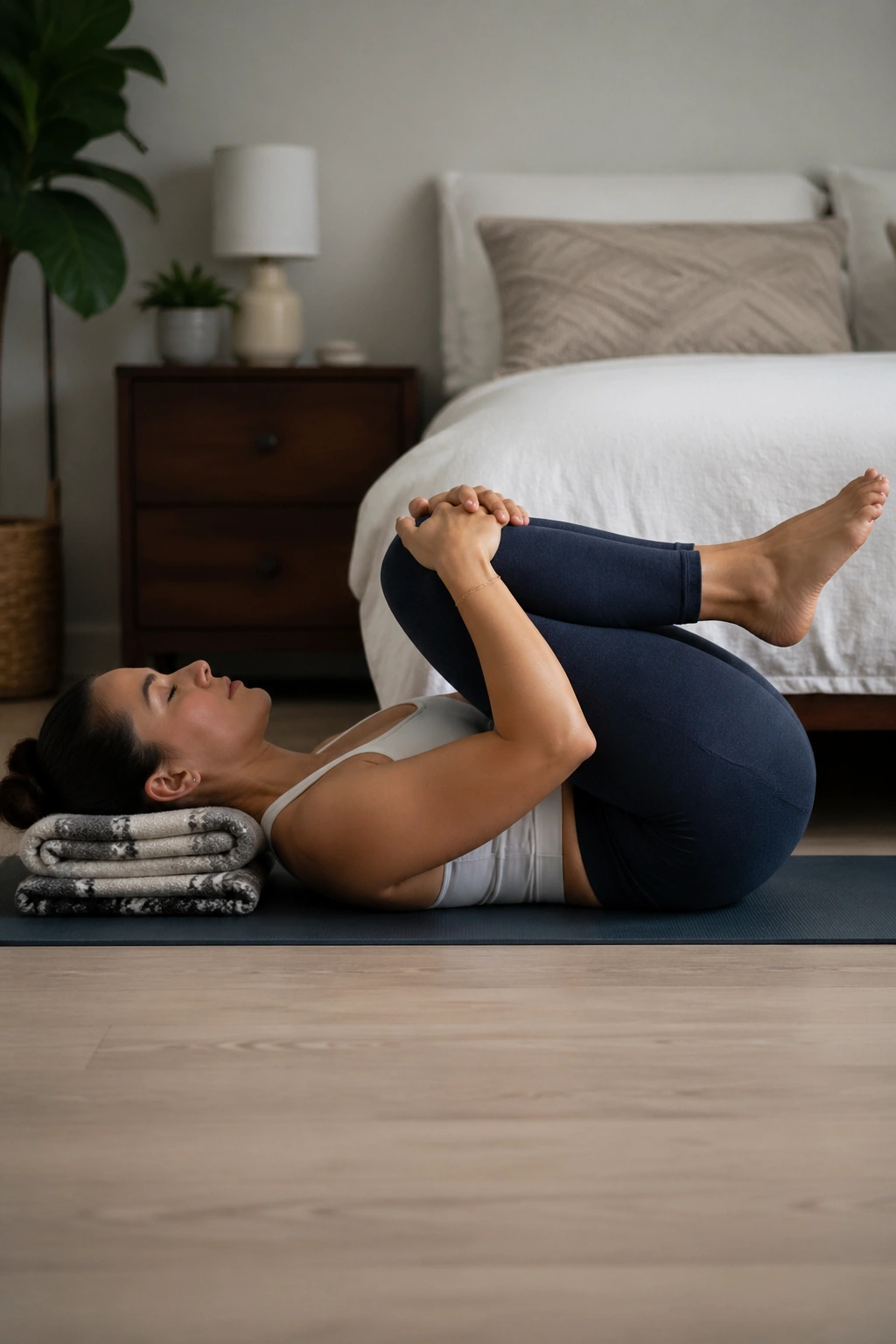
Knees-to-chest is a small pose, but a useful one. Unlike crunches or active abdominal work, it unloads the low back without asking the body to brace hard, and that can matter on days when the neck and pelvis seem to be arguing with each other.
Lie on your back and bring one knee at a time toward the chest, or take both in if that feels comfortable. Hold behind the thighs instead of on the shins if your hips feel sensitive. Rock a little from side to side only if the motion feels soothing. If not, stay still.
A folded blanket under the head can make this quieter. So can bending one knee more than the other if both at once feels compressed. I like this pose best at the end of a short sequence, when the body has already been told, “You can stop now.”
13. Happy Baby Pose
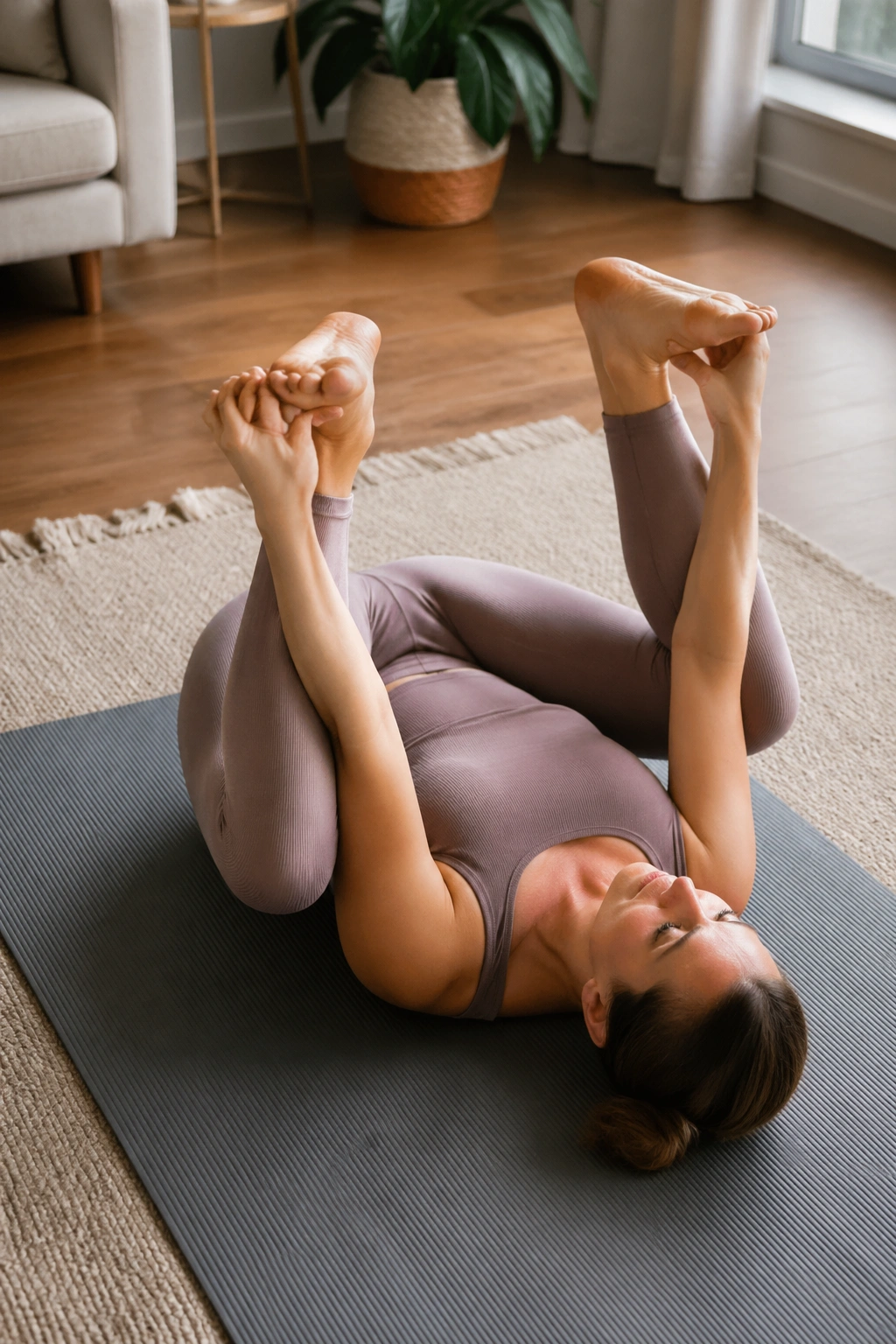
Happy baby looks playful, but it’s easy to turn it into a hamstring wrestling match. Don’t. For migraine relief, the point is to open the hips and lower back while keeping the face and jaw relaxed.
Keep the Pull Light
- Hold the backs of the thighs, ankles, or the outer edges of the feet.
- Keep the tailbone heavy on the mat.
- Rock only a little, if at all.
- Stay for 3 to 5 breaths and let the knees drift wider than the ribs.
If reaching the feet makes the shoulders tense, grab the thighs instead. If the neck strains because the head lifts, place a folded blanket under it. The lighter the grip, the better the pose usually feels.
I think this one works well because it creates a little space in several directions at once. Hips, low back, pelvis, even the inner thighs. That broad release can take some of the edge off a day that feels compressed from every angle.
14. Seated Side Bend for Migraine Days
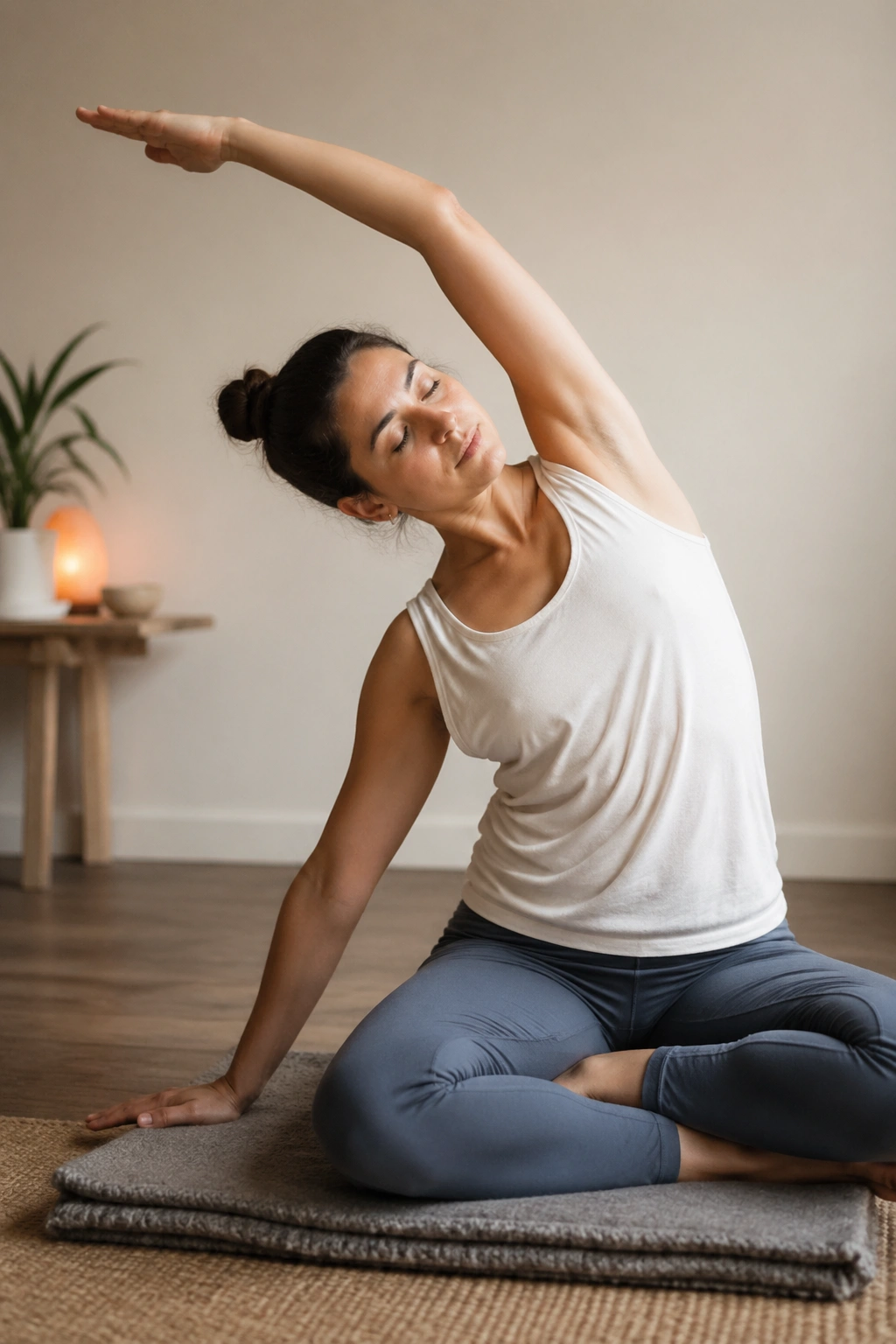
A side bend can be the missing piece when the neck is tight but the bigger issue is a ribcage that barely moves. The breath gets shallow when the side body is stuck, and shallow breathing tends to show up fast on headache days.
Sit on a folded blanket, lengthen one arm overhead, and lean the torso gently to the side without collapsing the opposite shoulder. Keep both sit bones grounded if you can. The lower hand can rest on the floor, a block, or your shin. The bend should feel long, not crunched.
This is a good one if your pain pulls more to one side of the head or if one shoulder sits higher than the other. Stay for a few breaths, then switch. You’re trying to create room along the ribs and under the armpit, not chase the deepest stretch possible.
If the neck starts doing all the work, the pose has gone off track.
15. Eagle Arms
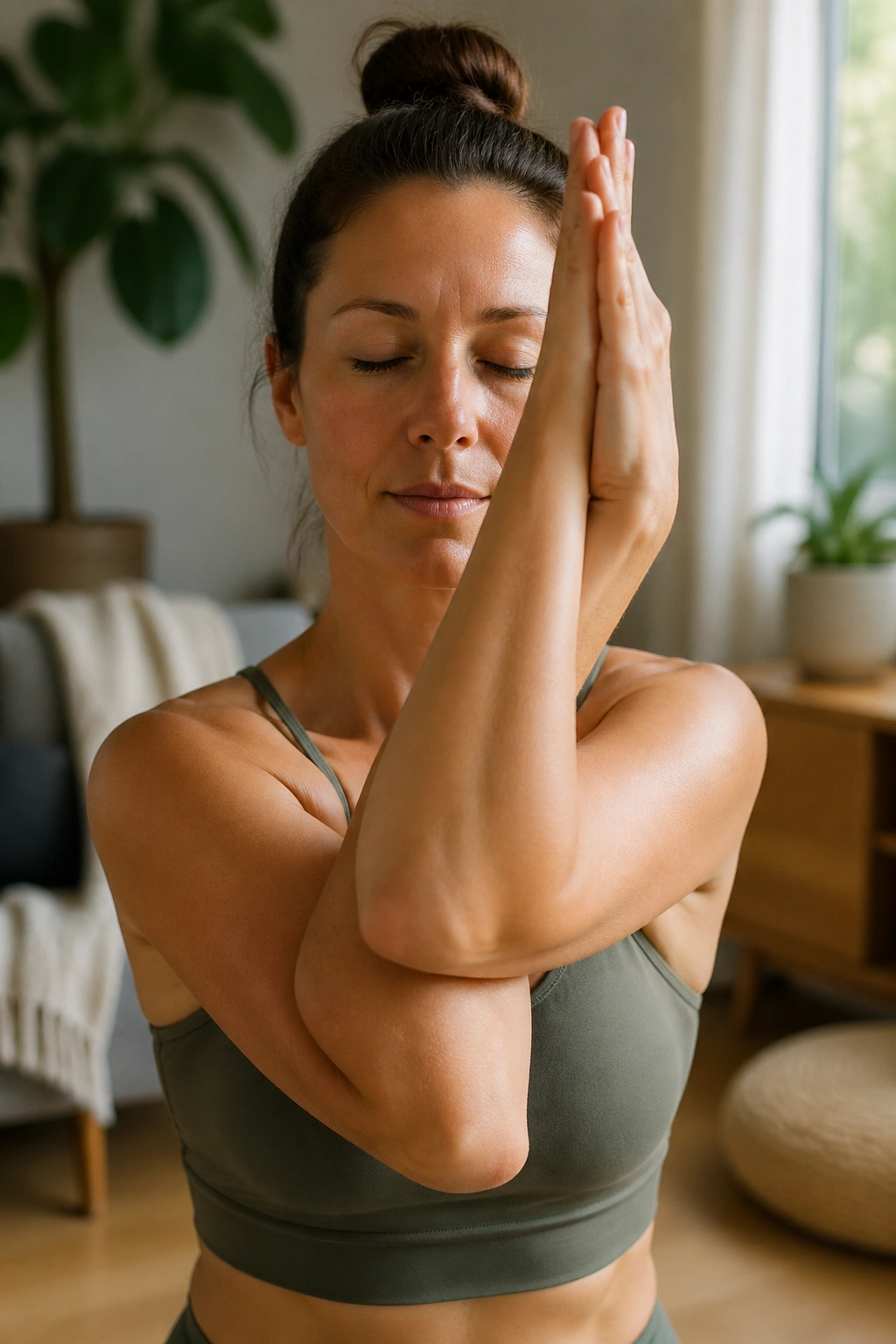
Why do such a small arm shape matter? Because a lot of head pain hangs out in the muscles around the shoulder blades, upper traps, and the base of the skull. Eagle arms quietly target that whole line without forcing a dramatic movement.
Sit tall or stand with the knees soft. Cross one elbow under the other, wrap the forearms if that’s available, and lift the elbows away from the chest only as far as feels smooth. Keep the shoulders away from the ears. If the hands don’t meet, no problem at all.
How to Get the Most From It
- Take 3 slow breaths with each side.
- Soften the jaw while the arms are wrapped.
- Let the elbows drop if the neck gets twitchy.
- Unwrap slowly; people tend to rush this part.
You should feel a mild stretch between the shoulder blades and maybe a little release at the back of the neck. More than mild usually means you’re overdoing it.
16. Low Lunge With Blocks
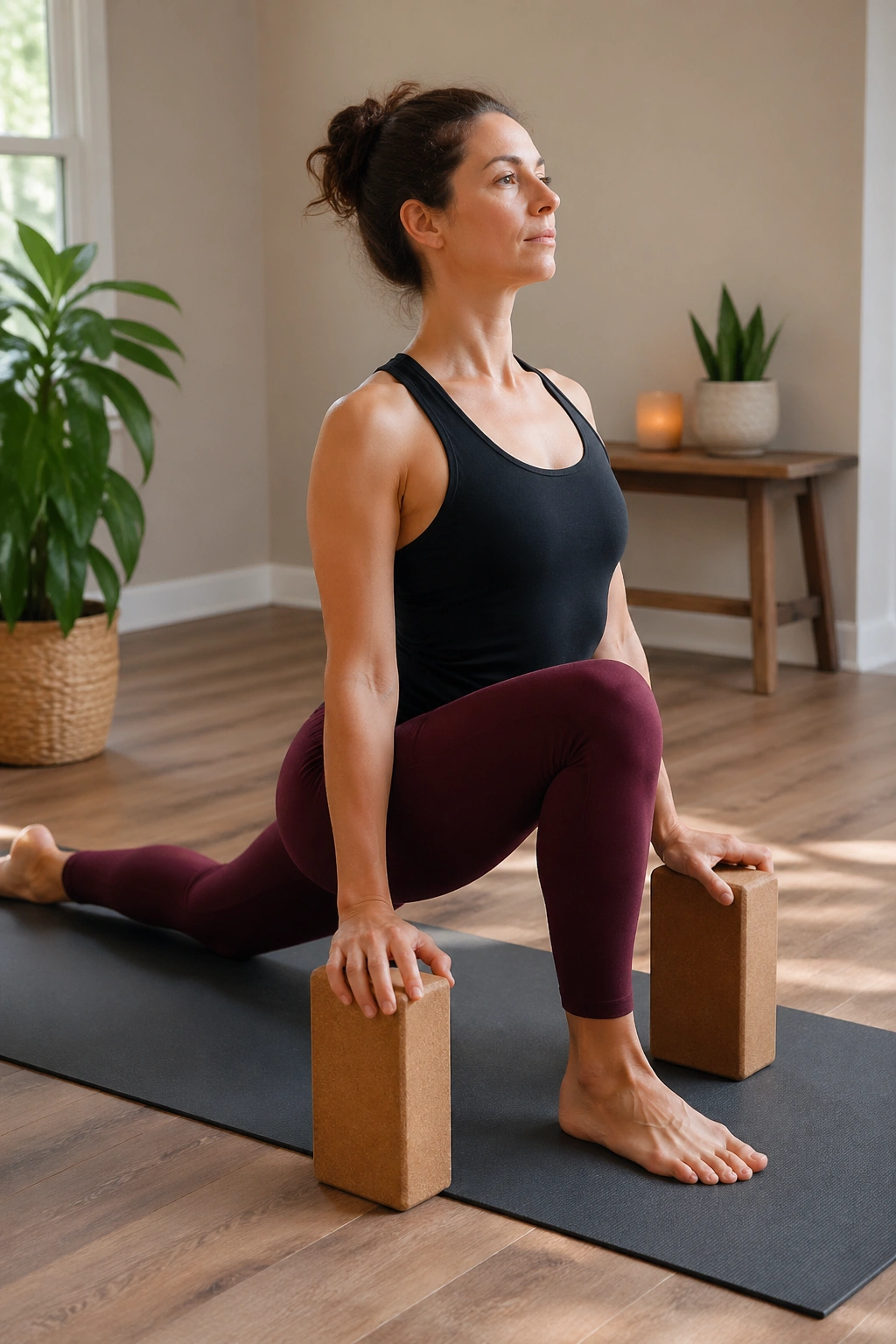
A low lunge can help when your hips have been sitting in a shortened position all day and your low back starts feeding tension upward. That connection is easy to miss, but it shows up often enough that I pay attention to it.
Step one foot forward and lower the back knee to the floor. Put both hands on blocks so the chest can stay lifted without collapsing into the front thigh. Keep the pelvis level and the back toes tucked or untucked depending on what feels steadier. The front knee should stay over the ankle or just behind it.
A short hold is enough. Four breaths on each side can do the job. If the lunge makes the neck tense, raise the blocks higher or shorten the stance. The stretch should live in the front of the back hip, not in the lower spine.
This one is less about soothing the head directly and more about removing a source of pull that keeps the body braced.
17. Bananasana
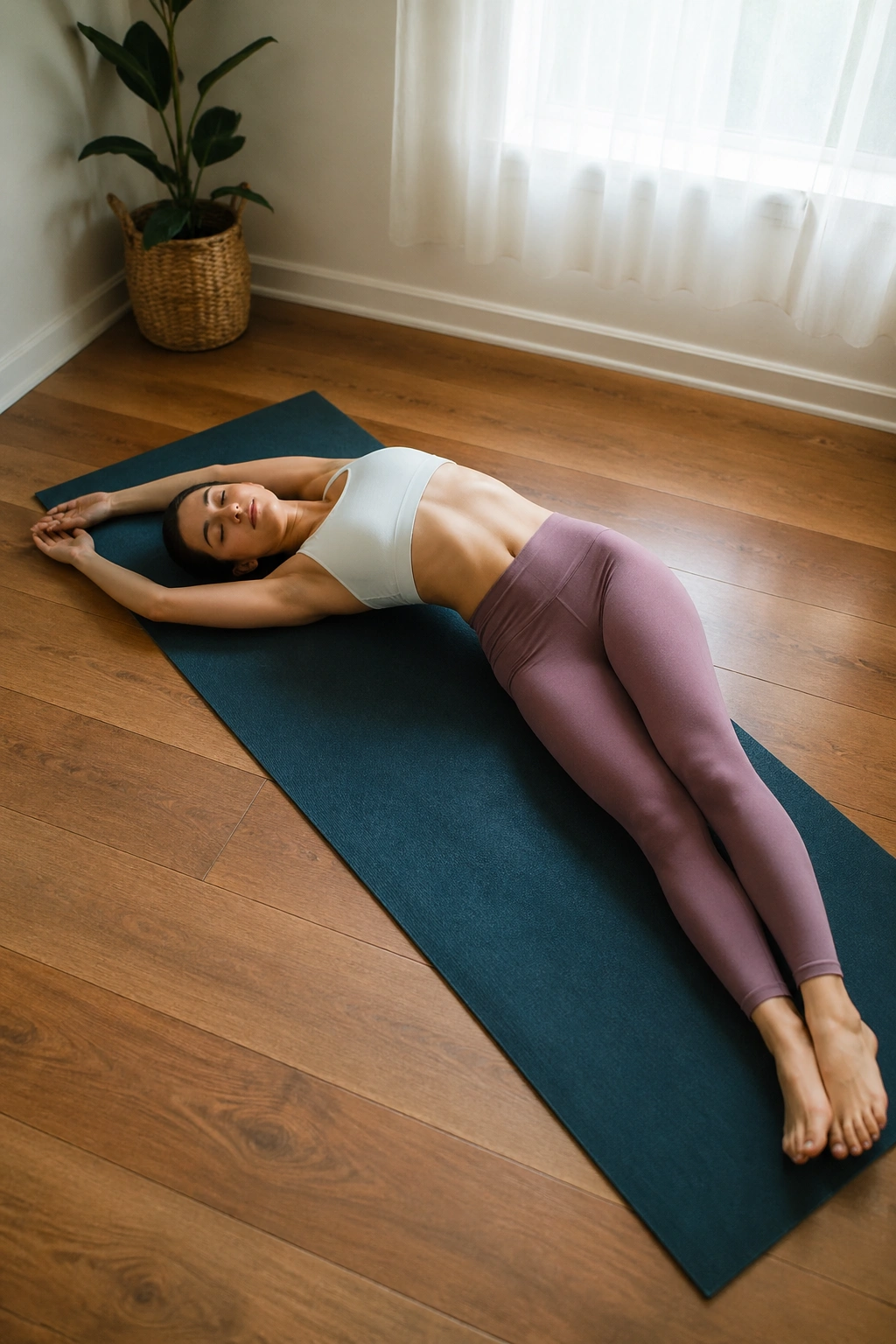
Bananasana is one of those restorative poses that sounds strange until you try it. Then it makes complete sense. You lie on your back and shift the arms and legs slightly to one side, creating a gentle crescent shape through the body.
The beauty of it is the side-body stretch. Migraine-prone bodies often carry a lot of hidden tension through the ribs, lats, and waistline, and that tension does not always respond to obvious neck work. Here, it gets a longer, softer line to unwind along.
Set yourself up with the feet and hands drifting a few inches to the right, while the shoulders and hips stay on the floor as best they can. Then switch sides. Keep the shape subtle. If you feel a hard tug through the lower back, reduce the curve and widen the stance.
It’s a quiet pose. Quiet is good.
18. Extended Puppy Pose With Forehead Support
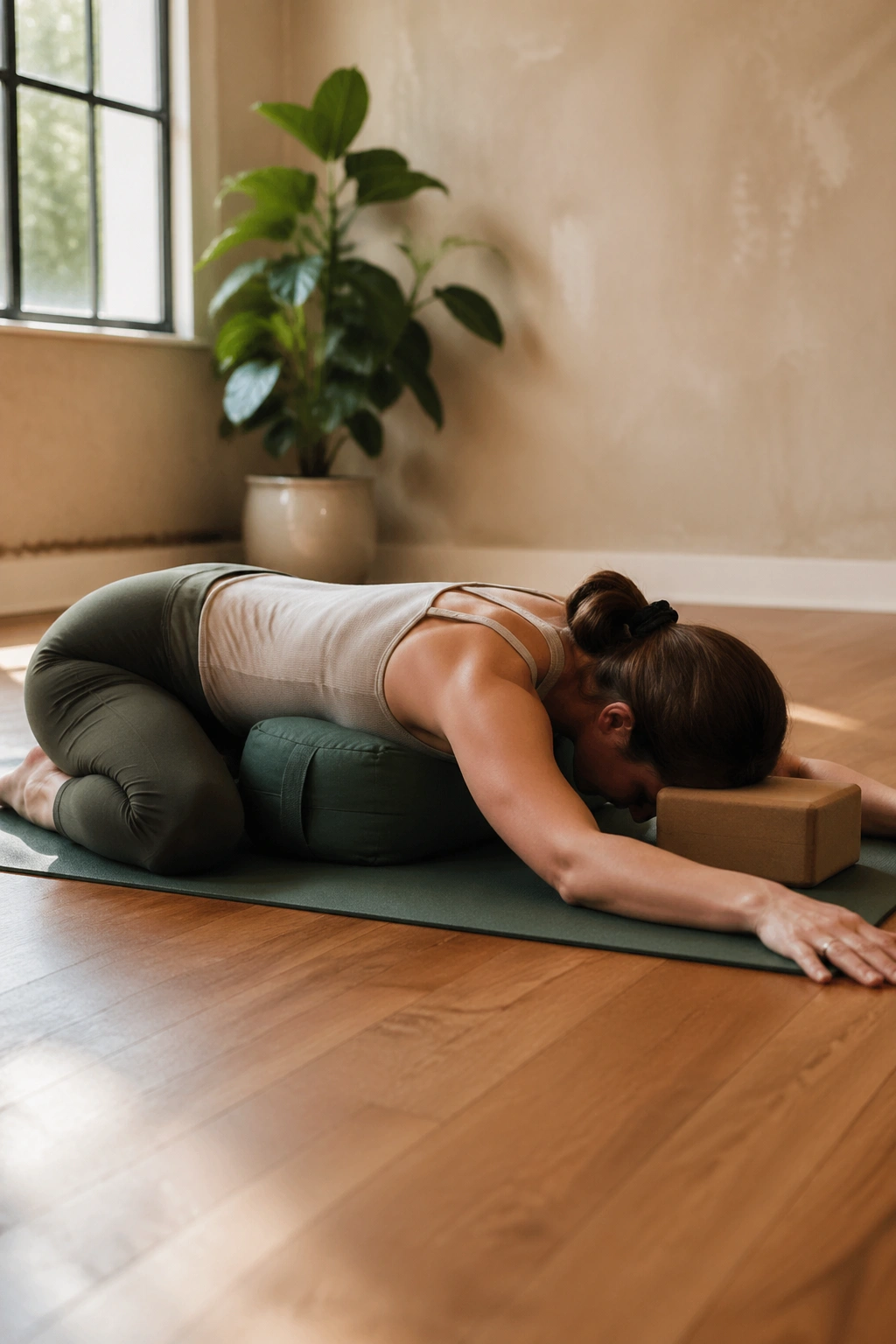
Extended puppy pose is like child’s pose’s slightly more intense cousin. It opens the shoulders and upper back more deeply, which is useful for some migraine patterns and too much for others. The difference usually comes down to support.
Start on hands and knees, then walk the hands forward and lower the chest toward the floor. Place a bolster under the chest if the shoulders feel strained, and put the forehead on a block or blanket so the neck doesn’t dangle. The hips stay over the knees. If the neck feels pinched, back out.
This is the kind of pose I’d reserve for days when the shoulders are the loudest complaint and the head itself is not too reactive. If a deeper forward reach makes pressure rise, skip it and stay with child’s pose instead. There’s no bonus point for doing the stronger-looking posture.
The best version feels spacious through the upper back and oddly restful at the same time.
19. Easy Seat With Breath Awareness
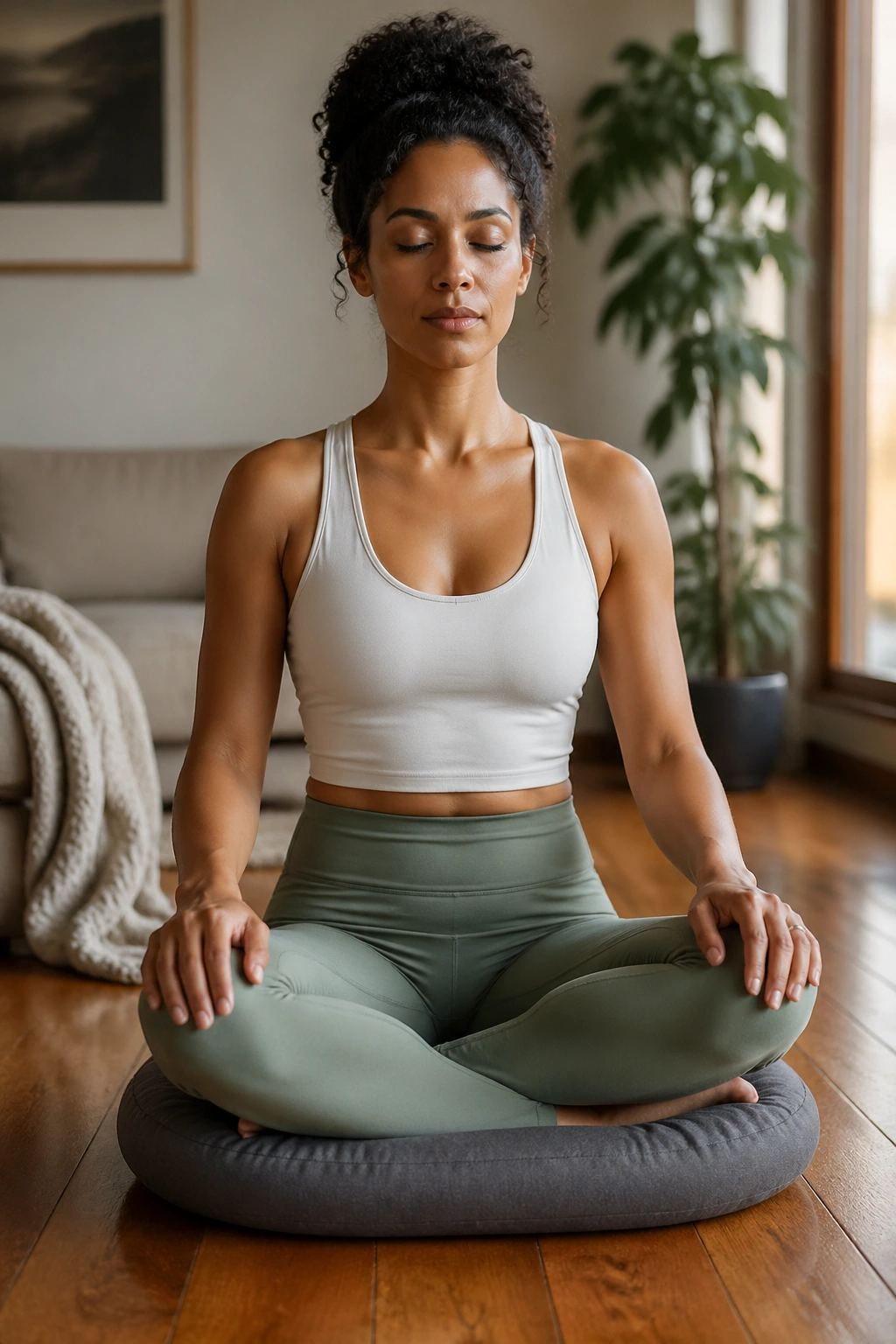
Sitting still can be hard when your head hurts, which is why the seat itself matters. If you slump, the neck does more work. If you perch too high, the body never settles. A folded blanket or firm cushion under the sit bones usually makes all the difference.
A Better Setup for Sensitive Days
- Sit with the pelvis slightly higher than the knees.
- Keep the chin level, not tucked hard and not lifted.
- Rest the hands on the thighs.
- Breathe in for 4 counts and out for 6 counts.
That longer exhale is the point. It tells the body the threat is over, or at least that it does not need to keep bracing quite so hard. You can stay here for two minutes or ten. If sitting upright feels like too much, lean against a wall or move to a reclined position instead.
The posture should feel dignified, but not rigid. Think “settled,” not “held together.”
20. Savasana With Bolster Under Knees for Chronic Migraine Relief
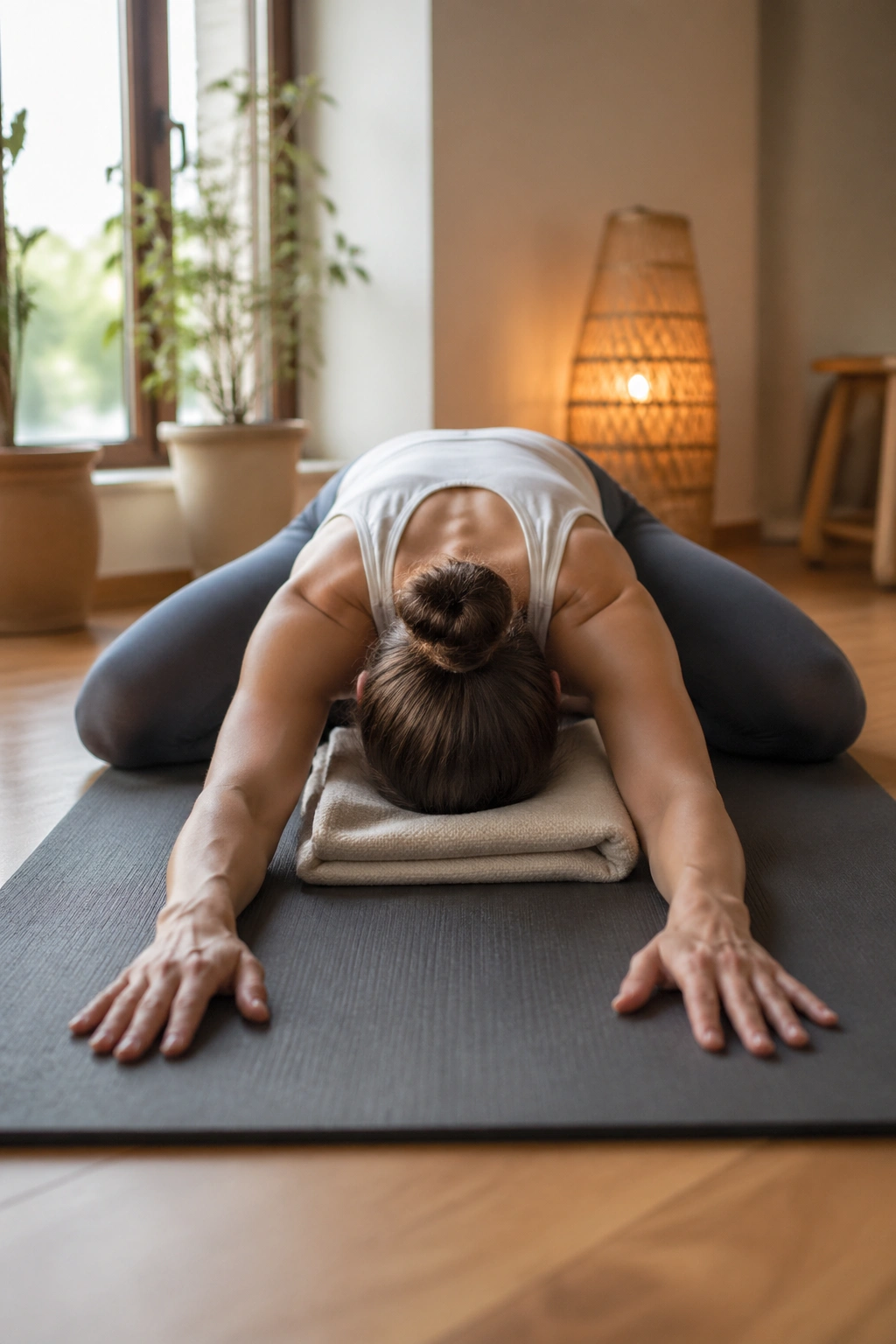
If you do only one thing on a rough day, make it this. Savasana gives the whole system a chance to stop organizing around pain, and the bolster under the knees removes a surprising amount of low-back tension.
Lie on your back, place a bolster or rolled blanket under the knees, and cover the eyes with a light cloth if bright light bothers you. Let the tongue rest on the floor of the mouth. Unclench the hands. Unclench the jaw. The face should feel plain, almost blank.
A few people hate stillness when they have a migraine. Fair enough. If that’s you, keep the hold short at first — two minutes, then five, then longer if it feels good. The point is not to prove anything. It’s to make the body feel safe enough to soften around the edges.
And that’s the whole game with yoga for chronic migraine relief: less force, more support, and a willingness to choose the quieter version. If a pose helps today, keep it. If it doesn’t, leave it out and move on to the next gentle option tomorrow.
